
Painted trim can change a room as much as a new wall color. Baseboards, door casings, crown molding, and window frames create outlines that either sharpen the architecture or blend quietly into the background. Instead of automatically choosing bright white, consider warm neutrals, earthy greens, deep blues, and even rich browns. The strongest combinations connect the painted woodwork with flooring, furniture, fabrics, and natural light. Sheen matters too. Matte or eggshell walls paired with satin or semigloss trim create subtle dimension, even when both surfaces share one color. Whether you prefer gentle contrast or dramatic color drenching, these complete room schemes make the decision easier. Explore these **25 Painted Baseboards And Trim Wall Colors** for a polished, coordinated home.

1. White Walls With Black Trim
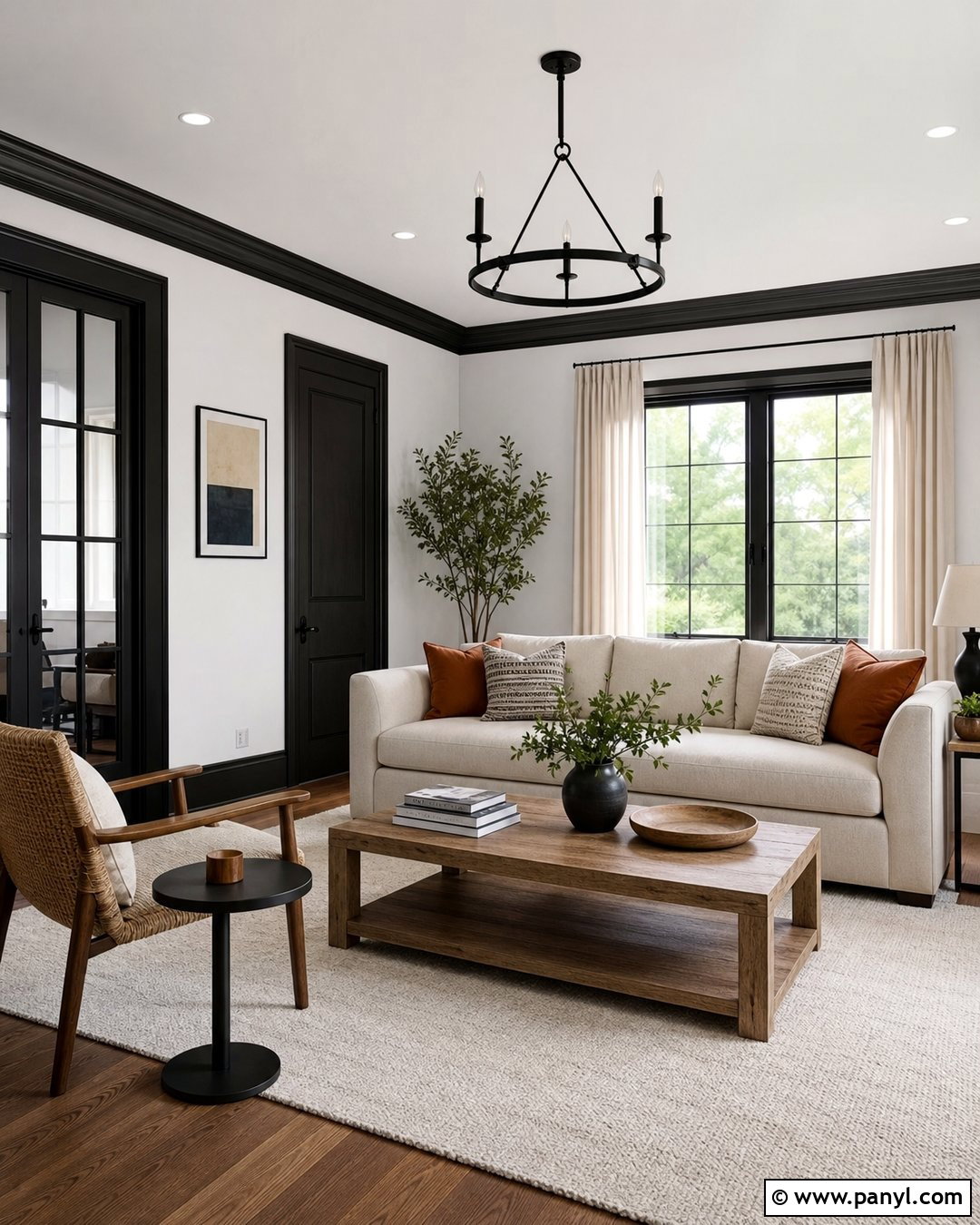
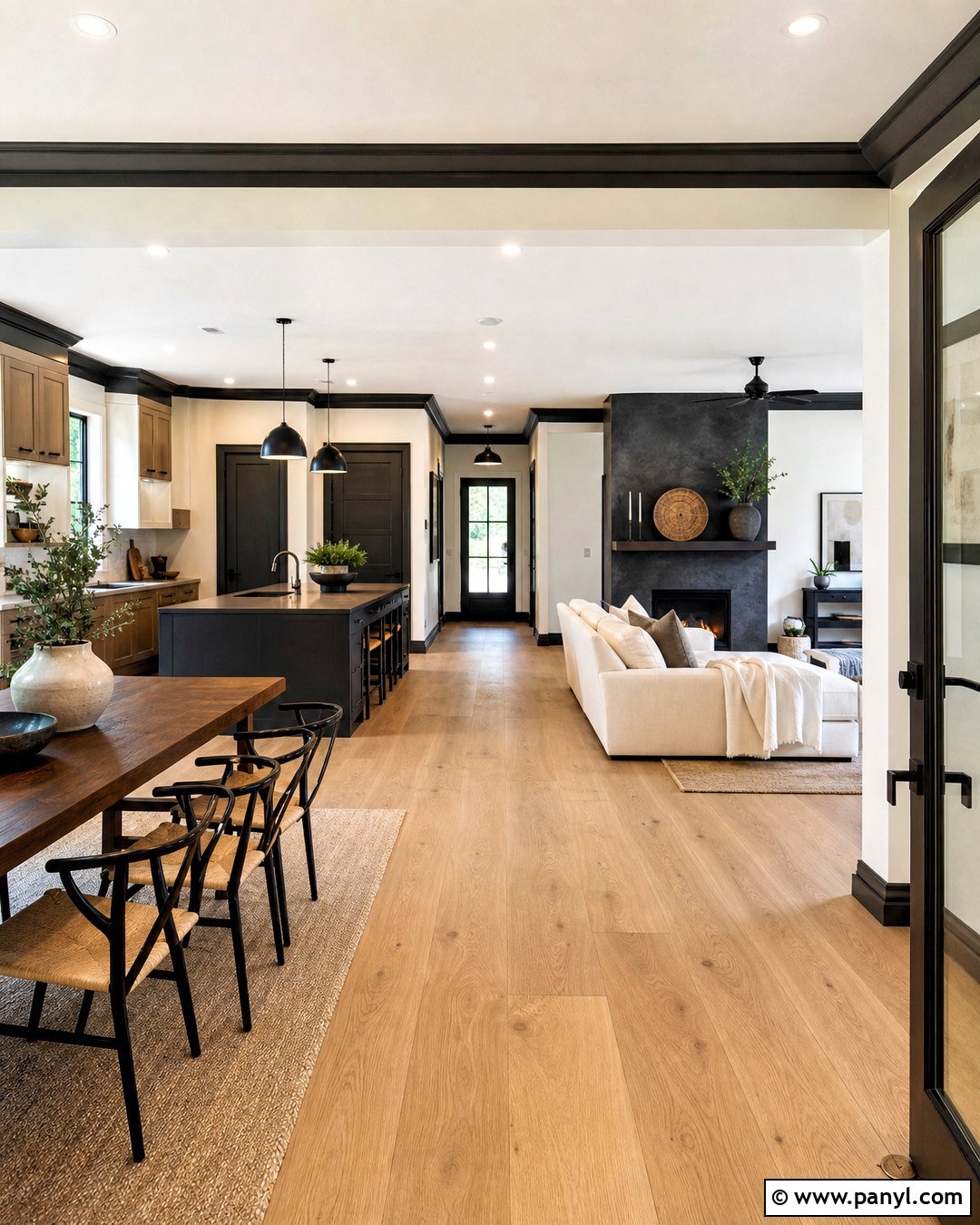
Bright white walls and satin black trim create a clean outline that suits a modern living room. Carry the black across the baseboards, window casings, interior doors, and simple crown molding for consistency. Add a low-profile oatmeal sofa, warm oak coffee table, and cream textured rug to soften the sharp contrast. Black metal lighting and slim picture frames repeat the trim without overwhelming the room. Linen curtains keep the windows light and open. Choose a balanced white rather than a stark blue-white, especially beside warm wood floors. This complete palette works best in a room with simple architecture and plenty of daylight. Keep decorative colors restrained, using rust, olive, or camel accents to give the black-and-white foundation more warmth.
2. Cream Walls With Taupe Trim
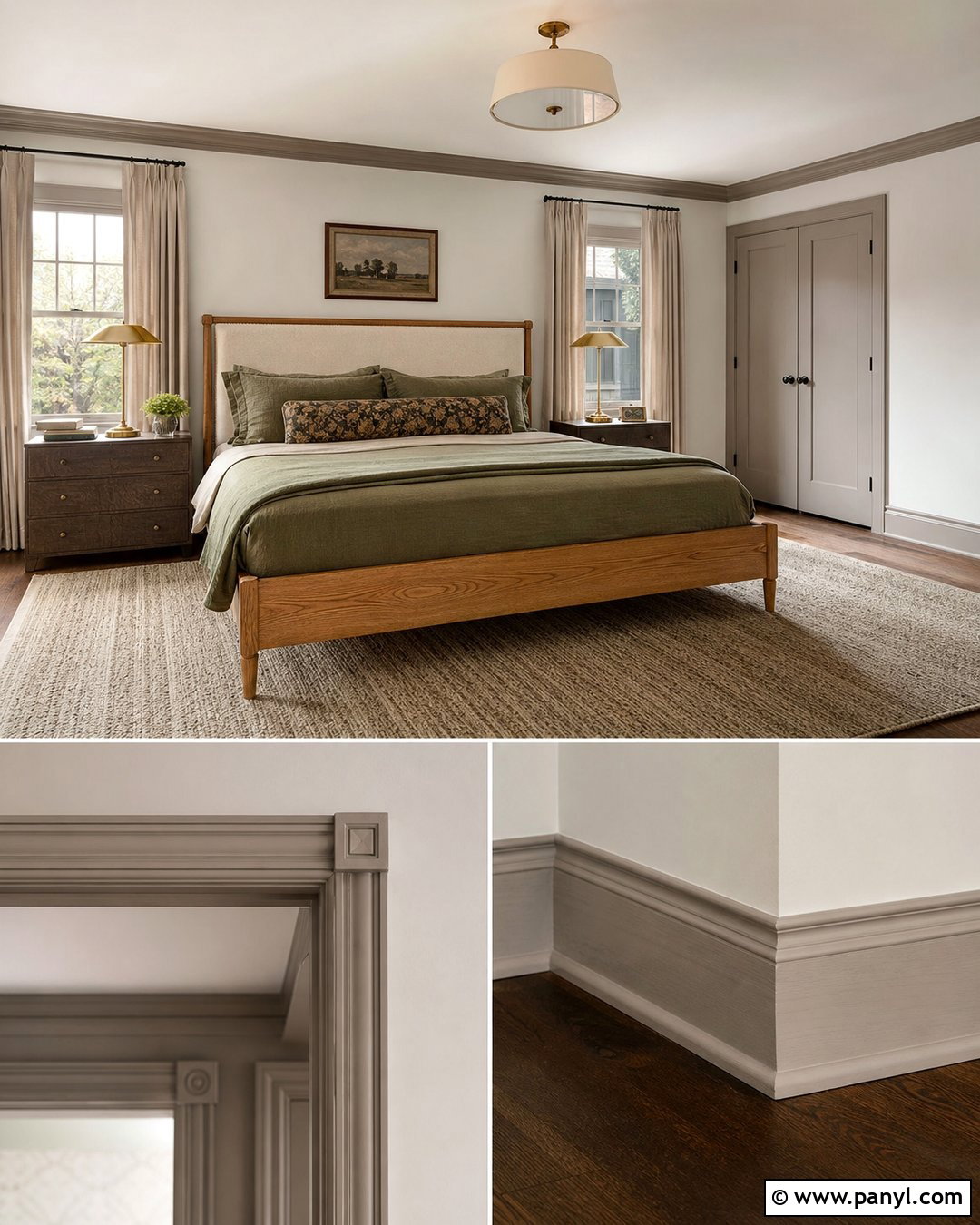
Soft cream walls framed by medium taupe trim make a bedroom feel warm, settled, and quietly sophisticated. Paint the baseboards, doors, window casings, and crown molding in the same earthy taupe with a satin finish. Use a natural oak bed, ivory upholstered headboard, and mushroom-colored nightstands to build gentle layers. A woven wool rug and flax linen curtains continue the neutral palette without making the room look flat. Antique brass lamps introduce a warmer metallic detail, while muted green bedding adds a small amount of color. This pairing is especially effective with beige carpet or honey-toned wood flooring. Check both paints beside each other before committing, since their undertones should feel similarly warm under morning and evening light.
3. Greige Walls With Crisp White Trim
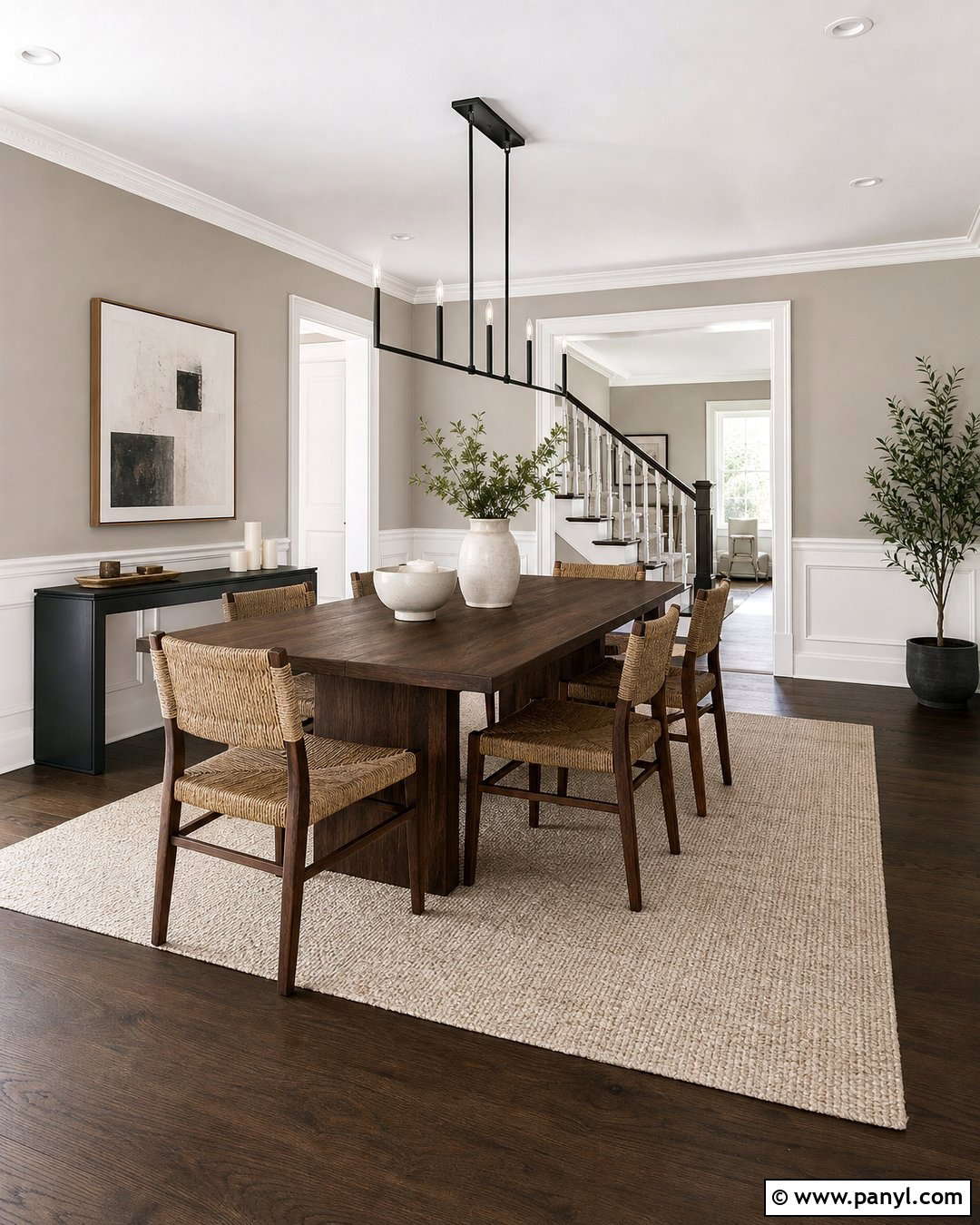
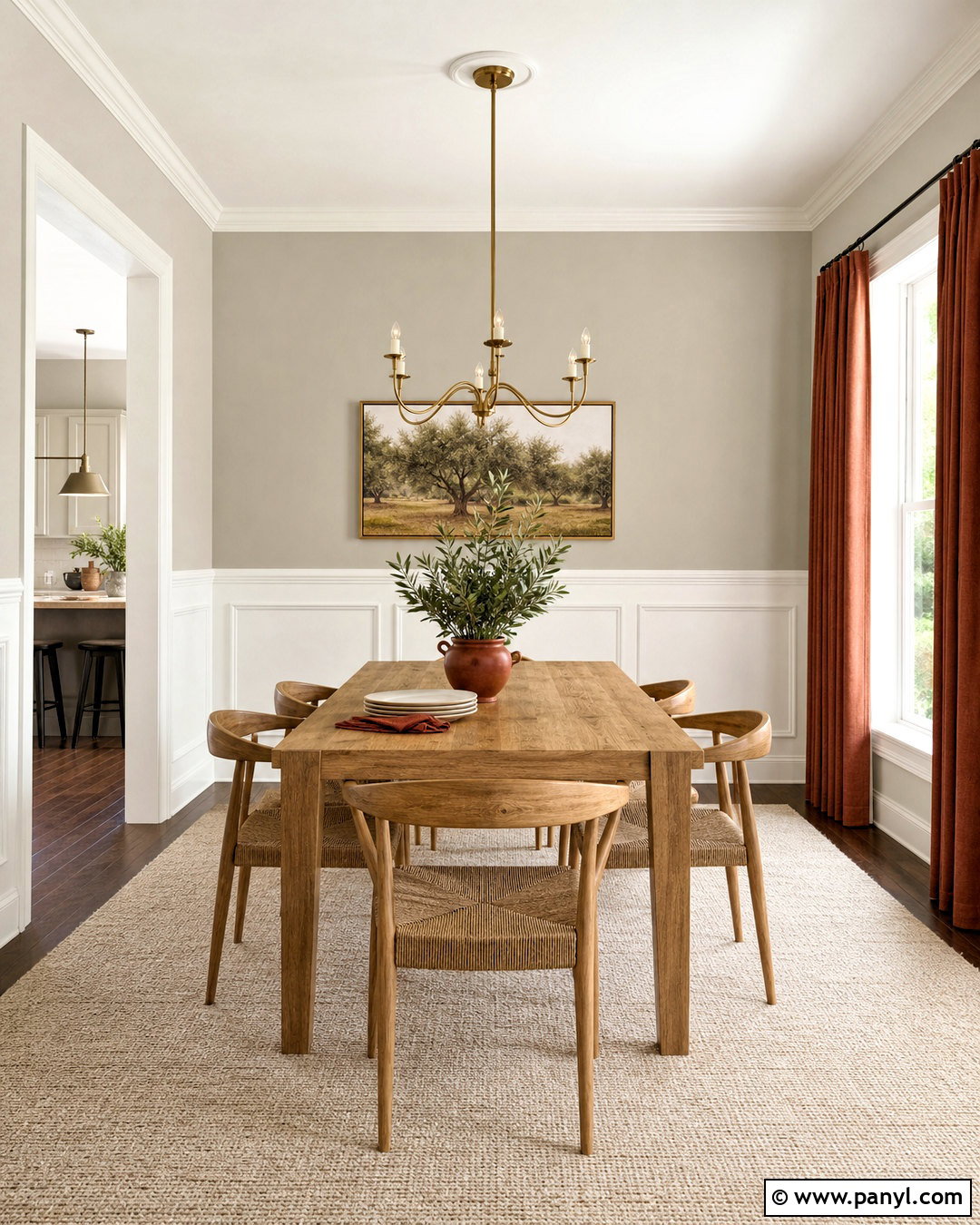
Greige walls and crisp white trim offer a familiar look with enough warmth to feel inviting. Use this combination in an open dining room where clean baseboards and window frames can define the architecture. Choose a medium-light greige with balanced gray and beige undertones, then select a clear white that does not appear icy. A walnut dining table, woven chairs, and a cream flat-weave rug provide natural contrast. Add a black linear chandelier and simple ceramic vessels for structure. White linen curtains can visually connect the windows to the trim while keeping the space bright. For a coordinated finish, continue the white onto interior doors and crown molding. This versatile scheme supports seasonal accessories without requiring major changes to the permanent palette.
4. Sage Green Walls With Warm White Trim
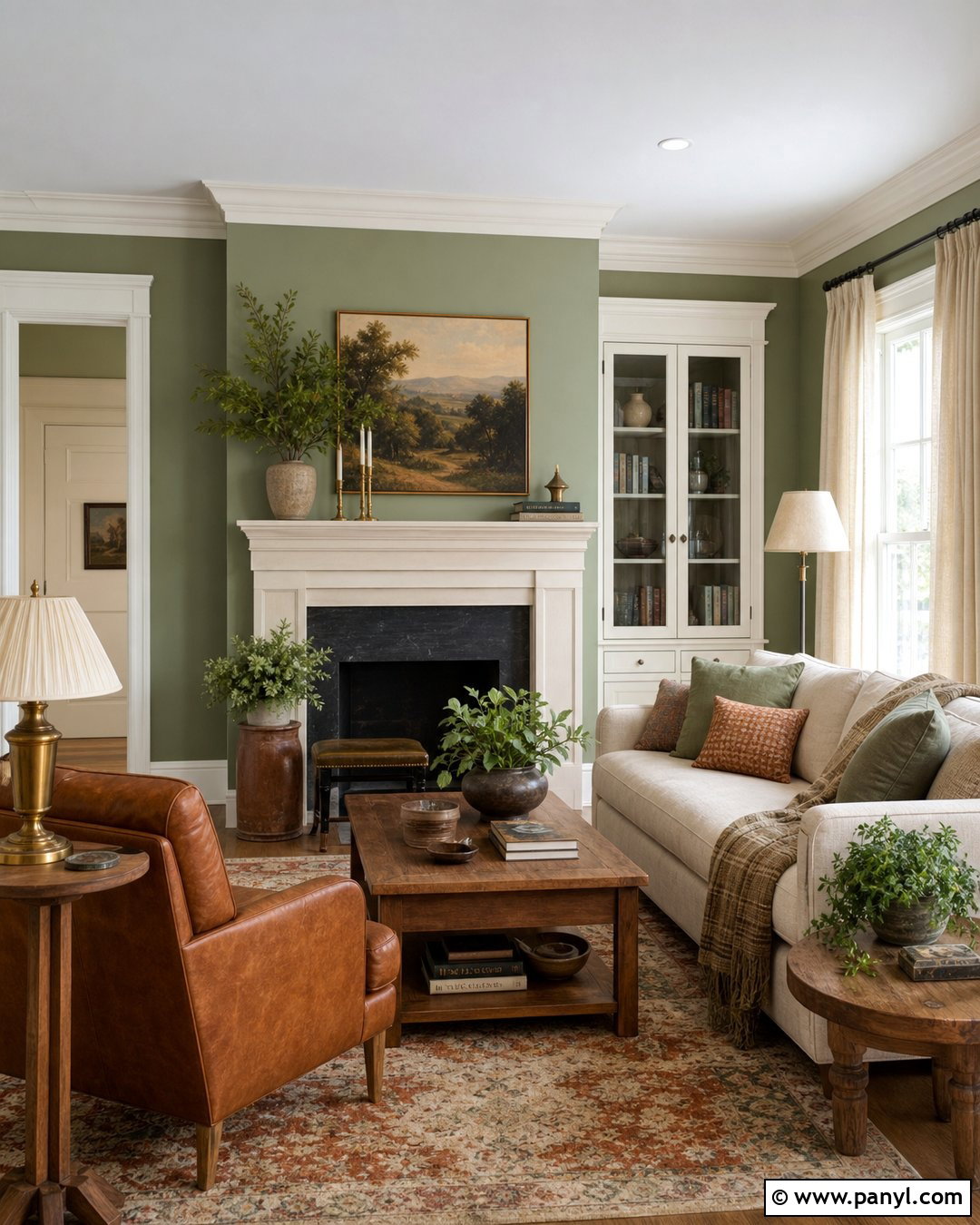
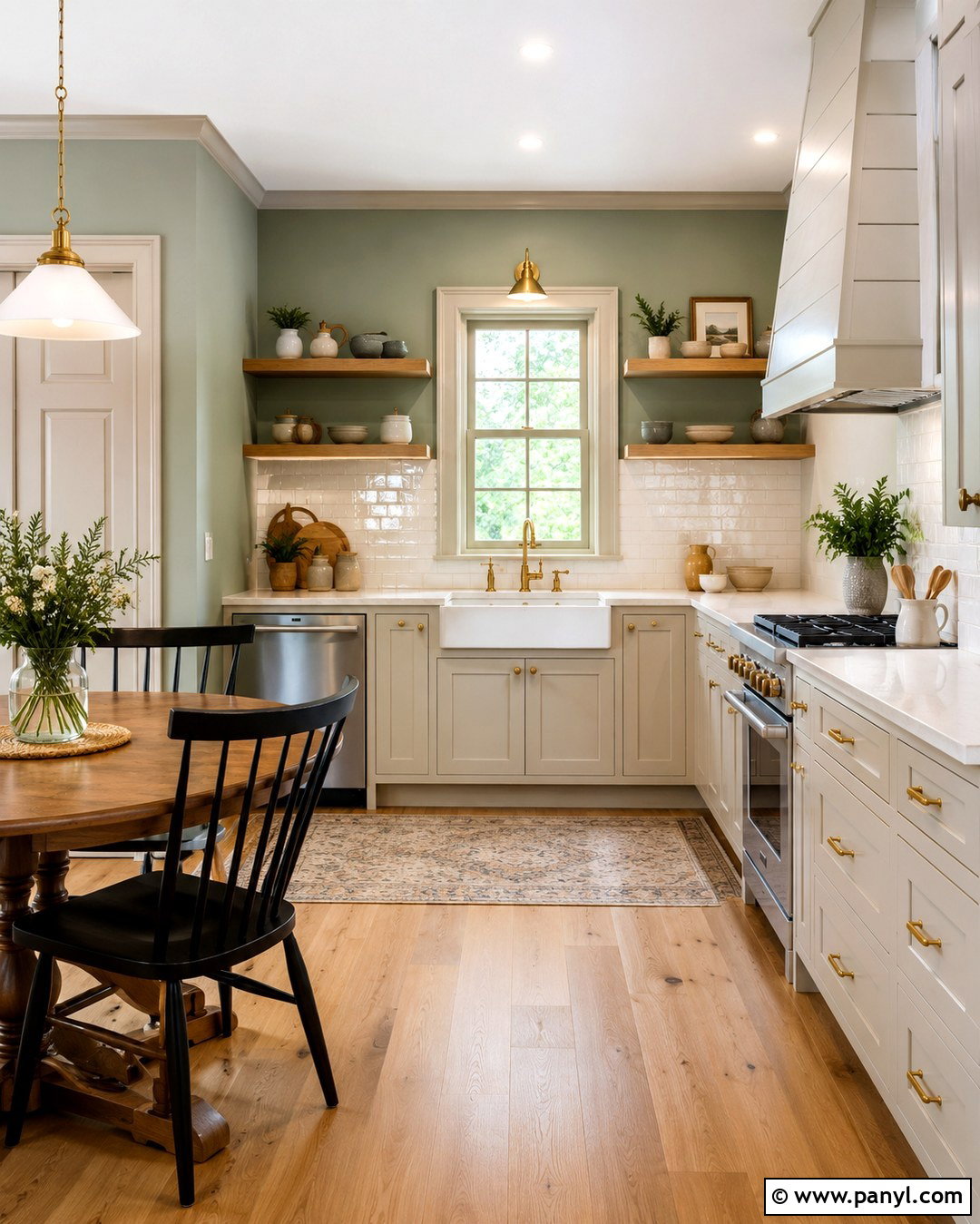
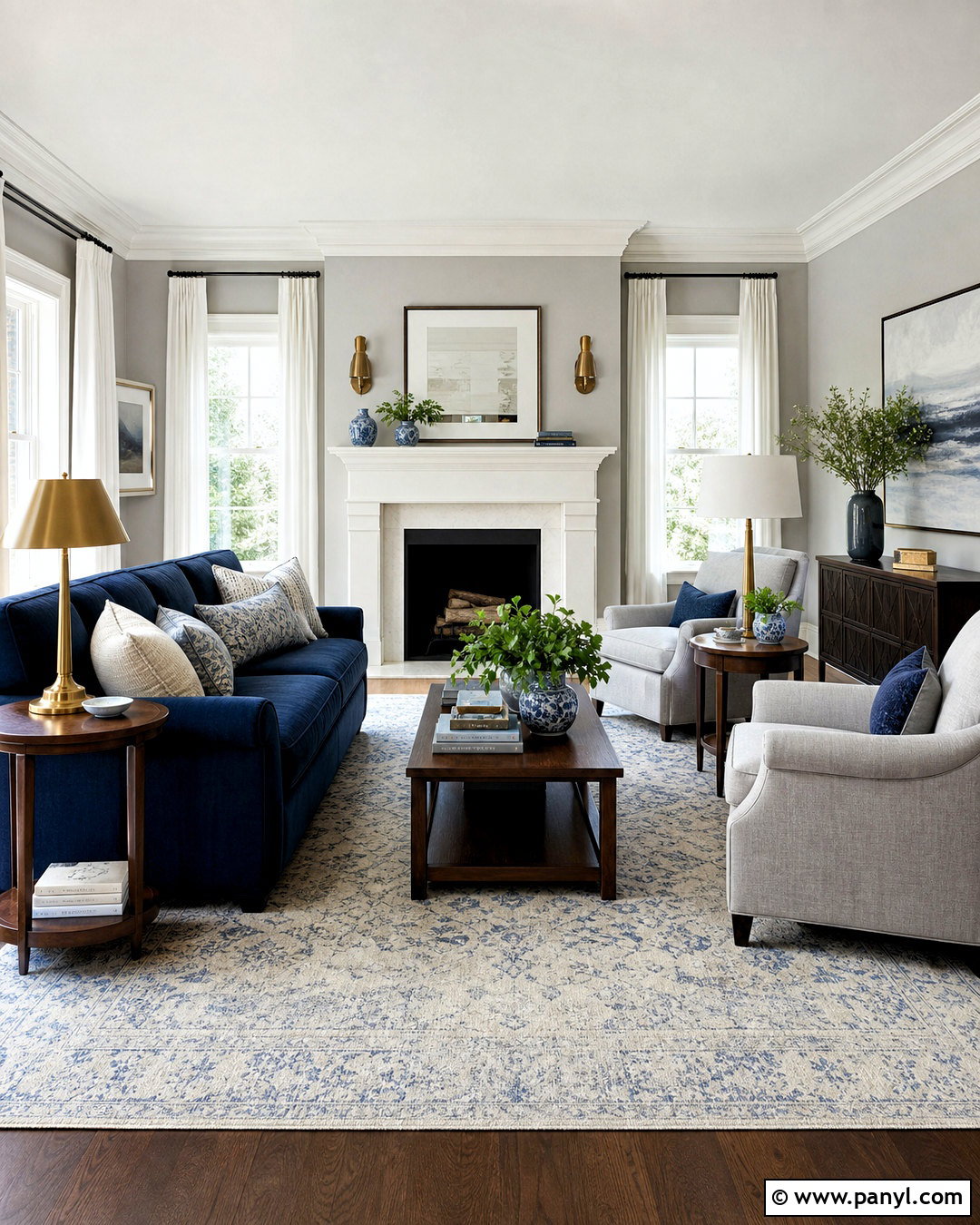
Muted sage walls paired with warm white trim create a restful living room grounded in nature. Paint the baseboards, window casings, doors, and fireplace surround in a creamy white rather than a brilliant one. The softer contrast complements sage without making it look dull. Furnish the room with a camel leather chair, oatmeal sofa, and medium oak tables. A vintage-style rug containing faded green, rust, and beige ties the palette together. Choose relaxed linen curtains and woven baskets to emphasize the comfortable atmosphere. Matte walls help the green look velvety, while satin trim provides durability and a slight reflective edge. Complete the space with aged brass lighting, landscape artwork, and a few leafy plants, avoiding too many green accessories that could make the scheme feel overly themed.
5. Olive Green Walls With Beige Trim
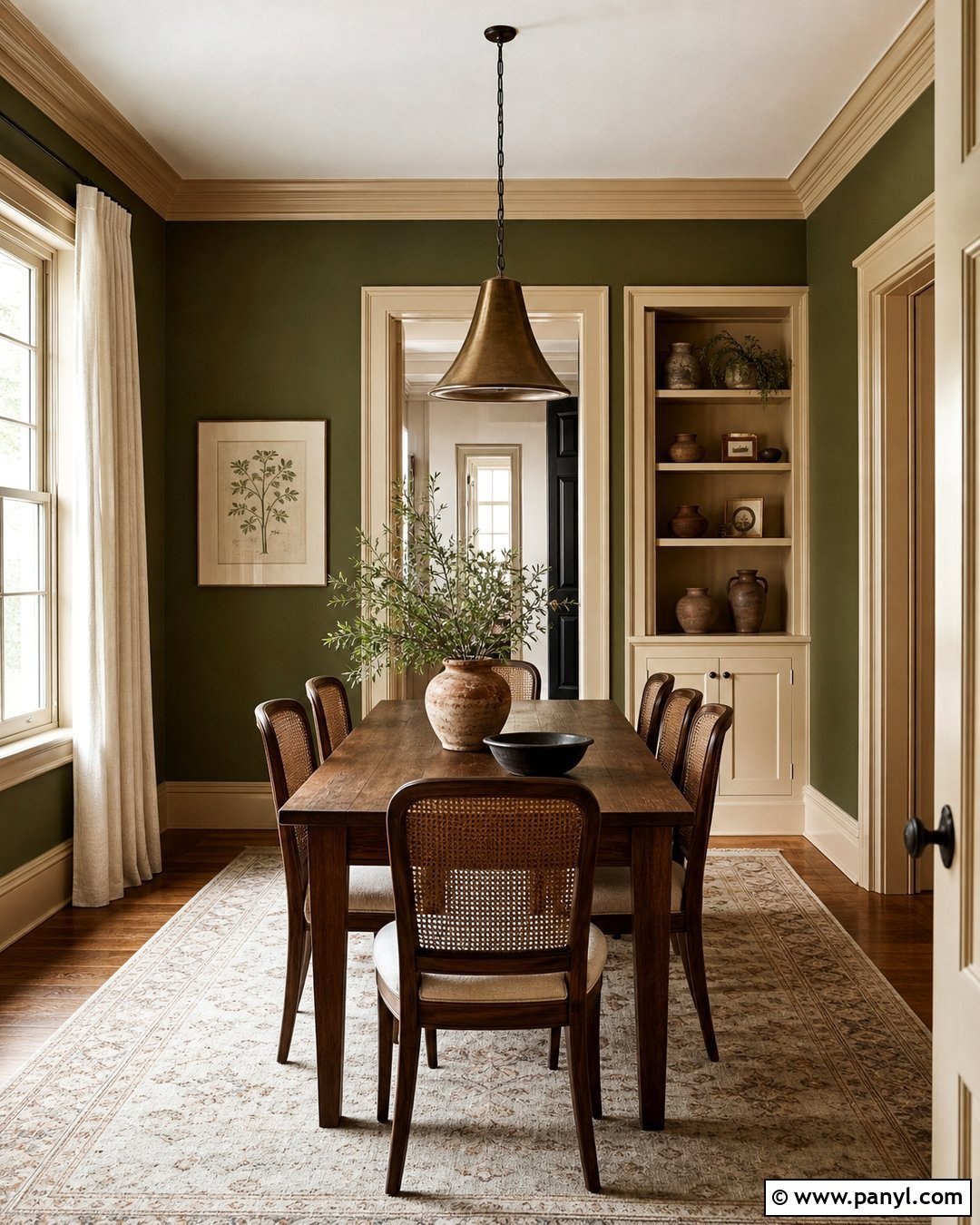
Earthy olive walls become softer and more livable when paired with sandy beige baseboards and trim. This combination works beautifully in a dining room with moderate natural light. Extend the beige across door casings, window frames, crown molding, and built-in cabinetry for a unified architectural layer. A dark oak dining table gives the room weight, while cane-backed chairs add a lighter texture. Choose an ivory and brown patterned rug, off-white curtains, and a sculptural bronze pendant. Terracotta pottery and muted botanical artwork reinforce the organic palette without competing with the walls. Because olive can shift dramatically throughout the day, test a large sample beside the beige trim. The finished room should feel warm and enveloping rather than dark, yellow, or overly rustic.
6. Dusty Blue Walls With Navy Trim
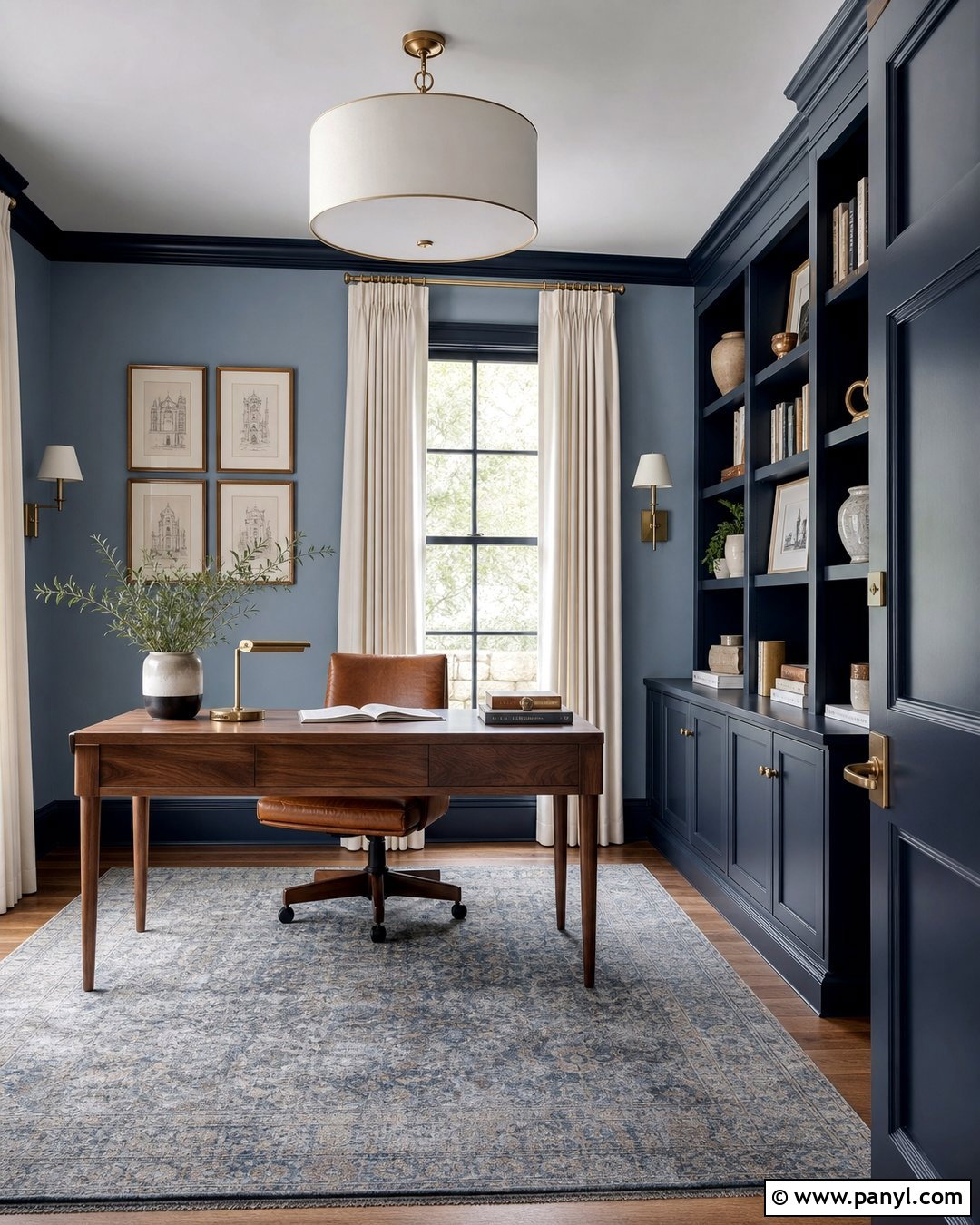
Dusty blue walls and deep navy trim give a home office definition without creating harsh contrast. Cover the baseboards, door, window casing, and built-in bookcase in satin navy so the darker color appears intentional. Place a warm walnut desk at the center, paired with a cognac leather chair and a softly patterned blue-gray rug. Off-white curtains brighten the window, while brass sconces add warmth against the cool paint colors. Keep the ceiling a gentle white to preserve an airy feeling overhead. Books, framed sketches, and ceramic accessories can introduce cream, brown, and muted red details. This layered blue scheme works especially well when the lighter wall color has gray undertones. The navy trim should appear clearly darker while remaining connected to the dusty blue walls.
7. Pale Blue Walls With White Trim
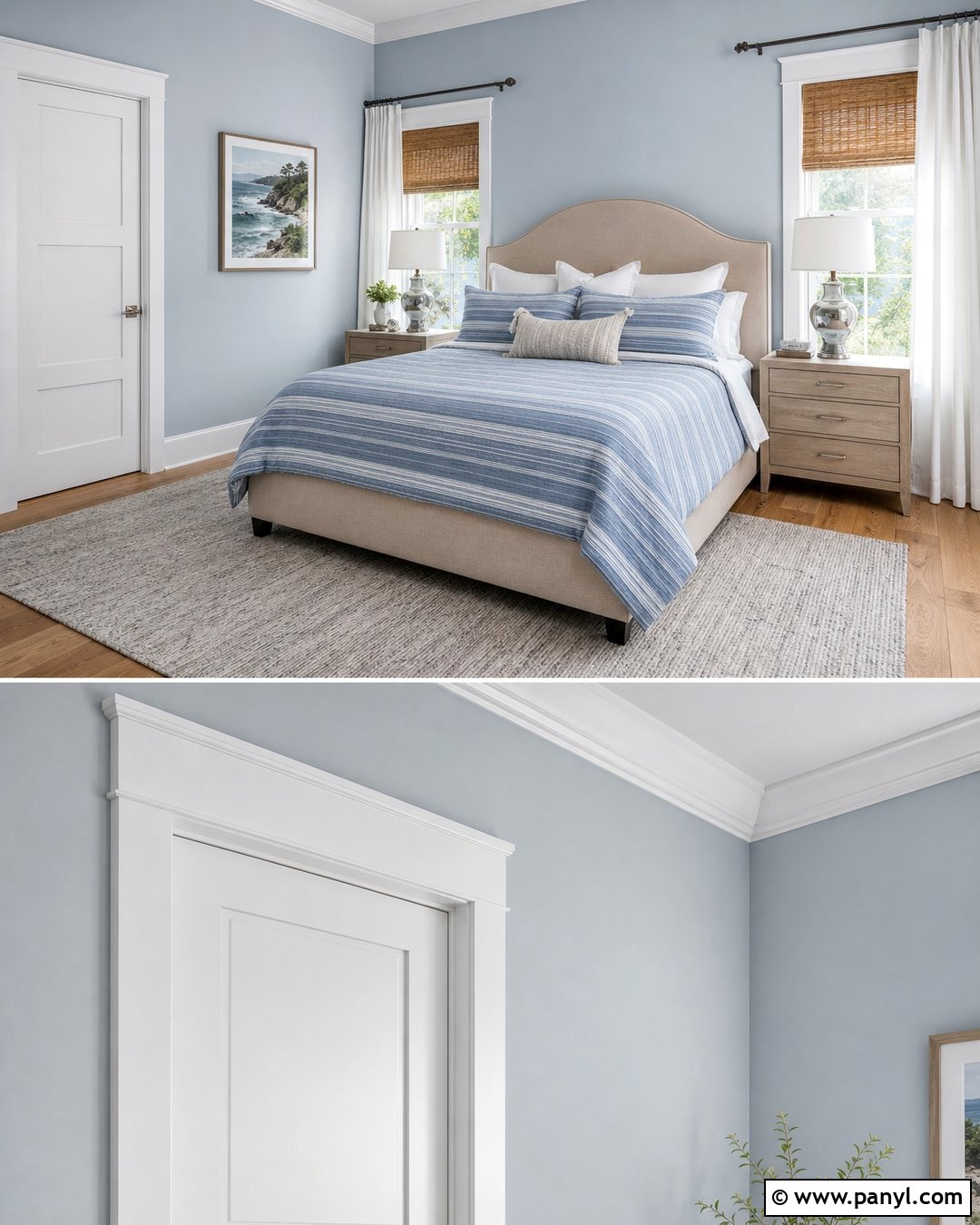
Pale blue walls with clean white trim bring an airy, classic quality to a small bedroom. Use a soft blue with a slight gray undertone so it stays calm rather than looking overly bright. Paint the baseboards, door casings, crown molding, and window trim in a durable satin white. An upholstered beige bed, white oak nightstands, and a light wool rug keep the foundation quiet. Add striped blue bedding, woven shades, and white linen curtain panels for relaxed layers. Polished nickel lamps can echo the cool color family without making the room feel formal. A few natural wood and rattan elements provide necessary warmth. This combination is particularly useful when you want architectural details to look crisp while allowing the walls to contribute gentle, noticeable color.
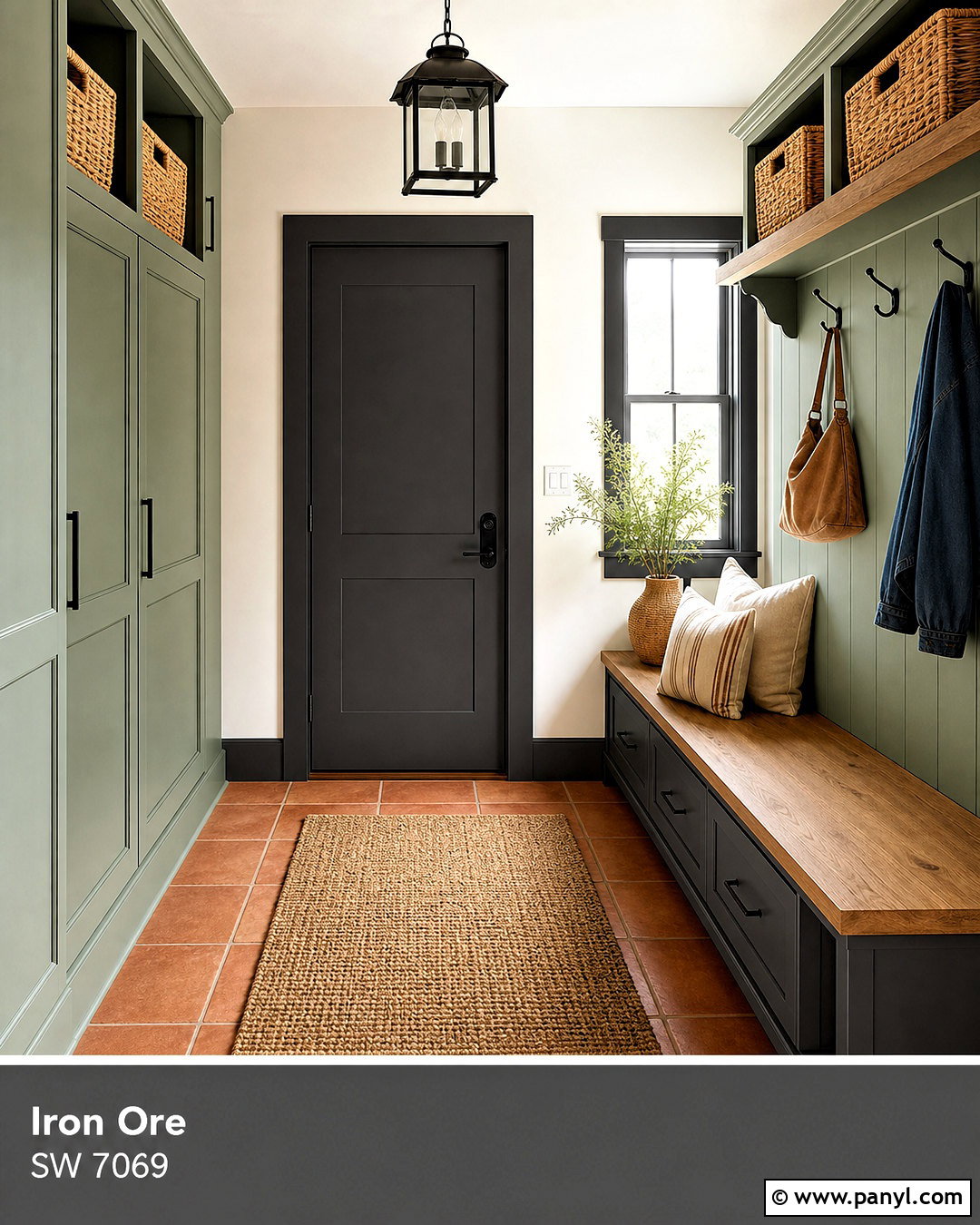
8. Navy Walls With Matching Navy Trim
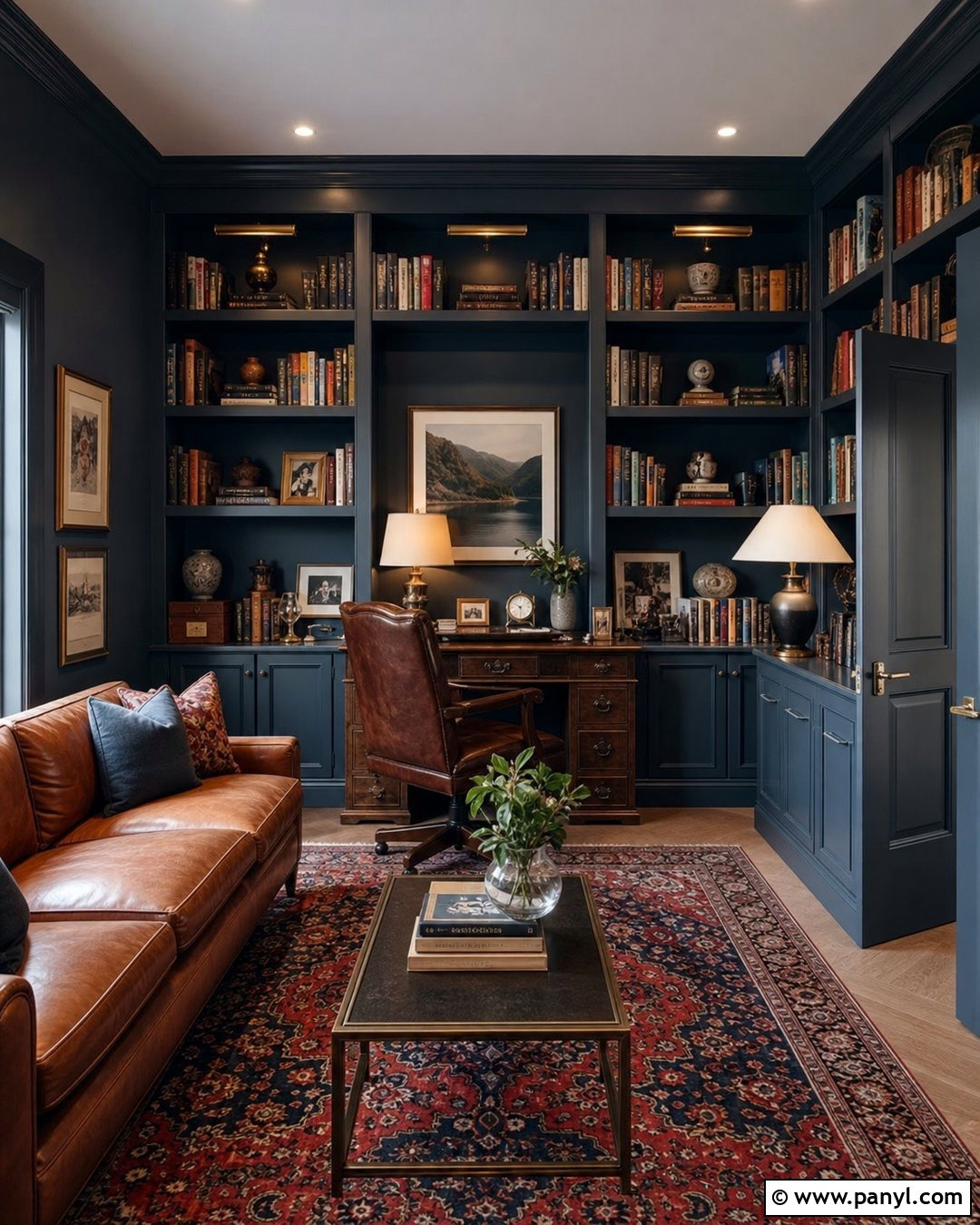
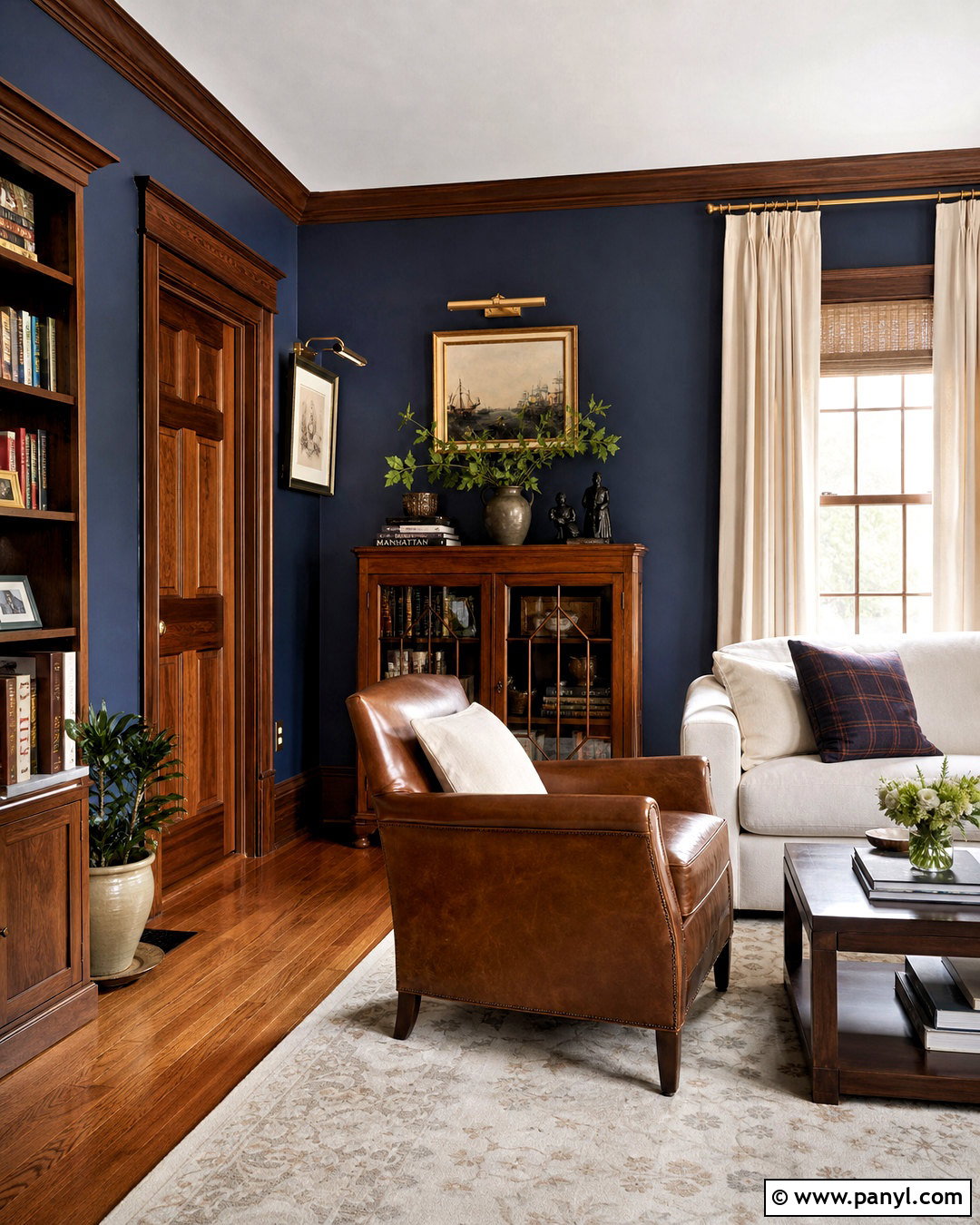
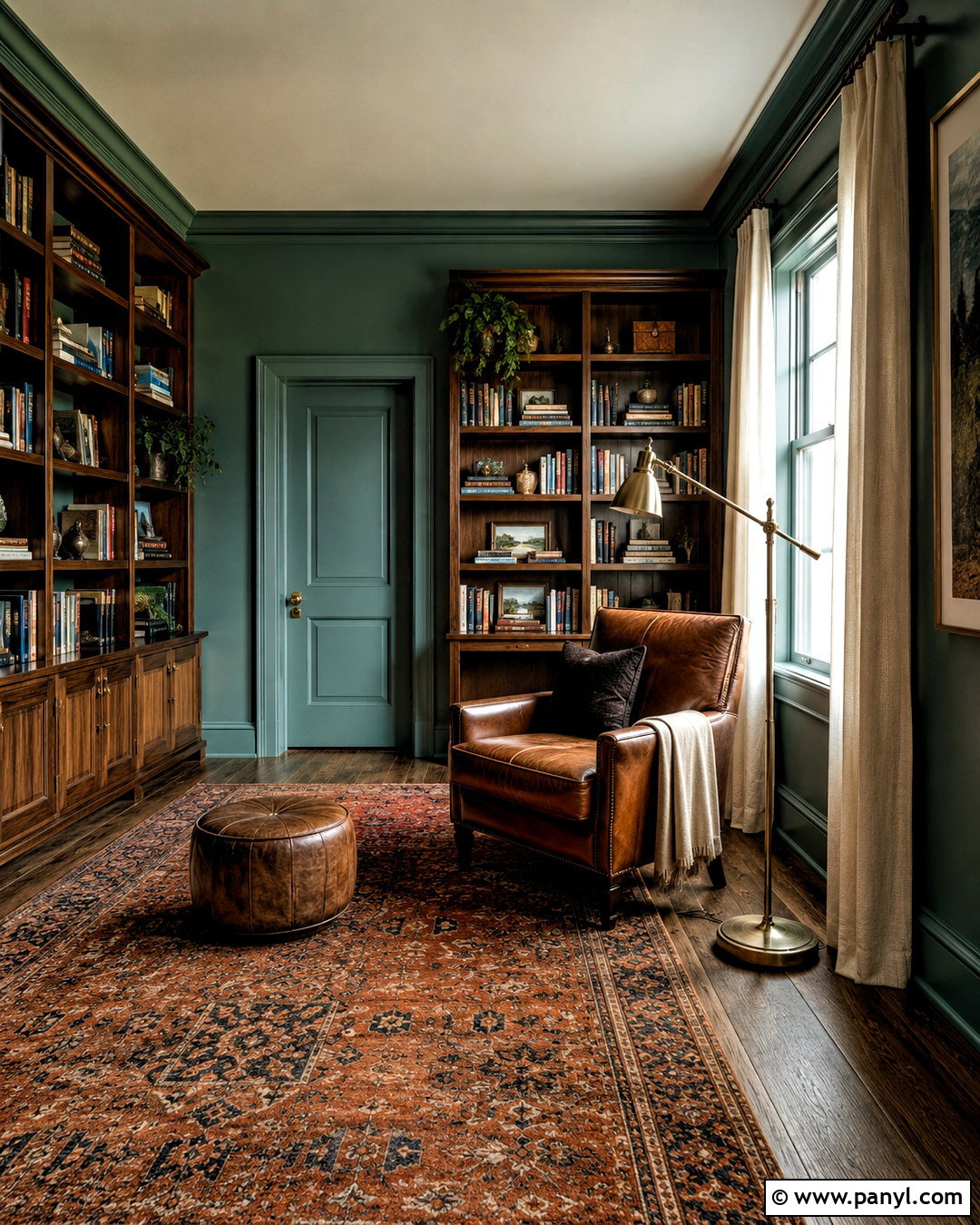
A navy color-drenched library feels immersive when the walls, baseboards, door casings, and built-in shelves share the same shade. Use matte paint on the walls and satin on the woodwork so the trim remains visible through sheen rather than color contrast. A cognac leather sofa, dark walnut desk, and vintage red-and-navy rug create a rich but comfortable setting. Add aged brass picture lights and warm white lampshades to prevent the room from feeling cold. The ceiling can stay creamy white if the space is compact, or continue the navy overhead in a bright room with generous windows. Arrange books, pottery, and framed art with breathing room. Light upholstery and warm metals balance the deep envelope while preserving the dramatic, tailored character of the scheme.
9. Light Gray Walls With Charcoal Trim
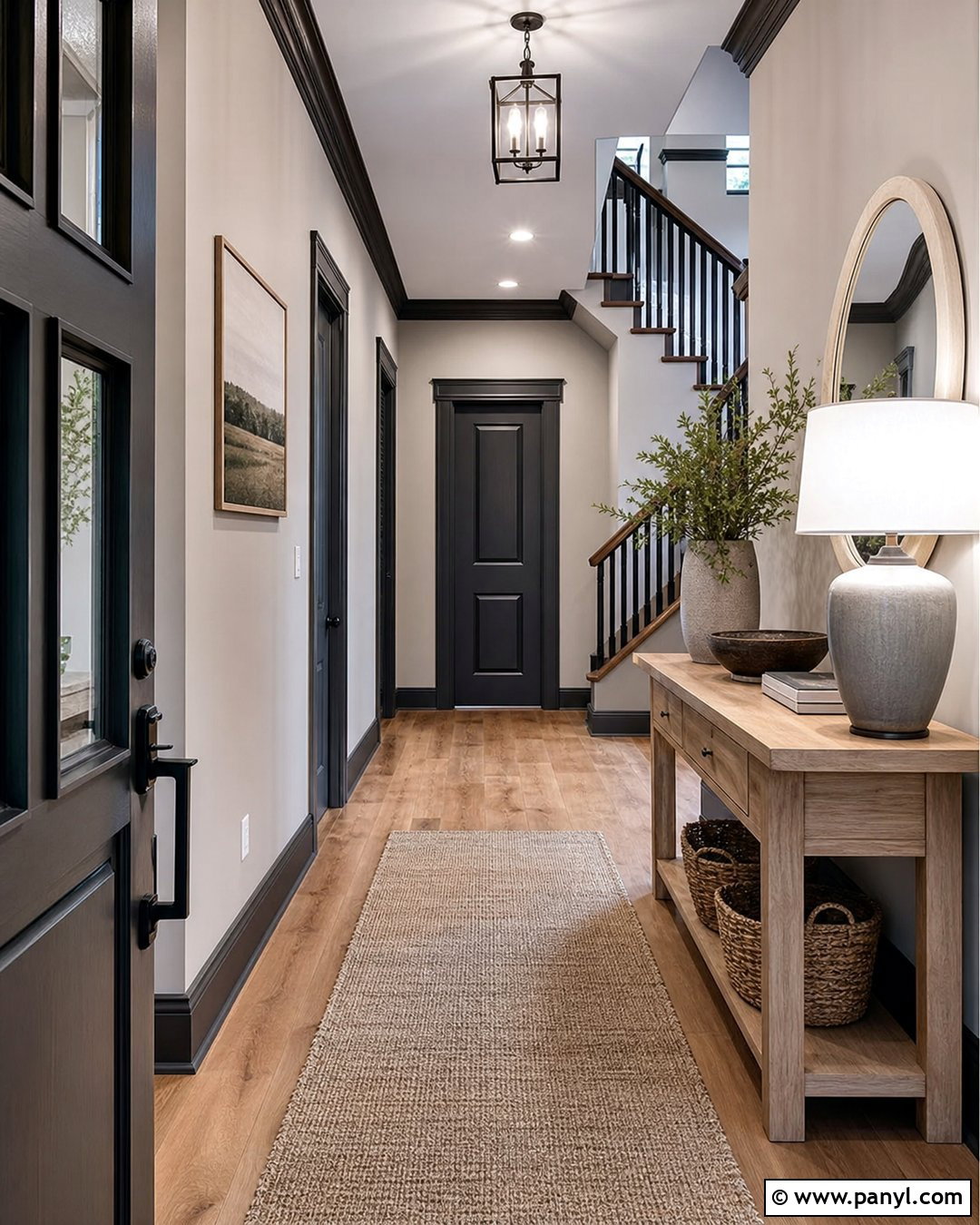
Light gray walls gain architectural strength when framed by charcoal baseboards and trim. Use this palette in a streamlined entryway where darker door casings can disguise everyday scuffs and emphasize clean lines. Carry charcoal onto the interior doors and stair railing for a deliberate, connected look. A pale oak console, rounded cream mirror, and natural fiber runner soften the cool painted surfaces. Add a ceramic table lamp, woven storage baskets, and one muted landscape print. Select a gray wall color with a slight warm undertone, especially if the flooring is oak or beige tile. Satin charcoal trim reflects enough light to reveal molding details without appearing glossy. The completed entry should feel graphic yet welcoming, with black, gray, cream, and wood repeated in balanced amounts.
10. Terracotta Walls With Cream Trim
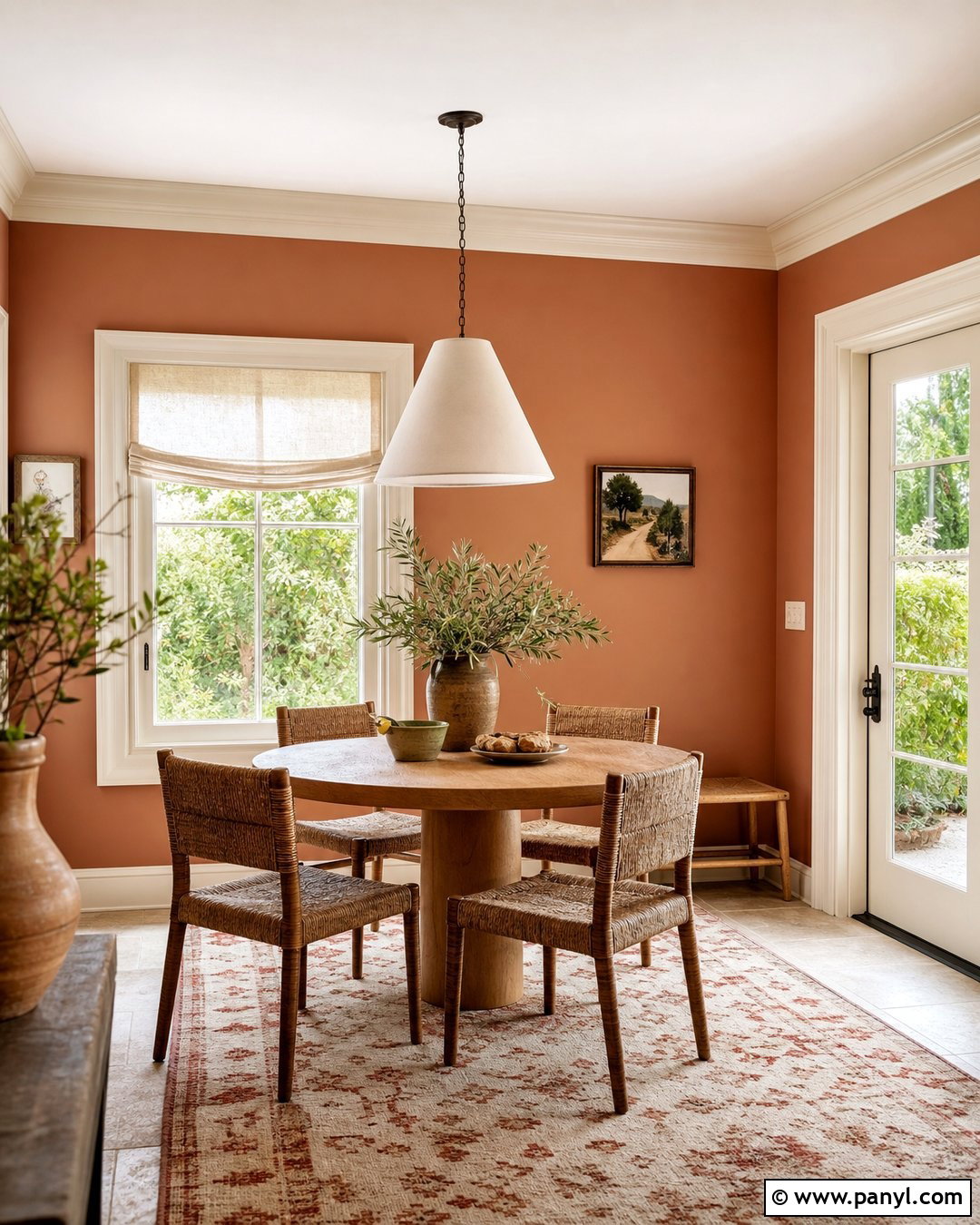
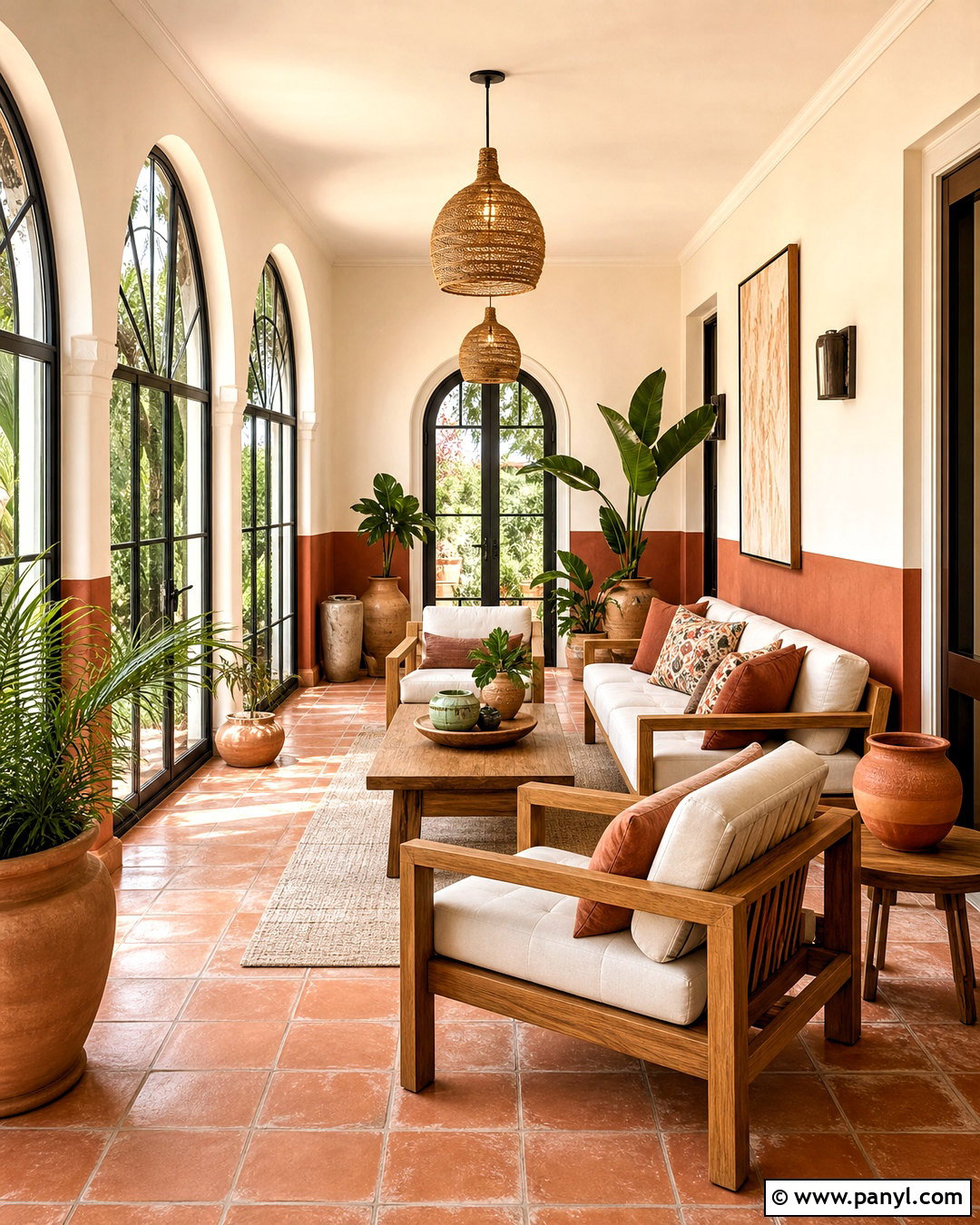
Sun-washed terracotta walls and creamy trim bring warmth to a cozy breakfast room. Choose a muted clay shade rather than a vivid orange, then paint the baseboards, windows, door casings, and simple crown molding in soft ivory. A round oak table and woven dining chairs create an approachable centerpiece. Use a washable cream rug with a subtle rust pattern to connect the walls and woodwork. Natural linen Roman shades filter bright daylight, while a plaster pendant keeps the room casual. Add olive-green ceramics, framed food illustrations, and a small wooden bench for contrast. Terracotta looks especially balanced beside warm stone or medium wood flooring. Keeping the ceiling and trim creamy prevents the saturated walls from closing in and gives the whole room a brighter, cleaner framework.
11. Blush Walls With Burgundy Trim
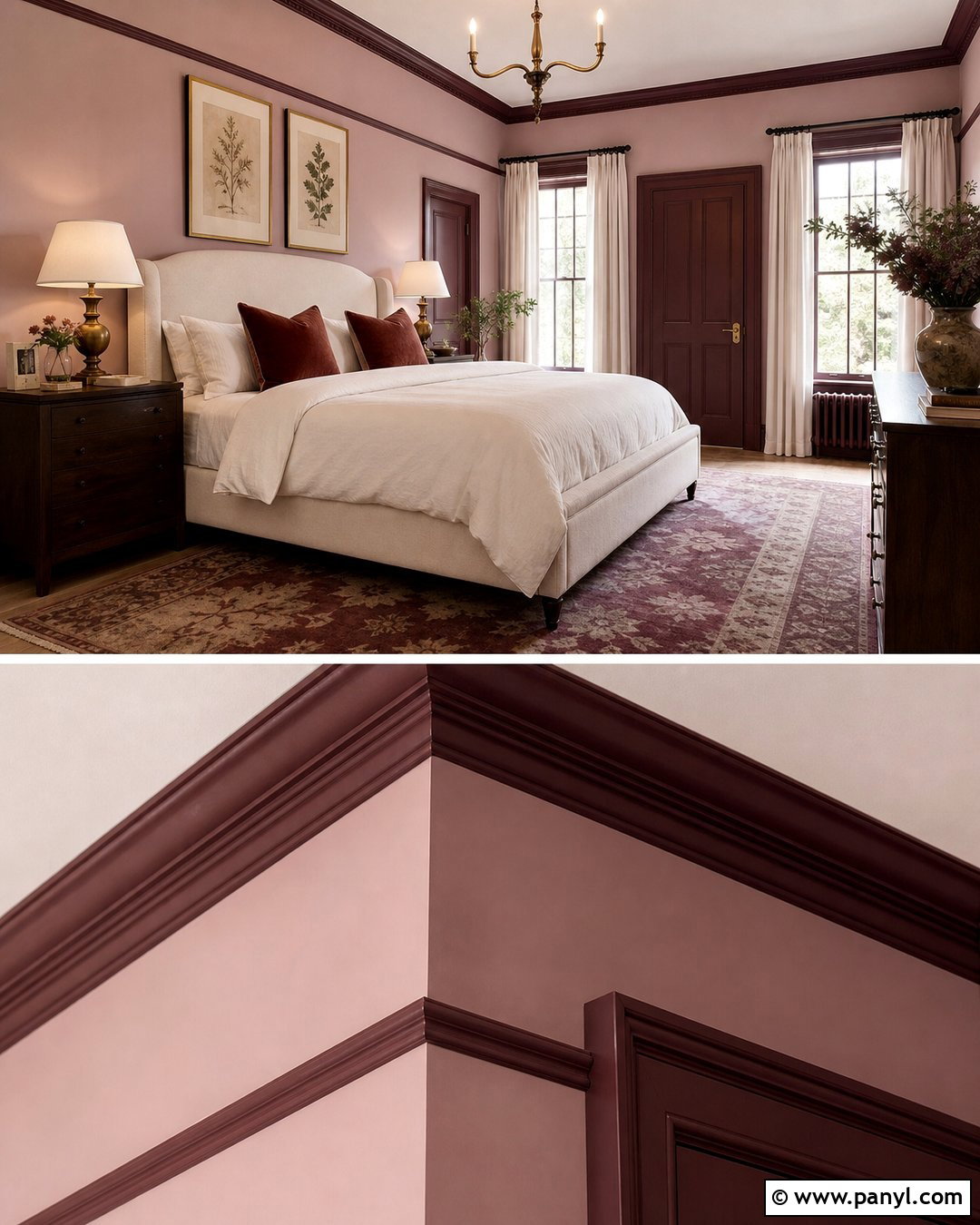
Powdery blush walls framed by burgundy trim create a mature, layered bedroom rather than an overly sweet pink space. Apply burgundy to the baseboards, door, window casing, and a simple picture rail. Choose an upholstered cream bed, dark wood nightstands, and a plum-and-beige patterned rug to bridge the two paint colors. Ivory bedding with rust and dusty rose pillows keeps the palette relaxed. Use antique brass lamps and light-filtering linen curtains for warmth. The blush should have muted beige or gray undertones, while the burgundy should lean brown rather than purple. This pairing benefits from restrained decor because the painted architecture already provides a strong statement. A few botanical prints and sculptural ceramics complete the room without distracting from the distinctive wall-and-trim relationship.
12. Butter Yellow Walls With White Trim
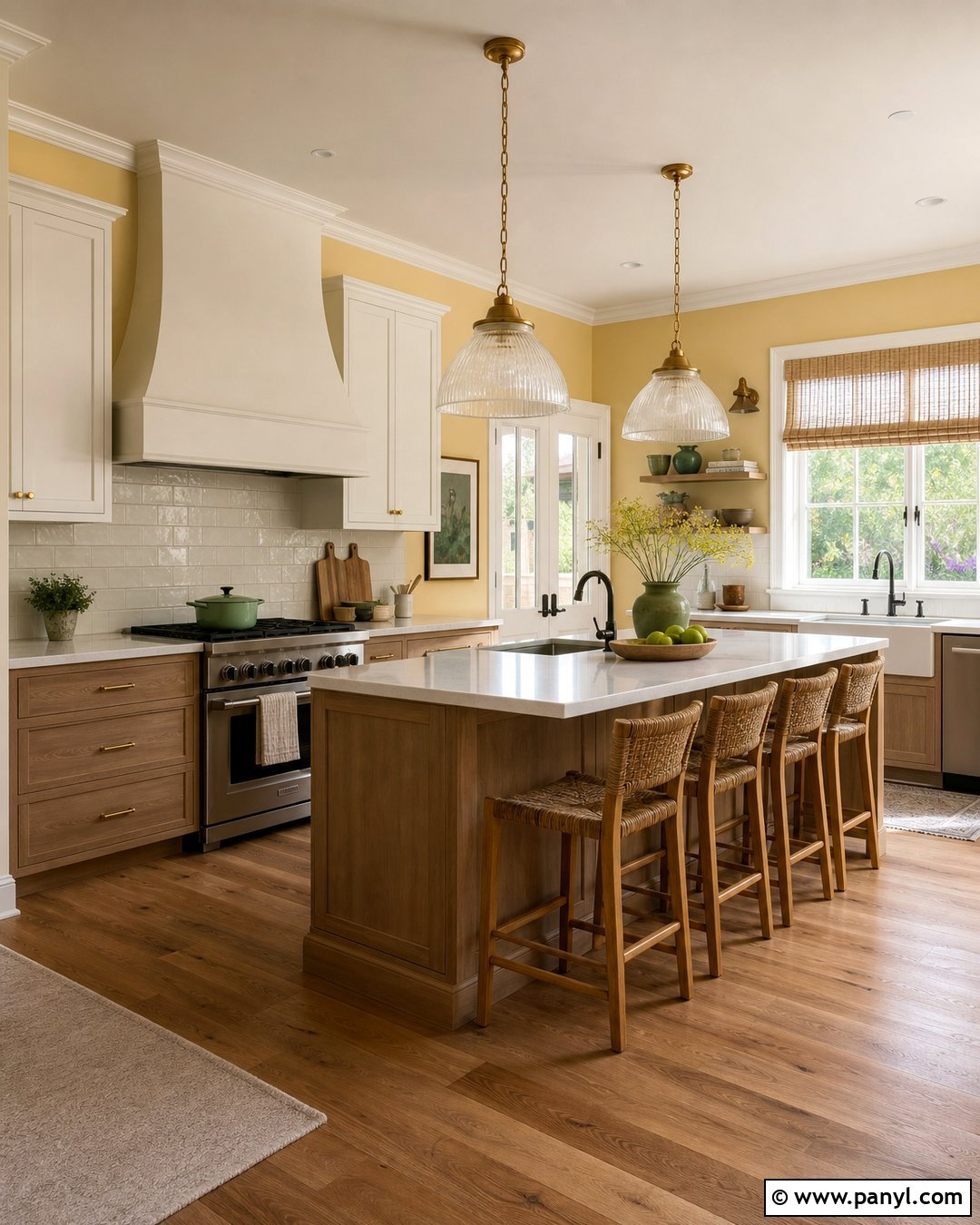
Gentle butter yellow walls and warm white trim can make a kitchen feel sunny even when daylight is limited. Paint the baseboards, windows, doors, and cabinet crown in a soft white that shares the yellow’s warm undertone. White oak lower cabinets, creamy quartz counters, and a simple off-white tile backsplash create a fresh foundation. Add brushed brass hardware, woven counter stools, and pale green ceramics for subtle variety. The yellow should be light and milky instead of intense, allowing it to read as a warm background. Natural Roman shades and medium-tone wood flooring prevent the kitchen from feeling overly pale. Repeat the trim color on the ceiling for a connected finish. This complete scheme feels cheerful, practical, and easy to coordinate with everyday kitchen materials.
13. Mauve Walls With Plum Trim
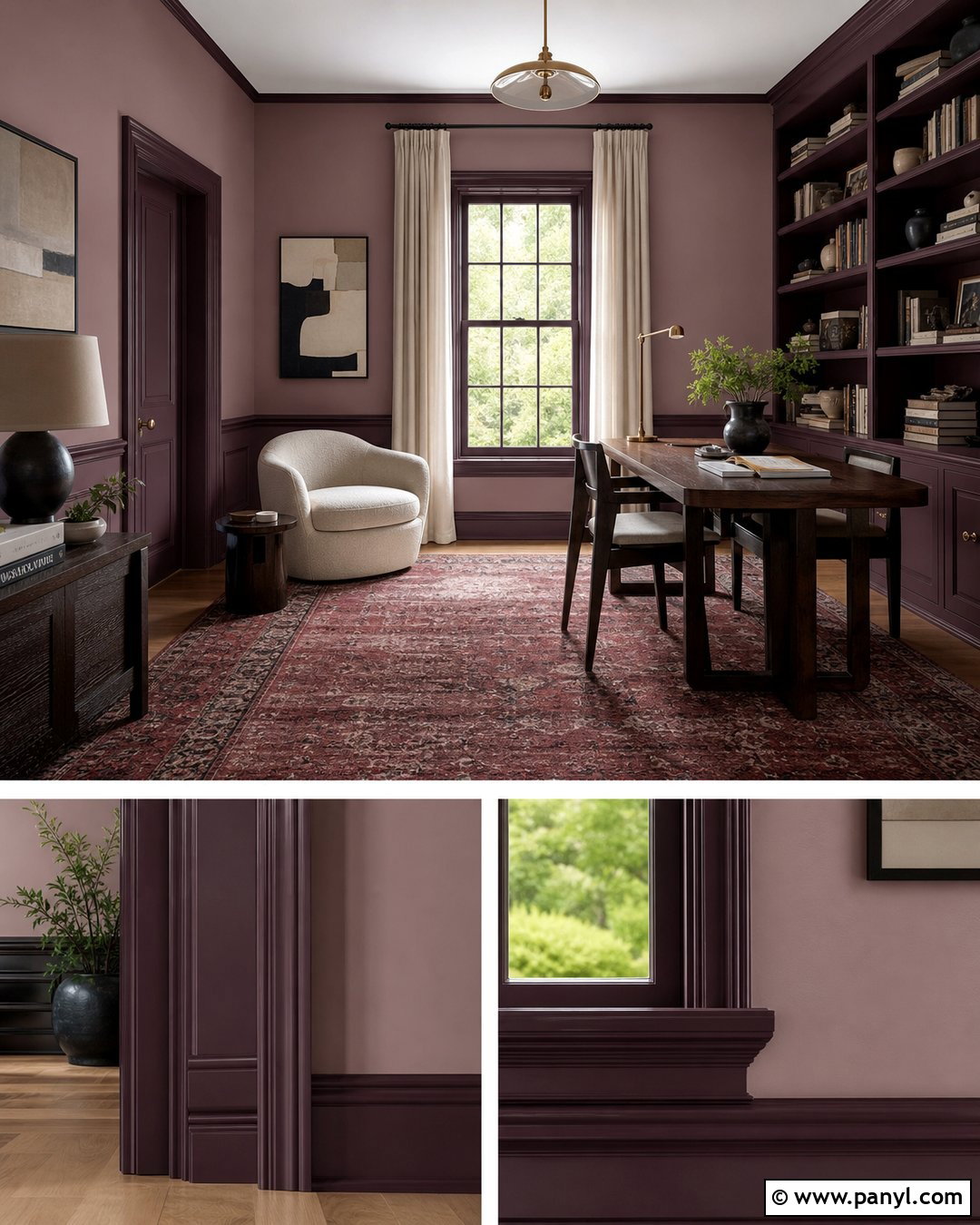
Muted mauve walls and dark plum trim form an elegant reading room with more personality than standard neutrals. Coat the baseboards, window casings, door, and built-in bookcases in satin plum. The walls should be a dusty mauve with enough gray to feel grounded. Furnish the space with a curved oatmeal chair, dark wood side table, and a faded burgundy rug. Cream curtains lighten the windows, while bronze lighting supports the warmer undertones. Add books, charcoal pottery, and understated abstract art rather than repeating purple everywhere. A pale ceiling provides visual relief and keeps the color scheme from becoming heavy. This tonal combination works particularly well in rooms used during the evening, when lamplight brings out the warmth in both the mauve walls and plum-painted woodwork.
14. Lavender Walls With Gray Trim
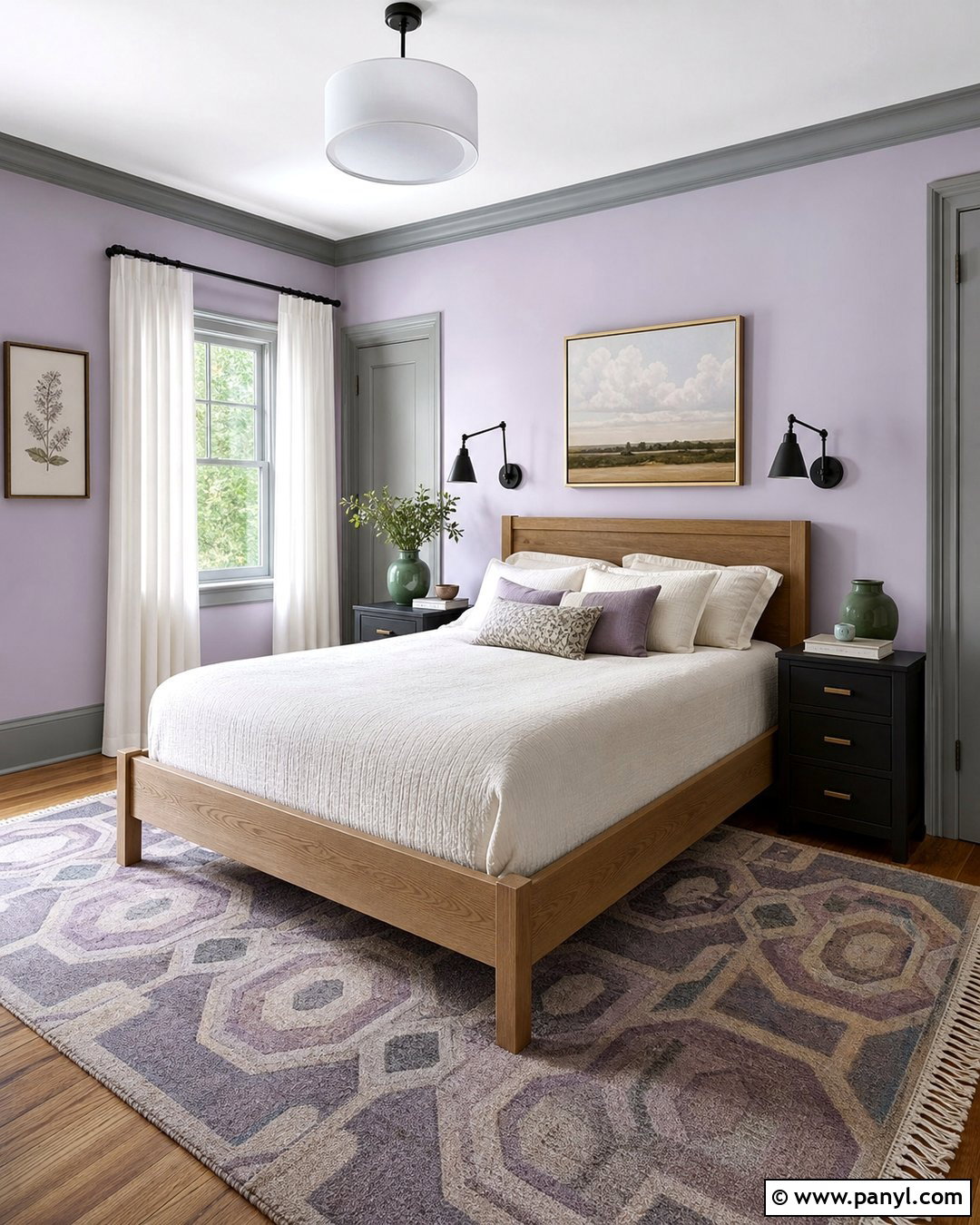
Soft lavender walls become calm and contemporary beside warm gray trim. This combination suits a guest bedroom where the goal is color without excessive sweetness. Paint the baseboards, doors, windows, and crown molding in a medium-light gray with subtle violet undertones. Add a natural oak bed, ivory quilt, and charcoal bedside tables to anchor the pale walls. A geometric rug in cream, lavender, and gray brings the two paint colors together. Use white linen curtains and matte black reading lights for a clean finish. Small touches of muted green can appear through artwork or a ceramic vase. Avoid cool blue-gray trim, which may make the lavender feel chilly. The completed room should balance softness with clear structure, using warm wood and textured fabrics to keep everything welcoming.
15. Chocolate Brown Walls With Tan Trim
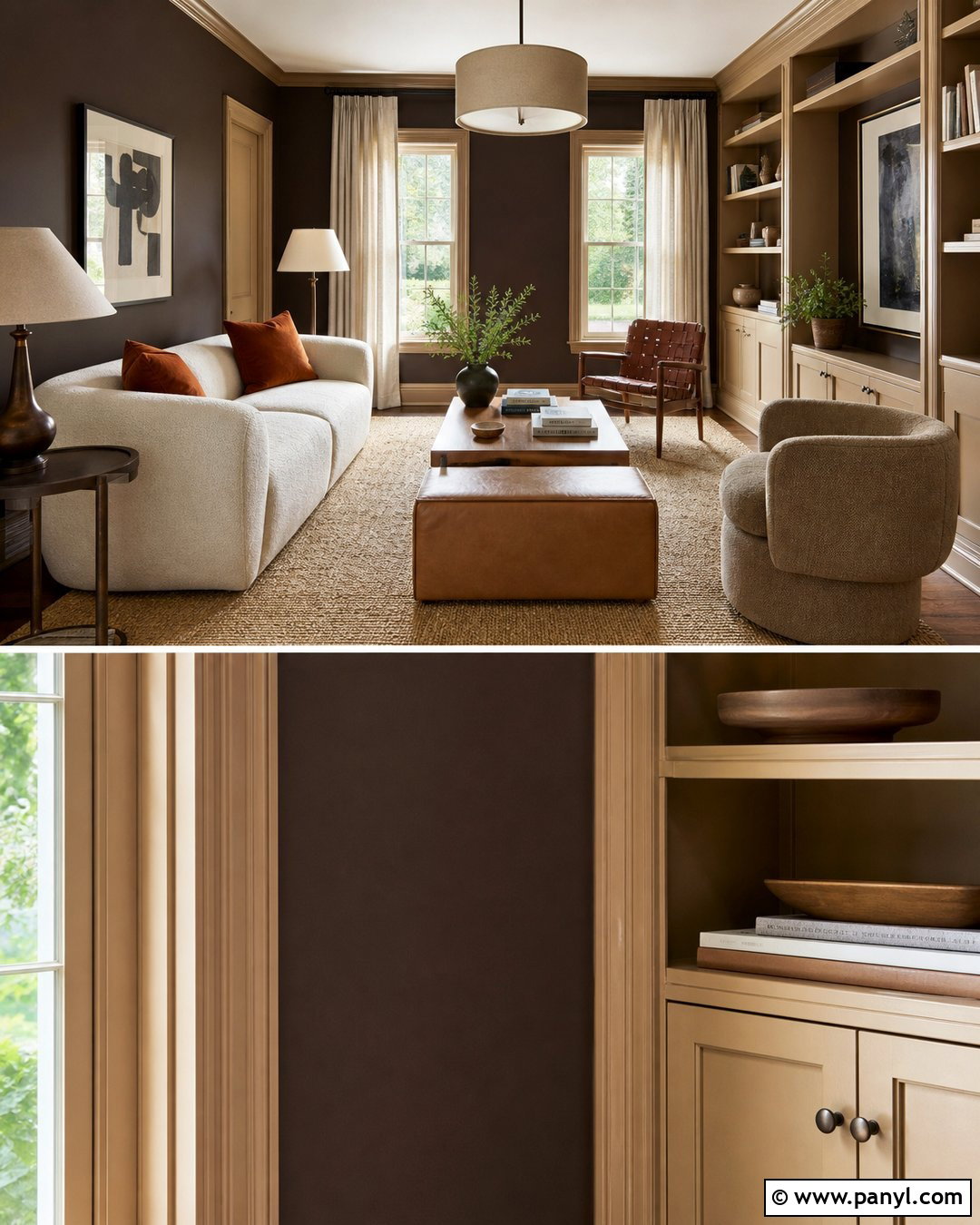
Chocolate brown walls paired with camel-tan trim create a cocooning den that still feels polished. Use the lighter tan on baseboards, door casings, window frames, and built-in shelving so the architecture remains visible against the dark walls. A cream boucle sofa and caramel leather ottoman brighten the center of the room. Add a walnut media console, woven wool rug, and linen curtains in natural beige. Bronze lamps and rust-colored pillows continue the warmth without making every element brown. If the room receives limited sunlight, keep the ceiling a soft cream and include several layered light sources. The combination feels most balanced when wall and trim colors share warm undertones. Touches of black through frames or hardware can sharpen the earthy palette and prevent a muddy appearance.
16. Forest Green Walls With Dark Green Trim
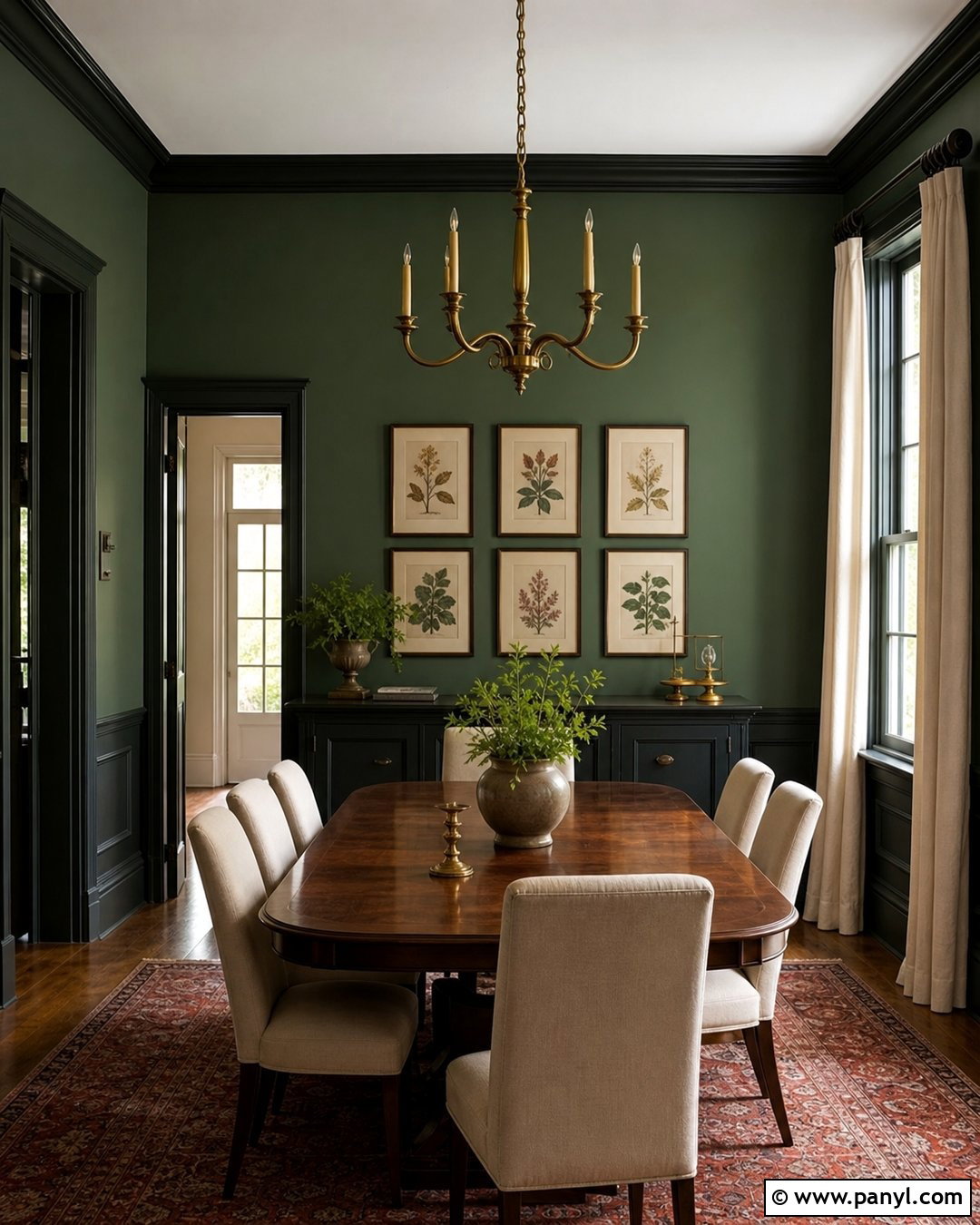
Forest green walls and nearly black green trim turn a dining room into a deep, cohesive retreat. Use the darker green on baseboards, doorways, windows, crown molding, and a painted sideboard. This subtle tonal shift outlines the architecture without introducing a disconnected neutral. A substantial walnut table, upholstered cream chairs, and a faded red rug add warmth and contrast. Hang an aged brass chandelier above the table and use light linen curtains to balance the saturated walls. Botanical artwork can work here, but select simple pieces with plenty of cream background. Matte walls and satin trim help separate the two greens when daylight changes. Keep table decor minimal so the painted envelope remains the focus. The finished space feels traditional, grounded, and comfortably dramatic.
17. Teal Walls With Off-White Trim
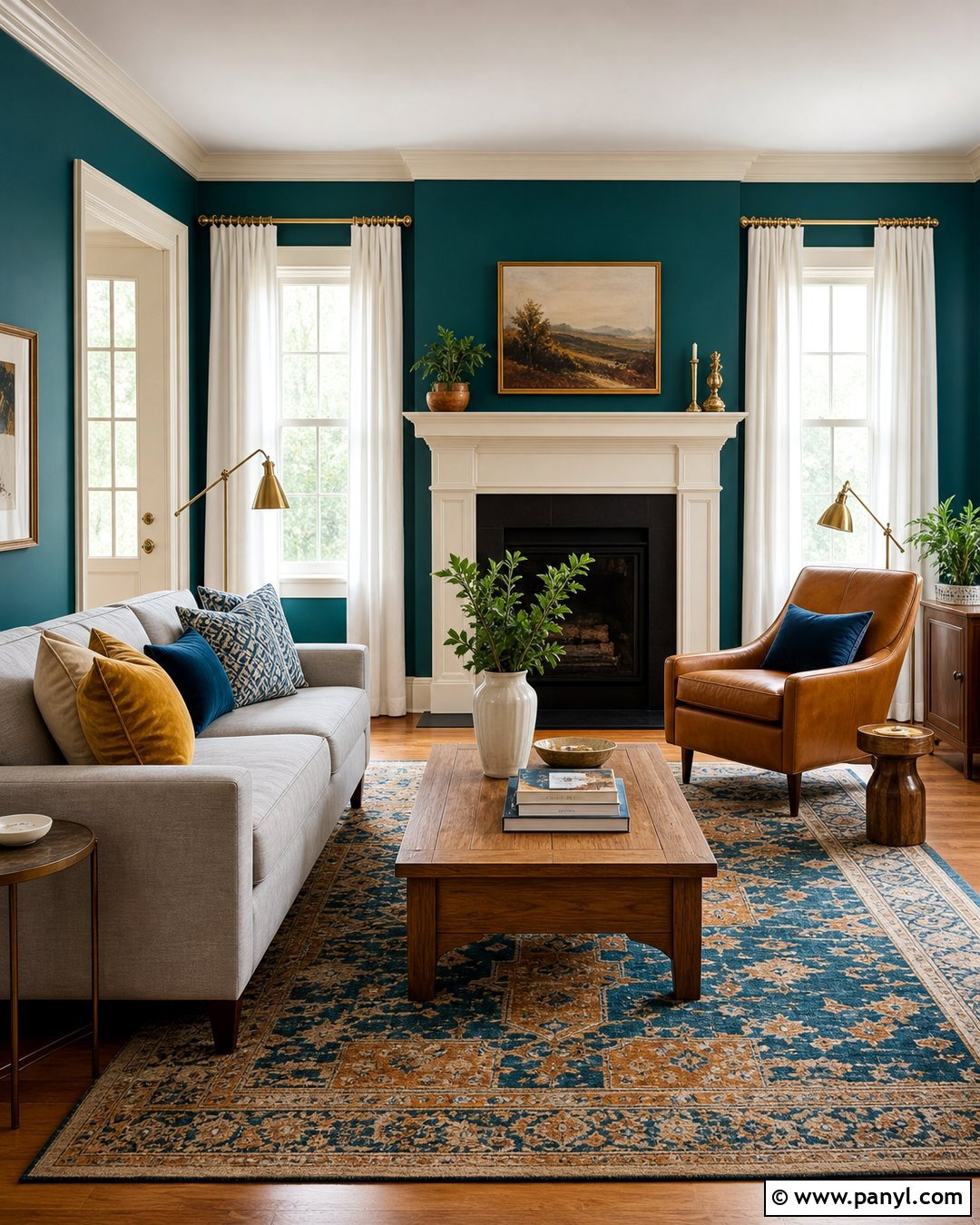
Rich teal walls and off-white trim give a living room bold color while preserving a light architectural frame. Apply the creamy off-white to baseboards, windows, doors, crown molding, and the fireplace surround. A light gray sofa, oak coffee table, and tan leather accent chair provide a balanced mix of cool and warm tones. Choose a patterned rug containing teal, cream, and muted ochre to connect the entire palette. White linen curtains keep the windows open, while brass lamps introduce a soft glow. Teal can appear blue or green depending on the room, so test it beside flooring and upholstery first. Avoid using bright white trim, which may create an overly sharp boundary. The softer off-white allows the walls to remain saturated without making the room look cold or overly graphic.
18. Clay Beige Walls With Brown Trim
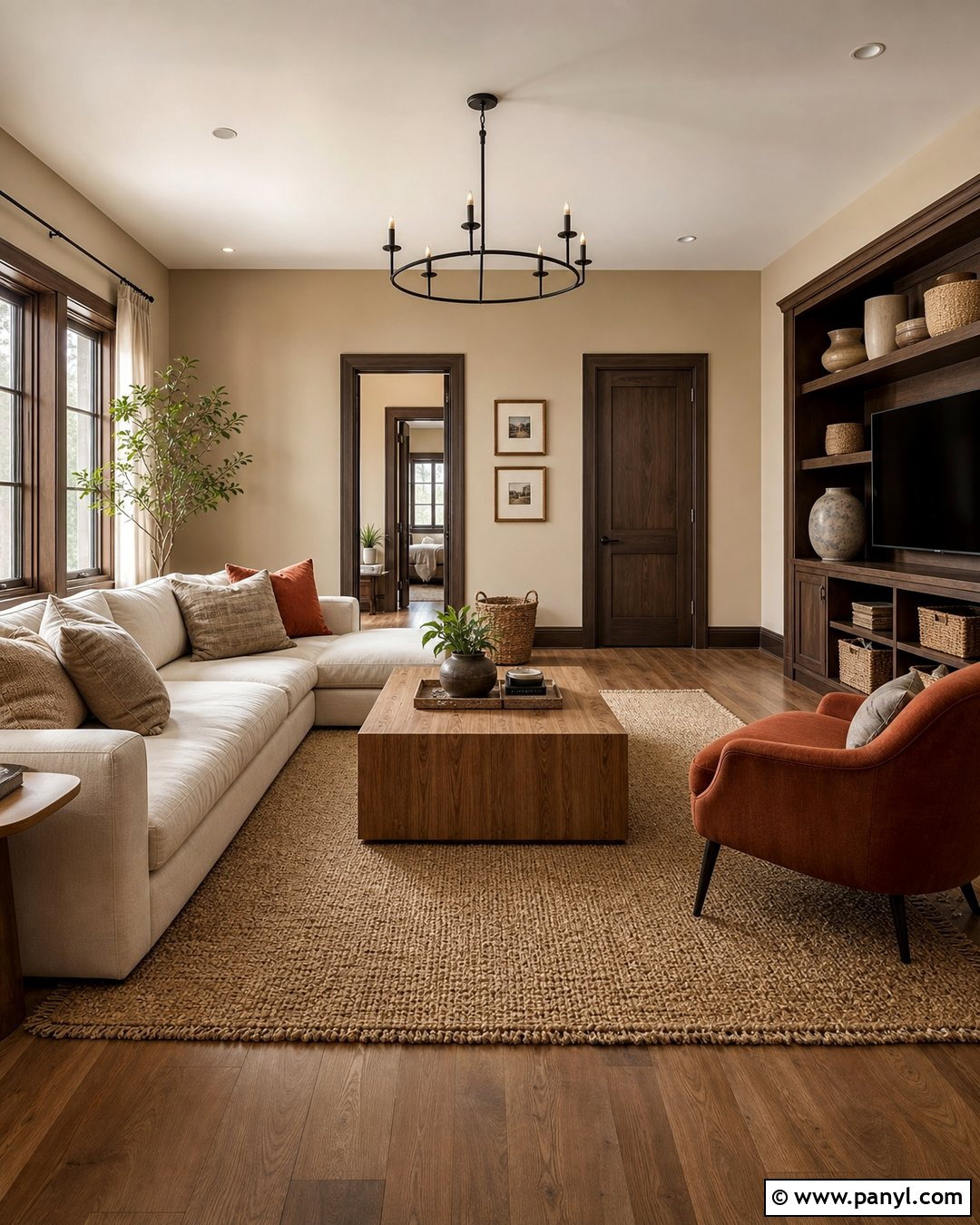
Clay beige walls with medium brown trim create an earthy family room that feels relaxed and durable. Paint the baseboards, door casings, windows, and built-in media storage in a warm cocoa brown. Choose matte beige walls and satin woodwork to give the combination extra dimension. A deep cream sectional, oak coffee table, and rust-colored lounge chair build a comfortable seating arrangement. Layer a textured wool rug over medium wood flooring and use flax curtains at the windows. Black metal lighting adds definition, while handmade pottery and woven baskets reinforce the natural materials. Keep the ceiling warm white so the room remains bright. This palette works especially well in busy spaces because the darker painted baseboards visually ground the room and are less likely to emphasize everyday marks near the floor.
19. White Walls With Sage Green Trim
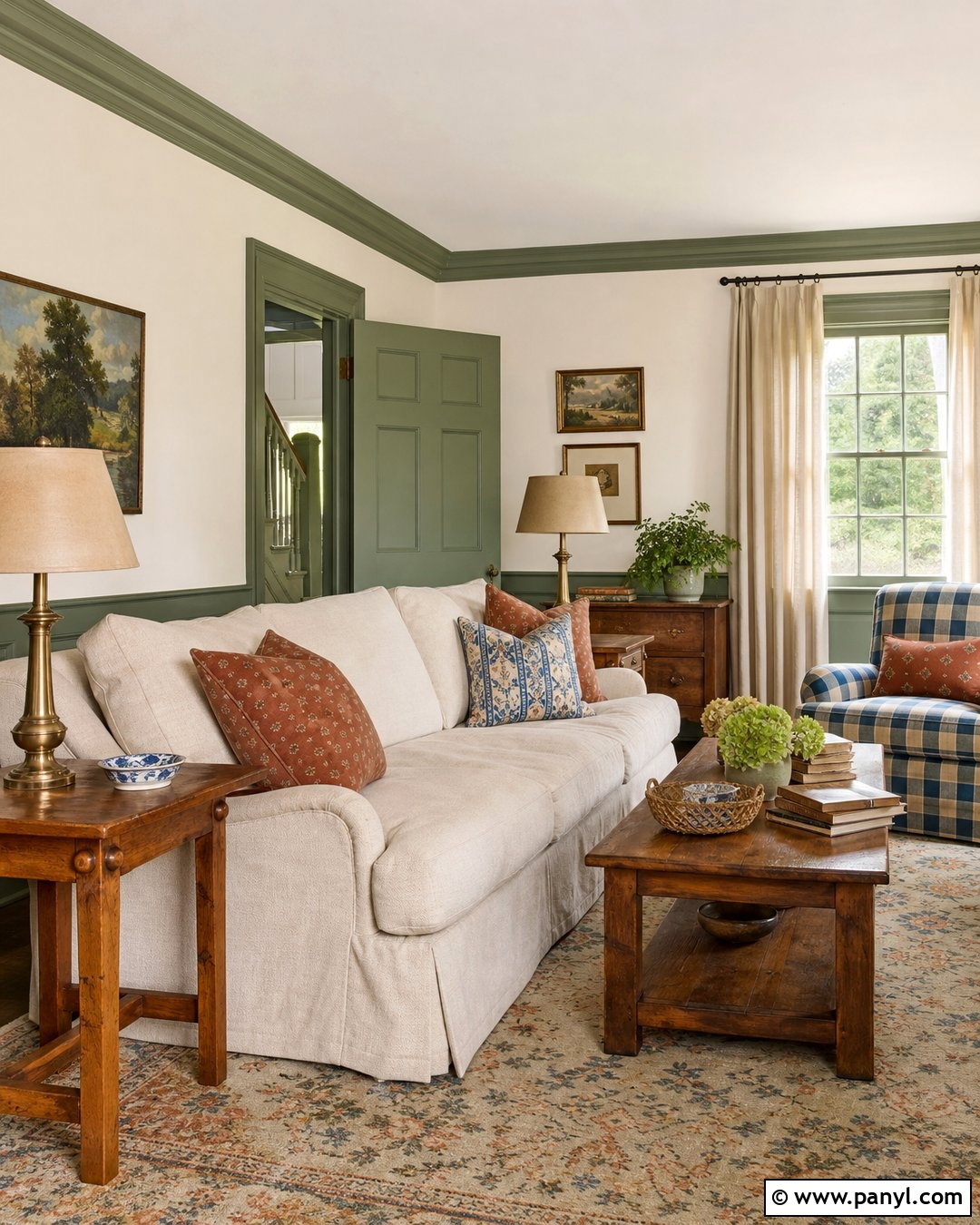
Warm white walls framed by sage green trim offer a gentle way to highlight traditional architecture. Use sage on the baseboards, door casings, window frames, crown molding, and interior doors throughout a cottage-style living room. A slipcovered cream sofa, warm oak side tables, and a faded floral rug create a comfortable foundation. Add natural linen curtains, aged brass lamps, and cushions in muted rust and blue. Keep the green slightly gray so it complements the walls without appearing minty. Painting every trim element sage gives the room more continuity than using the color on one doorway alone. A simple white ceiling maintains brightness overhead. The complete look feels collected and welcoming, with the colored woodwork acting as a quiet decorative layer rather than a bold or distracting outline.
20. Peach Walls With Terracotta Trim
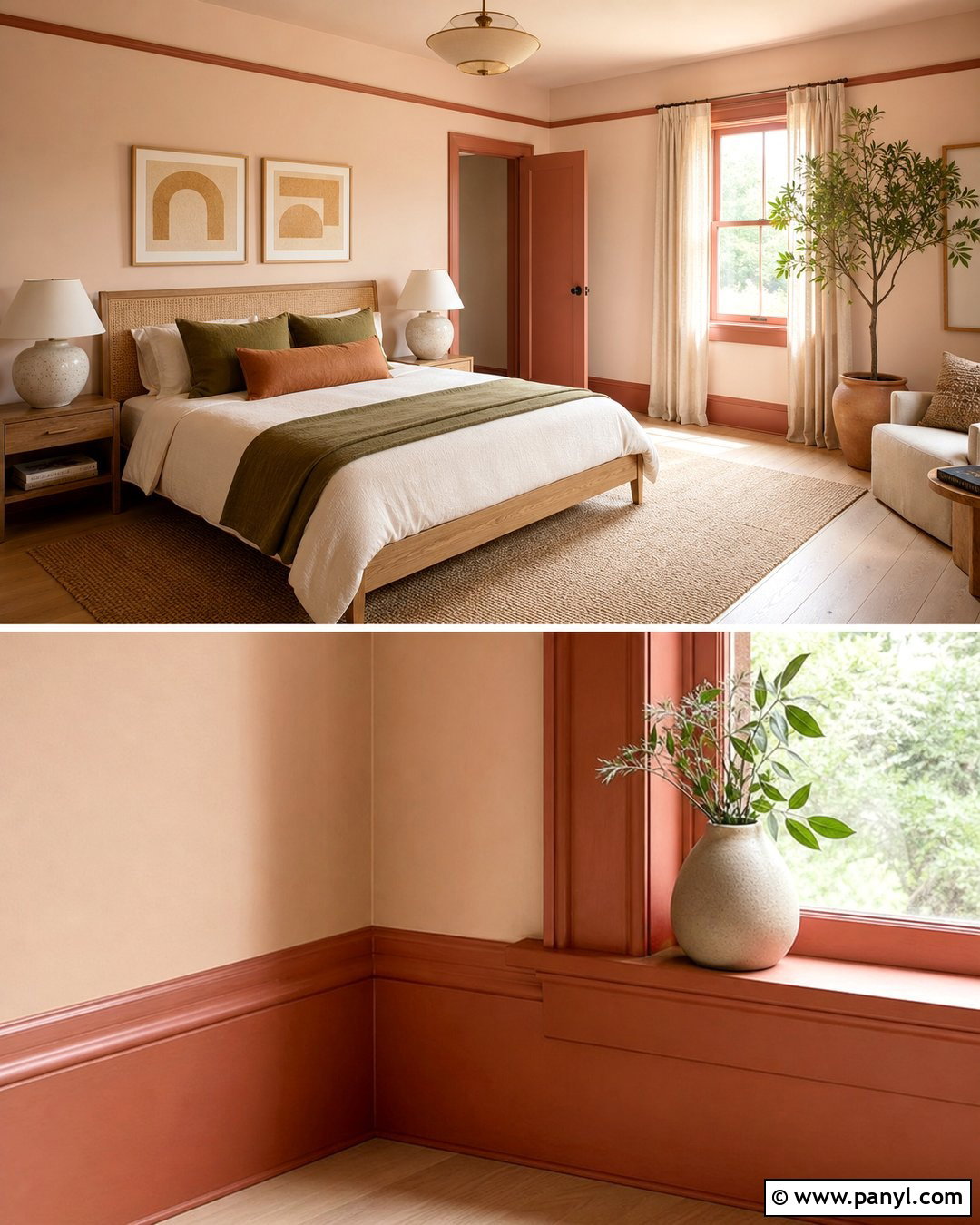
Soft peach walls and terracotta trim create a warm bedroom with a flattering, sunlit appearance. Select a pale peach that leans earthy rather than sugary, then paint the baseboards, door, window casings, and picture rail in muted terracotta. A light oak bed and woven cane headboard add natural texture. Use cream bedding with clay, olive, and dusty blue accents to keep the palette balanced. A neutral wool rug, linen curtains, and plaster bedside lamps soften the stronger painted trim. The ceiling should remain warm white for visual breathing room. Terracotta works best as a repeated architectural color, so carry it across every major piece of woodwork in the room. A few framed abstract prints can connect the peach and clay tones without making the design look overly matched.
21. Sky Blue Walls With Red Trim
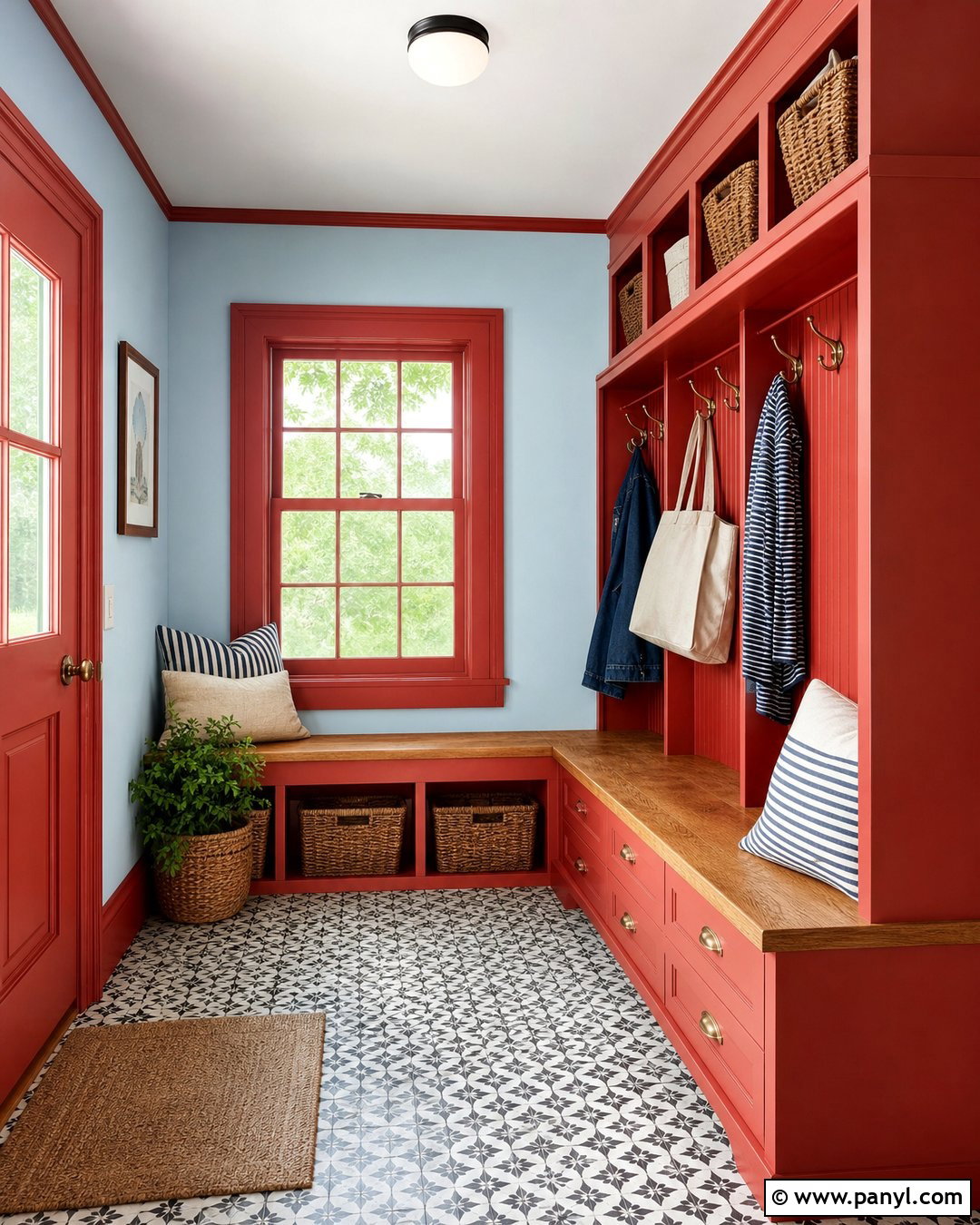
Sky blue walls with muted brick-red trim make a cheerful mudroom feel structured and memorable. Paint the baseboards, door casings, window trim, bench, and storage cubbies in the same earthy red. The blue should be softened with gray, while the trim should lean rust rather than primary red. Use a black-and-white patterned tile floor to handle traffic and give the colors a neutral base. Add oak bench seats, woven baskets, and sturdy brass hooks. Simple cream cushions and striped fabric introduce comfort without hiding the cabinetry. Keep the ceiling white to maximize brightness in this practical space. This contrasting palette succeeds because each color is slightly muted. The complete mudroom feels playful yet grounded, with storage, seating, flooring, and painted architecture working as one coordinated design.
22. Soft Pink Walls With Olive Trim
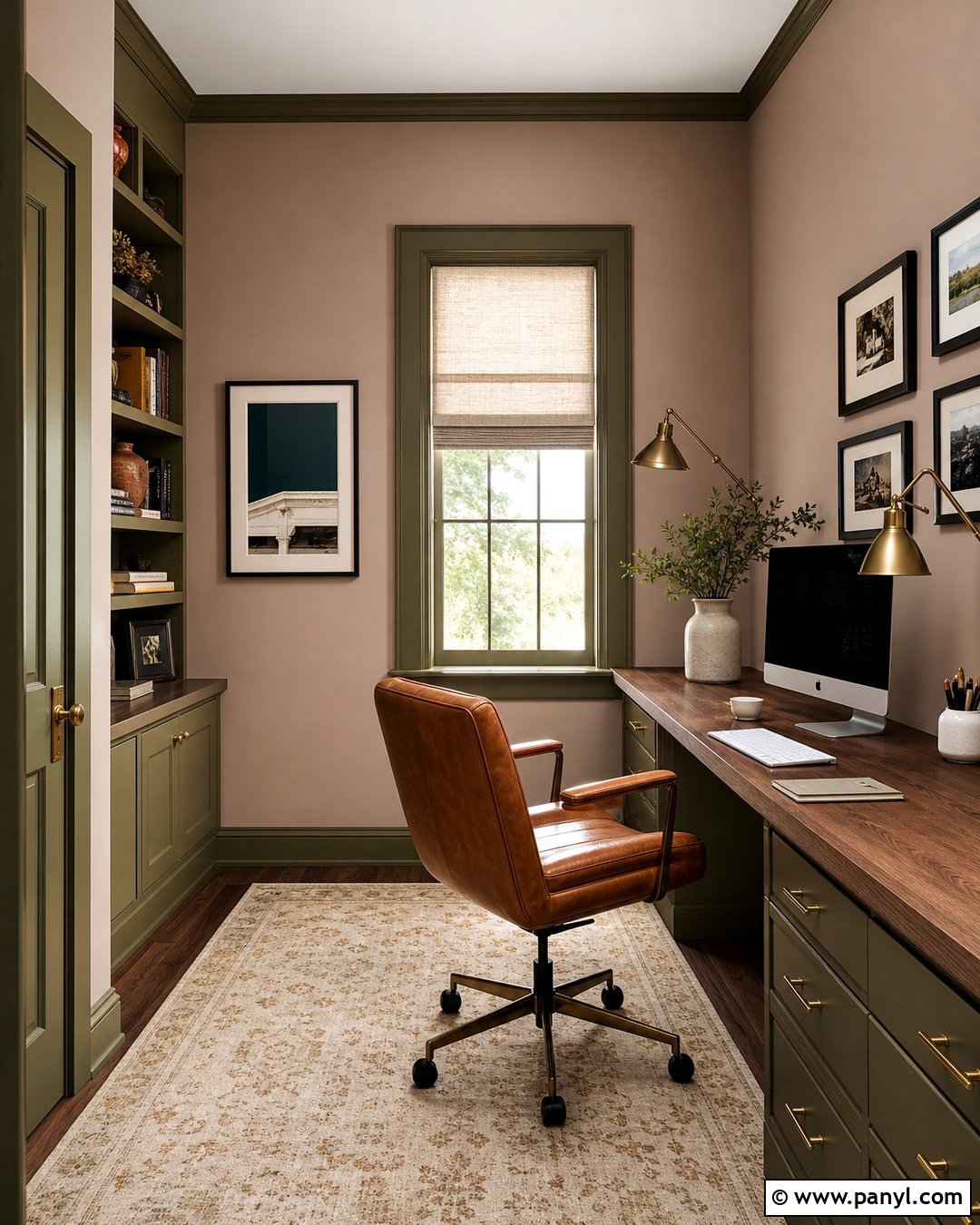
Soft pink walls and olive-green trim create a balanced home office that feels creative but grown-up. Apply olive to the baseboards, window frames, door, and built-in desk cabinetry. Choose a dusty pink with beige undertones so it sits comfortably beside the earthy green. A walnut desk surface, cognac leather chair, and cream patterned rug provide warmth. Add linen Roman shades, aged brass task lighting, and black-framed artwork for definition. Keep accessories limited to practical storage boxes, a ceramic lamp, and a few books. The complementary colors already supply enough visual interest. A warm white ceiling prevents the office from becoming too enclosed. This full scheme works particularly well with natural wood flooring, which bridges the warm pink walls and deeper olive architectural details.
23. Mustard Walls With Cream Trim
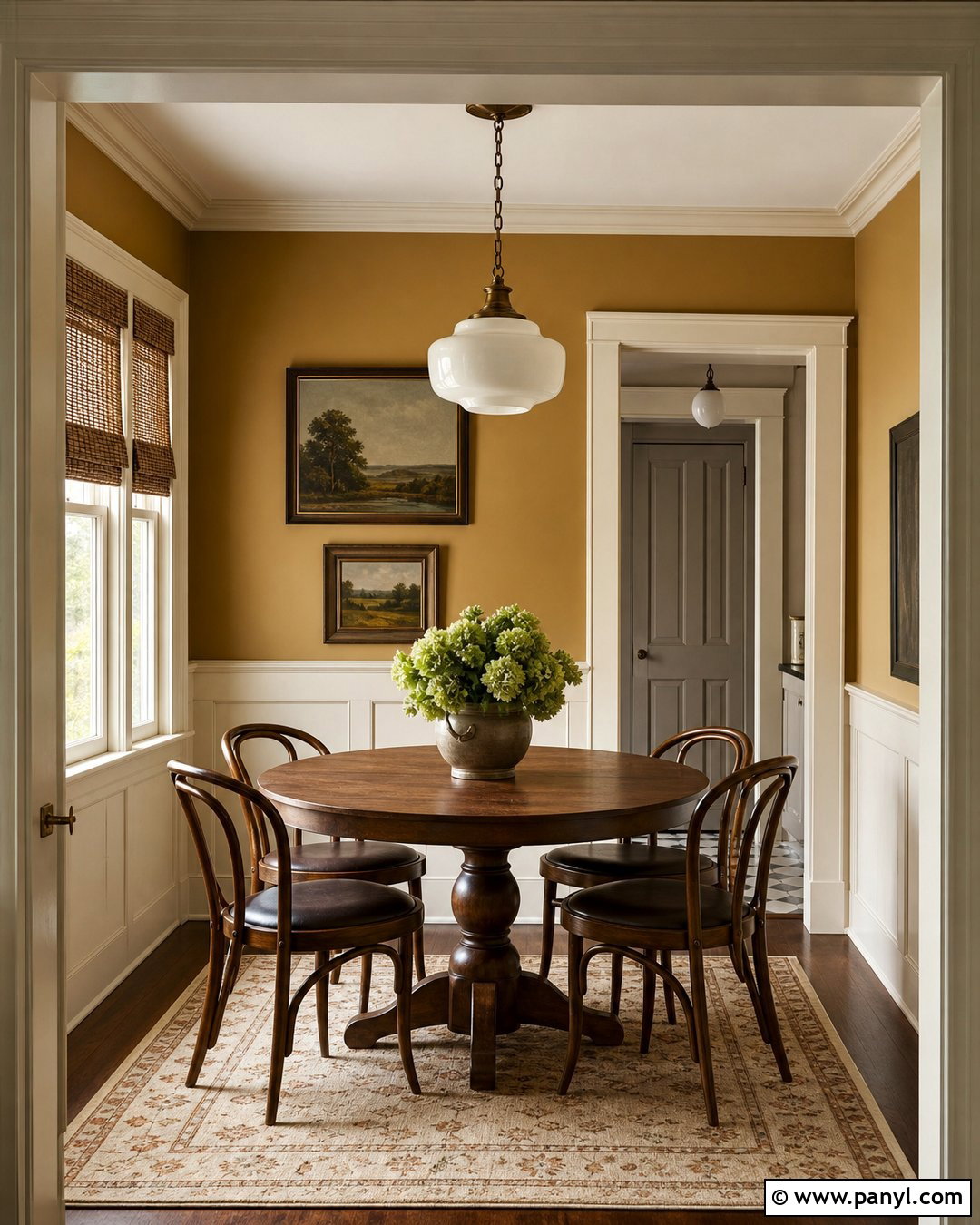
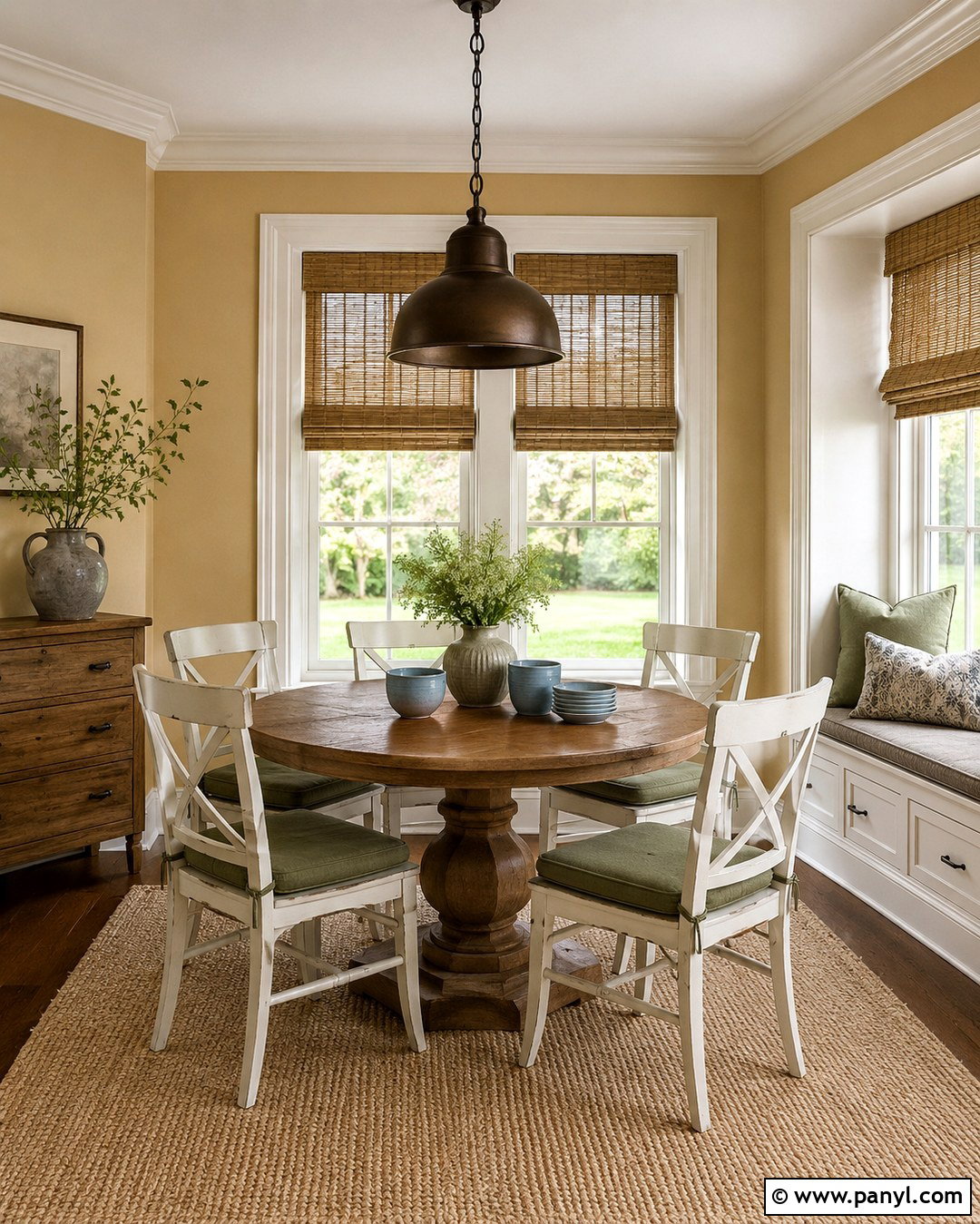
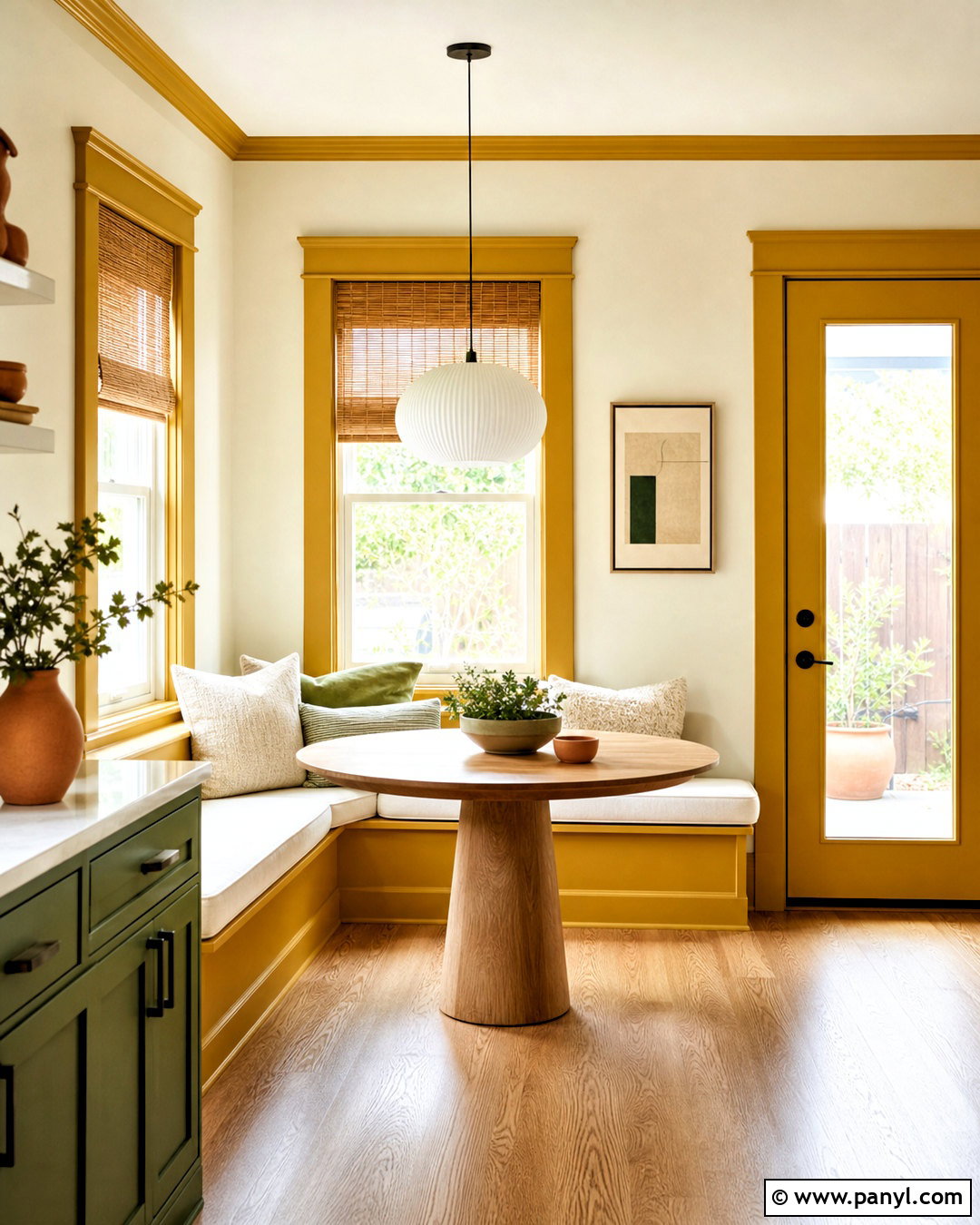
Muted mustard walls and creamy trim give a dining nook warmth, character, and a subtle vintage influence. Use cream on the baseboards, window casings, doorway, crown molding, and any wall paneling. A compact walnut pedestal table and curved wooden chairs create an inviting central arrangement. Choose a washable patterned rug containing cream, brown, and small blue details. Woven shades soften direct sunlight, while a white glass pendant keeps the corner bright. The mustard should feel earthy and slightly browned rather than vivid yellow. Display a few framed landscapes and simple stoneware pieces, leaving enough open wall space for the paint to breathe. Dark bronze hardware adds a grounding accent. Together, the warm walls, lighter trim, and dark wood furniture produce a layered nook that feels established rather than overly themed.
24. White Walls With Glacier Blue Trim
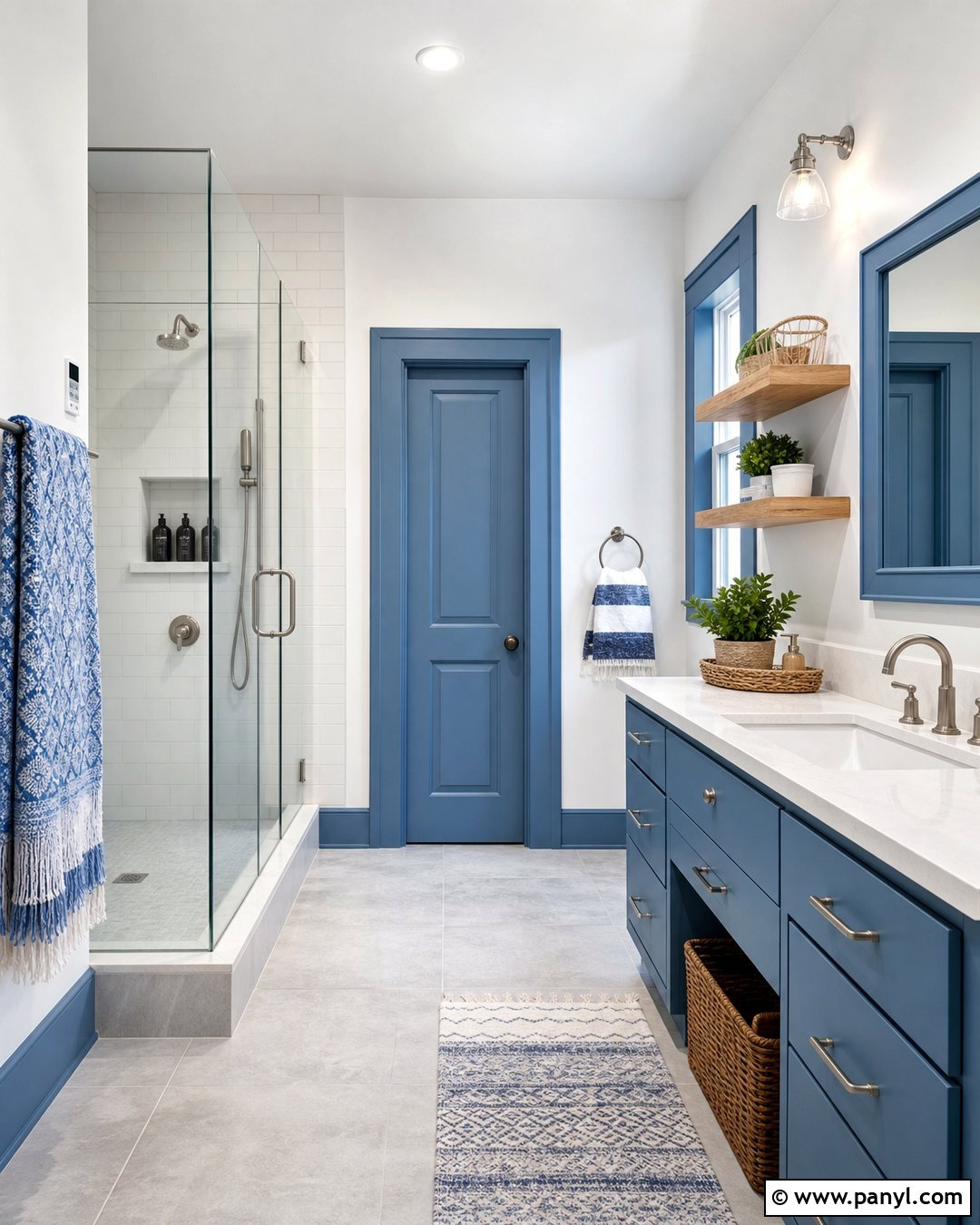
Clean white walls and glacier-blue trim bring a cool, refreshing quality to a bright bathroom. Paint the baseboards, door, window casing, mirror frame, and vanity in the same pale icy blue. Use white walls with a balanced undertone so they do not turn yellow beside the cooler trim. Add a white quartz vanity top, brushed nickel fixtures, and light gray floor tile. A frameless glass shower keeps the room visually open, while blue-and-white towels repeat the palette softly. Natural oak shelves and woven baskets add warmth where needed. Choose satin or semigloss paint for the woodwork to support easy cleaning in a moisture-prone space. The complete bathroom should feel crisp and clear, with the blue-painted details providing gentle color instead of a dark architectural border.
25. Khaki Walls With Matching Khaki Trim
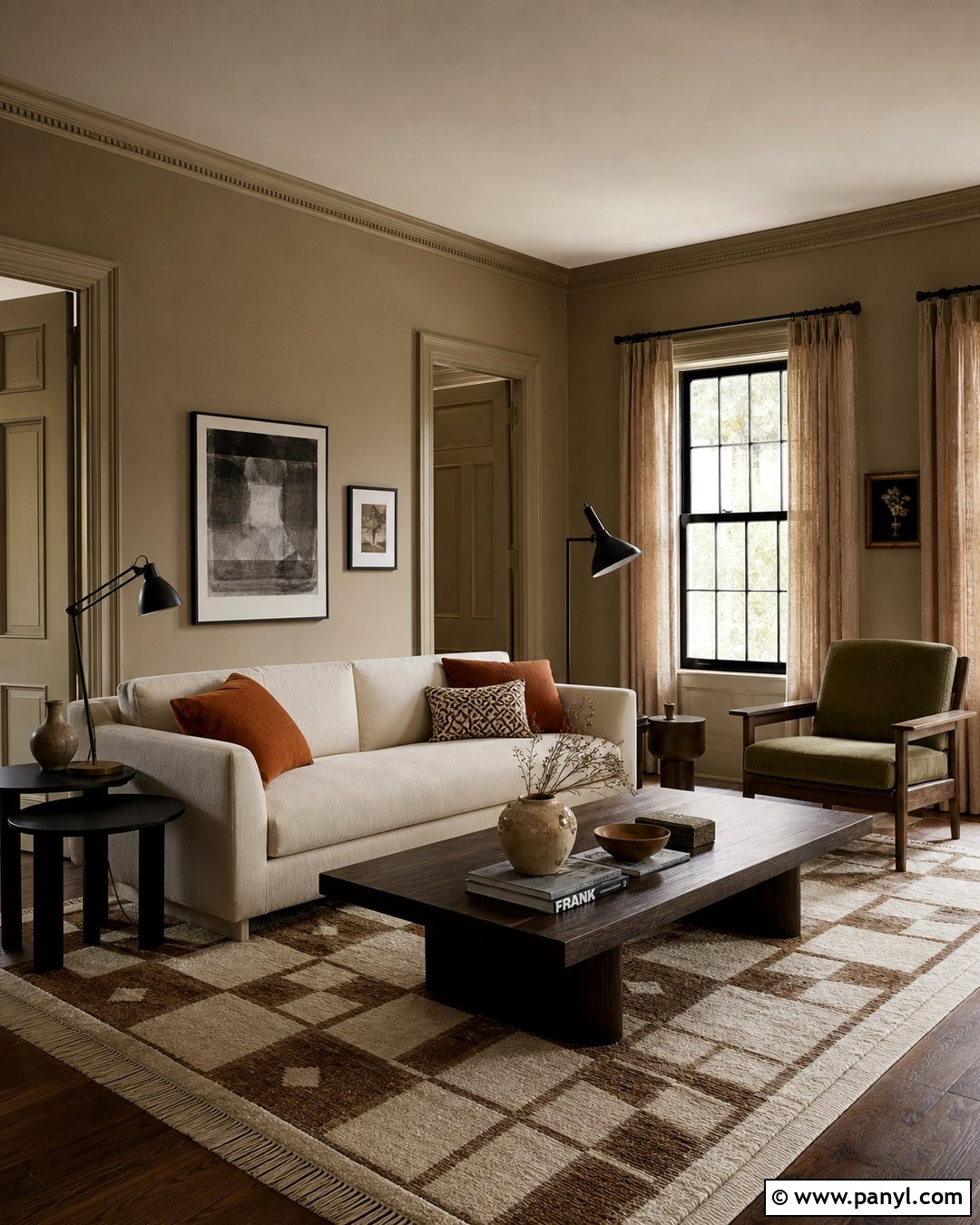
A monochromatic khaki room feels calm and modern when the walls, baseboards, doors, window casings, and crown molding share one warm neutral. Use matte paint on broad wall surfaces and satin on the trim to reveal architectural edges through reflected light. In a comfortable living room, pair the khaki envelope with an ivory sofa, dark walnut coffee table, and olive lounge chair. A cream and brown geometric rug adds pattern without interrupting the tonal effect. Use flax curtains, black metal lamps, and rust-colored cushions for measured contrast. Natural stone and handmade ceramics fit easily into the earthy palette. Select a khaki that balances beige, brown, and a small amount of green. The resulting space feels unified, spacious, and richer than a standard white-trimmed neutral room.
Conclusion:
Choosing painted baseboards is not simply about finding a color that looks attractive on a small sample. The wall paint, trim sheen, flooring, daylight, furniture, and adjoining rooms must work together as one complete plan. Warm whites and greige combinations offer flexibility, while navy, plum, olive, and terracotta create stronger architectural statements. Matching walls and trim can make compact rooms feel seamless, whereas dark contrasting woodwork gives larger spaces definition. Always test sizable samples on both vertical walls and trim before purchasing the full amount of paint. Observe them during the morning, afternoon, and evening. With thoughtful undertones and coordinated furnishings, these **25 Painted Baseboards And Trim Wall Colors** can inspire a distinctive yet livable interior.

Related Ideas and Inspiration:
Leave a Reply