
Painting walls and woodwork in one continuous color creates a room that feels polished, intentional, and visually calm. Often called color drenching, the approach can include baseboards, crown molding, window frames, doors, built-ins, and sometimes the ceiling. Changing the paint sheen between surfaces adds quiet dimension without interrupting the unified palette. () These 20 monochromatic walls and trim ideas explore light neutrals, earthy colors, soothing pastels, and dramatic dark shades across bedrooms, living rooms, bathrooms, offices, and transitional spaces. Each look combines paint with coordinated furniture, flooring, lighting, and decor, so it feels complete rather than flat. Use these practical monochromatic walls and trim ideas to find a color-drenched design that suits your space and decorating style.

1. Warm White Walls And Trim
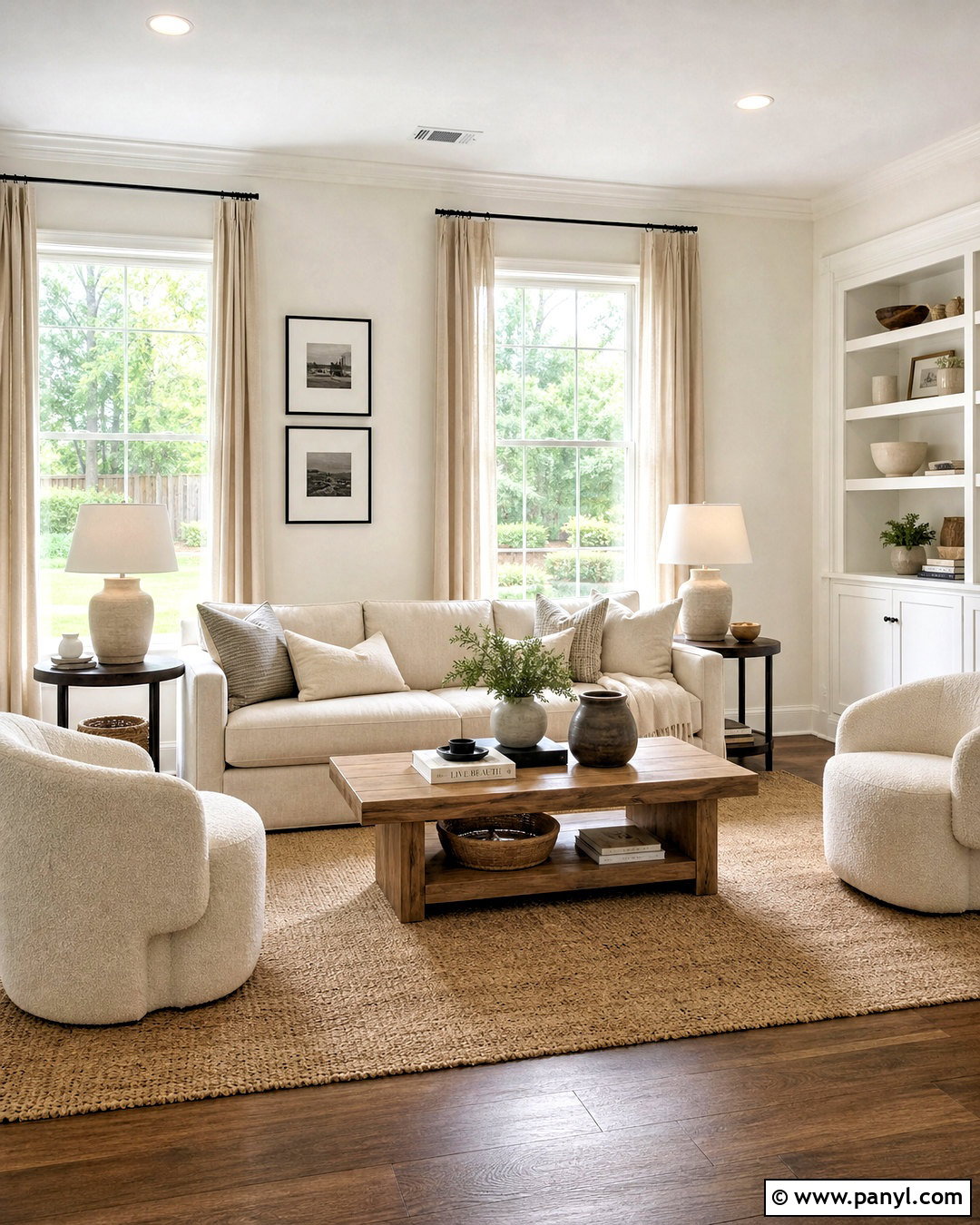
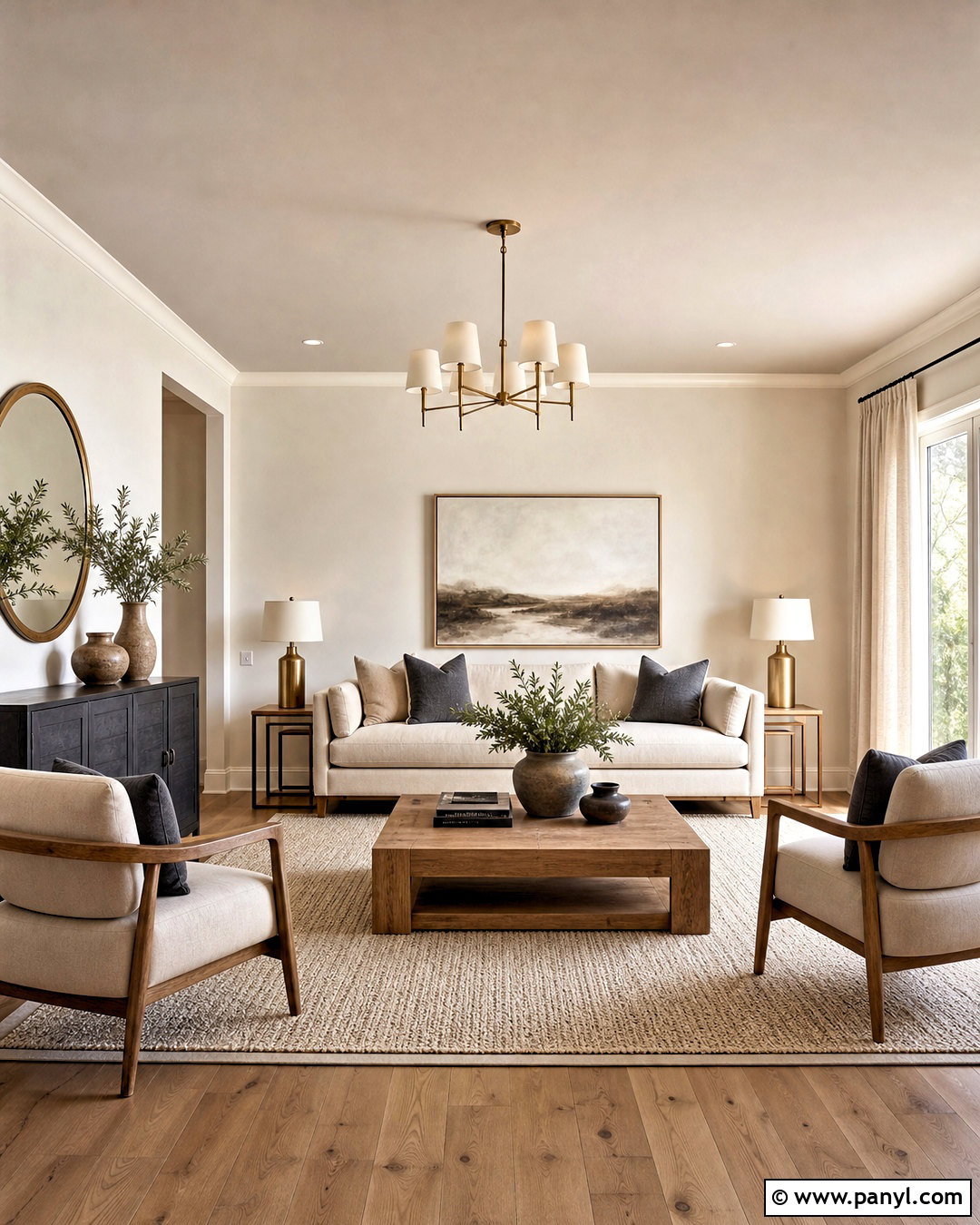
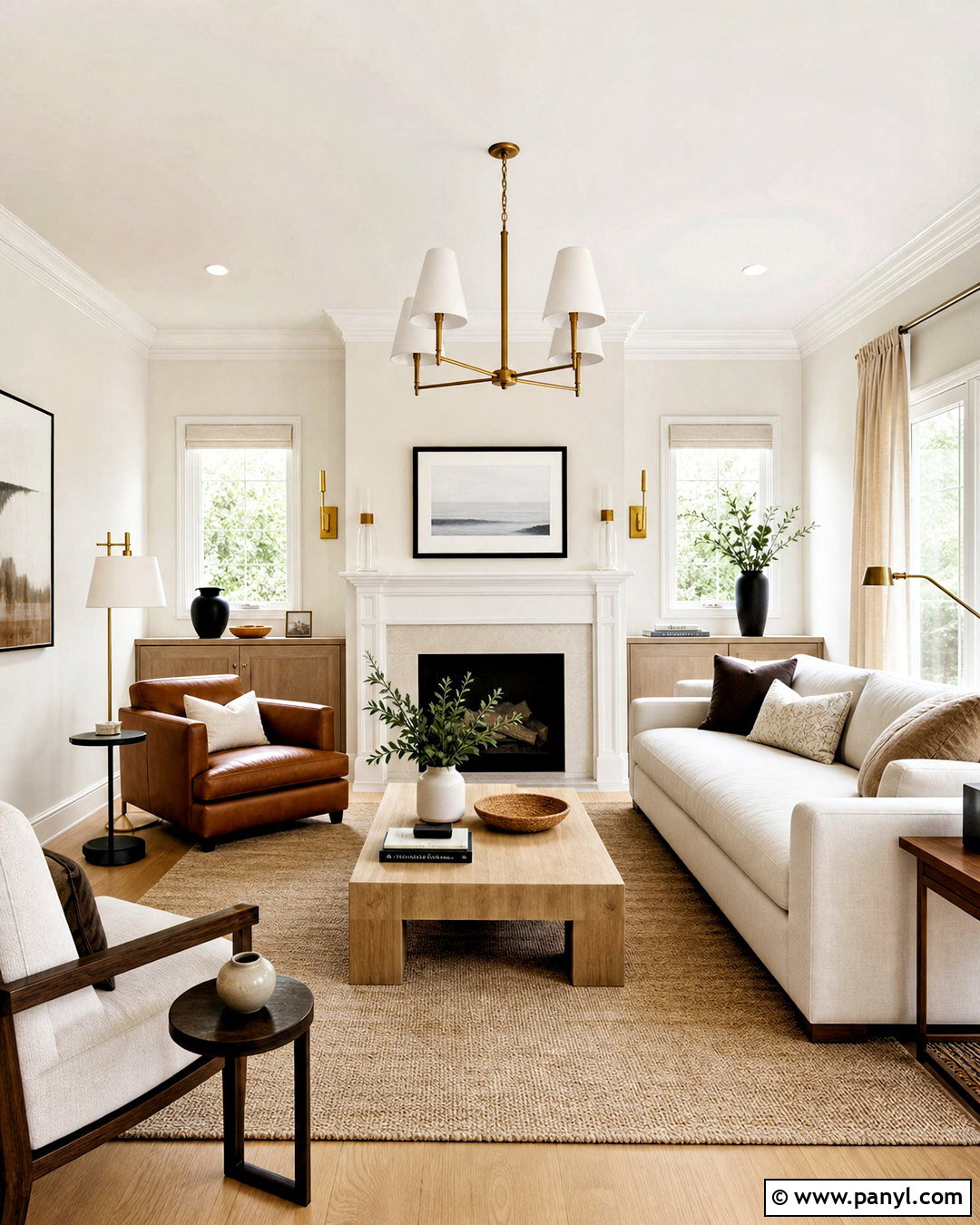
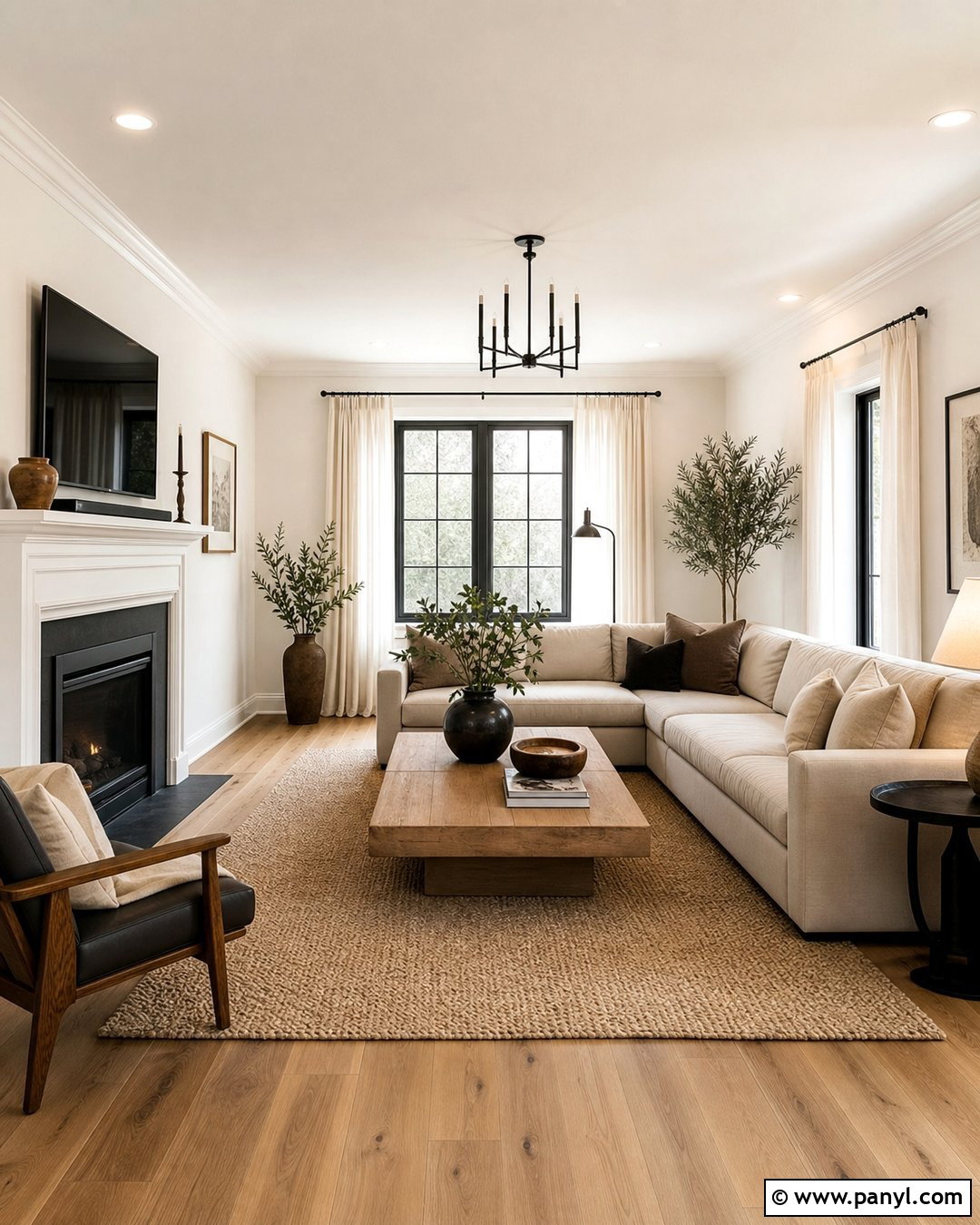
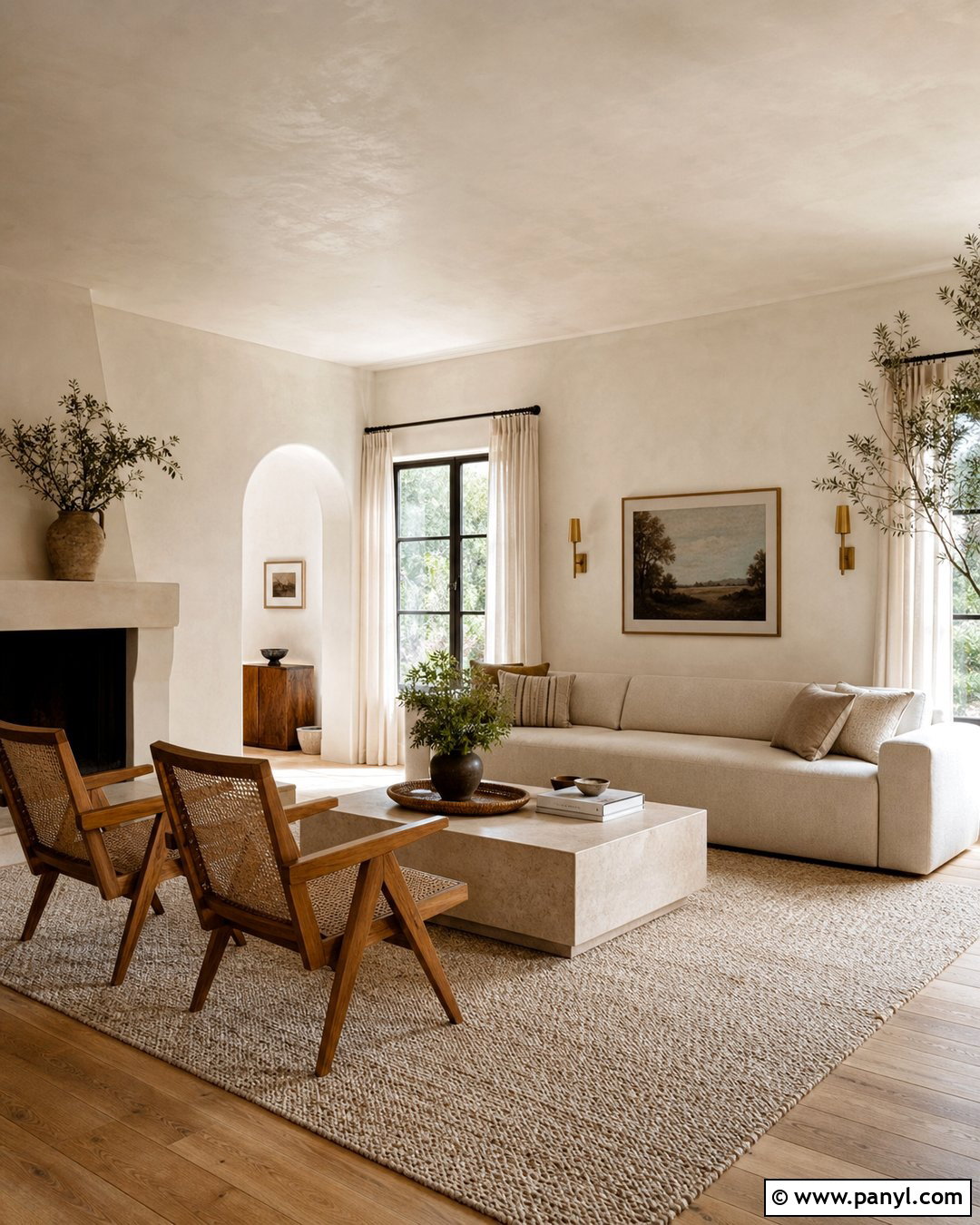
Warm white walls and trim create a bright living room without the harshness of a cool, blue-based white. Carry a creamy ivory shade across the walls, baseboards, window frames, crown molding, and fireplace surround. Use matte paint on the walls and satin on the trim so the architectural details remain visible. A natural oak coffee table, oatmeal sofa, and woven jute rug add enough contrast to prevent the space from feeling washed out. Bring in linen curtains, off-white boucle chairs, and ceramic lamps in slightly different cream tones. Small black accents, such as picture frames and curtain rods, provide definition. This complete palette works especially well in rooms with abundant daylight and warm wood flooring.
2. Soft Greige Walls And Trim
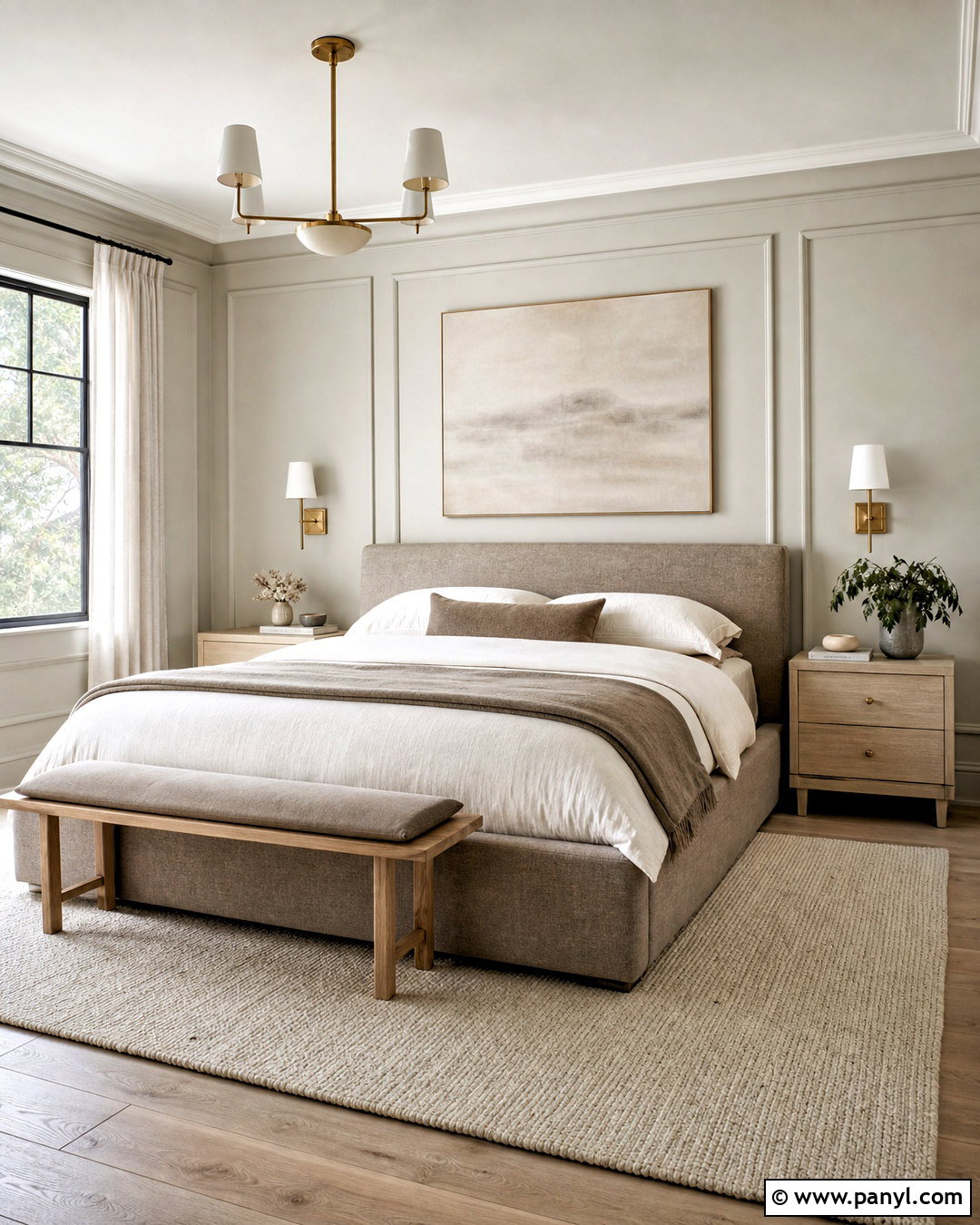
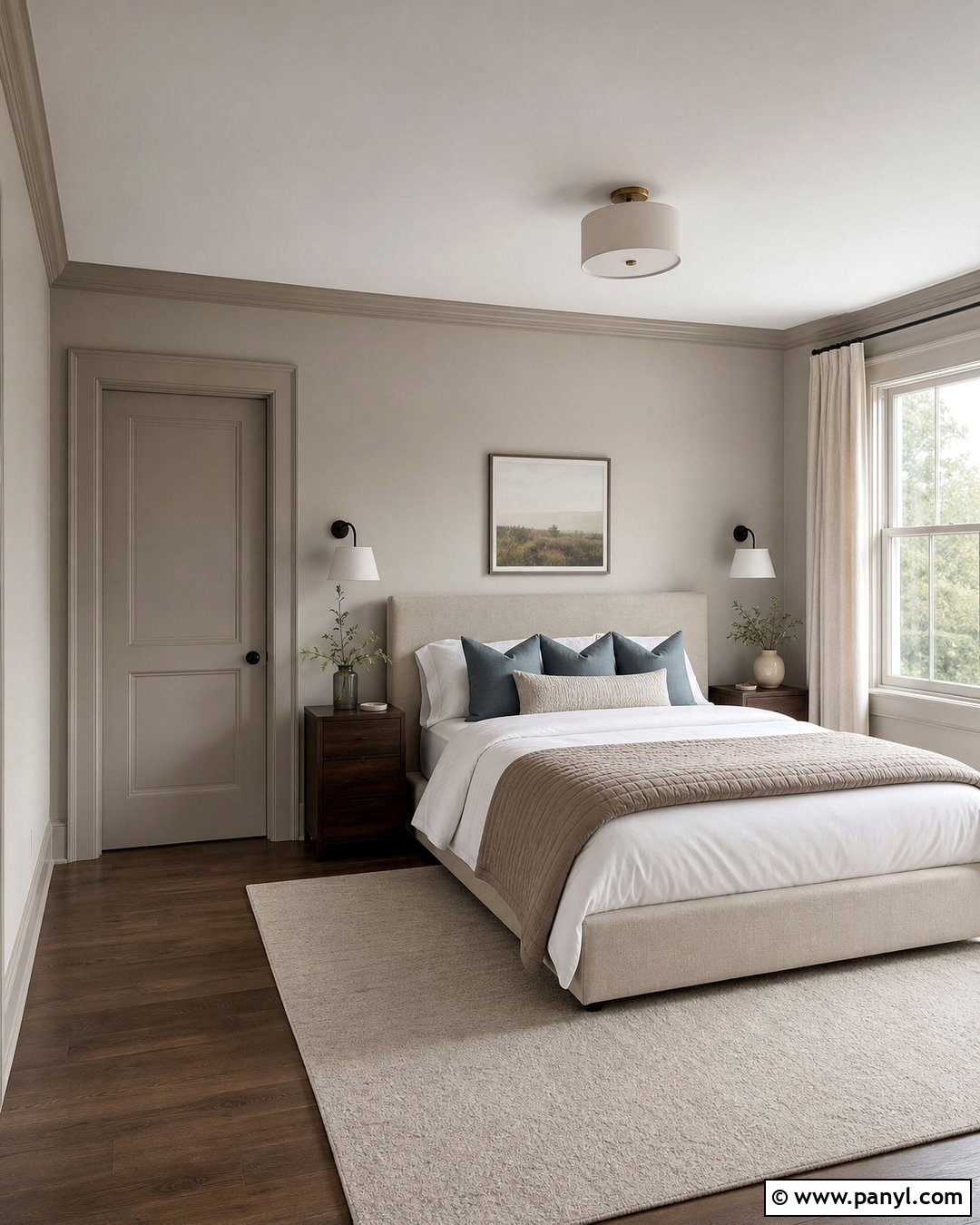
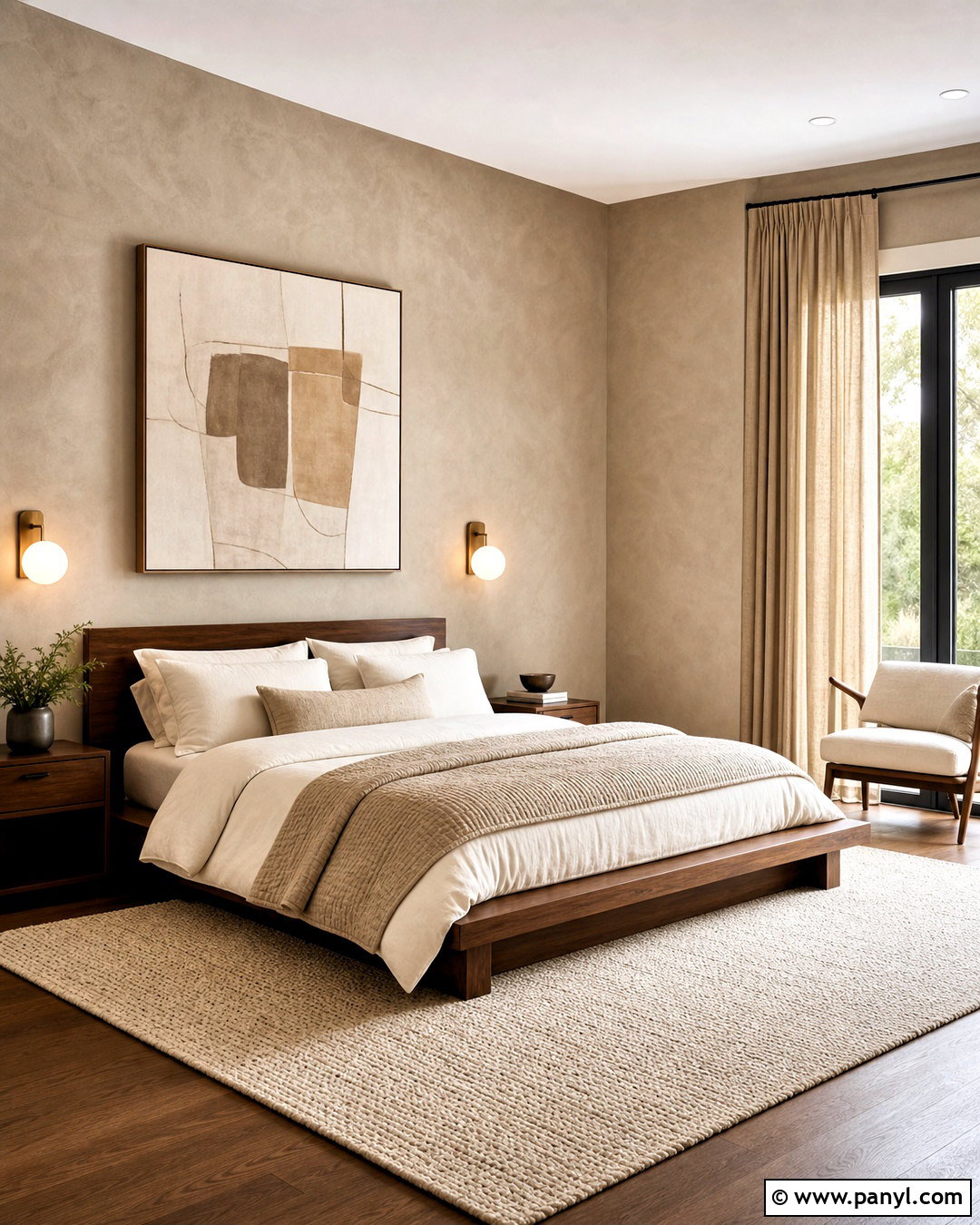
Does your bedroom need more warmth without committing to a noticeable color? Soft greige walls and matching trim create a restful backdrop that sits comfortably between gray and beige. Continue the shade across the closet doors, baseboards, window casing, and simple crown molding. Choose a flat ceiling in a slightly lighter version of the same greige to preserve the monochromatic effect while keeping the room airy. Build the bed with an upholstered taupe headboard, ivory linen sheets, and layered mushroom-colored blankets. Pale oak nightstands and brushed brass sconces add warmth. Finish the space with a textured wool rug, tonal abstract artwork, and natural linen curtains. The result feels quiet, cohesive, and easy to live with.
3. Mushroom Walls And Trim
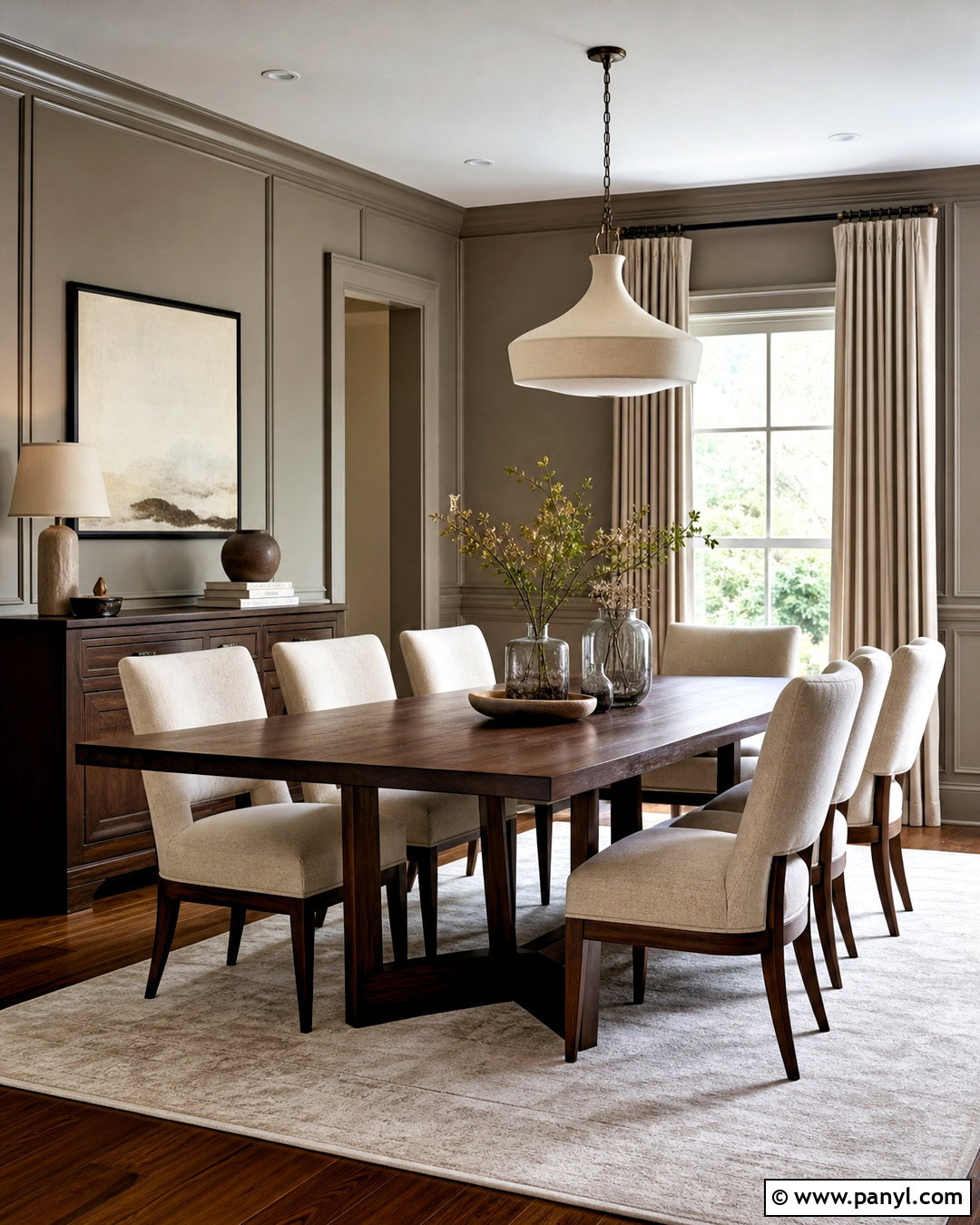
Mushroom paint gives a dining room earthy depth while remaining soft enough for everyday use. Select a warm brown-gray shade and apply it to the walls, chair rail, baseboards, window trim, and built-in cabinet. A satin finish on the woodwork will catch light and reveal the room’s traditional details. Place a medium-toned walnut table at the center with upholstered oatmeal chairs and a simple cream rug beneath it. A sculptural plaster pendant introduces a lighter tonal layer without breaking the palette. Decorate the built-in with ivory dishes, smoked glass, and a few dark brown vessels. Full-length taupe curtains soften the windows. This scheme feels grounded and comfortable, making it suitable for both casual meals and formal gatherings.
4. Taupe Entryway Walls And Trim
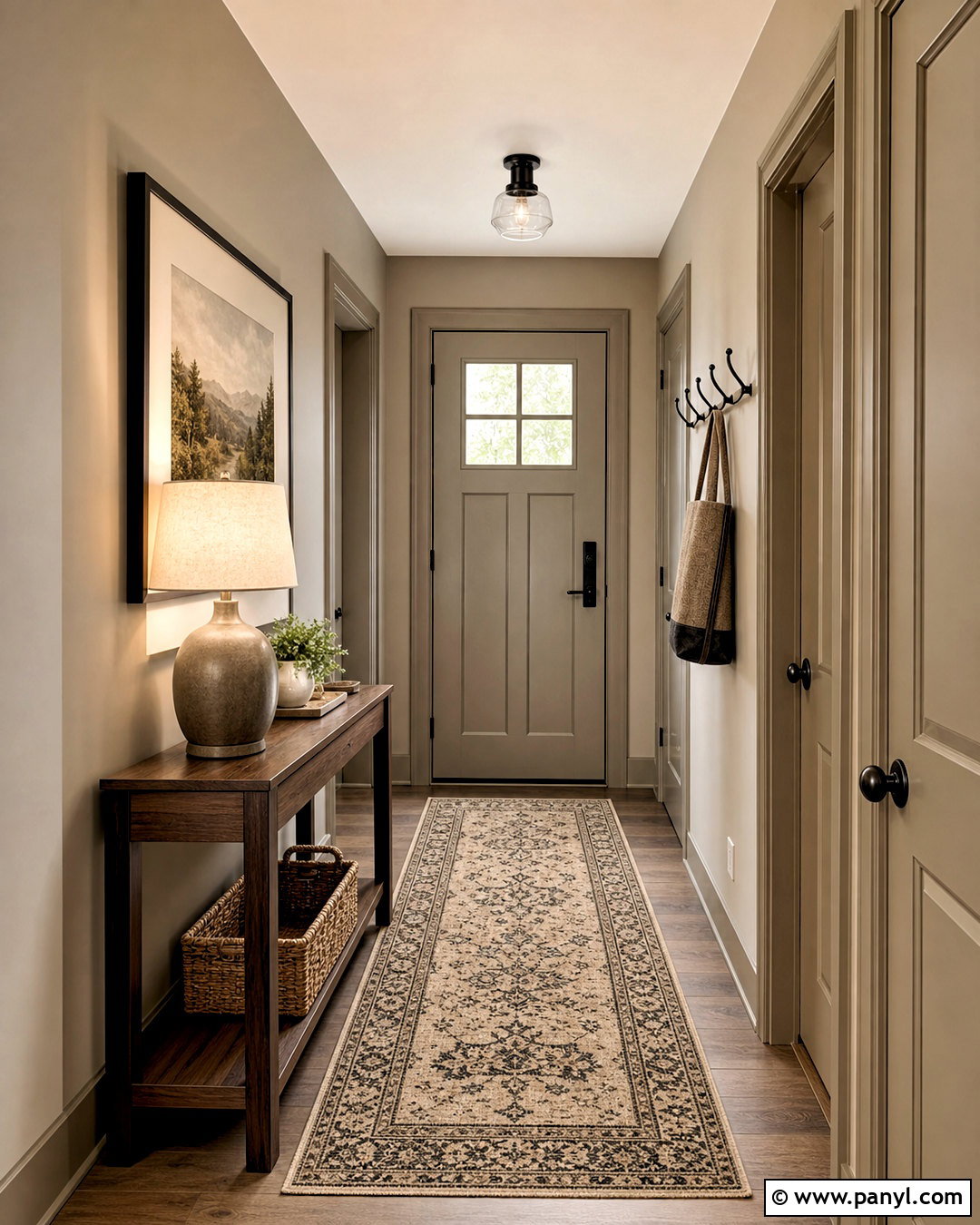
A narrow entryway can feel calmer when walls, doors, and trim share the same warm taupe color. The continuous shade reduces visual interruptions and helps multiple doorways blend into the architecture. Paint the baseboards, door casings, interior doors, and ceiling molding in satin taupe, while keeping the walls matte. Add a slim dark walnut console that provides contrast without crowding the walkway. Above it, hang one oversized landscape print in a dark bronze frame. A washable runner in beige, brown, and faded charcoal adds pattern underfoot. Complete the entrance with a ceramic table lamp, woven storage basket, and simple wall hooks painted to match the trim. The finished space feels organized, welcoming, and thoughtfully connected to nearby rooms.
5. Blush Pink Walls And Trim
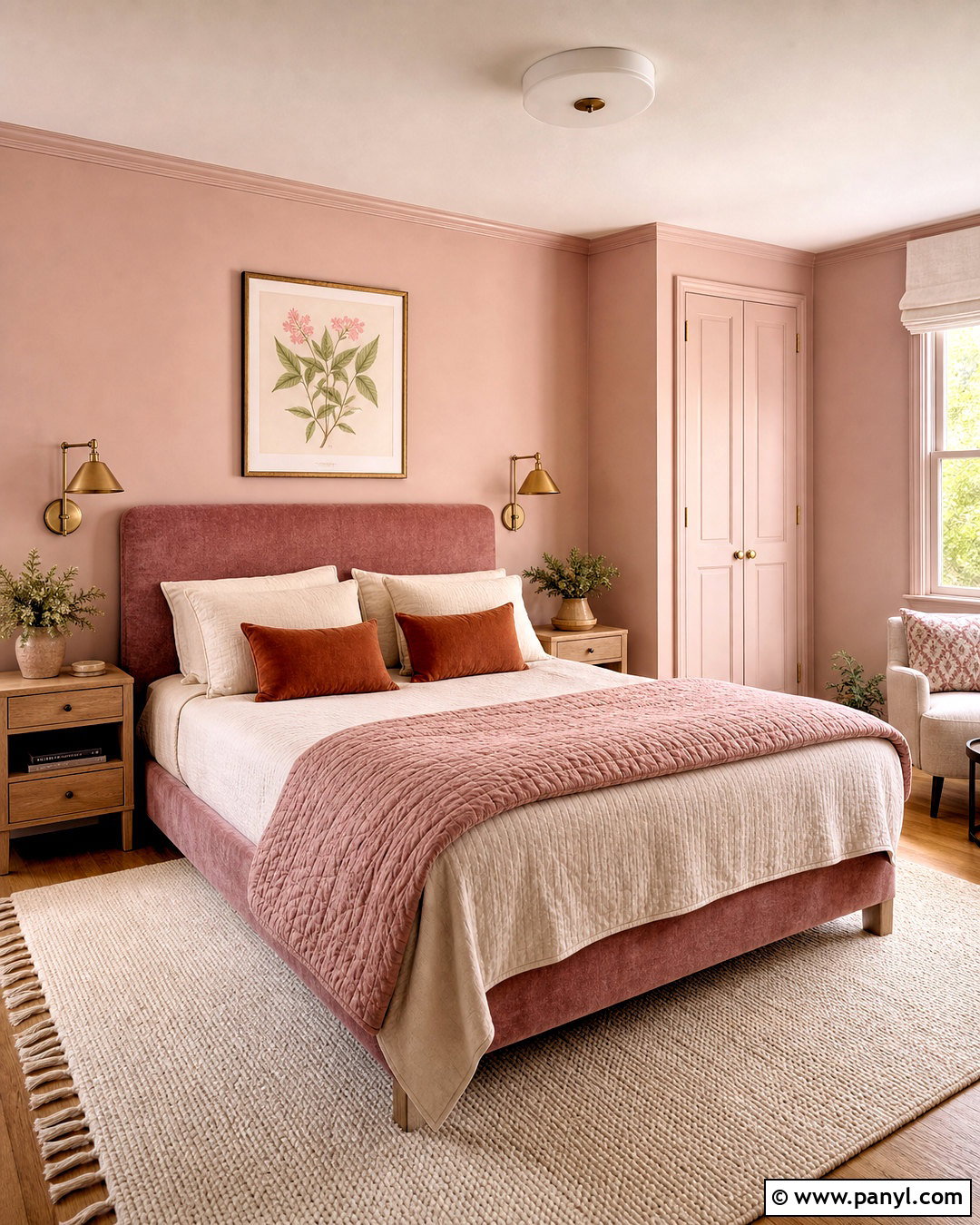
Soft blush pink can turn a bedroom into a warm, grown-up retreat when it covers the walls and trim together. Choose a muted pink with beige or clay undertones rather than a sugary pastel. Carry it across the baseboards, window frames, closet doors, and crown molding. An upholstered bed in dusty rose deepens the palette, while ivory bedding prevents the room from becoming overly pink. Add light oak nightstands, aged brass reading lights, and a cream wool rug for natural contrast. Rust-colored pillows and a faded pink quilt introduce darker variations of the main hue. Keep artwork minimal, using botanical prints with muted backgrounds. This balanced arrangement feels soft and expressive while still looking sophisticated and practical.
6. Terracotta Walls And Trim
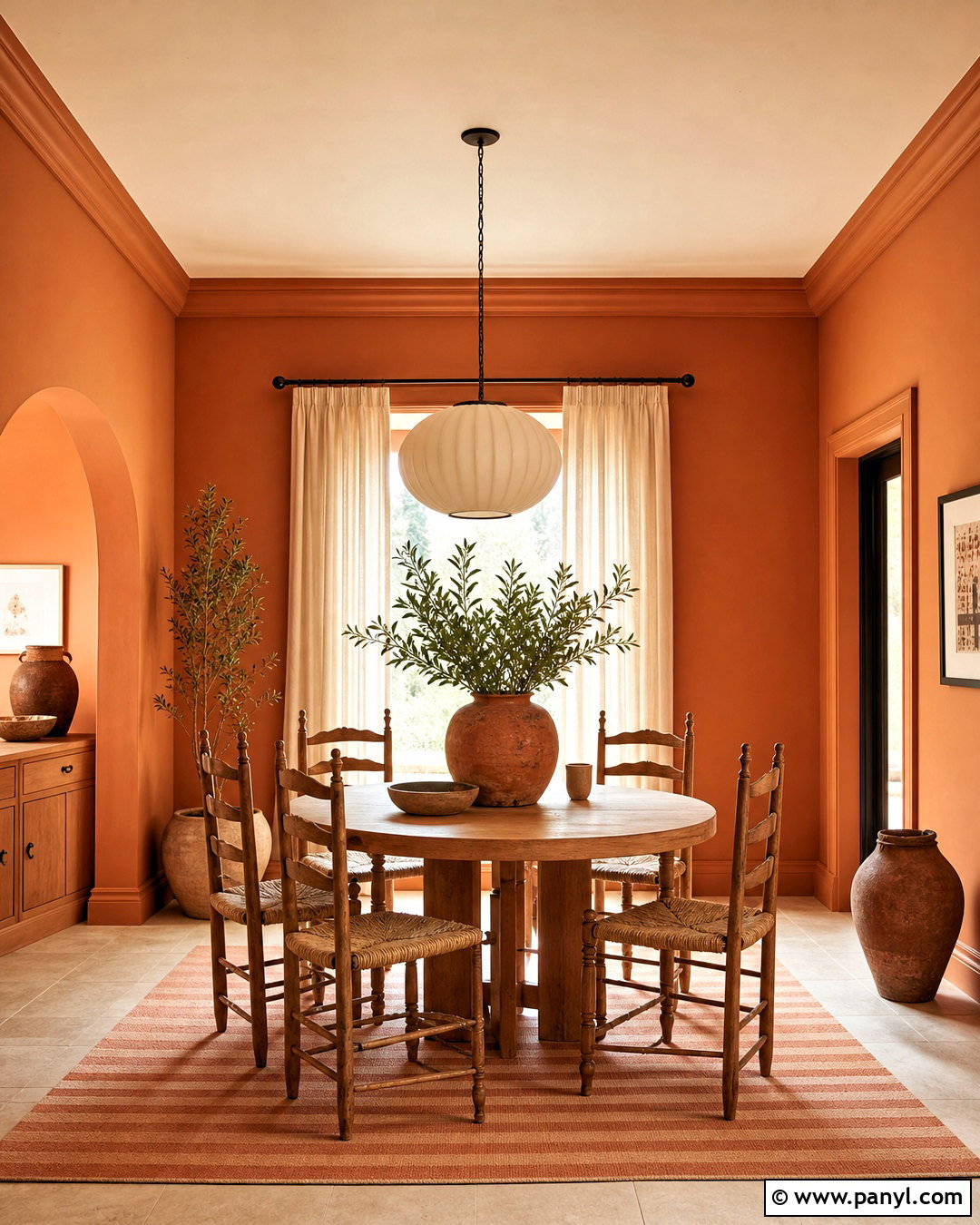
Sun-warmed terracotta walls and trim bring immediate character to a dining room or breakfast space. Look for a softened clay shade with brown undertones, then extend it across the window casing, baseboards, doors, and ceiling molding. Pair the saturated envelope with a round oak table and woven rush-seat chairs to reinforce its natural character. Cream linen curtains and an ivory pendant light keep the color from becoming too heavy. Add hand-thrown pottery in rust, sand, and pale peach, along with a simple striped rug that repeats those tones. Green branches provide a small organic contrast without disrupting the scheme. In strong daylight, matte walls and satin trim will create subtle shifts that make the single-color treatment feel layered.
7. Mustard Yellow Walls And Trim
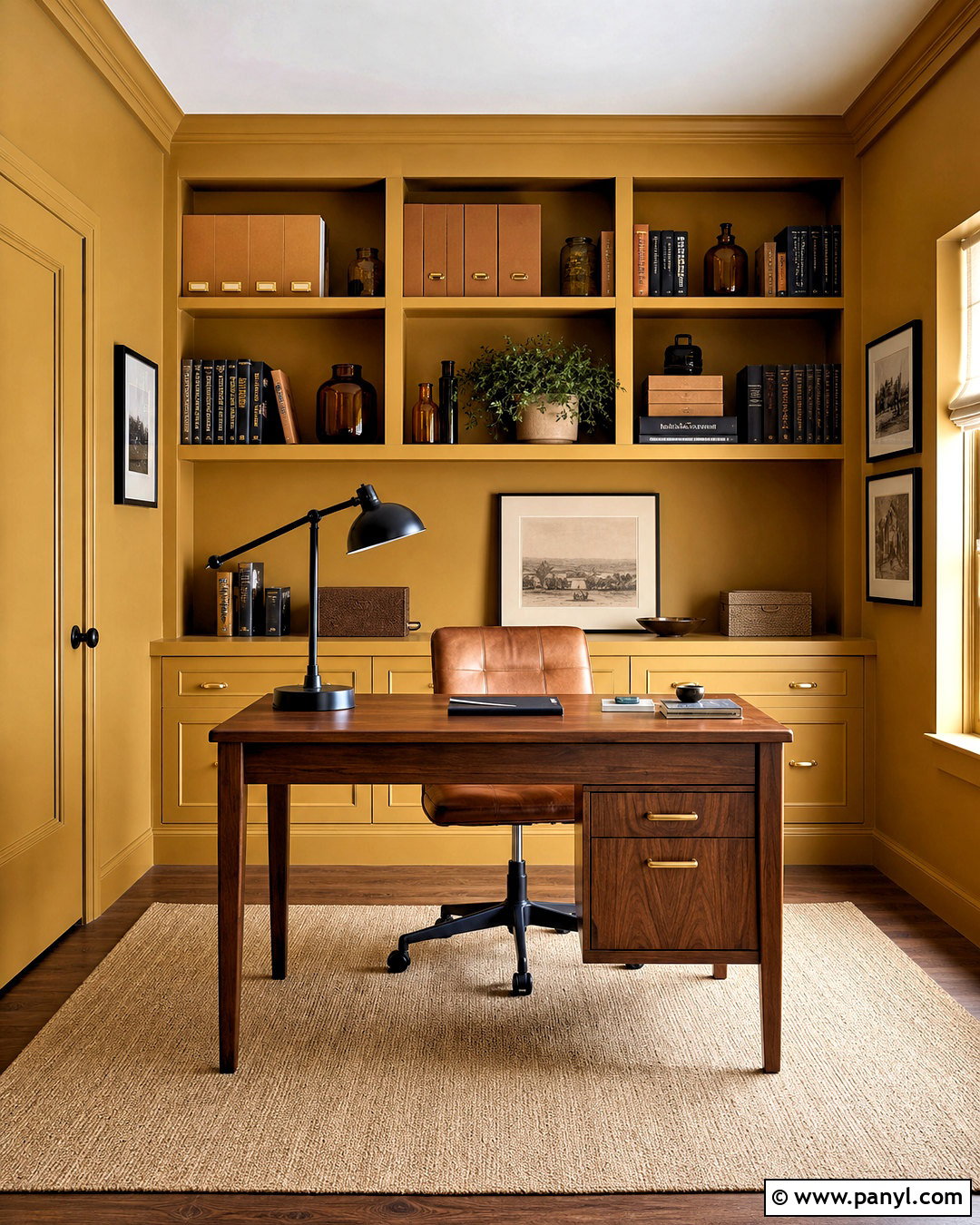
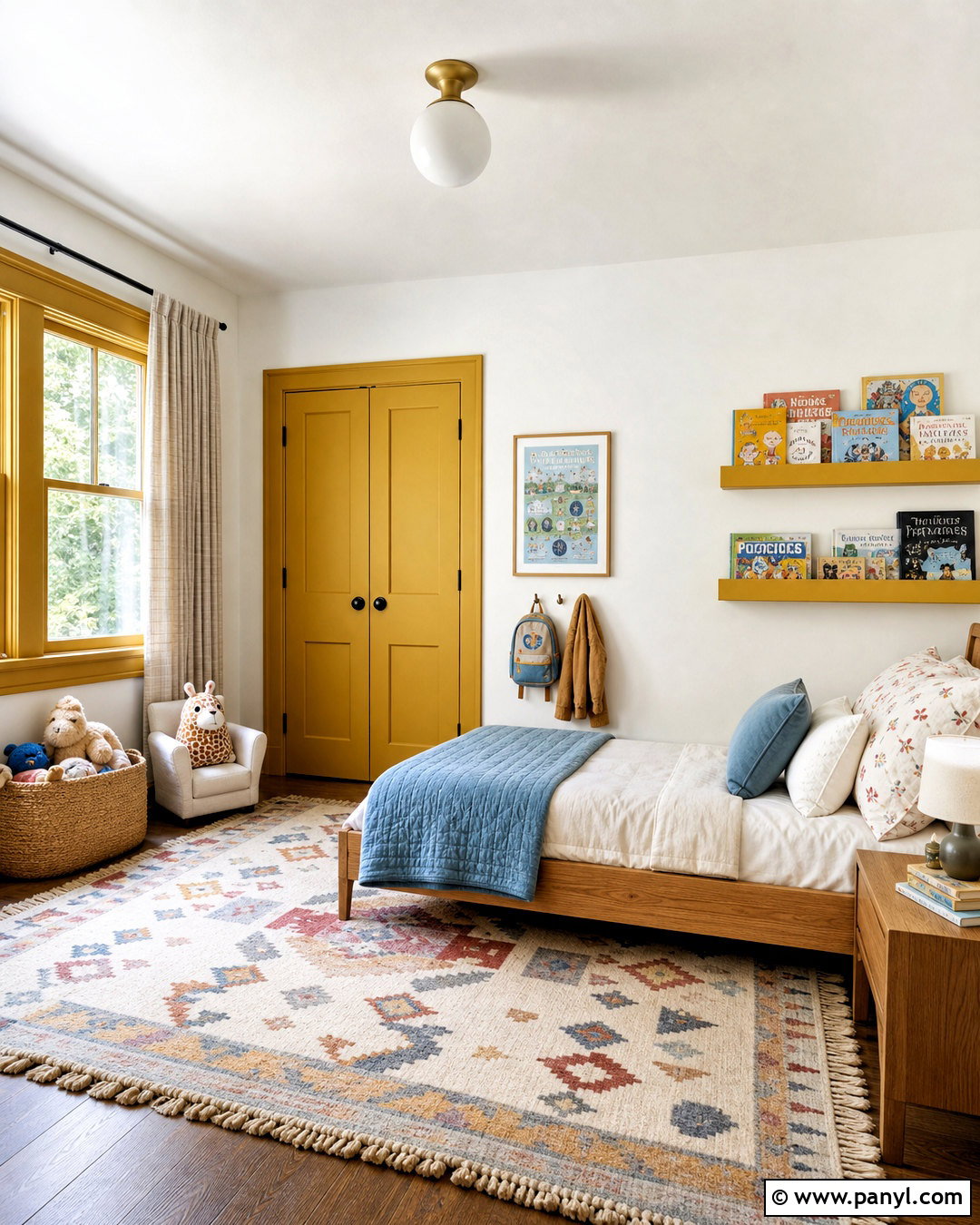
A home office becomes energetic and memorable when mustard yellow wraps the walls, trim, and built-in storage. Select a deep, earthy yellow rather than a bright primary shade. Paint the bookcases, cabinet doors, baseboards, window trim, and room door in the same hue, using satin paint on hard-working surfaces. Ground the color with a walnut desk, cognac leather chair, and flat-weave rug in cream and golden brown. Black metal hardware and a black task lamp add crisp definition. Style the shelves with neutral books, tan storage boxes, and a few amber glass objects. Keep the ceiling warm white if the office receives limited daylight. The finished design feels focused and creative without becoming visually distracting.
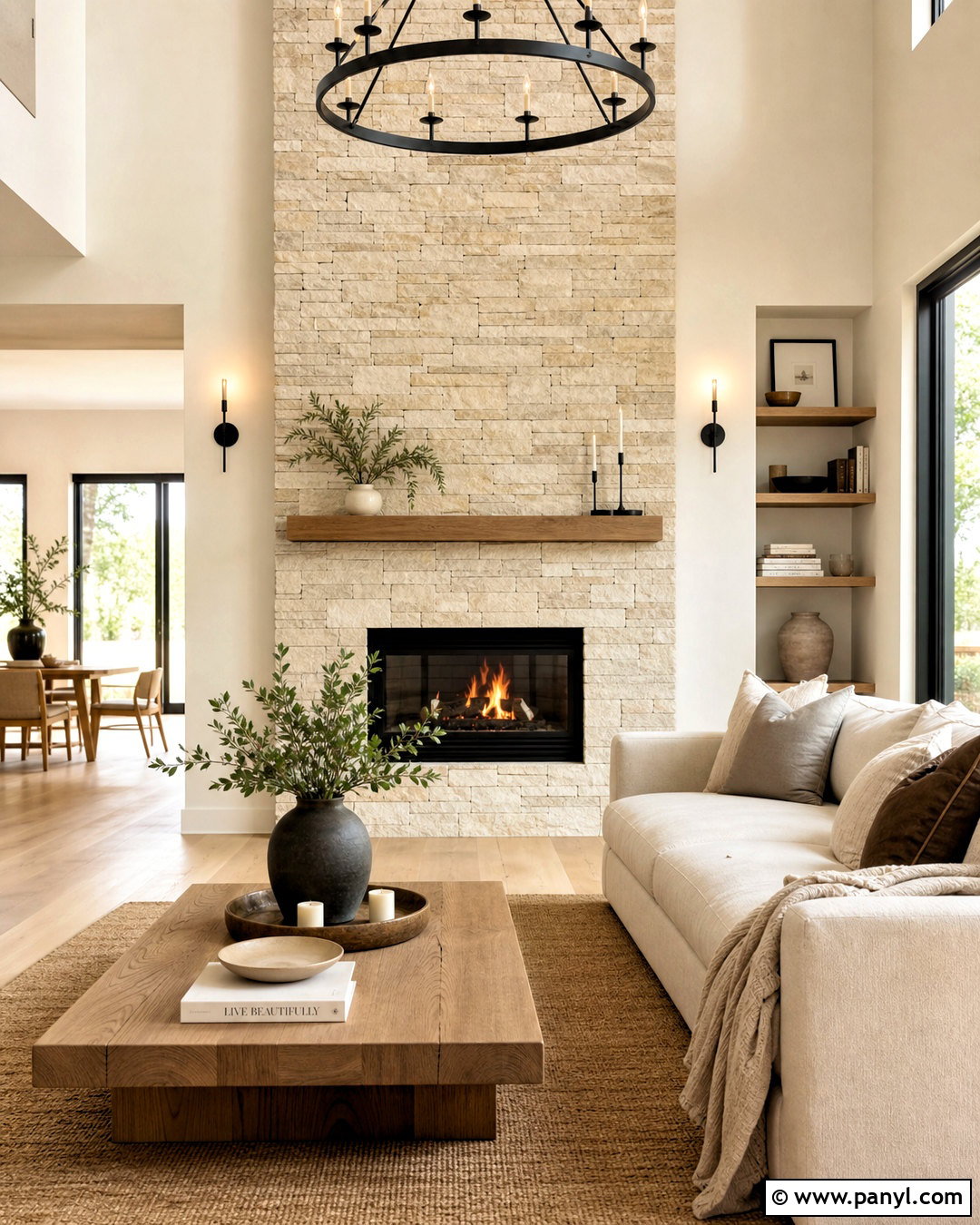
8. Sage Green Walls And Trim
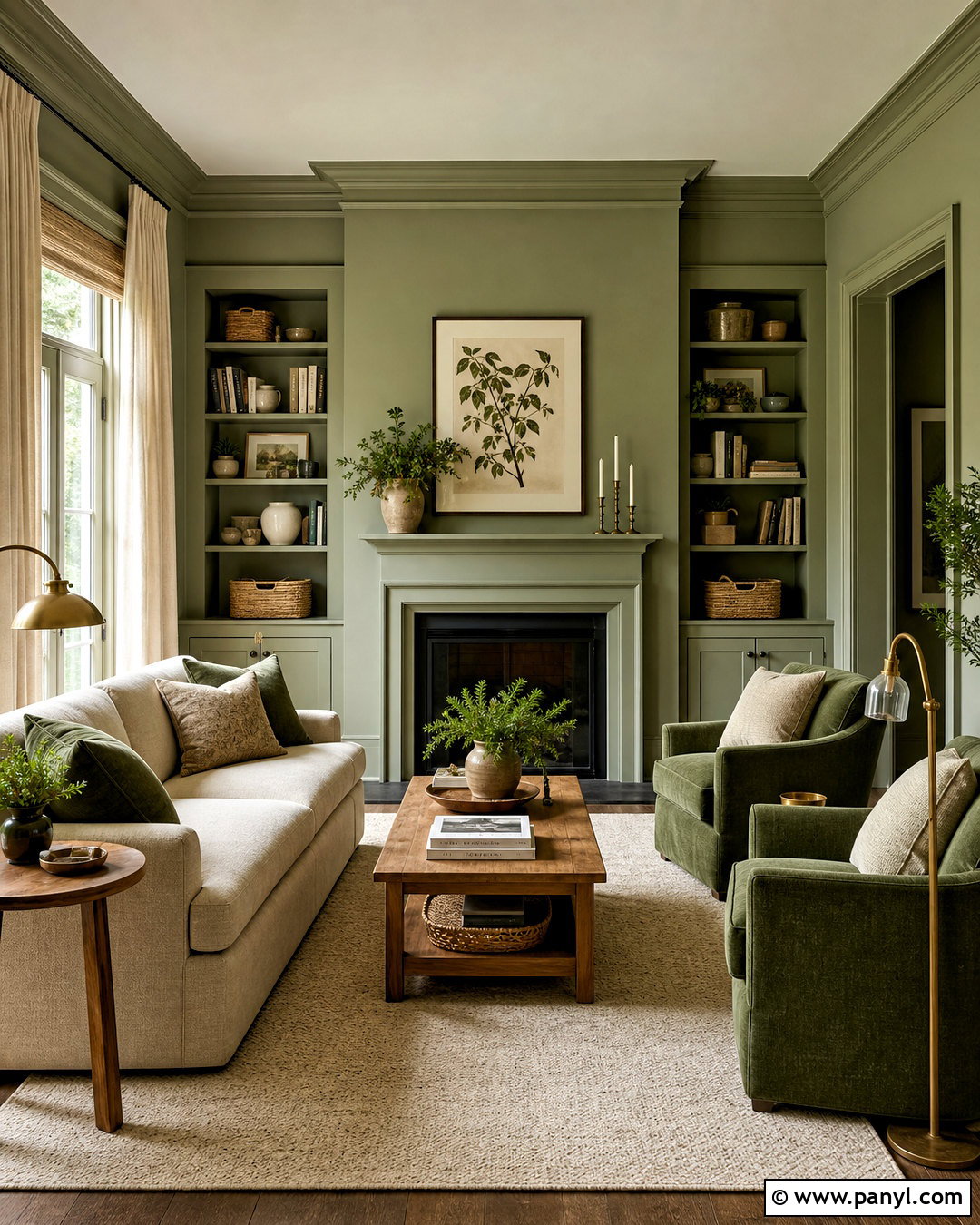
Imagine a living room where every architectural edge feels soft rather than sharply outlined. Muted sage green walls and matching trim can produce that relaxed effect. Apply the color to the baseboards, window frames, interior doors, fireplace mantel, and built-in shelving. Choose eggshell walls and satin woodwork to reveal the details through finish instead of contrast. Furnish the room with a flax-colored sofa, oak side tables, and two deeper green armchairs. A cream rug and off-white linen curtains keep the space open. Add aged brass lamps, woven baskets, and botanical artwork containing gray-green tones. Natural textures are essential here because they give the quiet palette movement. The completed room feels fresh, comfortable, and connected to the outdoors.
9. Olive Green Walls And Trim
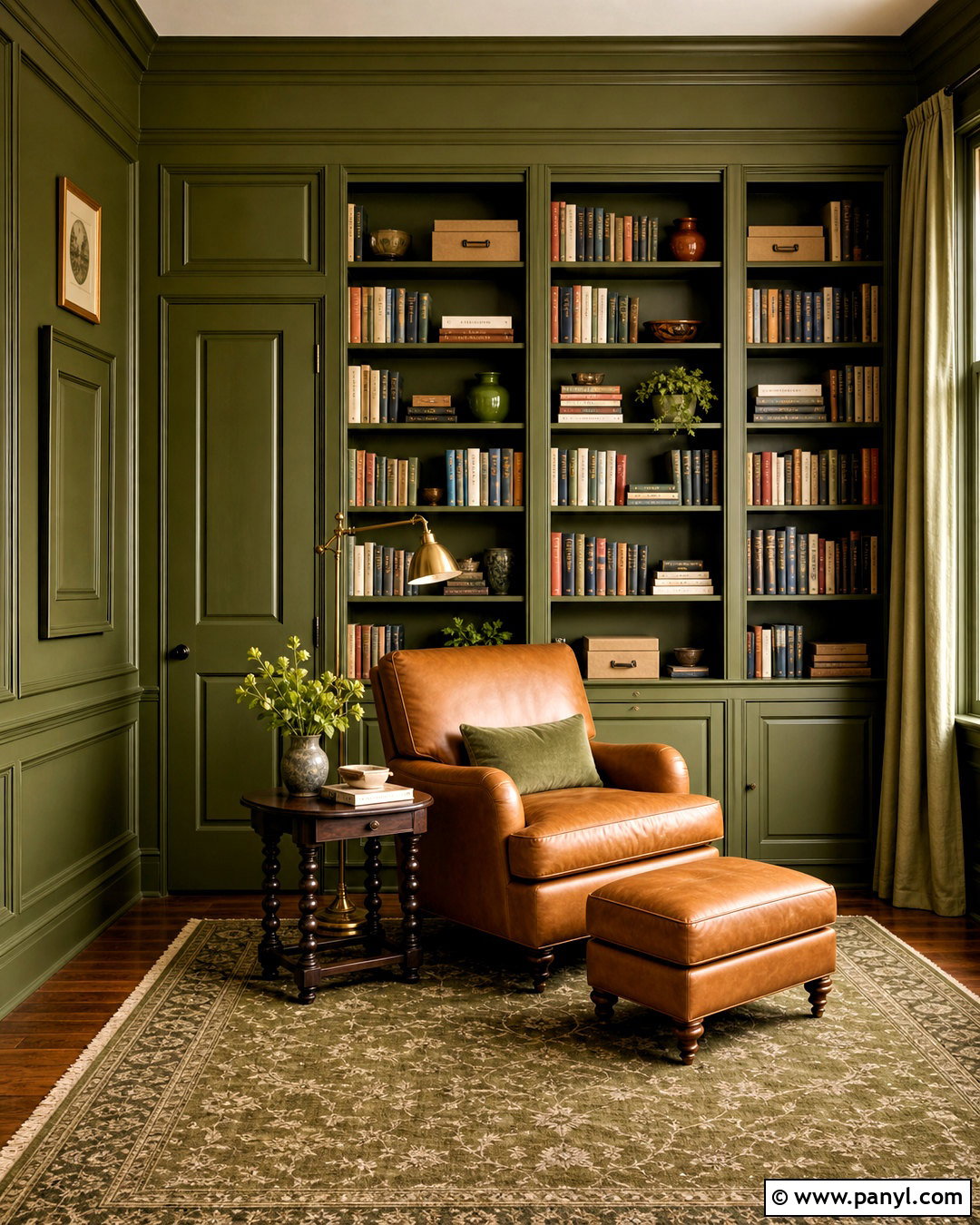
Olive green can make a reading room feel intimate, established, and especially inviting. Wrap the walls, window trim, baseboards, door, and floor-to-ceiling bookcases in a rich olive with warm brown undertones. Paint the shelving in satin for durability and use matte paint on the walls to create gentle depth. Position a camel leather lounge chair beside a dark wood side table and antique-style brass floor lamp. A patterned rug in olive, tan, and faded red anchors the room without weakening the monochromatic foundation. Fill the shelves with books, ceramic pieces, and dark woven boxes, leaving some breathing room between objects. Linen curtains in a lighter green complete the tonal look while allowing filtered daylight into the cozy space.
10. Forest Green Walls And Trim
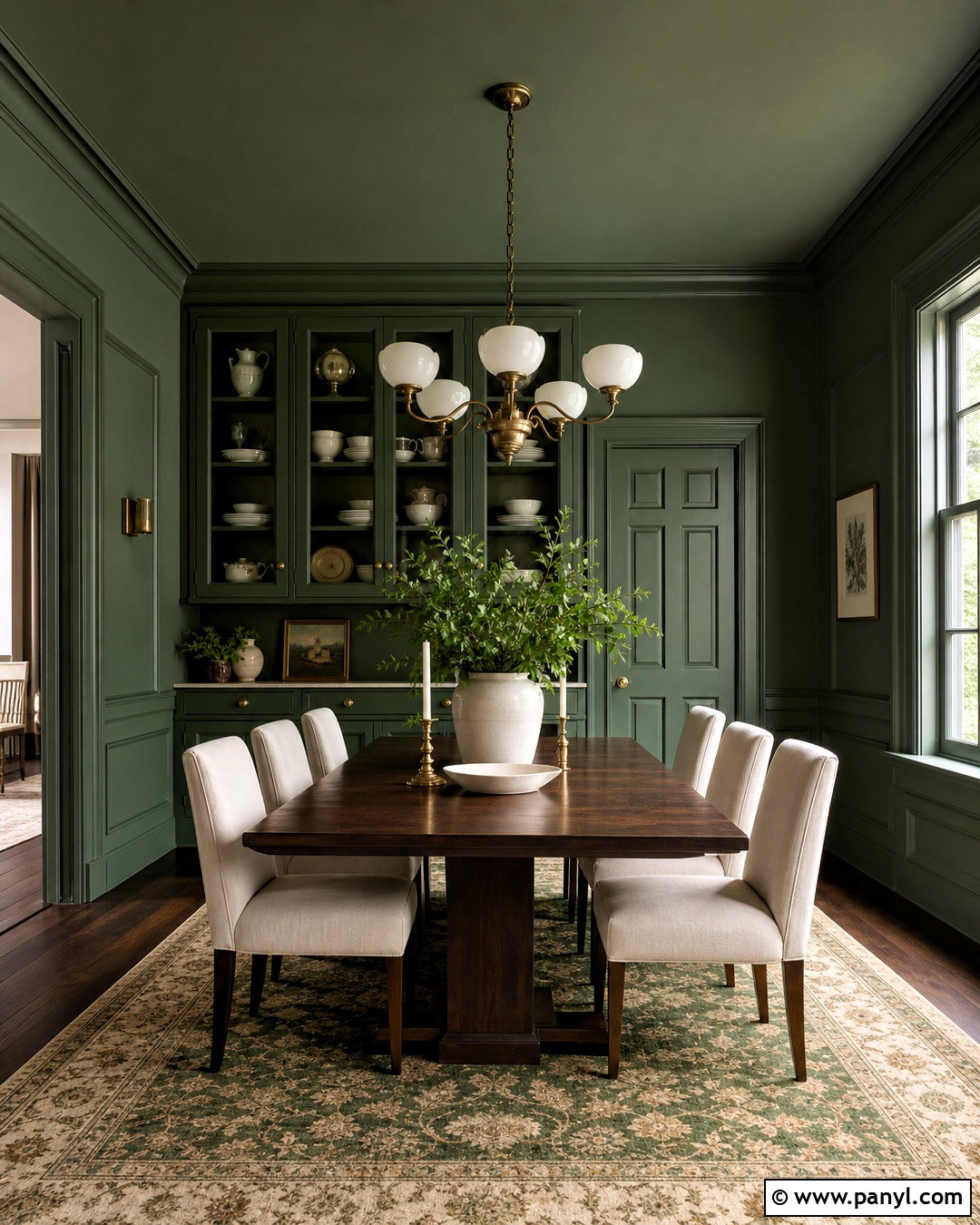
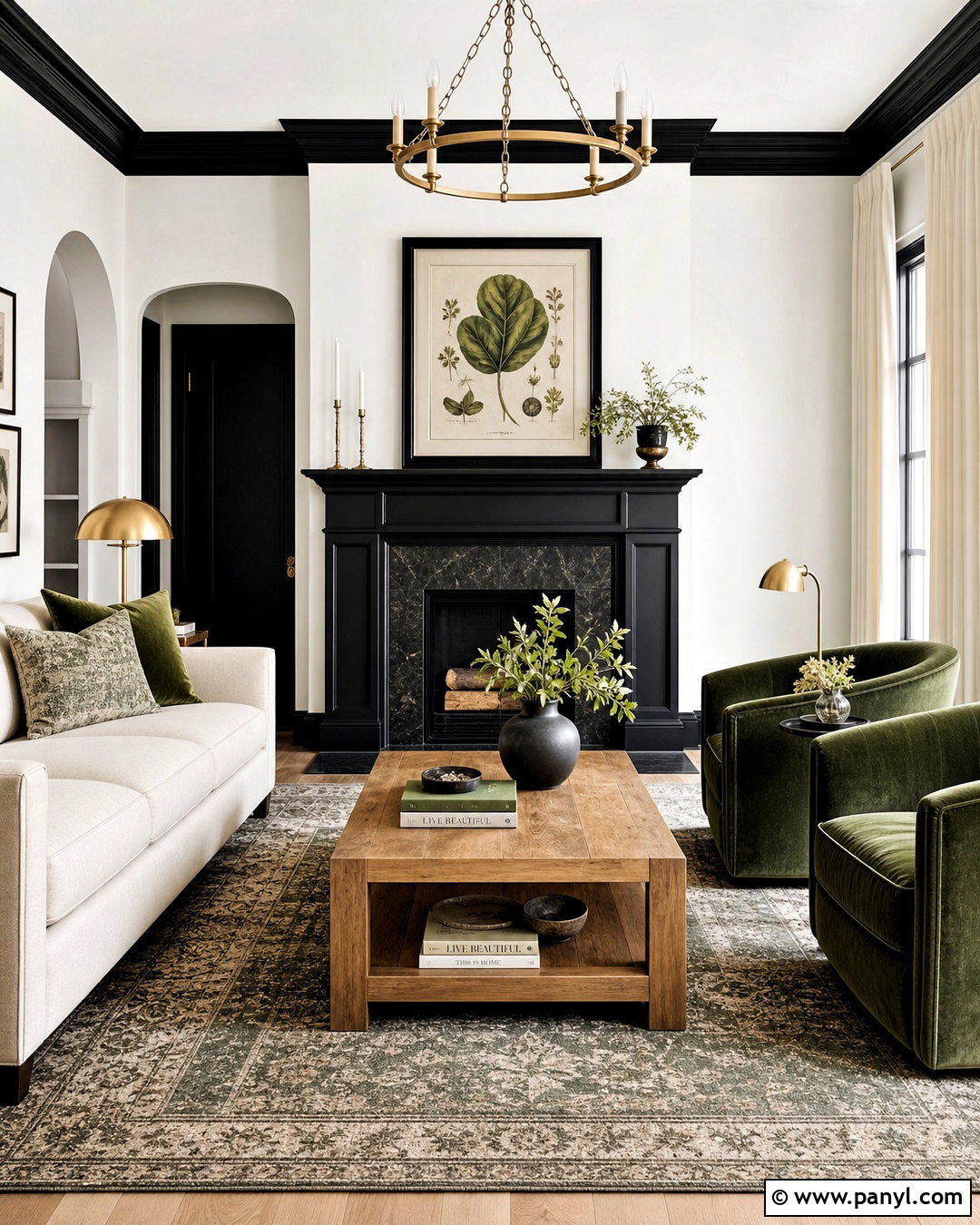
Deep forest green walls and trim can transform a formal dining room into a dramatic but balanced entertaining space. Continue the color over the panel molding, baseboards, window frames, doors, and built-in serving cabinet. Use a low-sheen finish on the walls and a glossier satin finish on the millwork. Center the room around a dark oak dining table with cream upholstered chairs, which create strong yet elegant contrast. Hang a large linen drum pendant or milk-glass chandelier to brighten the center. A vintage-style rug containing green, beige, and restrained rust will connect the furniture to the painted surfaces. Finish with brass candlesticks, white ceramics, and natural greenery. The result feels enveloping without appearing dark or overly formal.
11. Pale Blue Walls And Trim
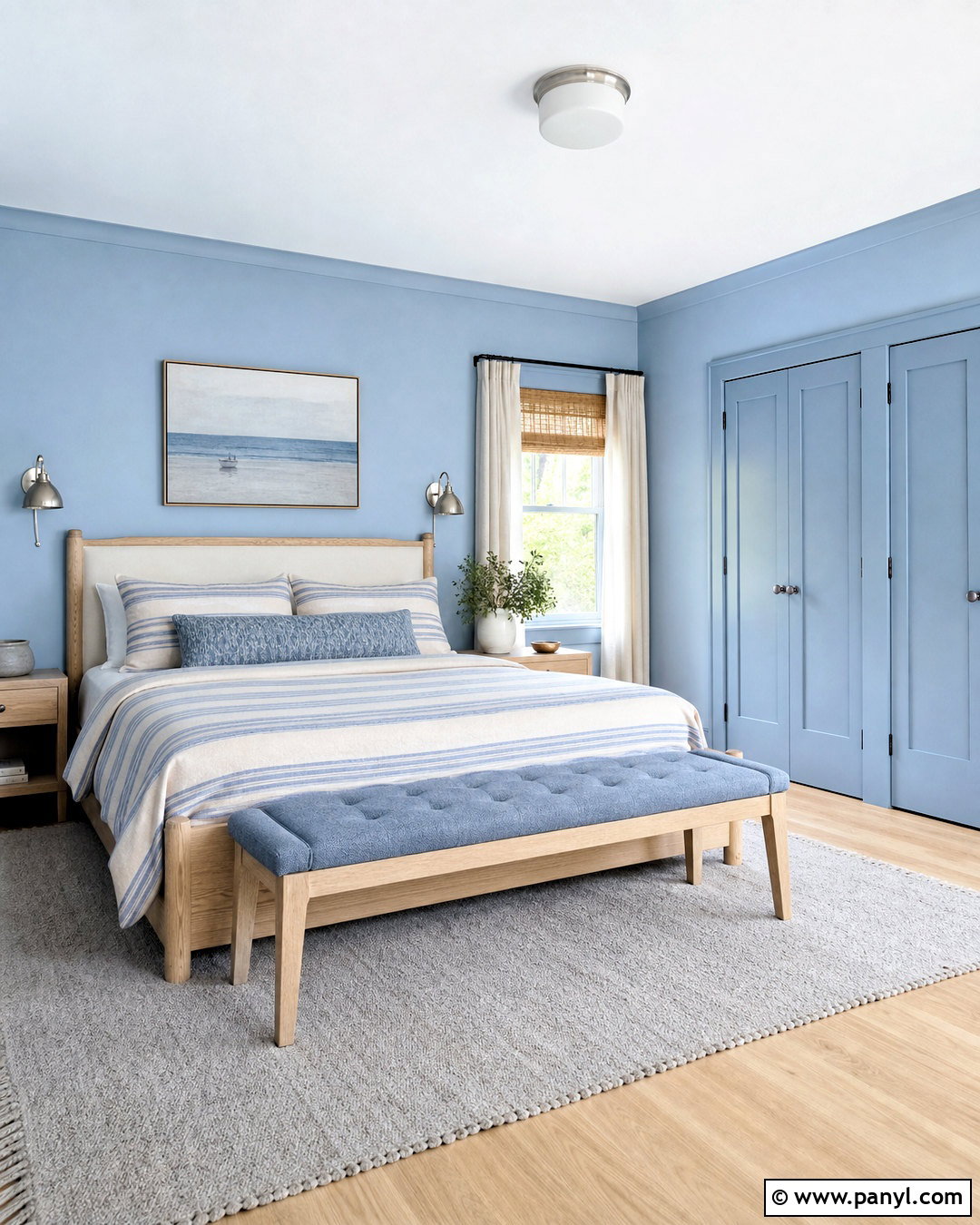
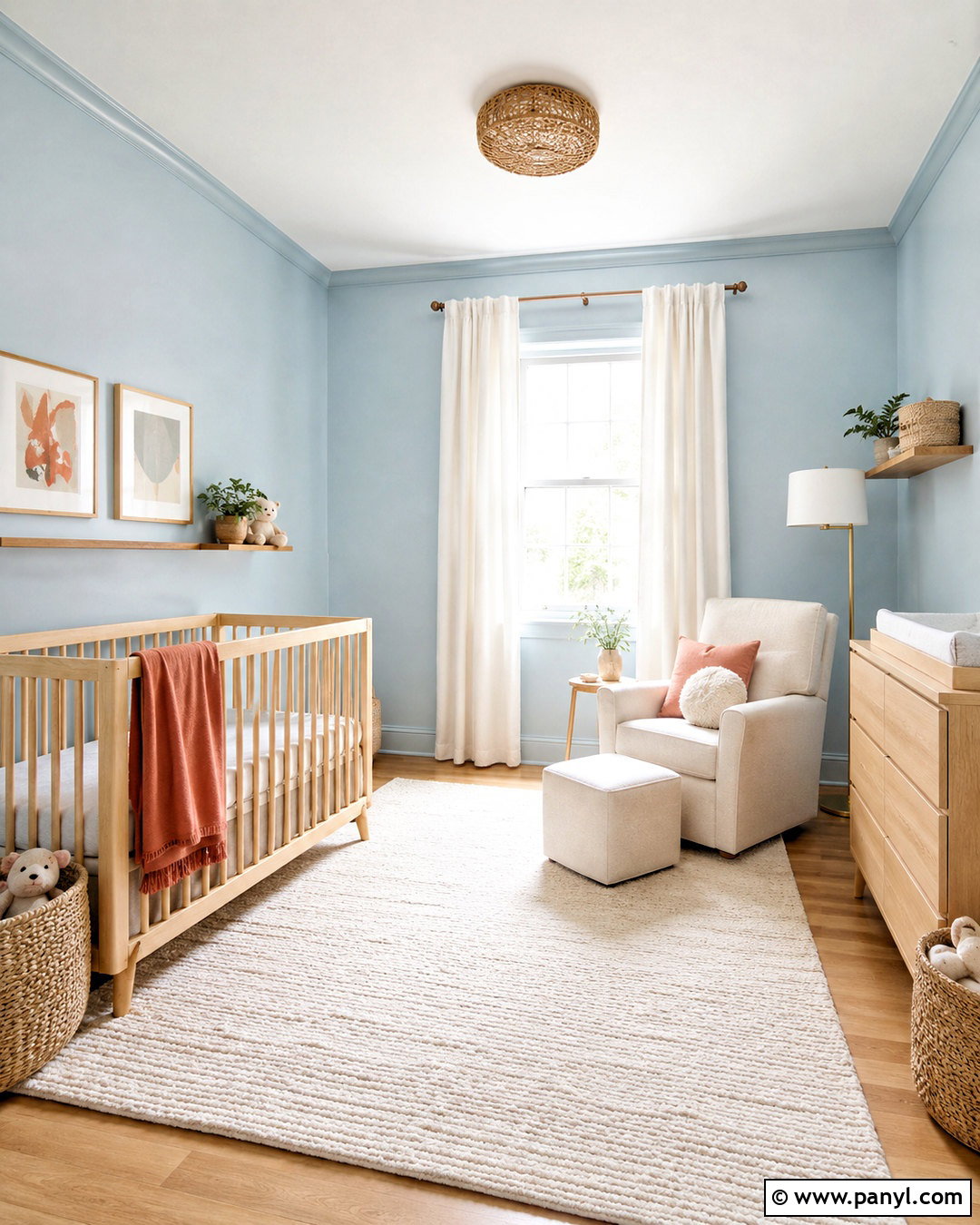
Pale blue brings a clear, restful quality to bedrooms, especially when the walls and trim form one uninterrupted backdrop. Choose a gentle blue with subtle gray undertones and repeat it across the baseboards, window frames, closet doors, and crown molding. Use flat paint on the ceiling in a diluted version of the wall color for a softer overhead transition. A white oak bed, powder-blue upholstered bench, and striped blue-and-cream bedding create an easy layered palette. Add woven shades beneath light linen curtains for warmth and privacy. Brushed nickel sconces and a pale gray rug provide quiet contrast. Avoid excessive coastal accessories. Simple pottery, abstract art, and natural materials will make this monochromatic room feel current, peaceful, and adaptable.
12. Dusty Blue Bathroom Walls And Trim
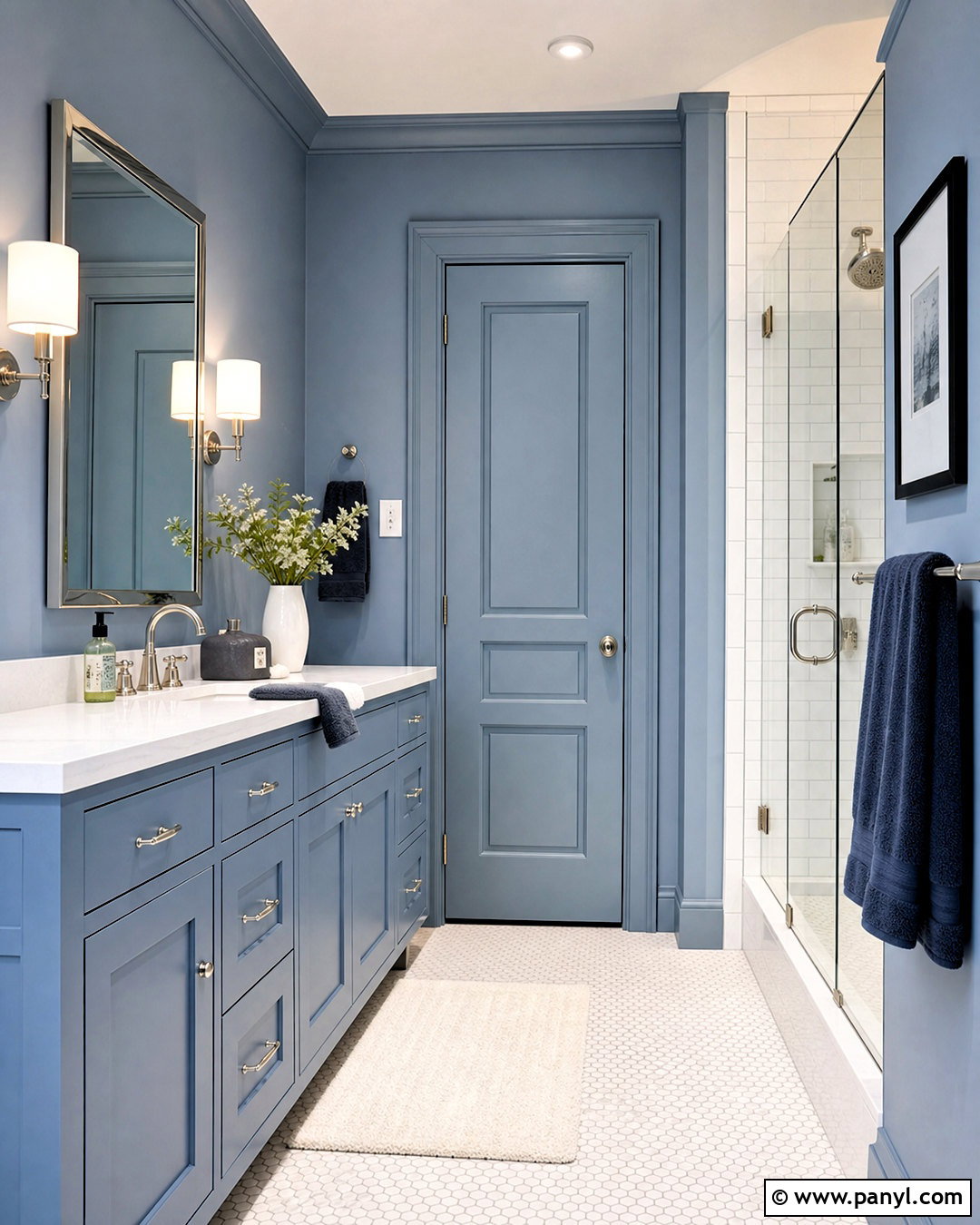
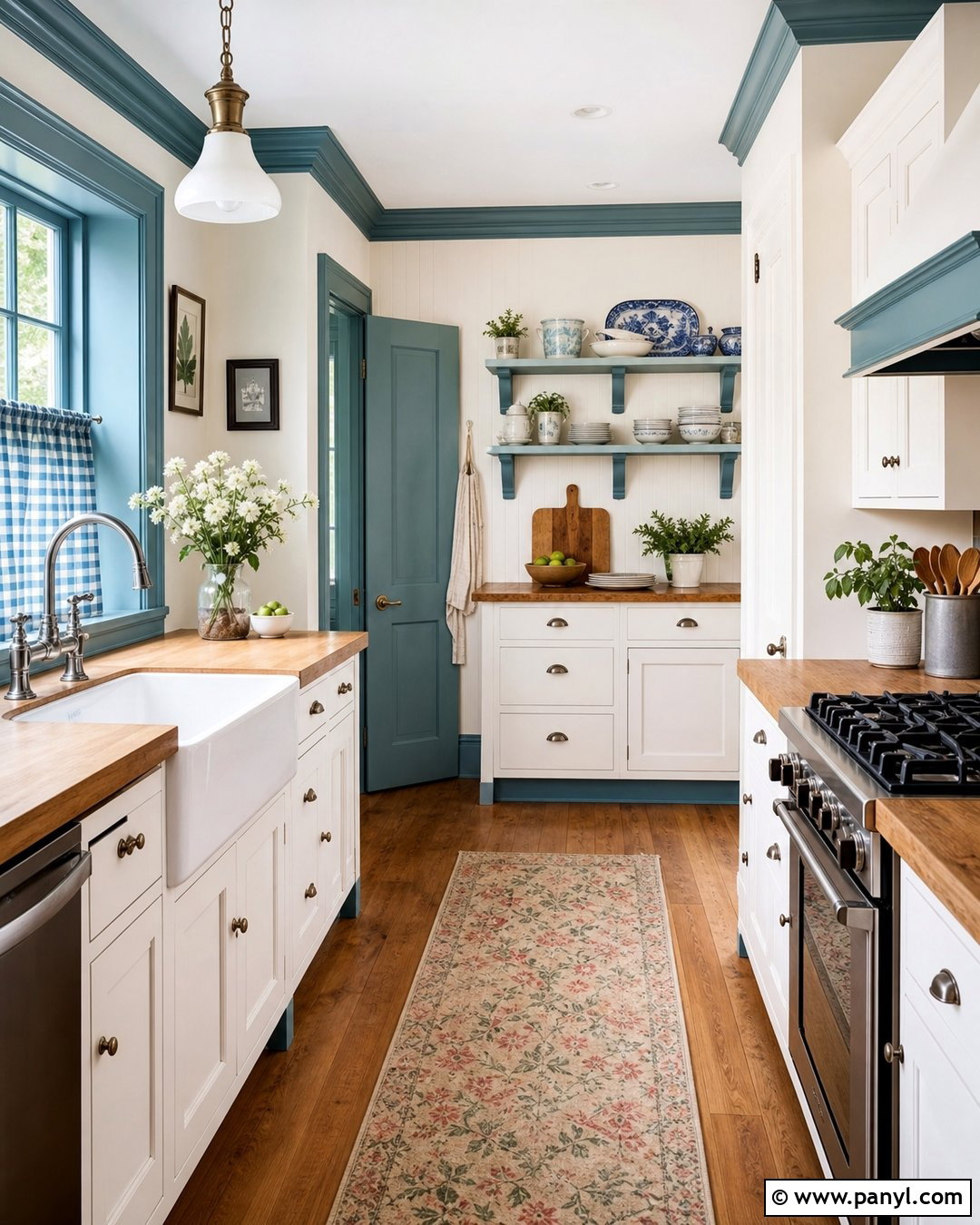
For a bathroom that feels colorful but composed, coat the walls, door, trim, and vanity in dusty blue. The gray undertone keeps the color sophisticated, while the continuous treatment allows a smaller room to feel more unified. Use moisture-resistant satin paint on the walls and a durable semigloss on the vanity and woodwork. Install a white quartz countertop, polished nickel faucet, and simple rectangular mirror to brighten the blue surroundings. Small white floor tiles introduce clean contrast without dominating the design. Add towels in pale blue and slate, plus a washable cream bath mat. A glass shower enclosure maintains open sightlines. With bright ceiling lighting and minimal accessories, the finished bathroom feels crisp, practical, and gently enveloping.
13. Navy Blue Walls And Trim
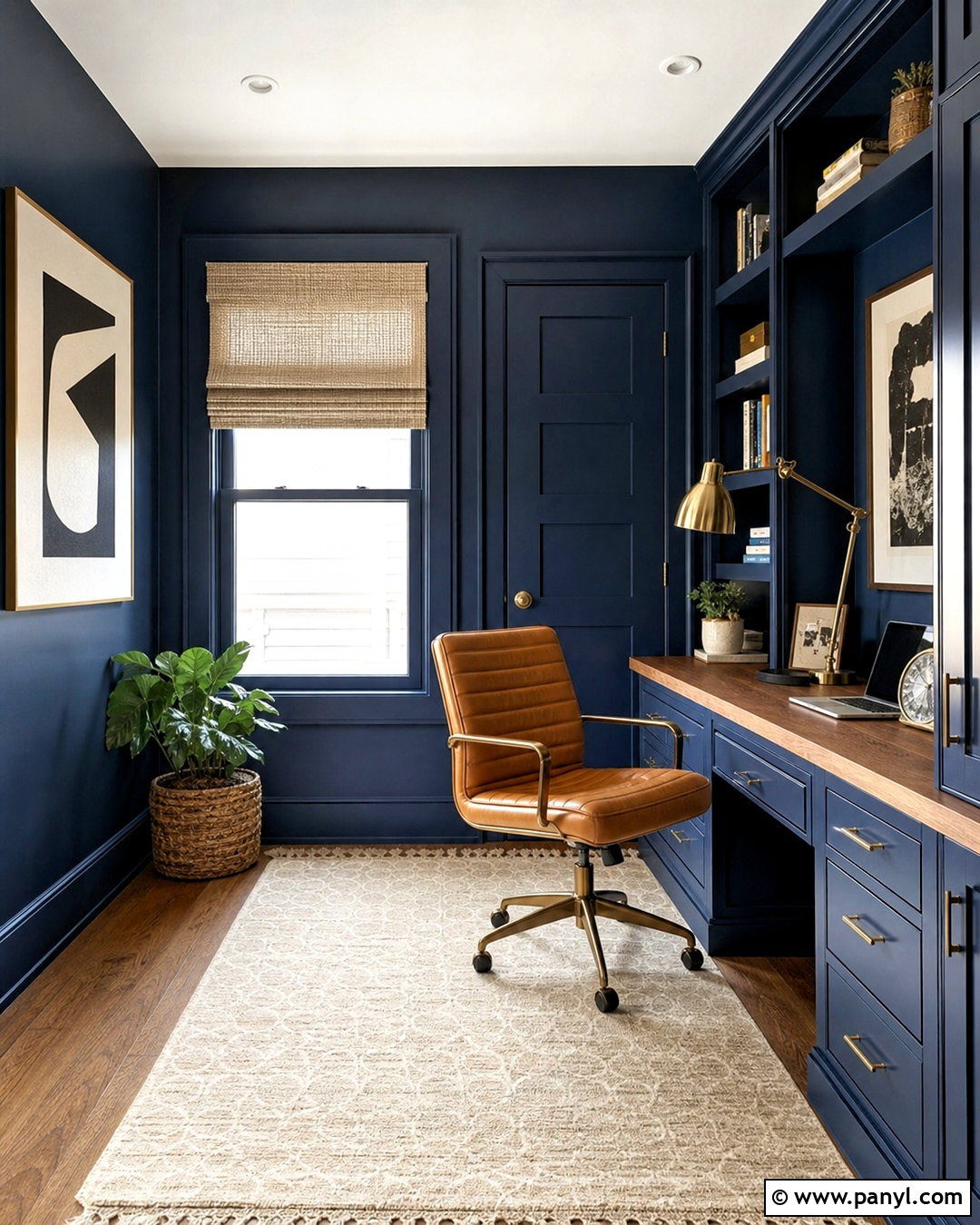
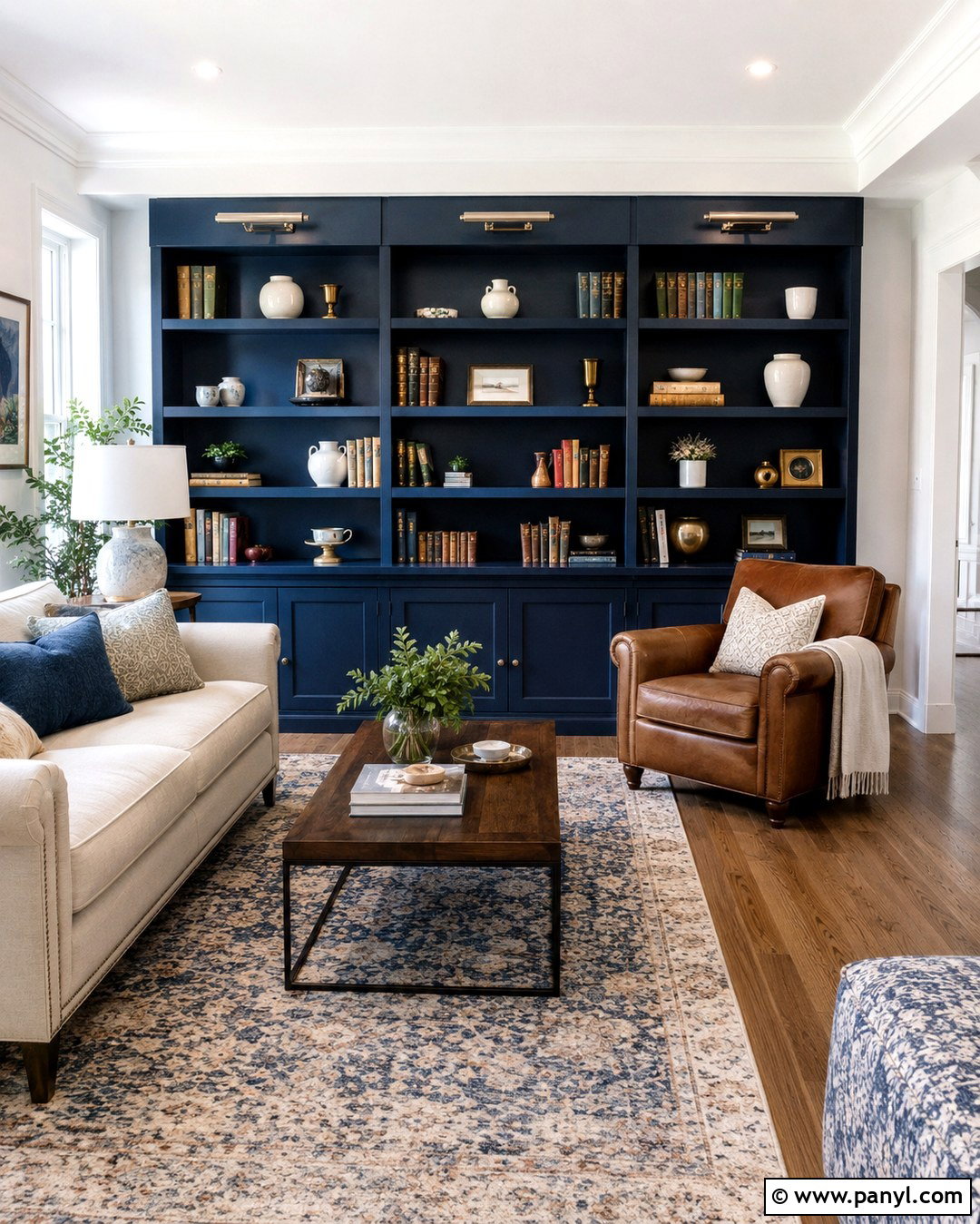
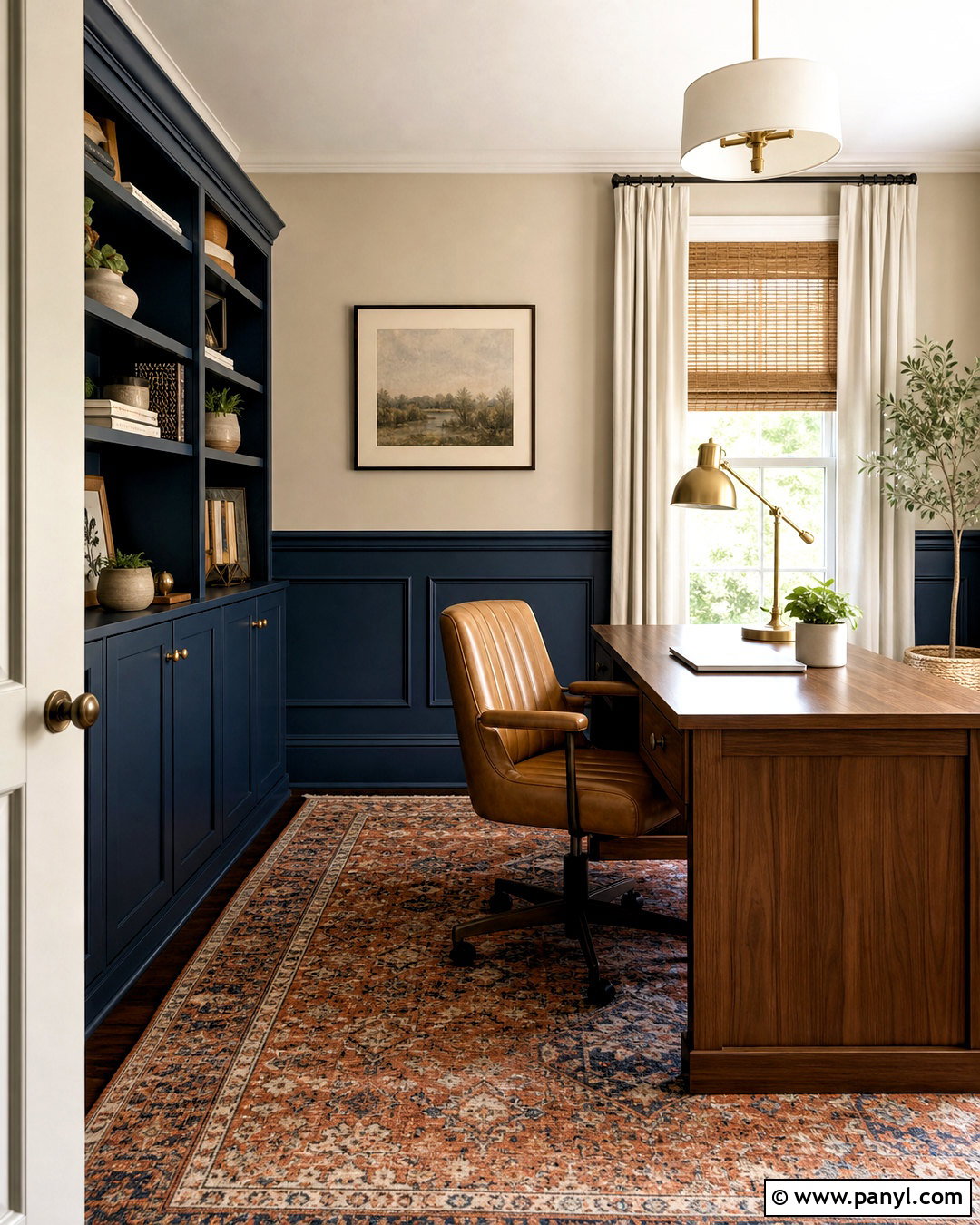
Navy walls and matching trim give a home office a confident, tailored appearance. Choose a balanced navy that looks blue rather than nearly black, and use it on the baseboards, window trim, doors, and built-in desk cabinetry. A matte wall finish keeps the color rich, while satin-painted woodwork reflects enough light to show its shape. Introduce a medium oak desktop, caramel leather chair, and cream patterned rug to warm the scheme. Brass cabinet pulls and an adjustable brass desk lamp provide polished highlights. Hang graphic artwork with generous white matting to break up broad areas of blue. Light-filtering shades preserve daylight during working hours. This complete office feels professional and immersive while remaining comfortable enough for daily use.
14. Teal Walls And Trim
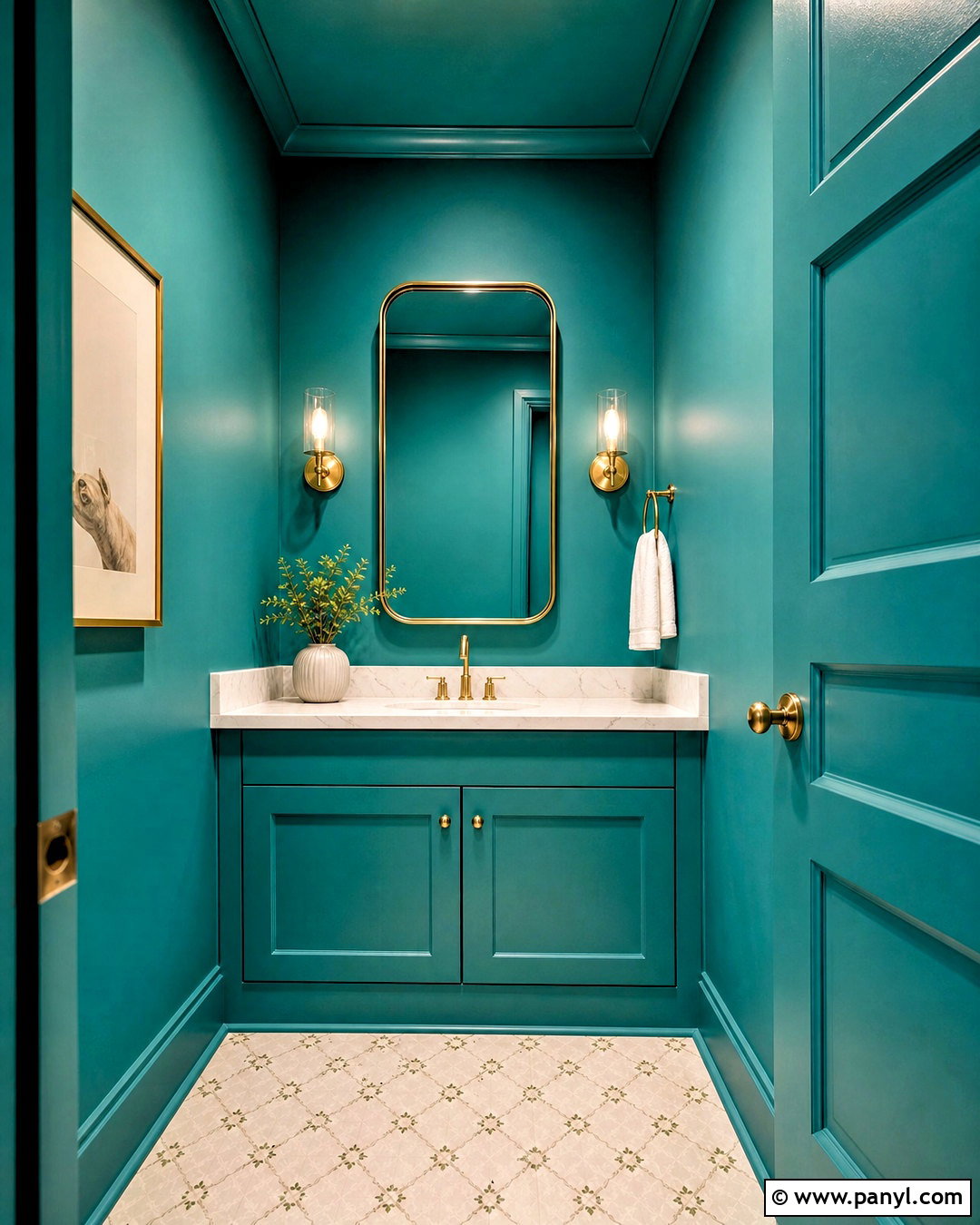
A powder room offers the perfect setting for adventurous teal walls and trim because the space is compact and self-contained. Paint the walls, baseboards, door, ceiling molding, and vanity in a saturated blue-green hue. Consider extending the same color onto the ceiling for a true floor-to-ceiling envelope. A white marble countertop and polished brass faucet will stand out clearly against the teal background. Choose a rounded brass mirror and two compact glass sconces to distribute bright, even light. Patterned floor tile in cream and muted teal brings detail below without adding a competing color. Finish with white hand towels and a single ceramic vase. The room will feel bold and complete rather than like a collection of unrelated decorative features.
15. Lavender Walls And Trim
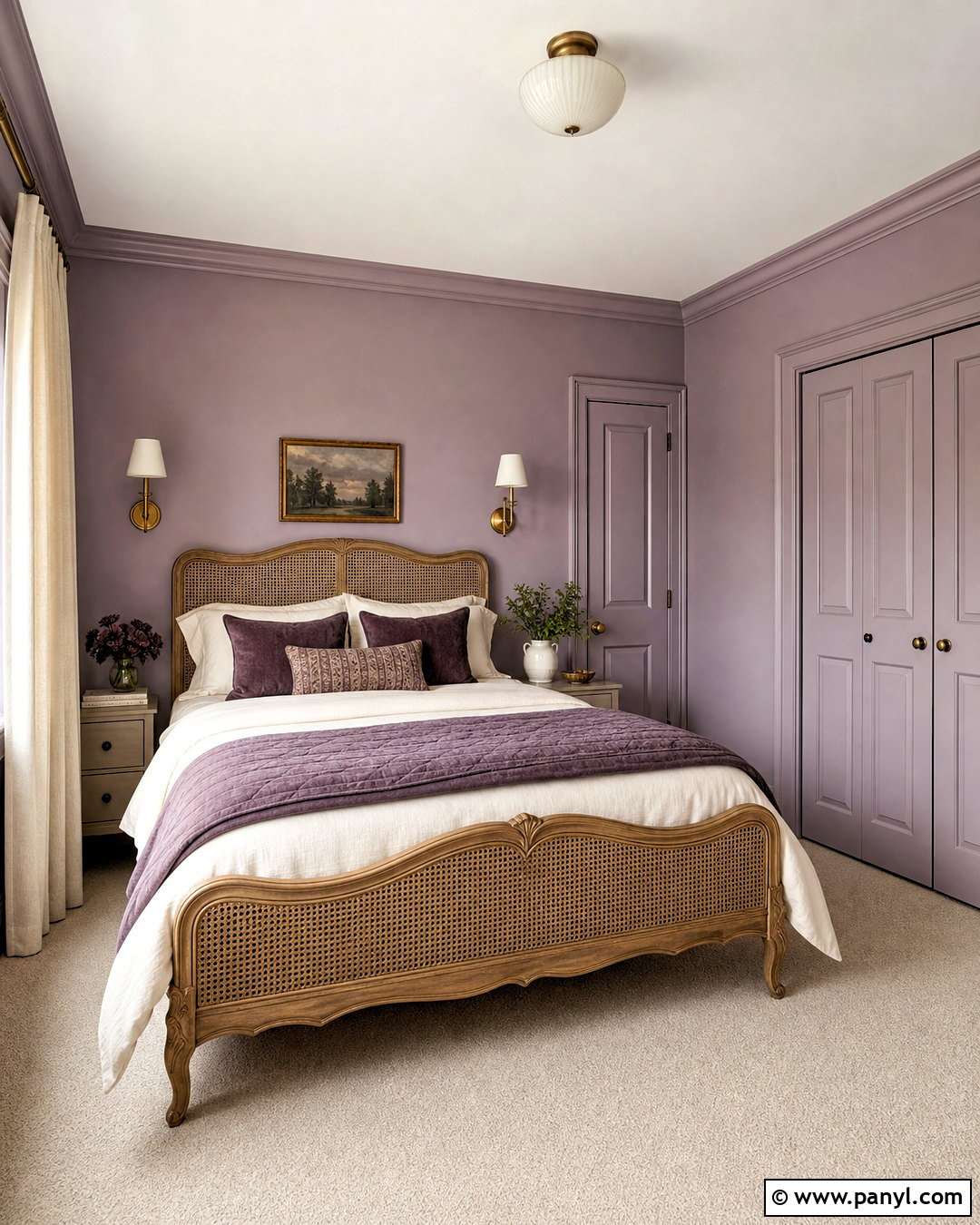
Muted lavender can create a soothing guest bedroom when it is balanced with natural wood and soft neutral textiles. Select a gray-based lavender and continue it across the walls, baseboards, door, closet fronts, and window casing. Instead of matching the ceiling exactly, use a paler lavender tint to keep the upper part of the room light. Add a cane bed with a warm oak frame, crisp ivory bedding, and a quilt containing faded violet and taupe. Mushroom-colored nightstands and antique brass sconces prevent the palette from feeling overly sweet. Ground everything with a cream wool rug and simple linen curtains. A few plum-colored cushions introduce depth. This coordinated room looks distinctive while remaining calm and welcoming for different guests.
16. Plum Walls And Trim
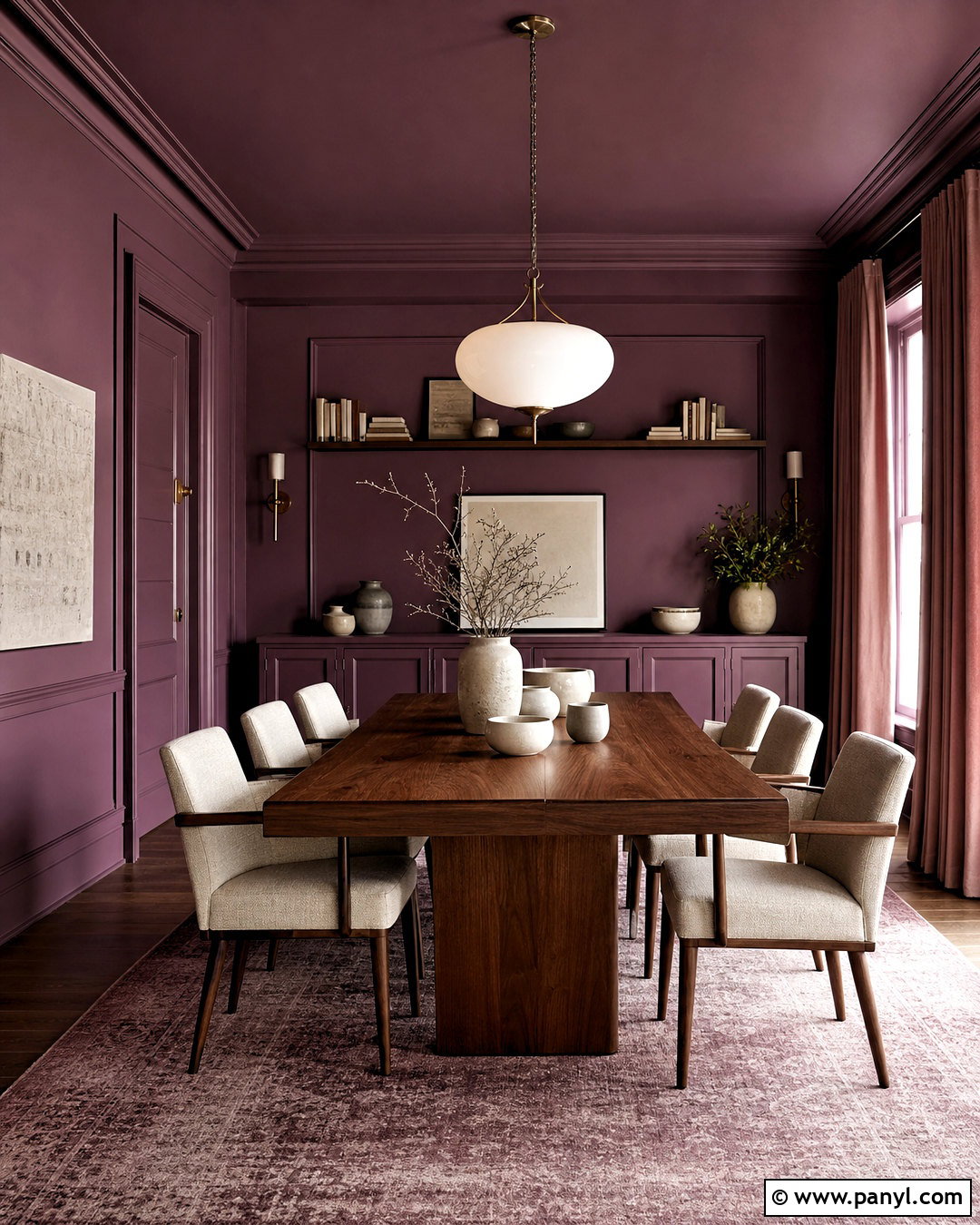
Rich plum walls and trim can give a dining room a luxurious atmosphere without requiring ornate furniture. Choose a warm purple with red and brown undertones, then paint the paneling, baseboards, window casing, doors, and built-in cabinet to match. Let finish changes create dimension: matte for walls and satin for architectural details. A streamlined walnut dining table keeps the room grounded, while oatmeal upholstered chairs provide necessary brightness. Hang a large opal glass pendant above the table for clean, diffused light. A faded rug featuring plum, mauve, cream, and brown connects every element. Add bronze hardware, pale ceramic dinnerware, and linen curtains in dusty mauve. The complete look feels dramatic but restrained, suitable for intimate dinners and everyday use.
17. Burgundy Walls And Trim
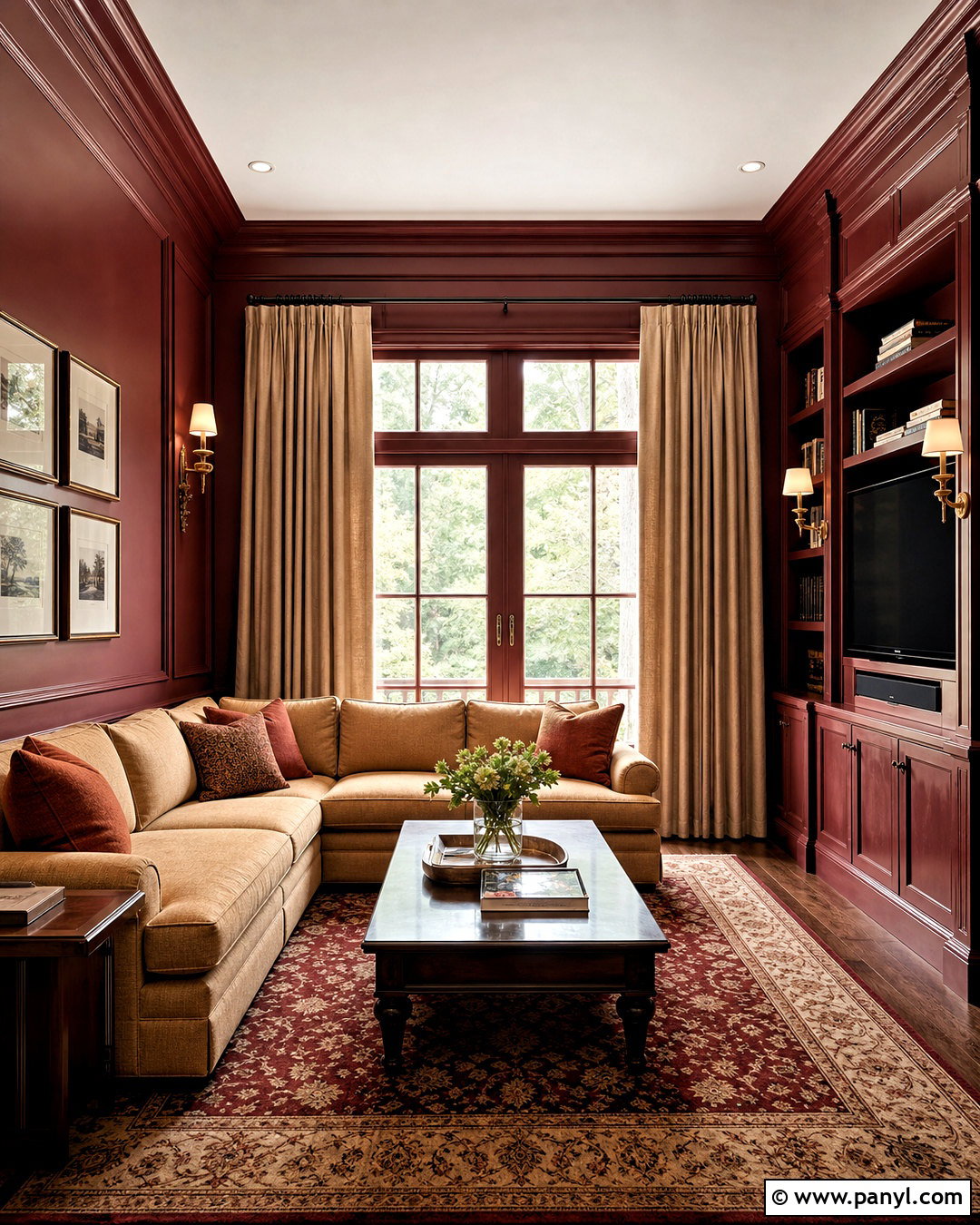
When a family room needs warmth and depth, burgundy can create a comfortable, cocoon-like backdrop. Cover the walls, baseboards, crown molding, window frames, and media cabinetry in a muted wine-free red with earthy brown undertones. Keep the ceiling a softened version of the same shade to avoid a sharp white interruption. A camel-colored sectional and dark walnut coffee table will lighten the center of the room. Layer in a traditional rug containing burgundy, tan, navy, and cream to give the palette history and movement. Bronze sconces, oatmeal curtains, and textured rust pillows complete the arrangement. Conceal electronics inside painted cabinetry where possible. The finished family room feels cozy and polished while remaining durable enough for relaxed daily living.
18. Charcoal Gray Walls And Trim
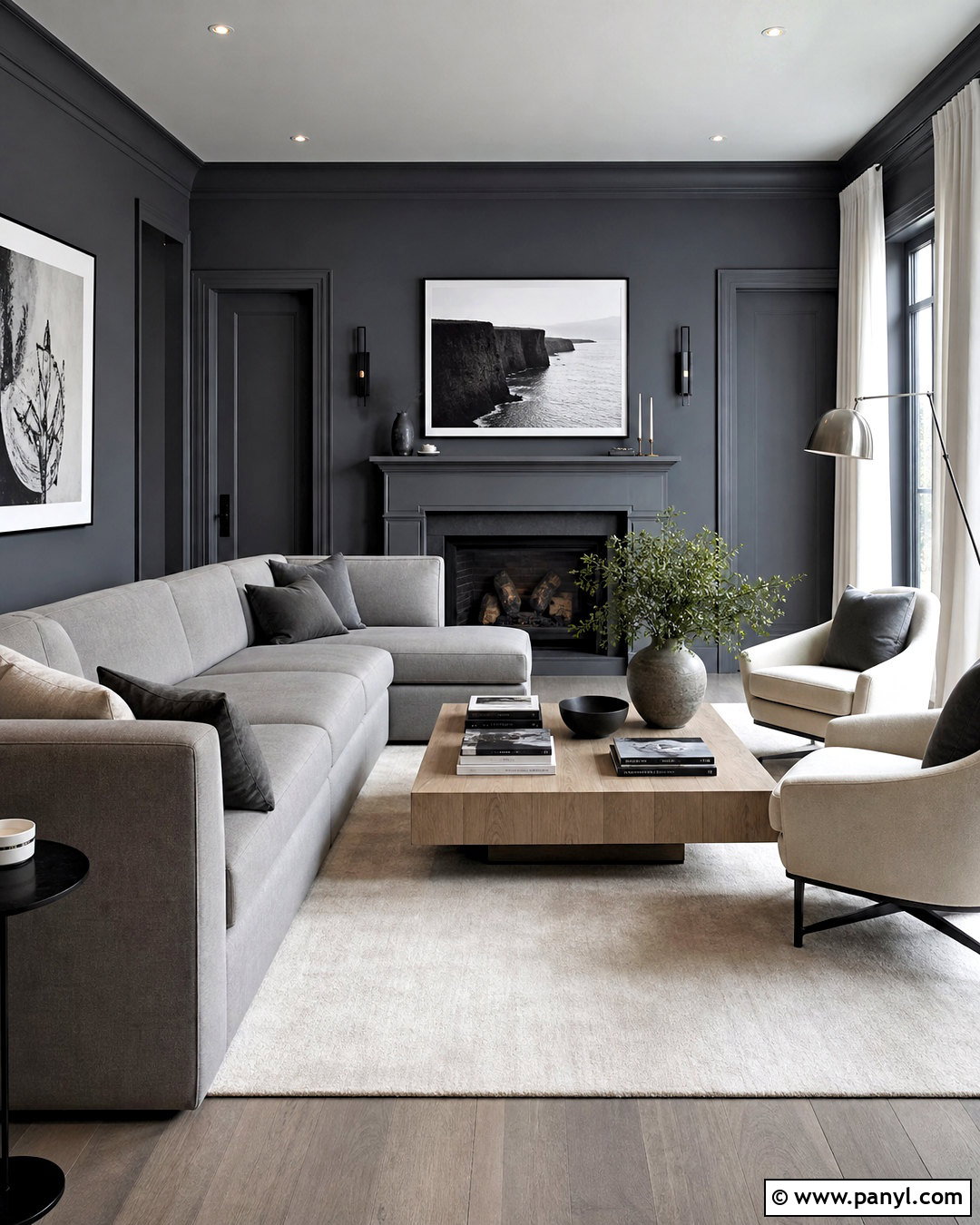
Charcoal walls and trim can look sleek rather than gloomy when the room includes strong daylight and pale furnishings. Use the same softened charcoal on the walls, baseboards, doors, fireplace surround, and window frames. Choose matte paint for broad surfaces and satin for the trim to prevent everything from visually merging. Arrange a light gray sectional opposite two cream lounge chairs, then add a pale oak coffee table for natural warmth. A large ivory rug reflects light across the dark envelope. Hang oversized black-and-white artwork and install brushed steel floor lamps for a clean contemporary edge. White linen curtains can soften the windows without looking disconnected. This high-contrast living room feels structured, modern, and comfortable instead of cold or severe.
19. Soft Black Walls And Trim
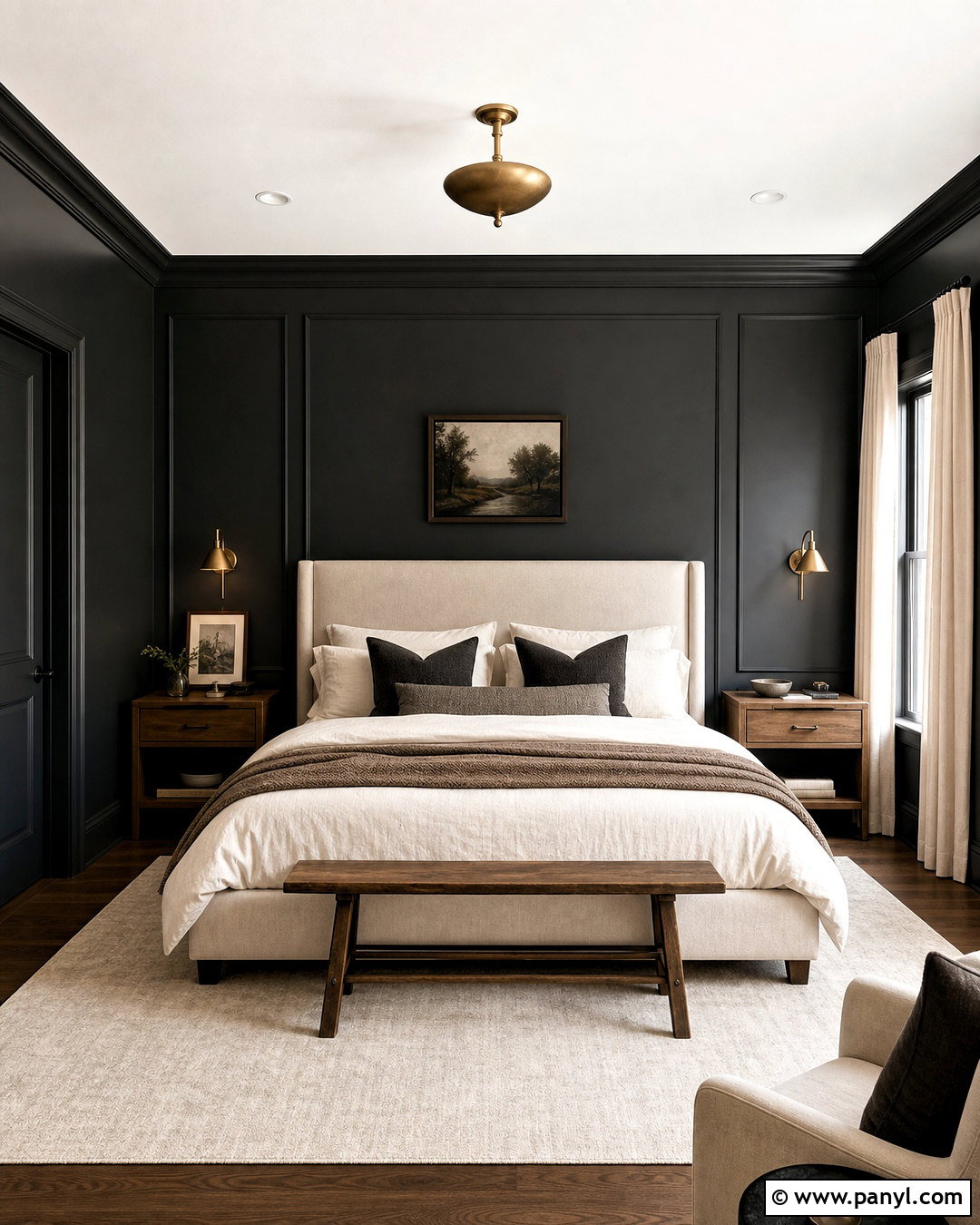
Soft black paint creates a striking bedroom when it has charcoal or brown undertones and is supported by warm materials. Carry the color over the walls, baseboards, window trim, doors, and simple wall molding. Keep the ceiling slightly lighter if the room is small, or paint it to match for a fully immersive result. Position a tall oatmeal upholstered bed against the darkest wall, then layer it with ivory sheets, taupe blankets, and charcoal pillows. Medium oak nightstands and aged brass sconces introduce warmth and reflection. Use a large cream rug to brighten the floor, especially if the existing wood is dark. Minimal framed artwork and natural linen curtains complete this sophisticated monochromatic room without making it feel crowded or theatrical.
20. Medium Gray Walls And Trim
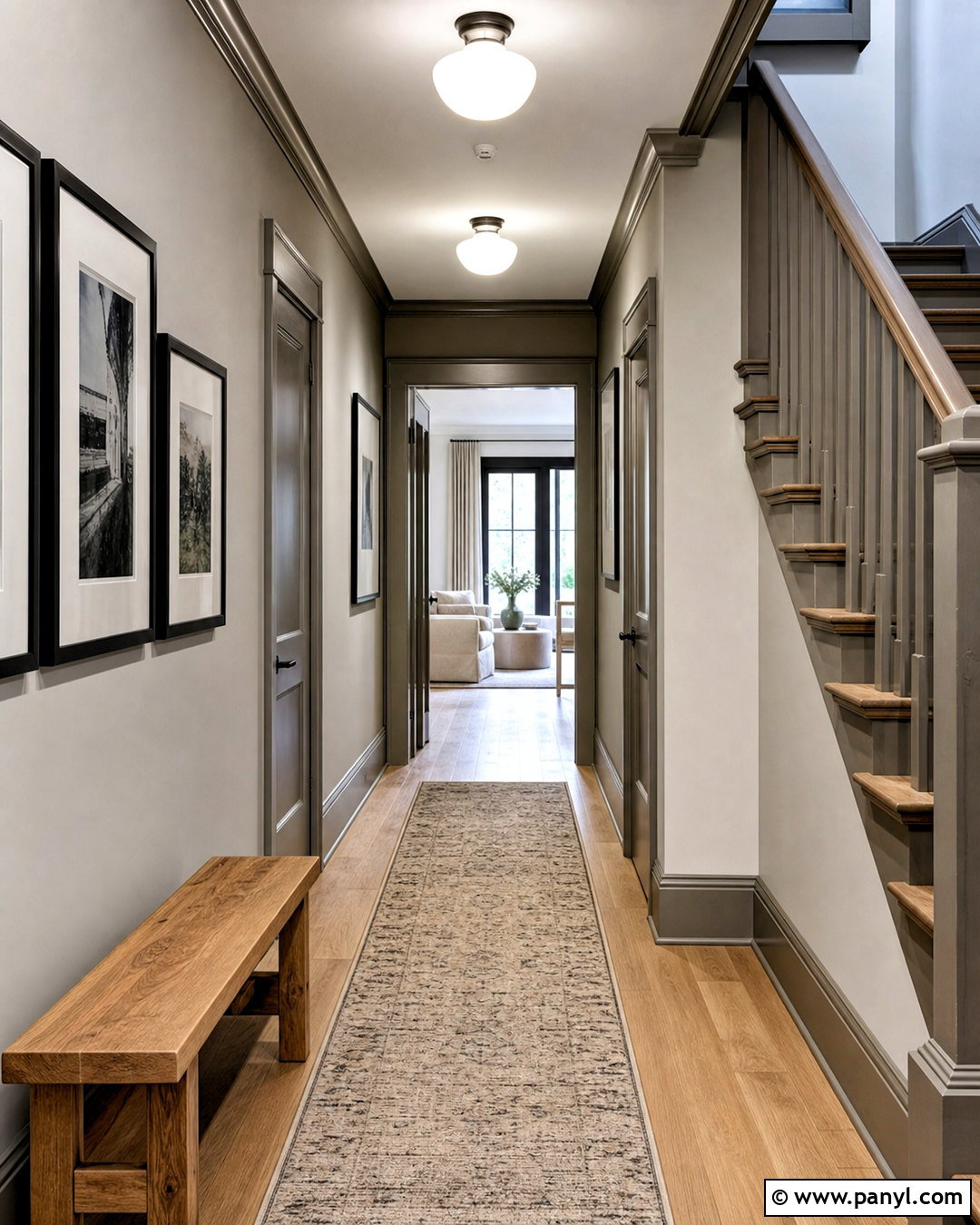
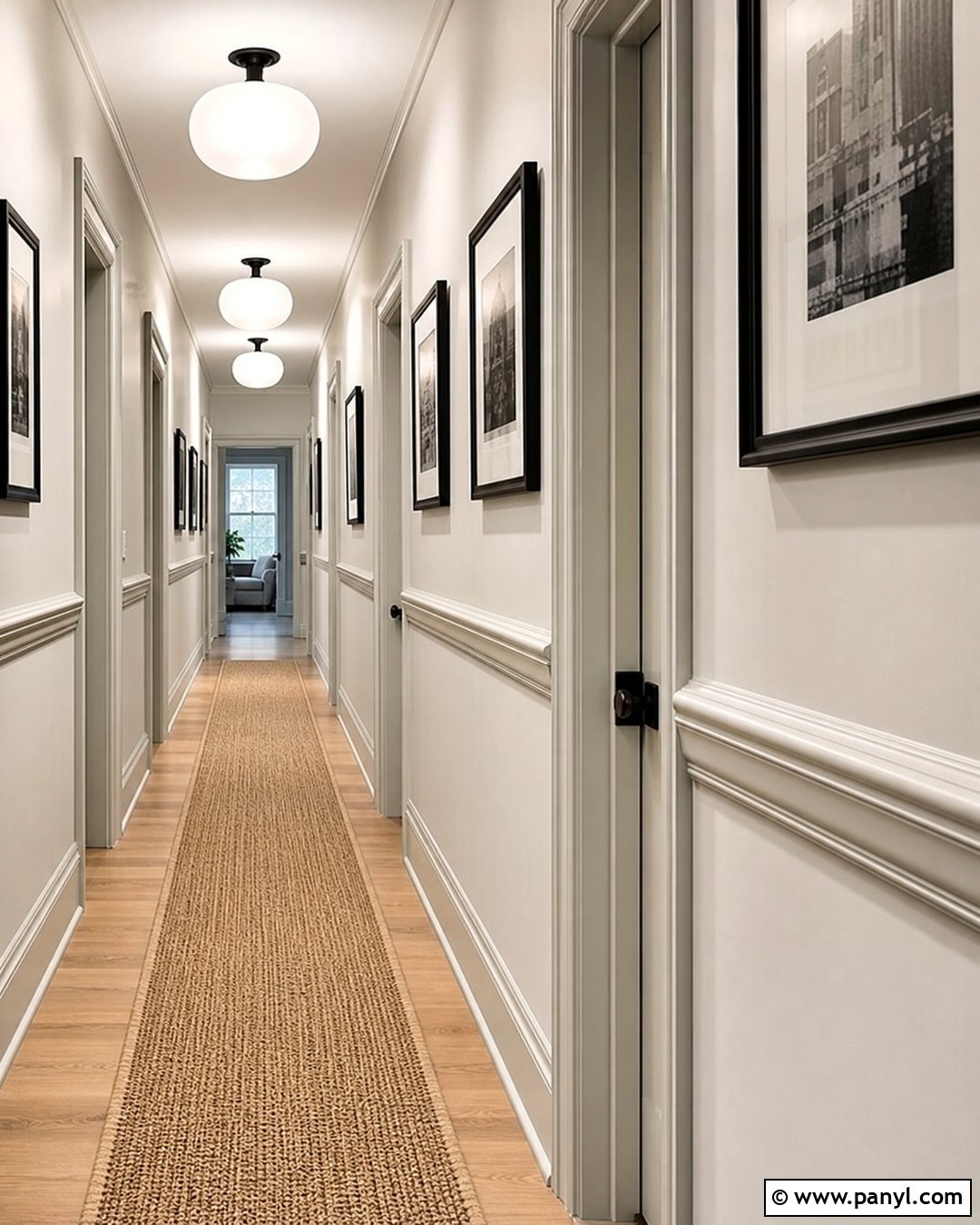
Medium gray walls and trim offer an understated way to unify a hallway with many doors and architectural breaks. Choose a warm gray that complements the flooring, then apply it consistently to the walls, baseboards, door casings, interior doors, and stair trim. Finish walls in washable eggshell and use satin or semigloss on doors and woodwork for durability and subtle contrast. Paint finish variation can create dimension while preserving one continuous color story. () Add a narrow oak bench, a long neutral runner, and a row of black-framed artwork with wide cream mats. Simple ceiling lights in opal glass keep the corridor bright. The resulting hallway feels orderly and connected, while the painted doors recede rather than making the passage appear busy.
Conclusion:
The most successful monochromatic walls and trim ideas combine one carefully chosen paint color with varied finishes, tactile materials, balanced lighting, and furniture that supports the overall mood. Light shades can create an open, gentle background, while darker colors make bedrooms, dining rooms, and offices feel intimate and defined. Before committing, test large painted samples beside the flooring and view them throughout the day. Decide whether the ceiling, doors, cabinetry, and built-ins should join the color treatment. Matte walls paired with satin trim are often an approachable starting point. With thoughtful contrast and tonal layering, a monochromatic room can feel detailed, comfortable, and personal rather than plain or overwhelming.

Related Ideas and Inspiration:
Leave a Reply