
A green corridor can turn a forgotten passage into one of the most memorable spaces in your home. These 20 green corridor ideas explore complete looks rather than simple paint changes. You will find calming sage schemes, dramatic forest green walls, botanical wallpaper, practical storage, statement flooring, and inviting lighting. Each design combines color, finishes, furniture, artwork, and decorative details so the corridor feels connected to nearby rooms. Lighter greens can brighten narrow layouts, while deeper shades create character and definition. Natural wood, warm metals, patterned runners, and crisp trim also help balance the palette. Whether your home is modern, traditional, coastal, or farmhouse-inspired, the following complete schemes make it easier to confidently recreate these 20 green corridor ideas.
1. Sage Green Corridor
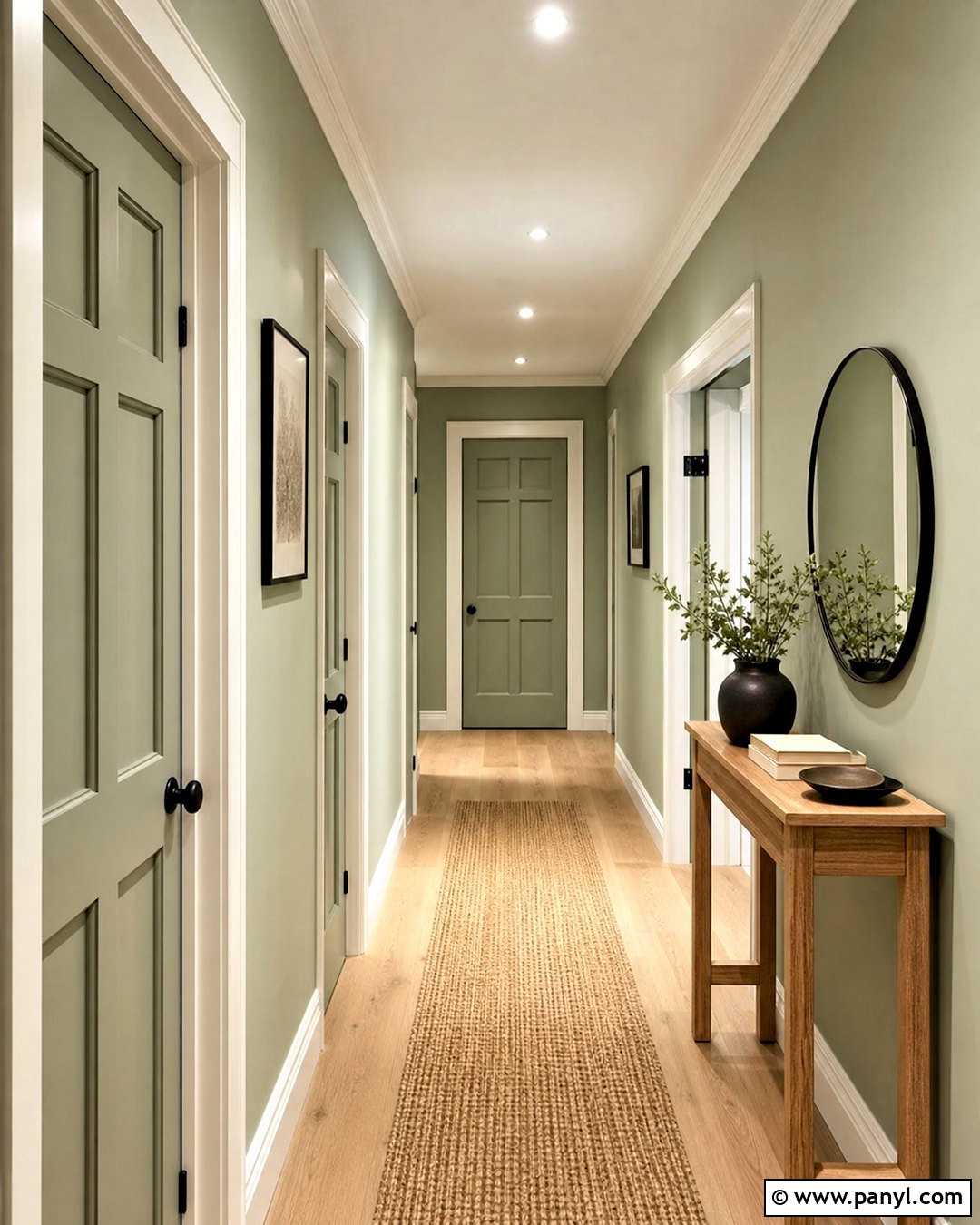
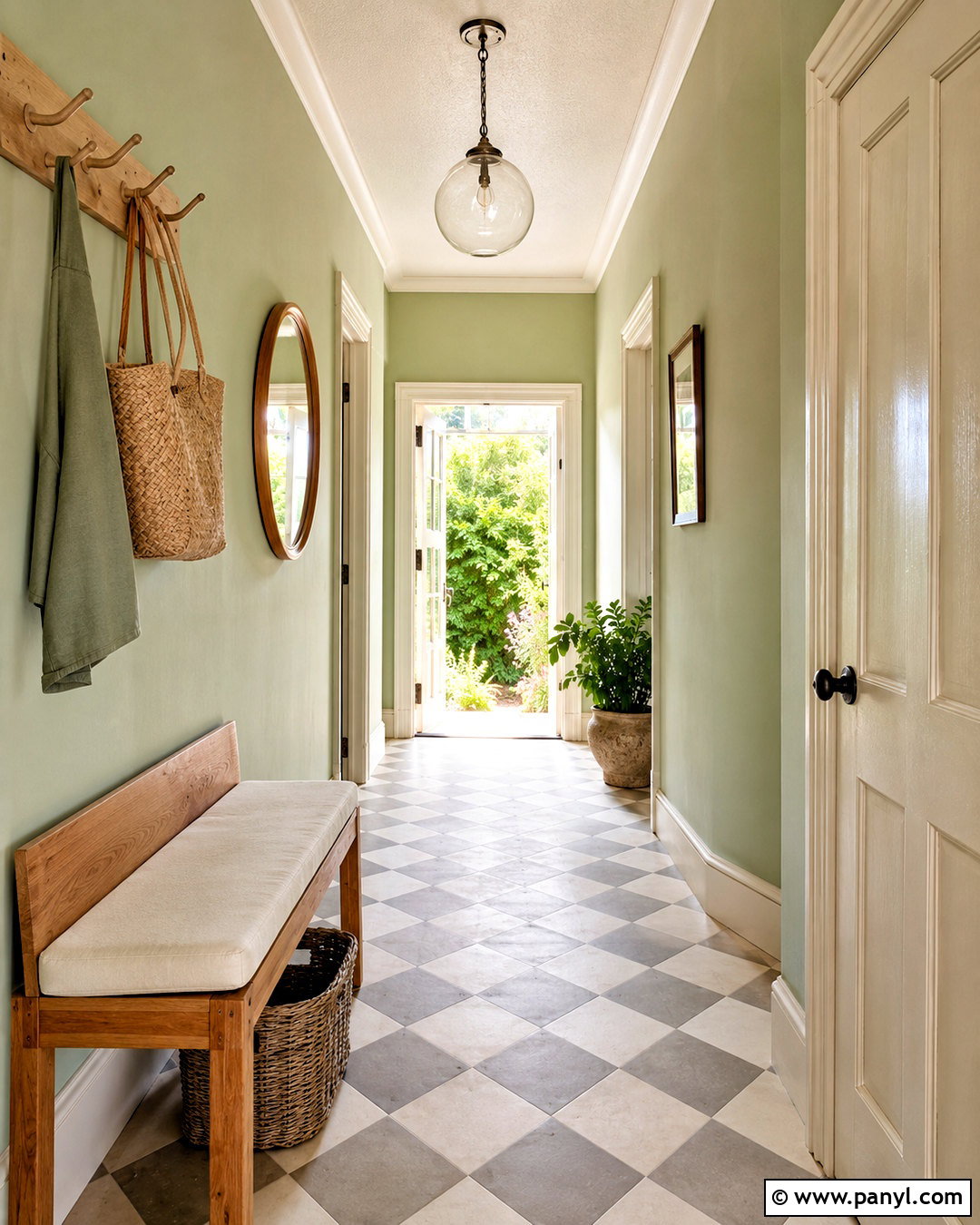
Soft sage walls give a narrow corridor a fresh, relaxed appearance without making the space feel overly colorful. Pair the green with warm white trim, pale oak flooring, and simple shaker-style doors for a balanced foundation. A natural jute runner adds texture while keeping the walkway visually open. Choose a slim oak console for the widest section, then decorate it with a ceramic lamp, small bowl, and leafy branch. Black-framed landscape prints create gentle contrast without overwhelming the walls. Finish the layout with a round mirror opposite a doorway or window to reflect available light. This complete corridor works especially well in transitional homes because the clean furniture, organic materials, and muted color feel both current and timeless.
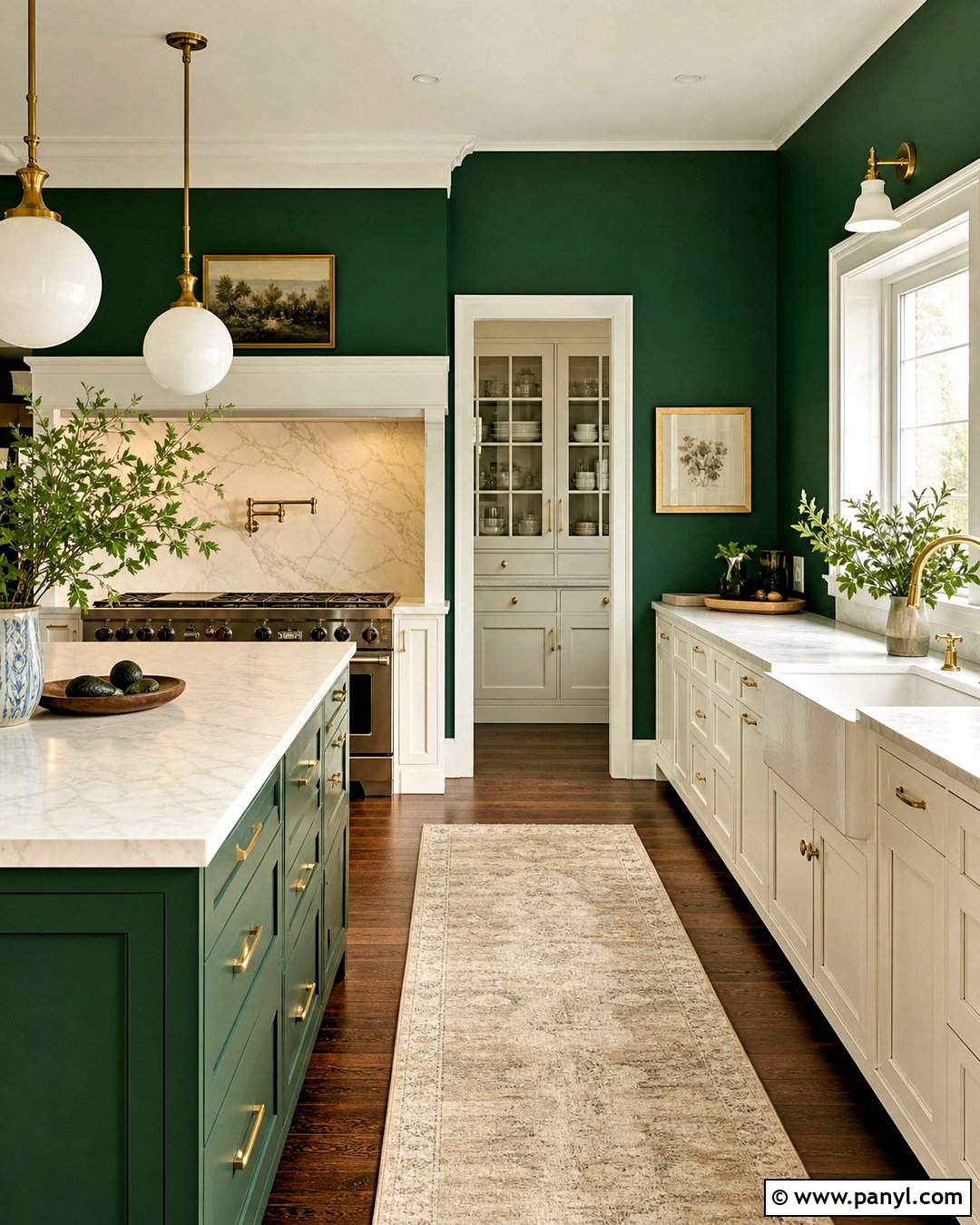
2. Forest Green Corridor
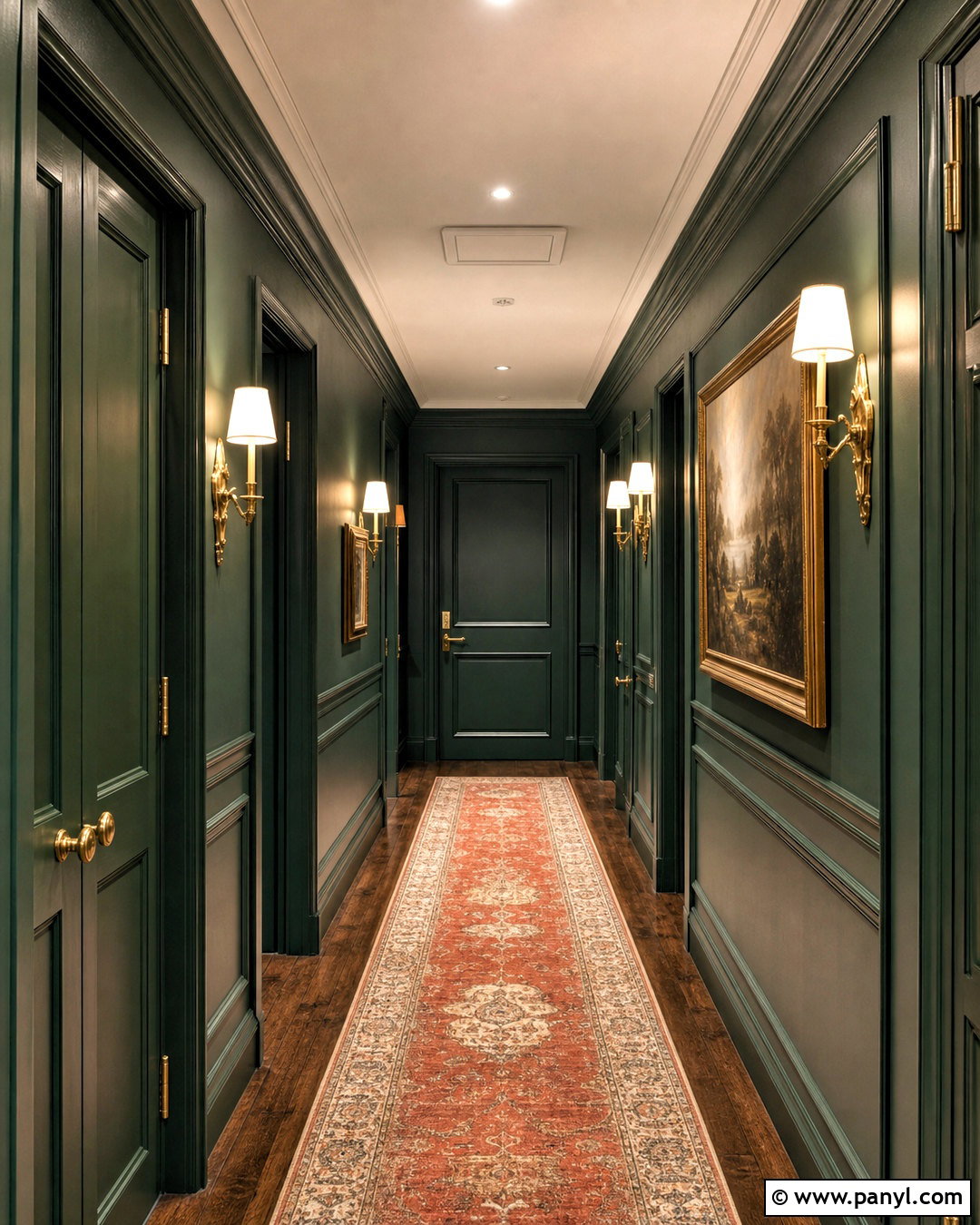
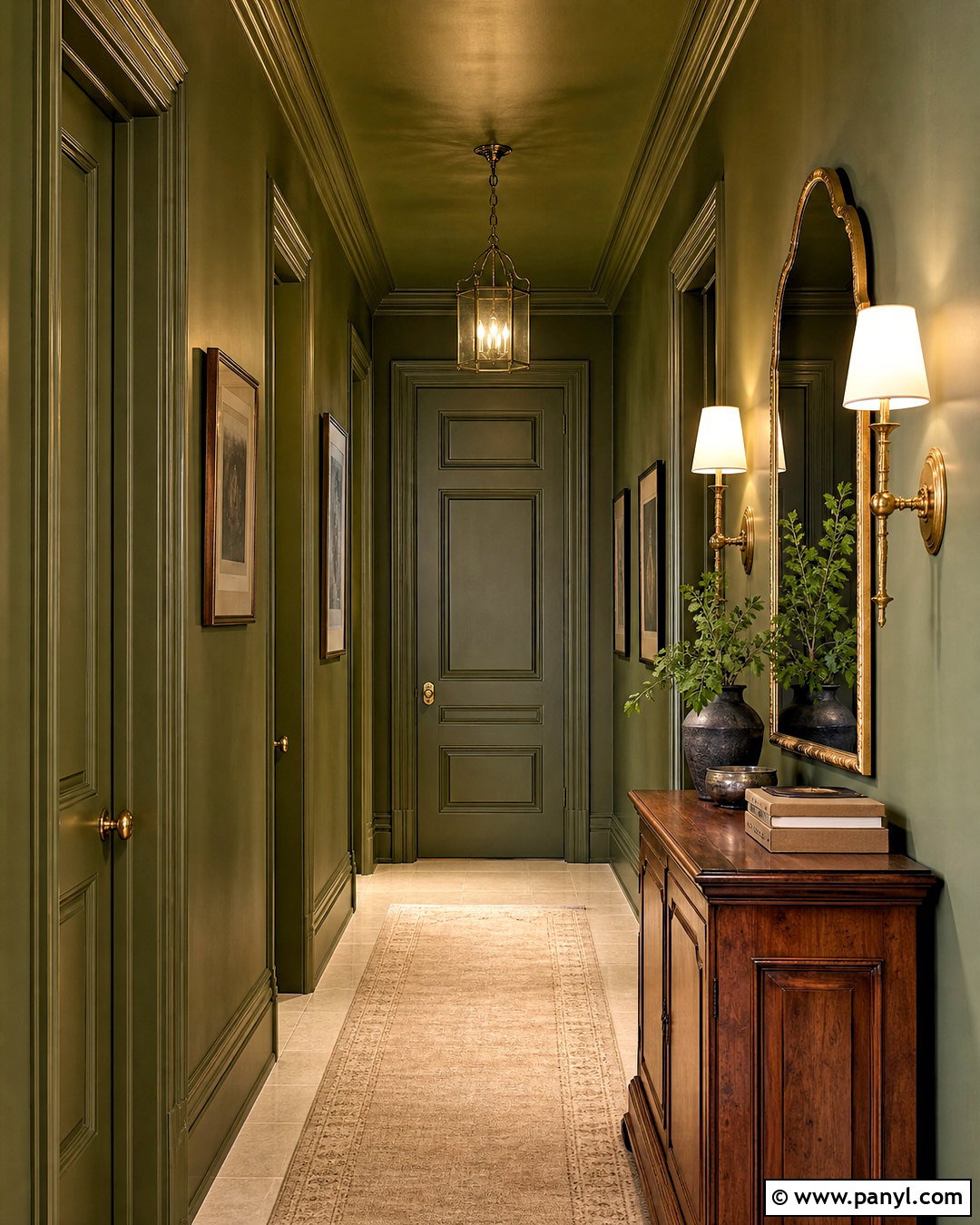
Deep forest green creates a dramatic corridor that feels intentional rather than overlooked. Paint the walls and interior doors in the same rich shade, but keep the ceiling warm white to prevent the passage from feeling enclosed. Dark walnut flooring or medium oak boards support the earthy palette. Add aged brass wall sconces at even intervals to create a warm rhythm along the walls. A vintage-style runner in rust, cream, and muted blue introduces pattern and softens the dark color. Use one large framed artwork at the end of the corridor as a clear focal point. Small brass door hardware, substantial baseboards, and simple crown molding complete this handsome scheme, which suits traditional, colonial, and historic-inspired interiors particularly well.
3. Olive Green Corridor
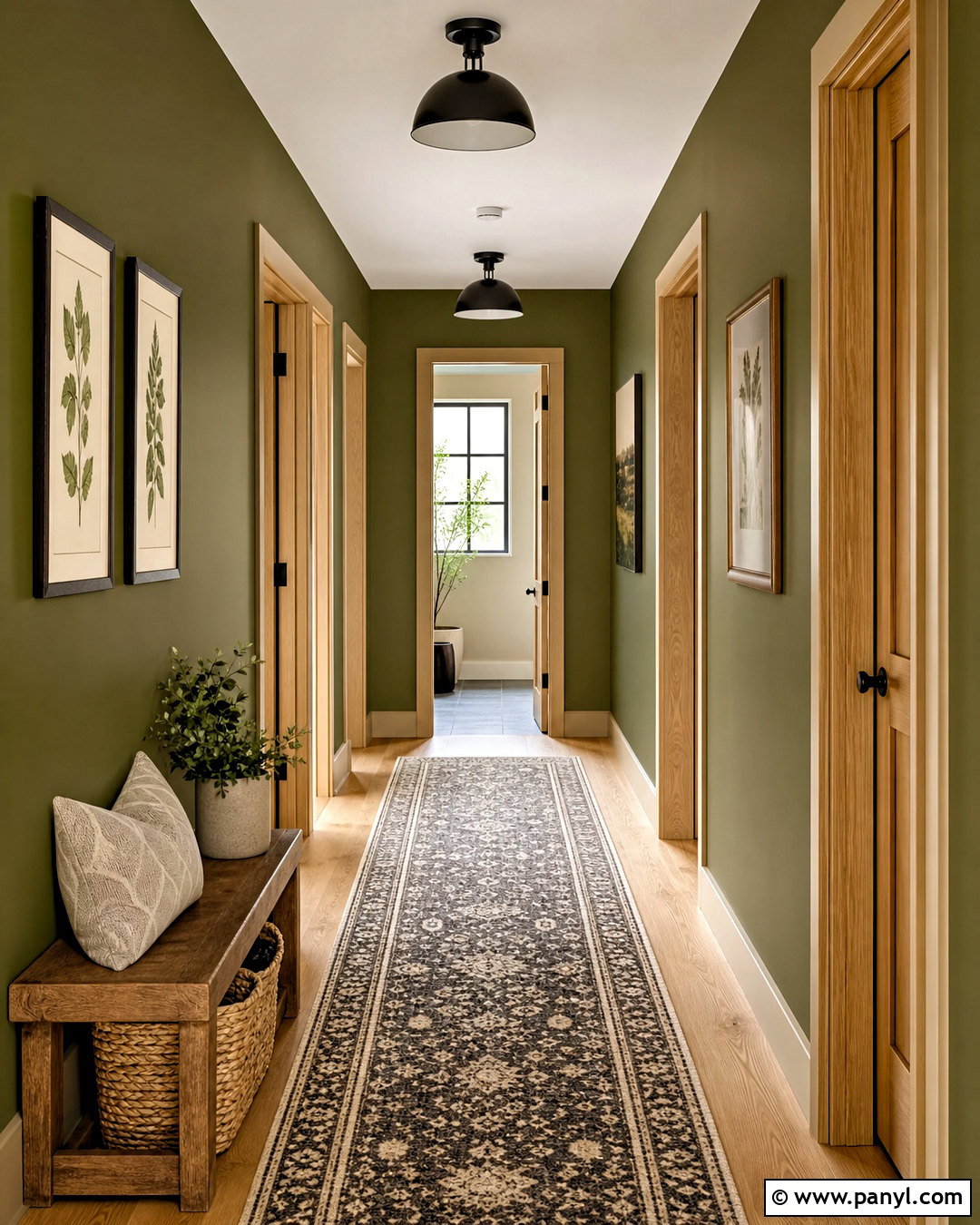
Olive green walls look warm and sophisticated when combined with natural wood and earthy accents. Choose a medium olive with brown undertones, then pair it with oak door frames, warm beige trim, and honey-toned wood flooring. A flatwoven runner featuring charcoal, tan, and cream can define the walkway without introducing competing colors. Install a narrow wooden bench beneath a group of simple botanical prints. A woven basket below the bench provides convenient storage for shoes, bags, or everyday accessories. Matte black ceiling lights keep the design grounded and contemporary. To prevent the palette from appearing heavy, use off-white artwork mats and light linen accessories. The resulting corridor feels collected, comfortable, and connected to nature without relying on excessive greenery.
4. Mint Green Corridor
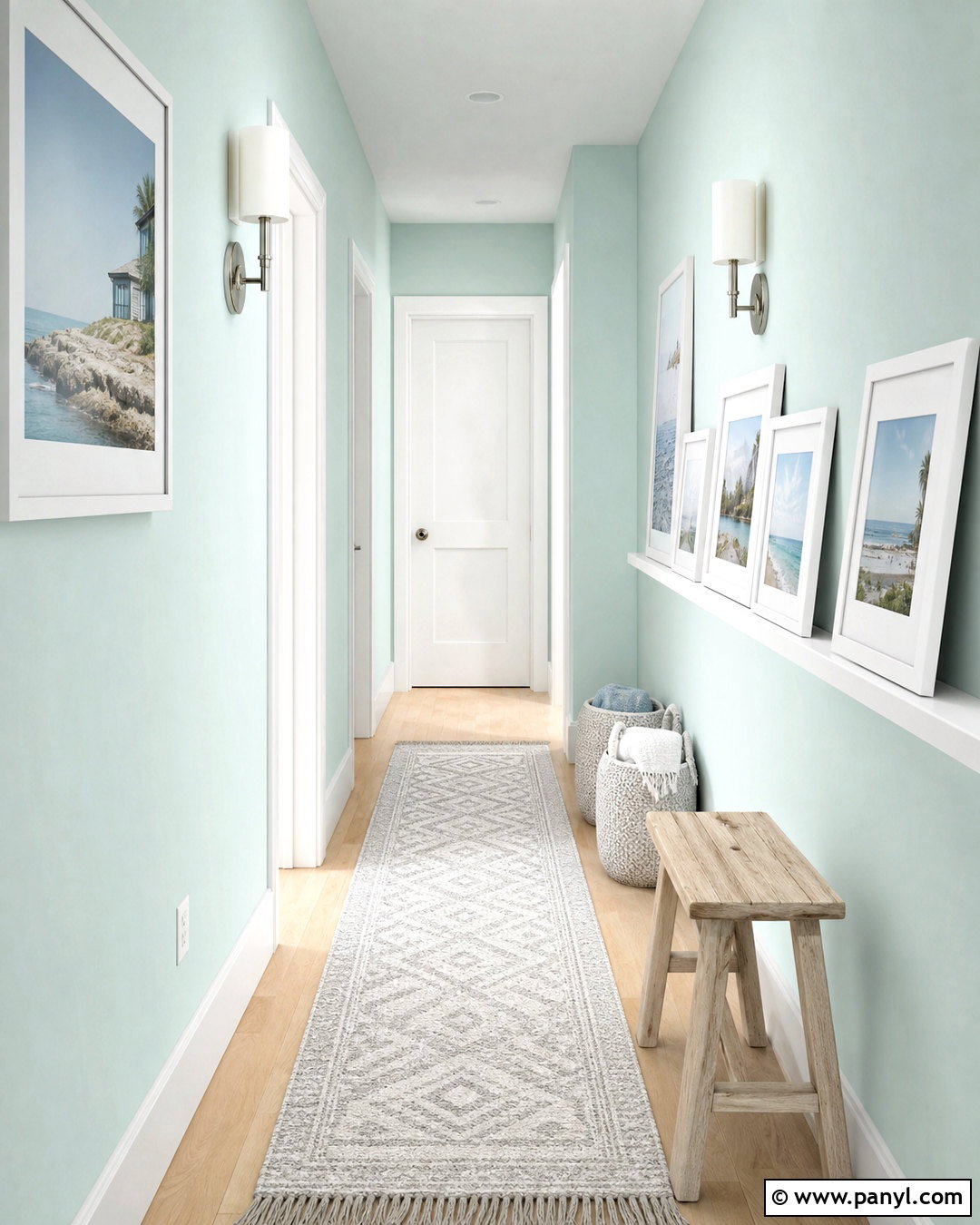
A pale mint corridor can make a small or windowless passage feel cleaner and more cheerful. Use a soft, slightly muted mint rather than a highly saturated pastel, and combine it with bright white trim and light maple flooring. White doors will visually break up long walls while reflecting light throughout the space. Choose a washable runner with a subtle gray geometric pattern for practical softness. A shallow white picture ledge offers room for framed family photos without reducing walking space. Add compact brushed nickel sconces or flush-mounted ceiling fixtures for clear, even illumination. Light gray storage baskets and a small blond wood stool complete the look. This airy scheme works beautifully in apartments, coastal homes, and compact family houses where every hallway needs to feel open.
5. Green Color Drenched Corridor
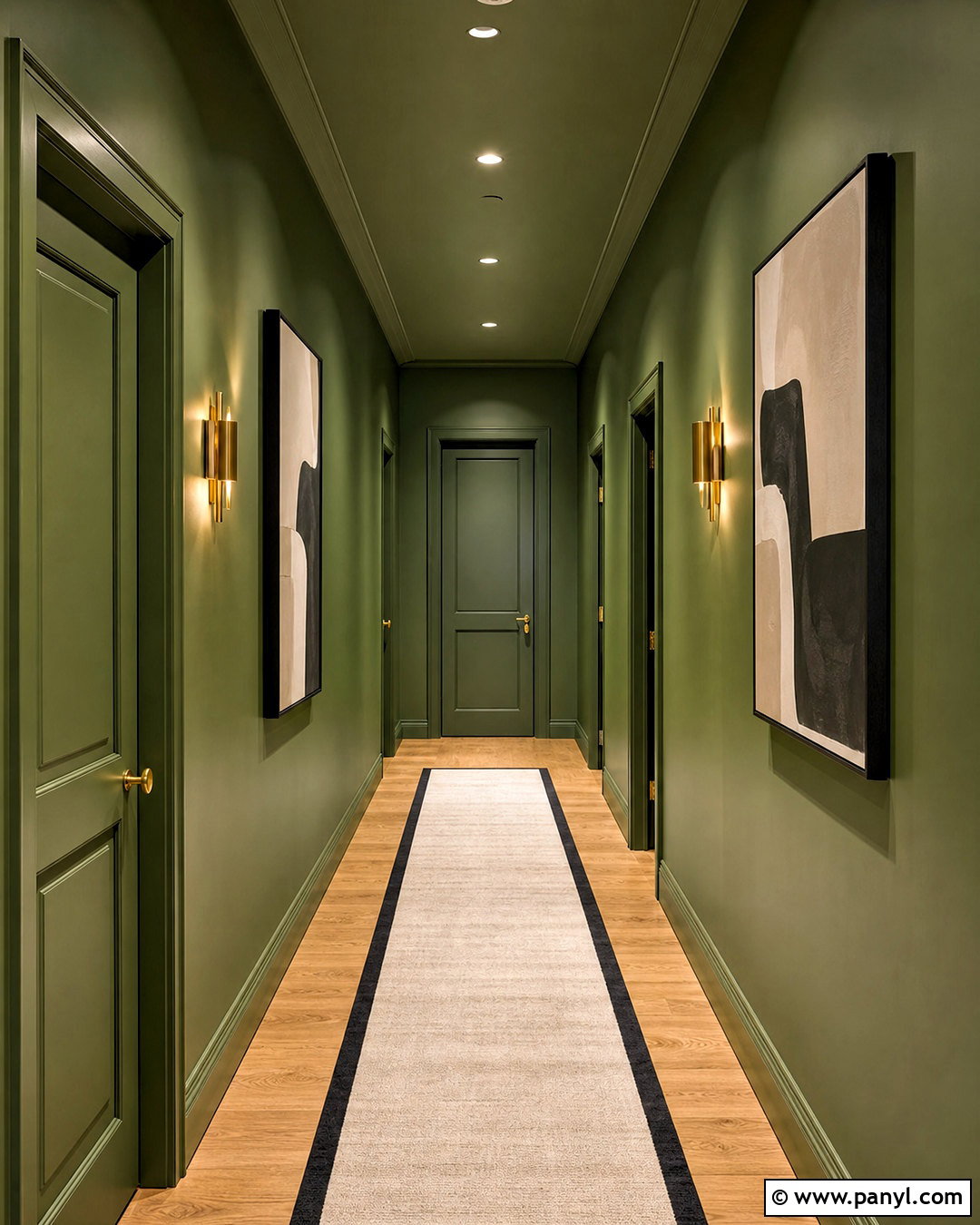
Color drenching makes a plain corridor feel architectural by wrapping the walls, doors, trim, and ceiling in one consistent green. A medium moss or muted eucalyptus shade offers enough depth to define the space without becoming too dark. Use different finishes for practical contrast: eggshell on walls, satin on doors and trim, and a flat finish overhead. Warm oak flooring prevents the green envelope from feeling cold. Add a cream runner with a narrow black border to create a clean line through the passage. Minimal brass sconces and matching door handles introduce restrained shine. Keep artwork limited to one oversized abstract piece with cream, rust, and green details. The finished corridor feels cohesive, modern, and surprisingly spacious because visual interruptions are kept to a minimum.
6. Green Wainscoting Corridor
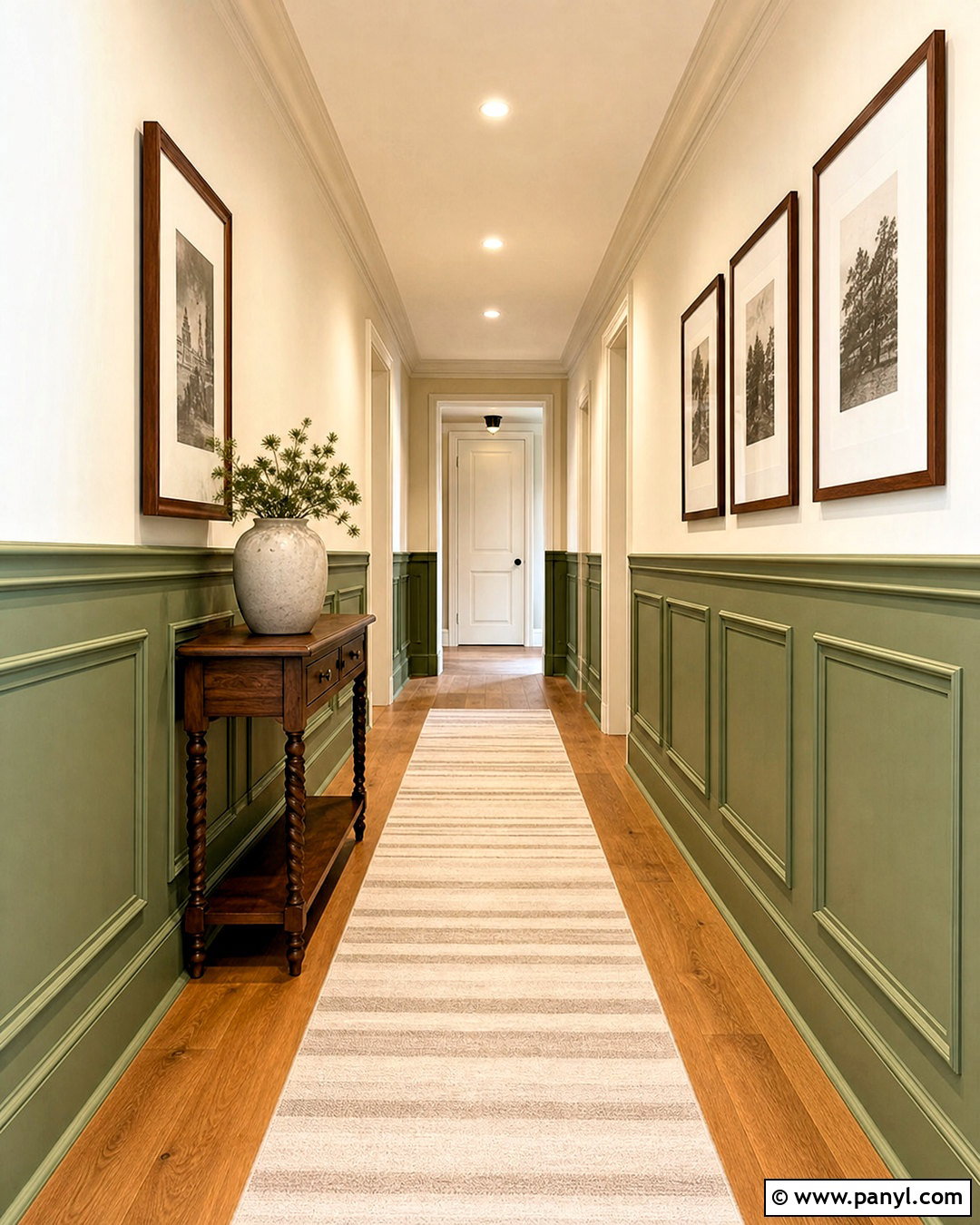
Green wainscoting adds color at a practical height while leaving the upper walls light and open. Install simple rectangular wall molding or vertical paneling across the lower half, then paint it a muted fern green. Use warm ivory above the paneling and continue that shade across the ceiling. Medium oak flooring and a striped cream runner support the classic design without making it formal. Hang black-and-white photographs in slim walnut frames along the upper wall. A compact wooden console at the end of the corridor creates a focal point, especially when topped with a small lamp and ceramic vase. Paint the doors ivory but repeat green on the frames or baseboards. This complete treatment provides depth, durability, and traditional structure in a busy family passage.
7. Green Wallpaper Corridor
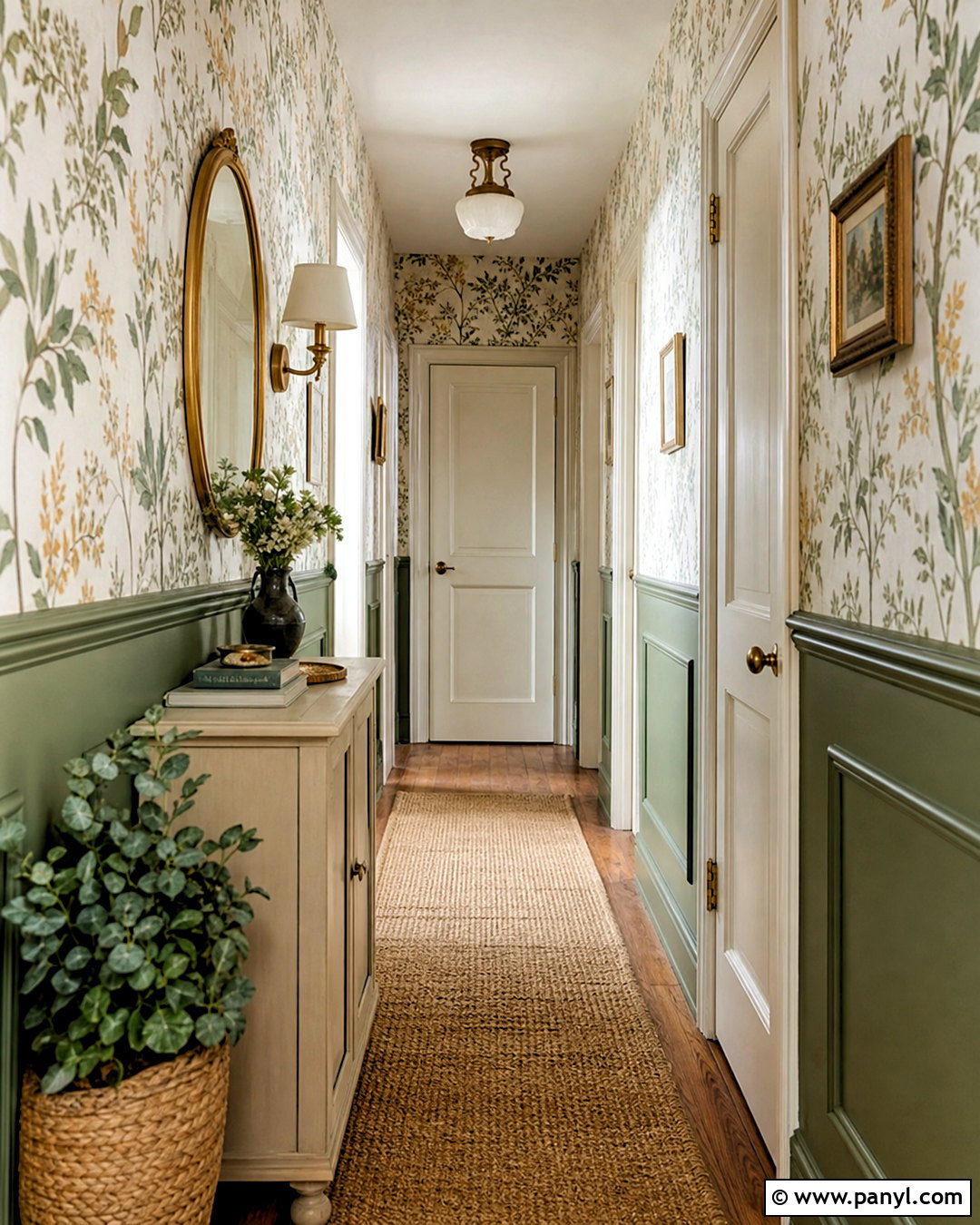
Botanical wallpaper can turn a short corridor into a decorative transition between rooms. Select a pattern with soft green leaves, cream negative space, and restrained touches of ochre or dusty blue. Use the wallpaper above deep green wainscoting so the pattern feels framed rather than overwhelming. Warm white doors, antique brass hardware, and medium-tone wood flooring reinforce the welcoming palette. A solid natural-fiber runner prevents the floor from competing with the walls. At the end of the corridor, place a narrow painted console beneath a simple brass mirror. A shaded wall light provides another traditional detail while illuminating the wallpaper evenly. This layered design suits cottages and older houses, but clean-lined molding and uncomplicated accessories can make it work in newer homes as well.
8. Green Gallery Corridor
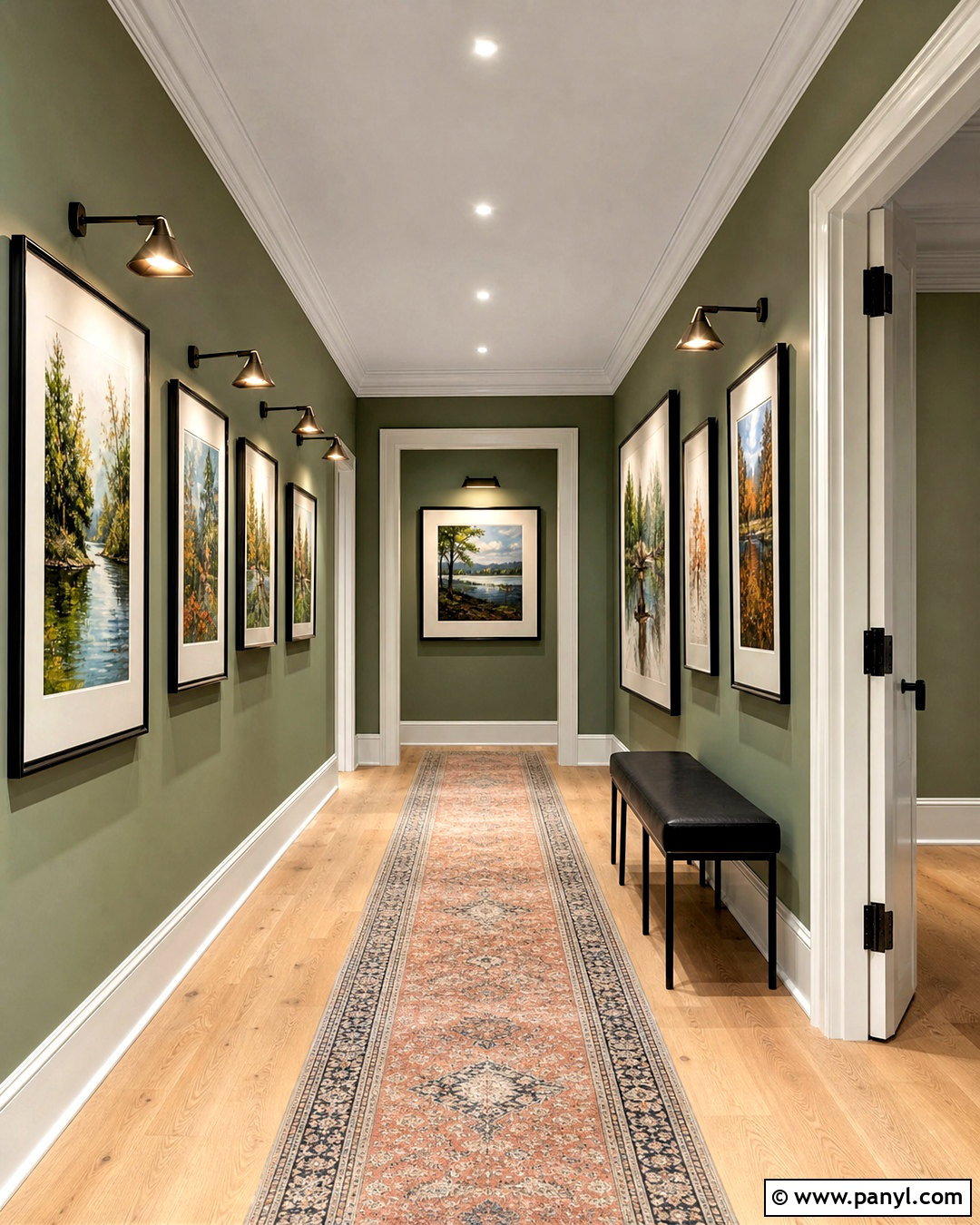
Turn a long green corridor into a personal gallery by planning the artwork and furnishings as one complete composition. Paint the walls a calm gray-green that will complement photographs, prints, and paintings in different colors. Use matching black or dark bronze frames to give the collection visual order. Arrange the pieces around a consistent centerline, leaving enough open wall space to avoid clutter. Pale oak flooring and a faded Persian-style runner bring warmth underneath. Install small directional picture lights or evenly spaced ceiling spots to illuminate the artwork. A slender black bench can sit against the widest wall without blocking movement. Finish with white trim and dark metal door hardware. The coordinated palette allows the displayed pieces to stand out while maintaining a polished corridor design.
9. Green Corridor With Runner
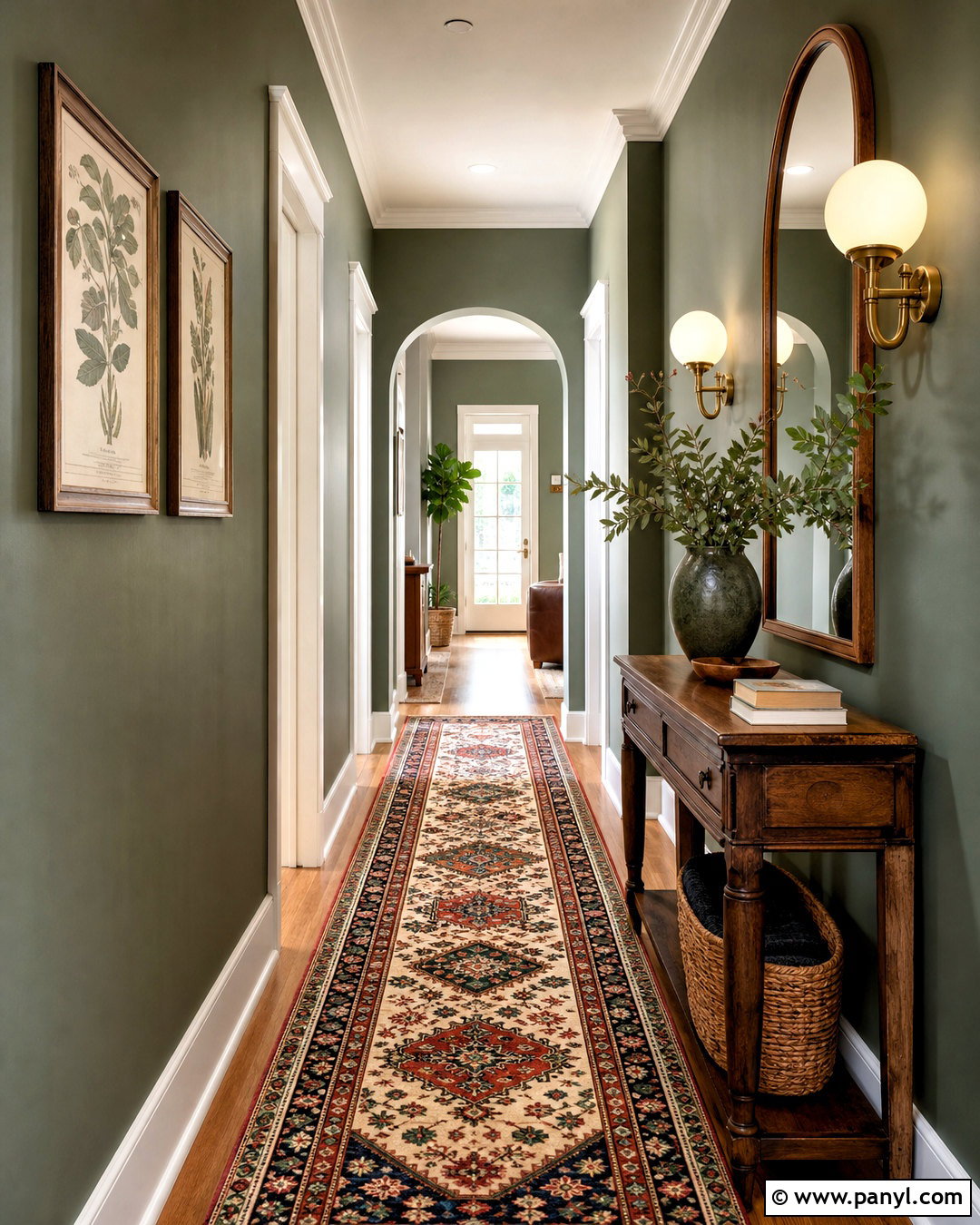
A patterned runner can guide the eye through a green corridor while making hard flooring feel more comfortable. Start with subdued eucalyptus walls, soft white trim, and medium oak floorboards. Choose a runner containing cream, brick red, navy, and small green details so it connects with the walls without disappearing into them. Leave several inches of visible flooring on both sides for a tailored fit. Add simple globe sconces with aged brass bases and a wooden console near the entrance. Above it, hang an arched mirror that introduces a softer shape. Keep the remaining walls mostly clear except for two or three coordinated prints. The finished passage feels warm and practical, while the colorful textile gives the corridor enough personality to connect several differently decorated rooms.
10. Green Corridor With Black Trim
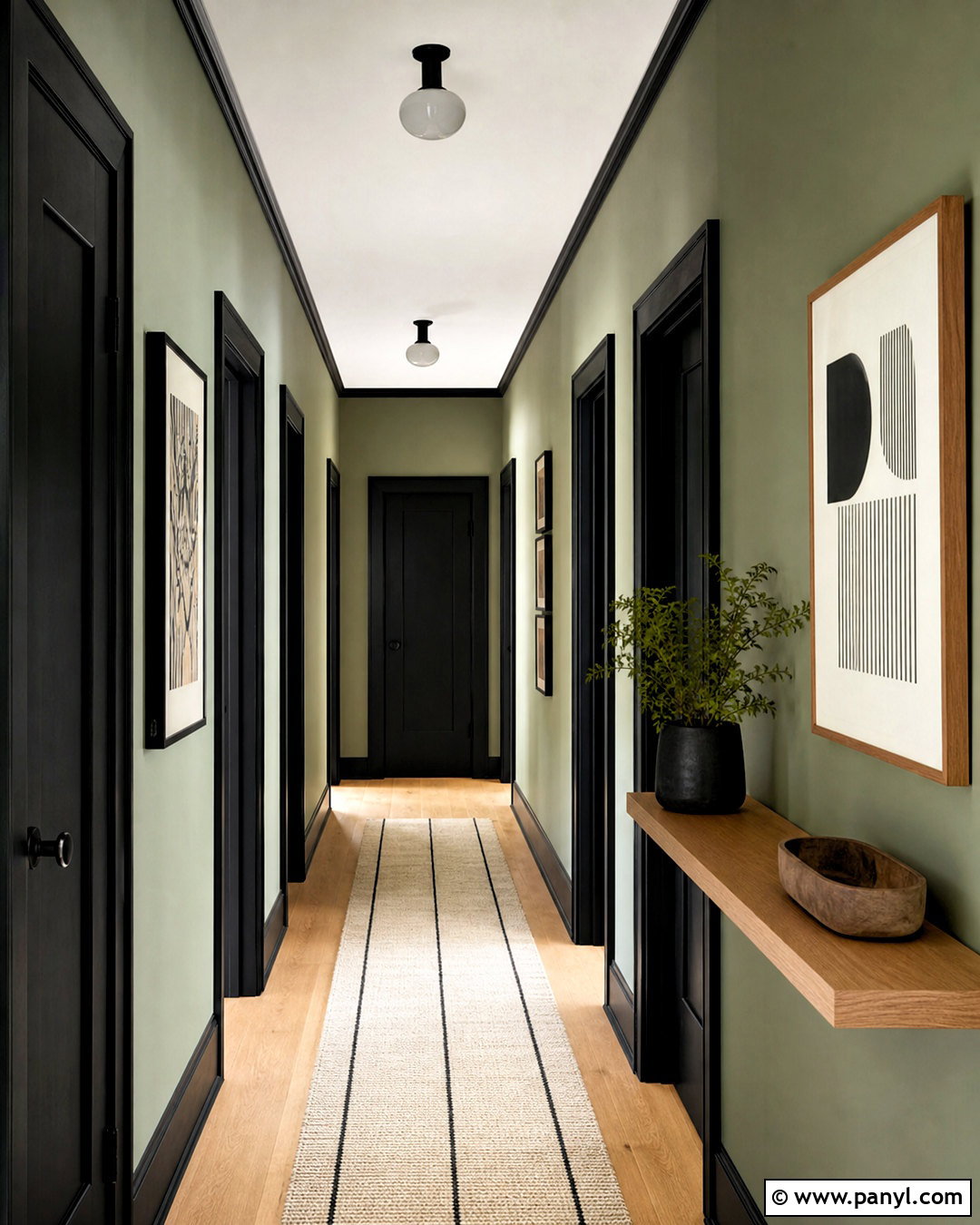
Black trim gives a green corridor a crisp, modern edge and makes ordinary doors feel more architectural. Choose a medium sage or soft moss for the walls, then use matte black on the door frames, baseboards, and interior doors. Keep the ceiling clean white so the dark outlines do not visually lower the space. Light oak flooring creates an essential warm contrast. Add a cream runner with thin black stripes to repeat the trim in a softer way. Minimal black ceiling fixtures and framed graphic prints reinforce the contemporary palette. A narrow floating shelf in natural oak offers space for a small vase and decorative bowl. This confident combination works best when accessories remain simple, allowing the green surfaces and dark structural lines to define the complete design.
11. Green And White Corridor
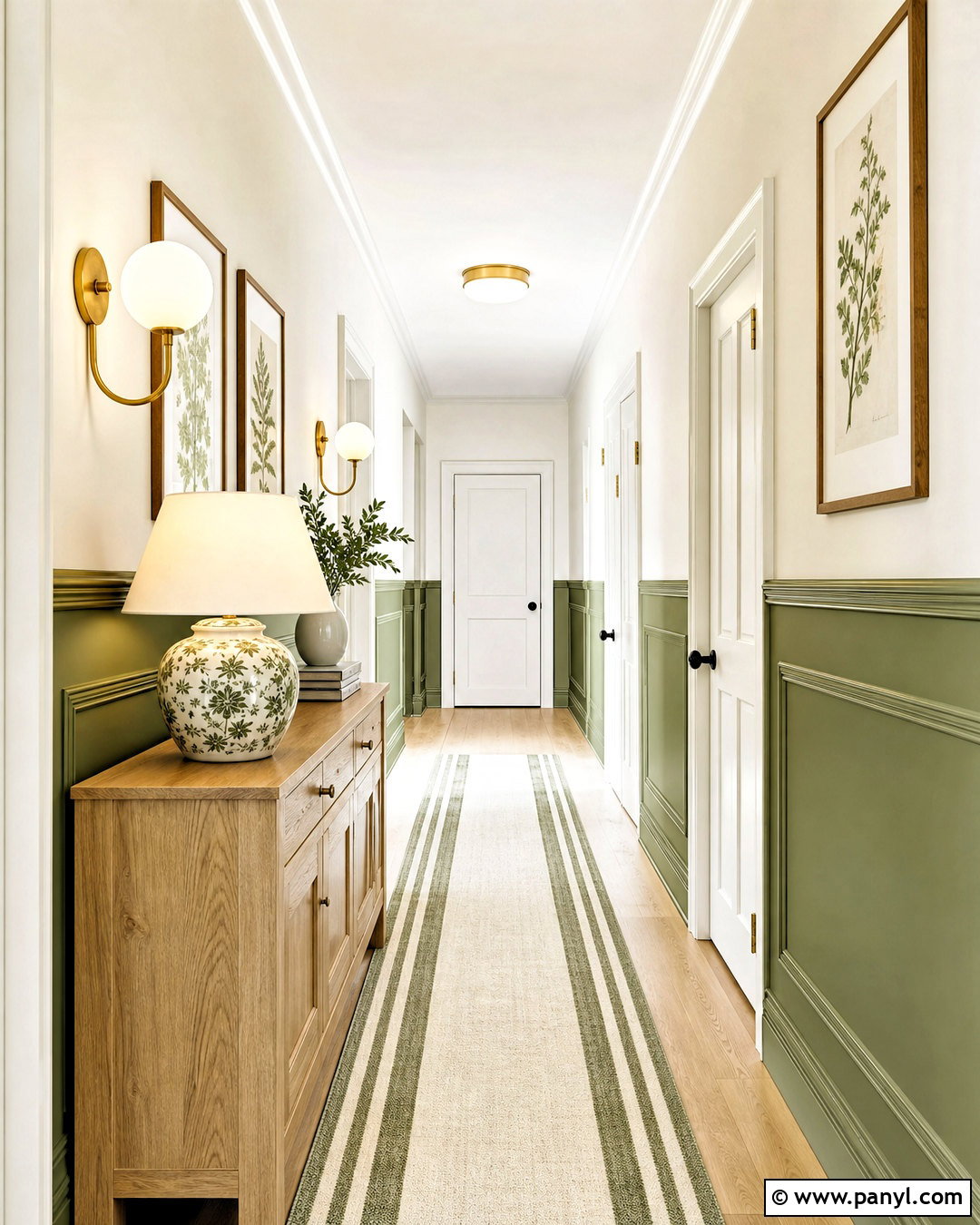
Green and white create a fresh corridor that feels bright without becoming plain. Paint the lower two-thirds of the walls a clean leaf green, then use warm white above it, across the ceiling, and on all doors. A narrow wooden trim piece can create a precise division between the two colors. Pale wood flooring and a cream-and-green striped runner keep the scheme casual and welcoming. Add white globe sconces with brass arms for functional lighting. A light oak console topped with a white ceramic lamp introduces another layer of warmth. Hang simple coastal or botanical prints in white frames along one wall. The contrast between the green base and light upper surfaces gives the corridor definition while helping the ceiling appear higher and the overall passage feel more spacious.
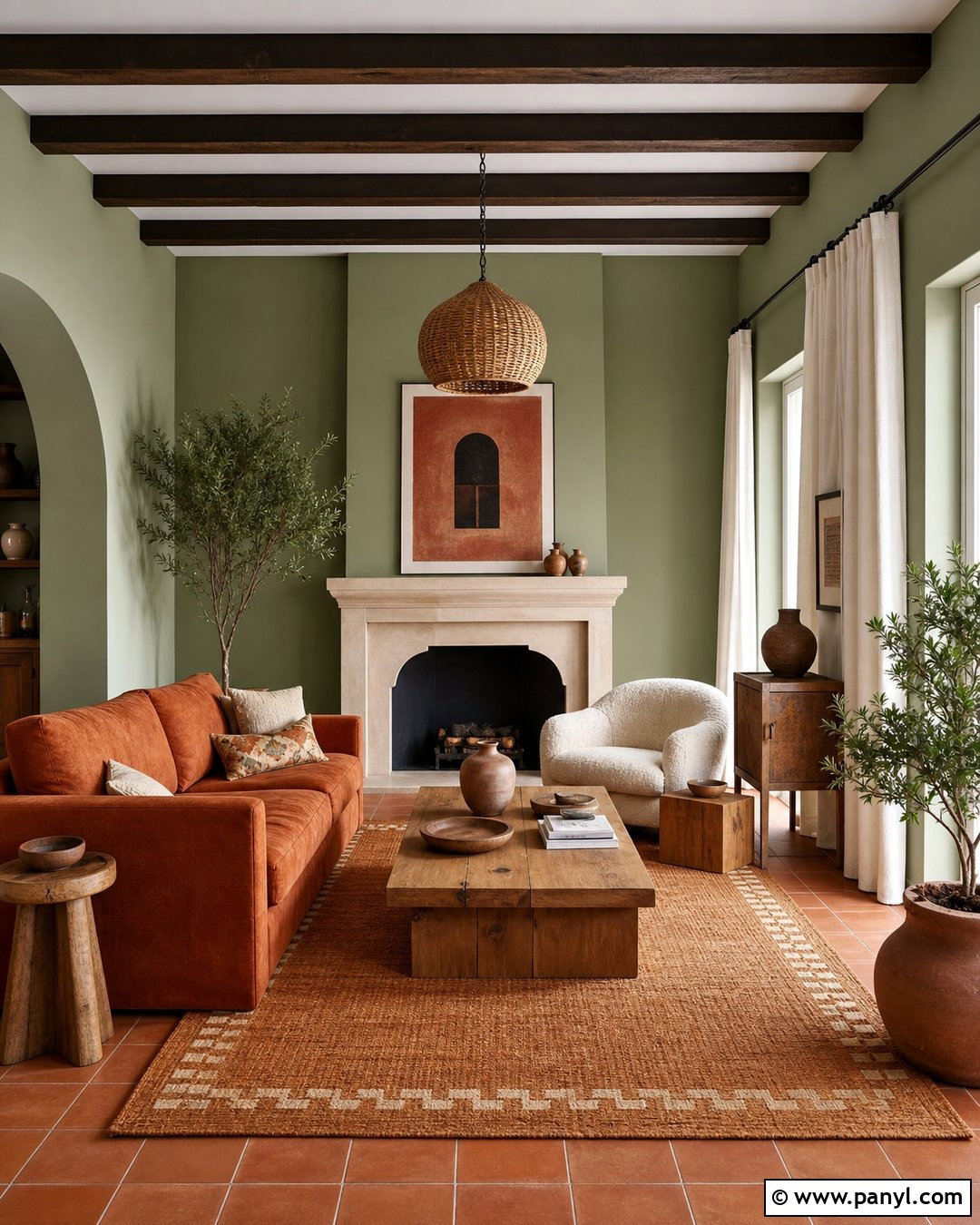
12. Green And Terracotta Corridor
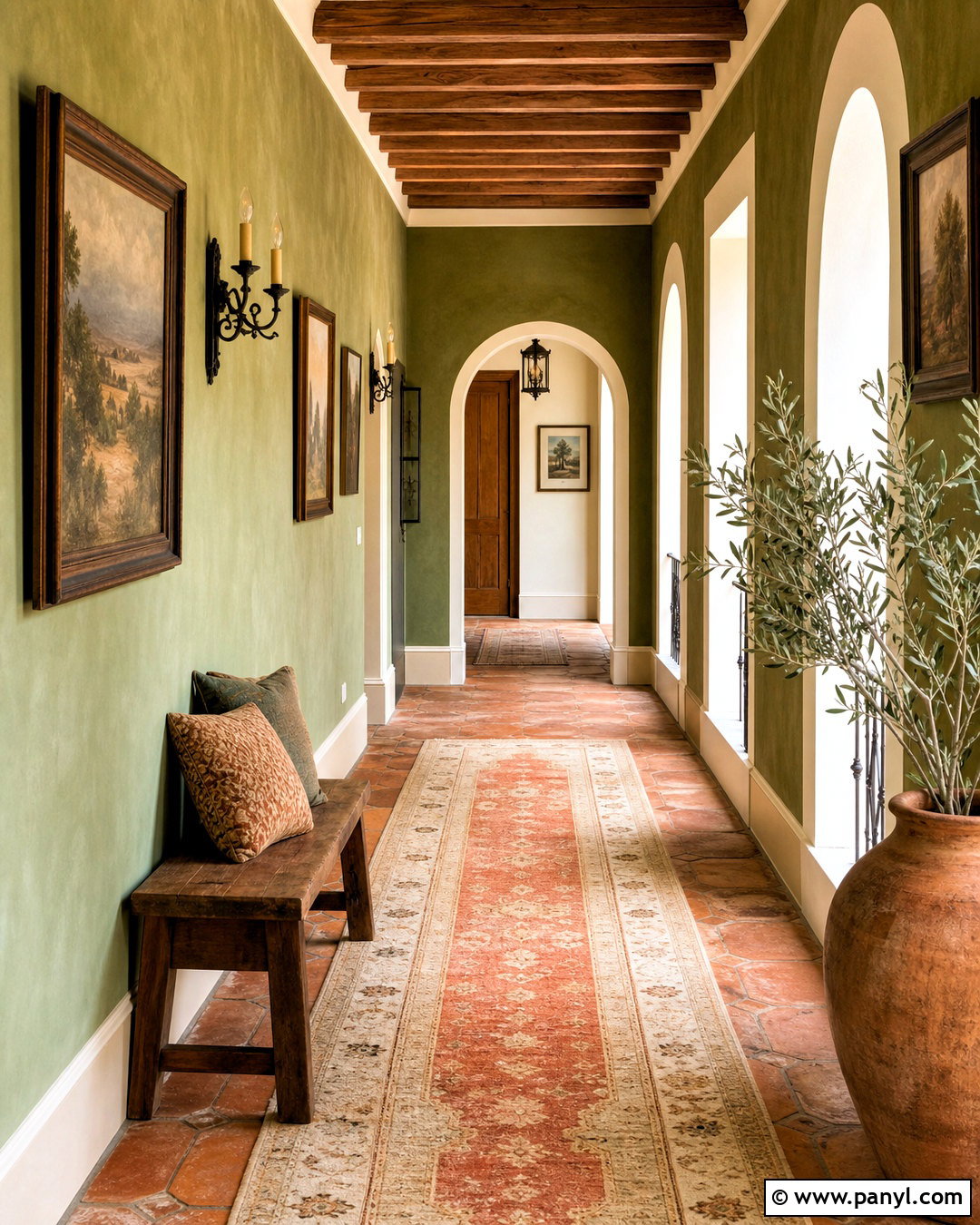
Green and terracotta bring natural warmth to a corridor while providing enough contrast to make the space memorable. Begin with muted moss green walls, warm white trim, and reddish terracotta floor tiles laid in a simple grid or offset pattern. Add a flatwoven runner in cream, faded orange, and charcoal for extra softness. A narrow walnut bench creates a useful landing point without fighting the earthy palette. Above it, hang a collection of landscape artwork in dark wood frames. Choose black iron wall lights with frosted shades for strong illumination and grounded detail. A large clay vase with olive branches can sit at the far end where it will not obstruct movement. The finished design feels relaxed, sun-warmed, and especially suitable for Mediterranean or Southwestern homes.
13. Green And Blush Corridor
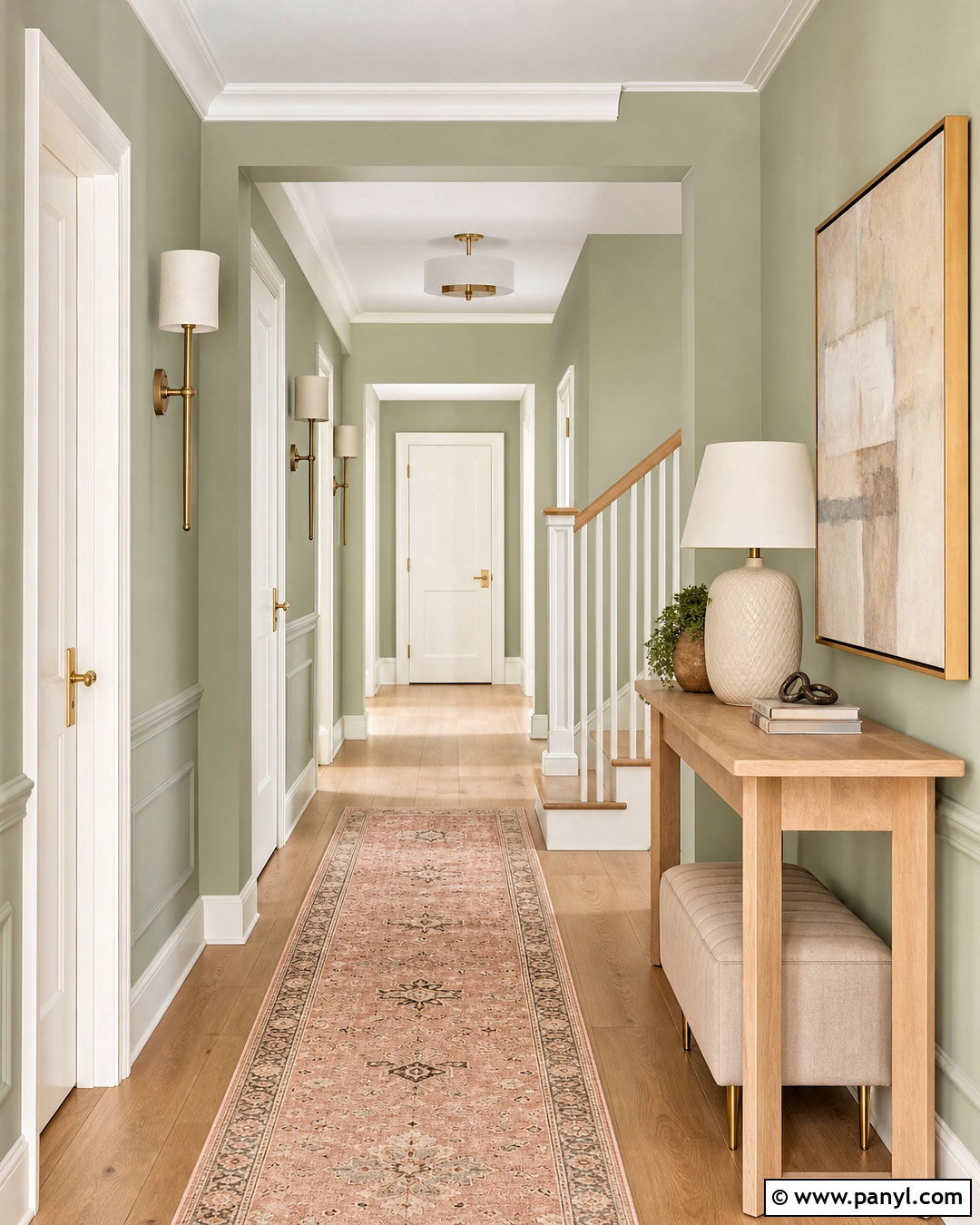
Blush accents soften green walls and create a corridor that feels colorful but still grown-up. Use a muted sage base with warm white trim and blond oak flooring. Introduce dusty blush through a vintage-inspired runner, a small upholstered bench, or framed abstract artwork rather than painting another large surface. Brushed brass sconces and door handles connect naturally with both colors. A narrow console in pale oak can hold a sculptural cream lamp, ceramic tray, and a few carefully chosen books. Keep the ceiling white and select simple doors to maintain an uncluttered backdrop. Small touches of burgundy or rust in the artwork add depth to the pastel pairing. This coordinated scheme works well in contemporary and transitional homes where a softer, more welcoming corridor is desired.
14. Green Corridor With Checkerboard Floor
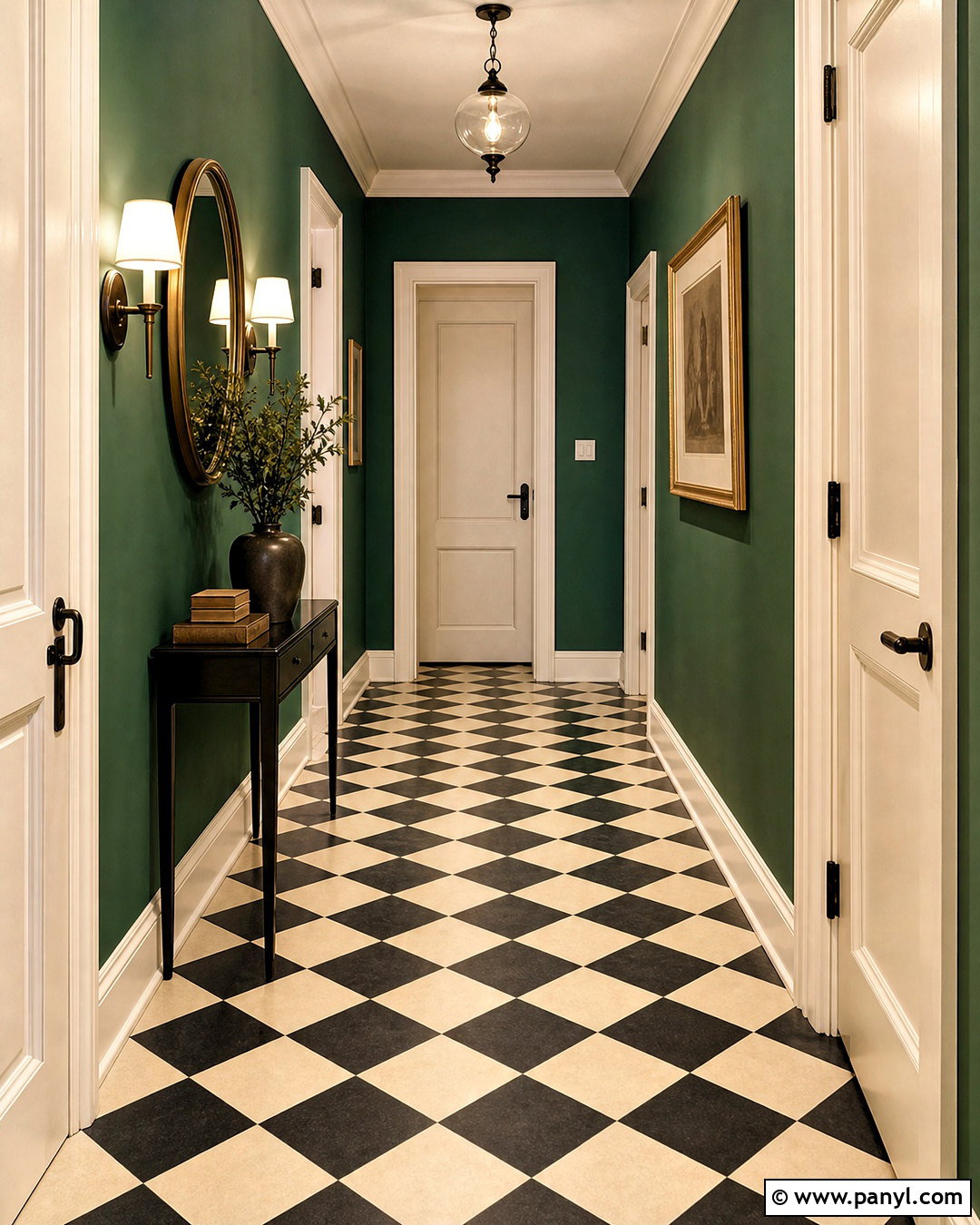
A checkerboard floor gives a green corridor instant structure and a strong sense of movement. Pair muted emerald or heritage green walls with warm white trim and alternating cream and charcoal floor tiles. Choose tiles with a matte or gently aged finish so the pattern feels residential rather than commercial. Keep furniture minimal by placing one narrow black console at the end of the passage. A round brass mirror and two matching wall sconces create a symmetrical focal point above it. Use simple white doors with dark bronze hardware to balance the bold floor. If additional softness is needed, add a small natural-fiber mat near the entrance rather than covering the checkerboard. The complete look feels classic, graphic, and suitable for both traditional and updated historic homes.
15. Green Corridor With Storage
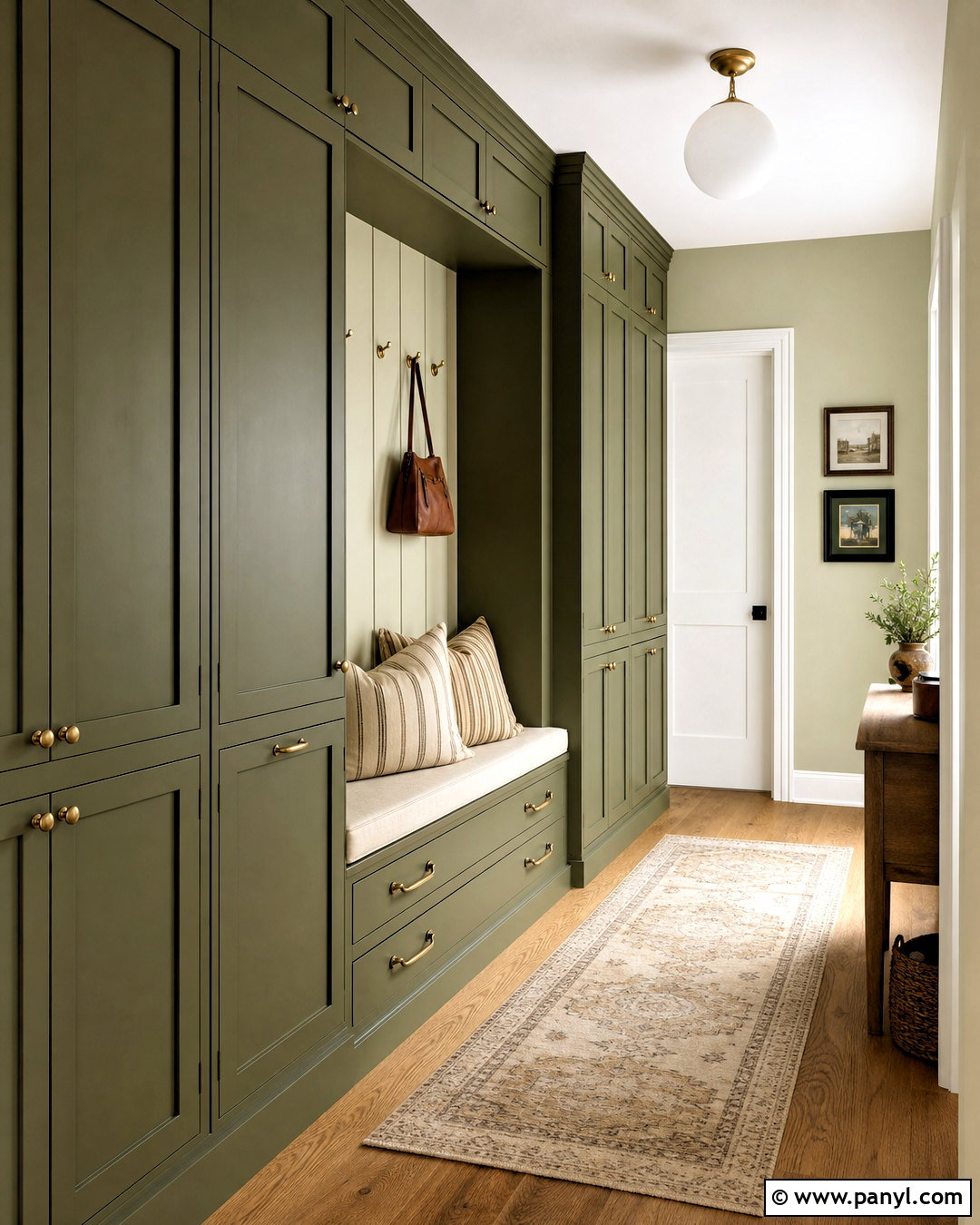
Built-in storage allows a green corridor to look polished while handling everyday household clutter. Paint floor-to-ceiling cabinets a medium olive green, then use a slightly lighter green on the surrounding walls to create subtle depth. Choose flat-panel or slim shaker doors with small antique brass knobs. Include closed cabinets for cleaning supplies, adjustable shelves for linens, and a recessed bench for shoes and bags. A durable cream cushion and striped pillows make the bench comfortable without introducing too many colors. Warm oak flooring and a short washable runner soften the functional layout. Add an overhead globe fixture and a small wall light above the bench. Keeping most storage concealed ensures the complete corridor remains calm, organized, and easy to navigate even during busy mornings.
16. Green Corridor With Wall Sconces
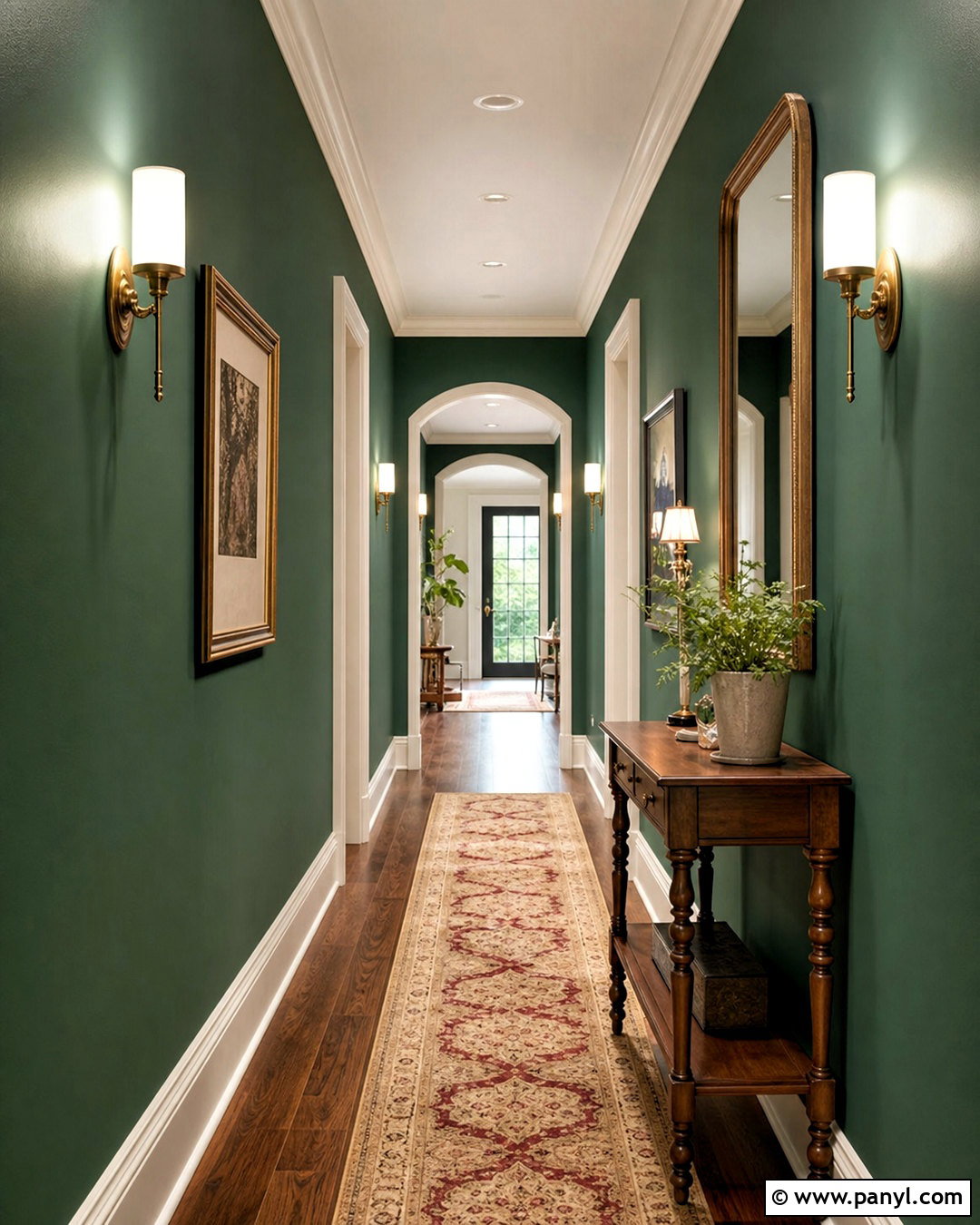
Thoughtful lighting can transform a dark green corridor into a comfortable, welcoming passage. Paint the walls a rich pine green, then use warm white on the ceiling and trim for contrast. Install evenly spaced wall sconces with aged brass arms and frosted glass shades, positioning them high enough to avoid interrupting movement. Medium walnut flooring brings warmth to the deeper wall color. A runner featuring cream, brown, and muted red visually connects the lights and floor. Limit artwork to a few framed pieces placed between sconces so the composition remains balanced. At the far end, use a narrow console and large mirror to reflect illumination back through the passage. The completed corridor feels intimate and layered without depending on harsh overhead lighting as the only light source.
17. Botanical Green Corridor
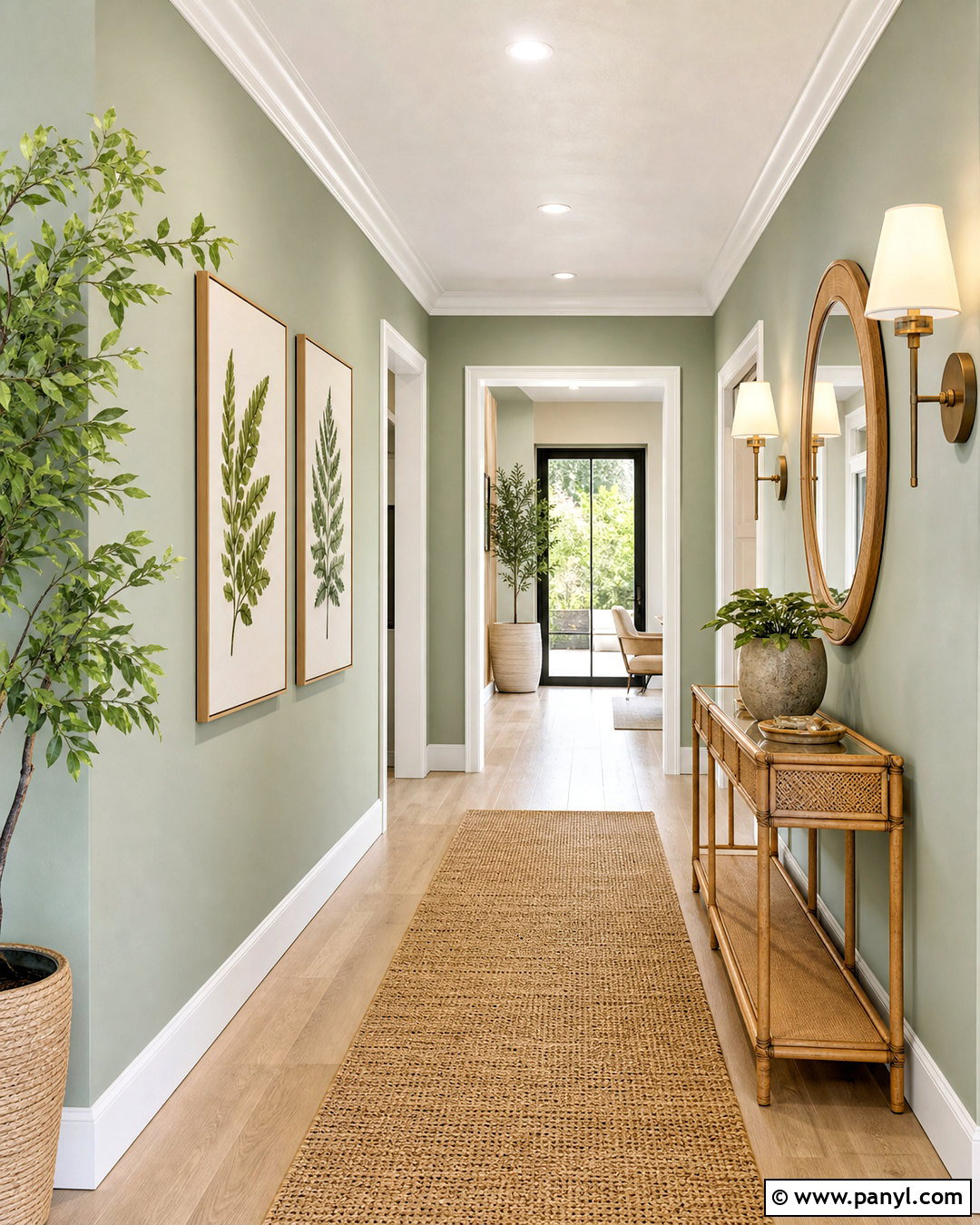
A botanical corridor combines green surfaces, natural materials, and carefully placed plants without turning the passage into an indoor jungle. Choose pale fern green walls, off-white trim, and light oak flooring as the main foundation. Place one tall, narrow plant near a window or bright doorway where it will not block traffic. Add framed botanical studies in matching light wood frames along the opposite wall. A woven runner in tan and cream introduces subtle texture. Use a slim rattan console for keys and small accessories, then hang a round mirror above it. Linen-shaded sconces contribute soft, diffused illumination. By limiting live greenery and repeating natural textures, the design feels fresh and organic while remaining uncluttered, practical, and easy to maintain.
18. Emerald Green Corridor
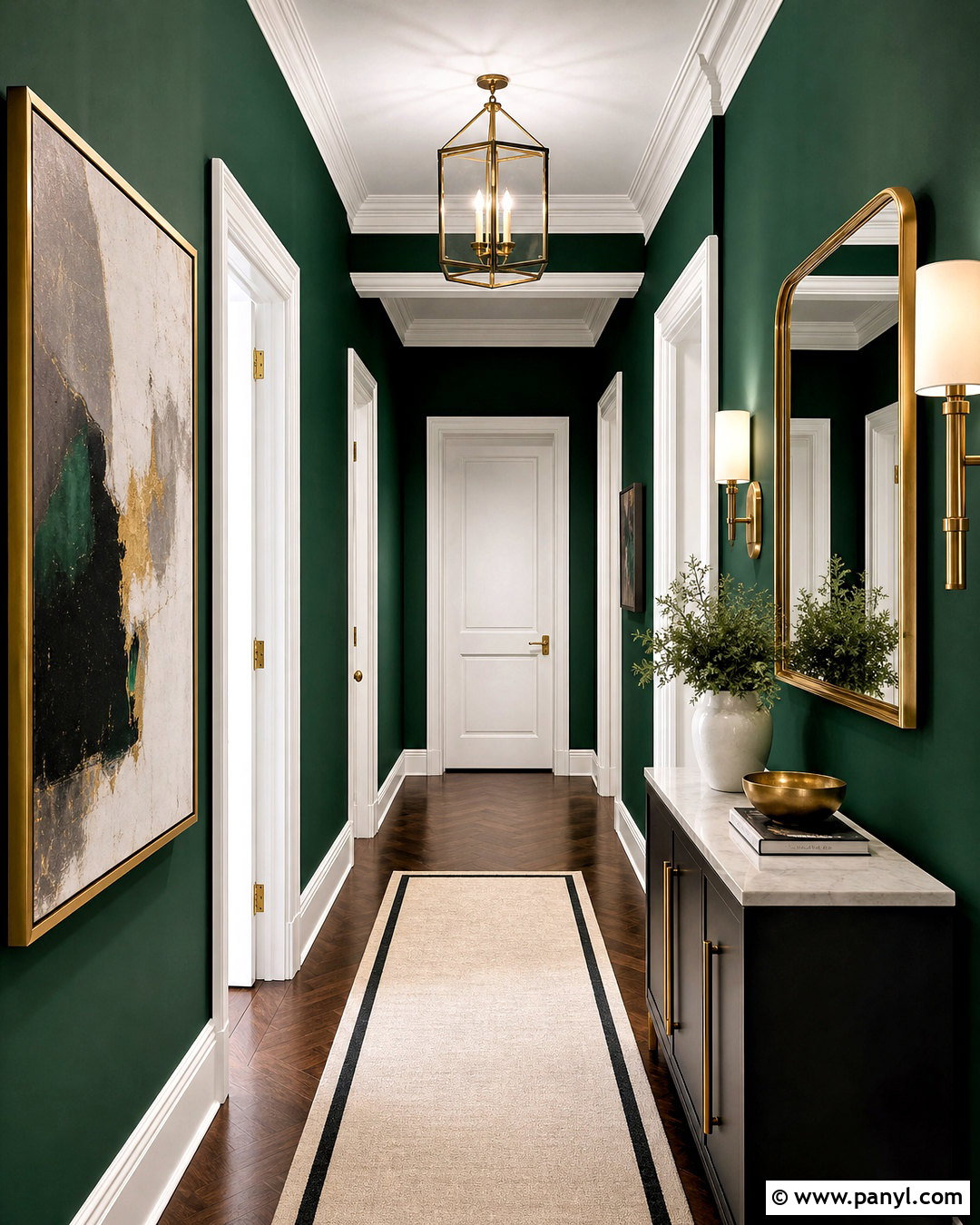
Emerald green creates a polished statement when it is balanced with streamlined furniture and reflective finishes. Paint the walls a deep jewel-toned green, but keep the ceiling, crown molding, and doors crisp white. Dark herringbone wood flooring introduces movement and gives the strong color a sophisticated base. Add a narrow black console with a white marble top at the end of the passage. Above it, place a large rectangular mirror in a thin brass frame. Contemporary brass sconces and matching door handles add warmth without excessive decoration. A cream runner with a subtle dark green border brightens the floor. Finish with one oversized abstract artwork containing white, green, and soft tan. This coordinated corridor feels bold, clean, and appropriate for an updated city home.
19. Farmhouse Green Corridor
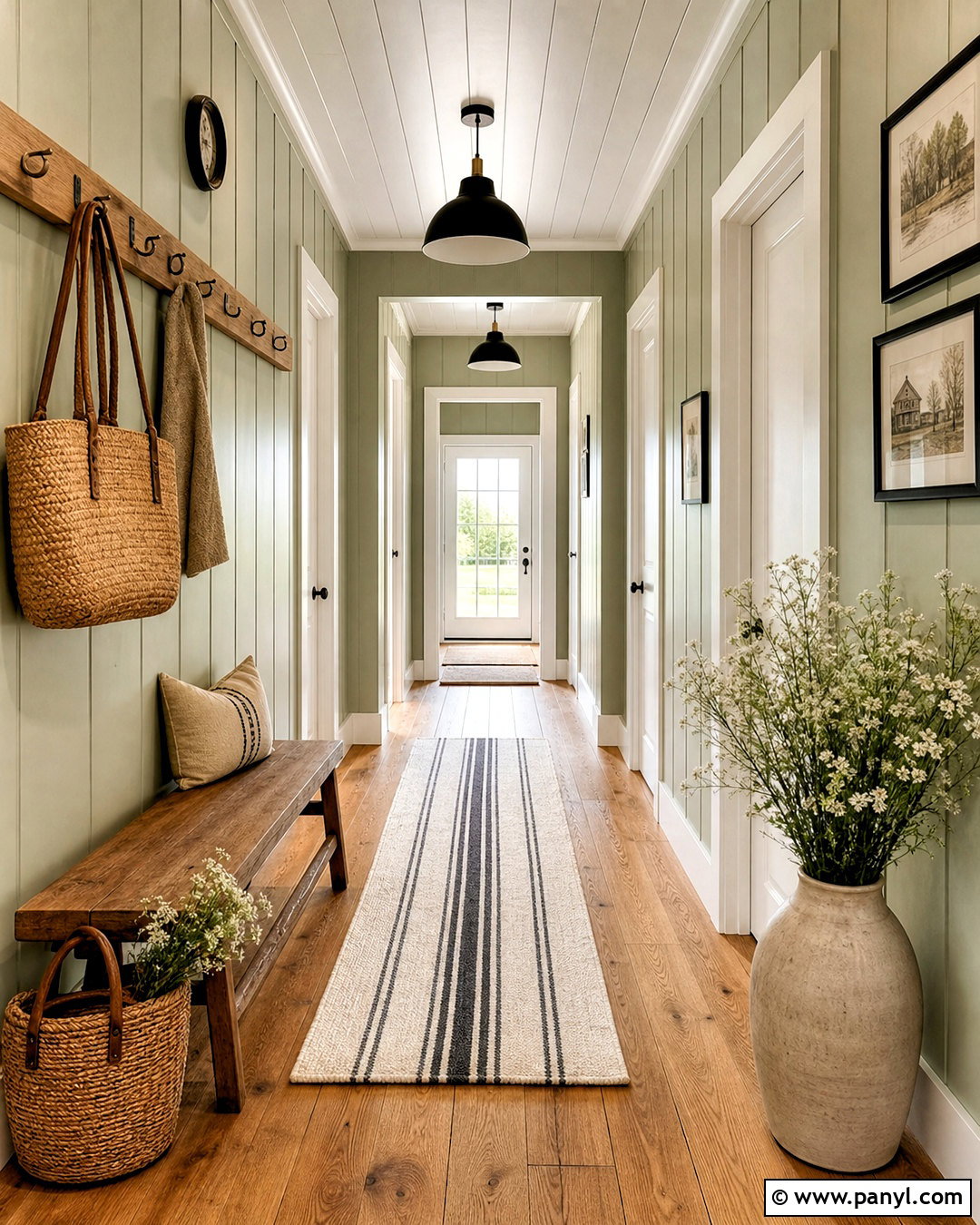
A farmhouse green corridor should feel warm, useful, and relaxed rather than overly themed. Paint vertical wall paneling a dusty sage green and pair it with warm white doors and ceiling boards. Choose wide-plank oak flooring with a natural matte finish. A striped woven runner in cream, charcoal, and faded green reinforces the casual character. Install a simple wooden peg rail along one wall for lightweight baskets and everyday accessories, leaving enough clearance for comfortable movement. A narrow antique-style bench adds seating and storage underneath. Black metal ceiling lights and traditional black door hardware provide practical contrast. Finish with a few framed countryside prints and a stoneware vase. The resulting corridor feels established and inviting while remaining suitable for an active family home.
20. Traditional Green Corridor
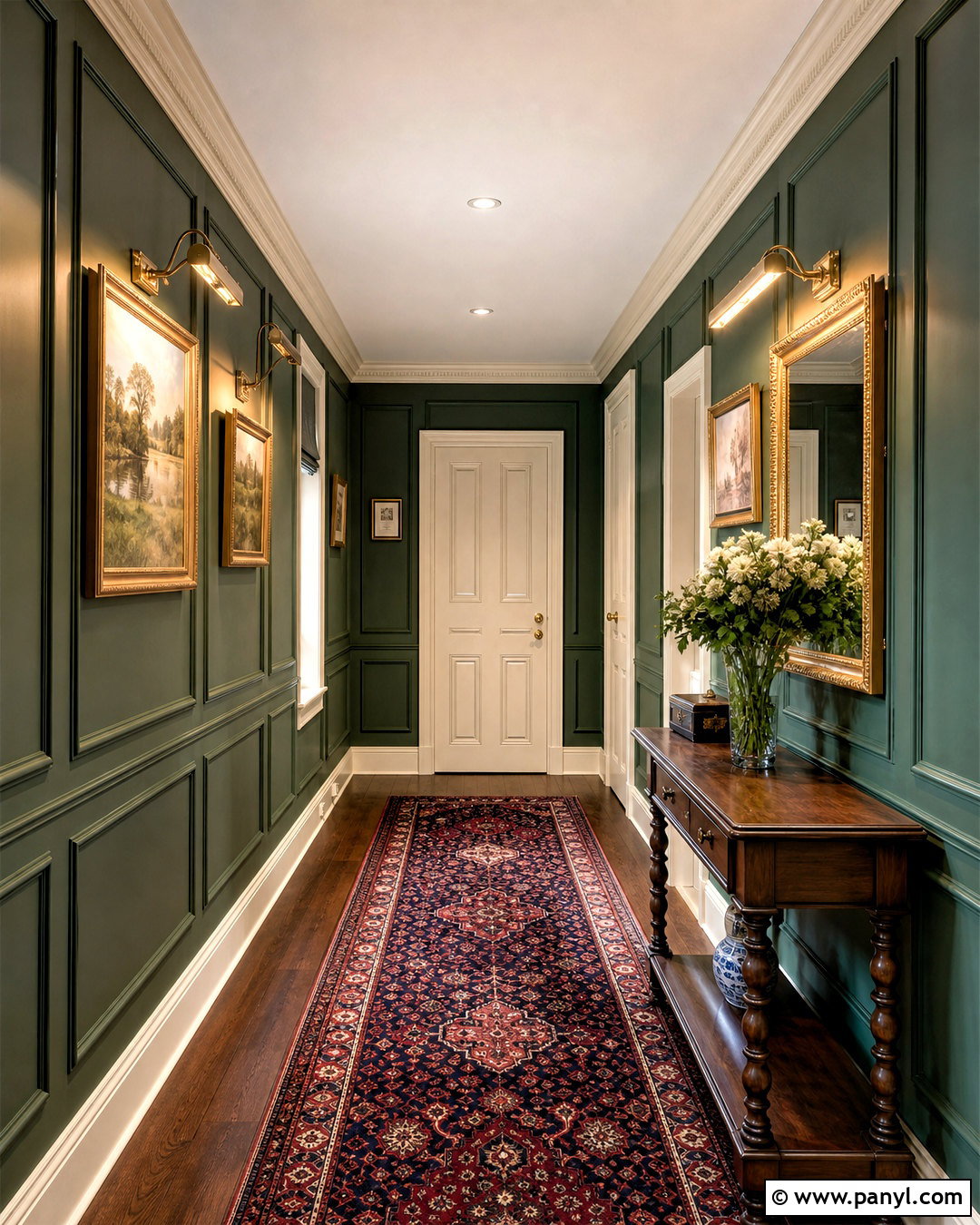
For a refined traditional corridor, combine deep sage walls with architectural molding, dark wood, and warm metallic details. Paint the wall panels and molding in the same green to create depth, then use soft ivory on the ceiling and doors. Dark walnut or mahogany flooring supports the formal palette, while a Persian-style runner introduces burgundy, navy, cream, and muted gold. Add a slim console with turned legs beneath a gilded rectangular mirror. Classic brass picture lights can illuminate a balanced arrangement of landscapes or portraits. Use substantial baseboards, polished brass door hardware, and pleated fabric shades for a finished appearance. Every element should feel coordinated but not crowded. This complete scheme gives an ordinary passage the presence of a thoughtfully designed historic interior.
Conclusion:
These 20 green corridor ideas show how color, flooring, lighting, storage, and decoration can work together to create a complete passage rather than an empty transition space. Pale sage and mint make compact corridors feel fresh, while forest, pine, and emerald green deliver depth and drama. Natural oak, dark walnut, terracotta, brass, black trim, and patterned runners each change the character of the palette. Before decorating, consider the available light, corridor width, nearby rooms, and amount of daily traffic. Select one clear green tone, repeat a few supporting finishes, and keep the walkway unobstructed. With a coordinated plan, even the narrowest corridor can become practical, welcoming, and visually connected to the rest of the home.

Related Ideas and Inspiration:
Leave a Reply