
Red is bold, warm, and surprisingly versatile, making it an excellent choice for turning a forgotten passage into a memorable part of the home. The best red hallway ideas balance color with practical flooring, effective lighting, streamlined furniture, and coordinated finishes. Deep burgundy can create a sophisticated entrance, while tomato red feels lively and modern. Softer brick, clay, and rust tones bring warmth without overwhelming a narrow space. You can also introduce red through wallpaper, stair runners, painted doors, storage, or artwork instead of covering every wall. The right approach depends on the hallway’s size, natural light, and connection to nearby rooms. Explore these complete and achievable 20 red hallway ideas to find a look that fits your home.

1. Burgundy Red Hallway
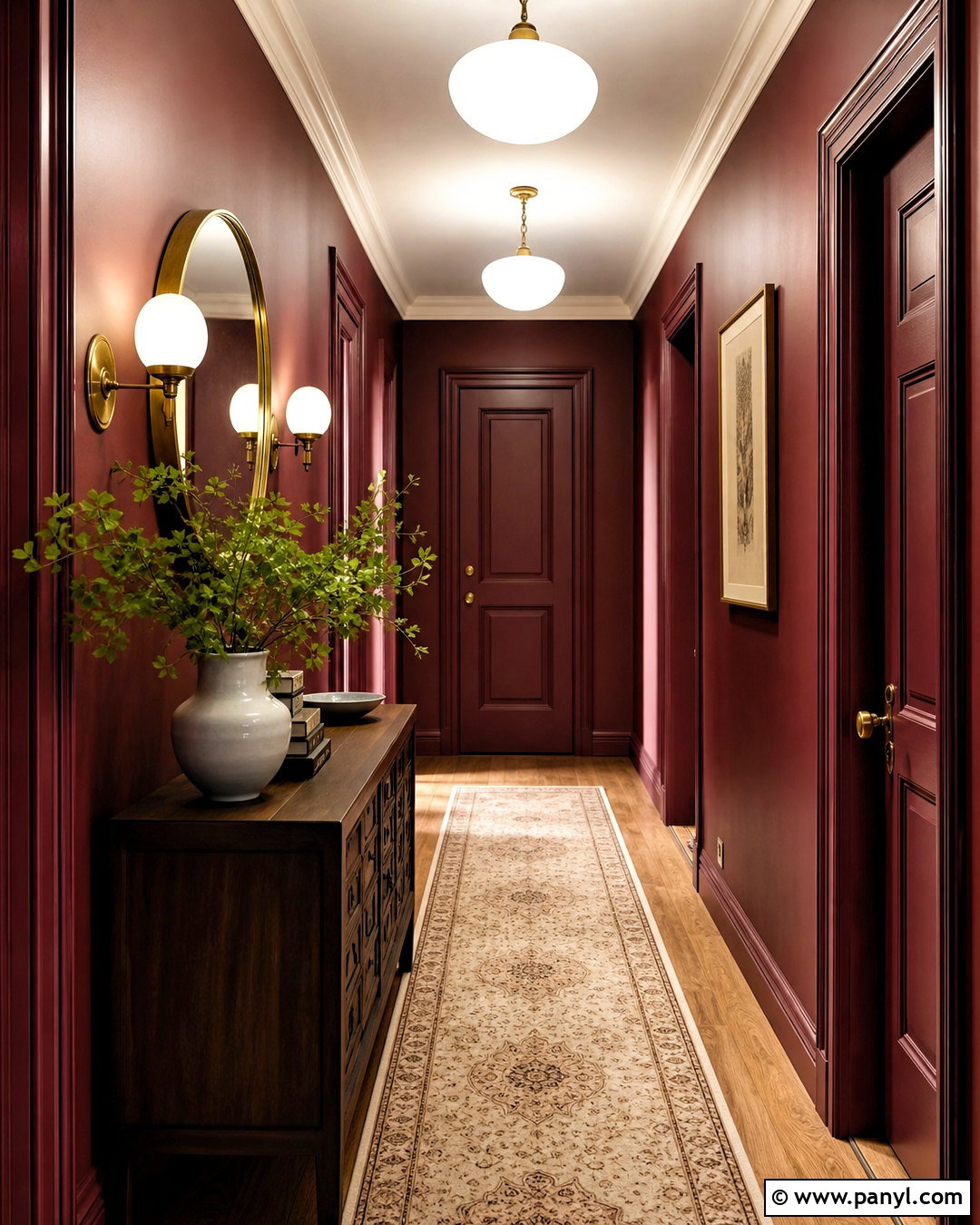
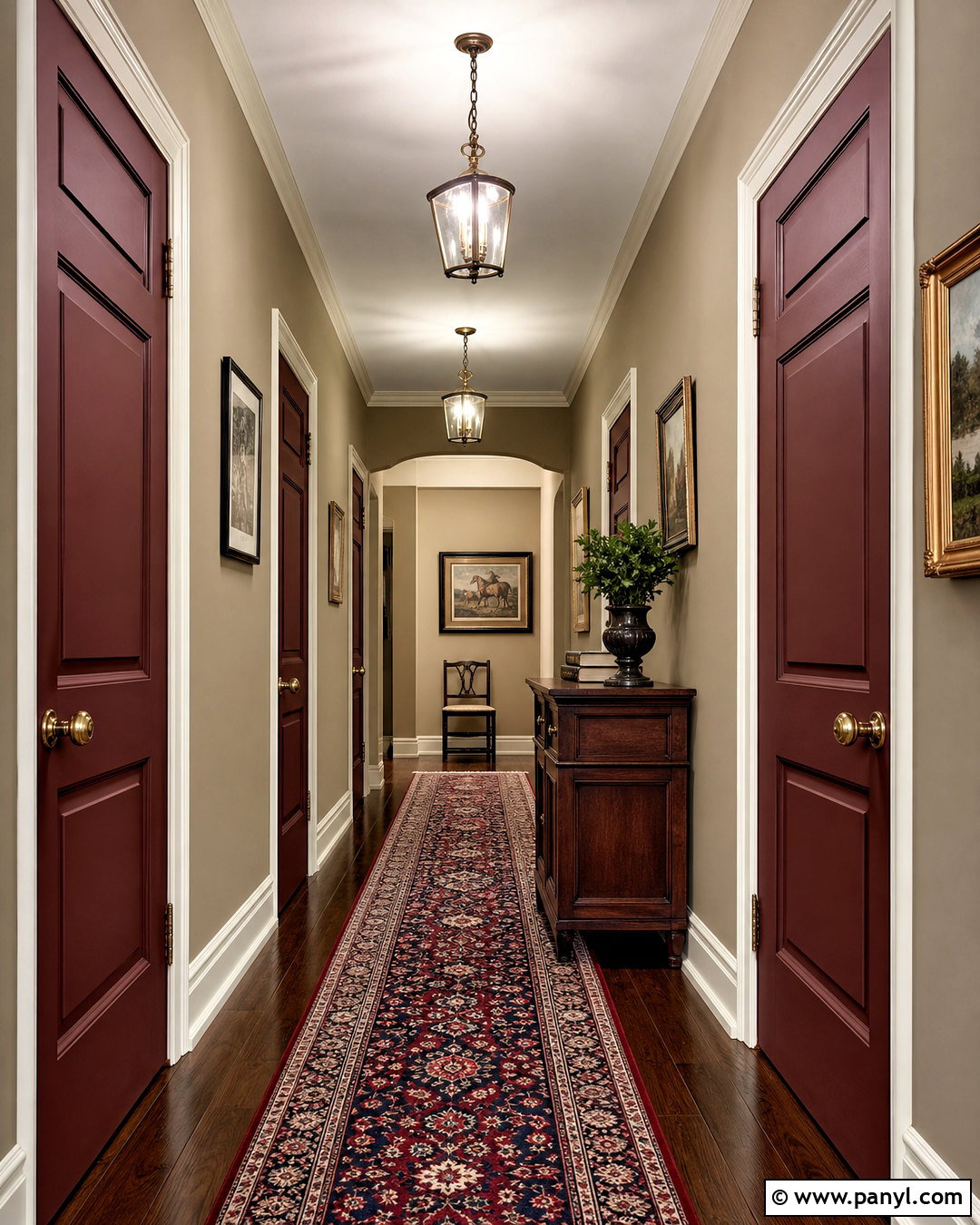
Deep burgundy walls can make a hallway feel sophisticated rather than overly bright. Paint the walls, trim, and interior doors in the same muted burgundy to create a seamless, color-drenched effect. Choose satin paint for the trim and matte paint for the walls so subtle finish changes add dimension. A warm oak floor and an antique-style cream runner prevent the dark shade from feeling heavy. Add a narrow walnut console with a rounded brass mirror above it. Two small opal-glass sconces provide even lighting along the passage. Keep accessories simple with a ceramic bowl, one framed landscape, and a leafy plant. This complete scheme works especially well in traditional homes with tall ceilings, decorative molding, and plenty of warm artificial light.
2. Brick Red Hallway Wainscoting
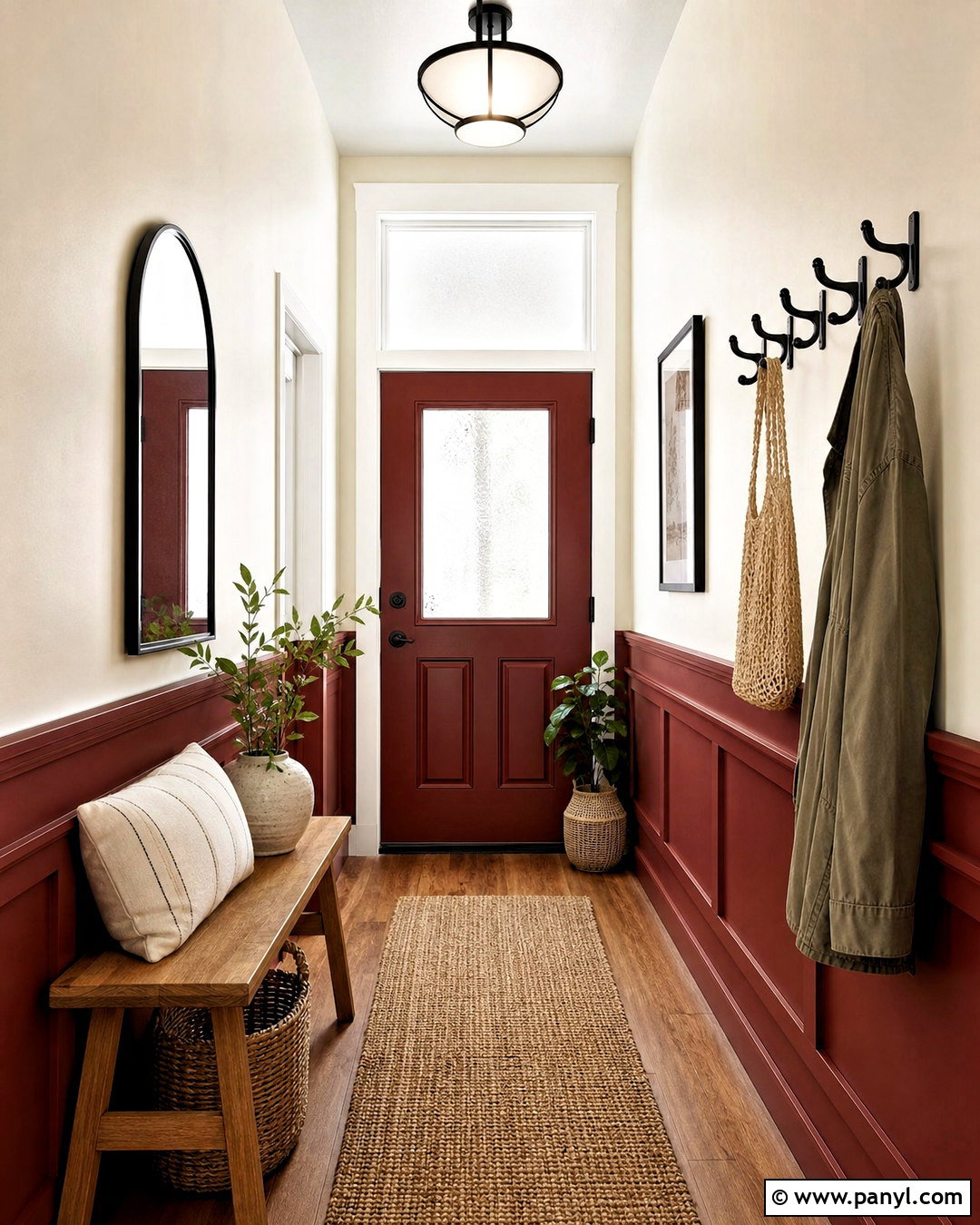
Brick red wainscoting offers rich color while keeping the upper walls light and open. Install simple rectangular wall molding below a chair rail, then paint the entire lower section a warm, earthy red. Use creamy off-white above it and repeat that softer shade across the ceiling. A medium-toned wood floor, natural jute runner, and slim oak bench create a relaxed foundation. Add black iron coat hooks, a woven storage basket, and a large arched mirror for practical entryway function. A small flush-mount ceiling light with frosted glass keeps the design bright. This two-tone treatment is particularly useful in busy family hallways because the darker lower walls visually disguise everyday marks while the pale upper section preserves an airy feeling.
3. Red Floral Wallpaper Hallway
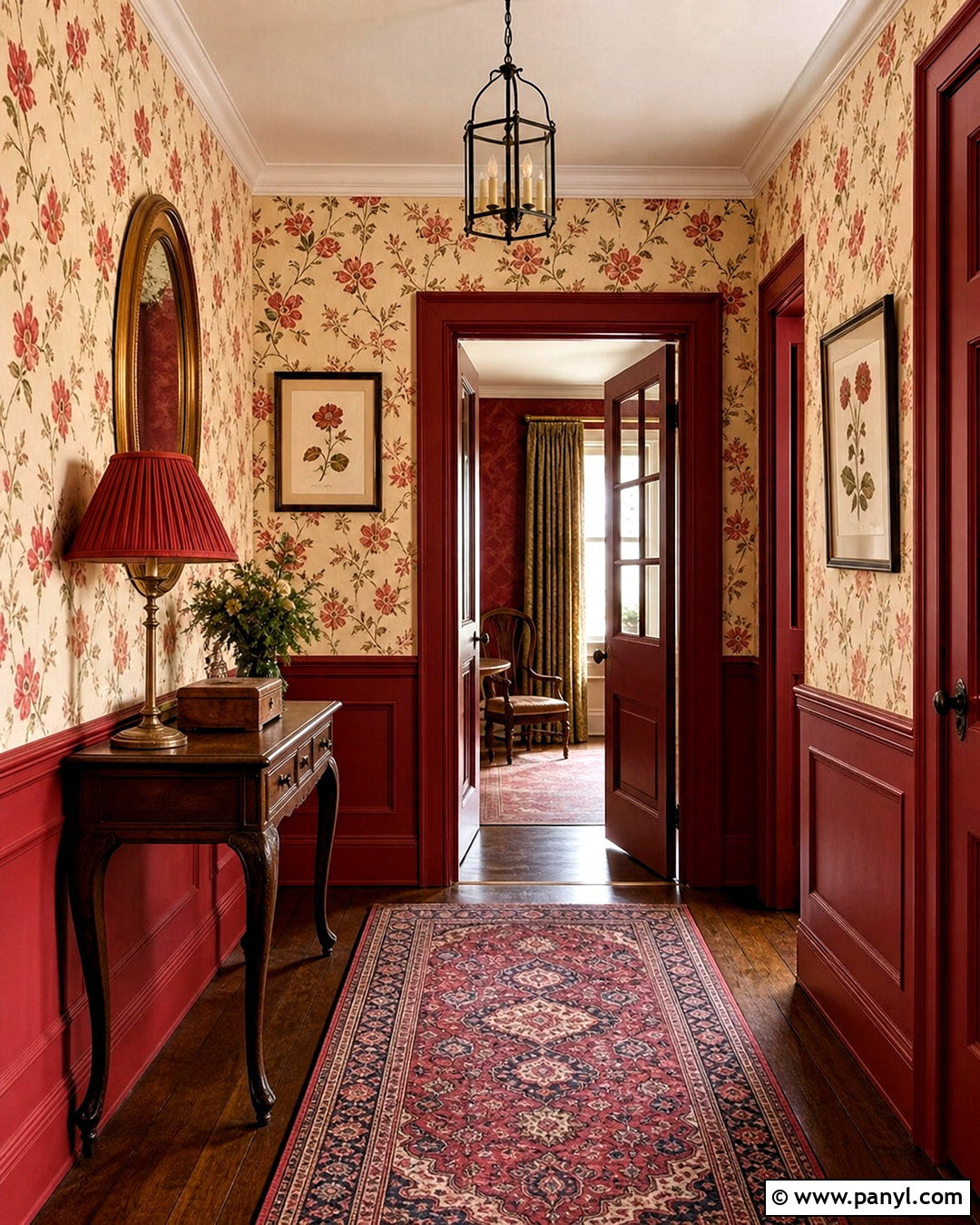
A red floral wallpaper can transform an ordinary hallway into a layered, traditional space. Select a warm cream paper covered with small crimson flowers, muted green leaves, and delicate vines. Use the pattern above painted paneling so it remains decorative without becoming visually overwhelming. Soft red woodwork connects the lower walls to the wallpaper, while a dark stained floor grounds the combination. Furnish the hallway with a narrow vintage console, a pleated fabric lamp, and an oval brass mirror. A faded Persian-style runner can introduce navy, tan, and additional red tones. Complete the look with framed botanical prints and a simple pendant light. Repeating colors across the wallpaper, rug, paint, and artwork makes this detailed hallway feel cohesive rather than crowded.
4. Red Stair Runner Hallway
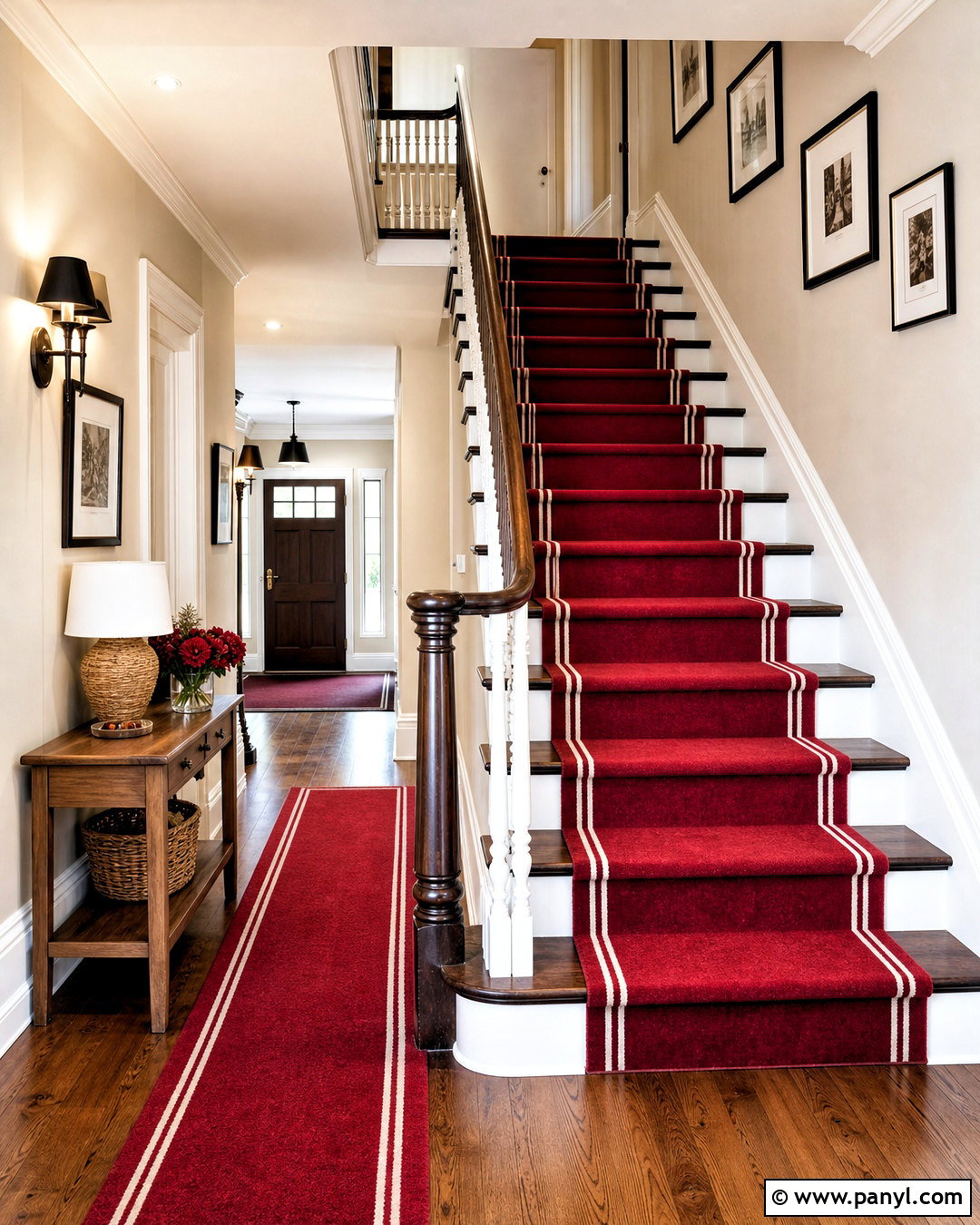
A red stair runner creates a strong focal point without requiring red walls. Begin with warm white paint throughout the hallway and staircase so the runner becomes the defining feature. Choose a deep red wool design with narrow cream stripes or a subtle diamond pattern. Dark oak treads and a stained wood handrail add contrast, while white risers keep the staircase crisp. Continue the runner’s color at floor level with a coordinating rug near the front door. Install matte black wall sconces along the stairs and hang a tidy arrangement of black-framed family photographs. A compact oak console beneath the staircase provides storage without blocking circulation. This balanced design brings color, softness, and improved comfort to an otherwise neutral entrance and stair hall.
5. Terracotta Red Hallway
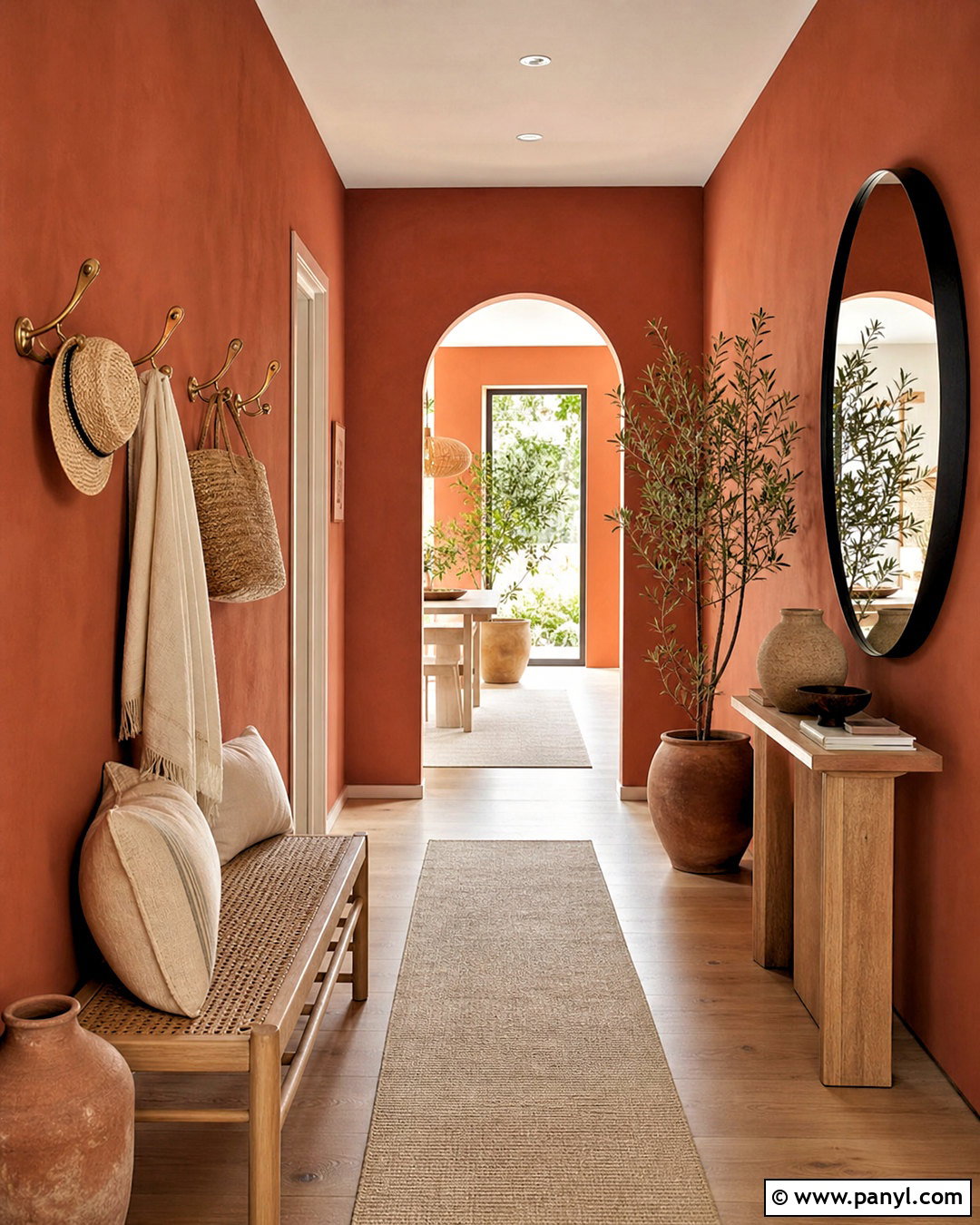
Terracotta red gives a hallway warmth while feeling softer and more natural than a pure primary red. Cover the walls in a chalky clay-red paint and leave the ceiling warm white for visual breathing room. Pale oak flooring and a cream flat-weave runner brighten the space from below. Choose a simple blond wood bench with woven cane details, then add linen cushions in oatmeal and muted rust. A large frameless round mirror reflects available daylight and prevents the earthy palette from feeling enclosed. Use aged brass hooks and a matching semi-flush ceiling fixture for subtle shine. Finish with handmade pottery and one olive tree in a textured planter. The combination of clay color, natural fibers, and light wood creates an approachable red hallway with relaxed Mediterranean character.
6. Red And Blush Hallway
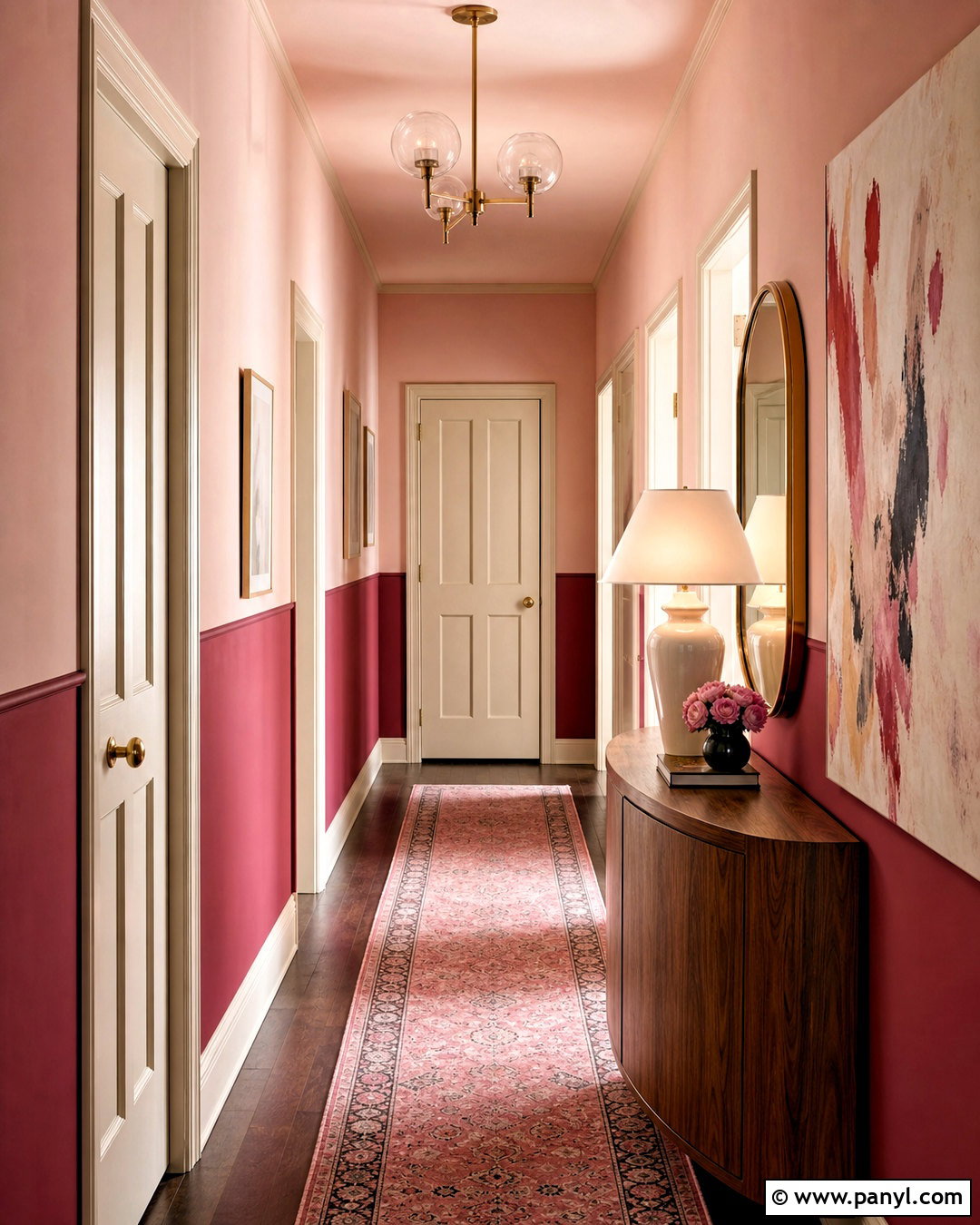
Pairing red with blush pink produces a colorful hallway that still feels soft and welcoming. Paint the lower two-thirds of the walls a muted raspberry red and use pale blush above the picture rail and across the ceiling. The close color relationship creates gentle contrast rather than a sharp division. Ground the palette with dark wood flooring and a narrow runner featuring red, rose, cream, and brown. A curved walnut console and an asymmetrical brass mirror bring warmth and movement. Add a small ivory lamp, pink glass vase, and one oversized abstract print that repeats both wall colors. Cream-painted doors provide a clean visual pause. This complete look suits an entry hall with limited furniture because the layered paint treatment supplies plenty of personality on its own.
7. Red And Sage Green Hallway
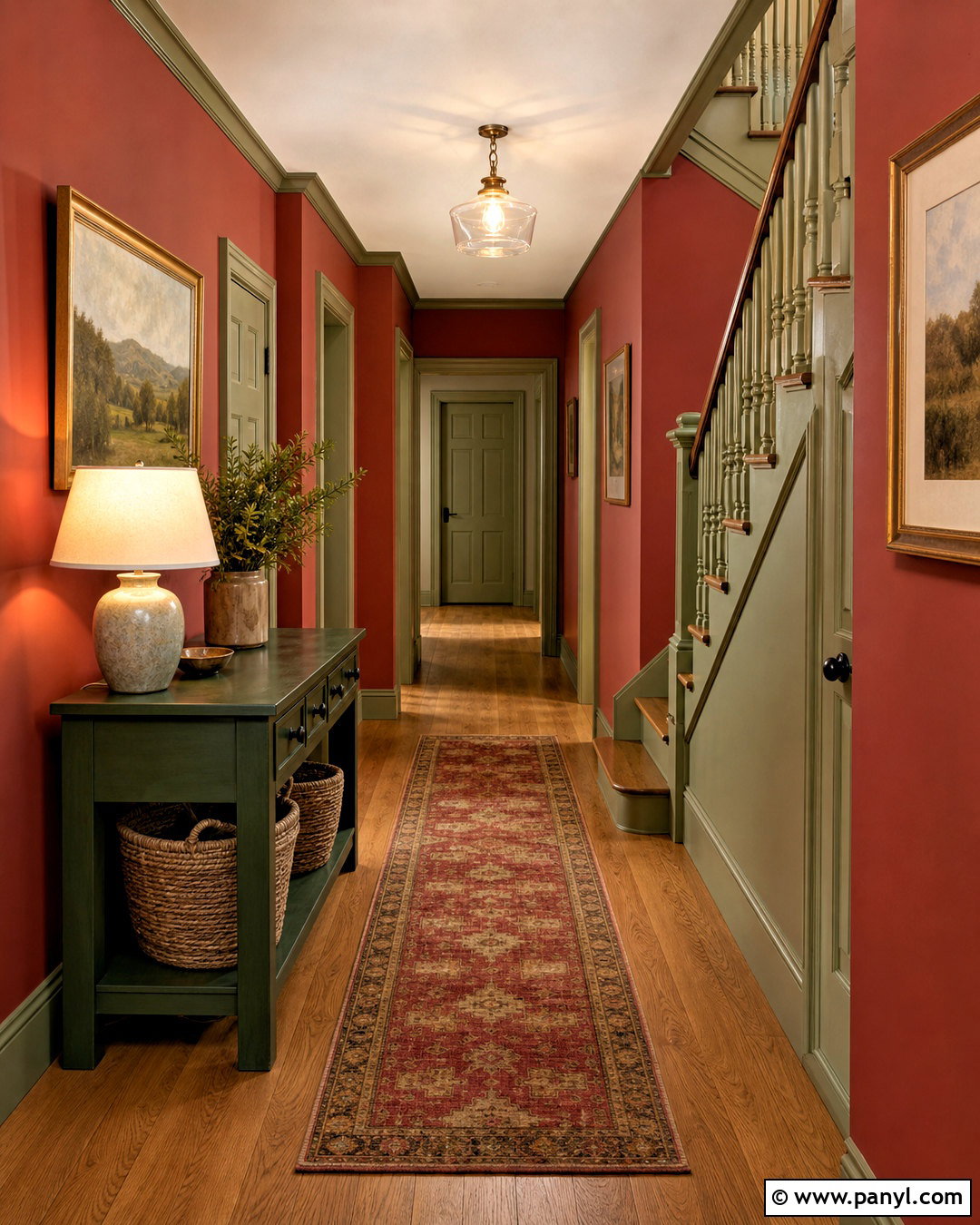
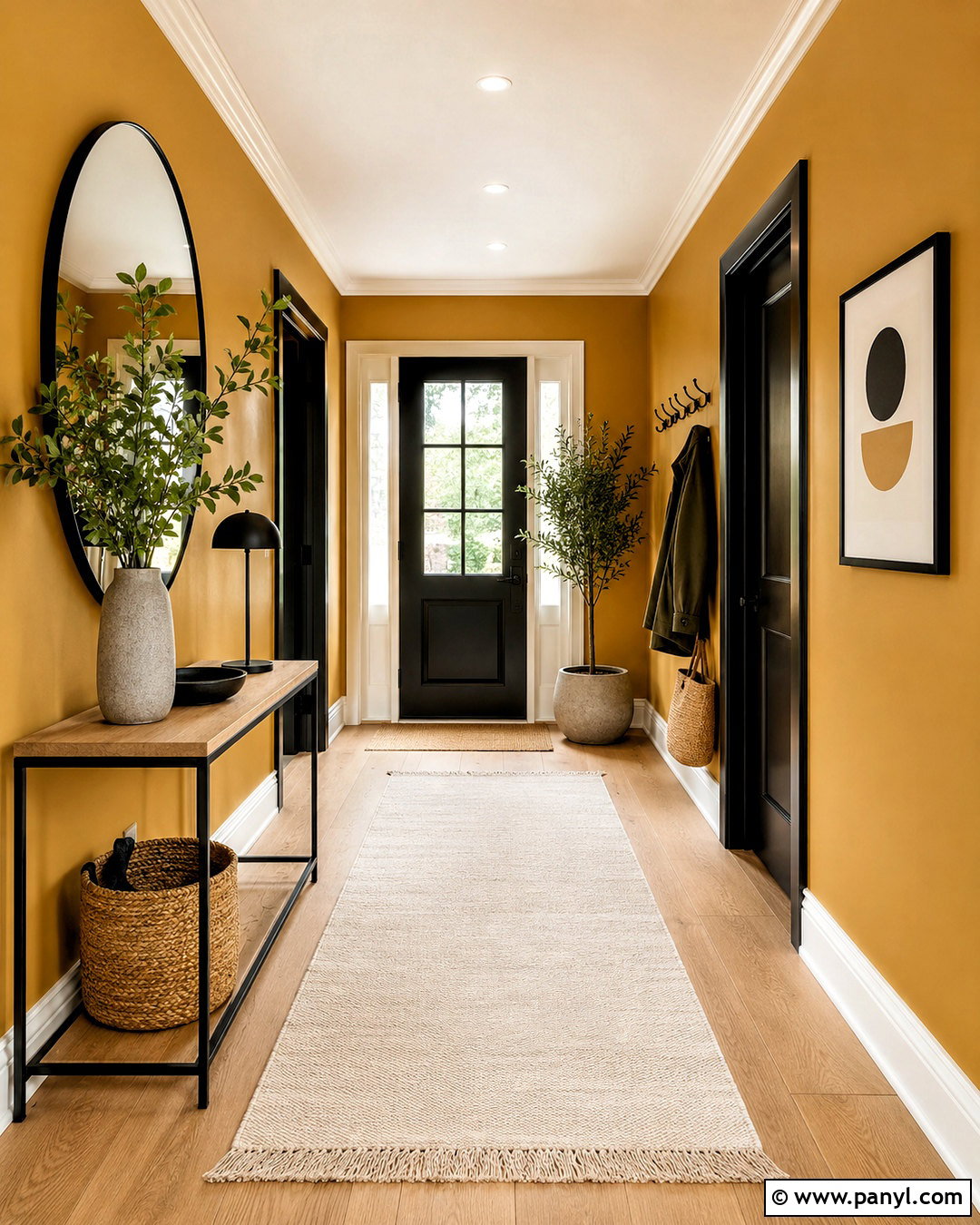
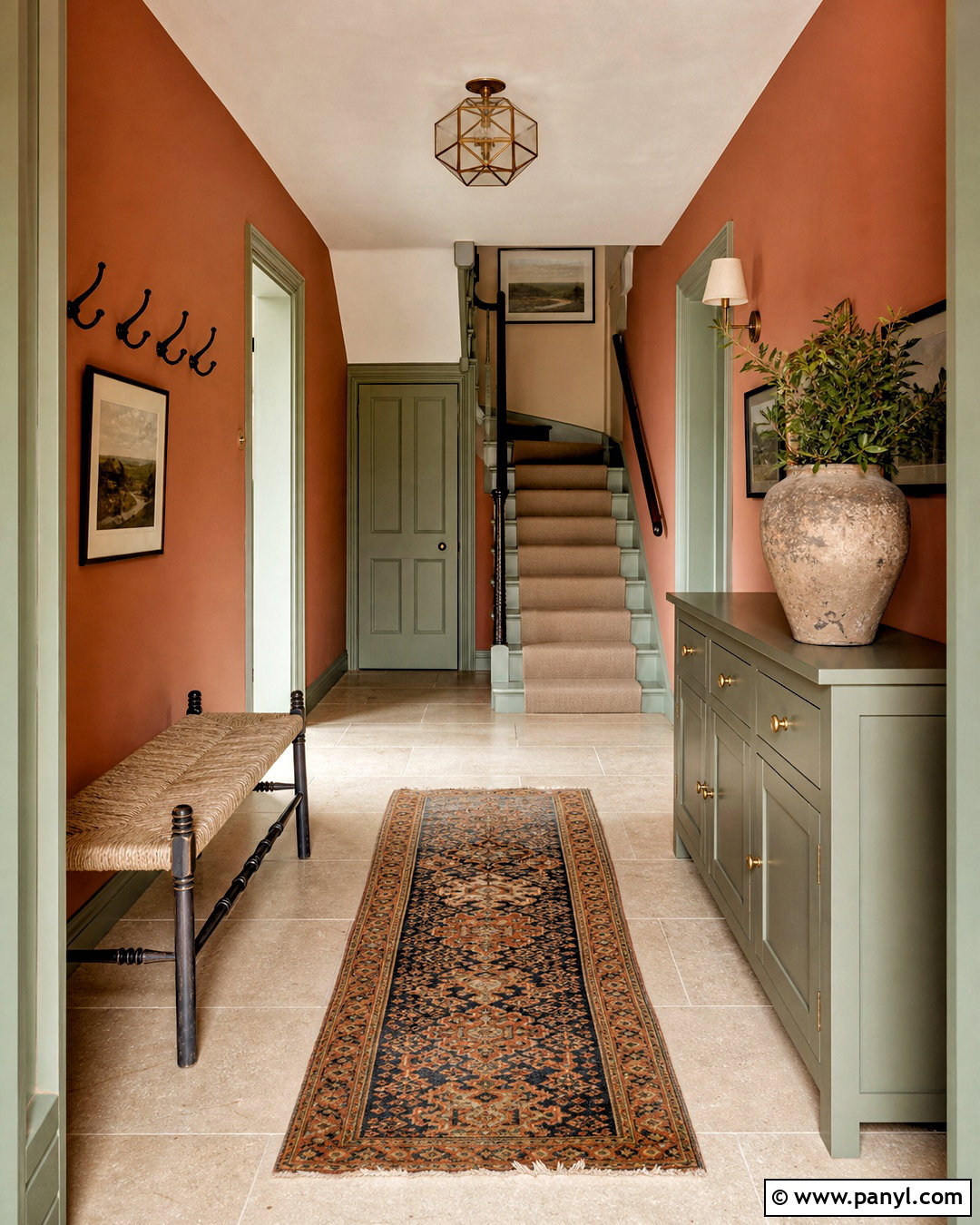
Red and sage green create a balanced hallway inspired by natural, earthy colors. Paint the walls a soft brick red, then use muted sage on the doors, baseboards, window trim, and staircase spindles. The cool green softens the warmth of the red without creating harsh contrast. Choose medium oak flooring and a vintage runner containing olive, faded crimson, and beige. A narrow painted console in deep green can hold a stoneware lamp and a shallow wooden tray. Above it, hang a simple landscape painting in an aged gold frame. Woven baskets and a small wooden stool add practical storage. Finish with an ivory ceiling and milk-glass pendant. Repeating each color in several places makes the red and green combination feel deliberate, calm, and suitable for everyday living.
8. Red And Navy Hallway
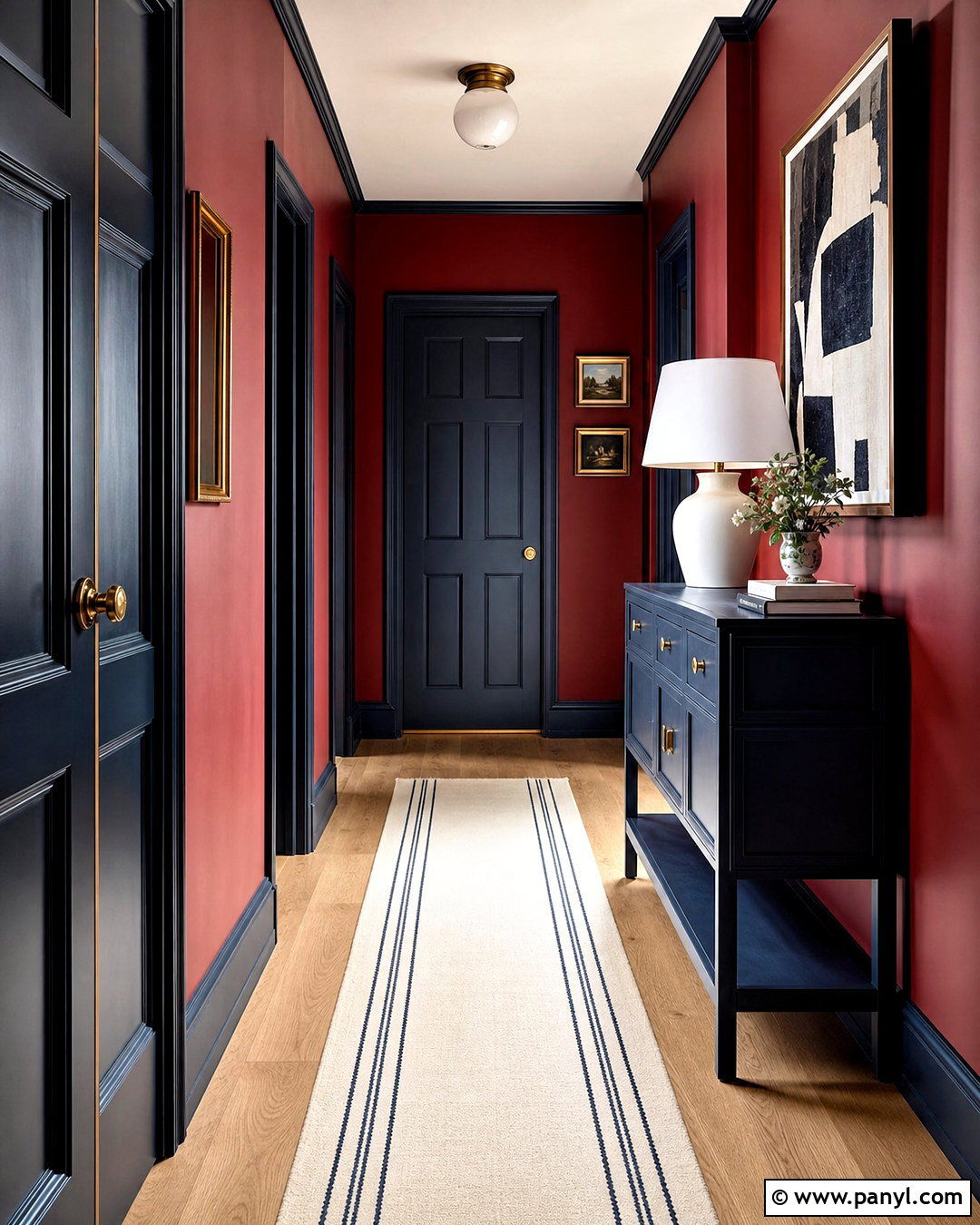
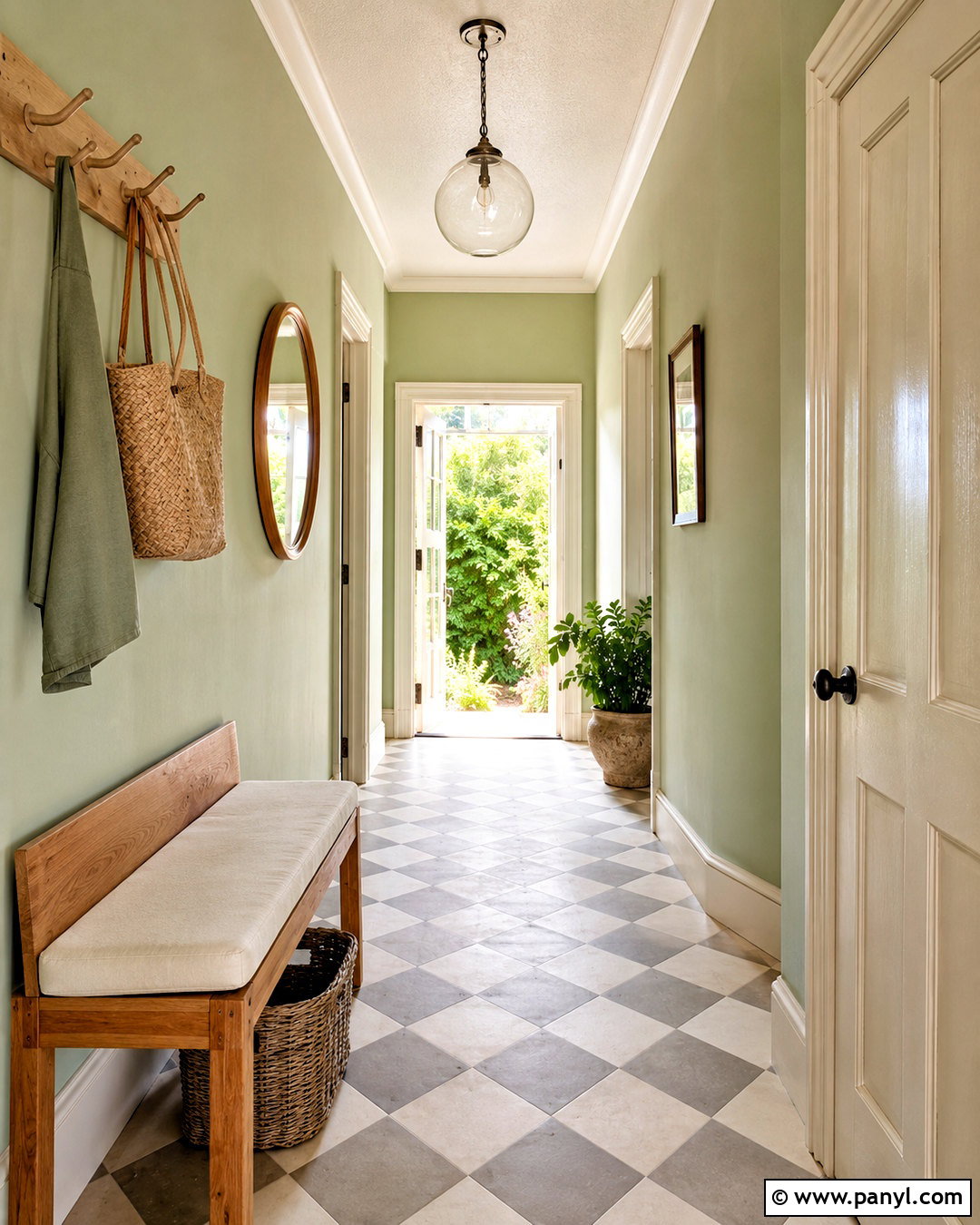
Would you like a red hallway that feels polished and grounded? Combine muted crimson walls with deep navy doors and trim. Navy provides enough contrast to define the architecture while remaining softer than black. Use warm white on the ceiling to keep the upper area bright. A light oak floor and a cream runner with thin navy lines balance the saturated paint colors. Place a slender navy console against one wall, topped with a white ceramic lamp and a small brass tray. An oversized coastal or abstract print can introduce cream, blue, and restrained red accents. Add brushed brass door hardware and clear-glass ceiling lights for warmth and reflection. This scheme creates a tailored hallway that works well in transitional, coastal, or updated traditional homes.
9. Red And Black Modern Hallway
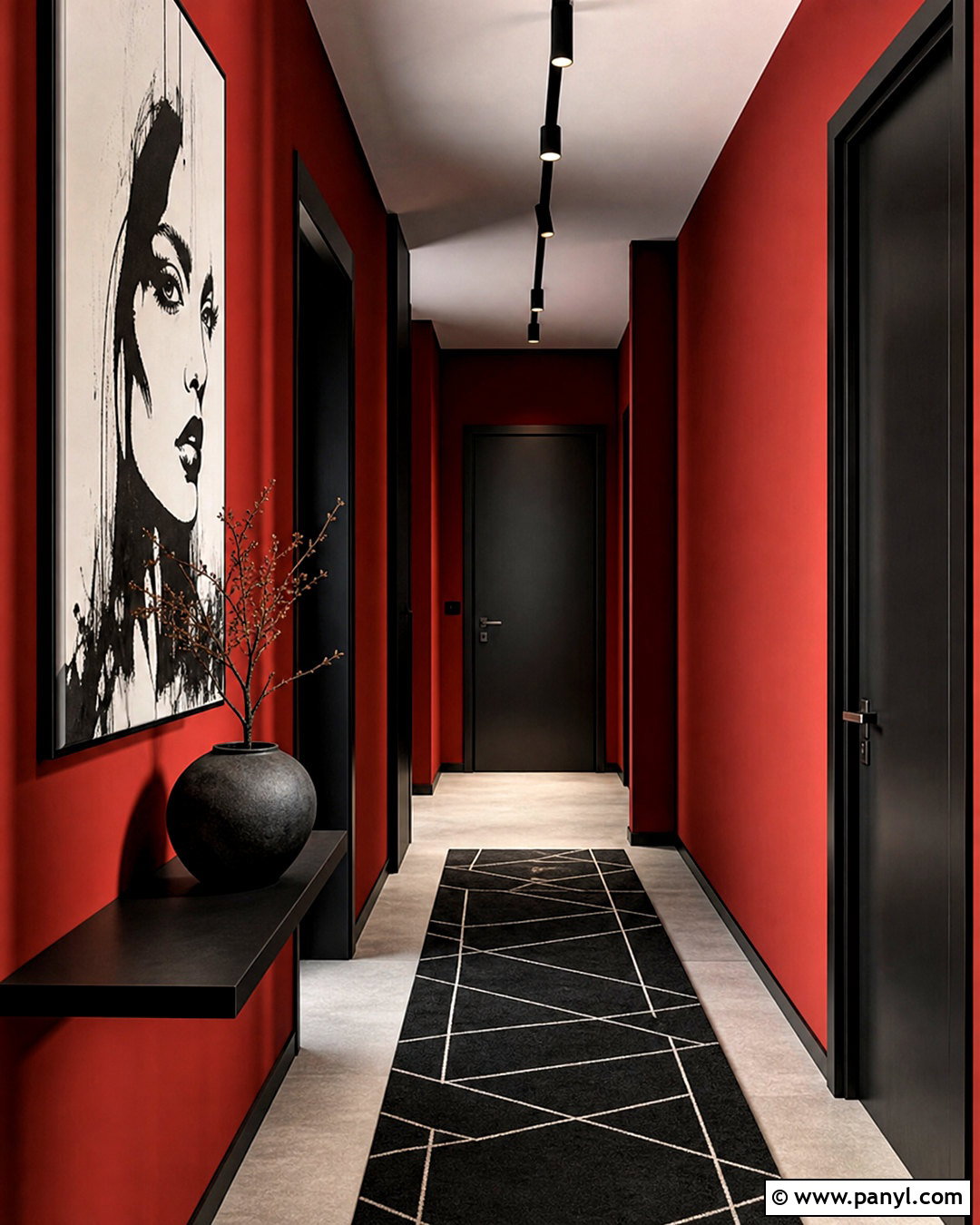
A modern red hallway looks strongest when the layout remains clean and uncluttered. Use a controlled, slightly dark tomato red on the main walls, then paint the interior doors, trim, and ceiling-edge molding matte black. Smooth pale concrete-look flooring creates a cool contrast and keeps the design contemporary. Add a long black runner with a fine cream geometric pattern to soften footsteps. Instead of a traditional console, install a slim floating black shelf with hidden brackets. Hang one large graphic artwork in black, red, and off-white above it. Linear ceiling lights or evenly spaced black spotlights will illuminate the full passage without decorative fuss. Complete the space with one sculptural ceramic vessel. Strong color blocking and limited accessories give this hallway a sharp, intentional appearance.
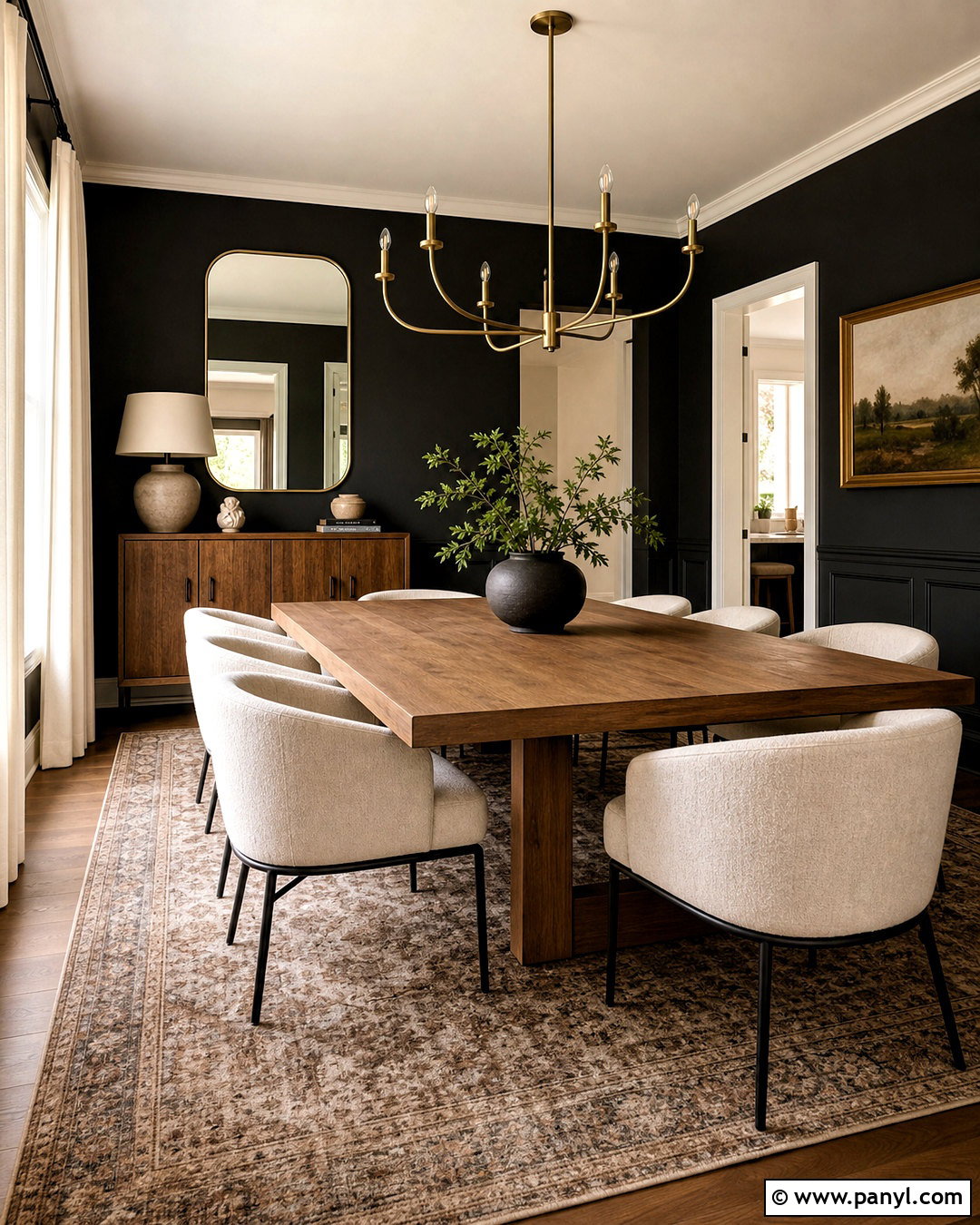
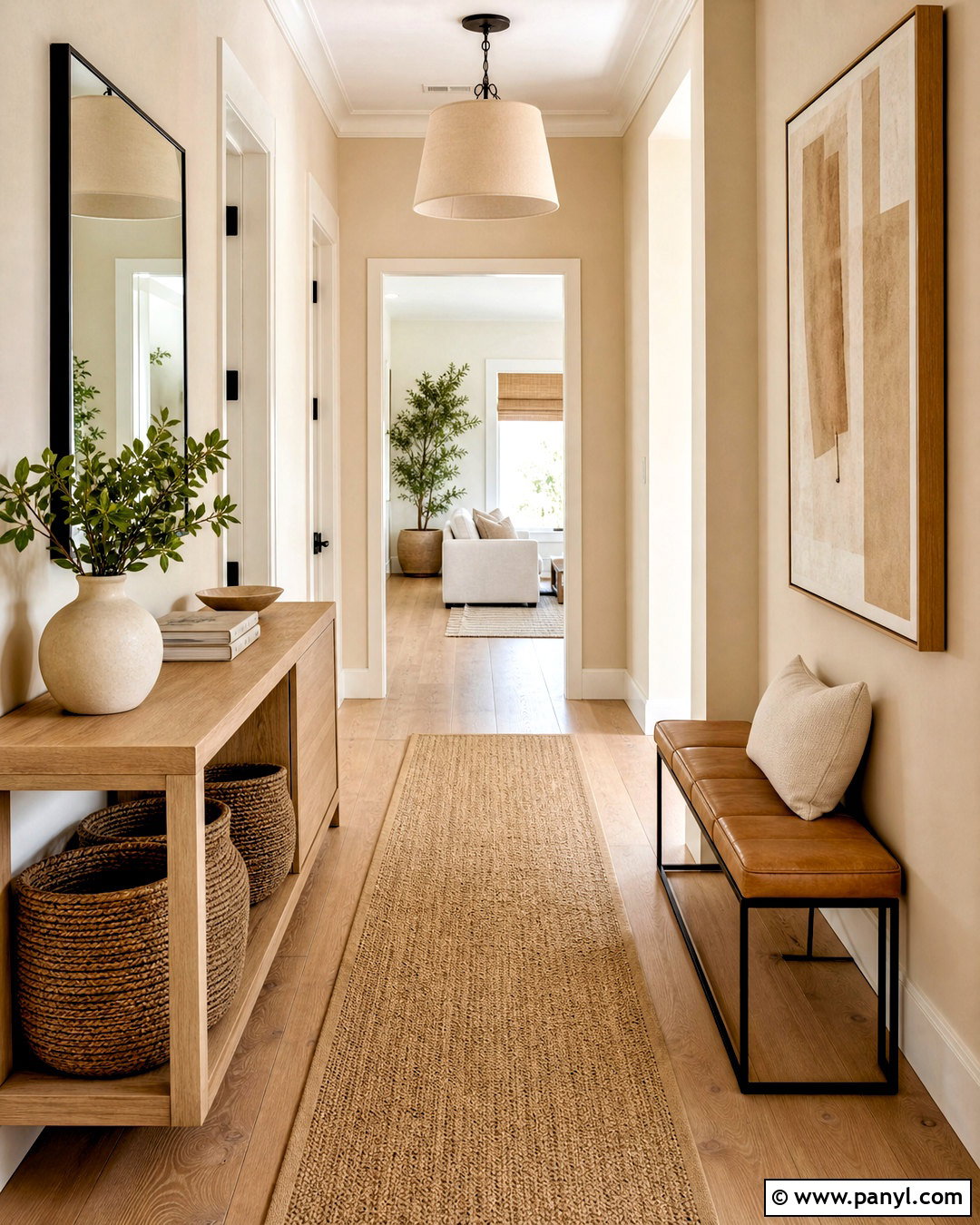
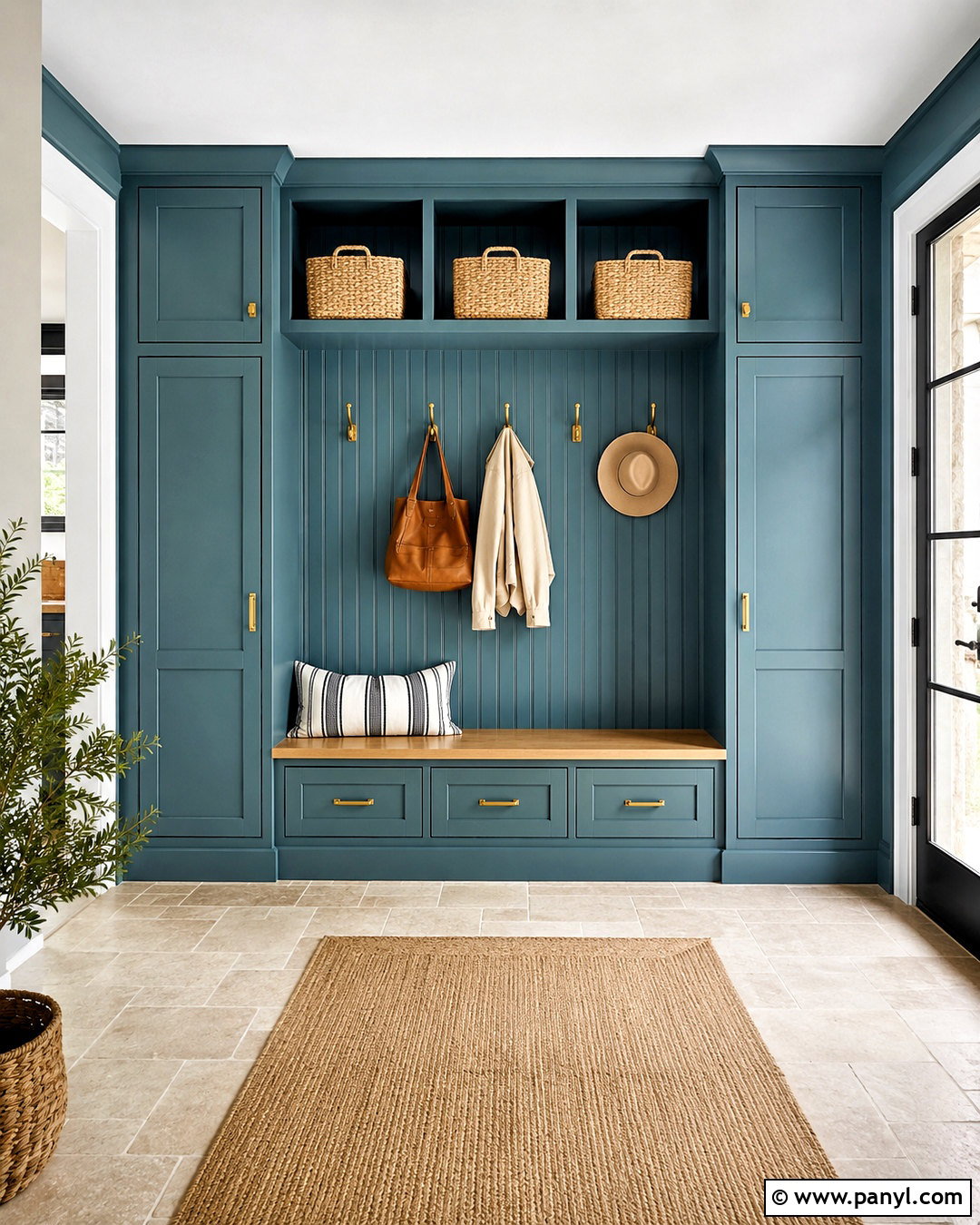
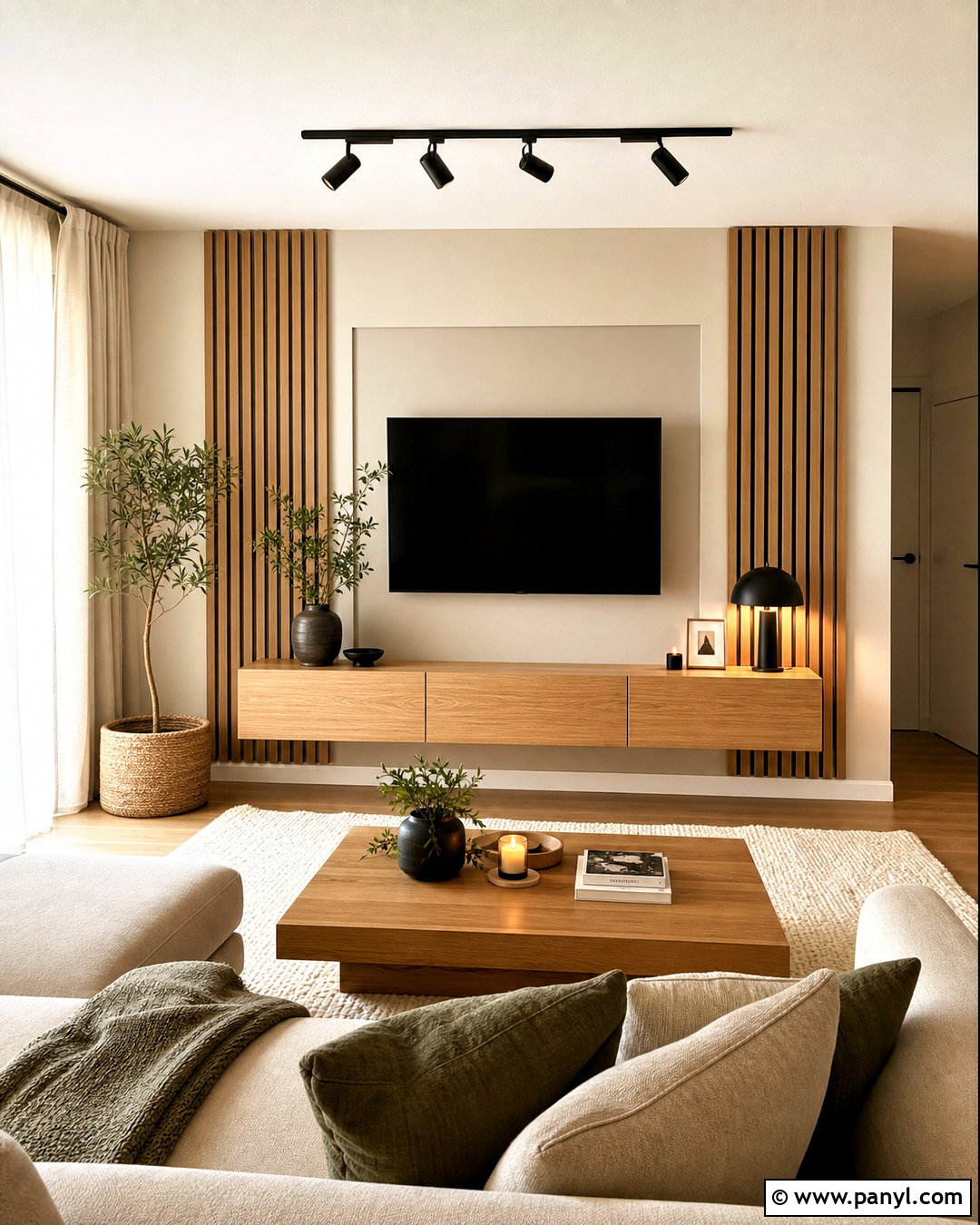
10. Red And White Classic Hallway
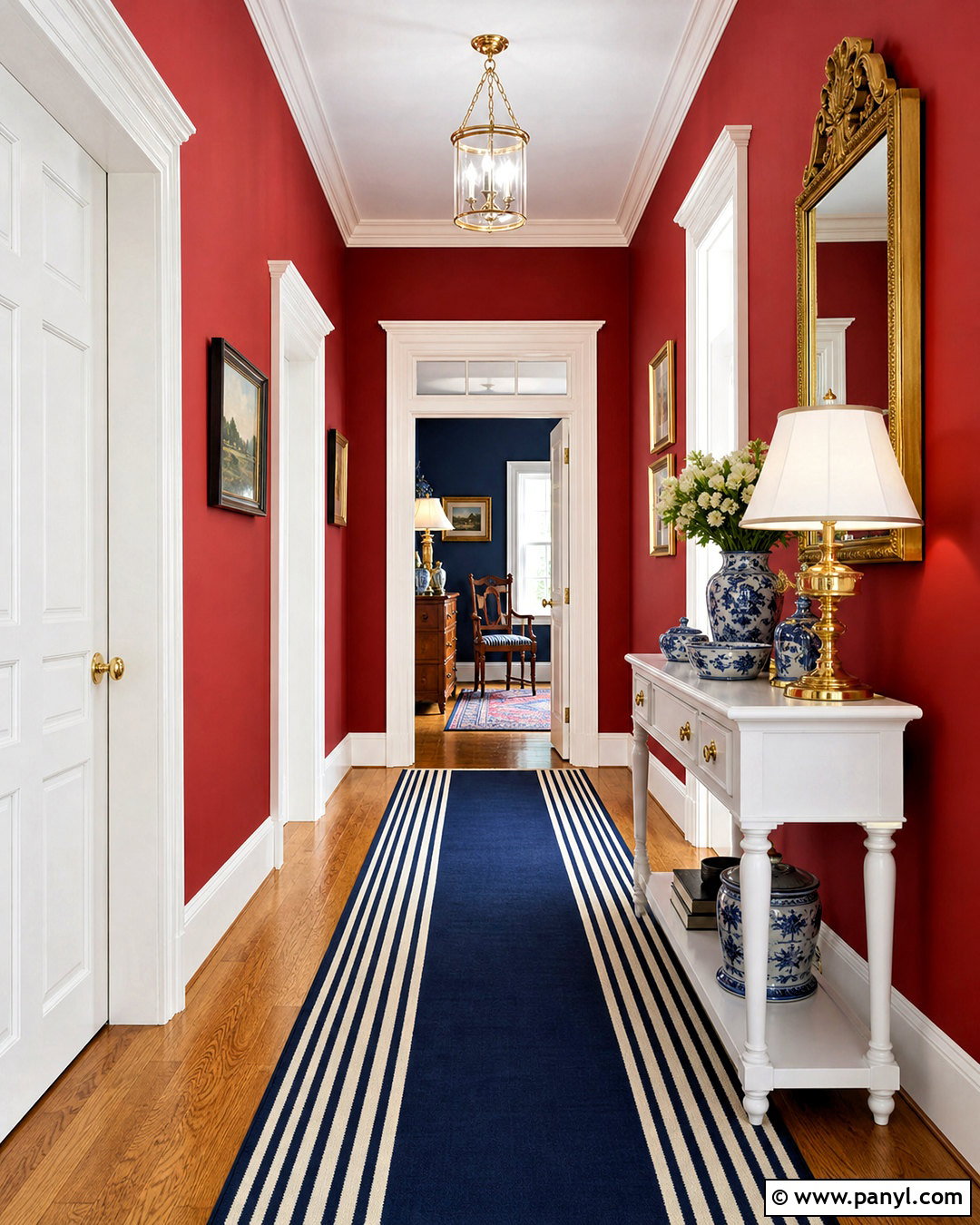
Crisp white details can make a bright red hallway feel fresh, cheerful, and architecturally defined. Paint the walls a clear heritage red, then highlight the baseboards, crown molding, door casings, paneled doors, and ceiling in clean white. Choose warm honey-toned wood flooring to prevent the contrast from feeling too cold. A navy and cream striped runner introduces a third color while preserving the classic character. Furnish the entry with a small white console, a polished brass table lamp, and a rectangular gold mirror. Blue-and-white ceramics and one traditional framed print add restrained pattern. Use a glass lantern pendant for clear overhead light. This complete scheme works particularly well in Colonial, farmhouse, or traditional homes where substantial trim naturally breaks up the red wall color.
11. Red Gallery Hallway

Turn a long red hallway into a personal gallery by combining saturated walls with a carefully organized art display. Choose a muted museum red that helps framed pictures stand out, then keep the ceiling and floor trim warm white. Install matching frames in black, dark walnut, and antique brass, arranging them along a consistent center line. Mix family photographs with landscapes, sketches, and small abstract pieces, but leave enough space between frames for the red background to remain visible. A plain charcoal runner prevents additional pattern from competing with the artwork. Use adjustable ceiling spotlights to wash the walls evenly. At the far end, position a narrow bench beneath one larger piece. The strong focal point visually anchors the passage and makes its length feel purposeful.
12. Red Hallway Ceiling
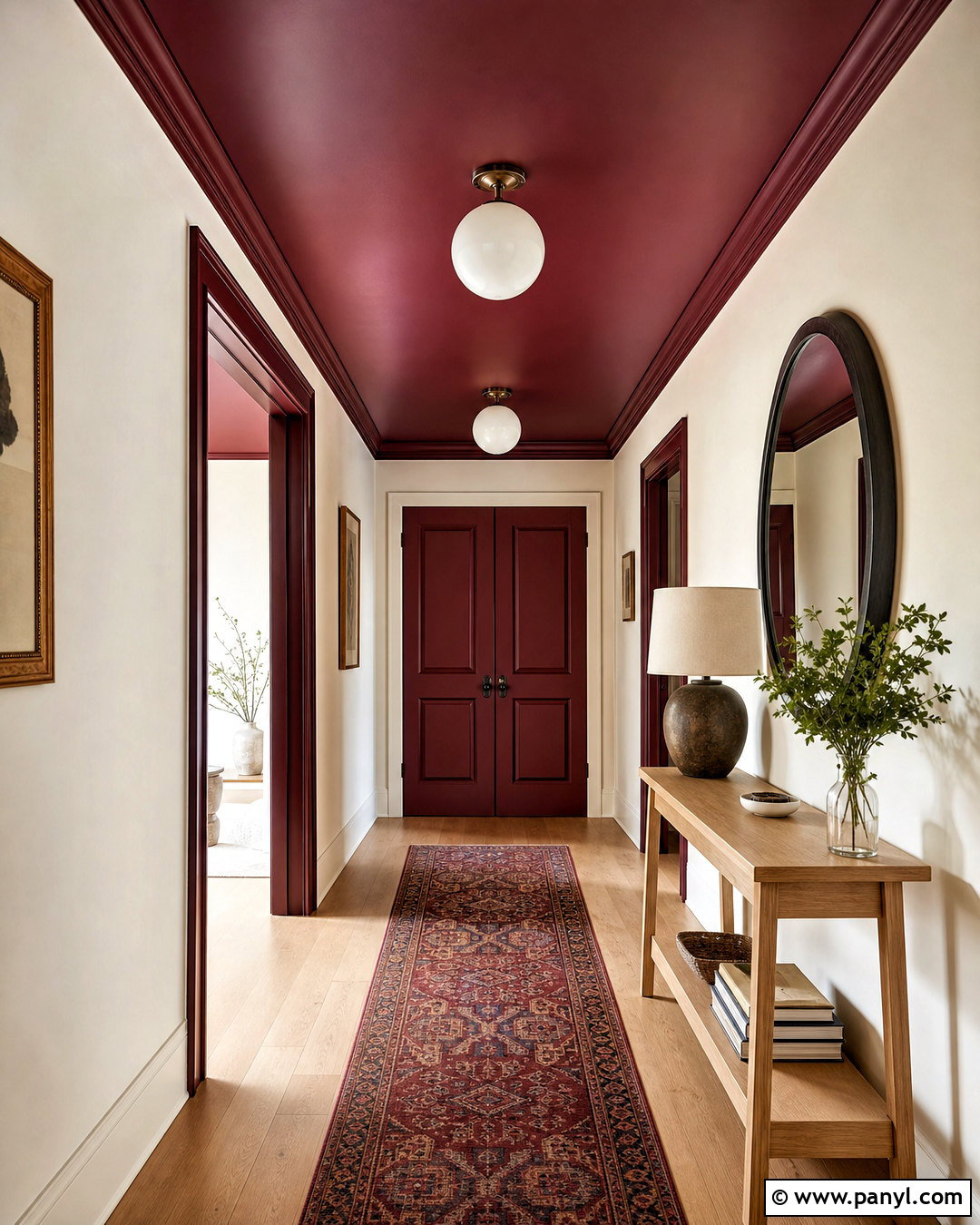
Painting the ceiling red is an unexpected way to introduce color while leaving the hallway walls light. Use a rich cranberry shade overhead and continue it onto the crown molding for a clearly defined canopy effect. Warm white walls preserve brightness and provide a calm background for framed artwork. Repeat the ceiling color through a red patterned runner extending down the center of pale oak flooring. A slim wood console, round black mirror, and linen-shaded lamp keep the furnishings neutral. Add cranberry-painted doors at the far end to distribute the color throughout the sightline. Simple globe ceiling fixtures will stand out against the red surface and cast even light. This approach is effective in hallways with taller ceilings, where the darker color creates a cozier and more proportioned appearance.
13. Red Hallway Doors And Trim
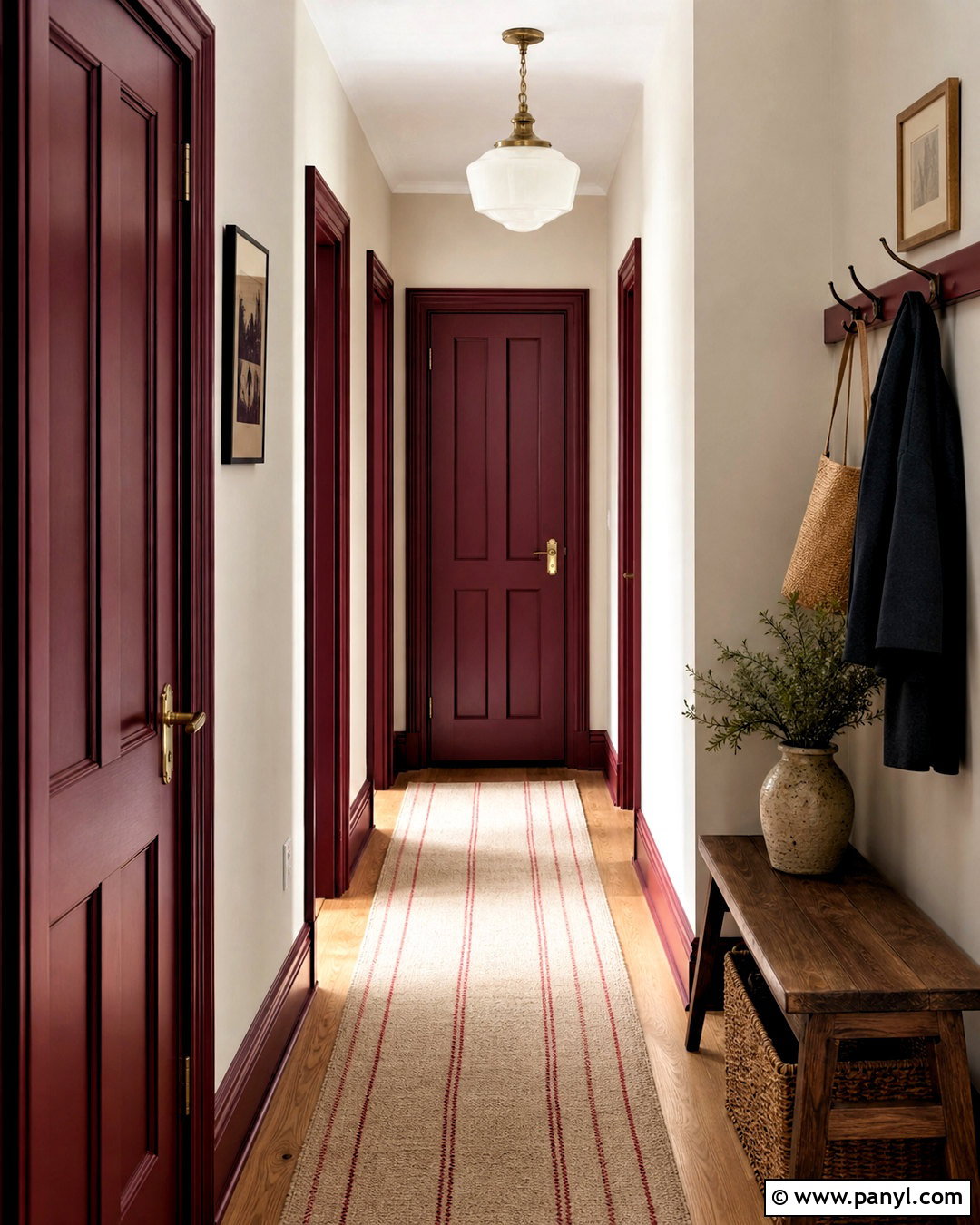
Red doors and trim can give a neutral hallway a customized look without covering the main walls in strong color. Paint every interior door, casing, and baseboard a deep oxblood red with a durable satin finish. Use soft beige or light mushroom paint on the walls to reduce contrast and create a warm background. Natural oak flooring and a beige runner with fine red stripes connect the architectural color to the rest of the passage. Replace standard hardware with aged brass levers for a refined finishing touch. A narrow walnut bench, wall-mounted coat rail, and woven baskets make the hallway functional. Complete the scheme with simple black-framed art and a milk-glass pendant. Repetition makes the red woodwork feel cohesive, deliberate, and integrated throughout the entire space.
14. Red Checkerboard Floor Hallway
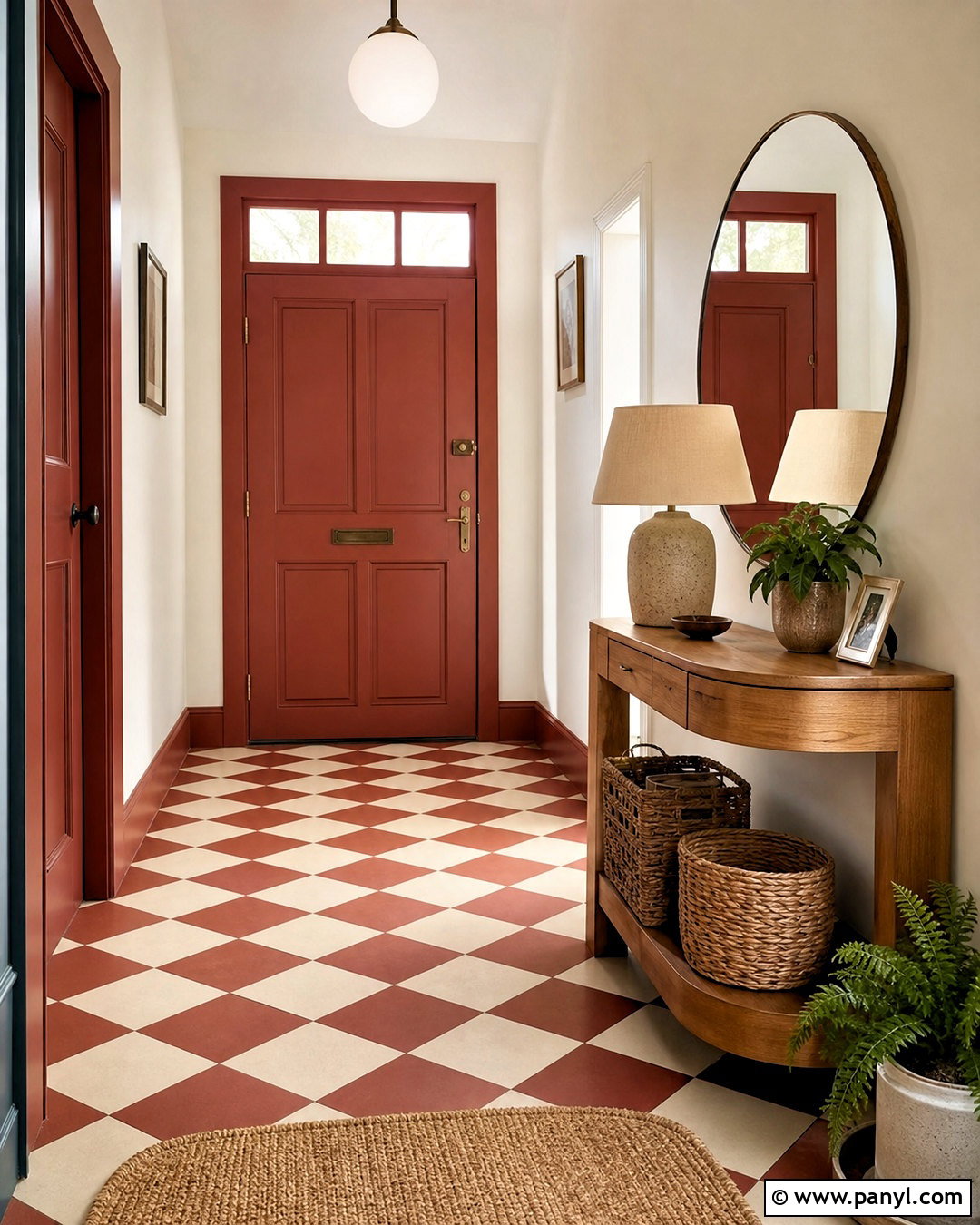
A red and cream checkerboard floor can become the foundation of a playful yet polished hallway. Choose matte clay-red and warm ivory tiles rather than glossy primary colors for a more livable finish. Keep the walls creamy white and introduce matching clay red across the baseboards and interior side of the front door. A light oak console with curved corners adds warmth without competing with the graphic floor. Hang a large round mirror above it and add a small shaded lamp for softer evening light. Woven baskets, a neutral umbrella stand, and one green plant make the entrance practical. Avoid a runner so the full tile pattern remains visible. This design combines vintage character with clean modern furnishings, making it suitable for cottages, townhouses, and family homes.
15. Red Hallway Console Area
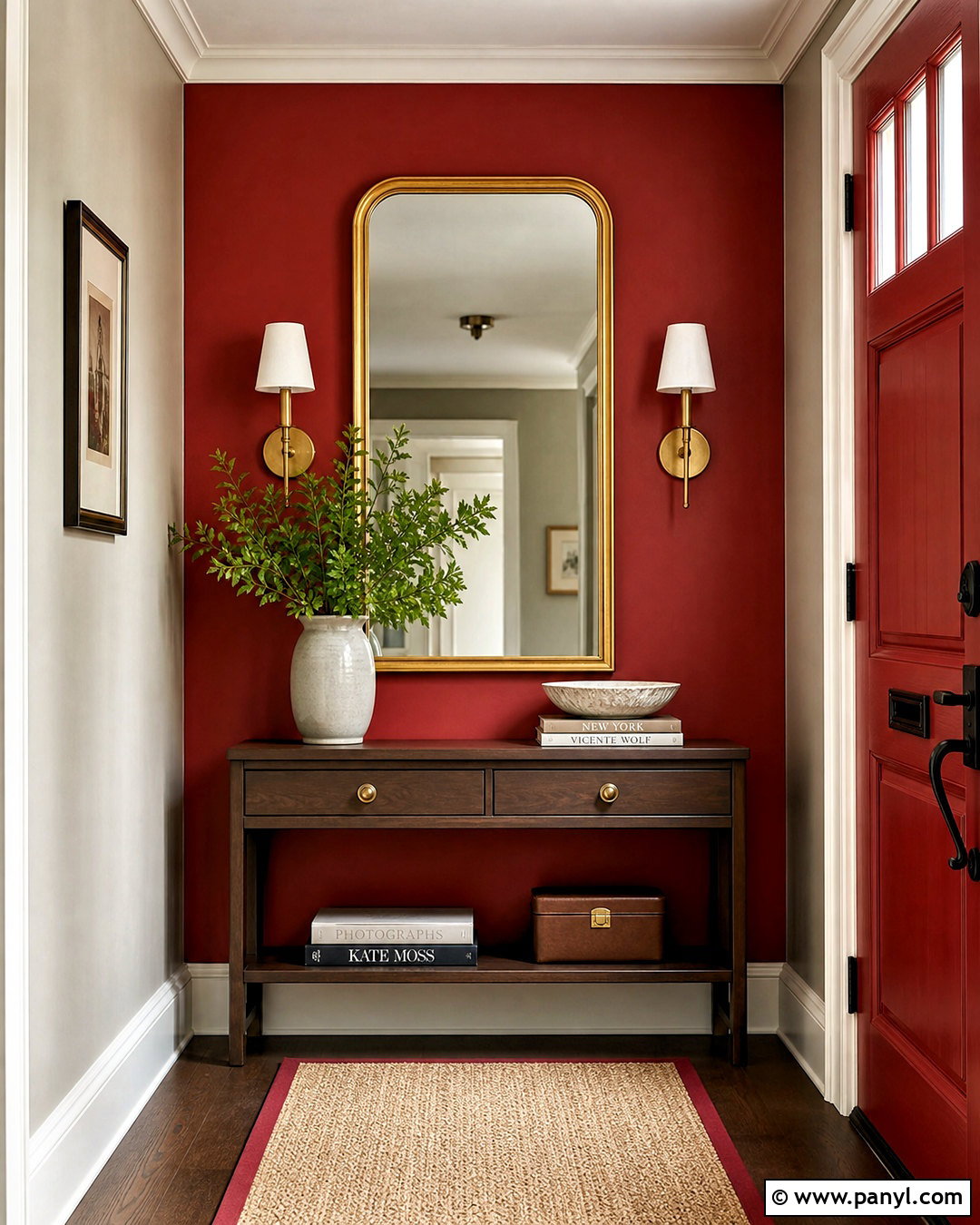
Create a red focal point around the console when painting an entire hallway feels too intense. Cover the wall behind a slim console in warm crimson paint, extending the color from one inside corner to the other. Keep the surrounding walls soft greige and repeat crimson on the front door for continuity. Choose a dark walnut console with drawers for keys and small essentials. Center a tall brass-framed mirror above it, then add matching wall sconces on either side. A neutral wool runner with a narrow red border leads the eye toward the arrangement. Style the surface with a ceramic bowl, stacked books, and fresh greenery. This focused composition gives the hallway a clear visual destination while keeping the passage bright, organized, and easy to navigate.
16. Red Hallway Built-In Storage
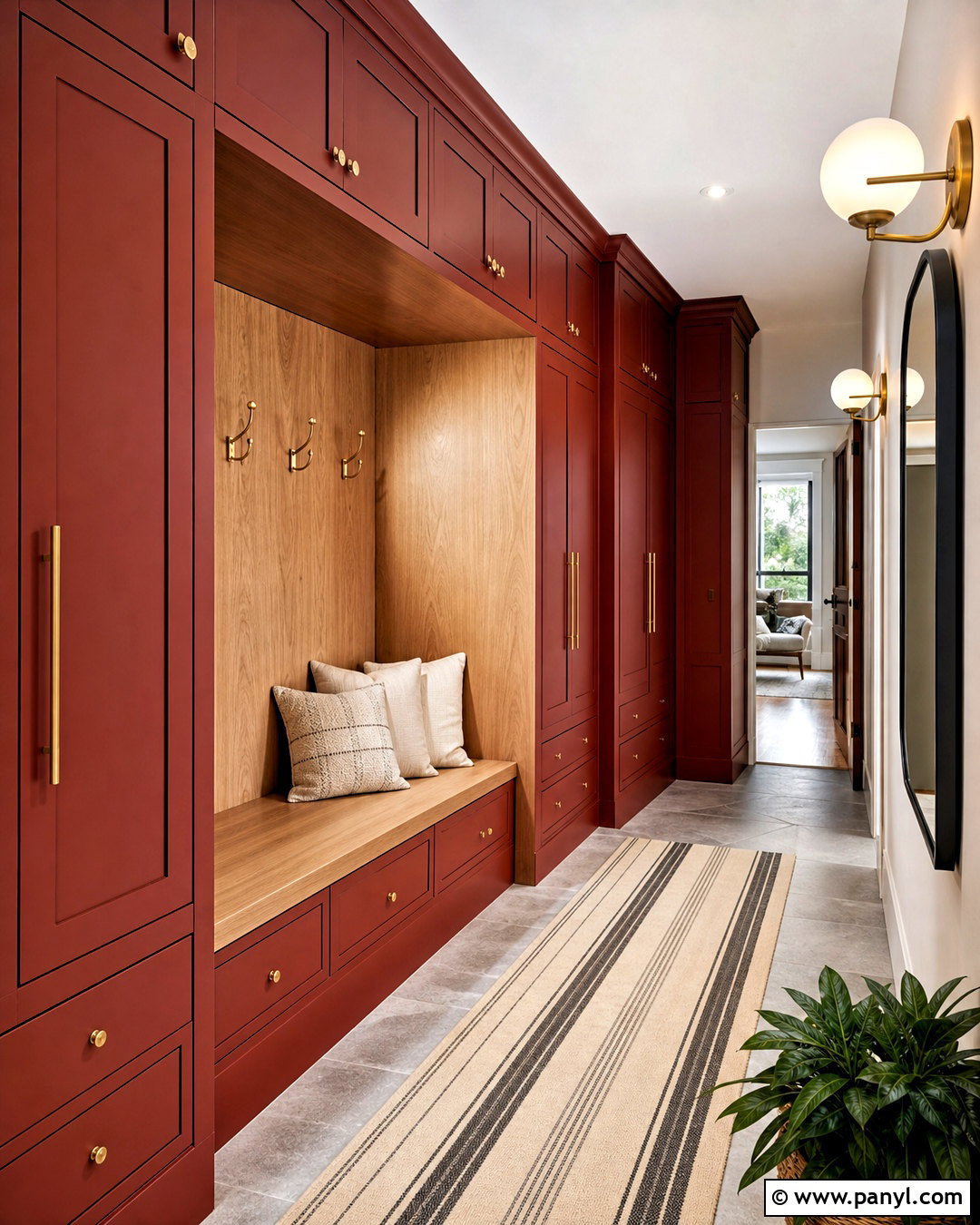
Floor-to-ceiling red storage can turn a busy hallway into an organized and colorful family zone. Install shallow cabinets along one wall and paint every door, drawer, panel, and handle surround a muted rust red. Include closed shoe drawers below, tall coat cupboards, and a central bench niche. Line the niche with natural oak and add cream seat cushions for contrast. Keep the opposite wall and ceiling warm white so the cabinetry remains the main feature. Durable gray stone-look flooring handles heavy traffic, while a washable striped runner adds comfort. Use brushed brass hooks and small globe sconces inside the bench area. A full-length mirror near the exit completes the layout. This design combines bold color with practical storage while maintaining a neat, built-in appearance.
17. Red Striped Wallpaper Hallway
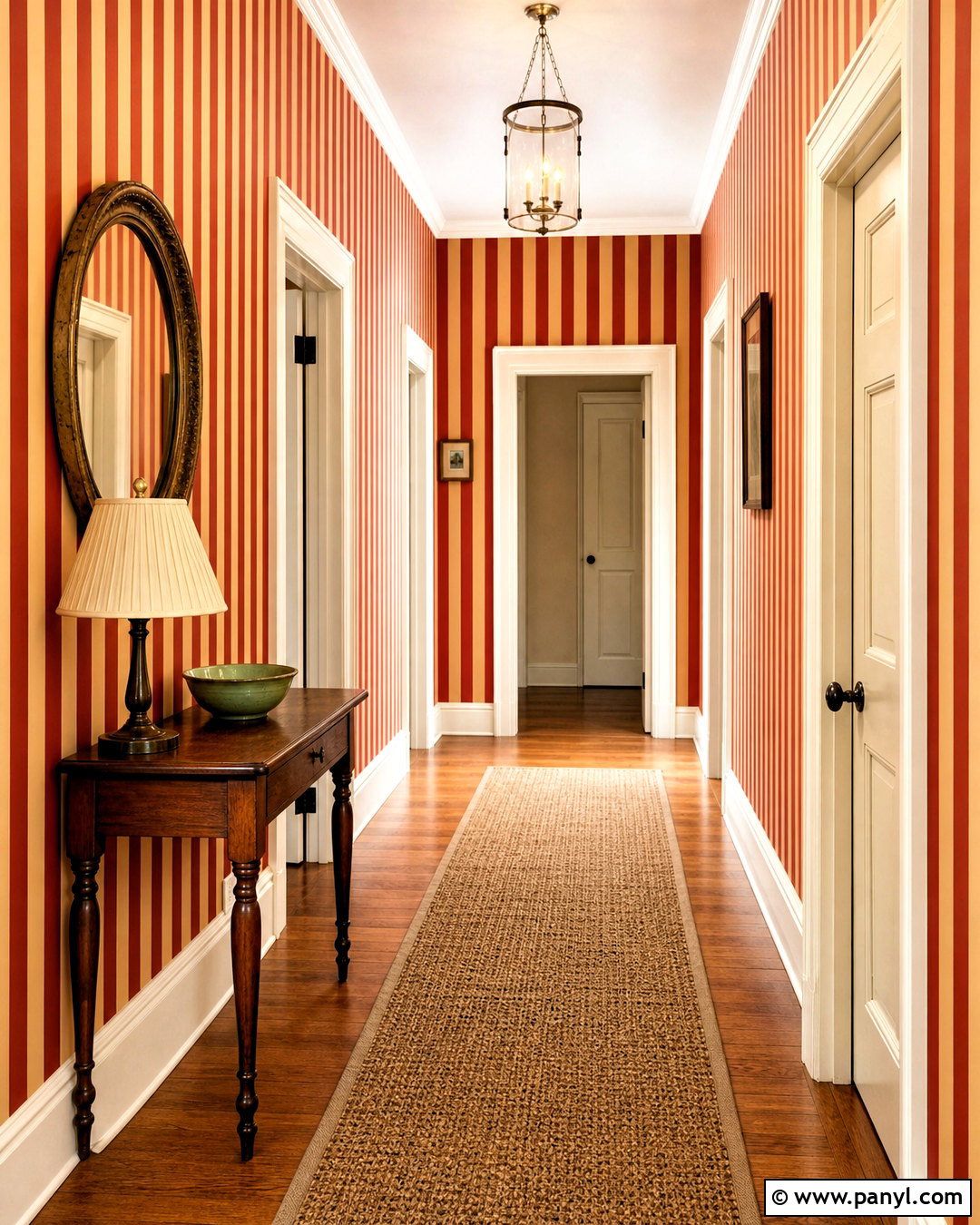
Vertical red striped wallpaper can give a short or low hallway a stronger sense of height. Select narrow brick-red and warm cream stripes with a slightly irregular, hand-painted appearance. Cover all the walls for continuity, but keep the ceiling, baseboards, and doors soft ivory. Medium oak flooring and a plain natural-fiber runner balance the graphic pattern. Choose a compact antique wood table instead of a full console to preserve valuable walking space. Above it, hang a small oval mirror in an aged brass frame. A pleated cream lamp and one green ceramic bowl provide useful accents without introducing more patterns. Finish with a simple glass pendant. The restricted palette and modest furnishings allow the wallpaper to define the hallway while maintaining a calm, orderly atmosphere.
18. Neutral Hallway With Red Runner
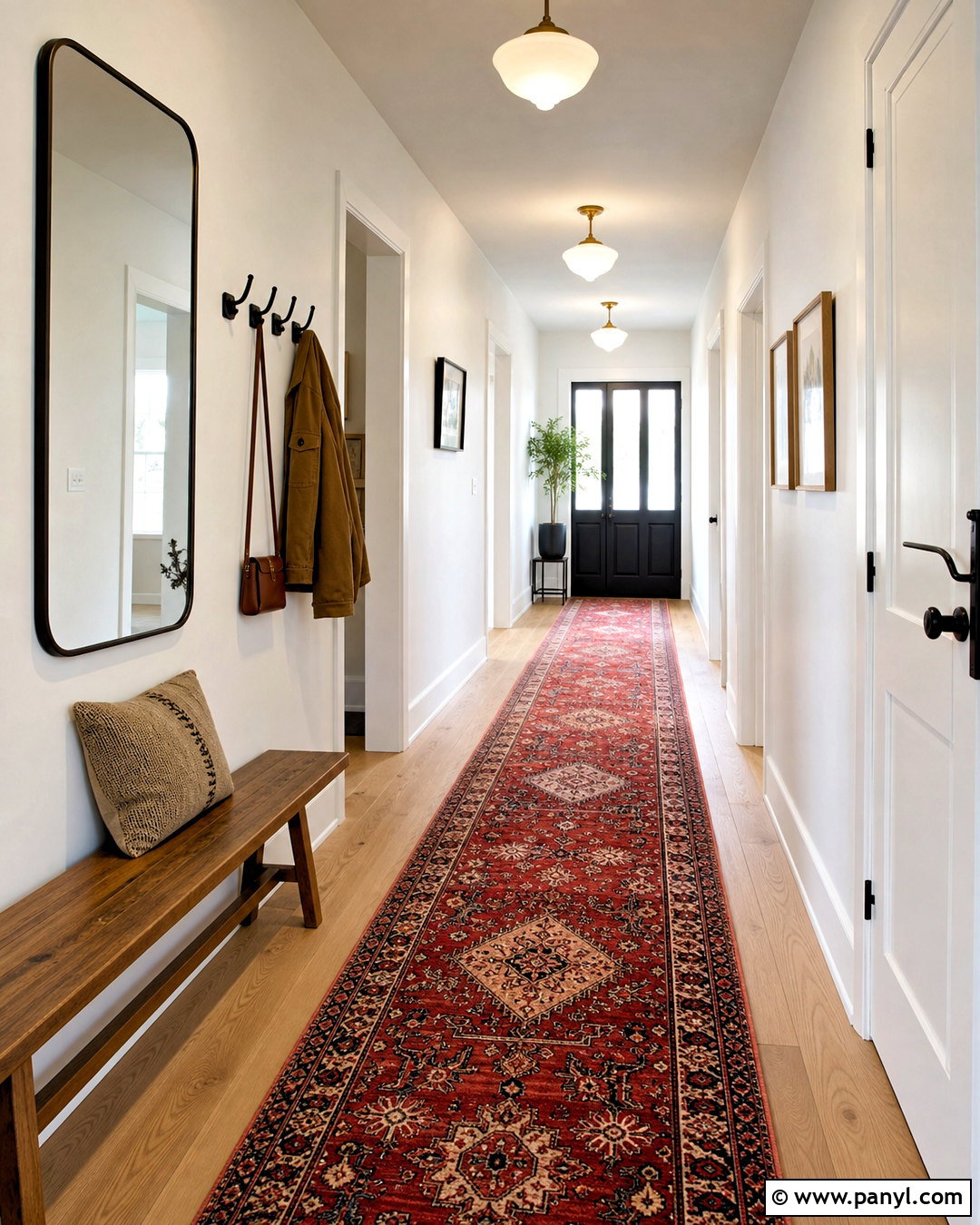
A red runner provides an easy way to energize a neutral hallway while keeping permanent finishes versatile. Start with warm white walls, pale oak flooring, and simple white doors. Choose a long vintage-style runner featuring faded crimson, rust, navy, and beige details. It should leave a visible border of flooring on both sides so the passage feels properly proportioned. Add a slim oak bench, black coat hooks, and a large rectangular mirror to create a functional entrance. Use two or more ceiling fixtures along a long hallway instead of relying on a single bulb. Small framed prints can repeat the runner’s red and blue tones. This coordinated design feels complete, but the rug can still be replaced later if you want an affordable seasonal or stylistic change.
19. Glossy Red Hallway
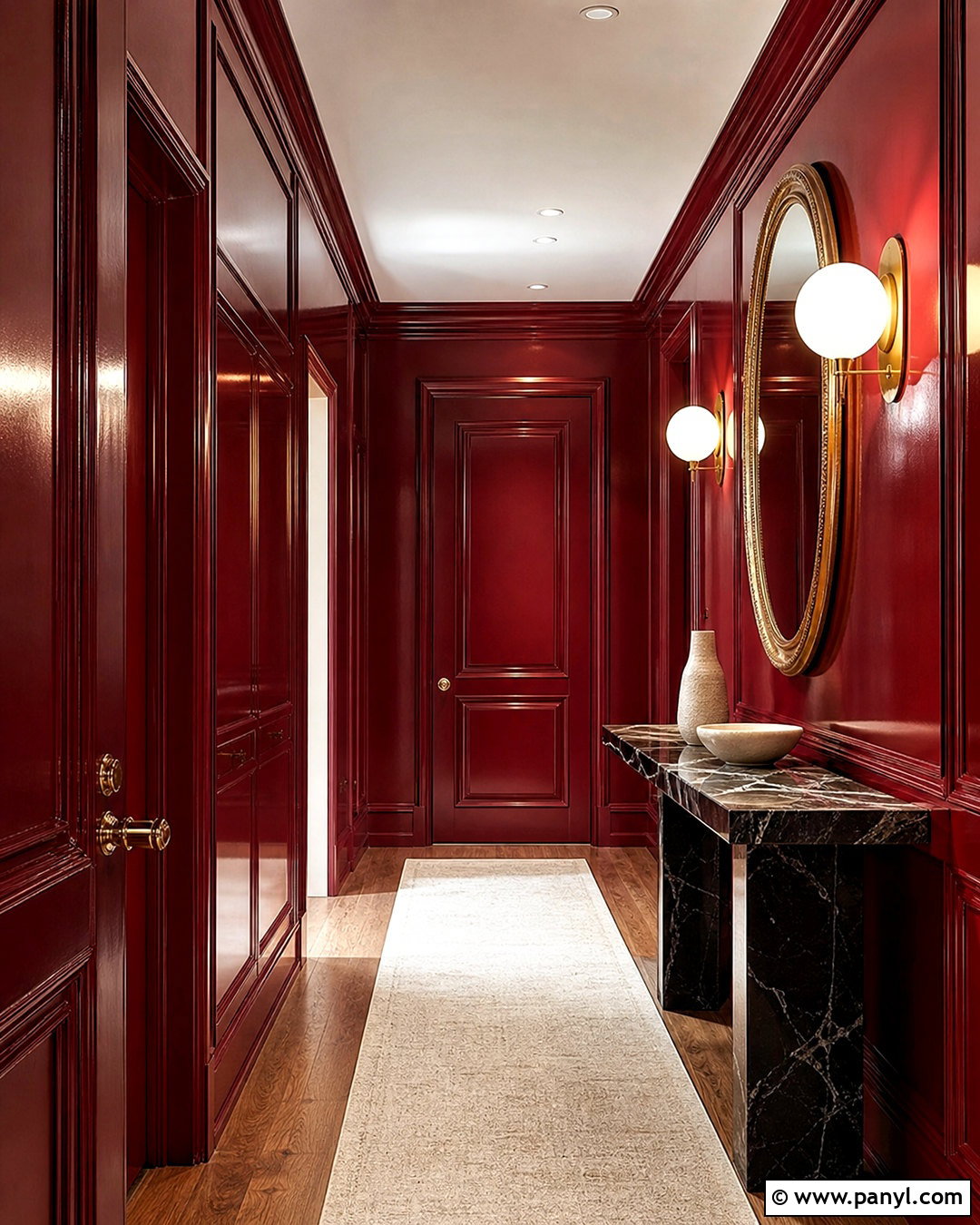
Glossy red paint can create a striking, light-reflective hallway with a polished decorative finish. Choose a deep cherry red and apply it to paneled walls, trim, and doors using high-gloss paint. Careful surface preparation is important because reflective finishes reveal imperfections. Balance the shine with a matte white ceiling and medium brown wood flooring. A simple cream runner adds softness without distracting from the lacquered walls. Use a black marble console with a thin profile, topped by a large antique brass mirror. Opal globe sconces introduce diffused light that reflects gently across the painted surfaces. Keep artwork and accessories minimal, selecting only one ceramic vessel and a small framed drawing. This coordinated treatment produces an elegant statement while preserving a practical, uncluttered walkway.
20. Renter-Friendly Red Hallway
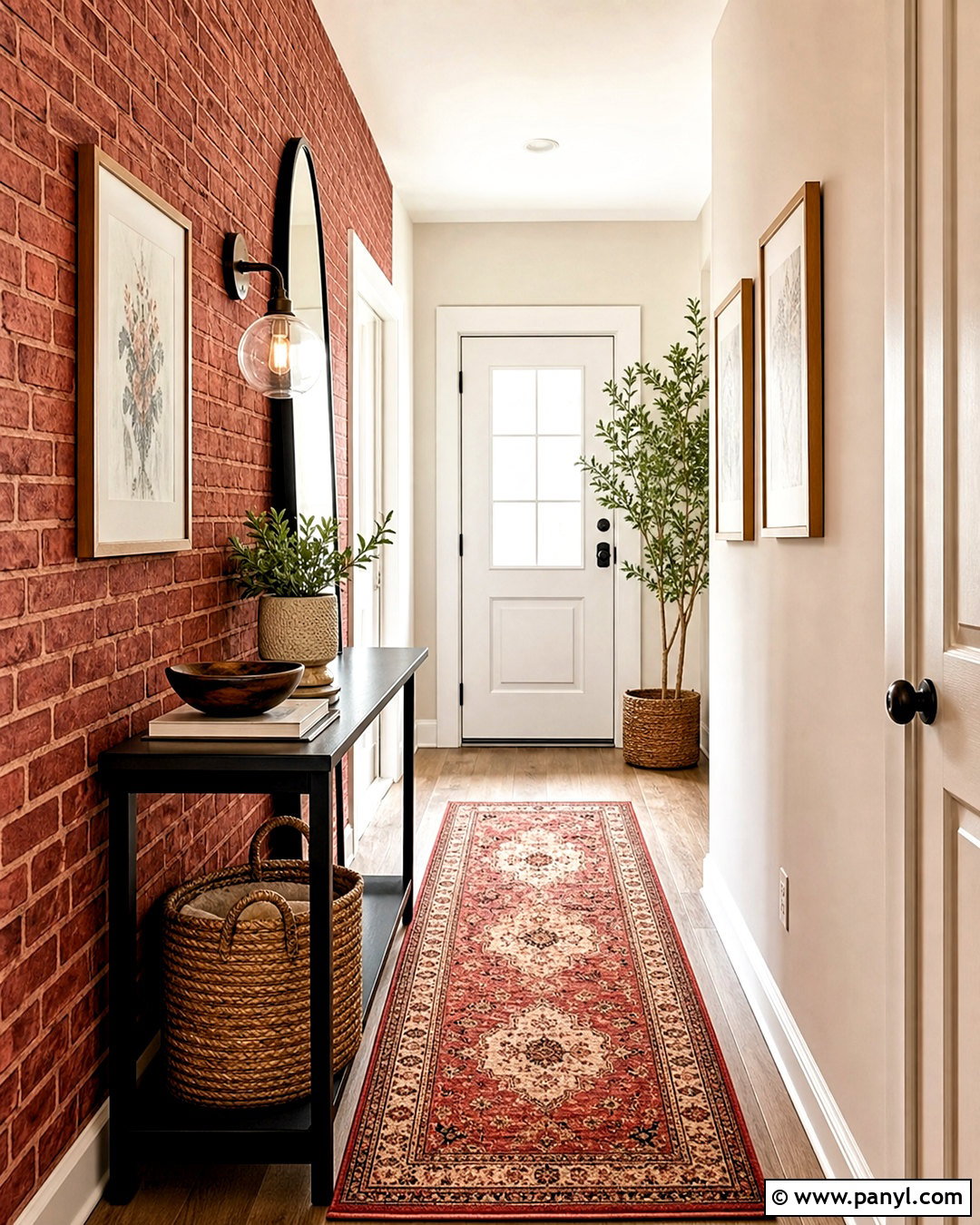
Renters can create a complete red hallway without making difficult permanent changes. Apply removable brick-red wallpaper to one long wall or the far end of the passage, depending on the layout. Keep the remaining walls in their existing neutral color. Add a washable red runner with cream and terracotta patterns, then place a narrow freestanding black console where circulation allows. Use removable hooks for a collection of lightweight framed prints and install a plug-in wall sconce above the console. A leaning full-length mirror can reflect light without requiring major mounting hardware. Finish with a red ceramic bowl, woven basket, and small artificial or low-maintenance plant. Coordinating several removable elements creates a cohesive transformation that can be packed up and reused in another home.
Conclusion:
Successful red hallway ideas go beyond choosing a dramatic paint color. The walls, floor, lighting, furniture, storage, and decorative details should work together as one complete design. Deep burgundy and glossy cherry create drama, while brick, rust, and terracotta feel softer and easier to live with. White, blush, sage, navy, wood, and brass can all balance red in different ways. If full red walls seem overwhelming, introduce the color through a runner, wallpaper, doors, trim, built-ins, or a painted ceiling. Always consider the available light and test colors in the actual passage before committing. With thoughtful coordination, a red hallway can feel welcoming, practical, distinctive, and connected to the rest of your home.

Related Ideas and Inspiration:
Leave a Reply