
Mustard yellow can turn an overlooked passage into one of the most memorable spaces in your home. These 20 mustard hallway ideas explore complete looks for narrow corridors, entry halls, stairways, and landings. You will find warm traditional schemes, clean modern combinations, renter-friendly updates, and practical storage solutions. Mustard works especially well with cream, navy, teal, charcoal, blush, olive, natural wood, and aged metals, giving you plenty of flexibility when building a balanced palette. () The key is deciding where the color should lead, then supporting it with flooring, lighting, furniture, and artwork. Whether you want full-color walls or one controlled accent, the following 20 mustard hallway ideas offer a complete look to recreate.

1. Mustard Hallway With White Trim
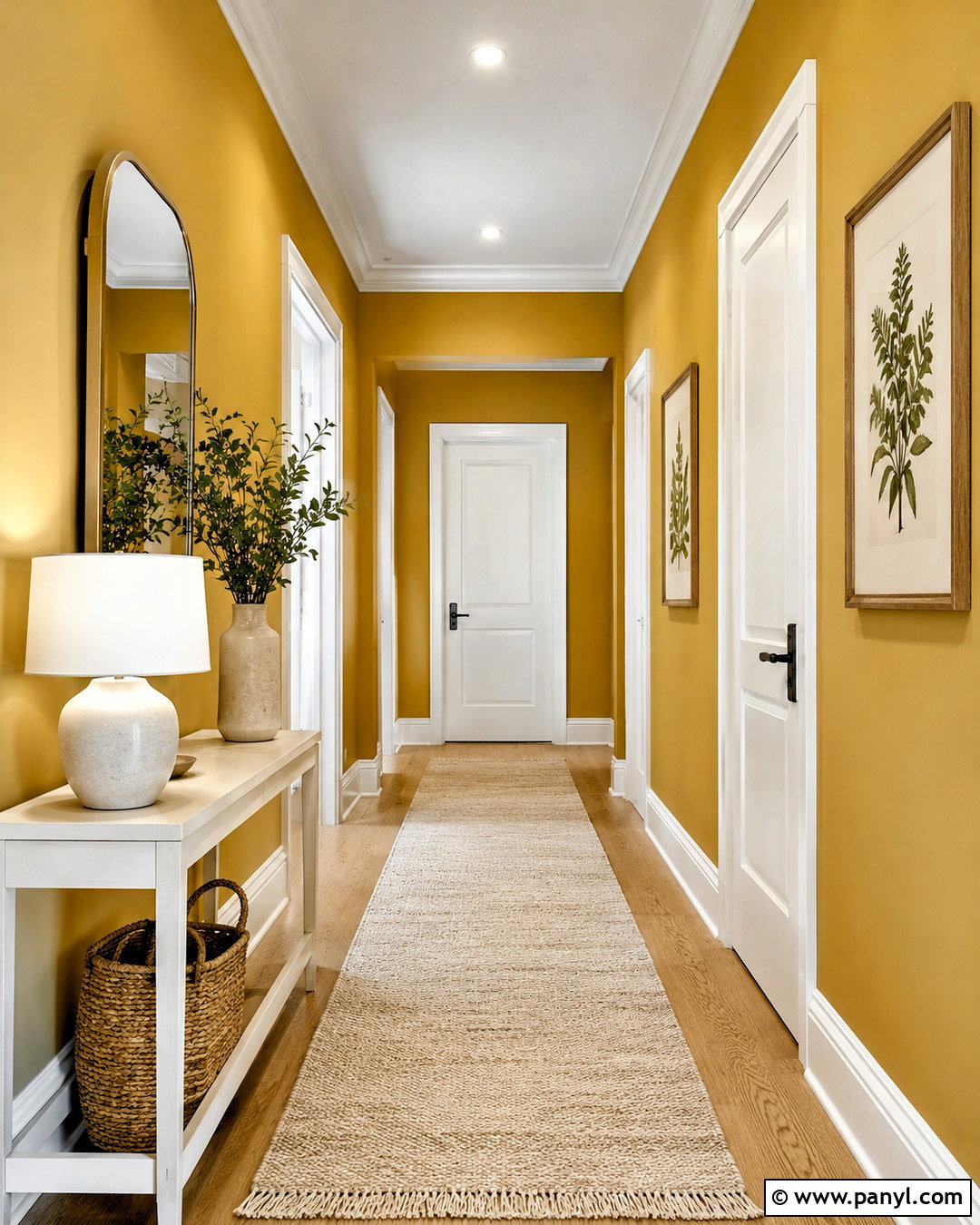
A mustard hallway with crisp white trim feels bright, welcoming, and easy to adapt. Cover the walls in a warm, slightly muted mustard rather than a sharp lemon yellow. Use clean white on the baseboards, door frames, crown molding, and interior doors to give the strong wall color clear boundaries. Medium oak flooring adds natural warmth without making the palette too dark. Place a slim white console near the entrance and hang a rounded mirror above it. A woven runner introduces cream, tan, and soft brown underfoot. Finish the space with a simple ceiling light, two framed botanical prints, and a ceramic table lamp. Keeping the furniture light ensures the mustard remains rich yet approachable.
2. Mustard Hallway With Navy Blue
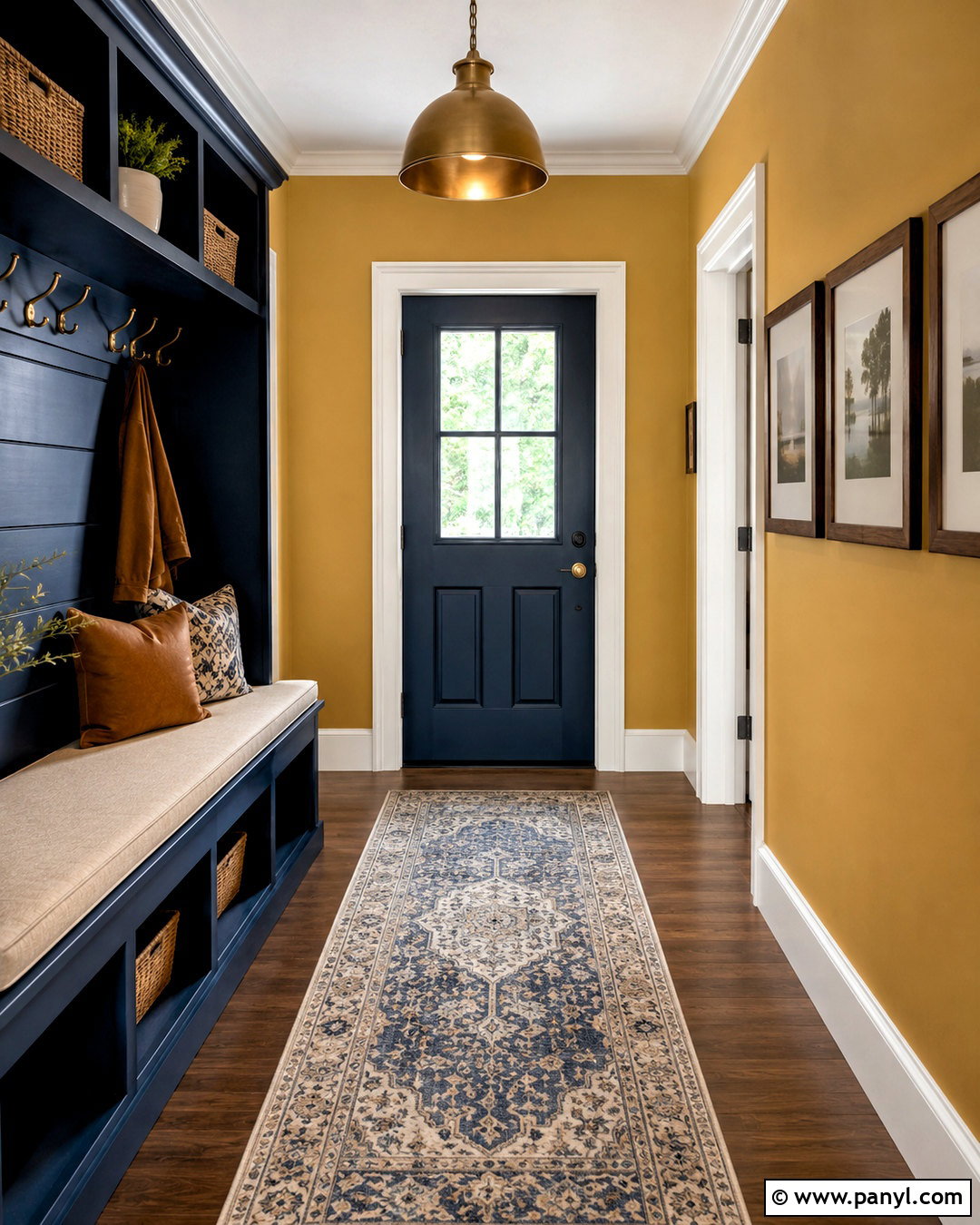
Deep navy gives mustard walls a confident and structured appearance. Paint the hallway walls mustard, then use navy on a built-in bench, console table, or the door at the far end. This darker focal point draws the eye through the corridor and creates visual depth. Choose white trim to prevent the two strong colors from feeling heavy. A vintage-style runner containing faded blue, gold, and cream will connect the entire palette. Add an aged brass pendant and a few walnut picture frames for warmth. If storage is needed, include navy hooks and upper shelves above the bench. Pale wood or warm gray flooring keeps the finished hallway balanced, functional, and comfortable for everyday use.
3. Mustard Hallway With Black Accents
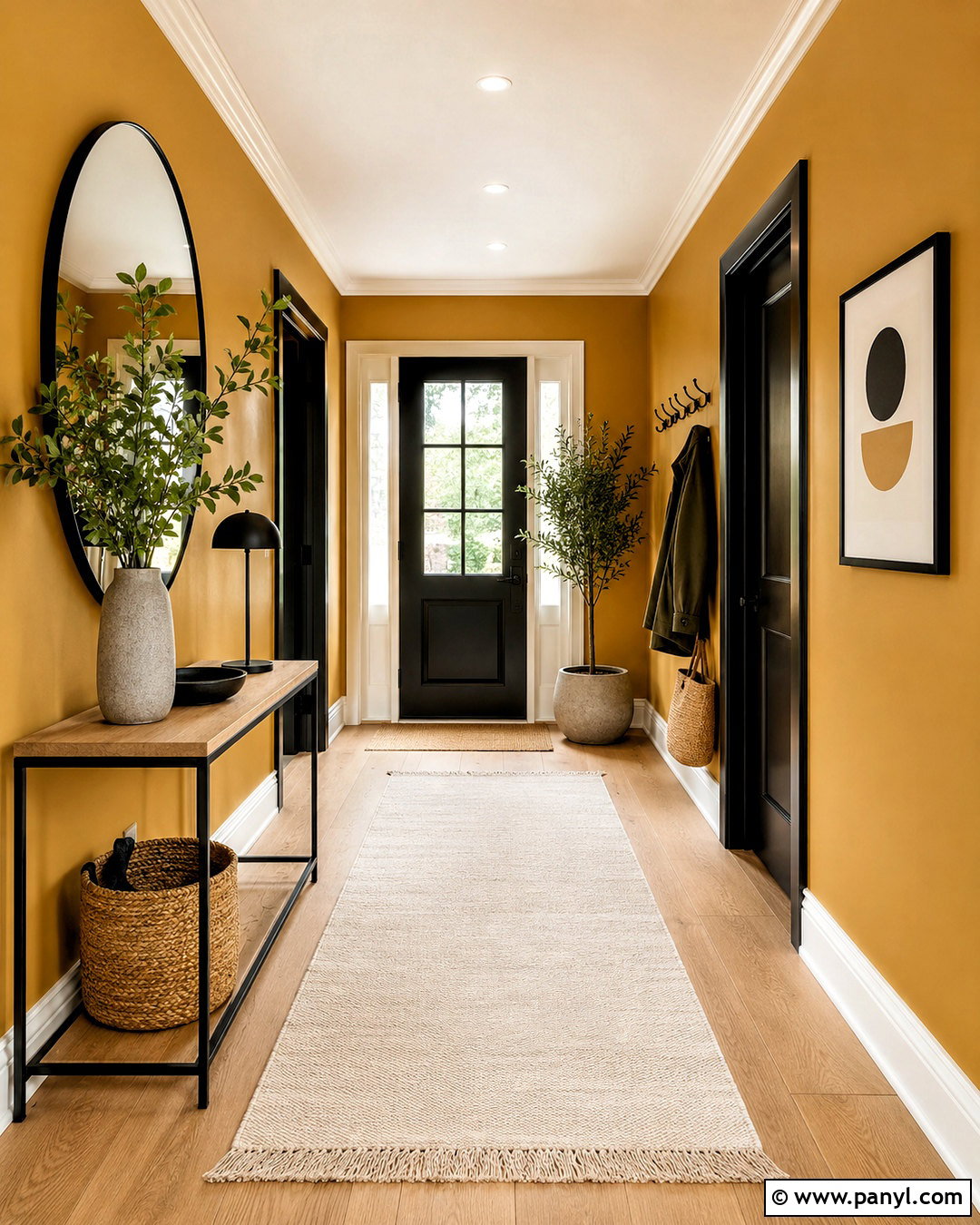
For a sharper modern look, combine mustard walls with matte black details. Black door frames, hooks, lighting, and picture frames create clean lines against the earthy yellow background. Keep the ceiling and baseboards warm white so the hallway does not become visually crowded. A narrow black metal console with a pale oak top provides a practical landing place without consuming much floor space. Add a large round mirror, an ivory runner, and one leafy plant in a textured stone pot. Light oak flooring helps soften the high contrast. Repeat black in small, evenly spaced features rather than one oversized object. The completed scheme feels graphic and contemporary while remaining warm enough for a family entrance.
4. Mustard Hallway With Sage Green
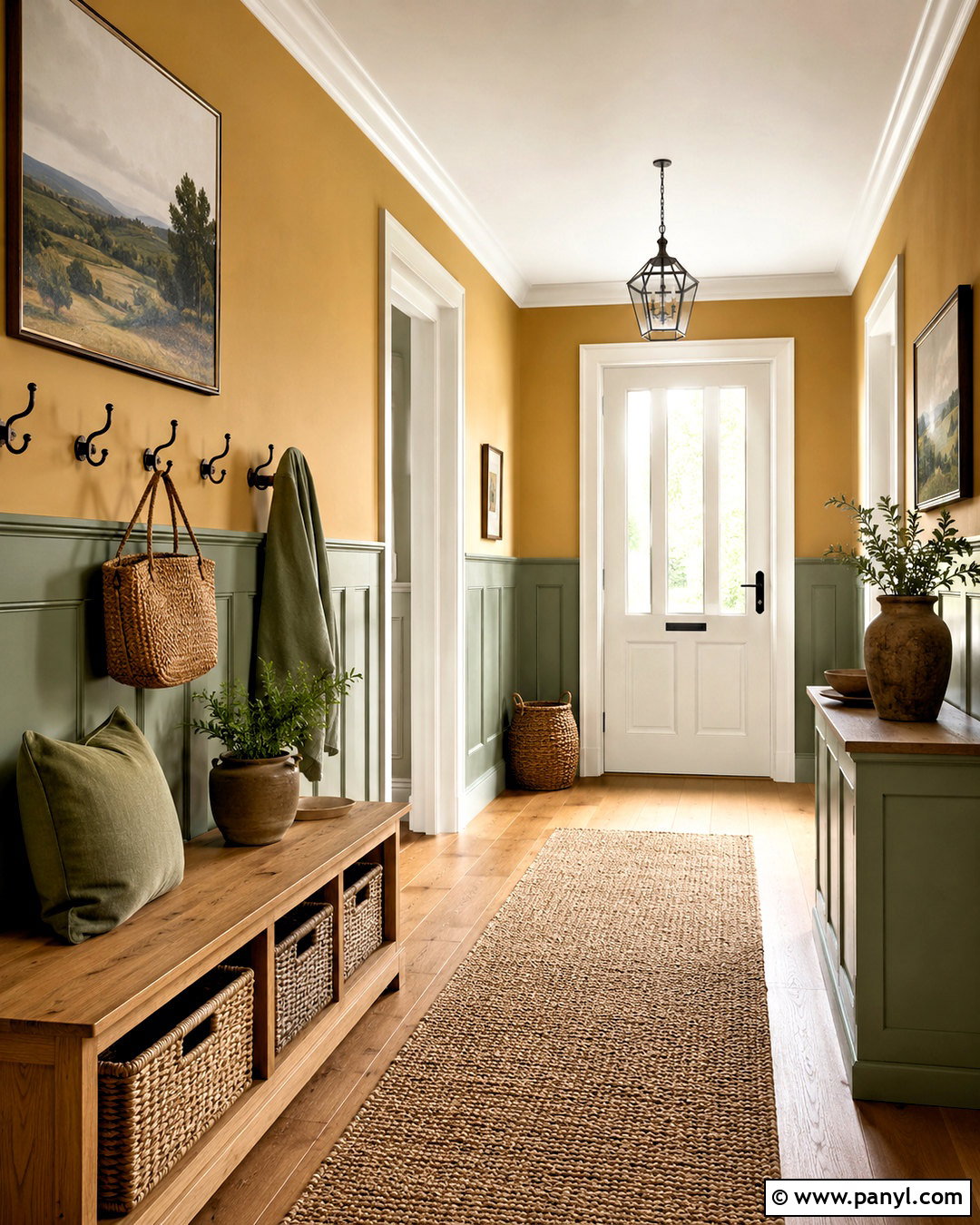
Mustard and sage green create a soft, nature-inspired hallway with plenty of warmth. Use mustard on the upper walls and muted sage on paneled lower walls for a grounded two-tone treatment. Paint the trim in creamy white to separate the colors and highlight the architectural detail. Choose an oak bench with woven baskets underneath for shoes, scarves, and daily essentials. A natural jute runner adds texture, while black or aged bronze hooks bring subtle definition. Decorate with landscape artwork, earthenware pottery, and dried branches instead of many small accessories. Warm oak flooring completes the organic palette. This design works particularly well in cottage, farmhouse, and relaxed transitional homes where practical storage should feel integrated.
5. Mustard Hallway With Teal Doors
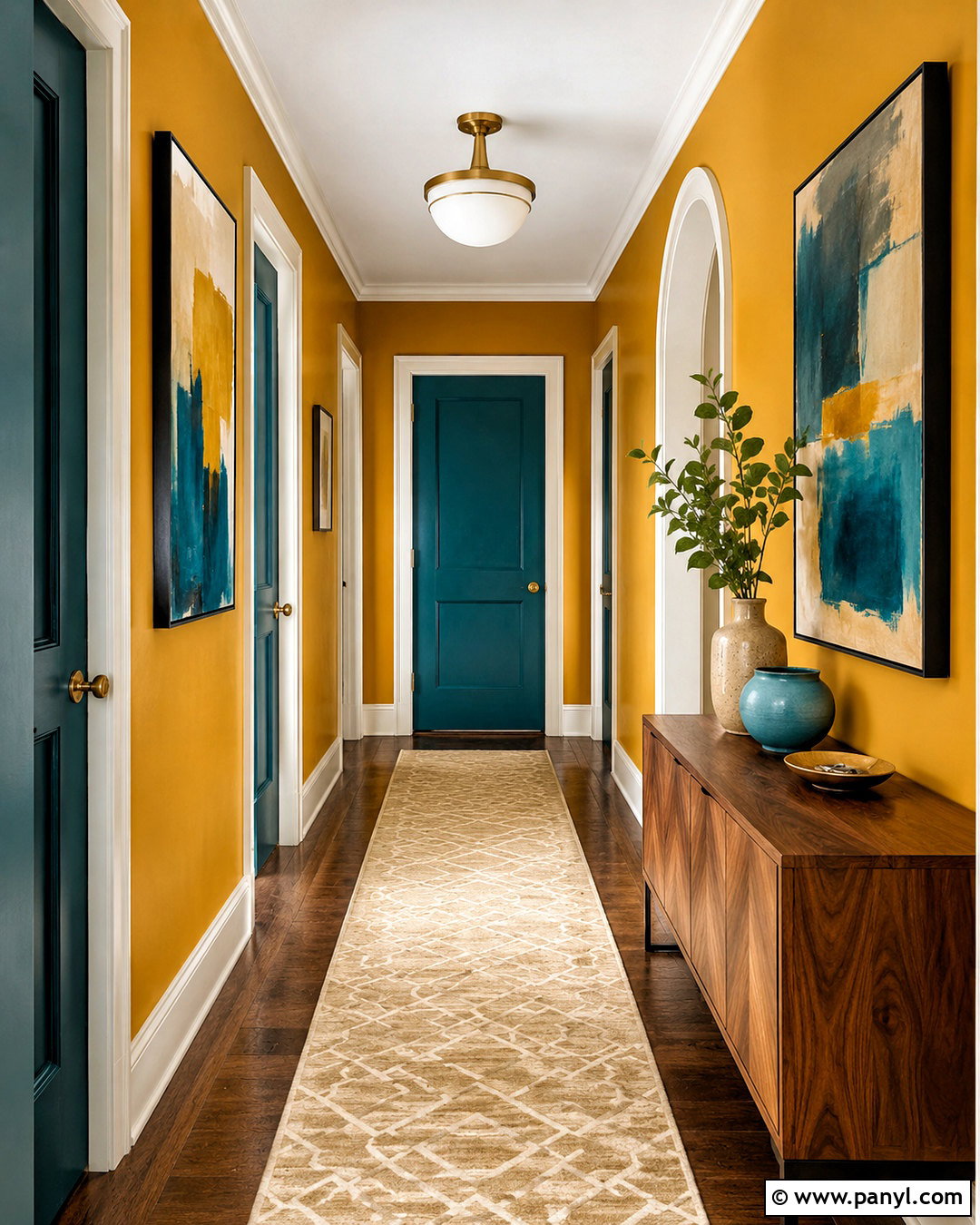
A rich teal door can make a mustard hallway feel colorful without becoming chaotic. Paint the main walls a deep golden mustard, then repeat saturated teal across the interior doors or one door at the hallway’s end. Use ivory on the trim and ceiling to give each bold shade breathing room. A narrow walnut console provides a warm visual bridge between the two colors. Above it, hang an abstract print that includes mustard, teal, rust, and cream. Add a patterned runner with a small-scale geometric design and a brass semi-flush ceiling light. Keep additional accessories minimal. The finished hallway feels lively and intentional because every color appears more than once across paint, artwork, textiles, or decorative objects.
6. Mustard Hallway With Wood Paneling
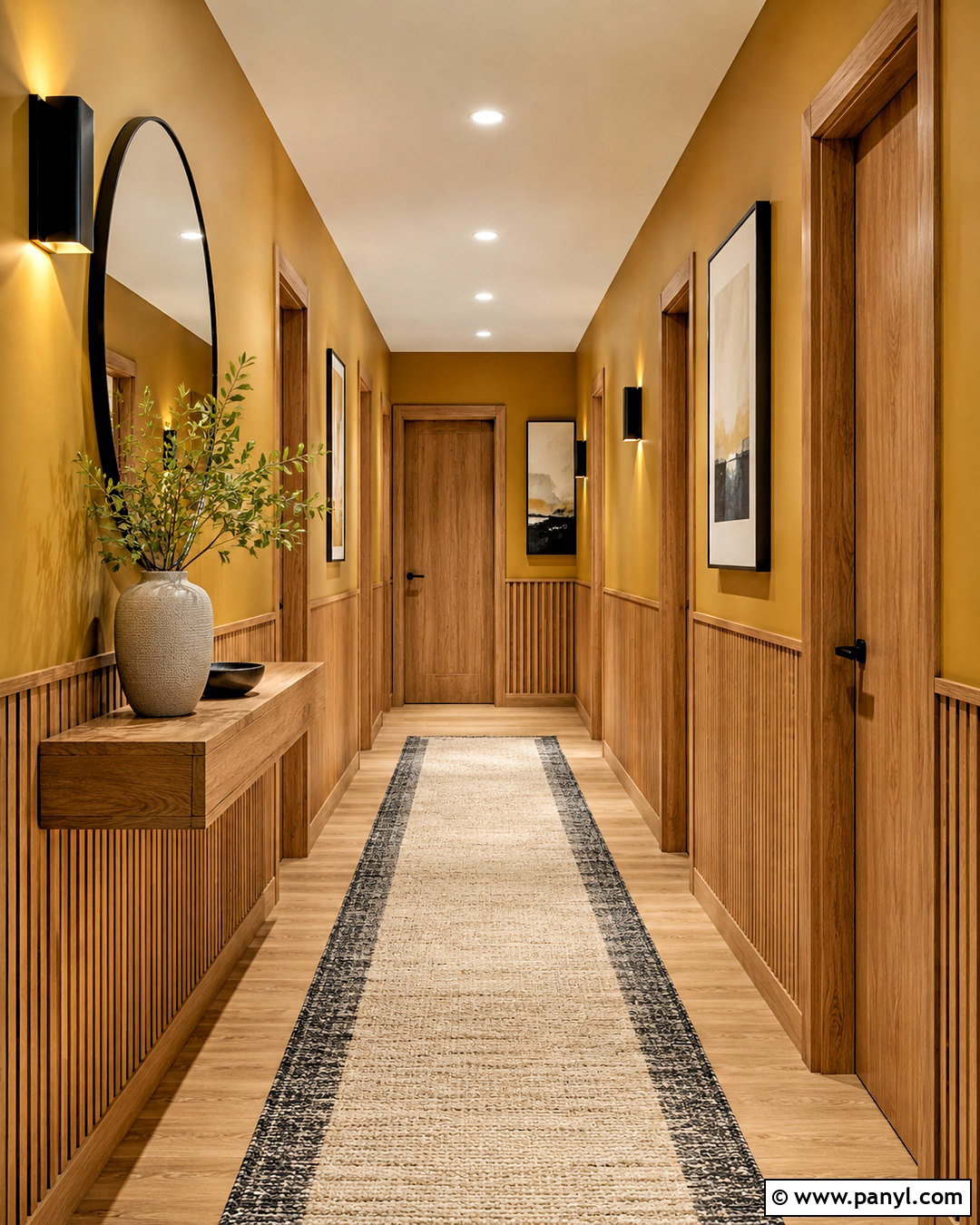
Wood paneling brings depth and natural character to mustard walls. Install medium-toned oak or walnut slats along the lower third of the corridor, then paint the upper walls in muted mustard. This placement protects busy areas while keeping the hallway warm and visually open. Choose matching wood doors where possible, or use cream-painted doors for a lighter result. A flat-woven runner in beige and charcoal adds softness without competing with the grain. Black wall sconces create a modern contrast and illuminate artwork placed between doorways. Complete the arrangement with a floating wood shelf, a round mirror, and one ceramic vase. Limiting the material palette allows the mustard and woodwork to appear cohesive rather than rustic or overly decorative.
7. Mustard Hallway With Gallery Wall
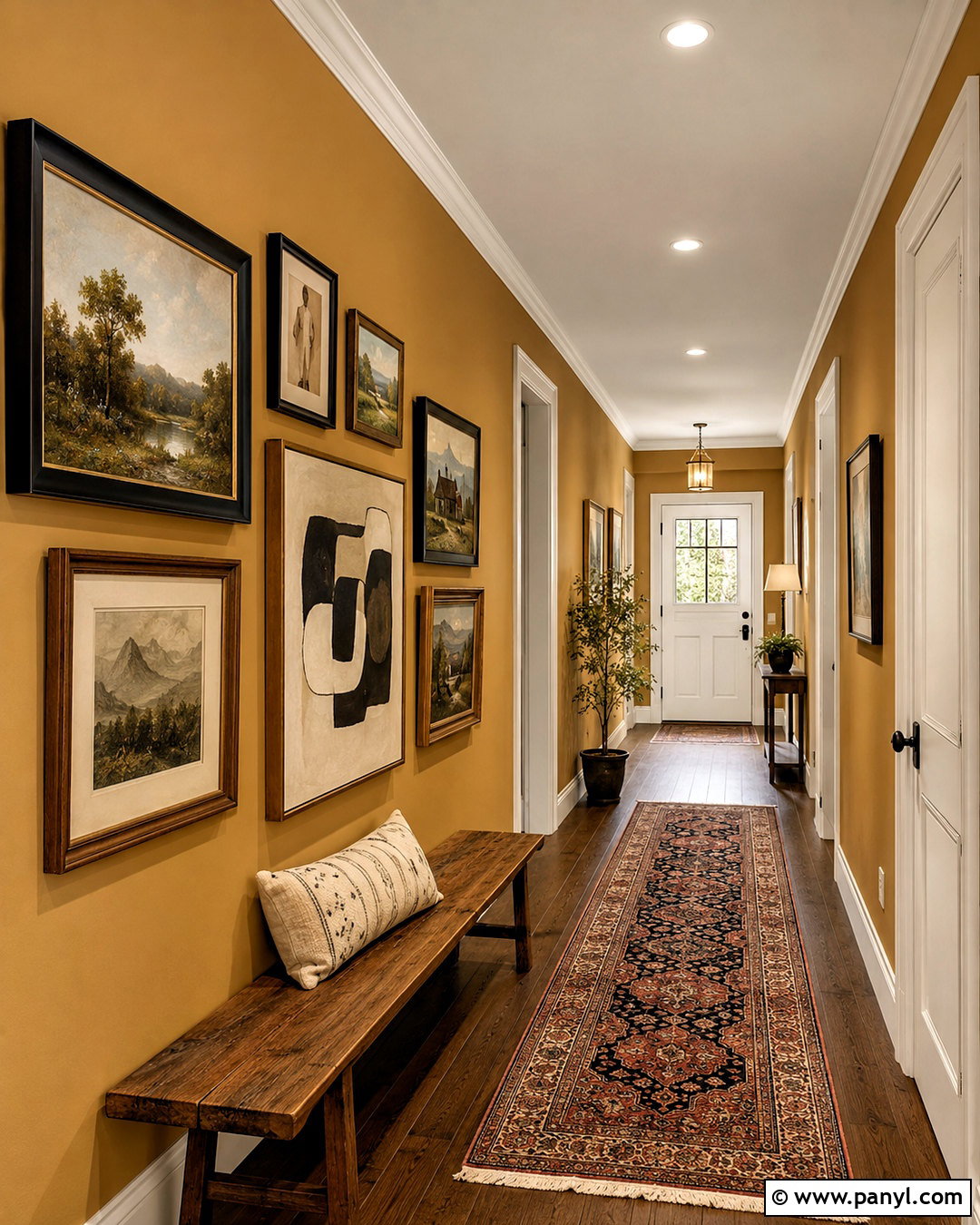
Mustard provides a vibrant background that can unite an eclectic hallway gallery wall. Paint the full corridor in an earthy mustard, including the narrow end wall, while keeping the ceiling and trim soft white. Arrange framed artwork along one side using black, walnut, brass, and cream frames. Mix illustrations, landscapes, photography, and abstract pieces, but repeat a few shared colors for consistency. Across from the display, use a slim bench or picture ledge so the walkway stays clear. A faded Persian-style runner adds burgundy, navy, and tan underfoot. Install evenly spaced ceiling lights to illuminate the artwork. The entire hallway should feel collected and personal, with enough open wall around each frame to avoid visual clutter.
8. Mustard Hallway With Patterned Wallpaper
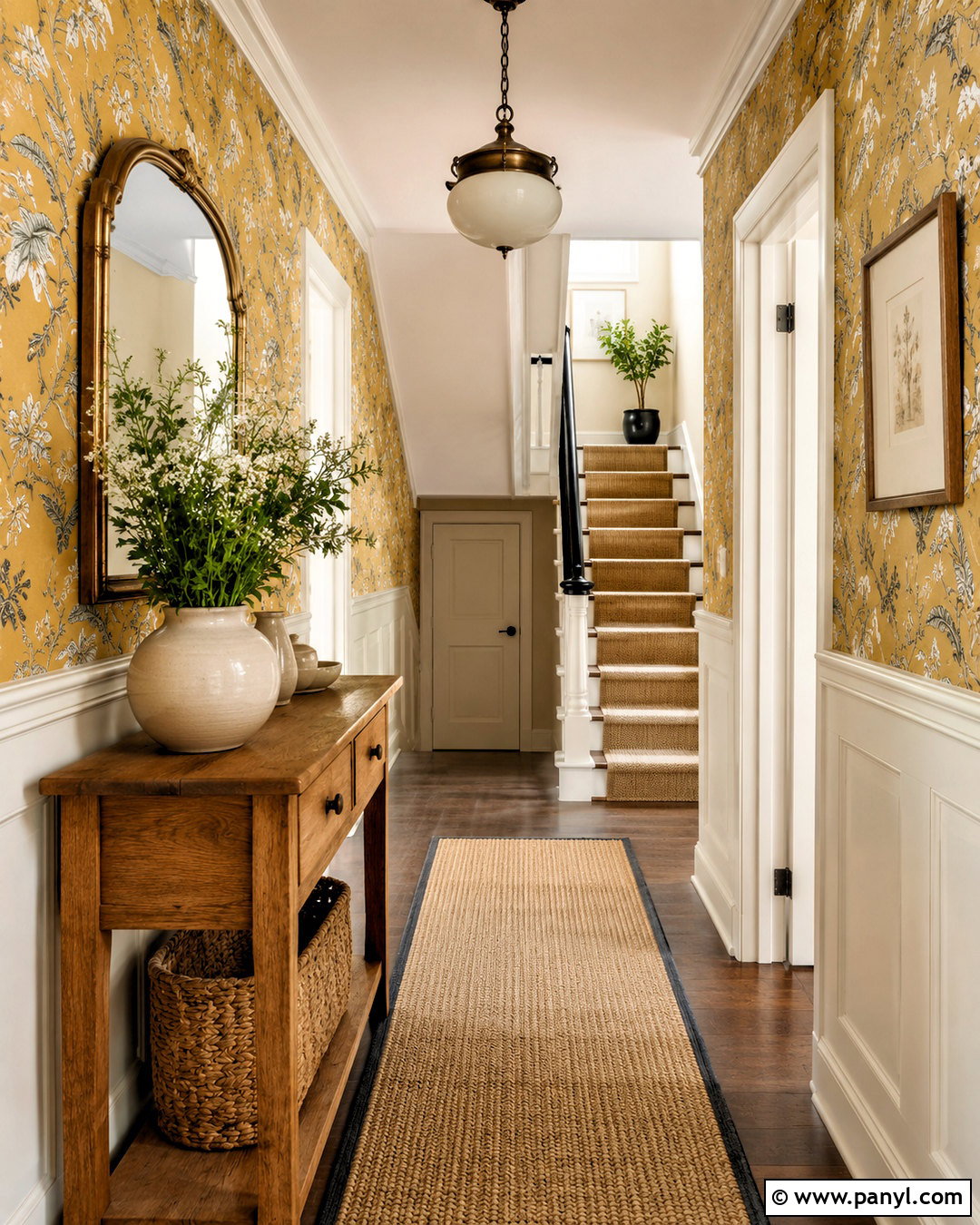
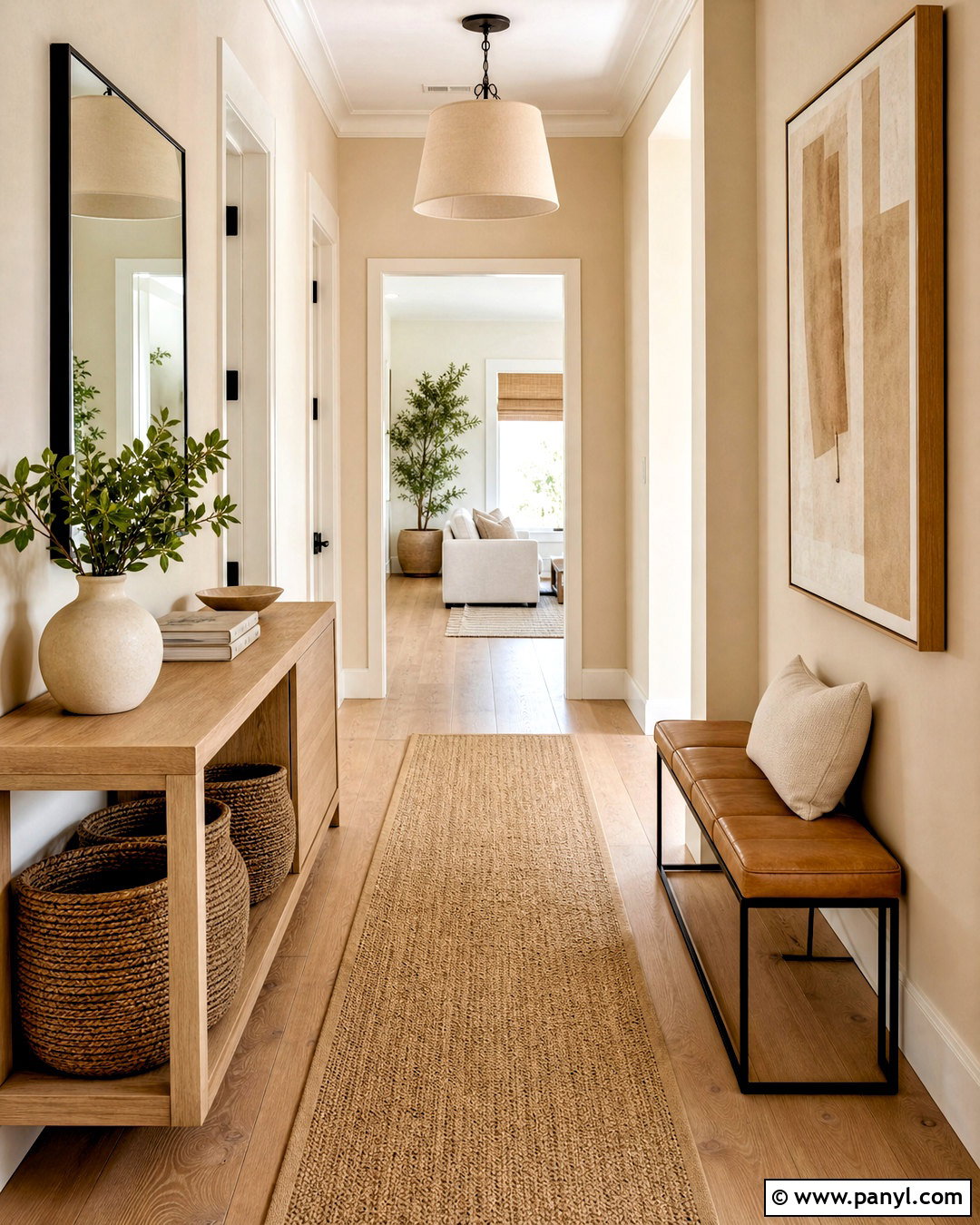
Mustard-patterned wallpaper offers color, movement, and detail in one coordinated finish. Select a design with a mustard background and restrained botanical, geometric, or block-print motifs in cream, olive, and charcoal. Use it above simple painted wainscoting to prevent the pattern from overwhelming a narrow corridor. Warm white or light greige paneling will brighten the lower half and withstand everyday traffic. Add an oak console, a woven storage basket, and an antique brass mirror. A plain natural-fiber runner keeps the floor visually quiet. Finish with a compact opal-glass pendant and understated ceramic accessories. By balancing detailed wallpaper with simple furniture and neutral surfaces, the hallway feels decorative, polished, and suitable for both traditional and contemporary homes.
9. Mustard Hallway With Checkerboard Floor
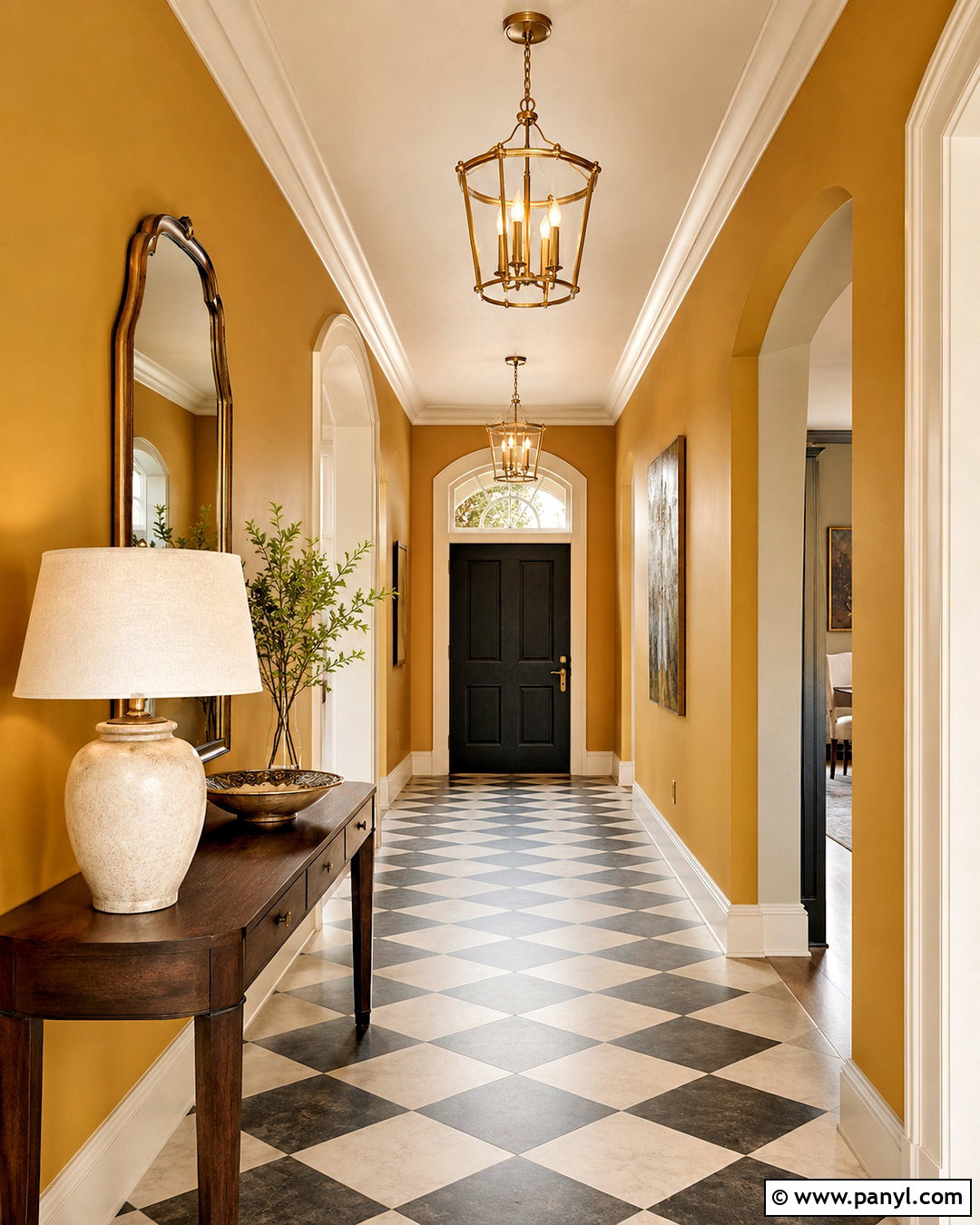
A checkerboard floor adds classic structure beneath bold mustard walls. Choose warm white and charcoal tiles rather than stark black and bright white, creating a softer transition between the floor and golden paint. Keep the baseboards and door frames creamy white for a crisp outline. A narrow dark wood console complements the charcoal squares and provides a practical surface near the entrance. Add a brass mirror, a small shaded lamp, and one decorative bowl for keys. If the corridor is long, use matching brass ceiling lights at regular intervals. Avoid adding a patterned runner because the floor already carries strong visual movement. The final hallway feels timeless, energetic, and carefully balanced rather than busy or theme-driven.
10. Mustard Hallway With Pink Accents
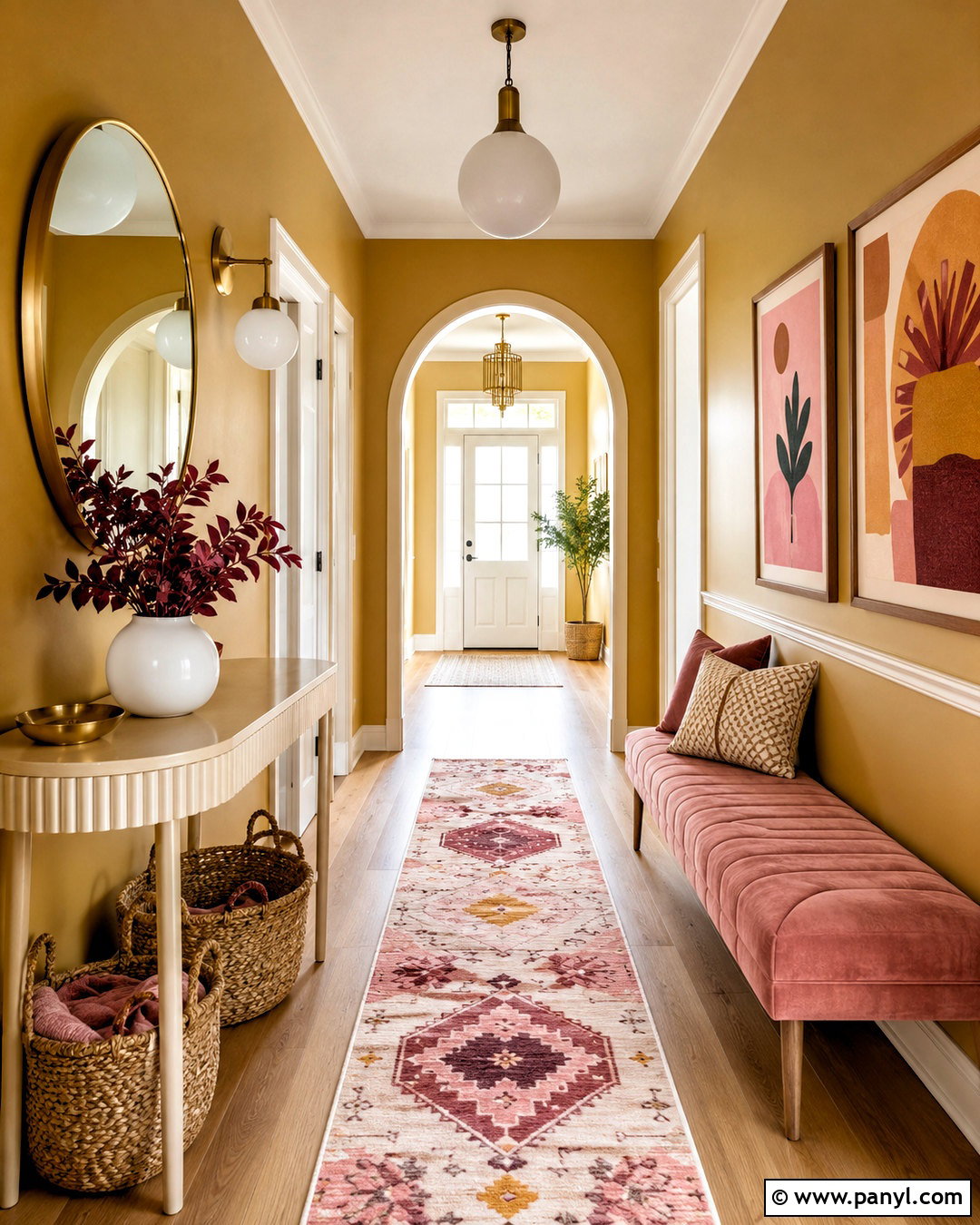
Blush and dusty pink accents soften mustard while giving the hallway a cheerful, welcoming mood. Begin with muted mustard walls and warm white woodwork. Add a dusty rose upholstered bench near the entrance, ideally with slim oak or dark wood legs. A runner combining blush, cream, burgundy, and small mustard details will tie the palette together. Use brass lighting and a rounded brass-framed mirror to reinforce the warm undertones. Artwork can introduce deeper red, terracotta, or plum in small amounts. Keep storage baskets natural and flooring light to balance the stronger colors. The completed space feels playful but grown-up because pink appears through controlled furnishings and textiles rather than competing with mustard across another large painted surface.
11. Mustard Hallway With Charcoal Gray
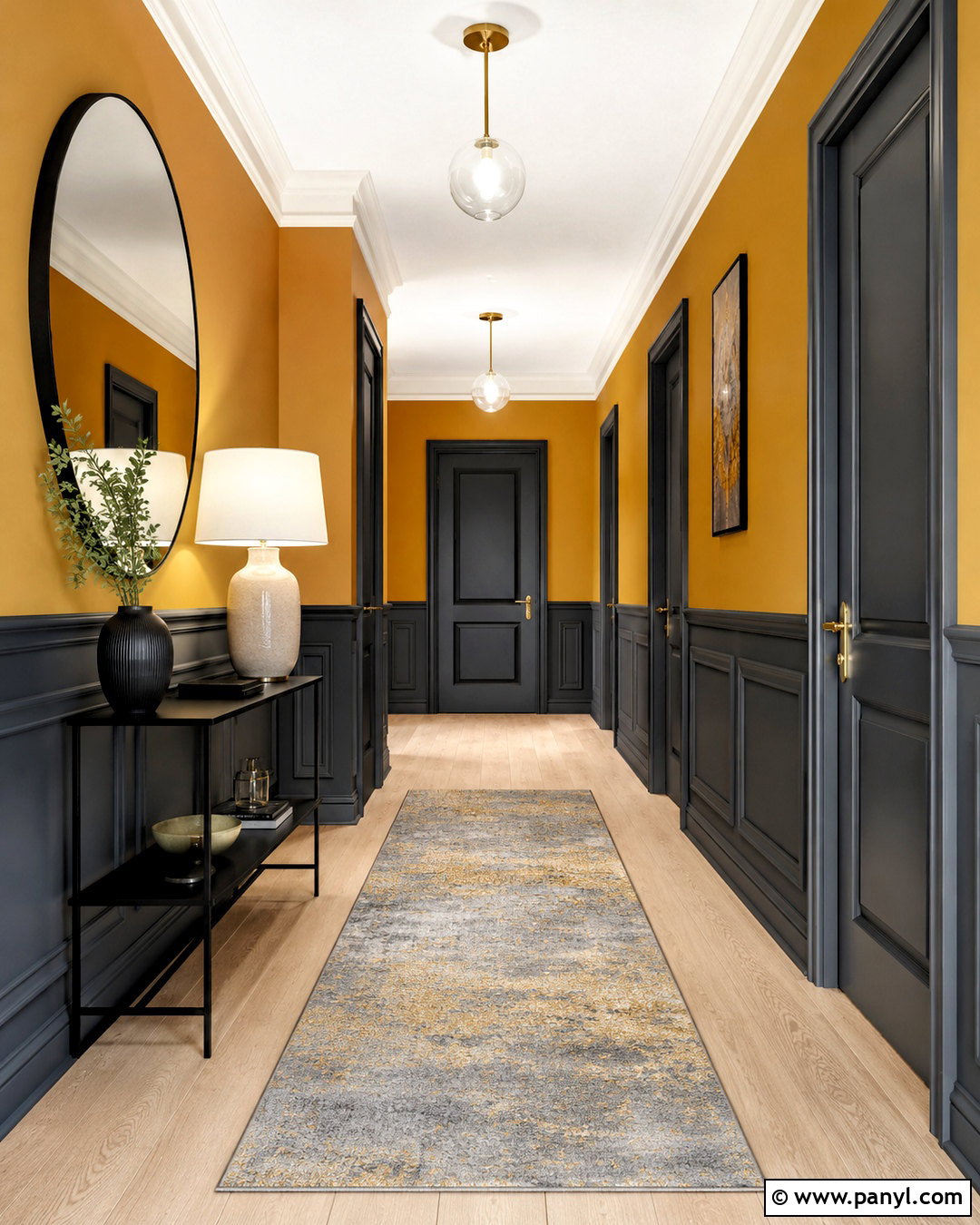
Charcoal gray can ground mustard yellow and create a sophisticated hallway with strong contrast. Paint the upper walls mustard and use charcoal on lower paneling, baseboards, or interior doors. A narrow cream stripe or molding rail between the shades gives the composition a clean stopping point. Choose pale oak flooring to brighten the lower part of the space. A black metal console, oversized round mirror, and simple ceramic lamp maintain the streamlined mood. Add a runner in gray, ivory, and muted gold for comfort and continuity. Warm brass hardware prevents the gray from feeling cold. This complete scheme suits modern and industrial-inspired homes, especially when accessories remain minimal and the hallway receives bright, evenly distributed lighting.
12. Mustard Hallway With Cream Paneling
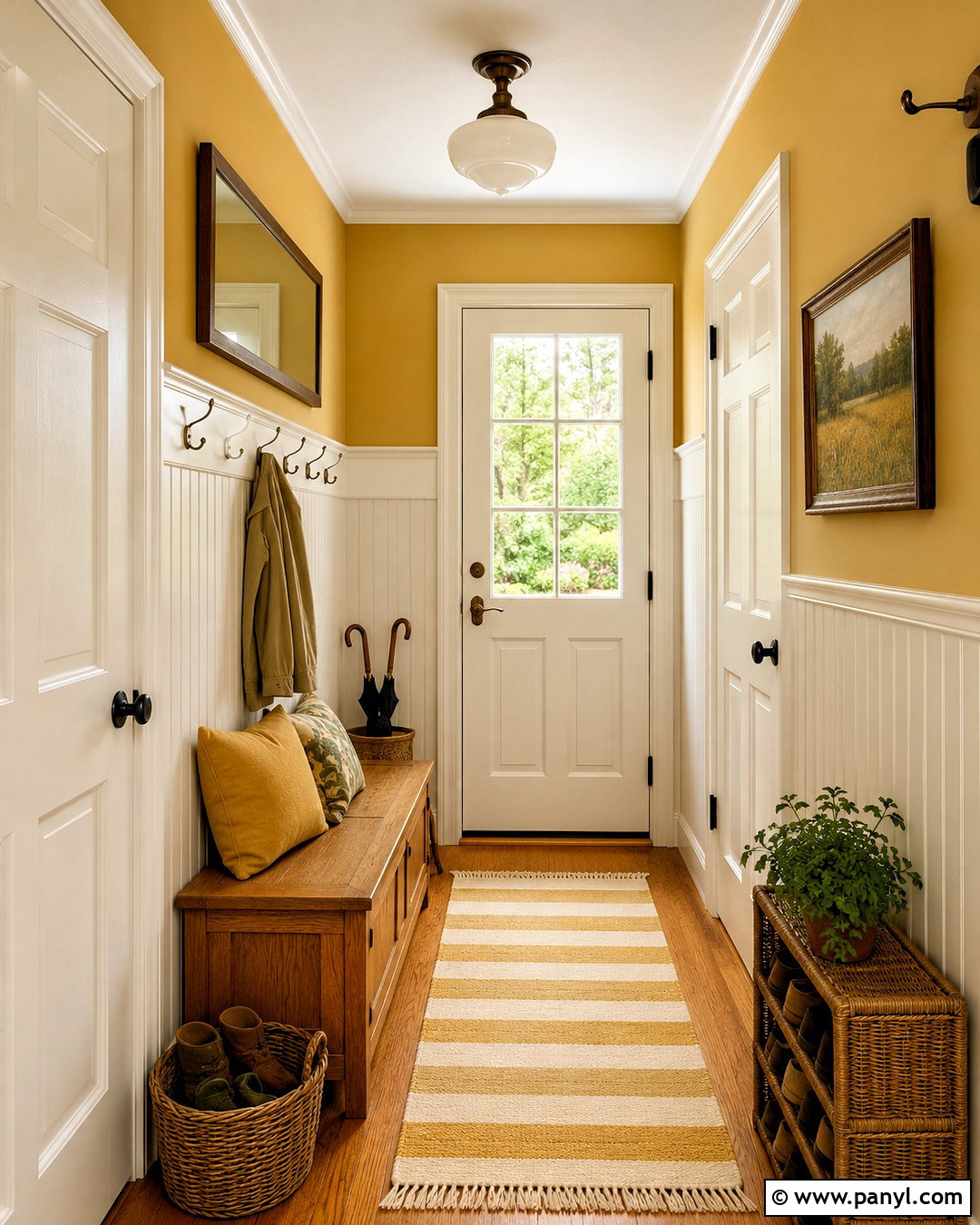
Cream paneling is an effective way to use mustard in a small or dim hallway. Paint the upper walls a warm ochre mustard, then cover the lower half with cream beadboard, board-and-batten, or flat Shaker-style panels. The pale lower section reflects light and gives the narrow space a more open appearance. Continue cream across the doors and trim for a seamless finish. Add a small oak bench with woven shoe baskets beneath it. A striped runner in cream, mustard, and soft brown reinforces the layered palette. Choose antique brass hooks and a milk-glass ceiling light for gentle vintage character. One framed landscape and a simple wall mirror provide decoration without reducing the practical, uncluttered feeling.
13. Mustard Hallway With Dark Wood
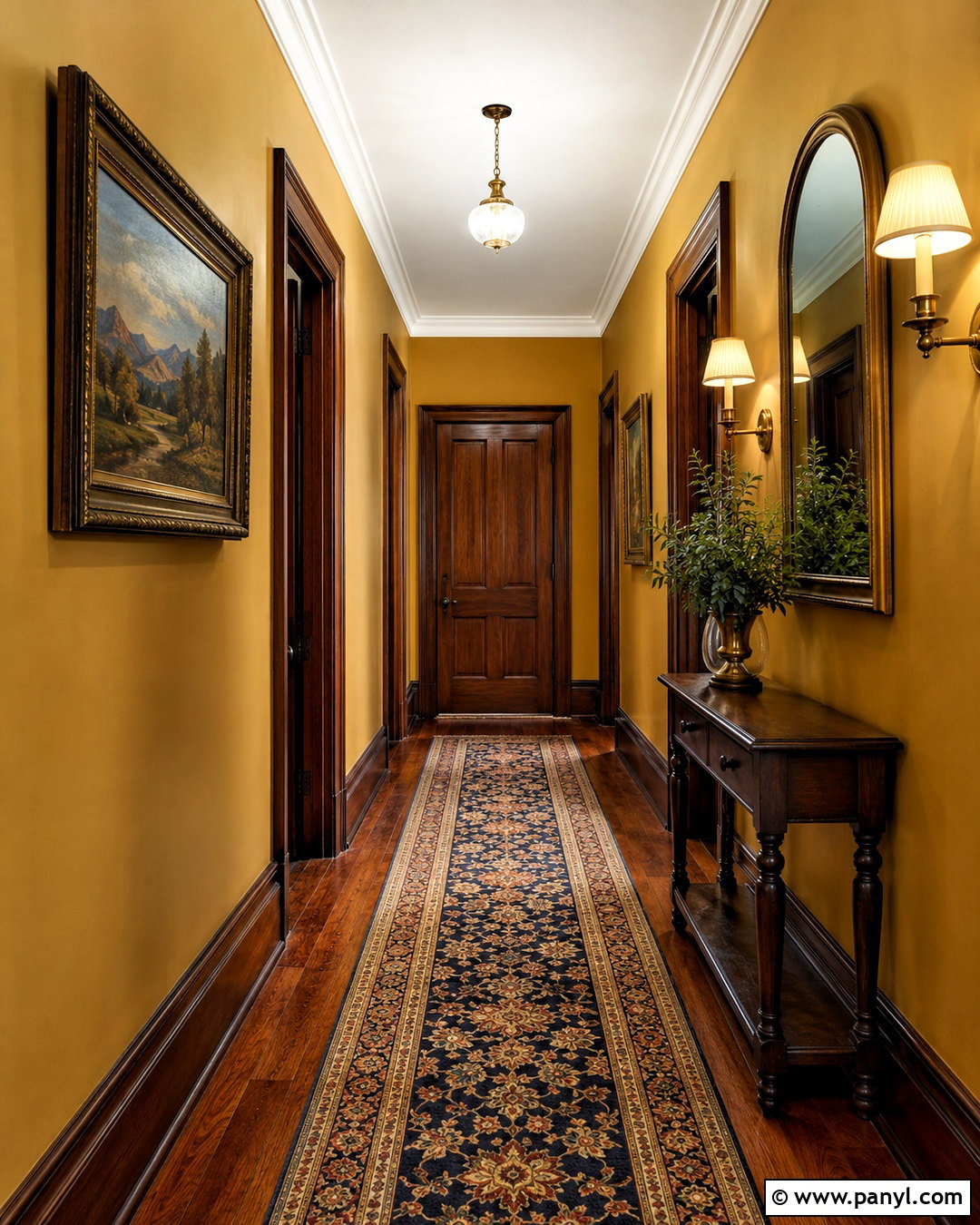
Dark wood gives mustard walls a warm, traditional richness. Use a muted golden mustard across the walls and pair it with walnut doors, mahogany furniture, or existing stained trim. Rather than painting over original woodwork, make it part of the overall palette. Place a narrow vintage console against one wall and add an arched mirror with an aged brass frame. A traditional runner featuring navy, rust, cream, and gold adds softness and protects the floor. Choose fabric-shaded wall lights to spread gentle illumination along the corridor. A few landscape paintings in dark frames will strengthen the classic character. Cream ceilings prevent the combination from becoming too heavy, while simple accessories keep the finished hallway elegant rather than formal.
14. Mustard Hallway With Painted Ceiling
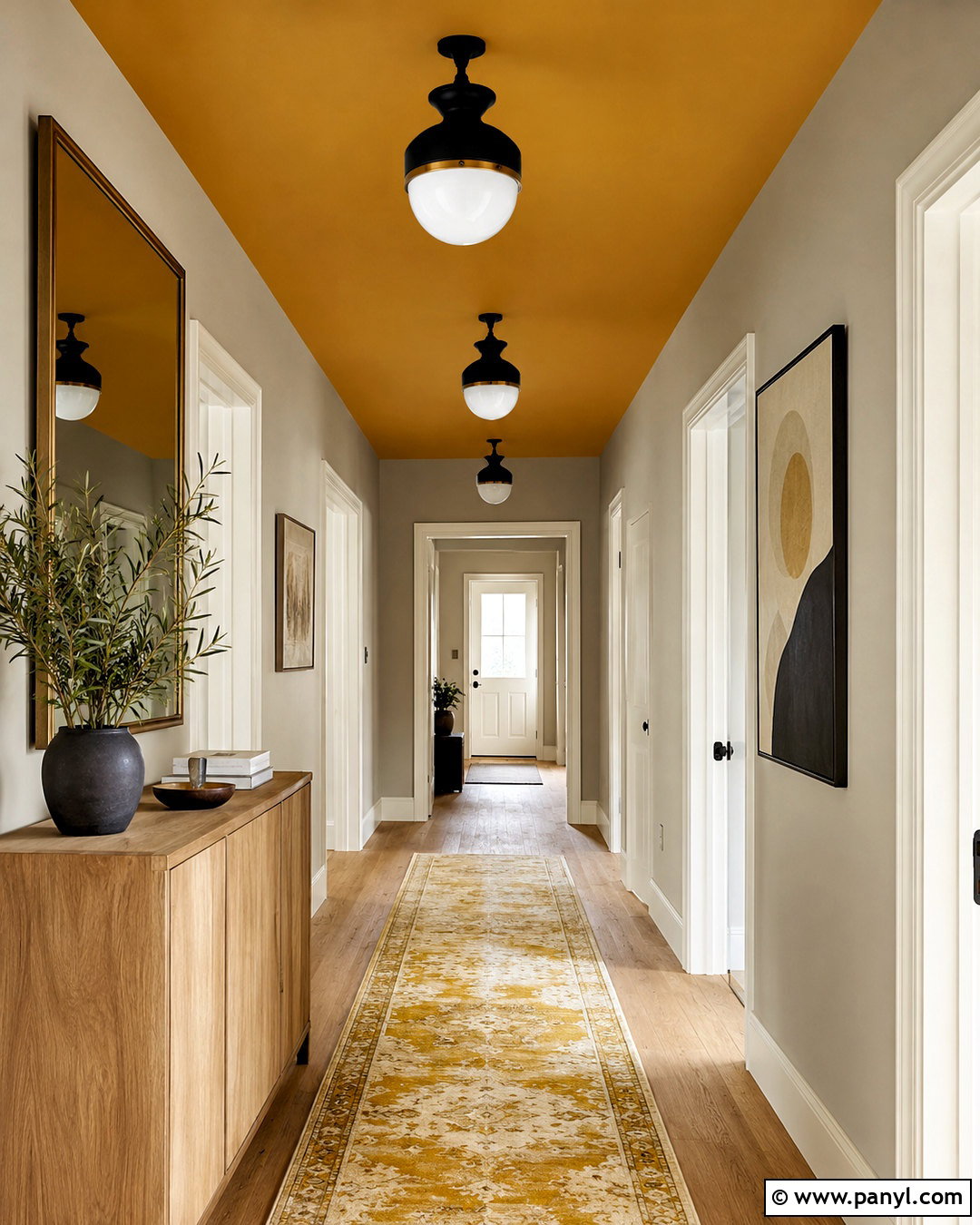
A mustard ceiling brings unexpected color to a hallway while allowing the walls to remain light. Paint the ceiling in a rich, earthy mustard and use warm white or pale greige across the walls, doors, and trim. This arrangement works especially well in a corridor with decorative molding, arches, or a clear view from an adjoining room. Repeat mustard in a narrow runner and one piece of artwork so the ceiling feels connected to the space. Add black or aged brass ceiling lights for definition. A slim oak console and a large rectangular mirror keep the lower area calm. The overall hallway feels creative but controlled, with the color overhead drawing attention to the corridor’s length and architectural shape.
15. Mustard Hallway With Staircase
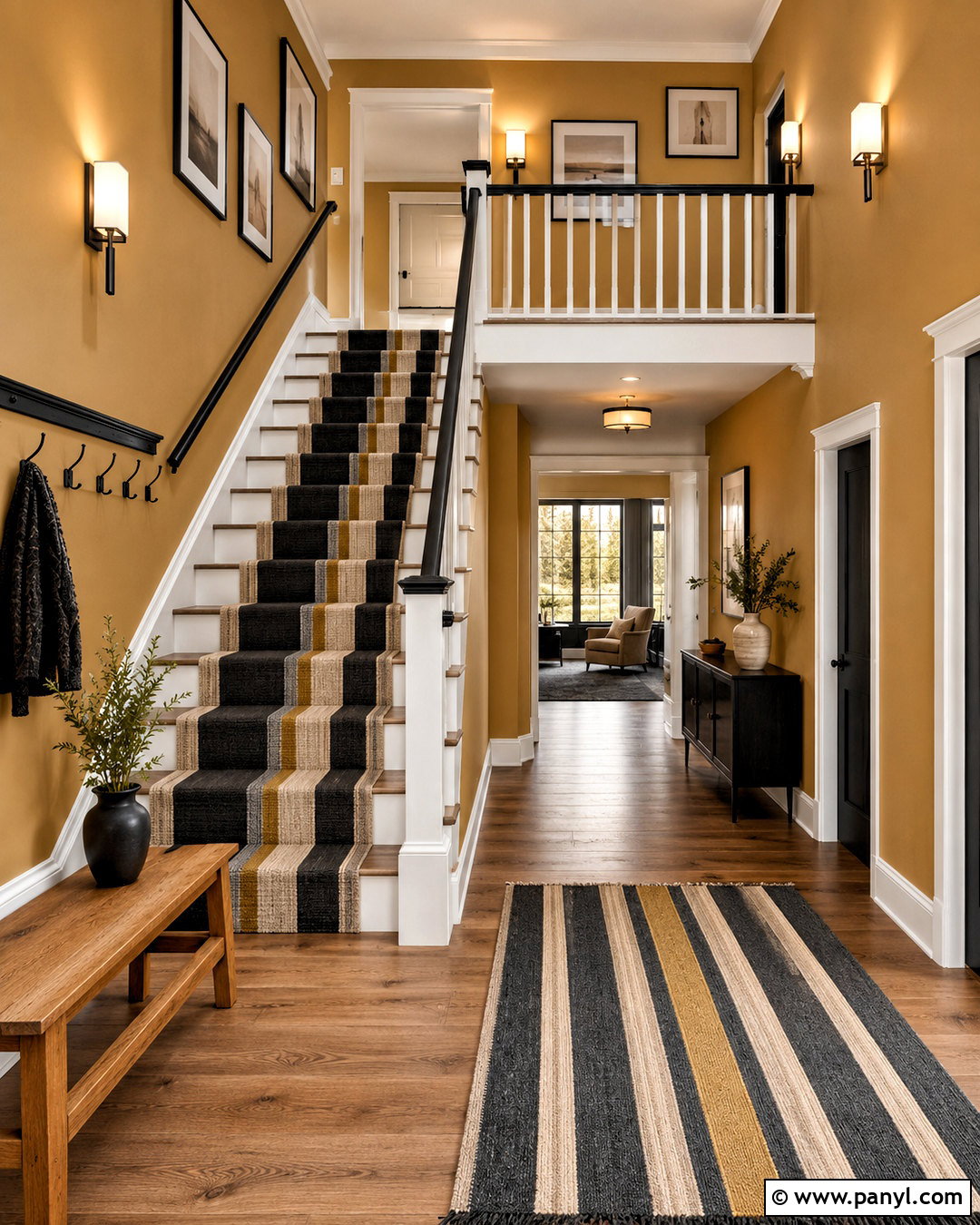
Turn a hallway staircase into one continuous mustard design by coordinating the walls, railing, runner, and landing. Paint the stairwell walls in muted mustard and use soft white on the risers, trim, and ceiling. A black handrail adds a strong line that guides the eye upward. Fit a durable striped stair runner in charcoal, cream, and golden yellow, then continue a coordinating flat-weave rug across the lower hall. Display framed artwork in a neat rising arrangement beside the stairs. An oak bench and black hooks create useful storage near the entrance. Bright wall sconces are essential for illuminating both levels. The complete treatment makes the stairs feel intentionally connected to the hallway rather than like a separate unfinished area.
16. Mustard Hallway With Midcentury Decor
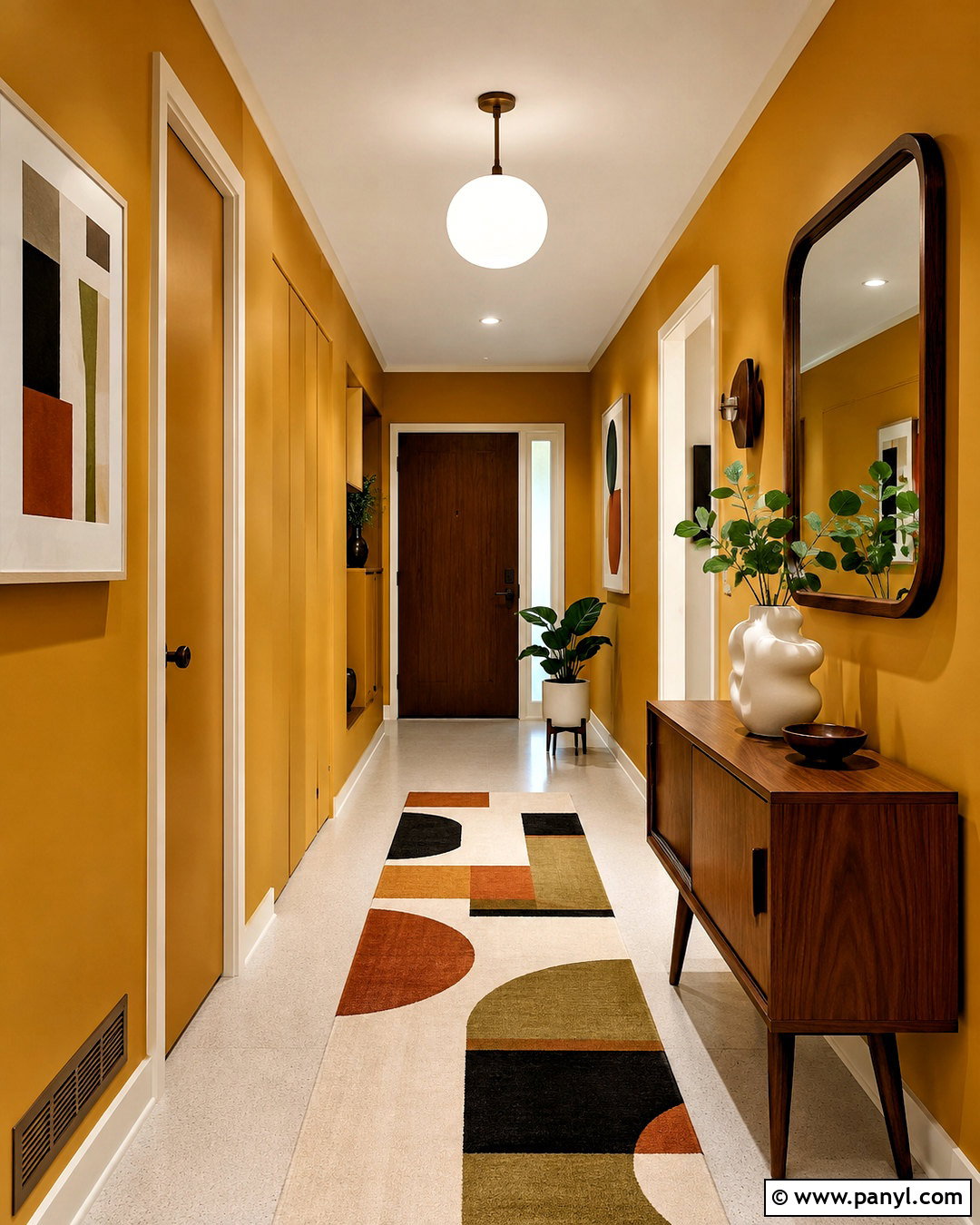
Clean shapes and warm materials give a mustard hallway a convincing midcentury look. Paint the walls a slightly brown, ochre-based mustard and pair them with walnut furniture and off-white trim. Choose a slim console with tapered legs, then hang a rounded rectangular mirror above it. A geometric runner in cream, rust, olive, and black adds pattern without covering the entire floor. Use an opal-glass globe pendant or compact sconce with brushed brass hardware. Finish the arrangement with abstract artwork, one sculptural ceramic vase, and a small leafy plant. Keep storage hidden inside the console or a nearby built-in cabinet. The hallway should remain open and functional, allowing its streamlined furniture, balanced color palette, and retro details to stand out.
17. Mustard Hallway With Boho Decor
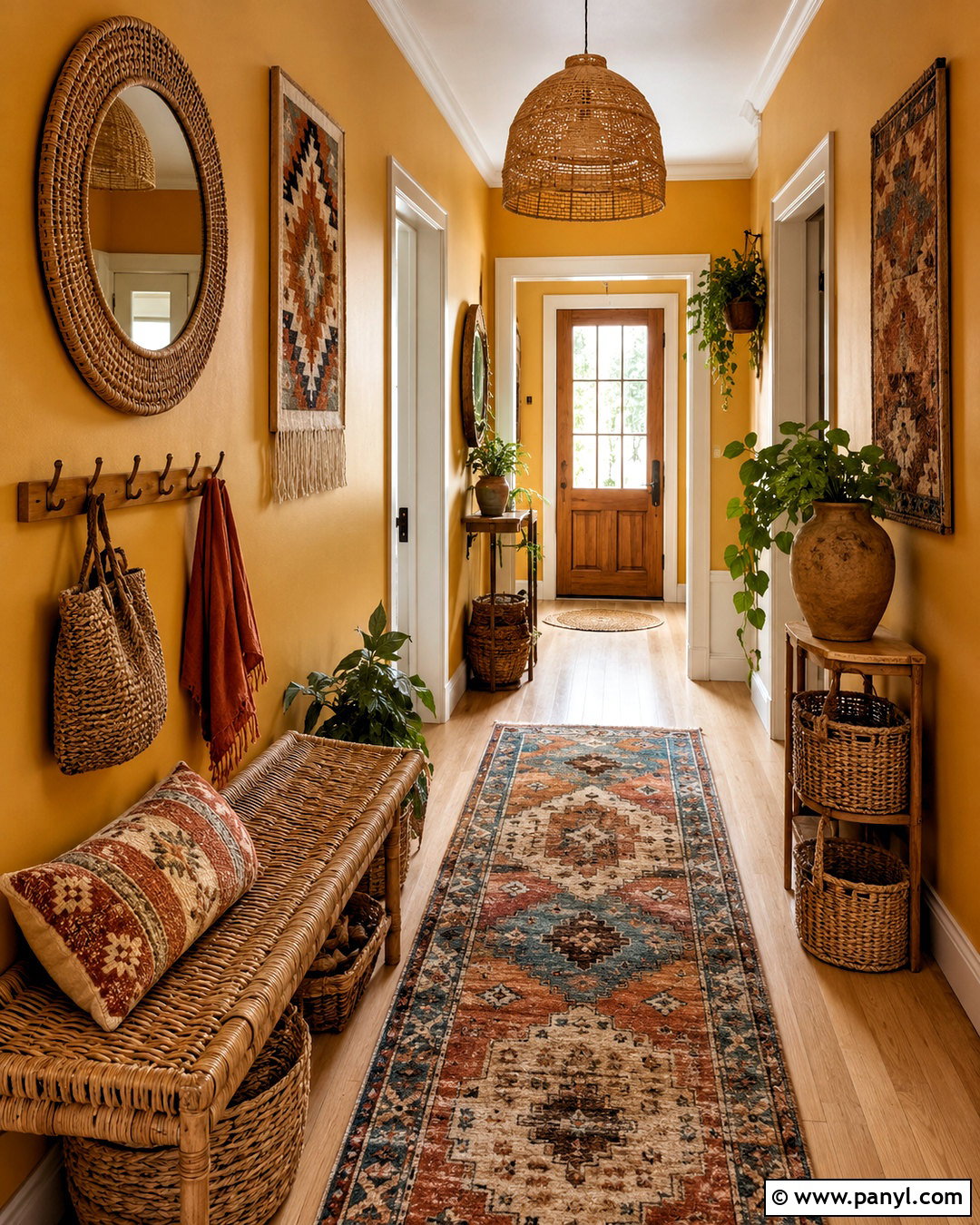
Layer mustard with natural fibers, earthy colors, and handmade-looking details for a relaxed boho hallway. Cover the walls in warm mustard, then ground the space with a vintage-style runner featuring rust, faded teal, cream, and brown. Add a simple rattan bench with woven baskets underneath and a large round mirror framed in natural cane. Brass hooks provide storage while blending easily with the golden palette. Decorate with a small selection of framed textile prints, pottery, and trailing greenery. Use a woven pendant with a bright inner lining so it distributes clear light rather than casting heavy shadows. Pale wood flooring and white trim keep the collected elements from feeling crowded. The completed design looks comfortable, practical, and thoughtfully layered.
18. Mustard Hallway With Built-In Storage
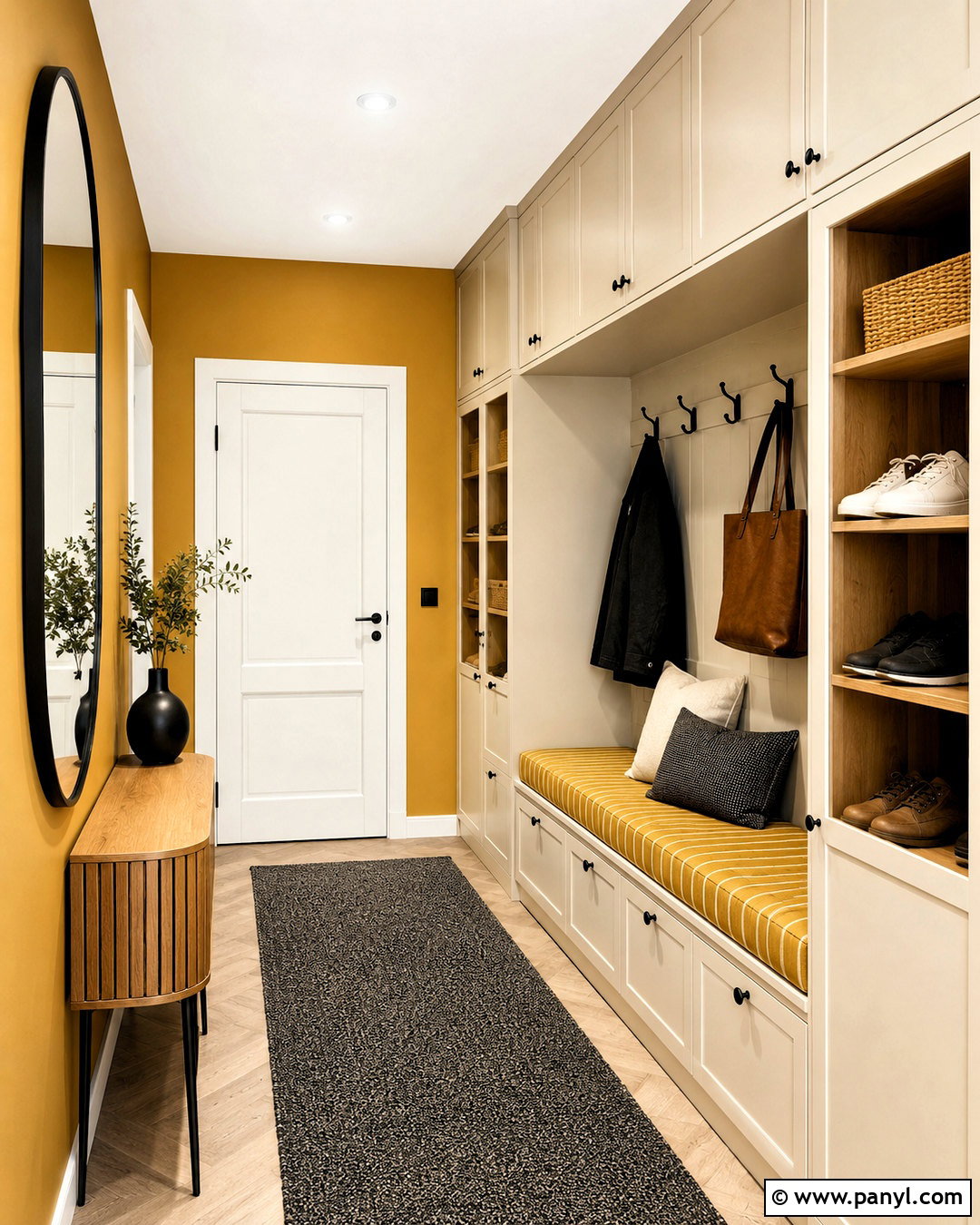
Built-in storage can make a mustard entry hallway both colorful and hardworking. Paint the walls warm mustard and install floor-to-ceiling cabinets in soft cream along one side. Include closed cupboards, shoe drawers, open cubbies, and a recessed bench with a mustard-and-cream striped cushion. Oak shelving inside the open sections adds natural warmth. Use matte black hooks and cabinet knobs for contrast, then repeat black in a simple ceiling fixture. A washable charcoal runner helps disguise everyday marks in the busiest walkway. Add a large mirror opposite the cabinetry to spread light and make the corridor feel wider. By combining bold walls with pale, organized storage, the finished hallway remains welcoming without sacrificing space for coats, bags, and shoes.
19. Mustard Hallway With Color Blocking
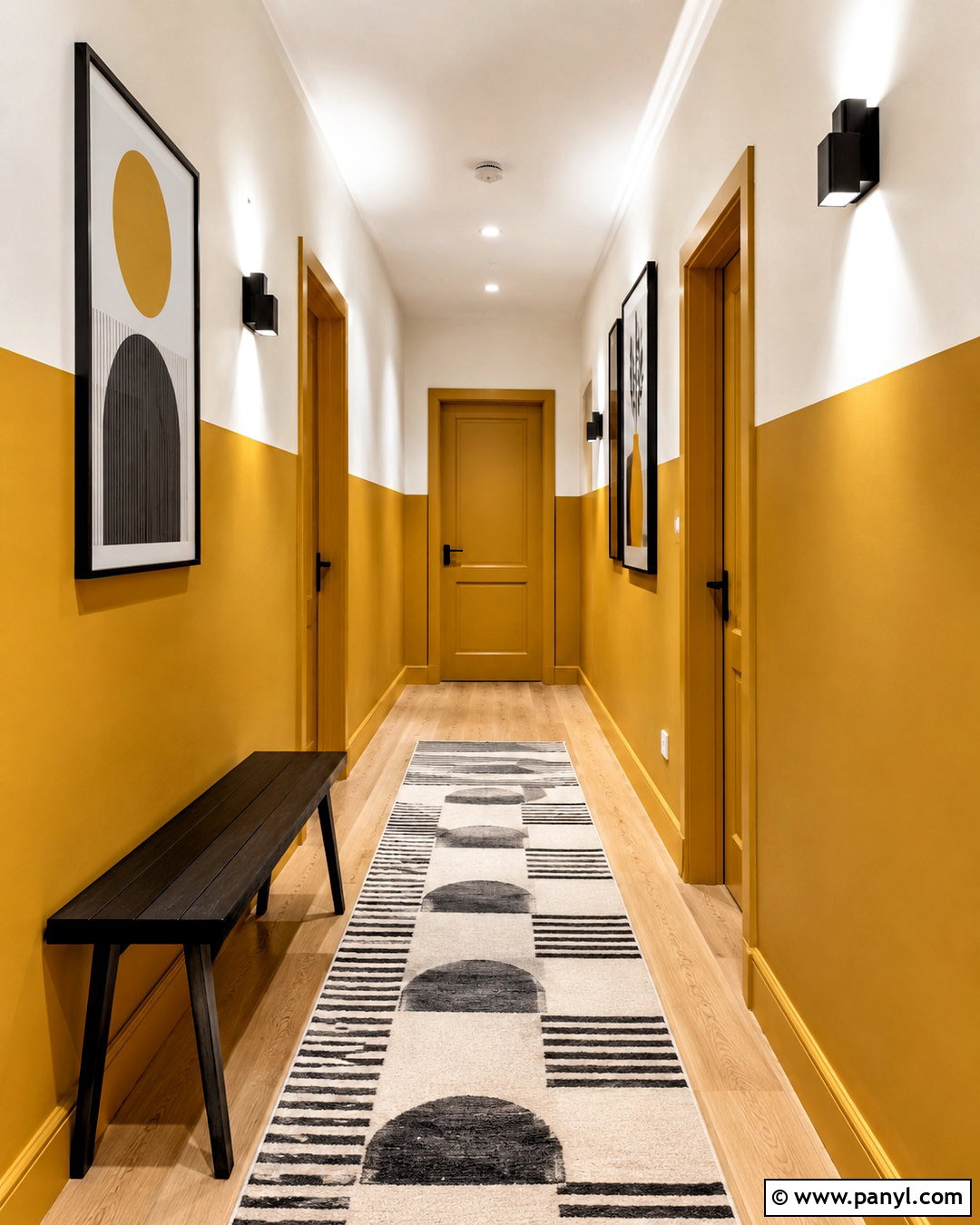
Color blocking creates a contemporary mustard hallway without covering every wall in the same strong shade. Paint the lower two-thirds of the corridor mustard and finish the upper portion and ceiling in warm white. Use a clean horizontal line instead of decorative molding for a simple modern effect. Continue the mustard block across doors for an uninterrupted band of color, or keep the doors white for stronger contrast. Choose light oak flooring, a slim black bench, and a graphic runner in ivory and charcoal. Hang artwork so each frame crosses the painted boundary slightly, visually connecting both sections. Add compact black wall lights and minimal storage hooks. The finished hallway feels bold, spacious, and organized through clear shapes and repeated lines.
20. Mustard Hallway With Terracotta Accents
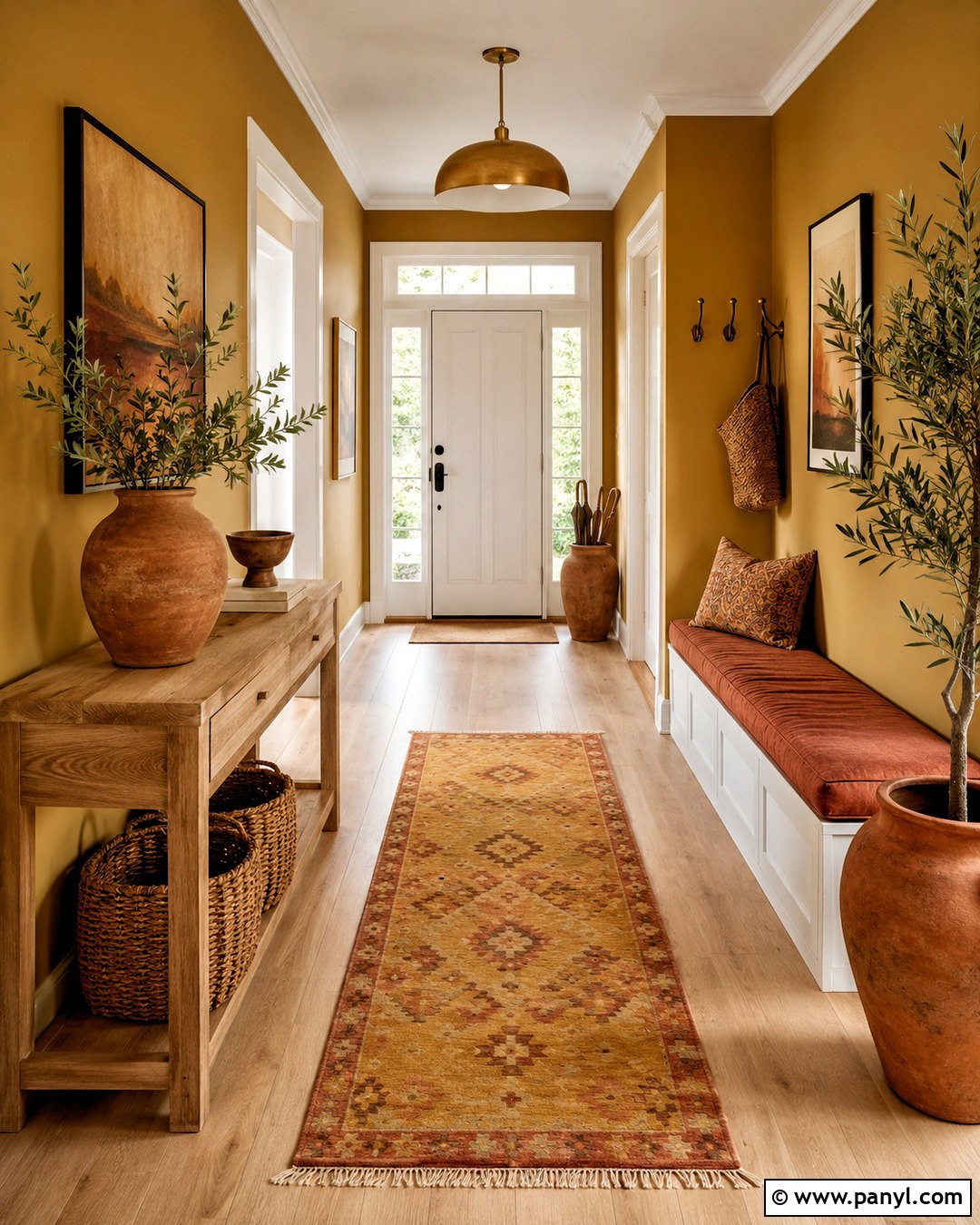
Mustard and terracotta create a warm, earthy hallway that feels especially inviting near an entrance. Paint the walls in subdued mustard and use creamy white across the trim and doors. Introduce terracotta through a rust-colored bench cushion, ceramic planters, framed artwork, and a patterned runner. Light oak furniture and woven baskets soften the strong warm tones with natural texture. Add a muted olive plant or two to provide a small amount of cool contrast. A brass pendant and matching hooks complement both mustard and clay colors without looking overly coordinated. Keep the floor pale and the ceiling bright. The finished scheme feels cohesive because terracotta appears in several measured details, while cream and wood give the saturated colors enough visual space.
Conclusion:
The best mustard hallway ideas treat the corridor as a complete room rather than an empty connection between spaces. Start by choosing where mustard will appear, whether that is across the walls, ceiling, paneling, wallpaper, or built-in furniture. Then create balance with cream trim, natural wood, practical lighting, and a clear secondary color. Navy, teal, sage, charcoal, blush, and terracotta can each produce a different mood while supporting mustard’s warmth. Consider storage and walkway clearance before selecting consoles, benches, or baskets. Finally, repeat key colors through artwork, rugs, and hardware so the result looks intentional. With thoughtful planning, mustard can make even a narrow hallway feel welcoming, distinctive, and beautifully connected to the rest of your home.

Related Ideas and Inspiration:
Leave a Reply