
A hallway sideboard can turn an overlooked passage into a welcoming, organized part of your home. Unlike a narrow console, a sideboard offers closed storage for shoes, bags, mail, pet supplies, and seasonal accessories while still providing a surface for lighting and decor. The best arrangement depends on your hallway’s width, architecture, and daily routine. Slim cabinets work well in compact entrances, while longer sideboards can anchor open foyers or upstairs landings. Mirrors, artwork, lamps, trays, baskets, and greenery help connect the furniture with the surrounding space. From modern floating cabinets to warm vintage pieces, these complete looks balance function, proportion, color, and personality. Explore the following practical and polished **20 hallway sideboard ideas**.
1. Narrow Hallway Sideboard
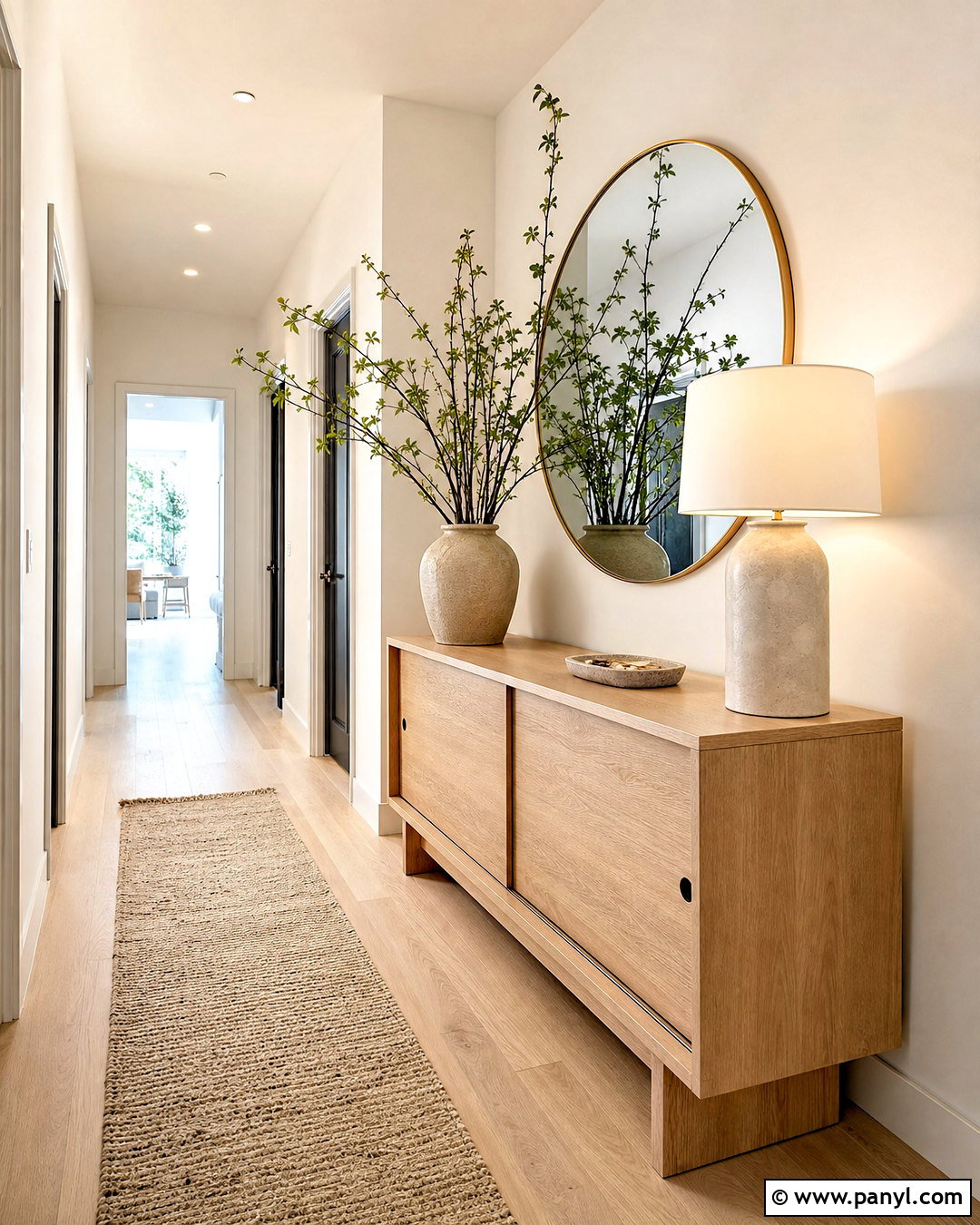
Choose a shallow sideboard when every inch of walking space matters. A slim light oak cabinet with sliding doors keeps the footprint practical and prevents open doors from blocking the passage. Style it against warm white walls with pale wood flooring and a narrow washable runner. Above the cabinet, hang a large round mirror to open the view and distribute light. Add one compact ceramic lamp, a stone tray for keys, and a tall branch arrangement for height. Keep the rest of the surface open so the hallway does not feel crowded. Inside, use labeled bins for mail, gloves, dog-walking supplies, and small umbrellas. Sliding doors are especially useful in confined hallways because they require no outward clearance. ()
2. Modern Hallway Sideboard
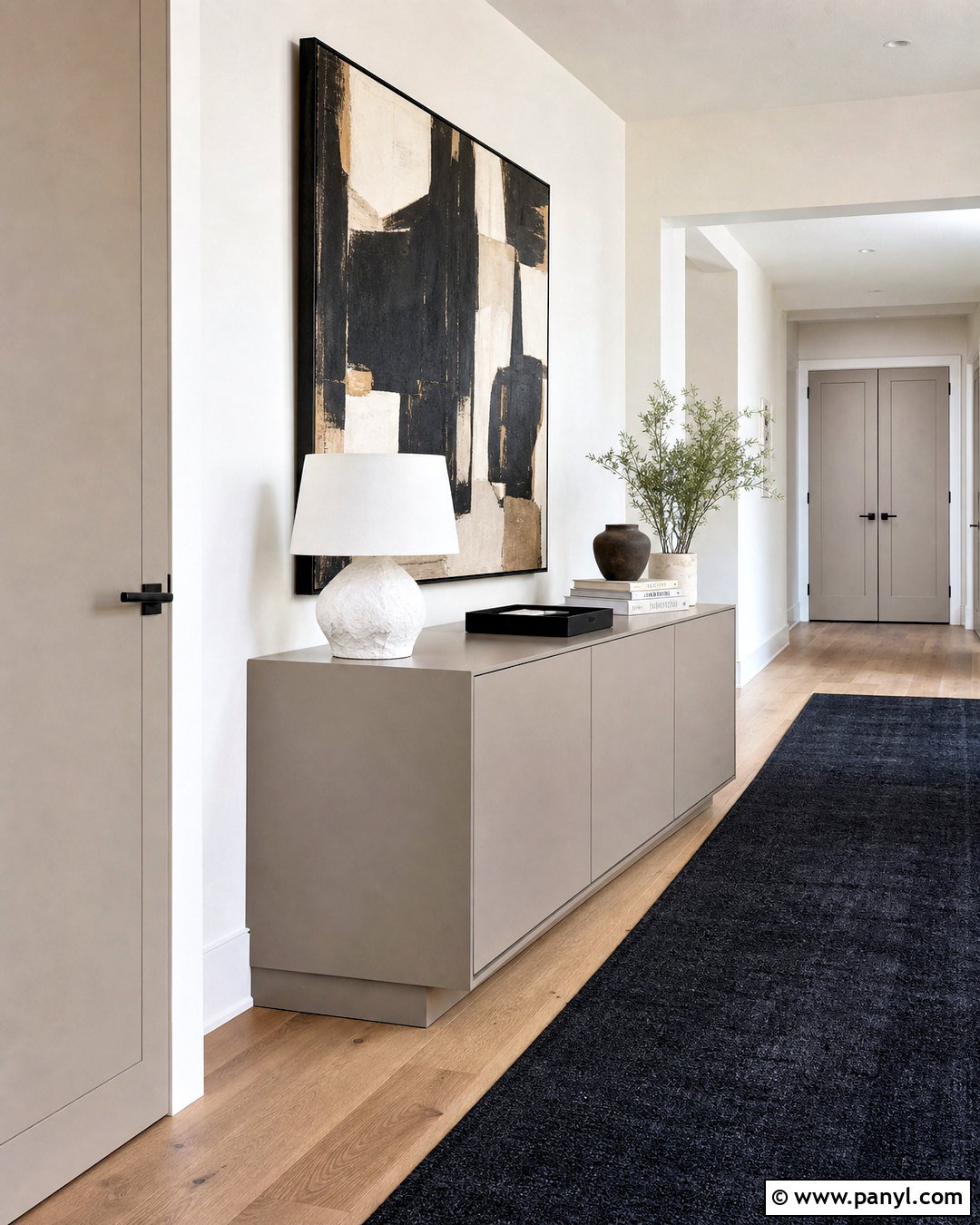
Clean lines give a busy entrance an immediate sense of order. Start with a low, handle-free sideboard in soft greige or matte taupe. Pair it with crisp white walls, wide-plank oak flooring, and a simple black runner. A large abstract print above the cabinet creates a clear focal point without adding physical clutter. Balance the artwork with a sculptural white lamp at one end and a black tray, stacked books, and small ceramic vessel at the other. Use the cabinets for chargers, reusable bags, hats, and household paperwork. A matte black ceiling light and matching door hardware connect the arrangement with the rest of the hallway. Leave generous negative space around each decorative object to preserve the calm, modern appearance.
3. Midcentury Hallway Sideboard
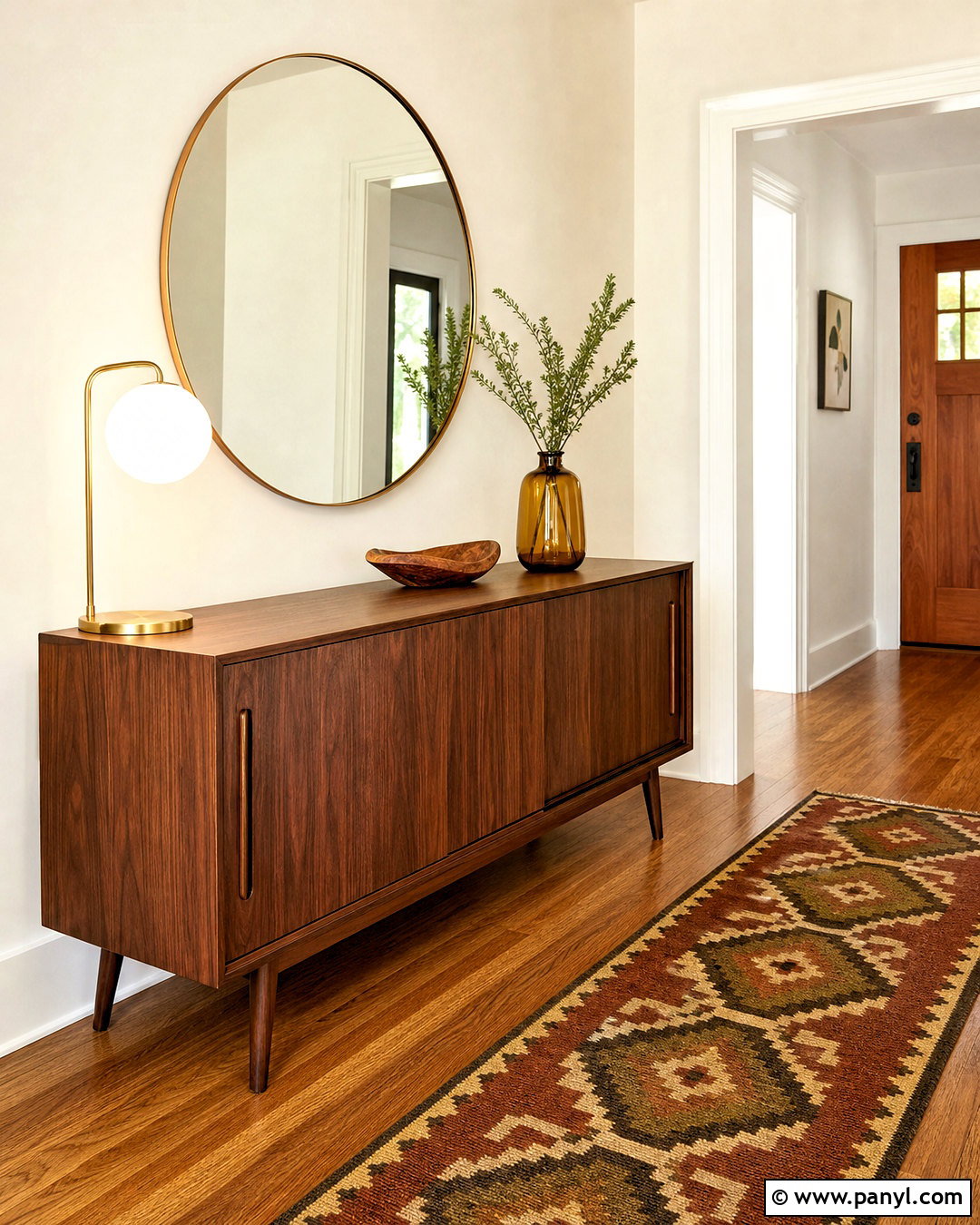
A walnut sideboard on tapered legs brings warmth and character to a plain hallway. Look for a compact design with sliding doors, integrated handles, and softly rounded corners. Surround it with creamy walls, honey-toned wood flooring, and a geometric runner in rust, olive, and beige. Hang an elongated oval mirror above the cabinet to echo its curved details. A globe lamp with an antique brass base reinforces the midcentury look, while an amber glass vase and small wooden bowl provide useful surface accents. Keep decor asymmetrical but balanced, with the lamp as the tallest element. Store shoes in one cabinet and use divided drawers for keys, sunglasses, chargers, and outgoing mail. Add one leafy floor plant nearby if the walkway allows.
4. Farmhouse Hallway Sideboard
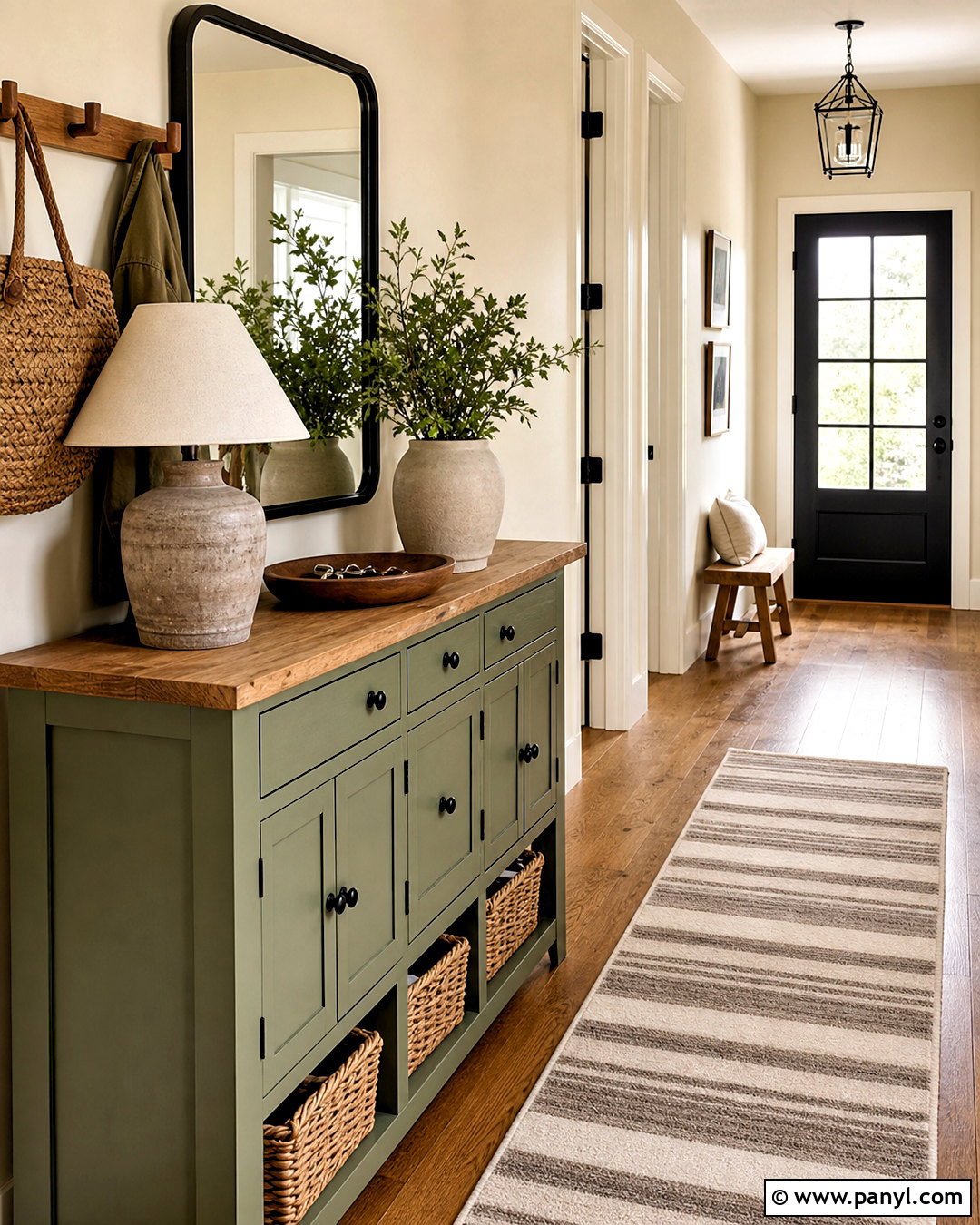
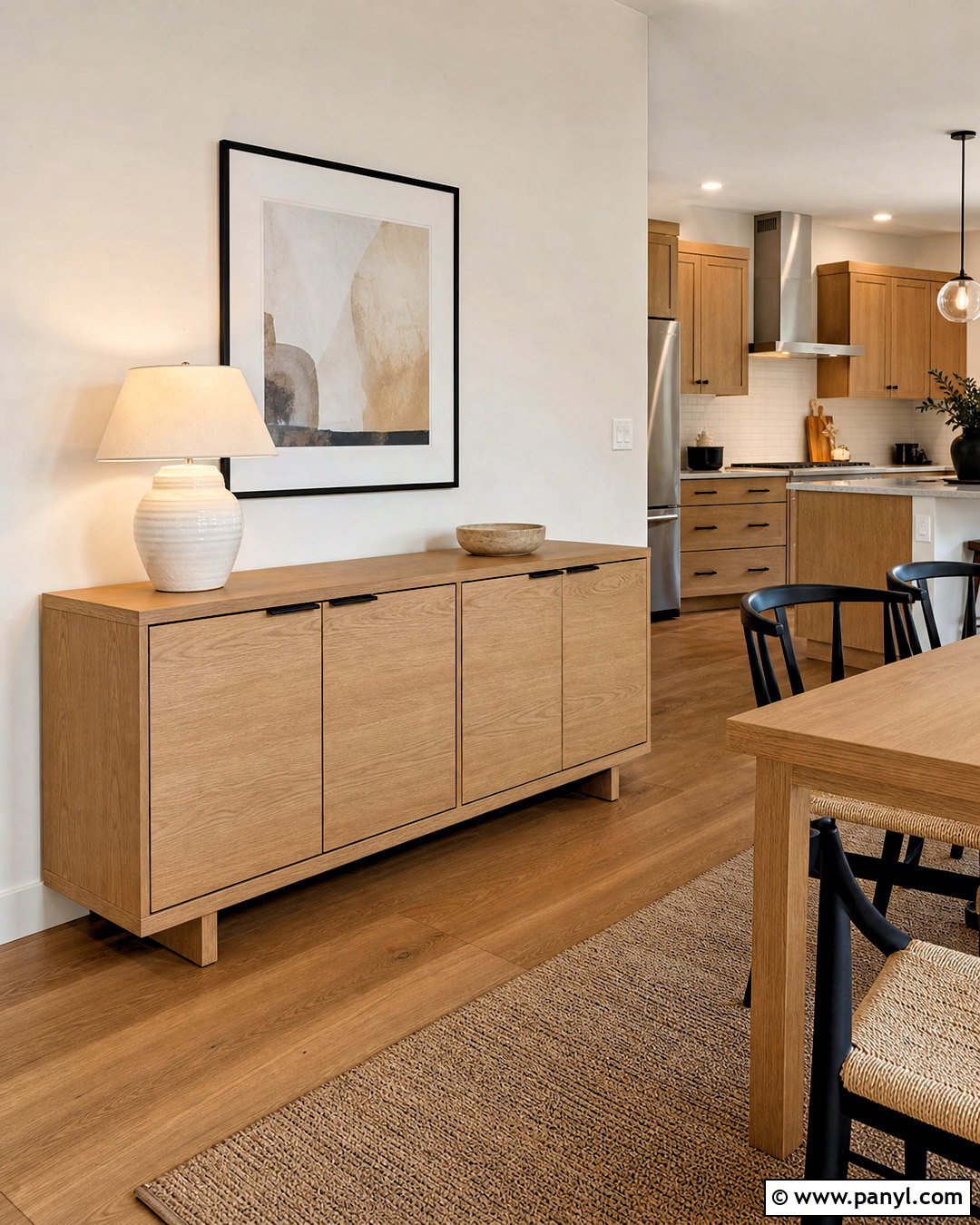
Create a relaxed farmhouse entrance with a painted sideboard in warm off-white or muted sage green. A natural oak top adds contrast and stands up well to everyday use. Pair the cabinet with soft beige walls, medium-toned wood flooring, and a striped flat-weave runner. Above it, hang a black-framed rectangular mirror or a simple landscape painting. Finish the surface with a stoneware lamp, a shallow wooden key bowl, and a clear vase filled with leafy branches. Woven baskets inside open cubbies can hold scarves, slippers, and outdoor accessories. Black iron knobs, a peg rail, and an understated ceiling lantern complete the coordinated look. Avoid filling the surface with numerous rustic signs or small ornaments; fewer, larger accessories make the hallway feel cleaner and more current.
5. Scandinavian Hallway Sideboard
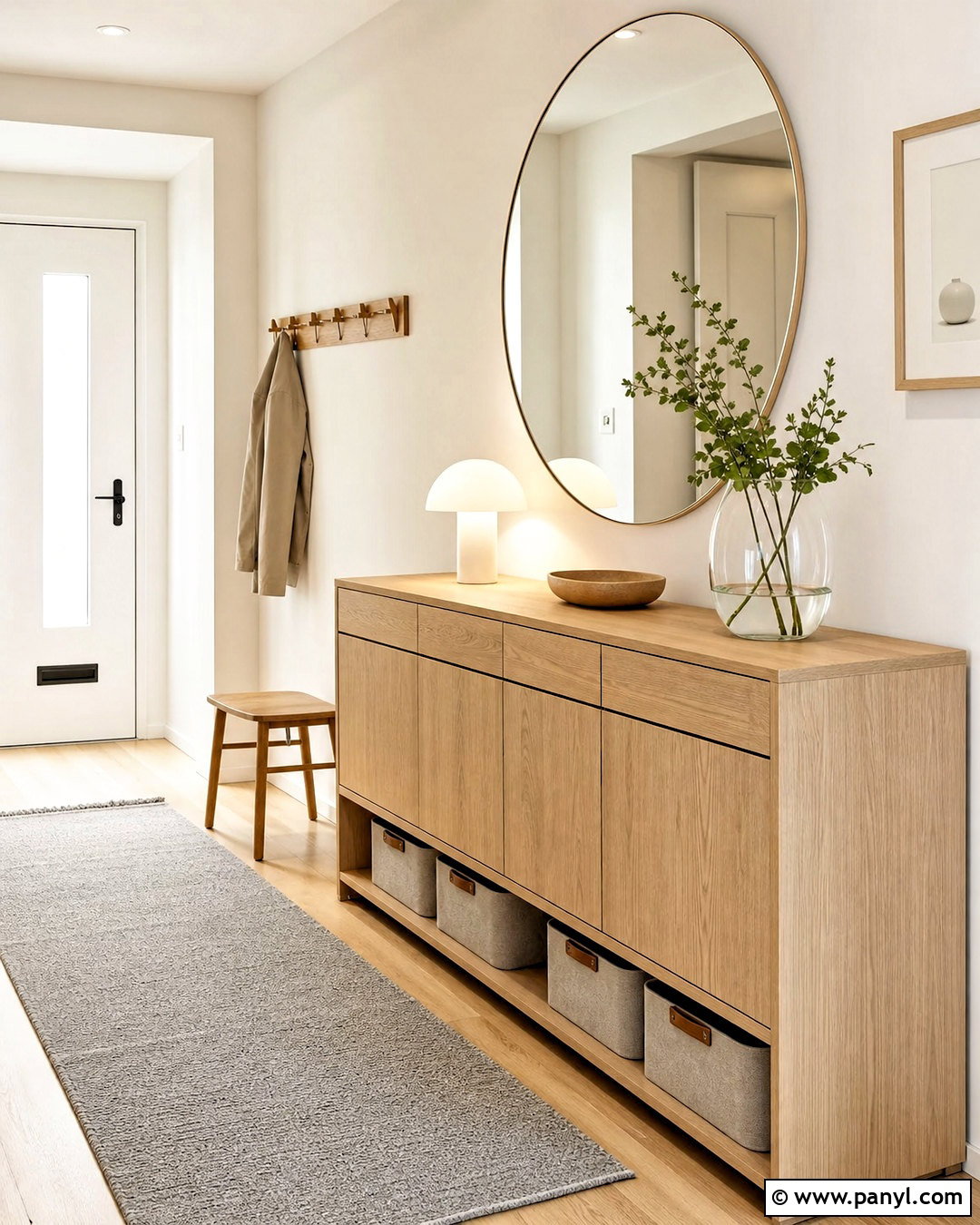
Soft colors and simple materials make a Scandinavian hallway feel bright, useful, and comfortable. Select a pale oak sideboard with flat-front doors and short wooden legs. Set it against warm white walls and light wood flooring, then add a muted gray runner for softness. A frameless round mirror keeps the wall visually light. On the sideboard, arrange a small white lamp, a low ceramic bowl, and a clear vase with fresh green stems. Limit the palette to white, pale wood, gray, and a touch of black. Inside the cabinet, use matching fabric bins to separate gloves, hats, mail, and everyday technology. A minimal wall hook rail and a small upholstered stool can complete the entry area without making it busy. The finished space should feel practical rather than overly decorated.
6. Black Hallway Sideboard
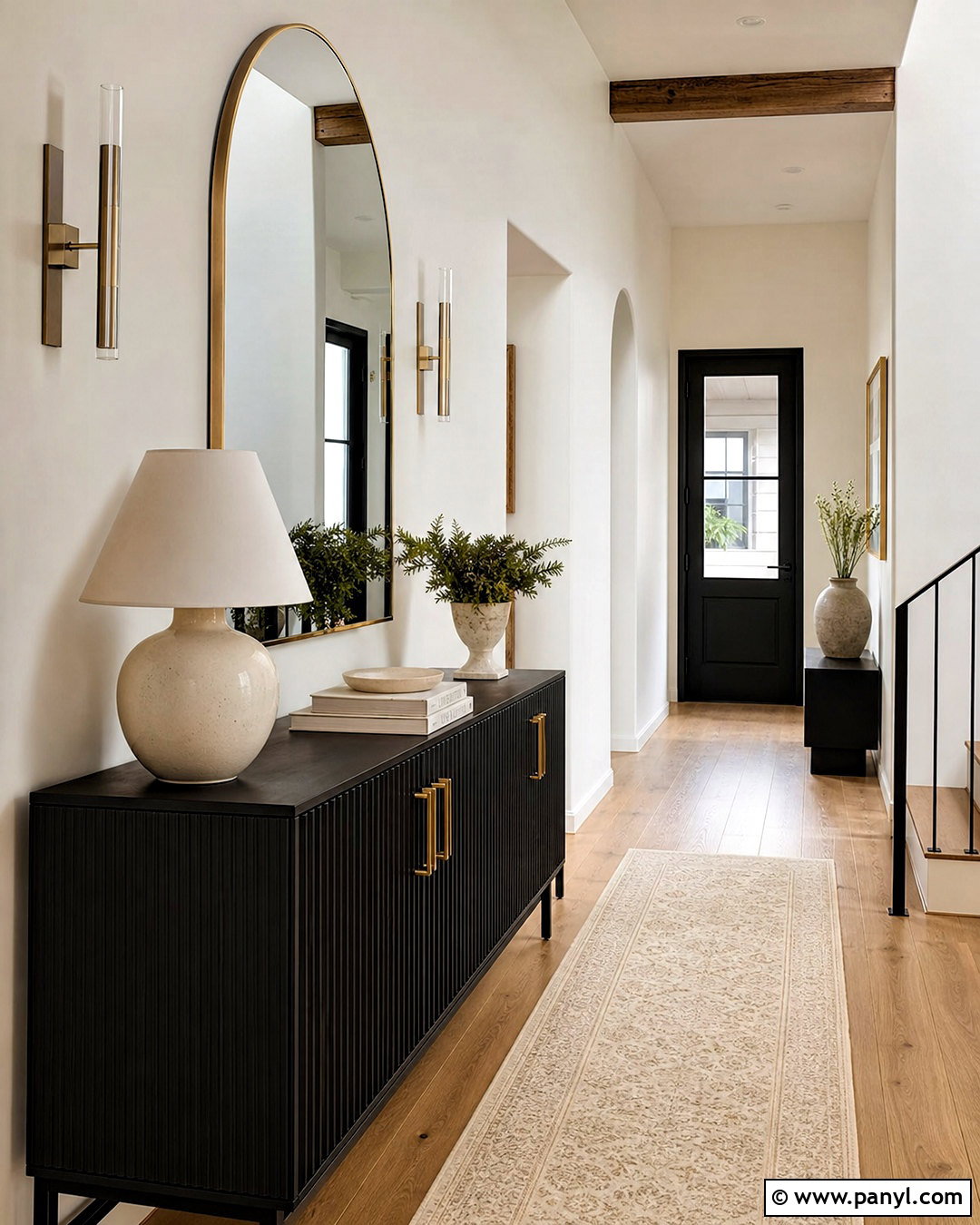
A black sideboard can make a hallway feel grounded and sophisticated instead of dark. Choose a narrow cabinet with subtle fluting, slim legs, and brushed brass handles. Keep the surrounding walls warm white or pale greige so the dark furniture stands out clearly. Natural oak flooring and a cream runner soften the contrast. Hang an oversized brass-framed mirror above the cabinet and place a cream ceramic lamp at one end. At the opposite end, use a travertine tray, a small vase, and two neatly stacked books. Repeat black through the ceiling fixture, door hardware, or picture frames for cohesion. Closed cabinets should conceal shoes and bags, while a shallow top drawer can organize smaller essentials. The result feels dramatic, balanced, and appropriate for both modern and traditional homes.
7. White Hallway Sideboard
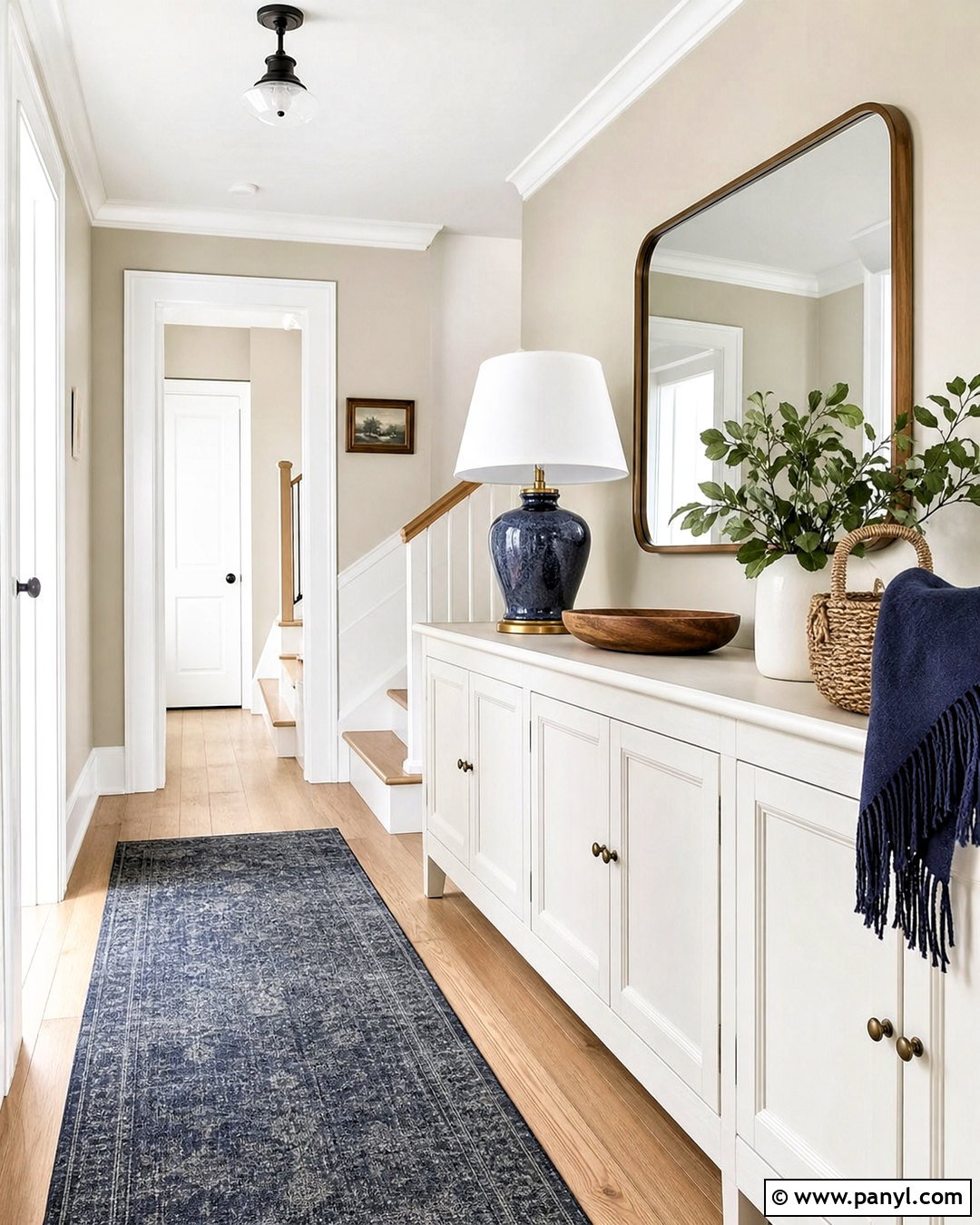
A white sideboard is an effective choice for a small hallway that needs storage without visual heaviness. Select a warm white cabinet with recessed doors and discreet knobs rather than a cold, glossy finish. Use a pale greige wall color behind it to create gentle definition. Light oak flooring, a blue-gray runner, and a natural woven basket add warmth and texture. Center a wood-framed mirror over the cabinet, then style the surface with a blue ceramic lamp, a wooden catchall tray, and a simple green plant. Organize the interior with pullout boxes for footwear, cleaning supplies, and seasonal items. If the hallway has white trim, match the sideboard closely to create a built-in effect. This complete scheme feels open, relaxed, and easy to update with new accessories.
8. Oak Hallway Sideboard
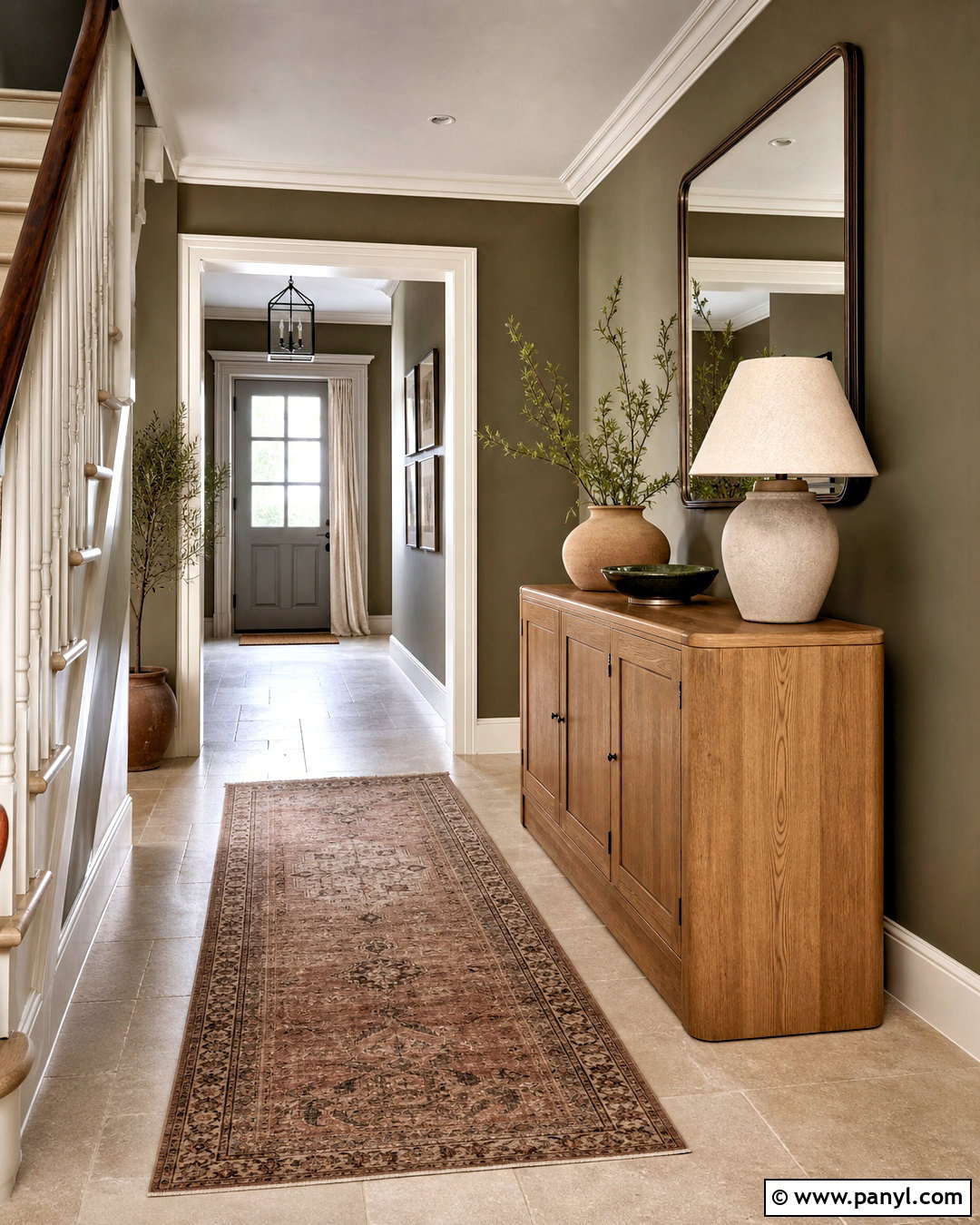
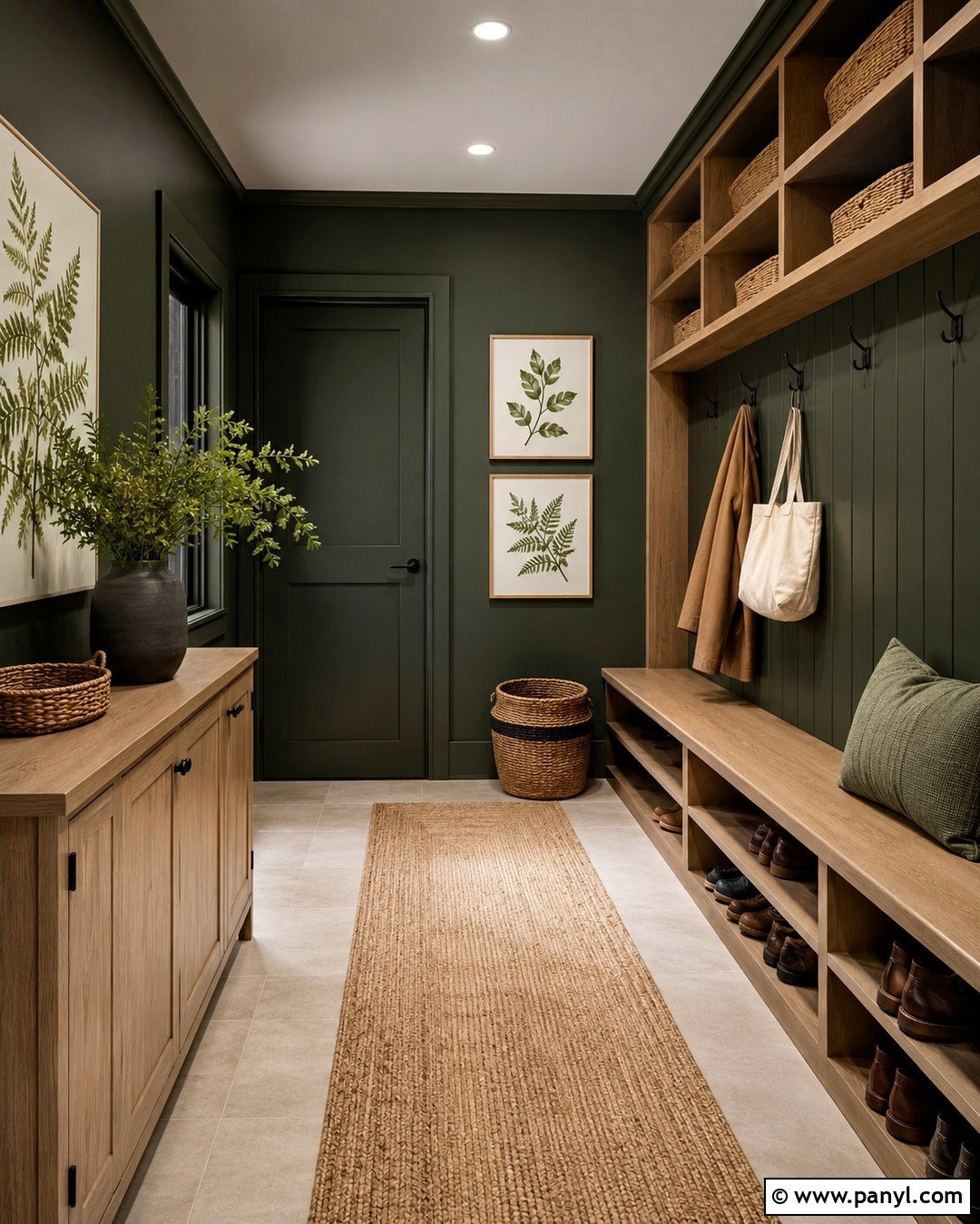
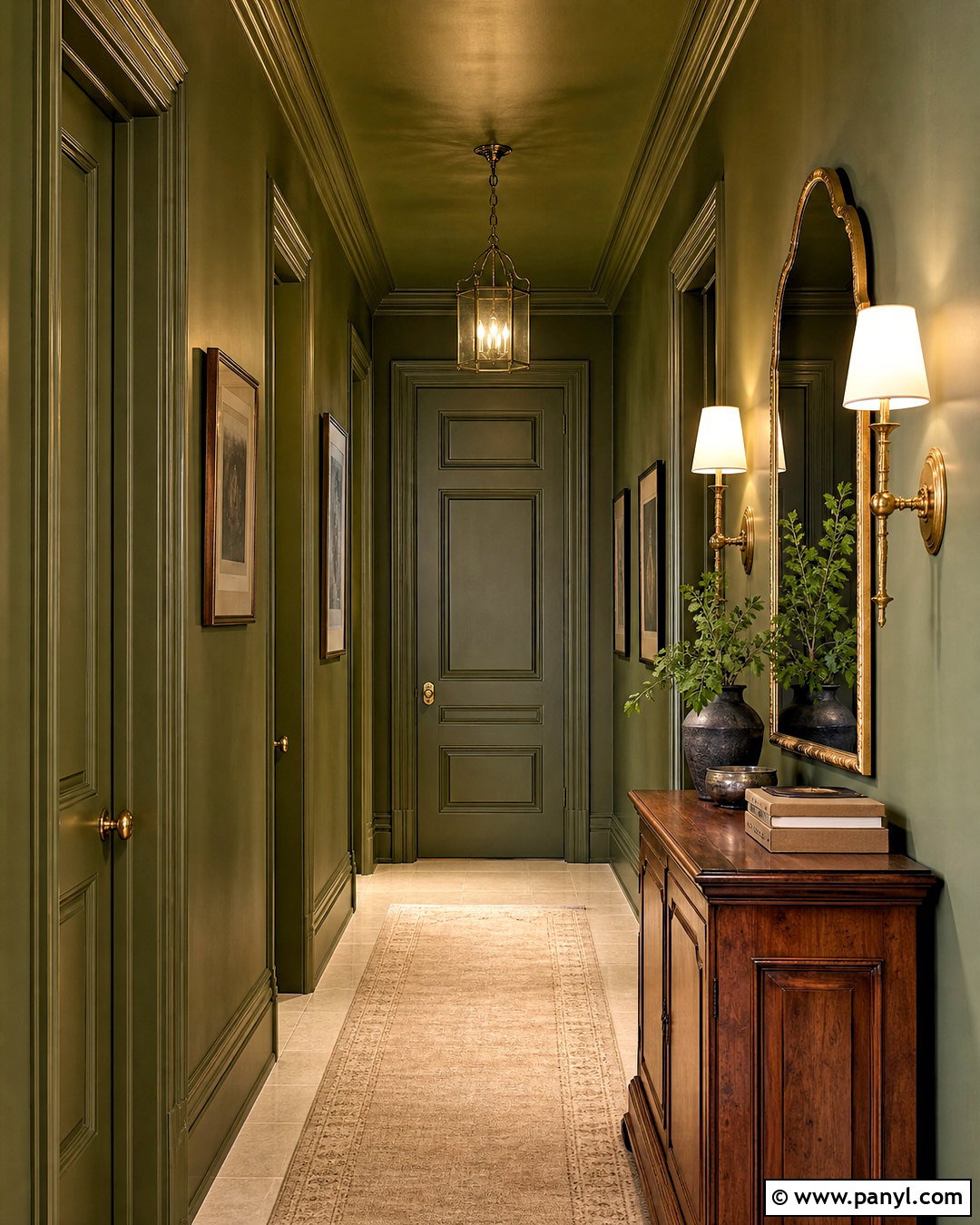
Natural oak gives an entrance lasting warmth while pairing easily with changing wall colors and decor. Choose a medium-width sideboard with visible grain, softly rounded edges, and a mix of drawers and cabinets. Deep olive walls can create a rich backdrop, while cream trim and pale stone flooring keep the space balanced. Hang a large rectangular mirror in a thin bronze frame above the sideboard. Add an off-white linen lamp, a dark green bowl for keys, and a textured clay vase filled with branches. A vintage-inspired runner in muted brown and green connects the wood with the wall color. Use the drawers for daily essentials and adjustable shelves for bags or shoes. Keeping the decorative arrangement limited to three purposeful groups allows the oak grain to remain an important part of the design.
9. Rattan Hallway Sideboard
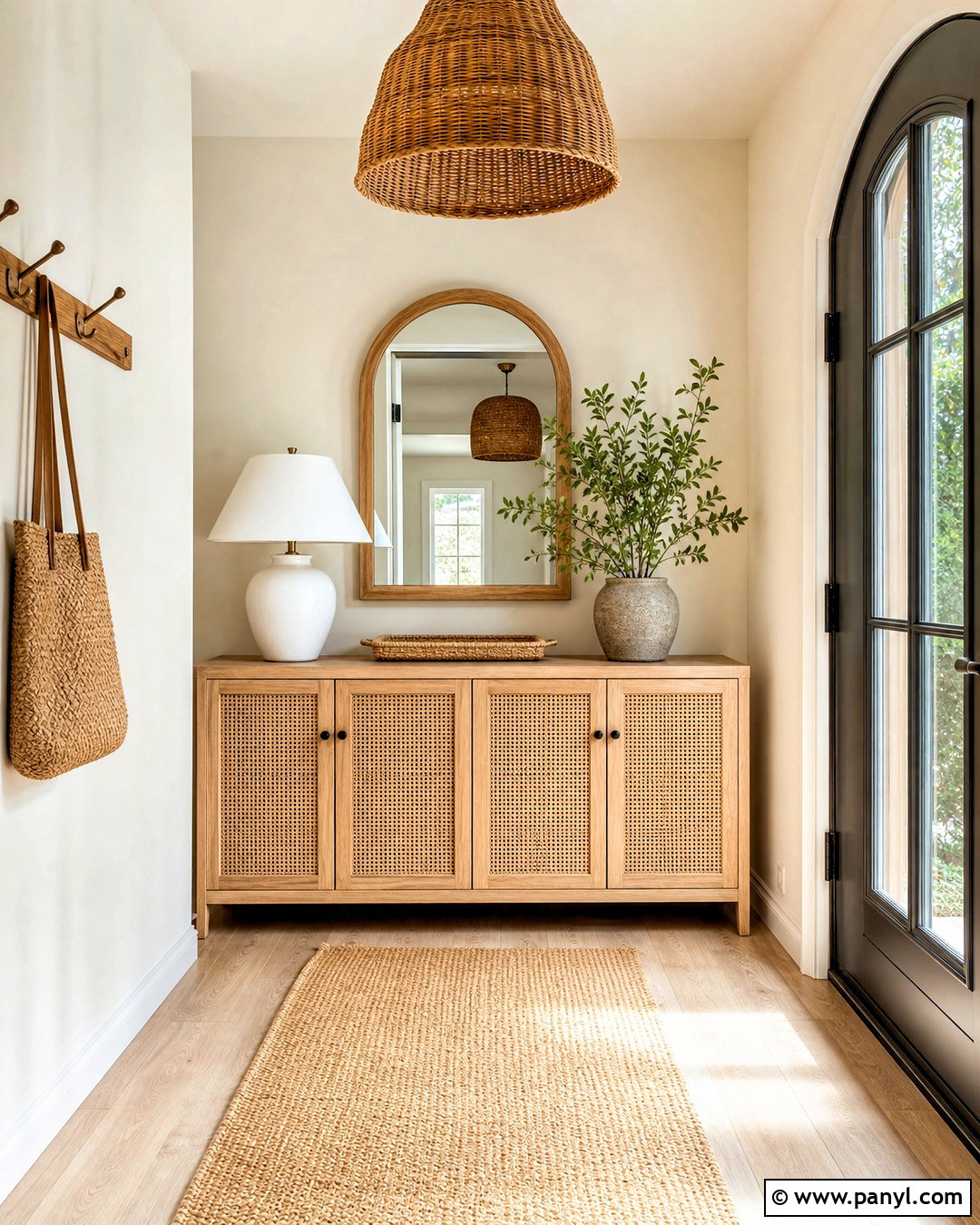
Bring natural texture into the hallway with a light wood sideboard featuring woven rattan door panels. This combination suits relaxed, organic interiors while providing ventilation for shoes stored inside. Pair the cabinet with warm ivory walls, pale oak flooring, and a jute-blend runner. A softly arched mirror above the sideboard introduces a smooth shape that balances the woven door pattern. Add a white ceramic lamp, a shallow cane tray, and a leafy plant in a stone pot. Continue the relaxed look with a woven pendant light and small wooden wall hooks near the entrance. Keep loose belongings hidden in baskets behind the doors so the surface remains orderly. Rattan cabinetry is increasingly used as versatile entryway storage because it combines visual warmth with practical concealed organization. ()
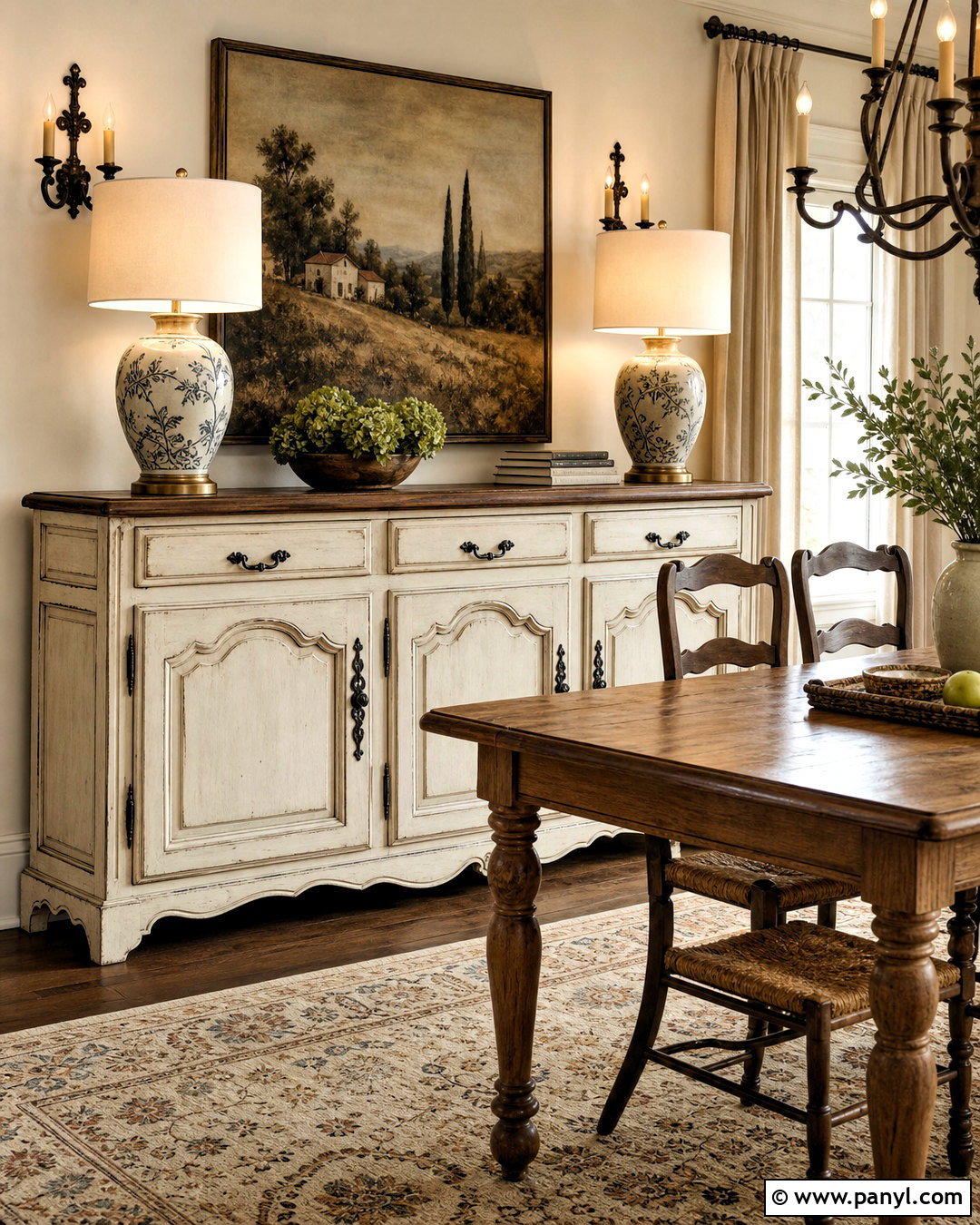
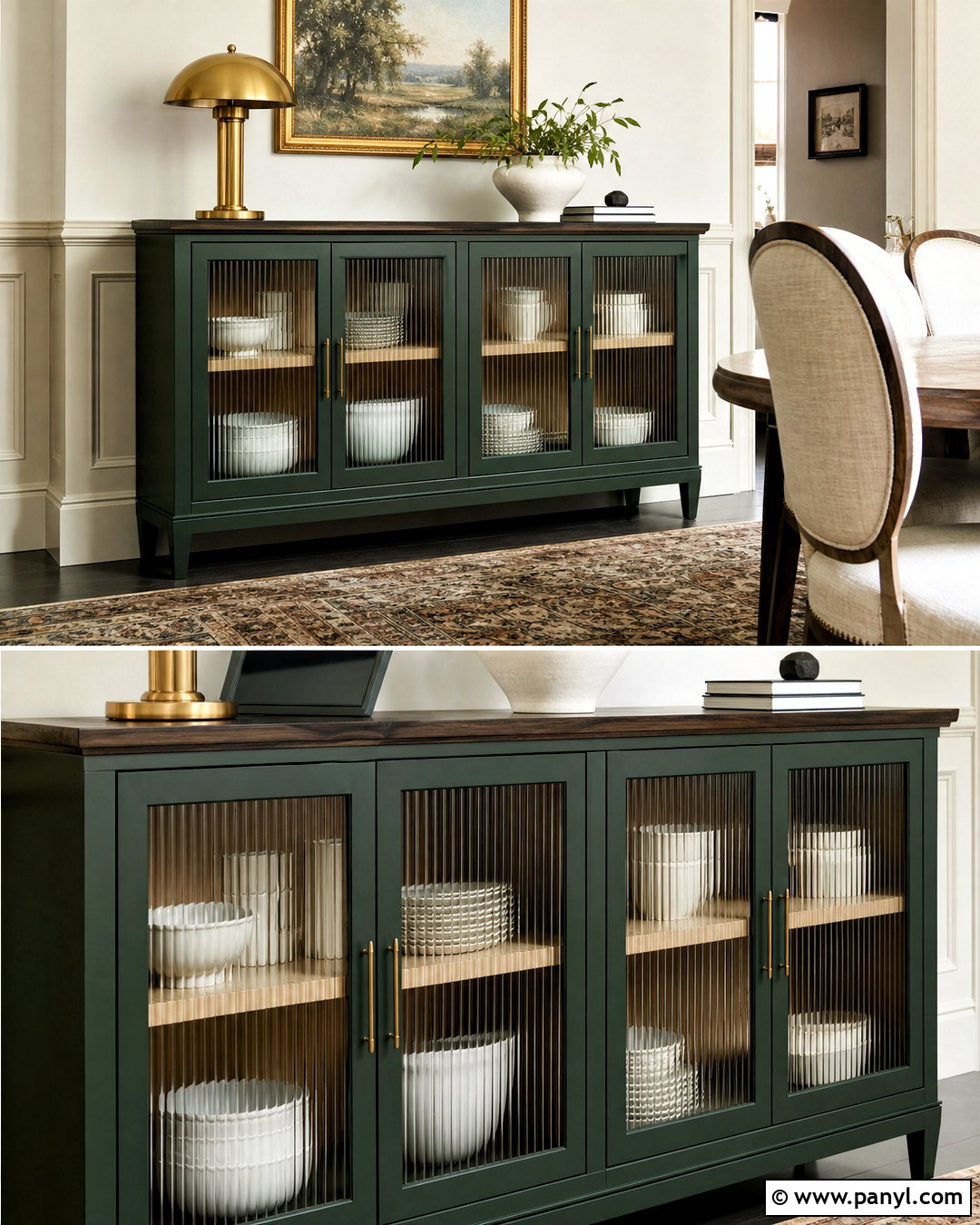
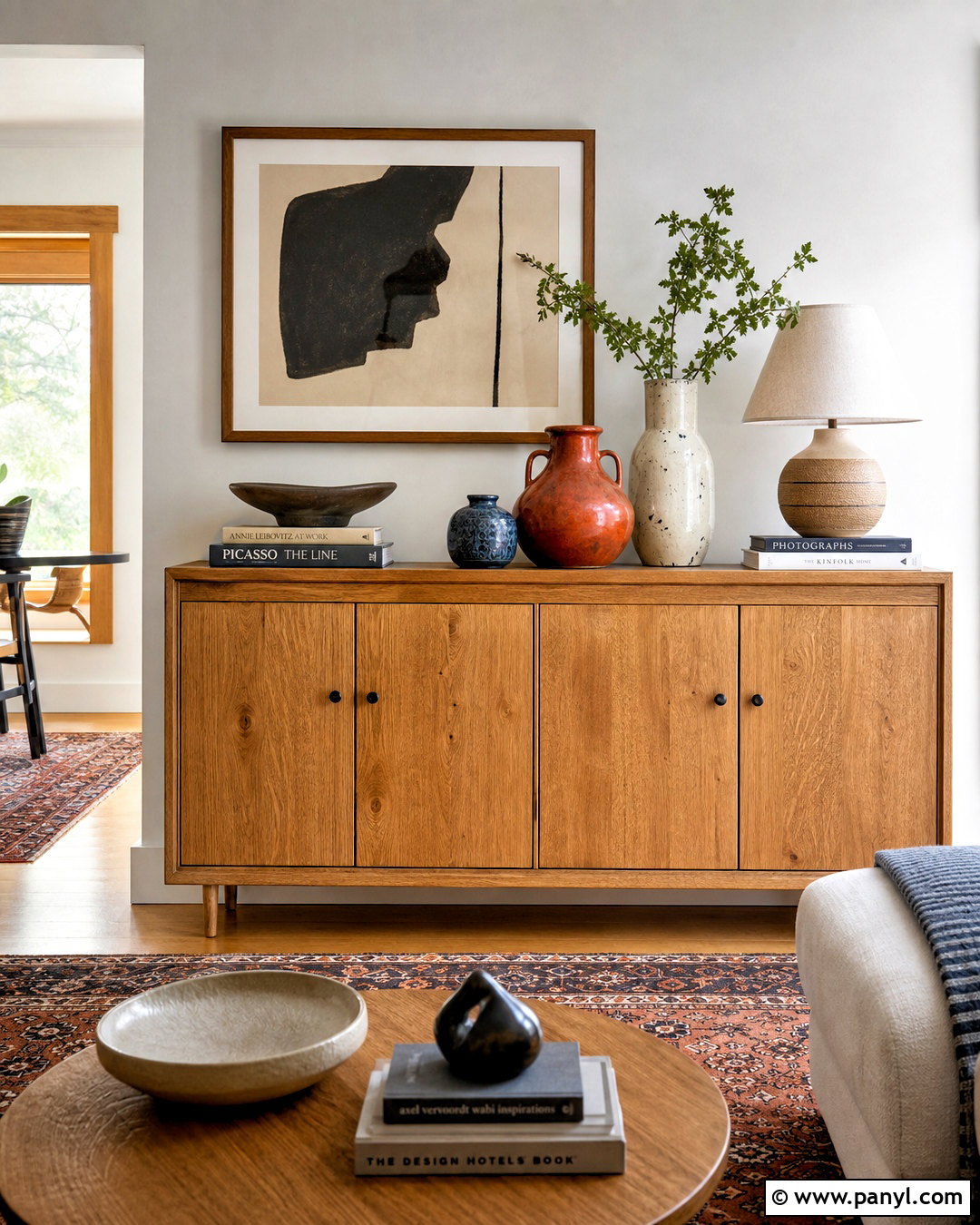
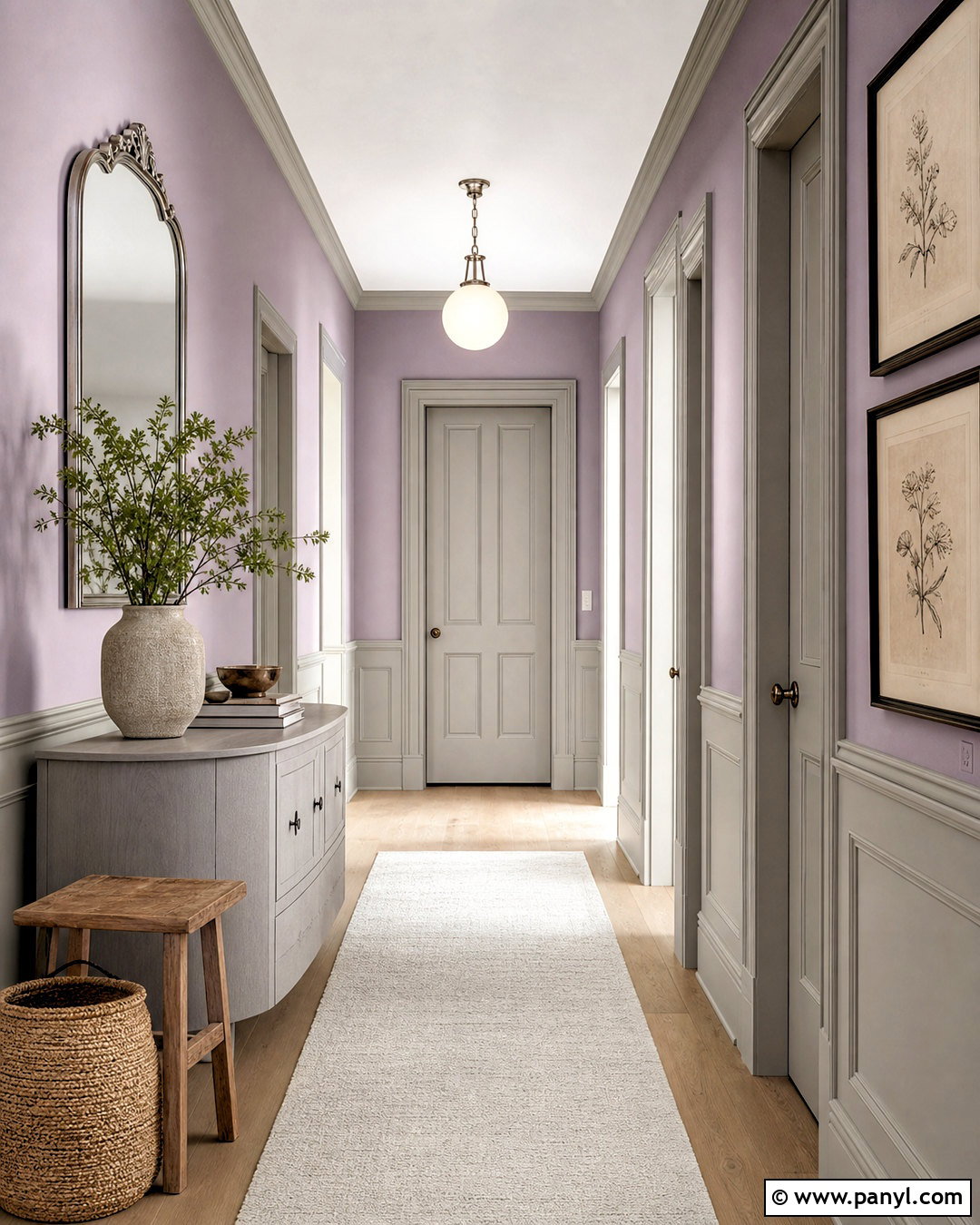
10. Floating Hallway Sideboard
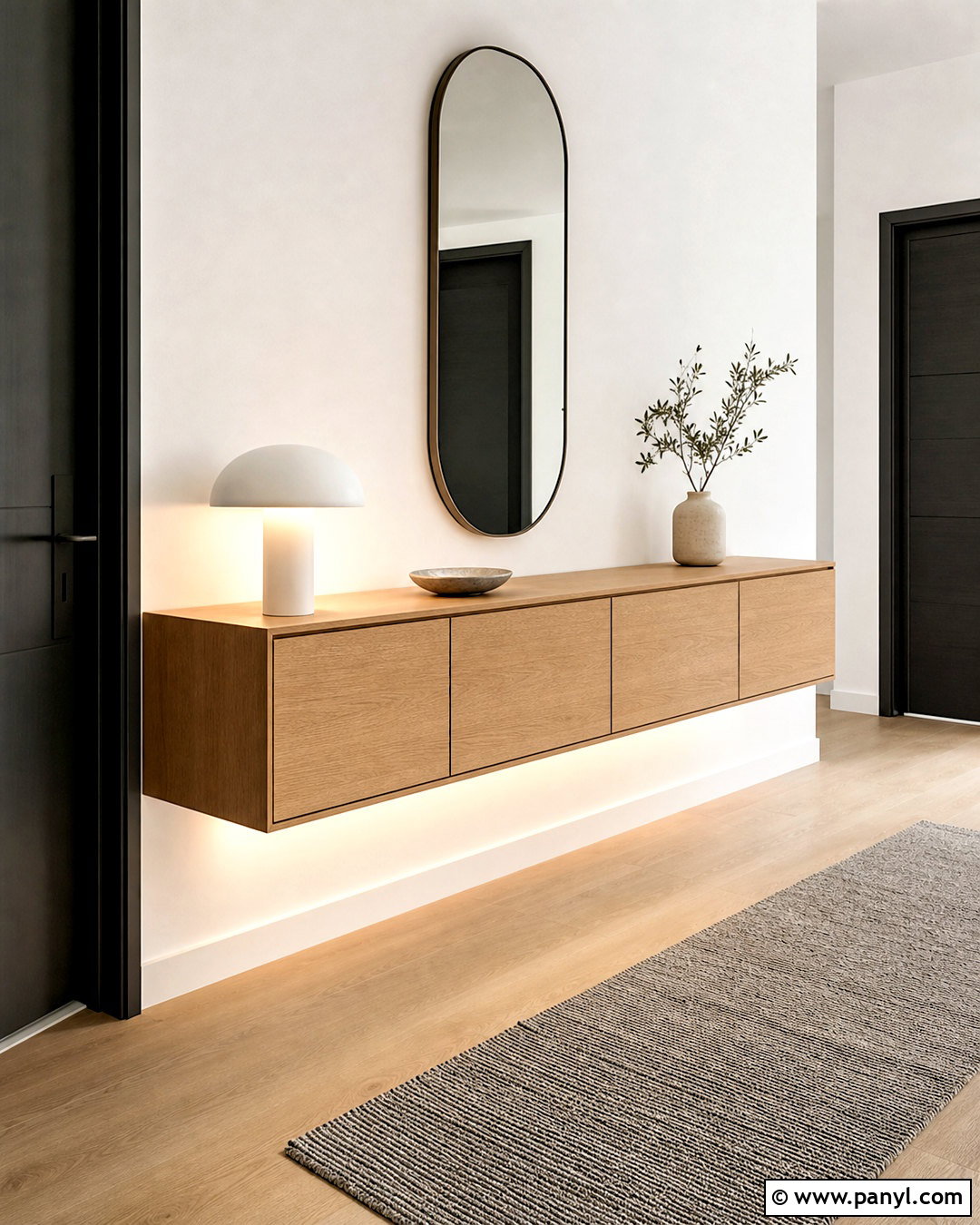
A wall-mounted sideboard makes a compact hallway appear more spacious because the visible floor continues underneath it. Choose a streamlined floating cabinet in pale oak, matte white, or soft mushroom gray. Install it at a comfortable height and confirm that the wall and fixings can support the cabinet and its contents. Pair it with light flooring and a narrow runner that extends toward the next room. Above the cabinet, use a tall pill-shaped mirror to emphasize ceiling height. A rechargeable lamp, small tray, and single vase keep the surface flexible without visible cords. Add concealed lighting beneath the cabinet for a polished architectural detail. Store keys, mail, chargers, and lightweight accessories inside. The open floor below also makes routine sweeping or vacuuming easier. ()
11. Vintage Hallway Sideboard
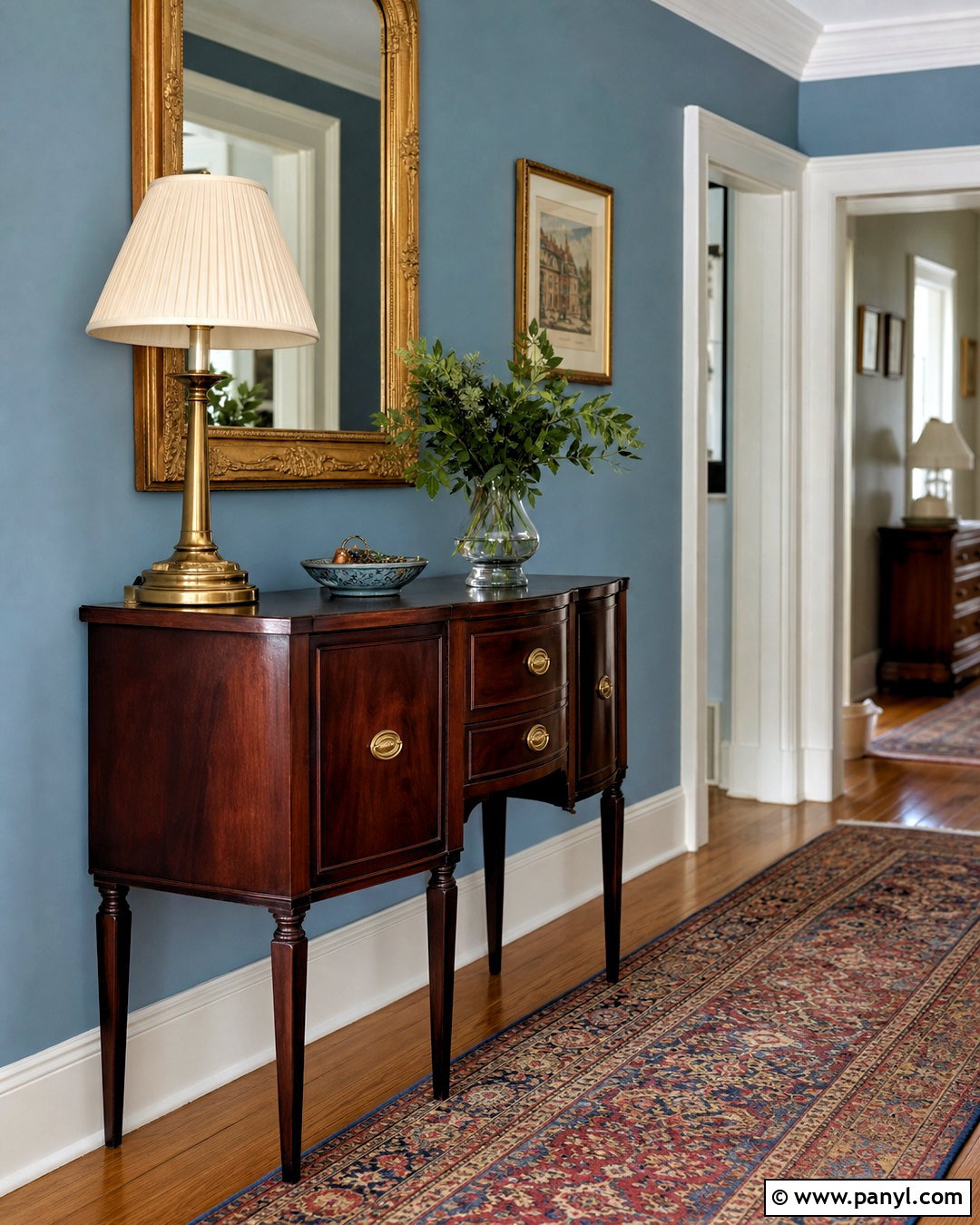
An older wood sideboard can give a hallway personality that new furniture sometimes lacks. Choose a compact piece with solid construction, graceful legs, and original brass or wood hardware. A slightly worn mahogany, cherry, or dark oak finish works beautifully against dusty blue walls and white trim. Place a traditional patterned runner over natural wood flooring to connect the colors. Above the sideboard, hang a gilded mirror or a collected arrangement of small framed artwork. Add a pleated-shade lamp, a ceramic bowl for keys, and one vase with fresh greenery. Keep modern household clutter inside divided drawers and labeled storage boxes. If the finish is damaged, clean and repair it before deciding whether to refinish. The final space should feel collected and functional, not like a crowded antique display.
12. Rustic Hallway Sideboard
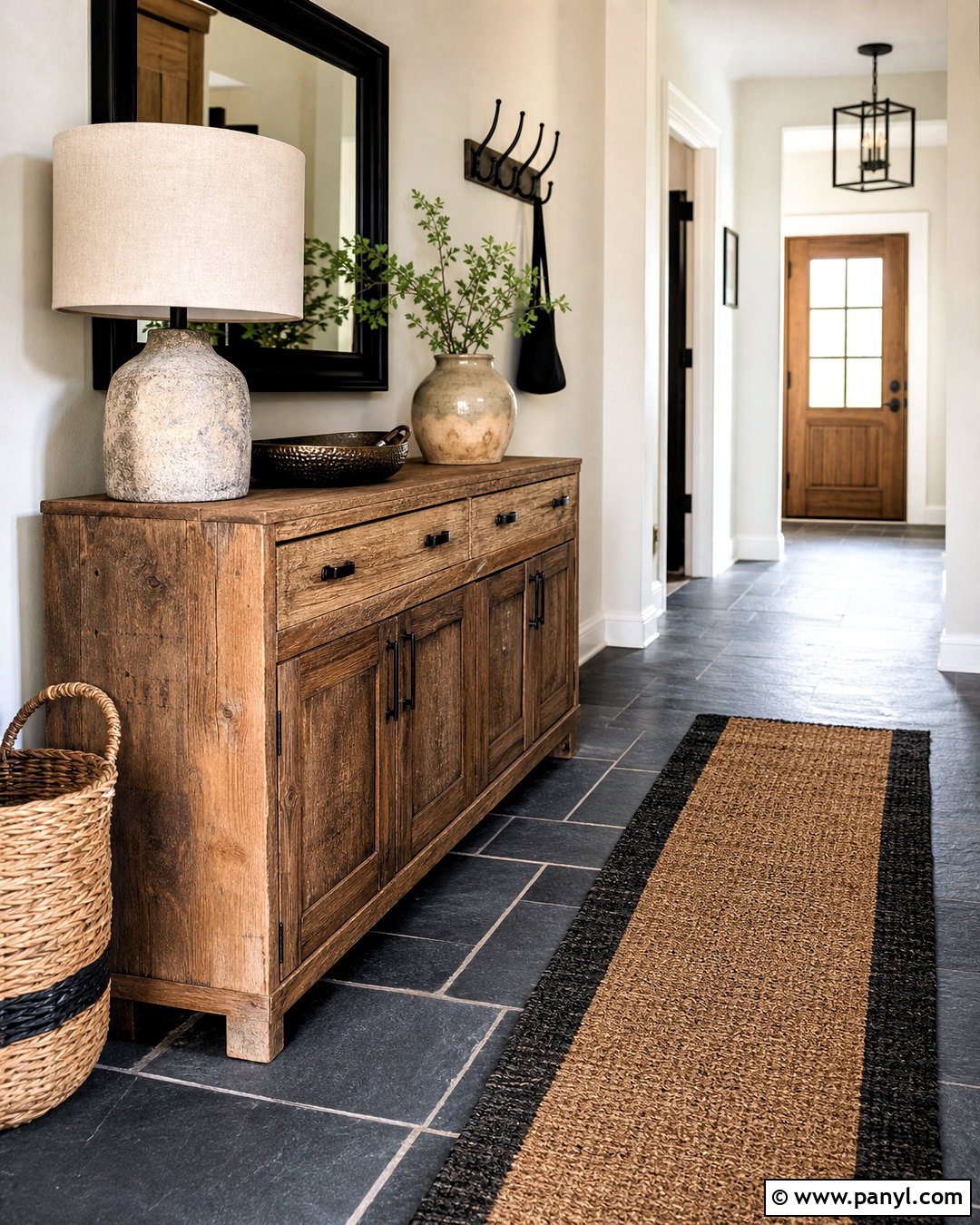
A rustic sideboard works best when rough textures are balanced by simple, uncluttered surroundings. Select a reclaimed wood cabinet with sturdy doors, visible grain, and matte black hardware. Place it against soft cream walls with slate-look tile or medium oak flooring. A woven runner in tan and charcoal adds comfort while reinforcing the earthy palette. Hang a large black-framed mirror above the cabinet to give the rugged furniture a cleaner edge. Style the top with a matte stone lamp, a hammered metal tray, and a tall earthenware vase. Inside, use durable baskets for work gloves, footwear care, pet items, and outdoor accessories. Repeat black through the light fixture and coat hooks. Avoid excessive distressed decor; one substantial wood piece provides enough rustic character for the whole hallway.
13. Coastal Hallway Sideboard
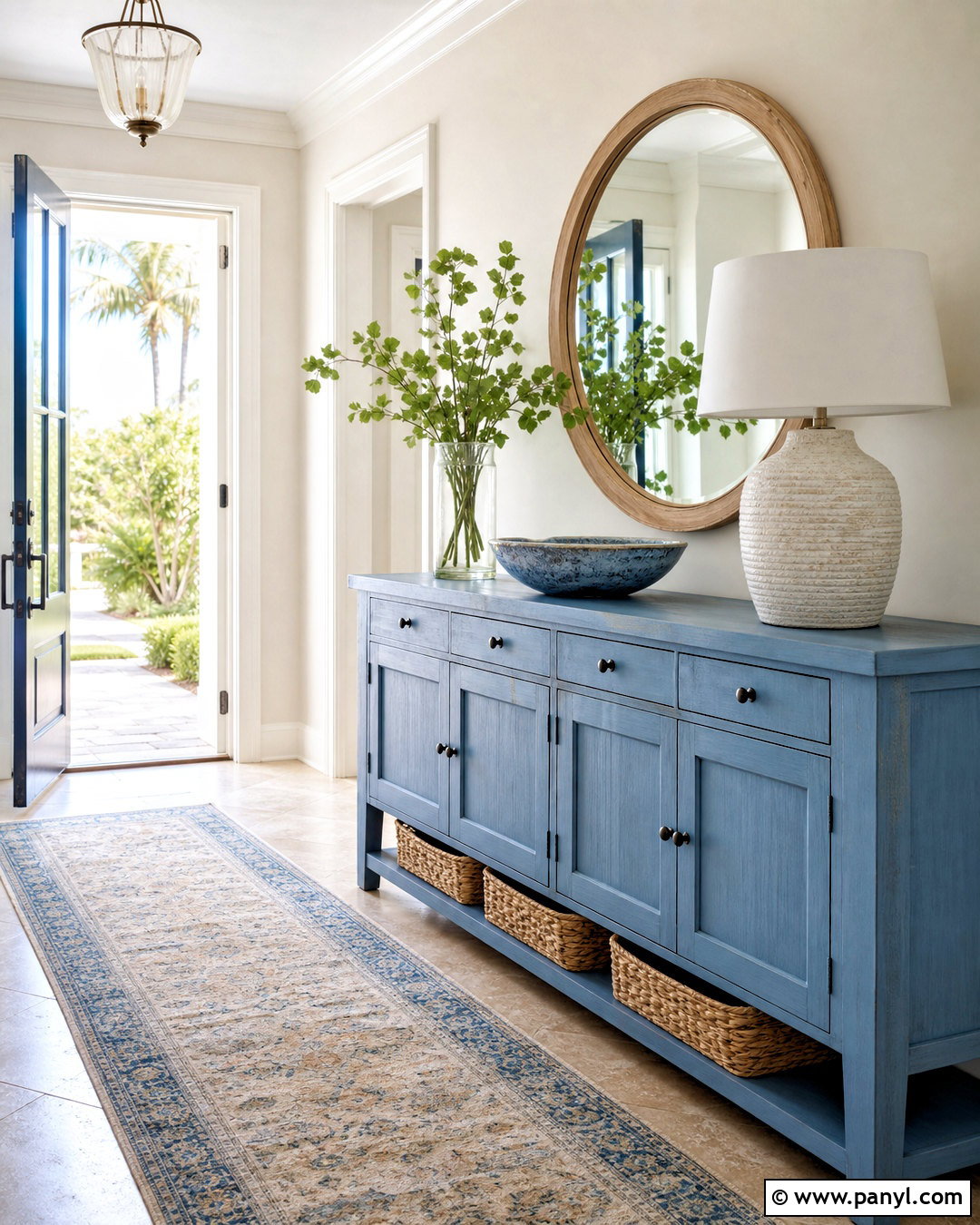
For a fresh coastal entrance, choose a pale oak or softly painted blue sideboard rather than using overt nautical decorations. Pair it with crisp ivory walls, white trim, and light wood or limestone-look flooring. A washable runner in faded blue and sand tones brings subtle pattern to the passage. Hang a large round mirror with a natural woven or light wood frame above the cabinet. Complete the surface with a white textured lamp, a glazed blue bowl, and a clear vase of airy green branches. Woven baskets inside the sideboard can organize sandals, beach accessories, and reusable bags. Add nickel or brushed brass hardware for a clean finish. This restrained combination of pale wood, watery blue, natural fibers, and bright surfaces creates a coastal mood that still works throughout the year.
14. Industrial Hallway Sideboard
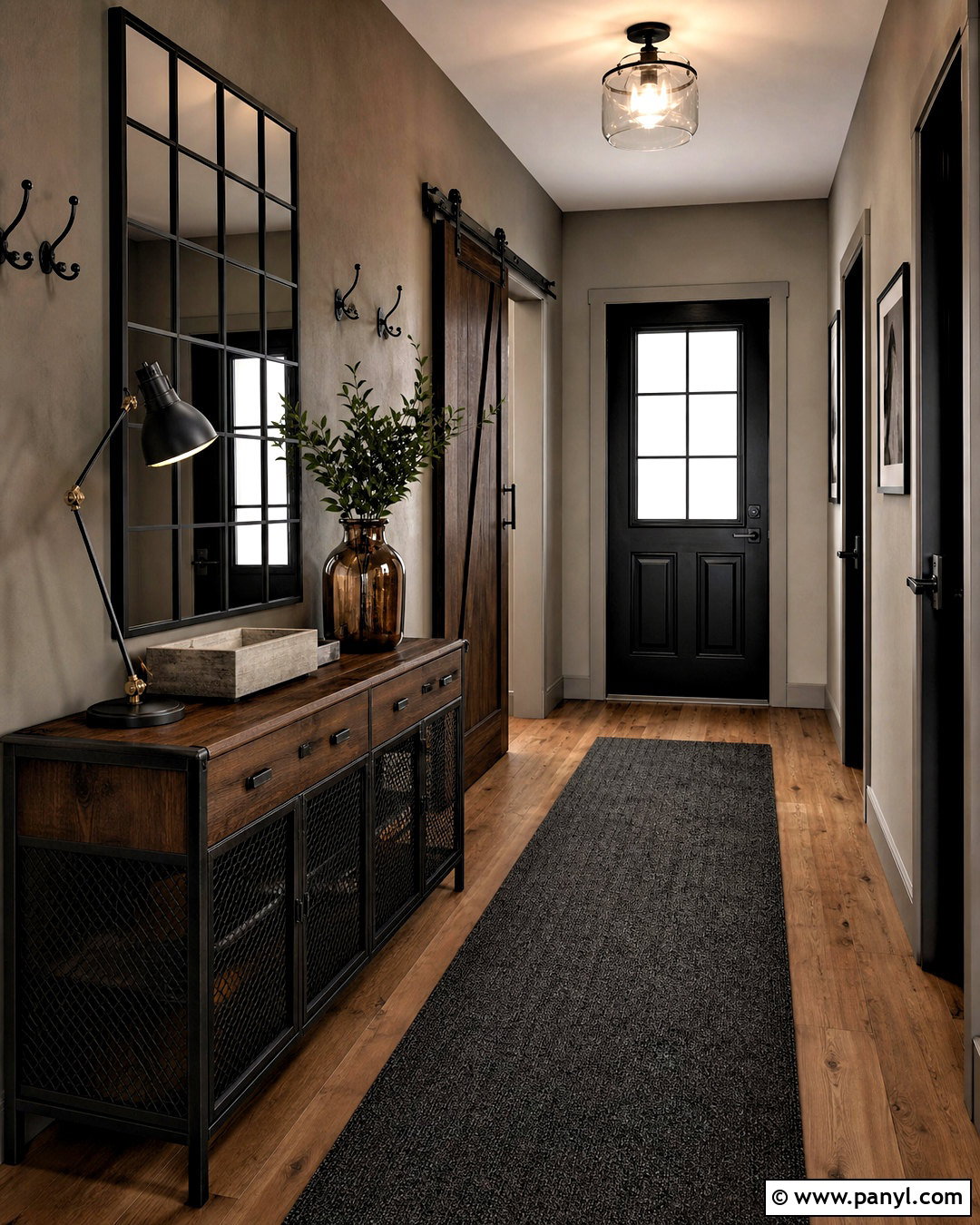
Combine warm wood and black metal for an industrial hallway that feels welcoming rather than severe. Choose a streamlined sideboard with a dark oak body, metal frame, mesh door inserts, and simple pulls. Use warm gray walls, medium wood flooring, and a charcoal runner to create a layered neutral setting. A large black-framed grid mirror provides structure above the cabinet. Add a metal task lamp, a concrete tray, and one amber ceramic vase to soften the hard finishes. Black wall hooks and a clear glass ceiling fixture continue the theme. Conceal shoes, bags, and maintenance supplies behind the doors, using dark storage bins to keep the interior orderly. Leave part of the top empty. This prevents the strong combination of metal, wood, and graphic lines from becoming visually overwhelming.
15. Hallway Sideboard With Mirror
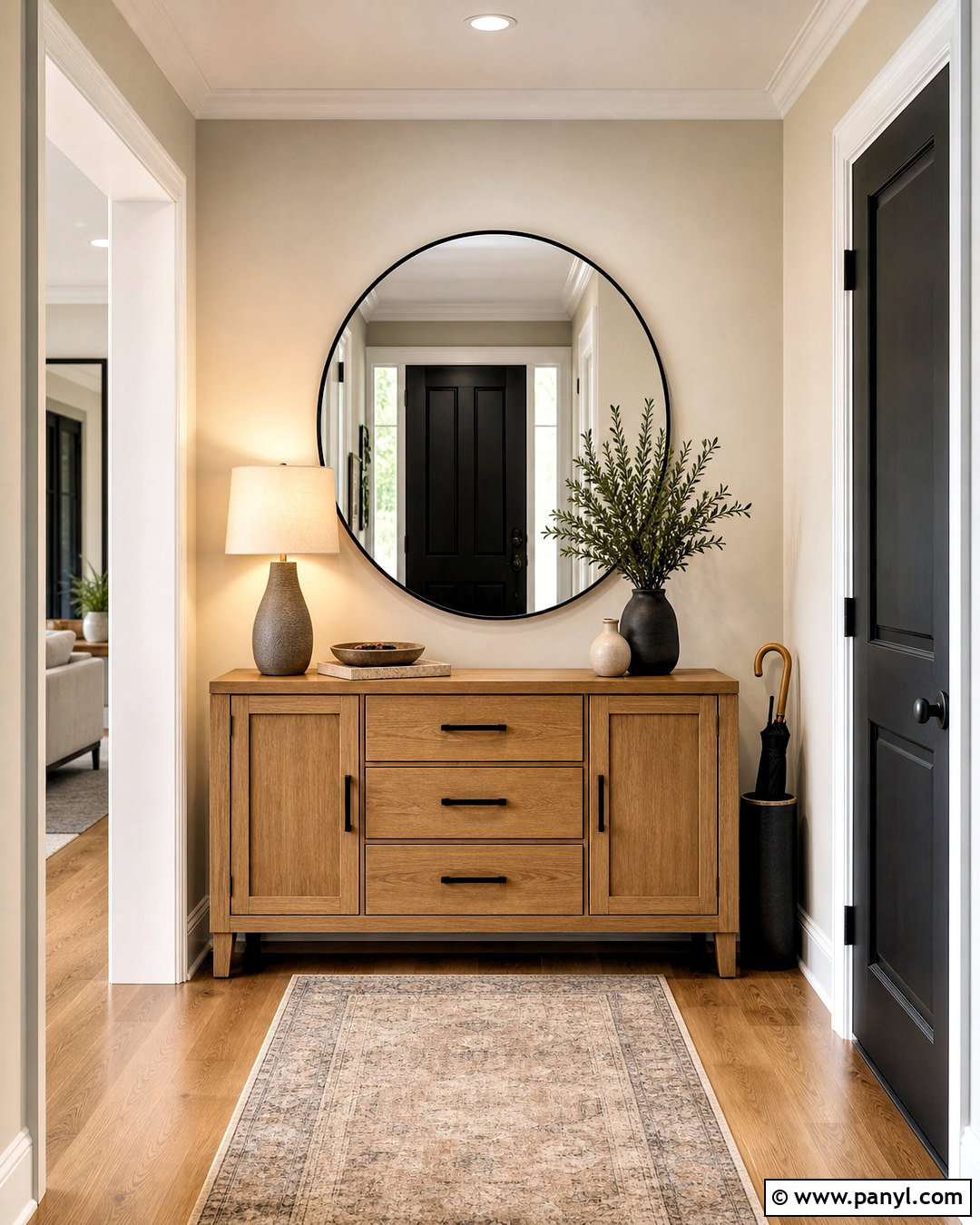
A mirror and sideboard can form a complete entry station when their proportions are carefully balanced. Choose a sideboard that is slightly wider than the mirror, leaving visible wall space on both sides. A warm oak cabinet, soft beige walls, and a large black-framed round mirror create a versatile foundation. Add a slim lamp at one end, then place a stone tray and small vase at the other. The mirror provides a useful last check before leaving and helps distribute available light through the hallway. Keep it high enough that displayed objects do not block the reflection. Add a washable runner, matching black door hardware, and a compact umbrella stand nearby. This combination delivers storage, lighting, a drop zone, and a strong focal point without requiring several separate furniture pieces. ()
16. Hallway Sideboard With Gallery Wall
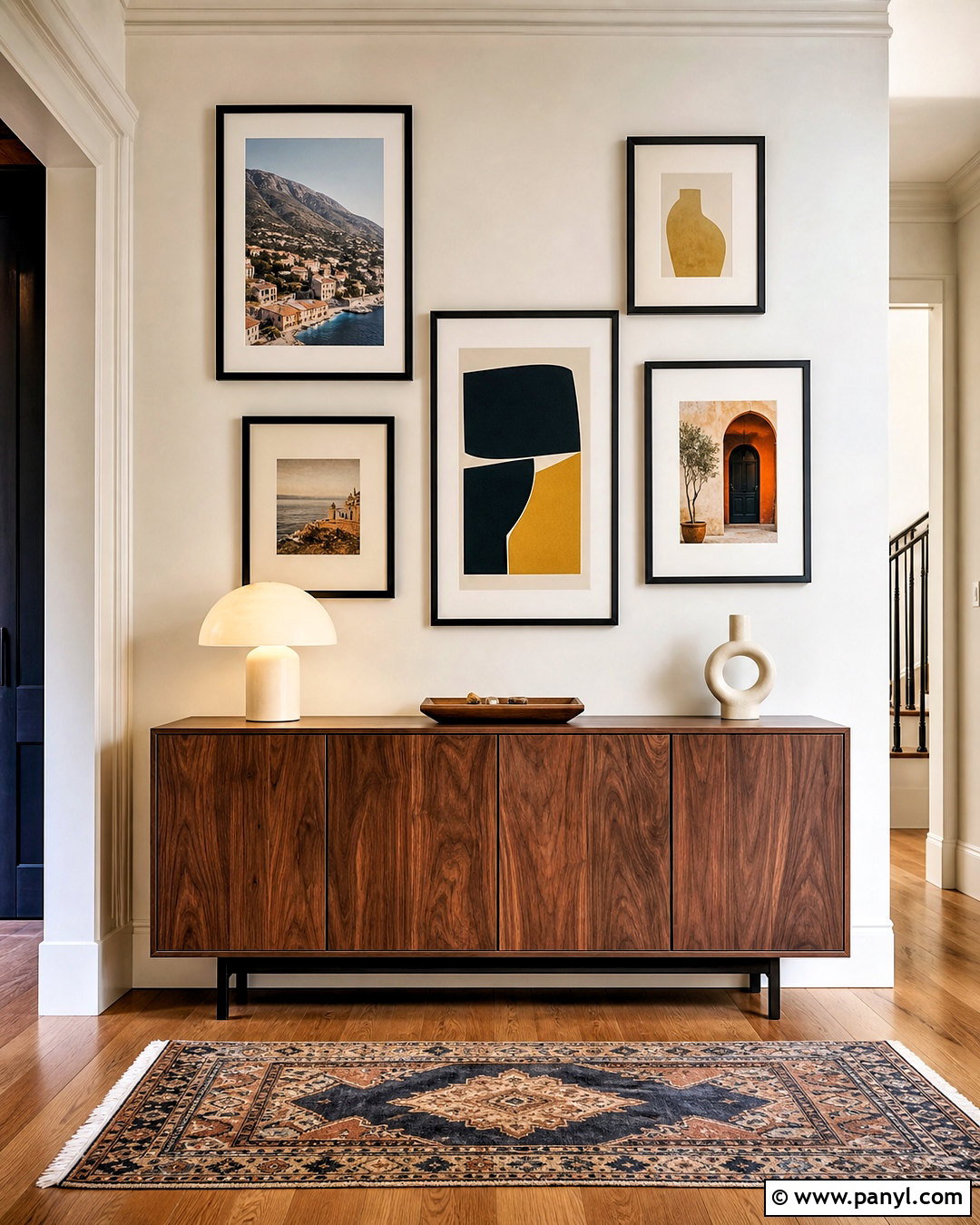
Turn a long, blank hallway into a personal display by pairing a simple sideboard with a disciplined gallery wall. Start with a low walnut or painted navy cabinet so the artwork has enough room above it. Select five to seven frames in one finish, such as black, walnut, or brushed brass. Arrange family photographs, abstract prints, and small landscapes within a clearly defined rectangle. Keep consistent spacing between frames to prevent visual clutter. On the sideboard, use a low lamp, a shallow key tray, and one sculptural object that does not compete with the artwork. A neutral wall color and understated runner allow the display to remain the focal point. Inside the cabinet, store photo albums, stationery, and household documents, making the gallery arrangement both meaningful and practical.
17. Hallway Sideboard With Lamps
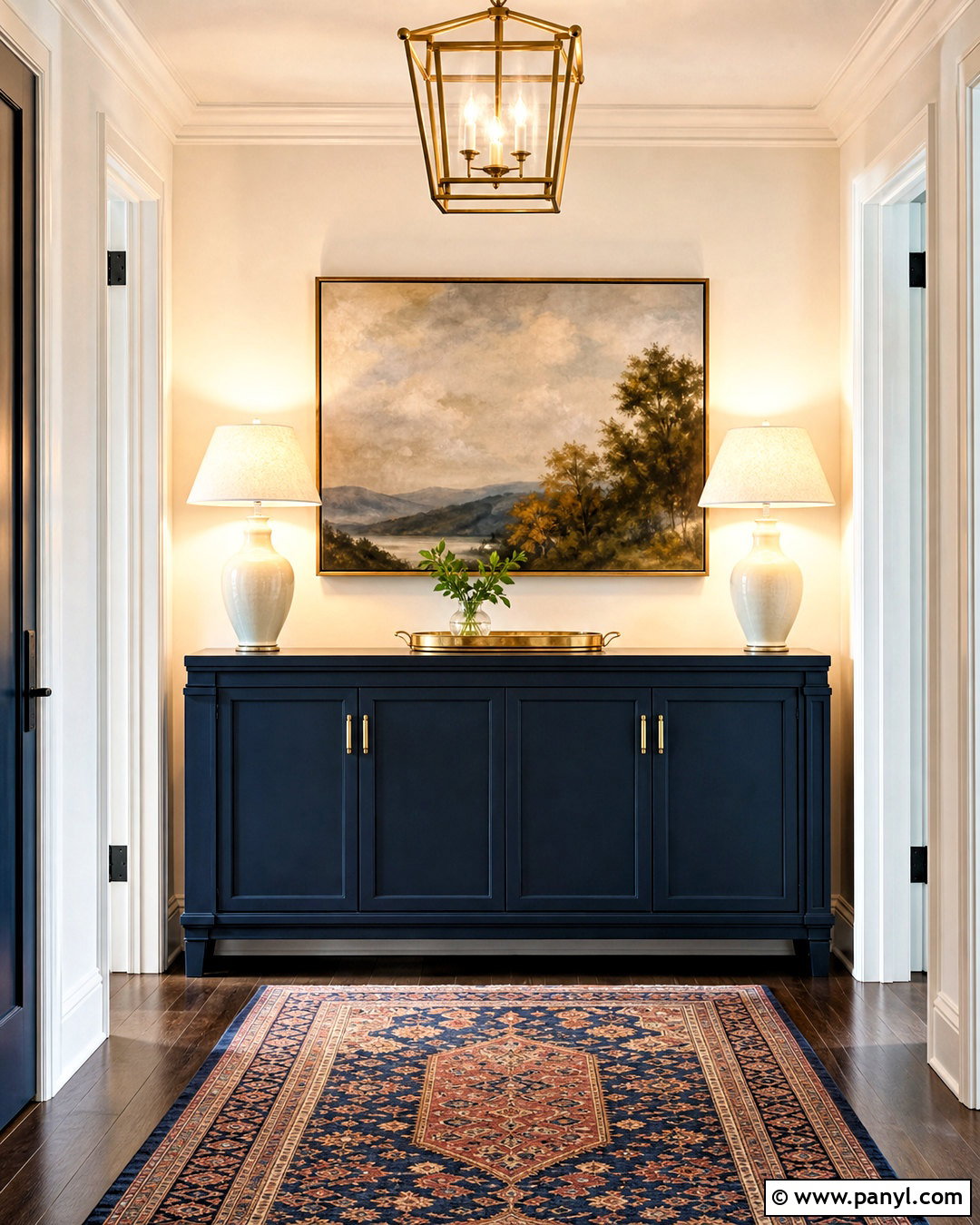
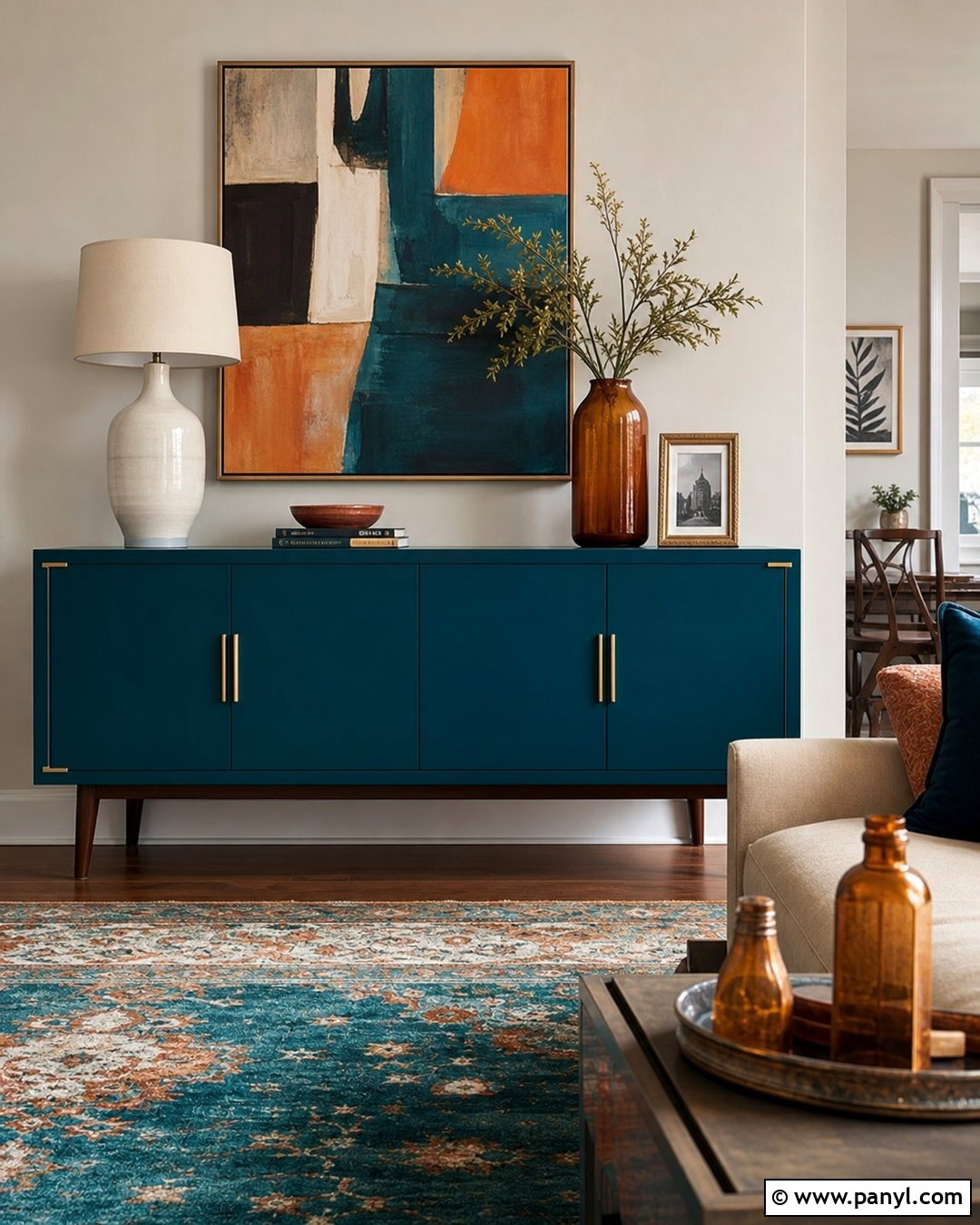
Lighting can make a sideboard feel like an intentional hallway feature instead of leftover storage. In a wide foyer, place two matching lamps at opposite ends of a long cabinet for a formal, symmetrical look. Choose a deep navy sideboard, warm white walls, and ceramic lamps with ivory shades. Center a large landscape painting between them, leaving enough space around the artwork. A brass tray and small glass vase can occupy the middle without crowding the surface. In a narrower hallway, use one slim lamp and balance it with a tall vase. Add a muted patterned runner and repeat brass in the cabinet handles and ceiling fixture. Concealed interior storage handles everyday clutter, while layered lighting provides a softer alternative to relying entirely on a bright overhead fixture.
18. Hallway Sideboard With Shoe Storage
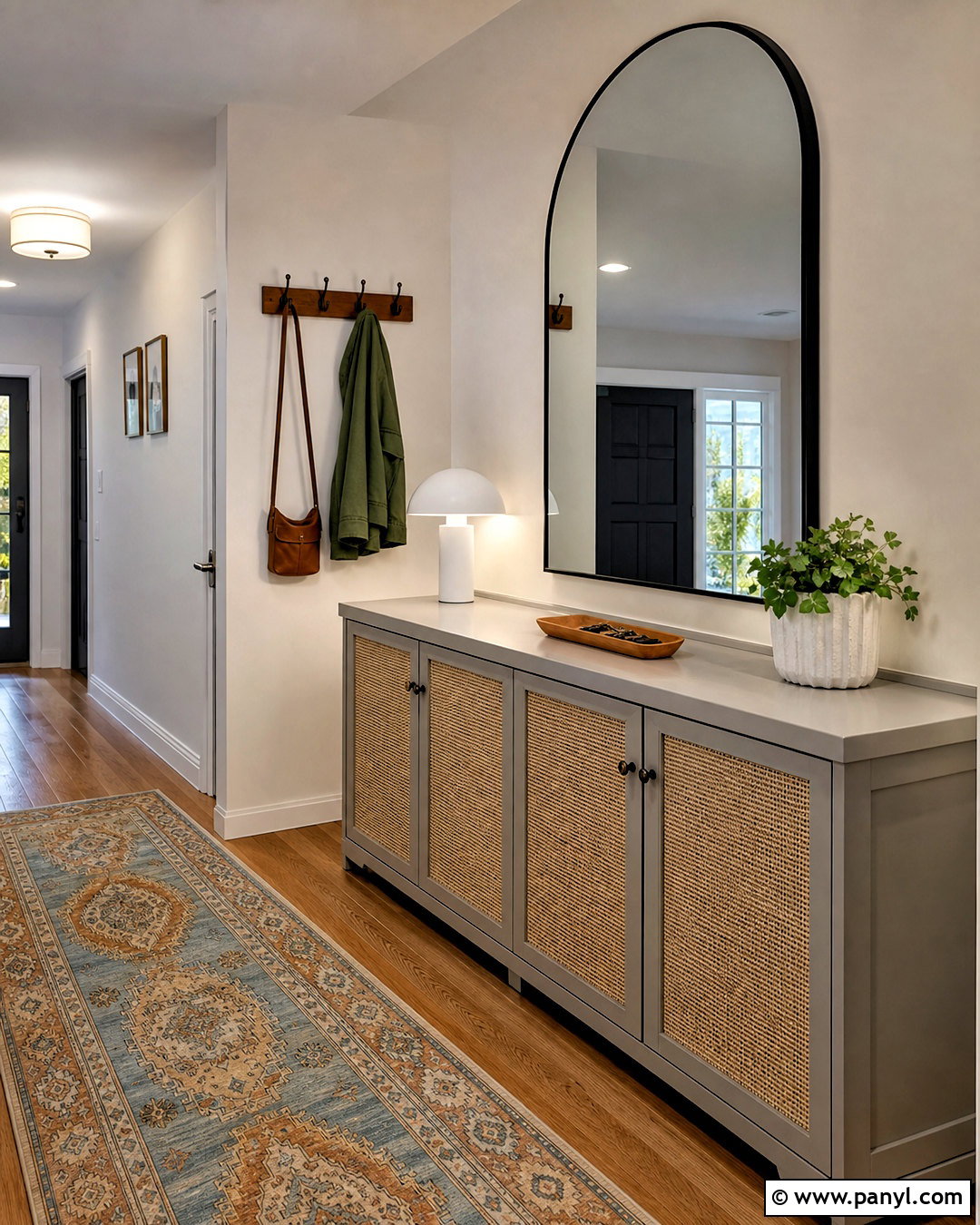
A sideboard can replace an exposed shoe rack when you choose an interior layout designed for footwear. Look for a shallow cabinet with adjustable shelves, ventilated cane or perforated doors, and a durable wipe-clean top. Pair a warm gray cabinet with light walls, oak flooring, and a washable patterned runner. Hang an arched mirror above it and add a compact lamp, key tray, and small plant. Use individual shelf sections for everyday shoes, with protective mats underneath to catch dirt. Place shoe-care products in a labeled basket and reserve a drawer for laces, insoles, and small accessories. A nearby wall hook rail can hold daily bags without covering the sideboard. The complete setup keeps the hallway calm while making departure and arrival routines more efficient for the household.
19. Hallway Sideboard Under Stairs
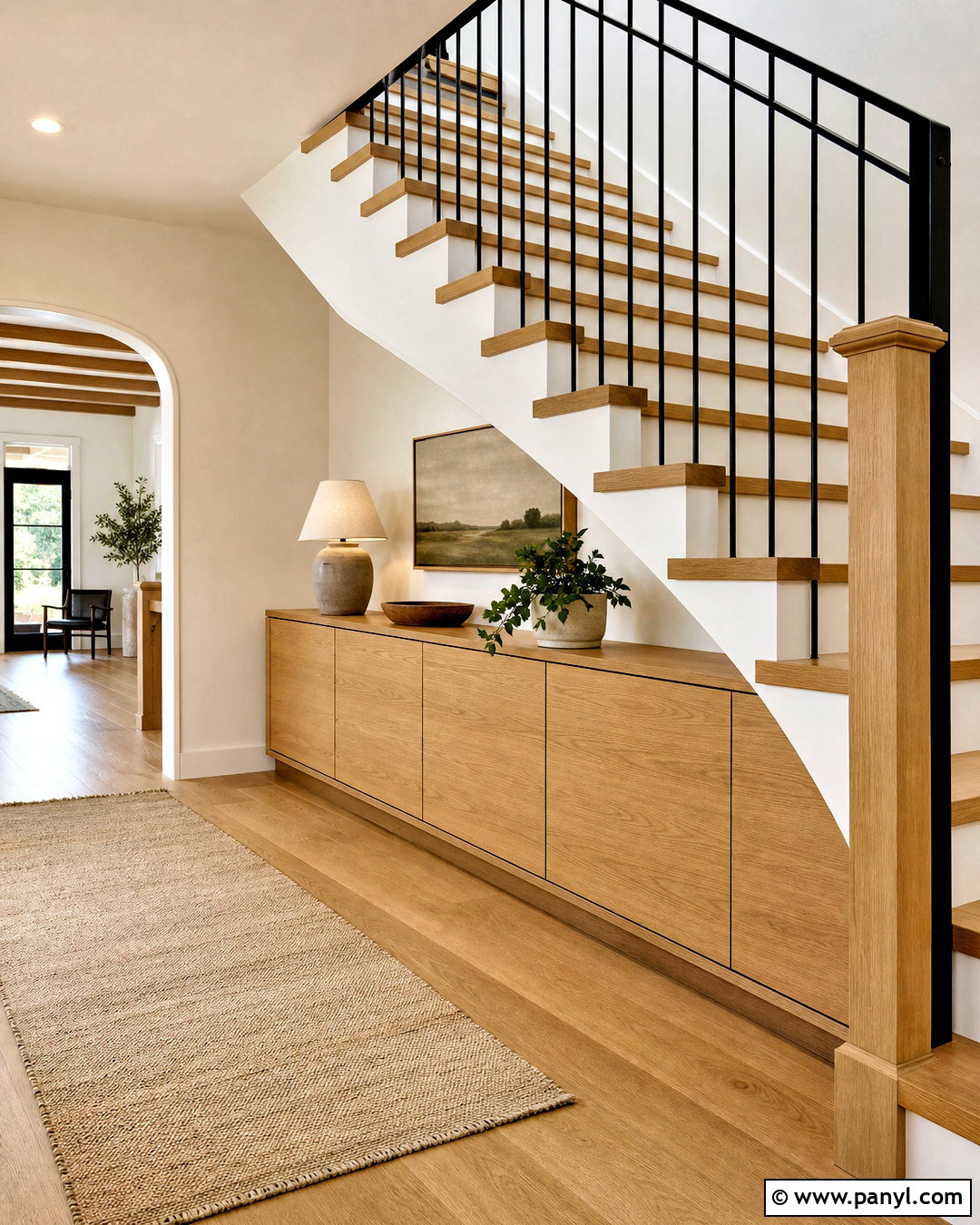
The wall beneath an open staircase often provides a natural location for a low sideboard. Select a cabinet that follows the available proportions without extending into the walking route. A custom-looking oak sideboard with flat doors works well against warm white walls and black stair railings. Use the top for a small lamp, key bowl, and medium-height plant, keeping taller decor away from the descending stair line. Hang one horizontal artwork where ceiling height permits, or leave the wall clear for a quieter look. Add a neutral runner that guides movement through the hall and connects the sideboard with the front door. Inside, organize shoes, shopping bags, tools, and cleaning supplies in separate sections. Matching the cabinet finish to the stair treads creates a cohesive architectural appearance.
20. Small Entryway Hallway Sideboard
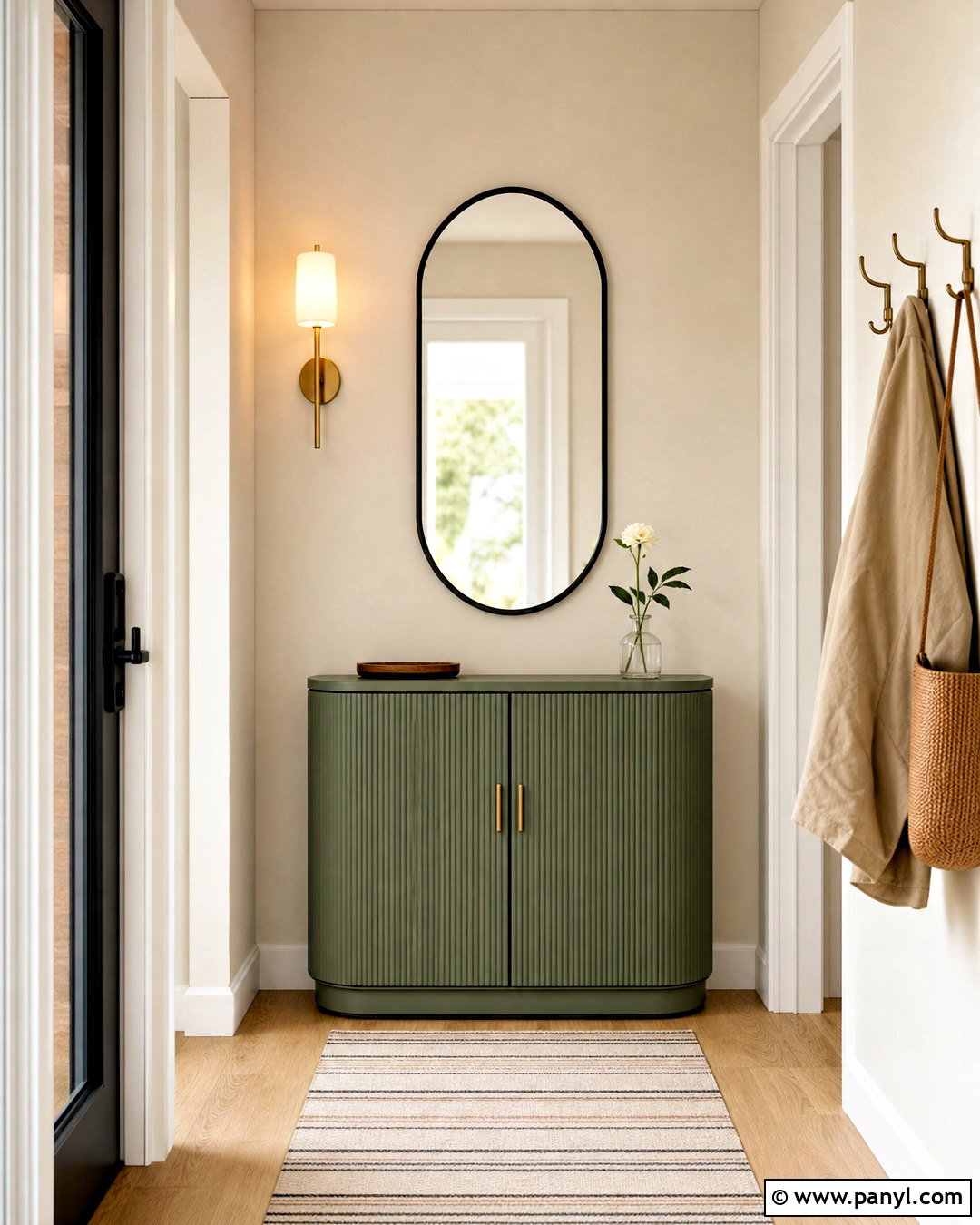
Even a tiny entrance can support a sideboard if the furniture is scaled to the available wall. Choose a compact cabinet with rounded corners, shallow depth, and sliding or tambour doors. A muted green finish adds personality without overpowering the space. Pair it with cream walls, pale oak flooring, and a narrow striped runner. Mount an oval mirror above the cabinet and use a wall sconce instead of a table lamp to preserve the top. A small wooden tray can contain keys and mail, while a single bud vase adds color. Inside, assign one shelf to shoes and another to bags or pet accessories. Install two simple hooks beside the cabinet for frequently used items. This complete arrangement gives a small entryway storage, reflection, lighting, and character without restricting movement.
Conclusion:
The most successful hallway sideboard combines attractive styling with storage that supports your real routine. Begin by measuring the wall, cabinet depth, door clearance, and remaining walkway before purchasing furniture. Then choose a finish that relates to the flooring, trim, doors, or nearby rooms. A mirror or artwork creates a focal point, while one lamp, a practical tray, and a vase or plant usually provide enough surface decoration. Inside, baskets, dividers, adjustable shelves, and protective mats make the storage easier to maintain. Whether your entrance is narrow, spacious, modern, rustic, or traditional, these **20 hallway sideboard ideas** offer complete looks that can make it more organized, welcoming, and visually connected to the rest of your home.

Related Ideas and Inspiration:
Leave a Reply