
Dark paint can turn a basic drop zone into one of the most polished spaces in the home. These 20 Dark Mudroom Wall Colors include grounded neutrals, deep greens, rich blues, earthy browns, and warmer statement shades. Each palette is designed as a complete look, with practical storage, durable flooring, lighting, and accents working together. Dark neutrals currently range from charcoal and chocolate brown to navy and forest green, making them surprisingly versatile for hardworking interiors. () The key is balancing the walls with enough contrast, texture, and bright illumination. Pale wood, white trim, reflective hardware, and washable surfaces can keep the room welcoming rather than heavy. Explore the sections below to find a coordinated, realistic design among these 20 Dark Mudroom Wall Colors.
1. Charcoal Gray Mudroom Walls
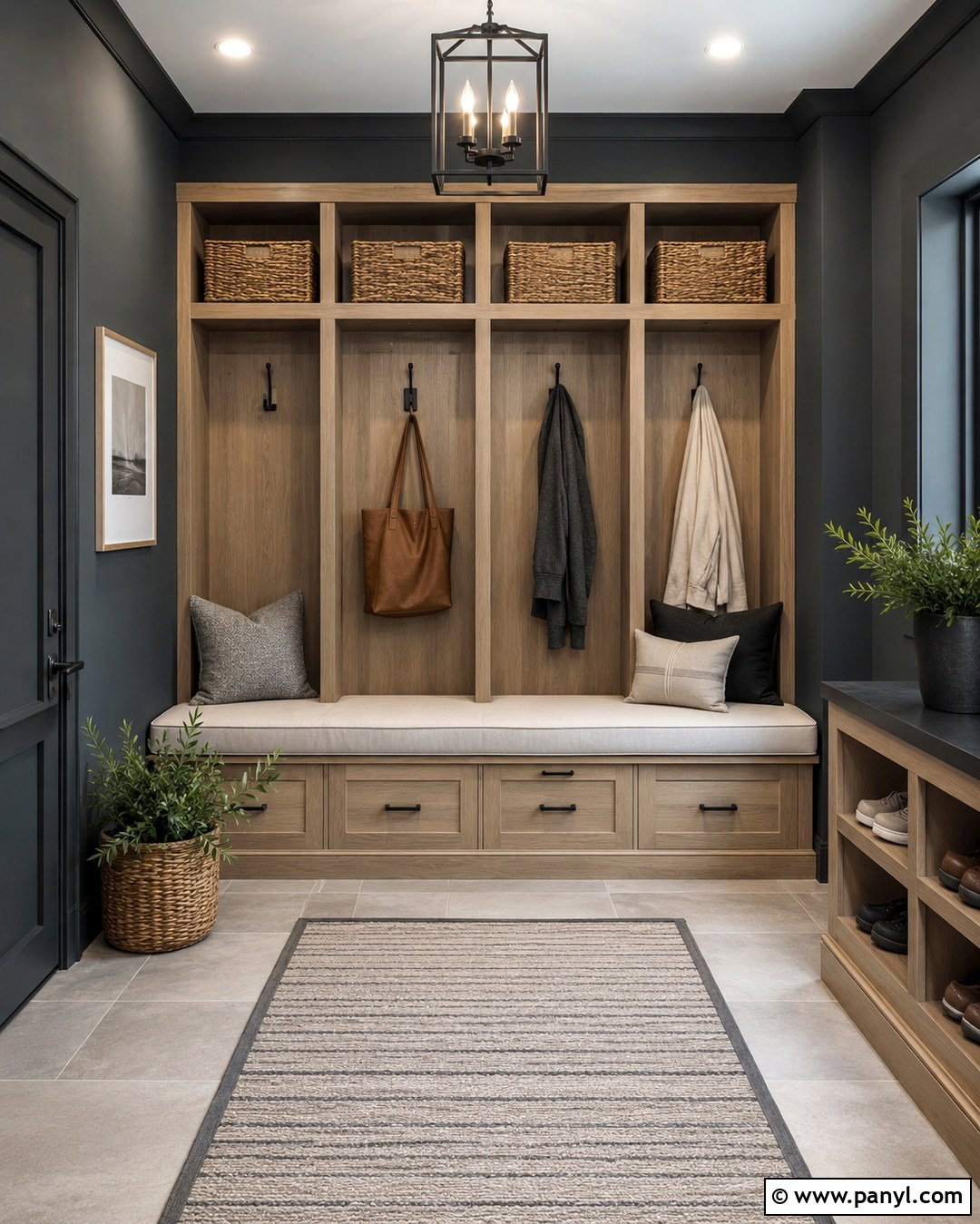
Charcoal gray walls create a clean, grounded mudroom that works especially well in a busy family home. Pair the walls with natural white oak lockers, open cubbies, and a long bench with hidden shoe drawers. Matte black hooks keep the palette streamlined, while cream seat cushions and woven baskets soften the harder finishes. Choose pale gray porcelain floor tile in a large format to reflect more light and reduce visual clutter. A washable satin wall finish makes routine cleanup easier around backpacks and wet coats. Add a simple flush-mount ceiling light and under-shelf lighting above the bench. Flooring with a lighter undertone can help balance visually weighty colors such as charcoal. ()
2. Black Mudroom Walls
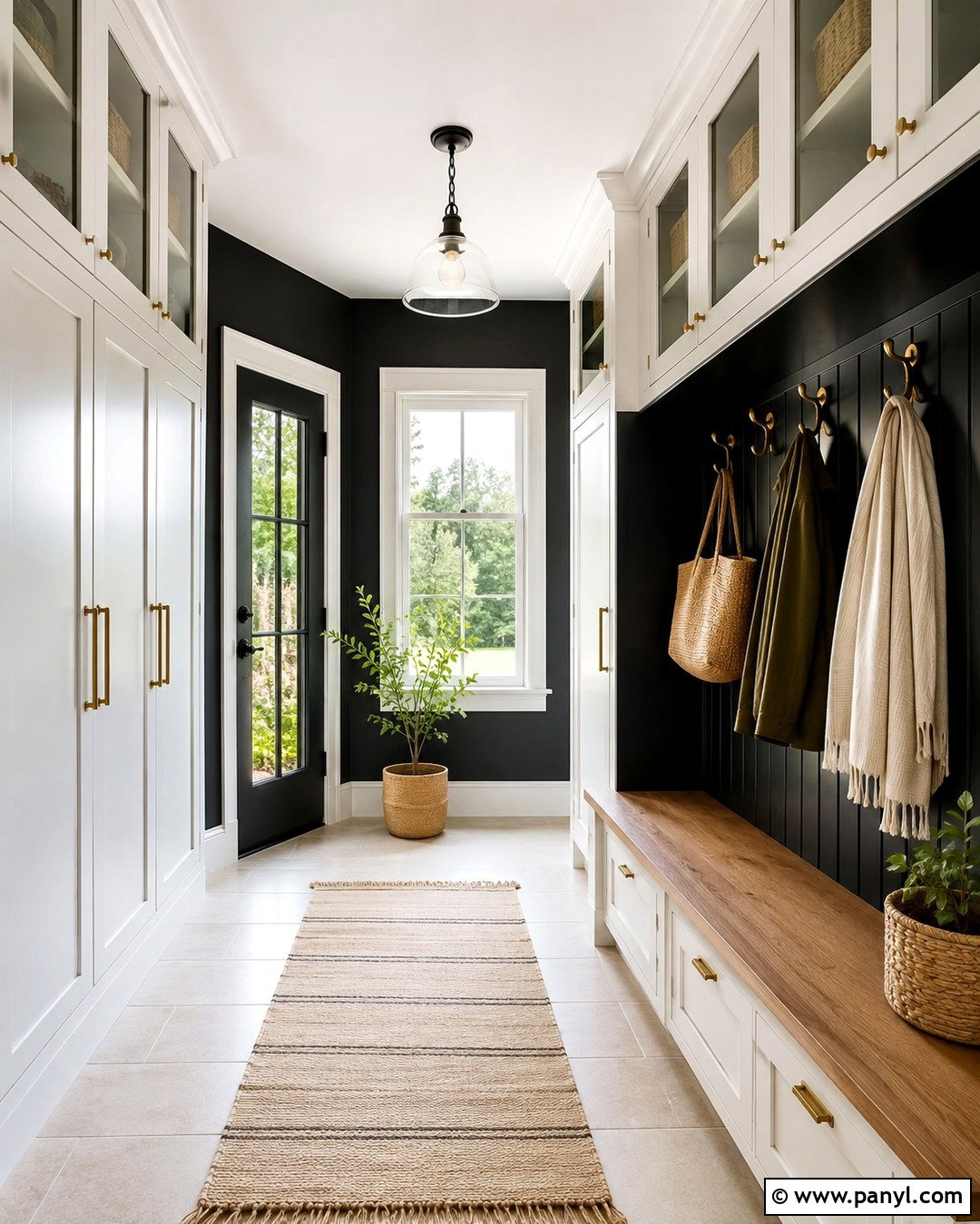
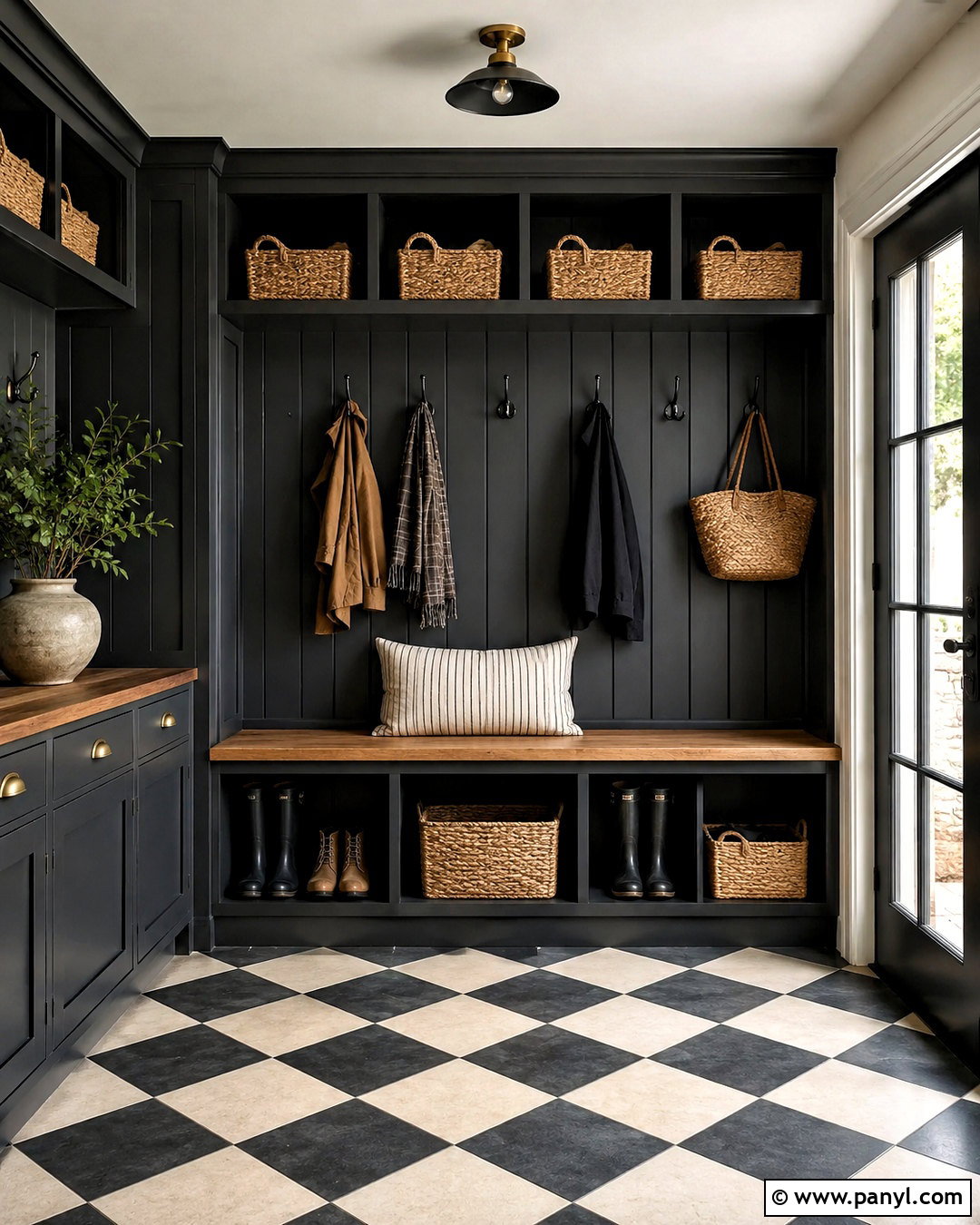
Black walls can make a small mudroom feel intentional rather than forgotten. Keep the layout simple with a wall-to-wall bench, tall white cabinets, and a central section of black-painted beadboard fitted with brass hooks. A warm oak bench top prevents the room from looking cold, while a striped cream runner introduces an easy pattern. Use light limestone-look tile underfoot and paint the ceiling soft white to preserve brightness. Clear glass doors on upper cabinets can also break up solid surfaces. A black mudroom is most successful when several light sources illuminate different zones, including the ceiling, bench, and doorway. Real residential examples pair black walls with finishes ranging from concrete and porcelain tile to dark wood flooring. ()
3. Navy Blue Mudroom Walls
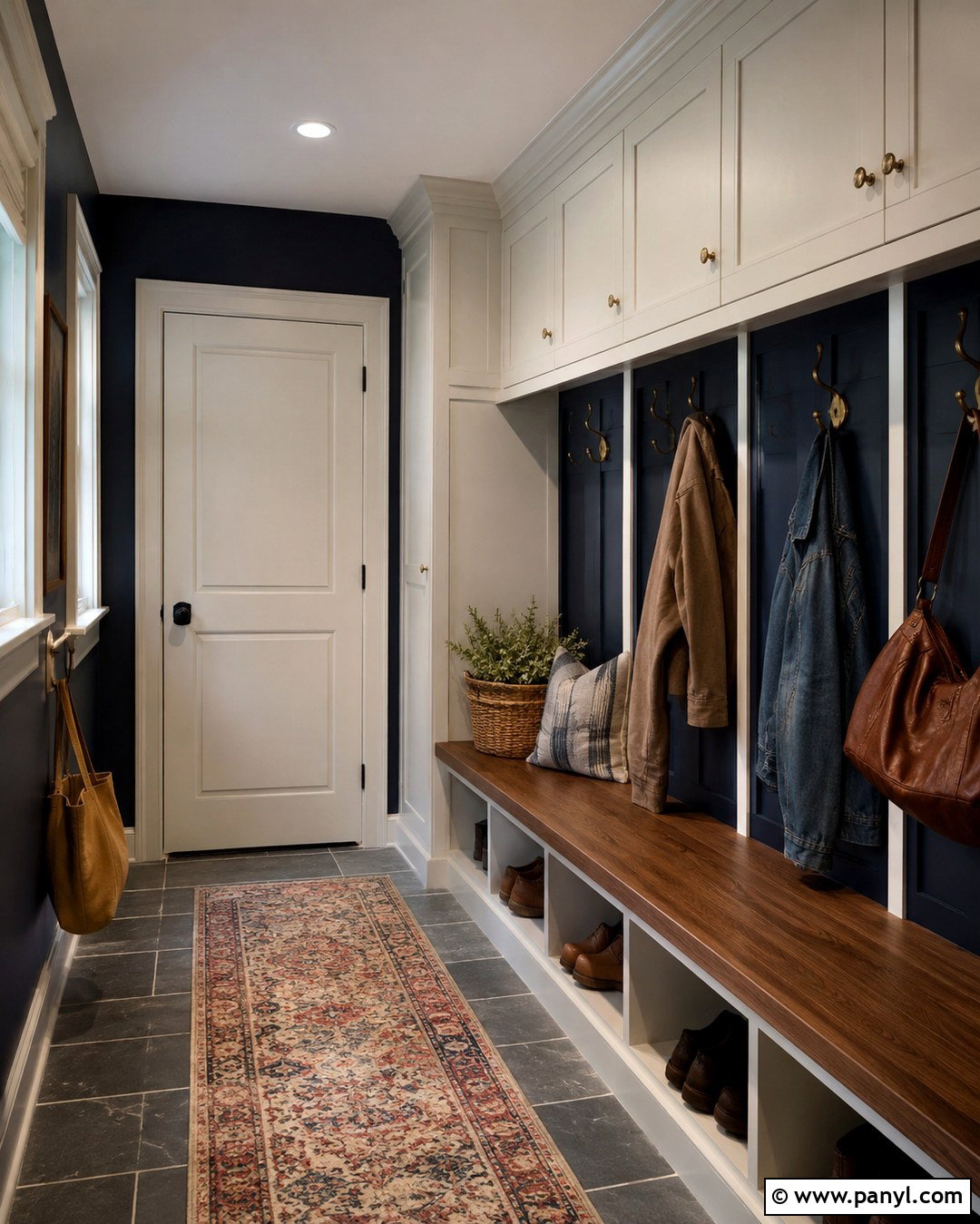
Deep navy blue gives a mudroom classic character without feeling as severe as black. Build the design around navy walls, warm white shaker cabinets, and a medium-tone walnut bench. Antique brass hooks and cabinet pulls add warmth, while a red, cream, and faded blue runner creates subtle traditional color. Gray slate flooring is practical beneath boots and connects naturally with the cool wall tone. For a more cohesive effect, paint the back panels of the cubbies navy while leaving their frames white. Include closed cabinets near the ceiling for seasonal items and open baskets below for everyday shoes. A brass lantern-style ceiling fixture finishes the look and helps the mudroom feel like a considered entry rather than a utility corridor.
4. Deep Teal Mudroom Walls
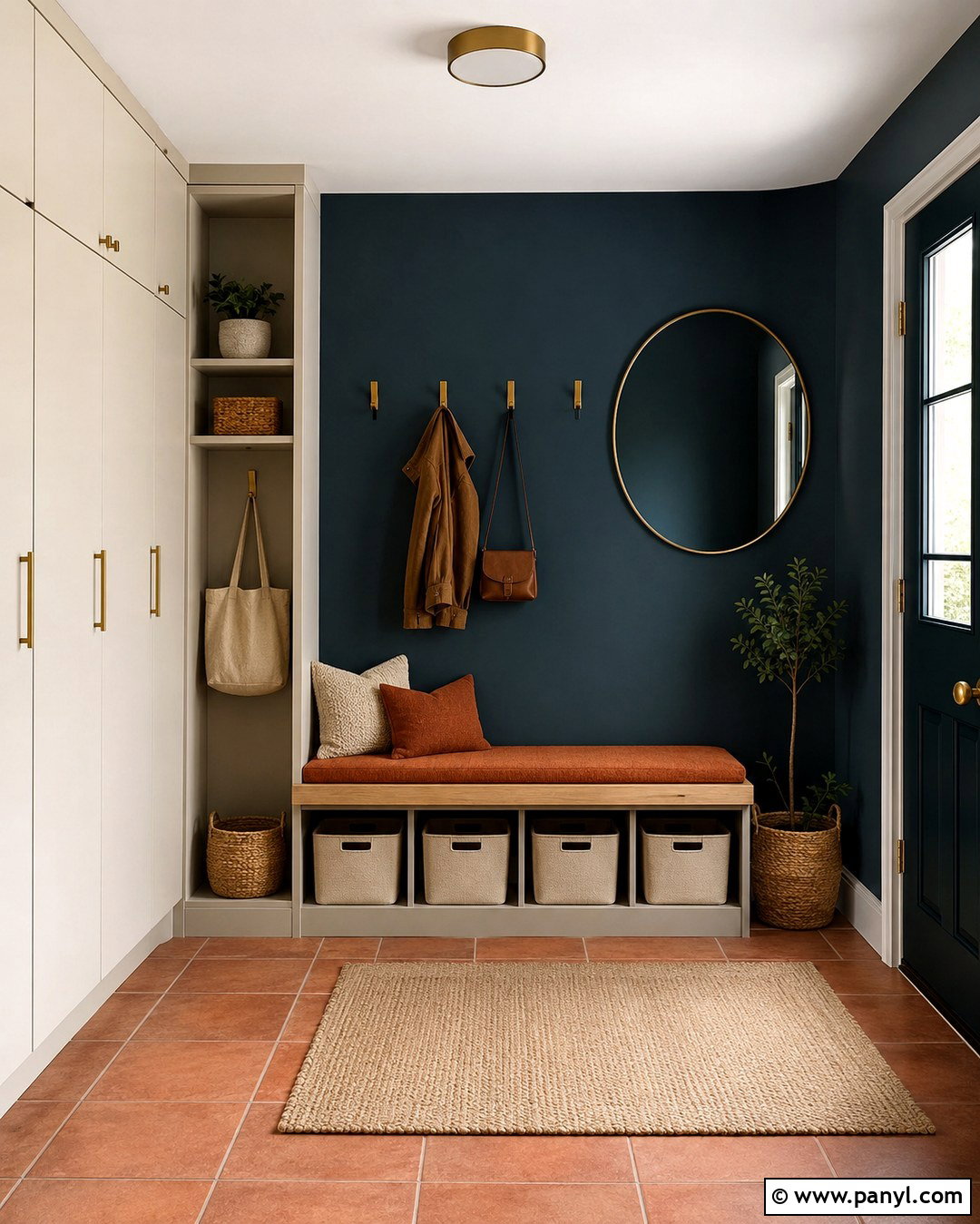
Deep teal walls bring noticeable color into a mudroom while remaining grounded and easy to coordinate. Combine them with flat-front cabinets in warm white, a natural maple bench, and brushed brass hardware. Terracotta floor tile adds earthy contrast and keeps the blue-green paint from feeling overly cool. Use cream canvas storage bins in the upper cubbies, then add a rust-colored bench cushion for another warm layer. A large round mirror near the exit reflects both daylight and ceiling light through the narrow space. Keep the trim crisp but slightly creamy rather than stark white. This full palette feels modern, cheerful, and organized. It works particularly well in mudrooms that connect a backyard, kitchen, or informal family entrance.
5. Forest Green Mudroom Walls
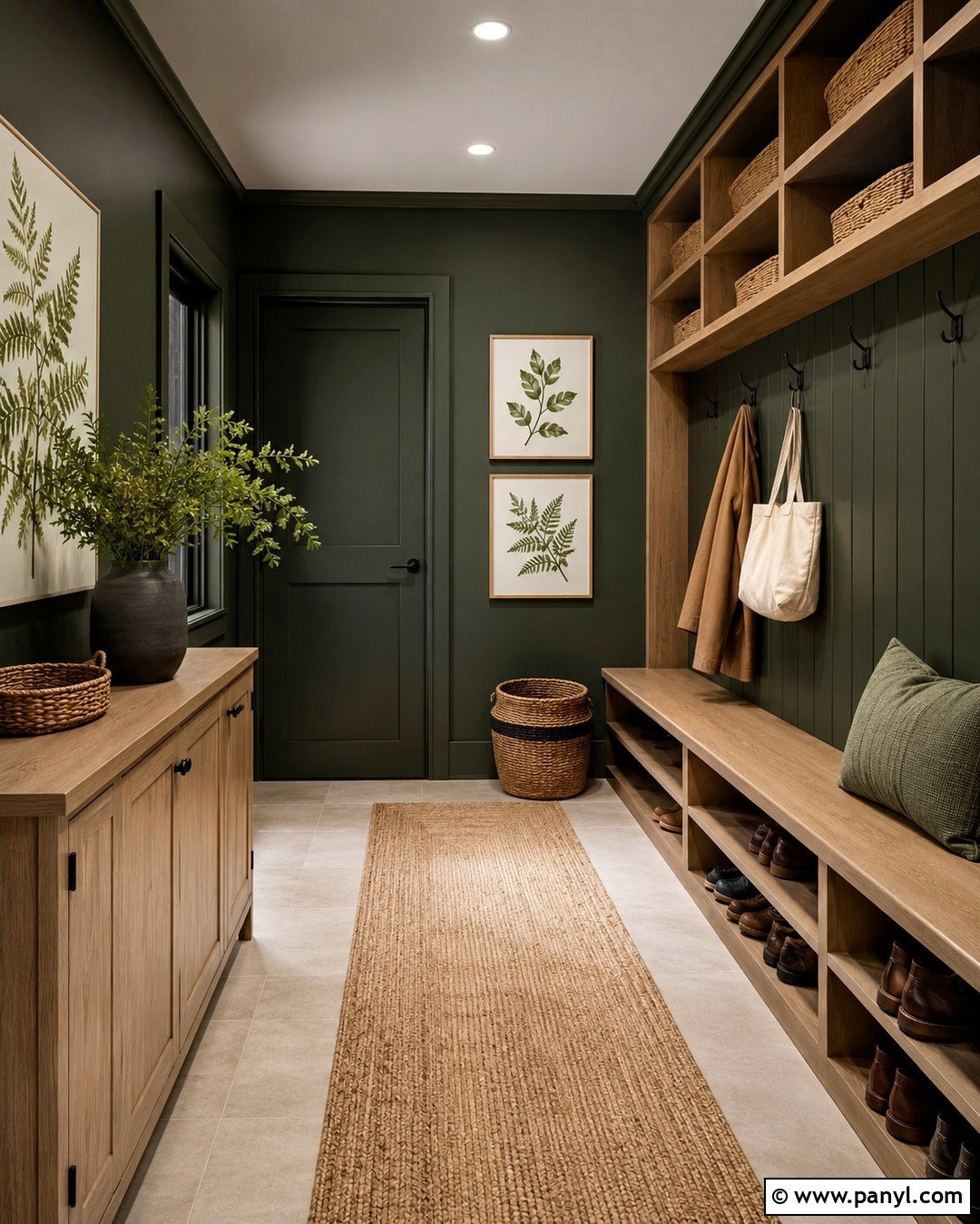
Forest green walls can give a hardworking mudroom the relaxed feeling of a garden room. Pair the paint with pale oak cabinetry, open shoe shelves, and an oak bench that runs beneath black iron hooks. Warm cream floor tile brightens the lower half of the space, while a washable tan runner disguises outdoor debris. Add woven rattan baskets, off-white seat cushions, and a few simple botanical prints in light wood frames. A milk-glass ceiling fixture provides soft visual contrast against the dark color. Bright white is a classic companion for deep green, while wood and warm metal finishes make the palette feel less formal. () Use the green across both walls and cubby backs for a connected, built-in appearance.
6. Hunter Green Mudroom Walls
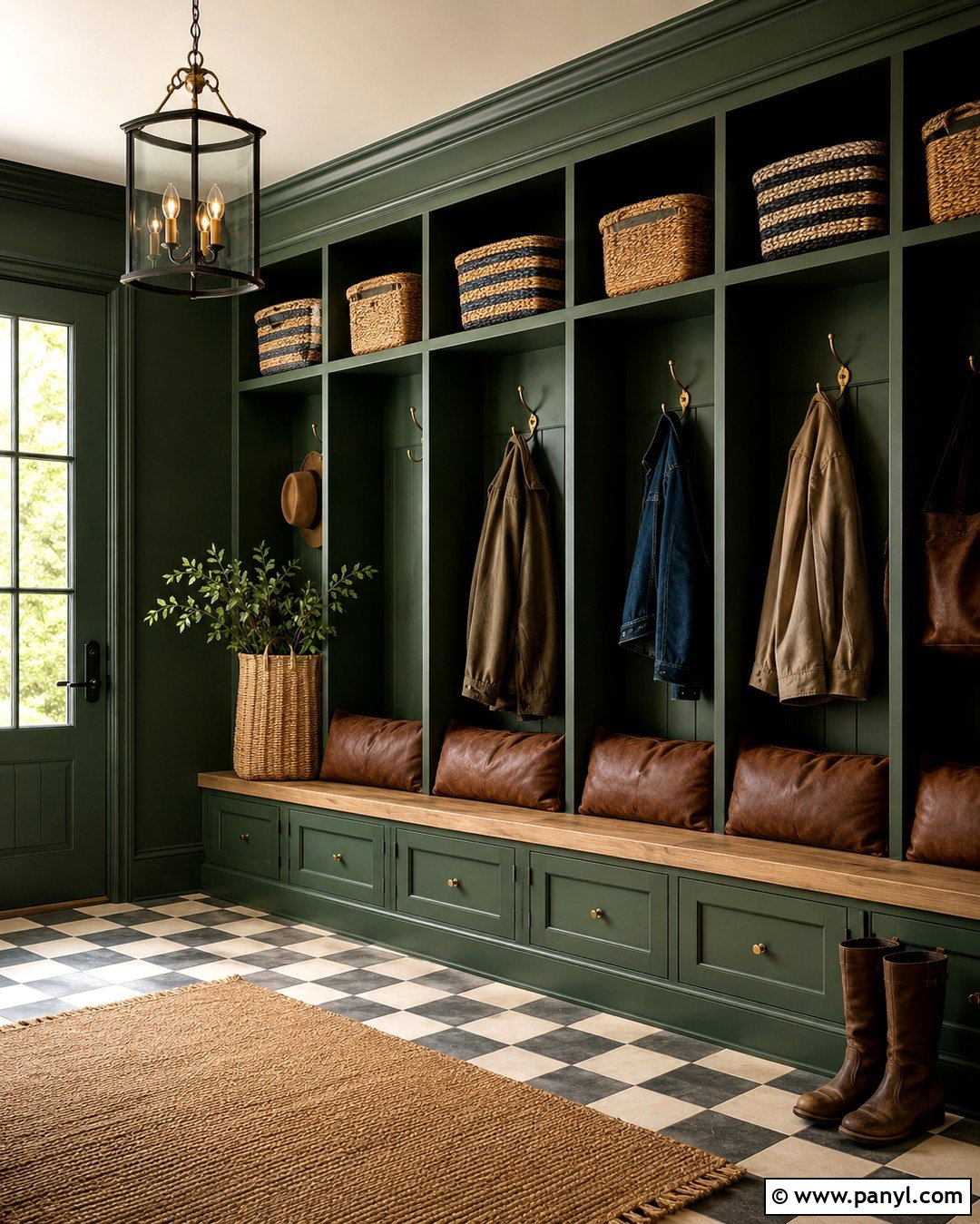
Hunter green creates a traditional mudroom that feels substantial and welcoming. Design the room with matching green walls and lower cabinetry, then introduce contrast through a thick white oak bench and ivory upper walls or ceiling. A checkerboard floor in warm white and muted charcoal gives the space a timeless foundation without overwhelming it. Choose aged brass hooks, bin pulls, and a small lantern fixture to complement the green. Closed cupboards can frame a central bench with individual open sections for coats and bags. Add cognac leather cushions and striped canvas baskets for warmth. This color scheme suits Colonial, farmhouse, and transitional homes, but clean cabinet doors and minimal trim can also make it work in a more modern interior.
7. Dark Olive Mudroom Walls
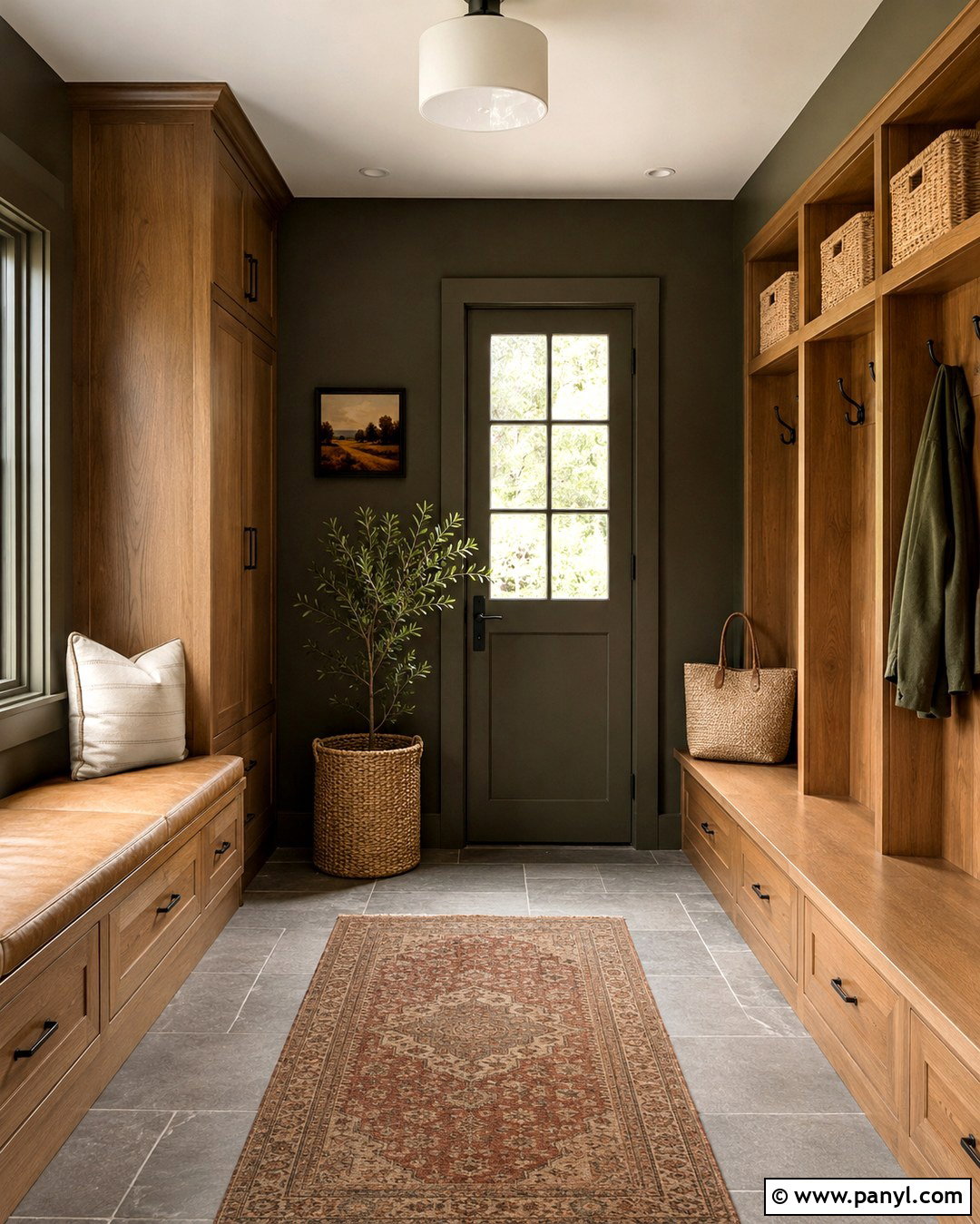
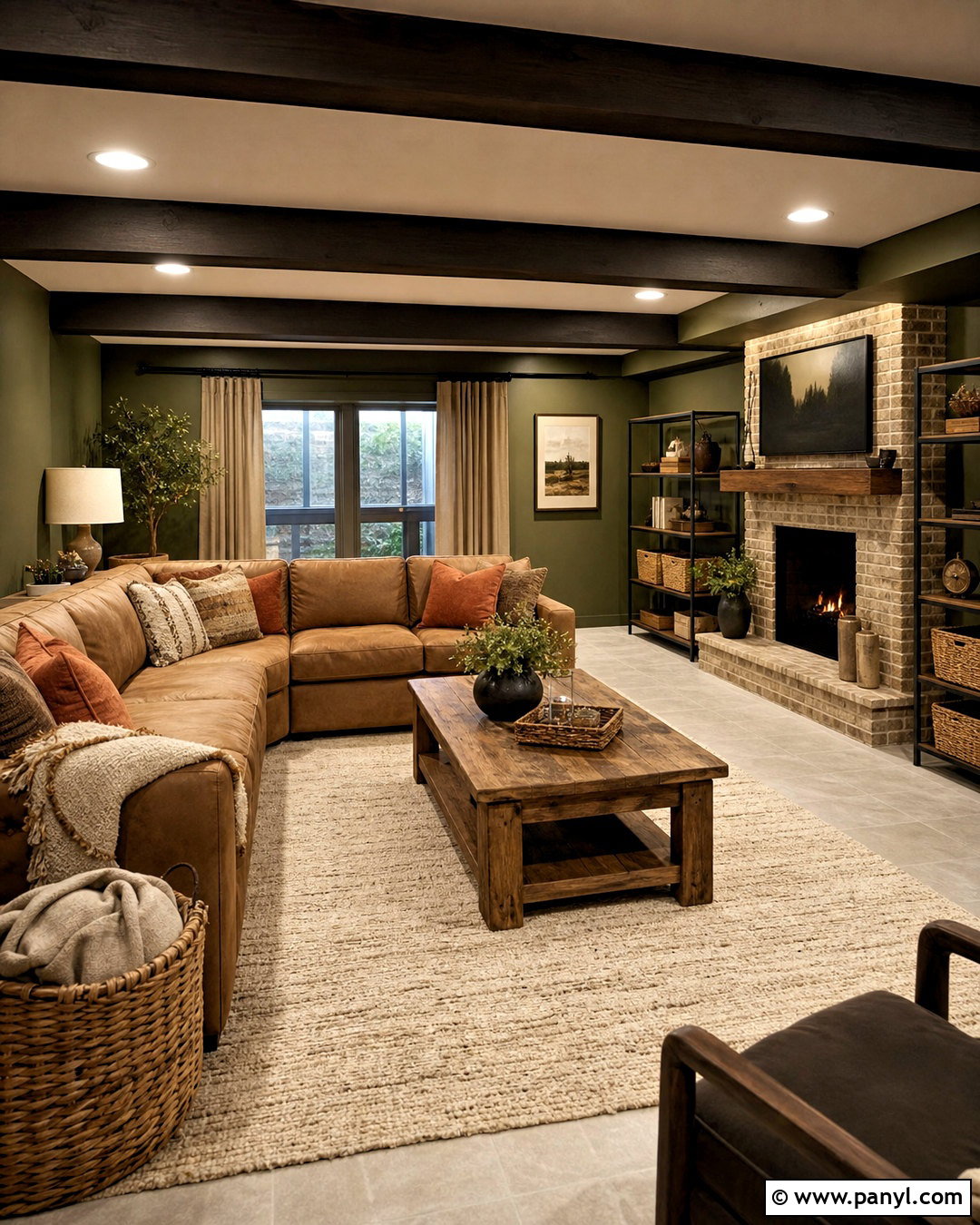
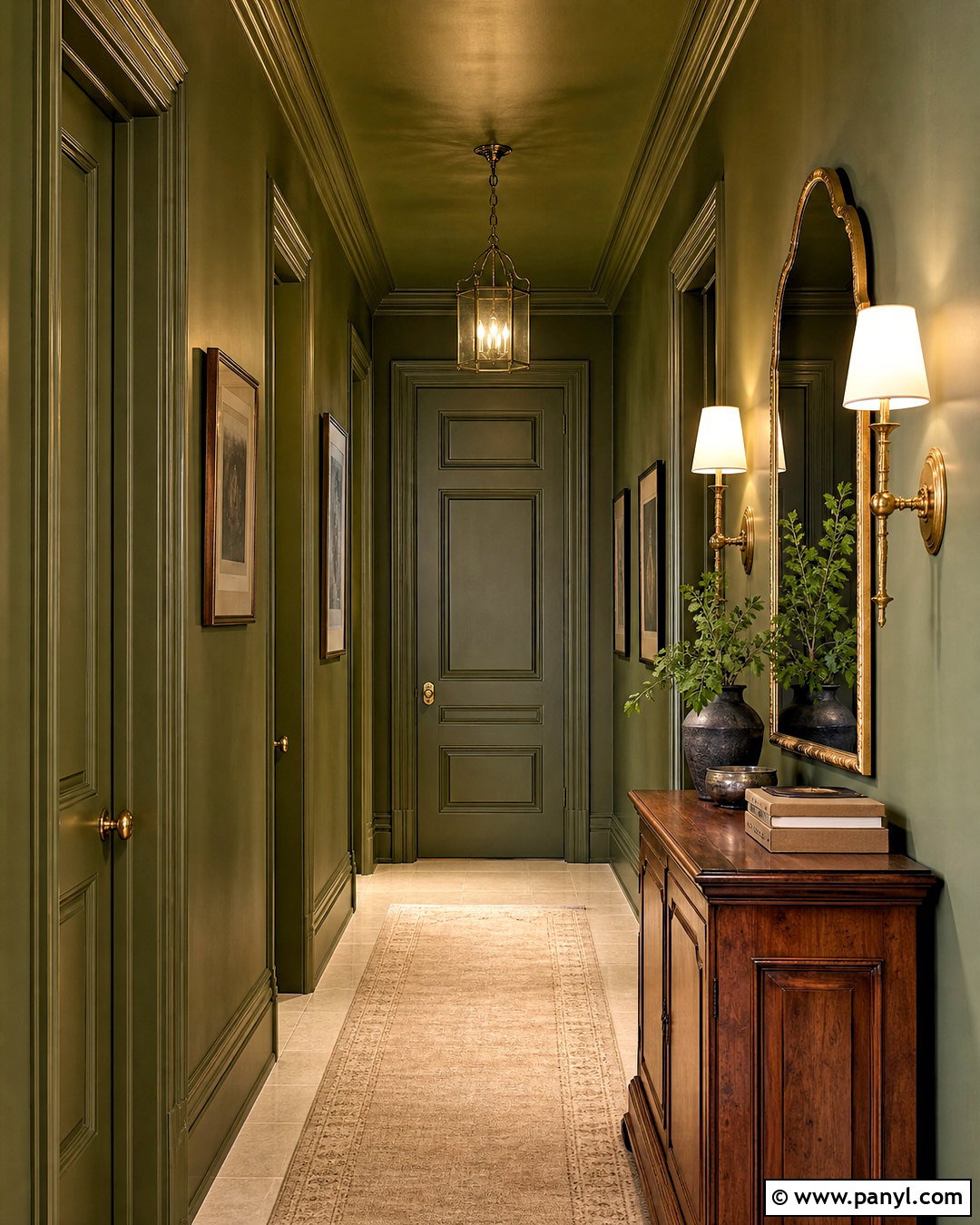
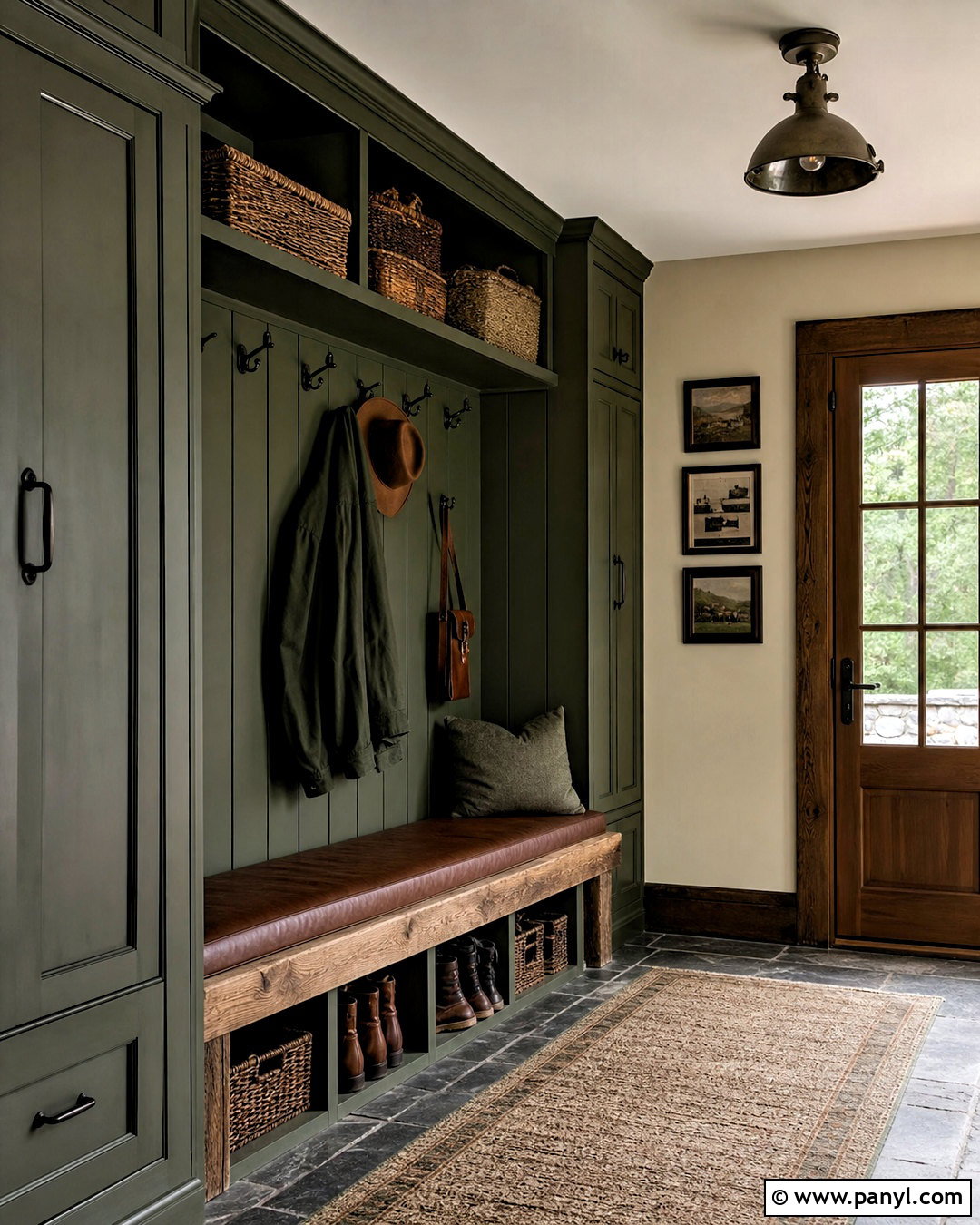
Dark olive walls offer a softer alternative to classic forest green. Their brown undertone coordinates naturally with oak, leather, stone, and woven storage. Create a complete mudroom with olive-painted walls, medium oak lockers, and a bench topped with a camel-colored cushion. Use honed gray limestone or stone-look porcelain flooring for a durable, understated base. Dark bronze hooks and cabinet knobs maintain the earthy palette without disappearing against the wall color. Cream baskets in the upper cubbies provide necessary contrast, while a narrow vintage-style runner introduces muted rust and tan. Finish the room with a large frosted-glass ceiling light. This scheme looks especially cohesive beside kitchens with warm wood cabinetry, beige counters, or traditional bronze fixtures.
8. Deep Sage Mudroom Walls
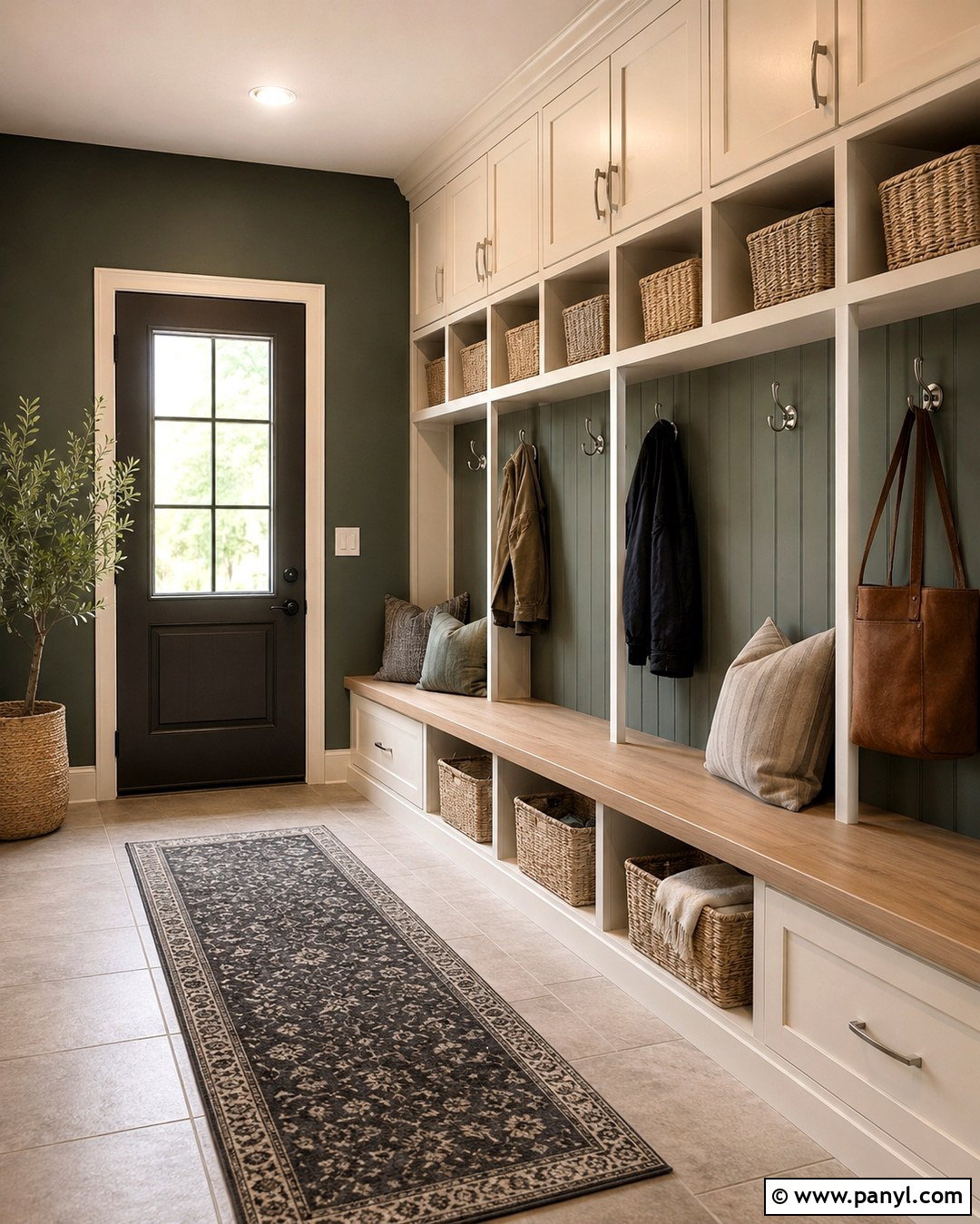
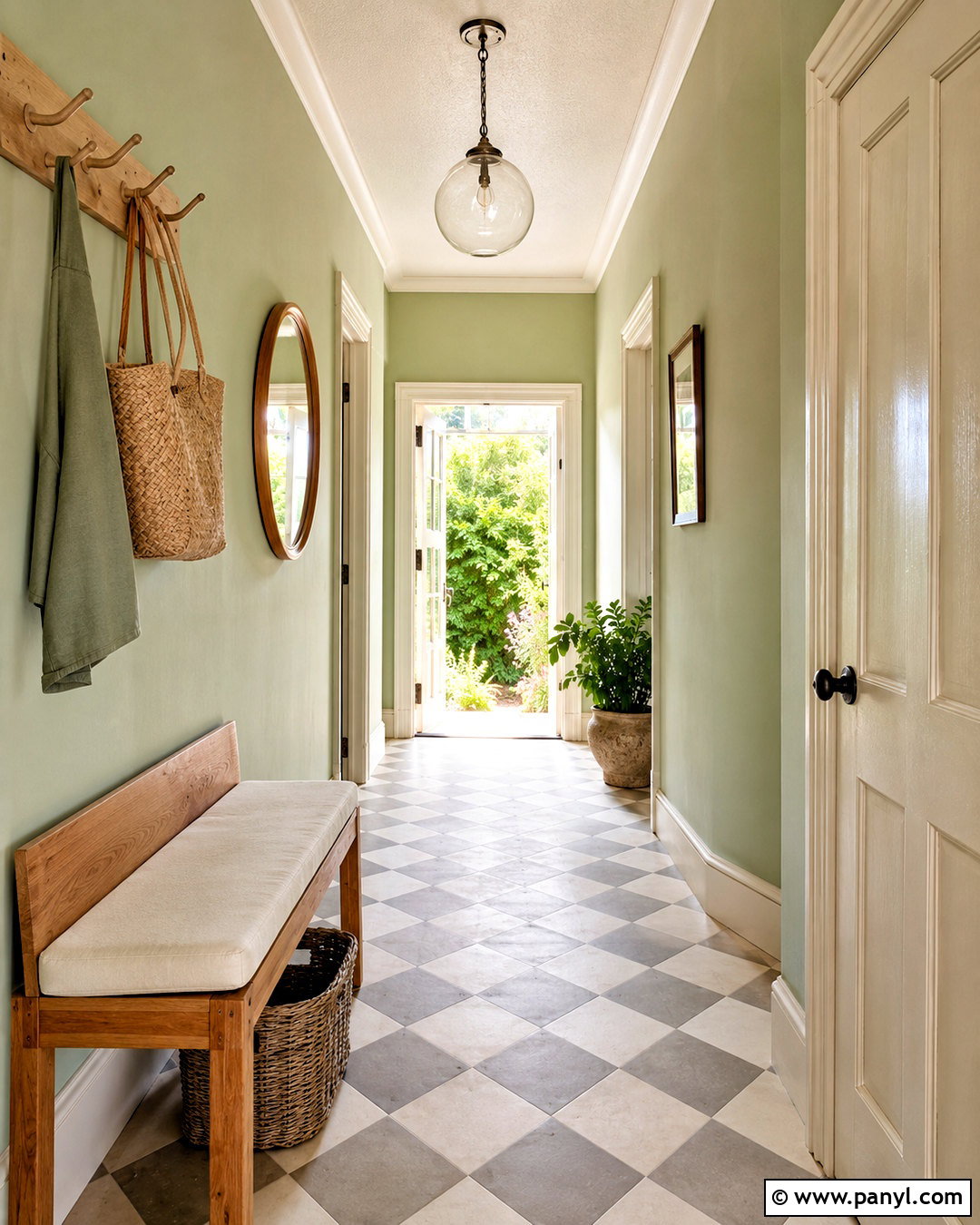
Deep sage green can make a mudroom feel calm, natural, and less visually busy. Select a muted gray-green rather than a bright herbal shade, then pair it with creamy white cabinetry and a light oak bench. Paint the cubby backs sage to connect the storage system with the surrounding walls. Greige porcelain flooring creates a soft transition between the green and white surfaces. Use satin nickel hooks for a clean finish, or choose aged brass if the adjoining rooms contain warmer metals. A charcoal-and-cream runner adds practical pattern without disrupting the restrained palette. Include a ceiling fixture with several diffused bulbs and a small lamp on an open shelf. The resulting room feels bright enough for daily tasks but still rich and enveloping.
9. Chocolate Brown Mudroom Walls
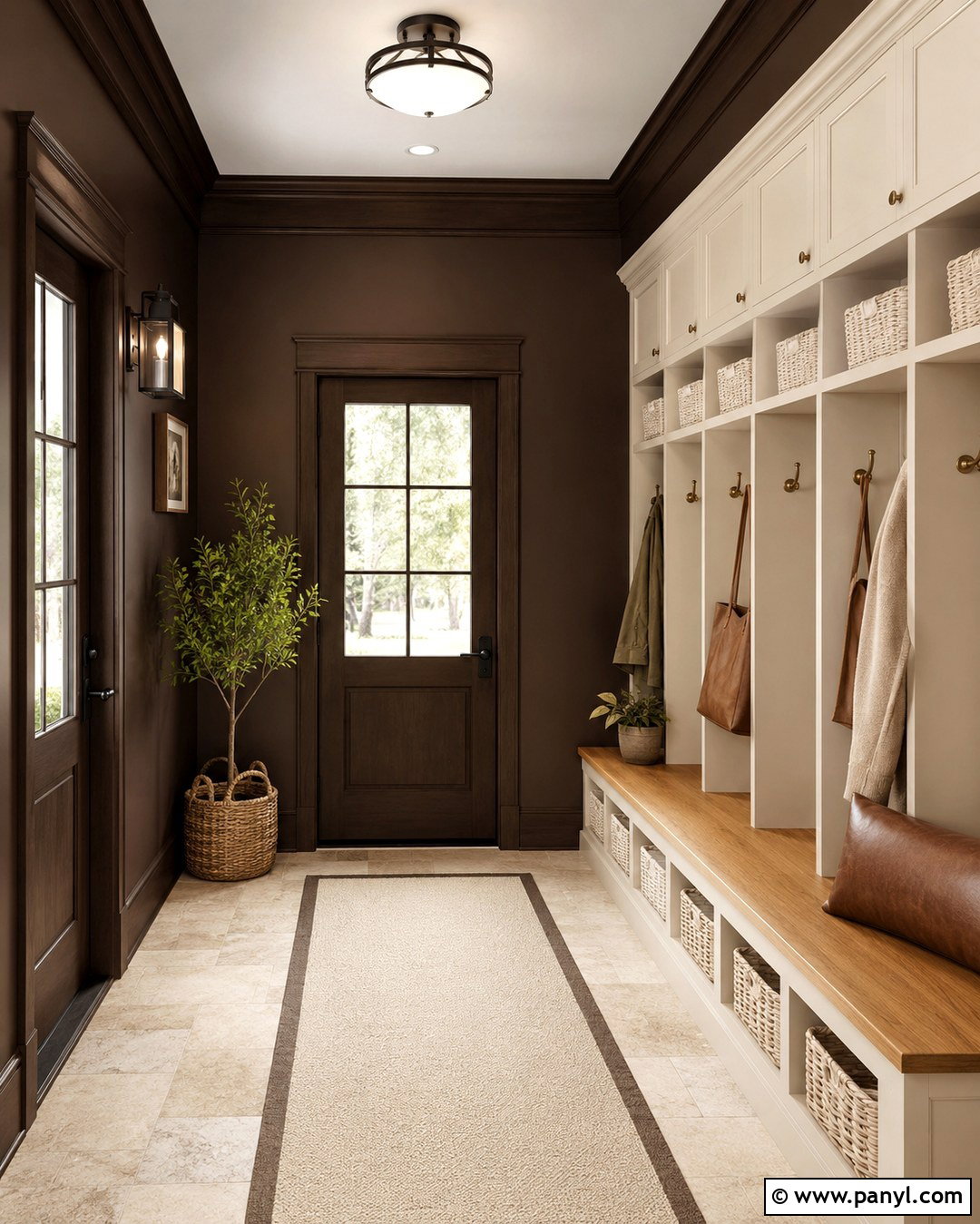
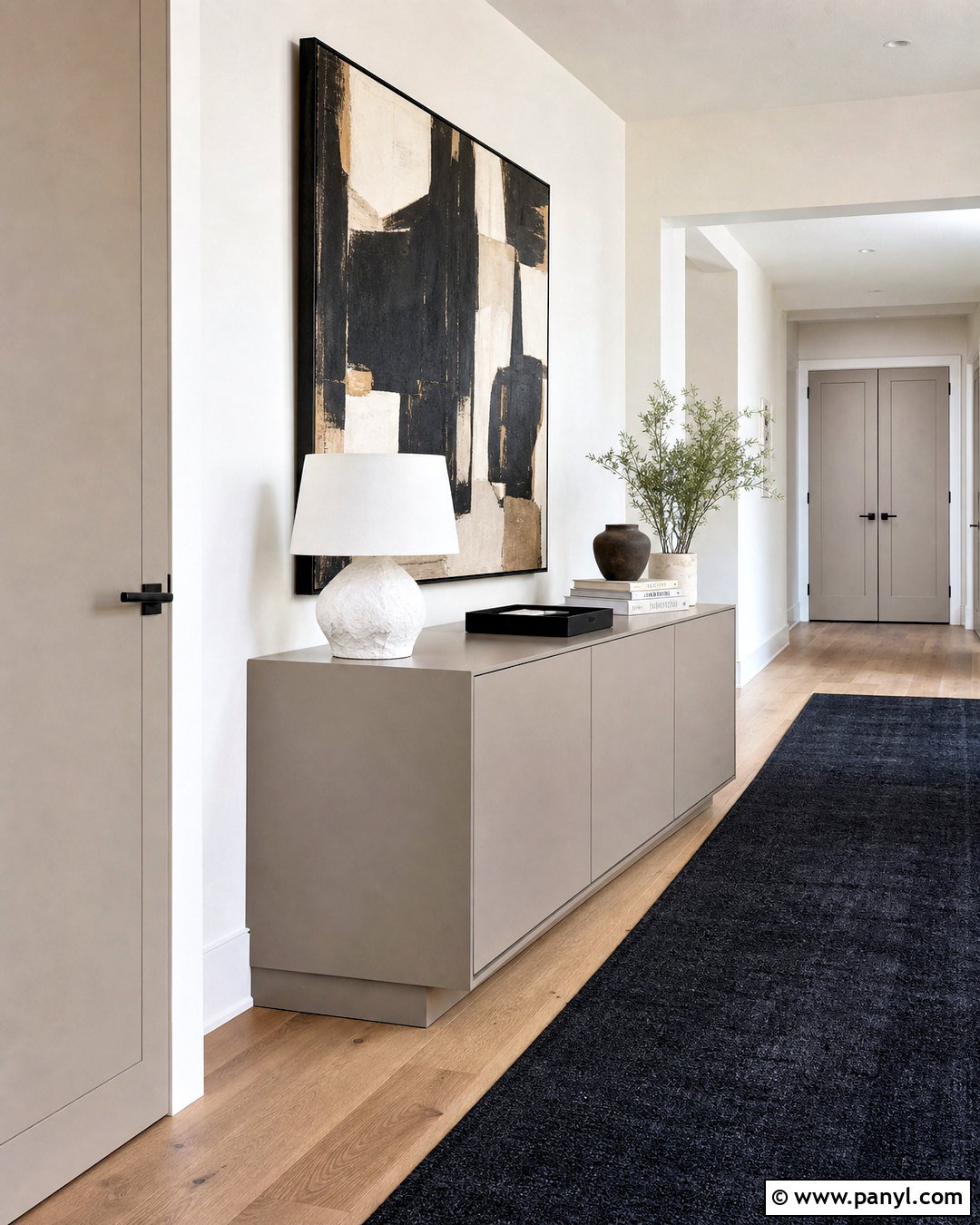
Chocolate brown walls create an inviting mudroom with a warm, furniture-like appearance. Prevent the color from becoming too heavy by combining it with ivory lockers, pale travertine-look flooring, and a natural oak bench top. Add antique brass hooks and warm white woven baskets for a layered, traditional look. A camel leather bench cushion connects the walls to the lighter wood, while a cream runner with a subtle brown border keeps the floor visually open. Paint the ceiling and door trim a soft ivory rather than a sharp white. If the room has limited daylight, use a wide flush-mount fixture and concealed LED strips inside the cubbies. This balanced palette works beautifully in Craftsman, rustic, transitional, and English country-inspired homes.
10. Espresso Brown Mudroom Walls
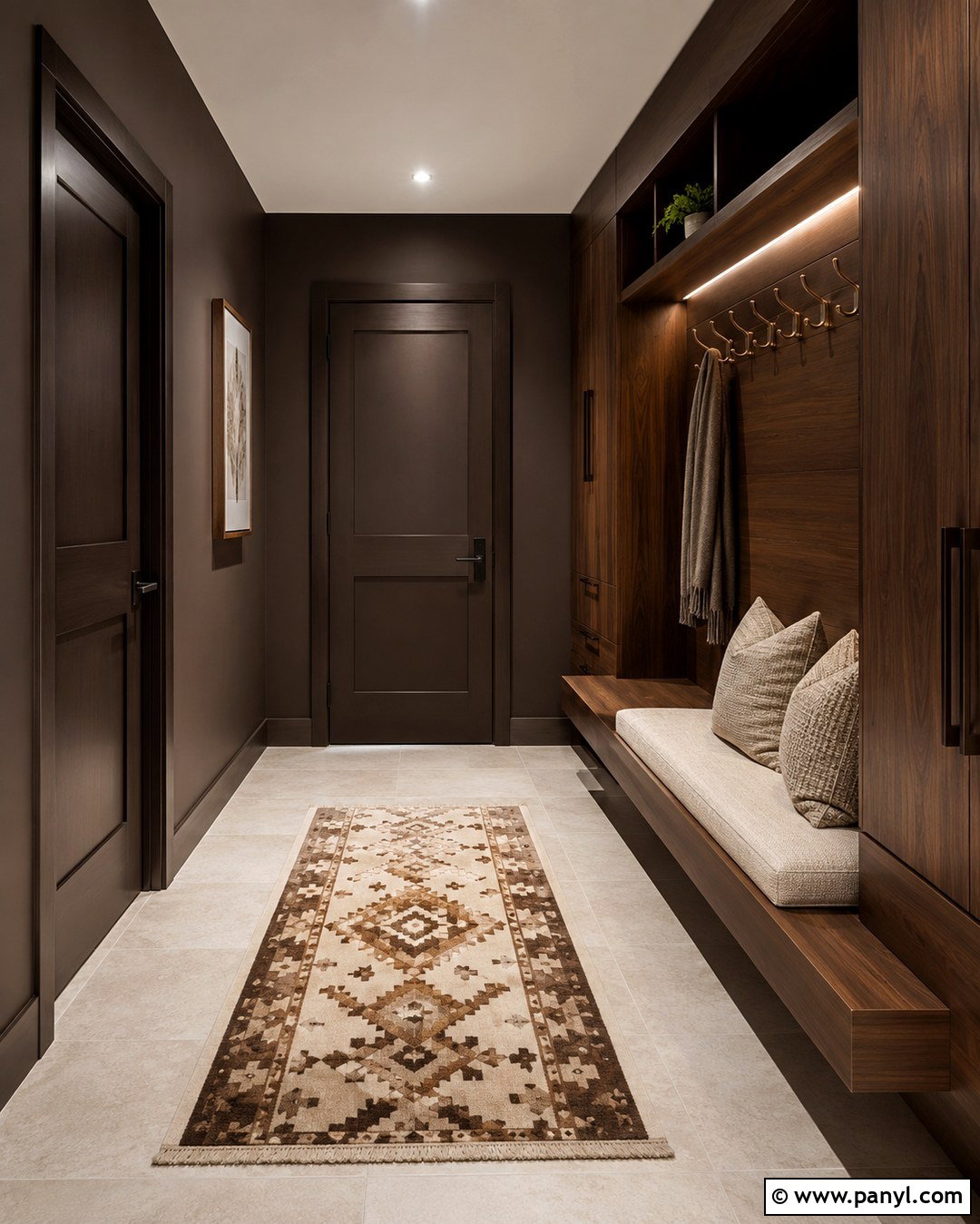
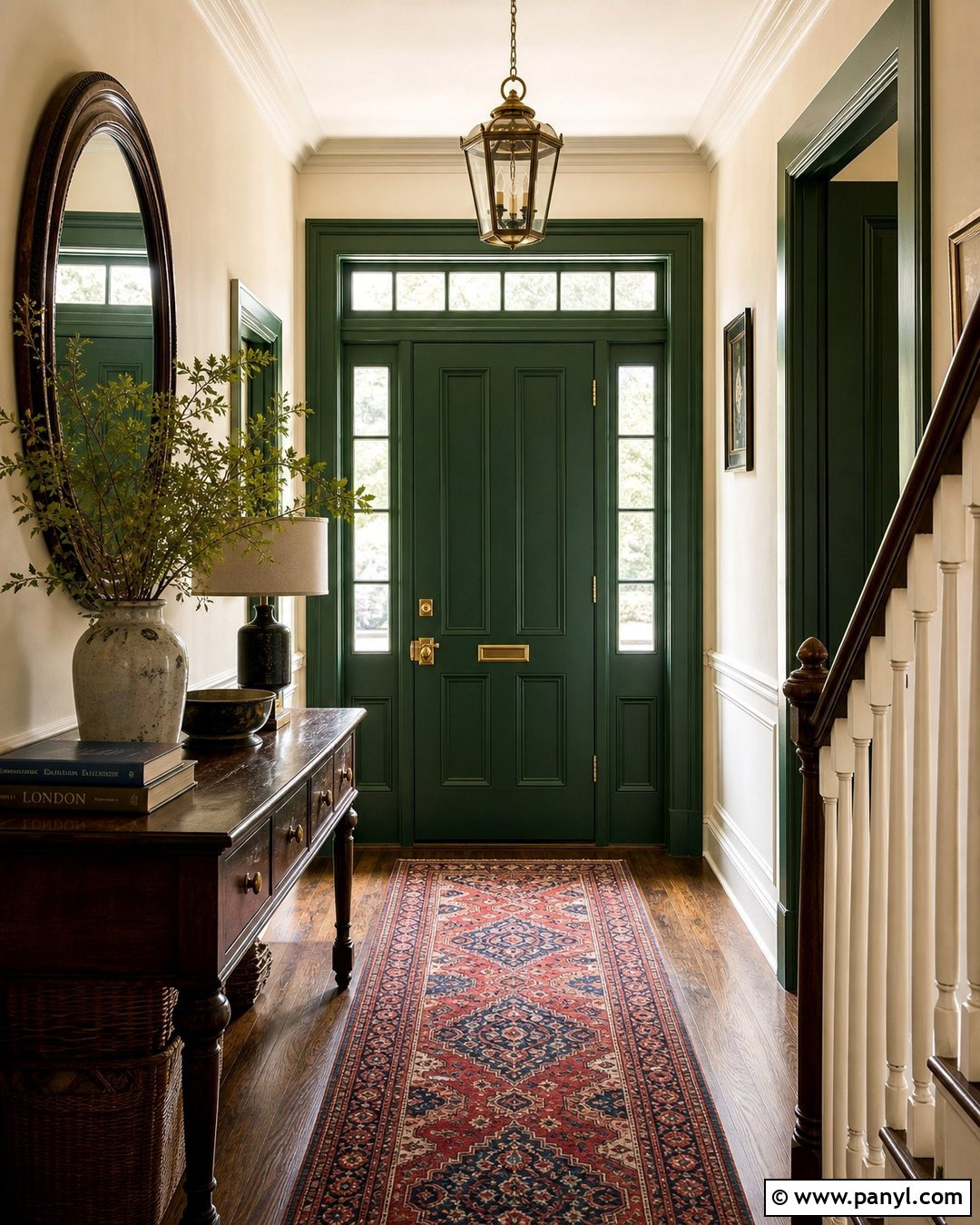
Espresso brown delivers nearly the drama of black but carries a warmer undertone. Use it in a modern mudroom with streamlined walnut cabinets, a floating bench, and slim bronze hooks. Large-format beige porcelain tile keeps the room from feeling cramped and provides an easy-to-clean surface beneath open shoe shelves. Add oatmeal-colored seat cushions, light woven bins, and a graphic cream-and-brown runner to build contrast without introducing unrelated colors. Paint interior and exterior doors espresso as well for a cohesive, enveloping finish. A wide linear ceiling light will distribute illumination more evenly than a small central fixture. Keep decorative items minimal, perhaps using one large mirror and a ceramic tray, so the rich walls and walnut grain remain the strongest visual features.
11. Dark Taupe Mudroom Walls
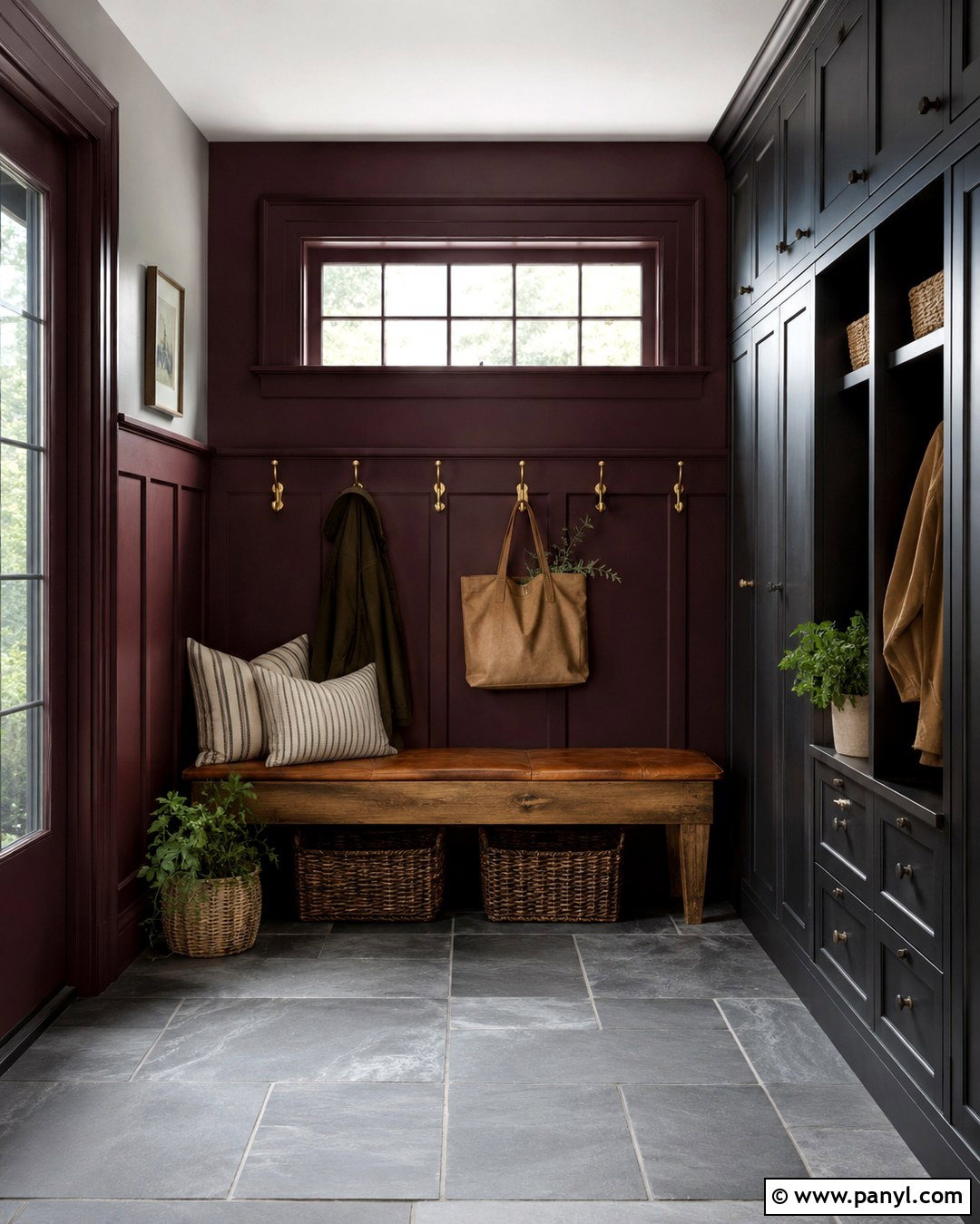
Dark taupe walls bring depth to a mudroom without creating the strong contrast associated with black or navy. Choose a brown-gray taupe and pair it with mushroom-colored cabinetry, a white oak bench, and warm gray floor tile. This tonal combination feels calm, but varied materials prevent it from appearing flat. Install black hooks and slim cabinet pulls for definition, then add ivory baskets and a cream bench cushion to lift the storage wall. A faded runner in beige, charcoal, and dusty blue can introduce understated pattern. Paint the ceiling a lighter version of the wall color for a gentle transition. The finished room suits contemporary and transitional homes, especially when nearby kitchens or hallways already feature greige, natural stone, or warm neutral finishes.
12. Burgundy Mudroom Walls
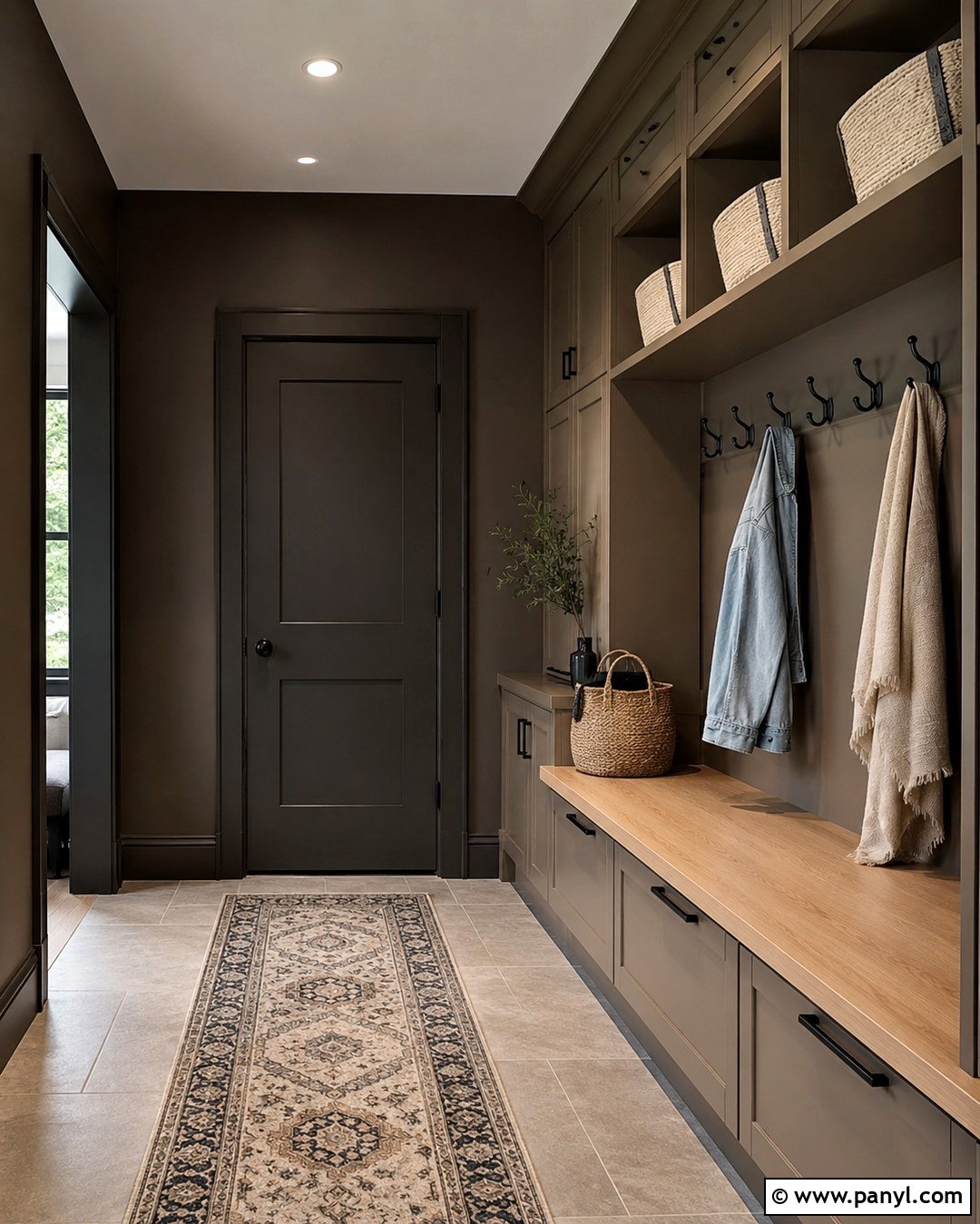
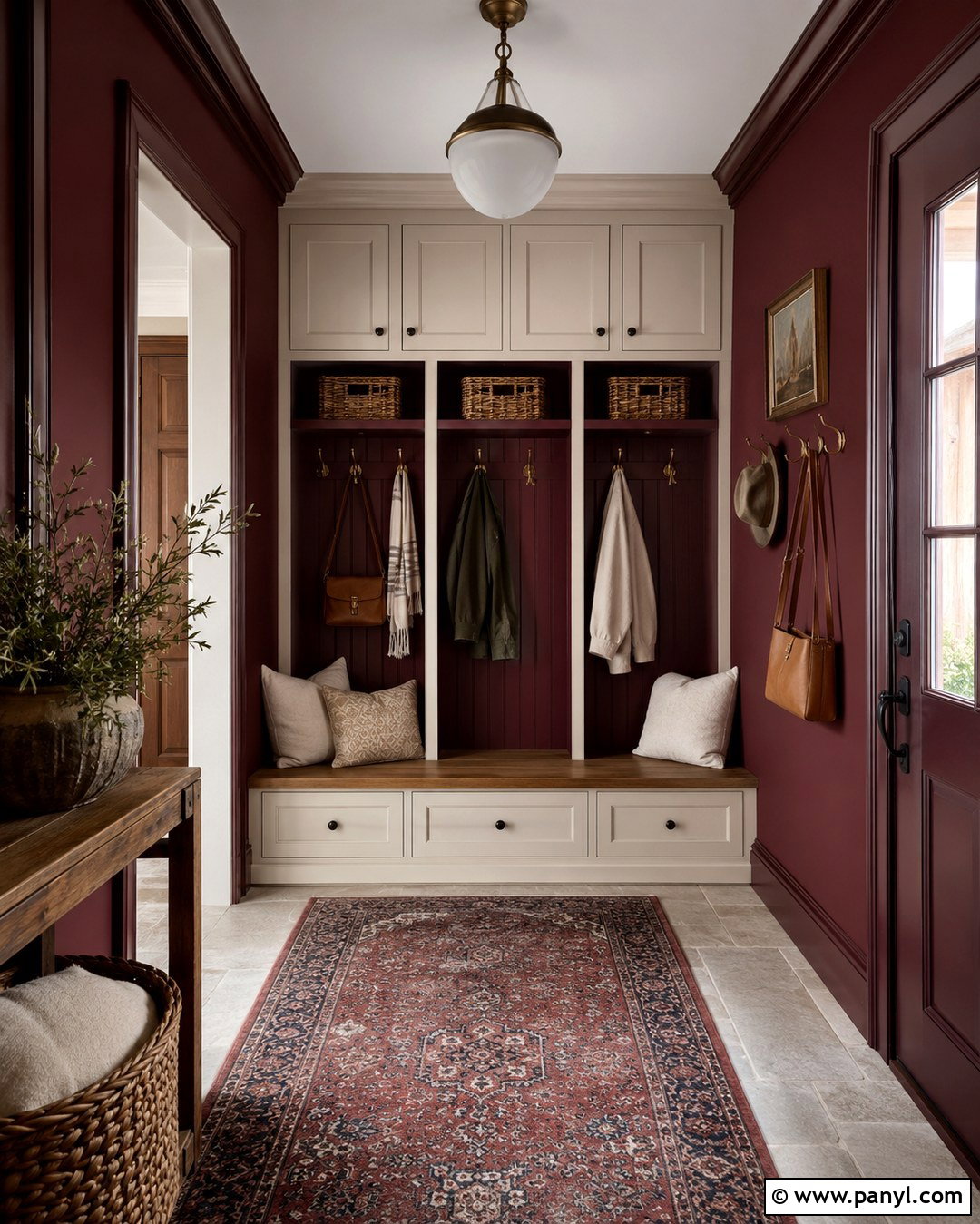
Burgundy walls can transform an ordinary mudroom into a warm, memorable entry. Balance the saturated red with creamy cabinetry, a medium oak bench, and pale stone-look tile. Antique brass hooks bring out the warmth in the paint, while woven baskets introduce a relaxed texture that keeps the room from becoming formal. Choose a bench cushion in oatmeal linen and a narrow runner with faded burgundy, tan, and blue details. Keep the ceiling light and bright, using a large white glass fixture rather than a dark metal shade. For a coordinated storage wall, paint the cubby backs burgundy while leaving cabinet frames cream. This full scheme works especially well in traditional homes, brick houses, and interiors containing warm wood floors or vintage furnishings.
13. Oxblood Red Mudroom Walls
Oxblood red is deeper and browner than standard burgundy, giving a mudroom a grounded heritage look. Use the color on paneled walls behind a freestanding oak bench, then add tall black cabinets on either side for closed storage. A floor of warm gray slate provides a rugged base, while unlacquered brass hooks and hardware contribute subtle shine. Layer the bench with a tan leather cushion and cream-striped pillows that soften the bold walls. Natural wicker baskets can hold gloves, pet supplies, and small outdoor accessories. Install a large schoolhouse-style ceiling light to illuminate the deep paint evenly. The completed room feels collected and practical, combining strong color with durable materials that suit a farmhouse, Craftsman, or older urban home.
14. Dark Terracotta Mudroom Walls
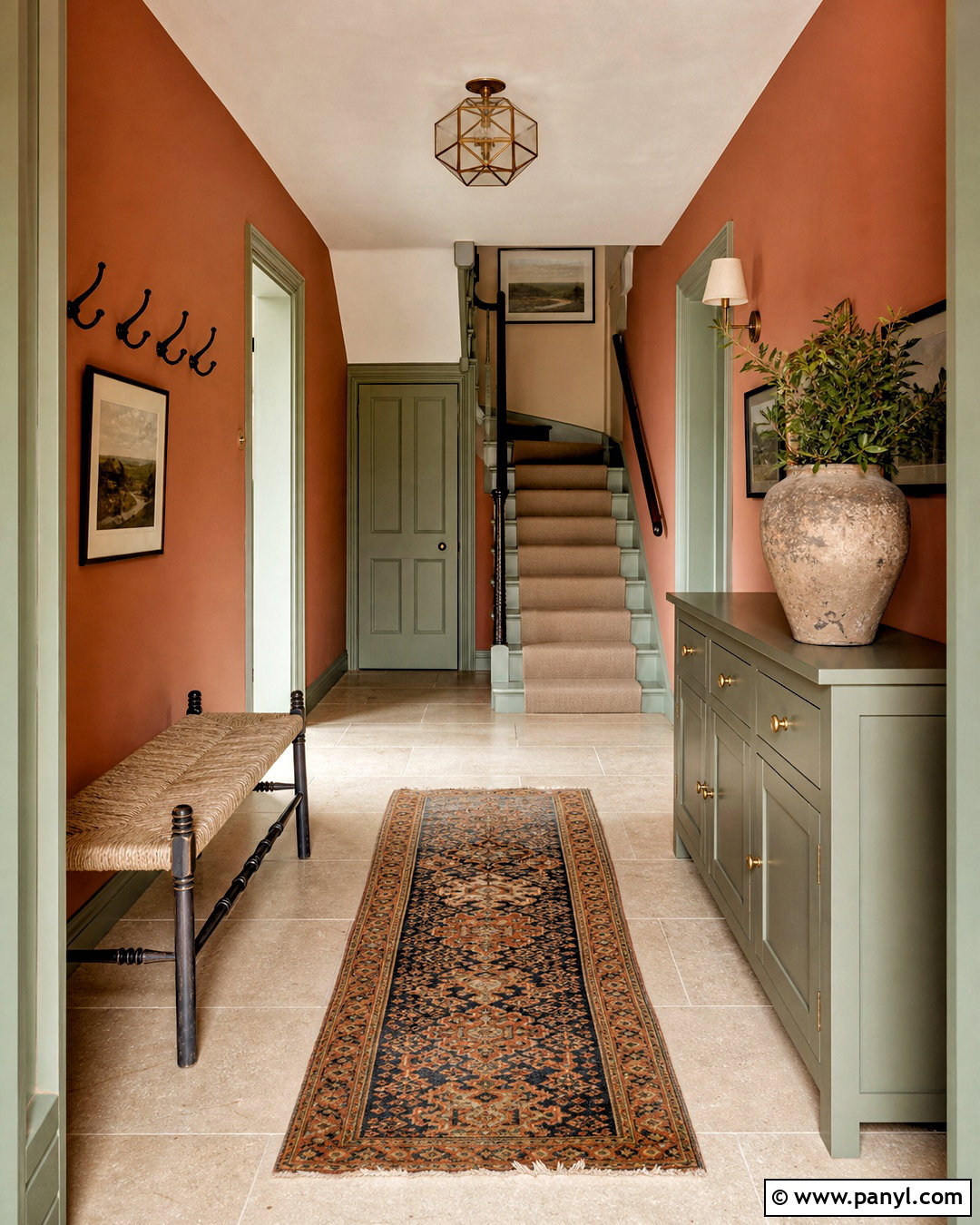
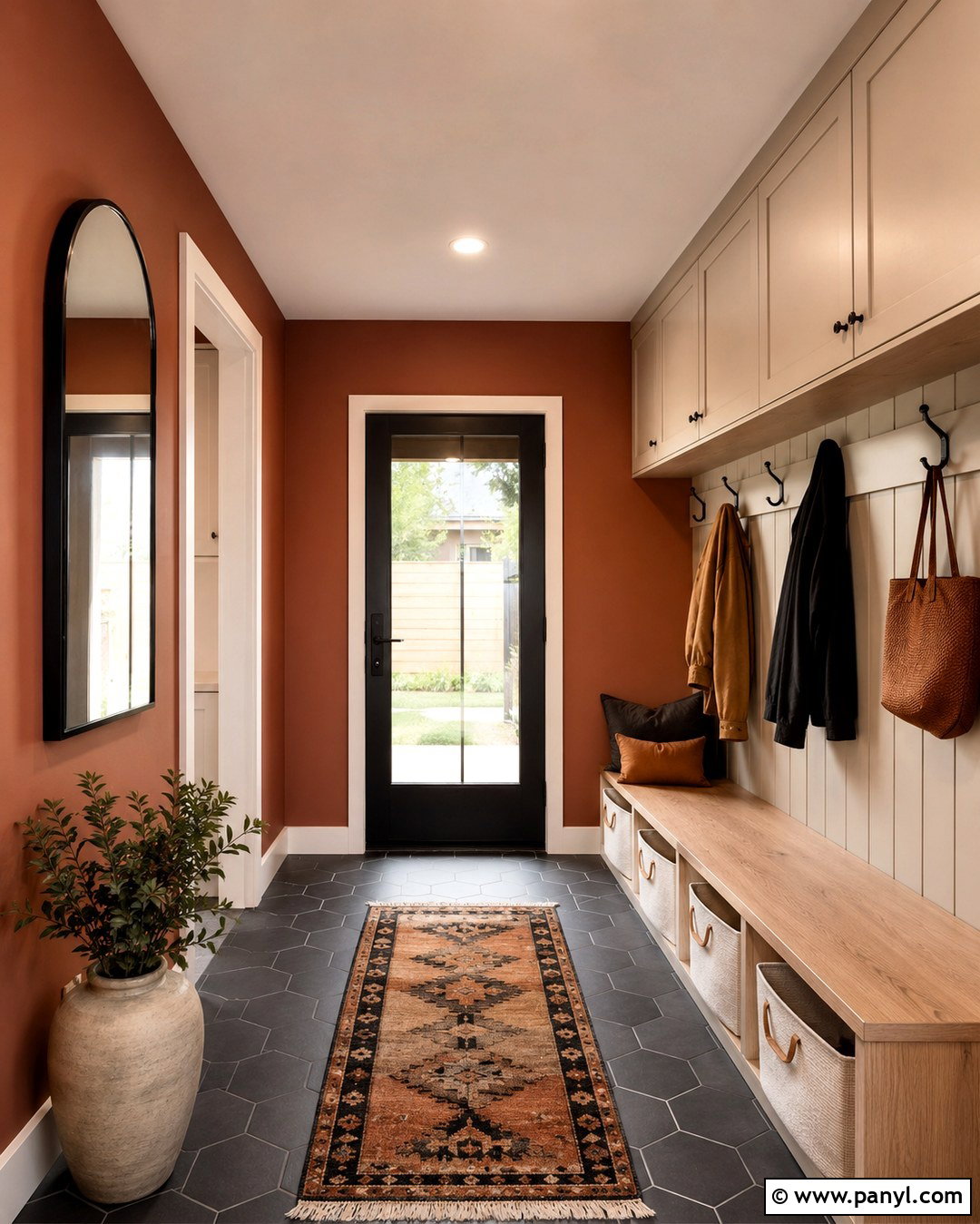
Dark terracotta gives the mudroom a sunbaked, earthy warmth that feels inviting in every season. Pair the clay-colored walls with off-white cabinets, a pale oak bench, and black iron hooks for a clear, balanced palette. Use charcoal hexagonal floor tile to ground the warm color and conceal everyday debris between cleanings. Cream canvas baskets, a beige cushion, and a rust-and-black patterned runner create a comfortable layered effect. Add a large arched mirror with a thin black frame to reflect light from the door or nearby window. A white globe ceiling fixture keeps the upper part of the room visually bright. Terracotta also coordinates naturally with indoor plants, woven textures, wood accents, and kitchens that contain warm metals or earthy stone surfaces.
15. Eggplant Purple Mudroom Walls
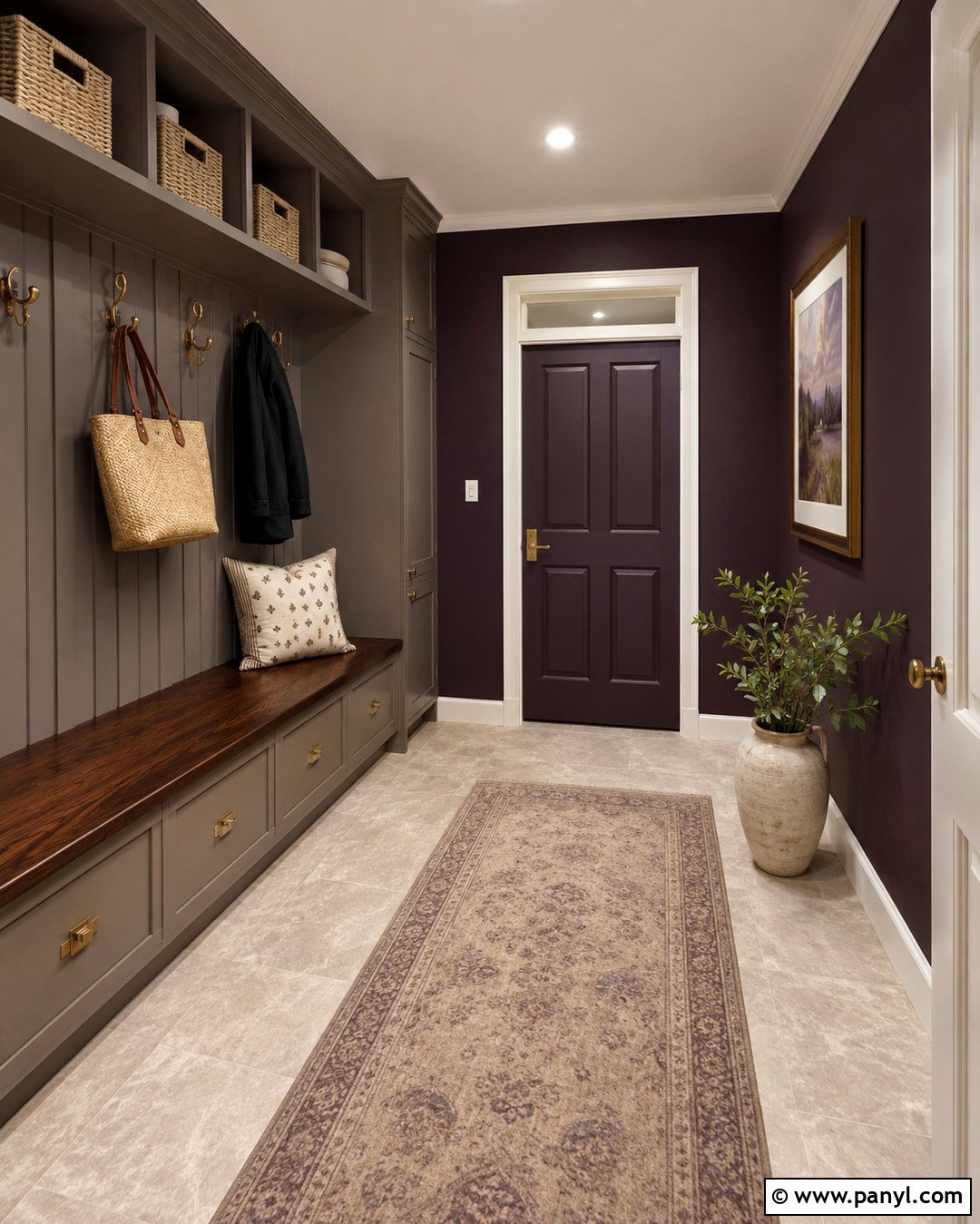
Eggplant purple offers rich color with enough black and brown in its undertone to feel sophisticated. Build the room around eggplant walls, warm gray cabinetry, and a walnut bench with generous shoe drawers. Add aged brass hooks and pulls to introduce warmth and visibility against the dark background. A floor of creamy limestone-look porcelain tile brightens the space, while a beige runner with muted plum details links the walls to the lower surfaces. Keep baskets and seat cushions light, choosing oatmeal, ivory, or pale taupe. Paint the ceiling warm white and use a broad semi-flush ceiling fixture for even illumination. This unexpected palette works particularly well in eclectic, traditional, and contemporary homes that already include walnut furniture or warm metallic accents.
16. Deep Plum Mudroom Walls
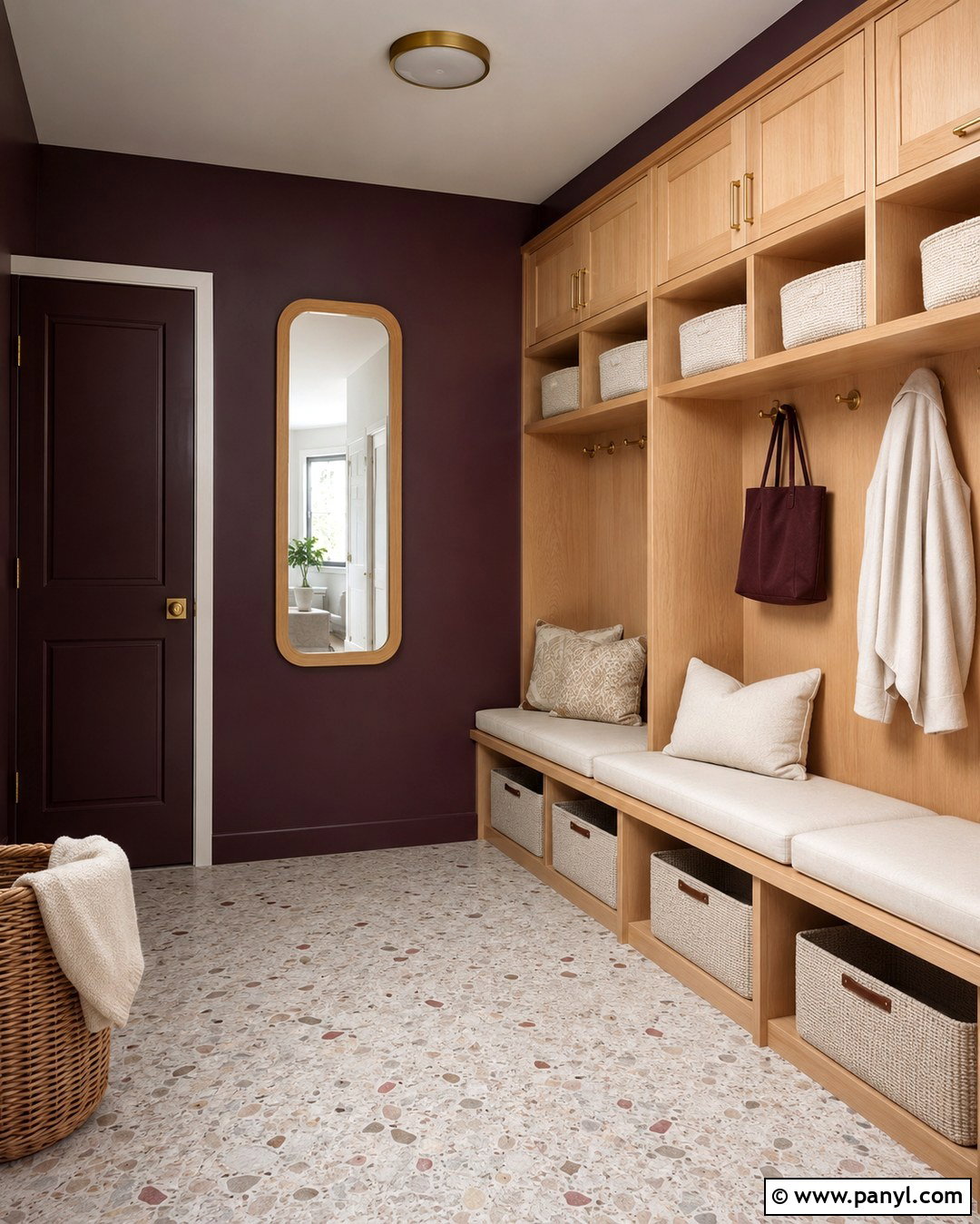
Deep plum walls create a softer, redder look than eggplant while still delivering plenty of depth. Pair them with natural maple lockers, a built-in bench, and brushed brass hardware for a warm modern mudroom. Light gray terrazzo flooring with small burgundy and beige chips can connect the entire palette without looking overly decorative. Use ivory cushions and pale woven bins to keep the storage wall readable against the saturated paint. A simple oak-framed mirror near the door adds another light surface and provides a practical last-check station. Choose a white glass ceiling fixture and under-cabinet strips to prevent shadowy corners. The finished room feels colorful and personal, yet the straightforward cabinetry and restrained materials make it suitable for everyday family use.
17. Slate Blue Mudroom Walls
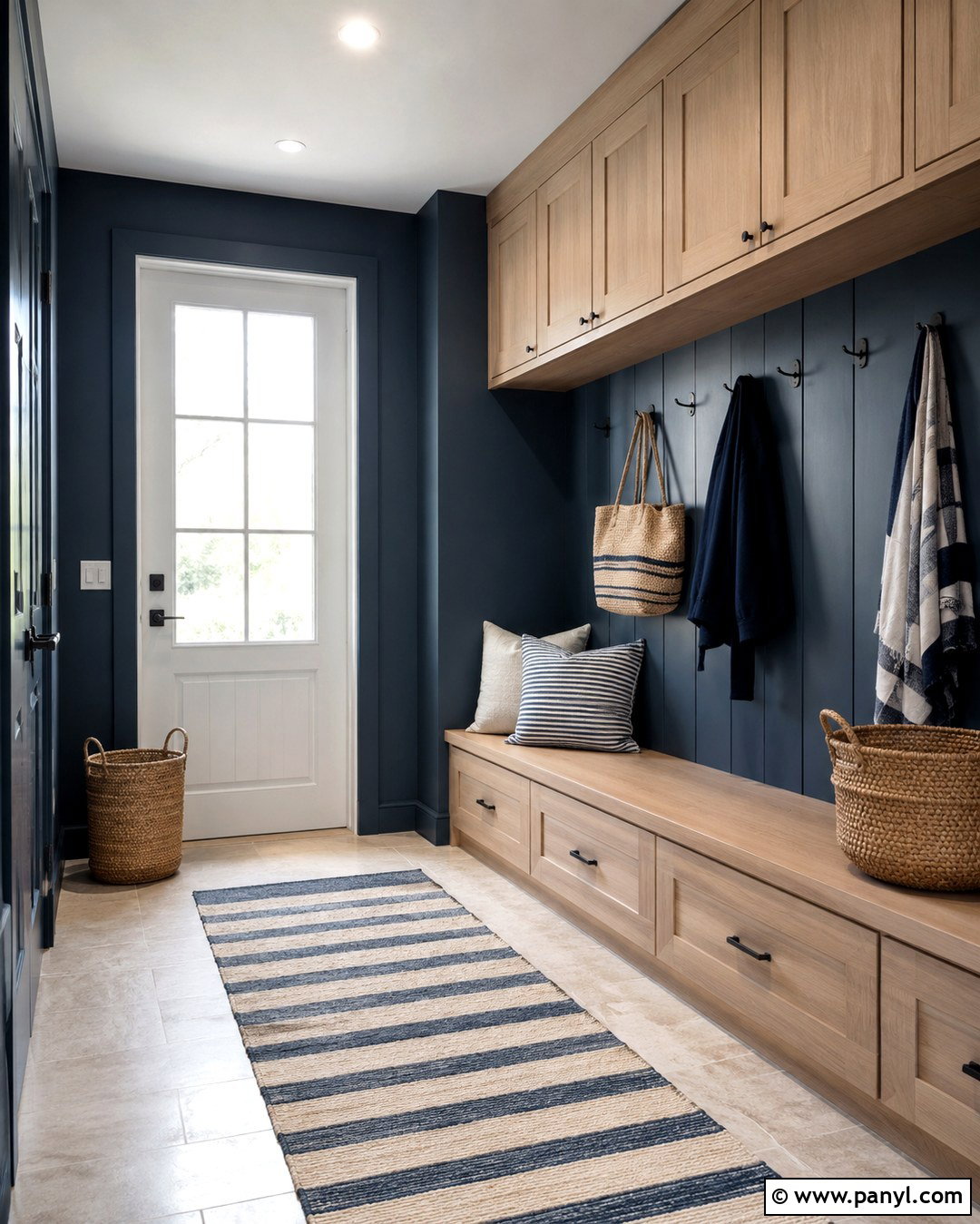
Dark slate blue walls provide a muted, flexible background for a coastal, farmhouse, or transitional mudroom. Combine the paint with white oak cabinets, a matching bench, and matte black hooks. Warm beige floor tile offsets the cooler wall color, while a cream-and-navy striped runner reinforces the blue without making the design overly themed. Use closed cabinets above and deep drawers below to reduce visible clutter. Canvas baskets in natural beige can fill the remaining open cubbies. Paint the ceiling a soft white and install a wide black-and-opal-glass ceiling fixture for balanced illumination. Slate blue is particularly useful when the mudroom connects to spaces with gray, navy, or natural wood finishes because it creates continuity while retaining its own distinct identity.
18. Blue Black Mudroom Walls
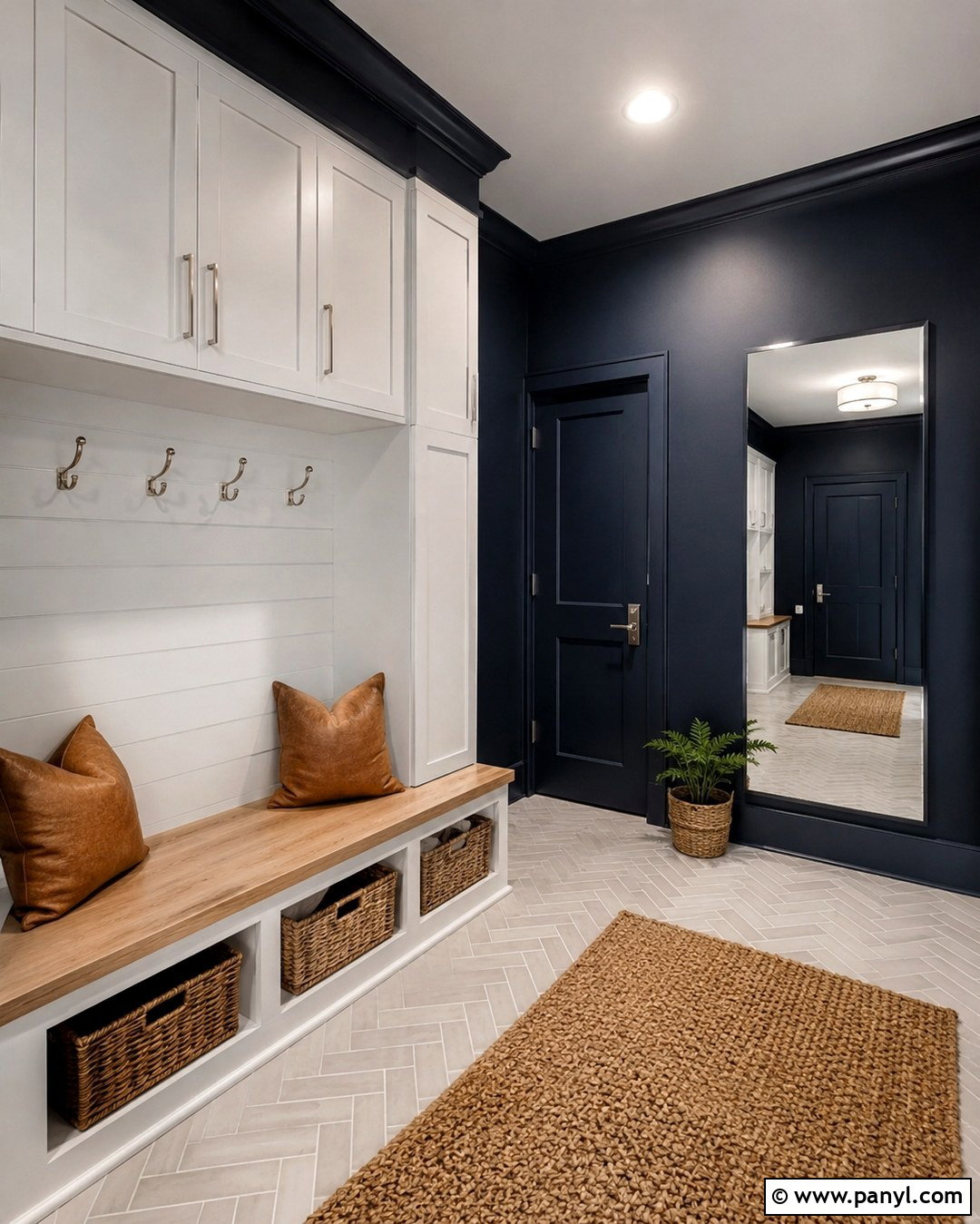
Blue-black walls change subtly throughout the day, appearing inky navy under bright light and nearly black in shaded corners. Use this dramatic color with crisp white cabinetry, a pale oak bench, and polished nickel hooks for a tailored mudroom. Light gray herringbone tile creates movement underfoot and prevents the lower half from feeling dense. Add camel leather cushions and warm woven baskets to soften the cool palette. A large frameless mirror can bounce light across the room without introducing another strong finish. Paint the door blue-black for continuity, but leave the ceiling and trim bright white. This high-contrast arrangement feels sharp and organized, making it a strong option for compact mudrooms where every cabinet, cubby, and hook needs clear visual definition.
19. Graphite Gray Mudroom Walls
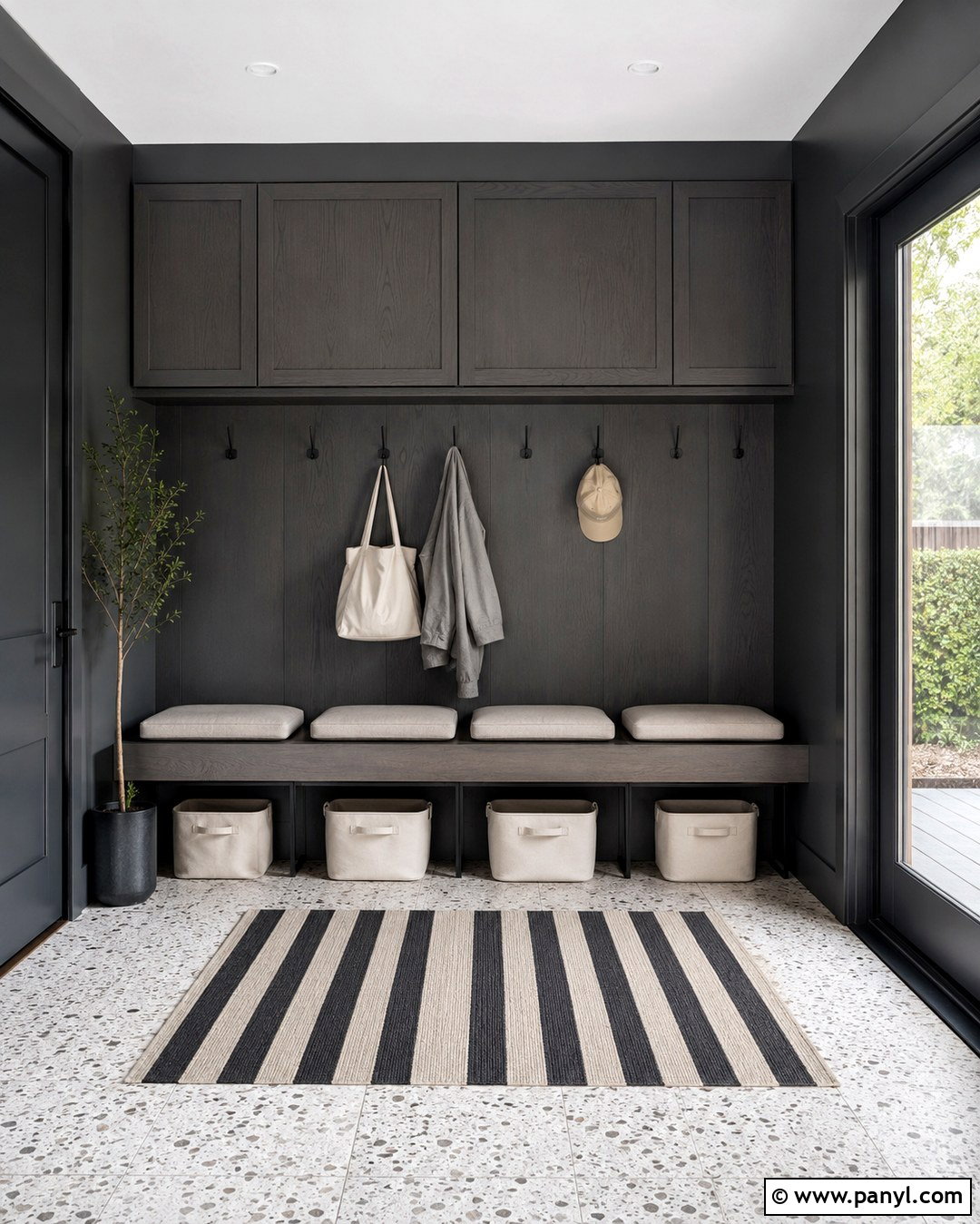
Graphite gray is slightly lighter than black and more neutral than charcoal, making it easy to combine with both warm and cool finishes. Create a modern mudroom with graphite walls, flat-panel oak cabinetry, and a floating bench with black metal supports. Use large ivory terrazzo floor tiles to brighten the room and introduce subtle texture. Slim black hooks blend into the walls, allowing coats and baskets to take visual priority. Add pale gray cushions, natural canvas bins, and a simple black-and-cream runner. A long ceiling light with a white diffuser provides clean, even illumination. Keep doors and trim graphite for a color-drenched effect, but introduce a pale ceiling if the room has no windows. The overall look is streamlined, practical, and quietly dramatic.
20. Dark Greige Mudroom Walls
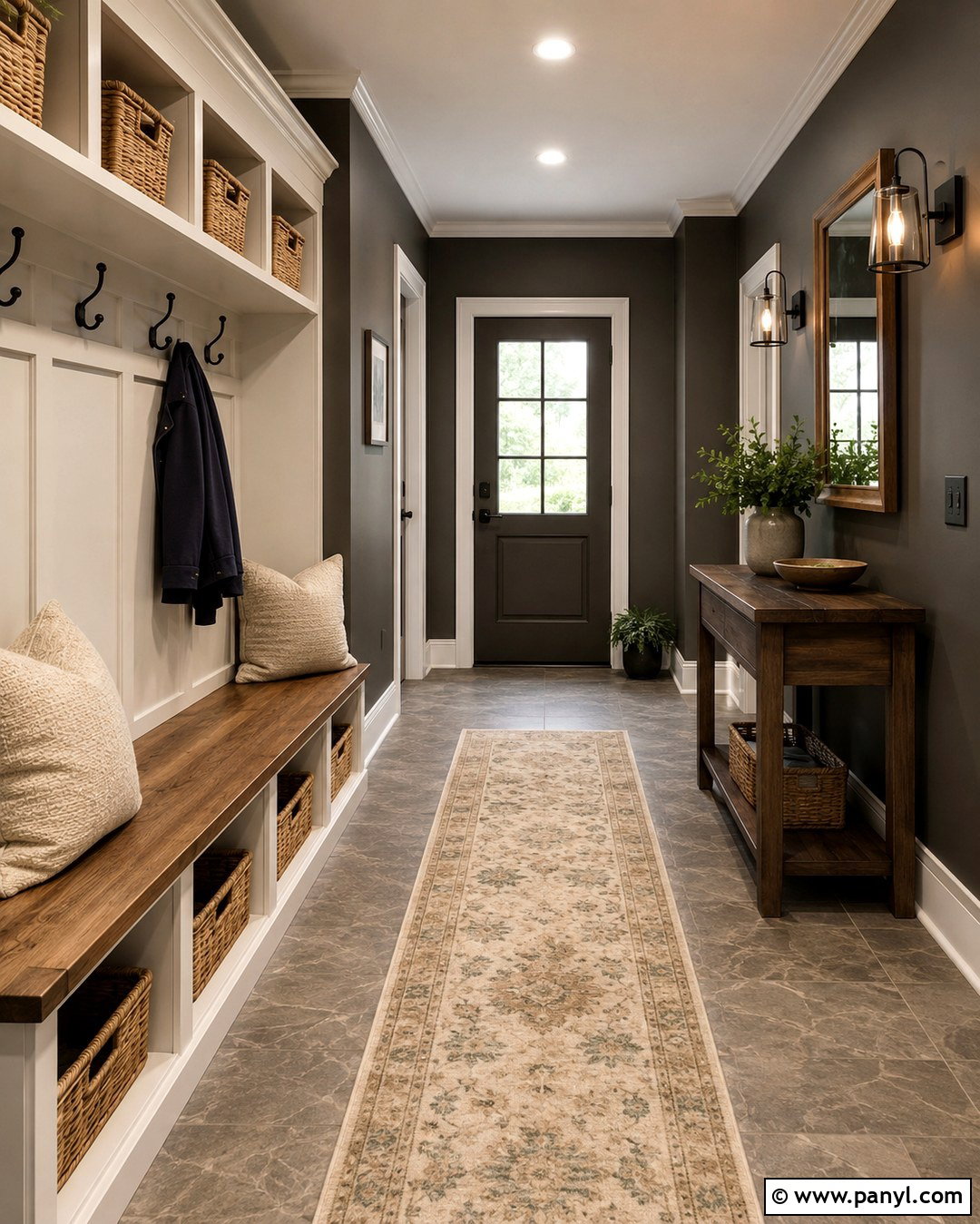
Dark greige walls deliver a balanced mix of gray and brown, making them highly adaptable to existing floors and cabinetry. Pair the walls with warm white lockers, a quarter-sawn oak bench, and dark bronze hooks for a comfortable transitional look. Choose medium gray porcelain tile that contains subtle beige veining to connect the warm and cool undertones. Cream cushions and natural fiber baskets brighten the open cubbies, while a faded runner in taupe, ivory, and muted green adds gentle color. Include a large white glass ceiling fixture and concealed lighting above the bench for better visibility. Before committing, view several samples beside the flooring, cabinetry, and trim at different times of day because surrounding light and finishes can noticeably influence a dark color’s appearance. ()
Conclusion:
The best dark mudroom is not built around wall paint alone. Flooring, storage, lighting, hardware, and textiles should balance the color and support the room’s daily function. These 20 Dark Mudroom Wall Colors range from adaptable charcoal and dark greige to expressive burgundy, forest green, and eggplant. Lighter cabinets create crisp contrast, while wood millwork gives saturated walls natural warmth. Pale flooring, mirrors, and layered lighting can prevent a deep palette from feeling visually closed in. Always test the chosen color beside permanent finishes before painting the entire room. Then select a washable finish that fits the surface and expected wear. With those details in place, dark walls can make even a modest mudroom feel coordinated and complete.

Related Ideas and Inspiration:
Leave a Reply