
Dark paint can make an ordinary room feel deeper, warmer, and far more personal. These **20 Dark Moody Wall Colors** move beyond basic black to include rich greens, smoky blues, earthy browns, dramatic reds, and softened purples. The secret is building a complete palette around the wall color. Warm wood, layered textiles, reflective metals, practical lighting, and controlled contrast keep darker rooms inviting rather than gloomy. Before committing, test large samples on several walls and observe them during the morning, afternoon, and evening. Undertones can shift noticeably as natural and artificial light changes. Whether you are updating a bedroom, dining room, office, or living area, these complete room schemes make it easier to confidently decorate with **20 Dark Moody Wall Colors**.
1. Charcoal Black Wall Color
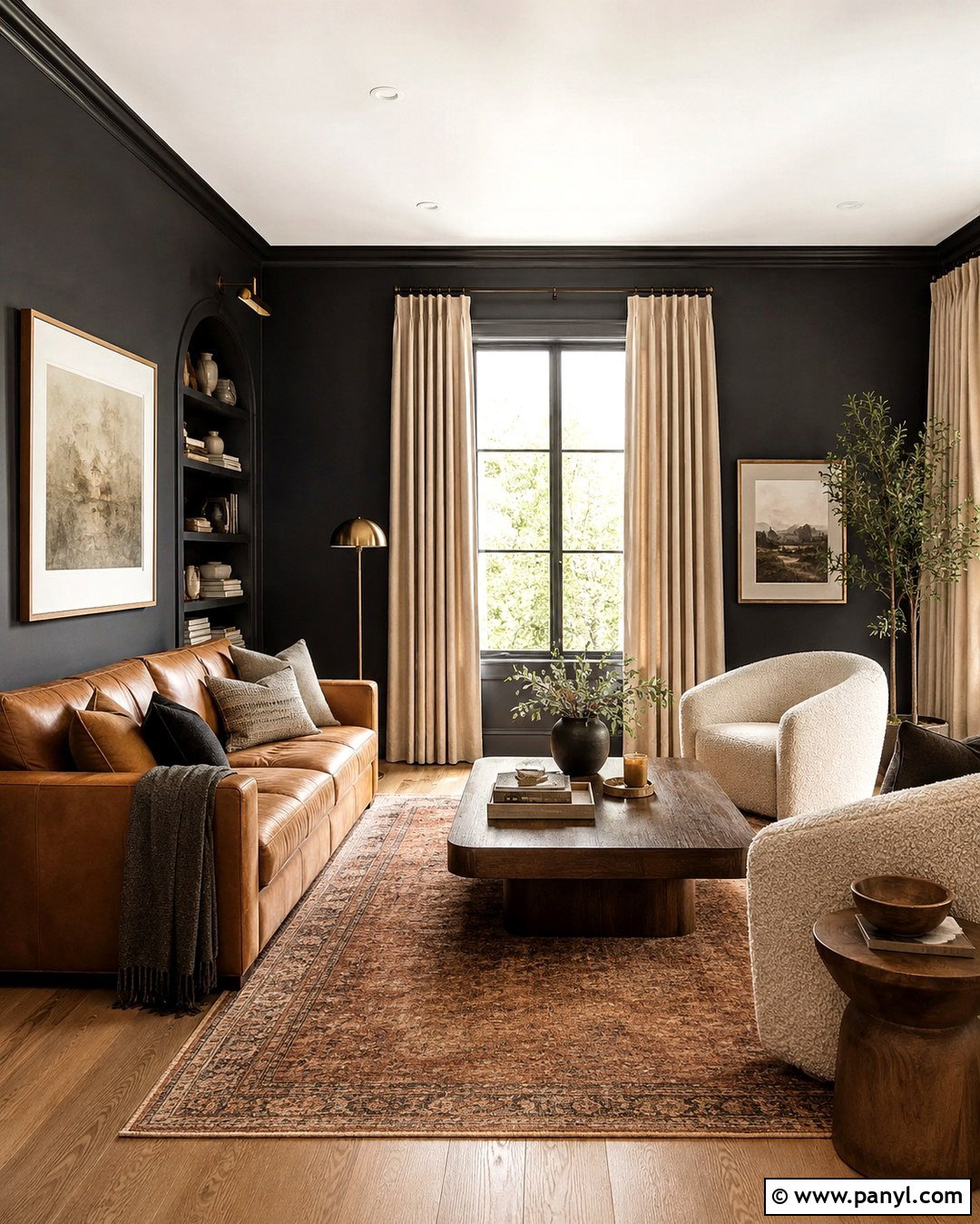
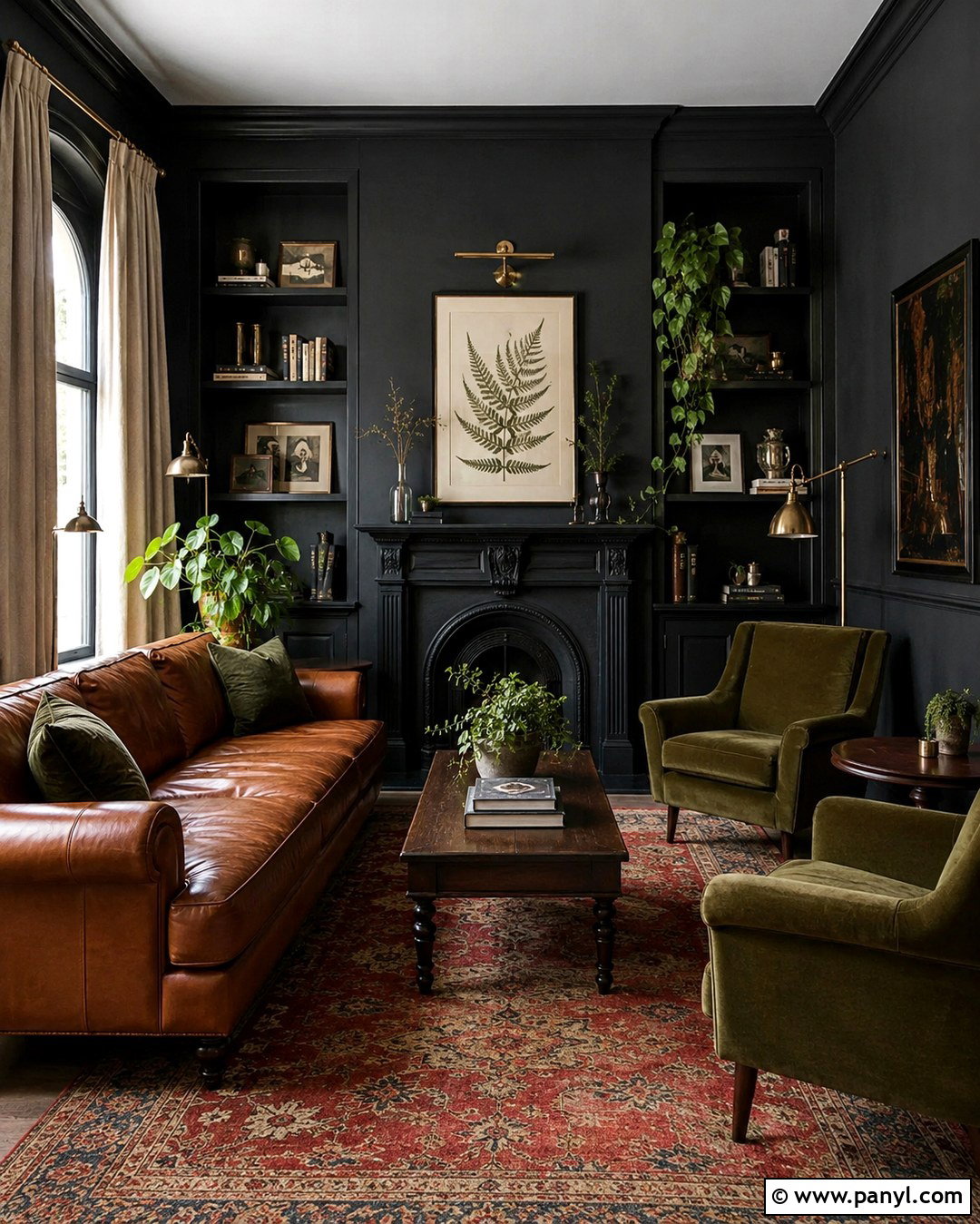
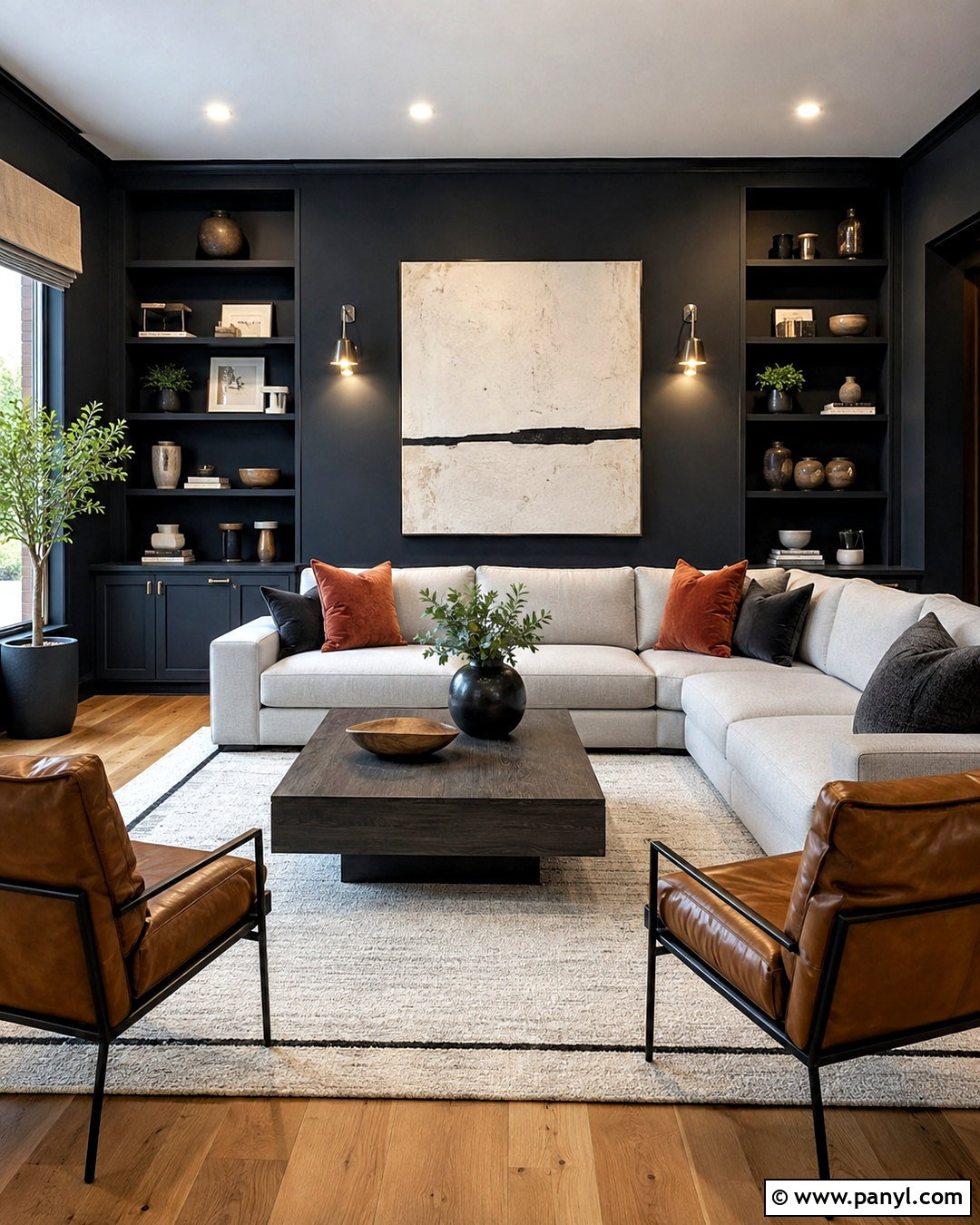
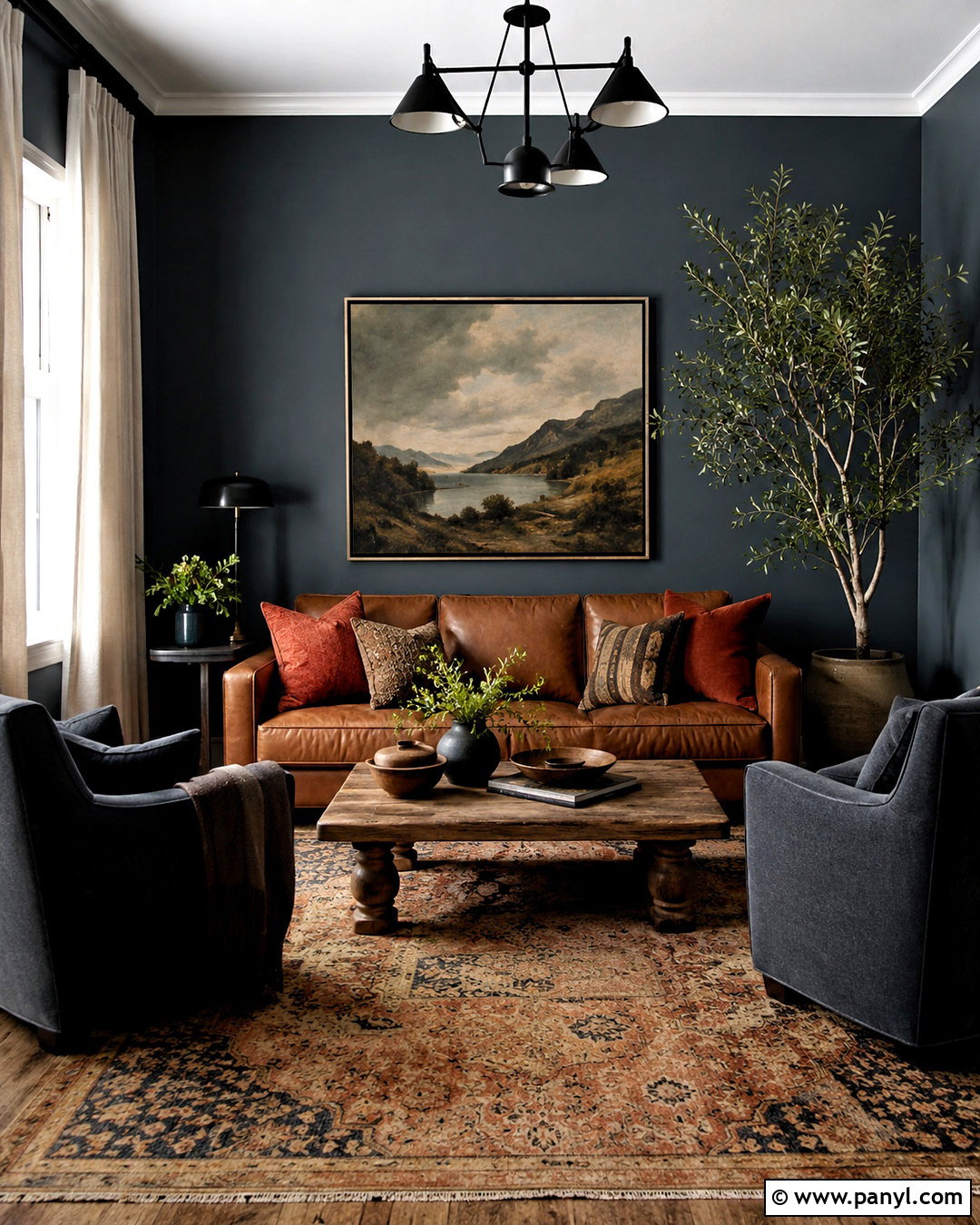
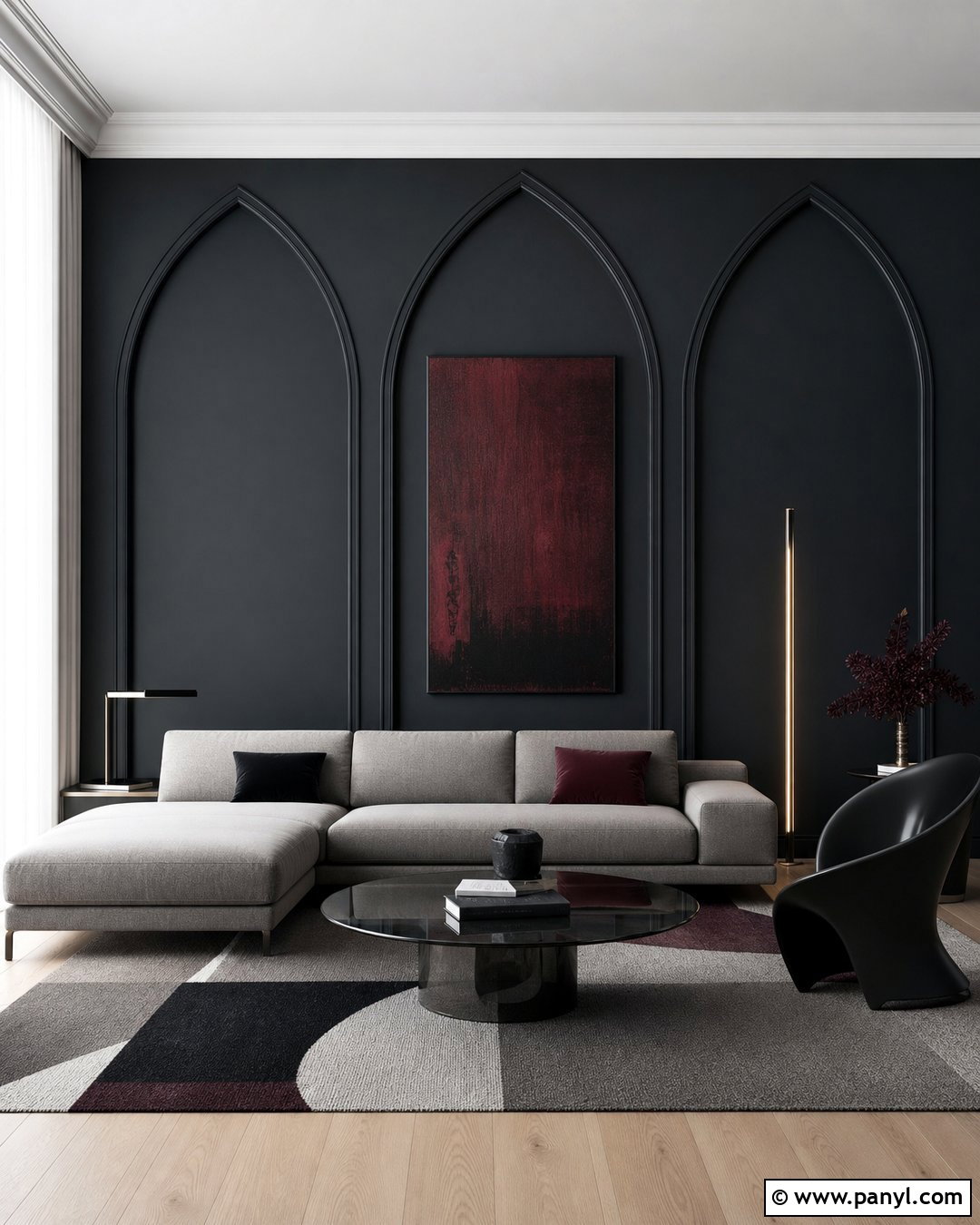
Charcoal black creates drama without the harshness of a true jet black. Use it across the walls of a living room with medium oak flooring and a warm ivory ceiling. A camel leather sofa introduces an earthy contrast, while two cream boucle chairs keep the seating arrangement light and comfortable. Choose a faded rust, tan, and charcoal rug to connect the palette. Matte walls look especially sophisticated beside walnut tables, black metal lighting, and aged brass accents. Hang artwork with wide ivory mats so it remains visible against the dark background. Add linen curtains in oatmeal rather than bright white. Several lamps placed around the room will soften shadows and make the charcoal walls feel layered, welcoming, and intentionally dramatic.
2. Midnight Navy Wall Color
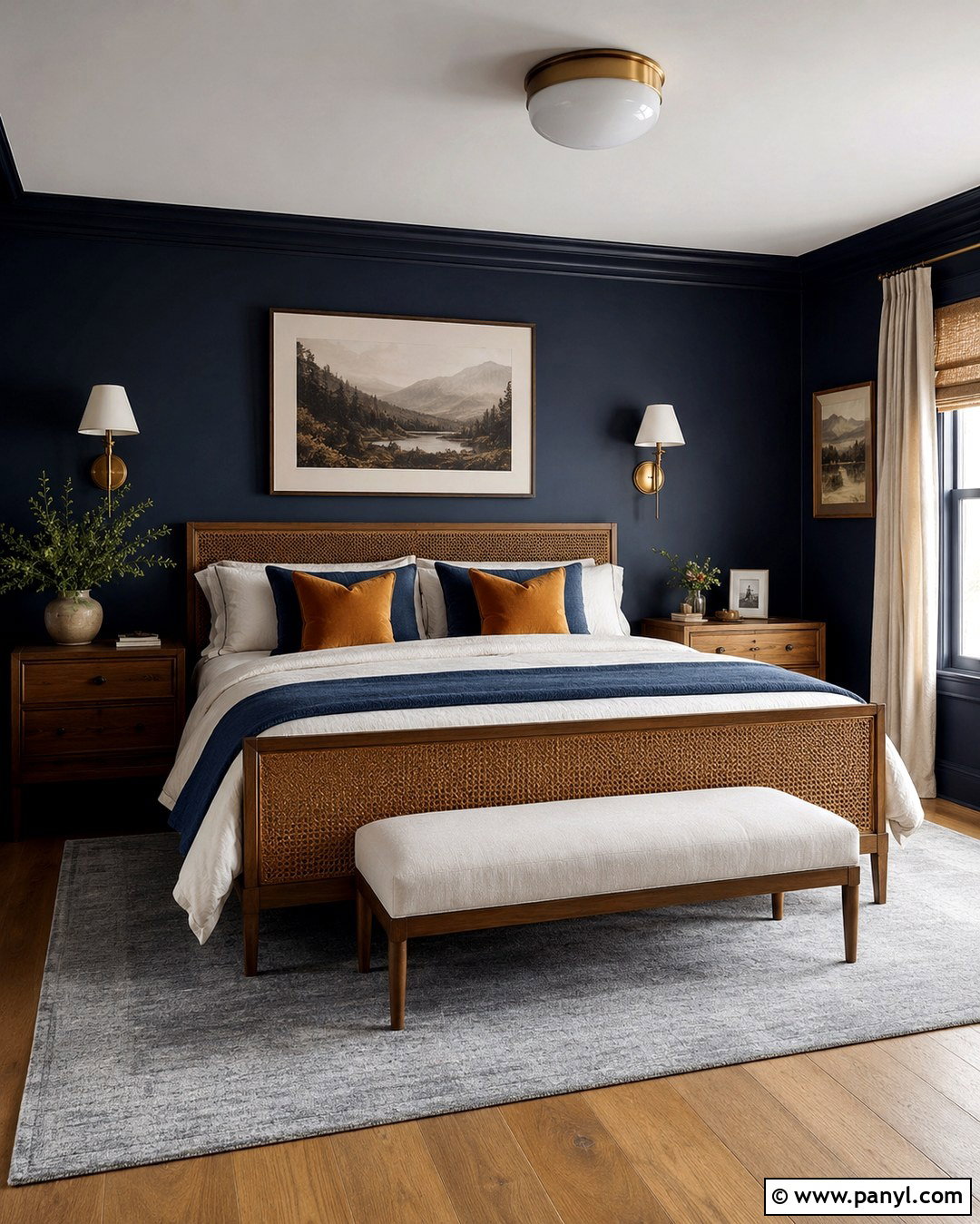
Midnight navy turns a bedroom into a restful, tailored retreat. Paint every wall the same deep blue, then repeat the color on the baseboards for a seamless look. A walnut bed with a woven cane headboard adds natural warmth without competing with the saturated walls. Dress it in crisp ivory sheets, a muted blue quilt, and caramel velvet pillows. Medium-toned oak nightstands keep the room from becoming too dark. Brushed brass sconces provide soft contrast and leave the bedside surfaces uncluttered. Use a pale gray wool rug beneath the bed and full-length flax linen curtains at the windows. Finish with simple landscape prints, dark ceramic lamps, and one leafy plant for a balanced bedroom that feels cozy instead of heavy.
3. Forest Green Wall Color
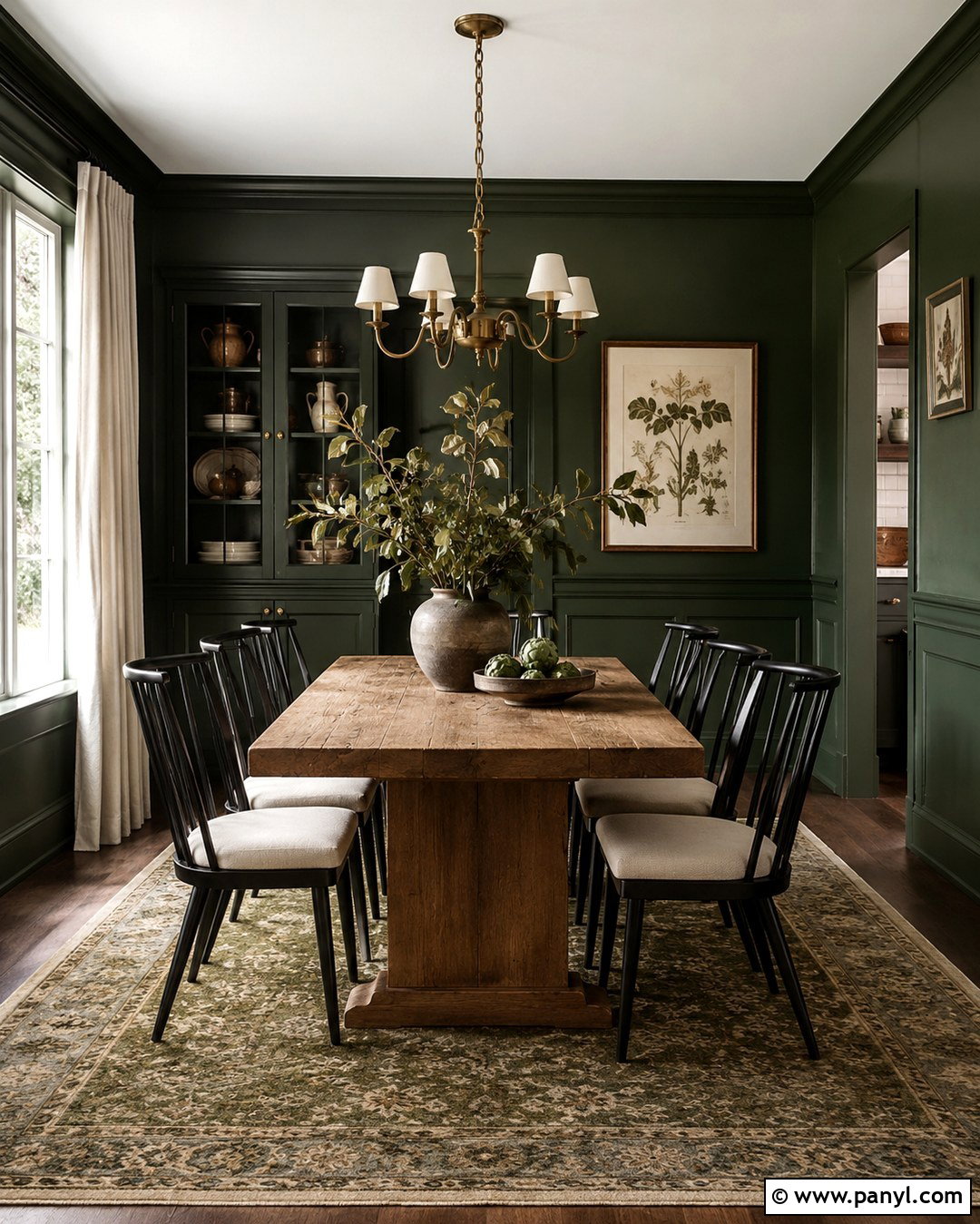
Deep forest green gives a dining room a grounded, collected atmosphere. Carry the green over the walls, trim, and built-in cabinetry to create an enveloping color-drenched effect. Place a long reclaimed oak table in the center with black spindle chairs and two upholstered end chairs in warm tan fabric. A cream-and-olive patterned rug adds softness underfoot while brightening the lower half of the room. Hang an aged brass chandelier above the table and use matching picture lights over botanical artwork. Natural linen curtains, stoneware dishes, and amber glass accessories reinforce the earthy palette. Keep the ceiling a soft warm white if the room needs extra brightness. The finished space feels dramatic, organic, and suitable for both everyday meals and gatherings.
4. Deep Teal Wall Color
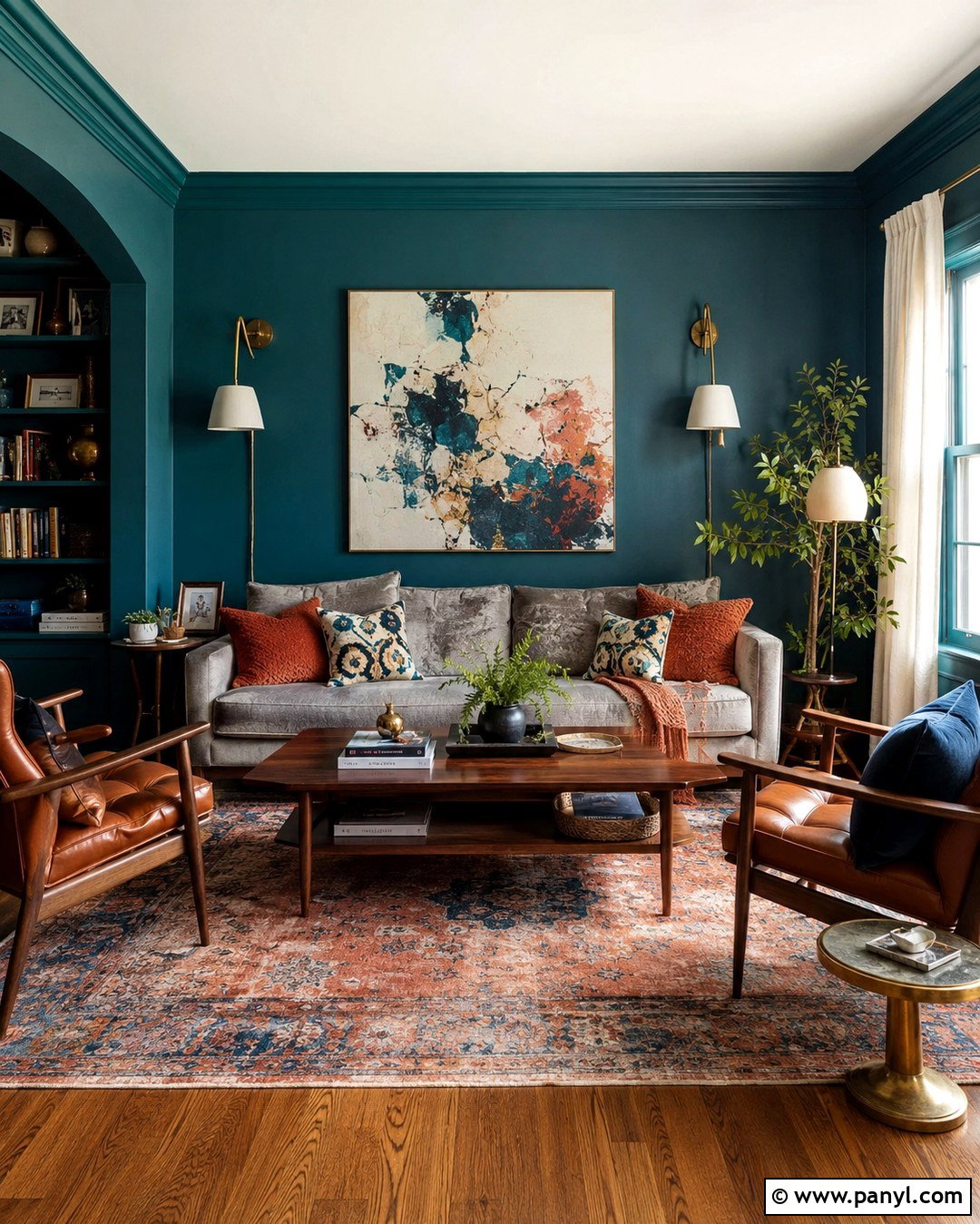
Deep teal blends the calm character of blue with the richness of green, making it an excellent living room wall color. Pair the saturated walls with a low-profile sofa in warm gray, cognac leather lounge chairs, and a medium walnut coffee table. A vintage-inspired rug containing teal, faded coral, cream, and brown will unite the furniture with the walls. Use brushed brass floor lamps and creamy ceramic table lamps to add reflective highlights throughout the room. Off-white curtains keep the windows fresh without creating a sharp contrast. Decorate with abstract artwork, smoky glass vases, and rust-colored pillows. Painting the trim in the same teal creates a modern finish, while an ivory ceiling maintains enough visual lift for a comfortable, balanced room.
5. Oxblood Red Wall Color
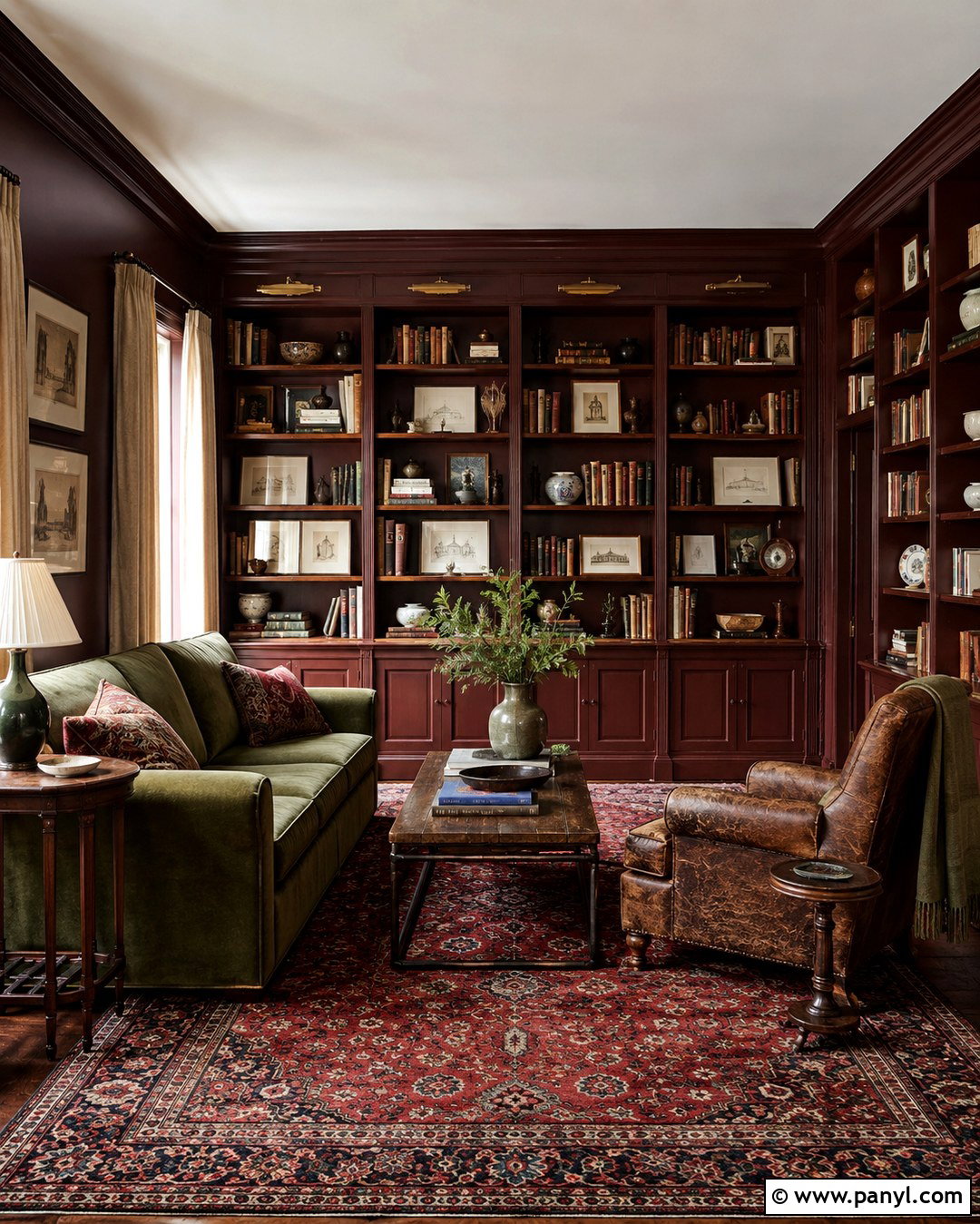
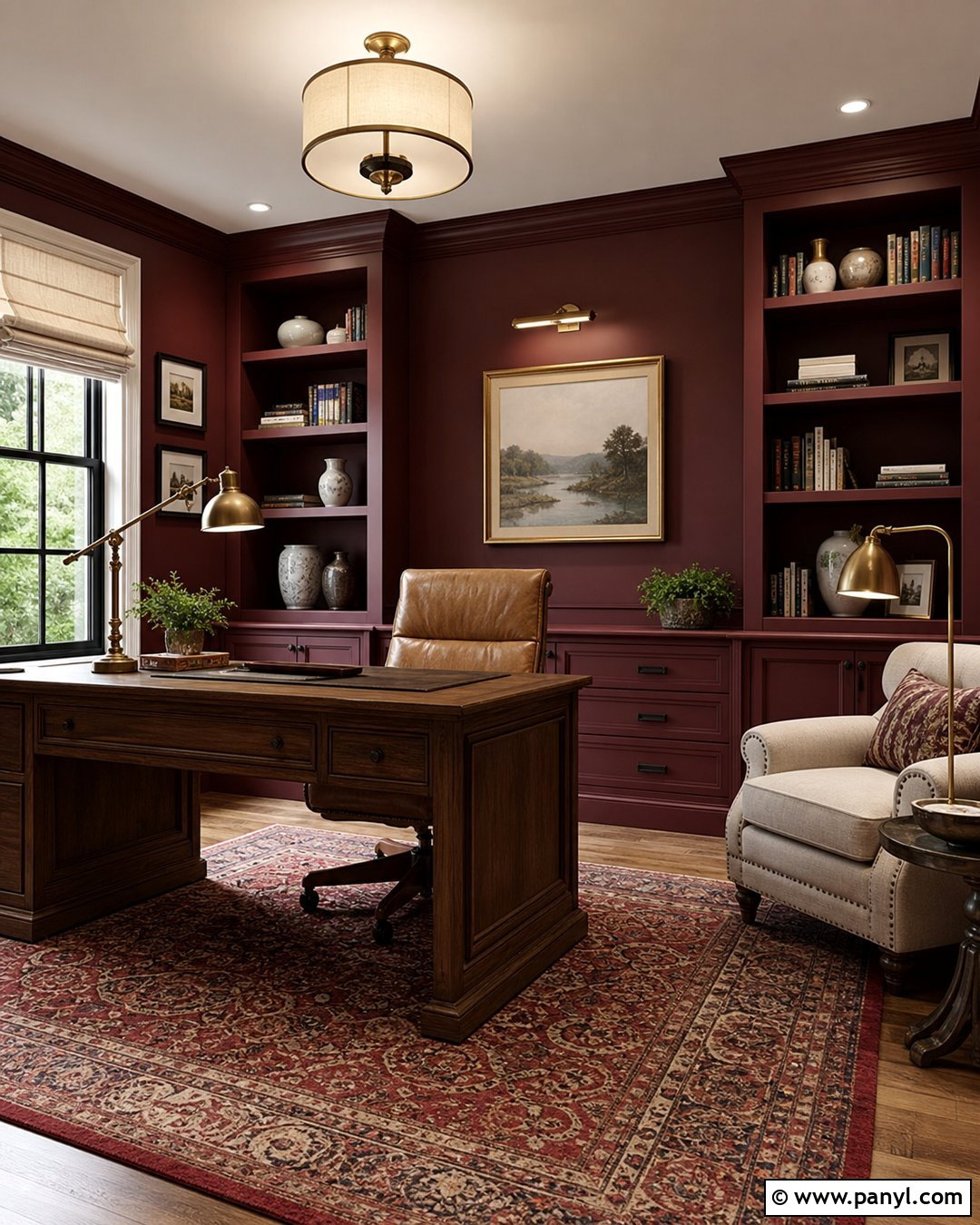
Oxblood red brings warmth and old-world character to a small library or reading room. Cover the walls in this brown-based red, then add floor-to-ceiling walnut bookcases on one side. A deep olive velvet sofa creates a refined contrast, while a worn leather reading chair introduces another warm, durable texture. Ground the arrangement with a Persian-style rug in burgundy, navy, gold, and cream. Antique brass library lights and a shaded floor lamp provide focused illumination without flattening the rich wall color. Choose oatmeal curtains and a warm white ceiling to prevent the room from feeling enclosed. Framed sketches, stacked books, and dark ceramic accessories complete the collected look. The result feels intimate and sophisticated rather than overly formal or bright.
6. Aubergine Purple Wall Color
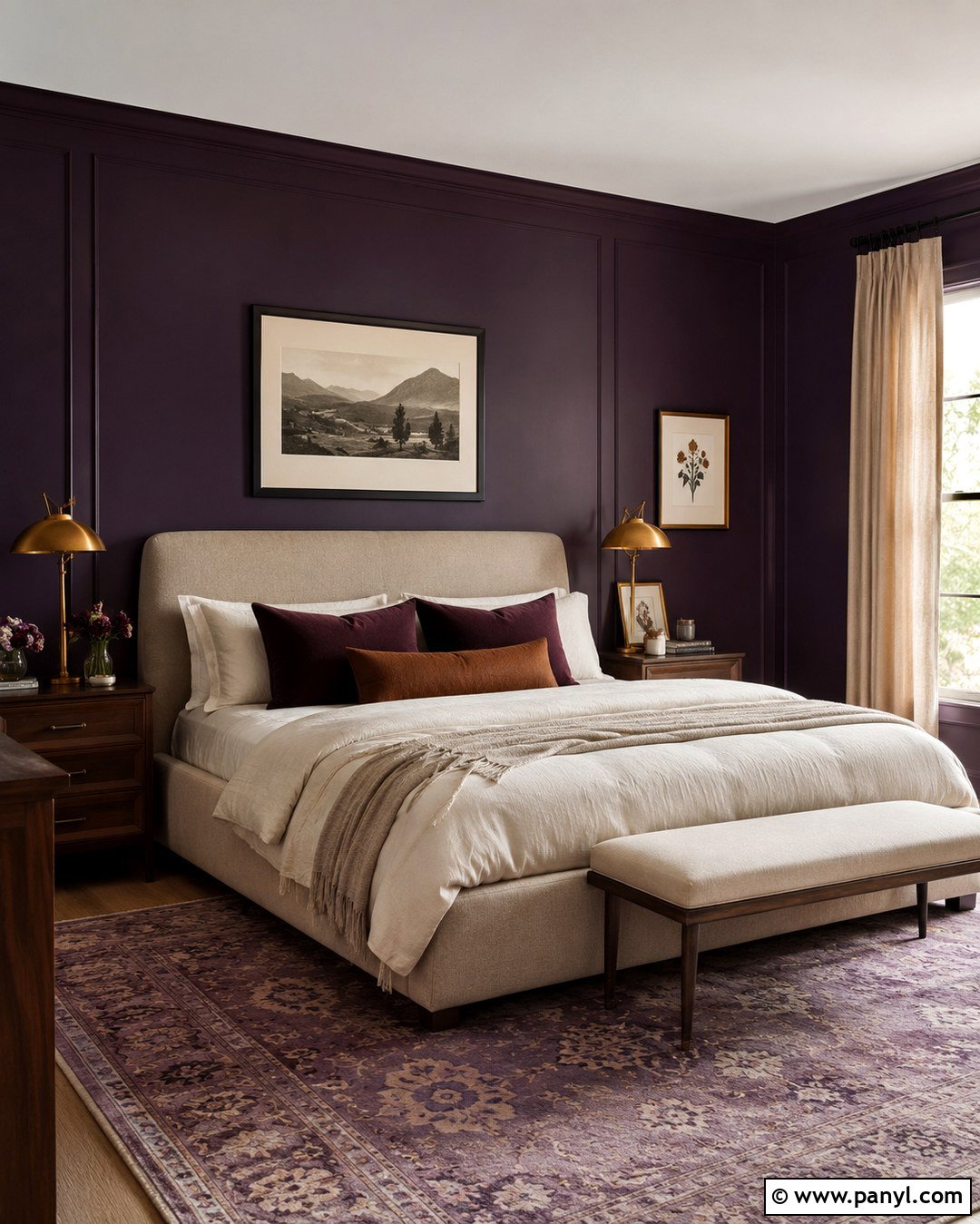
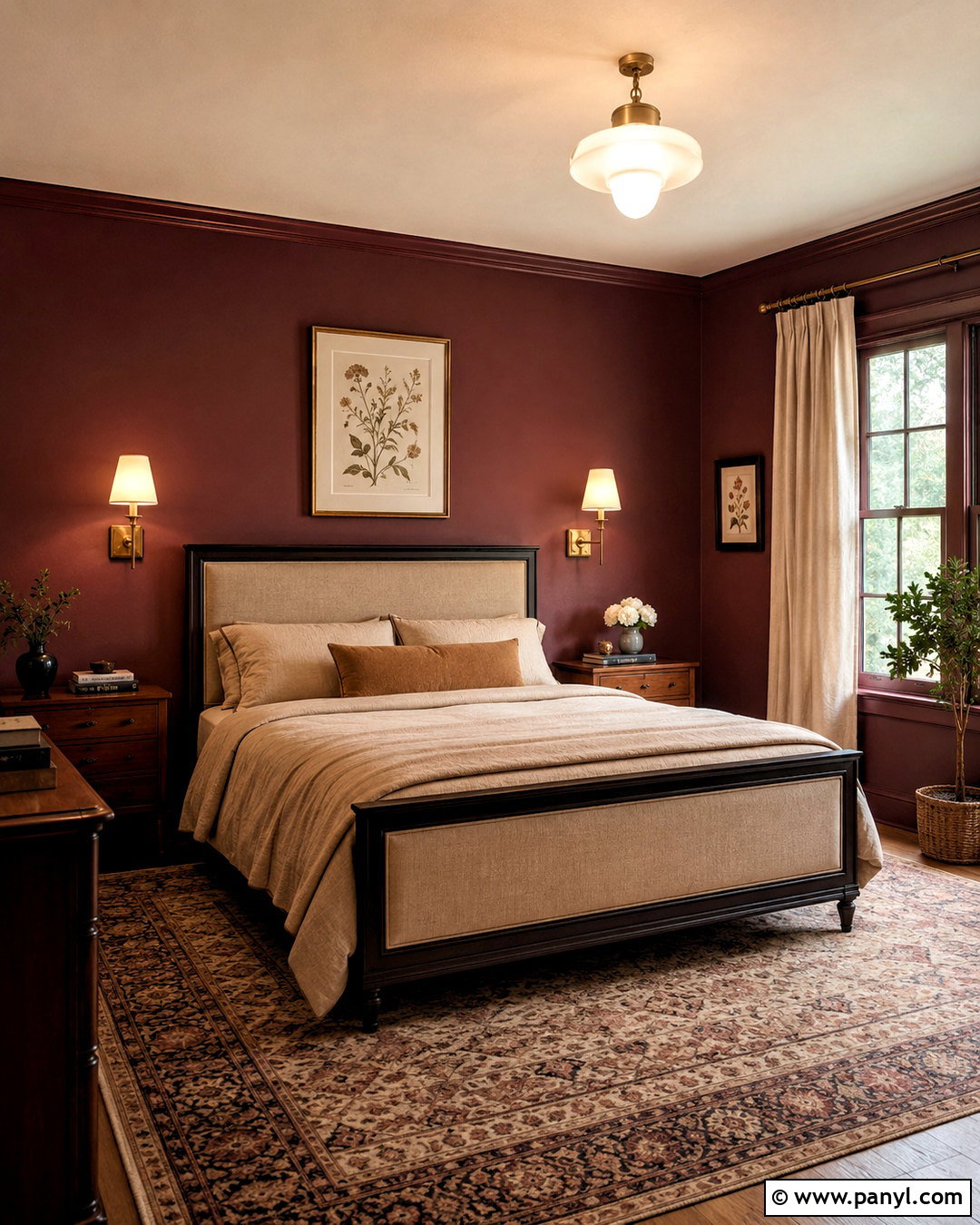
Aubergine purple can make a guest bedroom feel luxurious without looking overly feminine. Apply it to every wall and continue it across simple crown molding for a cohesive backdrop. Place an upholstered bed in soft mushroom linen against the main wall, then layer cream bedding with plum, tobacco, and dusty rose accents. Dark walnut nightstands complement the purple undertones, while antique brass lamps introduce a gentle glow. A muted floral rug with beige and faded violet adds pattern without overwhelming the room. Keep the ceiling warm ivory and choose natural linen curtains to balance the darker surfaces. Finish with black-framed artwork, a small upholstered bench, and a few sculptural ceramics. This complete palette feels comfortable, mature, and pleasantly unexpected.
7. Chocolate Brown Wall Color
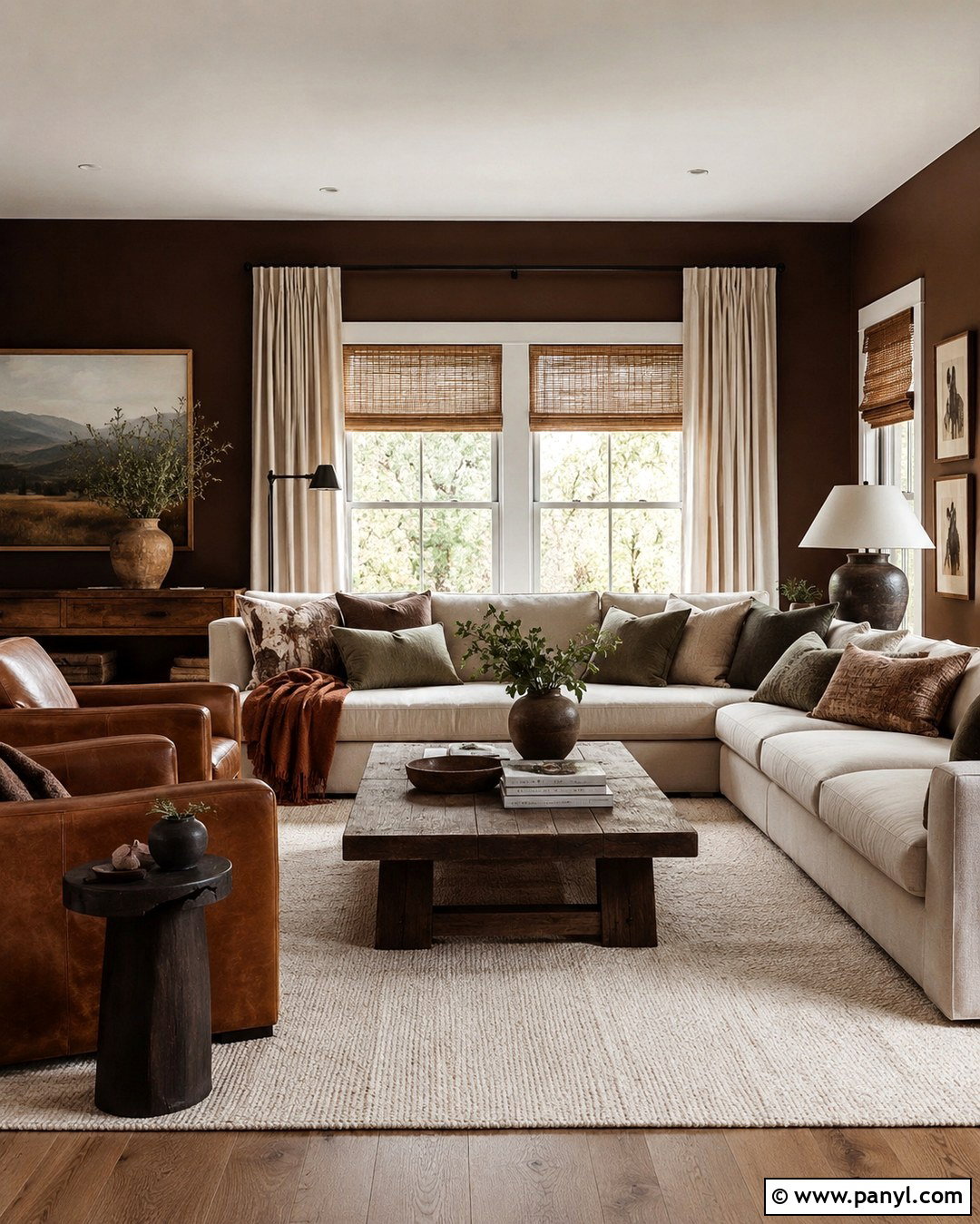
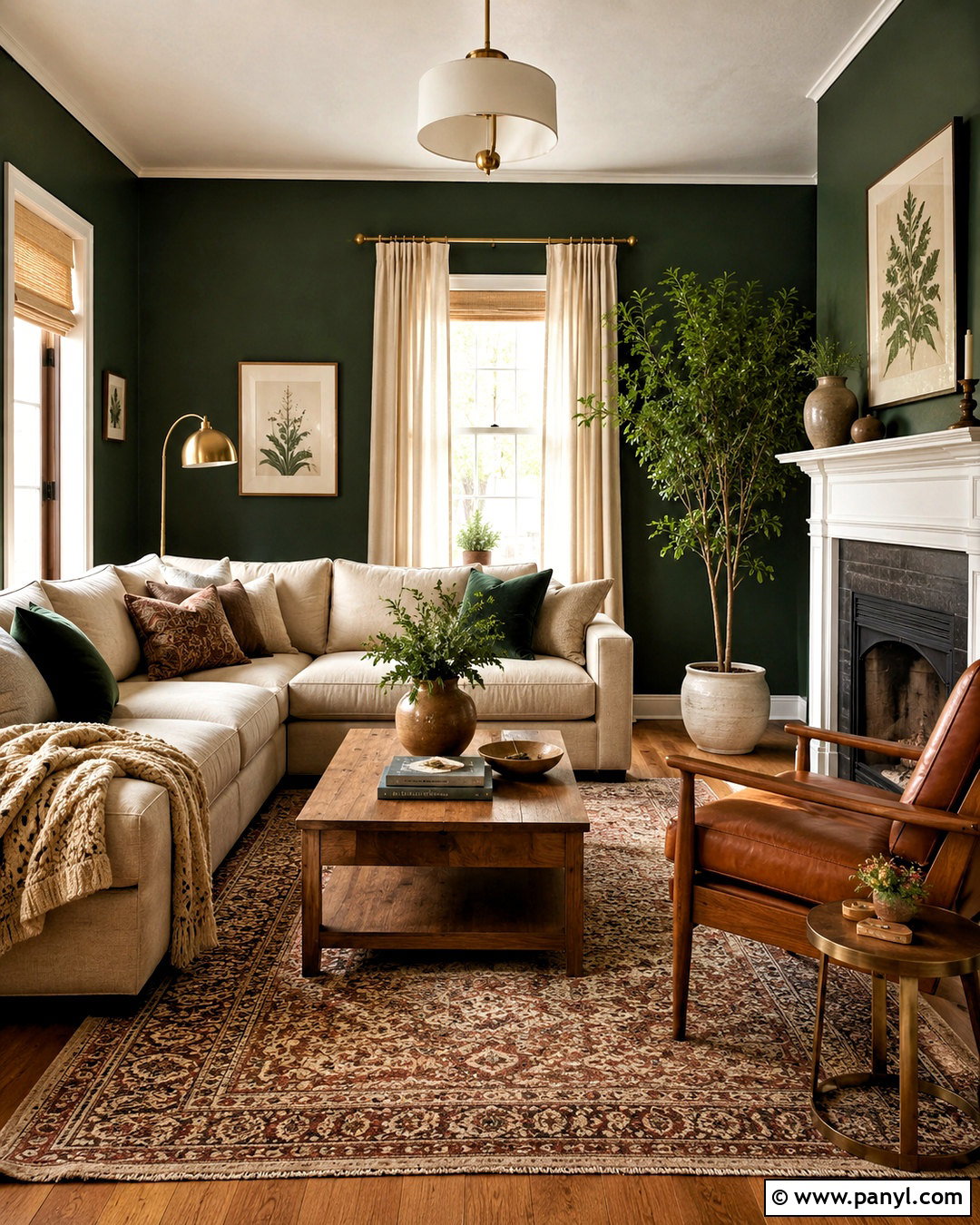
Chocolate brown walls create a warm, comforting living room that feels connected to natural materials. Choose a deep cocoa shade with subtle red undertones and pair it with a creamy linen sectional. Add two chestnut leather chairs, a heavy oak coffee table, and an ivory wool rug to form a welcoming conversation area. Olive green pillows and rust-colored throws prevent the brown palette from becoming flat. Woven bamboo shades can filter daylight, while oatmeal curtains soften the window edges. Use aged bronze lamps, handmade pottery, and landscape artwork to reinforce the earthy character. A warm white ceiling provides contrast above the darker walls. The finished room feels relaxed and refined, with enough light fabric and varied texture to keep every brown surface distinct.
8. Slate Blue Wall Color
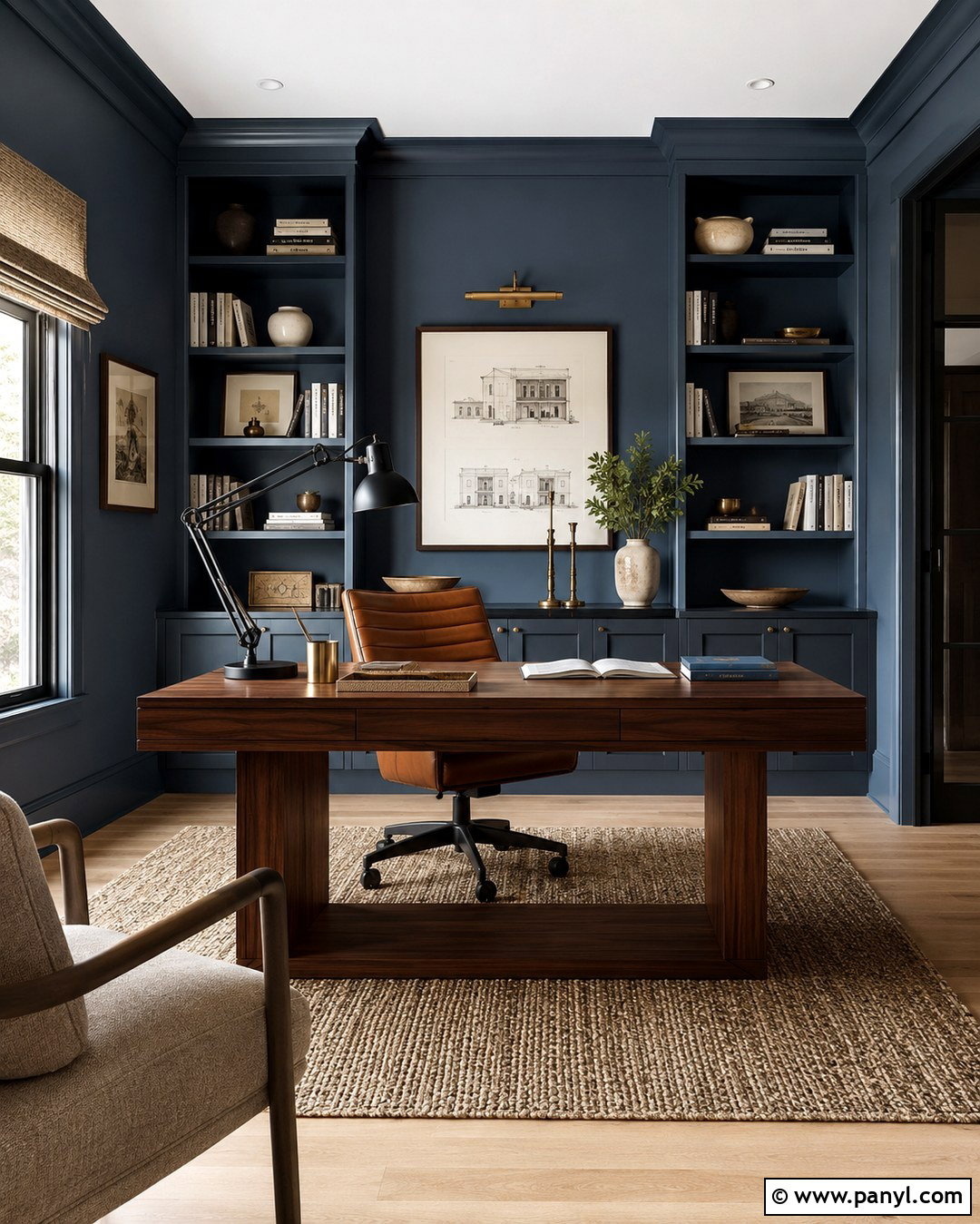
Slate blue offers a softer alternative to navy while still delivering a dark, moody effect. It works especially well in a home office with warm wood furniture and tailored details. Paint the walls and built-in shelves in the same smoky blue, using a satin finish on the cabinetry for subtle contrast. Position a walnut desk near the window with a cognac leather chair and a woven wool rug beneath it. Display books, cream pottery, and small brass objects on the shelves to brighten the background. Add a flax Roman shade, an adjustable black desk lamp, and simple framed architectural prints. Pale oak flooring keeps the foundation light. This office feels focused and professional, but the muted color and natural materials also make it comfortable for long work sessions.
9. Smoky Plum Wall Color
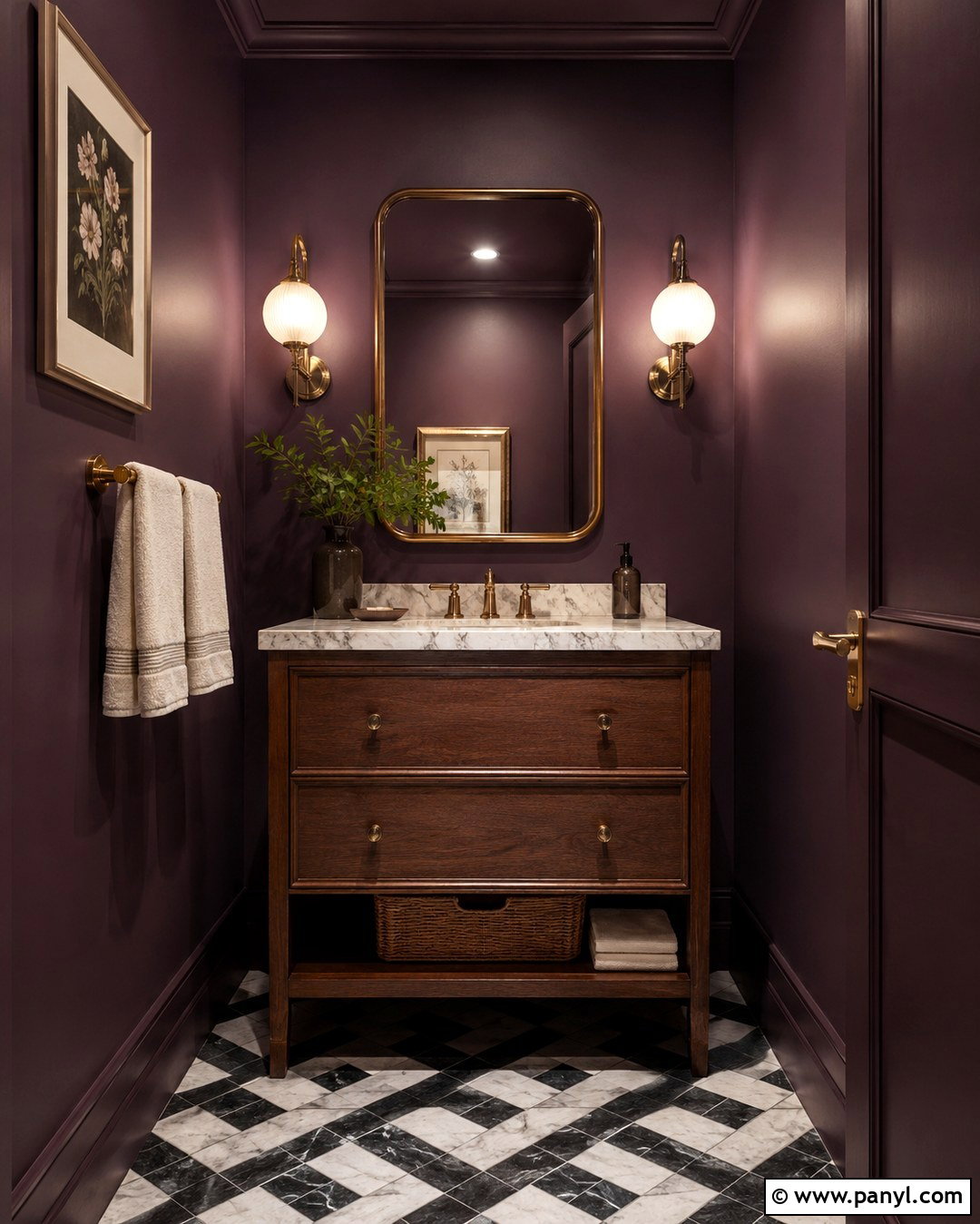
Smoky plum gives a powder room a jewel-box appearance without relying on bright purple. Paint the walls, ceiling, and trim in the same muted plum for a complete color-drenched finish. Install a compact walnut vanity with a creamy veined marble top and an undermount sink. A rounded antique brass mirror and two frosted glass sconces add warm reflection against the dark paint. Choose unlacquered brass hardware and a simple ivory hand towel for functional contrast. Black-and-white marble floor tile keeps the small space crisp, while one framed botanical print adds quiet detail. Because the palette is concentrated and consistent, the room feels intentional rather than crowded. The combination of plum, walnut, marble, and brass creates a polished look in a modest footprint.
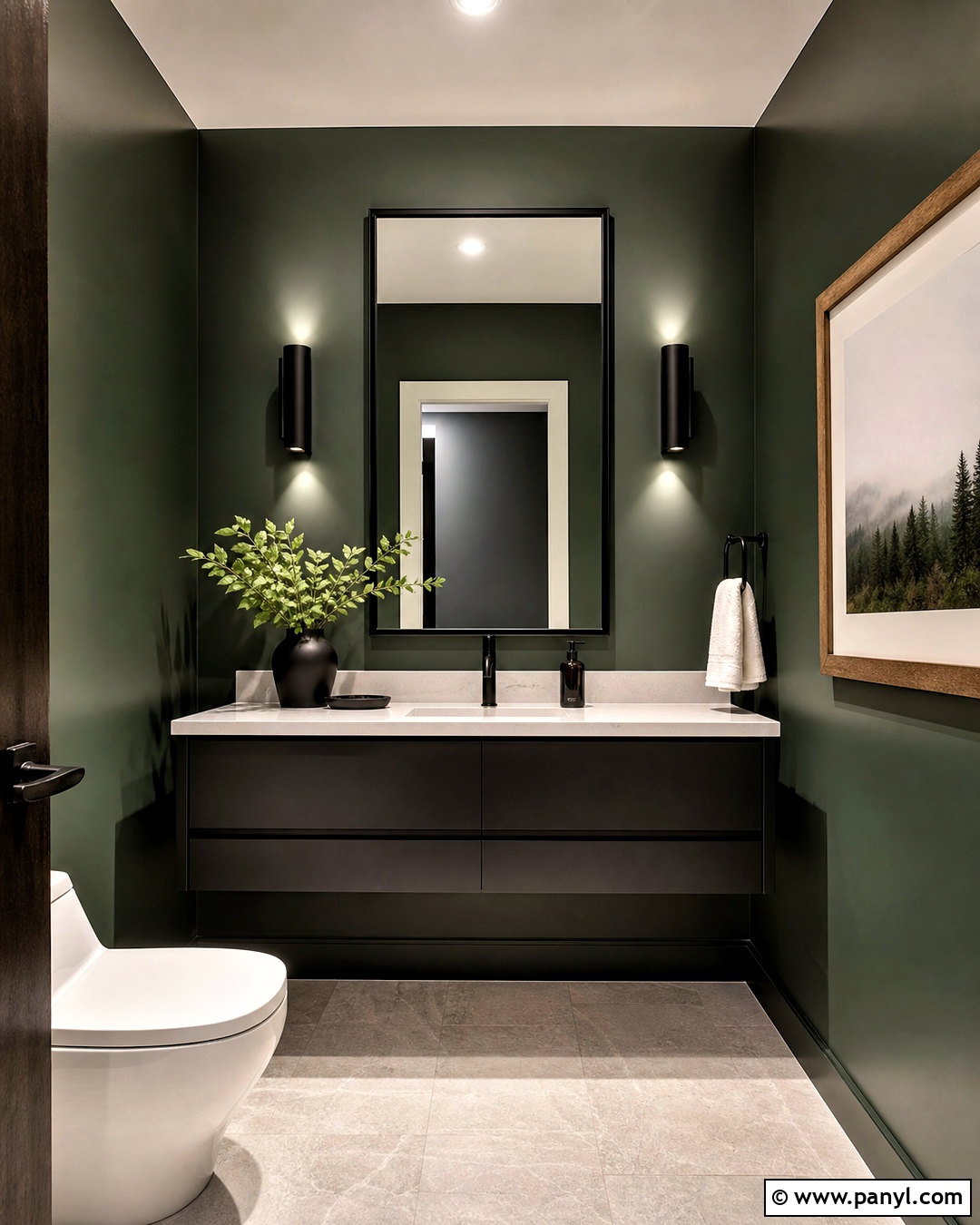
10. Deep Olive Wall Color
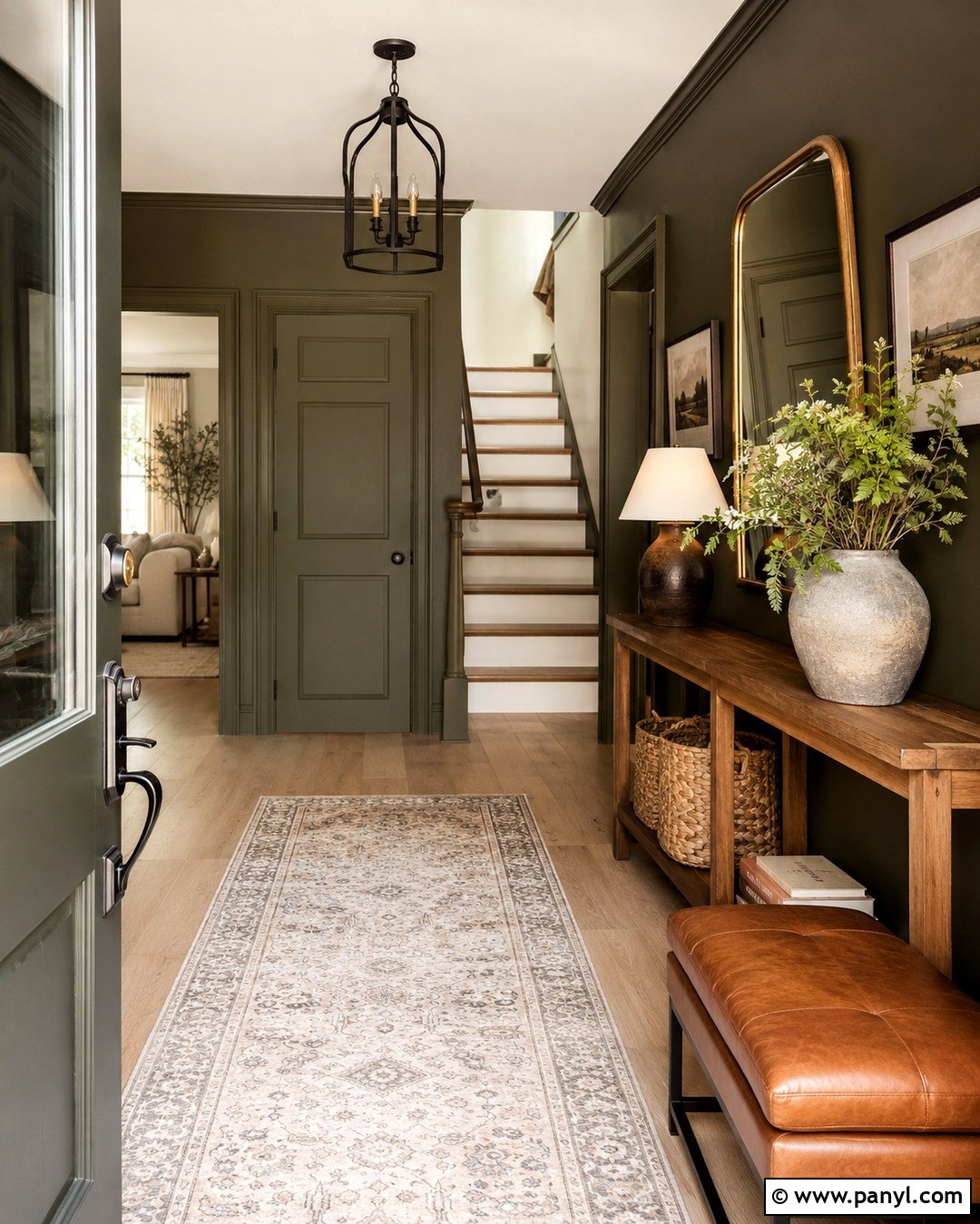
Deep olive walls make an entryway feel grounded from the moment someone walks inside. Use the color across the walls and interior doors, then balance it with light oak flooring and a warm white ceiling. Place a narrow walnut console beneath a large aged brass mirror to reflect available light. A woven runner in cream, tan, black, and muted green provides pattern through the hallway. Add a black iron pendant overhead and a small ceramic lamp on the console for layered illumination. A cognac leather bench offers practical seating without taking up much visual space. Finish the arrangement with woven baskets, simple landscape art, and a tall branch in a stone vase. This complete entrance feels organized, welcoming, and rich in natural color.
11. Burgundy Wall Color
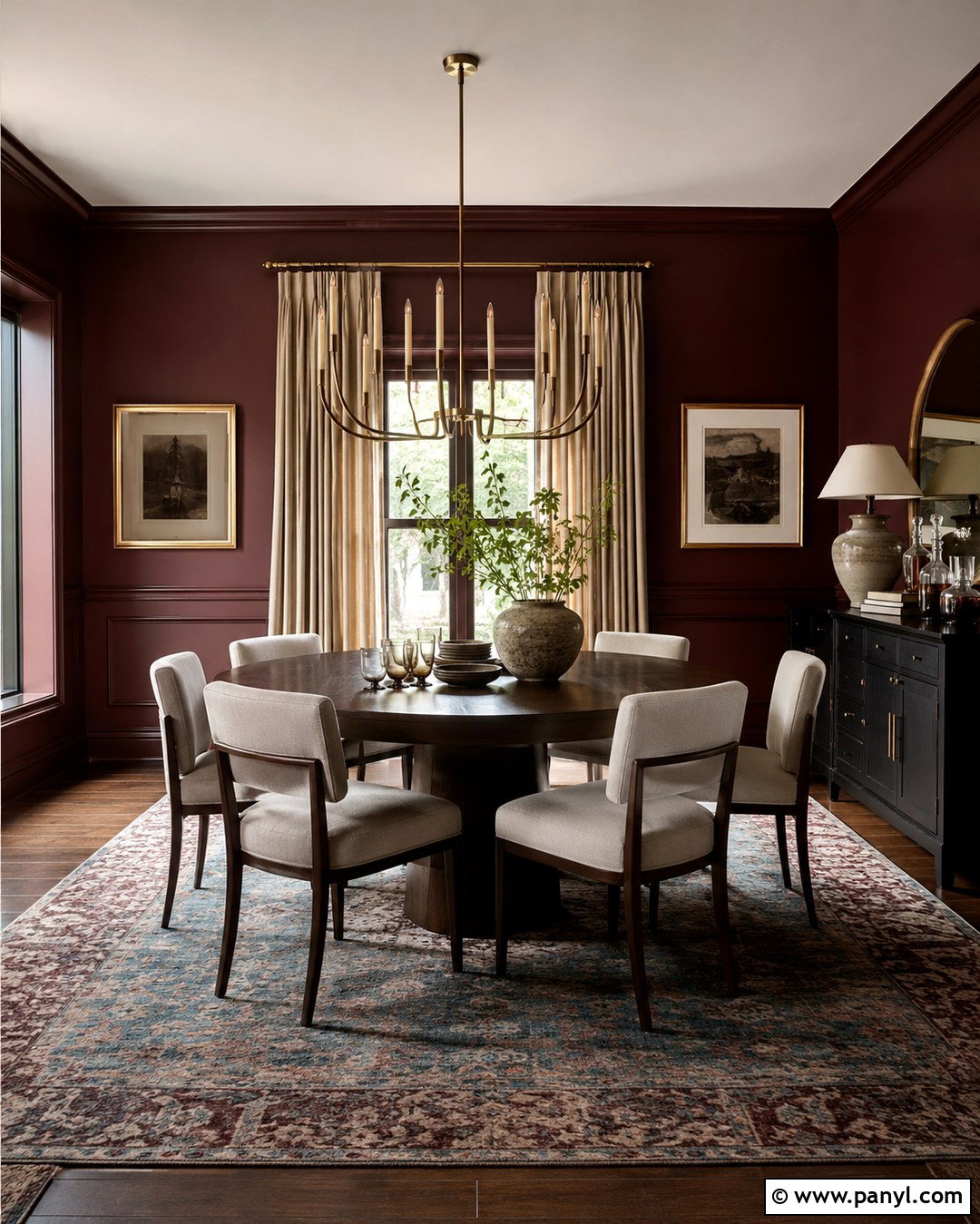
Burgundy creates a memorable dining room when it is balanced with clean lines and lighter upholstery. Select a deep red with brown undertones and use it on the walls and trim. Center a round dark oak dining table beneath a sculptural brass chandelier. Surround it with cream upholstered chairs to break up the saturated color and maintain a comfortable atmosphere. A faded blue, beige, and burgundy rug adds subtle contrast while tying the room together. Hang modern artwork with broad cream borders, and dress the windows with flax linen curtains. A black sideboard provides useful storage without introducing another wood tone. Stoneware, smoked glass, and a few bronze accessories complete the setting. The result feels dramatic yet practical enough for regular family meals.
12. Blue Black Wall Color
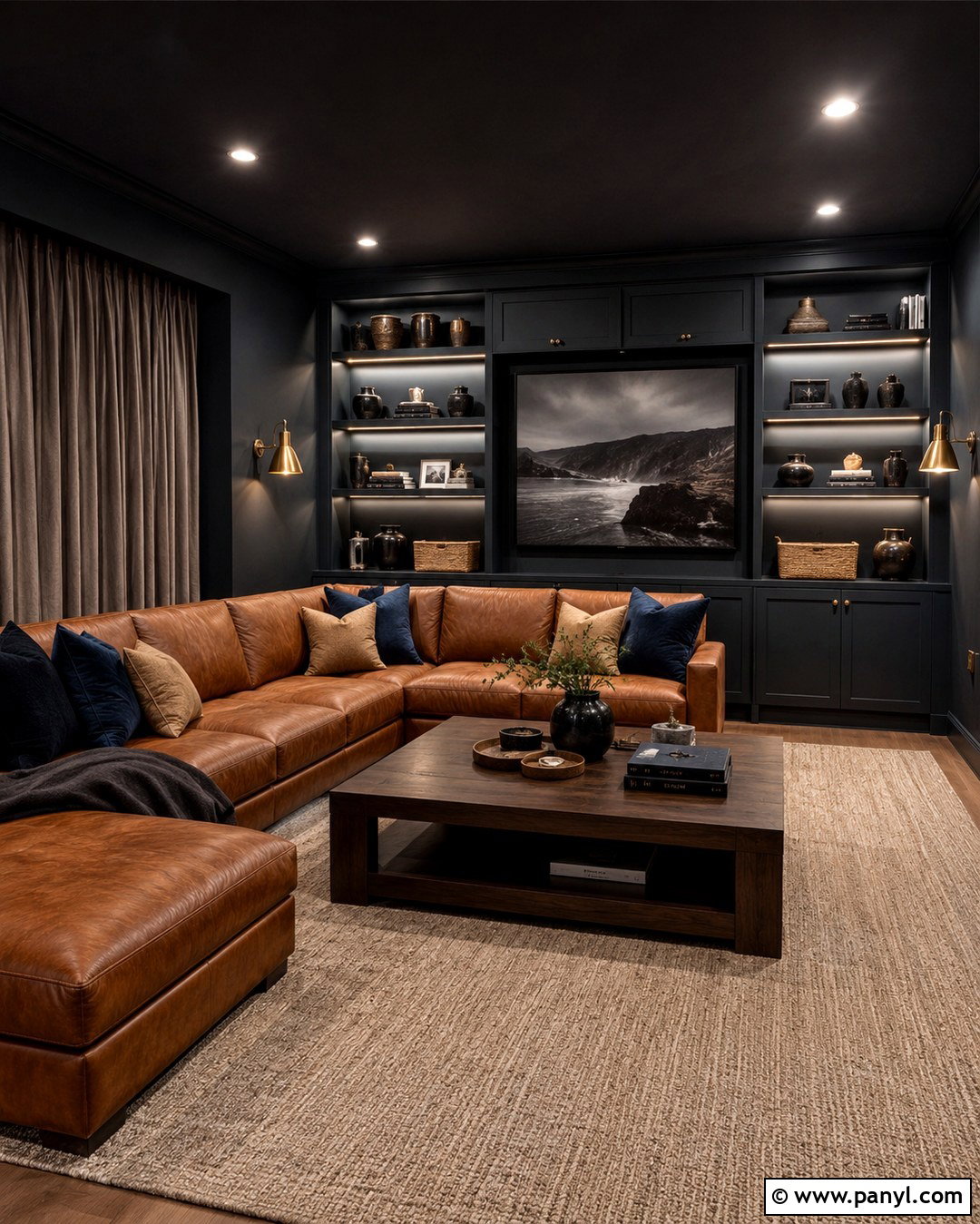
Blue black brings more depth and movement to walls than a flat neutral black. Use it in a compact media room where its cool undertone can visually soften the television and dark electronics. Paint the walls, built-ins, and ceiling in the same matte shade for a streamlined envelope. Add a deep cognac sectional, a large oatmeal rug, and a square walnut coffee table to warm the palette. Textured pillows in navy, camel, and ivory provide comfortable layers without creating visual clutter. Install dimmable wall sconces in aged brass and place concealed lighting inside the shelving. Heavy taupe curtains improve the finished, cocooning effect. Minimal artwork, woven baskets, and dark ceramics maintain a calm room that feels polished whether the screen is on or off.
13. Espresso Brown Wall Color
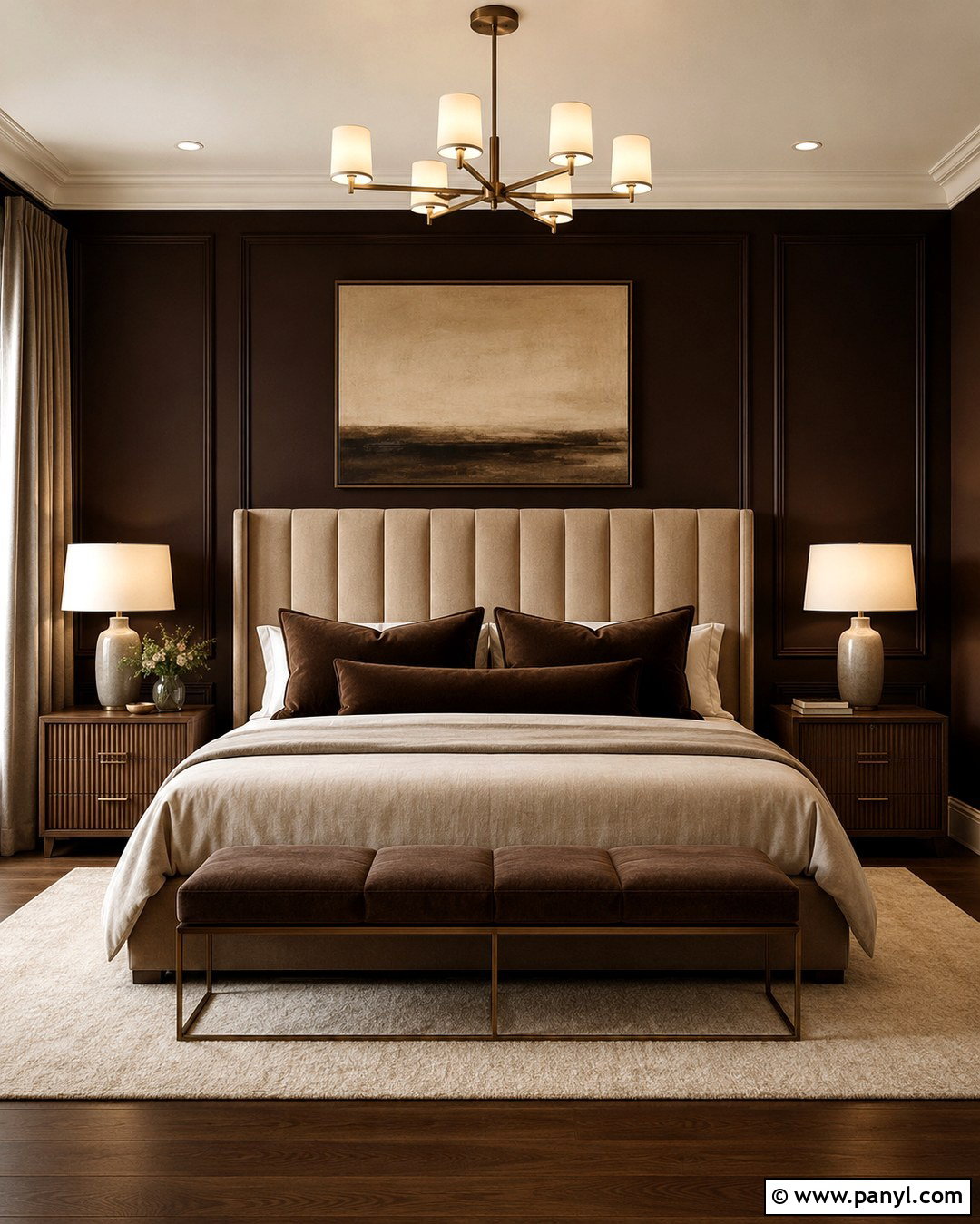
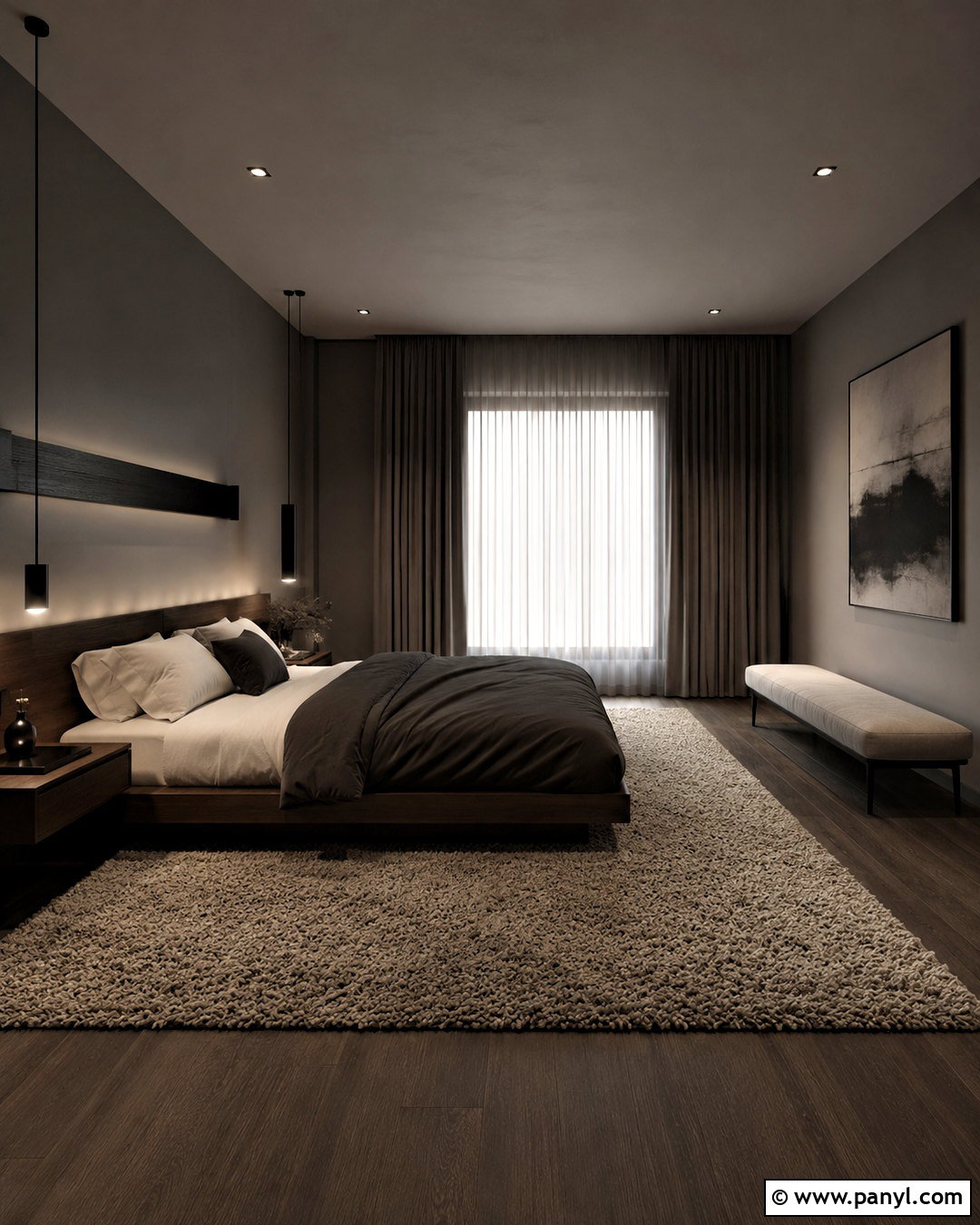
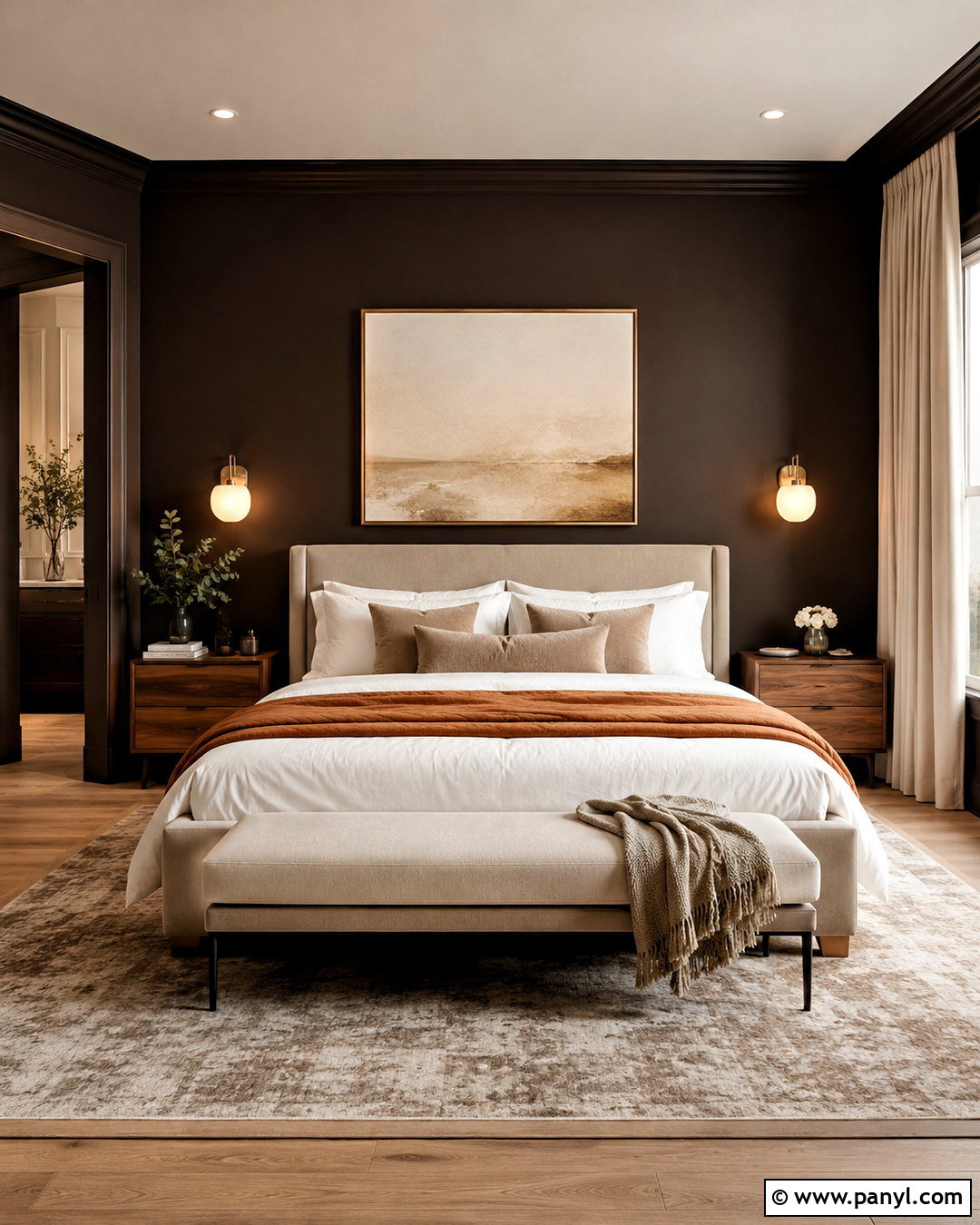
Espresso brown can turn a primary bedroom into an elegant retreat with a subtle hotel-inspired character. Paint the walls a nearly black brown, but keep the ceiling soft cream to preserve height. Choose a tall upholstered headboard in warm beige and layer the bed with ivory linen, chocolate velvet pillows, and a muted camel coverlet. Fluted oak nightstands bring texture beside the smooth walls. Add oversized ceramic lamps with natural linen shades for generous bedside light. A large cream wool rug softens dark hardwood flooring and defines the sleeping area. Hang tonal abstract artwork above the bed and use bronze curtain rods with taupe drapery. Restrained accessories and repeated warm neutrals allow the rich wall color to remain the room’s strongest, most calming feature.
14. Graphite Gray Wall Color
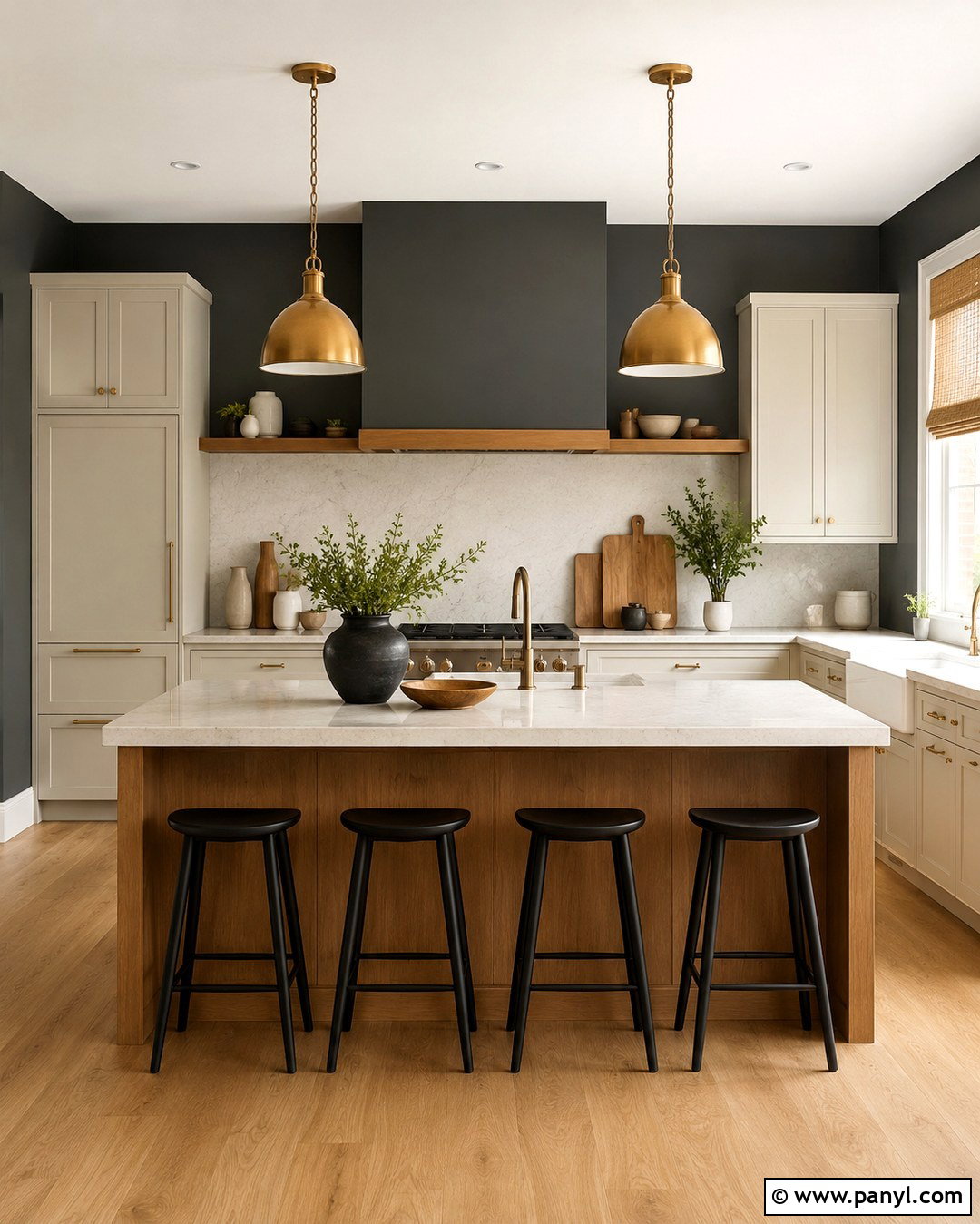
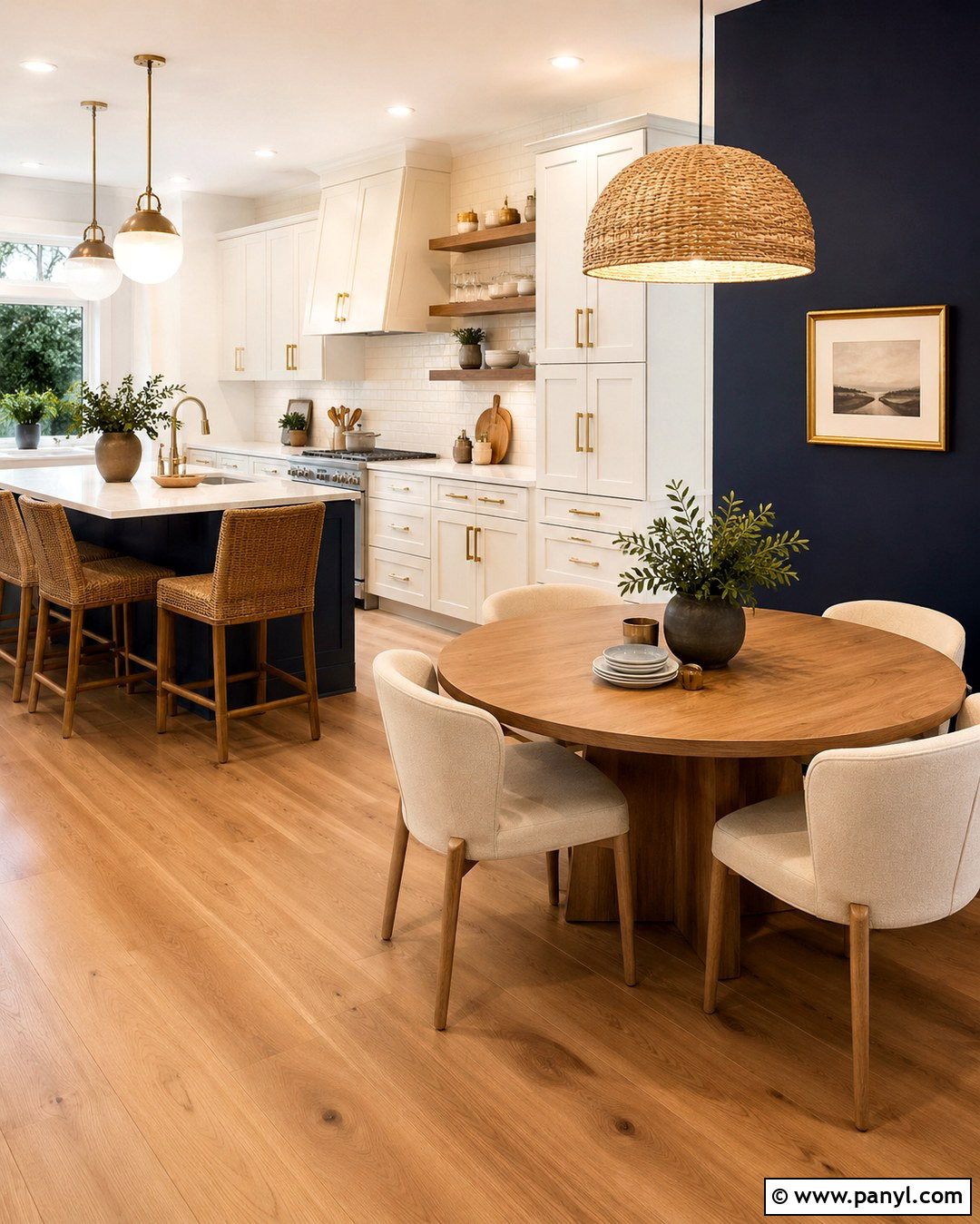
Graphite gray gives a kitchen a modern, dramatic backdrop without requiring black cabinetry. Use it on the walls surrounding warm white cabinets and a pale quartz backsplash. A medium oak island adds an inviting natural centerpiece, while matte black counter stools repeat the depth of the walls. Choose brushed brass cabinet pulls and pendant lights for controlled warmth. Light oak flooring and woven natural shades keep the room from feeling industrial. Display only a few practical items, such as wood cutting boards, cream stoneware, and a dark ceramic vase. If the kitchen opens into another area, carry the graphite onto a connecting wall for continuity. The complete scheme feels clean and current, with enough wood, stone, and metallic contrast to remain welcoming.
15. Peacock Blue Wall Color
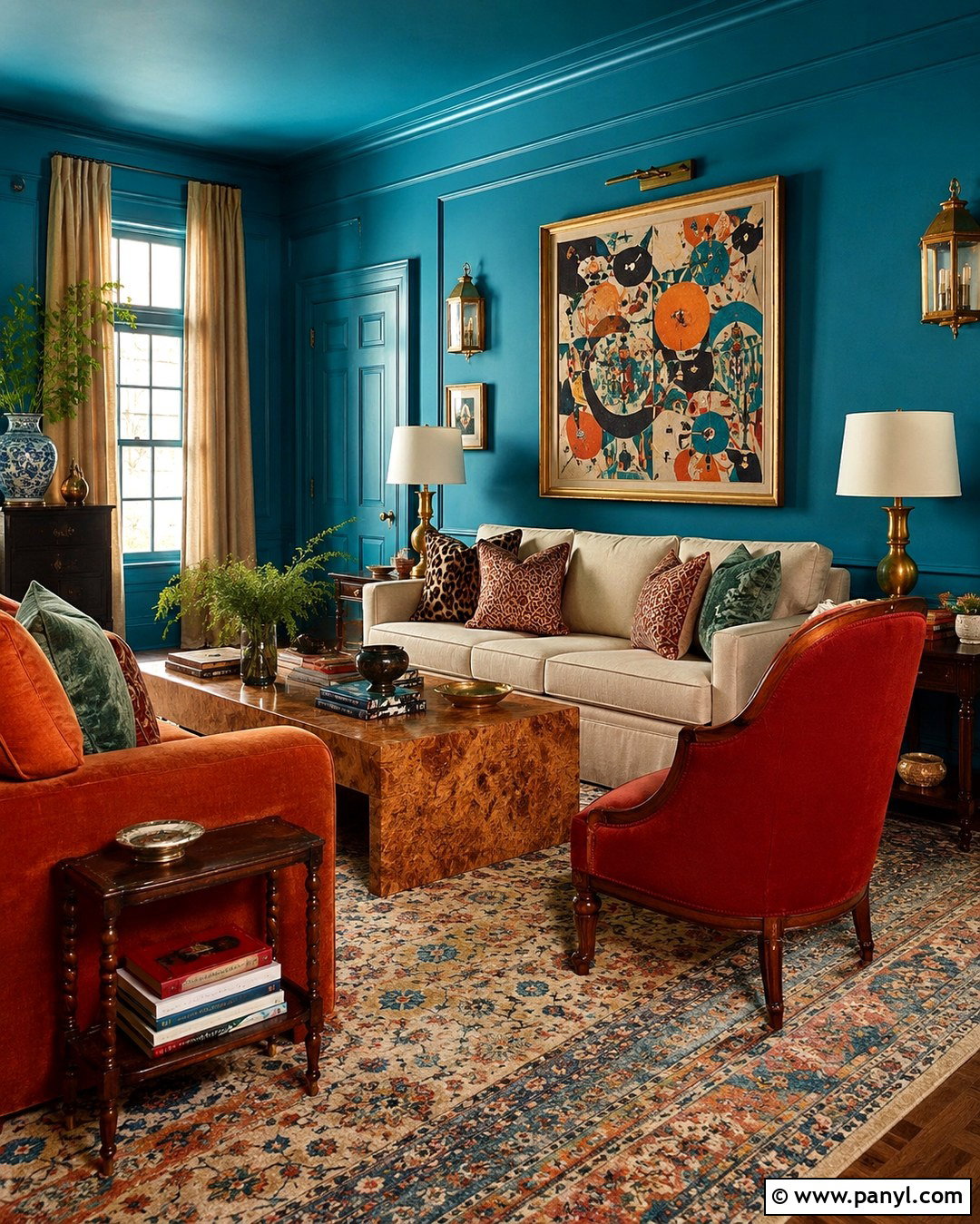
Peacock blue makes a formal sitting room feel colorful, immersive, and full of personality. Paint the walls and trim in the same saturated blue-green, then introduce a cream sofa with a simple tailored shape. Pair it with rust velvet chairs, a burl wood coffee table, and a patterned rug containing gold, indigo, coral, and ivory. Long flax curtains soften the bold walls and allow the windows to remain bright. Add aged brass floor lamps, colorful artwork, and a mix of patterned and solid pillows. Dark wood side tables help anchor the lighter upholstery. Rather than filling every surface, leave a little breathing room around the furniture. This approach gives the powerful wall color space to shine while keeping the finished room polished and approachable.
16. Dark Terracotta Wall Color
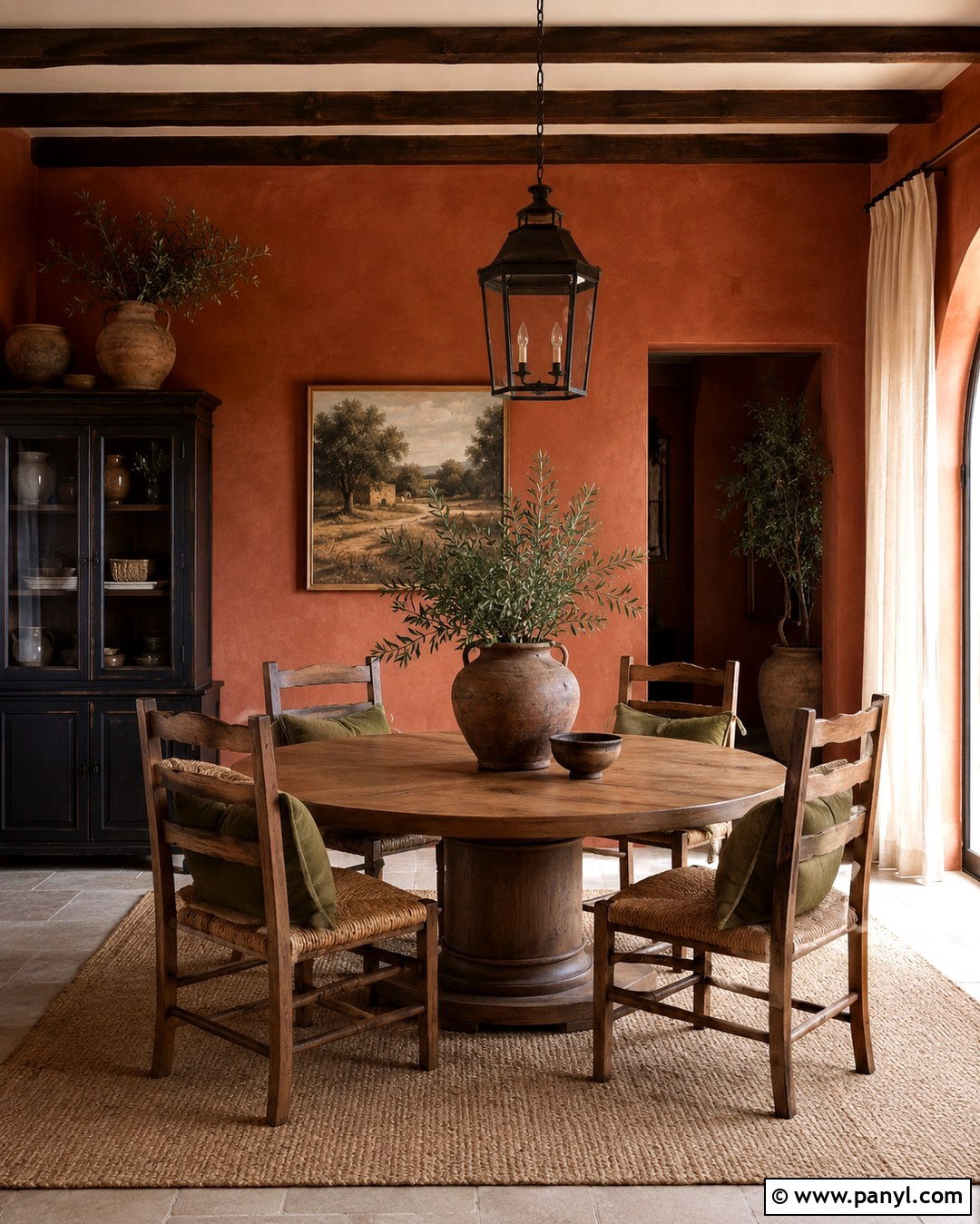
Dark terracotta wraps a breakfast room in earthy warmth and works beautifully with rustic, Mediterranean-inspired materials. Choose a rich clay shade with brown and muted red undertones. Pair it with a round oak pedestal table and woven rush-seat chairs for a casual dining arrangement. Cream linen curtains and a pale jute rug lighten the room without interrupting its natural character. Hang a dark bronze lantern above the table, then place a black wood cabinet against one wall for storage and contrast. Hand-thrown pottery, olive green cushions, and simple landscape artwork complete the palette. Keep the ceiling warm white and use medium oak flooring underfoot. The resulting space feels sunbaked and welcoming, yet the deeper terracotta walls maintain the desired moody, intimate atmosphere.
17. Blackened Sage Wall Color
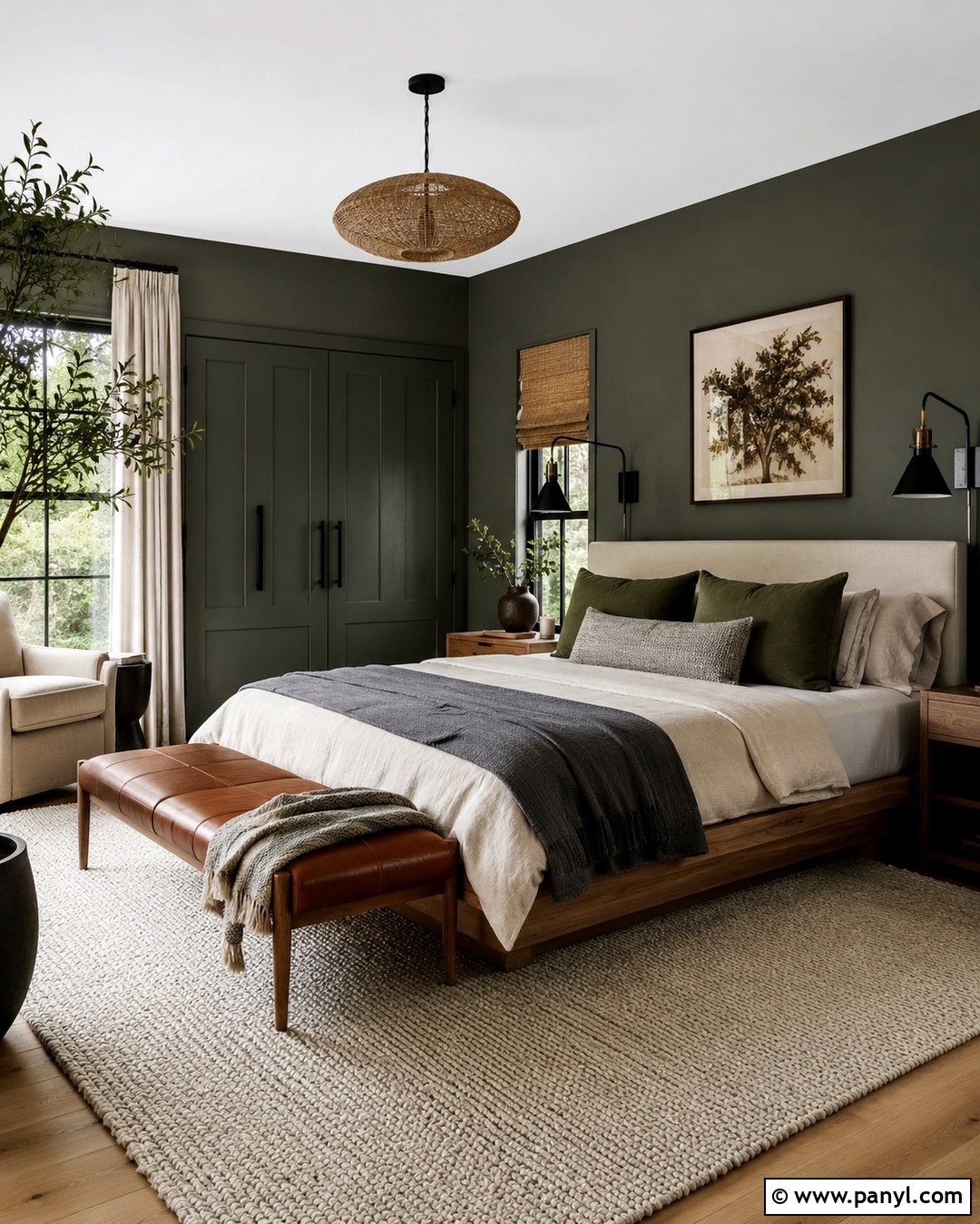
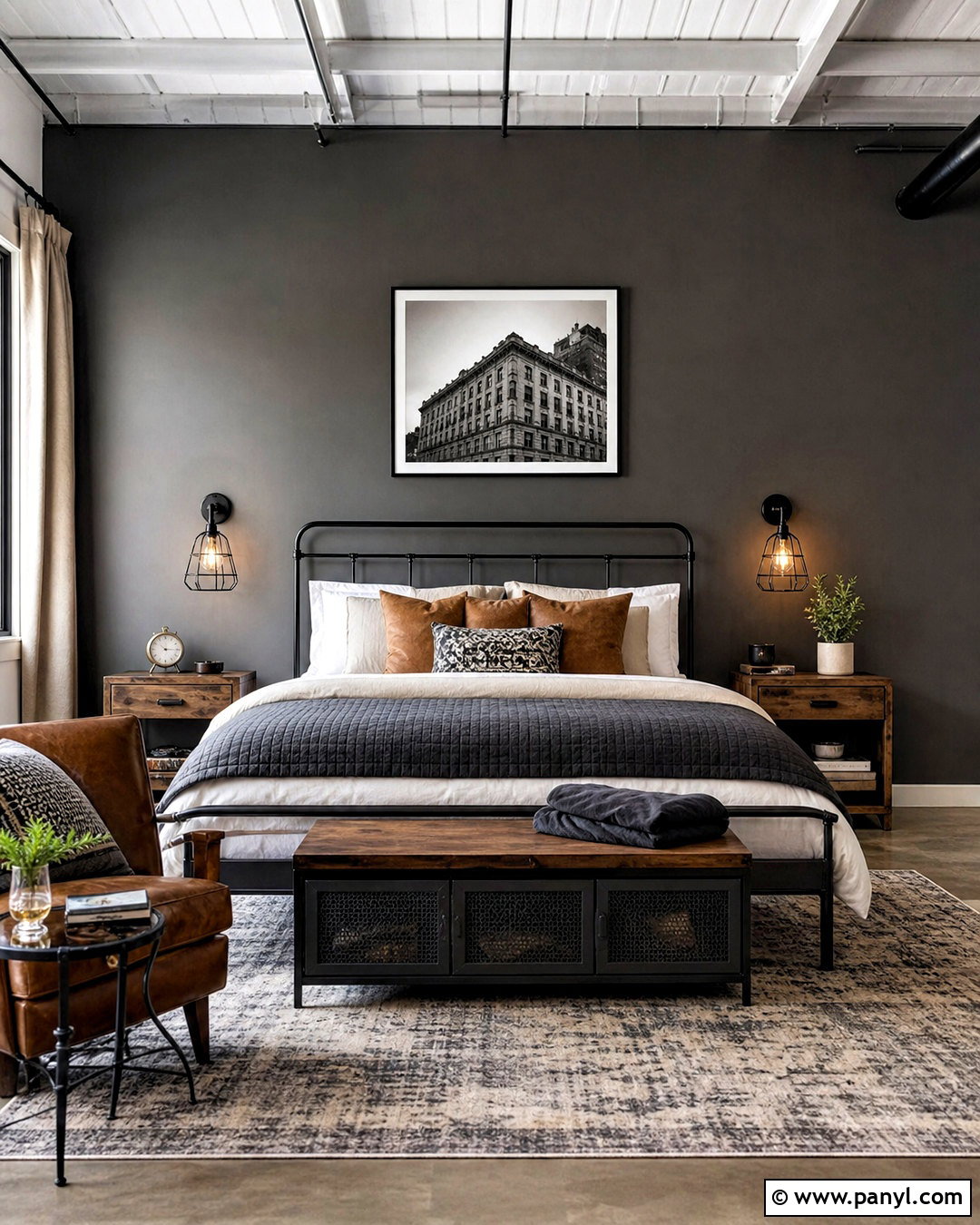
Blackened sage offers a restrained mix of gray, green, and charcoal that suits a calm, modern bedroom. Apply it to the walls and built-in wardrobe doors for a unified backdrop. Select a simple oak platform bed and dress it with oatmeal linen, soft gray blankets, and muted moss pillows. Black metal sconces add definition on each side of the bed, while a pale wool rug creates contrast against medium wood floors. Use natural woven shades with full-length ivory curtains to control daylight and soften the windows. Minimal botanical artwork and matte ceramic vessels support the organic palette. A small cognac leather bench adds one warmer note. The room feels peaceful and uncluttered, with enough tonal variation to prevent the dark sage surfaces from looking dull or flat.
18. Stormy Mauve Wall Color
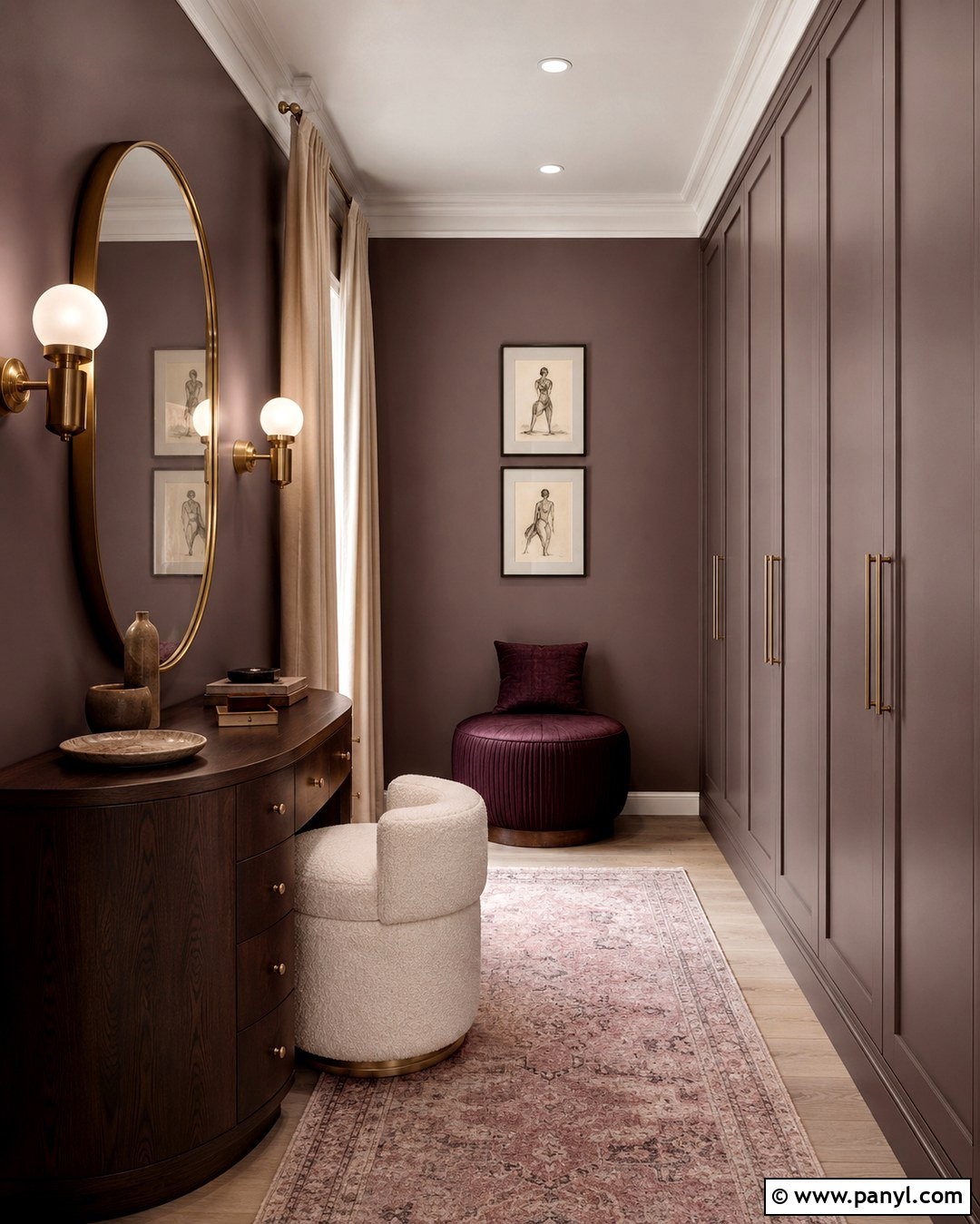
Stormy mauve combines muted purple, brown, and gray for a sophisticated dressing room or bedroom corner. Paint the walls in this dusky hue and use a mushroom-colored finish on built-in wardrobes for a gentle tonal shift. Add a curved vanity in dark walnut with an oval brass mirror and an ivory boucle stool. A small vintage-style rug in faded rose, taupe, and charcoal grounds the arrangement. Install frosted globe sconces beside the mirror to provide useful, even lighting. Soft beige curtains and pale oak flooring help the space remain airy despite the darker wall treatment. Decorate with framed sketches, ceramic trays, and one plum velvet cushion. The completed look feels soft and atmospheric, but its simple furniture and warm neutrals keep it modern and functional.
19. Ink Blue Wall Color
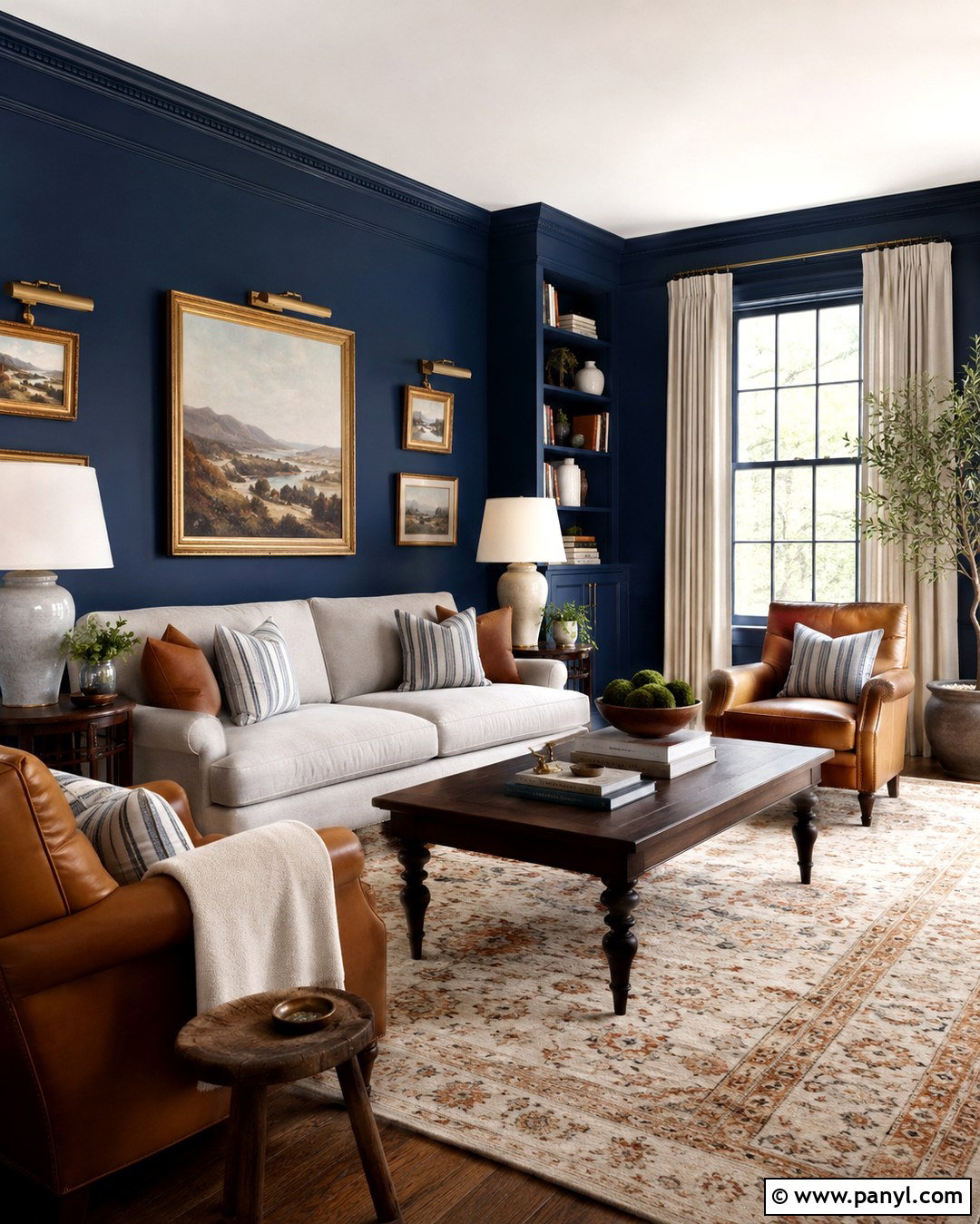
Ink blue creates a confident backdrop for a traditional living room with updated furnishings. Cover the walls in the saturated color, while keeping decorative molding and trim in the same shade for continuity. Arrange a light gray sofa opposite two camel leather chairs around a dark oak coffee table. A large patterned rug in cream, denim, rust, and faded red adds warmth and visual movement. Hang antique brass picture lights above a balanced group of framed landscapes. Oatmeal curtains prevent the windows from appearing overly bright against the blue walls. Include a black bookcase, ceramic lamps, and a few striped pillows for a collected finish. With repeated warm browns and soft creams, ink blue feels rich and versatile rather than cold or overly formal.
20. Deep Taupe Wall Color
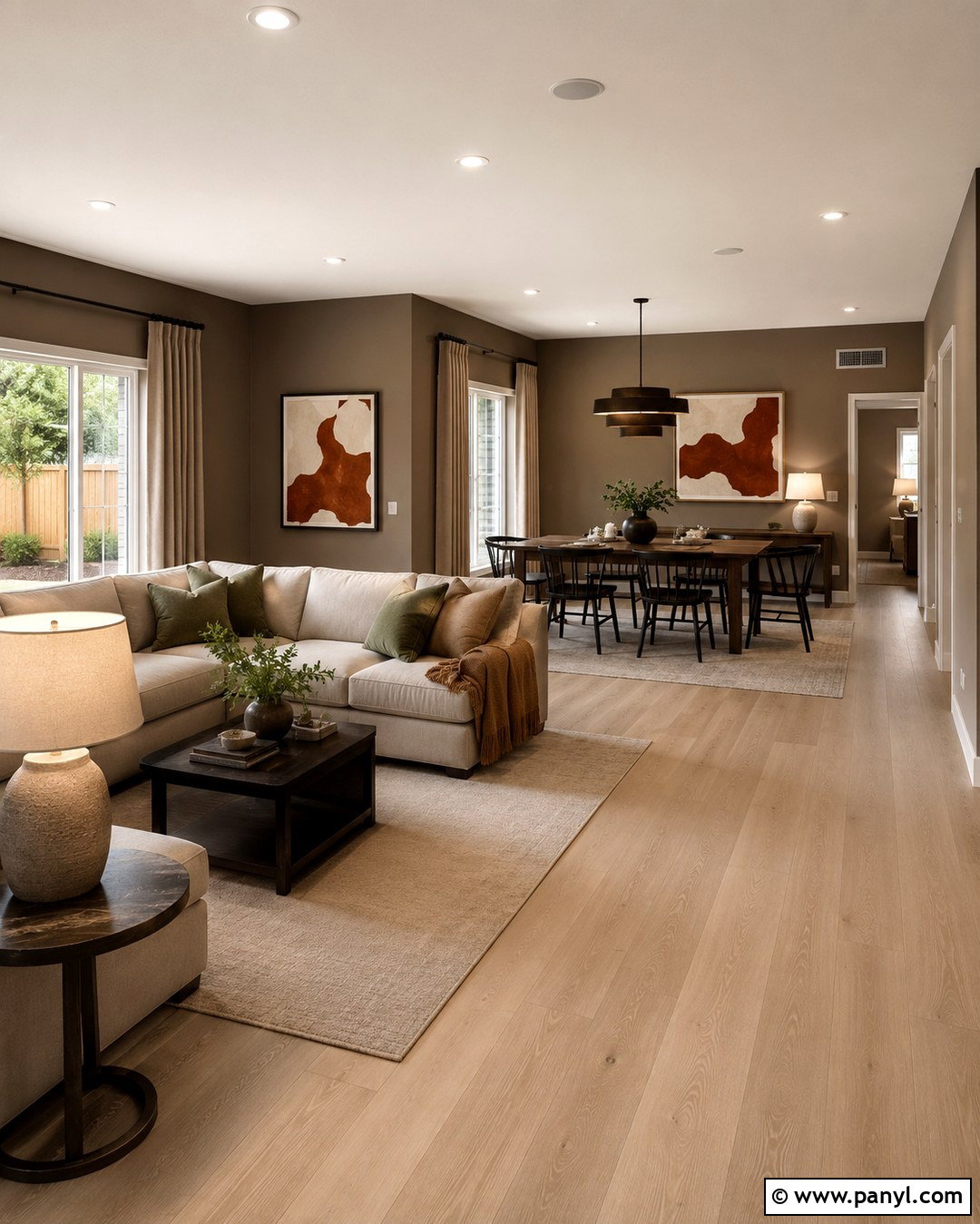
Deep taupe is ideal when you want moody walls without committing to an obvious jewel tone. Use this brown-gray color in an open living and dining area with pale oak flooring and warm white ceilings. A cream sectional, walnut dining table, and black wood chairs create a clear but connected furniture palette. Layer in olive pillows, camel throws, and a textured beige rug to emphasize the wall color’s earthy undertones. Linen curtains in a slightly lighter taupe provide softness without strong contrast. Use bronze pendants over the dining table and large ceramic lamps beside the sofa. Abstract artwork in charcoal, rust, and ivory ties both zones together. The finished space feels warm, cohesive, and easy to update as furniture and seasonal accessories change.
Conclusion:
The best dark room is not built around paint alone. It combines saturated walls with intentional contrast, comfortable furniture, layered lighting, and materials that add warmth. These **20 Dark Moody Wall Colors** offer options ranging from familiar charcoal and navy to expressive burgundy, aubergine, peacock blue, and dark terracotta. Before painting the entire room, sample your chosen shade beside the flooring, upholstery, trim, and largest furniture pieces. Check it under daylight and every lamp you regularly use. Once the undertones feel right, build a limited supporting palette around them. Repeated wood tones, light textiles, and warm metals will make the finished room feel cohesive, inviting, and confidently dramatic.

Related Ideas and Inspiration:
Leave a Reply