
Purple can feel calming, dramatic, playful, or sophisticated, depending on the shade and surrounding finishes. These Purple Wall Ideas show how to use lavender, lilac, violet, plum, mauve, and aubergine across bedrooms, living rooms, kitchens, bathrooms, and smaller spaces. The key is to treat the wall as part of a complete room rather than an isolated splash of color. Flooring, furniture, lighting, textiles, and metal finishes should support the chosen purple tone. Pale shades work beautifully with airy neutrals and light woods, while deeper purples gain balance from cream, walnut, brass, and muted green. Whether you prefer simple paint, wallpaper, paneling, or a decorative finish, you can find an approachable look among these 45 Purple Wall Ideas.

1. Lavender Purple Living Room Wall
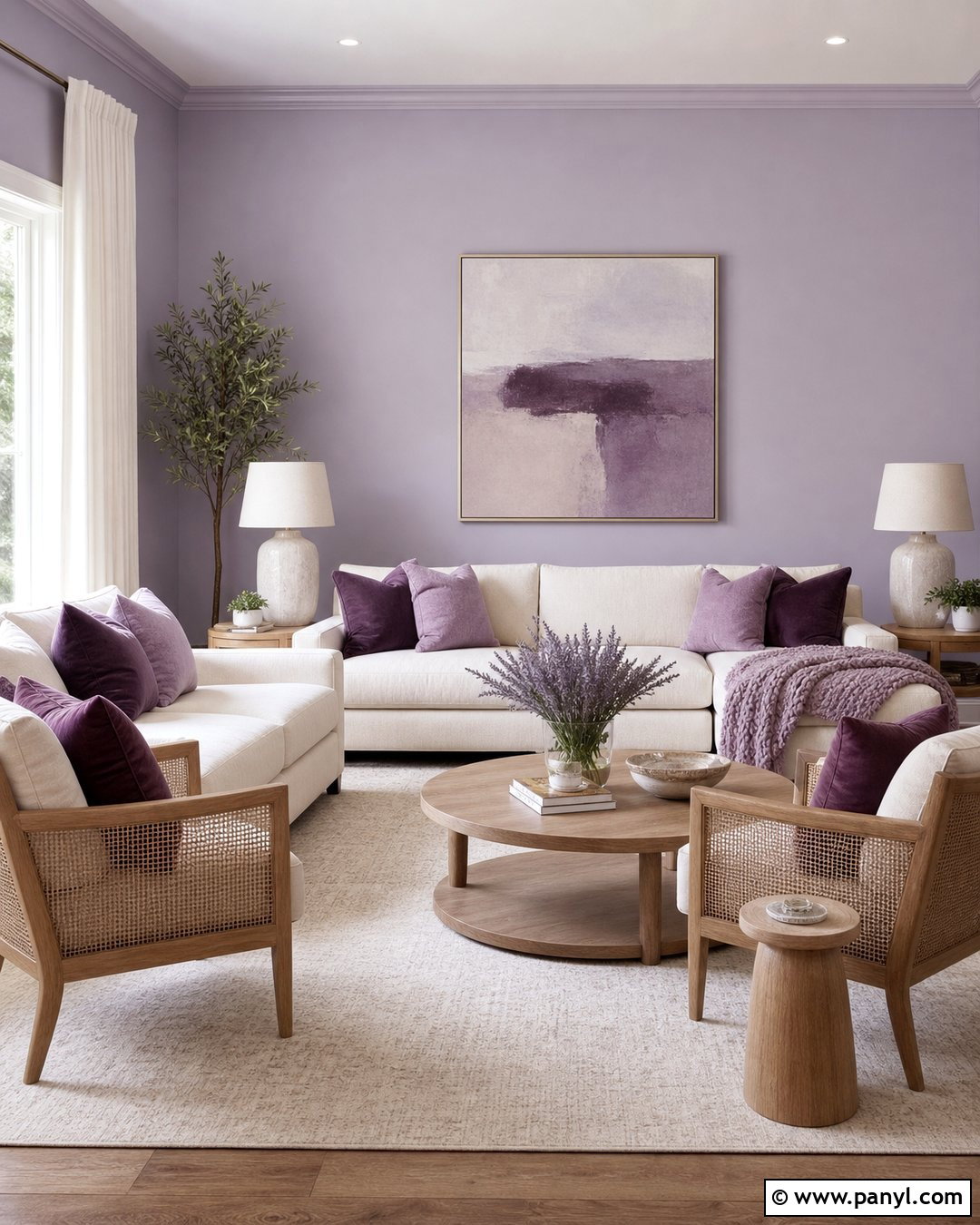
A soft lavender wall can make a living room feel colorful without becoming visually heavy. Paint all four walls in a pale, slightly gray lavender, then add a cream sofa and two natural oak accent chairs to keep the palette grounded. A light beige rug provides a quiet base, while plum pillows and a violet throw create gentle tonal layering. Choose simple white curtains that allow daylight to brighten the purple paint. A rounded oak coffee table and ceramic lamps give the room a relaxed, approachable finish. Add one large abstract artwork containing lavender, tan, and muted green rather than filling every wall. Warm white trim prevents the room from looking cold and helps the entire design feel soft, comfortable, and cohesive.
2. Deep Plum Purple Bedroom Wall
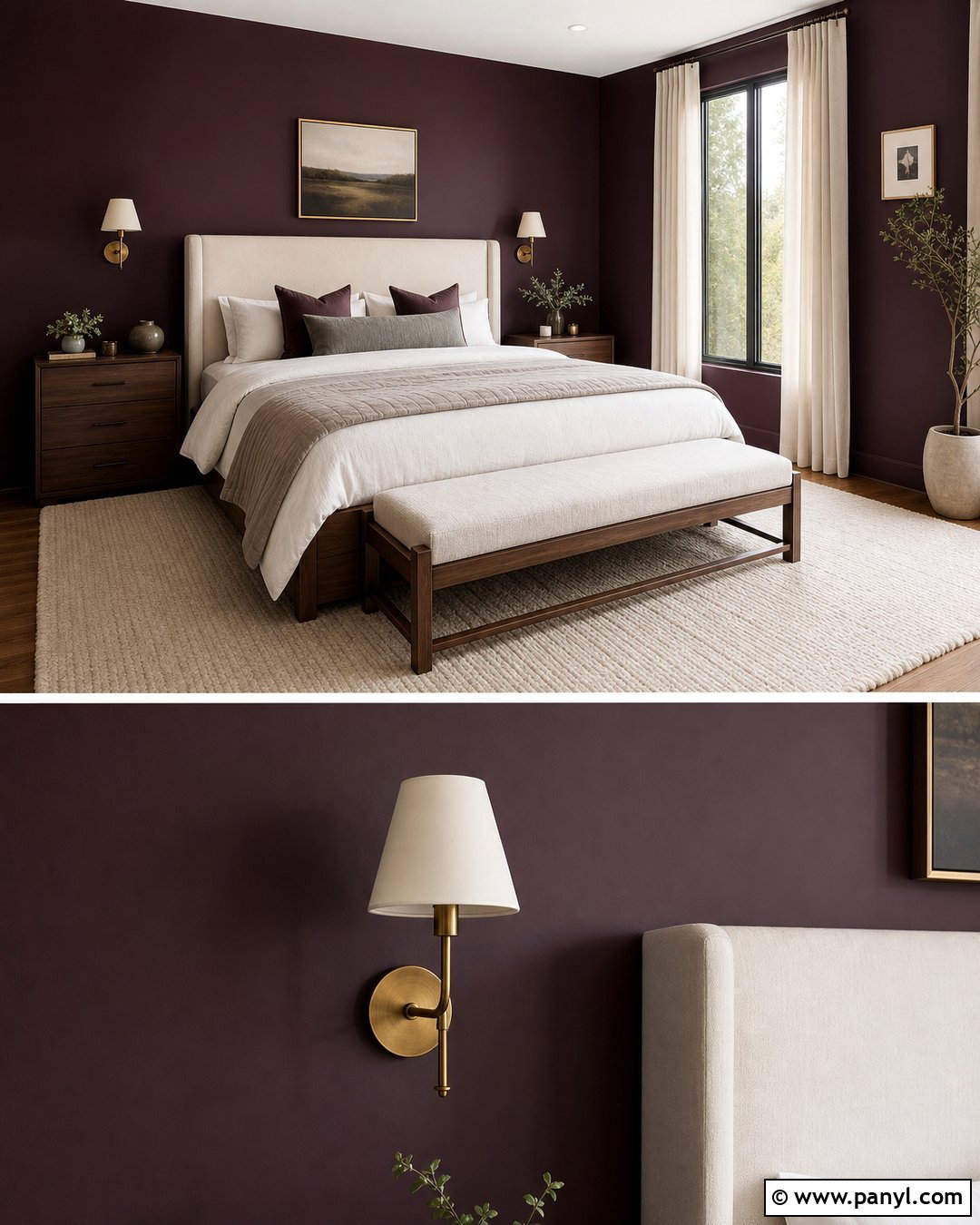
Deep plum walls create a cozy bedroom when they are balanced with warm materials and light bedding. Use matte plum paint behind the bed and continue it onto the remaining walls for an enveloping effect. Center a walnut bed with a tall oatmeal upholstered headboard against the main wall. Dress it with crisp ivory sheets, a taupe quilt, and two velvet plum pillows. Matching walnut nightstands and aged brass sconces introduce warmth without making the room overly ornate. Choose medium oak flooring and a large cream wool rug to lighten the lower half of the space. Simple linen curtains, minimal artwork, and a slim upholstered bench complete the room. This combination feels restful, grown-up, and rich while remaining practical enough for an everyday bedroom.
3. Lilac Purple Accent Wall
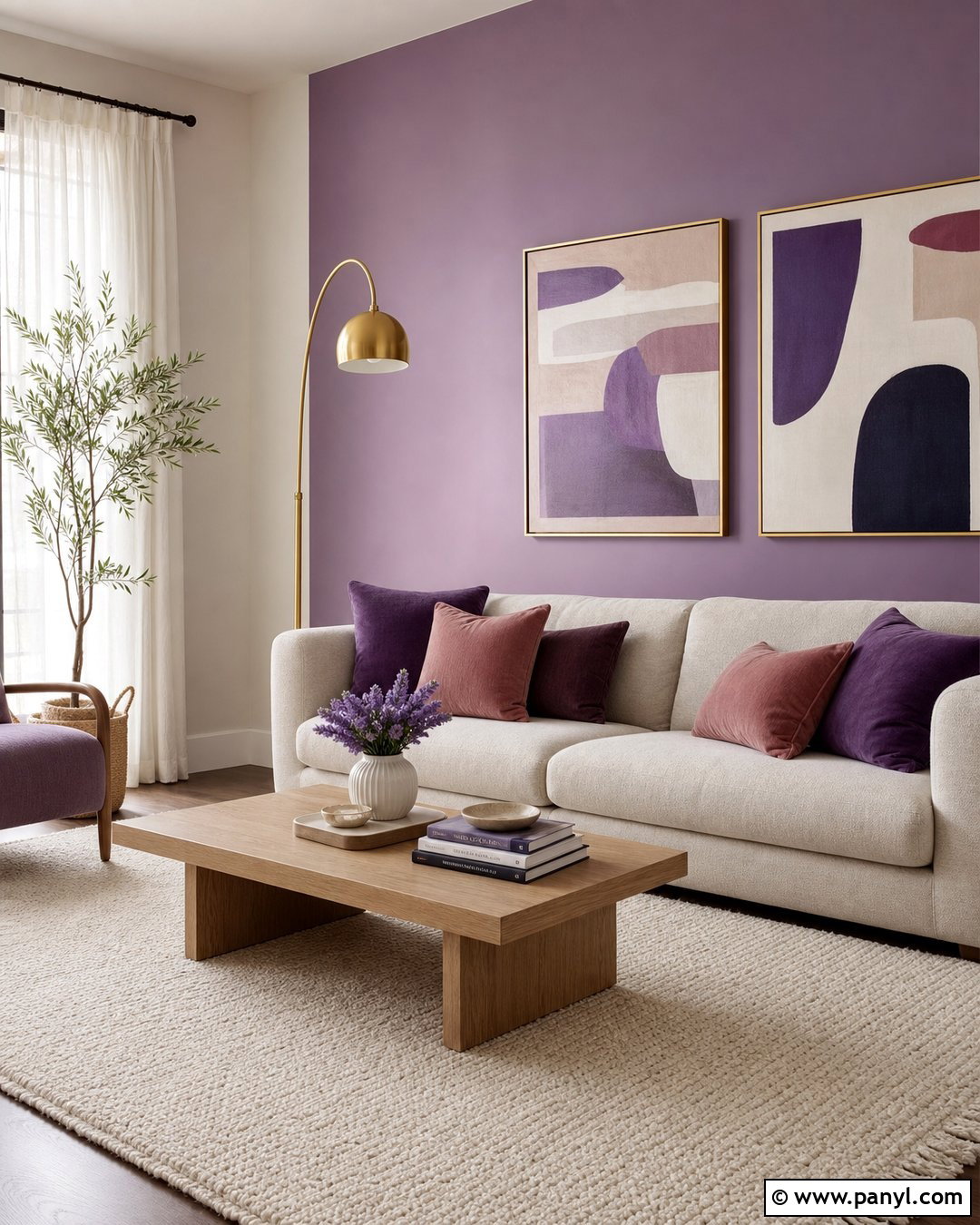
A lilac accent wall is an easy way to bring purple into a bright, neutral room. Place it behind a low-profile beige sofa so the color becomes a clear focal point. Keep the other walls warm white rather than cool gray, which can make lilac appear overly blue. Add a pale oak coffee table, a woven ivory rug, and softly rounded furniture for a casual contemporary look. Cushions in lilac, dusty rose, and oatmeal connect the accent wall to the seating area without matching it exactly. A large framed print with cream and muted violet details can anchor the wall above the sofa. Finish the space with sheer white curtains and a brushed brass floor lamp. The result feels cheerful, polished, and especially suitable for apartments or smaller living rooms.
4. Aubergine Purple Dining Room Wall
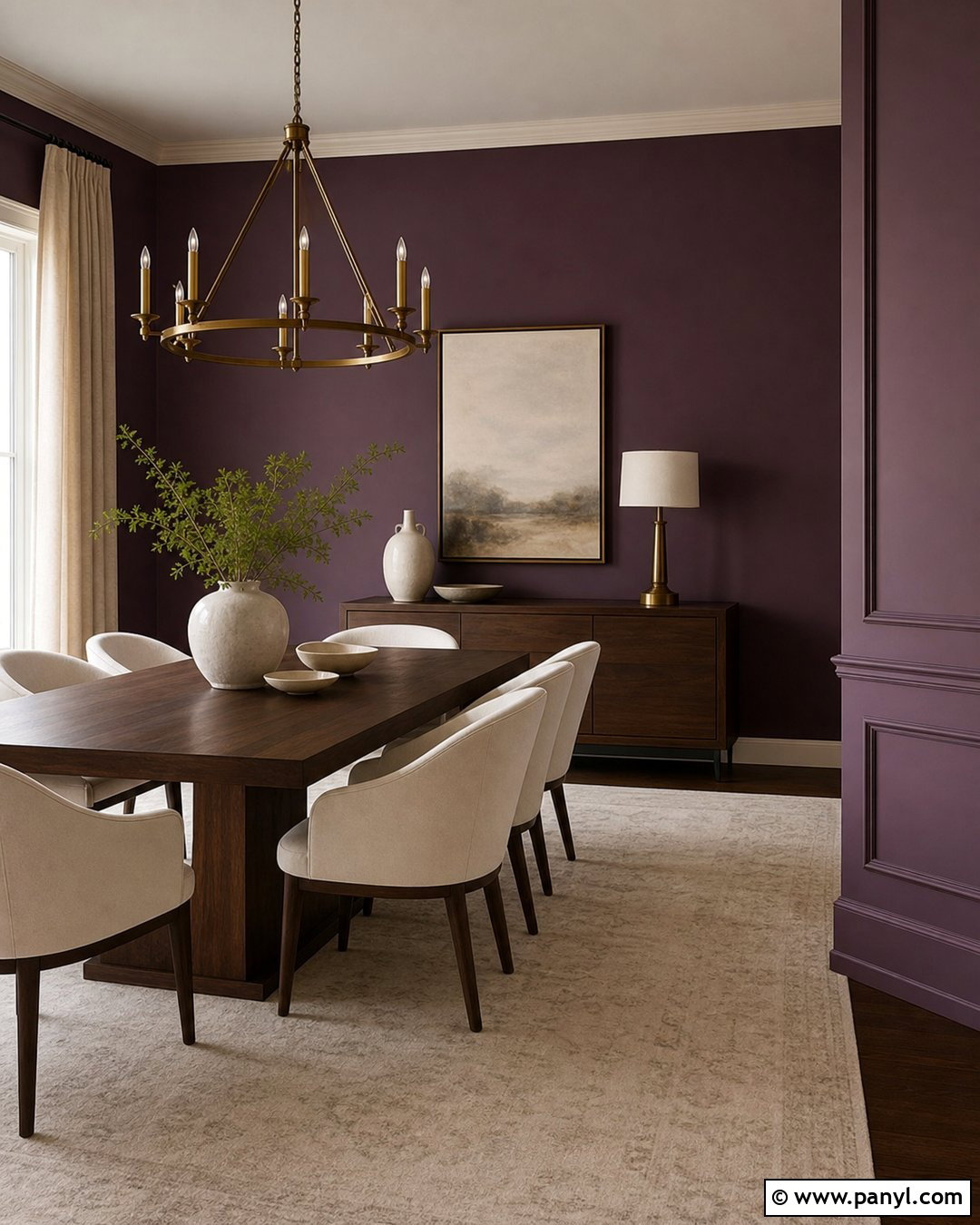
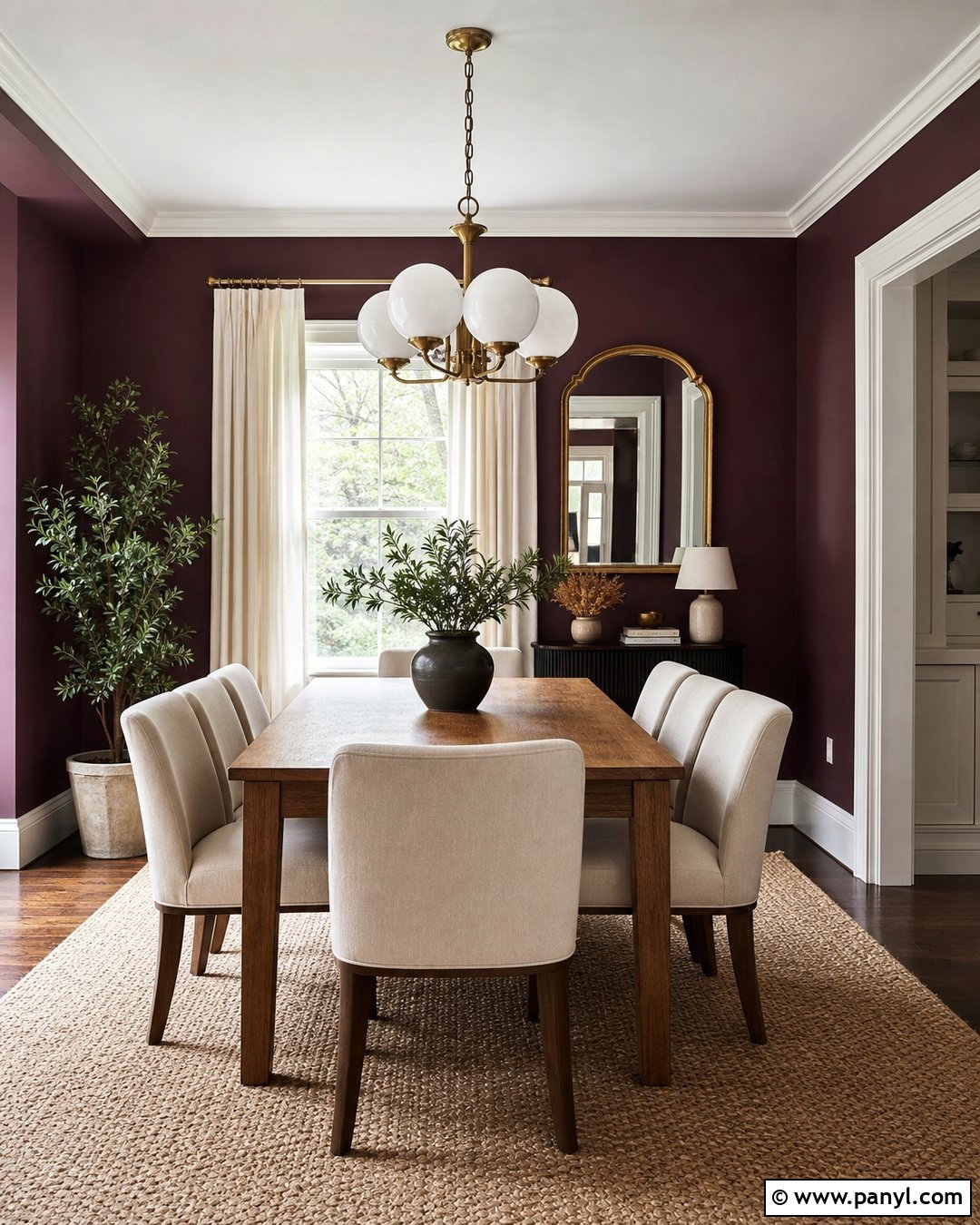
Rich aubergine walls can turn a basic dining room into an intimate, polished gathering space. Paint every wall in a low-sheen aubergine and use warm white on the ceiling to maintain a sense of height. A rectangular walnut table provides a strong natural contrast, while cream upholstered chairs soften the deep color. Hang a simple aged brass chandelier above the table and repeat that finish through slim picture frames and cabinet hardware. An ivory flat-weave rug defines the dining zone without competing with the walls. Choose linen curtains in a warm stone color to frame the windows. A low walnut sideboard topped with pale ceramics adds useful storage. Keep artwork restrained so the purple walls, wood grain, and warm lighting remain the main visual features.
5. Dusty Mauve Purple Office Wall
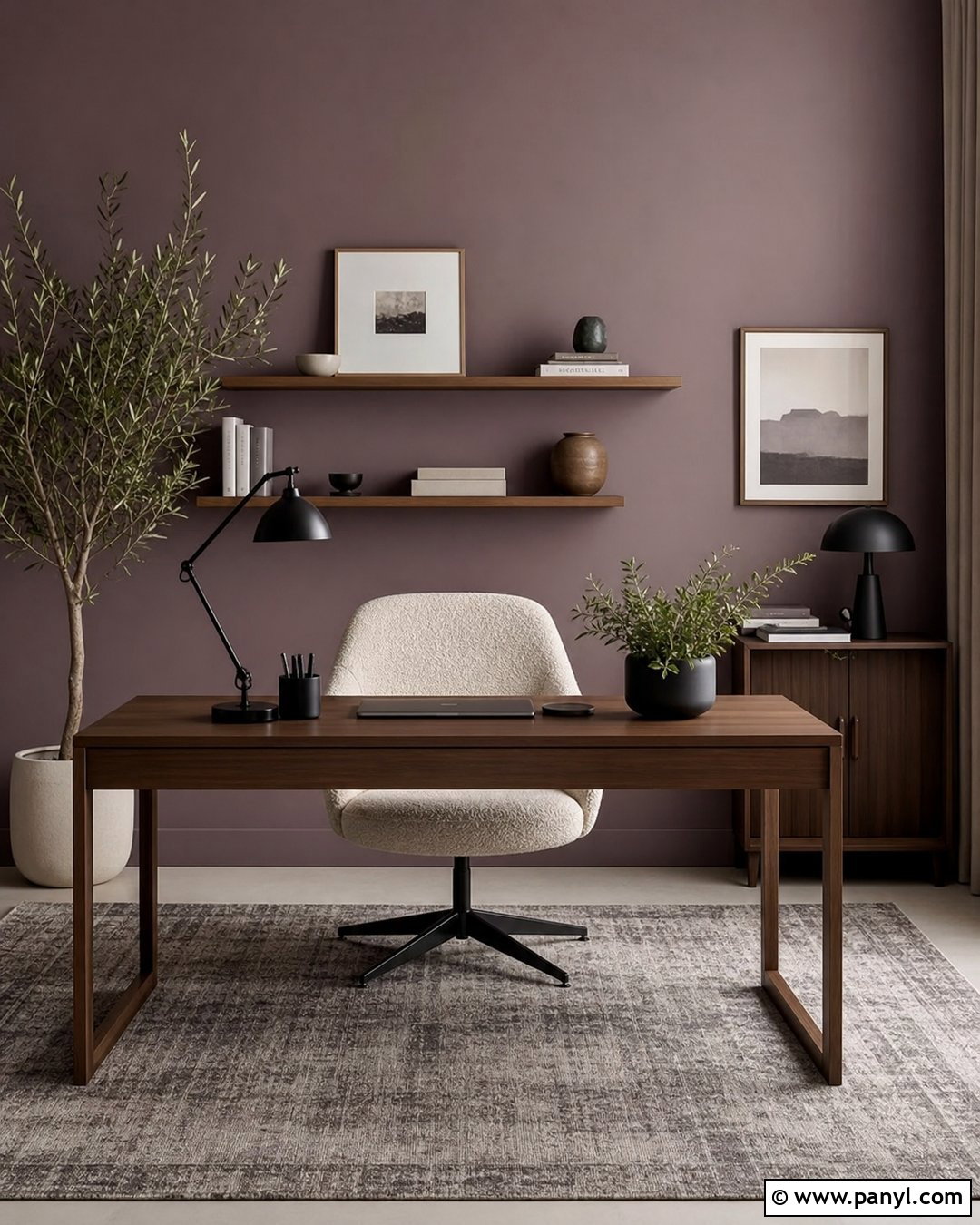
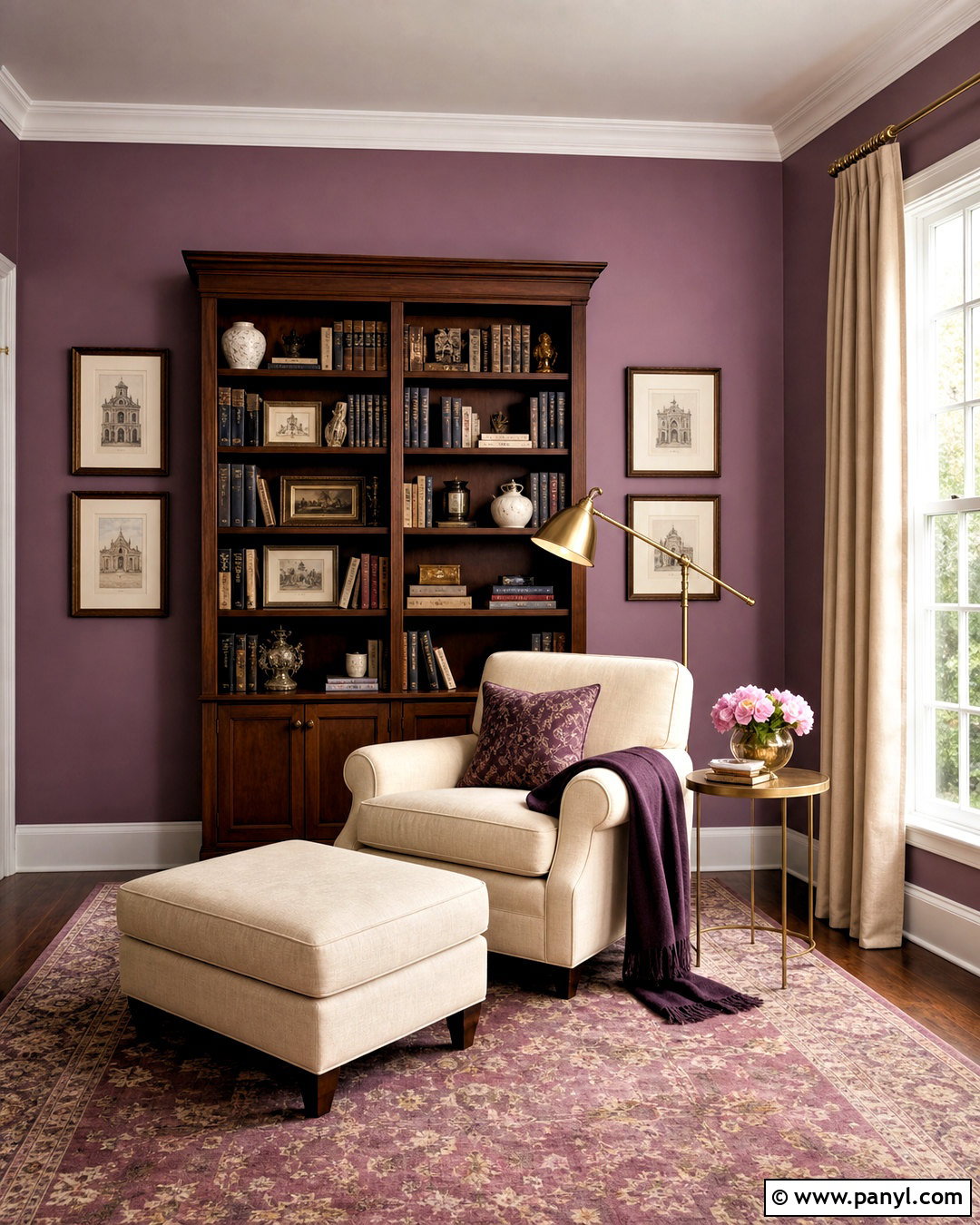
Dusty mauve offers enough color to make a home office interesting while maintaining a calm, professional atmosphere. Cover the walls in a muted purple with warm gray undertones, then place a streamlined walnut desk near the brightest window. A cream boucle chair adds softness, and a flat-weave rug in beige and charcoal defines the workspace. Install floating walnut shelves above a low storage cabinet, arranging books, baskets, and ceramics with plenty of open space. Matte black hardware and a black task lamp sharpen the gentle palette. Add one olive green plant in a simple clay pot for an earthy contrast. Warm white curtains diffuse strong light and help the mauve remain balanced. This complete setup works particularly well for focused work, reading, video meetings, and creative projects.
6. Purple And White Bedroom Wall
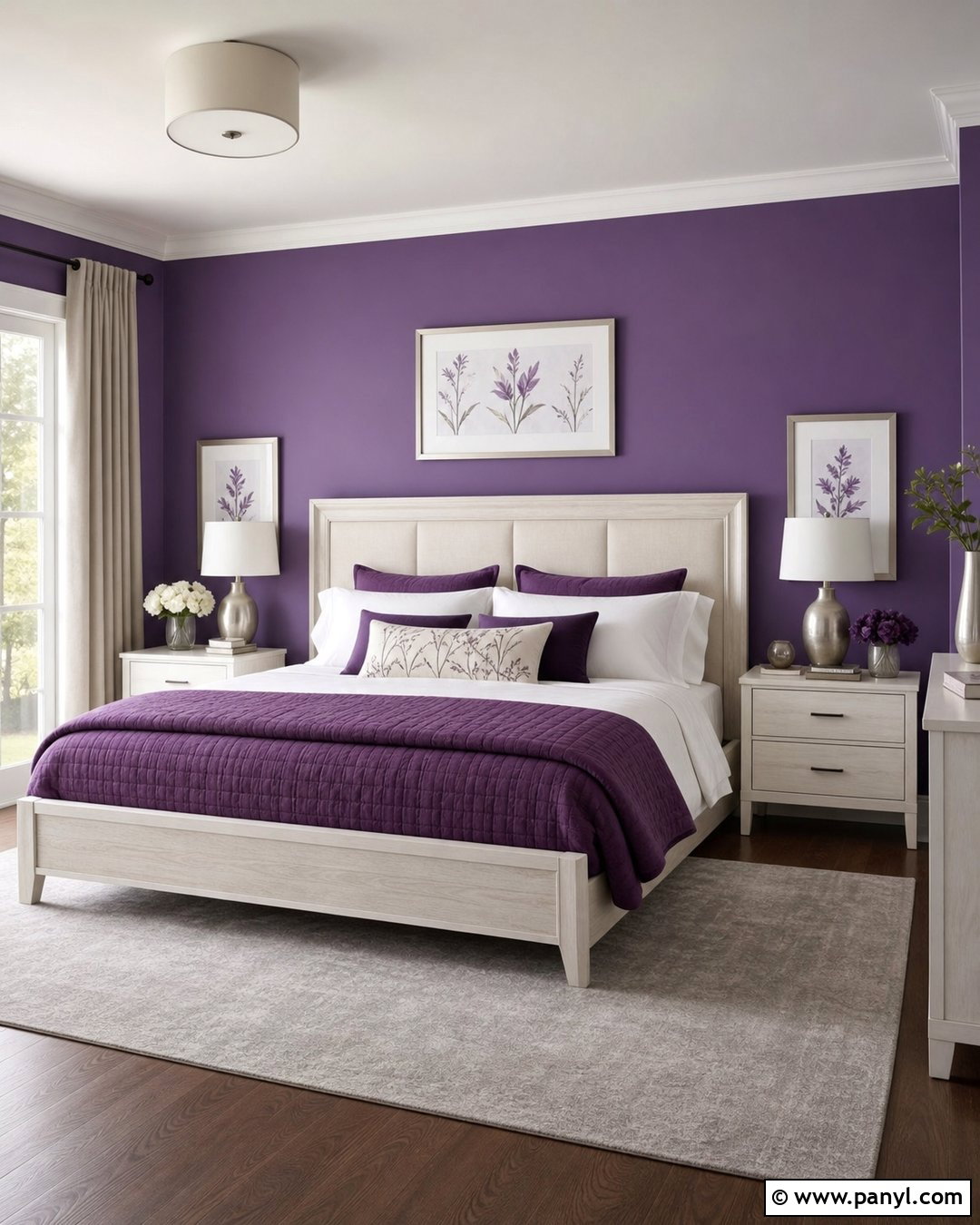
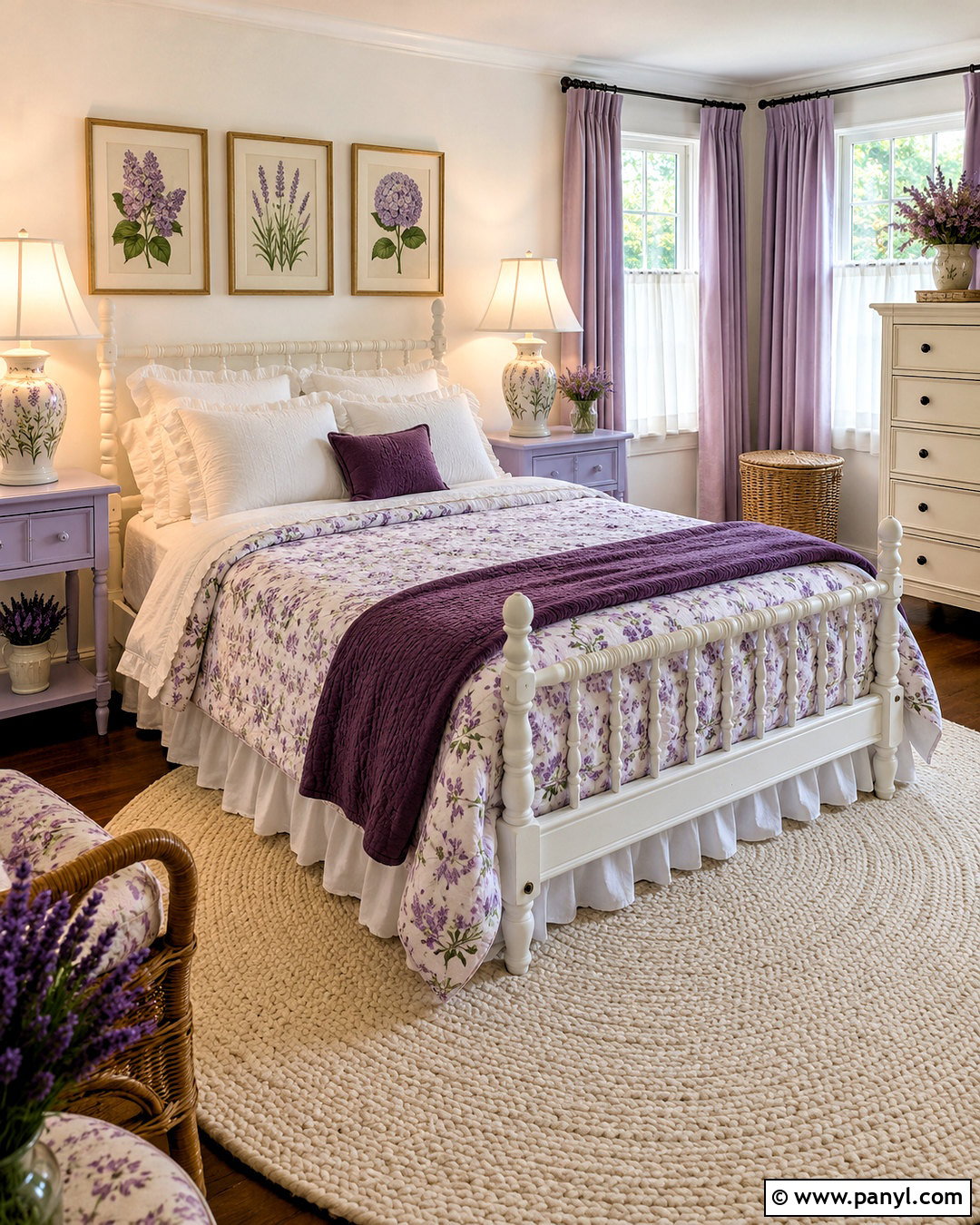
Purple and white create a clean bedroom palette that feels fresh rather than overly sweet. Use medium violet on the wall behind the bed, leaving the other walls and ceiling crisp warm white. Choose a white oak bed with an upholstered cream headboard, then layer white bedding with a violet quilt folded neatly across the foot. Matching white nightstands maintain the airy look, while brushed nickel lamps add a subtle contemporary finish. Hang a pair of black-and-white botanical prints over the headboard to break up the purple surface. A light gray rug and natural linen curtains soften the contrast between the two main colors. Limit extra purple accents to two pillows and one ceramic vase. This restraint allows the statement wall to feel intentional, uncluttered, and easy to update later.
7. Purple And Gray Living Room Wall
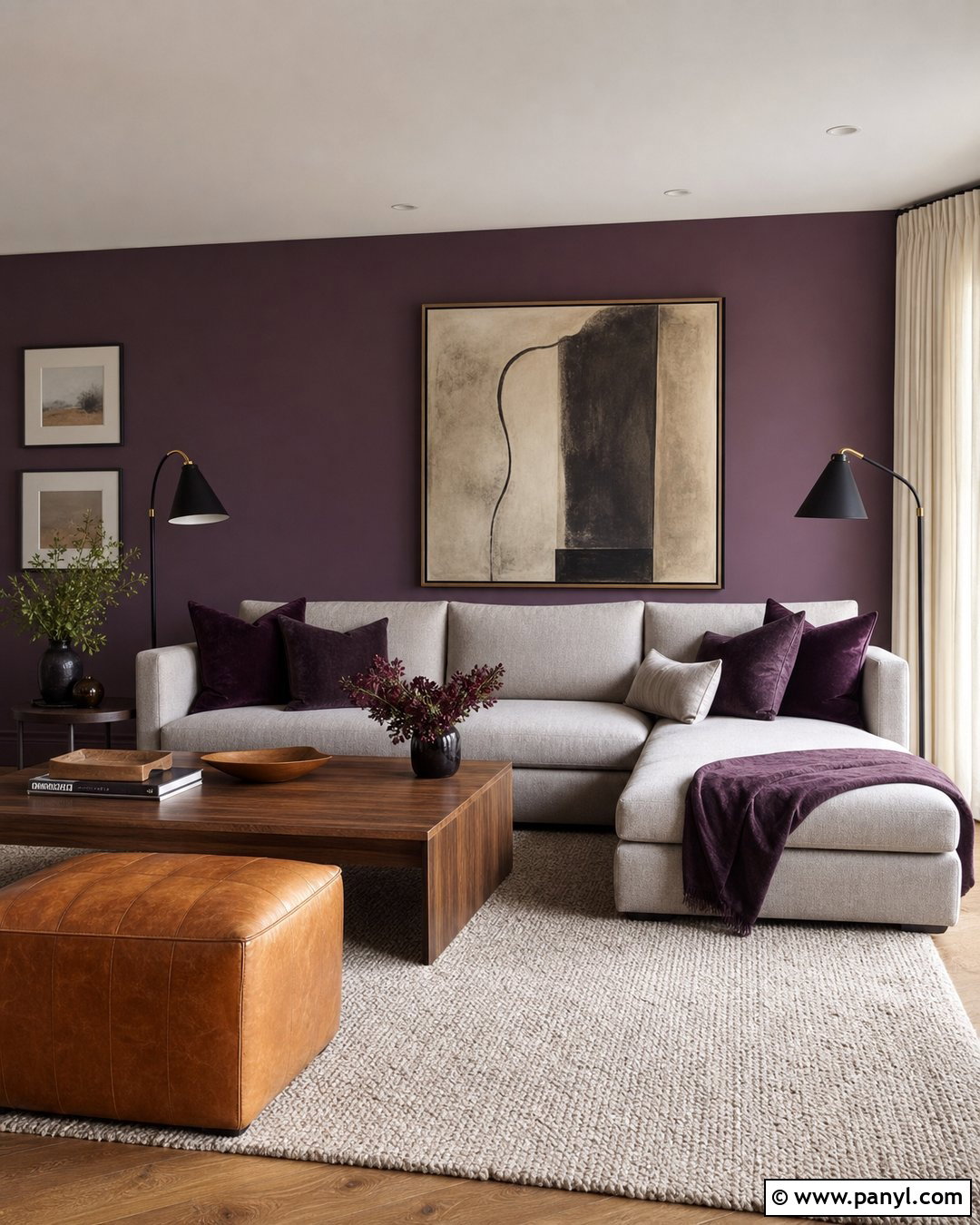
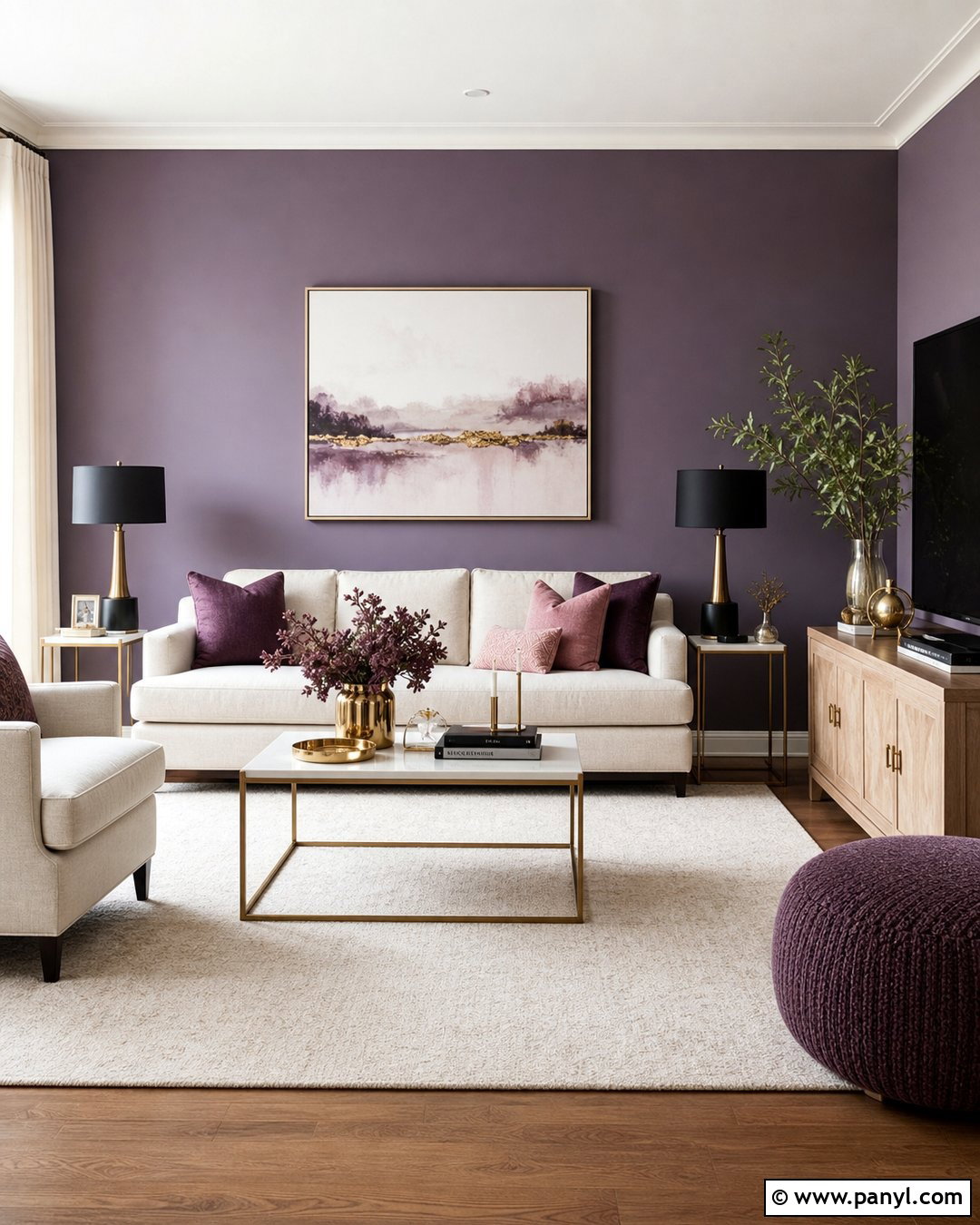
Pairing purple walls with gray furniture creates a balanced living room when warm textures are included. Select a muted grape purple for the main walls and use soft white for the trim and ceiling. A light gray sectional keeps the space practical, while plum velvet pillows connect the upholstery to the walls. Introduce warmth through a walnut coffee table, camel leather ottoman, and beige wool rug. Black metal floor lamps and narrow picture frames provide clean definition without overpowering the palette. Hang artwork containing cream, charcoal, and a small amount of purple above the sectional. Light-filtering ivory curtains help the room stay bright during the day. The mixture of cool paint, neutral seating, natural wood, and warm textiles makes the design comfortable and visually complete.
8. Purple And Green Living Room Wall
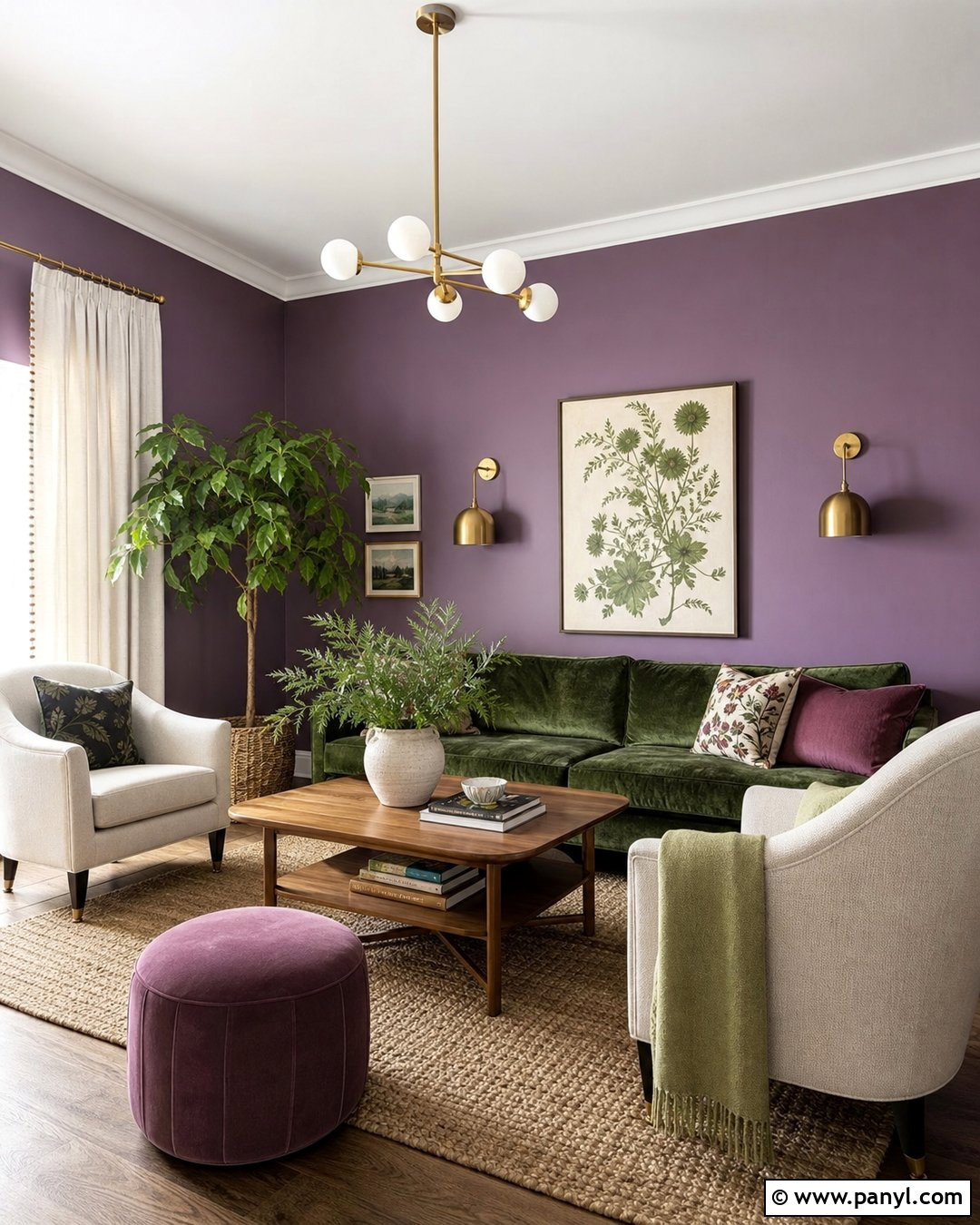
Purple and green form a lively yet grounded living room palette when both colors are slightly muted. Cover the walls in dusty violet and furnish the space with an olive green velvet sofa. Add two oatmeal armchairs to prevent the color combination from becoming too intense. A medium-tone wood coffee table, natural jute rug, and linen curtains introduce earthy materials that connect the purple and green. Use pillows featuring small botanical patterns in violet, sage, and cream. A brass floor lamp and a few glazed ceramic pieces add understated polish. Place a tall leafy plant beside the window, but keep the remaining accessories simple. The finished room feels layered and distinctive, with enough neutral space to make the complementary colors comfortable for daily living rather than purely decorative.
9. Purple And Gold Dining Room Wall
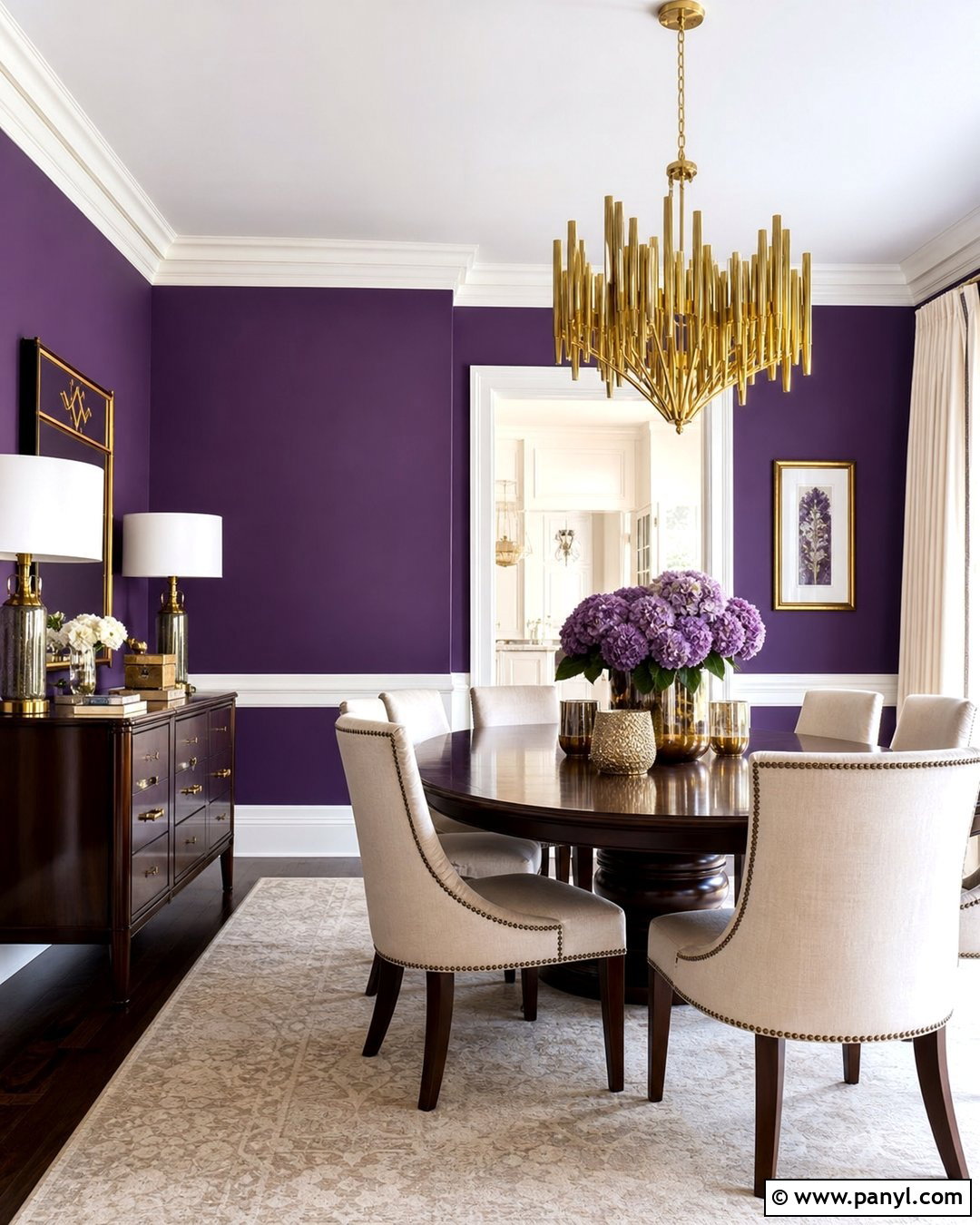
A saturated royal purple wall can support an elegant dining room without requiring elaborate furniture. Paint the walls in a smooth matte finish and use creamy white trim around the windows and doors. Center a dark wood pedestal table in the room, surrounding it with chairs upholstered in neutral beige fabric. Introduce gold through a sculptural chandelier, thin mirror frame, and simple cabinet pulls rather than numerous small decorations. A pale patterned rug adds softness beneath the table while reflecting light upward. Place a dark wood buffet against one wall and style it with a white ceramic lamp and clear glass vase. Full-length ivory curtains balance the intensity of the purple. This thoughtful combination creates a refined room that feels special, warm, and suitable for regular meals.
10. Purple And Black Media Room Wall
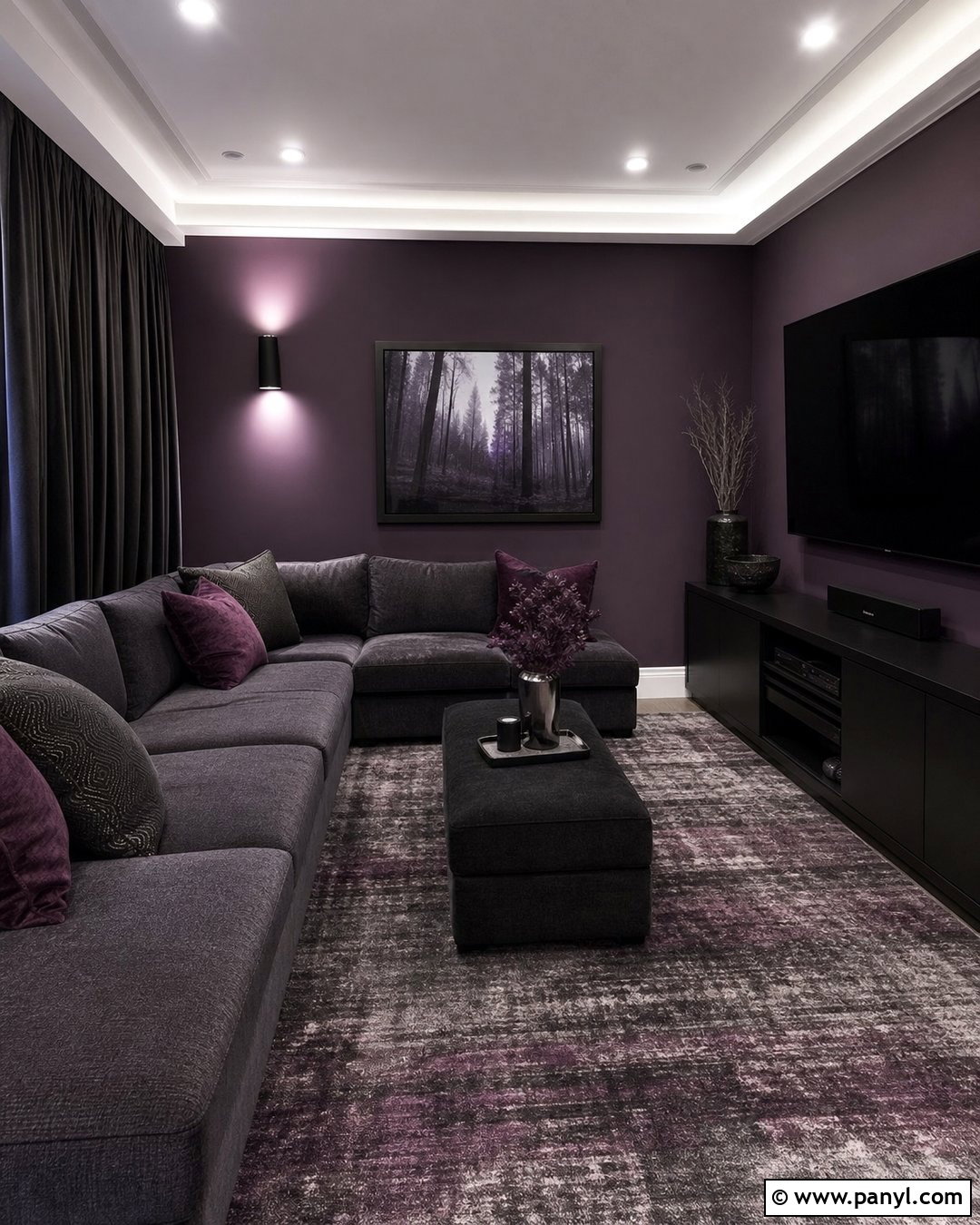
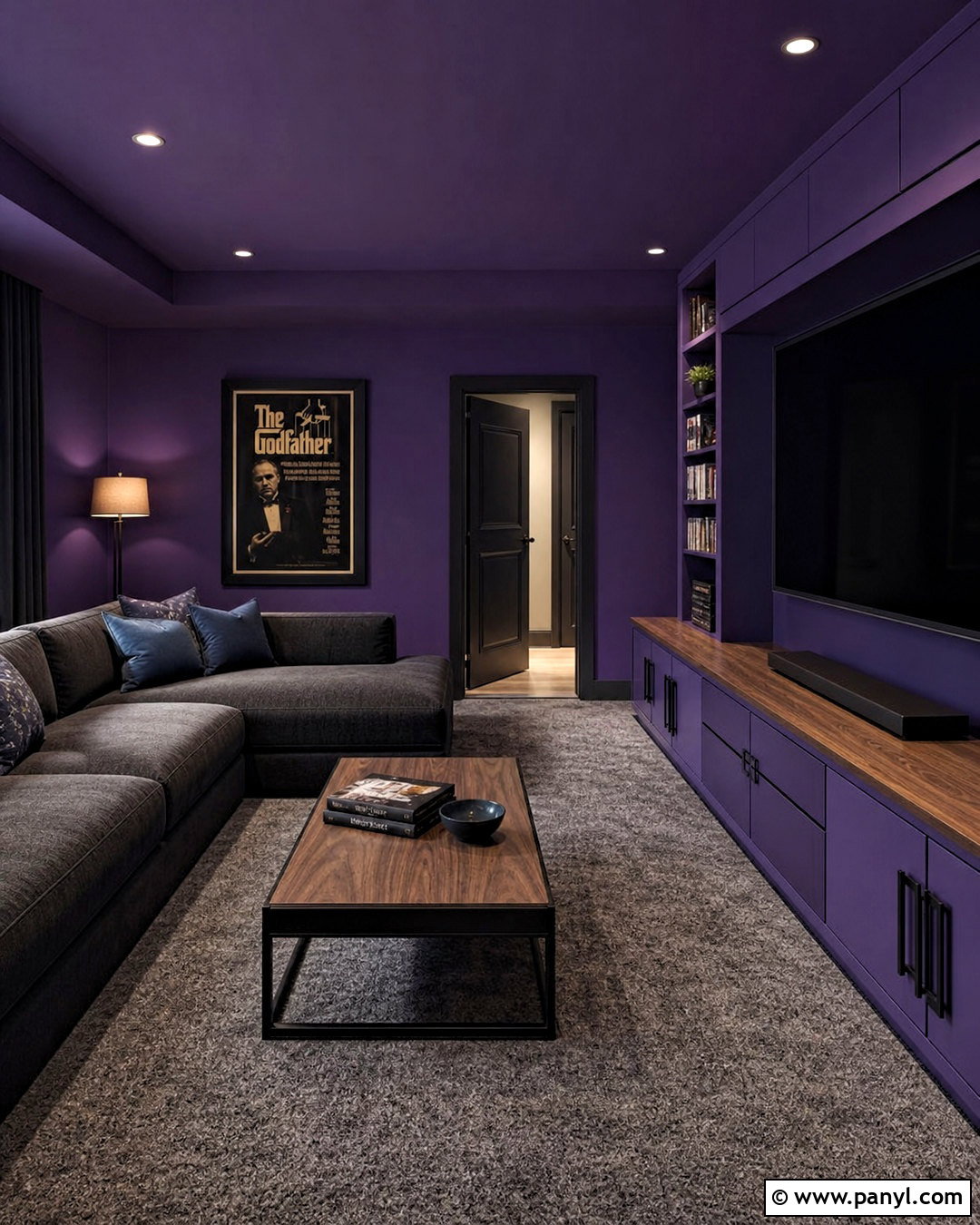
Dark purple and black can create a comfortable media room with better visual depth than an entirely black scheme. Paint the walls in a deep blackberry purple using a matte finish that minimizes distracting reflections. Position a charcoal sectional opposite a low black media console, keeping the television centered and cables concealed. Add a large rug with charcoal, plum, and muted beige details to soften the floor. Blackout curtains in matching charcoal support daytime viewing while maintaining a streamlined appearance. Include two compact side tables, dimmable black wall sconces, and a storage ottoman for practical comfort. A few aubergine cushions introduce tonal variation. Leave most walls free of artwork so the space feels organized and the dark purple surface provides a rich, cinematic backdrop.
11. Purple And Blush Bedroom Wall
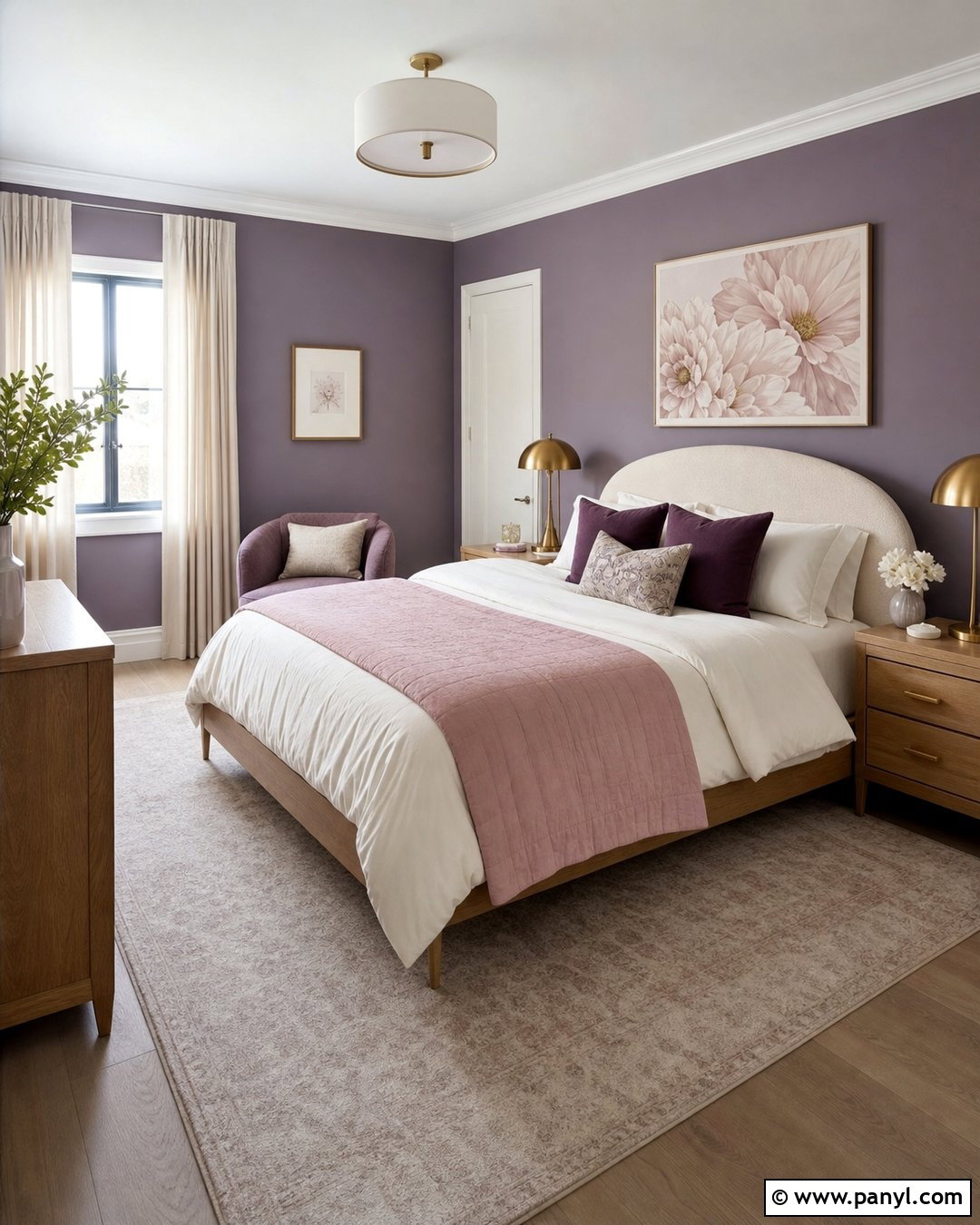
A warm lilac wall paired with blush accents creates a gentle bedroom that still feels sophisticated. Use lilac paint with noticeable gray undertones on all four walls, then choose a light oak bed with a rounded cream headboard. Layer ivory bedding with a dusty blush coverlet and muted plum cushions. Light oak nightstands keep the furniture cohesive, while antique brass lamps add a warmer metallic note. Hang one oversized floral print containing faded pink, brown, and violet above the bed. A pale beige rug and full-length cream curtains soften the room without erasing the purple. Avoid bright pink accessories, which can make the scheme feel juvenile. The finished look is peaceful and welcoming, with subtle color shifts that remain interesting in both natural and artificial light.
12. Purple And Blue Den Wall
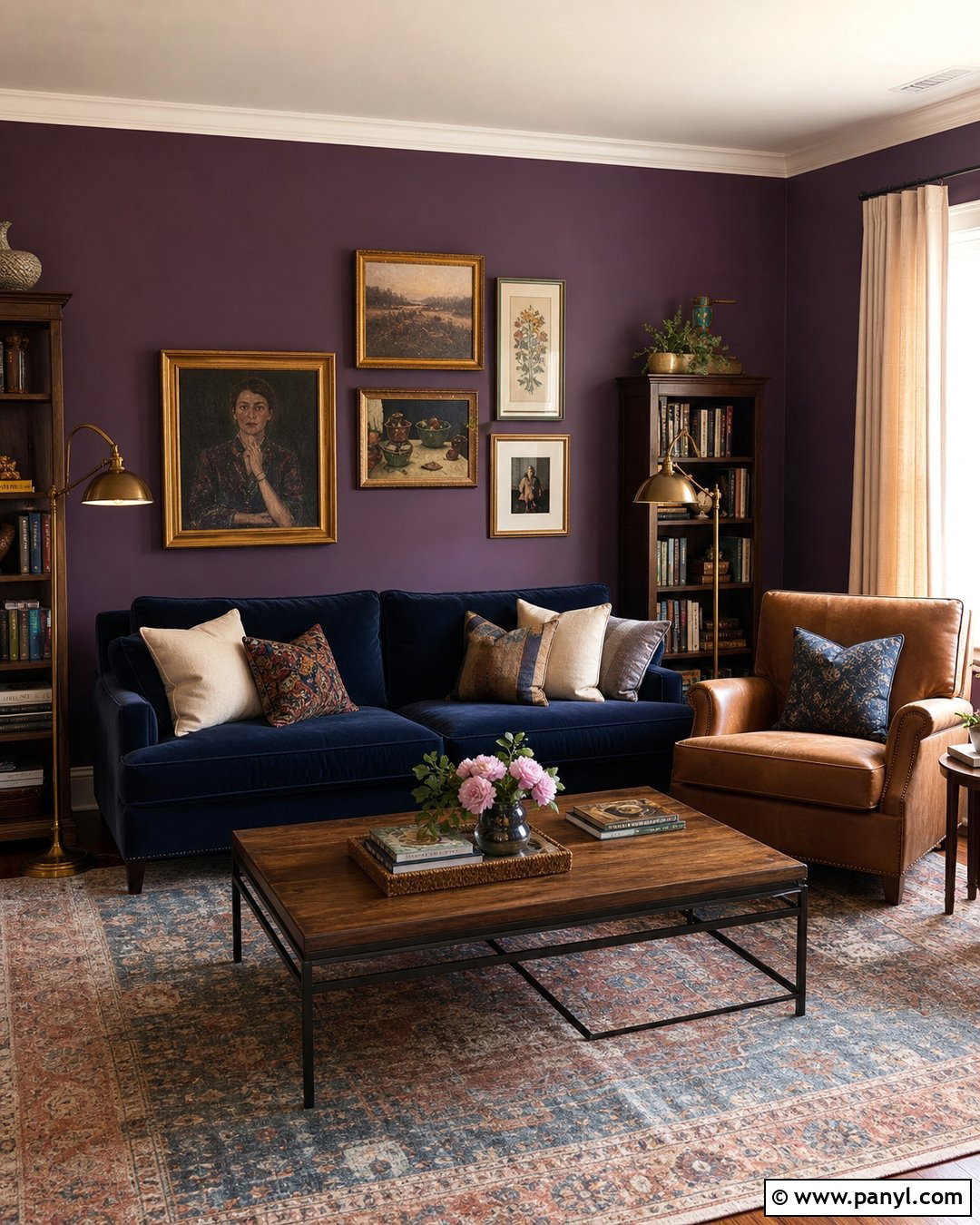
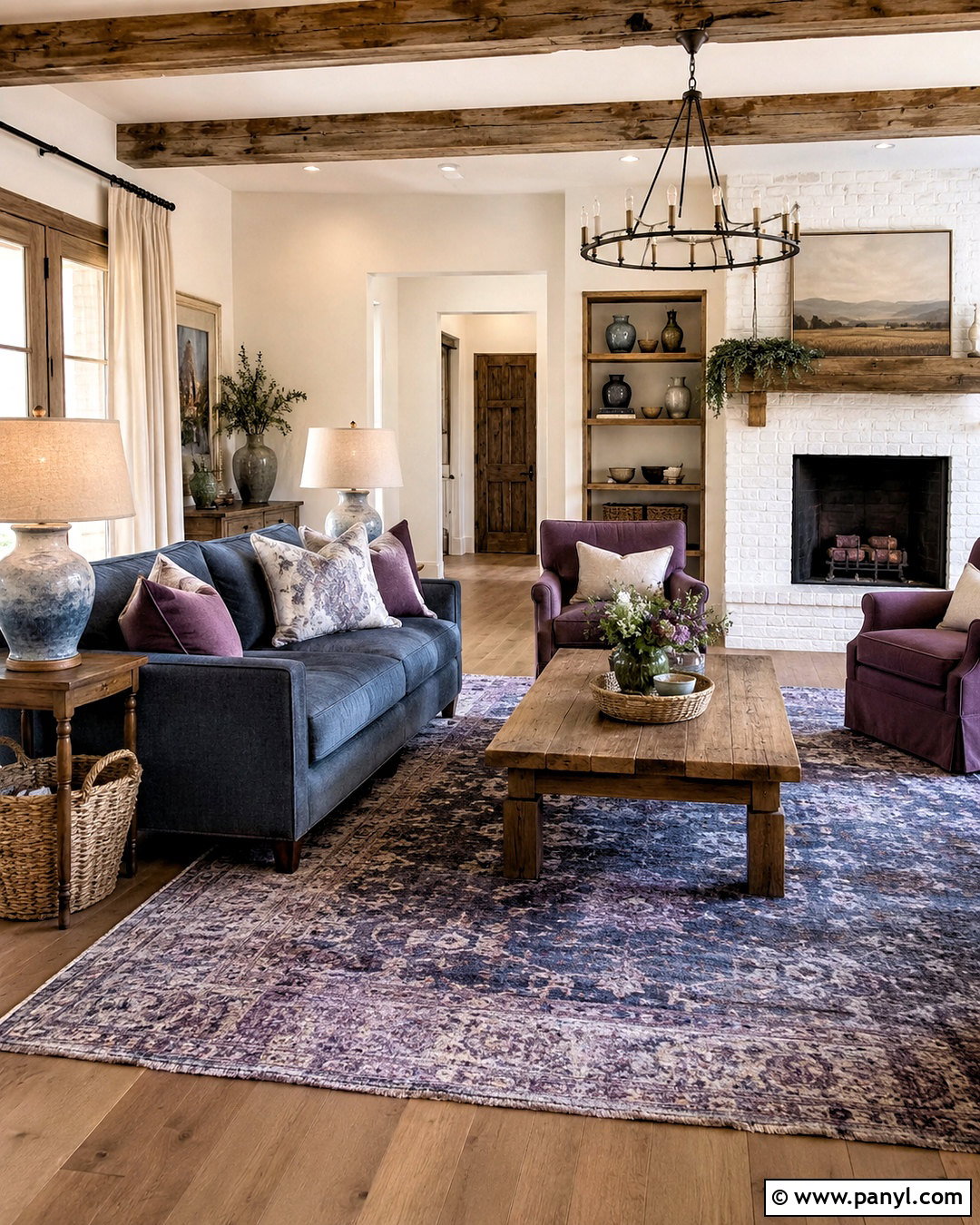
A purple and blue den can feel relaxing, collected, and pleasantly unconventional. Paint the walls in a midtone violet, then anchor the room with a deep navy sofa. Add a camel leather chair to break up the cool colors and introduce visual warmth. A vintage-style rug containing faded blue, purple, rust, and cream helps all three hues work together. Use a medium walnut coffee table and matching bookcases for a cohesive foundation. Brass reading lamps provide warm highlights against the darker walls. Arrange framed landscapes and abstract prints above the sofa, mixing navy, lilac, and beige details. Cream curtains keep the windows light and prevent the room from becoming too dark. The complete design works equally well for reading, conversation, television, or quiet evening relaxation.
13. Purple And Beige Family Room Wall
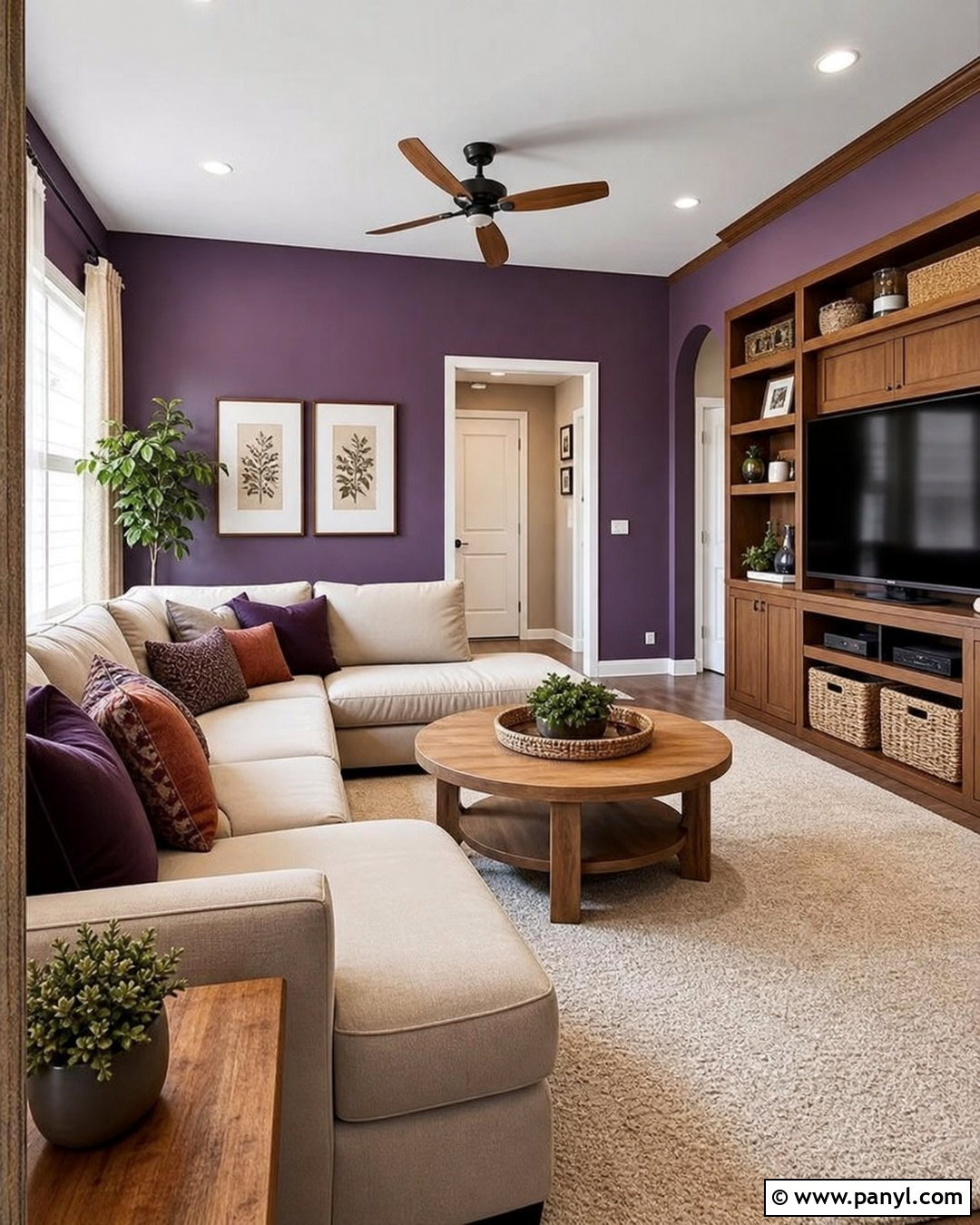
Muted purple walls become especially livable when surrounded by beige upholstery and practical natural finishes. Choose a subdued heather purple with brown undertones, then add a comfortable sand-colored sectional. Place a washable cream and taupe rug beneath a large oak coffee table with rounded corners. A pair of woven storage baskets keeps everyday items organized while reinforcing the relaxed palette. Use patterned pillows that combine purple, beige, and a small amount of rust. An oak media cabinet and floating shelves provide storage without making the room feel formal. Frame the windows with oatmeal linen curtains and add a simple black floor lamp for contrast. The purple paint gives the family room personality, while durable textiles, generous seating, and concealed storage make the entire arrangement realistic for busy daily routines.
14. Purple And Orange Living Room Wall
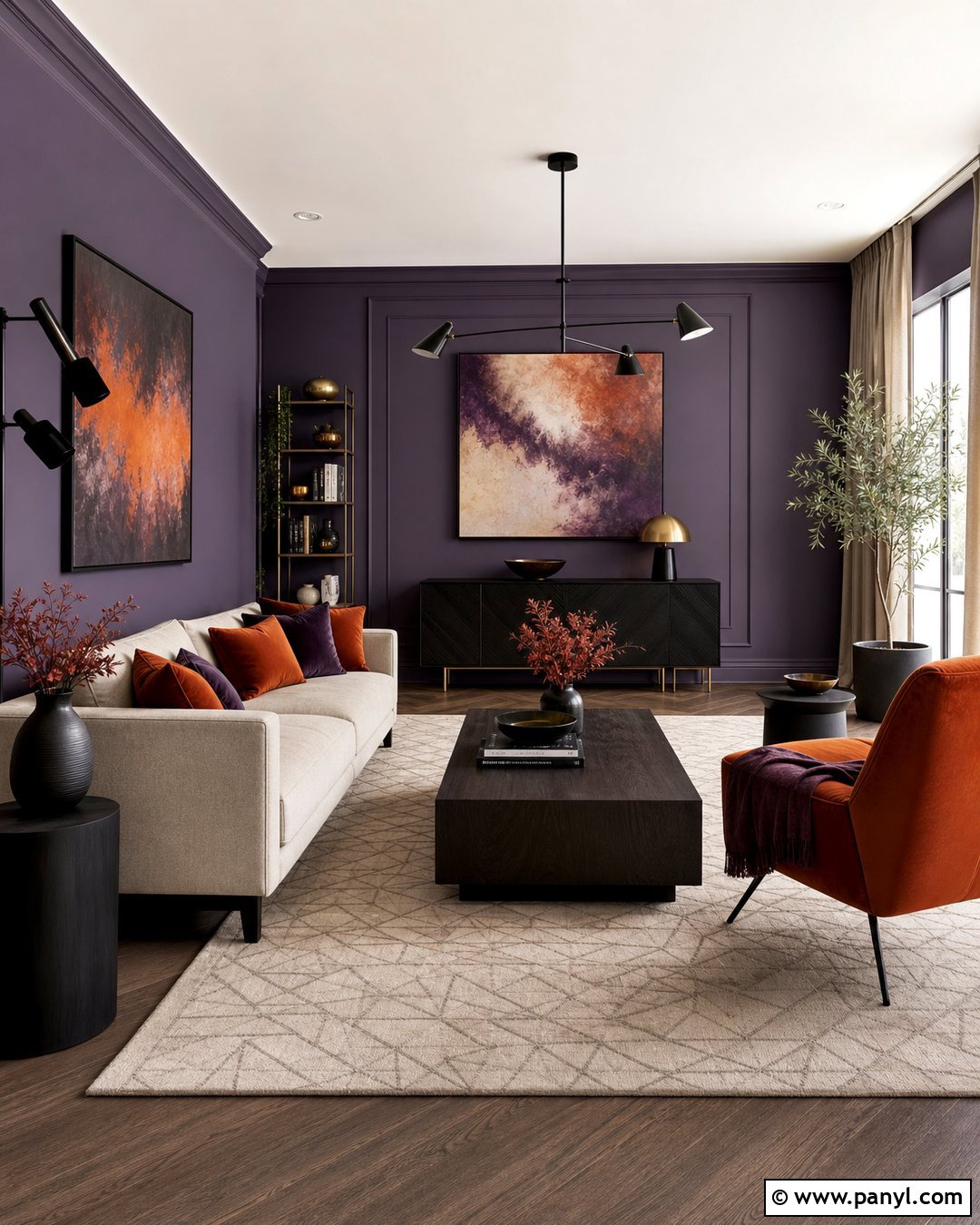
For a bolder interior, pair muted purple walls with controlled touches of burnt orange. Paint the room in a medium dusty violet, then choose a neutral oatmeal sofa as the central piece. Add a burnt orange velvet chair and two patterned pillows containing rust, cream, and plum. A dark walnut coffee table provides enough visual weight to balance the energetic colors. Ground the seating arrangement with a beige rug featuring a subtle geometric pattern. Black metal lighting and picture frames keep the palette sharp and contemporary. Select one large abstract canvas rather than several small decorations, ensuring its colors repeat the wall and chair tones. Natural linen curtains and a few clay accessories complete this expressive living room without allowing the purple-and-orange pairing to become chaotic or overly themed.
15. Purple And Teal Guest Room Wall
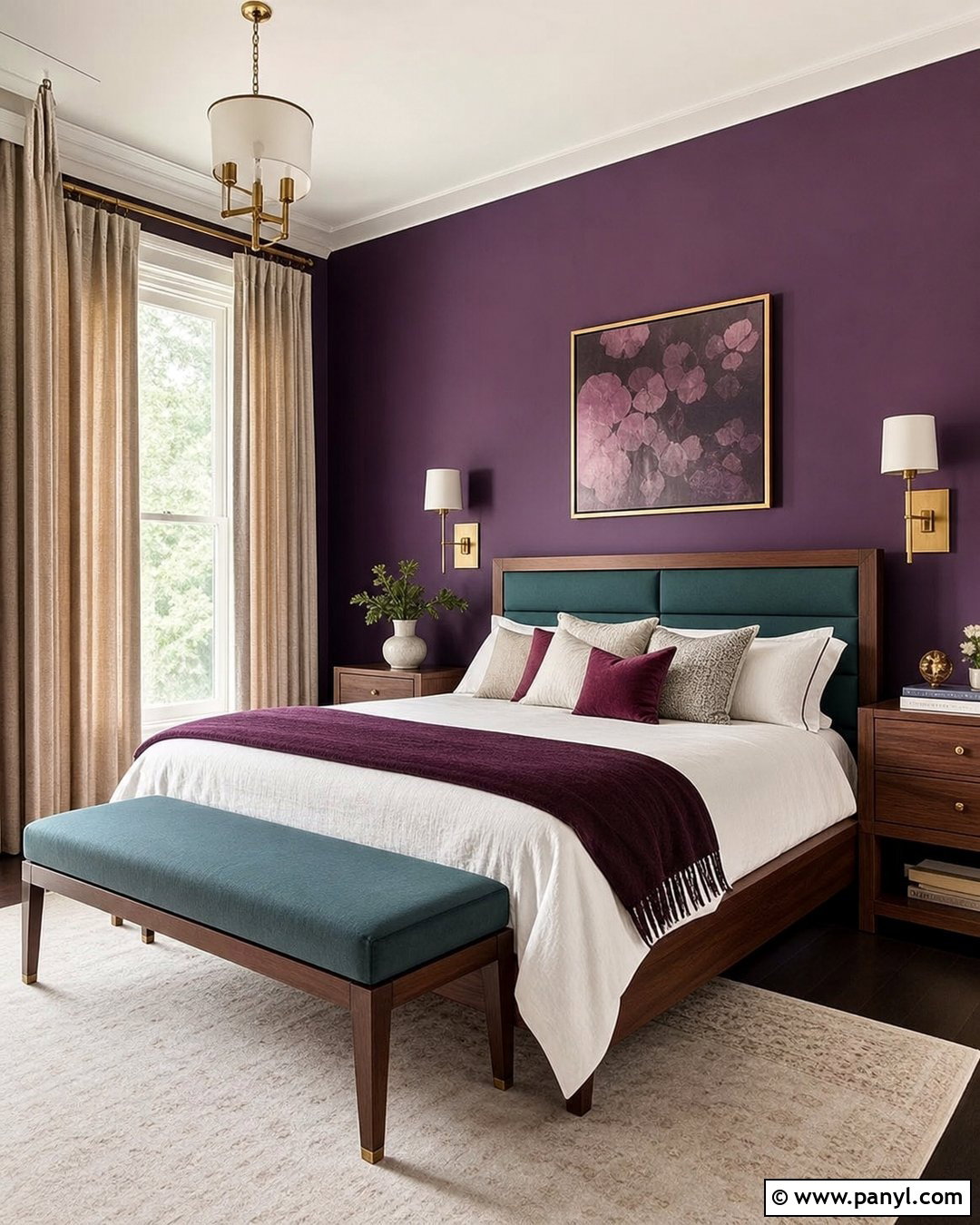
Teal and purple can create a memorable guest room when the deeper colors are supported by plenty of cream. Paint the wall behind the bed in rich violet and leave the remaining walls warm white. Choose a simple walnut bed with an upholstered teal headboard as the main feature. Dress it with ivory bedding, a plum throw, and pillows that mix teal, lavender, and soft beige. Walnut nightstands and brass sconces add warmth on both sides of the bed. Use a cream rug and oatmeal curtains to maintain an open, welcoming atmosphere. A small teal bench at the foot of the bed offers guests a practical place for bags. Finish with restrained botanical artwork so the room feels thoughtfully coordinated, comfortable, and distinctive without appearing overly busy.
16. Purple Color-Drenched Room
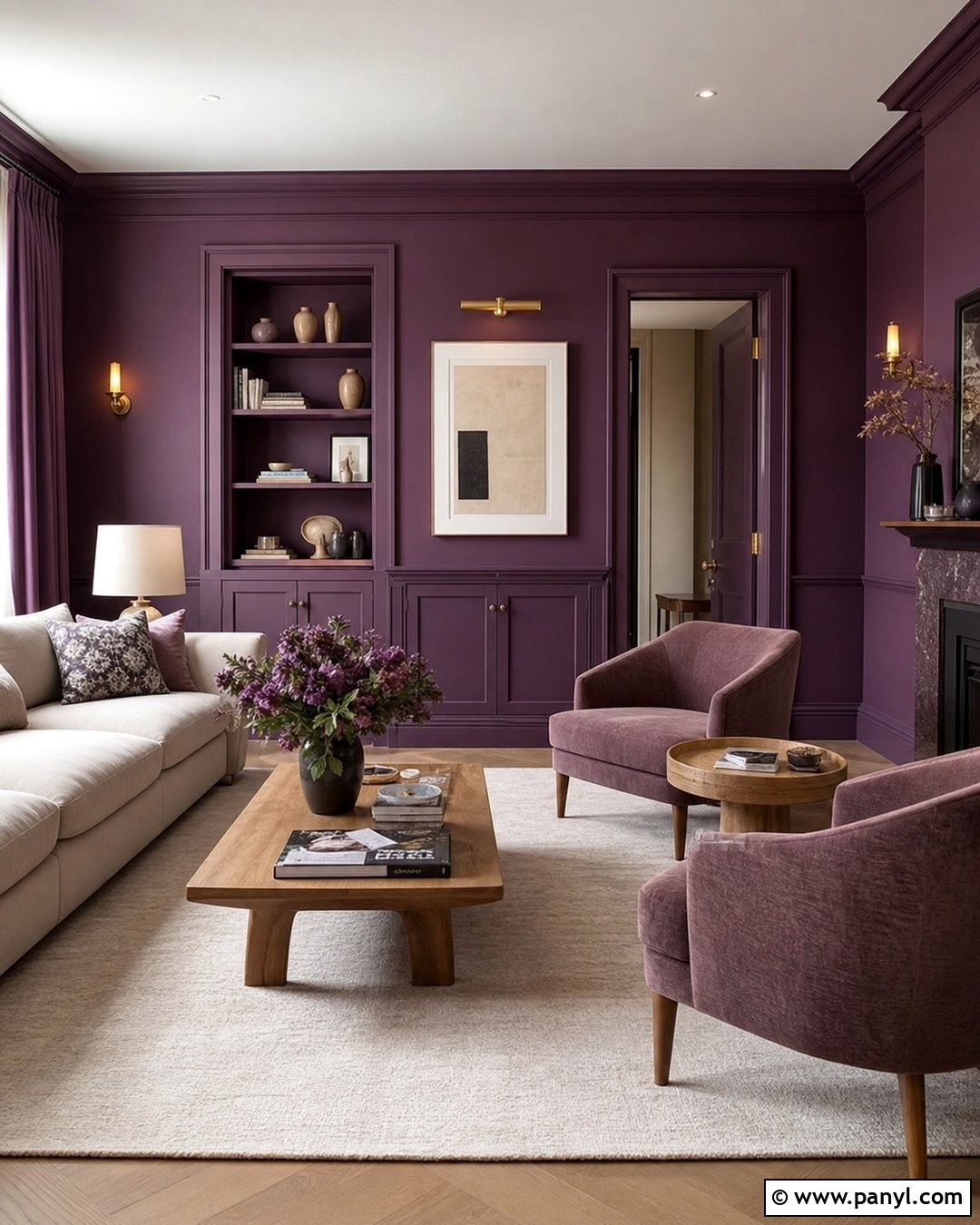
Color drenching creates an immersive purple room by carrying one shade across walls, trim, doors, and built-in storage. Choose a complex muted plum rather than an extremely bright violet, then use a durable satin version of the same color on woodwork. Bring in a cream sofa, pale oak tables, and an ivory rug to create visual relief within the saturated envelope. Upholstered chairs in a slightly lighter mauve add depth without introducing an unrelated hue. Install simple brass sconces that stand out clearly against the purple walls. Keep curtains close to the wall color so they blend into the architecture. Artwork with generous cream backgrounds prevents the room from feeling enclosed. This complete approach looks intentional because every painted surface participates in the design instead of leaving disconnected white outlines.
17. Two-Tone Purple Wall
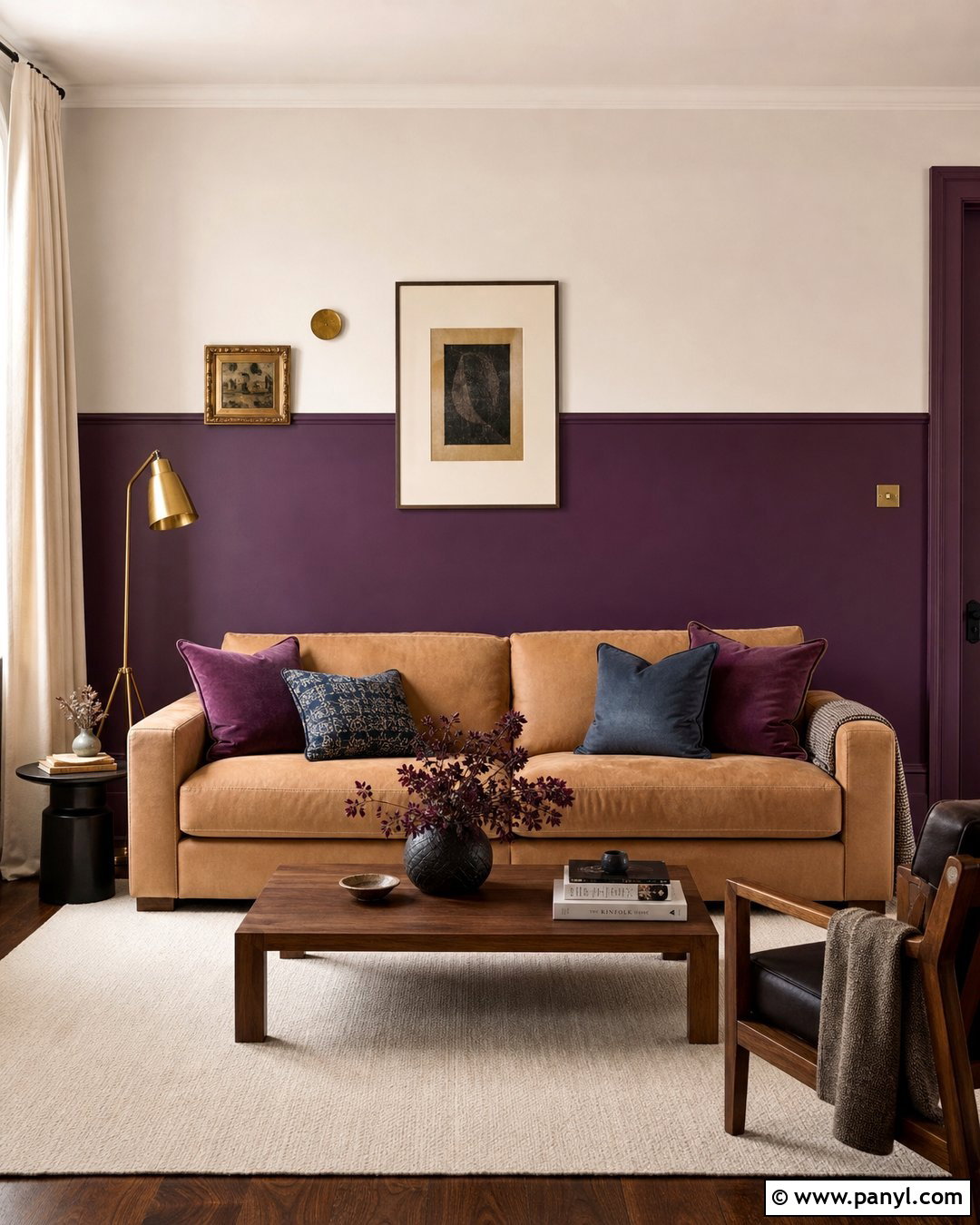
A two-tone wall offers an approachable way to use purple while adding architectural definition. Paint the lower two-thirds in deep plum and the upper portion in warm off-white, dividing the colors with a slim wood chair rail painted plum. Place a camel-colored sofa against the wall so its warm upholstery contrasts with the darker lower section. Add an ivory rug, walnut coffee table, and cream curtains to keep the room balanced. Pillows in plum, beige, and muted blue provide subtle variety. Hang artwork entirely within the lighter upper section, allowing it to remain visible and uncluttered. A brass floor lamp gives the room a polished accent. The horizontal division grounds the furniture, makes tall walls feel more proportional, and delivers strong color without covering every surface in dark purple.
18. Purple Wainscoting Wall
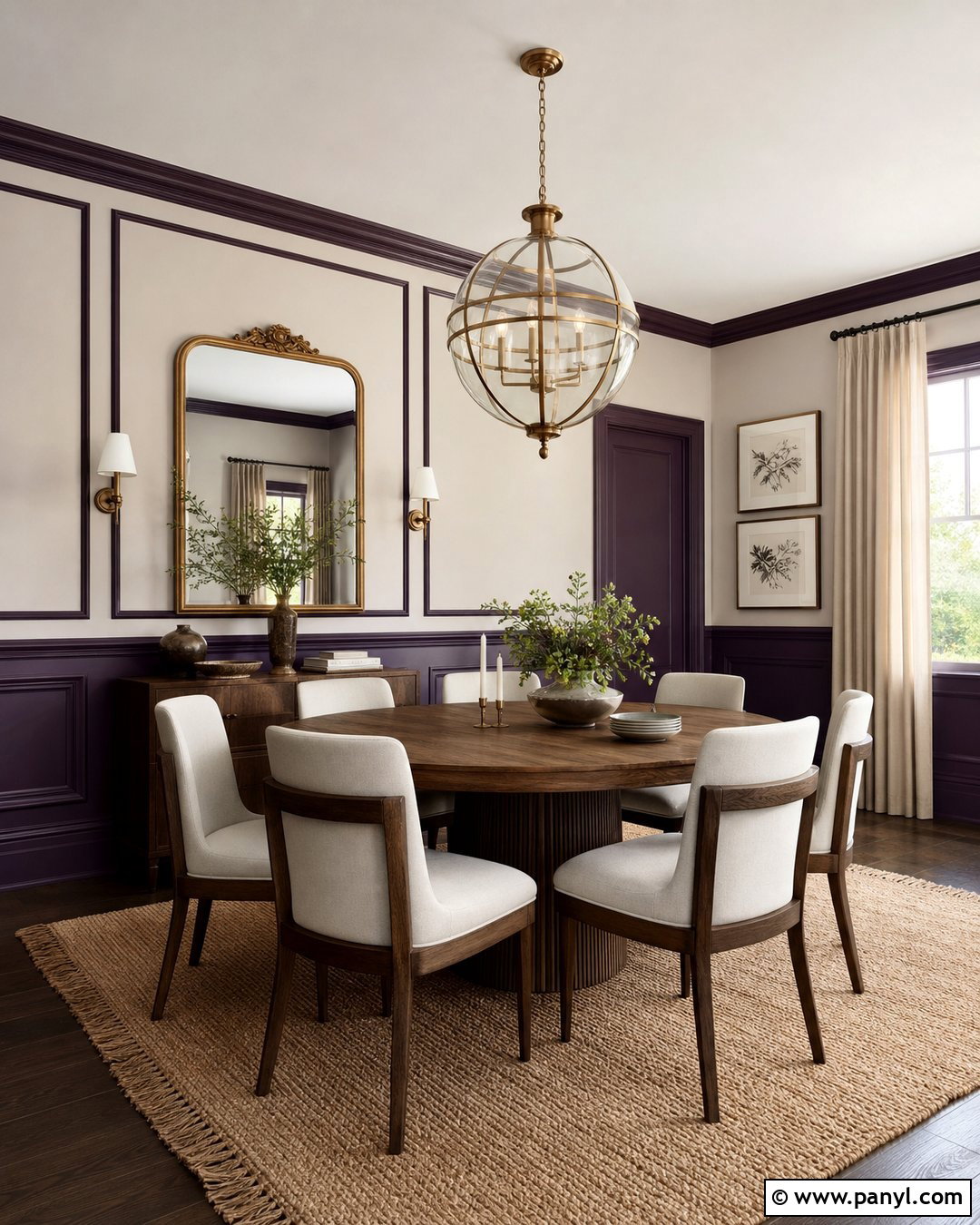
Painted wainscoting can bring purple into a dining room while preserving a light, open upper wall. Install simple rectangular molding across the lower half, then coat the paneling and baseboards in medium aubergine. Use a warm ivory paint above it and continue that shade onto the ceiling. A round oak table and cream upholstered chairs soften the structured wall treatment. Choose a brass globe chandelier and a natural flat-weave rug to introduce warmth and texture. A large vintage-style mirror above a low sideboard reflects light around the room. Add linen curtains in a light oatmeal shade and a few plum napkins for a restrained connection to the walls. The finished design feels architectural and complete, giving an ordinary dining area character without relying on excessive accessories.
19. Purple Geometric Wall Mural
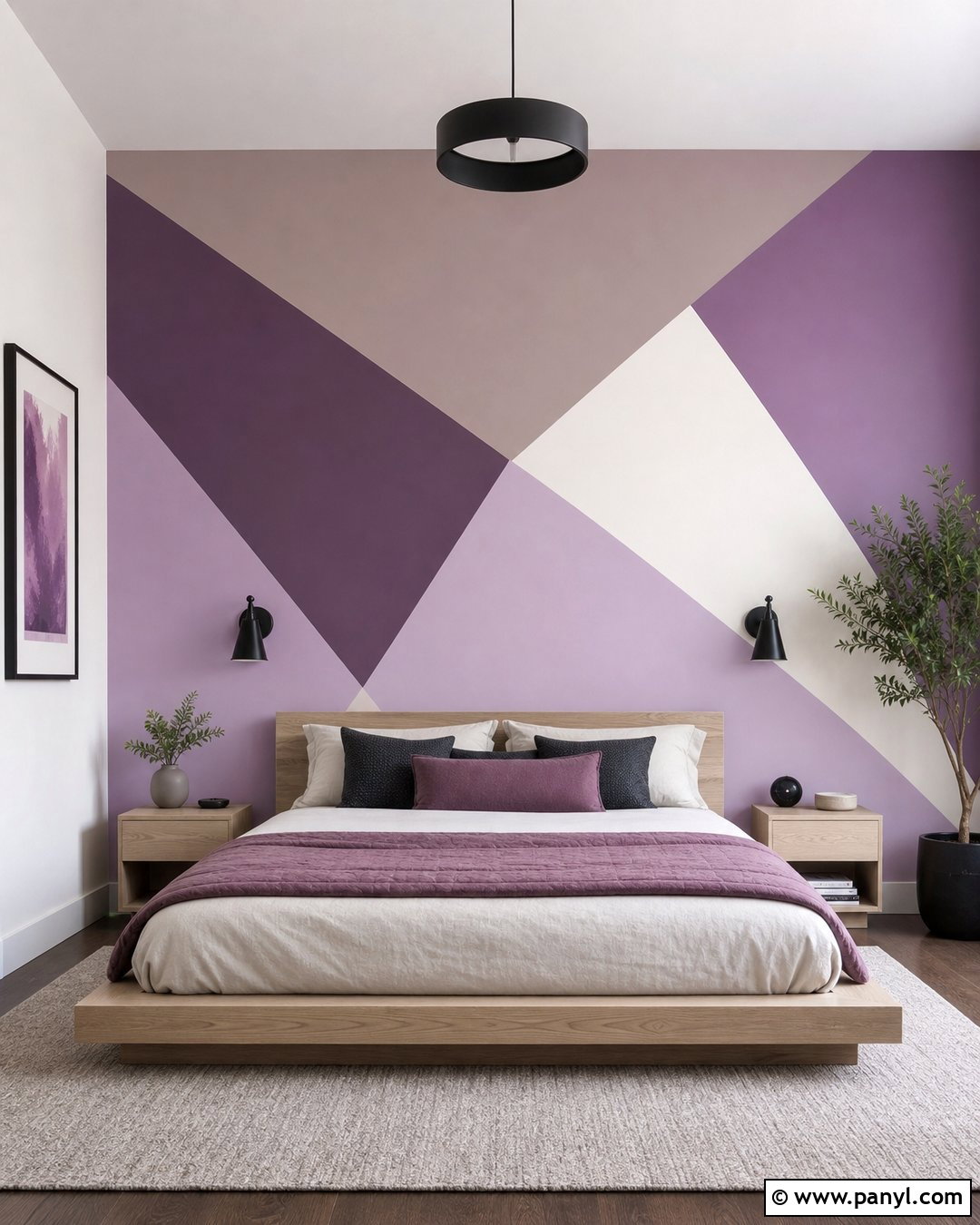
A geometric purple mural can become the foundation of a modern bedroom when the surrounding furniture remains simple. Create broad angular blocks in lavender, medium violet, dusty mauve, and warm white on the wall behind the bed. Center a low white oak bed against the mural and use plain ivory bedding to avoid competing patterns. Add a mauve quilt, two charcoal accent pillows, and matching oak nightstands. Matte black sconces sharpen the edges of the pastel shapes. A soft gray rug and white curtains keep the room bright and easy to live with. Avoid placing framed artwork on the mural, since its shapes already provide enough visual interest. This complete arrangement feels creative and personal while maintaining the clear layout and restful surfaces needed in a functional bedroom.
20. Purple Ombre Wall
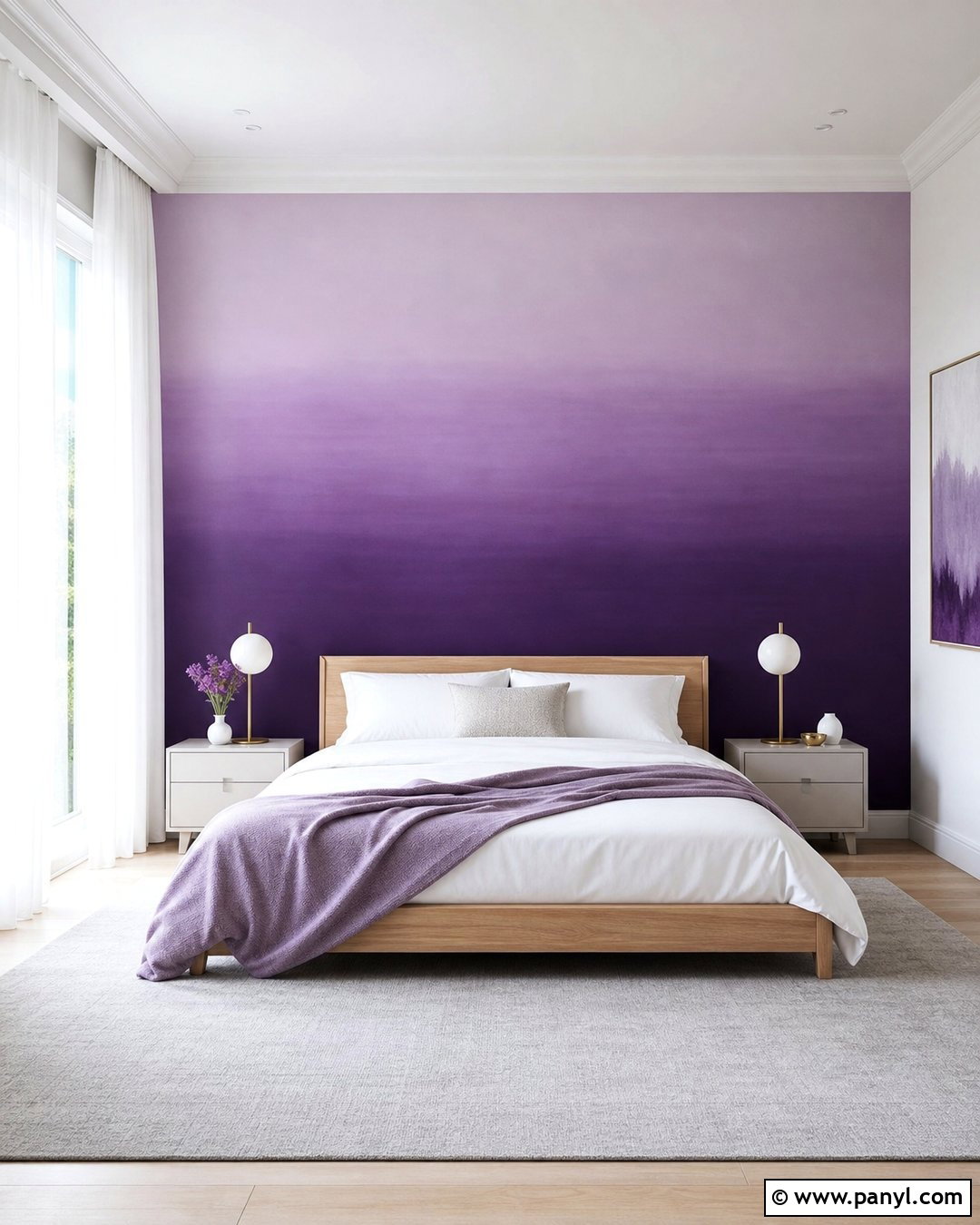
A lavender-to-plum ombre wall gives a bedroom movement and depth without using a repeating pattern. Begin with pale lilac near the ceiling, transition through soft violet, and finish with deeper plum near the floor. Place a light oak bed against the wall so the natural grain stands out against the blended color. Use white bedding with a lavender blanket and minimal patterned pillows. Small cream nightstands and simple globe lamps maintain the airy quality of the upper wall. Choose a pale gray rug and sheer white curtains to distribute daylight throughout the room. Keep the remaining walls warm white, allowing the ombre surface to remain the single focal point. The result feels artistic but calm because the smooth tonal shift replaces busy decoration with controlled, graduated color.
21. Purple Floral Wallpaper Wall
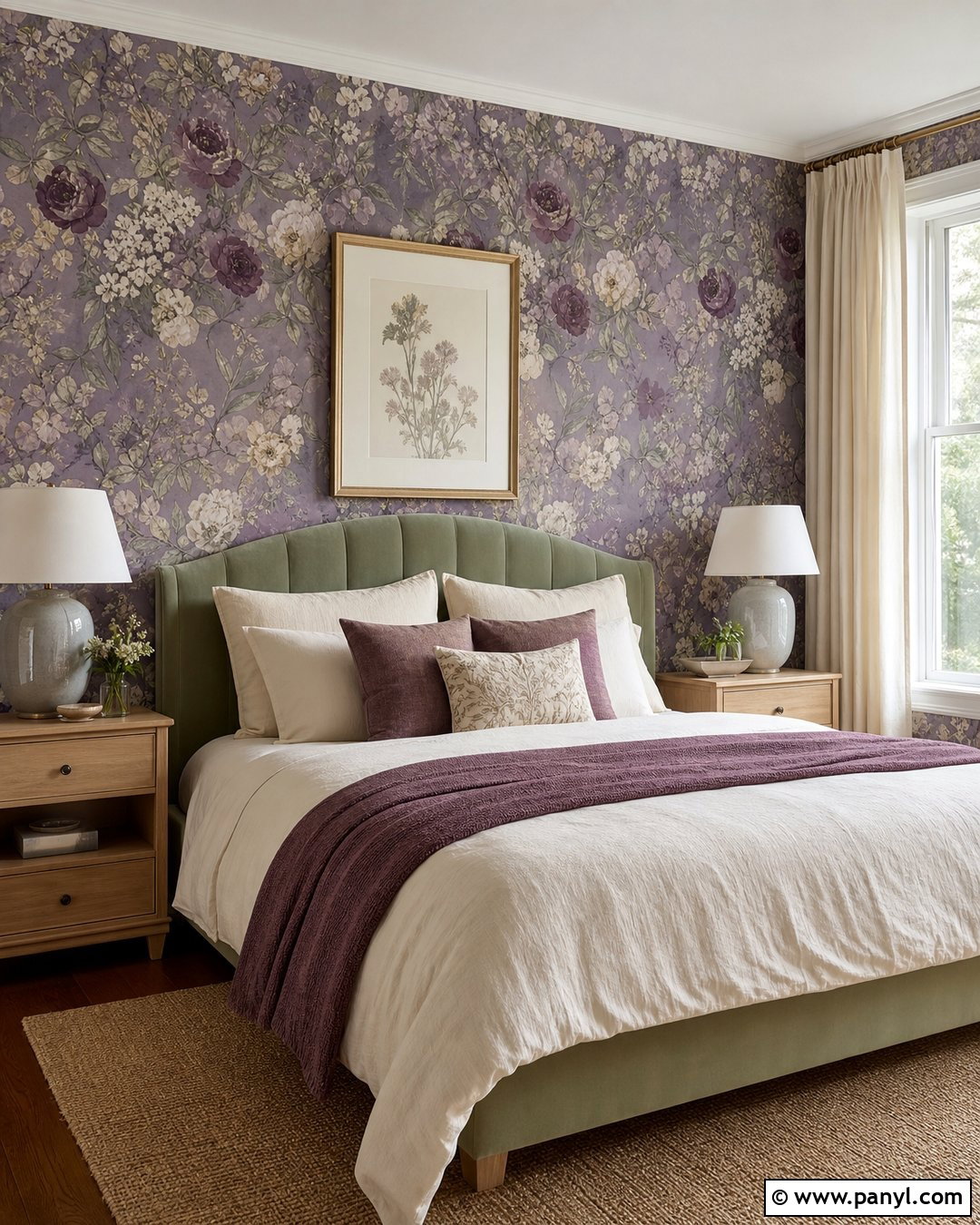
Purple floral wallpaper can create a layered bedroom when the pattern is limited to the wall behind the bed. Select a design with lavender, plum, faded green, and cream flowers on a warm neutral background. Pair it with a curved sage green upholstered headboard to highlight the leaves within the print. Keep the bedding mostly ivory, adding a plum coverlet and two small floral cushions. Light wood nightstands, ceramic lamps, and a natural woven rug prevent the room from feeling overly formal. Paint the other walls in a soft cream drawn from the wallpaper background. Hang no artwork over the headboard because the floral wall already provides a complete composition. Linen curtains and understated brass hardware finish this botanical room with warmth, balance, and an inviting sense of softness.
22. Purple Grasscloth Wall
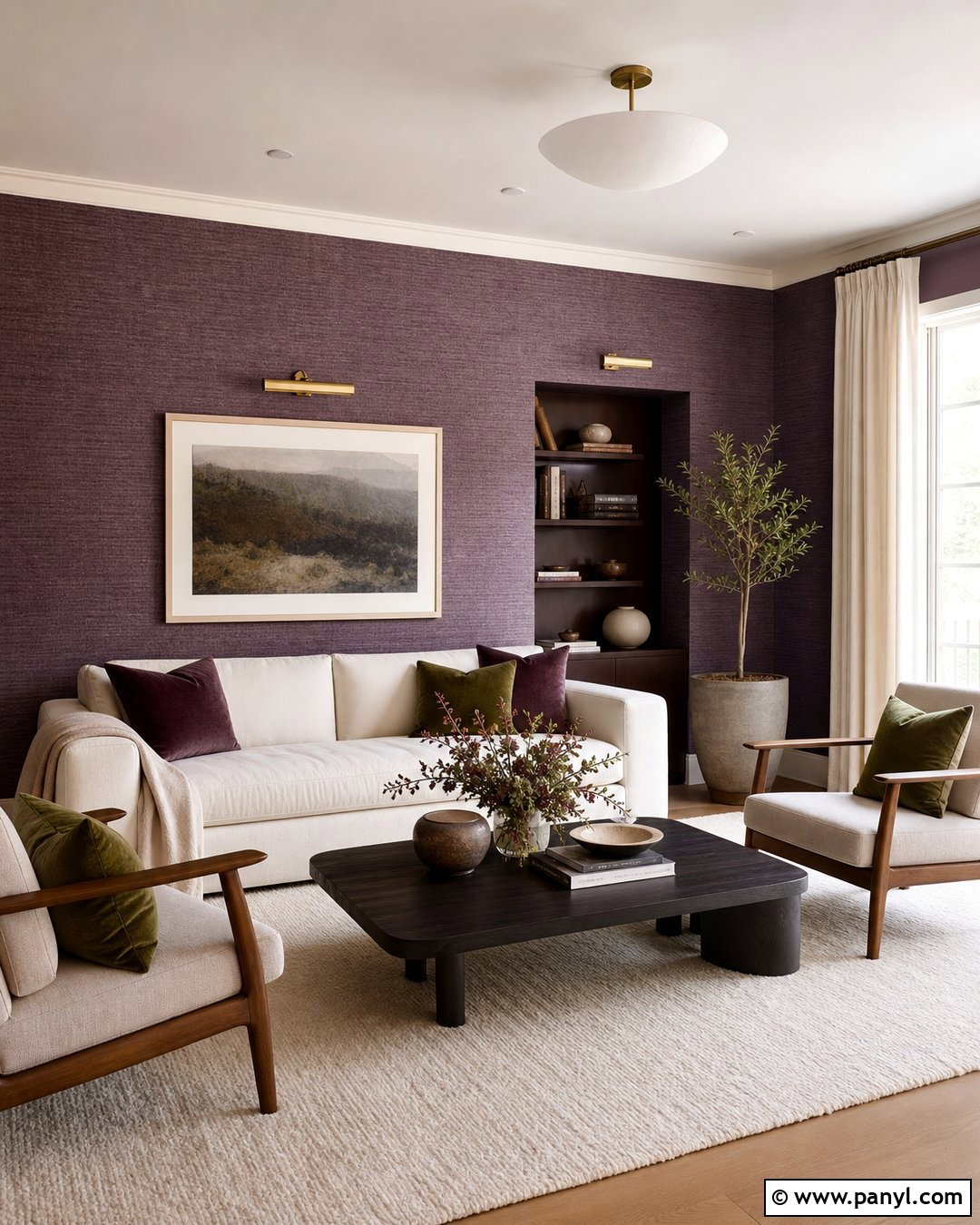
Purple grasscloth adds natural texture to a room while softening the intensity of saturated color. Cover the main living room wall in a muted heather-purple grasscloth with visible woven fibers. Arrange a streamlined cream sofa in front of it, accompanied by two walnut-framed chairs upholstered in beige. A low dark wood coffee table and ivory wool rug establish a comfortable, grounded seating area. Choose cushions in plum, taupe, and olive to complement the organic wall surface. Brass picture lights can illuminate two large neutral artworks without producing harsh reflections. Keep the adjoining walls warm white and use natural linen curtains at the windows. Because grasscloth has noticeable seams and color variation, simple furniture and spacious styling allow its handmade texture to become the room’s most interesting feature.
23. Textured Purple Plaster Wall
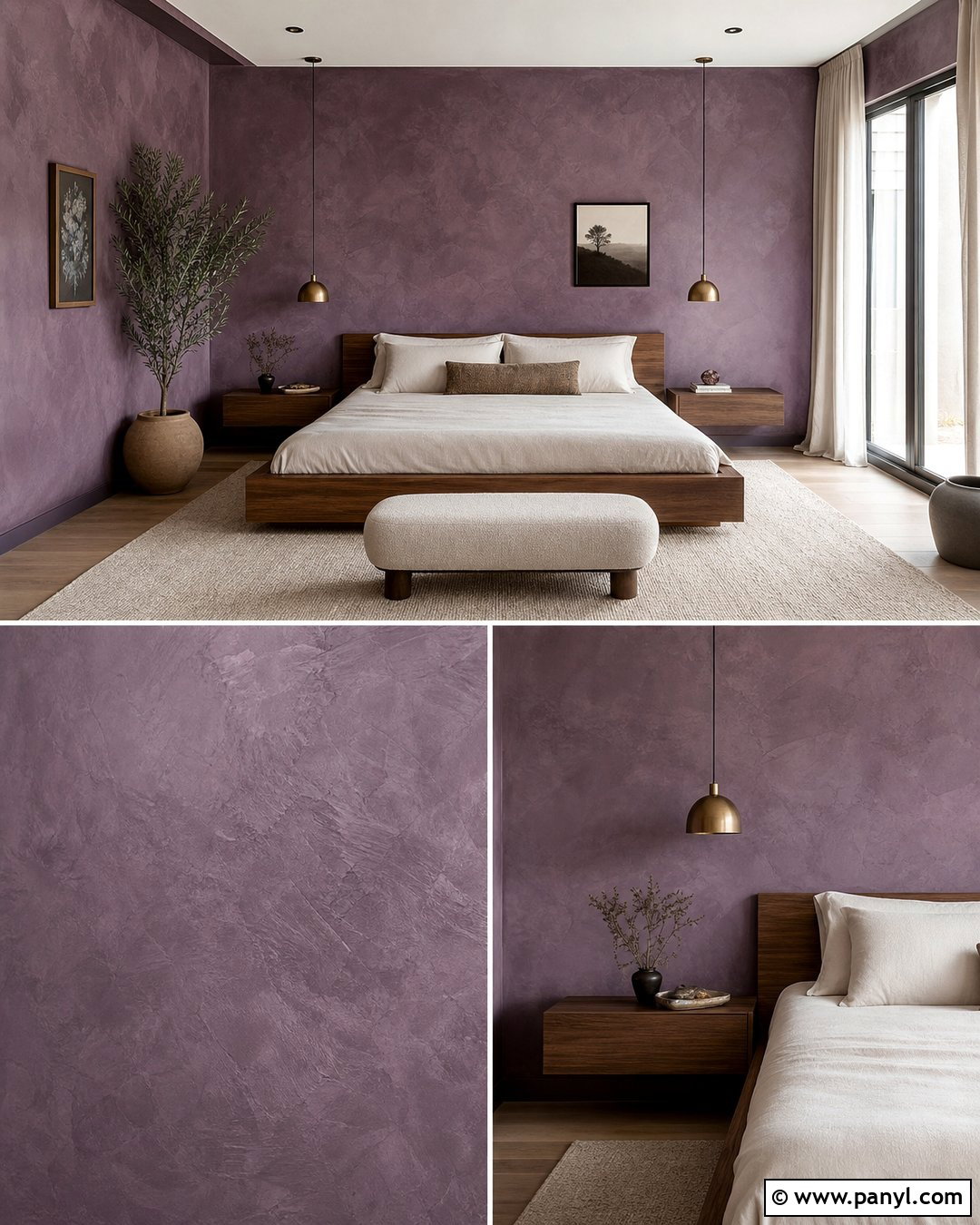
A textured plaster finish gives purple walls subtle movement that changes gently with the light. Apply a matte violet plaster across all four walls in a bedroom, allowing soft variations between mauve and plum to remain visible. Set a low walnut platform bed against the smoothest wall and layer it with ivory linen bedding. Use floating walnut nightstands to maintain an uncluttered floor line. Brushed brass pendant lights provide warm contrast, while a beige wool rug softens the space. Choose full-length taupe curtains that blend with the neutral textiles. Instead of multiple accessories, add one sculptural cream vase and a simple upholstered bench. The restrained furniture allows the artisanal wall texture to remain prominent, producing a rich, peaceful bedroom without loud patterns or high-gloss finishes.
24. Purple Limewash Wall
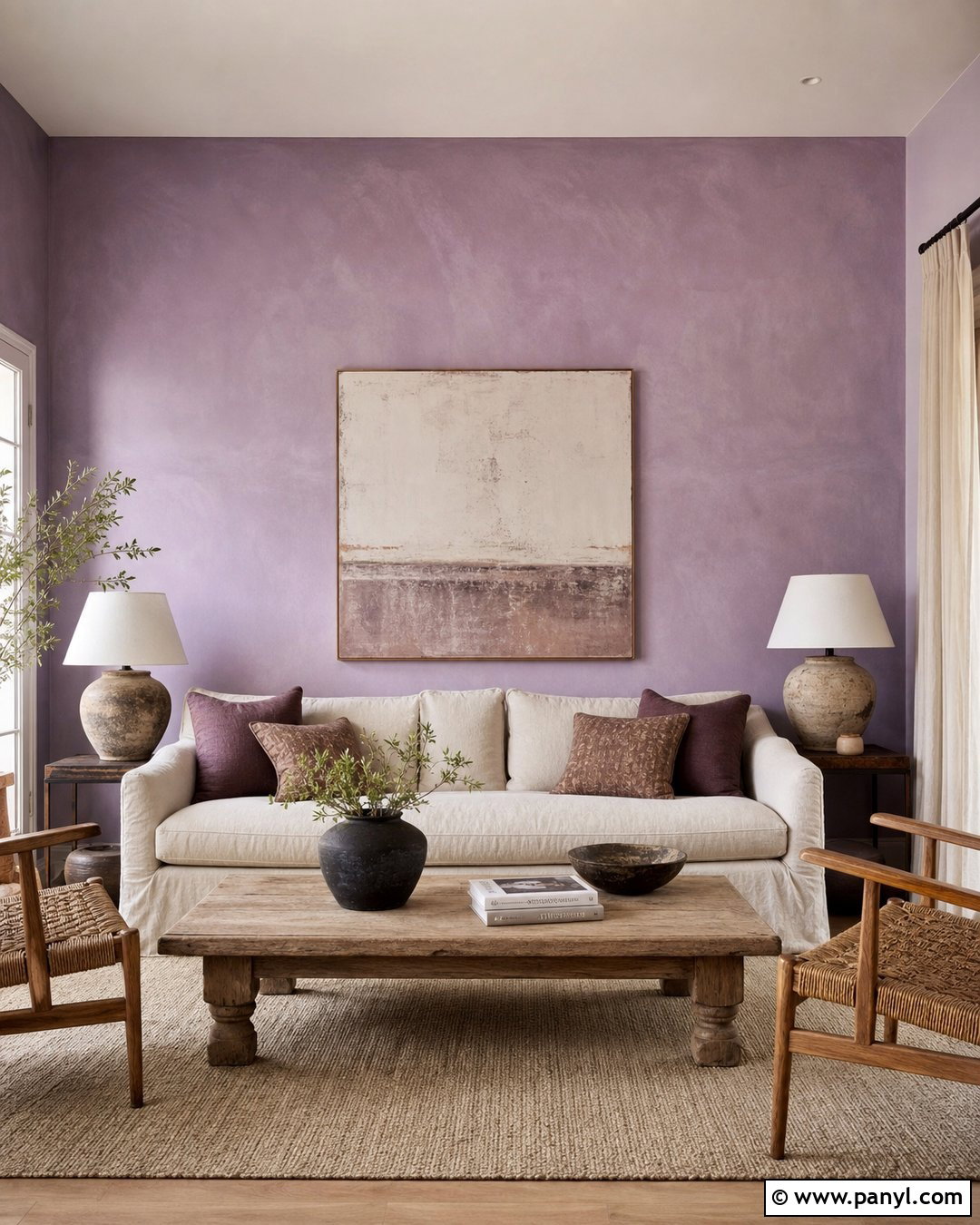
Purple limewash offers a cloudlike, imperfect finish that works beautifully in a relaxed living room. Choose a dusty lilac limewash with warm gray undertones, applying it in broad overlapping strokes across every wall. Furnish the room with a slipcovered cream sofa, a weathered oak coffee table, and two woven accent chairs. An undyed wool rug supports the soft, natural palette. Add cushions in muted plum and clay, along with linen curtains in warm white. A large unframed abstract canvas can introduce beige and soft violet without distracting from the wall texture. Use ceramic table lamps and a black metal floor lamp for a mix of organic and clean-lined details. The final room feels comfortable and expressive, with tonal variation creating interest even when the decor remains simple.
25. Purple Paneled Wall
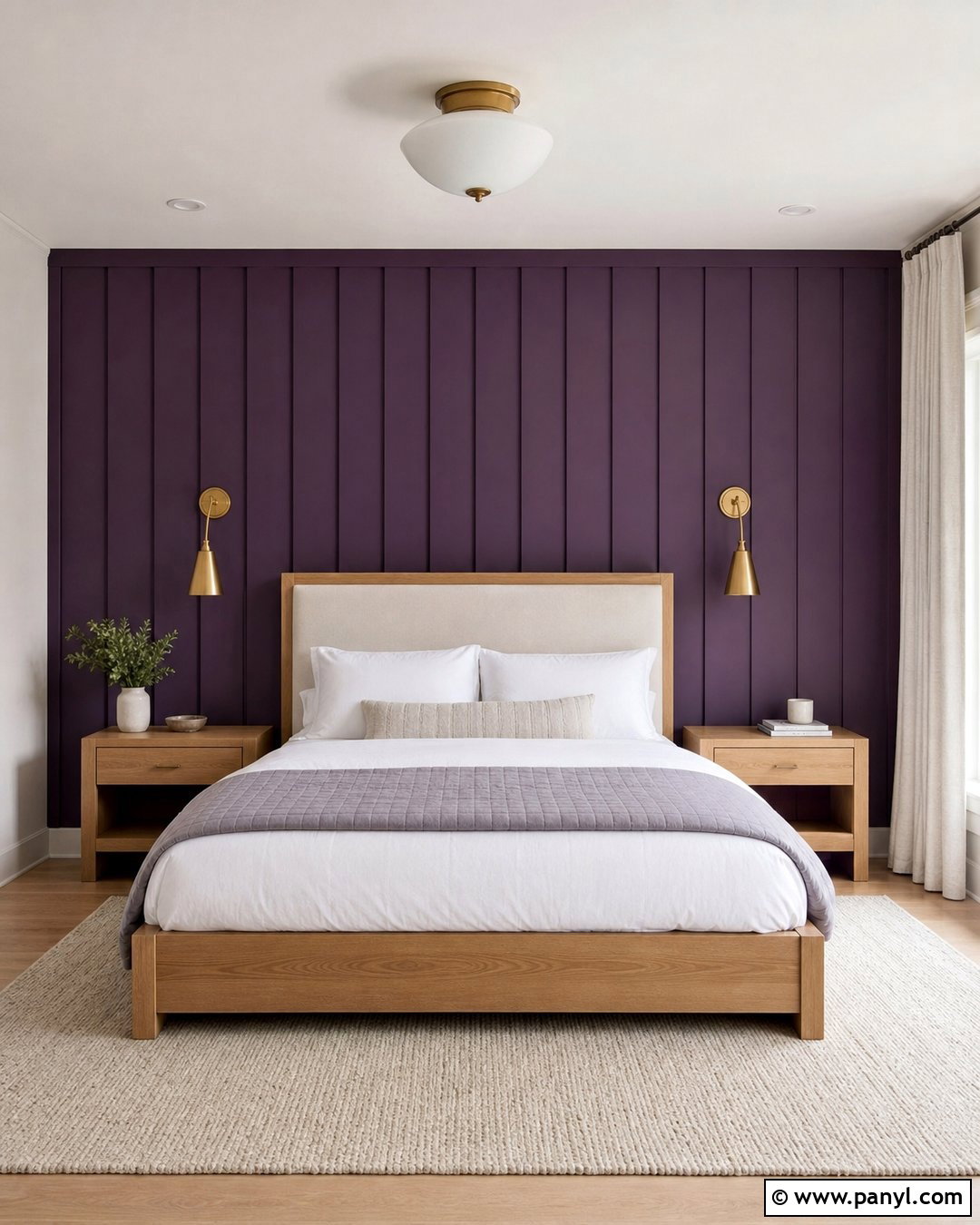
Purple-painted paneling can turn a plain bedroom wall into a strong architectural backdrop. Install vertical wood panels or narrow battens from floor to ceiling behind the bed, then paint them a saturated grape purple. Keep the other walls soft white so the panel detail remains distinct. Position a light oak bed with a cream upholstered headboard against the feature wall. White bedding, a gray-lavender quilt, and two patterned pillows provide a balanced mix of color and calm. Add light oak nightstands and simple brass sconces between the vertical lines. A large cream rug brightens the floor, while oatmeal curtains soften the windows. Avoid placing too much artwork on the panels. Their shadow lines already add dimension, making the room feel finished with fewer decorative objects.
26. Purple Walls And Ceiling
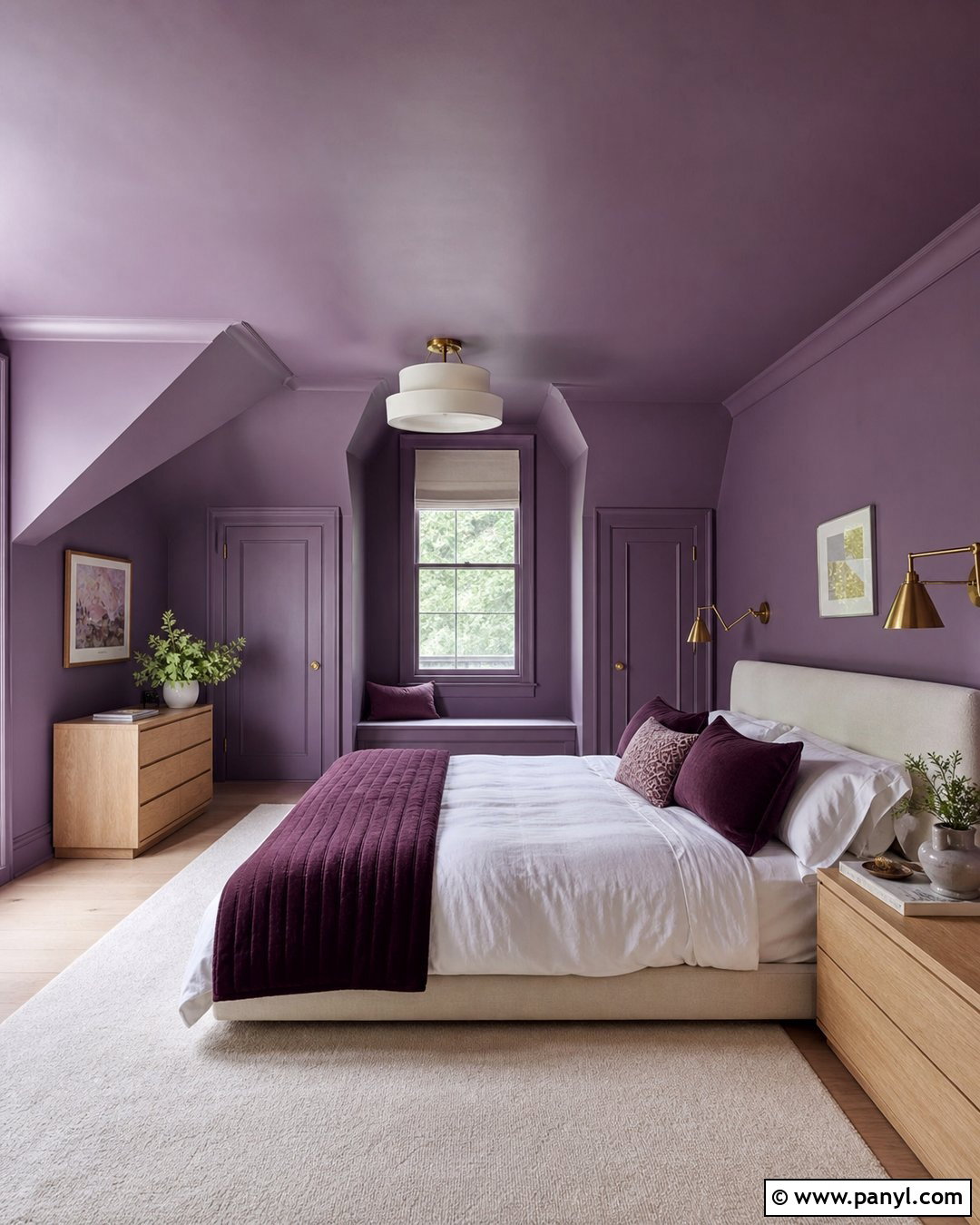
Painting the walls and ceiling purple can make an awkward bedroom feel unified rather than visually fragmented. Use a medium smoky lavender that is soft enough to reflect available light. Carry the same paint over sloped ceilings, dormers, trim, and doors for one uninterrupted envelope. Place a low cream upholstered bed beneath the tallest section of the ceiling. Layer white sheets with plum and gray-lavender textiles for subtle tonal depth. Light oak nightstands and a pale wool rug introduce warmth beneath the purple surfaces. Choose wall-mounted brass lights to conserve space and add a gentle metallic contrast. Keep window treatments close to the wall color so they visually recede. This all-over treatment creates a cozy, orderly room because unusual angles become part of one continuous design.
27. Purple Fireplace Wall
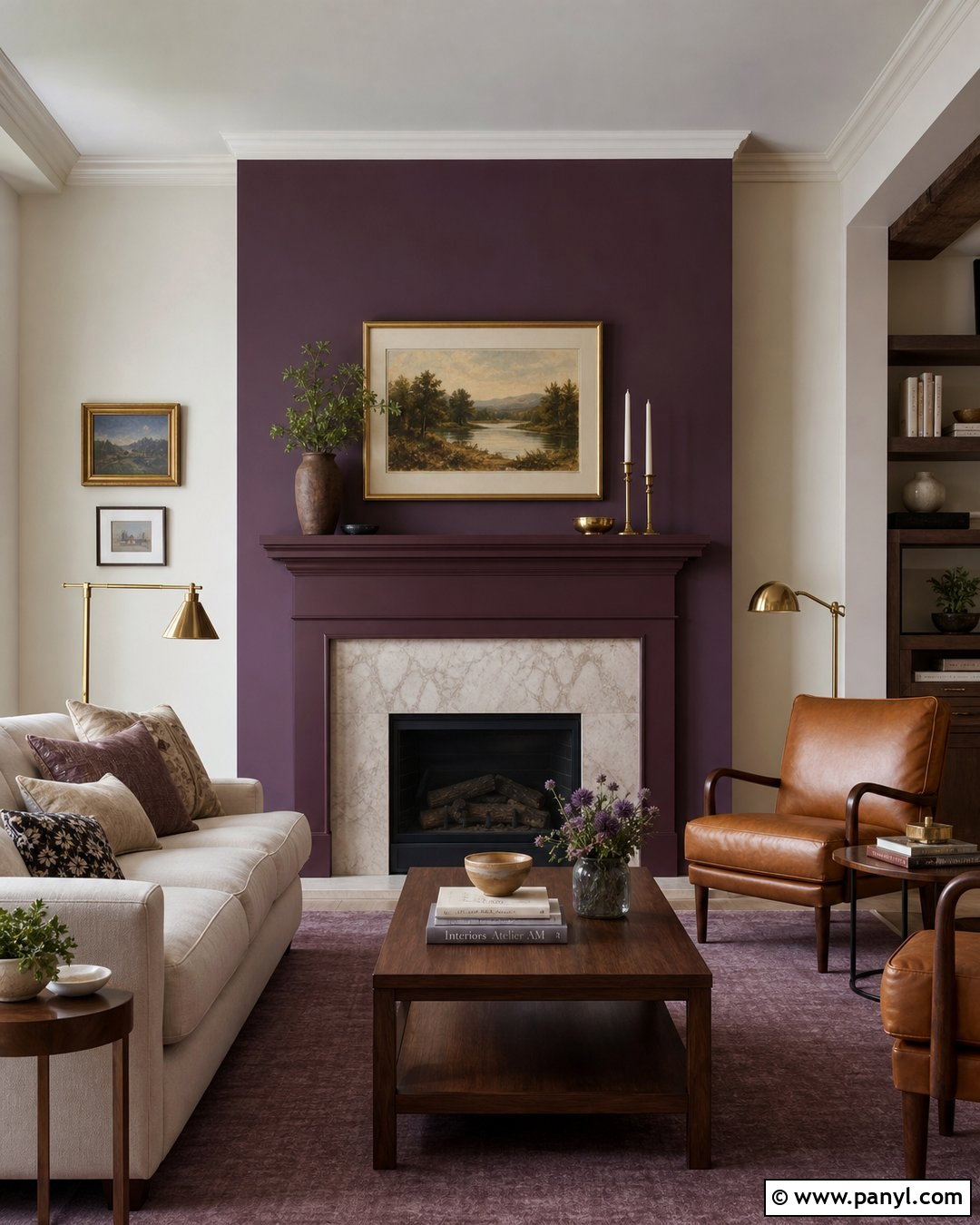
A purple fireplace wall creates a strong living room centerpiece when the architecture and seating are planned together. Paint the entire chimney breast in deep aubergine, including the mantel, while leaving the adjoining walls warm white. Use pale stone or marble-look tile around the firebox to introduce contrast and a durable finish. Place a cream sofa facing the fireplace, with two camel leather chairs angled toward it. A faded rug containing plum, beige, and blue connects the seating area to the feature wall. Style the mantel with one large artwork, two simple candlesticks, and a low ceramic bowl. Walnut side tables and brass lamps complete the warm palette. Keeping accessories symmetrical but minimal allows the purple fireplace to remain bold, architectural, and visually organized.
28. Purple Gallery Wall
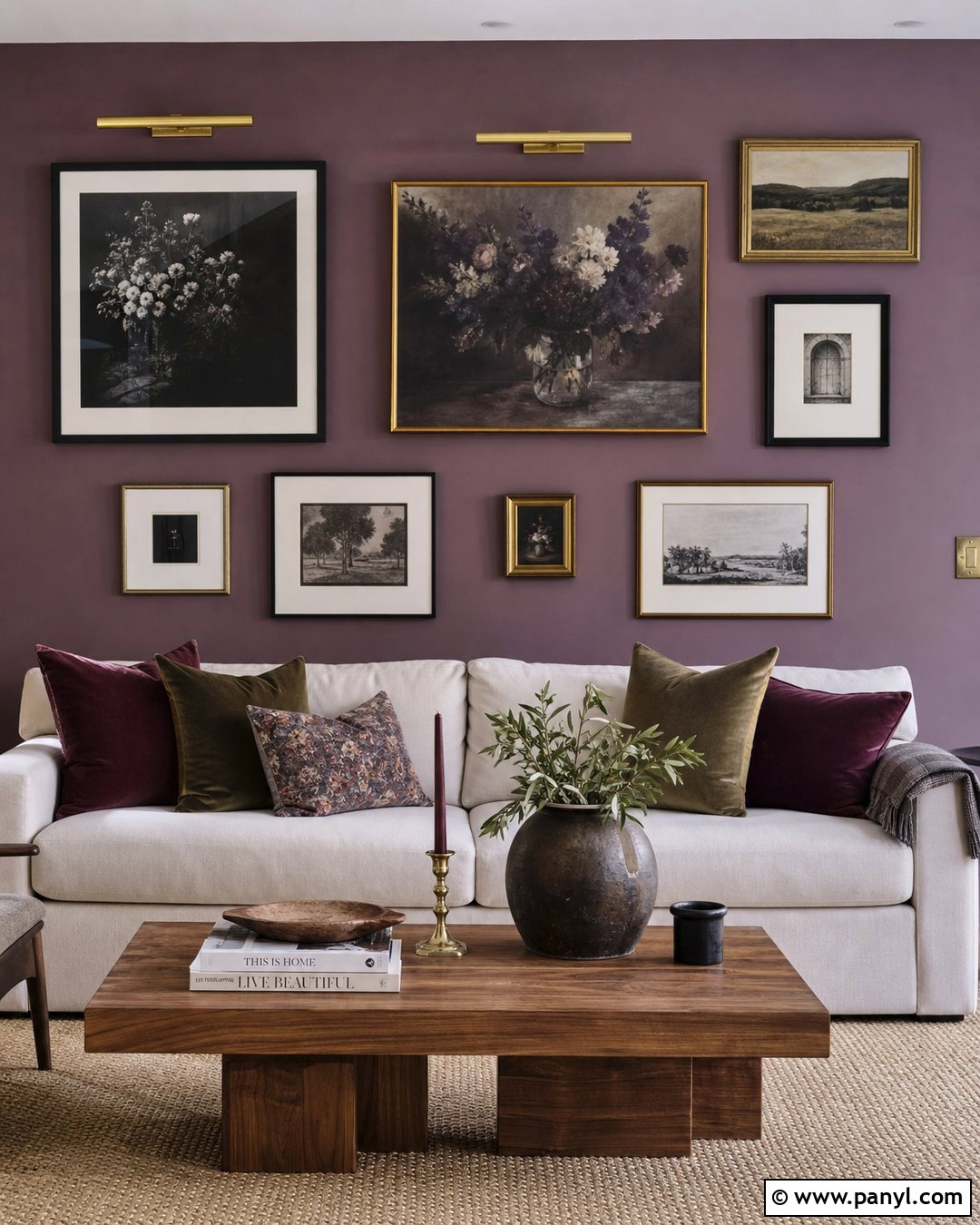
A medium purple wall provides a rich background for a carefully organized gallery display. Choose dusty violet paint and arrange framed artwork above a neutral linen sofa. Mix black, oak, and thin brass frames, but repeat each finish at least twice so the collection feels connected. Select prints with generous white space and touches of lavender, brown, green, and charcoal. Beneath the display, use a long cream sofa, a walnut coffee table, and a textured beige rug. Add plum and olive cushions to carry the wall colors through the seating area. A black picture light or pair of brass sconces can illuminate the arrangement. Keep neighboring walls soft white and avoid additional small decorations nearby. This gives both the purple background and collected artwork enough room to make an impact.
29. Purple TV Wall
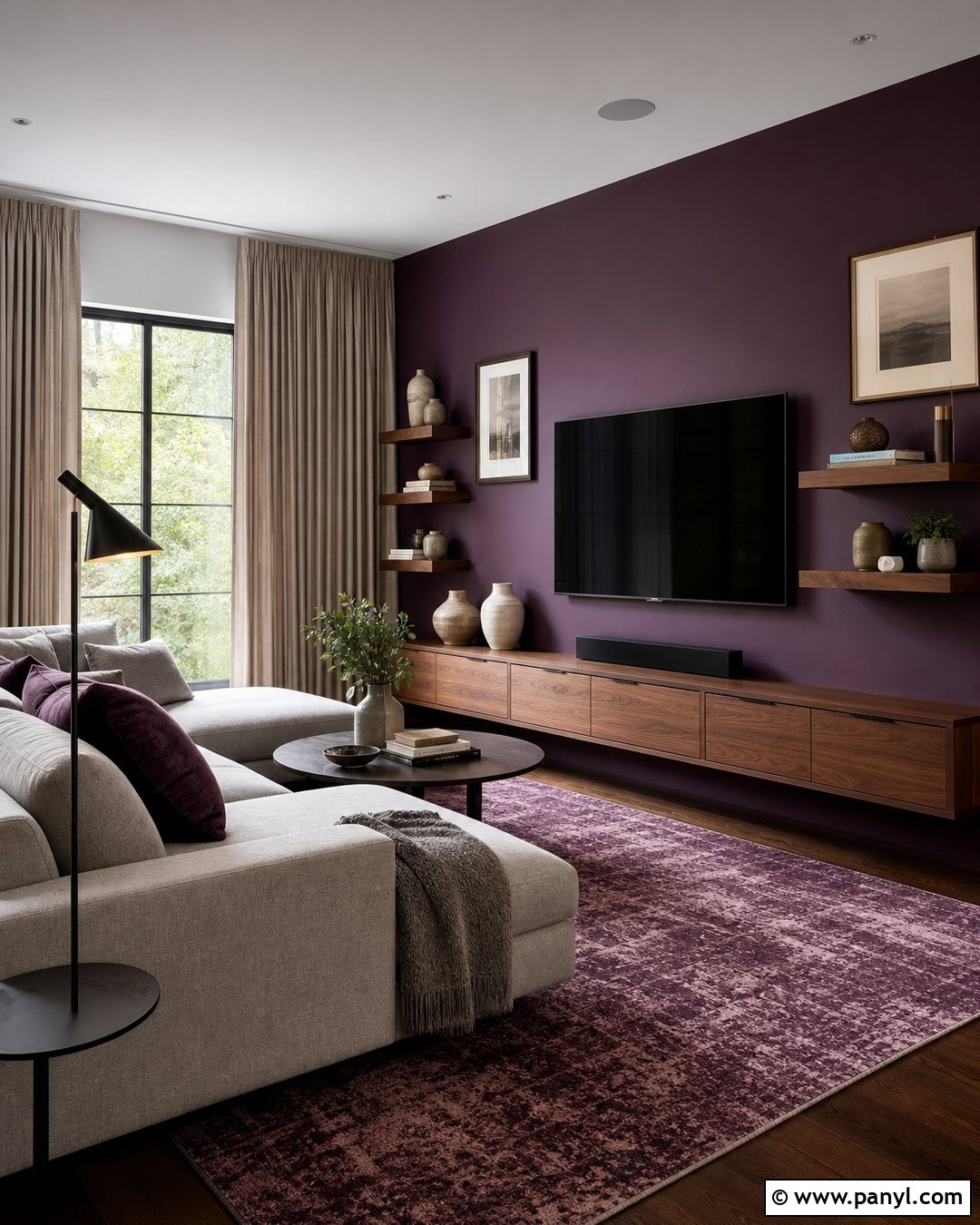
A purple TV wall can make a large black screen feel more integrated into a family room. Paint the feature wall in a deep muted plum rather than a bright violet. Mount the television at a comfortable viewing height above a long walnut media cabinet with closed storage. Install two slim floating shelves beside the screen, styling them with cream ceramics, a few books, and small plants. Keep the remaining walls warm beige and furnish the room with a light gray sectional. A patterned rug containing plum, gray, and tan ties the wall to the seating area. Use blackout curtains in oatmeal and dimmable black floor lamps for practical viewing. The combination of dark paint, streamlined storage, and balanced furniture creates an organized media zone rather than an isolated television wall.
30. Purple Entryway Wall
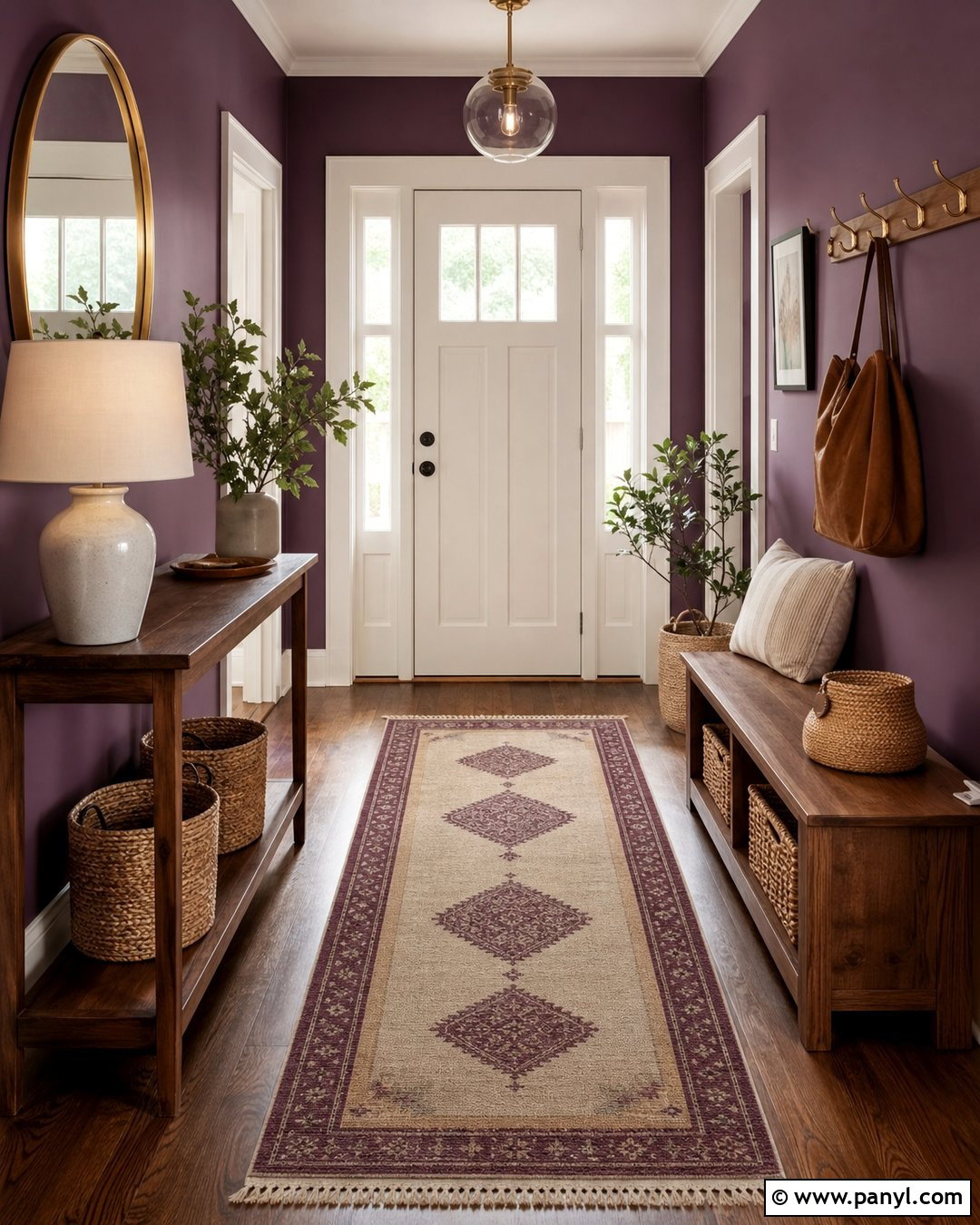
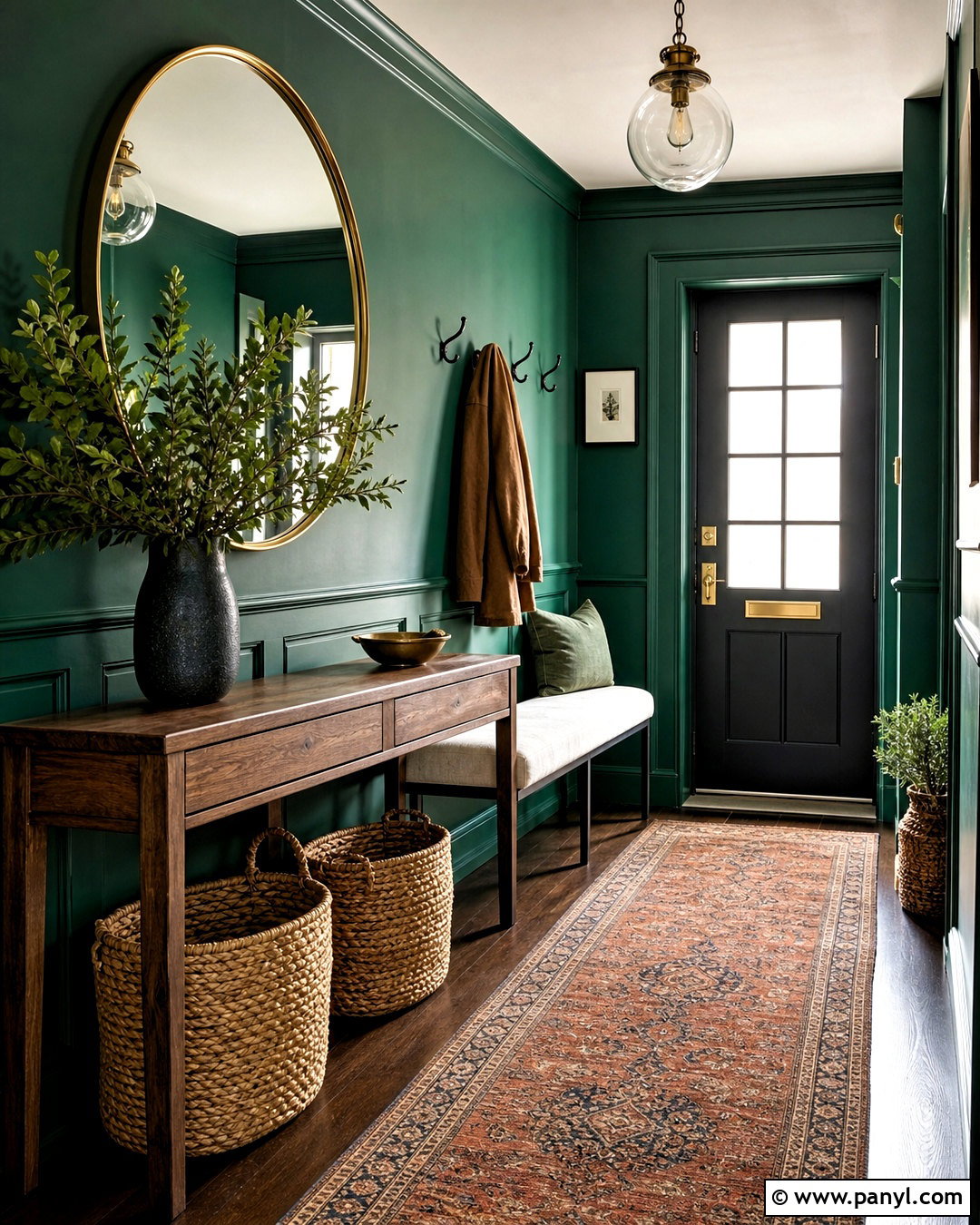
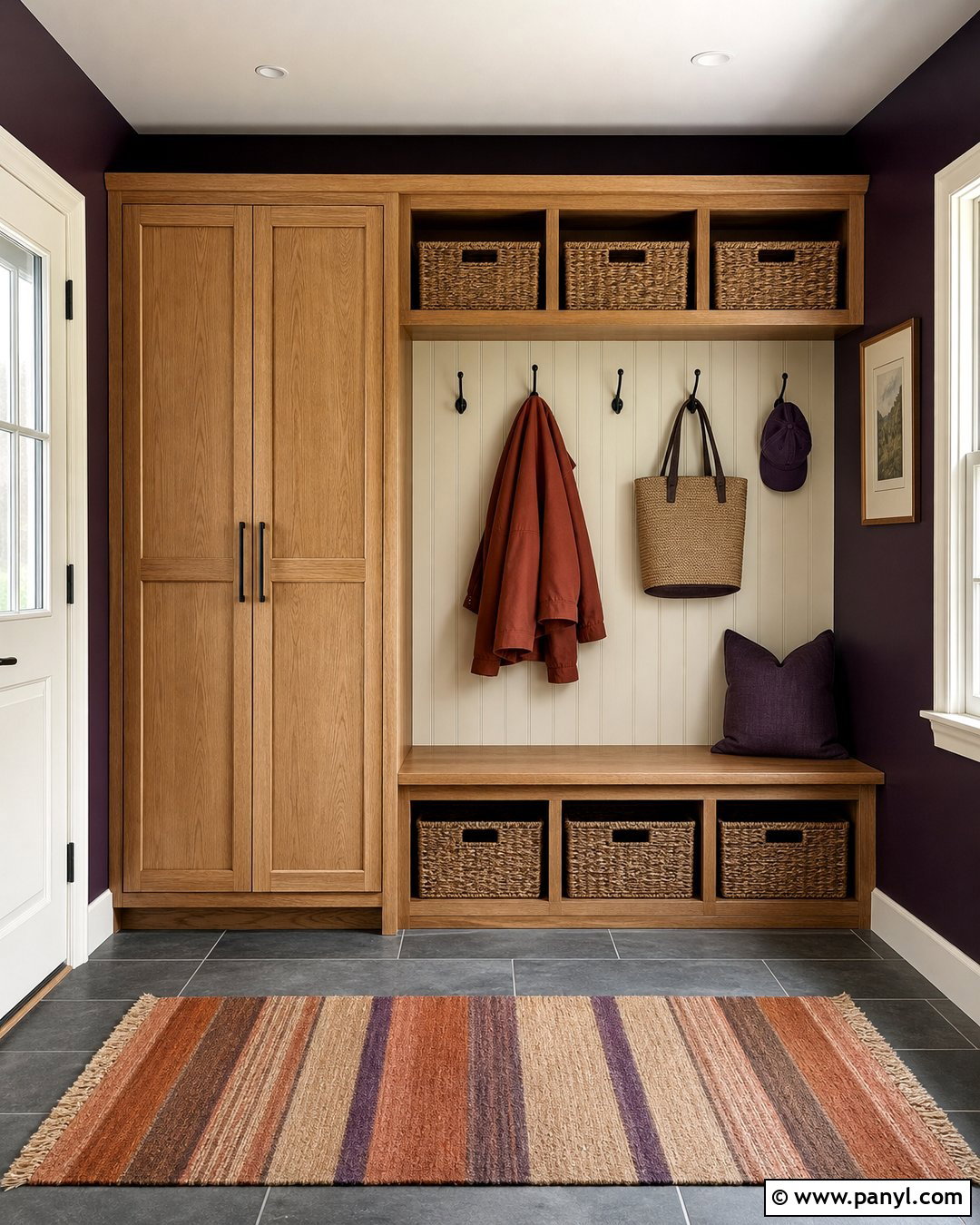
A purple entryway can introduce personality as soon as the door opens without affecting every room in the home. Paint the walls in a warm mulberry purple and use crisp cream on the ceiling. Place a narrow walnut console along one wall, leaving enough space for comfortable movement. Hang a rounded brass mirror above it and add a small ceramic lamp for welcoming light. A washable runner with beige, plum, and faded blue tones protects the floor and extends the color scheme down the hallway. Include a simple oak bench, wall hooks, and woven baskets for everyday storage. A few framed prints with light backgrounds prevent the deep walls from feeling bare. The finished entry feels decorative yet practical, with each piece serving a clear purpose in a compact footprint.
31. Purple Hallway Wall
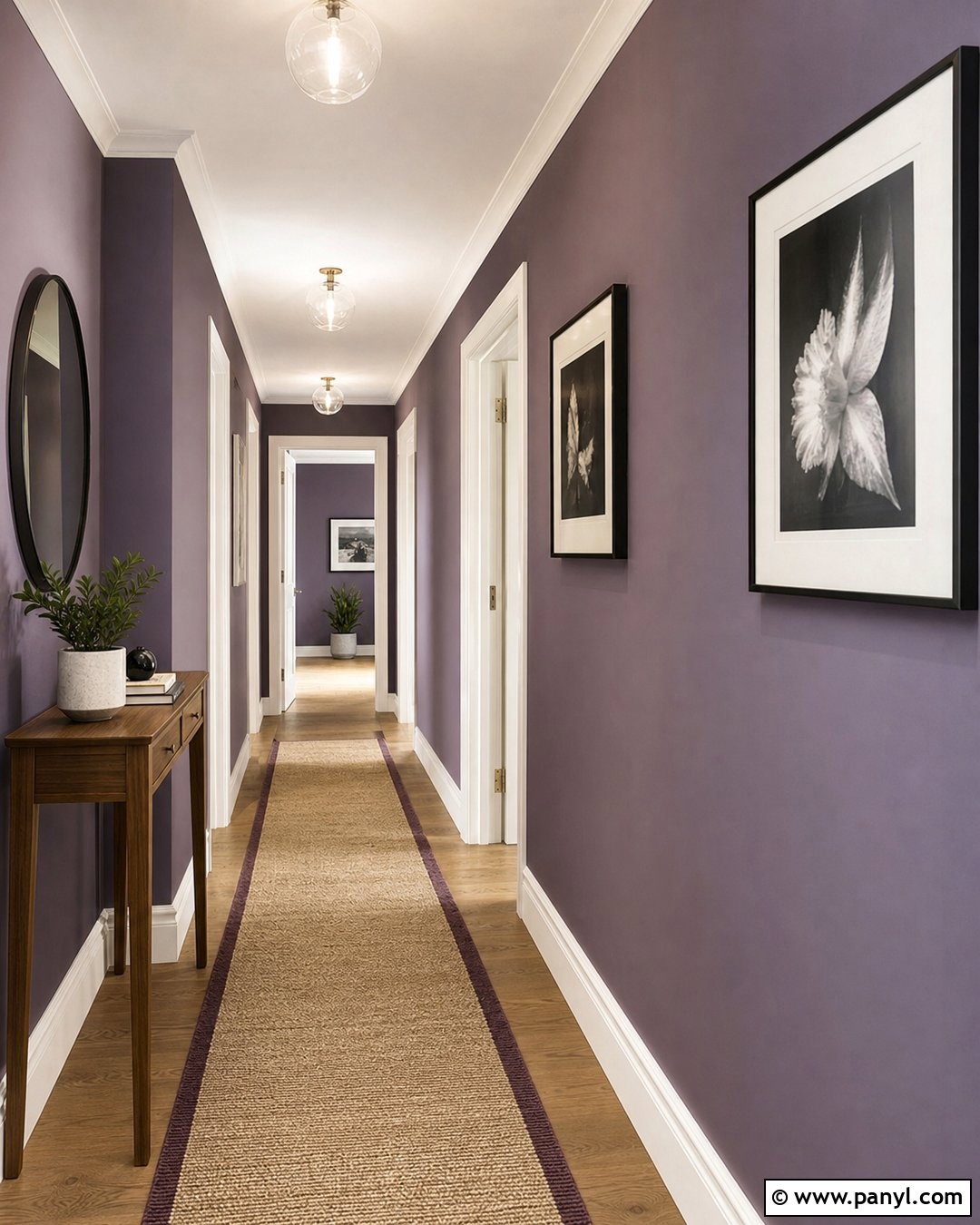
A narrow hallway can handle purple when the shade, lighting, and trim work together. Use a light smoky lilac on the walls and bright warm white on the ceiling, doors, and baseboards. Install a long natural runner with subtle plum details to lead the eye through the space. A series of matching black frames creates an orderly gallery without adding physical bulk. If the hallway is wide enough, place a very slim oak console beneath one grouping of pictures. Use clear glass ceiling lights with warm white bulbs to distribute light evenly. A small mirror near the end helps reflect nearby rooms and windows. By keeping furniture shallow and repeating simple finishes, the purple hallway feels connected, spacious, and intentionally decorated instead of appearing like a forgotten transition area.
32. Purple Bathroom Wall
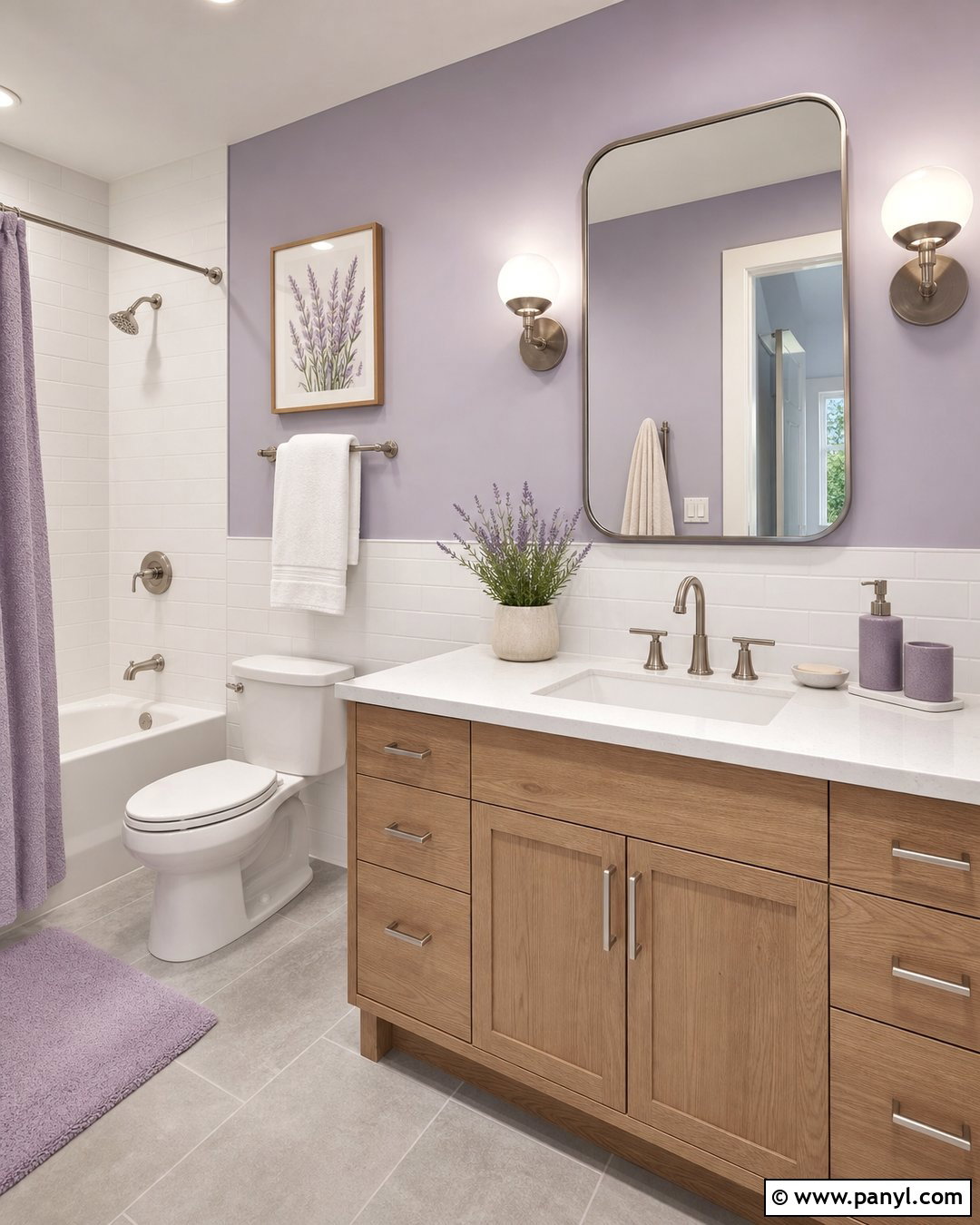
Lavender walls can give an everyday bathroom color while preserving a clean, bright appearance. Paint the upper walls in a soft gray-lavender and cover the lower half with glossy white subway tile. Choose a light oak vanity topped with white quartz and install brushed nickel fixtures for a cool, understated finish. A large rounded mirror and two opal glass sconces provide even lighting around the sink. Use white towels with one plum hand towel for a controlled accent. Pale gray floor tile keeps the room practical and prevents the palette from becoming overly colorful. Add a simple white shower curtain and one framed botanical print. The combination of washable tile, durable surfaces, useful storage, and subtle purple paint creates a bathroom that feels fresh, functional, and thoughtfully finished.
33. Dark Purple Powder Room Wall
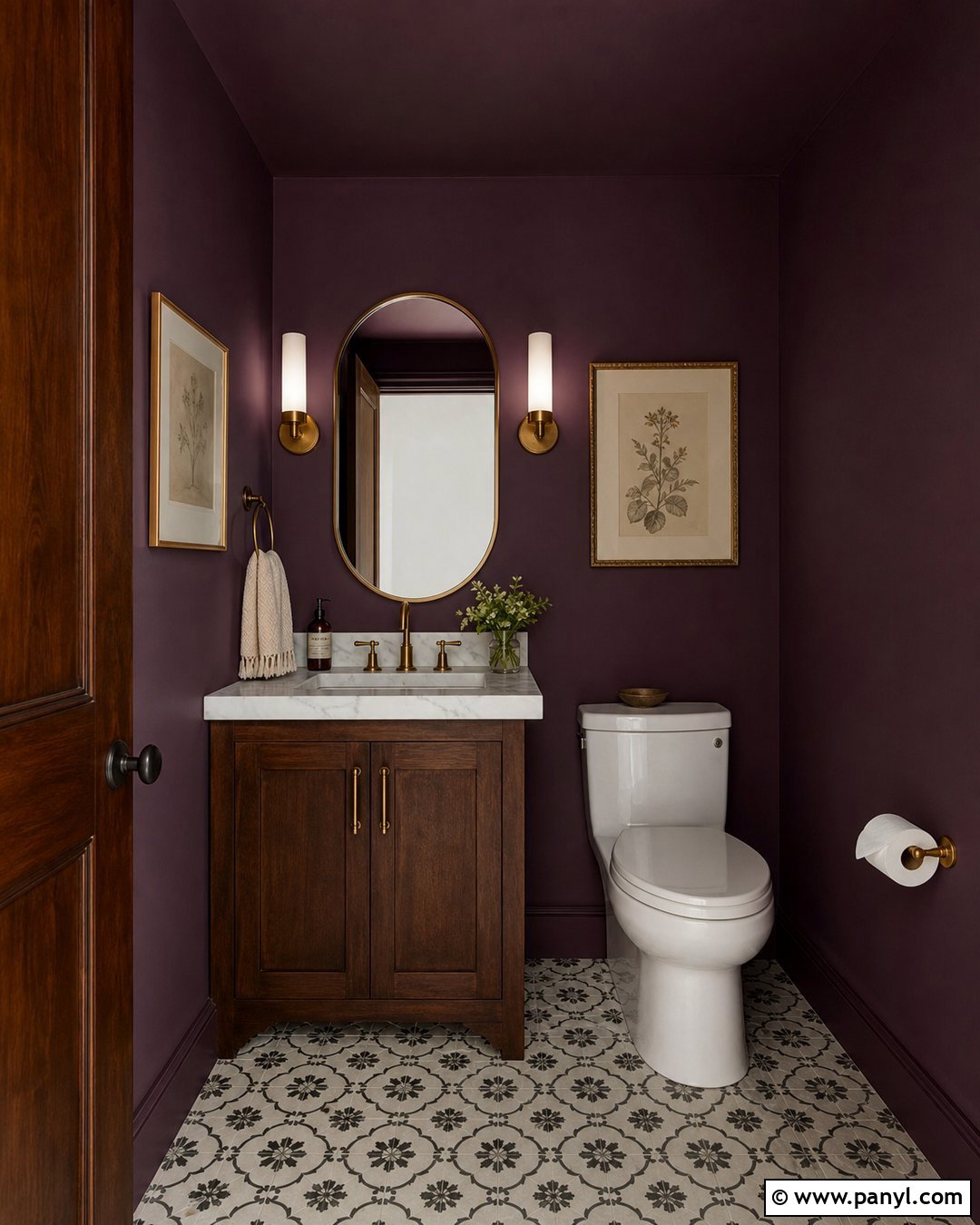
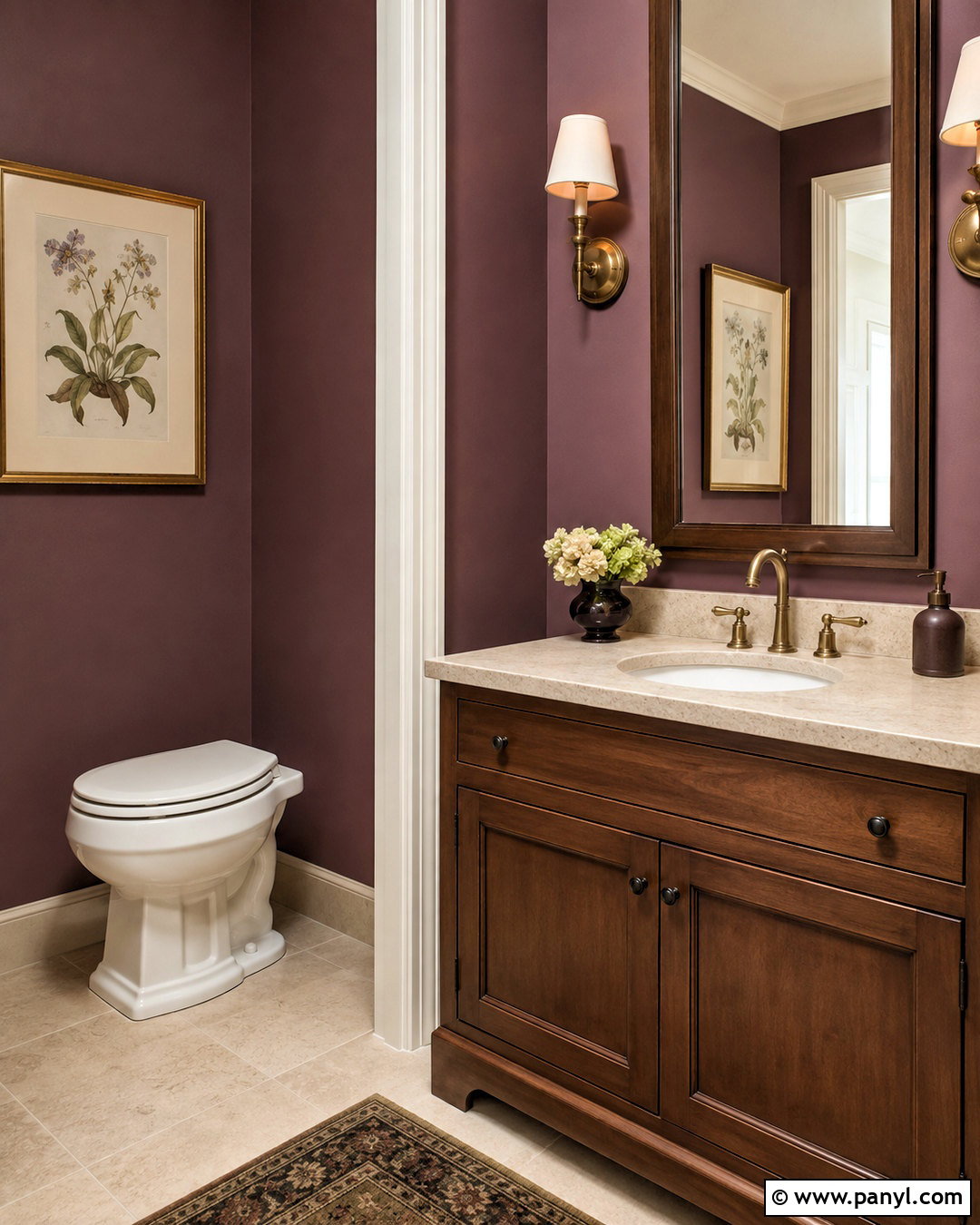
A powder room is an ideal place for a dramatic purple treatment because the compact space can support concentrated color. Paint the walls and ceiling in deep blackberry purple, then use a small walnut vanity with a white marble-look top. An aged brass faucet, oval mirror, and compact wall sconces add warmth against the dark background. Choose patterned floor tile in cream, charcoal, and muted plum to introduce detail without requiring additional decor. Hang one small framed artwork above the toilet and provide a thick ivory hand towel. If storage is necessary, install a narrow recessed cabinet rather than crowding the room with shelving. The continuous purple envelope, warm wood, pale stone, and reflective brass create a finished jewel-box effect while keeping every fixture practical and appropriately scaled.
34. Purple Kitchen Wall
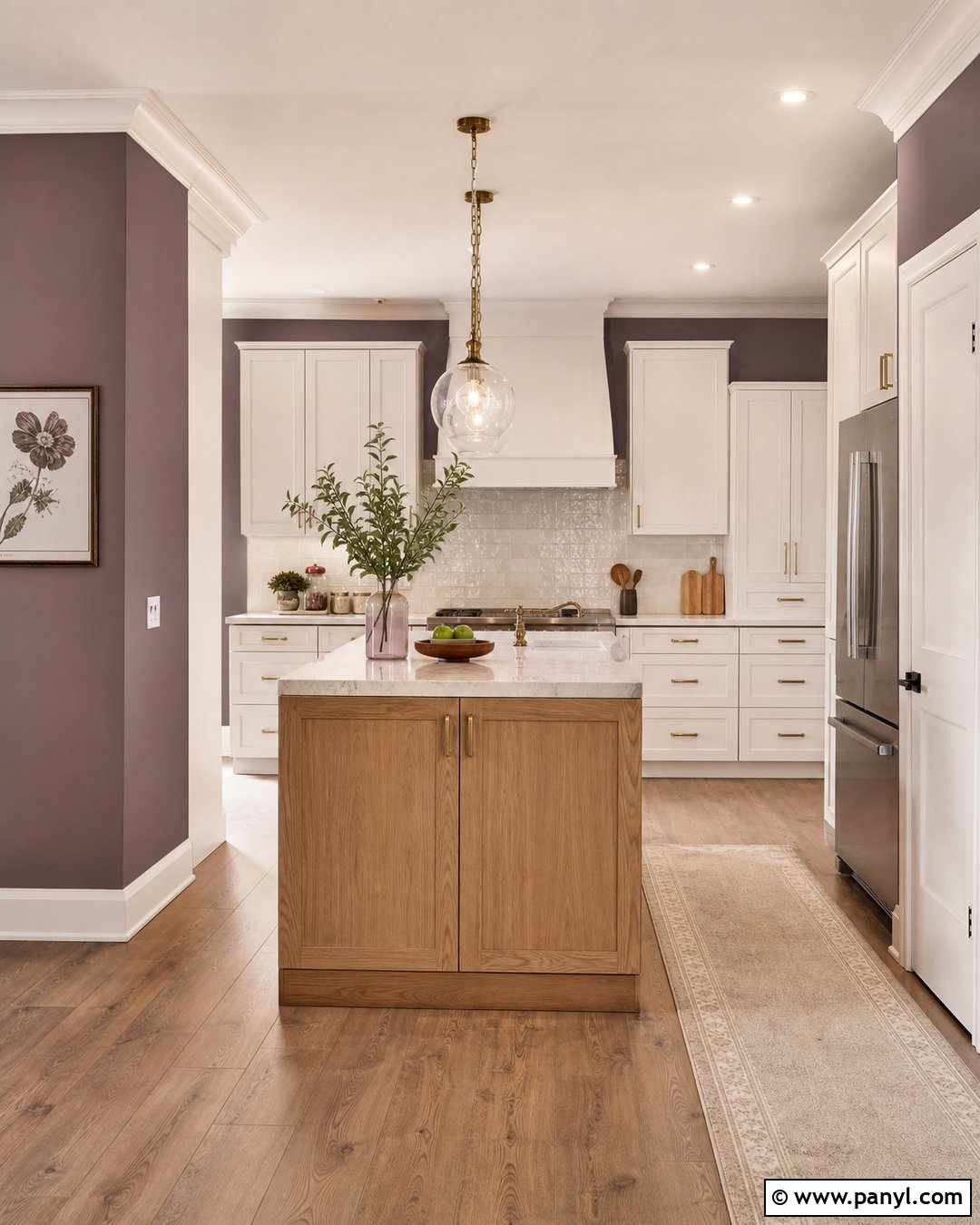
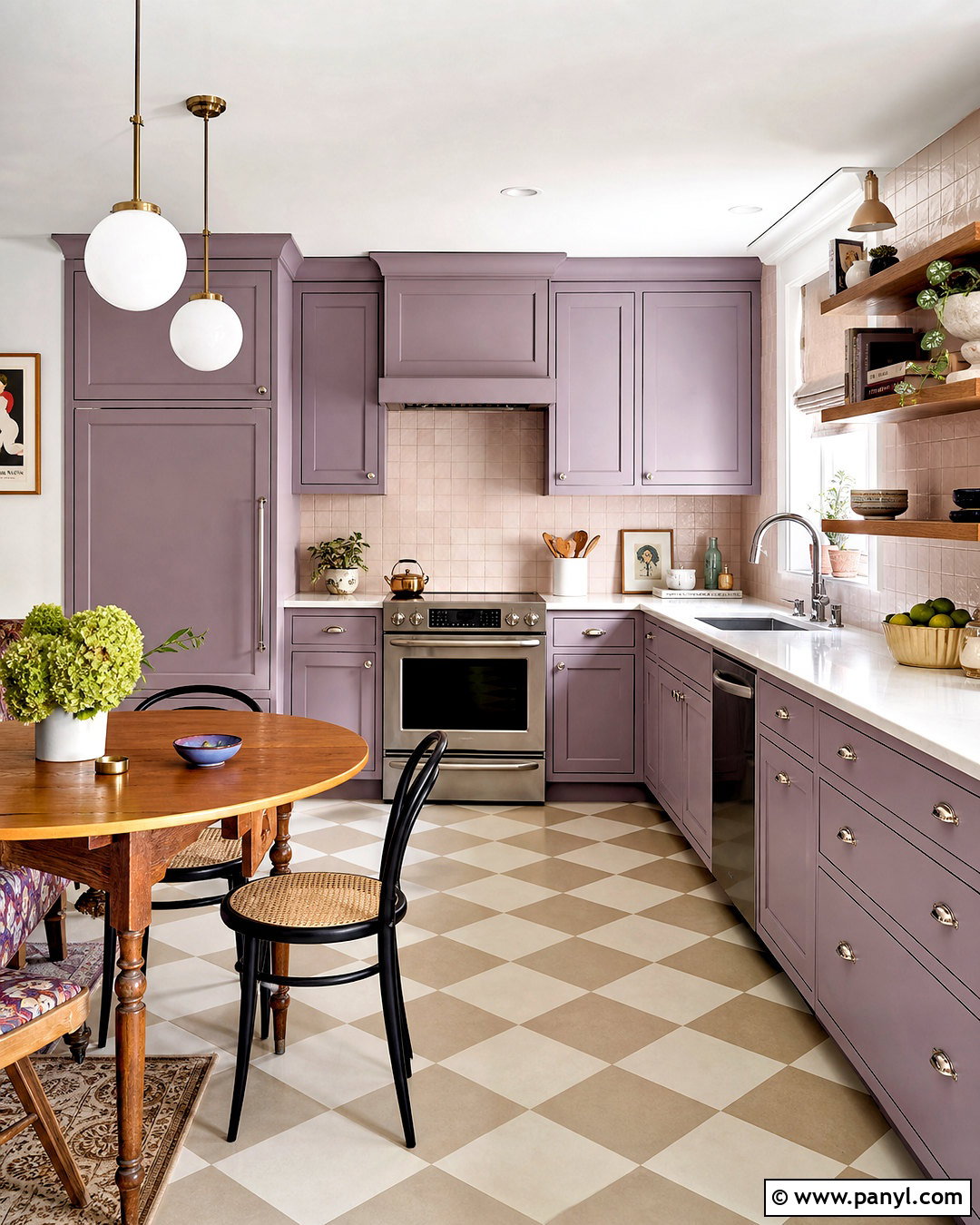
A dusty purple kitchen wall can add character while allowing cabinetry and work surfaces to remain timeless. Paint the walls in muted mauve and pair them with warm white shaker cabinets. Use pale quartz counters and a simple off-white tile backsplash to keep the cooking area bright and easy to clean. A medium oak island introduces natural warmth, while brushed brass pulls connect the cabinetry to two understated pendant lights. Choose wood or wood-look flooring and place a washable beige runner near the sink. Display only a few useful items, such as cutting boards, ceramic canisters, and a small plant. The restrained materials allow the purple wall color to feel integrated rather than decorative. This complete scheme works especially well in kitchens that receive soft natural light.
35. Purple Breakfast Nook Wall
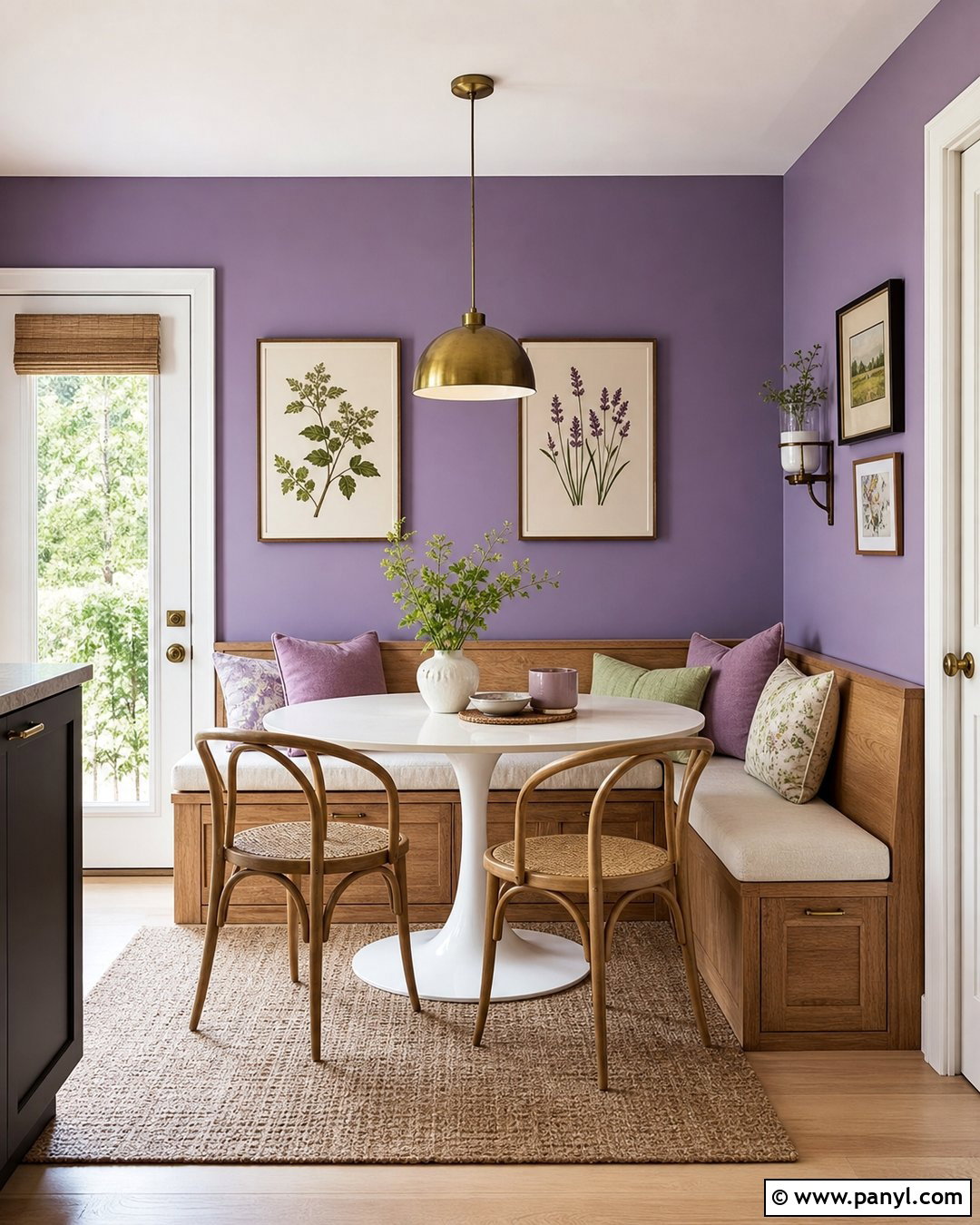
A lavender breakfast nook can create a cheerful dining corner within a neutral kitchen. Paint the nook walls in a soft purple with warm pink undertones, clearly defining the space from surrounding white cabinetry. Install an L-shaped oak bench with hidden storage and add cream seat cushions for comfort. Place a small round white pedestal table in the center, paired with two light wood chairs. Pillows in lavender, sage, and muted coral make the seating feel layered but not crowded. Hang a simple brass pendant above the table and use a washable woven rug beneath it. A framed botanical print and small ceramic vase complete the wall. The finished nook feels bright, useful, and visually connected to the kitchen while maintaining its own colorful identity.
36. Purple Nursery Wall
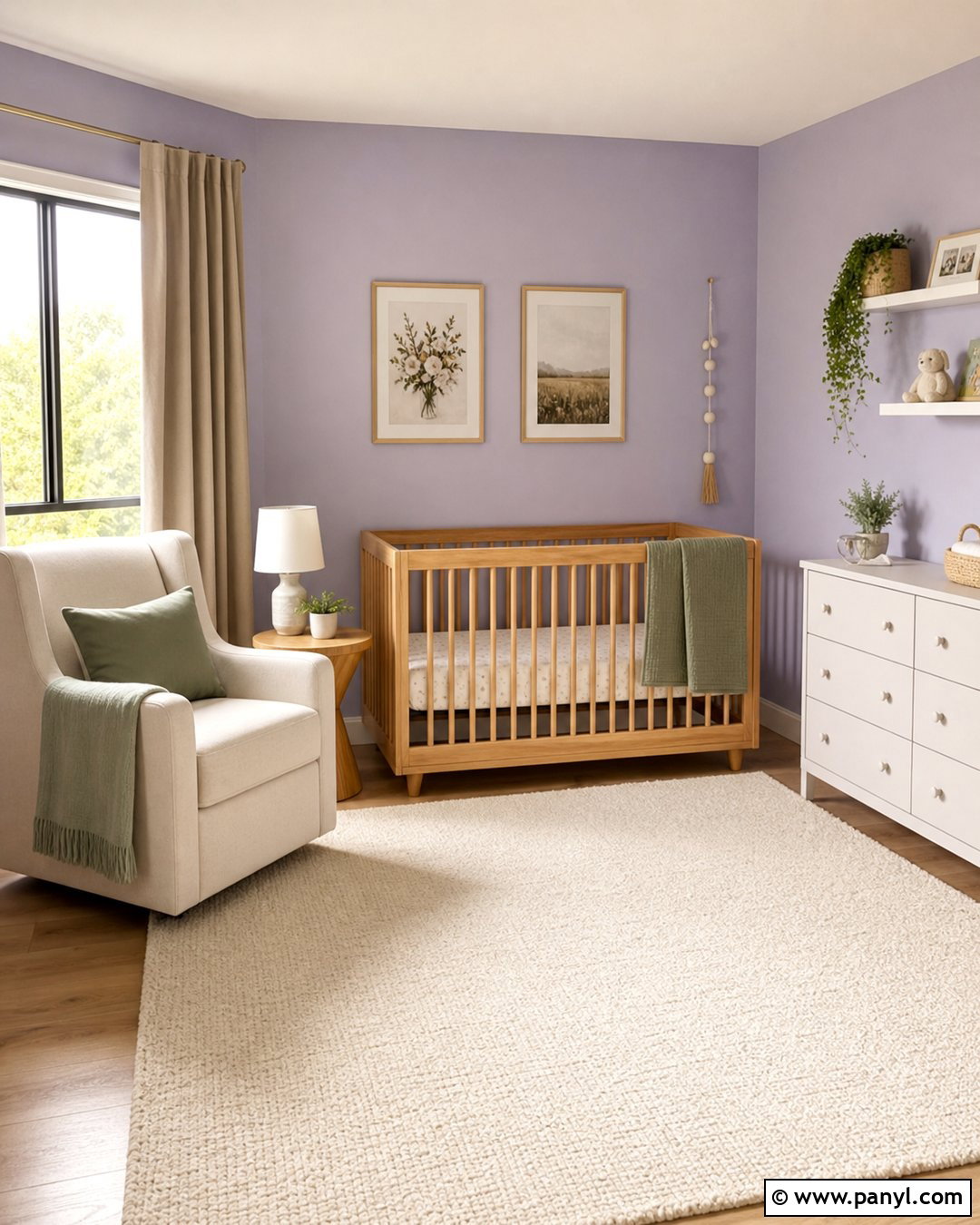
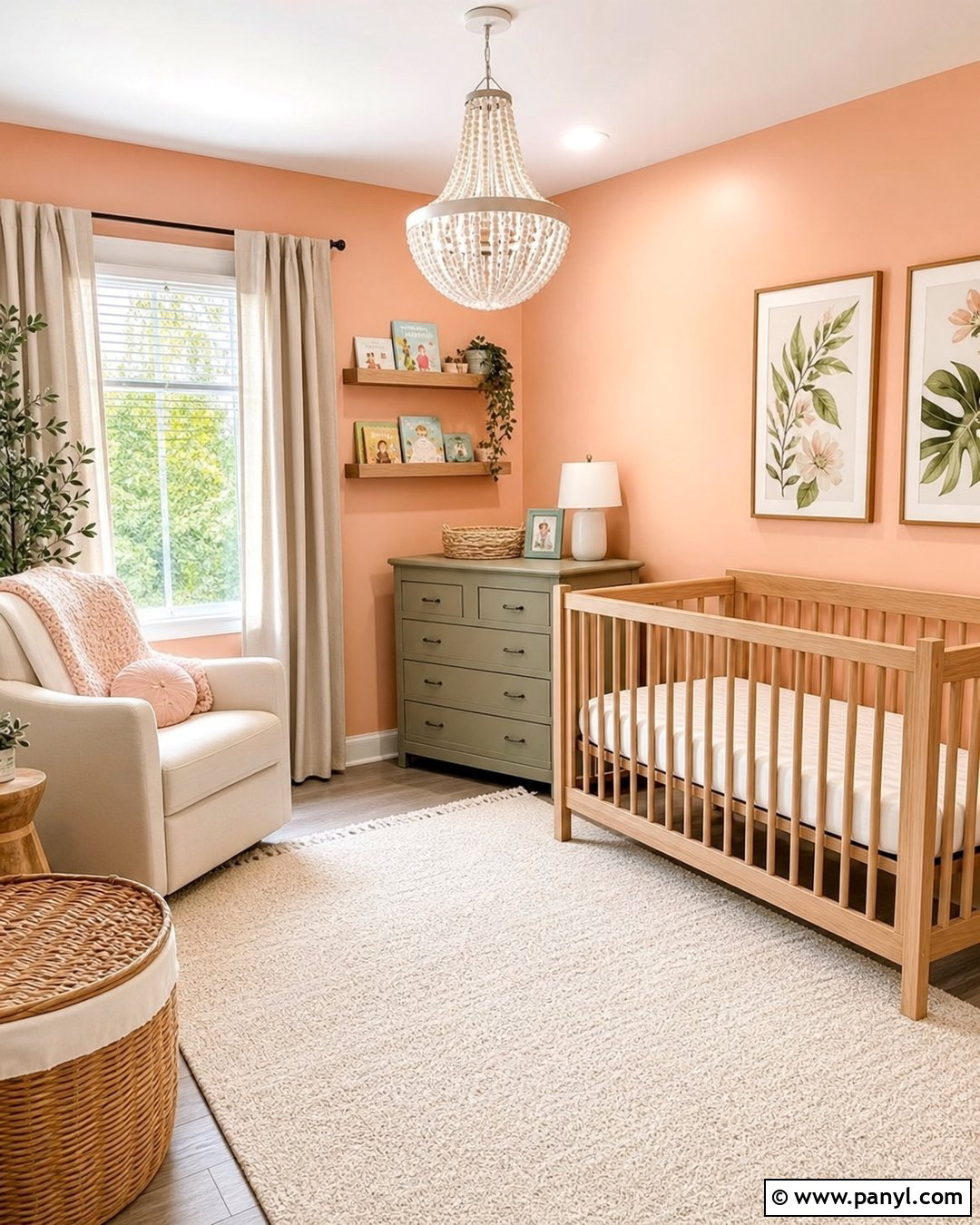
A pale lavender nursery can feel calm and flexible when paired with simple natural materials. Paint all four walls in a soft, slightly gray purple and keep the ceiling warm white. Position a natural oak crib against the longest solid wall, away from windows and hanging objects. Add a cream upholstered glider with a small oak side table in one corner. A washable ivory rug softens the floor and provides a comfortable play surface. Use a low white dresser for storage and keep wall decor lightweight, minimal, and securely installed. Curtains in warm beige help control daylight without adding another strong color. A few sage green and dusty mauve textiles provide gentle contrast. The complete room feels restful, organized, and easy to adapt as the child grows.
37. Purple Kids Bedroom Wall
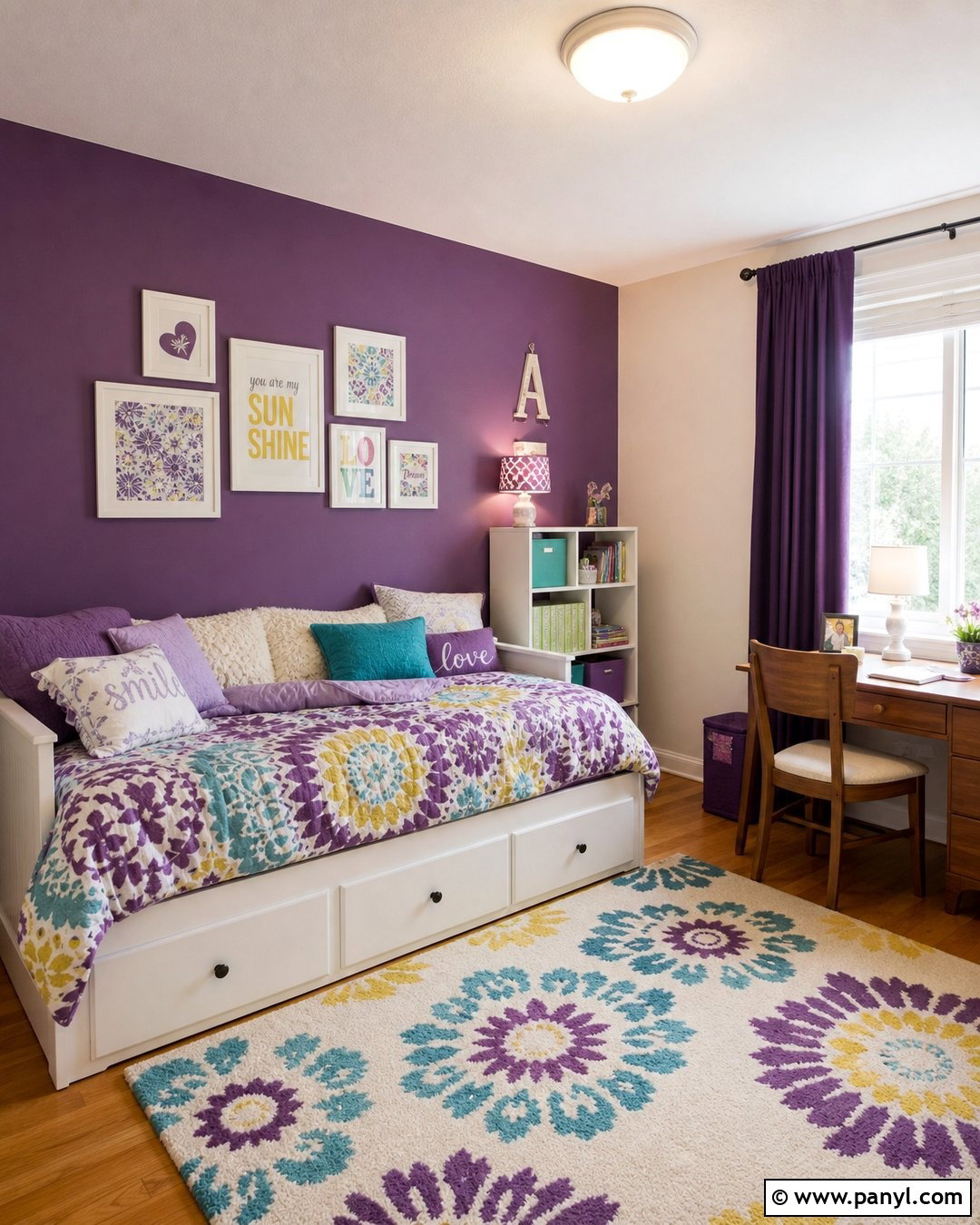
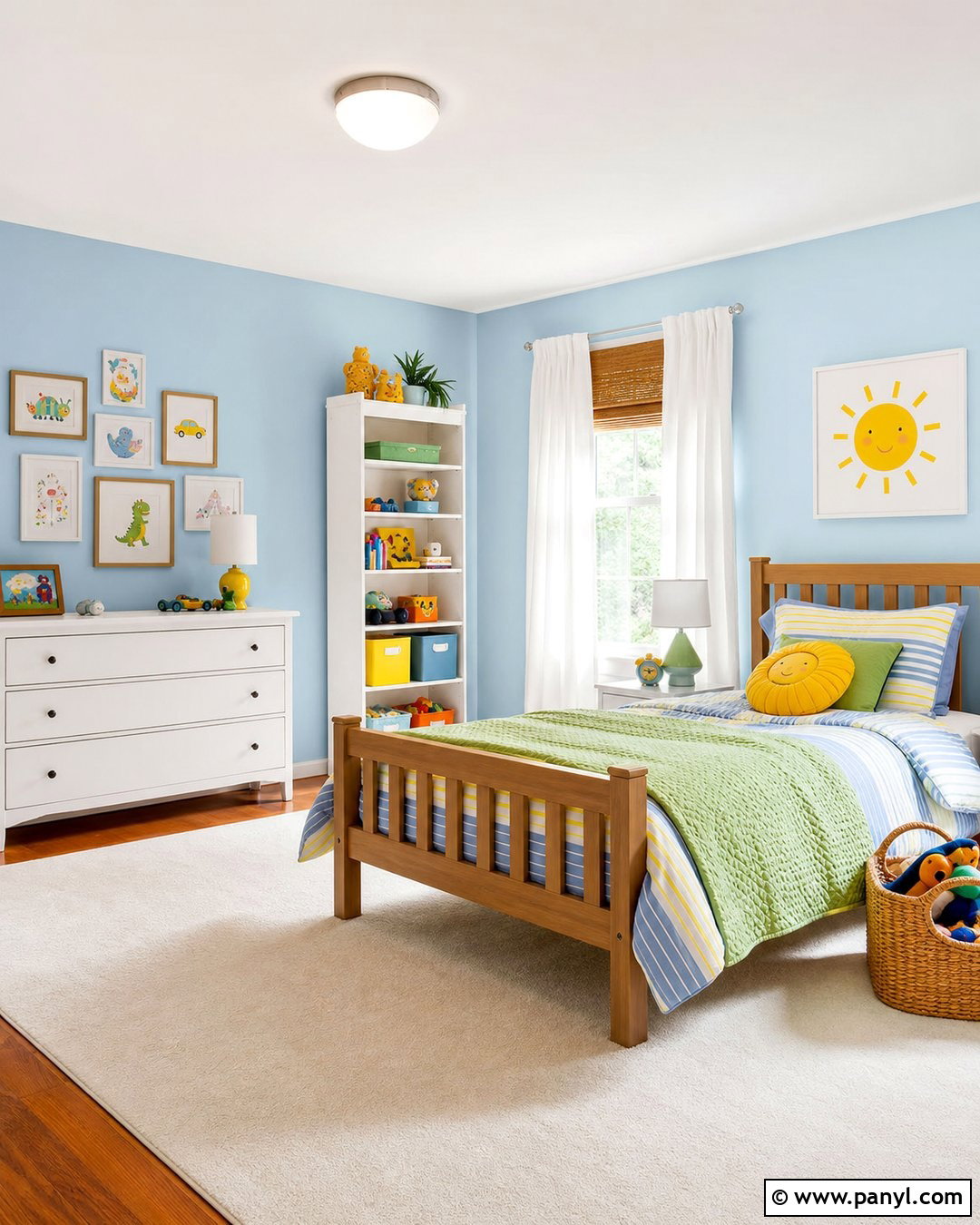
A playful purple kids bedroom can remain organized and adaptable with a clear furniture plan. Paint the wall behind the bed in bright but balanced violet, leaving the other walls warm white. Choose a simple white bed with built-in drawers and dress it in bedding that combines purple, teal, yellow, and cream. Place a small oak desk near the window and install low white shelving for books and toys. A washable rug with a simple multicolor pattern defines the open play area. Use solid-color curtains and matching storage bins to prevent visual clutter. Add framed illustrations in a tidy grid above the desk rather than spreading decorations across every wall. The result is colorful and energetic, but the neutral furniture and practical storage keep the room comfortable for sleeping, studying, and play.
38. Purple Teen Bedroom Wall
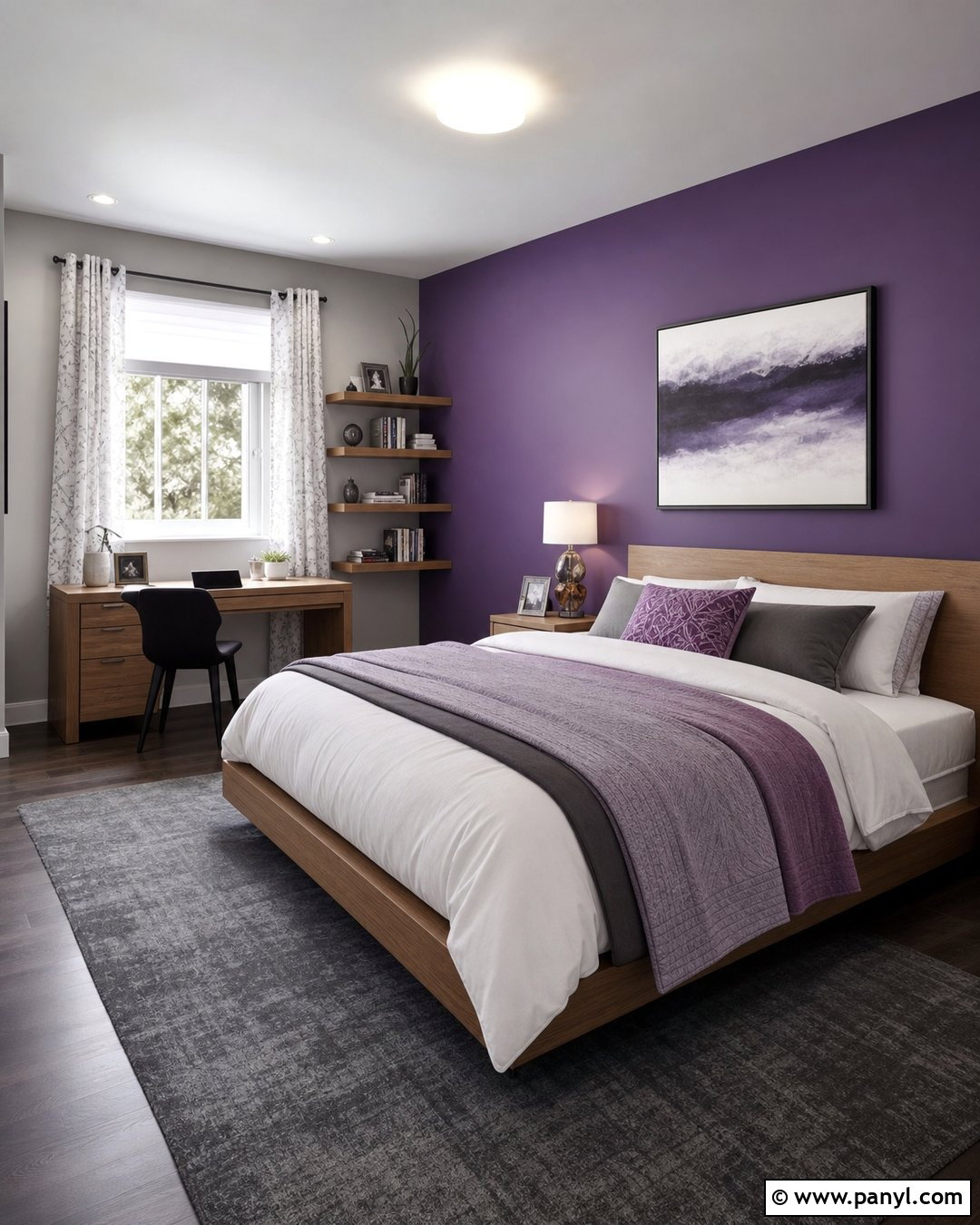
A teen bedroom can use purple in a more mature way by combining it with charcoal, oak, and clean-lined furniture. Paint the main wall in dark violet and keep the other walls a pale warm gray. Place a low oak bed against the purple surface and layer it with white, charcoal, and muted lavender bedding. Add a compact oak desk with a black chair near the window, along with floating shelves for books and personal objects. A gray rug and black metal lamps create a modern foundation. Instead of themed decorations, use a large abstract print and a corkboard for changing displays. Full-length gray curtains complete the practical setup. This balanced room gives purple a strong presence while leaving enough neutral space for tastes and accessories to change over time.
39. Purple Small Bedroom Wall
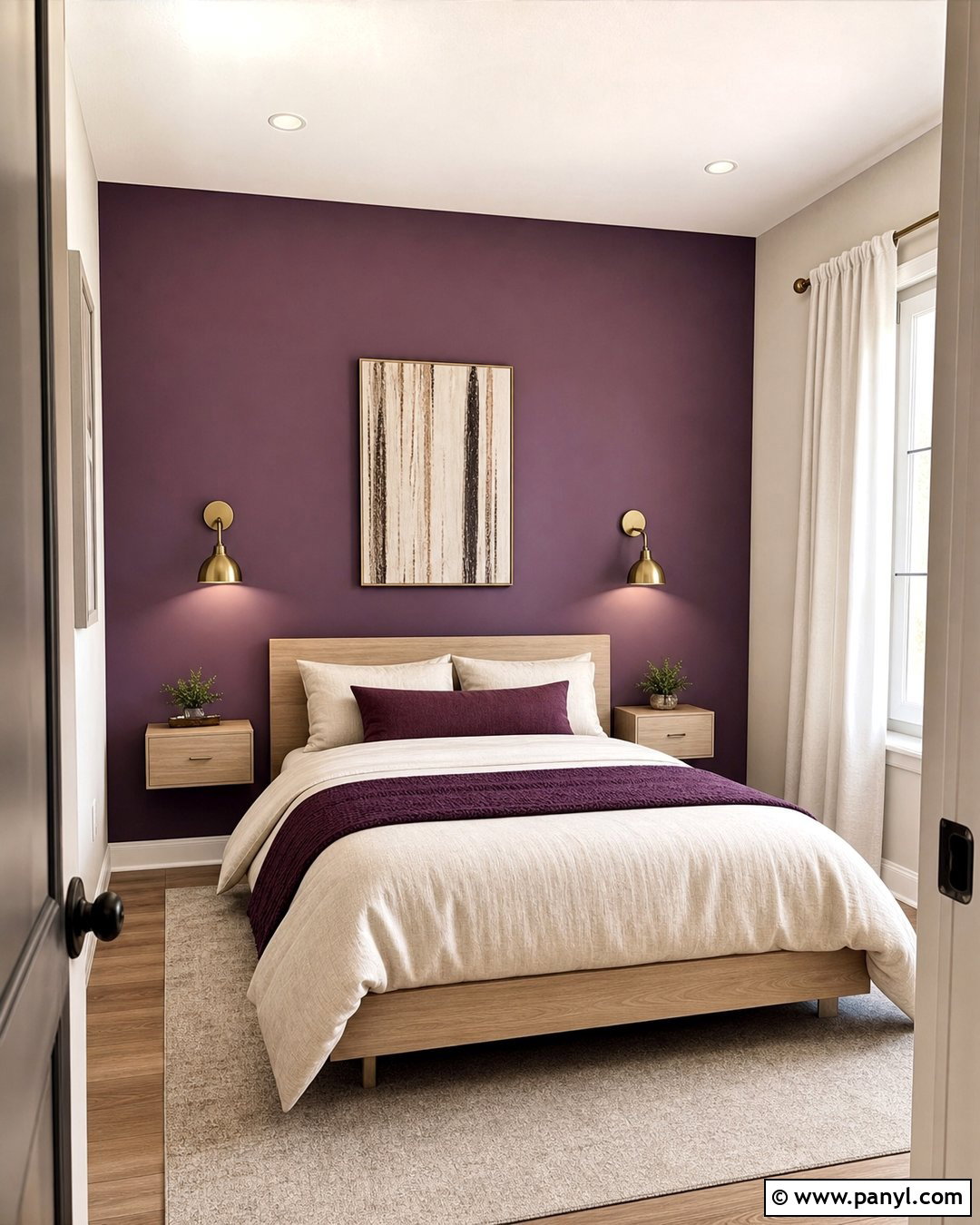
A small bedroom can support deep purple if the color is focused and the furniture remains light. Paint the wall behind the bed in muted plum, then cover the other walls and ceiling in warm white. Choose a compact white oak bed with slim legs so more floor remains visible. Use crisp ivory bedding, one plum throw, and minimal cushions. Floating nightstands and wall-mounted brass sconces free up valuable space on both sides of the bed. Place a light beige rug beneath the lower two-thirds of the bed to soften the floor without crowding the room. Hang one vertical artwork over the headboard to emphasize height. Simple white curtains and a mirrored wardrobe door help distribute light, creating a compact bedroom that feels colorful, orderly, and comfortably proportioned.
40. Purple Basement Lounge Wall
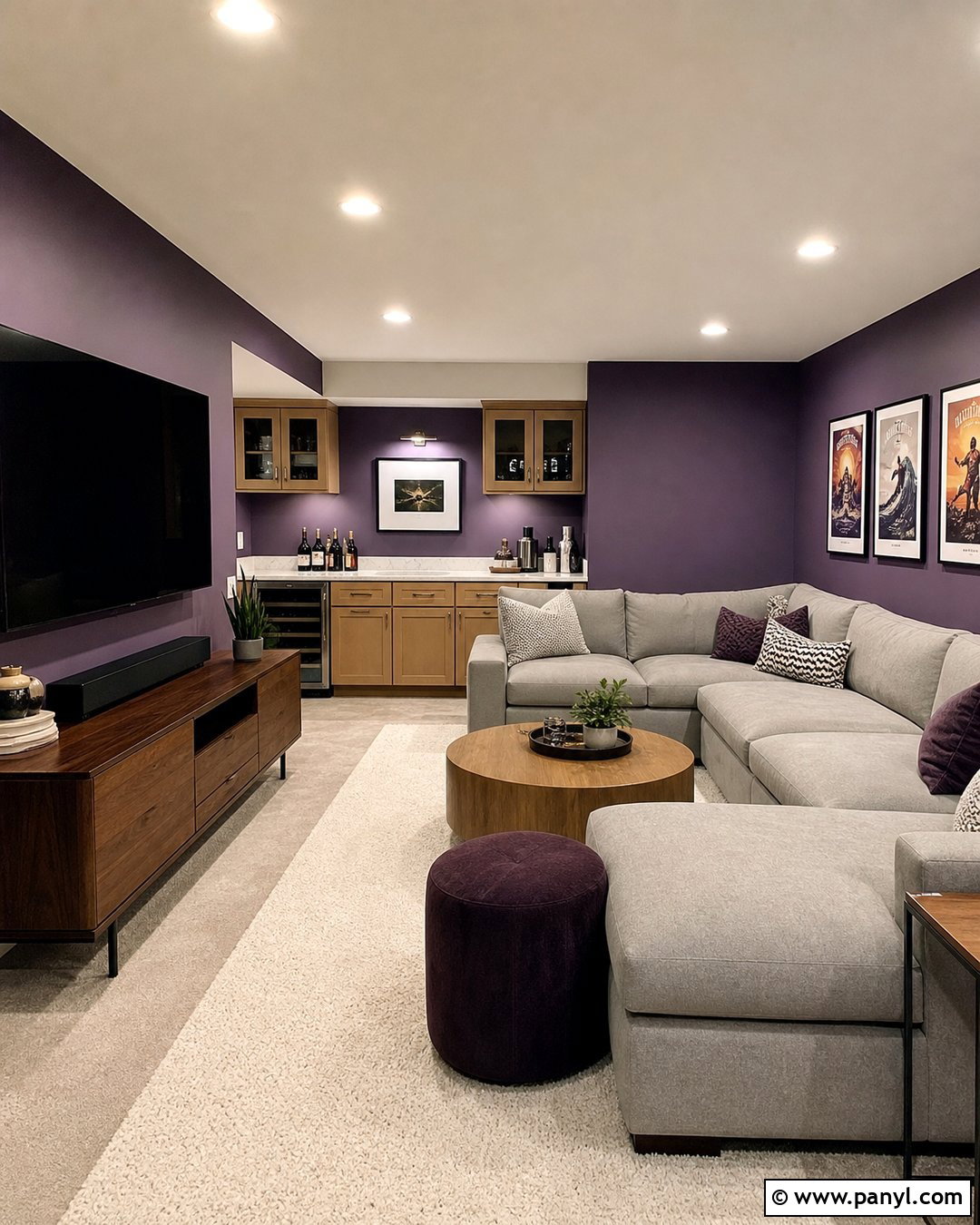
Purple can give a basement lounge warmth and identity when paired with effective lighting and pale furnishings. Paint the main walls in a medium smoky violet rather than an extremely dark shade. Use a large light gray sectional as the anchor, facing a walnut media console and wall-mounted television. Add a cream rug, round oak coffee table, and plum storage ottoman for a layered but practical seating area. Install several dimmable ceiling lights and two floor lamps to prevent shadowy corners. Framed prints with broad white mats help break up the colored walls. Choose light wood shelving and closed cabinets for games, books, and electronics. With balanced artificial lighting, warm wood, soft upholstery, and useful storage, the finished basement feels welcoming rather than enclosed or unfinished.
41. Purple Reading Nook Wall
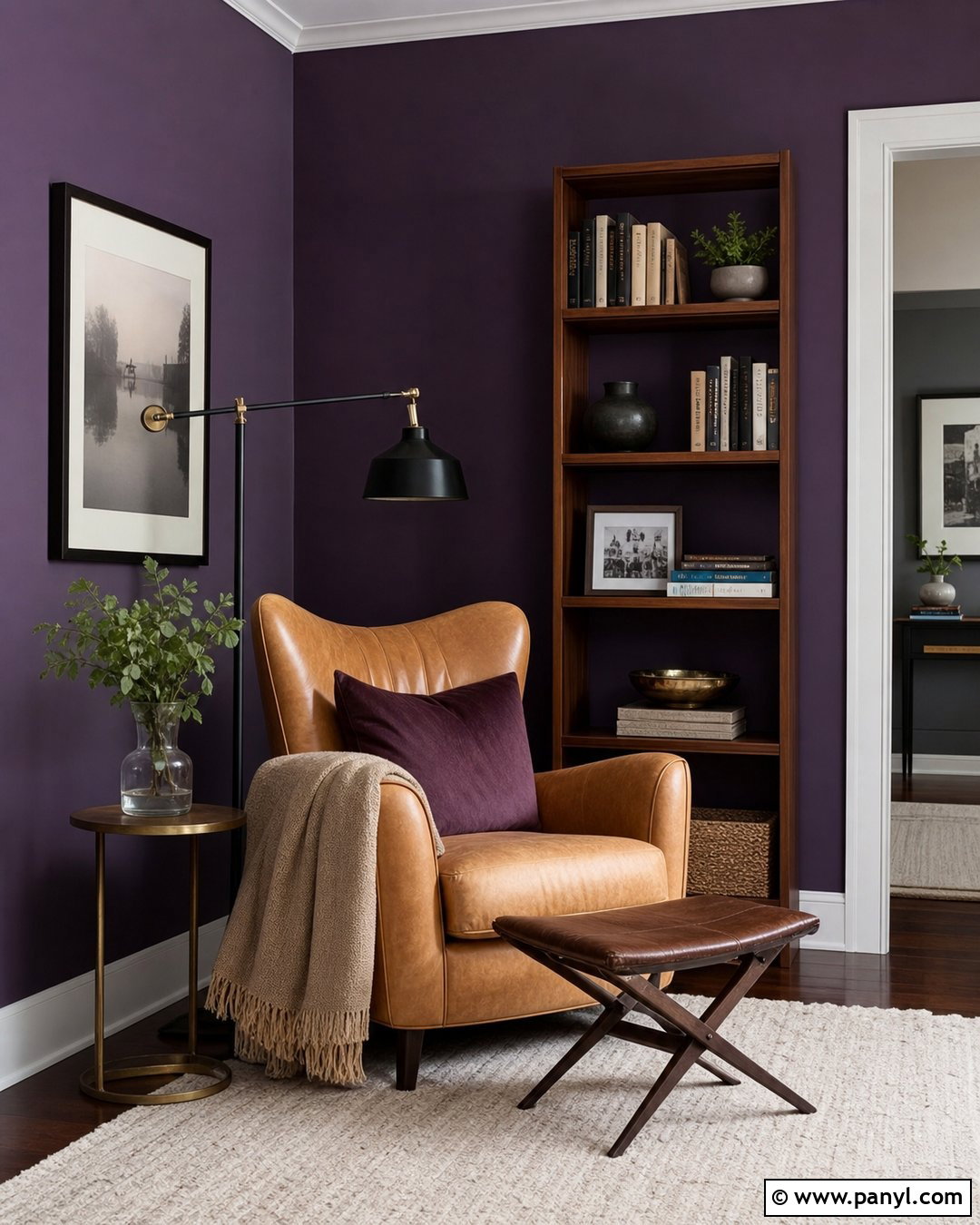
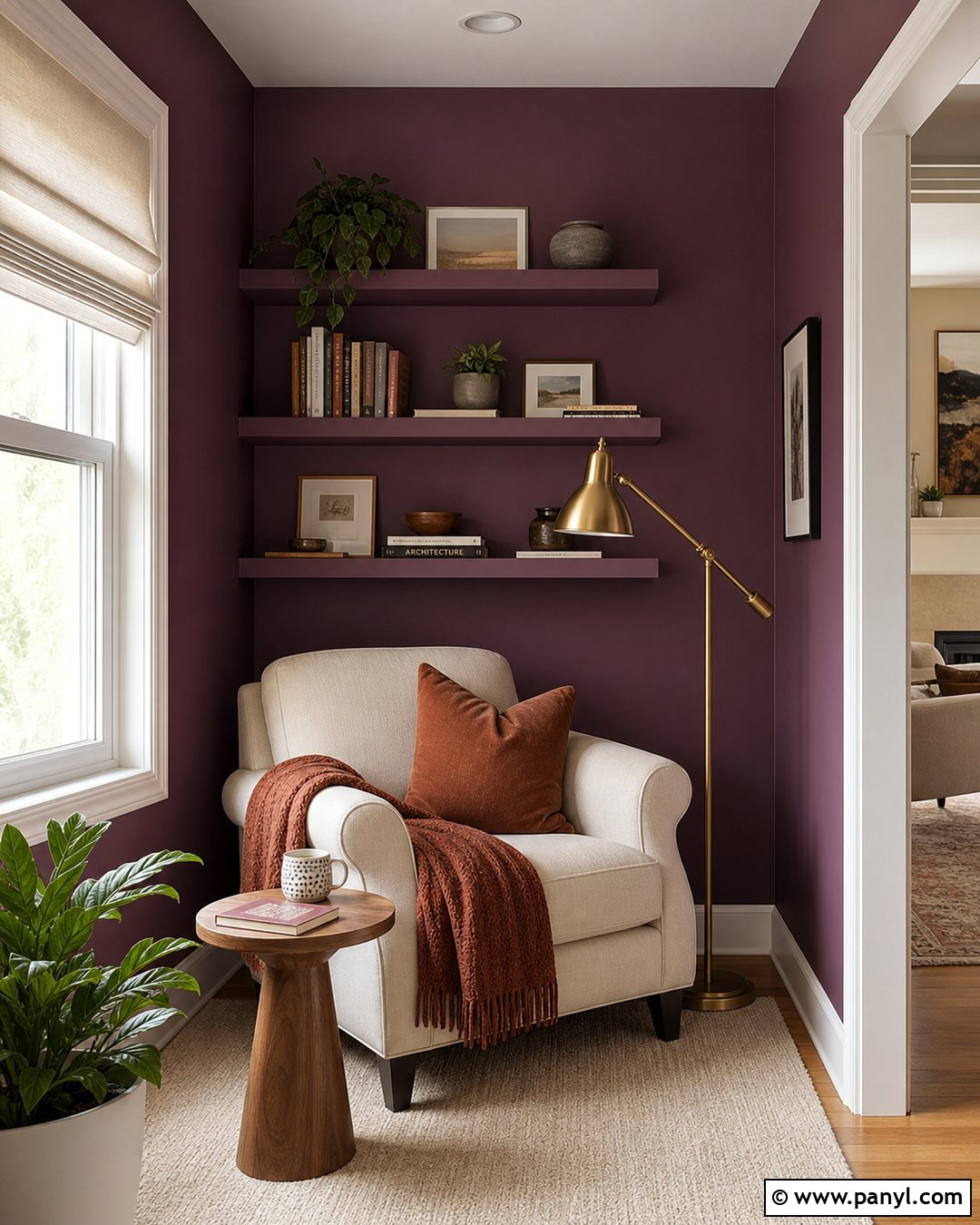
A purple reading nook can turn an unused corner into a purposeful retreat. Paint the alcove or corner walls in rich eggplant purple, clearly separating it from the surrounding cream room. Place a comfortable camel leather chair at a slight angle beside a slim walnut bookcase. Add a small round brass side table and an adjustable black floor lamp for practical reading light. A soft ivory rug defines the nook, while a plum cushion and beige throw make the chair more inviting. Hang one small artwork above the side table, leaving the darker walls mostly open. If space permits, add a narrow upholstered footstool. The warm leather, walnut, brass, and textiles balance the deep purple, creating a compact setup that feels complete rather than like leftover furniture in a corner.
42. Purple Boho Living Room Wall
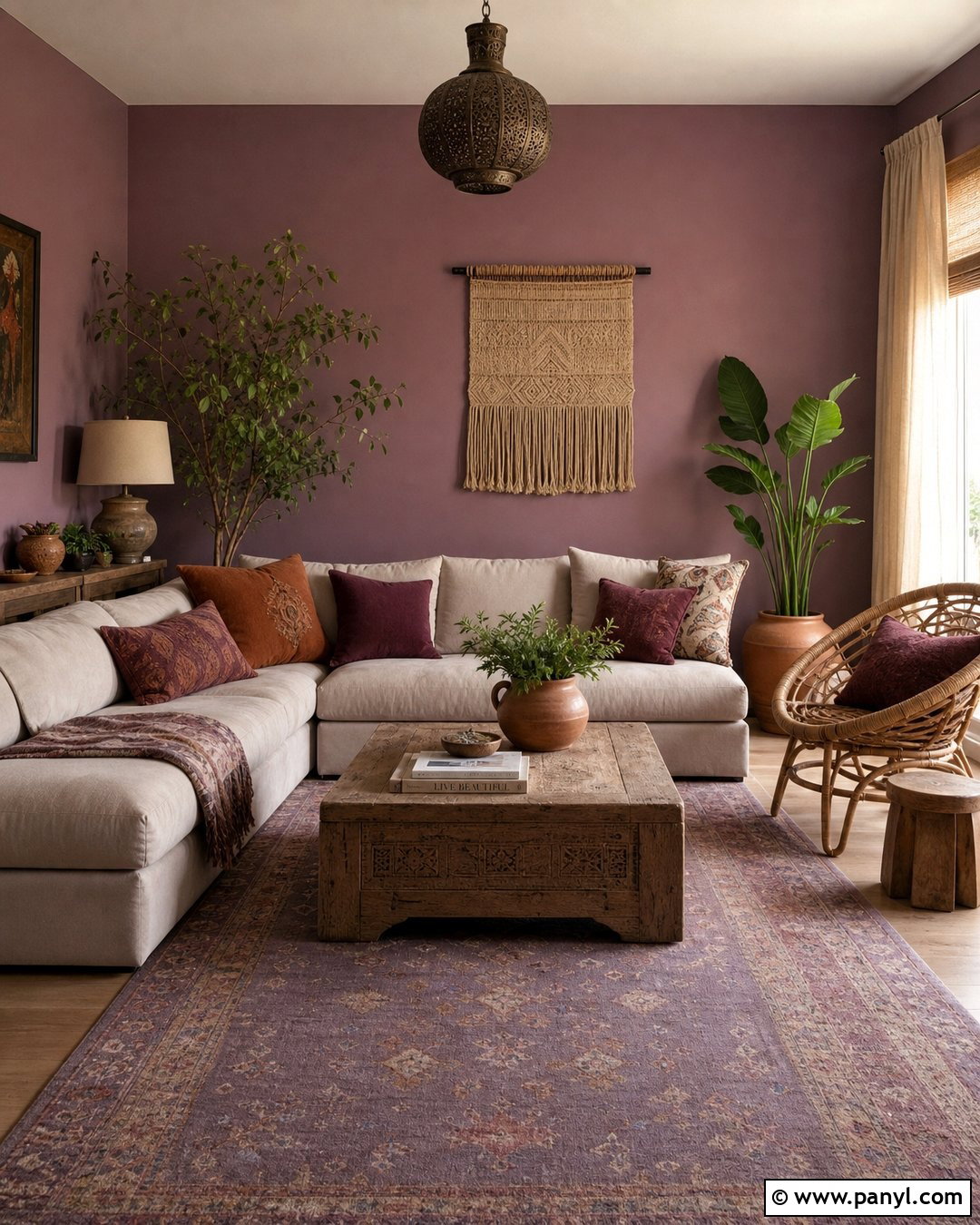
A boho living room can use purple walls without relying on excessive patterns or accessories. Paint the space in dusty mauve, then add a low cream sofa with cushions in plum, rust, olive, and beige. Center a carved wood coffee table on a faded vintage-style rug that repeats the wall color subtly. Use one rattan chair, a woven floor cushion, and linen curtains to introduce natural texture. A large fiber wall hanging or framed textile can decorate the wall above the sofa without creating a crowded gallery. Add plants in terracotta pots and warm the room with brass and ceramic lamps. Keeping the furniture arrangement open and limiting decorative collections allows the layered colors and handmade materials to feel relaxed, personal, and comfortable rather than cluttered.
43. Purple Midcentury Living Room Wall
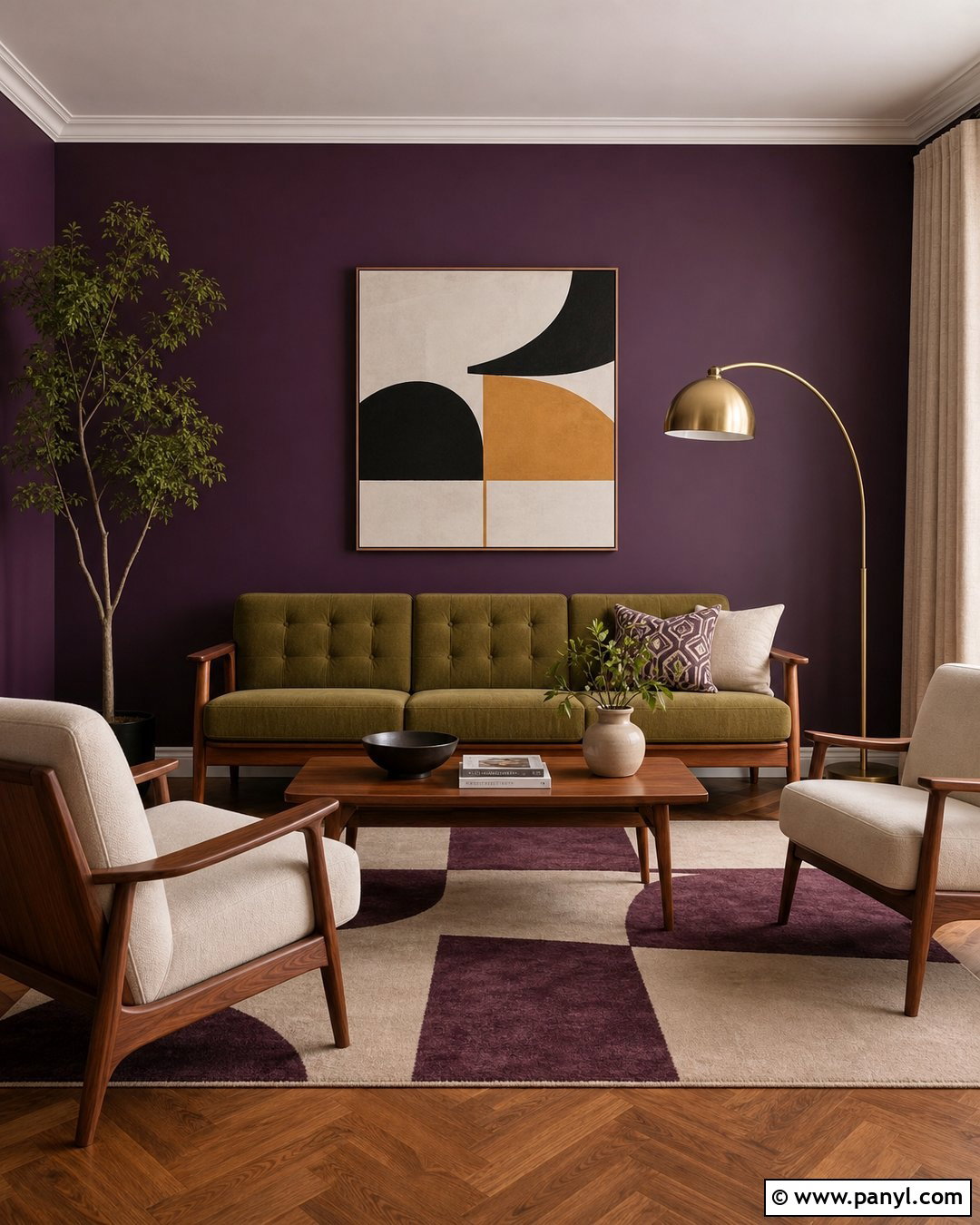
A midcentury-inspired living room gains richness from a warm aubergine wall and streamlined wood furniture. Paint one broad wall in aubergine and use soft beige on the remaining surfaces. Position a low walnut sofa with olive upholstery against the purple wall, then add a pair of cream lounge chairs with tapered legs. A rectangular walnut coffee table and geometric rug in beige, rust, and plum establish the period-inspired foundation. Choose an arc floor lamp with a brass finish and hang one large abstract print above the sofa. Keep window treatments simple with full-length oatmeal curtains. A low record cabinet or sideboard can provide concealed storage along an adjacent wall. The clean shapes, limited ornament, warm wood, and deep purple color create a cohesive retro look suited to a modern home.
44. Purple Farmhouse Dining Room Wall
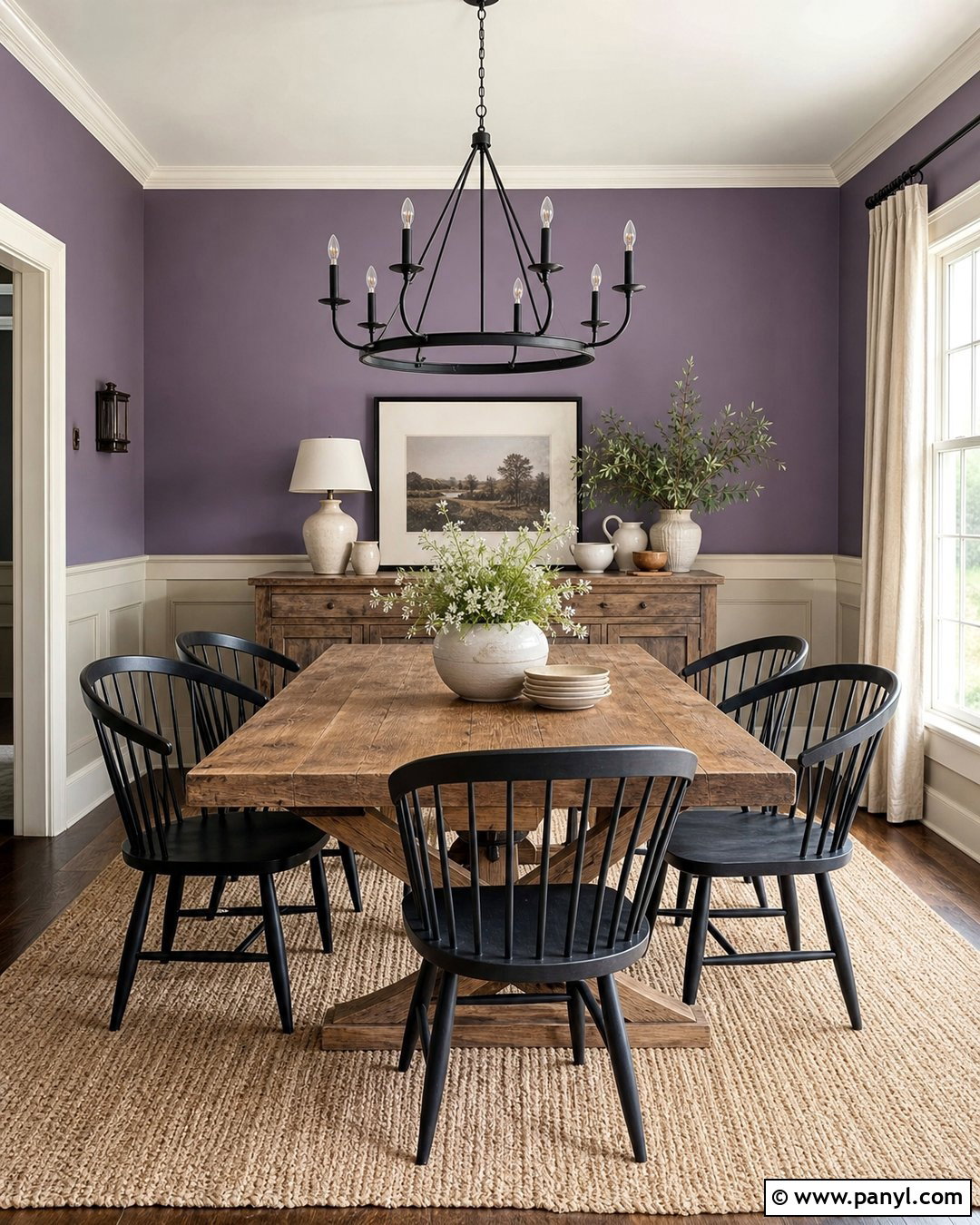
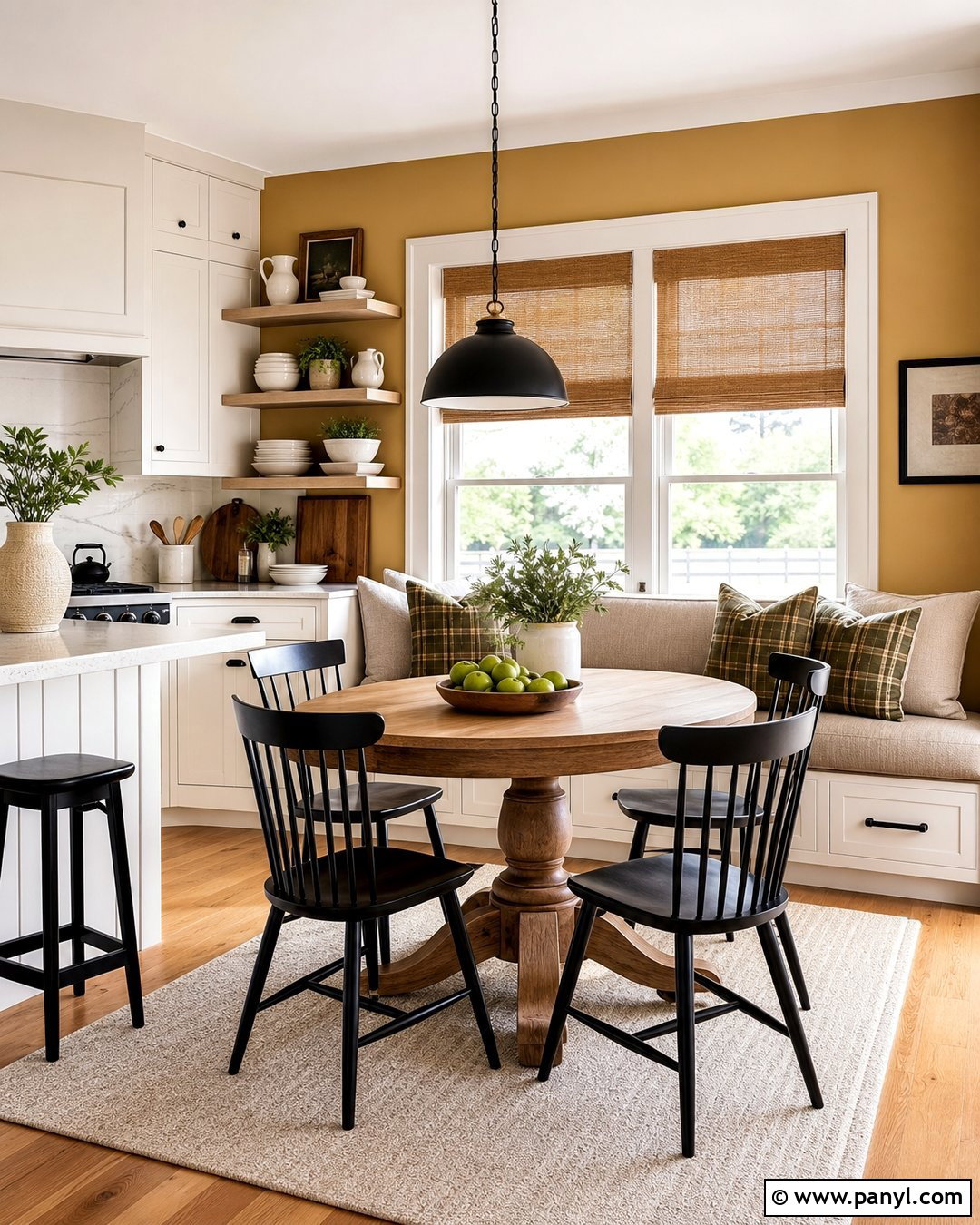
Muted purple can work in a farmhouse dining room when it is treated as an earthy color rather than a bright accent. Paint the walls in dusty lavender with gray undertones and use creamy white on simple board-and-batten trim. Center a solid oak trestle table in the room and surround it with spindle-back chairs in a soft black finish. A woven natural rug and linen seat cushions keep the space casual and comfortable. Hang a straightforward black metal chandelier above the table. Use a weathered wood sideboard for dishes and storage, styling it with cream ceramics and leafy branches. Oatmeal curtains soften the windows without hiding the wall color. The completed room feels relaxed and familiar, with purple adding quiet individuality to traditional materials and practical furniture.
45. Purple Jewel Box Living Room Wall
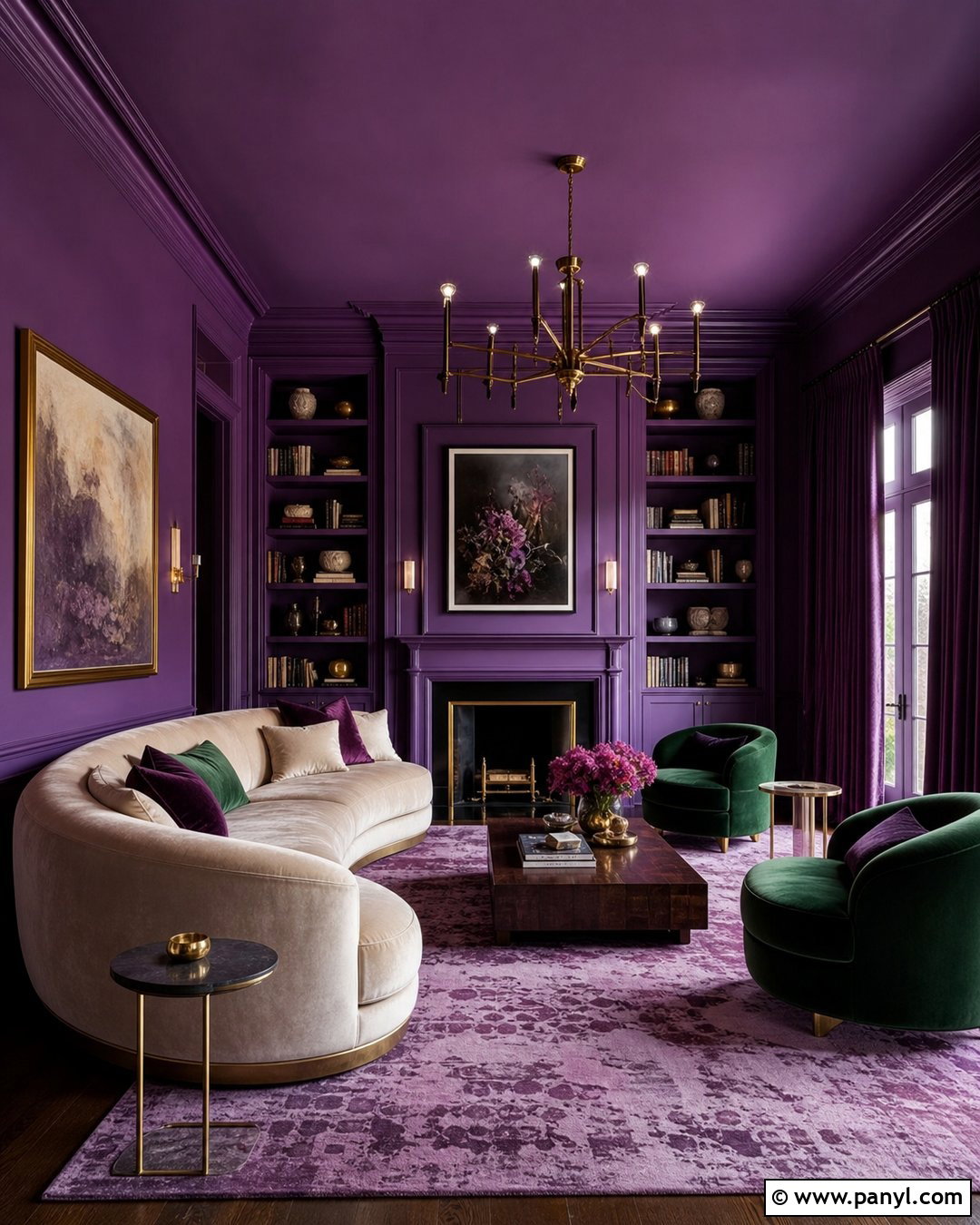
For a luxurious final look, cover a compact sitting room in saturated amethyst purple. Paint the walls, trim, built-in bookcases, and ceiling in the same rich tone, using a slight sheen on the woodwork for definition. Place a curved cream velvet sofa in the center, facing two emerald green lounge chairs. A dark walnut coffee table and patterned rug in amethyst, green, gold, and ivory ground the seating group. Add aged brass picture lights, small side tables, and a sculptural ceiling fixture. Fill the shelves selectively with books, pale ceramics, and framed art, leaving visible purple space between objects. Full-length plum curtains complete the enveloping effect. The result is bold and polished, yet the light upholstery and carefully controlled arrangement keep the room welcoming.
Conclusion:
The most successful Purple Wall Ideas connect color with the complete room rather than treating paint as an afterthought. Start by considering natural light, room size, existing flooring, and the furniture you plan to keep. Soft lavender and lilac help create airy spaces, while plum, aubergine, and blackberry produce a more intimate effect. Cream, beige, oak, and walnut are dependable balancing elements, but green, blue, blush, and burnt orange can add more personality. You can also introduce depth through paneling, wallpaper, limewash, plaster, or two-tone treatments. Test your chosen purple in several areas before committing, then repeat it sparingly through textiles or artwork for a finished, coordinated design.

Related Ideas and Inspiration:
Leave a Reply