
Color can completely reshape how a room feels, from calm and airy to bold and dramatic. The best color wall ideas go beyond choosing a pretty paint shade. They consider natural light, room size, flooring, furniture, trim, and decorative accents as one complete scheme. A deep color can make a large room feel intimate, while a pale hue may help a compact space appear more open. You can also use paneling, two-tone treatments, painted ceilings, and tonal trim to create extra depth without adding clutter. Always test samples on multiple walls and observe them throughout the day before committing. Whether you prefer earthy neutrals, refreshing greens, or expressive jewel tones, these practical color wall ideas offer a finished look for every room.

1. Sage Green Living Room Wall
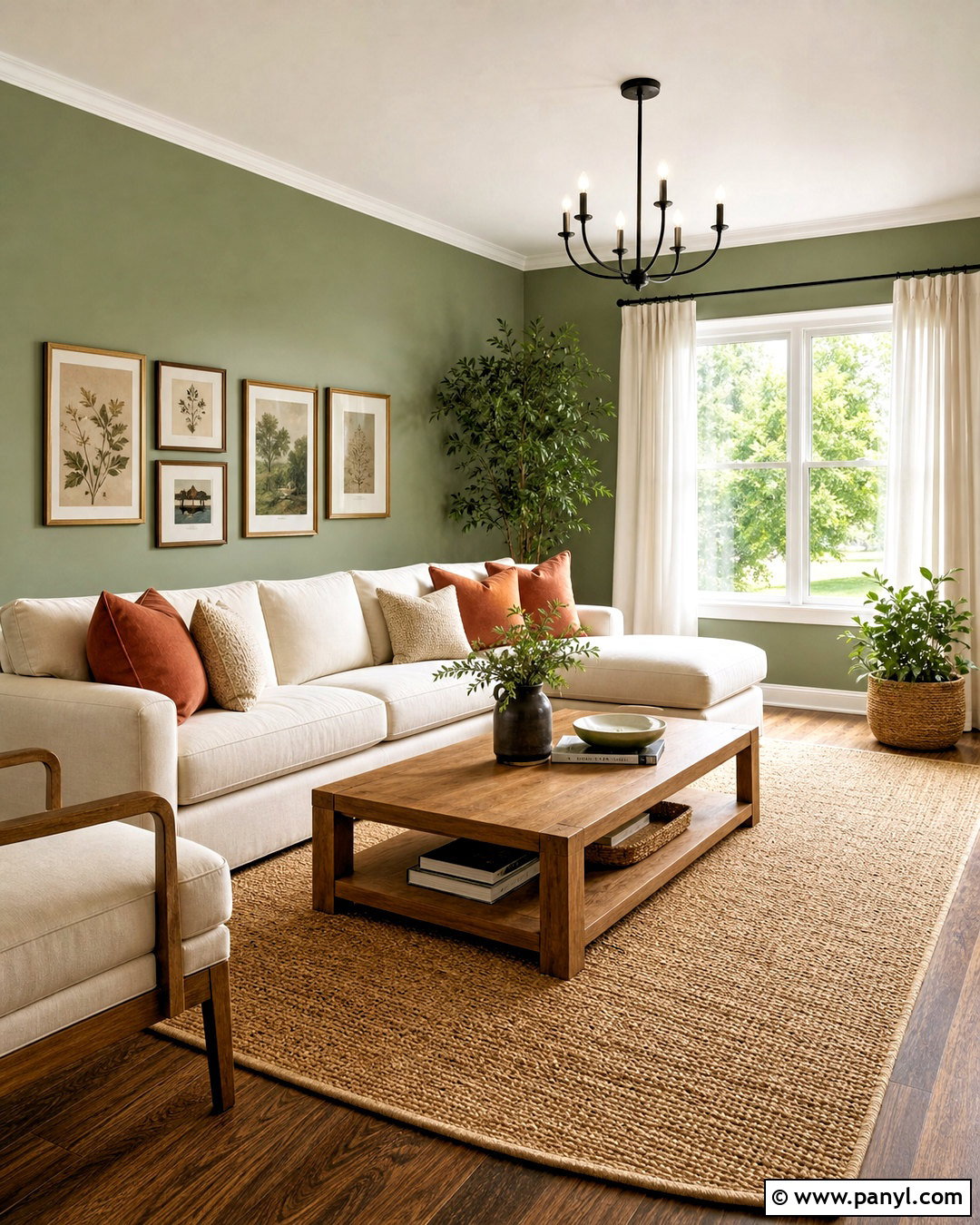
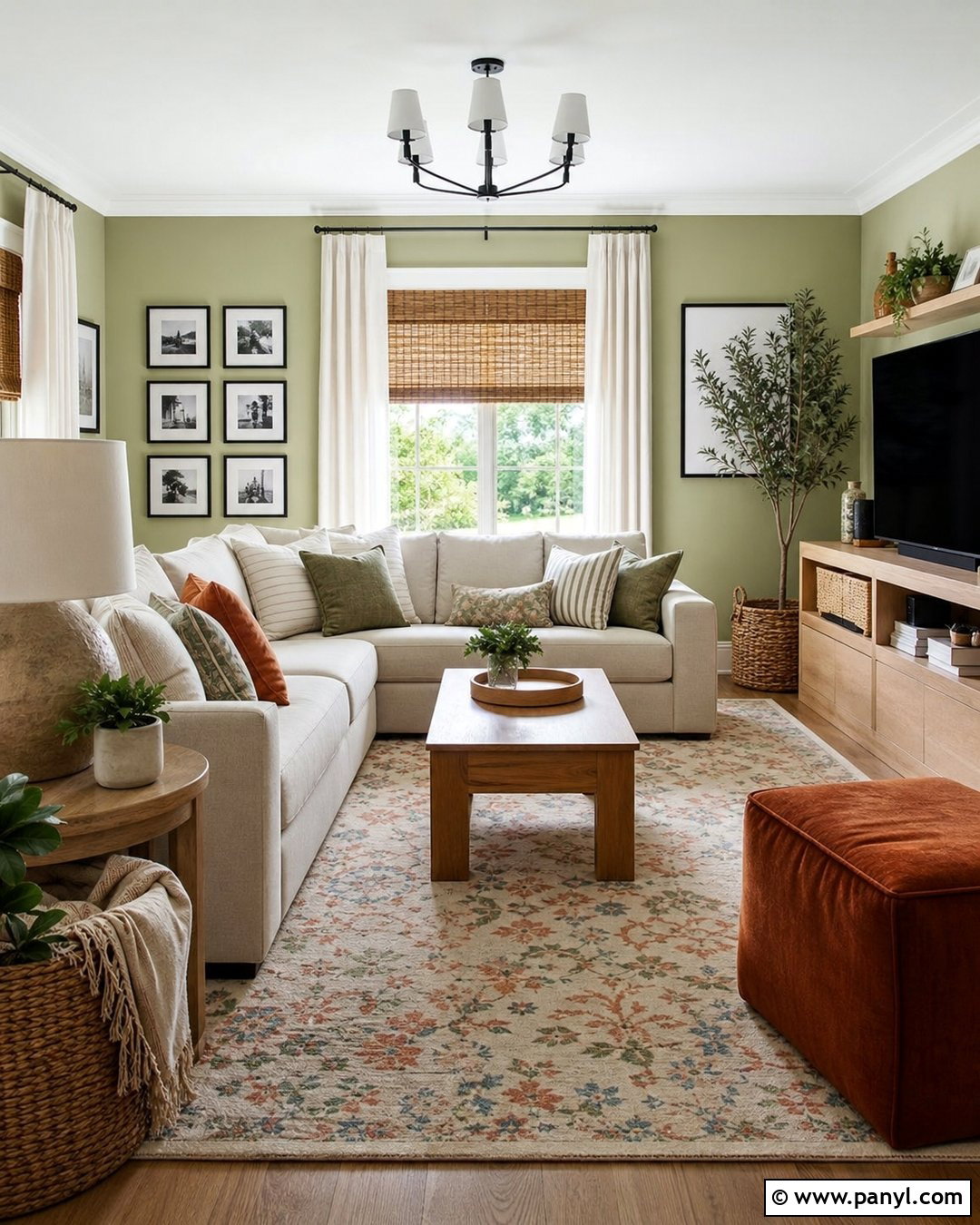
Soft sage green creates a relaxed living room that feels colorful without becoming overwhelming. Paint the main wall behind the sofa sage, then keep the remaining walls warm white for an open, balanced effect. Choose a cream linen sofa, medium-tone oak coffee table, and woven area rug to reinforce the natural palette. Black metal lighting and thin black picture frames provide definition. Add pillows in muted rust, ivory, and deeper green so the accent wall connects with the furniture. A few leafy plants will strengthen the organic character without making the room feel themed. This wall color works especially well in spaces with warm wood floors and plenty of daylight, creating an inviting look that remains easy to update.
2. Navy Blue Bedroom Wall
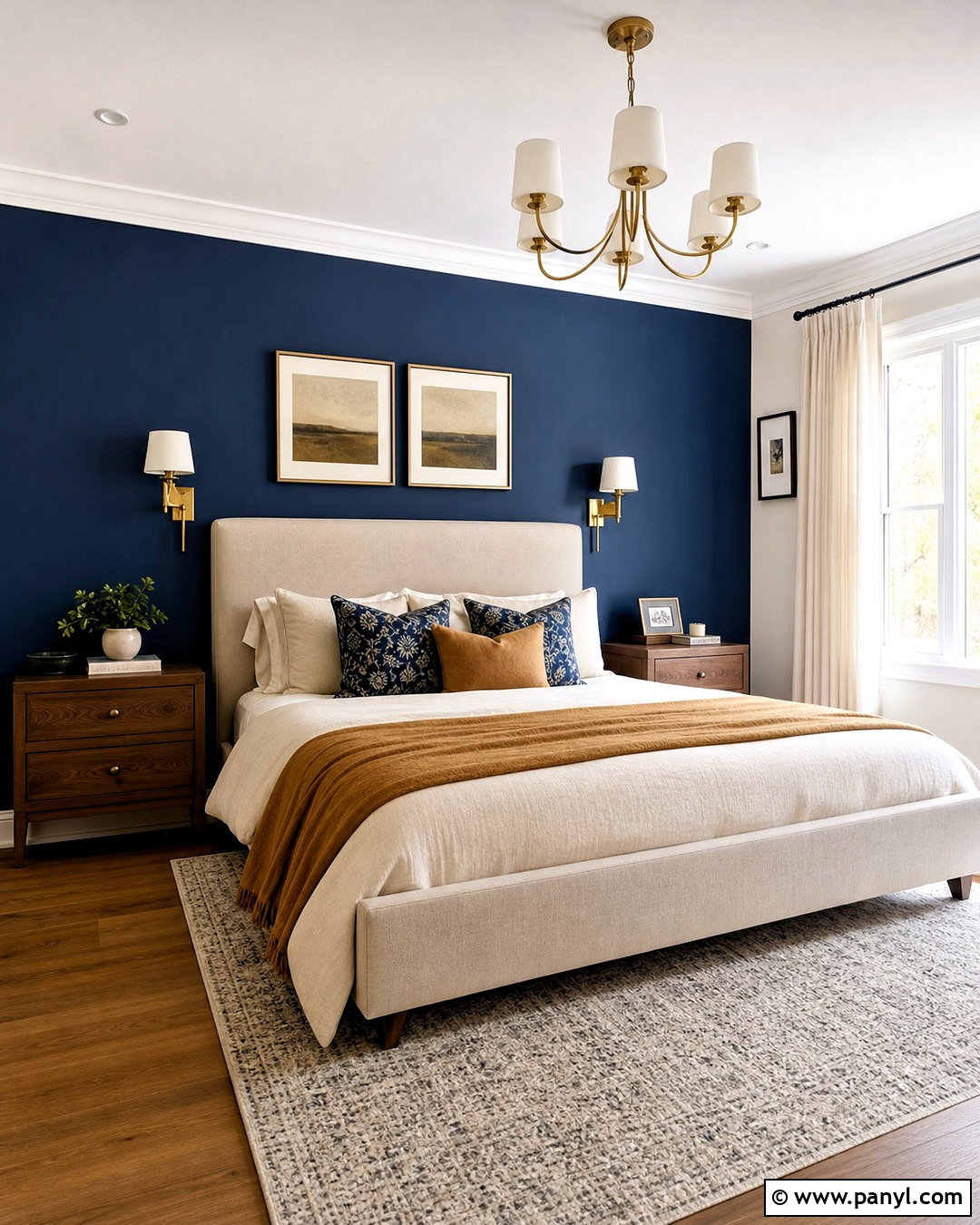
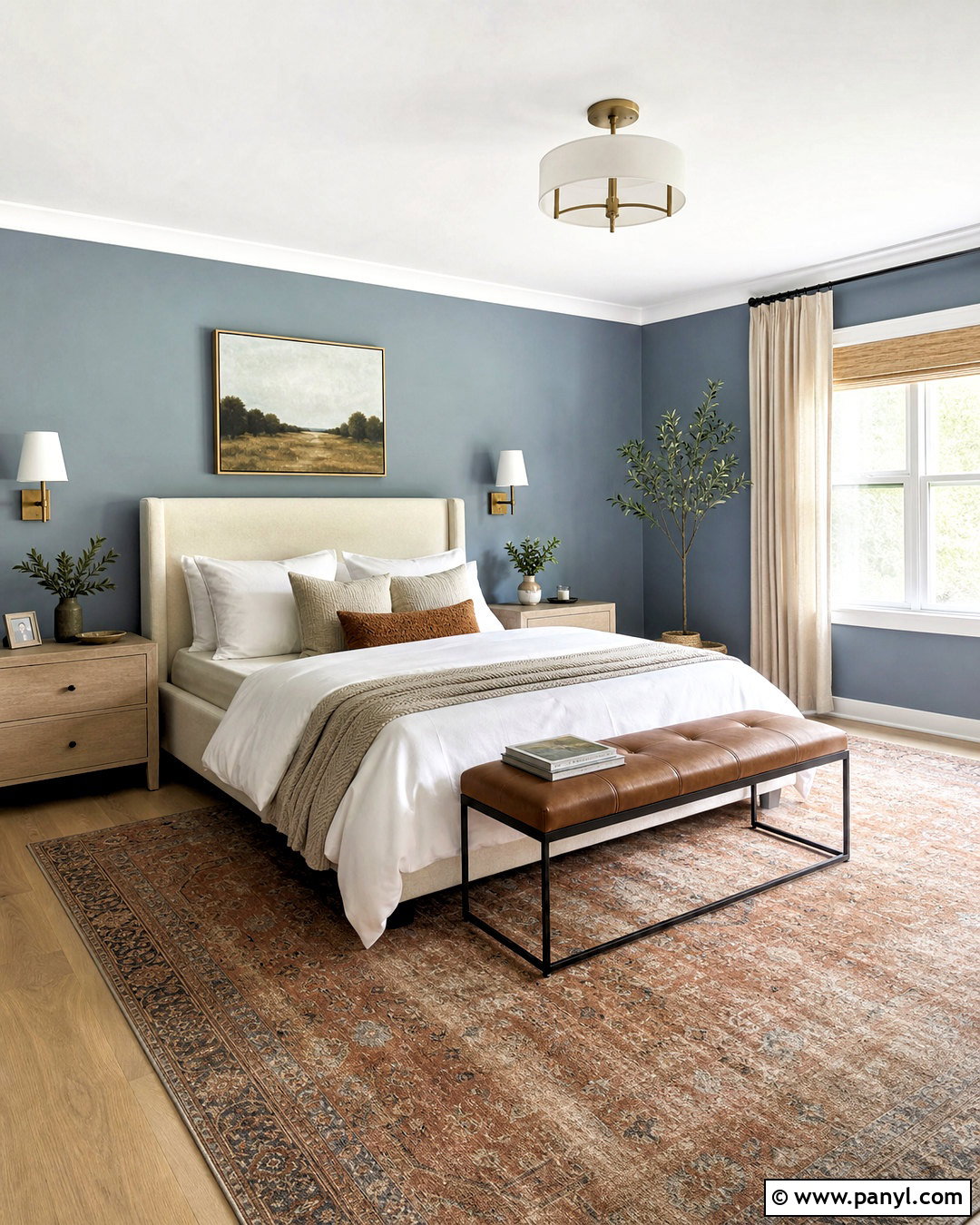
A navy blue wall can give a bedroom a restful, tailored atmosphere when it is balanced with lighter materials. Use the dark blue behind a beige upholstered bed to establish a strong focal point. Paint the surrounding walls soft ivory and repeat that shade through the bedding, curtains, and ceiling. Walnut nightstands and brushed brass sconces warm the cool navy background. Layer white sheets with a camel throw and blue patterned pillows for a connected color story. Keep large furniture simple so the wall remains the strongest feature. In a smaller bedroom, use mirrors or light-colored artwork to prevent the dark surface from feeling heavy. The finished room should feel cozy, polished, and comfortable rather than overly formal.
3. Terracotta Dining Room Wall
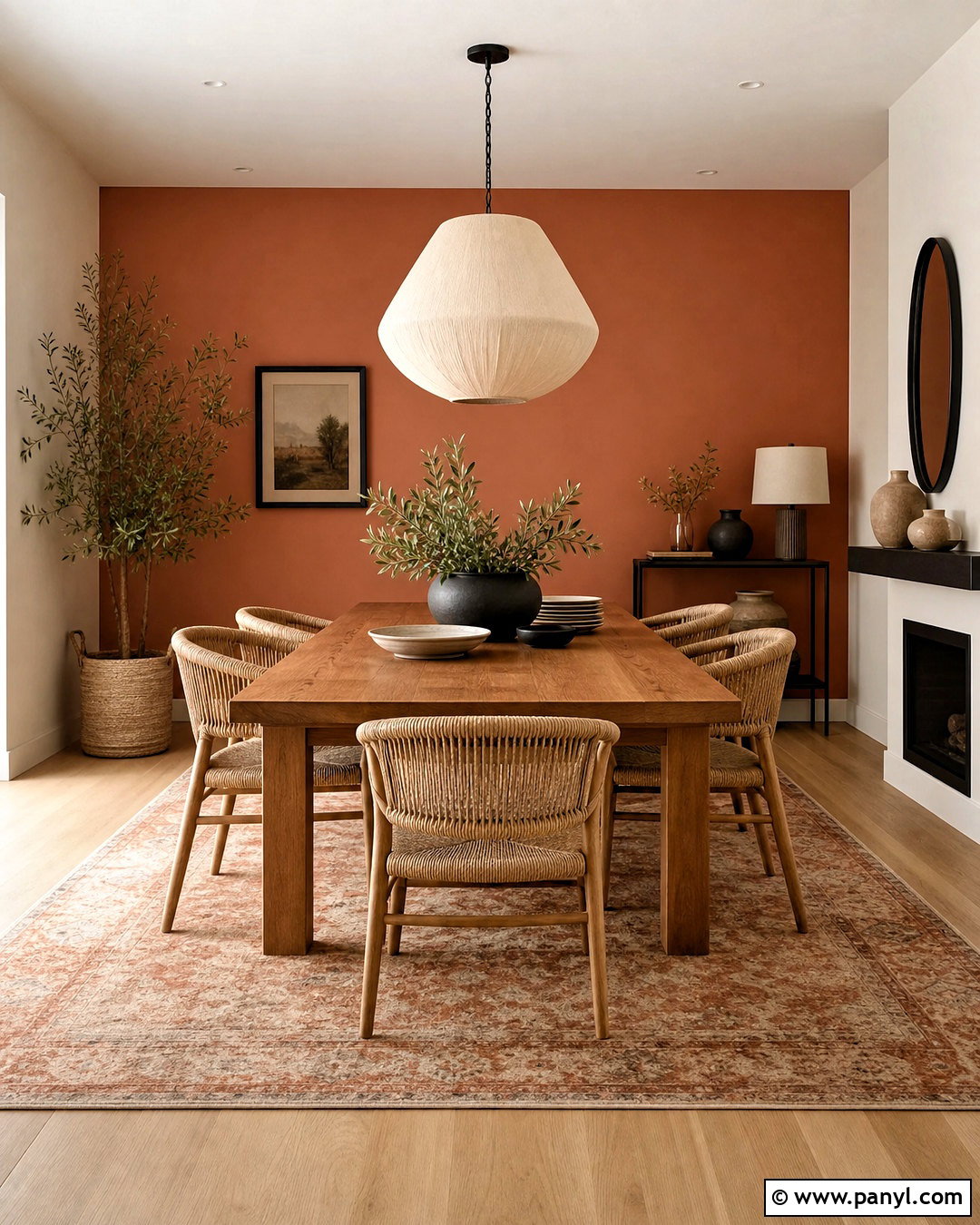
Warm terracotta brings an earthy, welcoming quality to a dining room. Cover the primary wall in a muted clay shade with brown undertones rather than a bright orange tone. Pair it with creamy surrounding walls, a solid oak dining table, and woven dining chairs. A large linen pendant light introduces softness above the table, while matte black accents add useful contrast. Ground the room with a faded beige and rust rug that repeats the wall color without matching it exactly. Simple pottery, off-white dishes, and olive branches complete the natural scheme. Terracotta looks particularly rich in afternoon sunlight, but warm white bulbs can maintain its depth after dark. The result is a casual gathering space that feels layered and inviting.
4. Dusty Blue Home Office Wall
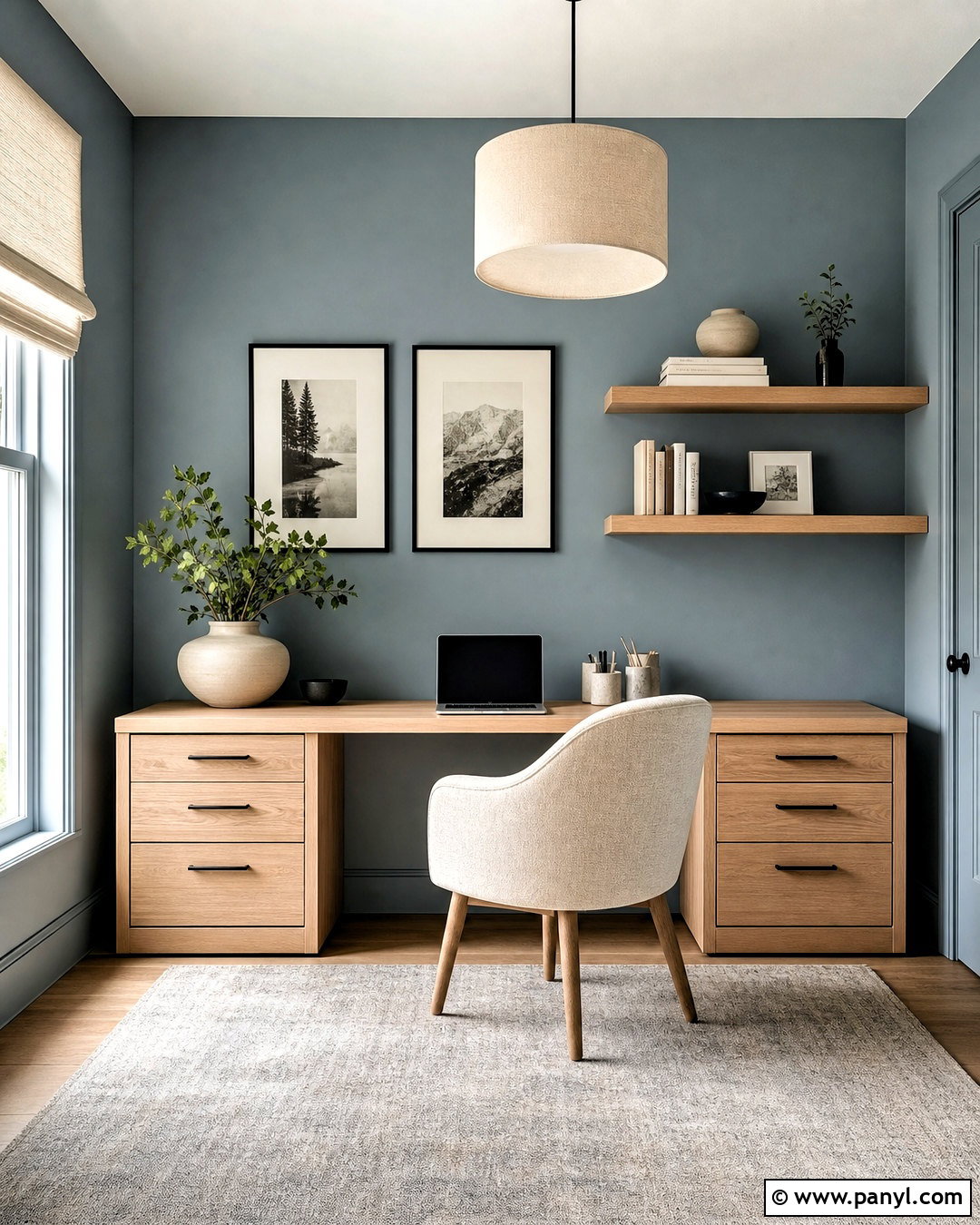
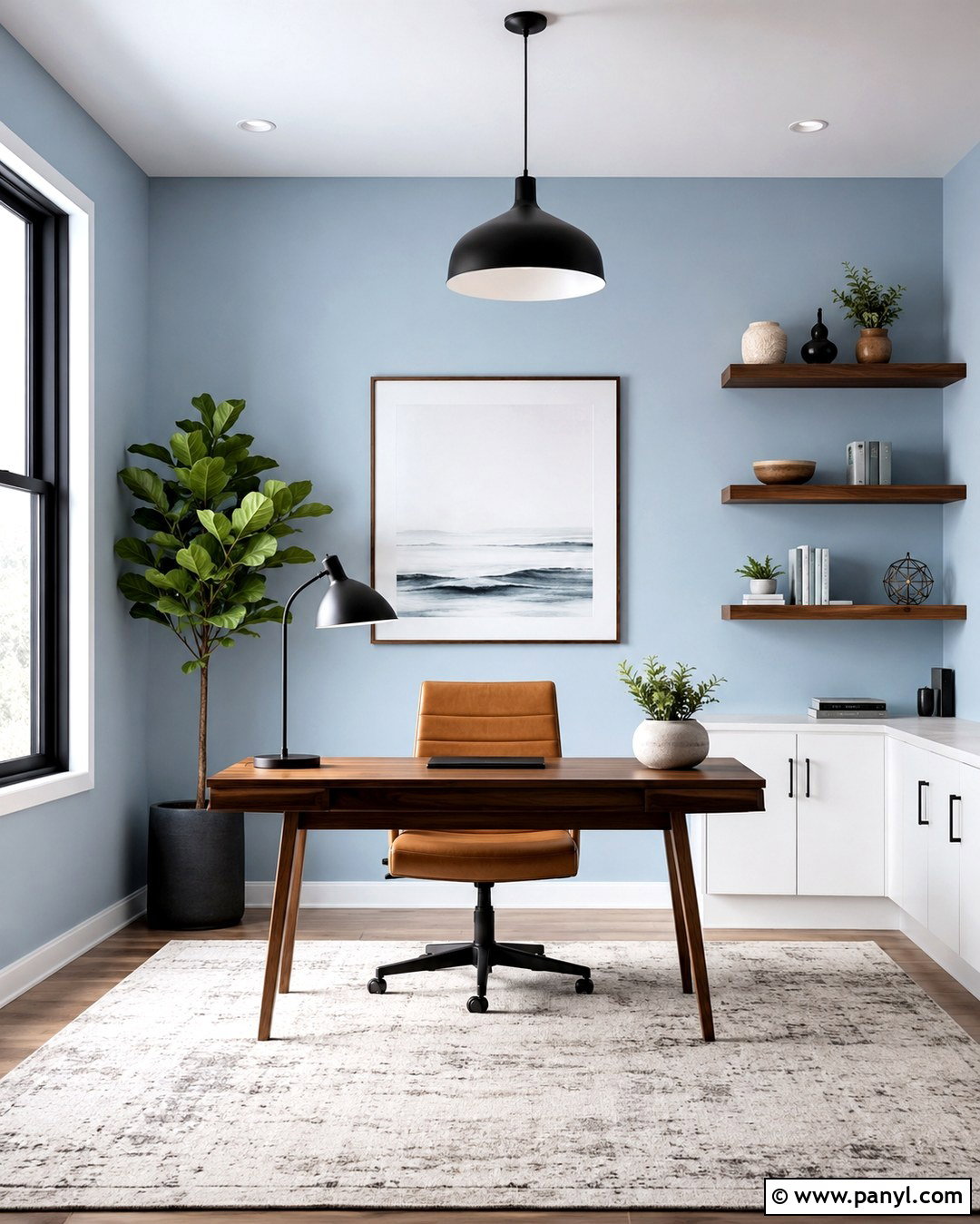
Dusty blue offers enough color to make a home office interesting while maintaining a calm working environment. Apply it to the wall behind a light oak desk and use warm white on the other surfaces. Choose a slim desk with closed drawers, a cream upholstered chair, and floating oak shelves for practical storage. Place black-framed artwork, ceramic containers, and a small plant on the shelves without overcrowding them. A soft gray rug and natural linen shade will control visual noise and complement the blue. For a more seamless appearance, paint the baseboards on the feature wall in the same dusty blue. This complete arrangement feels focused and welcoming, making it suitable for video calls, reading, planning, and everyday computer work.
5. Warm Beige Bedroom Walls
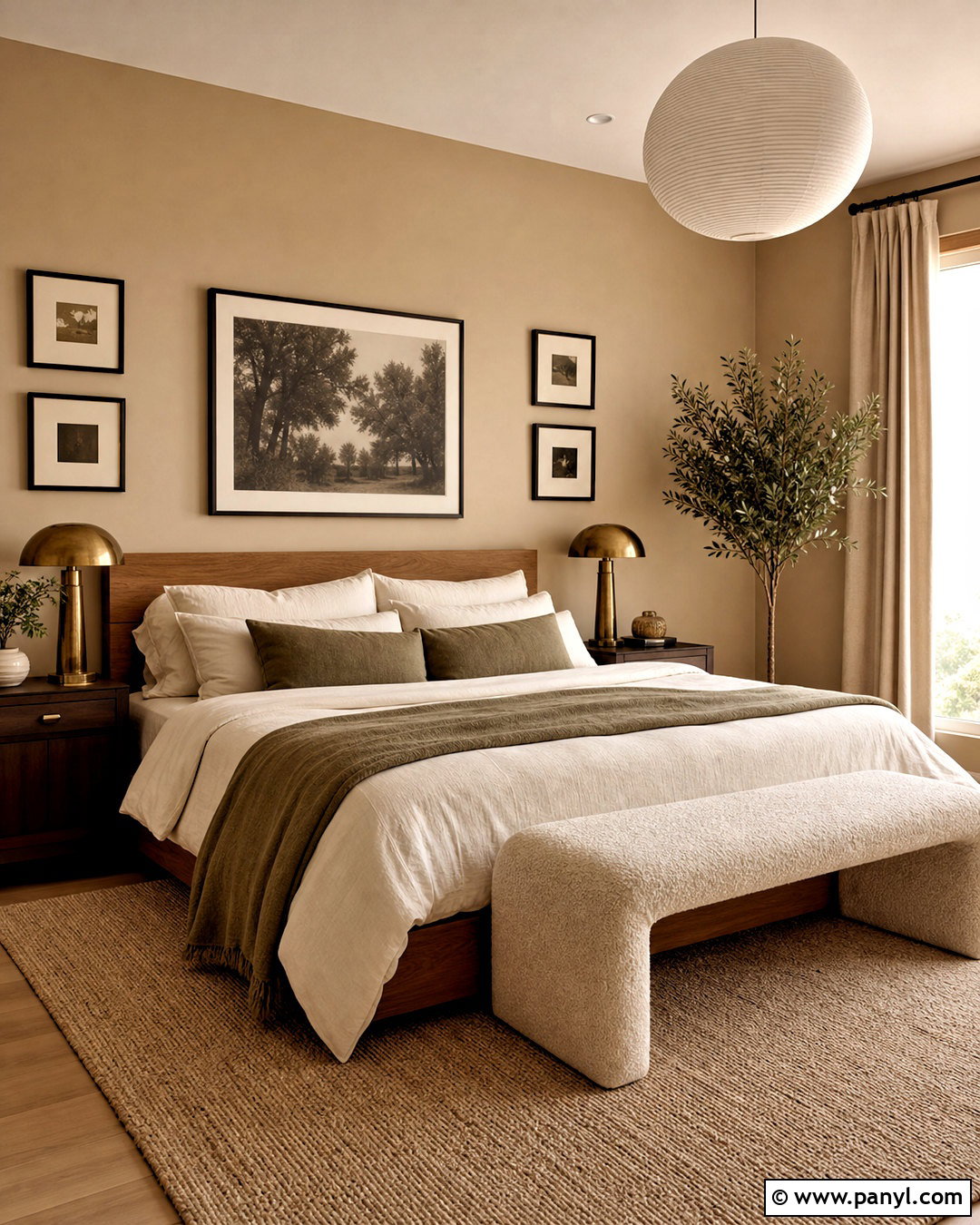
Warm beige walls can make a bedroom feel peaceful without producing a flat, builder-basic result. Paint every wall in a sandy beige with subtle golden undertones, then use soft white on the ceiling for gentle contrast. Bring in a low oak bed, ivory bedding, and textured oatmeal curtains. A boucle bench and woven wool rug add dimension through material rather than stronger color. Use aged brass lamps and dark brown picture frames to create small, defined accents. Layer the bed with taupe pillows and one muted olive throw for an understated natural connection. This palette is especially useful in rooms with limited sunlight because it feels warmer than cool gray. The completed space looks comfortable, timeless, and thoughtfully coordinated.
6. Charcoal Gray Fireplace Wall
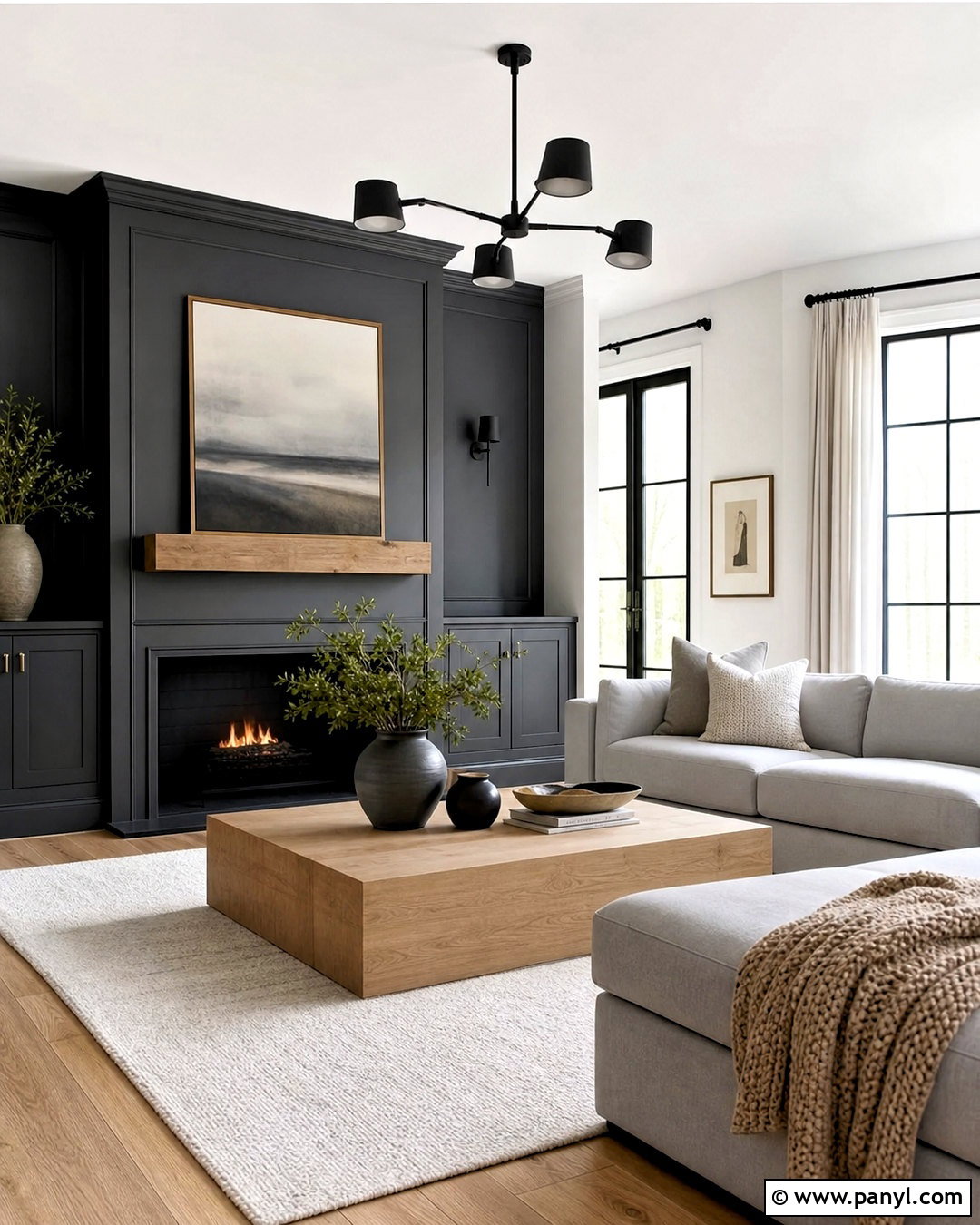
A charcoal gray fireplace wall creates a dramatic living room focal point while allowing the rest of the space to stay light. Paint the entire fireplace wall, including built-in shelving or simple panel molding, in a soft charcoal with warm undertones. Keep adjacent walls creamy white and select a light gray sectional to balance the darker surface. A pale oak coffee table, off-white rug, and linen curtains introduce warmth and movement. Style the mantel with one large neutral artwork, ceramic vessels, and minimal greenery. Repeat charcoal through thin window frames or small lamps rather than bulky furniture. This approach works best when the wall already contains a natural focal feature, helping the dark paint look intentional instead of randomly placed.
7. Blush Pink Kitchen Wall
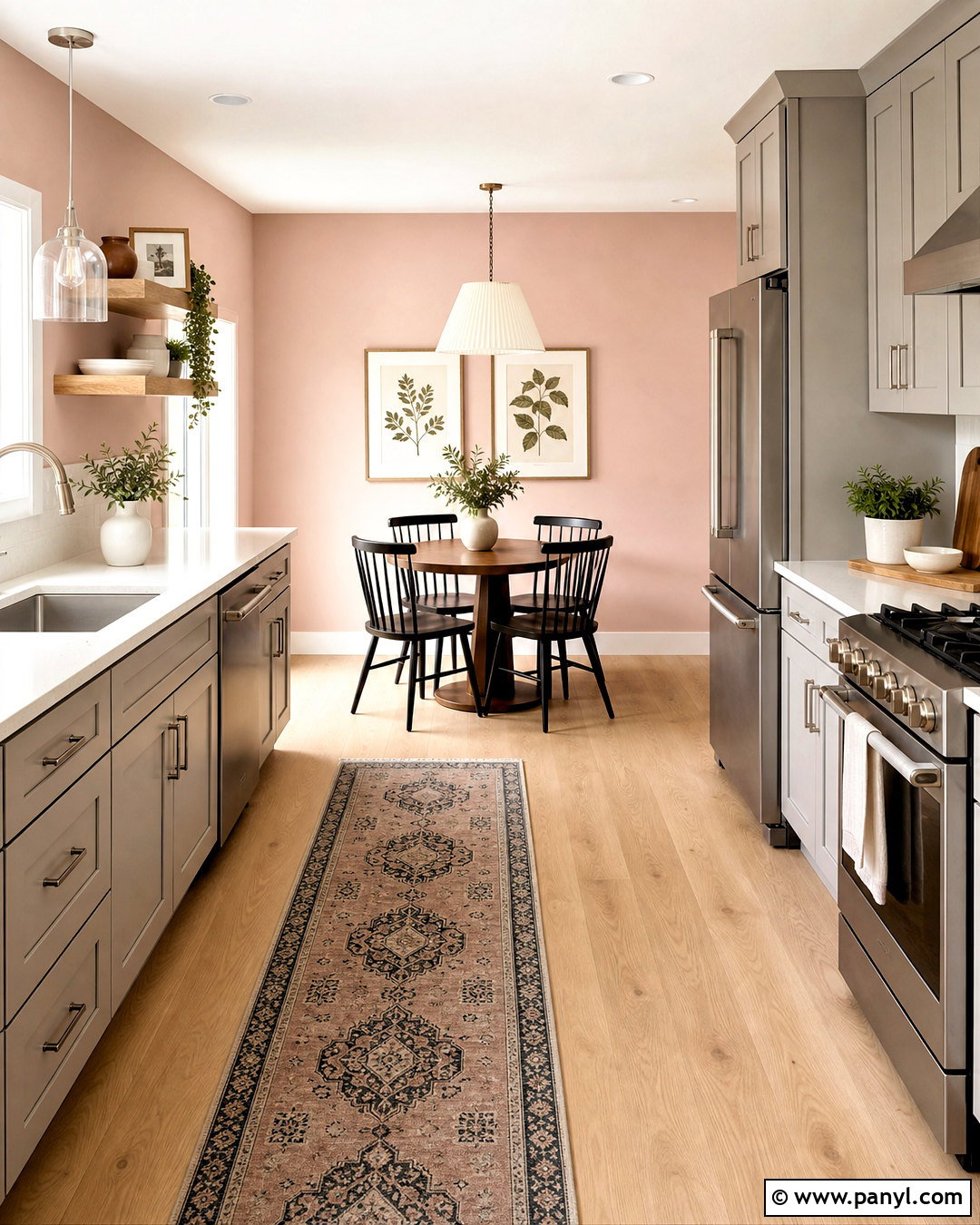
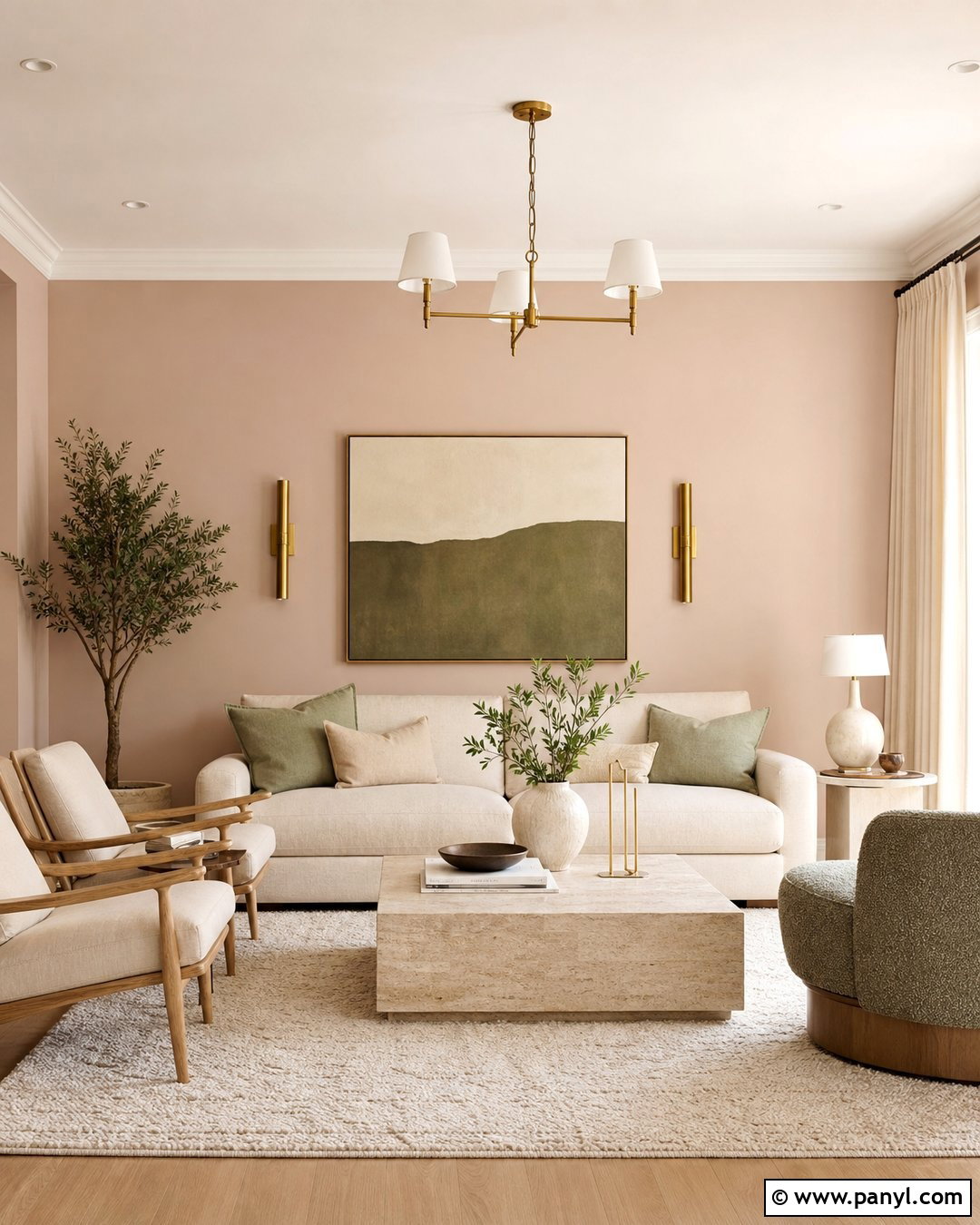
A muted blush pink wall can soften a kitchen and create a welcoming backdrop without making the space feel overly sweet. Use the color around a breakfast nook or on a wall beside warm gray cabinetry. Pair it with white quartz counters, brushed nickel hardware, and light oak flooring for a clean balance of warm and cool tones. A small round wood table with black spindle chairs provides contrast and gives the painted wall a practical purpose. Add a cream pendant, simple botanical artwork, and a washable patterned runner containing soft pink and gray. Choose a dusty, brown-based blush rather than a bright pastel. The finished kitchen feels fresh, slightly playful, and sophisticated enough to work in an open-plan home.
8. Mustard Yellow Entryway Wall
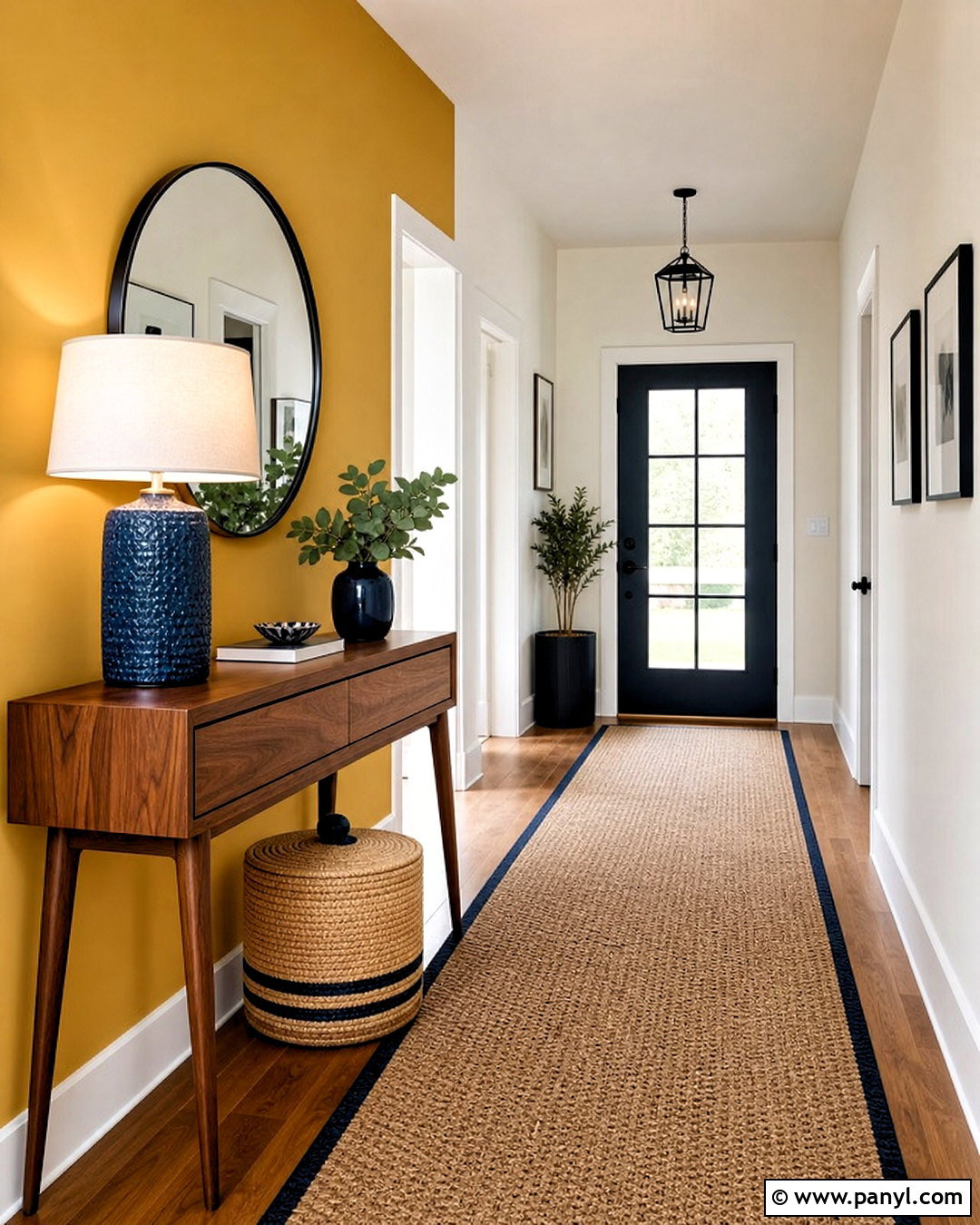
Mustard yellow can turn an ordinary entryway into a warm and memorable introduction to the home. Paint the wall behind a narrow console in a rich, slightly muted yellow, leaving the remaining walls creamy white. Select a walnut console with drawers to ground the energetic shade. Above it, hang a large round mirror with a thin black frame to reflect daylight and visually expand the area. Add a natural fiber runner, a ceramic lamp, and one lidded basket for everyday storage. Small accents in navy or deep green can give the palette greater depth. Because mustard is visually strong, keep shoes, hooks, and decorative accessories organized. This complete entryway feels cheerful and useful rather than busy or overly decorative.
9. Teal Reading Room Walls
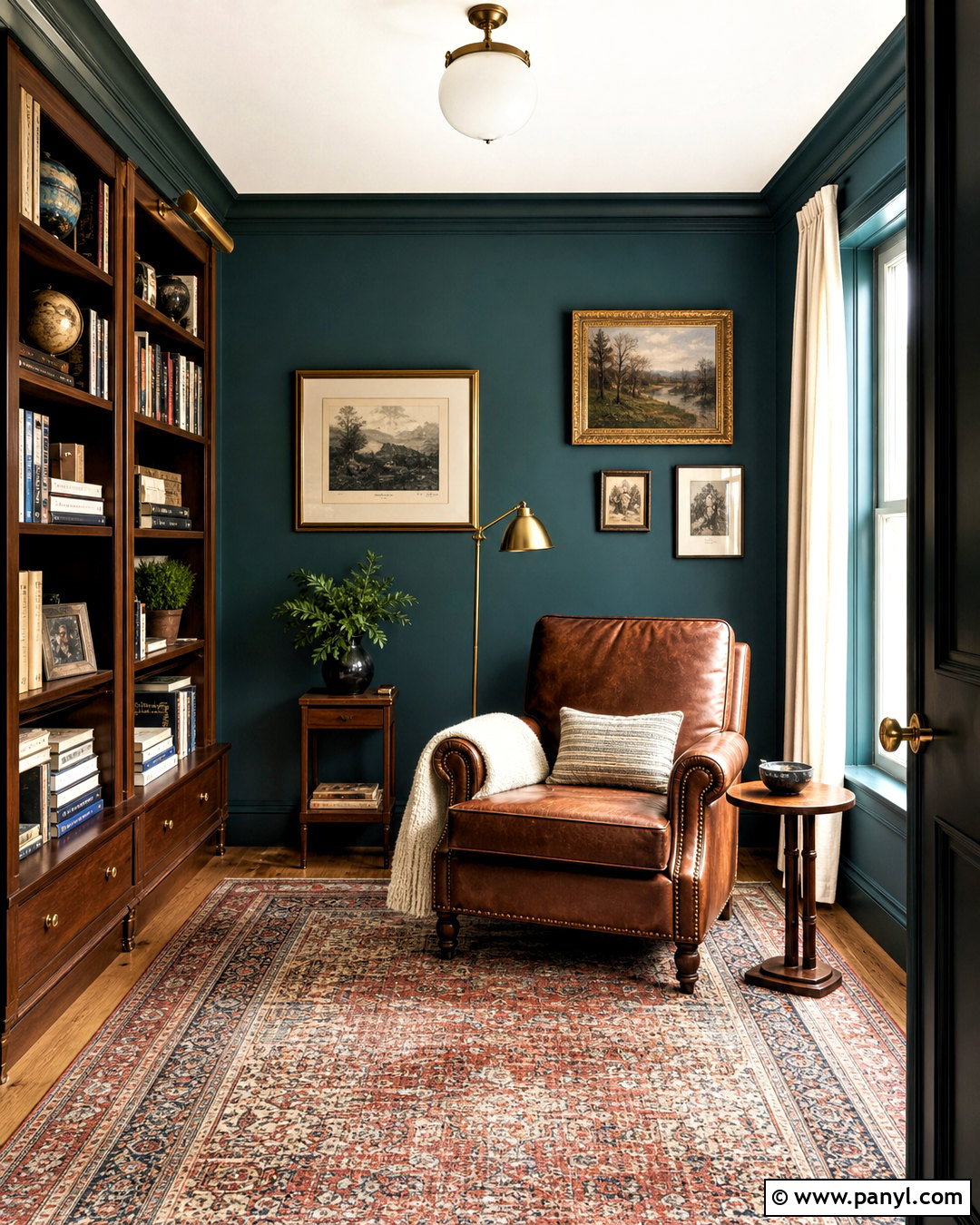
Deep teal walls can transform a small reading room into an enveloping retreat. Paint all four walls in a rich blue-green and continue the color across trim for a smooth, immersive effect. Keep the ceiling warm white to preserve a sense of height. Place a cognac leather chair beside a slim brass floor lamp, then add walnut bookcases to bring out the warmth in the wall color. A traditional rug in faded red, cream, and navy creates a layered foundation. Use off-white curtains and a light throw to brighten the darker palette. Framed artwork with generous cream mats prevents the walls from feeling crowded. The finished room feels intimate and collected, with every material supporting comfortable reading and quiet relaxation.
10. Olive Green Kitchen Walls
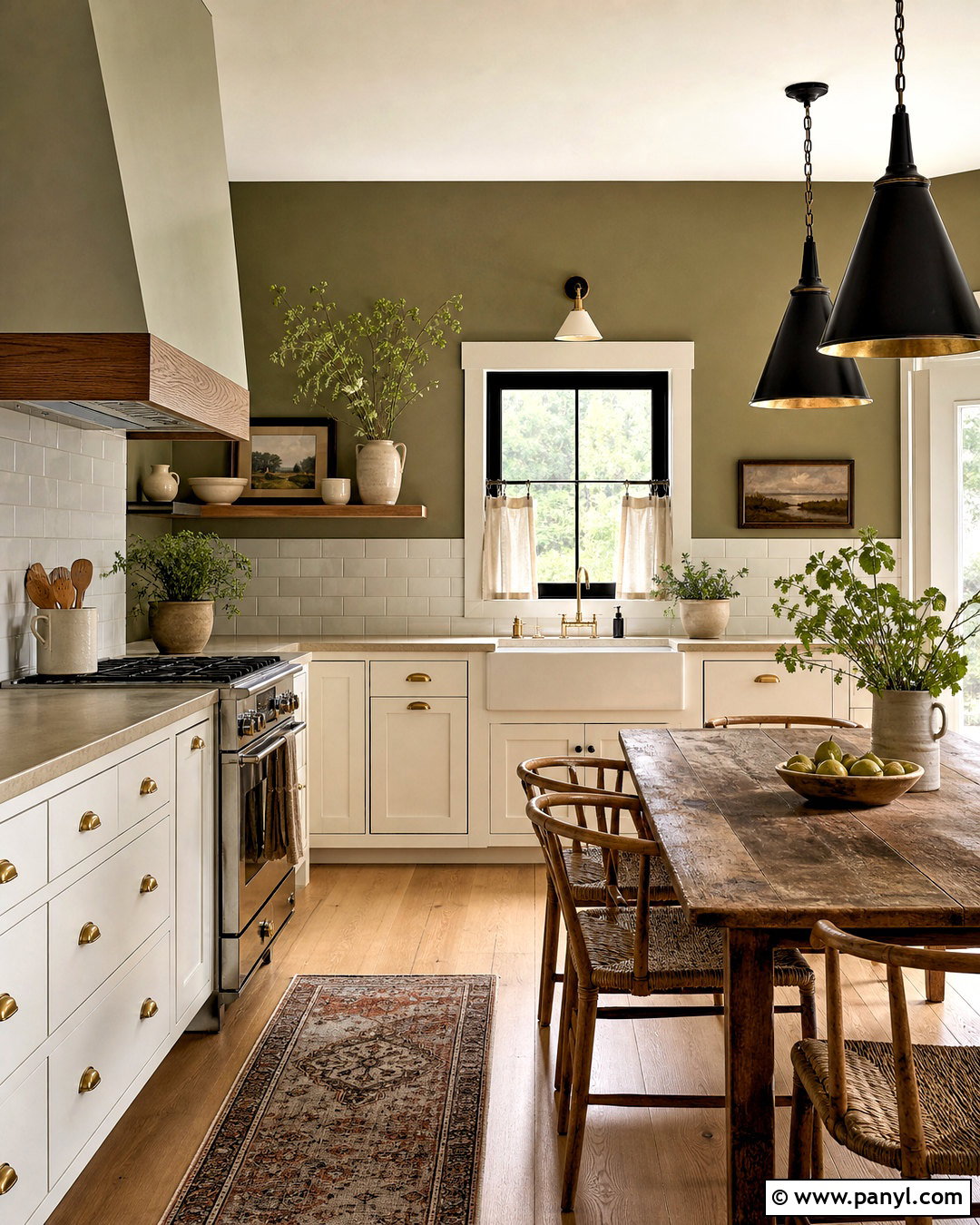
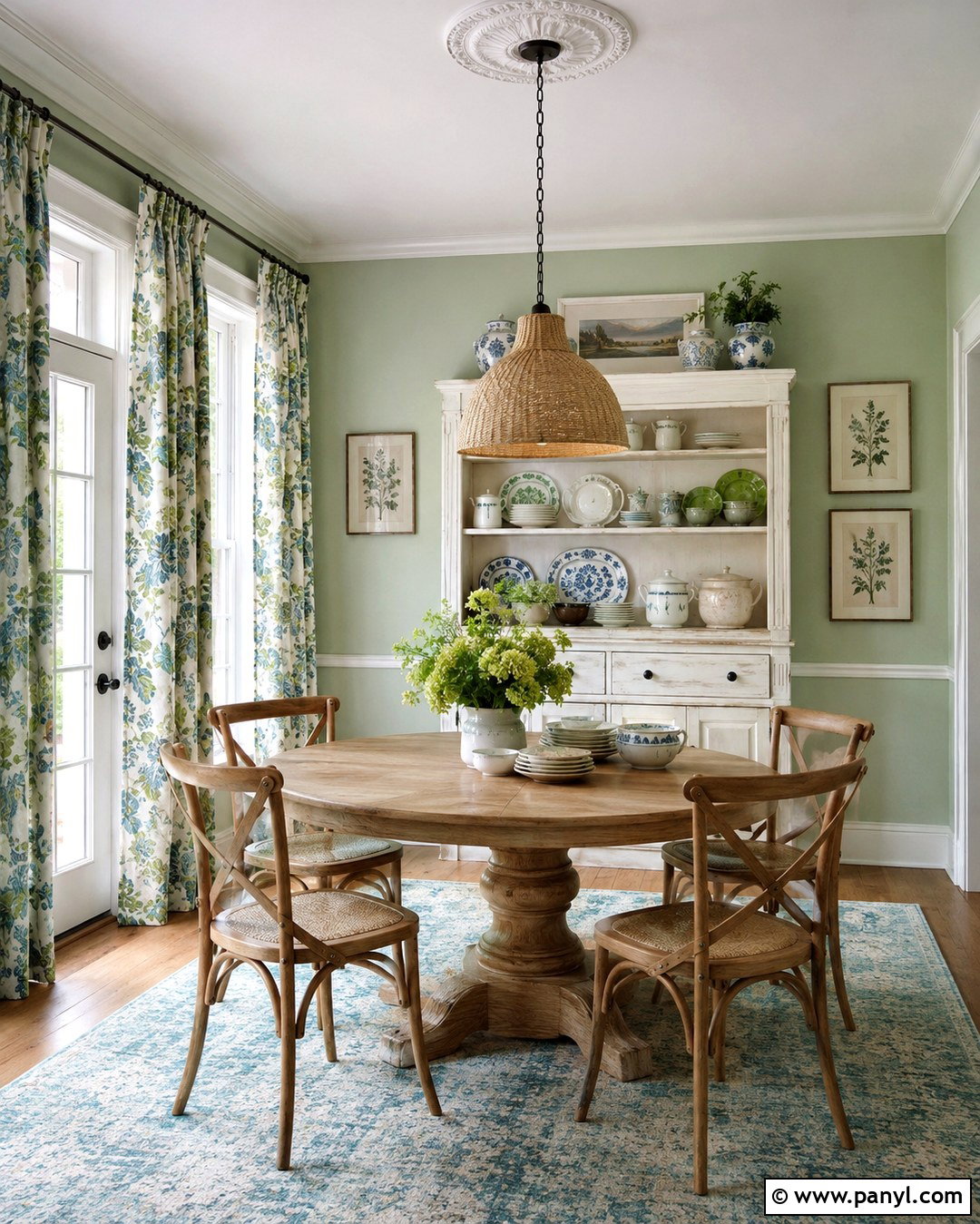
Olive green walls bring depth and a natural character to a kitchen with wood or cream cabinetry. Choose a softened olive shade and apply it above the backsplash and around the dining area. Pair it with warm white cabinets, honed beige stone counters, and antique brass hardware. Medium oak flooring keeps the palette grounded, while white ceramic tiles add a brighter, easy-to-clean surface near cooking zones. Complete the space with a farmhouse-style table, woven chairs, and simple linen café curtains. Black accents can appear through pendant lights or window frames for definition. Avoid using too many additional greens. Instead, introduce cream, brown, and muted rust through textiles and pottery. This creates a balanced kitchen that feels comfortable, earthy, and established.
11. Rust Orange Living Room Wall
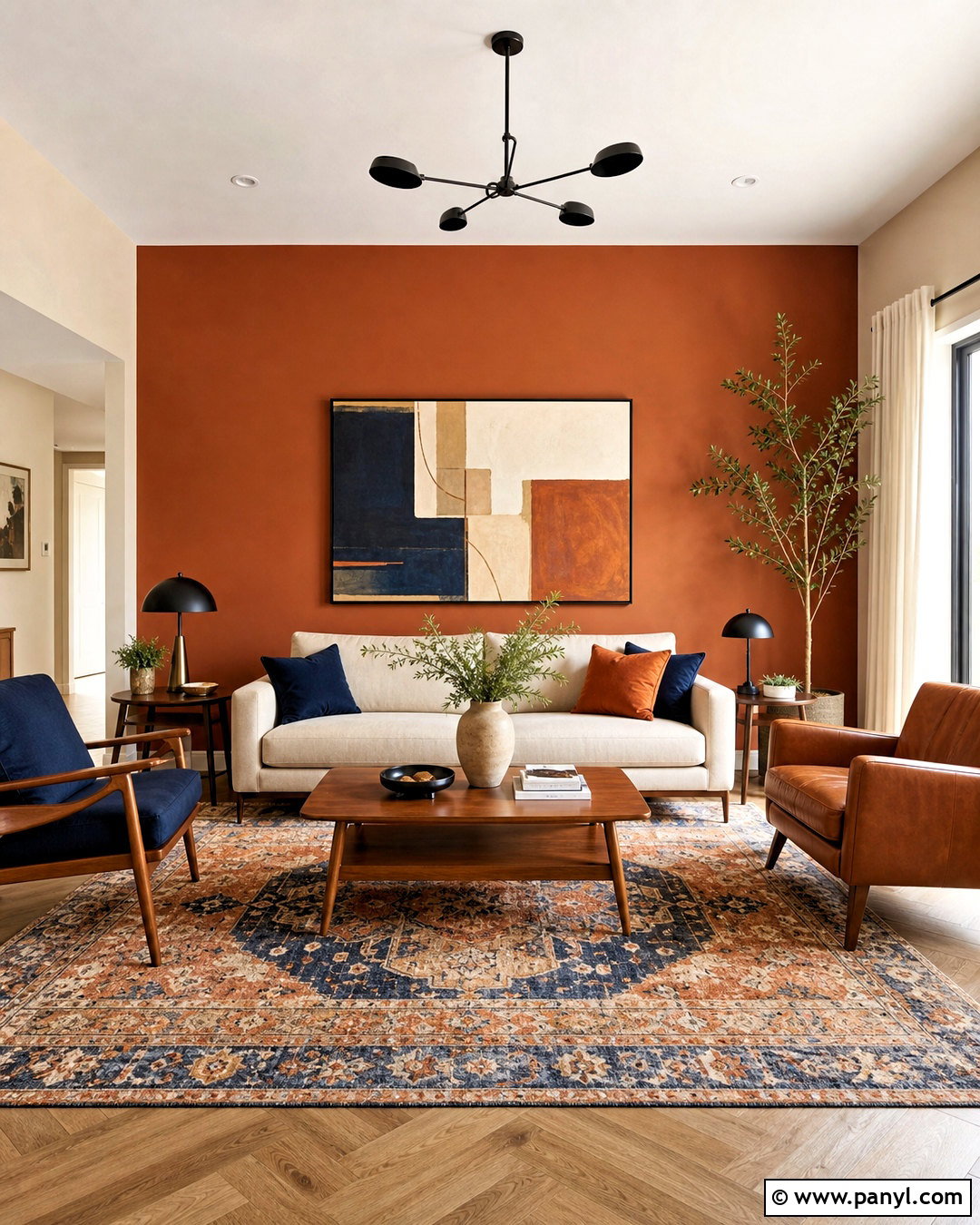
Rust orange provides the energy of a bright color with the warmth of an earth tone. Use it on the wall behind a cream sofa, allowing the furniture to stand out clearly against the deeper background. Paint the remaining walls a pale warm beige and choose walnut tables to continue the rich palette. A patterned rug in navy, tan, and rust will connect the room without making every piece match. Add navy pillows, ivory curtains, and matte black lighting for balance. Large abstract artwork with plenty of light space can soften the intensity of the wall. This scheme suits both modern and midcentury-inspired rooms. The complete look feels warm and expressive, yet grounded enough for a comfortable everyday living space.
12. Lavender Guest Bedroom Walls
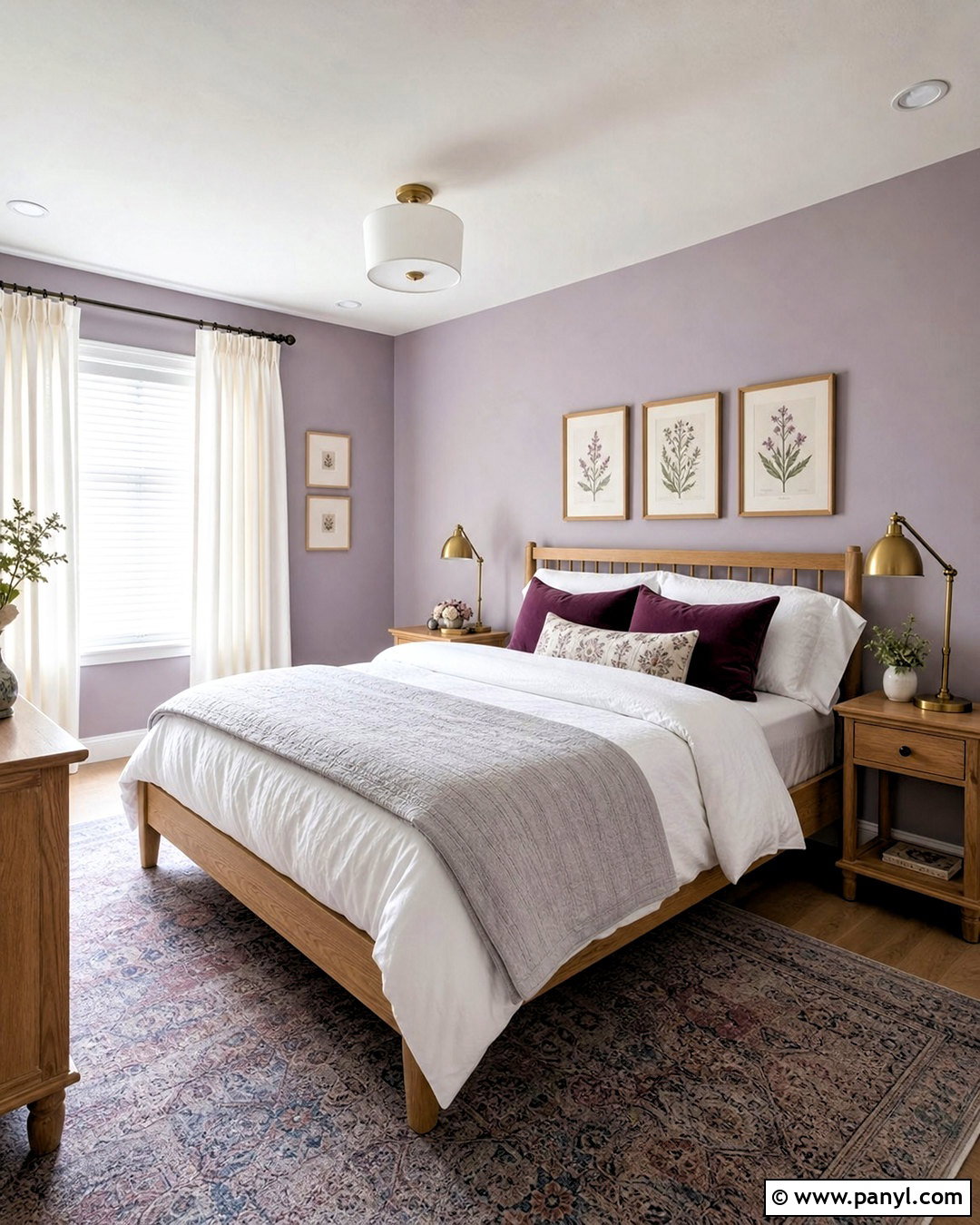
A soft, grayed lavender can make a guest bedroom feel gentle and distinctive without looking childish. Paint all the walls in this muted purple shade, then use crisp warm white for the ceiling and window trim. Choose a natural oak bed with simple lines and layer it with white bedding, a light gray quilt, and plum accent pillows. Cream curtains will filter daylight and keep the lavender from becoming too cool. Add brushed brass bedside lamps and a small vintage-style rug with faded blue and mauve details. Keep wall art minimal, using botanical prints or abstract shapes in pale wood frames. This coordinated room feels restful, polished, and welcoming, offering guests color, comfort, and visual interest in equal measure.
13. Burgundy Dining Room Walls
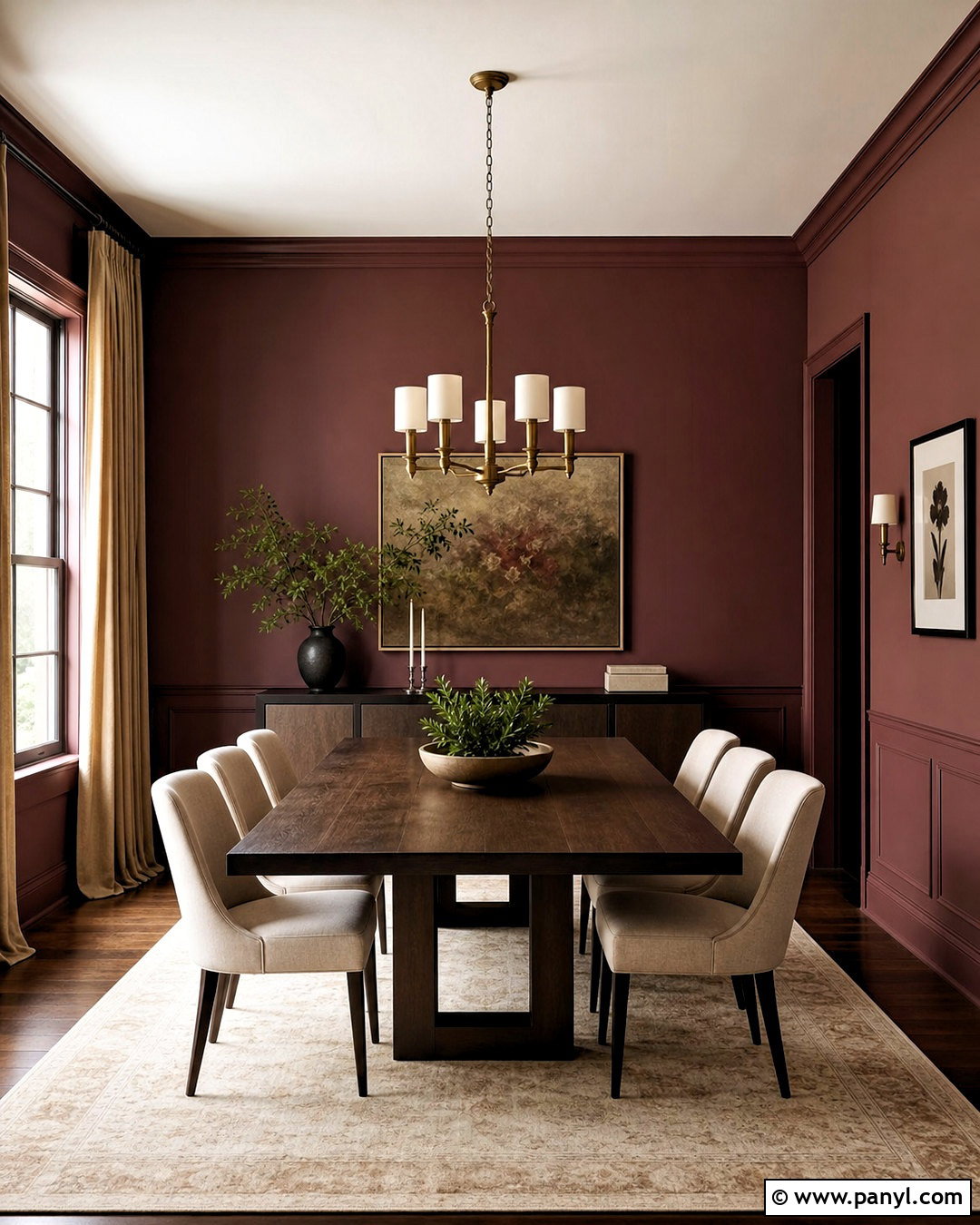
Burgundy walls create an intimate dining room with classic depth and a strong sense of occasion. Use a muted red with brown or plum undertones rather than a vivid primary red. Paint the walls and trim in the same color for a sophisticated, continuous finish, while keeping the ceiling soft cream. A dark oak table, upholstered beige chairs, and a large ivory rug will lighten the room. Add aged brass lighting and framed artwork containing cream, olive, and faded red. Linen curtains in warm taupe provide softness around the windows. Keep the tabletop styling simple so the saturated walls remain the main statement. This complete scheme works especially well in a separate dining room where a cozy, enclosed atmosphere feels intentional.
14. Sky Blue Bathroom Walls
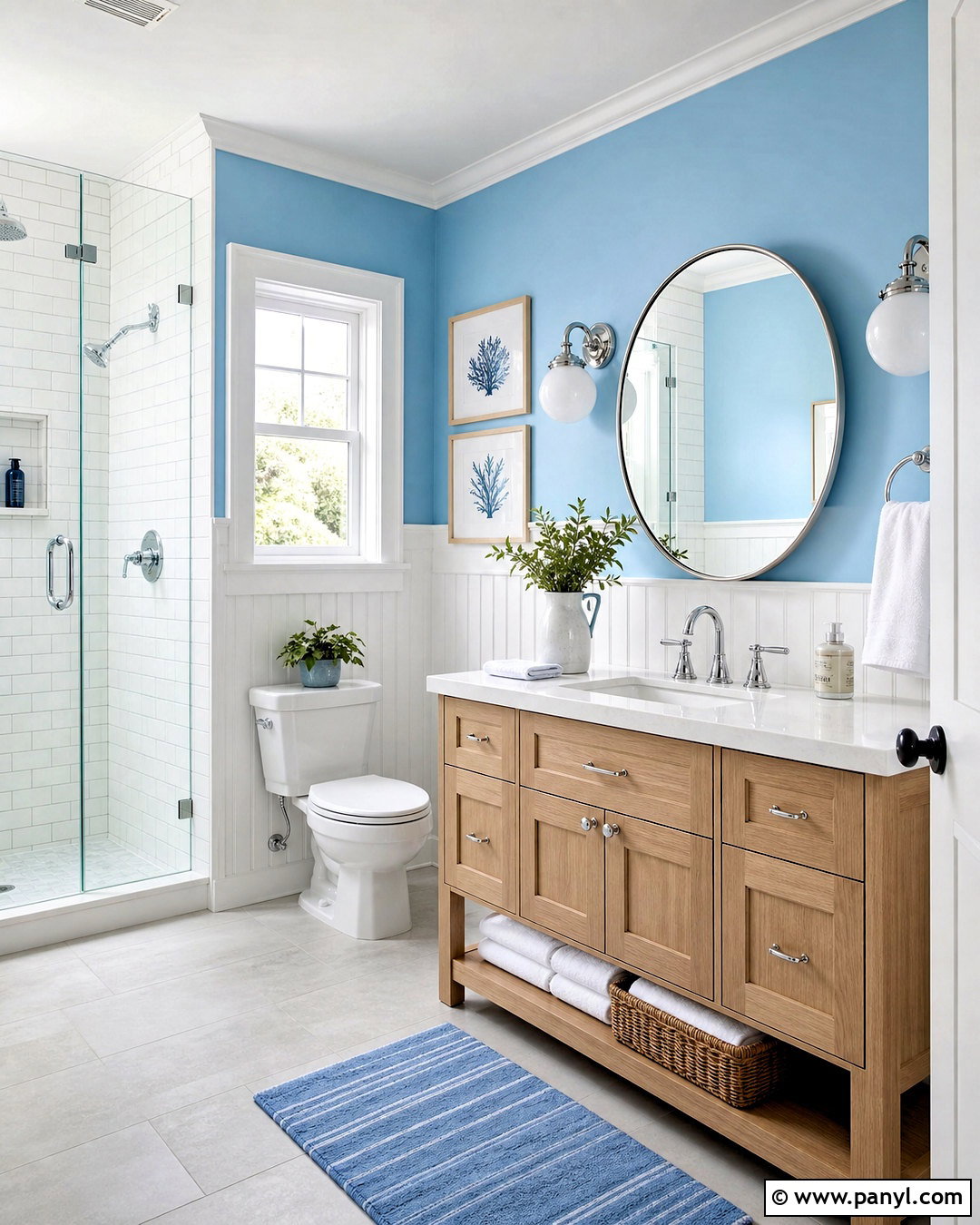
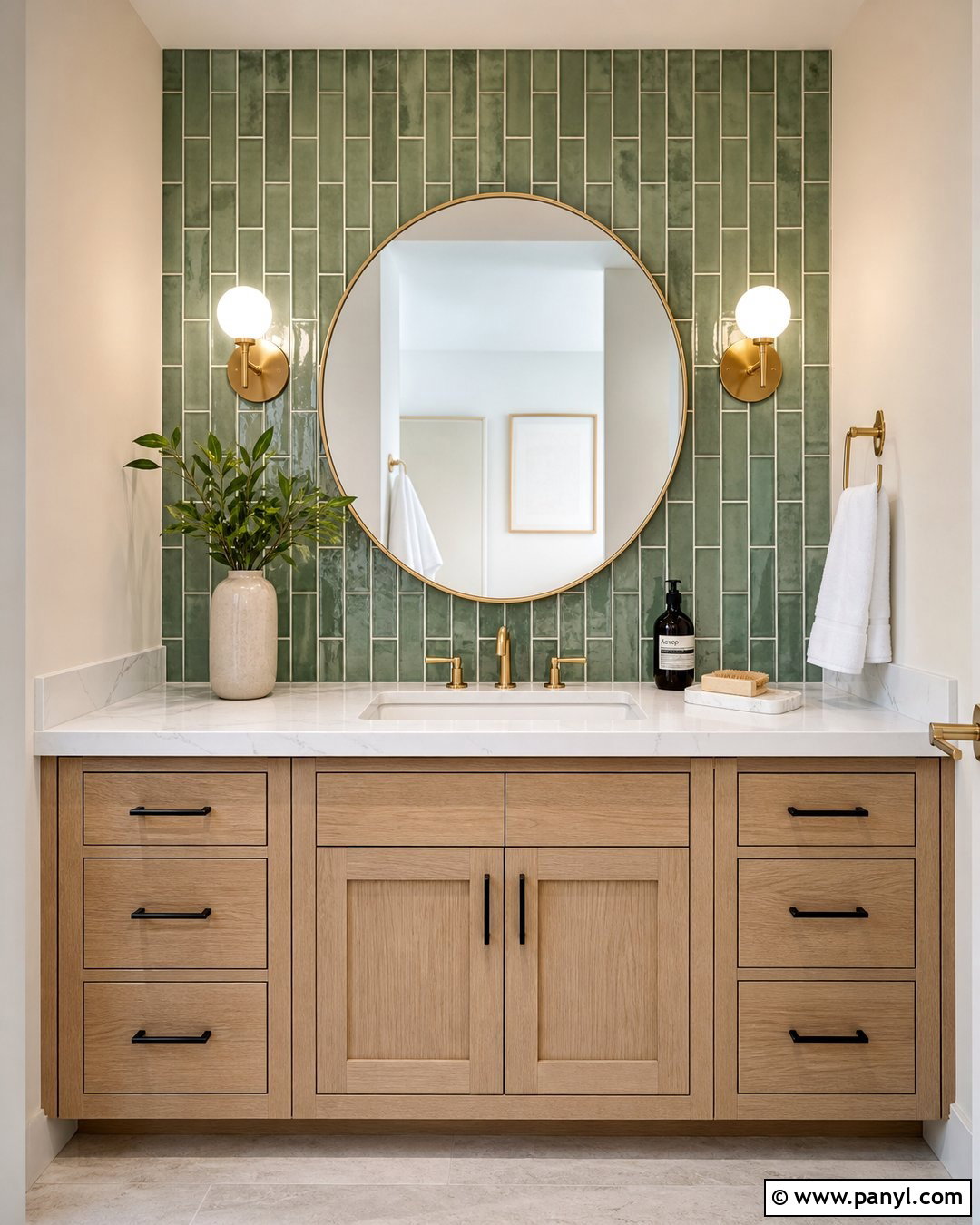
Clear sky blue can make a compact bathroom feel airy, clean, and refreshing. Use the color on the upper walls, then install white vertical paneling or tile below for a durable two-tone treatment. A light oak vanity with a white quartz top introduces warmth, while polished chrome fixtures maintain a crisp appearance. Choose a round mirror, simple globe sconces, and pale gray floor tile to keep the small room visually open. White towels and a striped blue bath mat will repeat the palette without adding clutter. If the bathroom receives little natural light, select a blue with a slight warm undertone. The completed design feels bright and organized, with practical finishes that support the wall color instead of competing with it.
15. Chocolate Brown Bedroom Wall
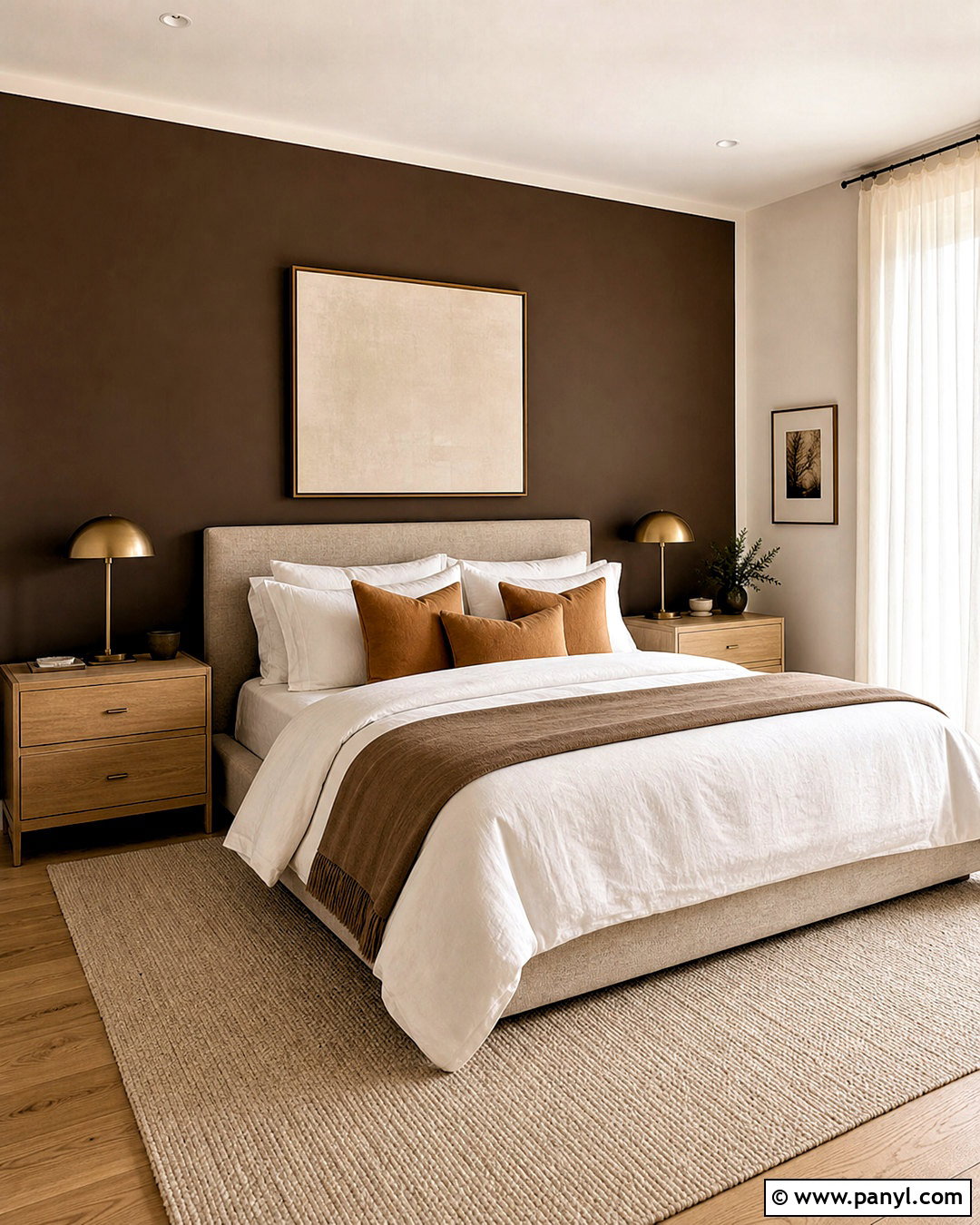
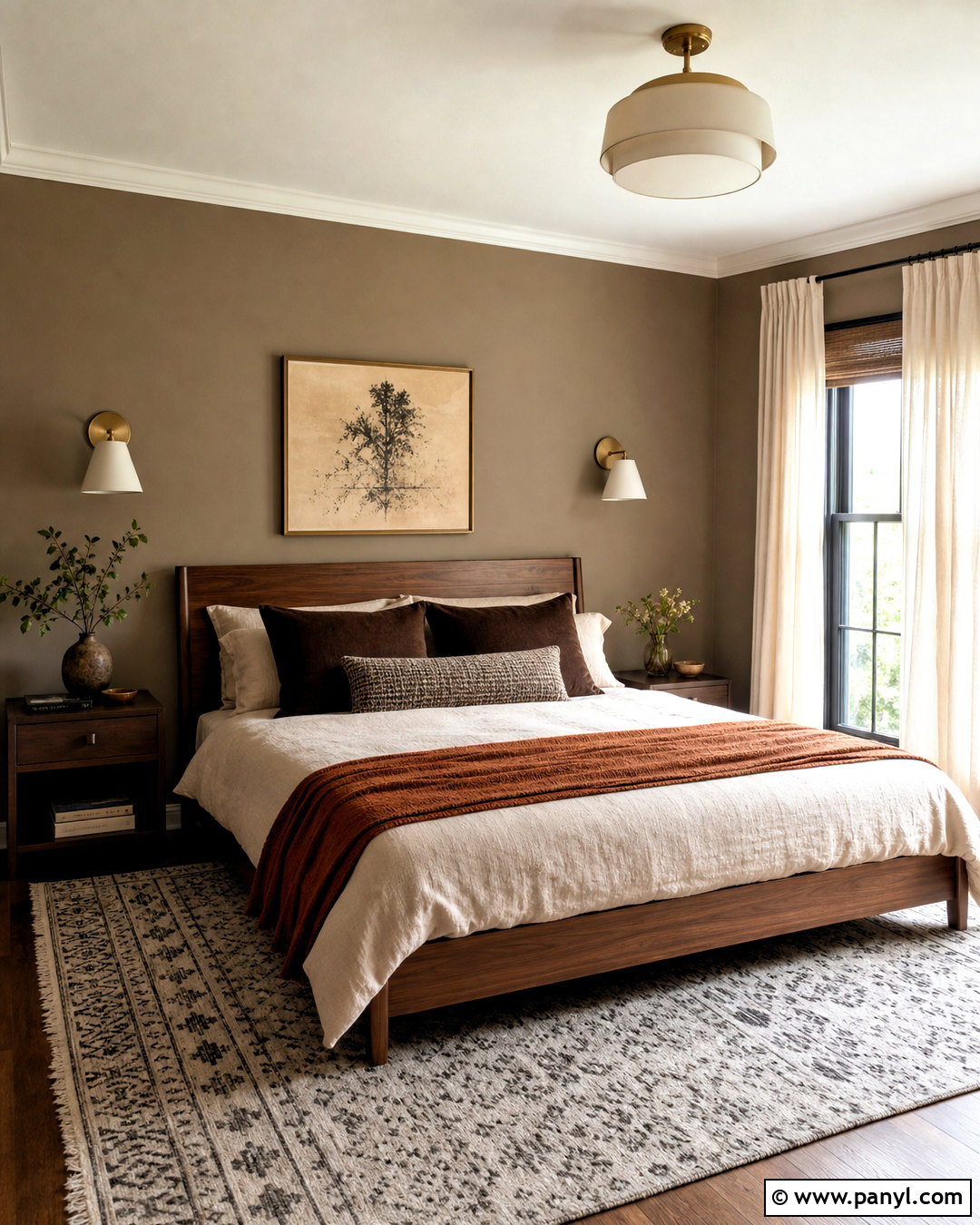
Chocolate brown can create a rich, comforting bedroom when paired with creamy textiles and light wood. Apply the color to the wall behind the bed, preferably in a matte finish that softens reflections. Choose an upholstered headboard in oatmeal linen, white bedding, and caramel accent pillows to build a warm tonal palette. Light oak nightstands prevent the dark wall from feeling too heavy, while bronze lamps add a subtle metallic layer. Use warm white on the remaining walls and hang pale artwork over the bed for contrast. A beige wool rug and sheer curtains will brighten the lower and outer edges of the room. The finished bedroom feels grounded and cocooning, yet remains approachable for everyday living.
16. Coral Kids Room Wall
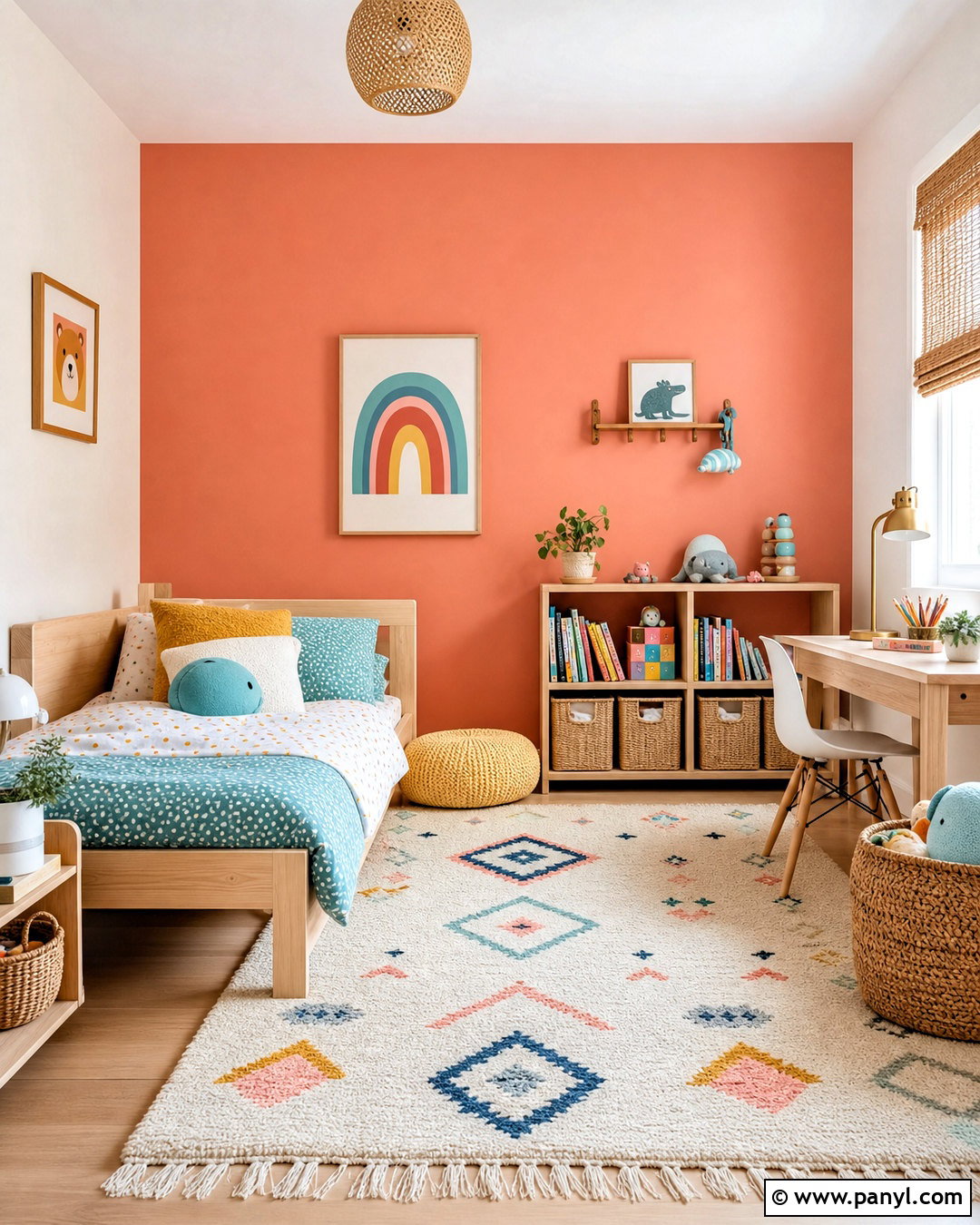
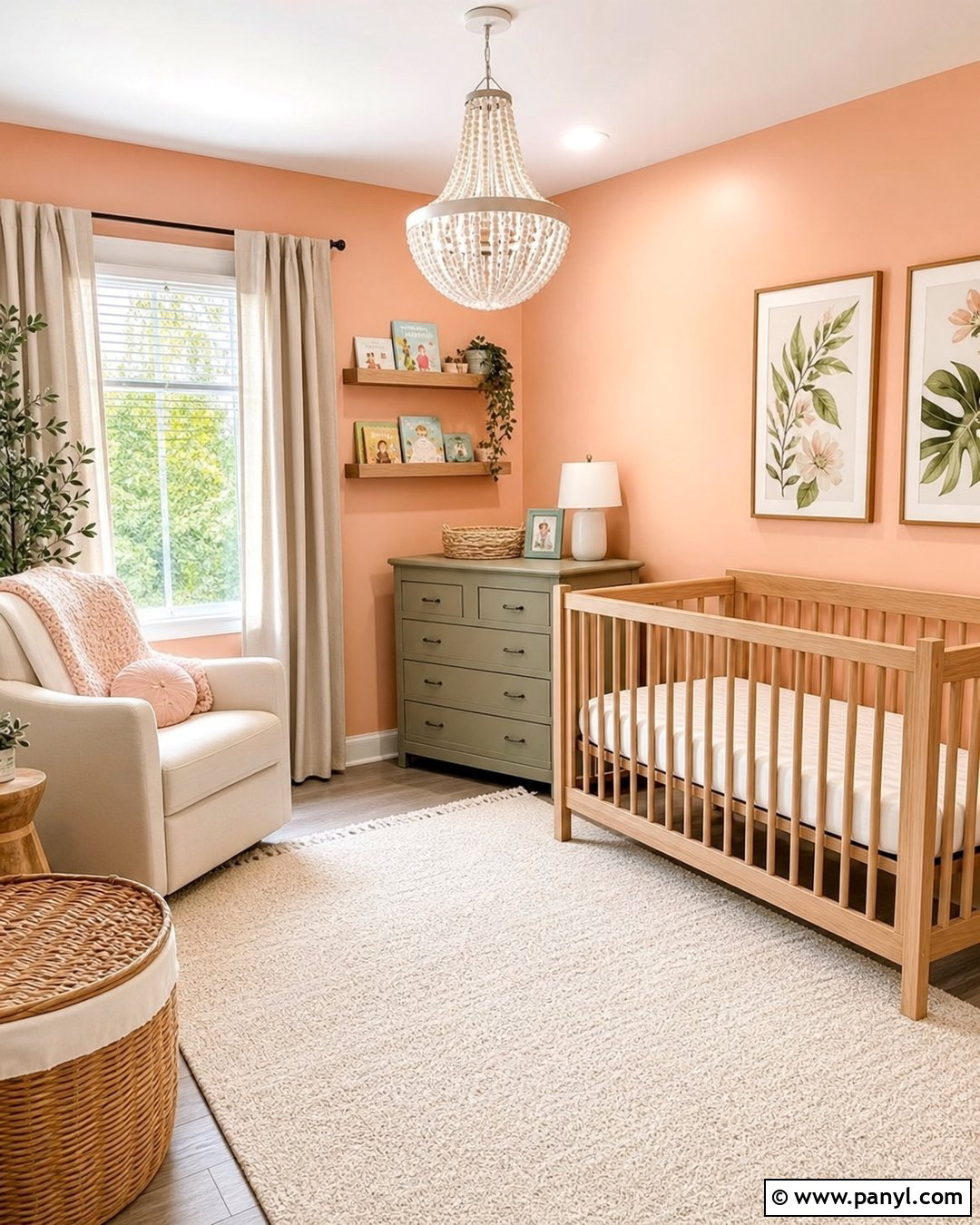
A softened coral wall gives a kids room cheerful color while leaving plenty of flexibility for changing interests. Paint the wall behind the bed in a warm coral with muted pink and orange undertones. Keep the other walls creamy white and choose a simple white or pale wood bed frame. Build the room around practical pieces, including a low bookcase, washable rug, storage baskets, and compact desk. Add bedding in aqua, mustard, and white to create a playful but controlled palette. Natural wood and woven textures keep the coral from looking overly bright. Select artwork with simple shapes rather than a permanent themed mural. This complete room feels lively, organized, and adaptable as furniture, toys, and decorative preferences change over time.
17. Greige Hallway Walls
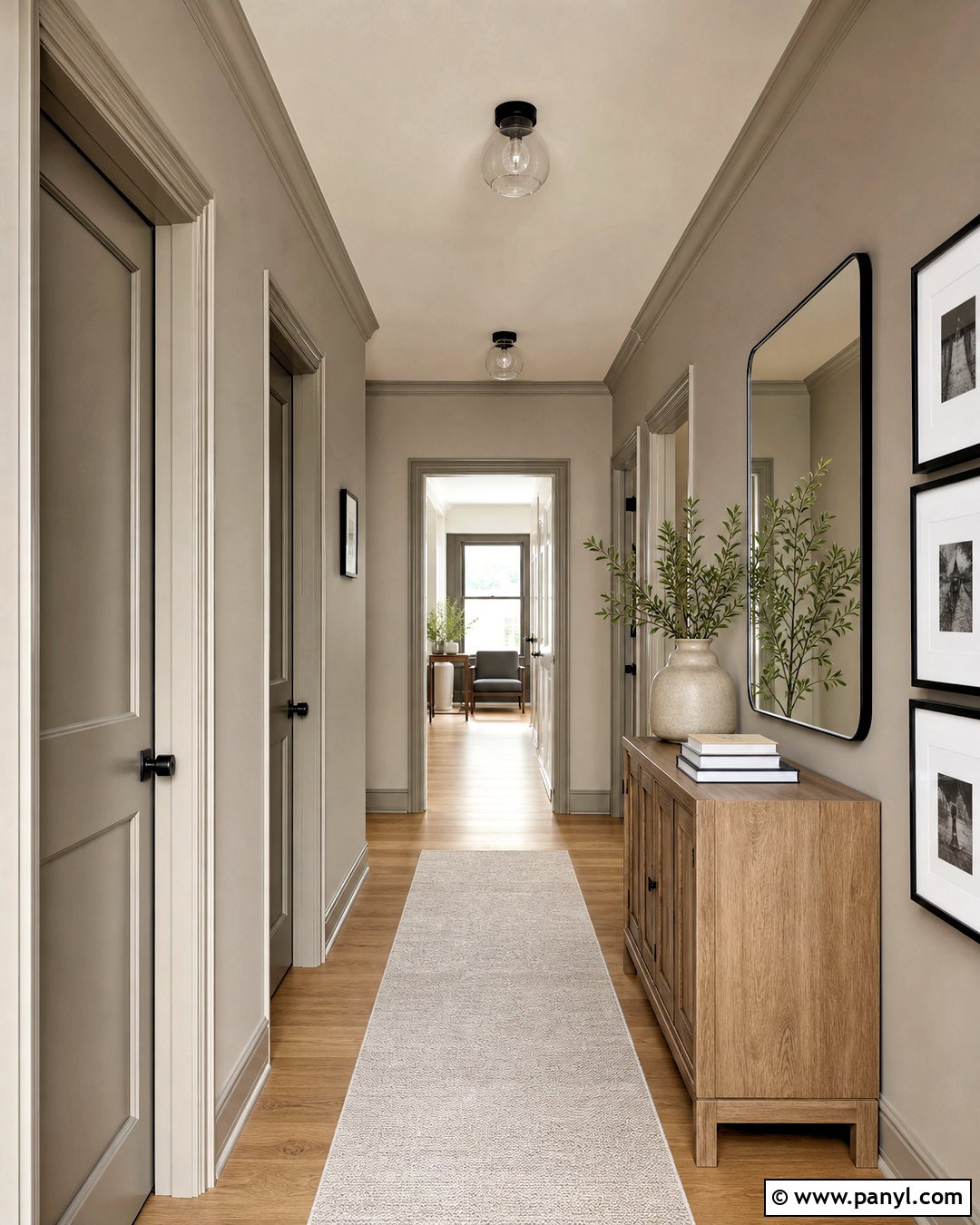
Greige walls provide a quiet, polished background for a hallway while offering more warmth than standard gray. Choose a balanced shade that coordinates with the flooring and paint the walls, trim, and interior doors in slightly varied greige tones. This subtle layering creates interest without narrowing the passage. Add a slim oak bench or console where space allows, along with a long neutral runner to guide the eye forward. Black-framed photographs arranged in a consistent grid bring structure to the walls. Use simple ceiling fixtures with warm white bulbs to keep the paint from appearing dull. A mirror near the end of the hall can reflect light. The completed scheme looks clean and connected, helping nearby rooms transition naturally from one to another.
18. Forest Green Office Wall
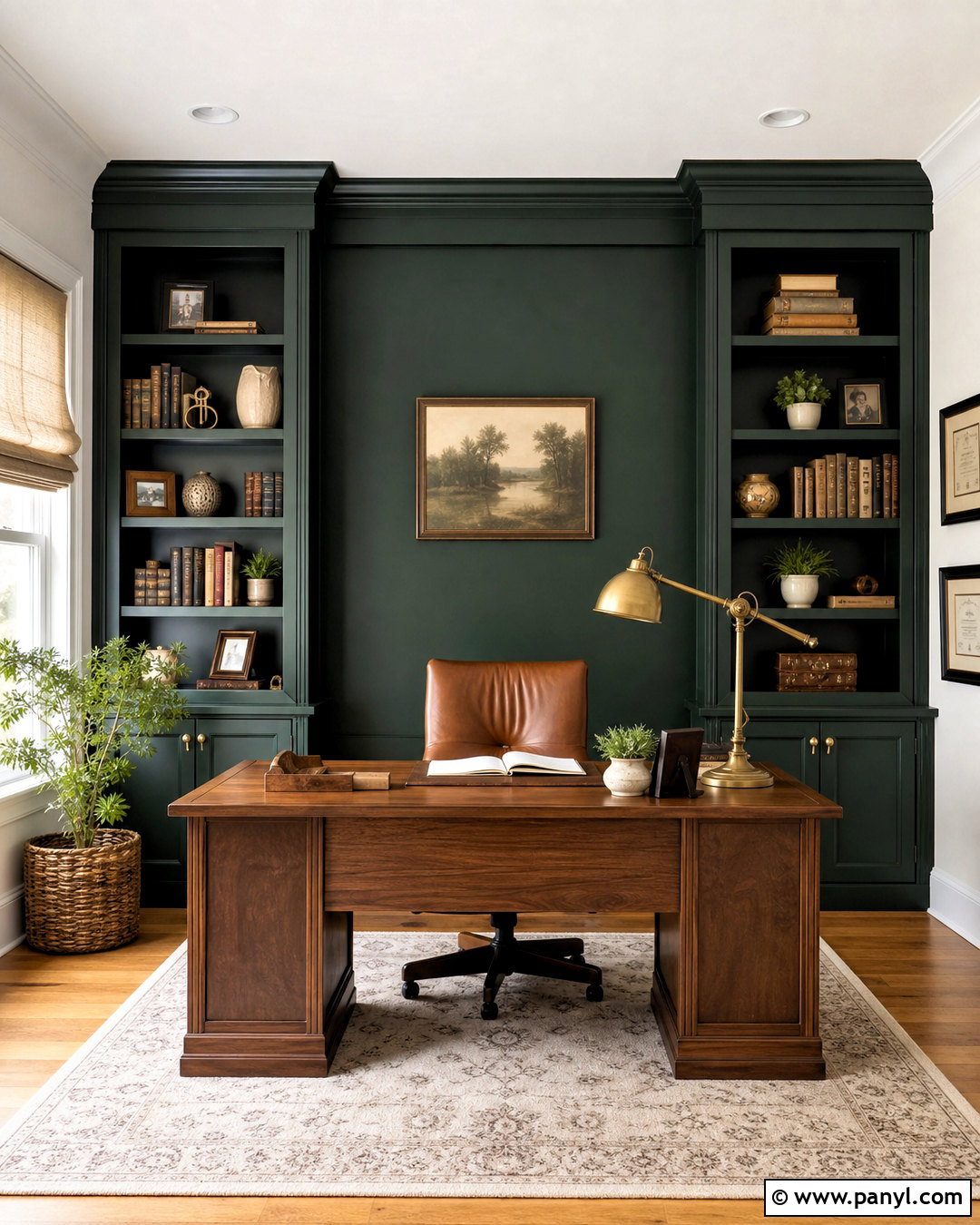
Forest green gives a home office a strong, focused character and works especially well behind built-in storage. Paint the main wall and bookcases in the same deep green for a custom, integrated appearance. Use warm white on adjacent walls and the ceiling to prevent the room from feeling enclosed. Position a substantial walnut desk in front of the painted wall, paired with a tan leather chair and aged brass task lamp. Style shelves with books, cream pottery, and a few framed objects, leaving open space between groups. A beige rug and linen window shade will soften the darker materials. This full office scheme feels professional without becoming corporate, providing a calm background for concentrated work, meetings, and creative projects.
19. Peach Breakfast Nook Wall
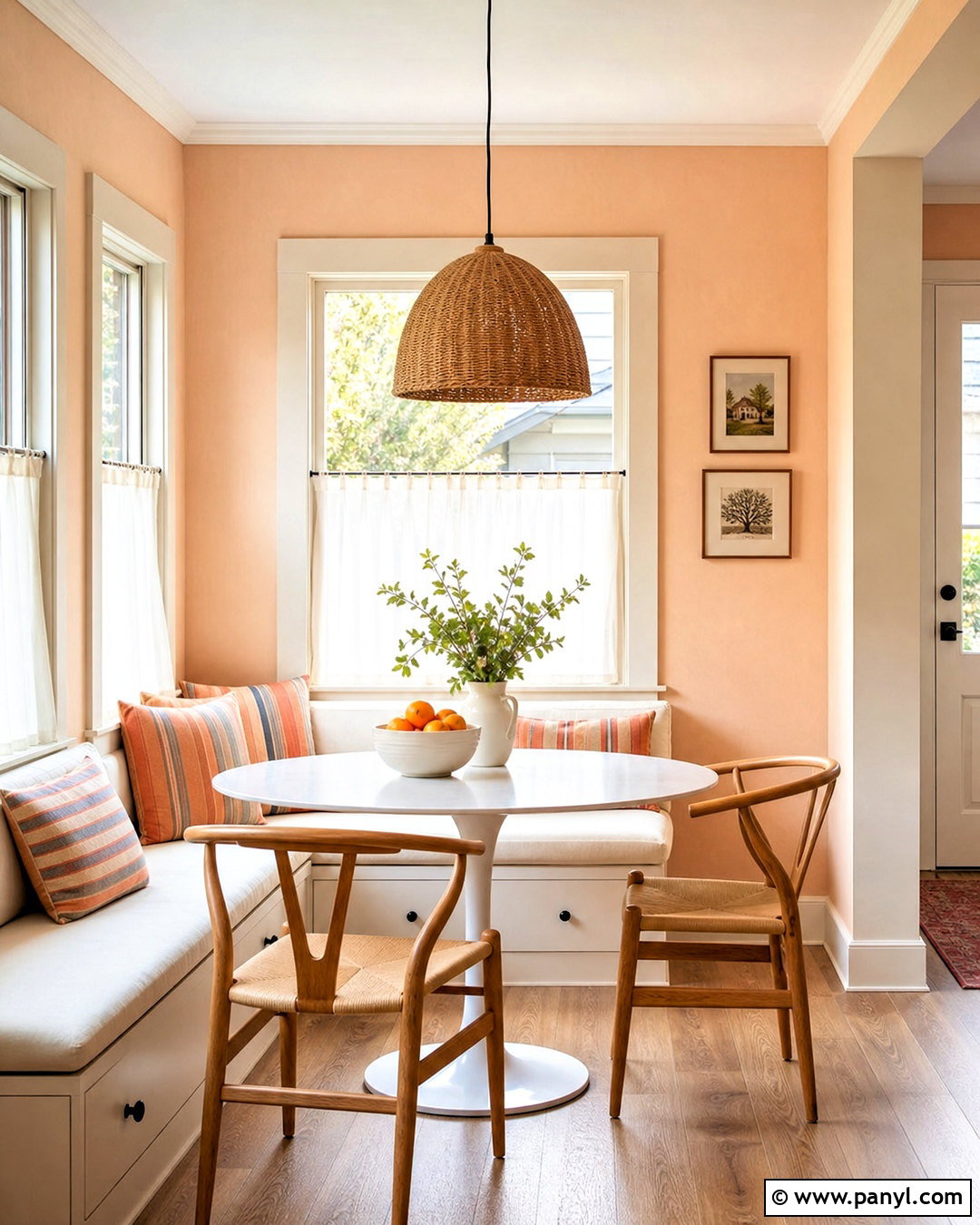
A pale peach wall can give a breakfast nook a sunny glow even when the space receives limited morning light. Select a soft shade with beige undertones and paint the entire nook, including any recessed wall around the seating. Pair it with a white pedestal table, curved oak chairs, and a built-in bench upholstered in cream fabric. Add striped cushions in peach, terracotta, and dusty blue to bring gentle contrast. A woven pendant and light wood flooring strengthen the relaxed atmosphere. Keep the window treatment simple with white linen café curtains. Small framed prints or a single shelf can decorate the wall without crowding it. The finished nook feels bright, cozy, and ready for casual meals or coffee.
20. Black Accent Wall Living Room
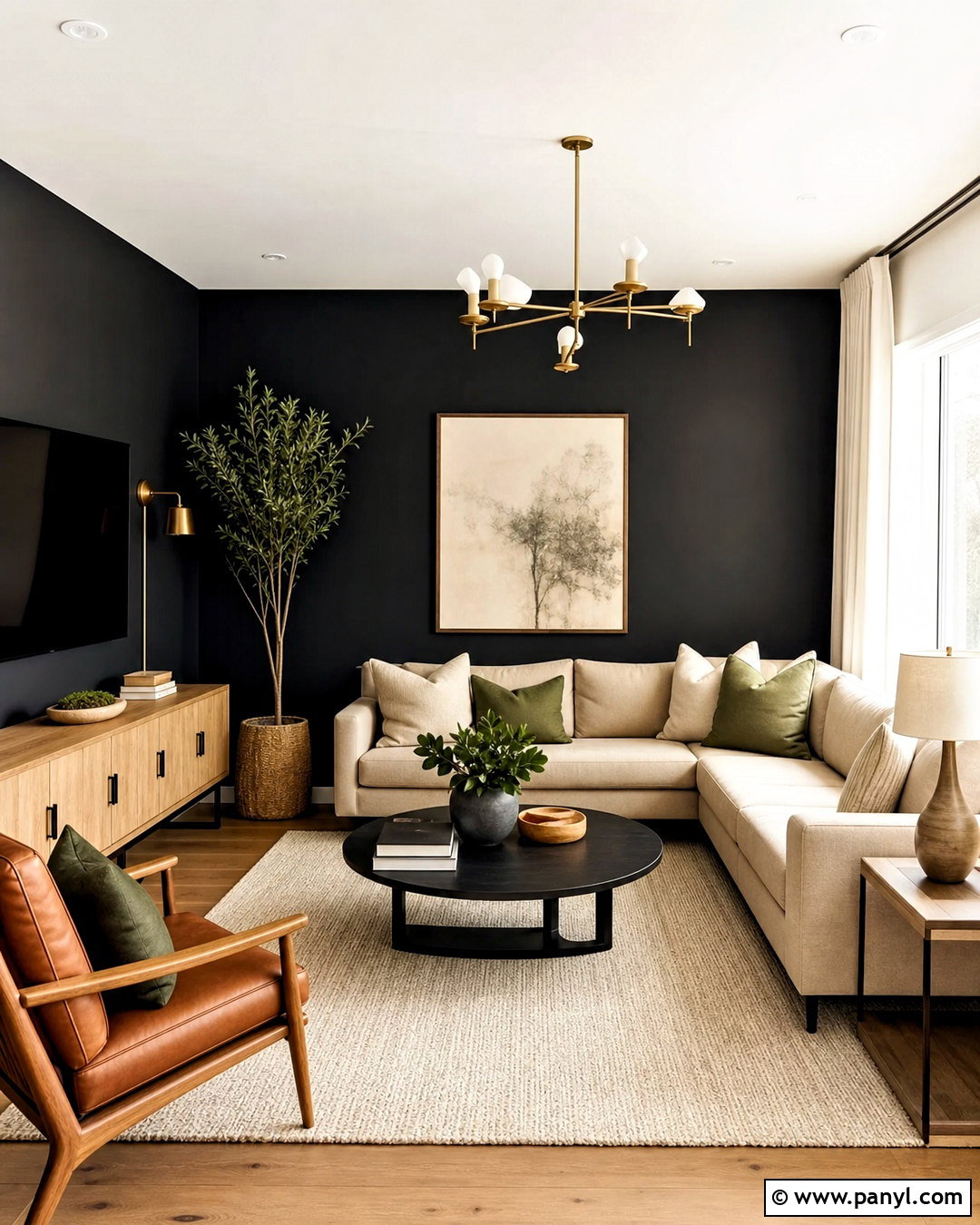
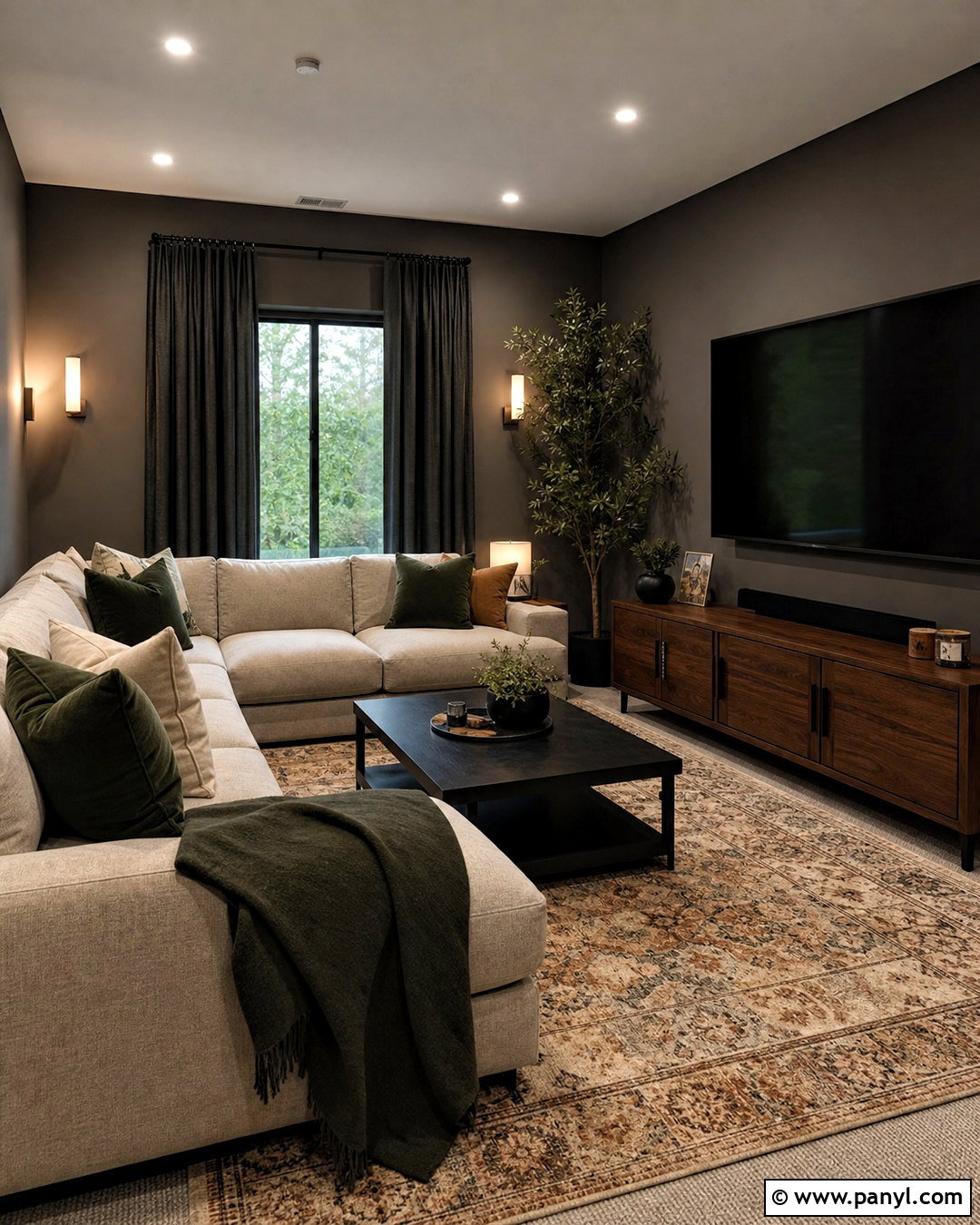
A black accent wall can make a living room feel modern and architectural when the surrounding scheme remains warm and inviting. Choose a soft matte black and use it on the main wall behind a low media console or sofa. Paint adjacent walls warm white and include pale oak furniture to prevent a stark monochrome effect. A beige sectional, textured ivory rug, and linen curtains will soften the contrast. Add cognac leather, muted green pillows, and large artwork with a light background. Use warm metal lighting rather than cool silver finishes. Good natural or layered artificial light is essential for preserving detail on the dark surface. The completed room looks bold and balanced, with the black wall serving as a deliberate anchor.
Conclusion:
Successful color wall ideas combine paint with furniture, lighting, flooring, textiles, and trim to create a complete room rather than an isolated feature. Begin with the mood you want, then consider the room’s size and natural light before selecting a shade. Dark navy, forest green, burgundy, and charcoal can build intimacy, while sky blue, peach, sage, and warm beige create a lighter impression. Earth tones such as terracotta, rust, olive, and chocolate add warmth without relying on bright primary colors. Test several large samples and view them in morning and evening light. Most importantly, repeat the chosen wall color through a few small accents so the finished scheme feels connected, comfortable, and intentional.

Related Ideas and Inspiration:
Leave a Reply