
Choosing the right wall color can change how your entire home looks and feels. These **20 wall paint color ideas** cover warm neutrals, calming greens, airy blues, rich earth tones, and dramatic dark shades. Each palette is designed as a complete room, with coordinated furniture, flooring, lighting, textiles, and finishes. Current color directions favor warm, nature-inspired hues, powdery blues, earthy neutrals, and deeper shades that create character without sacrificing comfort. () Before painting, test large samples on several walls and observe them during the morning, afternoon, and evening. Consider existing floors, cabinetry, countertops, and natural light rather than selecting color in isolation. Whether your style is modern, traditional, coastal, or cottage-inspired, you can create a cohesive home using these **20 wall paint color ideas**.

1. Warm White Wall Paint
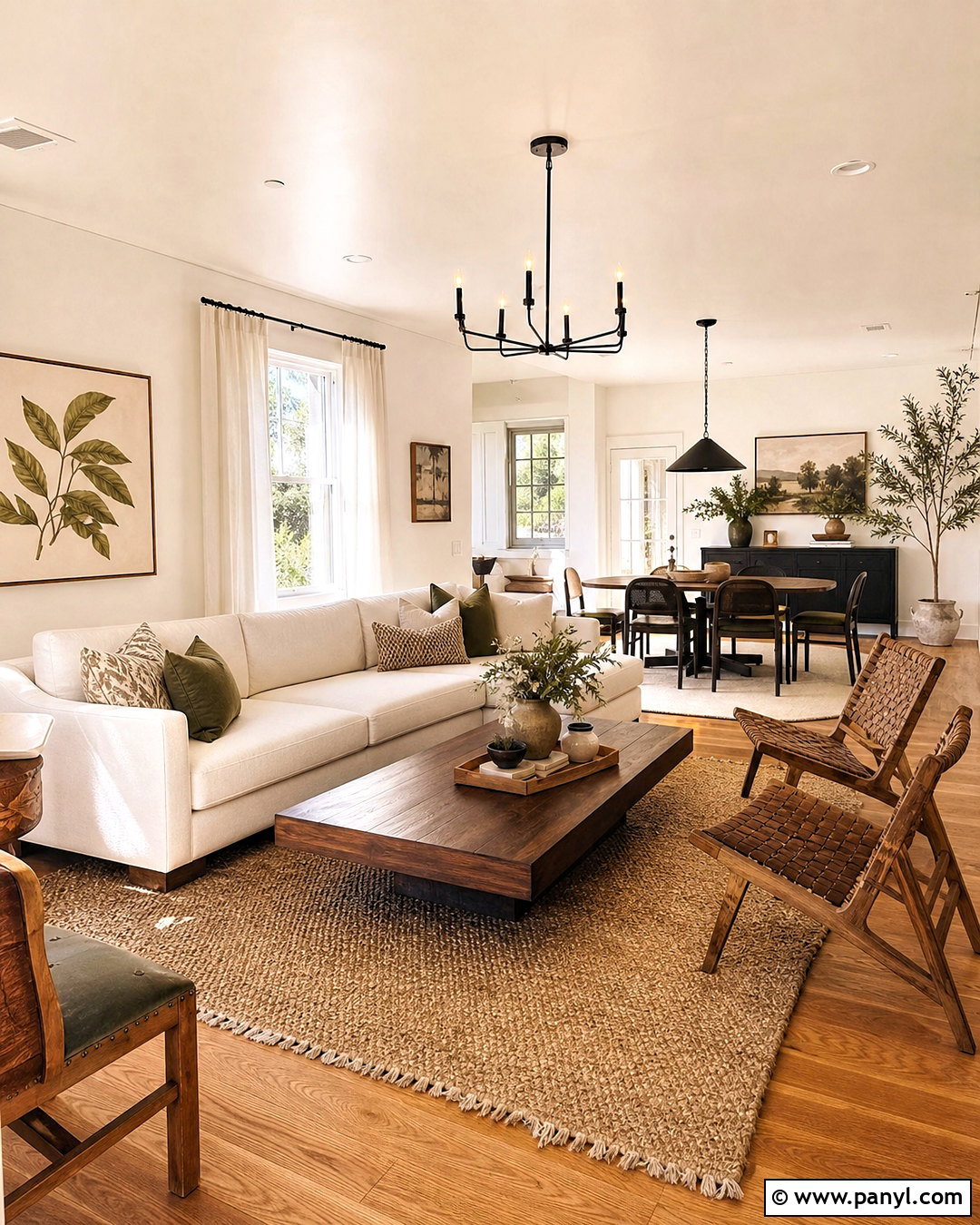
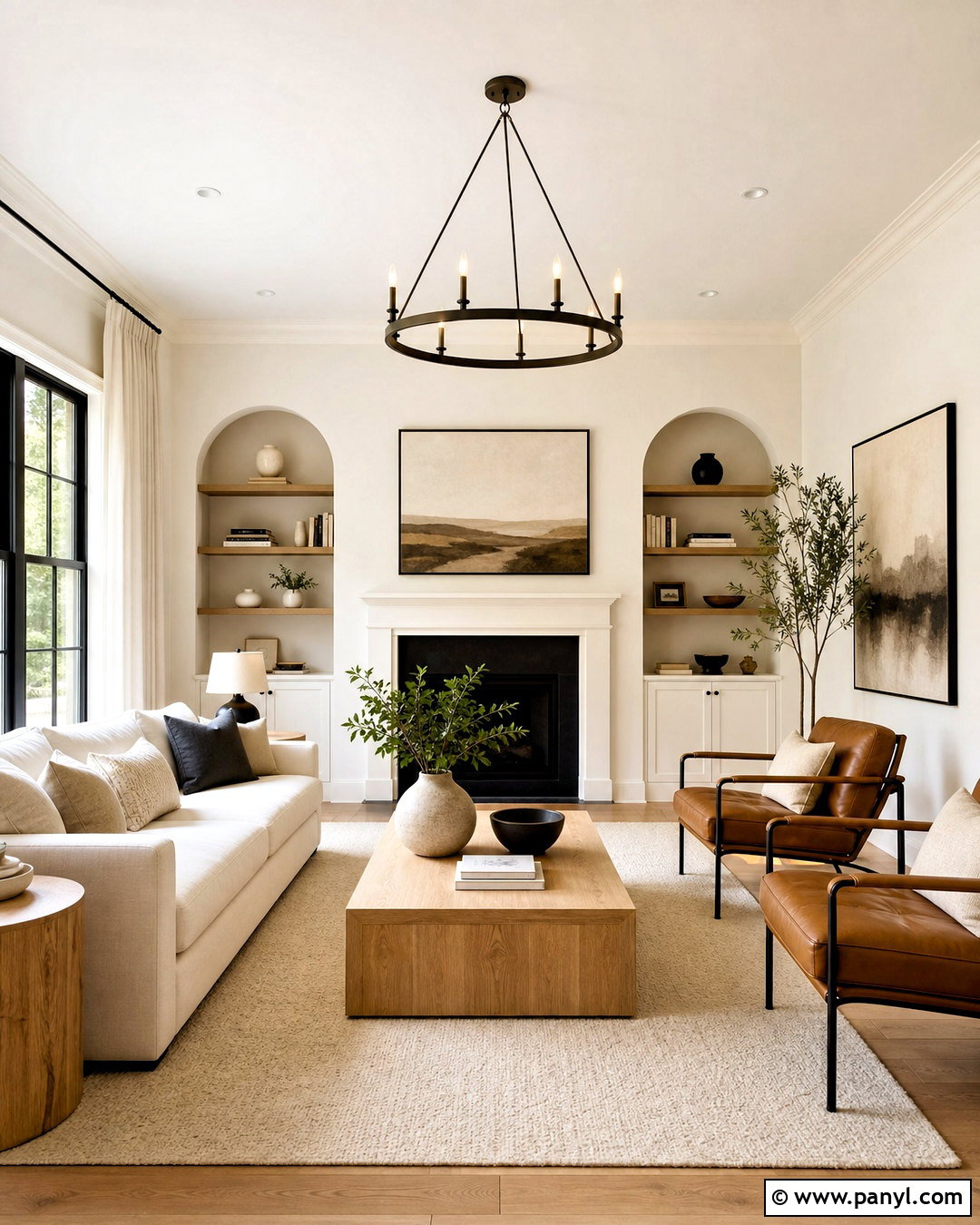
Warm white walls create a bright, welcoming foundation without making the room feel cold or unfinished. Use this color throughout an open living and dining area with medium oak flooring, creamy linen curtains, and a soft beige sectional. Add a walnut coffee table and woven accent chairs to introduce natural contrast. Matte black lamps and picture frames provide definition, while muted olive pillows keep the palette grounded. Choose a white with subtle cream or beige undertones rather than a sharp blue-white. Paint the trim in the same color using a satin finish for a smooth, modern transition. Warm white works especially well in rooms with northern light, where a cooler shade might appear gray. Finish the space with textured rugs, pottery, and simple botanical artwork.
2. Soft Greige Wall Paint
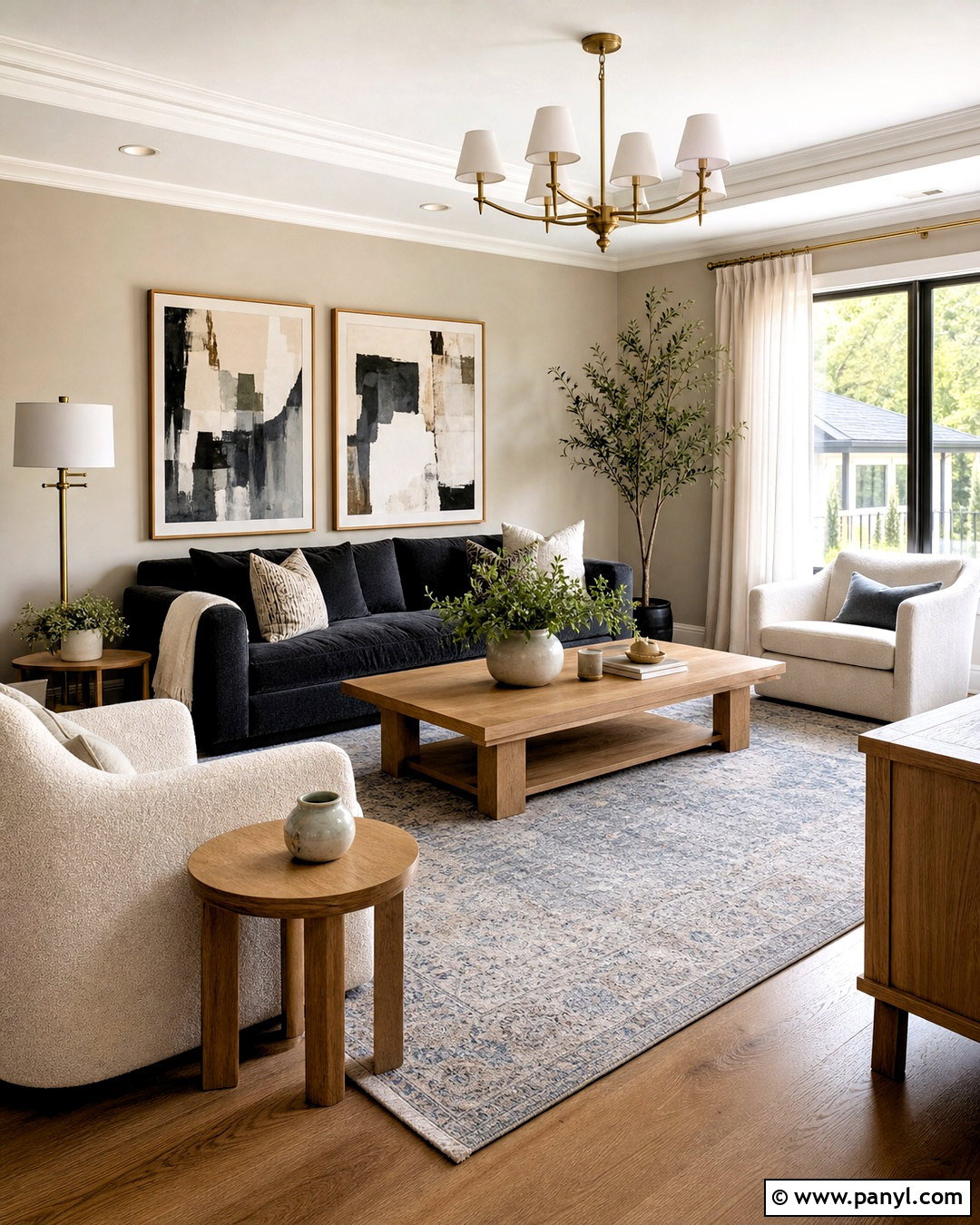
Can’t decide between gray and beige? Soft greige wall paint offers the balance of both, making it useful in rooms with mixed warm and cool finishes. Create a comfortable living room with pale greige walls, a charcoal sofa, natural oak furniture, and ivory boucle chairs. A faded blue and beige rug can connect the cooler upholstery with warmer wood tones. Use crisp warm-white trim to keep the edges fresh and add brushed brass lighting for gentle warmth. Greige is particularly practical in an open floor plan because it transitions easily between kitchens, hallways, and seating areas. Avoid pairing it with too many flat gray furnishings, which can drain the room of personality. Layer linen, wool, wood, ceramic, and greenery to make the finished space feel inviting and dimensional.
3. Mushroom Taupe Wall Paint
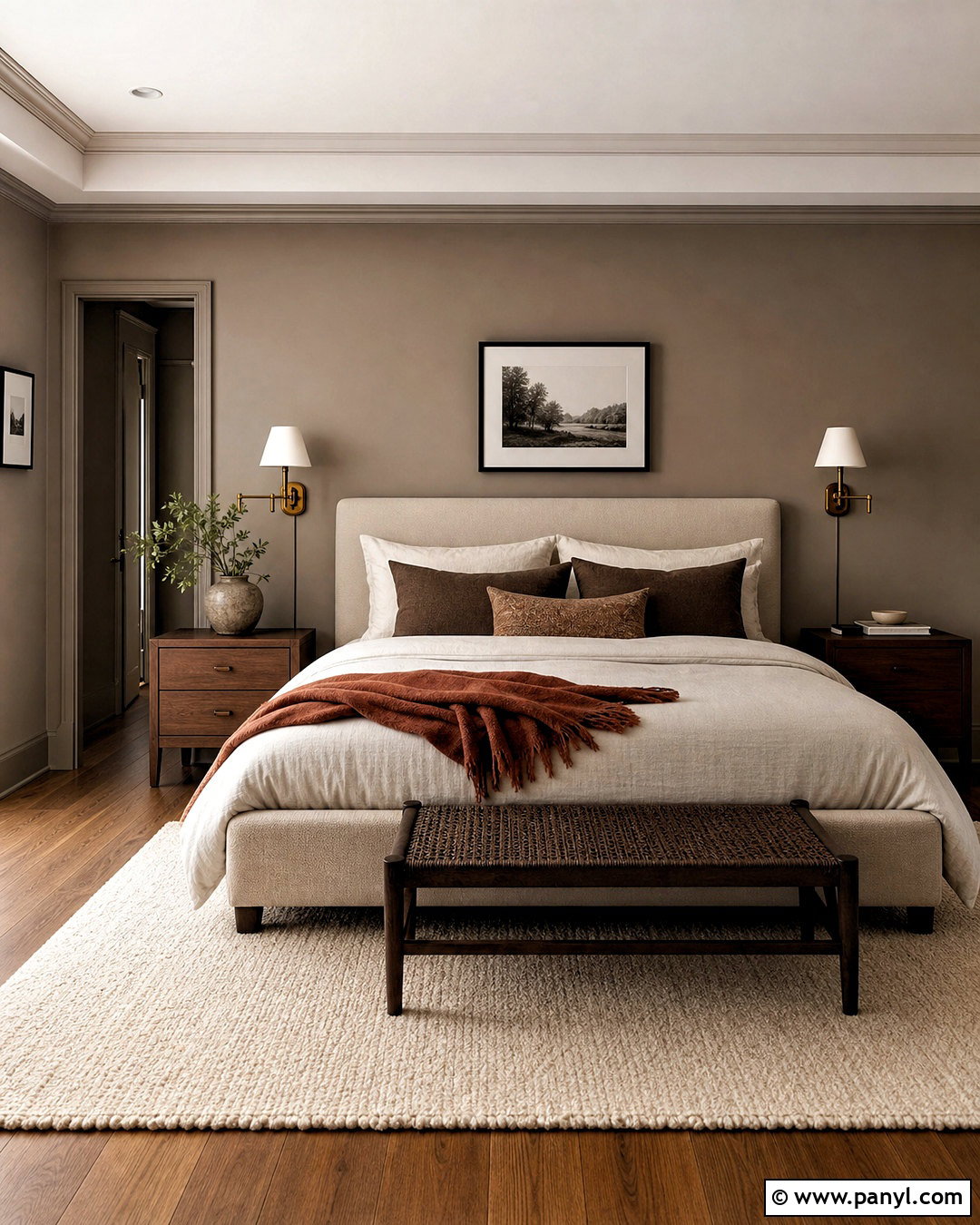
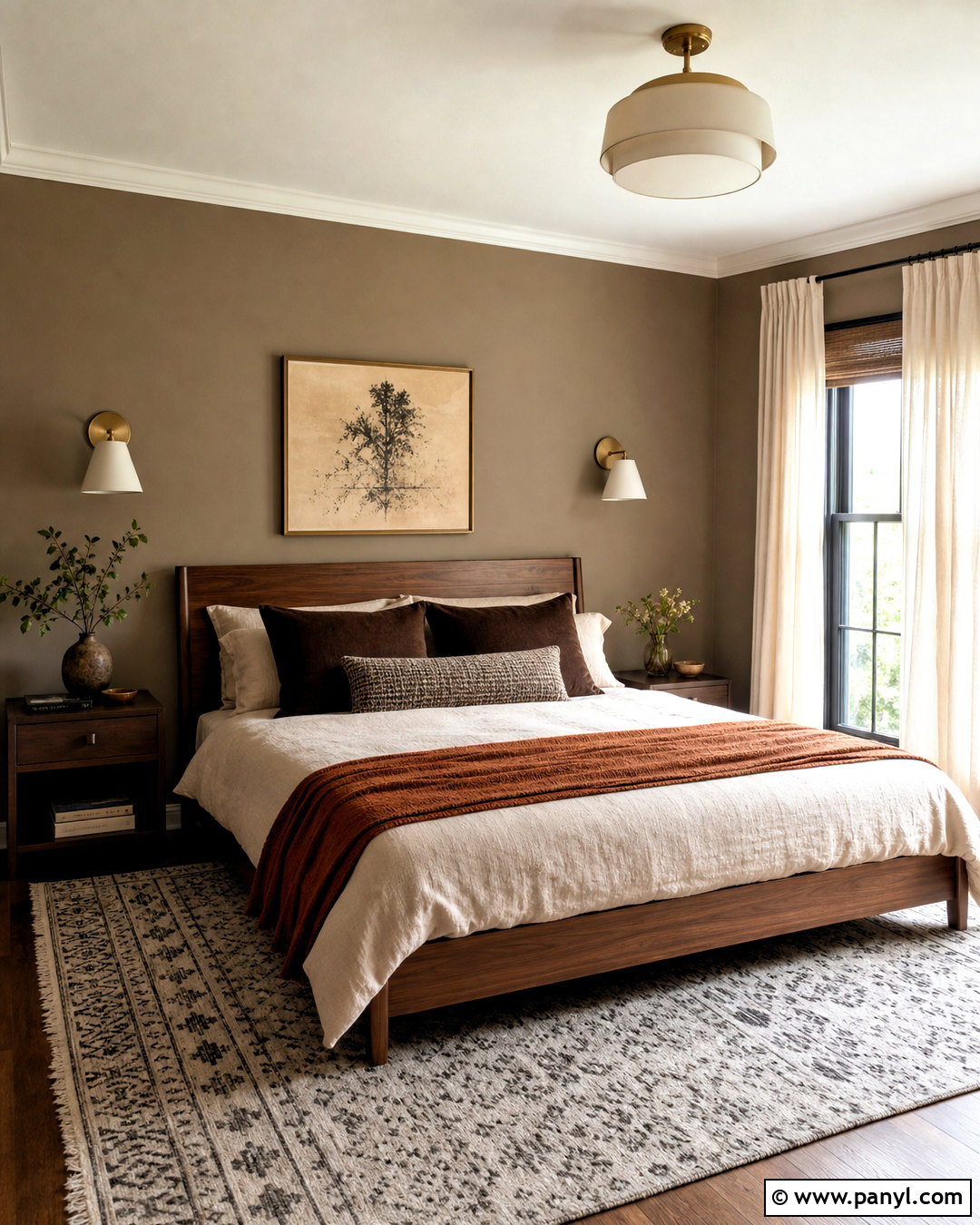
Mushroom taupe brings quiet depth to a bedroom while remaining softer than dark brown or charcoal. Cover the walls in a muted taupe with balanced gray and brown undertones, then introduce an oatmeal upholstered bed and walnut nightstands. Ivory bedding keeps the room light, while cocoa-colored pillows and a rust throw develop a cozy, tonal palette. Choose antique brass sconces instead of bright chrome fixtures to complement the earthy warmth. A light wool rug over medium wood flooring will soften the overall composition. For a seamless, enveloping look, paint the baseboards and doors in the same taupe using a slightly higher sheen. Keep artwork minimal and use black frames sparingly. This complete scheme feels sophisticated, restful, and suitable for contemporary or transitional homes.
4. Sand Beige Wall Paint
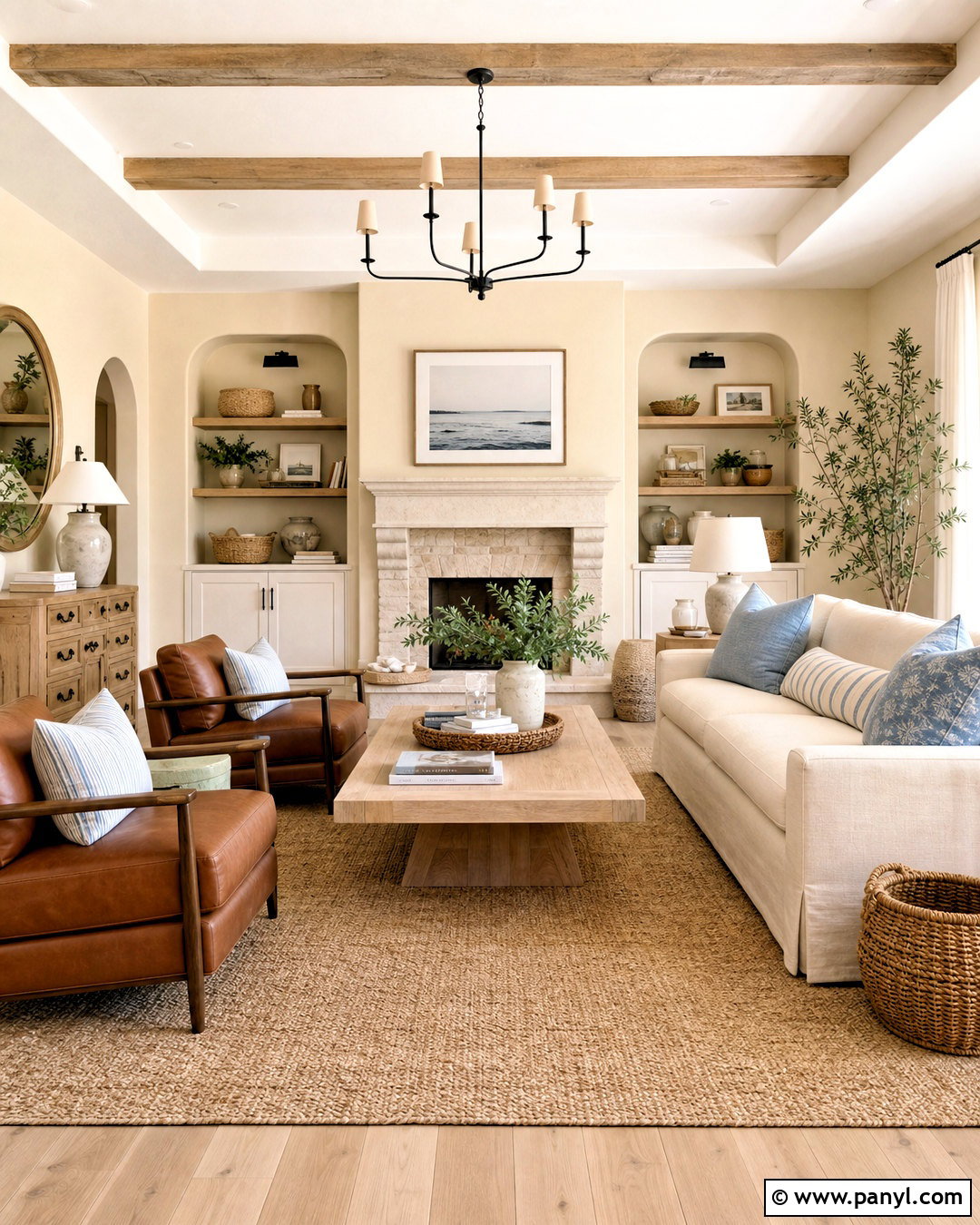
Sand beige walls can make a family room feel relaxed, sunny, and naturally connected to the outdoors. Select a beige with golden undertones and pair it with a deep cream sofa, light oak media console, and cognac leather armchairs. Bring in coastal influence through a jute rug, woven baskets, linen drapes, and pale blue pillows, but avoid overly themed decorations. White-painted trim and a limestone fireplace will give the warm wall color a clean architectural frame. Use larger furniture in simple shapes so the palette feels modern rather than dated. Black iron curtain rods and a sculptural floor lamp add small areas of contrast. Finish with driftwood-colored accessories, handmade ceramics, and leafy plants. The result is an easygoing room that feels warm throughout every season.
5. Caramel Tan Wall Paint
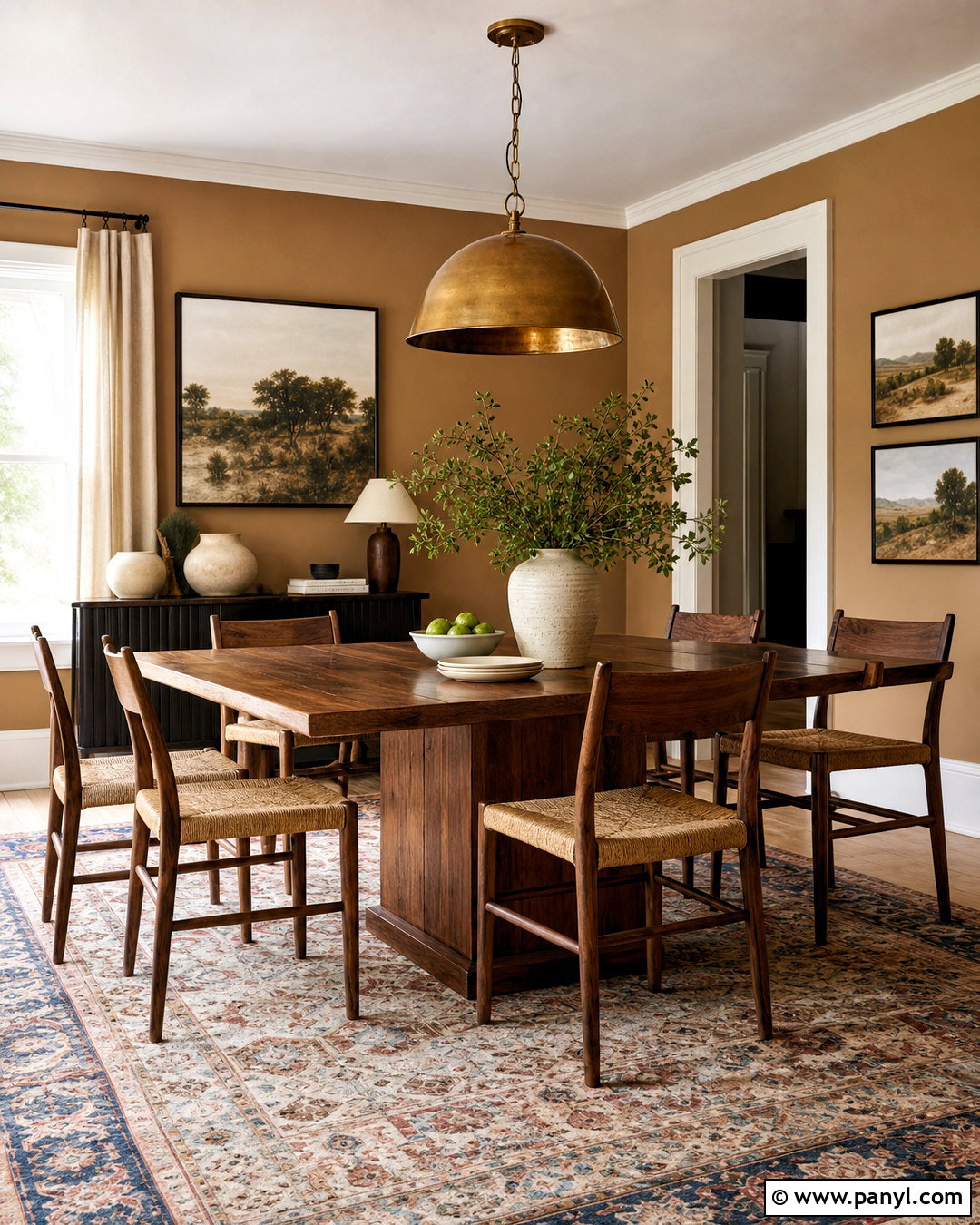
Rich caramel tan creates a warm dining room that feels intimate without becoming overly dark. Paint all four walls in a toasted tan and use creamy white on the ceiling to maintain brightness. Center the room around a solid walnut dining table with woven rush-seat chairs. A low-pile rug in ivory, rust, and muted blue adds pattern beneath the furniture while connecting the wall color to cooler accents. Hang an aged brass pendant above the table and choose linen curtains in a slightly lighter tan for tonal depth. Black-framed landscape artwork gives the walls definition, while off-white ceramic dishes brighten the table. This palette looks especially effective beside wood floors and traditional millwork. Keep decorative pieces edited so the strong color remains polished, calm, and easy to live with.
6. Sage Green Wall Paint
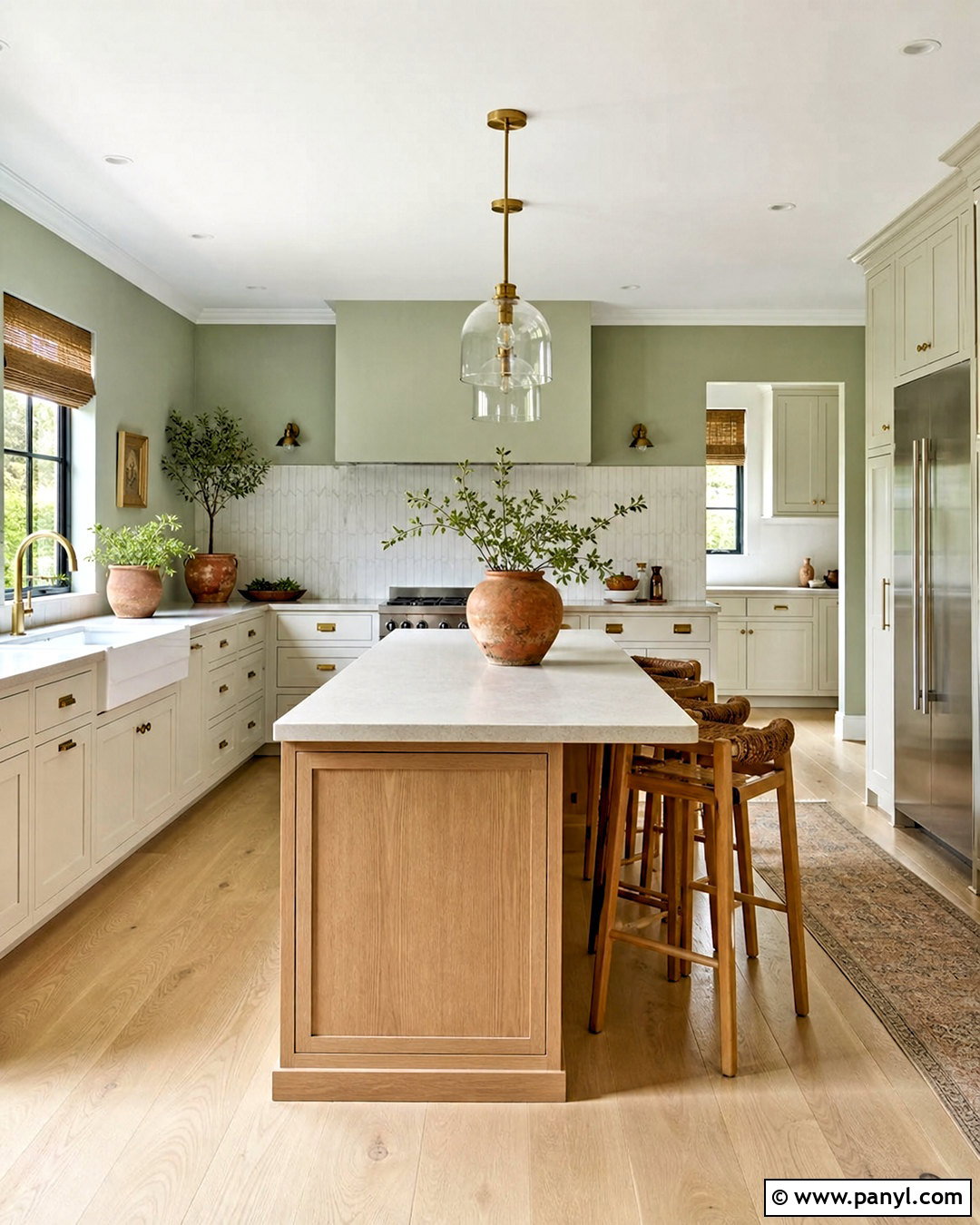
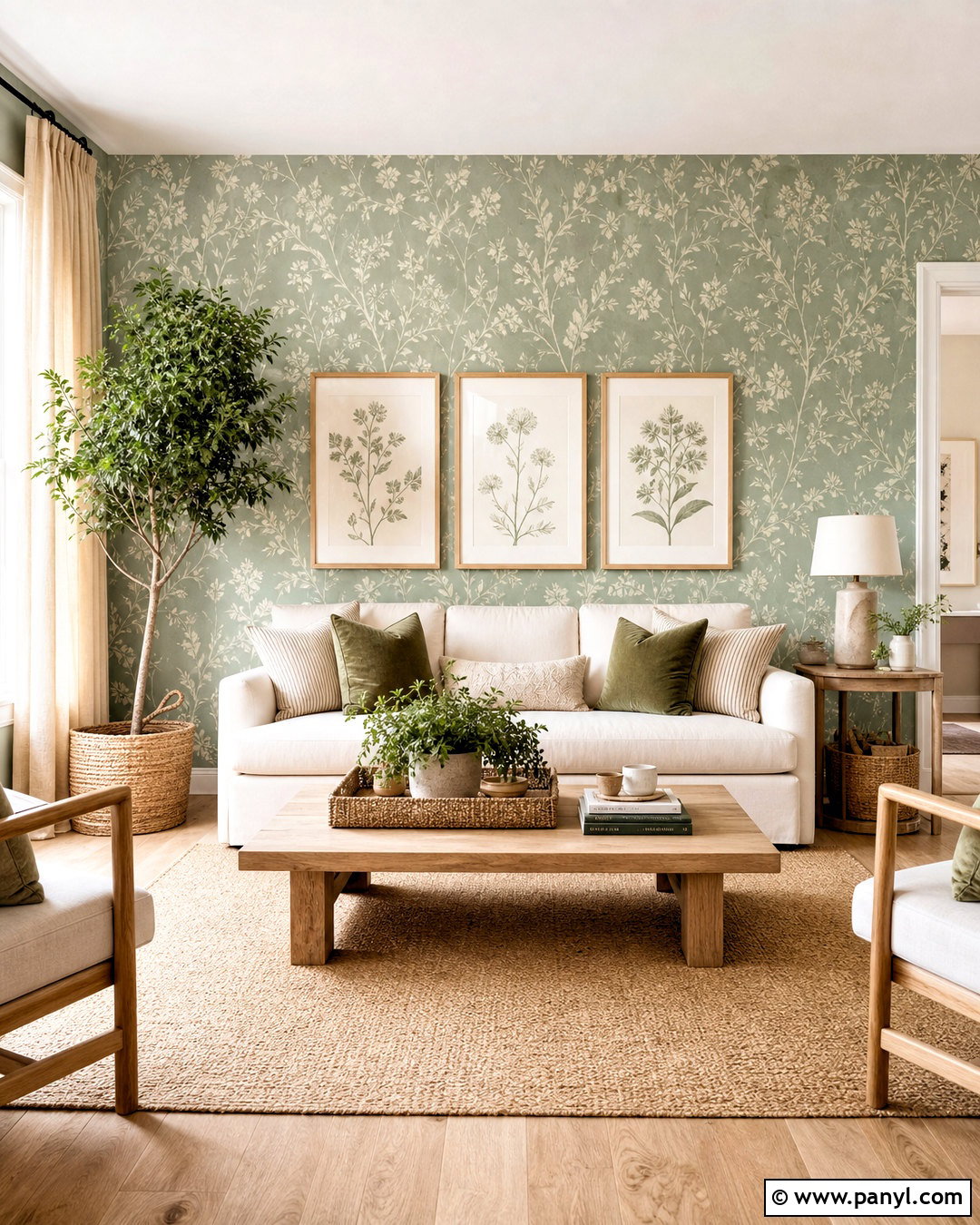
Soft sage green can turn a busy kitchen into a calm, connected gathering space. Use sage on the walls with warm white cabinets, honed cream quartz countertops, and a pale oak island. A backsplash of handmade off-white tile will reflect light while adding subtle surface variation. Choose aged brass cabinet pulls and simple glass pendants to reinforce the warm undertones. Natural wood stools, woven shades, and terracotta planters give the green an organic context. If the kitchen opens into another room, repeat sage through pillows, artwork, or pottery rather than painting every adjoining wall green. Keep appliances and prominent metal fixtures consistent, preferably stainless steel or brushed brass. The finished kitchen feels fresh and current, yet the restrained palette remains adaptable to changing furniture and accessories.
7. Olive Green Wall Paint
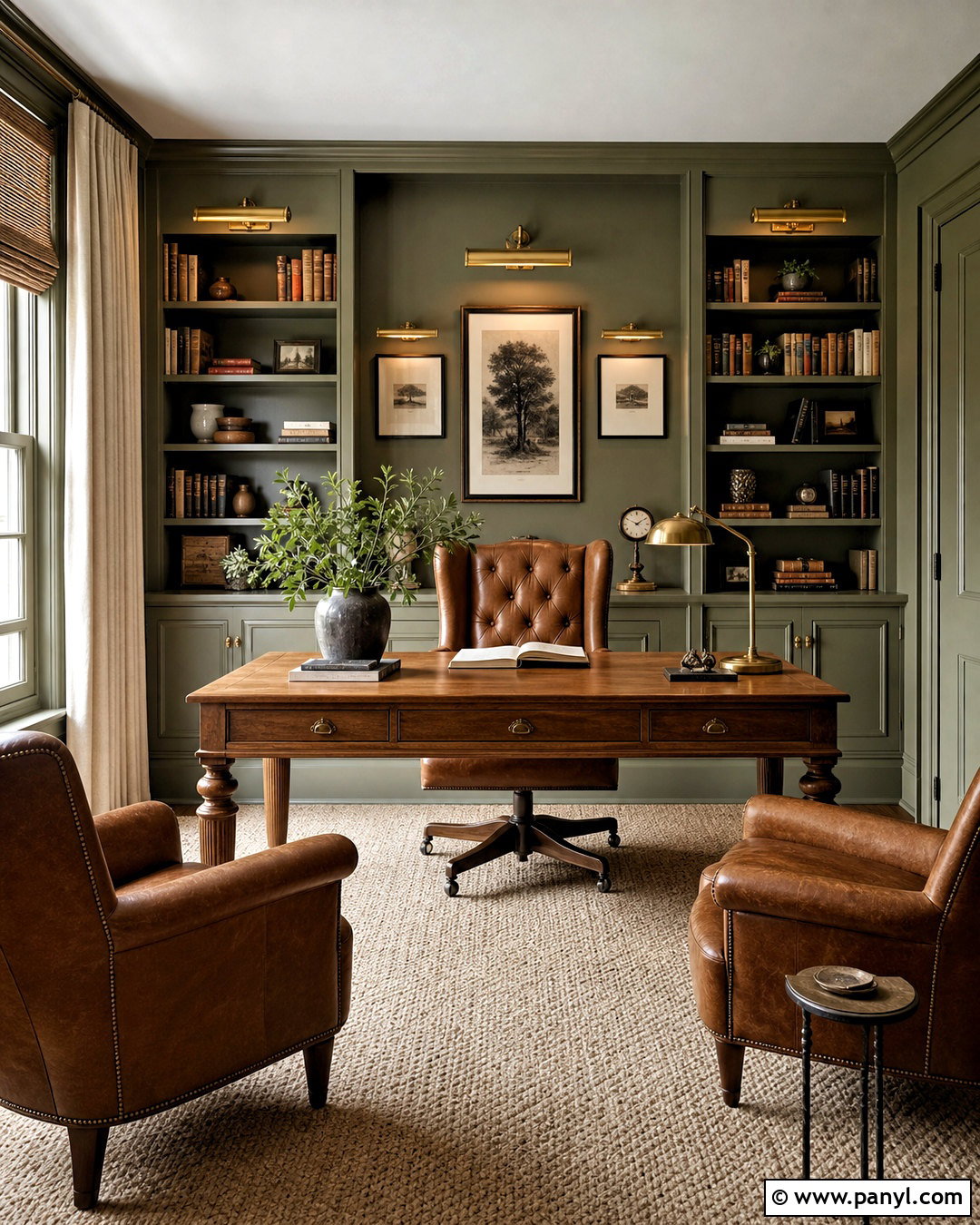
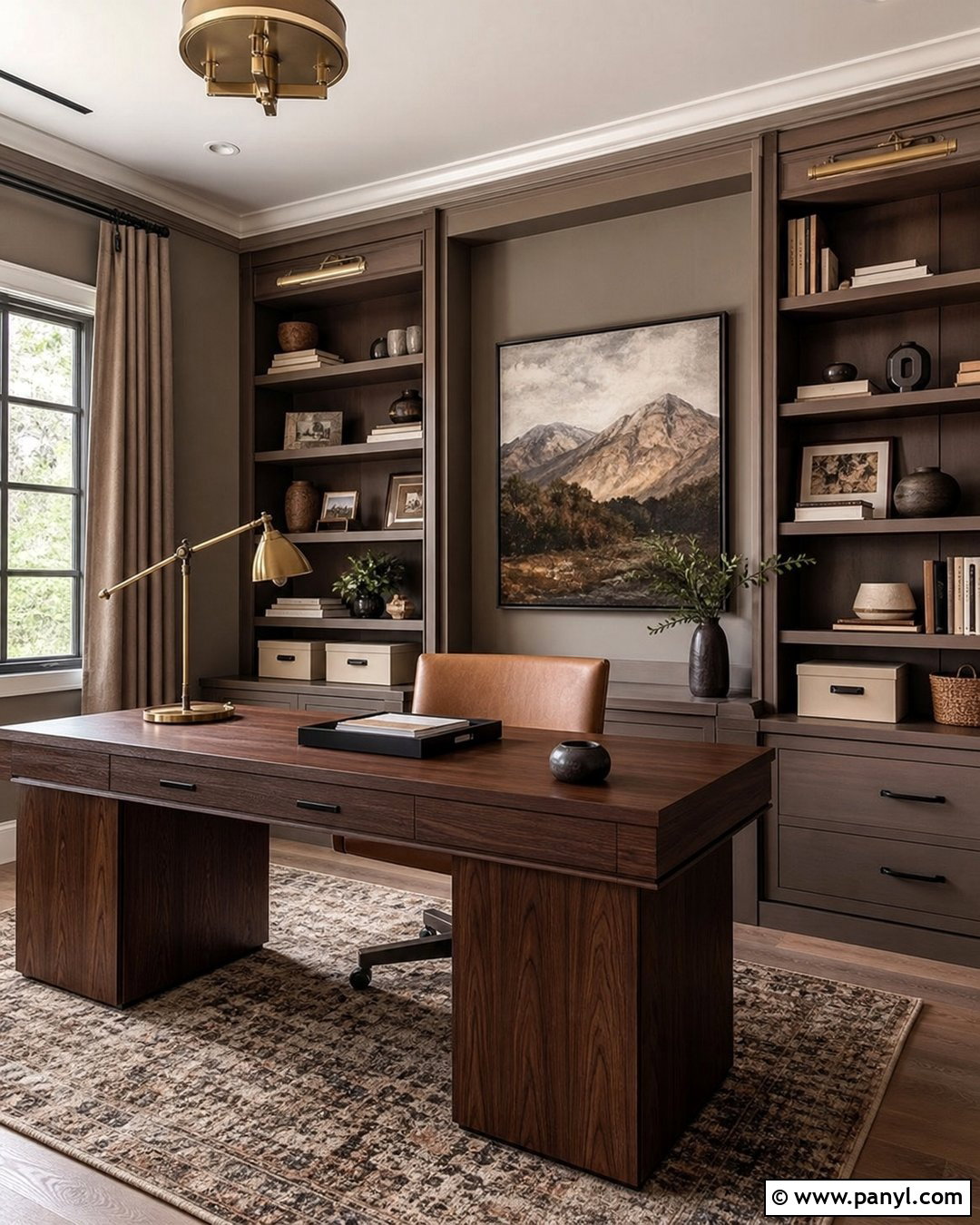
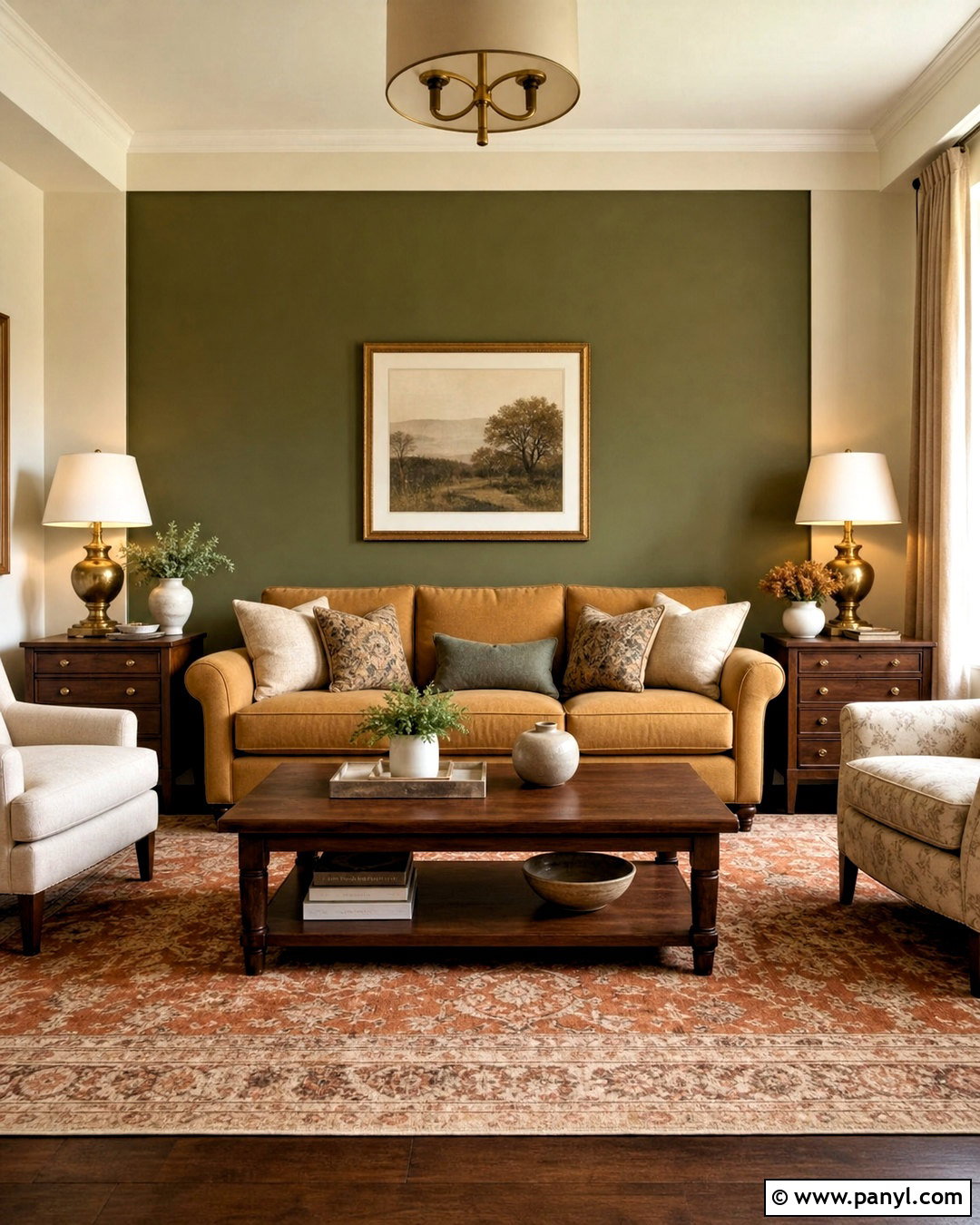
Olive green walls lend a library or home office a grounded, collected character. Paint the walls and built-in bookcases in the same muted olive, using matte paint on broad surfaces and satin on cabinetry. Balance the depth with a warm oak desk, camel leather chair, and cream wool rug. Add woven shades beneath ivory curtains so the windows feel layered but not heavy. Antique brass picture lights and desk accessories complement olive’s golden undertones, while black frames introduce sharper contrast. Organize books by size rather than color to keep the office natural and usable. A few rust, burgundy, or navy accents can deepen the traditional palette. This complete room works particularly well where focused tasks call for a more enclosed, calming atmosphere than an all-white office provides.
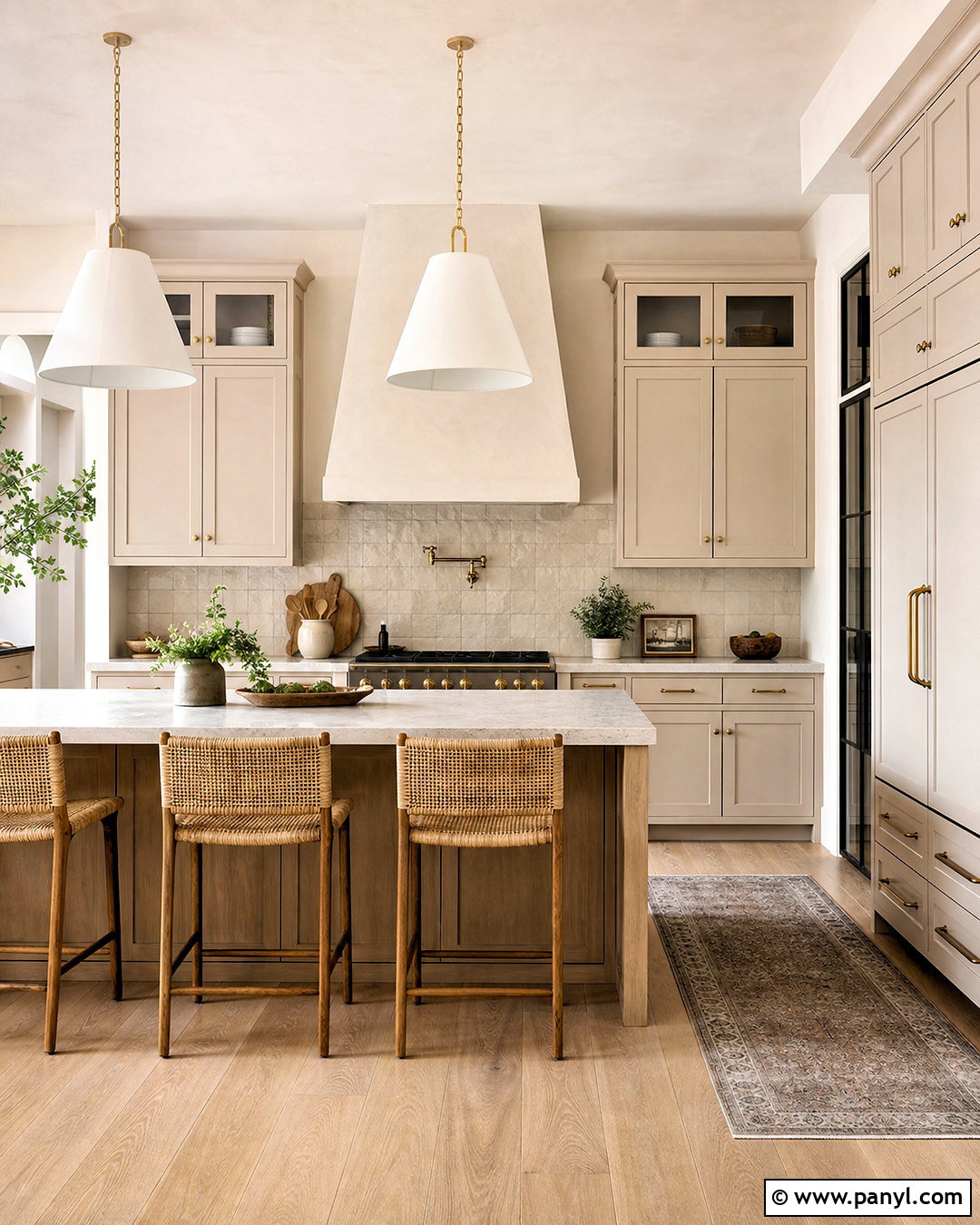
8. Eucalyptus Green Wall Paint
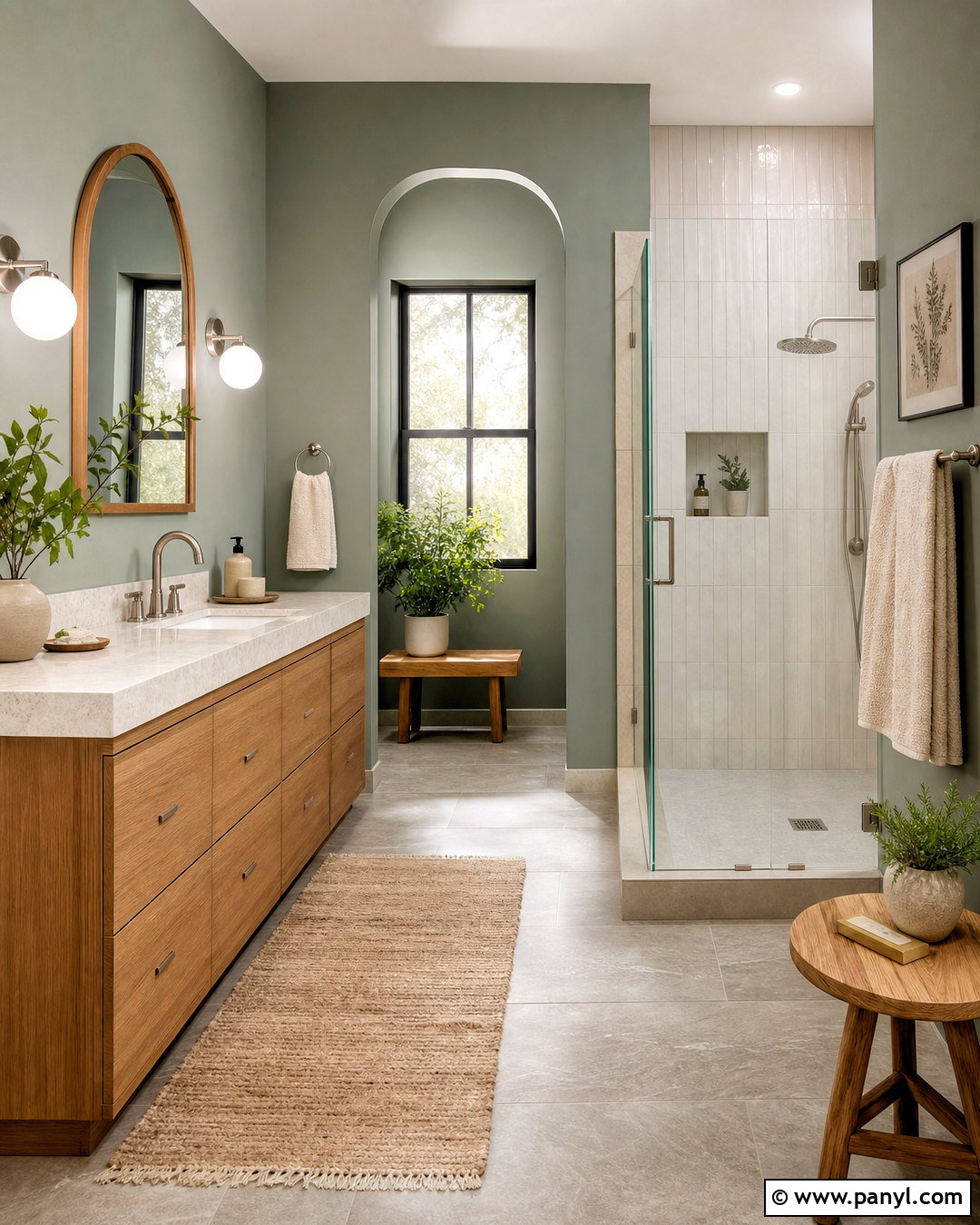
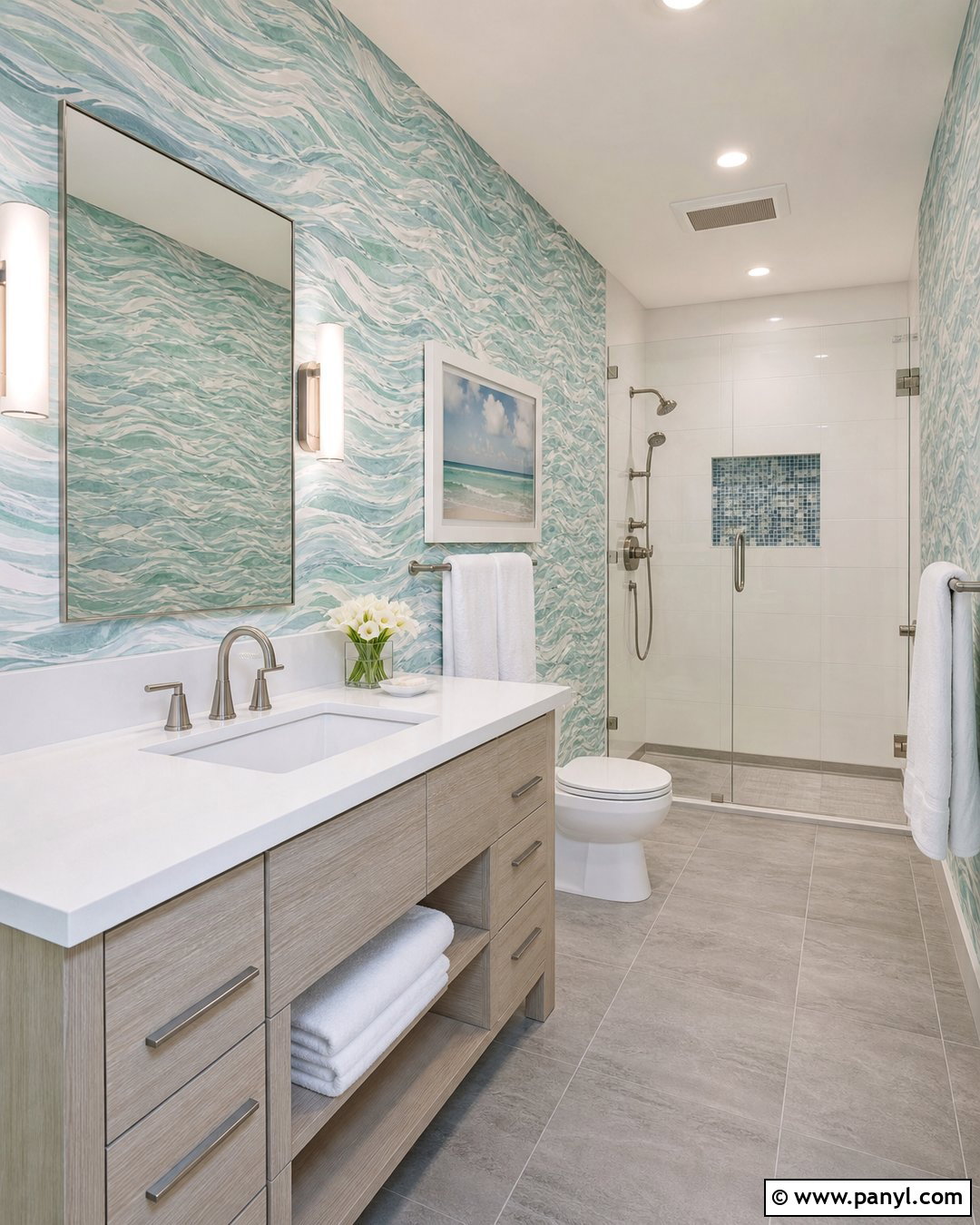
Muted eucalyptus green gives a bathroom a refreshing spa-like appearance while feeling warmer than mint. Cover the upper walls in this dusty green and use creamy white vertical tile around the shower and lower walls. Select a light oak vanity with a pale stone countertop, brushed nickel faucets, and simple globe sconces. Stone-look porcelain flooring in warm gray will bridge the green walls and white tile without adding distracting pattern. Hang an arched wood-framed mirror above the vanity and use thick towels in ivory, sage, and soft beige. A small teak stool and leafy plant complete the natural palette. Keep storage baskets and countertop accessories coordinated to prevent visual clutter. The resulting bathroom feels clean and relaxing, with enough warmth and texture to avoid a clinical appearance.
9. Powder Blue Wall Paint
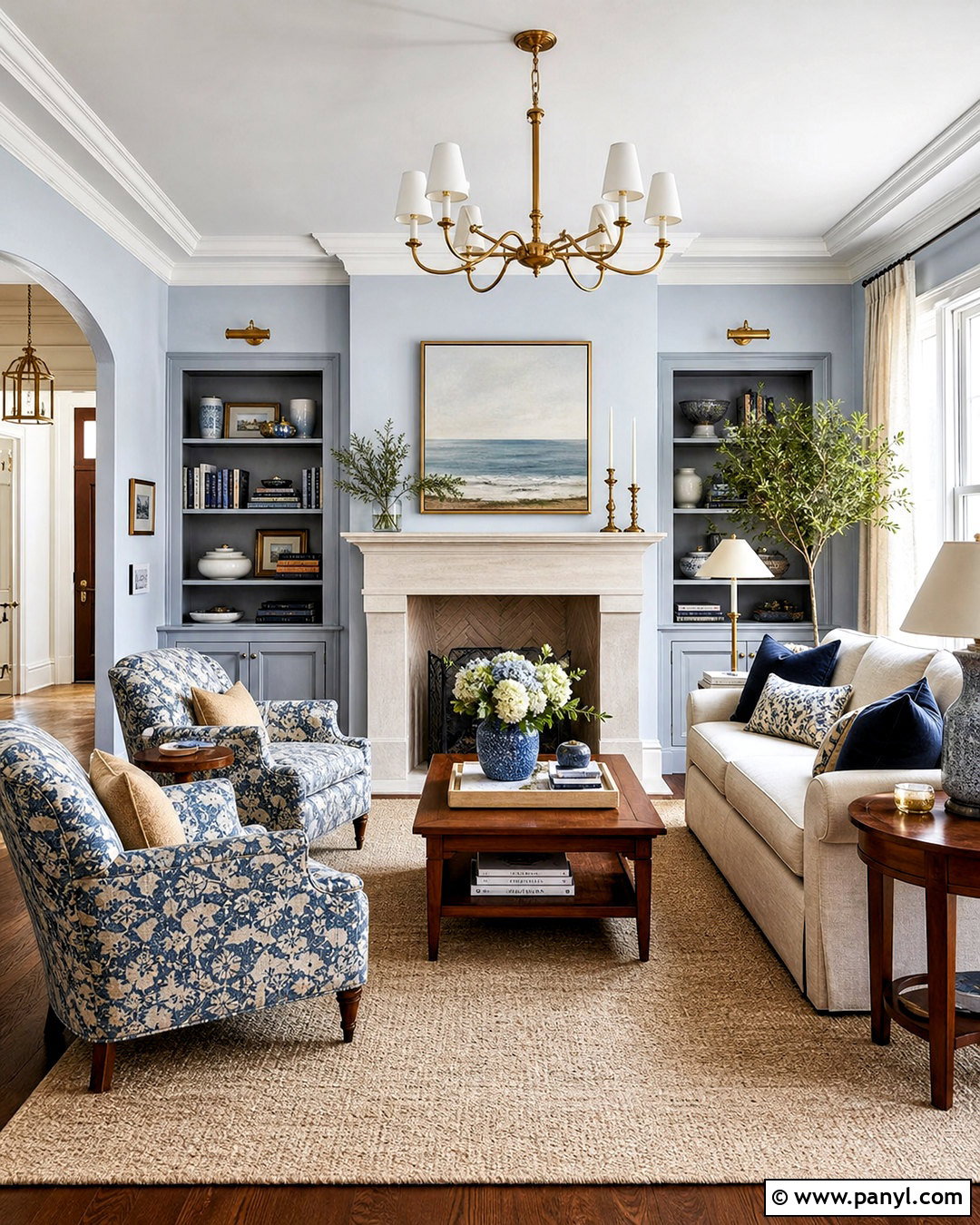
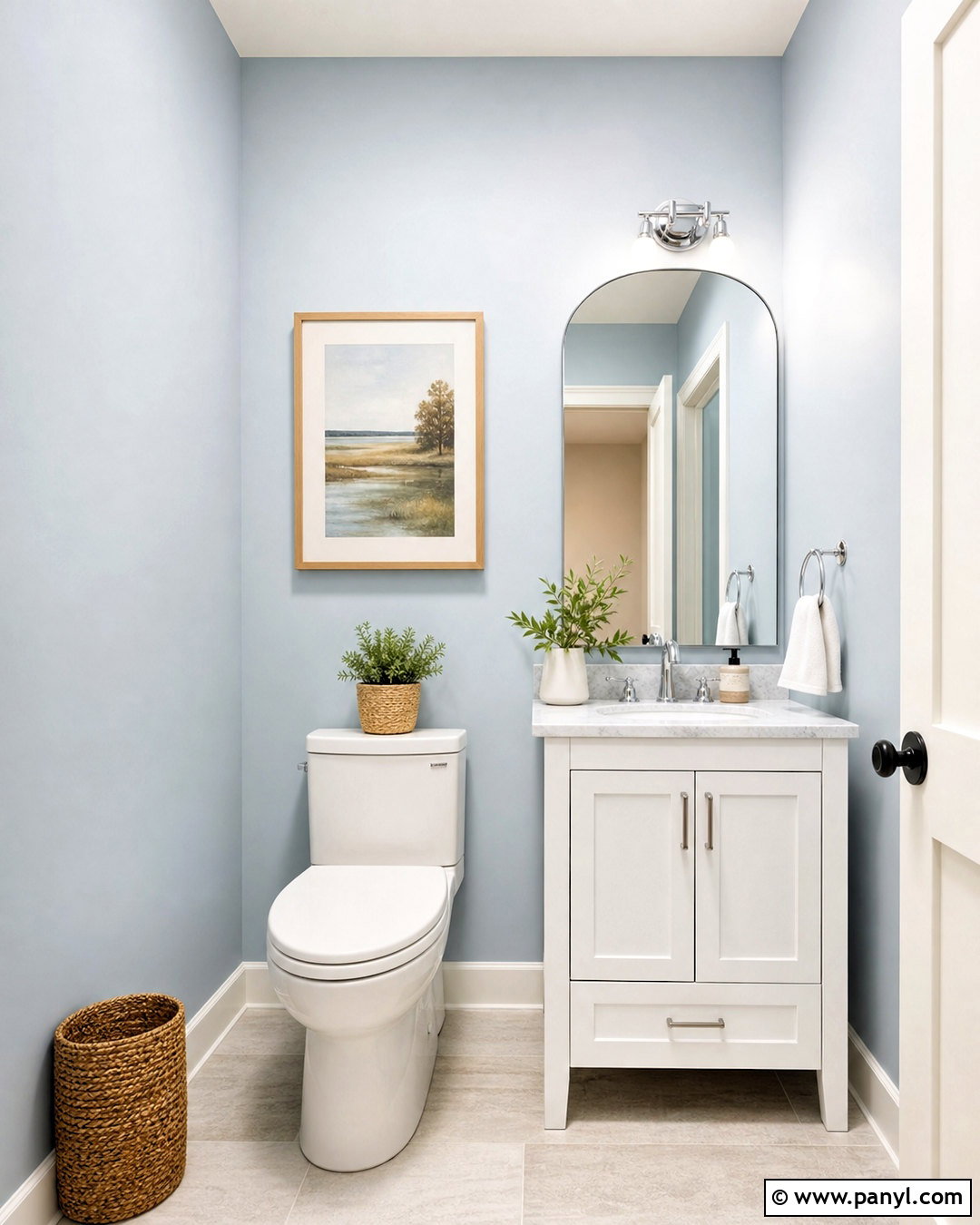
Powder blue walls make a living room feel airy, polished, and more colorful than a basic neutral. Choose a soft blue with a slightly gray undertone, then pair it with an ivory sofa and medium walnut tables. Incorporate patterned chairs featuring blue, tan, and cream to give the room a finished, layered appearance. Warm white trim, a pale stone fireplace, and natural linen curtains will stop the scheme from feeling chilly. Brass lighting introduces warmth, while navy pillows create enough contrast to define the lighter blue walls. Use a large beige wool rug to anchor the seating arrangement and soften hardwood flooring. Powder blue works beautifully in both traditional and coastal rooms when the styling remains restrained. Avoid excessive nautical accessories and let the coordinated materials create the atmosphere.
10. Dusty Blue Wall Paint
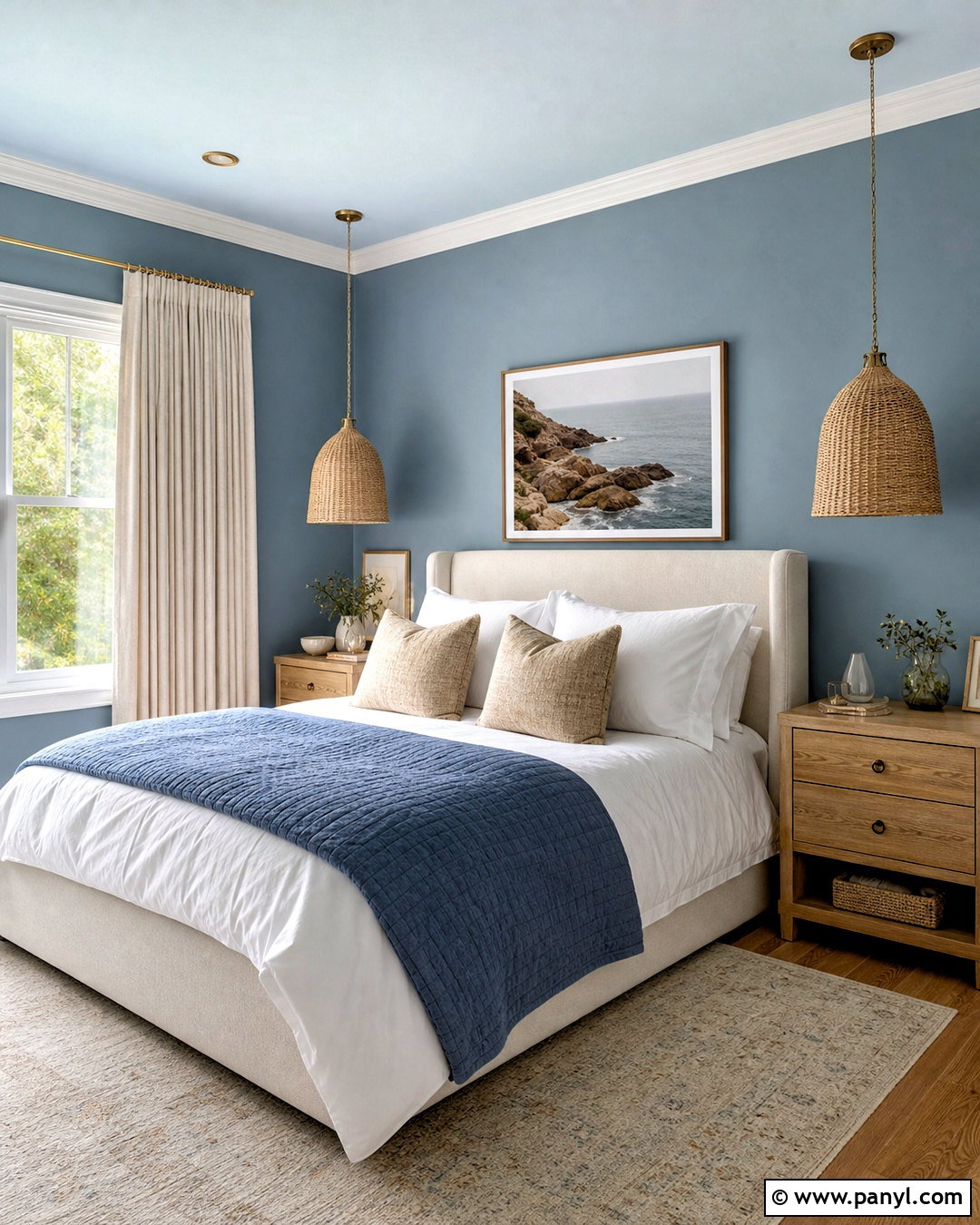
A dusty blue bedroom offers softness and depth without the intensity of navy. Paint the walls in a medium blue softened by gray, then use an ivory upholstered bed to create a clear focal point. Layer white sheets, a slate blue quilt, and warm beige pillows for a balanced combination of cool and warm tones. Natural oak nightstands and woven pendant lights prevent the room from appearing formal or cold. Hang oatmeal curtains from ceiling height to make the windows look larger, and place a cream rug beneath the bed. Small accents in aged brass add warmth without dominating the peaceful palette. Consider painting the ceiling a very pale blue-white for a gentle transition. The finished bedroom feels serene, comfortable, and suitable for modern coastal, transitional, or relaxed farmhouse interiors.
11. Deep Navy Wall Paint
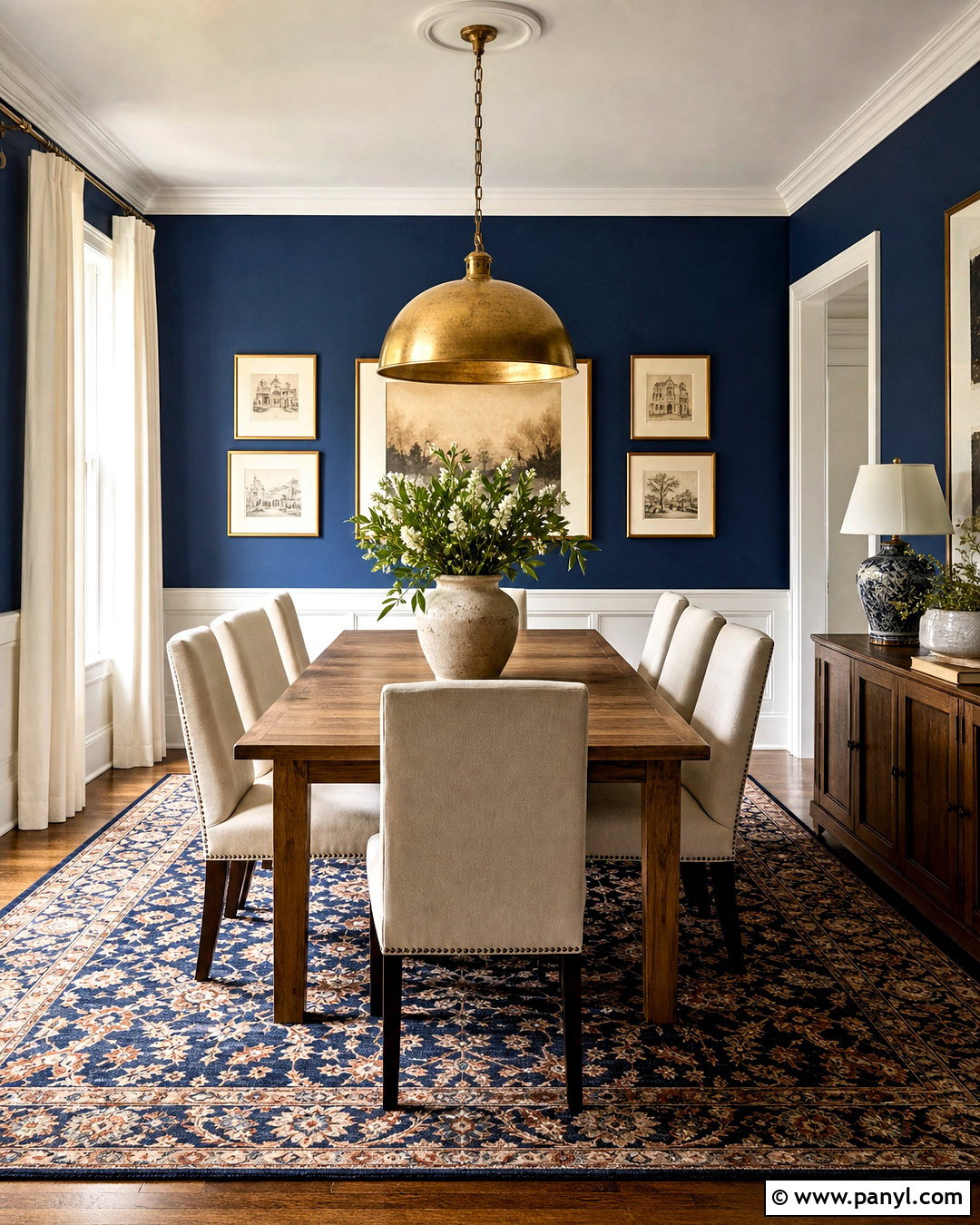
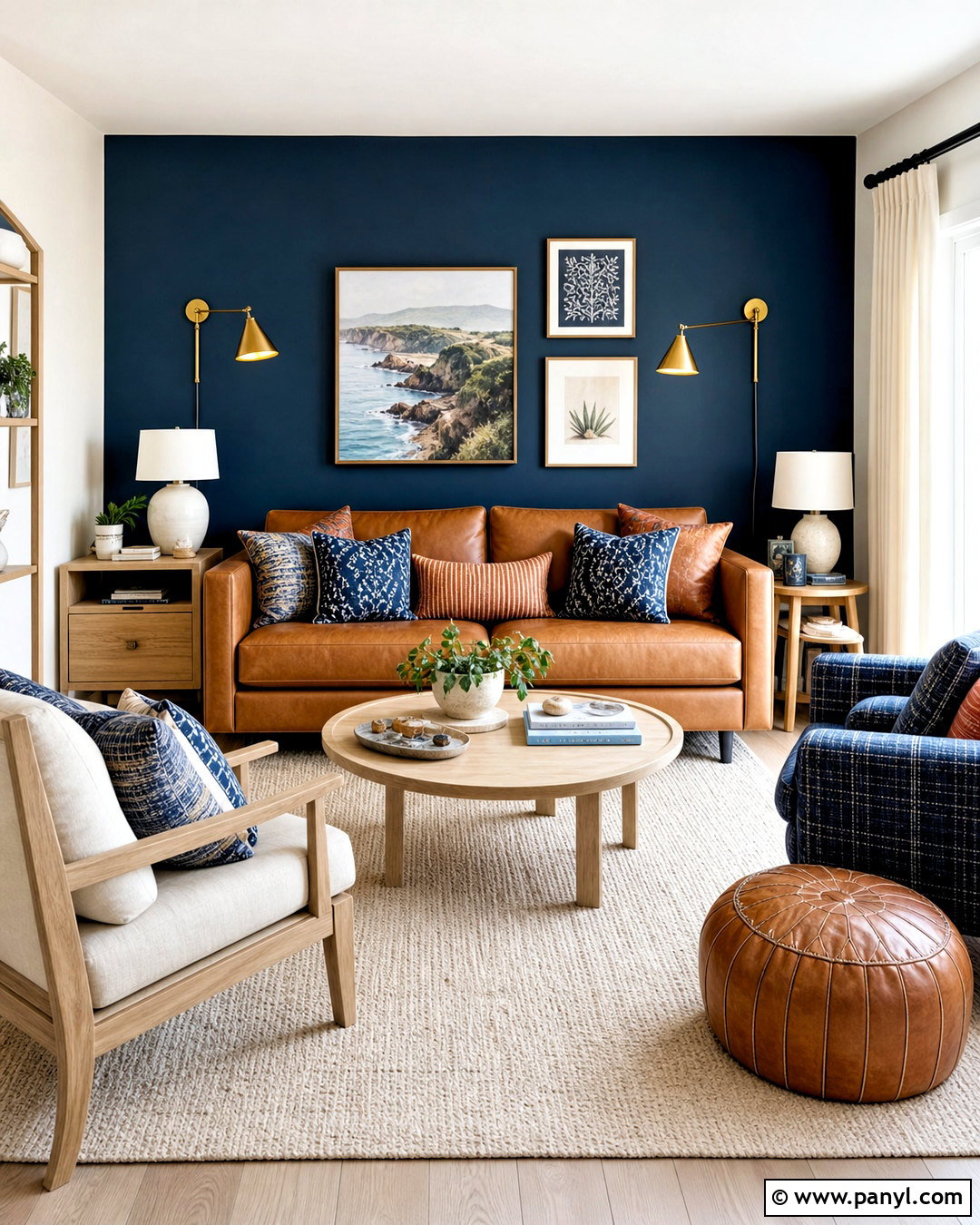
Deep navy can transform a dining room into a dramatic but highly livable space. Apply navy to every wall rather than limiting it to one accent surface, then use bright warm white on the ceiling and trim. A medium oak table and cream upholstered chairs will stand out clearly against the dark background. Introduce aged brass through a wide pendant, curtain hardware, and narrow picture frames. Full-length ivory curtains soften the contrast and reflect available daylight. A patterned rug containing navy, rust, and beige ties the complete palette together beneath the table. Choose artwork with generous light areas so it remains visible against the saturated paint. For evening balance, install several warm light sources instead of relying on one overhead fixture. The room will feel intimate, tailored, and intentionally designed.
12. Slate Blue Wall Paint
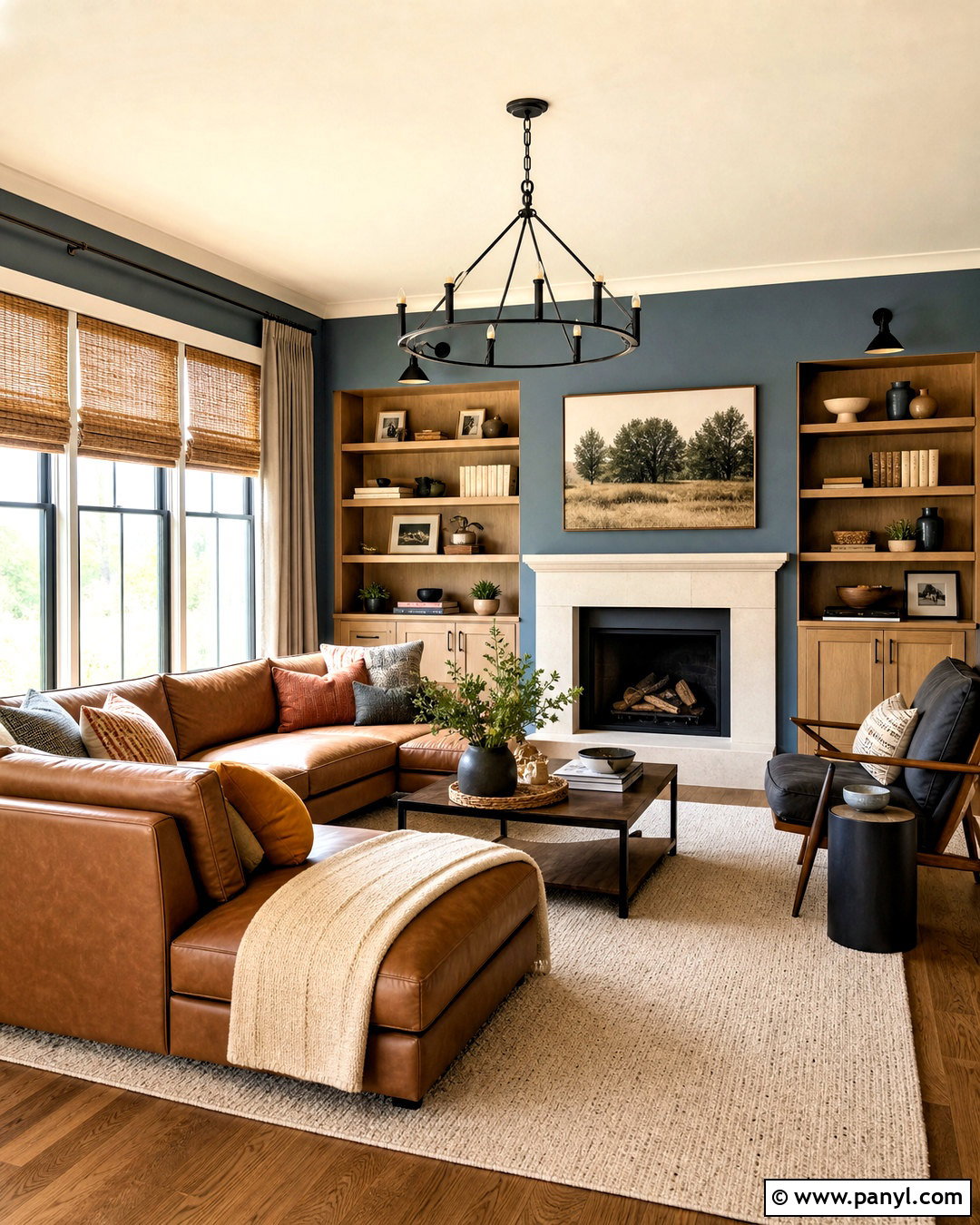
Slate blue walls can bring structure and quiet color to an open family room. This blue-gray shade works best when balanced with warm materials, so combine it with a camel leather sectional, oak shelving, and a cream textured rug. Add rust and muted mustard pillows for contrast without turning the room overly colorful. Paint the fireplace surround in a warm off-white or finish it with pale limestone to brighten the central focal point. Black metal lighting and curtain rods echo the cool depth of the walls, while woven shades add warmth around the windows. Keep the ceiling a soft white to preserve an open feeling. Slate blue is especially effective with medium-toned hardwood floors. The completed scheme feels comfortable and substantial, with enough color to make simple furniture appear thoughtfully selected.
13. Charcoal Gray Wall Paint
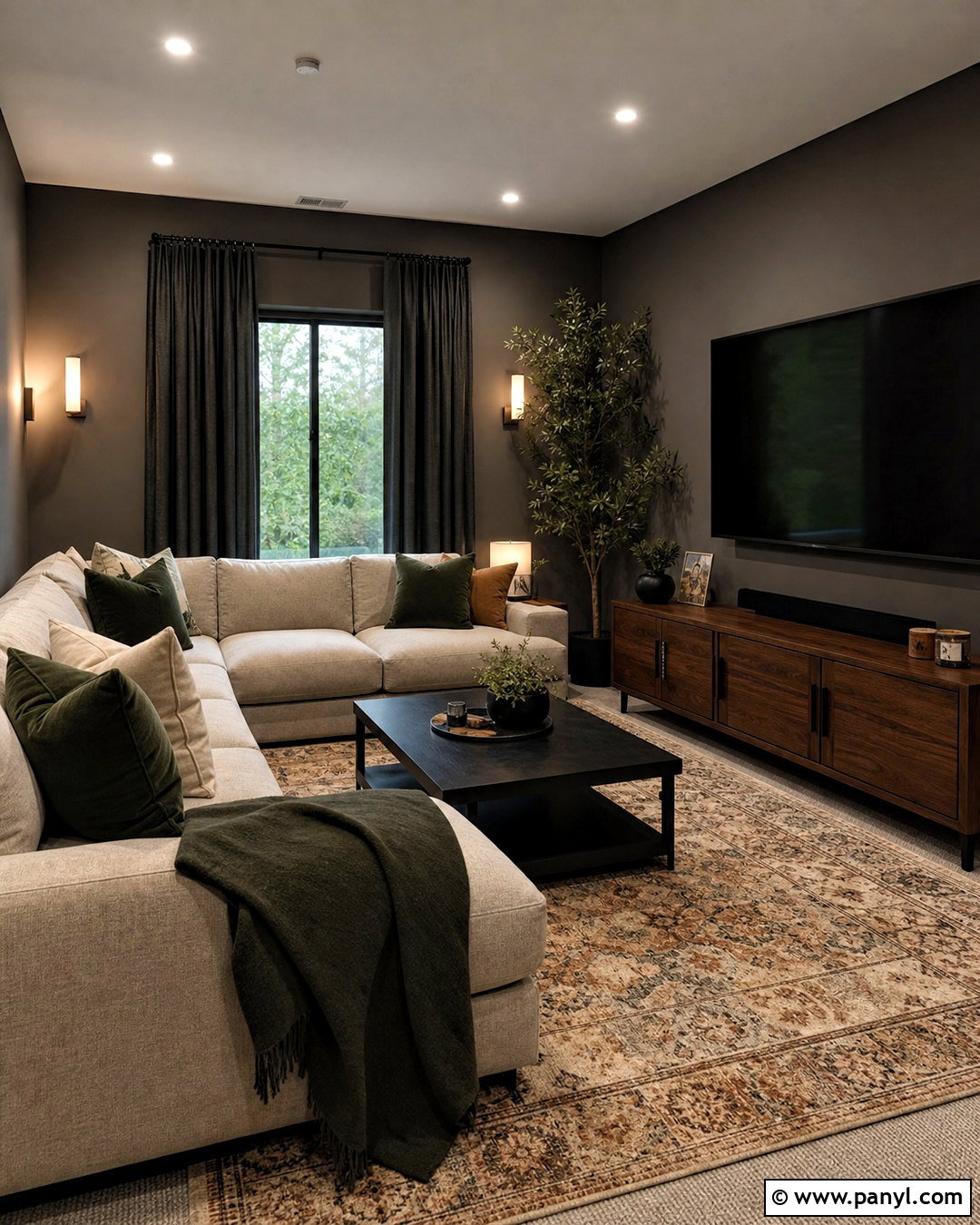
Charcoal gray creates a striking media room where screens, speakers, and dark electronics blend into the design. Paint the walls in a soft charcoal with warm undertones and keep the ceiling one shade lighter to prevent the space from feeling compressed. Add a large oatmeal sectional, walnut media cabinet, and low black coffee table. Layer the seating with deep green, camel, and cream pillows to break up the neutral furniture. Use blackout linen curtains in a similar charcoal tone for an uninterrupted backdrop during viewing. Wall sconces with brass or bronze finishes provide controlled lighting and warm visual contrast. A vintage-inspired rug containing gray, beige, and rust will anchor the seating area. This balanced approach produces a cozy room that feels purposeful rather than dark, stark, or overly masculine.
14. Terracotta Wall Paint
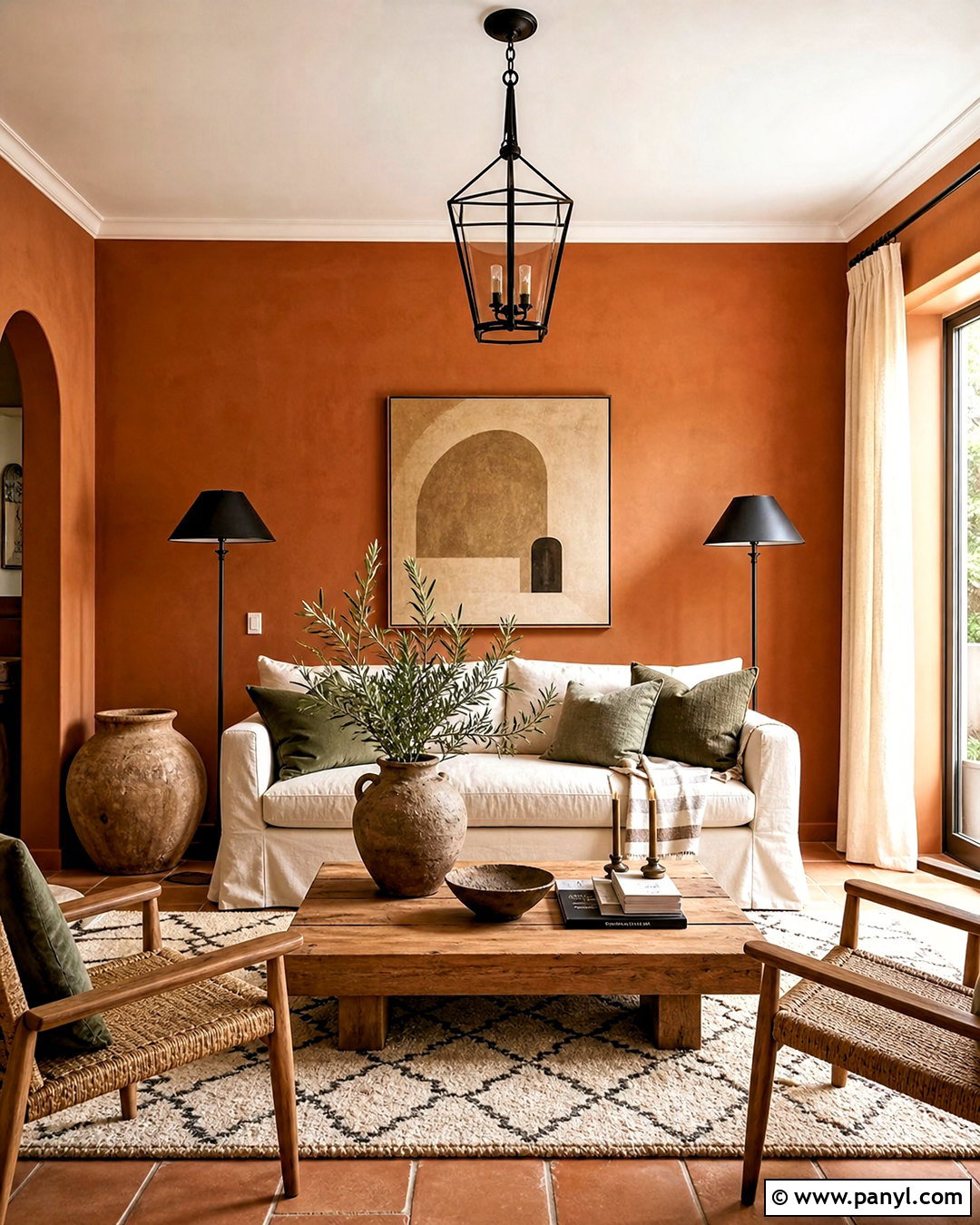
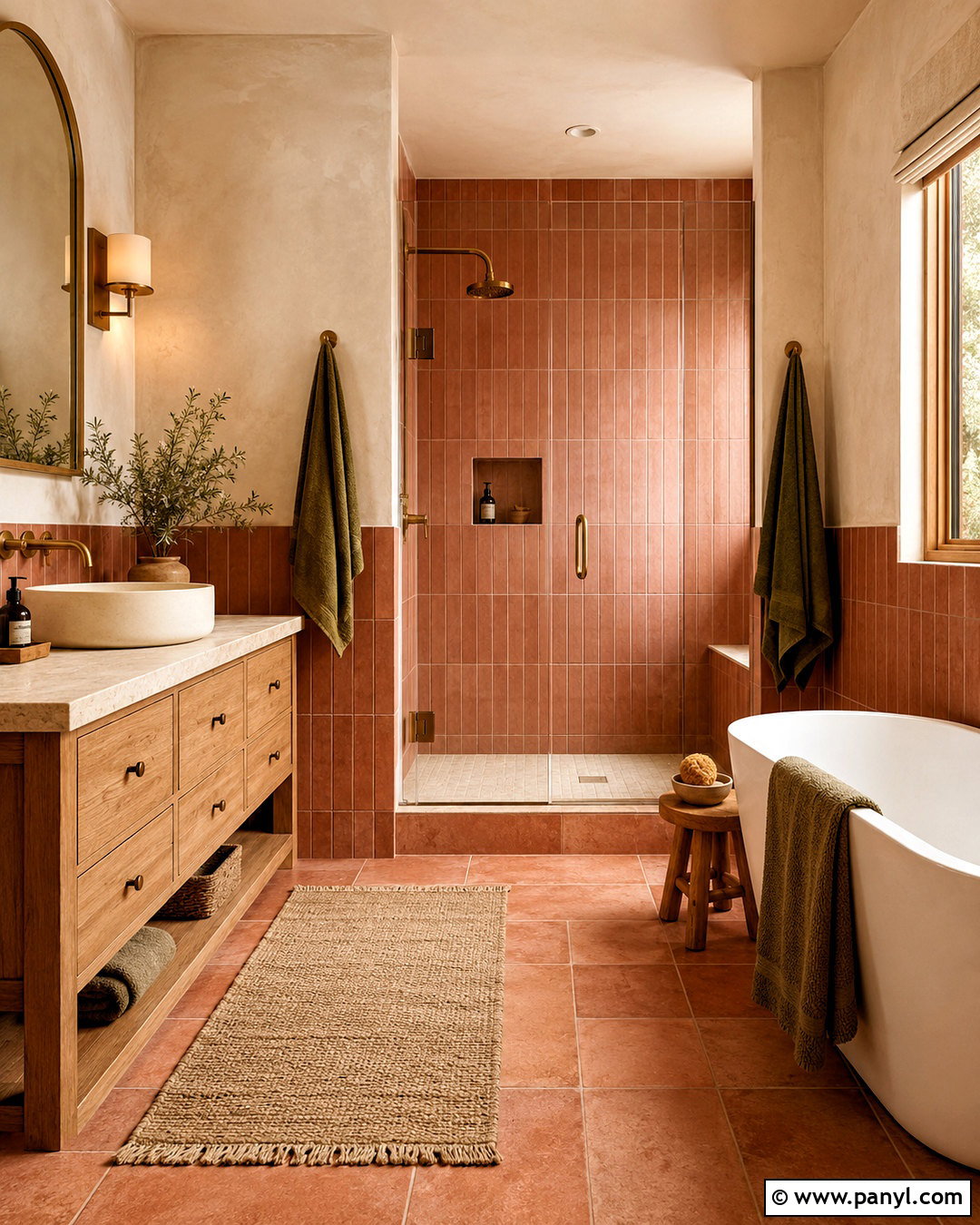
Sunbaked terracotta walls create an inviting living room filled with warmth and Mediterranean character. Select a softened clay-orange shade rather than a bright pumpkin tone. Pair it with a cream slipcovered sofa, oak coffee table, and woven lounge chairs. Use an ivory and charcoal patterned rug to ground the color and introduce graphic contrast. Linen curtains in natural flax will filter daylight while harmonizing with the earthy walls. Add matte black lamps, aged pottery, and olive green pillows for a layered palette inspired by natural materials. White-painted trim can sharpen the scheme, while matching terracotta trim creates a more immersive finish. Limit additional orange accents because the walls already provide strong color. The completed room should feel earthy, comfortable, and modern rather than heavily rustic or themed.
15. Clay Pink Wall Paint
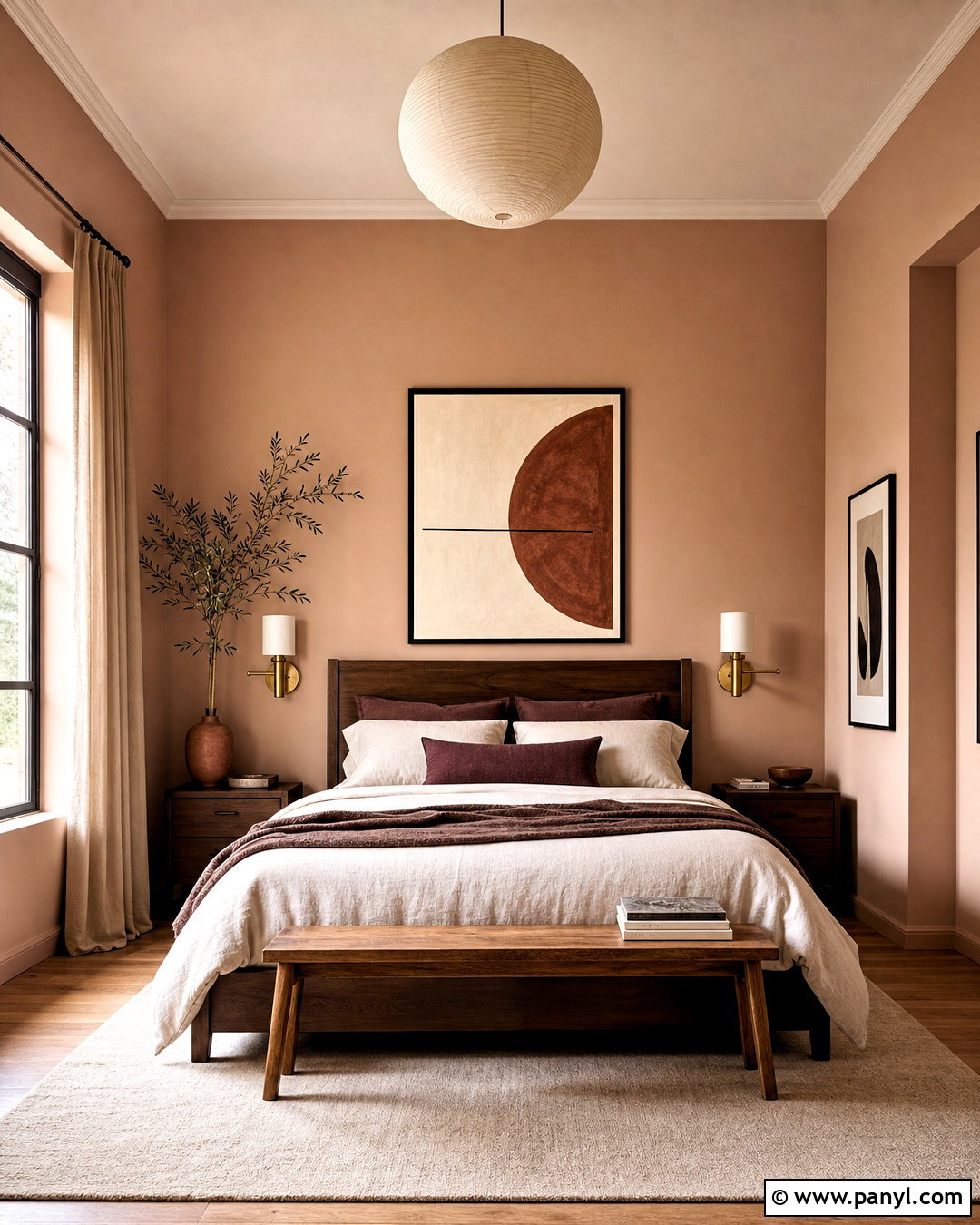
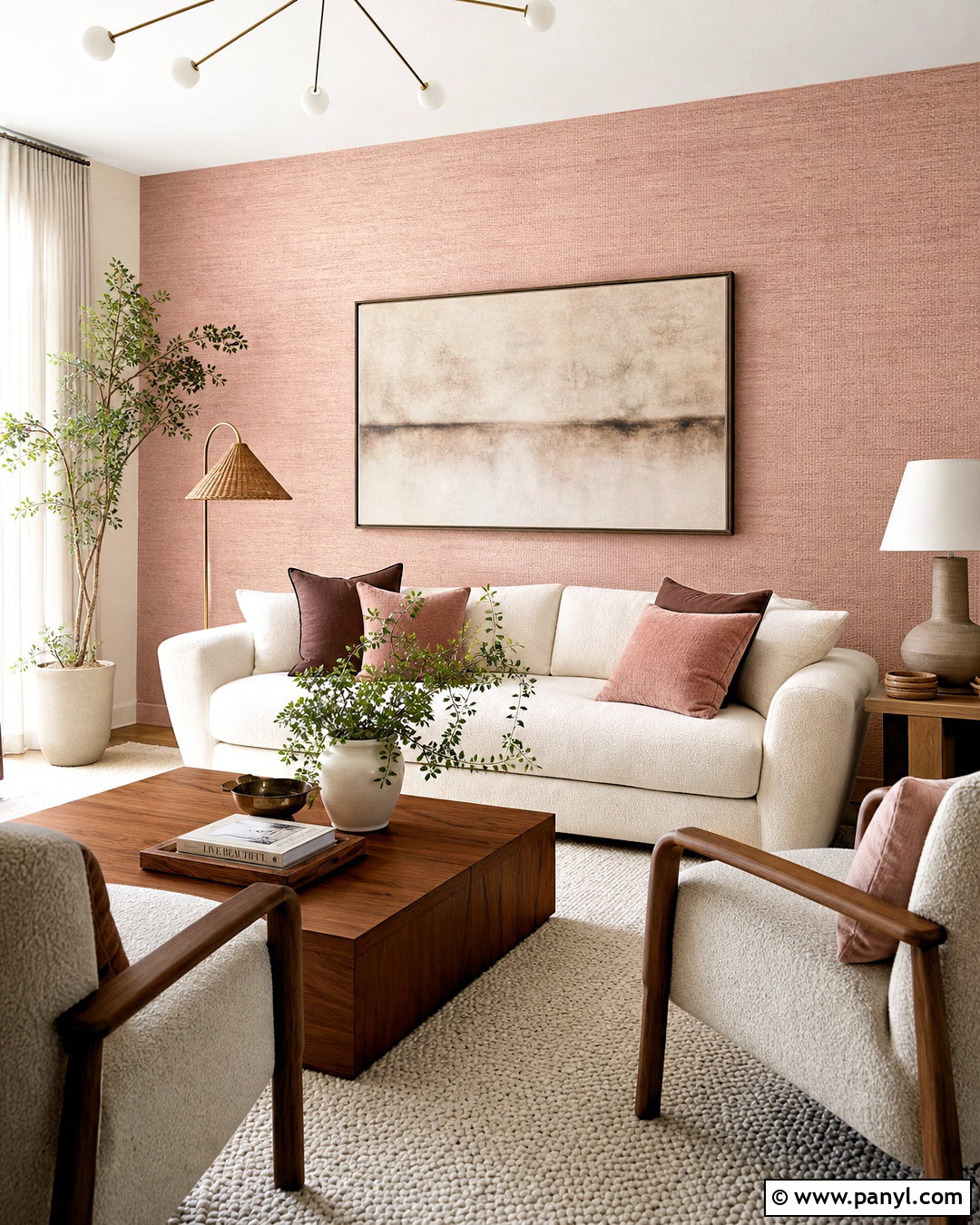
Clay pink offers the warmth of terracotta in a softer form, making it a flattering choice for a bedroom or dressing room. Paint the walls in a dusty pink with beige and brown undertones, then introduce a walnut bed or dresser for contrast. Cream bedding, natural linen curtains, and a pale wool rug keep the room calm and grown-up. Use muted burgundy pillows and a cocoa throw to create a layered tonal story. Brushed brass sconces add gentle shine, while black picture frames stop the palette from becoming overly delicate. Choose abstract artwork containing cream, rust, and deep green. A few olive branches or leafy plants provide a natural counterpoint. This complete design feels warm and sophisticated, avoiding the sugary appearance sometimes associated with brighter or cooler pink paint.
16. Soft Blush Wall Paint
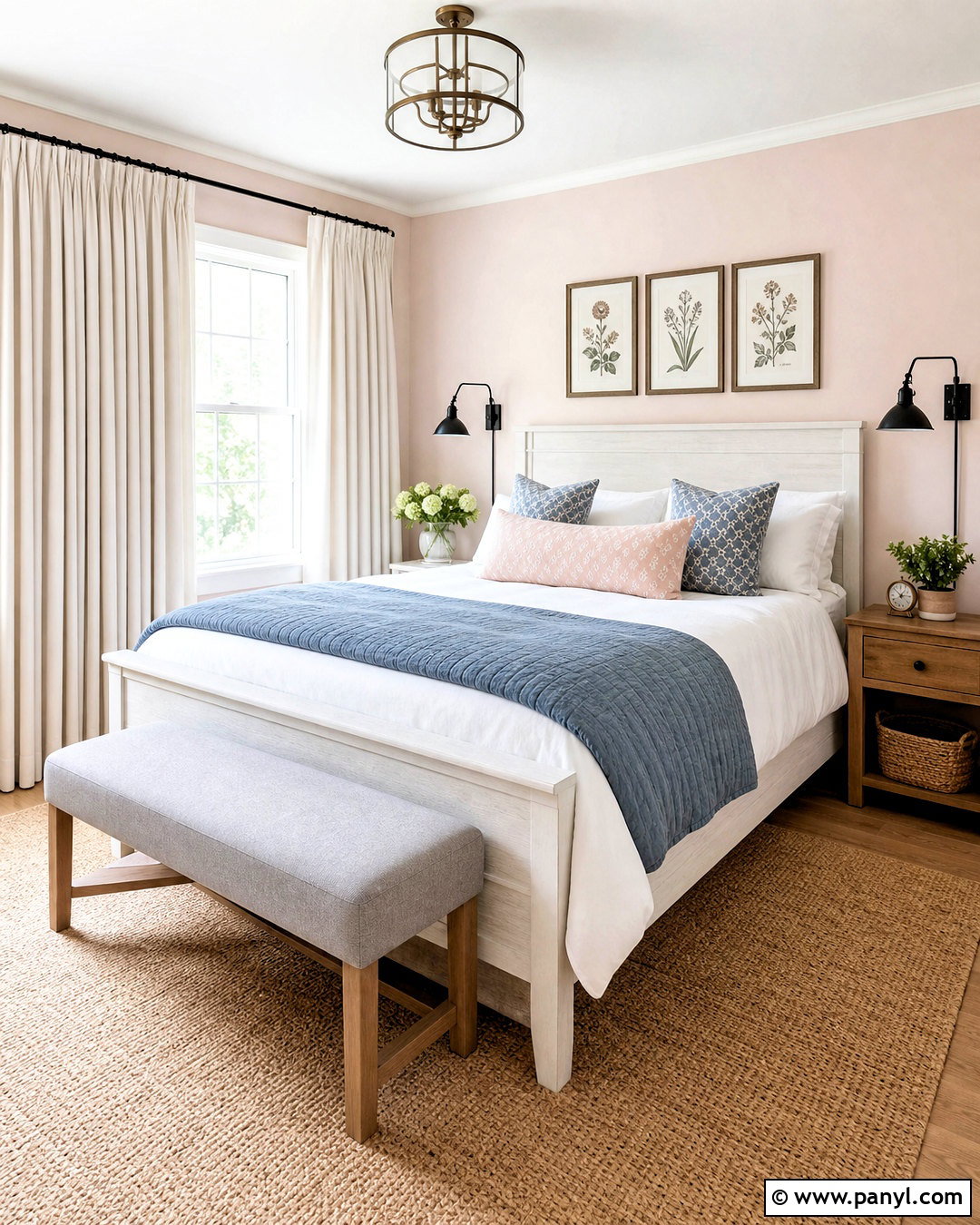
A soft blush wall color can brighten a small guest room while creating a welcoming sense of warmth. Choose a pale pink with neutral undertones and pair it with a white oak bed, crisp white bedding, and a light gray upholstered bench. Introduce dusty blue through a quilt or patterned pillows for a calm complementary contrast. Ivory curtains and a natural fiber rug maintain the room’s airy appearance. Use simple black sconces beside the bed to add definition and prevent the palette from feeling overly sweet. A compact wood nightstand, ceramic lamp, and framed botanical prints complete the space without cluttering it. Paint the trim in a warm white that relates to the bedding. The finished guest room feels fresh, peaceful, and adaptable for visitors of different ages and personal tastes.
17. Butter Yellow Wall Paint
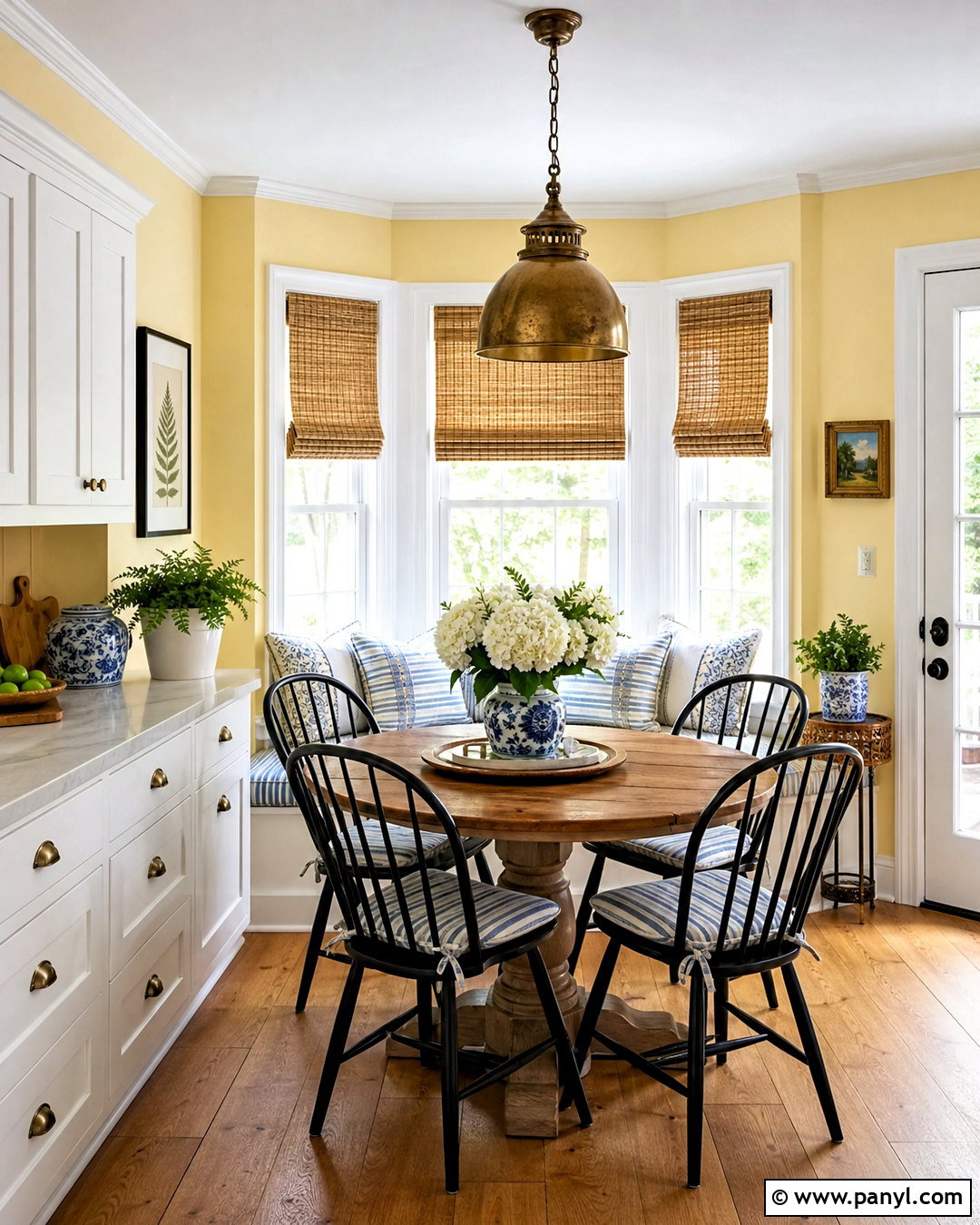
Butter yellow brings gentle sunlight into a breakfast room, kitchen nook, or cheerful family space. Select a pale yellow with creamy undertones instead of a highly saturated lemon shade. Pair it with warm white cabinetry, a round oak table, and spindle-back chairs painted soft black. Add woven bamboo shades and a striped cream-and-blue seat cushion for casual pattern. A small vintage-style pendant in aged brass will reinforce the room’s warmth without making it feel old-fashioned. Keep countertops, trim, and larger textiles light so the yellow remains fresh. Green plants and blue ceramic pieces provide natural color contrast. If the room receives strong afternoon sun, test a more muted shade to control brightness. The complete design feels lively and welcoming while remaining soft enough for comfortable everyday use.
18. Muted Plum Wall Paint
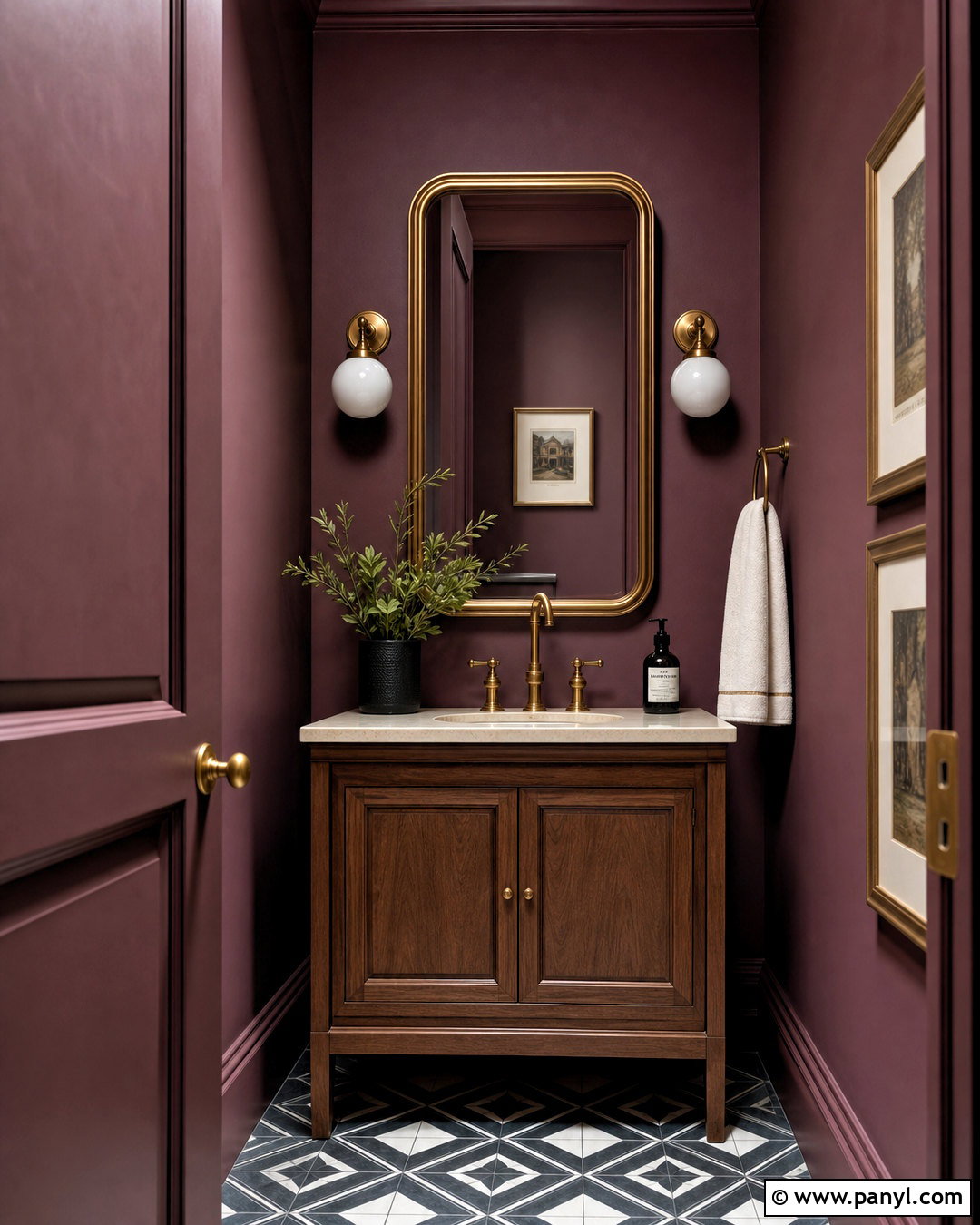
Muted plum walls can turn a powder room into a memorable, jewel-toned retreat. Choose a brown-based plum rather than a bright purple, and paint the walls, trim, and door in the same shade for a seamless finish. Add a compact walnut vanity with a creamy stone top and an aged brass faucet. A rounded brass mirror and two milk-glass sconces will stand out beautifully against the deep background. Use small-scale patterned flooring in warm white and charcoal to add movement without competing with the color. Keep hand towels and accessories ivory, then introduce one framed artwork featuring rust, blush, and green. Because powder rooms are used briefly, they are ideal places for concentrated color. The finished design feels dramatic, polished, and connected to natural wood and stone.
19. Chocolate Brown Wall Paint
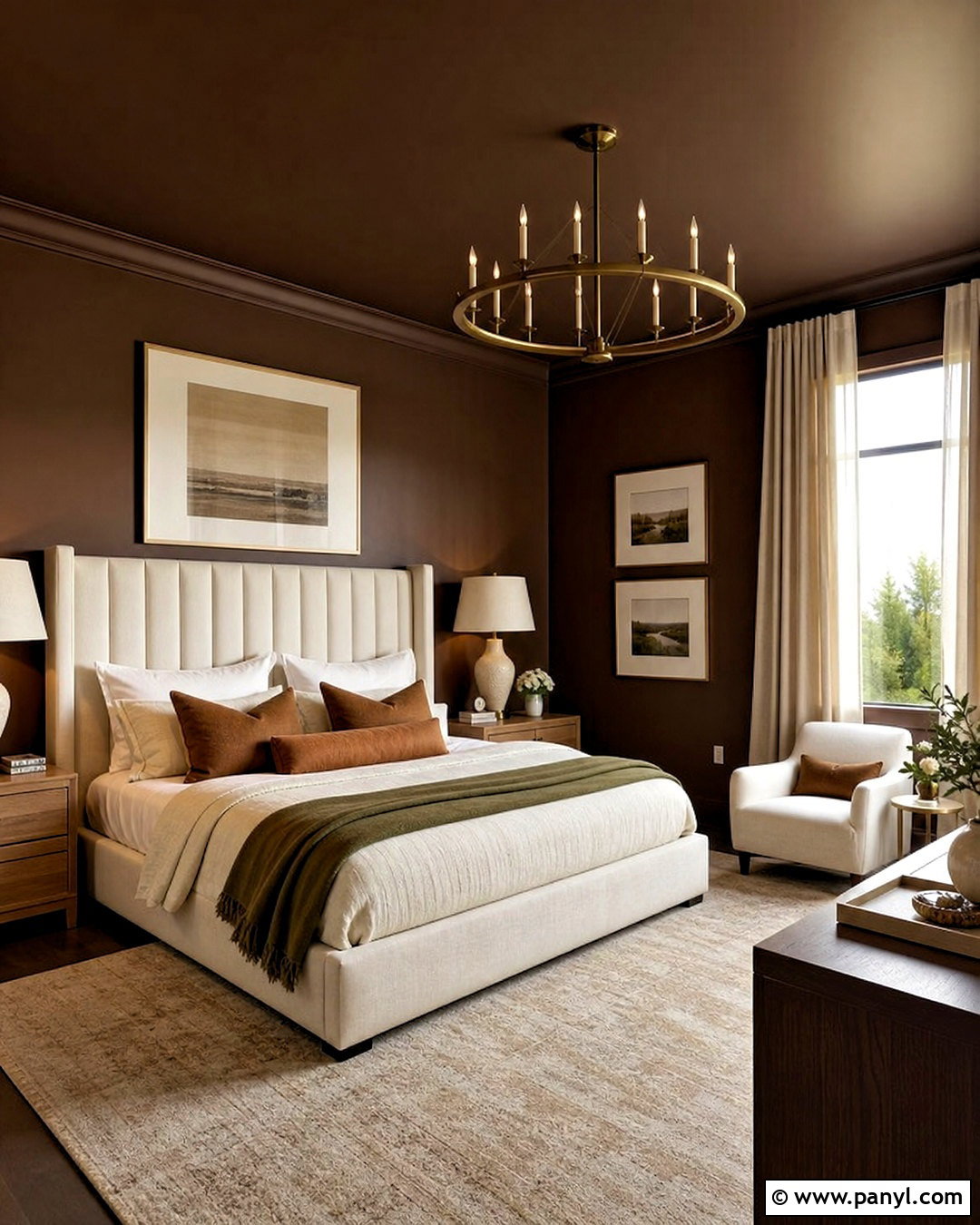
Chocolate brown walls create an enveloping bedroom that feels luxurious when balanced with lighter materials. Use a rich brown with warm red undertones across the walls and consider carrying it onto the ceiling for a cocooning effect. Place a tall cream upholstered bed against the darkest wall and dress it with ivory linens, caramel pillows, and a muted olive blanket. Choose oak or walnut nightstands with sculptural ceramic lamps. Pale curtains and a large beige rug will brighten the lower and outer edges of the room. Add restrained brass hardware for warmth and hang artwork with cream mats to create breathing space. Avoid filling the room with additional dark furniture. A carefully balanced chocolate palette feels grounded and sophisticated, while the soft textiles keep the complete design comfortable and approachable.
20. Muted Teal Wall Paint
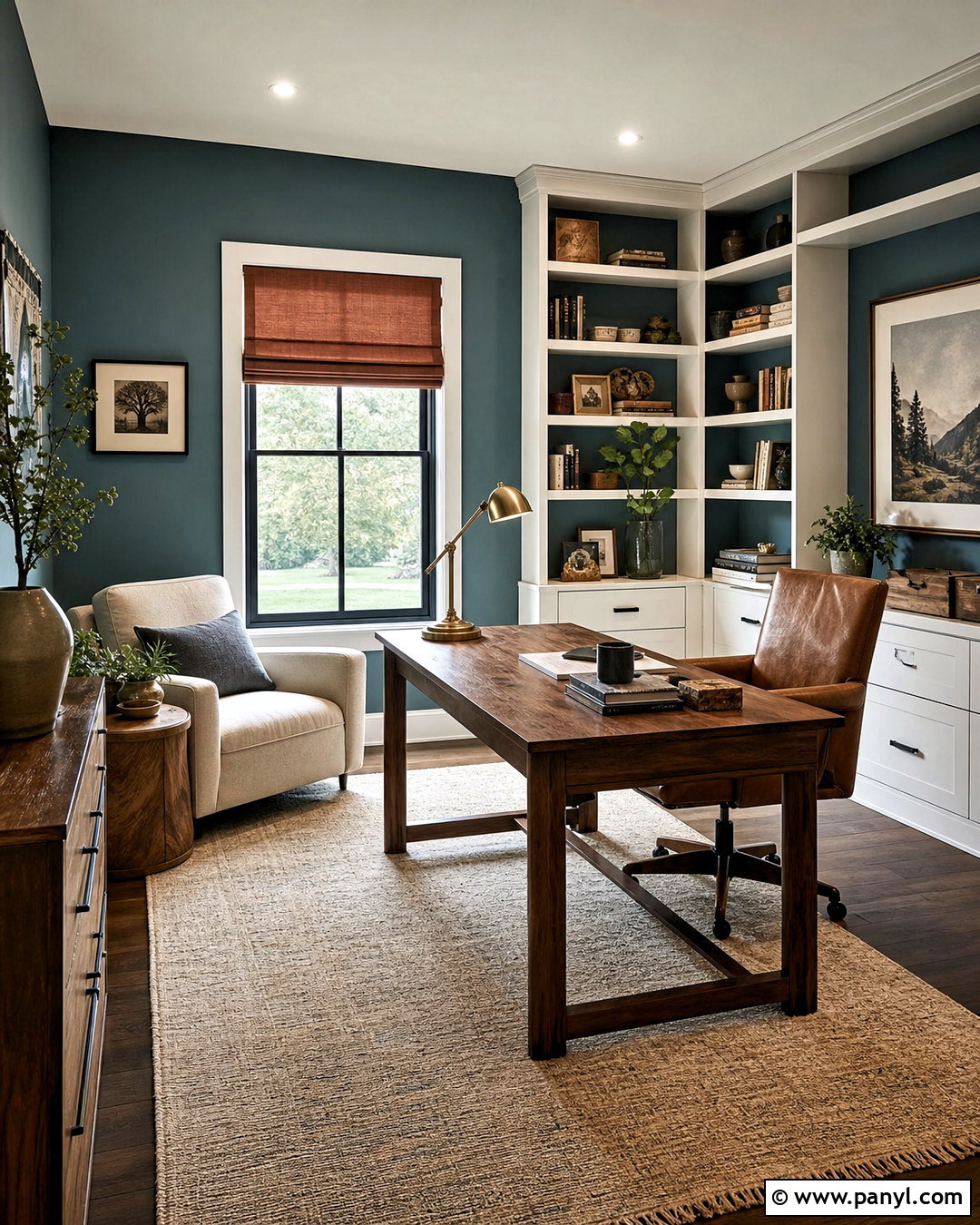
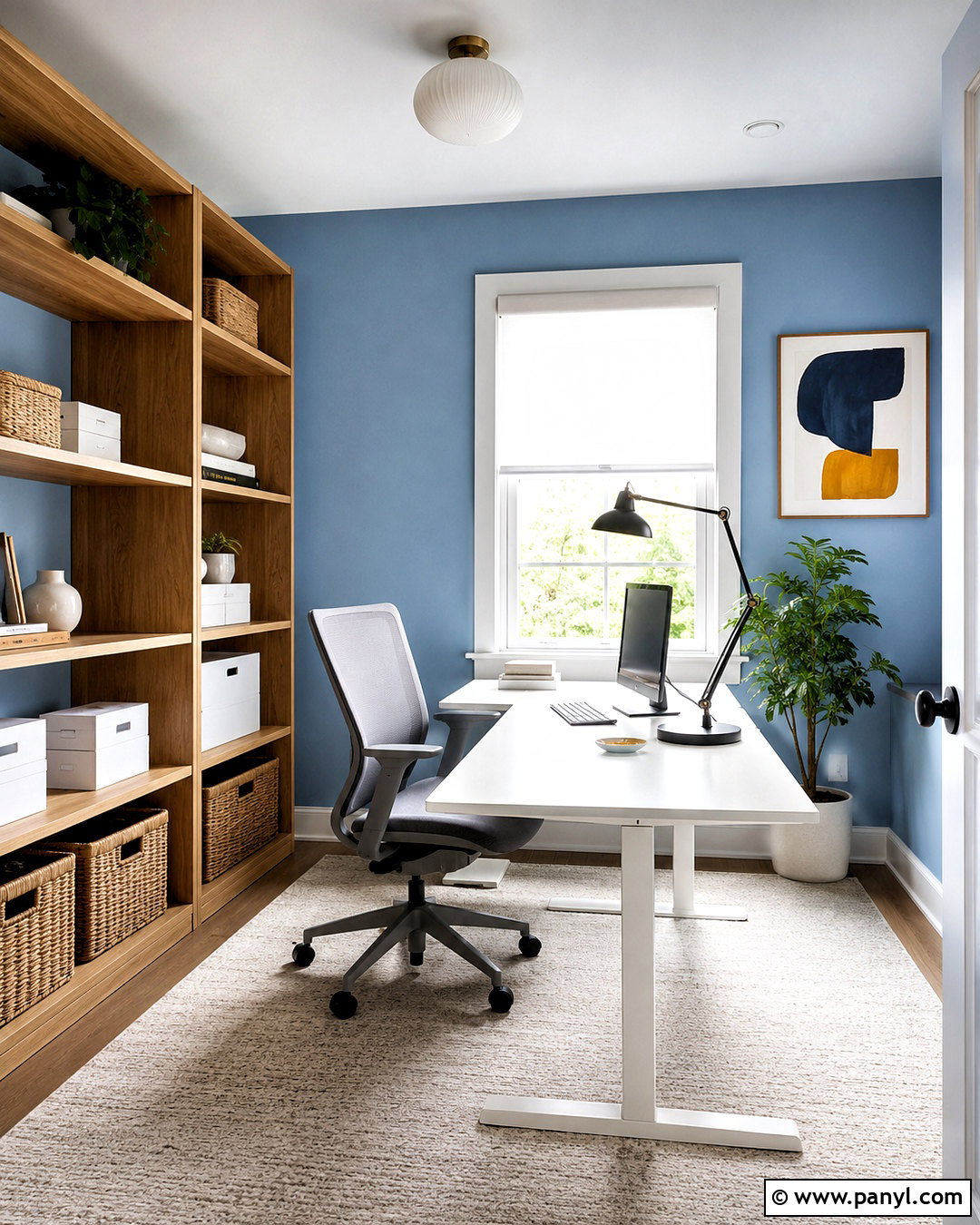
Muted teal delivers the depth of blue and the organic quality of green, making it a strong choice for a creative home office or reading room. Paint the walls in a smoky teal and pair them with warm white built-in shelving. Introduce a walnut desk, cognac leather chair, and oatmeal area rug to warm the cooler color. Rust-colored curtains or Roman shades create a confident contrast while maintaining the earthy palette. Use matte black hardware and an aged brass desk lamp for a practical mix of finishes. Display books, ceramics, and framed art in limited colors so the shelving stays orderly. A cream reading chair near the window will brighten the room and provide a second functional zone. The finished space feels focused, distinctive, and comfortable enough for long periods of use.
Conclusion:
The most successful **20 wall paint color ideas** go beyond selecting attractive shades. Each color should work with the room’s light, flooring, furniture, fixed finishes, and purpose. Warm whites and greiges offer flexible foundations, while sage, powder blue, and sand beige introduce gentle personality. Terracotta, plum, chocolate brown, navy, and teal create deeper rooms with memorable character. Whatever color catches your attention, test it on large boards and move those samples around the room before committing. View them during both daylight and artificial light. Then build a coordinated palette using textiles, wood tones, metals, artwork, and trim. This thoughtful process creates a complete room that feels balanced, intentional, and comfortable for everyday living.

Related Ideas and Inspiration:
Leave a Reply