
Bathroom color is becoming warmer, richer, and far more personal. Instead of relying only on cool gray or plain white, today’s most inviting bathrooms combine earthy paint, saturated tile, natural wood, and character-filled finishes. Warm neutrals and nature-inspired palettes are especially prominent, while mineral blues, soft pastels, and deeper accent colors offer fresh alternatives. () The best 35 trending bathroom colors include quiet shades for spa-like primary baths, playful tones for powder rooms, and dramatic hues that make compact spaces memorable. Each color below is presented as a complete, coordinated bathroom look, including surfaces, fixtures, flooring, lighting, and accessories. Use these 35 trending bathroom colors to build a space that feels current yet comfortable enough to enjoy for years.

1. Warm White Bathroom
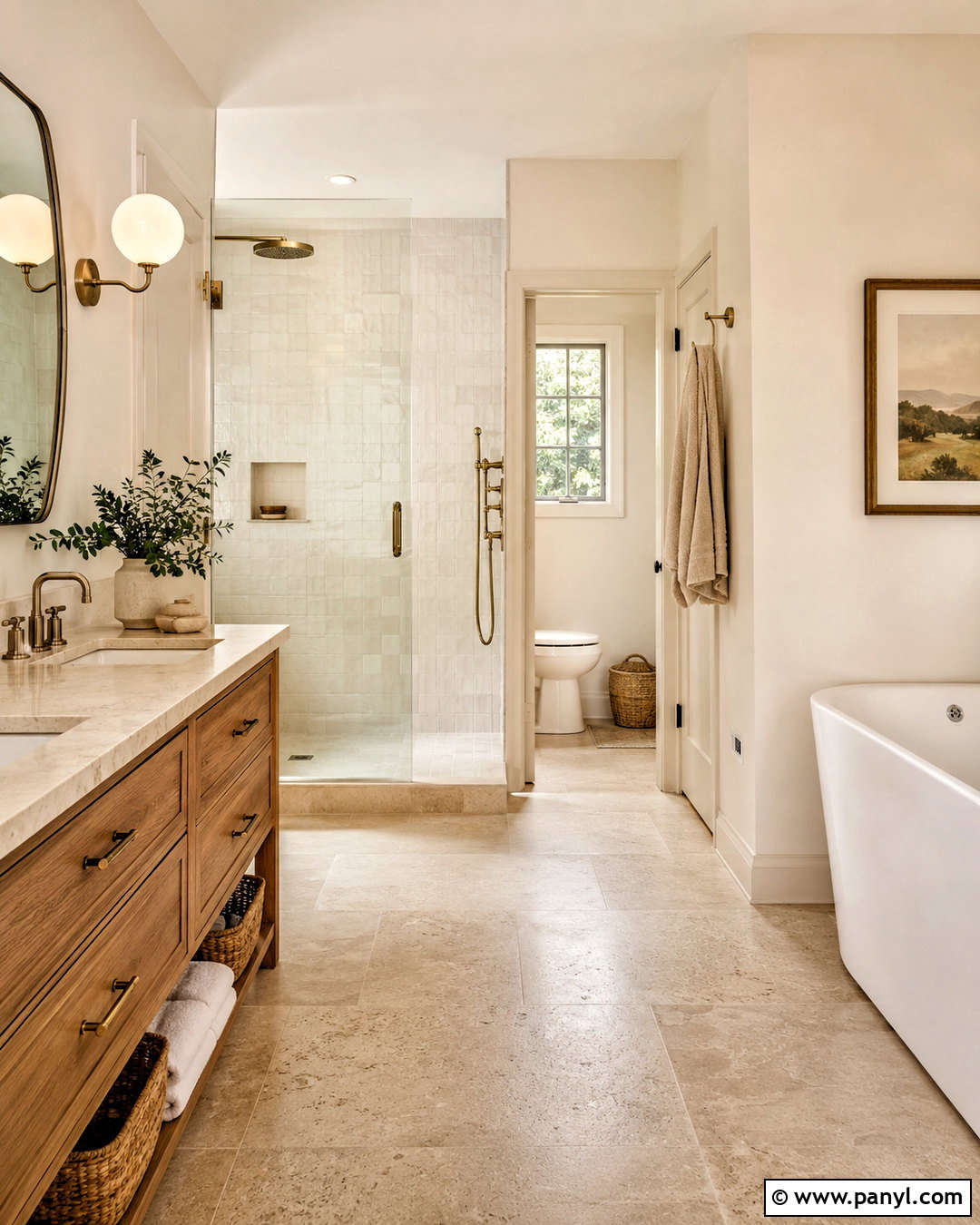
Warm white creates a clean bathroom without the sharp, clinical feeling of brilliant white. Choose creamy white walls and slightly deeper ivory tile so the room has visible dimension. A white oak vanity brings natural warmth, while a pale quartz counter keeps maintenance simple. Continue the relaxed palette with travertine-look porcelain flooring, brushed brass faucets, and linen-colored towels. A frameless glass shower helps the light move freely through the room. For character, add a rounded mirror, ribbed glass sconces, and one small ceramic vase filled with greenery. This complete color scheme works especially well in small or windowless bathrooms because it feels bright while remaining soft. Test several whites beside the tile to avoid clashing yellow, pink, or gray undertones.
2. Cream Bathroom
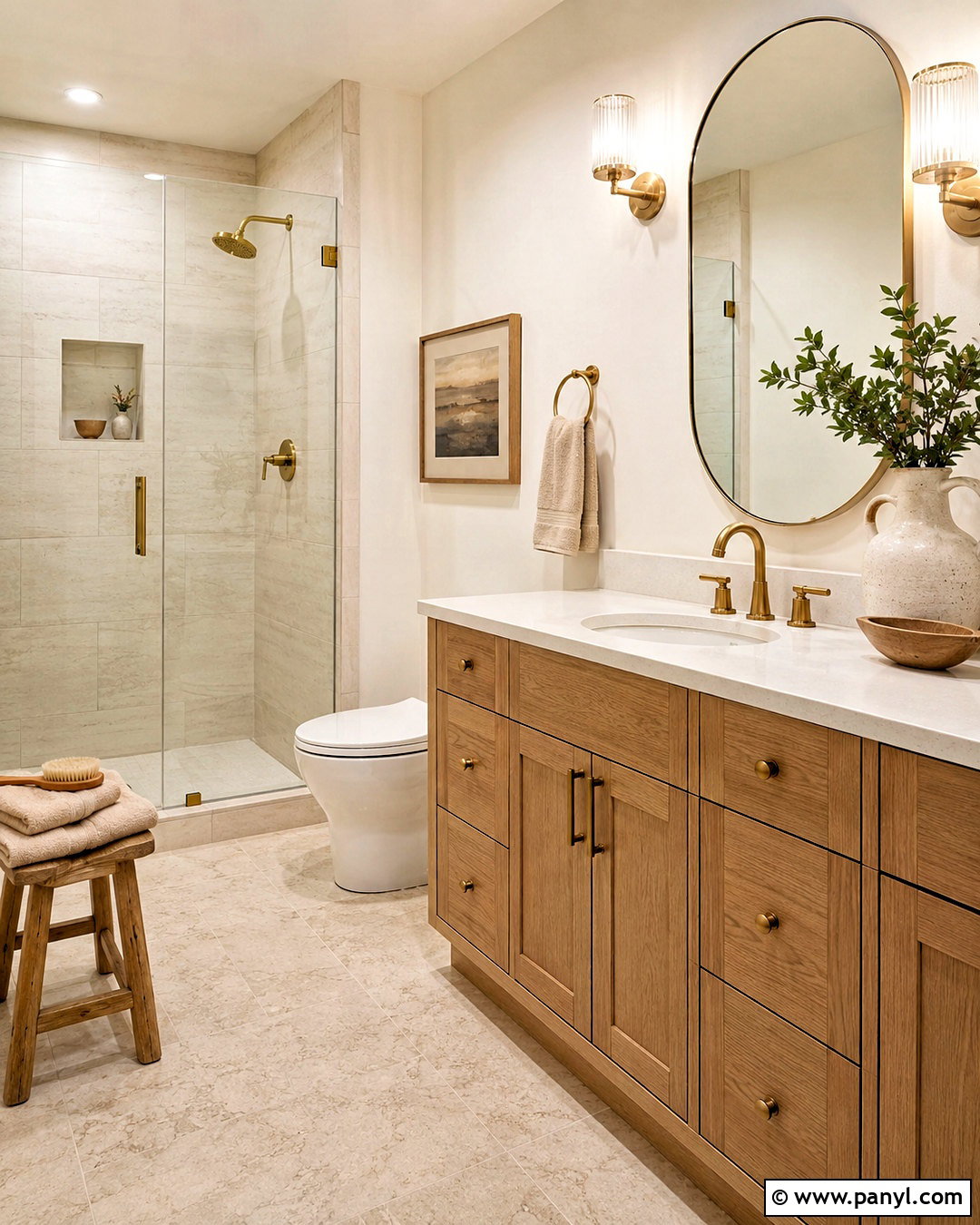
Cream walls can make a bathroom feel sunny, comfortable, and quietly elegant. Build the room around a gentle vanilla cream rather than a strongly yellow shade. Pair it with handmade-look off-white shower tile, warm beige grout, and limestone-look flooring. A medium oak vanity adds definition without creating harsh contrast. Use antique brass hardware and globe sconces to reinforce the warm palette, then introduce texture through a woven hamper, waffle towels, and a simple fabric shower curtain. White plumbing fixtures keep the design fresh and prevent the cream from looking dated. If the bathroom has crown molding or wall paneling, paint those features the same color for a seamless finish. The completed space should feel layered, light, and welcoming rather than monochromatic or bland.
3. Soft Beige Bathroom
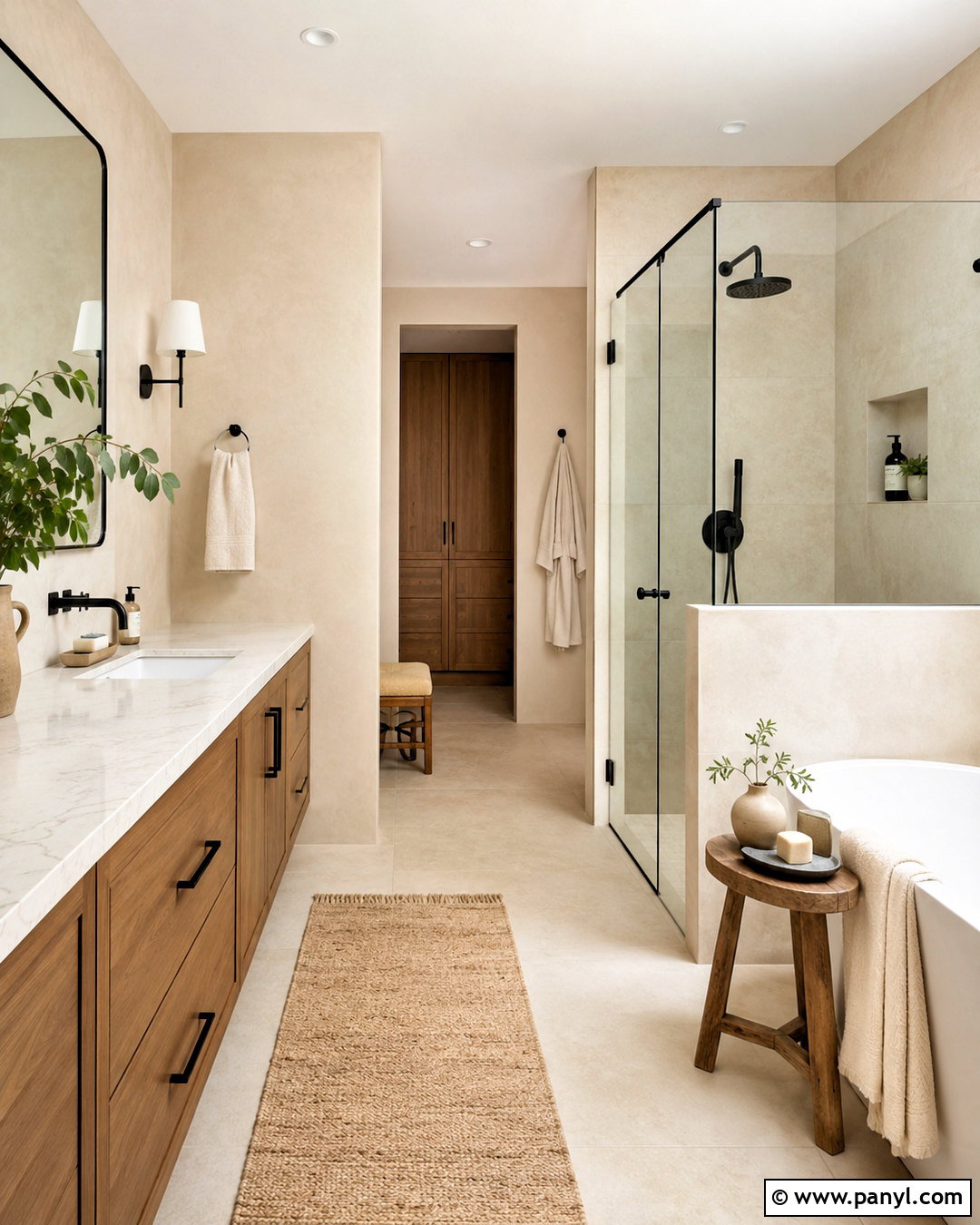
Soft beige offers a practical bridge between minimal white and deeper earthy bathroom colors. Select a pale oatmeal beige for the walls, then repeat its warmth in sandy porcelain tile and a lightly veined quartz vanity top. A walnut vanity provides enough contrast to anchor the scheme, especially when paired with matte black faucets and a thin black mirror frame. Keep the shower open and airy with clear glass and large-format tile. Ivory towels, a tan bath mat, and a natural wood stool soften the harder surfaces. Add a pair of simple wall lights instead of relying on one overhead fixture. This complete bathroom look suits transitional, organic modern, and contemporary homes. Beige becomes more interesting when varied through texture, so combine smooth paint, matte stone, wood grain, and woven accessories.
4. Warm Greige Bathroom
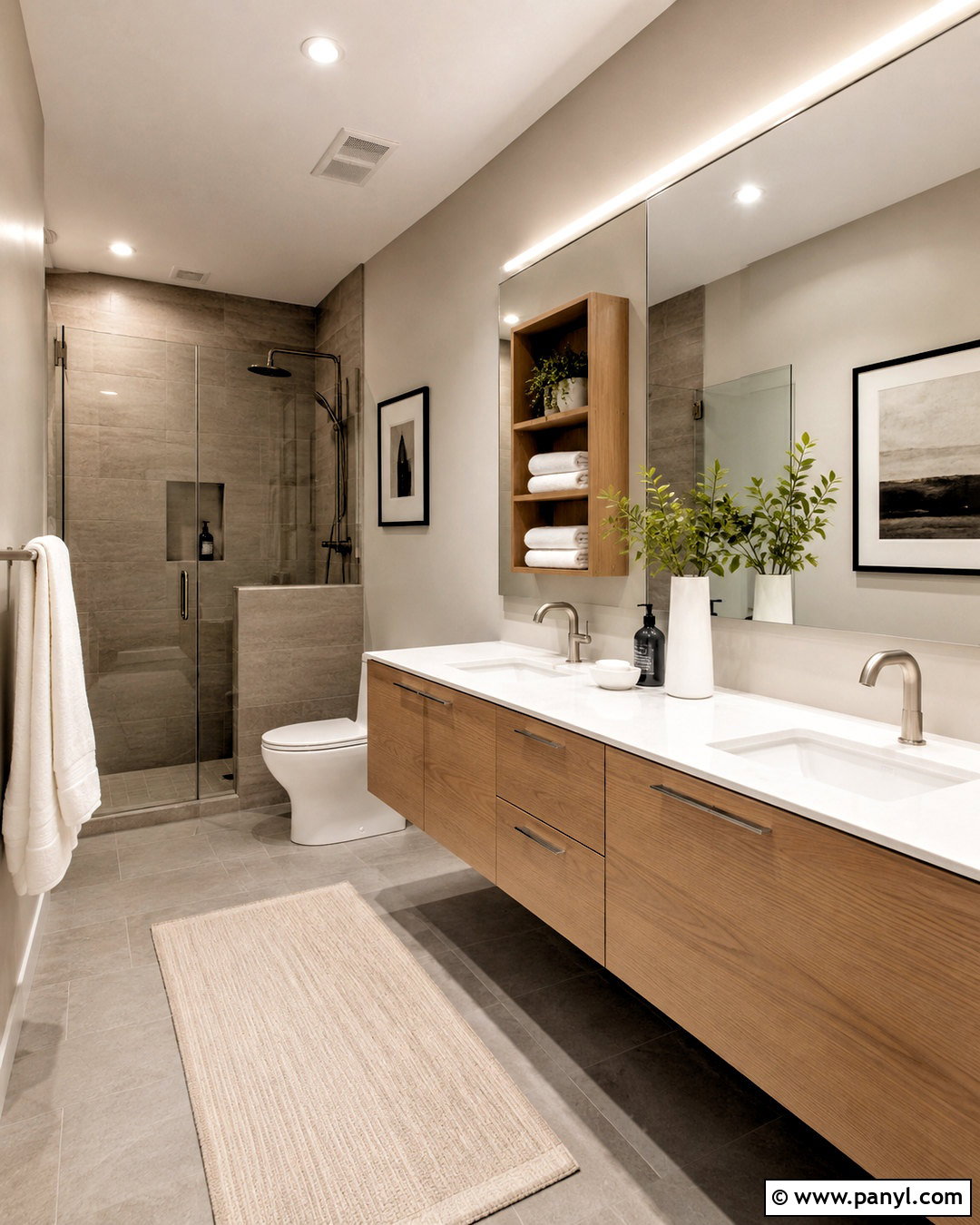
Warm greige is ideal when you want a neutral bathroom that feels balanced rather than noticeably brown or gray. Cover the walls in a light greige with a beige undertone and choose slightly darker greige tiles for the shower. A rift-cut oak vanity introduces warmth, while a white quartz counter and white sink preserve a crisp appearance. Brushed nickel fixtures provide a subtle finish that does not compete with the quiet palette. Consider a floating vanity and wall-mounted storage to make a smaller room look less crowded. Soft white towels, a textured neutral runner, and black-framed artwork add controlled contrast. Use warm-white bulbs so the walls do not turn cool under artificial light. The resulting bathroom feels calm, organized, and flexible enough to accommodate changing accessories over time.
5. Taupe Bathroom
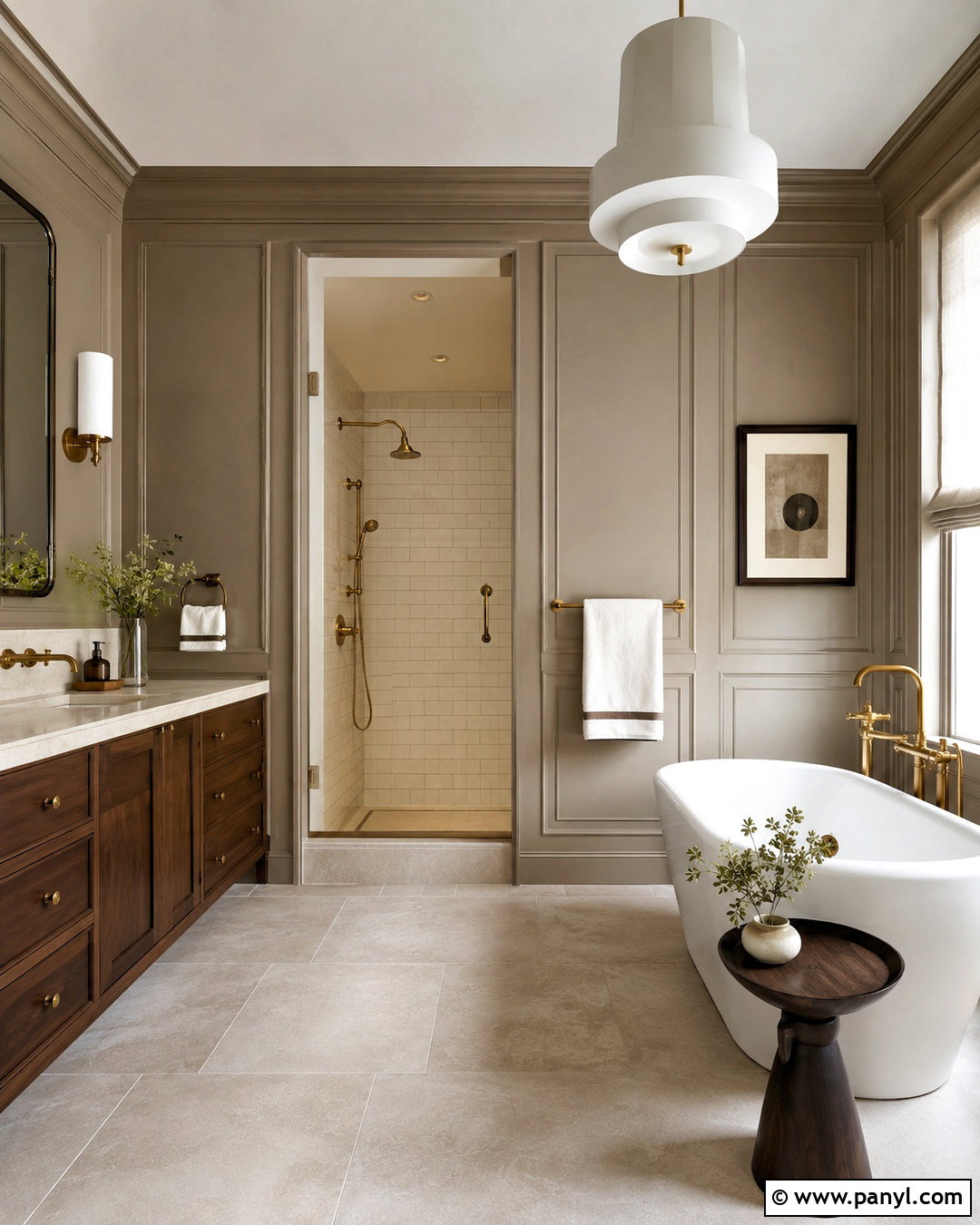
Taupe gives a bathroom more depth than beige while remaining easy to coordinate with stone and wood. Use medium taupe on the walls and continue it across simple wall paneling for an enveloping look. Balance the color with a cream stone vanity top, warm white shower tile, and pale limestone flooring. A dark walnut vanity grounds the room, while aged brass faucets and cabinet pulls bring out taupe’s warmer undertones. Add a freestanding white tub if space permits, or use a curved shower enclosure in a compact layout. Natural linen window shades, chocolate-edged towels, and a sculptural ceramic pendant complete the palette. Keep the ceiling a lighter version of the wall color. This prevents a low ceiling from feeling heavy while maintaining the room’s soft, cohesive character.
6. Mushroom Bathroom
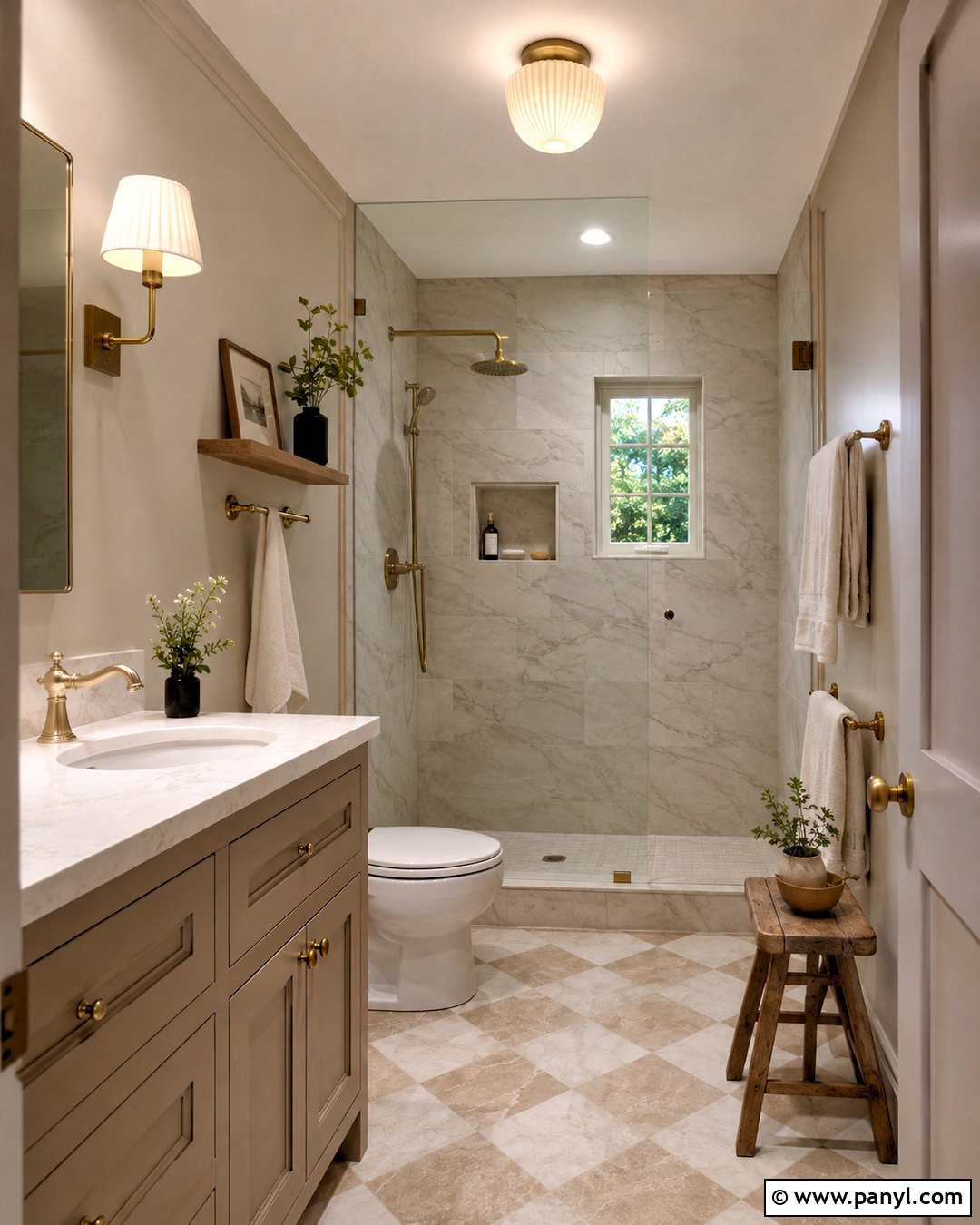
Mushroom is a muted brown-gray that makes a bathroom feel sophisticated without becoming dark. Apply it to the walls, vanity, and trim for a gentle color-drenched effect, then use pale marble-look porcelain in the shower to break up the solid surfaces. Choose a counter with warm gray veining so it connects naturally to the cabinetry. Unlacquered brass fixtures add character and develop a softer finish over time. A checkerboard floor in cream and mushroom introduces pattern without disrupting the restful palette. Finish the room with ivory towels, a pleated wall light, and a narrow oak shelf holding practical containers. This bathroom color works beautifully in traditional and updated cottage spaces. Its success depends on adequate lighting, so combine flattering vanity sconces with bright, even ceiling illumination.
7. Khaki Bathroom
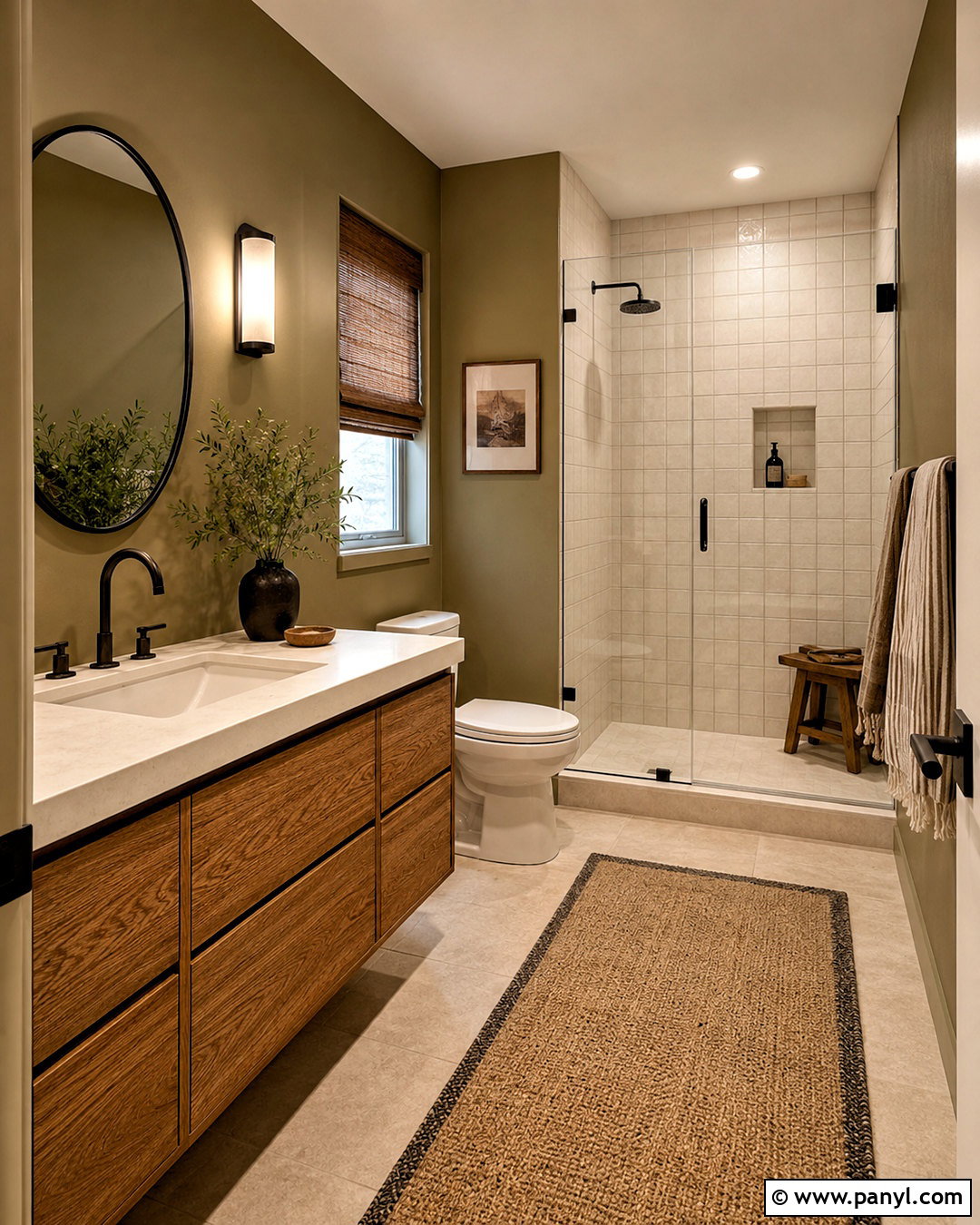
Khaki brings an earthy, grounded quality to bathrooms while staying neutral enough for everyday use. Choose a mid-tone khaki with subtle olive undertones for the walls and pair it with warm white square tile in the shower. An oak vanity with slab-front doors keeps the room modern, while a creamy solid-surface counter lightens the composition. Use dark bronze faucets, cabinet pulls, and shower framing for clean contrast. Sand-colored floor tile makes the transition between the green-beige walls and natural wood feel smooth. Add striped towels, a woven shade, and a rounded mirror to soften the straight lines. In a bathroom with limited daylight, reserve khaki for the vanity and lower wall paneling. This complete scheme feels natural, tailored, and more distinctive than a conventional neutral bathroom.
8. Sand Bathroom
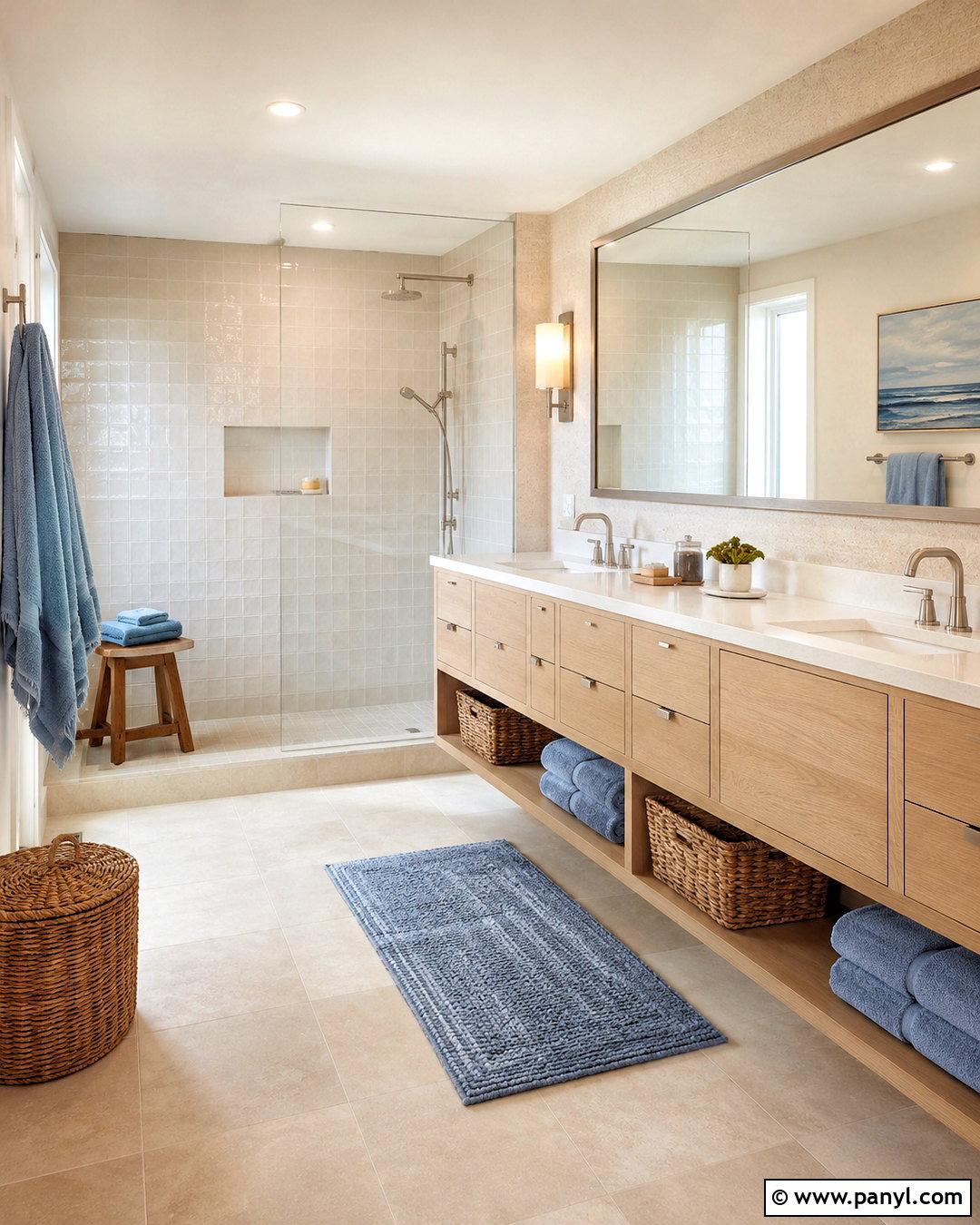
A sand-colored bathroom captures the relaxed feeling of a quiet coastal retreat without relying on obvious nautical decor. Use pale sandy walls with subtle texture, then install large cream porcelain tiles across the shower and floor. A light oak floating vanity keeps the room open and provides natural variation. Pair it with a warm white counter, brushed nickel fixtures, and an oversized frameless mirror. Muted blue-gray towels can provide a restrained accent, while woven baskets and a slatted wood stool support the casual palette. Keep window treatments light and simple so daylight can illuminate the warm surfaces. Avoid strong orange undertones, which can make sandy colors look muddy. The finished bathroom should combine beige, cream, pale wood, and a small amount of cool contrast for a balanced, breezy appearance.
9. Clay Bathroom
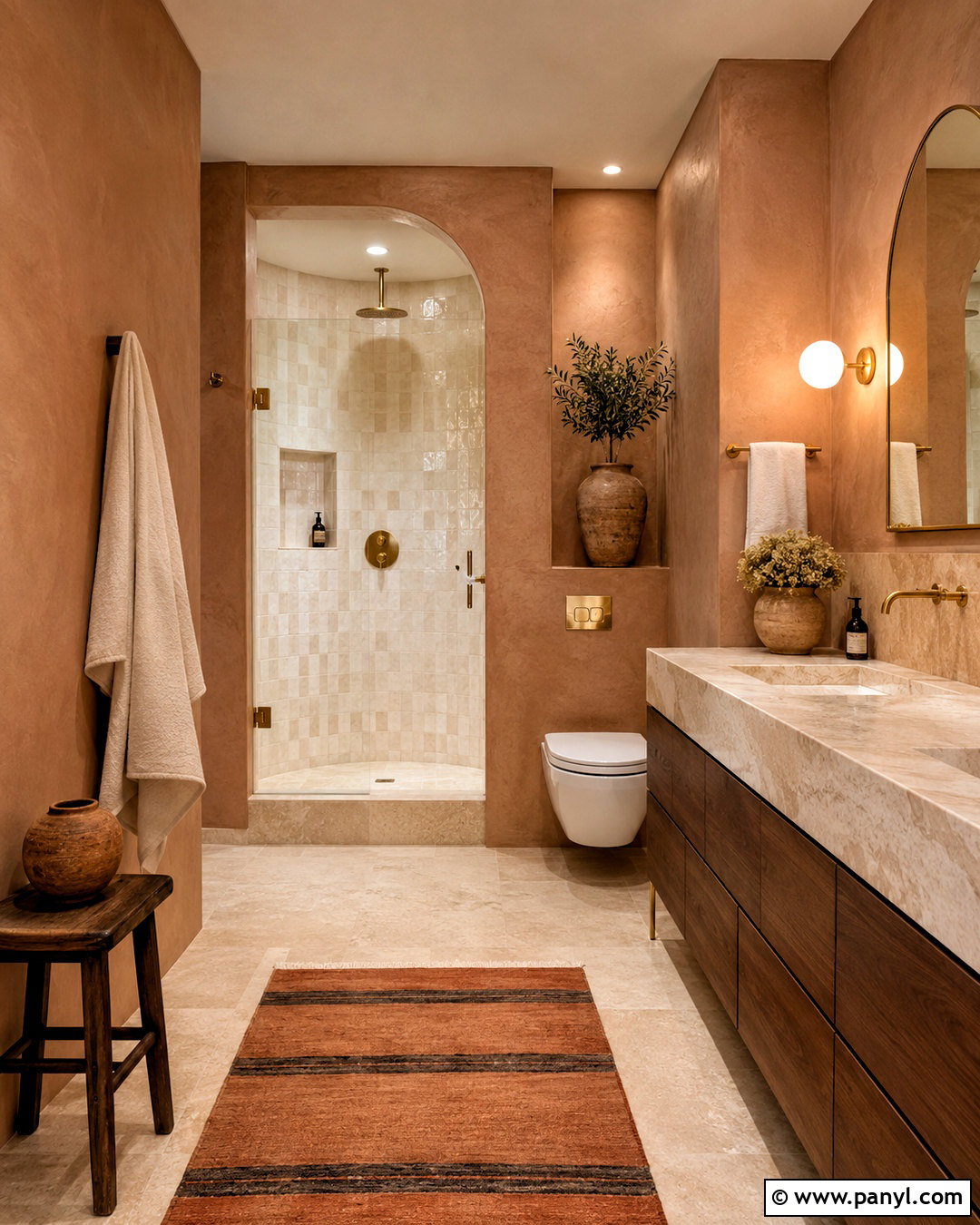
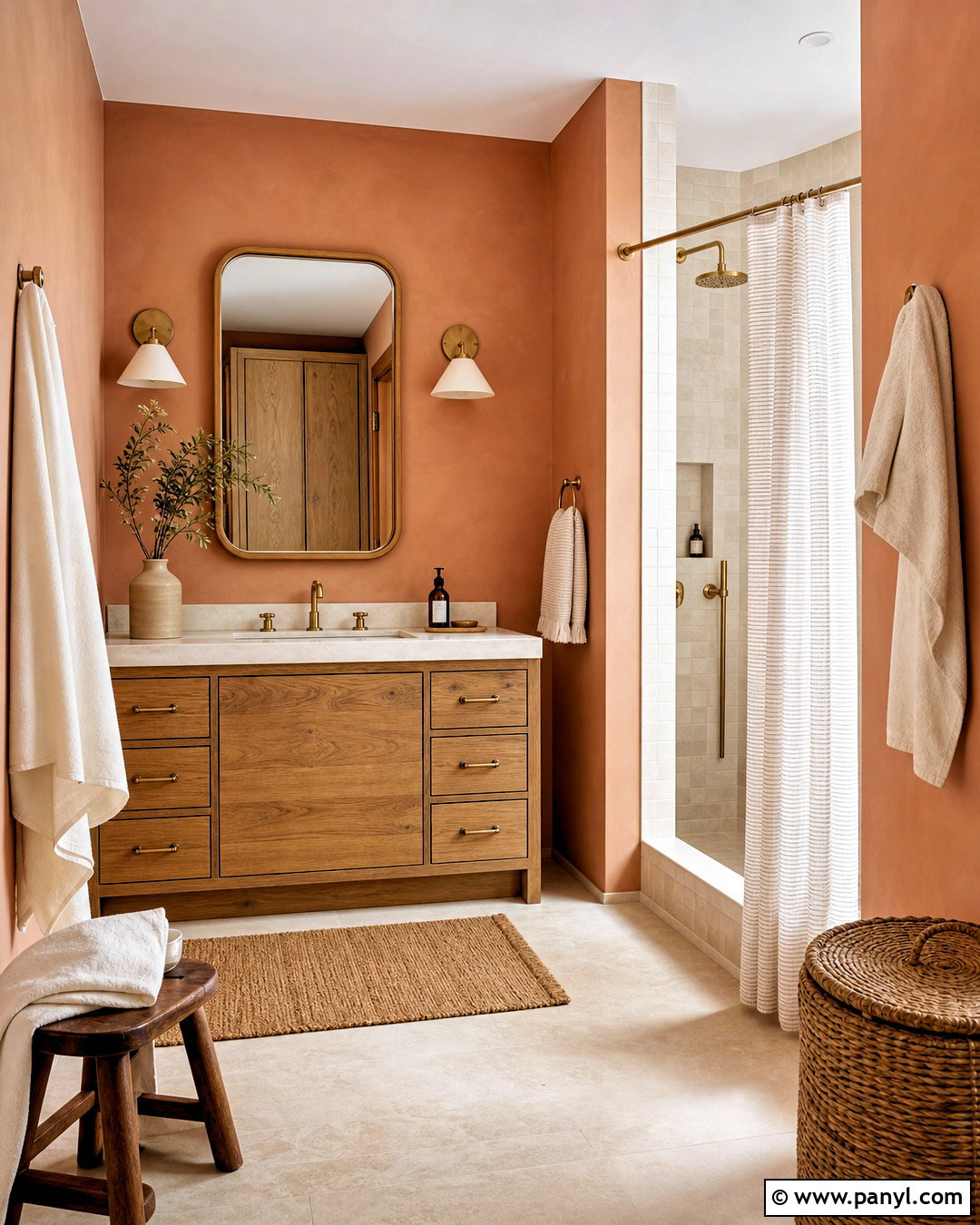
Clay creates a warm, handmade bathroom look inspired by natural plaster and sunbaked earth. Apply a muted clay color to the walls, selecting a dusty tone rather than a bright orange. Continue the organic feeling with ivory zellige-style shower tile, warm grout, and tumbled limestone flooring. A walnut vanity adds depth, while a cream counter prevents the palette from becoming too heavy. Choose aged brass faucets and softly rounded lighting to complement the earthy surfaces. Off-white towels, a rust-striped rug, and simple pottery make useful accessories feel decorative. In a powder room, carry the clay color over the ceiling for a cozy finish. In a larger bathroom, keep the ceiling creamy white. The complete scheme feels warm and expressive while remaining restful enough for daily routines.
10. Terracotta Bathroom
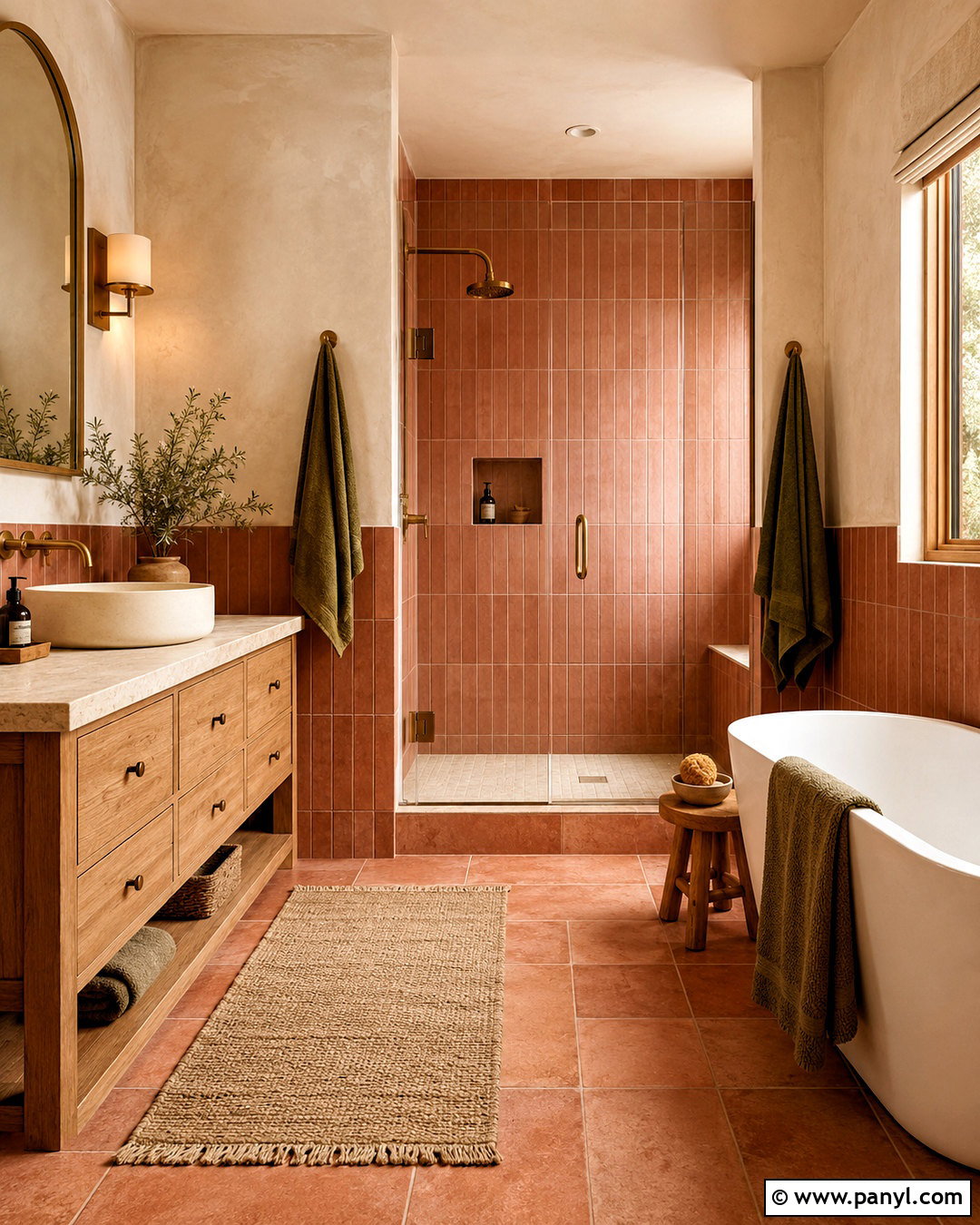
Terracotta gives bathrooms a sunny Mediterranean character when it is balanced with quiet materials. Use terracotta on wall paneling or a tiled vanity backsplash, then surround it with creamy plaster-look walls. Choose a natural oak vanity and an off-white stone counter to keep the color grounded. Terracotta floor tile can extend the palette, but select a slightly lighter or darker tone than the walls so the room does not appear flat. Brushed brass fixtures, woven baskets, and linen textiles reinforce the warmth. Introduce olive green through towels or one leafy plant for gentle contrast. A walk-in shower with clear glass maintains an open layout. The final bathroom should feel bright, handcrafted, and collected, with visible variations in tile and wood adding more interest than numerous decorative objects.
11. Rust Bathroom
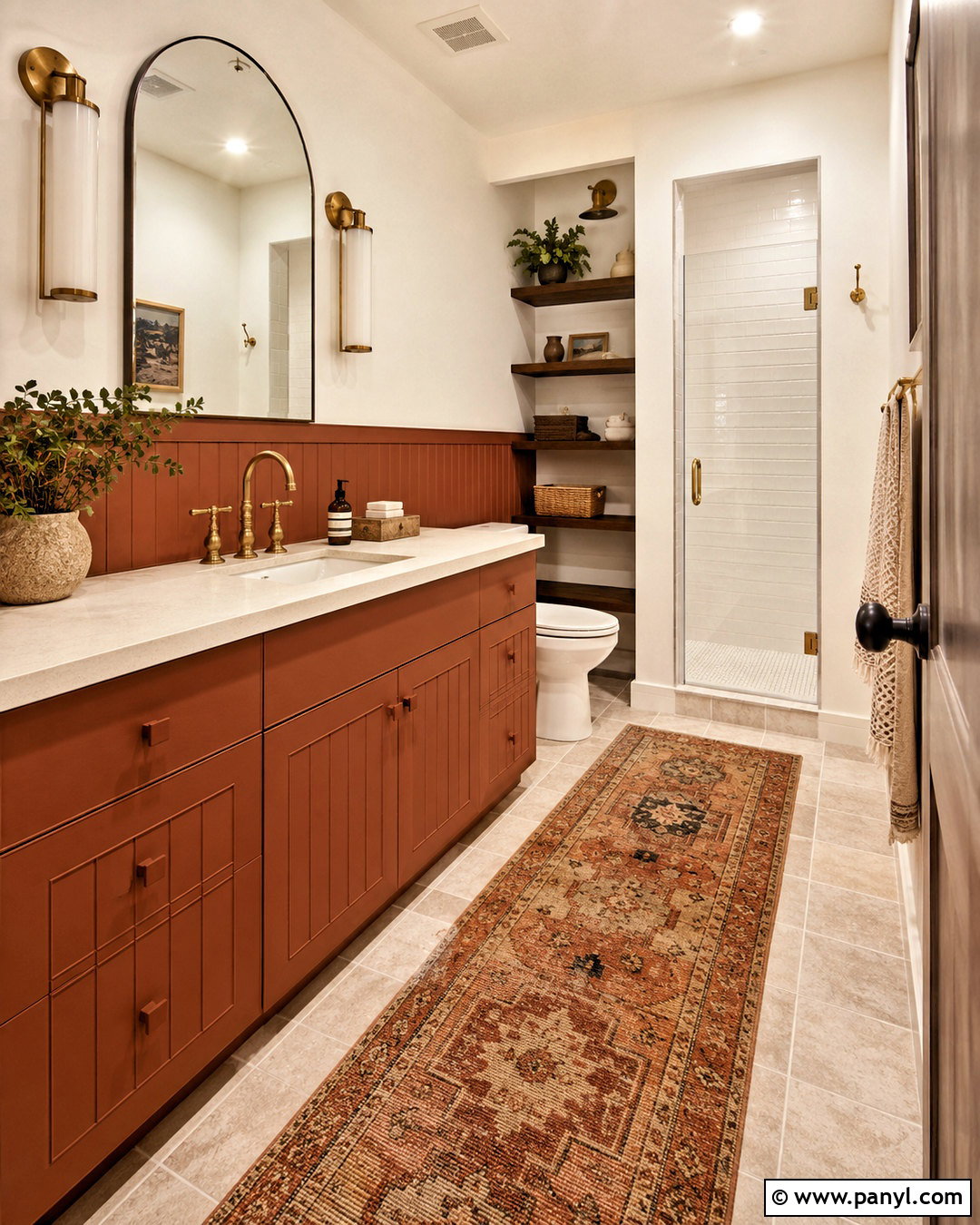
Rust is a strong bathroom color that feels both earthy and modern. Use it selectively on a vanity, painted wall paneling, or glossy shower tile, then balance it with warm white walls and pale stone flooring. A rust vanity looks particularly polished beneath a cream quartz counter and an arched brass mirror. Repeat the color in a patterned runner or hand towel rather than across every surface. Walnut shelving adds depth, while aged brass faucets complement the reddish-brown undertones. For a contemporary finish, choose simple cabinetry and streamlined lighting instead of ornate fixtures. Bright, layered illumination is important because rust can absorb light. The finished room combines warmth, contrast, and natural texture, making this palette suitable for a memorable powder room or a comfortable primary bathroom.
12. Ochre Yellow Bathroom
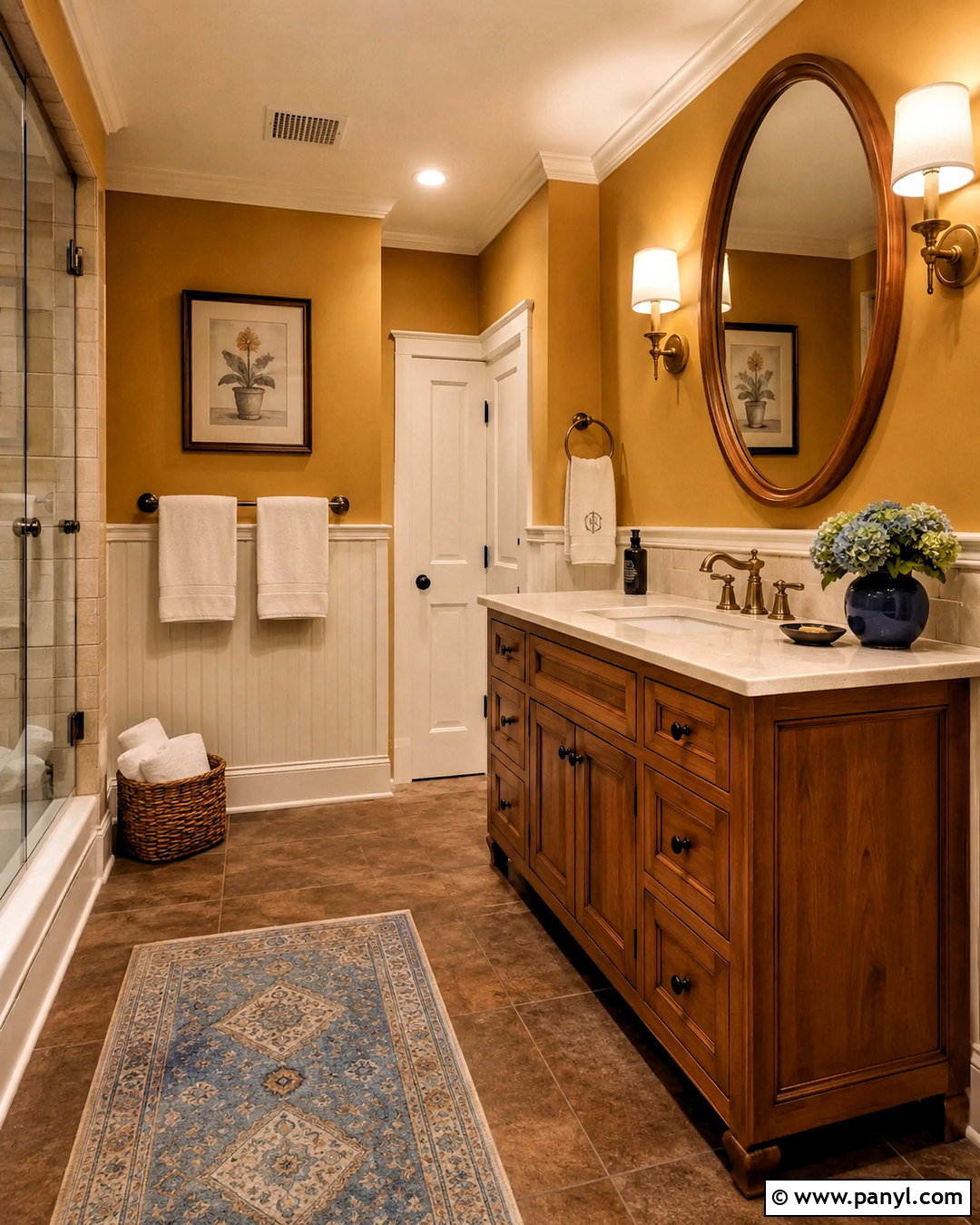
Ochre yellow can bring uplifting color into a bathroom without the intensity of lemon yellow. Paint the upper walls in muted golden ochre and use cream beadboard or square tile below. A medium walnut vanity provides a rich foundation, while an ivory stone counter keeps the sink area bright. Choose antique brass hardware, warm white sconces, and a rounded wood-framed mirror. Soft brown floor tile grounds the yellow and hides everyday marks better than a very pale surface. Add towels in cream and muted blue for a classic complementary accent. If the room is small, continue the ochre over the ceiling to create a jewel-box effect. The completed scheme feels warm, cheerful, and established, especially when the yellow is dusty enough to coordinate with natural wood and aged metal.
13. Butter Yellow Bathroom
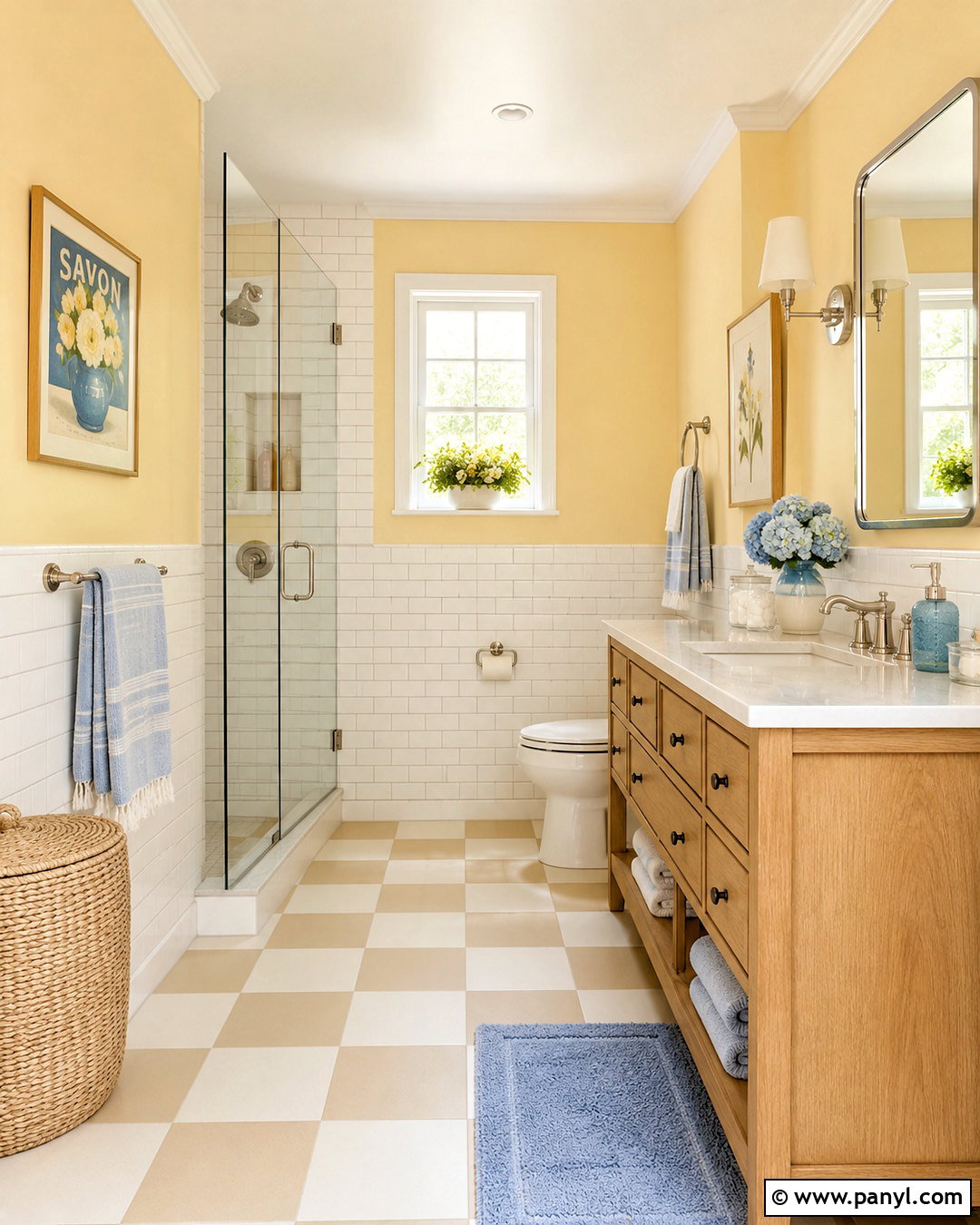
Butter yellow creates a lighthearted bathroom that remains soft and easy to live with. Choose a pale, creamy yellow for the walls and pair it with white subway tile, white plumbing fixtures, and warm gray grout. A light oak vanity keeps the room casual, while polished nickel faucets add a clean reflective finish. Introduce a small checkerboard floor in warm white and light beige for subtle vintage character. Blue-striped towels or a powder blue mirror provide a fresh counterpoint to the yellow. Use plenty of bright lighting, particularly in a windowless bathroom where this shade can otherwise look dull. Keep accessories simple and functional, such as glass containers and a woven hamper. The finished space should appear sunny and crisp, not overly themed or sugary.
14. Blush Pink Bathroom
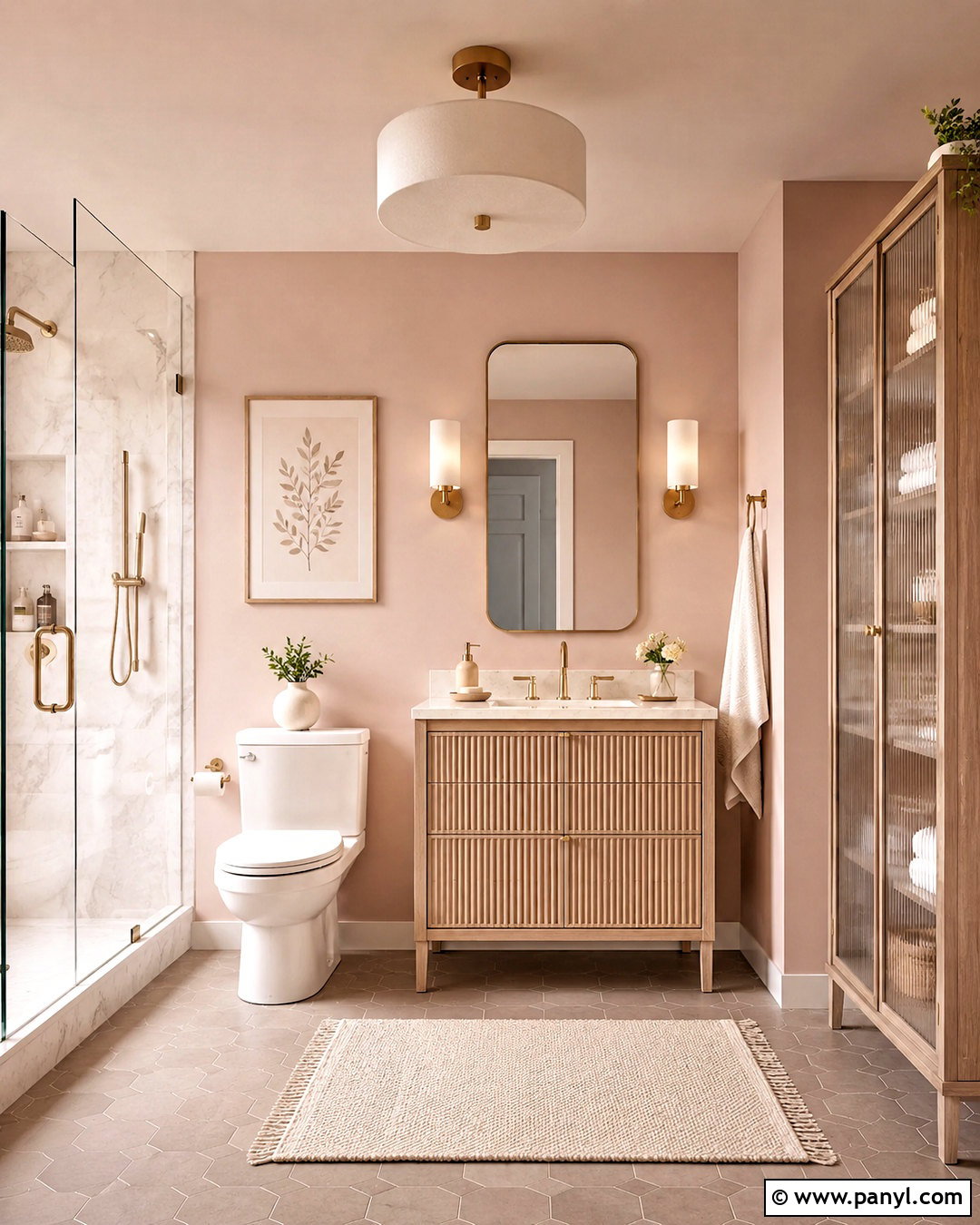
Blush pink works best as a soft neutral rather than an overly sweet statement. Choose a dusty blush with beige undertones for the walls and combine it with ivory marble-look tile, warm white fixtures, and a pale oak vanity. A fluted vanity front or ribbed glass cabinet adds texture while maintaining the gentle mood. Brushed brass faucets and sconces complement the warmth without becoming flashy. Ground the palette with a mushroom-colored floor and a few dark bronze details, such as a mirror frame or towel hook. Cream towels, a simple linen shade, and one small piece of abstract art complete the room. This bathroom color can flatter many skin tones when paired with warm, even lighting. The final design feels modern, relaxing, and sophisticated rather than youthful.
15. Dusty Rose Bathroom
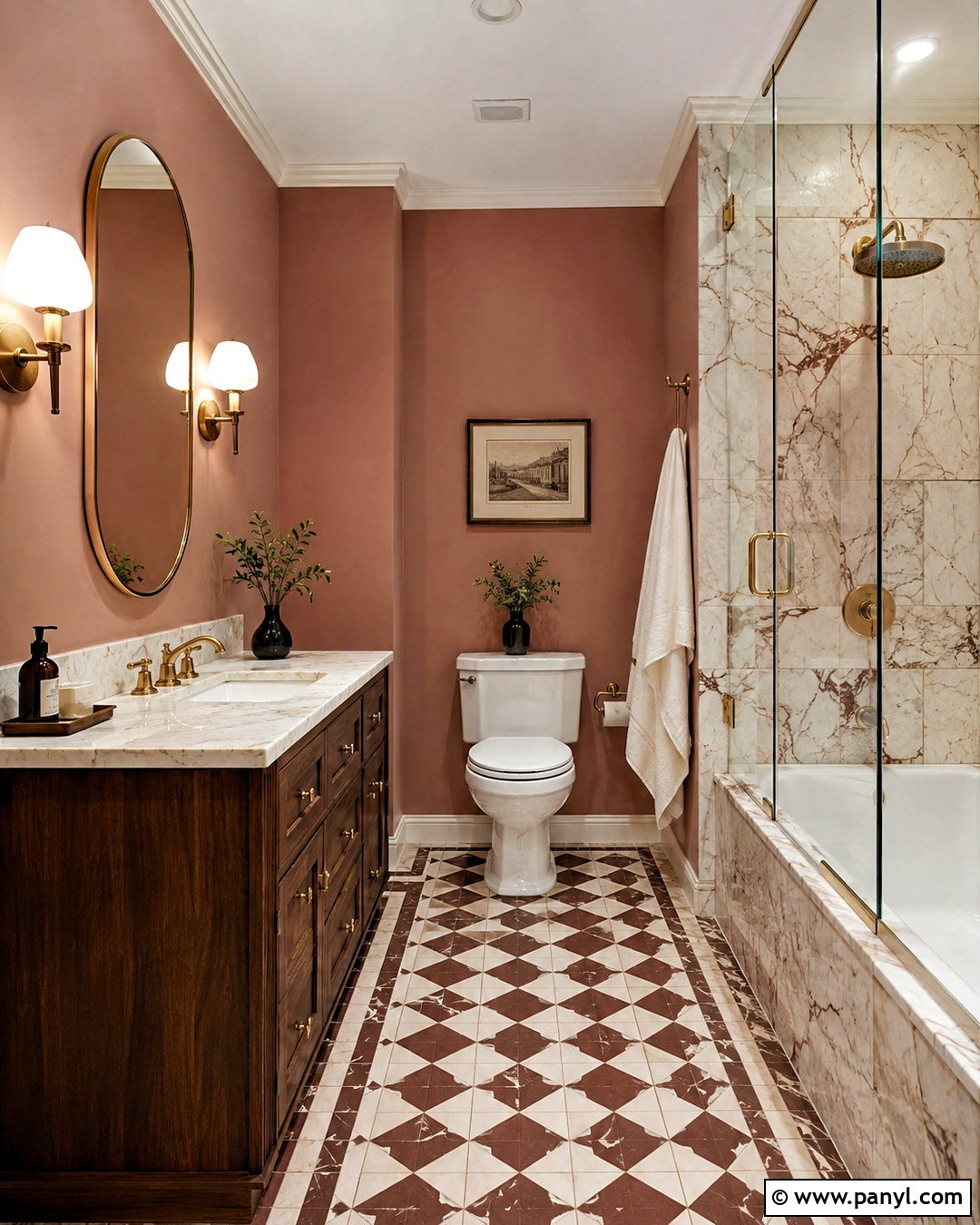
Dusty rose adds vintage warmth to a bathroom while offering more depth than pale pink. Paint the walls in a muted rose and pair them with burgundy-veined stone or softly mottled cream tile. A walnut vanity creates a handsome contrast, while a warm white counter provides a practical work surface. Choose antique brass fixtures, milk-glass sconces, and a pill-shaped mirror to support the updated traditional look. Deep brown floor tile keeps the pink from feeling delicate, and ivory towels brighten the darker elements. For additional pattern, use a small-scale geometric floor in rose, cream, and brown. Avoid filling the room with matching pink accessories. Instead, let the wall color lead while wood, stone, and metal complete the design. The result feels mature, layered, and comfortably nostalgic.
16. Soft Coral Bathroom
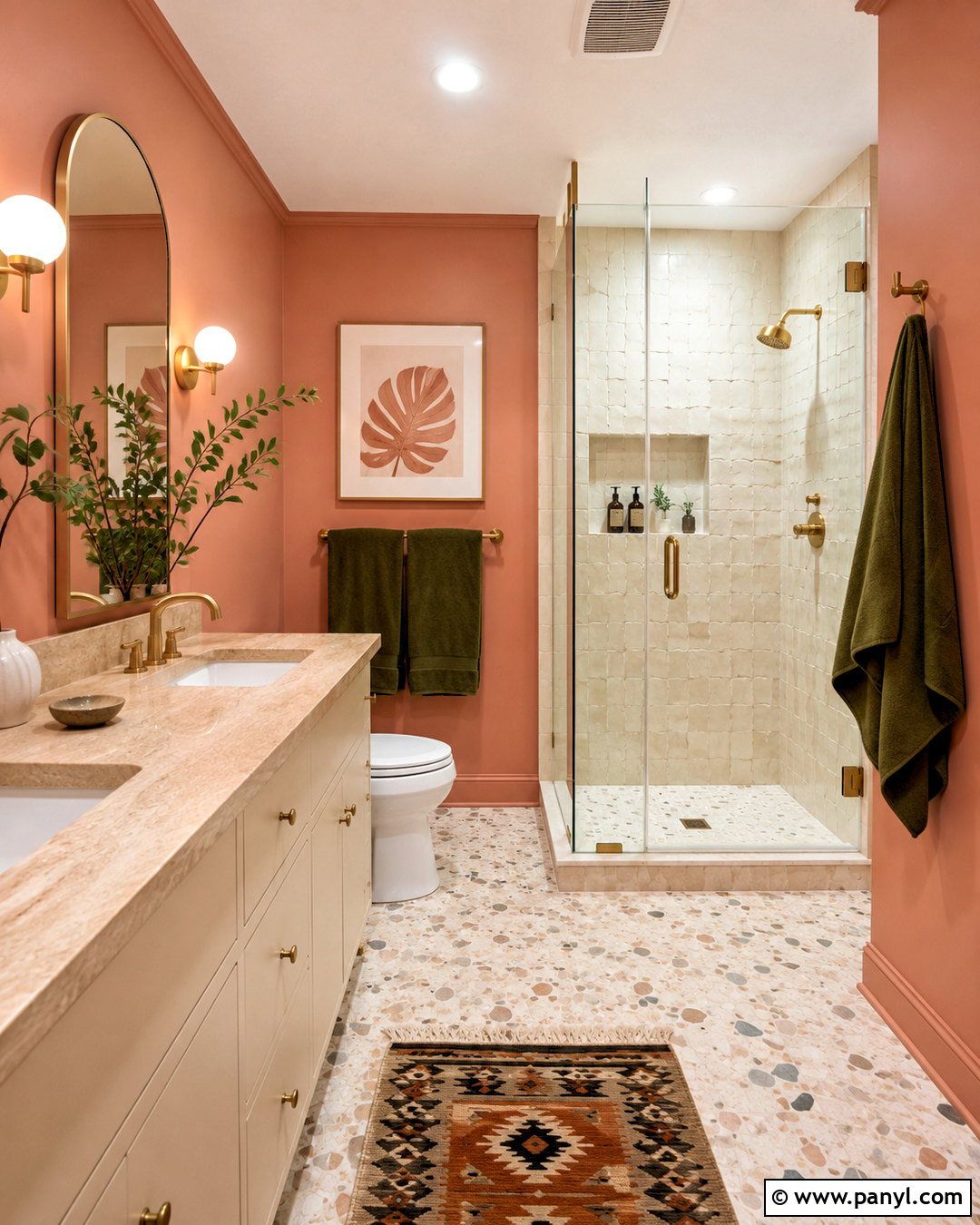
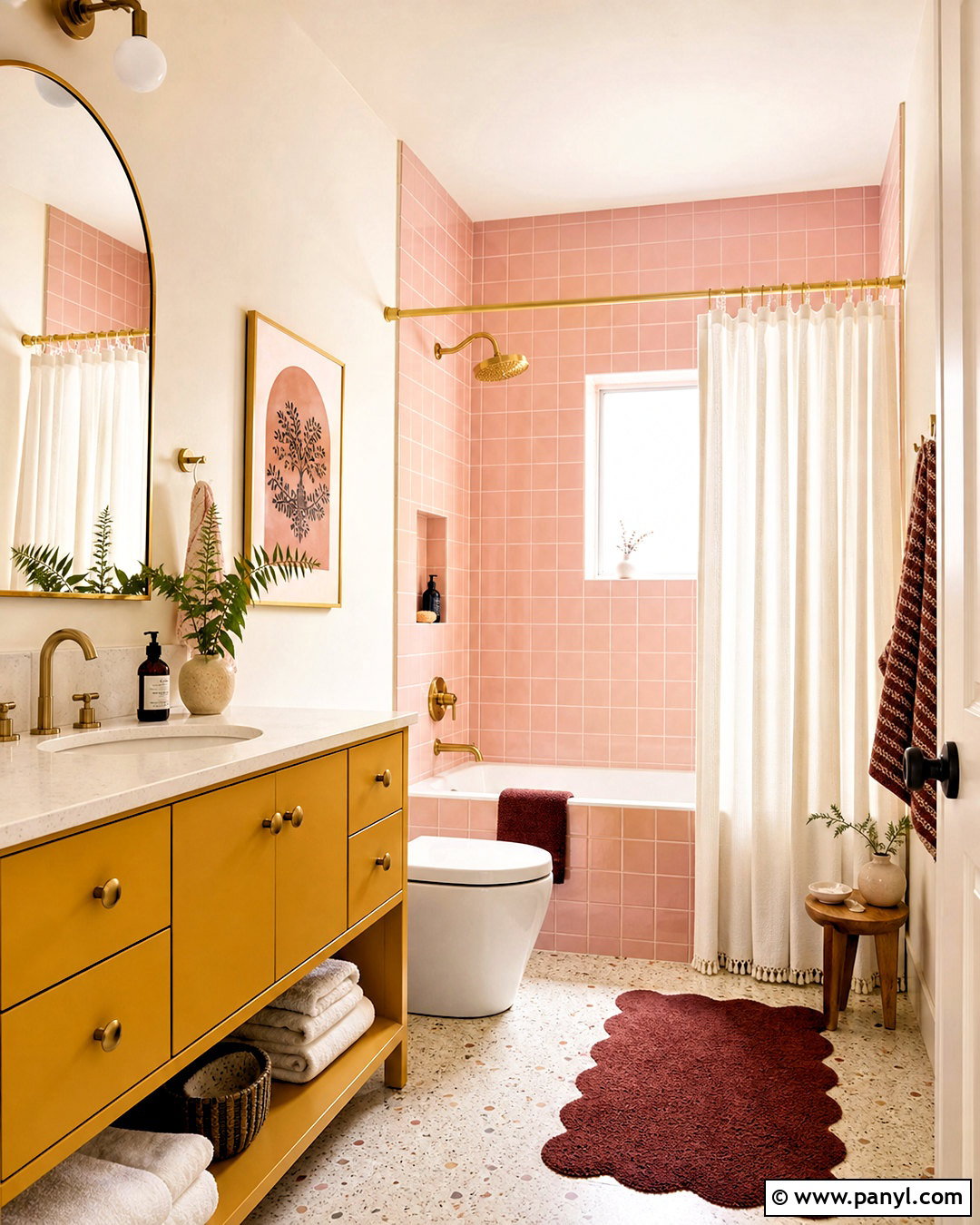
Soft coral brings energy to a bathroom while retaining an approachable, sun-washed appearance. Use a muted peach-coral across the walls and trim, then install warm white shower tile with slightly irregular edges. A painted cream vanity softens the color, while a natural stone counter adds subtle movement. Choose brushed brass faucets and simple globe lights to enhance the coral’s warmth. Pale terrazzo flooring with peach, beige, and gray chips ties the whole palette together without looking overly coordinated. Add olive or muted teal towels for a controlled contrast. In a compact powder room, a coral ceiling creates an immersive look; in a larger bath, keep it white. This completed scheme feels cheerful and modern, with enough neutral material to prevent the saturated wall color from overwhelming the space.
17. Burgundy Bathroom
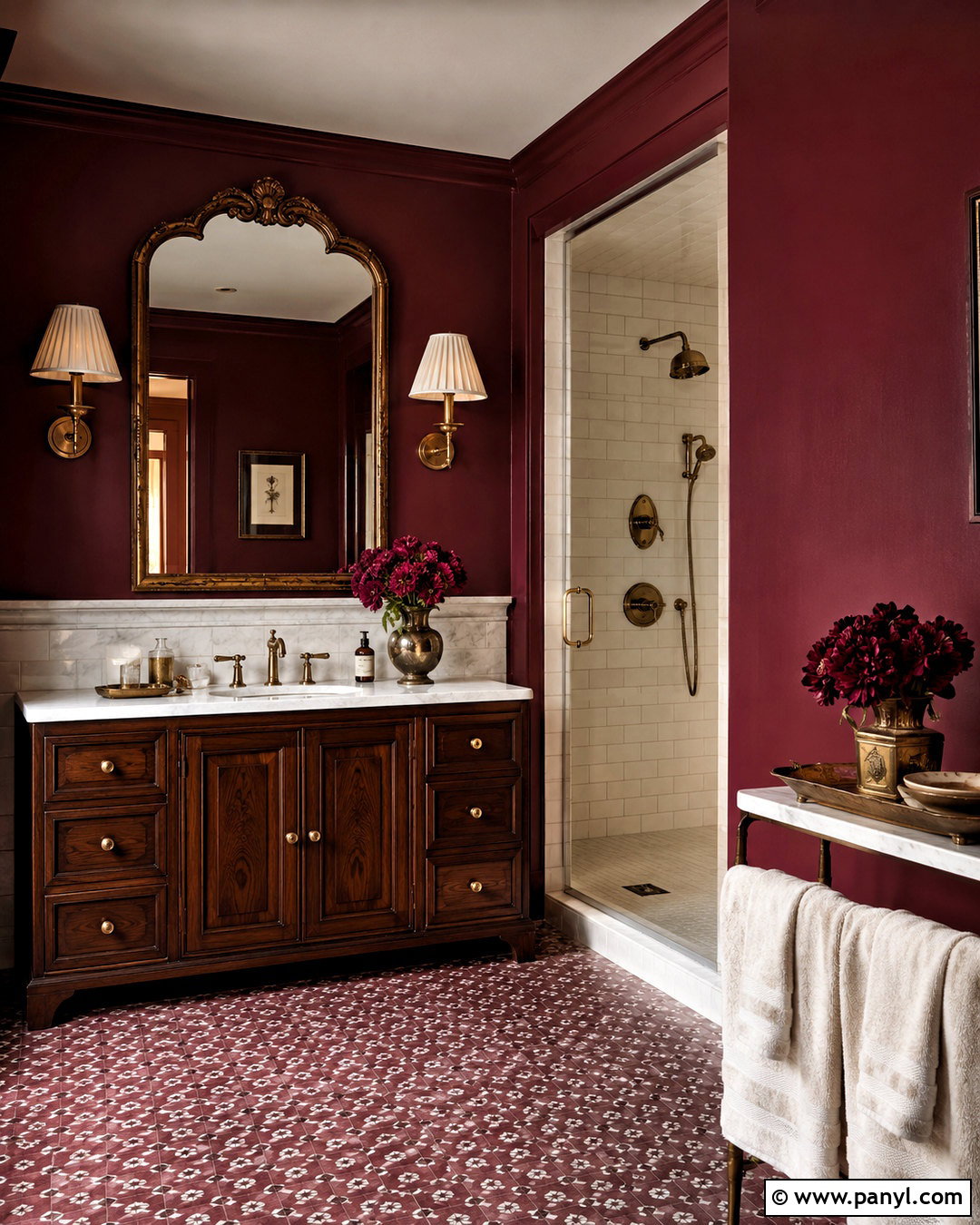
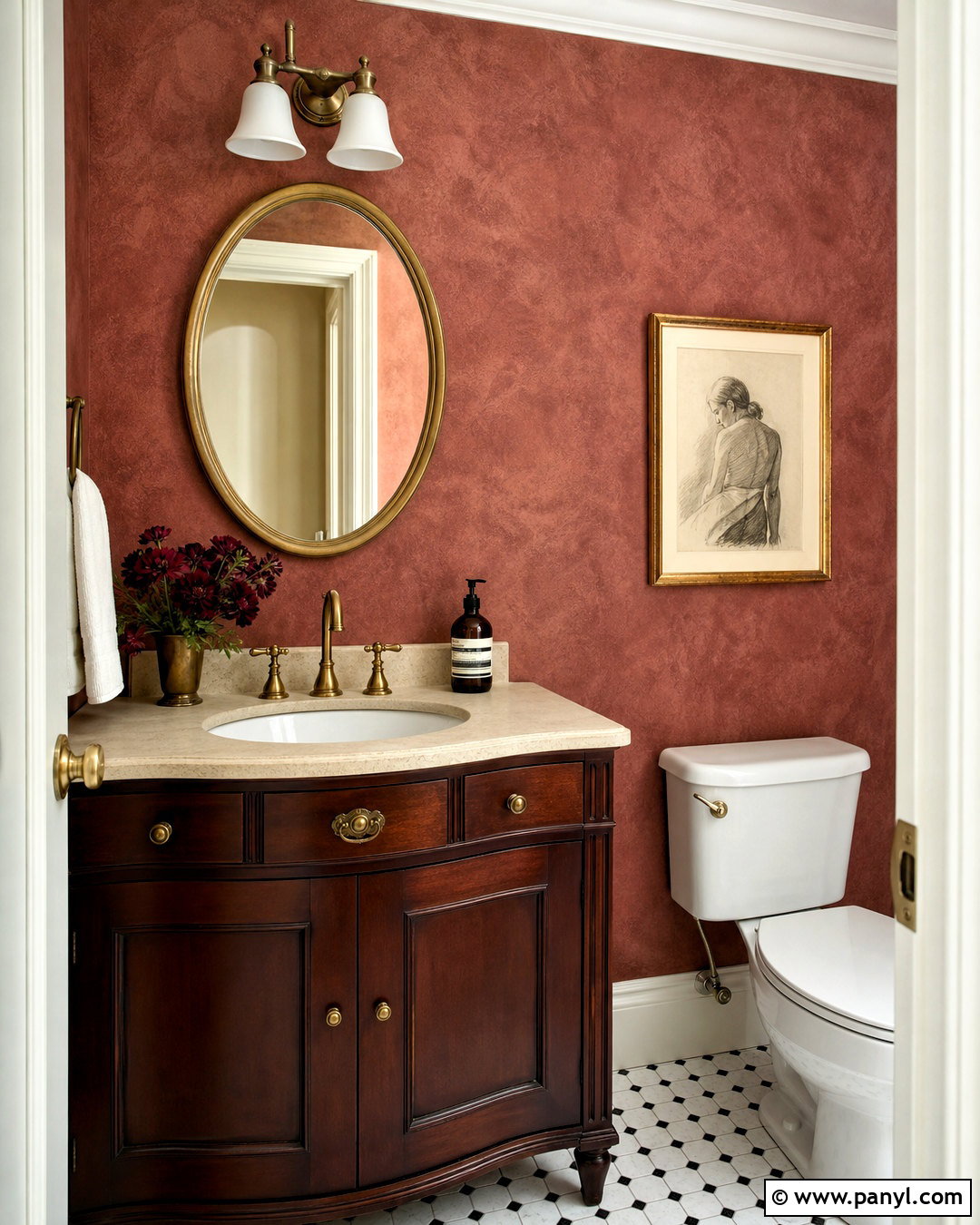
Burgundy can make a small bathroom feel intentional, luxurious, and deeply inviting. Paint the walls and trim in a muted wine-red burgundy, but keep the ceiling warm white for visual relief. Install a dark walnut vanity with a cream marble counter and use off-white tile inside the shower. Polished nickel or aged brass fixtures both work, depending on whether you prefer sharper or warmer contrast. A patterned floor featuring burgundy, tan, and ivory repeats the wall color in a practical surface. Add pleated sconces, an antique-inspired mirror, and thick cream towels to soften the dramatic walls. Bright lighting and reflective materials are essential in this palette. The finished room should feel tailored and enveloping, making burgundy especially effective in powder rooms, guest bathrooms, and traditional homes.
18. Chocolate Brown Bathroom
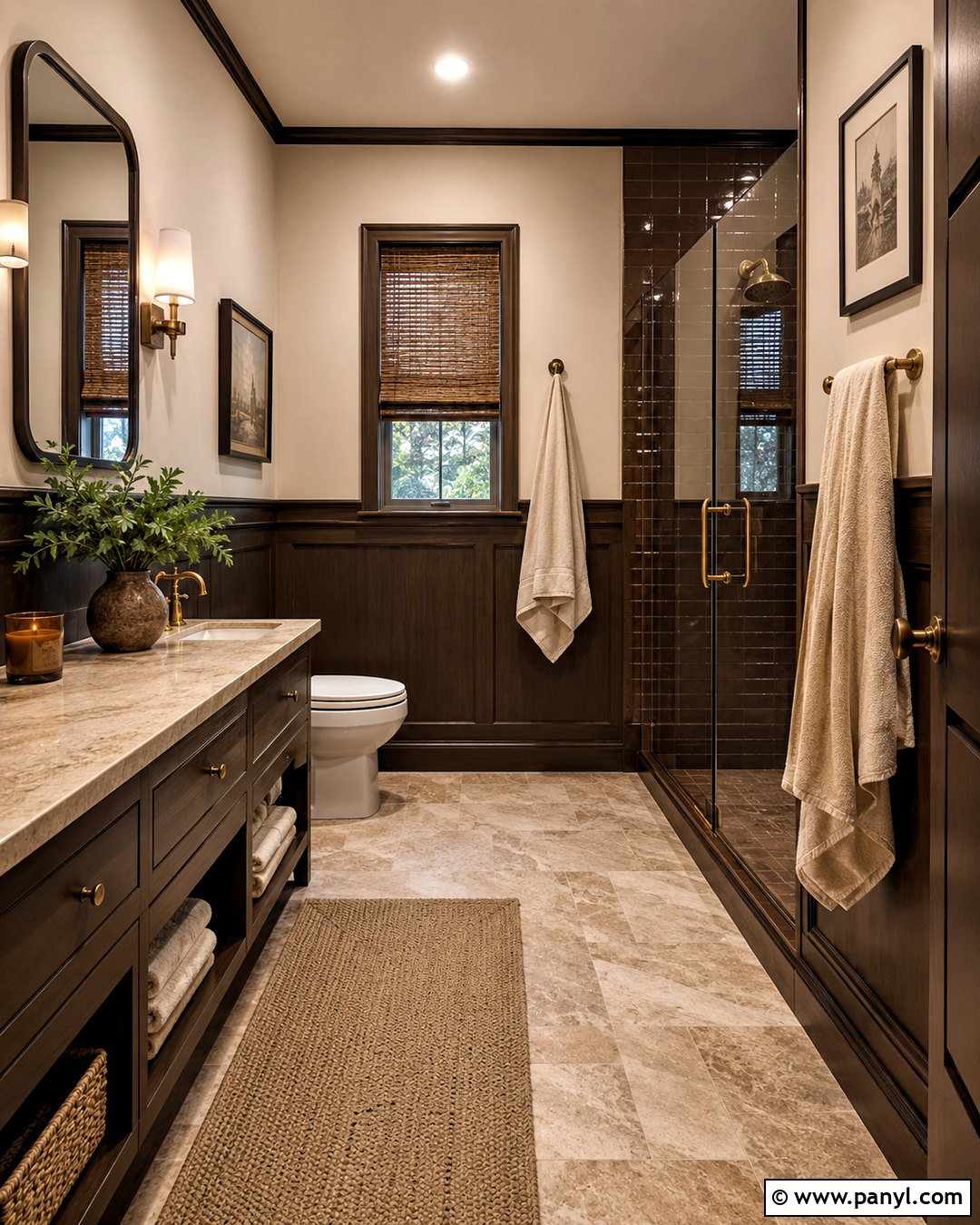
Chocolate brown creates a rich bathroom that feels grounded rather than severe. Use deep brown on the vanity and wall paneling, then lighten the upper walls with warm cream. A beige stone counter and travertine-look floor connect the light and dark areas naturally. Choose brushed brass faucets and slim brass sconces to add warmth and reflection. In the shower, use glossy cocoa-brown tile on one wall and cream tile elsewhere, allowing the darker surface to become a focal point. Ivory towels, a tan bath mat, and a woven shade maintain the earthy palette. Include a large mirror to bounce light throughout the room. This complete bathroom look suits organic modern and updated traditional interiors, offering depth without the cooler feeling often associated with black or charcoal.
19. Espresso Bathroom
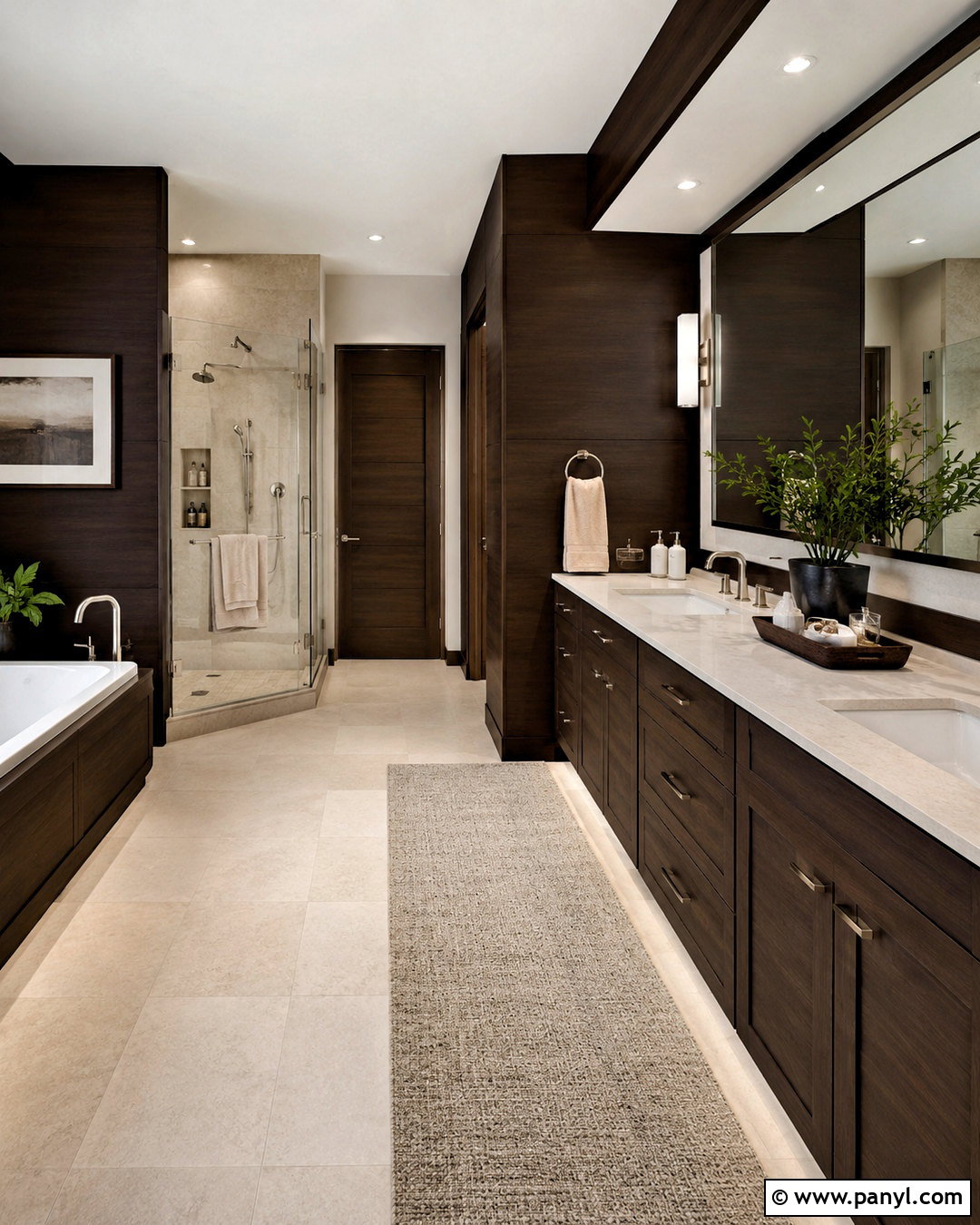
Espresso is an effective choice for a dramatic bathroom with sharp architectural definition. Start with espresso-brown cabinetry or floor-to-ceiling wall paneling, then pair it with pale limestone tile and a creamy quartz counter. Keep the tub, toilet, and sink bright white so they stand out clearly against the dark background. Use brushed nickel fixtures for crisp contrast or aged brass for a warmer appearance. A frameless shower, broad mirror, and layered vanity lighting help prevent the room from feeling enclosed. Add oatmeal towels and a light neutral runner to soften the hard surfaces. Espresso works especially well in spacious bathrooms with strong daylight, but it can also transform a powder room. The finished palette feels bold and refined while retaining more natural warmth than solid black.
20. Sage Green Bathroom
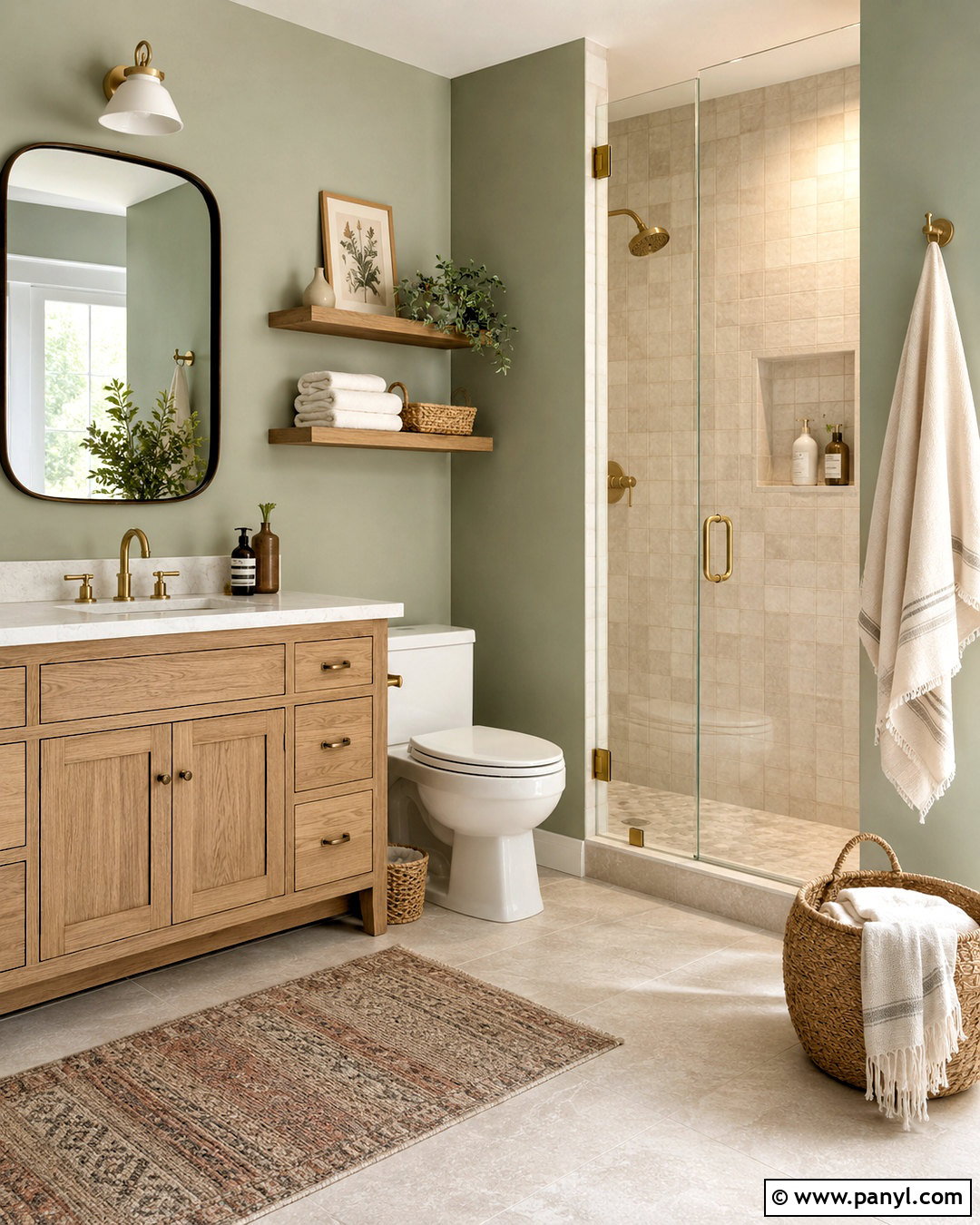
Sage green remains a versatile bathroom color because it feels natural, quiet, and easy to coordinate. Paint the walls in a warm, muted sage and use cream tile in the shower to preserve brightness. A white oak vanity complements the green, while an ivory quartz counter keeps the sink area clean and practical. Choose aged brass faucets and cabinet pulls for warmth, then add a thin bronze mirror frame for definition. Limestone-look flooring, off-white towels, and woven storage baskets complete the organic palette. For a more enveloping result, paint the ceiling and trim in a lighter sage rather than white. Keep plants limited to one or two healthy specimens so the room does not become overly themed. The finished bathroom feels fresh, balanced, and suitable for almost any home style.
21. Olive Green Bathroom
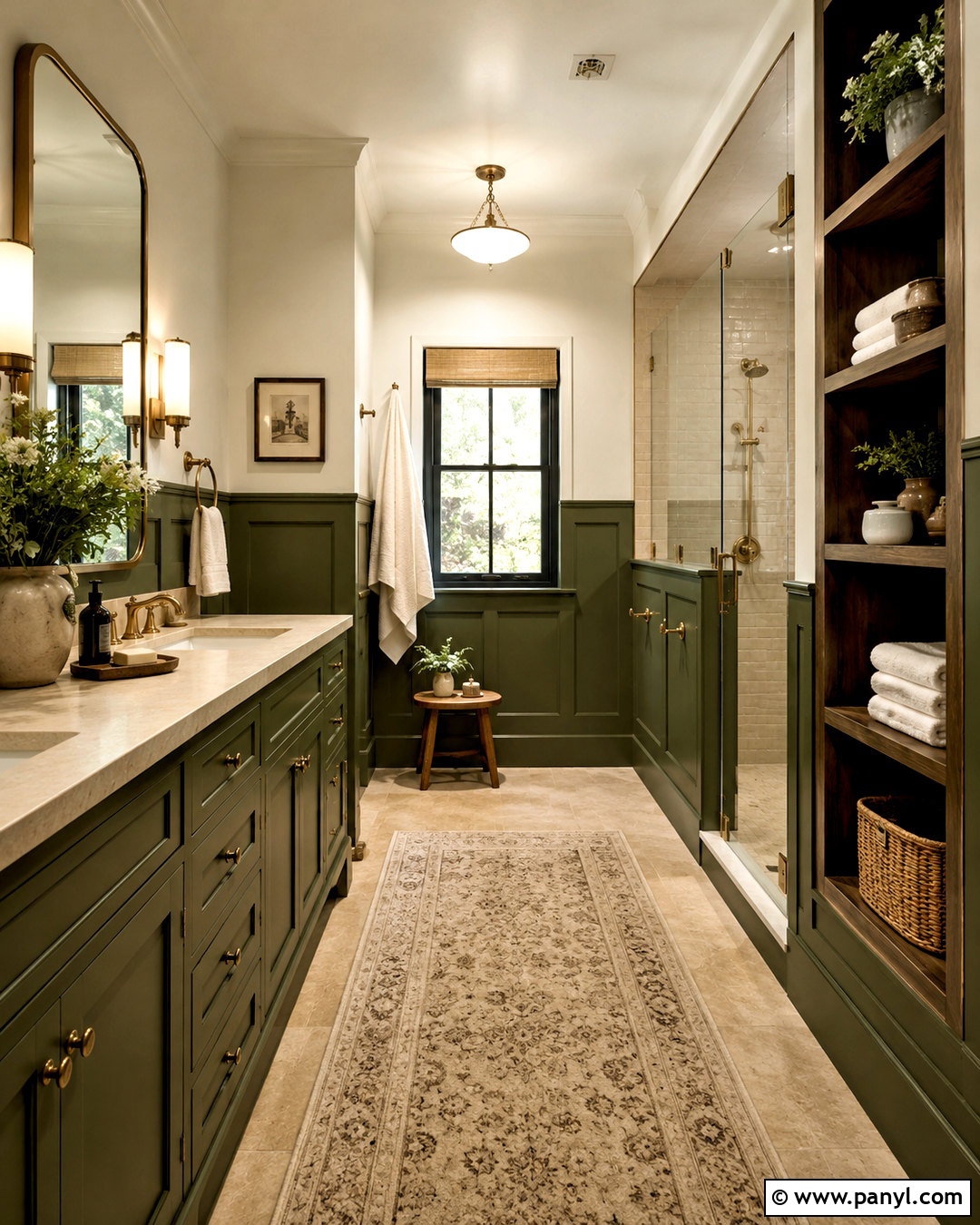
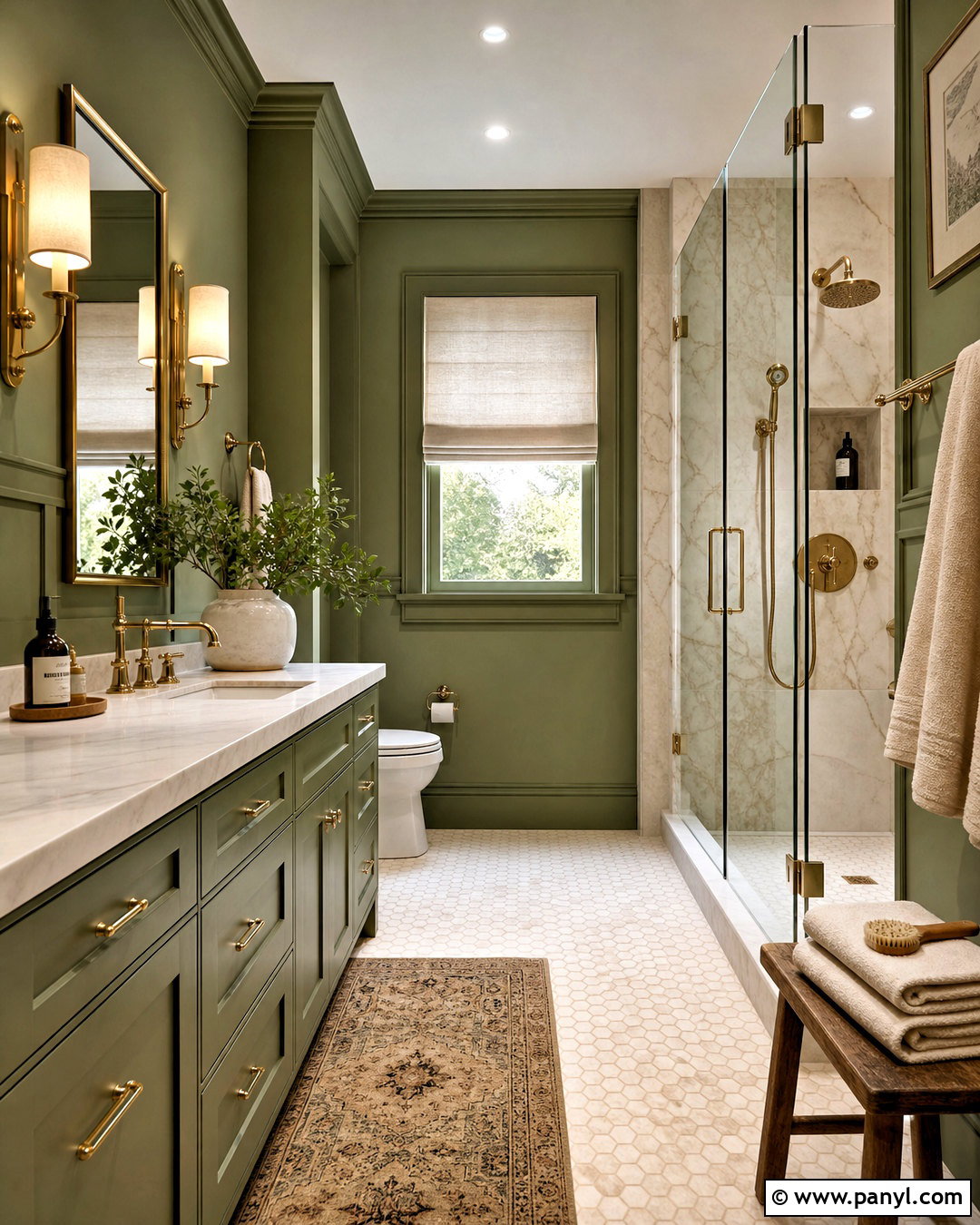
Olive green gives a bathroom a deeper, more grounded character than pale sage. Use medium olive on a vanity and wall paneling, then balance it with warm white upper walls and cream shower tile. Walnut accents, such as open shelves or a mirror frame, reinforce the earthy undertones. Select a beige stone counter and tan porcelain flooring so the palette flows smoothly from dark to light. Aged brass hardware brings out olive’s golden qualities, while ivory towels provide clean contrast. Consider a subtle botanical or geometric wallpaper above the paneling in a powder room, keeping its colors limited to olive, cream, and brown. Good lighting is important because olive can turn muddy in shadow. The completed room feels collected, natural, and pleasantly different from conventional neutral bathrooms.
22. Moss Green Bathroom
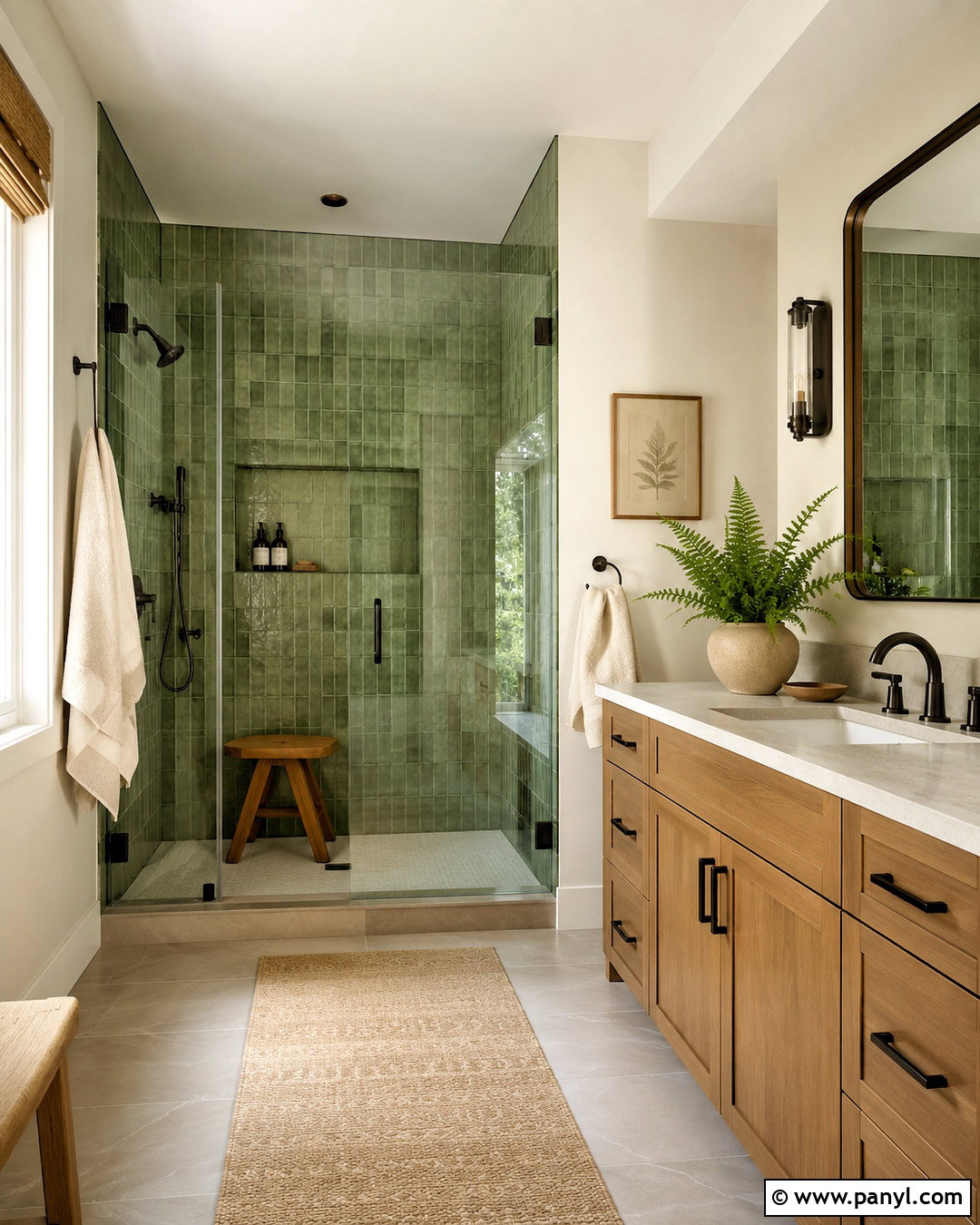
Moss green creates the feeling of a sheltered garden when combined with tactile stone and wood. Cover the shower walls in moss-colored handmade-look tile, allowing tonal variation to produce depth. Keep the remaining walls warm white and choose a medium oak vanity with a pale stone counter. Dark bronze faucets and shower framing add structure without introducing a cold metallic shine. Use warm gray floor tile to connect the green shower with the neutral areas. Fluffy cream towels, a wood stool, and one fern or trailing plant complete the natural look. If the bathroom lacks daylight, use moss on the vanity or backsplash instead of every wall. The resulting space should feel fresh and restorative, with green serving as an architectural surface rather than simply a decorative accent.
23. Forest Green Bathroom
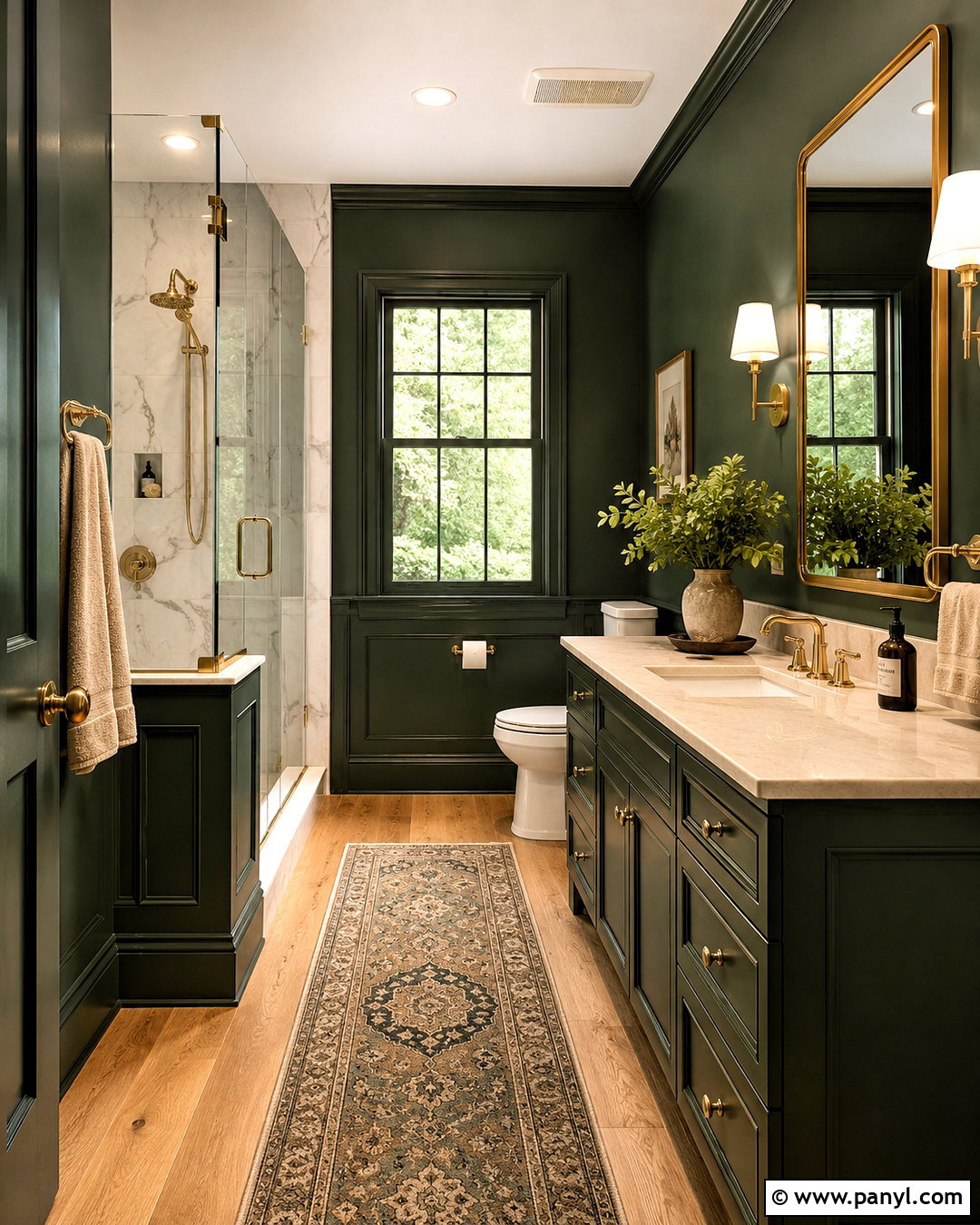
Forest green brings impressive depth to bathrooms, especially when used with bright stone and reflective metal. Paint the walls and vanity in a rich forest shade for a coordinated, color-drenched look. Add white marble-look tile in the shower and a cream counter to keep the room from becoming too dark. Brushed brass hardware provides a polished contrast, while a warm oak floor or wood-look porcelain introduces natural variation. Install a large mirror and bright sconces on both sides to spread light evenly. Cream towels, a patterned runner, and minimal ceramic accessories are enough to finish the design. Forest green is particularly successful in traditional bathrooms with paneling, but streamlined fixtures can make it modern. The completed room feels dramatic, established, and connected to nature.
24. Eucalyptus Green Bathroom
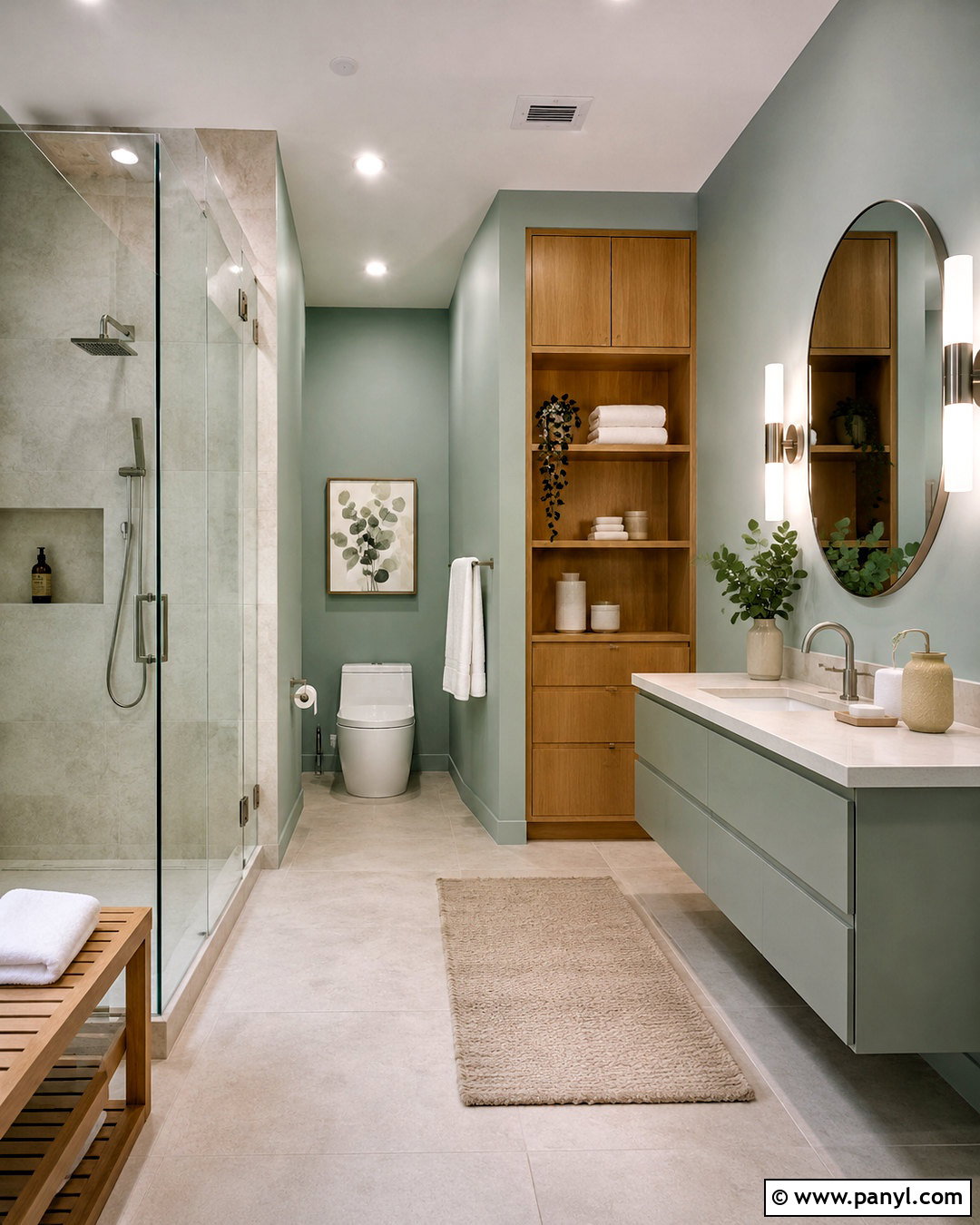
Eucalyptus green has a soft blue-gray undertone that suits calm, spa-inspired bathrooms. Apply it to smooth walls and a floating vanity, then choose large warm white tiles for the shower and floor. A pale oak storage cabinet adds warmth and prevents the cool green from feeling sterile. Use brushed nickel faucets, frameless shower glass, and a large rounded mirror for a clean contemporary finish. Layer the room with white towels, a light gray bath mat, and simple stone containers. A slatted wood bench can provide seating and reinforce the wellness atmosphere. Avoid cool blue lighting, which may make eucalyptus appear gray. Instead, use bright, warm-neutral bulbs and daylight whenever possible. The finished bathroom feels airy and modern, with enough softness to remain comfortable rather than clinical.
25. Seafoam Green Bathroom
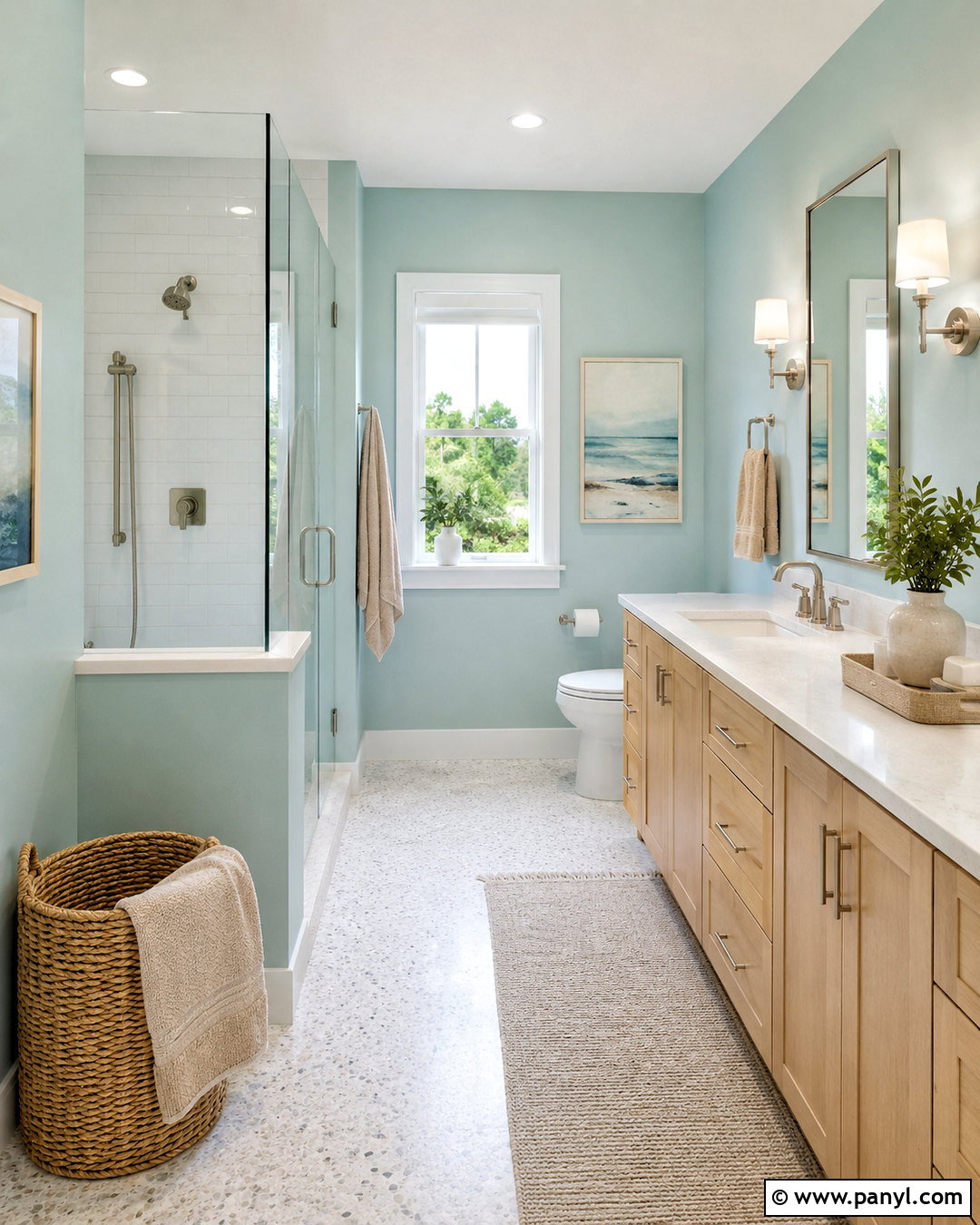
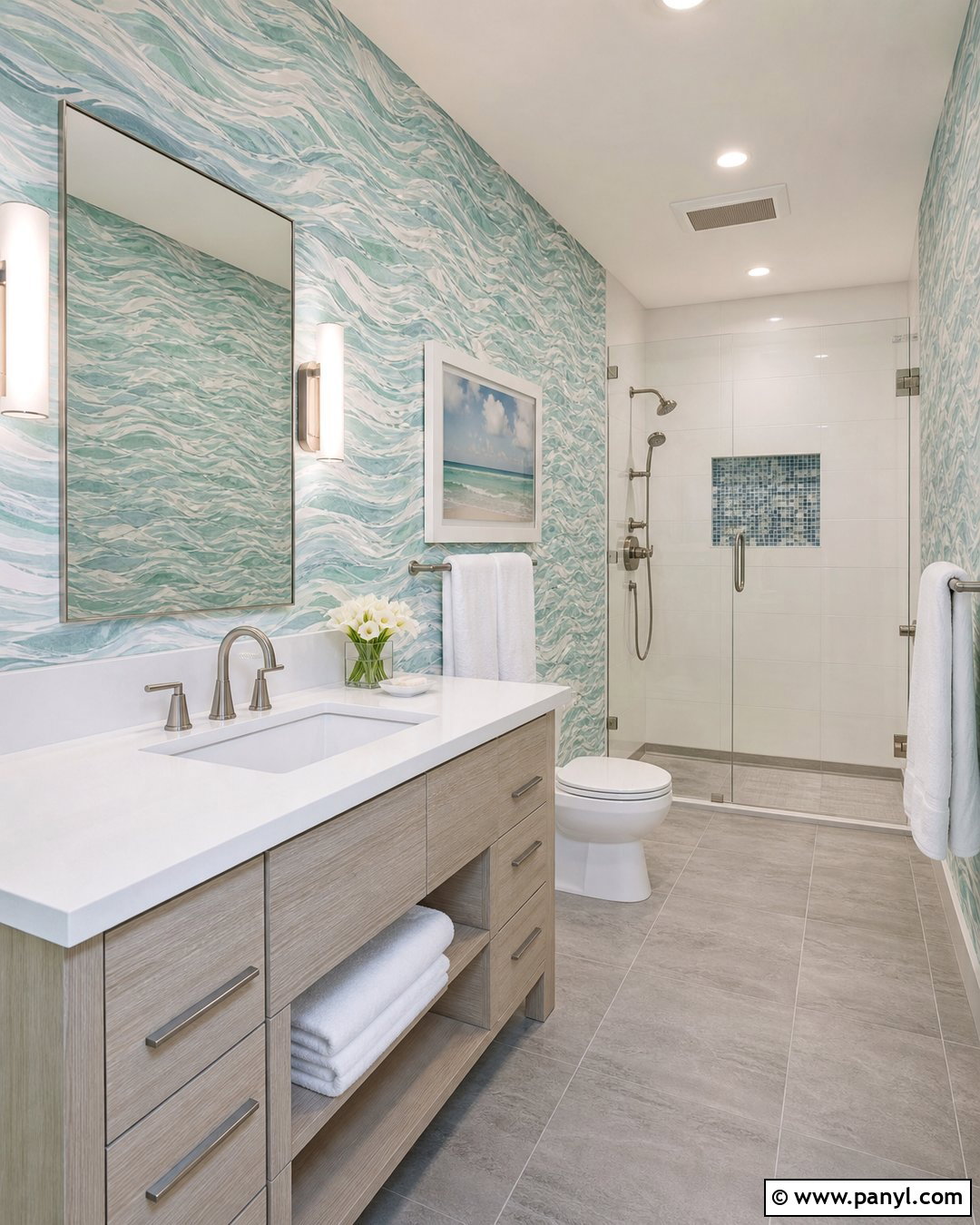
Seafoam green gives a bathroom a crisp coastal quality without requiring shells, anchors, or themed accessories. Select a pale green-blue for the walls and pair it with glossy white tile that reflects natural light. A light maple or white oak vanity brings warmth, while a white quartz counter maintains the fresh palette. Polished nickel fixtures work especially well because their subtle shine echoes water without looking overly decorative. Choose pale terrazzo or warm white hexagon tile for the floor. Add sandy beige towels, a woven basket, and one simple blue-gray artwork to complete the color story. In a small room, paint the ceiling seafoam as well for a continuous effect. The result is bright, relaxed, and more timeless than an obviously beach-themed bathroom.
26. Powder Blue Bathroom
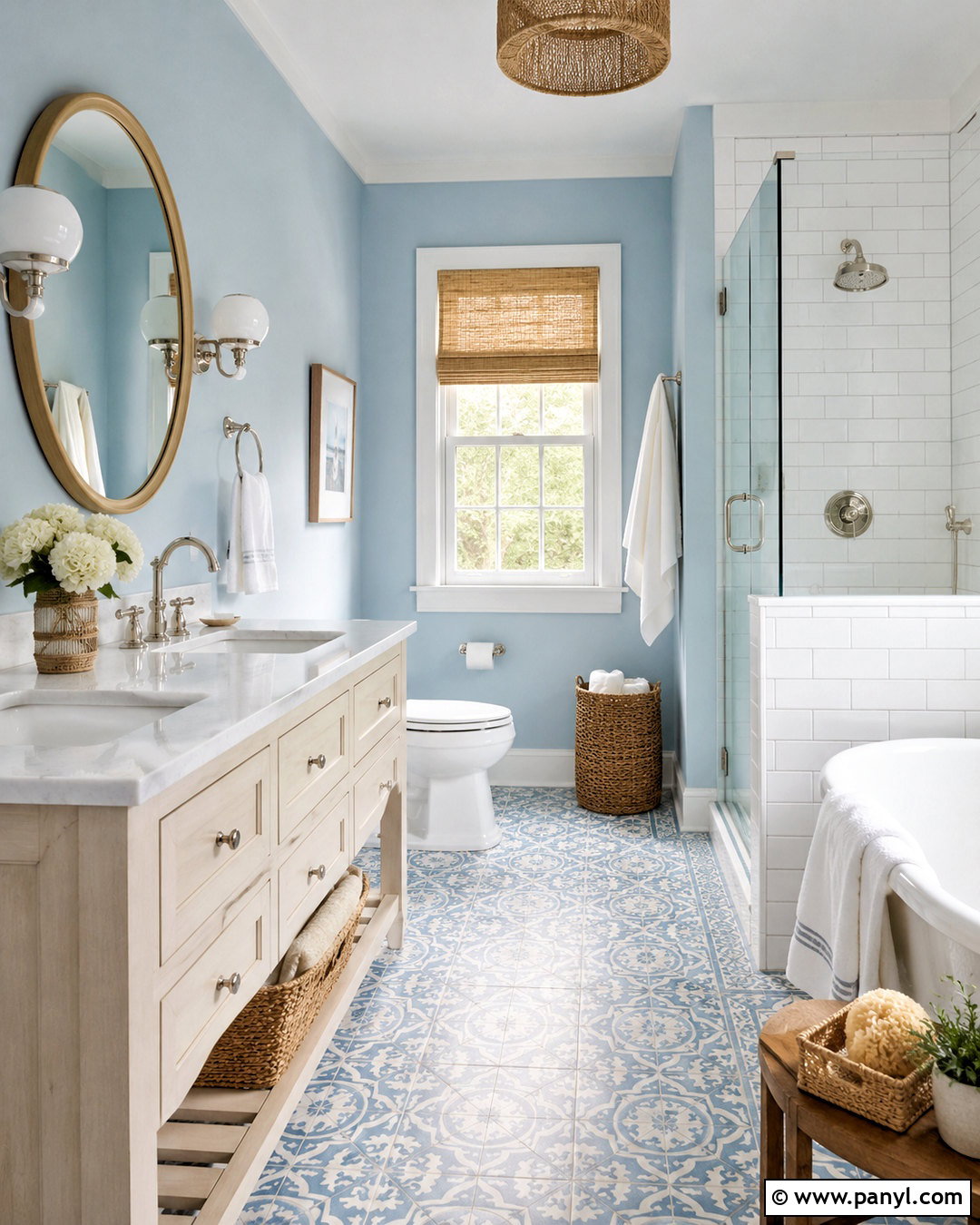
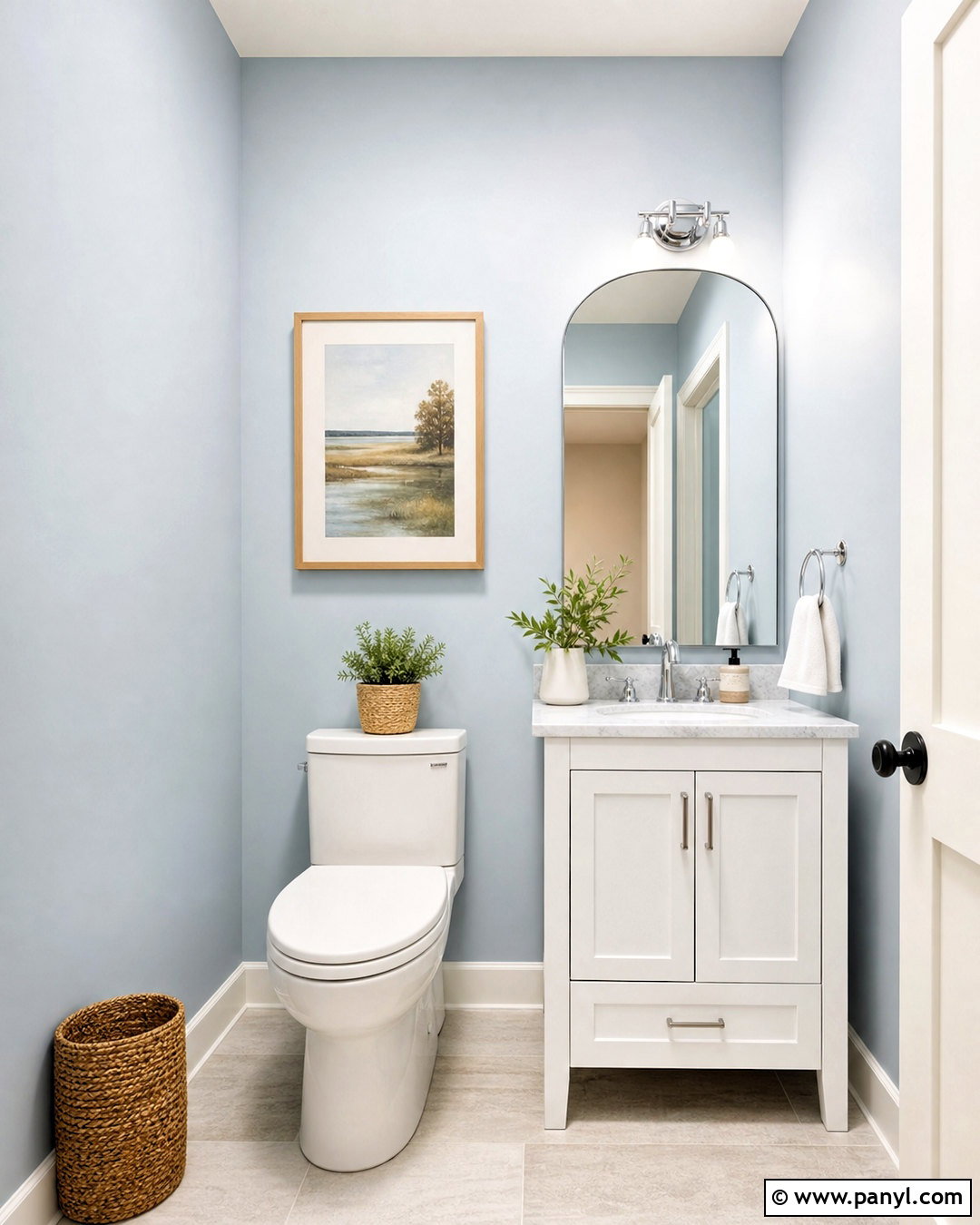
Powder blue creates an airy bathroom that feels gentle, familiar, and freshly updated. Paint the walls in a muted blue with a slight gray undertone, then combine it with white tile, a cream vanity, and pale oak accents. Polished chrome or nickel fixtures keep the palette crisp and reflect light around the room. Introduce pattern through a small floor tile in blue, white, and warm gray. A rounded mirror, globe sconces, and simple white towels maintain the uncluttered look. To keep powder blue from feeling cold, include a woven shade, wood stool, or tan runner. Warm-neutral bulbs are also essential. This complete design works beautifully in family, guest, and cottage bathrooms, offering noticeable color while remaining calm enough for long-term use.
27. Mineral Blue Bathroom
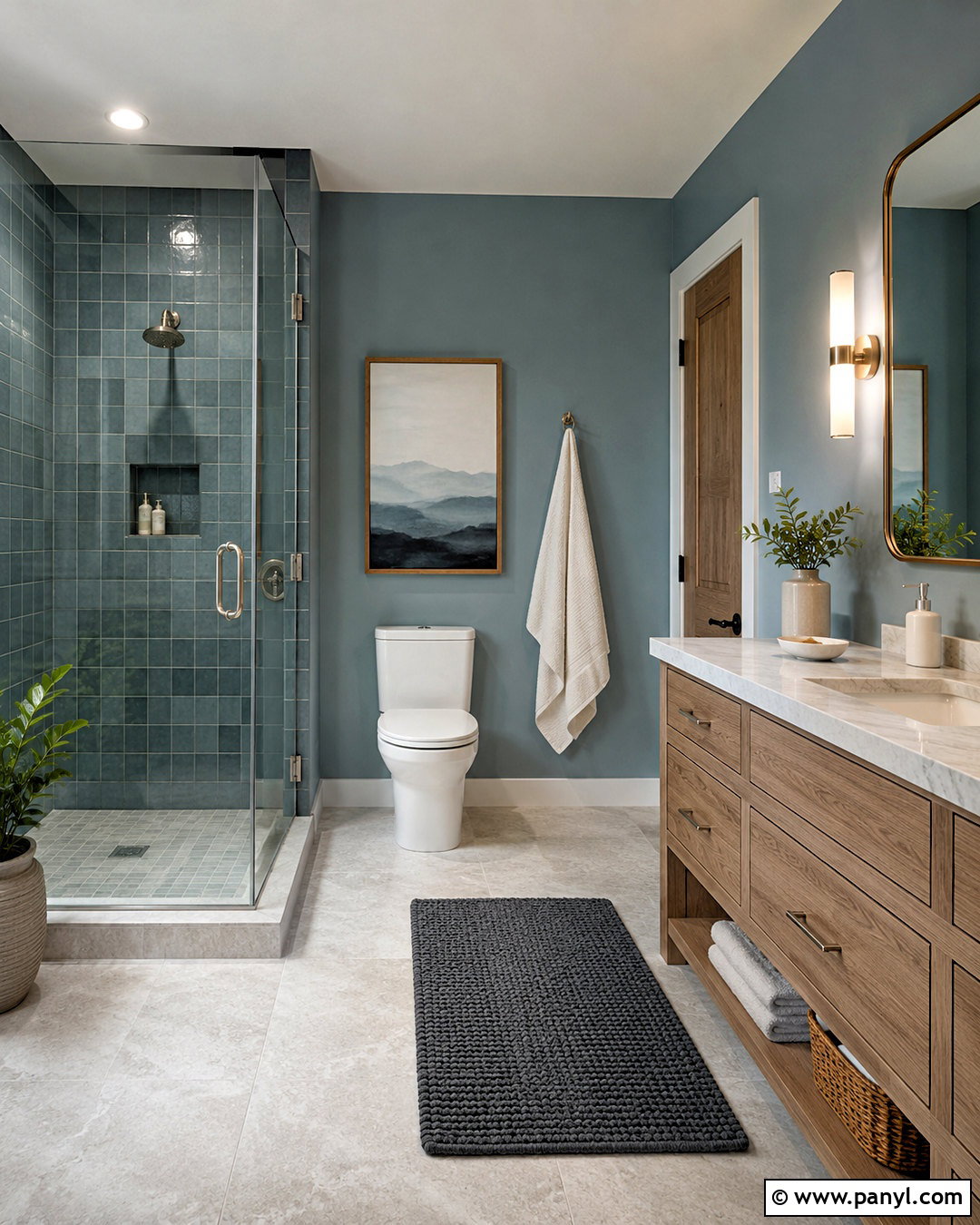
Mineral blue combines muted blue, gray, and green for a bathroom color that changes subtly throughout the day. Use it on the walls and repeat it in glazed shower tile for a cohesive but textured effect. A light walnut vanity adds warmth, while a pale limestone counter and floor keep the room grounded. Choose brushed nickel faucets and clear glass shower panels to maintain a soft, contemporary appearance. Off-white towels, a charcoal bath mat, and simple ceramic accessories add useful contrast. Because mineral blue can look different under various bulbs, test it beside the tile and counter before committing. The finished bathroom should feel quiet and naturally layered, resembling water-worn stone rather than a bright decorative blue. It is particularly effective in spa-like primary bathrooms.
28. Sky Blue Bathroom
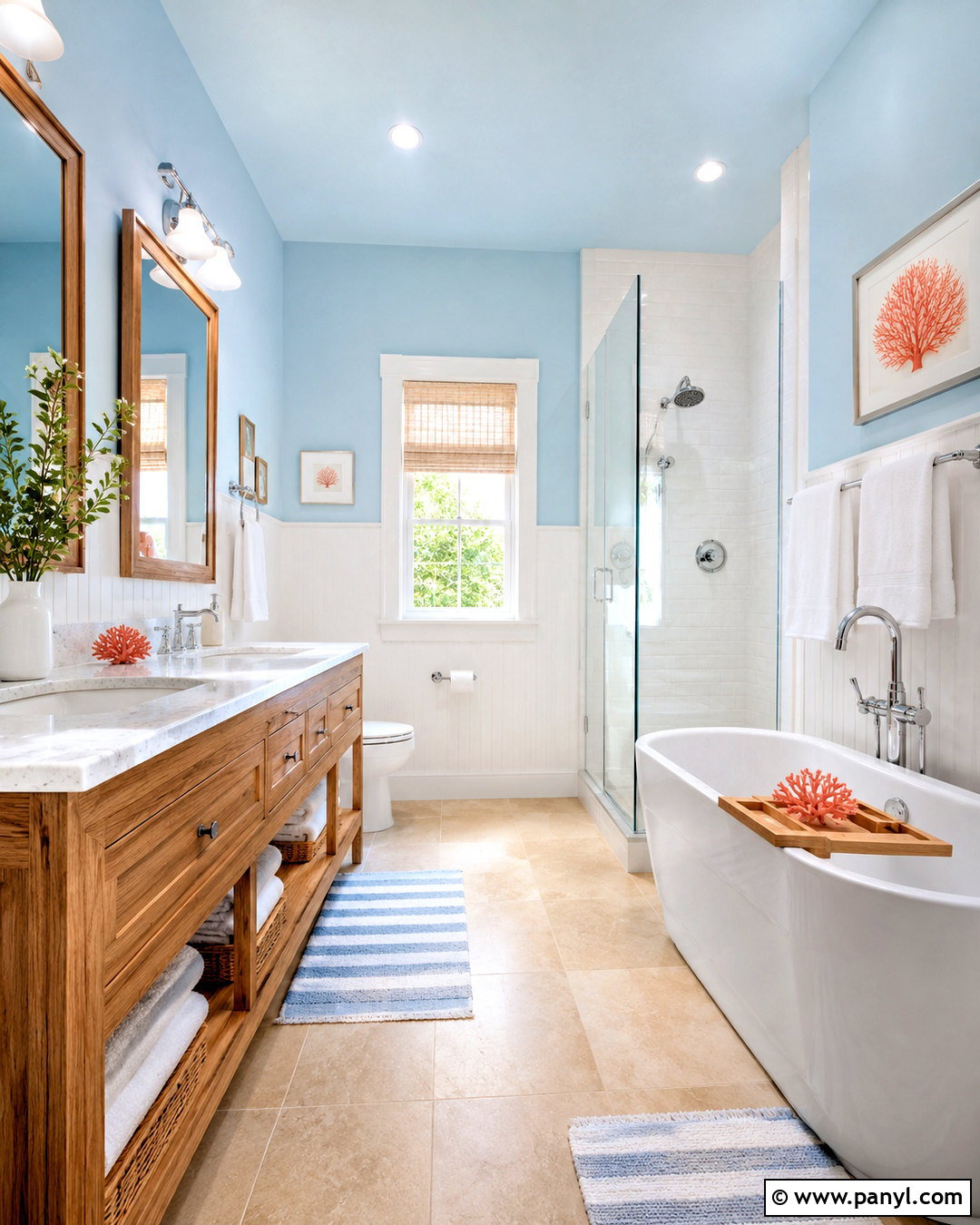
Sky blue fills a bathroom with an open, cheerful quality that works particularly well in rooms with good daylight. Paint the upper walls and ceiling in a clear yet softened sky blue, then use white vertical tile below to make the ceiling appear taller. A natural oak vanity keeps the scheme grounded, while a white counter and polished chrome fixtures add freshness. Warm beige flooring prevents the blue and white combination from feeling icy. Include a striped bath mat, white towels, and small accents in sunny yellow or muted coral. Avoid dark, heavy cabinetry that might interrupt the airy effect. The completed bathroom feels bright and optimistic, making it a strong choice for children’s bathrooms, guest baths, and compact spaces that need more visual openness.
29. Teal Bathroom
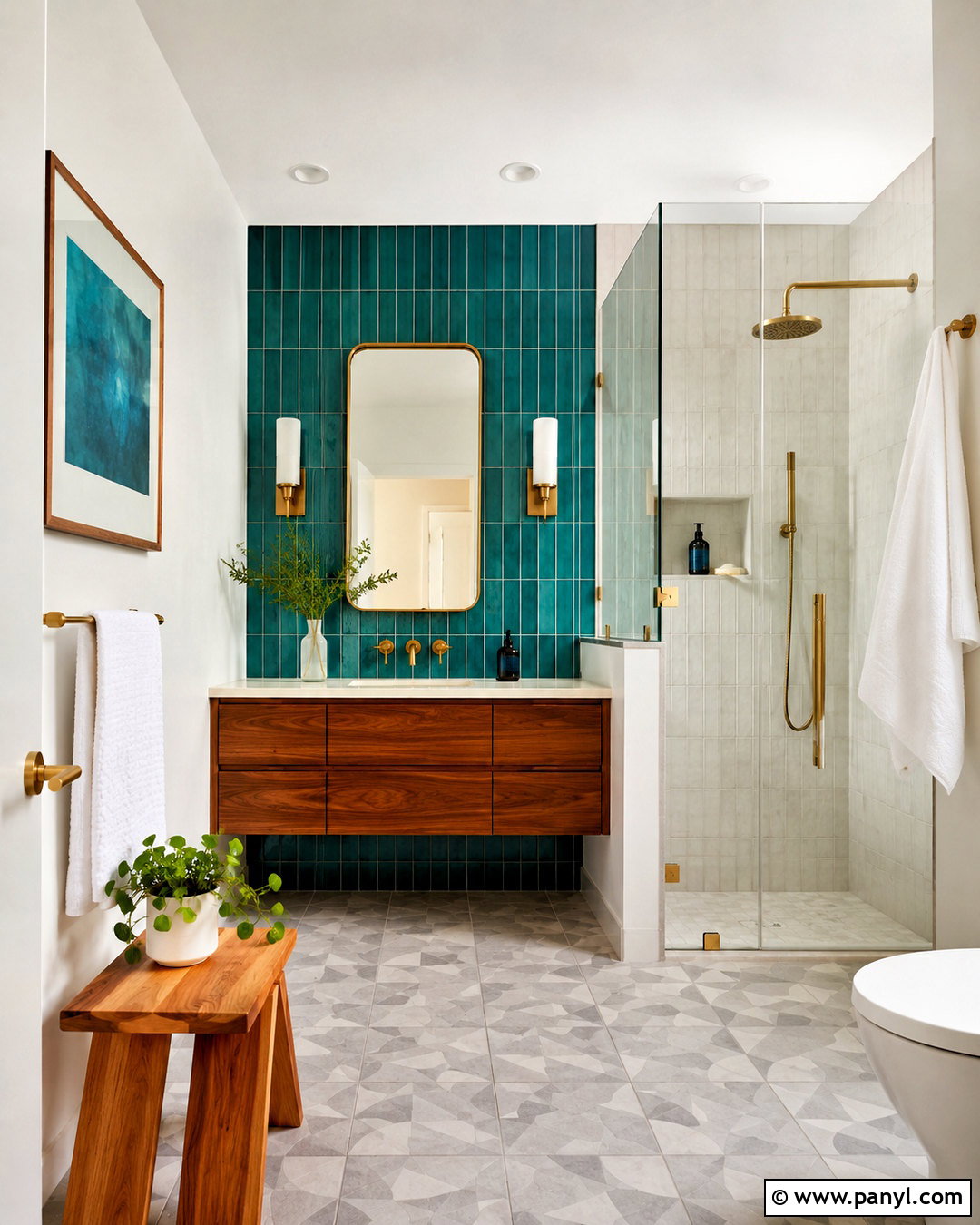
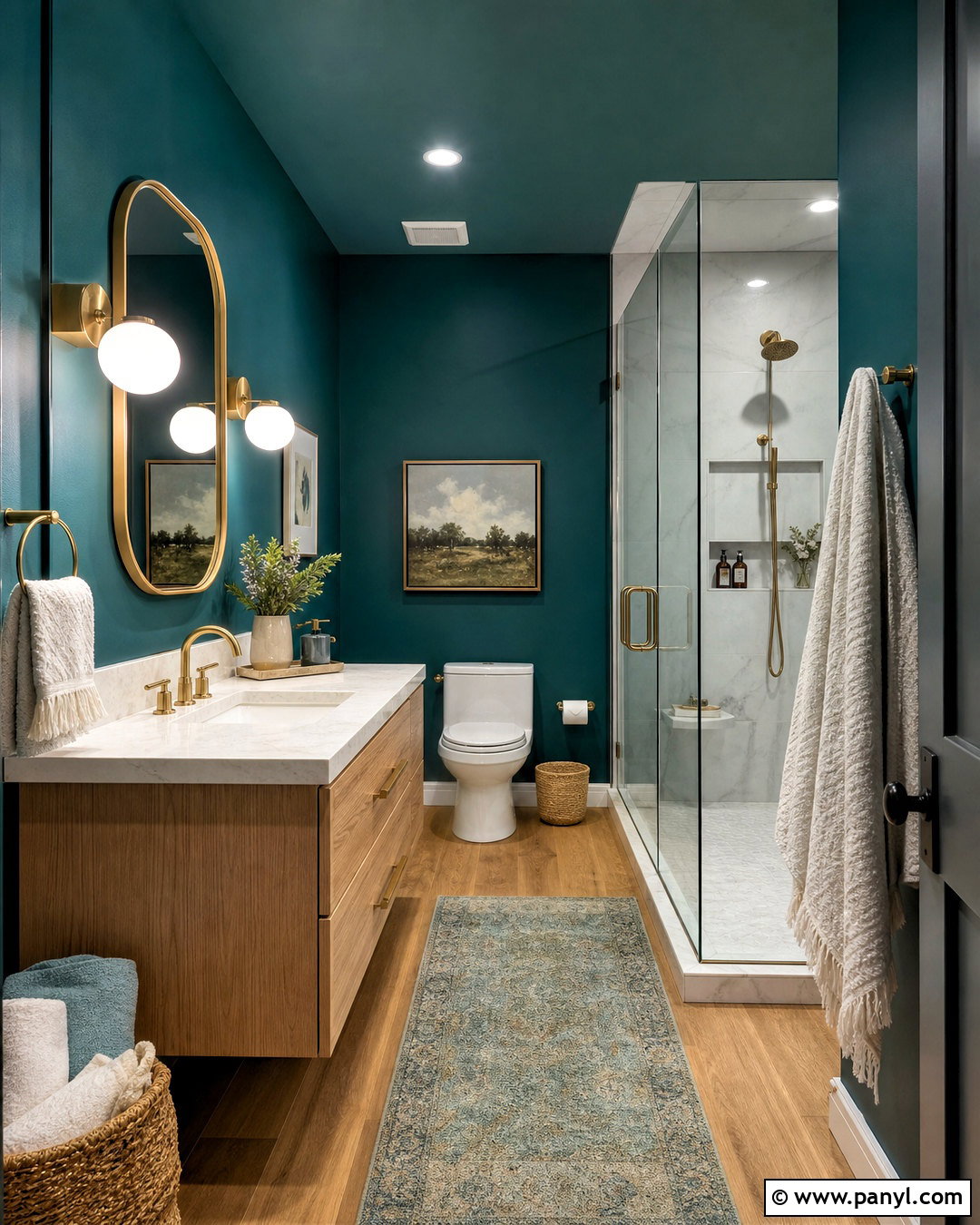
Teal combines the calm of blue with the natural richness of green, creating a bathroom that feels colorful but balanced. Cover the vanity wall in glossy teal tile and paint the surrounding walls warm white. A walnut floating vanity introduces depth, while a pale quartz counter offers a clean contrast. Choose brushed brass faucets and lighting to emphasize teal’s warmer side. For flooring, use large light gray tiles or a restrained geometric pattern containing teal, cream, and gray. Keep the shower enclosure clear and streamlined so the feature wall remains visible. White towels and a natural wood stool finish the room without adding unnecessary colors. This complete teal bathroom feels lively and polished, working equally well in midcentury, contemporary, and eclectic homes.
30. Turquoise Bathroom
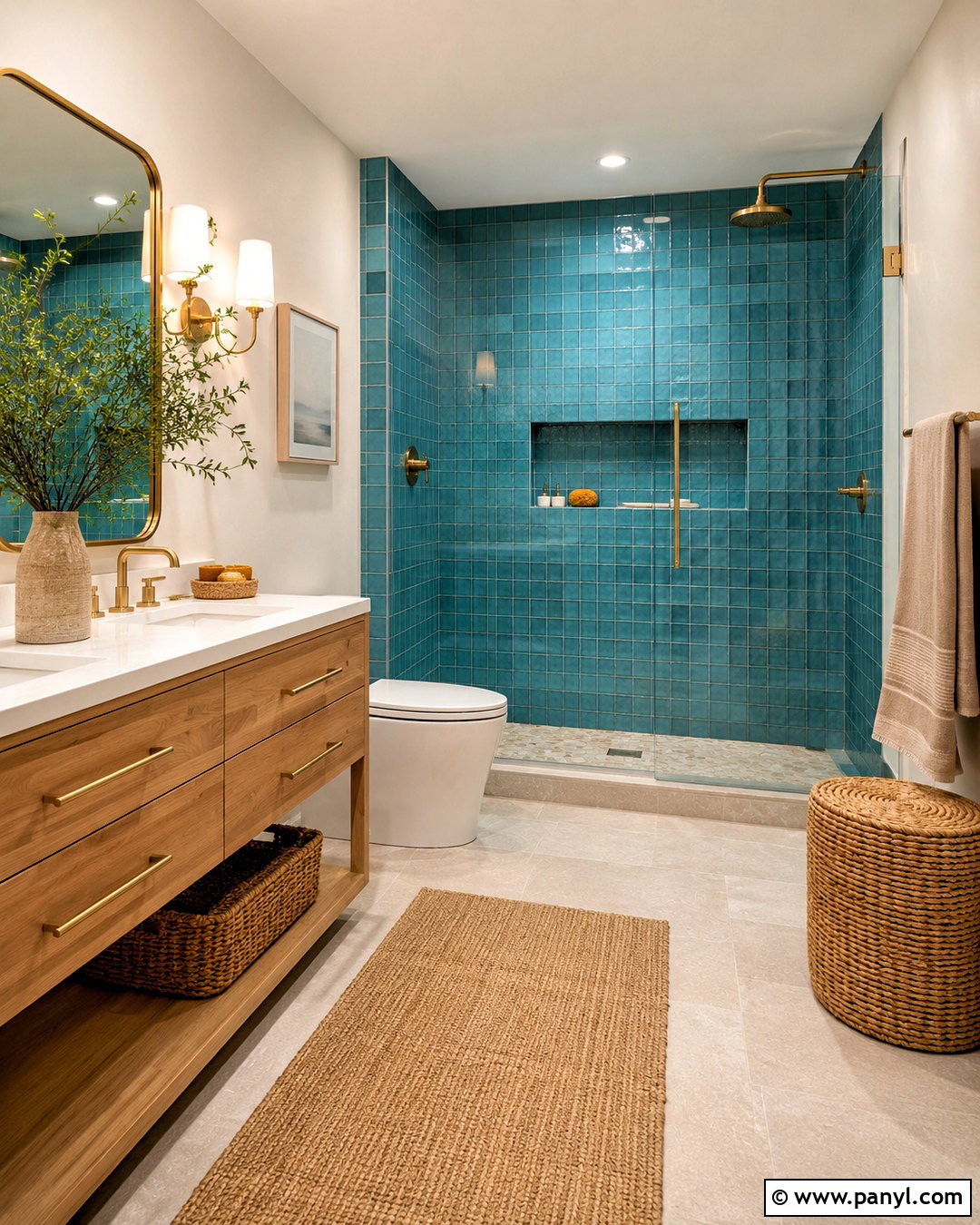
Turquoise creates a vibrant bathroom with strong visual personality, so it benefits from a carefully controlled supporting palette. Use handmade-look turquoise tile inside the shower or behind the vanity, then keep the other walls creamy white. Choose a medium oak vanity with a white stone counter and simple slab-front doors. Brushed brass hardware adds warmth, while sandy porcelain flooring prevents the room from feeling overly aquatic. Repeat turquoise only once or twice through a towel border or small ceramic accessory. Add a woven shade and natural linen shower curtain if glass is not practical. Bright illumination will reveal the tile’s varied blue-green surface. The final design feels joyful and contemporary, with enough wood and neutral material to make the saturated color comfortable for daily use.
31. Navy Blue Bathroom
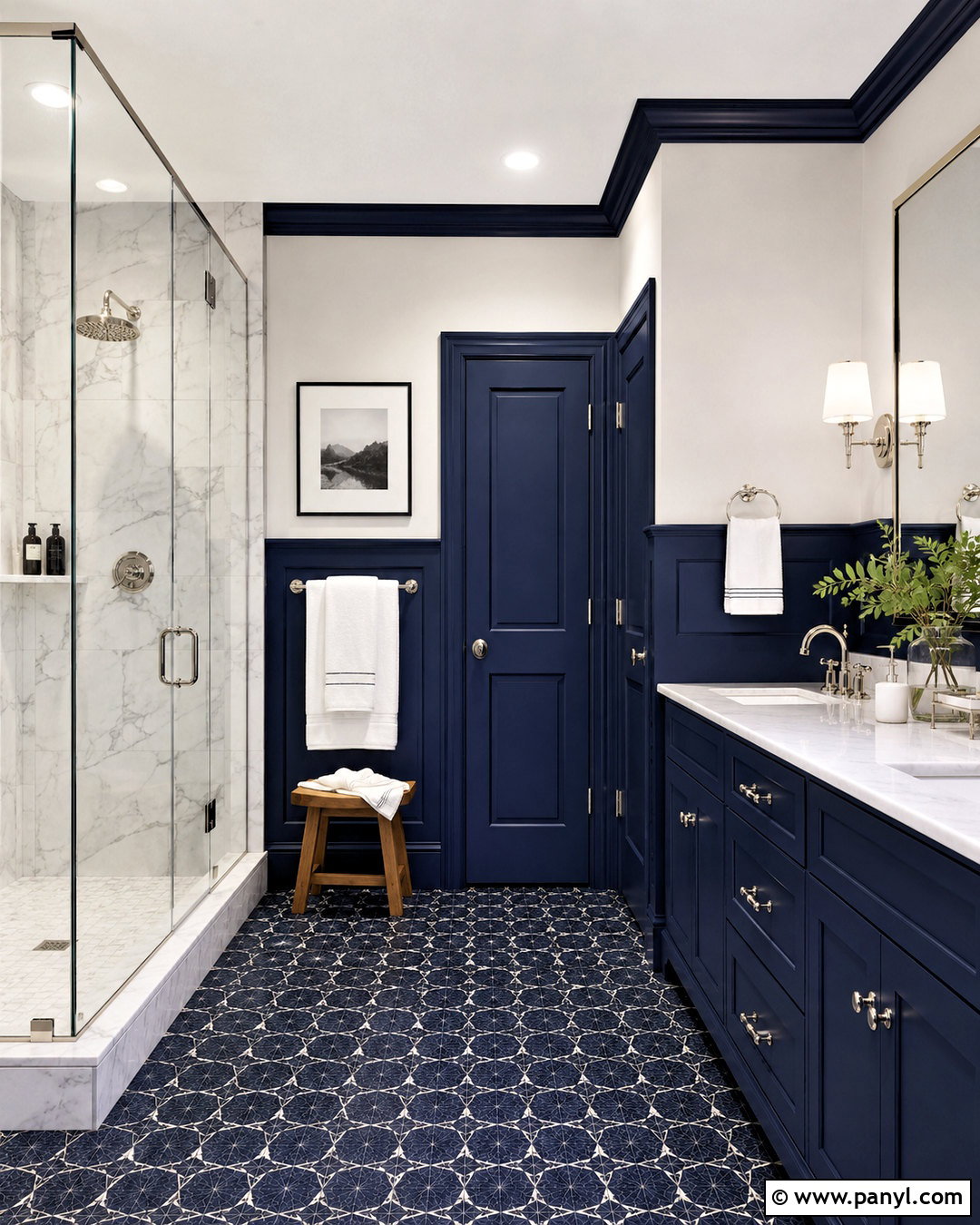
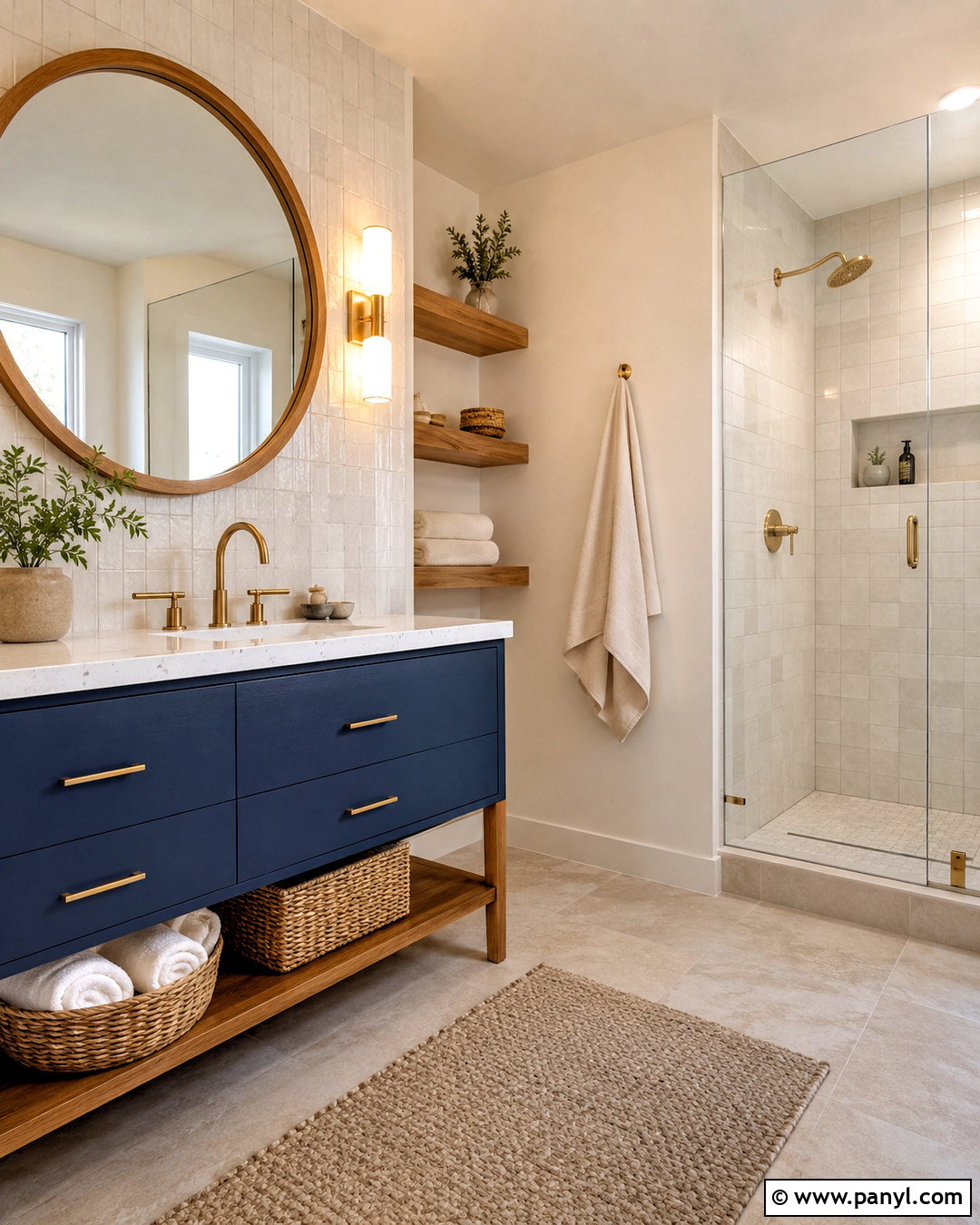
Navy blue offers classic depth and can make a bathroom feel tailored when balanced with lighter surfaces. Paint the vanity and wall paneling navy, then use warm white paint above and white marble-look tile in the shower. A pale counter with subtle gray veining provides an elegant transition between the dark cabinetry and bright walls. Choose polished nickel faucets for crisp contrast or aged brass for a warmer traditional effect. Add a small patterned floor in navy, cream, and soft gray to connect the room. White towels and an oak stool keep the darker color from dominating. Strong vanity lighting, a broad mirror, and clear shower glass maintain brightness. The completed navy bathroom feels confident and enduring rather than dependent on a short-lived decorating theme.
32. Cobalt Blue Bathroom
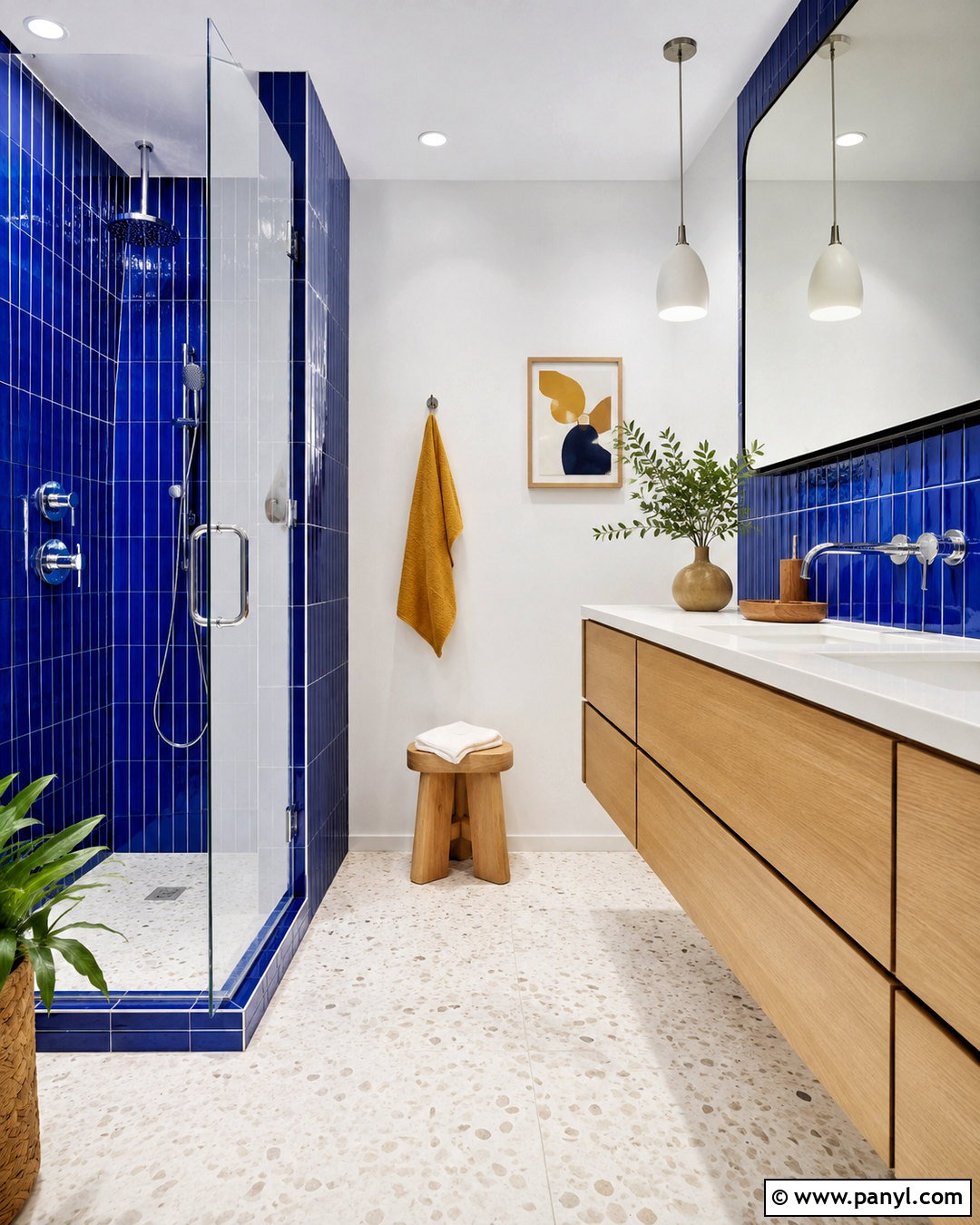
Cobalt blue is an energetic choice for bathrooms where bold color can become part of the architecture. Install glossy cobalt tile across the shower walls or vanity backsplash, then surround it with clean white paint and pale terrazzo flooring. A floating white oak vanity introduces natural warmth, while a white quartz counter allows the blue to remain the focal point. Use chrome fixtures for a crisp modern look and clear glass to avoid blocking the tile. Add white towels, one mustard hand towel, and simple wood accessories. Limit additional patterns because cobalt already carries substantial visual weight. With bright, even lighting, the completed room feels vibrant and sophisticated. This approach is especially effective in compact bathrooms, where one saturated surface can transform the entire space.
33. Lavender Bathroom
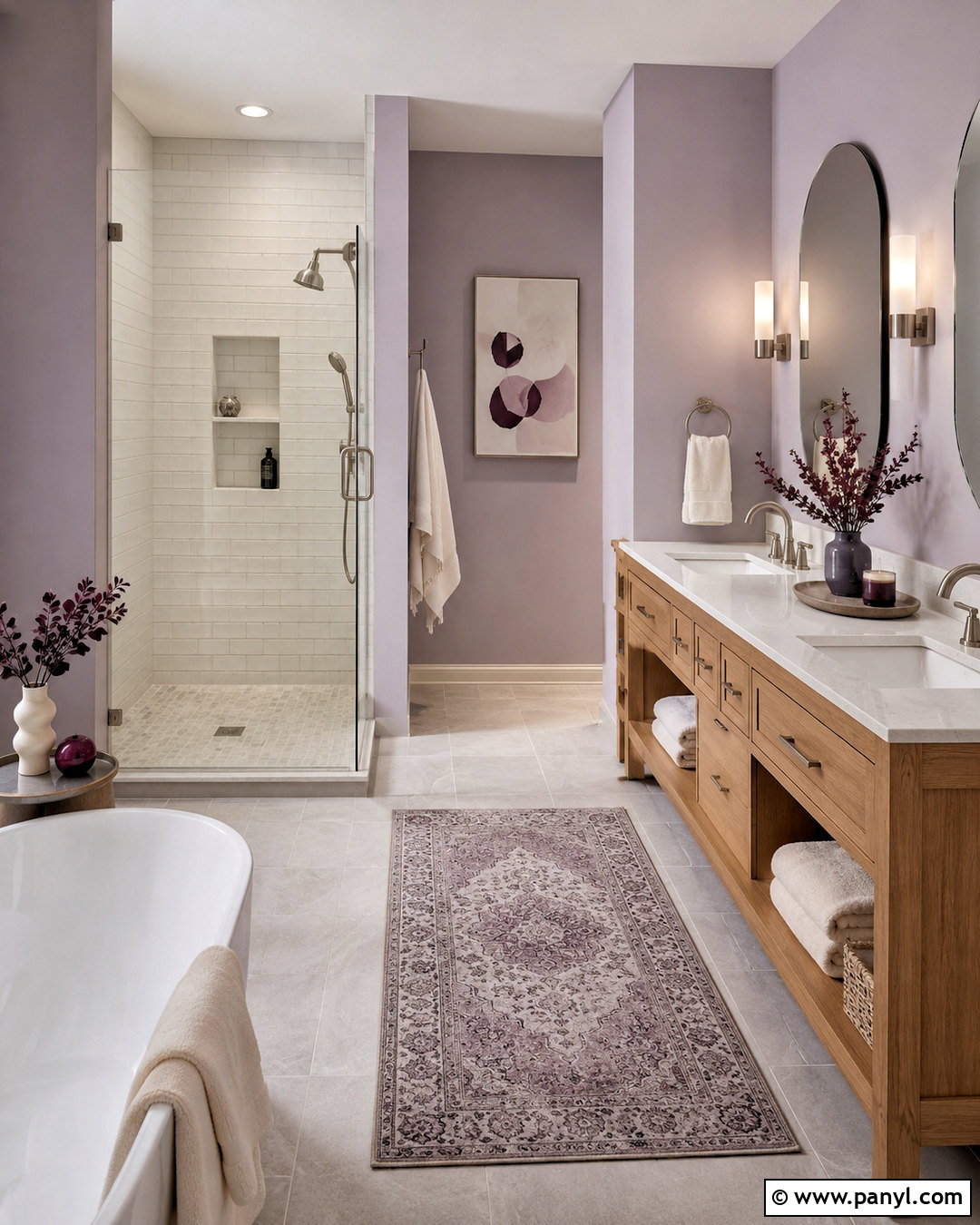
Lavender can feel calm and contemporary when it has muted gray or brown undertones. Paint the walls in a dusty lavender and pair them with warm white tile, a pale gray stone floor, and a natural oak vanity. A creamy quartz counter prevents the scheme from becoming too cool. Choose brushed nickel fixtures and softly rounded mirrors for a clean finish. Introduce deeper plum through one bath mat or set of hand towels, then add ivory textiles to maintain balance. Avoid ornate floral accessories, which can make lavender feel dated. Instead, rely on simple shapes, smooth cabinetry, and one understated artwork. Warm-neutral vanity lighting will reveal the color’s softness. The completed bathroom feels peaceful and distinctive, offering a gentle alternative to the more common blue and green palettes.
34. Plum Bathroom
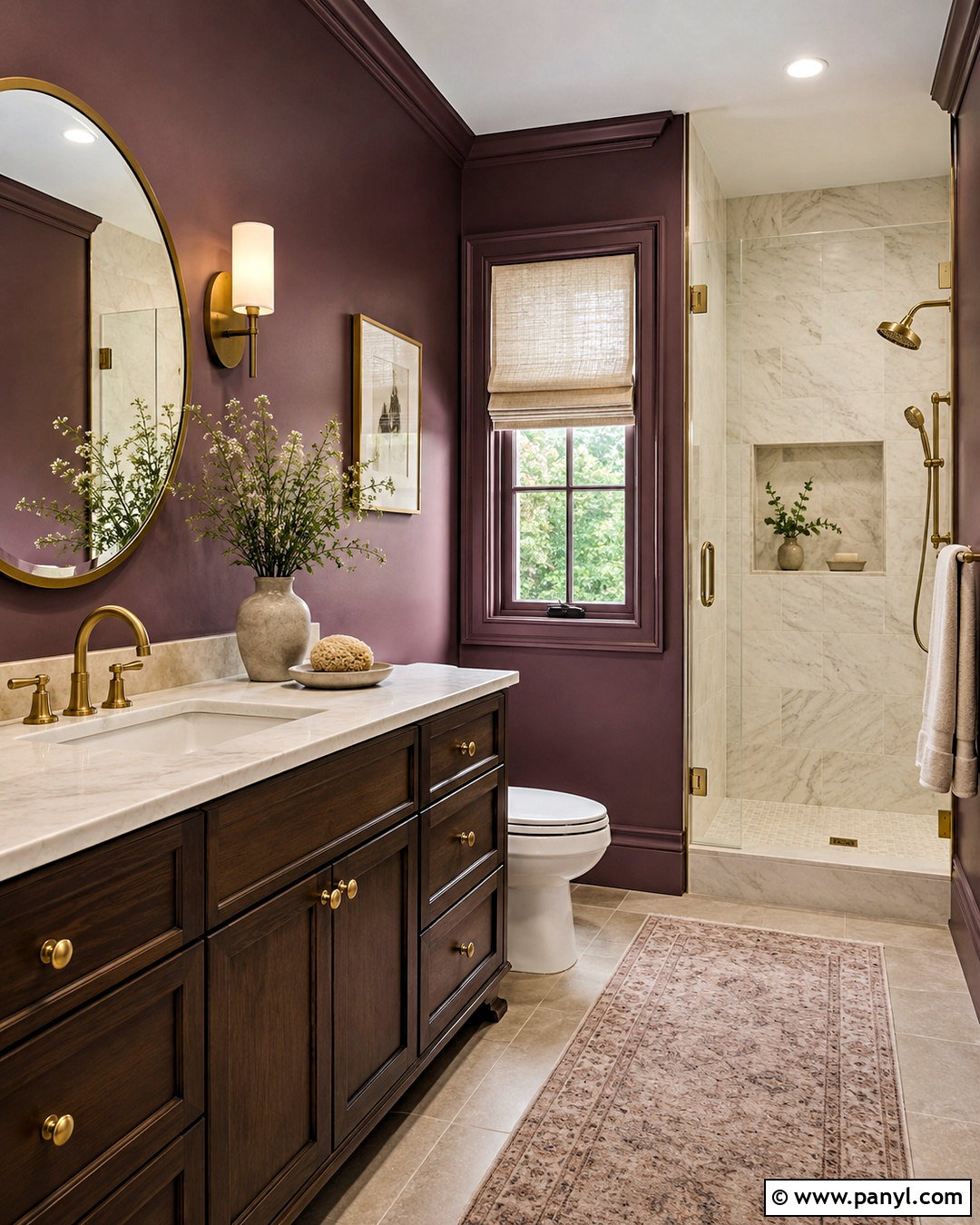
Plum gives a bathroom dramatic color with more warmth and complexity than straightforward purple. Use a muted, brown-based plum on the walls and trim, then pair it with creamy marble-look tile and a dark walnut vanity. A warm white counter brightens the sink area, while aged brass faucets and sconces emphasize the color’s rich undertones. Select a patterned floor combining plum, tan, and ivory, or use simple beige stone for a quieter result. Cream towels, a rounded mirror, and a linen window shade soften the darker surfaces. Plum works particularly well in powder rooms, but a spacious primary bath can carry it when natural light is plentiful. The finished space feels enveloping and refined, with enough neutral material to keep the color from becoming overwhelming.
35. Charcoal Bathroom
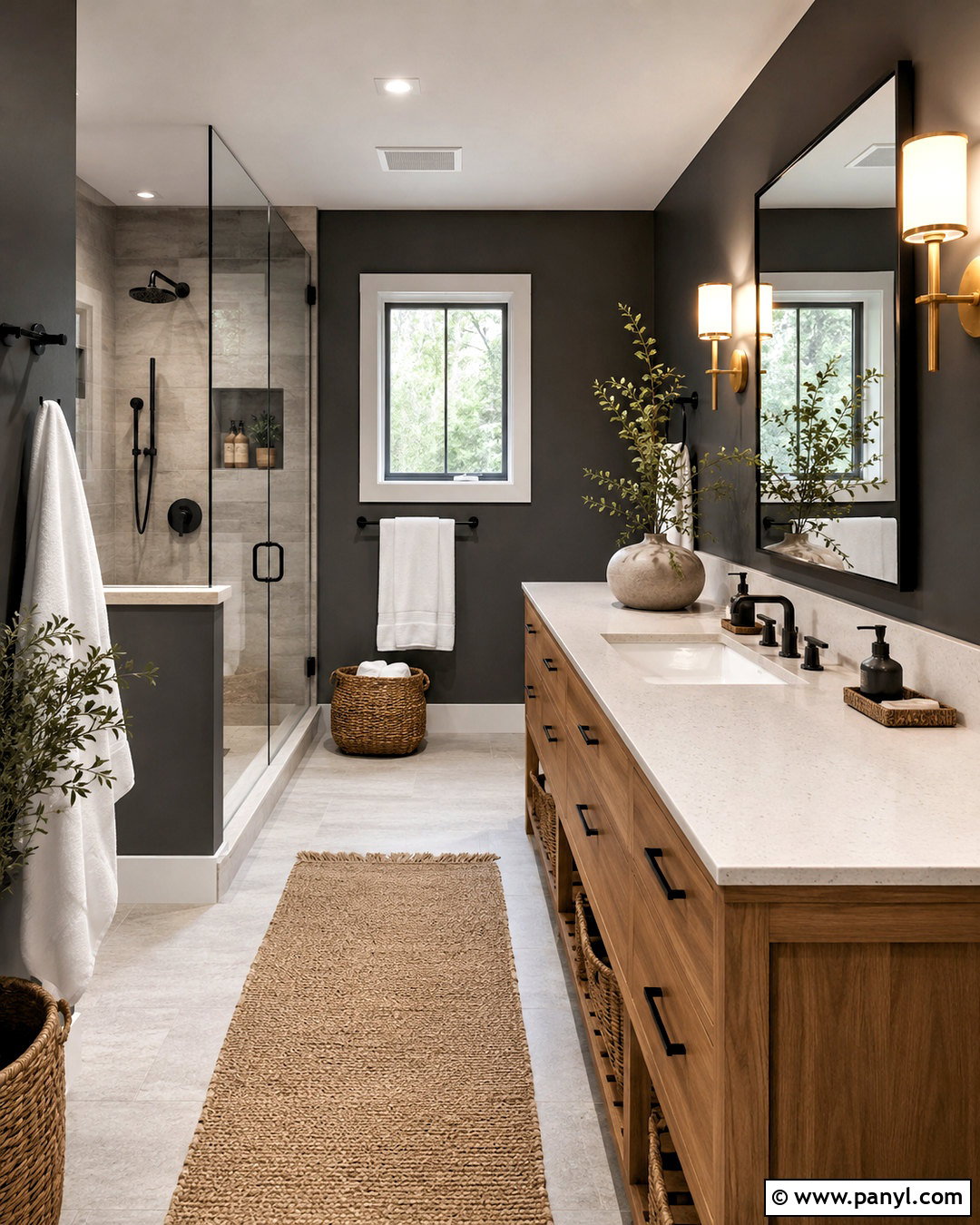
Charcoal creates a strong contemporary bathroom when it is warmed with wood, cream, and textured stone. Paint one or more walls in a soft charcoal rather than absolute black, then choose a medium oak vanity and ivory quartz counter. Use pale gray large-format tile across the shower and floor to create a smooth visual transition. Matte black fixtures provide a streamlined look, while brushed brass lighting can add a small amount of warmth. Install a large mirror and bright sconces to counteract the darker walls. White towels, a beige runner, and natural baskets keep the palette approachable. In a small bathroom, limit charcoal to paneling or cabinetry. The completed design feels crisp, grounded, and modern without becoming cold, stark, or difficult to maintain.
Conclusion:
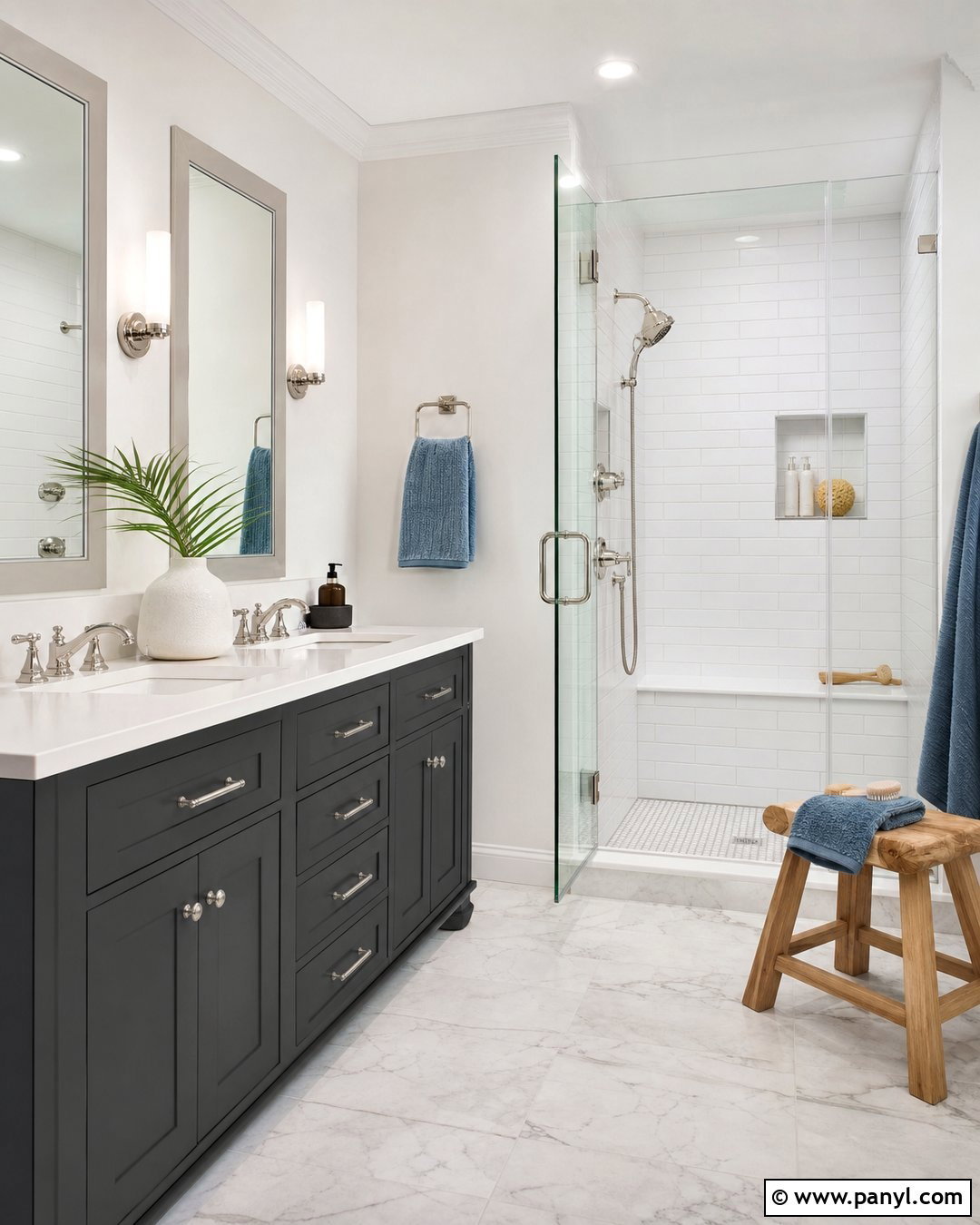
The most appealing 35 trending bathroom colors balance personal expression with practical, coordinated design. Warm white, beige, clay, and brown create restful rooms with natural depth. Greens and mineral blues support a fresh, spa-like atmosphere, while coral, burgundy, cobalt, and plum make smaller bathrooms feel intentional and memorable. Whichever shade you choose, connect it to the tile, vanity, flooring, fixtures, lighting, and textiles rather than treating paint as a separate decision. Always test color samples in morning, afternoon, and artificial light because bathroom surfaces can alter undertones. With thoughtful contrast and repeated materials, these 35 trending bathroom colors can produce complete spaces that feel current, comfortable, and uniquely suited to your home.

Related Ideas and Inspiration:
Leave a Reply