
A well-designed wardrobe can transform a bedroom by improving storage, simplifying daily routines, and making the entire space feel more polished. The newest looks move beyond basic cabinets, combining floor-to-ceiling construction, fluted glass, mixed materials, soft-close doors, integrated lighting, and personalized organizers. Warm wood, muted color, slim profiles, and furniture-style detailing are also replacing overly plain storage walls. () Whether you have a compact guest room or a spacious primary suite, the best wardrobe should complement the room while providing useful zones for clothing, shoes, accessories, and seasonal items. The complete looks below balance current details with practical layouts that can remain appealing for years. Explore these 20 trending wardrobe design ideas to find a solution that fits your space and personal taste.

1. Floor-To-Ceiling Wardrobe
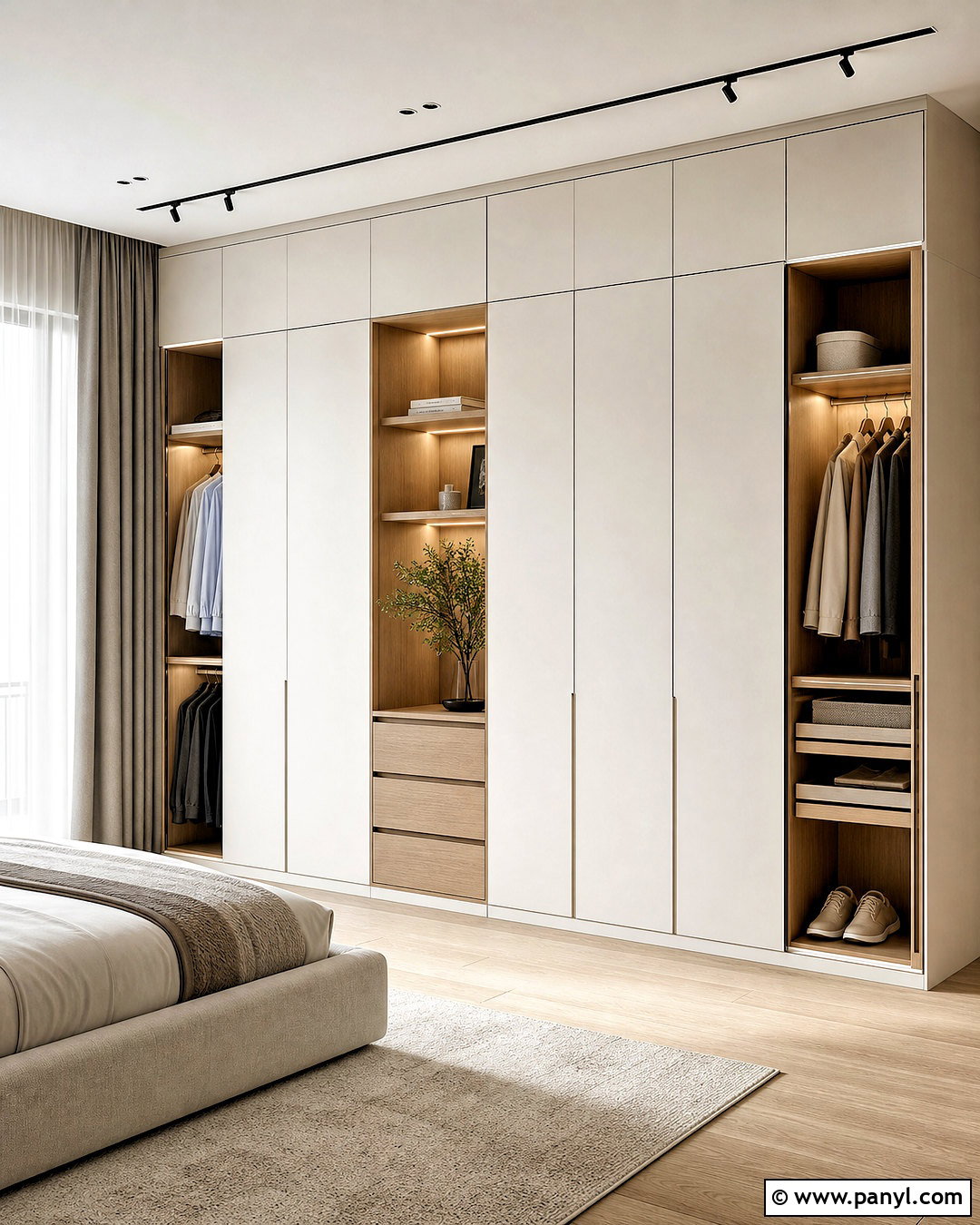
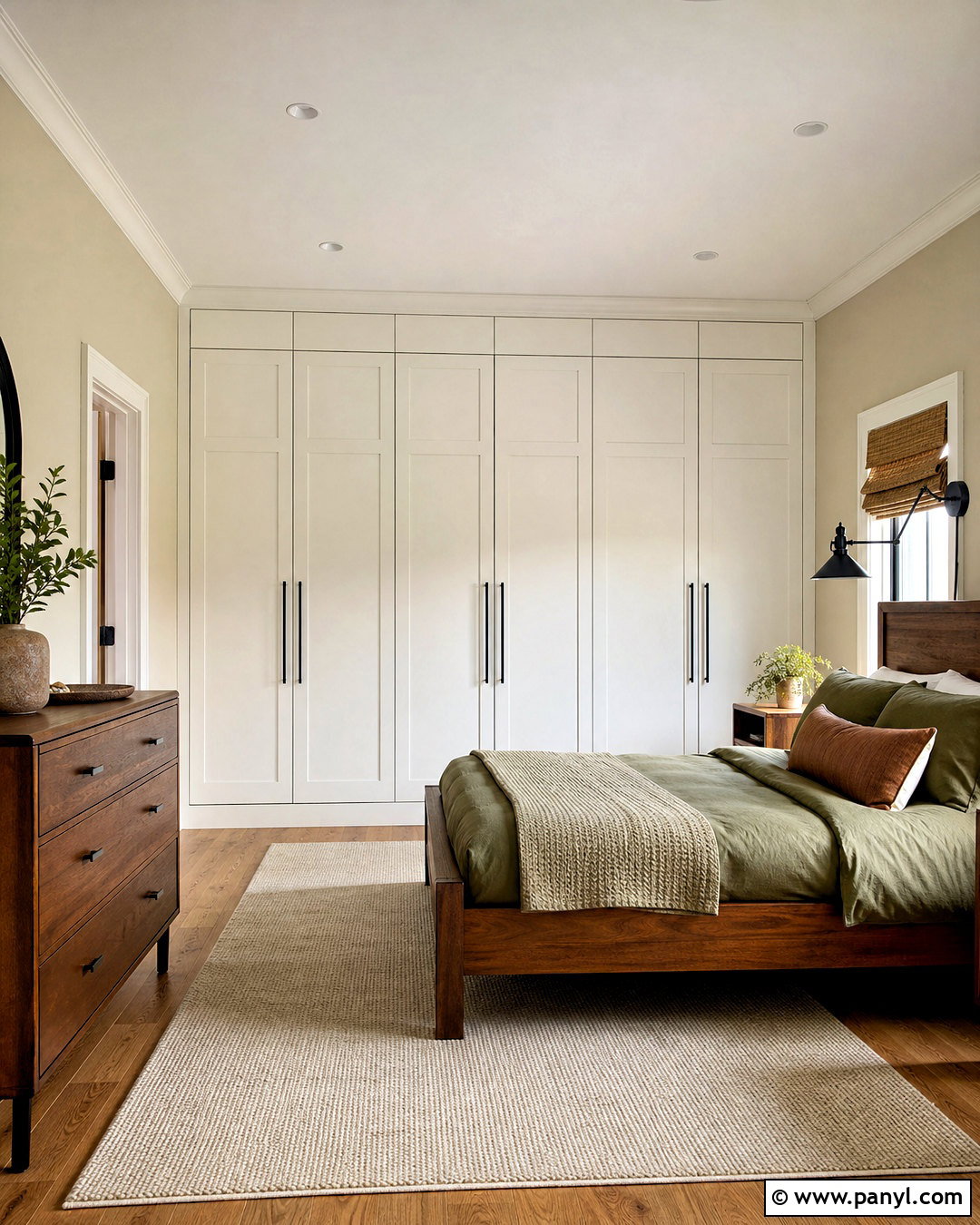
A floor-to-ceiling wardrobe creates a clean storage wall while making use of often-wasted vertical space. Choose warm white, soft greige, or pale oak doors with a simple handleless profile. Run the cabinetry from one corner to the other so it appears built into the architecture rather than added later. Inside, place everyday clothing at eye level, drawers below, and seasonal bedding or luggage in the upper cabinets. A slim vertical niche can hold books, ceramics, or a small lamp, helping the large installation feel lighter. Continue the bedroom’s wall color across nearby surfaces and use an upholstered bed with understated linens. Light wood flooring and soft curtains complete this calm, uncluttered wardrobe design without making the room feel overly fitted.
2. Fluted Glass Wardrobe
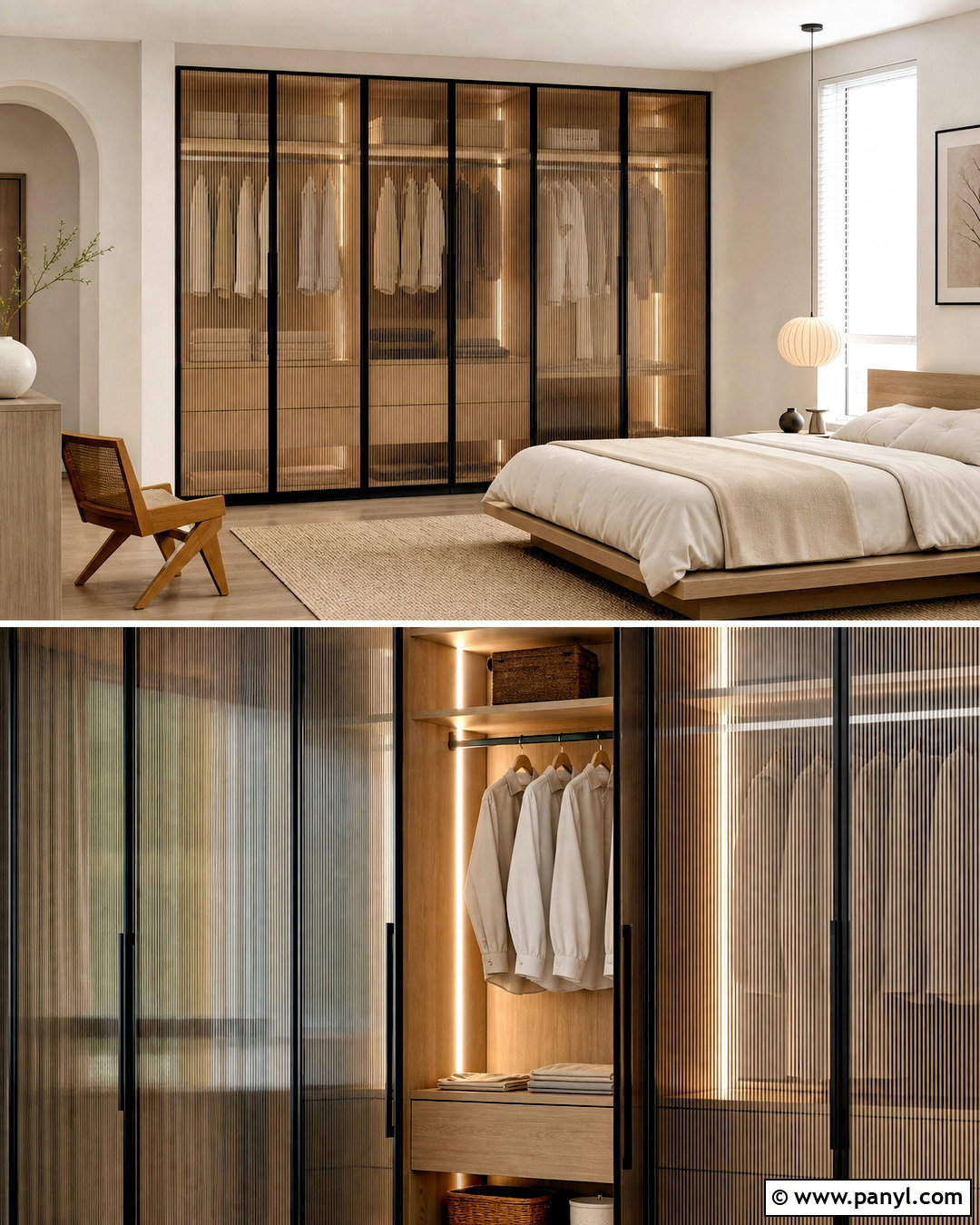
Fluted glass wardrobe doors bring texture to a bedroom while gently blurring the clothing stored behind them. This makes the design feel lighter than solid cabinetry but easier to maintain visually than fully transparent glass. Current versions commonly pair ribbed glass with slim metal framing, warm wood, and handleless doors. () Use bronze, champagne, or matte black frames depending on the room’s color palette. Add pale oak cabinet interiors and vertical LED strips so clothing remains easy to see. Balance the glass with a low platform bed, neutral bedding, and one textured rug. Keep open decor minimal because the wardrobe already provides visual interest. This complete look suits modern, contemporary, and Japandi bedrooms, especially where solid wall-to-wall doors might feel heavy or overpowering.
3. Walnut And Ivory Wardrobe
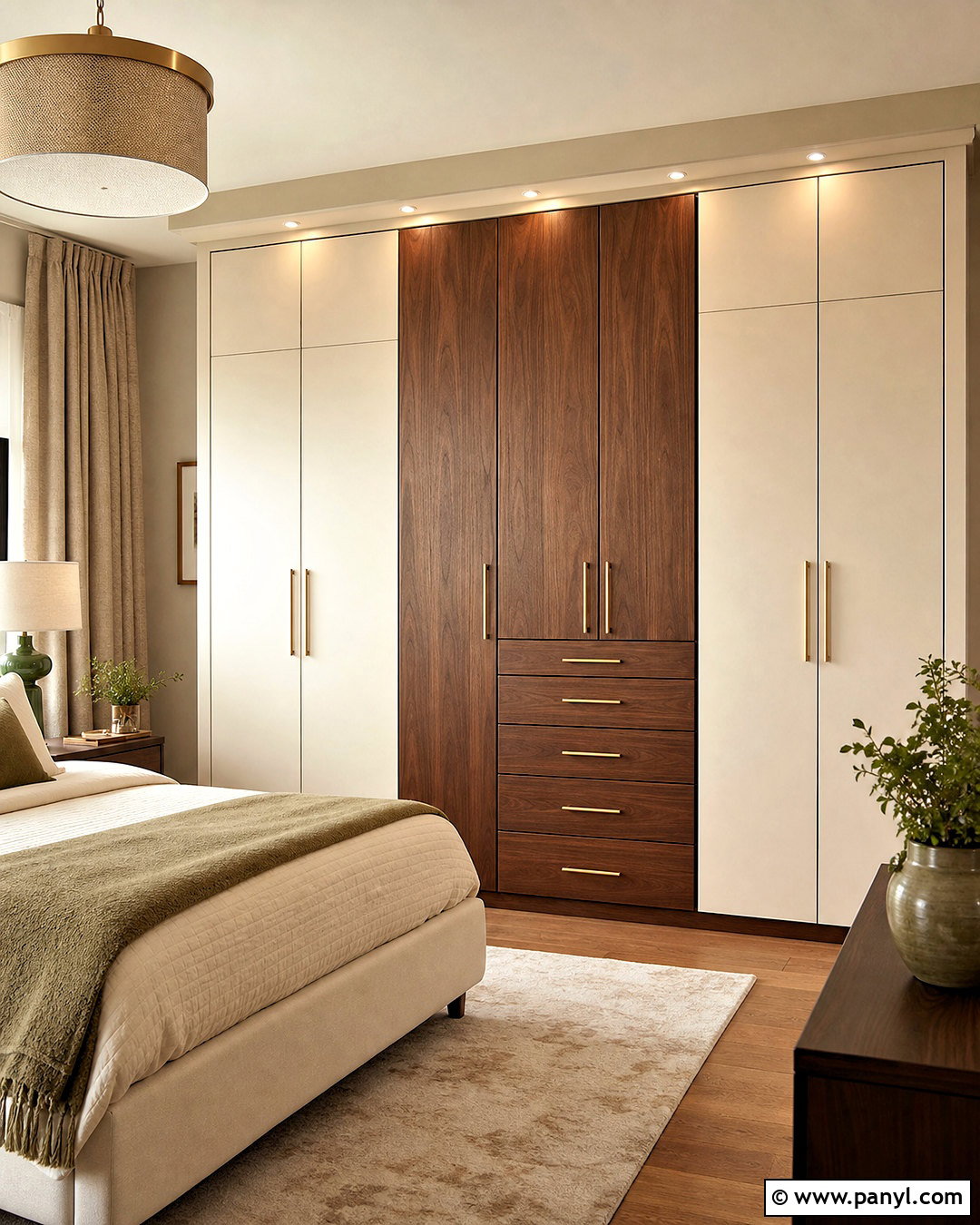
Rich walnut and soft ivory create a balanced wardrobe that feels warm, modern, and inviting. Use walnut veneer for the central doors or drawer section, then frame it with matte ivory cabinetry. Slim brushed brass handles add definition without competing with the natural grain. Inside, divide the wardrobe into double hanging rails, full-length hanging space, shallow accessory drawers, and adjustable shoe shelves. Repeat walnut on the bedside tables or bed frame to connect the wardrobe with the rest of the room. Cream upholstery, oatmeal curtains, and a muted rust or olive accent pillow introduce gentle color. Warm white walls prevent the darker wood from feeling too dominant. This dual-tone wardrobe design works especially well in medium or large bedrooms where a single flat finish could appear plain.
4. Modern Mirrored Sliding Wardrobe
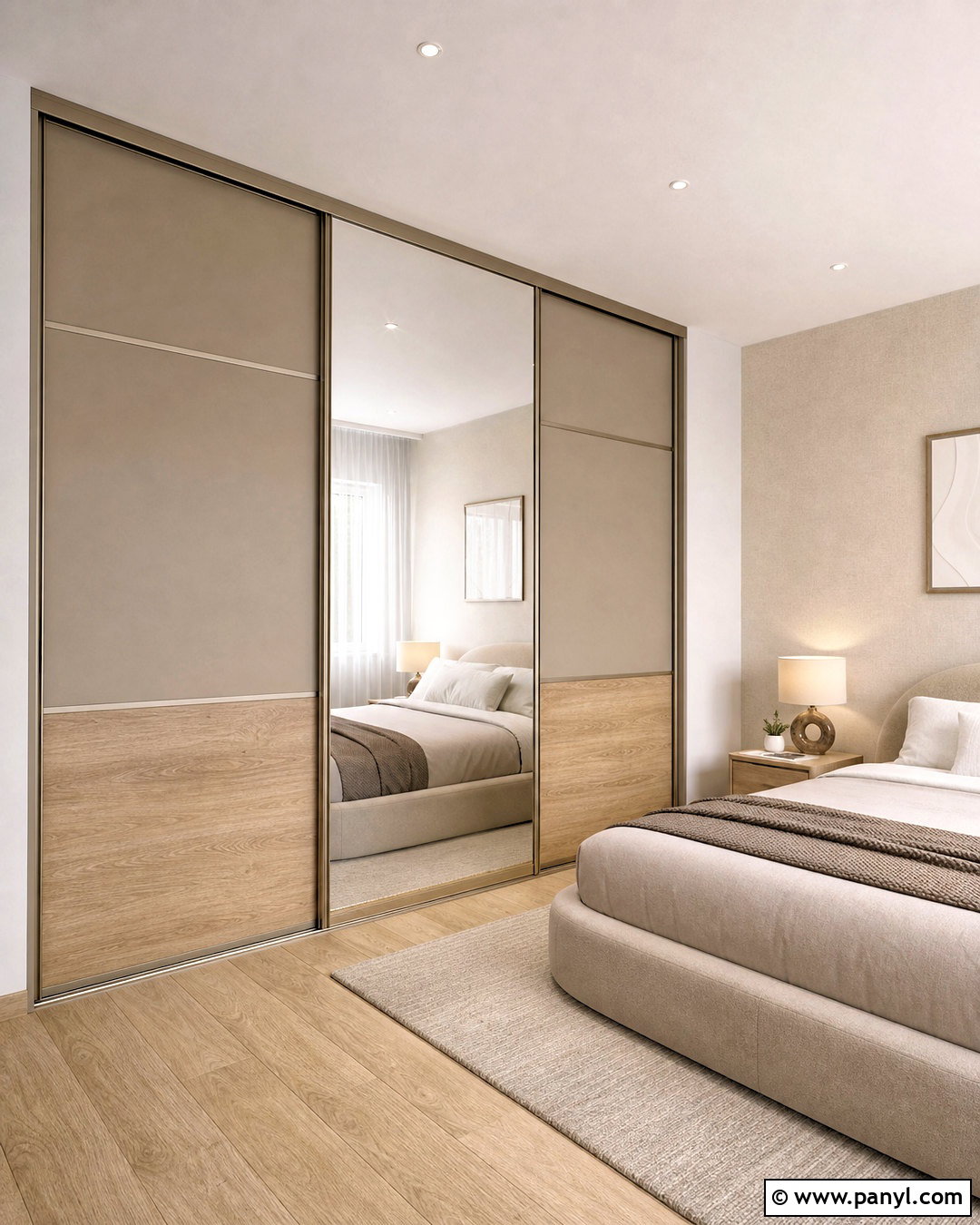
A mirrored sliding wardrobe can look current when the reflective panels are used selectively rather than covering every door. Combine one full mirror panel with soft taupe laminate, pale wood, or reeded glass panels. Choose minimal tracks and narrow frames in champagne metal or matte black. Sliding doors do not swing into the room, making this arrangement useful beside a bed or along a narrow walkway. () Position the mirror where it can reflect natural light instead of facing a cluttered area. Complete the bedroom with a simple upholstered bed, rounded nightstands, and a low-pile neutral rug. Internally, use pull-down rails and drawers to maximize the wardrobe’s full height. The final result feels spacious and practical without recreating the heavily mirrored wardrobes associated with older interiors.
5. Wardrobe Around The Bed
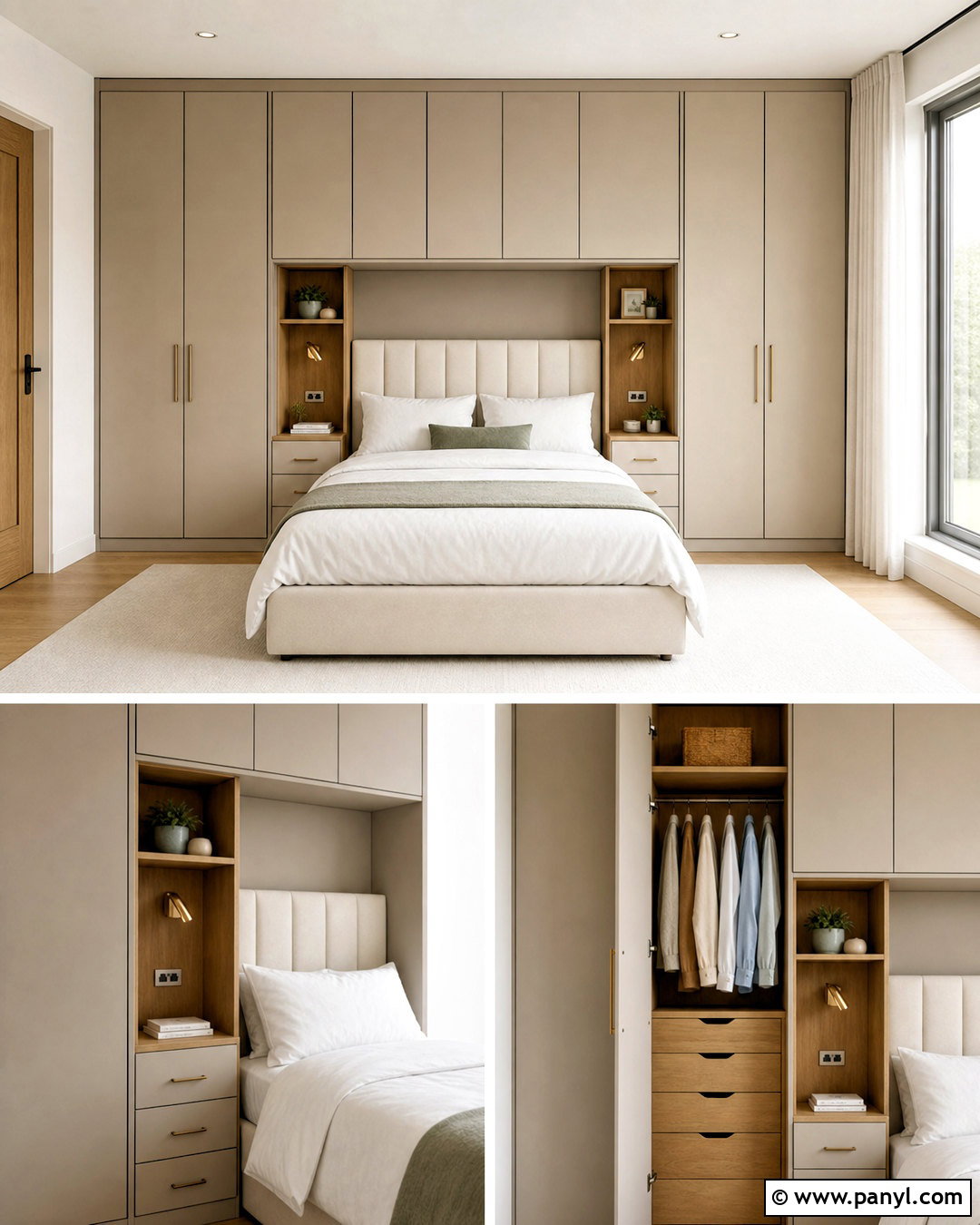
Building a wardrobe around the bed turns an underused wall into a complete sleeping and storage zone. Place tall cabinets on both sides, overhead cupboards above, and a padded or wood-paneled headboard in the center. Built-in bedside niches can replace separate nightstands, leaving more open floor space. Add concealed outlets, reading lights, and shallow drawers within each niche. For a relaxed look, finish the cabinetry in soft beige, warm white, or muted sage green. Keep the bed linens simple and repeat the cabinet color on the wall behind the headboard. The upper units should align cleanly with the side cabinets so the structure feels intentional. This wardrobe layout is particularly effective in compact bedrooms, studio apartments, or guest rooms where several separate furniture pieces would create unnecessary visual clutter.
6. Japandi Oak Wardrobe
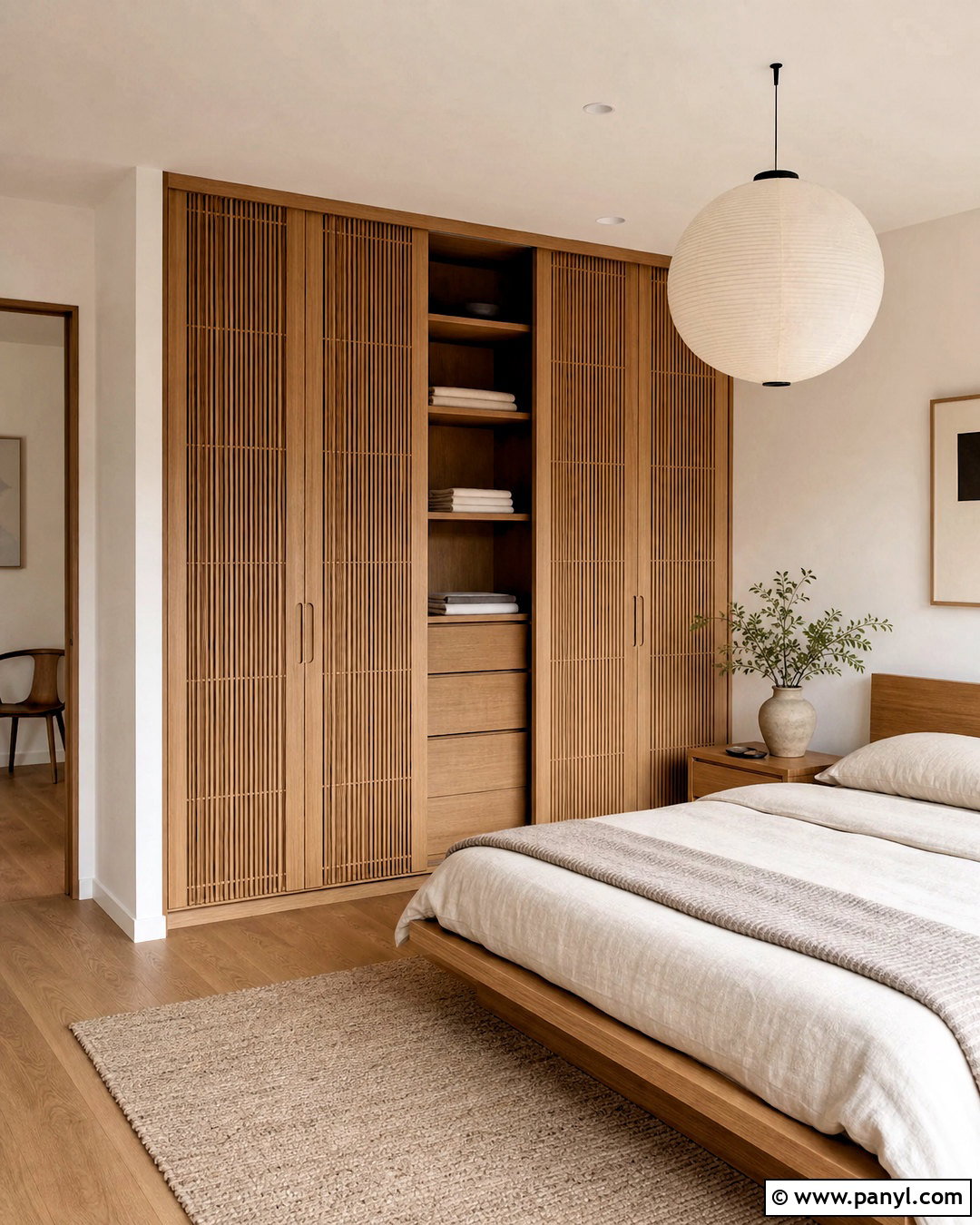
What makes a wardrobe feel calm rather than imposing? A Japandi design uses pale oak, simple proportions, and minimal hardware to create storage that blends quietly into the bedroom. Choose flat or lightly slatted doors in a natural matte finish. Add recessed pulls or narrow wooden handles instead of shiny metal hardware. Inside, use matching wood shelves, fabric-lined drawers, and warm white LED lighting. Pair the wardrobe with a low oak bed, off-white linen bedding, and a textured wool rug. A paper-style pendant, ceramic vase, and single leafy branch provide enough decoration without disturbing the simplicity. Keep the walls warm white or light mushroom gray. This complete design works best when every element has a purpose and natural materials provide the warmth that ornate details would normally supply.
7. Sage Green Shaker Wardrobe
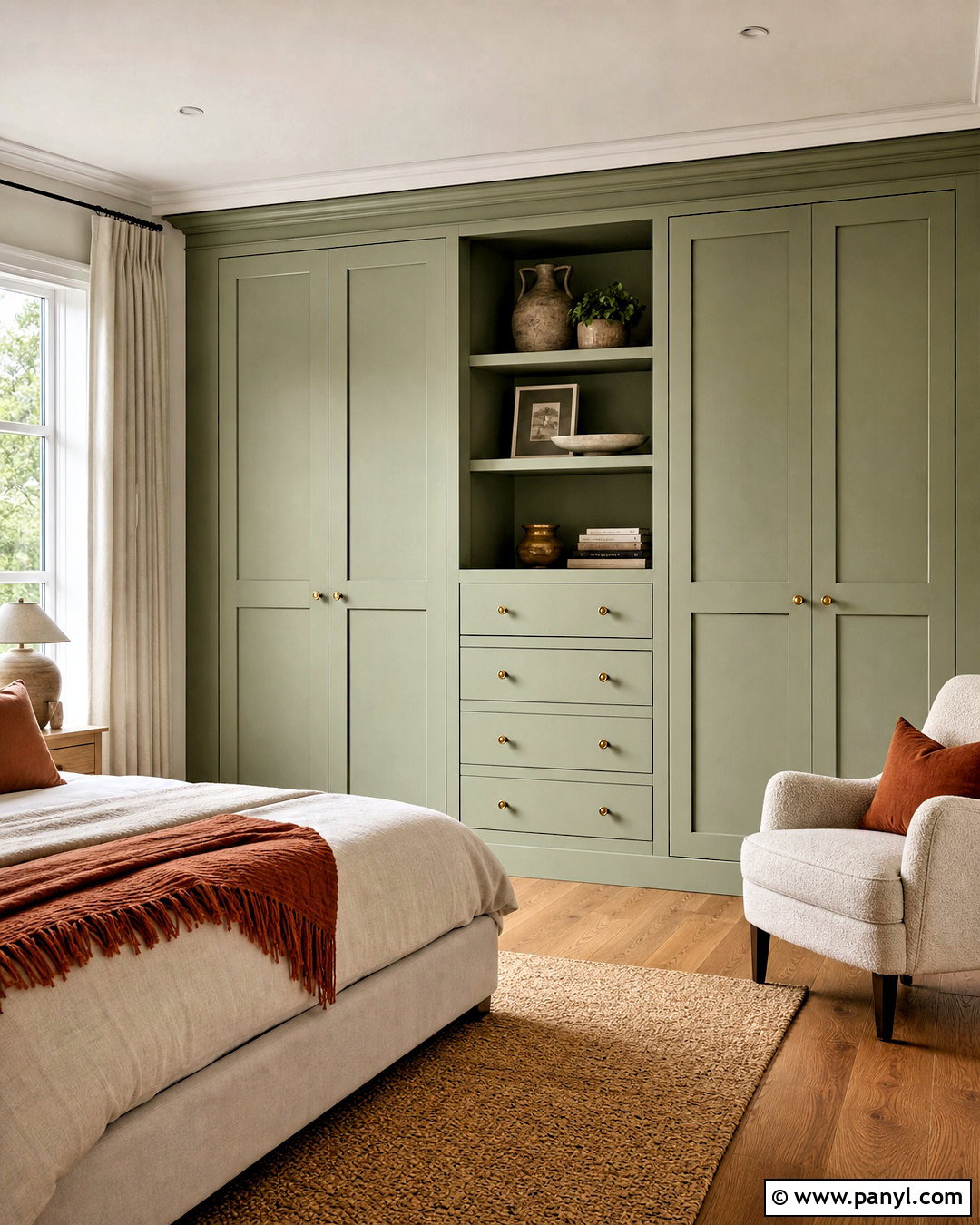
Soft sage green gives a traditional Shaker wardrobe a fresh and versatile appearance. Use narrow framed doors, simple brushed brass knobs, and a matching plinth or modest crown detail. The muted green works beautifully with warm white walls, medium oak flooring, and natural linen textiles. For a furniture-like focal point, place a central bank of drawers between the hanging cabinets and add a small open shelf above it. Inside, combine adjustable shelving with rails at different heights for shirts, dresses, and folded clothing. An upholstered bed in cream or oatmeal keeps the room light, while patterned pillows can introduce dusty blue or terracotta. This wardrobe design feels established without becoming formal. It is a practical choice for cottage, transitional, and relaxed contemporary bedrooms that need both character and substantial enclosed storage.
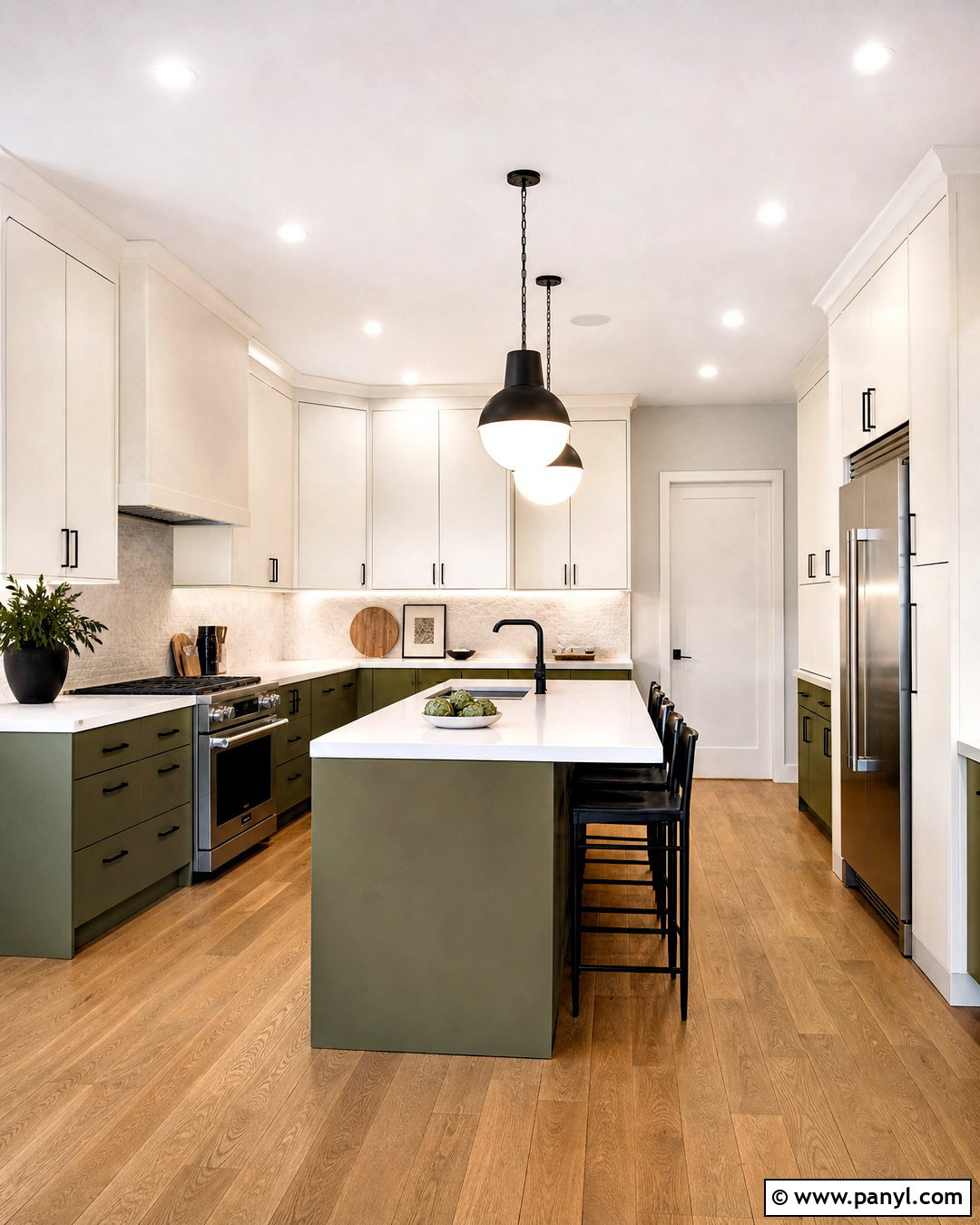
8. Arched Panel Wardrobe
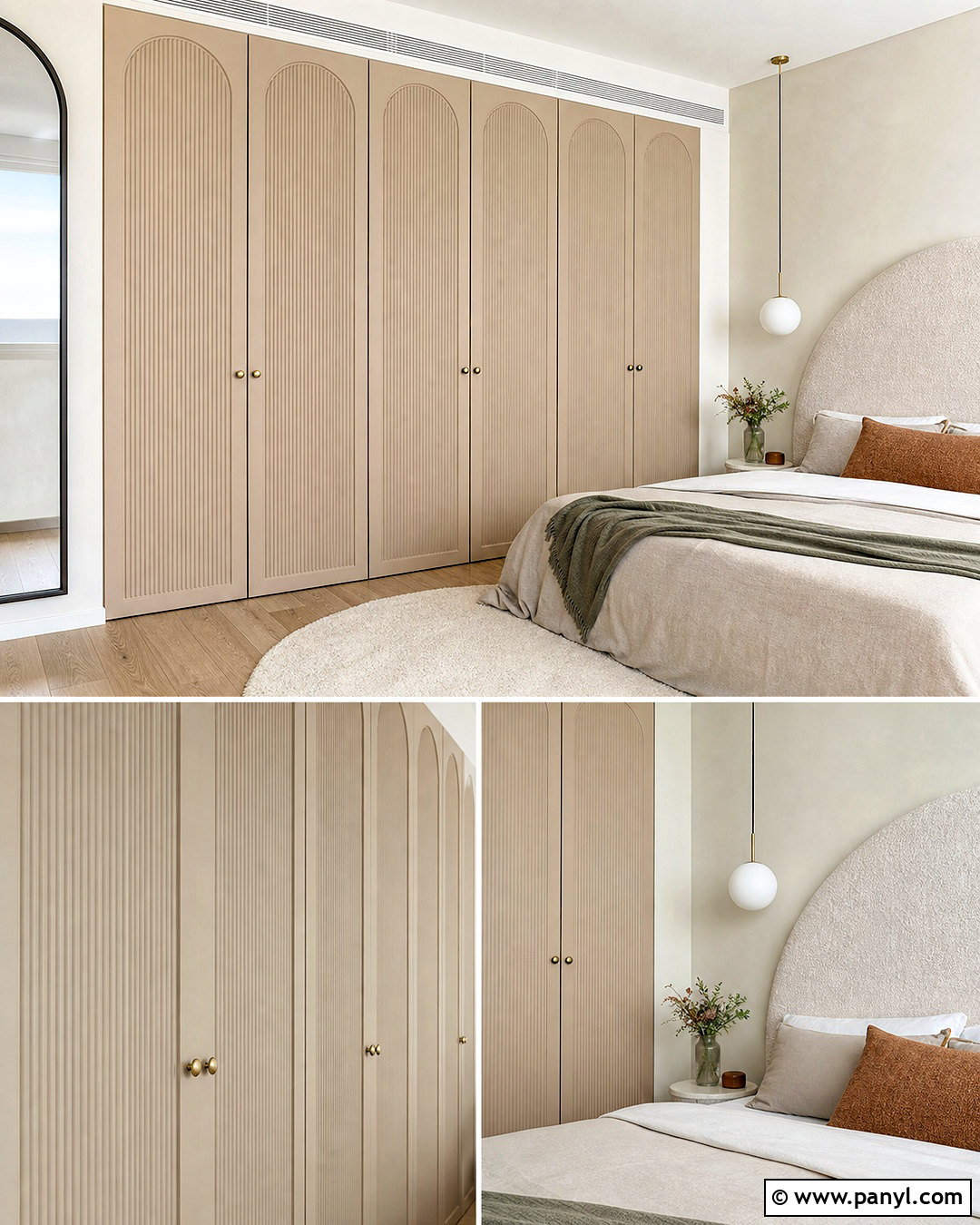
Curved details can soften a large wardrobe and give the bedroom a more custom appearance. Select doors with shallow arched frames, rounded upper corners, or gently fluted panels rather than elaborate carved decoration. A warm beige, clay, or dusty rose finish keeps the curves modern. Pair the doors with small antique brass knobs and a pale stone or oak drawer surface. Echo the rounded shapes through an arched headboard, globe bedside lights, and an oval rug. The wardrobe interior should remain highly practical, with hanging sections behind the taller doors and shelves behind the shorter central panels. Leave enough plain surfaces around the wardrobe so its shape remains easy to appreciate. This complete look introduces personality while preserving a calm, refined bedroom that will not depend entirely on short-lived decorative accessories.
9. Smoked Glass Wardrobe
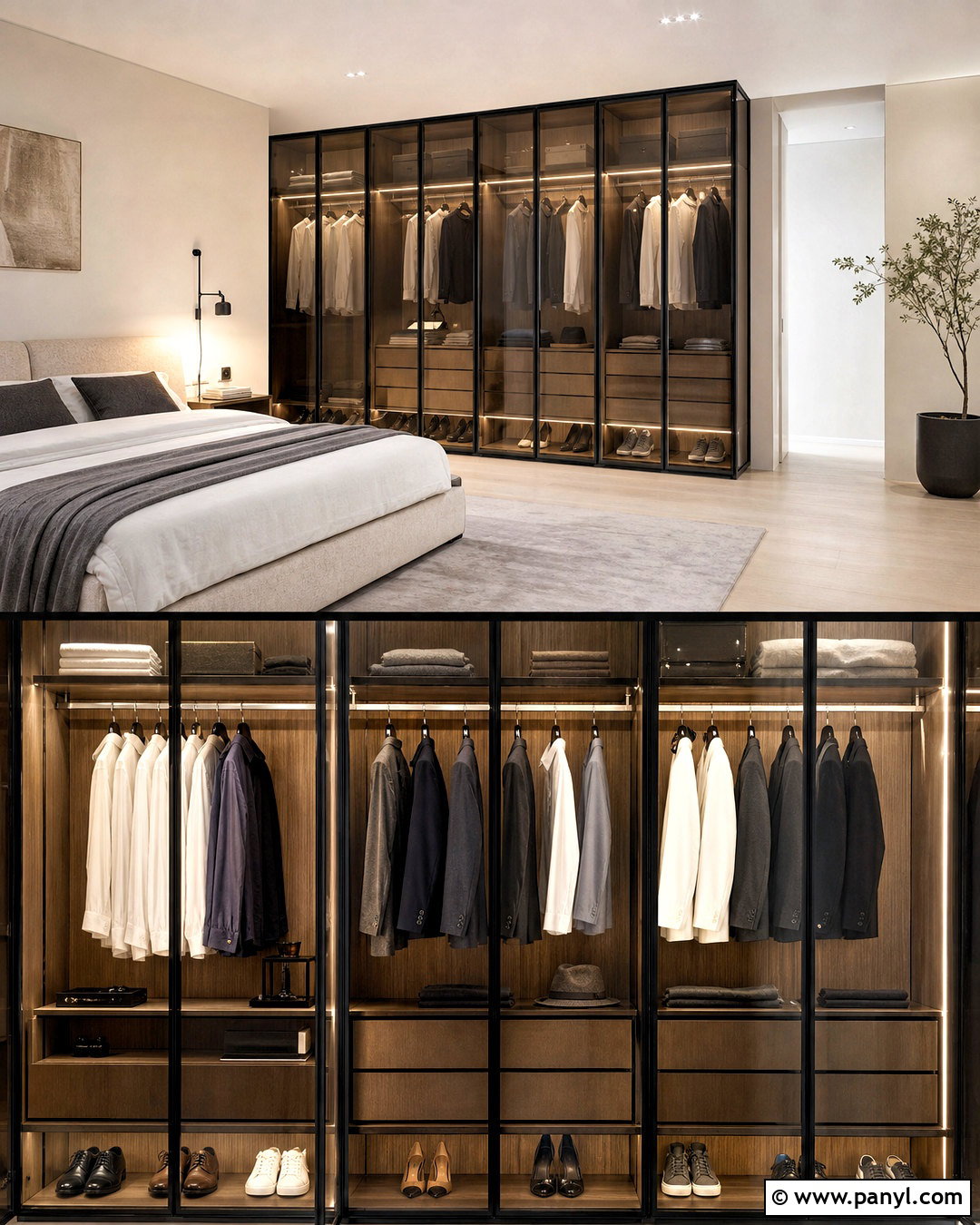
Smoked glass doors create a dramatic wardrobe without completely exposing everything inside. Use gray or bronze-tinted glass within slim black aluminum frames, then install walnut or dark oak interiors for depth. Integrated vertical lighting highlights neatly arranged clothing and prevents the cabinetry from looking overly dark. Organize visible sections carefully with matching hangers, divided drawers, closed storage boxes, and dedicated shelves for shoes and bags. Balance the wardrobe with a light upholstered bed, warm white walls, and pale flooring. Black reading lights and one dark-framed mirror can repeat the door profiles elsewhere in the room. Avoid filling every surface with dark finishes. The contrast between transparent doors and lighter surroundings allows this wardrobe to become a sophisticated focal point while the bedroom remains comfortable, bright, and suitable for everyday use.
10. Open Walk-In Wardrobe
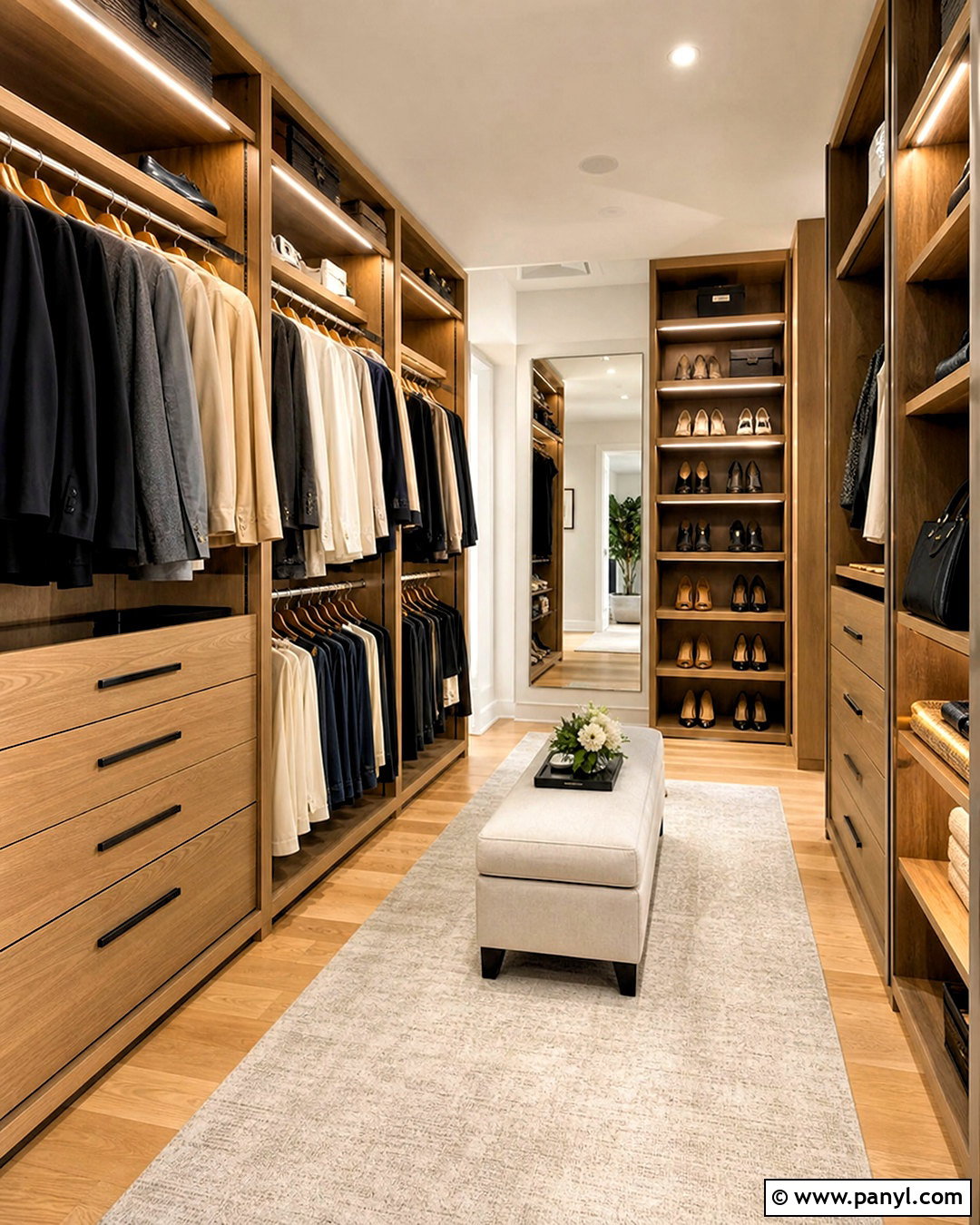
An open walk-in wardrobe should feel organized and intentional, not like an unfinished storage room. Arrange full-height hanging areas along one wall, double rails on another, and adjustable shelves at the far end. Use warm oak or soft greige cabinetry with matching drawer fronts. A washable runner defines the walkway, while a large mirror placed opposite the entrance helps distribute light. Add open shelves for frequently used shoes and bags, but place small items inside lined drawers to reduce visual clutter. Motion-activated LED strips can improve visibility inside deeper sections. Complete the dressing area with a compact bench or upholstered stool, depending on available floor space. Consistent hangers, storage boxes, and finishes create the boutique-like appearance associated with newer walk-in wardrobe designs. ()
11. Corner L-Shaped Wardrobe
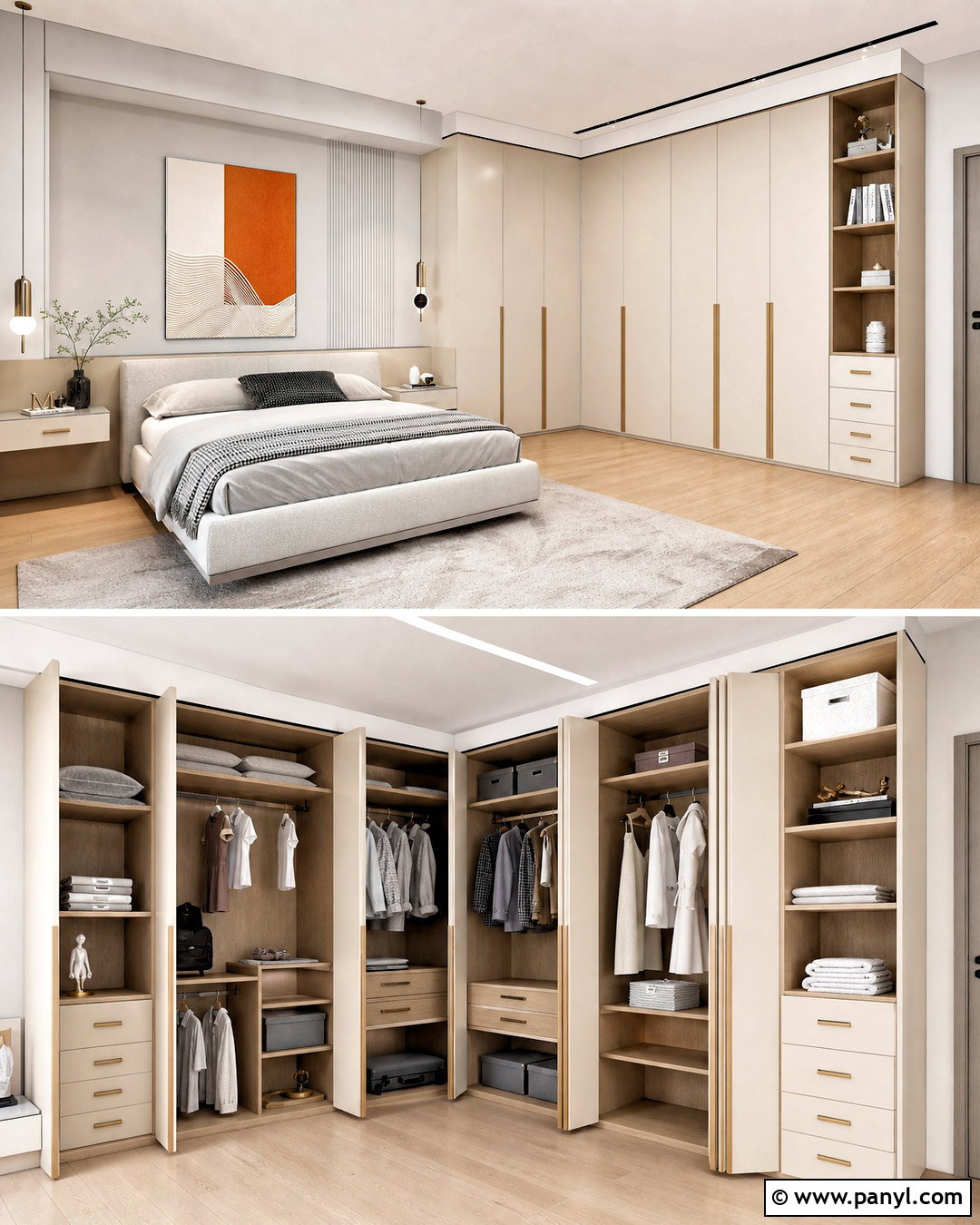
An L-shaped wardrobe makes productive use of a bedroom corner that might otherwise hold mismatched furniture. Place the deeper hanging section along the longer wall and use shallower shelves or drawers on the shorter return. A carefully planned corner unit can include rotating rails, angled shelves, or access from one side rather than an awkward narrow door. Finish the doors in matte white, pale gray, or light oak to keep the corner visually open. Use the same cabinet height and handle style across both walls for a continuous appearance. A bed with simple lines, wall-mounted nightstands, and minimal artwork will prevent the room from becoming crowded. Inside, assign the corner to less frequently used clothing. This leaves the most accessible sections available for daily items, shoes, folded clothes, and accessories.
12. Wardrobe With Dressing Table
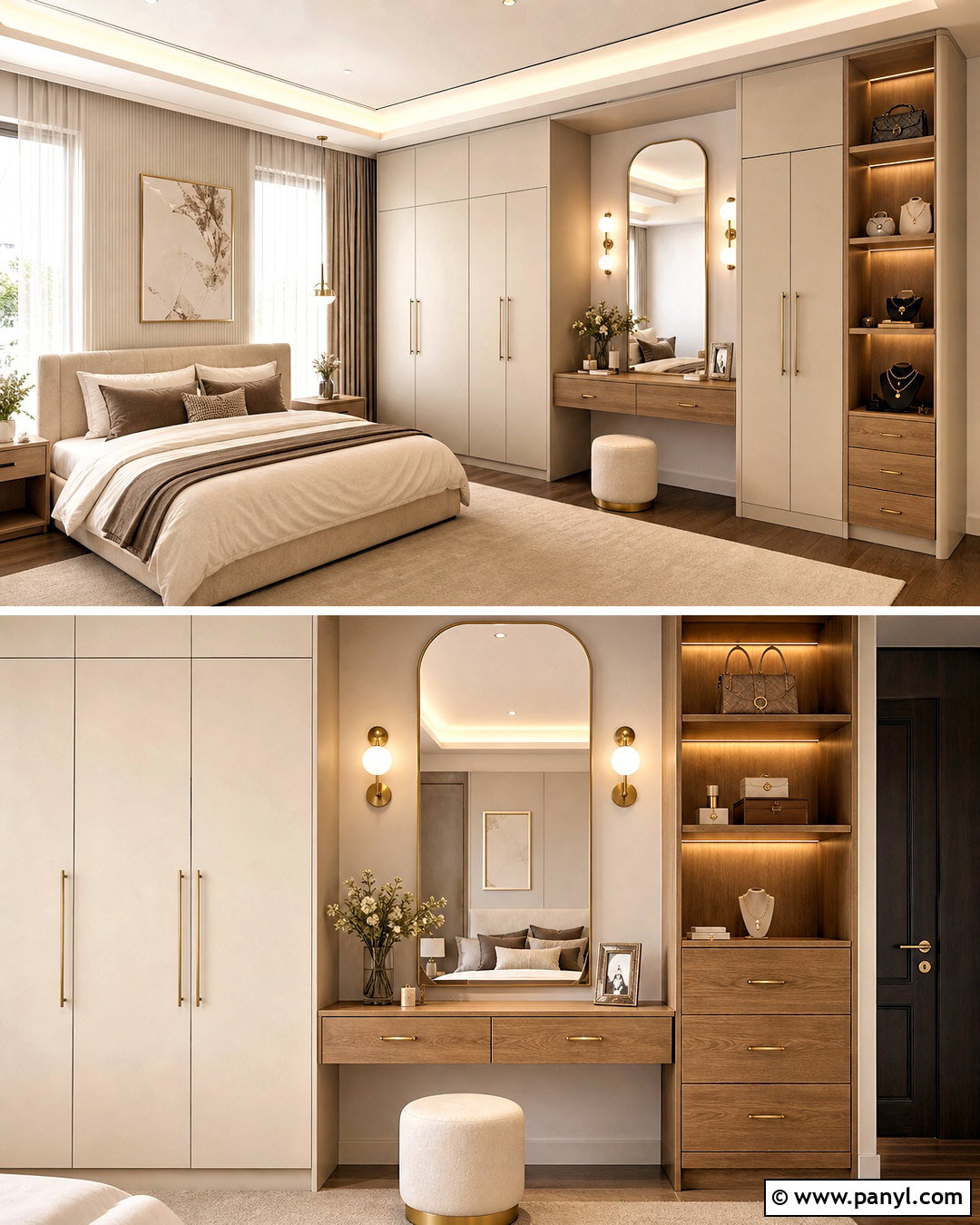
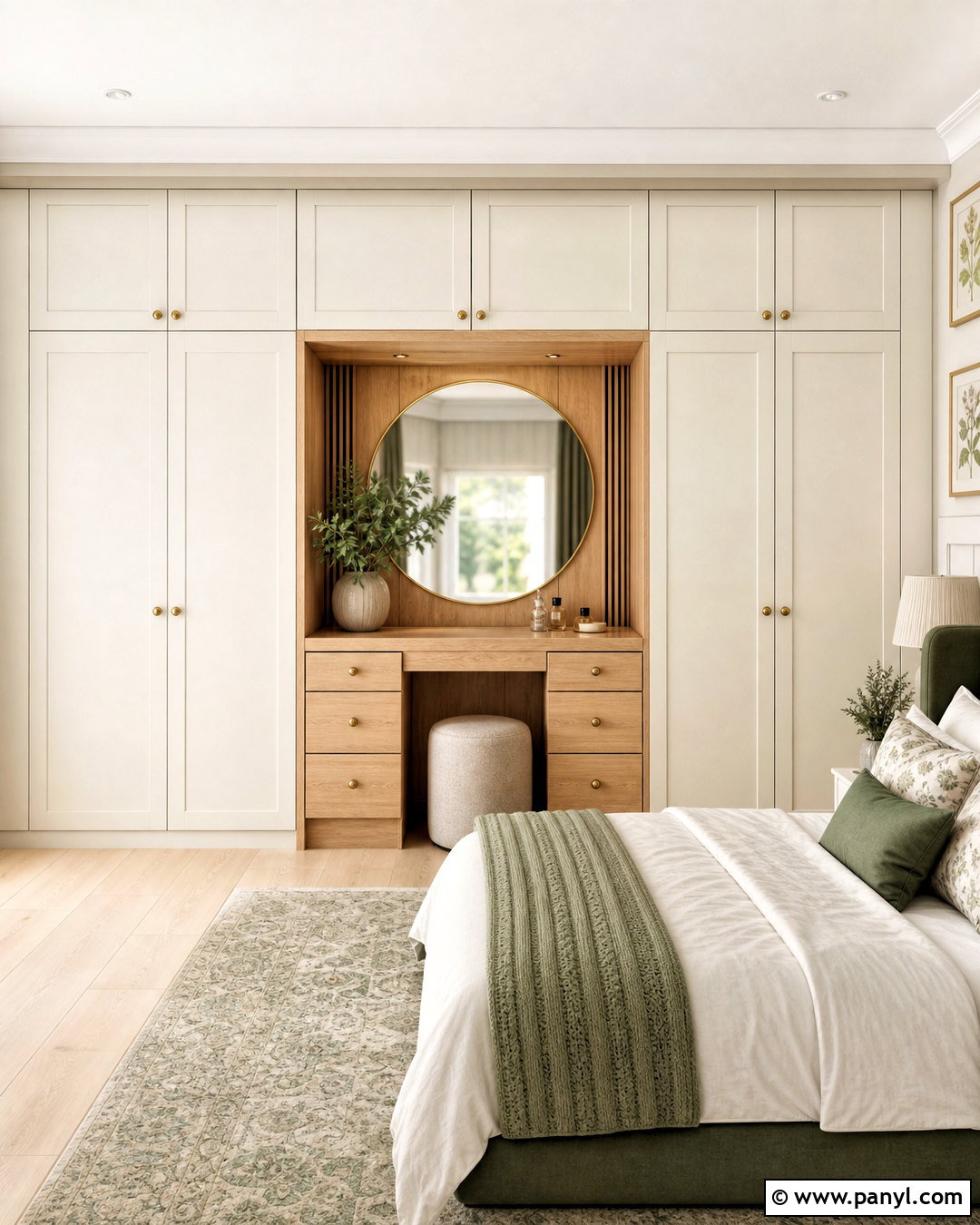
Combining a wardrobe with a dressing table creates one coordinated storage wall and removes the need for another bulky piece of furniture. Position a recessed vanity between two tall wardrobe sections. Add a floating drawer, comfortable stool, rounded mirror, and flattering wall lights. Soft beige cabinetry with oak drawer fronts creates a warm contemporary look, while brushed brass hardware adds a subtle polished detail. Keep the vanity surface wide enough for daily essentials but include hidden storage for smaller products and accessories. Inside the surrounding wardrobes, place frequently worn clothing close to the dressing area. Repeat the cabinetry finish on the bed frame or nightstands to connect the room. This complete design works well in primary bedrooms because dressing, grooming, clothing storage, and mirror space are gathered into one efficient and visually balanced arrangement.
13. Cane Panel Wardrobe
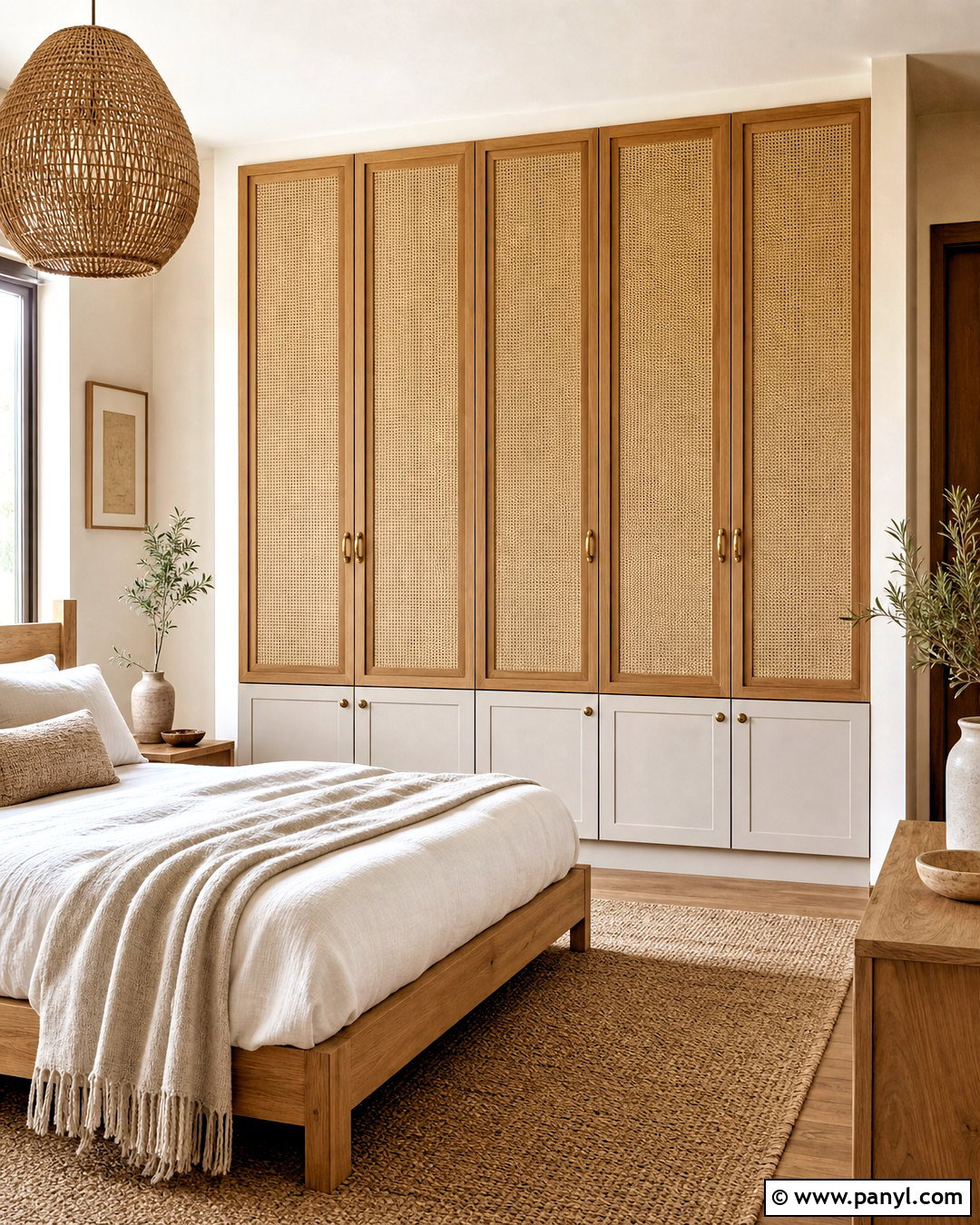
Woven cane panels give a wardrobe natural texture while allowing it to feel lighter than fully solid cabinetry. Use cane only on selected upper doors or central panels, framed by warm oak or painted beige wood. Back the weave with fabric or a solid internal panel if you prefer the contents to remain hidden. Small wooden or aged brass handles support the relaxed, handcrafted character. Complete the bedroom with an oak bed, linen bedding, woven pendant, and cream rug. Avoid adding too many other rattan pieces, which could make the room feel overly themed. Inside, include closed drawers for accessories and ventilated shelving for folded clothing. This wardrobe design is well suited to coastal, organic modern, and relaxed bohemian rooms, but its clean lines also allow it to work in simple contemporary interiors.
14. Glossy Lacquer Wardrobe
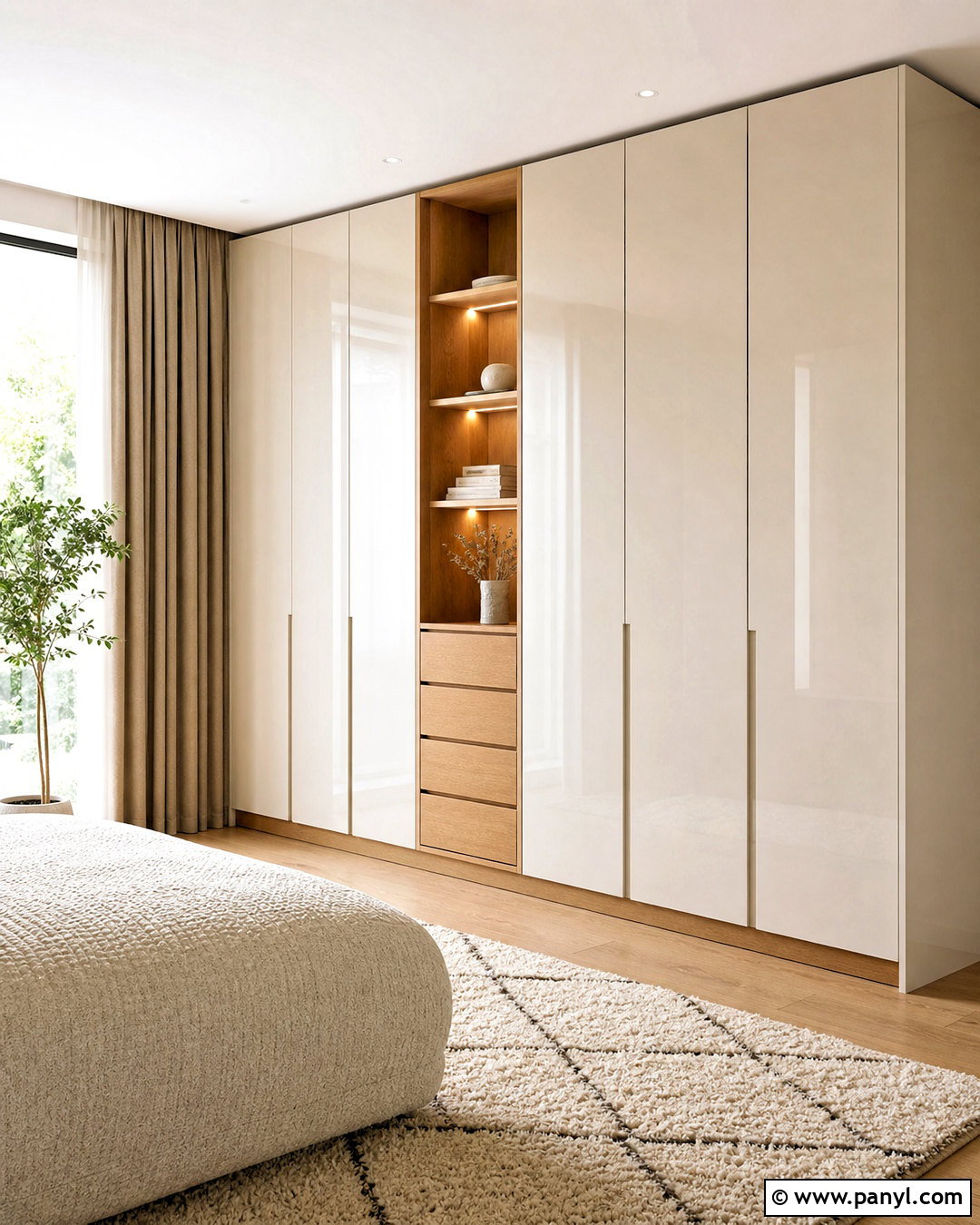
Glossy lacquer can brighten a wardrobe wall when it is used in a soft color and balanced by matte materials. Choose warm white, pale mushroom, light blue-gray, or muted taupe rather than a harsh, highly reflective color. Use broad handleless doors with minimal seams and a recessed finger channel. The polished finish reflects light gently, making the room feel cleaner and more open. Ground the look with a textured upholstered bed, matte oak flooring, wool curtains, and a soft area rug. Inside, specify drawers with subtle pulls so fingerprints are less noticeable on frequently touched surfaces. A narrow open niche in wood veneer can break up the glossy doors and provide space for books or decor. This wardrobe works particularly well in streamlined contemporary bedrooms that need brightness without relying on full mirrored panels.
15. Color-Matched Built-In Wardrobe
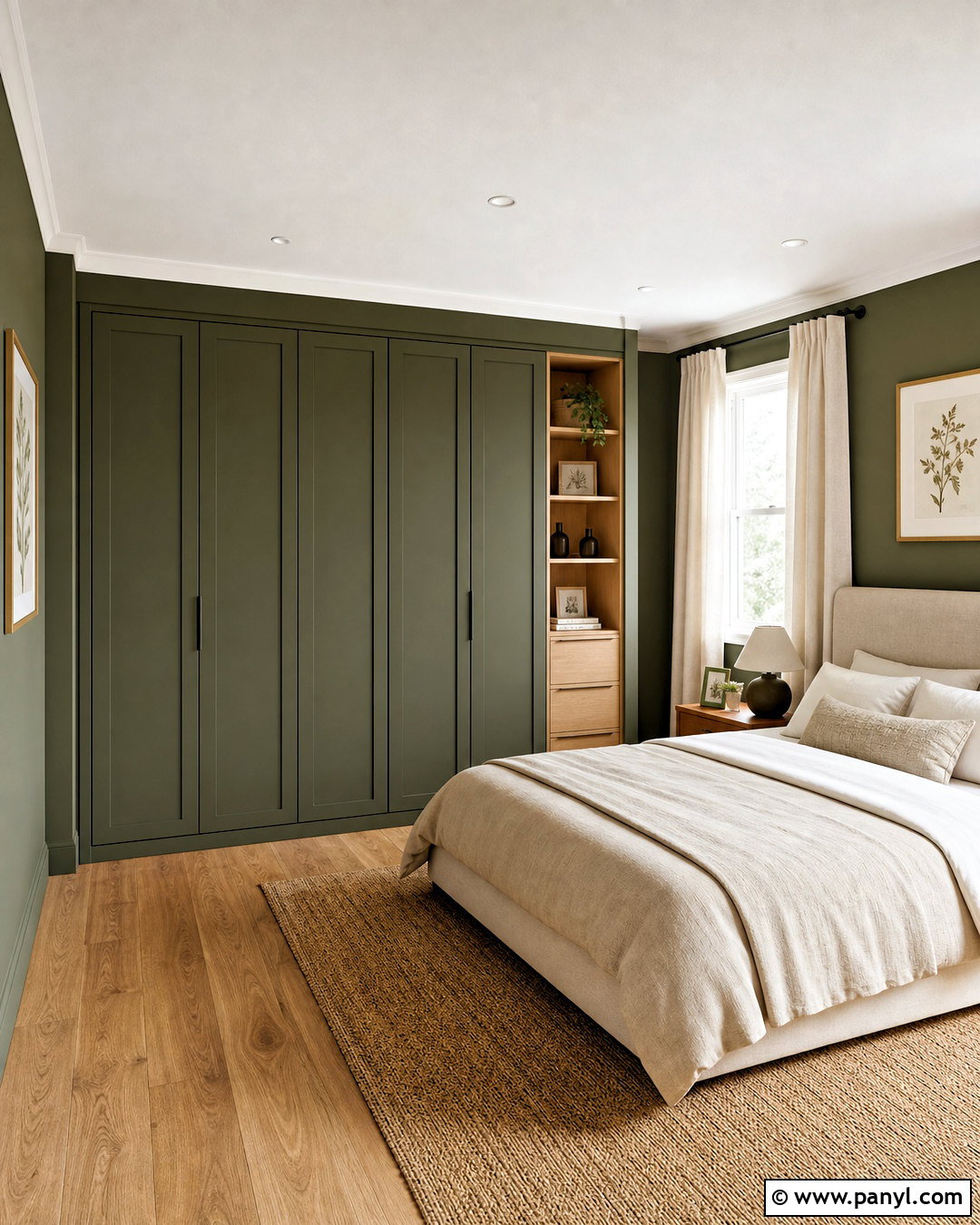
Painting a built-in wardrobe the same color as the surrounding walls allows a large storage system to blend into the room. Deep olive, dusty blue, warm terracotta, and soft taupe can all create a cozy, unified effect. Select simple slab or narrow Shaker doors, then color-match the frames, plinth, and handles for a seamless finish. Continue the chosen shade onto the wall behind the bed, while keeping the ceiling and bedding lighter for contrast. Natural oak flooring, cream curtains, and restrained artwork prevent the monochromatic palette from feeling flat. Inside, use a lighter wood or white finish so stored items remain easy to see. This complete wardrobe design turns practical cabinetry into part of the architecture and works particularly well when irregular walls or multiple cabinet sections need to appear visually connected.
16. Kids Modular Wardrobe
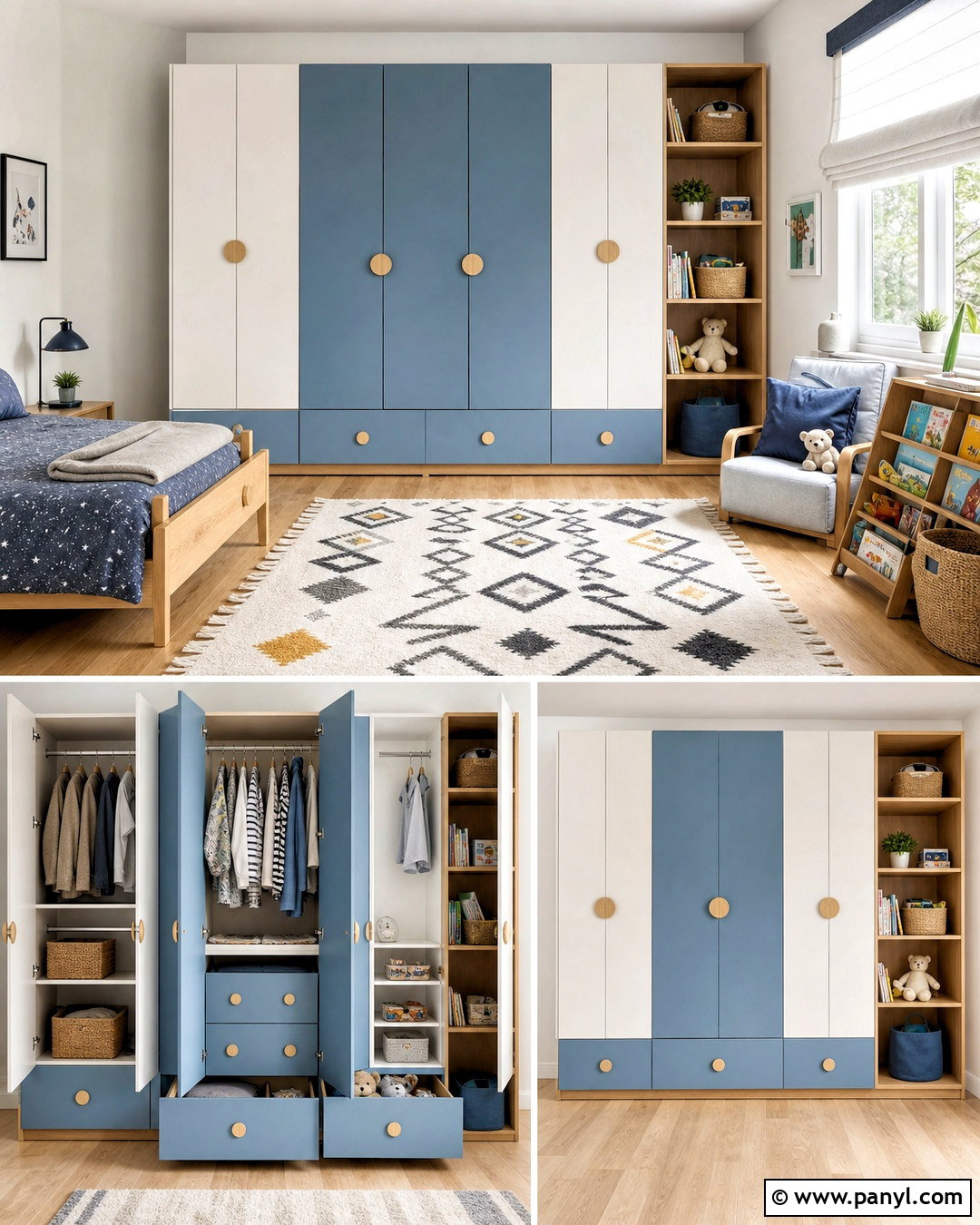
A children’s wardrobe should adapt as storage needs change. Start with a modular layout containing adjustable shelves, removable hanging rails, deep lower drawers, and high cabinets for seasonal items. Choose a durable matte finish in warm white, muted blue, soft green, or sandy beige. Add one contrasting door or open cubby to give the room personality without relying on a childish theme. Rounded handles and softly finished corners create a friendlier appearance. Keep frequently used clothing within easy reach, while less-used items stay in the upper cabinets. Complete the room with a simple wood bed, washable rug, labeled baskets, and a small reading area. As the child grows, the open cubby can hold books or display pieces, while repositioned shelves and rails can accommodate larger clothing and school supplies.
17. Sloped Ceiling Wardrobe
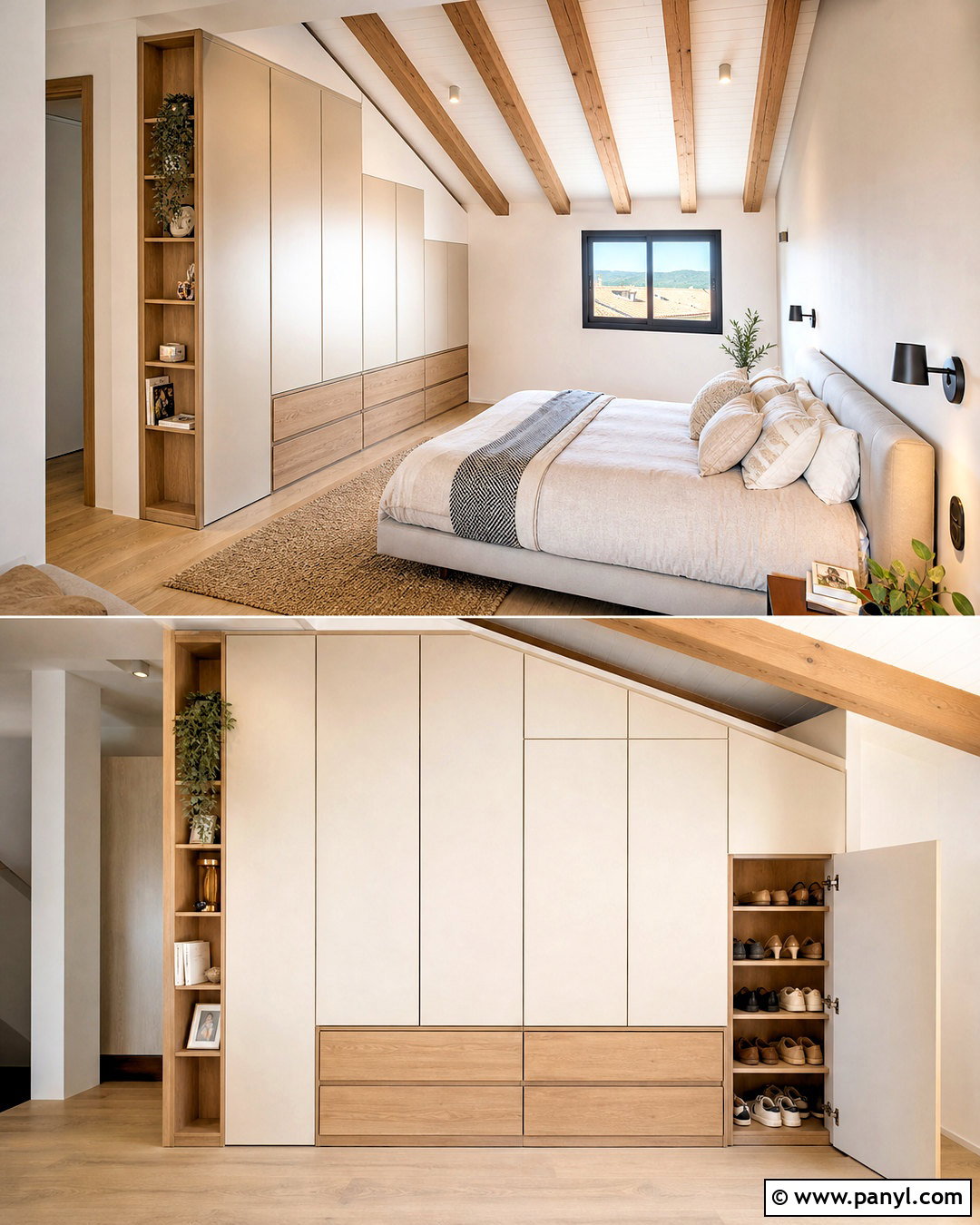
A custom wardrobe under a sloped ceiling can turn an awkward attic wall into efficient storage. Follow the roofline with graduated doors rather than stopping the cabinetry at a standard height. Place full-height hanging space at the tallest end, drawers and shelves in the center, and shoe or luggage storage beneath the lowest slope. Flat doors in warm white or pale wood help the irregular shape look clean and deliberate. Use small knobs or push-to-open hardware to prevent the angled fronts from appearing busy. Complete the attic bedroom with a low bed, simple linen bedding, wall-mounted lights, and minimal furniture. If the ceiling has exposed beams, repeat their wood tone on one section of the wardrobe. This approach makes the room feel carefully planned while capturing storage space that freestanding furniture would leave unused.
18. Modern Freestanding Wardrobe
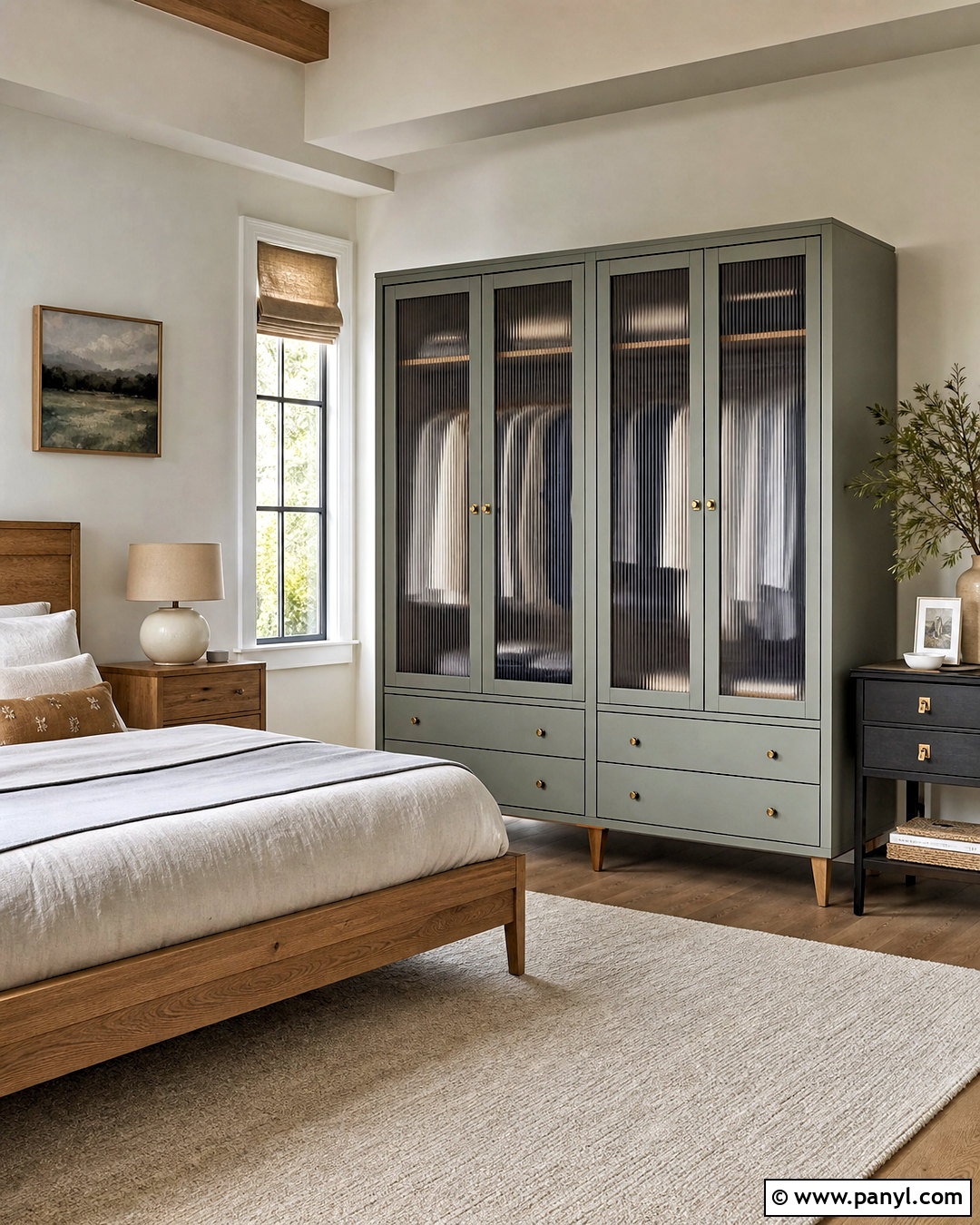
A freestanding wardrobe offers flexibility while still contributing to a complete bedroom design. Choose a substantial piece with clean lines, raised legs, and doors in oak, painted wood, or fluted glass. A warm gray-green or natural walnut finish can give it the presence of fine furniture without appearing old-fashioned. Position the wardrobe on the largest uninterrupted wall and leave breathing room around its sides. Pair it with a bed and nightstands in related materials rather than purchasing an identical matching set. Inside, use modular organizers, shelf dividers, and fabric boxes to improve functionality. An oversized rug can visually connect the separate furniture pieces. This wardrobe works especially well for renters or homeowners who may change layouts later, since it provides a polished look without permanent wall-to-wall cabinetry or major construction.
19. Wardrobe With Hidden Home Office
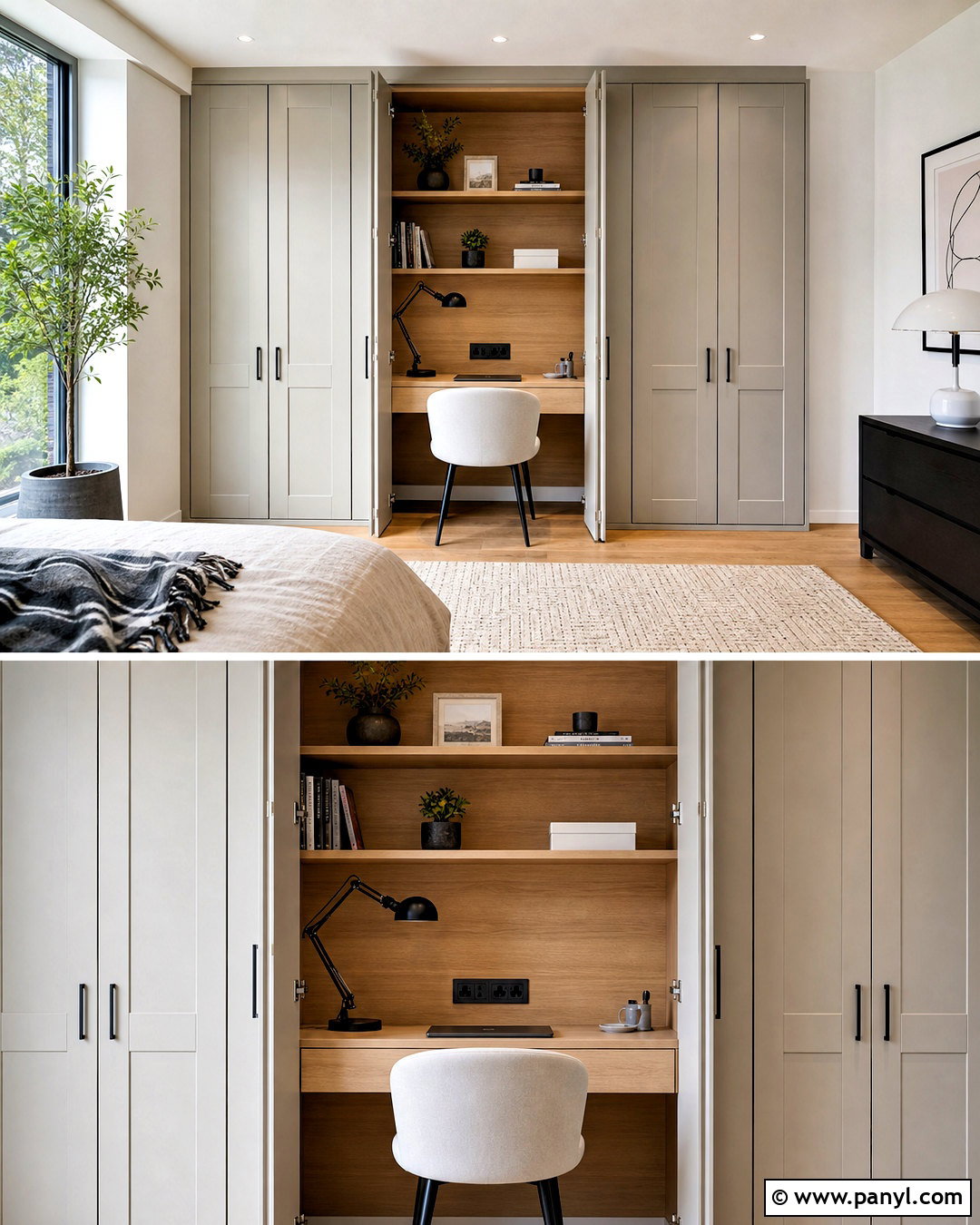
A wardrobe with a hidden desk can make a bedroom serve two purposes without leaving work equipment on display. Design the outer doors to match the surrounding cabinet fronts, then place a compact desktop, shelves, outlets, and task lighting inside the central section. Pocket or bi-fold doors can open wide during work and close neatly afterward. Use soft greige cabinetry, an oak desktop, and matte black hardware for a practical contemporary look. The side wardrobes should contain hanging space and drawers so the entire wall remains useful for clothing storage. Add a supportive chair that can tuck beneath the desk or sit at a nearby reading corner. Complete the bedroom with calm neutral bedding and limited decor. This arrangement is ideal for guest rooms, apartments, and multipurpose bedrooms with no separate office.
20. Walk-In Wardrobe With Island
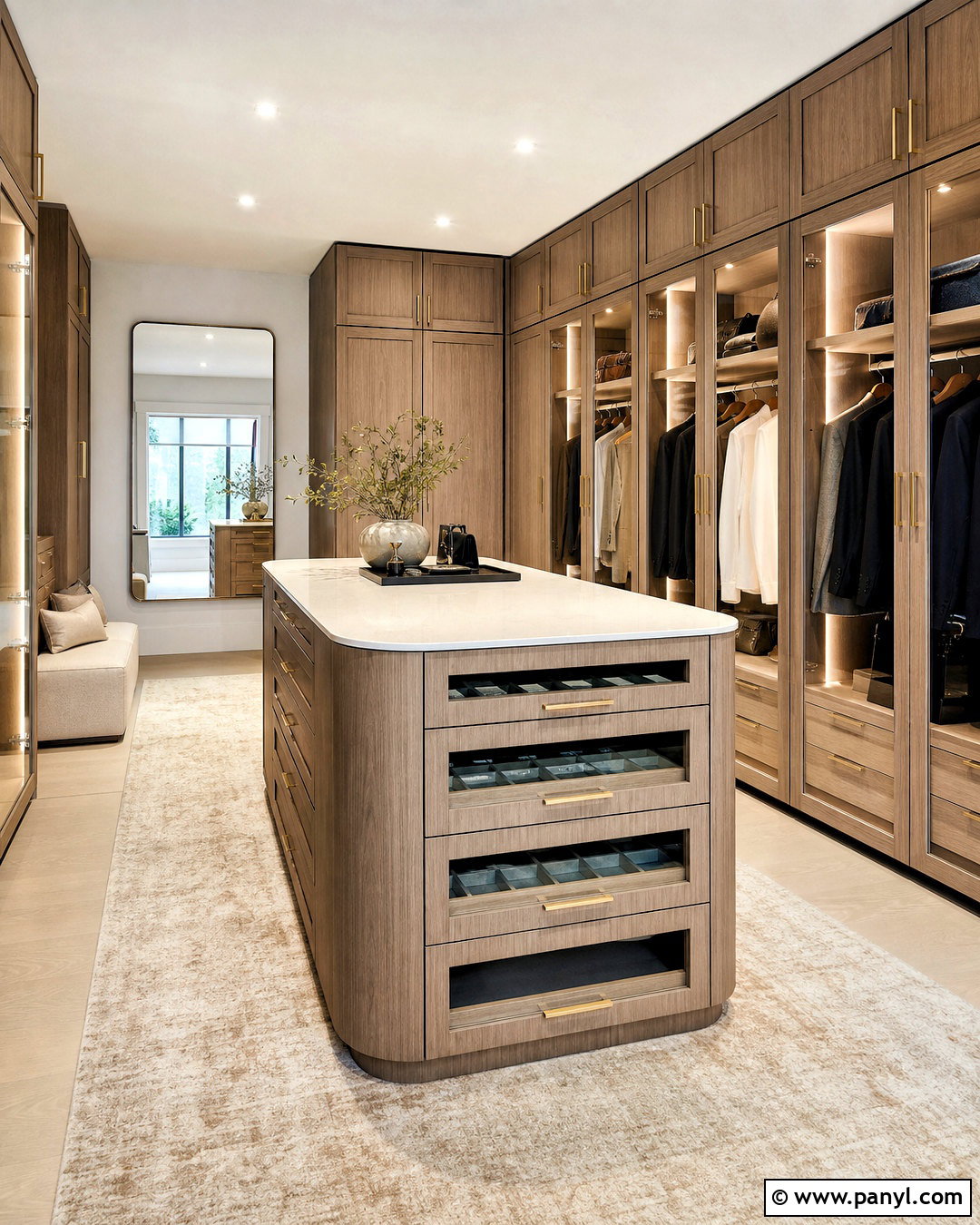
A central island turns a spacious walk-in wardrobe into a complete dressing room while adding valuable drawer storage. Use walnut, light oak, or soft taupe cabinetry around the walls, then repeat the finish on a narrow island with rounded corners. Include shallow drawers for jewelry, belts, folded accessories, and smaller garments. A stone or durable quartz top provides a refined work surface. Install glass-front cabinets for selected items, but keep some solid doors to hide less decorative storage. A large mirror, upholstered bench, and neutral runner make the space comfortable without overcrowding it. Bright, well-positioned lighting helps clothing colors read accurately and gives the wardrobe a polished display quality. () Maintain generous walking paths around the island so doors and drawers can open easily.
Conclusion:
The best wardrobe is more than a place to store clothes. It should improve the bedroom layout, support daily routines, and complement the materials and colors already in the space. Floor-to-ceiling cabinets provide maximum capacity, while sliding doors, corner layouts, and wardrobes around the bed solve common space challenges. Fluted glass, warm wood, muted paint, integrated lighting, and thoughtful internal organizers add personality without sacrificing function. Before choosing a look, measure carefully and list the clothing, shoes, accessories, and seasonal pieces you need to store. Then select a design that supports those needs. These 20 trending wardrobe design ideas offer practical starting points for creating storage that feels organized, attractive, and naturally connected to your home.

Related Ideas and Inspiration:
Leave a Reply