
Modern flooring can quietly unify a room or become the feature that defines the entire design. These 20 floor tile design modern ideas explore practical ways to use porcelain, ceramic, stone-look, terrazzo, wood-look, and patterned tile throughout the home. Current flooring trends favor warmer neutrals, larger formats, matte finishes, natural textures, and softer interpretations of classic patterns such as checkerboard. () The best result, however, comes from coordinating the floor with cabinetry, wall color, furniture, lighting, and architectural details. Consider maintenance, slip resistance, grout color, and room size before making a final choice. Whether you are updating a bathroom or creating a continuous main-level floor, use these 20 floor tile design modern ideas to plan a complete, balanced look.

1. Large Format Porcelain Floor Tile
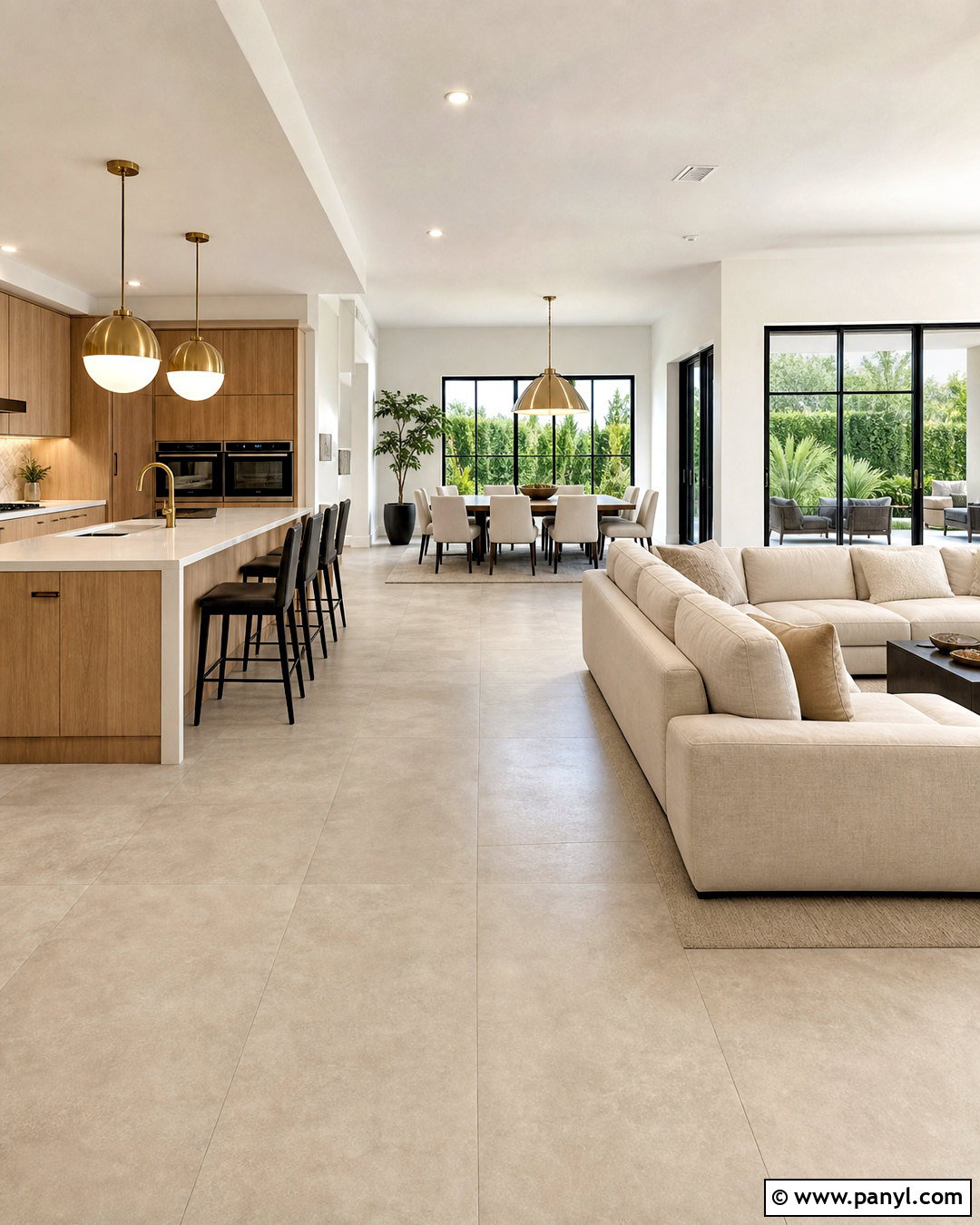
Large-format porcelain creates a calm foundation for an open kitchen, dining room, or main living area. Choose 24-by-48-inch tiles in soft greige with subtle stone movement rather than strong veining. Arrange them in a straight grid with narrow, color-matched grout lines to make the floor appear more continuous. Pair the tile with flat-panel white oak cabinets, warm white walls, and a simple cream sectional. Matte black window frames and brushed brass lighting add definition without making the room feel busy. Because oversized tiles reveal uneven surfaces, careful subfloor preparation and professional installation are important. Finish the space with textured neutral fabrics, a few ceramic accessories, and minimal furniture so the clean scale of the flooring remains visible.
2. Warm Beige Stone Look Floor Tile
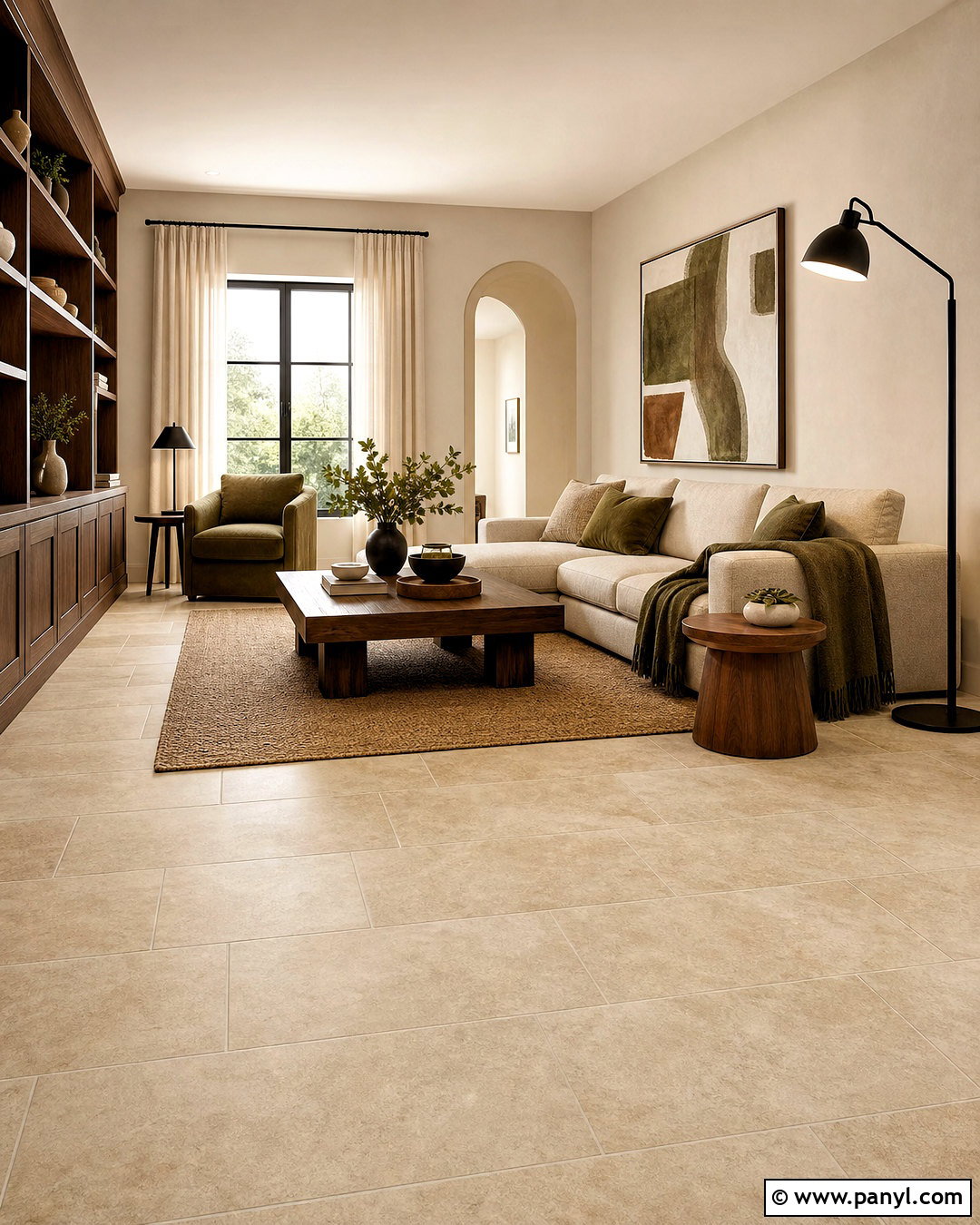
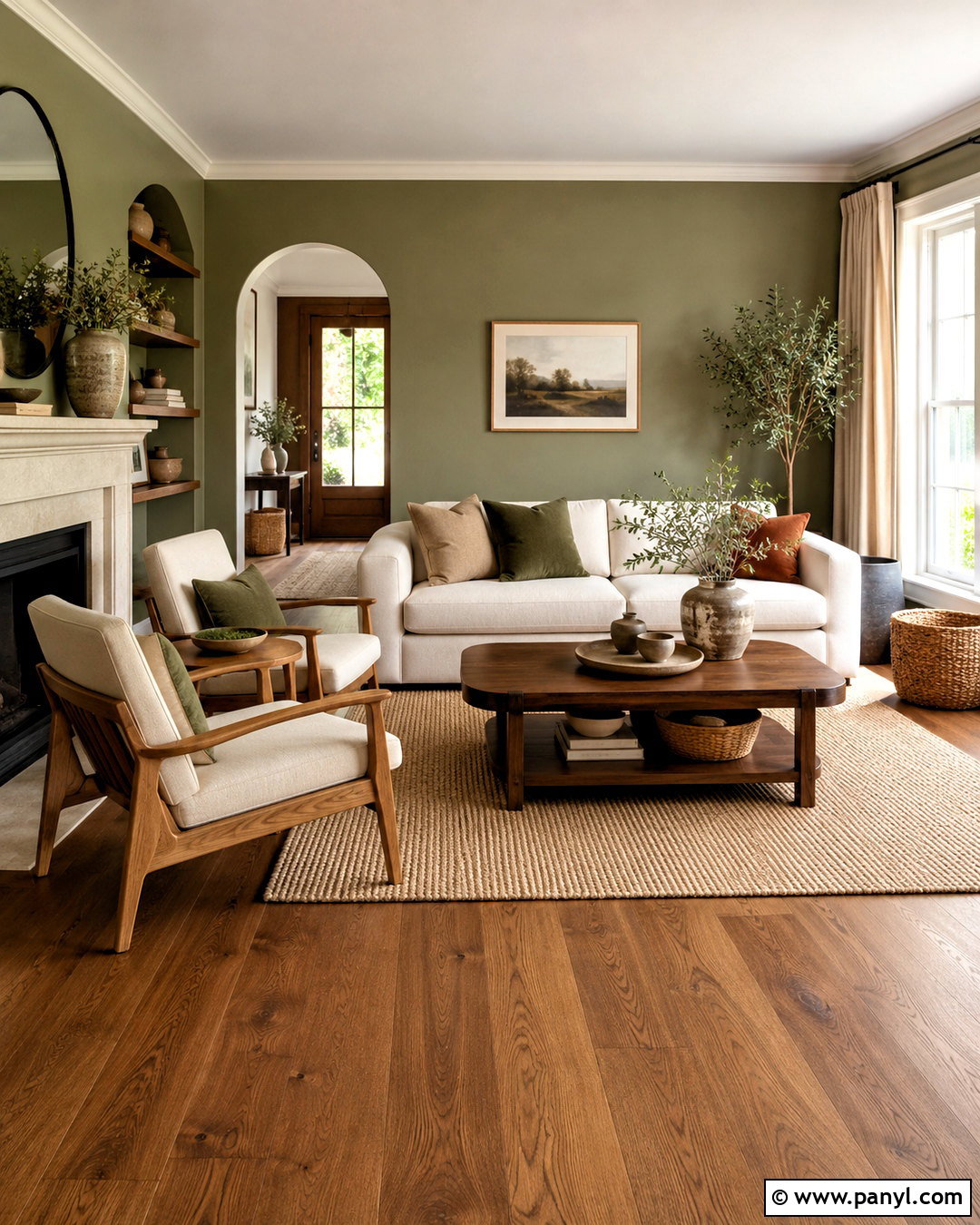
Imagine a bright living room where sandy beige flooring adds warmth without dominating the furniture. Use square or rectangular porcelain tiles that recreate limestone with gentle tonal variation and a soft matte finish. A stacked installation keeps the overall floor tile design modern, while warm beige grout prevents distracting lines. Complete the room with an oatmeal sofa, walnut coffee table, ivory curtains, and muted olive accents. Creamy walls will maintain an airy feeling, while black metal lamps provide enough contrast to sharpen the palette. This look works especially well in homes that need the elegance of natural stone with a more consistent appearance. Select tiles with several different printed faces so the repeated stone pattern is less noticeable across the finished floor.
3. White Marble Look Floor Tile
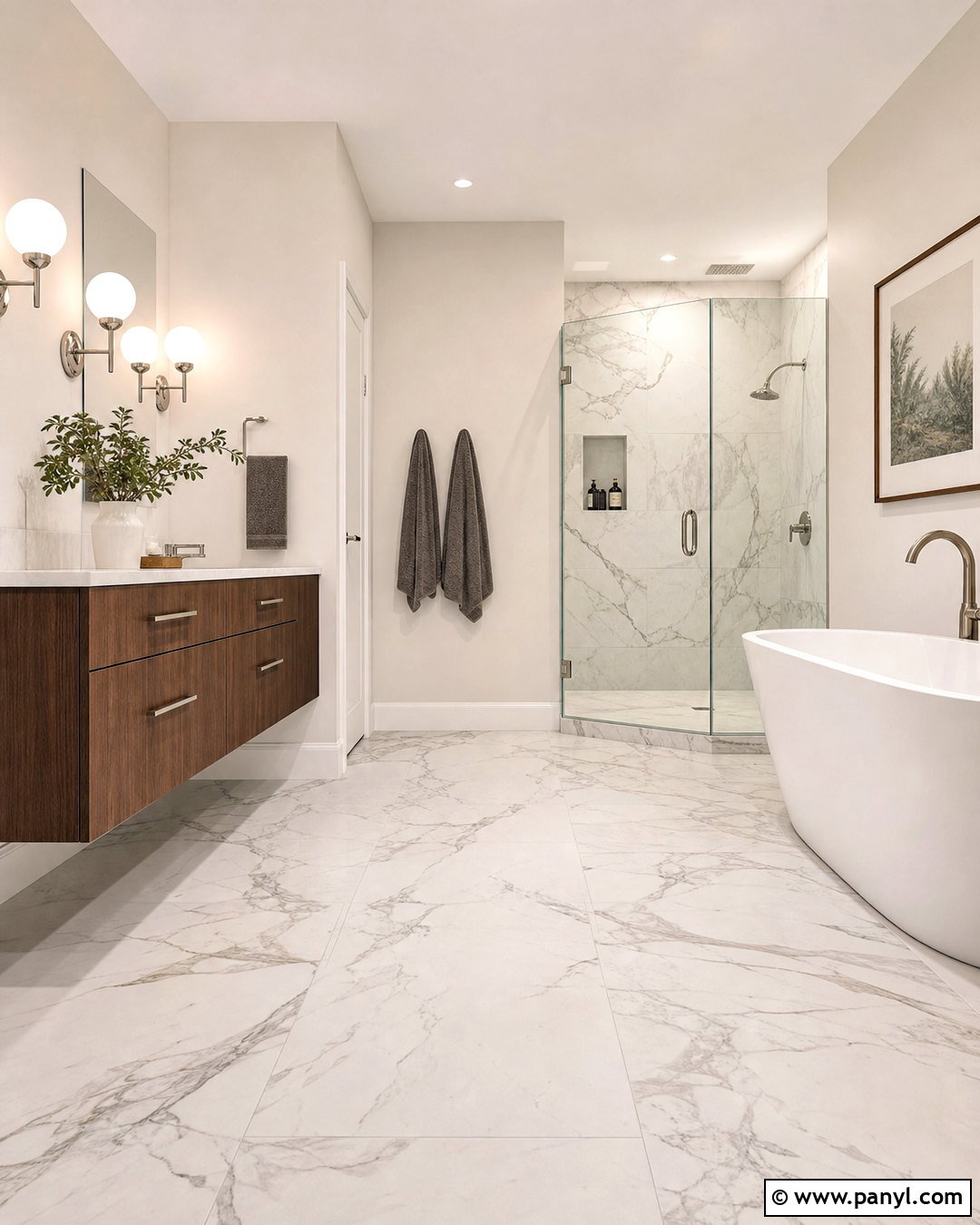
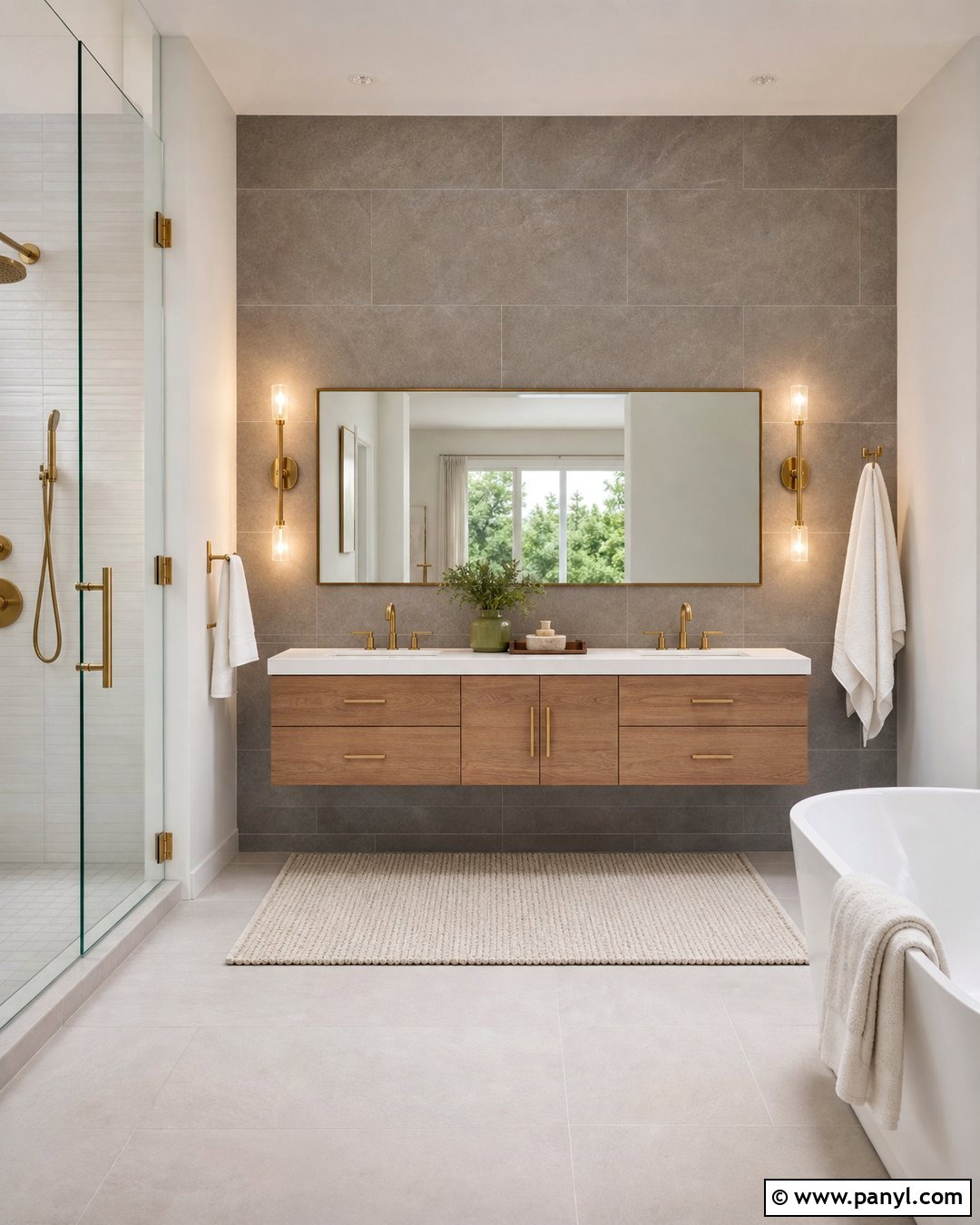
White marble-look porcelain can make a bathroom feel polished, spacious, and fresh when the veining remains controlled. Choose large rectangular tiles with fine gray and warm taupe lines rather than dramatic high-contrast patterns. Continue the flooring beneath a floating walnut vanity to preserve an uninterrupted view. Warm white walls, brushed nickel fixtures, and a frameless glass shower keep the room streamlined. Add a slim linen cabinet, soft gray towels, and one sculptural pendant for a finished modern scheme. Use a matching light gray grout and plan the tile layout before installation so neighboring veins do not create awkward shapes. A satin or honed surface usually feels softer and more current than an intensely reflective finish, especially in a relaxing primary bathroom.
4. Gray Concrete Look Floor Tile
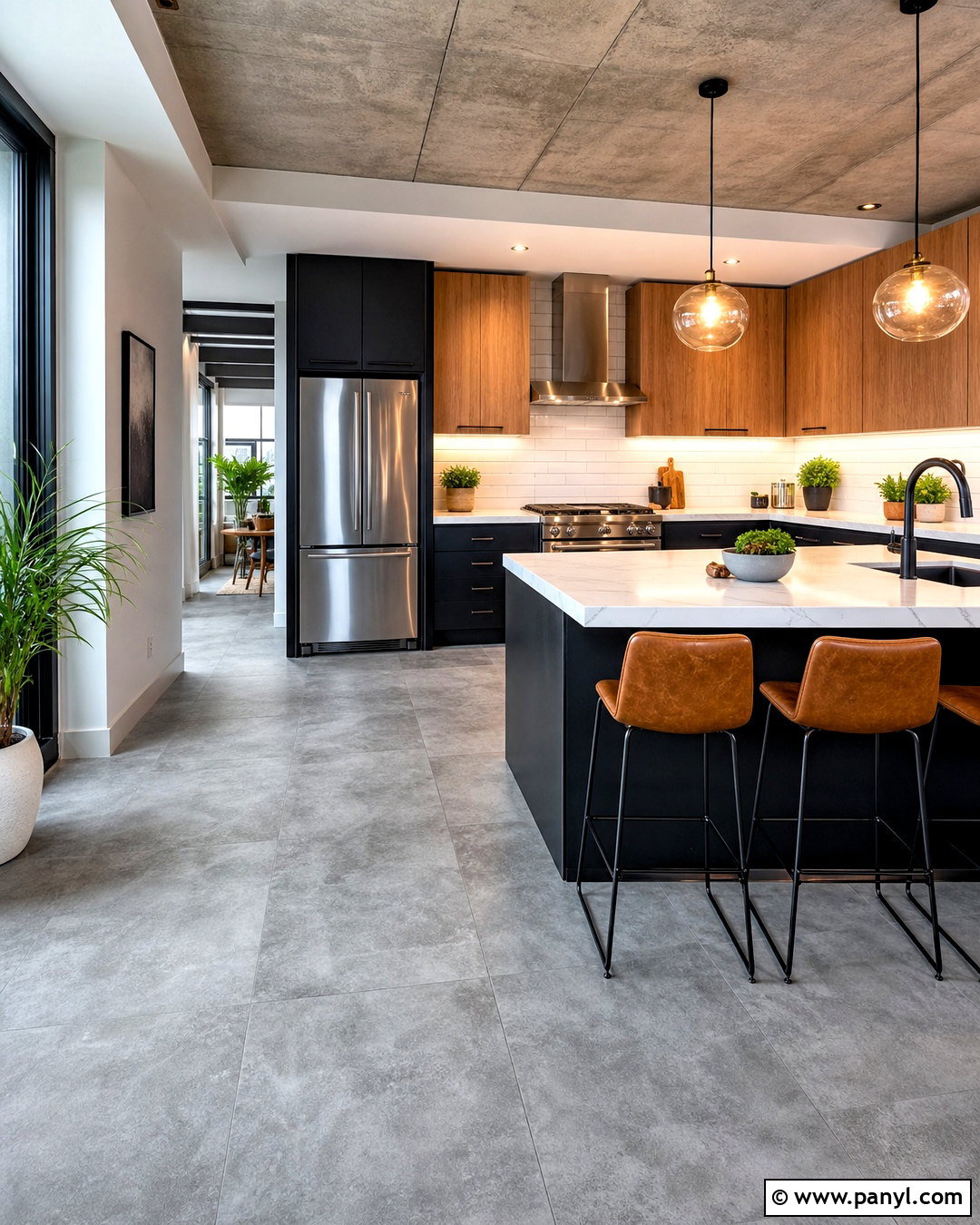
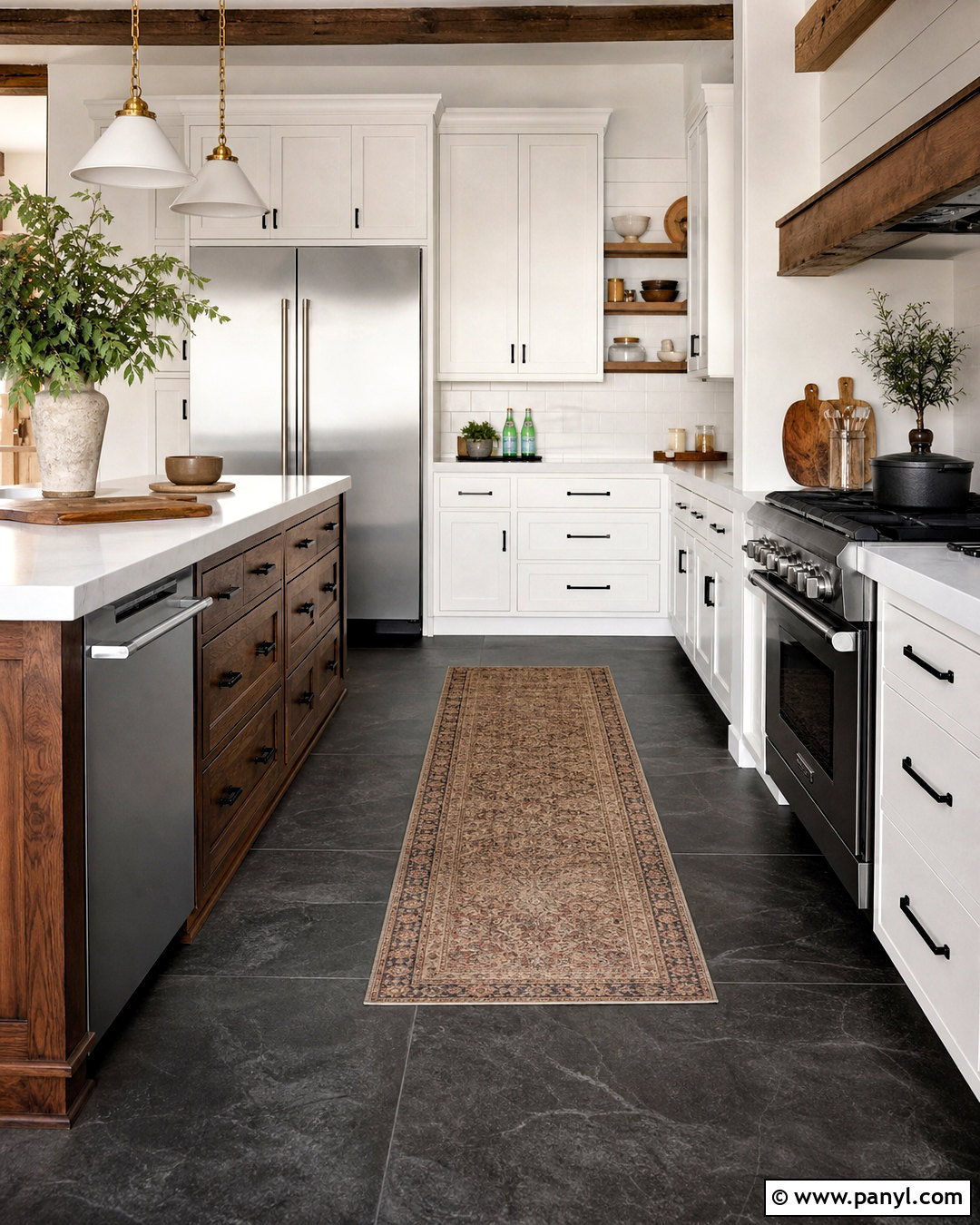
For an urban kitchen that still feels comfortable, begin with medium-gray concrete-look porcelain tile in a broad rectangular format. The surface should have slight clouding and tonal movement, but no harsh industrial markings. Install it in a simple grid beneath matte black lower cabinets and pale oak upper cabinets. A white quartz countertop, stainless steel appliances, and globe pendant lights brighten the darker materials. Introduce warmth through leather counter stools, woven shades, and a natural wood dining table. Medium-gray grout will blend with the tile and make daily debris less obvious. This complete scheme suits busy homes because its restrained palette is easy to coordinate. Keep nearby walls warm white rather than cool gray to prevent the room from feeling flat or overly commercial.
5. Terrazzo Floor Tile
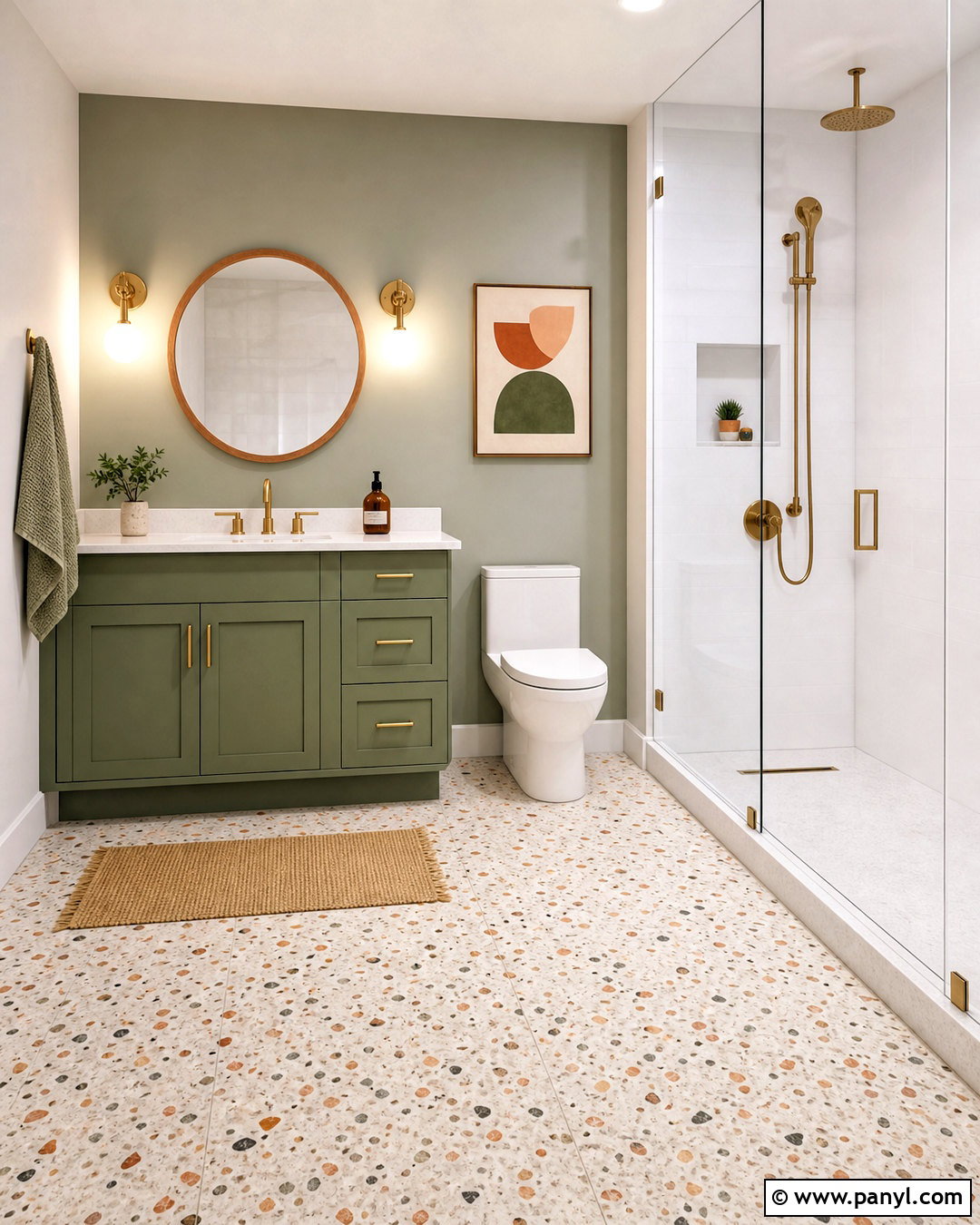
Colorful terrazzo-look tile brings movement to a modern bathroom without requiring a complicated pattern. Select a warm white porcelain base scattered with small chips in rust, sage, charcoal, and tan. Large square tiles keep the speckled surface looking clean instead of overly detailed. Pair the floor with a sage green vanity, plain white shower walls, and brushed brass fixtures. A round oak-framed mirror and globe sconces echo the softer shapes within the terrazzo. Keep towels, storage baskets, and accessories mostly neutral so the flooring remains the main visual feature. Contemporary terrazzo looks are often used for their warmth, personality, and ability to introduce several coordinating colors into one surface. () Choose grout that matches the background rather than one individual chip color.
6. Neutral Checkerboard Floor Tile
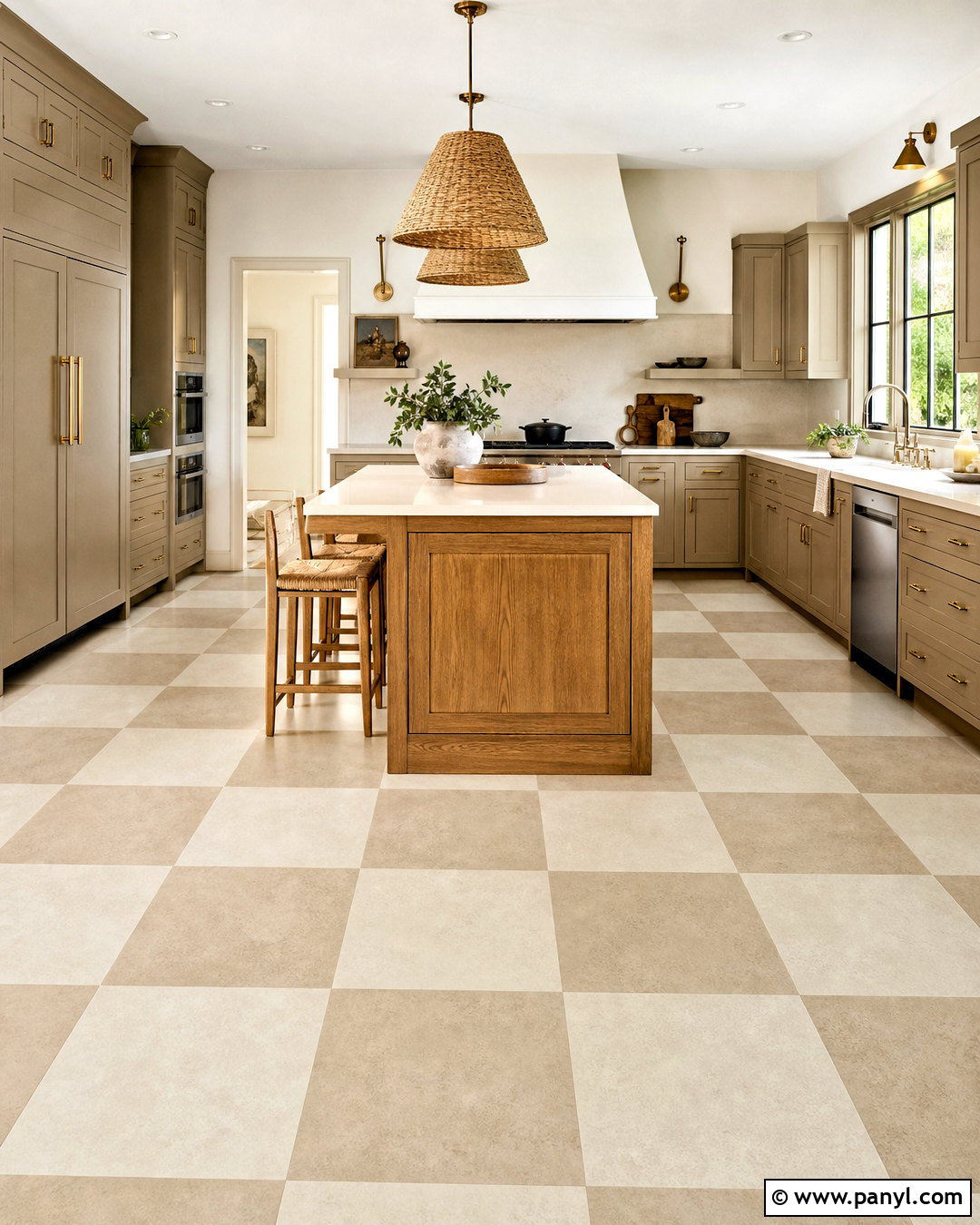
A beige and cream checkerboard floor gives a kitchen classic structure with a softer modern appearance. Use large-format matte porcelain squares in two closely related warm tones. Lay them straight rather than diagonally for a simple graphic rhythm. Pair the flooring with mushroom-colored cabinets, pale quartz counters, and a medium oak island. Unlacquered brass hardware and woven pendant lights add warmth, while plain off-white walls keep the pattern from competing with other features. Limit additional prints and use solid linen upholstery around the breakfast table. Today’s checkerboard floors often feature larger scales and tonal color combinations instead of sharp black-and-white contrast. () Before installation, dry-lay several rows to ensure cut tiles appear balanced along cabinets, doorways, and visible room edges.
7. Black And White Checkerboard Floor Tile
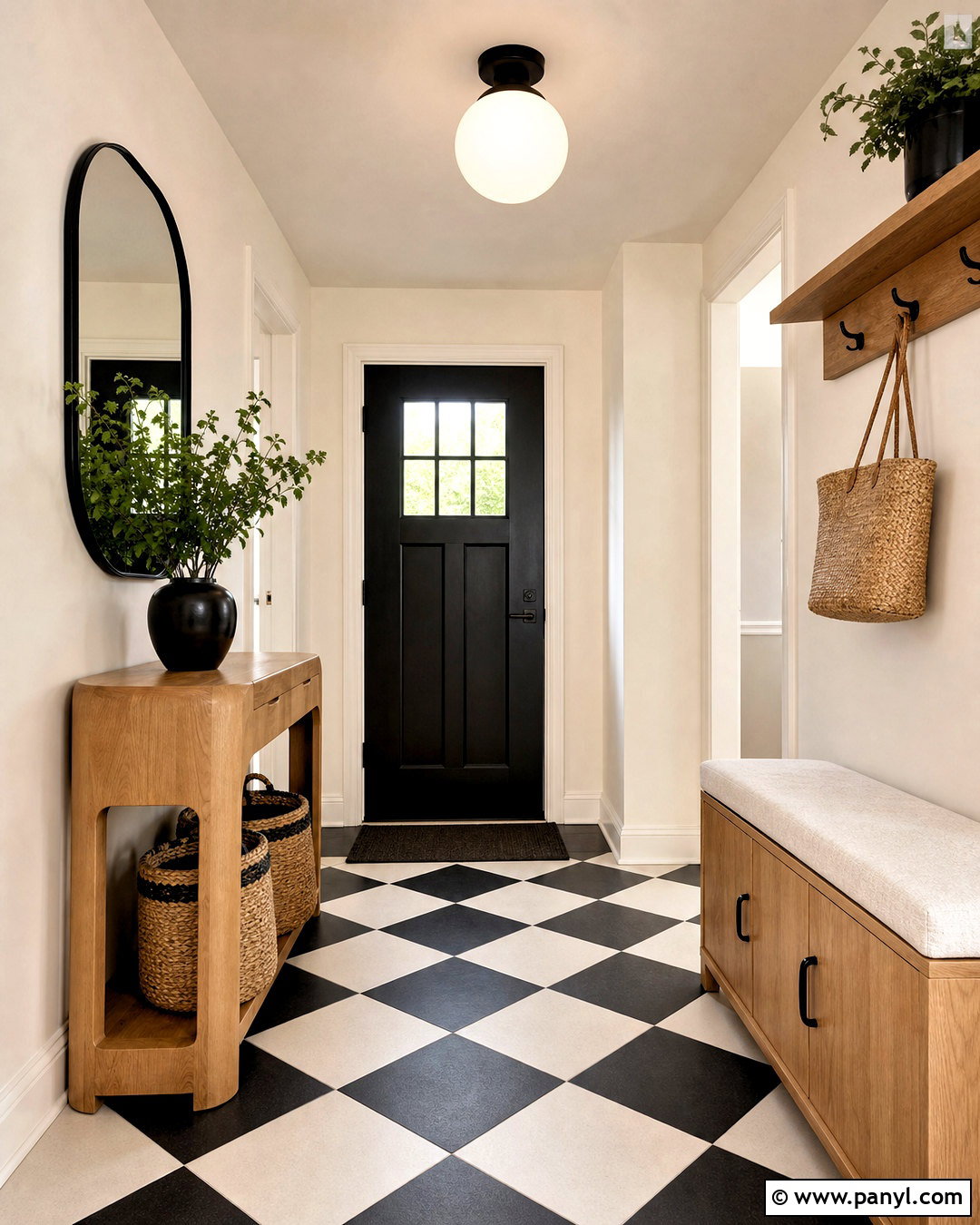
Black and white checkerboard tile can still look modern when the surrounding room is restrained. Use medium-size porcelain squares with a matte or softly honed surface, then position the pattern straight across a compact entryway. Paint the walls warm white and add a slim natural oak console with rounded corners. A black-framed mirror, simple opal-glass light, and closed woven baskets will connect with the floor without introducing more pattern. Continue one wall with vertical oak slats or a plain storage bench to give the entry practical function. Choose charcoal grout instead of brilliant white to make routine maintenance easier. The high-contrast flooring should remain the strongest element, so keep artwork minimal and select a solid-colored runner only if extra softness is truly needed.
8. Wood Look Plank Floor Tile
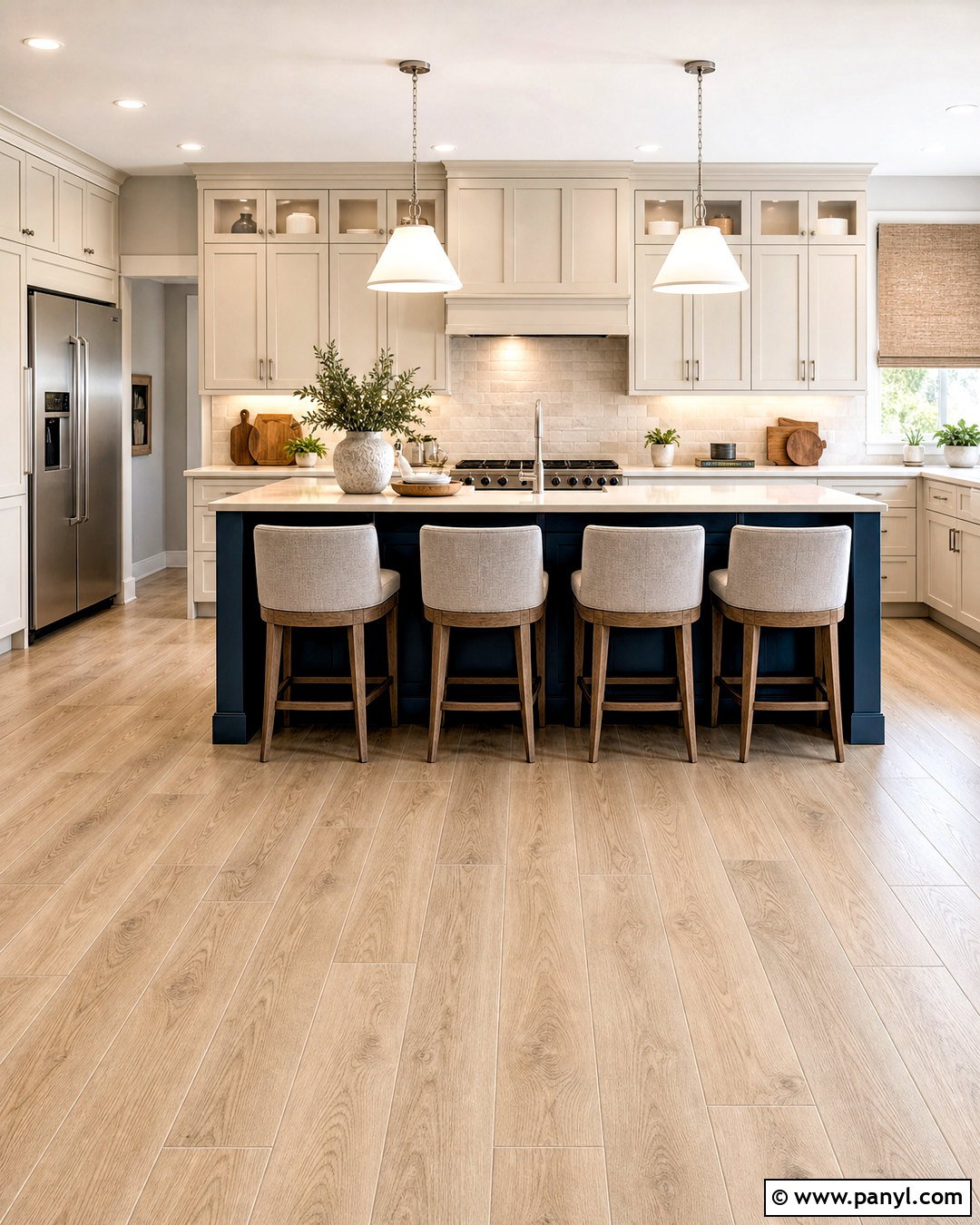
Wood-look porcelain offers a warm, continuous appearance in moisture-prone kitchens, mudrooms, and bathrooms. Select long planks in a natural white oak tone with quiet grain and limited color variation. Install them in a one-third offset layout to reduce repetitive seams and avoid an outdated brick effect. Use narrow taupe grout that blends with the printed wood grain. Complete the kitchen with creamy cabinets, a pale stone backsplash, and a deep blue island for controlled contrast. Brushed nickel hardware, upholstered stools, and linen shades soften the hard flooring. Mix tile planks from several boxes during installation so similar prints are separated. The finished room should resemble a relaxed wood interior, so avoid overly rustic knots, exaggerated distressing, and orange undertones that can make imitation wood more apparent.
9. Herringbone Floor Tile
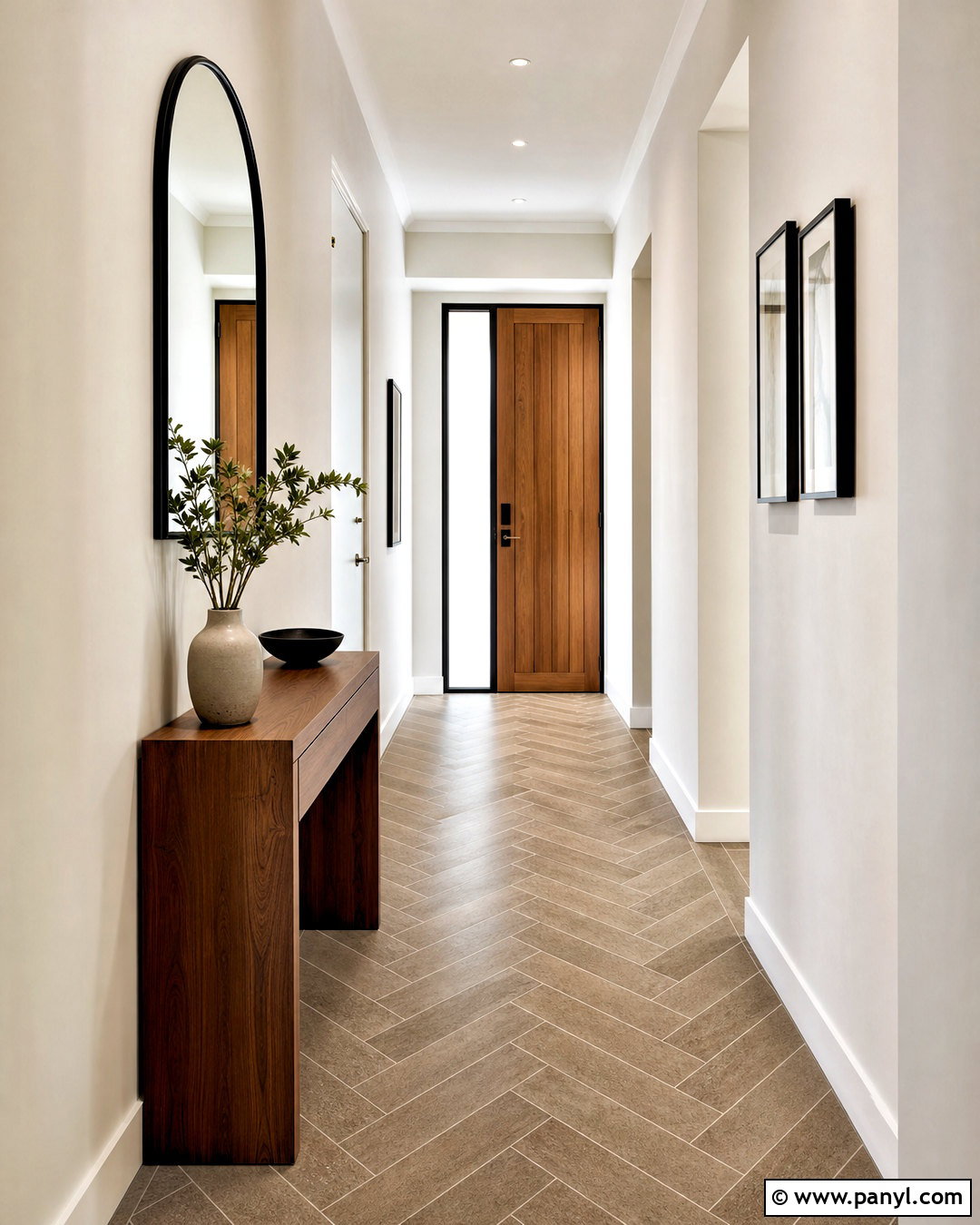
A herringbone tile floor can bring movement to a narrow hallway without adding multiple colors. Choose elongated porcelain tiles in a warm taupe stone finish and arrange them in a traditional herringbone pattern. Start the layout from the hallway’s central sightline so the pattern appears even at both walls. Paint the trim and walls a soft creamy white, then add a slim walnut console and an arched black mirror. Recessed ceiling lights will highlight the directional pattern without occupying visual space. Match the grout closely to the tile to emphasize texture rather than individual pieces. Continue the same material into a nearby powder room if you want stronger visual flow. Keep adjoining floors simpler so the herringbone installation feels intentional and does not compete with another prominent layout.
10. Hexagon Floor Tile
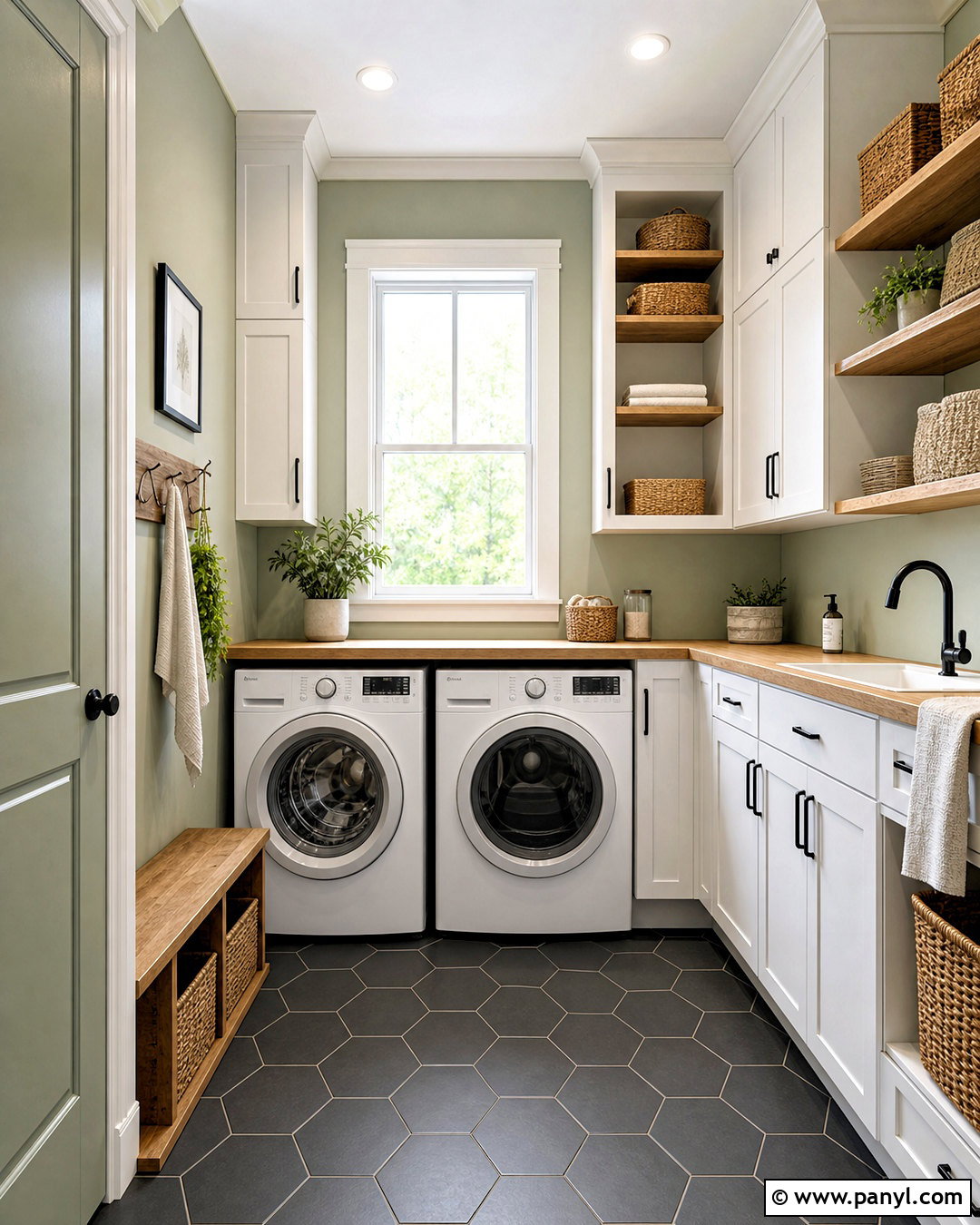
Large hexagon tiles can give a small laundry room a graphic identity while remaining easy to coordinate. Use matte porcelain hexagons in a soft charcoal gray and pair them with medium-gray grout for a nearly seamless effect. Install white shaker cabinets to the ceiling, then add an oak countertop above the washer and dryer. Pale sage walls, black cabinet pulls, and open oak shelving create a practical modern palette. Include closed baskets and labeled containers inside the cabinets rather than filling every shelf with accessories. The six-sided flooring introduces enough geometry, so choose a plain white backsplash and simple cylindrical lighting. Before ordering, account for the additional perimeter cuts associated with hexagonal tile. A carefully centered layout will make the visible edges on both sides of the room feel balanced.
11. Geometric Pattern Floor Tile
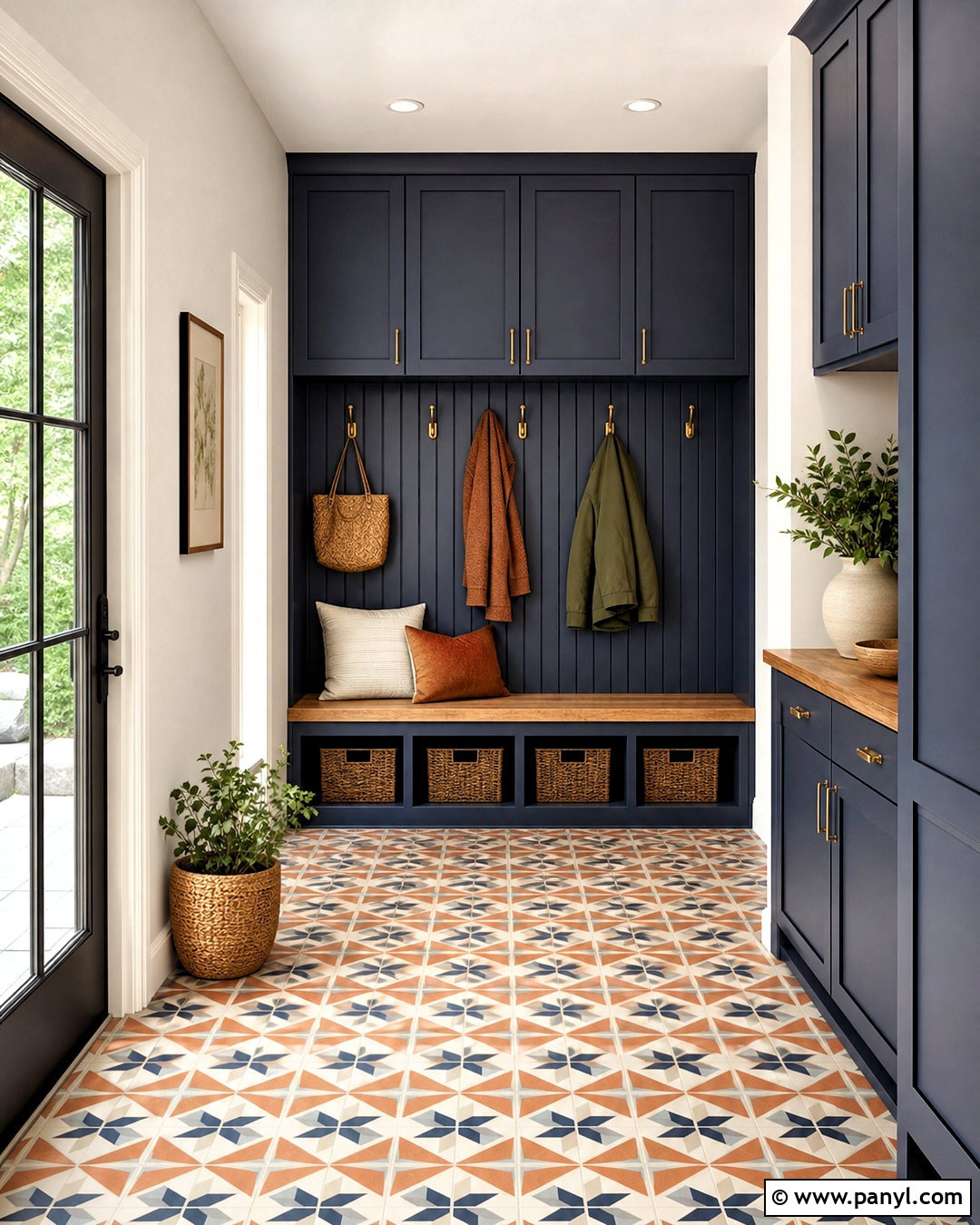
A geometric floor works best when it defines one compact zone rather than competing throughout an open home. Choose porcelain tiles with a repeating cream, clay, and muted navy pattern for a mudroom or enclosed entry. Surround the patterned floor with simple white walls, navy built-in cabinets, and a natural oak bench. Add brass hooks, overhead storage, and durable woven baskets to make the room useful for daily routines. Keep the cabinet fronts plain and select a single globe ceiling light so the tile remains the decorative focus. Use grout that matches the light background, helping separate the design without outlining every tile. Order extra material to allow the installer to center important motifs and create balanced cuts around doorways, baseboards, floor vents, and built-in storage.
12. Terracotta Floor Tile
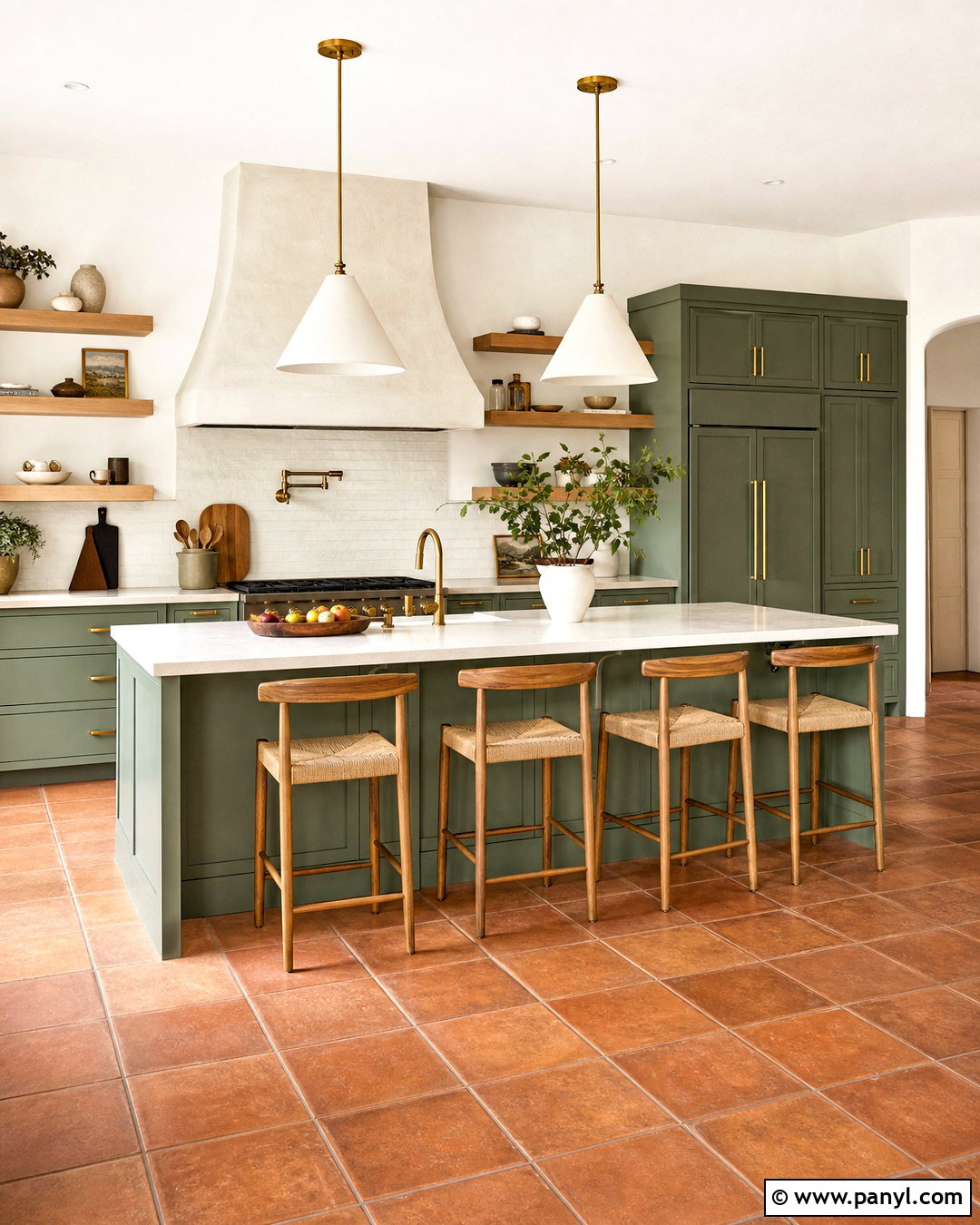
Terracotta-colored porcelain brings earthy character to a modern kitchen while offering a more uniform surface than handmade clay. Choose large square tiles in warm red-brown and clay tones with a matte, lightly textured finish. Lay them in a straight grid with muted brown grout for a clean update. Pair the floor with soft green cabinets, off-white quartz counters, and a simple plaster-style range hood. White oak shelving, cream ceramics, and brushed brass hardware will reinforce the warm palette. Keep window treatments light and walls creamy to balance the visual weight of the floor. Add a small natural fiber runner only in a clear walkway. The finished space should blend rustic warmth with streamlined cabinetry, avoiding overly distressed furniture or excessive farmhouse accessories that could make the room feel themed.
13. Slate Look Floor Tile
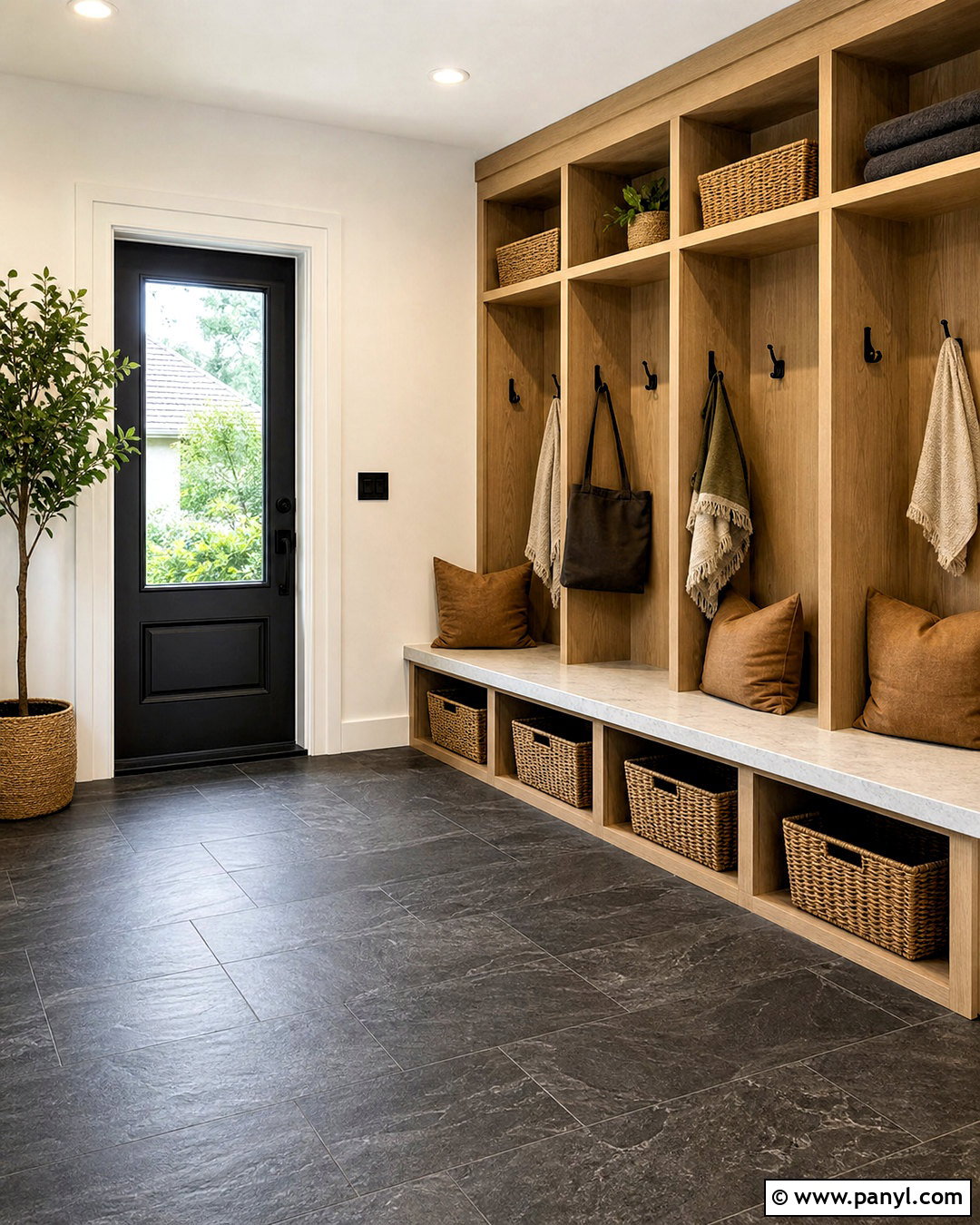
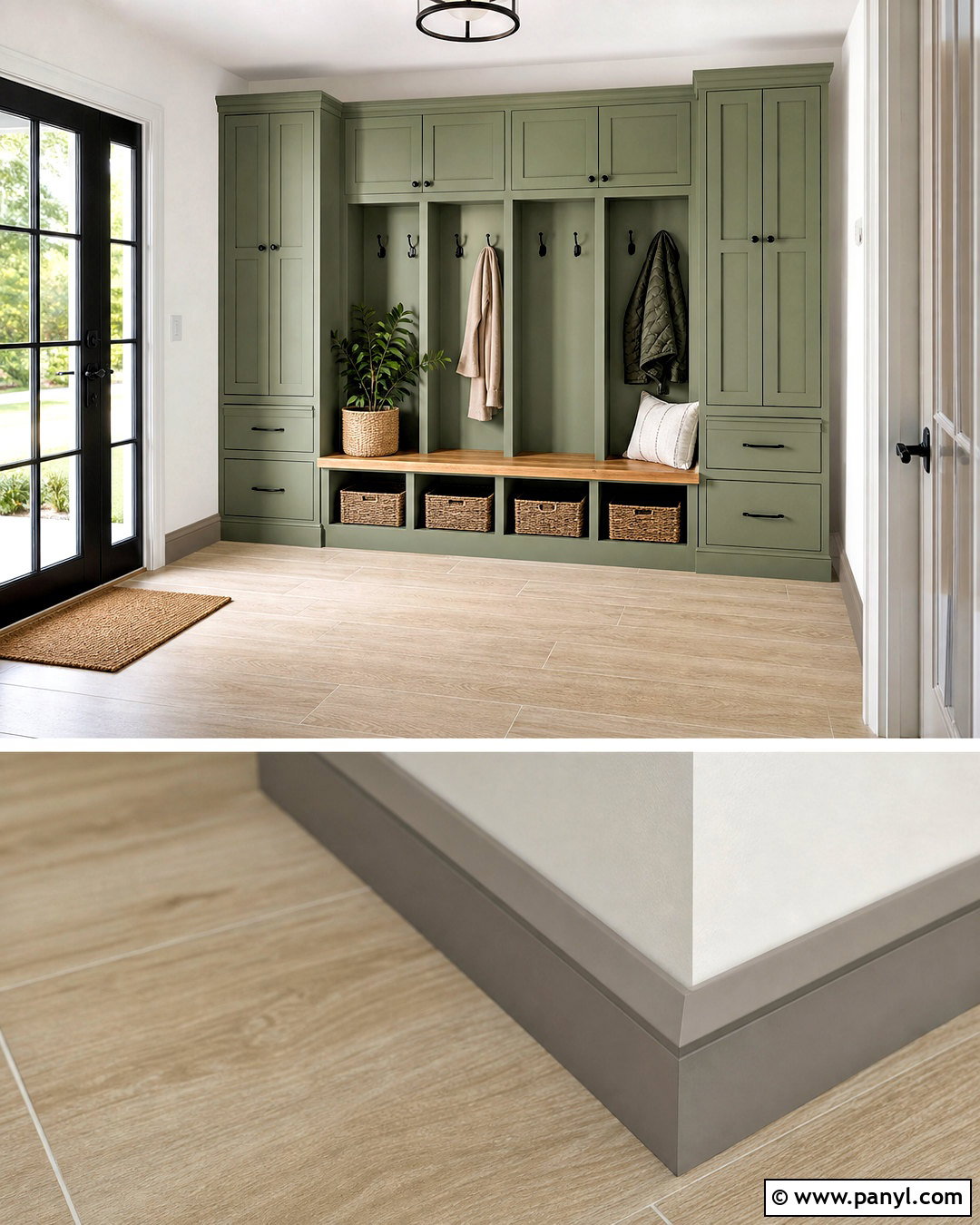
Deep slate-look porcelain creates a strong foundation for a modern mudroom or rear entry. Select rectangular tiles in layered charcoal and dark gray tones with a subtle cleft texture. Install them in a straightforward running pattern and use charcoal grout to create one cohesive surface. Balance the dark floor with pale oak built-in lockers, warm white walls, and a light quartz bench top. Matte black hooks and hardware will repeat the tile color, while tan cushions and natural baskets prevent the room from feeling cold. Include strong overhead lighting because dark flooring absorbs more light than pale tile. Choose a slip-resistant surface suited to wet shoes and everyday traffic. Keep the rest of the design simple, practical, and bright so the stone effect feels sophisticated rather than heavy.
14. Travertine Look Floor Tile
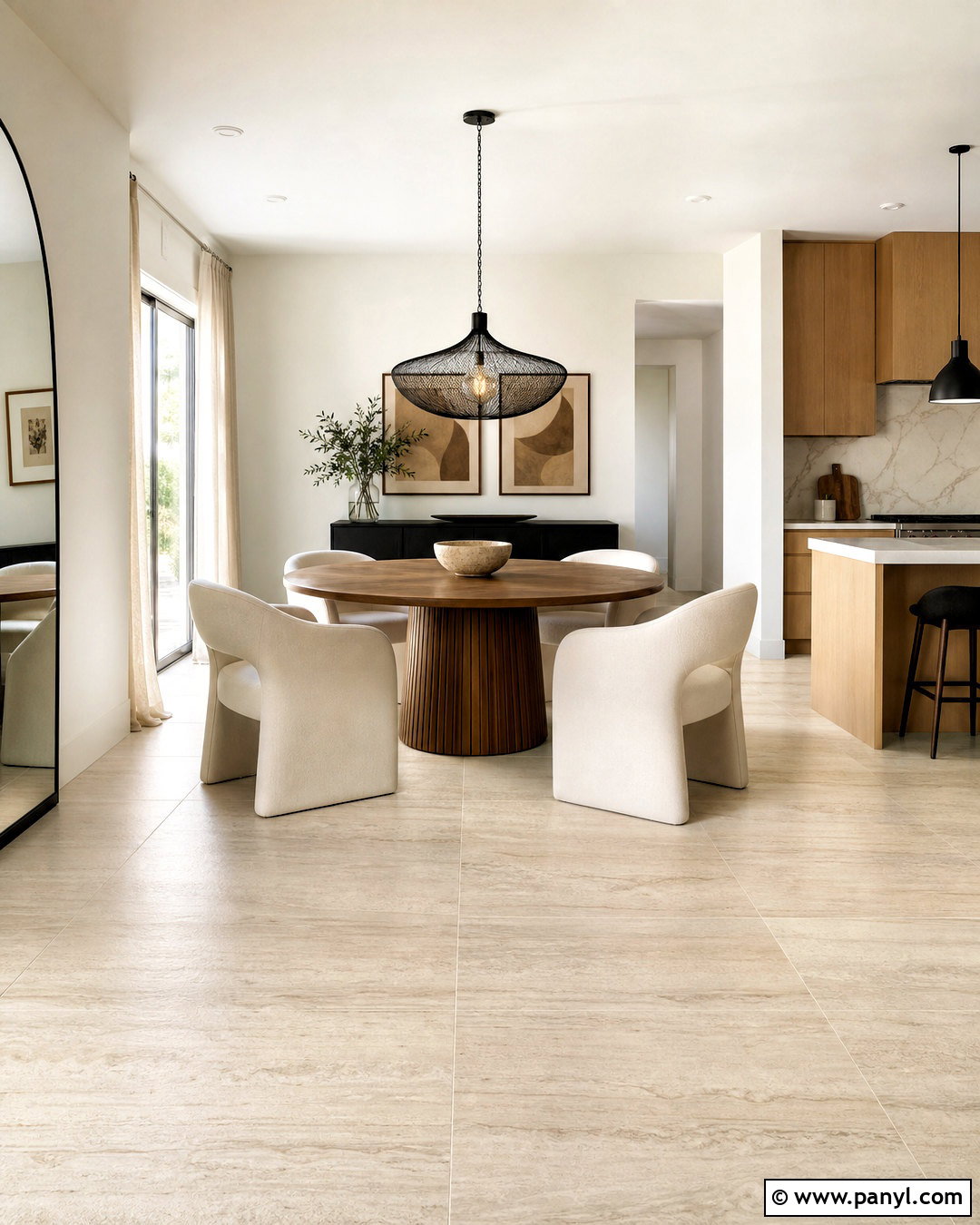
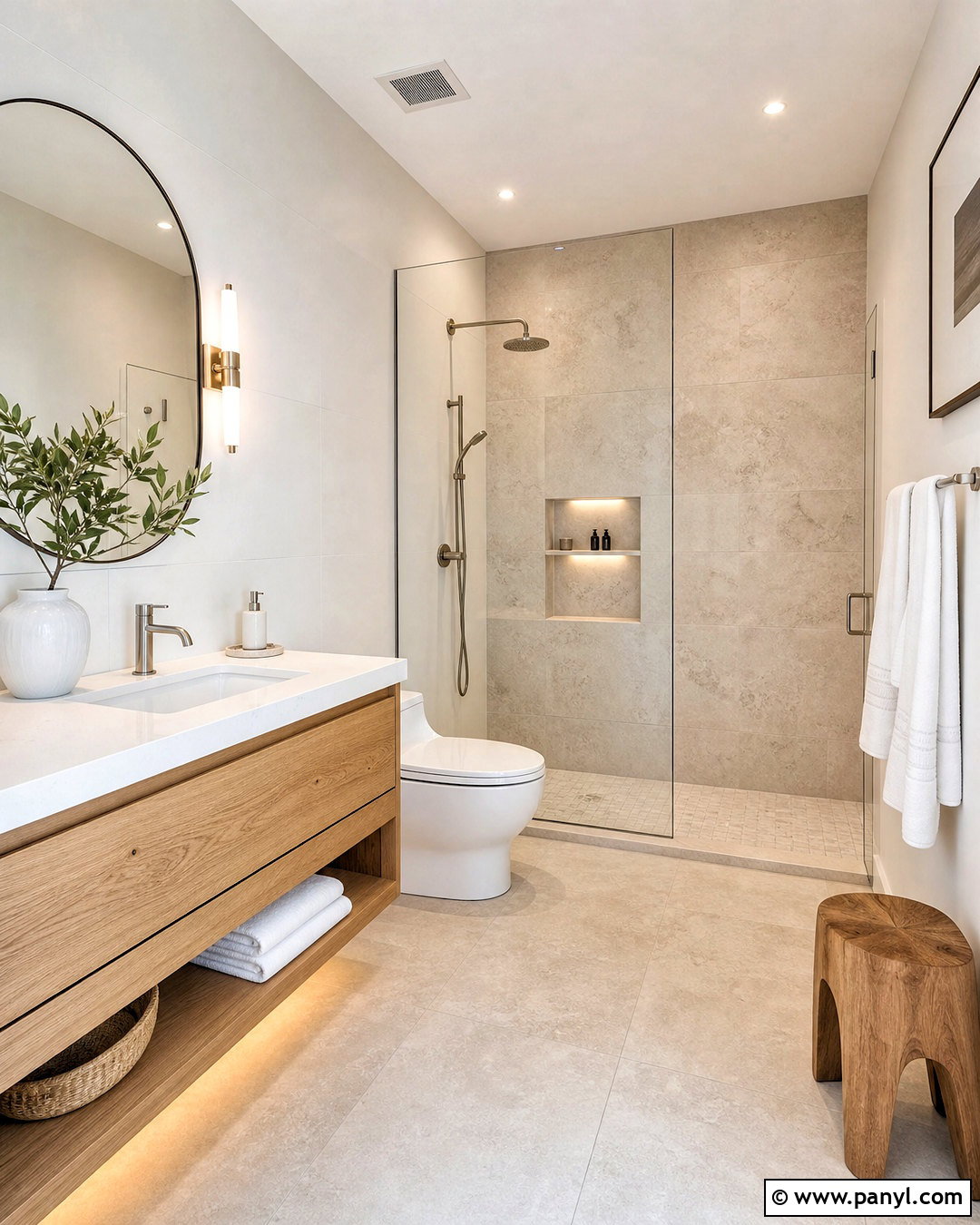
Travertine-look porcelain can give an open dining space natural warmth without introducing excessive color. Choose large rectangular tiles in creamy beige with soft linear movement and scattered pale taupe markings. Lay them in the same direction as the longest wall to visually extend the room. Pair the flooring with a round walnut dining table, upholstered ivory chairs, and a sculptural black pendant. Warm white walls and light oak cabinetry in an adjoining kitchen will create a smooth transition. Use beige grout close to the tile’s background and avoid high-gloss finishes that can weaken the natural stone effect. Add linen curtains and one large textured artwork rather than several small decorations. This restrained approach allows the floor’s quiet variation to provide depth while the furniture supplies shape and contrast.
15. Limestone Look Floor Tile
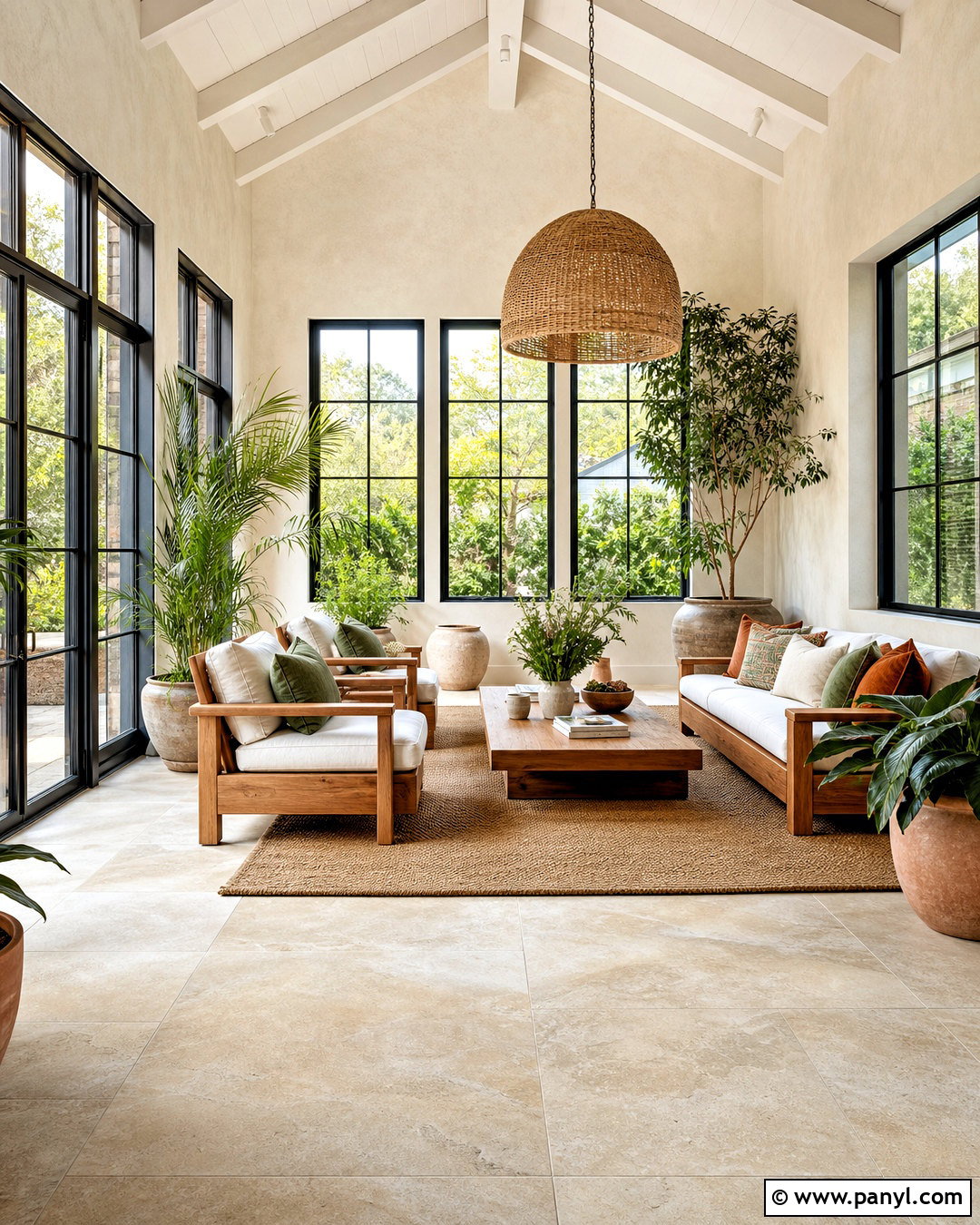
Soft limestone-look tile provides a relaxed base for a bright, modern sunroom. Use oversized square porcelain tiles in pale sand with a honed-looking matte finish and minimal veining. Combine the floor with limewashed cream walls, slim black window frames, and low-profile teak furniture. Upholster the seating in ivory performance fabric, then add olive and rust cushions for gentle color. A woven area rug can define the conversation zone while leaving a wide border of tile visible. Include leafy plants in simple clay pots to connect the interior with the outdoor view. Select warm beige grout and maintain consistent joint spacing across the room. The final look should feel open and natural, with practical surfaces, comfortable furniture, and enough contrast to keep the neutral materials from blending into one flat palette.
16. Dark Charcoal Floor Tile
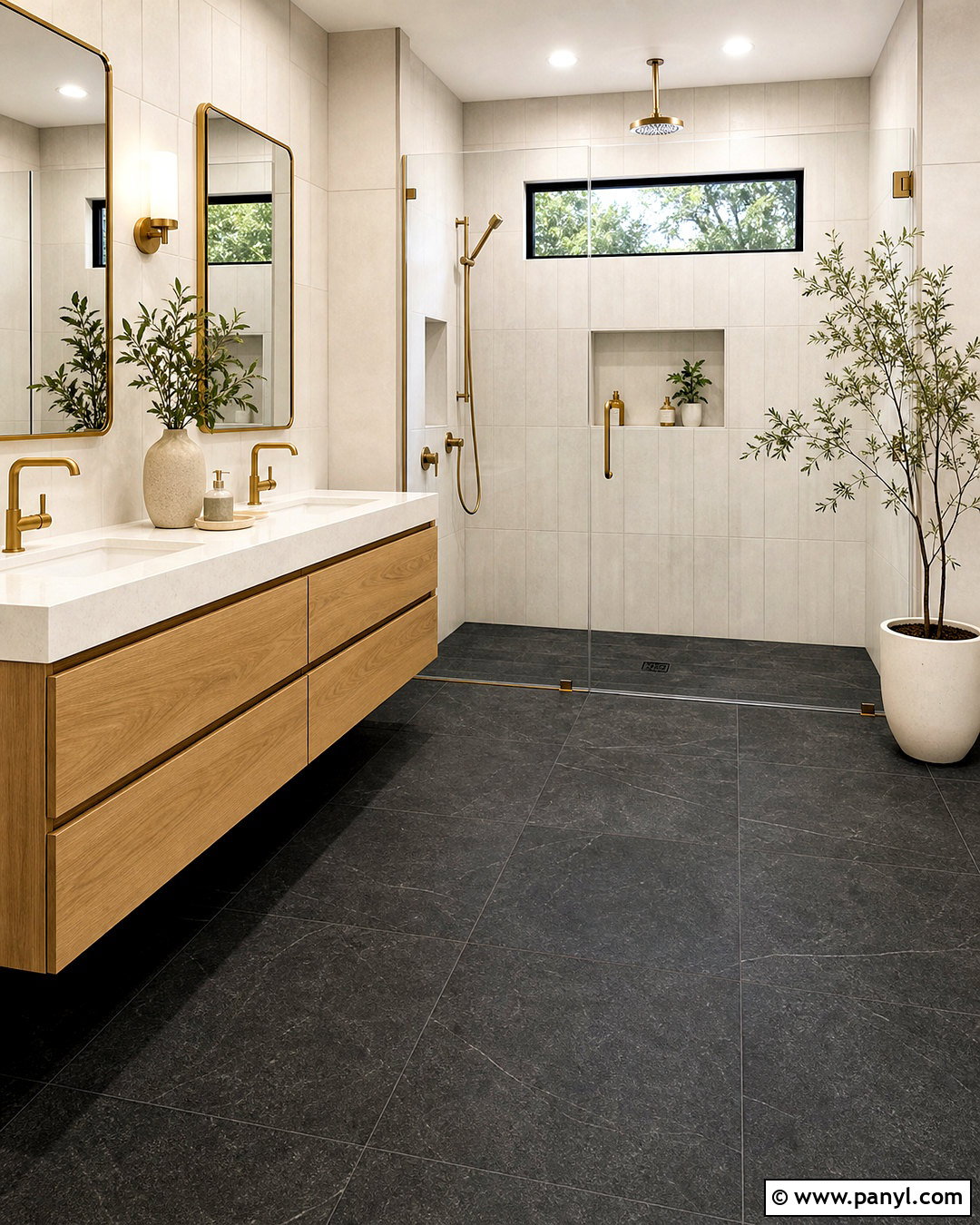
A charcoal floor can create dramatic contrast in a bright contemporary bathroom without making the space feel gloomy. Choose large matte porcelain tiles with faint graphite movement and continue them across the main floor and into a curbless shower. Use dark grout to preserve the solid visual field. Balance the floor with warm white wall tile, a floating white oak vanity, and a pale quartz countertop. Brushed brass fixtures and a frameless mirror will introduce warmth and reflection. Add recessed lighting, bright vanity sconces, and a clear glass shower enclosure so every corner stays illuminated. Keep towels white or sand-colored and avoid additional dark wall finishes. Confirm the selected tile provides appropriate traction when wet, particularly when the same material continues through the shower area.
17. Polished Marble Floor Tile
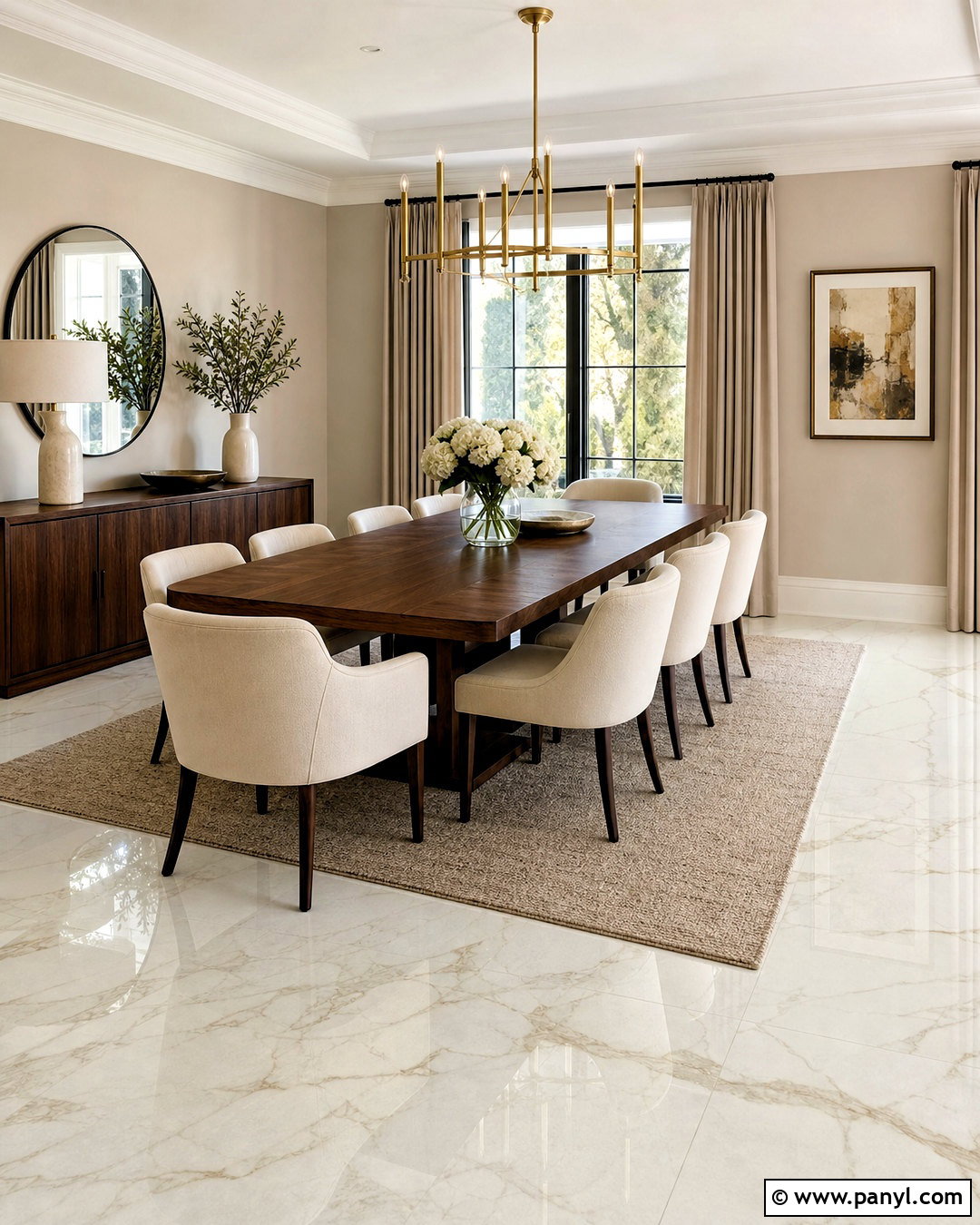
A polished marble-look floor can suit a formal dining room when reflection and pattern are carefully controlled. Select large porcelain tiles with a creamy white background and restrained warm gray veining. Set them in a straight grid with very narrow, color-matched grout lines. Pair the gleaming floor with a matte walnut dining table, curved oatmeal chairs, and a brushed brass chandelier. Soft greige walls and full-length linen curtains will reduce the room’s hardness and improve balance. Avoid glossy cabinetry or mirrored furniture because too many reflective surfaces can make the design feel excessive. Include a simple wool rug beneath the table if you want additional warmth and sound absorption. Check slip ratings and maintenance instructions before using a polished product in entrances, kitchens, bathrooms, or other potentially wet areas.
18. Matte Textured Floor Tile
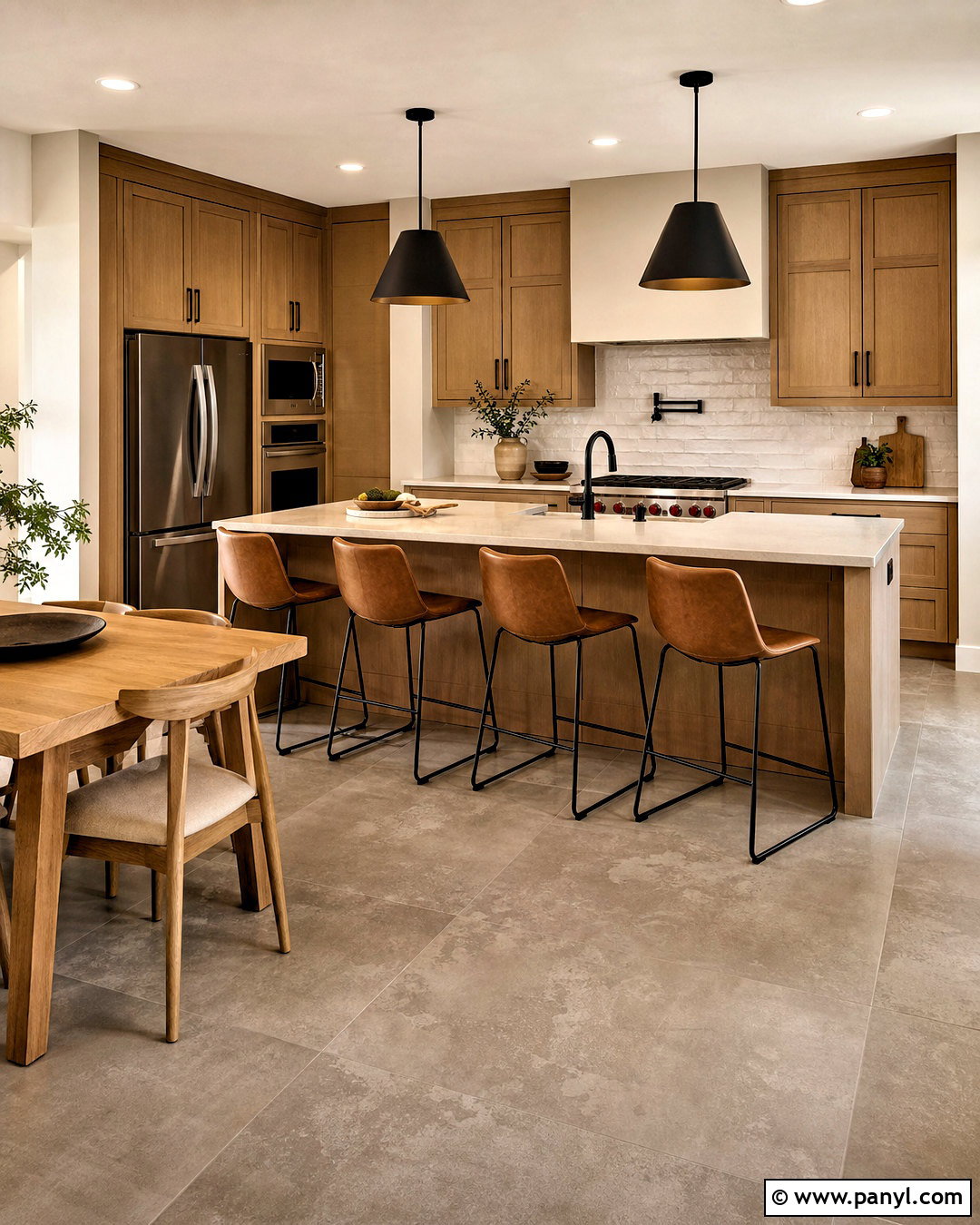
Matte textured tile creates a grounded, practical base for a modern family kitchen. Choose large porcelain squares in warm mushroom gray with a fine stone texture that is visible but comfortable underfoot. Combine the floor with flat-panel oak cabinets, a cream quartz island, and a handmade-looking off-white backsplash. Black pendant lights and dark bronze cabinet pulls add structure, while camel leather stools bring richer warmth. Continue the same flooring into the adjoining breakfast area to make both zones feel connected. Select matching grout and avoid deep surface grooves that could trap kitchen debris. A washable runner near the sink can provide softness without covering the overall design. Finish with a round oak table, simple upholstered chairs, and restrained countertop decor for an inviting, uncluttered room.
19. Indoor Outdoor Floor Tile
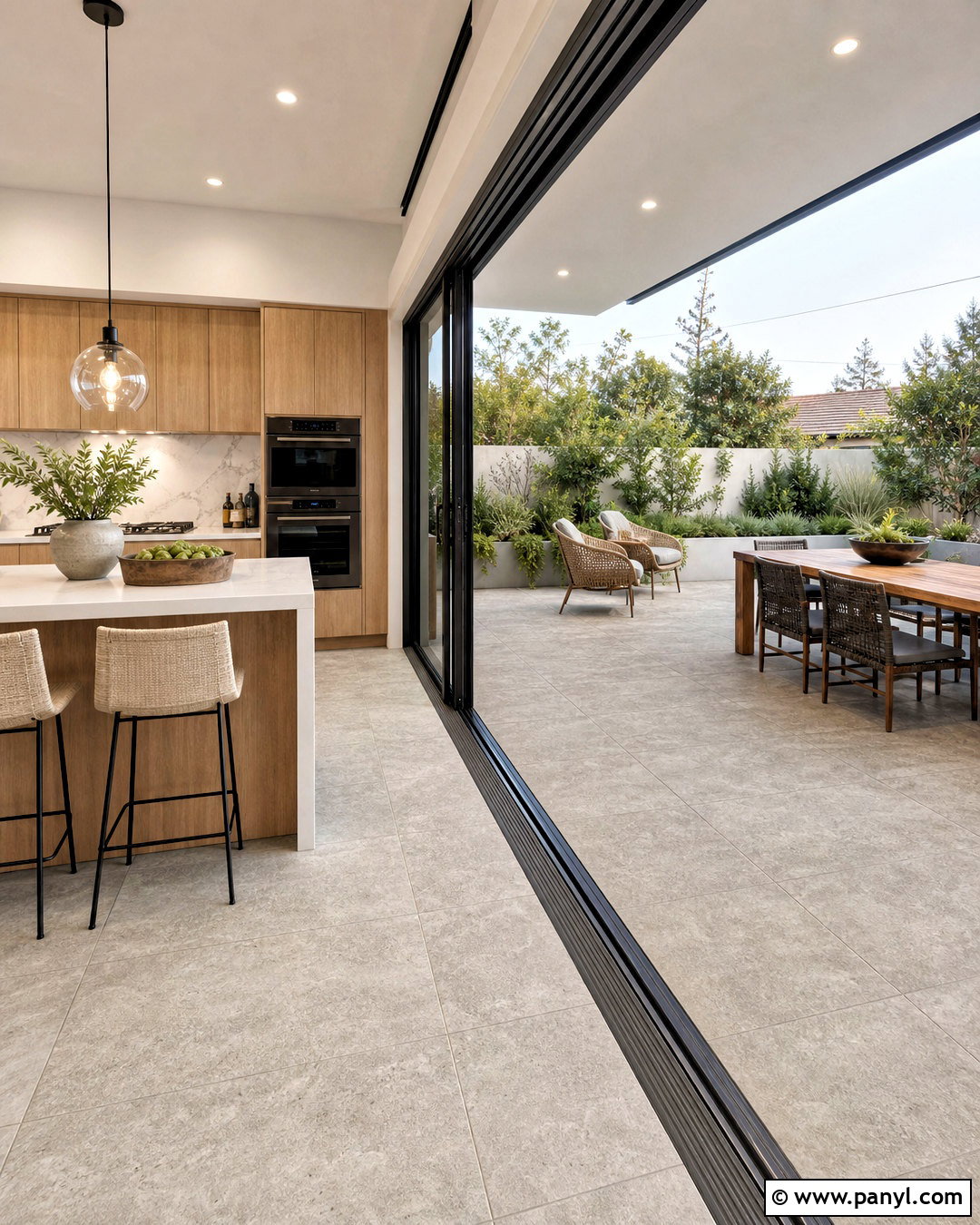
Matching indoor and outdoor porcelain tile can visually extend a kitchen into a patio. Choose a warm gray stone-look product offered in an interior finish and a more textured exterior version. Use large square tiles in both zones, maintaining aligned grout lines across wide sliding glass doors. Inside, pair the floor with white oak cabinets, warm white counters, and black-framed glazing. Outside, add a cedar dining table, woven lounge chairs, built-in planters, and layered ornamental grasses. Keep the threshold as visually minimal as local construction requirements allow. The exterior tile must be rated for the climate, moisture, and freeze conditions in your area. With consistent color and scale, the two spaces will read as one connected entertaining area while still using finishes suited to their different environments.
20. Mosaic Border Floor Tile
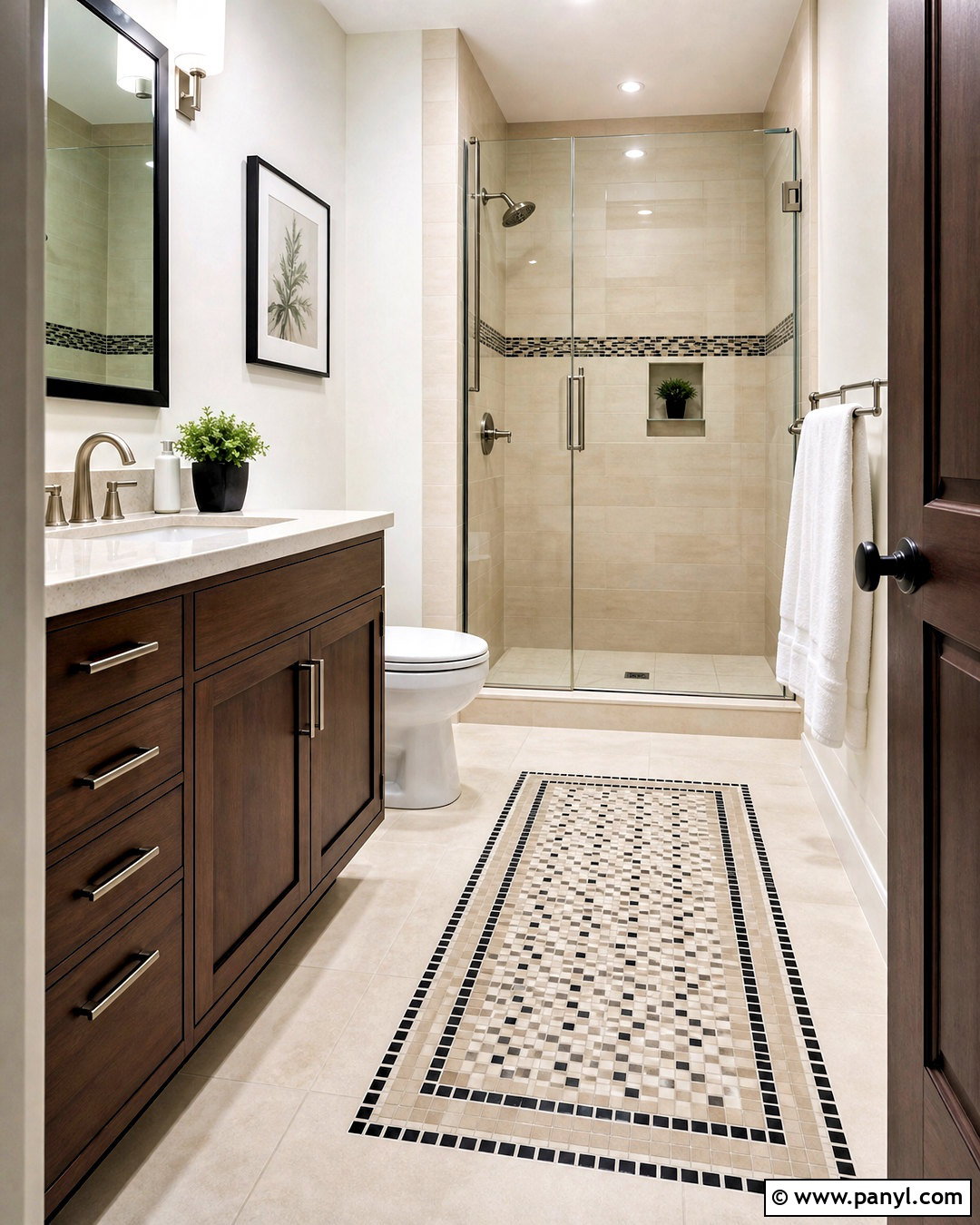
A mosaic border can make a plain tile floor feel customized without overwhelming the entire room. Begin with large warm white porcelain tiles in a compact primary bathroom. Frame the central floor with a narrow band of small black, beige, and white mosaic pieces, creating the effect of a tailored tile rug. Align the border with the vanity, tub, and main doorway instead of following irregular wall edges. Complete the room with a walnut vanity, cream shower tile, brushed nickel fixtures, and a simple black-framed mirror. Keep textiles solid and artwork minimal so the border remains readable. Careful measurements are essential because uneven corner cuts will be noticeable. Ask the installer to dry-lay the full composition before setting tile, especially around floor vents and angled transitions.
Conclusion:
Thoughtful flooring can connect every material in a room while supporting the way the space is used. These 20 floor tile design modern ideas include quiet neutral foundations, expressive patterns, warm natural finishes, and practical indoor-outdoor solutions. Before ordering, compare full-size samples under daytime and evening lighting. Confirm slip resistance, cleaning requirements, grout width, and installation needs for your chosen room. It is also wise to test the tile beside cabinetry, paint, counters, and nearby flooring. Larger formats can create visual continuity, while checkerboard, herringbone, mosaics, and geometric patterns add structure in controlled areas. Choose one strong flooring direction, repeat its colors elsewhere, and allow the finished tile design to feel intentional rather than overly decorated.

Related Ideas and Inspiration:
Leave a Reply