
A painted feature wall can change the mood, proportions, and purpose of a room without requiring a full renovation. These 20 paint design accent wall ideas go beyond one solid color. They use arches, stripes, murals, geometric shapes, and layered color to create complete spaces that feel intentional. The best design connects with the furniture, flooring, lighting, and decor already in the room. It should also highlight a natural focal point, such as a bed, sofa, desk, fireplace, or dining table. Before painting, test your colors in morning and evening light. Then measure carefully and plan the placement around furnishings. Whether you prefer soft neutrals or energetic color, explore these 20 paint design accent wall ideas for a look you can recreate.

1. Geometric Accent Wall
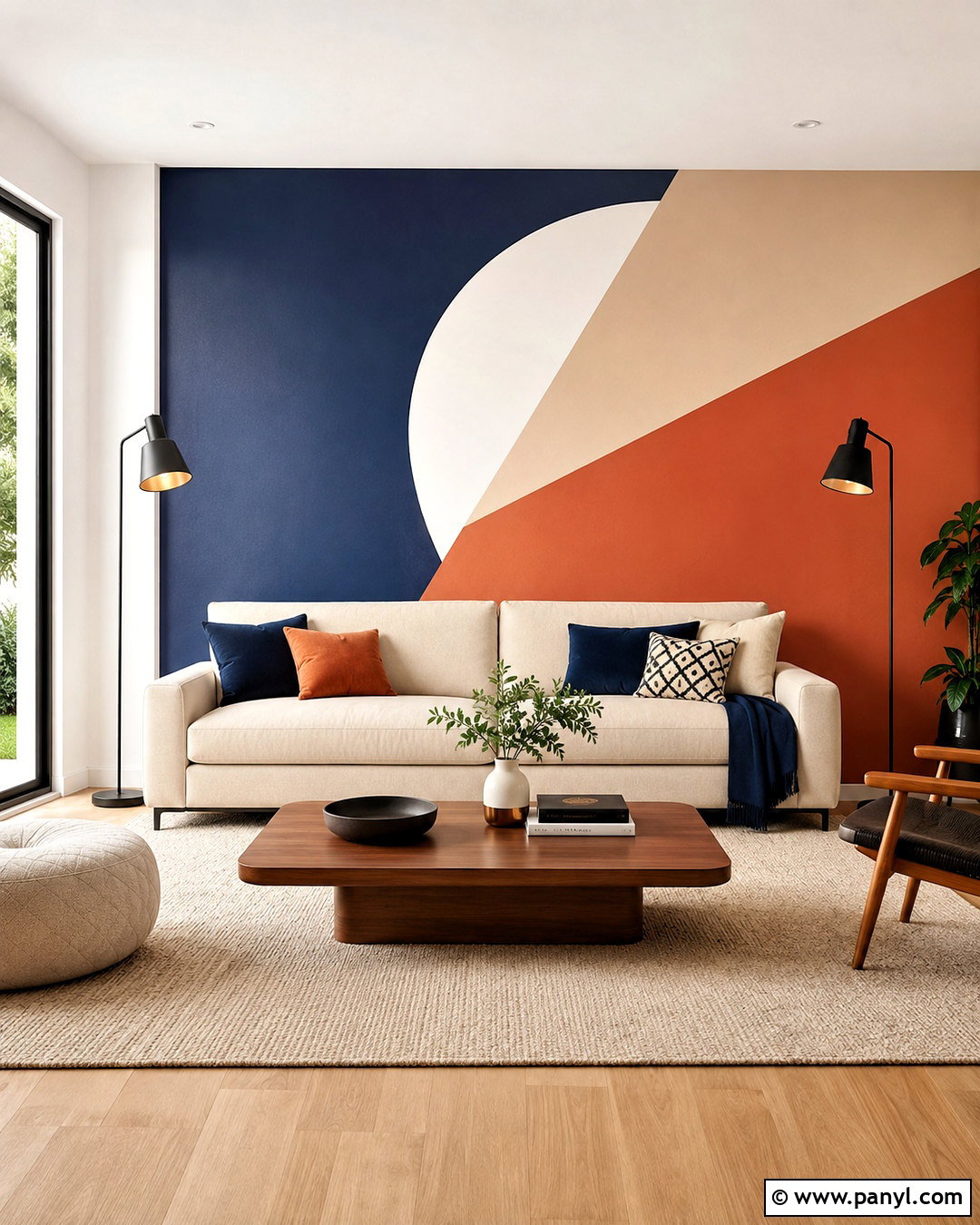
A geometric accent wall can give a plain living room a strong focal point while keeping the layout clean and functional. Start with a warm white base, then add oversized shapes in muted navy, terracotta, and soft beige. Position the largest shape behind the sofa so the pattern visually anchors the seating area. Use a simple cream sofa, a walnut coffee table, and a textured neutral rug to balance the sharper lines. Black floor lamps and slim picture frames can repeat the graphic effect without making the room feel busy. Keep the geometric pattern asymmetrical but limit it to three or four colors. Carefully measured painter’s tape will create cleaner edges and help the finished wall look polished rather than improvised.
2. Painted Arch Accent Wall
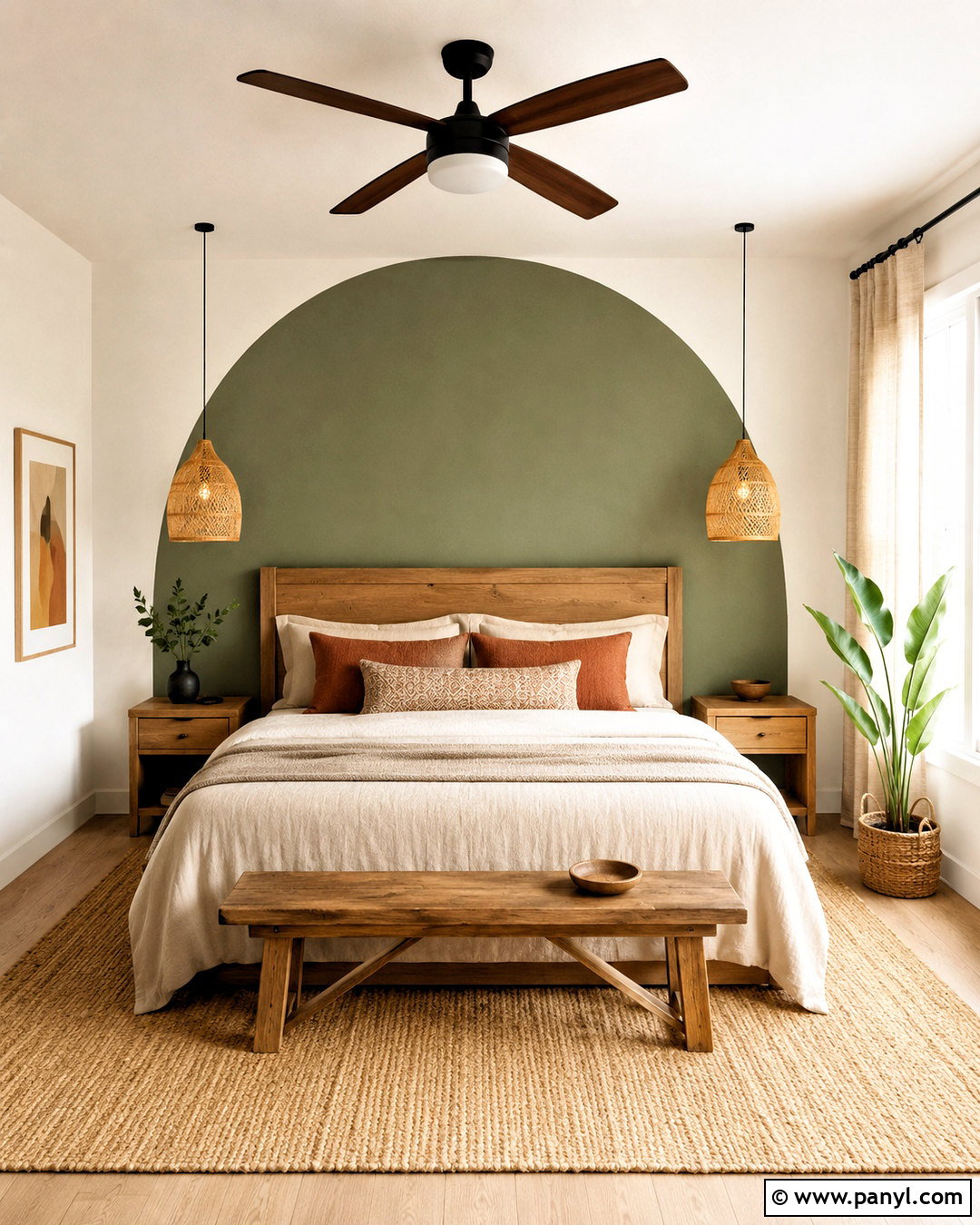
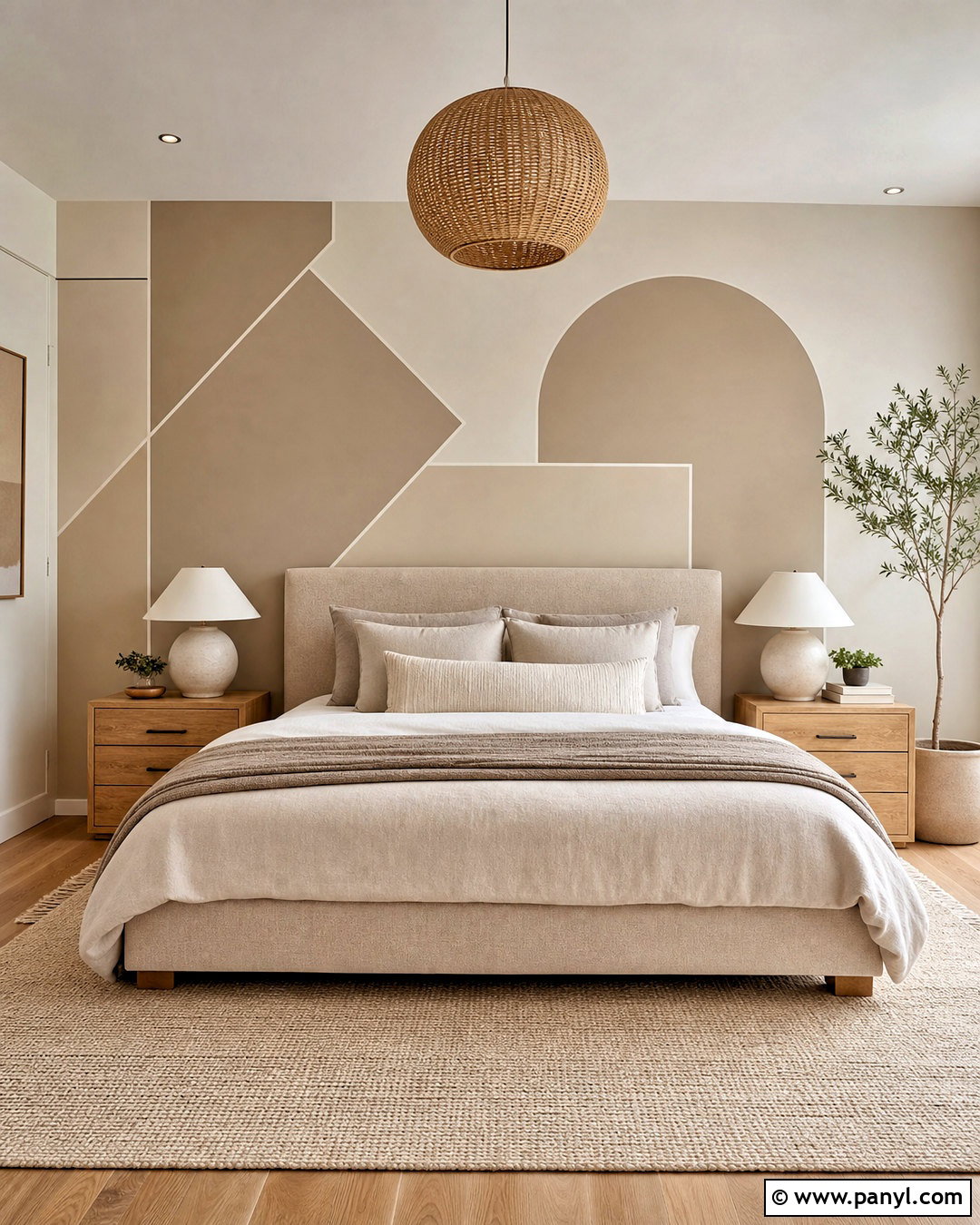
A painted arch creates the appearance of architecture without adding molding or changing the wall structure. In a bedroom, place a wide warm sage green arch directly behind a natural oak headboard. Make it slightly wider than the bed and extend the sides toward the nightstands. Soft white walls, oatmeal bedding, and woven pendant lights keep the room calm and balanced. Add rust-colored pillows and a small olive branch arrangement for gentle contrast. A matte paint finish gives the arch a soft, modern appearance and reduces distracting reflections. Use a pencil, string, and level to outline the curve before painting. The finished design frames the bed, connects the furniture visually, and turns an ordinary wall into a clear focal point.
3. Ombre Accent Wall
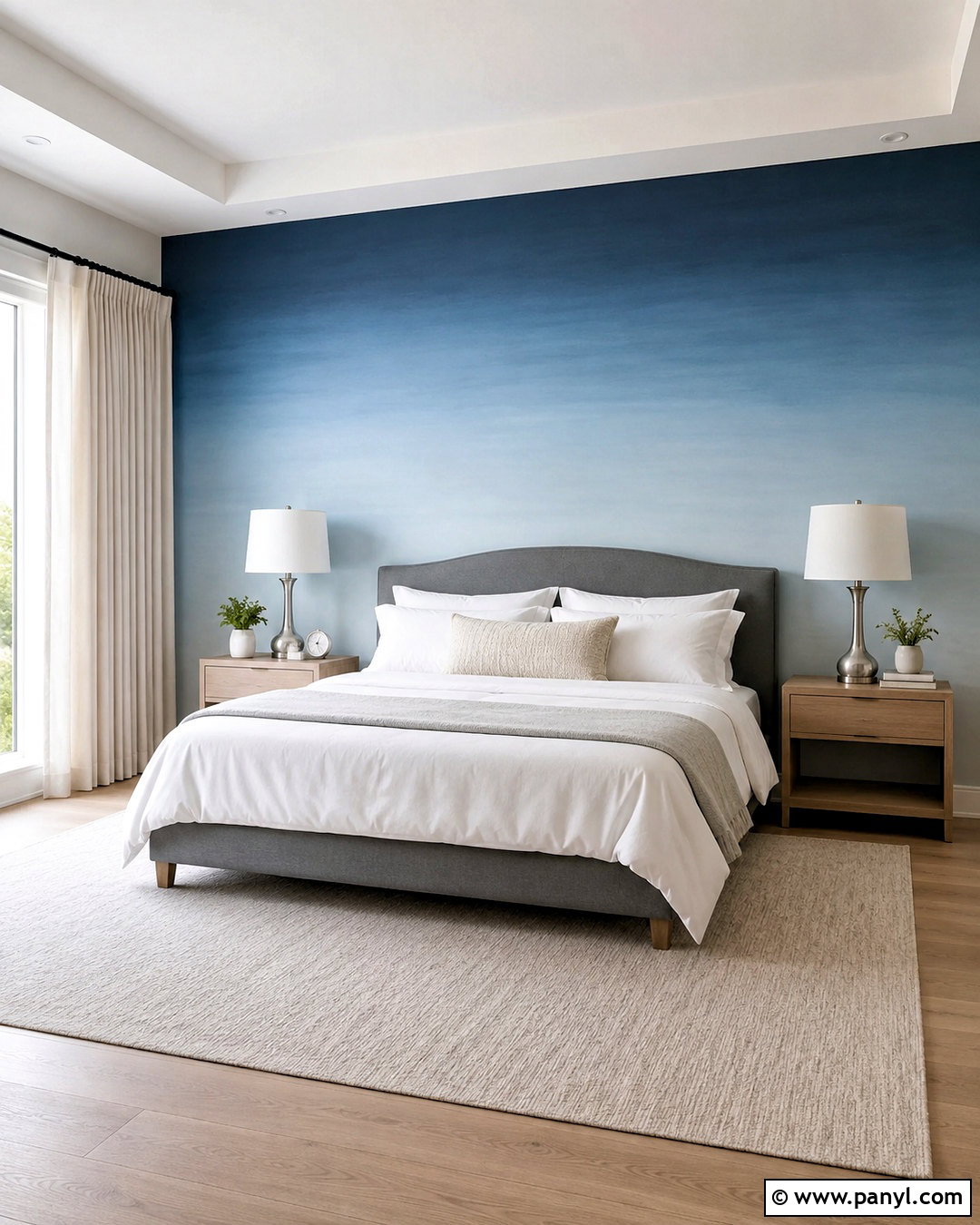
An ombre accent wall brings gradual color and soft movement into a room. For a relaxing bedroom, blend deep dusty blue near the floor into medium blue and pale sky blue toward the ceiling. The lighter upper section helps the wall feel open, while the darker base grounds the bed and nightstands. Pair the wall with a low gray upholstered bed, white linen bedding, pale oak furniture, and brushed nickel lighting. Keep artwork minimal so the blended finish remains visible. Work in horizontal sections while the paint is still wet, using a clean brush or sponge to soften the transitions. Slight variation is part of the look, so the wall does not need to appear perfectly uniform or mechanically finished.
4. Vertical Stripe Accent Wall
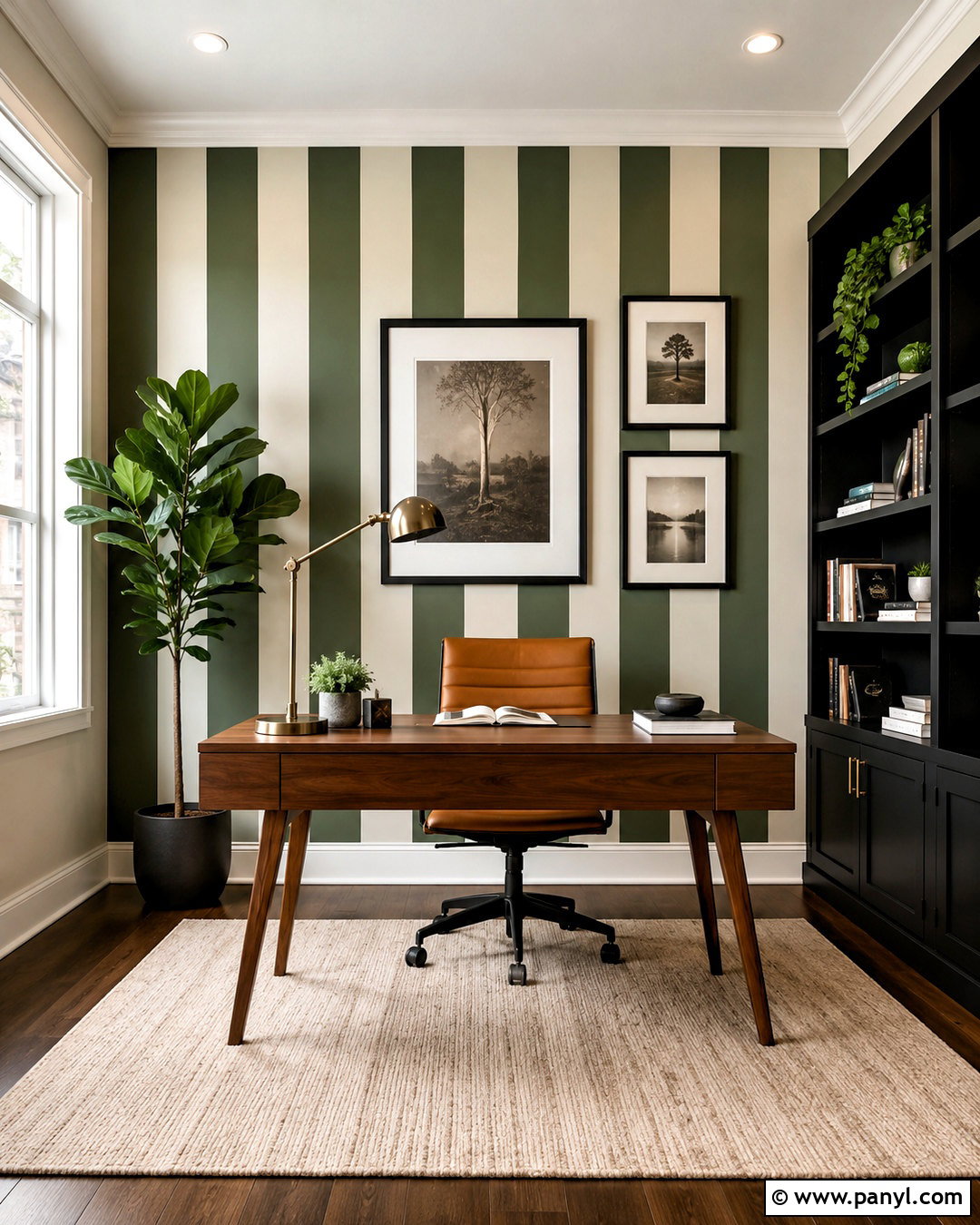
Vertical stripes can bring order and height to a small home office. Paint the desk wall with alternating wide stripes in soft cream and muted forest green. A walnut desk, camel leather chair, and matte black shelves give the room a grounded, professional look. Keep the stripes equal in width for a tailored effect, and continue them from the baseboard to the ceiling. Choose colors with moderate contrast so the pattern remains comfortable during long work sessions. A simple brass task lamp and a few framed prints can complete the wall without covering too much of it. Measure from one corner, use a level for every taped line, and seal the tape edges with the base color before adding green paint.
5. Horizontal Stripe Accent Wall
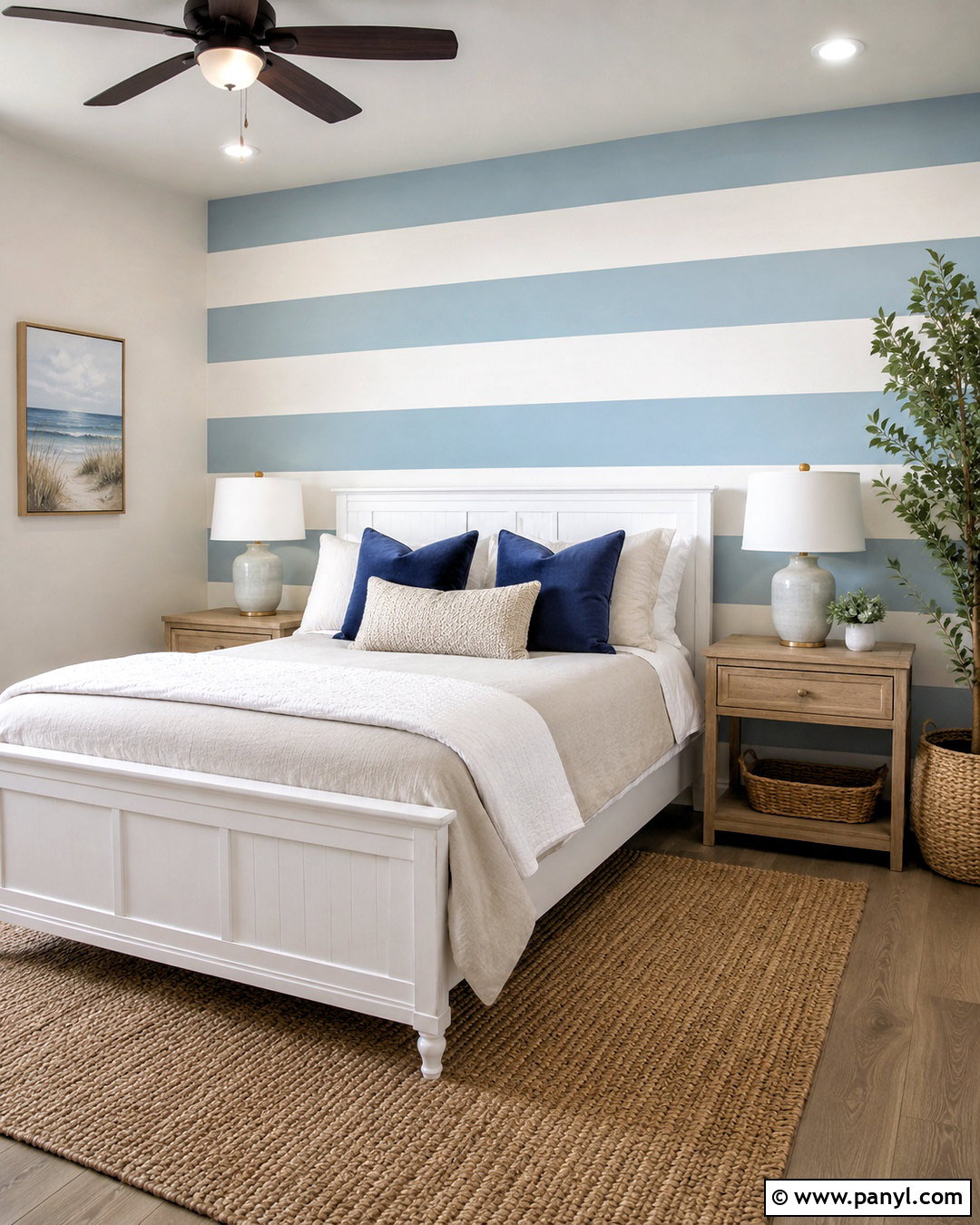
Wide horizontal stripes can make a narrow room feel broader and more relaxed. In a coastal guest bedroom, alternate soft white and muted blue-gray bands across the wall behind the bed. Three or four broad stripes look cleaner than many narrow lines. Add a white wood bed, pale linen bedding, light oak nightstands, and natural woven baskets. Navy pillows provide deeper contrast, while simple ceramic lamps keep the space casual. Align one stripe with the top of the headboard to connect the pattern with the furniture. Use an eggshell finish for a subtle glow that remains easy to maintain. Crisp spacing and a restrained palette will make the wall feel architectural rather than playful or overly themed.
6. Color Block Accent Wall
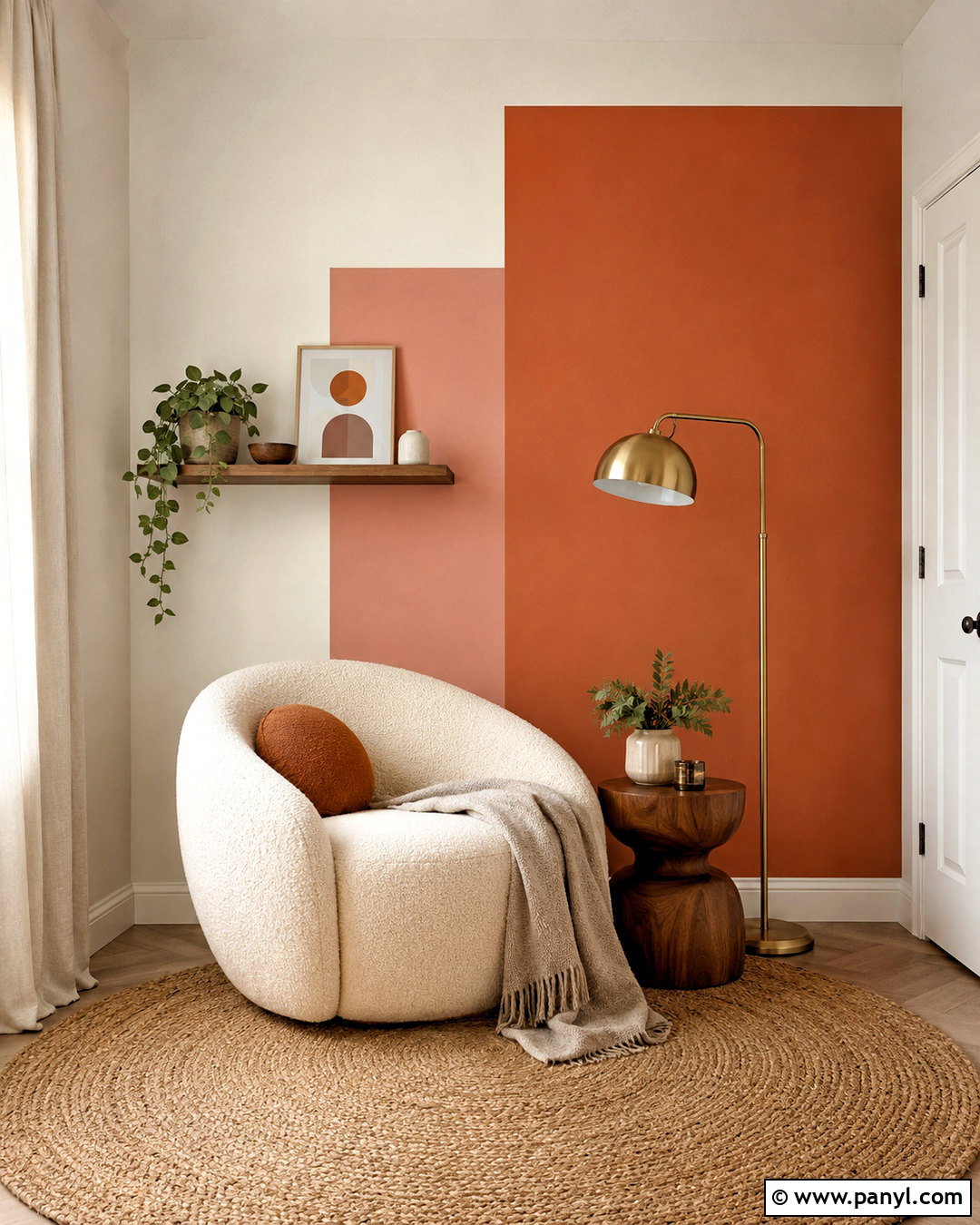
Color blocking can define separate functions within an open room. Behind a reading corner, paint a large terracotta rectangle that begins at the floor and extends above a curved cream chair. Add a smaller dusty pink block beside it to frame a slim brass floor lamp and floating shelf. Keep the remaining wall warm white so the shapes have room to breathe. A round jute rug, walnut side table, and rust-and-cream cushion connect the colors throughout the corner. The painted blocks should relate directly to the furniture placement instead of floating randomly. Use a laser level or carefully marked tape to keep the lines straight. This complete arrangement creates a purposeful retreat without constructing a physical divider.
7. Diagonal Accent Wall
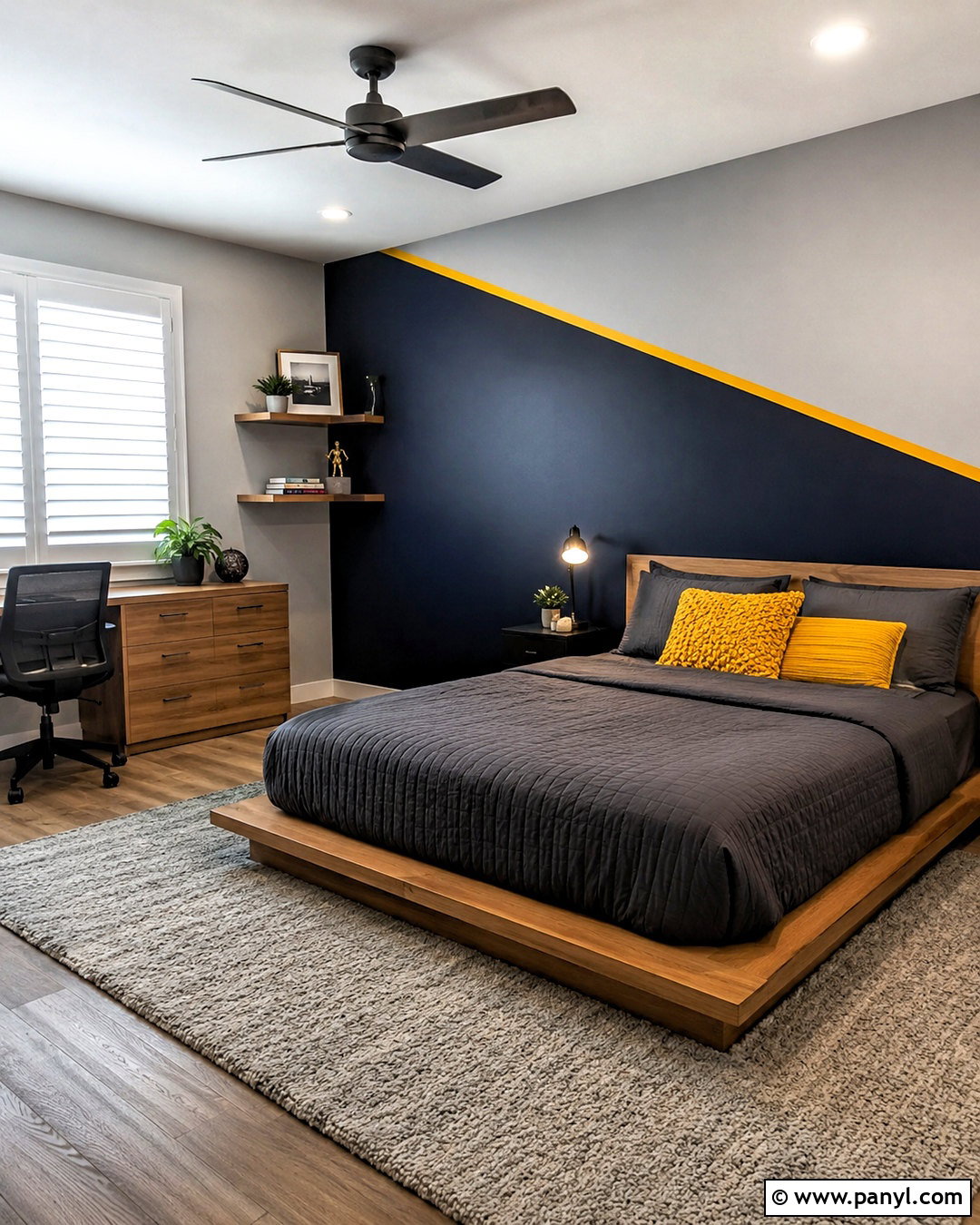
A diagonal accent wall introduces energy while helping a compact room feel less boxy. In a modern teen bedroom, divide the wall behind the bed with one strong diagonal line. Paint the lower section deep navy and the upper section soft gray, then add a narrow mustard stripe along the division. Use a simple oak platform bed, charcoal bedding, and a light gray rug to support the palette. Mustard pillows and a matching desk chair repeat the smallest color in measured amounts. Keep posters or artwork on the quieter gray section so they remain easy to see. Plan the diagonal around outlets, windows, and furniture before taping. A clean, uninterrupted angle will make the overall design look deliberate.
8. Checkerboard Accent Wall
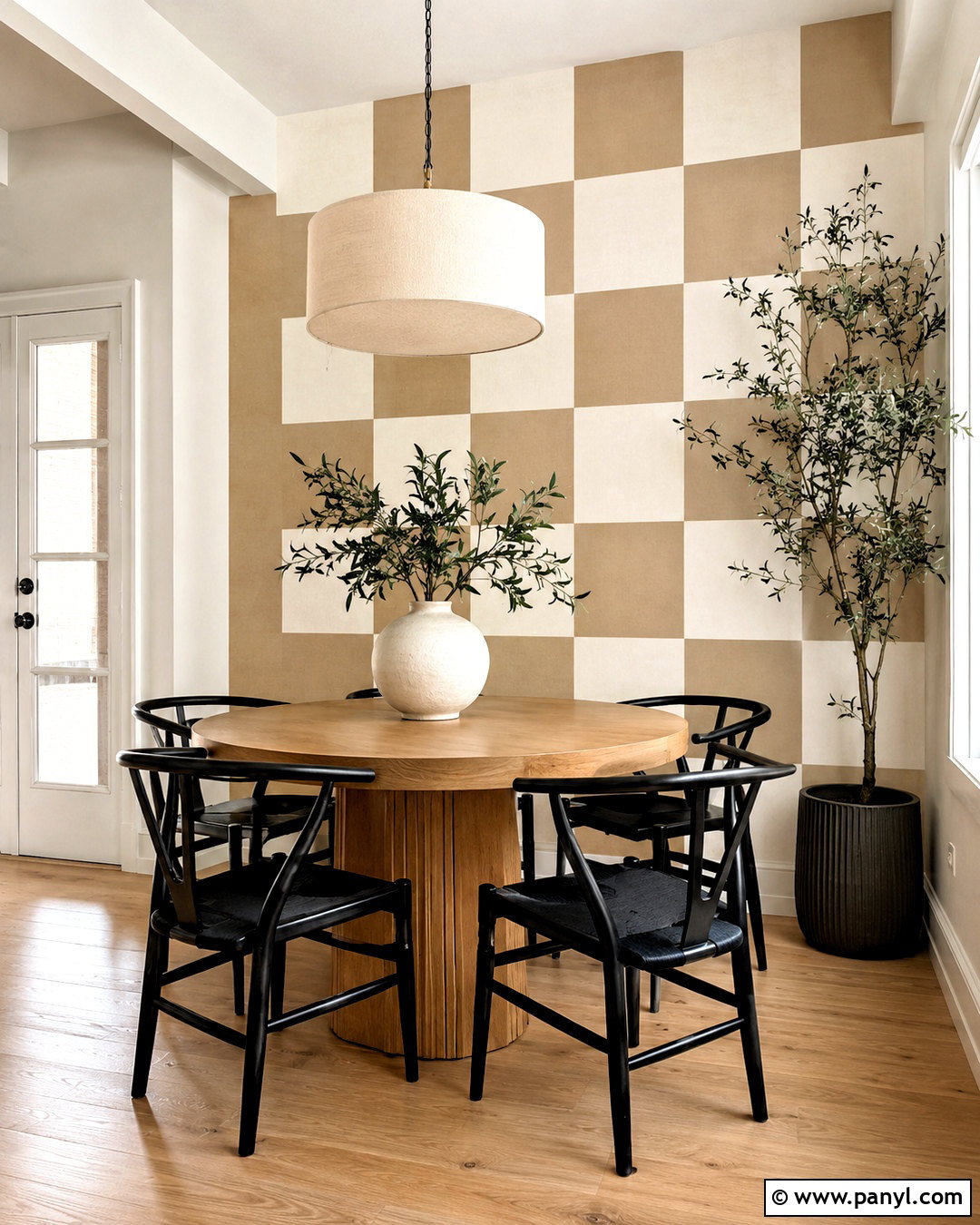
A checkerboard accent wall can feel sophisticated when the colors are soft and the furniture is simple. In a breakfast nook, use large squares of warm beige and creamy white rather than harsh black and white. Center a round oak table against the painted wall and surround it with curved black dining chairs. A linen pendant light, ceramic vase, and small indoor tree add natural texture. Make each painted square large enough to read clearly from across the room. Begin with the lighter base color, then measure and tape alternating blocks for the darker shade. Keeping the remaining walls white and the flooring neutral prevents the pattern from overwhelming the nook. The complete look feels graphic, comfortable, and suitable for everyday dining.
9. Scalloped Accent Wall
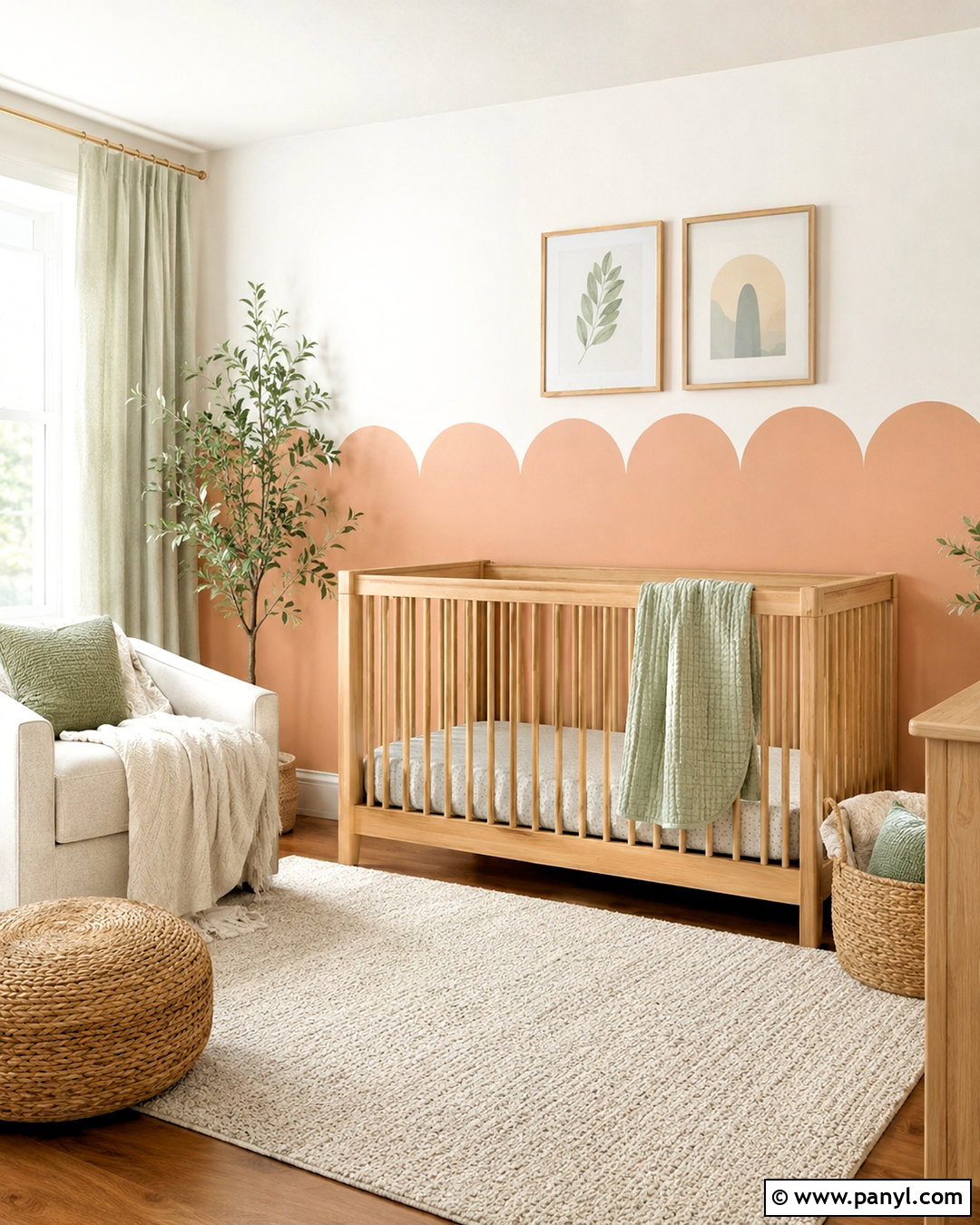
Soft scallops give a nursery or child’s bedroom a cheerful painted detail without covering the entire wall. Paint the lower two-thirds in muted peach, then create an even row of rounded scallops where the color meets the warm white upper wall. Place a natural wood crib or bed against the design and add a cream rug, woven storage baskets, and pale green textiles. Small animal prints in light oak frames can hang above the scalloped edge. Keep the curves broad and consistent so the wall feels calm rather than overly decorative. Trace a round template along a level guideline before painting. This approach combines a two-tone wall with a gentle pattern, producing a complete room that can adapt as the child grows.
10. Mountain Mural Accent Wall
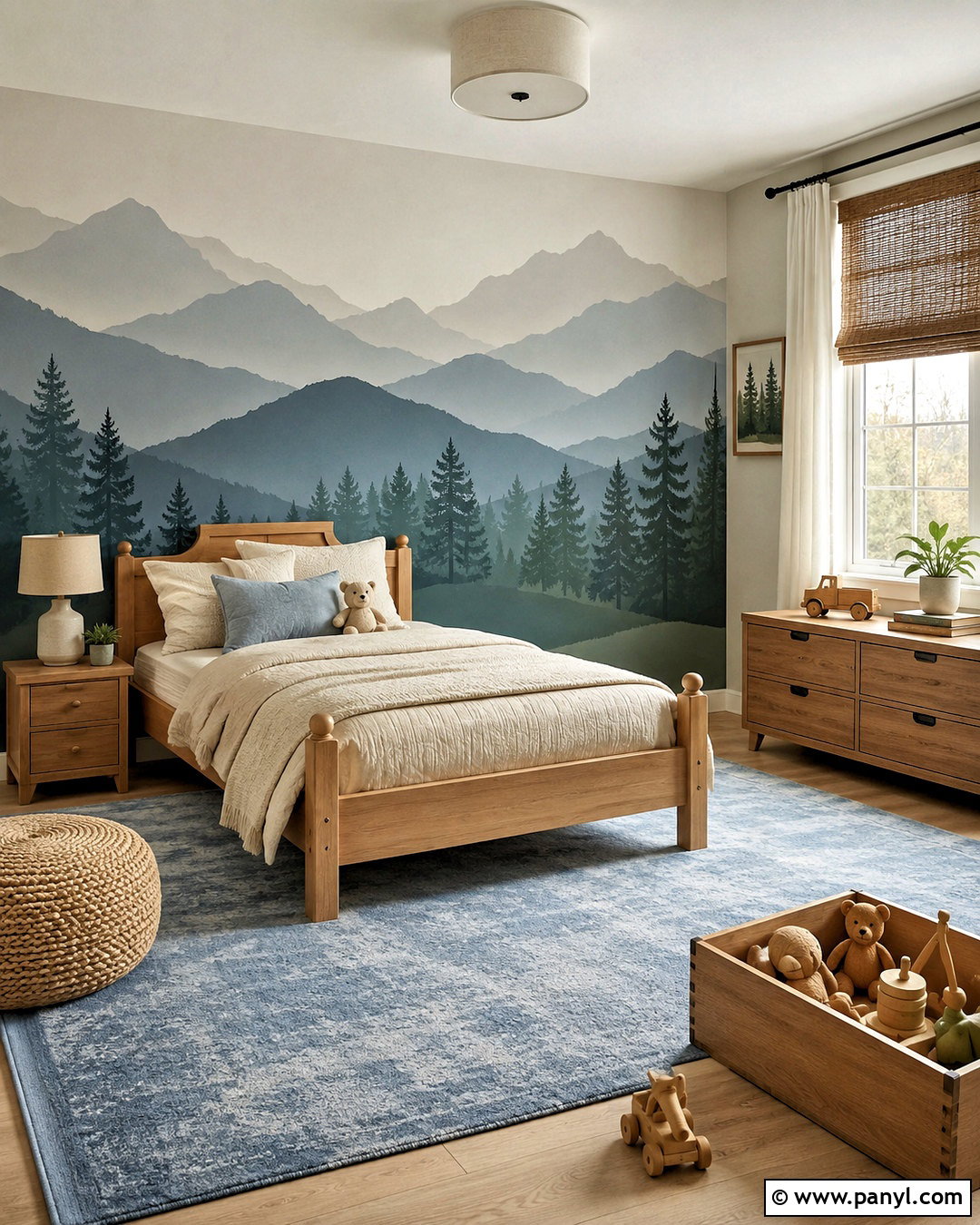
A painted mountain mural can turn a child’s room into an imaginative but restful space. Layer simple mountain silhouettes behind the bed using warm gray, muted blue, and dusty green. Keep the distant peaks lighter and the foreground shapes darker to create depth. Pair the mural with a light oak bed, solid cream bedding, and a soft blue rug. A canvas tent, wooden toys, and woven shades continue the nature-inspired theme without making the room feel crowded. Use broad, uncomplicated mountain forms rather than tiny details that are difficult to paint. Painter’s tape can create crisp peaks, while slightly irregular brushwork softens the scene. Leave the ceiling and surrounding walls white to balance the mural’s stronger visual presence.
11. Botanical Accent Wall
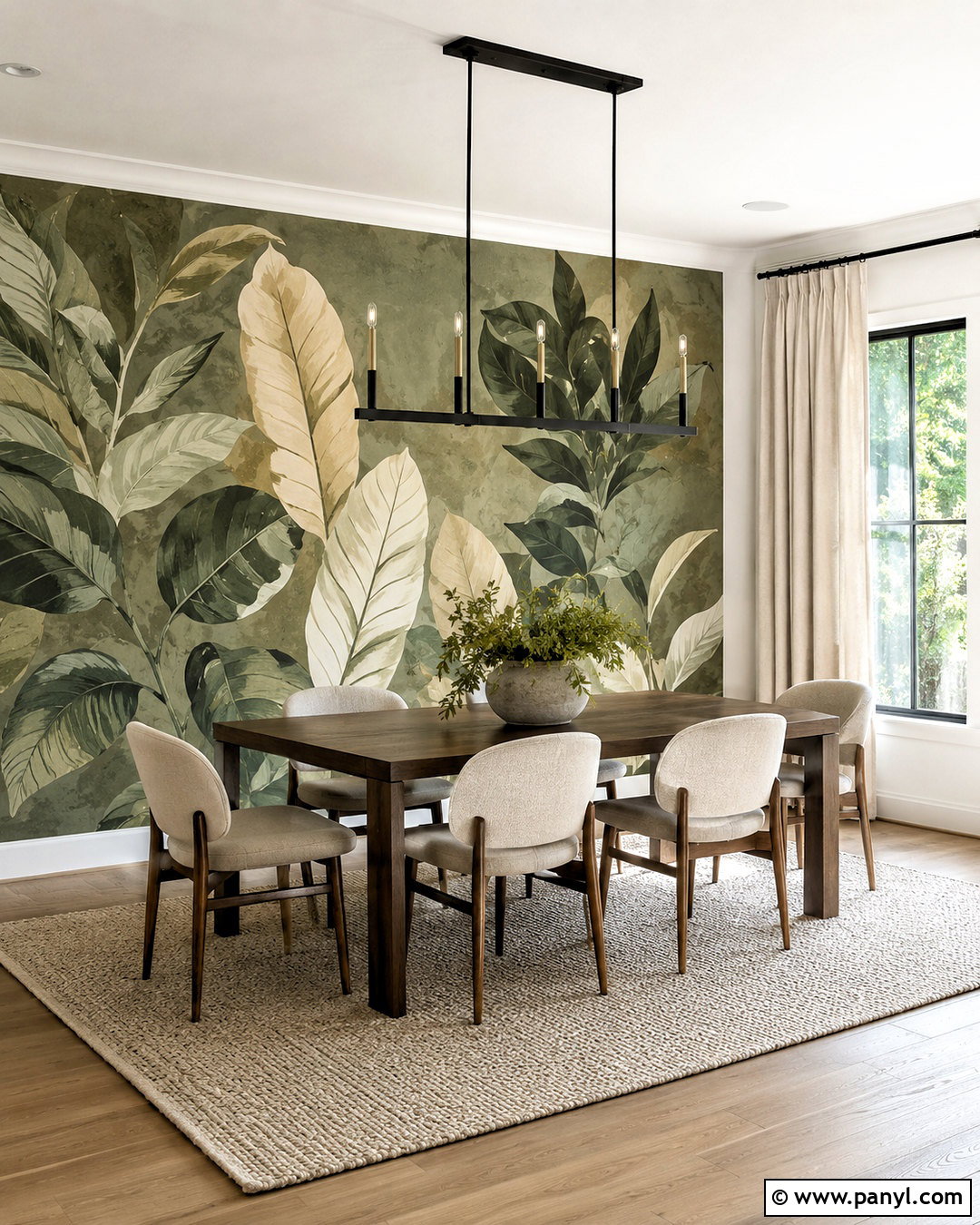
A botanical accent wall brings color and organic movement into a dining room. Begin with a muted olive background, then paint oversized leaves in soft cream, sage, and deep forest green. Arrange the foliage around the edges so the center remains open behind a walnut dining table. Upholstered beige chairs, a black linear chandelier, and linen curtains create a comfortable modern setting. Use simplified leaf shapes rather than highly detailed illustrations for an approachable hand-painted result. Repeat the wall colors through green ceramic dishes and cream textiles, but avoid adding busy patterned upholstery. The finished mural should feel connected to the room’s scale and furniture. Light pencil outlines can guide the composition before the leaves are filled with matte interior paint.
12. Sunburst Accent Wall
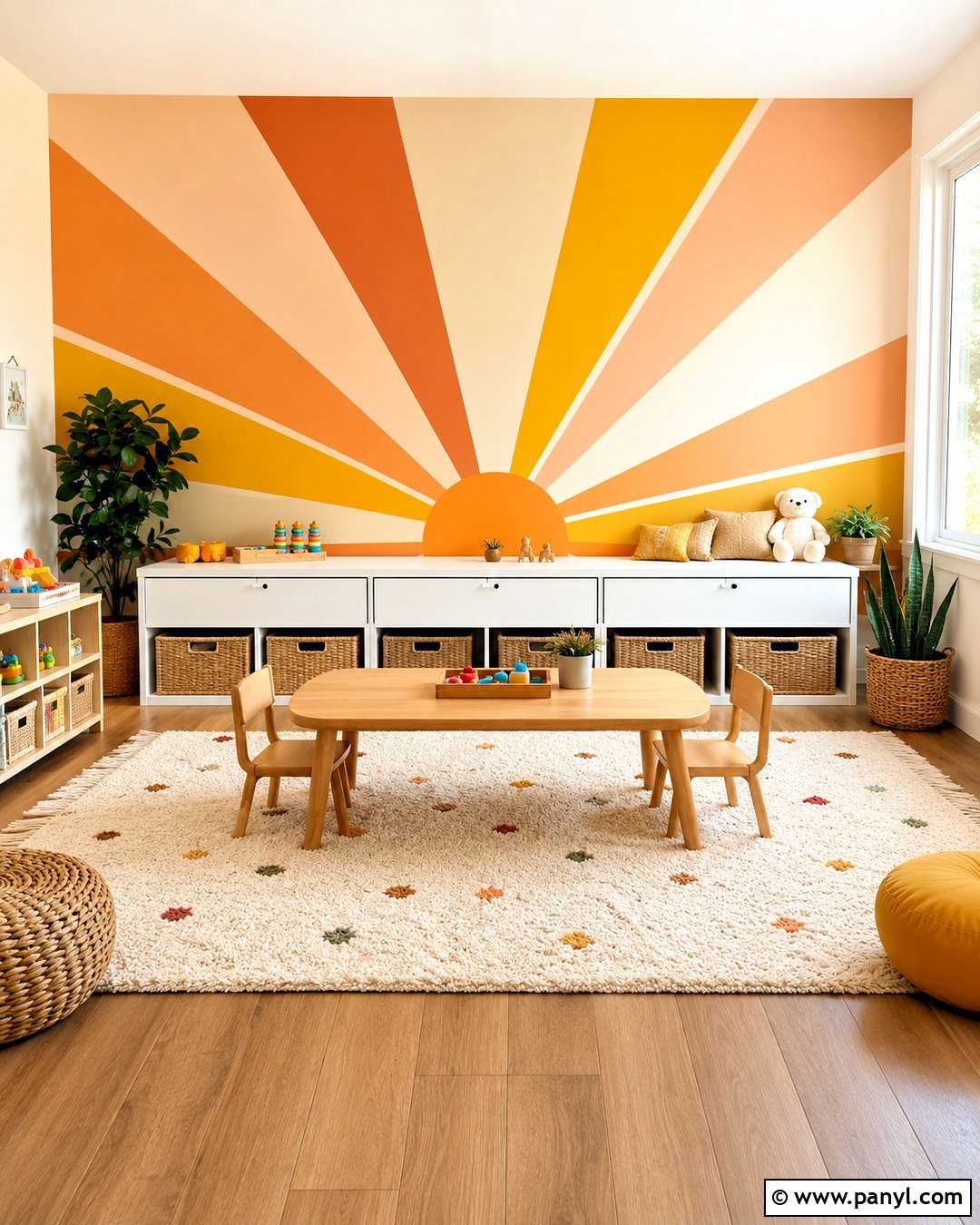
A sunburst accent wall can create a bright focal point in a playroom, creative studio, or cheerful breakfast space. Position the center of the design behind a low cabinet, then extend wide rays across the wall in mustard yellow, terracotta, peach, and warm cream. Use a pale neutral background to separate the colors and keep the pattern readable. Add a simple white storage unit, natural wood table, washable cream rug, and a few solid-color bins that repeat the painted palette. Avoid placing large artwork over the rays because the wall already functions as the main decorative feature. Mark the center point first, then use long strips of painter’s tape to form evenly spaced sections that radiate toward the wall edges.
13. Terrazzo Paint Accent Wall
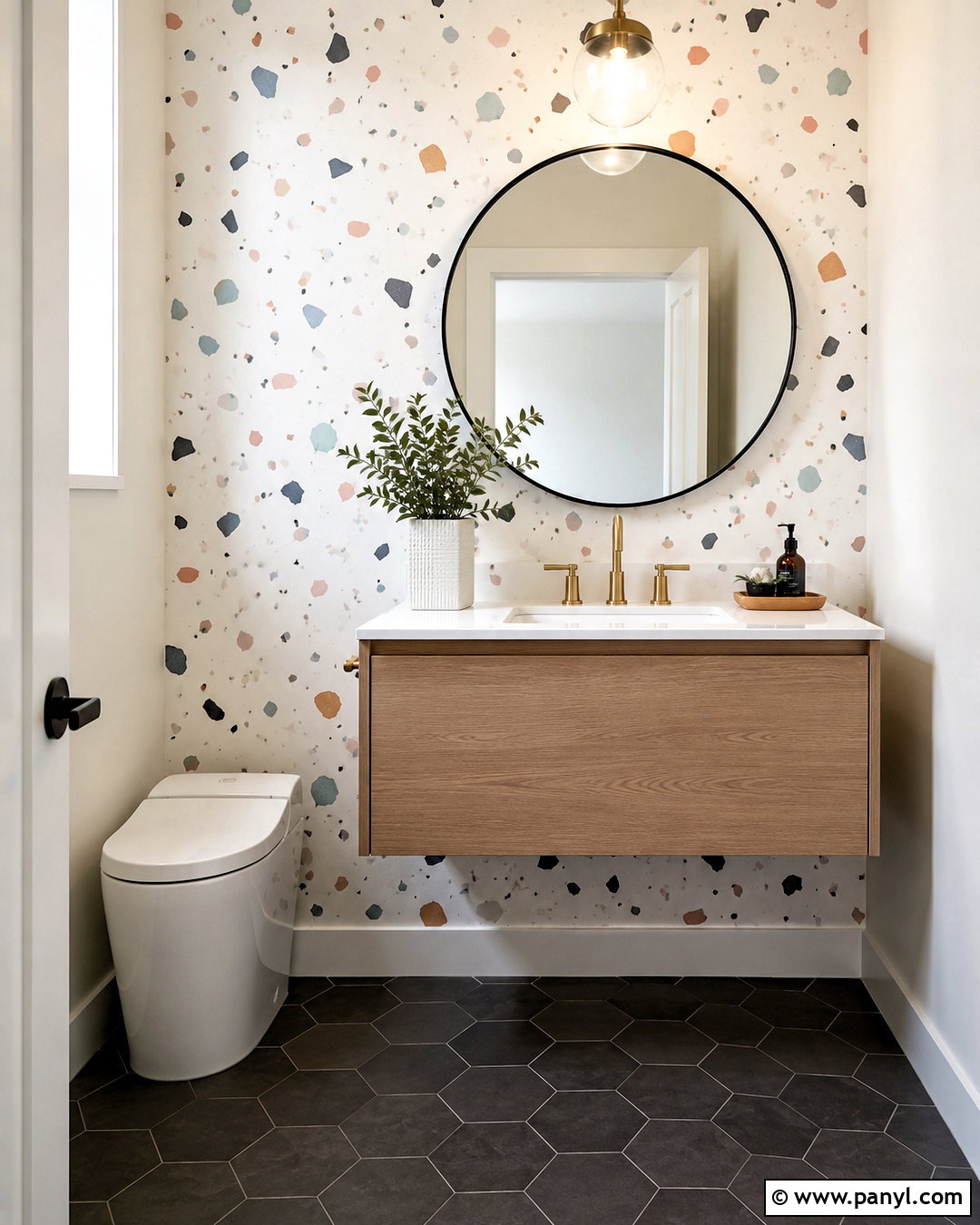
A terrazzo-inspired paint accent wall adds playful pattern without requiring stone or wallpaper. In a compact powder room, use a warm white base and scatter irregular painted chips in dusty blue, clay, sage green, charcoal, and pale blush. Keep the shapes larger around the vanity and smaller near the edges for a balanced composition. A floating oak vanity, round black mirror, white countertop, and brushed brass faucet create a clean foundation. Paint the other walls a quiet cream so the patterned surface remains the focal point. Draw each chip lightly in pencil and vary the angles, but repeat the same limited palette throughout. The result should feel loosely arranged yet coordinated with the fixtures and finishes in the room.
14. Grid Accent Wall
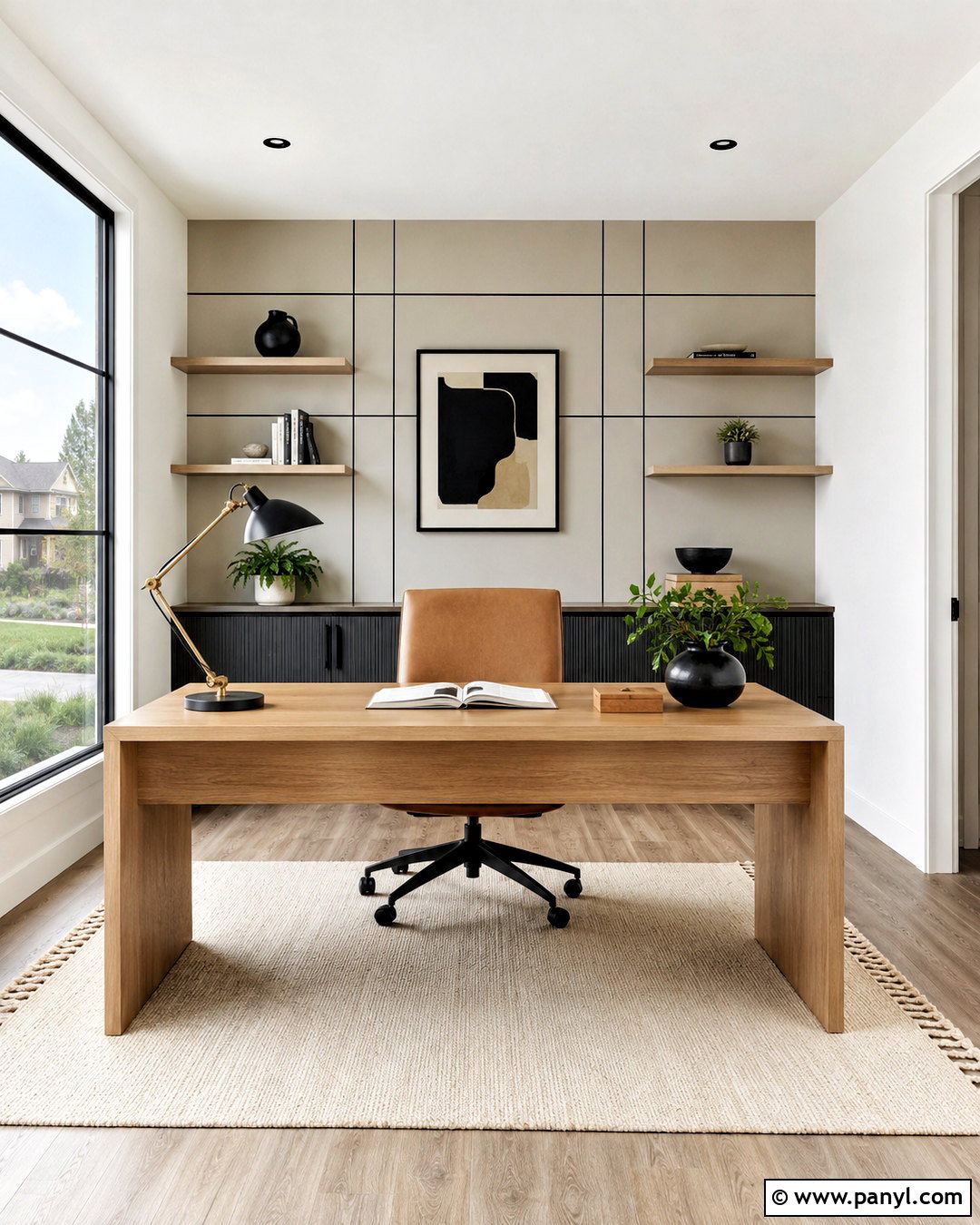
A painted grid gives a home office or modern bedroom a structured, architectural background. Start with a soft greige wall, then add thin matte black horizontal and vertical lines to form large rectangles. Place a light oak desk or low upholstered bed against the pattern, keeping the furniture centered within the grid. Black hardware, a cream rug, and camel-colored textiles soften the graphic design. Use fewer, larger sections instead of a tight grid, which can make an average room feel visually crowded. Measure carefully from the center outward so the pattern remains balanced around corners and furniture. The restrained two-color scheme works especially well in rooms with simple furnishings, clean silhouettes, and warm natural materials that prevent the wall from feeling cold.
15. Half Painted Accent Wall
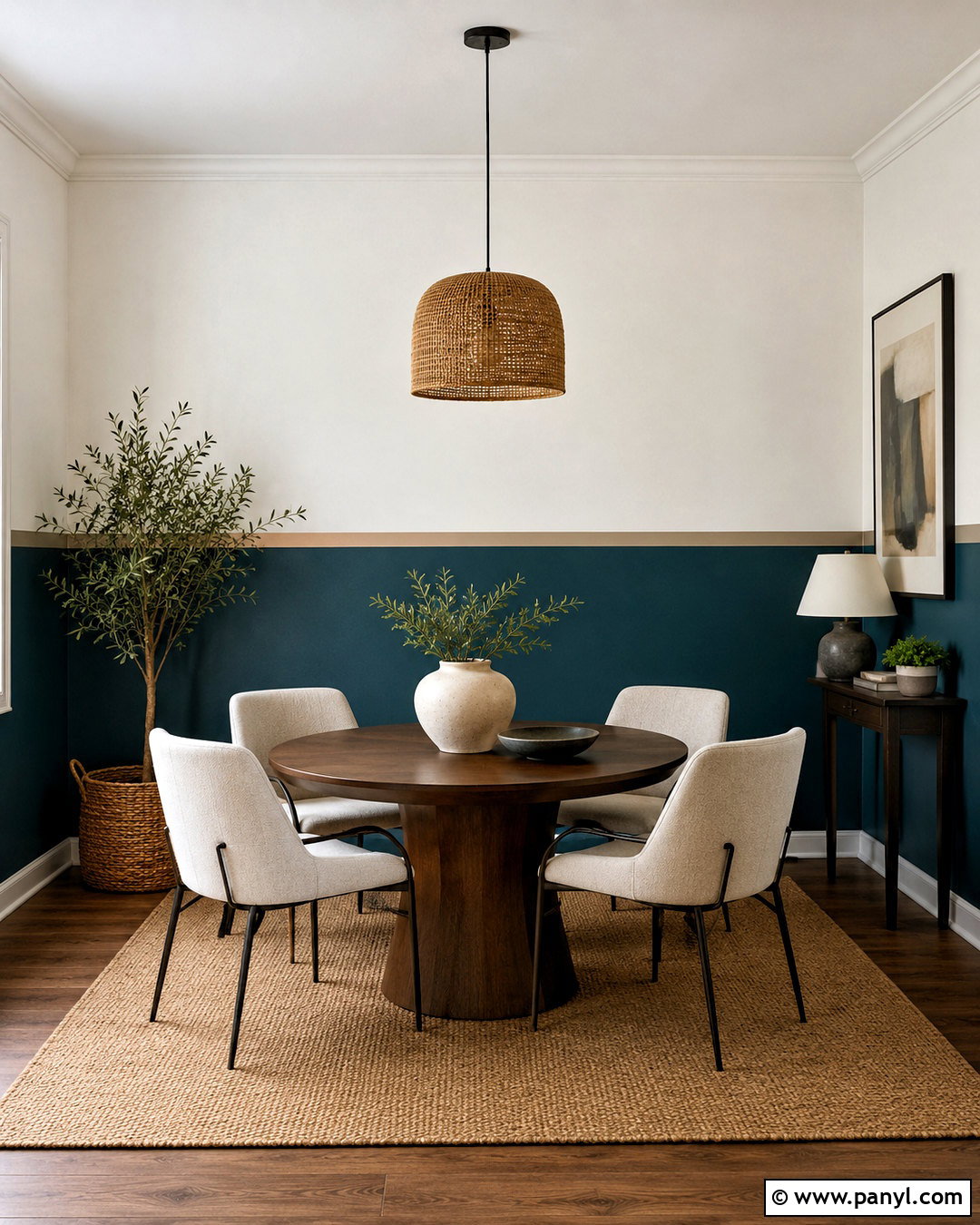
A half painted accent wall offers an easy way to introduce color while keeping a room light. In a small dining area, paint the lower half deep blue-green and leave the upper section warm white. Align the color break slightly above the chair backs, then add a narrow painted line in soft beige for a finished transition. Pair the wall with a round walnut table, cream upholstered chairs, and a woven pendant. Hang artwork entirely within the white section so it remains clear and uncluttered. Repeat the blue-green through a ceramic centerpiece or seat cushions. A carefully leveled dividing line is essential because it runs across the full wall. This design feels grounded, practical, and more detailed than a single solid accent color.
16. Framed Color Block Accent Wall
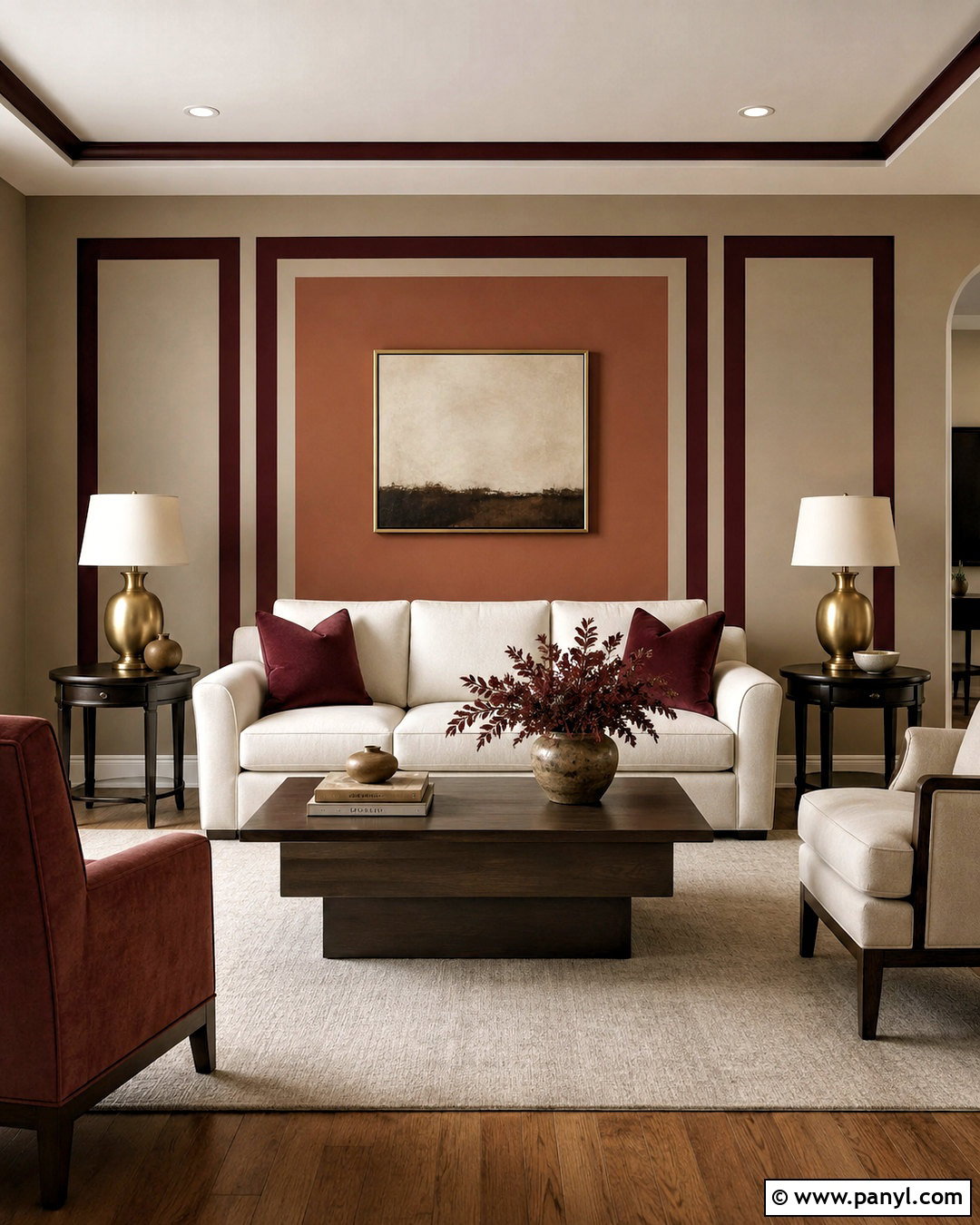
Painted frames can create the effect of decorative wall panels without installing wood trim. In a living room, begin with a soft taupe wall and paint three large rectangular outlines in deep burgundy. Fill the center rectangle with a lighter clay color, leaving the side frames taupe inside. Position a cream sofa beneath the arrangement and add dark wood side tables, brass lamps, and burgundy pillows. The frames should follow the proportions of the sofa and nearby furniture rather than the full dimensions of the wall. Use a level and equal spacing to keep the outlines polished. Large, simple artwork can sit inside the center block. This layered paint treatment gives the complete room depth while preserving a flat, easy-to-clean surface.
17. Brushstroke Accent Wall
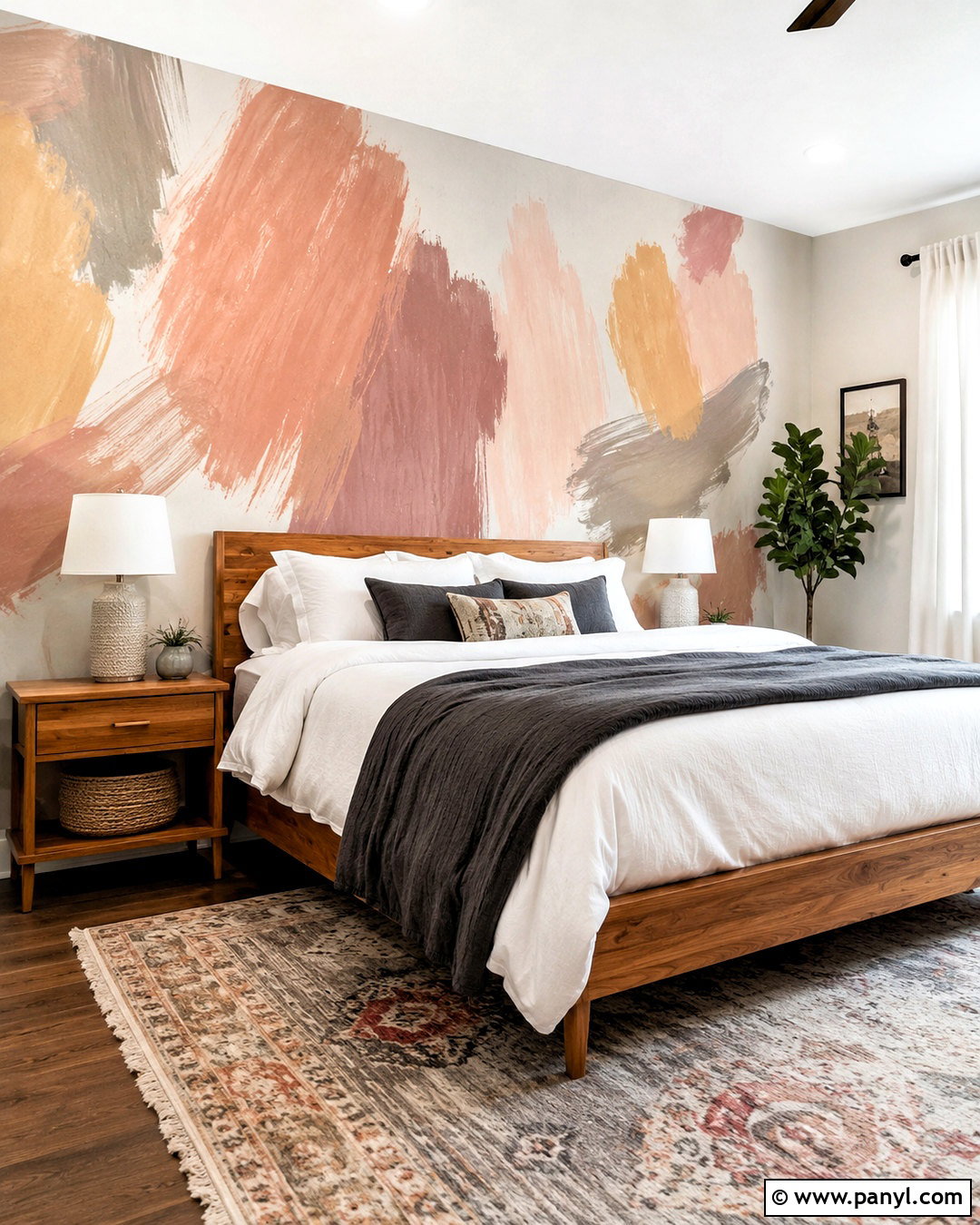
A brushstroke accent wall has an expressive handmade quality that works well in a casual bedroom or studio. Paint the wall warm white, then apply broad overlapping strokes in muted coral, dusty rose, pale ocher, and soft gray. Concentrate the pattern behind the headboard and allow it to become lighter toward the outer edges. Choose a low natural wood bed, simple white bedding, a charcoal throw, and small ceramic lamps. Keep the rest of the room quiet so the loose painted marks remain the main feature. Test several brush sizes on cardboard before working on the wall. Repeating the same colors and stroke direction will give the composition unity, while slight differences in length and texture preserve its relaxed character.
18. Wave Accent Wall
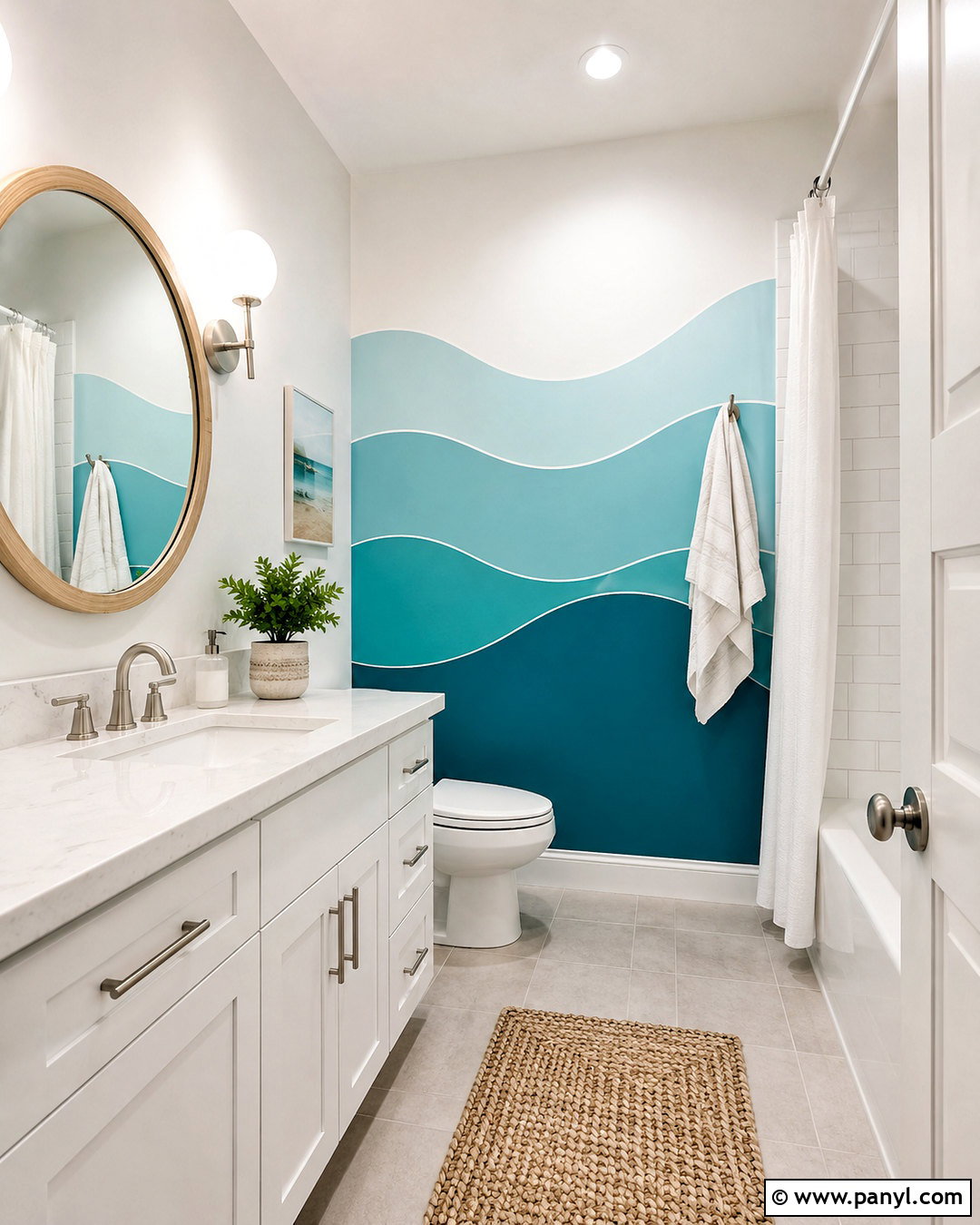
A wave accent wall introduces gentle movement and works especially well in a bathroom, nursery, or relaxed bedroom. Paint three overlapping horizontal waves in deep teal, medium aqua, and pale blue across the lower portion of the wall. Keep the upper area crisp white to balance the saturated color. In a bathroom, combine the design with a white vanity, light oak mirror, brushed nickel fixtures, and pale gray floor tile. Curved accessories, such as a round mirror and globe sconces, can repeat the flowing shapes. Sketch the waves with a pencil and flexible measuring tool before painting. Avoid making every curve identical. A controlled variation creates a more natural composition while the repeated colors hold the complete room together.
19. Accent Wall With Ceiling Wrap
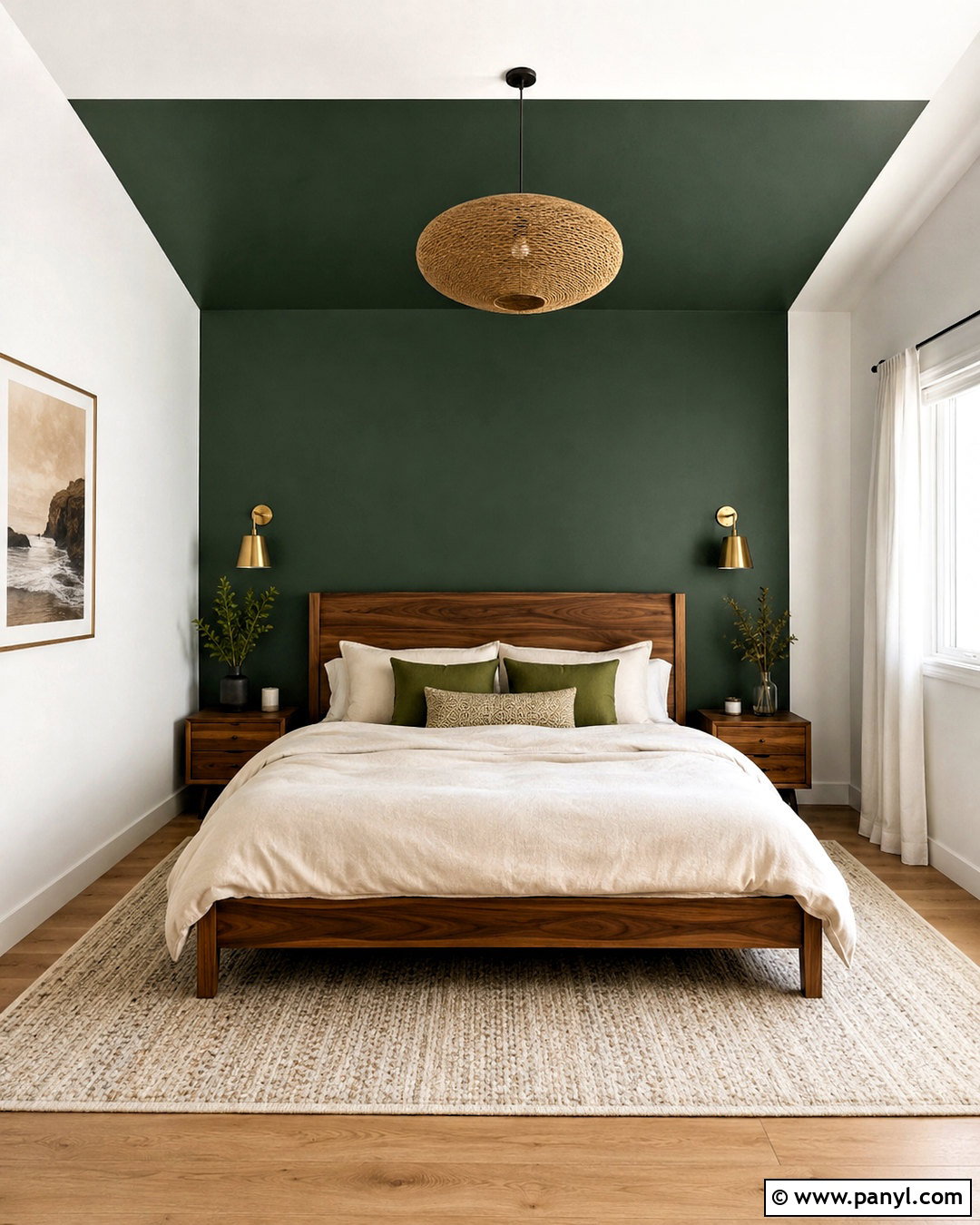
Extending a painted accent wall onto the ceiling can define a sleeping or work zone in a larger room. Behind a bed, paint a wide band of deep forest green from the floor, up the wall, and several feet across the ceiling. Keep the surrounding walls soft white for contrast. Center a walnut bed within the band and add cream bedding, green pillows, and warm brass sconces. The painted ceiling section should match the width of the bed and nightstands so the feature feels connected to the furniture. A neutral rug and light curtains prevent the darker color from becoming heavy. Measure every edge carefully and use strong painter’s tape. This wrapped treatment creates an intimate, room-within-a-room effect using paint alone.
20. Tone On Tone Accent Wall
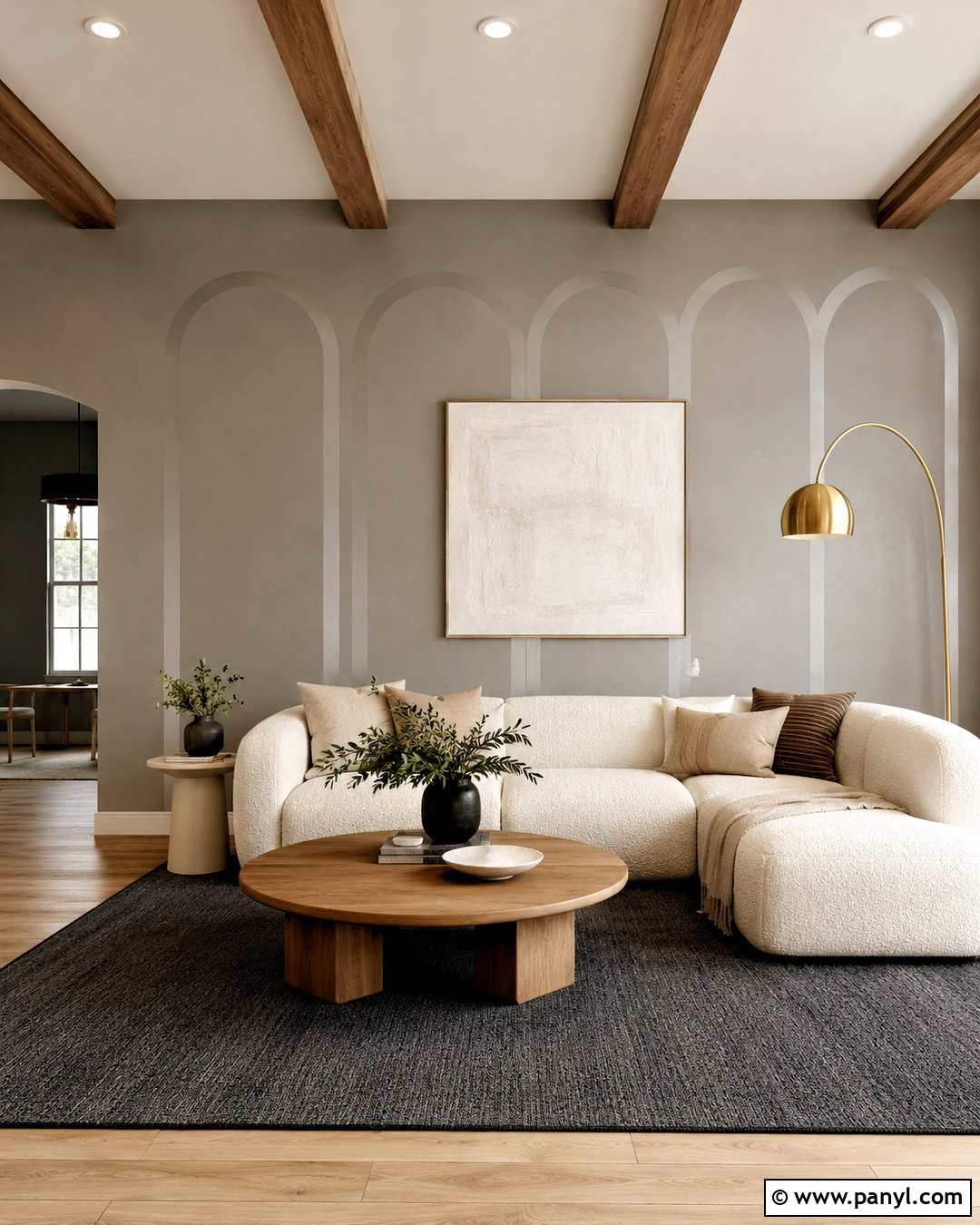
A tone-on-tone accent wall provides subtle pattern for homeowners who prefer a quiet, refined room. Paint the wall behind a living room sofa in matte warm gray, then add wide vertical arches or stripes in the same color with a satin finish. The slight sheen difference becomes visible as daylight moves across the surface. Pair the wall with a cream boucle sofa, oak coffee table, charcoal rug, and brushed brass floor lamp. Keep artwork limited to one large neutral piece so it does not hide the finish. Careful preparation is important because uneven patches may be more noticeable when two sheens are combined. The completed space feels layered and intentional while maintaining a calm, nearly monochromatic color palette.
Conclusion:
The best accent wall connects color, pattern, furniture, and room function in one complete design. These 20 paint design accent wall ideas offer options for calm bedrooms, energetic playrooms, polished offices, welcoming dining spaces, and modern living rooms. Before beginning, identify the wall that naturally attracts attention and test every paint color beside the room’s permanent finishes. Measure the design, sketch its placement, and prepare the surface before opening the paint. Simple patterns often produce the most polished results, especially when their proportions relate to nearby furniture. Whether you choose subtle sheen, soft waves, broad stripes, or an expressive mural, thoughtful planning will help your painted accent wall look balanced, personal, and professionally finished.

Related Ideas and Inspiration:
Leave a Reply