
The best **20 wall paint patterns living room ideas** can turn a plain space into a room that feels intentional, balanced, and personal. Paint patterns offer more flexibility than wallpaper and can highlight a sofa, fireplace, television, or reading corner without adding bulky decor. Current approaches range from clean stripes and geometric color blocks to soft arches, organic curves, ombré finishes, and hand-painted murals. () The right design should suit the wall size, natural light, furniture placement, and overall color palette. Simple patterns can make a small room feel wider or taller, while larger designs create a confident focal point. Explore these practical, complete, and stylish 20 wall paint patterns living room ideas.
1. Geometric Wall Paint Pattern
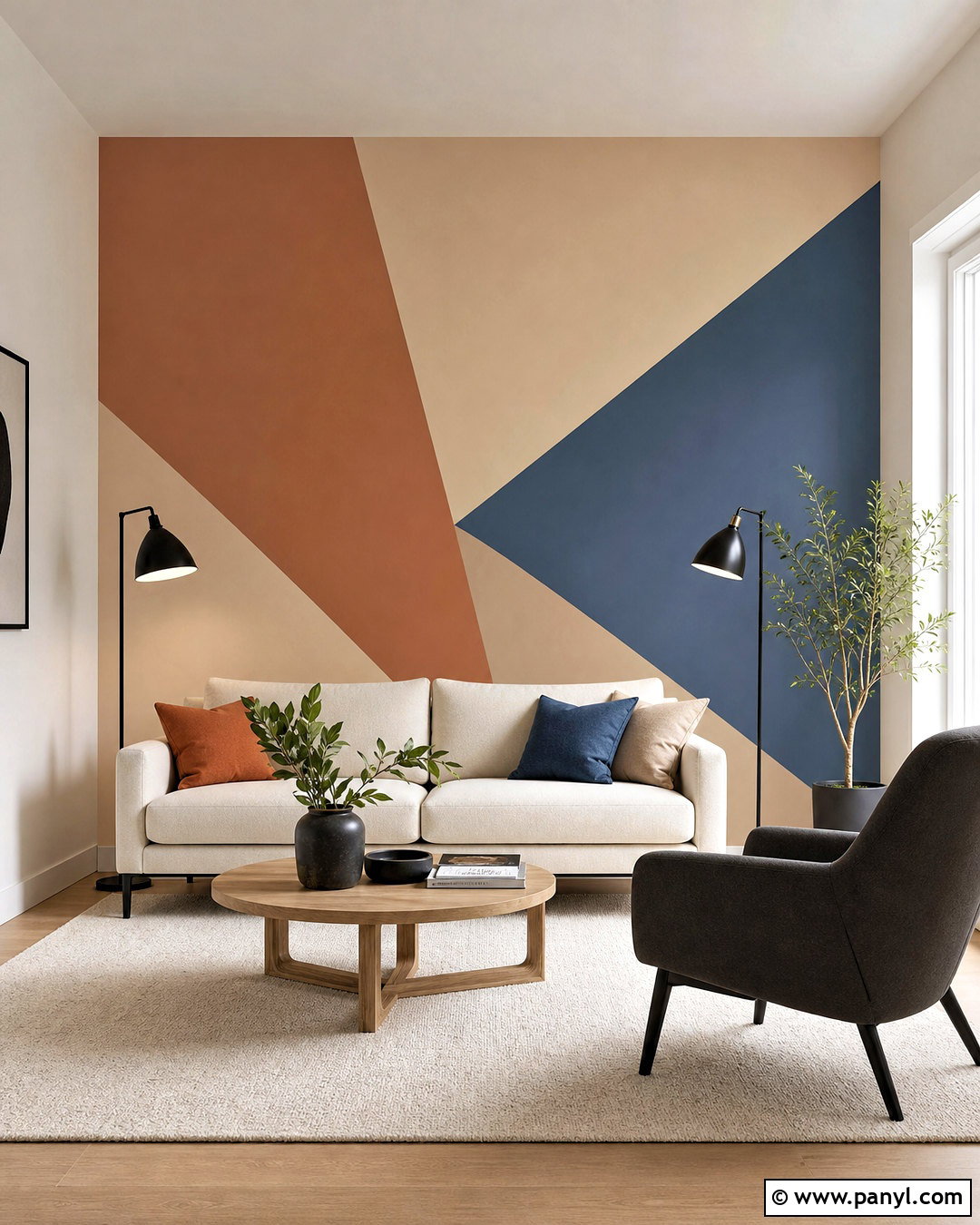
A geometric feature wall brings structure to a modern living room without requiring extra artwork. Start with a warm off-white base, then add large overlapping triangles in muted terracotta, dusty blue, and soft beige. Keep the pattern behind a simple cream sofa so the shapes remain visible. A light oak coffee table, charcoal armchair, and woven ivory rug ground the stronger colors. Choose solid throw pillows instead of competing prints. Slim black lamps and a few ceramic pieces provide clean finishing touches. For the best proportions, use fewer oversized shapes rather than many small ones. Carefully planned painter’s tape lines will create sharp edges and help the wall look polished rather than busy.
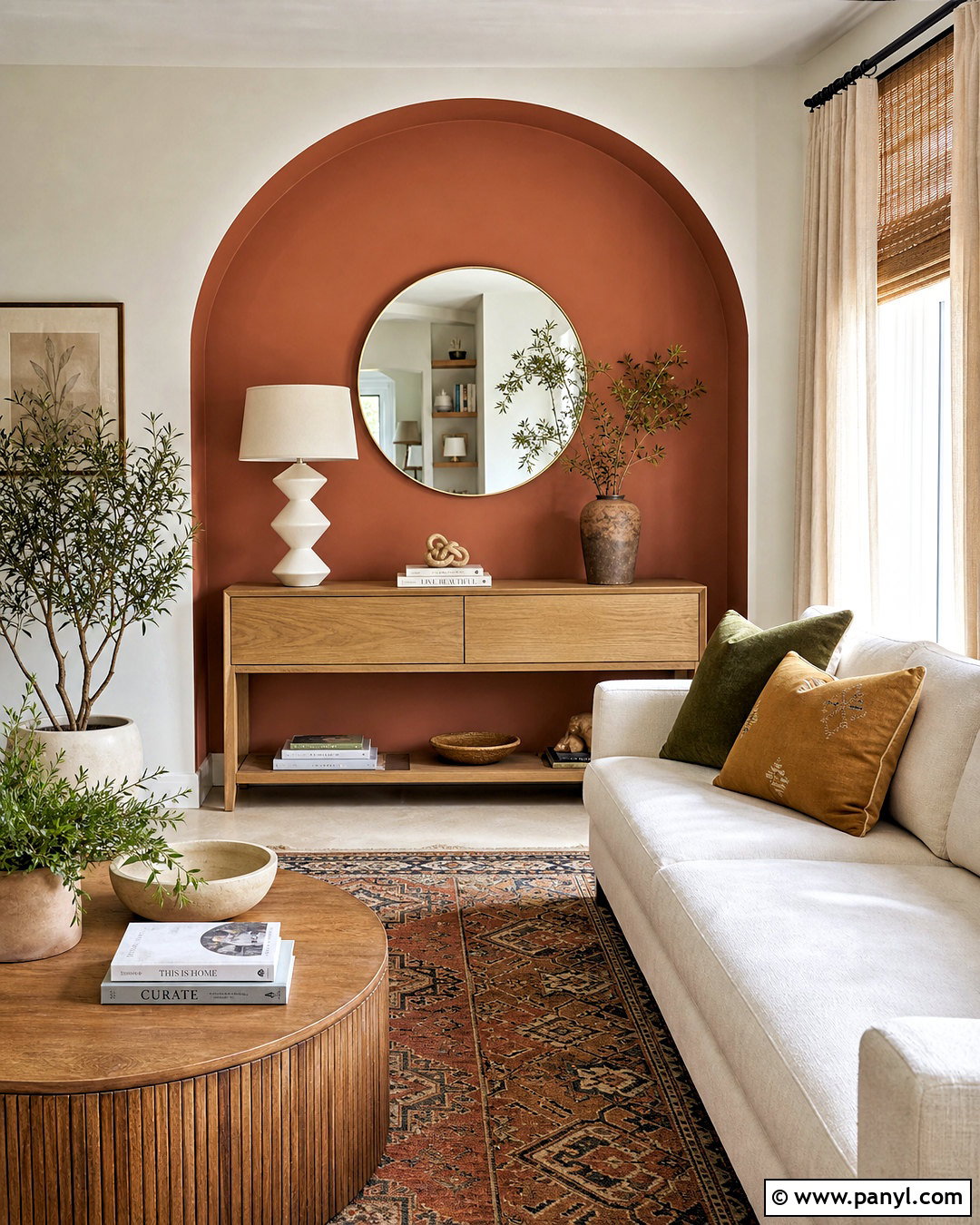
2. Painted Arch Wall Pattern
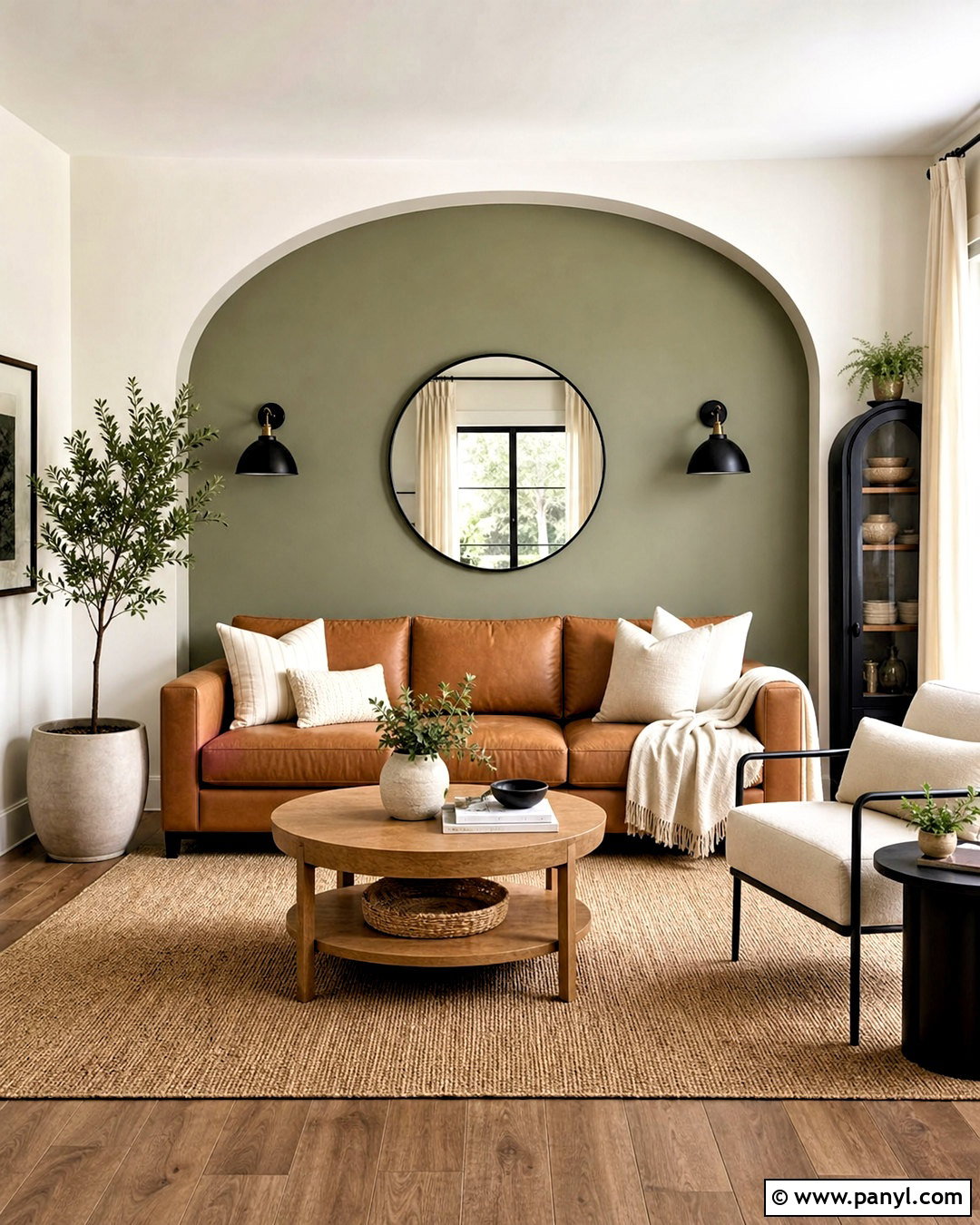
A painted arch can create the appearance of an architectural niche behind a sofa or console. Paint the living room walls warm white, then center a wide sage green arch behind a compact camel-colored sofa. The arch should extend beyond both sides of the furniture and rise high enough to frame a large round mirror. Complete the room with a natural jute rug, an oak coffee table, and cream linen curtains. Black metal accents add definition without overpowering the soft palette. Repeat the green through two pillows and a ceramic planter. This wall paint pattern works especially well in apartments because it creates a distinct focal area without changing the room’s structure or covering the entire wall.
3. Vertical Stripe Wall Paint Pattern
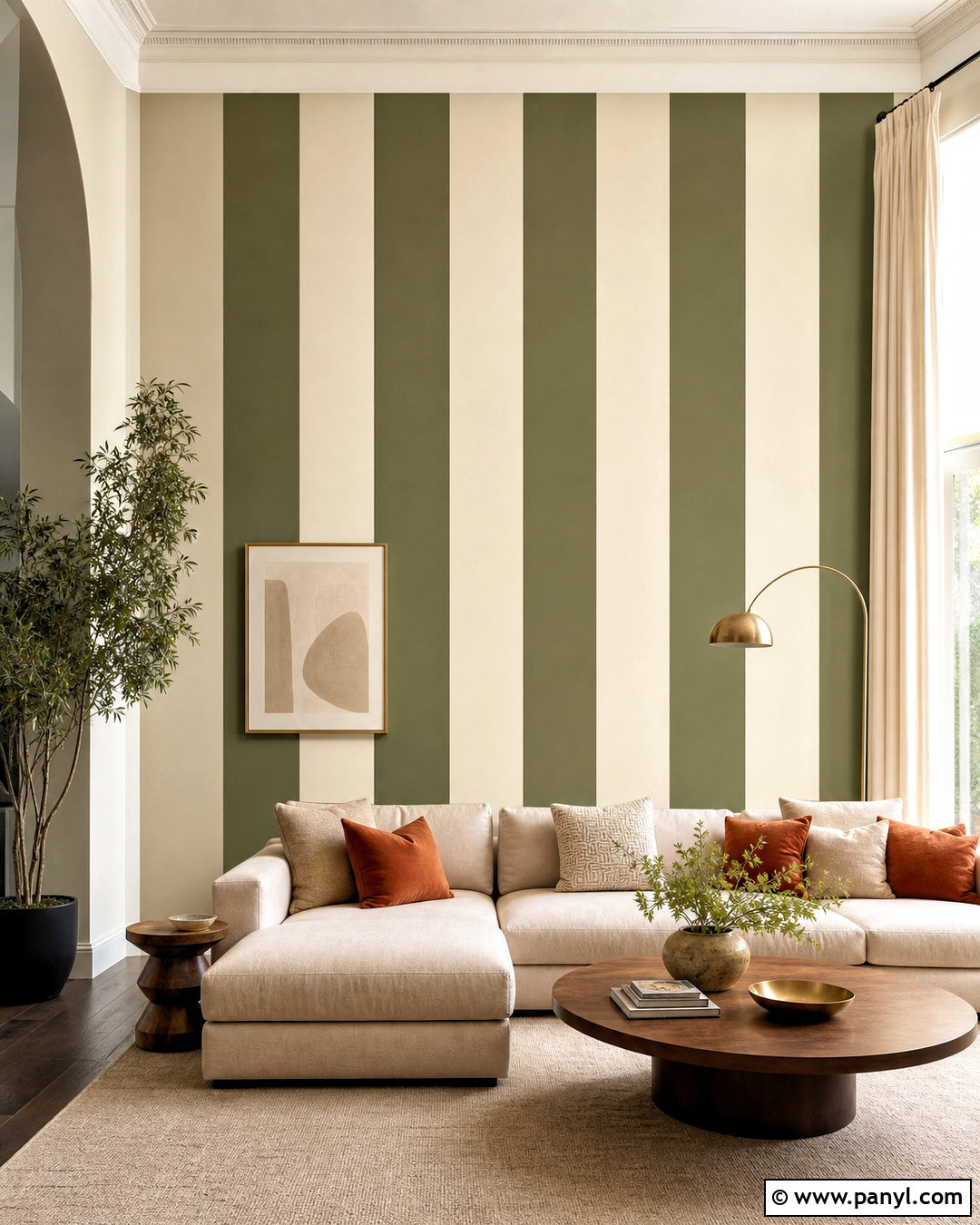
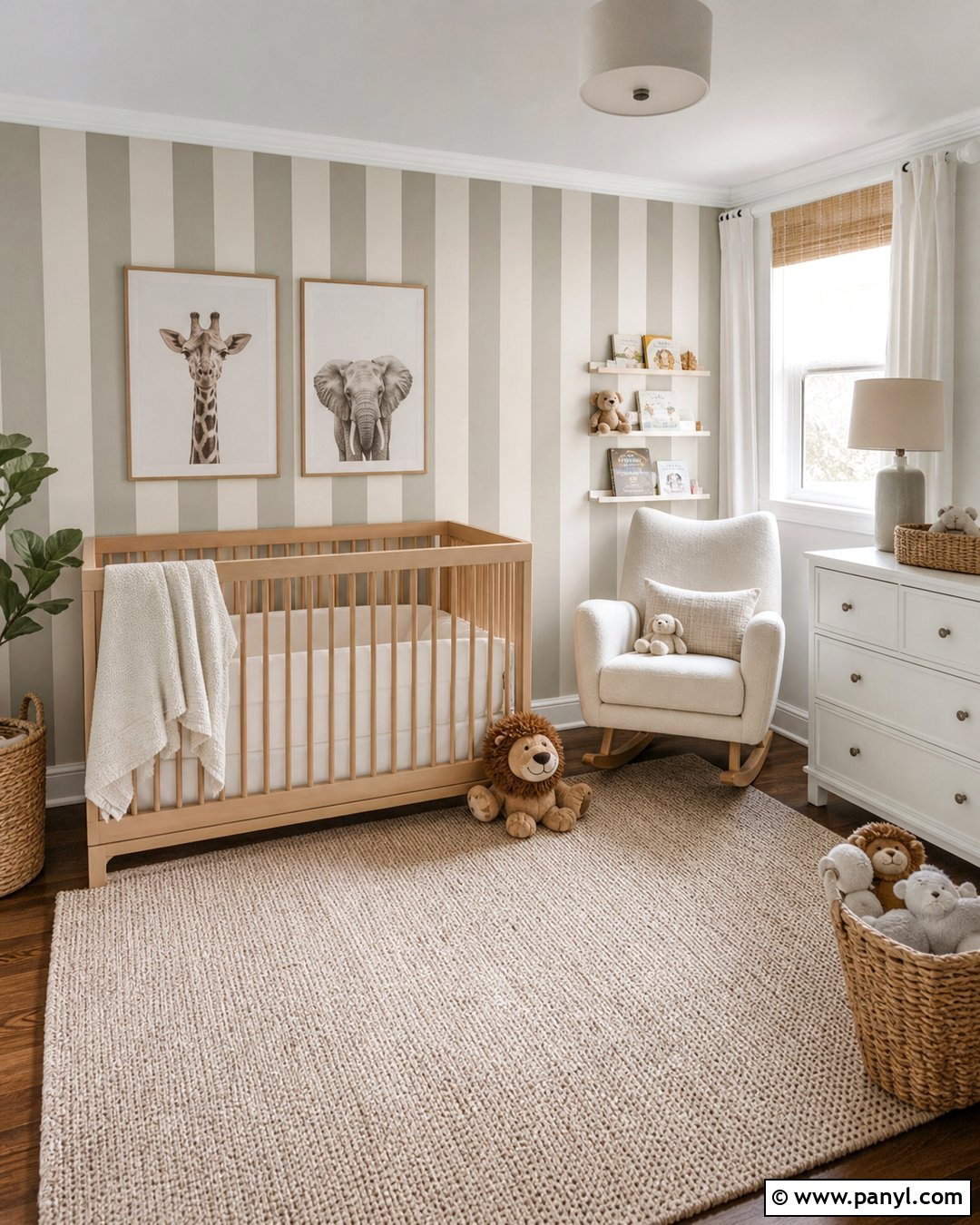
Vertical painted stripes visually lift a low ceiling and give the living room a crisp, tailored appearance. Use alternating bands of soft ivory and muted olive green on the wall behind the sofa. Wider stripes feel calmer and more contemporary than narrow ones. Pair the pattern with a low-profile beige sectional, walnut side tables, and a warm neutral area rug. Cream curtains mounted close to the ceiling reinforce the taller effect. Add rust-colored pillows and brushed brass lighting for warmth. Keep artwork minimal because the striped wall already provides strong visual rhythm. Carry the ivory onto the remaining walls and ceiling so the design feels connected to the room rather than appearing like a separate decorative panel.
4. Horizontal Stripe Wall Paint Pattern
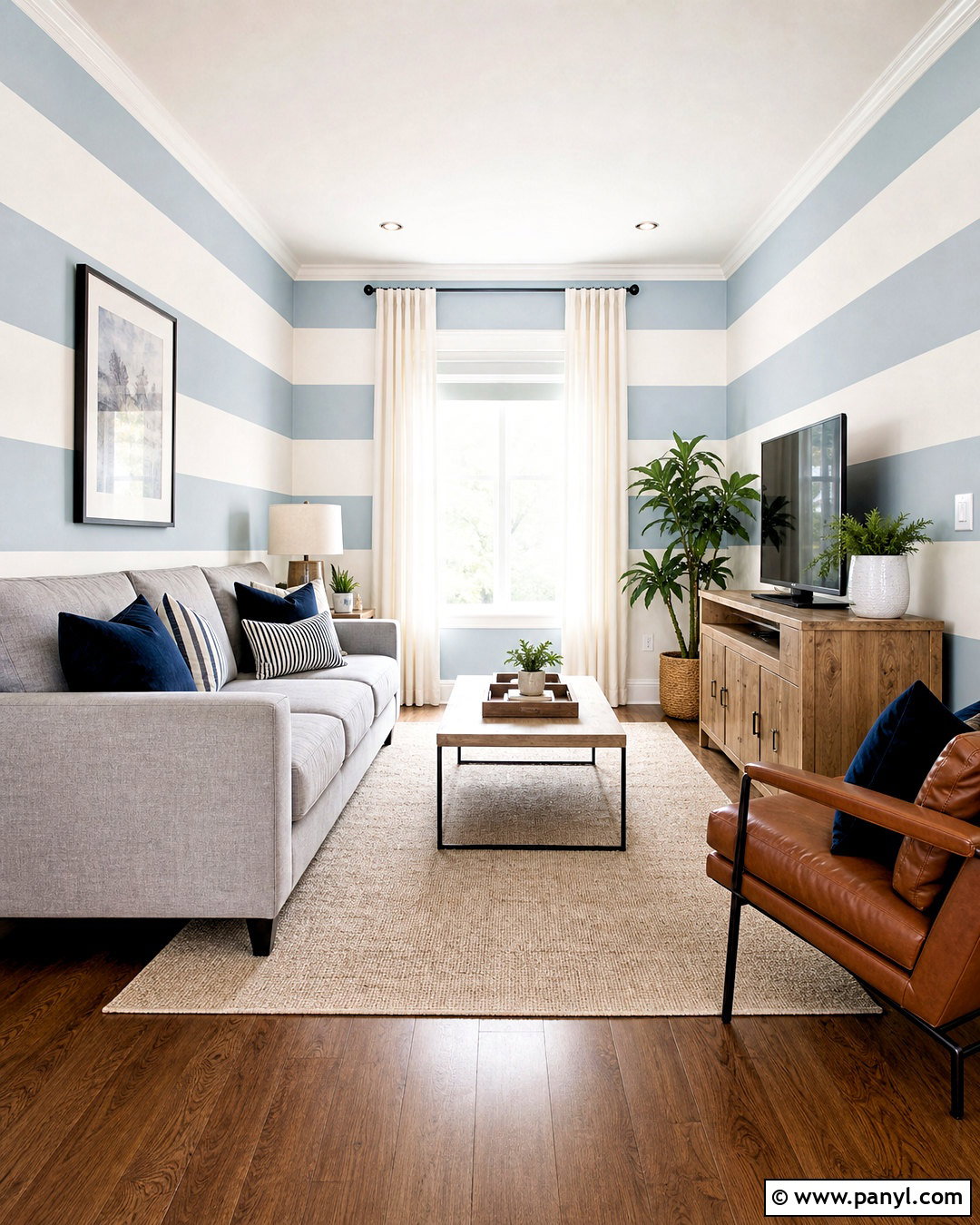
Broad horizontal stripes can make a narrow living room appear wider and more relaxed. Paint the main wall with alternating bands of pale blue-gray and warm white, using three or four oversized stripes from floor to ceiling. Position a streamlined light gray sofa against the patterned wall, leaving enough open space for the design to show. Add a long oak media console opposite the seating and choose a rectangular rug that follows the room’s direction. Navy pillows, white curtains, and a cognac leather chair build a balanced palette. Keep decorative objects low and linear. Matching the stripe width to major furniture proportions helps the entire space feel coordinated, open, and intentionally designed.
5. Two Tone Half Wall Paint Pattern
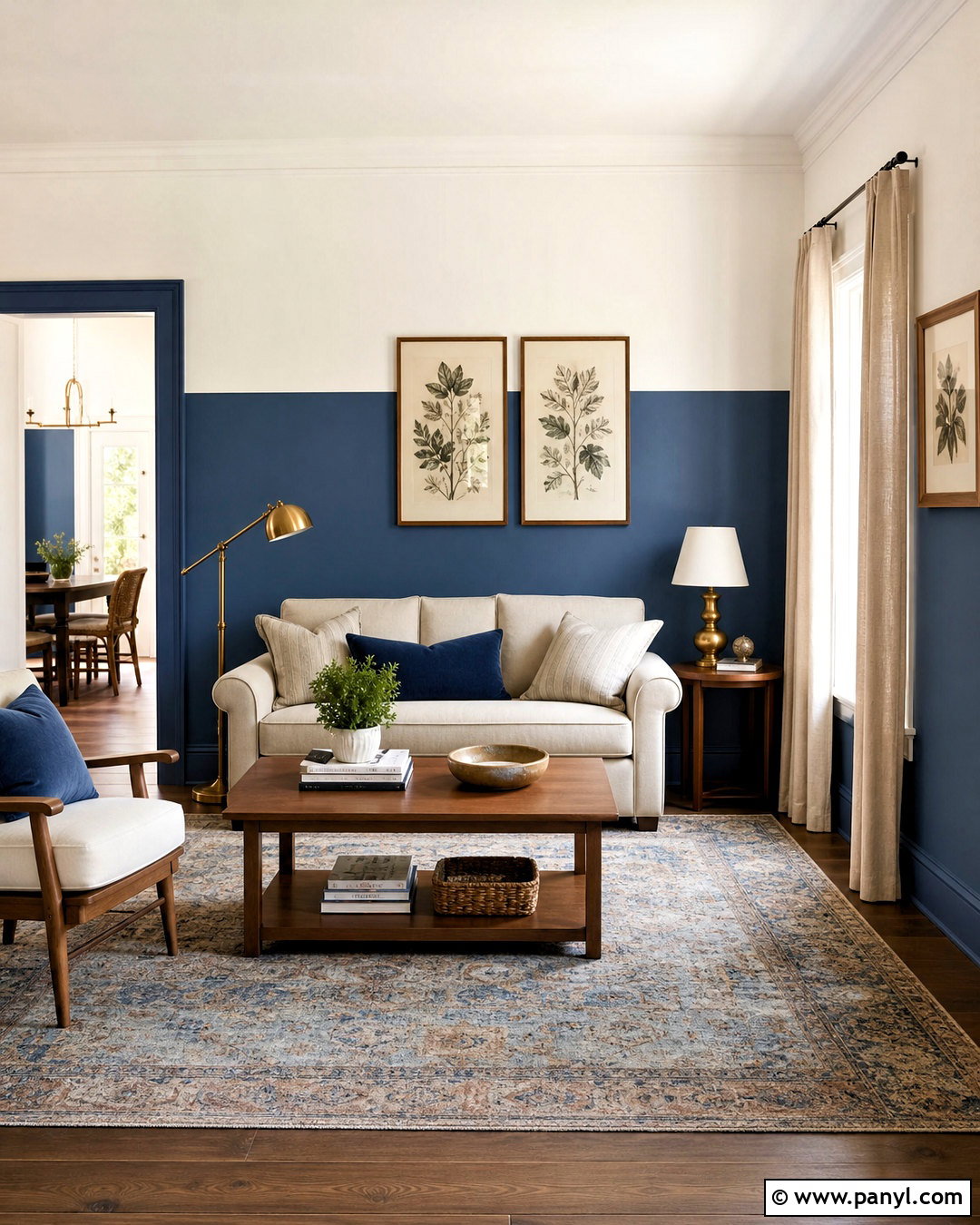
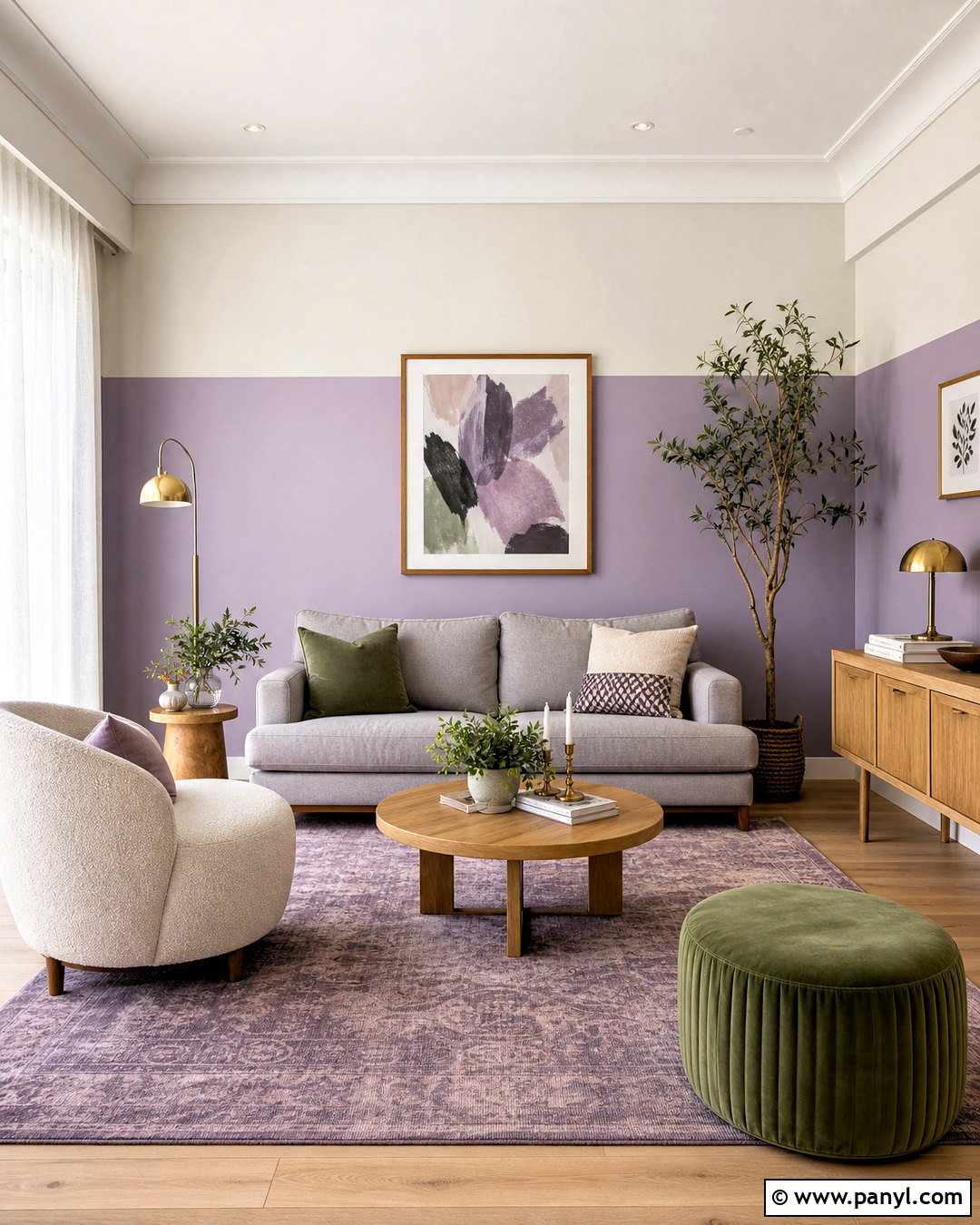
A two-tone wall creates subtle structure while keeping the living room easy to decorate. Paint the lower portion a deep dusty blue and the upper portion a soft warm white. Place the dividing line slightly above the sofa back for a balanced proportion. A cream sofa, medium-tone wood coffee table, and faded blue-and-beige rug will connect both colors. Add white linen curtains, antique brass lamps, and a few framed botanical prints above the dividing line. Paint the baseboards blue so the lower section feels complete rather than unfinished. This arrangement grounds the furniture and makes tall walls feel more comfortable. It is also simple enough for beginners who want a clean pattern with minimal measuring and taping.
6. Color Block Wall Paint Pattern
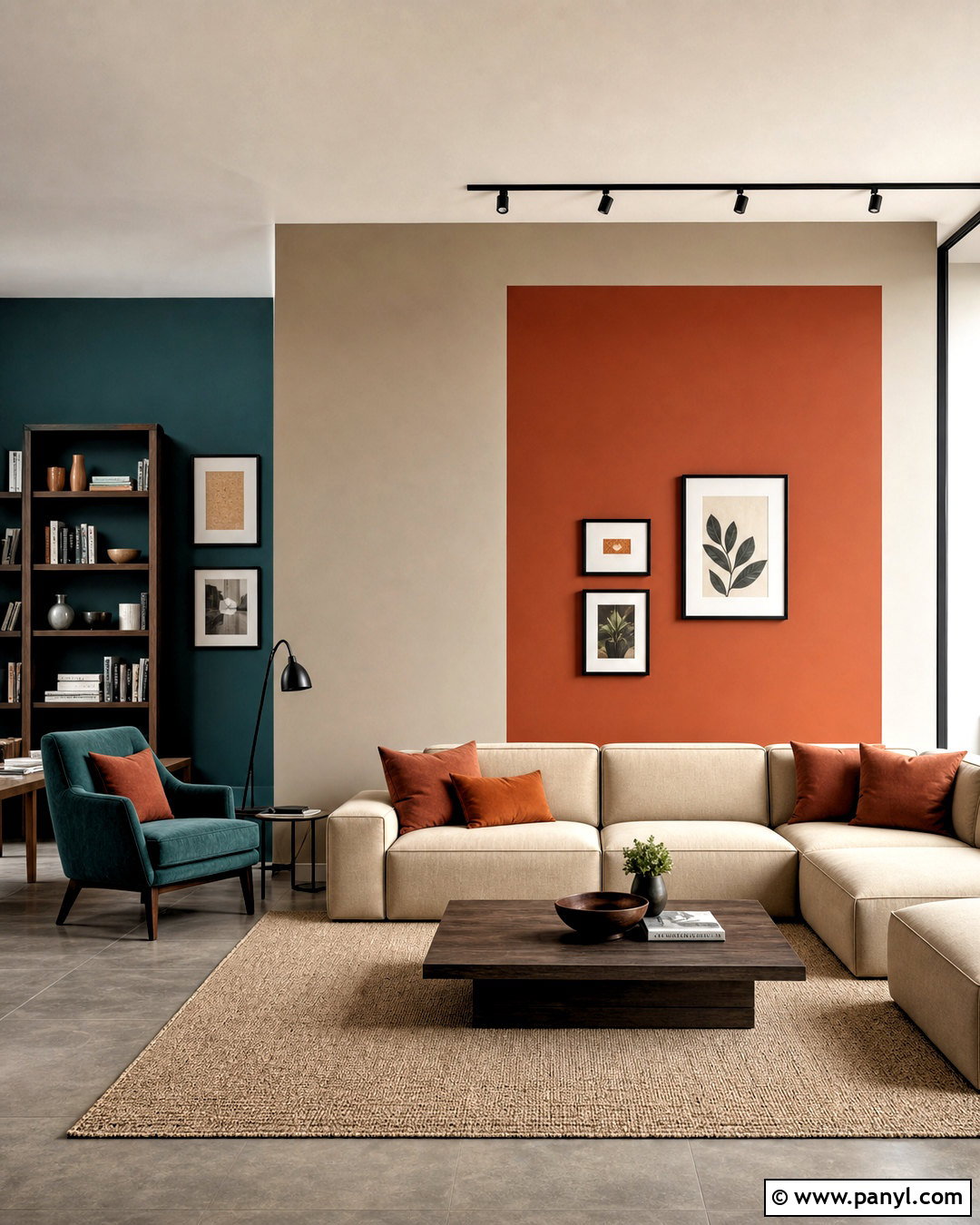
Large color blocks can define different functions within an open living room. Begin with a soft greige base, then paint an oversized rust rectangle behind the sofa and a muted teal block around the reading corner. Keep each shape aligned with the furniture it frames. A beige modular sofa, dark wood coffee table, and oatmeal rug provide a quiet foundation. Place a teal lounge chair beside a floor lamp within the smaller painted area. Black frames and clay-colored pillows connect the sections. Leave generous areas of the greige base visible so the pattern can breathe. This complete layout helps separate lounging and reading zones while maintaining a coordinated palette across the entire living space.
7. Diagonal Wall Paint Pattern
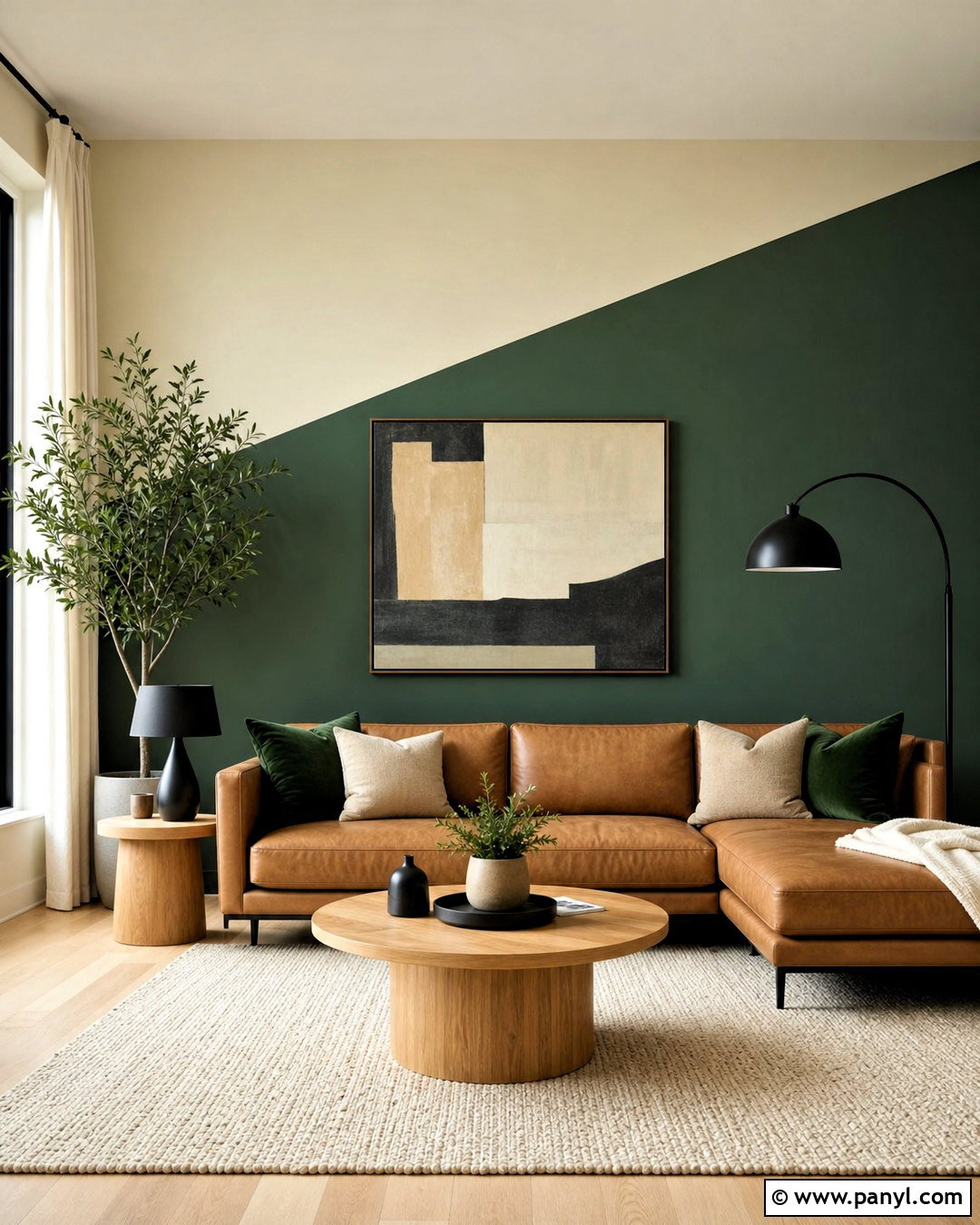
A sweeping diagonal pattern introduces movement and can visually correct an awkward living room wall. Use a warm cream base with one broad diagonal section painted in deep forest green. Begin near a lower corner and carry the line upward behind the sofa, creating a bold but uncomplicated division. Furnish the room with a tan leather sofa, light oak tables, and a textured cream rug. Add green velvet pillows and matte black lighting to repeat the wall color. A tall plant placed near the higher end of the diagonal strengthens the upward movement. Keep the other walls neutral and avoid hanging numerous small pictures. One large abstract print will complement the dynamic wall without making the room feel cluttered.
8. Checkerboard Wall Paint Pattern
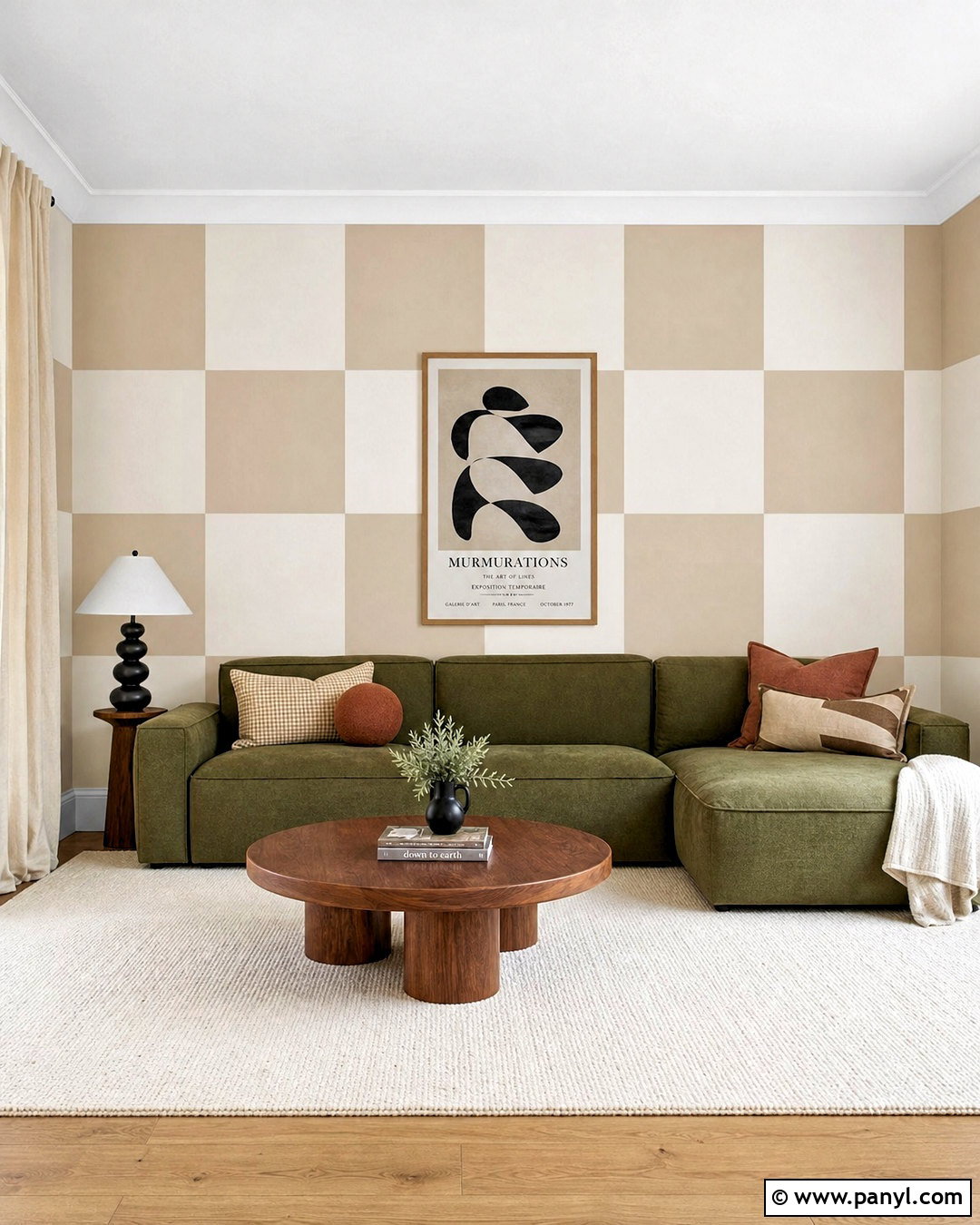
A large checkerboard wall feels playful yet sophisticated when the colors are soft and the furniture is restrained. Paint oversized squares in warm beige and creamy white across the wall behind a simple olive sofa. Carefully center the grid so partial squares at the edges appear balanced. Add a round walnut coffee table, a plain ivory rug, and linen curtains in a matching cream shade. Terracotta pillows and a sculptural black floor lamp provide contrast. Limit additional patterns to one subtle striped throw. Large squares work better than small checks in most living rooms because they read as an architectural background. Extending the warm white across the remaining walls keeps the overall room bright and livable.
9. Scalloped Wall Paint Pattern
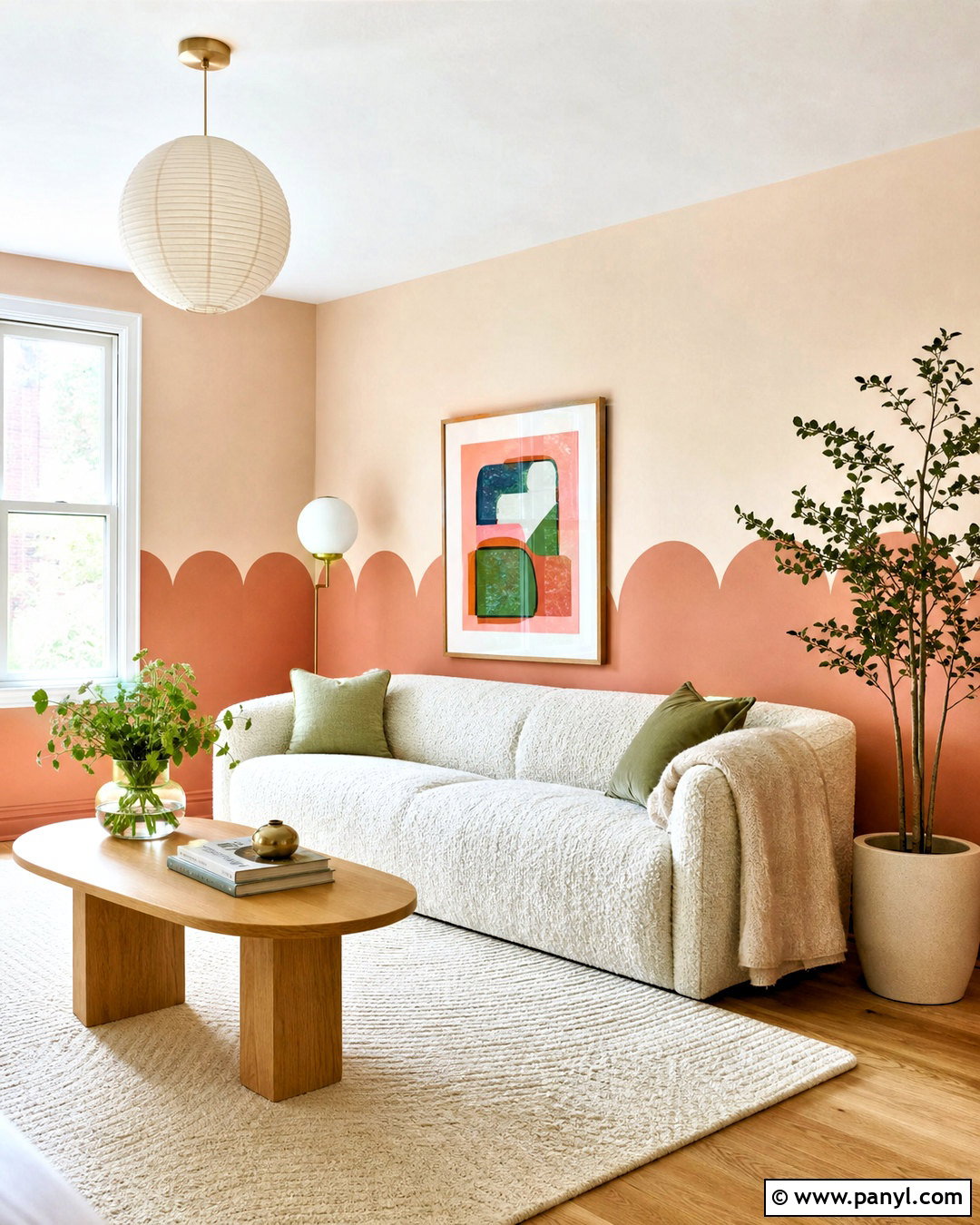
A scalloped border gives a living room gentle movement without overwhelming the main seating area. Paint the walls pale peach, then create a row of large dusty coral scallops across the lower third. Use a homemade cardboard template to keep every curve consistent. Pair the wall with a cream boucle sofa, a light oak coffee table, and an ivory wool rug. Soft green pillows and leafy plants prevent the peach palette from feeling overly sweet. Choose rounded furniture and a globe floor lamp to echo the painted curves. Keep art above the border simple and generously spaced. Painting the baseboards coral will anchor the pattern and produce a finished, cohesive effect around the entire room.
10. Ombre Wall Paint Pattern
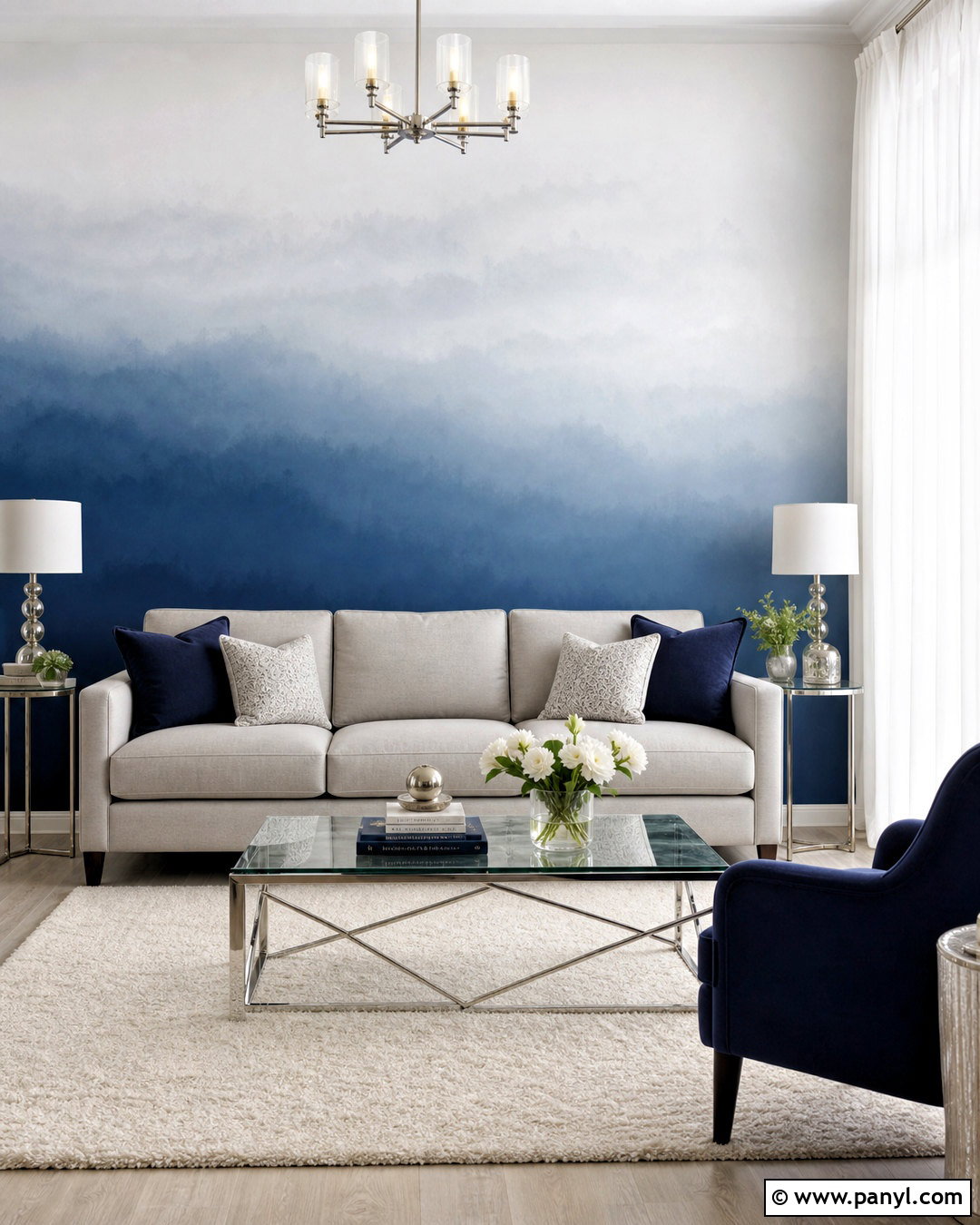
An ombré wall creates a soft, atmospheric backdrop that can make a living room feel calm and spacious. Blend deep blue-gray near the floor into misty blue and finally pale white near the ceiling. The gradual transition should remain smooth and subtle rather than forming obvious bands. Place a light gray sofa against the wall and add a glass coffee table so the painted effect stays visible. A navy armchair, ivory rug, and sheer white curtains continue the airy palette. Brushed silver lighting and pale wood accents maintain a fresh finish. Keep wall art minimal, choosing one narrow horizontal piece. The lighter upper area naturally draws the eye upward and prevents the deeper color from feeling heavy.
11. Mountain Wall Paint Pattern
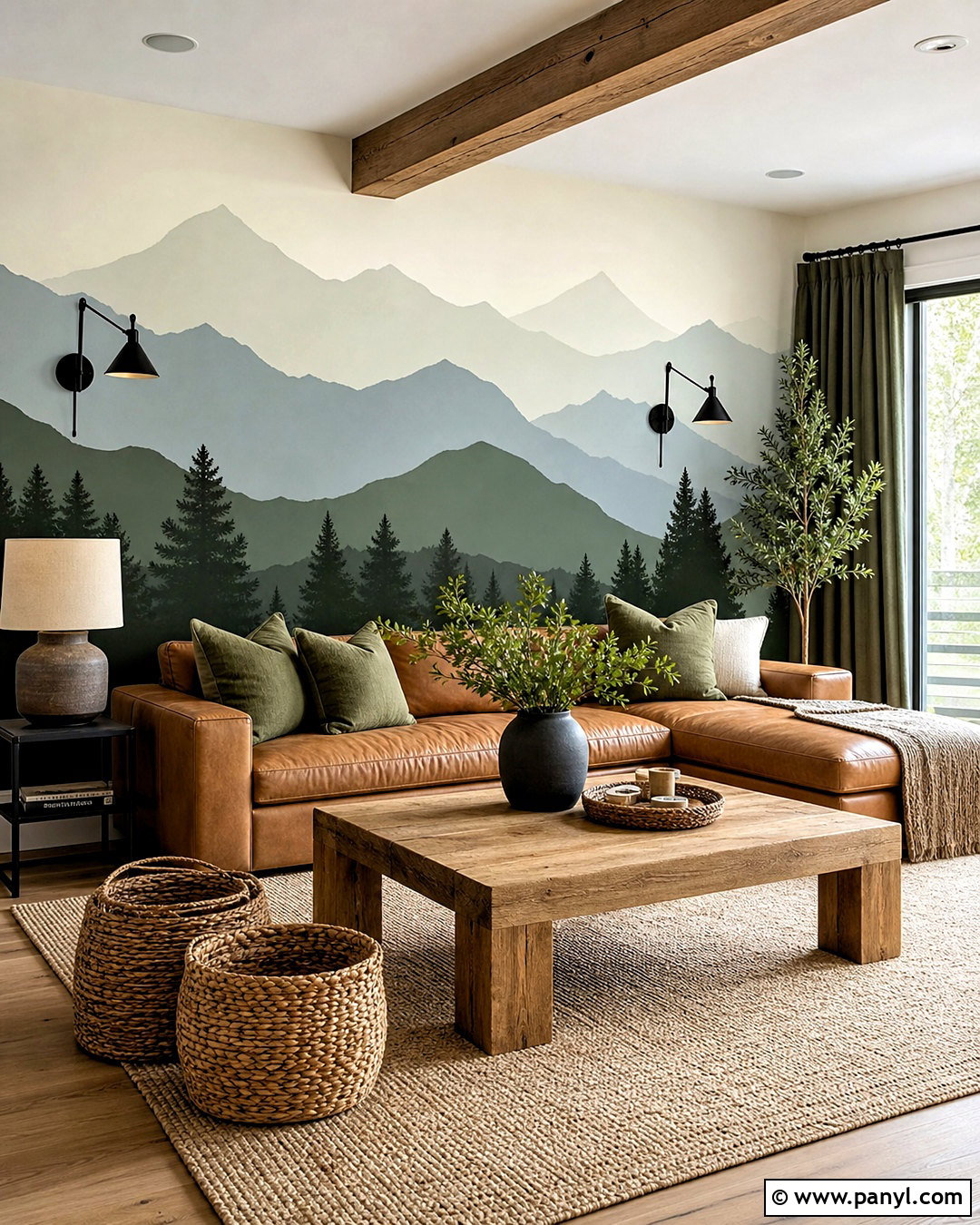
A stylized mountain pattern can bring natural color and depth into a casual living room. Paint the background soft cream, then layer broad mountain silhouettes in muted sage, smoky blue, and deep pine green. Keep the shapes simple, with gently uneven peaks instead of detailed scenery. A camel sofa, chunky oak coffee table, and textured beige rug will warm the cooler wall colors. Add forest green pillows, woven baskets, and matte black sconces for a comfortable modern cabin influence. Position the highest peak behind one end of the sofa to avoid rigid symmetry. The surrounding walls should remain cream, allowing the mural to serve as the room’s main artwork without making the space feel themed.
12. Sunburst Wall Paint Pattern
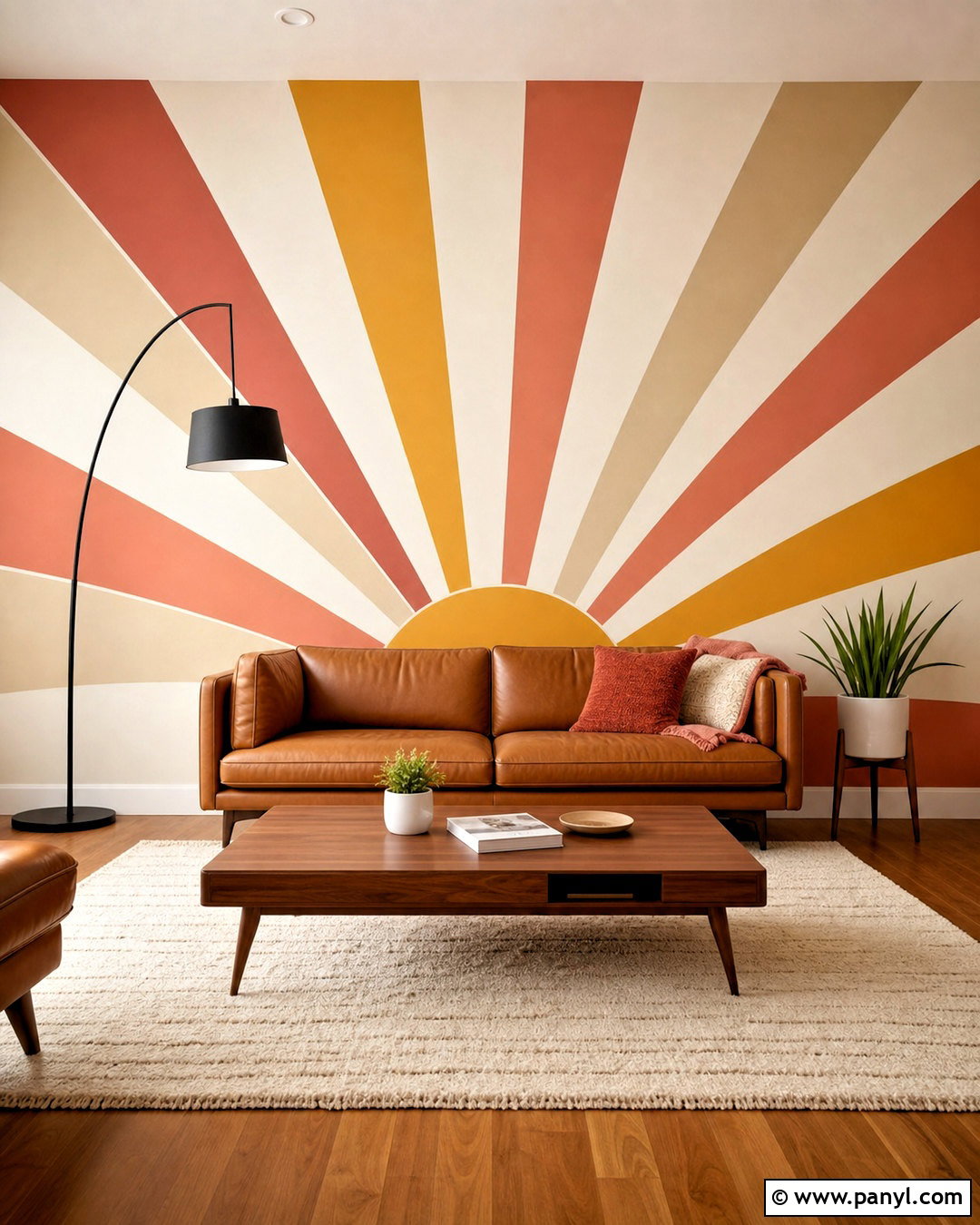
A painted sunburst creates an energetic focal point behind a low sofa or media console. Begin with a warm white wall and paint wide rays extending from one lower corner in mustard yellow, terracotta, pale tan, and muted coral. Use only a few colors and repeat some rays to keep the design harmonious. Furnish the space with a caramel leather sofa, walnut coffee table, and cream flat-weave rug. Add solid mustard and rust pillows, along with a black arc floor lamp for contrast. Keep curtains and adjacent walls neutral. The furniture should remain simple because the wall carries the visual energy. This pattern works best on an uninterrupted wall where the rays can expand without crossing doors or windows.
13. Grid Wall Paint Pattern
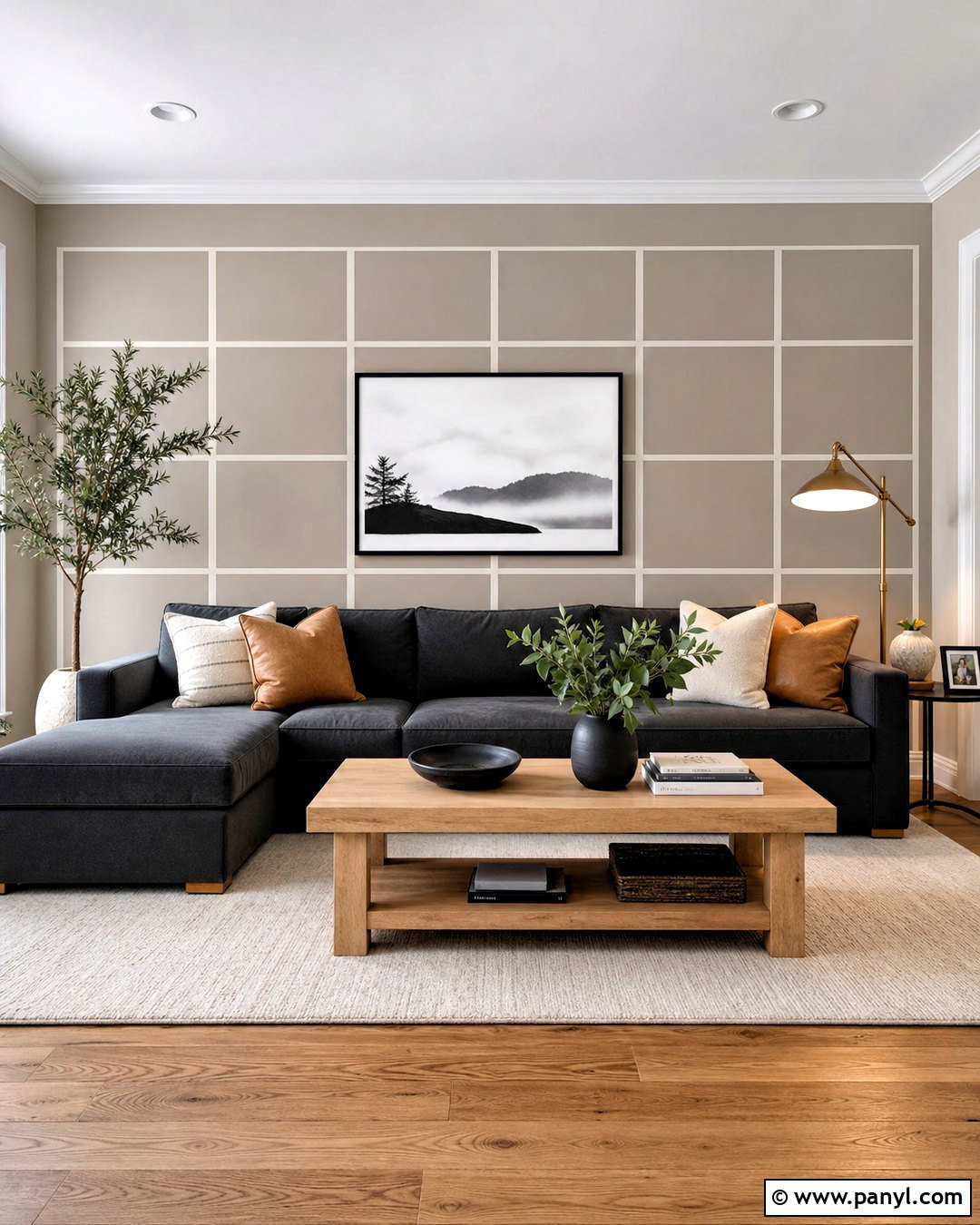
A painted grid offers the orderly appearance of paneling without the cost of added molding. Cover the feature wall in a soft mushroom color, then create thin lines in warm white to form large rectangular sections. Align the grid with the sofa width and major furniture heights for a tailored look. Use a charcoal sofa, pale oak coffee table, and cream rug to build a quiet contemporary palette. Black-framed artwork can sit neatly inside selected rectangles. Add camel pillows and a brass floor lamp to warm the gray-brown wall. Keep shelves and accessories minimal so the grid stays visible. A matte paint finish will soften the contrast and help the design resemble subtle architectural detailing rather than a harsh graphic pattern.
14. Terrazzo Speckle Wall Paint Pattern
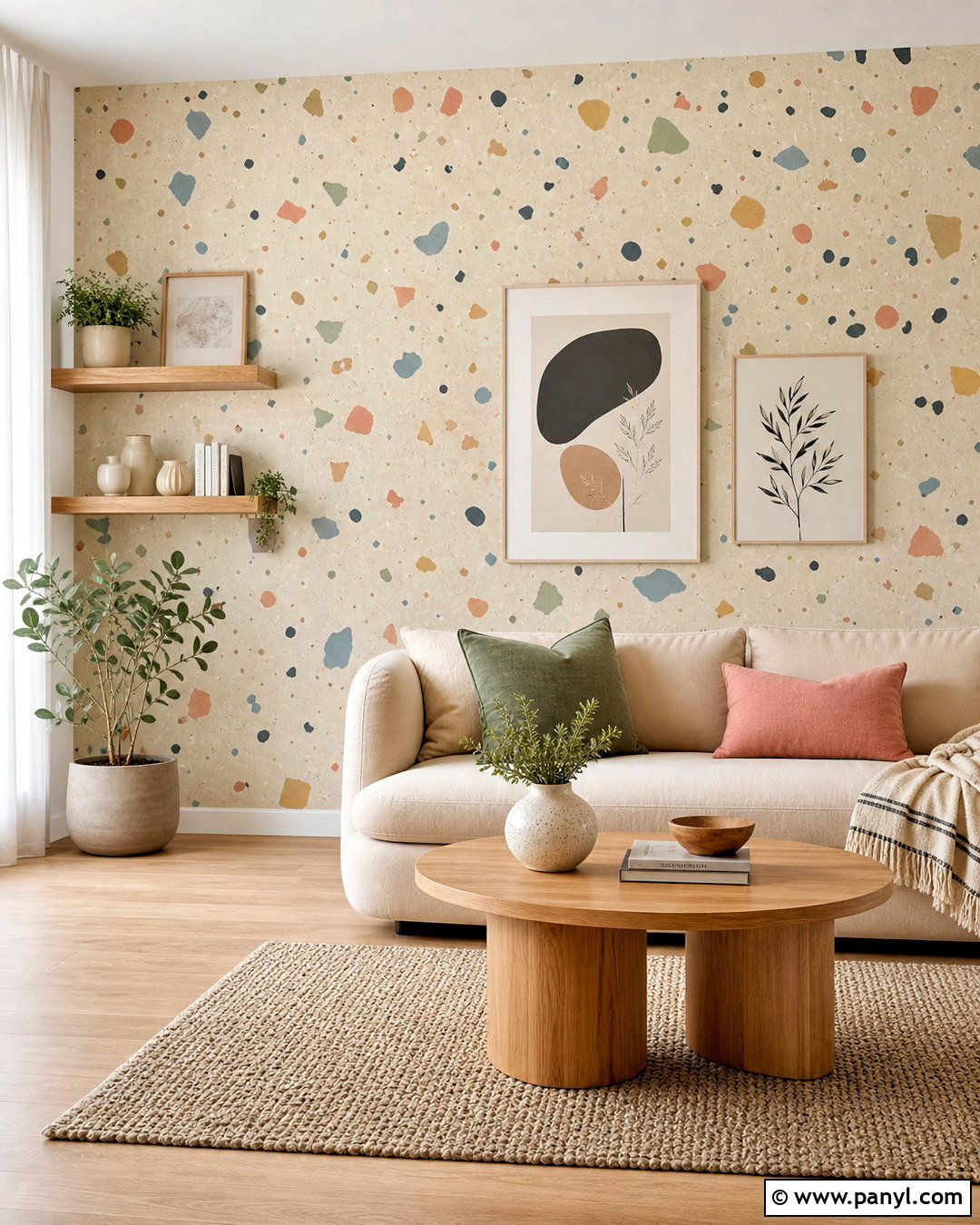
A terrazzo-inspired pattern adds color through scattered organic shapes rather than strict lines. Start with a warm ivory wall, then hand-paint irregular chips in muted coral, sage green, dusty blue, tan, and charcoal. Concentrate the pattern behind the sofa while leaving comfortable space between each shape. Choose a simple beige sofa, rounded oak coffee table, and woven cream rug to balance the playful wall. Repeat two wall colors through solid pillows and small ceramic accessories. Light wood shelving and white curtains keep the room bright. Vary the painted chips in size, but avoid making them too small. Larger scattered shapes appear more intentional and remain visible from across the living room.
15. Organic Curved Wall Paint Pattern
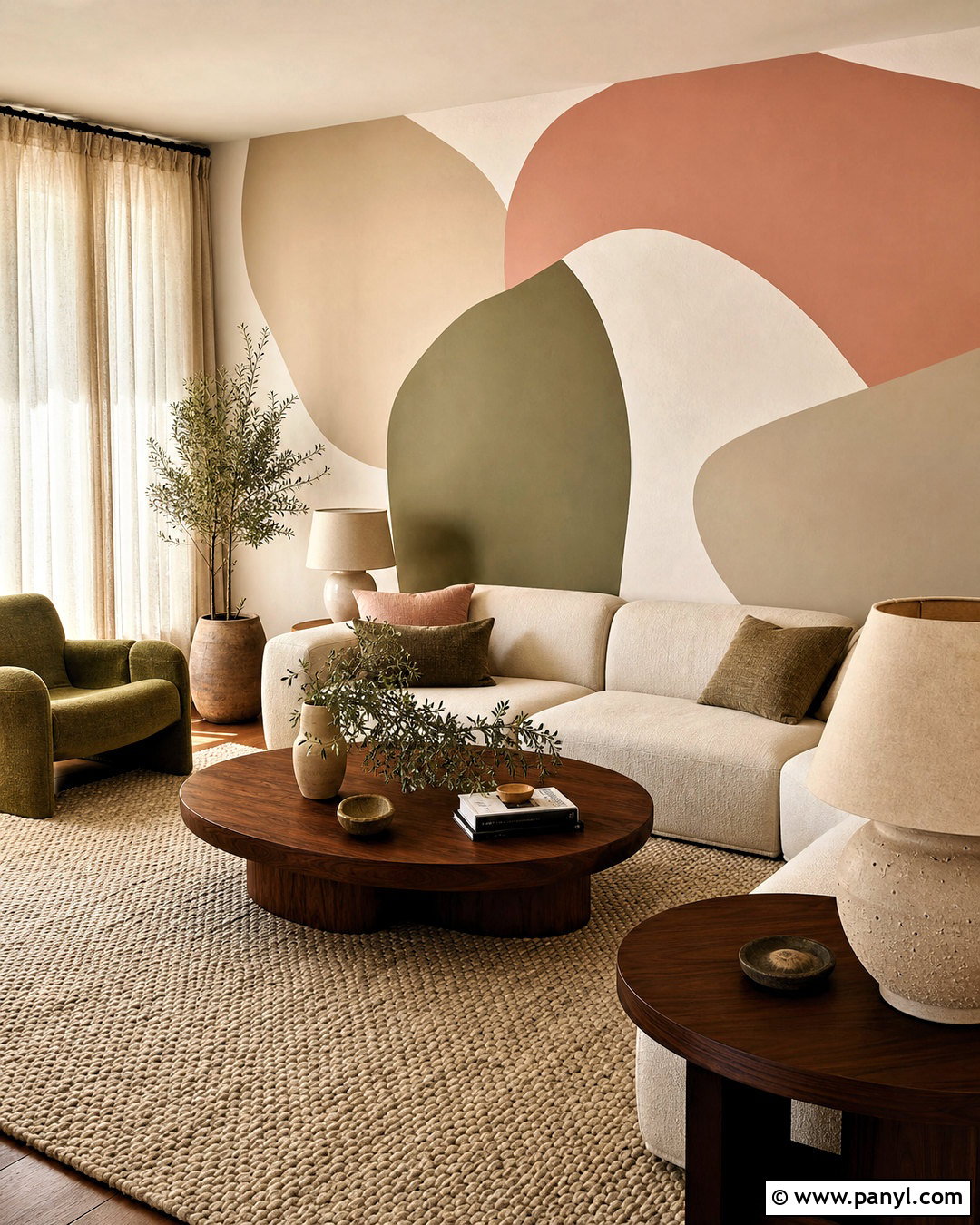
Flowing painted curves can soften a boxy living room and connect furniture with different shapes. Use a warm white base and layer broad, overlapping curves in clay pink, muted olive, and sandy beige across the main wall. Keep the edges smooth but slightly asymmetrical for a natural appearance. Place a low cream sectional in front, along with a rounded walnut coffee table and an olive lounge chair. A textured ivory rug, linen curtains, and ceramic lamps continue the relaxed palette. Choose solid cushions that repeat the wall colors without introducing another pattern. Allow portions of the white base to remain visible between the curves. This breathing room prevents the mural from competing with the furniture and decorative objects.
16. Herringbone Wall Paint Pattern
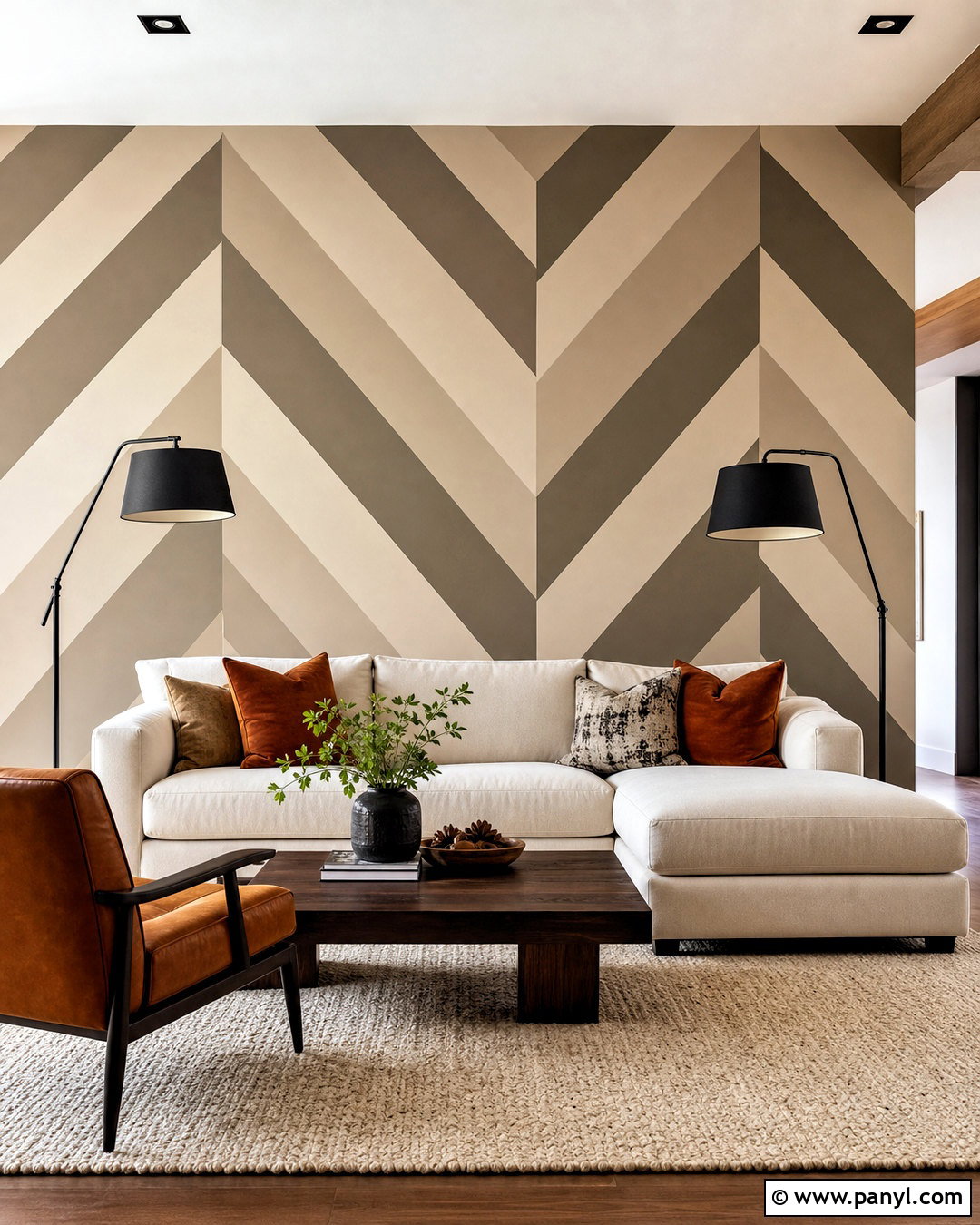
A herringbone paint pattern creates strong direction while remaining more affordable than wood paneling. Paint the feature wall soft taupe, then apply wide angled lines in a slightly deeper brown to form an oversized herringbone layout. A tone-on-tone palette keeps the wall refined and prevents visual overload. Position a deep cream sofa against it and add a dark walnut coffee table, cognac leather chair, and beige wool rug. Black metal lamps provide clean contrast, while rust and olive pillows add controlled color. Use matte paint for the base and eggshell paint for the pattern to introduce a subtle change in sheen. Large-scale lines will look calmer and more appropriate for a full living room wall.
17. Painted Panel Wall Pattern
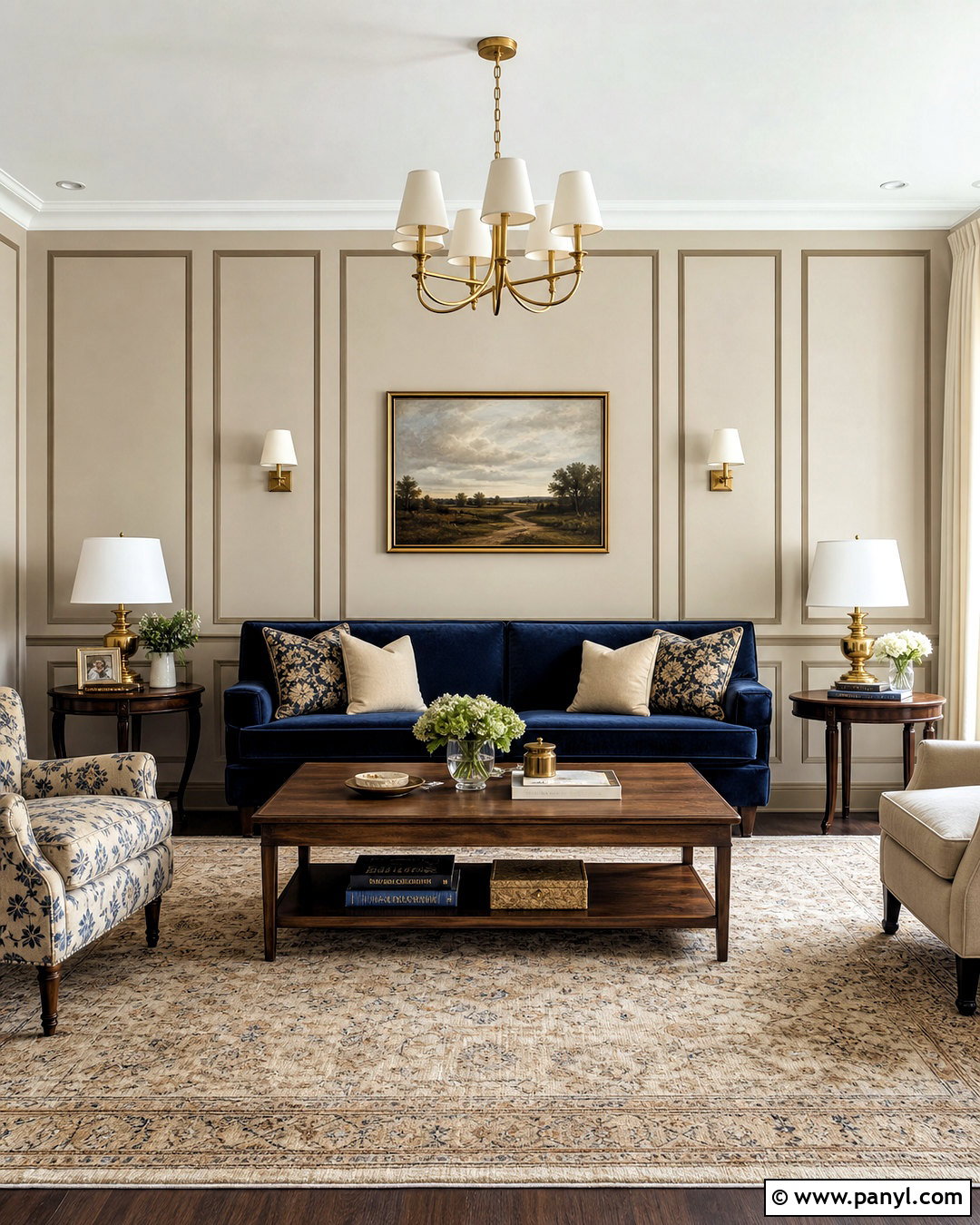
Painted panels can give a standard living room the character of traditional wall molding. Use a light greige base and outline large rectangular panels with narrow bands of deeper taupe paint. Arrange the panels symmetrically around a centered sofa or fireplace. A navy velvet sofa, warm wood coffee table, and patterned beige rug create a classic foundation. Add brass lamps, cream curtains, and framed landscape prints positioned within the painted rectangles. Carry the deeper taupe onto the baseboards to strengthen the architectural effect. Keep each outline straight and evenly spaced. This approach offers more detail than a solid accent wall, yet the neutral palette allows the room to remain comfortable, practical, and easy to update with seasonal accessories.
18. Polka Dot Wall Paint Pattern
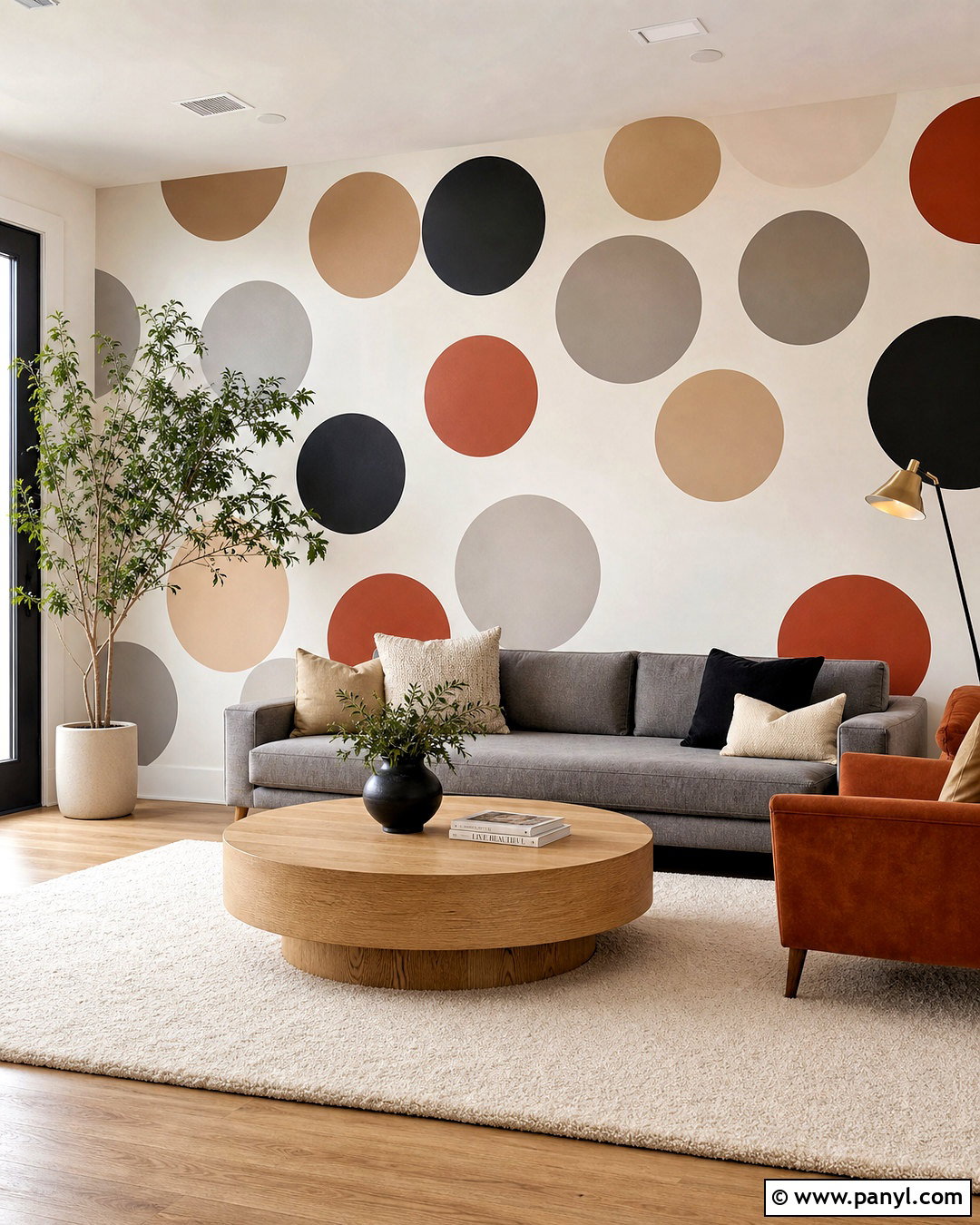
Oversized painted dots can feel polished rather than childish when used with a controlled neutral palette. Paint the wall creamy white, then scatter large circles in camel, warm gray, muted rust, and soft black. Keep the spacing loose and irregular, but maintain similar distances between neighboring dots. Place a streamlined gray sofa in front of the pattern and complete the room with an oak coffee table, ivory rug, and rust-colored armchair. Solid black and camel pillows will reinforce the design. Choose simple curtains and avoid additional circular wall decor. The dots should be large enough to read clearly behind the furniture. Limiting the palette to four subdued colors gives the room personality without creating excessive visual noise.
19. Abstract Mural Wall Paint Pattern
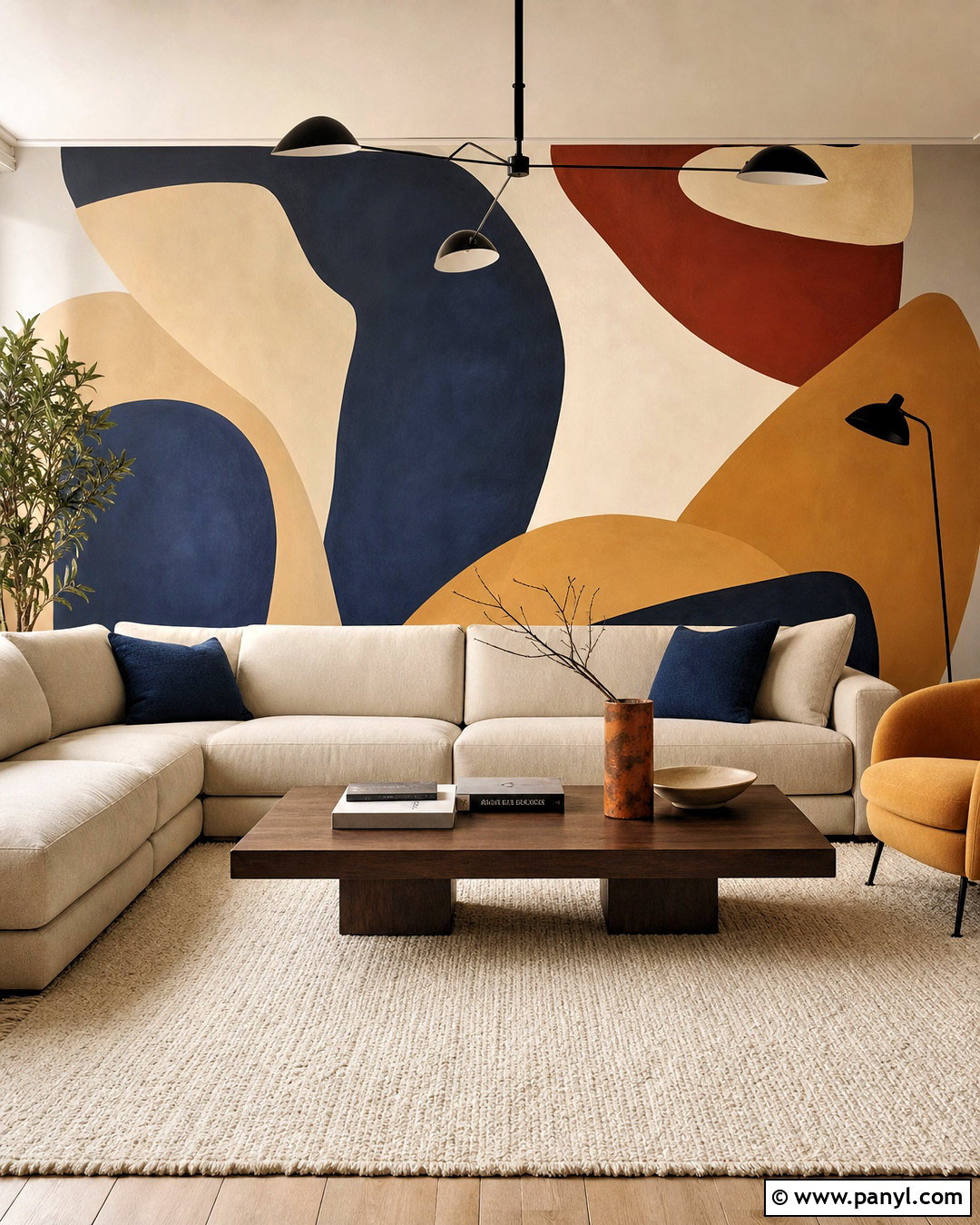
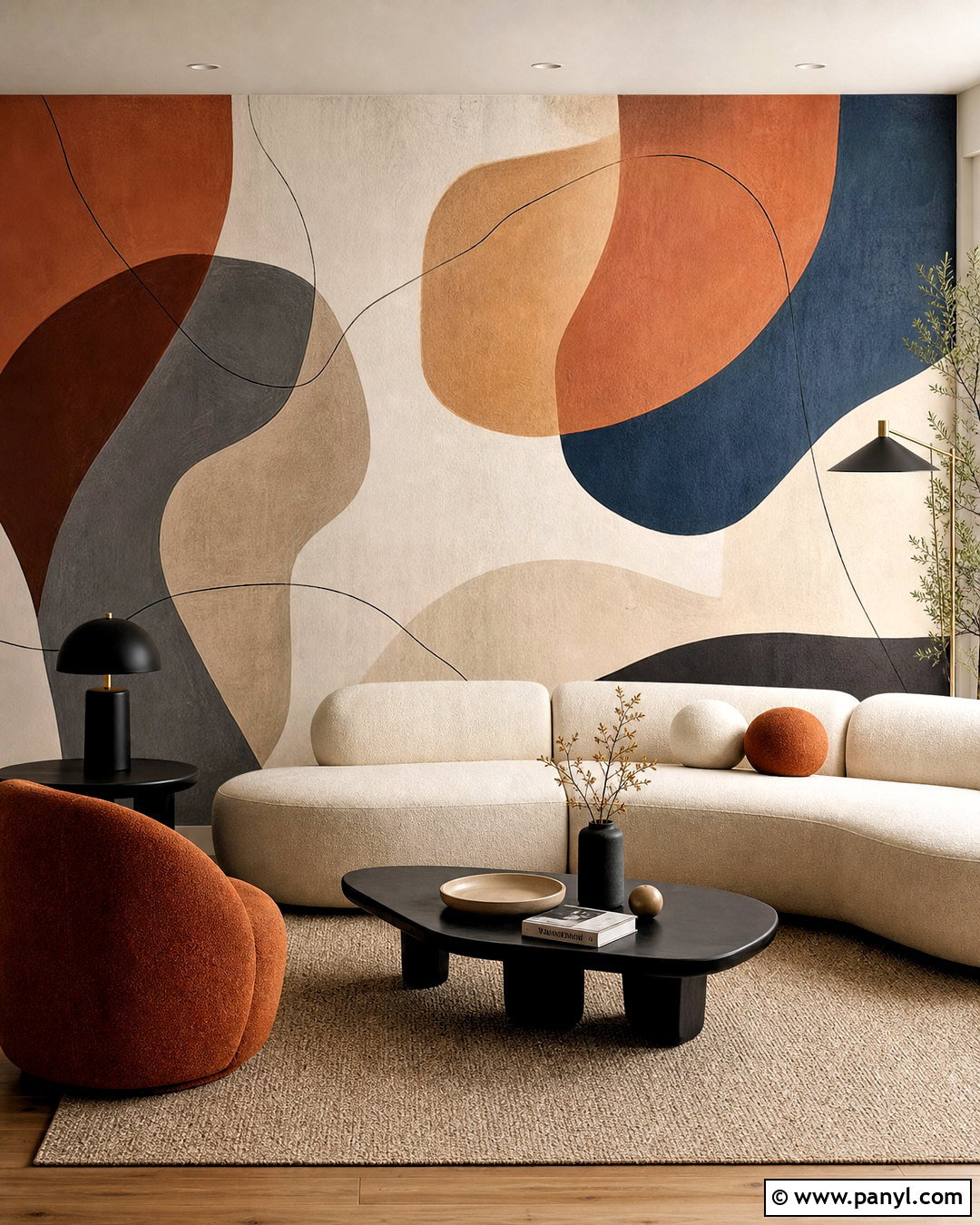
A large abstract mural can replace traditional artwork and establish the living room’s entire color story. Paint broad overlapping forms in navy blue, warm beige, muted ocher, clay red, and cream. Keep the composition asymmetrical, with the strongest colors concentrated near the sofa and quieter shapes extending outward. Add a light beige sectional, dark wood coffee table, and textured cream rug. Navy pillows and an ocher chair will pull color from the mural into the furniture. Use simple black lighting and minimal tabletop decor. Leave the remaining walls warm white. Before painting, sketch the full composition on paper and mark major shapes lightly in pencil so the final mural feels balanced across the wall.
20. Tone On Tone Stencil Wall Paint Pattern
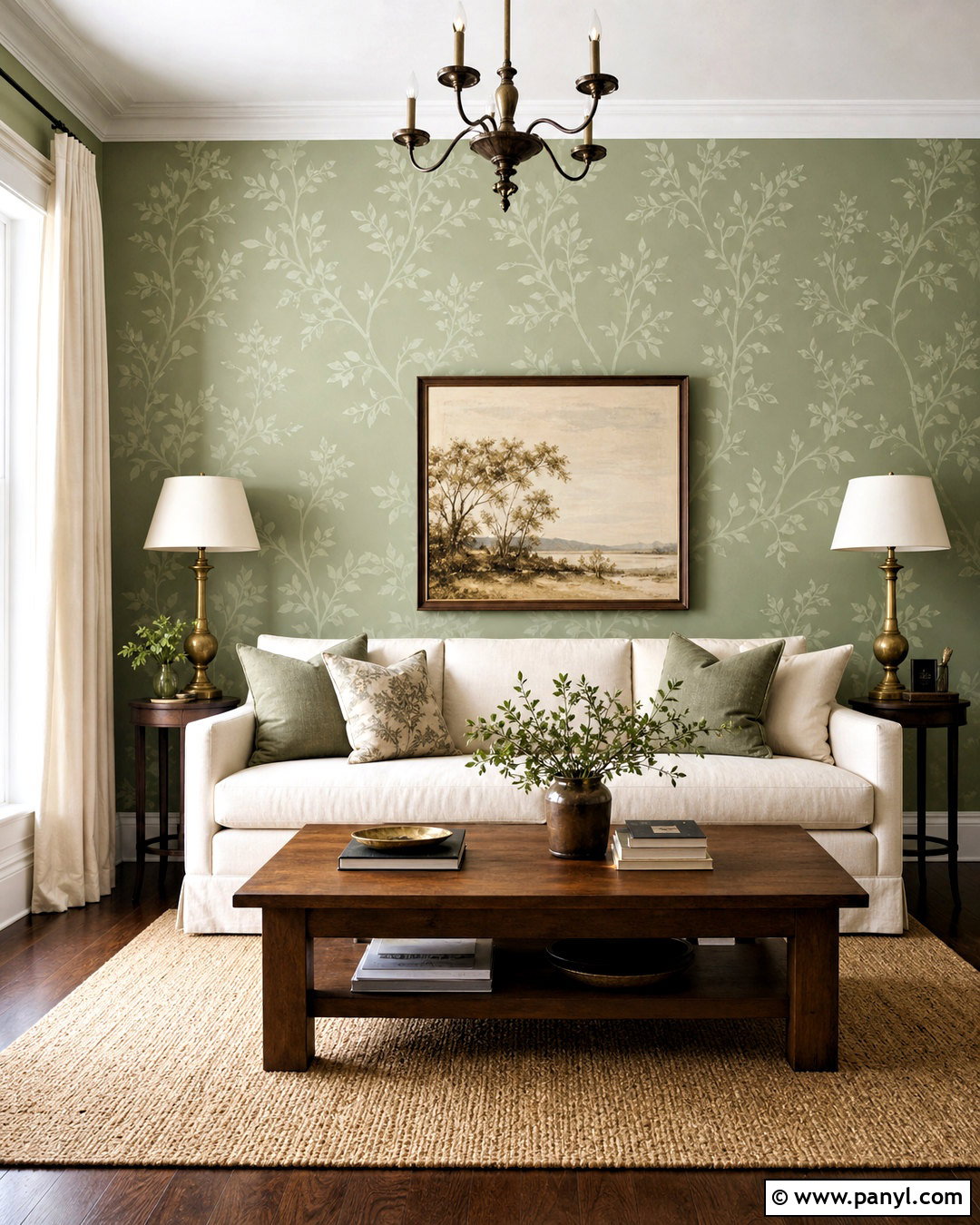
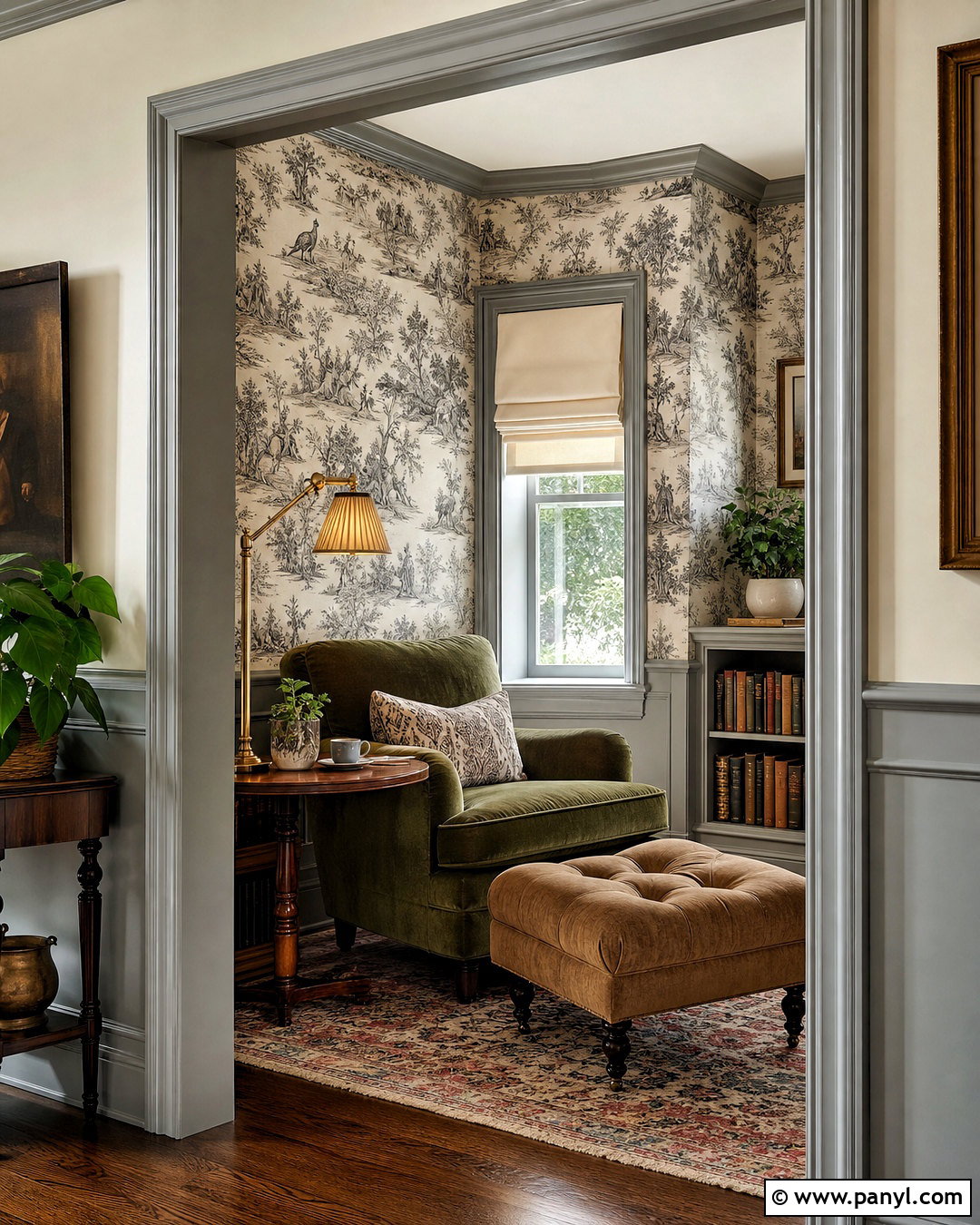
A tone-on-tone stencil pattern adds refined detail without introducing another strong color. Paint the living room walls muted sage green, then apply a large botanical or geometric stencil in a slightly lighter sage. Position the pattern across the entire sofa wall for an even, wallpaper-like effect. A cream linen sofa, walnut coffee table, and natural jute rug will keep the room warm and grounded. Add olive pillows, antique brass lamps, and off-white curtains. Use matte paint for the base and satin paint for the stencil so changing light reveals the pattern gently. Keep artwork limited to one large neutral piece. The restrained palette makes the finished room interesting, cohesive, and comfortable for everyday living.
Conclusion:
These 20 wall paint patterns living room ideas show how color can reshape a space without major construction or expensive materials. Bold geometric walls and murals make memorable focal points, while stripes, grids, stencils, and two-tone treatments offer quieter structure. Before painting, consider where the sofa, television, windows, and lighting will sit. Test colors in the room throughout the day, and sketch the pattern to scale before using tape. Choose furniture and decor that repeat a few wall colors rather than competing with every shade. Most importantly, match the pattern’s scale to the wall. A thoughtful design, balanced palette, and carefully arranged room will create a polished result that feels personal and practical.

Related Ideas and Inspiration:

Leave a Reply