
A creative painted wall can give a room structure, color, and personality without the cost or commitment of wallpaper. These 20 wall paint patterns range from clean stripes and checkerboards to soft arches, organic brushstrokes, and nature-inspired murals. Each look is designed as part of a complete room, with practical color combinations, furniture choices, and finishing details that make the pattern feel intentional. Before painting, test your colors together, measure the wall, and sketch the design on paper. Painter’s tape, a level, chalk, and small angled brushes will help produce cleaner shapes. Whether you prefer quiet neutrals or playful color, you can find an approachable look among the 20 wall paint patterns below.

1. Geometric Color Block Wall Paint Pattern
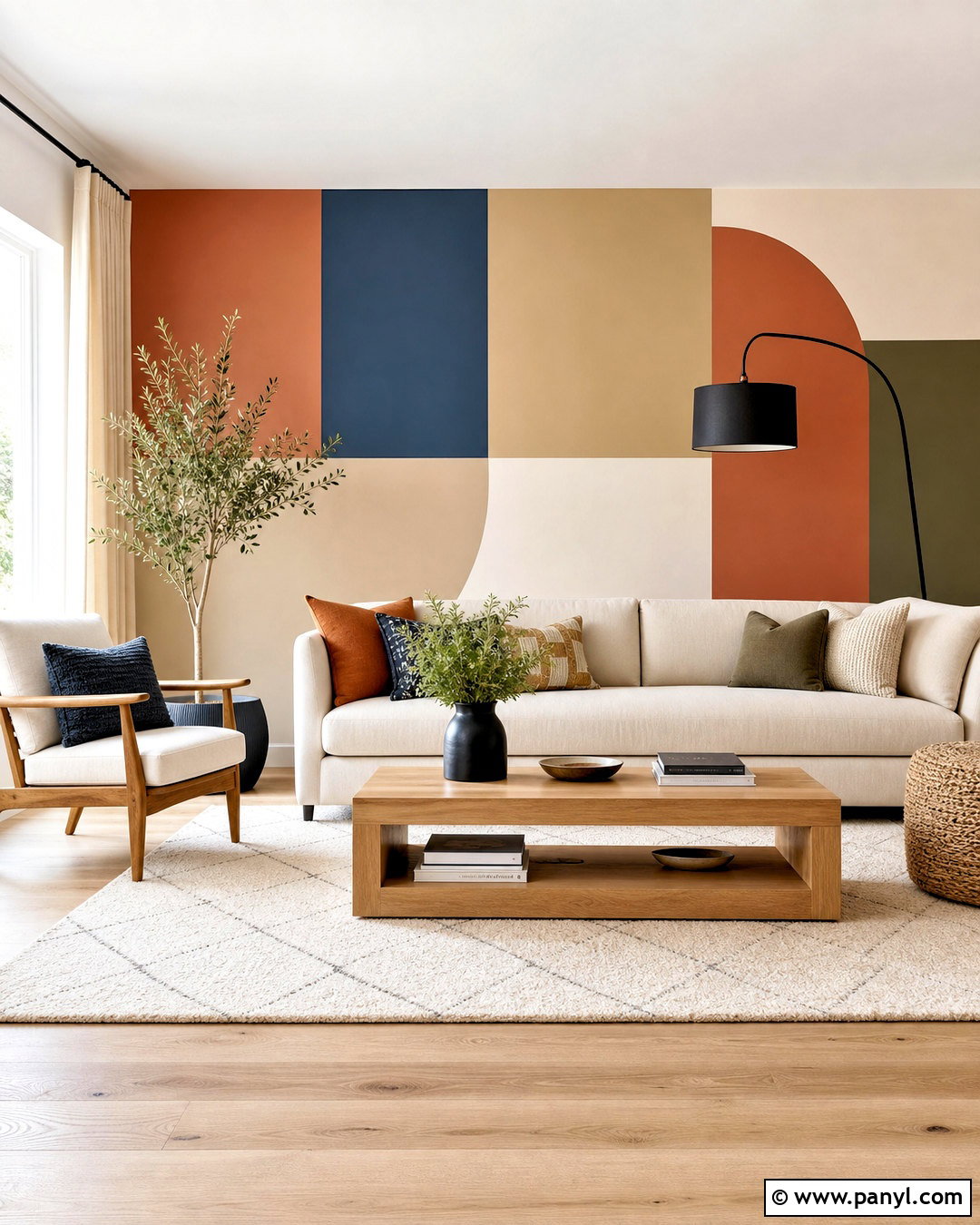
A geometric color block wall brings energy to a modern living room without requiring extra artwork. Begin with a warm off-white background, then divide the main wall into oversized triangles, rectangles, and angled sections. Use muted terracotta, dusty blue, soft beige, and deep olive so the design feels colorful but livable. Keep the largest shapes behind a low-profile cream sofa, where they can frame the seating area instead of competing with it. Add a light oak coffee table, a textured ivory rug, black metal lighting, and cushions that repeat two of the painted shades. Limit small decorative objects and leave some open wall space. This balance allows the pattern to remain the focal point while the whole room still feels calm.
2. Painted Arch Wall Pattern
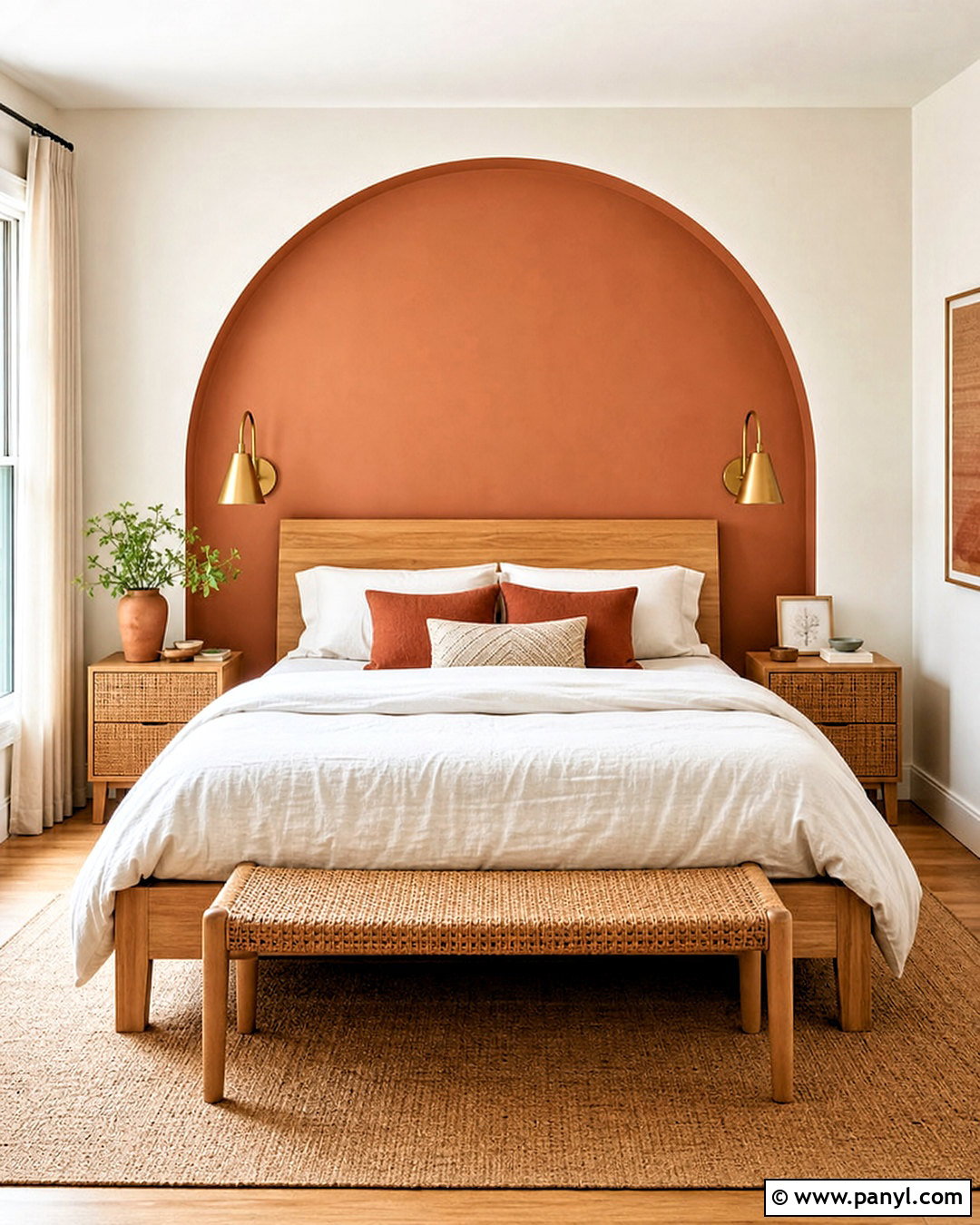
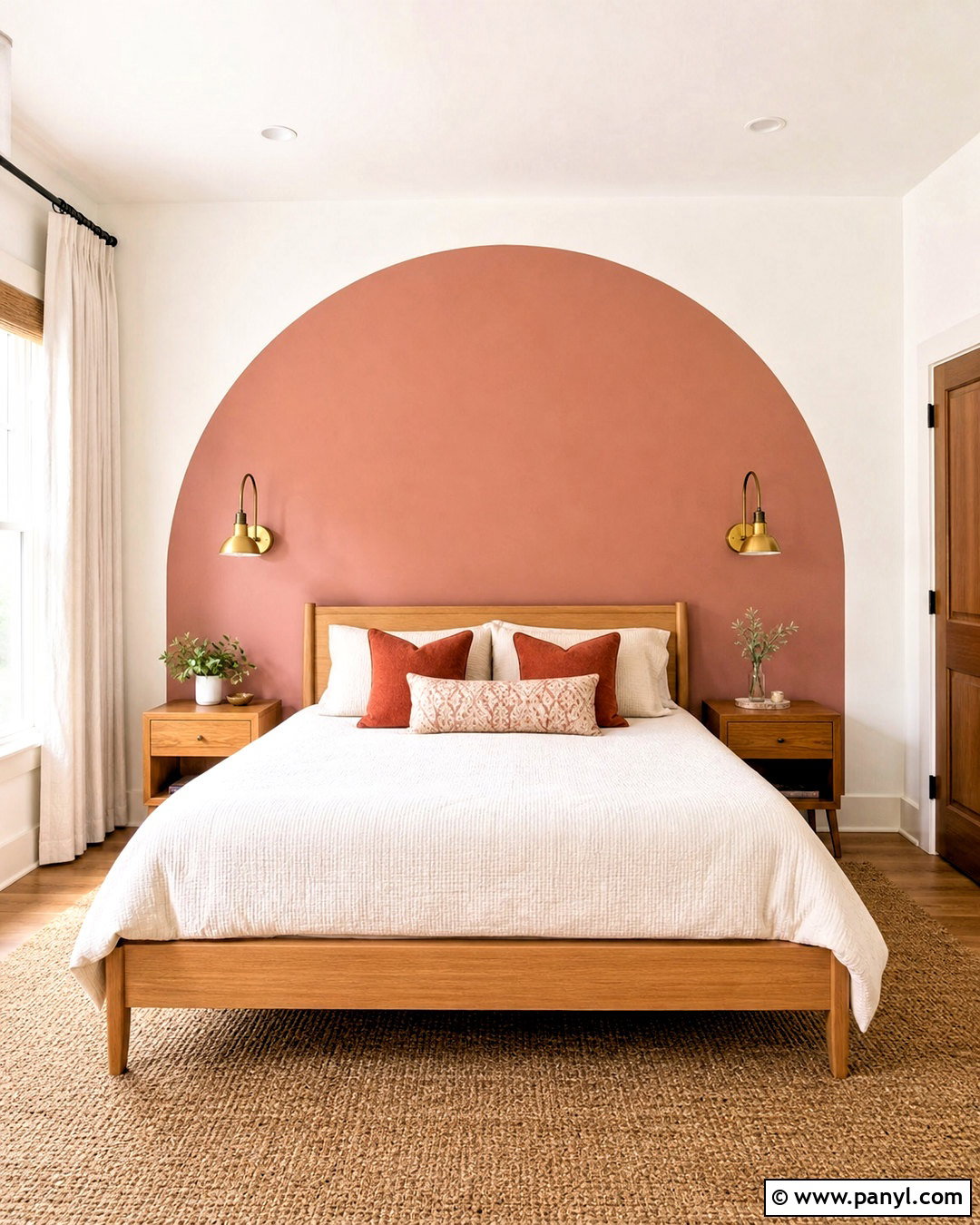
A painted arch can create the appearance of architectural depth on a completely flat wall. In a bedroom, position one wide arch behind the headboard and make it slightly broader than the bed. A warm clay arch against creamy white walls creates a grounded, welcoming backdrop. Pair it with a simple oak bed, white linen bedding, rust-colored pillows, and woven nightstands. Matching brass sconces placed inside the arch emphasize its curved outline and keep the arrangement symmetrical. Use a pencil tied to string to mark the rounded top, then complete the straight sides with a level. Carry the clay shade into a bench or small rug, but avoid using it everywhere. The result should feel cohesive, relaxed, and intentionally framed.
3. Vertical Stripe Wall Paint Pattern
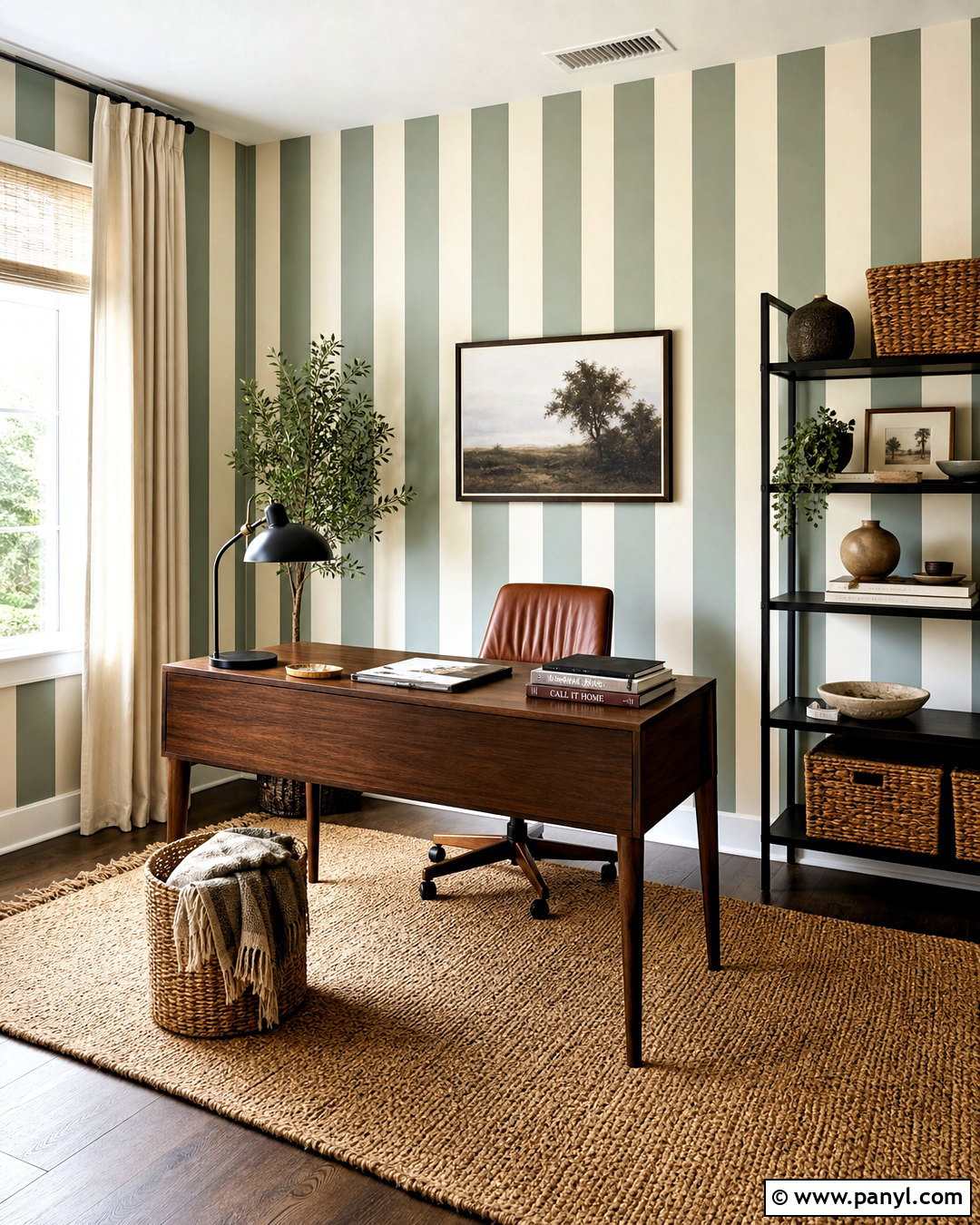
Crisp vertical stripes can give a compact room a taller, more orderly appearance. Try alternating wide soft sage green stripes with narrower creamy white stripes on the focal wall of a home office. Place a walnut desk in the center, then add a caramel leather chair and slim black shelving. Natural textures, including a jute rug and woven storage baskets, soften the strong linear pattern. For clean spacing, calculate the complete pattern before applying tape, starting from the center of the wall and working outward. Paint over tape edges with the base color before adding green to help create sharper lines. Keep artwork minimal and use one large framed print rather than a busy gallery. This lets the stripes establish rhythm without making the workspace distracting.
4. Horizontal Stripe Wall Paint Pattern
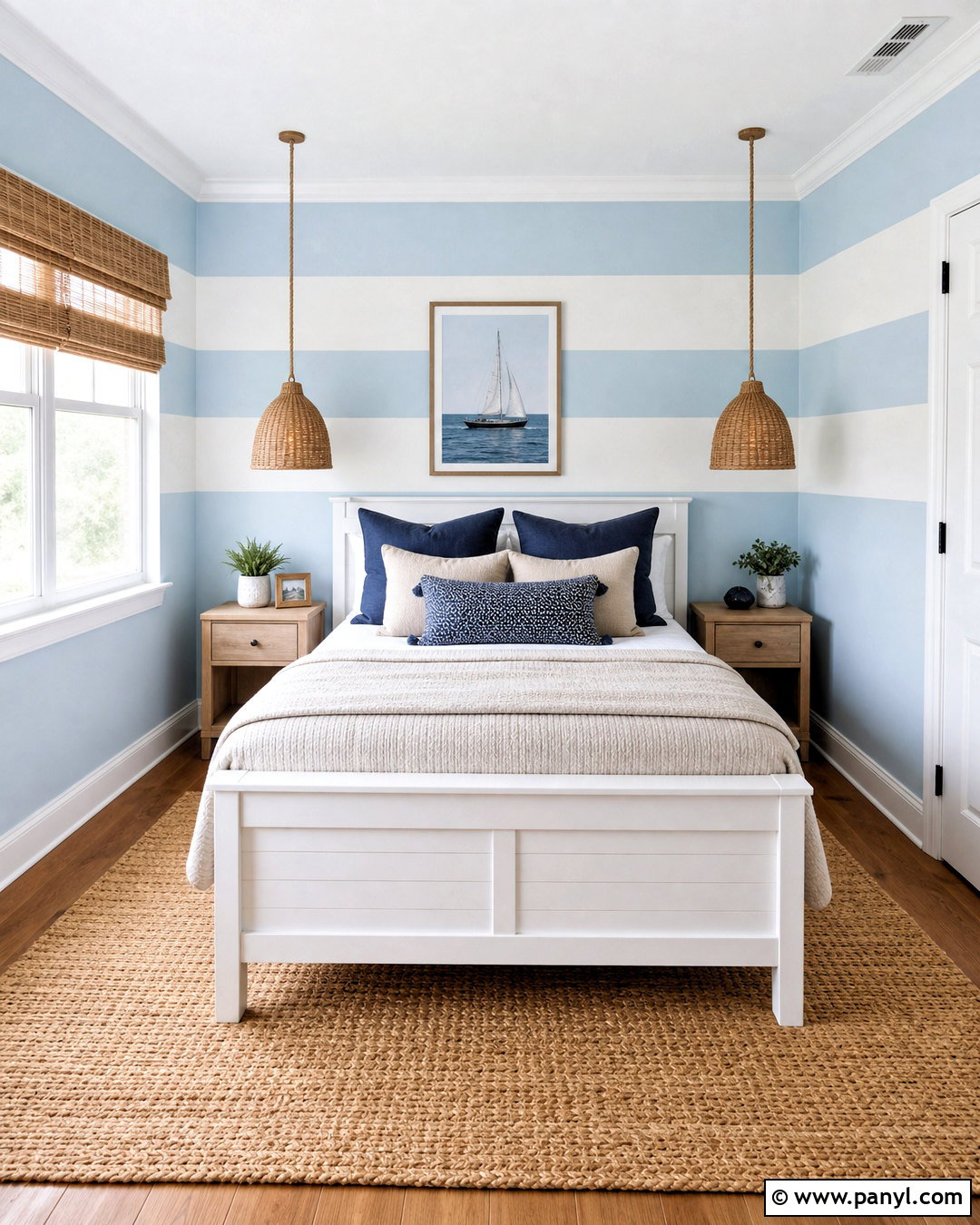
Wide horizontal stripes create a relaxed, expansive backdrop that works especially well in a narrow guest room. Paint alternating bands of pale blue and warm white across the wall behind the bed. Choose stripes at least 12 inches deep so the finished design feels modern rather than overly busy. A white-painted bed frame, oatmeal bedding, navy accent pillows, and light wood nightstands complete the airy palette. Add a woven pendant light and a natural fiber rug for warmth. Continue the stripe pattern across the entire focal wall, but leave the remaining walls solid warm white. Measure every line from the floor instead of the ceiling, since floors usually provide the most noticeable reference point. The coordinated design will feel fresh, balanced, and comfortably coastal.
5. Checkerboard Wall Paint Pattern
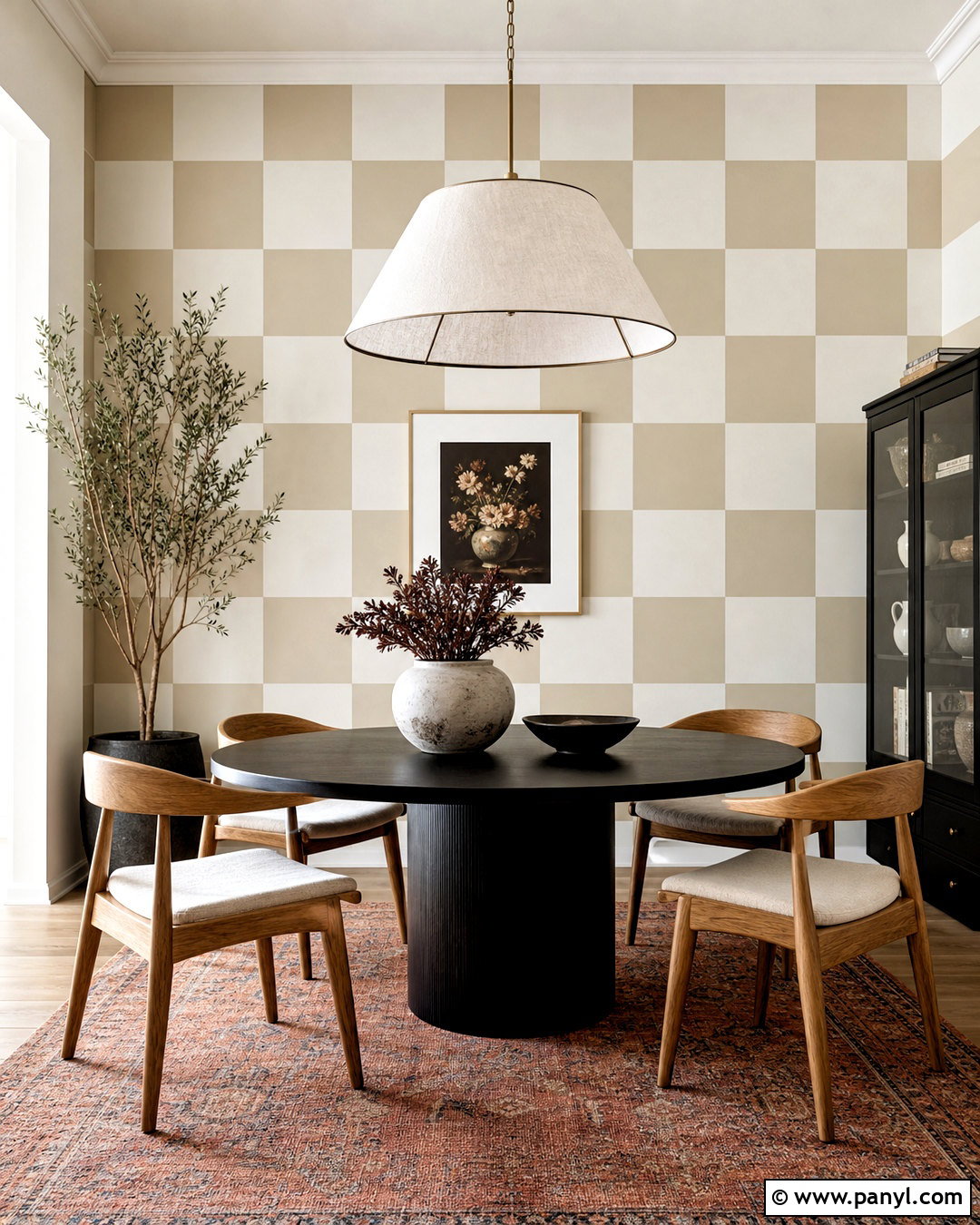
Checkerboard paint can look sophisticated when the squares are oversized and the colors are softly contrasted. For a dining nook, combine warm beige and muted cream squares across one complete wall. Use a laser level or chalk lines to create an even grid, and carefully label every alternating square before painting. A round black dining table introduces contrast, while curved oak chairs prevent the space from feeling too rigid. Finish the setting with a linen pendant, a simple ceramic centerpiece, and a rust-colored rug beneath the table. Keep neighboring walls creamy white and repeat black only in small details, such as picture frames or curtain rods. The large-scale checkerboard gives the nook personality while maintaining a calm, neutral atmosphere suitable for everyday meals.
6. Ombre Wall Paint Pattern
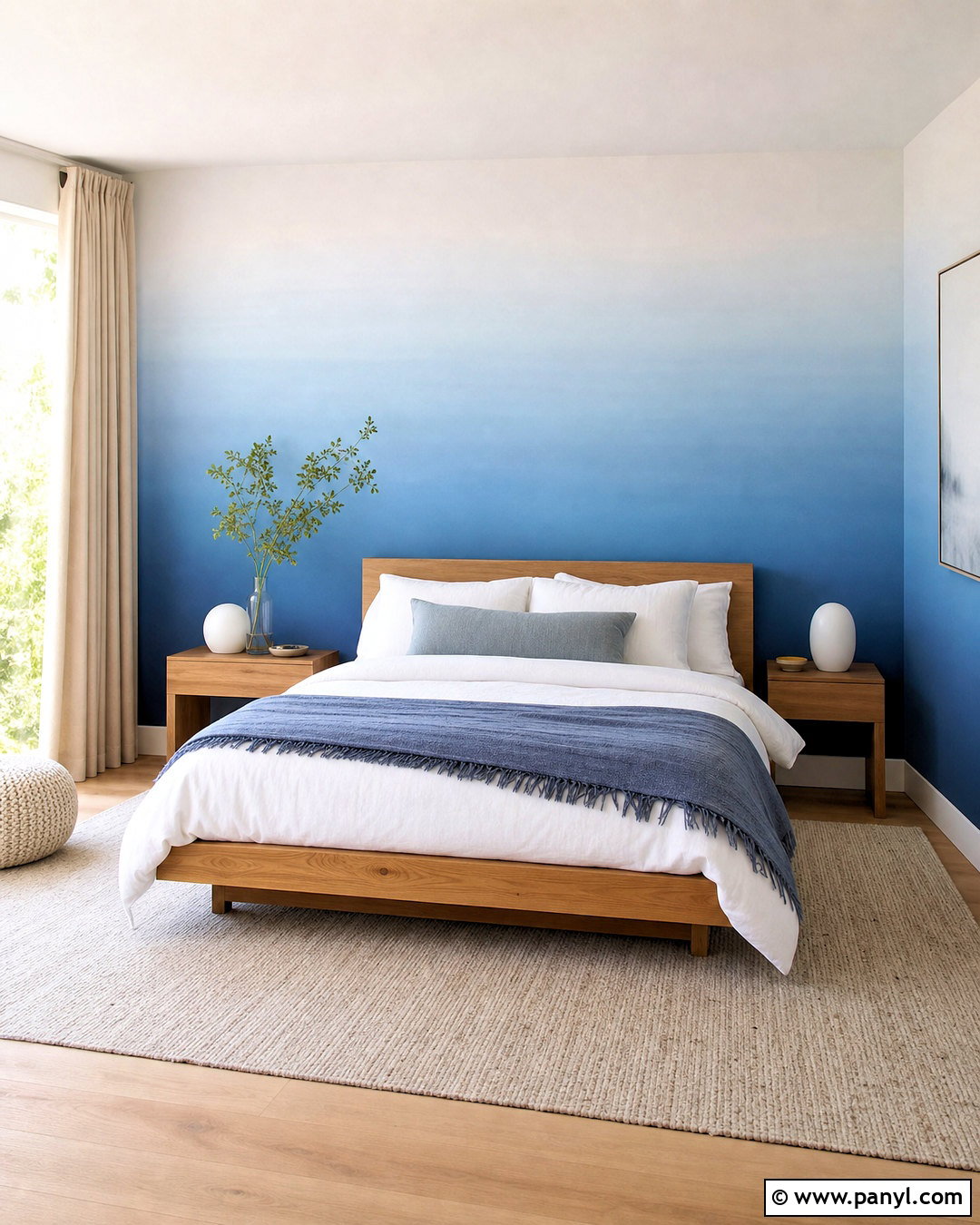
Softly blended ombre paint can transform a bedroom into a restful, atmospheric retreat. Start with deep dusty blue near the floor, transition through muted denim, and finish with pale sky blue toward the ceiling. Blend each section while the paint remains workable so harsh bands do not interrupt the gradual fade. Place a low natural-oak bed against the wall to keep plenty of the gradient visible. Layer white bedding with blue-gray throws, then introduce oatmeal curtains and a light wool rug to warm the cooler palette. Frosted glass lamps and minimal artwork maintain the quiet feeling. Paint the other walls in the lightest blue from the gradient. This connects the room while allowing the ombre feature wall to remain the main visual experience.
7. Scalloped Wall Paint Pattern
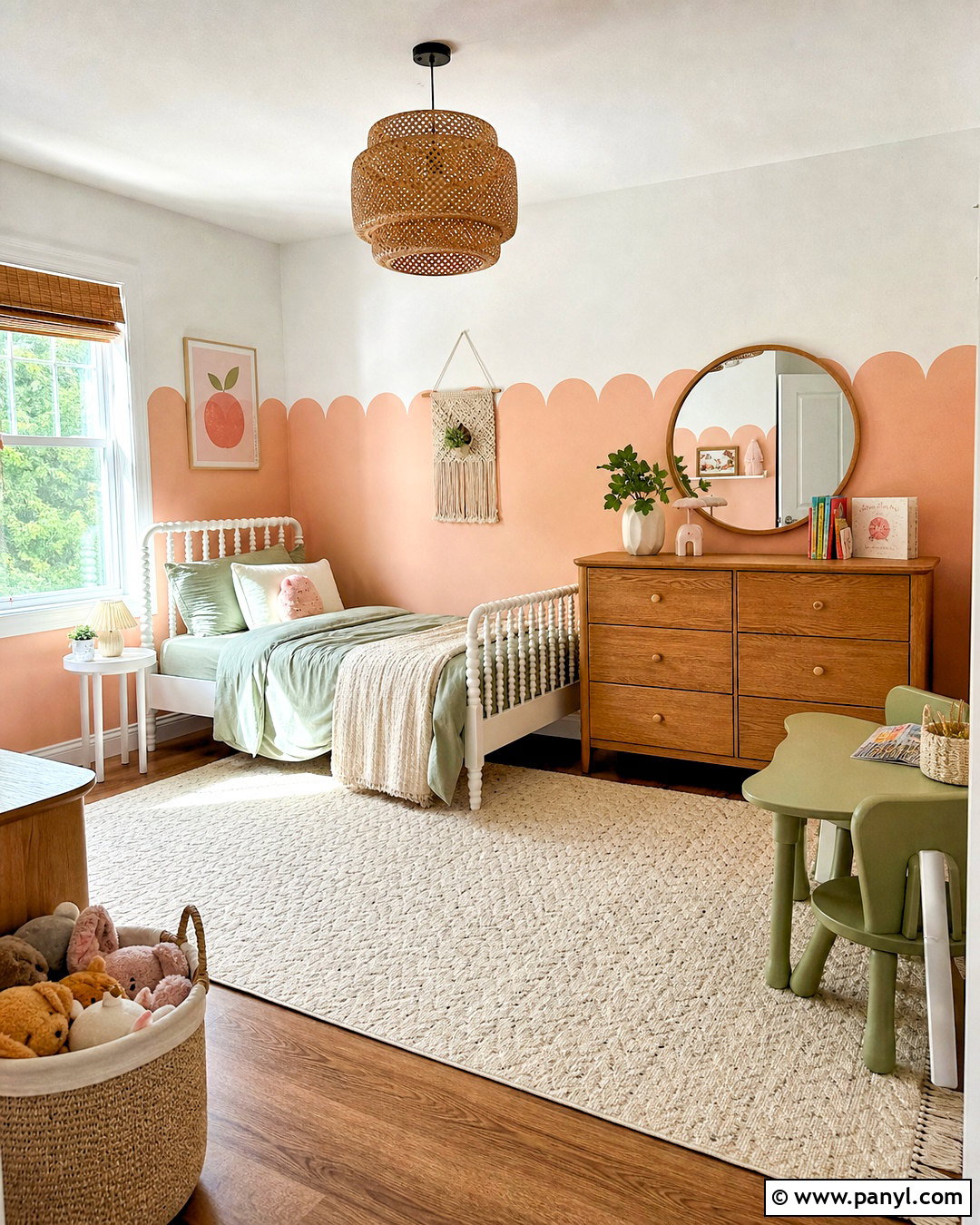
A scalloped border adds cheerful movement to a child’s bedroom without covering every wall in bold color. Paint the lower two-thirds of the room soft peach, then form a continuous row of rounded scallops where the peach meets a warm white upper wall. Use a round template to keep every curve consistent. A white spindle bed, light oak dresser, washable cream rug, and muted sage bedding create a balanced room that can mature over time. Repeat the scallop shape subtly through a rounded mirror or globe ceiling light. Keep toys organized in woven baskets so the painted edge remains easy to see. The combination of simple furniture and gentle color gives the room a playful character without making it feel overly themed or visually crowded.
8. Two Tone Half Wall Paint Pattern
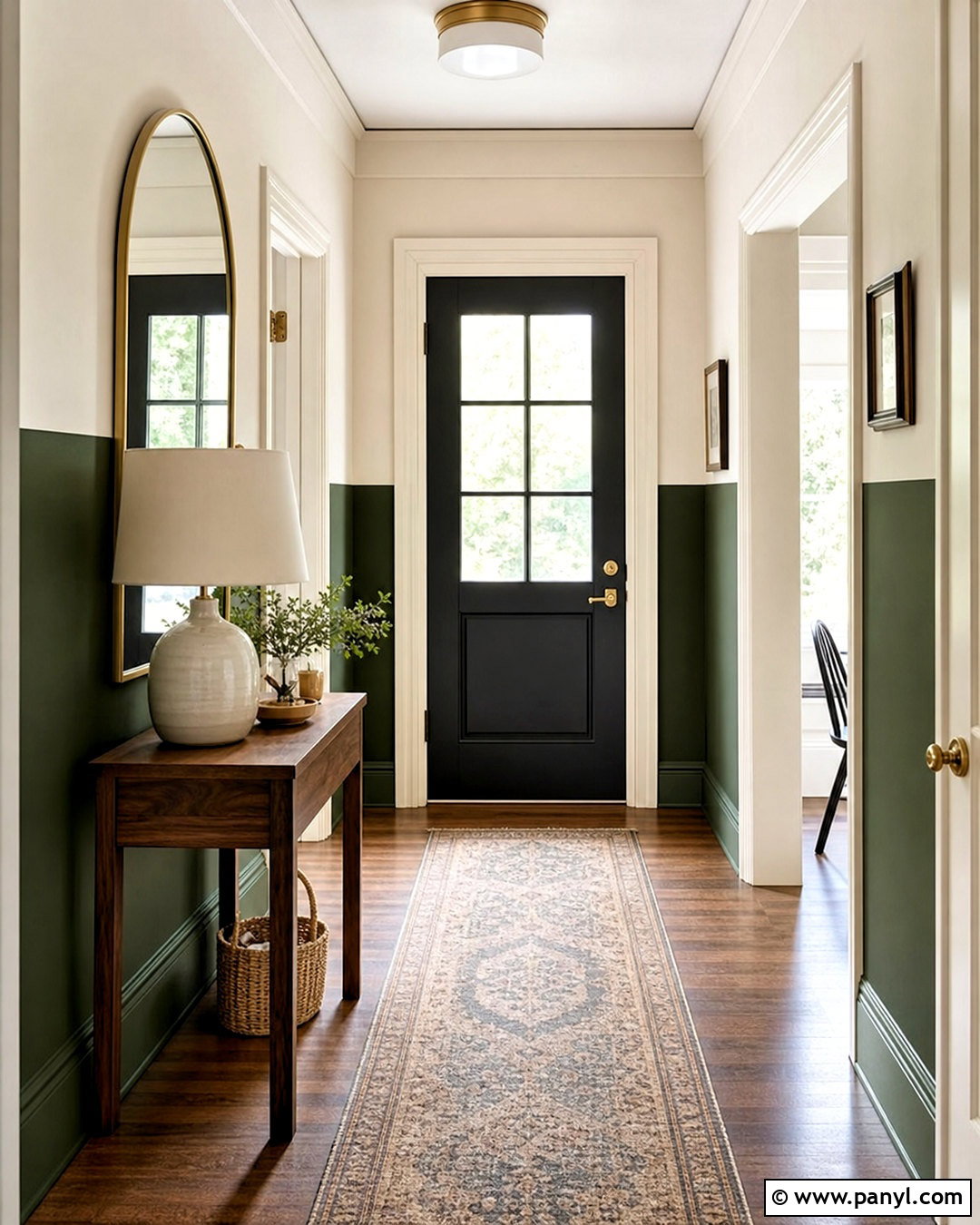
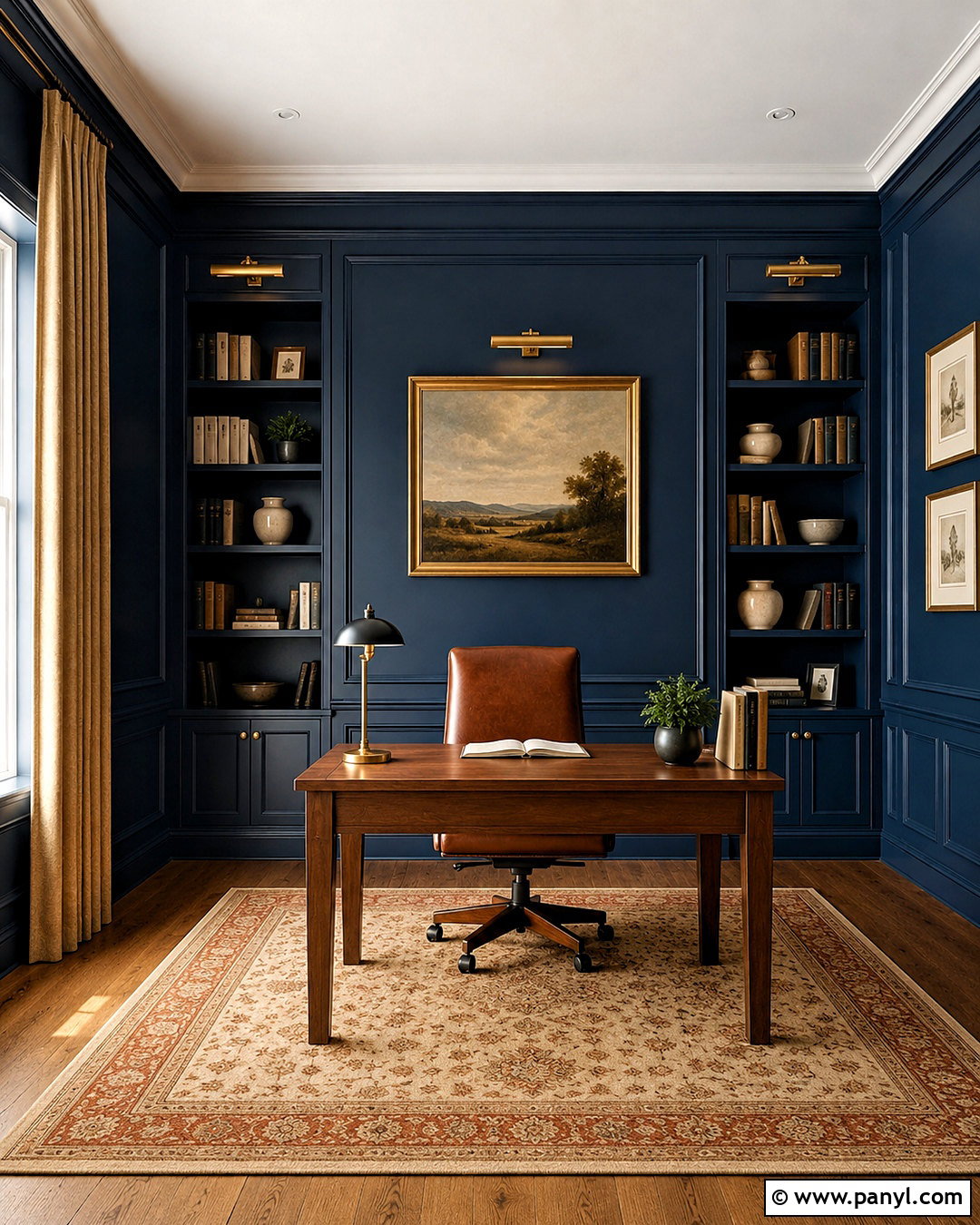
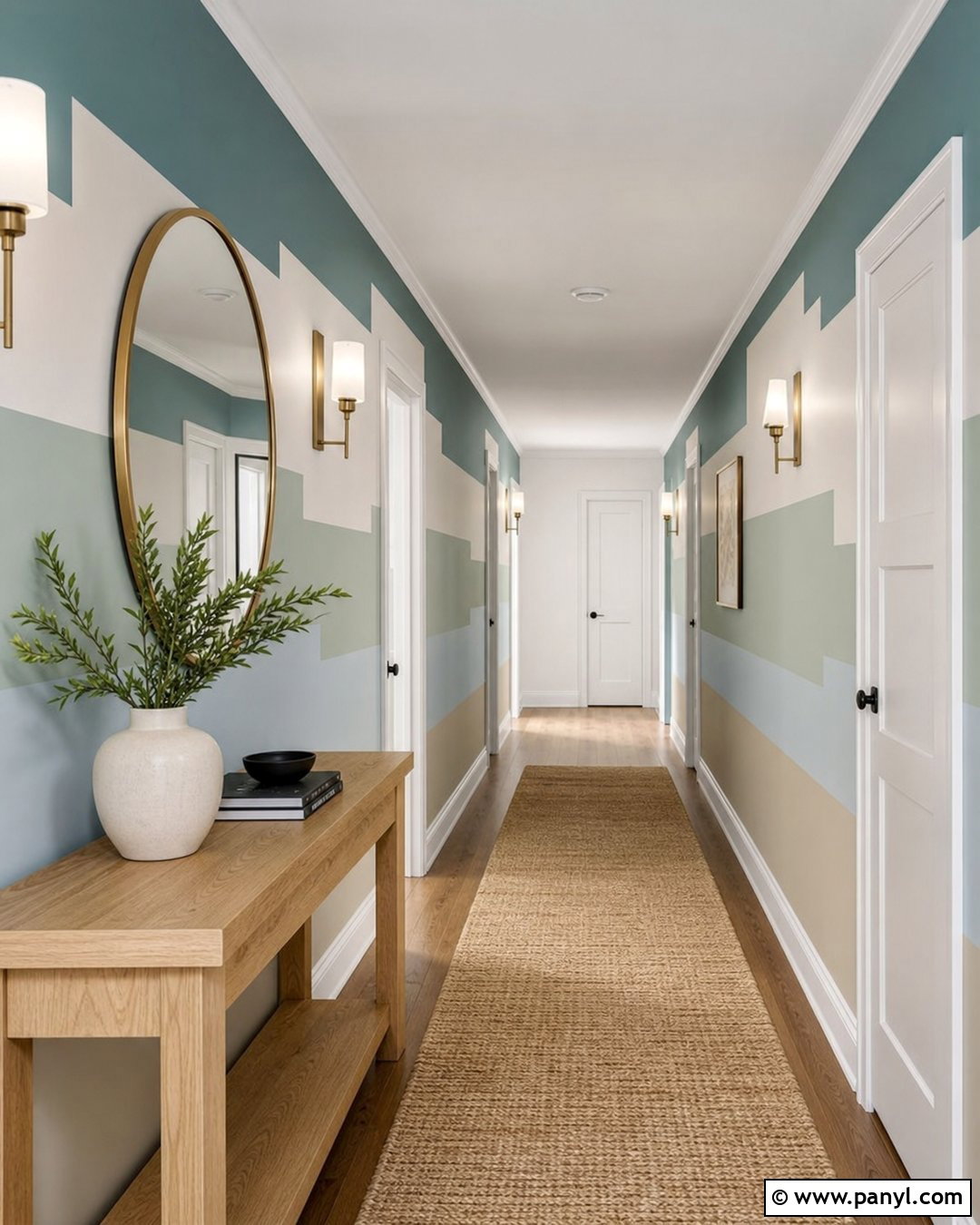
A two-tone wall is one of the easiest patterns to measure, paint, and coordinate with furniture. In an entryway, use deep forest green on the lower half and soft ivory above it. Position the dividing line slightly higher than standard chair-rail height for a stronger, more contemporary look. Add a narrow walnut console, an arched brass mirror, and a cream table lamp to form a welcoming focal point. A vintage-inspired runner can combine green, tan, and muted red without overwhelming the space. Paint the baseboards green to create a clean foundation, while keeping door frames ivory for contrast. Hooks or framed artwork should remain above the dividing line. This complete scheme makes a hardworking entrance feel polished, warm, and deliberately organized.
9. Diagonal Stripe Wall Paint Pattern
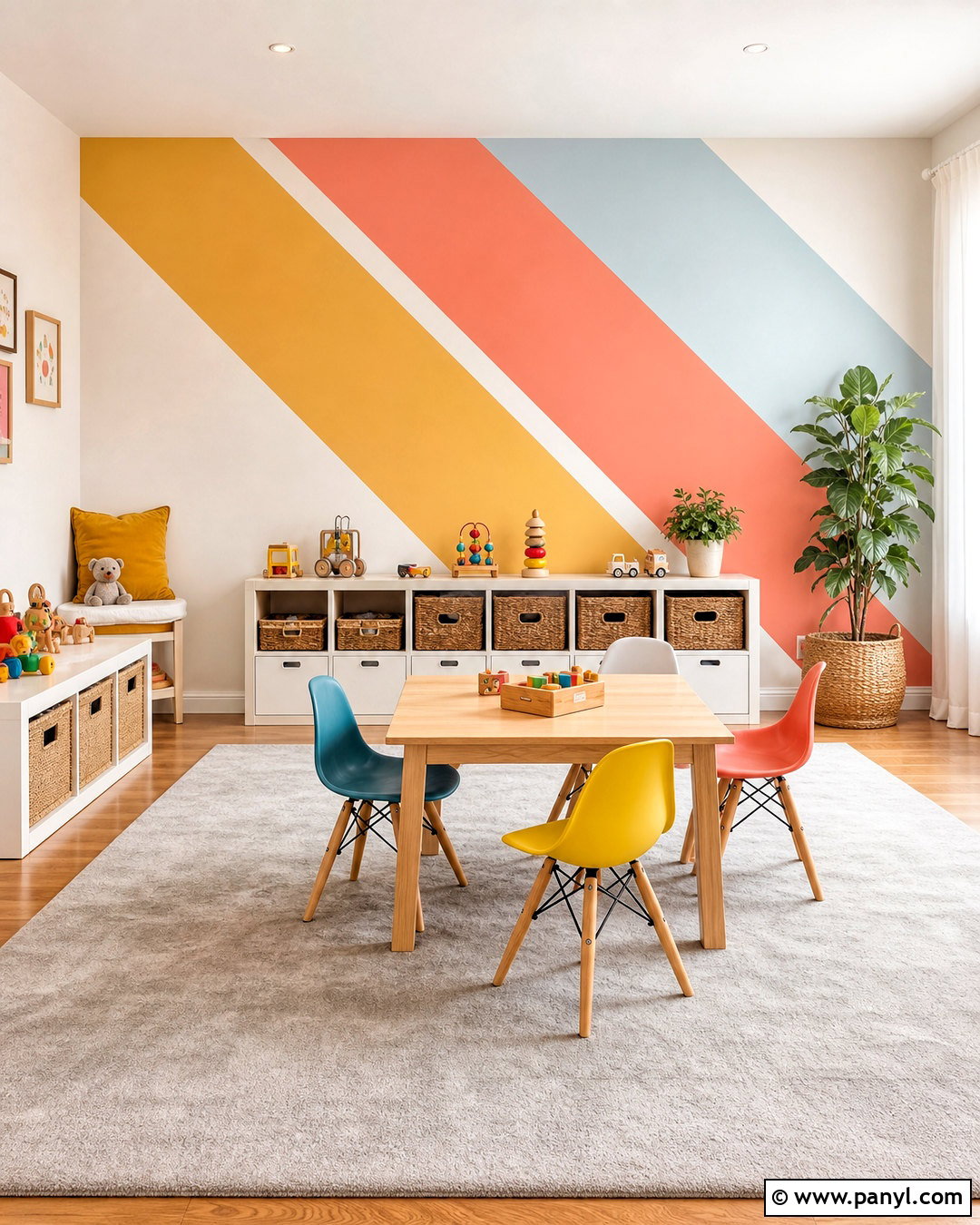
Sweeping diagonal stripes introduce movement that can make a plain playroom feel lively and imaginative. Use broad bands of mustard yellow, dusty coral, pale blue, and warm white moving upward across one long wall. Keep the angles and stripe widths consistent so the result feels planned rather than chaotic. Place low white storage cabinets along the base, topped with labeled woven bins and a few wooden toys. A pale gray washable rug creates a neutral play zone, while a small birch table and colorful chairs repeat the wall palette. Leave the surrounding walls warm white and choose simple window treatments. Since the painted lines already supply strong visual energy, avoid busy bedding, rugs, or artwork. The finished room will feel bright, practical, and easy to maintain.
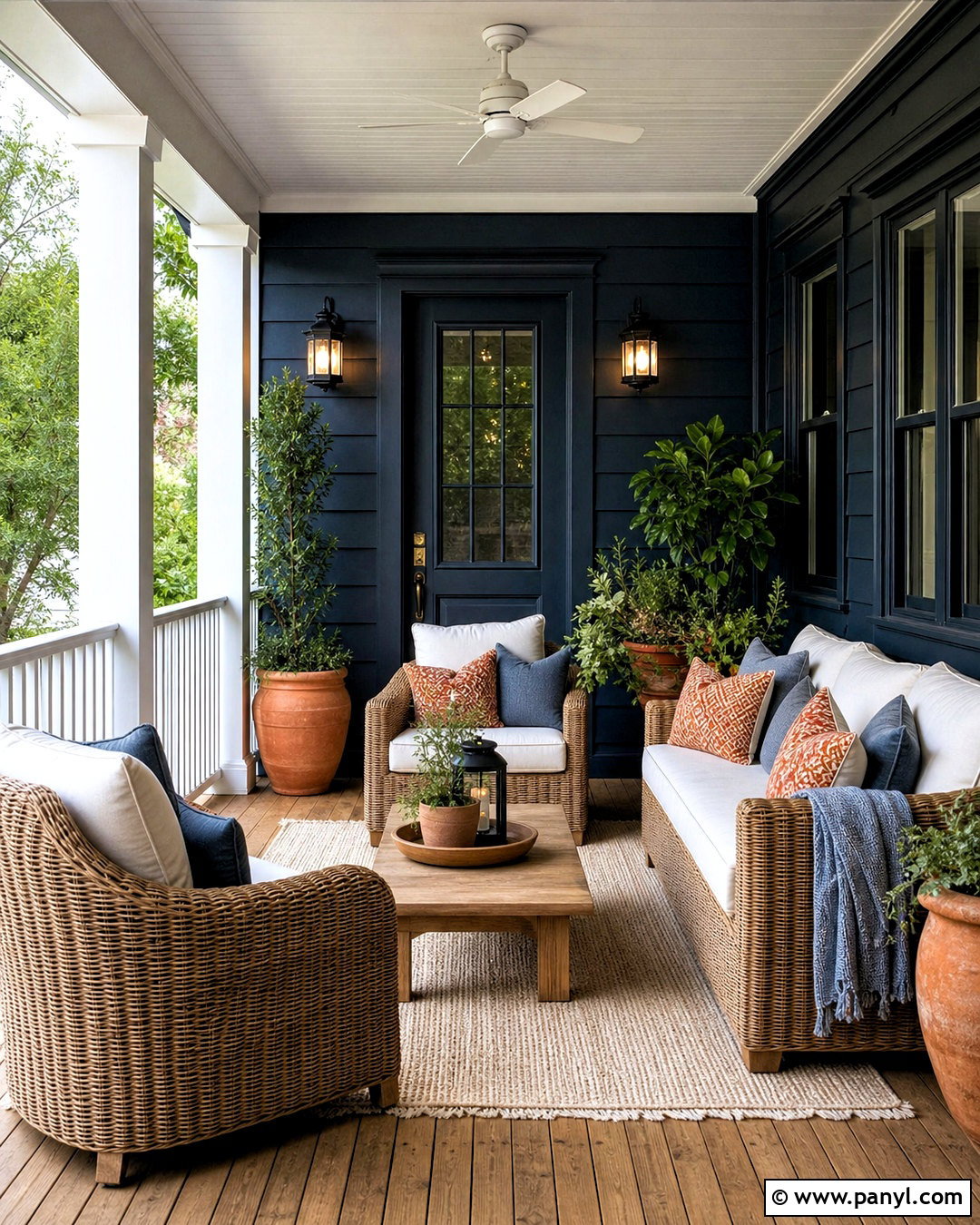
10. Chevron Wall Paint Pattern
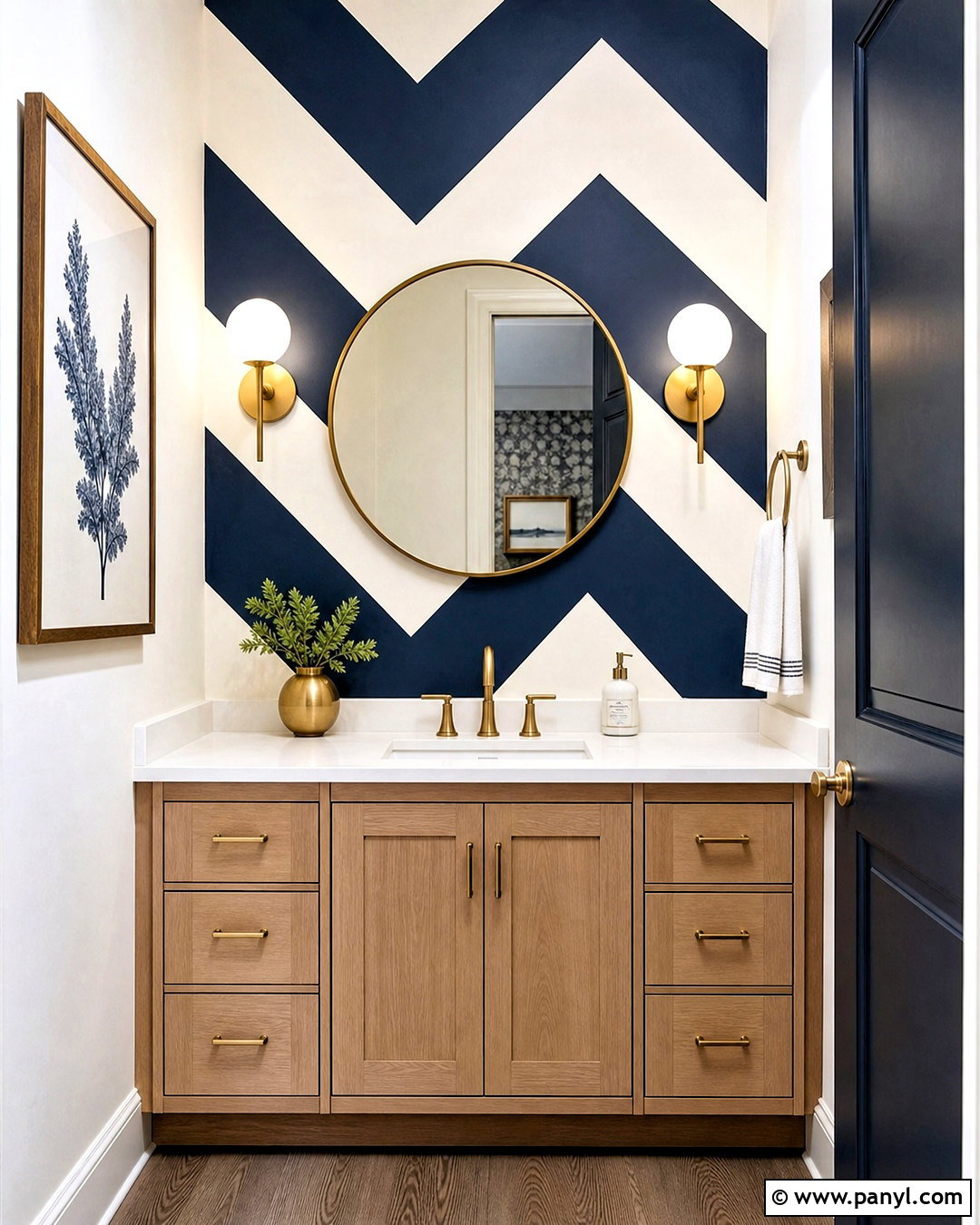
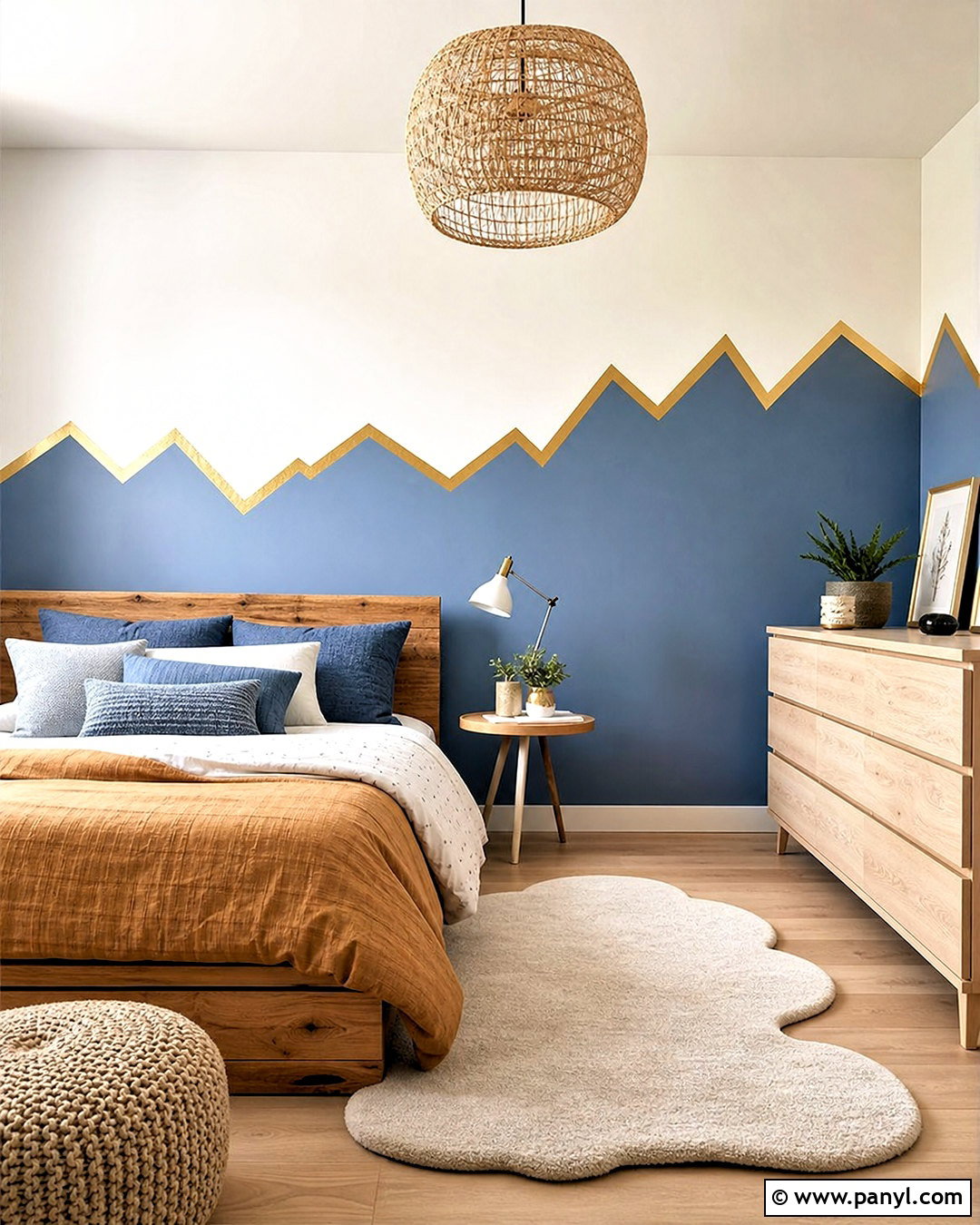
A large chevron pattern can give a small powder room a bold focal point without demanding complicated decor. Paint broad zigzags in deep navy blue and warm white on the wall behind a compact vanity. Measure the center points carefully, then use a level and painter’s tape to connect each peak. A light oak vanity, white quartz counter, brushed brass faucet, and round brass mirror warm the crisp pattern. Keep the remaining walls solid white and use matte navy on the door for continuity. Simple globe sconces provide even light without hiding the painted design. Finish with a natural woven basket and solid white towels. Limiting the palette and enlarging the chevrons makes the room feel graphic, polished, and more spacious than a smaller, busier pattern would.
11. Herringbone Wall Paint Pattern
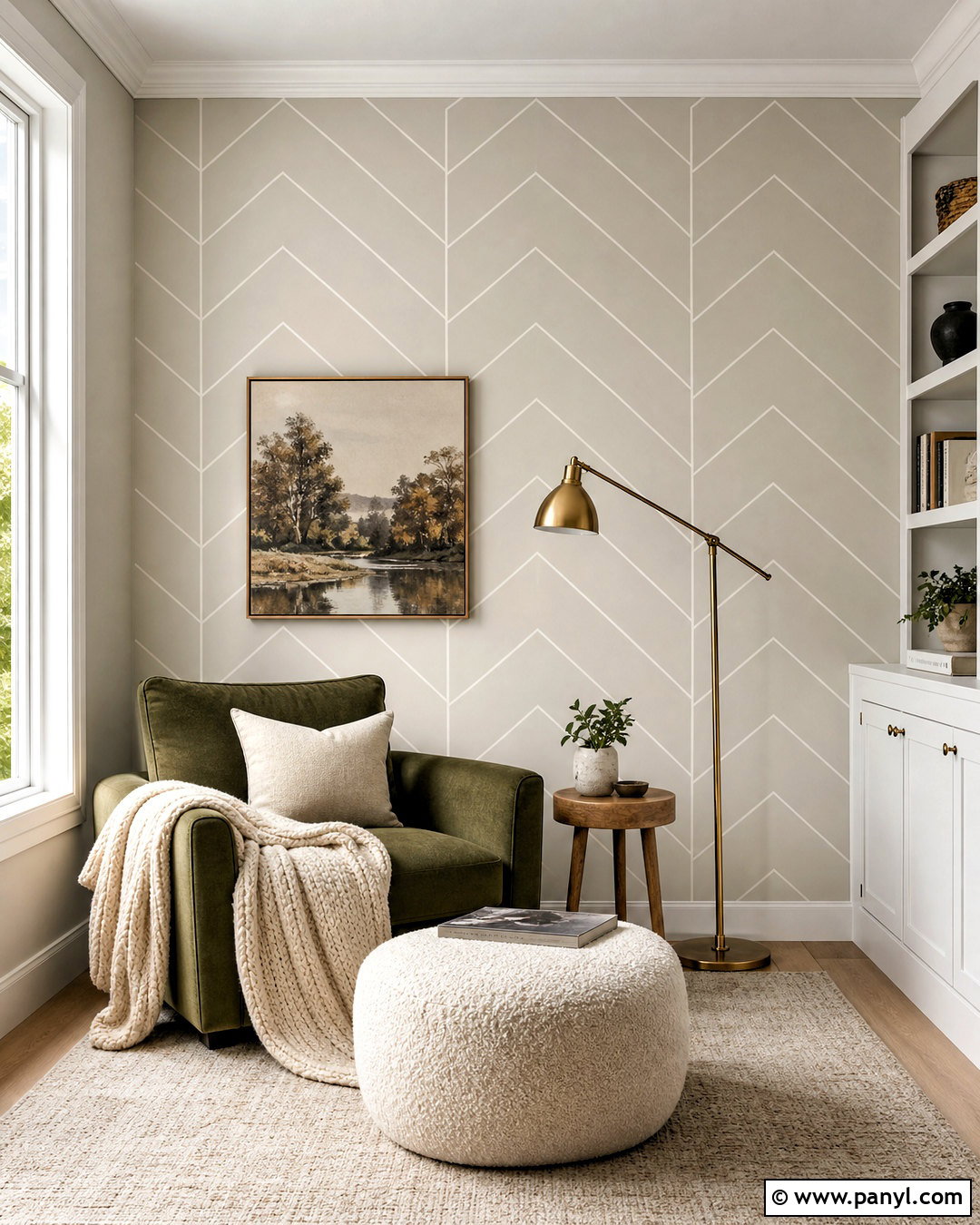
Painted herringbone offers the tailored look of repeating tile without adding physical texture or grout lines. In a reading nook, begin with a pale greige wall and add thin warm white lines in an oversized herringbone arrangement. Carefully measured rectangles will produce the most convincing woven effect. Place a deep olive armchair in front of the pattern with a small oak side table and an adjustable brass floor lamp. A cream boucle ottoman, wool throw, and neutral rug make the nook more inviting. Keep nearby bookcases the same greige as the base wall so they blend into the background. The subtle contrast allows the herringbone to add detail without becoming restless. This complete arrangement works especially well in quiet corners that need definition and purpose.
12. Painted Grid Wall Pattern
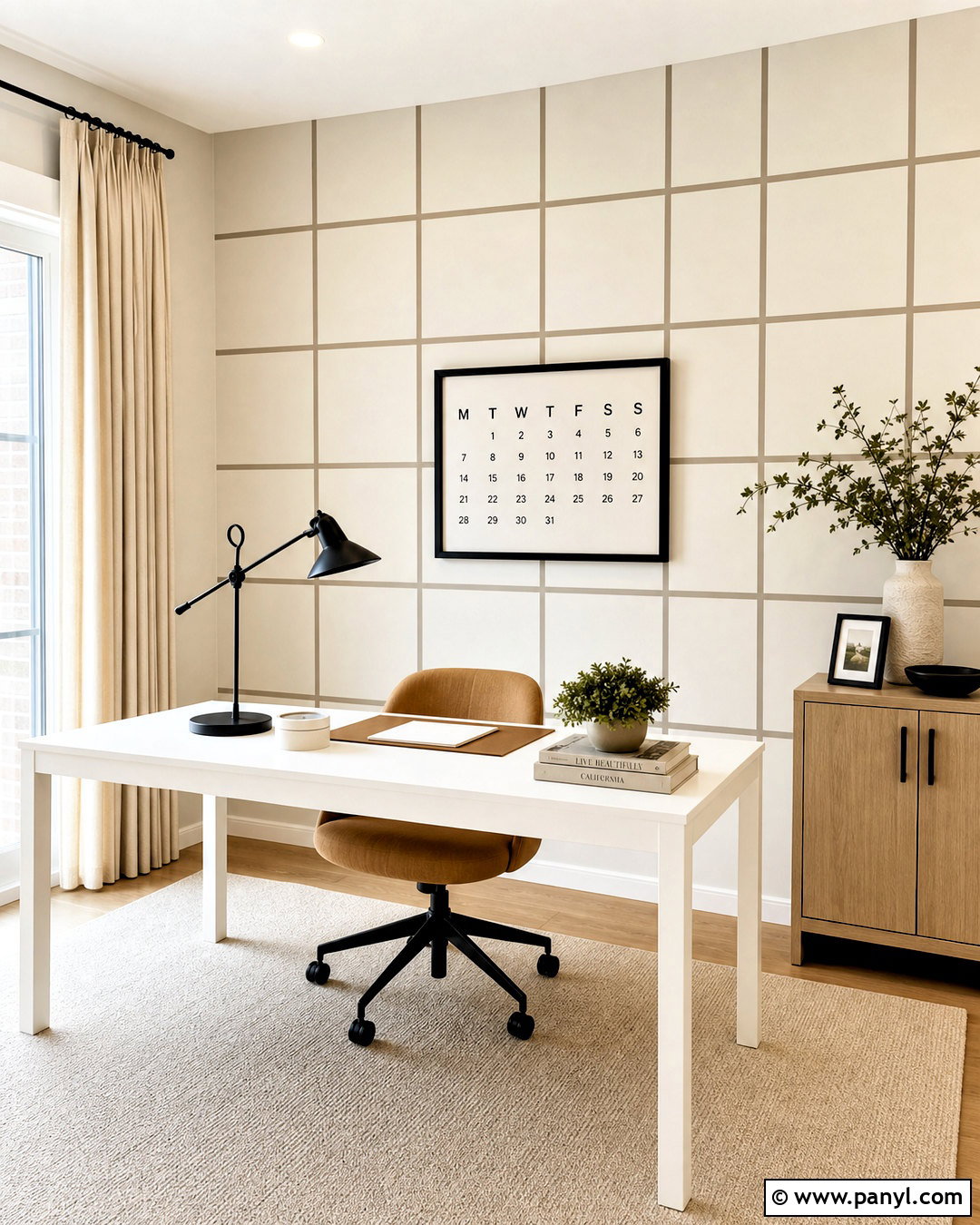
A painted grid creates a clean, contemporary background for a minimalist home office or craft room. Cover the focal wall in warm white, then add evenly spaced thin lines in medium taupe to form large squares. Use a level and low-tack tape, checking measurements at several points because small mistakes become noticeable across a repeating design. Pair the wall with a streamlined white desk, a light oak storage cabinet, and an upholstered camel-colored chair. Black task lighting adds definition, while closed storage prevents supplies from competing with the orderly pattern. Hang one corkboard or framed calendar inside the grid rather than covering several squares. A solid beige rug and linen curtains soften the geometry. The finished workspace feels structured, practical, and visually calm.
13. Polka Dot Wall Paint Pattern
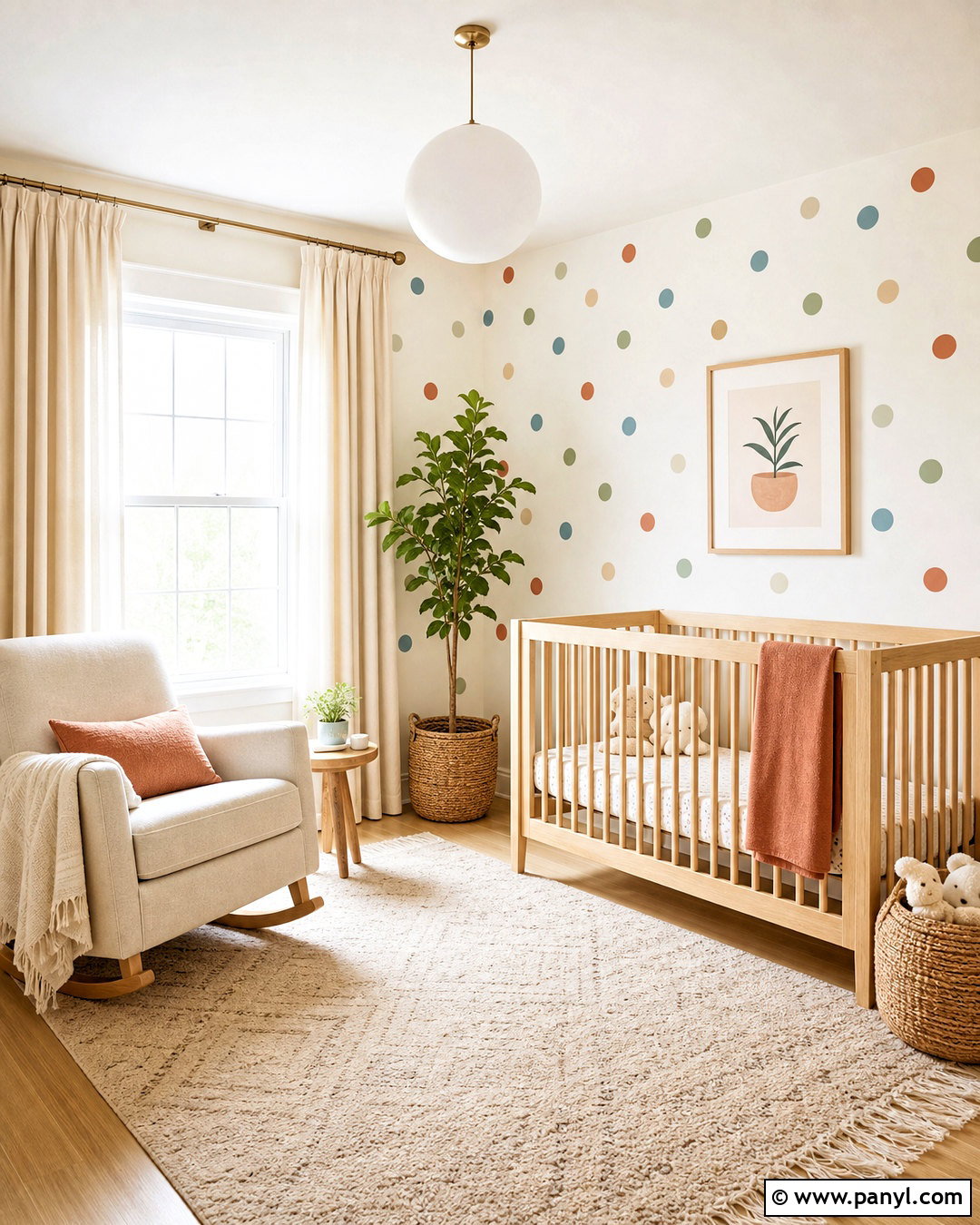
Polka dots become more sophisticated when they are loosely spaced and painted in a restrained palette. For a nursery, start with a soft warm-white wall and add medium-sized dots in muted sage, dusty blue, pale tan, and gentle terracotta. Arrange them in an irregular but balanced layout, leaving generous space between colors. A natural maple crib, cream rocker, and light beige rug keep the room grounded. Use solid bedding and curtains so the walls provide the primary pattern. A round woven basket and globe-shaped ceiling light quietly repeat the dots without making the theme too literal. Cut reusable circle stencils from sturdy material for consistent edges. This flexible design creates a playful room now while remaining subtle enough to work as the child grows.
14. Terrazzo Wall Paint Pattern
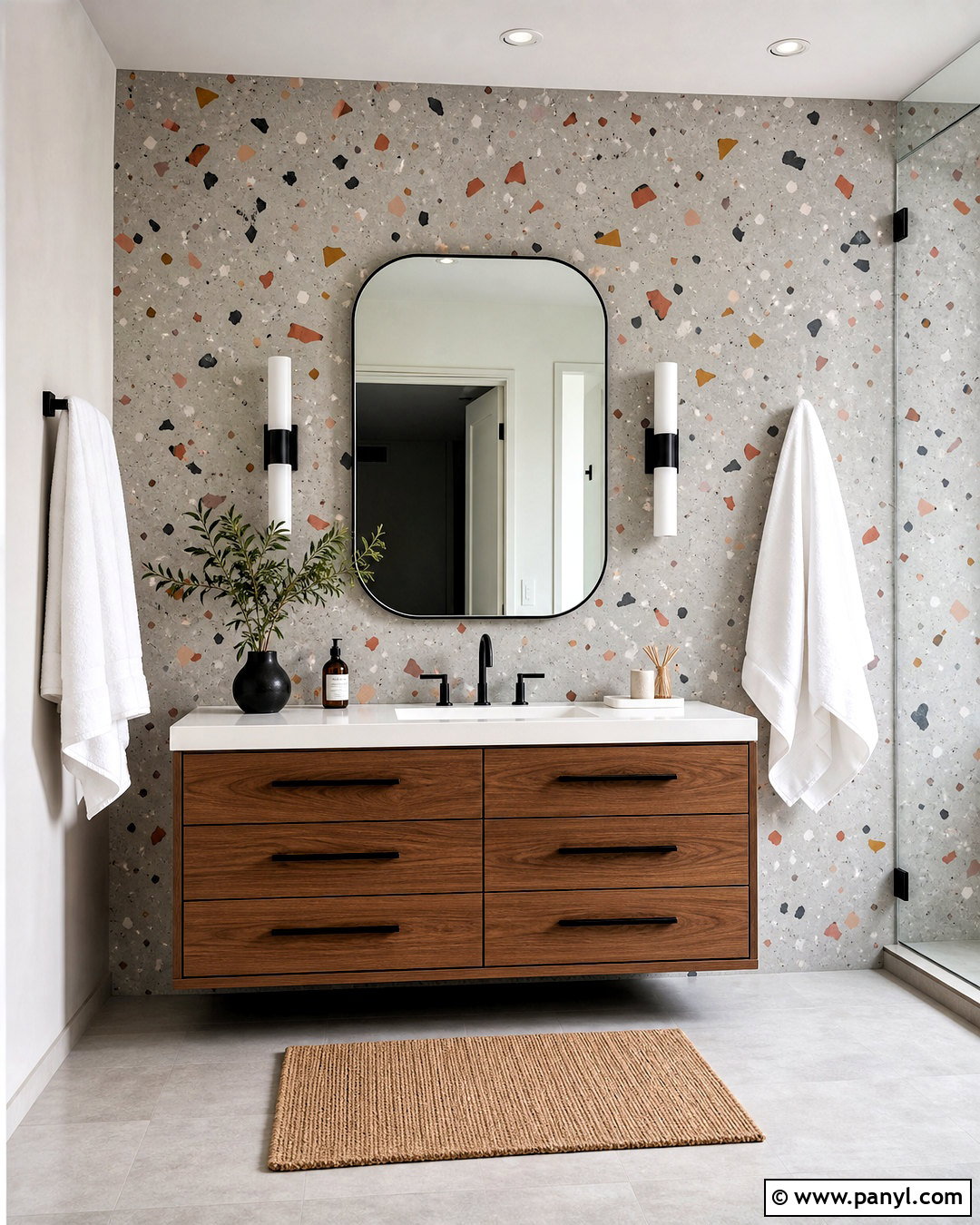
A hand-painted terrazzo pattern can fill a bathroom with color while still looking clean and coordinated. Use a pale warm-gray base, then scatter irregular chips in terracotta, charcoal, muted mustard, dusty pink, and off-white across the vanity wall. Vary the sizes and angles, but maintain even overall spacing. A walnut vanity, white countertop, matte black faucet, and rounded black mirror anchor the playful pattern. Keep the floor simple with large light-gray tiles and use solid white shower curtains or towels. Paint the other walls in the terrazzo background color to avoid visual overload. Small artist brushes give each chip a crisp but slightly organic edge. The finished bathroom feels upbeat and modern, with enough neutral space to prevent the multicolored pattern from becoming overwhelming.
15. Brushstroke Wall Paint Pattern
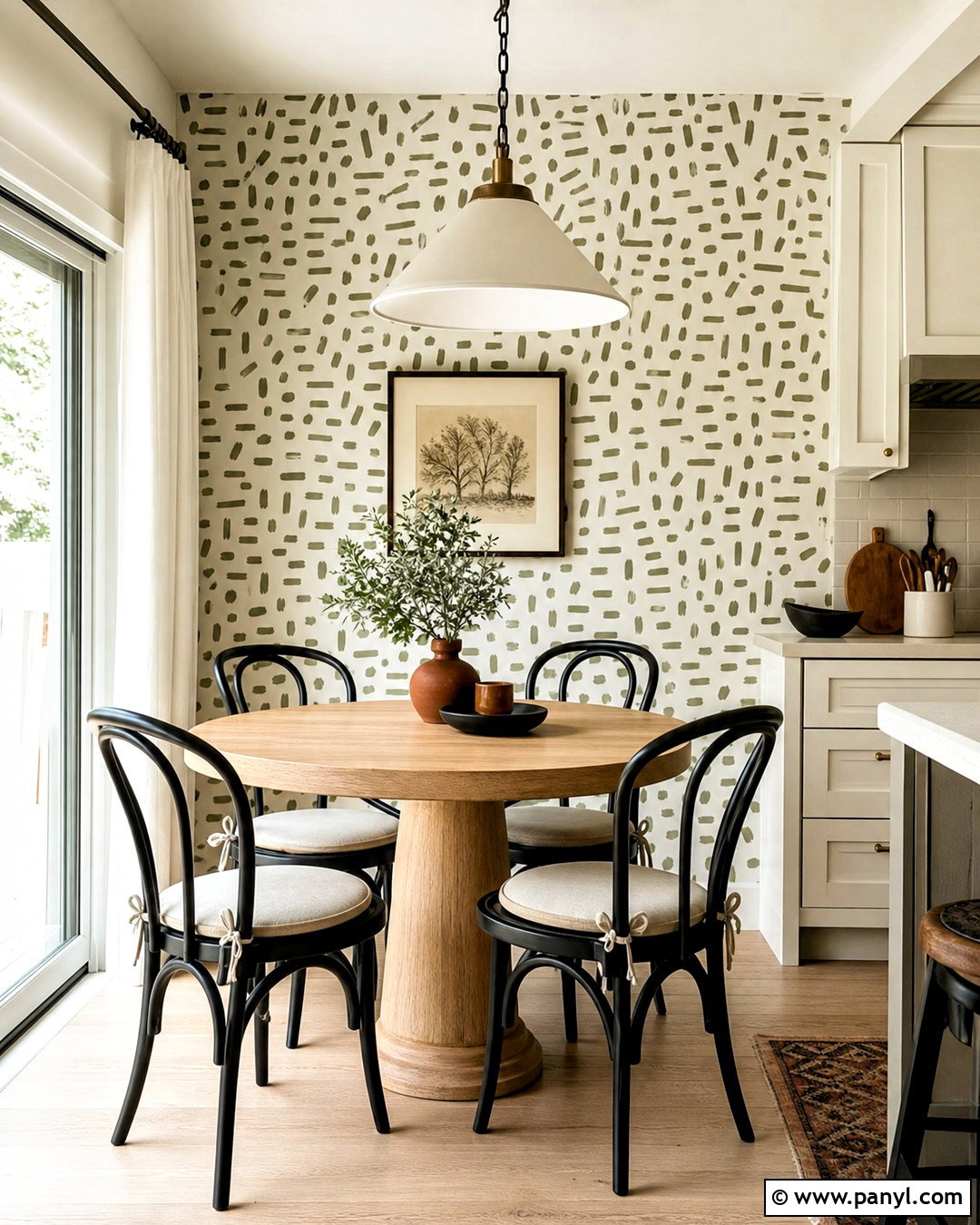
Loose brushstrokes bring handcrafted character to a wall and do not require perfect measuring. In a breakfast nook, paint short vertical marks in warm olive green over a creamy beige background. Space the strokes in relaxed rows, allowing slight changes in length and pressure to remain visible. A round pedestal table in light oak and curved black chairs create a practical dining arrangement. Add a simple cream pendant, linen seat cushions, and a small ceramic vase in muted rust. Keep the adjacent kitchen finishes neutral so the painted wall can carry the room’s decorative detail. Test several brushes first to find a shape that is easy to repeat. This forgiving pattern feels personal and artistic while remaining orderly enough for an everyday family dining area.
16. Mountain Wall Paint Pattern
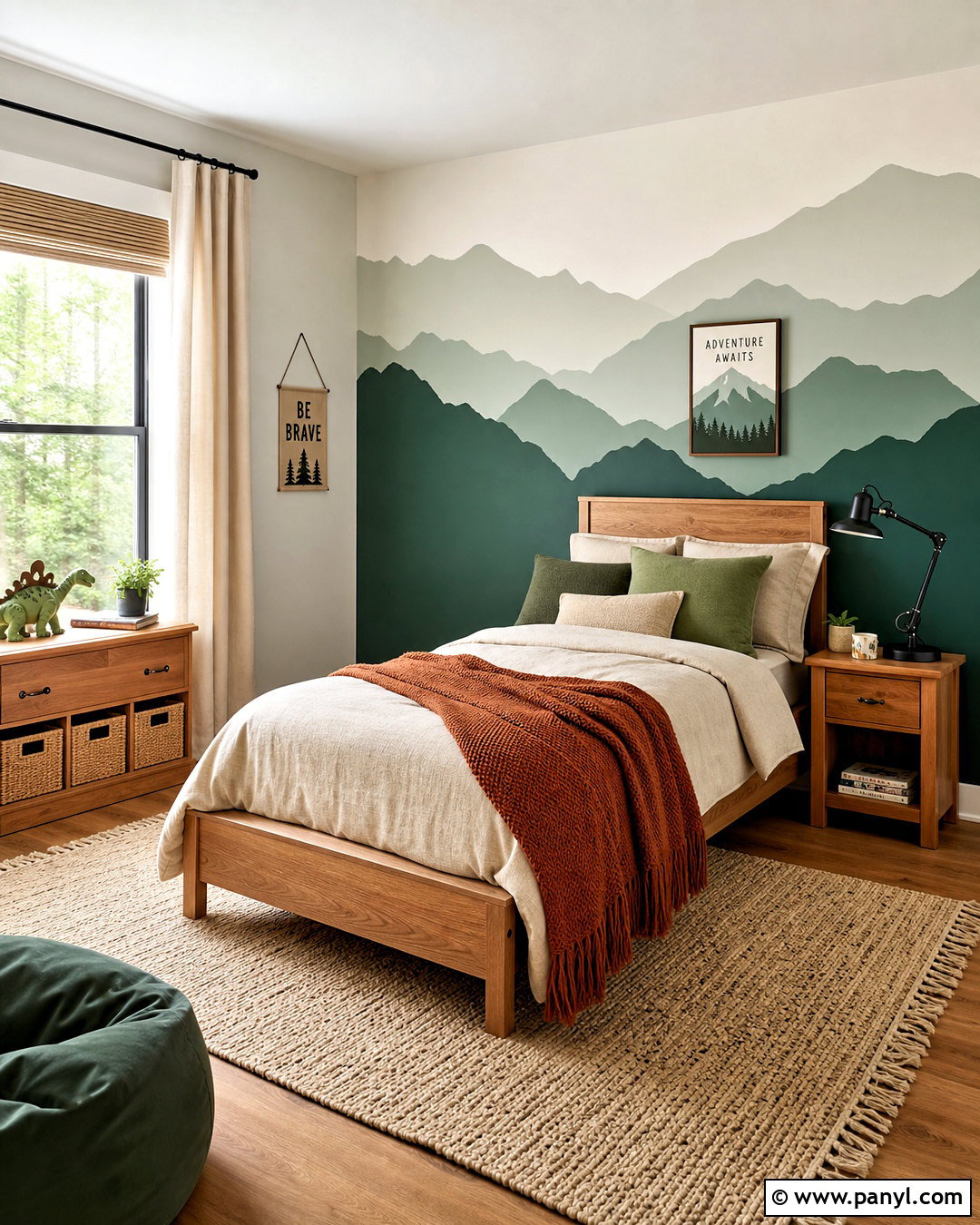
Layered mountain shapes create a calming nature-inspired feature in a child’s bedroom or family cabin room. Paint the lowest range deep forest green, the middle range muted sage, and the distant peaks pale gray-green against an off-white sky. Keep the shapes broad and simplified instead of adding tiny scenic details. Position a natural wood bed beneath the mural with oatmeal bedding, a rust throw, and forest green pillows. A wool rug, wooden nightstand, and matte black reading lamp reinforce the earthy palette. Extend the palest wall color around the rest of the room for continuity. Uneven peaks make the landscape feel organic, so precise symmetry is unnecessary. The complete space should feel peaceful and outdoorsy without relying on novelty furniture or heavily themed decorations.
17. Rainbow Arch Wall Paint Pattern
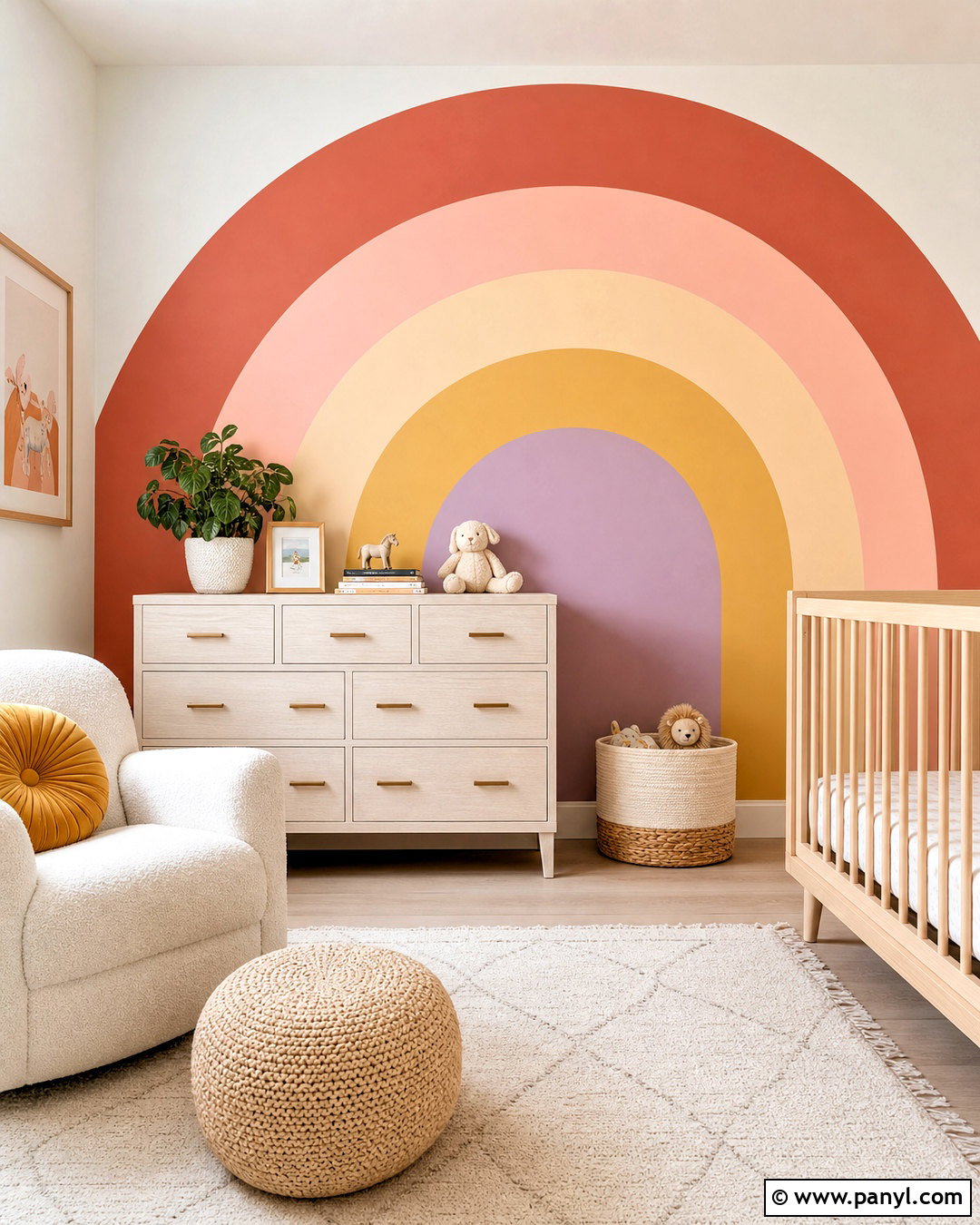
A layered rainbow arch can form a joyful focal point while using muted colors that remain easy to decorate around. Paint wide nested bands of terracotta, blush pink, warm beige, mustard, and dusty lavender behind a nursery dresser or reading bench. Leave a little base color between the bands if you want each curve to appear more defined. Choose a white oak dresser, cream boucle chair, woven floor basket, and simple off-white rug to support the colorful wall. Repeat only one or two rainbow shades in cushions and storage boxes. Keep the rest of the room warm white with pale wood furniture. The oversized scale makes the design feel intentional, while the softened palette prevents the space from becoming too bright, childish, or difficult to update later.
18. Sunburst Wall Paint Pattern
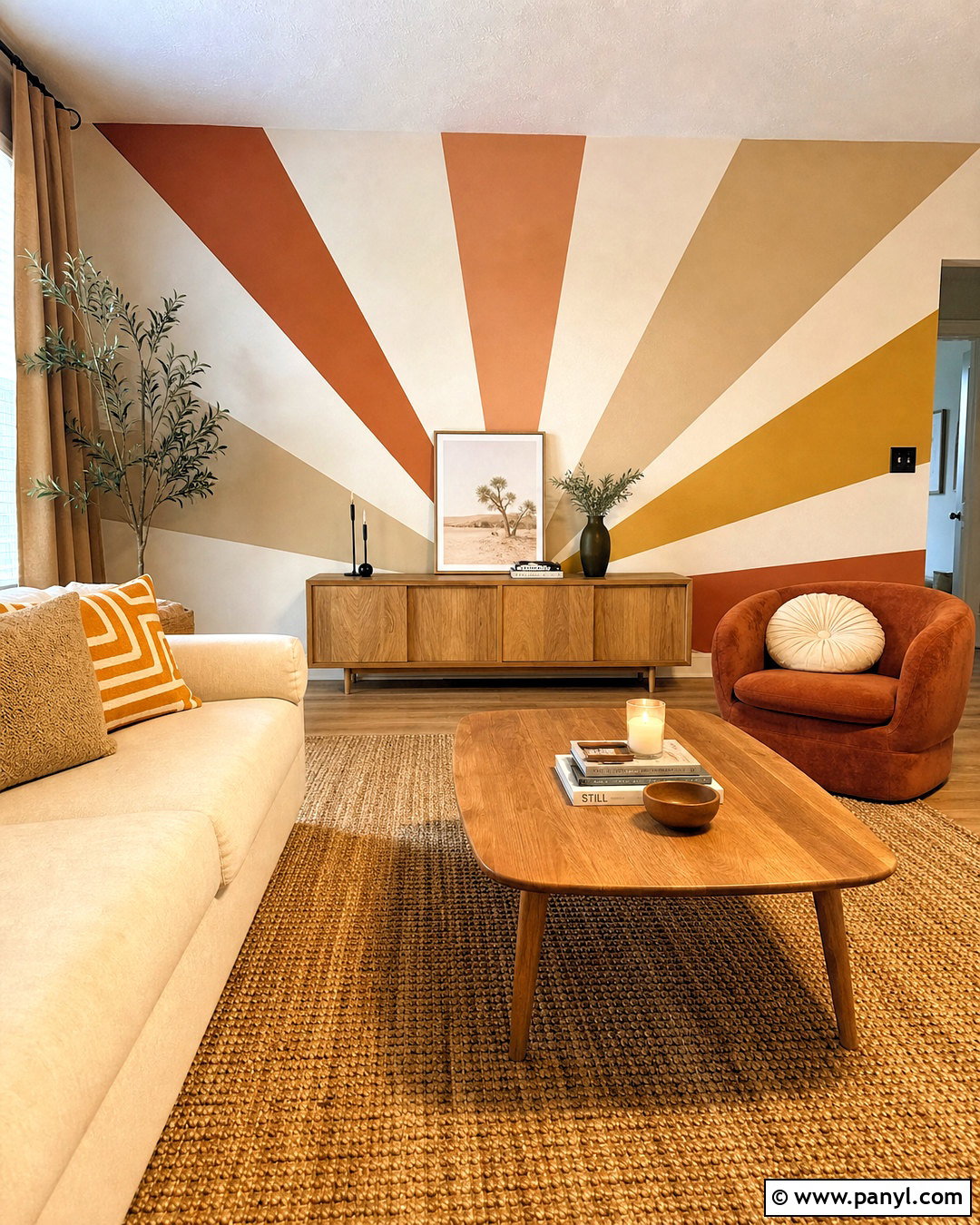
A sunburst pattern can visually organize a living room by directing attention toward a central feature. Begin behind a low media console or fireplace and tape broad rays extending toward the ceiling and side walls. Alternate warm white, sandy beige, muted gold, and light terracotta for a sunny effect that is bold without being harsh. Use a simple oak console, cream sofa, textured tan rug, and curved rust-colored chair. Position the central point low enough that furniture does not completely cover it. Solid curtains and minimal artwork prevent the room from feeling overly decorated. Check every taped ray from across the room before painting. The completed design creates movement, warmth, and a strong central composition while keeping the furniture arrangement comfortable and practical.
19. Botanical Stencil Wall Paint Pattern
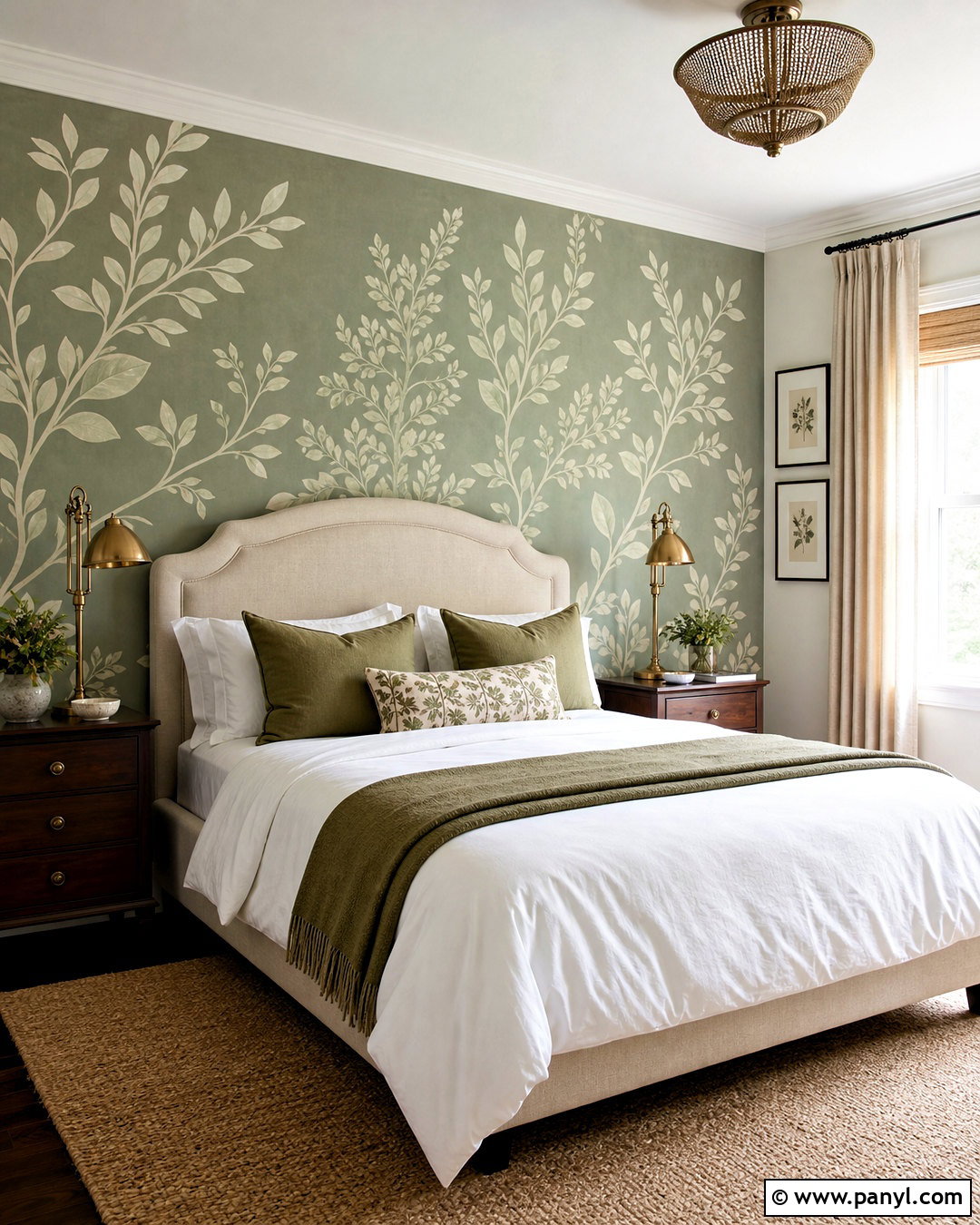
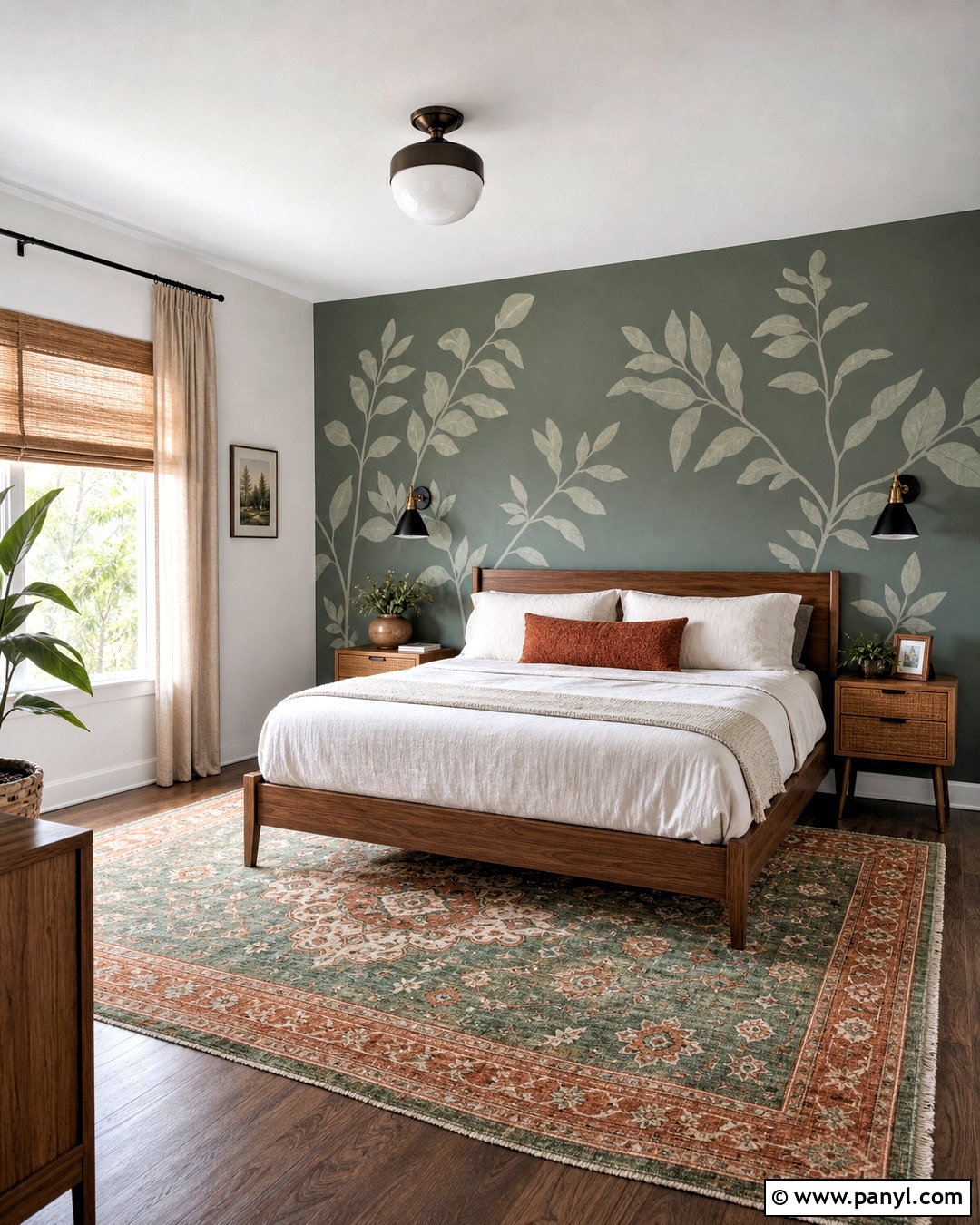
A botanical stencil can give a guest bedroom the detailed appearance of wallpaper with a more customized color palette. Start with a dusty sage base and repeat oversized leafy branches in a slightly lighter green. Use a large stencil and stagger each row so the design flows naturally rather than forming a rigid grid. An upholstered oatmeal headboard, white bedding, moss green throw, and dark walnut nightstands create a restful setting. Add antique brass lamps and linen curtains for warmth. Keep artwork small and simple because the leafy wall already supplies visual interest. Before moving the stencil, mark a few alignment points in pencil. The tone-on-tone treatment allows the complete room to feel layered and botanical without becoming overly busy or difficult to coordinate.
20. Color Wash Wall Paint Pattern
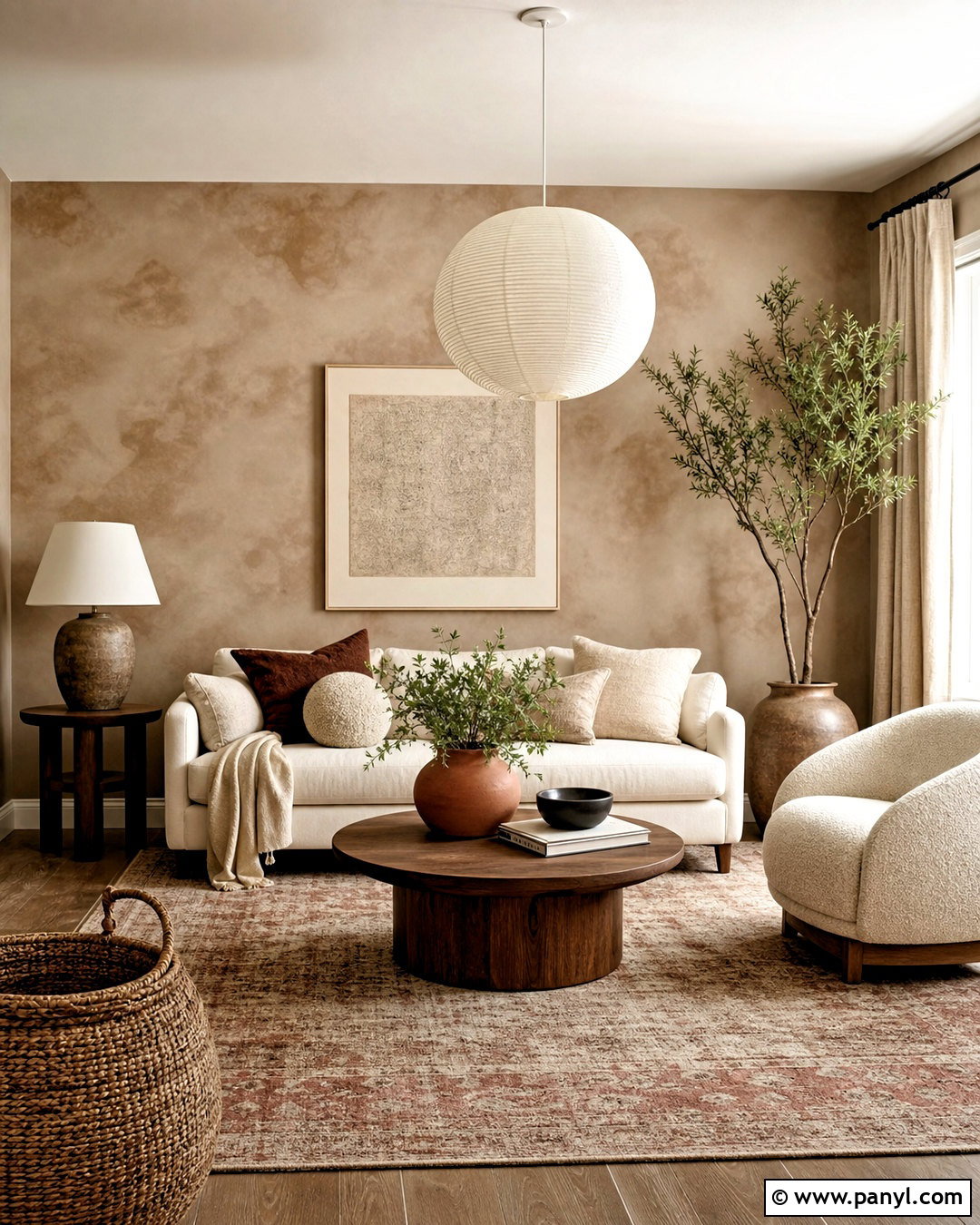
A color-washed wall adds soft, cloudy variation that suits relaxed bedrooms, living rooms, and reading spaces. For a cozy sitting room, apply a warm taupe base followed by a diluted clay-beige glaze in overlapping, irregular strokes. Blend the surface gradually so no single brush mark becomes too dominant. Pair the finish with a cream linen sofa, walnut side tables, a faded rust-and-beige rug, and an ivory boucle chair. A large paper pendant and textured curtains complement the gentle movement of the walls. Keep accessories earthy and simple, using pottery, books, and woven baskets rather than shiny decorative pieces. Continue the finish across every wall for an enveloping effect. The final room feels warm, tactile, and collected without requiring a sharply defined repeating pattern.
Conclusion:
The most successful 20 wall paint patterns combine creative painting with a thoughtful room plan. Consider the wall’s size, available light, furniture placement, and existing finishes before selecting a design. Large patterns generally create a clearer focal point, while smaller repeated motifs bring texture and detail. A limited color palette will also make complicated shapes easier to coordinate. Measure carefully, test colors in the room, and let each coat dry before applying or removing tape. Most importantly, connect the painted design to the furniture, rugs, lighting, and accessories around it. With preparation and a complete visual plan, a patterned wall can feel like an intentional architectural feature rather than a temporary decorative experiment.

Related Ideas and Inspiration:
Leave a Reply