
Geometric paint can turn a plain wall into a purposeful focal point without the cost or commitment of wallpaper. The best designs do more than add shapes. They support the room’s layout, repeat colors already present, and create the right sense of movement. Crisp triangles can energize a workspace, while soft arches and tonal blocks feel calmer in a bedroom. Careful measuring, low-tack painter’s tape, and a limited palette will help the finished wall look polished rather than busy. You can also adjust the scale to suit your space, using broad forms in small rooms and tighter repeats on larger walls. The complete room looks below offer practical color palettes, furniture pairings, and layouts for recreating 35 geometric wall paint patterns.
1. Triangle Geometric Wall Pattern
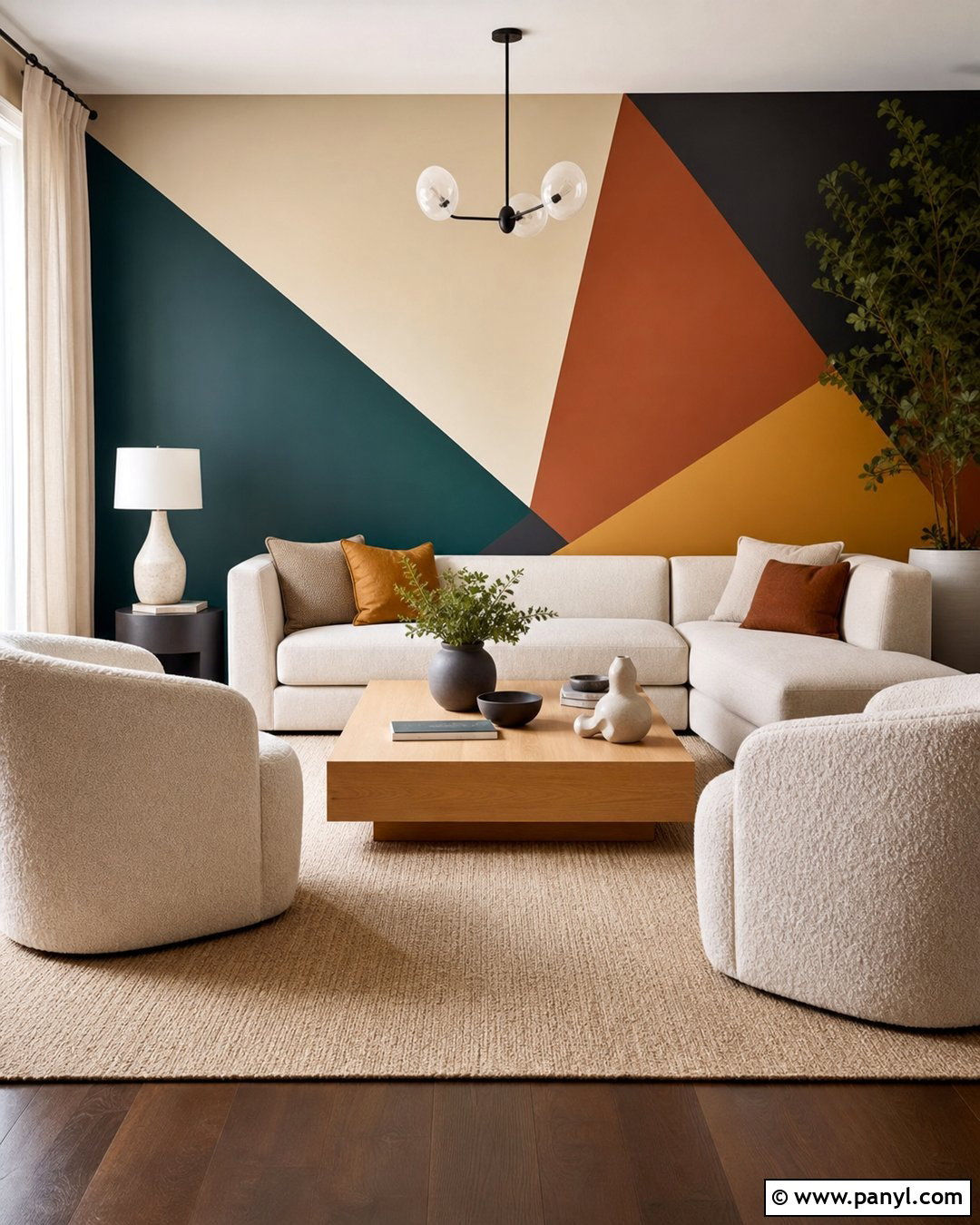
A large triangle pattern creates movement without requiring dozens of complicated taped sections. Begin with a warm white base, then overlap broad triangles in muted teal, clay, mustard, and charcoal. Keep most shapes concentrated behind a low-profile sofa so the design anchors the seating area rather than covering every visible surface. A light oak coffee table, cream boucle chairs, and a textured beige rug soften the sharp lines. Repeat one wall color through cushions or ceramics for a connected look. Use irregular triangle sizes to keep the composition relaxed, but align a few edges with the sofa and nearby window. Leaving generous sections of the white background exposed prevents the finished living room from feeling crowded or overly playful.
2. Two Tone Geometric Wall Pattern
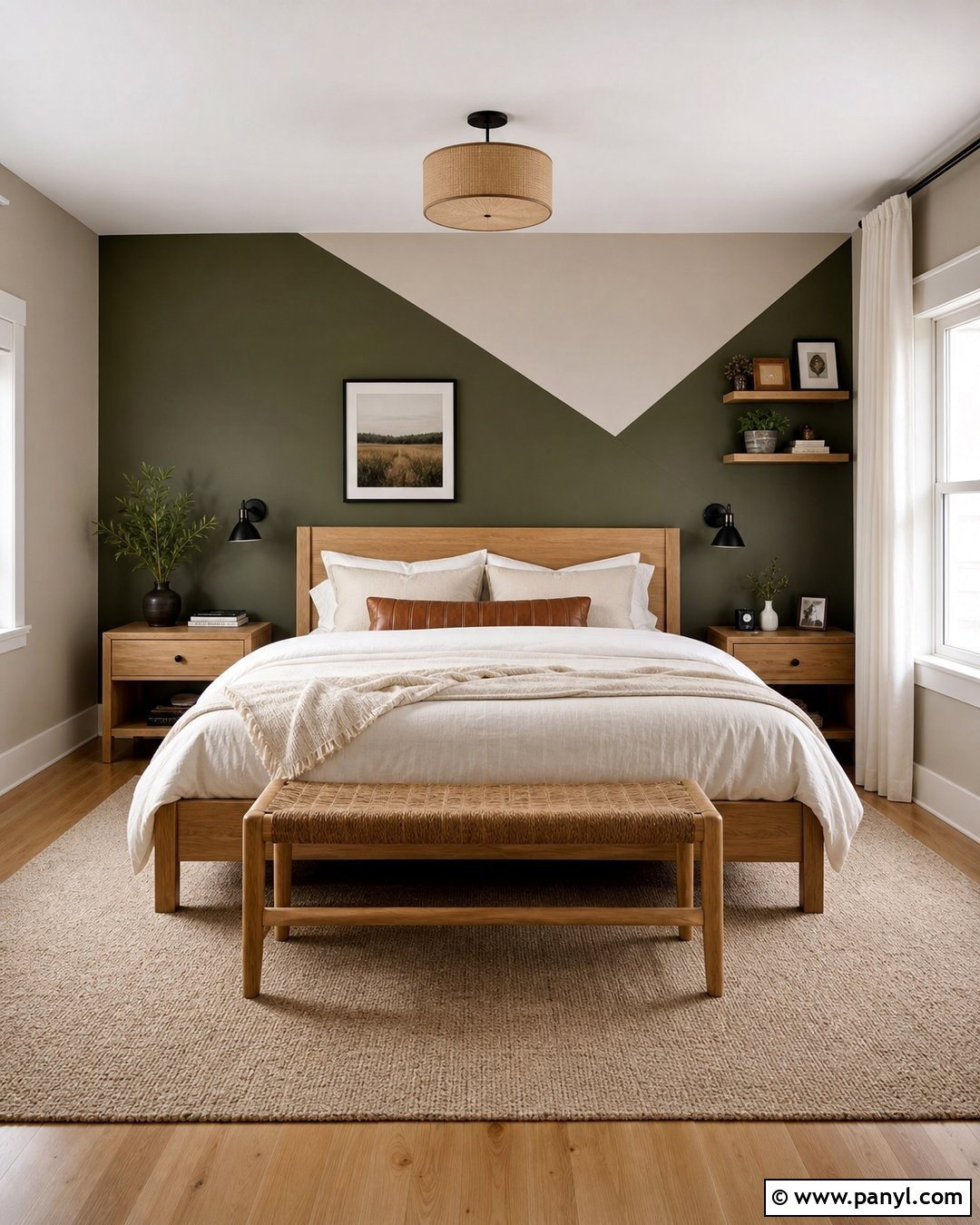
Two colors are enough to make a geometric wall feel distinctive and thoughtfully planned. Paint the entire wall soft greige, then add wide diagonal sections in deep olive green. Place the strongest angle behind the bed, allowing it to rise from one corner and visually frame the headboard. Natural oak nightstands, ivory bedding, black reading lights, and a woven bench give the bedroom a warm modern character. Continue the greige across the remaining walls to maintain a calm atmosphere. For clean edges, seal the painter’s tape with a thin layer of the base color before applying green. This simple approach works especially well for beginners because it requires fewer taped areas, fewer paint changes, and easier color coordination throughout the room.
3. Neutral Geometric Wall Pattern
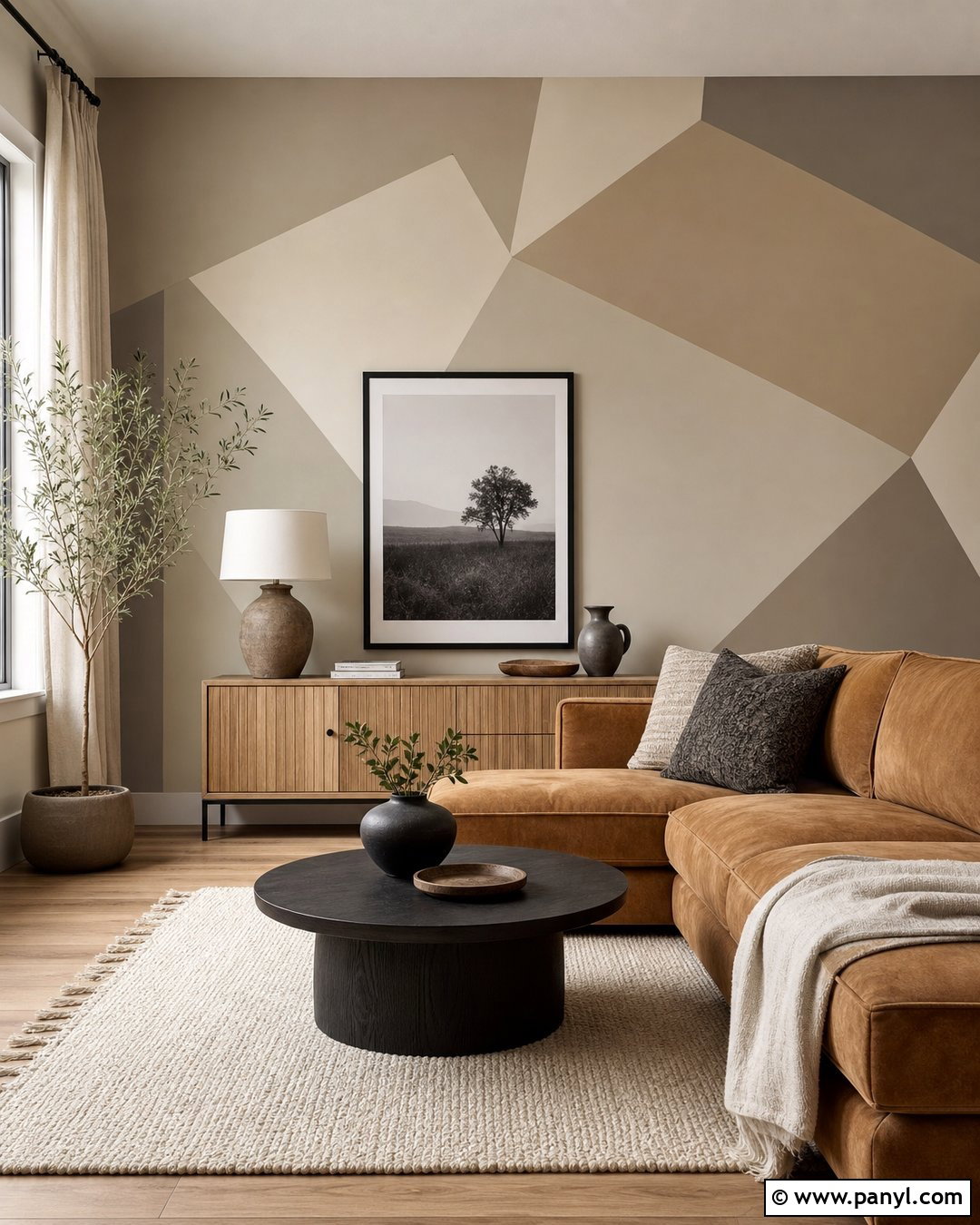
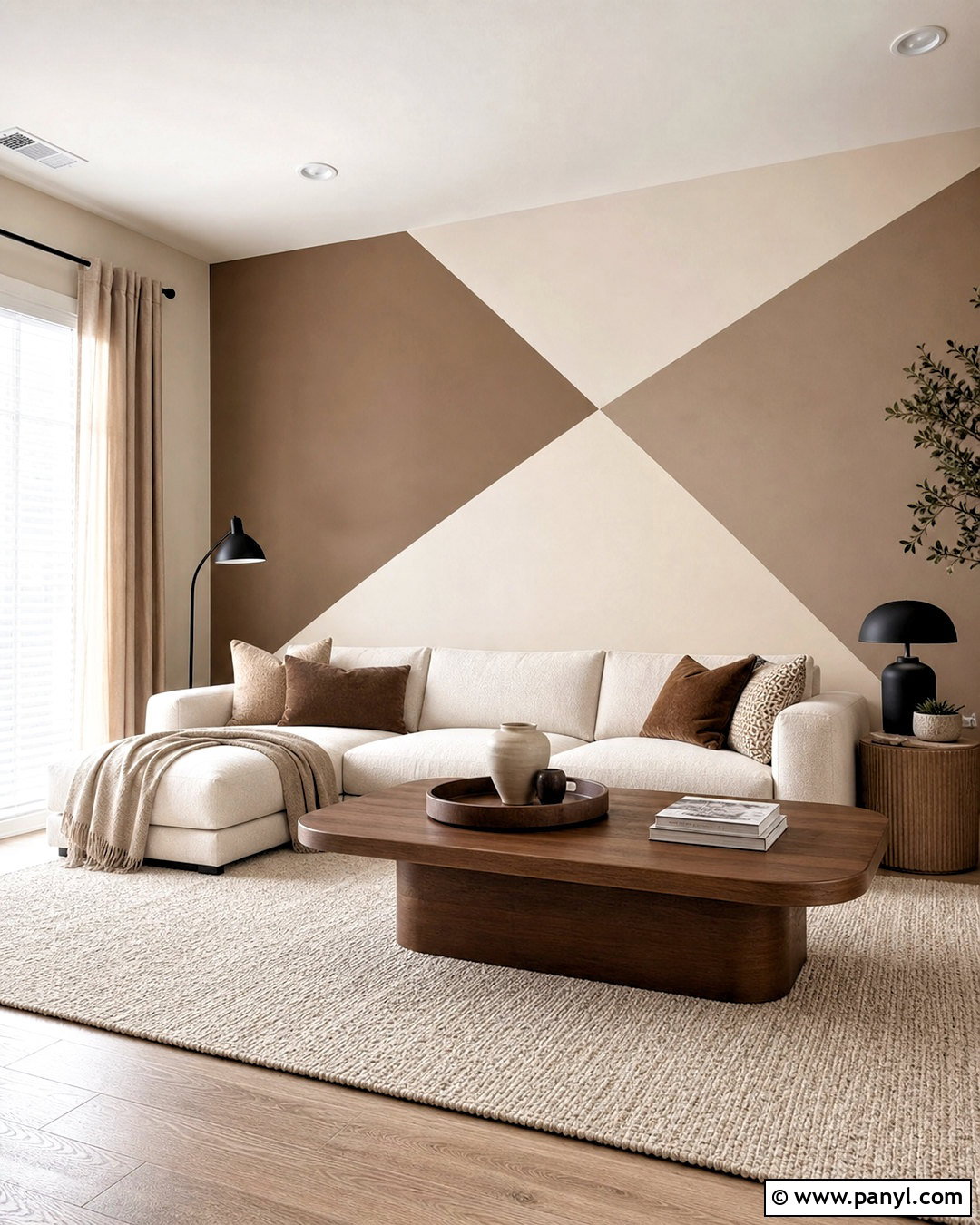
Quiet geometry can add depth while preserving the restful mood of a neutral room. Use a creamy beige base with oversized polygons painted in soft taupe, mushroom, warm gray, and muted ivory. Keep the contrast low so the shapes become more visible as natural light moves across the wall. A camel sofa, pale oak console, linen curtains, and a wool rug create a layered living room without competing with the pattern. Black-framed artwork can overlap one lightly painted section, helping the wall feel integrated with the decor. Select matte paint to reduce glare and emphasize the subtle tonal changes. This complete scheme suits open-concept homes because the restrained palette connects easily with nearby dining or kitchen finishes.
4. Black And White Geometric Wall Pattern
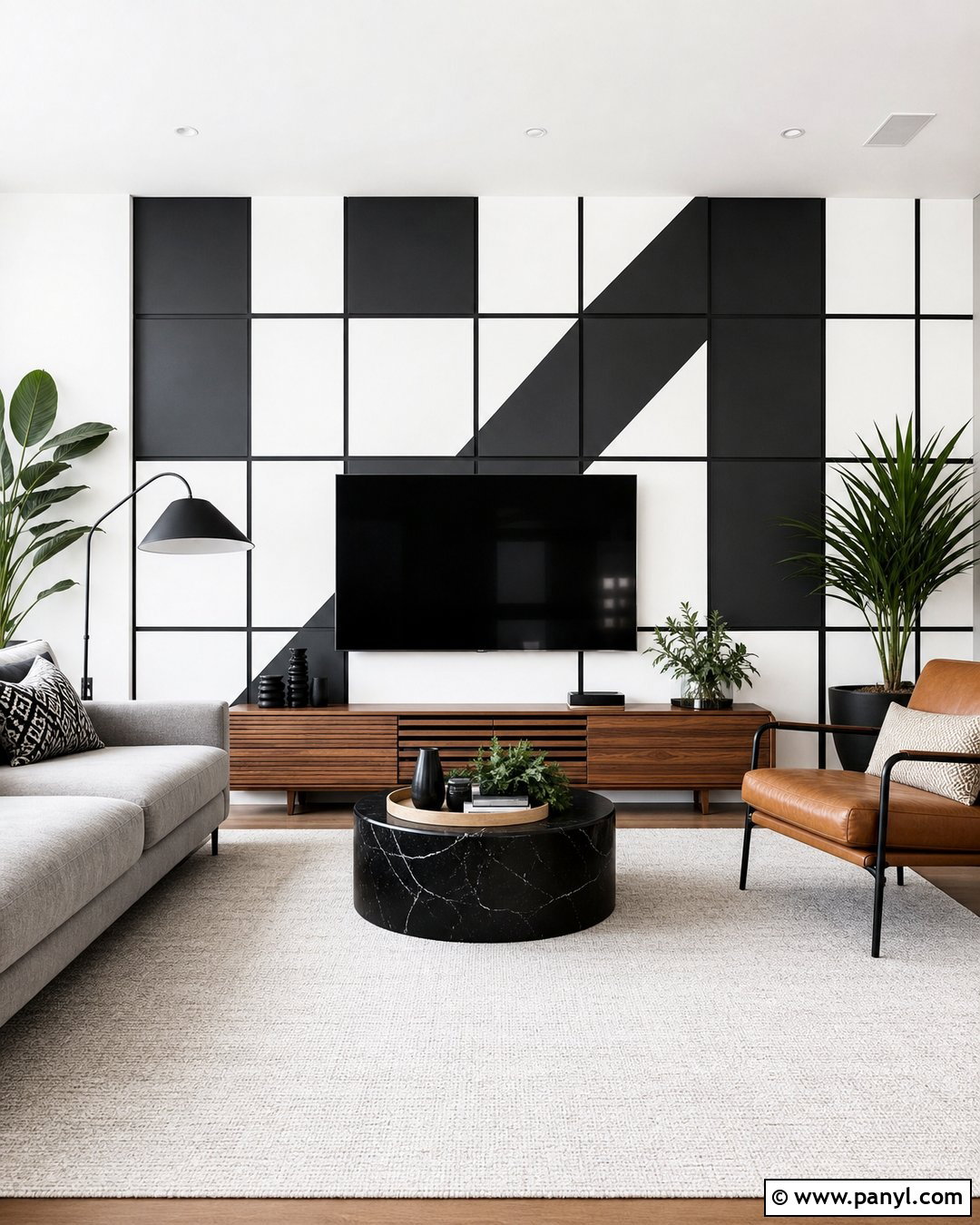
Few combinations feel as graphic as a crisp black-and-white geometric wall. Create a wide asymmetrical grid with white rectangles, black blocks, and several narrow diagonal lines. Use the pattern behind a streamlined walnut media console so the television blends naturally into one dark section. A light gray sofa, cognac leather chair, ivory area rug, and matte black floor lamp complete the modern living room. Limit smaller decorative objects because the wall already provides strong visual detail. Warm wood and leather are important here; they keep the scheme from appearing cold or commercial. Carefully plan the black sections around outlets, switches, and mounted equipment. That preparation produces cleaner shapes and prevents small white fixtures from interrupting the composition.
5. Pastel Geometric Wall Pattern
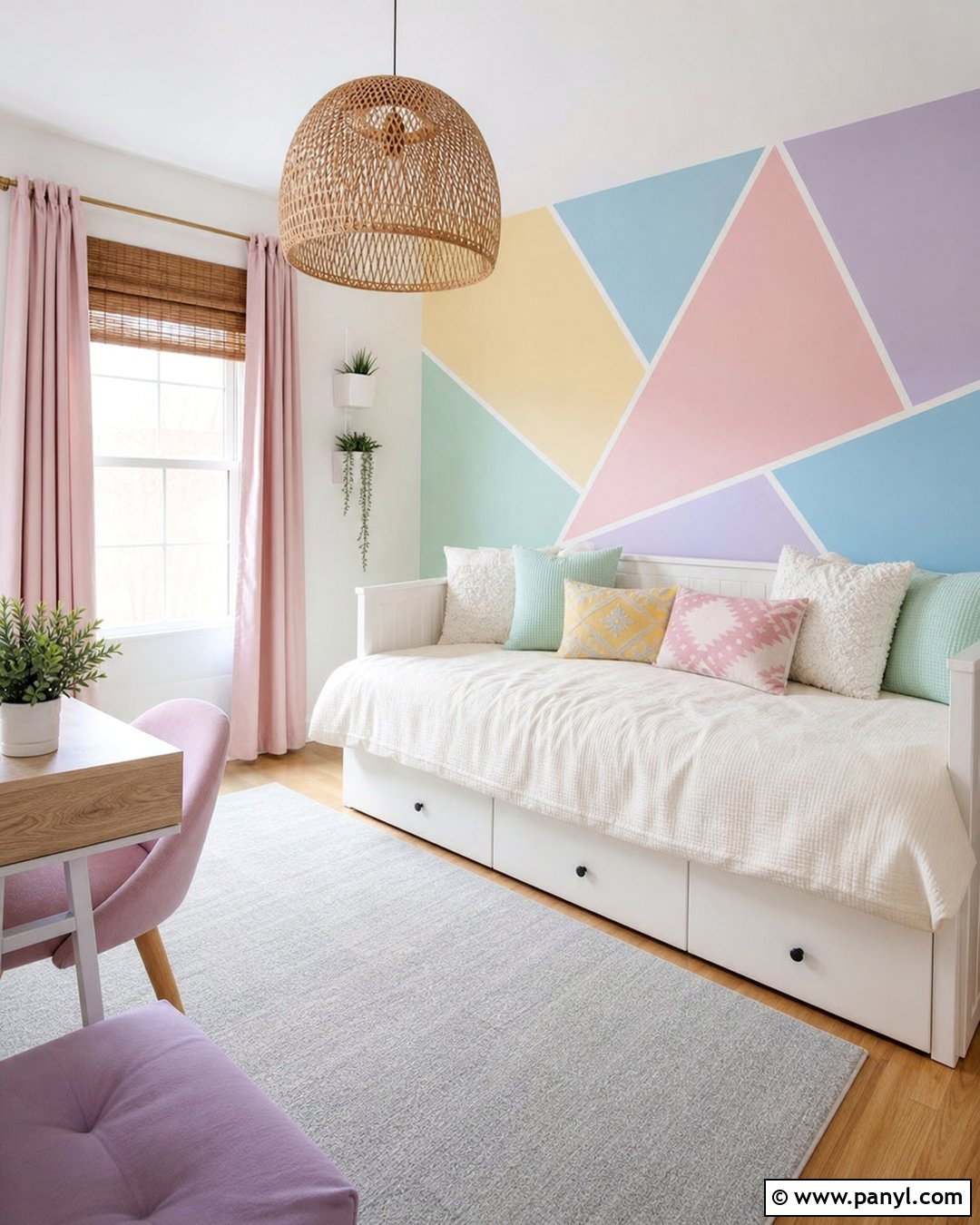
Pastels feel more sophisticated when they appear in large, well-spaced shapes instead of a crowded rainbow pattern. Start with a soft white wall and add blush pink, powder blue, pale lavender, butter yellow, and muted mint polygons. Position the design behind a simple white daybed in a cheerful guest room. Layer the bed with solid ivory linens and only two or three cushions that repeat the painted colors. A pale wood side table, woven pendant, and light gray rug provide natural balance. Make one pastel shape noticeably larger than the others to establish a clear focal point. Thin white gaps between the shapes will preserve definition and make taping easier. The completed space feels light, welcoming, and playful without looking childish.
6. Terrazzo Geometric Wall Pattern
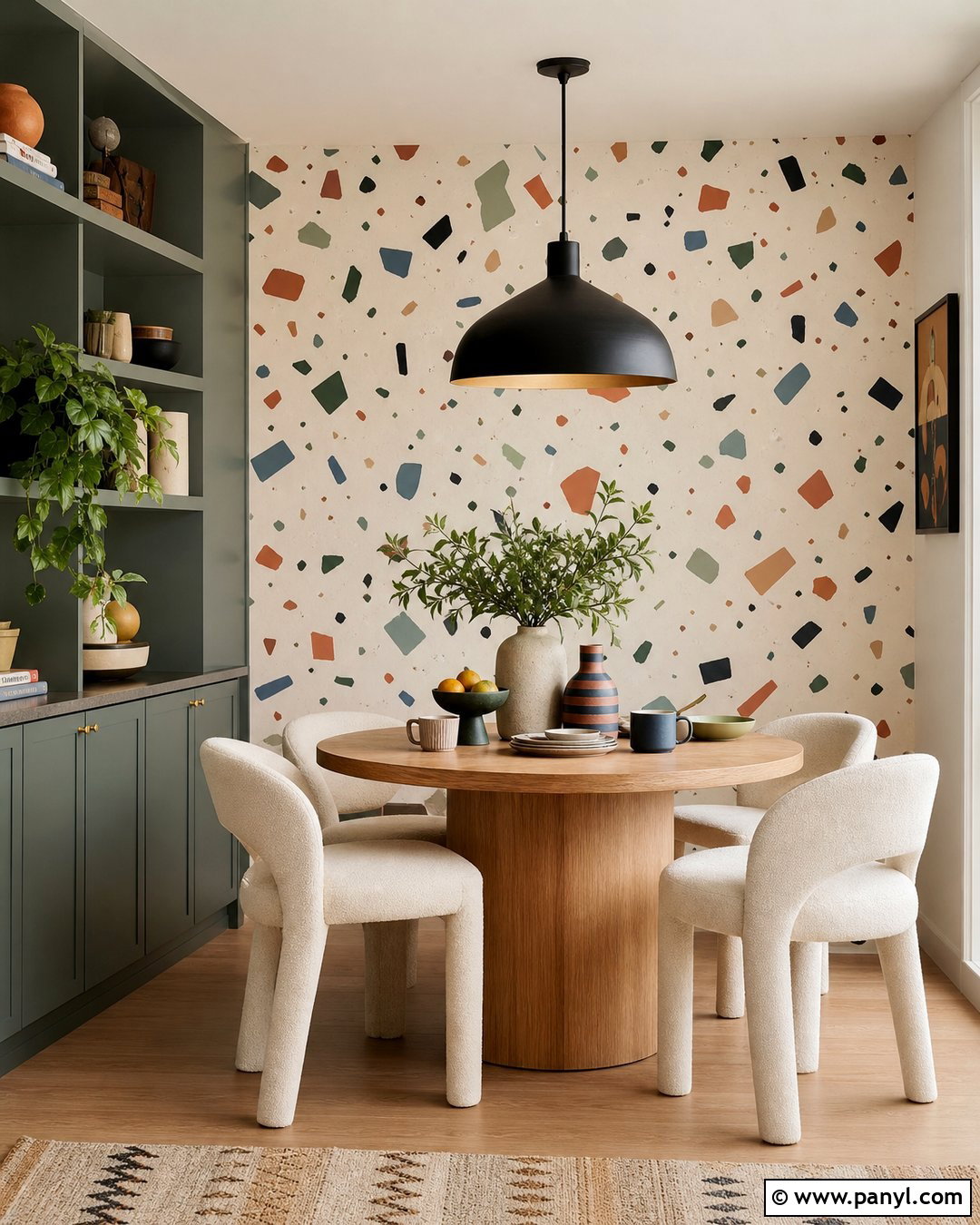
A painted terrazzo-inspired wall offers lively color while keeping the surface flat and easy to maintain. Cover the background in warm ivory, then scatter angular fragments in rust, sage green, dusty blue, black, and muted peach. Vary the size and direction of the pieces, but leave enough open background to keep them readable. In a breakfast nook, pair the wall with a round oak table, curved cream chairs, a black pendant, and simple ceramic tableware. Paint fragments behind the entire dining arrangement so the pattern works like a full mural. Avoid making every piece equally spaced, since natural-looking variation gives terrazzo its character. Solid furniture and minimal window treatments will prevent the finished nook from becoming visually overloaded.
7. Hexagon Geometric Wall Pattern
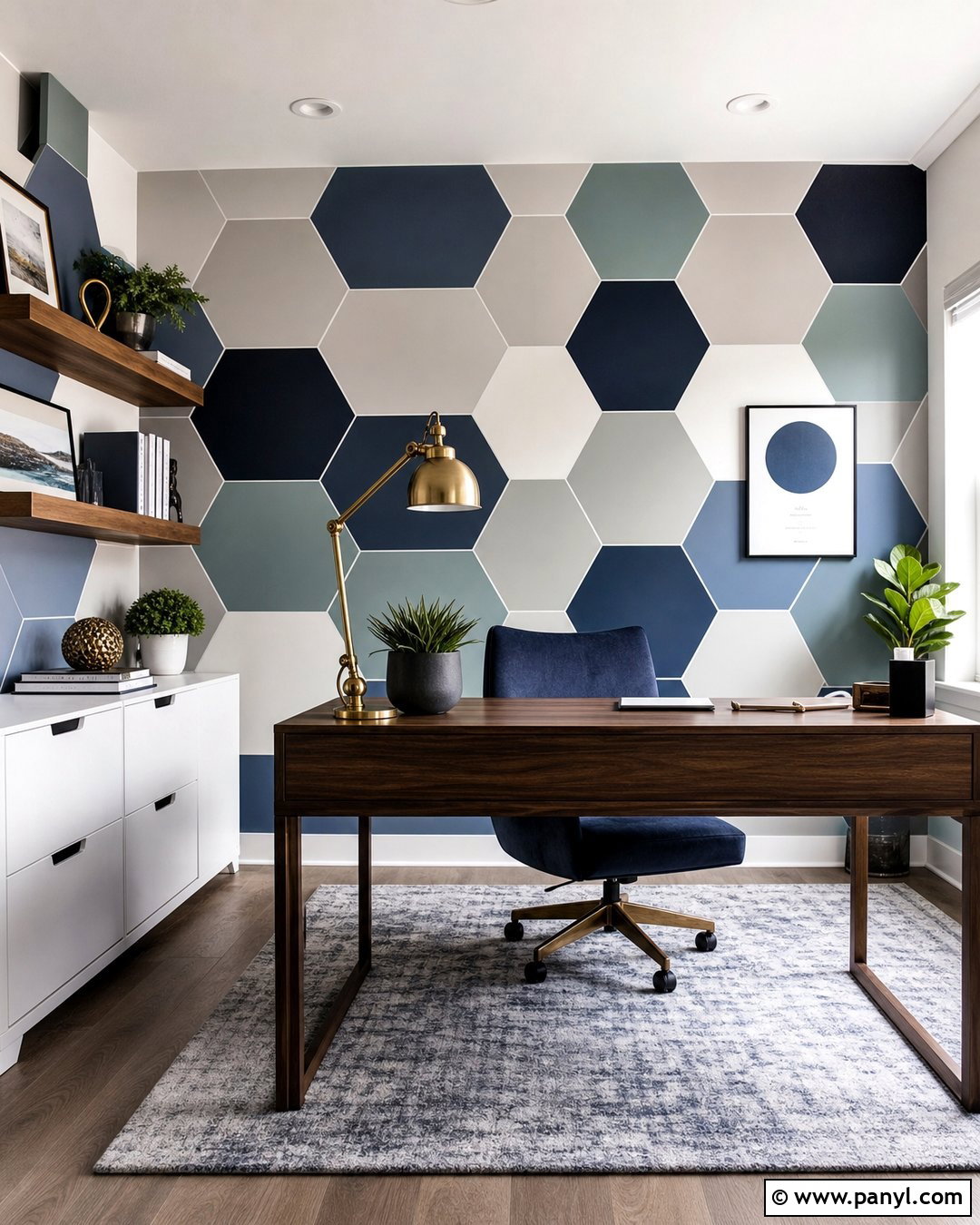
Interlocking hexagons can give a home office an organized, architectural quality. Paint the wall a pale warm gray, then build a honeycomb arrangement using navy blue, medium blue, muted teal, and a few white sections. Let the pattern fade near the outer edges instead of filling the wall from corner to corner. A walnut desk, navy upholstered chair, white storage cabinet, and brass task lamp create a professional workspace with warmth. Position the most saturated hexagons directly behind the desk to define the working zone. Use a cardboard template to keep every side consistent before applying tape. Open shelving should remain simple, with books and storage boxes in coordinating solids. The result feels energetic enough for creative work but still orderly and focused.
8. Chevron Geometric Wall Pattern
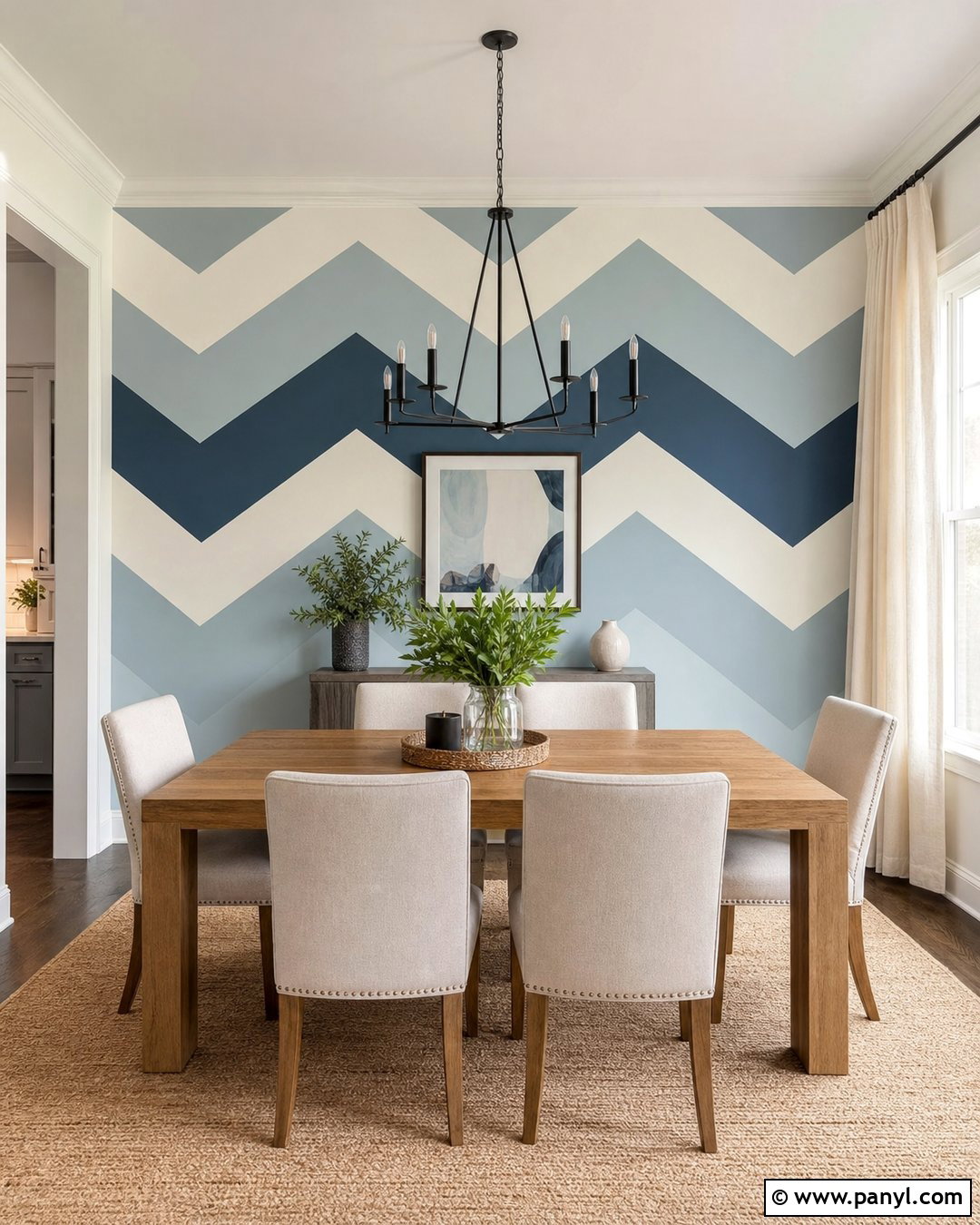
A broad chevron pattern brings rhythm to a dining room and can make a low ceiling appear taller. Use alternating bands of warm white, muted navy, and soft blue-gray, keeping each zigzag large enough to span much of the wall. Center the peaks behind a rectangular oak dining table to give the layout symmetry. Upholstered beige chairs, a slim black chandelier, linen drapes, and a textured natural rug soften the repeated angles. Paint only one wall and keep surrounding surfaces warm white. Narrow chevrons can look restless, so choose fewer, wider bands for a more current result. Carefully mark a vertical centerline before measuring each point. The finished room will feel structured, balanced, and visually connected from the table to the ceiling.
9. Herringbone Geometric Wall Pattern
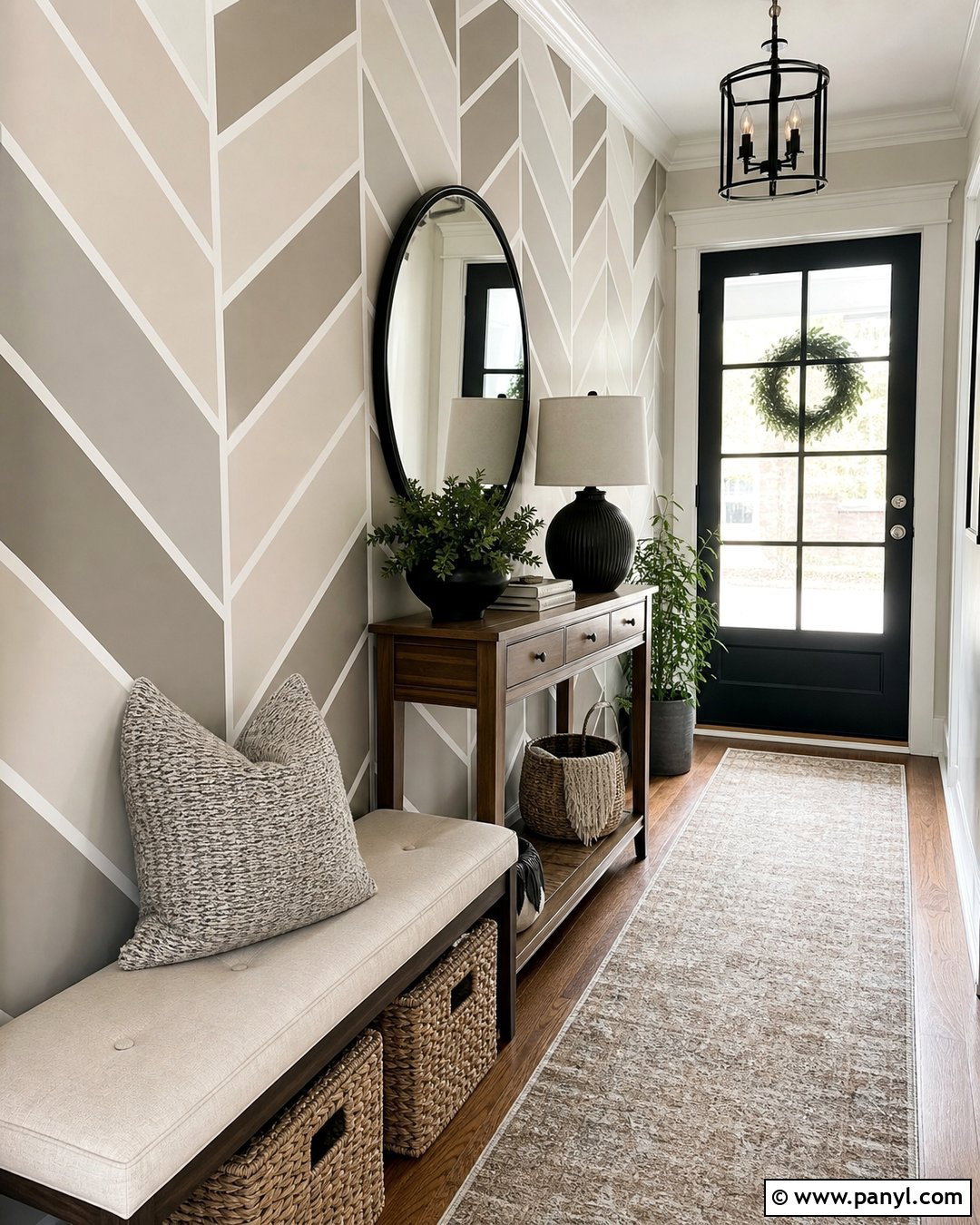
Painted herringbone creates a tailored background that works beautifully in an entryway. Begin with a soft cream base and tape a large-scale pattern using alternating sections of taupe and warm gray. Keep thin cream lines between the painted blocks to clarify the arrangement and reduce the risk of uneven joins. A narrow oak console, round black mirror, woven baskets, and an upholstered bench make the entrance useful as well as attractive. Add a neutral runner that follows the direction of the hallway. Because herringbone already contains plenty of movement, choose simple accessories and solid textiles. Measure from the center outward so partial sections appear balanced at both edges. This full entry design creates a memorable first impression while remaining practical for everyday traffic.
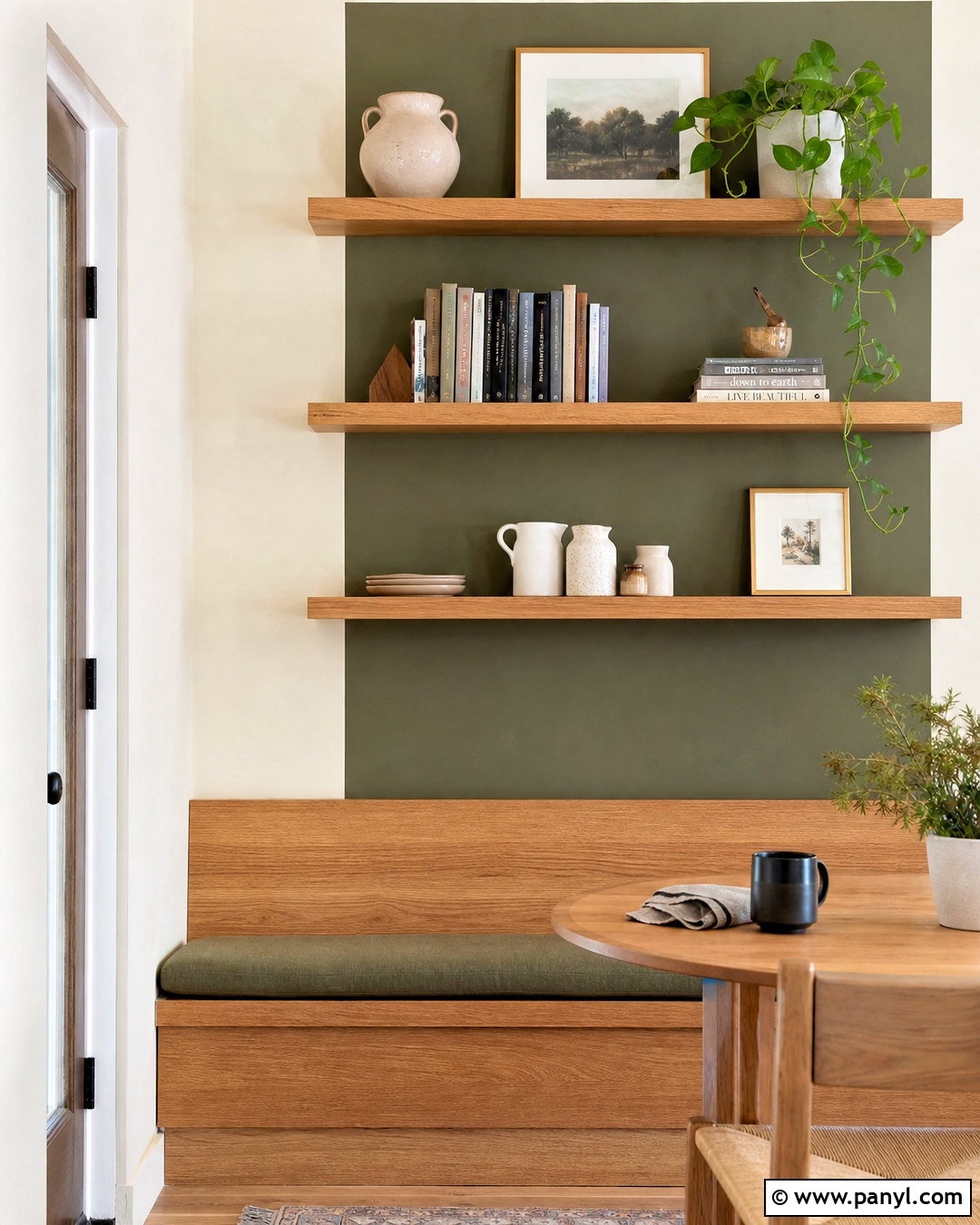
10. Diamond Geometric Wall Pattern
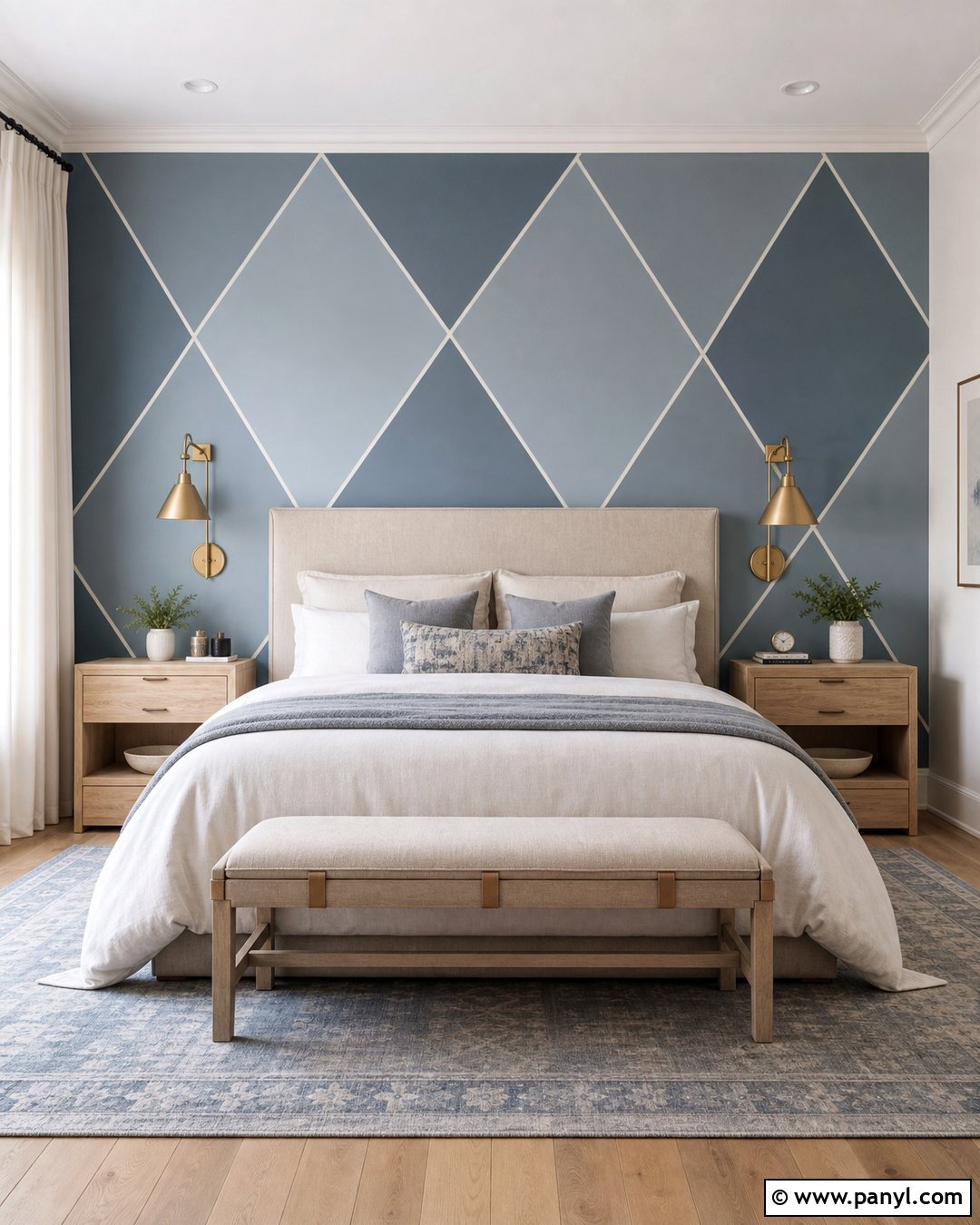
A diamond pattern can bring classic order to a contemporary bedroom when the scale and colors remain restrained. Paint the feature wall dusty blue, then create oversized diamonds in deeper slate blue with fine warm-white lines between them. Align the center diamond with a linen headboard so the bed feels intentionally framed. White oak nightstands, brushed brass sconces, cream bedding, and a faded blue rug complete the relaxed scheme. Avoid tiny diamonds, which can make the wall resemble a busy fabric print. Four or five broad columns usually provide enough detail on an average wall. Repeat the diamond shape subtly through a faceted lamp or quilted pillow. These small connections make the room feel coordinated without turning the design into an obvious theme.
11. Arch Geometric Wall Pattern
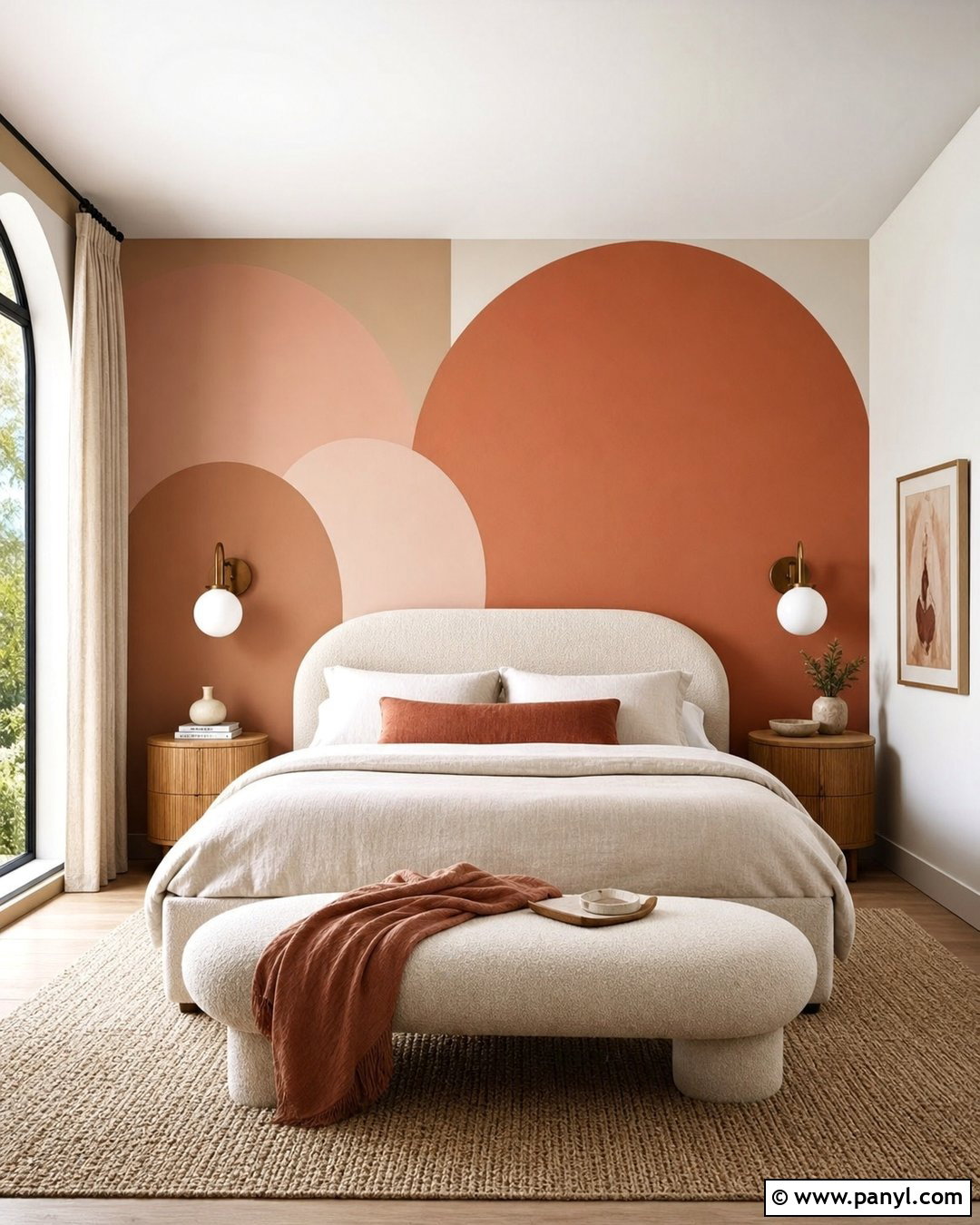
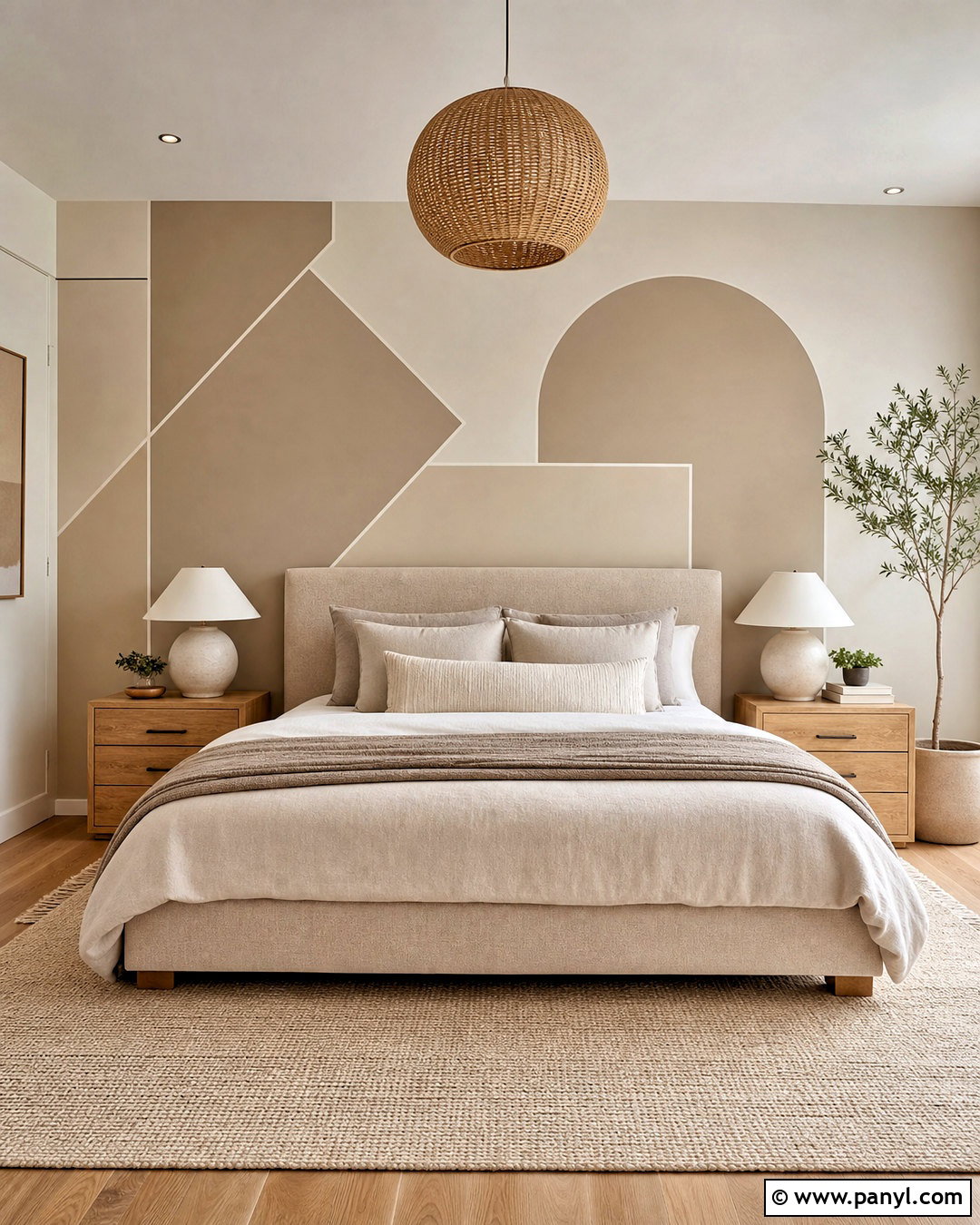
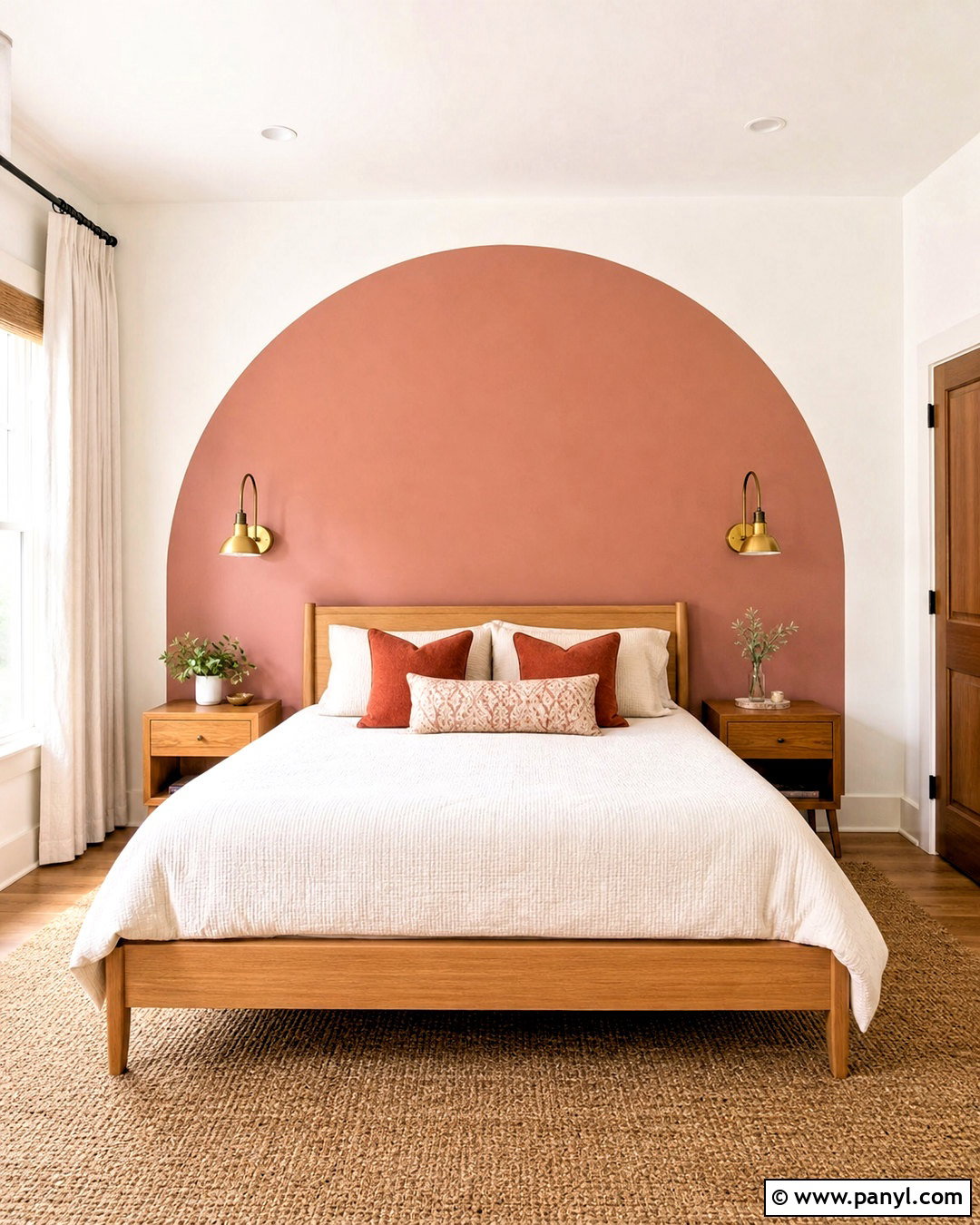
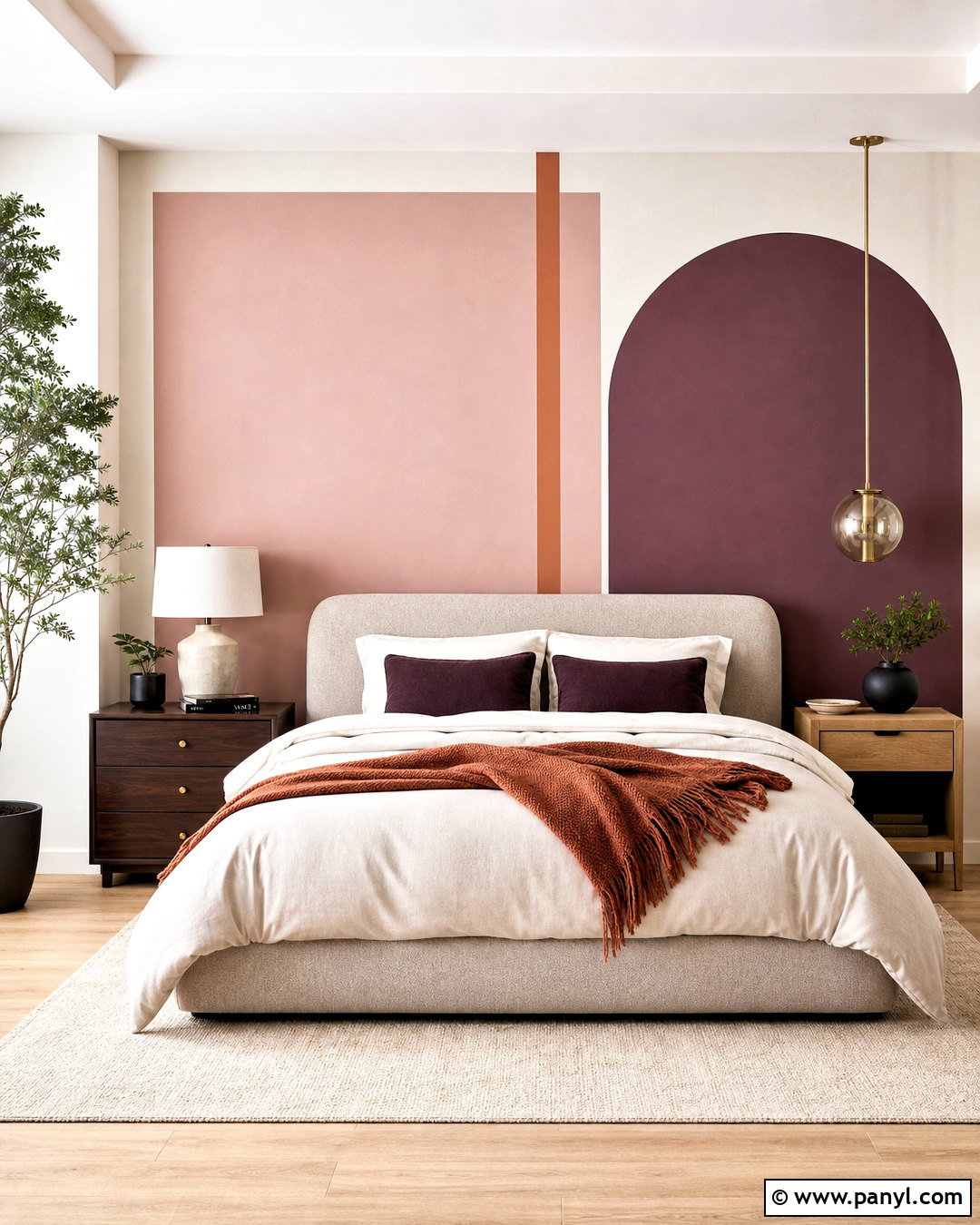
Soft painted arches offer a gentler alternative to sharply angled geometric forms. Create one wide terracotta arch behind a cream upholstered bed, then overlap it with a smaller blush arch and a tall muted-beige semicircle. Keep the remaining wall warm white so the shapes have room to breathe. Rounded oak nightstands, globe sconces, linen bedding, and a curved bench reinforce the flowing outlines. The tallest arch should rise well above the headboard, creating the effect of an architectural niche. Use a pencil, string, and anchored center point to draw smooth curves before taping or cutting in by hand. Restricting the palette to warm earth tones gives the complete bedroom a restful, grounded appearance that feels artistic without relying on framed wall decor.
12. Mountain Geometric Wall Pattern
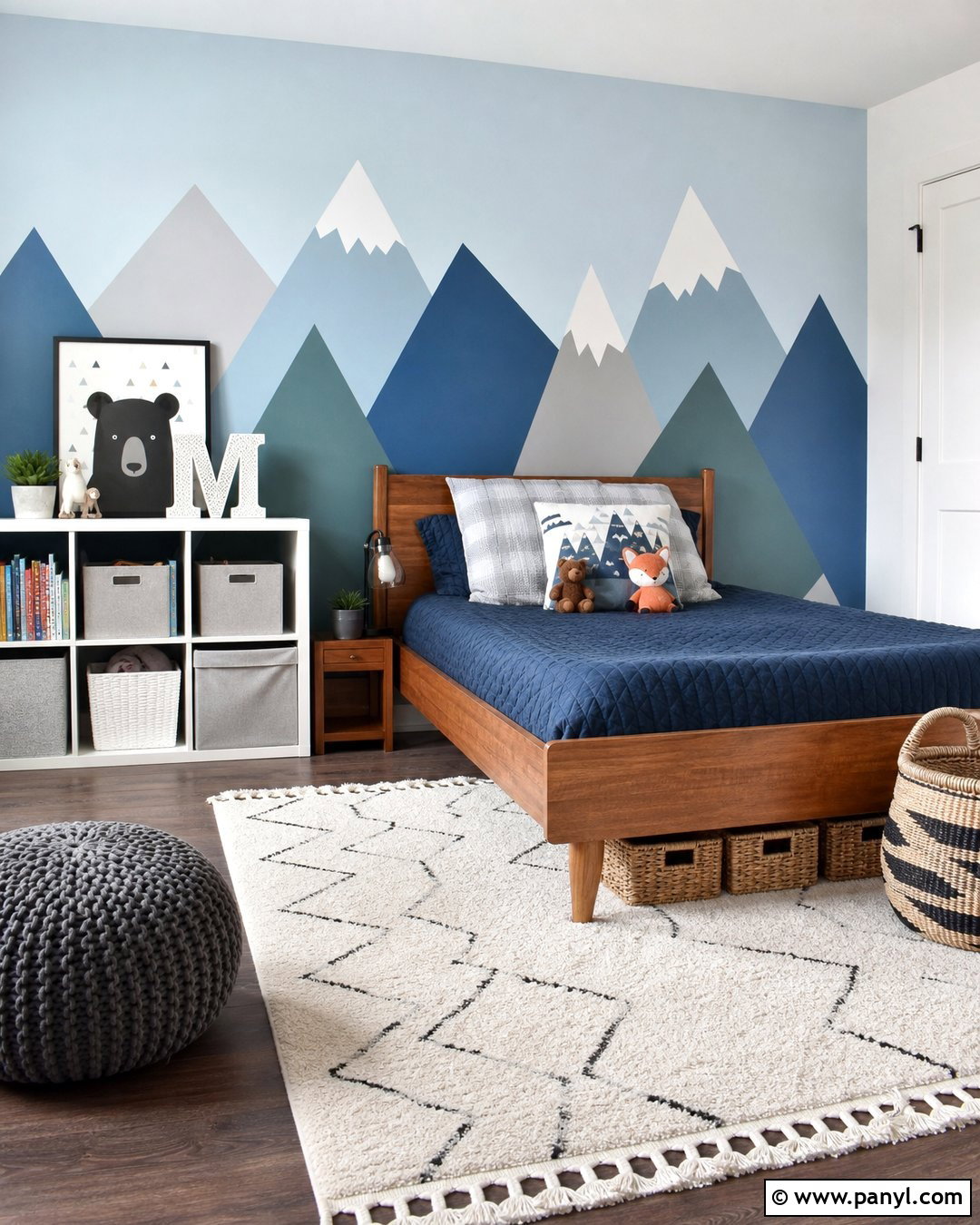
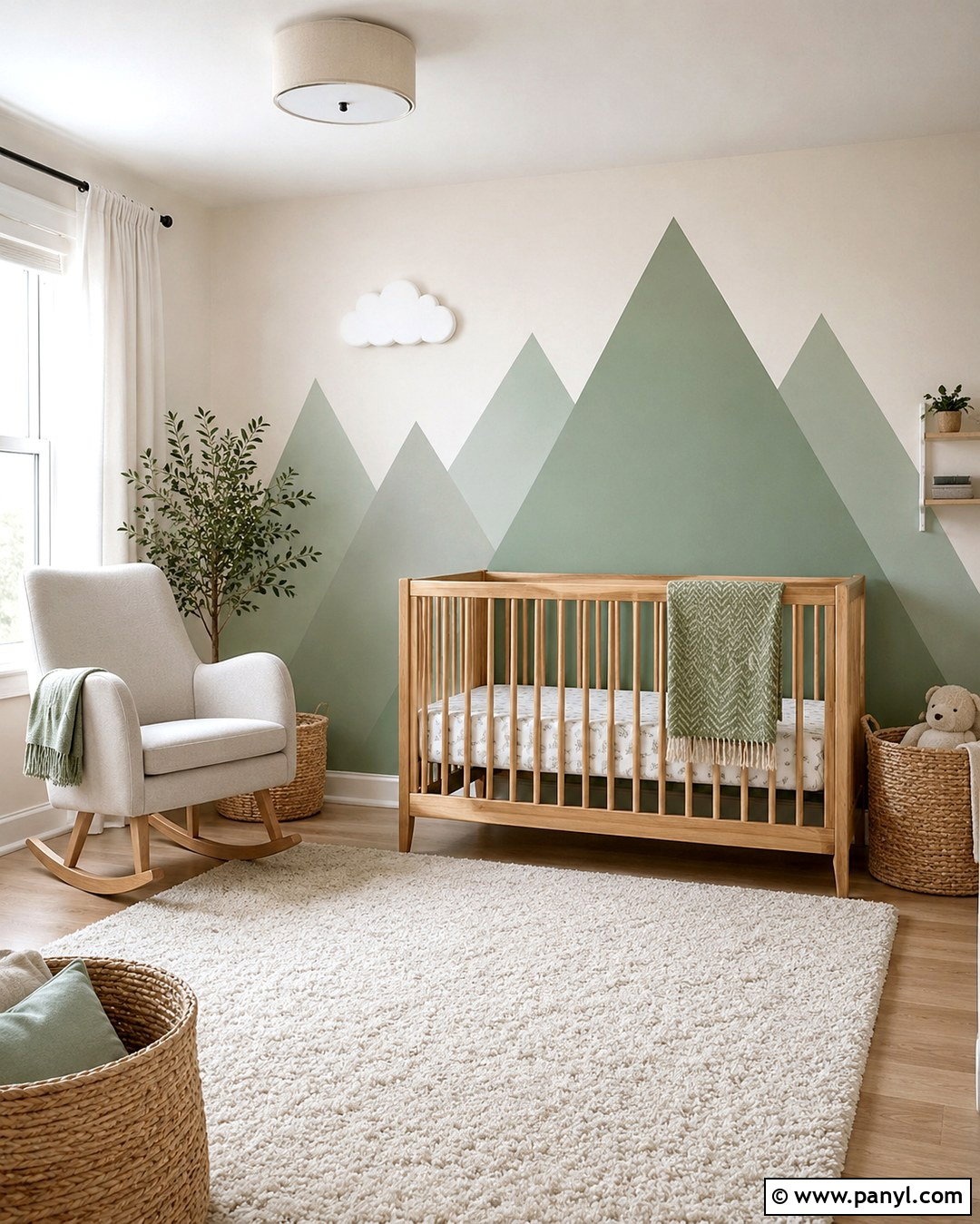
Layered mountain shapes create an adventurous children’s bedroom without needing detailed scenery. Paint the upper wall pale sky blue, then add overlapping mountain ranges in slate blue, muted teal, soft gray, and deep navy. Keep the peaks broad and slightly irregular so they feel modern rather than cartoon-like. A natural wood bed, white bedding, navy quilt, woven storage baskets, and a simple cream rug complete the room. Place the darkest range along the lower wall to visually ground the composition. Small white triangular peaks can suggest snow, but use them sparingly. Continue one blue shade onto a nearby bookcase or desk chair for consistency. The finished design provides imaginative character while remaining flexible enough to suit changing bedding and accessories as the child grows.
13. Color Block Geometric Wall Pattern
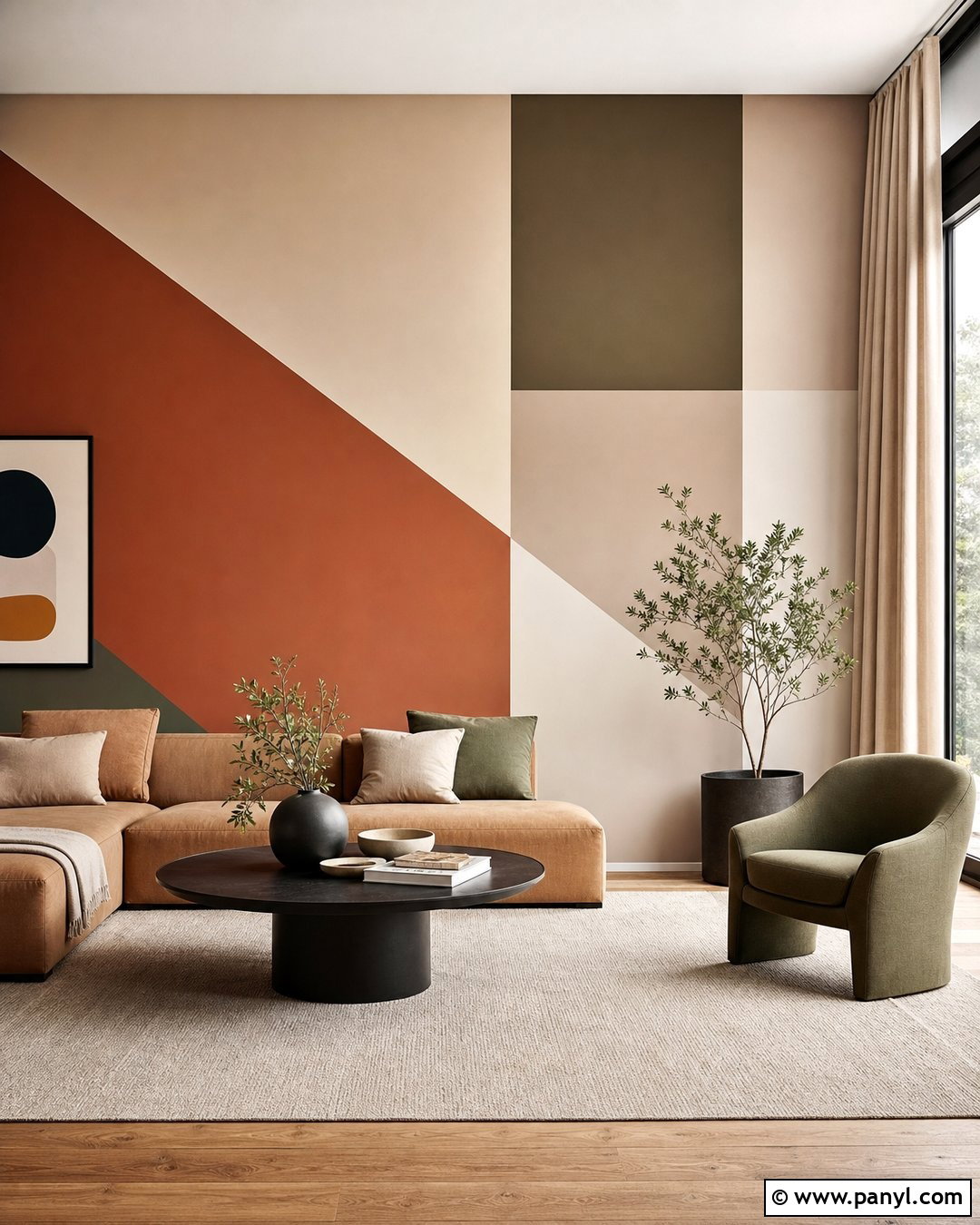
Large color blocks are ideal when you want bold impact with straightforward measuring and taping. Divide a living room wall into oversized sections of warm beige, rust, olive green, and muted cream. Use one strong diagonal to interrupt the rectangles and keep the layout from feeling too rigid. Place a low tan sofa across the boundary between two colors, then add a black coffee table, cream rug, and olive accent chair. Match cushions to the wall without using every shade in equal amounts. The largest block should occupy at least half the surface, giving the eye a comfortable resting place. Continue the lightest color onto adjoining walls. This approach turns the seating area into a complete composition and works particularly well in modern apartments with minimal architectural detail.
14. Abstract Geometric Wall Pattern
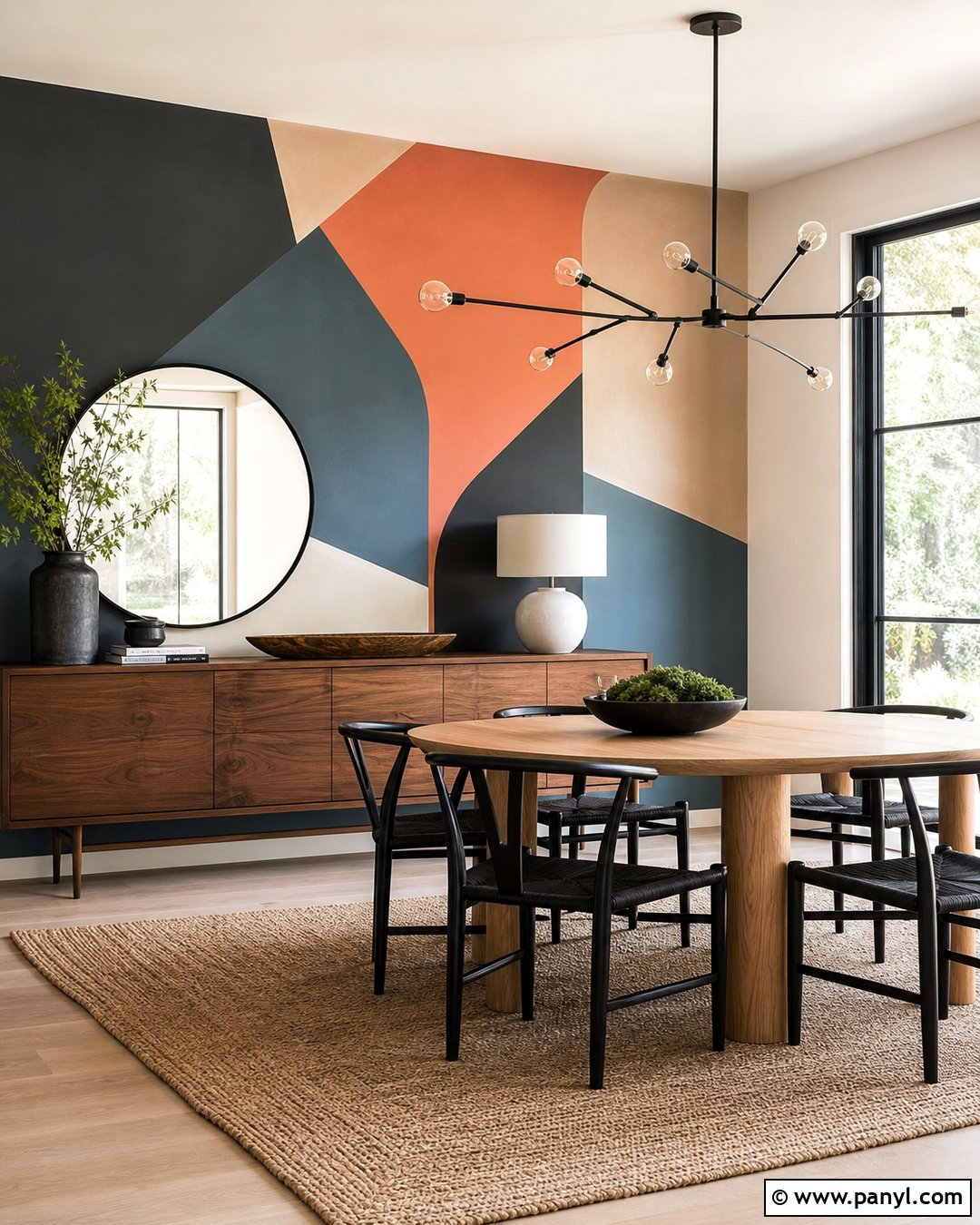
An abstract geometric wall feels most intentional when its shapes respond to the furniture below. Build the composition from overlapping rectangles, triangles, and partial circles in charcoal, muted coral, dusty blue, and warm beige. Keep the base wall creamy white and concentrate the pattern around a walnut sideboard in the dining room. A large round mirror can sit over a solid painted block, creating a strong relationship between decor and color. Add black dining chairs, a pale wood table, and a simple woven rug. Balance is more important than symmetry, so distribute dark and saturated shades across different areas. Sketch the entire arrangement on paper first. The resulting room resembles a large modern artwork while still feeling comfortable, functional, and easy to furnish.
15. Grid Geometric Wall Pattern
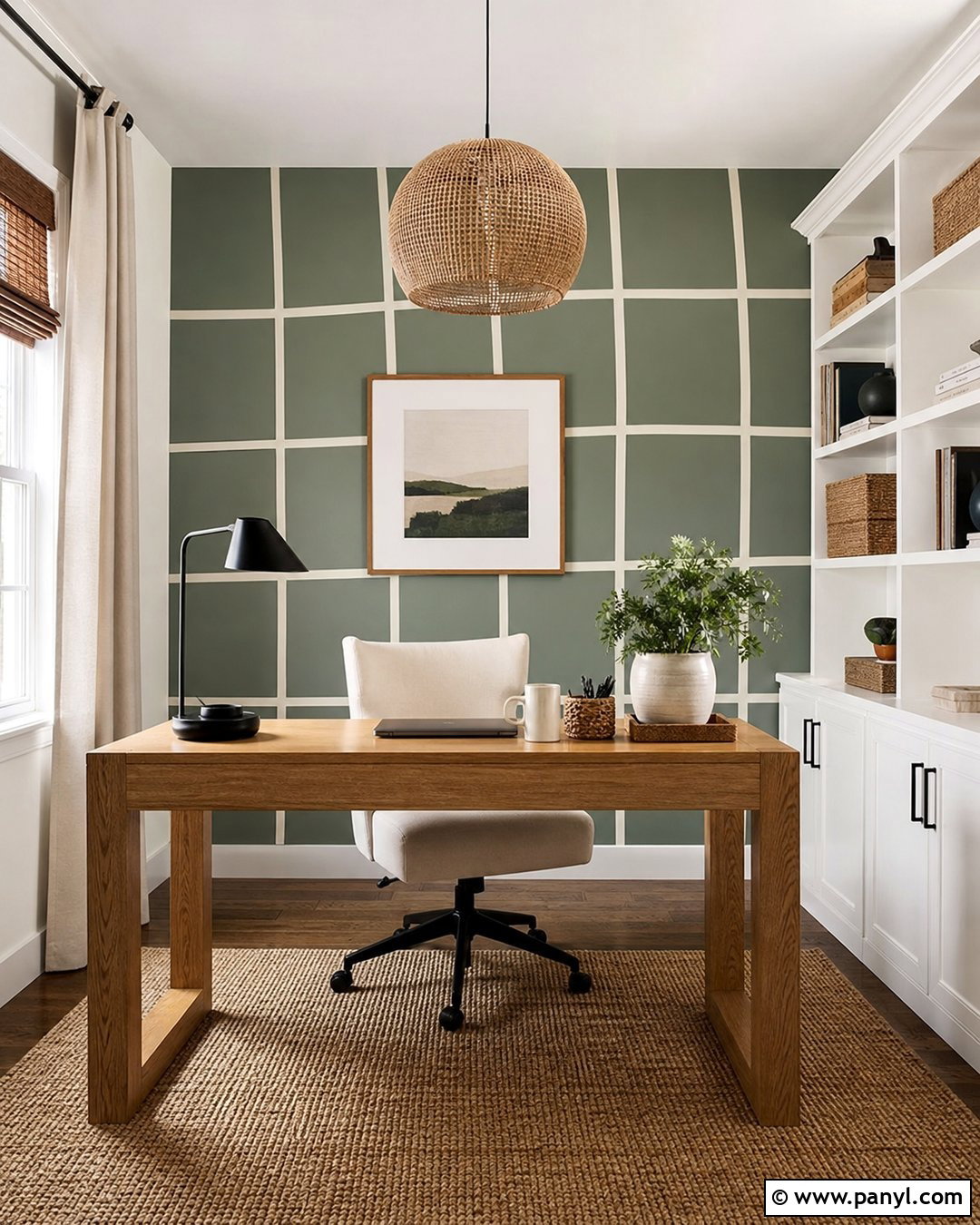
A painted grid introduces structure without requiring filled shapes or several complicated colors. Cover the wall in muted sage green, then add broad cream lines that form oversized, slightly irregular squares. Use the wall behind a built-in desk or freestanding oak workstation, where the pattern can echo shelves and storage compartments. A cream desk chair, matte black lamp, natural cork accessories, and woven window shade create a practical home office. Keep the grid large, with only three or four columns, to avoid a school-paper effect. The lines should be wide enough to read clearly from across the room. Paint shelves in the base sage color so they merge into the backdrop. This design provides pattern and organization while maintaining a calm environment for focused work.
16. Circle And Semicircle Geometric Wall Pattern
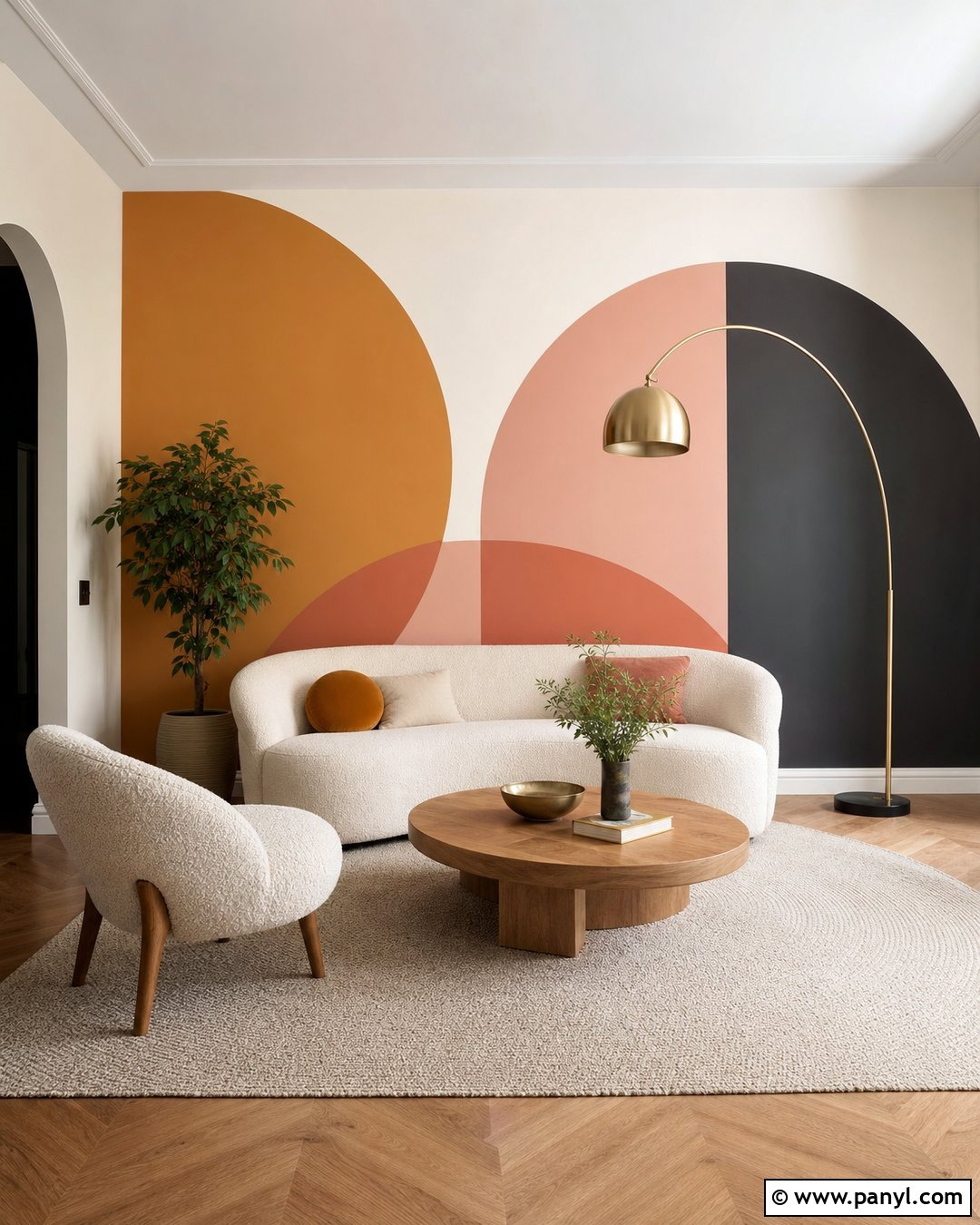
Circles and semicircles bring friendly movement to spaces dominated by straight furniture. On a warm white living room wall, paint one large ochre circle, a muted coral half-circle, a dusty pink quarter-circle, and a small charcoal disk. Overlap selected edges so the arrangement looks layered rather than scattered. Position a curved cream sofa in front, accompanied by a round oak coffee table, boucle chair, and arched floor lamp. Repeat circular forms through cushions and trays, but keep their colors mostly neutral. Draw each curve with a string compass for accuracy, then use a small angled brush to create smooth edges. The combination of rounded furniture and painted geometry produces a cohesive, welcoming room with a noticeable midcentury influence.
17. Sunburst Geometric Wall Pattern
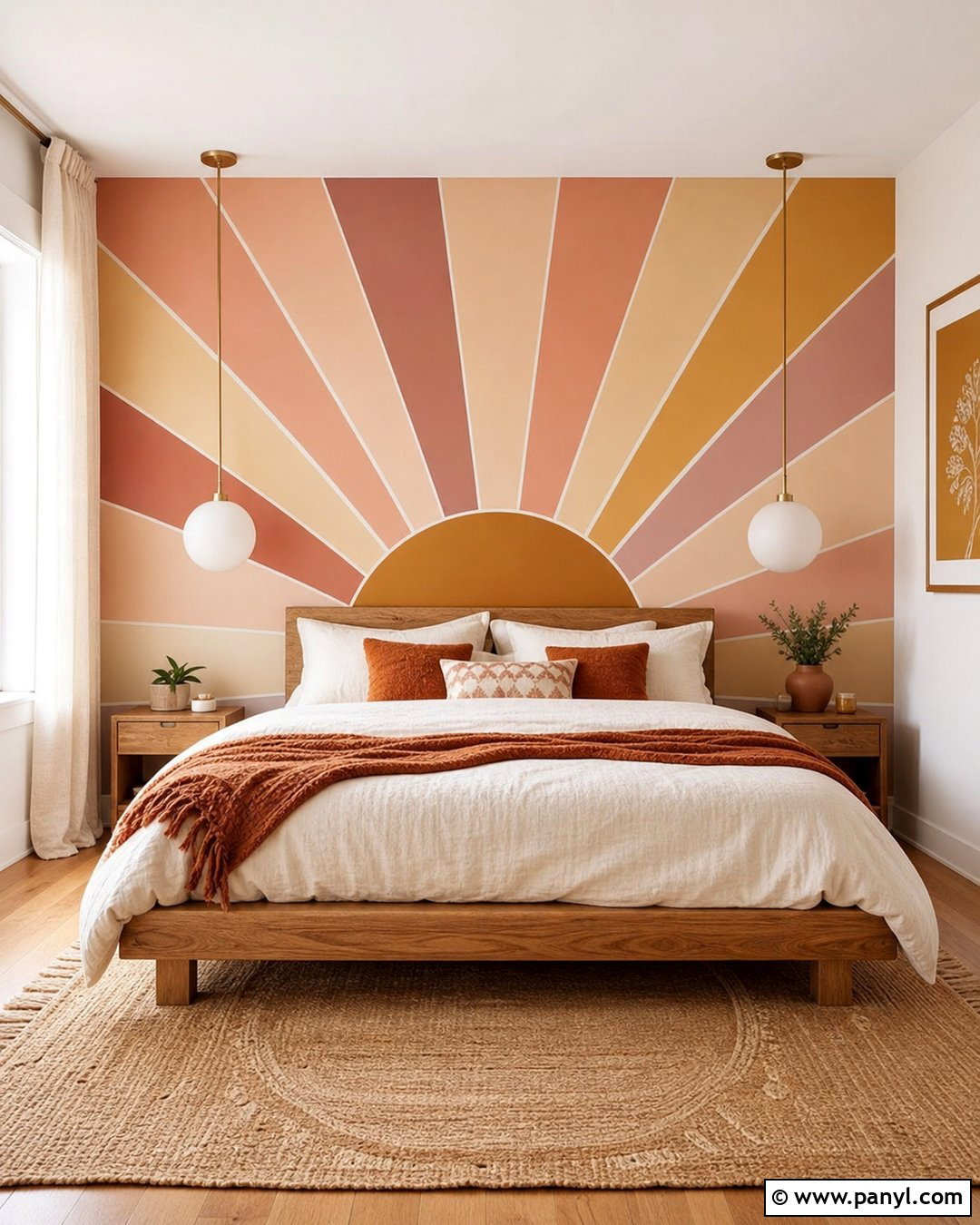
A sunburst pattern can highlight a bed, console, or dining banquette with dramatic symmetry. Paint the wall soft peach, then create wide rays extending from a low central point in terracotta, warm cream, dusty rose, and muted mustard. In a bedroom, place that center directly behind the headboard so the rays appear to spread outward from the bed. Choose a low oak frame, ivory bedding, rust throw, and simple globe pendants. Keep the surrounding walls light cream to contain the effect. Use fewer than twelve rays for a bold, uncluttered composition. Each ray should widen evenly toward the ceiling and side edges. The completed space feels optimistic and bright, while natural wood and linen prevent the colorful wall from appearing overly energetic.
18. Ombre Geometric Wall Pattern
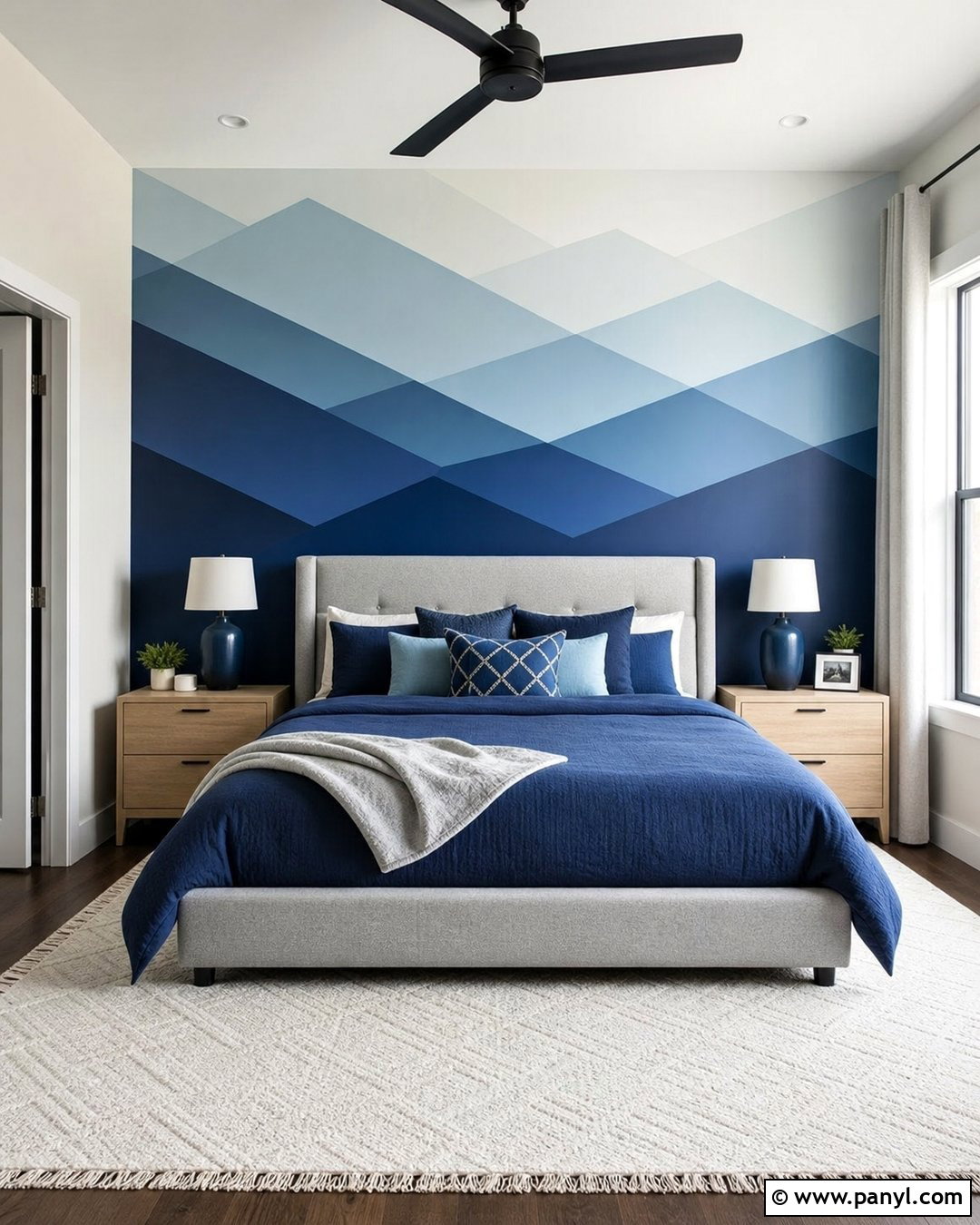
Geometric shapes and an ombre palette can create depth without introducing unrelated colors. Paint stacked angular sections that progress from deep navy near the floor to medium blue, dusty blue, pale blue, and soft white near the ceiling. Use broad diagonal transitions rather than blended paint, preserving crisp geometric edges. A light gray bed, white oak nightstands, navy lamps, and layered blue bedding complete the tonal bedroom. Keep the darkest band below headboard height so the room does not feel top-heavy. Repeat pale shades on curtains and the rug to maintain an airy upper half. This treatment can visually stretch a short wall because the colors become lighter as they rise. Precise color placement gives the finished design a smooth, intentional sense of progression.
19. Monochrome Geometric Wall Pattern
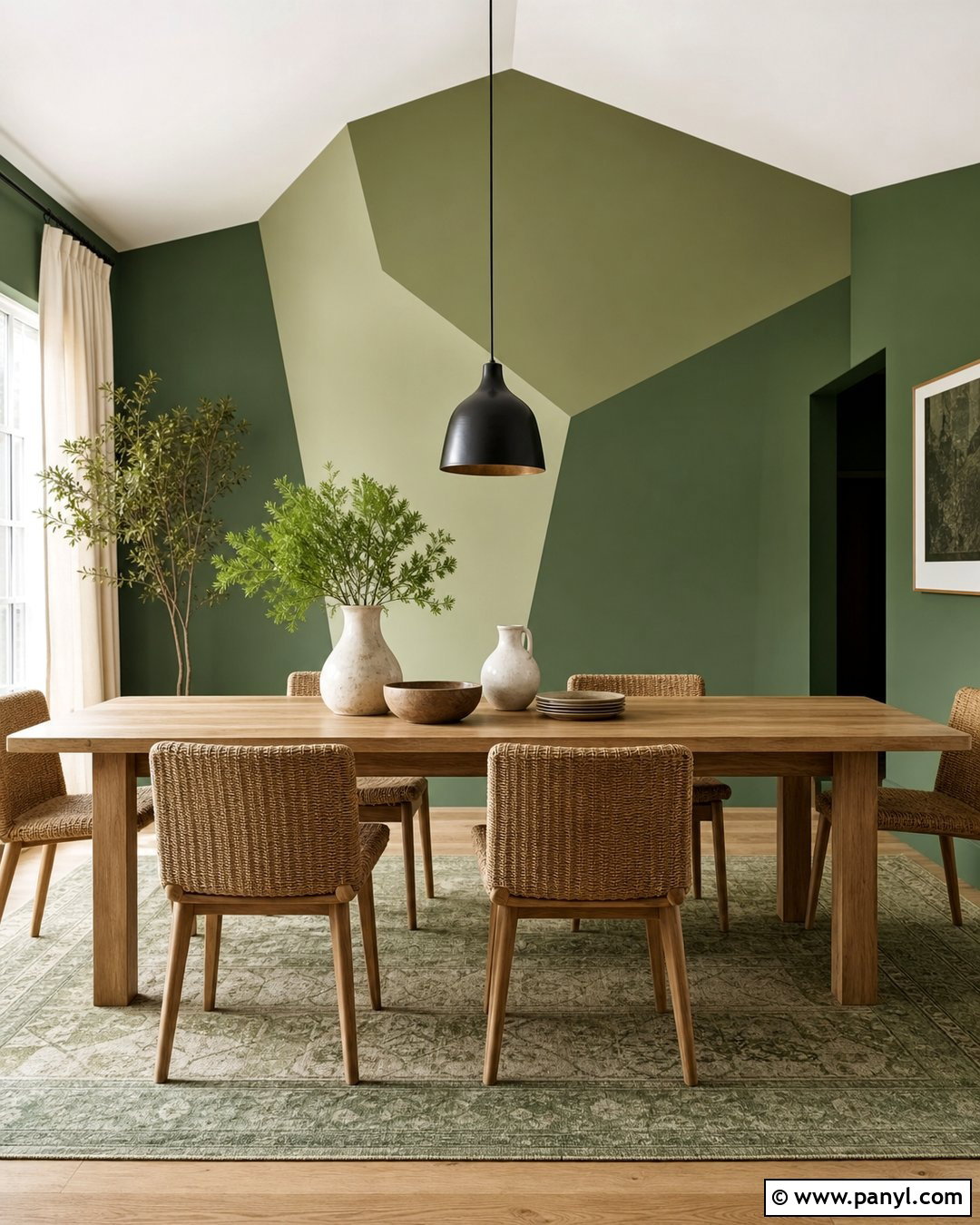
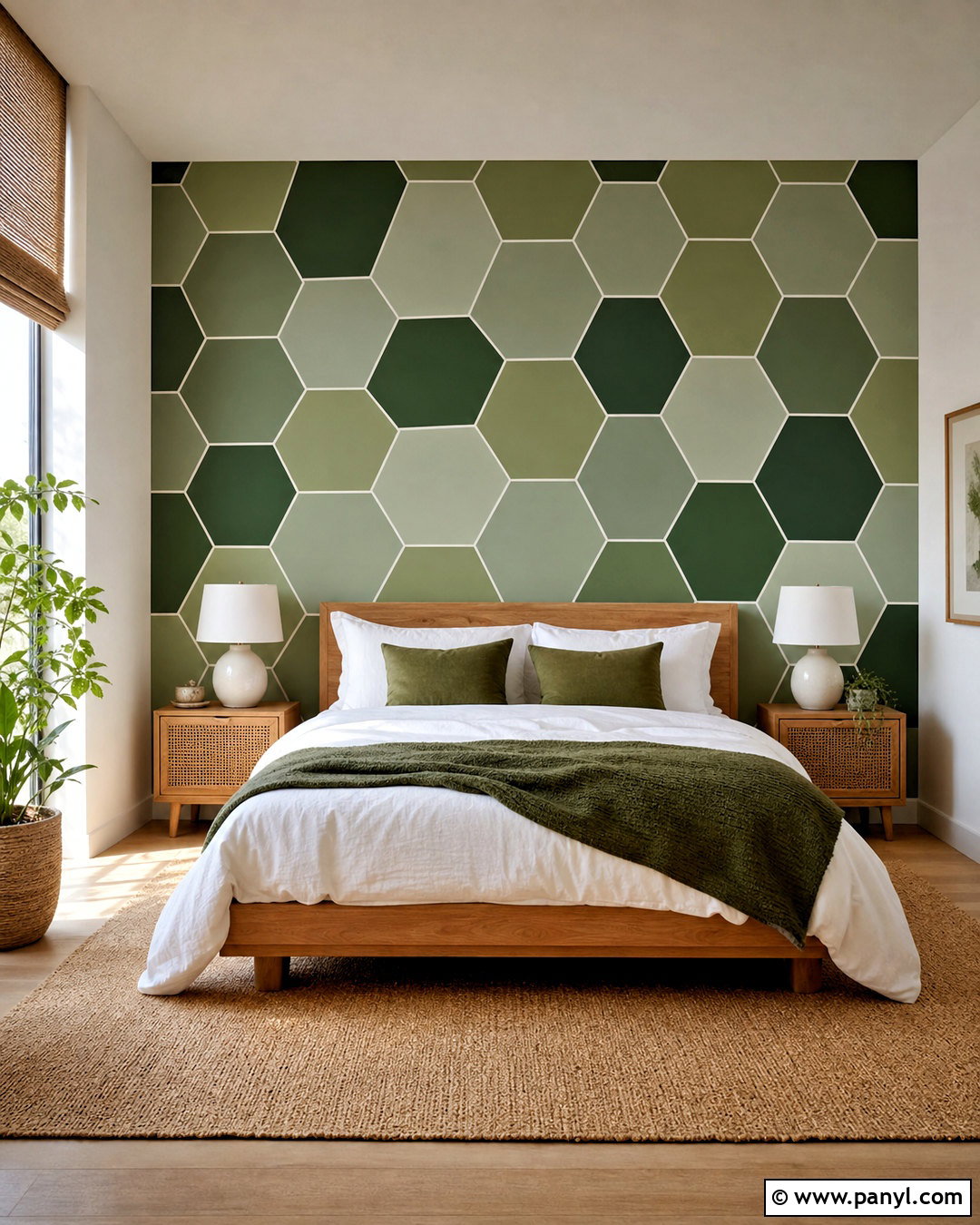
A monochrome scheme proves that geometric paint does not need several competing colors. Select one green family and combine deep forest, medium olive, muted moss, pale sage, and a creamy green-tinted neutral. Arrange the shades in large irregular polygons behind a dining table, keeping the darkest color near the lower corner. Add a solid oak table, woven chairs, ivory curtains, and matte black lighting. Green ceramics and leafy plants can reinforce the palette, but avoid placing them directly against similarly colored sections. Varying the value of each paint color creates enough separation between shapes. Test samples together under daytime and evening light before starting. The complete dining room will feel layered and expressive while retaining the calm unity of a single color family.
20. Earth Tone Geometric Wall Pattern
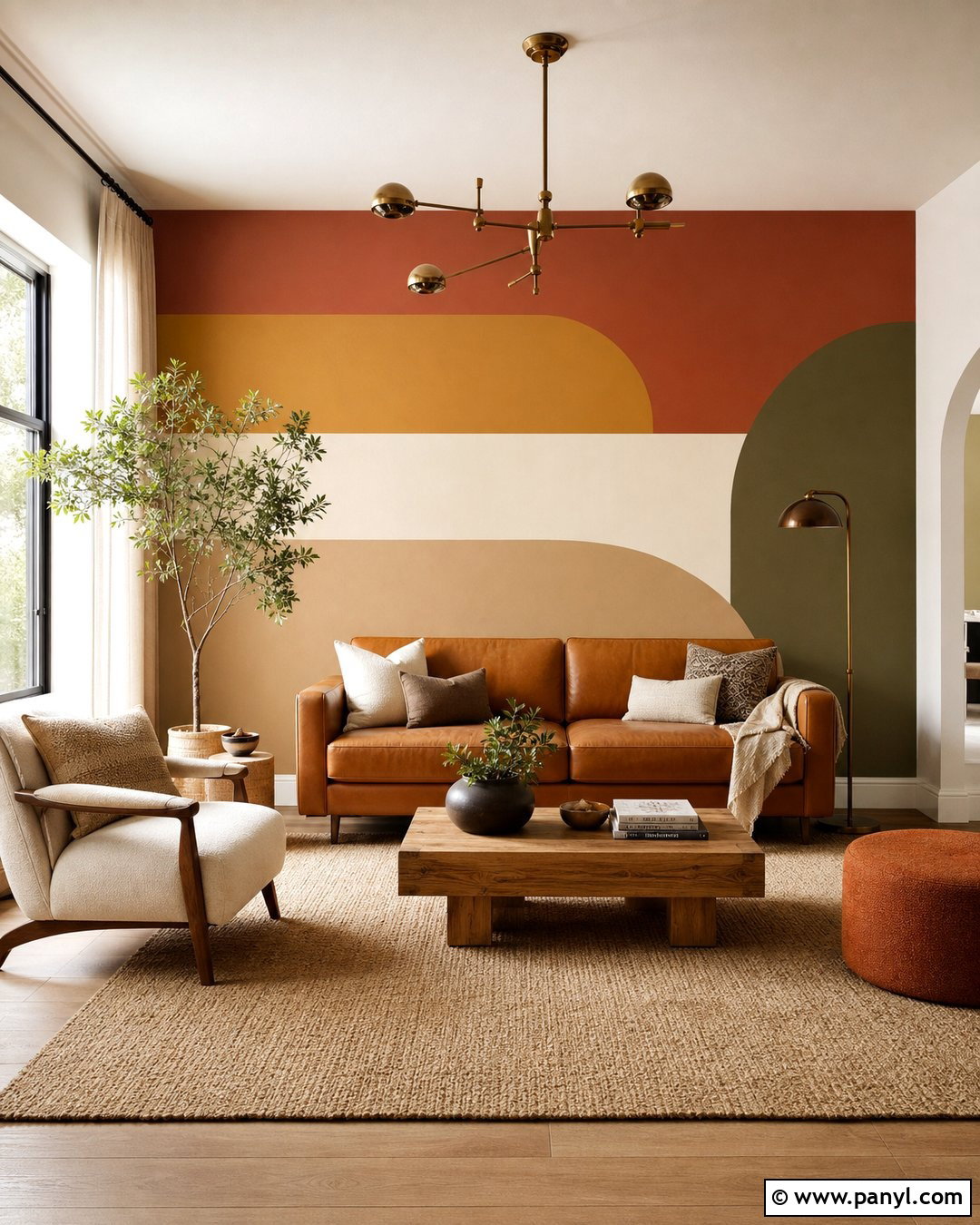
Warm earth tones make a bold pattern feel grounded and easy to live with. Paint an accent wall with broad shapes in clay red, ochre, sand, olive, and warm cream. Arrange the largest forms horizontally behind a caramel leather sofa to emphasize the width of the living room. Add a chunky oak coffee table, cream lounge chair, jute rug, and linen curtains. Dark bronze lighting provides definition without introducing a harsh black accent. Leave slim sections of the cream base visible between selected shapes, giving the composition a hand-layered appearance. Keep the ceiling and adjoining walls light to balance the saturated colors. With natural materials and a limited decorative palette, this geometric wall becomes part of a warm, comfortable room rather than an isolated decorative feature.
21. Navy And Gold Geometric Wall Pattern
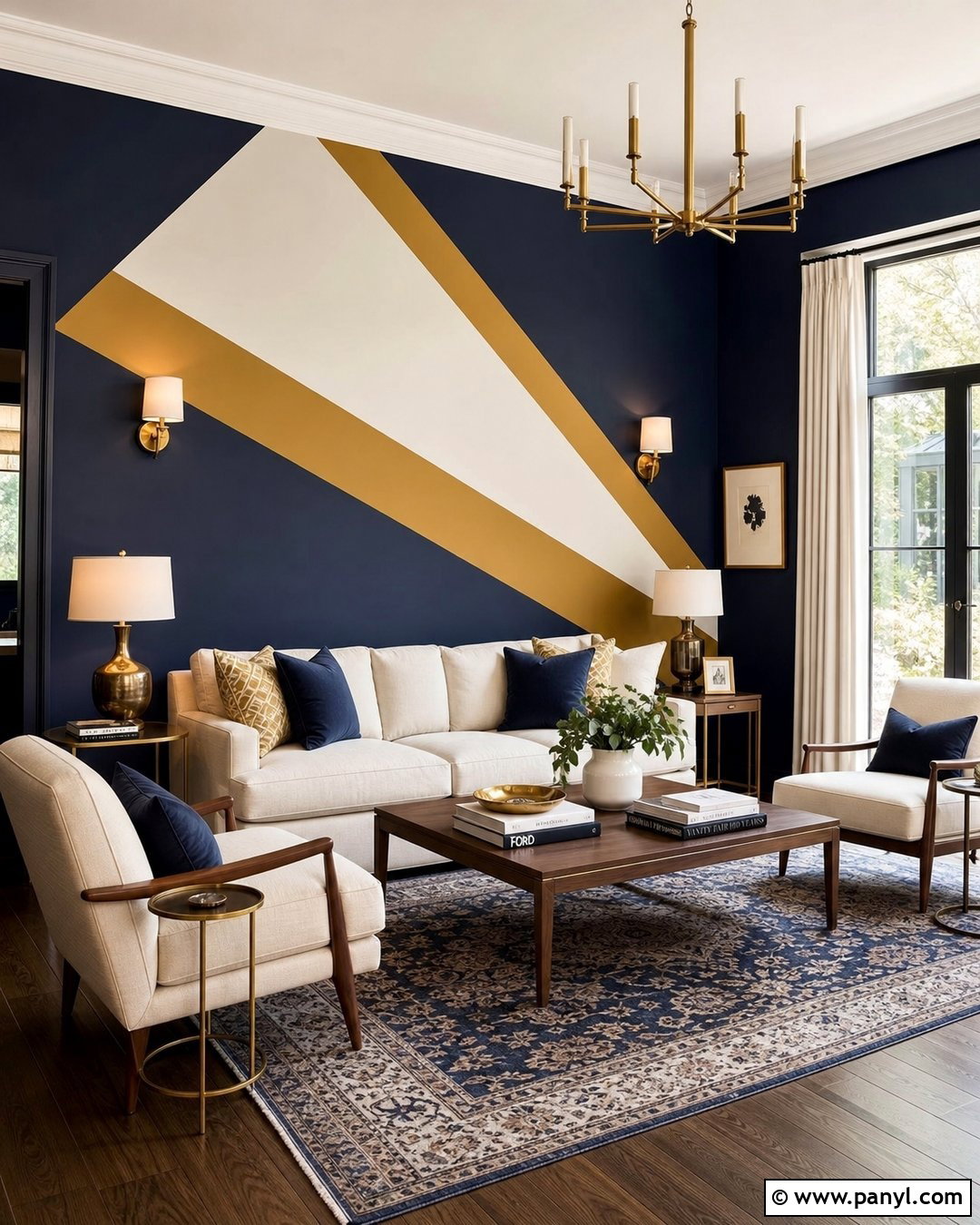
Navy and warm golden paint can give a geometric wall an elegant look without using metallic finishes. Begin with a deep navy background and add narrow angular bands in muted ochre, along with a few larger warm-white sections. Use the design behind a cream sofa or upholstered bed, where lighter furniture will stand out clearly. Walnut tables, brushed brass lighting, ivory textiles, and a faded navy rug complete the sophisticated palette. Keep the ochre lines wide enough to paint cleanly, since extremely thin details can expose minor tape errors. Allow navy to remain the dominant color across at least two-thirds of the wall. The finished room feels rich and polished, while soft fabrics and warm wood prevent the dark backdrop from becoming heavy or formal.
22. Sage Green Geometric Wall Pattern
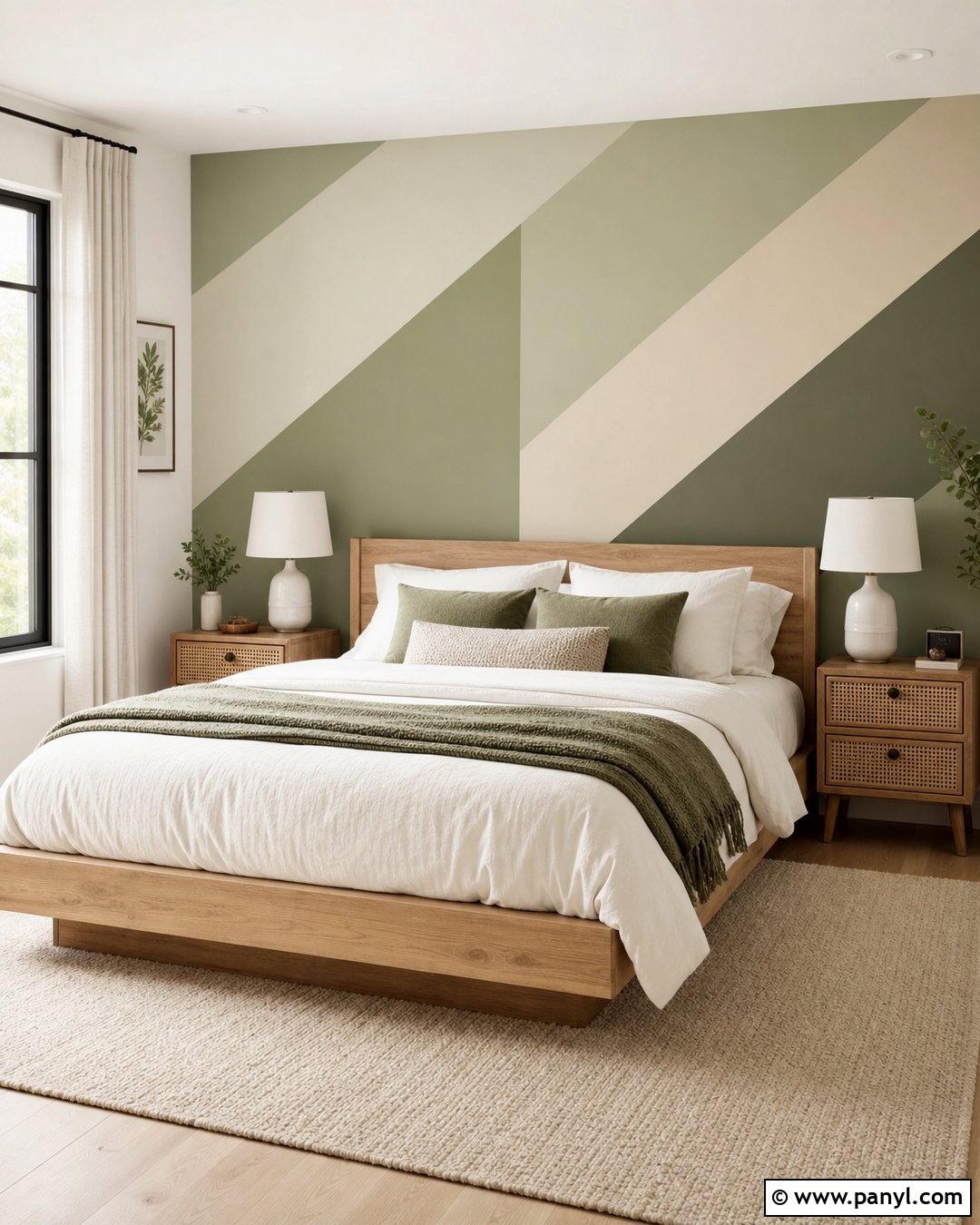
Sage green works especially well in geometric patterns because it offers color without overwhelming a restful room. Use a warm white background with large sage, olive, eucalyptus, and pale beige rectangles intersected by one gentle diagonal. Center the composition behind a light oak platform bed. Layer ivory bedding, a moss-colored throw, woven nightstands, and white ceramic lamps for a natural bedroom scheme. Keep the deepest olive shape low and use pale colors near the ceiling to maintain brightness. A small bench and textured wool rug can add softness without introducing more pattern. Choose slightly grayed greens rather than vivid shades for a cohesive result. This complete look feels fresh and contemporary while pairing easily with wood, linen, rattan, and neutral flooring.
23. Terracotta Geometric Wall Pattern
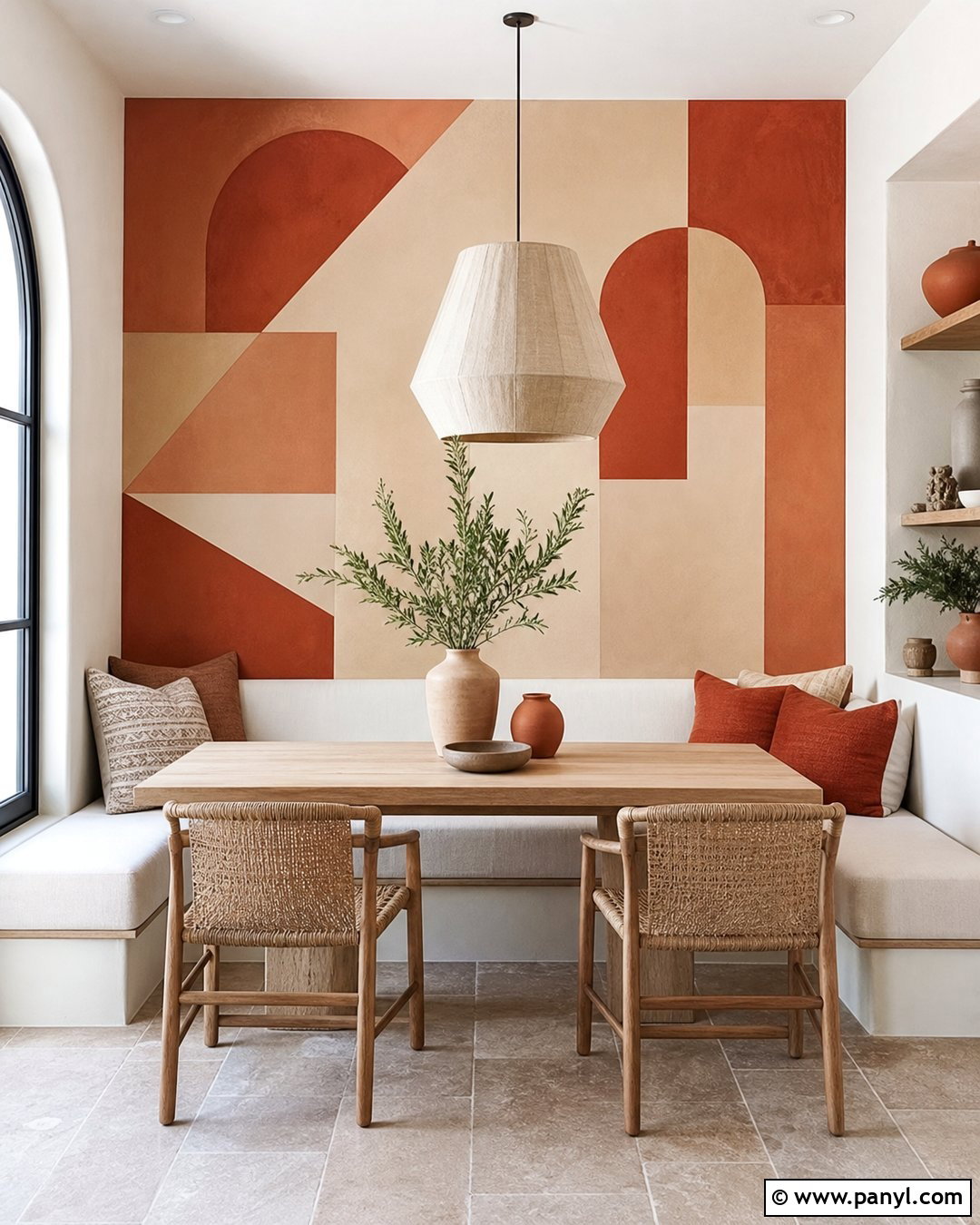
Terracotta brings warmth to a geometric wall and pairs naturally with creamy neutrals. Paint the base soft ivory, then add a large burnt terracotta rectangle, a clay-colored arch, and smaller beige and muted rust triangles. Arrange the shapes behind a dining banquette so the wall visually defines the eating area. Use a pale oak table, cream upholstery, woven chairs, and a linen pendant to complete the casual setting. A few matte ceramic pieces can repeat the earthy colors without creating clutter. Keep the painted elements broad and slightly asymmetrical for an artistic effect. If the room receives limited daylight, choose softened terracotta rather than deep red-orange. The final nook will feel sunny, welcoming, and comfortably connected to natural wood and tactile fabrics.
24. Blue Geometric Wall Pattern
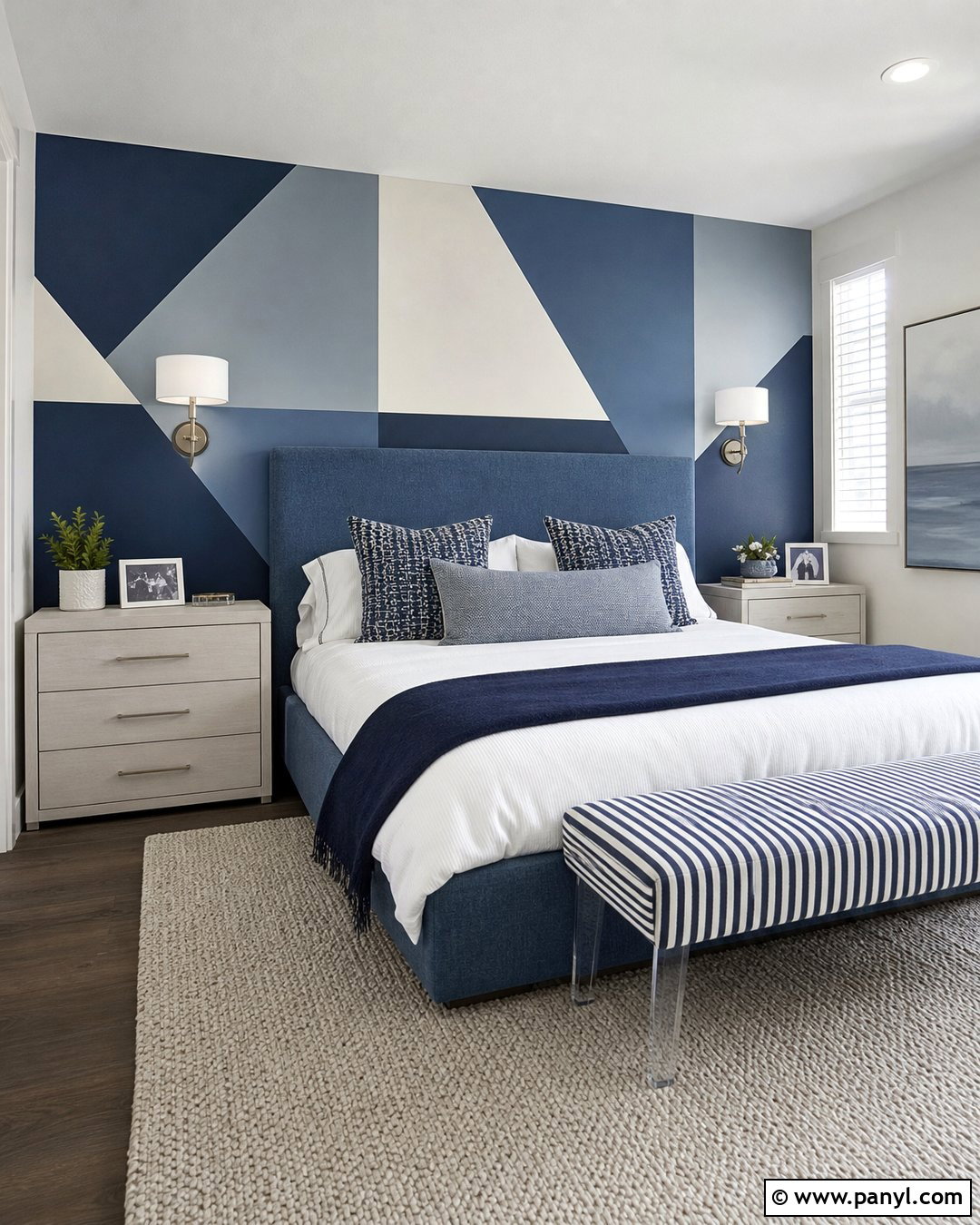
Several shades of blue can create a crisp, flexible geometric wall for a guest bedroom. Begin with a pale blue-gray base, then paint overlapping rectangles and triangles in denim blue, muted cobalt, navy, and warm white. Position a medium-blue upholstered bed against the lightest area so it remains visible. White oak nightstands, brushed nickel sconces, crisp white linens, and a striped navy bench give the room a clean finish. Use navy sparingly, perhaps in one lower corner and a narrow upper shape. This distribution keeps the wall balanced instead of visually sinking to one side. Soft gray curtains and a textured ivory rug prevent an overly themed appearance. The complete room feels fresh, calm, and suitable for guests of different ages and tastes.
25. Pink And Gray Geometric Wall Pattern
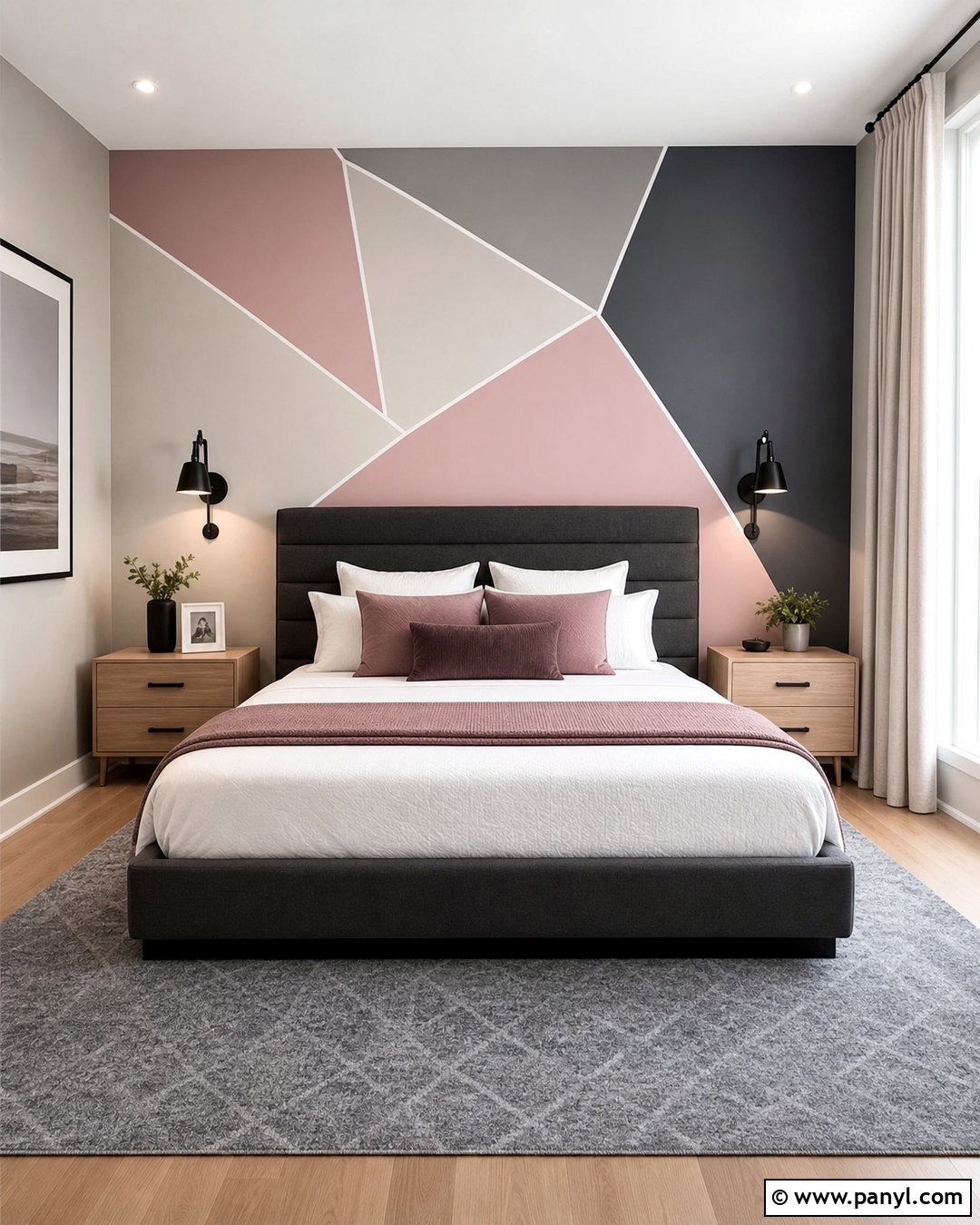
Pink and gray can feel mature when both colors have soft, dusty undertones. Cover a bedroom wall in pale warm gray, then add oversized blush, mauve, charcoal, and off-white polygons. Use a charcoal upholstered headboard to connect with the darkest wall section. White bedding, mauve cushions, light oak nightstands, and simple black sconces complete the balanced palette. Avoid placing all the pink shapes together; distribute them across the wall so the eye moves naturally. Keep charcoal limited to small areas that add definition without dominating the space. A subtle gray rug and linen curtains will support the wall rather than compete with it. This full design delivers gentle color, clear structure, and enough neutral space to remain comfortable over time.
26. Kids Bedroom Geometric Wall Pattern
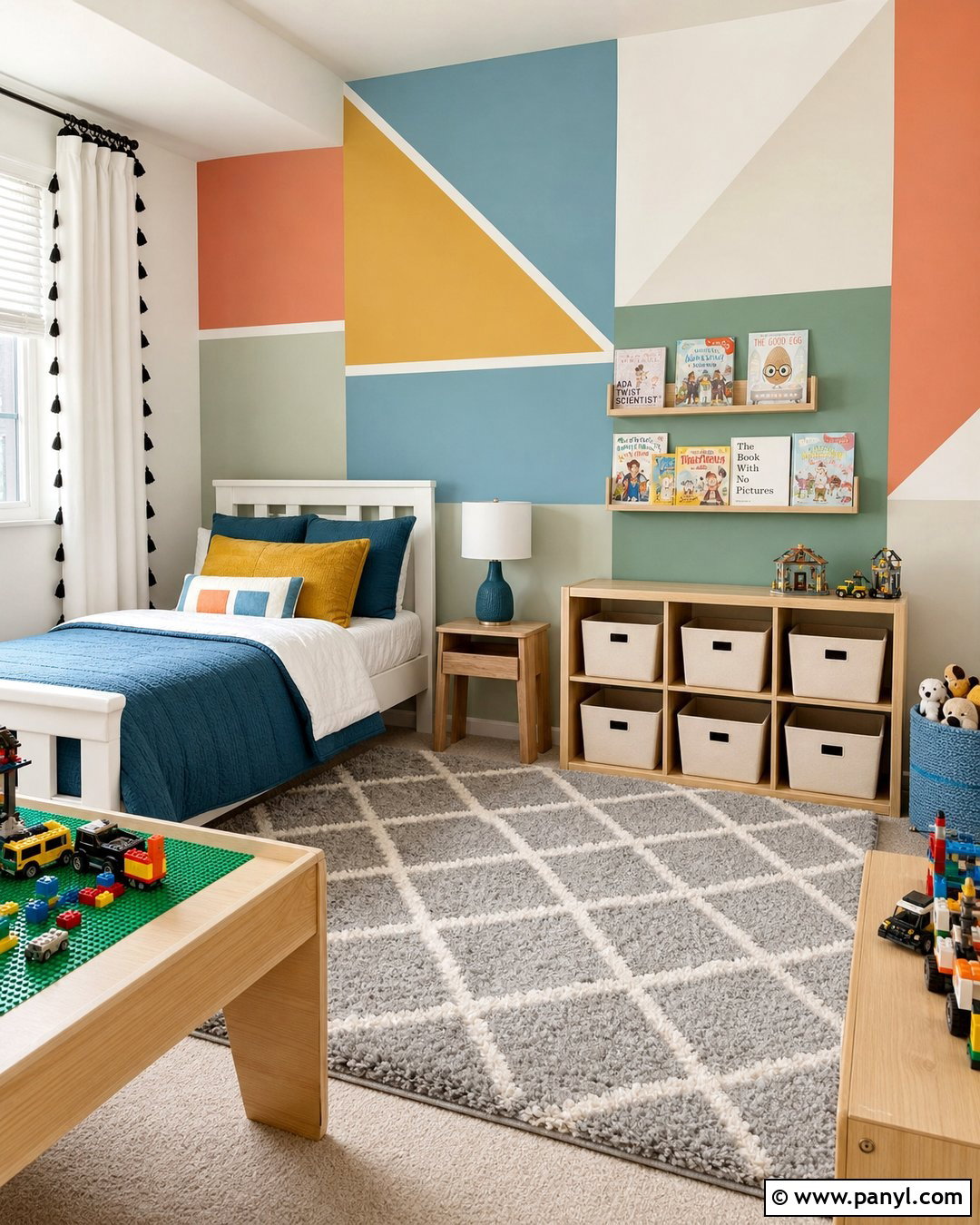
A children’s room can handle energetic color, but the pattern still benefits from a clear plan. Paint a warm white base and create large building-block shapes in teal, mustard, coral, sky blue, and muted green. Keep the pattern across the lower two-thirds of the wall so the upper area remains open and bright. A white bed, natural wood toy storage, solid-color bedding, and a washable gray rug make the room practical. Match storage bins to two of the wall colors instead of using the entire palette everywhere. Rounded rectangles and broad triangles are easier to paint and feel friendlier than many narrow points. The completed bedroom offers playful character while leaving enough visual flexibility for changing toys, books, and interests.
27. Nursery Geometric Wall Pattern
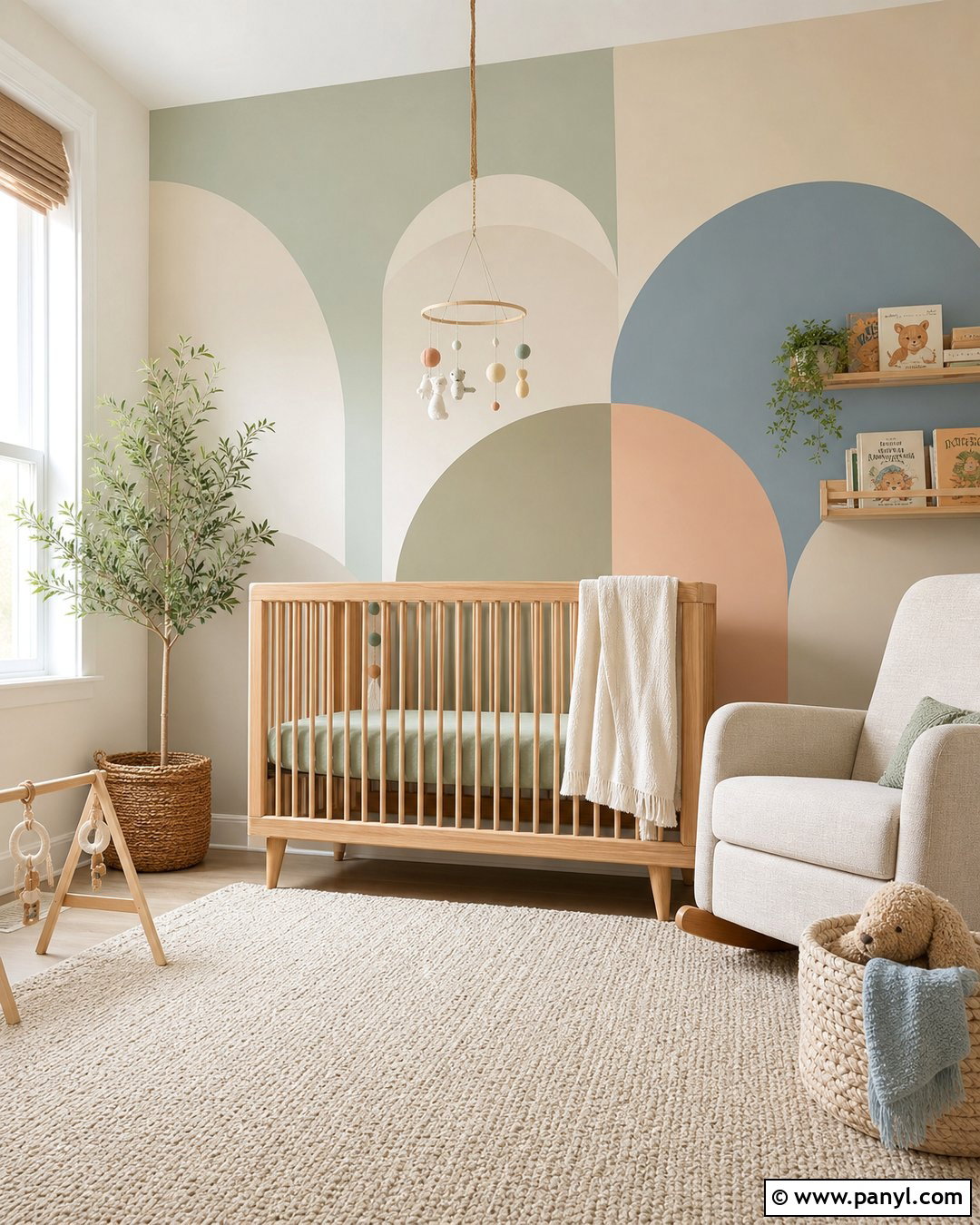
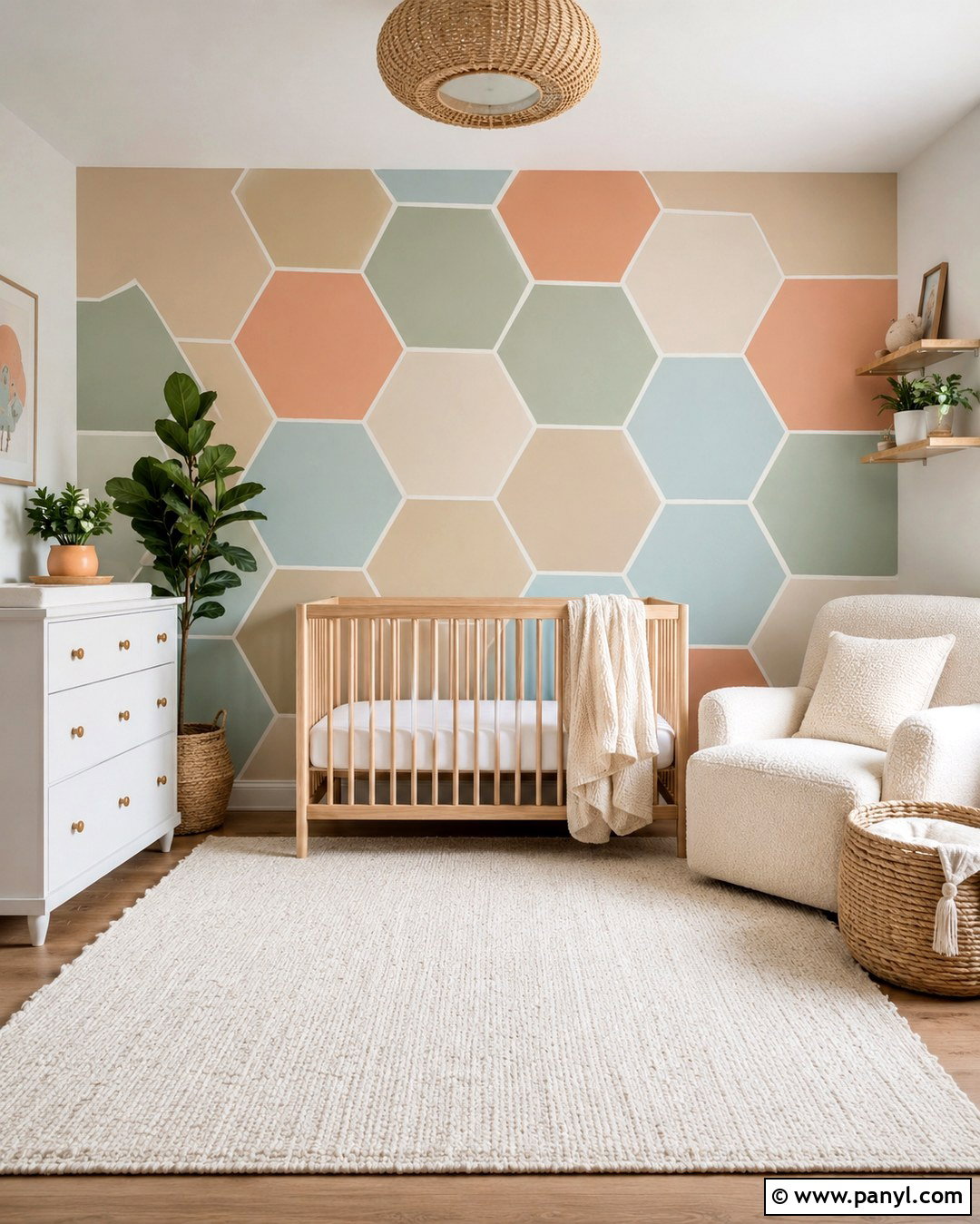
Gentle geometry gives a nursery visual interest without creating an overstimulating backdrop. Paint the wall creamy white, then add wide overlapping arches and half-circles in pale sage, soft beige, dusty blue, and muted peach. Place the crib in front of the largest light-colored shape, keeping dark paint away from the sleeping area. A natural wood crib, ivory glider, woven basket, simple mobile, and washable cream rug complete the peaceful room. Use low-odor interior paint and allow the wall to cure fully before arranging the nursery. Soft curves are easier on the eye than a dense arrangement of sharp angles. Repeat only one or two painted colors in the textiles. The final space feels calm, warm, and thoughtfully coordinated without relying on a temporary character theme.
28. Living Room Geometric Wall Pattern
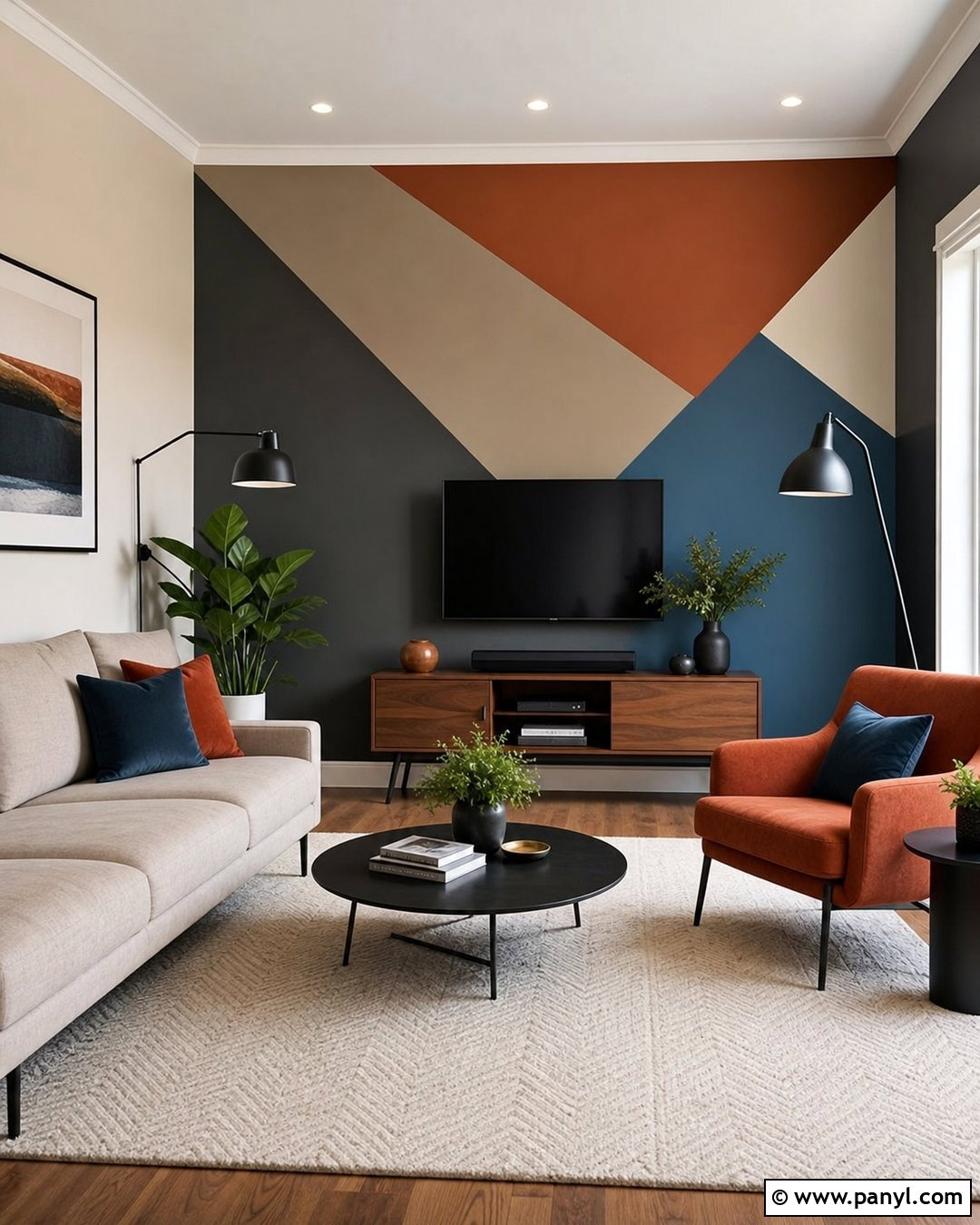
A living room pattern should frame the main seating area and remain attractive from several viewpoints. Use a warm greige background with expansive diagonal blocks in charcoal, rust, muted blue, and cream. Let one diagonal align with the back of a low oatmeal sofa, creating a strong link between the wall and furniture. Add a walnut media cabinet, rust lounge chair, black metal lighting, and a large ivory rug. Keep accessories solid and repeat each accent color only once or twice. Plan the wall around artwork, vents, and switches before taping so important lines are not interrupted. With a restrained palette and oversized shapes, the finished living room gains architectural energy while still feeling comfortable enough for daily use and conversation.
29. Bedroom Geometric Wall Pattern
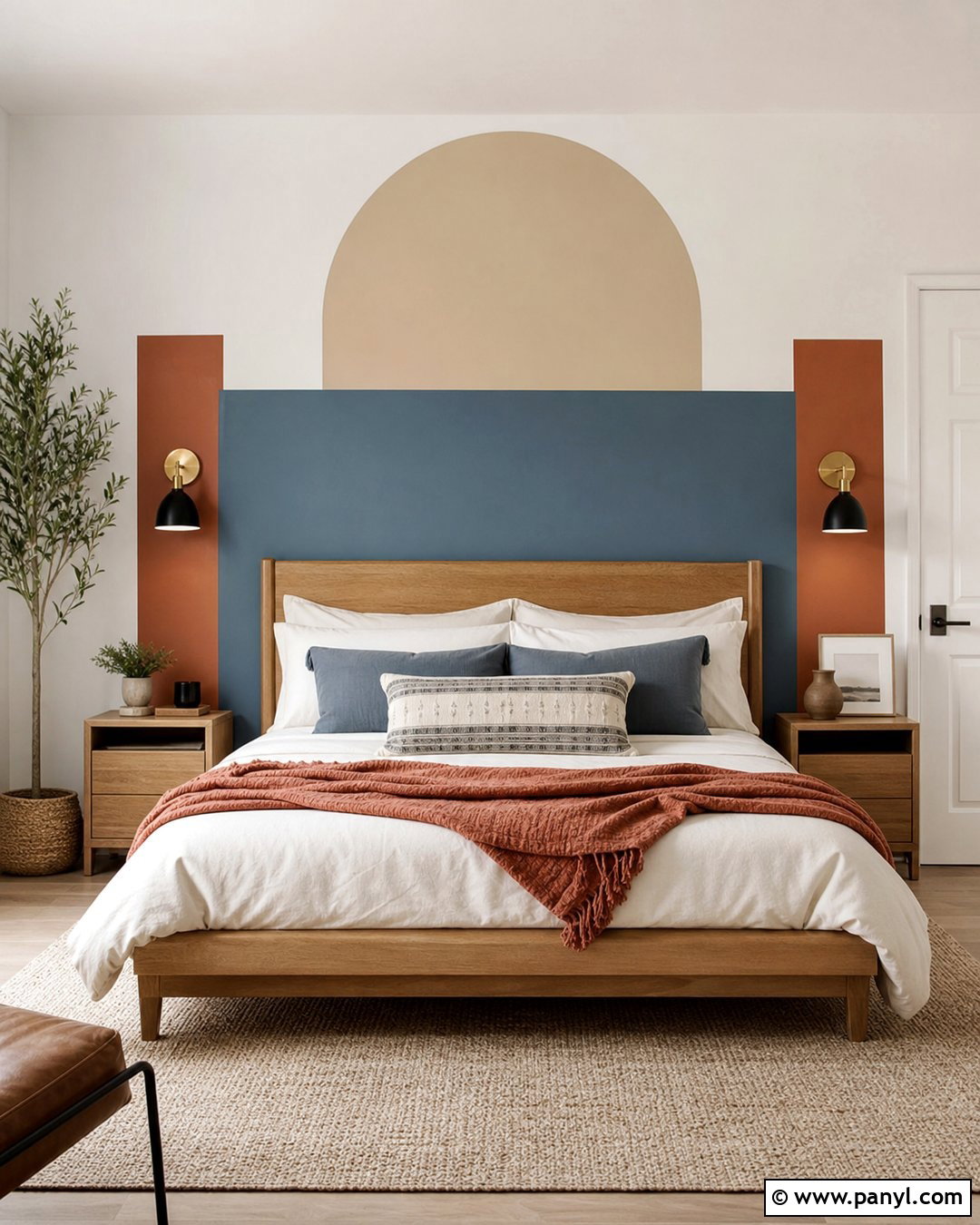
For a peaceful bedroom, use geometry to create a painted headboard effect rather than covering the entire wall with small shapes. Paint a wide muted blue rectangle behind the bed, then overlap it with a tall beige arch and two slim terracotta side blocks. Extend the main rectangle beyond both nightstands to frame the complete sleeping zone. Choose a simple oak bed, ivory linens, blue-gray pillows, clay-colored throw, and matching wall-mounted lights. Keep the remaining walls warm white and the floor covering neutral. This layout adds color while maintaining plenty of blank space. Carefully center the design on the bed rather than the wall if the furniture placement is asymmetrical. The completed room feels balanced, layered, and intentionally arranged.
30. Home Office Geometric Wall Pattern
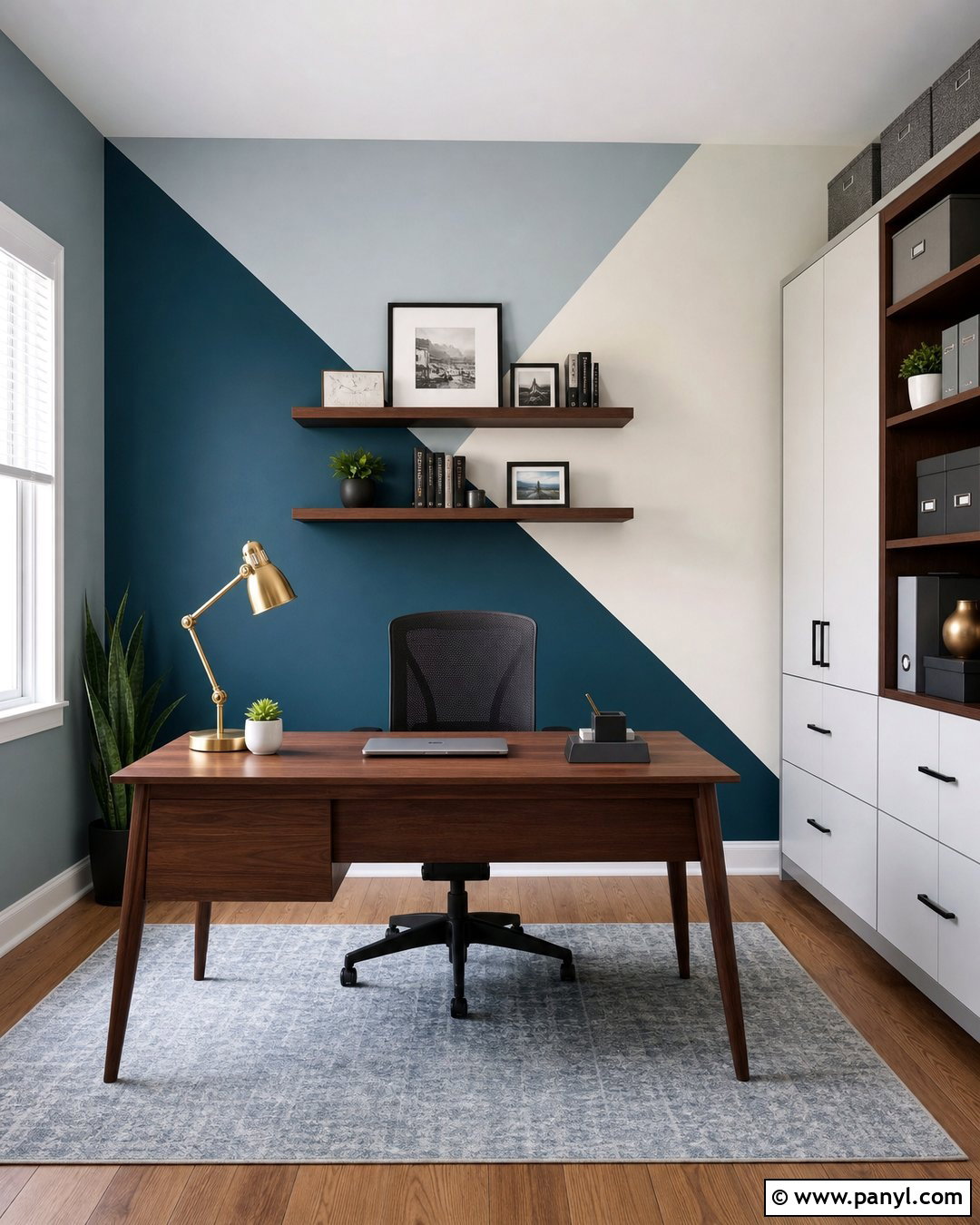
A focused home office benefits from geometry that feels directional but not distracting. Paint the desk wall soft gray, then add broad diagonal sections in deep teal, muted blue, and warm white. Angle the lines upward toward nearby shelves to create a subtle sense of movement. Furnish the space with a walnut desk, ergonomic black chair, closed white storage, and a brass task lamp. Keep the boldest shape behind the monitor so it functions as a visual anchor. Floating shelves should cross only the quieter gray or white areas, allowing books and supplies to remain easy to see. Use cable management and matching storage boxes to protect the clean composition. The finished workspace combines creative energy with the order needed for productive daily routines.
31. Dining Room Geometric Wall Pattern
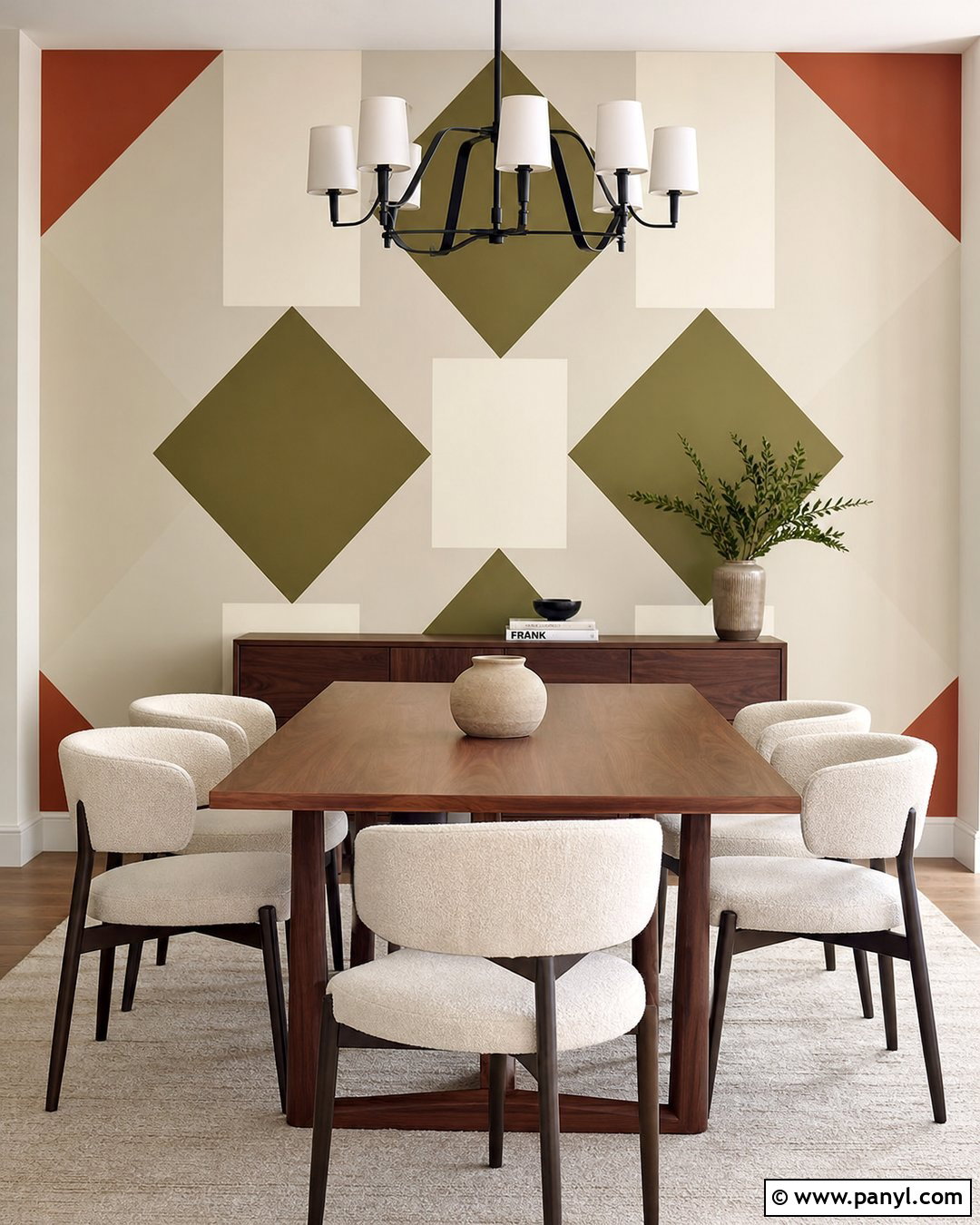
Symmetrical geometric paint can make a dining area feel grounded and ready for gatherings. Start with a creamy beige wall and create a centered arrangement of broad olive diamonds, rust triangles, and warm-white rectangles. Align the middle of the pattern with the table and pendant light. A rectangular walnut table, cream upholstered chairs, black chandelier, and neutral wool rug provide a strong but comfortable foundation. Keep serving furniture simple, choosing a low sideboard that does not conceal the entire design. Use matte paint to minimize reflections from dining lighting. One large centerpiece is preferable to several small decorative objects. By connecting the wall pattern to the furniture’s centerline, the finished room gains the formal balance of architectural paneling with a warmer, more colorful personality.
32. Hallway Geometric Wall Pattern
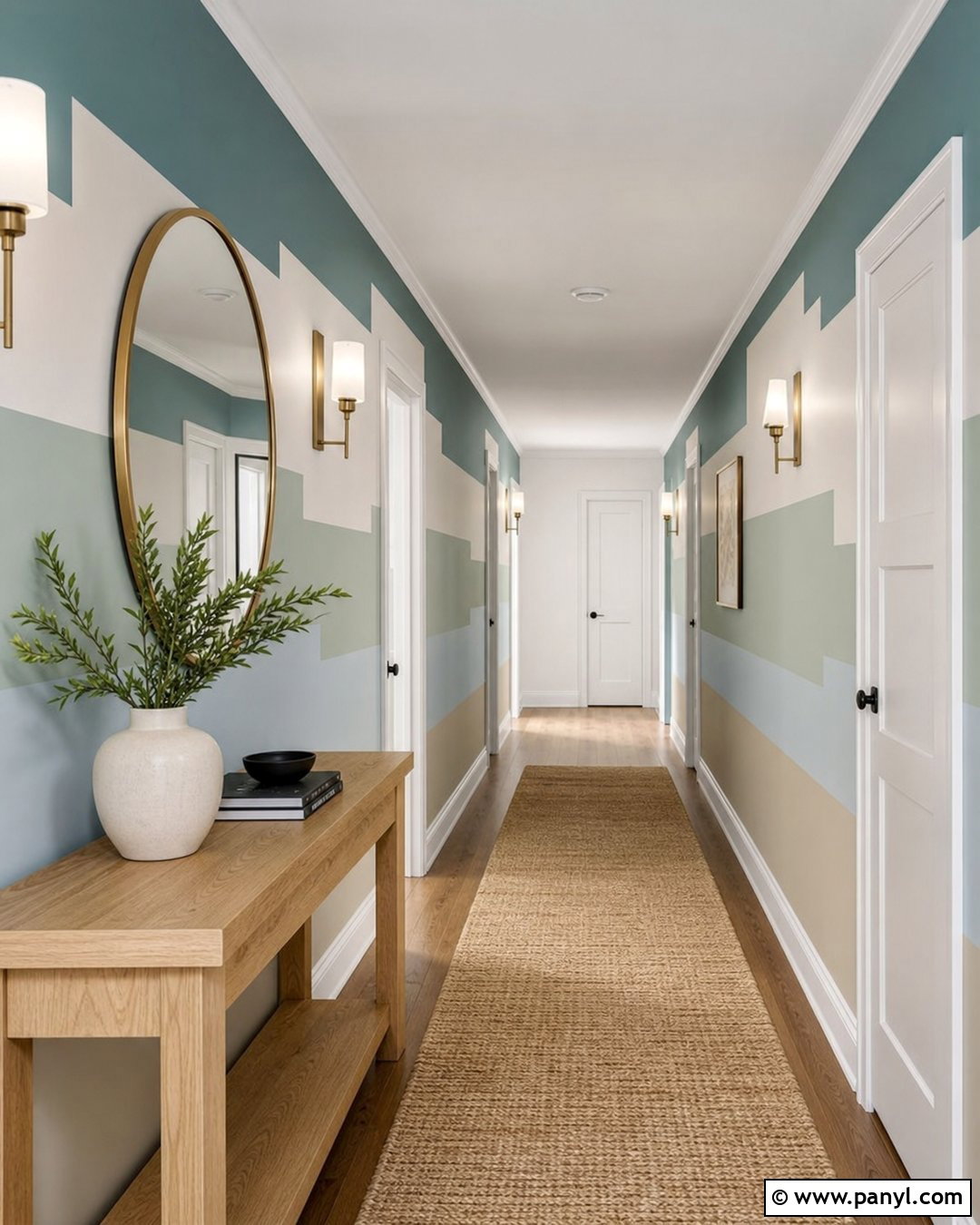
Long hallways are well suited to horizontal geometry that guides the eye forward. Paint the lower half muted teal and the upper half warm white, then connect the two areas with a series of broad stepped rectangles in sage, pale blue, and beige. A slim oak console, round brass mirror, woven runner, and simple wall sconces complete the passage. Keep the darkest color below waist height to conceal everyday scuffs and ground the narrow space. The stepped pattern should repeat at generous intervals rather than forming a busy border. Match doors and trim to the warm white upper wall for continuity. This complete hallway treatment adds identity to a transitional space while visually stretching its length and maintaining a clean, practical surface.
33. Staircase Geometric Wall Pattern
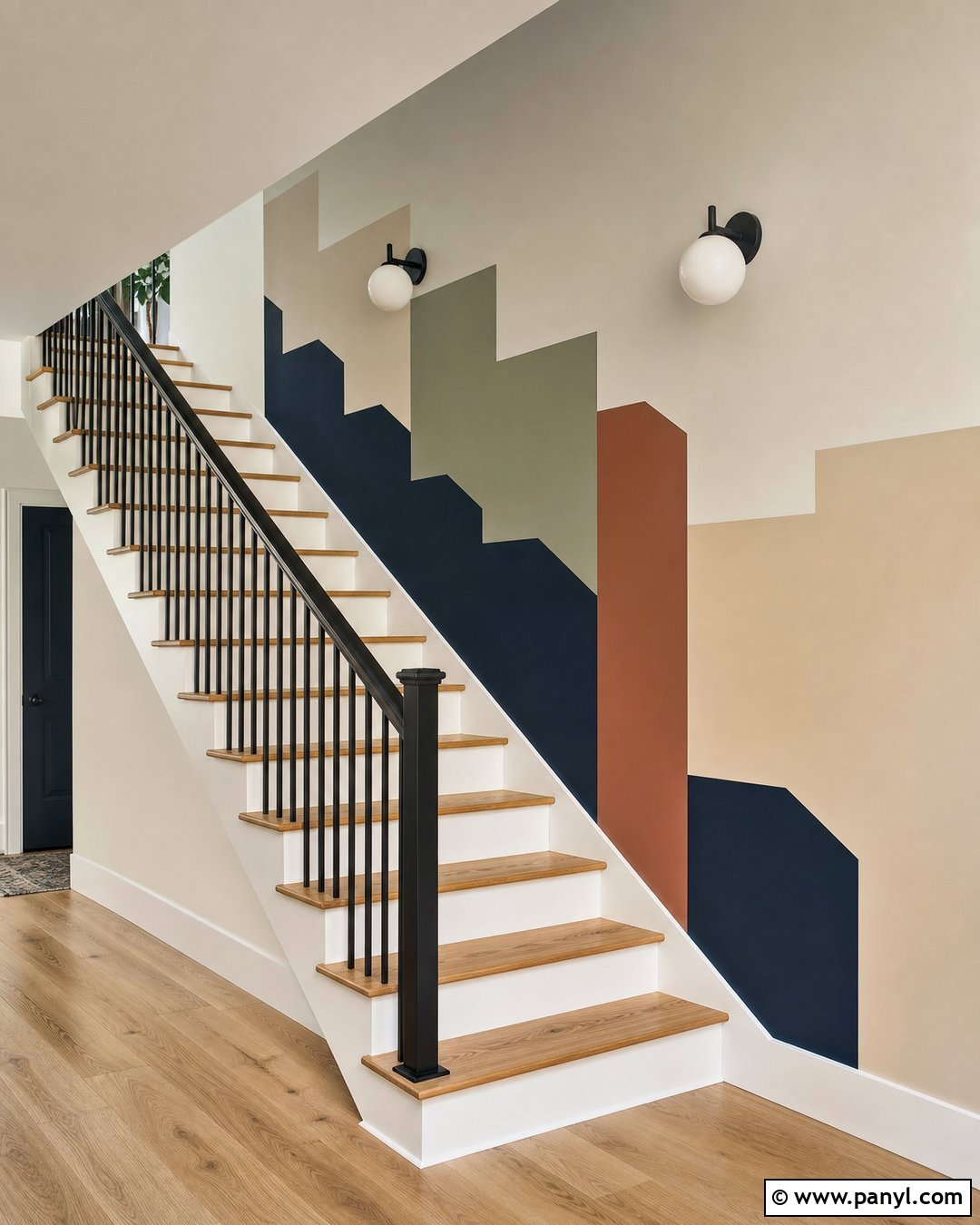
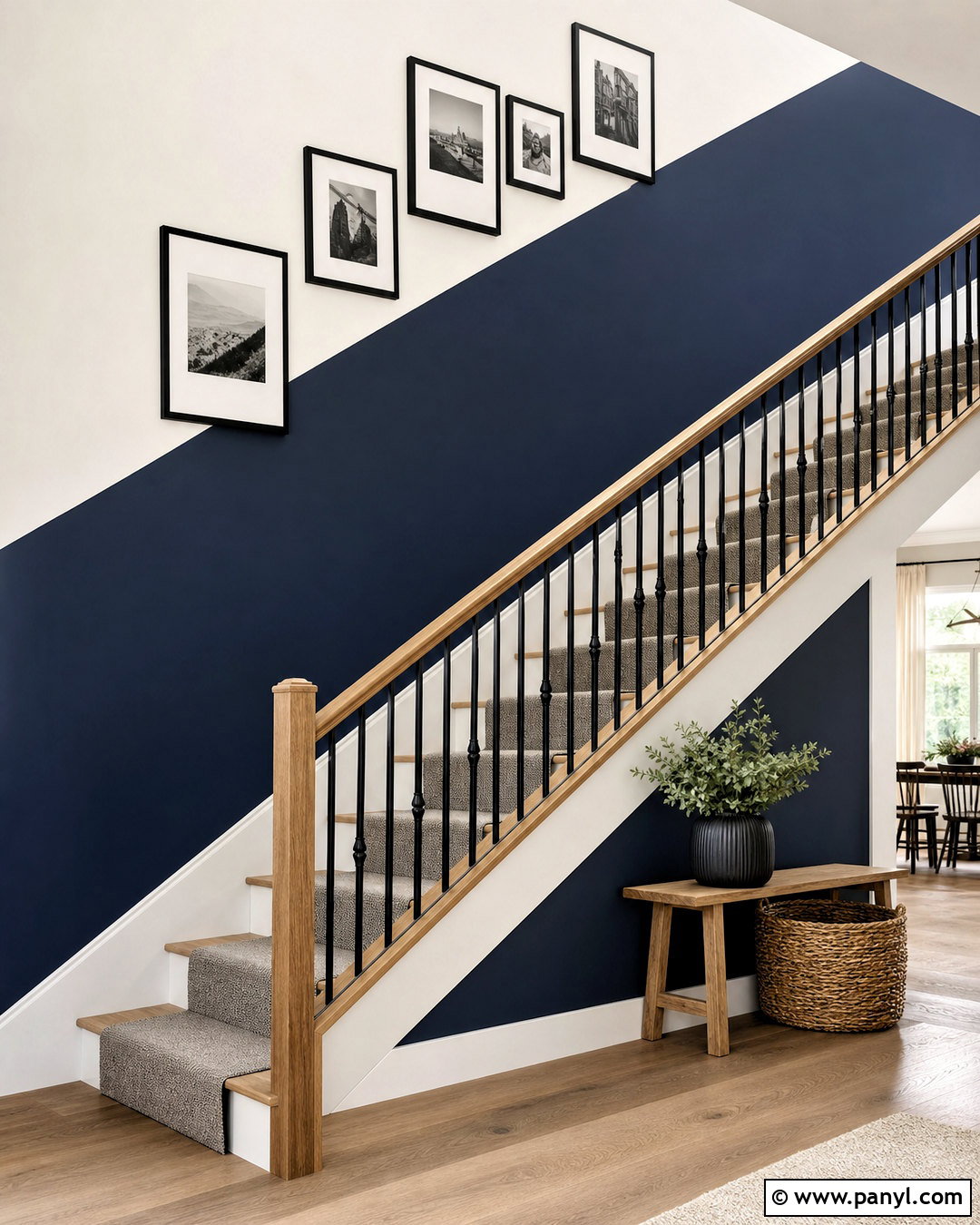
A staircase wall offers a natural diagonal that can guide the direction of a painted pattern. Use a light greige base and create rising blocks in muted navy, clay, olive, and warm beige. Align the top edges loosely with the angle of the handrail while varying the size of each section. Natural oak stair treads, white risers, a matte black rail, and simple globe sconces create a cohesive modern setting. Keep the strongest colors near the lower portion, then transition to lighter shades as the stairs rise. This helps the upper landing remain open and bright. Measure from each stair rather than relying only on the floor line. The completed design transforms a tall, awkward wall into a connected feature that supports the home’s circulation.
34. Small Room Geometric Wall Pattern
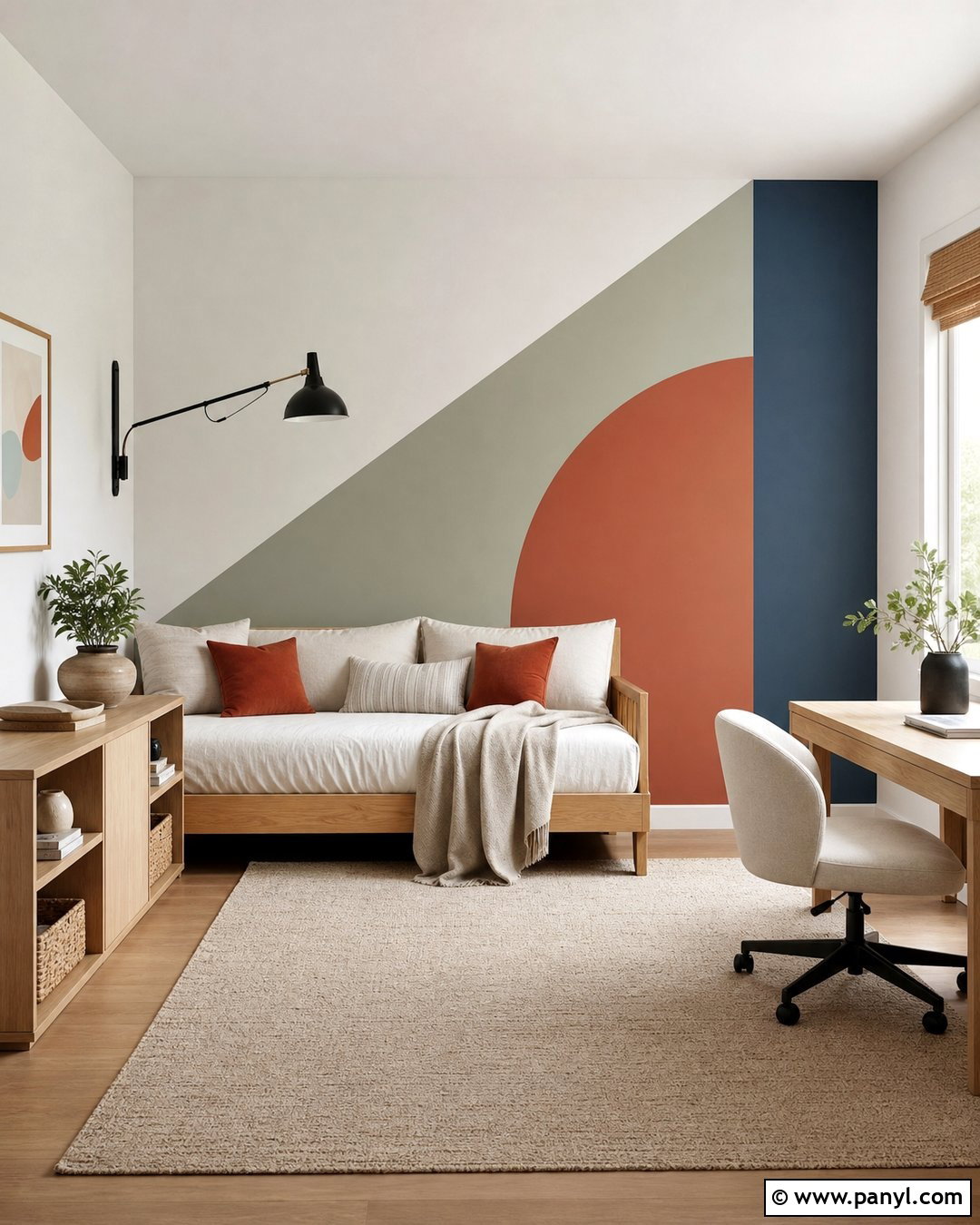
In a compact room, one oversized geometric composition usually works better than many tiny shapes. Paint the wall soft warm white, then add a broad pale sage diagonal, a medium terracotta semicircle, and a narrow muted-blue rectangle. Concentrate the design behind a small sofa or daybed, leaving the upper corners mostly blank. Choose light oak furniture, ivory upholstery, a wall-mounted lamp, and a low-contrast beige rug to preserve floor space and brightness. Furniture with exposed legs will keep the room visually open. Avoid extending the darkest paint to every edge, which can make the boundaries feel closer. The large shapes create depth and personality without visual clutter, giving a modest guest room, office, or den a clear and functional identity.
35. Corner Wrap Geometric Wall Pattern
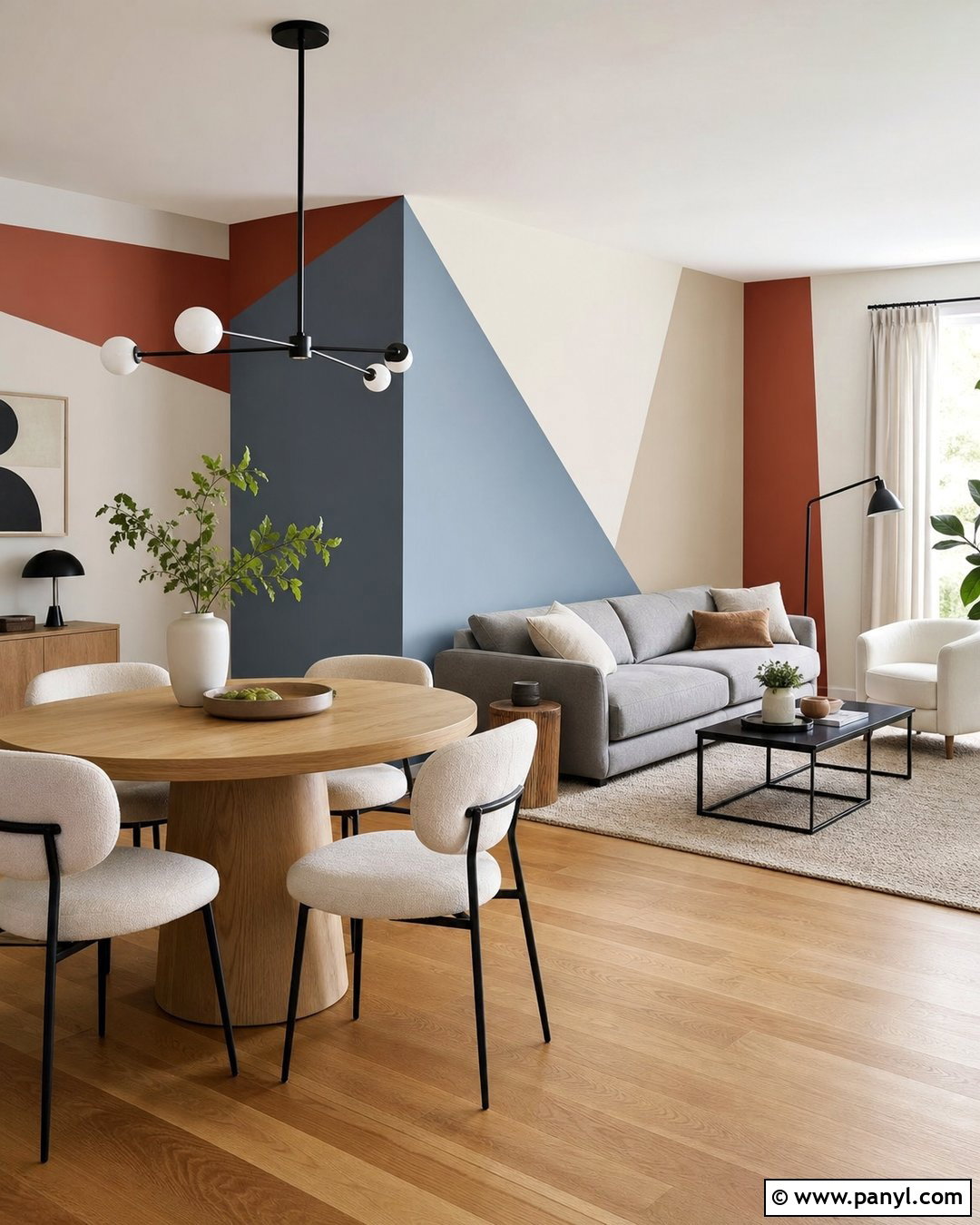
Wrapping a painted shape around a corner can connect two zones and make the room feel more immersive. Begin with warm white walls, then paint an oversized dusty-blue polygon that moves from behind the sofa onto the adjoining dining wall. Add smaller muted terracotta and beige blocks on each side to balance the transition. Use a light gray sofa, round oak dining table, cream chairs, and black lighting throughout the open space. Check the pattern from both rooms before painting because angles can appear different across the corner. Keep the crossing shape simple and align it carefully at the edge. This complete scheme links living and dining furniture through shared color, creating continuity without painting both walls in one heavy solid shade.
Conclusion:
The most successful geometric walls combine accurate planning with a complete room palette. Before painting, sketch the layout, measure every line, and test the arrangement with tape. Limit the scheme to a few coordinated colors, then repeat selected tones through furniture, textiles, lighting, or decor. Broad shapes generally feel calmer and are easier to execute, while smaller repeats add energy to large, open walls. Always consider doors, windows, switches, and furniture placement before finalizing the pattern. Whether you prefer quiet neutral blocks, cheerful arches, or dramatic monochrome angles, these 35 geometric wall paint patterns can help you create a distinctive focal point that still feels comfortable, balanced, and practical.

Related Ideas and Inspiration:
Leave a Reply