
Bold red paint can turn a plain wall into the focal point of an entire room, especially when it is shaped into crisp lines, oversized arches, triangles, or color blocks. This collection of **20 Geometric Wall Paint Red Ideas** explores complete, practical looks for living rooms, bedrooms, dining spaces, offices, hallways, and more. Some designs use bright cherry red for energy, while others rely on burgundy, rust, coral, or muted brick red for a softer finish. Each look coordinates the wall pattern with furniture, flooring, lighting, textiles, and decor, making it easier to recreate at home. Whether you prefer dramatic contrast or subtle tone-on-tone color, you will find an approachable starting point in these **20 Geometric Wall Paint Red Ideas**.

1. Red Triangle Accent Wall
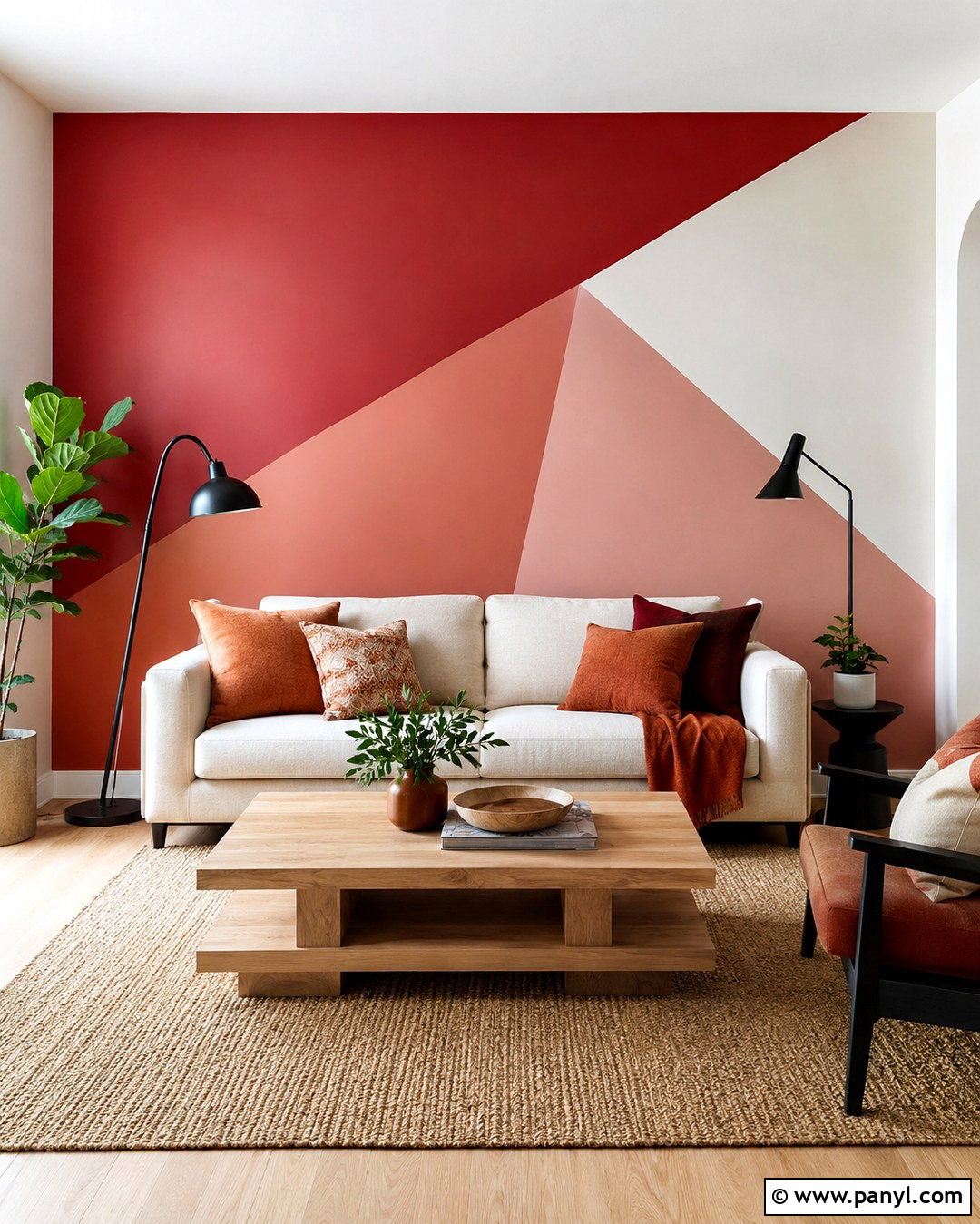
Large red triangles can create a striking living room focal point without making the space feel overly busy. Begin with a warm white base, then arrange brick red, muted coral, and burgundy triangles across the wall behind a simple cream sofa. Leave narrow white sections between several shapes to keep the composition crisp and open. Ground the room with a natural oak coffee table, a textured beige rug, and matte black floor lamps. Solid cushions in rust, ivory, and charcoal will support the painted design without competing with it. Keep artwork minimal because the wall already functions as a large graphic feature. This combination works especially well in modern rooms with light flooring, clean furniture lines, and plenty of natural light.
2. Red And Blush Color Block Wall
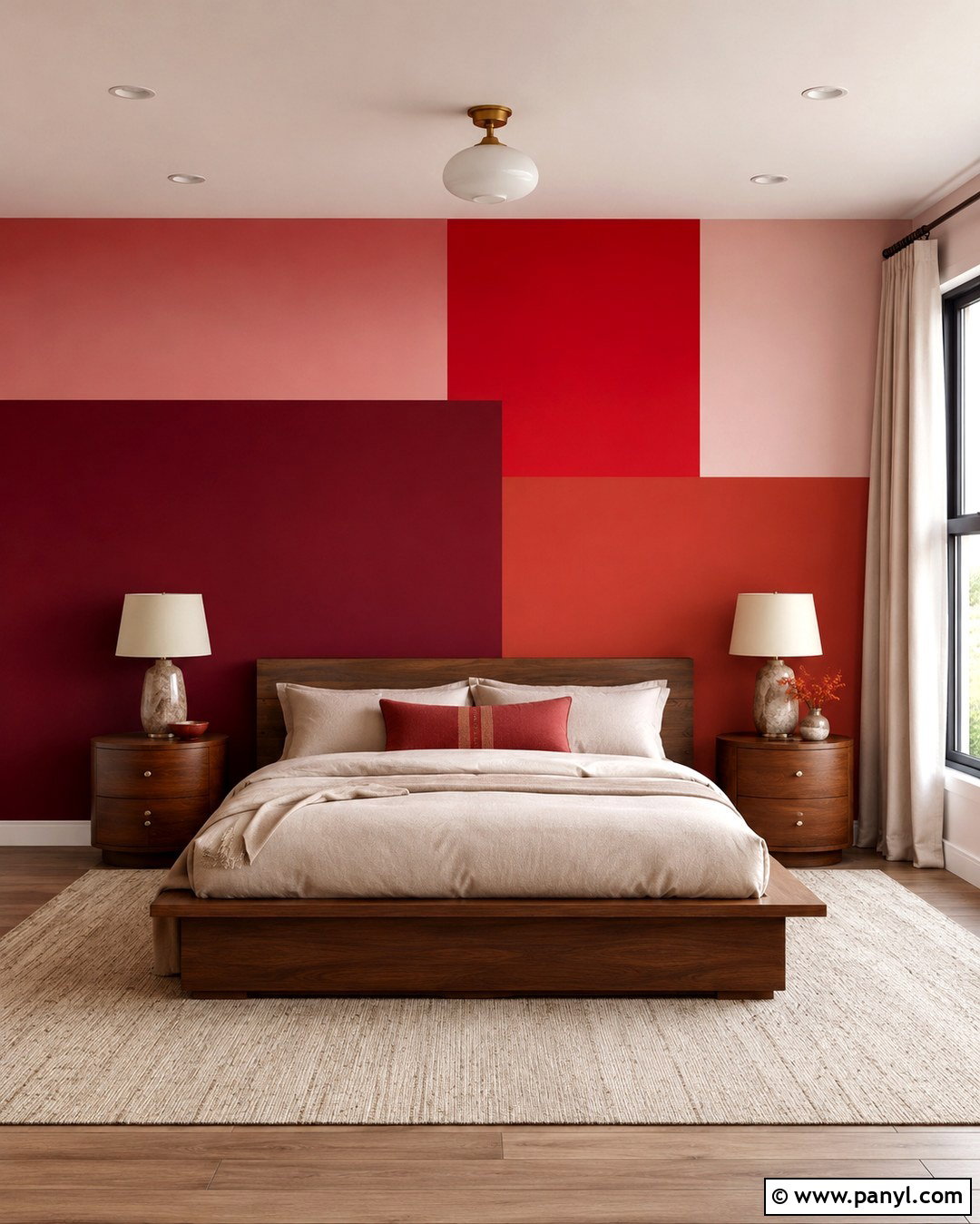
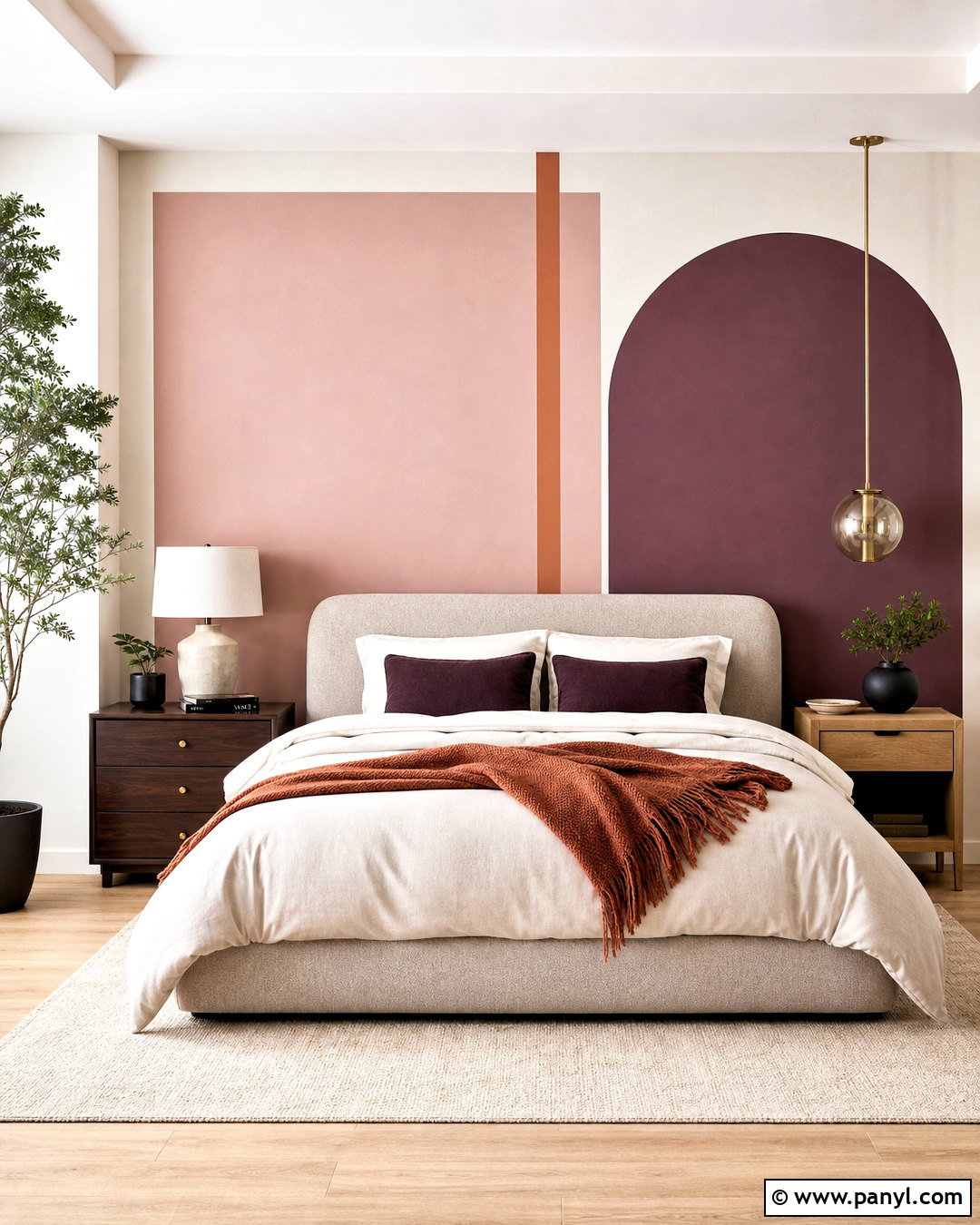
Soft blush paint makes bright red geometry feel warmer and easier to live with. Create an asymmetrical bedroom wall using a dusty pink background, one oversized crimson rectangle, and smaller burgundy and clay-red blocks. Position the largest shape directly behind a low walnut bed so it visually frames the headboard. Add oatmeal bedding, rose-colored pillows, and a rust throw to connect the painted colors with the rest of the room. Rounded wood nightstands and cream ceramic lamps soften the wall’s straight edges. A pale beige rug keeps the floor quiet, while brushed brass hardware adds a polished finish. The completed bedroom feels colorful and modern, but the muted supporting palette prevents the red sections from becoming visually overwhelming.
3. Burgundy Arch And Line Wall
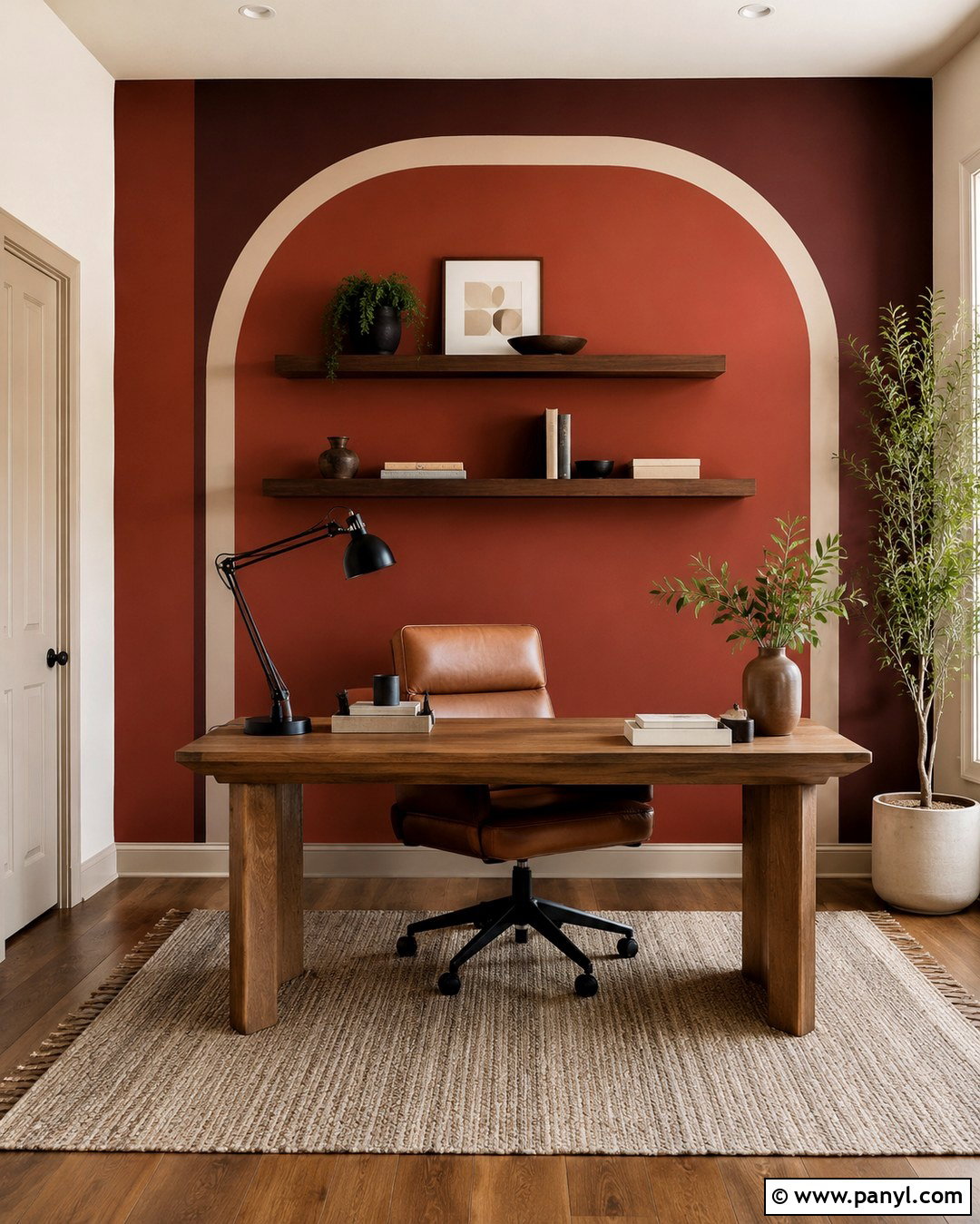
A painted burgundy arch can give a home office a strong architectural focal point without requiring construction. Place a wide, deep burgundy arch behind a streamlined oak desk, then layer thin clay-red and cream lines around its outer edge. The repeated curves create depth while clearly defining the workspace. Choose a tan leather desk chair, floating wood shelves, and matte black task lighting for a balanced modern look. Keep storage boxes and desktop accessories in warm white, terracotta, and charcoal. A flat-woven rug with a small linear pattern can echo the painted outlines without creating clutter. This arrangement is particularly useful for an office located within a larger room because the geometric arch visually separates the work zone from surrounding living areas.
4. Terracotta Mountain Geometric Wall
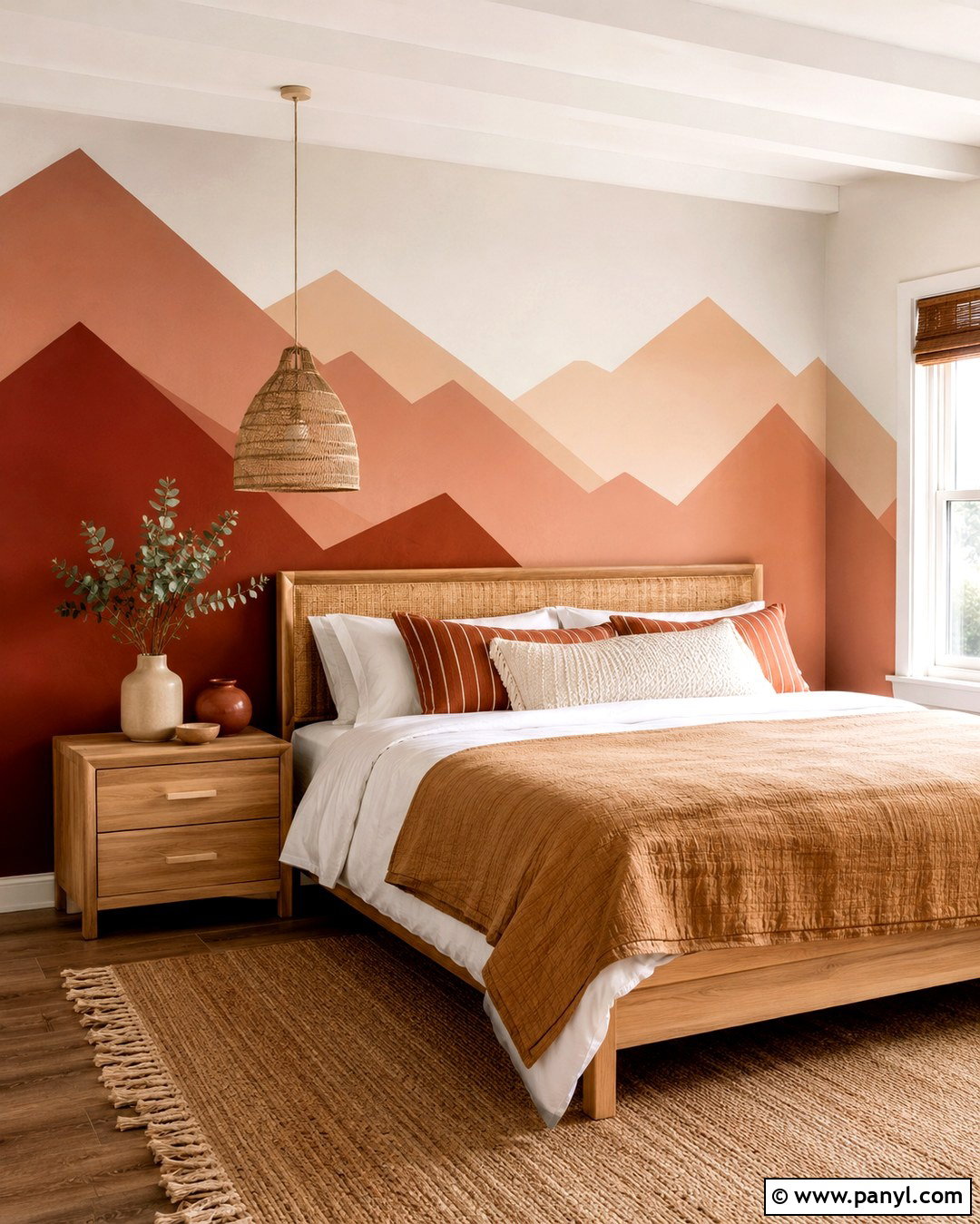
Layered triangular forms can turn a child’s bedroom or casual guest room into a warm, nature-inspired retreat. Paint a series of overlapping mountain shapes in terracotta, muted red, pale clay, and creamy beige across the lower two-thirds of the wall. Vary the peaks and widths so the composition feels organic rather than perfectly repeated. Place a simple light-oak bed against the mural with white bedding, rust-striped pillows, and a soft tan quilt. A woven pendant light, natural fiber rug, and small wood nightstand reinforce the earthy palette. Keep the upper wall warm white so the room still feels bright and spacious. The result offers plenty of visual personality while remaining calm enough for sleeping, reading, and relaxing.
5. Red Chevron Dining Room Wall
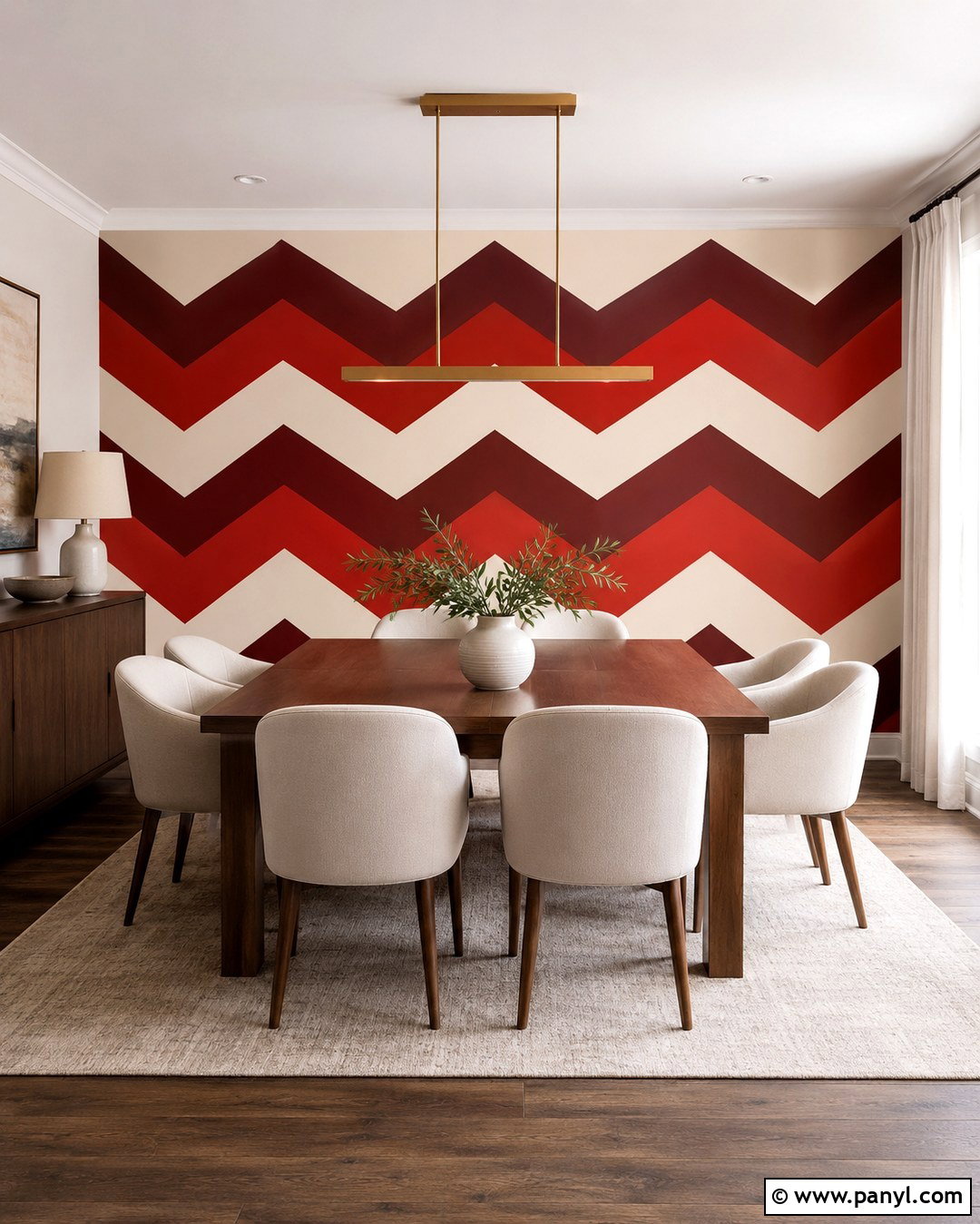
A broad chevron pattern brings movement to a dining room and helps a long wall feel intentionally decorated. Use alternating bands of tomato red, deep wine red, and warm off-white, keeping each zigzag wide enough to read clearly behind the furniture. Center a rectangular walnut dining table against the pattern and surround it with cream upholstered chairs or simple black spindle-back seating. A linear brass pendant can follow the length of the table and balance the wall’s sharp angles. Choose a neutral rug with subtle red details, then add plain linen curtains to soften the room. Limit tabletop decor to one ceramic bowl or vase. This complete scheme feels energetic and social, making it a natural fit for an everyday dining area.
6. Red Hexagon Home Office Wall
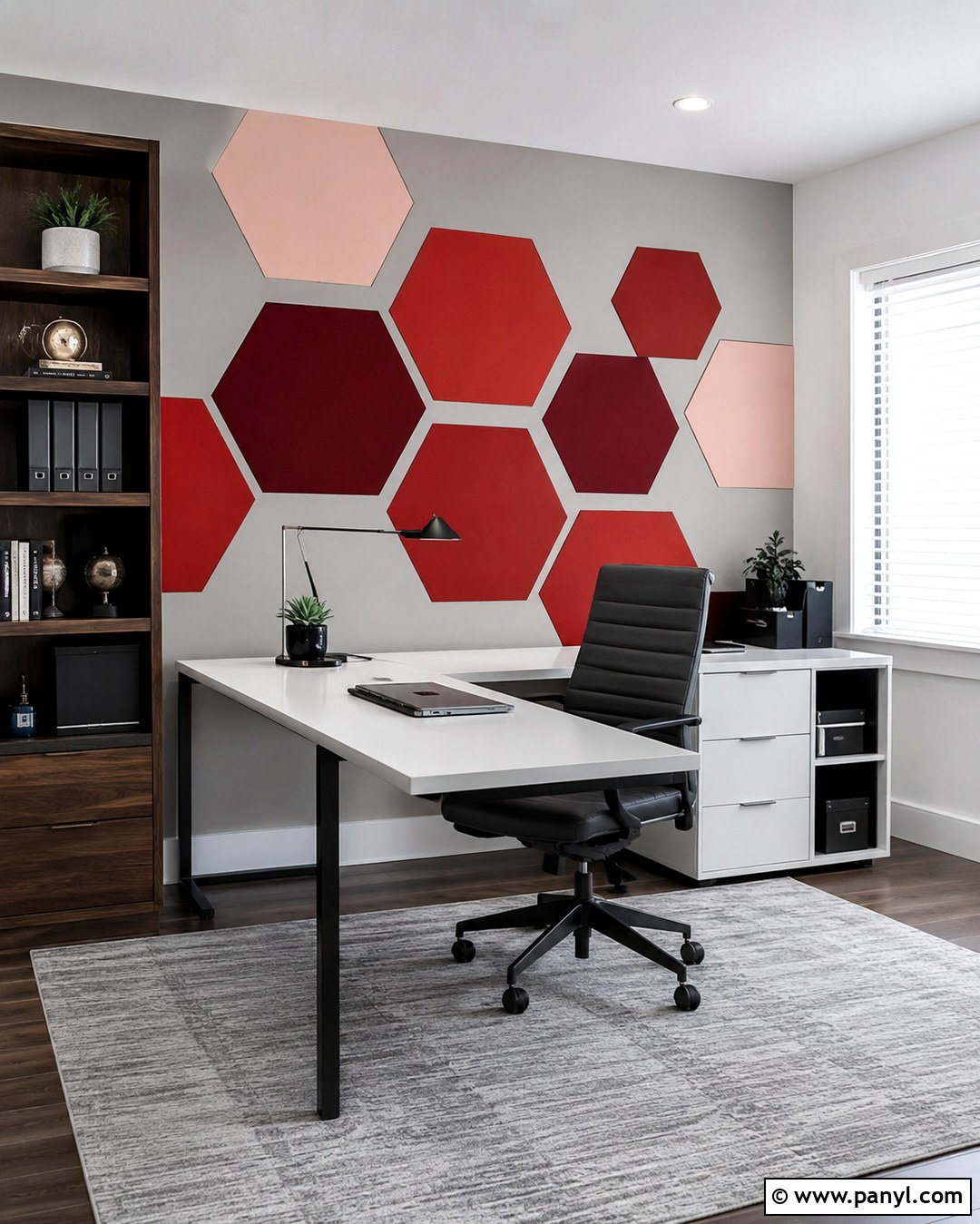
Repeating hexagons create an orderly backdrop that suits a focused, contemporary home office. Paint the wall warm gray first, then add a cluster of large hexagons in crimson, burgundy, brick red, and muted blush. Concentrate the pattern around the desk rather than covering every inch of the wall. This leaves breathing room and gives the design a modern, fading effect. Pair it with a white desk, an ergonomic charcoal chair, and walnut shelving to balance warmth and practicality. Black metal organizers and a slim task lamp add definition. Introduce one small indoor plant and a light gray rug for softness. The finished office looks creative and organized, with enough red to feel stimulating without distracting from daily work.
7. Red Diagonal Bedroom Wall
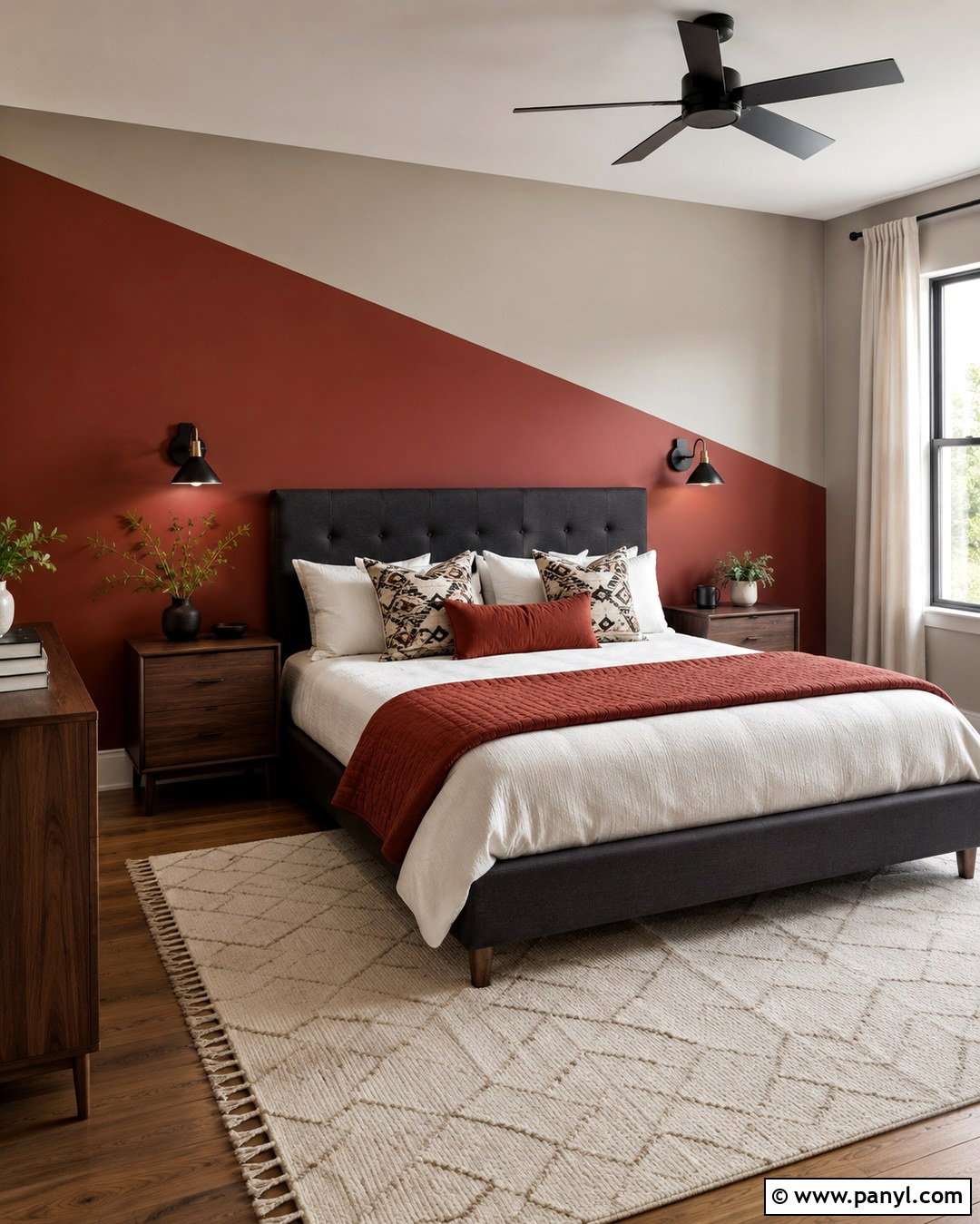
One sweeping diagonal section is an easy way to bring red into a bedroom while preserving a restful atmosphere. Paint the lower portion of the headboard wall a muted brick red, allowing the color to rise diagonally from one corner to the opposite side. Keep the upper section soft greige for an airy contrast. Position a charcoal upholstered bed across the divide so both colors remain visible. Layer the bed with ivory sheets, a rust quilt, and patterned pillows featuring small red and gray details. Black wall sconces and walnut nightstands add structure, while a cream rug lightens the flooring. The diagonal line introduces movement, but the limited palette and simple furniture keep the overall bedroom composed, comfortable, and easy to maintain.
8. Red Grid Entryway Wall
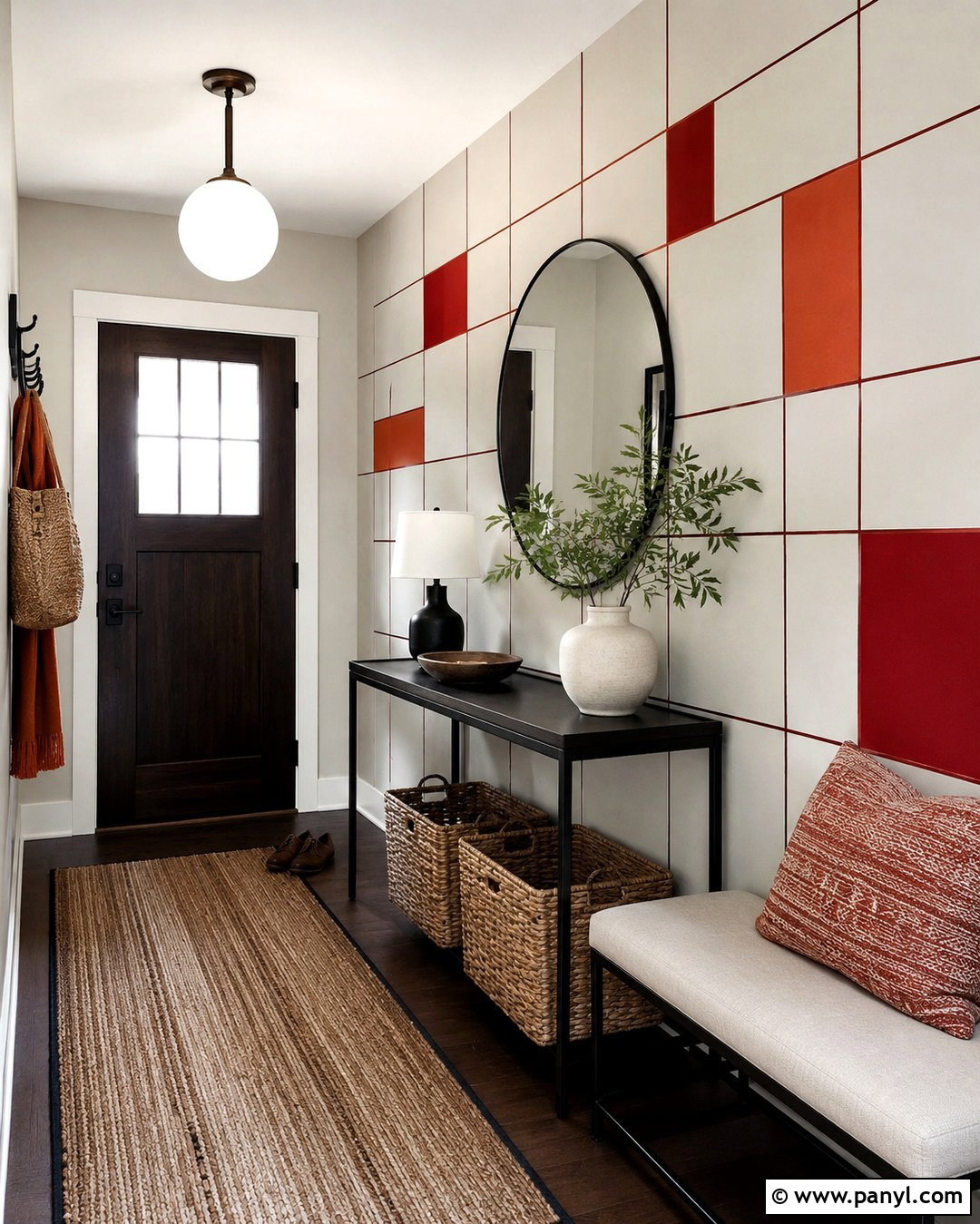
A red grid can make a narrow entryway look tailored, graphic, and thoughtfully finished. Start with a pale warm-gray wall, then paint thin vertical and horizontal lines in dark burgundy. Add several solid squares in cherry red and rust, placing them unevenly within the grid for a playful contemporary effect. Against the wall, use a slim black console table with a rounded mirror to contrast the straight pattern. A small upholstered bench, woven runner, and wall hooks make the area practical for daily routines. Keep baskets and accessories neutral in tan, cream, and black. A white globe pendant provides soft brightness overhead. This complete entrance feels welcoming and organized while giving visitors an immediate glimpse of the home’s confident color palette.
9. Red Circle Living Room Wall
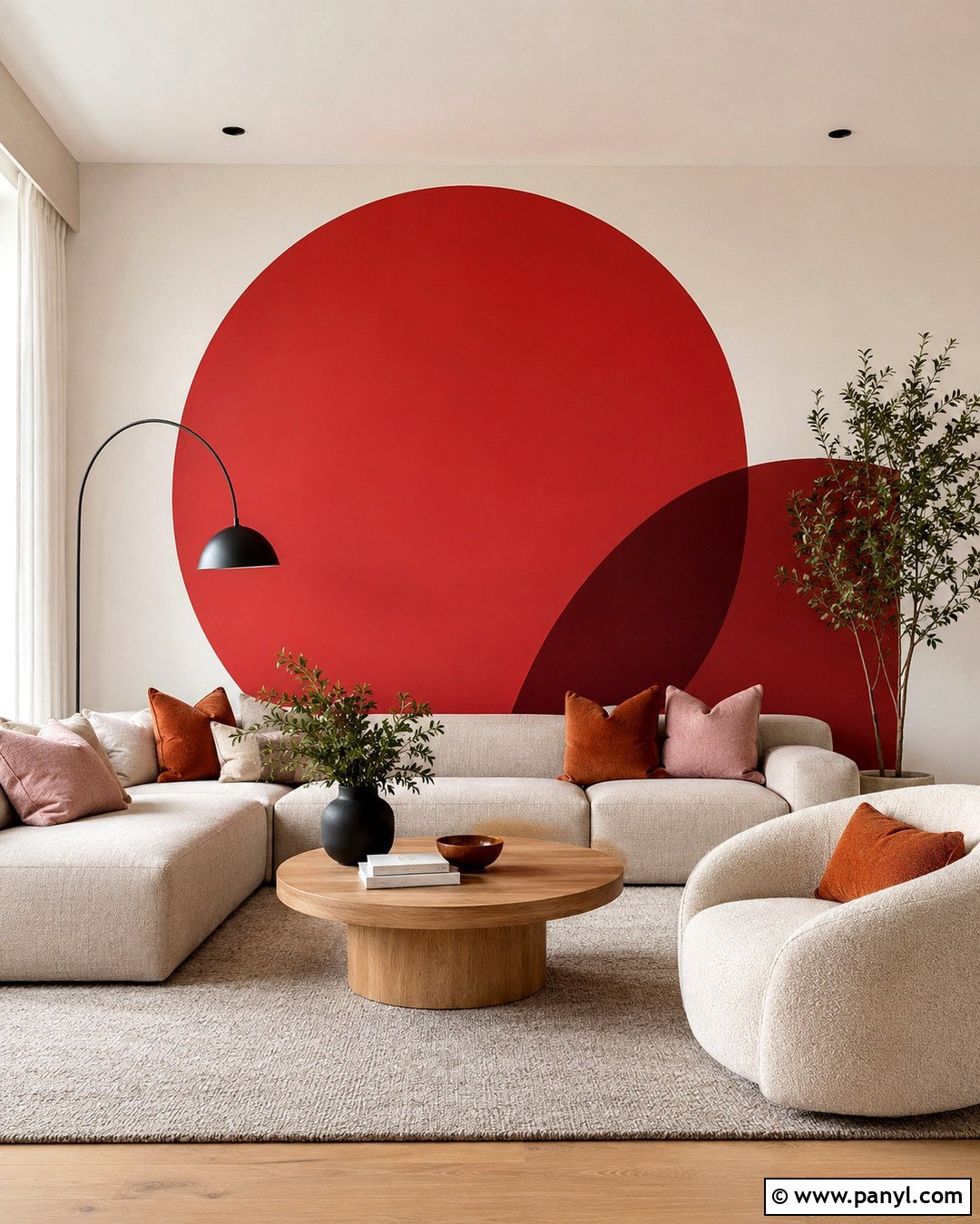
An oversized red circle can anchor a living room arrangement as effectively as a large piece of artwork. Paint a clean crimson circle on a warm white wall, positioning it slightly off-center behind a low beige sectional. Overlap one edge with a smaller burgundy semicircle to add dimension and visual interest. Choose a round oak coffee table and a curved ivory lounge chair to repeat the wall’s softer geometry. Black metal lighting provides contrast, while rust, cream, and pale pink cushions connect the furnishings to the mural. A large neutral rug keeps the room grounded. Avoid hanging pictures inside the circle; let the painted form remain uninterrupted. The finished space feels modern, balanced, and lively without depending on complicated patterns or numerous decorative objects.
10. Red And Navy Geometric Wall
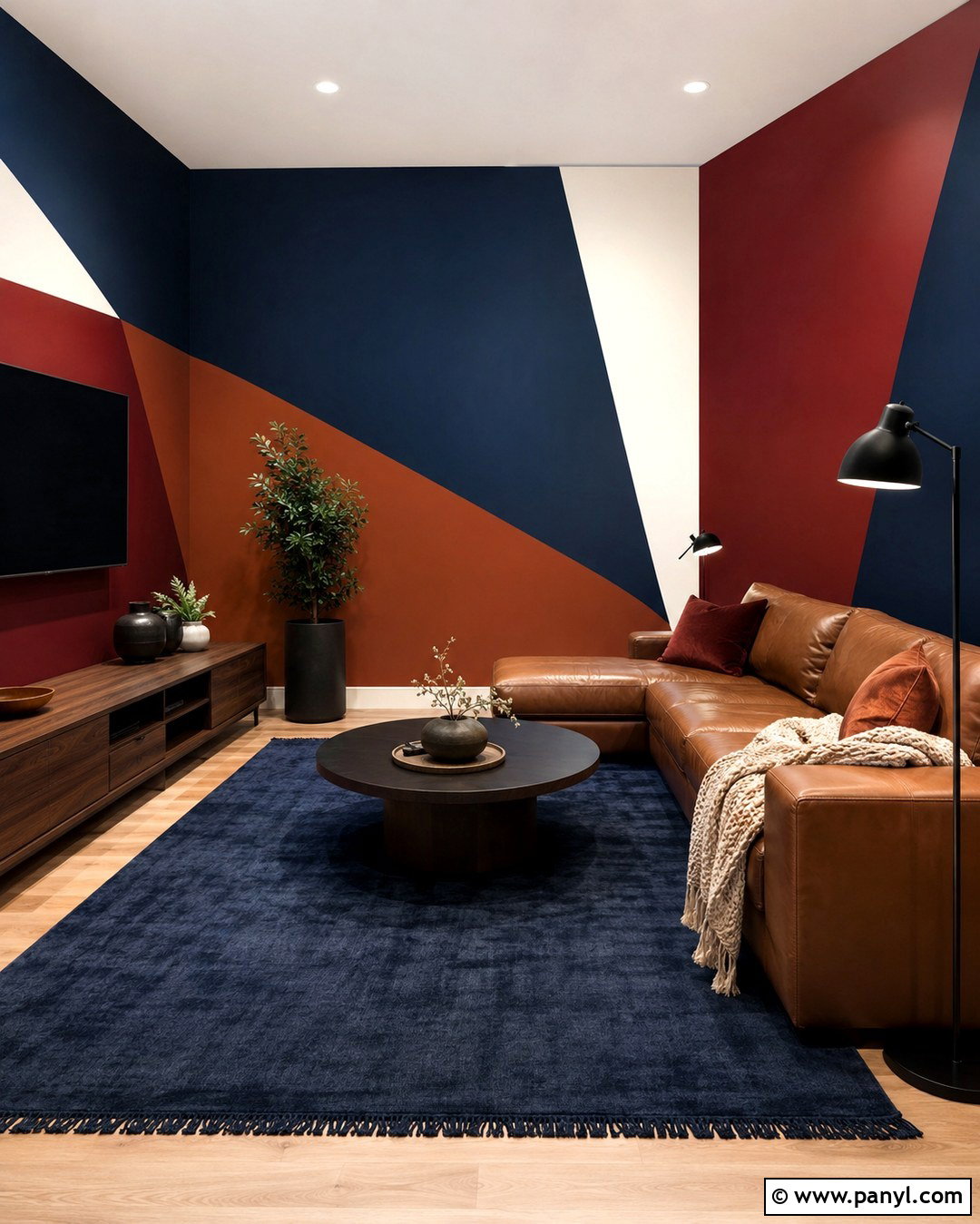
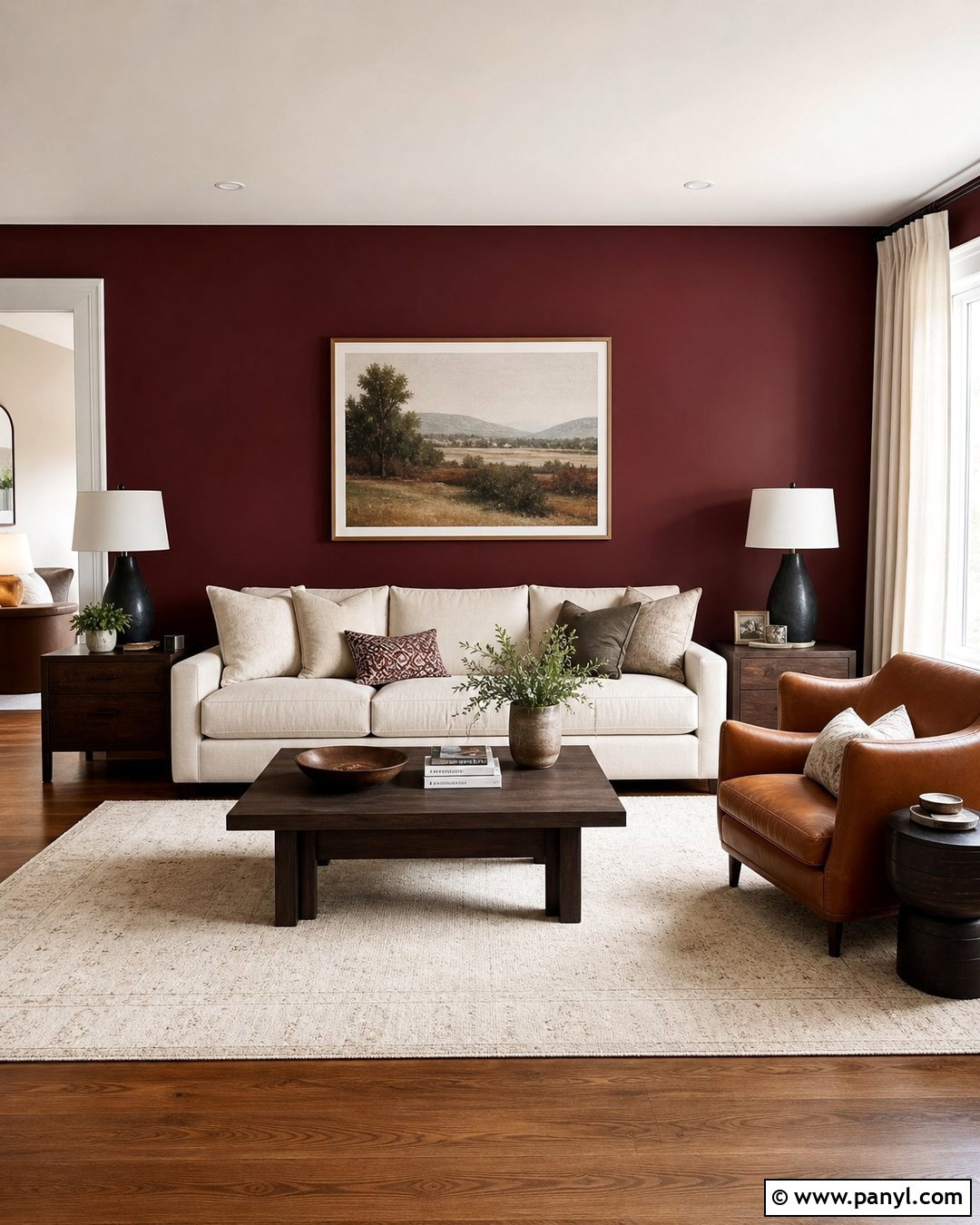
Red and navy create a bold, structured palette that works beautifully in a den, study, or media room. Divide the feature wall into large angular sections using deep navy, rich crimson, muted brick red, and a small amount of warm white. Keep the shapes oversized so the wall feels architectural instead of fragmented. Place a caramel leather sofa against the design, then add a walnut media console and matte black lighting. A navy rug with subtle cream lines ties the darker color to the floor. Include rust cushions, a beige throw, and one sculptural ceramic accessory for warmth. White adjacent walls and light-colored curtains prevent the deeper shades from closing in the room. The finished look feels dramatic, comfortable, and intentionally coordinated.
11. Red Art Deco Fan Wall
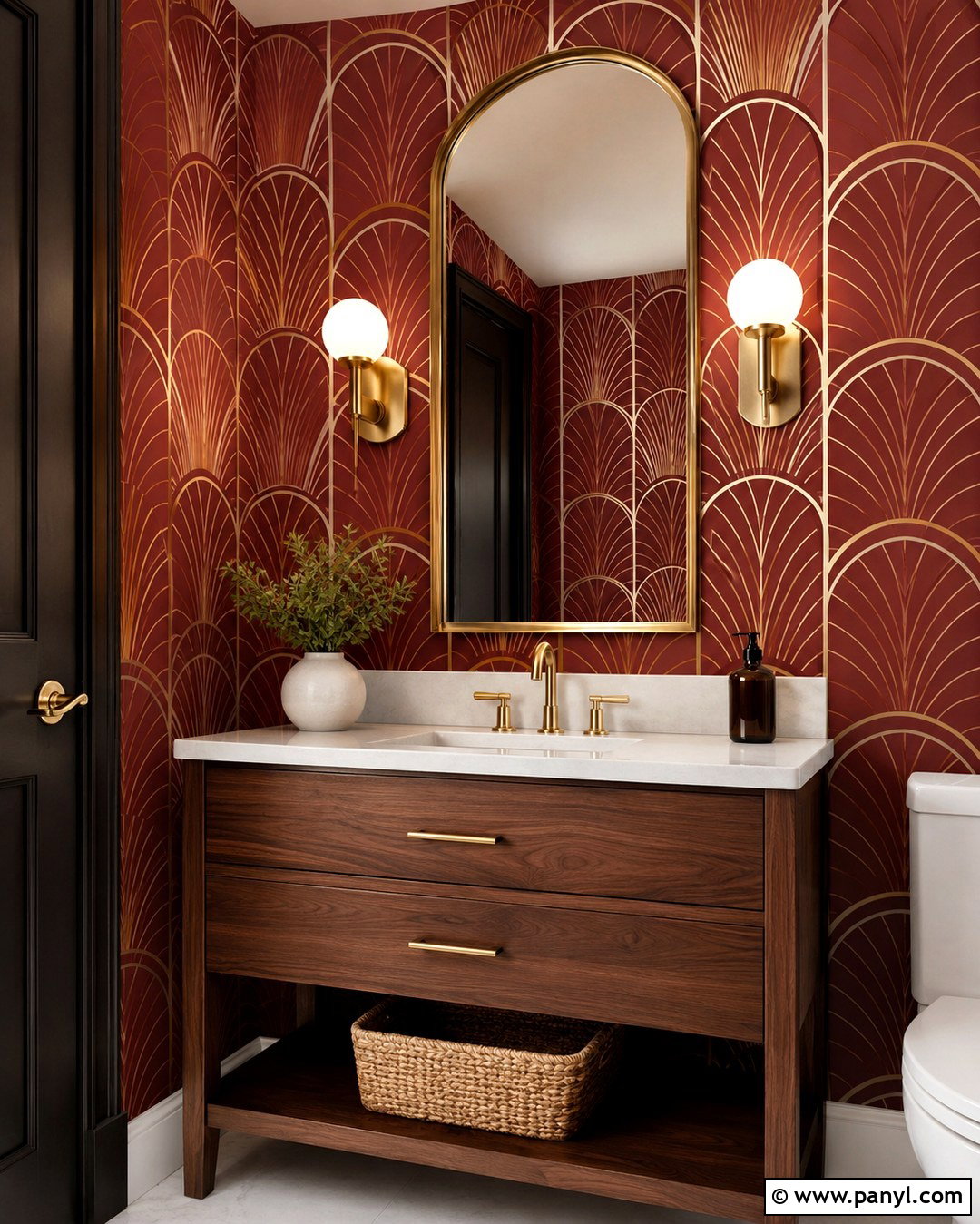
Fan-shaped geometry gives a powder room or compact vanity area an elegant Art Deco character. Paint the wall behind the vanity a deep oxblood red, then create repeated fan outlines in soft blush and muted metallic gold paint. Keep the pattern symmetrical and moderately scaled so it remains clear around the mirror and fixtures. Choose a compact walnut vanity with a white stone top, an arched brass mirror, and globe sconces with frosted glass. Matte black or brushed brass plumbing fixtures can add a crisp finishing detail. Use simple cream flooring to balance the patterned wall. A burgundy hand towel and one small ceramic container complete the palette. This coordinated room feels glamorous and distinctive without requiring expensive tile or elaborate architectural changes.
12. Red Ombre Geometric Wall
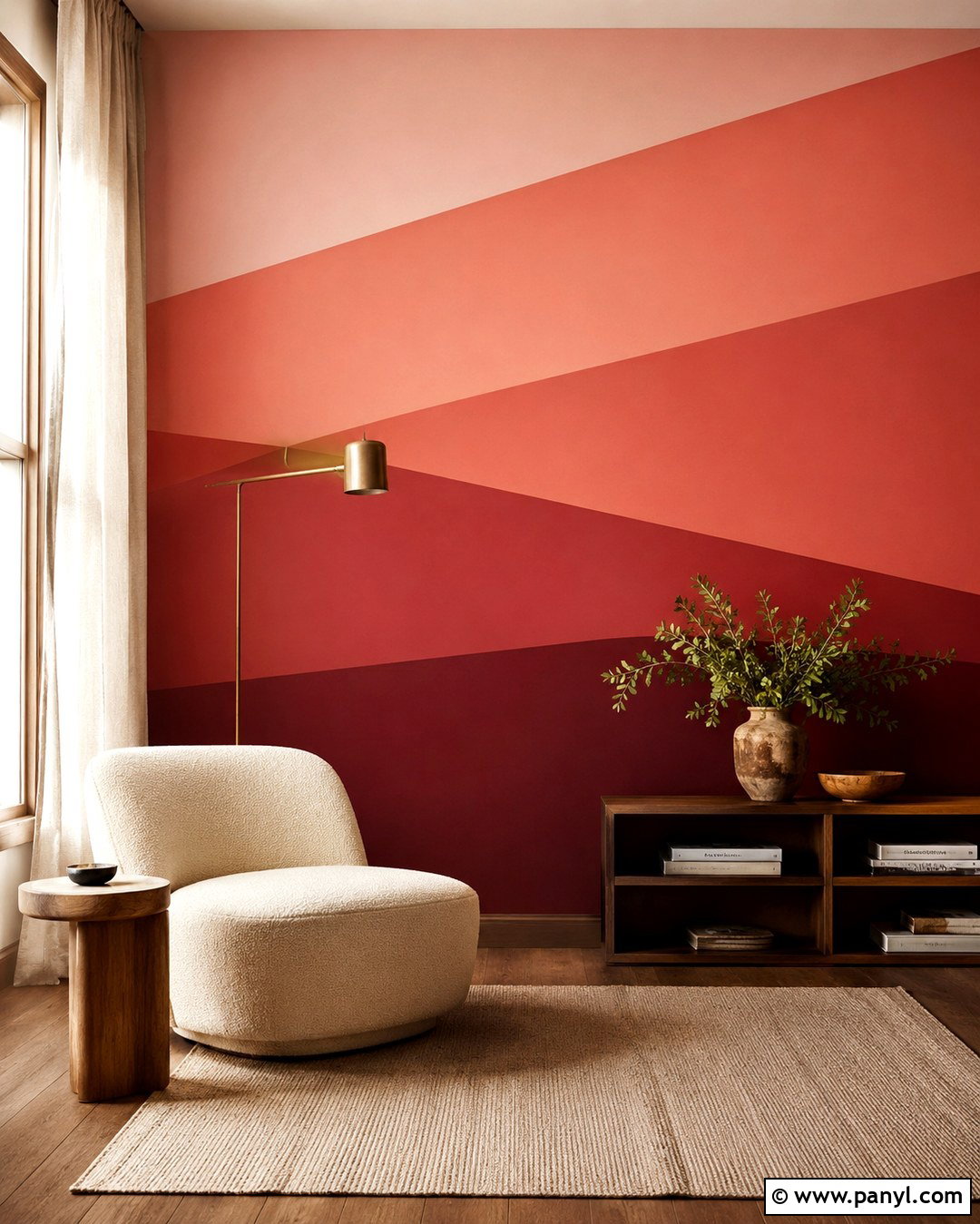
A geometric ombre wall offers rich color while creating a softer transition than sharply contrasting blocks. Divide a bedroom or reading room wall into broad horizontal polygons that move from pale blush near the ceiling to coral, brick red, and deep burgundy at the bottom. Use slightly angled edges between the color bands so the result feels contemporary. Place a cream boucle chair and a small oak side table near the lighter portion of the wall. A low walnut bookcase can sit against the darker base, visually grounding the arrangement. Add a beige rug, linen curtains, and a slim brass floor lamp. Keep accessories minimal and tonal. The completed space feels warm and layered, with gradual red shades providing depth instead of one intense, solid surface.
13. Red Staircase Geometric Wall
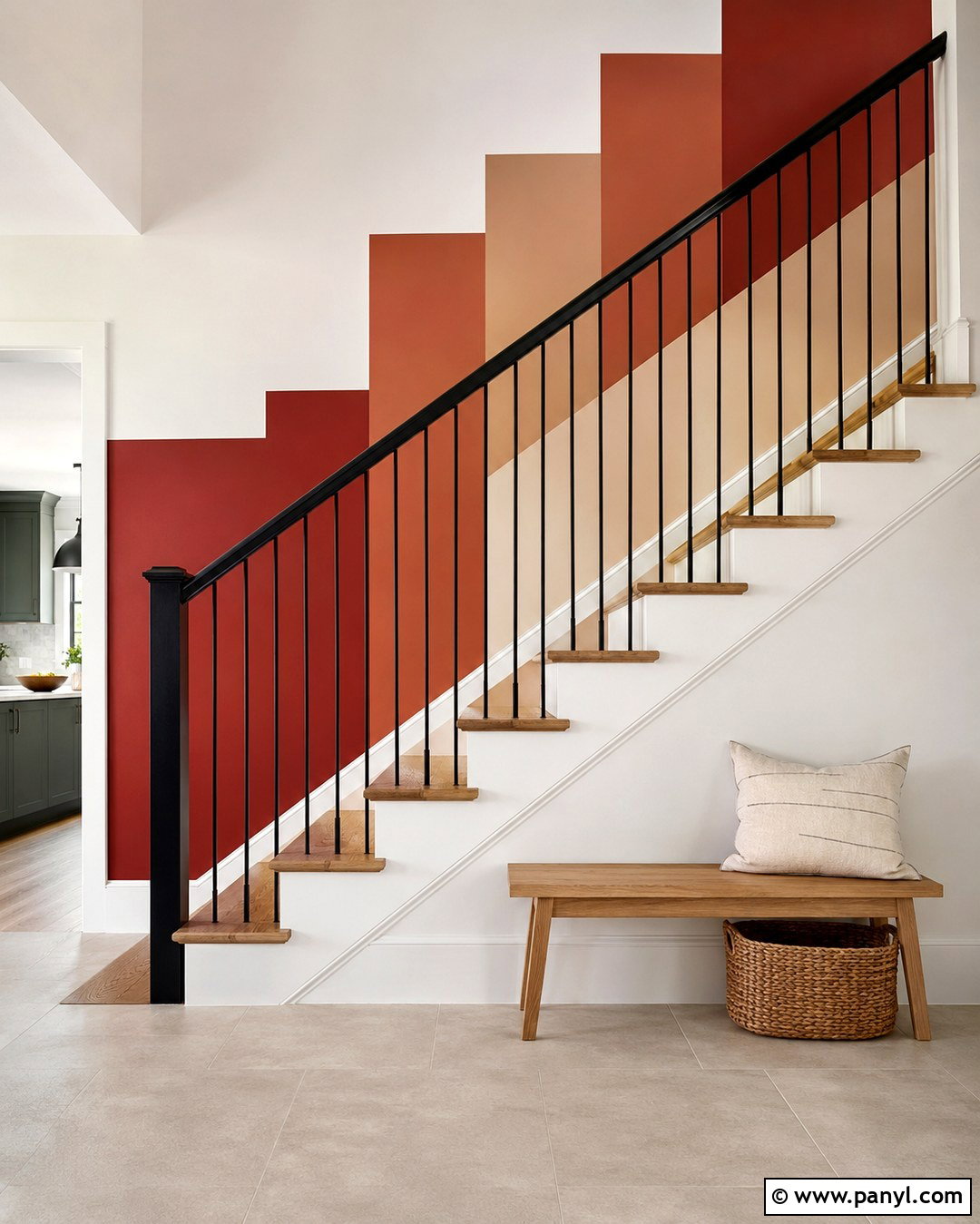
The wall beside a staircase is an ideal place for a geometric pattern that follows the home’s existing architecture. Paint wide stepped blocks in rust red, burgundy, clay, and warm beige, aligning their upward movement with the stair treads. A warm white background will keep the design clean and readable. Pair the mural with natural oak stairs, a simple black handrail, and light neutral flooring. If space allows, place a narrow wood bench or console at the bottom of the staircase. Add one cream cushion and a woven basket for practical storage. Avoid filling the wall with additional art because the ascending blocks already provide strong movement. This treatment turns a transitional area into a connected, finished design rather than an overlooked passage between floors.
14. Red Nursery Geometric Wall
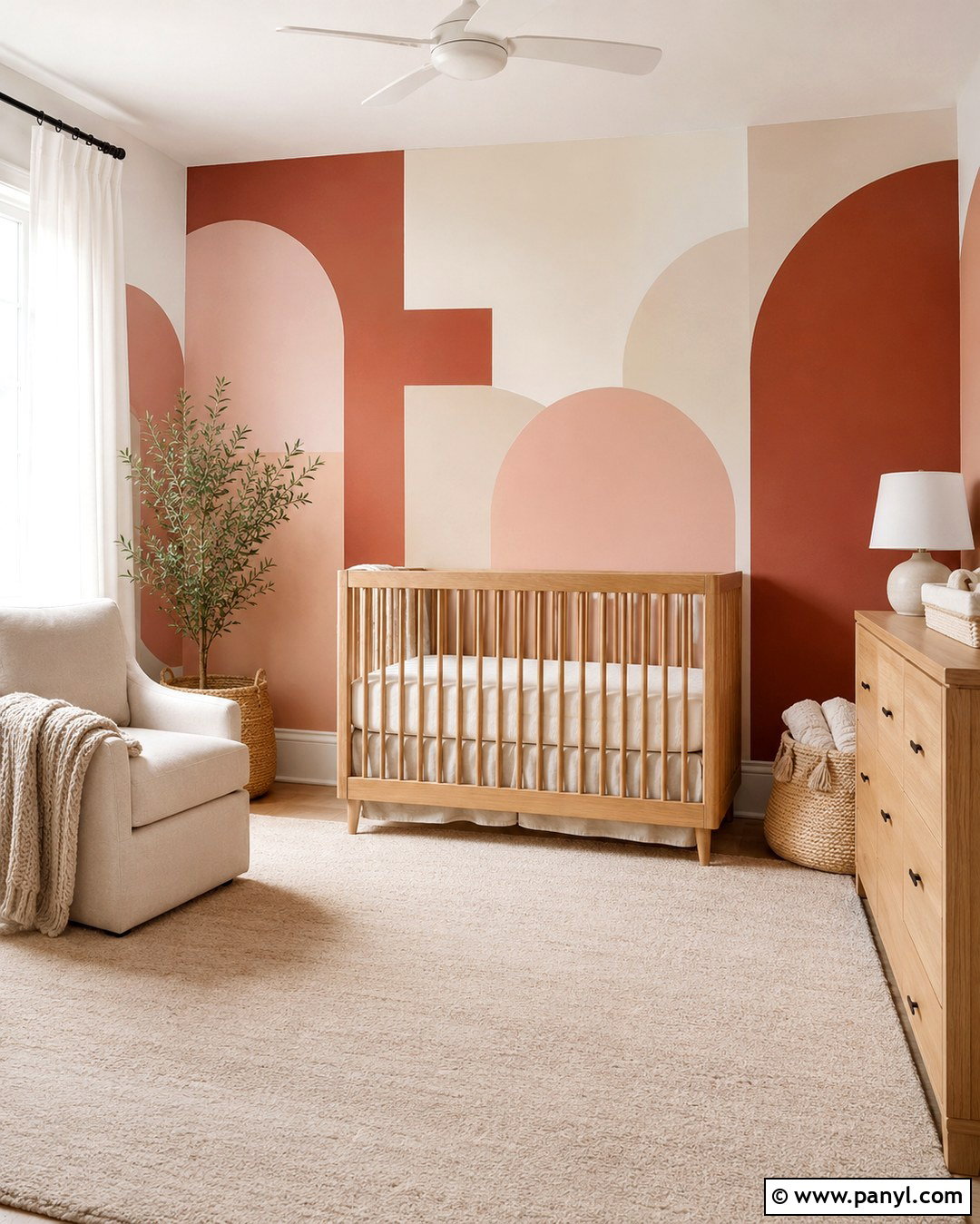
Muted red can bring warmth to a nursery when it is balanced with pale neutrals and simple shapes. Create a low geometric mural using rounded arches, semicircles, and wide blocks in dusty red, peach, blush, and warm beige. Keep the upper half of the wall creamy white to preserve an open, restful feeling. Position a natural wood crib against the mural with plain ivory bedding. Add a soft oatmeal glider, a washable beige rug, and a light oak dresser with rounded corners. Woven baskets provide accessible storage, while white curtains diffuse bright daylight. Use only a few simple decorative objects on high, secure shelving. The completed room feels cheerful and contemporary, with gentle red tones adding personality without making the sleeping area feel visually restless.
15. Red Kitchen Breakfast Nook Wall
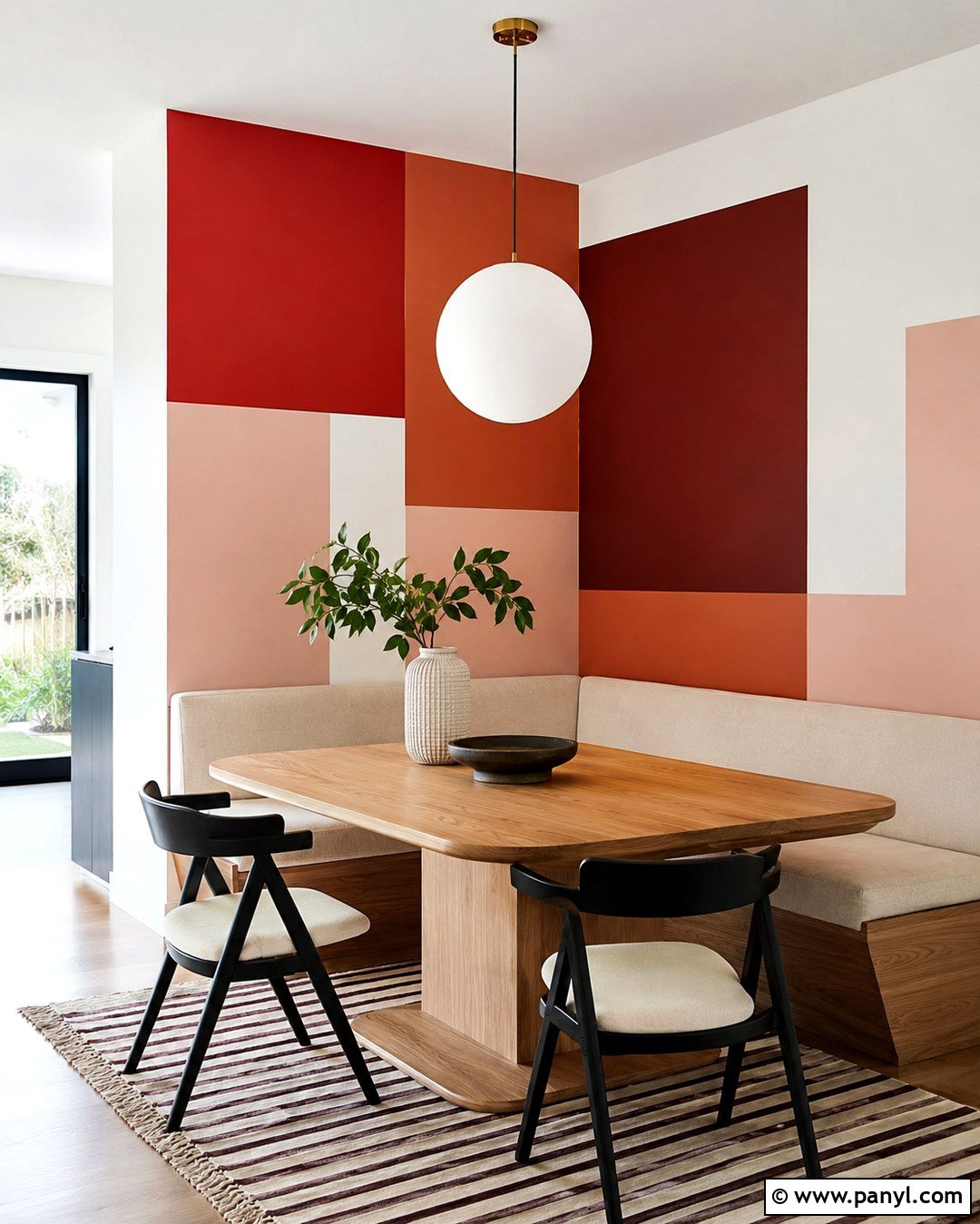
A red geometric wall can make a small breakfast nook feel like a distinct destination within an open kitchen. Paint the nook’s back wall warm white, then add overlapping rectangles in tomato red, terracotta, burgundy, and pale pink. Arrange the blocks around a built-in bench so the pattern frames the seating area. Choose a light oak table, cream seat cushions, and black dining chairs for contrast. A simple white globe pendant keeps the corner bright, while a striped rug introduces subtle pattern at floor level. Add one ceramic vase and a few neutral cushions rather than excessive accessories. Coordinate the nearby kitchen with warm wood, white cabinetry, or matte black details. The completed nook feels energetic, practical, and visually connected to the surrounding room.
16. Red Hallway Geometric Stripes
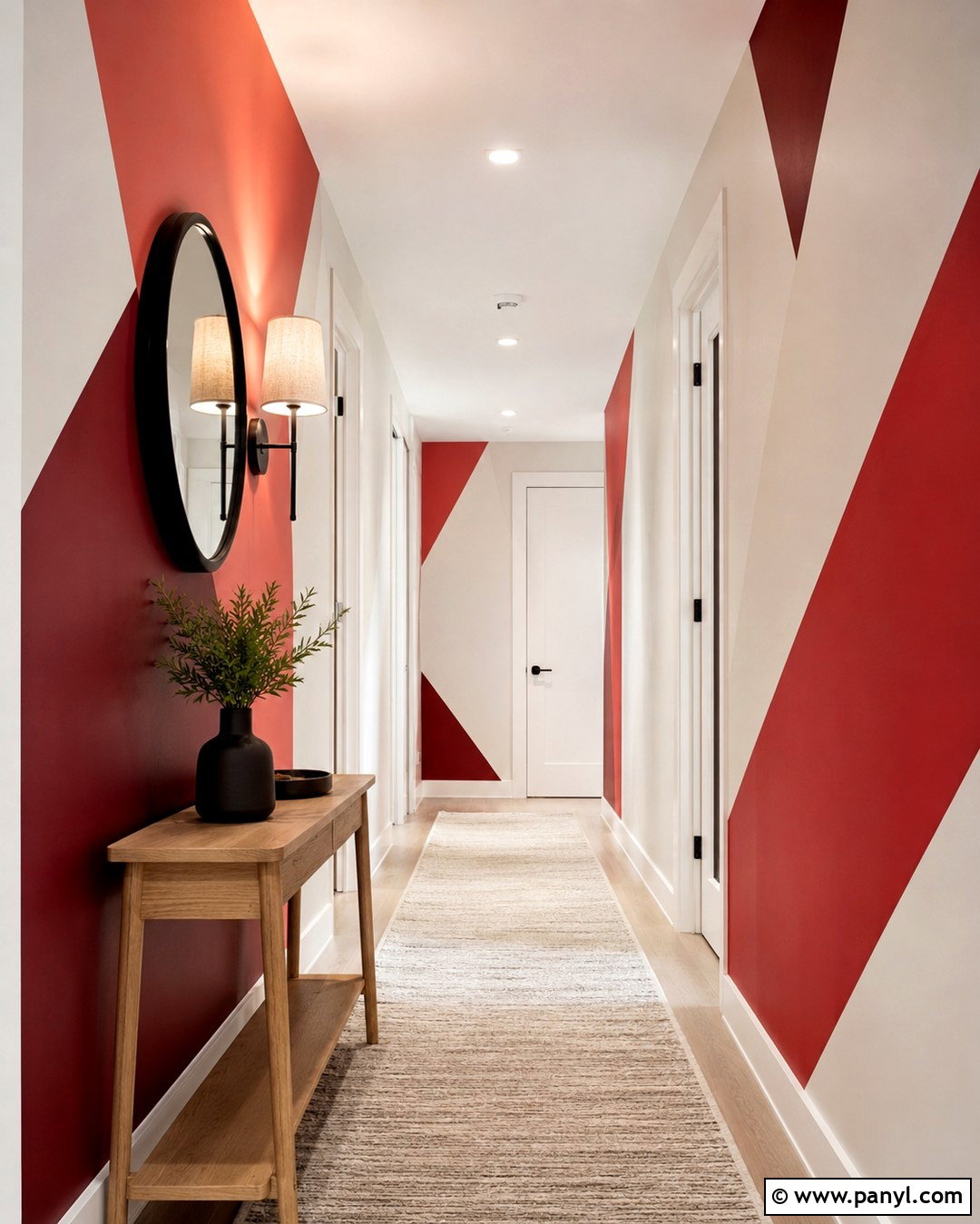
A hallway can handle bold paint when the pattern is long, clean, and connected to the direction of travel. Run wide diagonal stripes in cherry red, burgundy, soft coral, and warm white along one wall, spacing them generously to avoid a crowded effect. Keep the opposite wall and ceiling light beige or white for balance. Add a slim oak console where space permits, along with a round black mirror and one shaded wall sconce. A neutral runner with a small linear design will reinforce the hallway’s length without competing with the stripes. Black door hardware can provide a consistent accent throughout the passage. This scheme transforms a functional corridor into a lively transition while maintaining enough open color to feel bright, orderly, and comfortable.
17. Red TV Wall Color Blocks
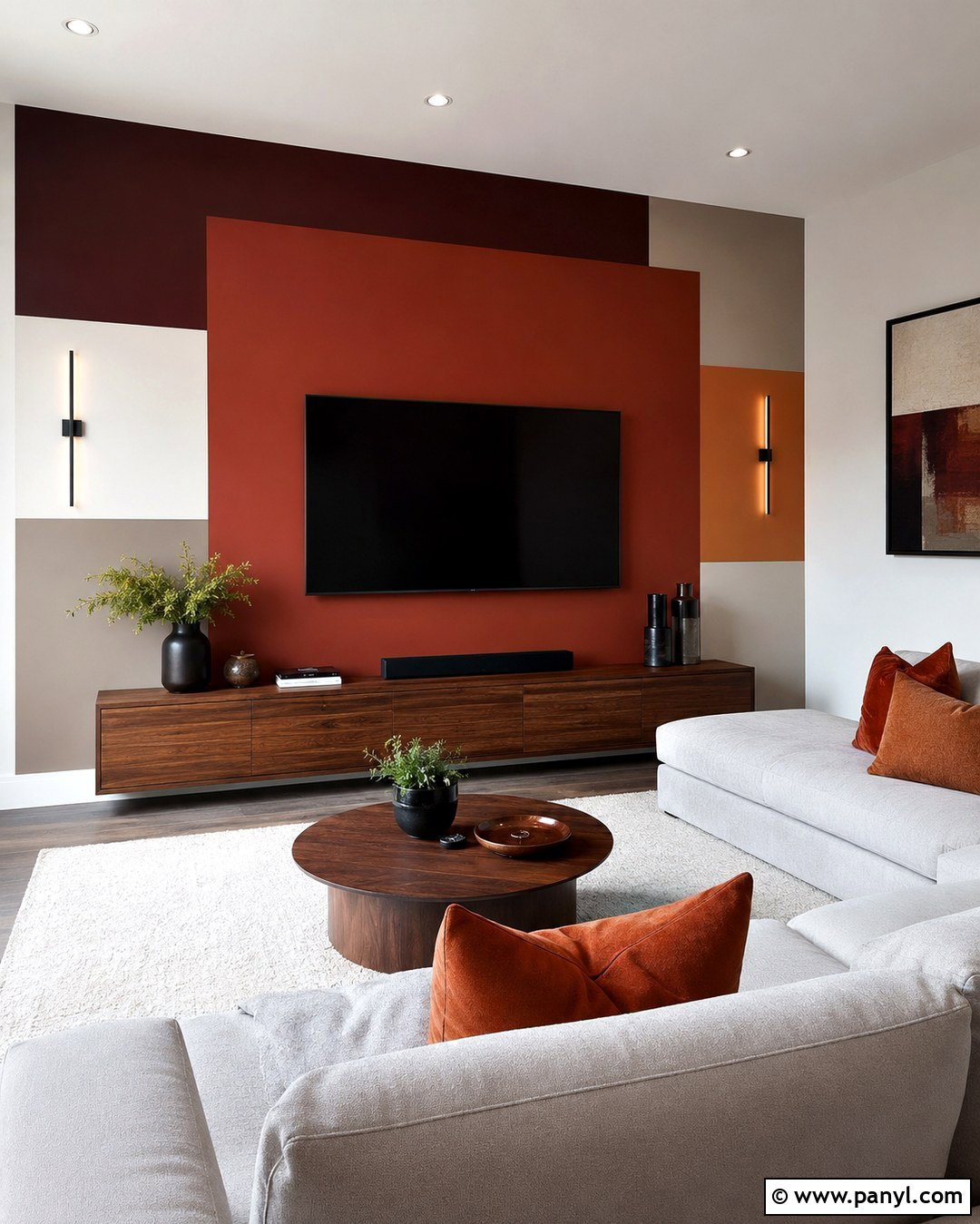
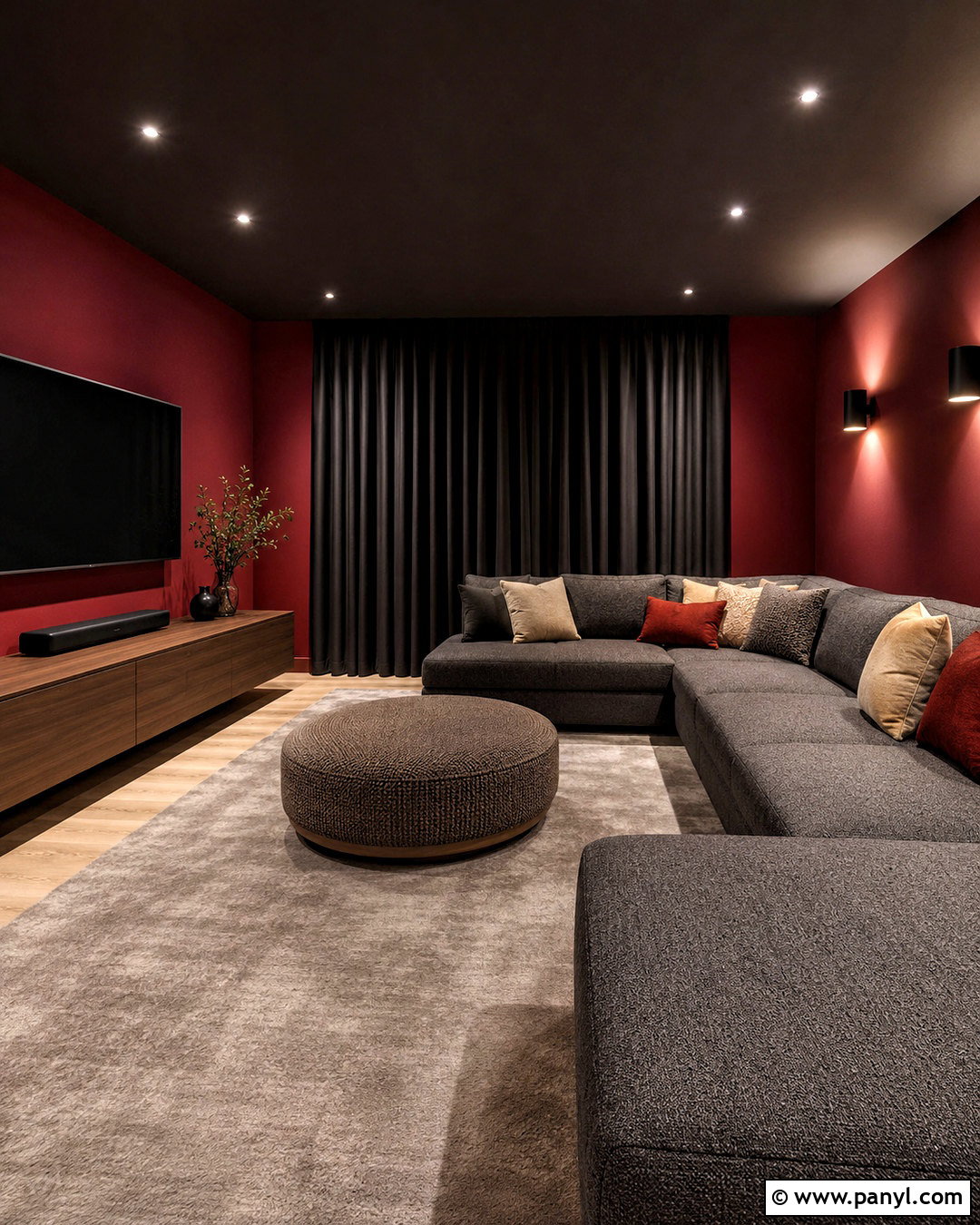
A geometric TV wall should frame the screen rather than compete with it. Begin with a deep brick-red rectangle slightly larger than the television, then surround it with asymmetrical blocks of burgundy, muted terracotta, warm gray, and beige. Keep the darkest colors near the screen so the television blends naturally into the arrangement. Install a low walnut media cabinet beneath it and hide visible cords for a polished finish. A light gray sectional, round wood coffee table, and large cream rug will soften the graphic wall. Add solid rust and charcoal cushions instead of busy patterns. Slim black sconces can flank the composition without blocking the shapes. The completed media room feels cohesive, practical, and visually interesting even when the television is turned off.
18. Red Midcentury Geometric Wall
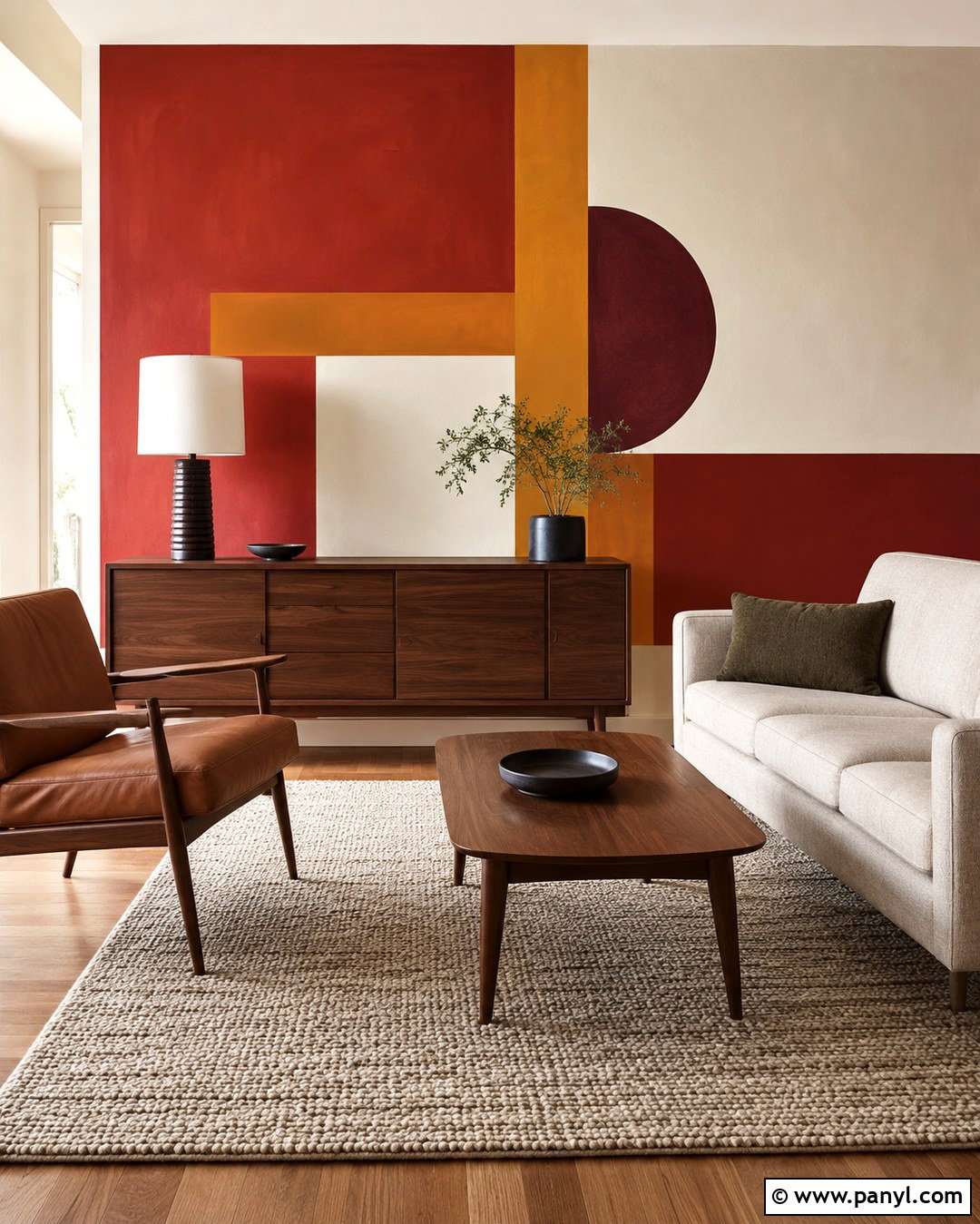
Midcentury-inspired geometry works best with broad shapes, warm woods, and a carefully limited color palette. Paint an abstract composition of rust-red rectangles, a burgundy circle, mustard-gold strips, and cream negative space behind a streamlined walnut credenza. Use clean edges, but let several shapes overlap to create a layered mural effect. Furnish the room with a tan leather chair, a tapered-leg sofa in oatmeal fabric, and a low walnut coffee table. An olive-green cushion or ceramic lamp can add a restrained complementary accent. Finish the floor with a textured cream rug and simple linen curtains. Avoid filling the credenza with small objects. One sculptural lamp and a shallow bowl are enough to support the complete retro-modern look without making it feel themed.
19. Red Monochrome Geometric Wall
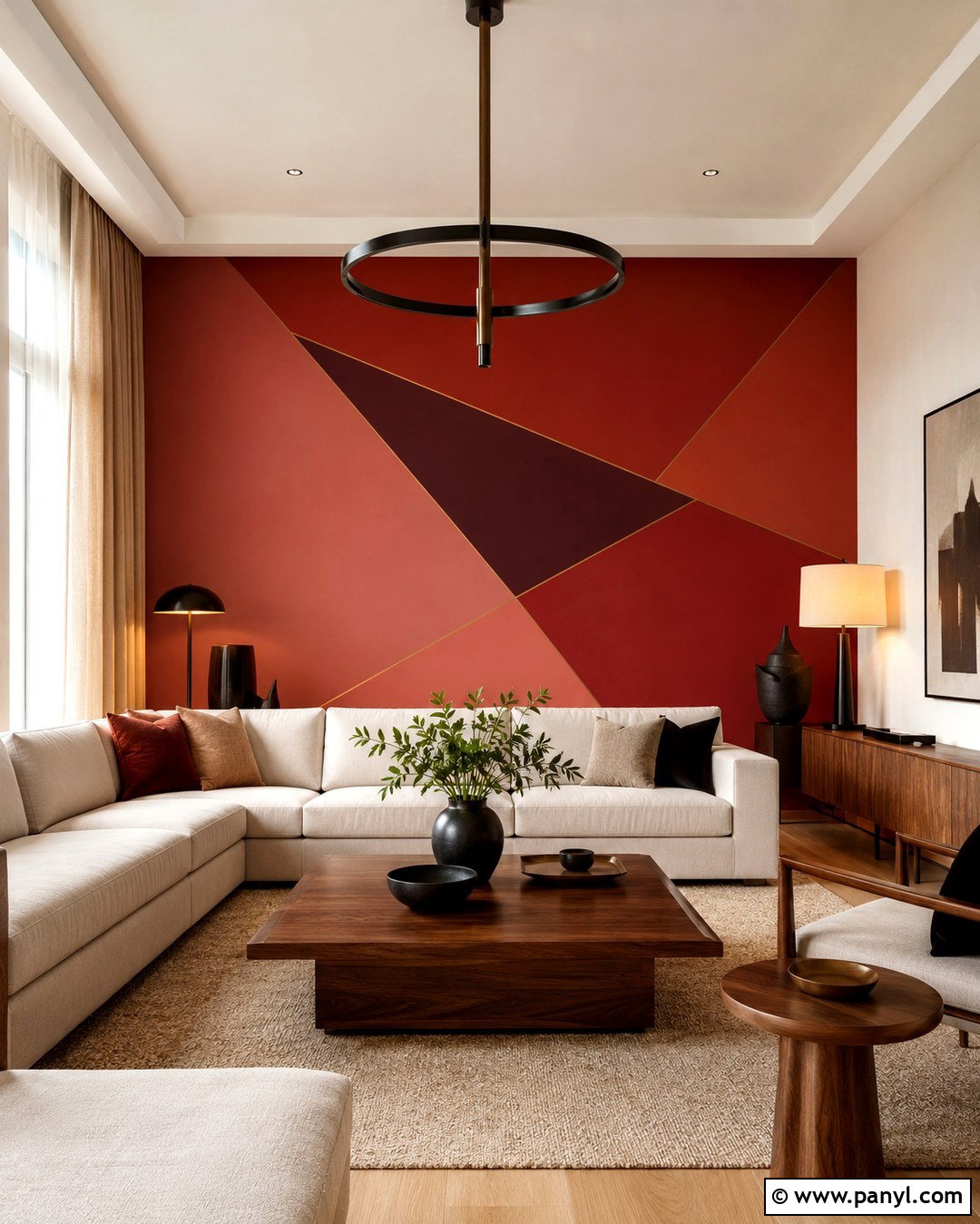
Using several shades from the same red family creates depth without the sharp contrast of a multicolor mural. Cover a dining or living room feature wall with large interlocking polygons in pale clay red, dusty crimson, brick, merlot, and deep burgundy. Separate the shapes with narrow lines in the lightest shade rather than bright white. This keeps the design cohesive and sophisticated. Pair the wall with a cream sofa or pale oak dining table so the red remains the clear focal point. Choose neutral linen curtains, a beige rug, and dark bronze lighting. Small accents in walnut and black will provide structure. The finished room feels enveloping and colorful, yet the tonal approach makes the complex pattern look controlled rather than chaotic or overly playful.
20. Red Ceiling Corner Geometric Wall
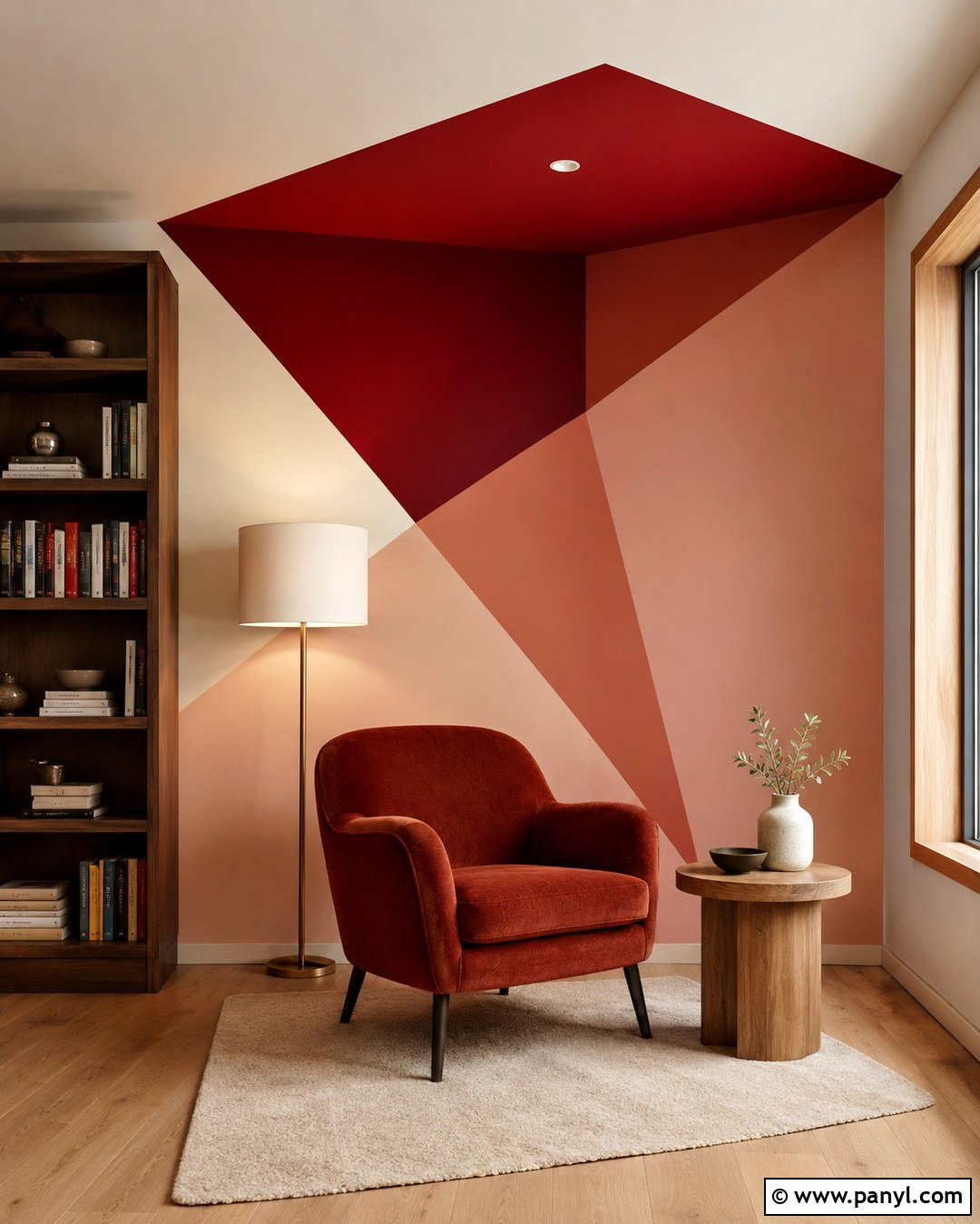
Extending a geometric design onto the ceiling can visually define a reading corner, desk area, or dining nook. Begin with a wide red polygon that rises from one wall and continues approximately two feet across the ceiling. Add smaller sections in burgundy, blush, and terracotta around it, leaving the remaining walls warm white. Place a rust-colored lounge chair and oak side table beneath the shape to create a complete reading zone. A cream floor lamp, soft beige rug, and walnut bookshelf balance the strong overhead color. Keep ceiling fixtures simple so they do not interrupt the pattern. This wraparound treatment creates an architectural feeling and makes an unused corner appear purposeful, while the limited painted area prevents red from dominating the entire room.
Conclusion:
Red geometric paint can be dramatic, warm, playful, or refined depending on the shade, pattern, and surrounding furnishings. Large circles and arches create clear focal points, while triangles, grids, stripes, and interlocking blocks introduce stronger movement. Softer reds work naturally with blush, beige, and pale wood. Burgundy and crimson can be balanced with navy, charcoal, walnut, or brass. Before painting, sketch the arrangement, check its scale behind the furniture, and use quality painter’s tape for cleaner edges. Most importantly, design the entire room around the feature rather than treating it as an isolated decoration. These **20 Geometric Wall Paint Red Ideas** offer adaptable starting points for creating a coordinated and memorable interior.

Related Ideas and Inspiration:
Leave a Reply