
A painted geometric wall can turn an ordinary room into a complete, intentional space without requiring expensive artwork or major construction. This collection of 20 wall geometric painting ideas explores crisp triangles, oversized arches, modern grids, playful curves, and dimensional color blocks. Each look includes a coordinated palette, furniture plan, lighting, textiles, and decor, so the finished room feels balanced rather than busy. Before painting, sketch the pattern, test colors together, and use a level with quality painter’s tape for clean edges. Keep detailed patterns limited to one focal wall, then repeat one or two mural colors elsewhere in the room. Whether your home feels minimalist, colorful, retro, or cozy, you can find a practical starting point among these 20 wall geometric painting ideas.
1. Neutral Triangle Geometric Wall
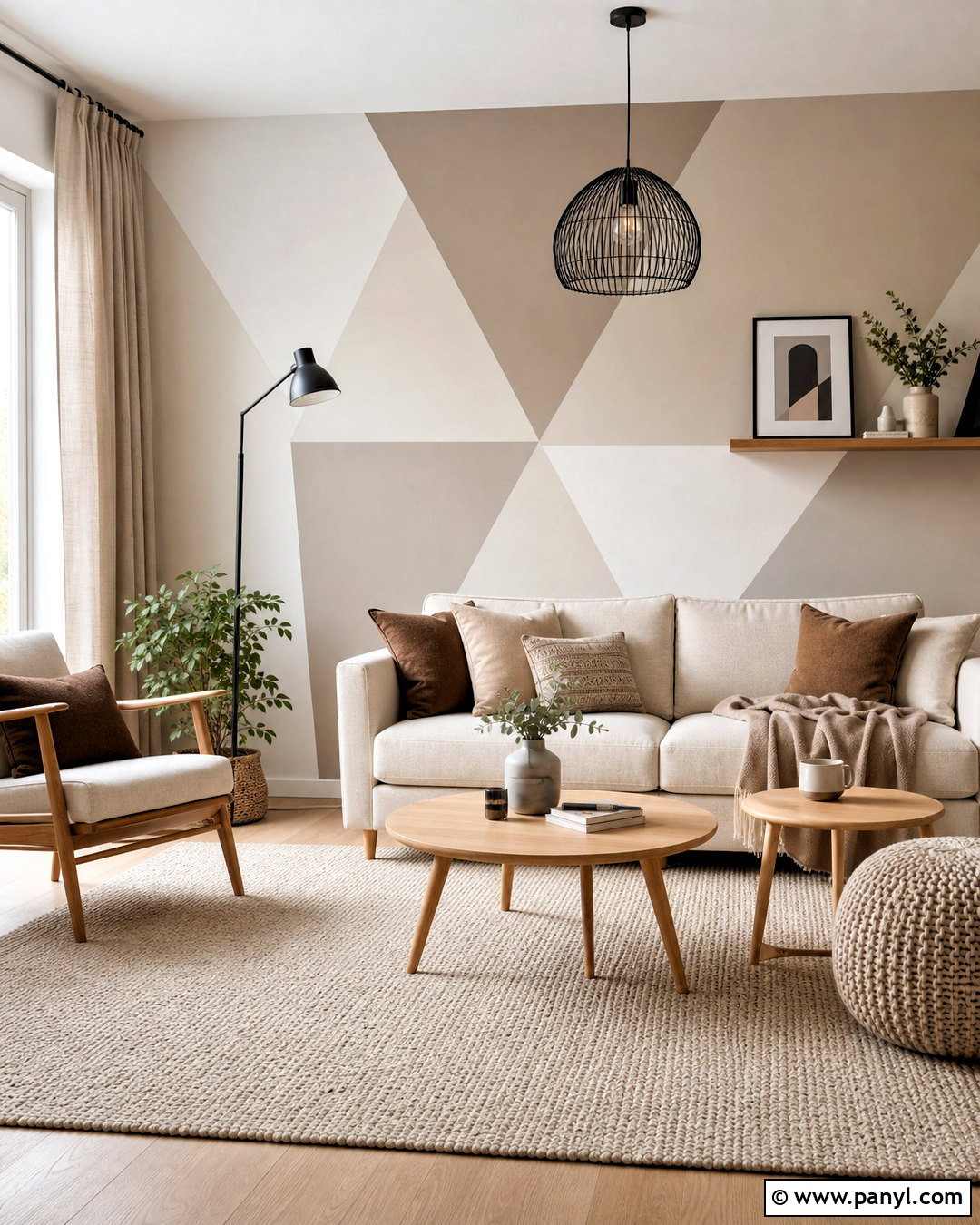
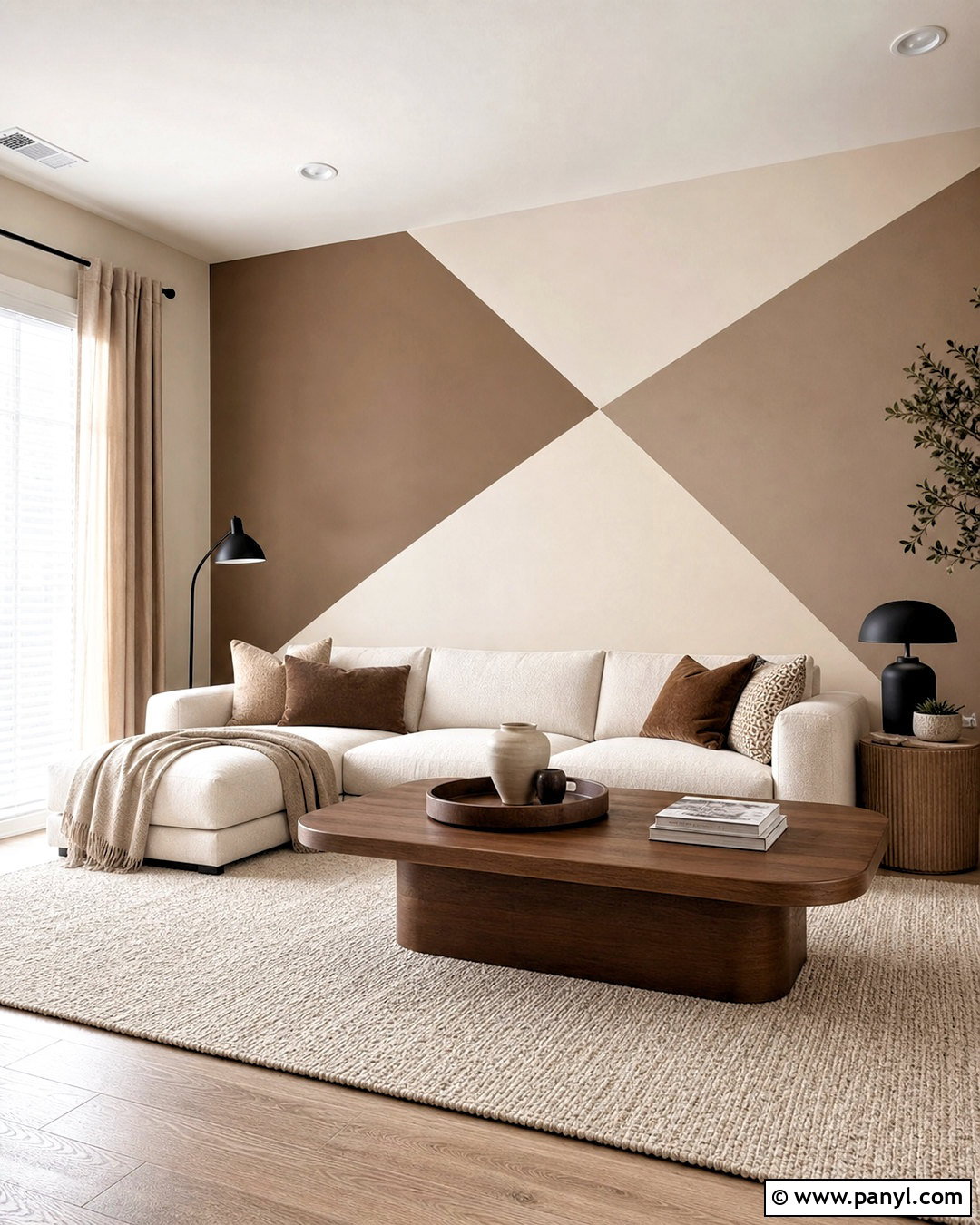
Create a calm living room feature wall with oversized triangles in warm white, soft greige, muted taupe, and sandy beige. Keep some sections the original wall color so the pattern has breathing room. Arrange the largest triangles behind a low cream sofa, using the furniture as a visual anchor. Light oak side tables, a natural woven rug, and oatmeal curtains reinforce the warm neutral palette. Add matte black lighting and two dark brown cushions for contrast. The triangle points can travel upward and outward, making a standard-height ceiling feel taller. Choose a flat or matte wall finish to soften the angles and hide minor surface imperfections. This complete look suits modern, Scandinavian, and transitional rooms without becoming too bold or difficult to decorate.
2. Blue Geometric Accent Wall
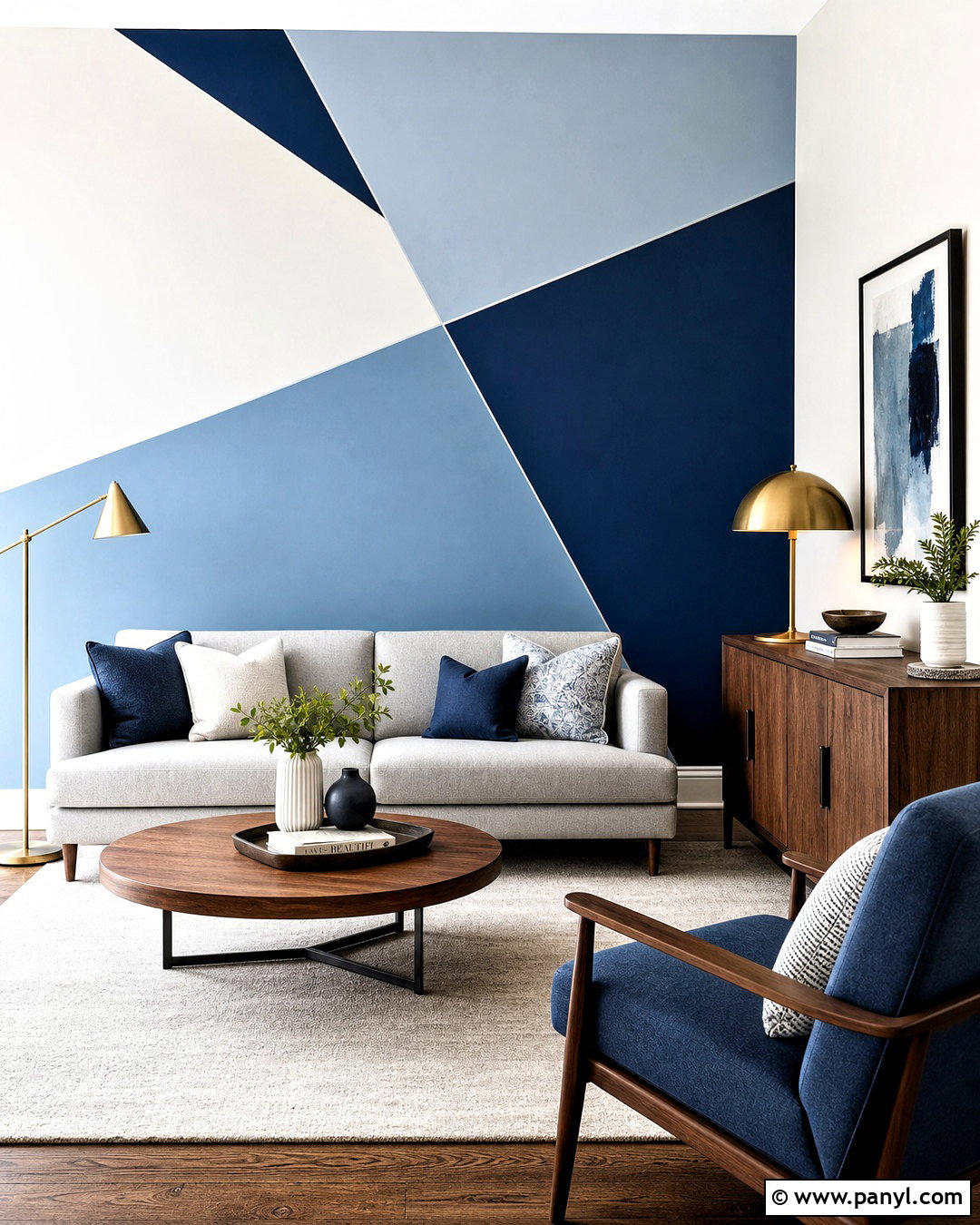
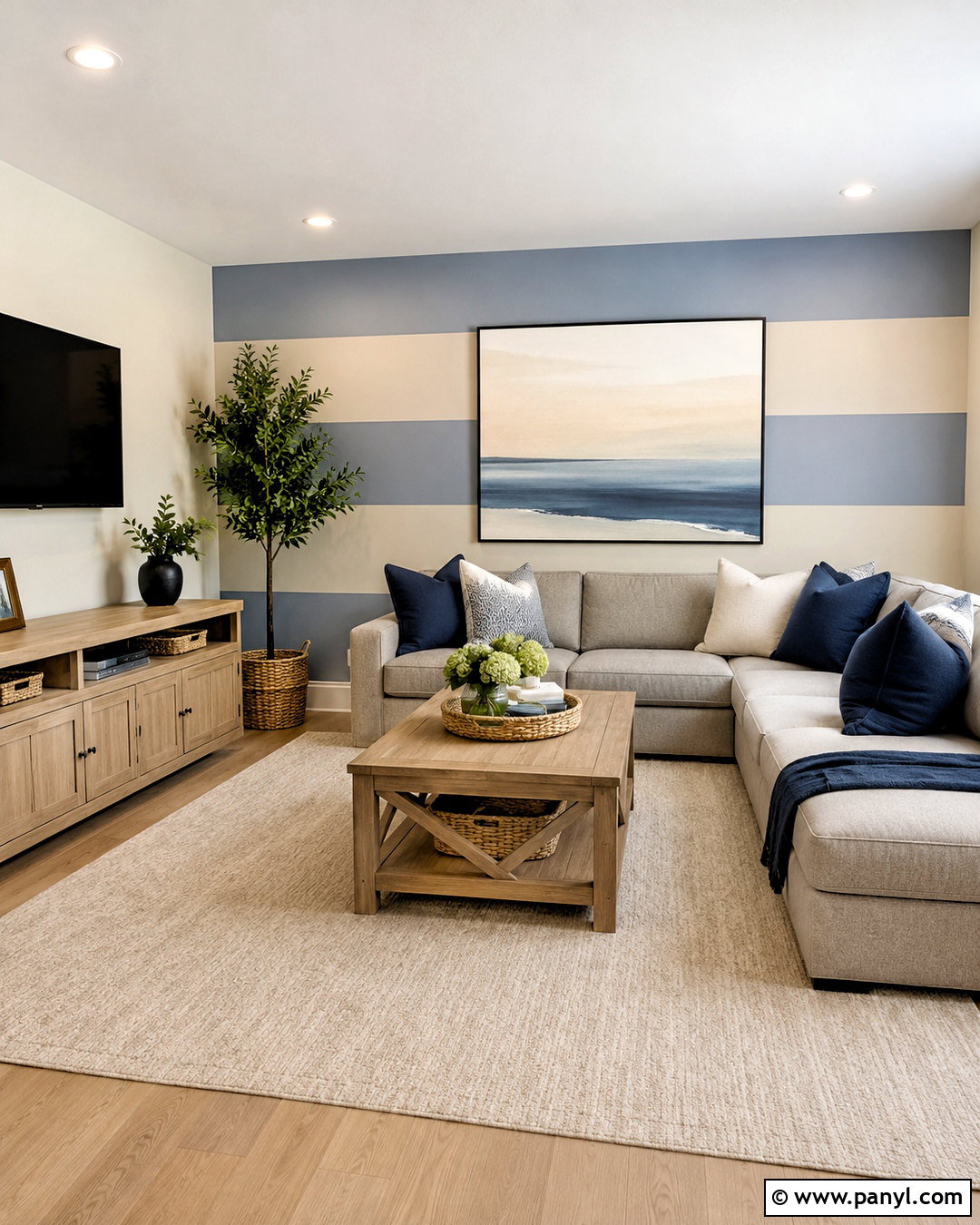
Deep navy blue, denim, dusty blue, and pale blue can form a layered geometric wall that feels colorful yet relaxing. Use large asymmetrical polygons behind a light gray sofa, keeping the palest shade near the ceiling to preserve an open feeling. A walnut media console brings natural warmth, while brushed brass lamps prevent the cool palette from looking flat. Finish the room with an ivory rug, blue-gray curtains, and cushions that repeat two mural colors. Allow several sections of the wall to remain warm white, creating clean negative space between the blue shapes. This scheme works especially well in a family room or home office. Its broad shapes are easier to tape and paint than a small repeating pattern, making it a manageable weekend project.
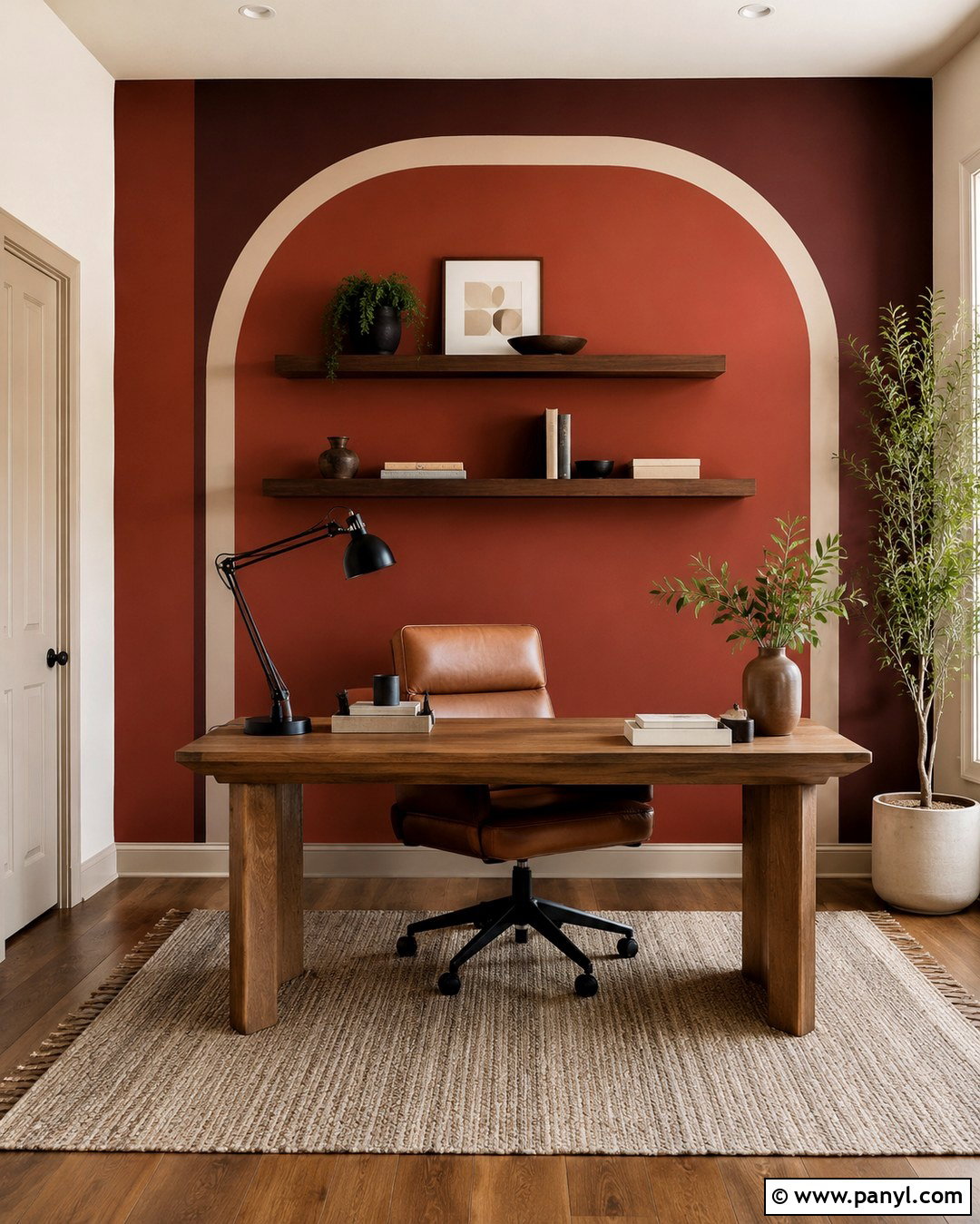
3. Terracotta Arch Geometric Wall
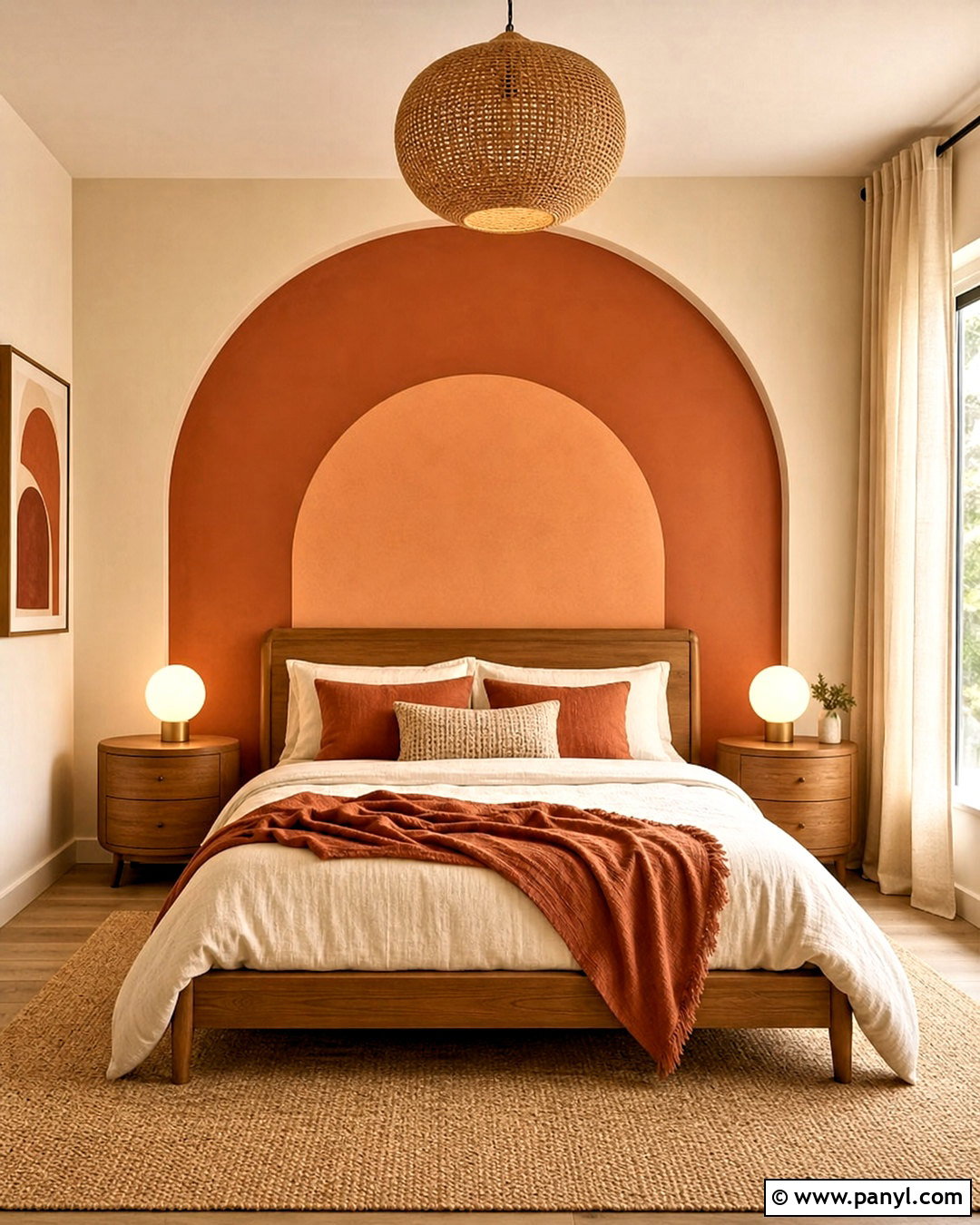
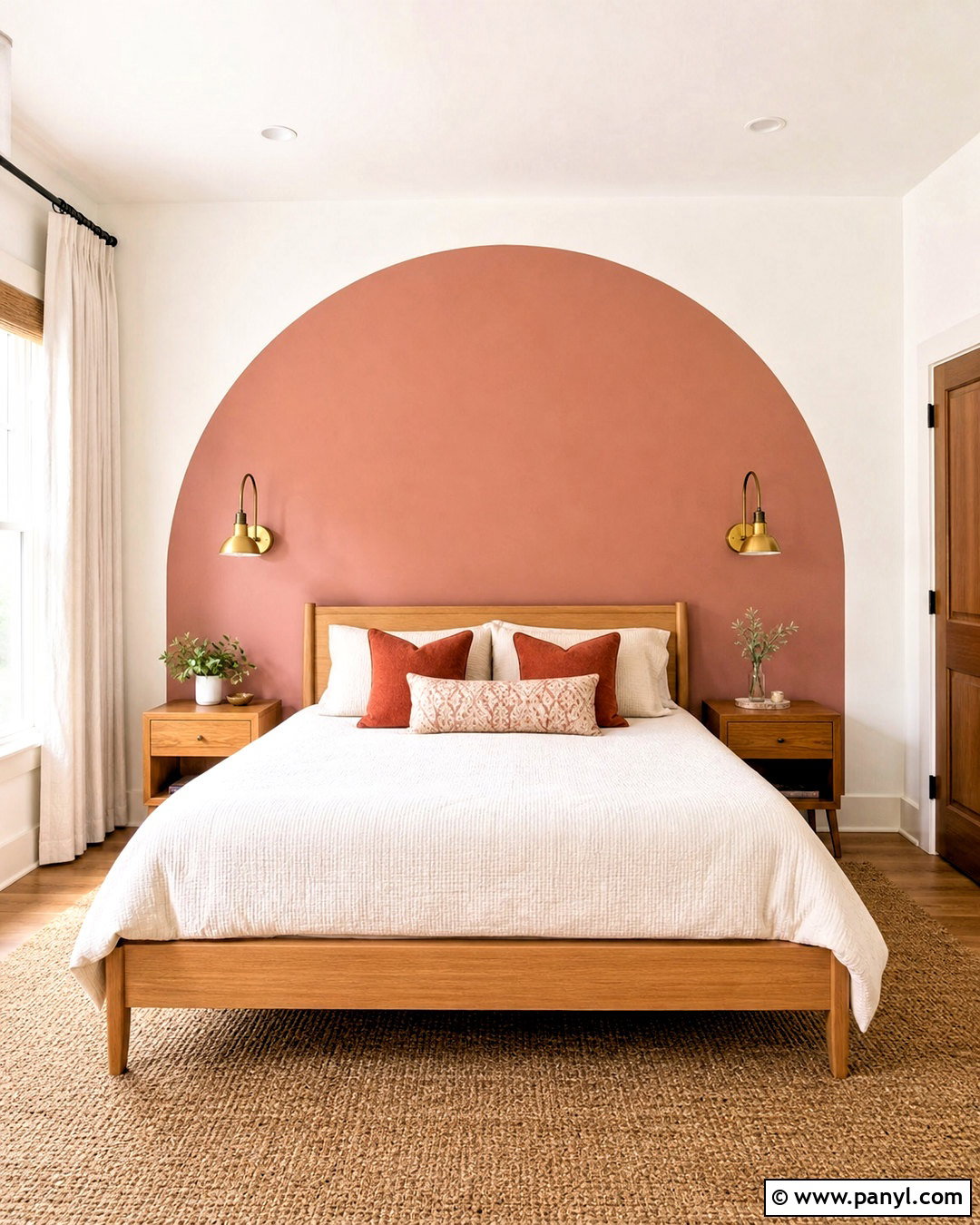
An oversized terracotta arch creates a strong geometric focal point while giving a bedroom a softer, more welcoming mood. Center the painted arch behind a simple oak bed so it functions like a visual headboard. Extend the shape slightly wider than the bed and stop it below the ceiling for balanced proportions. Use warm clay terracotta against creamy beige walls, then add rust pillows, ivory bedding, and a cinnamon throw. Rounded bedside tables and globe lamps echo the curve without making everything match exactly. A jute rug and linen curtains complete the earthy look. For greater depth, paint a smaller muted peach semicircle inside one side of the arch. The finished room feels warm, modern, and thoughtfully layered without requiring heavy wall decor.
4. Black And White Geometric Wall
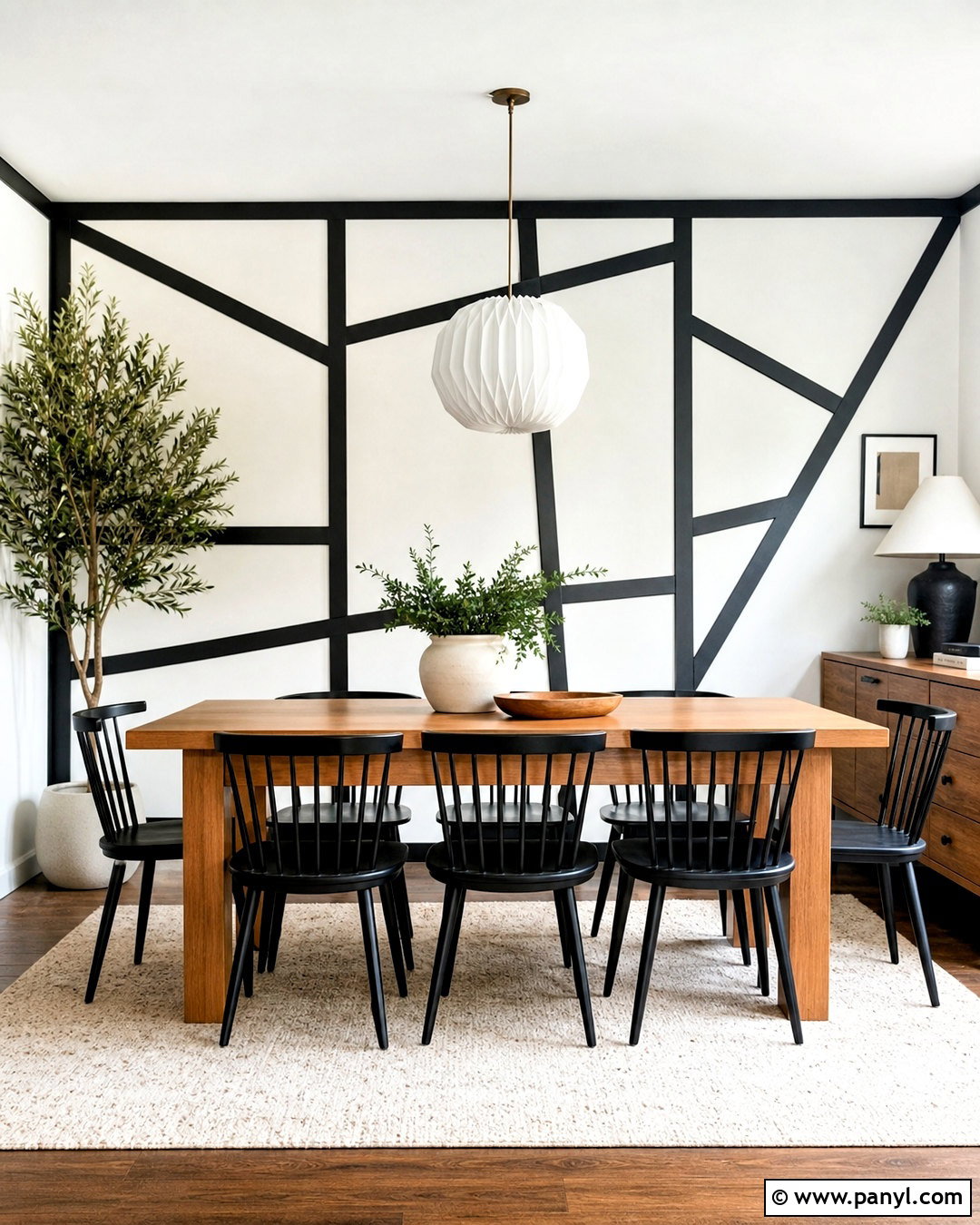
Crisp black lines over a soft white background can give a dining room a graphic, architectural finish. Create an irregular grid with a mix of wide rectangles, narrow lines, and open sections rather than repeating identical boxes. Keep the black areas limited so the wall remains bright and does not overpower the space. Place a medium-tone oak dining table in front of the mural, paired with black spindle chairs and a simple white pendant light. A textured cream rug softens the high contrast. Add greenery in a ceramic planter and warm wood serving pieces for a more comfortable atmosphere. This geometric wall works best with restrained decor because the pattern already acts as artwork. Carefully leveled tape lines are essential for achieving the clean, professional result.
5. Pastel Geometric Wall For Bedroom
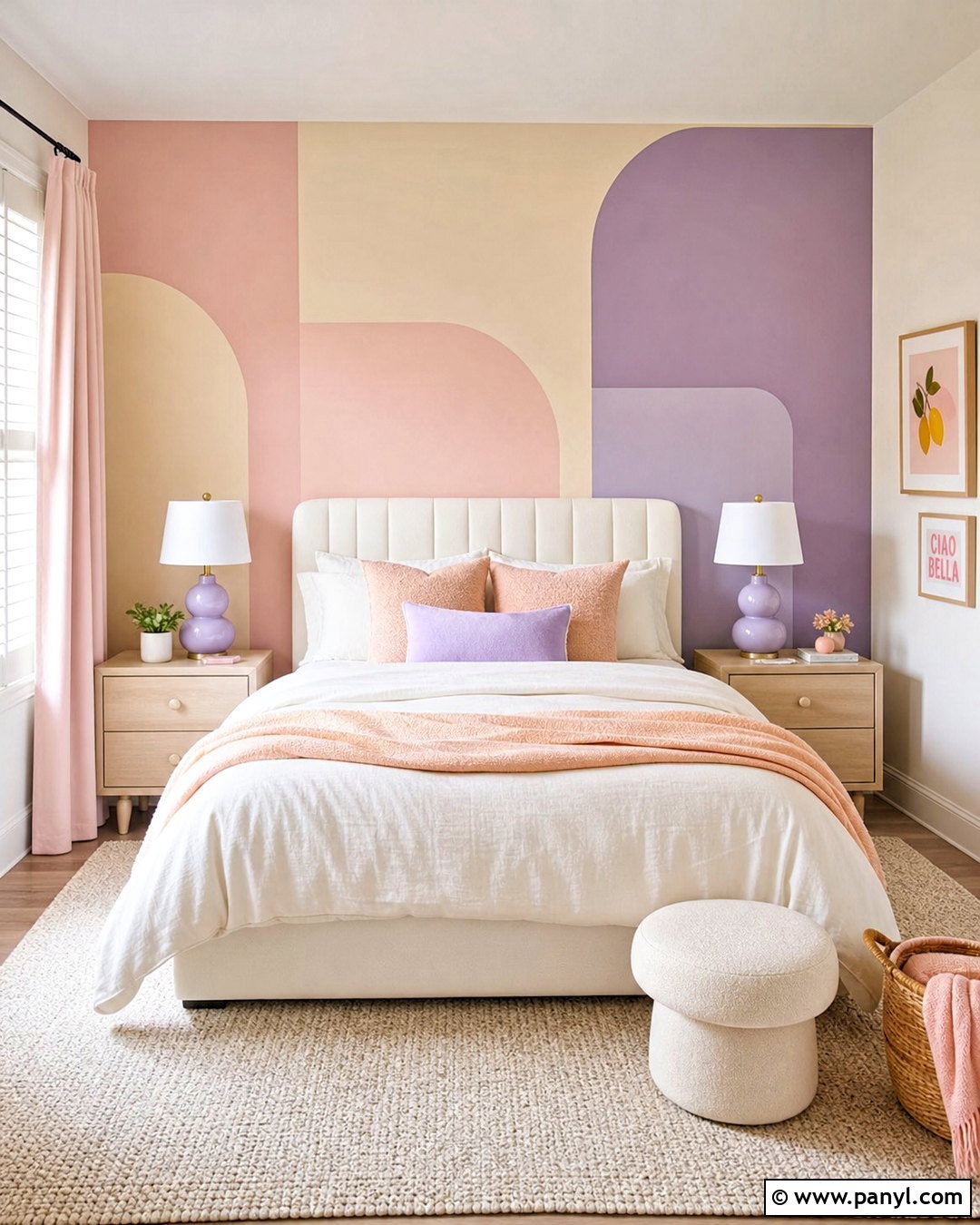
Soft pastel shapes can add personality to a bedroom while preserving a restful atmosphere. Build the design from large overlapping blocks of blush pink, pale peach, muted lavender, and warm cream. Position the lightest colors around the bed and place deeper lavender toward one outer corner to create gentle visual movement. A white upholstered bed, pale oak nightstands, and simple cotton bedding keep the room fresh. Repeat the mural palette through a peach throw, lavender pillow, and small ceramic lamp rather than filling the room with additional patterns. Use rounded shapes alongside a few straight-edged blocks to avoid a harsh appearance. This balanced geometric wall is suitable for a guest room, teenager’s room, or peaceful primary bedroom with modern, lighthearted character.
6. Green Mountain Geometric Wall
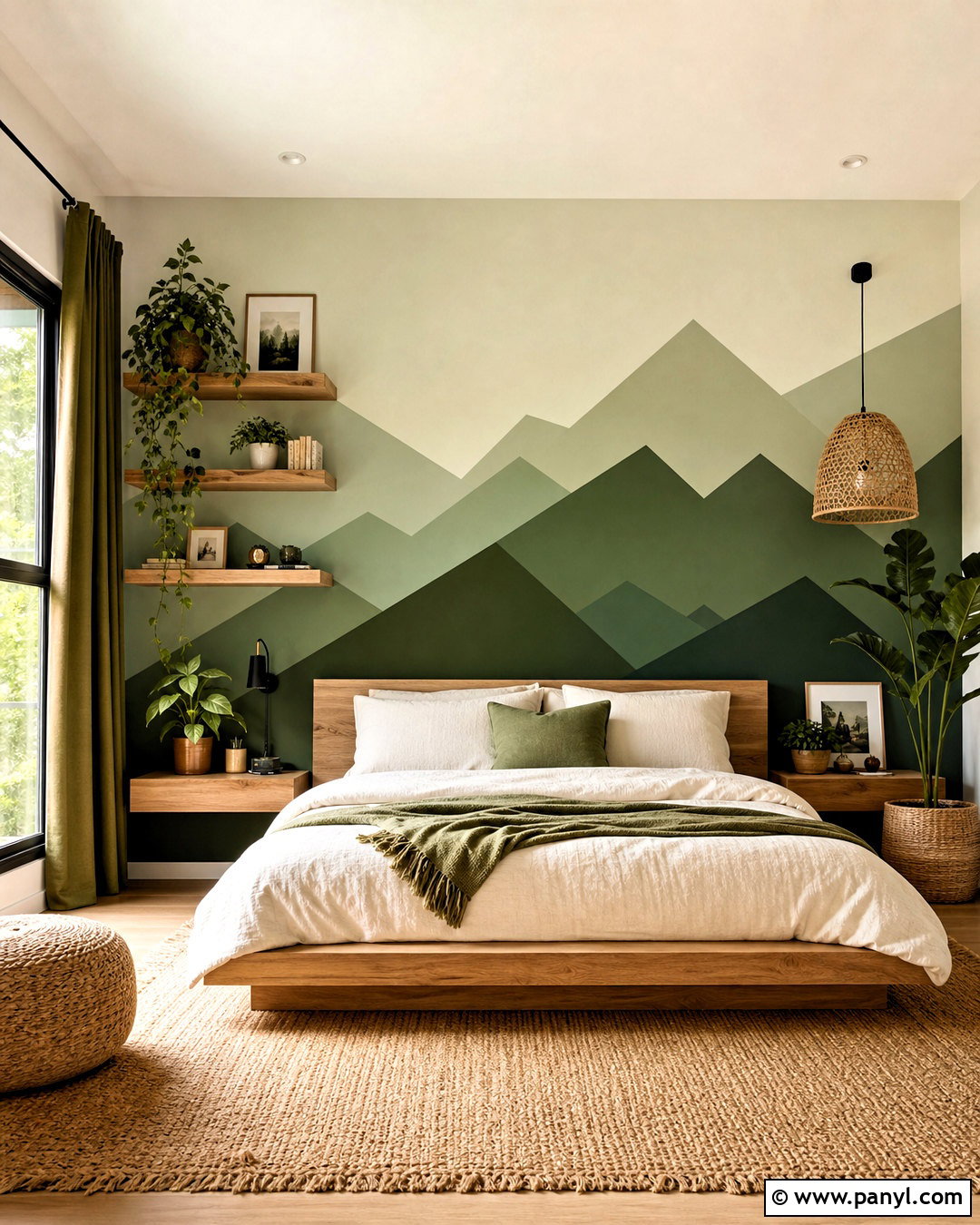
Bring a stylized landscape into a bedroom or playroom with overlapping mountain shapes in sage green, olive, forest green, and misty gray. Paint the tallest peaks toward one side rather than centering every point, which creates a more natural composition. Use the palest gray-green across the upper wall as a sky-like background. Place a low natural wood bed or storage bench in front, leaving enough of the mural visible above it. Cream bedding, a woven rug, and olive curtains connect the painted landscape to the room. A few simple wooden shelves can hold plants and neutral accessories without covering the peaks. The layered color values create depth from a distance, while the simplified geometric forms keep the design modern rather than looking like a detailed scenic mural.
7. Colorful Geometric Wall For Playroom
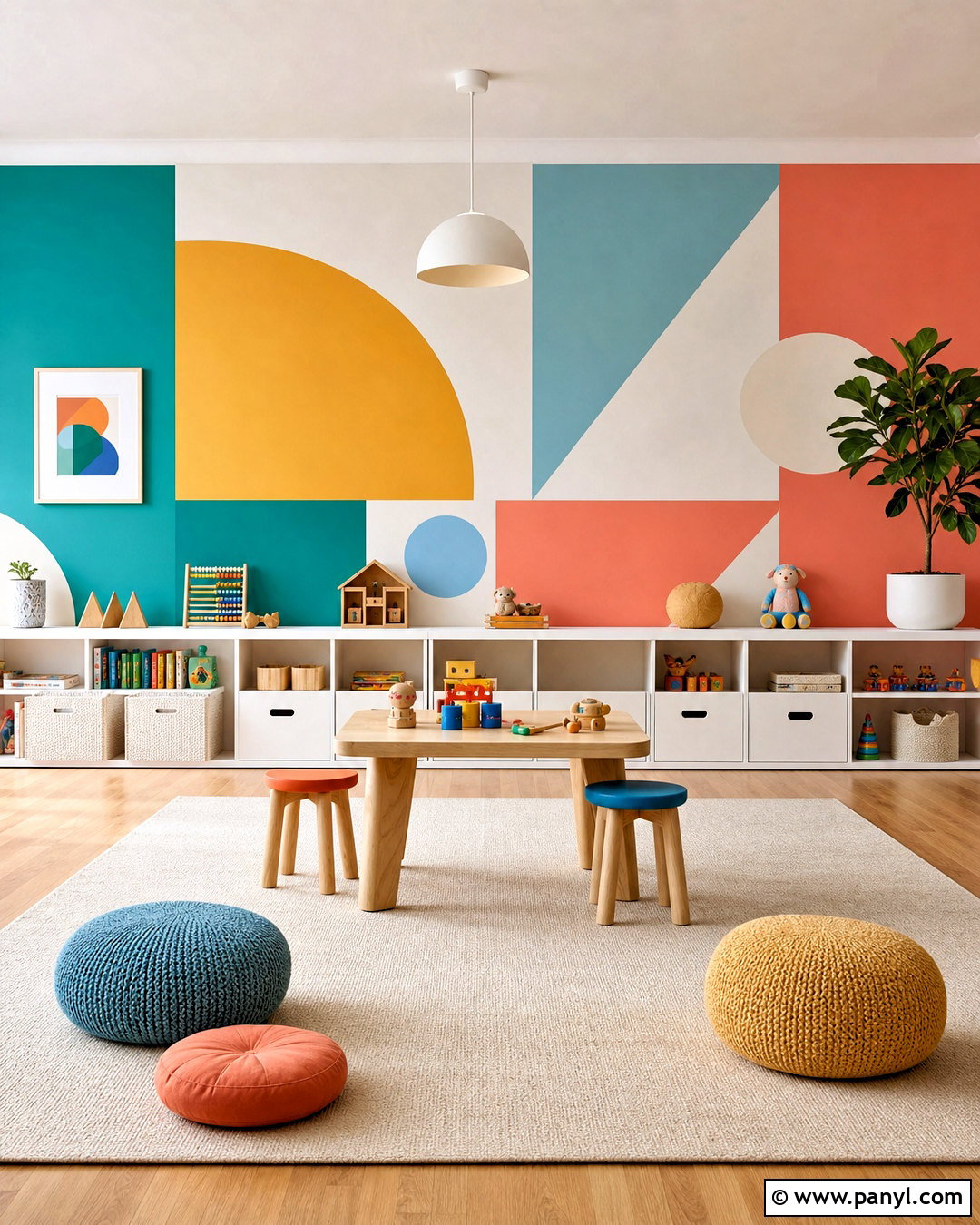
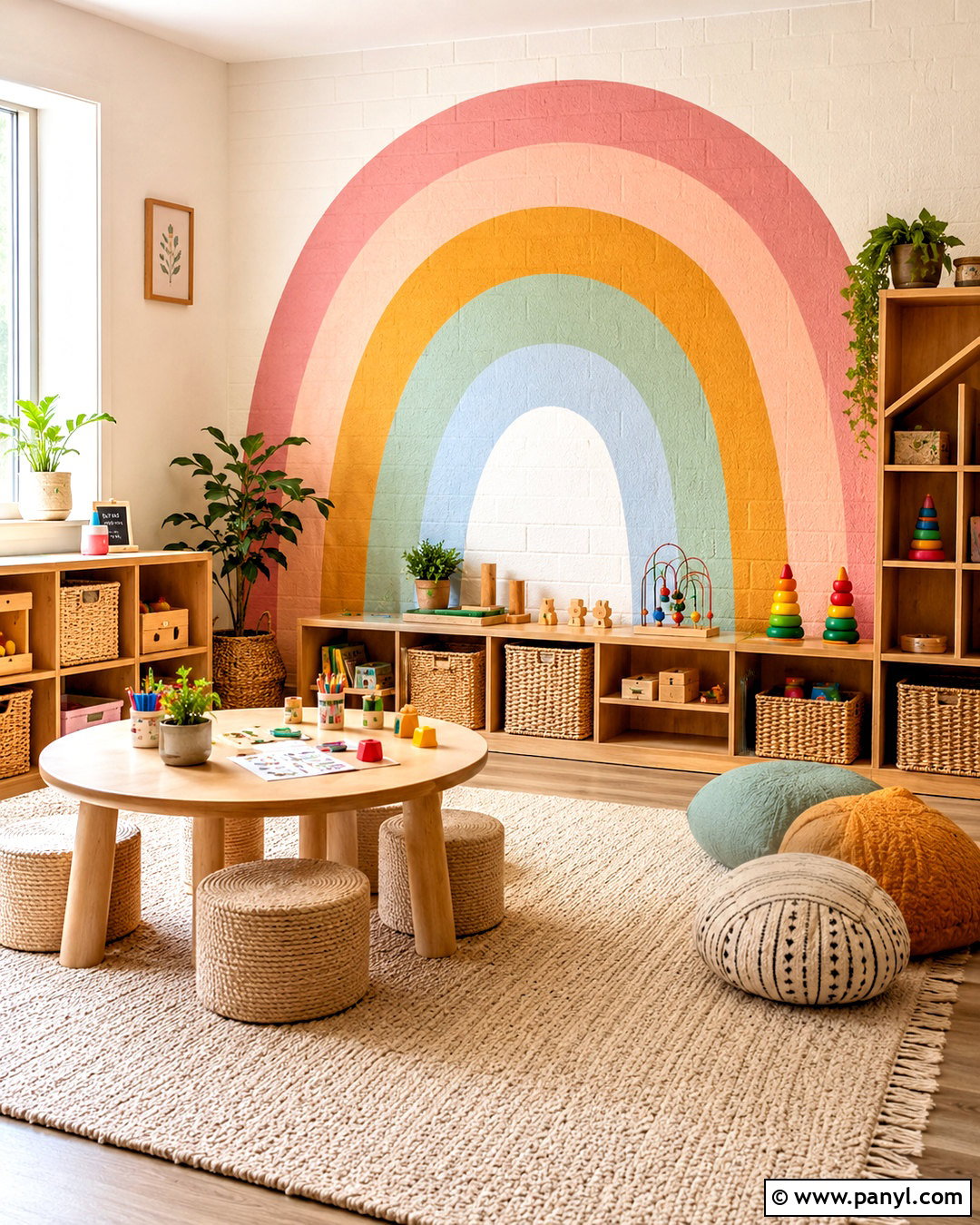
A playroom can handle an energetic wall, but the overall palette still needs structure. Paint a cheerful arrangement of large circles, semicircles, rectangles, and triangles in teal, mustard yellow, coral, sky blue, and warm white. Concentrate the shapes around a low toy storage unit so the wall and furniture read as one organized feature. Use white bins, a washable neutral rug, and a small natural wood table to balance the stronger colors. Repeat each bright shade only a few times and separate neighboring shapes with visible background space. Rounded cushions and simple pendant lighting complete the playful setting. The large scale keeps the wall from looking cluttered, while clearly defined color zones can help visually organize reading, building, and creative activity areas.
8. Minimal Line Geometric Wall
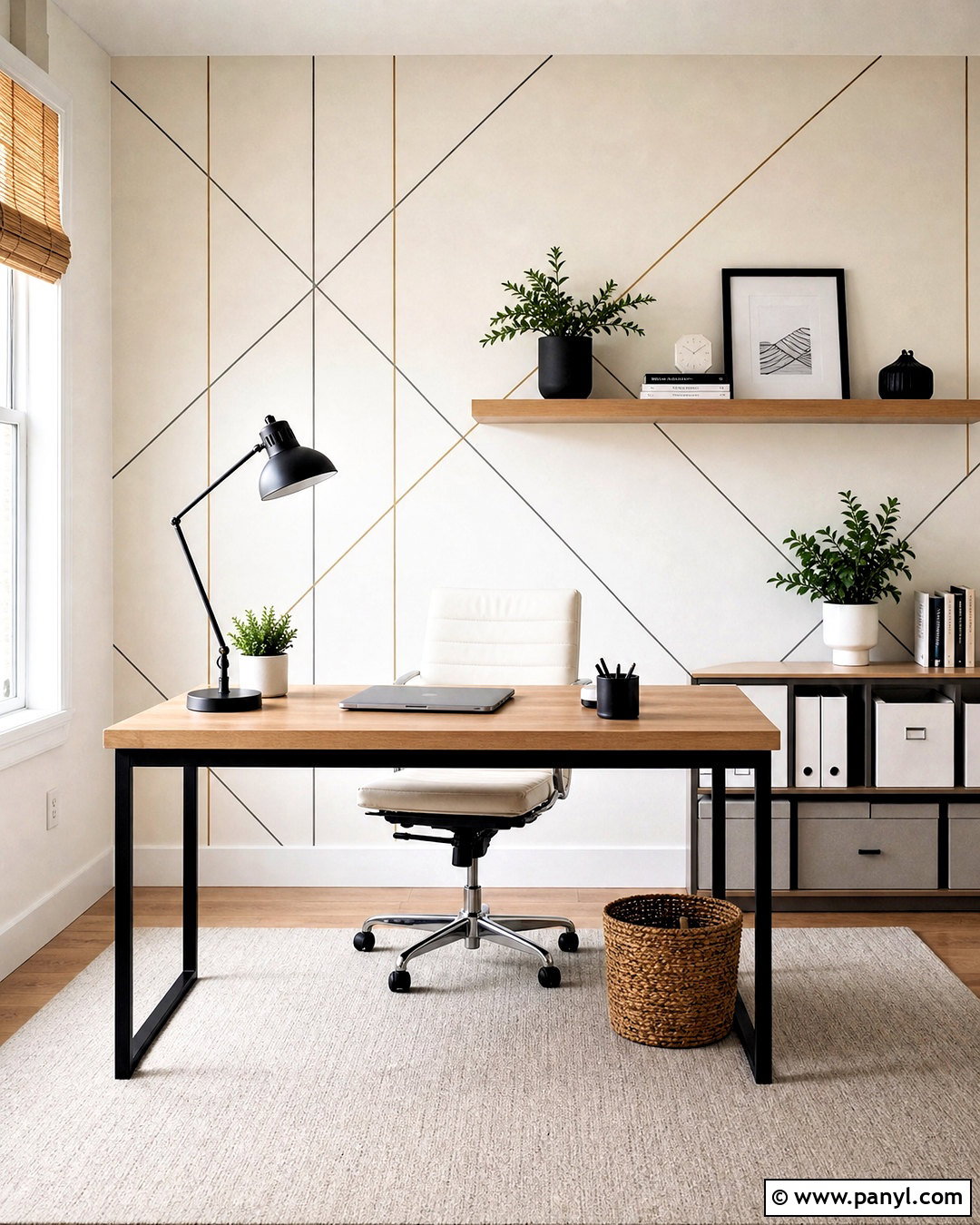
Thin painted lines offer a subtle way to introduce geometry without covering the whole wall in color. Begin with a warm off-white background, then create an open arrangement of diagonal and vertical lines in charcoal gray and muted tan. Let several lines meet while others stop unexpectedly, producing an abstract architectural pattern. Use this treatment behind a streamlined home office desk with a light oak top and black metal legs. A cream desk chair, floating shelf, and simple task lamp maintain the uncluttered mood. Keep accessories neutral and repeat the tan shade through storage boxes or a woven basket. The design should occupy about two-thirds of the wall, leaving open space around the edges. This approach gives a small office visual interest while still supporting concentration and order.
9. Mustard And Gray Geometric Wall
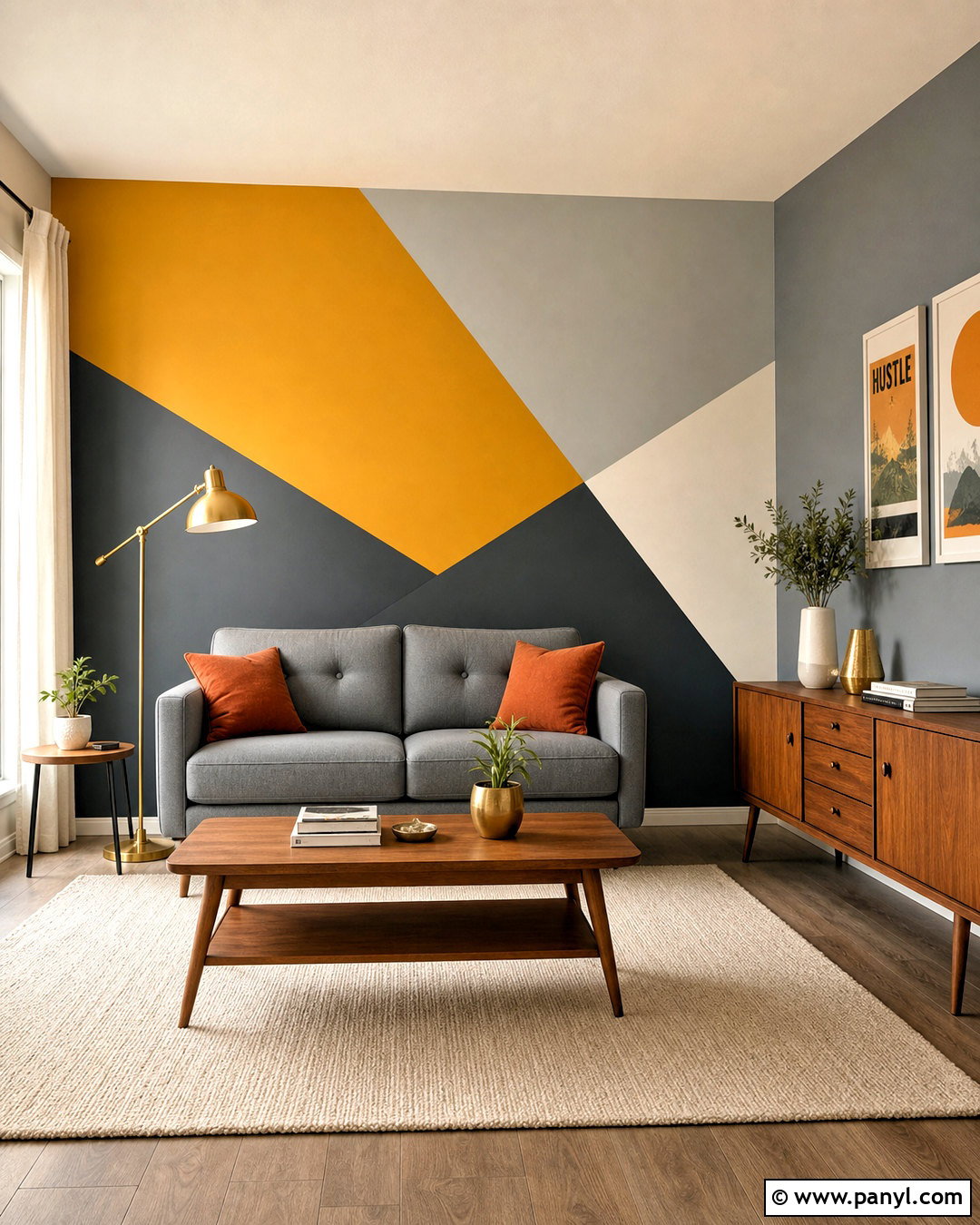
Mustard yellow and cool gray create a confident, midcentury-inspired wall when balanced with plenty of warm white. Divide the surface into broad angular sections, placing one large mustard block behind a walnut sideboard and using light and charcoal gray around it. Avoid making every shape the same size. A mix of wide and narrow sections produces better rhythm and gives the room a custom appearance. Furnish the space with a compact gray sofa, walnut coffee table, cream rug, and brass floor lamp. Burnt orange and mustard cushions can connect the seating to the wall. Keep window treatments simple and pale so natural light remains strong. This coordinated living room feels lively and nostalgic, yet the controlled palette prevents the geometric painting from becoming visually overwhelming.
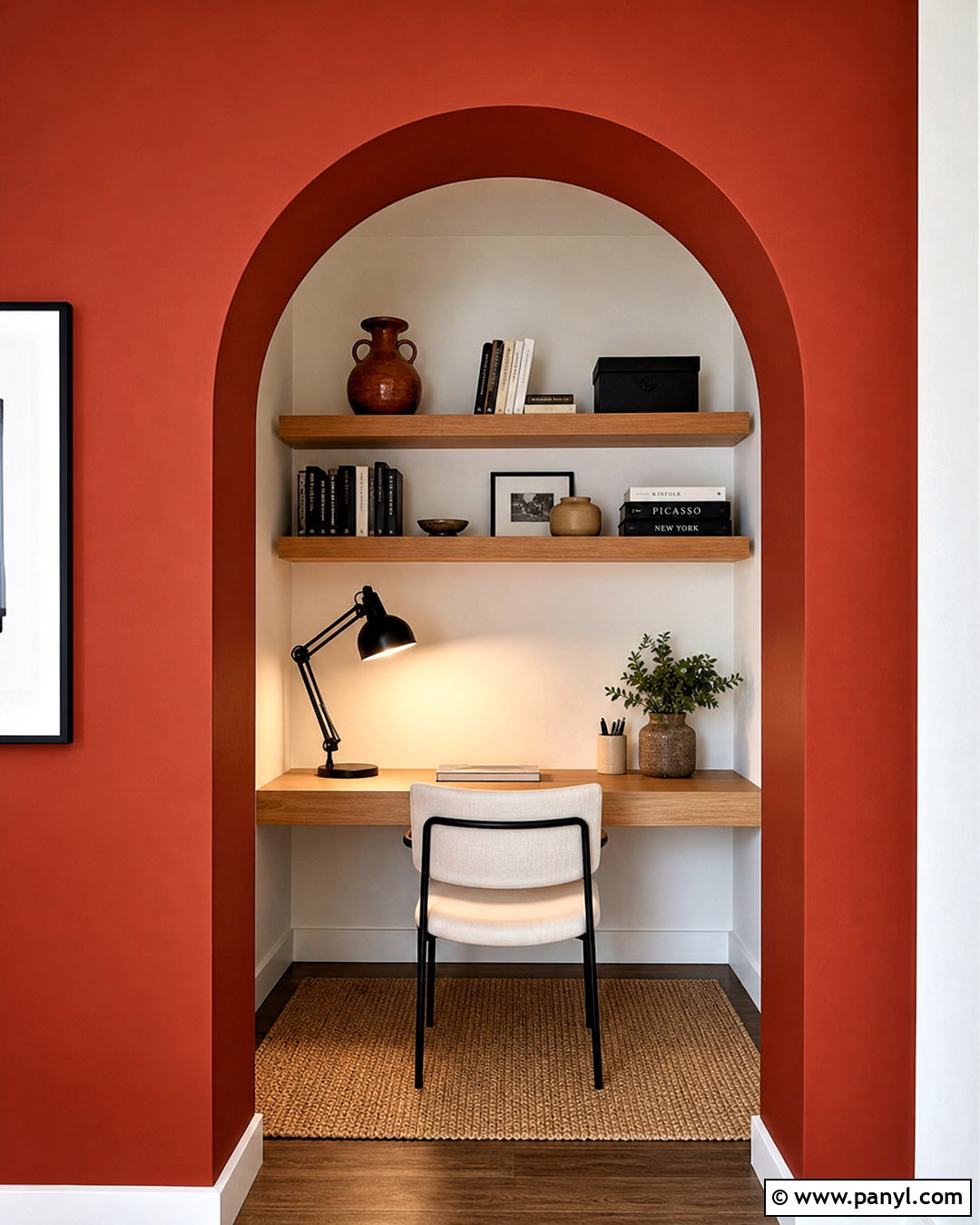
10. Geometric Wall With Gold Lines
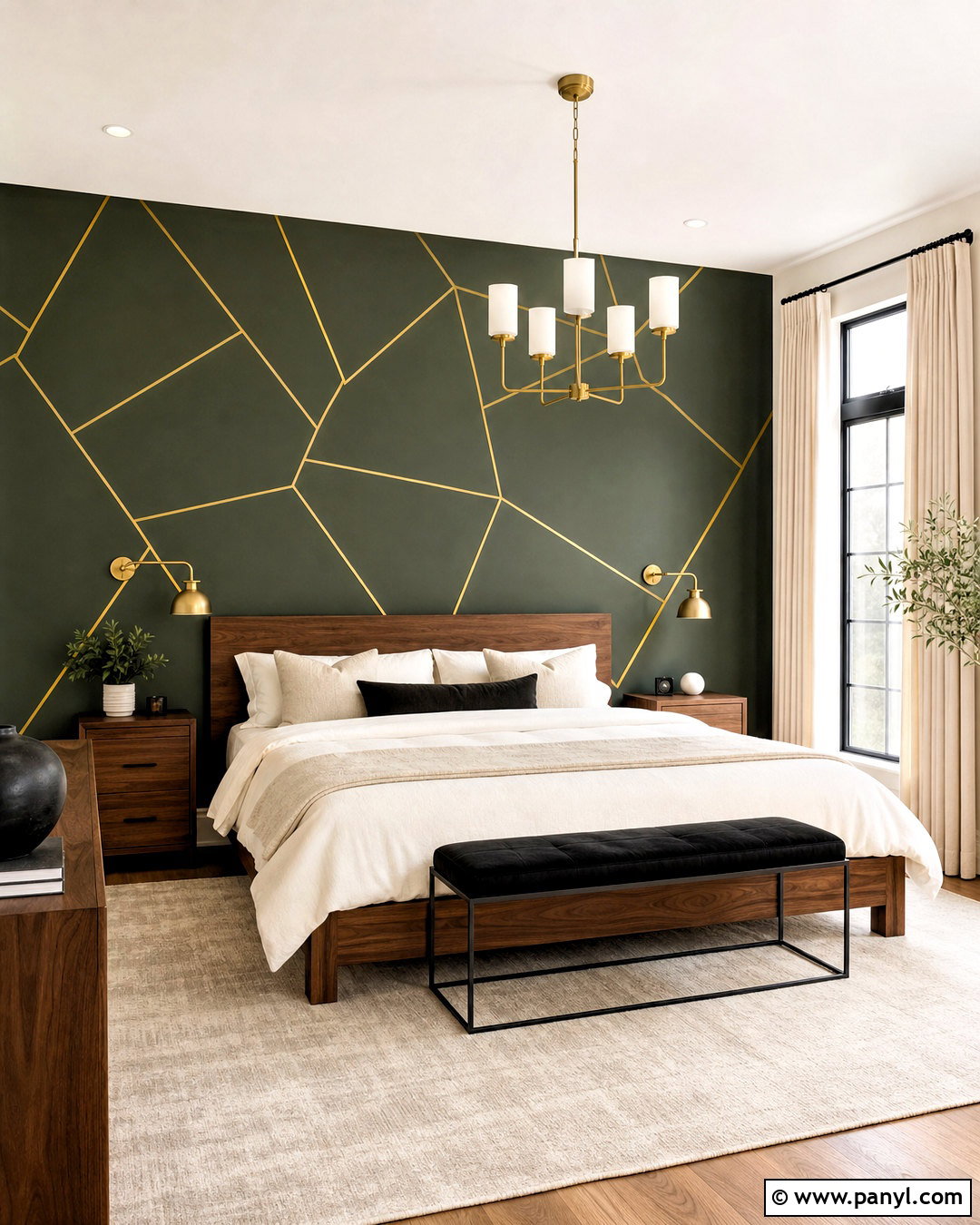
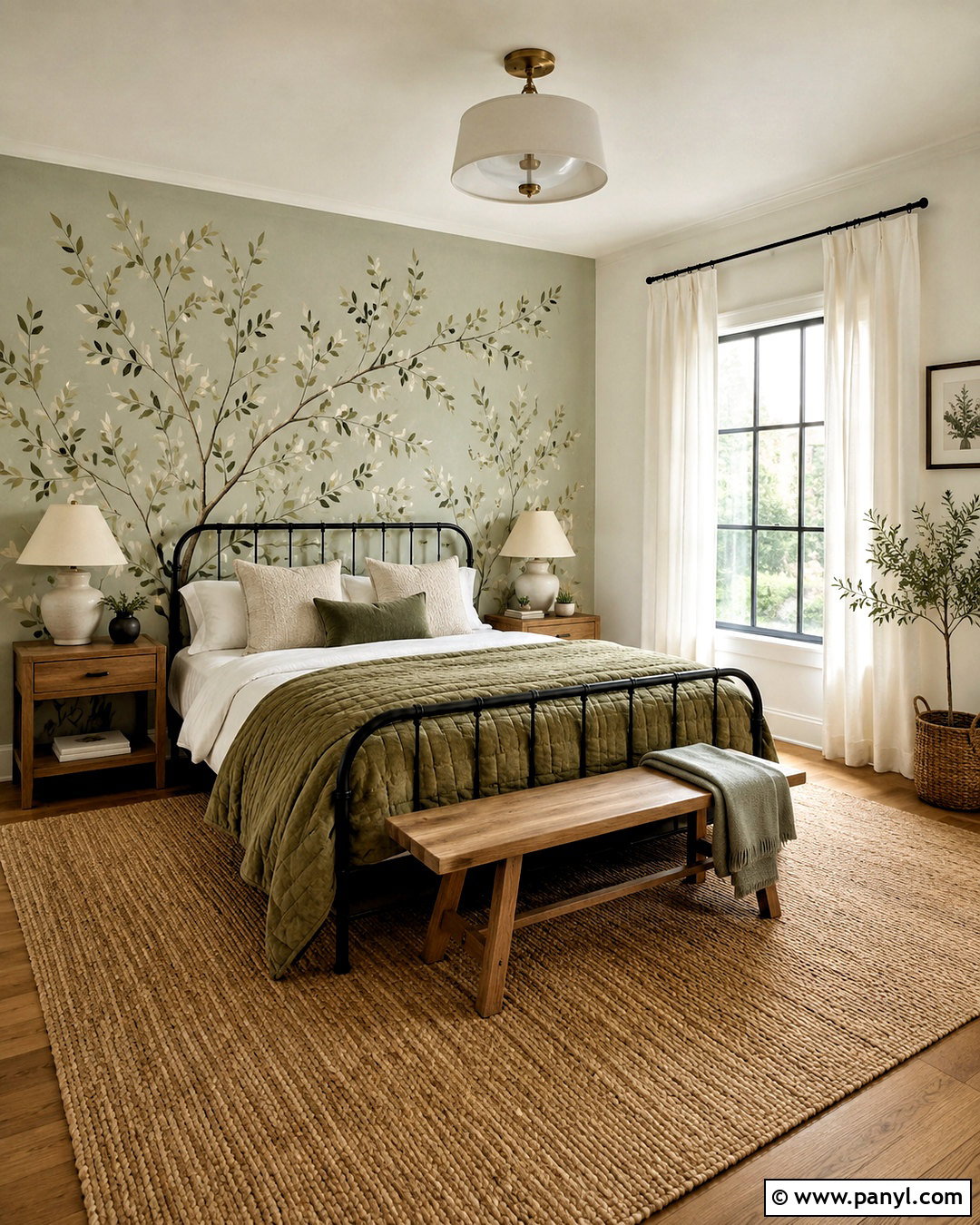
A deep green wall with slim metallic gold lines can create an elegant bedroom or dining space without relying on an overly complicated pattern. Paint the background in matte forest green, then map out several large irregular polygons. Add narrow gold-painted borders between selected shapes rather than outlining every section. The metallic detail will catch light more effectively when used sparingly. Pair the wall with a walnut bed or dining table, warm white textiles, and brushed brass lighting. Cream curtains and a pale rug provide necessary brightness, while black accents make the scheme feel modern. Before applying metallic paint, seal the tape edges with the green base color to reduce bleeding. The finished room combines rich color, sharp geometry, and warm reflective details in a polished, cohesive way.
11. Ombre Geometric Wall
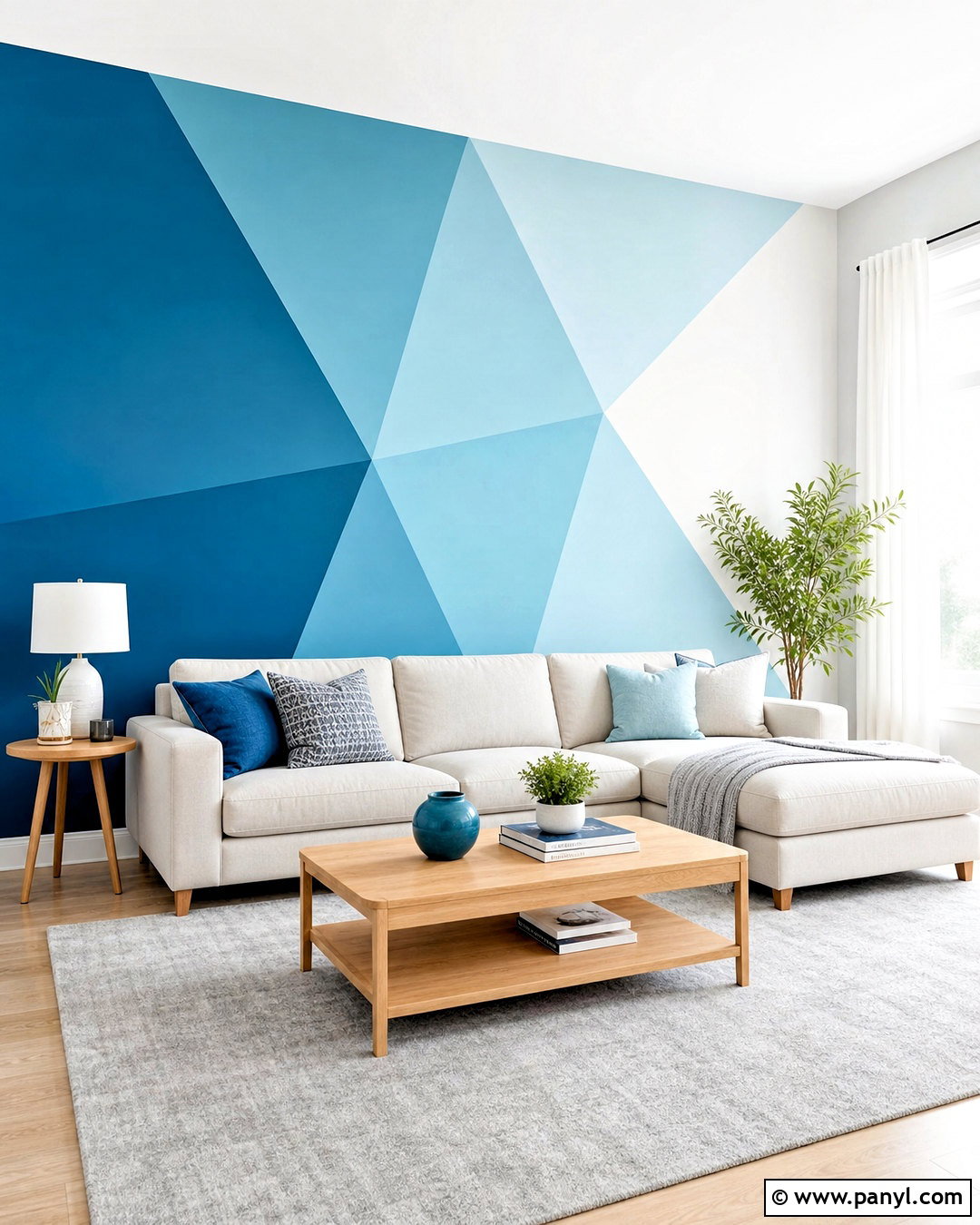
An ombre geometric wall combines crisp shapes with gradual color changes, giving a simple room added depth. Divide the wall into large diagonal polygons, then progress from deep teal near the floor to medium blue, pale aqua, and soft white toward the ceiling. Use clearly separated tones instead of blending wet paint directly on the wall. This keeps the geometric character sharp and makes application easier. Place a cream sofa or upholstered bed against the darker lower section so the furniture stands out. Light oak tables, white curtains, and a pale gray rug maintain an airy balance. Add only a few blue accessories because the wall already carries the main color story. The upward transition from dark to light visually lifts the ceiling and brightens the entire space.
12. Retro Circle Geometric Wall
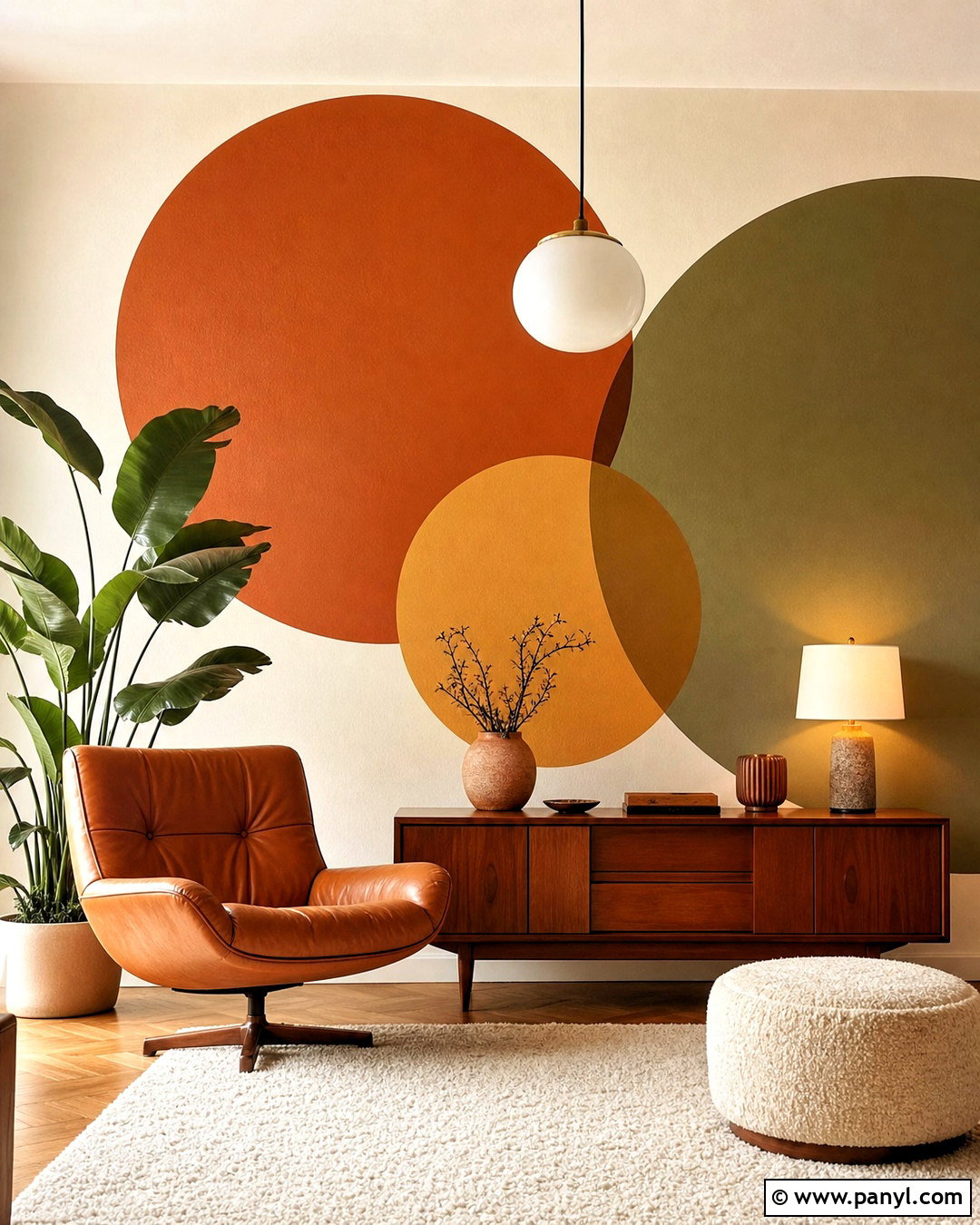
Large circles and partial circles can give a sitting room a warm retro look without making it feel like a themed space. Start with a creamy off-white wall, then paint overlapping circular forms in burnt orange, avocado green, mustard, and dusty brown. Let some shapes extend beyond the wall edges so the composition appears larger and more dynamic. A caramel leather chair, low walnut console, and ivory boucle ottoman support the rounded midcentury character. Ground the room with a simple cream rug and globe-shaped pendant light. Keep smaller decor minimal, using one plant and a few ceramic pieces in related colors. Slight overlaps between circles create interesting new shapes, but maintaining clean, opaque color blocks will preserve the bold graphic finish and prevent the design from looking unfinished.
13. Geometric Wall Behind TV
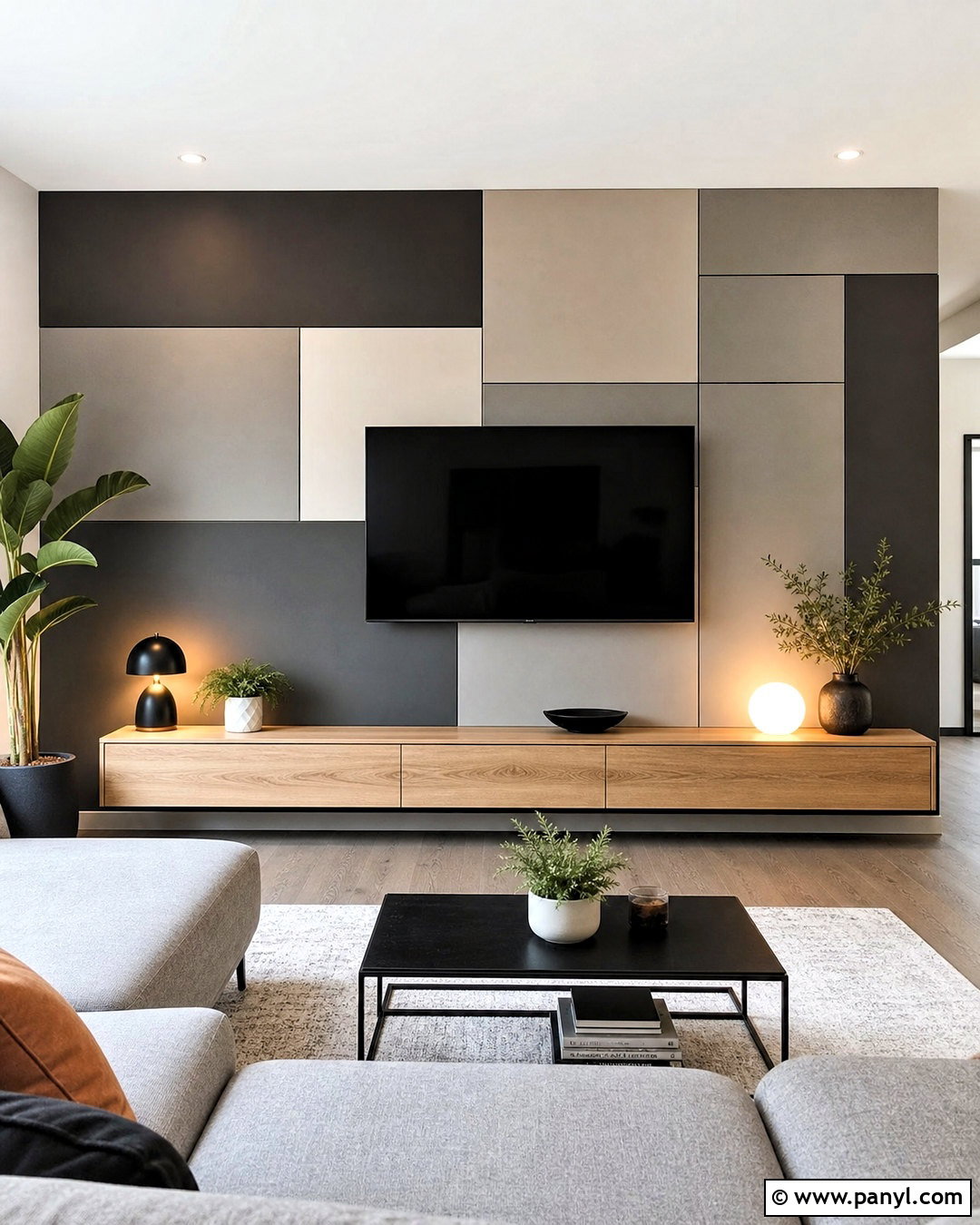
A geometric TV wall can integrate a large black screen into the room instead of allowing it to dominate a plain surface. Use broad rectangular blocks in charcoal, medium gray, warm taupe, and off-white, with the darkest section directly behind the television. Extend the pattern around a low floating oak console to connect the wall and storage visually. Keep the design symmetrical enough to feel orderly, but vary the block widths for interest. Hide cables inside a wall channel painted to match the background. A light gray sectional, black metal coffee table, and textured cream rug complete the modern setup. Add warm lamps at both ends of the console to soften the dark central area. This practical composition makes the entertainment zone feel planned, balanced, and finished.
14. Geometric Wall Behind Bed
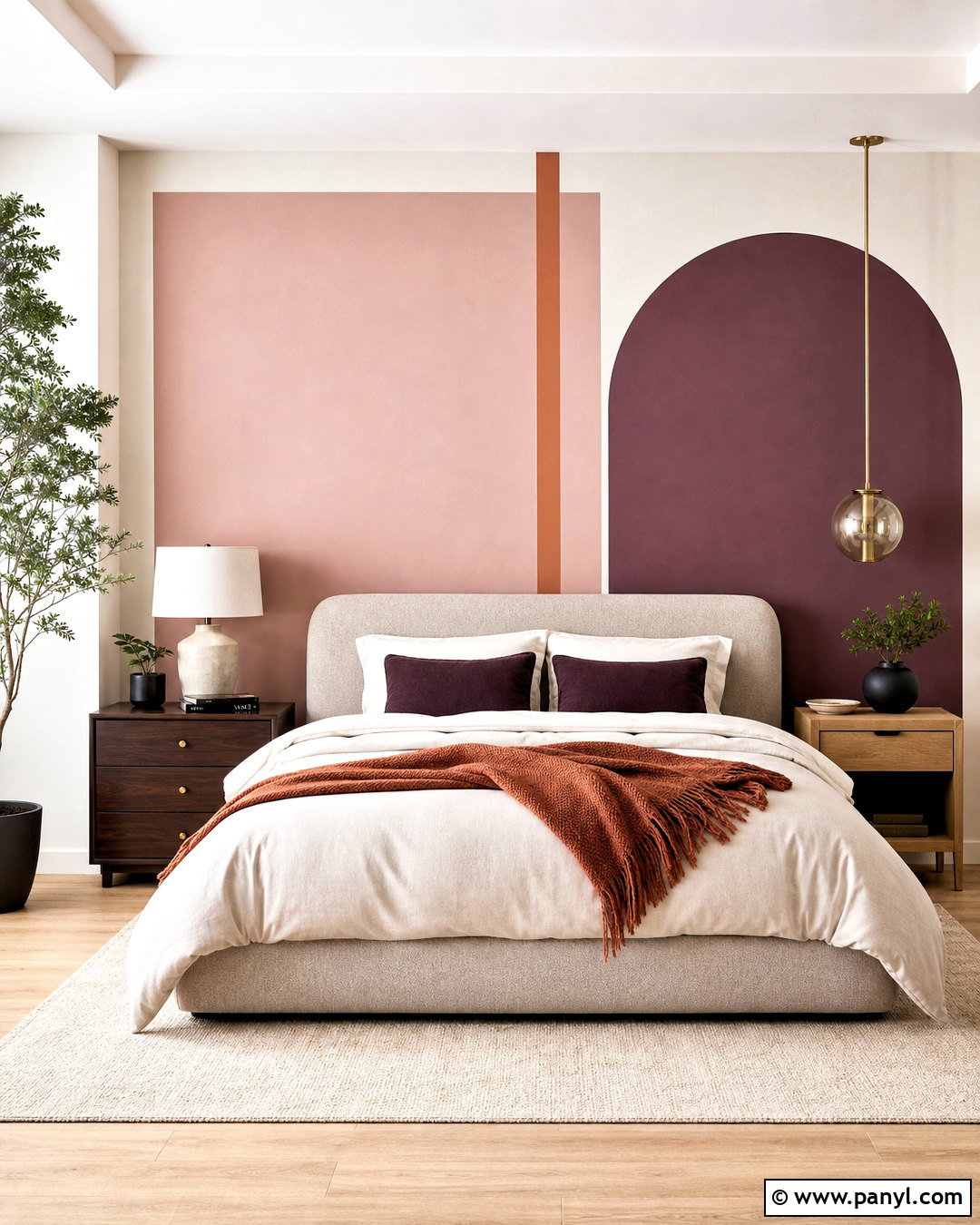
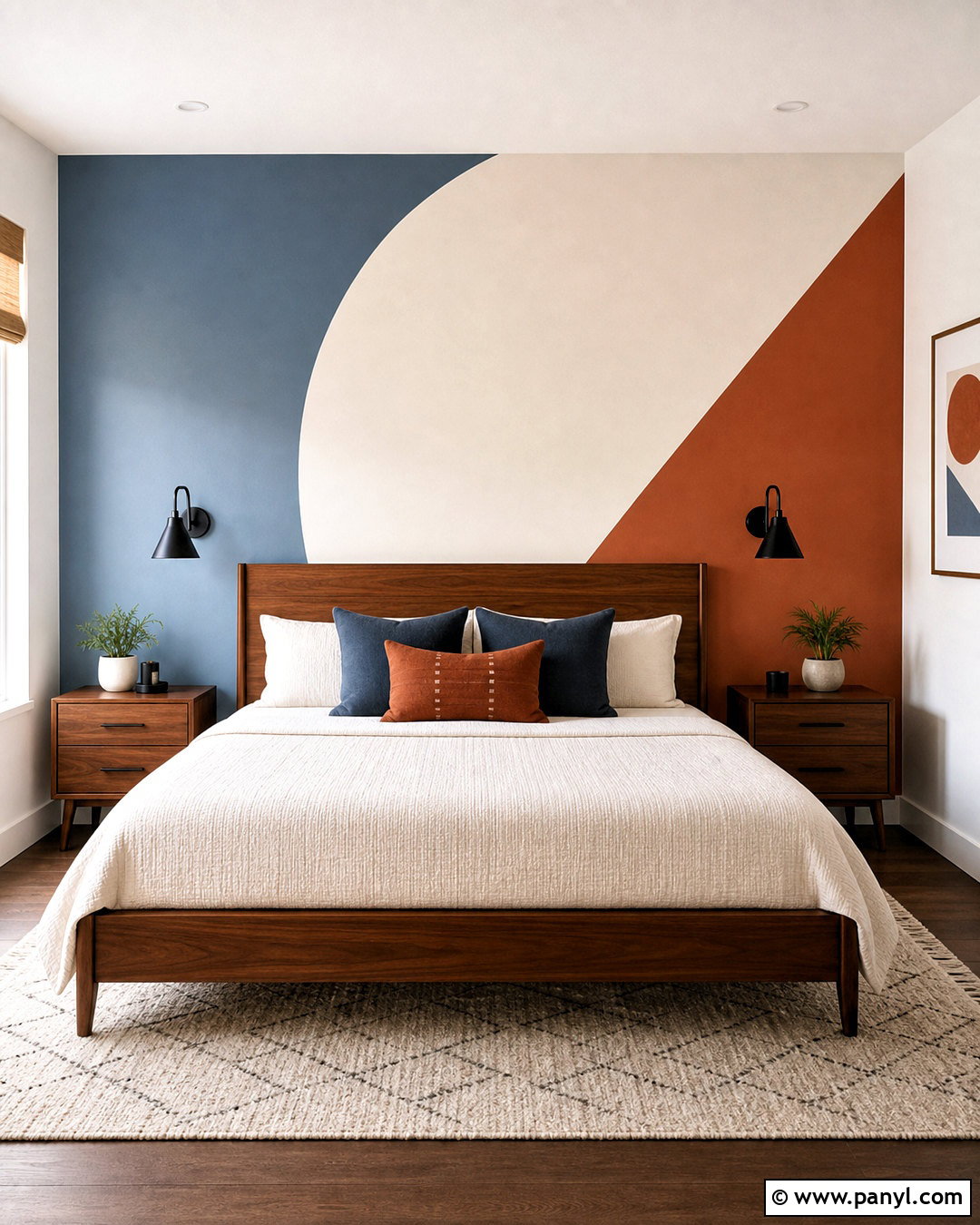
Use an asymmetrical collection of color blocks to frame a bed and reduce the need for a traditional headboard. Begin with a warm white wall, then paint a wide dusty rose rectangle behind one side of the bed. Add a muted plum arch and a narrow terracotta stripe that extends toward the ceiling. The overlapping shapes should remain visible above and beside the furniture. Choose a simple beige upholstered bed with crisp ivory bedding, plum pillows, and a rust-colored throw. Mismatched bedside tables can follow the asymmetrical layout, with a taller lamp balancing the heavier painted side. A pale oak floor and neutral rug prevent the palette from feeling too sweet. This bedroom design uses geometric painting to establish structure, color, and a clear focal point.
15. Geometric Wall For Small Room
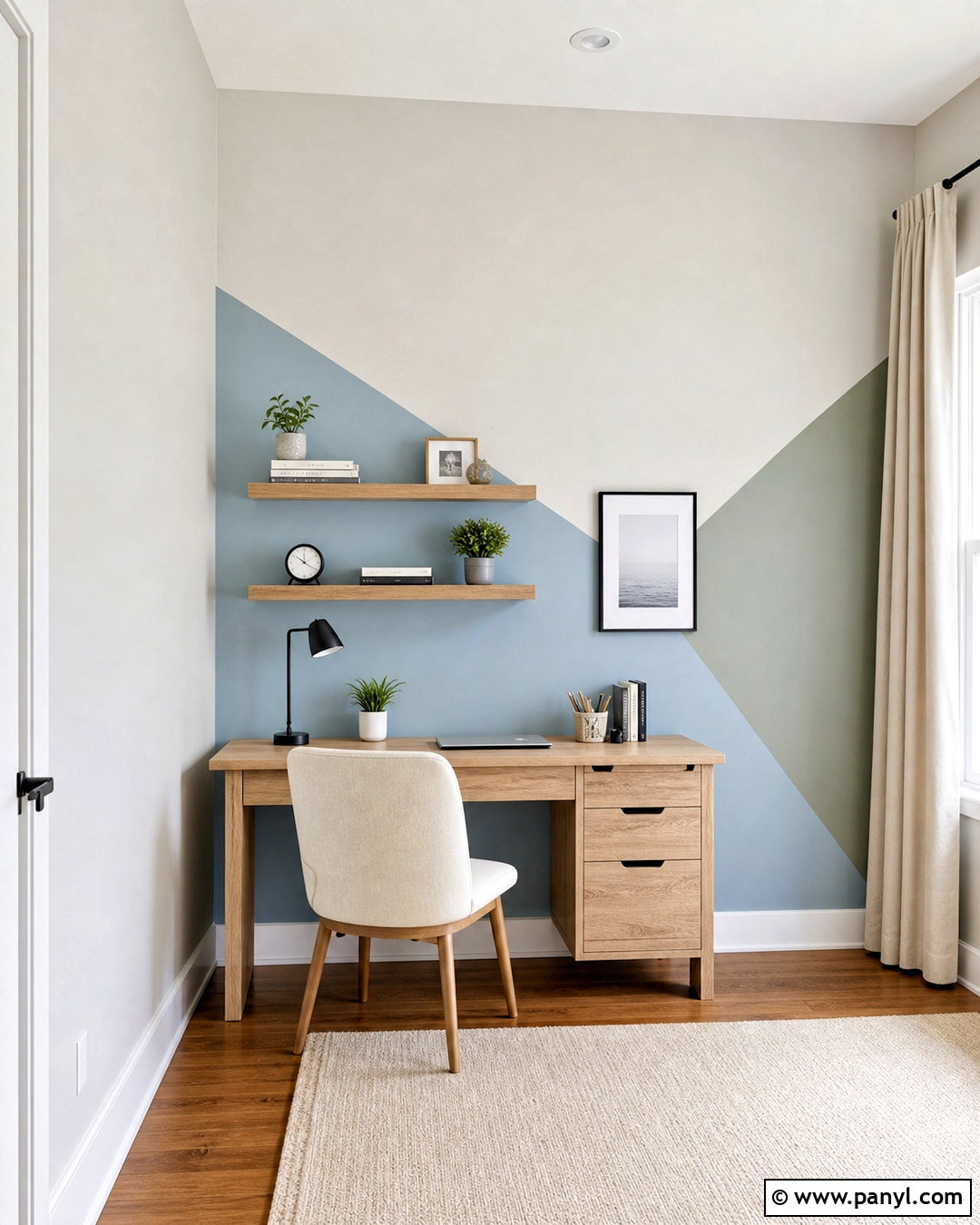
A small room benefits from an open geometric pattern that adds character without covering every inch of wall. Use a pale warm gray base and paint two large diagonal sections in soft blue and muted sage. Keep the upper half mostly light, with the darker colors concentrated near the floor and in one corner. This arrangement can make the wall appear wider while retaining brightness. Choose compact furniture, such as a light oak desk, floating shelves, and an armless cream chair. Match the curtains to the base wall color so they visually recede. A small black lamp and one framed print provide contrast without adding clutter. Limiting the design to three colors and a few oversized shapes creates a calm, functional room that still feels customized and thoughtfully decorated.
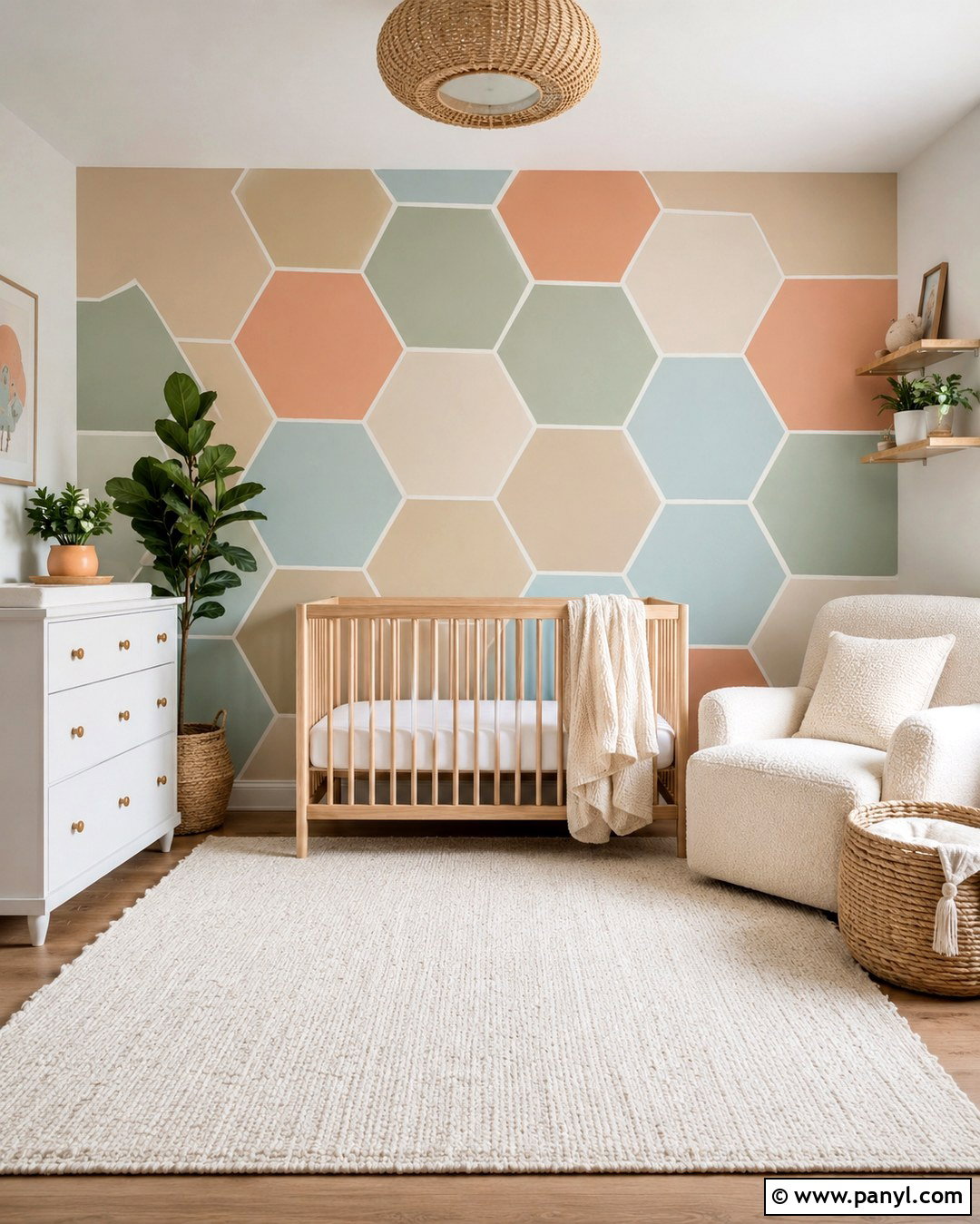
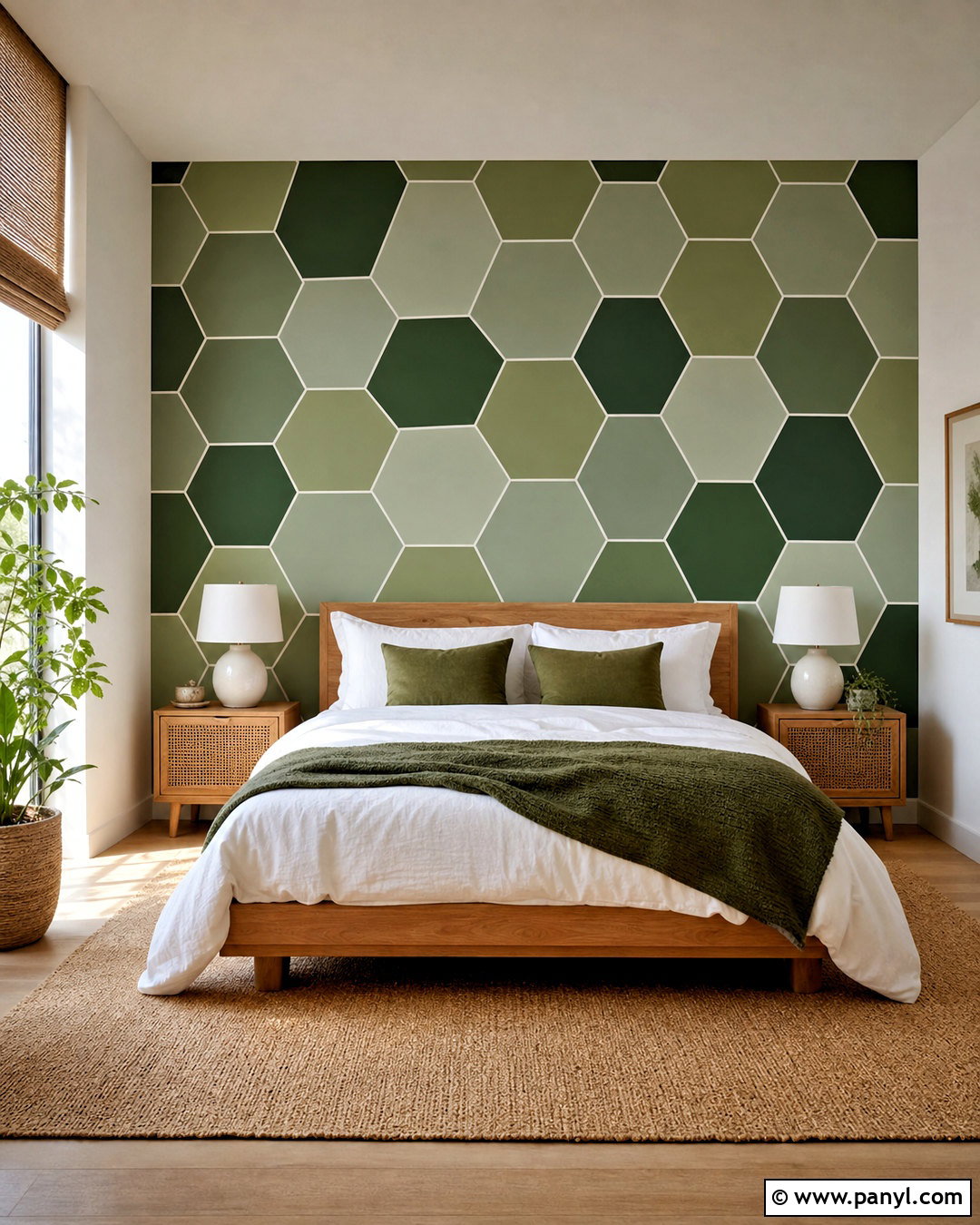
16. Geometric Wall With Hexagons
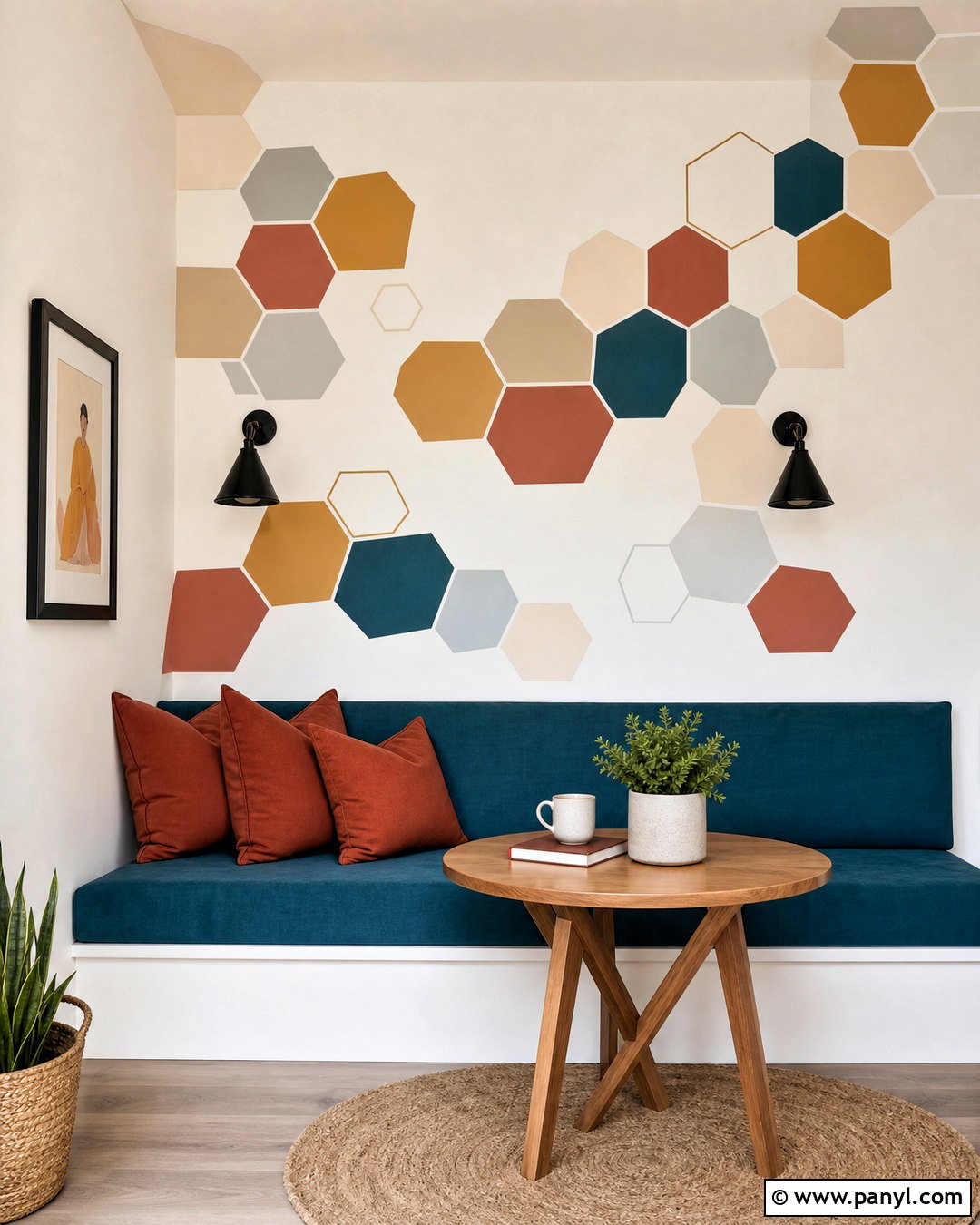
A hexagon mural can introduce a structured honeycomb pattern without filling the wall with dozens of identical shapes. Paint a loose cluster of large hexagons in warm beige, muted ochre, deep teal, pale gray, and terracotta. Allow some outlines to remain empty so the original wall color becomes part of the design. Position the cluster above a low dining bench or reading nook, spreading it diagonally across the wall. Add a teal upholstered bench, oak table, and rust-colored cushions to connect the furniture with the mural. Matte black sconces can frame the painted area and strengthen its graphic quality. Use a cardboard template to maintain consistent angles. The finished space feels playful and ordered, with enough variation to keep the repeating geometry from looking rigid or overly busy.
17. Art Deco Geometric Wall
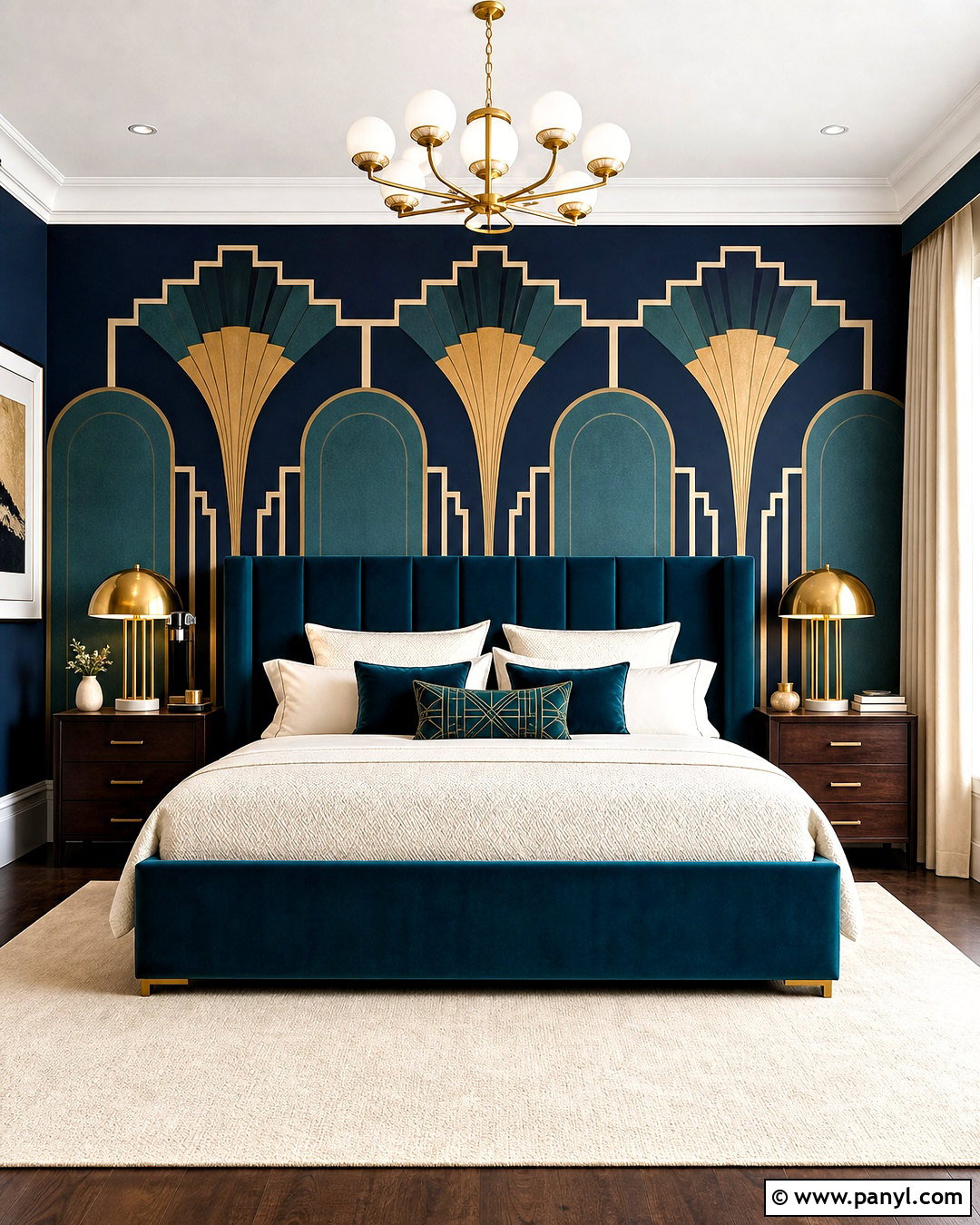
Create an Art Deco-inspired wall with symmetrical fan shapes, stepped lines, and narrow arches. A rich navy background provides a dramatic base, while muted gold, cream, and dusty teal form the decorative geometry. Center the pattern behind a velvet sofa or upholstered bed so its strongest vertical line aligns with the furniture. Choose brass lighting, dark walnut tables, and ivory textiles to reinforce the sophisticated palette. The pattern should repeat evenly on both sides, but keep the scale large enough to avoid a crowded result. Use a ruler, level, and carefully cut templates for the curved sections. A solid rug and simple curtains will let the wall remain the main feature. This complete room feels glamorous and polished while still working in an average-size contemporary home.
18. Monochrome Geometric Wall
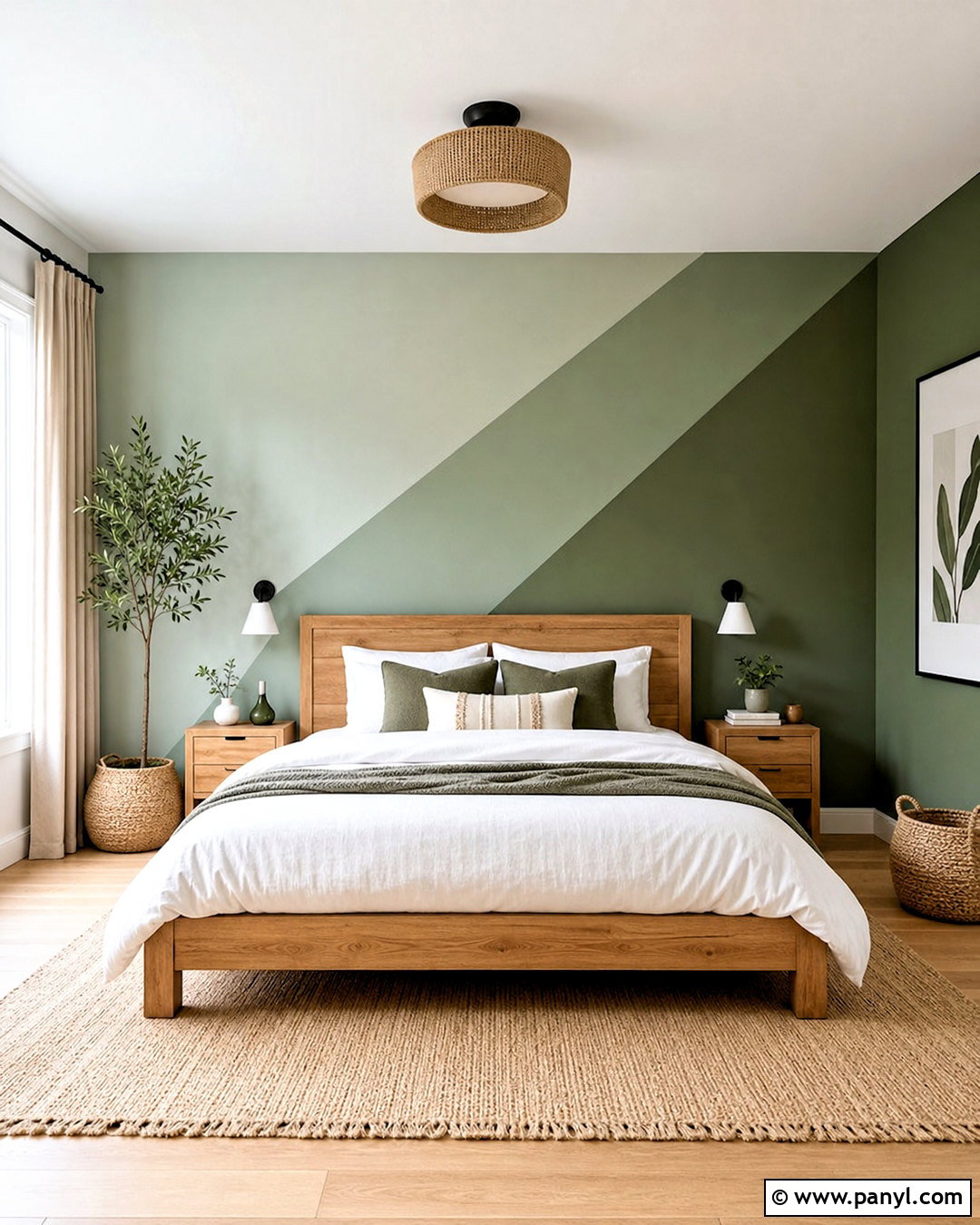
A monochrome wall uses several values of one color to create depth while keeping the room easy to coordinate. For a peaceful bedroom, choose dusty sage as the main hue, then add pale eucalyptus, medium sage, and deep olive geometric sections. Arrange broad diagonal shapes across the lower two-thirds of the wall, leaving the top in the lightest shade. Pair the mural with a natural oak bed, white bedding, olive cushions, and a soft beige rug. Linen curtains and woven baskets introduce texture without competing with the angular pattern. Vary the size and direction of each section so the design has movement, but limit the palette to four closely related shades. This tone-on-tone treatment feels more layered than a solid accent wall while remaining calm and visually cohesive.
19. Geometric Wall Across Two Walls
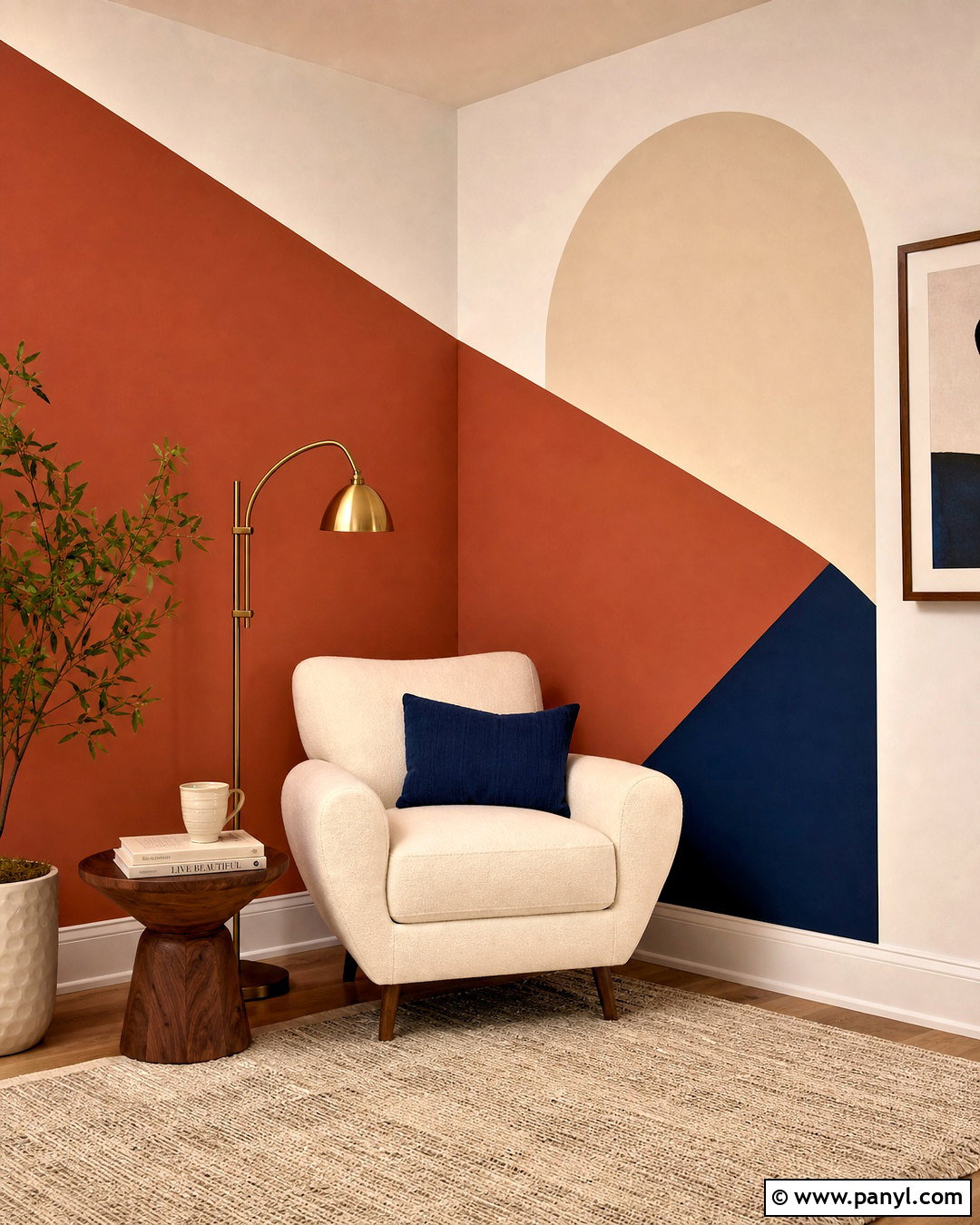
Extending a geometric painting around a corner can connect two adjoining walls and define a functional zone. In a reading area, use a wide terracotta stripe that travels from one wall to the next, intersected by a beige arch and a muted navy triangle. Position a comfortable cream armchair in the corner so the shapes appear to wrap around the seating. Add a walnut side table, brass floor lamp, navy cushion, and textured neutral rug. Keep the remaining walls warm white to prevent the room from feeling enclosed. Carefully measure the stripe height from the floor on both walls so it meets cleanly at the corner. This approach transforms an overlooked area into a complete destination and makes the room’s architecture feel more intentional, connected, and visually interesting.
20. Geometric Wall With Negative Space
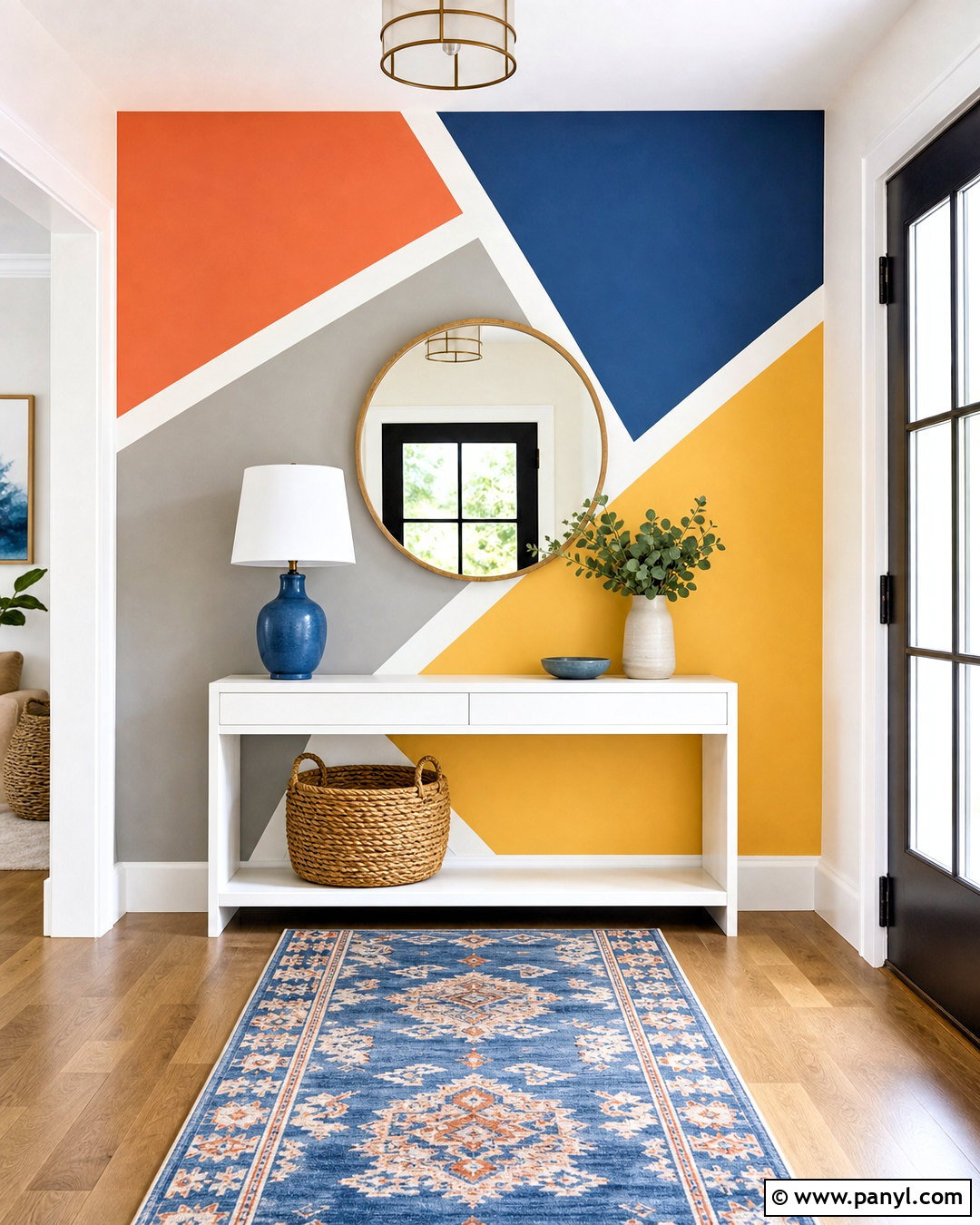
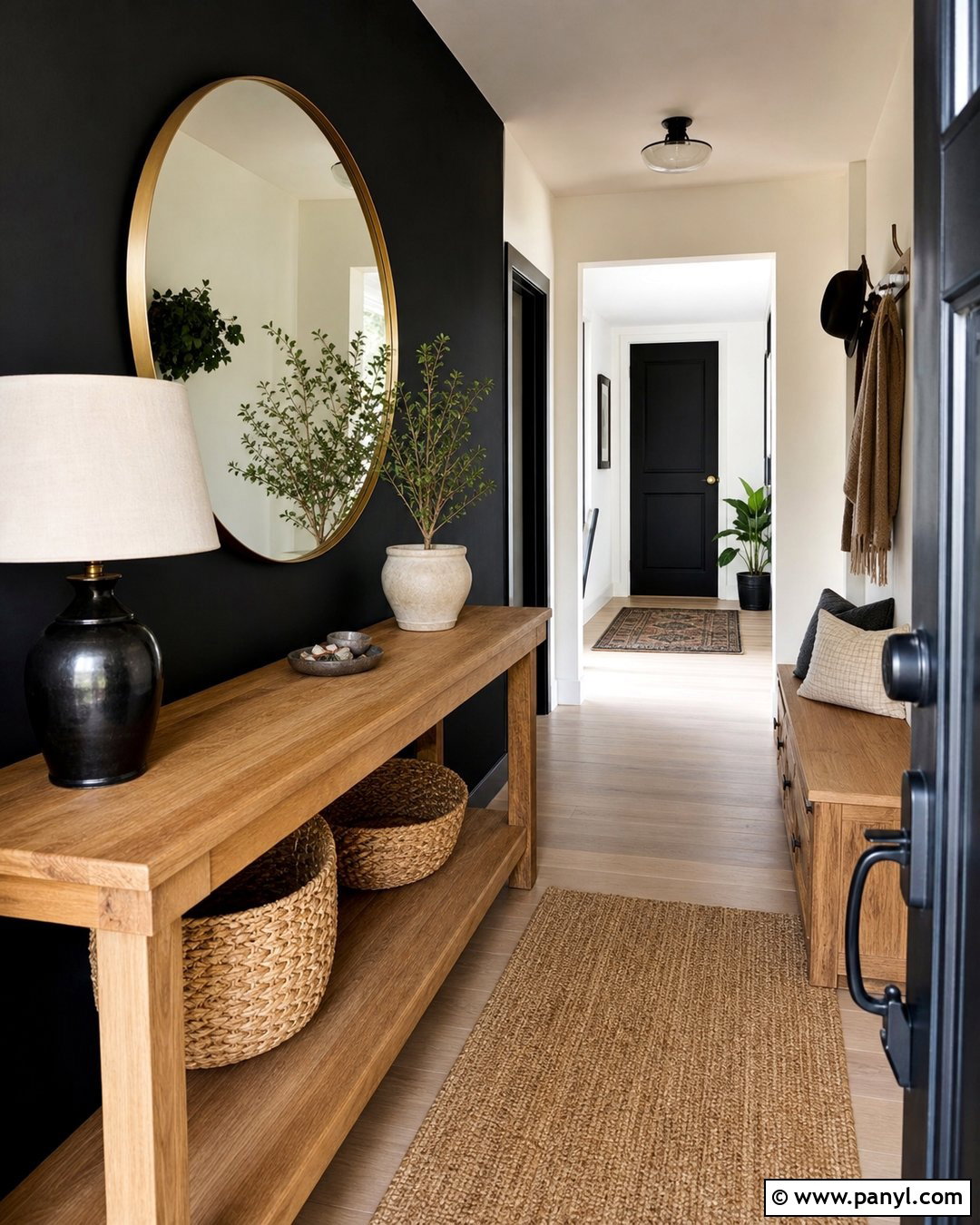
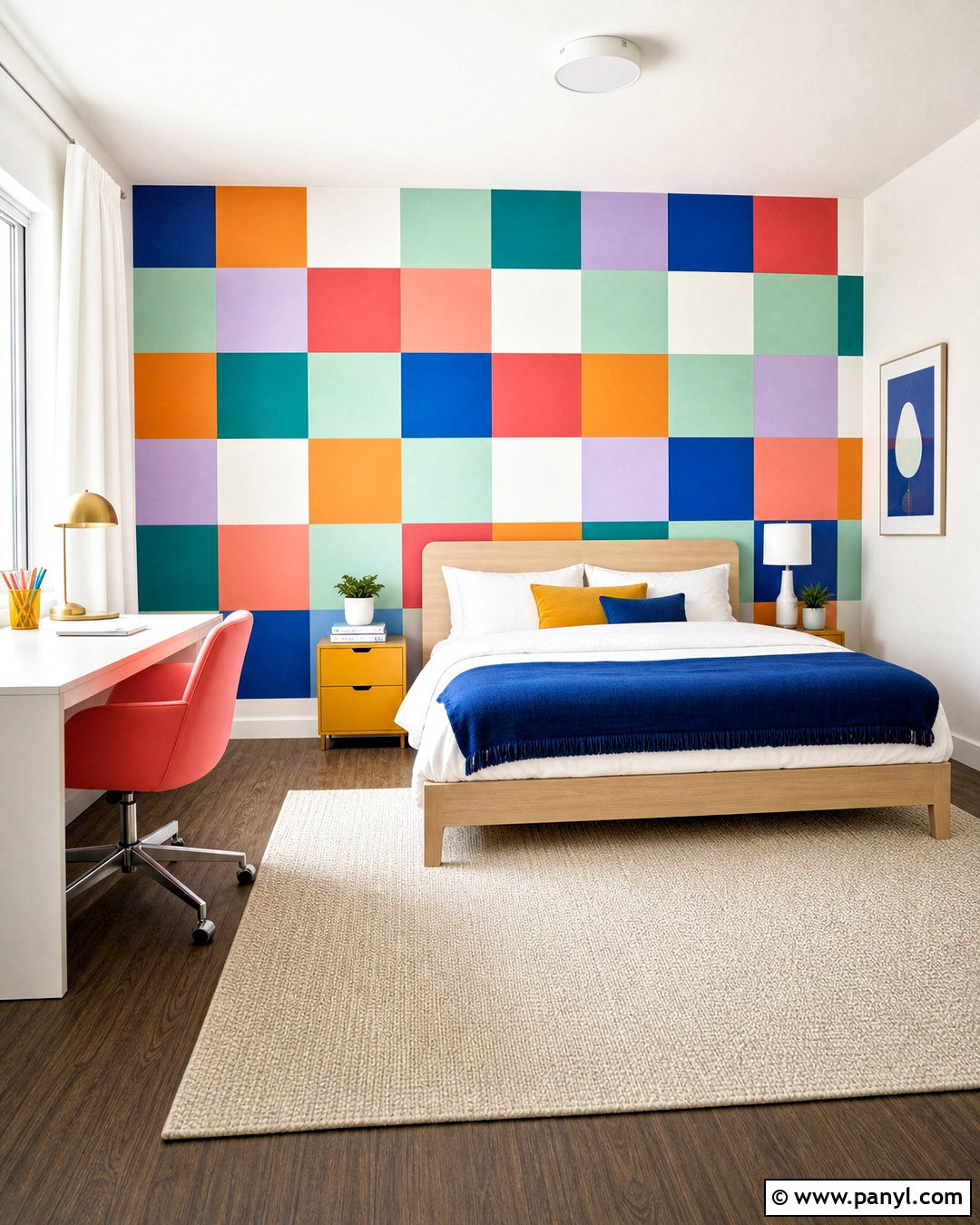
Negative space can make a colorful mural feel clean and sophisticated. Begin with a crisp warm white wall, then paint separate angular blocks in coral, cobalt blue, muted yellow, and soft gray. Leave wide white channels between the shapes instead of outlining them with another color. The open areas create rhythm and allow every painted section to remain distinct. Use the design behind a simple white console in an entryway, paired with a round oak-framed mirror, a blue ceramic lamp, and a woven storage basket. A narrow runner containing small amounts of coral and yellow will tie the palette together. Keep the shapes larger near the center and smaller toward the edges. This balanced arrangement makes a bright first impression while preserving the light, uncluttered character of the entrance.
Conclusion:
The best geometric wall is not simply a collection of attractive shapes. It should support the room’s layout, color palette, furniture, and everyday purpose. Start with a simple sketch, measure each section carefully, and test your chosen colors before committing to the full surface. Large patterns are generally easier to paint and decorate around, while smaller repeating designs create stronger visual energy. Use negative space to prevent bold colors from overwhelming the room, and repeat mural shades through a few well-chosen textiles or accessories. From subtle neutral triangles to colorful arches and dramatic Art Deco patterns, these 20 wall geometric painting ideas offer practical ways to create a polished focal point that feels personal, coordinated, and completely achievable.

Related Ideas and Inspiration:
Leave a Reply