
Geometry Wall Paint Ideas can turn a plain room into a custom space without the cost of wallpaper or architectural remodeling. Straight lines, oversized curves, repeating shapes, and carefully placed color blocks create depth while helping furniture feel more connected to the room. The best result is not simply a decorative pattern. It is a complete design where the wall colors, layout, flooring, lighting, textiles, and furnishings work together. Begin with a measured sketch, choose a limited palette, and use low-tack painter’s tape for cleaner edges. Eggshell or satin paint usually provides a practical, washable finish without emphasizing every wall flaw. Whether you prefer quiet neutrals or energetic color, the complete room looks below offer approachable Geometry Wall Paint Ideas for every decorating style.
1. Geometric Triangle Wall Paint
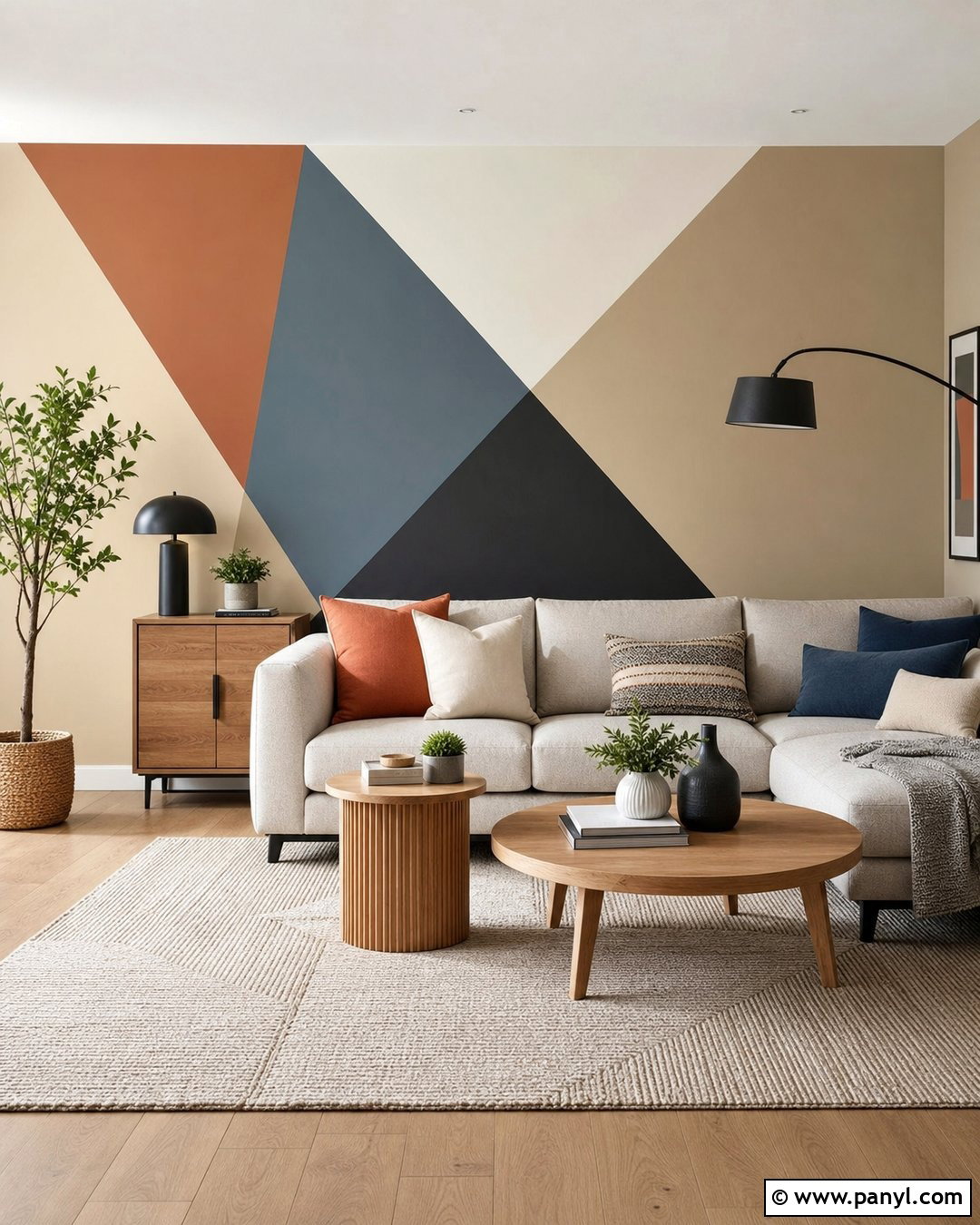
Large painted triangles create an energetic focal wall without making the room look overly busy. Start with a warm white base, then layer oversized triangles in muted terracotta, dusty blue, beige, and charcoal. Keep some areas white so the composition has room to breathe. In a living room, position the pattern behind a low-profile oatmeal sofa and repeat the wall colors through pillows, ceramics, and a textured rug. Pale oak furniture keeps the overall look light, while matte black lamps connect with the darkest painted sections. Use triangles of different widths rather than a perfectly repeated grid. This creates movement while still feeling intentional. Before taping, sketch the entire arrangement on paper and account for outlets, windows, artwork, and furniture placement.
2. Geometric Arch Wall Paint
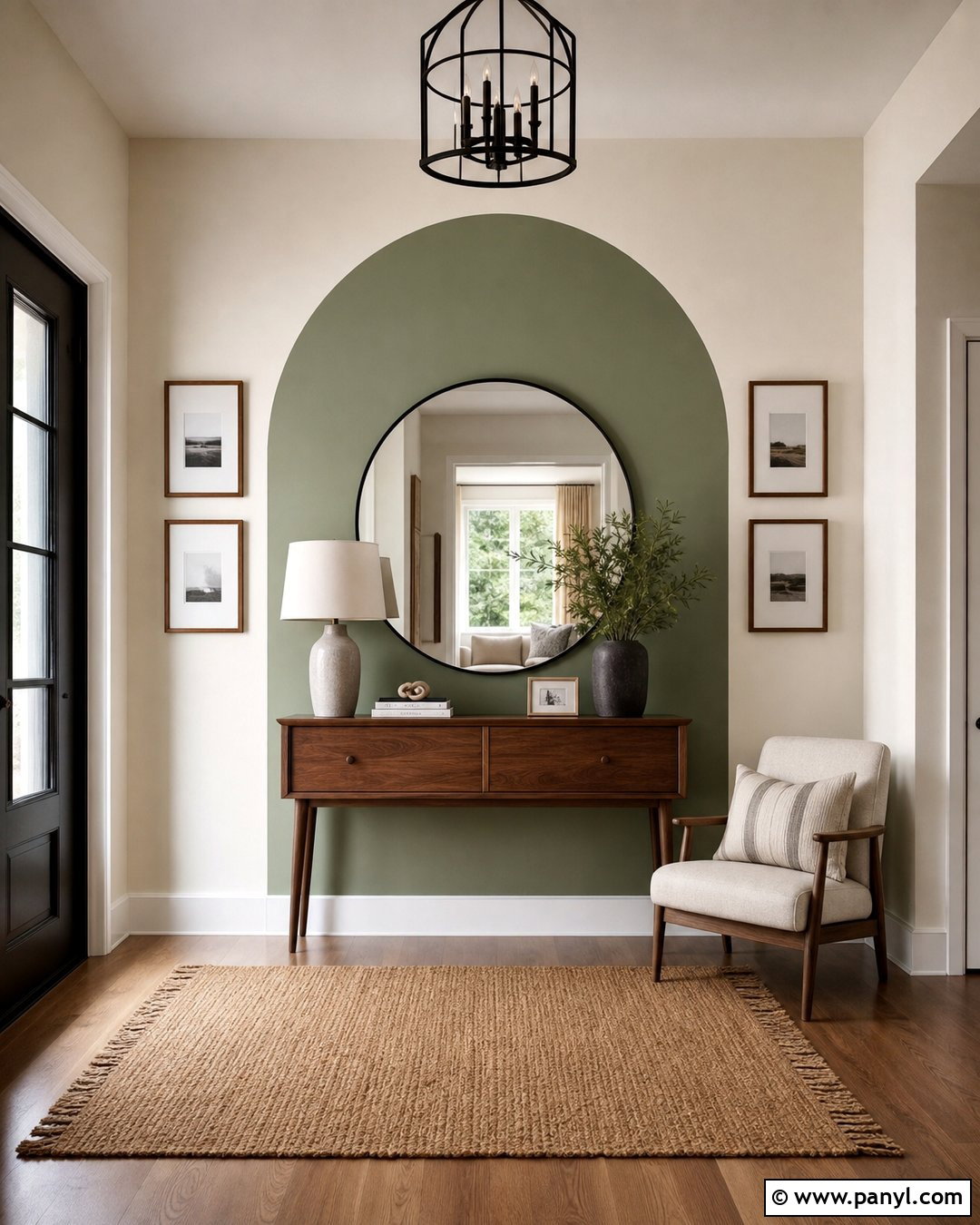
A painted arch can visually frame furniture and give a flat wall a stronger architectural presence. Create one broad arch in warm sage green against a soft ivory background, placing it directly behind a walnut console or compact writing desk. The arch should extend beyond the furniture on both sides so it feels generous rather than cramped. Add a round mirror, a ceramic table lamp, and two small framed prints within the painted area. A natural jute rug and cream upholstered chair soften the crisp outline. This complete arrangement works especially well in an entryway, bedroom corner, or small home office. Use a pencil tied to string to draw the curved top, then connect it to measured vertical lines. A smaller brush helps produce a controlled, smooth edge.
3. Geometric Mountain Wall Paint
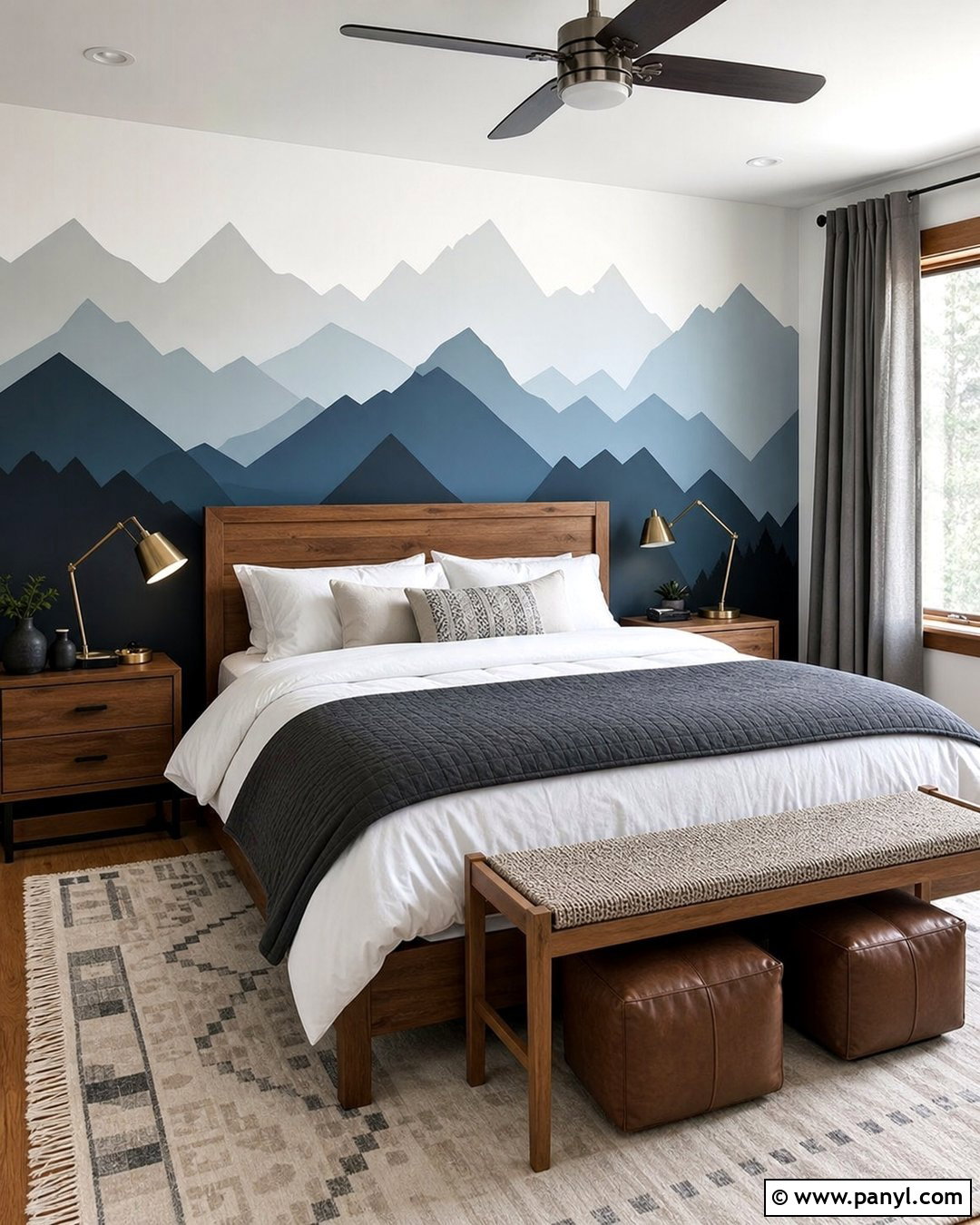
Layered mountain shapes bring dimension to a bedroom while maintaining a calm, grounded feeling. Begin with a pale blue-gray base and paint overlapping peaks in slate blue, muted navy, foggy gray, and soft white. Keep the shapes broad and simplified instead of adding tiny scenic details. Position the lowest mountain line just above the headboard so the design appears connected to the bed. Choose natural oak nightstands, white bedding, a charcoal quilt, and small blue accents that repeat the painted palette. Warm bedside lighting prevents the cool colors from feeling stark. For a child’s room, use softer blues and rounded peaks. For an adult bedroom, sharper angles and deeper tones create a cleaner look. Mark each mountain layer separately and allow one color to dry before taping the next.
4. Geometric Hexagon Wall Paint
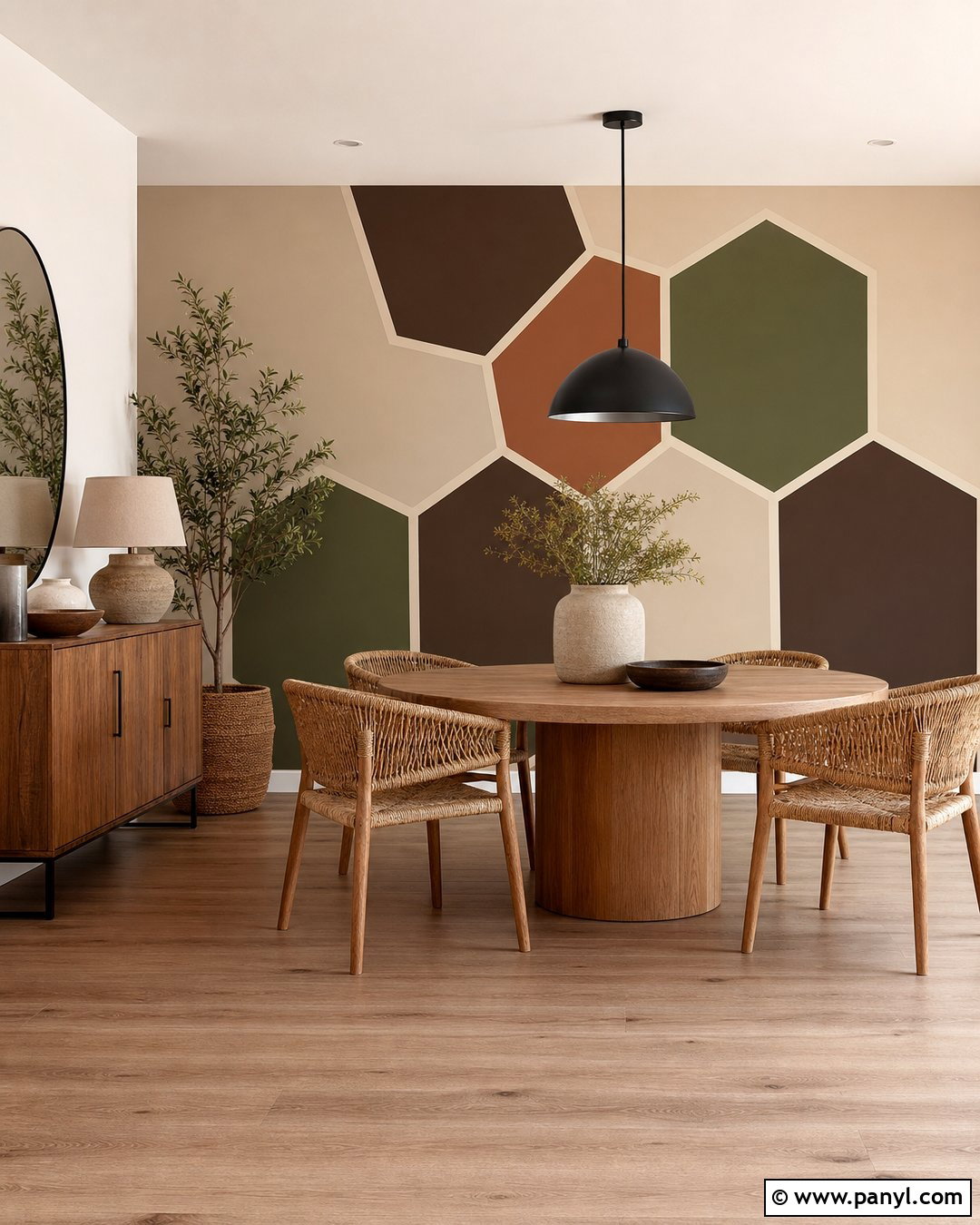
A hexagon wall brings structure to a room while offering more visual variety than standard stripes. Use a warm greige background with connected hexagons in cream, clay, olive green, and deep brown. Concentrate the pattern across the center of the feature wall, allowing a few incomplete shapes to meet the side edges naturally. In a dining area, pair the design with a round oak table, woven chairs, and a simple black pendant. Rounded furniture balances the angular wall pattern and prevents the space from feeling rigid. Keep the remaining walls quiet and repeat only two pattern colors in table linens and pottery. Create a durable cardboard template so every hexagon has consistent proportions. Light pencil marks and careful measuring will help the connecting edges remain straight throughout the finished composition.
5. Geometric Chevron Wall Paint
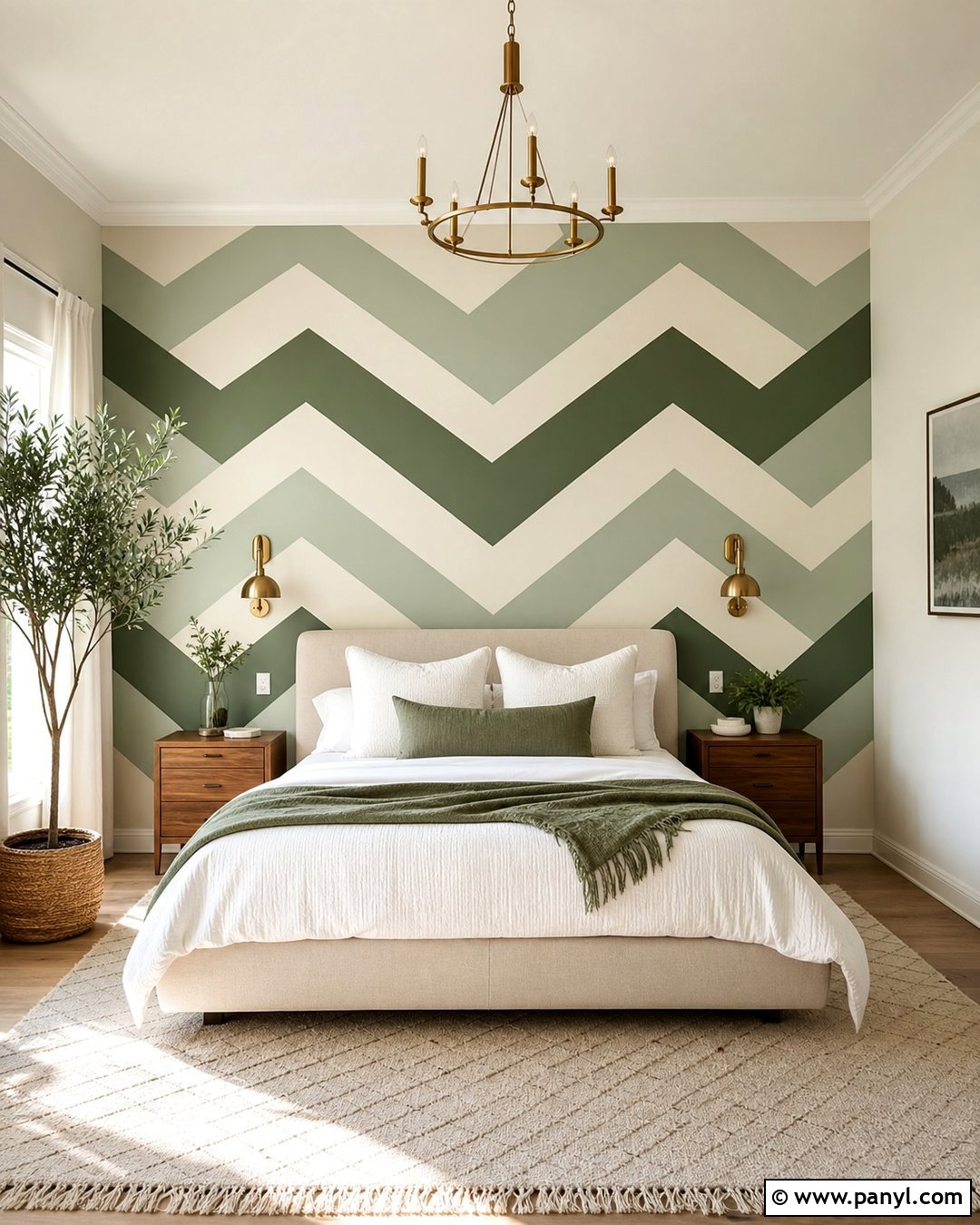
Chevron stripes add movement, making them useful for enlivening a quiet bedroom or reading room. Choose a soft cream base and create broad chevrons in muted forest green and pale eucalyptus. Wider rows feel more modern and are easier to paint than narrow zigzags. Center the pattern behind a simple upholstered bed, then keep the bedding mostly neutral with green piping, a textured throw, and one patterned lumbar pillow. Walnut nightstands and brushed brass sconces introduce warmth without competing with the wall. Carry the cream base color onto the surrounding walls to create continuity. The chevron points should align with the center of the bed for a balanced composition. Use a level, ruler, and repeating paper guide before applying tape. Consistent measurements are essential because even small variations become noticeable across long rows.
6. Geometric Color Block Wall Paint
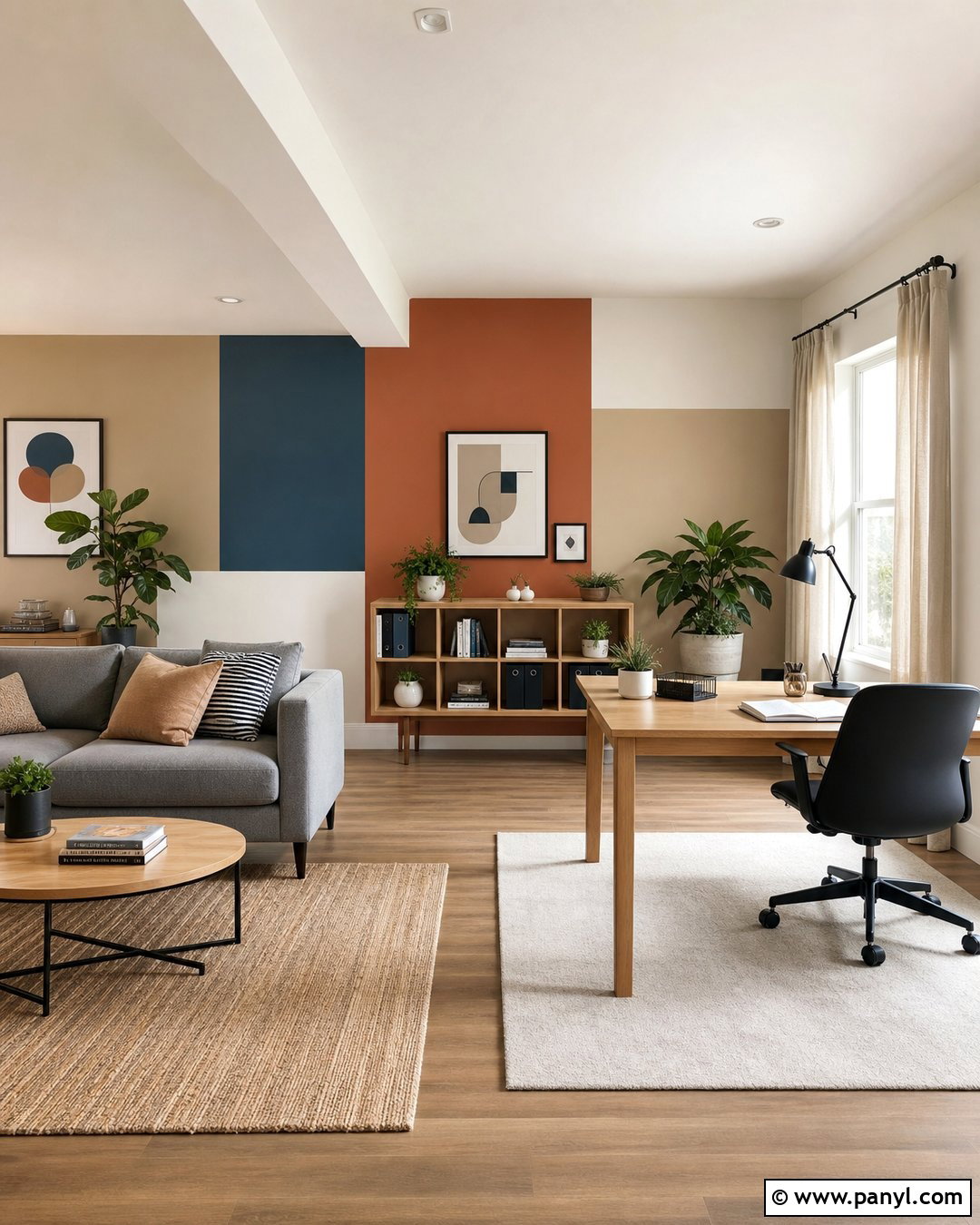
Large color blocks can organize an open room while giving each activity zone its own visual identity. Paint the main wall warm white, then add one vertical block of dusty blue behind a desk and a wide terracotta rectangle behind a sofa. Connect the sections with a smaller beige square to create a balanced abstract composition. Furnish the room with a light gray sofa, oak desk, black task chair, and simple cream curtains. Repeat the wall colors in small amounts through cushions, books, and planters. Avoid matching every accessory exactly, since that can make the room feel staged. The blocks should relate to the size and placement of the furniture beneath them. Use crisp edges, but vary the dimensions so the arrangement looks modern rather than like a basic checkerboard.
7. Geometric Diamond Wall Paint
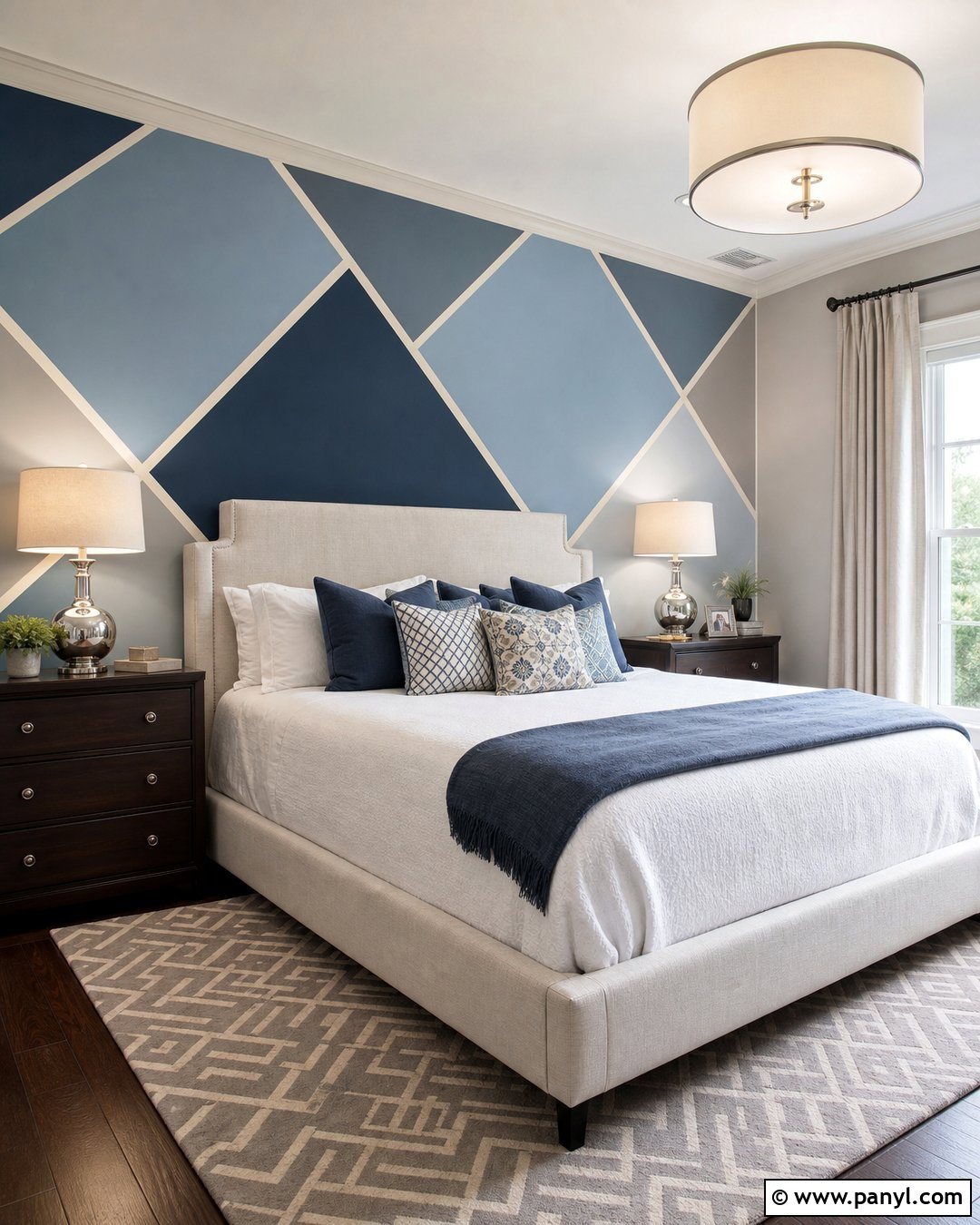
A painted diamond pattern offers the tailored appearance of wallpaper with greater control over color and scale. For a sophisticated bedroom, begin with a smoky blue base and add large diamonds in slightly lighter blue and soft gray. Thin cream lines between the shapes can keep the design from becoming too heavy. Pair the wall with a cream linen headboard, white bedding, dark wood nightstands, and polished nickel lamps. A subtle geometric rug can echo the pattern, but choose a larger, quieter motif to avoid visual competition. Keep the diamonds symmetrical around the bed so the central point aligns with the headboard. Carefully measure the wall’s width and height before determining the diamond size. A chalk line or laser level will make it easier to maintain straight diagonal lines across the surface.
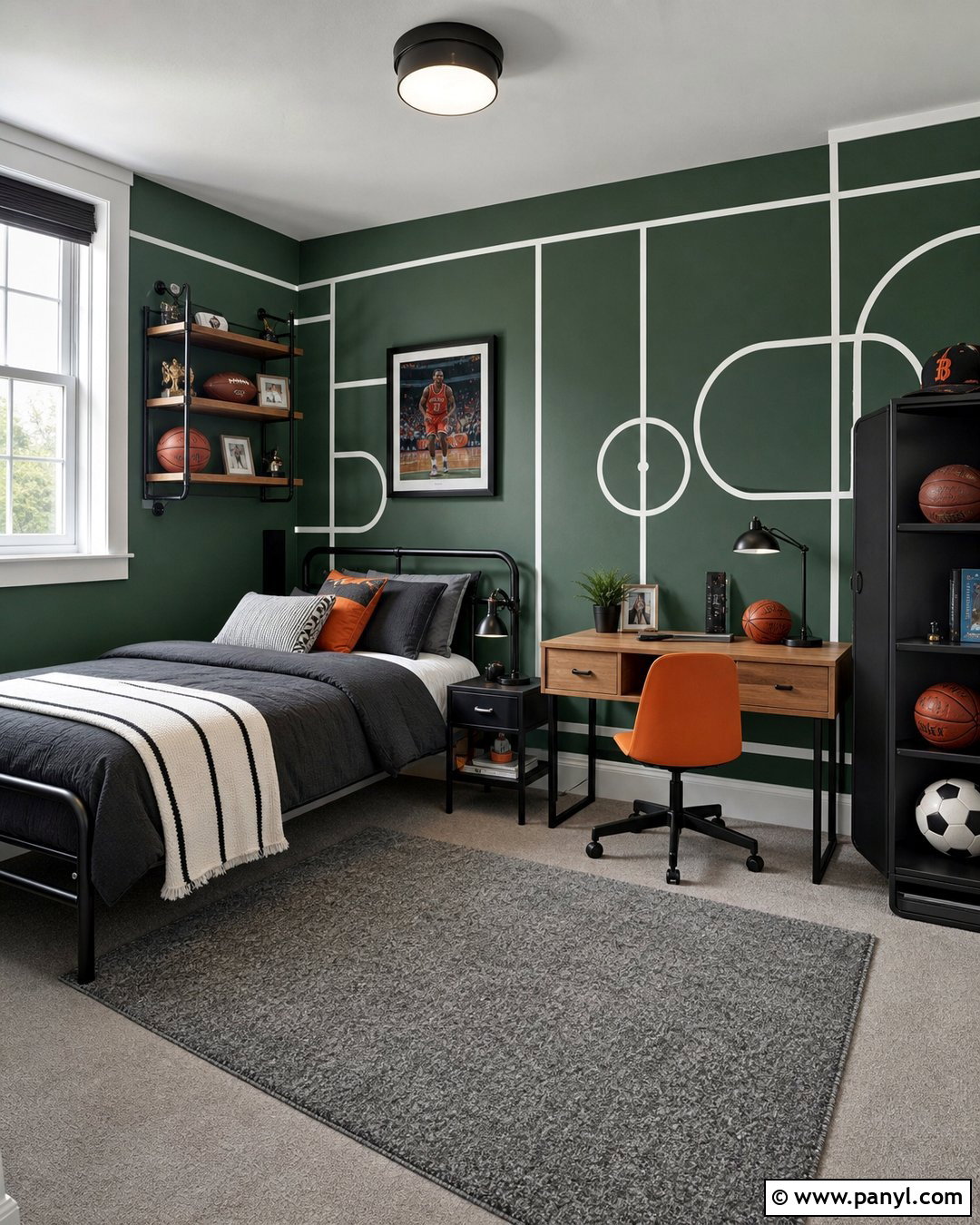
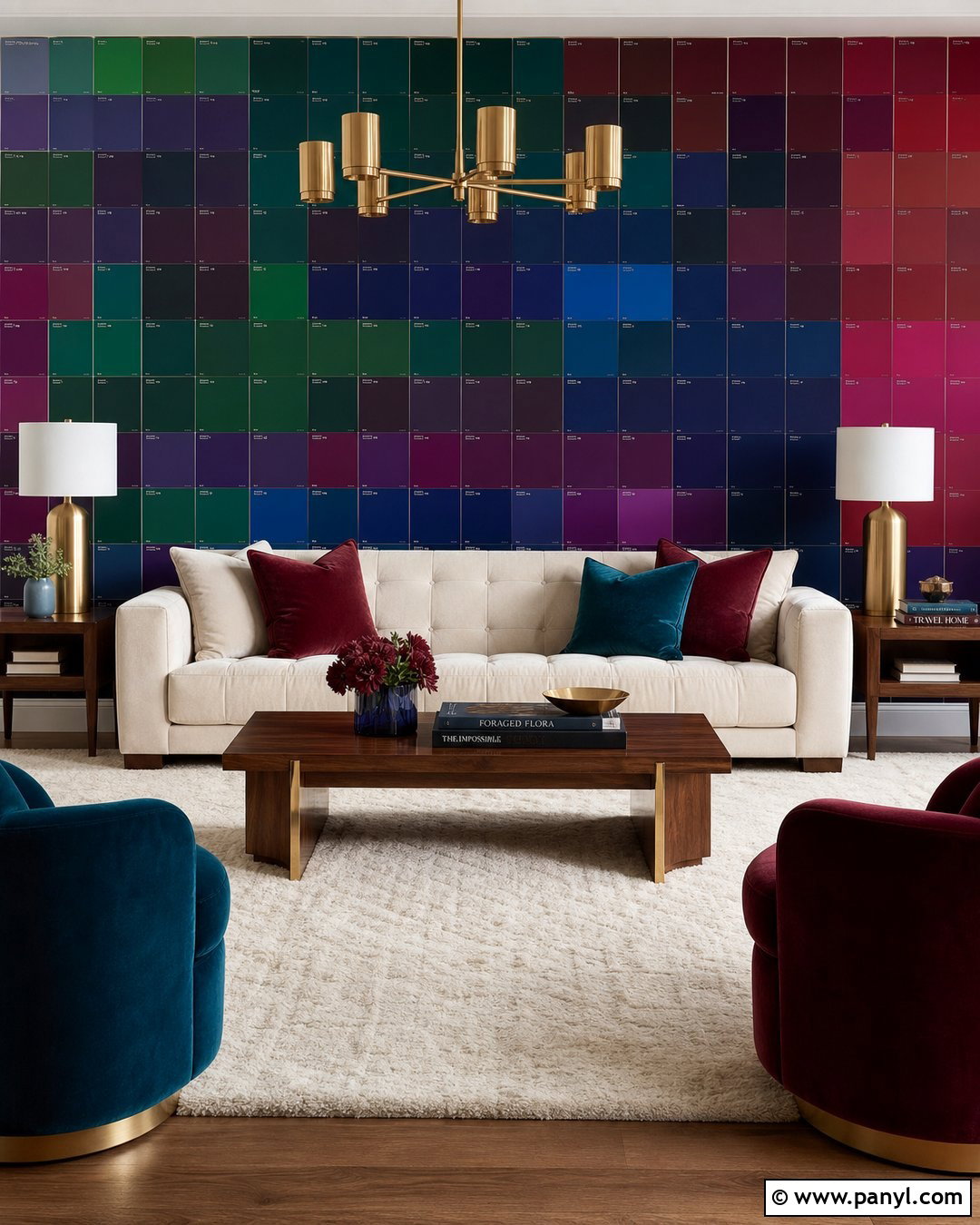
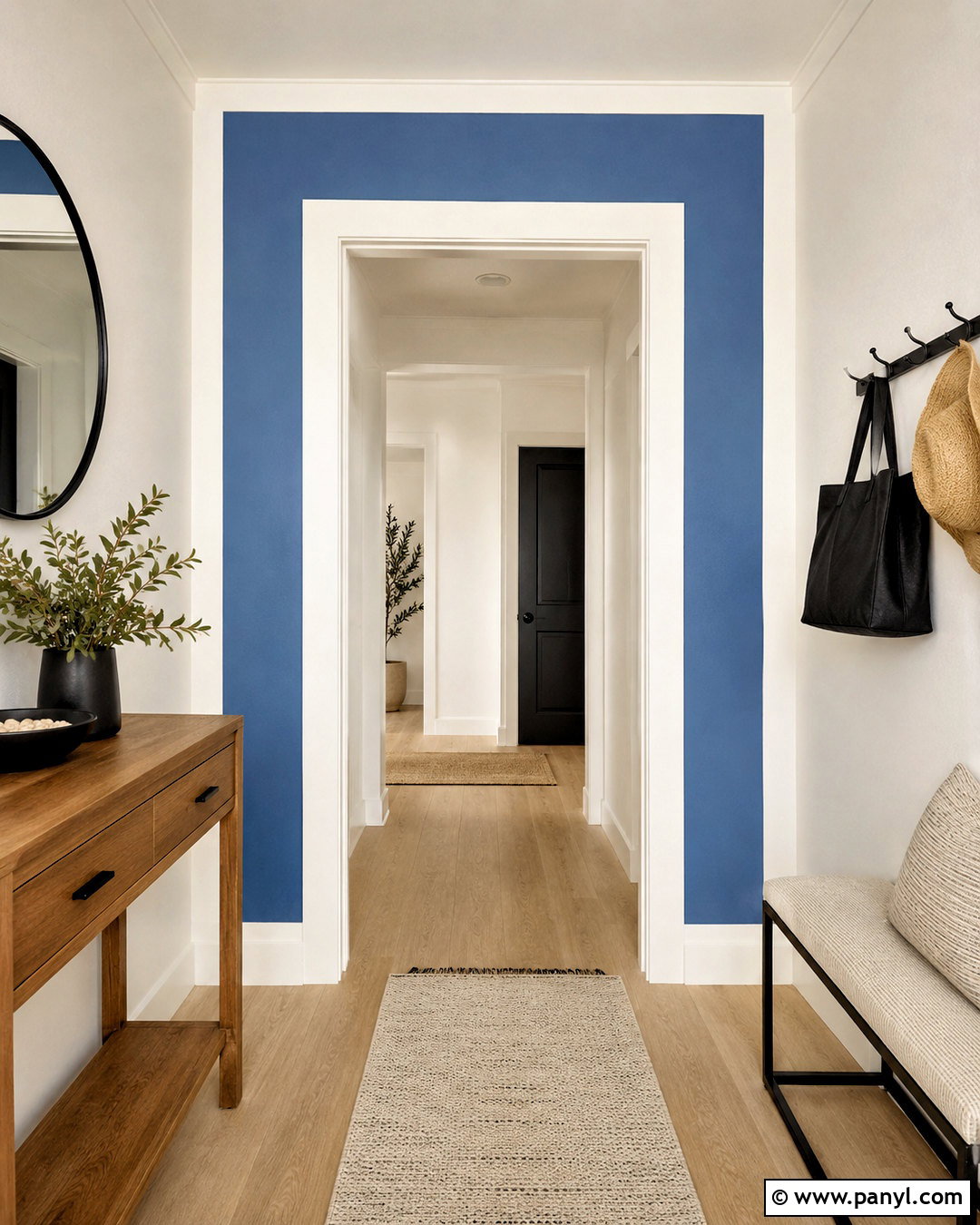
8. Geometric Circle Wall Paint
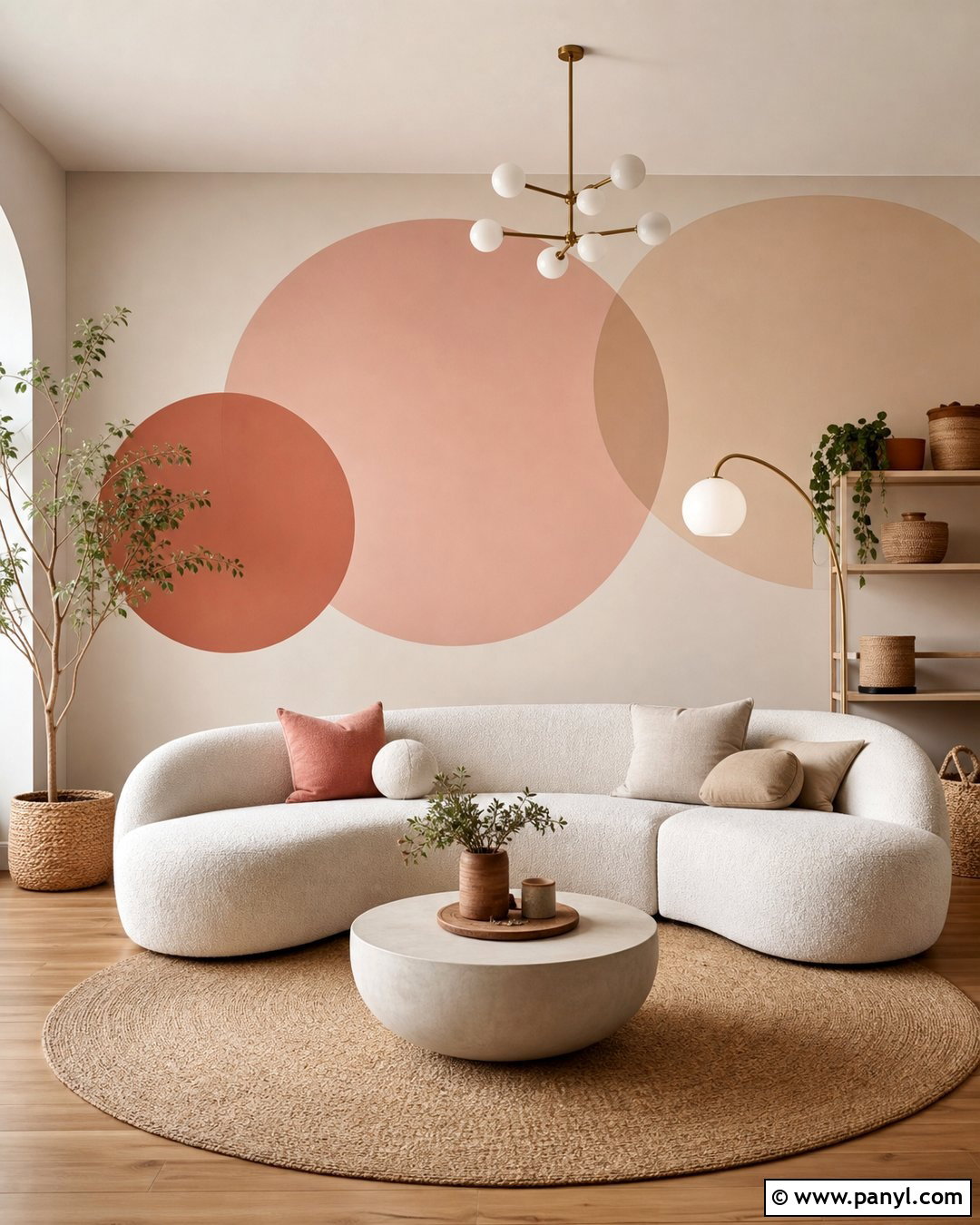
Oversized painted circles introduce soft geometry and help balance rooms filled with straight furniture lines. Create three overlapping circles in blush pink, muted coral, and warm beige on an off-white background. Place the composition behind a curved cream sofa or a rounded reading chair to reinforce the gentle shapes. Light oak flooring, a circular coffee table, and globe lighting complete the coordinated look. Keep fabrics mostly solid, adding texture through boucle, linen, and woven baskets rather than more patterns. The circles do not need to be fully visible; allowing one to extend beyond the wall edge creates a more natural mural effect. Draw each curve using string attached to a pencil, or trace a lightweight circular template. Paint the lightest circle first, let it dry, and then build the overlapping layers.
9. Geometric Half Circle Wall Paint
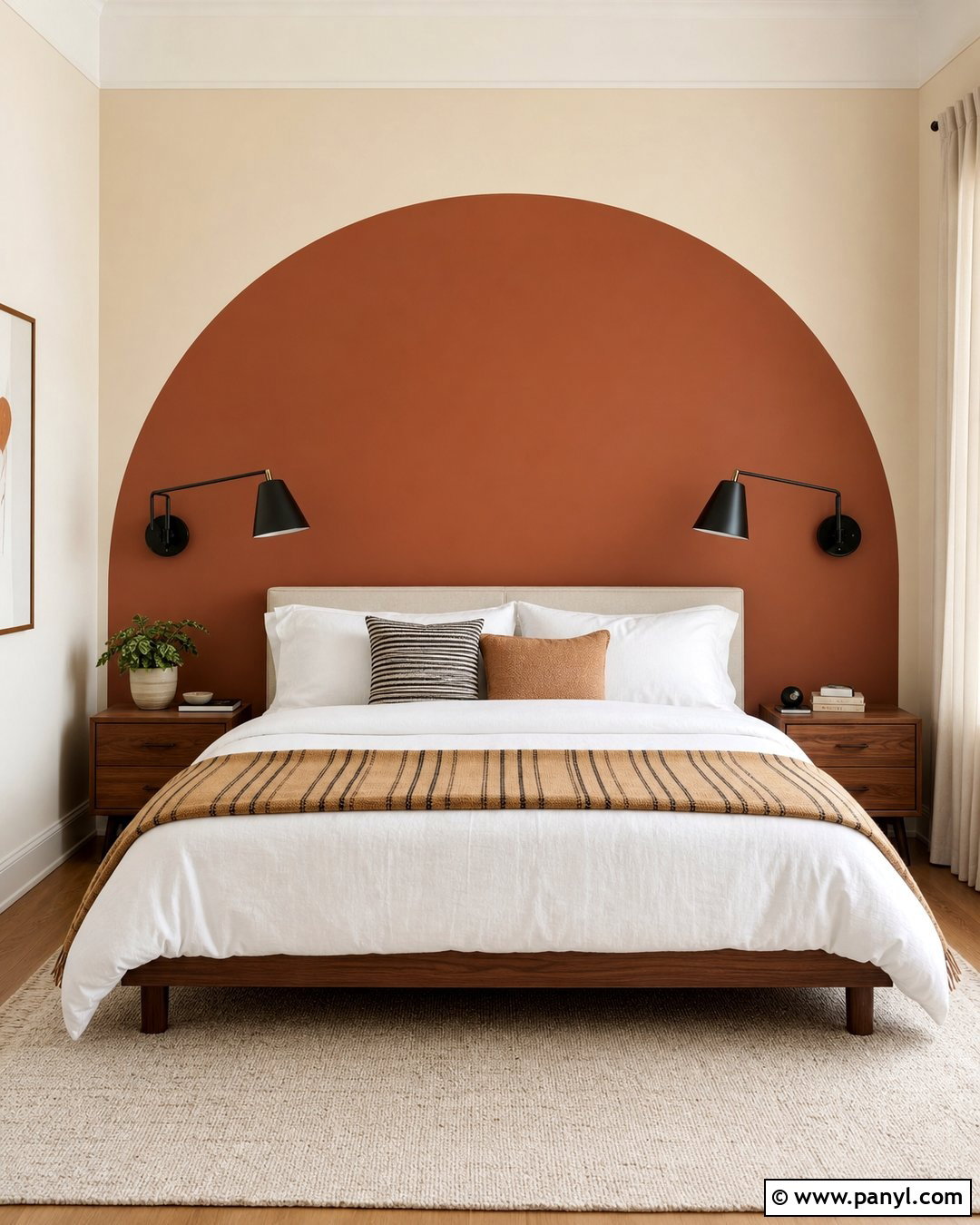
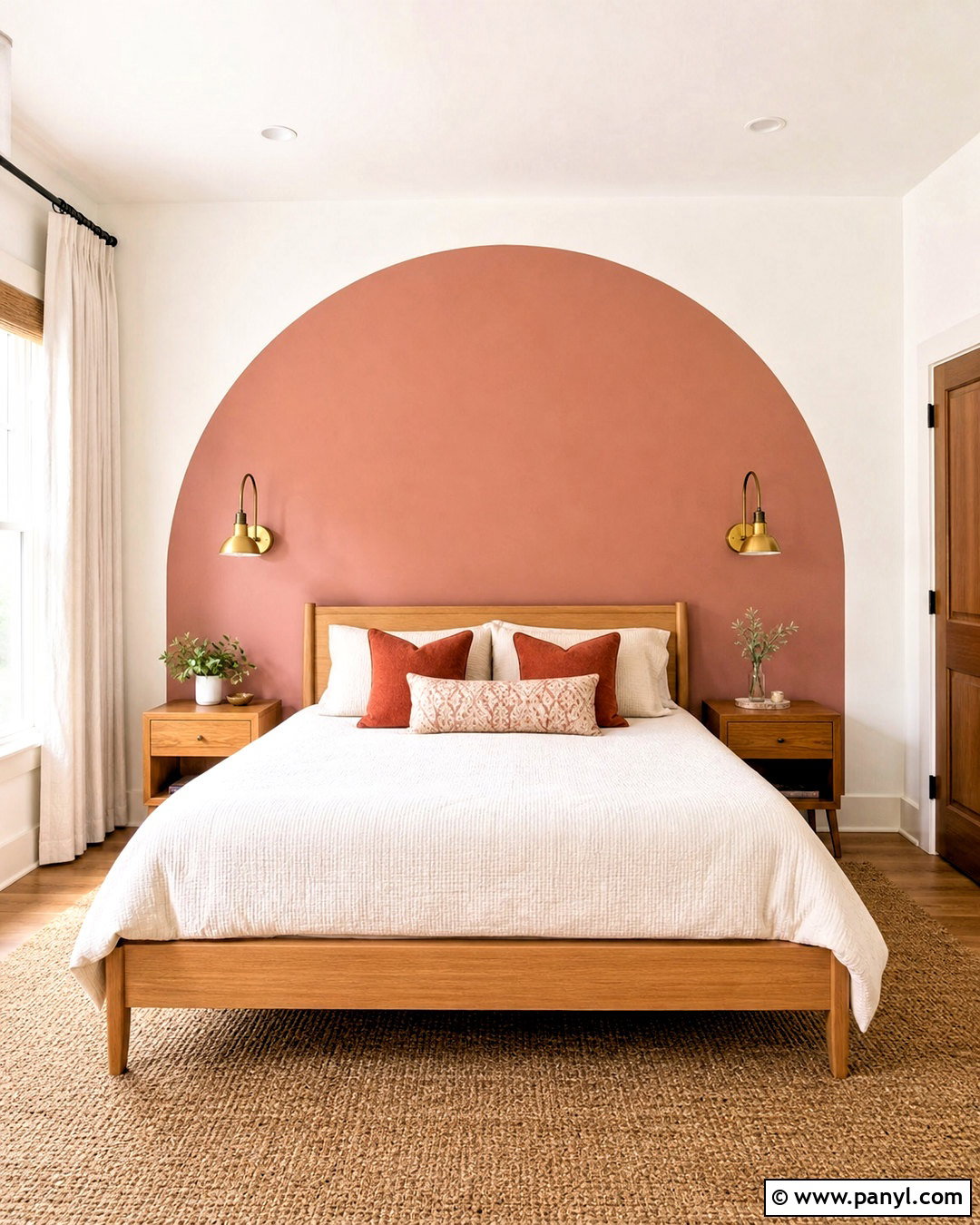
A half-circle design can act like a painted headboard, making it especially useful in a simple or budget-friendly bedroom. Paint a wide rust-colored semicircle behind the bed against a creamy beige wall. Its highest point should rise well above the pillows, while the flat lower edge disappears behind the headboard or mattress. Add crisp white bedding, a striped tan throw, and walnut side tables for a warm, modern palette. Black swing-arm sconces provide contrast and free the nightstands from bulky lamps. Complete the room with a low-pile cream rug and minimal framed artwork on the adjacent wall. Keep the semicircle slightly wider than the bed so it feels properly scaled. Use a centered anchor point and a measured string to draw the curve, checking both sides before painting.
10. Geometric Diagonal Wall Paint
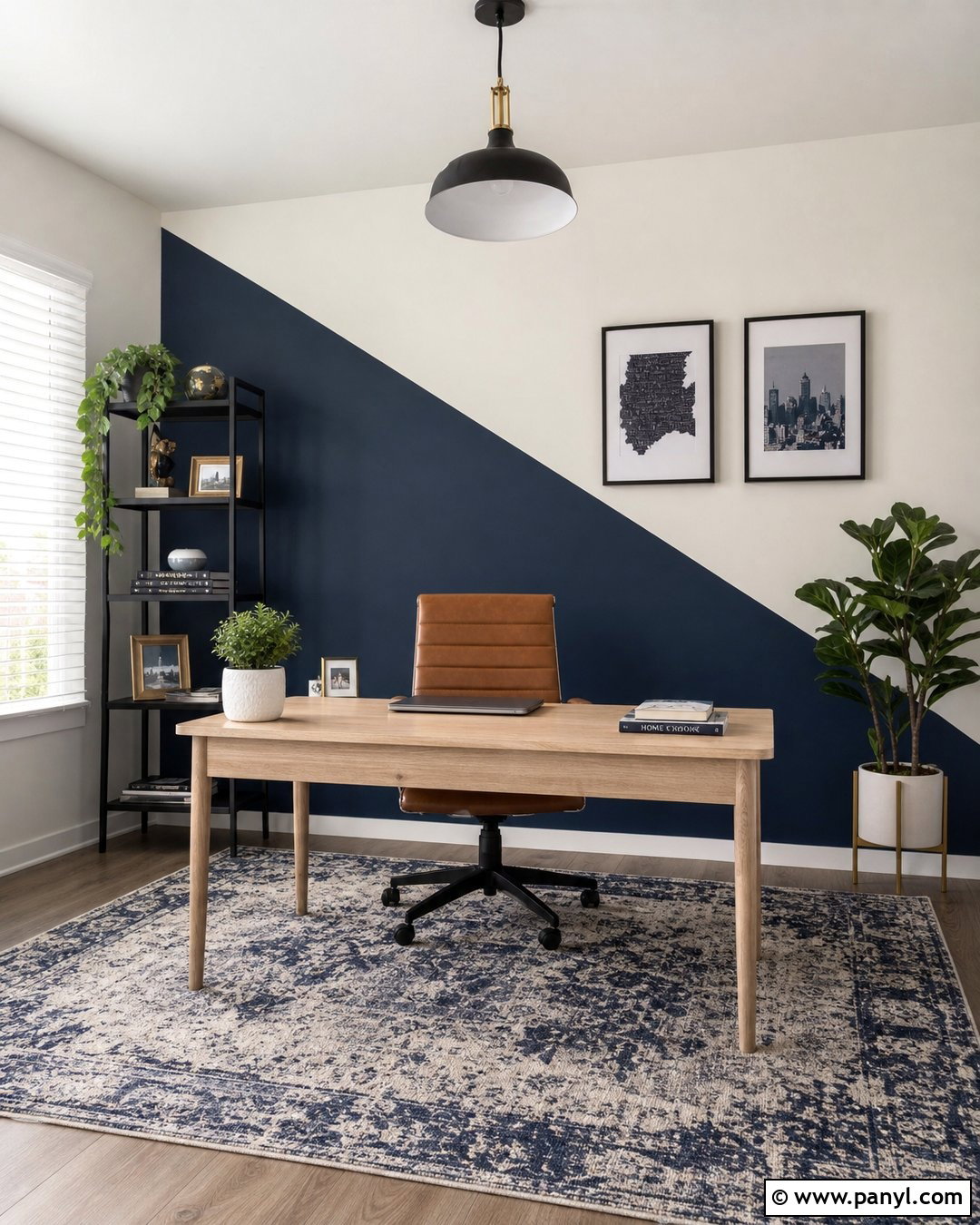
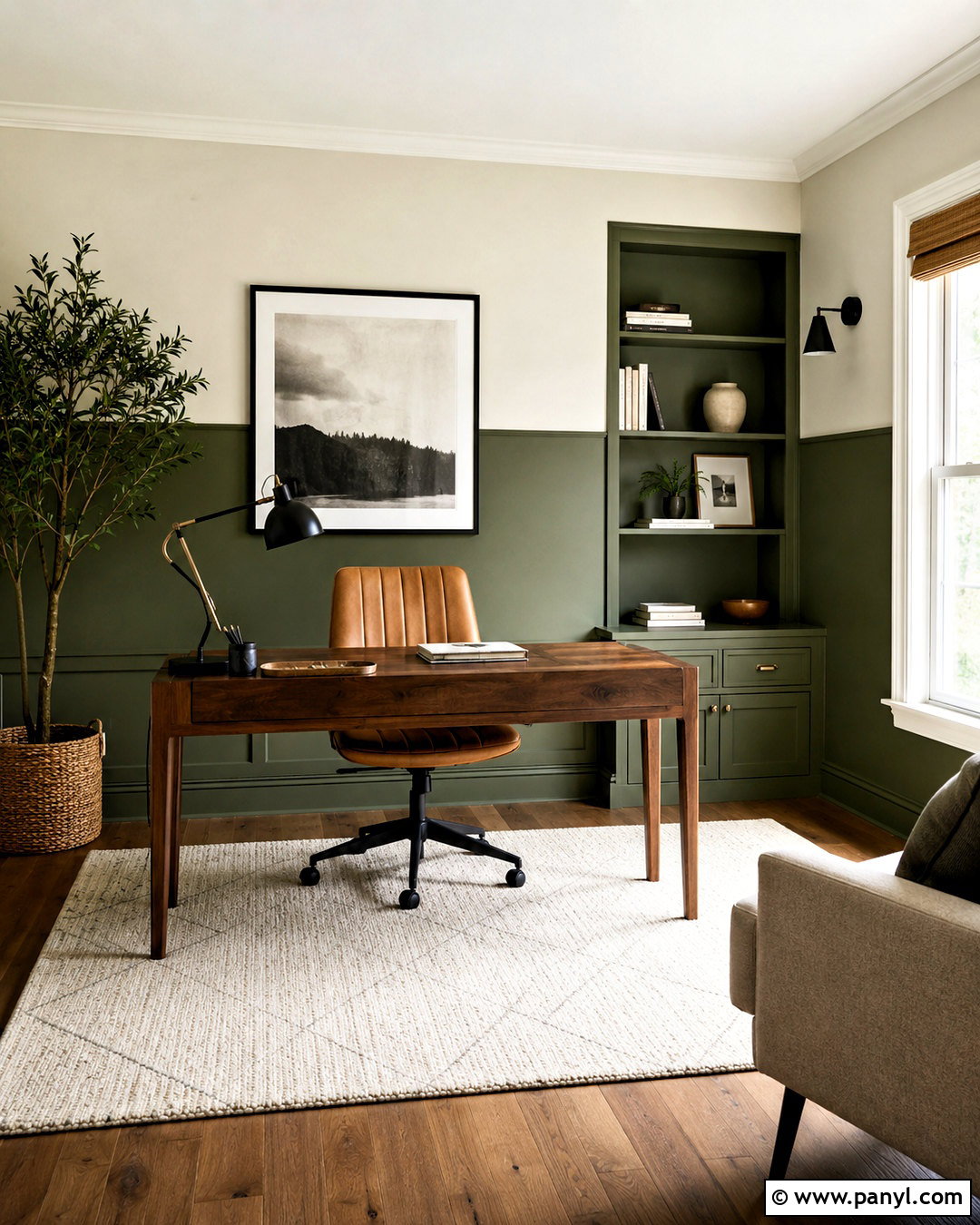
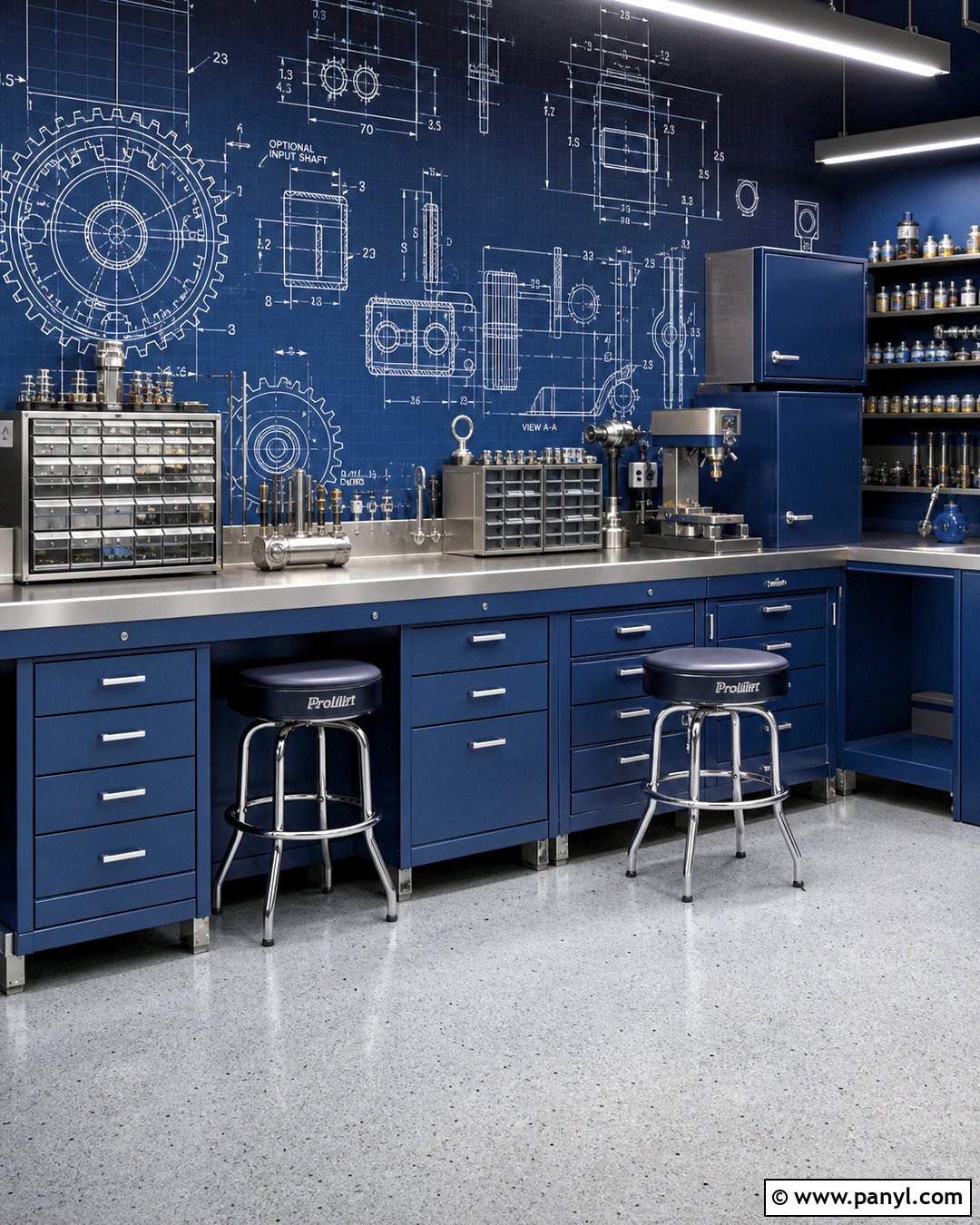
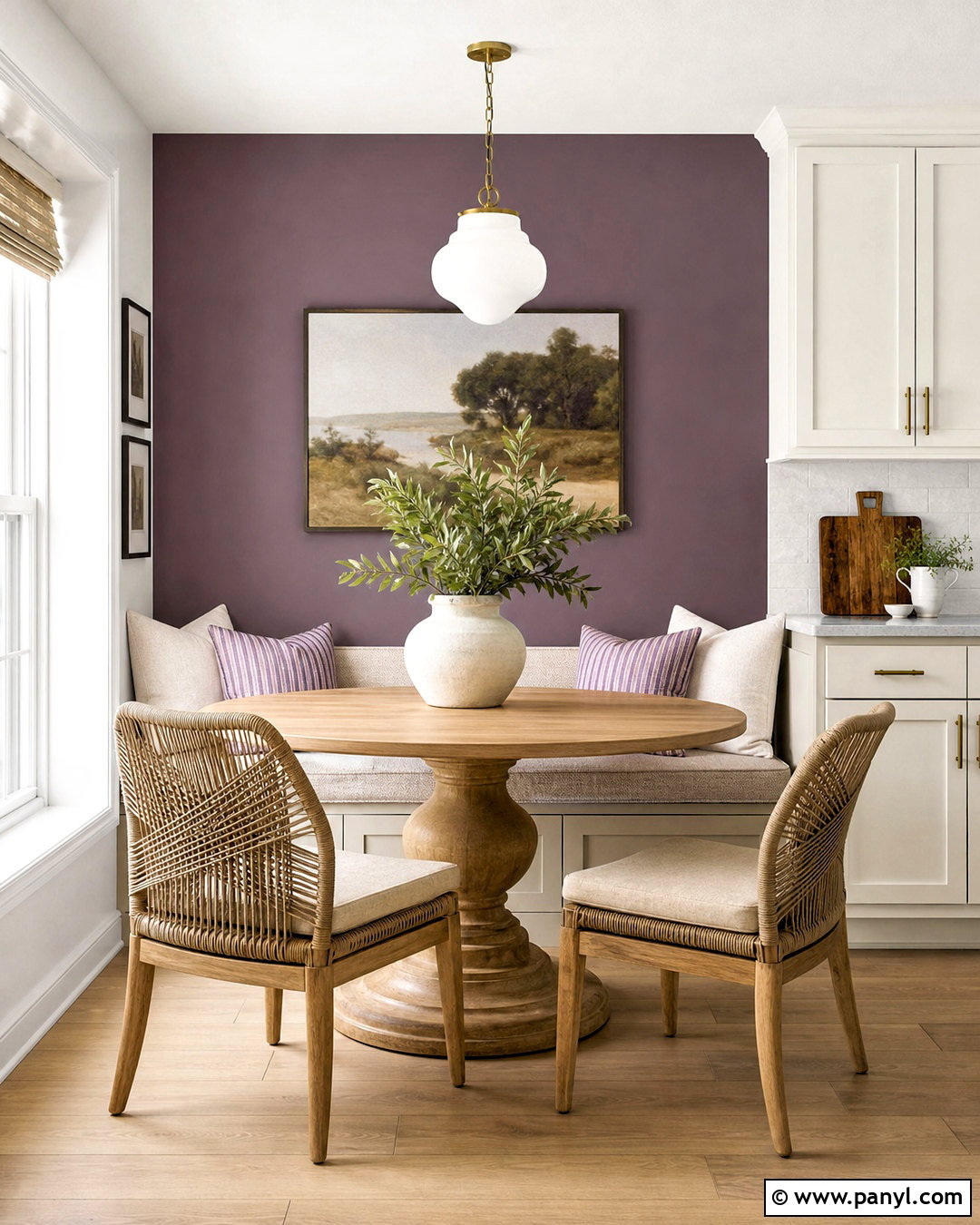
A single diagonal division can completely change a room while remaining easy enough for a first painting project. Divide an office wall from one lower corner toward the opposite upper area, using deep navy below and warm white above. Position a pale oak desk against the darker section, where computer equipment and storage pieces will visually recede. Add a tan leather chair, black shelving, and a navy-and-cream rug to connect both sides of the design. The ascending line gives the room energy and can make a low ceiling seem taller. Keep wall decor minimal, perhaps with one large print that crosses the color boundary. Use a laser level or tightly secured guide string to establish the diagonal. Seal the tape edge with the base color before applying navy paint for a sharper finished line.
11. Geometric Ombre Wall Paint
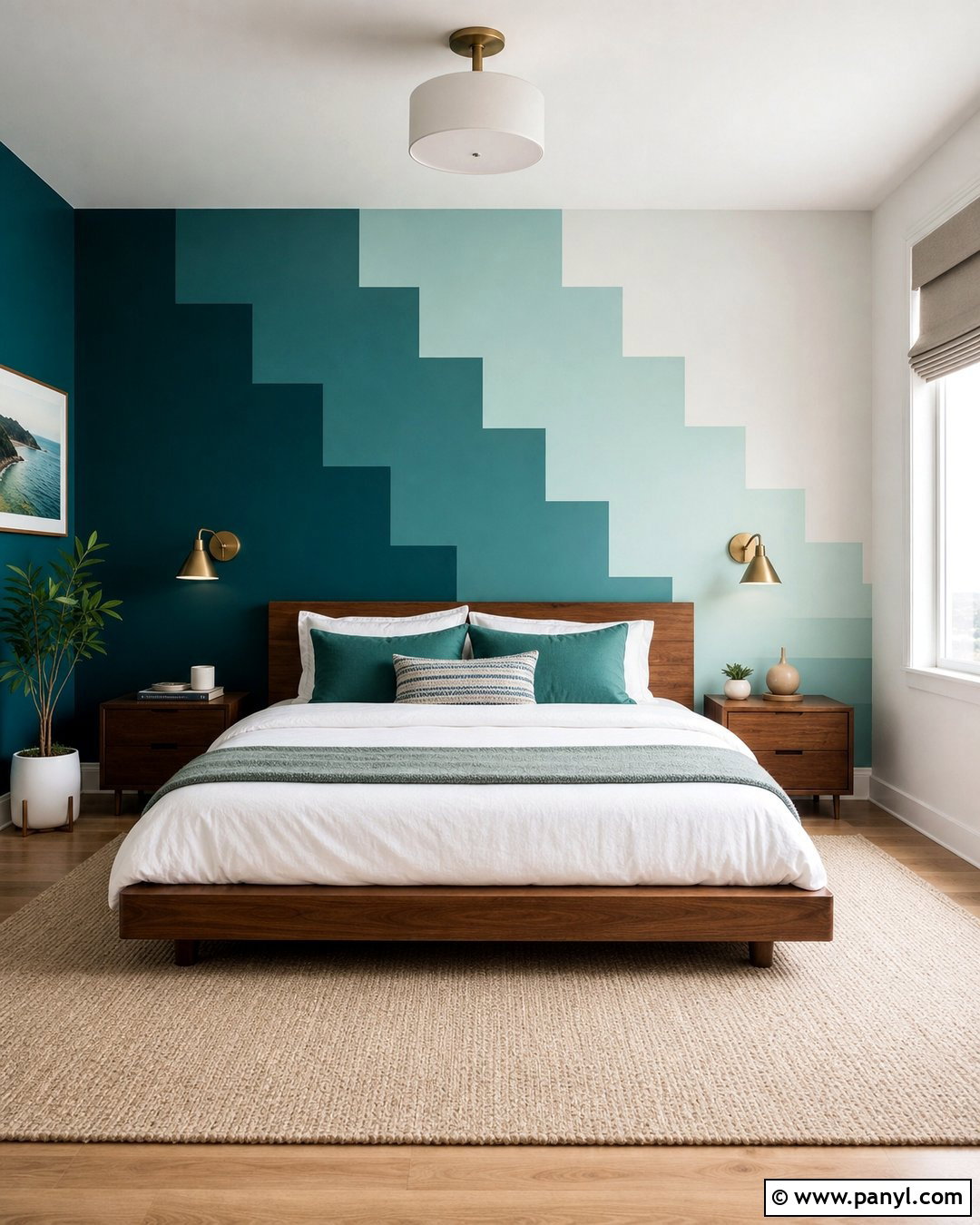
A geometric ombre wall combines defined shapes with gradual color movement. Build the pattern from horizontal rows of large rectangles, starting with deep teal near the floor and progressing through blue-green, pale aqua, and soft white toward the ceiling. In a bedroom, pair this wall with a low walnut bed, white linen bedding, teal cushions, and warm brass reading lights. The dark lower section anchors the furniture, while lighter upper tones keep the room open. Use the same color family throughout rather than mixing unrelated hues. This makes the stepped gradient feel calm even though the block edges remain visible. Measure equal-height rows and stagger some vertical joins for a contemporary tiled effect. Mix transition shades carefully and label each container before painting to avoid placing similar colors in the wrong position.
12. Geometric Grid Wall Paint
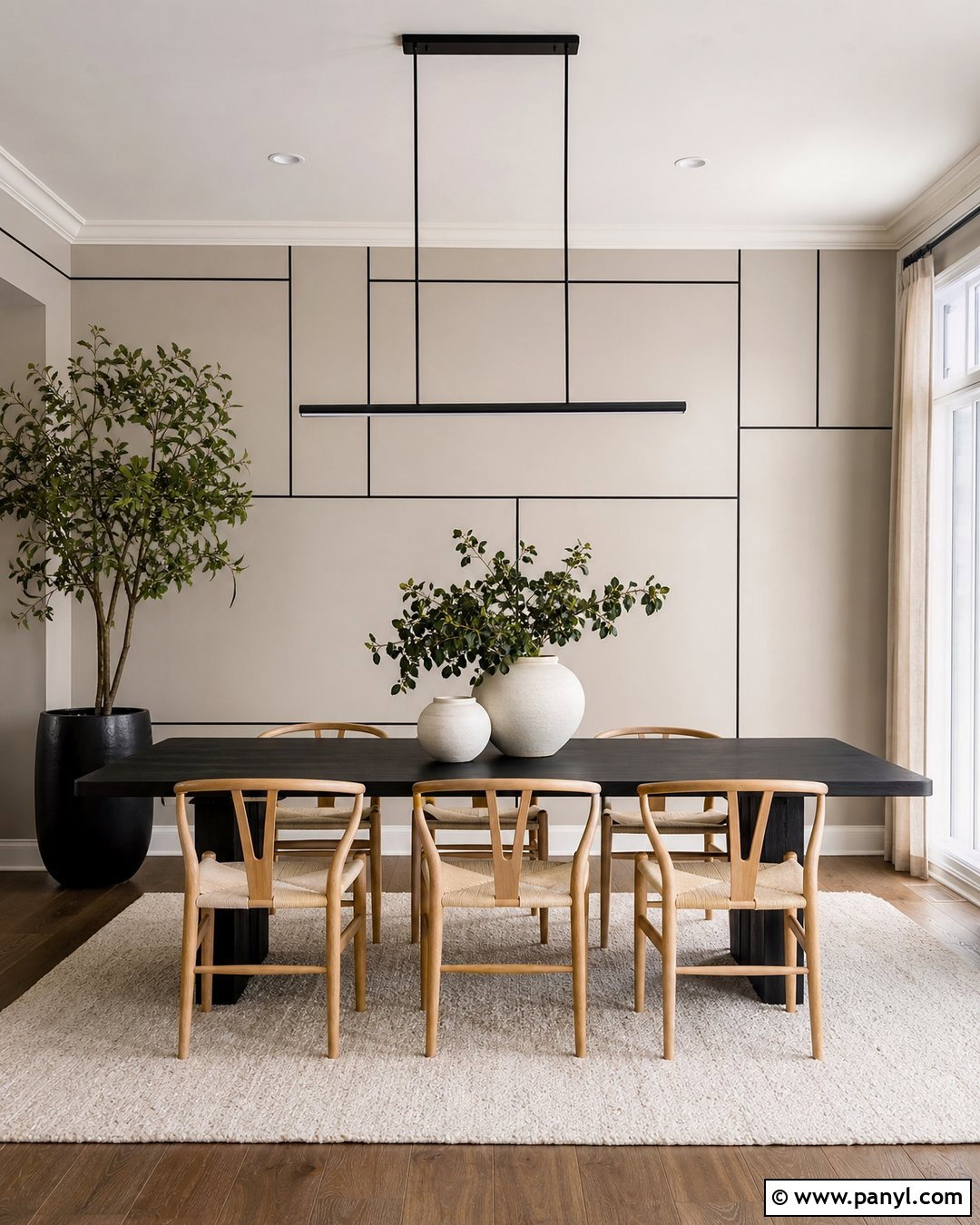
A painted grid gives a room clean structure and can resemble modern wall paneling from a distance. Start with a soft greige wall, then add thin matte black horizontal and vertical lines to form oversized rectangles. In a dining room, coordinate the grid with a black rectangular table, light oak chairs, and a cream wool rug. A linear pendant reinforces the orderly design, while a leafy plant and rounded ceramics prevent the setting from looking severe. Keep the grid large enough that only a few rectangles appear across the wall. Tiny squares can feel more like graph paper than intentional decor. Align important lines with the tabletop, doorway, or artwork for a thoughtful finish. Use equal tape widths and check every line with a level. Flat or eggshell paint will make small imperfections less visible.
13. Geometric Line Wall Paint
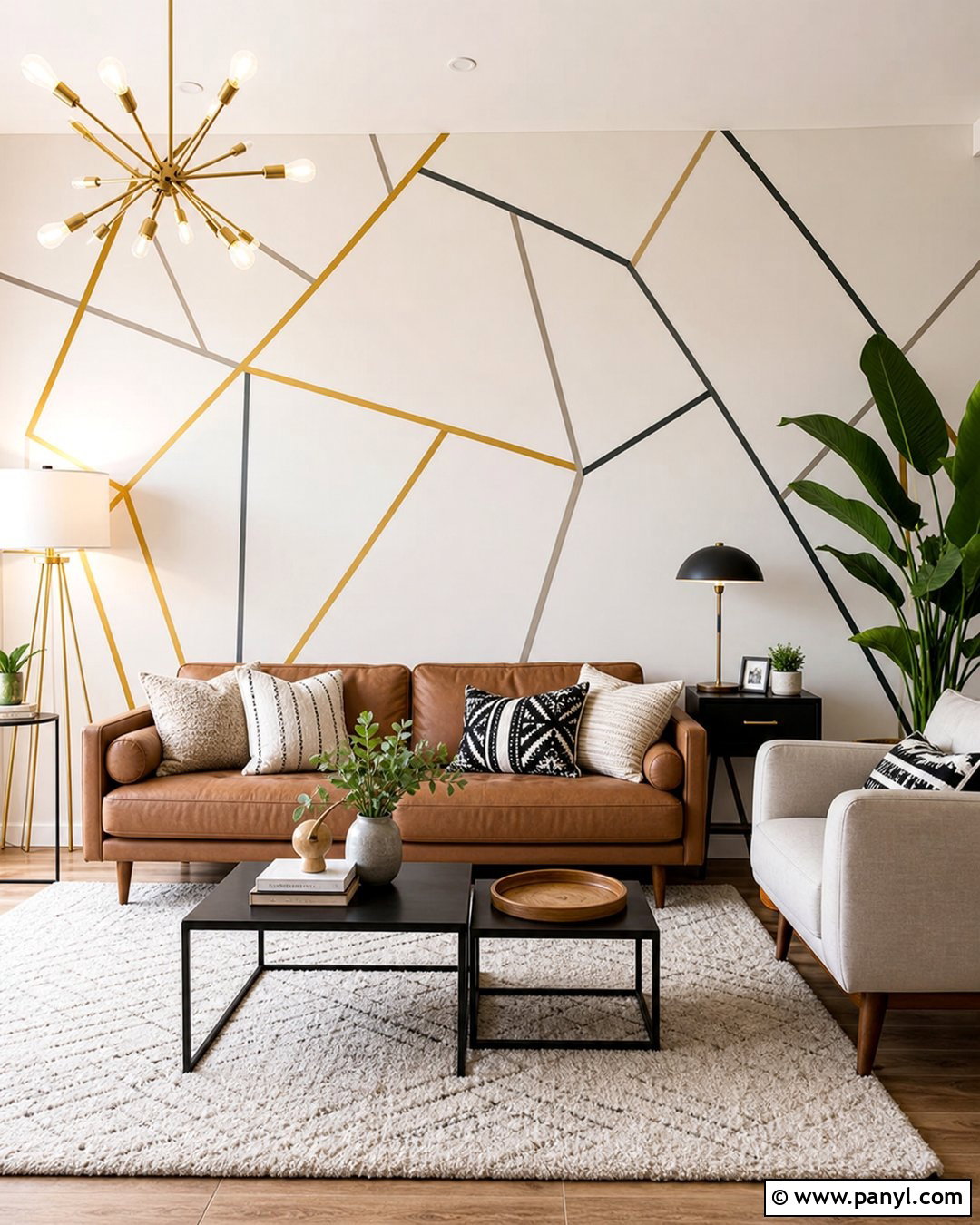
Thin geometric lines offer a subtle alternative to fully filled shapes. Paint a warm white feature wall, then create an asymmetrical network of fine lines in charcoal, taupe, and muted gold. Allow the lines to form large triangles and irregular polygons without filling their interiors. This approach works well behind a caramel sofa, where the open pattern adds interest without overwhelming artwork or textiles. Choose a cream rug, black metal tables, and cushions in tan and charcoal to establish a cohesive living room. Use only a few gold lines so the accent remains refined. The design should spread across most of the wall, with quieter areas around lamps and shelves. Narrow painter’s tape produces the cleanest result. Test the spacing first because lines positioned too closely can make the wall appear cluttered.
14. Geometric Stripe Wall Paint
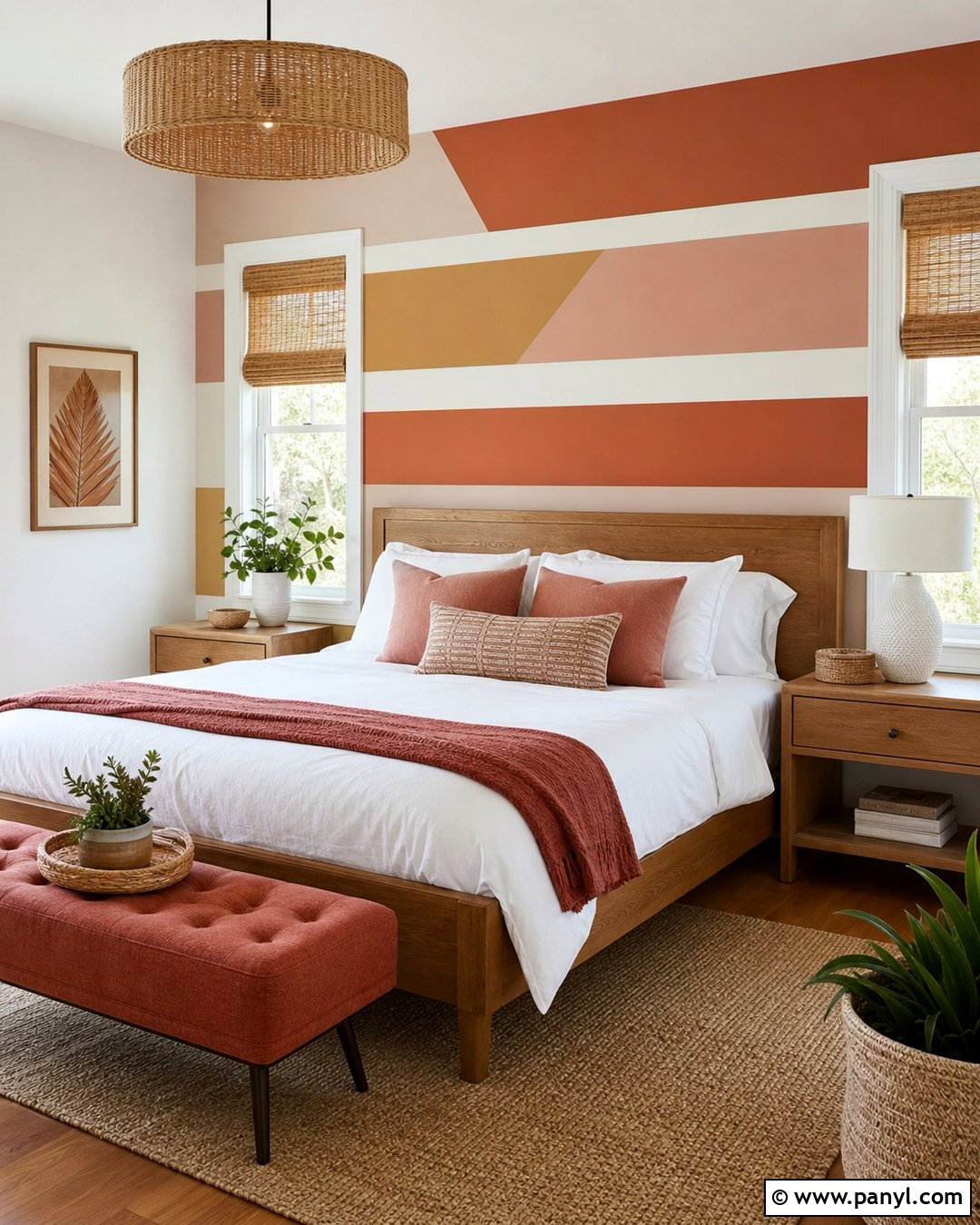
Geometric stripes feel fresher when their widths and directions change across the wall. Use a pale beige base with broad vertical stripes in terracotta, dusty rose, and muted mustard. Interrupt selected stripes with horizontal cream sections to create an offset, architectural rhythm. In a guest bedroom, pair the wall with a simple oak bed, white bedding, woven shades, and a rust-colored bench. Keep decorative accessories understated so the painted pattern remains the main feature. Vertical sections draw attention upward, while horizontal breaks make the composition feel less formal than traditional striping. Plan the arrangement around the bed and avoid placing a busy intersection directly behind a lamp or artwork. Measure every stripe at the baseboard and ceiling. Label taped sections with removable notes before painting each color to prevent mistakes.
15. Geometric Square Wall Paint
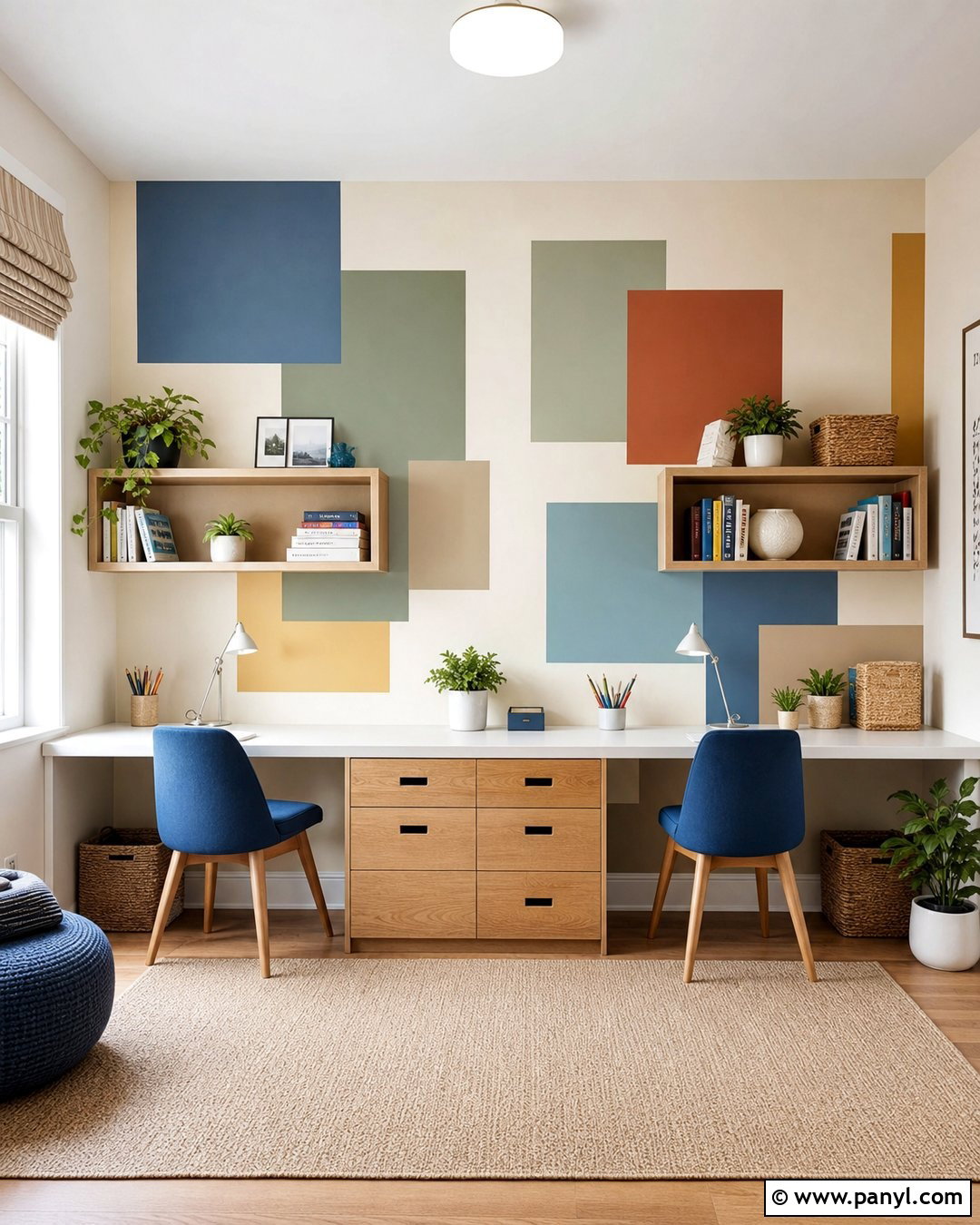
Large painted squares can create a bold but orderly backdrop for a home office or playroom. Begin with an ivory background and arrange overlapping squares in muted blue, sage green, ocher, and clay. Vary the sizes while keeping all edges parallel to the floor and ceiling. Position a long white desk beneath the composition, then add oak storage, blue desk chairs, and woven baskets. A neutral rug and simple roller shade ensure the room remains practical and visually balanced. Leave some base color visible between selected squares so the wall does not resemble a solid checkerboard. Overlapping transparent-looking colors can be recreated with carefully mixed intermediate shades. Sketch the complete layout to scale and number every section. Painting from the lightest shade to the darkest simplifies touch-ups and reduces accidental color transfer.
16. Geometric Rectangle Wall Paint
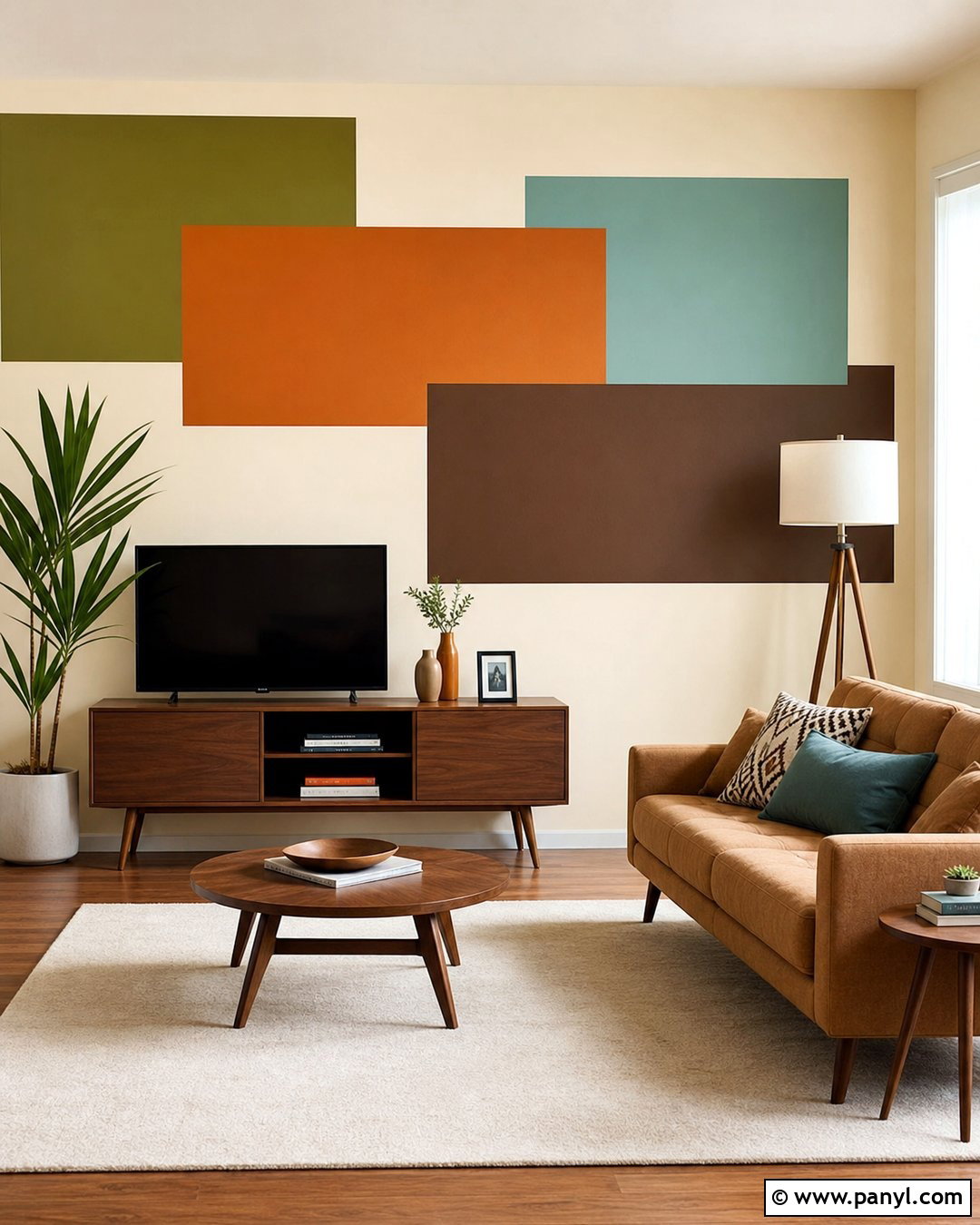
Staggered rectangles bring a midcentury influence to a living room while offering plenty of flexibility around furniture. Paint a warm cream wall with broad rectangles in olive green, burnt orange, muted turquoise, and chocolate brown. Arrange them horizontally behind a walnut media console, leaving open cream space around the television. Choose a tan sofa, tapered wood furniture, and a textured ivory rug to complement the warm palette. Small turquoise and orange accents can appear in cushions and ceramics, but avoid excessive matching. Rounded lamps and a circular coffee table soften the many right angles. Keep the largest rectangle near the lower center to visually anchor the room. Use a level to ensure every horizontal edge remains straight. Slightly uneven rectangle sizes make the pattern more dynamic without sacrificing its organized character.
17. Geometric Honeycomb Wall Paint
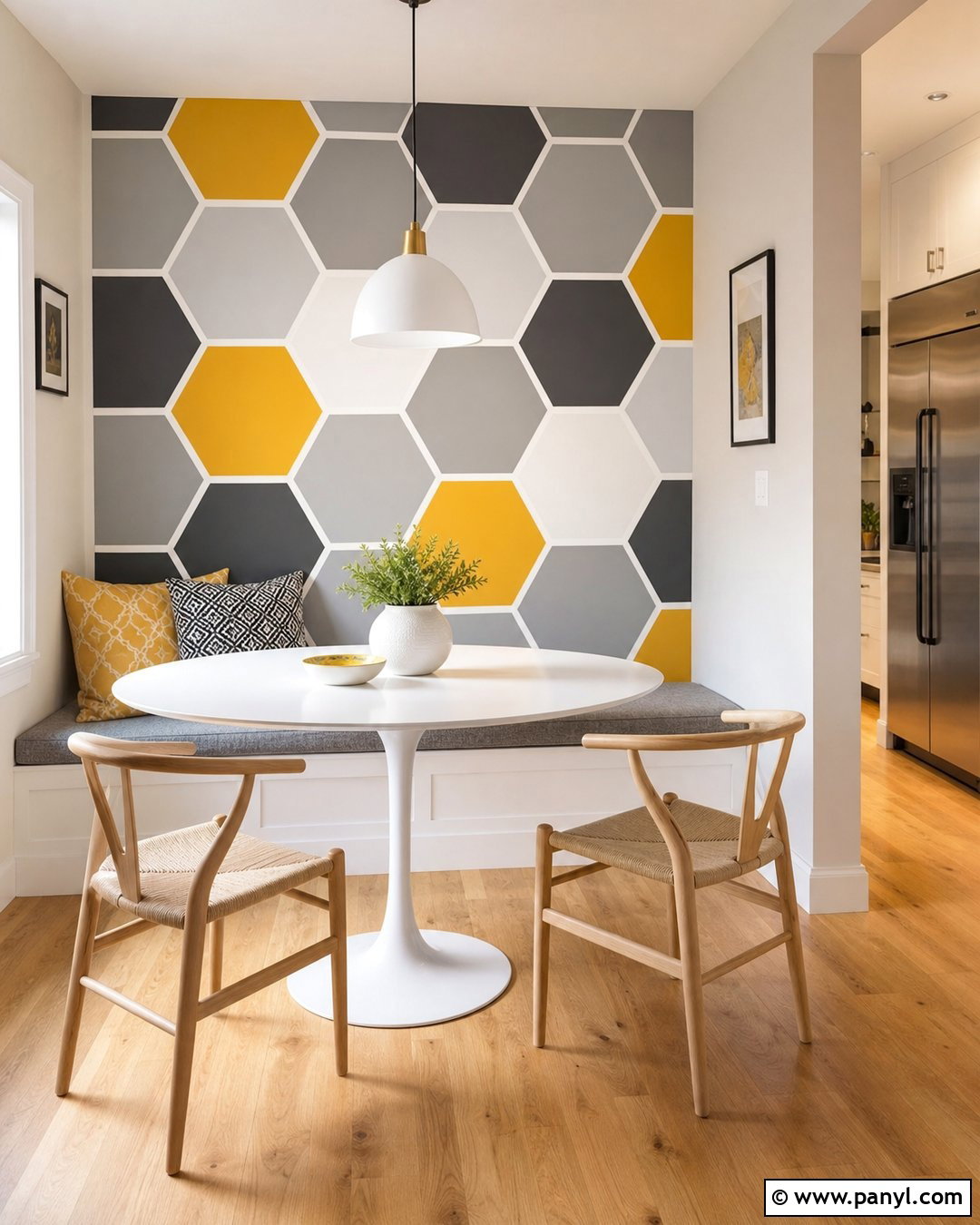
A honeycomb feature can add playful structure to a hallway, breakfast nook, or child’s bedroom. Paint connected hexagonal cells in warm yellow, pale gray, white, and soft charcoal, concentrating the pattern across the lower two-thirds of the wall. Let several cells break away near the outer edges for a lighter transition into the background. In a breakfast nook, add a white pedestal table, pale wood chairs, a gray bench cushion, and yellow accessories. Natural wood flooring and simple pendant lighting keep the setting bright and welcoming. Use no more than four colors, with one dominant neutral, so the repeating shape remains easy to read. Create a reusable hexagon template and mark the center of every cell. Consistent spacing matters more than perfectly equal color distribution throughout the finished pattern.
18. Geometric Terrazzo Wall Paint
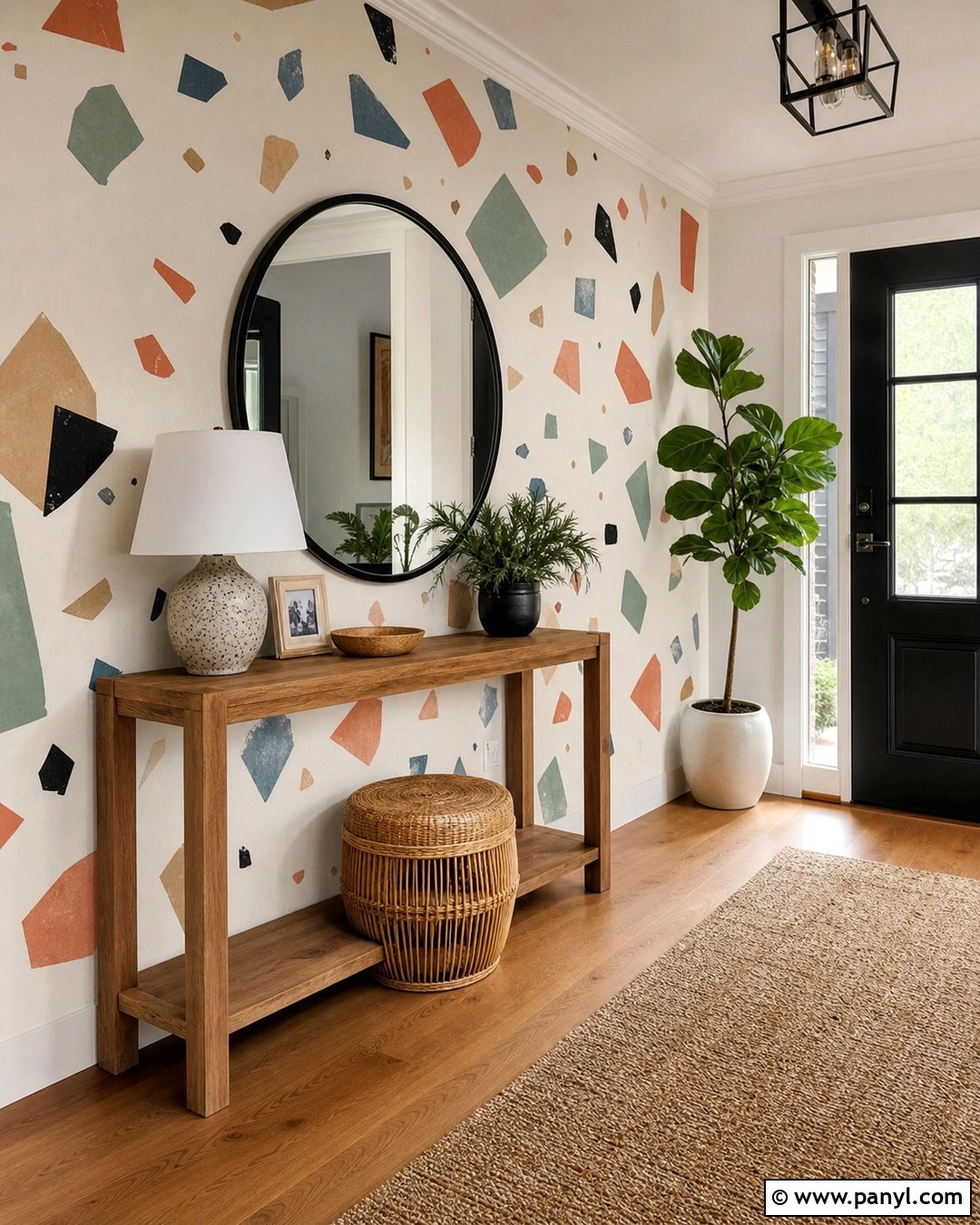
A painted terrazzo-inspired wall introduces scattered geometry without requiring precise repeating measurements. Begin with a warm off-white base and add irregular angular fragments in coral, sage green, tan, black, and dusty blue. Keep most pieces small, then mix in several larger shapes to prevent the wall from looking like confetti. This pattern suits a cheerful entryway furnished with a slim oak console, round black mirror, woven stool, and ceramic lamp. Repeat the coral and sage through two or three accessories rather than covering the entire space in color. The random layout should still feel balanced, with similar visual weight across the wall. Cut paper shapes first and temporarily attach them to test the arrangement. Trace each piece lightly, then fill it using small artist brushes and durable interior paint.
19. Geometric Nursery Wall Paint
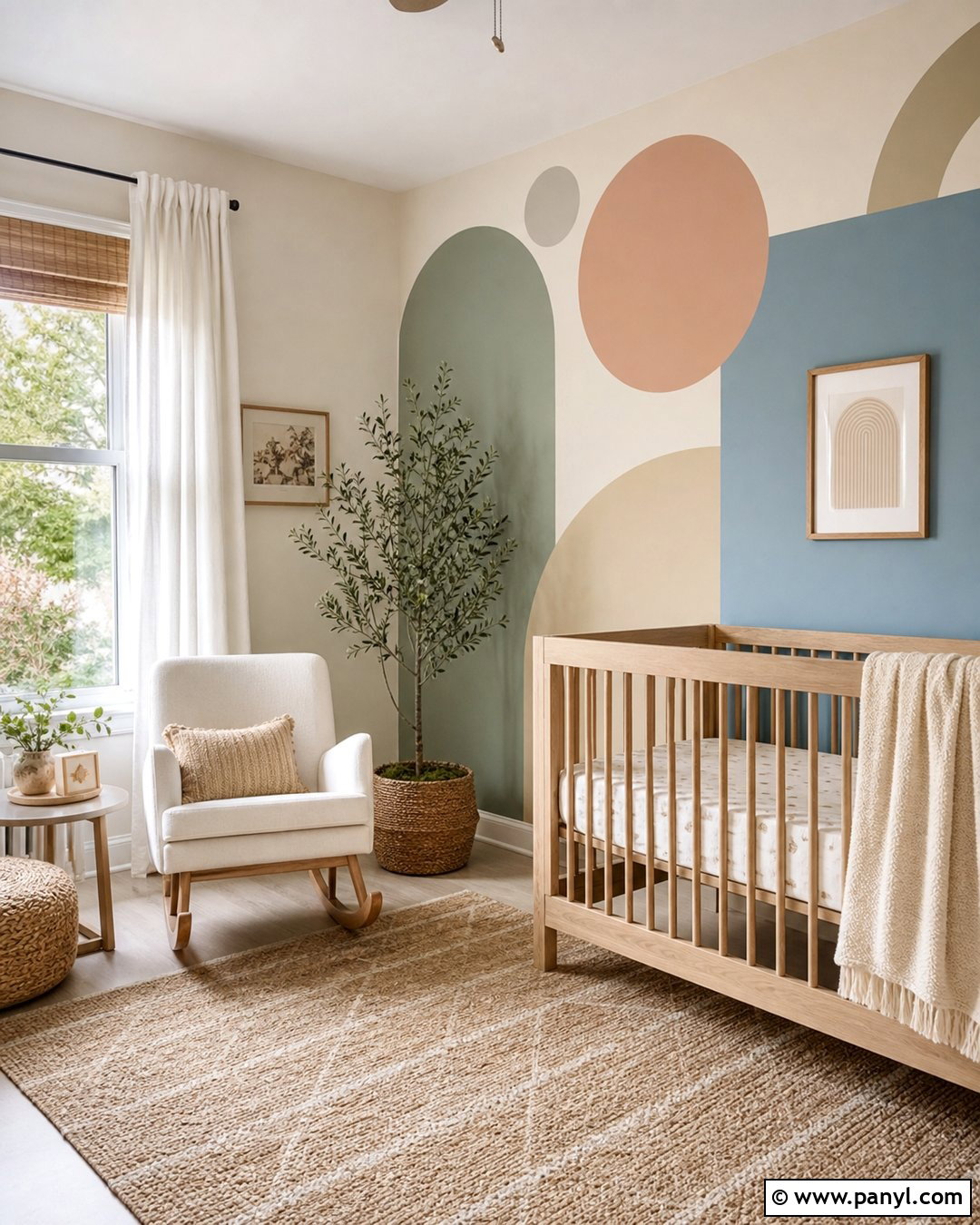
Soft geometric forms can make a nursery engaging without creating an overstimulating environment. Use a warm ivory base with large arches, circles, and simple blocks in muted sage, dusty blue, pale peach, and sandy beige. Place the main composition behind the crib but leave a generous clear area around its top edge. Choose a natural wood crib, cream rocking chair, woven storage baskets, and a washable beige rug. White curtains and a simple globe ceiling light maintain a bright, calm atmosphere. Avoid tiny repeated shapes, which can make the wall feel too active. Instead, use broad forms with rounded edges and plenty of background space. Select low-odor interior paint suitable for the room and allow it to cure fully. Keep cords, shelves, frames, and decorations safely away from the crib.
20. Geometric Kids Room Wall Paint
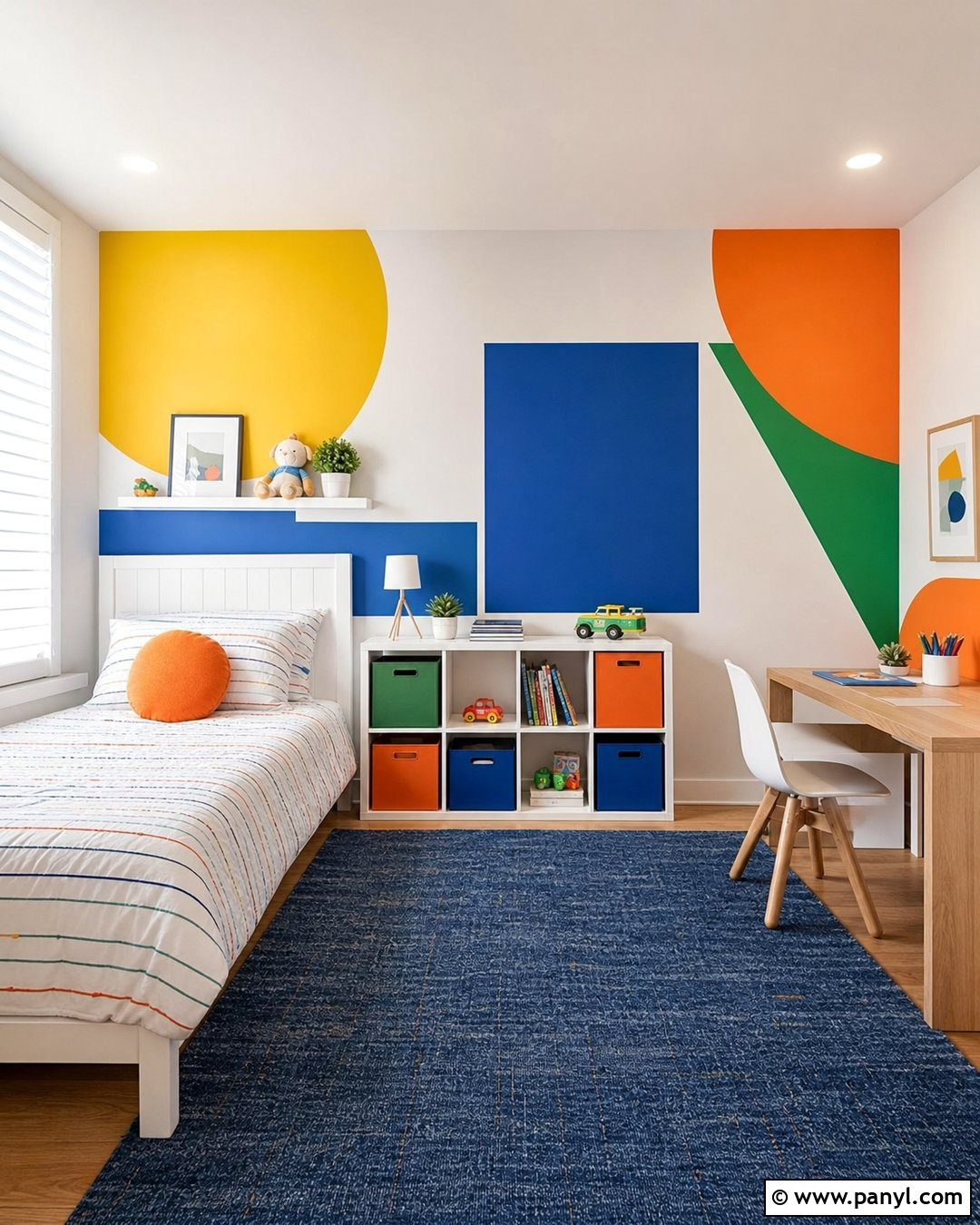
A colorful geometric wall can grow with a child when the palette feels lively but not overly themed. Paint a soft white background with oversized blocks, triangles, and semicircles in cobalt blue, grassy green, sunny yellow, and warm orange. Limit the design to one wall and keep the other surfaces neutral. Add a white bed, light wood desk, modular storage cubes, and a durable blue rug. Bedding with narrow stripes can support the geometry without competing with it. Open floor space and labeled storage make the entire room useful for sleep, homework, and play. Arrange darker shapes near the bottom and lighter colors higher up to keep the design grounded. Use washable eggshell or satin paint for easier maintenance. A carefully measured pattern will look polished even with an energetic color combination.
21. Geometric Bedroom Wall Paint
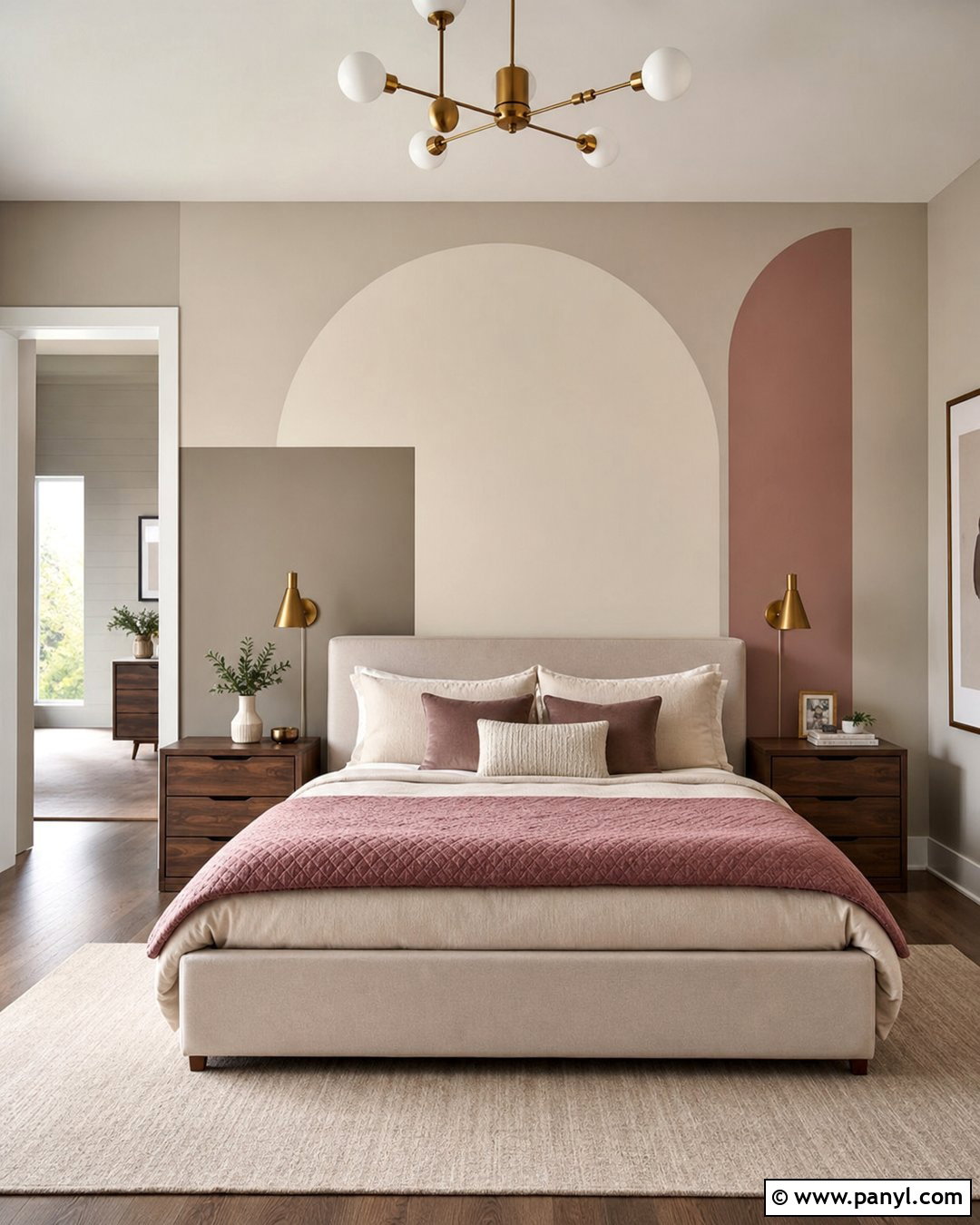
For a restful adult bedroom, choose geometric forms with softened contrast and generous proportions. Paint the headboard wall in pale taupe, then layer a wide cream arch with overlapping blocks of warm gray and muted mauve. Keep the shapes centered around a low upholstered bed for a balanced, built-in appearance. Dress the bed in ivory linen, a mauve quilt, and taupe pillows. Add walnut nightstands, brushed brass sconces, and a large neutral rug beneath the bed. The remaining walls should stay pale taupe to wrap the room in one cohesive color. Avoid filling every open area with artwork; the geometry already provides visual interest. Test paint samples at different times of day because mauve and taupe can shift noticeably. Crisp lines and matte finishes maintain the design’s quiet, sophisticated character.
22. Geometric Living Room Wall Paint
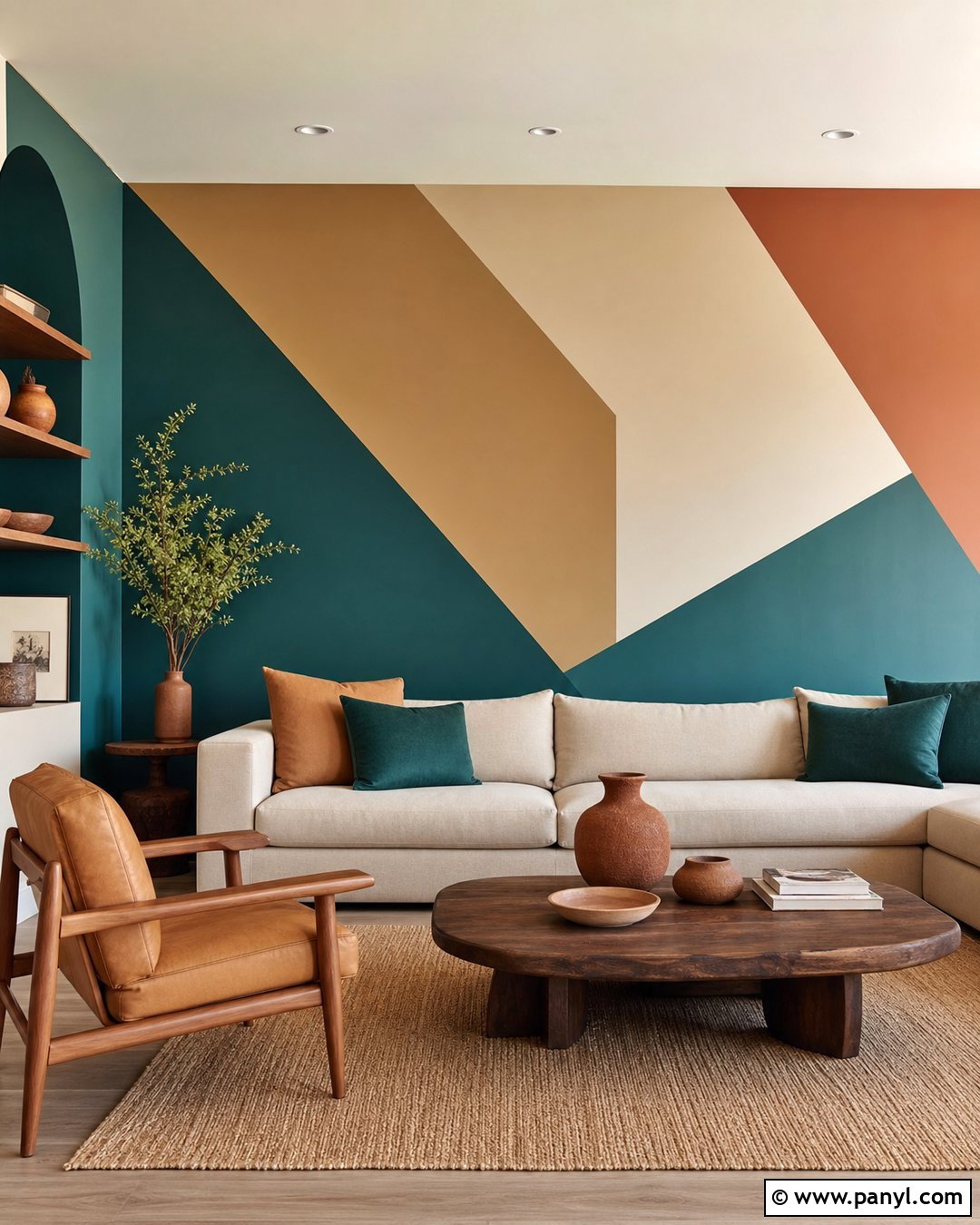
A living room feature wall needs enough impact to hold the space together without fighting the largest furnishings. Use a warm white base with broad interlocking shapes in deep teal, camel, clay, and light beige. Place the strongest color behind one end of a neutral sofa, then distribute lighter forms across the remaining wall. Choose a cream sectional, walnut coffee table, camel leather chair, and textured beige rug. Teal cushions and clay pottery create controlled repetition. Hang one simple framed piece within the lightest painted area, allowing the wall itself to function as the primary artwork. Keep adjacent walls neutral and use warm white curtains to soften the edges. Design the pattern after establishing the furniture layout, ensuring important lines do not awkwardly intersect wall-mounted lighting, outlets, or window trim.
23. Geometric Dining Room Wall Paint
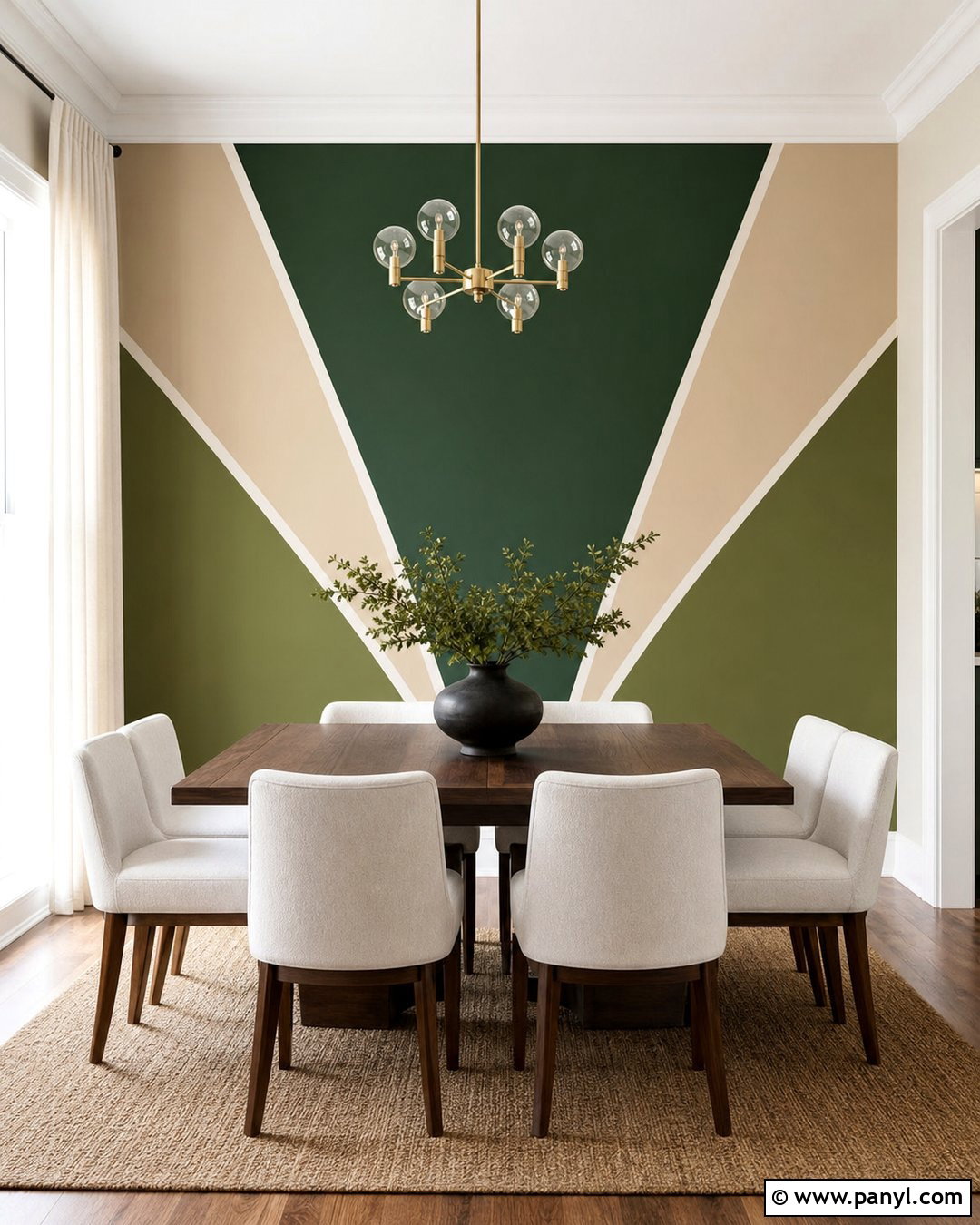
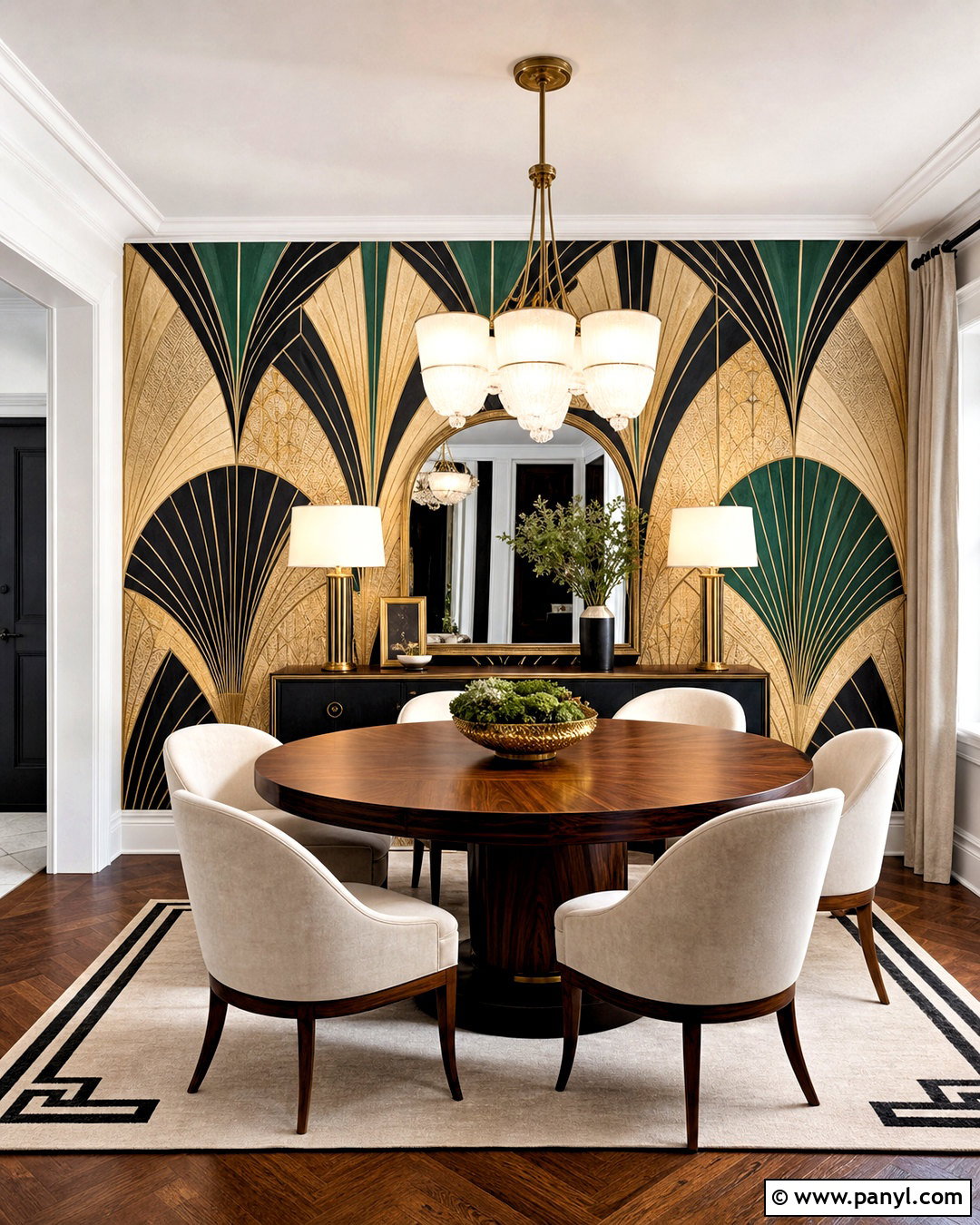
Rich geometric paint can give a dining room greater depth and a memorable focal point. Paint the wall behind the table in deep green, then add a large symmetrical fan pattern using olive, warm beige, and narrow cream lines. Center the design with the dining table and pendant rather than with the entire wall if the room is asymmetrical. A walnut table, cream upholstered chairs, brass chandelier, and natural fiber rug create an inviting full-room composition. Use off-white on the remaining walls and repeat green through a simple centerpiece or curtains. The fan pattern should begin near the baseboard and spread upward, visually widening the wall. Measure a central anchor point and map every radiating line before taping. Paint alternating sections methodically, allowing each completed color to dry before placing tape over it.
24. Geometric Home Office Wall Paint
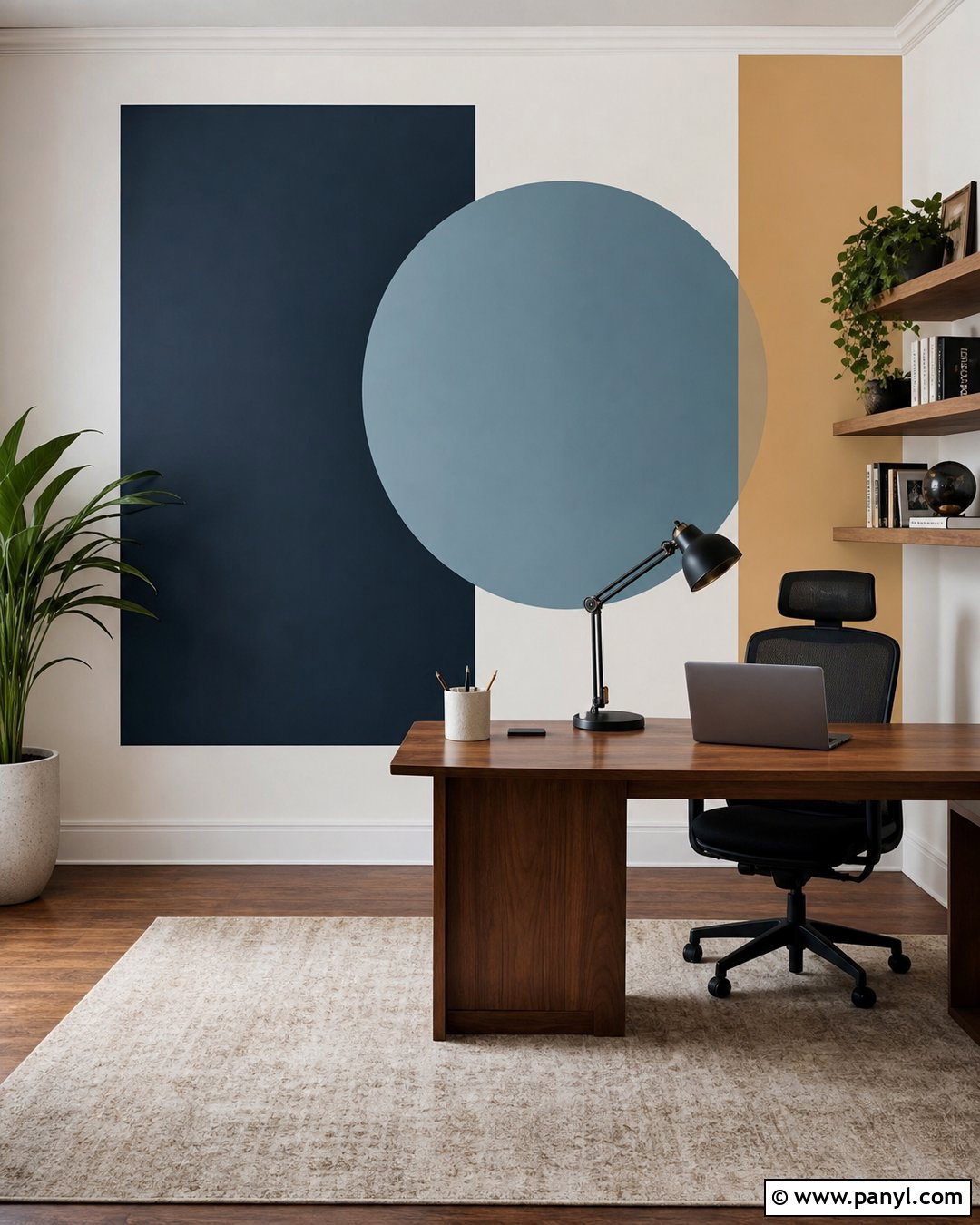
An office wall can use geometry to define the workspace and improve the appearance of video-call backgrounds. Paint a broad navy rectangle behind the desk, then overlap it with a muted blue circle and a narrow camel vertical block. Keep the surrounding wall soft white for contrast. Furnish the area with a walnut desk, black ergonomic chair, floating oak shelves, and a compact cream rug. Add a black task lamp, covered storage boxes, and one leafy plant for a professional but comfortable atmosphere. Position the most balanced section of the pattern directly behind the chair so the background looks intentional on camera. Avoid very thin lines, which may appear distracting on a screen. Use durable eggshell paint and maintain clear negative space around shelving, equipment, outlets, and the edges of the room.
25. Geometric Hallway Wall Paint
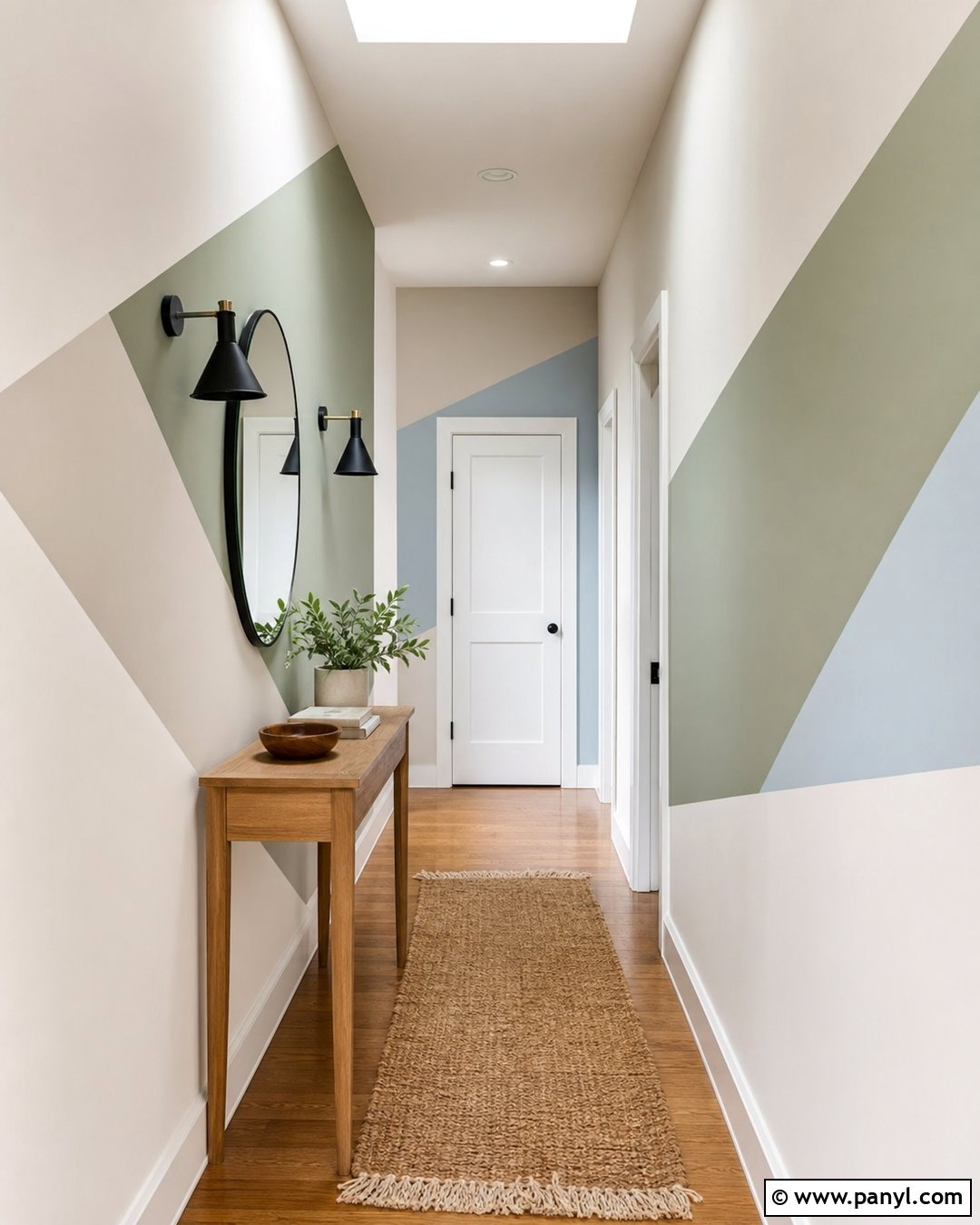
A narrow hallway benefits from a pattern that creates movement without visually closing in the walls. Keep the upper wall warm white and paint a series of elongated diagonal blocks along the lower half in sage green, pale blue, and soft greige. Maintain plenty of white between colored sections to preserve brightness. Add a slim oak console, round mirror, woven runner, and simple black wall sconces. The diagonal direction can guide the eye toward the adjoining room, making the passage feel more purposeful. Continue one recurring color into a nearby space through artwork or textiles for subtle continuity. Avoid wrapping the full pattern around every wall unless the hallway is unusually wide. Map the design from the main viewing entrance, and check how door frames interrupt each shape before applying painter’s tape.
26. Geometric Entryway Wall Paint
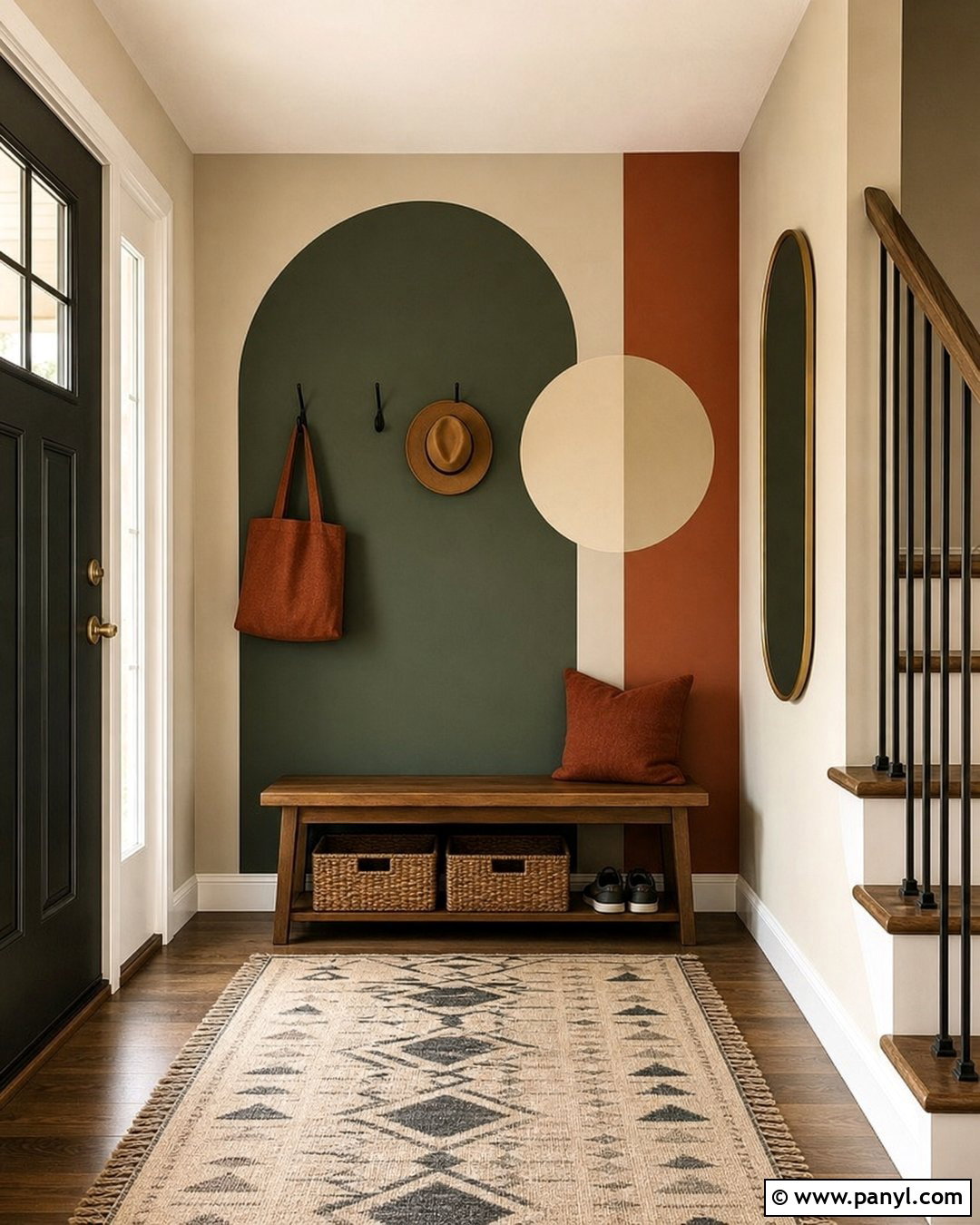
A strong geometric entryway creates an immediate focal point while helping a small drop zone feel organized. Paint the wall soft beige, then add a wide dark green arch containing a narrow rust rectangle and a smaller cream circle. Place a walnut bench within the arch, leaving room beneath for woven shoe baskets. Add black coat hooks, a rust-colored cushion, and a round brass-framed mirror that overlaps the painted shapes. A washable patterned runner ties the palette together and protects the floor. Keep nearby doors and trim warm white so the feature remains crisp. The painted arch visually defines the bench area even when the entry opens directly into another room. Plan around switches, thermostats, and trim. Durable satin paint is practical in this high-contact area and can be wiped clean more easily.
27. Geometric Staircase Wall Paint
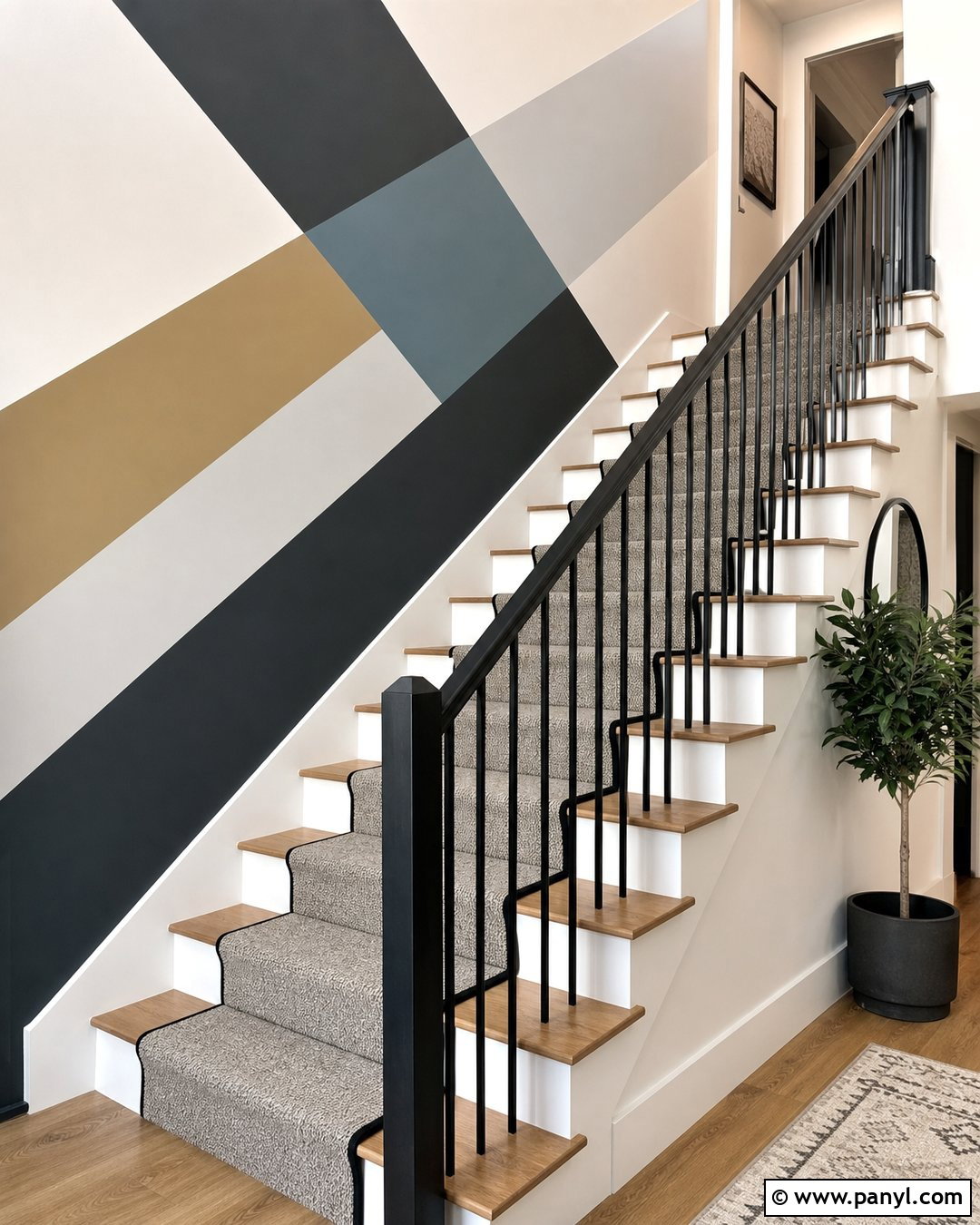
The rising angle of a staircase provides a natural guide for a dynamic geometric design. Use a warm white base and paint overlapping parallelograms in charcoal, muted blue, camel, and pale gray. Arrange the shapes so their upper edges follow the incline of the handrail. Keep darker colors near the lower stairs and lighten the palette as the wall rises. Pair the pattern with natural oak treads, white risers, and a simple matte black railing. A woven runner in beige and charcoal adds texture without introducing another dominant motif. Avoid covering the complete stairwell; allow white space near the ceiling and landing. View the design from both the bottom and top before painting. Use a laser level and stair-safe platform, or hire a professional when the wall is difficult to reach securely.
28. Geometric Bathroom Wall Paint
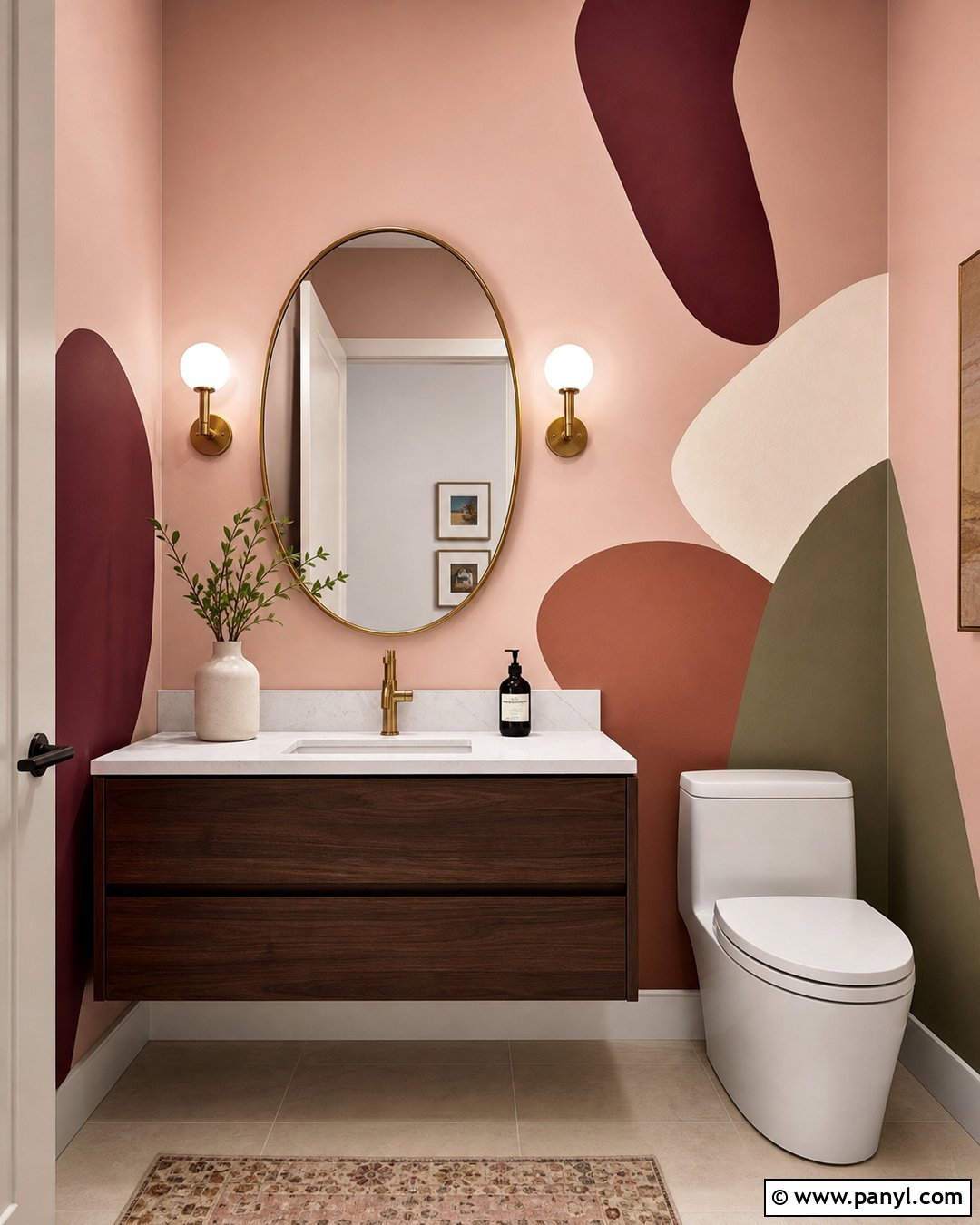
Geometric paint can make a powder room feel custom while requiring less material than tile or wallpaper. Paint the vanity wall in a warm blush base with broad terrazzo-like shapes in burgundy, cream, clay, and muted olive. Choose moisture-resistant paint with a washable finish, especially near the sink. Complete the room with a floating walnut vanity, white quartz counter, brass faucet, oval mirror, and globe sconces. Cream floor tile keeps the small room bright, while olive hand towels repeat one of the quieter wall colors. Limit the painted pattern to areas that do not receive frequent direct water exposure. Larger shapes are easier to appreciate in a compact room and simpler to clean visually. Seal gaps around the counter properly and prepare the wall thoroughly so humidity does not compromise the finished surface.
29. Geometric Kitchen Wall Paint
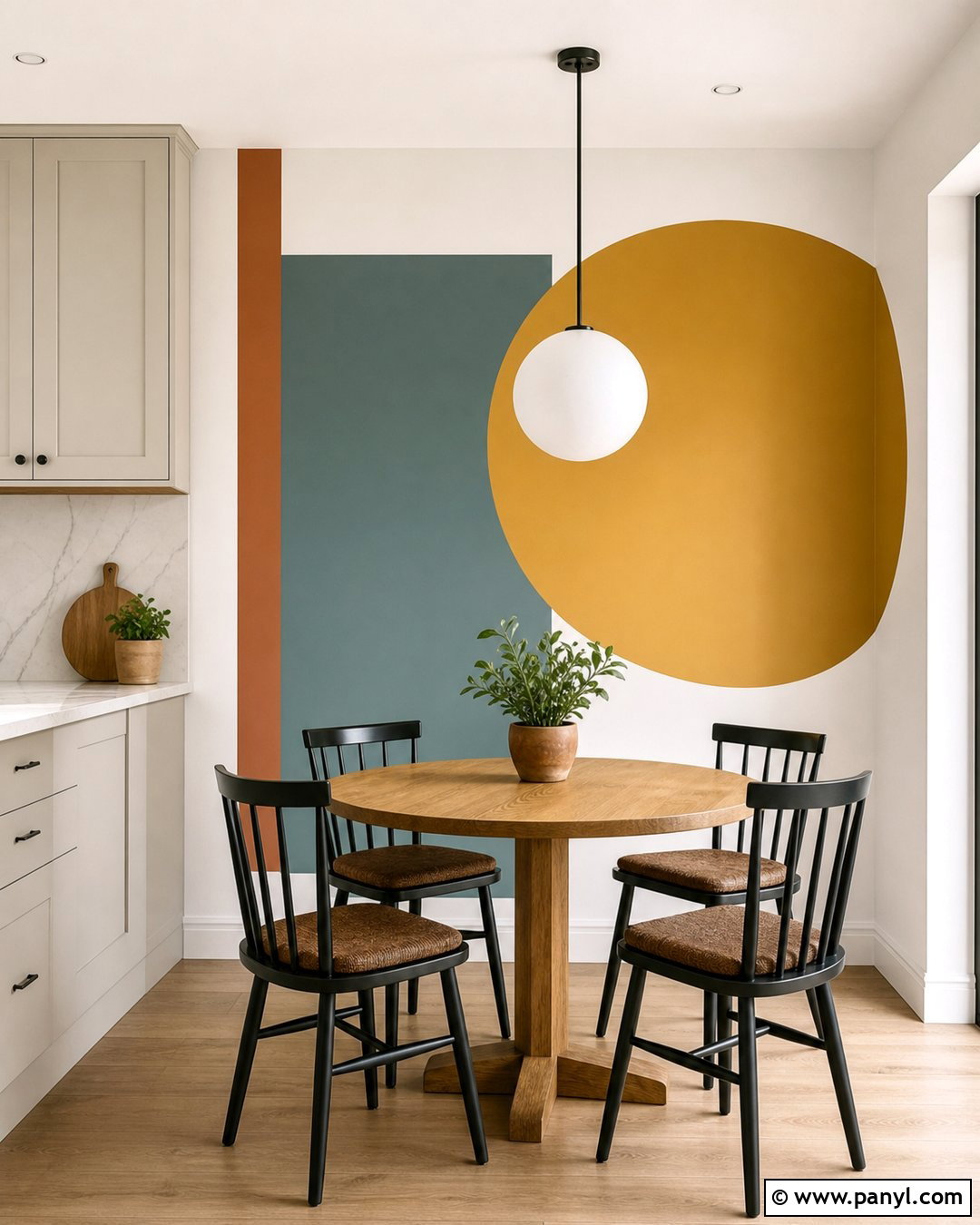
A painted geometric feature can define a breakfast corner or blank kitchen wall without competing with cabinetry and backsplash materials. Use a warm white background with an oversized mustard circle, muted teal rectangle, and narrow terracotta stripe. Position the composition behind a small round oak table with black spindle chairs. Add a white globe pendant, woven seat cushions, and a simple ceramic centerpiece. Keep cabinets neutral, such as soft white or light greige, and repeat matte black through hardware and lighting. The wall colors should complement existing counters and floors rather than introducing an unrelated palette. Choose scrubbable satin paint to handle fingerprints and occasional splashes. Avoid placing detailed shapes directly behind open food-preparation surfaces. A few broad forms will look cleaner and remain easier to maintain than a dense repeated pattern.
30. Geometric Small Room Wall Paint
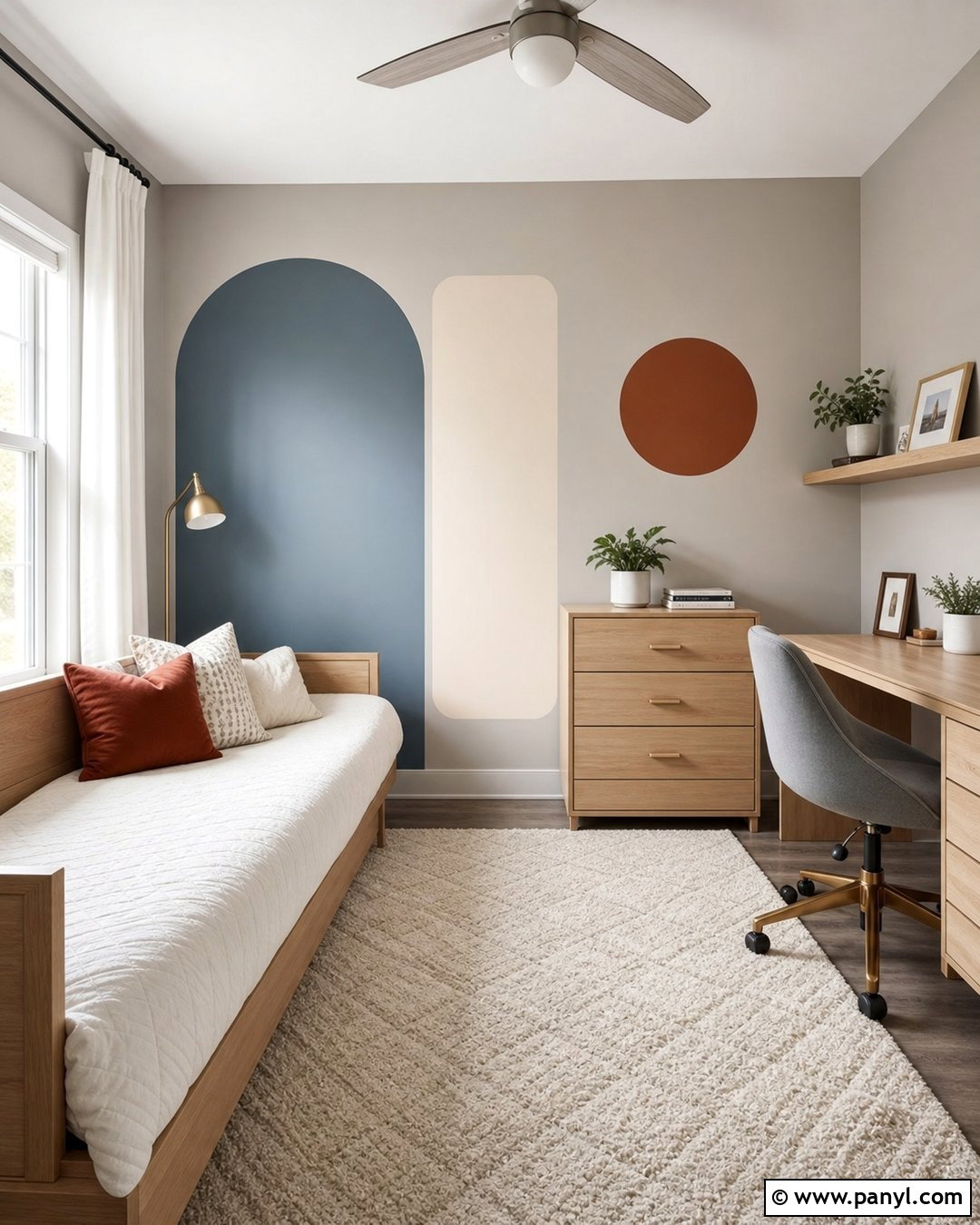
In a small room, one carefully scaled composition can create depth without using every inch of wall space. Begin with pale warm gray and add a tall dusty blue arch crossed by a narrow cream rectangle and a small rust circle. Place the design behind a compact daybed or loveseat, allowing the vertical arch to draw attention upward. Use light oak furniture, white curtains, a cream rug, and only a few rust-colored accessories. Furniture with visible legs will keep the floor area open and prevent the painted wall from feeling heavy. Avoid high-contrast black outlines around every shape. Soft transitions are more comfortable in tight spaces. Test the pattern with removable paper templates before painting. This reveals whether the scale works from the doorway and whether furniture will hide important parts of the composition.
31. Geometric Neutral Wall Paint
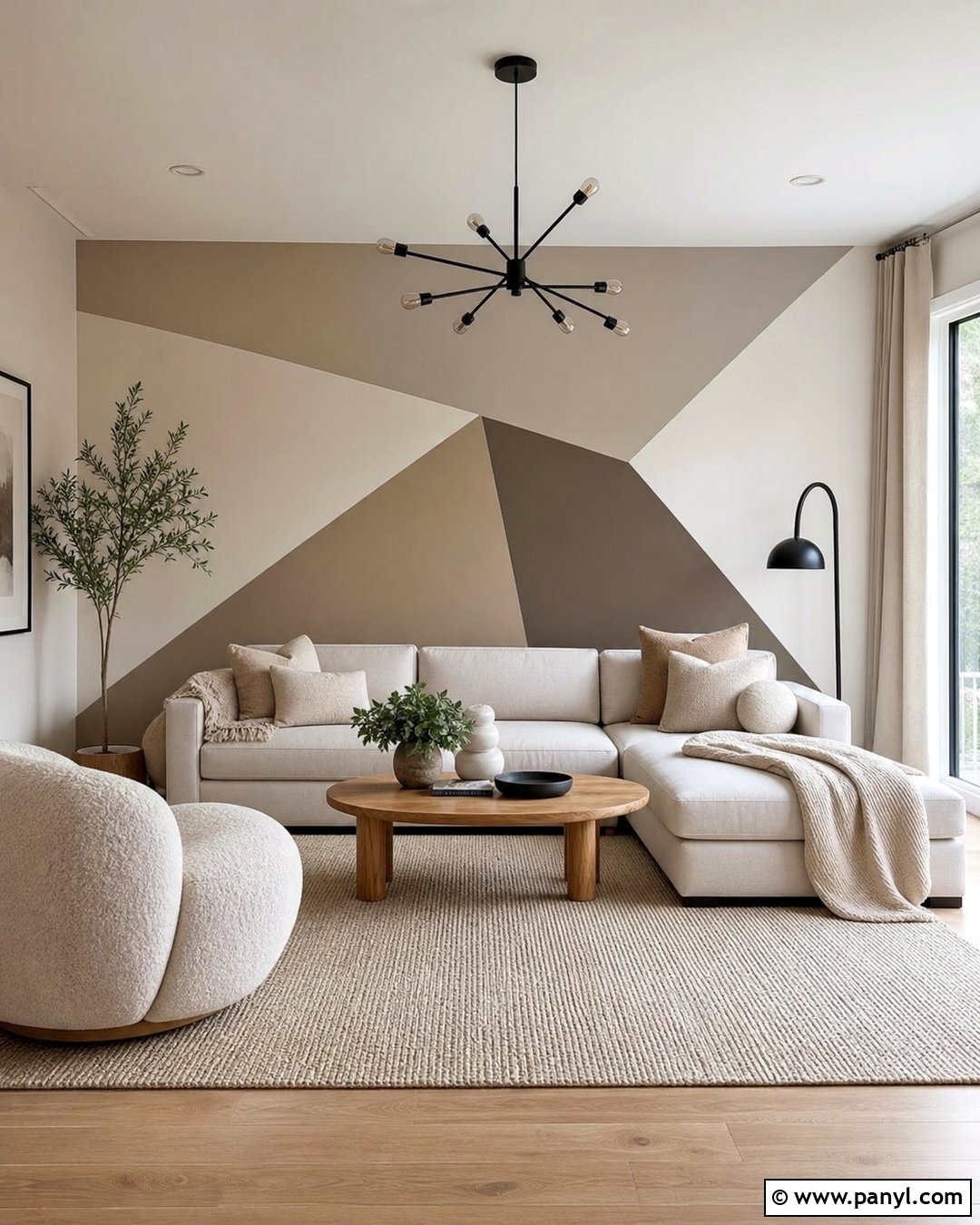
Neutral paint can create a striking geometric wall through contrast in tone rather than bright color. Use an ivory base with oversized polygons in mushroom brown, warm greige, sand, and soft taupe. Arrange the darkest shape behind a cream sofa to anchor the seating zone. Add an oak coffee table, boucle chair, woven wool rug, and linen curtains in closely related shades. Black metal lighting provides a small amount of definition, while ceramic accessories add curved forms. Vary the values enough that every painted section remains visible in both daylight and evening light. Avoid selecting several beige shades with nearly identical undertones, as they may blend together unexpectedly. Paint large sample boards and view them beside the floor and upholstery. Clean, asymmetrical shapes prevent the quiet palette from feeling flat or overly traditional.
32. Geometric Black And White Wall Paint
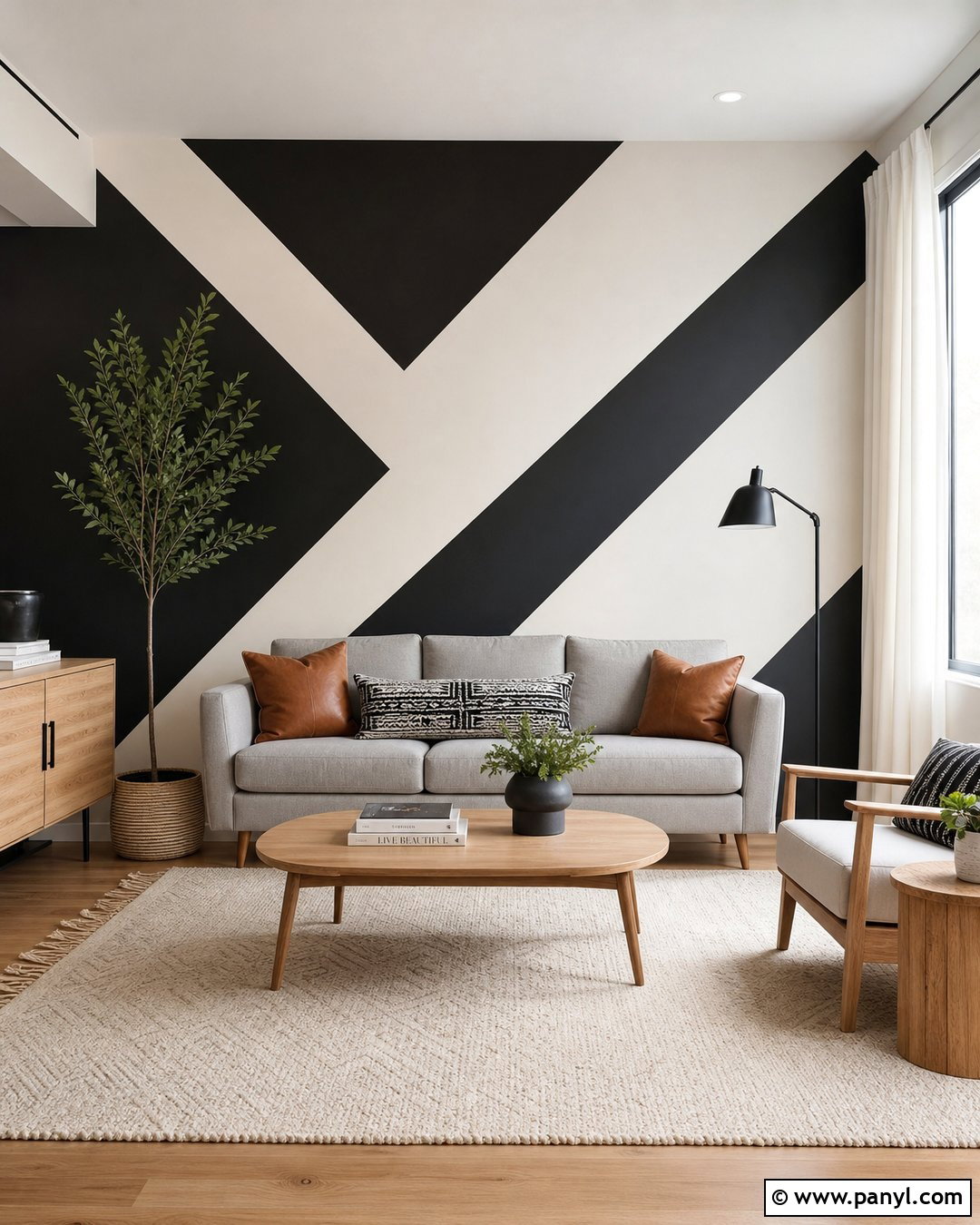
A black-and-white geometric wall creates strong visual drama, so the rest of the room should remain simple and comfortable. Paint a warm white base with broad black diagonal bands forming an asymmetrical pattern. Keep more white than black to preserve brightness and prevent the wall from overpowering the space. Pair it with a light gray sofa, natural oak furniture, white curtains, and a thick cream rug. Add cognac leather cushions and green plants to warm the monochrome palette. Choose one large abstract print with minimal color rather than several small artworks. Matte black paint reduces glare and gives the shapes a smoother appearance. Carefully plan around the television, shelves, and outlets because high contrast emphasizes every interruption. Seal tape edges with the white base coat before applying black for exceptionally crisp lines.
33. Geometric Pastel Wall Paint
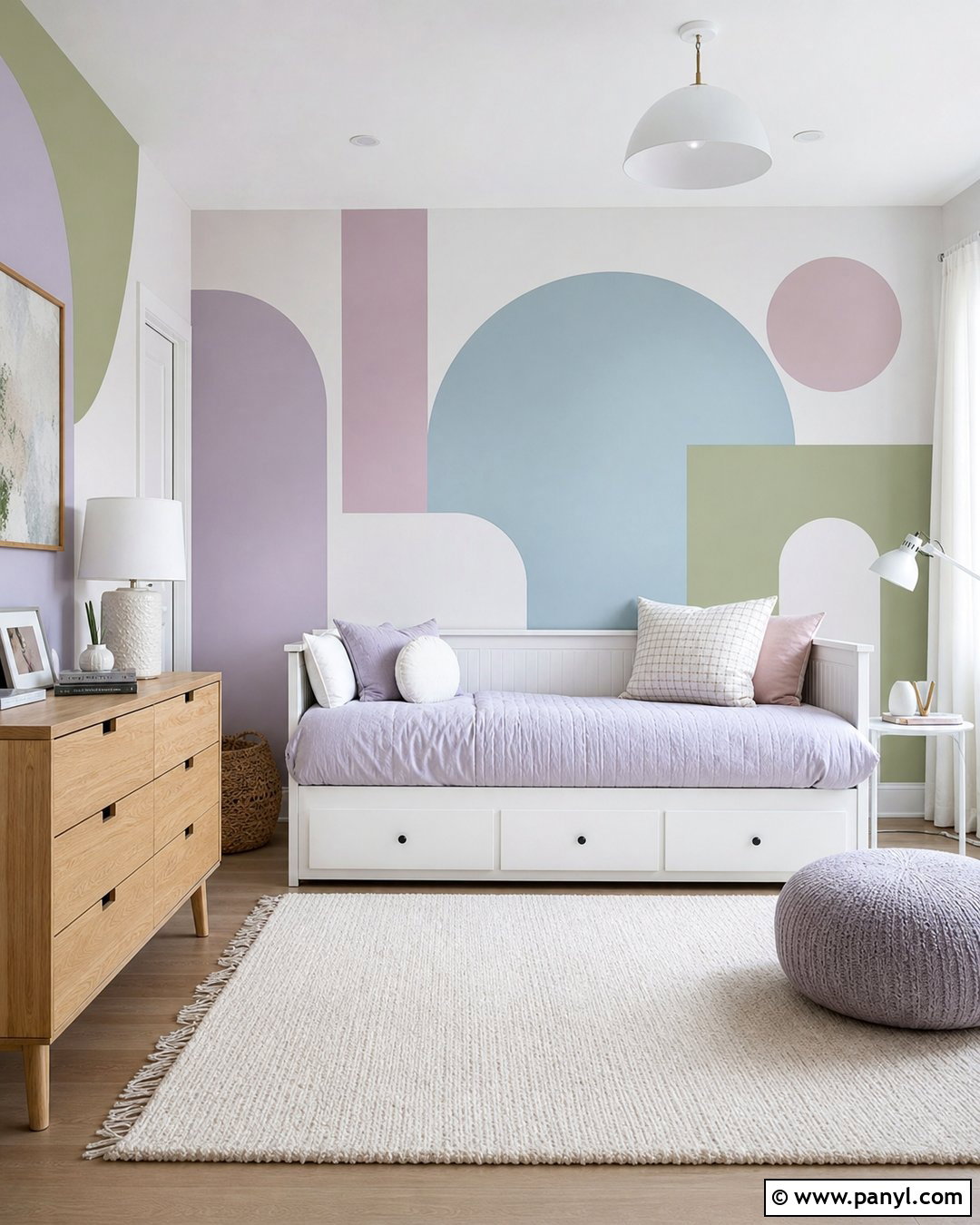
Pastel geometry can feel fresh and grown-up when the colors are slightly muted and the shapes remain large. Paint a soft white wall with overlapping arches, rectangles, and circles in powder blue, pale lavender, blush pink, and light sage. Use the design behind a white daybed in a guest room or multipurpose craft space. Add pale oak storage, lavender-gray bedding, a cream rug, and white metal lighting. Keep decorative objects organized in closed cabinets or matching boxes so the wall does not compete with clutter. Allow several shapes to overlap using custom-mixed transition colors for added depth. Repeat each pastel only once or twice across the room. Broad forms and generous white areas create a more modern effect than small scattered shapes. Use pencil marks lightly because they may show through very pale paint.
34. Geometric Earth Tone Wall Paint
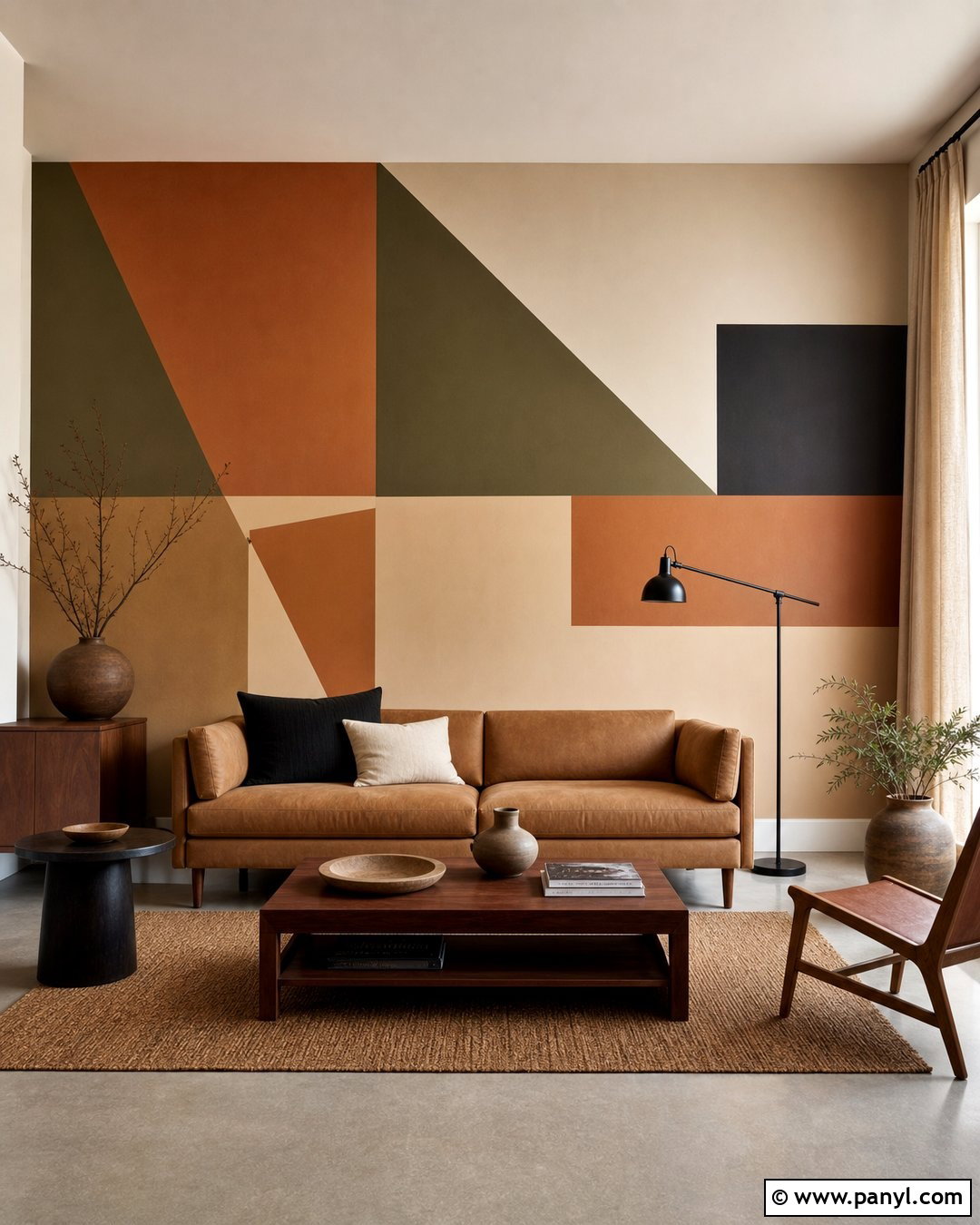
Earth tones make a geometric wall feel warm, grounded, and easy to coordinate with natural materials. Start with a creamy plaster-colored base and create angular blocks in terracotta, olive green, ocher, clay brown, and muted charcoal. Arrange the shapes asymmetrically behind a low tan sofa, concentrating the deepest colors near the floor. Add a walnut coffee table, woven rug, linen curtains, and black metal floor lamp. Cushions in rust and olive connect the wall to the seating, while cream upholstery maintains balance. Handmade-looking ceramics and wood accessories reinforce the organic palette without adding another busy pattern. Keep the painted edges clean so the design contrasts with the tactile furnishings. Test earth tones beside the room’s flooring, since orange or yellow undertones can become stronger when placed near certain woods.
35. Geometric Minimalist Wall Paint
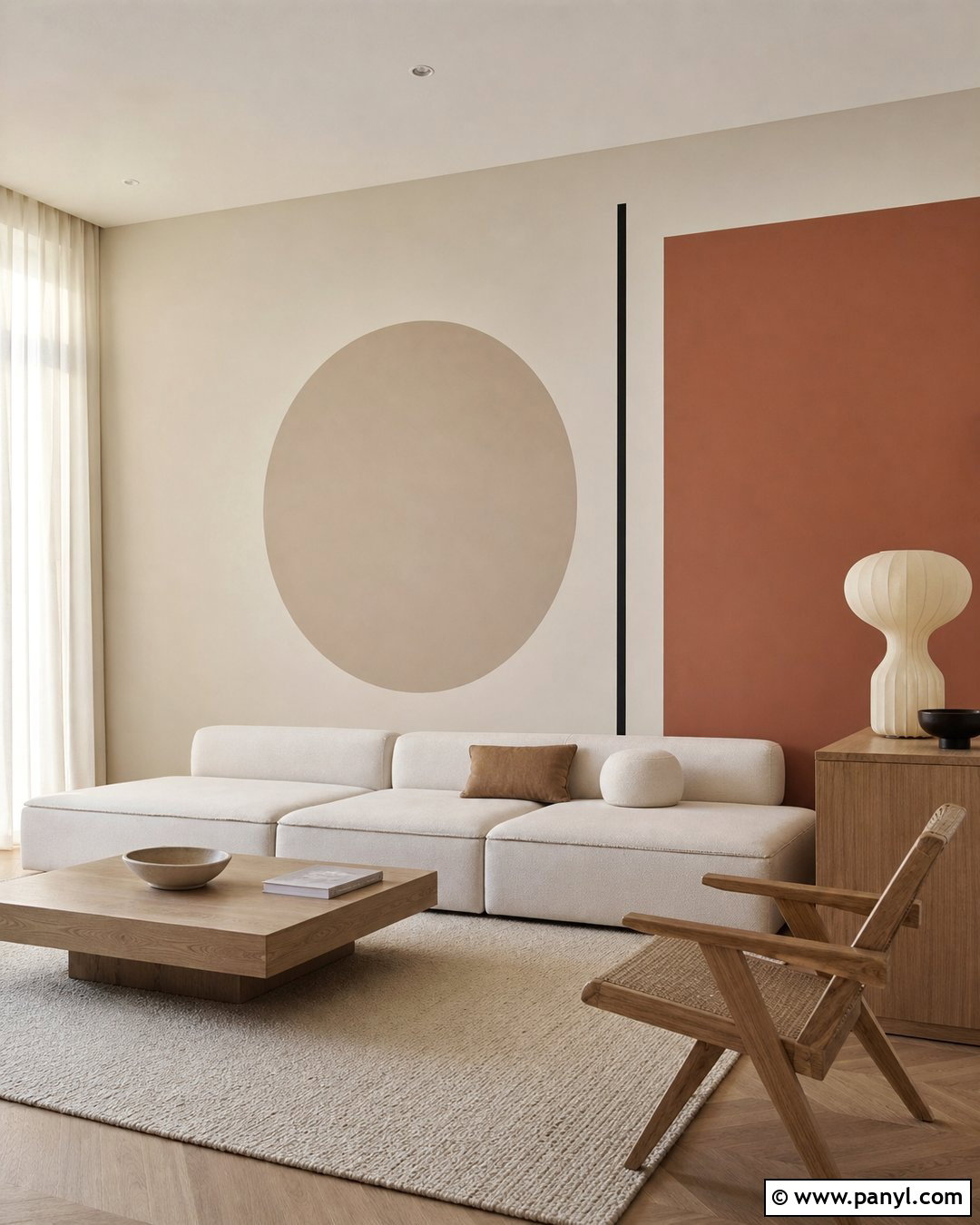
Minimalist geometry depends on careful scale, placement, and restraint rather than a complicated pattern. Paint the room soft warm white, then add one oversized greige circle partly hidden behind a low cream sofa. Cross the circle with a single narrow black vertical line and a smaller muted clay rectangle near the bottom. Choose pale oak furniture, a flat-woven ivory rug, linen curtains, and one sculptural floor lamp. Leave most surfaces open and select only a few functional accessories in ceramic, wood, and matte black. The composition should feel connected to the furniture rather than floating randomly above it. Precise edges are especially important because there are few elements to distract from mistakes. Use paper templates at full scale and view them from several room entrances before committing to the final painted arrangement.
Conclusion:
The most successful Geometry Wall Paint Ideas combine creative shapes with practical room planning. Choose patterns that support the scale, purpose, and furniture layout of the space rather than decorating an empty wall in isolation. Large forms usually create a cleaner result, while a limited palette helps even bold designs feel coordinated. Before painting, repair the surface, test colors in the room, measure carefully, and preview the arrangement with paper or removable tape. Work from lighter colors toward darker shades and allow proper drying time between layers. Most importantly, repeat the wall palette subtly through textiles, furniture, lighting, and accessories. This turns a painted pattern into a complete design that feels polished, balanced, and personal.

Related Ideas and Inspiration:
Leave a Reply