
Split painted walls offer an easy way to add color, improve visual balance, and give an ordinary room more architectural character. The wall can be divided horizontally, vertically, diagonally, or with a decorative painted shape. Molding, chair rails, paneling, and crisp taped lines can also create a clean transition between colors. () The best combinations connect with the flooring, furniture, lighting, and overall mood of the room. Soft tonal pairings feel calm and spacious, while contrasting shades create a stronger focal point. You can also adjust the height of the dividing line to highlight furniture or change the room’s proportions. Explore these complete, practical, and stylish looks inspired by 35 Split Painted Walls.
1. Navy And White Split Painted Living Room Walls
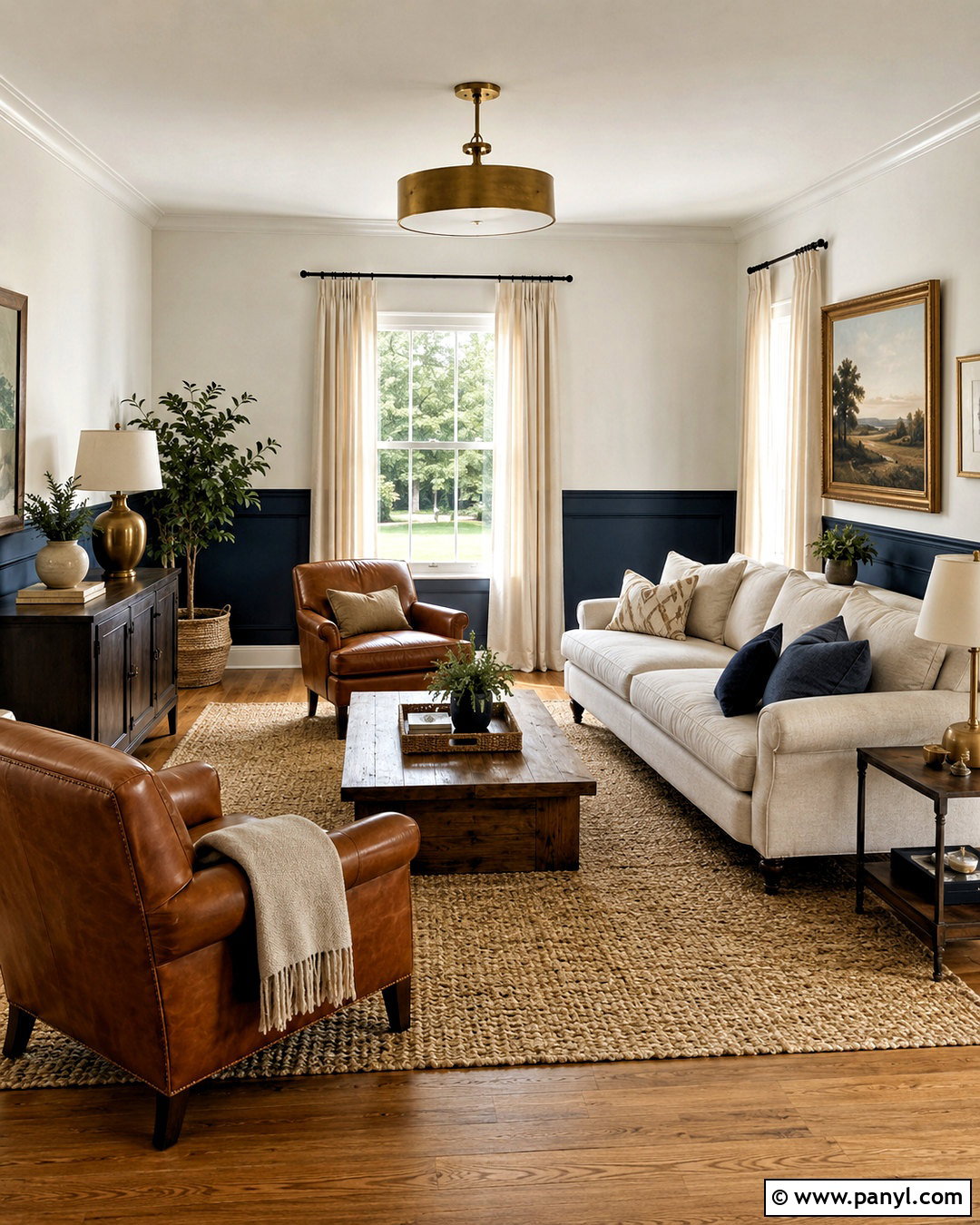
A navy lower wall and warm white upper wall create a polished living room without making the space feel too dark. Place the dividing line slightly above the sofa back so the navy section visually anchors the seating area. Choose a light oatmeal sofa, two cognac leather chairs, and a medium-tone oak coffee table to warm the palette. Navy and cream patterned pillows can repeat the wall colors without looking overly coordinated. Add a natural woven rug, white linen curtains, and brushed brass lighting for softness. Paint the baseboards navy to make the lower section feel complete, but keep window trim white. Simple framed prints hung across the upper wall draw attention upward and balance the strong lower color.
2. Sage Green And Cream Split Painted Bedroom Walls
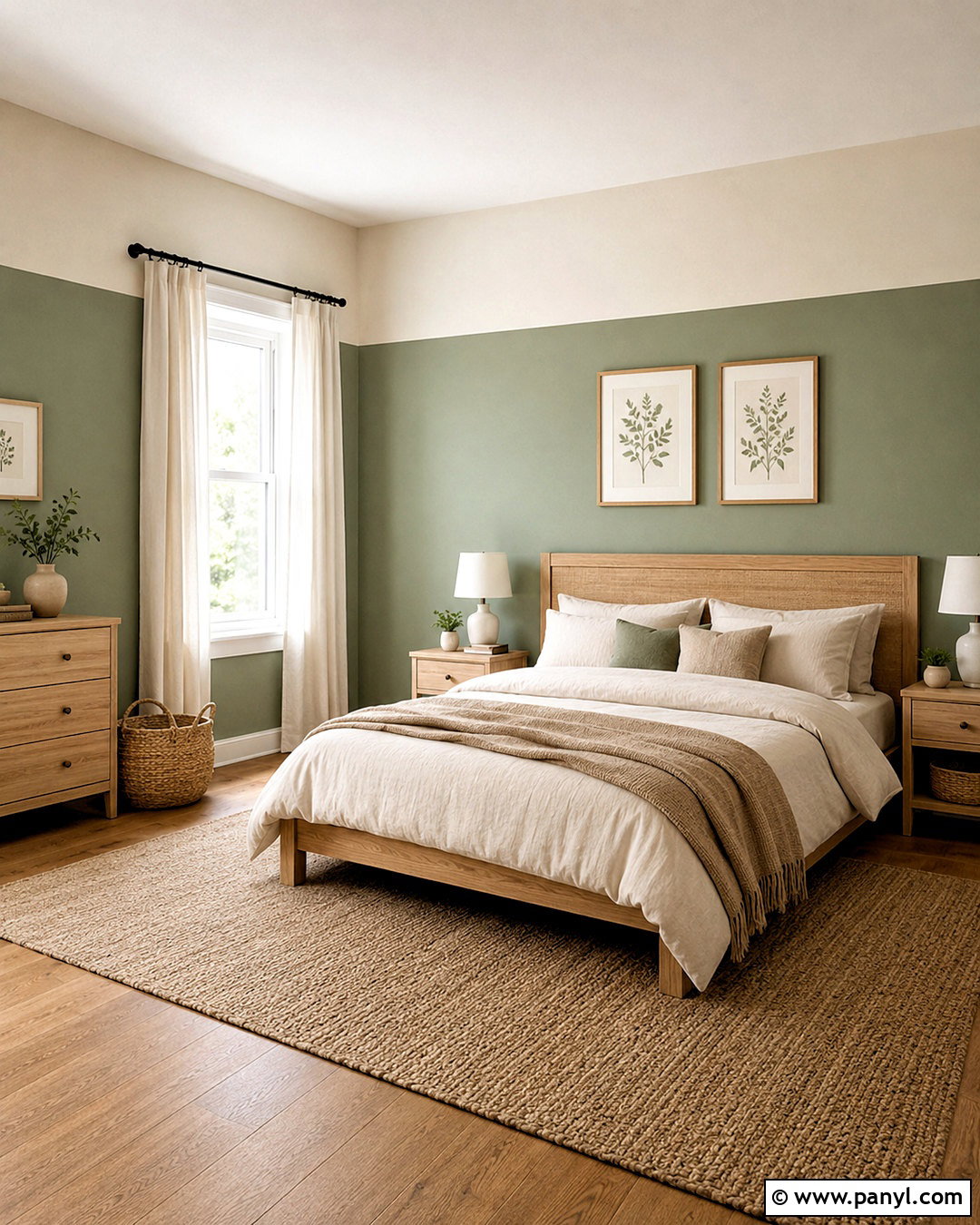
Imagine waking up in a bedroom surrounded by gentle sage green and warm cream. Paint the lower two-thirds of the walls sage, then use cream above the dividing line and across the ceiling. This higher split gives the green more presence while preserving an airy finish overhead. Center a natural oak bed against the main wall and dress it with ivory linen, muted green pillows, and a soft tan throw. Light wood nightstands, ceramic lamps, and woven baskets support the relaxed palette. Keep the curtains cream and choose a faded botanical rug with hints of sage. A thin painted cream line at the color transition adds definition without requiring molding, making this complete bedroom approachable for renters or weekend decorators.
3. Terracotta And Blush Split Painted Dining Room Walls
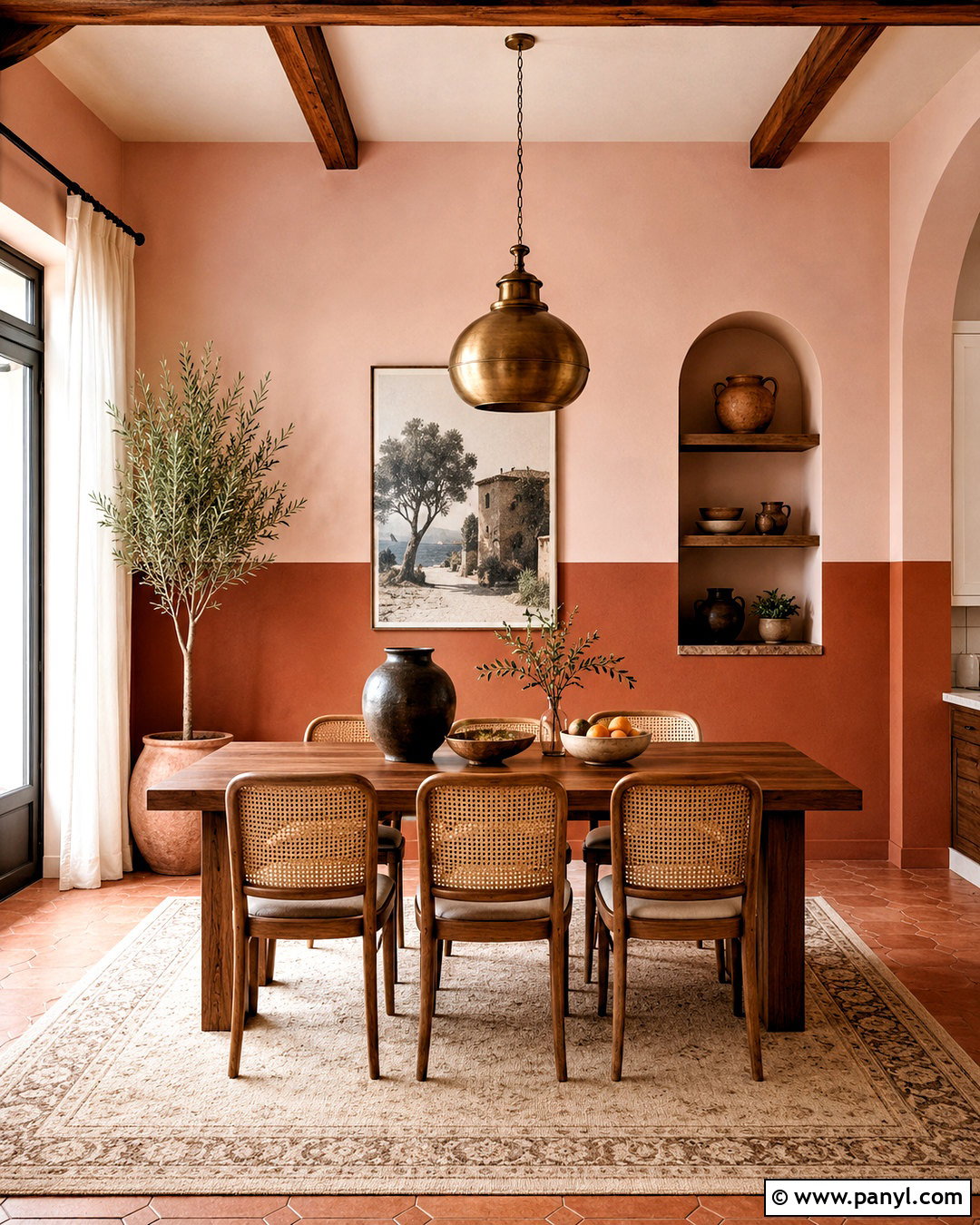
Warm terracotta below soft blush gives a dining room an inviting, sun-washed personality. Set the dividing line at standard chair-rail height, allowing the deeper color to protect and ground the lower walls. A walnut dining table and curved cane-back chairs bring natural texture to the scheme. Use an ivory area rug with a subtle rust pattern to connect the furniture and paint. Above the table, install a simple aged-brass pendant with a wide shade. Cream curtains and handmade ceramic pieces prevent the reddish tones from becoming overwhelming. Paint the baseboards terracotta for a seamless lower band, while keeping door and window trim warm white. Minimal landscape artwork completes this comfortable Mediterranean-inspired dining space.
4. Charcoal And Warm White Split Painted Entryway Walls
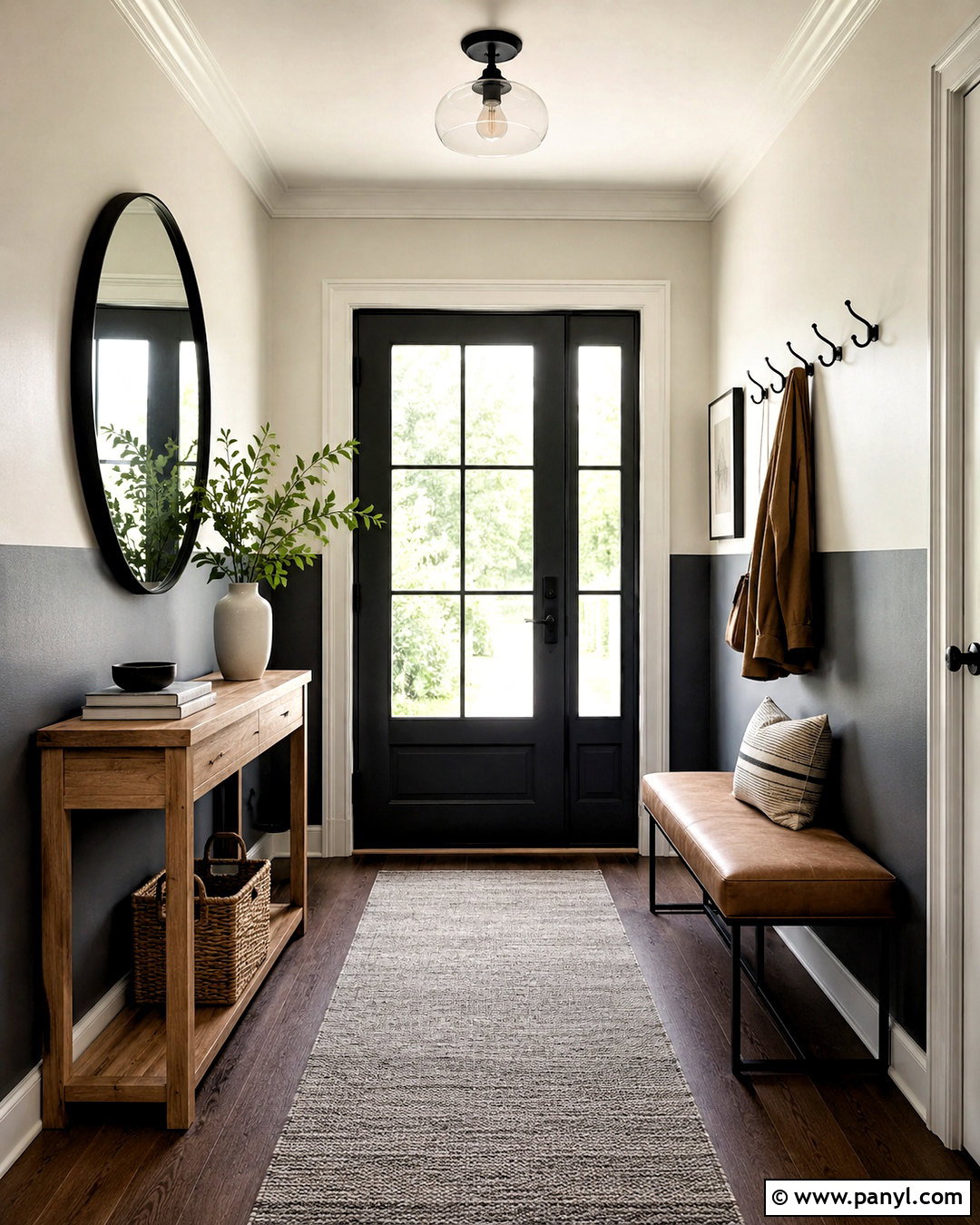
A busy entryway benefits from a darker lower section that looks substantial and hides everyday scuffs more easily. Use soft charcoal from the baseboards to about 42 inches high, then apply warm white above it. A narrow natural-oak console provides a convenient landing place without crowding the walkway. Hang a large round black-framed mirror over the console, keeping its center within the white section. Add a washable gray runner, a woven storage basket, and a compact upholstered bench in light tan. Matte black hooks can line one wall for practical storage. Paint the interior door charcoal to strengthen the lower color, but leave the surrounding casing white. The finished entry feels organized, modern, and welcoming rather than purely utilitarian.
5. Dusty Blue And Beige Split Painted Nursery Walls
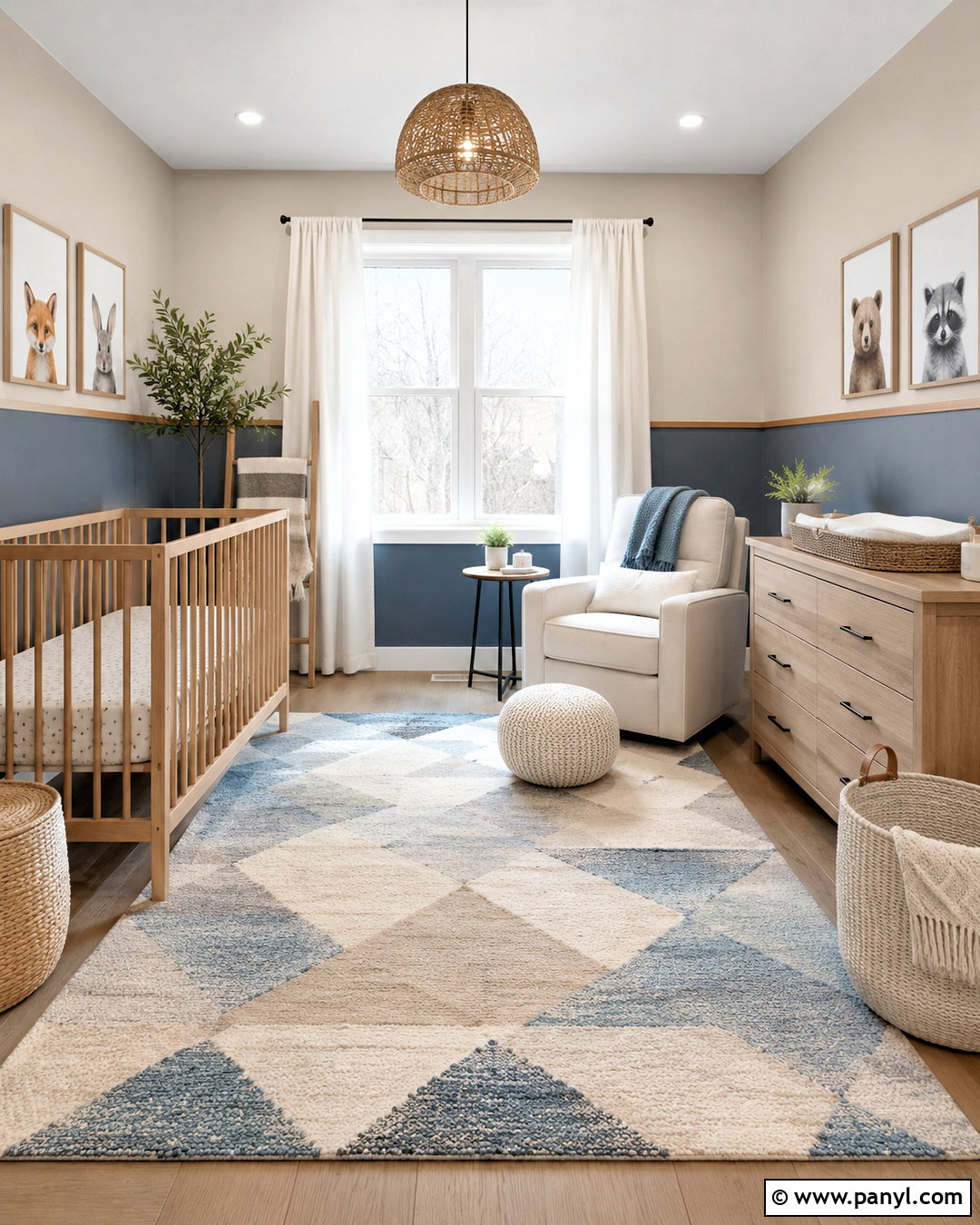
Dusty blue and creamy beige create a restful nursery that can grow with the child. Apply blue to the lower half of every wall and use beige above, placing a narrow natural-wood rail over the dividing line. Position a light oak crib against the longest wall with plenty of open space around it. An ivory upholstered rocker, small wood side table, and washable geometric rug keep the room practical. Add white curtains with a subtle blue border and simple animal artwork in pale wood frames. Storage baskets, a low book ledge, and a matching oak dresser make the room functional without adding clutter. Soft blue bedding accents and beige textiles repeat the wall palette while maintaining a calm, flexible appearance.
6. Olive Green And Ivory Split Painted Home Office Walls
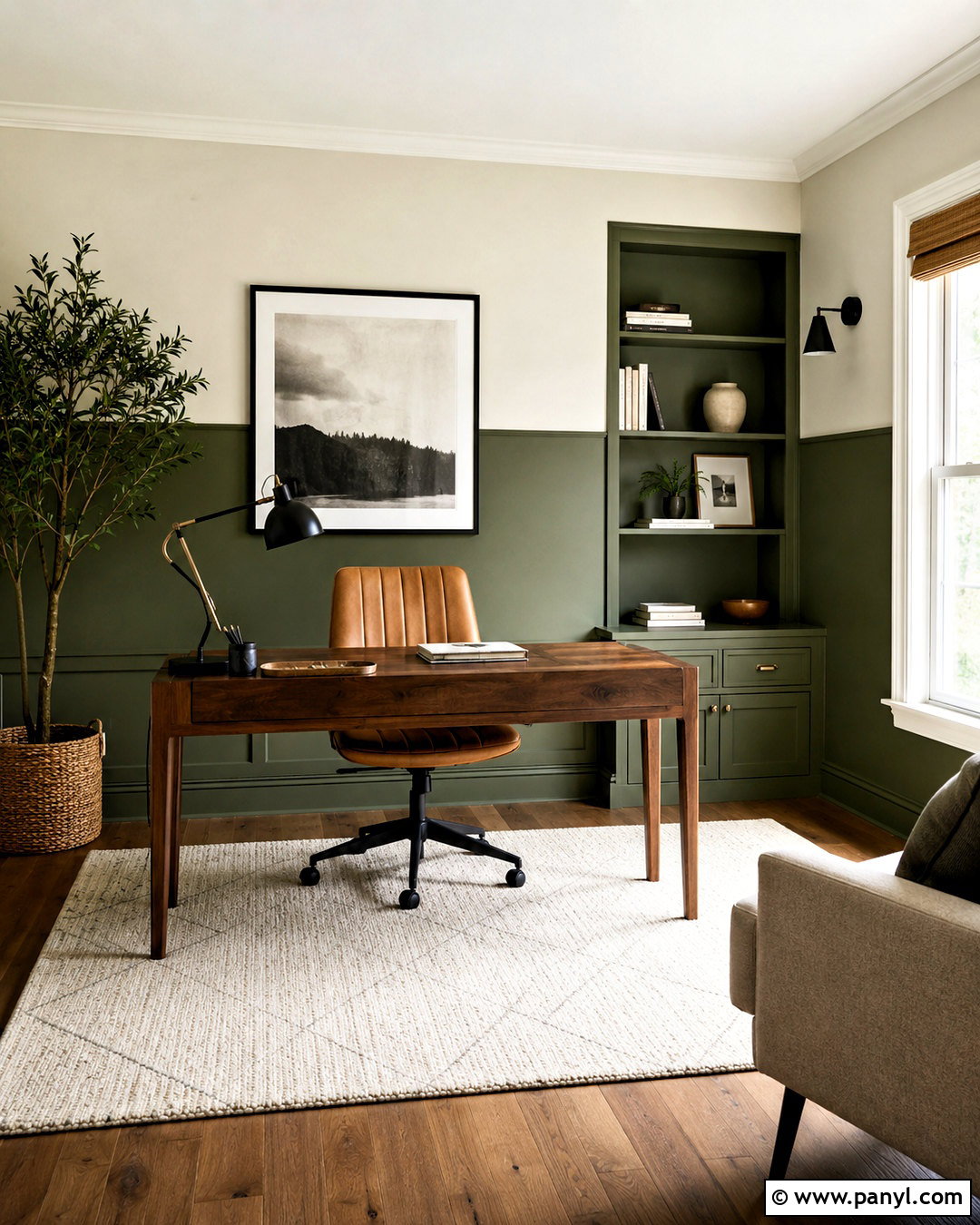
Could your workspace feel focused without becoming cold or corporate? Paint the lower portion of the walls deep olive green and the upper portion soft ivory. Align the split with the desktop so the darker color visually supports the work zone. Choose a streamlined walnut desk, an upholstered camel-colored chair, and closed olive storage cabinets. A flat-woven cream rug and ivory curtains lighten the room, while matte black task lighting adds clear contrast. Hang a neat grid of black-framed art above the desk, leaving enough ivory wall visible around it. A tall leafy plant and a few terracotta accessories introduce natural color. The complete office feels grounded, professional, and comfortable enough for long work sessions.
7. Black And Greige Split Painted Living Room Walls
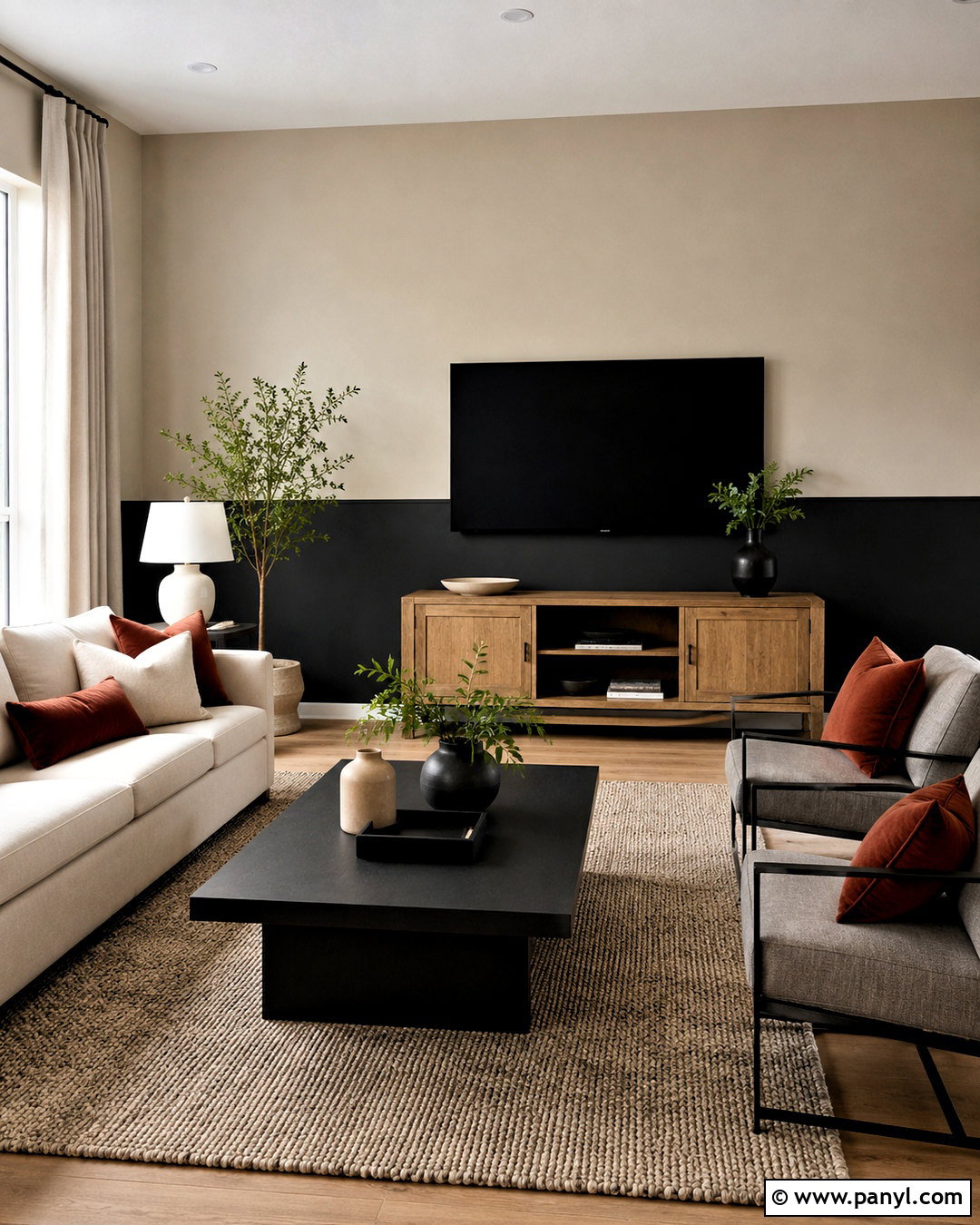
Black split walls can feel surprisingly livable when paired with soft greige and plenty of natural texture. Cover the lower third in matte black and paint the larger upper section warm greige. Continue black across the baseboards and fireplace surround to create a deliberate architectural foundation. Furnish the room with a low cream sofa, oak media console, and two textured gray lounge chairs. A large neutral rug keeps the dark lower edge from feeling heavy. Use linen curtains, sculptural white lamps, and restrained black-framed artwork throughout the space. Pillows in rust and camel provide controlled warmth. This low color split works especially well in a modern living room because it adds contrast while leaving most of the walls light.
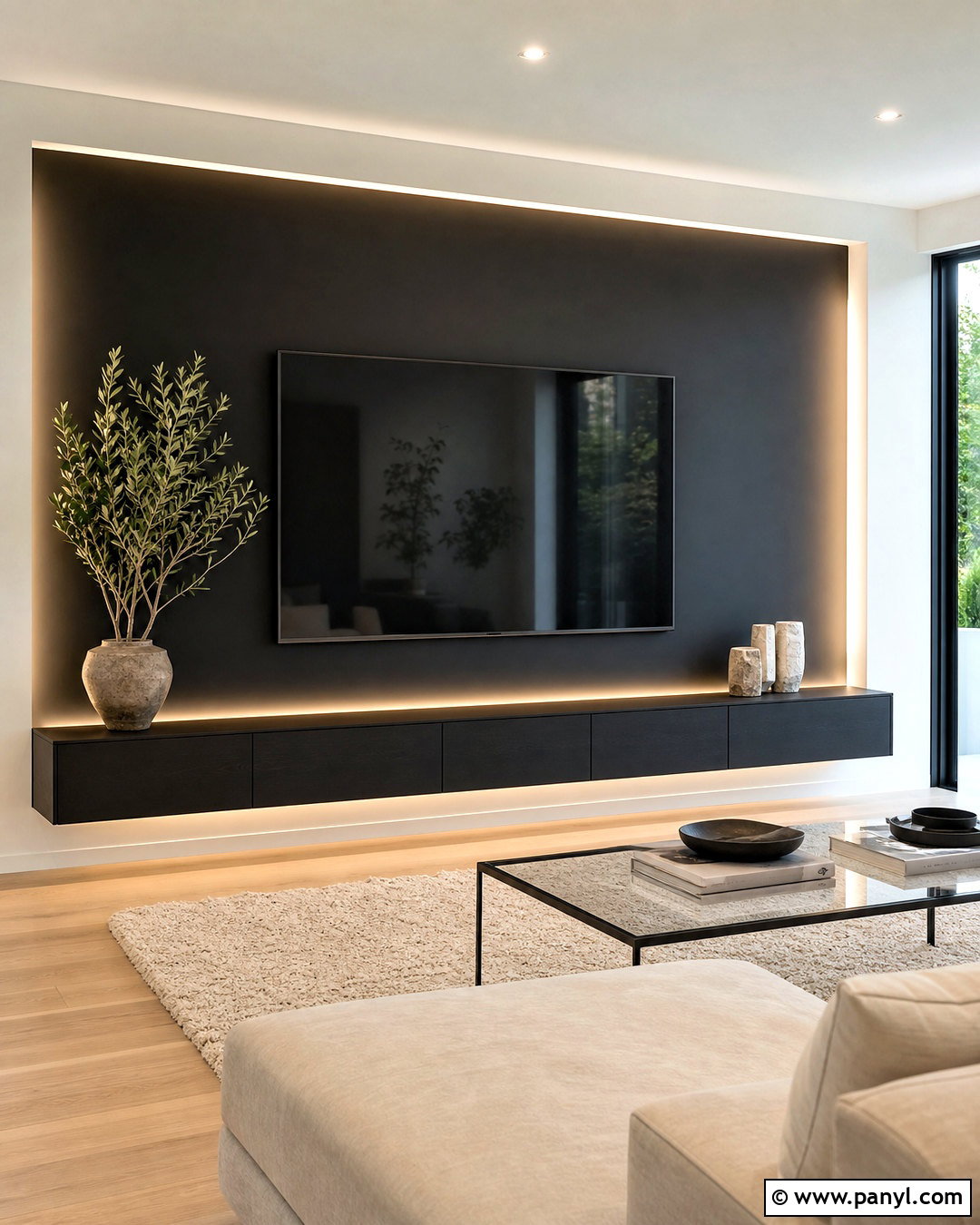
8. Teal And Pale Aqua Split Painted Bathroom Walls
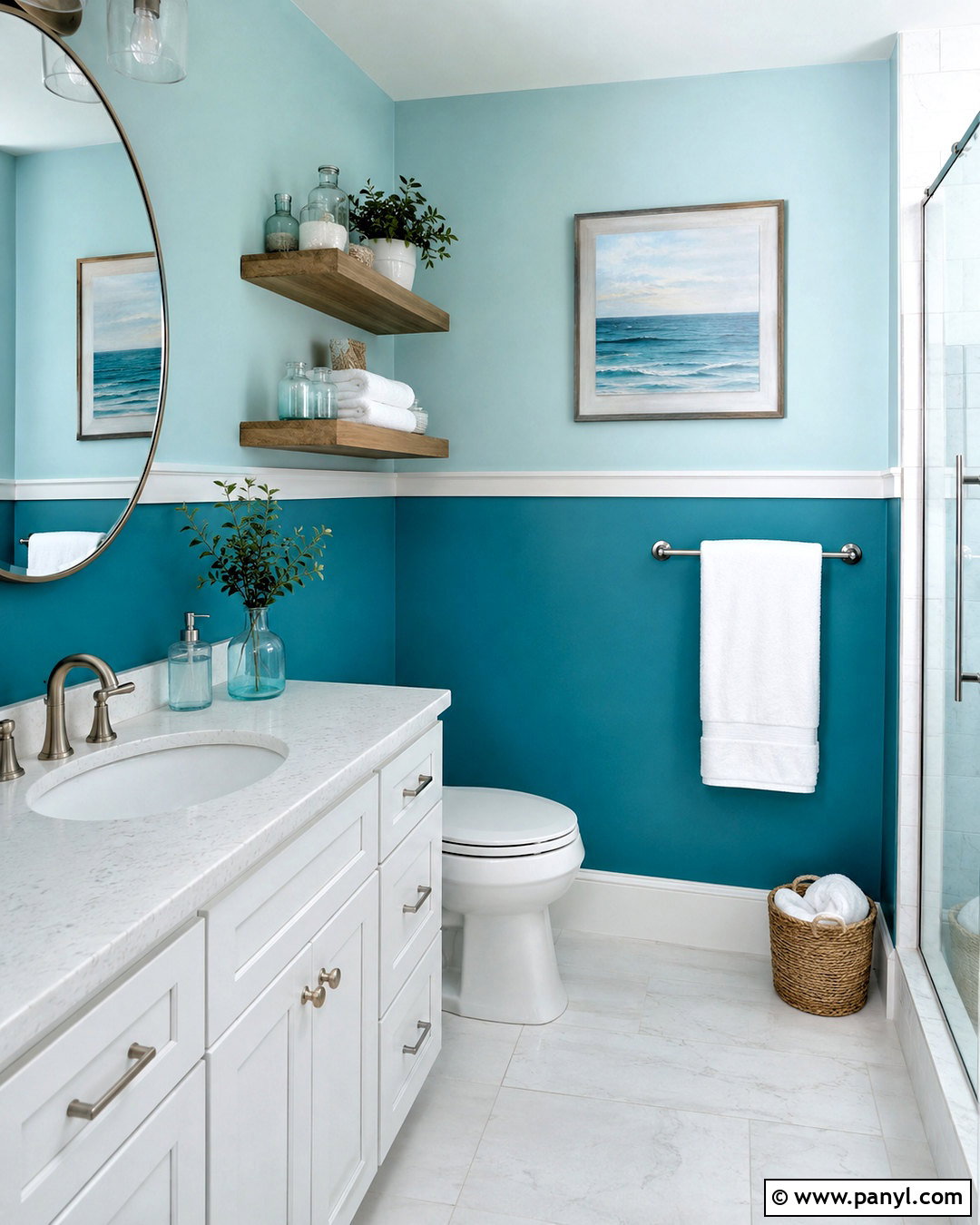
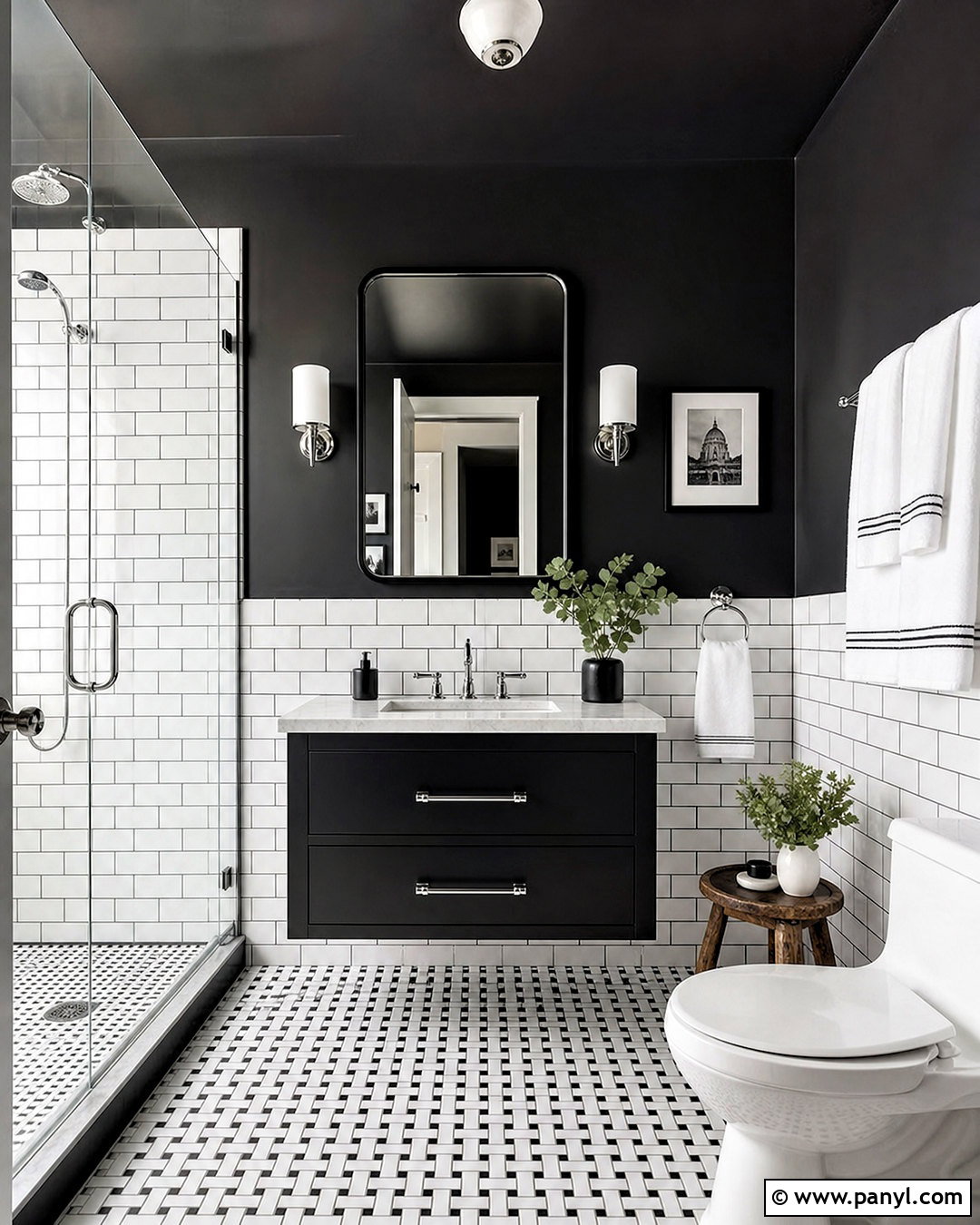
A compact bathroom becomes colorful and cohesive with deep teal below pale aqua. Use moisture-appropriate paint and place the horizontal split slightly above the sink backsplash. The richer lower shade creates a strong background for a white vanity, while the lighter upper wall keeps the room fresh. Add a white quartz countertop, brushed nickel faucet, and rounded mirror with a thin metal frame. Small white floor tiles with teal grout can reinforce the palette without competing with it. Choose crisp white towels, a pale wood shelf, and one or two glass accessories. Paint the vanity teal for a built-in effect, but leave the door and ceiling white. The final bathroom feels clean, bright, and thoughtfully layered.
9. Burgundy And Blush Split Painted Dining Room Walls
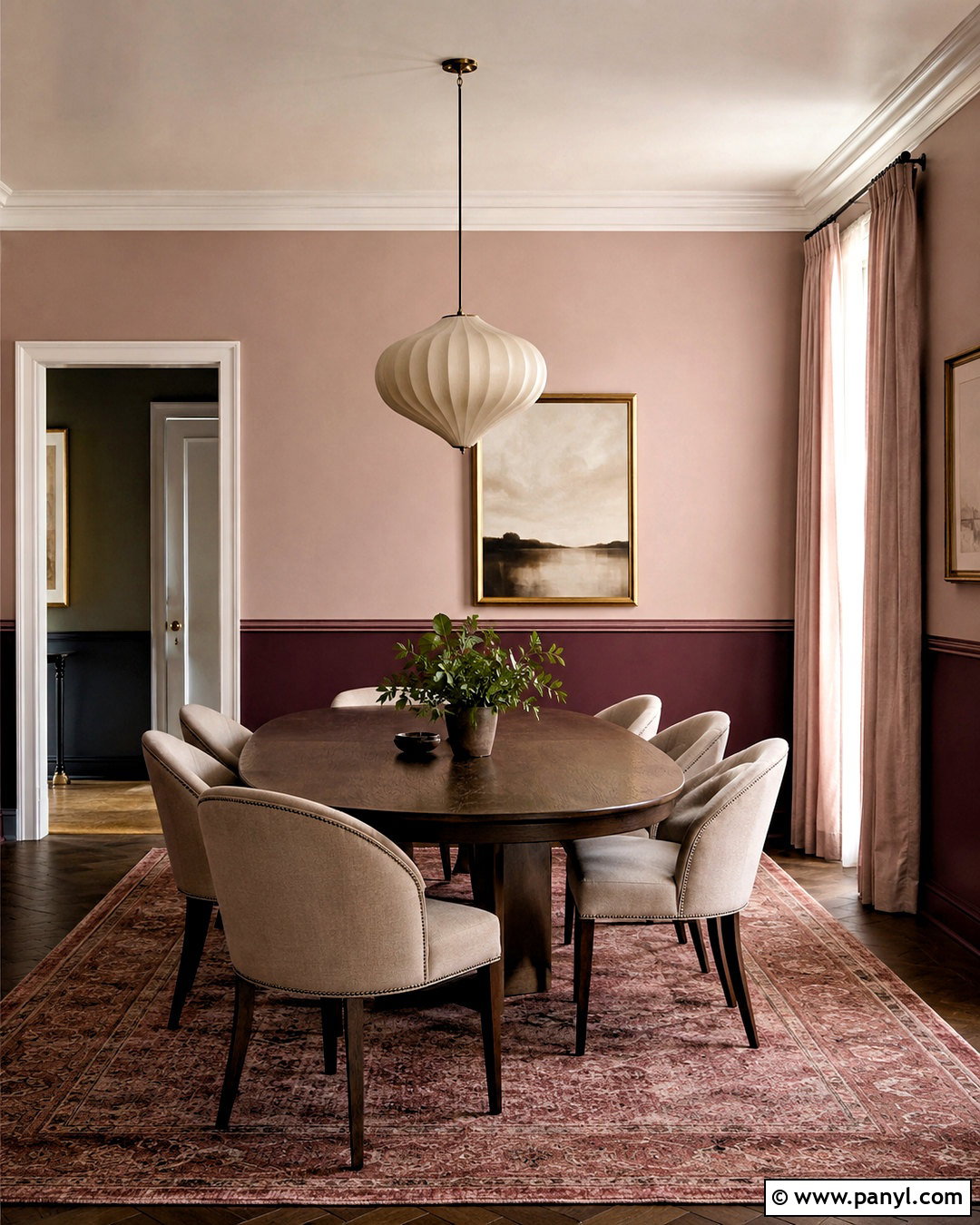
Deep burgundy below muted blush creates a dramatic dining room that remains warm rather than formal. Set the split just above the chair backs and define it with slim burgundy molding. A dark walnut oval table suits the richness of the walls, while cream upholstered chairs soften the composition. Add a large ivory pendant, a faded red-and-tan rug, and full-length blush curtains. Vintage-inspired brass frames can hold simple botanical prints on the lighter upper walls. Keep the tabletop restrained with a low ceramic bowl and neutral linens. Burgundy baseboards and a matching sideboard make the lower section appear continuous. The complete room feels intimate for evening meals while still looking balanced in bright daytime light.
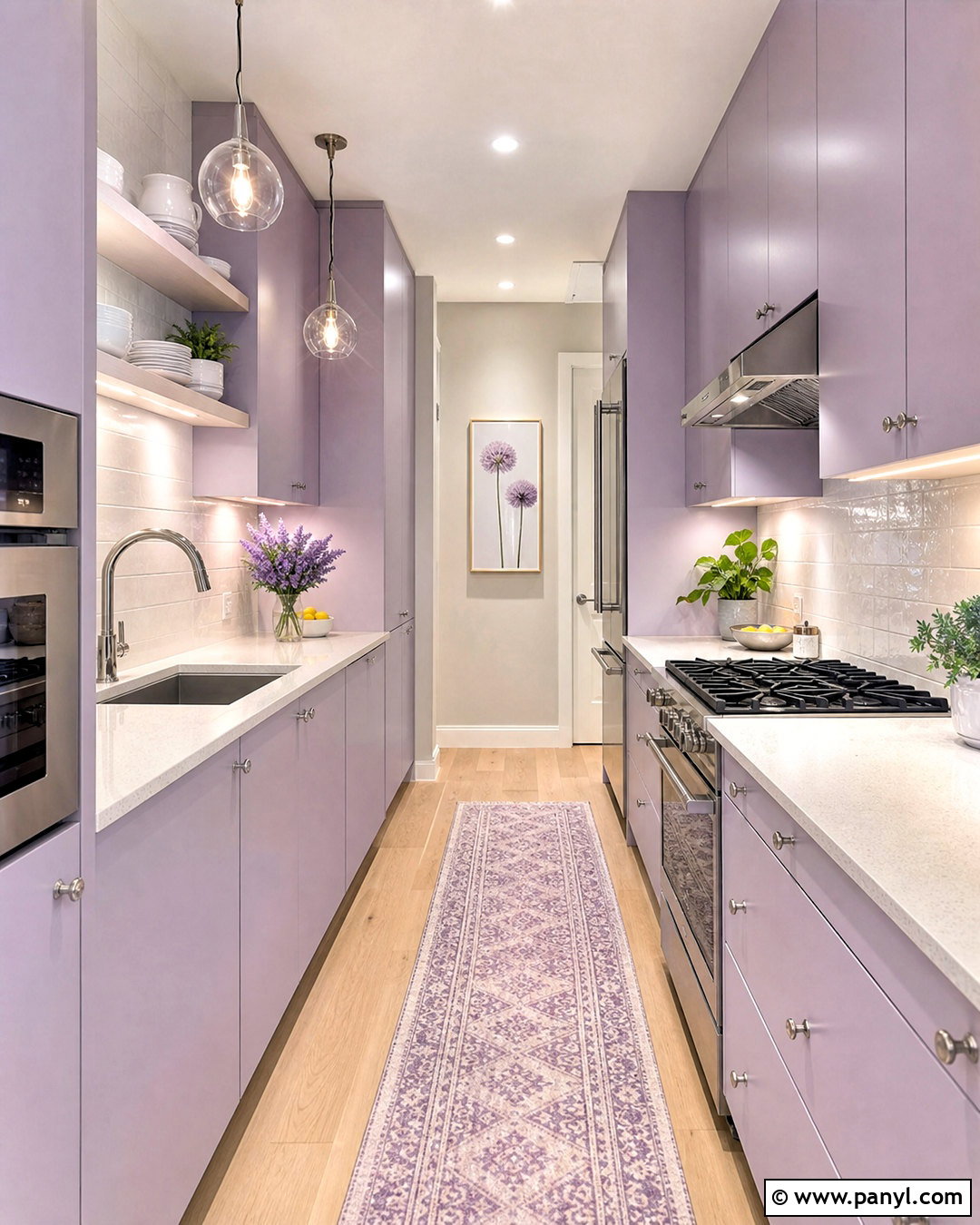
10. Mustard And Cream Split Painted Kids Room Walls
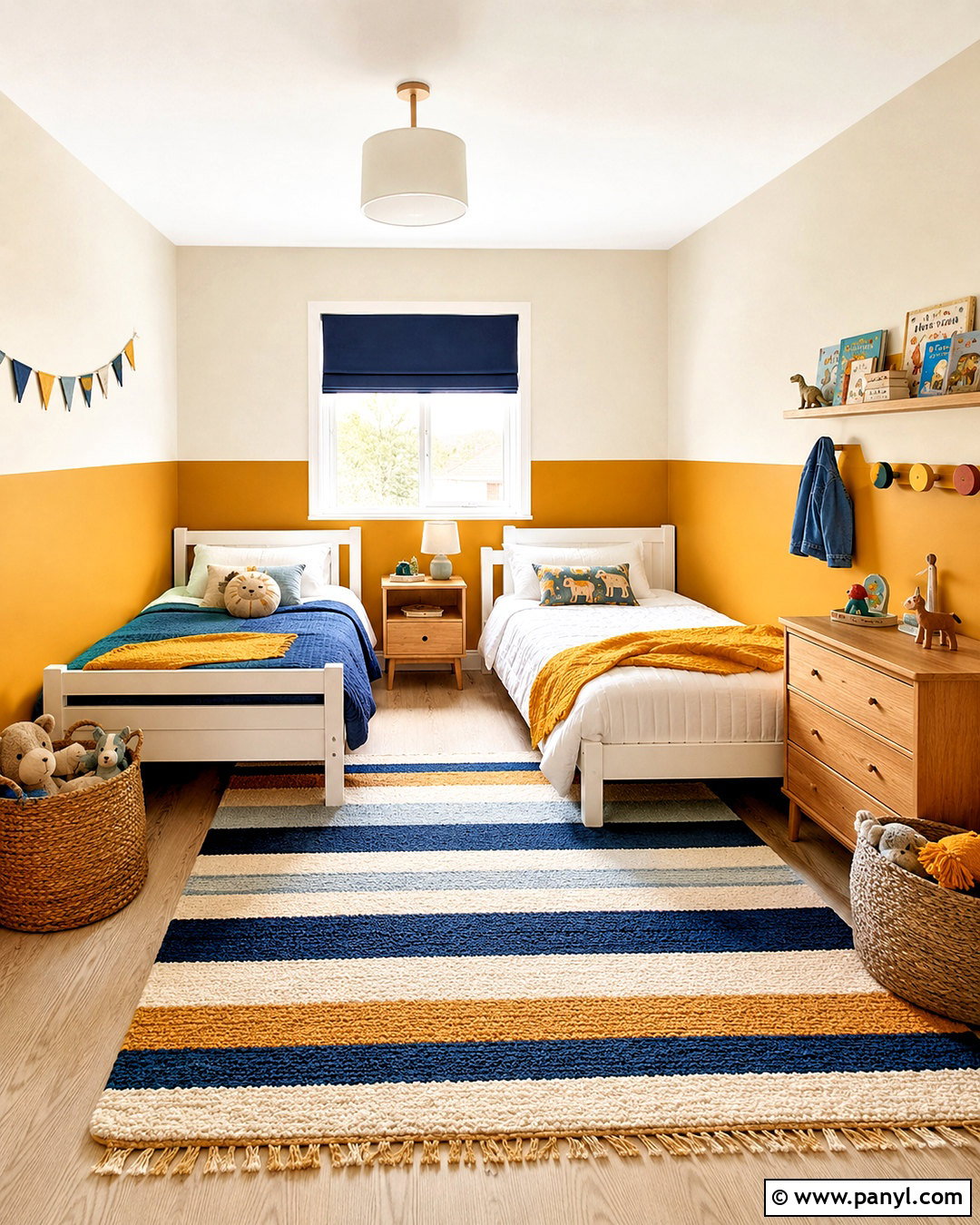
Cheerful mustard yellow works best when balanced by a generous amount of warm cream. Paint the lower half mustard and use cream above, adding a narrow white ledge at the transition for lightweight artwork and small books. Choose two simple white beds or one low natural-wood bed, depending on the room’s layout. Bedding in cream, muted blue, and mustard ties everything together. A washable striped rug, woven toy baskets, and a pale wood dresser make the space practical. Add blue wall hooks and a small green desk for playful contrast. Keep the ceiling, door, and window trim cream. The result is an energetic but organized kids room that feels colorful without relying on busy wall graphics.
11. Forest Green And White Split Painted Hallway Walls
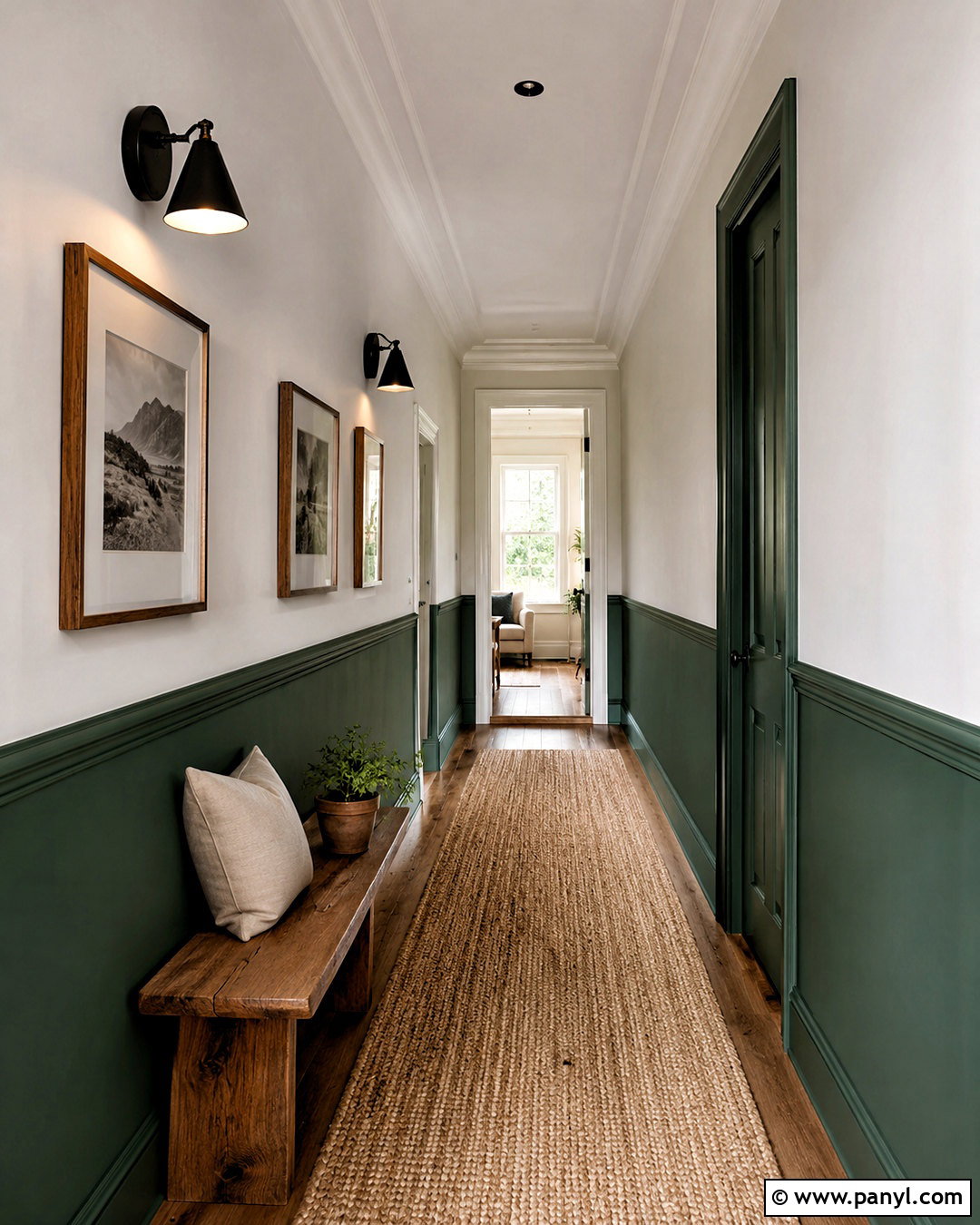
A long hallway gains structure when forest green covers the lower portion and crisp white brightens the area above. Place the dividing line around 40 inches from the floor, following any existing stair angles or door openings carefully. Continue green over the baseboards and lower door panels for a connected look. A narrow jute runner introduces texture without reducing the visual width. Hang evenly spaced black-and-white photographs in oak frames across the white upper section. Matte black wall lights provide contrast, while a small wood bench offers a useful stopping point near the entrance. Because adjoining rooms remain visible from a hallway, repeat small touches of green, oak, or black nearby to create a smoother transition throughout the home. ()
12. Lavender And Warm Gray Split Painted Bedroom Walls
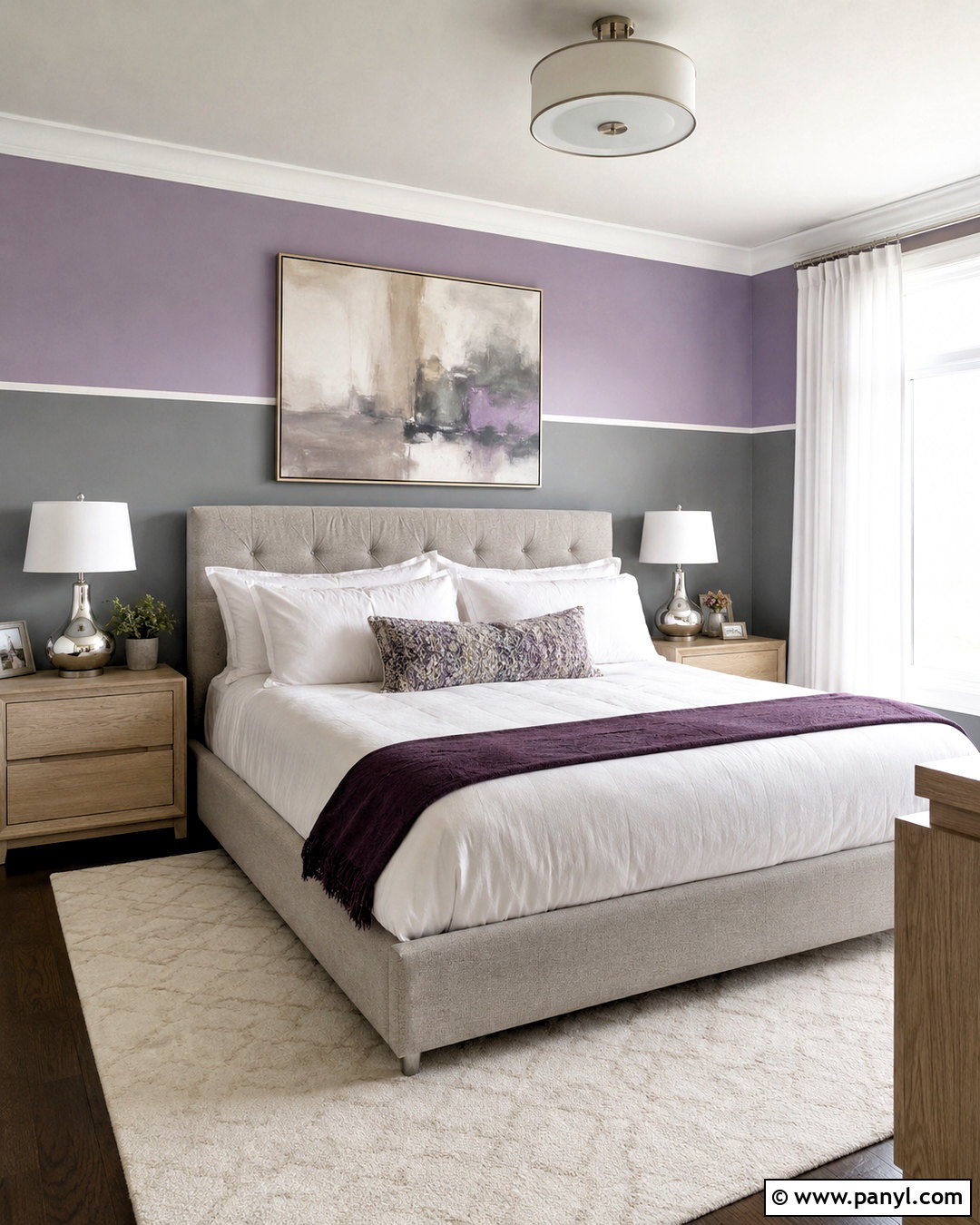
Soft lavender can feel sophisticated when it is grounded with warm gray. Use gray on the lower half of the bedroom and lavender above, letting the dividing line meet the top of a tall upholstered headboard. Choose a light gray bed with white bedding, lavender pillows, and a plum throw used sparingly. Pale oak nightstands and brushed nickel lamps keep the room modern. Add a cream rug, sheer white curtains, and abstract artwork featuring lavender, gray, and muted taupe. Paint the baseboards gray to make the lower section feel intentional. Avoid overly floral accessories, which can make the palette appear themed. The finished bedroom remains gentle and relaxing while still offering enough contrast to highlight the room’s clean furniture arrangement.
13. Cobalt Blue And White Split Painted Breakfast Nook Walls
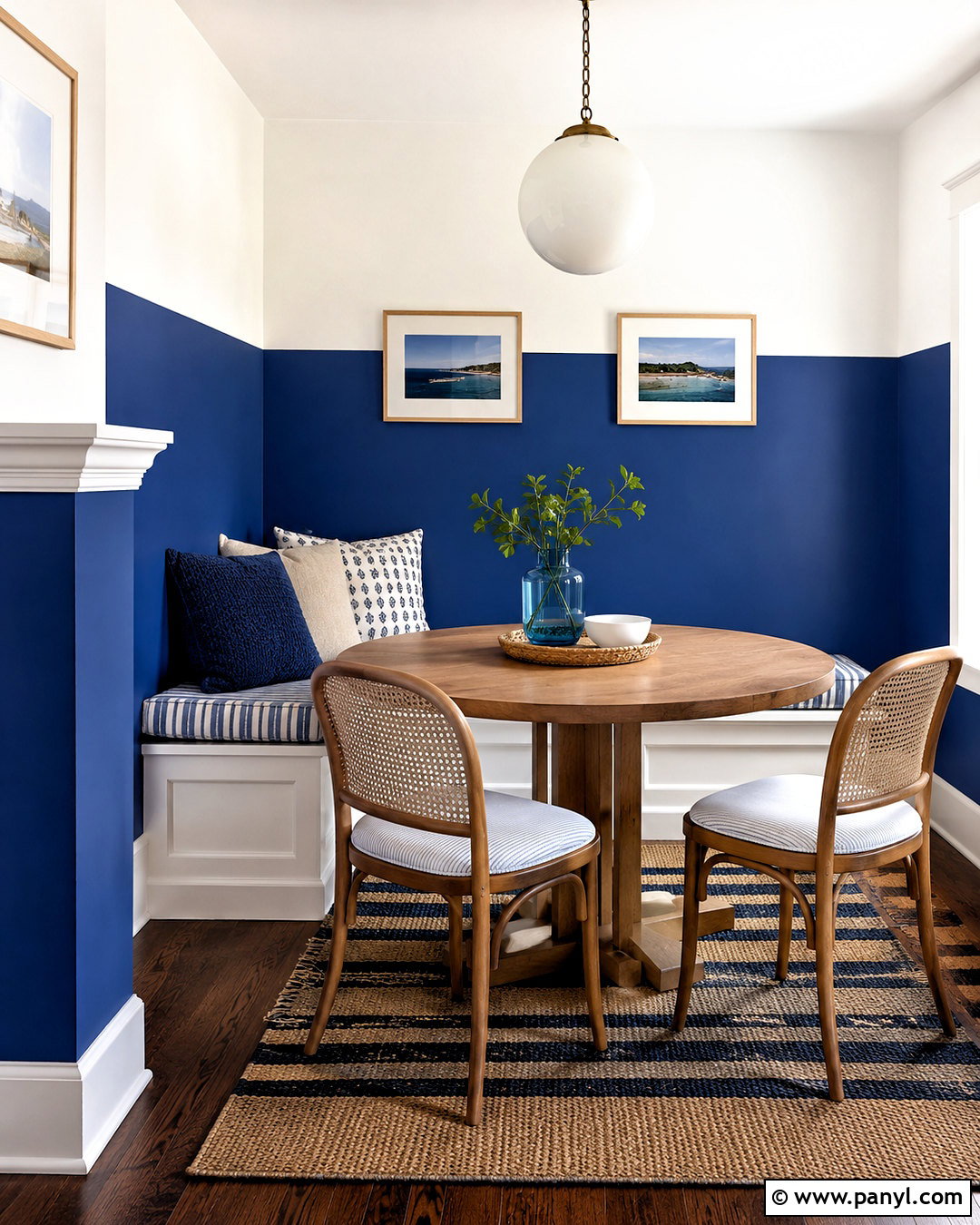
Cobalt blue gives a breakfast nook memorable energy, while white prevents the compact area from feeling enclosed. Paint the lower two-thirds cobalt and use clean white above, wrapping the blue around every wall in the nook. Install a simple white built-in bench with striped blue cushions and hidden storage. Pair it with a round oak pedestal table and two lightweight cane chairs. A white globe pendant keeps the visual focus on the saturated wall color. Add a washable blue-and-tan rug, small framed coastal prints, and a ceramic planter with fresh greenery. White window trim and light linen shades bring in brightness. This complete nook looks crisp and collected, with enough durable seating and storage for everyday meals.
14. Coral And Peach Split Painted Playroom Walls
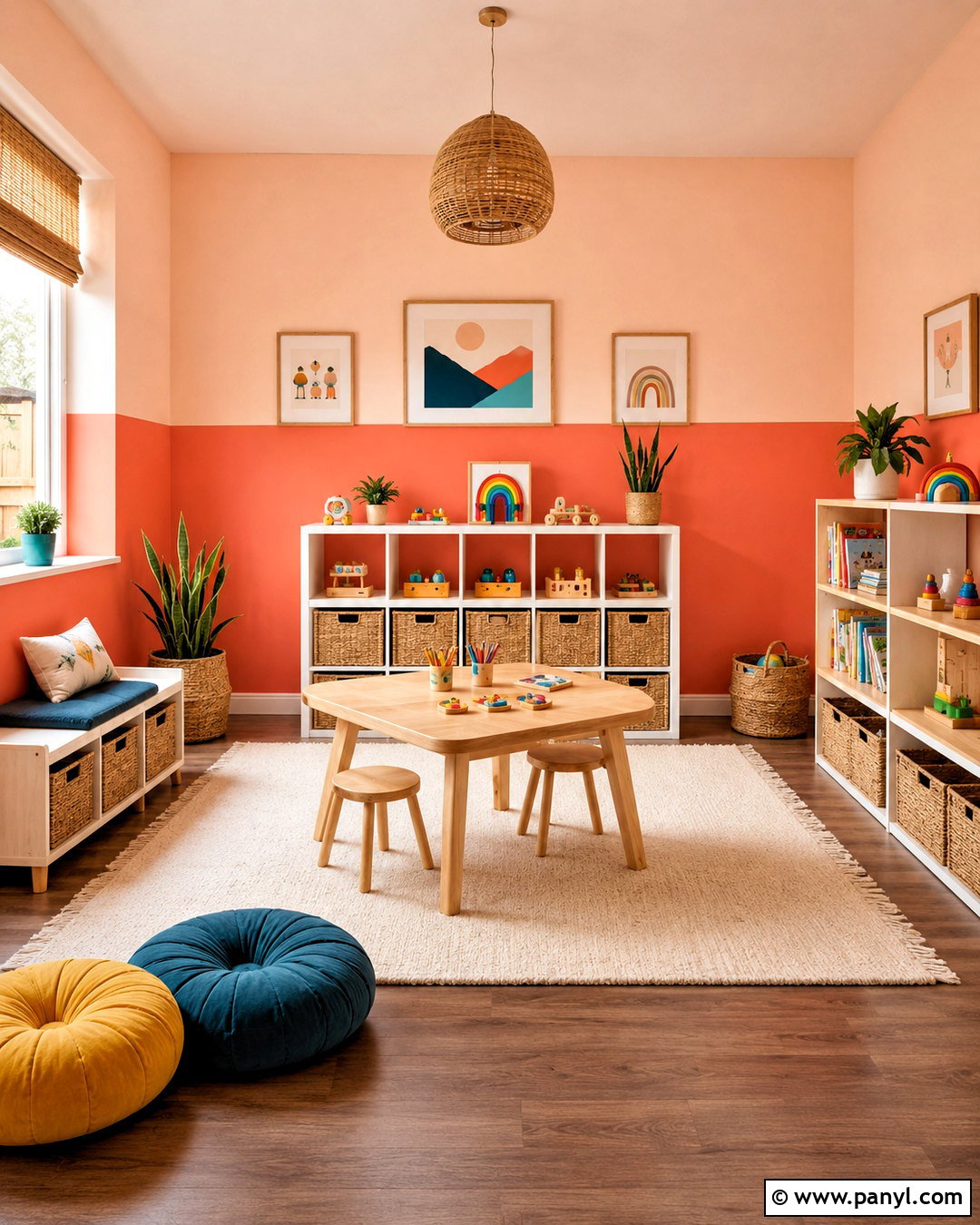
A playful color scheme does not need complicated murals or oversized patterns. Paint the lower section clear coral and the upper section pale peach, creating a soft tonal contrast around the entire playroom. Use white modular storage along the coral wall so bins and toys remain easy to reach. A natural wood activity table, washable cream rug, and floor cushions in teal and mustard add practical layers. Hang simple colorful prints in matching white frames across the peach section. Rounded furniture and open floor space keep the layout flexible for different activities. Paint one low bookcase coral to blend with the wall, then add woven baskets for visual calm. The room feels upbeat, organized, and complete without becoming visually chaotic.
15. Chocolate Brown And Taupe Split Painted Reading Room Walls
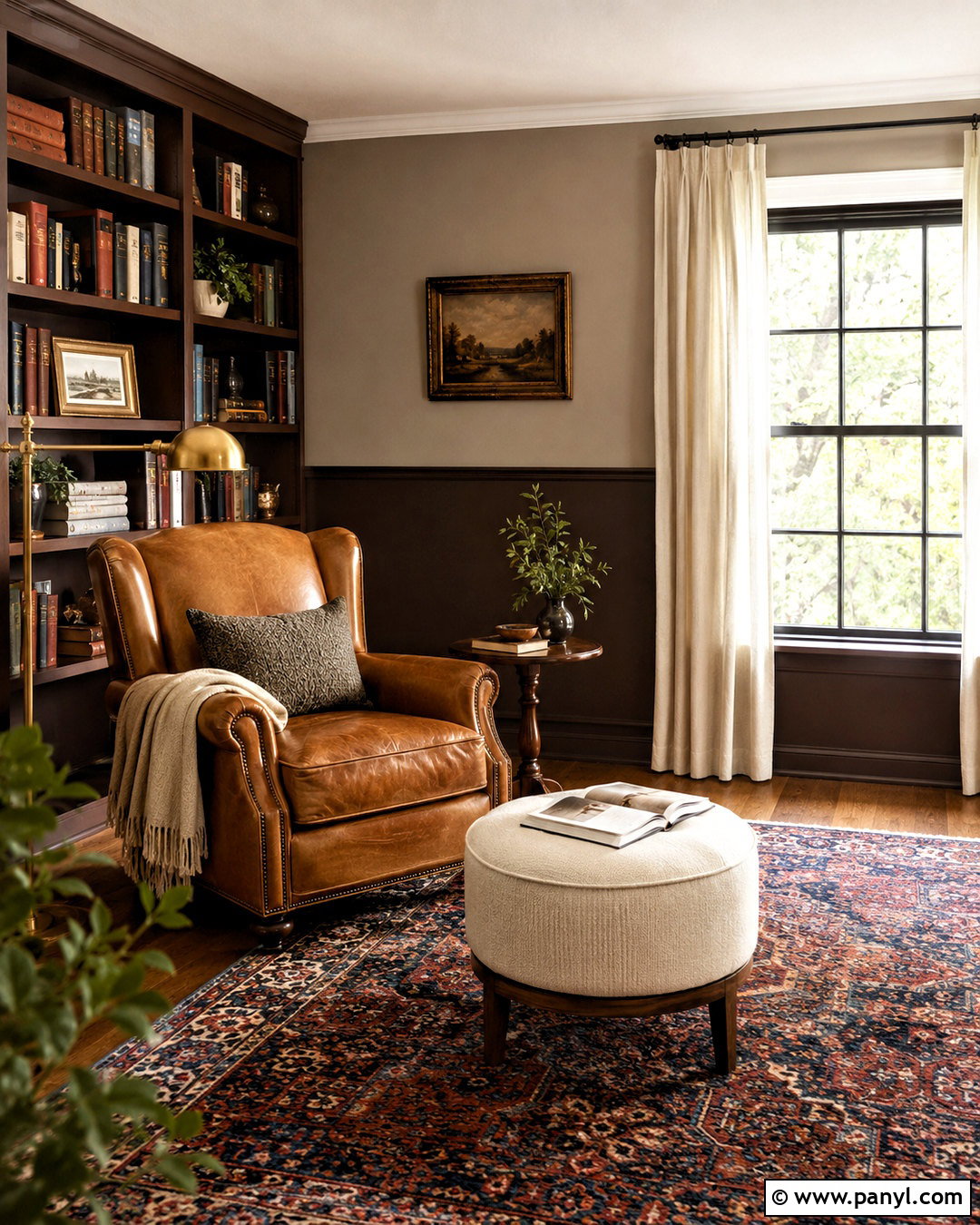
Rich chocolate brown creates a cozy reading room when it is balanced with soft mushroom taupe. Apply brown to the lower two-thirds and taupe above, then paint the bookcases brown so they appear integrated into the walls. Place a comfortable camel leather chair near the window with a textured cream ottoman and a slim antique-brass floor lamp. A medium-tone wood side table provides space for books and a ceramic mug. Layer a faded Persian-style rug over warm oak flooring and hang linen curtains in natural beige. Choose artwork with cream mats and dark wood frames for the upper wall. The finished space feels intimate and enveloping, yet the lighter ceiling and upper band prevent the room from looking overly dark.
16. Vertical Split Painted Living Room Walls
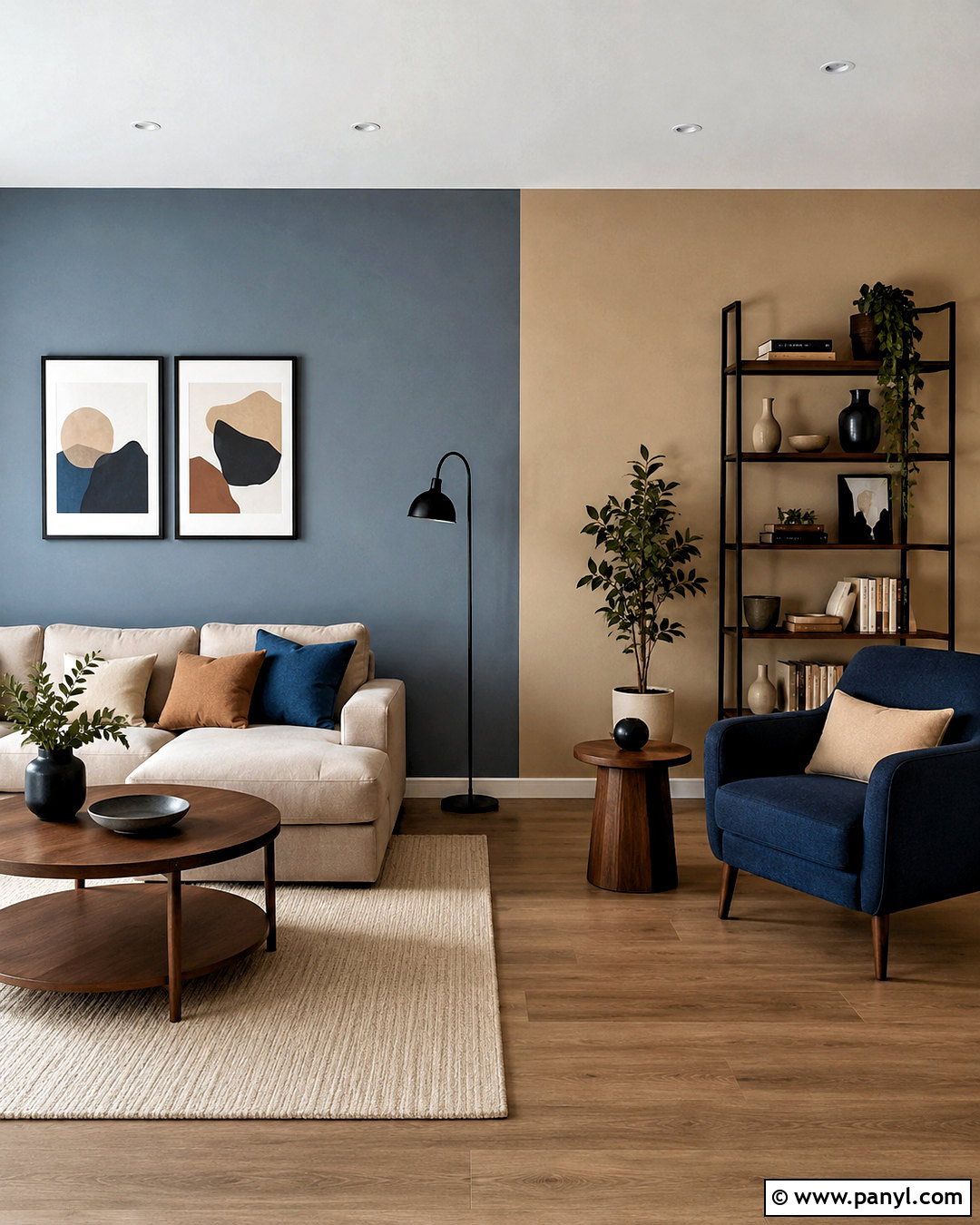
A vertical split can define areas in an open living room without adding a physical divider. Paint the seating side muted blue-gray and the adjacent reading area warm beige, placing the transition at a natural corner, window edge, or built-in cabinet. Position a beige sectional mainly against the blue-gray wall and add a blue lounge chair within the lighter zone to connect both sides. A large cream rug should overlap the color boundary, visually unifying the room. Use walnut tables, black metal lighting, and pillows in both wall colors. Keep the trim warm white throughout. The design creates two clear functions while preserving one cohesive layout, making it particularly useful in apartments and open-plan family spaces.
17. Diagonal Split Painted Teen Bedroom Walls
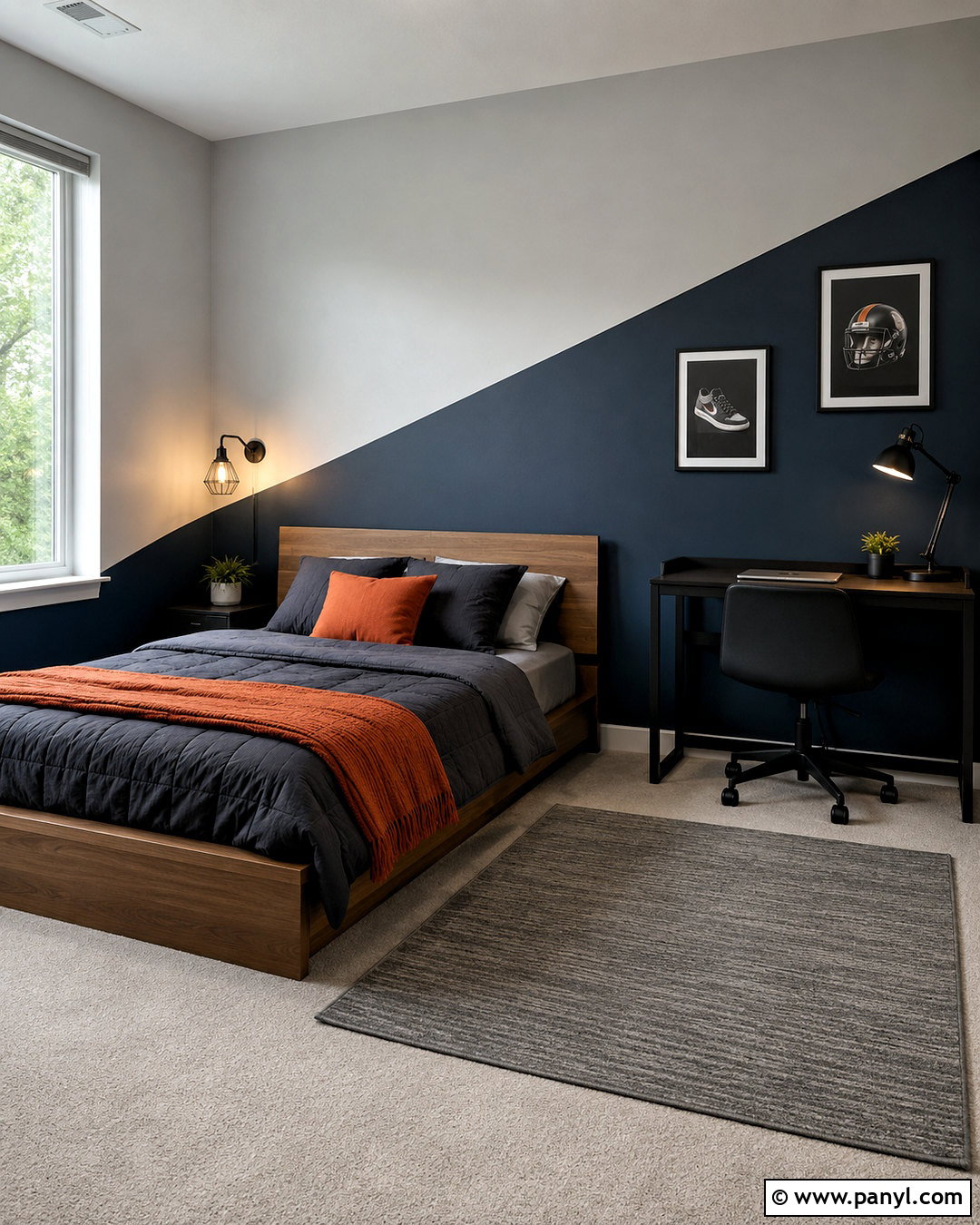
A diagonal paint division gives a teen bedroom movement without covering the wall in a complicated pattern. Run a clean line upward from one lower corner behind the bed, using deep navy beneath it and pale gray above. Keep the remaining walls gray so the diagonal becomes the main feature. Choose a simple oak platform bed, charcoal bedding, and accents in rust, navy, and white. A compact black desk can sit where the darker color is highest, creating a defined study zone. Add an industrial-style wall light, a gray rug, and minimal framed posters. White trim keeps the geometry crisp. This balanced setup feels expressive and age-appropriate while leaving enough neutral space for personal items to change over time.
18. Painted Arch Split Home Office Walls
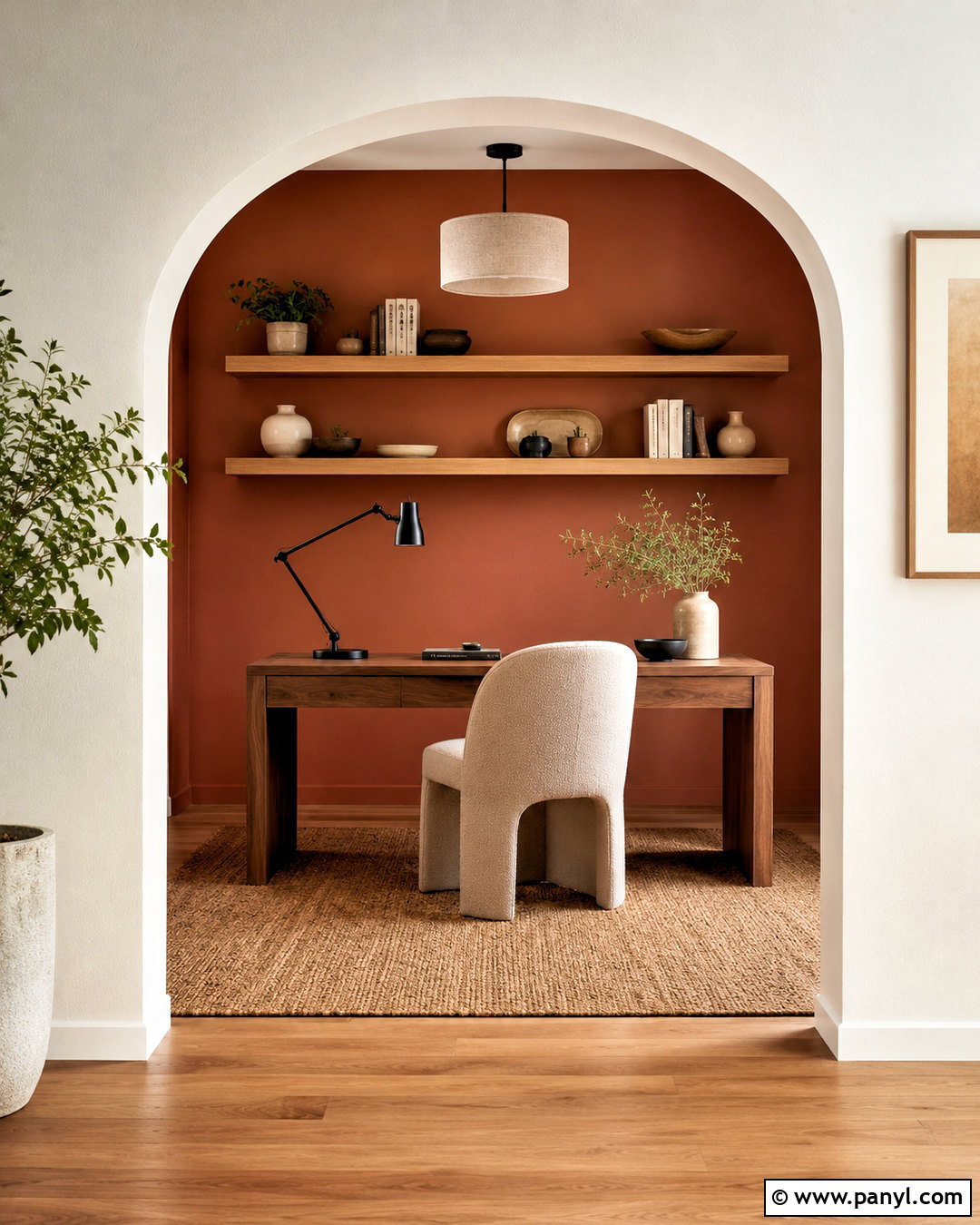
A painted arch offers a softer version of split painted walls and creates a clear background for a desk. Paint the room warm white, then add a broad rust-colored arch that begins at the floor and curves above a walnut writing desk. Let the arch extend wider than the desk so it frames the entire work area. Choose a cream boucle chair, black task lamp, and floating oak shelves placed inside the colored shape. A flat-woven beige rug and linen window shade keep the room quiet and uncluttered. Add a small plant and two simple ceramic accessories. The arch provides enough color to define the office zone, while the surrounding white walls preserve brightness and flexibility in a small multipurpose room.
19. Scalloped Split Painted Nursery Walls
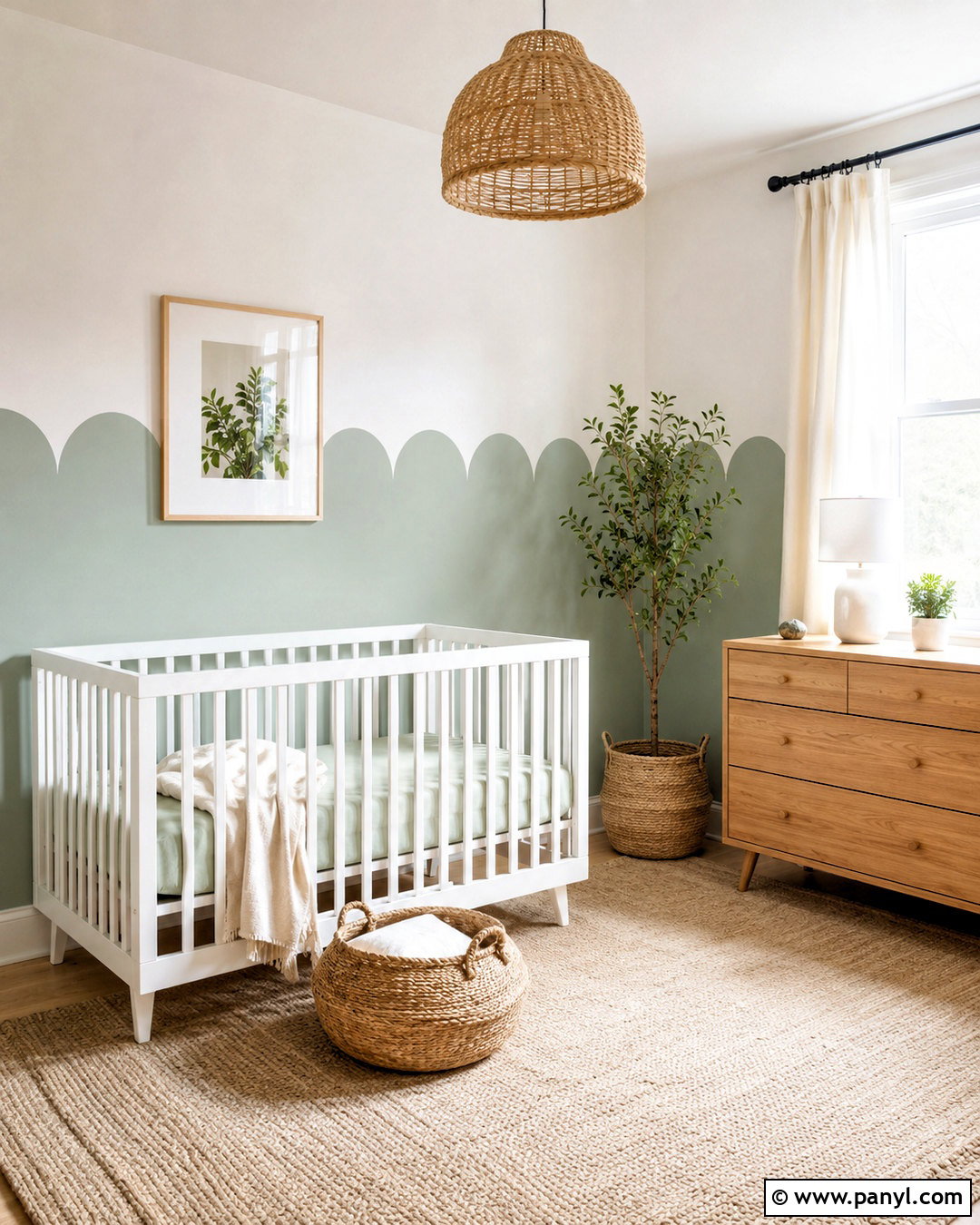
A scalloped transition brings gentle playfulness to a nursery while keeping the overall space calm. Paint the lower half muted seafoam green and the upper half warm white. Create broad, evenly sized scallops along the meeting line rather than using tiny curves that can look busy. Place a white crib against the feature wall and add an oak dresser with rounded drawer pulls. Use cream curtains, a soft beige rug, and bedding with restrained green and tan details. A woven pendant and natural baskets introduce warmth. Keep shelves and artwork simple so the painted edge remains visible. This complete nursery has a sweet decorative detail, but its neutral furniture and practical storage allow it to adapt as the child grows.
20. Wavy Split Painted Playroom Walls
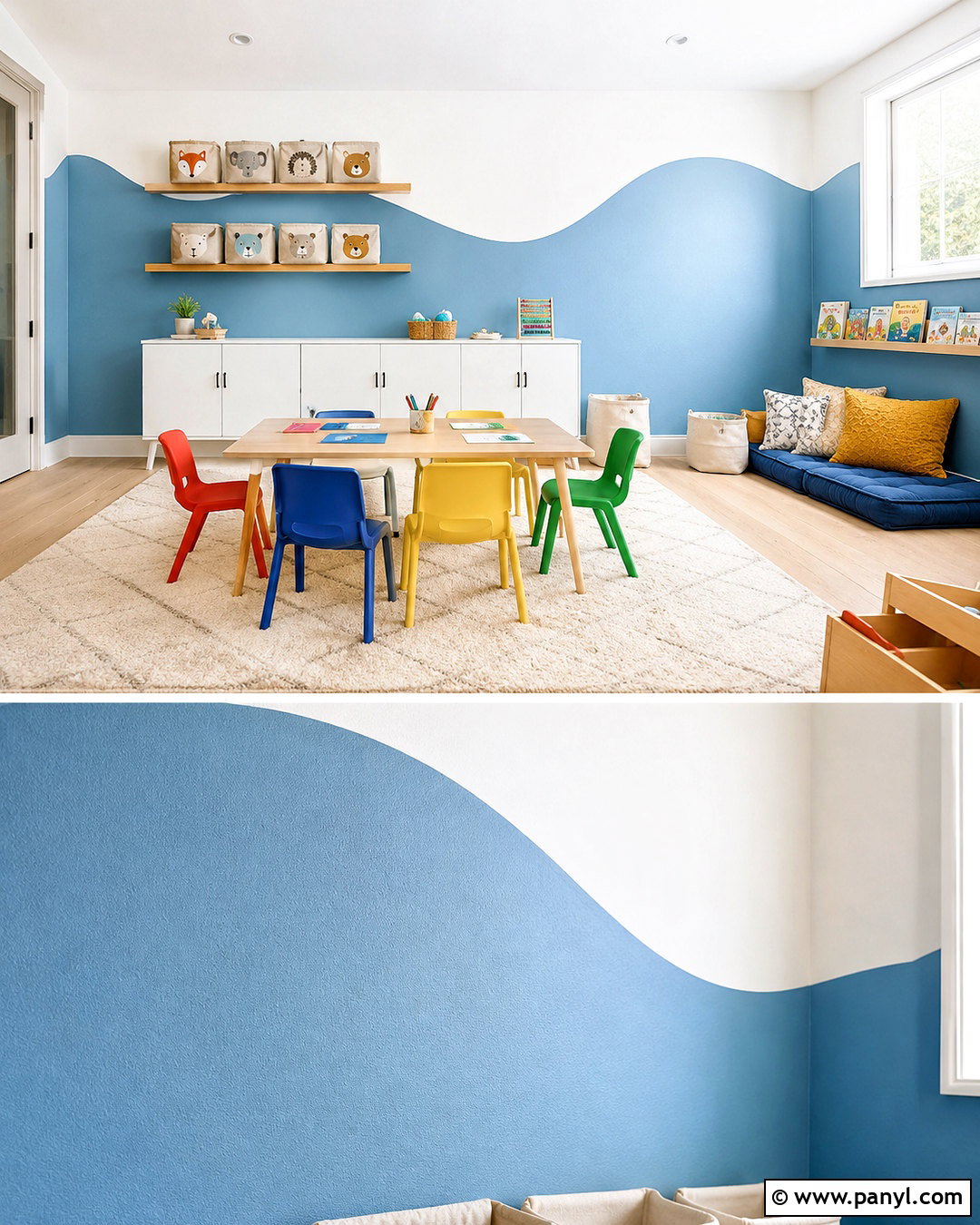
A flowing wavy line can turn the walls into a playful backdrop without filling the room with separate decorations. Use medium sky blue below and soft white above, allowing the wave to rise behind the reading corner and dip near the toy storage. Choose low white cabinets, a light birch craft table, and colorful stackable chairs. Place a large washable rug in cream with blue, orange, and green shapes at the center. Add open book ledges, canvas storage bins, and a cushioned reading mat. Keep the ceiling and trim white to balance the movement. The coordinated furniture, storage, and open activity area make the design functional, while the curved paint transition supplies an imaginative focal point.
21. Chair Rail Split Painted Dining Room Walls
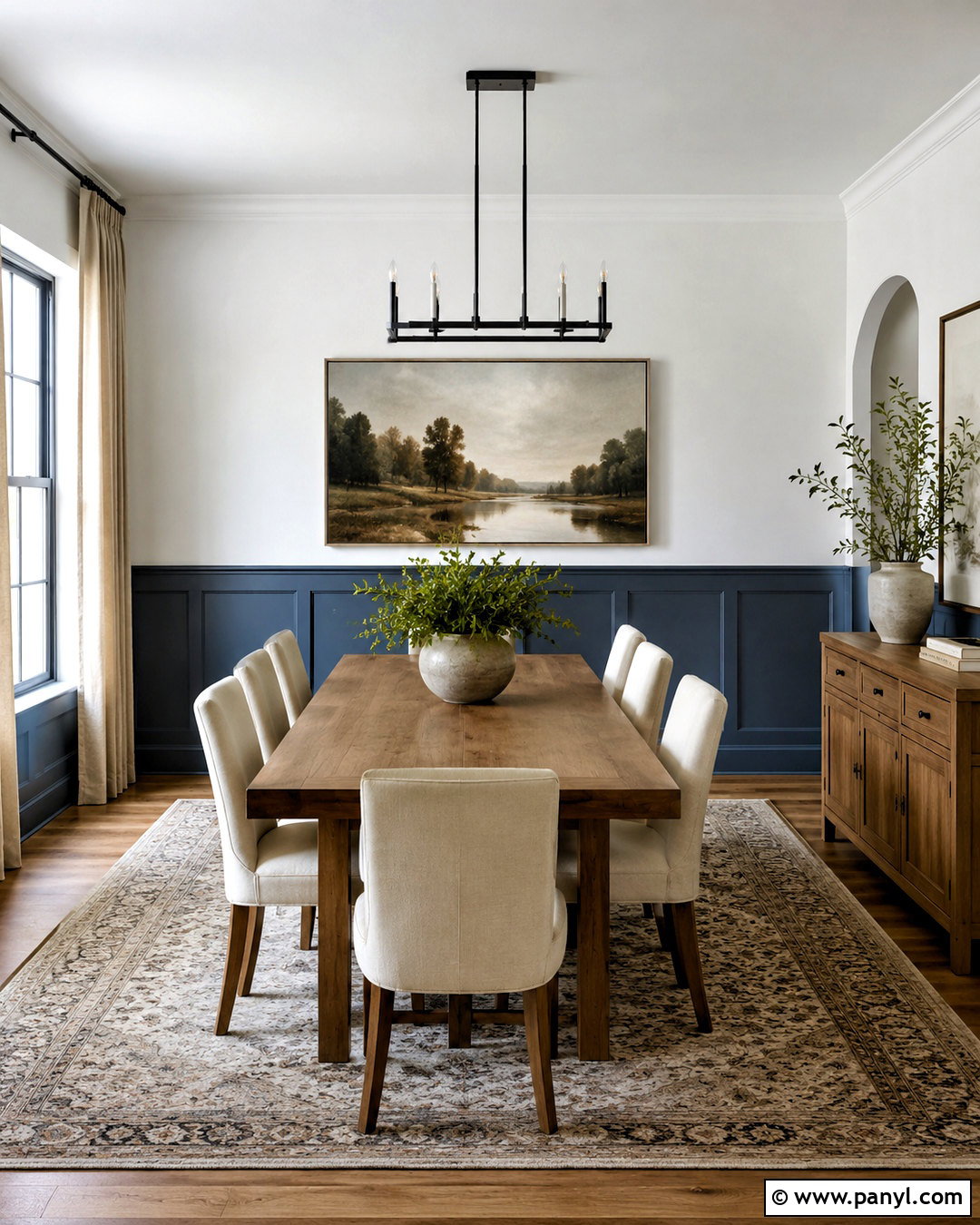
Traditional chair rails look fresh when paired with a restrained blue-and-white palette. Paint the lower wall and chair rail medium slate blue, then use soft white above. Continue the blue across the baseboards for a strong, finished foundation. Center a rectangular oak dining table in the room and surround it with cream upholstered chairs. A large black linear chandelier adds a modern edge without fighting the classic wall treatment. Use a neutral patterned rug, white linen curtains, and a simple oak sideboard. Hang one oversized landscape print rather than several small pieces. The complete dining room combines traditional architecture with uncomplicated modern furnishings, making the split feel intentional rather than like a leftover period detail.
22. Picture Rail Split Painted Bedroom Walls
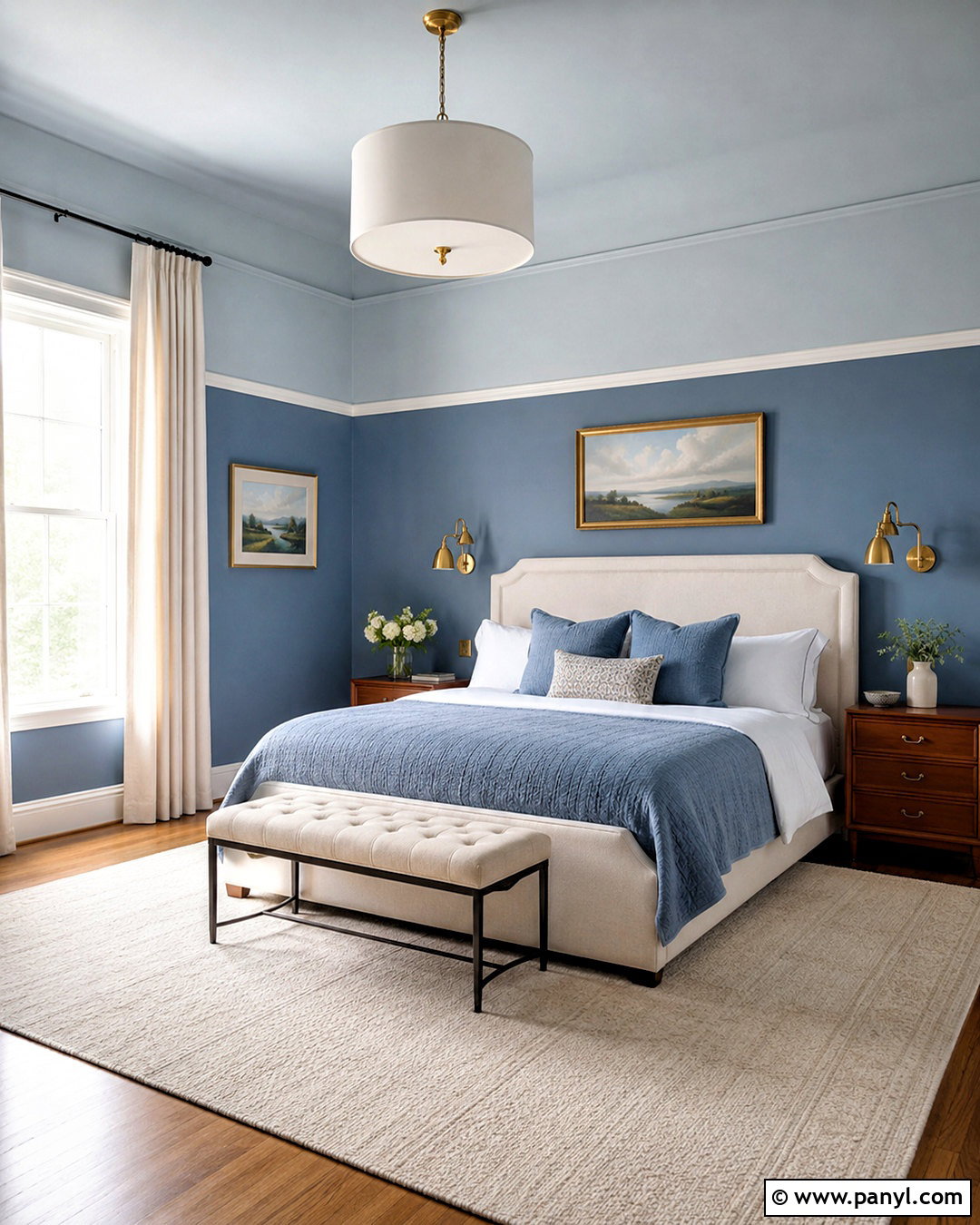
Make a tall bedroom feel more comfortable by using its picture rail as a natural color boundary. Paint the main walls dusty blue from the baseboards to the rail, then apply pale blue-gray above it and across the ceiling. This upper color remains light but creates a gentler transition than plain white. Choose a cream upholstered bed, walnut nightstands, and white bedding layered with faded blue textiles. Add full-length natural linen curtains and a large ivory rug to soften the deeper walls. Brass sconces and small framed landscapes provide warmth. Painting the picture rail dusty blue helps the main wall color feel complete. The final bedroom looks calm, architectural, and thoughtfully connected from floor to ceiling.
23. Green Wainscoting And White Split Living Room Walls
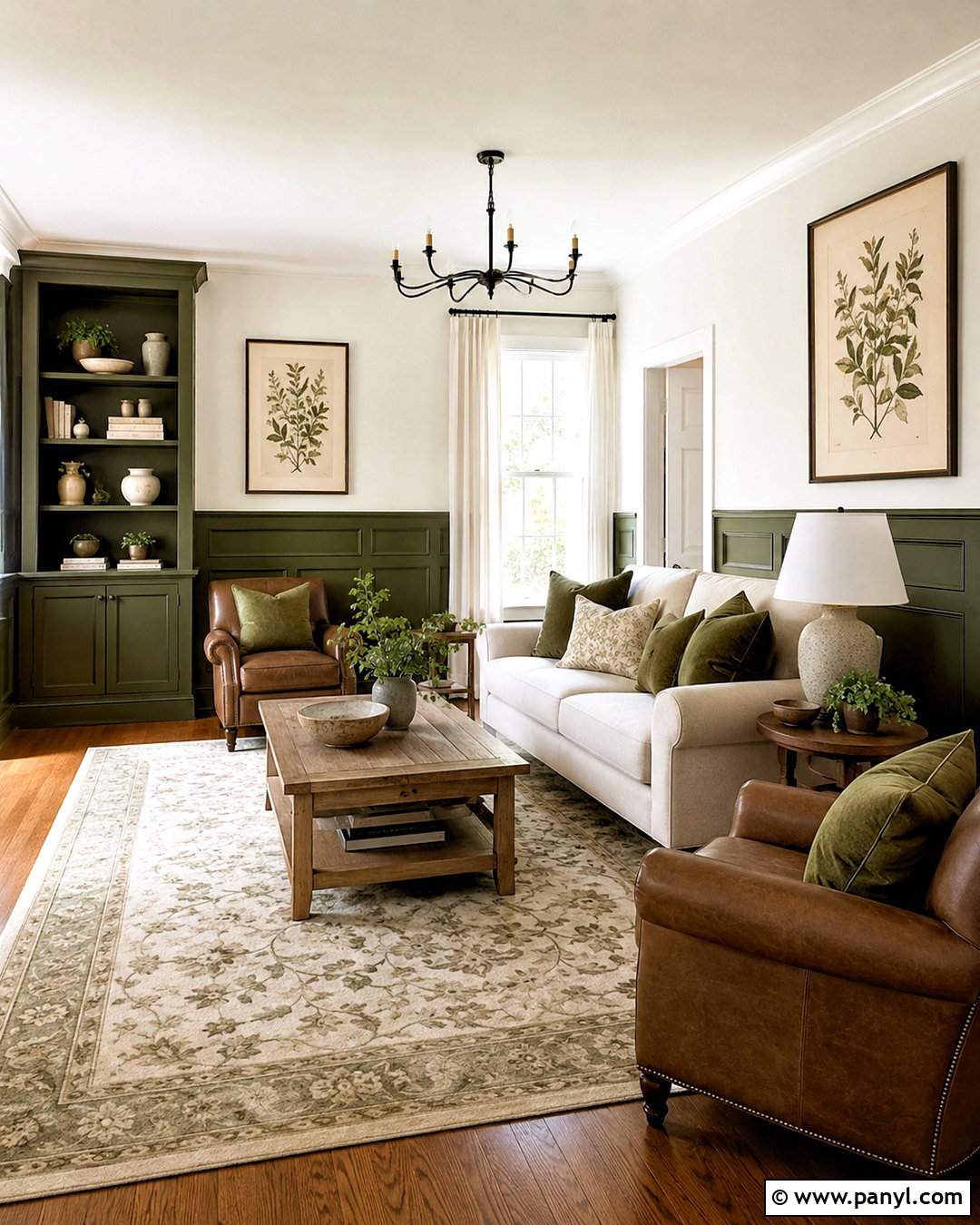
Painted wainscoting creates depth while giving split walls a clear architectural finish. Cover the lower half in muted moss green, including the panel molding, baseboards, and built-in cabinets. Use creamy white on the smooth upper walls and ceiling. Arrange a light beige sofa opposite two leather accent chairs, with a substantial oak coffee table at the center. A cream-and-green rug connects the furnishings to the walls. Add white curtains, ceramic table lamps, and botanical artwork in aged wood frames. Keep decorative objects limited so the panel details remain visible. The completed living room feels traditional but relaxed, with durable lower walls, a brighter upper area, and a balanced furniture plan suitable for everyday family use.
24. Rust Two-Thirds Split Painted Living Room Walls
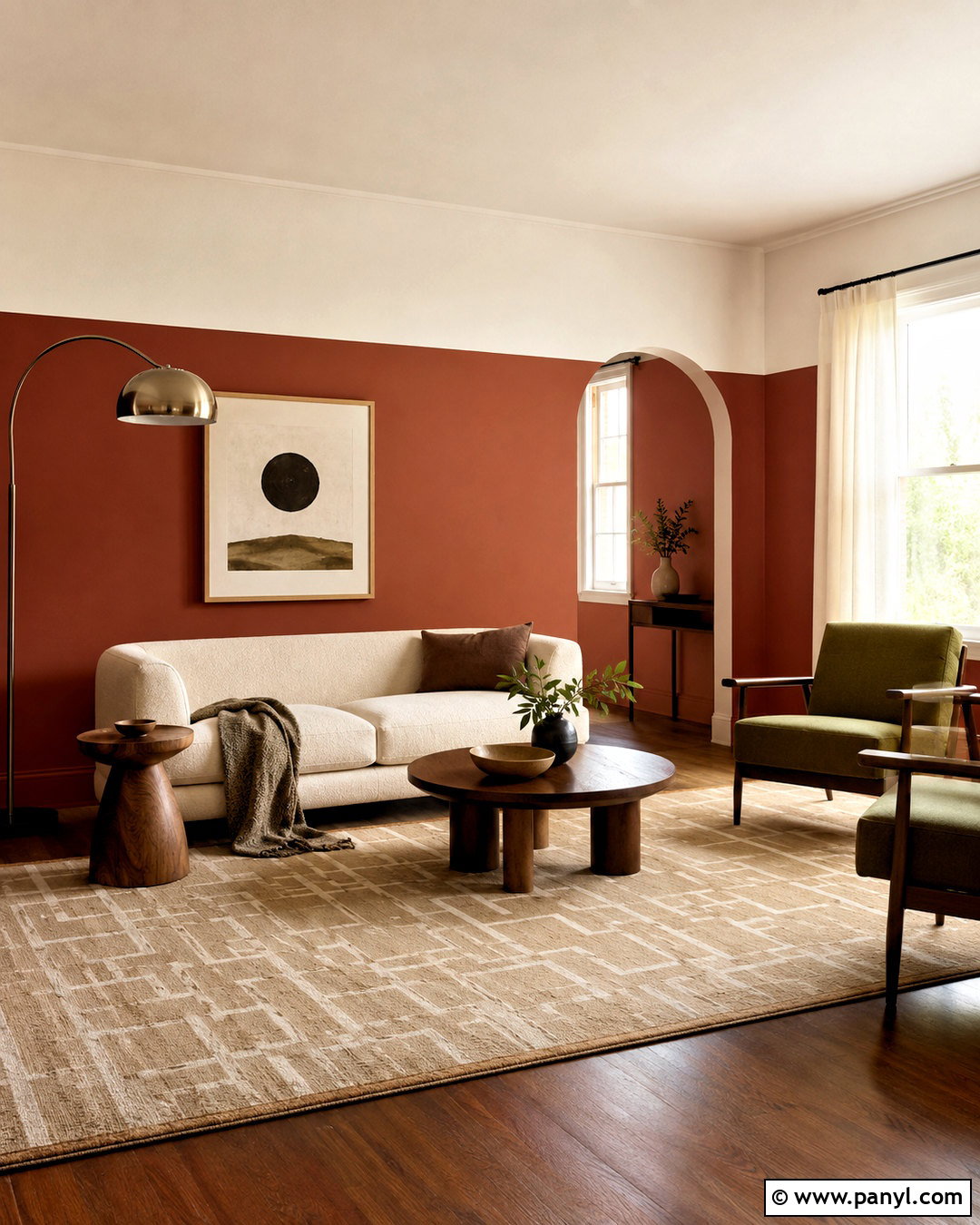
Instead of dividing the wall in half, carry earthy rust paint across the lower two-thirds. Finish the upper third and ceiling in warm ivory, creating a narrow light band that draws the eye upward. Place a low cream sofa against the rust wall so its pale upholstery stands out. Add walnut side tables, a dark bronze floor lamp, and two olive green chairs for an earthy contrast. A large beige rug with subtle geometric lines keeps the layout grounded. Choose linen curtains close to the ivory wall color and hang artwork partly within the darker zone. The unusual split height makes the room feel immersive, while the light ceiling, restrained textiles, and natural wood furniture maintain visual balance.
25. Black One-Third Split Painted Entryway Walls
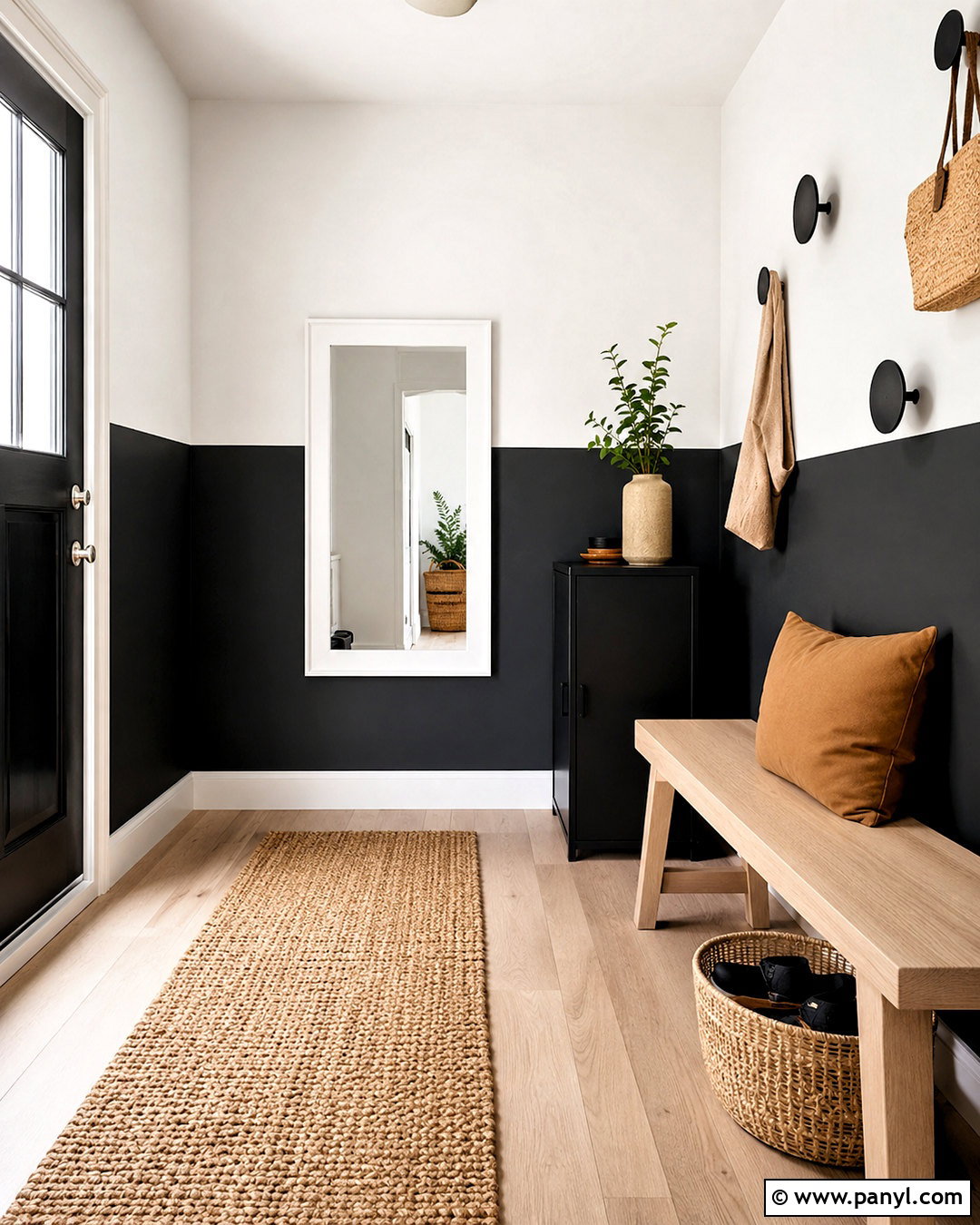
A narrow black band along the bottom third of an entryway delivers graphic contrast without darkening the whole space. Paint the upper walls soft white and carry matte black across the baseboards, lower wall, and one simple storage cabinet. Install a pale oak bench with a tan cushion and place round black hooks above the dividing line. A natural jute runner softens the high-contrast palette, while a large white-framed mirror reflects available light. Add one woven basket beneath the bench for shoes and everyday accessories. Keep doors and casings white unless the hallway needs a stronger focal point. This low painted split feels clean and modern while visually connecting the practical storage pieces near the floor.
26. Tonal Blue Split Painted Bedroom Walls
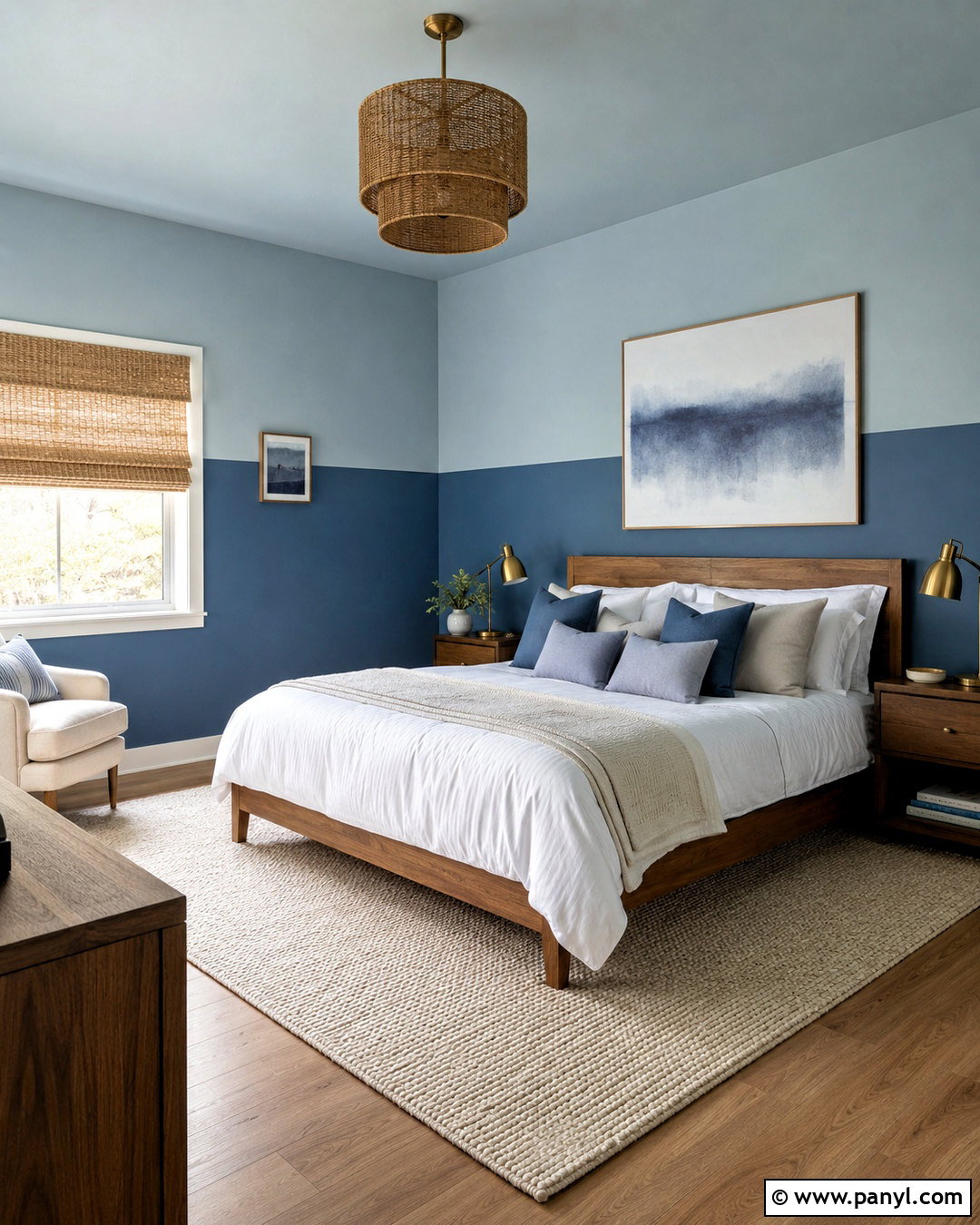
Two shades from the same color family create a subtle split that feels restful rather than graphic. Use medium denim blue below and pale misty blue above, positioning the line just higher than the headboard. Paint the ceiling in the lighter blue for a smooth, continuous finish. Choose a natural oak bed, white linen bedding, and layered blue-gray pillows. Slim walnut nightstands and warm brass lamps stop the palette from feeling cold. Add a cream wool rug, woven window shades, and one large abstract print containing both blues. The darker base provides visual weight, while the lighter upper color preserves openness. This complete tonal bedroom works especially well for homeowners who want color without a sharp neutral contrast.
27. Pink And Green Split Painted Bedroom Walls
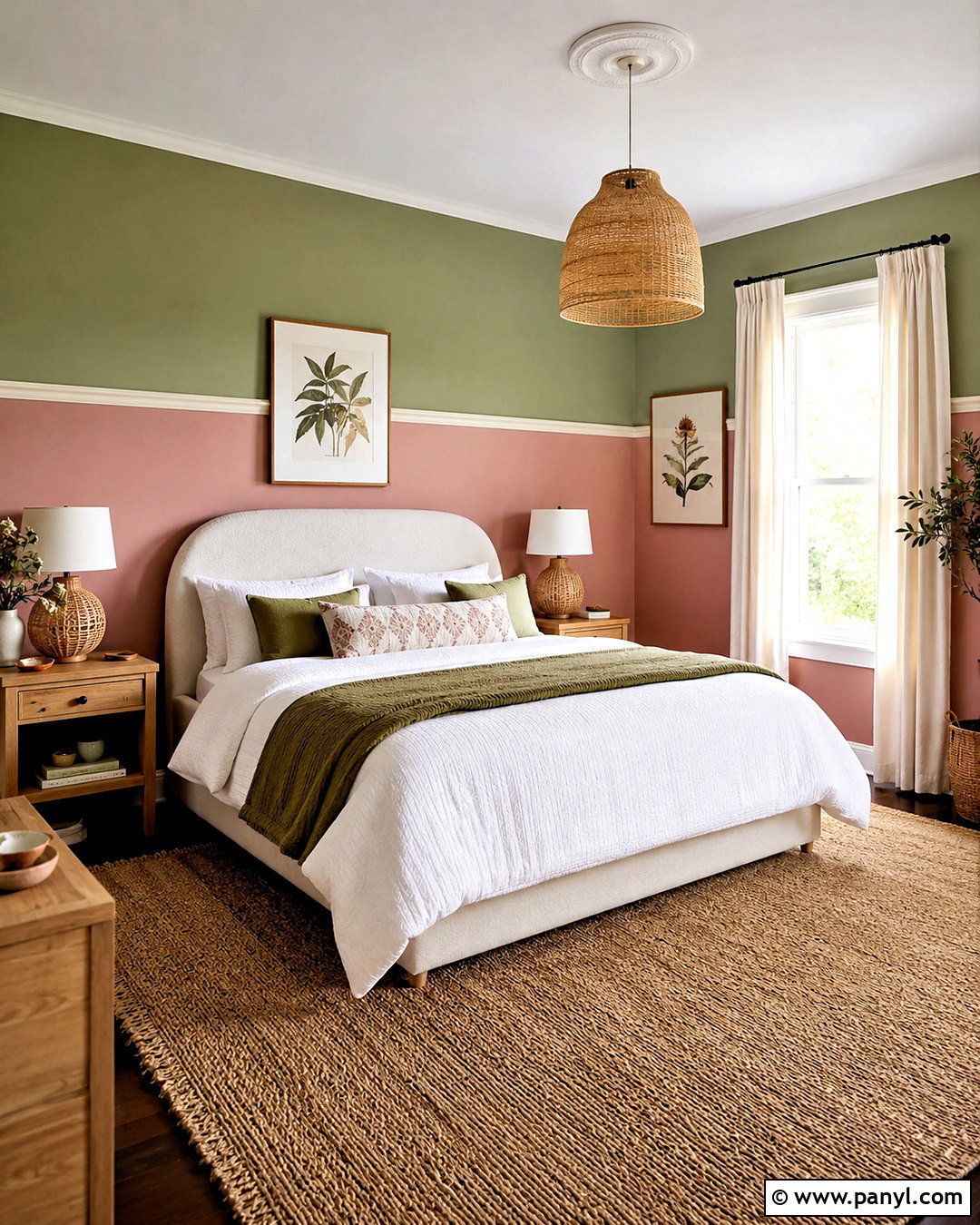
Muted pink and warm green offer a lively contrast when their undertones remain soft and earthy. Paint the lower half dusty rose and the upper half pale sage, defining the transition with a slim cream molding strip. Choose a cream upholstered bed and layer it with white, rose, and olive bedding. Light oak nightstands, woven lamps, and a natural jute rug keep the stronger color pairing grounded. Use cream curtains and botanical artwork that repeats both shades in small amounts. Paint the baseboards dusty rose so the lower section feels substantial. The completed bedroom looks colorful and distinctive without becoming overly sweet, thanks to the simple furniture, organic materials, and limited use of decorative patterns.
28. Greige And Beige Split Painted Apartment Walls
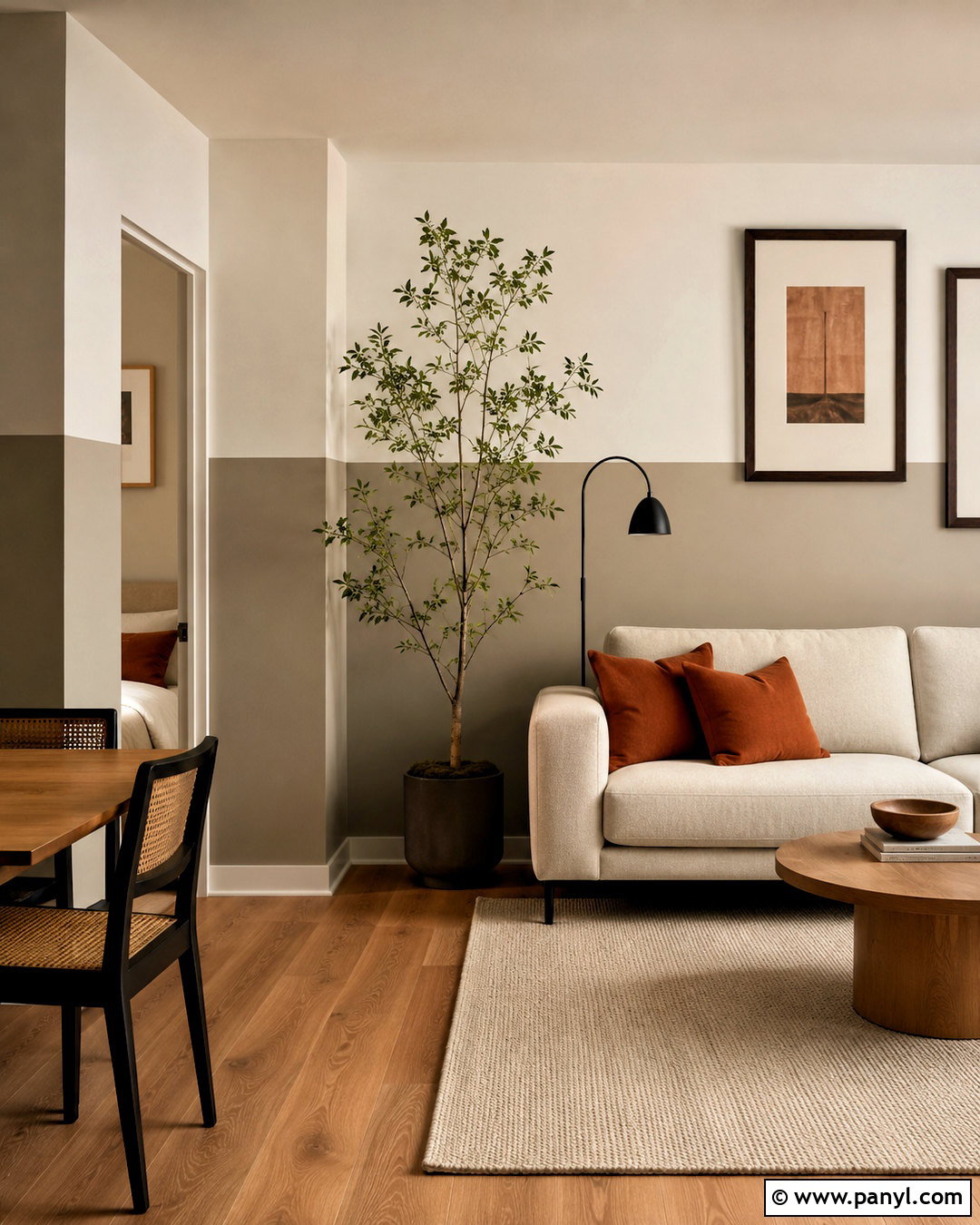
Small apartments often benefit from gentle color changes rather than sharp contrast. Paint the lower half warm greige and the upper half creamy beige, choosing shades with compatible undertones. A compact oatmeal sofa, round oak coffee table, and slim black floor lamp create a functional living zone without overcrowding it. Add a textured ivory rug and curtains close to the upper wall color to keep the room visually open. Use rust pillows, dark wood frames, and one leafy plant for controlled contrast. Continue the same split into the nearby dining area to make the apartment feel connected. A round table and two cane chairs complete the look while maintaining an easy path through the multipurpose space.
29. Taupe Split Walls With A Painted Ceiling
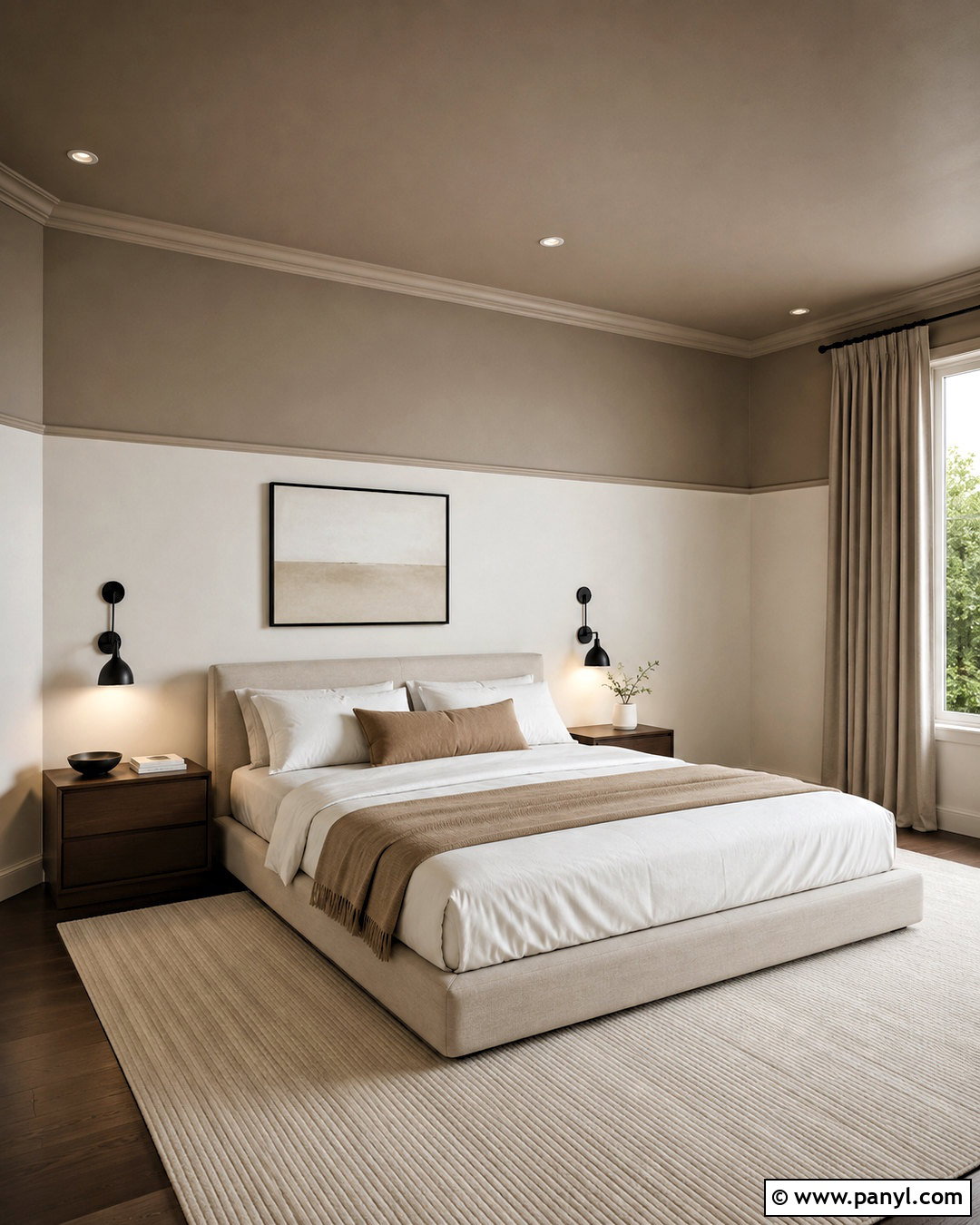
Color capping extends the upper wall shade across the ceiling for a more enveloping finish. Paint the lower two-thirds soft off-white, then use medium taupe on the upper third and ceiling. Keep the boundary straight and uninterrupted around the room. In a bedroom, pair this treatment with a low beige bed, white bedding, and dark walnut nightstands. Add a cream rug, taupe curtains, and matte black sconces for measured contrast. Because the darkest color sits overhead, keep the furniture and lower walls light. A wide window and minimal artwork will further preserve an open feeling. The complete room feels cozy and architecturally interesting, with the painted ceiling appearing deliberately connected to the split wall design.
30. Split Painted Hallway Doorway Walls
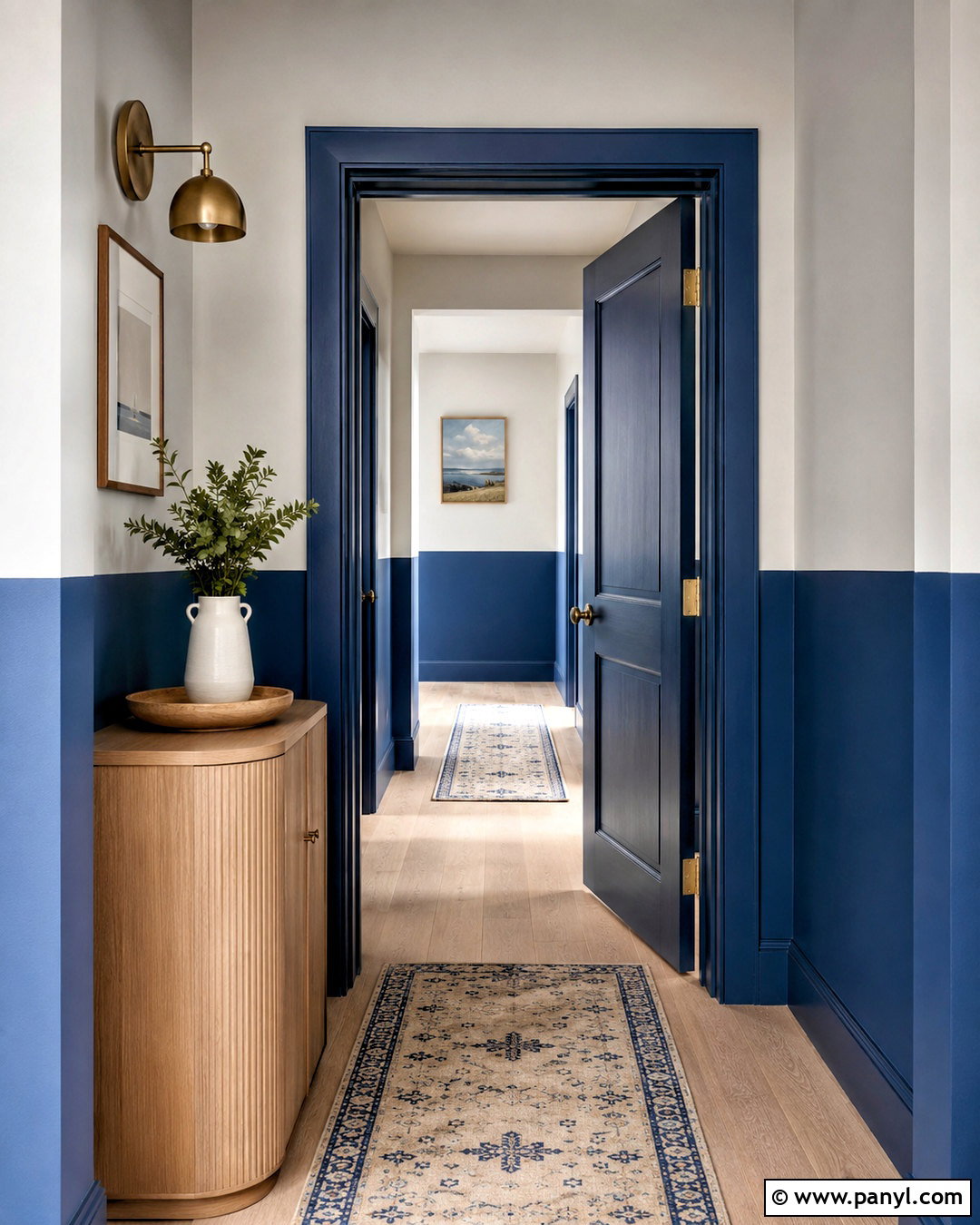
Paint can help connect a doorway and hallway without using an accent wall that ends abruptly. Apply deep blue to the lower half of the hallway, then carry it over the lower portion of the door, casing, and adjacent opening. Use soft gray-white above, including the upper door panels and ceiling. Position the dividing line so it aligns neatly across every surface. Add a pale wood console, brass wall light, and narrow cream runner with blue details. A few small framed prints can follow the length of the upper wall. The wrapped paint creates a continuous route through the space, while the repeated blue on doors and trim makes ordinary architectural features feel integrated into the finished hallway design.
31. Split Painted Open-Plan Living And Dining Walls
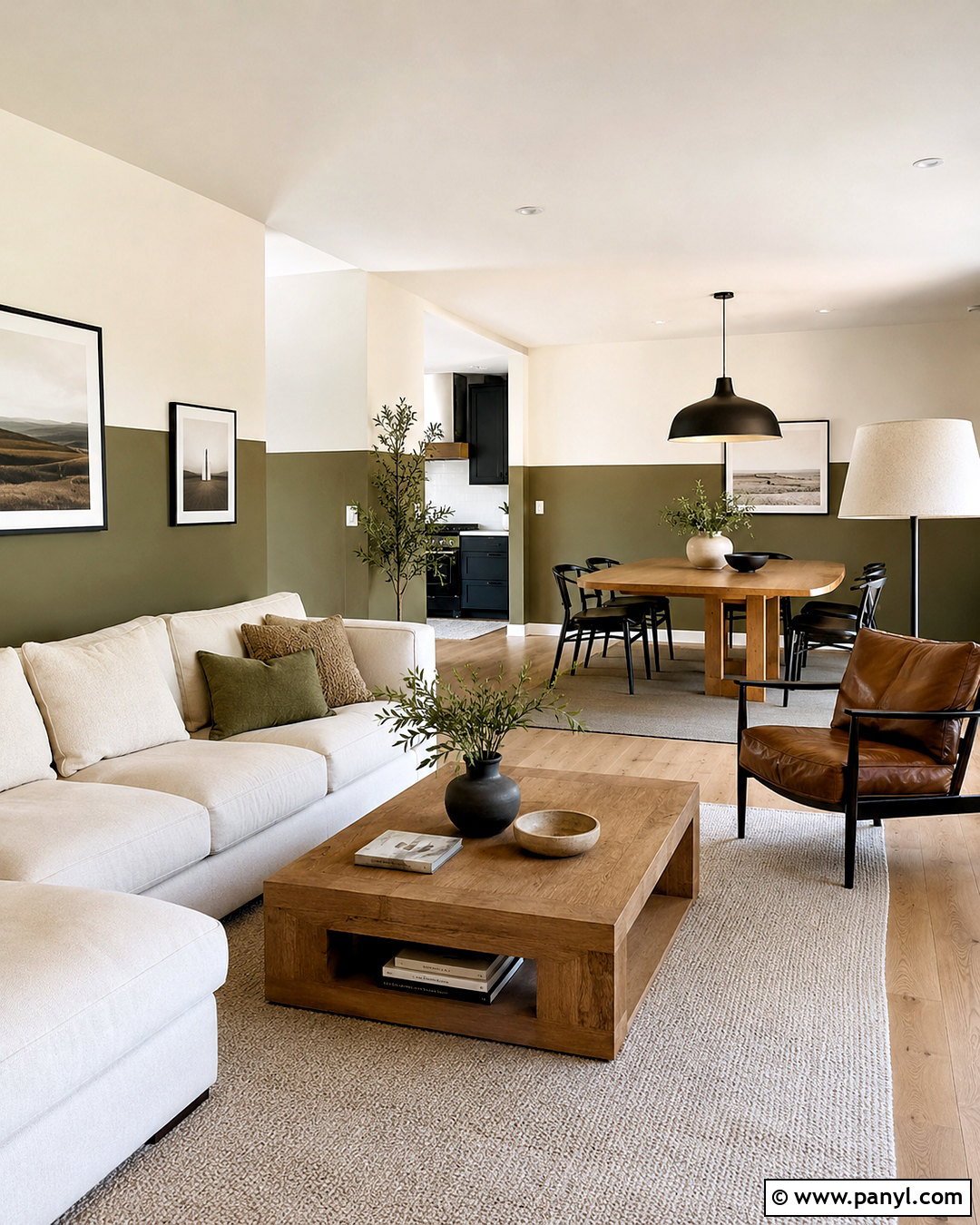
An open-plan room needs a shared palette even when its functions are visually distinct. Paint the lower half muted olive throughout the entire space and use warm white above. In the living area, arrange a cream sectional, oak coffee table, and tan leather chair over a large neutral rug. In the dining area, repeat the oak with a rectangular table and choose black chairs for contrast. One oversized pendant can define the dining zone, while a linen floor lamp supports the seating area. Use olive pillows and cream curtains across both sections. The continuous horizontal line visually connects the room, while furniture placement, rugs, and lighting establish separate areas without disrupting the cohesive split-wall treatment.
32. Fireplace Color Block Split Painted Walls
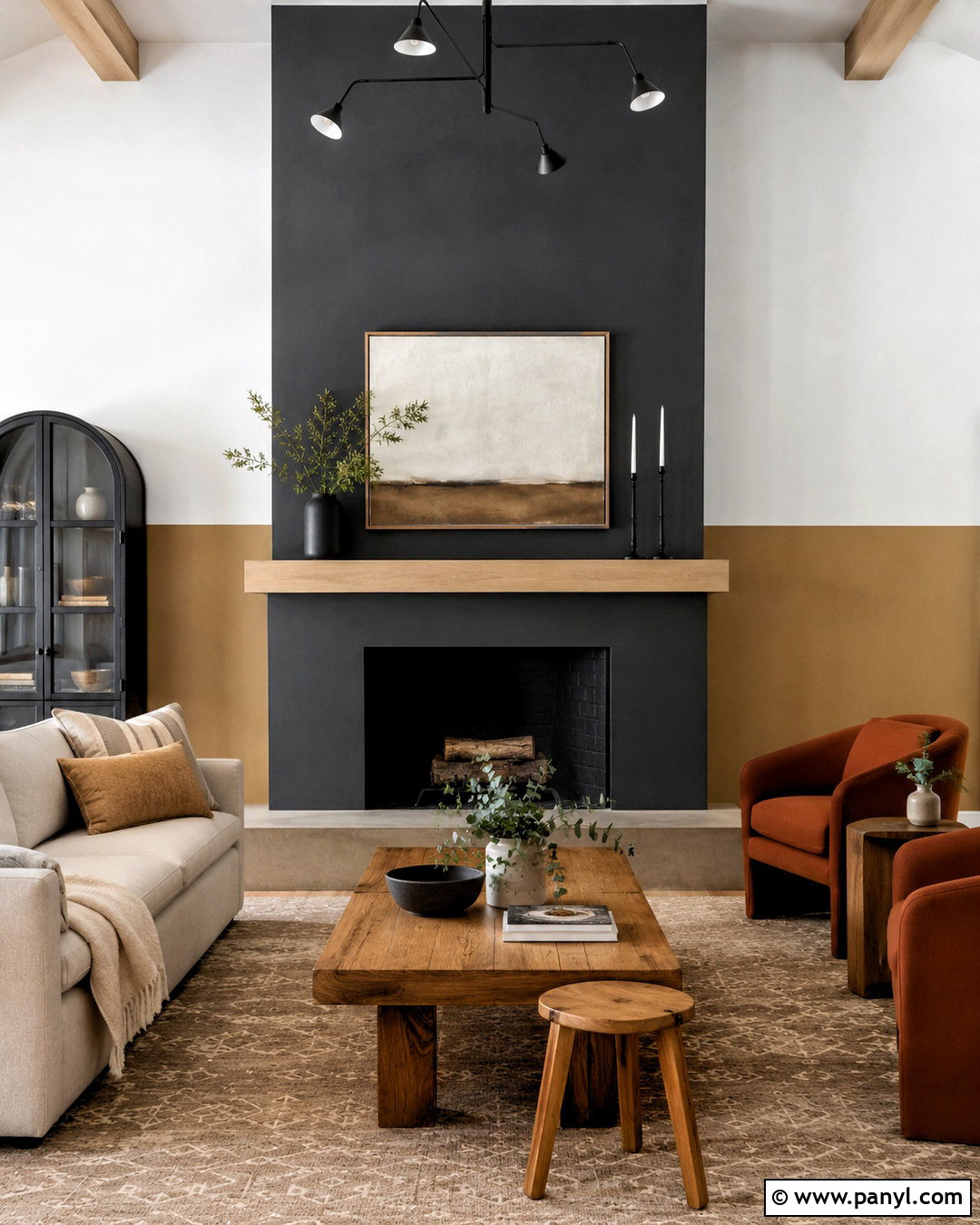
A wide painted block around the fireplace can become part of a larger split-wall composition. Paint the lower half of the room warm beige, then add a floor-to-ceiling charcoal block slightly wider than the fireplace. Keep the remaining upper walls soft white. A simple plaster fireplace surround and pale oak mantel prevent the central feature from feeling too heavy. Place a cream sofa opposite the hearth with two rust-colored chairs angled toward it. Add a large textured rug, oak tables, and black metal lighting. Minimal art and ceramic decor keep attention on the layered paint geometry. The finished living room feels balanced because the horizontal beige band grounds the furniture while the vertical charcoal section emphasizes the fireplace.
33. Diagonal Split Painted Staircase Walls
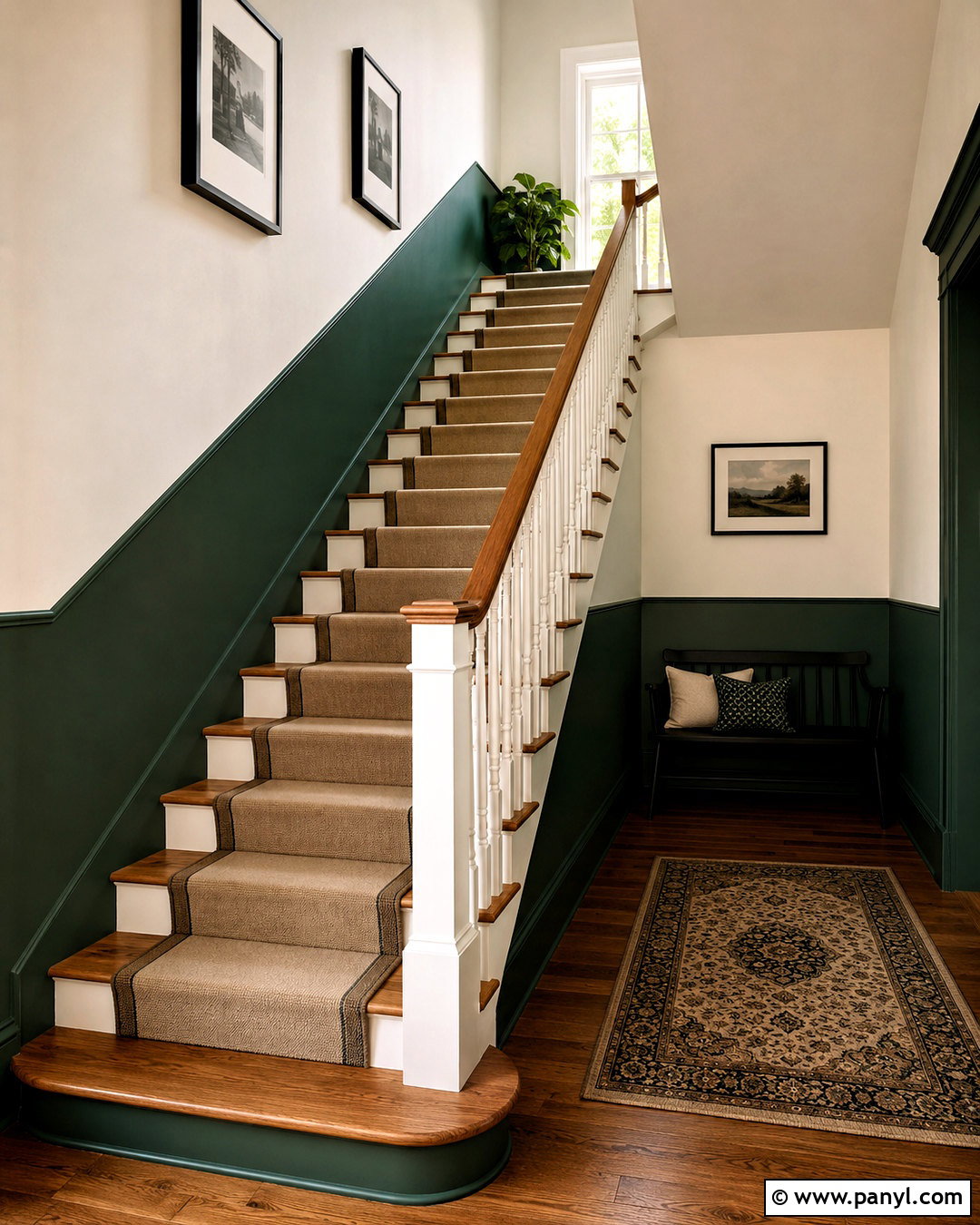
The natural angle of a staircase provides a useful guide for split painted walls. Follow the slope of the handrail with deep green paint below and warm white above, keeping the line consistent from the first step to the landing. Paint the baseboards and lower stair trim green, while leaving spindles and upper trim white. A natural oak handrail brings warmth to the contrast. Add a beige stair runner with a dark border and evenly spaced framed prints along the upper wall. At the landing, place a compact wood bench or narrow console. This complete design works with the staircase architecture rather than ignoring it, producing a continuous, polished transition that remains interesting from both the lower and upper floors.
34. Tile And Split Painted Bathroom Walls
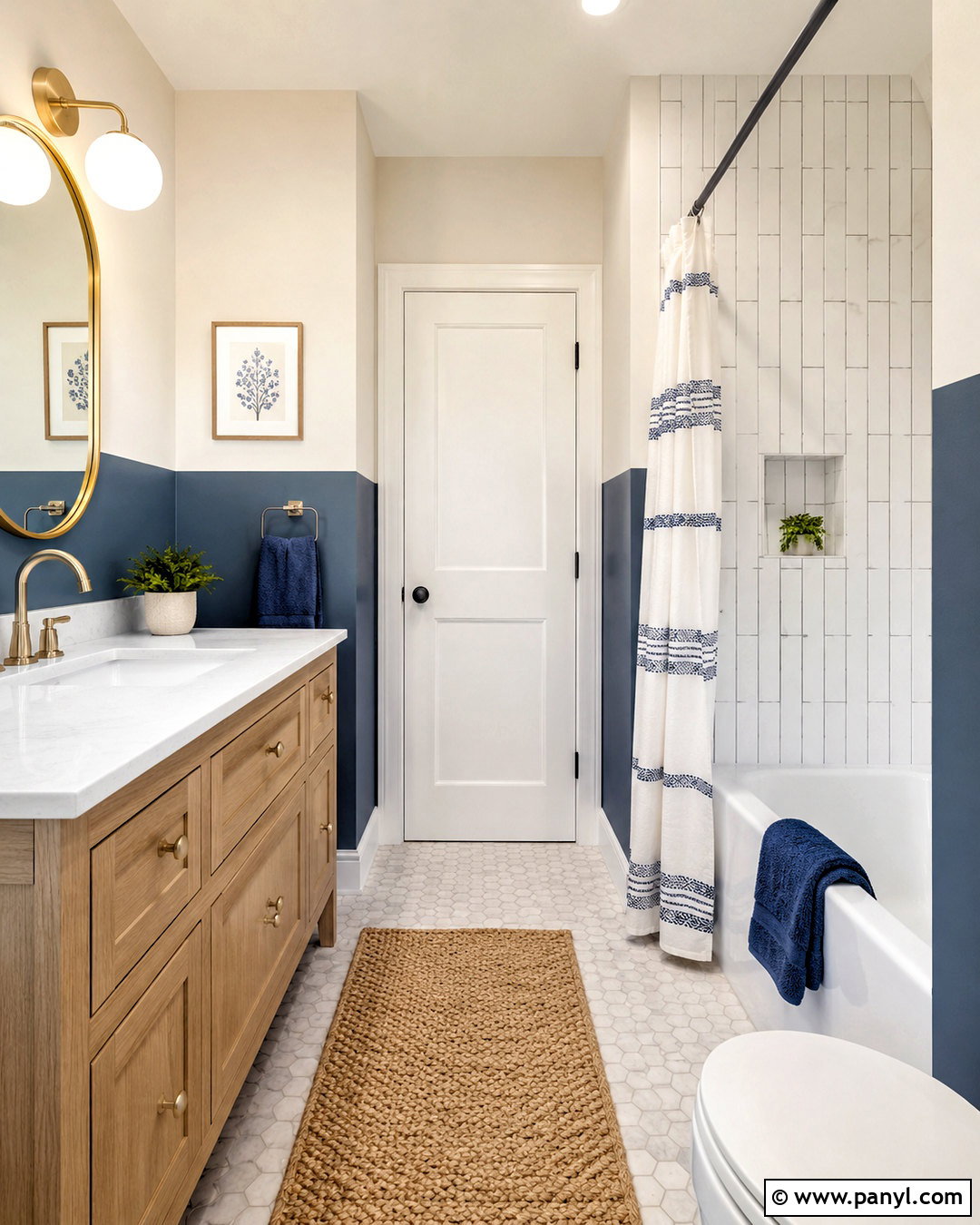
Combine painted walls with tile to create a practical three-layer bathroom scheme. Use white vertical subway tile around the tub and lower wet areas, then paint the remaining lower walls muted blue-gray to match the tile height. Finish the upper walls in warm white. Choose a pale oak vanity, white quartz counter, and brushed brass hardware for warmth. A rounded brass mirror, simple globe light, and white shower curtain keep the room bright. Add blue-gray towels and a small woven mat to repeat the painted section. Keeping all lower surfaces aligned creates a clean visual band around the bathroom. The completed space feels coordinated because the tile, paint boundaries, fixtures, and storage share one consistent layout.
35. Durable Split Painted Mudroom Walls
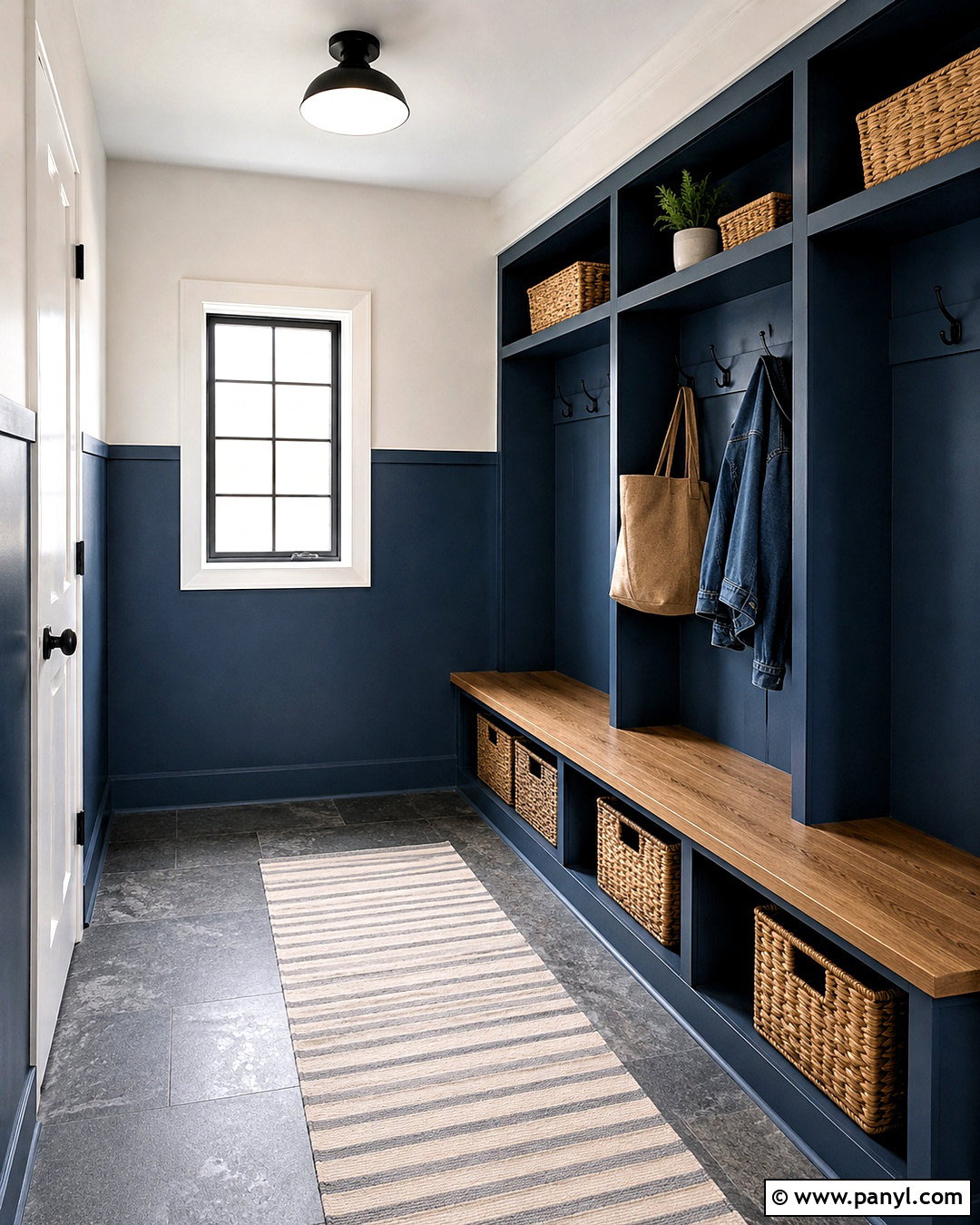
A mudroom needs a split-wall scheme that looks attractive while supporting everyday storage. Paint the lower two-thirds deep slate blue in a washable satin finish and use warm white above. Include the bench base, cubbies, coat hooks, and lower trim within the blue section so the storage wall appears built in. Choose a natural oak bench seat and brass or matte black hooks. Add durable stone-look flooring, a striped washable runner, and labeled woven baskets without visible lettering. A small wall light and high window keep the room bright. The darker lower color grounds shoes, bags, and storage, while the white upper walls prevent the compact space from feeling crowded or overly utilitarian.
Conclusion:
The most successful split wall combines more than two appealing paint colors. Its dividing line should connect with the furniture, trim, room proportions, and architectural features. A low split can ground an entryway, while a higher division makes a bedroom or living room feel more enveloping. Horizontal lines provide order, vertical divisions define zones, and arches or waves introduce softer movement. Before painting, test both colors together under daytime and evening lighting. Mark the proposed boundary with removable tape and view it from several positions in the room. Whether you prefer subtle neutrals or expressive contrasts, these 35 Split Painted Walls provide complete looks that can be adapted to different homes, layouts, and budgets.

Related Ideas and Inspiration:

Leave a Reply