
A basement can feel warmer, brighter, and far more intentional when the right orange feature wall anchors the room. These 20 Orange Accent Wall Basement Ideas explore practical ways to use terracotta, burnt orange, pumpkin, clay, coral, and muted apricot without overwhelming a lower-level space. Current design inspiration often balances orange with warm neutrals, natural wood, deep blue, black metal, and layered lighting. () The key is treating the accent wall as part of a complete room rather than an isolated splash of paint. Furniture placement, flooring, ceiling color, textiles, and lighting should all support it. Whether your basement serves as a family room, office, gym, or guest retreat, you can find an approachable look among these 20 Orange Accent Wall Basement Ideas.

1. Burnt Orange Accent Wall Basement Family Room
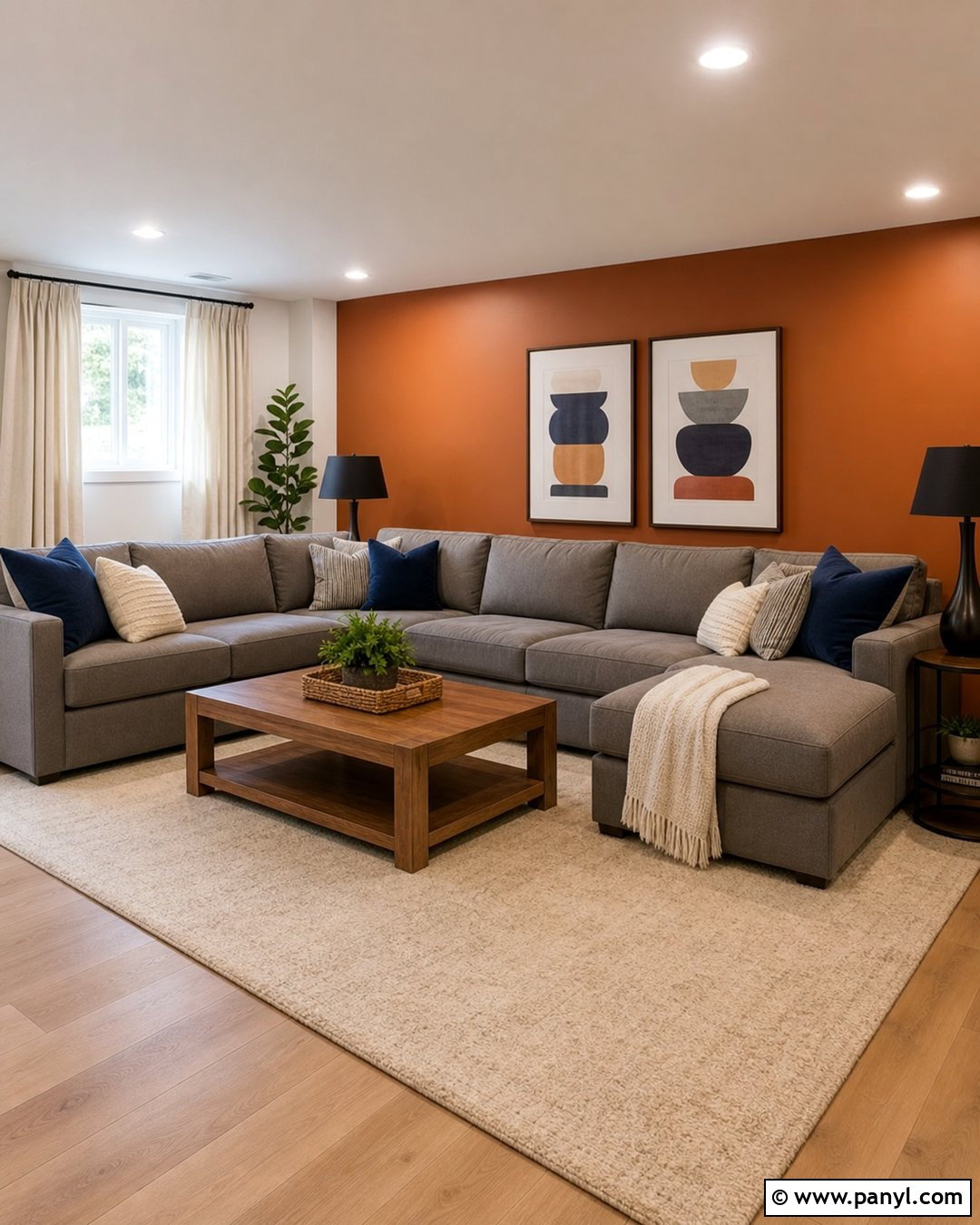
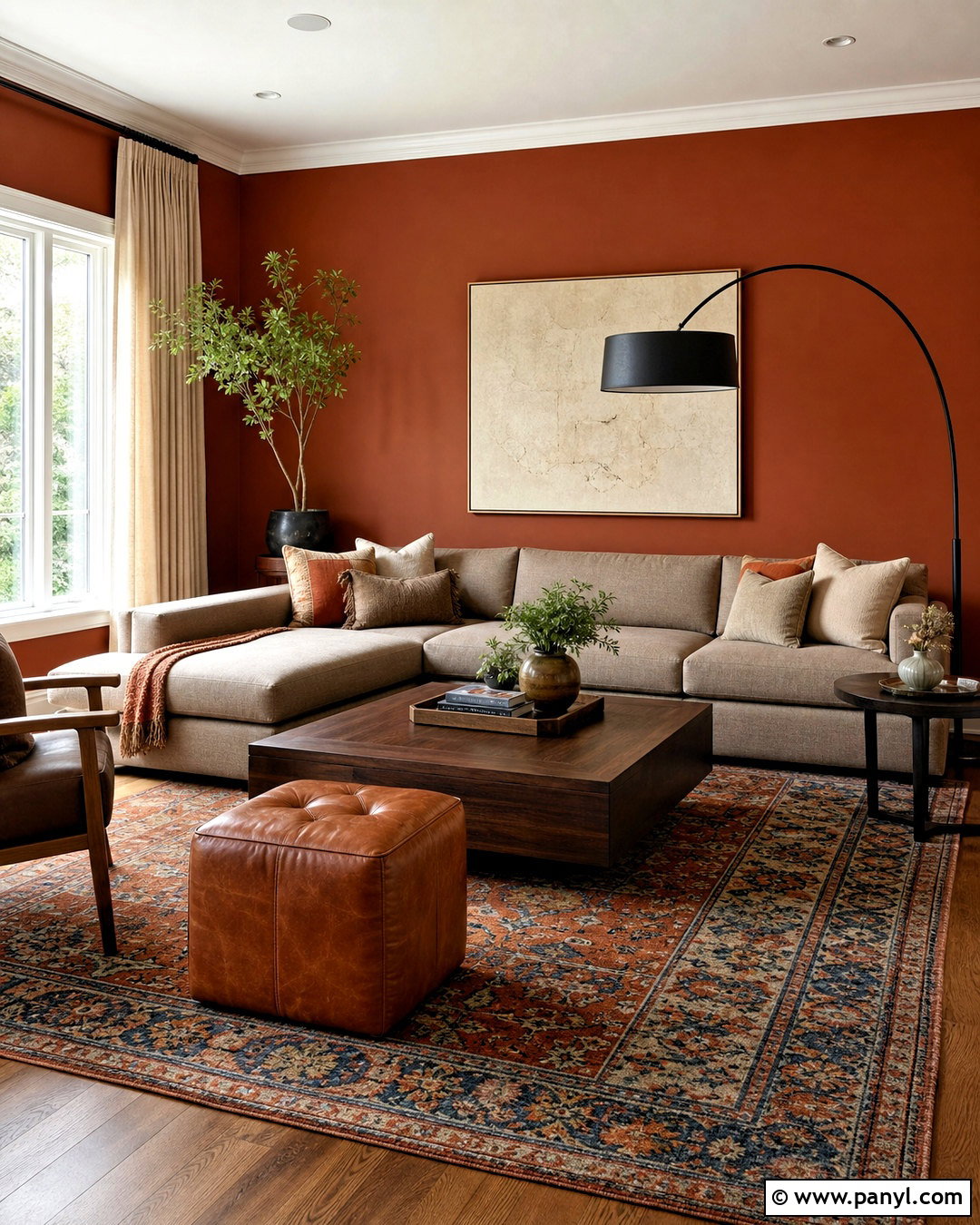
Burnt orange gives a basement family room a cozy, grounded character without looking overly bright. Place the accent wall behind a warm gray sectional so it becomes the natural focal point. Add a medium-tone oak coffee table, cream area rug, and soft oatmeal curtains if the basement has windows. Paint the remaining walls warm white to reflect available light, and keep the ceiling crisp white. Black floor lamps and simple framed artwork introduce clean contrast. Complete the seating area with rust, tan, and muted navy pillows, but avoid repeating orange on every surface. Light oak luxury vinyl flooring keeps the room practical while supporting the warm color palette. This complete arrangement feels comfortable, balanced, and suitable for everyday family use.
2. Terracotta Orange Accent Wall Basement Living Room
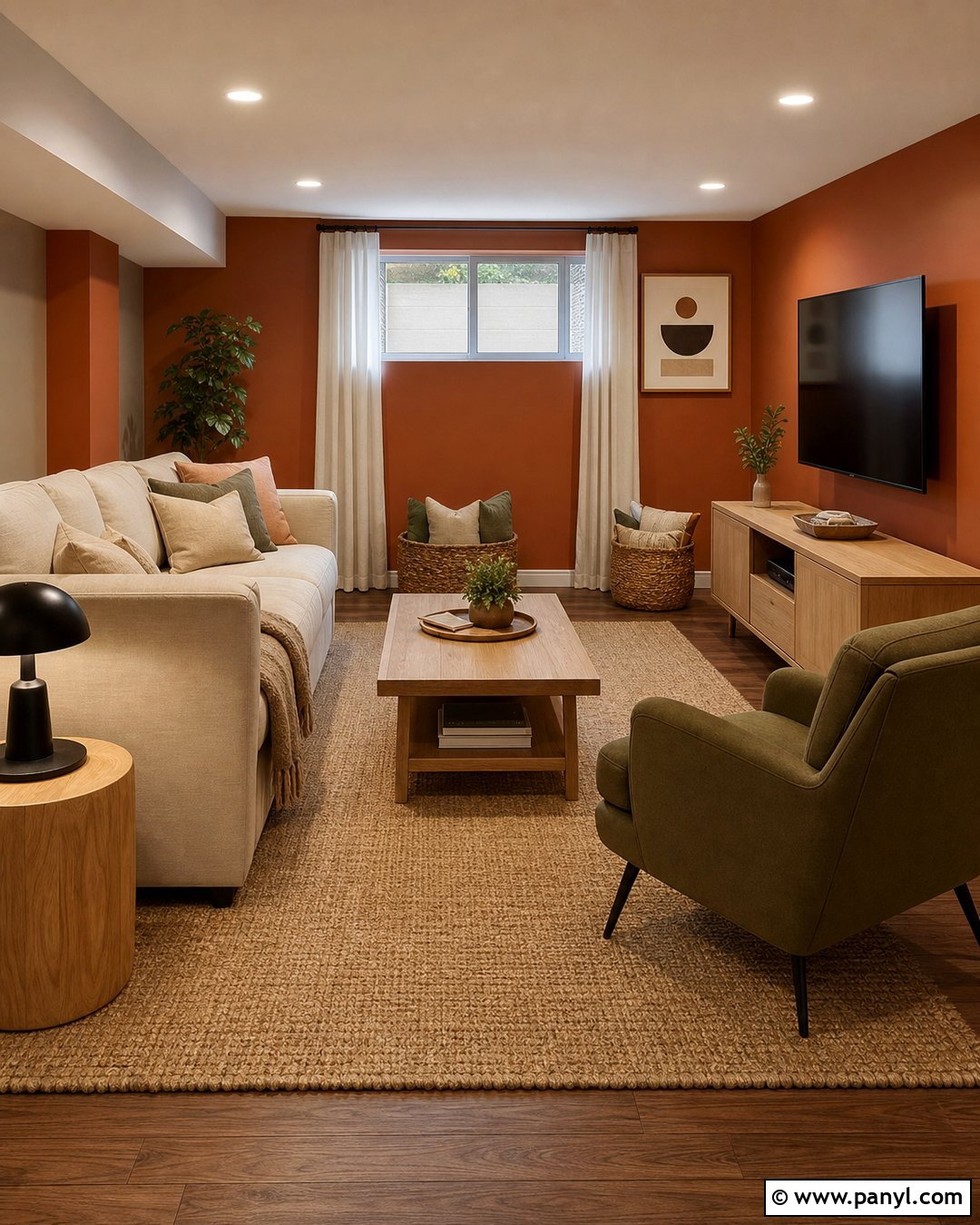
Soft terracotta creates an earthy basement living room that feels relaxed rather than loud. Use it on the wall behind a low-profile beige sofa, then surround the room with natural textures. A jute-blend rug, pale oak media console, woven baskets, and linen curtains make the orange appear softer. Choose creamy off-white for the adjoining walls and ceiling to prevent the room from feeling enclosed. An olive green lounge chair adds gentle contrast, while black metal lamps give the palette a modern edge. Hang one oversized abstract print containing cream, brown, and restrained green instead of covering the feature wall with many small pieces. Recessed ceiling lights and two table lamps should evenly illuminate the corners, creating a finished living area that feels warm throughout the day.
3. Orange Accent Wall Basement TV Room
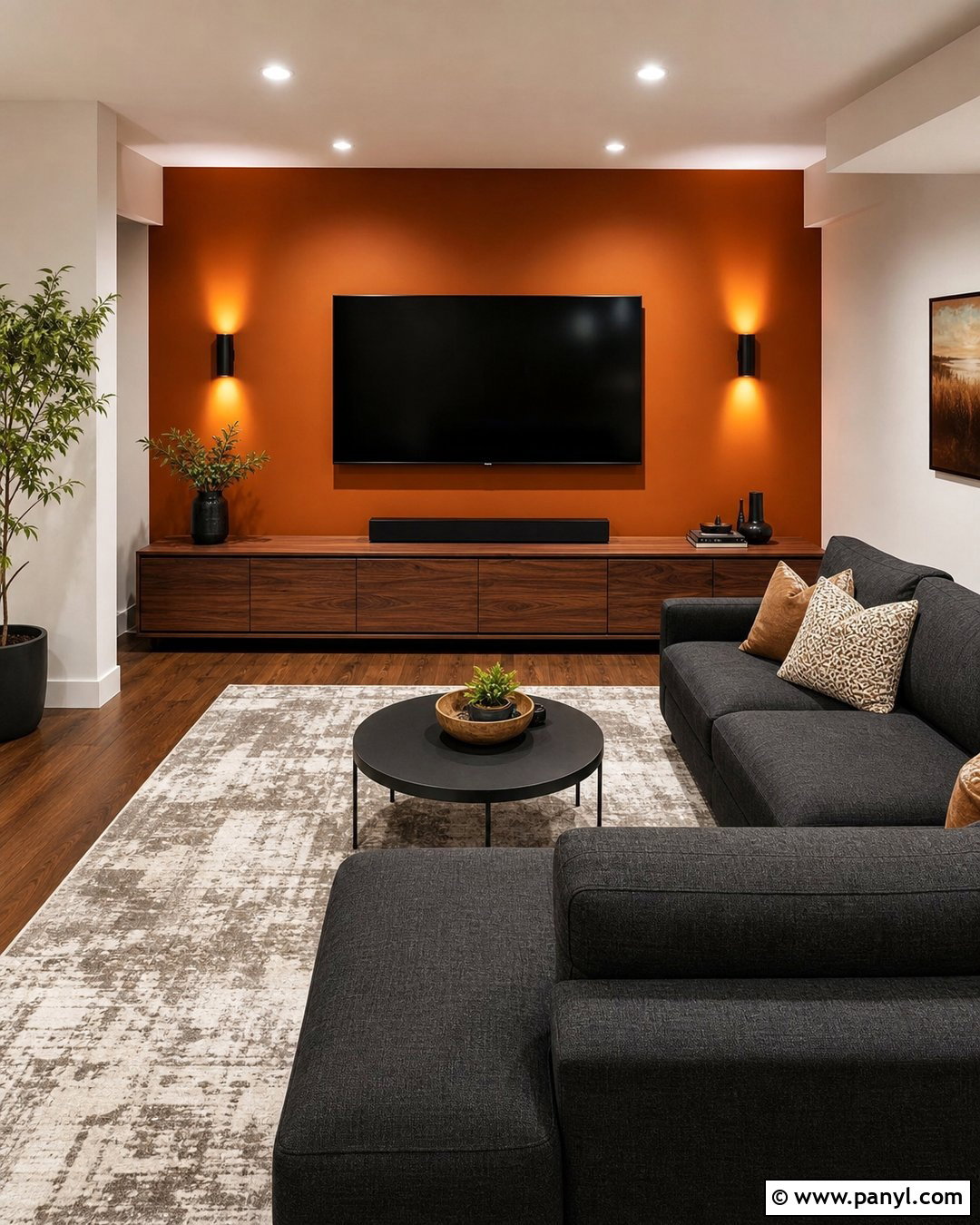
A deeper orange accent wall can make a basement TV room feel polished when the screen and storage are carefully integrated. Mount the television on a matte burnt orange wall above a long walnut console with closed cabinets. The dark screen will visually settle into the rich backdrop instead of appearing disconnected. Position a charcoal sectional directly opposite and define the viewing zone with a large cream-and-gray rug. Add warm white paint to the side walls, medium brown flooring, and simple black sconces beside the television. Use dimmable recessed lighting for viewing, but include brighter lamps for everyday activities. A few camel and ivory cushions soften the charcoal upholstery. Keep decorations minimal around the screen so the wall remains attractive without competing with movies or games.
4. Orange Accent Wall Basement Home Theater
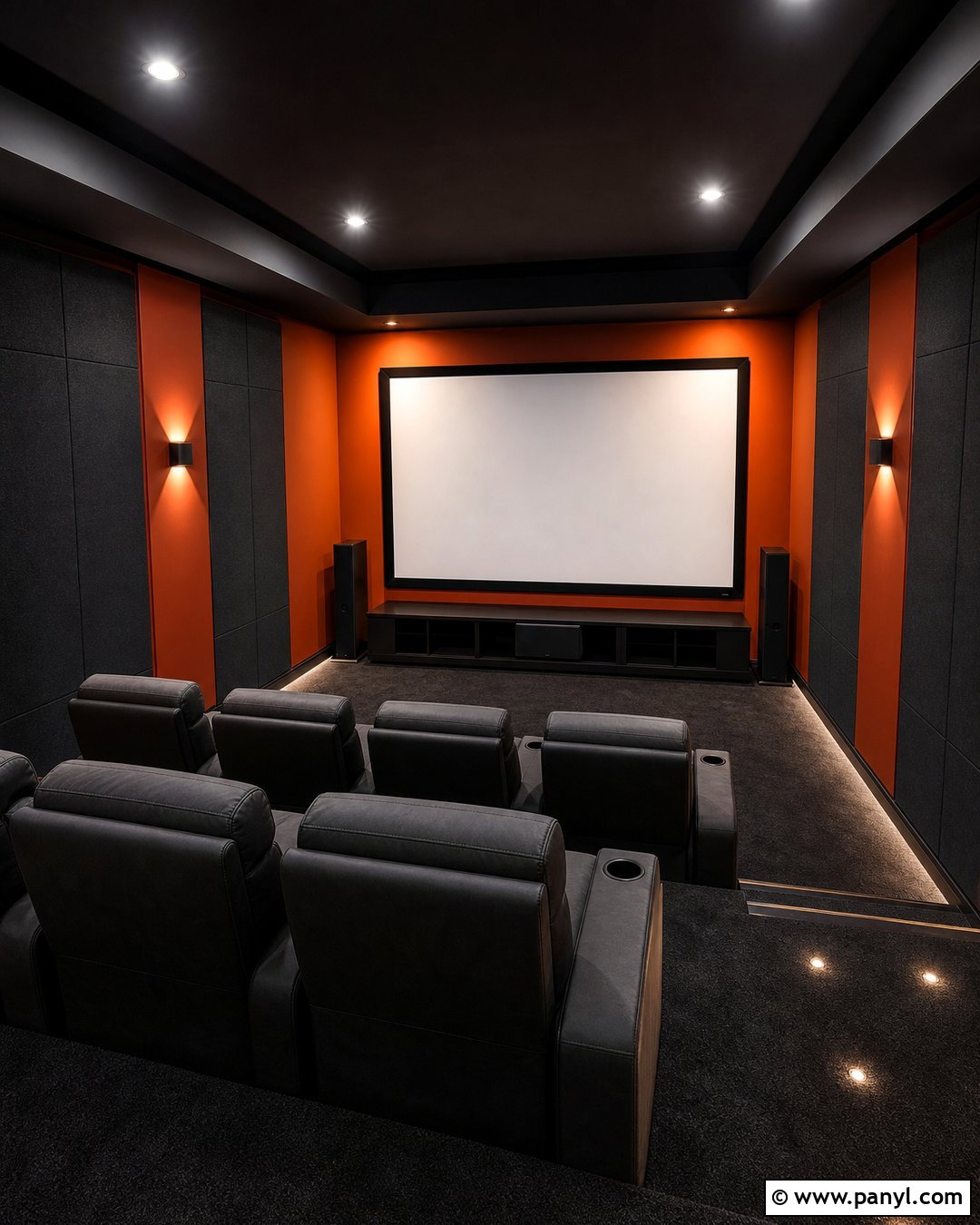
For a dedicated theater, choose a dark rust orange that feels warm but does not reflect excessive light around the screen. Paint the screen wall rust and continue a narrow section of the color onto each adjoining side for a subtly wrapped effect. Use dark gray acoustic wall panels around the projection area, arranged in clean vertical rows. Two compact rows of charcoal reclining seats, a black low-pile carpet, and a matte black ceiling create a focused viewing environment. Soft step lighting and dimmable wall sconces make the room functional without causing glare. Add a slim storage cabinet at the back for blankets and media accessories. The rich orange prevents the dark finishes from feeling cold, while the controlled palette gives an average basement a convincing theater-like atmosphere.
5. Orange Accent Wall Basement Game Room
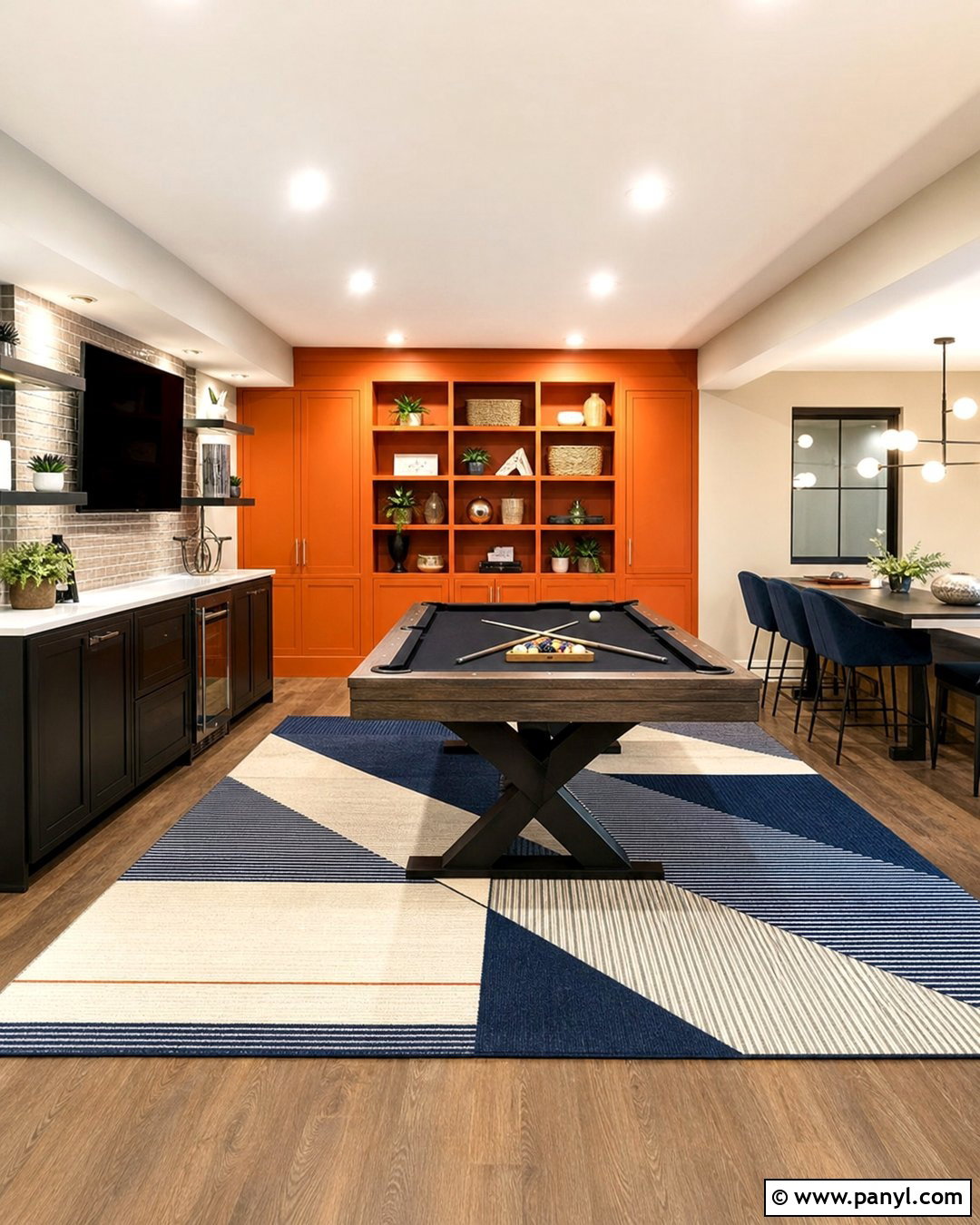
A lively pumpkin orange wall can energize a basement game room without making the entire space feel chaotic. Place the game table in the center and use the orange wall as the backdrop for a streamlined black storage unit. Open shelves can hold attractive baskets, board games, and a few colorful accessories, while closed cabinets conceal smaller items. Paint the remaining walls pale greige and install medium oak flooring for a practical, easygoing foundation. Add navy upholstered chairs or a navy bench to balance the brightness of the orange. A geometric cream-and-blue rug defines the activity zone and improves comfort. Bright ceiling fixtures, adjustable track lights, and a floor lamp eliminate shadowy corners. The result feels playful, organized, and welcoming for different ages.
6. Orange Accent Wall Basement Home Office
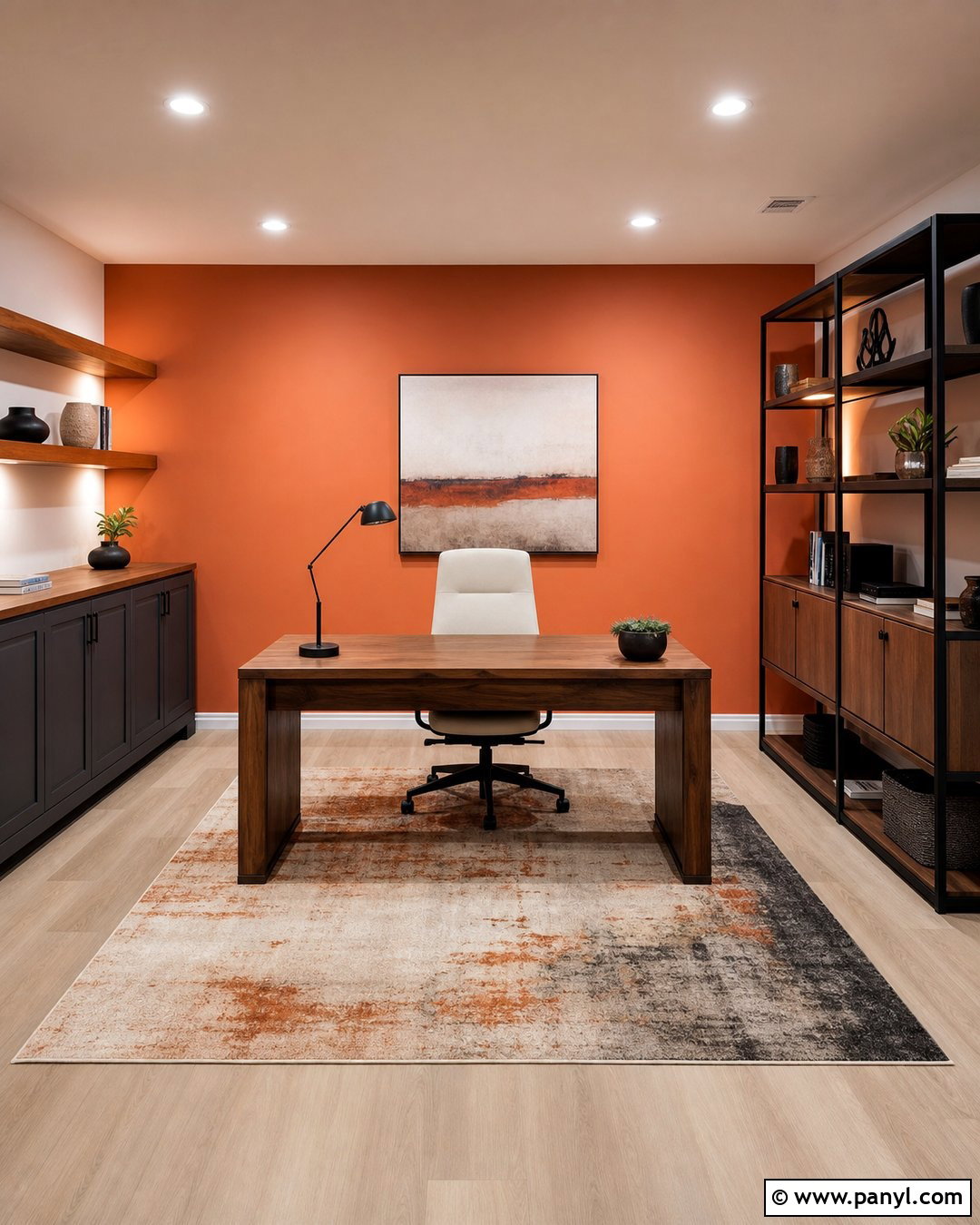
Could your basement workspace use more visual energy? Paint the wall behind the desk a muted persimmon orange and keep the remaining surfaces warm white. Center a walnut desk against the accent wall, then add a cream ergonomic chair and black metal shelving. A flat-weave rug in beige, rust, and charcoal will define the office without interfering with rolling chair movement. Use matching closed cabinets to hide paperwork and supplies, especially if the office shares space with a family room. A white ceiling, pale wood flooring, and bright task lighting help the basement feel open. Add one framed print and a small group of low-maintenance artificial greenery for controlled decoration. This balanced setup gives the orange wall purpose while maintaining a calm, professional background for focused work.
7. Orange Accent Wall Basement Gym
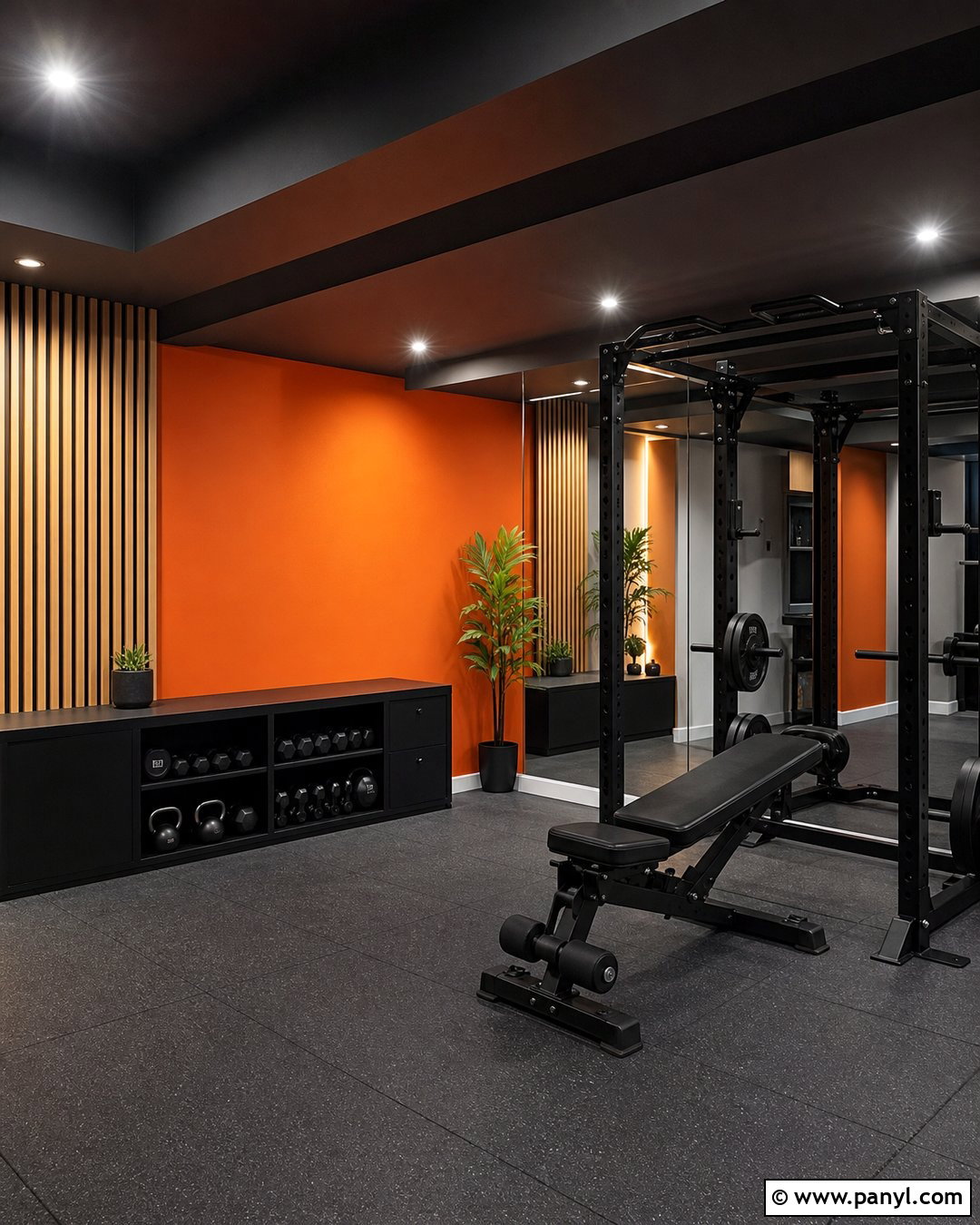
Bring warmth into a basement gym with an energetic orange wall behind the main exercise zone. A clear tangerine shade works especially well when balanced by charcoal rubber flooring, white side walls, and matte black equipment. Install a large frameless mirror on an adjacent wall rather than directly over the orange, allowing the color to remain visible while improving the room’s function. Place a low black cabinet against the feature wall for towels, resistance bands, and smaller accessories. Add vertical wood slats to one end of the orange surface for extra depth without covering it completely. Bright flush-mount ceiling lights should spread illumination evenly across the floor. Finish with a compact bench and organized wall hooks, creating a gym that feels motivating, clean, and intentionally designed.
8. Orange Accent Wall Basement Playroom
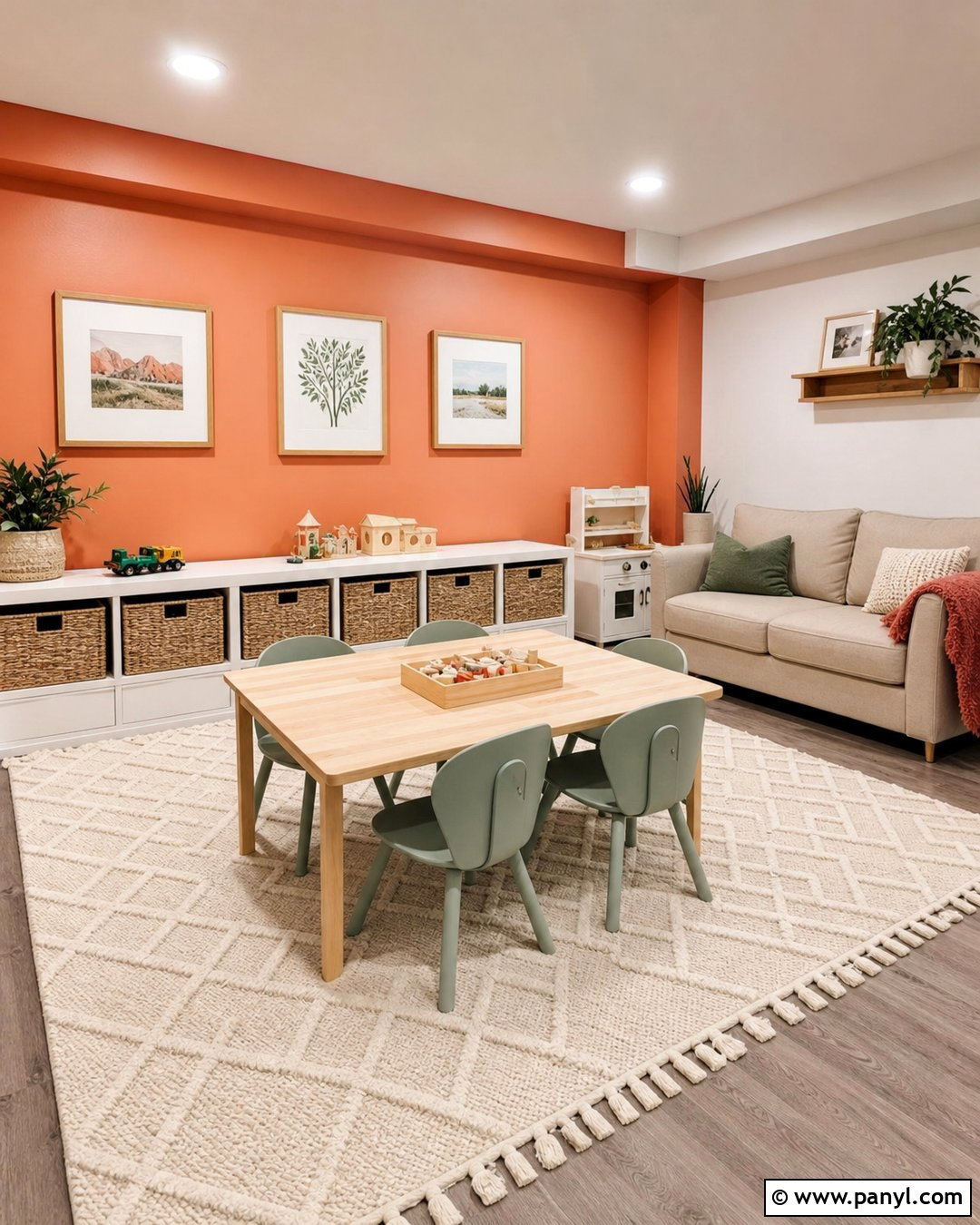
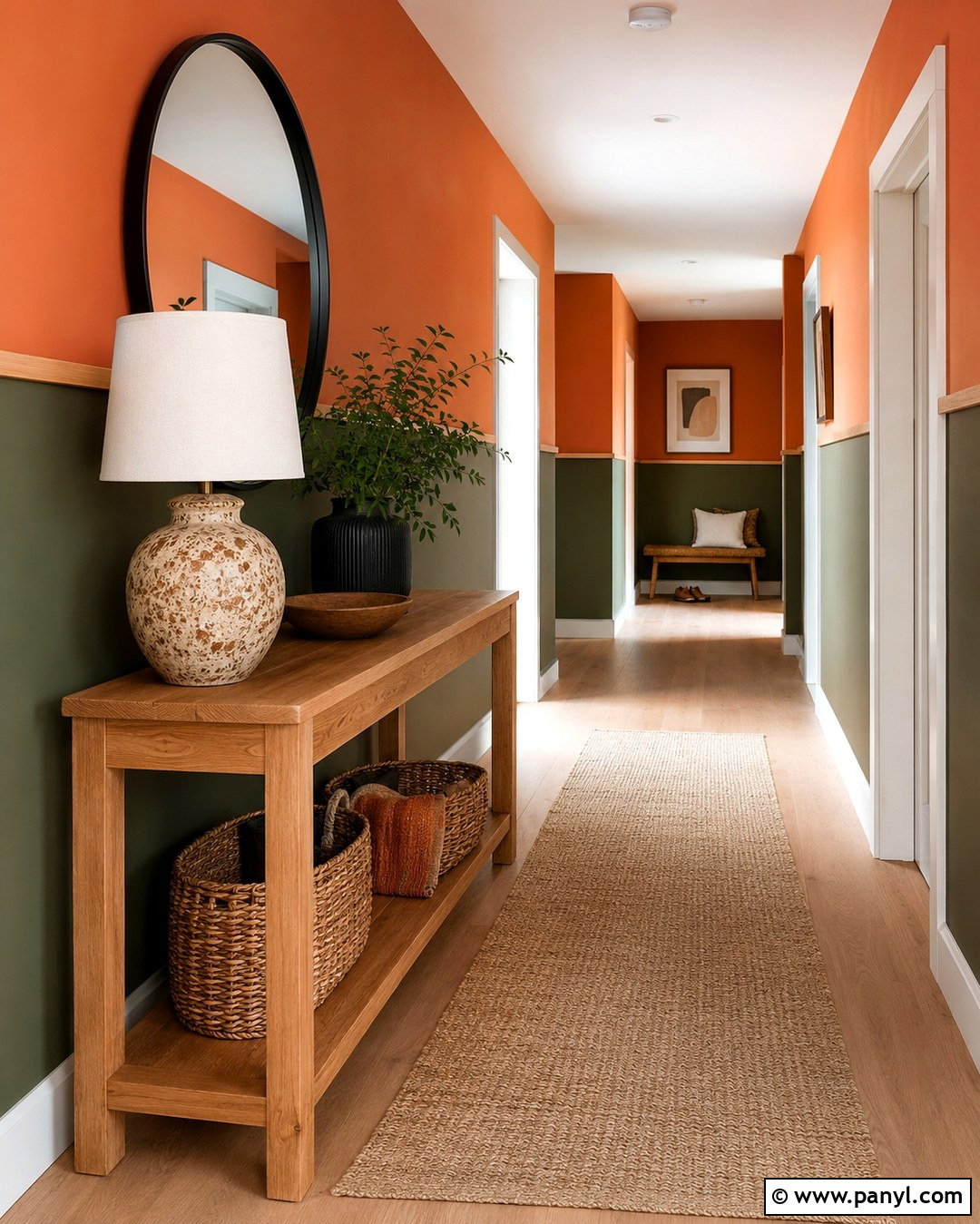
A cheerful apricot orange accent wall gives a basement playroom personality while remaining softer than vivid primary colors. Use the wall behind a low white storage system with labeled-looking solid baskets, but avoid visible writing or excessive visual clutter. Add a washable cream rug with a simple geometric pattern, pale wood activity table, and sage green child-size seating. Warm white surrounding walls and a bright white ceiling help distribute light through the lower-level room. Include a comfortable beige loveseat for reading and family supervision. Display colorful artwork in matching natural wood frames, keeping the arrangement orderly. Rounded furniture edges and open floor space make the layout easier to navigate. The complete palette feels playful and youthful, yet neutral enough to adapt as children grow older.
9. Orange Accent Wall Basement Guest Room
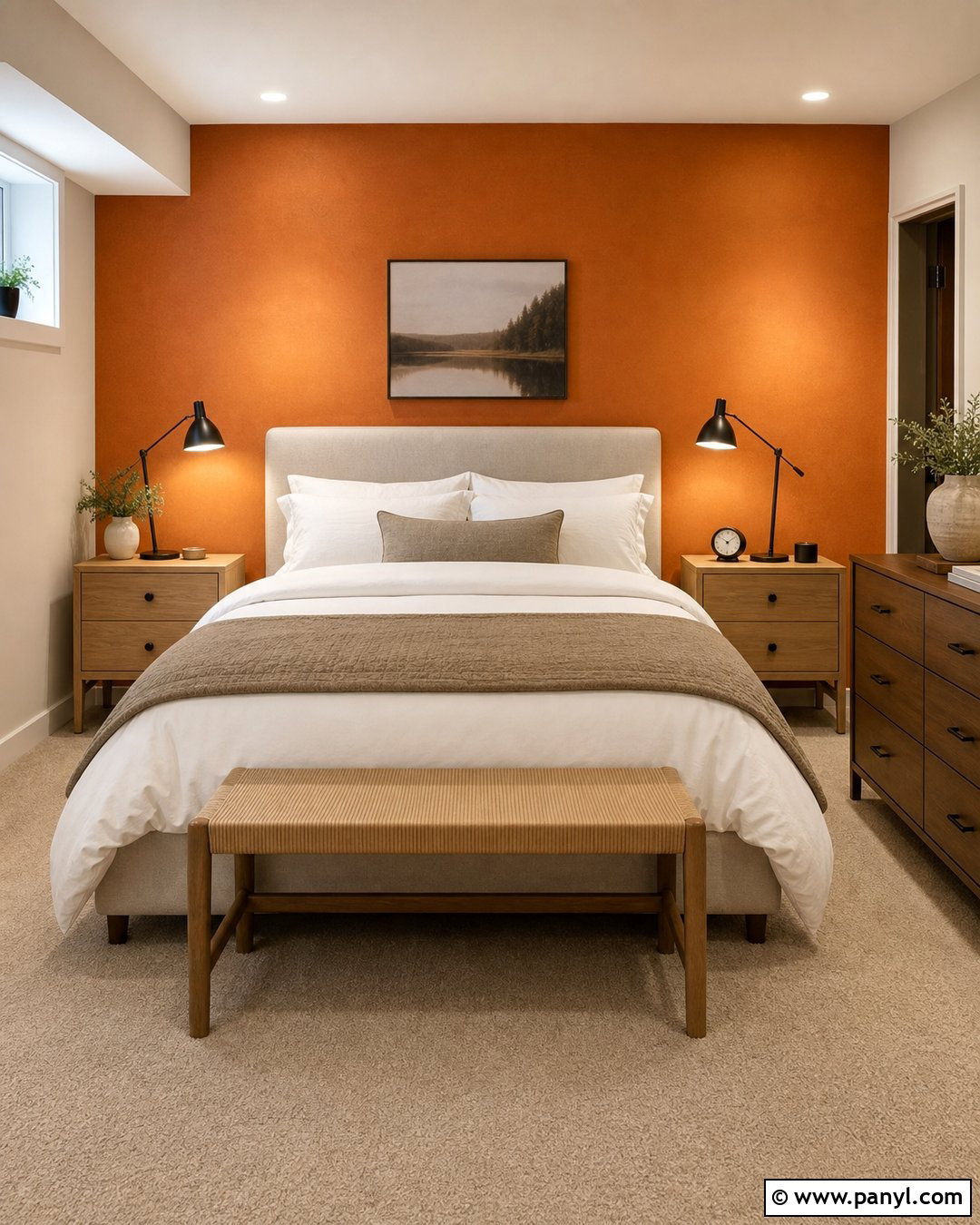
A clay orange wall behind the bed can make a basement guest room feel like a welcoming retreat. Choose a medium, slightly muted shade that complements rather than dominates the sleeping area. Position an upholstered oatmeal headboard against it and dress the bed in crisp white bedding, a taupe quilt, and one rust-colored throw. Pale oak nightstands and matte black lamps introduce warmth and contrast. Paint the other walls soft cream, then use light beige carpet or an ivory rug over wood-look flooring. A compact walnut dresser, full-length mirror, and simple bench complete the room without crowding it. Layer recessed lights with bedside lighting because basements often need illumination from several sources. The finished bedroom feels comfortable, private, and thoughtfully connected from wall to wall.
10. Orange Accent Wall Basement Reading Nook
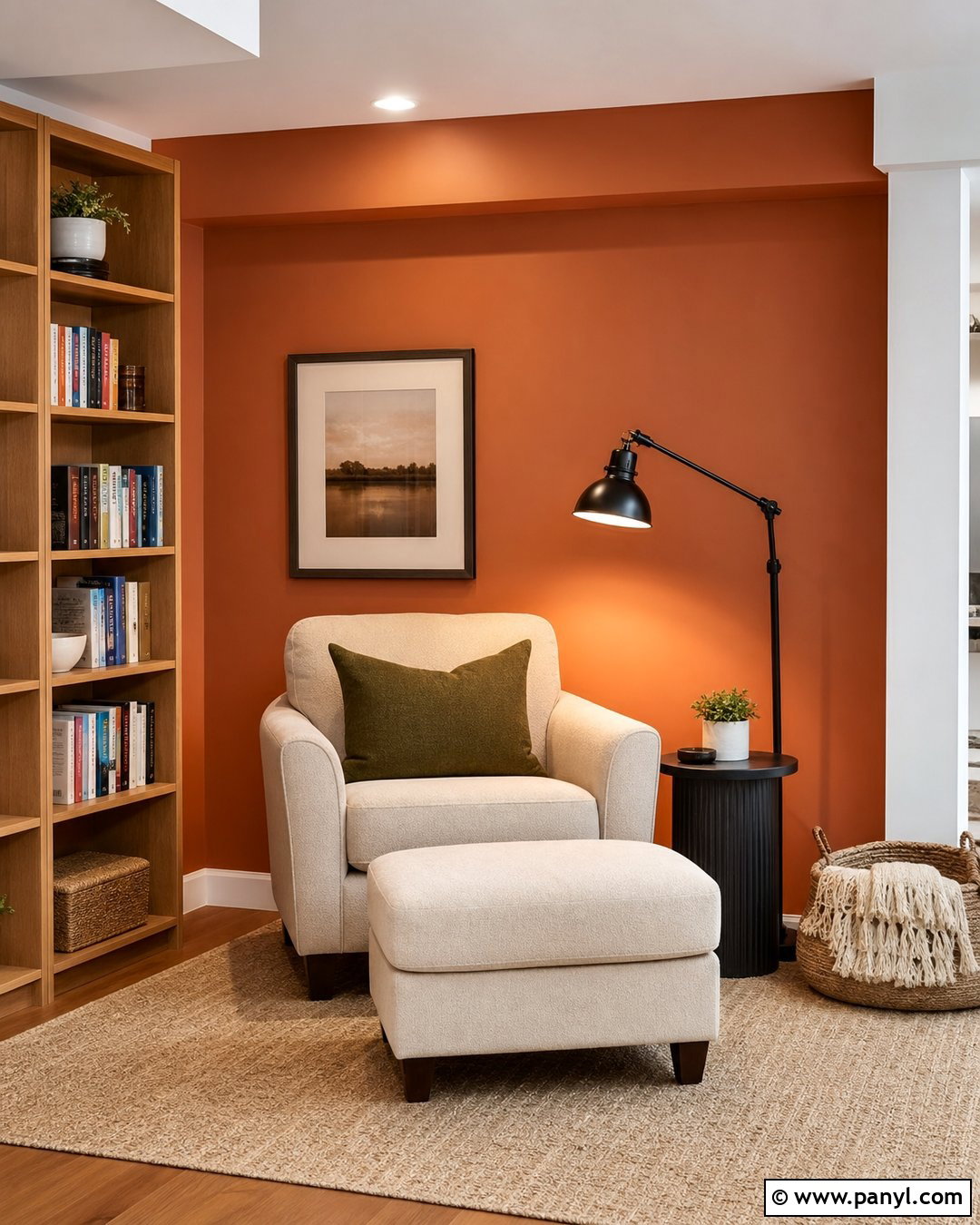
Turn an unused basement corner into a comfortable reading retreat with a dusty orange accent wall and furniture sized for the space. Place a deep cream armchair near the wall, angled toward a slim oak bookcase rather than pushed tightly into the corner. Add a matching ottoman, small black side table, and adjustable floor lamp for a practical reading setup. A soft beige rug visually separates the nook from the rest of the basement. Paint nearby walls warm white and use pale flooring so the orange feels inviting instead of heavy. Hang two understated landscape prints above the chair and include one olive green pillow for contrast. A woven basket can store throws beside the bookcase. This complete nook makes a difficult corner useful while giving the basement a quieter destination.
11. Orange Accent Wall Basement Bar Area
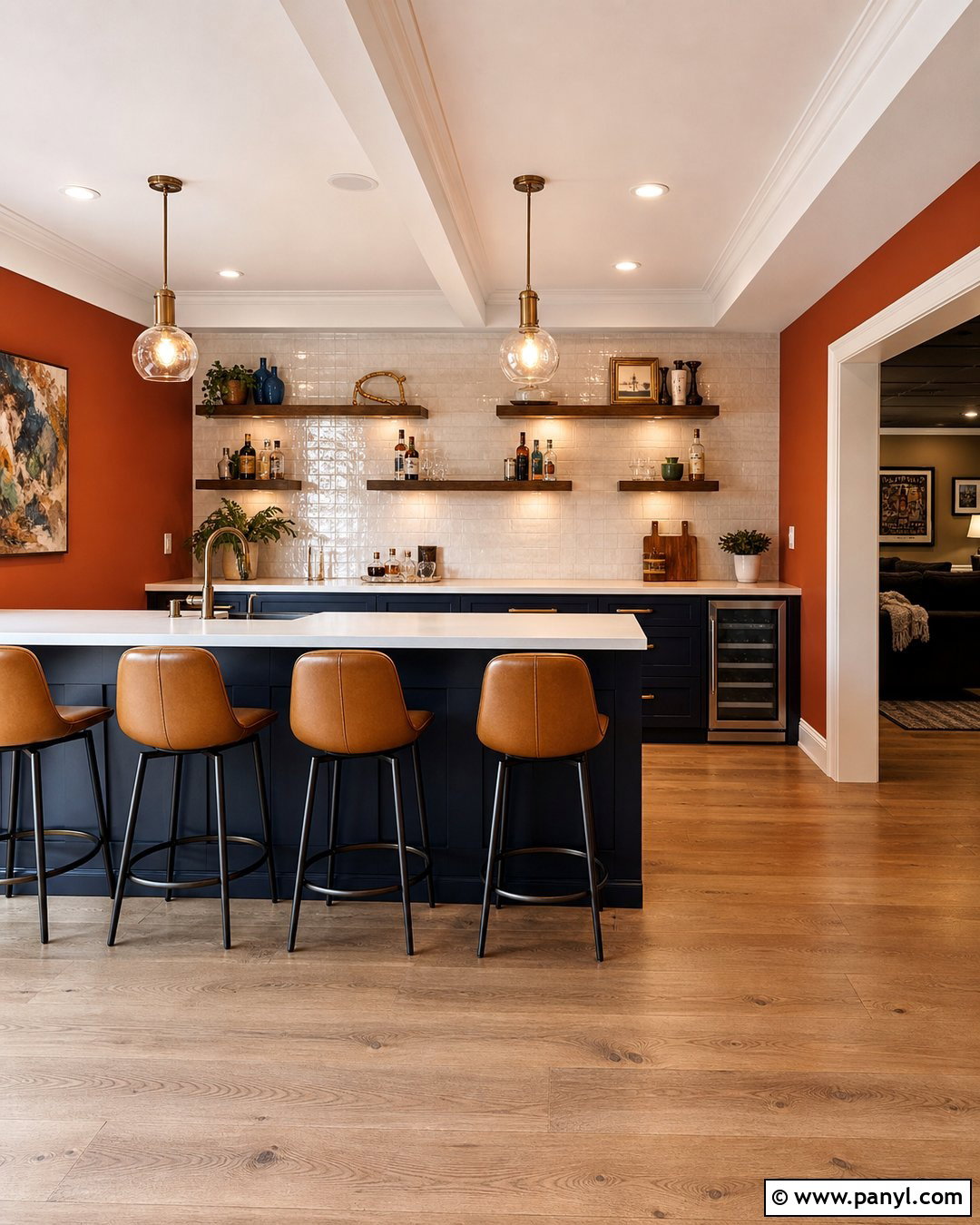
A sophisticated copper orange wall can anchor a basement refreshment area without relying on a themed or overly commercial appearance. Install lower cabinets in deep navy with a pale quartz countertop against the orange wall. Add a white tile backsplash only between the counter and floating walnut shelves, leaving enough painted orange visible around the cabinetry. Brushed brass cabinet pulls and simple glass pendant lights introduce a warm metallic finish. Place three camel-colored counter stools along a compact peninsula, then use medium oak flooring throughout the adjoining basement. Soft cream walls keep the surrounding lounge area light and connected. Style the shelves with glassware, ceramic dishes, and small decorative objects. The coordinated palette creates an attractive gathering spot for snacks, coffee, and casual entertaining.
12. Orange Accent Wall Basement Kitchenette
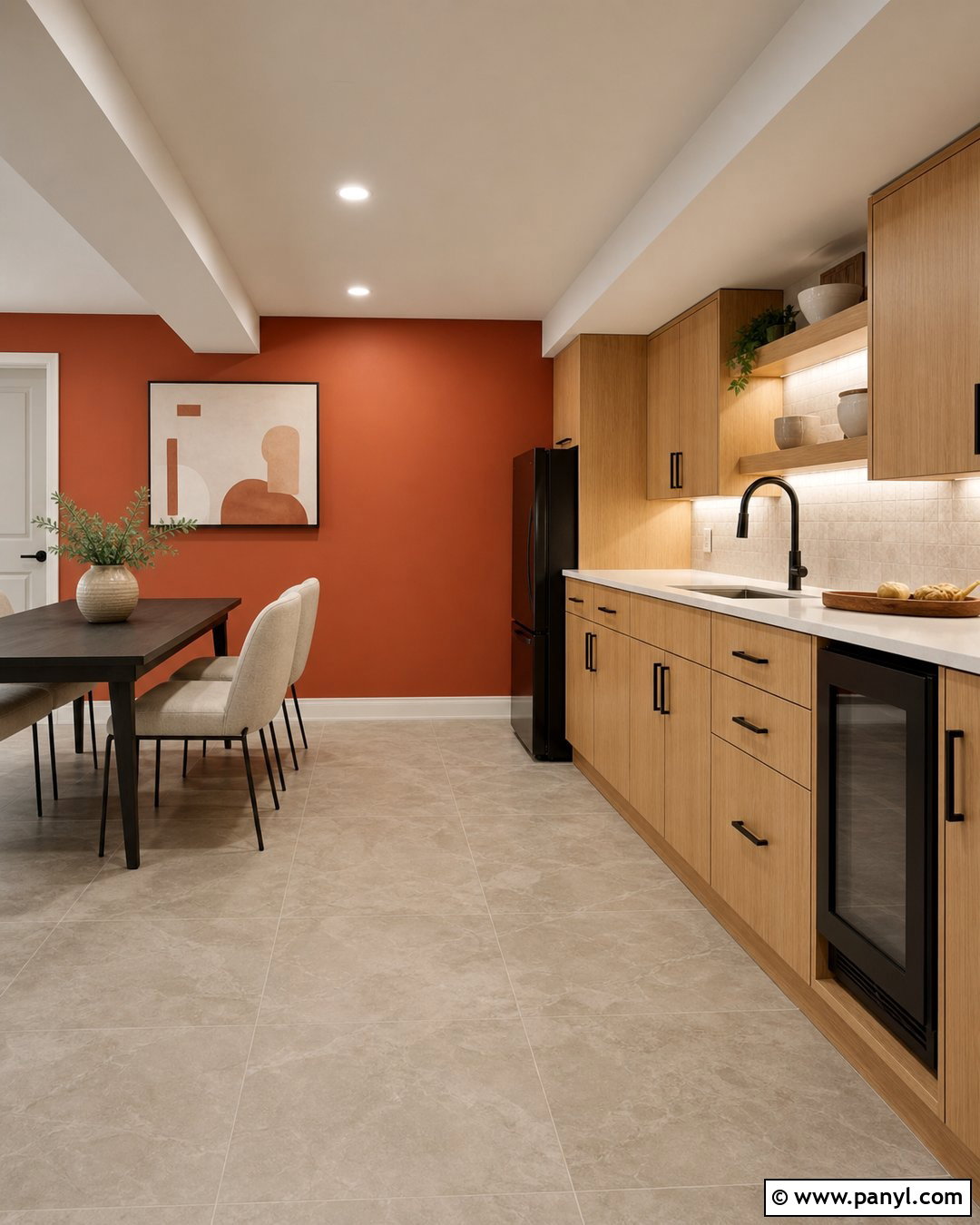
For a small basement kitchenette, use muted paprika orange to make the cabinet wall feel warm and defined. Install flat-panel light oak cabinets along the feature wall with white quartz counters and a simple cream backsplash. Matte black hardware, a compact black refrigerator, and a stainless sink provide practical contrast. Keep the upper portion of the orange wall exposed instead of filling every inch with cabinets. The remaining walls should be warm white, while light greige floor tile offers durability and an easy transition into adjacent rooms. Add a narrow dining table with beige upholstered chairs nearby and suspend a clean white pendant above it. Under-cabinet lighting brightens the work surface. This cohesive setup makes a limited basement food-preparation area feel intentional, functional, and connected to the larger living space.
13. Orange Accent Wall Basement Laundry Room
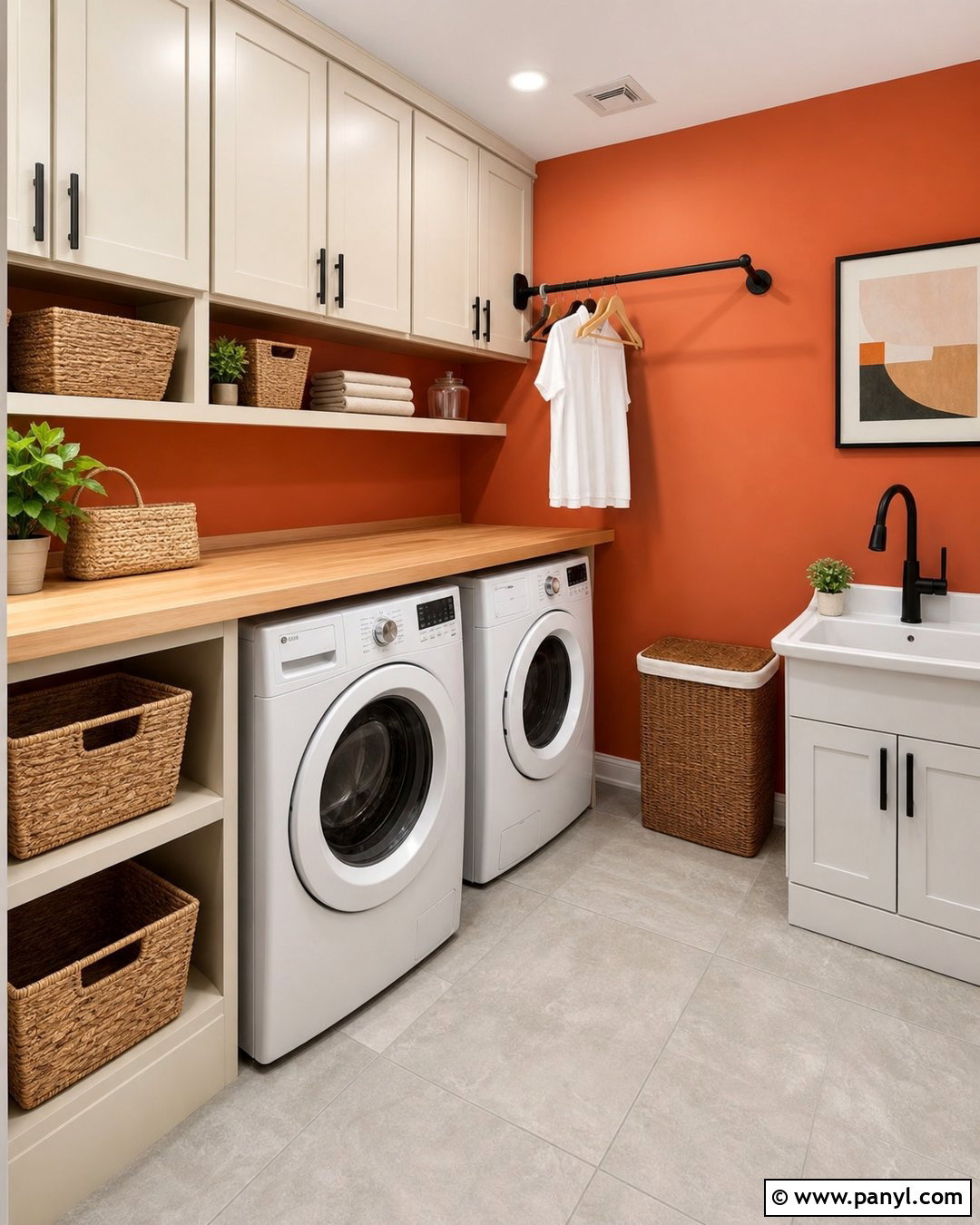
Laundry areas do not need to feel purely utilitarian. Paint the wall behind white front-loading machines a warm coral orange, then add a butcher-block counter across the top for folding. Install cream upper cabinets on the orange wall, leaving a visible border of color around them. A narrow open shelf can hold matching baskets and simple containers without making the room look crowded. Use light gray porcelain floor tile, warm white side walls, and bright ceiling fixtures for a clean foundation. Matte black cabinet pulls and a black hanging rod sharpen the softer palette. If space allows, add a slim utility sink in a white cabinet beside the machines. The entire room will feel coordinated and cheerful, turning routine household work into a more pleasant basement experience.
14. Orange Accent Wall Basement Craft Room
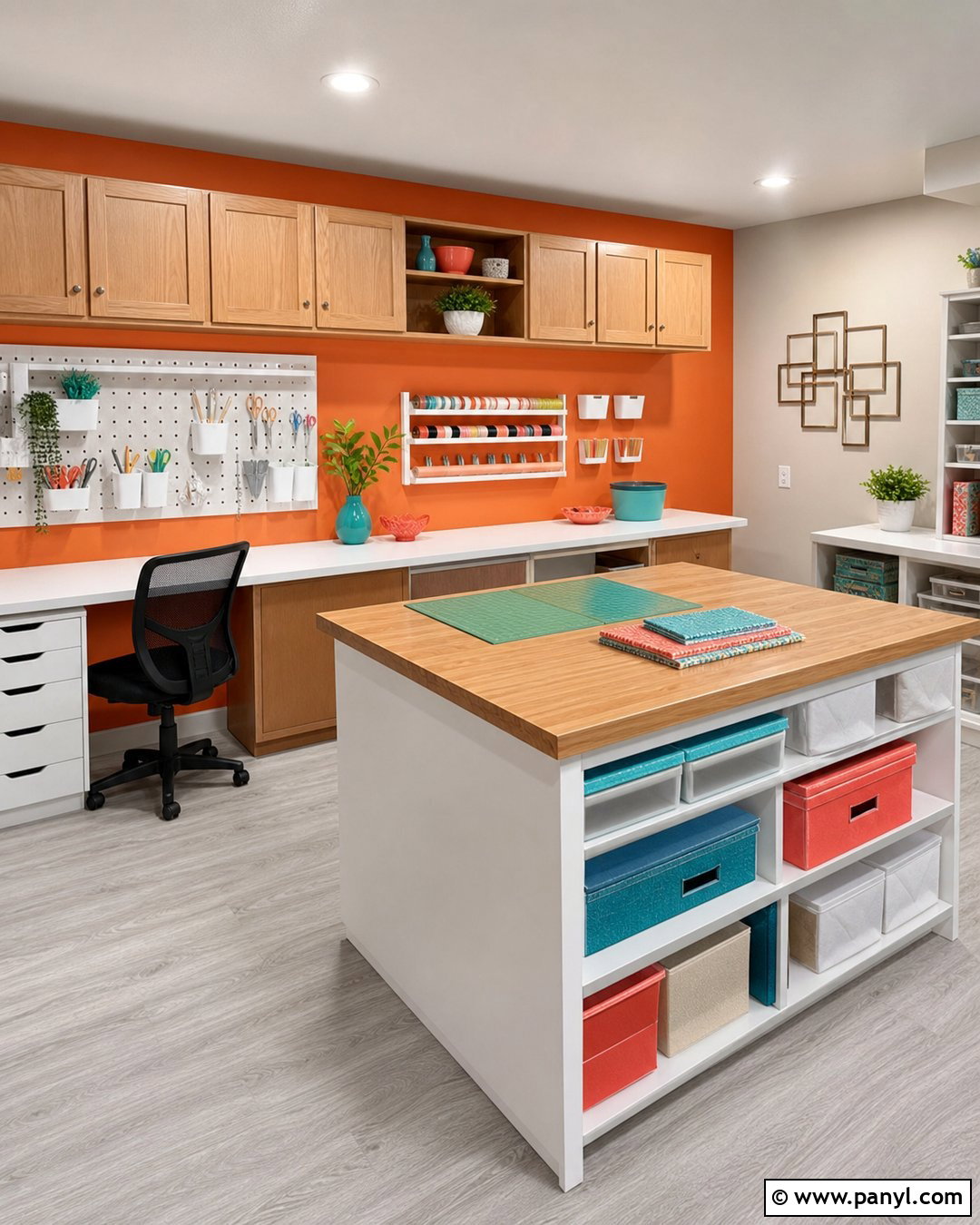
A clear, warm orange wall creates an upbeat background for a basement craft room when storage and work surfaces stay visually controlled. Run a long white worktable parallel to the feature wall and position shallow oak cabinets beneath it. Above the table, install white peg-style organizers and narrow shelves while leaving sections of orange visible. Add a comfortable black task chair and a central cutting table with closed storage. The adjoining walls should be soft white, and the floor can be durable pale gray luxury vinyl. Use bright overhead panels plus adjustable task lamps to reduce shadows on detailed projects. Coral, teal, and mustard accessories may appear in small amounts, but repeat them carefully. The completed room feels creative and colorful without becoming distracting or difficult to organize.
15. Orange Accent Wall Basement Music Room
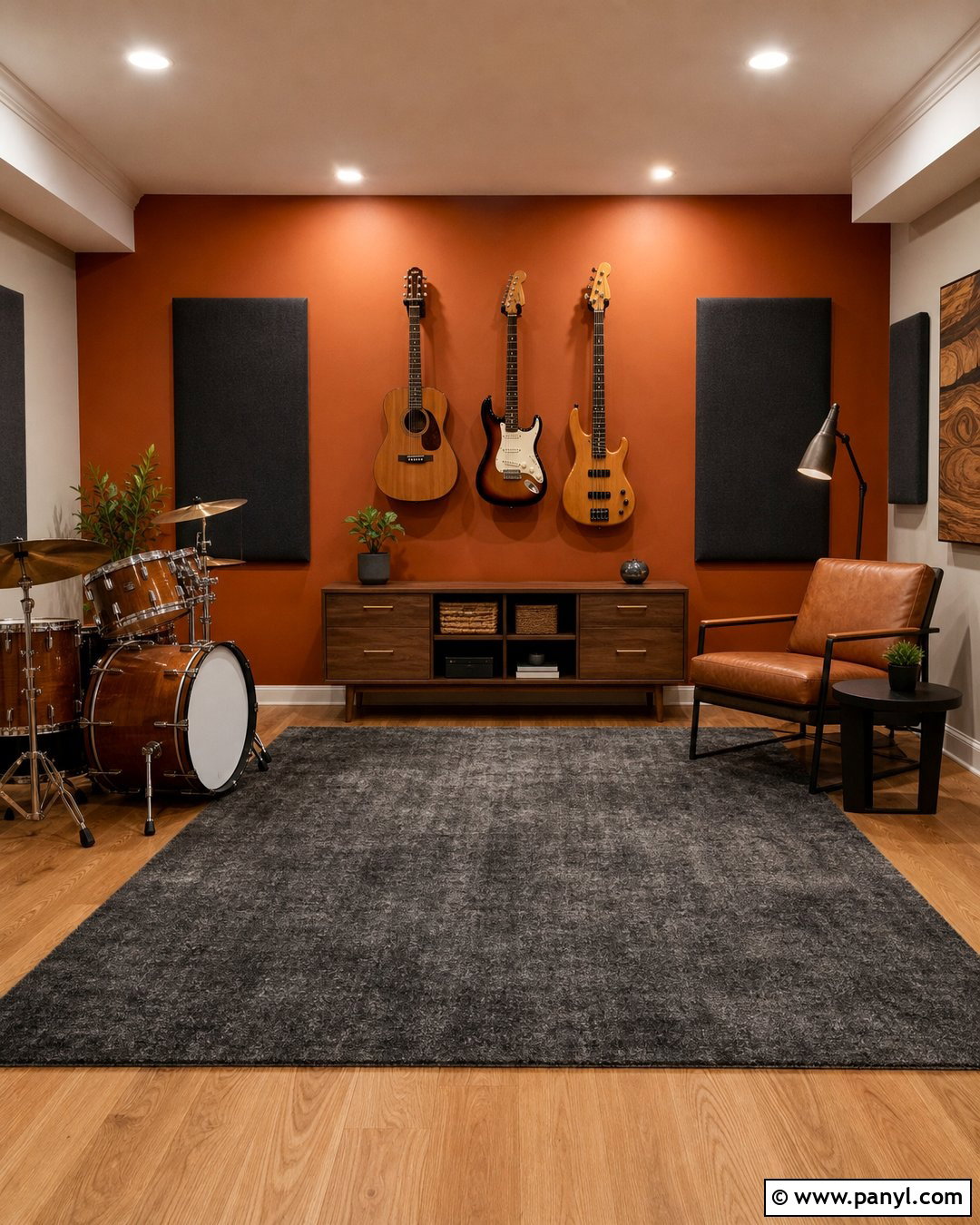
A burnt sienna orange accent wall pairs naturally with the wood tones and black equipment commonly found in a basement music room. Place the primary instruments and a low walnut storage console against the colored wall, allowing the arrangement to become the focal point. Add charcoal acoustic panels in a symmetrical layout, using enough space between them to show the orange paint. A deep gray rug, caramel leather-look chair, and black metal side table create a comfortable practice corner. Paint the remaining walls creamy white and use medium oak flooring for continuity. Track lighting can aim toward instruments, shelves, and artwork while a floor lamp softens the seating area. With concealed cable storage and minimal decorative clutter, the room feels creative, balanced, and ready for regular use.
16. Orange Accent Wall Basement With Wood Slats
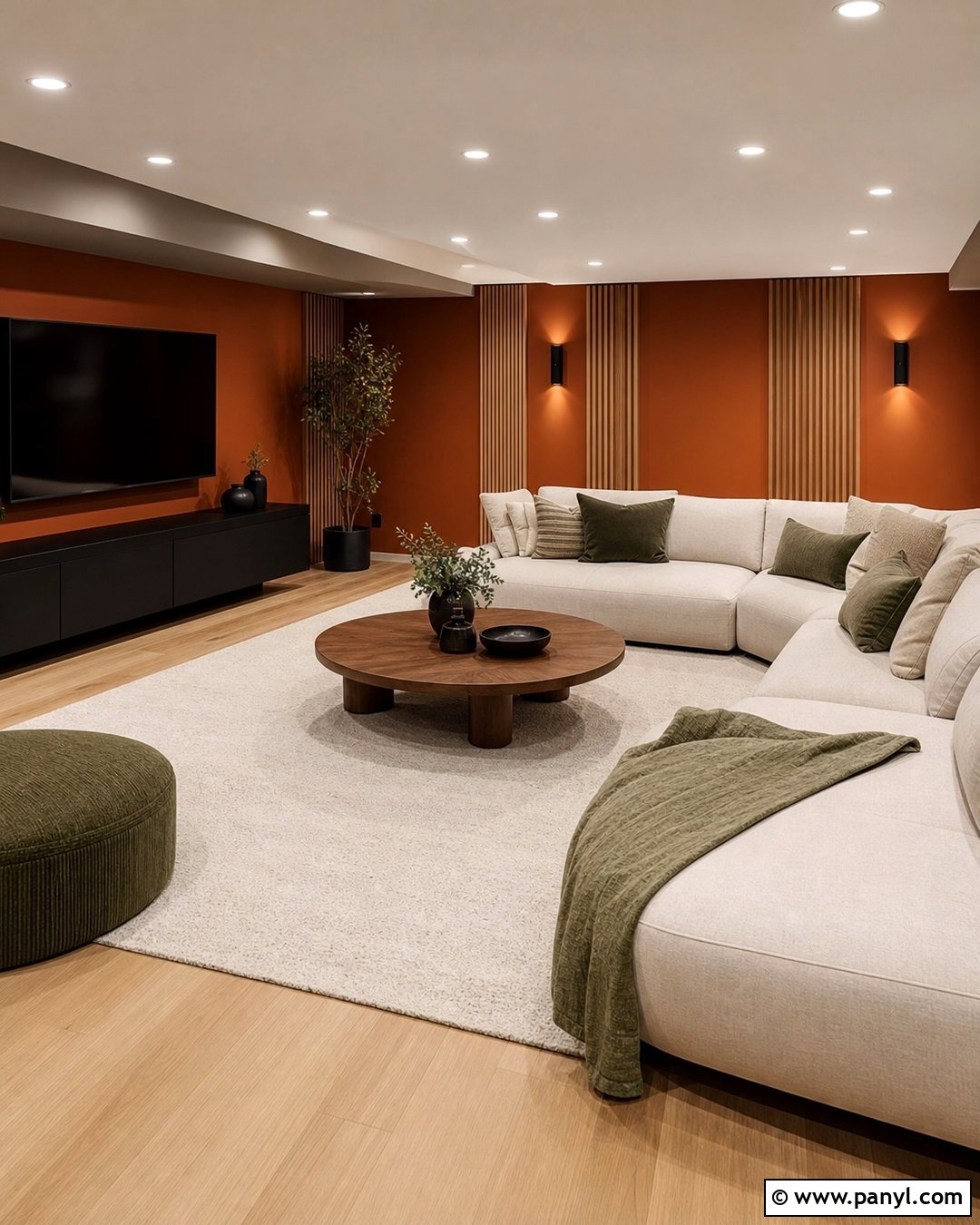
Texture can make an orange wall feel more architectural. Paint the main basement feature wall a deep terracotta, then install narrow natural oak slats across approximately one-third of its width. Position a low cream sectional in front, leaving enough wall visible above the back cushions. A black media console or electric fireplace can occupy the slatted portion, creating a clearly defined focal area. Continue warm white paint around the rest of the room and use light oak flooring to connect with the vertical wood. A large ivory rug, rounded walnut coffee table, and black floor lamp complete the seating arrangement. Add understated tan and olive textiles rather than numerous orange accessories. This full design combines color and natural texture while keeping the basement streamlined, contemporary, and comfortable.
17. Orange Accent Wall Basement With Fireplace
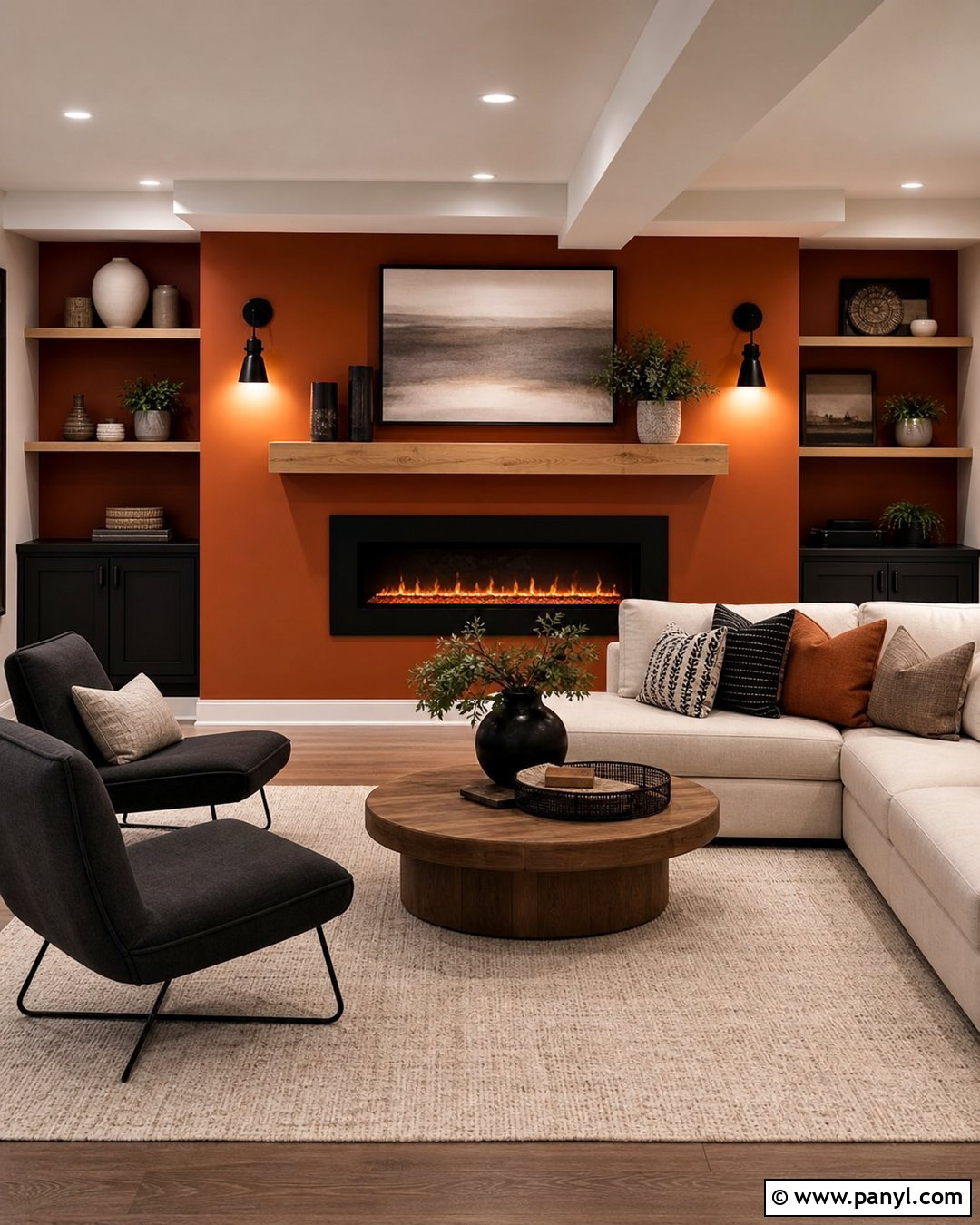
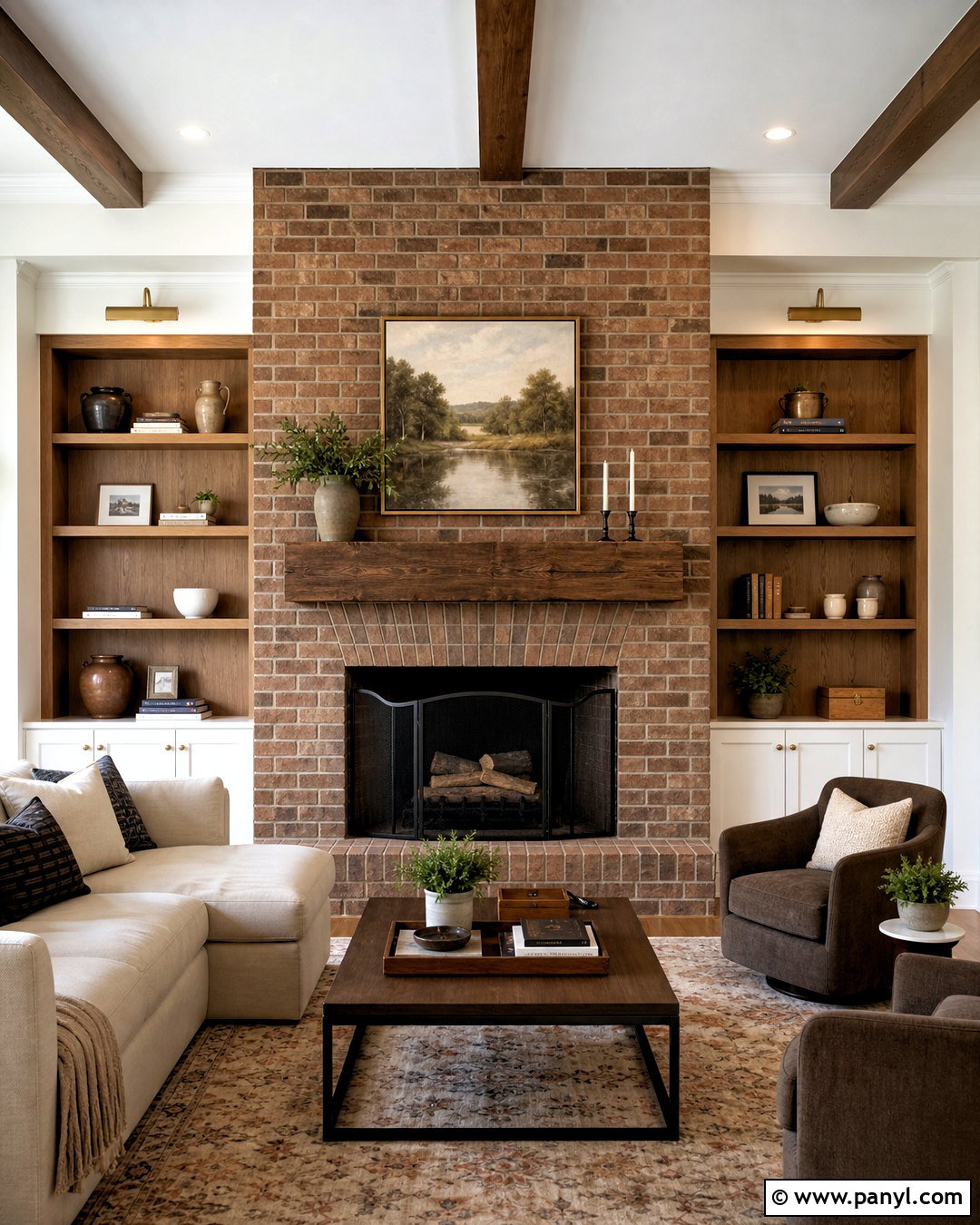
Make a basement fireplace feel integrated by surrounding it with a rich cinnamon orange wall. Choose a slim black electric fireplace or a simple stone-faced insert with a natural oak mantel. Center it on the painted wall and mount a large piece of neutral artwork above, provided the television is located elsewhere. Arrange a beige sectional and two charcoal lounge chairs around a round wood coffee table to encourage conversation. Warm white side walls, pale oak flooring, and an oversized cream rug keep the room bright. Use black sconces on both sides of the fireplace and recessed lights across the ceiling. Small touches of olive, camel, and rust can appear in pillows and ceramics. The coordinated layout turns the fireplace wall into a warm, believable architectural centerpiece.
18. Orange Accent Wall Basement With Gray Furniture
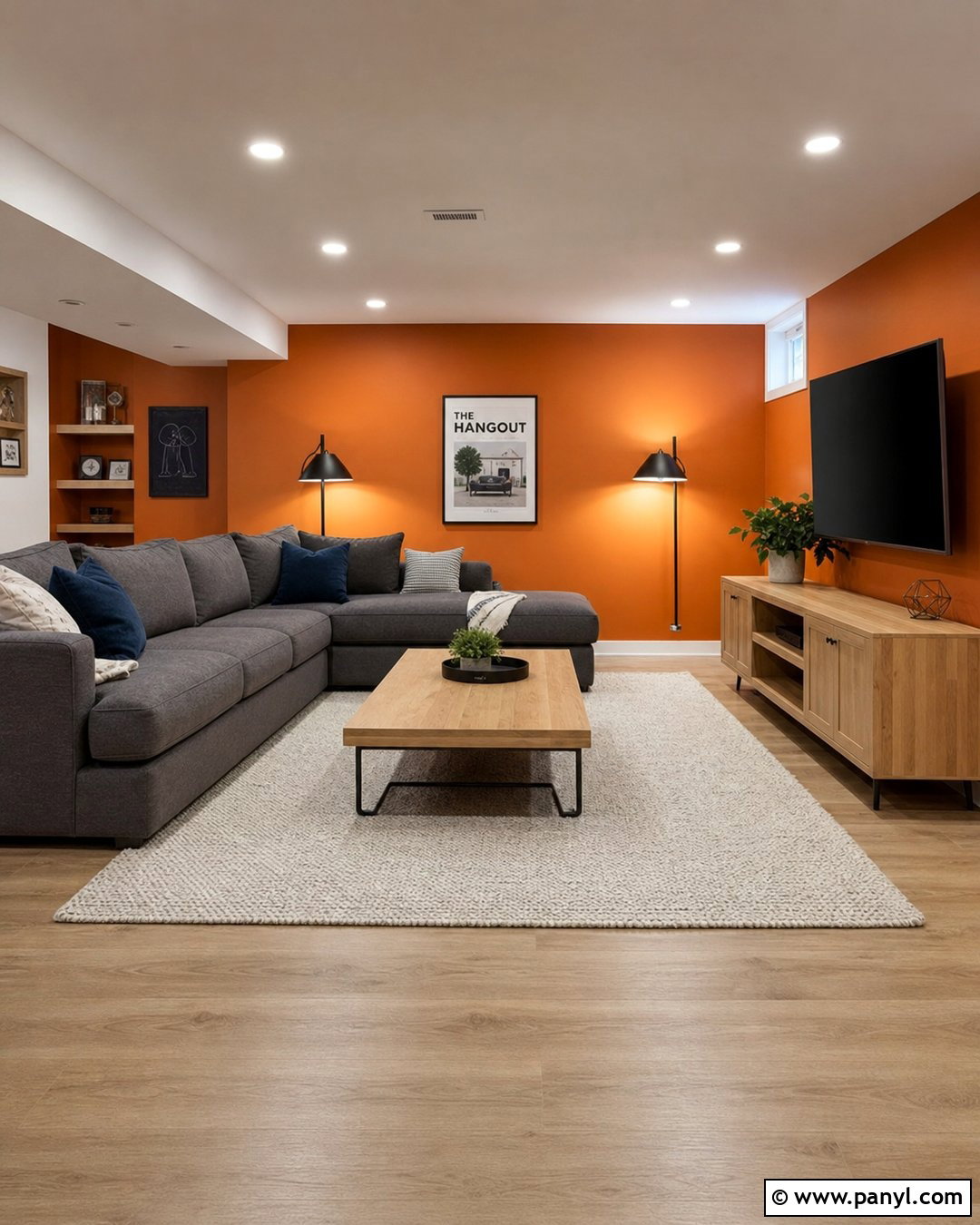
Gray furniture offers a straightforward way to balance a brighter orange basement wall. Select a medium pumpkin orange for the wall behind a light charcoal sectional, then add an ivory rug to prevent the lower half of the room from becoming too dark. A pale oak coffee table and matching media cabinet bring warmth between the gray and orange surfaces. Keep the remaining walls creamy white and choose light wood-look flooring. Use navy and beige pillows instead of adding more strong orange throughout the seating area. Black metal lamps, simple white curtains, and oversized abstract artwork create a clean modern finish. Several light sources should be placed around the room rather than relying on one central fixture. This full palette feels energetic, practical, and easy to recreate with common furniture.
19. Orange Accent Wall Basement With Navy Furniture
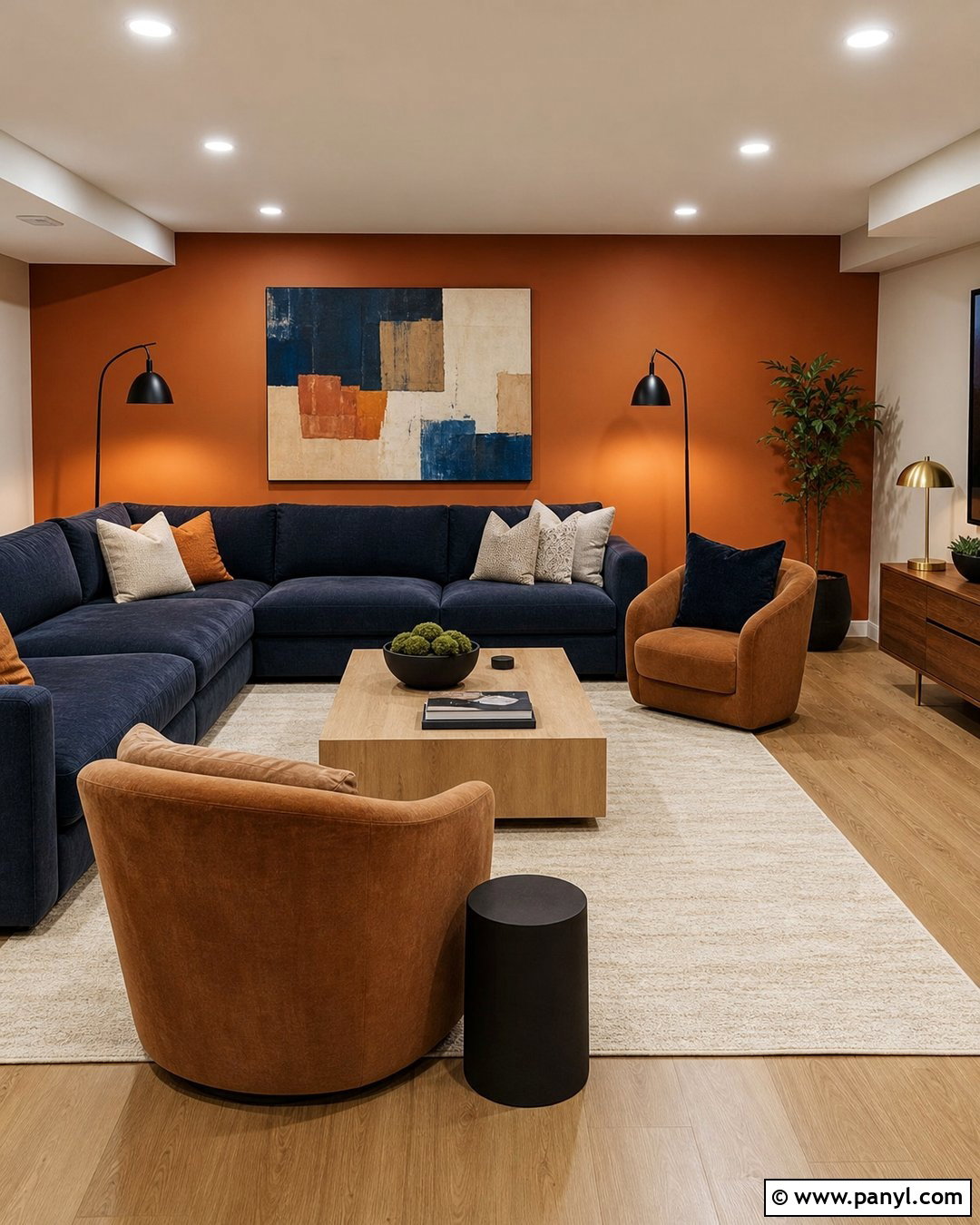
Deep navy and orange can create a strong basement palette when each color has a distinct role. Paint one wall a muted rust orange and place a navy velvet-look sofa against it. Surround the bold pairing with warm white walls, a white ceiling, and natural oak flooring. Use a large cream rug and a light wood coffee table to create breathing room between the saturated colors. Two camel accent chairs can face the sofa, forming a balanced conversation area. Add black floor lamps, brass-toned table lamps, and one large abstract artwork containing cream and pale blue. Avoid using orange curtains or multiple orange pillows because the painted wall already supplies enough warmth. The final design feels colorful and confident while remaining comfortable for an everyday basement family room.
20. Orange Geometric Accent Wall Basement
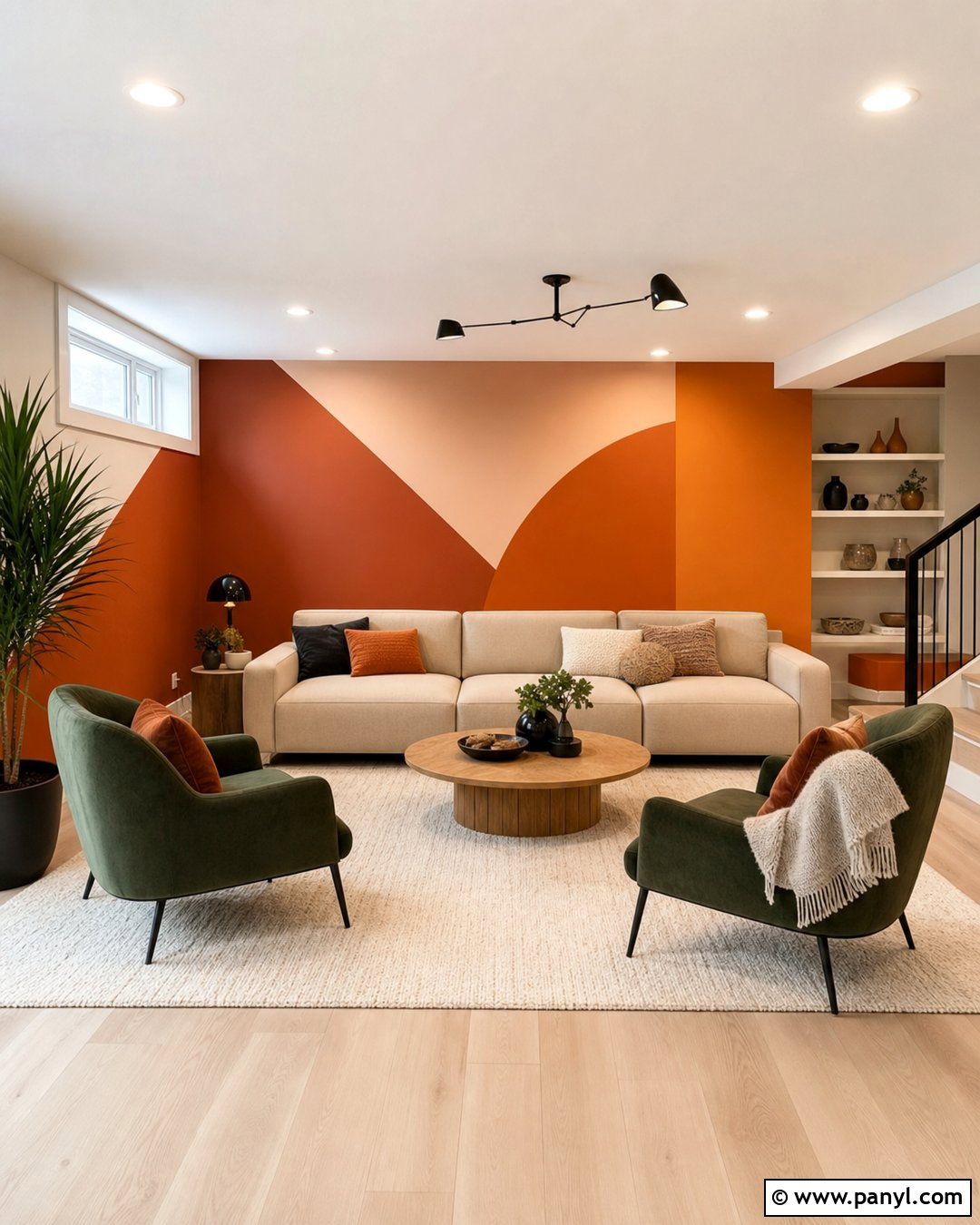
A geometric orange feature wall can add movement to a basement, but the pattern should remain large and controlled. Start with a warm white base, then create broad arches or angled blocks in terracotta, apricot, and muted rust. Limit the design to the wall behind a streamlined beige sofa so it reads as one focal composition. Add a round oak coffee table, cream rug, and two olive green chairs to soften the stronger lines. Keep the other walls solid warm white and choose pale wood flooring. Simple black lighting and minimal framed decor prevent the room from looking busy. Repeat only one orange tone in a small cushion or throw. The completed basement feels playful and modern while still having a practical, cohesive furniture arrangement.
Conclusion:
The most successful 20 Orange Accent Wall Basement Ideas balance expressive color with practical lighting, comfortable furniture, and calmer surrounding finishes. Burnt orange and terracotta suit cozy media rooms, bedrooms, and reading areas, while apricot or coral can brighten playrooms, offices, and laundry spaces. Always consider what the wall will frame before choosing its location. A sofa, desk, bed, fireplace, or organized cabinet arrangement gives the color a clear purpose. Warm white paint, pale flooring, and layered lighting can keep the basement from feeling closed in. Finish the scheme with wood, cream, gray, navy, olive, or black accents. With thoughtful coordination, an orange accent wall can make an ordinary lower level feel complete and inviting.

Related Ideas and Inspiration:
Leave a Reply