
Basements offer the separation, solid structure, and flexible square footage needed for an inspiring music space. The best **basement music room ideas** balance acoustics with comfort, storage, lighting, and personal style. Before decorating, correct leaks or moisture problems so instruments, electronics, and acoustic materials stay protected. () Then decide how the room will function. It might be a recording studio, rehearsal area, listening lounge, or flexible family space. Every finish should support that purpose, from durable flooring and organized instrument storage to layered lighting and comfortable seating. Thoughtful colors and attractive acoustic panels can also make practical features feel intentional. Explore these complete, realistic, and adaptable **basement music room ideas**.

1. Modern Basement Music Room
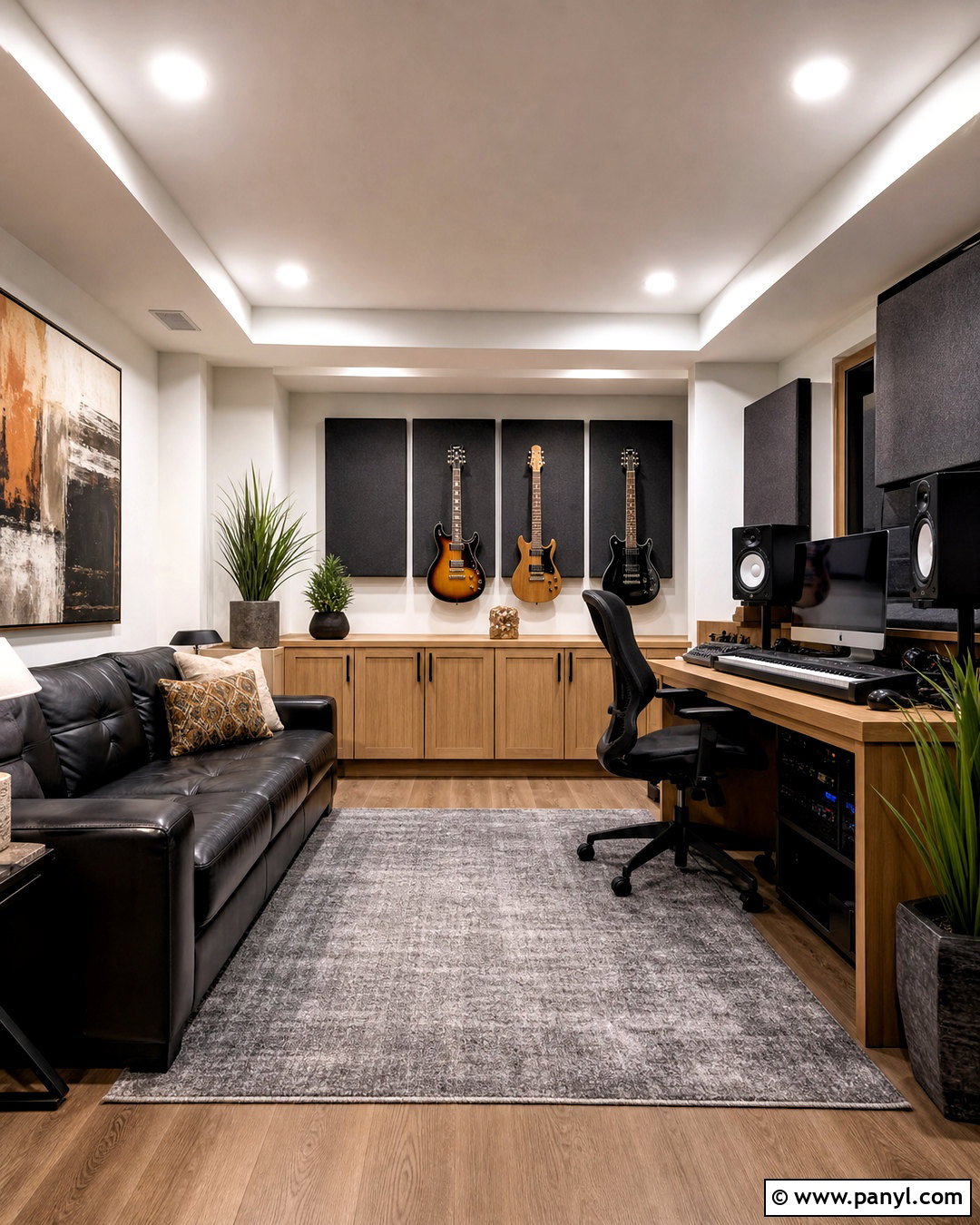
Create a polished modern room with warm white walls, natural oak details, and charcoal acoustic panels arranged in a balanced pattern. Place a streamlined production desk on the short wall, with studio monitors on separate stands and concealed cable channels below. A medium-gray area rug softens the concrete or engineered flooring without covering the entire surface. Add a low black leather sofa along the back wall for relaxed listening. Wall-mounted guitars become part of the decor, while closed oak cabinets keep smaller equipment hidden. Recessed ceiling lights provide general brightness, and slim LED strips illuminate the desk and instrument display. Finish the complete look with one large abstract print, matte black hardware, and a few easy-care plants in simple ceramic pots.
2. Small Basement Music Room
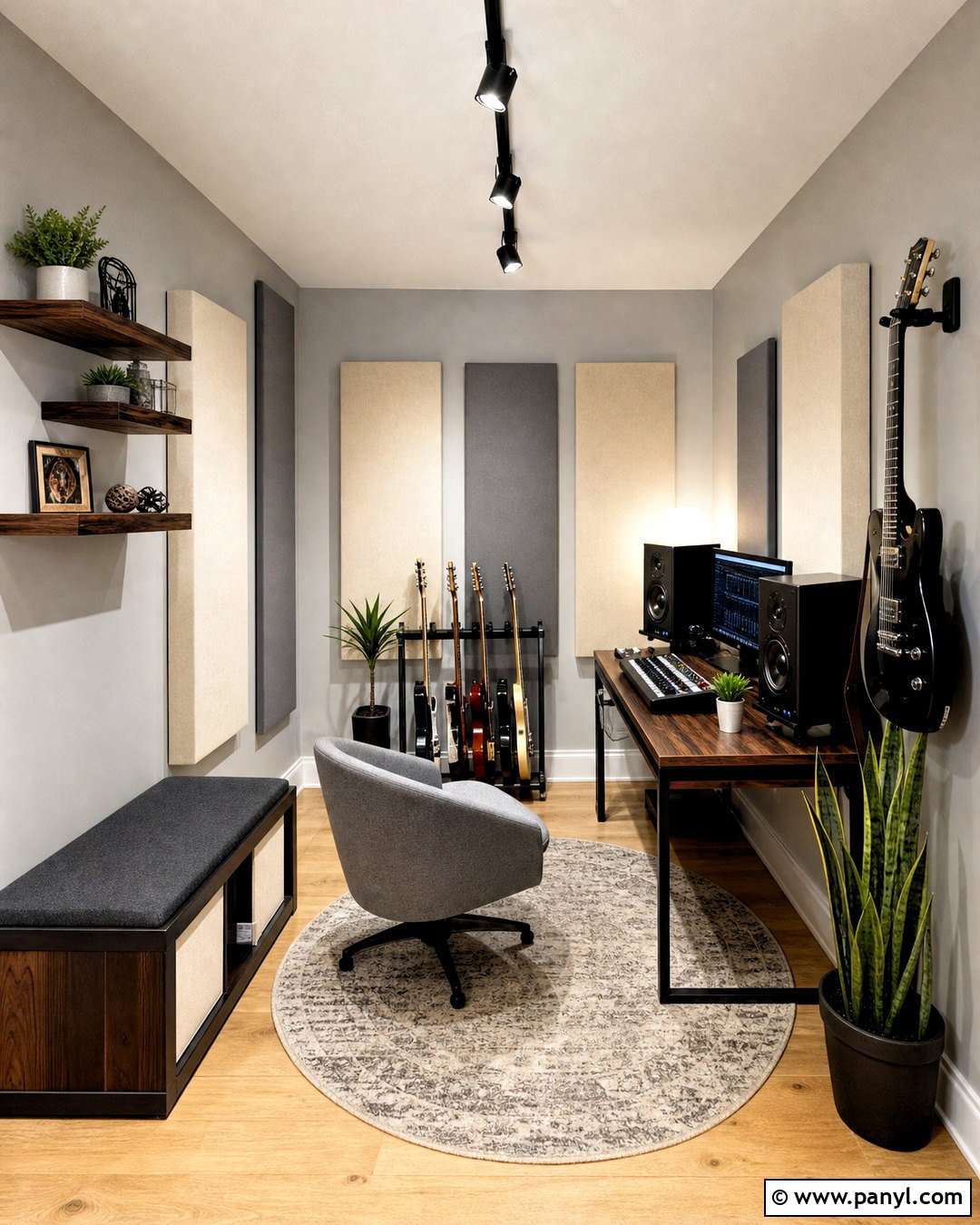
A compact basement music room works best when every surface serves a clear purpose. Position a narrow desk and speakers against one wall, leaving the center open for playing an instrument or setting up a microphone. Use pale greige walls and light oak flooring to keep the room visually open. Install fabric-wrapped acoustic panels in matching cream and soft gray tones so they blend into the design. A storage bench along the back wall offers seating while holding cables, pedals, and accessories. Hang guitars vertically instead of using floor stands. Choose shallow floating shelves for small speakers, books, and framed album covers. Track lighting provides flexible brightness without taking up headroom. A round washable rug and one compact lounge chair complete the comfortable, uncluttered layout.
3. Soundproof Basement Music Room
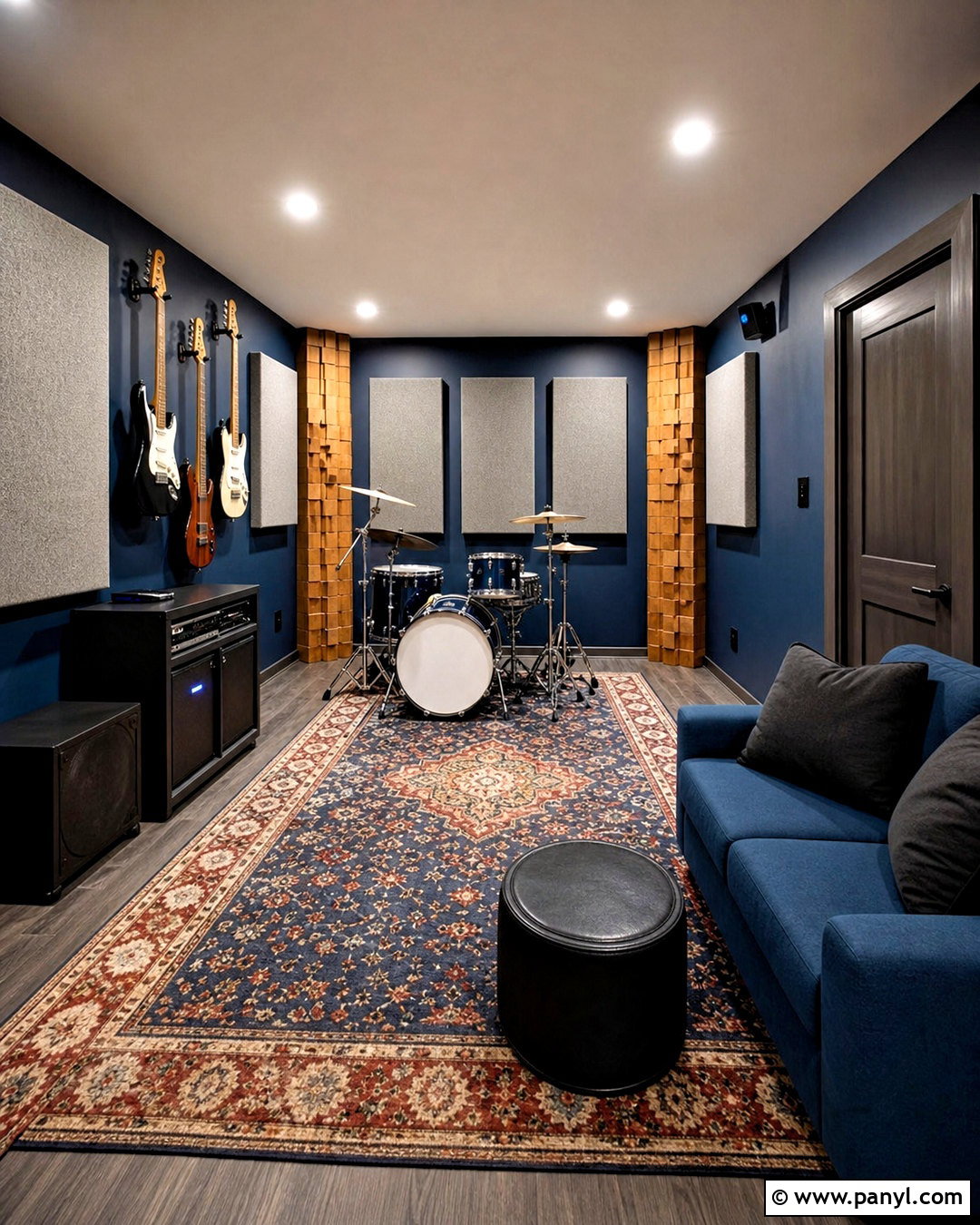
For a serious practice space, build the design around structural sound control before adding decorative finishes. Sound isolation and interior acoustic treatment have different purposes: isolation limits sound traveling between spaces, while panels and bass traps manage reflections inside the room. () Consider insulated wall and ceiling assemblies, sealed penetrations, and a solid-core door with perimeter seals. Cover the finished walls in deep navy paint, then add thick gray fabric panels and wood-faced corner traps for a professional appearance. Use resilient flooring topped with a dense patterned rug under the instruments. Keep the layout simple with a central rehearsal zone, wall storage, and a compact sofa near the entrance. Bright recessed lighting, quiet ventilation, and organized electrical access make the complete room practical for frequent use.
4. Basement Recording Studio
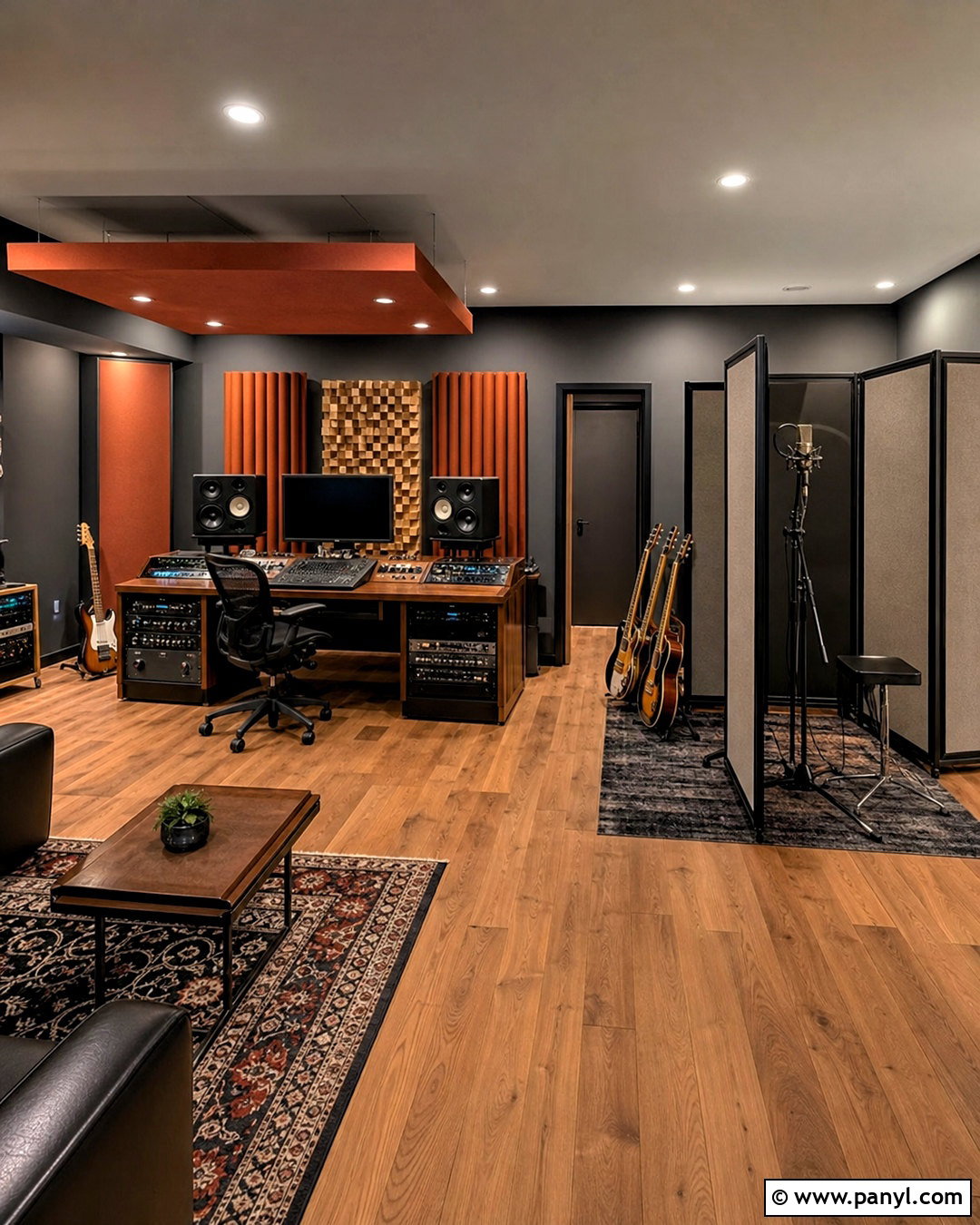
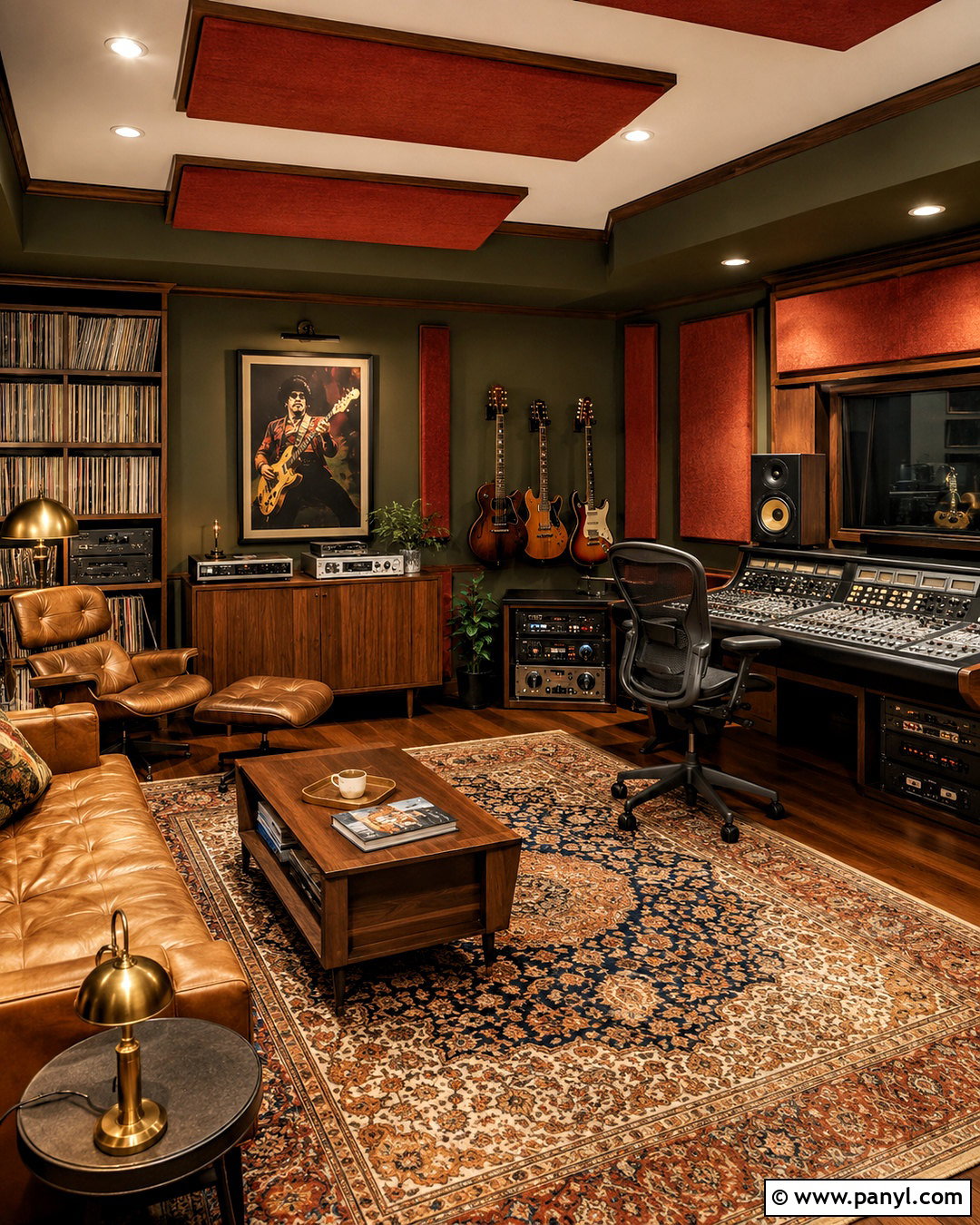
Turn the basement into a focused recording studio with separate zones for mixing and tracking. Center a wide walnut studio desk on the front wall and place monitor speakers symmetrically on sturdy stands. Position the main listening chair between the speakers, with cables routed through desk trays and floor channels. Cover the side reflection areas with rust-colored fabric panels, then install a neutral acoustic cloud above the workstation. Thick corner traps and a treated rear wall help complete the acoustic plan. On the opposite side, create a flexible recording area with a microphone stand, movable acoustic screens, and space for guitars or vocals. Dark gray walls, warm oak flooring, black equipment racks, and bright adjustable ceiling lights create a practical studio that feels professional without becoming cold or overly technical.
5. Basement Band Practice Room
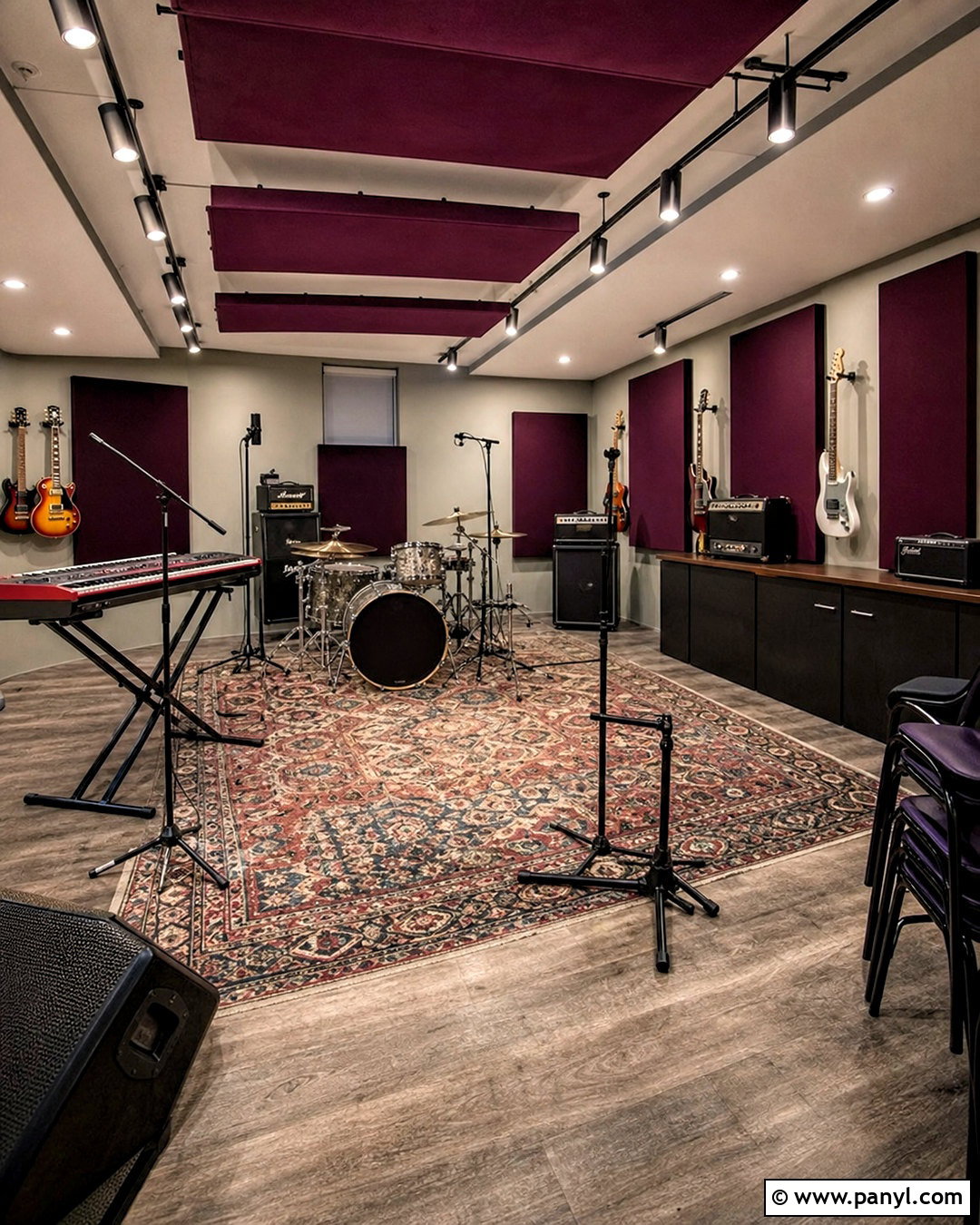
A band practice room needs an open layout, durable finishes, and clear pathways between instruments. Place the drum kit at one end on a thick rug, then arrange guitar and bass amplifiers along the side walls. Set the keyboard opposite the drums so every musician can see the others. Use medium-tone vinyl plank flooring, washable warm gray walls, and burgundy acoustic panels for a welcoming rehearsal setting. A ceiling cloud above the central playing area and corner bass traps support a more controlled room. Add a long storage cabinet for cables, microphones, and music stands. Wall hooks can hold guitars safely between sessions. Include stackable chairs and a small upholstered bench for breaks. Bright track lights with adjustable heads ensure that sheet music, controls, and floor cables remain easy to see.
6. Basement Drum Practice Room
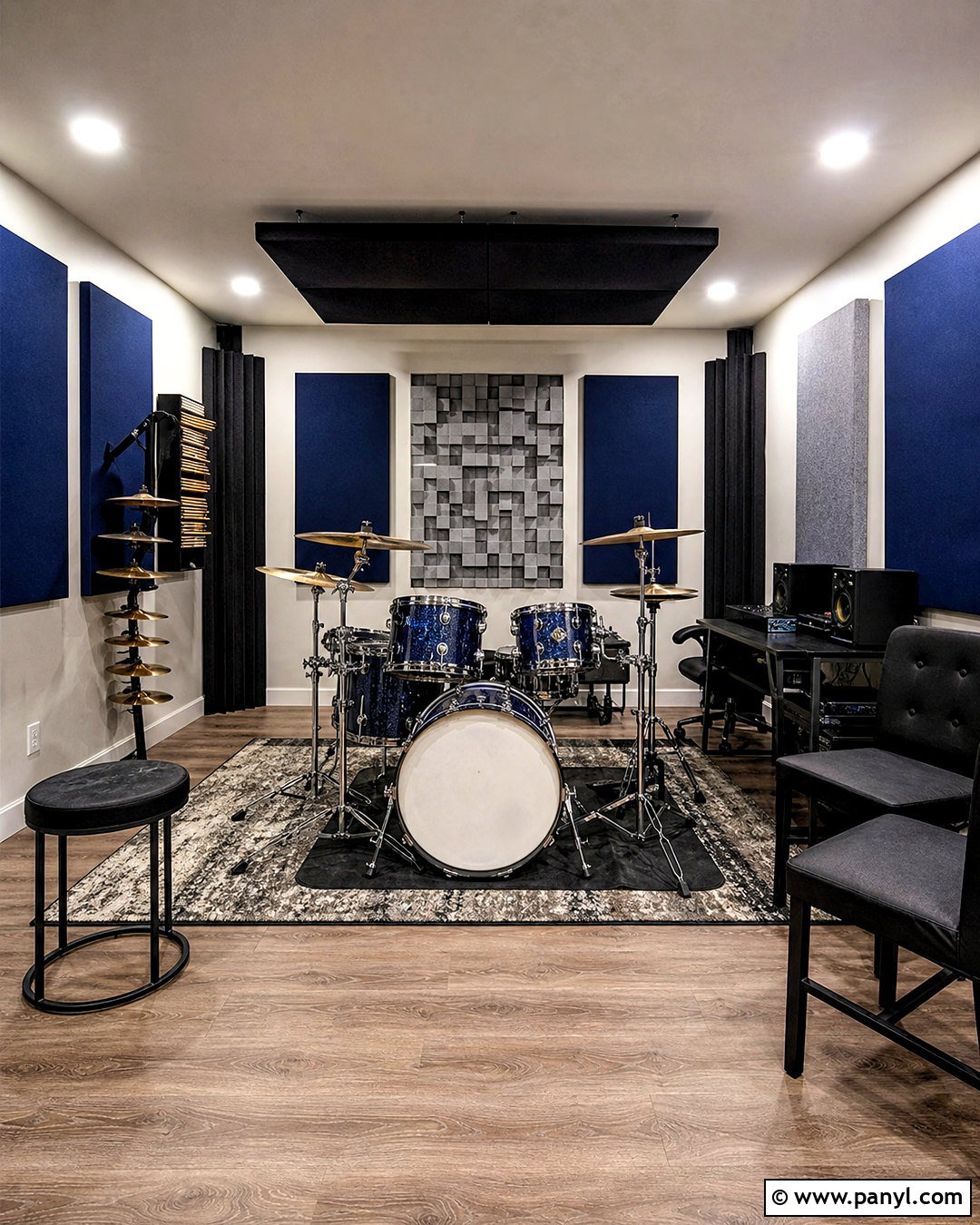
Build a drum-centered room around vibration control, generous movement space, and efficient equipment storage. Position the kit away from doors and low-hanging fixtures, using a dense rubber isolation mat topped with a tightly woven rug. Paint the walls soft white to prevent the basement from feeling enclosed, then introduce black, blue, and gray acoustic panels around the kit. A large ceiling cloud directly above the playing zone helps address overhead reflections, while thick corner treatment completes the setup. Place sticks, brushes, and headphones in shallow wall cabinets within easy reach. Cymbal stands and spare drum pieces can be organized on a dedicated rack. Finish the room with a compact recording desk, two guest chairs, bright dimmable track lighting, and durable flooring that is easy to clean around the equipment.
7. Basement Guitar Music Room
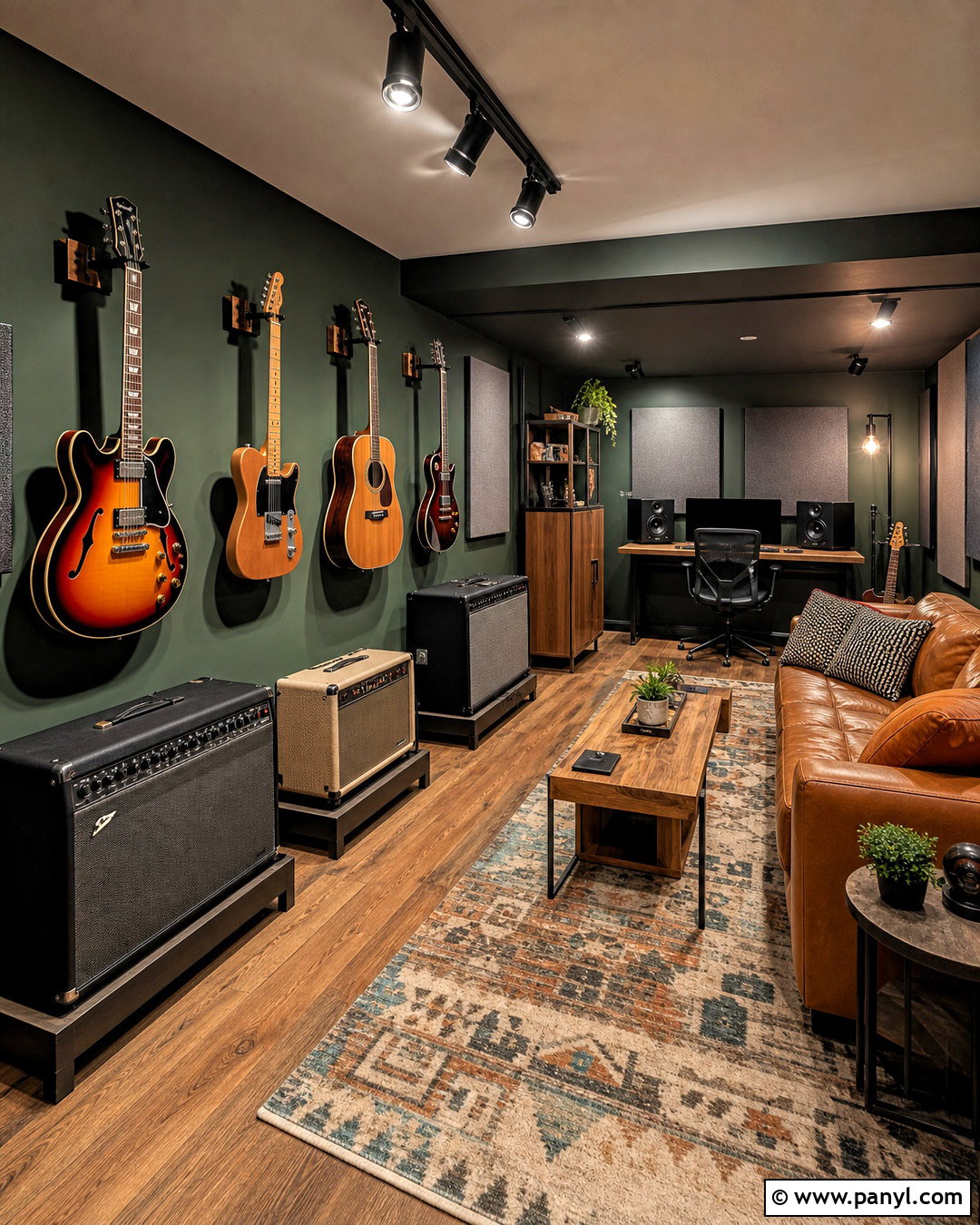
Let an organized guitar display become the centerpiece of a comfortable playing and listening room. Paint the main wall deep forest green and mount several guitars on secure wood-and-metal hangers with generous spacing. Place a tan leather loveseat opposite the display, with a low oak table for pedals, tuners, and headphones. Arrange amplifiers along one side on vibration-reducing platforms rather than scattering them across the floor. Add warm gray acoustic panels between the instruments and thick treatment in the corners. Medium oak flooring and a faded geometric rug give the room warmth without making it feel overly themed. Include a compact recording desk, adjustable stool, and closed cabinet for cases and cables. Black track lighting and small display lights make the instruments visible while keeping the overall room bright and practical.
8. Basement Piano Music Room
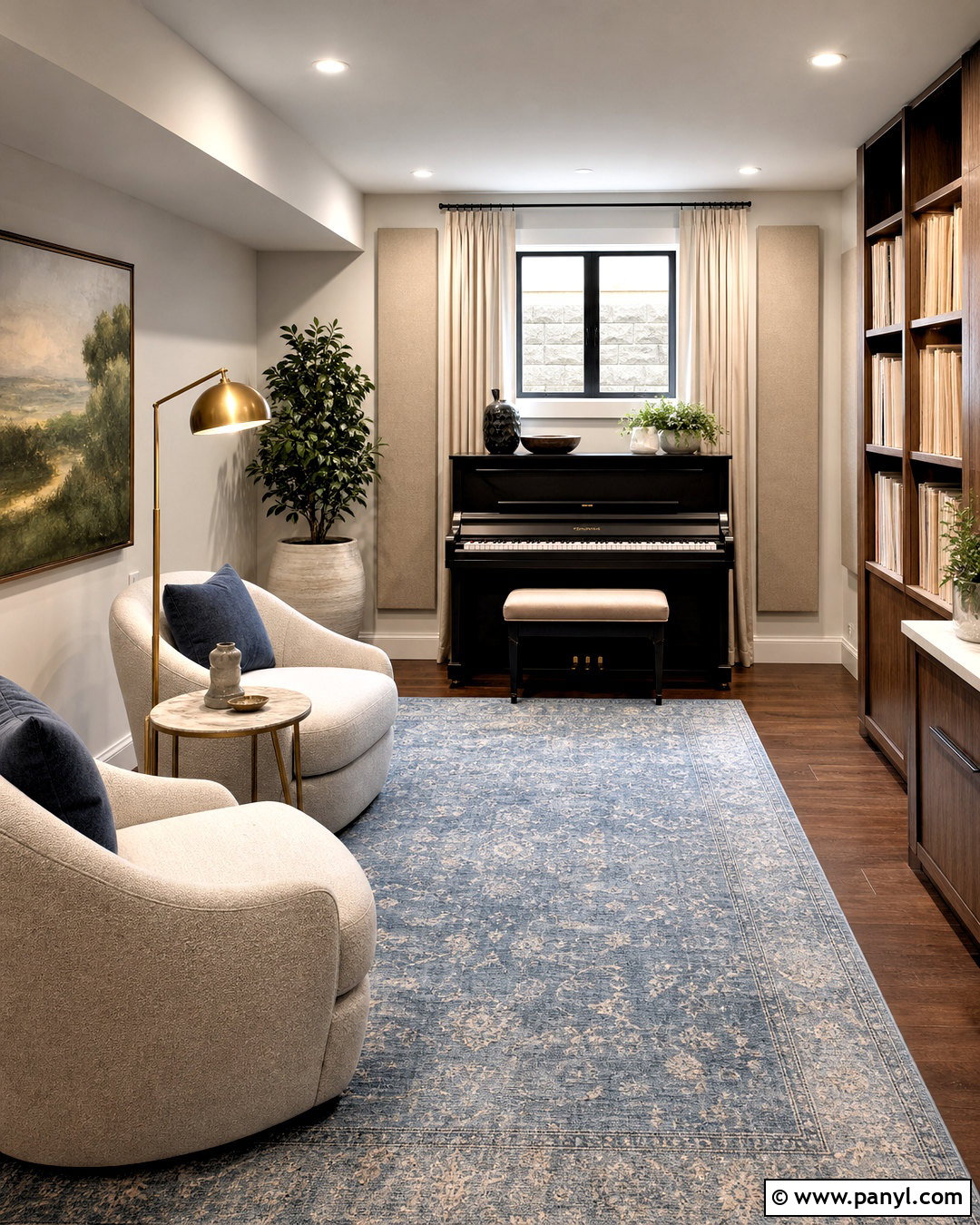
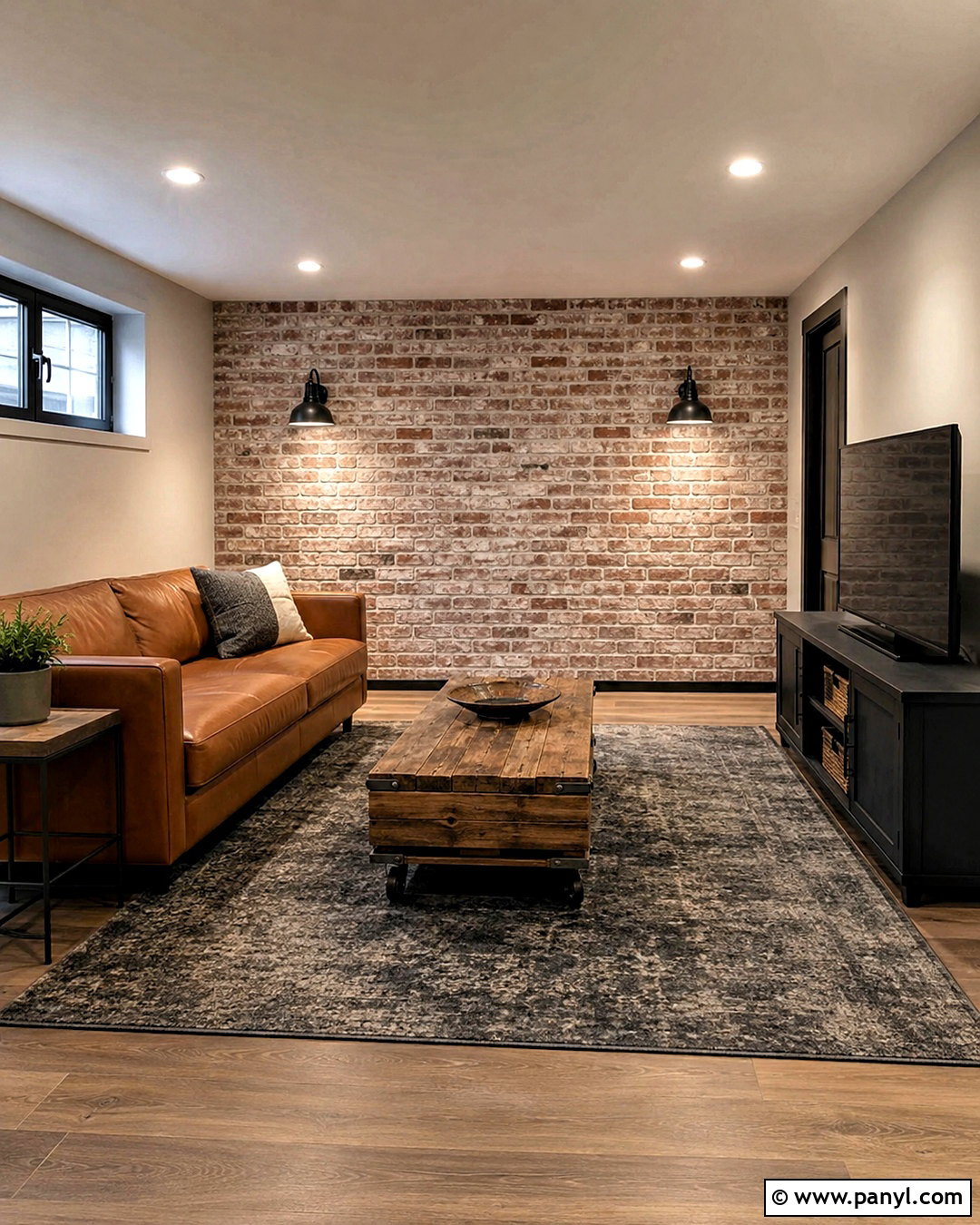
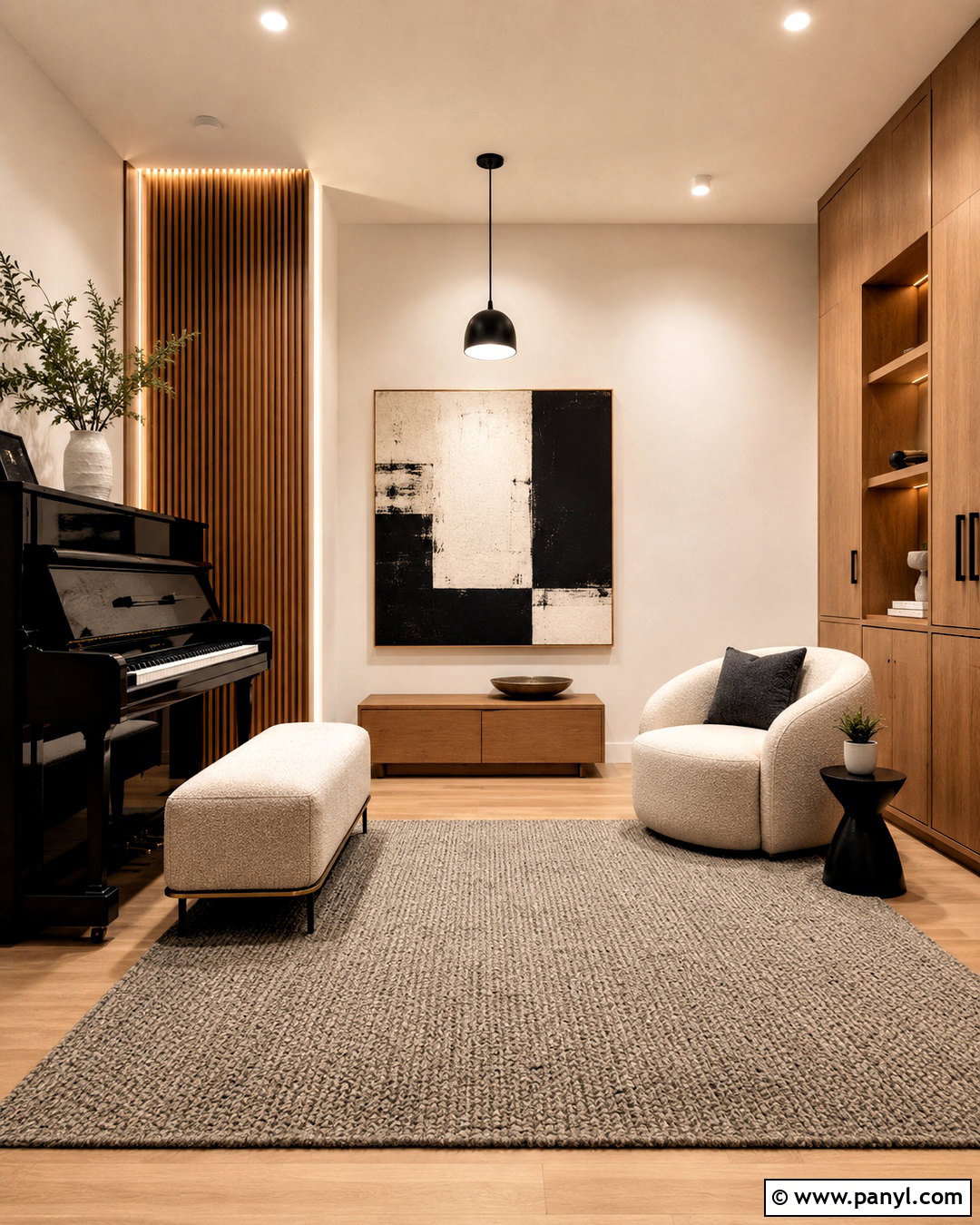
A piano-focused basement can feel elegant, peaceful, and inviting without using overly formal furniture. Place an upright piano against a warm white wall, leaving enough clearance around the bench and pedals. Frame it with tall beige acoustic panels that resemble upholstered architectural features. Across the room, arrange two curved lounge chairs and a small round table for quiet listening. Use medium walnut flooring, a large muted blue rug, and ivory curtains over any basement windows to soften the setting. A narrow built-in cabinet can store sheet music, headphones, and maintenance supplies. Add a brass floor lamp beside the seating and bright recessed fixtures across the ceiling. Simple landscape artwork, a ceramic planter, and restrained black accents complete a balanced music room where the piano remains the clear visual and functional focus.
9. Electronic Basement Music Room
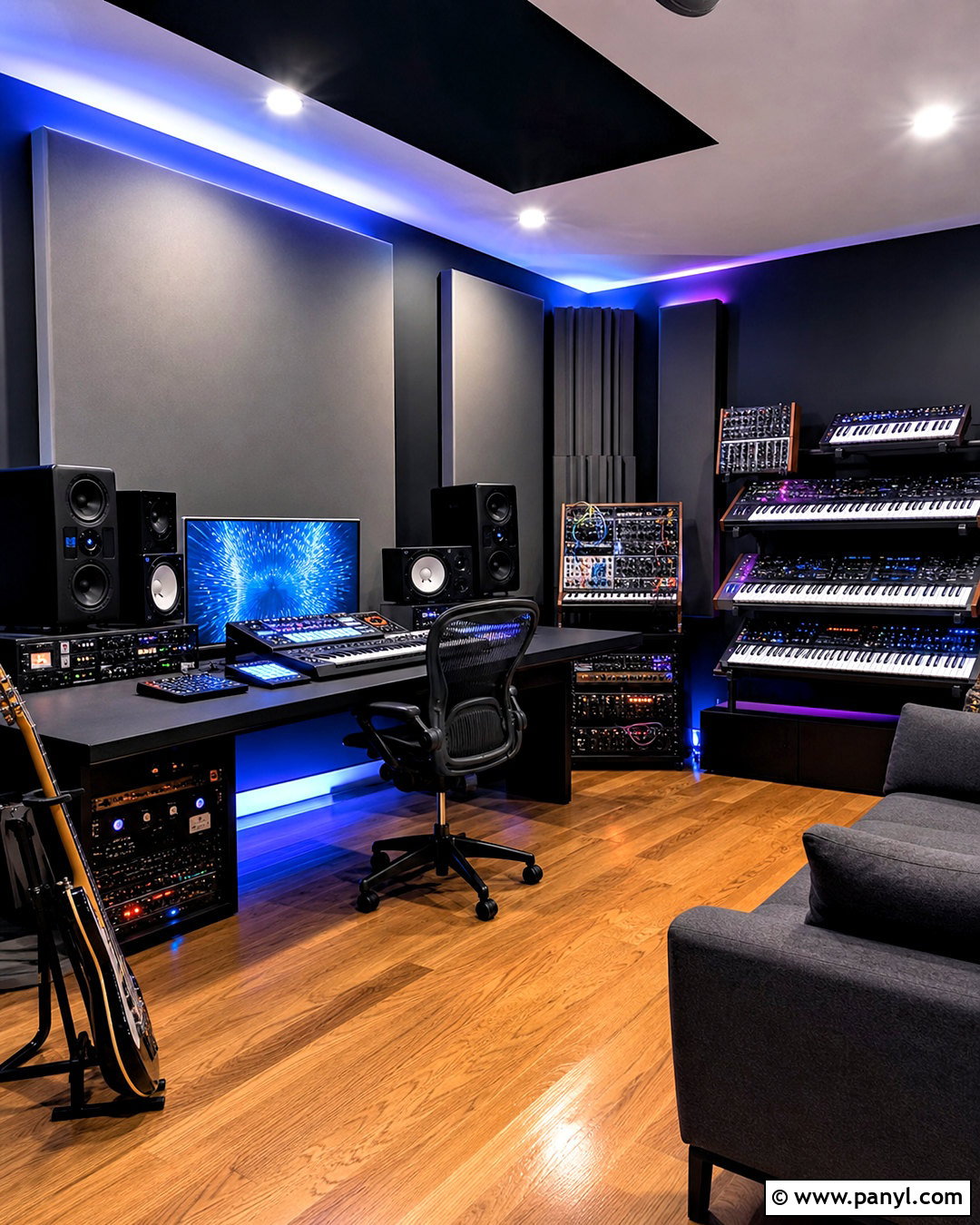
Design an electronic music room around an ergonomic workstation and a clean, flexible equipment layout. Use a wide black desk with tiered stands for monitors, screens, controllers, and synthesizers. Additional keyboards can sit on a sturdy double-tier stand along the adjacent wall. Choose matte charcoal walls, pale gray acoustic panels, and medium oak flooring to keep the high-tech setup from appearing too dark. Install subtle blue and violet LED accents behind the desk, but pair them with bright white ceiling lighting for clear everyday visibility. A compact gray sofa and low table create a listening zone at the back. Conceal power strips and audio cables inside labeled channels. Add equipment racks, ventilated storage cabinets, corner bass traps, and one graphic wall panel to produce an organized studio that supports both music creation and relaxed playback.
10. Basement Vinyl Listening Room
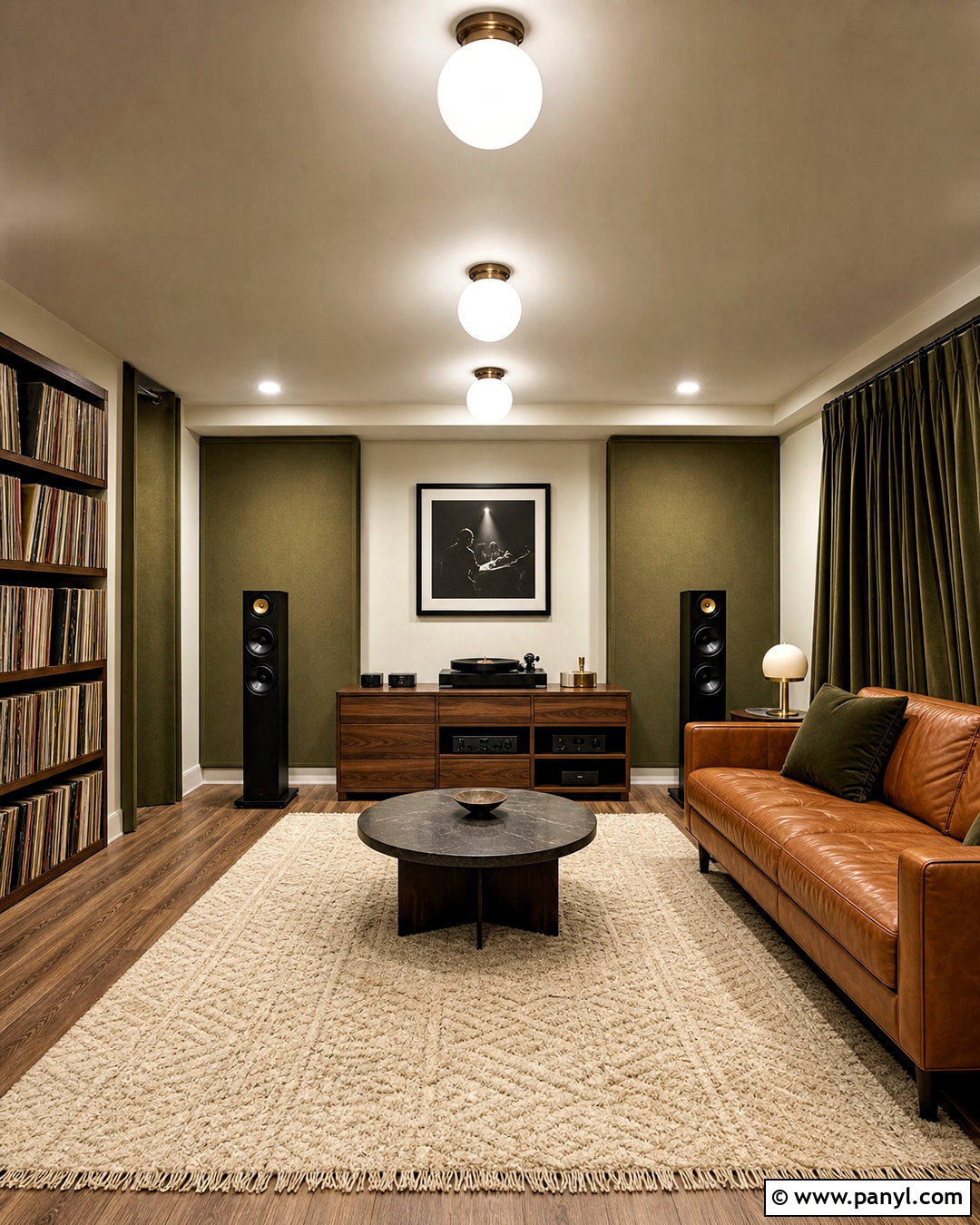
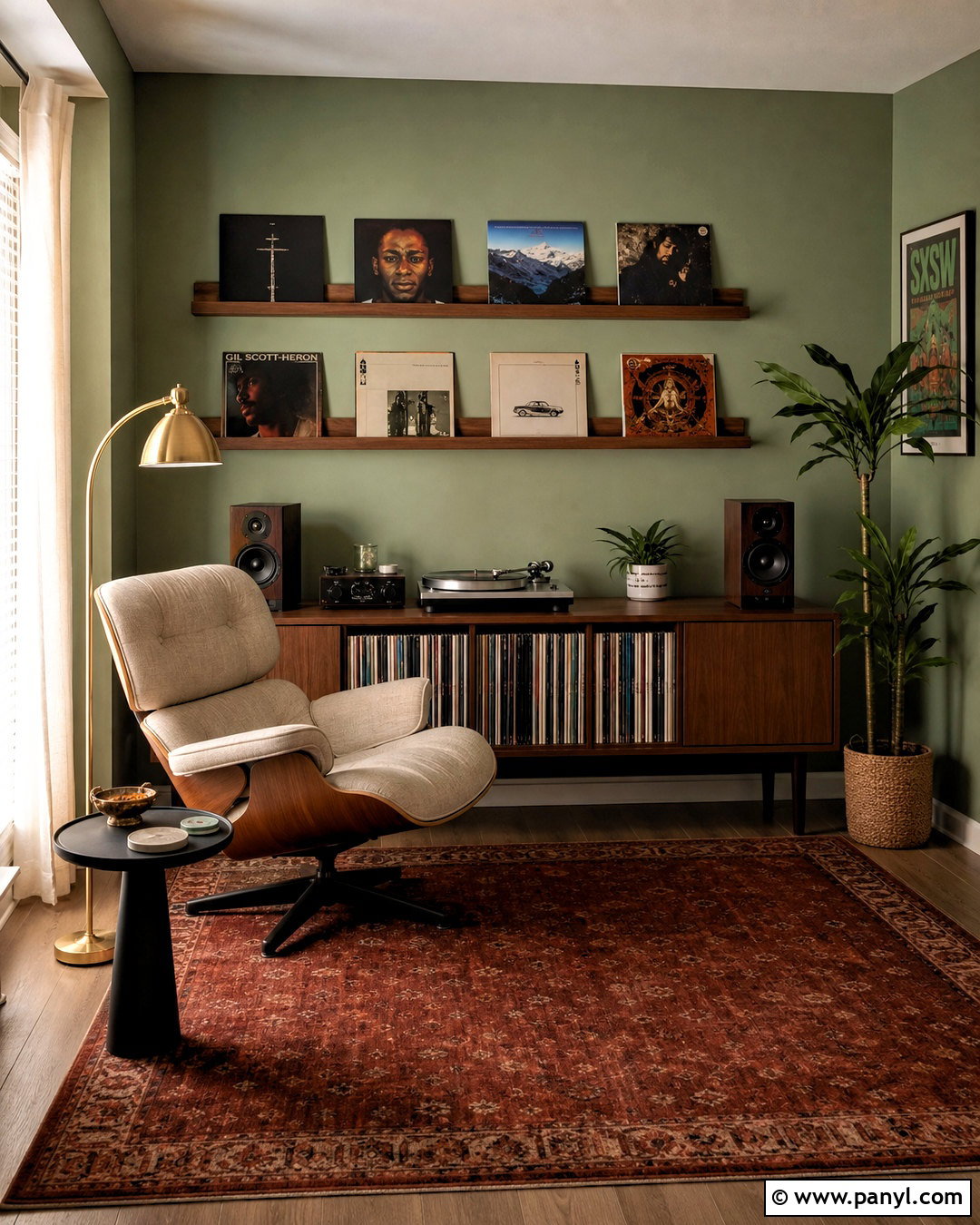
Create a dedicated listening lounge with records, speakers, seating, and acoustic treatment working as one cohesive arrangement. Center a walnut media console on the main wall and place the turntable at a comfortable standing height. Position two floor speakers symmetrically on either side, leaving visual space around them. Built-in record storage can cover the lower portion of the wall without making the room feel crowded. Use warm cream paint, walnut flooring, and olive green acoustic panels for a relaxed midcentury influence. A caramel-colored sofa should face the speakers, supported by a textured ivory rug and a simple round coffee table. Add thick curtains over small windows and bass treatment in the corners. Globe ceiling lights, a reading lamp, and framed music photography complete the bright, comfortable listening environment.
11. Multipurpose Basement Music Room
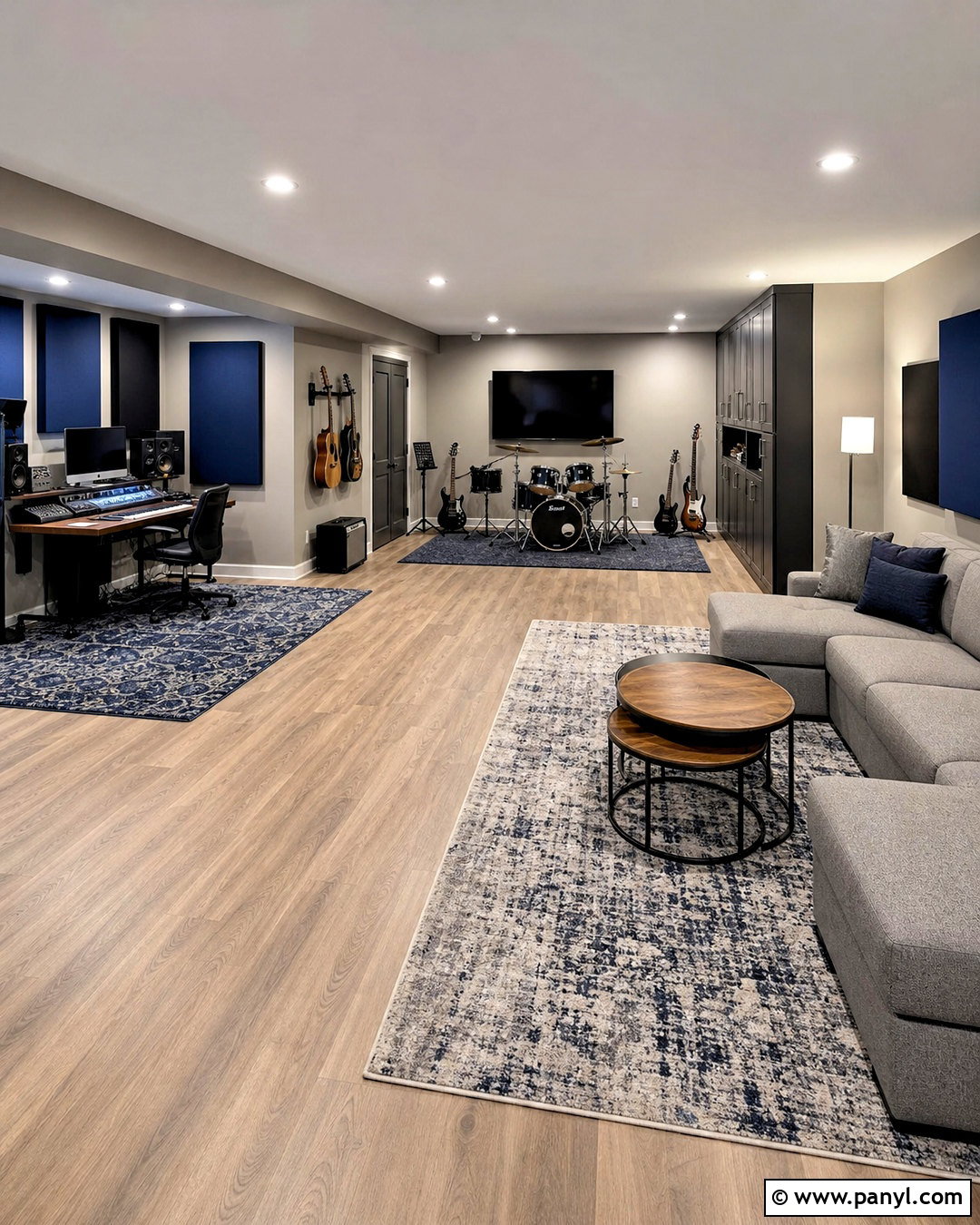
When a basement must support several activities, define zones without building walls that make the space smaller. Place a music workstation and instrument storage along one side, using coordinated navy acoustic panels to visually mark the area. Create a casual lounge on the other side with a modular gray sofa, nesting tables, and a wall-mounted screen. Keep the center open so it can become a rehearsal area when the lightweight tables are moved. Durable oak-look vinyl flooring unifies the room, while two rugs distinguish the production and seating zones. Install full-height cabinets for games, music equipment, and household storage. Bright recessed lighting handles general use, while desk lamps and floor lamps offer task lighting. Soft greige walls, black accents, and simple artwork help the multifunctional basement remain calm and visually consistent.
12. Industrial Basement Music Room
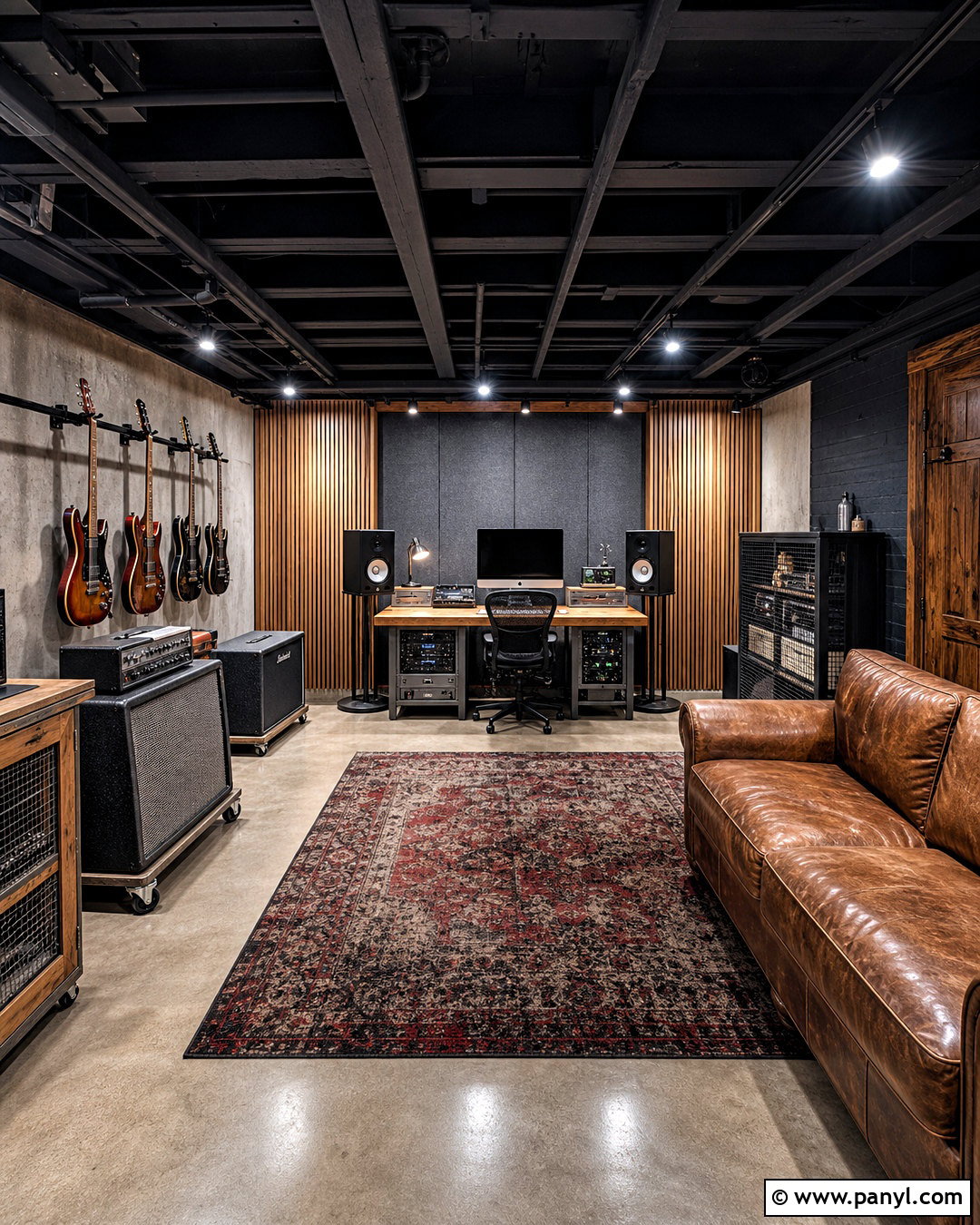
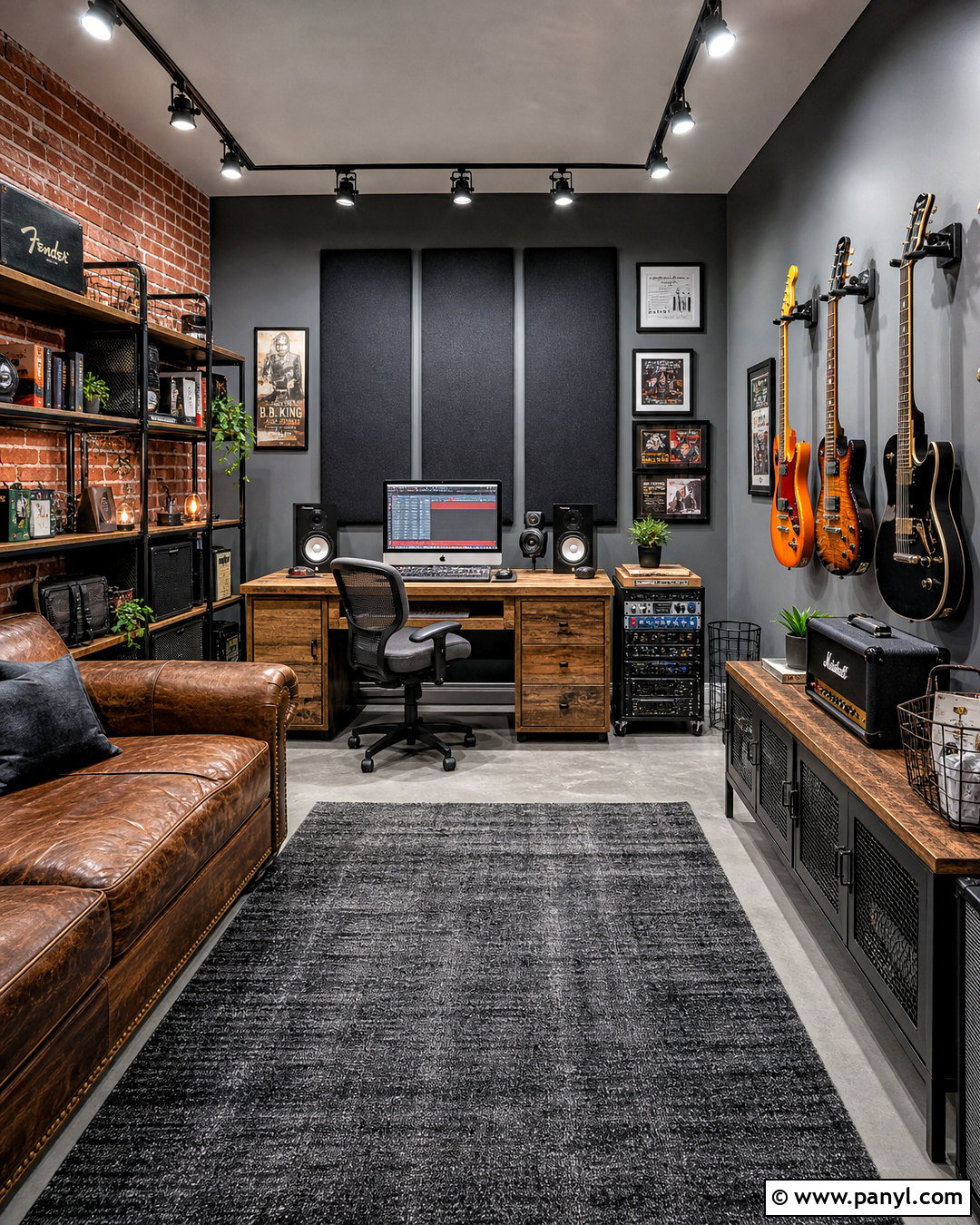
Embrace exposed basement features with an industrial room that still feels finished and comfortable. Paint the open ceiling matte black, organize visible conduits neatly, and use bright linear lighting between the joists. Keep one concrete wall exposed, then warm the other walls with reclaimed wood slats and charcoal acoustic panels. Place a rugged wood-and-steel studio desk at the front, with speakers on black metal stands. A distressed brown leather sofa and dark patterned rug create a relaxed listening area behind it. Store guitars on a steel wall rail, and place amplifiers on low rolling platforms. Add wire-front cabinets for pedals, cables, and recording accessories. Sealed concrete flooring, rust-colored textiles, and a few oversized graphic prints complete the coordinated look while preserving the basement’s practical, workshop-inspired character.
13. Rustic Basement Music Room
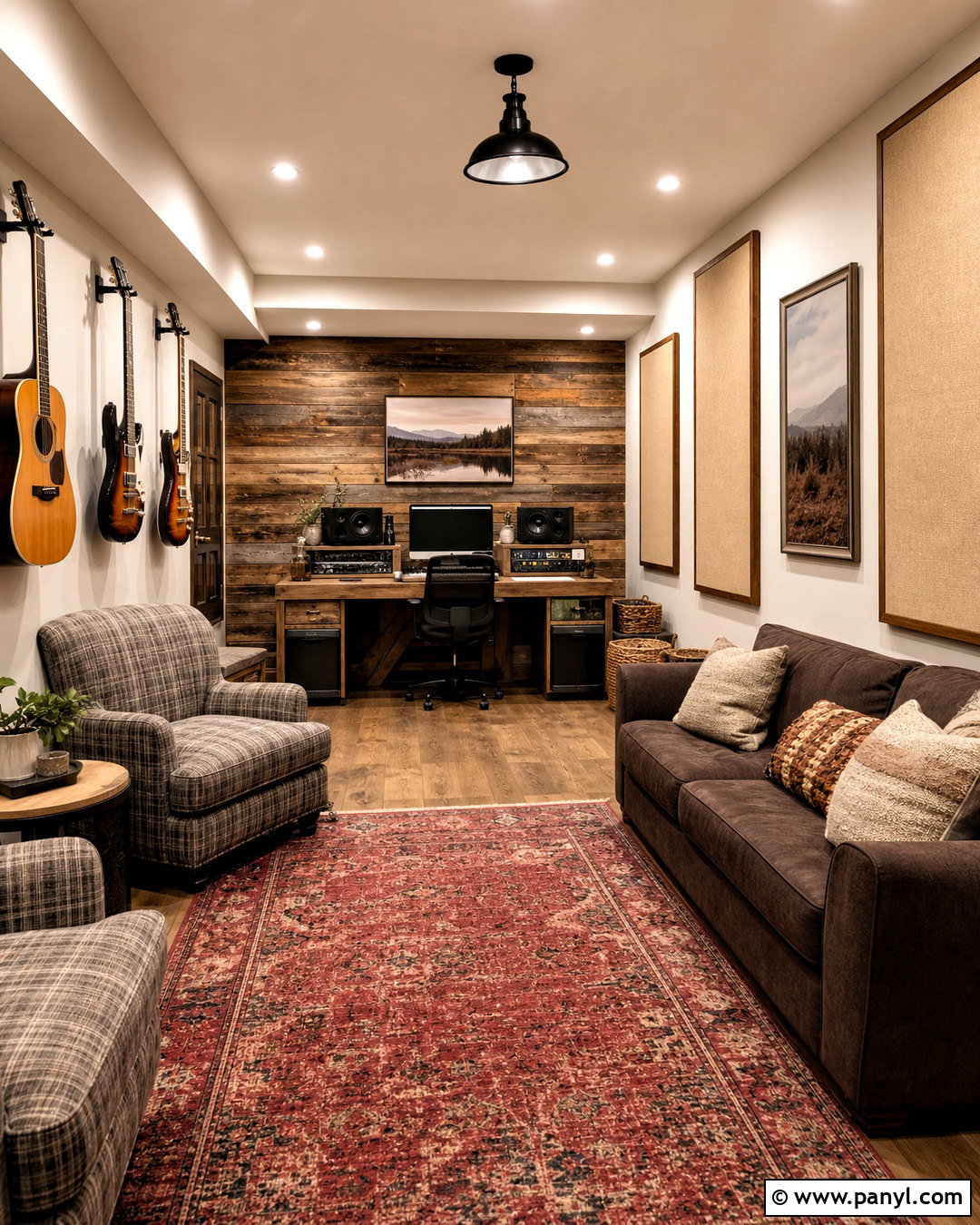
A rustic music room can feel warm and handcrafted while still supporting modern equipment. Cover the main wall with medium-toned reclaimed wood and balance it with creamy white paint on the remaining surfaces. Choose tan fabric acoustic panels framed in oak so the treatment fits naturally into the design. A sturdy farmhouse-style desk can hold recording equipment, while guitars hang on the wood wall above a low storage cabinet. Arrange a deep brown sofa and two plaid accent chairs around a faded red rug for casual listening or group practice. Use engineered oak flooring rather than leaving cold concrete exposed. Black metal ceiling fixtures, woven baskets, and simple landscape prints add character. Keep cables concealed and equipment neatly arranged so the rustic materials feel intentional instead of making the room visually busy.
14. Minimalist Basement Music Room
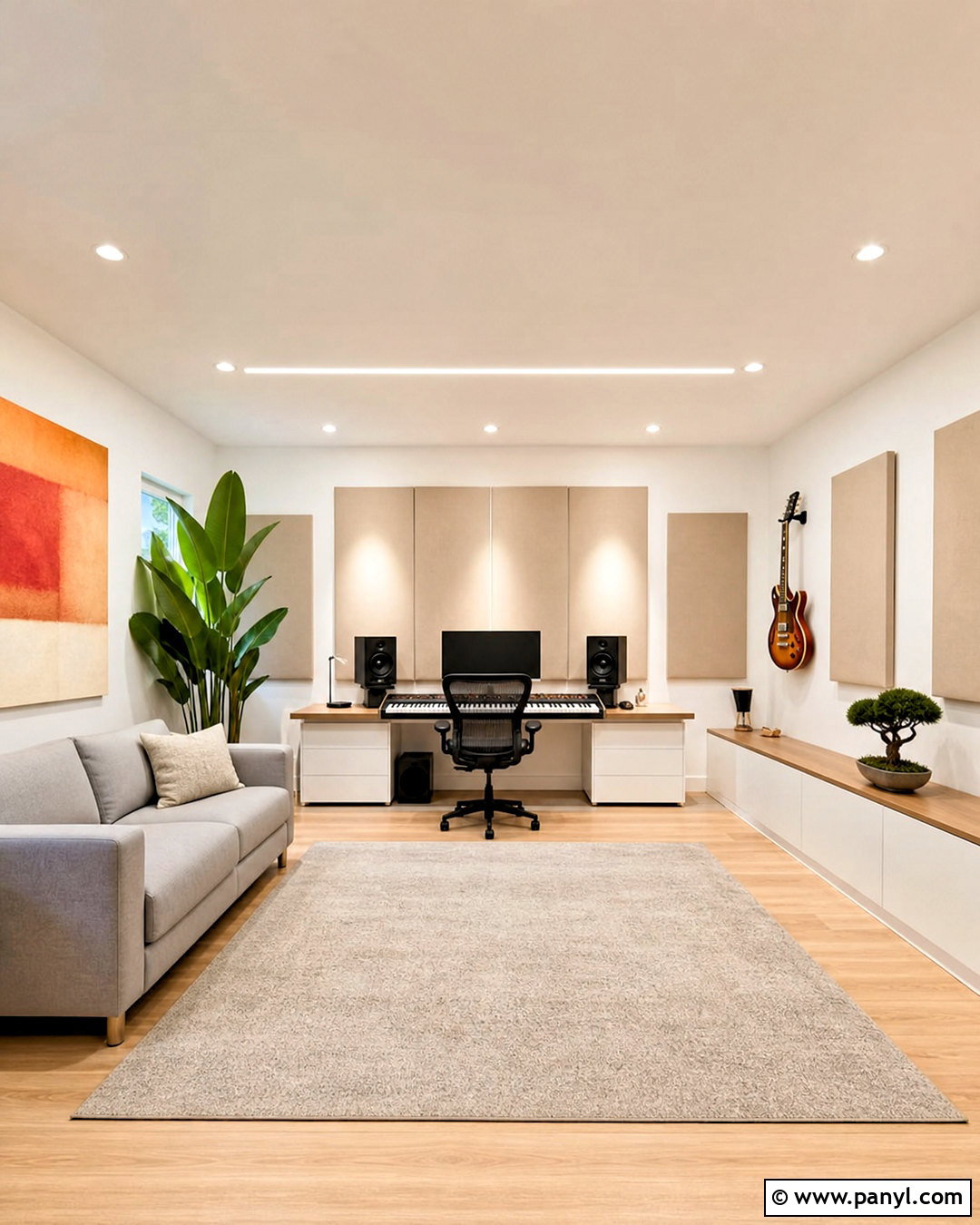
For a calm, distraction-free setting, limit the palette and give every instrument a designated position. Paint the walls crisp warm white and use pale oak flooring with a large light-gray rug. Center a simple white-and-oak production desk on one wall, paired with compact black monitors and one comfortable ergonomic chair. Install frameless beige acoustic panels in a symmetrical arrangement rather than filling every surface with decorations. A single keyboard stand and one wall-mounted guitar create a functional playing zone. Along the back wall, use handle-free built-in cabinets to hide accessories, cables, and cases. Add a slim light-gray loveseat for listening without crowding the floor. Recessed ceiling fixtures and concealed LED lighting provide even illumination. One large abstract artwork and a sculptural plant complete the clean, balanced design.
15. Colorful Basement Music Room
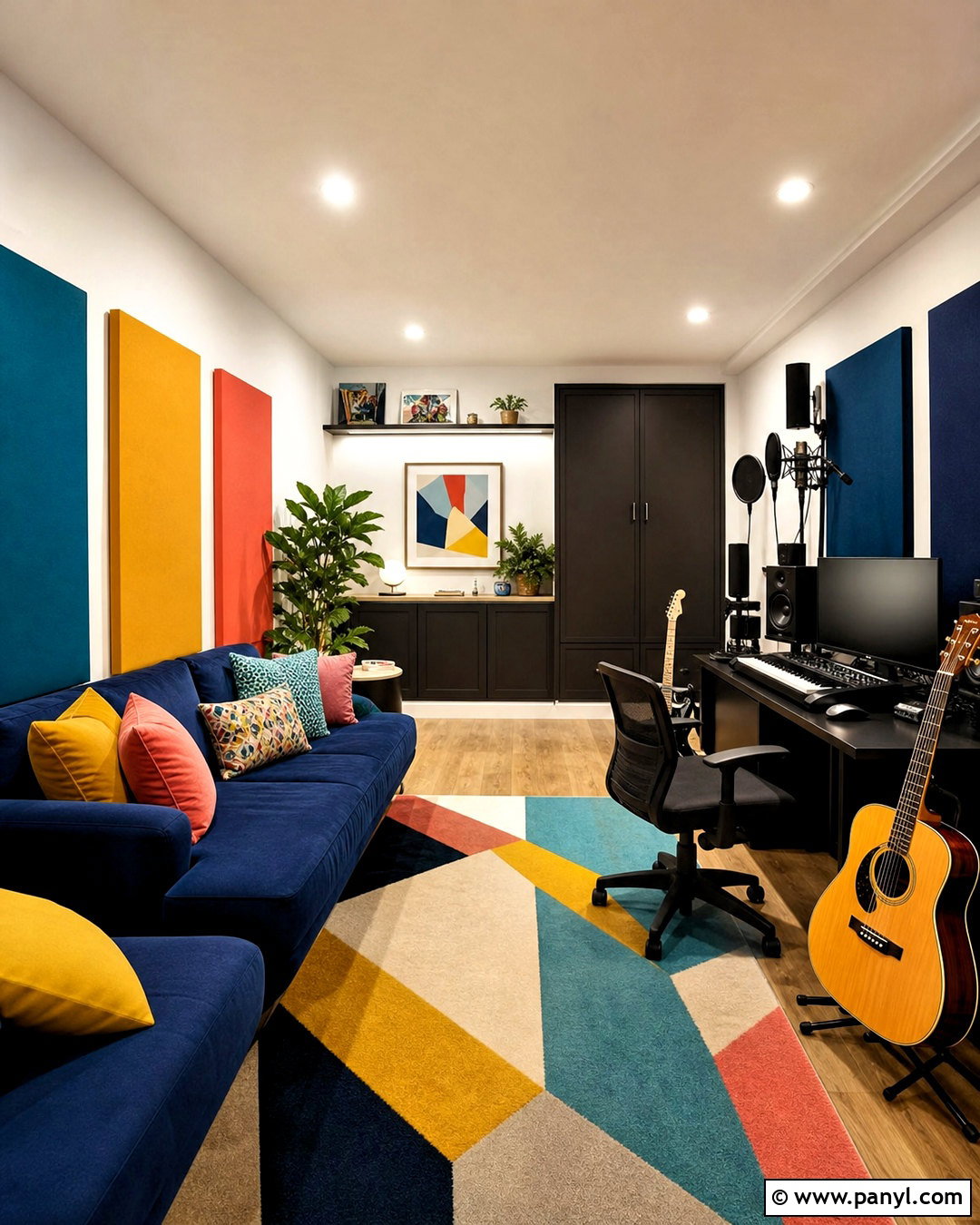
Bring energy into a window-limited basement with saturated colors arranged in a controlled, coordinated way. Start with soft white walls and medium oak flooring, then create an acoustic feature wall using teal, mustard yellow, coral, and deep blue fabric panels. Place a navy sofa opposite the music workstation and add a geometric rug that repeats the same colors. Keep the desk, shelving, and instrument stands matte black to ground the brighter palette. Display guitars on one side while storing smaller equipment inside closed cabinets below. A keyboard and microphone setup can occupy the opposite wall, leaving the center open for practice. Install bright white track lights and colorful LED accents under shelves. Simple graphic artwork and solid-color cushions complete a lively music room without creating distracting visual clutter.
16. Budget Basement Music Room
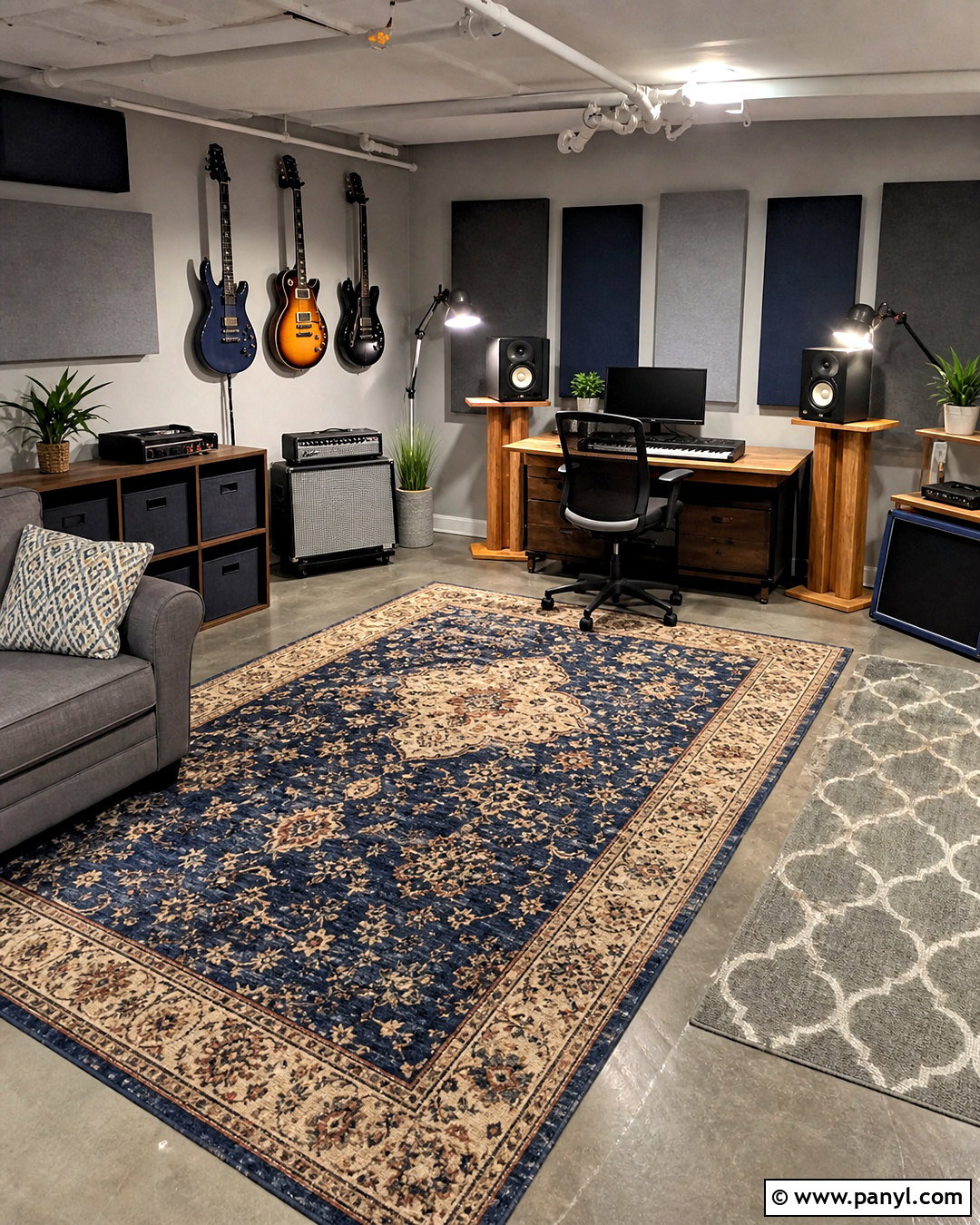
An affordable basement music room can look complete when the plan focuses on paint, organization, and carefully chosen secondhand pieces. Use light gray wall paint and sealed concrete flooring topped with two large, inexpensive rugs. Position a sturdy used desk at the front and place the speakers on separate DIY wood stands. Build fabric-wrapped acoustic panels in coordinated navy and gray, then arrange them evenly instead of covering random wall areas. Wall hooks keep guitars off the floor, while cube storage holds cables, sheet music, and small accessories in matching bins. Add a comfortable secondhand loveseat and repaint a low cabinet for amplifier storage. Bright clamp lights, plug-in ceiling fixtures, and an adjustable desk lamp provide flexible illumination. A limited color palette makes the mixed furnishings feel intentional and visually connected.
17. Low Ceiling Basement Music Room
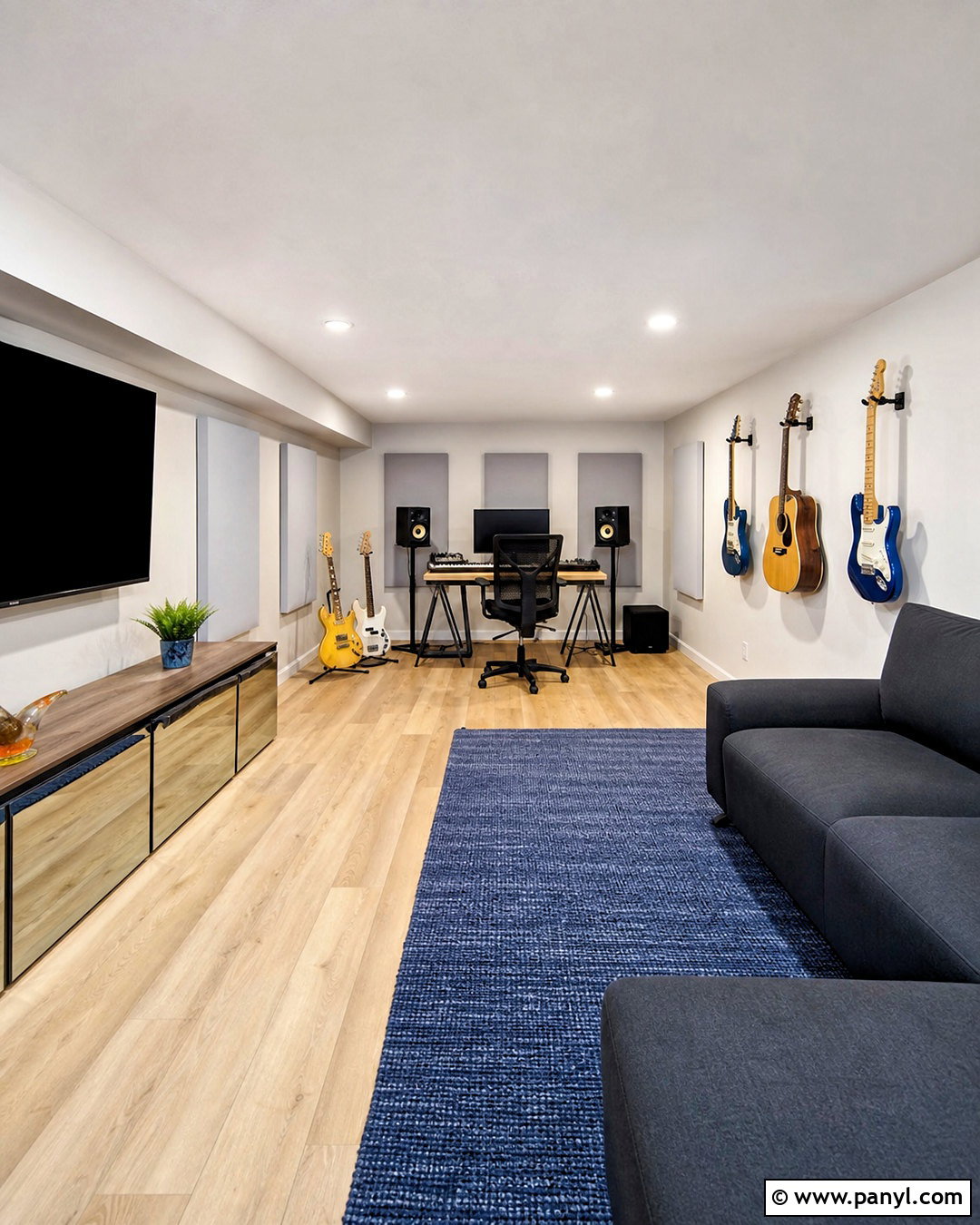
A low basement ceiling requires shallow fixtures, light colors, and furniture that maintains an open sightline. Paint both the walls and ceiling soft white, using recessed wafer lights rather than hanging fixtures. Install slim acoustic panels in pale gray along the side walls and use low-profile corner treatment where practical. Choose a streamlined studio desk and place the speakers on compact stands that keep the tweeters near seated ear height. A low charcoal sofa and horizontal storage cabinet make the room appear wider. Use light oak flooring with a flat-weave blue rug to add warmth without visual heaviness. Mount guitars in a single horizontal row and avoid tall shelving. Mirrored cabinet fronts can reflect light in a small area, while bright task lighting keeps controls, sheet music, and instruments easy to use.
18. Family Basement Music Room
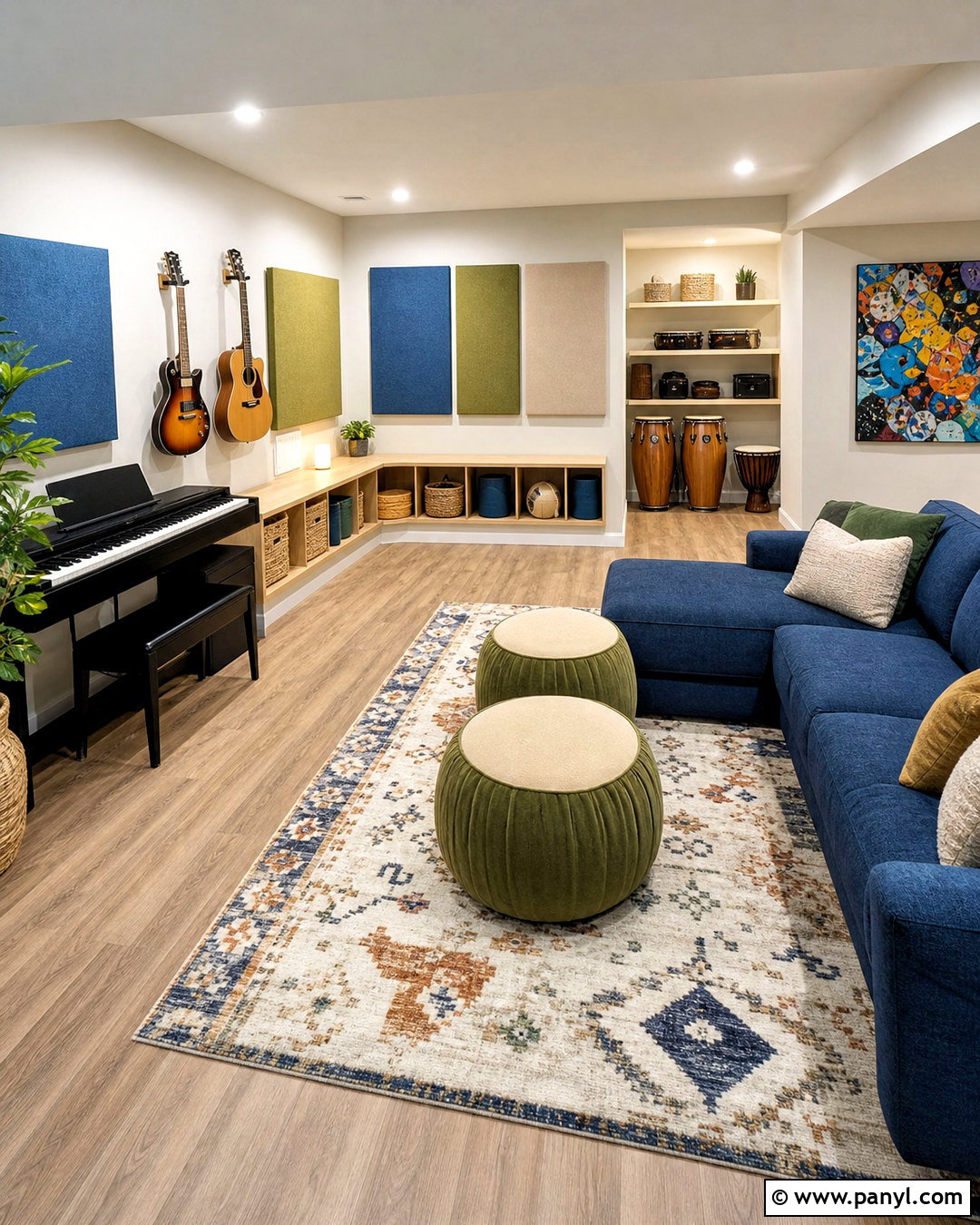
Create an approachable family music room where adults and children can play, learn, and listen together. Place a digital piano against one wall and organize guitars, small percussion instruments, and music books inside low built-in storage. Include a central open area with a washable patterned rug for lessons or informal practice. A durable blue sectional along the back wall provides seating for several listeners, while rounded ottomans can move wherever needed. Use warm white walls, oak-look vinyl flooring, and acoustic panels in soft blue, green, and beige. Closed cabinets keep delicate equipment protected when the room is used for other activities. Bright recessed lights, an adjustable piano lamp, and clear walkways make the space comfortable and safe. Add cheerful framed artwork without using fragile or overly precious decorations.
19. Luxury Basement Music Room
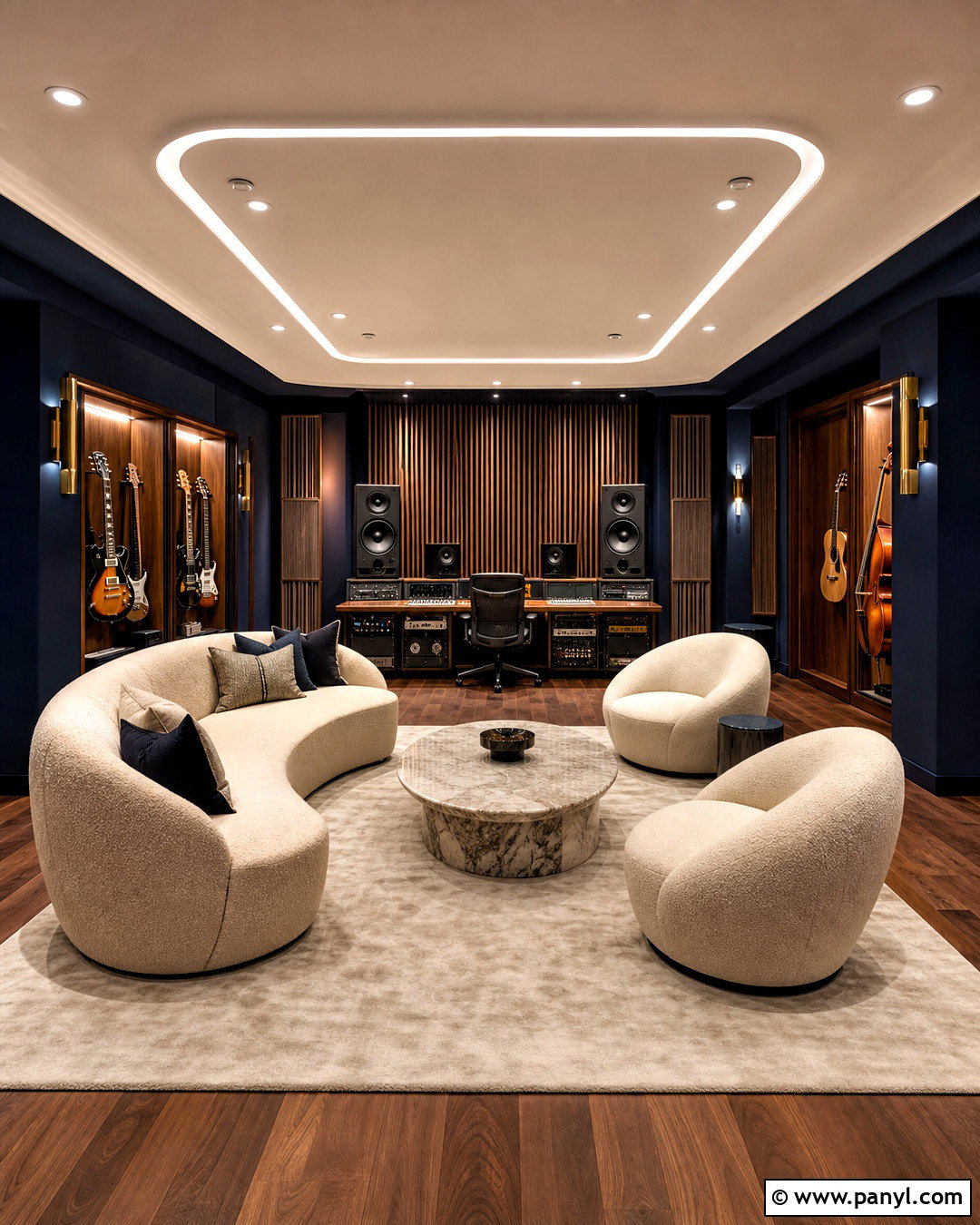
A luxurious music room should combine refined materials with a thoughtful professional layout. Cover the front wall in walnut slats with integrated black acoustic material, then center a custom studio console and premium speakers within the feature. Use deep navy walls, wide-plank walnut flooring, and a large ivory rug for rich contrast. Place a curved cream sofa at the back with two sculptural lounge chairs and a stone-topped table. Built-in illuminated cabinets can display selected instruments while concealing cables and equipment cases below. Add wood-faced bass traps in the corners and a coordinated acoustic cloud above the listening position. Brushed brass sconces, recessed ceiling lights, and concealed shelf lighting create layered brightness. Restrained artwork and high-quality textiles complete the polished design without competing with the instruments and audio equipment.
20. Vintage Basement Music Room
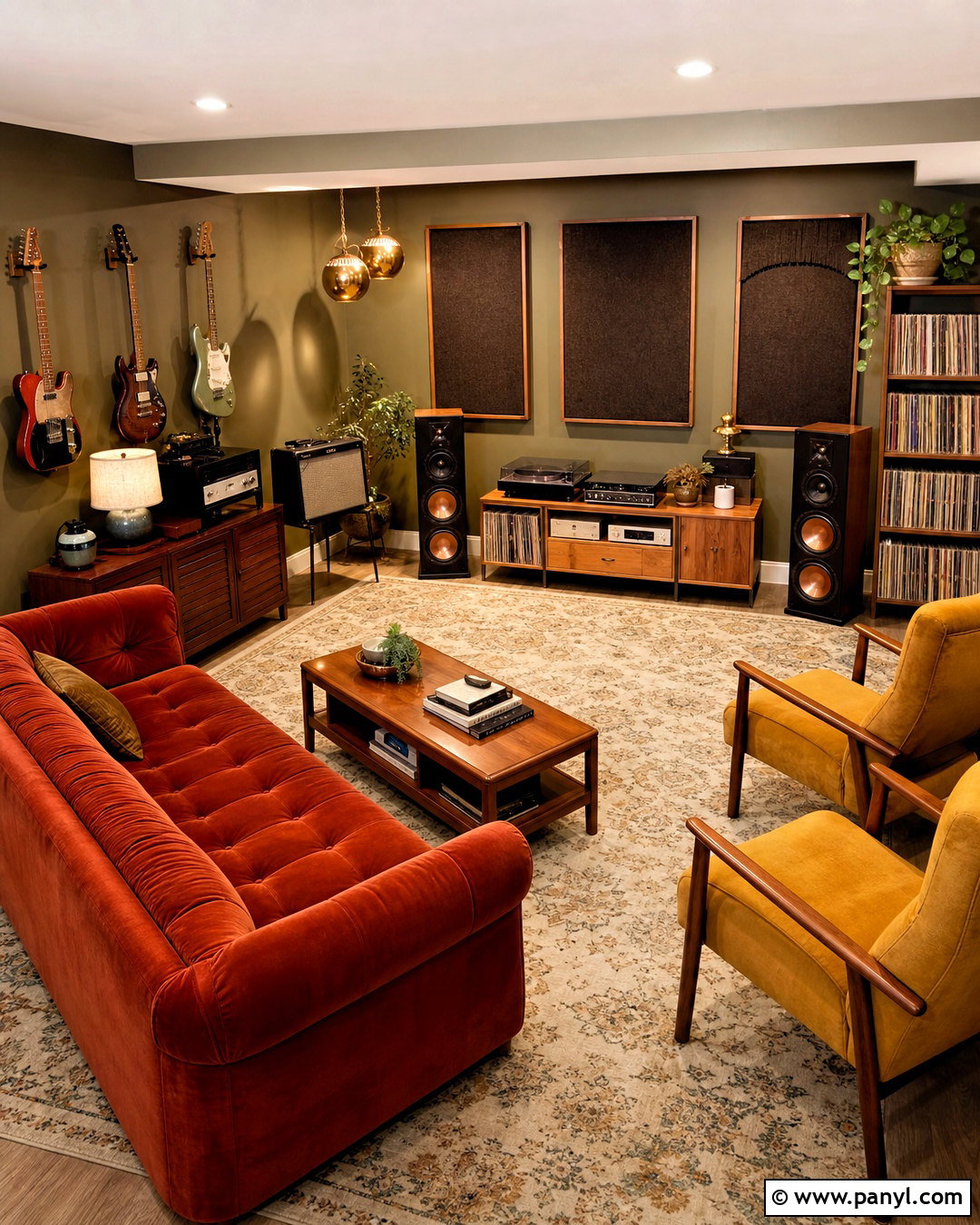
Build a vintage-inspired room by combining classic shapes, warm colors, and modern acoustic performance. Paint the walls muted olive green and use walnut furniture with tapered legs. Place a retro-style media console between two substantial floor speakers, with neatly organized record and equipment storage below. A rust-colored velvet sofa, patterned cream rug, and pair of mustard lounge chairs create a complete conversation and listening area. Frame dark brown acoustic panels in walnut so they resemble period wall decor. Display one or two guitars beside a compact amplifier station rather than filling every wall. Brass globe fixtures and bright recessed lights keep the basement welcoming. Add framed concert photography, ceramic table lamps, and textured curtains, but avoid excessive memorabilia so the finished room feels curated, comfortable, and functional.
Conclusion:
The most successful **basement music room ideas** combine practical sound management with a complete design that fits the way the room will be used. Start by resolving moisture, ventilation, electrical, and structural concerns. Then build a clear layout around recording, rehearsing, playing, or focused listening. Coordinated acoustic panels, durable flooring, layered lighting, comfortable seating, and organized storage can make even a modest basement feel intentional. Keep instruments accessible without crowding walkways, and choose colors that compensate for limited natural light. Whether your preferred look is modern, rustic, colorful, industrial, or luxurious, thoughtful planning will create a basement music room that feels inspiring, comfortable, and ready for regular use.

Related Ideas and Inspiration:
Leave a Reply