
Industrial style works especially well below ground because it turns exposed structure, concrete, pipes, and imperfect surfaces into intentional design features. The best 20 industrial basement ideas balance those rugged materials with comfortable seating, practical lighting, warm wood, and a layout built around everyday life. Rather than making the entire room dark, use charcoal and black as controlled accents beside pale walls, layered lighting, and natural textures. Exposed brick, sealed concrete, open ceilings, metal fixtures, and reclaimed wood remain defining elements of this look. () Whether you want a relaxed family lounge, productive office, home gym, or flexible guest space, the following complete designs offer approachable ways to recreate 20 industrial basement ideas.

1. Industrial Basement Living Room
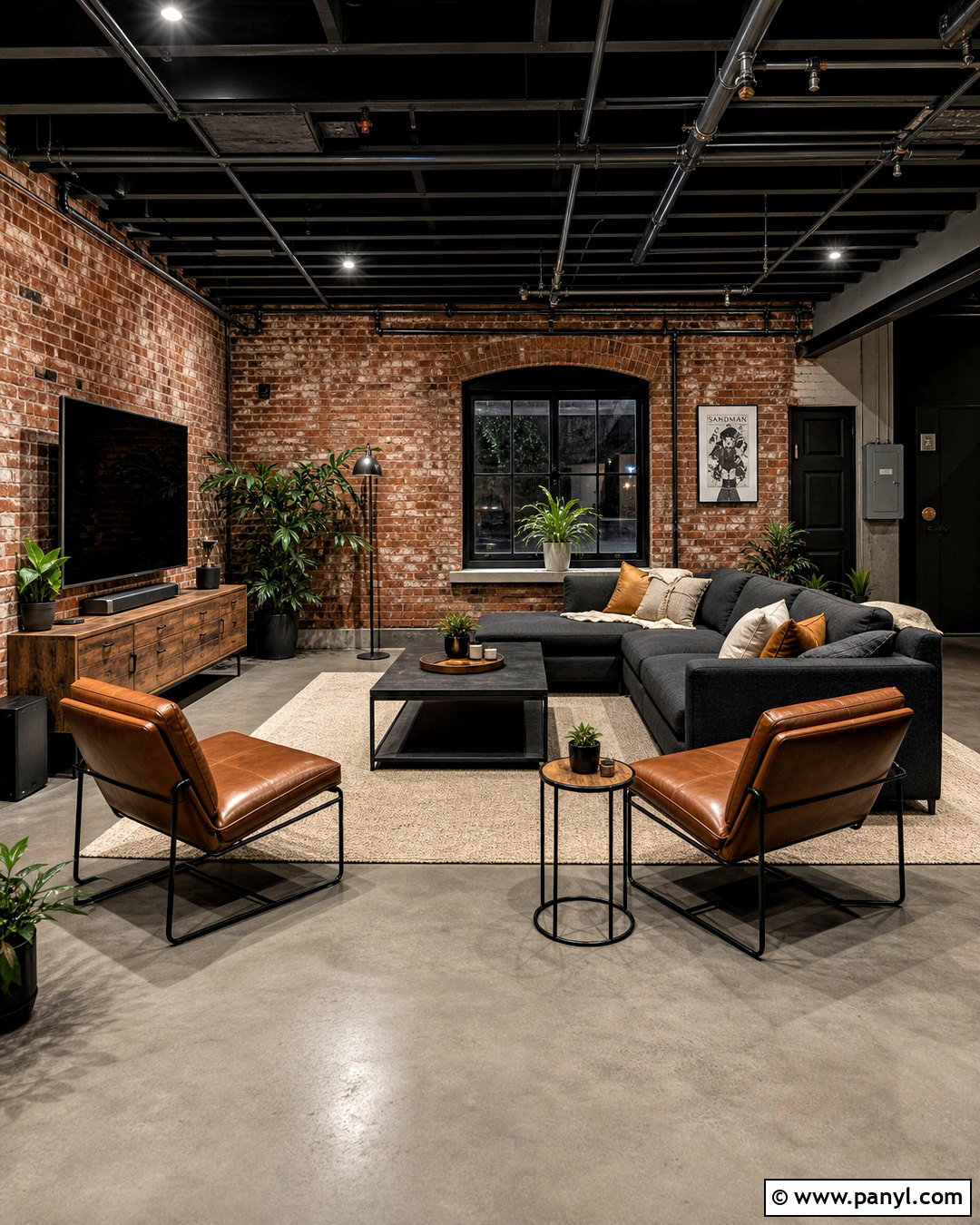
Create a comfortable gathering space by placing a deep charcoal sectional against a warm white wall and facing it toward a low reclaimed-wood media console. Keep one red brick wall exposed to establish the industrial character, then repeat its warm tones through cognac leather chairs and rust-colored pillows. A sealed concrete floor provides a practical foundation, while a large cream and gray rug softens the seating zone. Paint the open ceiling matte black, but install plenty of recessed lights between the joists to prevent a gloomy result. Finish the room with a steel-frame coffee table, black floor lamps, simple artwork, and a few leafy plants in concrete planters. The result feels relaxed, balanced, and suitable for daily family use.
2. Small Industrial Basement
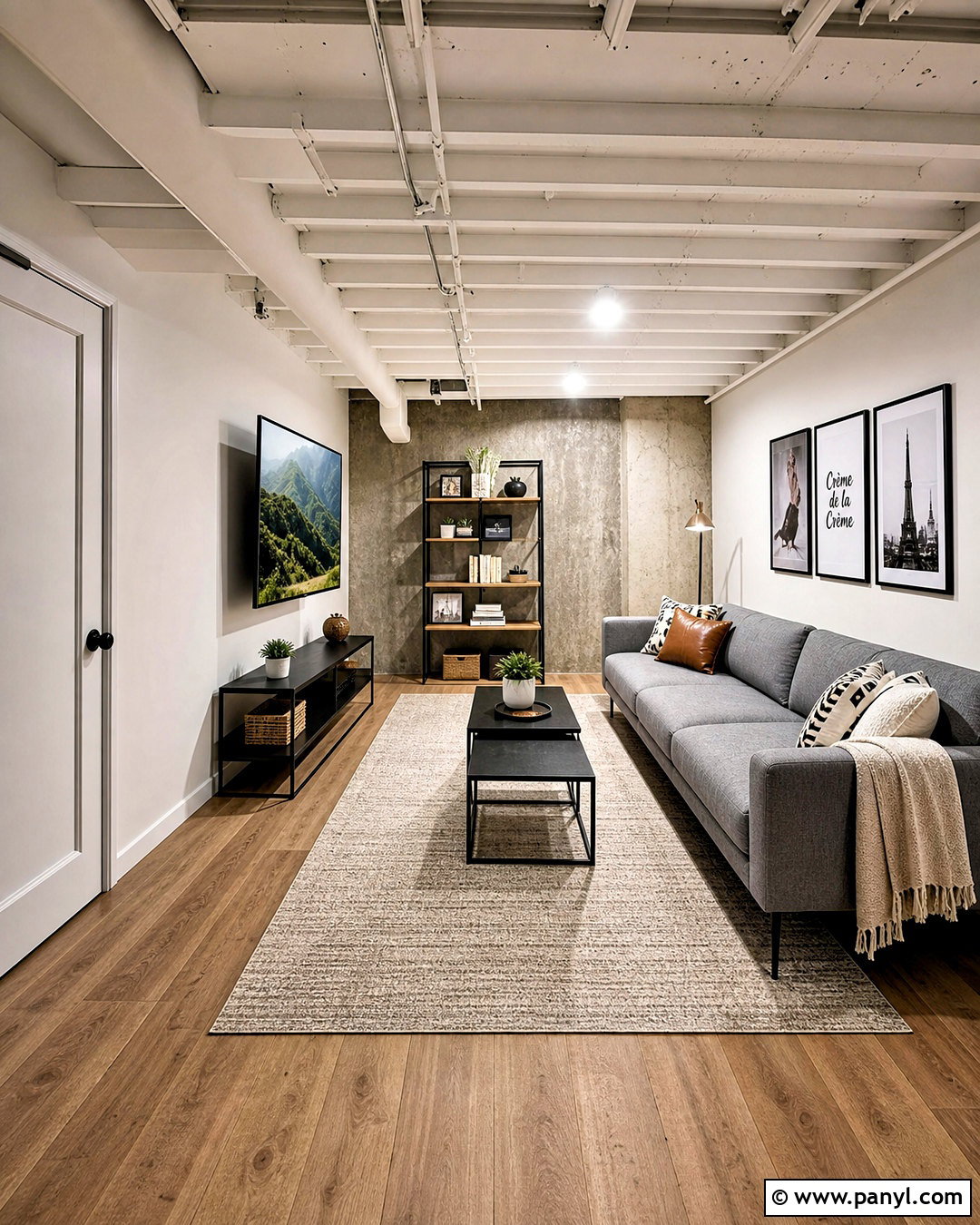
A compact basement feels larger when the materials are simple and the furniture stays visually light. Paint the foundation walls soft warm white while leaving one narrow section of concrete exposed for texture. Choose a slim gray sofa with raised black legs, two nesting tables, and a wall-mounted television instead of bulky cabinets. Medium-tone oak luxury vinyl flooring brings warmth without overwhelming the small footprint. Above, paint the exposed ceiling and ductwork white to preserve height and bounce light around the room. Add black track lighting, a flatwoven rug, and one tall metal shelving unit for books, baskets, and decor. An open layout with clear walking paths makes this industrial basement feel useful rather than crowded, even when it serves several purposes.
3. Industrial Basement With Exposed Brick
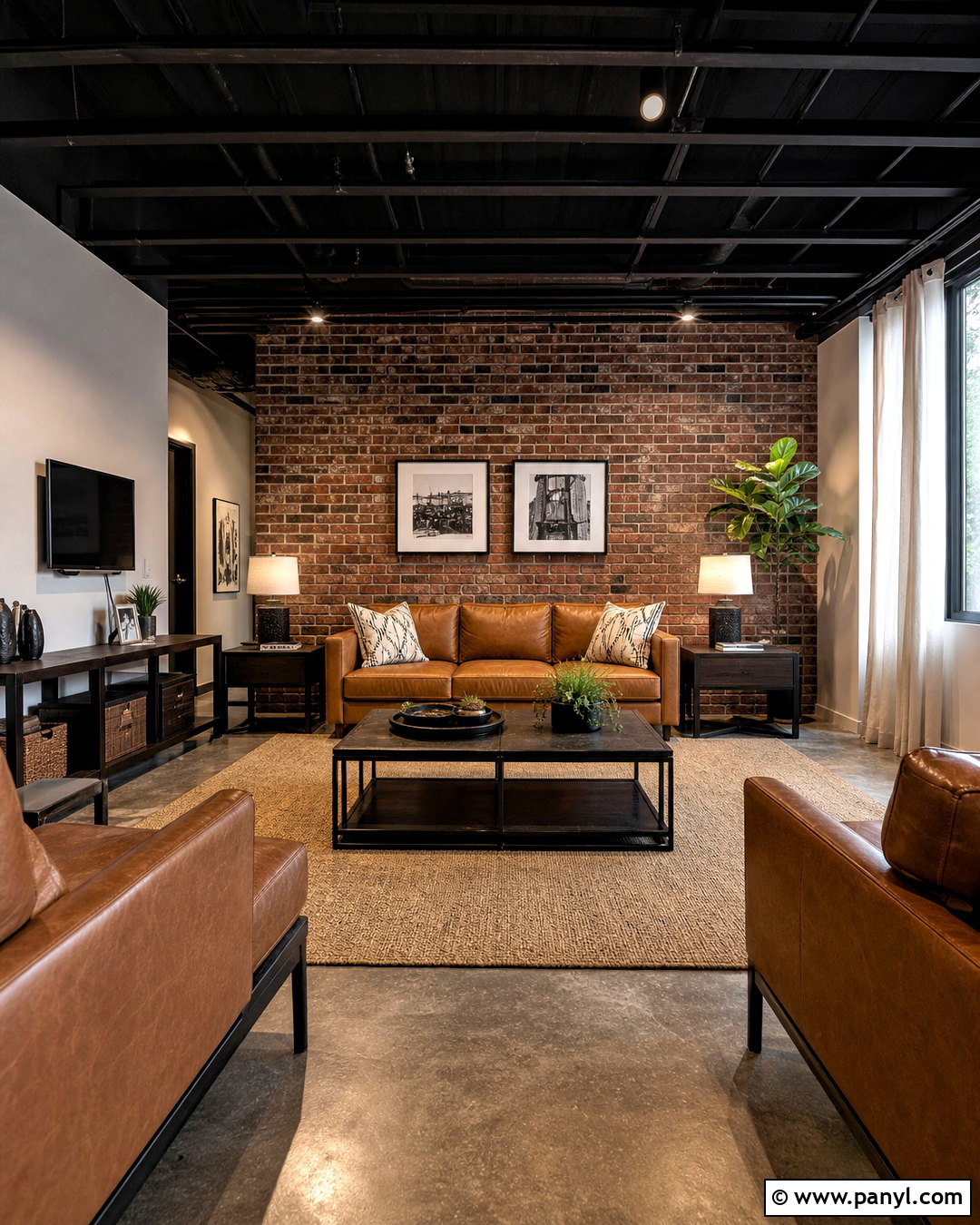
Let an original brick wall become the visual anchor of a polished basement lounge. Clean and seal the masonry while keeping its natural red, brown, and clay variations visible. Place a camel-colored leather sofa in front of a smooth light gray wall so the brick does not compete with every large surface. Use a black steel coffee table, dark wood side tables, and a spacious taupe rug to connect the contrasting finishes. Overhead, exposed black joists and streamlined track lights reinforce the loft-inspired look. Add linen curtains if the basement has windows, plus framed black-and-white photography and simple greenery. Keeping the remaining walls and furniture understated allows the brickwork to feel authentic while the entire space remains warm, bright, and comfortable.
4. Industrial Basement With Black Ceiling
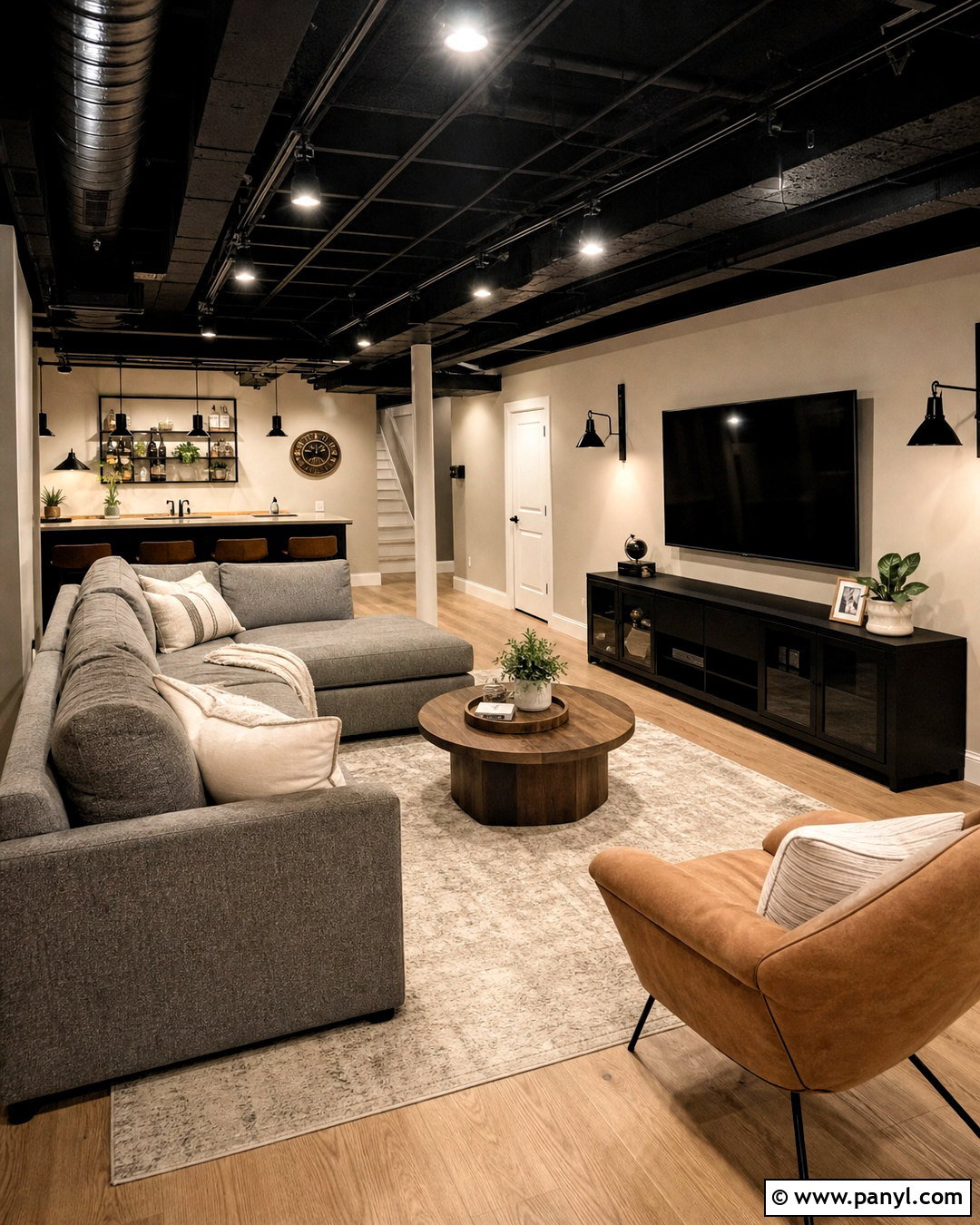
A black open ceiling can make pipes, joists, wires, and ductwork look unified rather than unfinished. Balance that dramatic surface with pale greige walls and a light oak-look floor. Arrange a soft gray sectional, tan lounge chair, and round wood coffee table in the center, leaving open circulation around the room. Bright recessed fixtures installed between the joists should cover the full seating area, while black wall sconces add focused light near artwork. Use a cream rug and off-white pillows to lift the darker upper half of the room. A low matte-black media cabinet will echo the ceiling without adding visual weight. This complete scheme feels crisp and industrial, yet it remains inviting enough for movie nights, conversation, and casual weekend relaxation.
5. Industrial Basement Media Room
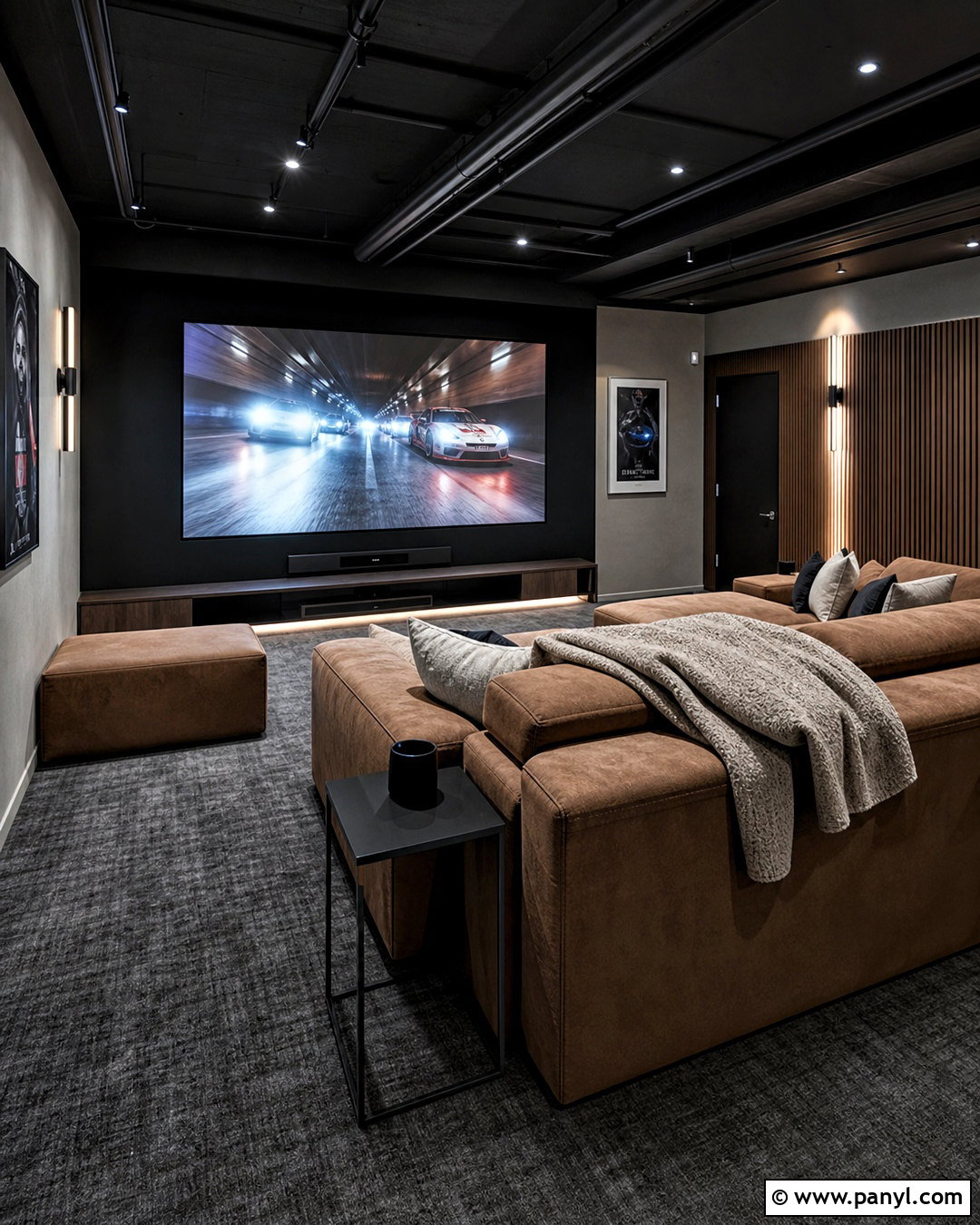
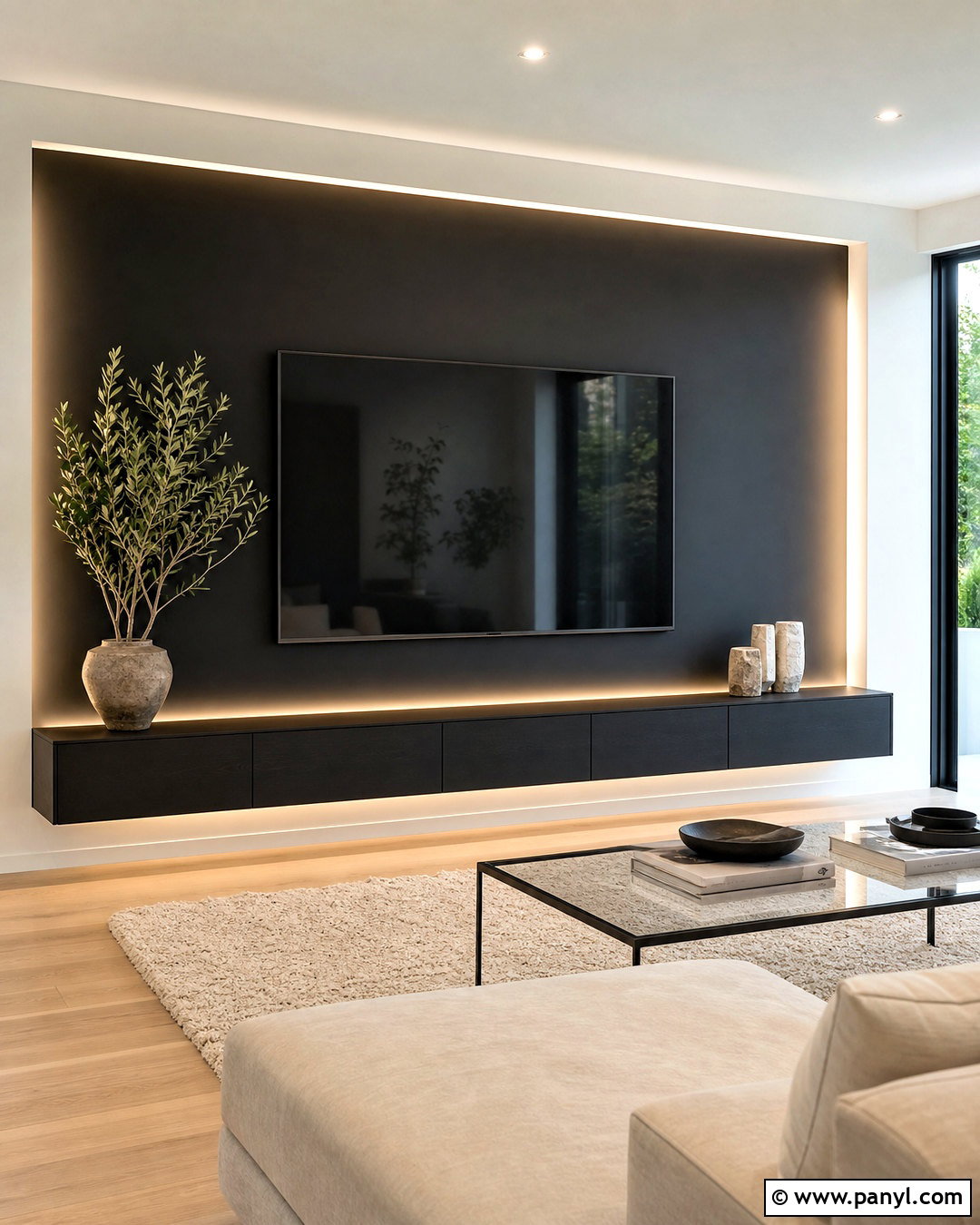
Turn the basement into an immersive media room without covering every surface in dark finishes. Use a charcoal feature wall behind a large screen and paint the remaining walls a softer medium gray. Position a wide modular sectional in textured brown fabric, adding movable ottomans for flexible seating. Acoustic wall panels with a dark wood slat finish can improve the visual backdrop while contributing warmth. Choose low-glare recessed lighting, black wall sconces, and subtle LED strips beneath the media console. A deep gray carpet or oversized rug helps the room feel quieter and more comfortable underfoot. Complete the design with metal side tables, concealed equipment storage, and heavy neutral curtains. The finished basement looks streamlined, cohesive, and designed specifically for relaxed viewing.
6. Industrial Basement Game Room
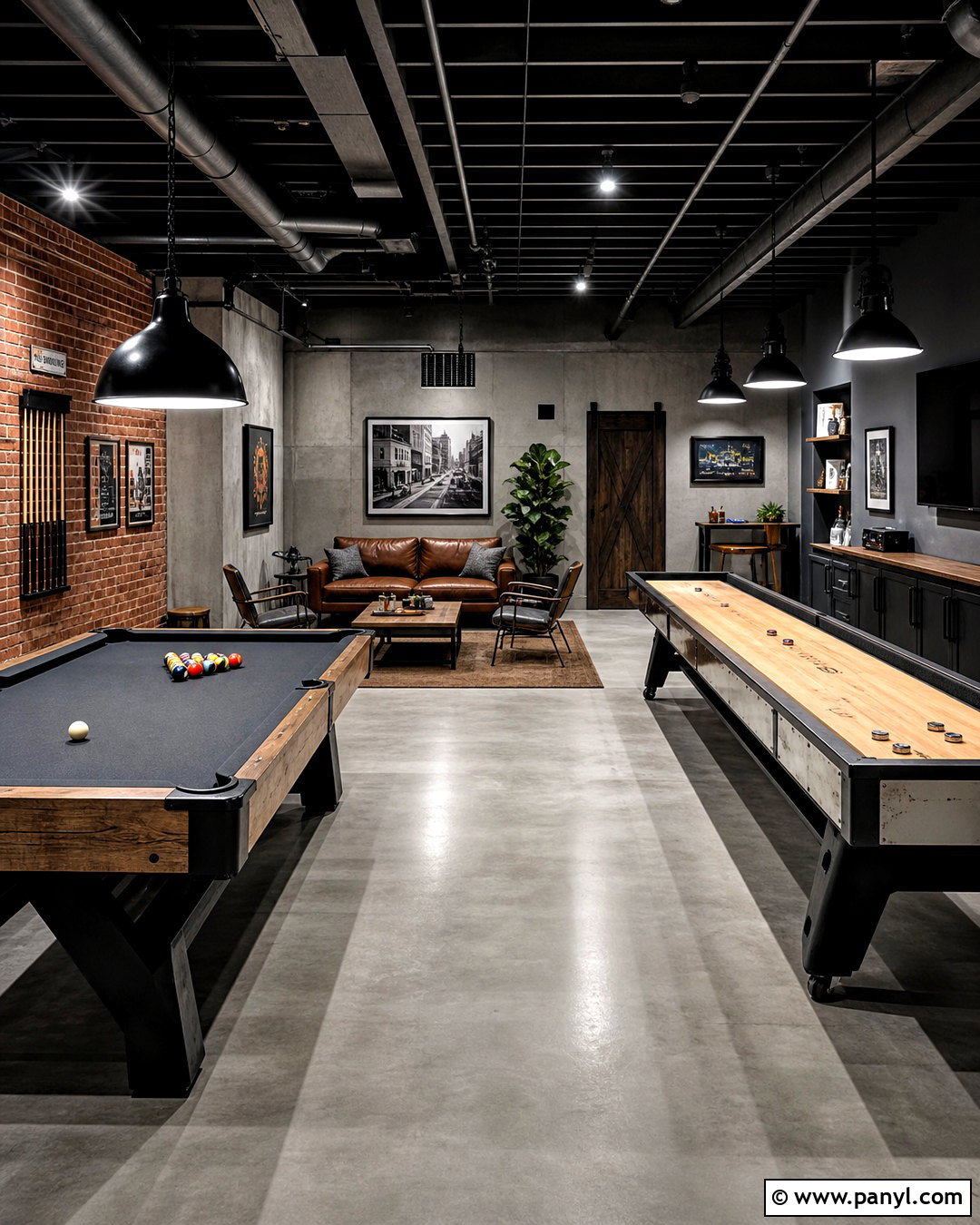
A spacious game room needs distinct activity zones and enough open space for comfortable movement. Center a pool table with charcoal felt beneath two black metal pendant lights, then place a shuffleboard table along one side wall. Use sealed gray concrete flooring throughout for visual continuity and easy maintenance. A red brick accent wall adds warmth, while light greige walls keep the surrounding space from becoming too heavy. Create a separate conversation area with a compact leather sofa, two metal-frame chairs, and a rugged wood coffee table. Wall-mounted cabinets can hold games and equipment without taking up valuable floor area. Add vintage-inspired artwork, black-framed mirrors, and a few rust-colored details. The layout feels energetic and social while maintaining a clean, organized industrial appearance.
7. Industrial Basement Home Office
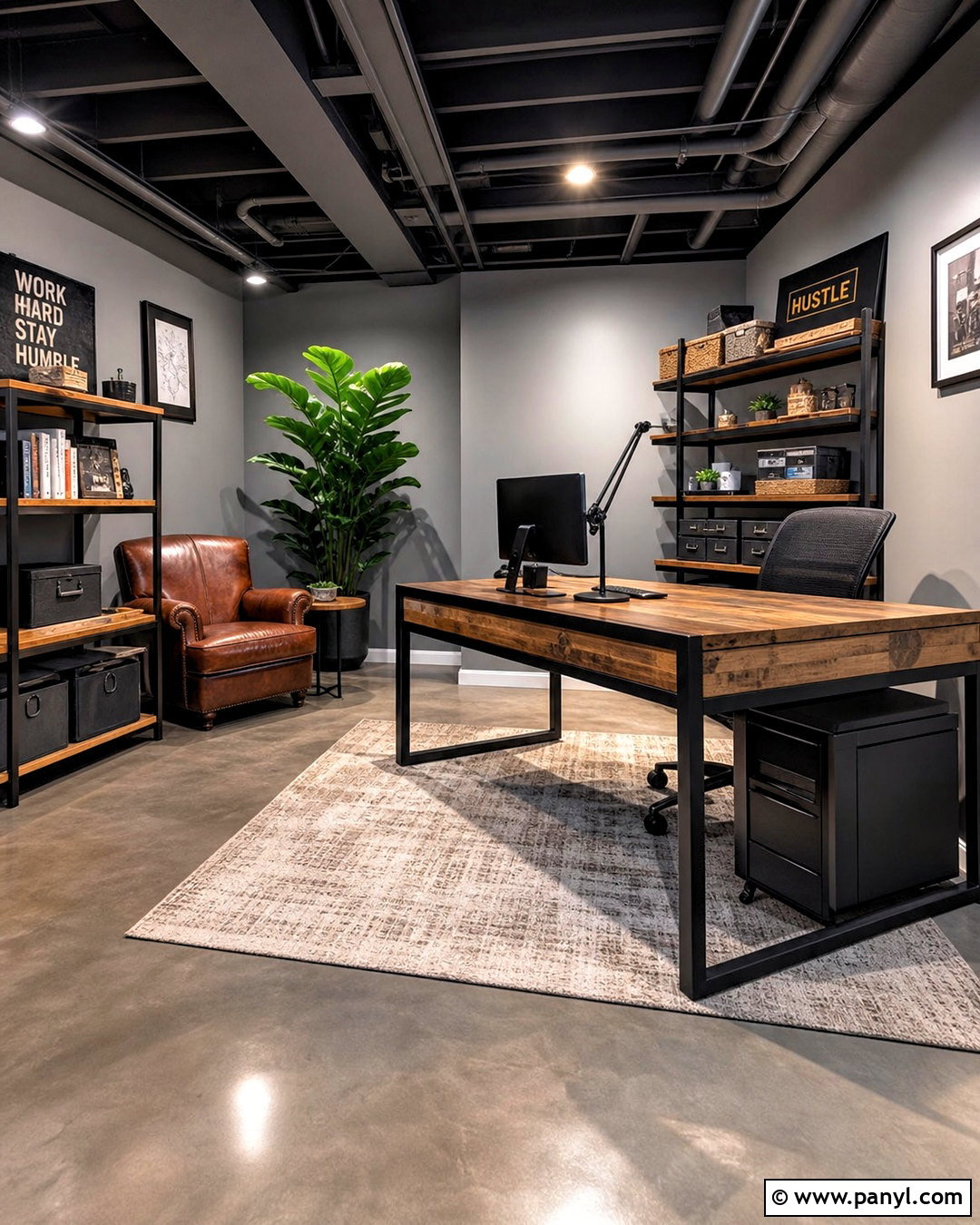
Would a quiet lower level make working from home easier? Build the office around a substantial reclaimed-wood desk with black steel legs, positioned where it receives any available window light. Install open metal shelving across one wall, mixing closed storage boxes with books and minimal decor. Soft gray walls, a sealed concrete floor, and a matte-black exposed ceiling establish an industrial foundation without distracting from work. Add a supportive black desk chair, a slim leather reading chair, and a low-pile neutral rug to define the workspace. Adjustable track lighting should illuminate the desk and shelving, while a directional task lamp handles detailed work. Finish with cable management, a few sound-absorbing panels, and one large plant for a productive office that still feels connected to the home.
8. Industrial Basement Home Gym
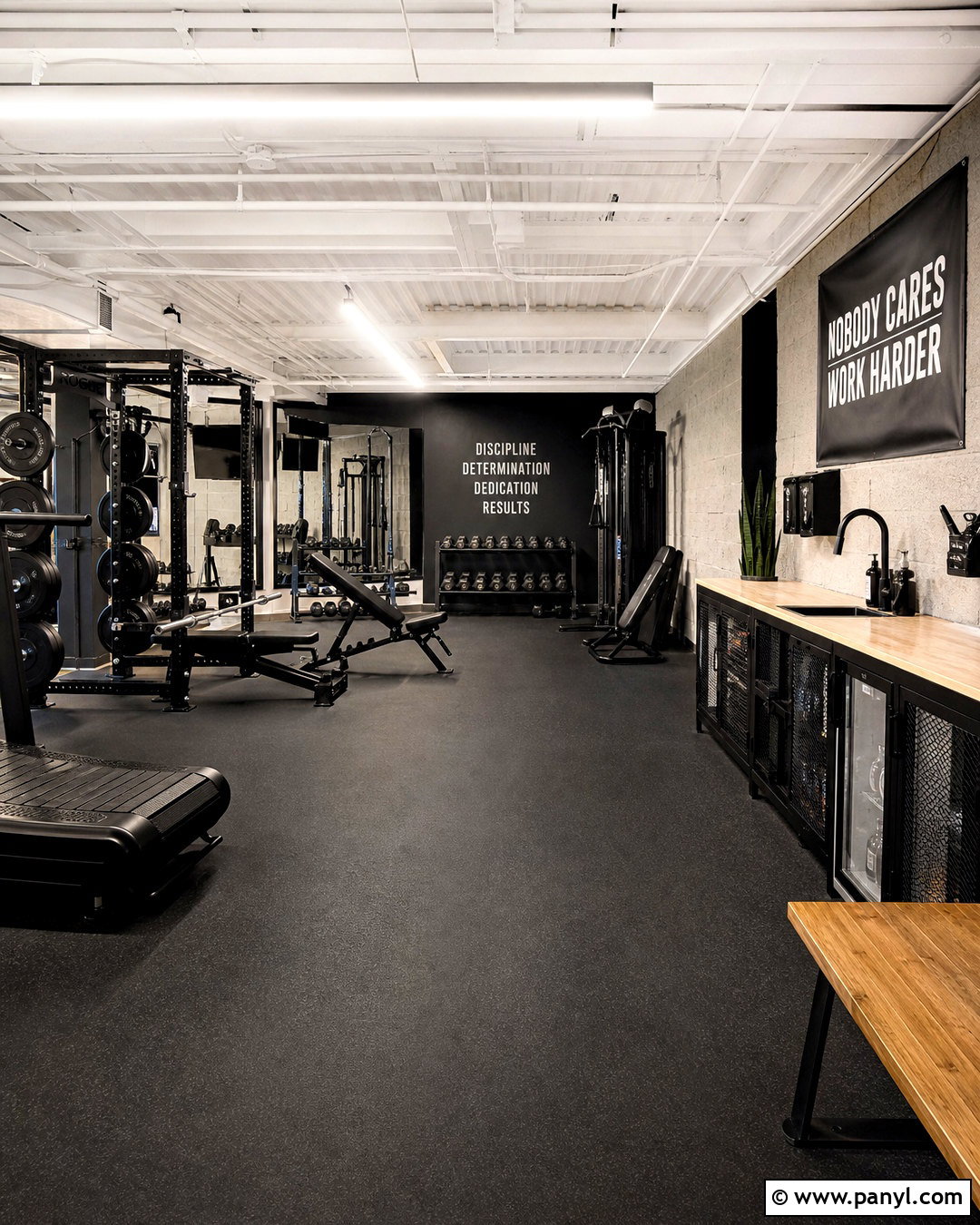
Make an industrial basement gym feel motivating by combining durable finishes with an orderly floor plan. Cover the workout zone in dark charcoal rubber flooring and keep a clear center area for stretching or strength training. Paint concrete walls a light gray, then use one black wall behind the main equipment to create contrast. Large black-framed mirrors can reflect light and help the basement feel more open. Organize weights on a steel rack and store mats, bands, and smaller accessories inside mesh-front cabinets. An exposed ceiling painted white keeps the room brighter, while linear LED fixtures deliver even illumination. Add a wood bench, wall-mounted hooks, and a compact hydration station. This streamlined arrangement looks purposeful, handles regular activity, and avoids the cluttered appearance of an unfinished storage room.
9. Industrial Basement Guest Bedroom
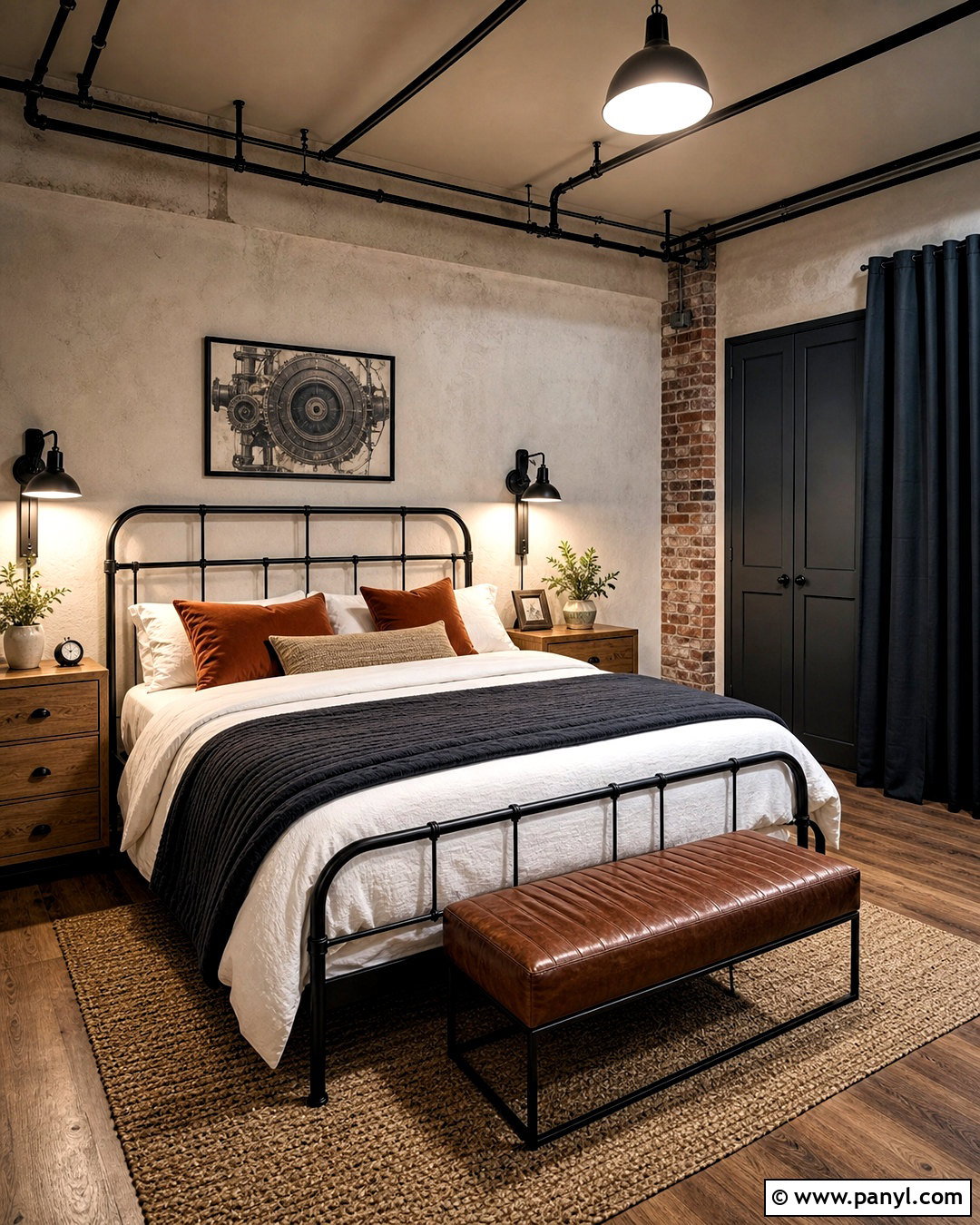
Industrial design can still create a restful guest bedroom when rugged surfaces are paired with soft layers. Position a simple black metal bed against a pale limewashed wall, using warm white bedding, a charcoal quilt, and rust-colored accent pillows. Medium-tone engineered wood flooring adds comfort and contrasts with an exposed black ceiling. Place compact oak nightstands on both sides of the bed and hang adjustable metal sconces above them to conserve surface space. A large woven rug softens footsteps and visually frames the sleeping area. Use a reclaimed-brick section behind a dresser rather than surrounding the entire room with dark masonry. Finish with blackout curtains, a leather bench, framed prints, and closed wardrobe storage. The space feels private, welcoming, and clearly designed rather than temporarily furnished.
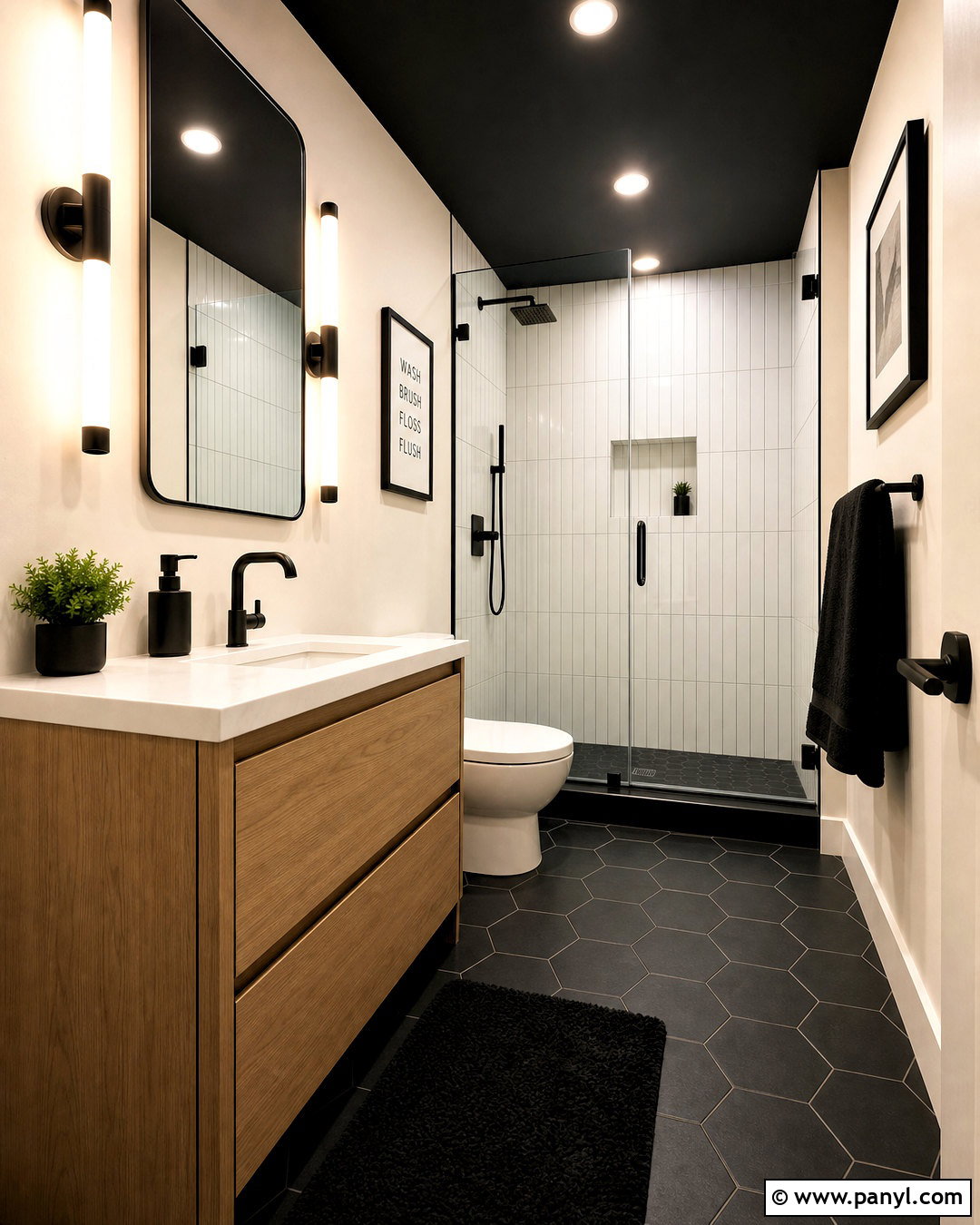
10. Industrial Basement Family Room
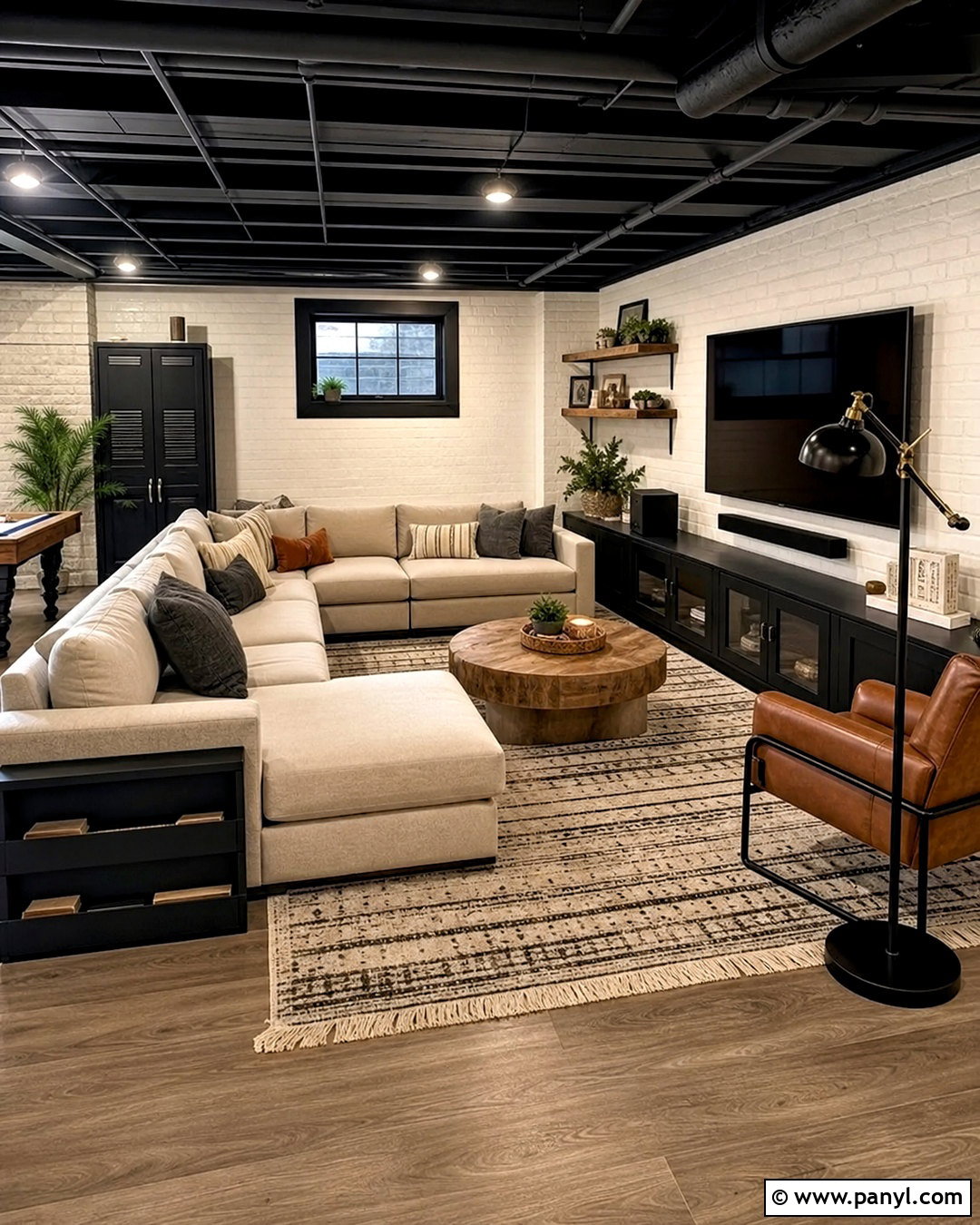
For a basement shared by adults and children, focus on comfortable materials and concealed organization. Arrange a durable oatmeal sectional around a chunky wood coffee table with rounded corners. Opposite the sofa, install a built-in media unit that combines matte-black cabinets, open oak shelves, and space for a television. Use warm gray luxury vinyl flooring with a large washable rug to handle busy everyday routines. White-painted brick walls brighten the lower level, while exposed black ceiling beams preserve its industrial personality. Add a reading corner with a cognac leather chair and an adjustable floor lamp. Deep storage drawers can hold toys, blankets, and electronics after use. With soft textiles, sturdy furniture, and clearly defined zones, the room stays practical without losing its clean warehouse-inspired character.
11. Industrial Basement Laundry Room
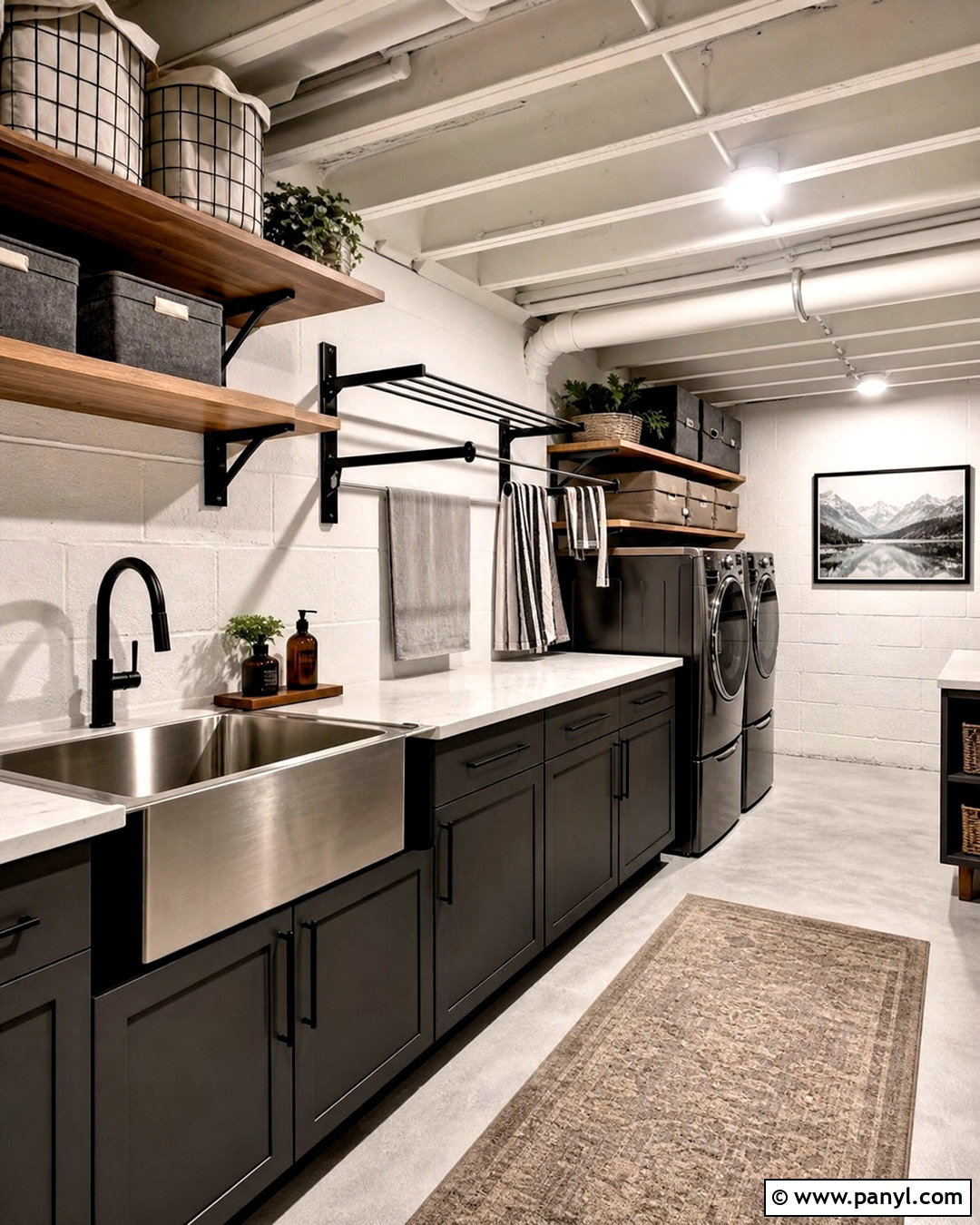
Bring order to a basement laundry area with charcoal lower cabinets, white quartz counters, and warm wood open shelving. Place the washer and dryer beneath a continuous counter to create a large folding surface. A deep stainless steel utility sink, matte-black faucet, and black cabinet pulls support the industrial palette. Use light gray porcelain tile that resembles concrete for a durable-looking floor, then finish the walls in washable warm white paint. Leave ceiling joists visible but paint them white so the room remains bright. Wire baskets, labeled bins, and a wall-mounted drying rail keep supplies accessible without cluttering the counters. Add bright linear ceiling lights and an undercabinet strip above the sink. The complete laundry room feels hardworking, organized, and attractive enough to leave open.
12. Industrial Basement Workshop
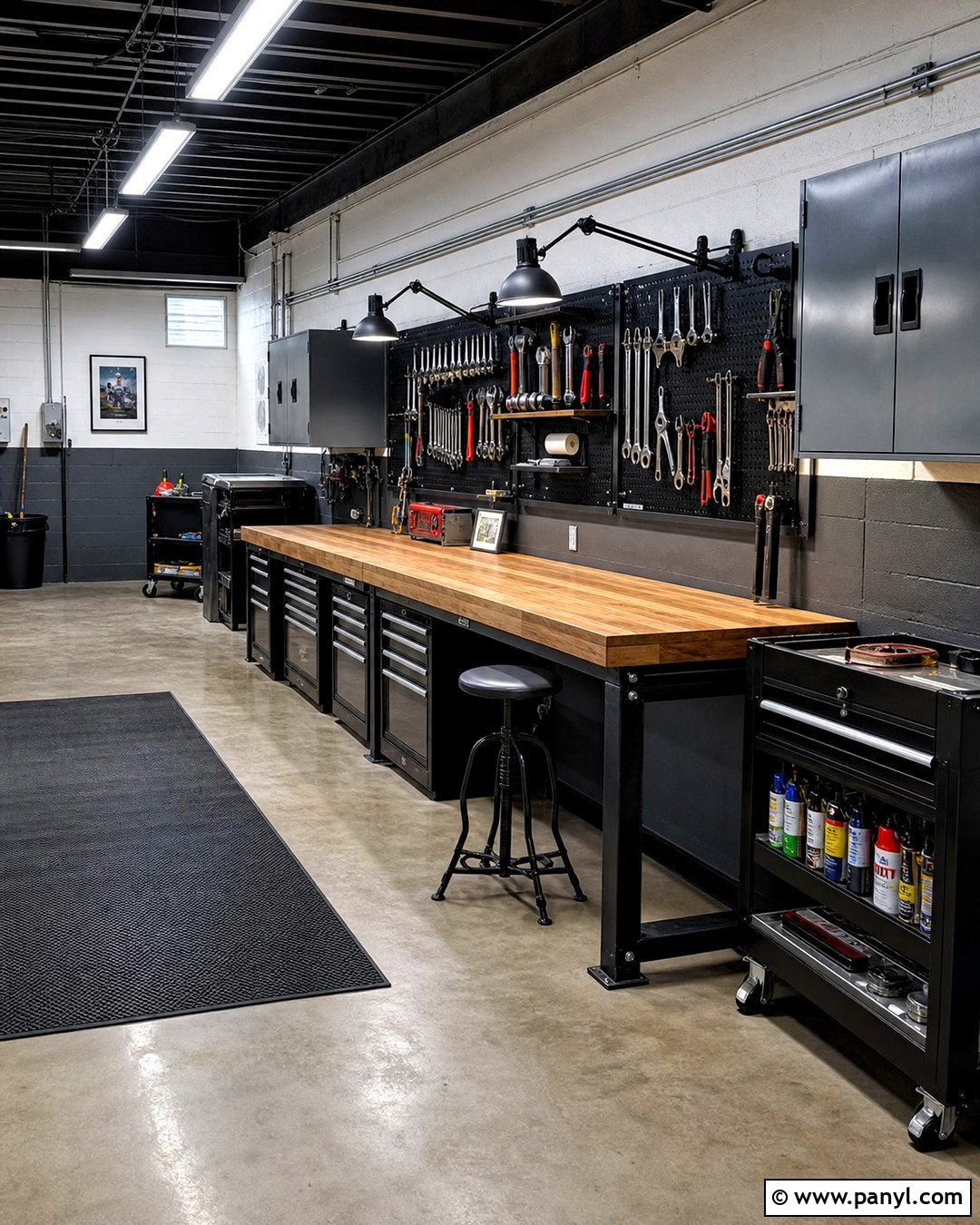
A practical workshop benefits from the straightforward materials associated with industrial interiors. Install a long hardwood workbench along the brightest wall and support it with heavy black steel legs. Above it, use dark perforated metal panels for frequently reached tools and add closed gray cabinets for less attractive supplies. Seal the existing concrete floor in a medium gray finish and leave enough open space around the central worktable. White-painted masonry walls improve visibility, while a charcoal lower section hides everyday marks. Keep the ceiling open for access, but arrange exposed conduit and lighting in clean parallel lines. Strong LED fixtures, an adjustable task lamp, and mobile storage carts make detailed projects easier. The finished workshop feels organized and rugged without looking neglected or overly commercial.
13. Industrial Basement Reading Room
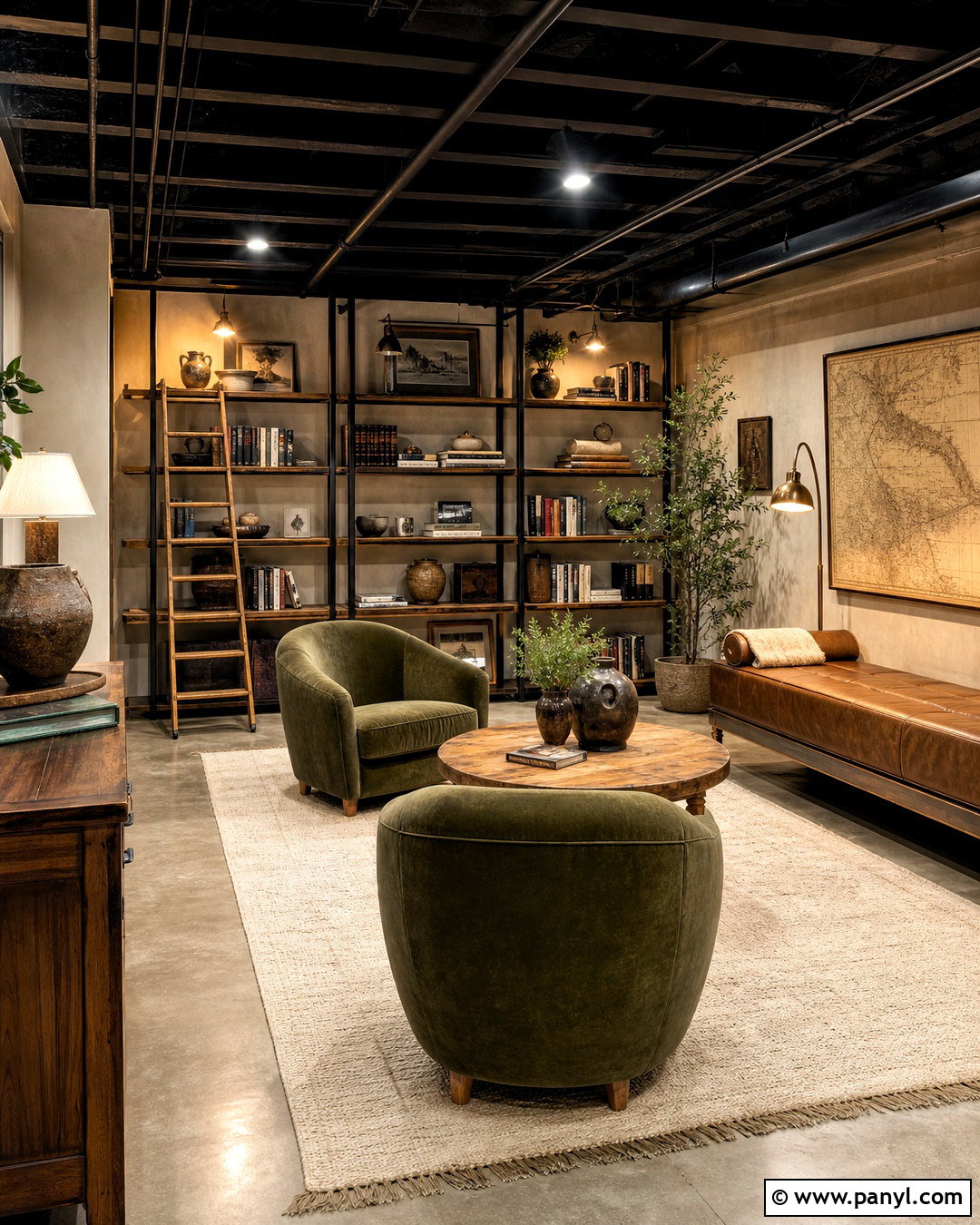
Imagine stepping downstairs into a quiet room filled with warm wood, textured fabric, and orderly bookshelves. Cover one wall with black steel and walnut shelving, leaving a few open spaces for pottery and small plants. Place two deep olive-green lounge chairs beside a round reclaimed-wood table, then anchor them with a cream wool-look rug. Soft greige walls and a light sealed-concrete floor keep the darker furniture balanced. Leave the ceiling exposed in matte black, using multiple adjustable spotlights to illuminate the shelves and seating. Add a slim leather daybed under a window for longer reading sessions. Simple linen shades, bronze floor lamps, and charcoal pillows complete the room. The overall design feels peaceful and comfortable while retaining a distinct industrial basement identity.
14. Industrial Basement Music Room
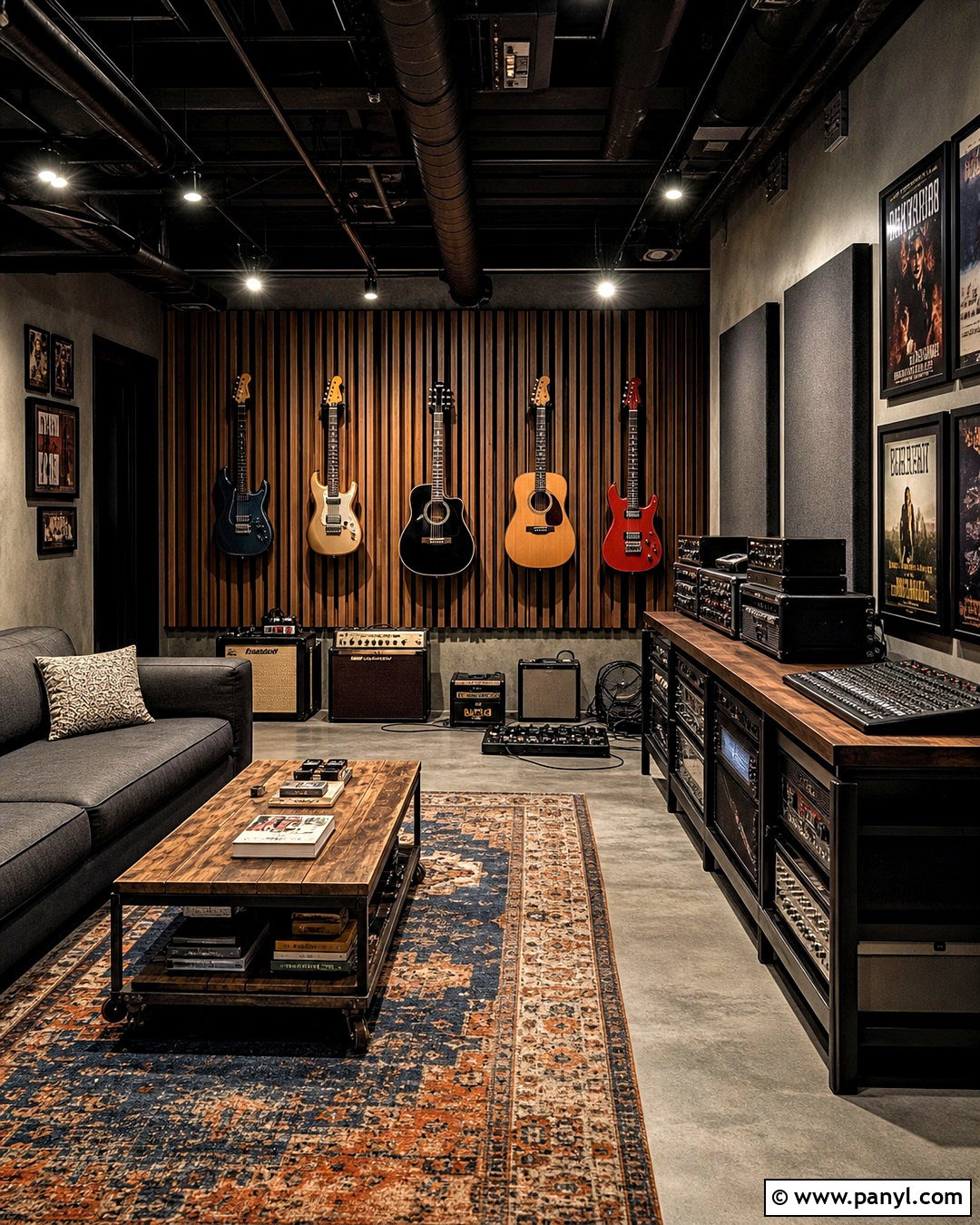
Design a music room that looks creative without allowing instruments and equipment to take over the space. Use dark wood acoustic slat panels on one wall, balanced by warm gray paint elsewhere. Arrange instruments on secure black wall mounts and position amplifiers or speakers along a low steel-frame console. A faded rust and navy rug over sealed concrete flooring defines the performance area and adds softness. Include a compact charcoal sofa for listeners and a sturdy reclaimed-wood table for controls, notebooks, or small equipment. Paint the open ceiling black and install bright directional track lights where they will not create distracting glare. Fabric panels, heavy curtains, and upholstered furniture contribute visual warmth. The finished room feels personal, organized, and ready for practice, recording, or casual performances.
15. Industrial Basement Kitchenette
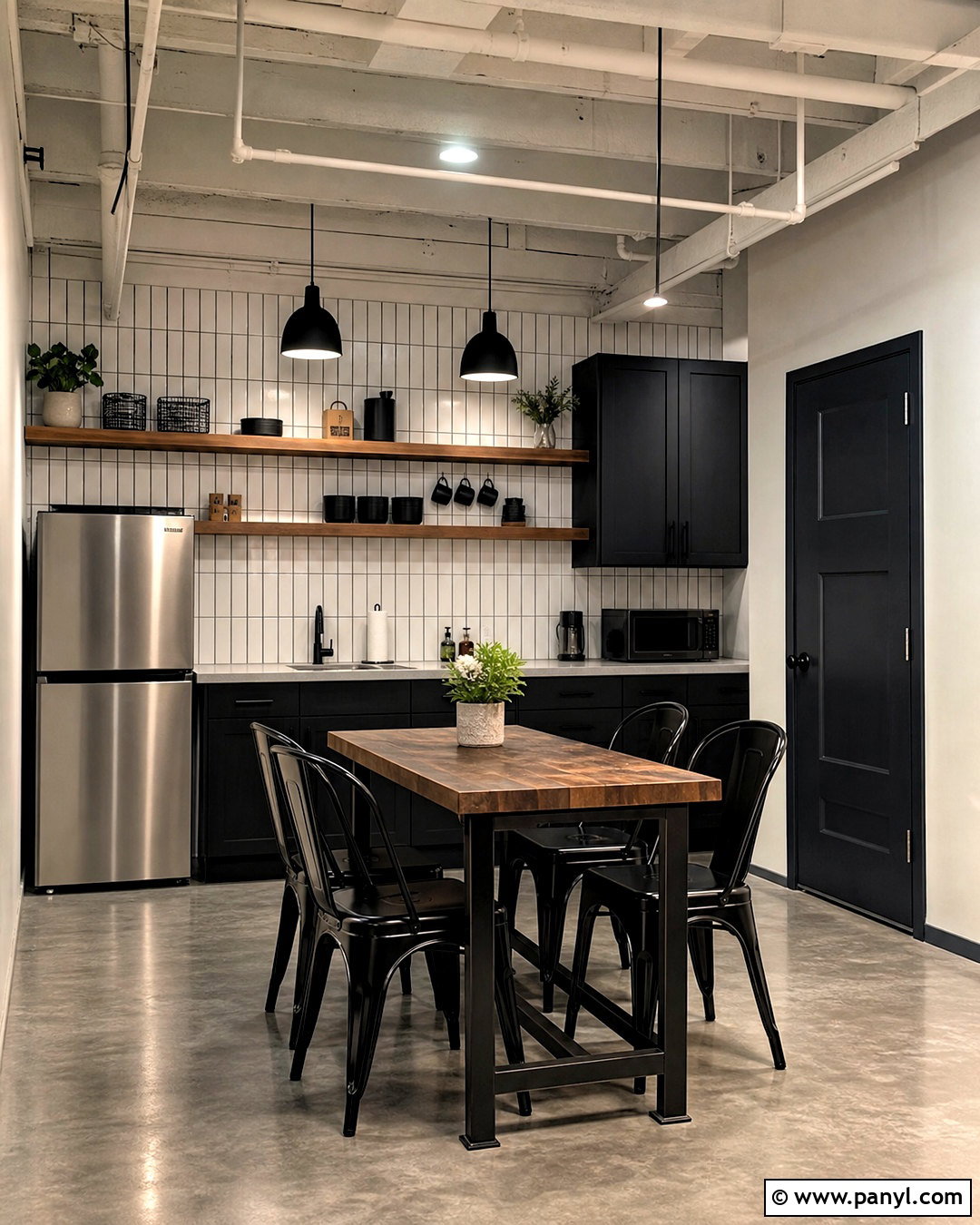
A compact kitchenette can make a basement lounge more useful without resembling a full second kitchen. Run matte-charcoal cabinets along one wall and top them with pale concrete-look quartz. Use a vertical white subway tile backsplash with dark grout to brighten the work area while maintaining crisp industrial lines. Warm walnut shelves, black brackets, and a small stainless steel refrigerator complete the practical setup. Place a narrow wood table with four black metal chairs nearby for snacks, crafts, or casual meals. Continue sealed gray concrete flooring throughout the space and paint the open ceiling soft white. Black pendant lights define the table, while undercabinet lighting keeps the counter visible. The finished design is compact, functional, and visually connected to the surrounding basement lounge.
16. Industrial Basement With Wood Accents
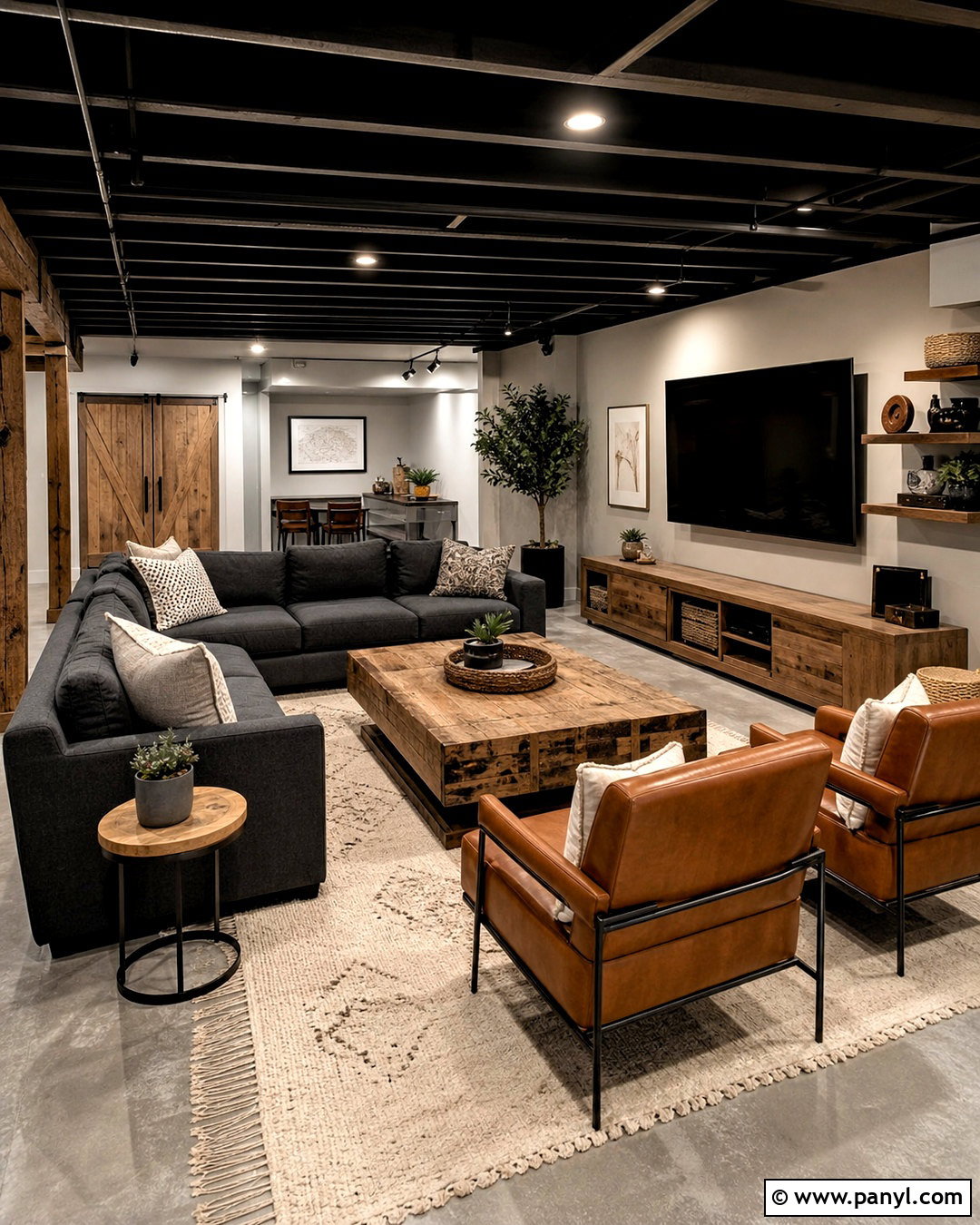
Raw concrete and black metal feel noticeably warmer when medium and honey-toned woods are repeated throughout the room. Start with a smooth concrete floor and light gray walls, then introduce an oak media console, reclaimed-wood coffee table, and floating walnut shelves. A soft charcoal sofa provides contrast, while tan leather chairs carry the natural palette into the seating arrangement. Paint exposed ceiling joists matte black and install simple white track lights for balanced illumination. Use a large ivory rug to separate the living zone from surrounding walkways. Finish the scheme with wood-framed artwork, woven baskets, and several plants in dark ceramic pots. Because the wood appears in several locations, it softens the industrial materials while keeping the complete basement coordinated rather than rustic or overly stark.
17. Industrial Basement With Concrete Walls
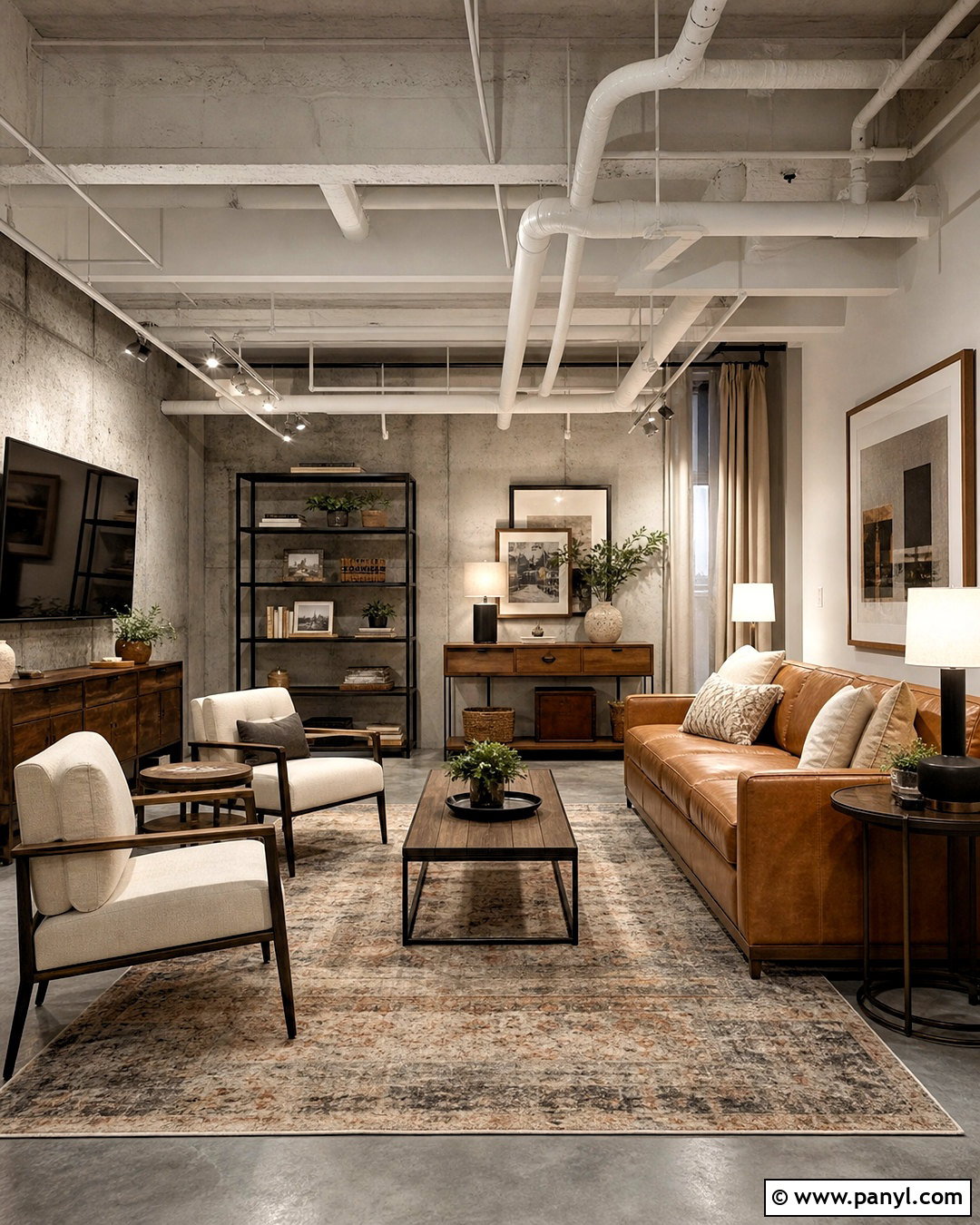
Concrete walls can become an attractive design feature when their cool color is balanced with comfortable furniture and warmer finishes. Keep one or two well-prepared walls exposed and paint the others warm white to avoid a bunker-like effect. Choose a low caramel leather sofa, a pair of cream upholstered chairs, and a thick patterned rug in gray, tan, and muted rust. A long walnut console and black steel shelving bring structure to the room. Overhead, white-painted joists and bright recessed fixtures help compensate for limited natural light. Add linen curtains, wood-framed artwork, and leafy plants to soften the hard surfaces. The result celebrates the basement’s original construction while creating a finished lounge that feels layered, welcoming, and practical for regular use.
18. Industrial Basement With White Brick
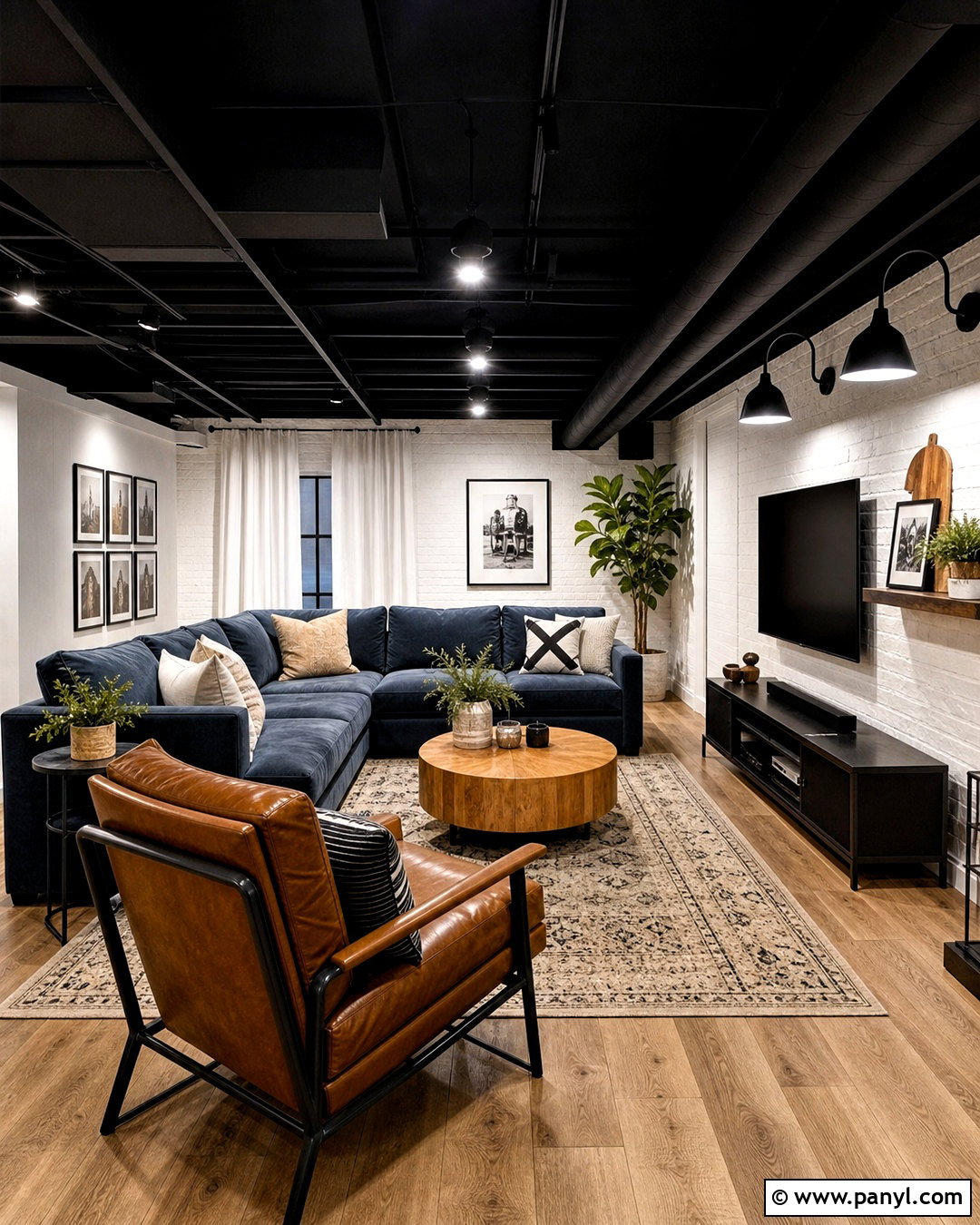
White brick offers industrial texture while helping a low-light basement feel cleaner and more open. Use it across the main wall, then pair it with a black exposed ceiling and medium oak flooring for clear contrast. Arrange a slate-blue sectional opposite a slim black media console, adding a cognac leather chair to warm the palette. A beige and charcoal geometric rug ties the seating area together without hiding the wood floor. Install black-framed wall lights on the brick and bright track lighting overhead. Keep the decor simple with large graphic prints, wooden bowls, and greenery in galvanized planters. White curtains can frame small basement windows without drawing attention to their size. This balanced scheme feels urban and fresh rather than dark, cold, or unfinished.
19. Modern Industrial Basement
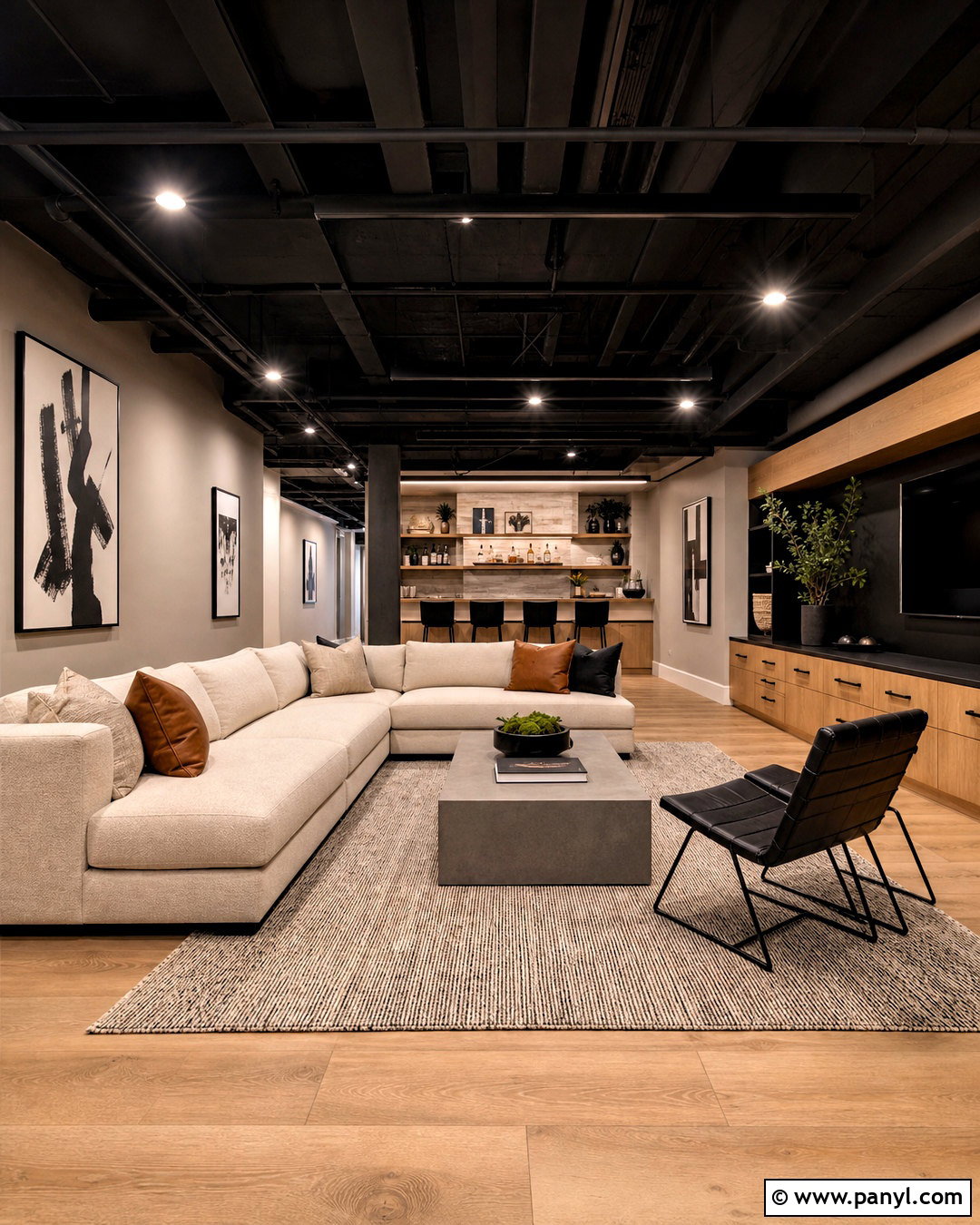
For a cleaner interpretation of industrial design, combine streamlined furniture with only a few raw architectural elements. Use smooth warm gray walls, wide-plank light oak flooring, and a black ceiling with neatly organized exposed ductwork. Center a low-profile cream sectional around a rectangular concrete coffee table, then add two slim black lounge chairs for contrast. A built-in wall unit with oak cabinets and black open shelves creates storage without bulky freestanding pieces. Choose linear LED lighting and minimal black pendants instead of vintage-inspired fixtures. Keep accessories restrained with textured pillows, abstract artwork, and one sculptural plant. This modern approach suits homeowners who appreciate industrial materials but want a polished, airy basement that coordinates easily with the rest of a contemporary home.
20. Budget Industrial Basement
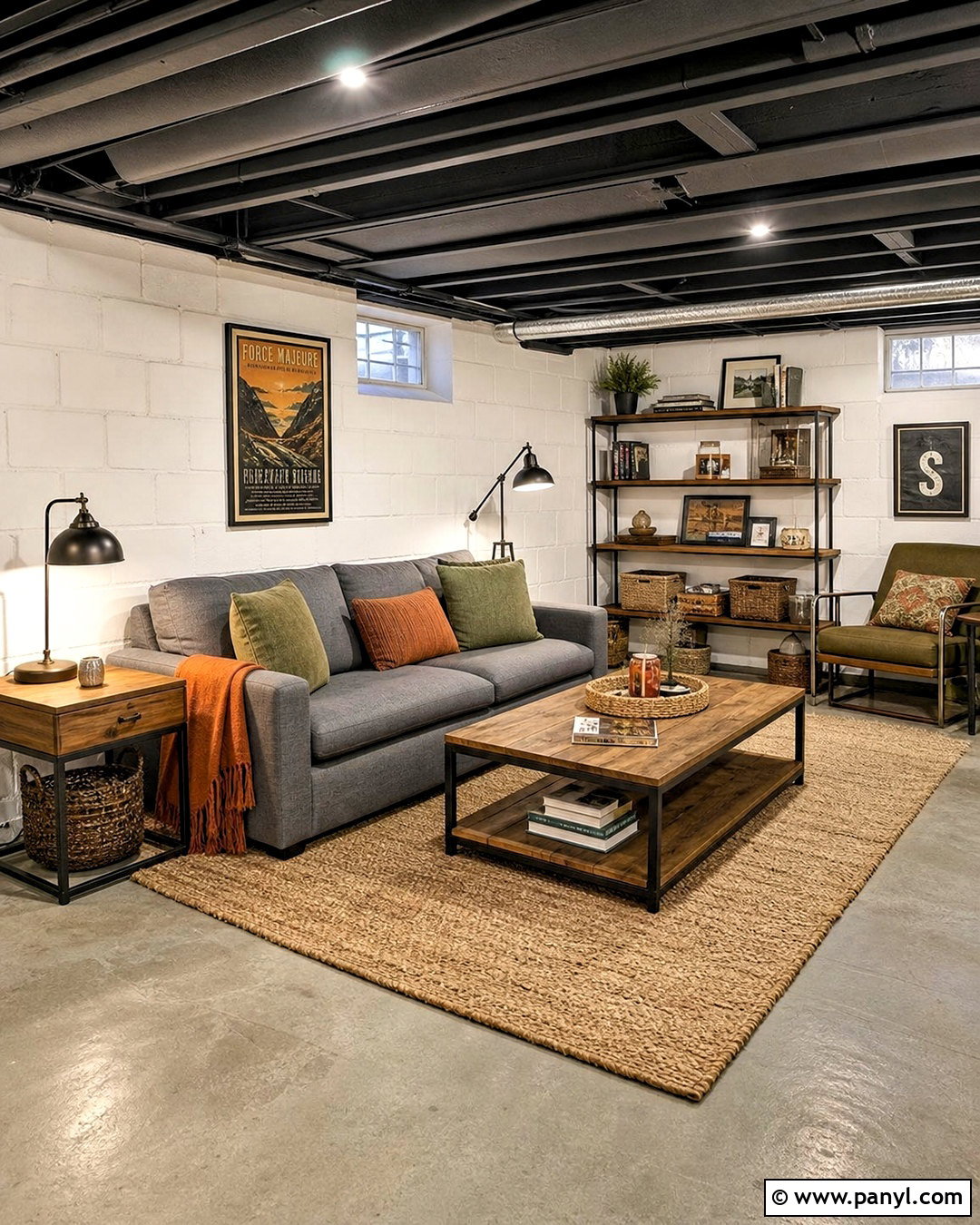
An industrial look can reduce the need to conceal every basement surface, but the room should still feel carefully planned. Paint the open ceiling matte charcoal and coat masonry walls in warm white for an affordable, high-contrast foundation. Clean and seal the concrete floor, then cover the main seating area with a large inexpensive flatwoven rug. Combine a simple gray sofa with secondhand wood tables painted black at the bases. Wall-mounted utility shelves can become attractive storage when matching baskets and boxes are used consistently. Add plug-in track lights, metal floor lamps, and framed downloadable artwork for an intentional finish. Rust, tan, and olive textiles introduce warmth without requiring major construction. The complete basement feels stylish, comfortable, and achievable on a realistic decorating budget.
Conclusion:
The most successful industrial basement combines raw character with the comfort expected from a finished living space. Exposed brick, concrete, black metal, visible joists, and reclaimed wood can establish the look, but thoughtful lighting and softer materials keep it welcoming. Start by deciding how the basement needs to function, then choose a practical layout before selecting finishes. Repeat a limited palette across furniture, flooring, storage, and lighting so the result feels cohesive. You can also adapt the aesthetic to a small room, multipurpose family area, bedroom, office, gym, or workshop. With these 20 industrial basement ideas, an ordinary lower level can become one of the most useful and distinctive spaces in the home.

Related Ideas and Inspiration:
Leave a Reply