
A well-designed music studio should support creativity, comfort, and an efficient recording workflow. The best 20 music studio decor interior design ideas balance professional equipment with acoustic treatment, organized storage, layered lighting, and personal details. You do not need a huge room or an expensive renovation to create an inspiring setup. A compact bedroom corner, spare room, garage, or attic can become a polished studio with the right layout. Start with your essential instruments and recording gear, then build a cohesive color palette and furniture plan around them. From clean modern workspaces to warm vintage rooms, the complete designs below offer practical inspiration for different spaces, music genres, and budgets. Explore these 20 music studio decor interior design ideas to find a look that suits your creative routine.

1. Modern Music Studio
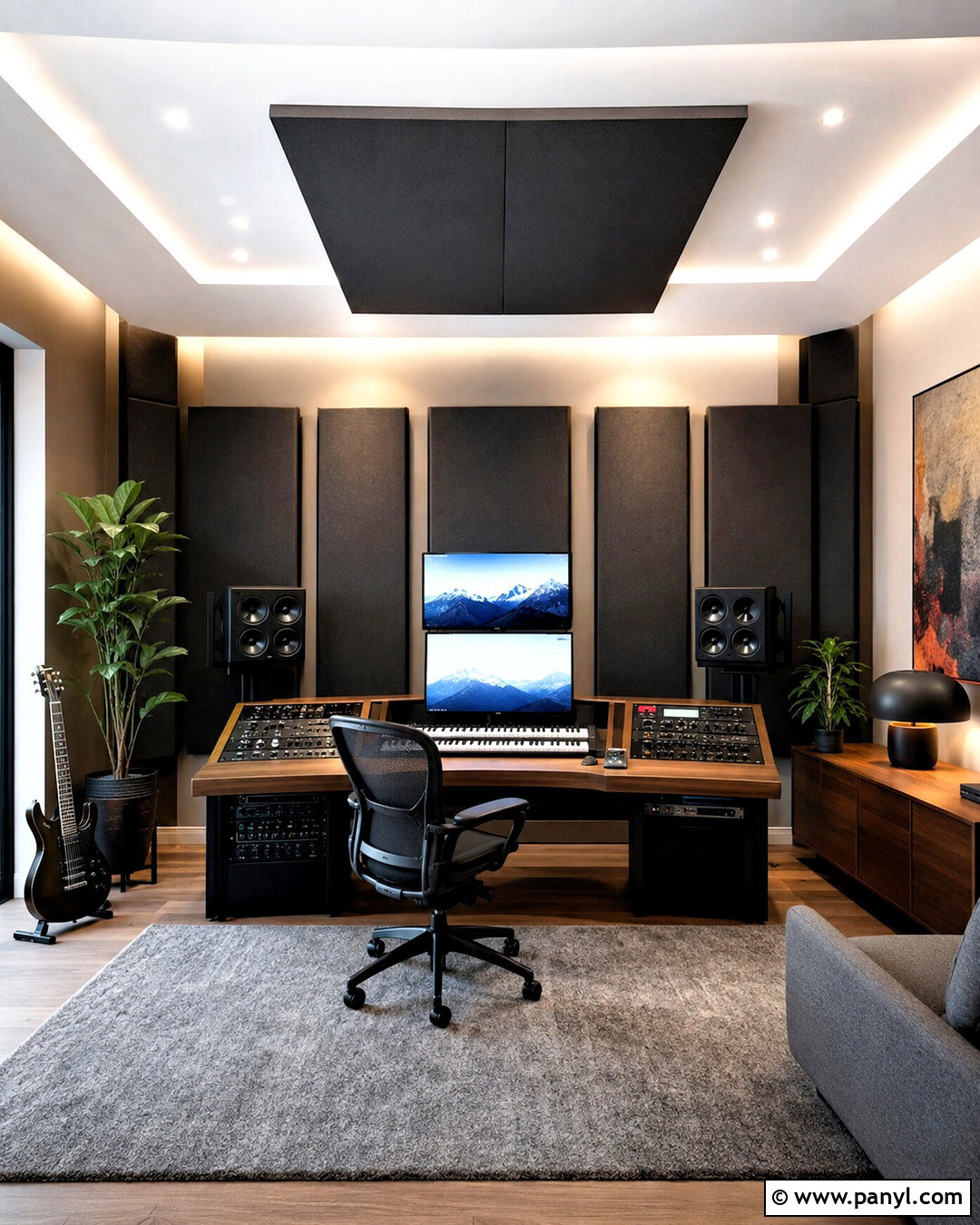
Create a streamlined modern music studio with a wide walnut desk positioned symmetrically between two charcoal acoustic panels. Place studio monitors on separate stands at ear level, leaving enough desk space for a computer screen, audio interface, and MIDI keyboard. Soft white walls keep the room bright, while matte black hardware gives the setup a polished edge. Add a low storage console along the back wall for cables, microphones, and smaller instruments. A black ergonomic task chair, gray area rug, and slim floor lamp complete the workspace. Use warm LED lighting behind the desk and cool adjustable task lighting overhead. Finish the room with one large abstract print and a few carefully displayed instruments rather than filling every wall.
2. Small Music Studio
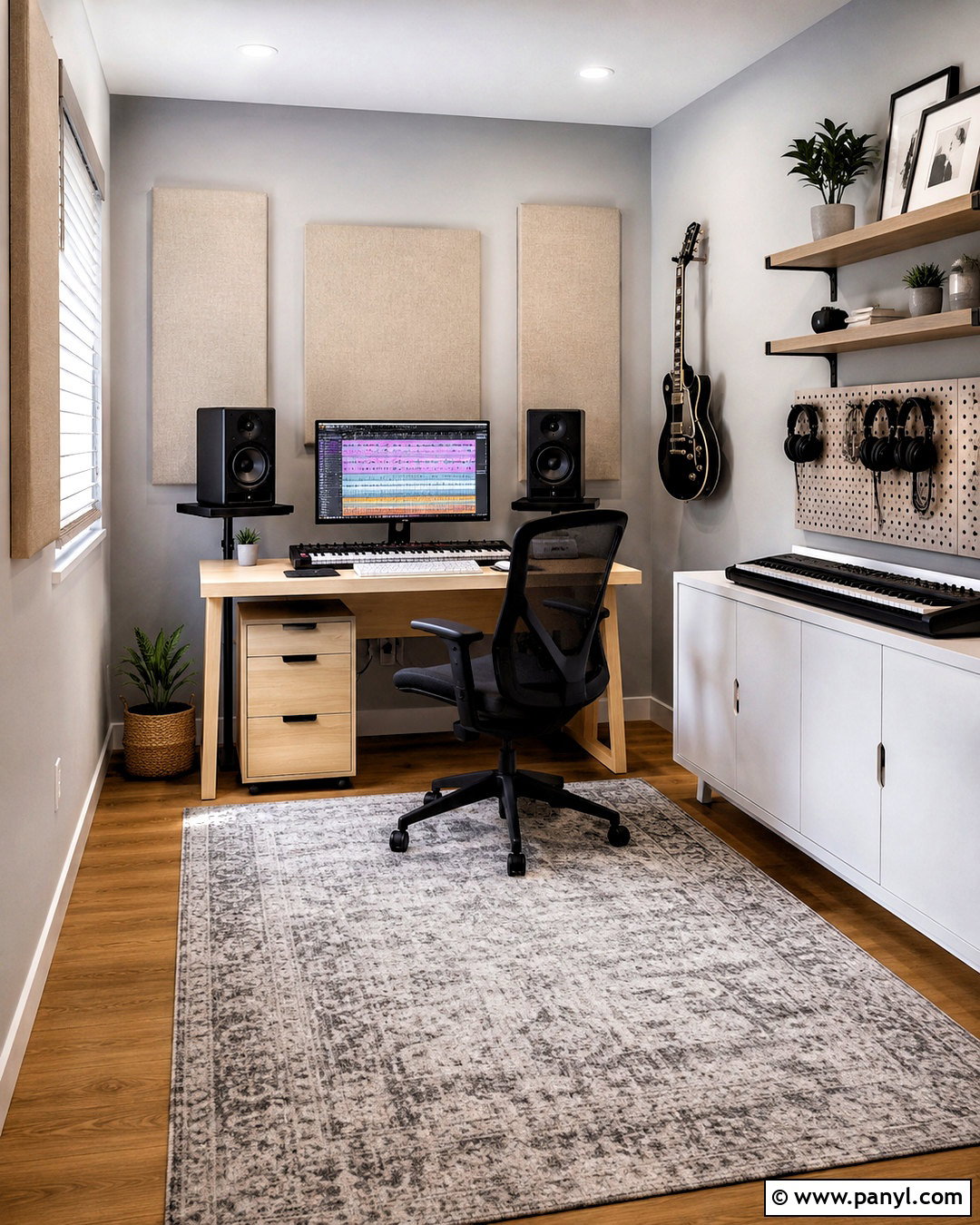
When square footage is limited, every surface should serve a clear purpose. Place a compact studio desk against the shorter wall, with monitor speakers raised above a slide-out MIDI keyboard tray. Cover first-reflection areas with slim fabric-wrapped acoustic panels in soft gray or oatmeal. A narrow pegboard can hold headphones, cables, adapters, and small controllers without taking up floor space. Choose light oak furniture, white walls, and a pale textured rug to help the room feel open. Install floating shelves above a side cabinet for books and compact equipment. A wall-mounted guitar keeps the instrument accessible while doubling as decor. Complete the studio with an adjustable chair, one leafy plant, and concealed lighting beneath the shelves for a clean, uncluttered atmosphere.
3. Minimalist Music Studio
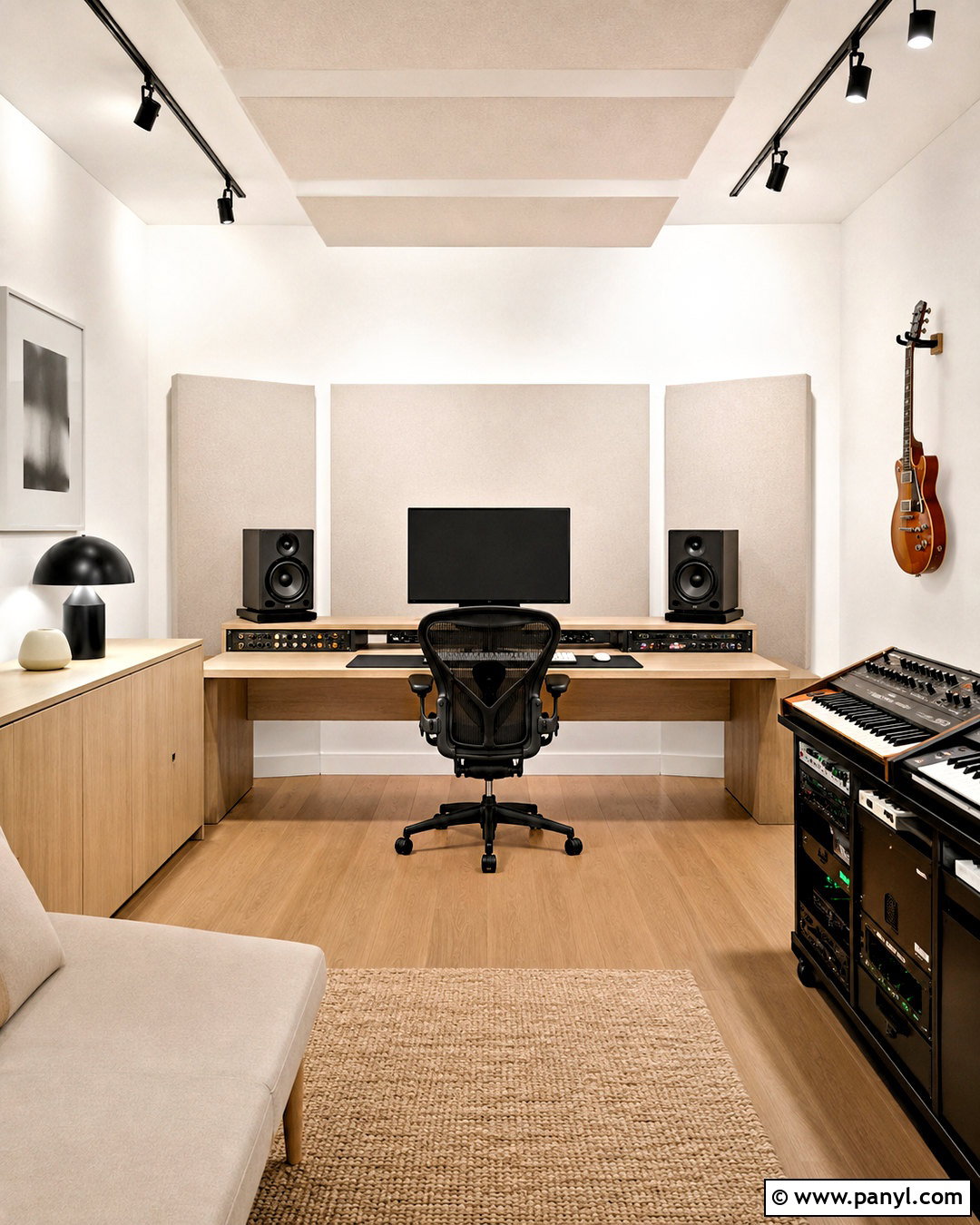
A minimalist music studio feels calm because the equipment, furniture, and decor follow one simple visual language. Begin with a white or pale oak desk that comfortably fits the essential computer, interface, keyboard, and speakers. Hide power strips beneath the desktop and route cables through matching sleeves. Use warm white walls, light wood flooring, and beige acoustic panels arranged in an even grid. Select closed cabinetry instead of open storage so cases, spare cords, and accessories remain out of sight. A low-profile black task chair adds contrast without making the room feel heavy. Limit decorations to a framed monochrome print, one sculptural lamp, and a single instrument on a wall hanger. The finished space should feel intentional, balanced, and ready for focused work.
4. Cozy Music Studio
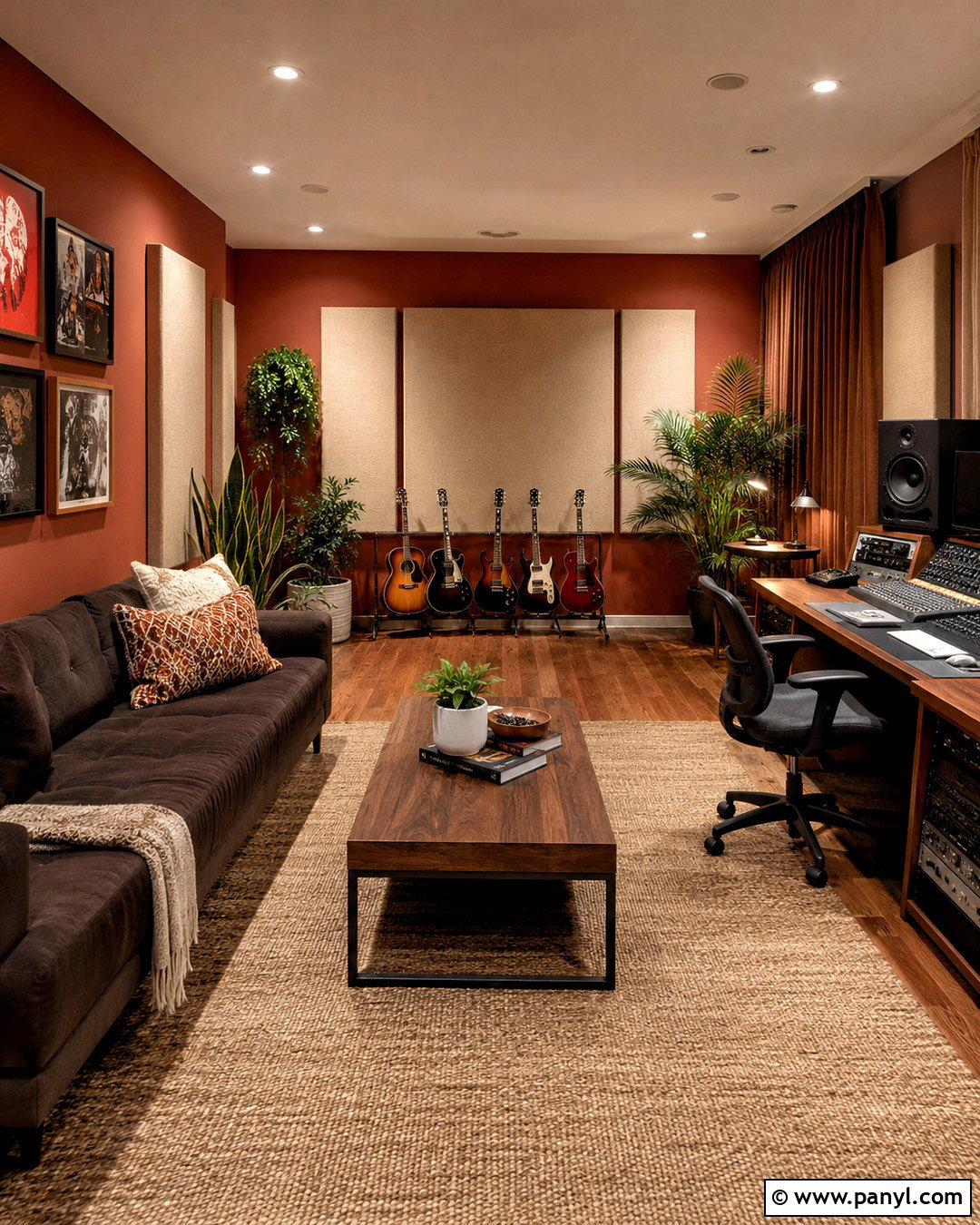
Soft textures and warm natural colors can make long recording sessions feel more comfortable. Paint the walls a muted clay or warm taupe, then introduce oatmeal acoustic panels, walnut furniture, and an oversized woven rug. Center the production desk on one wall and place a small upholstered sofa opposite it for listening, writing, or collaborating. Add thick curtains around the window to soften the room visually and help control reflections. Warm white lamps at desk, floor, and shelf height create a welcoming layered glow. Store instruments in an open wood cabinet and place frequently used guitars on padded stands nearby. Complete the cozy music studio with knitted cushions, framed album artwork, and a few plants positioned away from speakers, microphones, and busy walkways.
5. Industrial Music Studio
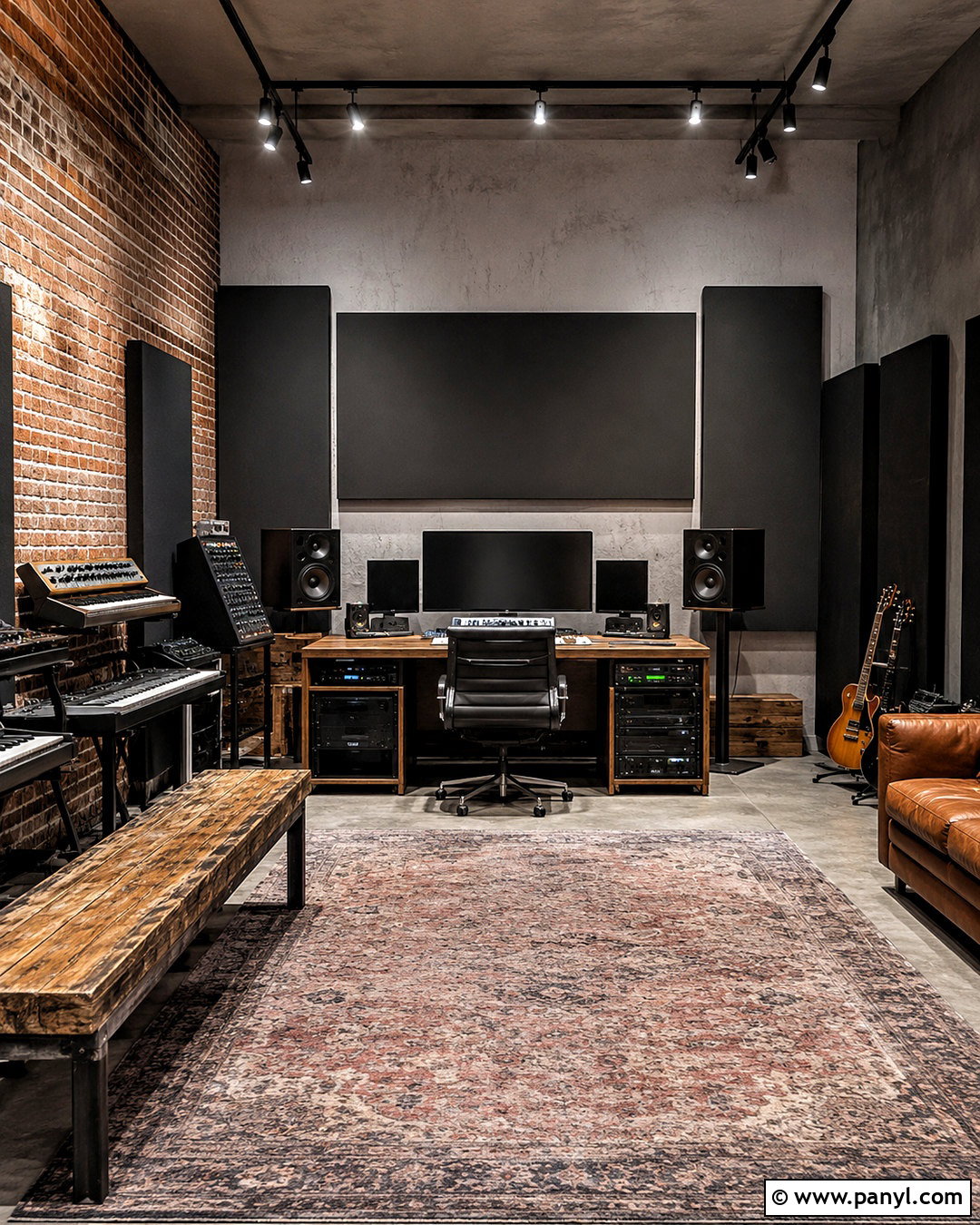
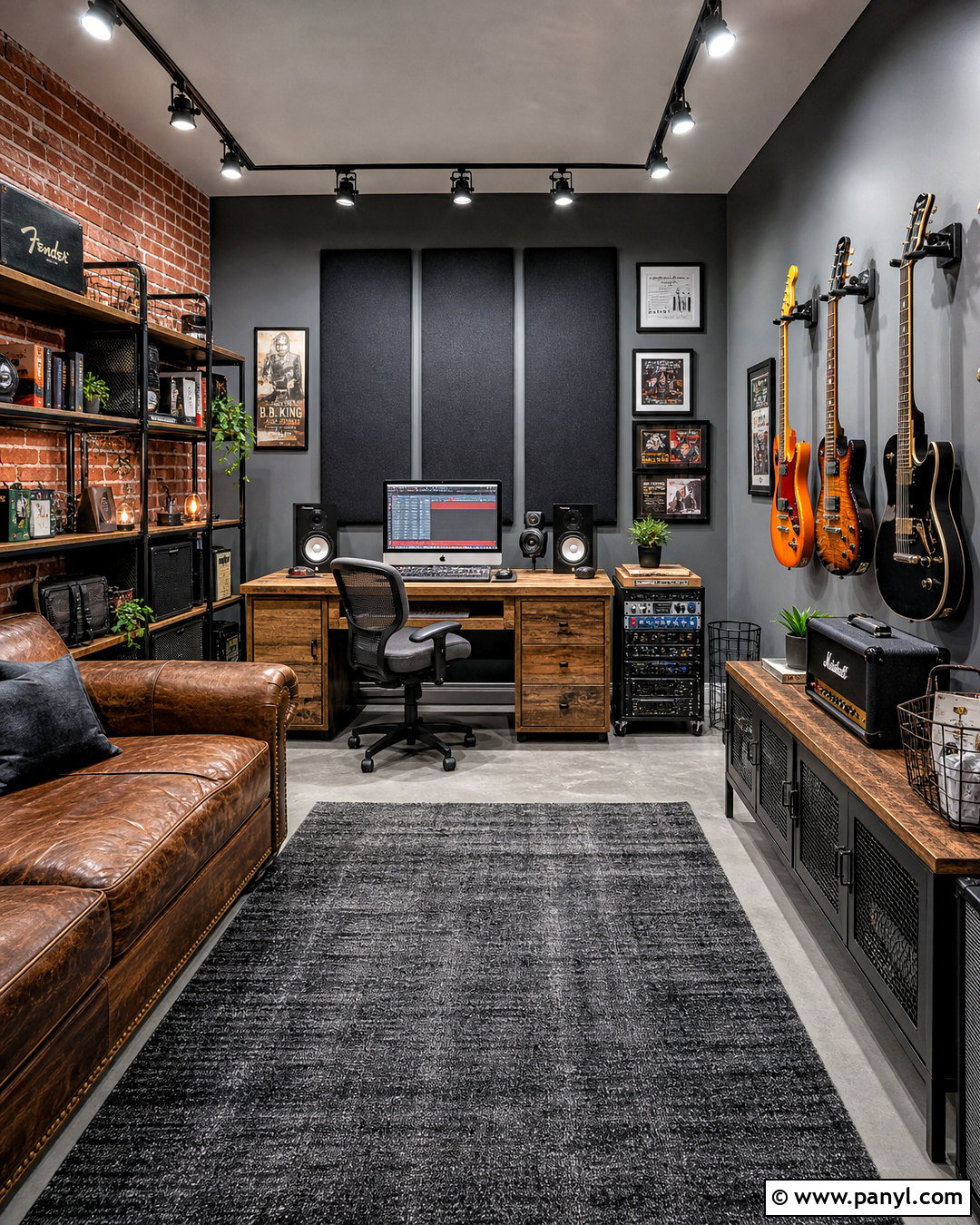
An industrial music studio works best when raw materials are balanced with comfortable acoustic finishes. Use a black metal and reclaimed wood desk as the main workstation, paired with dark monitor stands and an ergonomic leather-look chair. Paint the walls warm concrete gray, then install large charcoal acoustic panels in a structured pattern. Exposed brick can become a strong focal wall, but soften it with a substantial rug, curtains, and fabric seating. Black track lighting provides flexible task illumination, while concealed white LEDs highlight shelves and equipment. Organize synthesizers on sturdy metal racks and store cables in labeled black drawers. Add framed technical prints, a vintage-style clock without visible branding, and one distressed wood bench to complete the functional urban character without making the studio feel cluttered.
6. Scandinavian Music Studio
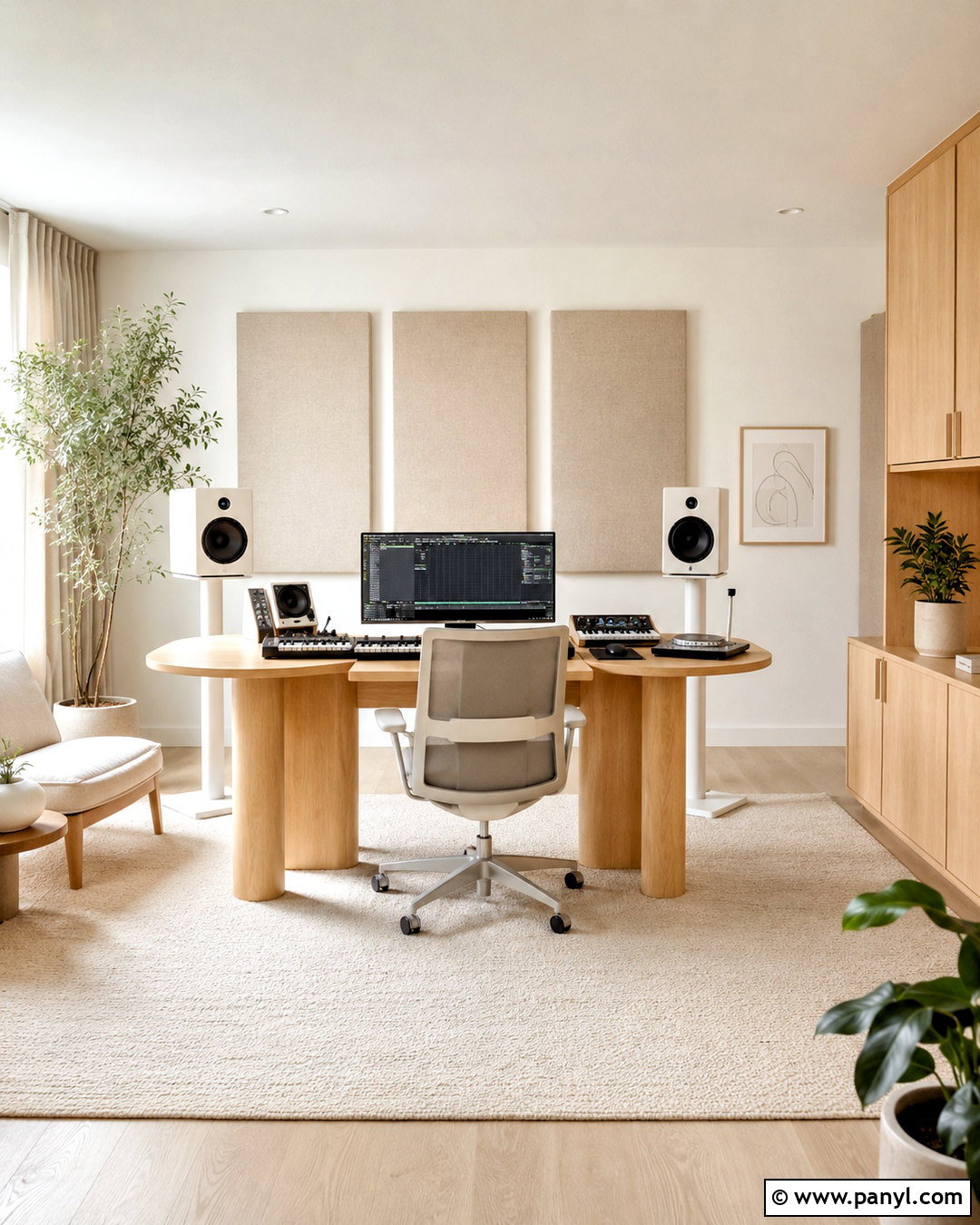
Bring softness and simplicity into a Scandinavian music studio with pale woods, restrained colors, and practical furniture. Choose a light oak desk with rounded edges, white speaker stands, and a supportive chair upholstered in light gray fabric. Use warm white walls with sand-colored acoustic panels that blend into the architecture rather than dominating it. A flat-weave cream rug can define the work zone, while linen curtains gently frame the window. Store recording accessories in low birch cabinets with clean fronts and simple handles. Include a small lounge chair and side table for listening or songwriting breaks. Black equipment provides enough contrast against the light palette. Finish with ceramic planters, understated line art, and a paper pendant light supported by brighter adjustable task lamps around the production area.
7. Dark Music Studio
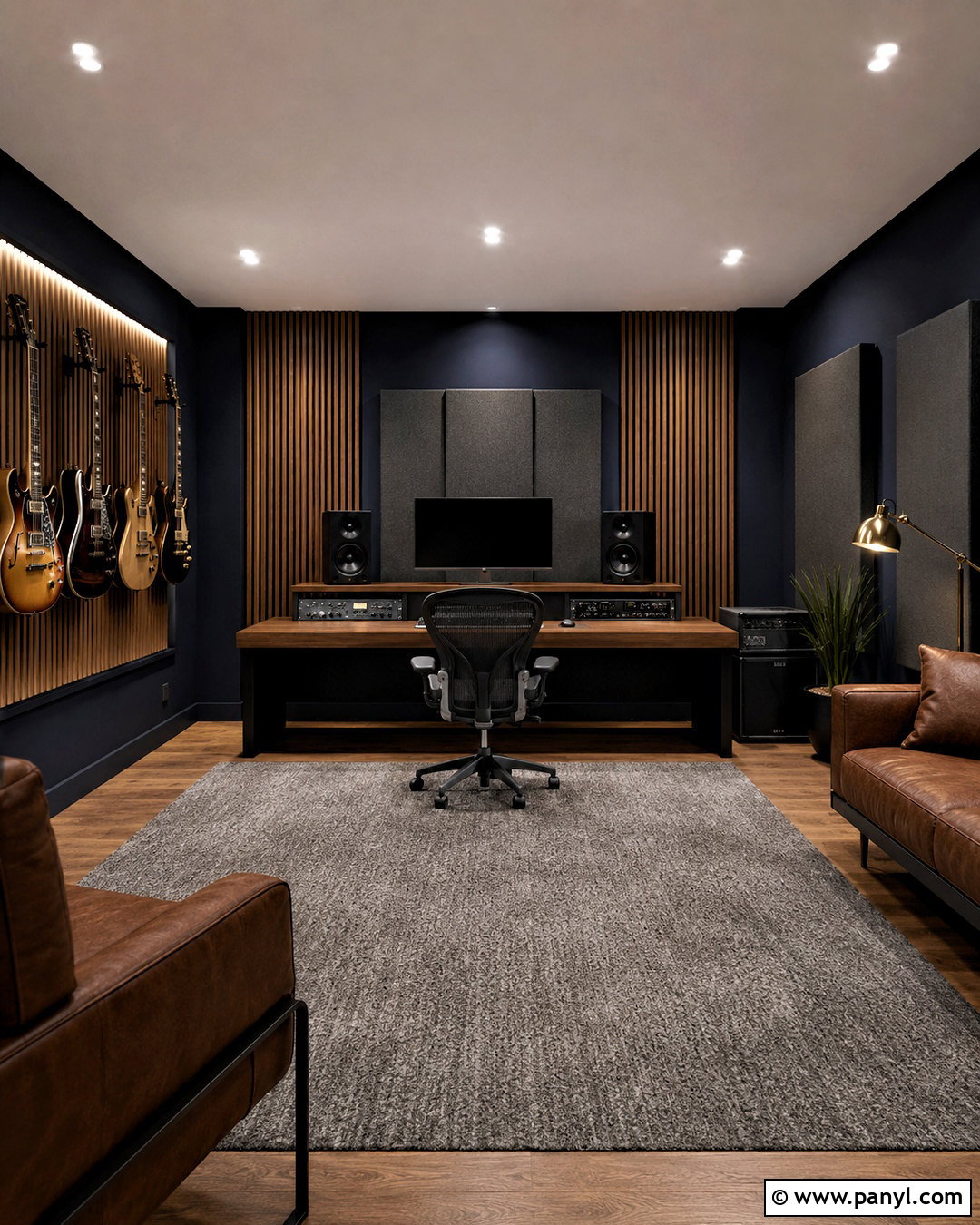
A dark music studio can feel sophisticated without becoming gloomy when the finishes and lighting are carefully layered. Paint the walls deep navy blue and cover selected areas with black or dark gray acoustic panels. Use a walnut desk to introduce warmth, then add matte black monitor stands, equipment racks, and storage cabinets for continuity. Install bright neutral-white ceiling lights for setup and cleaning, along with adjustable white LED strips behind the desk and panels. A medium-gray rug prevents the floor from disappearing into the palette. Display two or three guitars against a softly illuminated wood slat section on the back wall. Brushed brass lamp details and warm brown seating add depth. Keep the ceiling lighter or white to preserve a sense of height and openness.
8. Colorful Music Studio
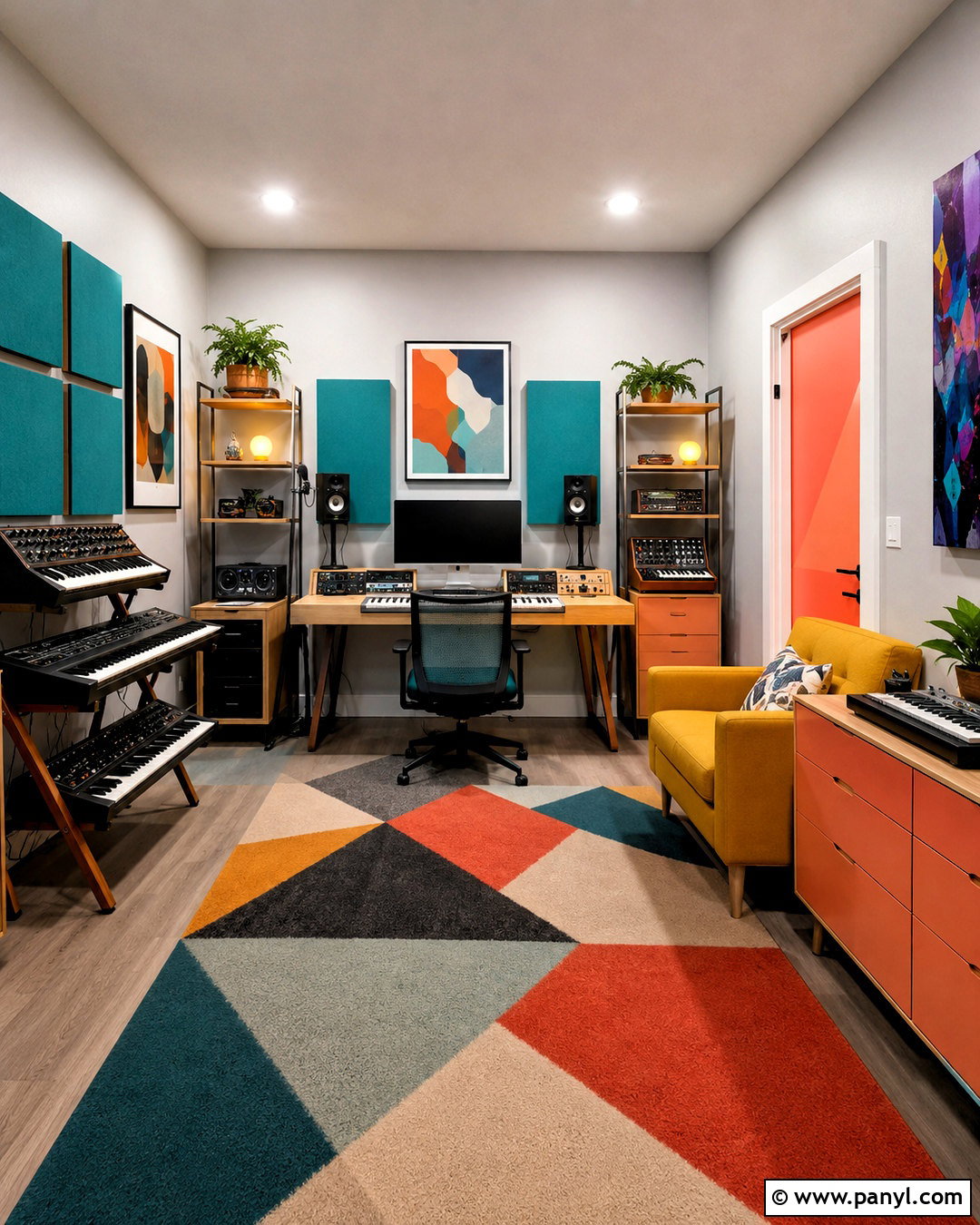
A colorful music studio should feel energetic while maintaining enough visual order for concentrated work. Start with a neutral white or pale gray base, then introduce teal acoustic panels, a mustard lounge chair, and coral storage accents. Arrange the panels symmetrically around the main desk so the color looks intentional. A natural wood desktop and medium-tone flooring prevent the room from feeling overly bright. Use a modular shelving system for instruments, controllers, and colorful storage boxes. Add an abstract geometric rug that repeats the room’s main hues without competing with the equipment. Adjustable white lighting keeps colors accurate, while concealed LEDs can provide extra atmosphere. Finish with bold framed artwork and one painted door, leaving some walls open so the complete design remains balanced.
9. Wood Slat Music Studio
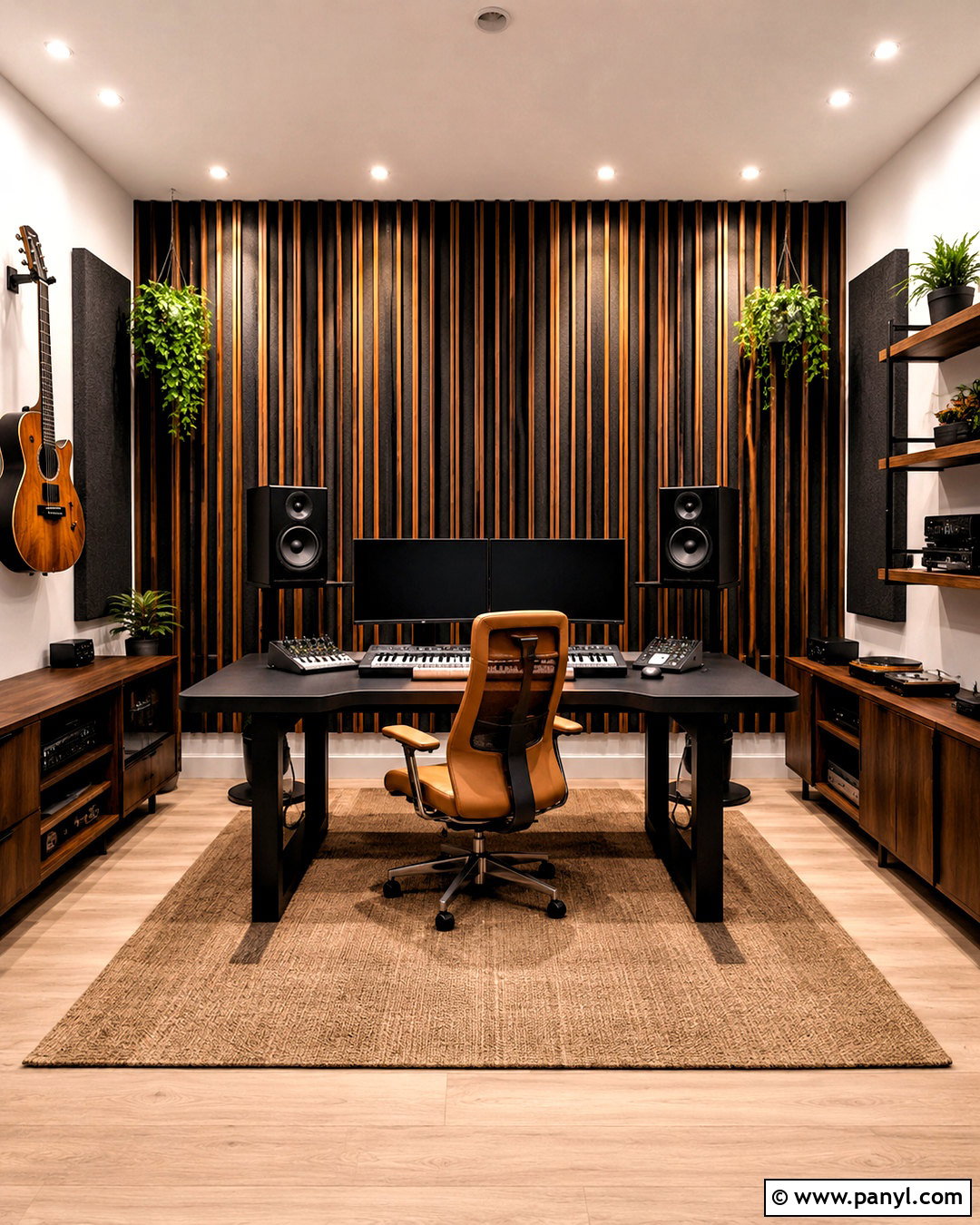
Wood slat walls give a music studio architectural warmth and create a strong backdrop for modern recording equipment. Install vertical walnut slats over dark acoustic felt behind the production desk, continuing the treatment across most of the feature wall. Pair it with a matte black desk, black monitor stands, and an ergonomic chair in tan upholstery. Keep the remaining walls warm white and add neutral fabric acoustic panels where additional control is needed. A large beige rug softens the floor, while low walnut cabinets provide concealed equipment storage. Illuminate the slat wall with recessed ceiling lights and discreet linear lighting along the top edge. Complete the design with black metal shelving, a few plants, and one wall-mounted guitar placed where it will not interrupt the acoustic panel layout.
10. Bedroom Music Studio
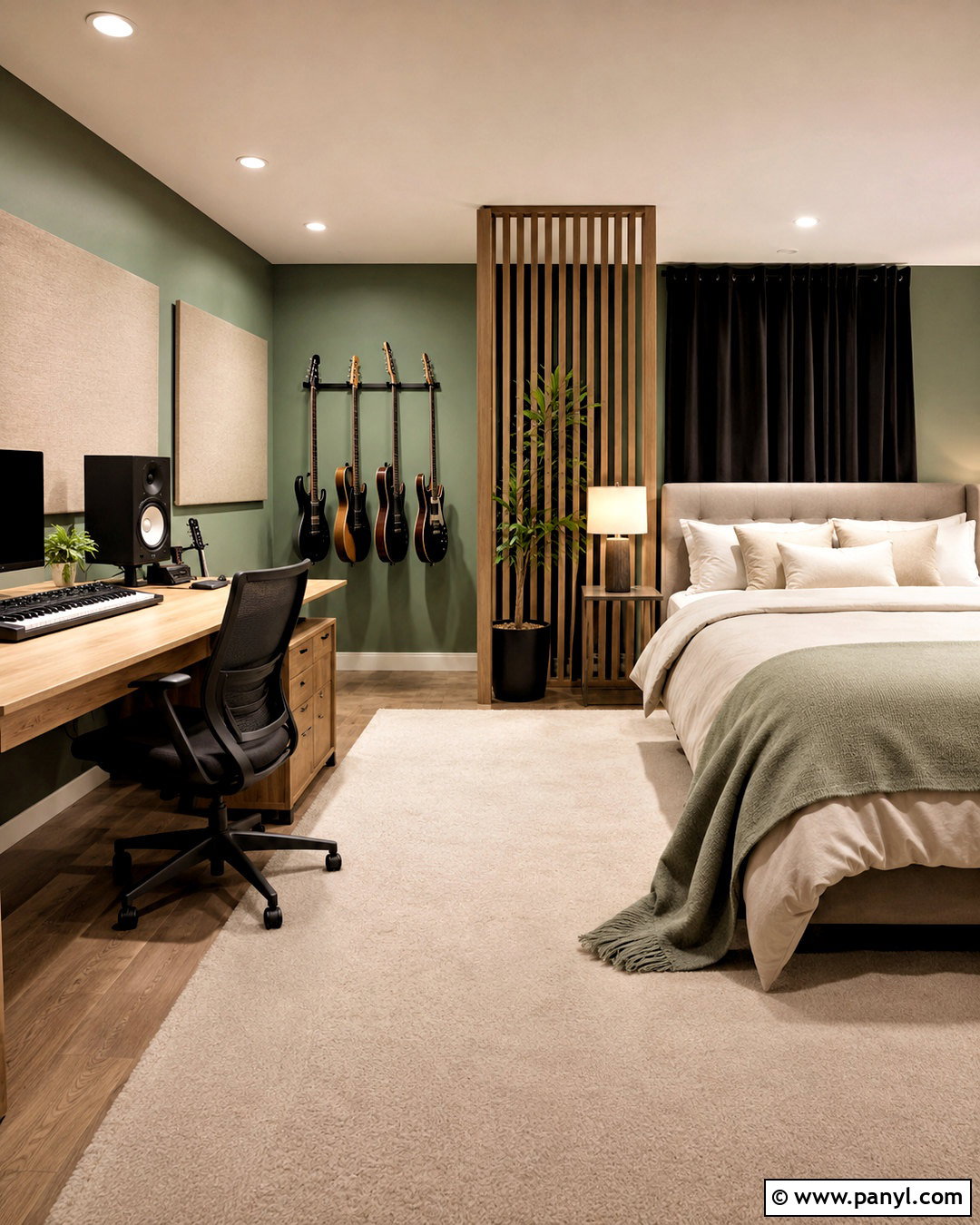
A bedroom music studio needs clear zones so recording equipment does not overwhelm the sleeping area. Position a compact desk on the wall opposite the bed, using a narrow shelving unit or open screen to create a subtle boundary. Choose matching light oak furniture throughout the room for a cohesive appearance. Soft sage green walls, cream bedding, and oatmeal acoustic panels establish a restful palette. Mount studio monitors on wall brackets or slim stands to free the desktop. Store cables and microphones in closed bedside-style drawers, and keep instruments on one organized wall rack. Add blackout curtains, a substantial rug, and an upholstered headboard to introduce useful soft surfaces. Bright adjustable desk lighting and a flush ceiling fixture keep the multipurpose room practical throughout the day.
11. Garage Music Studio
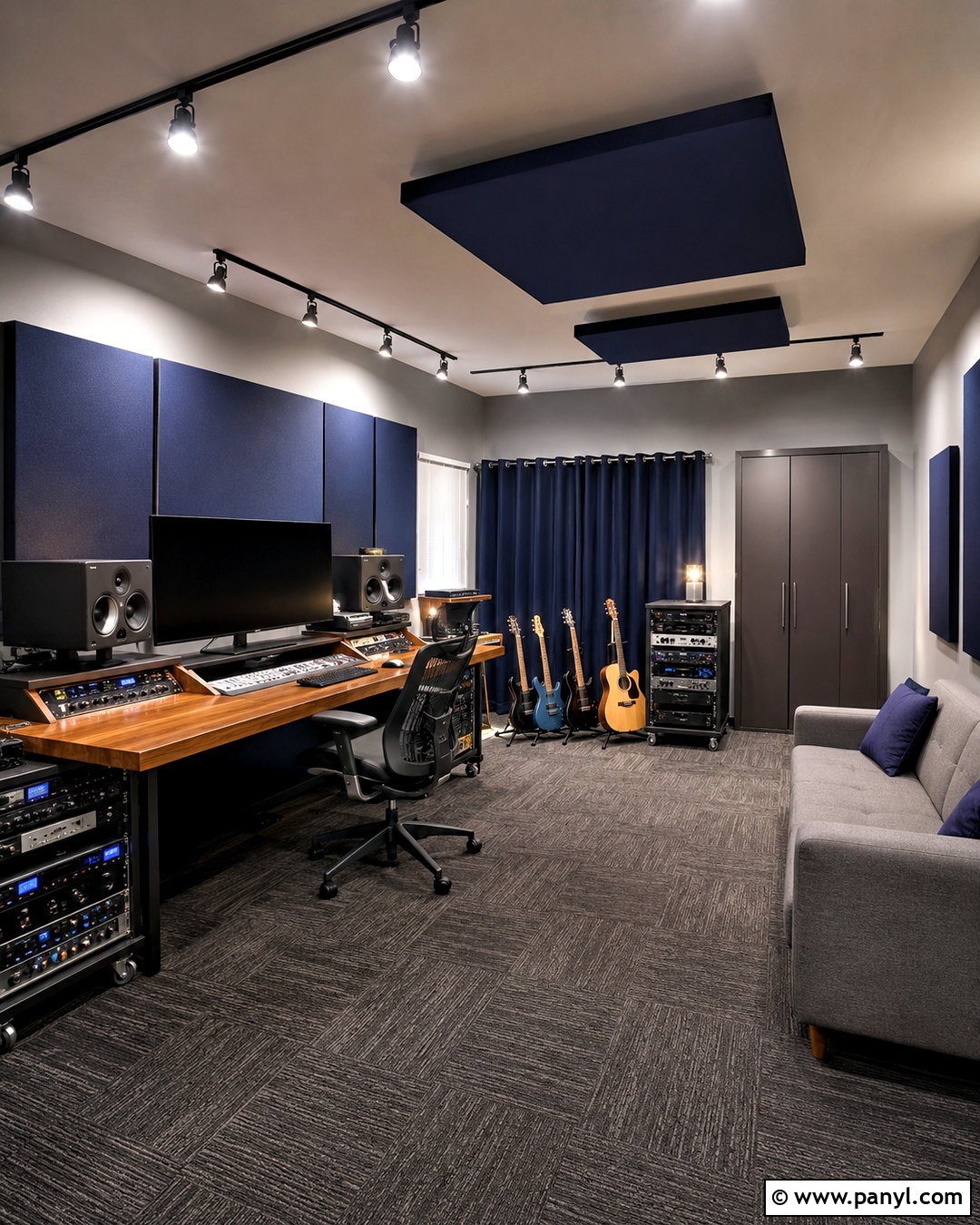
Transform a finished garage into a durable music studio by combining comfortable materials with hardworking storage. Use a large production desk at one end of the room and reserve the opposite side for instruments, amplifiers, or a compact rehearsal zone. Paint the walls warm gray and introduce full-size navy acoustic panels for a clean, professional look. Rubber-backed carpet tiles or a broad low-pile rug make the floor more comfortable while remaining easy to maintain. Install tall closed cabinets for cases, stands, and seasonal items. A rolling equipment rack allows the layout to change between mixing and recording sessions. Add bright ceiling fixtures, adjustable track lights, and practical wall-mounted task lamps. Finish with a small sofa, insulated-looking curtains, and wood accents that make the converted space feel intentional.
12. Attic Music Studio
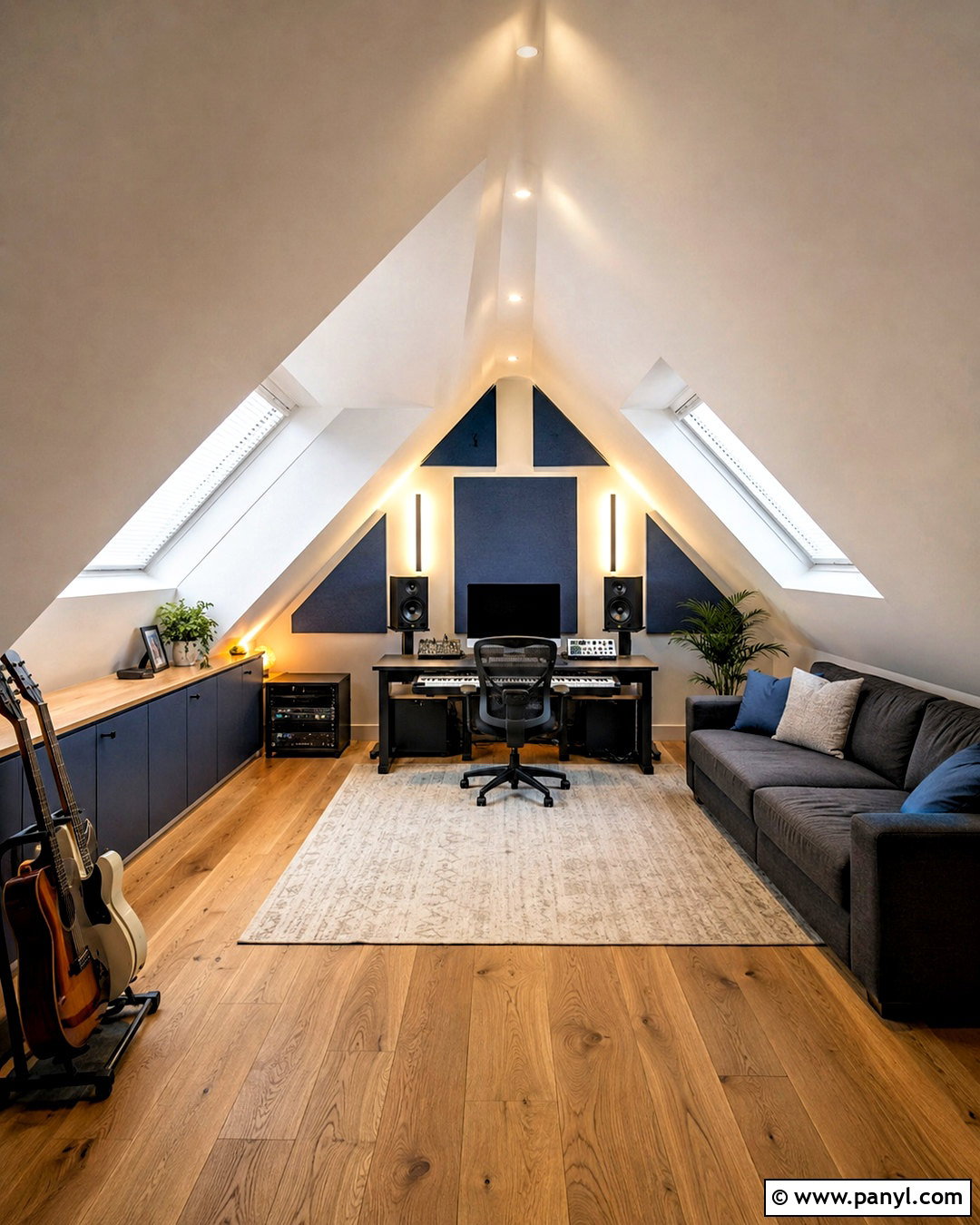
Sloped ceilings can give an attic music studio a distinctive, intimate character. Place the main desk beneath the highest section of the ceiling so the chair and equipment have comfortable clearance. Use the lower walls for built-in cabinets, instrument cases, and shallow drawers. Paint the ceiling and walls soft white to maximize brightness, then add warm oak flooring and muted blue acoustic panels. Custom triangular panels can fit neatly along unusual angles without looking improvised. Position a compact loveseat beneath one sloped section and define it with a textured neutral rug. Skylight blinds help control glare during screen-based work. Complete the studio with slim wall sconces, adjustable ceiling lights, and simple artwork. Keep tall furniture to a minimum so the architecture remains open and visually balanced.
13. Vintage Music Studio
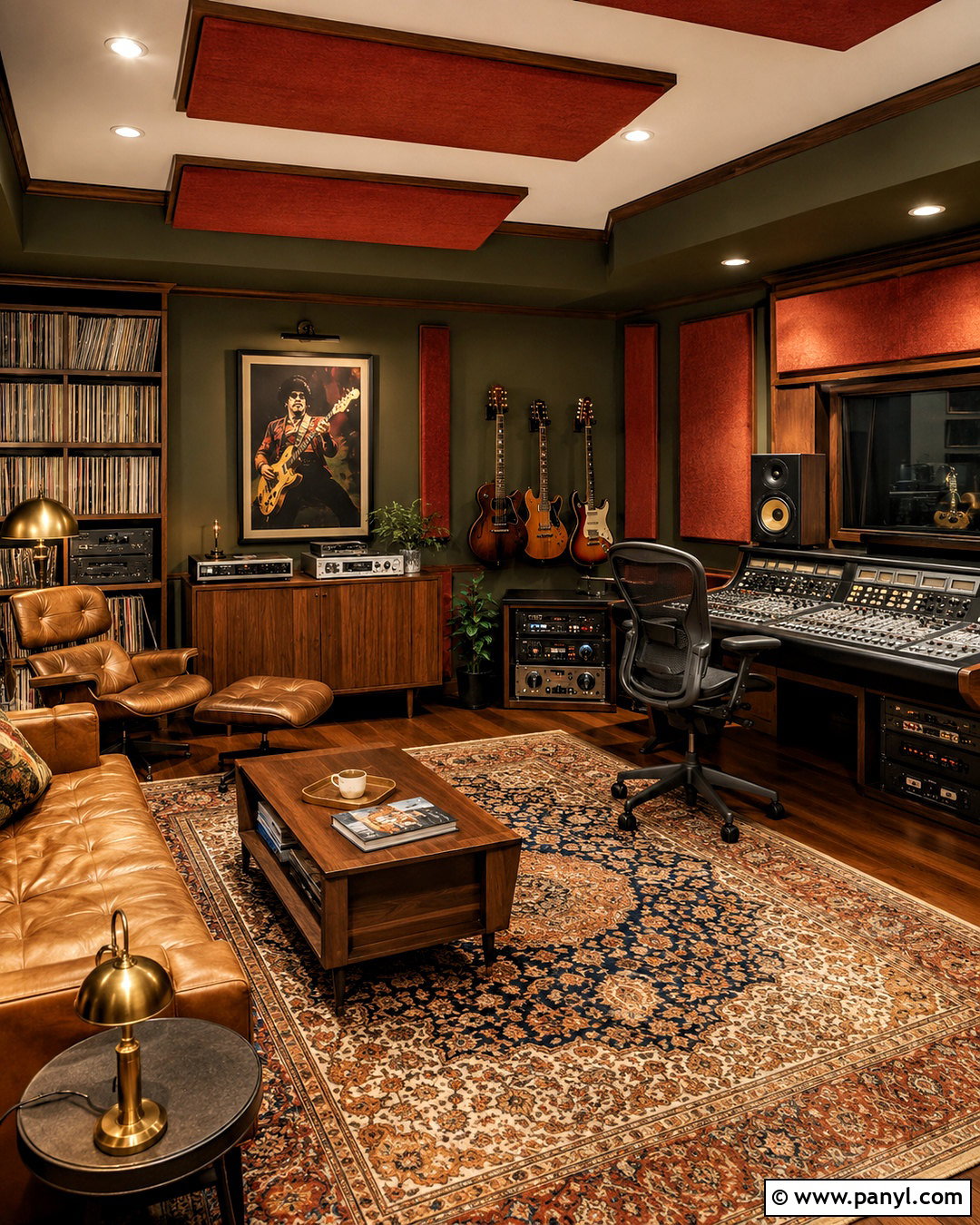
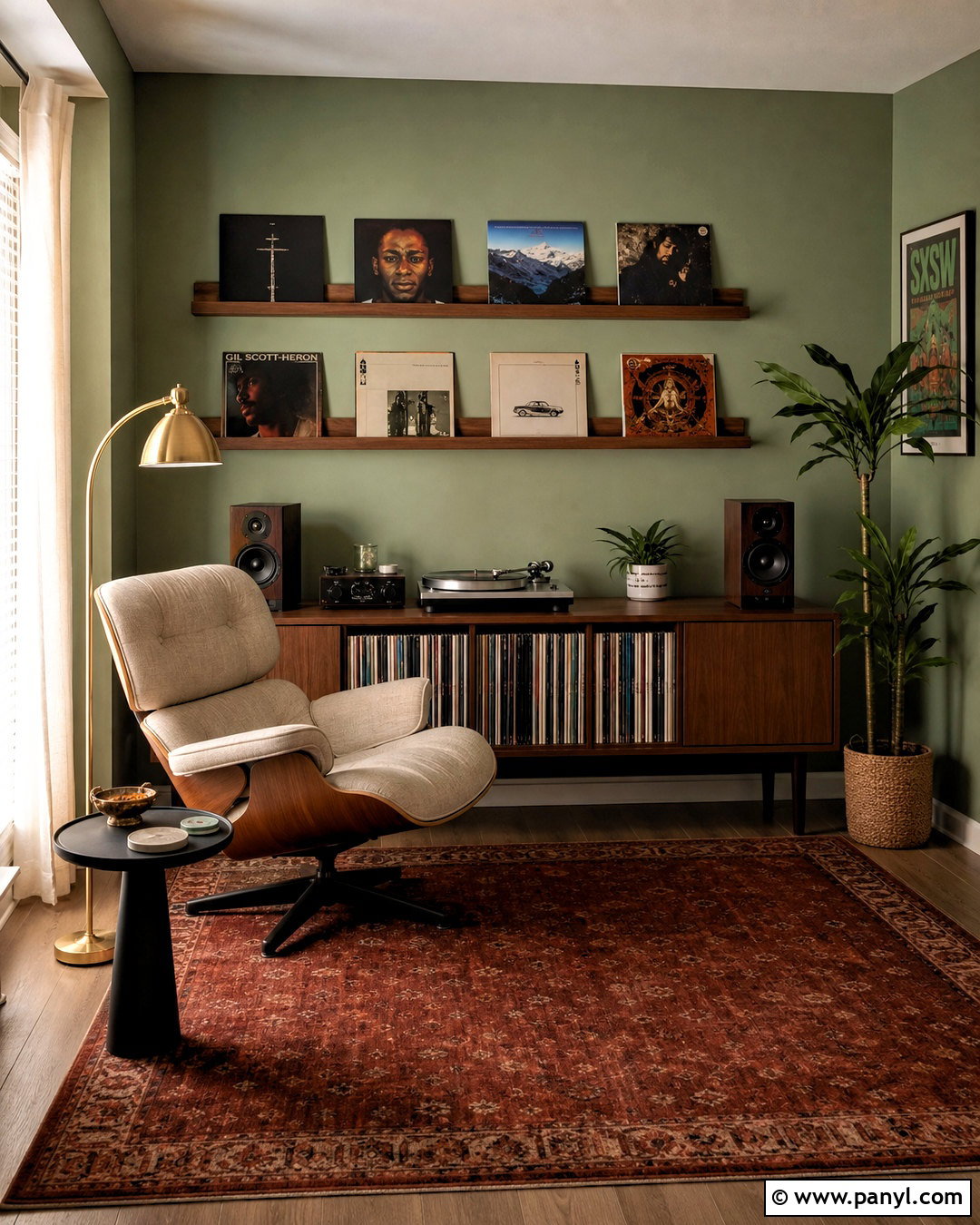
Build a vintage music studio around warm wood tones, classic furniture shapes, and carefully selected retro details. A substantial walnut desk can anchor the room, supported by dark wood equipment racks and tan leather-look seating. Paint the walls muted olive green and use rust, brown, or mustard fabric on the acoustic panels. Display a curated collection of records in square shelving along the back wall, leaving open sections for small speakers and decorative objects. A patterned Persian-style rug introduces color and softness beneath the workstation. Use brass-finished lamps with bright white bulbs to maintain clear working light. Wall-mounted guitars, framed concert artwork, and a wooden keyboard stand complete the nostalgic look. Keep modern cables concealed so the technology does not disrupt the room’s cohesive character.
14. Luxury Music Studio
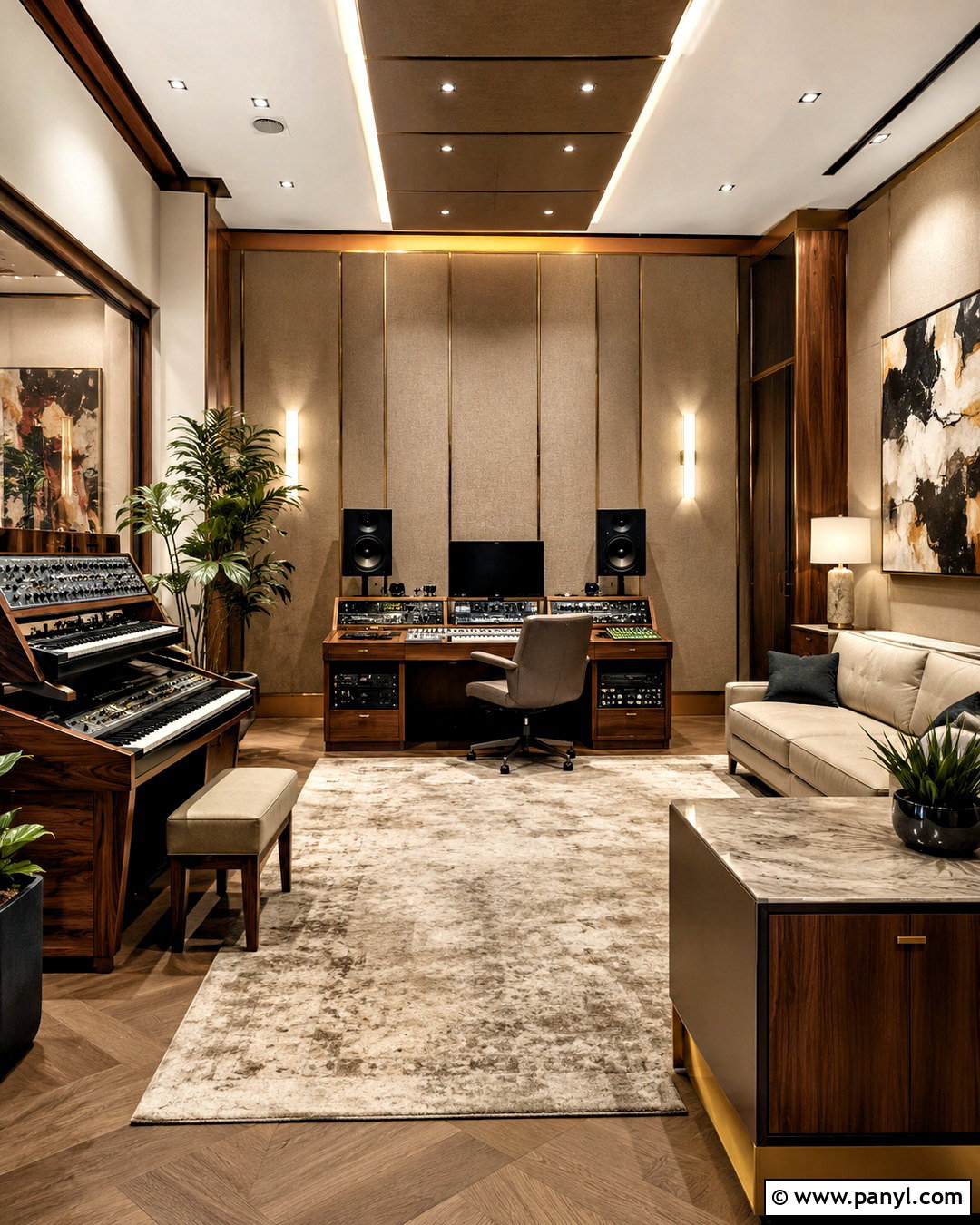
A luxury music studio feels refined through high-quality finishes, generous spacing, and seamless organization. Choose a custom walnut workstation with integrated equipment bays, concealed cable channels, and a wide surface for multiple screens. Install floor-to-ceiling acoustic panels in taupe fabric, then frame them with dark wood or slim brushed brass details. A thick wool rug, upholstered swivel chair, and streamlined listening sofa bring comfort into the room. Place keyboards and synthesizers on matching furniture rather than mismatched utility stands. Recessed ceiling lighting should provide bright general illumination, while integrated shelf and desk lights highlight the equipment. Add a stone-topped side console, large abstract artwork, and carefully placed greenery. Closed cabinetry keeps accessories hidden, allowing the studio’s materials, proportions, and technology to remain the focus.
15. Budget Music Studio
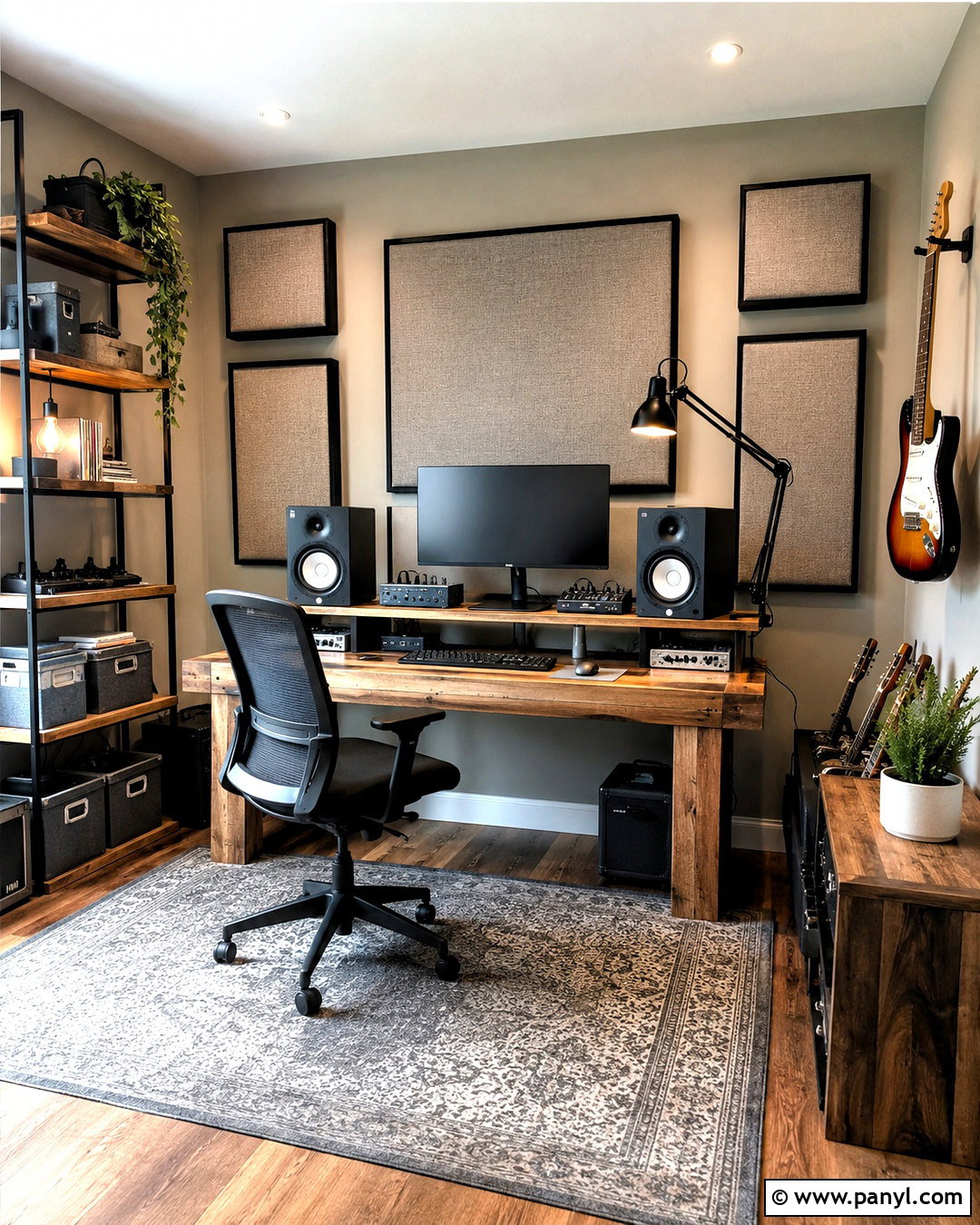
A polished budget music studio can be created by repeating affordable materials and keeping the layout simple. Use a sturdy secondhand desk refinished in matte black or natural wood, then add basic monitor stands for a more organized surface. Paint the walls soft greige and make matching fabric-wrapped acoustic panels using simple rectangular frames. Place an inexpensive low-pile rug beneath the desk and chair to visually define the workstation. A utility shelf can store equipment in uniform fabric bins, while adhesive cable clips tidy the cords underneath. Display one guitar on a secure wall hanger and frame downloadable abstract artwork in matching black frames. Add a clamp lamp, bright ceiling bulb, and white LED strip behind the desk. The consistent palette makes inexpensive pieces look coordinated.
16. Guitar Music Studio
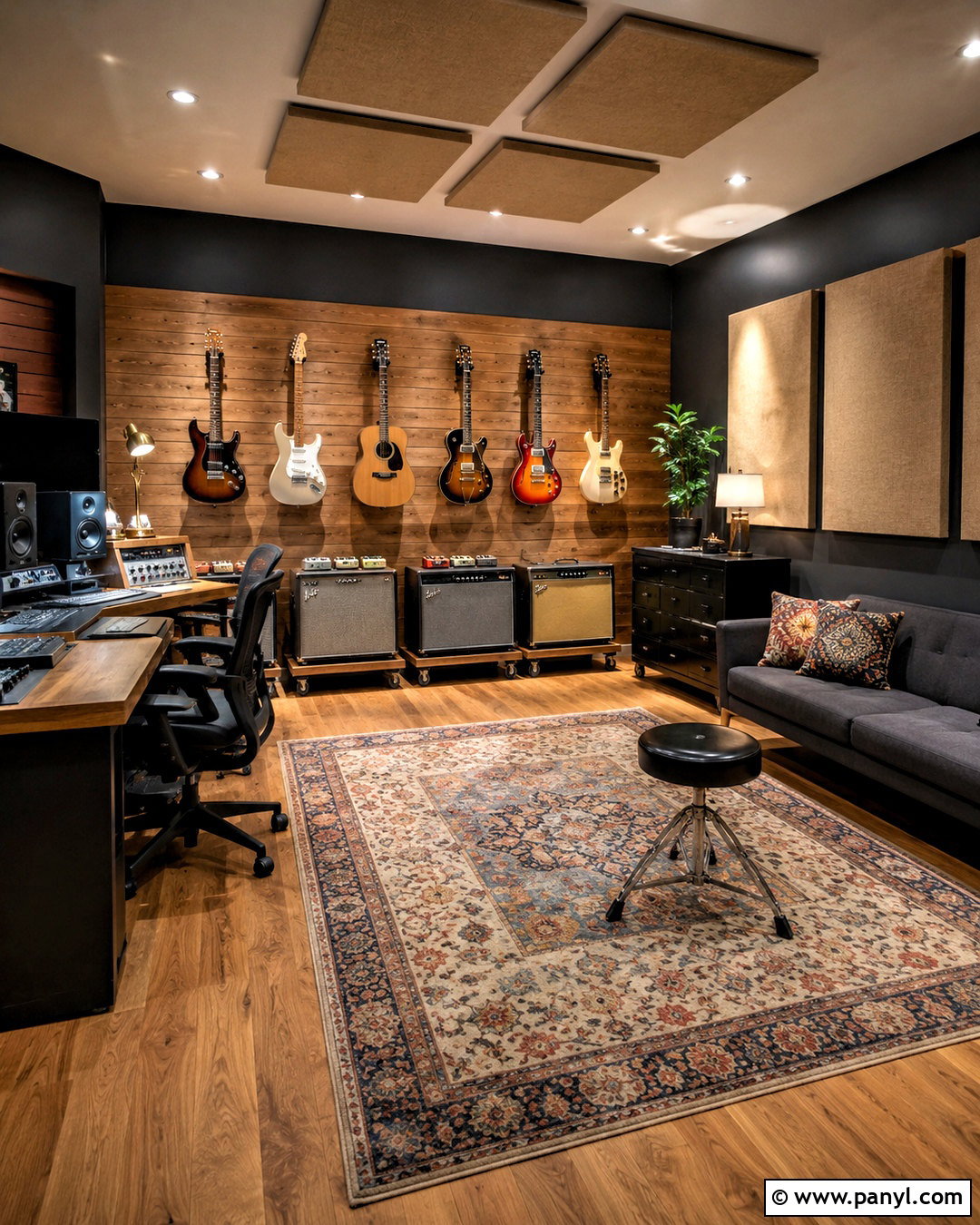
Design a guitar music studio around secure display, convenient access, and an open central playing area. Position the production desk on one wall and arrange several guitars on padded hangers across a separate wood-backed display wall. Place amplifiers beneath the instruments on low rolling platforms, leaving cords neatly stored nearby. Use warm charcoal walls, medium oak flooring, and tan acoustic panels for a grounded, contemporary palette. A broad patterned rug marks the playing zone and provides a comfortable surface for pedalboards and stands. Include a low storage cabinet for strings, tools, microphones, and maintenance supplies. Bright track lighting can illuminate the guitars without creating a dark showroom effect. Finish with a supportive stool, compact sofa, and framed music artwork that complements rather than crowds the instrument collection.
17. Piano Music Studio
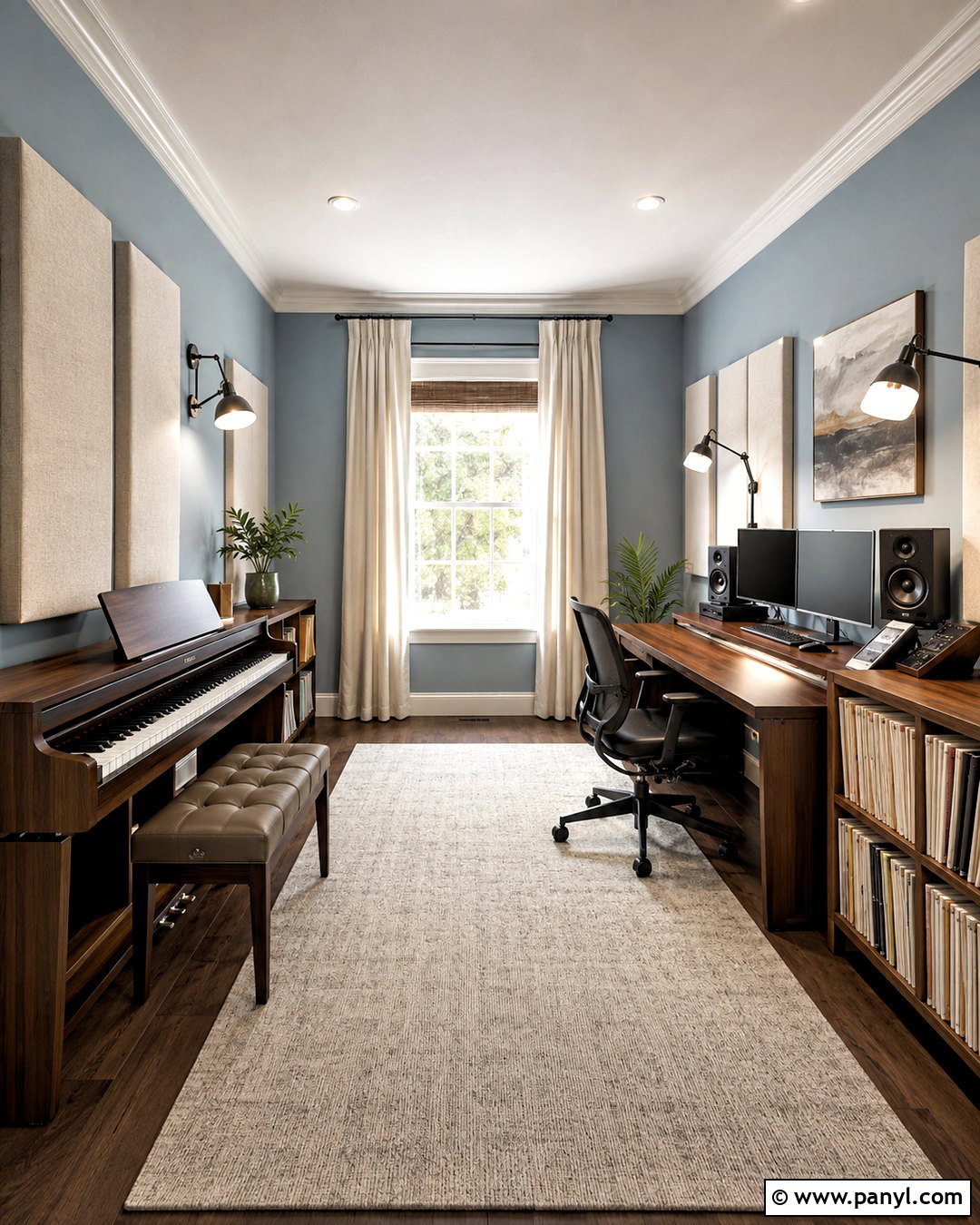
Let the piano or keyboard become the visual anchor of a graceful, practical music studio. Place a full digital piano or upright piano along one wall, leaving enough space for comfortable seating and microphone placement. Set the computer workstation nearby at a right angle so the player can move between recording and performing without crossing cables. Use soft blue-gray walls, warm white acoustic panels, and medium walnut furniture for a calm palette. A large neutral rug can connect both work areas, while linen curtains and an upholstered bench add softness. Install adjustable wall lights above the piano and bright ceiling lighting across the room. Include closed sheet-music storage, slim shelves for reference books, and one simple art piece. Keep decorative objects away from the instrument’s working surfaces.
18. Electronic Music Studio
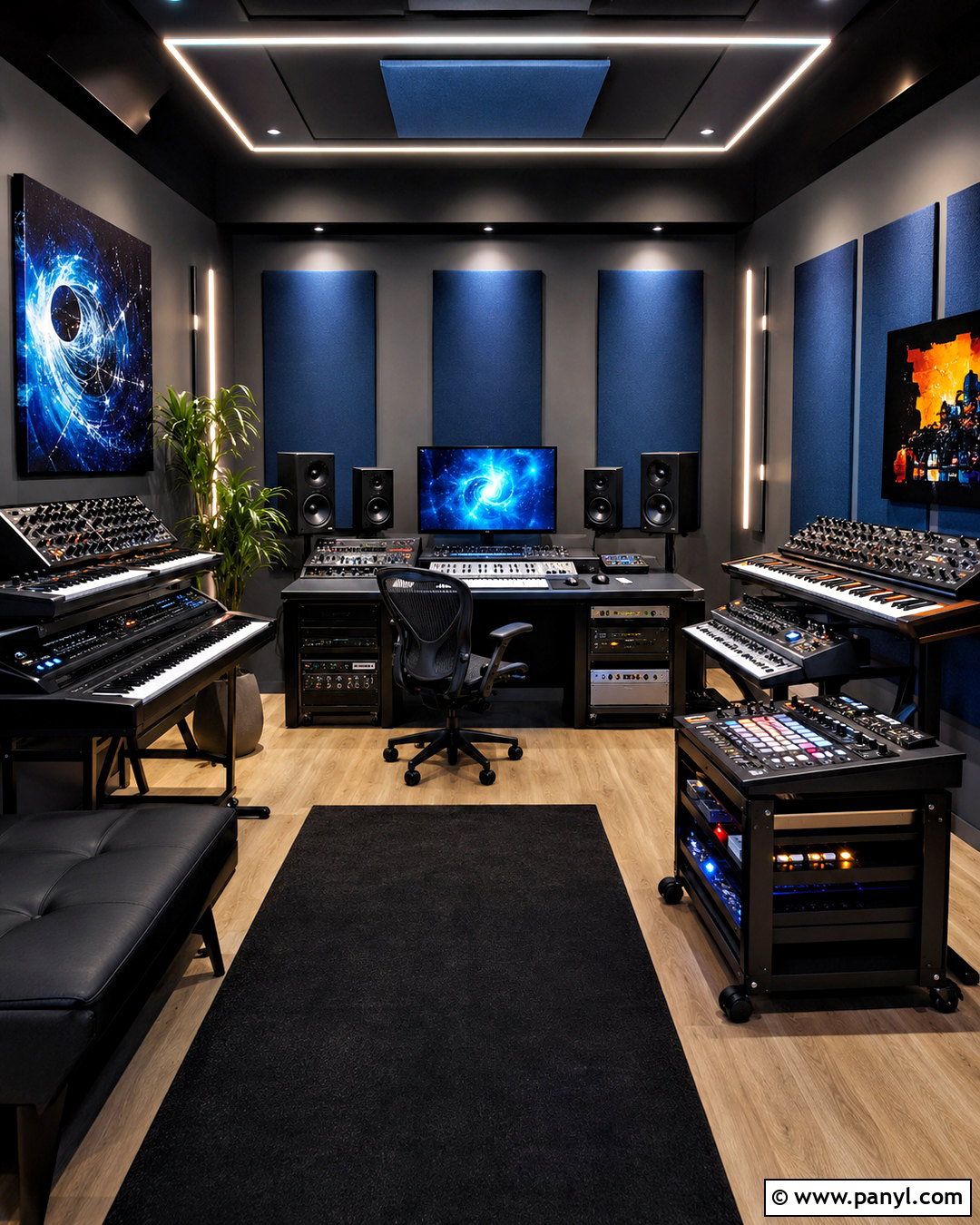
An electronic music studio needs layered equipment surfaces and a layout that supports quick movement between instruments. Center a deep black desk with the computer, main controller, audio interface, and monitor speakers. Arrange synthesizers on two sturdy tiered stands positioned at comfortable angles on either side. Use graphite gray walls with deep blue acoustic panels and light oak flooring to balance the darker gear. Add bright white ceiling lights and programmable accent LEDs behind the workstation, keeping the primary illumination clear and practical. A narrow rolling cart can hold drum machines, headphones, and patch cables during sessions. Install under-desk cable trays and labeled drawers to manage the many connections. Complete the room with a black rug, ergonomic chair, abstract digital artwork, and a small listening bench.
19. Vocal Recording Music Studio
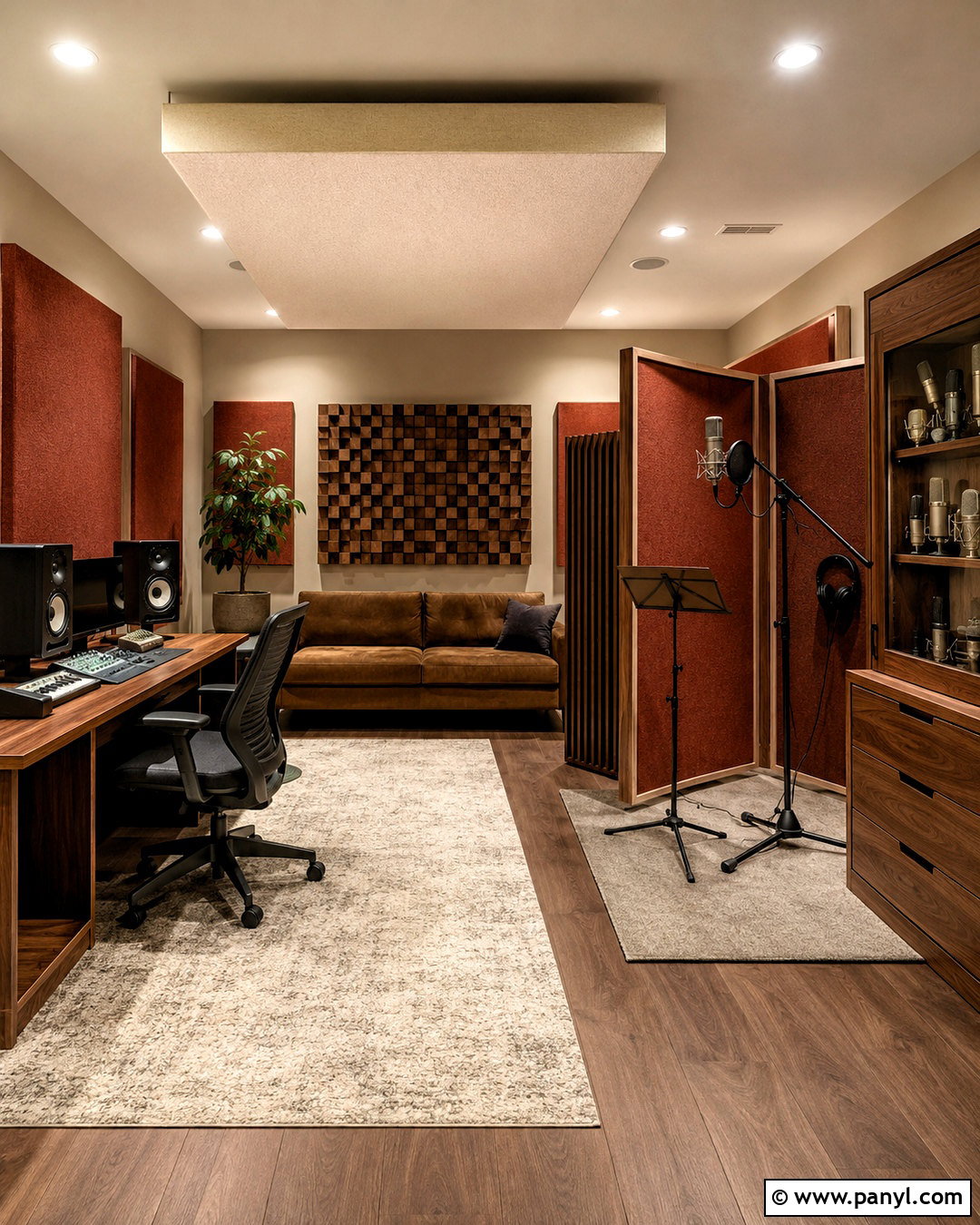
A vocal recording music studio should combine a comfortable performance area with an efficient editing station. Place the desk and speakers at one end of the room, then create a dedicated vocal zone in a rear corner using freestanding broadband panels and a ceiling-mounted acoustic cloud. Choose warm beige walls, rust-colored panel fabric, and walnut furniture for an inviting atmosphere. A dense neutral rug defines the recording zone and gives the microphone stand a stable surface. Include a small music stand, headphone hook, and side table for water or session notes. Add closed storage for microphones, pop filters, and cables. Bright adjustable lighting should illuminate both areas independently. Finish with simple framed artwork and a compact sofa where performers can relax between takes without blocking the room’s walkways.
20. Multipurpose Music Studio
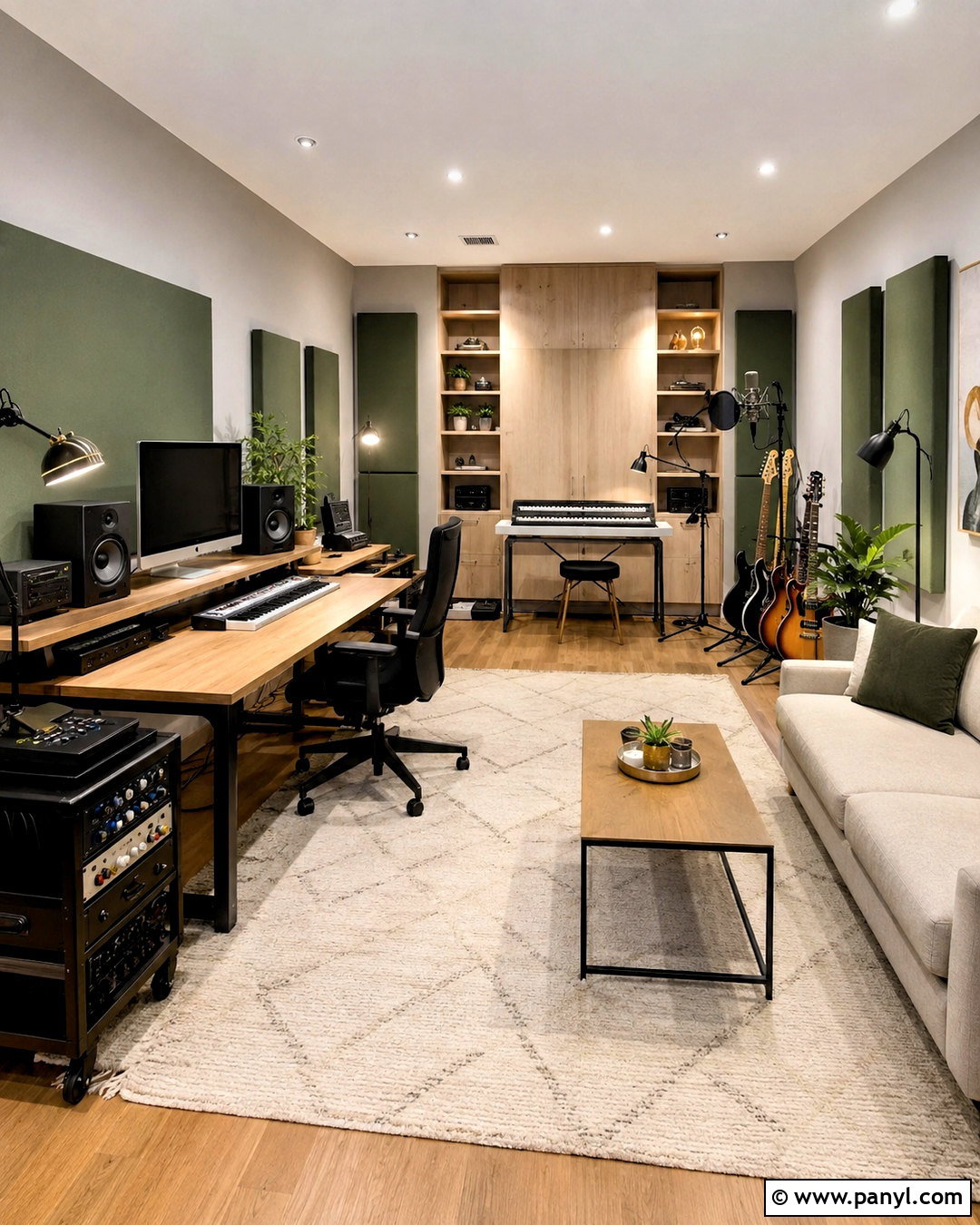
A multipurpose music studio works for production, instrument practice, recording, and relaxed listening when the room is divided into flexible zones. Anchor one wall with a modern oak production desk and arrange a keyboard, guitar stand, and microphone setup around the open center. Place a small sofa and low table along the back wall to create a comfortable review area. Use pale gray walls, muted green acoustic panels, and a large cream rug to unify the different functions. Rolling equipment stands make it easy to reconfigure the space for each session. Install closed cabinets below open display shelves to balance storage and personality. Bright ceiling lights, adjustable task lamps, and concealed shelf lighting serve different activities. Keep the center pathway clear so every zone remains easy to use.
Conclusion:
These 20 music studio decor interior design ideas show how acoustics, furniture, lighting, storage, and personal style can work together in one complete space. Begin by planning the main workstation and instrument zones before choosing decorative details. Then select a consistent palette that makes acoustic panels, equipment, rugs, and storage feel connected. Small studios benefit from wall-mounted storage and compact furniture, while larger rooms can include lounge seating and flexible recording areas. Whatever your budget, prioritize comfortable movement, organized cables, and lighting that supports long sessions. The best studio is not simply attractive. It should make recording, practicing, editing, and experimenting feel easier every time you enter the room.

Related Ideas and Inspiration:

Leave a Reply