
Creating a warm, character-rich home is easier with **20 tuscany interior design ideas** that combine rustic Italian charm with comfortable modern living. Today’s Tuscan look feels lighter and more natural than the heavy, ornate version popular in the early 2000s. It favors limewashed walls, aged wood, local-looking stone, terracotta, linen, and muted landscape colors rather than excessive scrollwork or dark finishes. This renewed focus on honest materials and warm, grounded neutrals has helped modern Tuscan interiors return to the spotlight in 2026. () Thoughtful layouts and restrained decoration also make the style practical for ordinary homes. The following **20 tuscany interior design ideas** offer complete, coordinated looks for living rooms, kitchens, bedrooms, bathrooms, dining spaces, and more.
1. Modern Tuscan Living Room
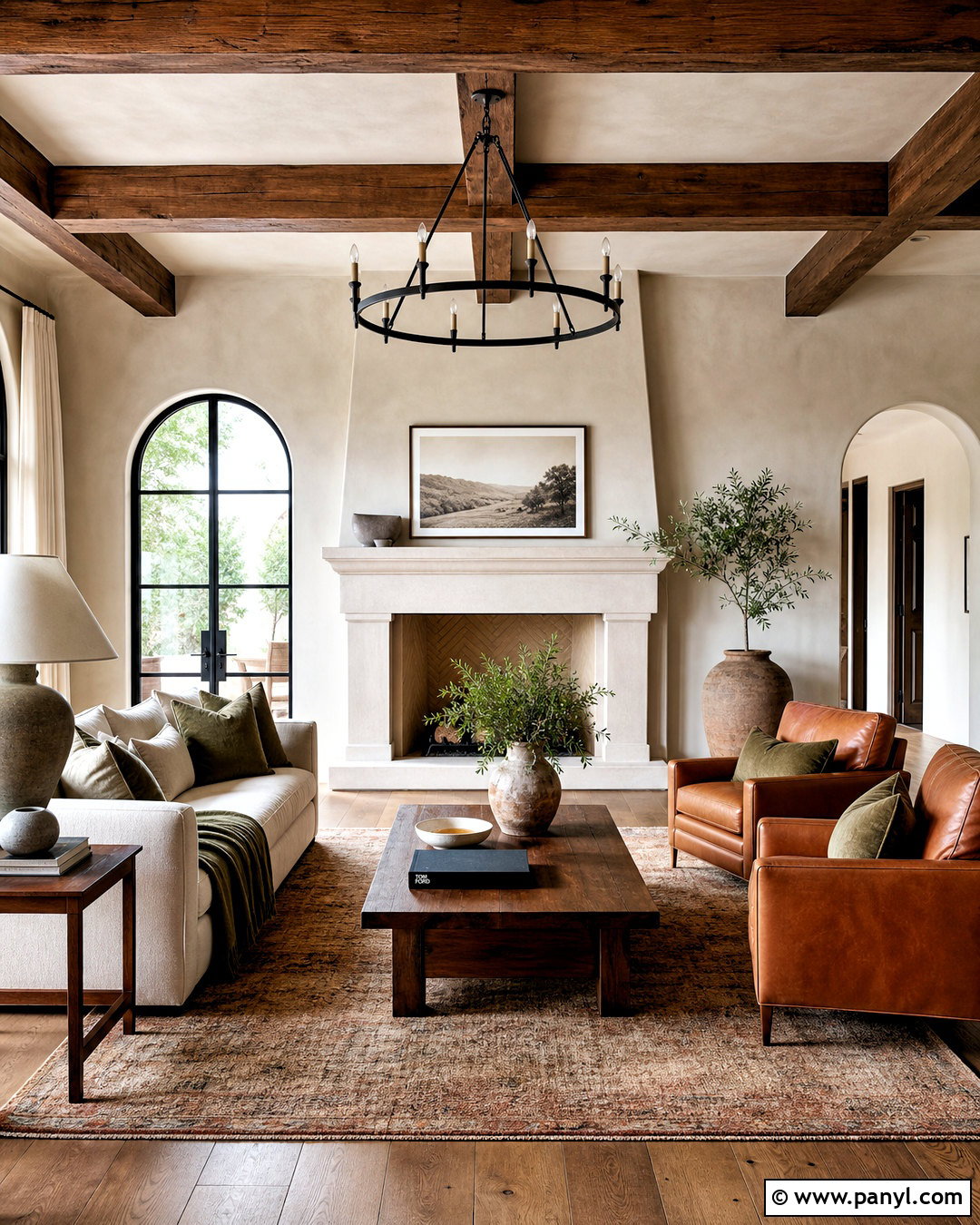
Begin with creamy limewashed walls and a warm oak floor to create a brighter version of the traditional Tuscan living room. Center the layout around a streamlined limestone fireplace with a thick reclaimed-wood mantel. A relaxed oatmeal linen sofa, two cognac leather chairs, and a large muted terracotta rug provide comfortable seating without making the room feel crowded. Add a low walnut coffee table with softly rounded edges and simple ceramic lamps on matching side tables. A muted olive green throw introduces color inspired by the Tuscan countryside. Keep window treatments light with full-length ivory linen curtains. One antique chest, an oversized landscape painting, and a few handmade pottery pieces supply history while preserving the clean, contemporary balance.
2. Rustic Tuscan Living Room
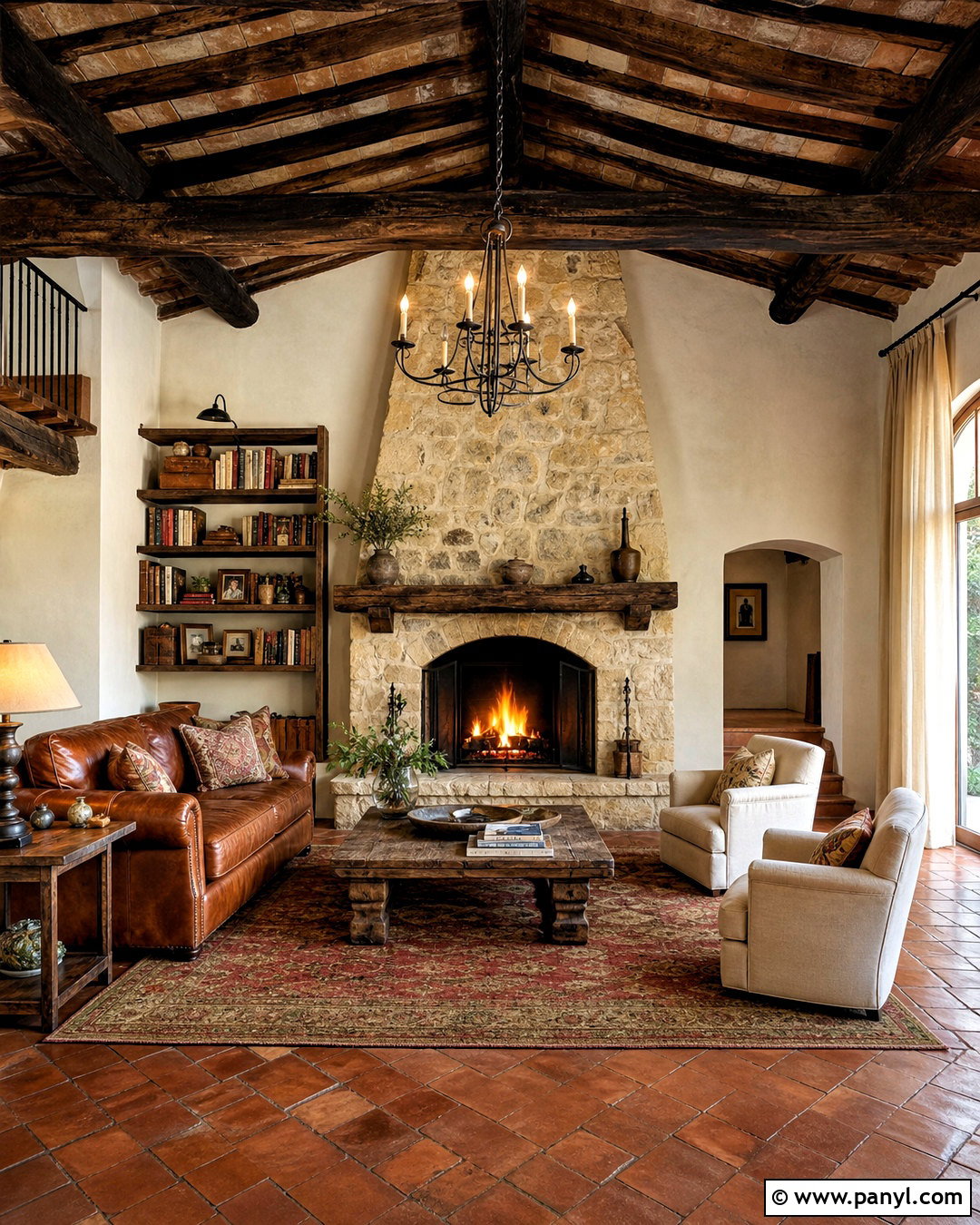
Imagine entering a living room where rough stone, aged timber, and deep earth tones immediately create a sense of shelter. Cover the main fireplace wall in irregular beige fieldstone and install dark reclaimed beams across the ceiling. Arrange a generously sized caramel leather sofa and two textured cream armchairs around a heavy trestle-style coffee table. Terracotta floor tiles bring authentic warmth underfoot, while a faded red, olive, and gold wool rug softens the seating zone. Choose wrought-iron sconces and a simple iron chandelier rather than heavily embellished fixtures. Finish the room with woven baskets, linen pillows, pottery, and a restrained collection of old books. Large windows and off-white curtains keep these substantial materials from making the space feel too dark.
3. Tuscan Farmhouse Kitchen
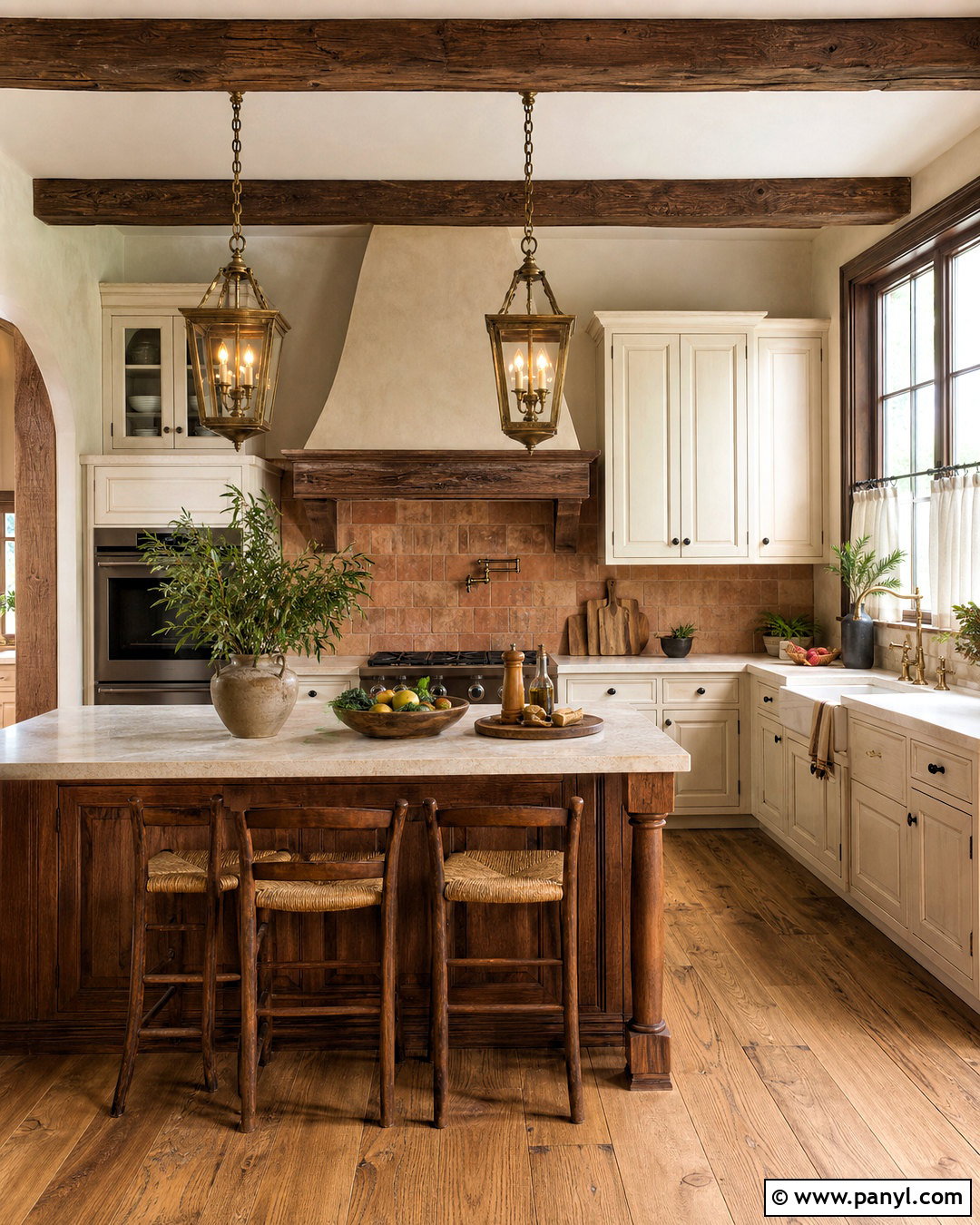
A welcoming Tuscan farmhouse kitchen should feel hardworking, comfortable, and gathered over time. Choose warm white inset cabinets around the perimeter and use natural walnut cabinetry for the island. Cream limestone counters and a handmade terracotta backsplash establish an earthy foundation without introducing busy patterns. Install wide oak flooring, exposed ceiling beams, and a plaster range hood with a simple wood band. The island can include deep drawers, open shelving, and seating for three on rush-seat stools. Hang two aged brass lanterns above it for soft visual warmth. Complete the room with an apron-front sink, unlacquered brass faucet, linen café curtains, and a compact display of wooden cutting boards. Modern appliances should be integrated or finished in understated stainless steel.
4. Modern Tuscan Kitchen
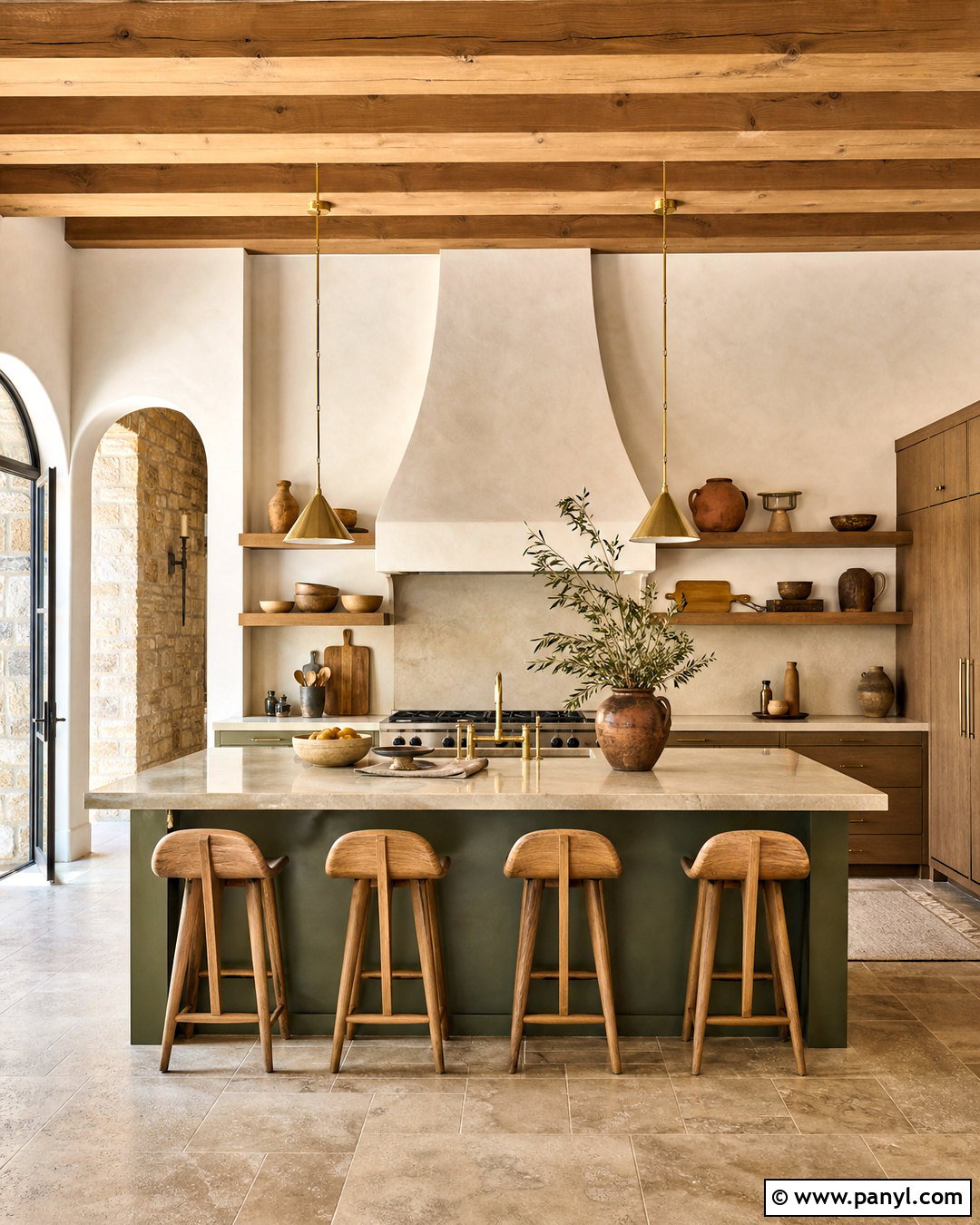
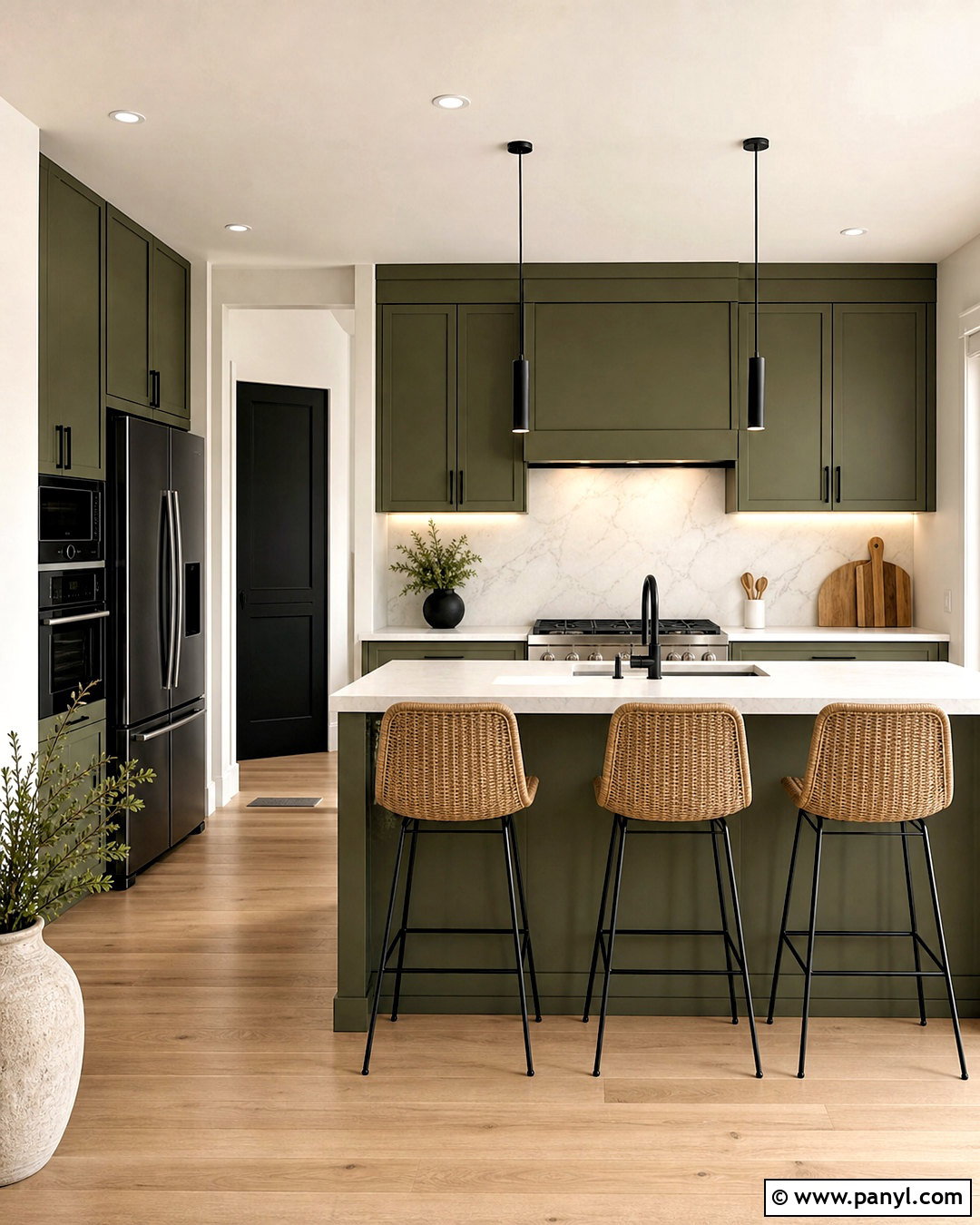
Can a Tuscan kitchen look warm without appearing old-fashioned? Pair flat-front light oak cabinets with softly textured ivory plaster walls and honed beige quartzite counters. A long island in muted olive green becomes the focal point, especially when topped with pale natural stone and surrounded by curved wooden stools. Use large-format limestone-look floor tiles to reduce visual clutter. Above the range, continue the plaster finish across a simple architectural hood and frame it with narrow oak shelves. Brushed brass pendants, faucets, and cabinet pulls add warmth in a controlled way. Include a few terracotta vessels and one potted herb arrangement rather than filling every surface. This complete scheme maintains Tuscany’s natural palette while introducing cleaner lines, efficient storage, and an open, functional layout.
5. Tuscan Dining Room
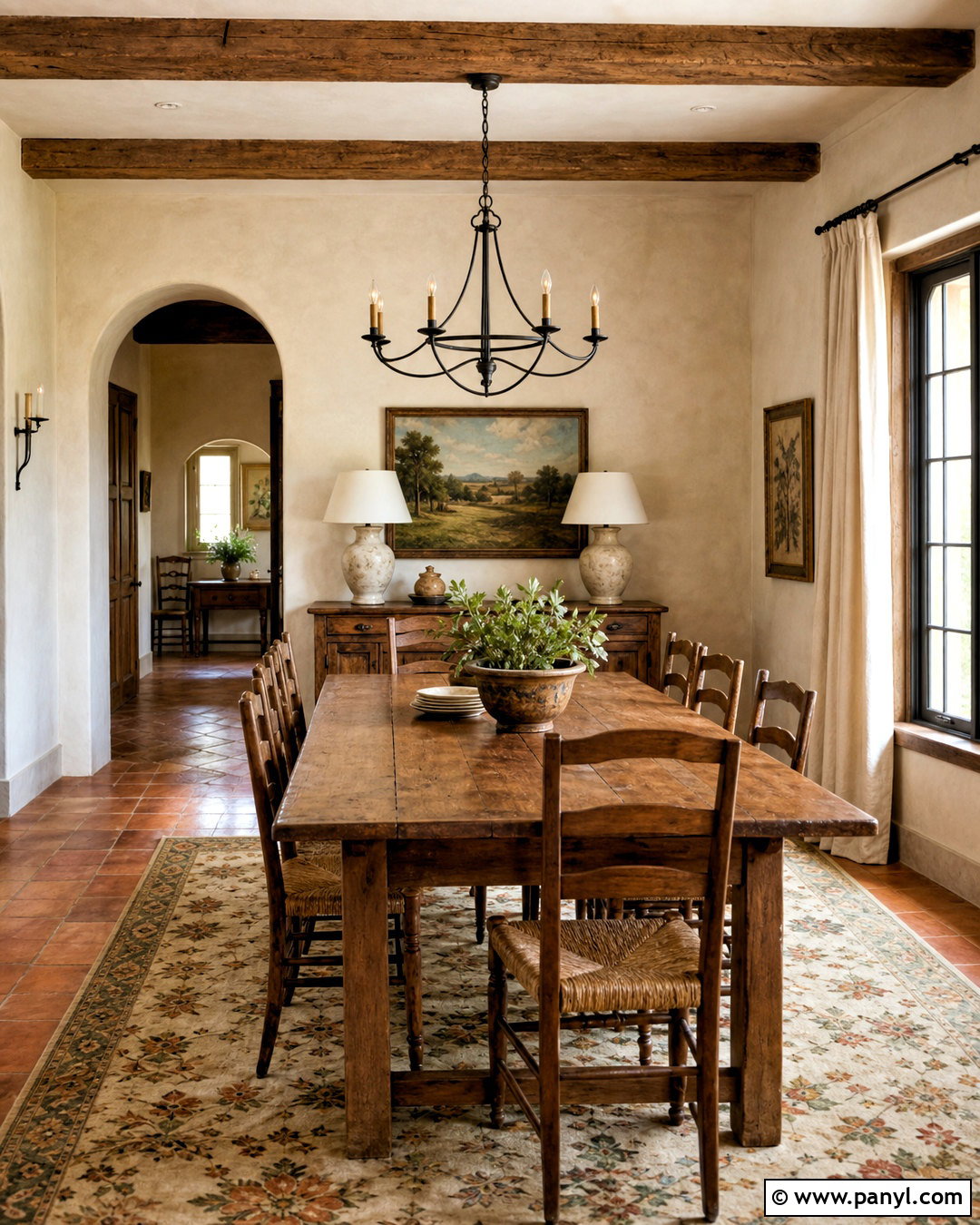
Turn everyday meals into relaxed gatherings with a Tuscan dining room built around a substantial rectangular table. Select reclaimed oak with visible grain and pair it with ladder-back chairs featuring woven rush seats. Warm putty-colored plaster walls provide a quiet background, while terracotta flooring and a faded botanical rug define the dining zone. Hang a restrained wrought-iron chandelier over the center of the table and place a narrow antique console against one wall. The console can hold two ceramic lamps, a stone bowl, and a large framed countryside painting. Add full-length natural linen curtains to soften the windows. Instead of formal matching accessories, mix earthenware dishes, woven placemats, and clear glass vessels. The finished room should feel elegant enough for guests but comfortable for daily family dinners.
6. Tuscan Breakfast Nook
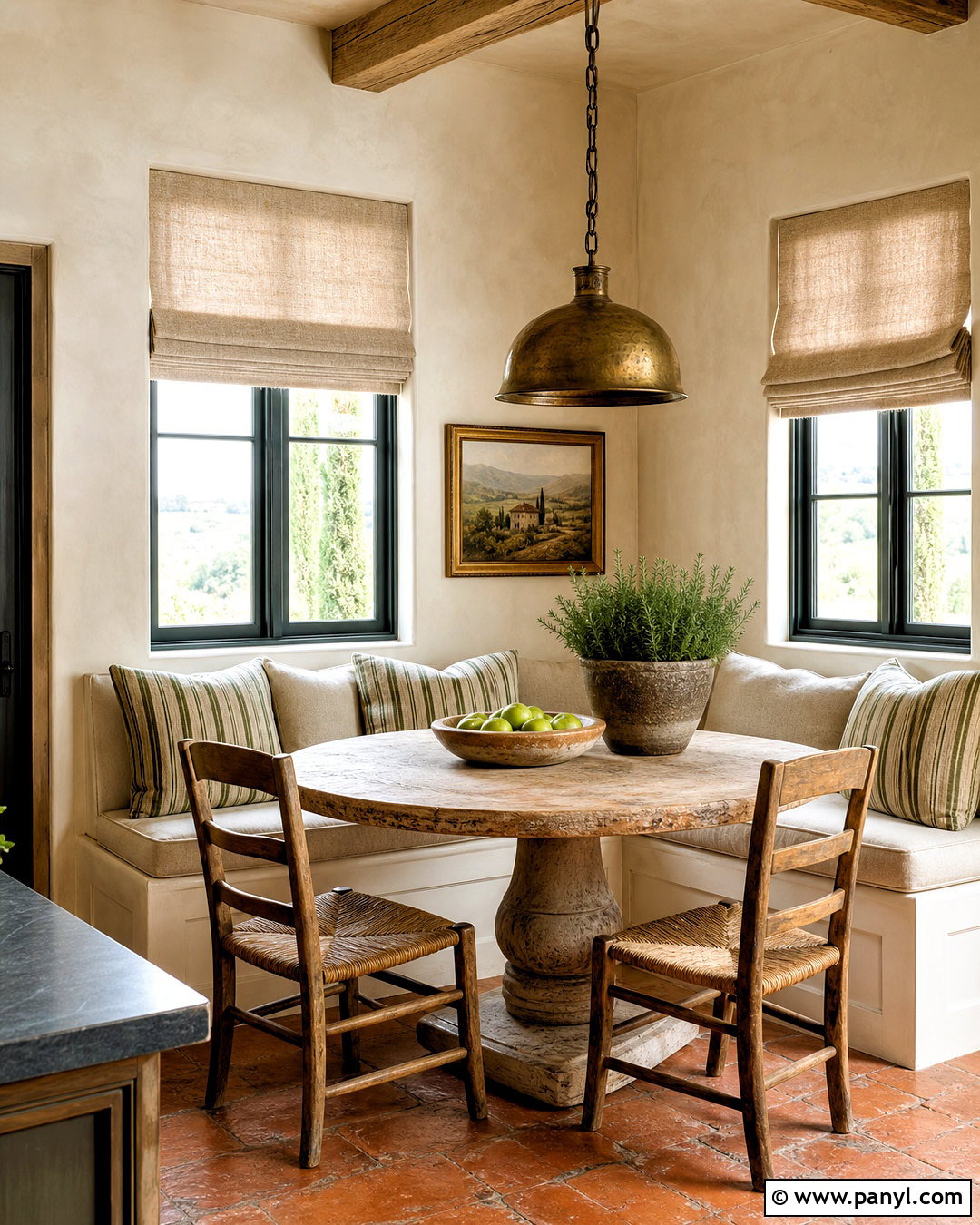
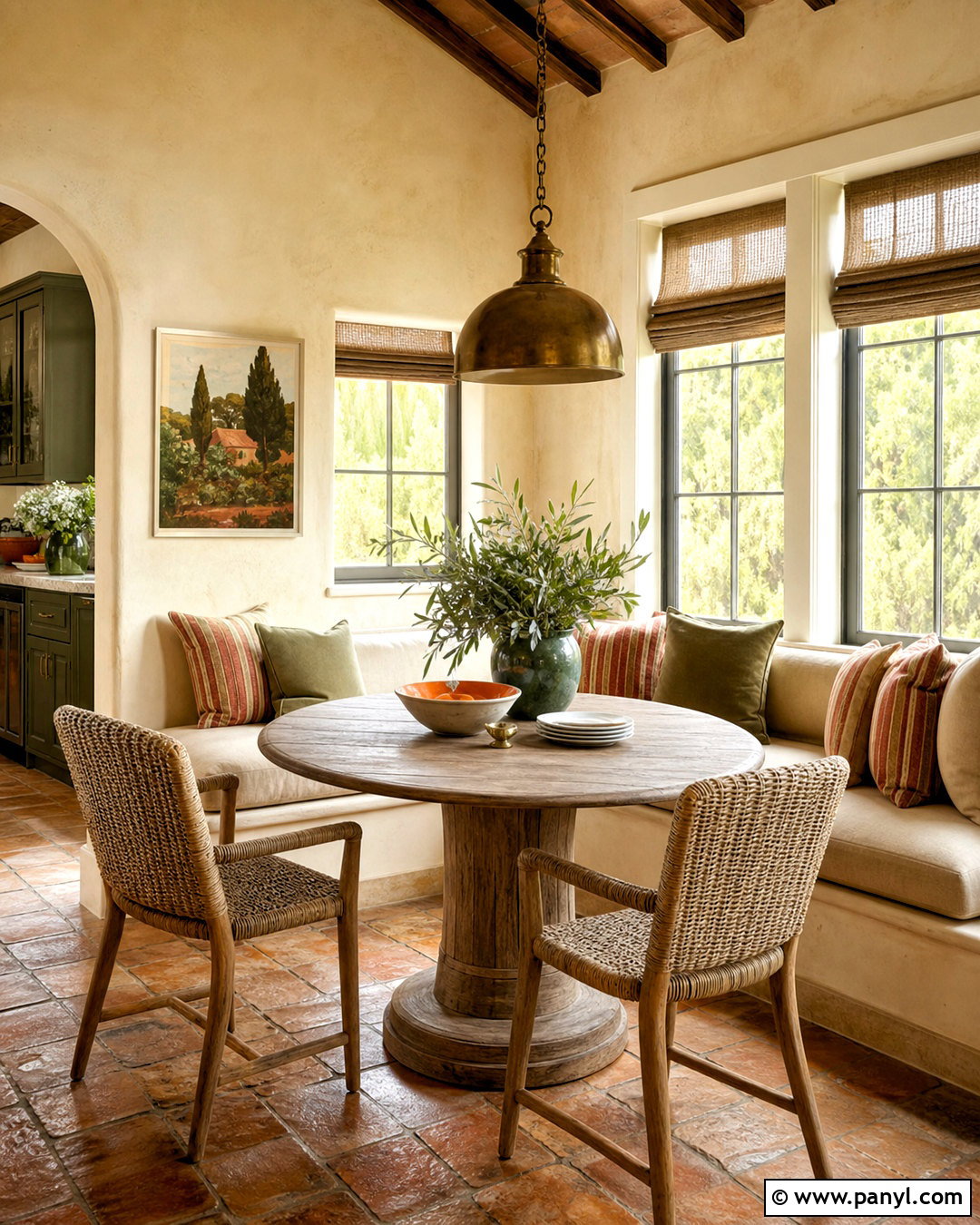
Morning light works beautifully in a compact Tuscan breakfast nook filled with natural texture. Build an L-shaped bench beneath the windows and finish it in warm cream paint. Add oatmeal seat cushions, olive striped pillows, and a round pedestal table made from weathered oak. Two simple rush-seat chairs complete the arrangement without using much floor space. Continue pale terracotta tile from the kitchen into the nook so both areas feel connected. Soft ivory plaster walls and linen Roman shades brighten the corner while gently filtering sunlight. A small aged brass pendant provides focused lighting above the table. Finish the scene with one framed landscape, a handmade ceramic bowl, and a potted rosemary plant. This coordinated design gives an overlooked corner the welcoming character of a countryside kitchen.
7. Tuscan Primary Bedroom
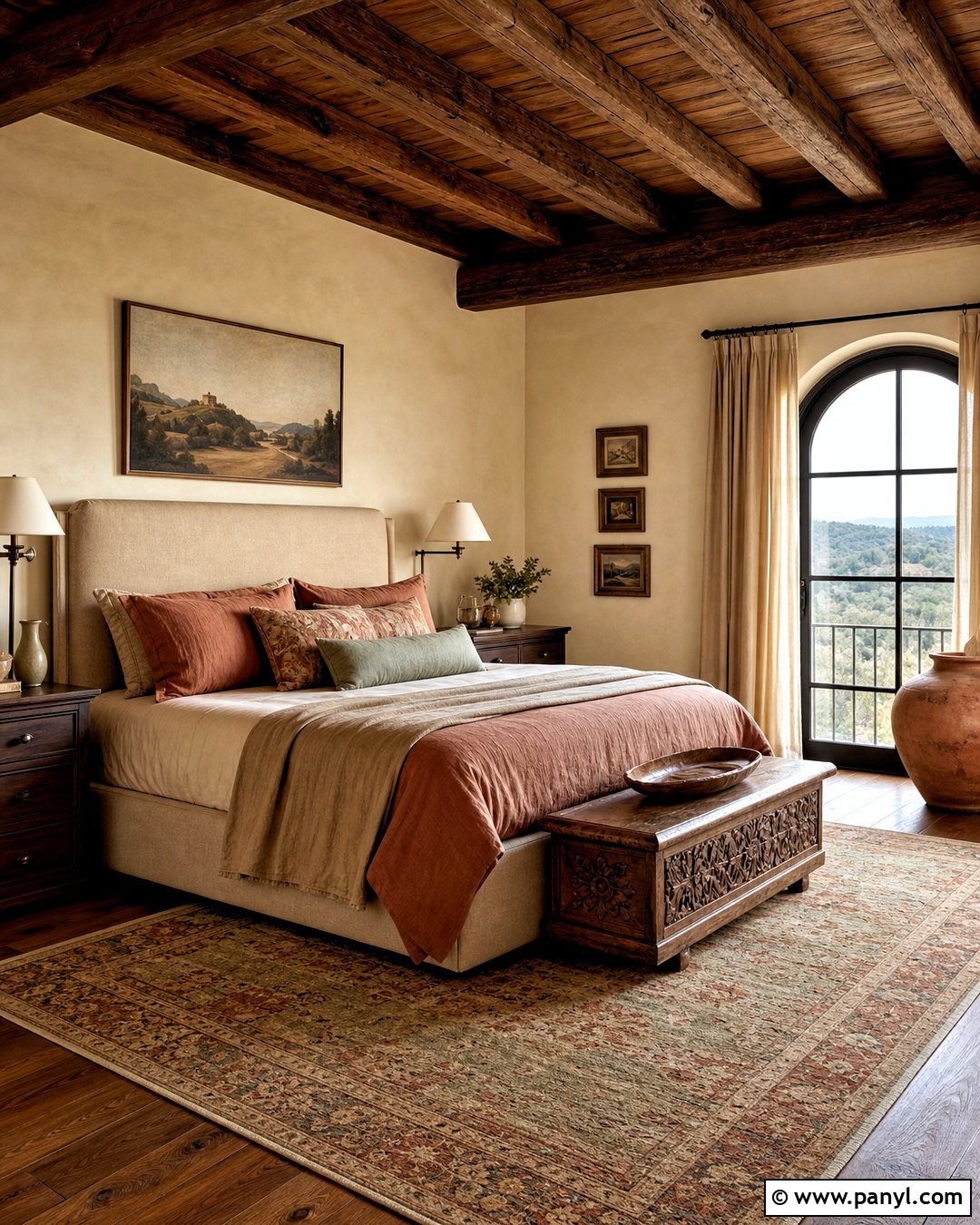
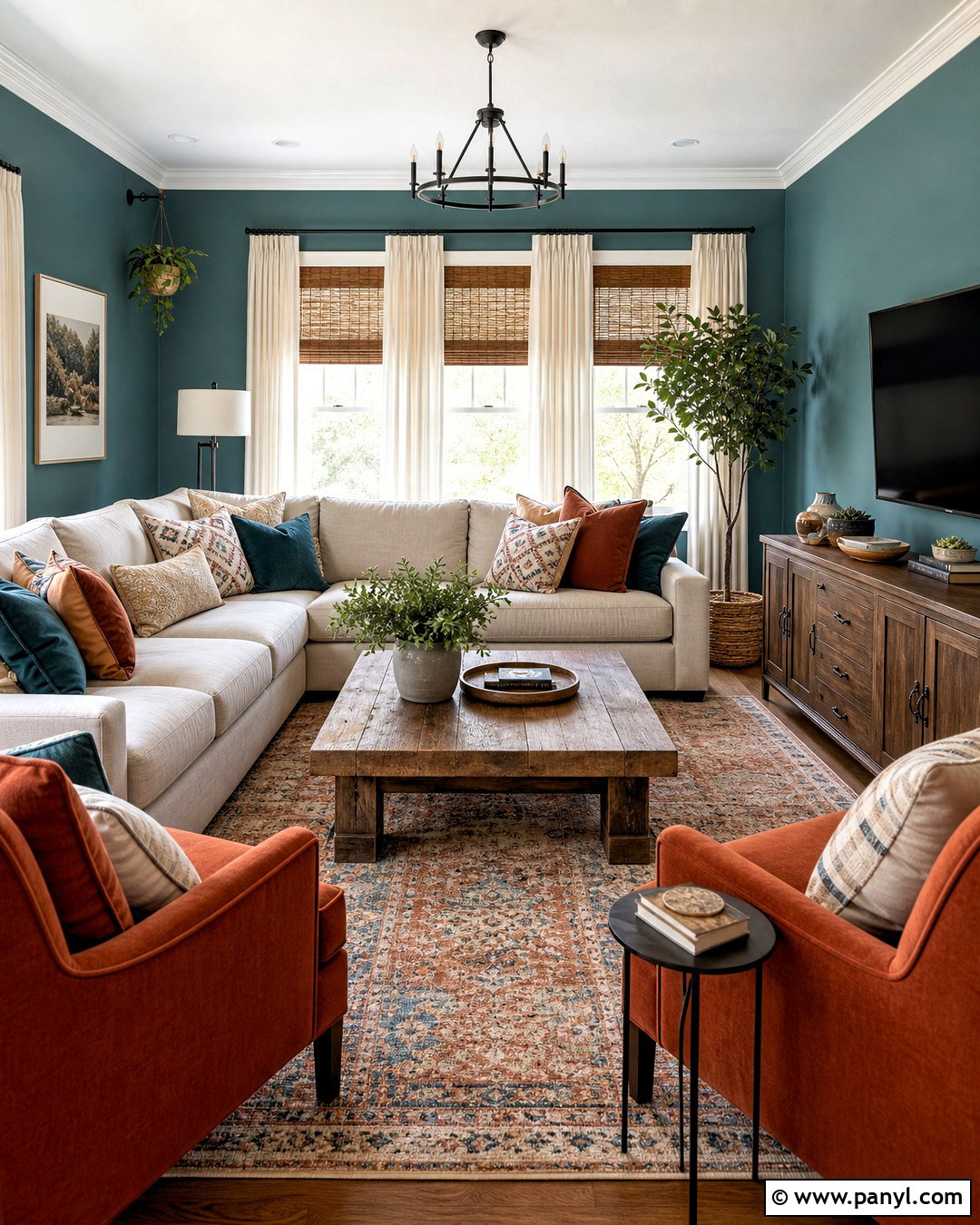
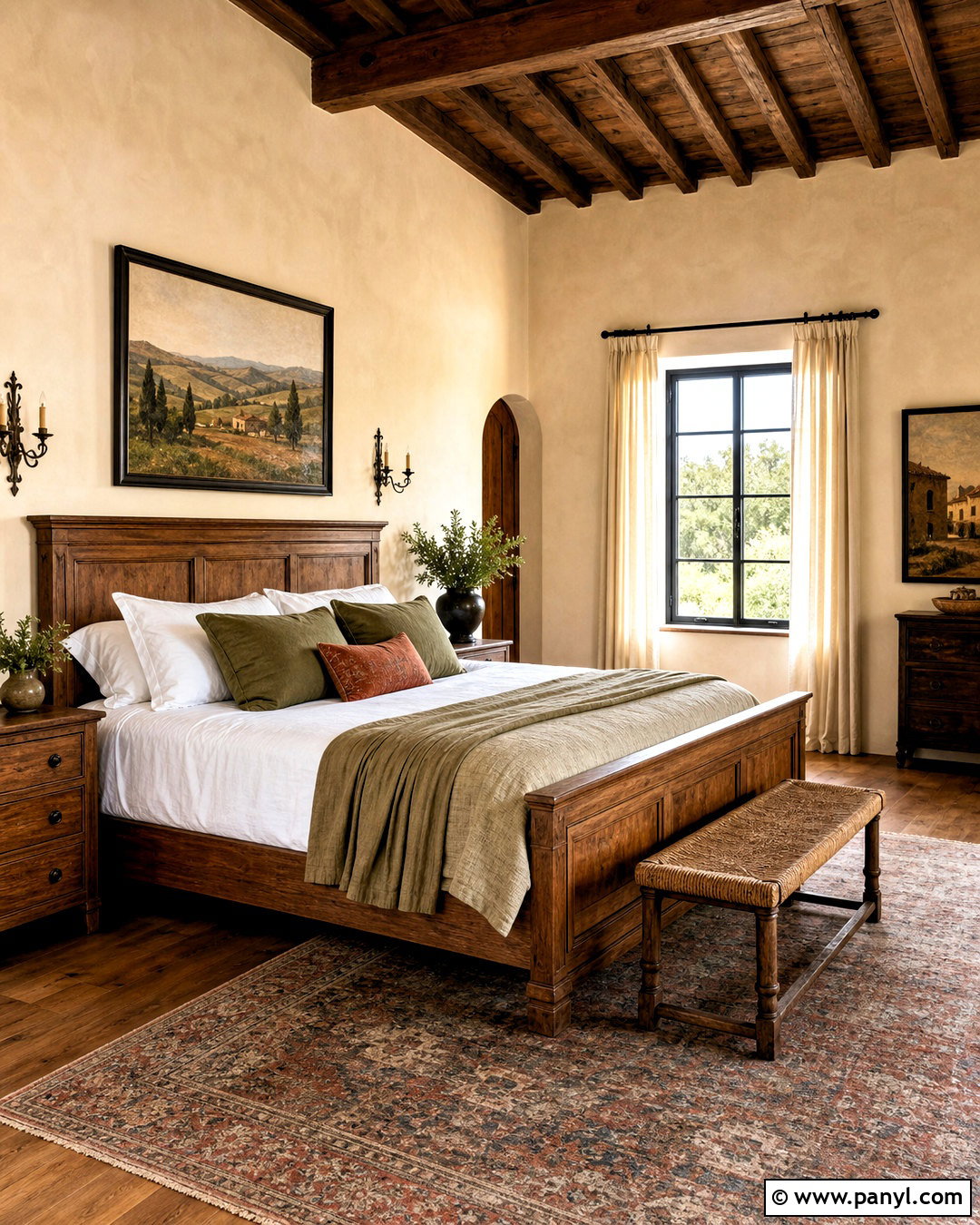
Softness should balance the rustic materials in a Tuscan primary bedroom. Start with warm ivory plaster walls, medium-tone oak flooring, and two understated wood beams overhead. Position a tall upholstered bed in natural linen against the main wall and flank it with dark walnut nightstands. A faded rug in sand, rust, and muted sage grounds the bed while adding comfortable texture. Choose lightweight flax curtains, white cotton sheets, and a clay-colored coverlet to create restful layers. A carved wood bench at the foot of the bed introduces craftsmanship without feeling overly ornate. Complete the layout with a comfortable reading chair, an aged brass floor lamp, and a simple oak dresser. Hand-thrown pottery and one traditional landscape painting provide Tuscan character while maintaining a calm, uncluttered atmosphere.
8. Tuscan Guest Bedroom
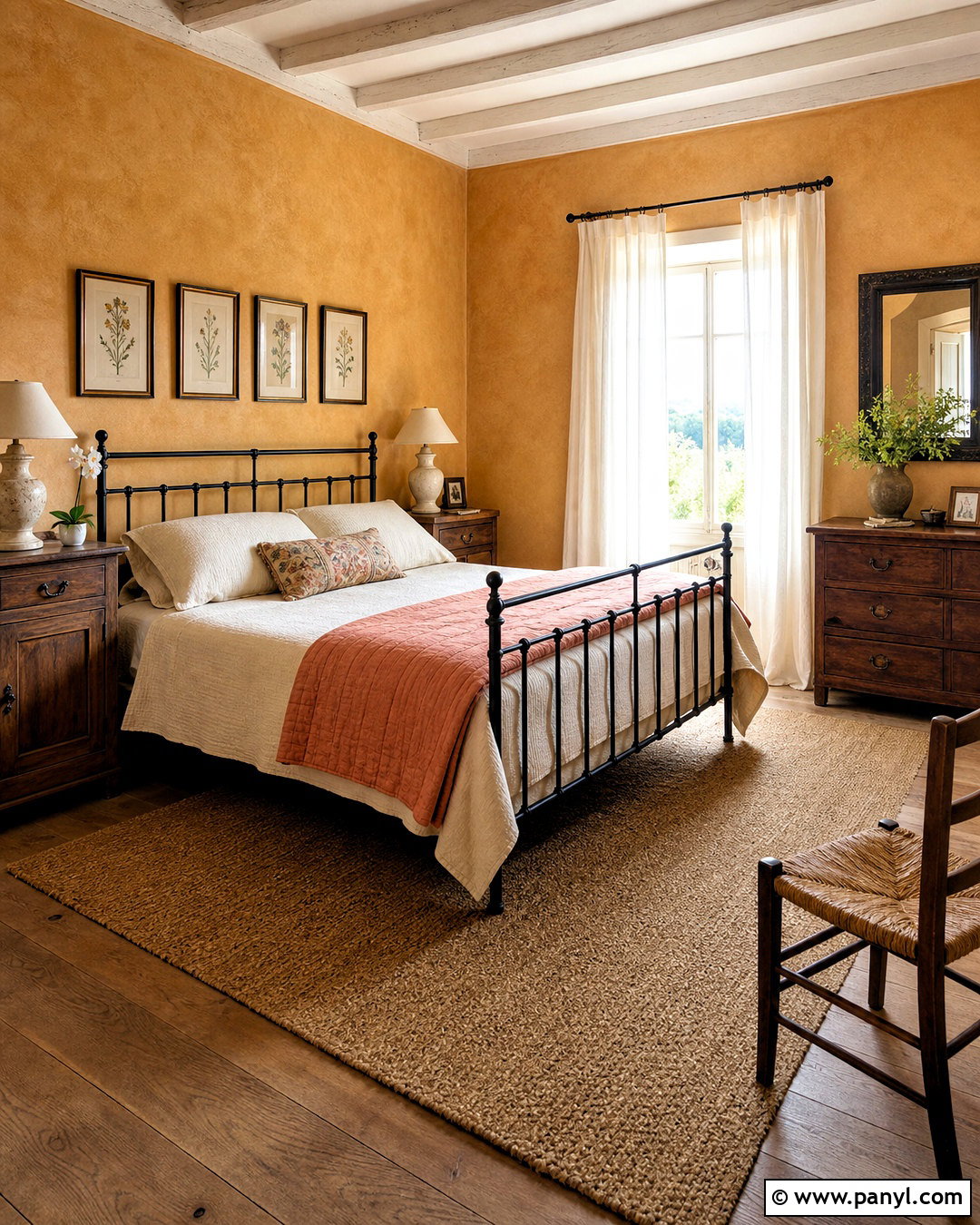
Guests should enter a room that feels collected, restful, and quietly personal. Paint the walls a soft sun-washed ochre and use a vintage-inspired iron bed as the central feature. Dress it with crisp ivory bedding, a light terracotta quilt, and two patterned pillows in olive and faded blue. Place mismatched wooden nightstands beside the bed, then unify them with small ceramic lamps and linen shades. A woven natural-fiber rug adds texture over wide-plank oak flooring. Include a compact walnut dresser, a rush-seat chair, and wall hooks for convenient storage. Simple linen curtains allow plenty of daylight into the space. Finish with framed botanical prints, one earthenware vase, and a folded wool blanket. The room will feel authentically Tuscan without relying on elaborate furniture or themed accessories.
9. Tuscan Bathroom
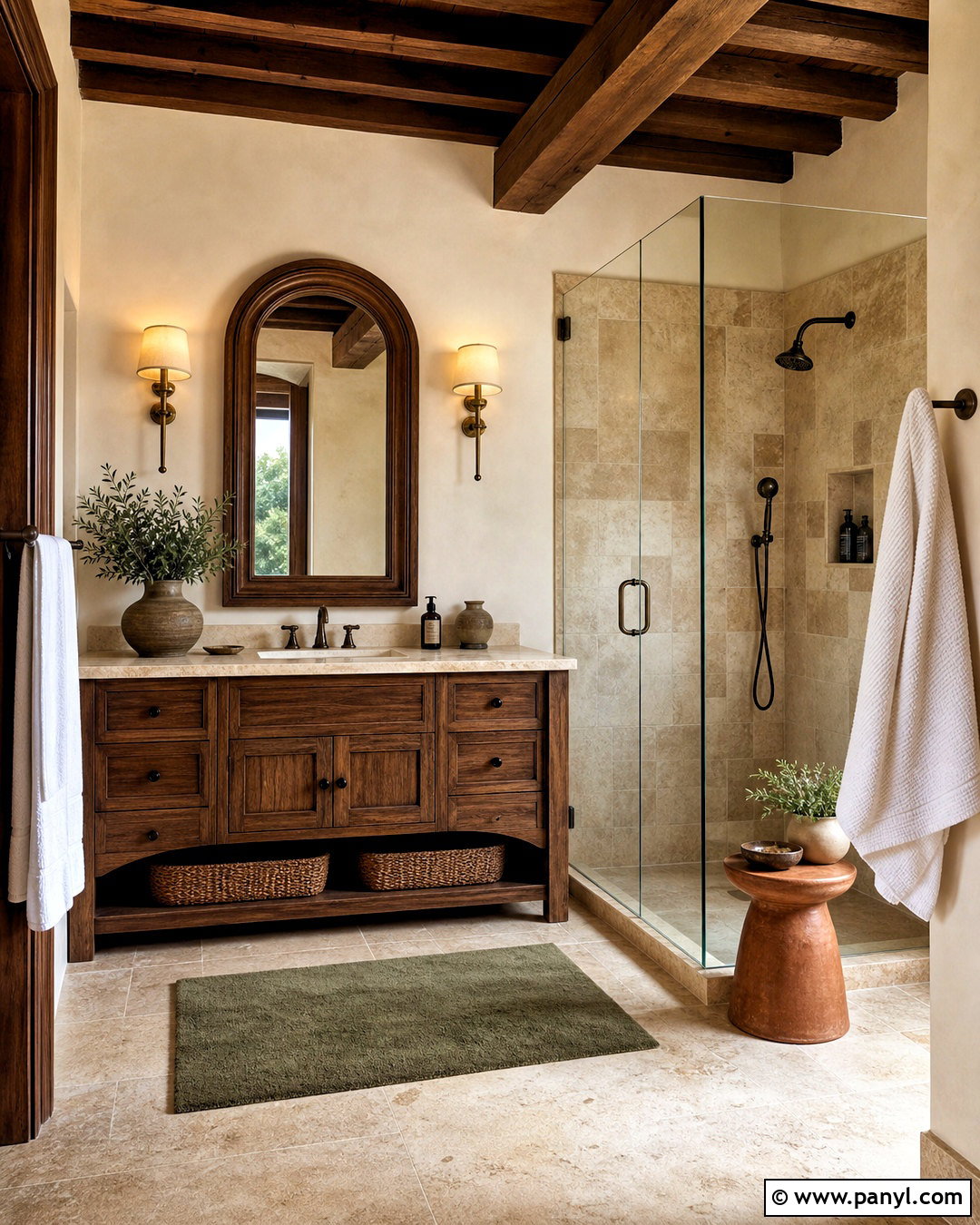
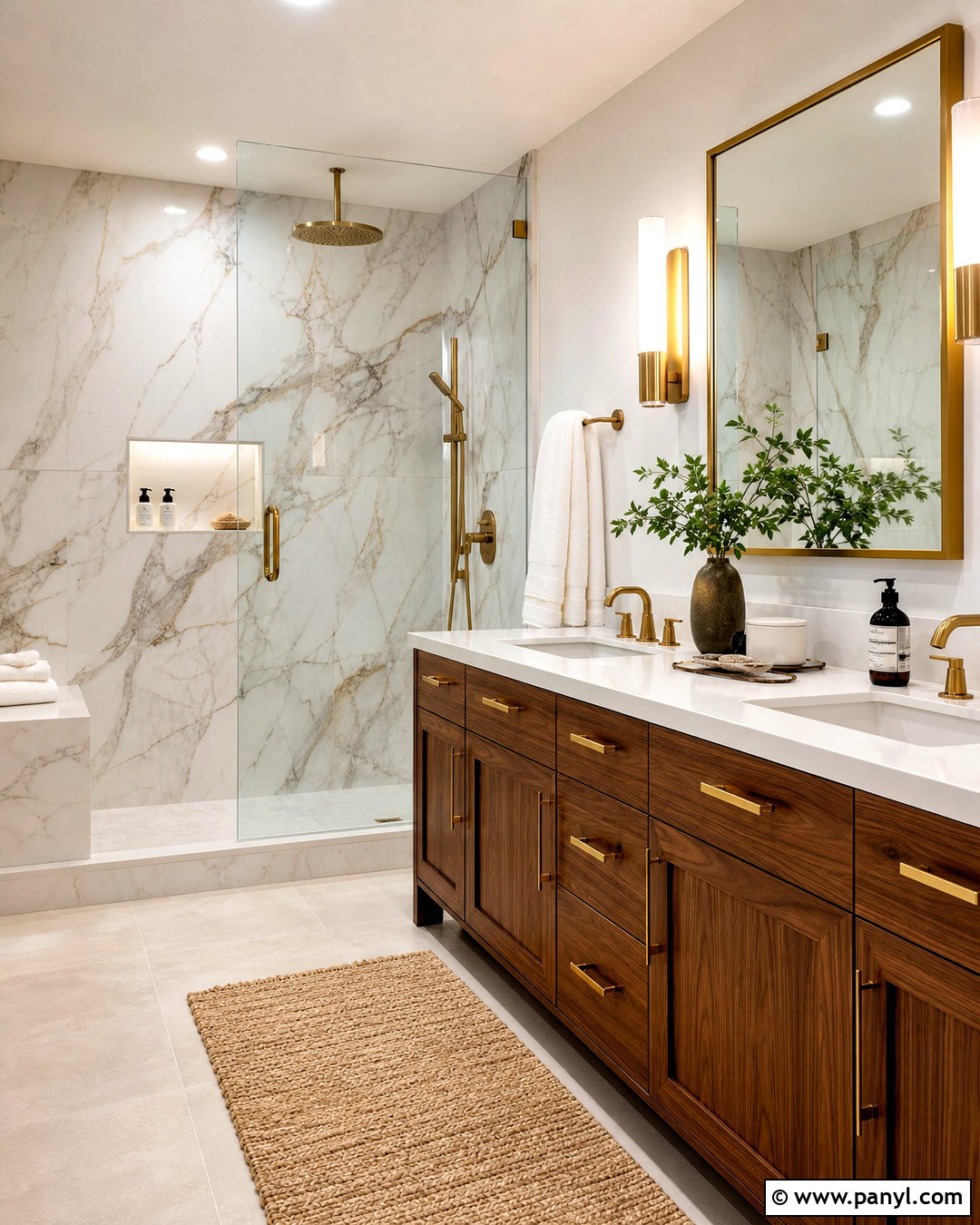
Natural stone can transform an ordinary bathroom into a peaceful Tuscan retreat. Cover the floor and walk-in shower with warm beige limestone-look tile, choosing a slip-resistant finish for practical use. A walnut vanity with simple paneled doors adds contrast beneath a creamy stone countertop. Install two aged brass sconces beside an arched wood-framed mirror instead of relying only on overhead lighting. Ivory plaster walls soften the room and coordinate with the stone surfaces. Use a frameless glass shower panel to keep the layout open and place a small built-in niche inside for toiletries. Finish the complete scheme with white towels, a terracotta stool, woven storage baskets, and one olive green bath mat. These restrained materials create warmth while keeping the bathroom clean, functional, and easy to maintain.
10. Tuscan Powder Room
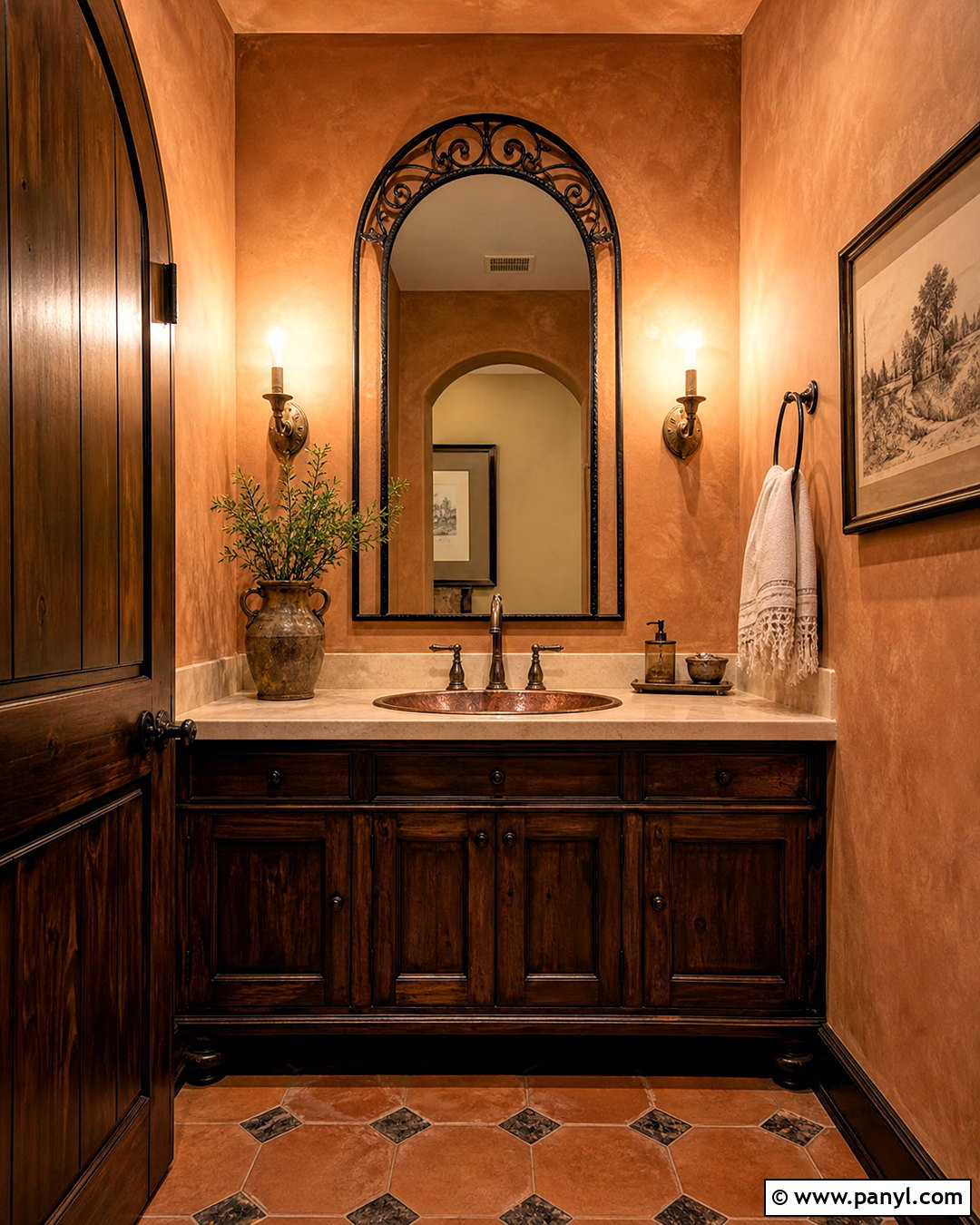
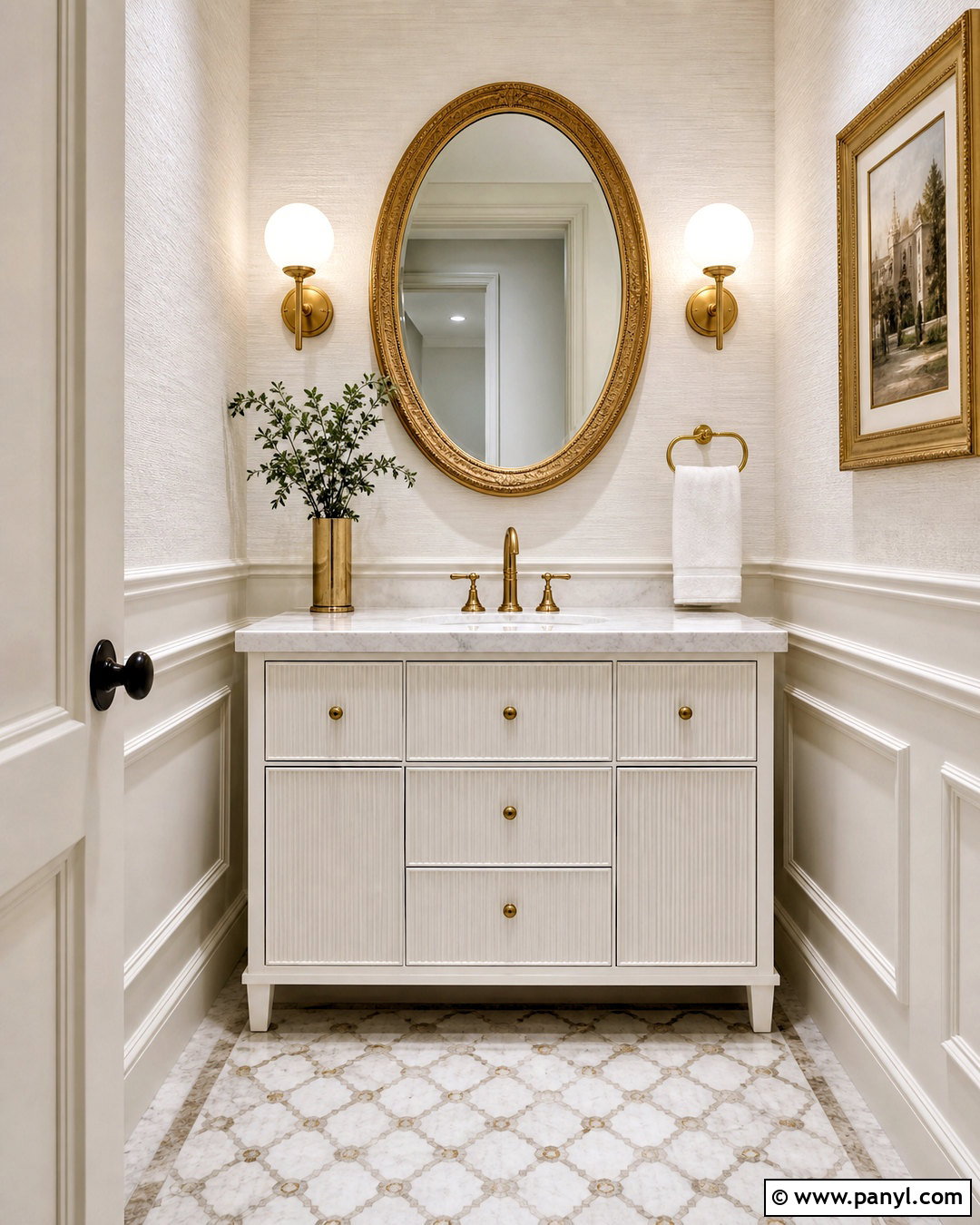
A small powder room offers the perfect place for a richer Tuscan palette. Coat the walls in textured clay-colored limewash and install a compact vanity made from dark, timeworn wood. A cream travertine counter and hammered copper sink introduce natural variation that looks attractive in a close setting. Above the vanity, hang an antique-style arched mirror with a slender iron frame. Two small brass sconces provide balanced illumination while reinforcing the warm finishes. Use patterned terracotta floor tile in muted brown, ochre, and ivory to give the room a memorable foundation. Keep the remaining decoration simple with a linen hand towel, small ceramic vessel, and framed landscape sketch. The finished powder room feels layered and dramatic, yet every element serves a clear purpose within the limited footprint.
11. Tuscan Home Office
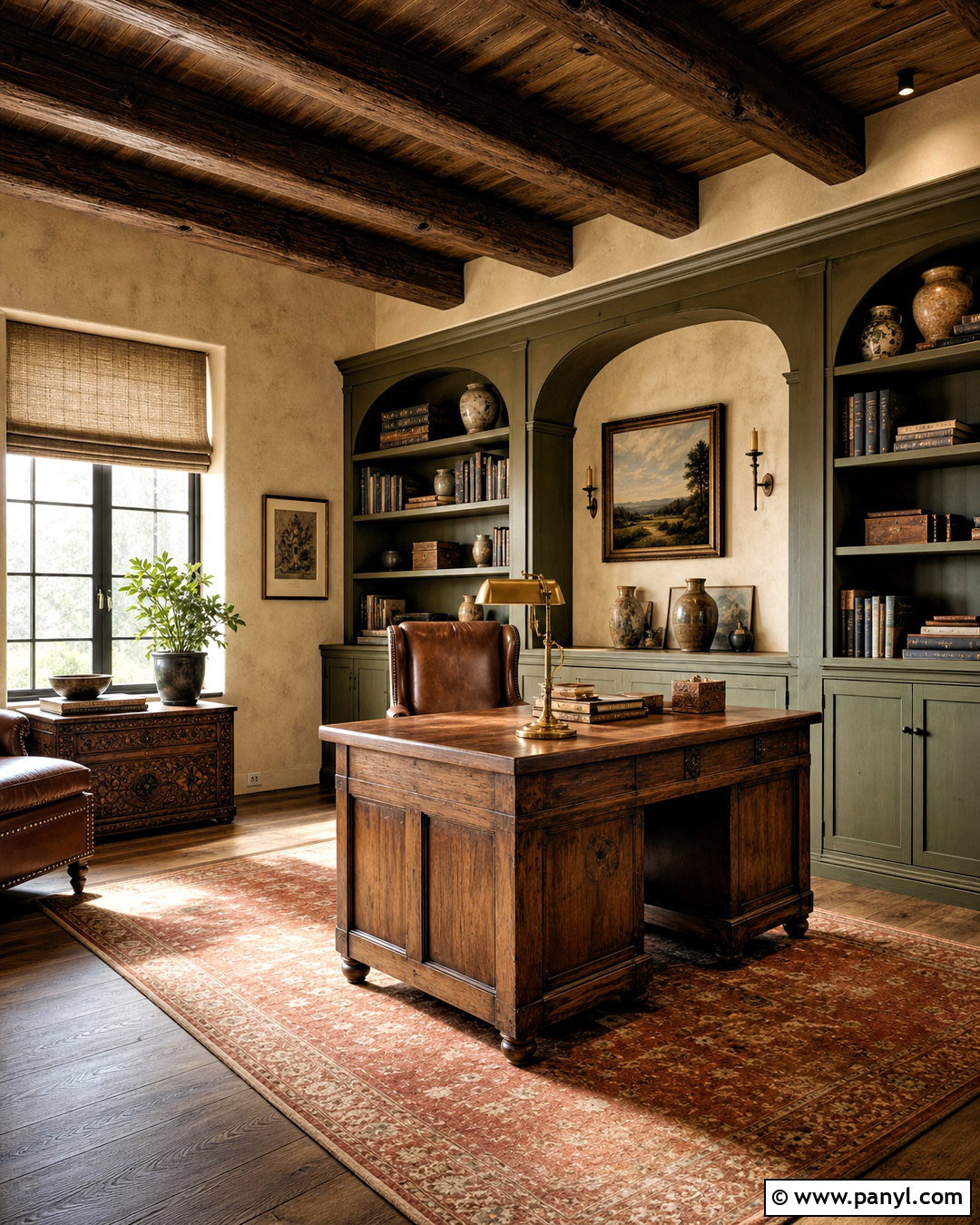
If a home office feels too sterile, a Tuscan scheme can make it more inviting without reducing productivity. Position a substantial oak writing desk near the window and pair it with a supportive chair upholstered in warm brown leather. Built-in bookcases painted muted olive green can cover one wall, combining concealed lower cabinets with open shelves above. Apply creamy plaster to the remaining walls and install medium-tone wood flooring under a faded rust-colored rug. A linen Roman shade controls glare while maintaining a soft appearance. Add an aged brass desk lamp and simple iron ceiling fixture for layered lighting. Style the shelves with books, stoneware, framed artwork, and storage boxes, leaving open space between groupings. The complete office will feel established, calm, and practical rather than overly decorated.
12. Tuscan Entryway
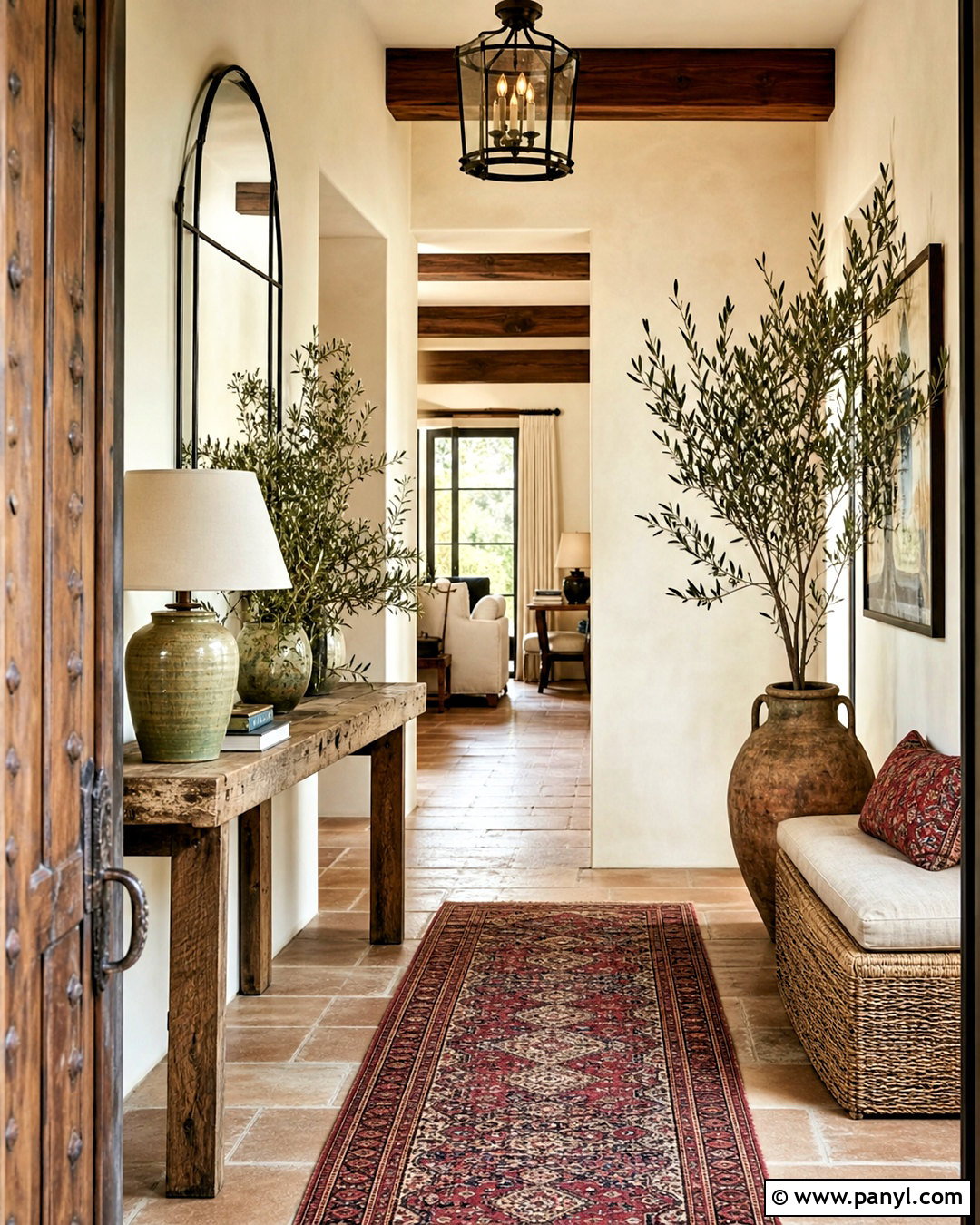
First impressions become warmer when the entryway uses a limited selection of sturdy, natural materials. Lay rectangular terracotta tiles in a running-bond pattern and pair them with soft ivory plaster walls. Place a narrow reclaimed-wood console along the longest wall, leaving sufficient room for an easy walking path. An oversized iron-framed mirror above the console reflects daylight and visually expands the space. Add a woven bench with hidden shoe storage, a tall ceramic lamp, and a large earthenware vessel filled with olive branches. A muted red and beige runner helps guide movement toward the adjoining rooms. If space permits, use a compact aged iron lantern overhead. This complete entrance introduces the home’s Tuscan character through texture and craftsmanship while remaining organized, bright, and useful for everyday arrivals.
13. Tuscan Staircase
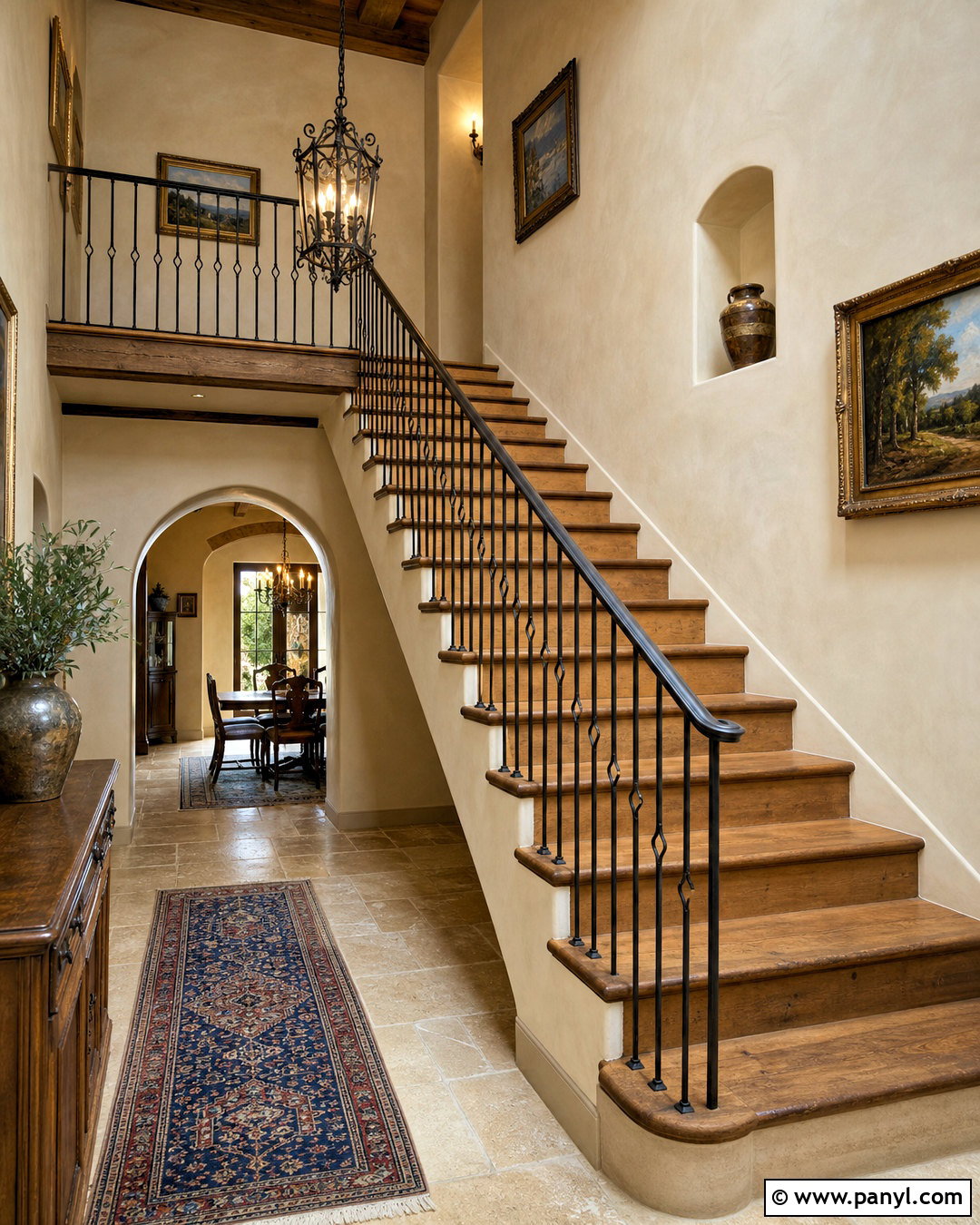
A staircase can become an architectural centerpiece instead of merely connecting two floors. Cover the surrounding walls in warm cream limewash and use thick oak treads with softly rounded edges. Slender wrought-iron balusters paired with a dark wood handrail create a classic Tuscan combination, but simple lines prevent the railing from looking dated. Add a large antique-style lantern over the stairwell where it can illuminate both levels. Along the landing, arrange a restrained gallery of landscape paintings in aged wood frames. A narrow console or built-in niche can display one sculptural ceramic vessel. Use limestone tile at the base of the stairs to connect the feature to nearby rooms. The entire composition should emphasize graceful proportions, durable materials, and clear sightlines rather than ornamental scrollwork.
14. Tuscan Family Room
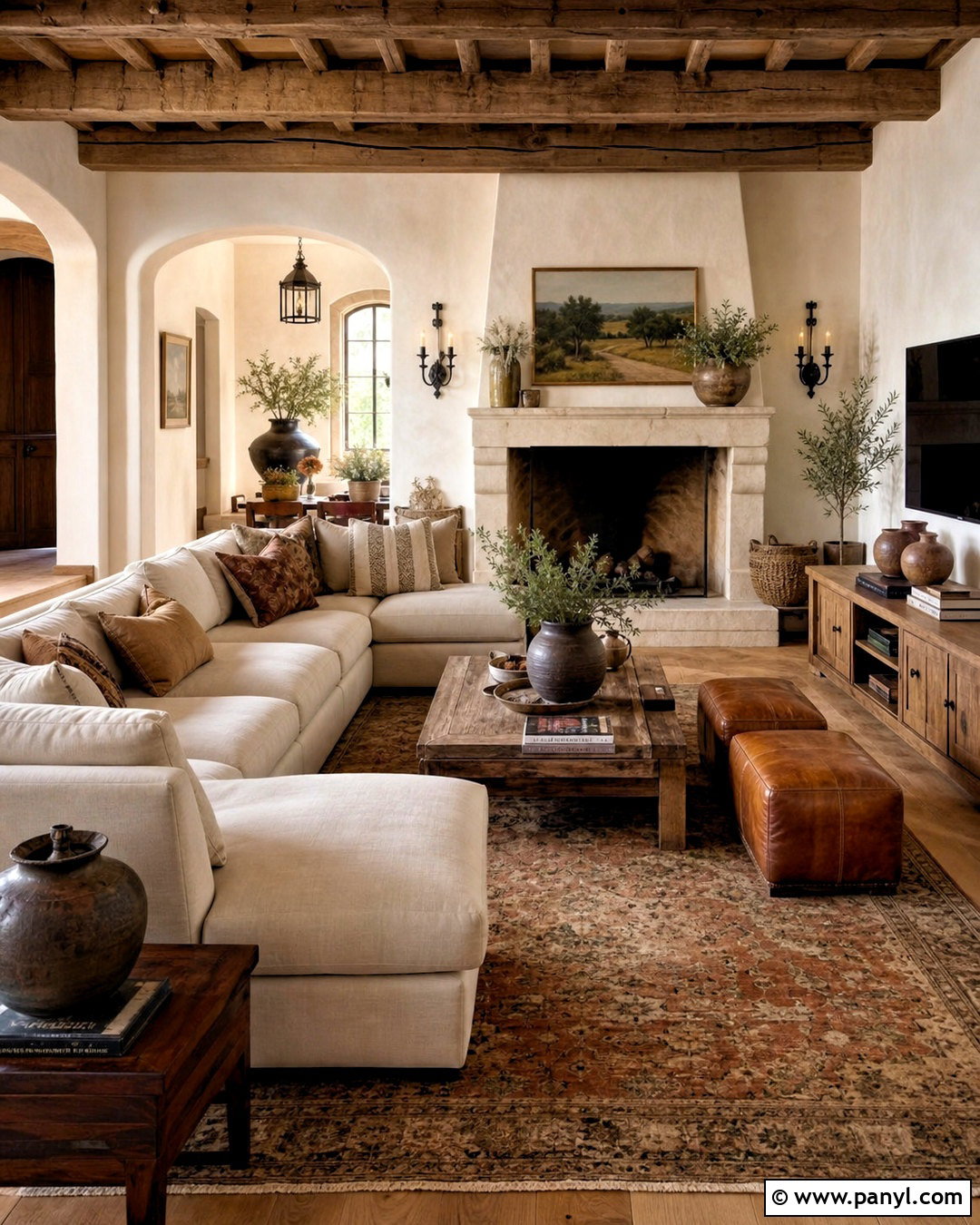
Busy households need a Tuscan family room that feels relaxed rather than formal. Arrange a deep oatmeal sectional facing a simple stone fireplace and a low oak media cabinet. Two movable leather ottomans can provide extra seating, footrests, or surfaces for trays. Use a large wool rug in muted rust, olive, and cream to define the conversation area over durable wide-plank flooring. Warm white plaster walls prevent the substantial furniture from overwhelming the space. Add washable linen-blend pillows, woven baskets for blankets, and a round coffee table without sharp corners. Conceal electronics inside ventilated cabinetry and keep visible cords to a minimum. Reclaimed ceiling beams, iron sconces, pottery, and one oversized landscape print complete the room while preserving enough open floor area for comfortable daily activity.
15. Tuscan Sunroom
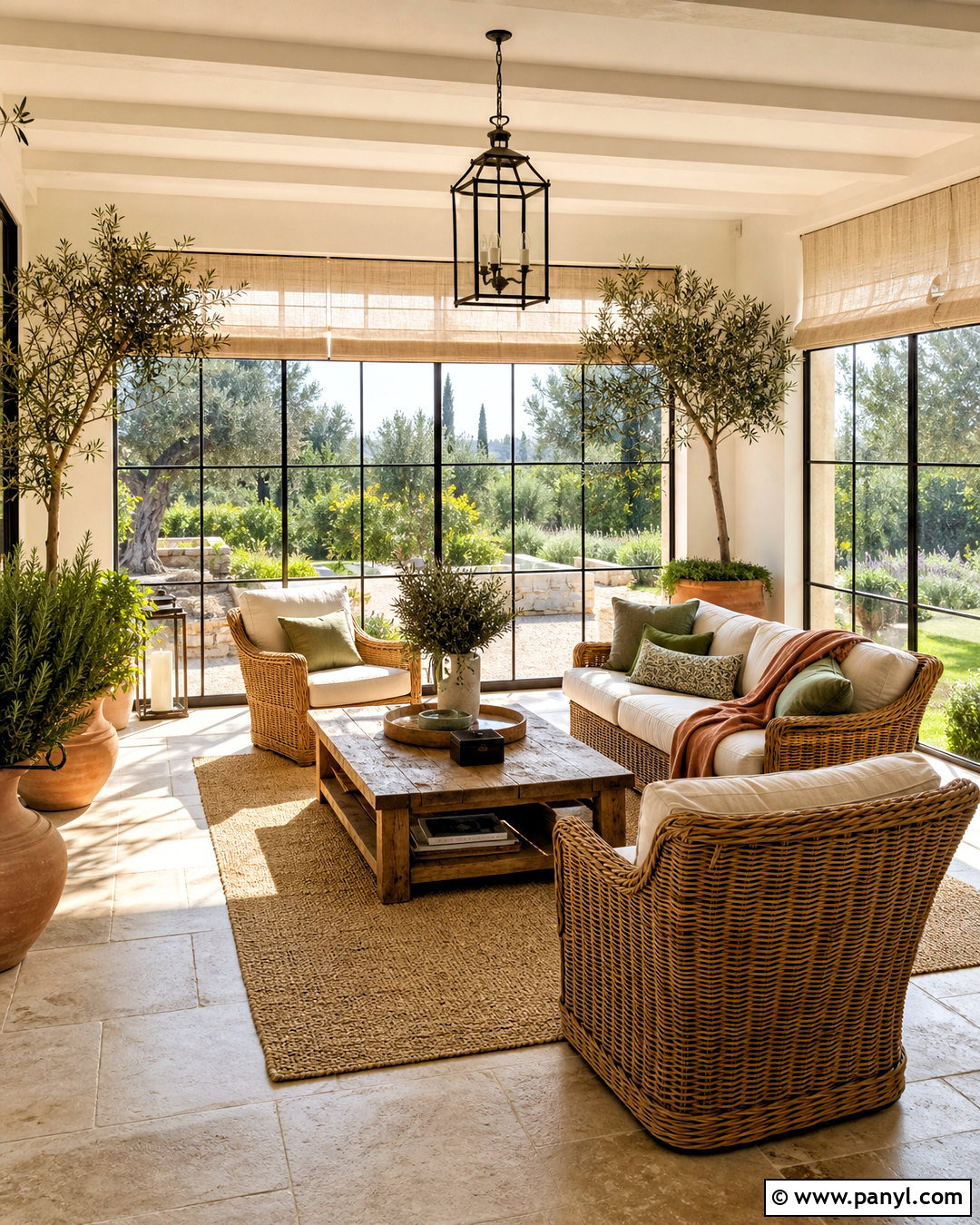
Sunlight, greenery, and relaxed seating make a natural foundation for a Tuscan sunroom. Choose pale limestone floor tiles that stay visually cool and work well beside garden-facing windows. Arrange a woven rattan sofa and two comfortable armchairs around a round reclaimed-wood coffee table. Ivory seat cushions, sage green pillows, and one faded terracotta throw bring the landscape palette indoors. Keep the walls creamy white and use relaxed linen shades where privacy is needed. A simple iron pendant provides evening light without competing with the view. Group large terracotta planters near the windows and fill them with olive trees, rosemary, or other sun-loving greenery. A woven rug anchors the furniture. The complete room should function as a bright transition between the main house and outdoor living spaces.
16. Tuscan Reading Room
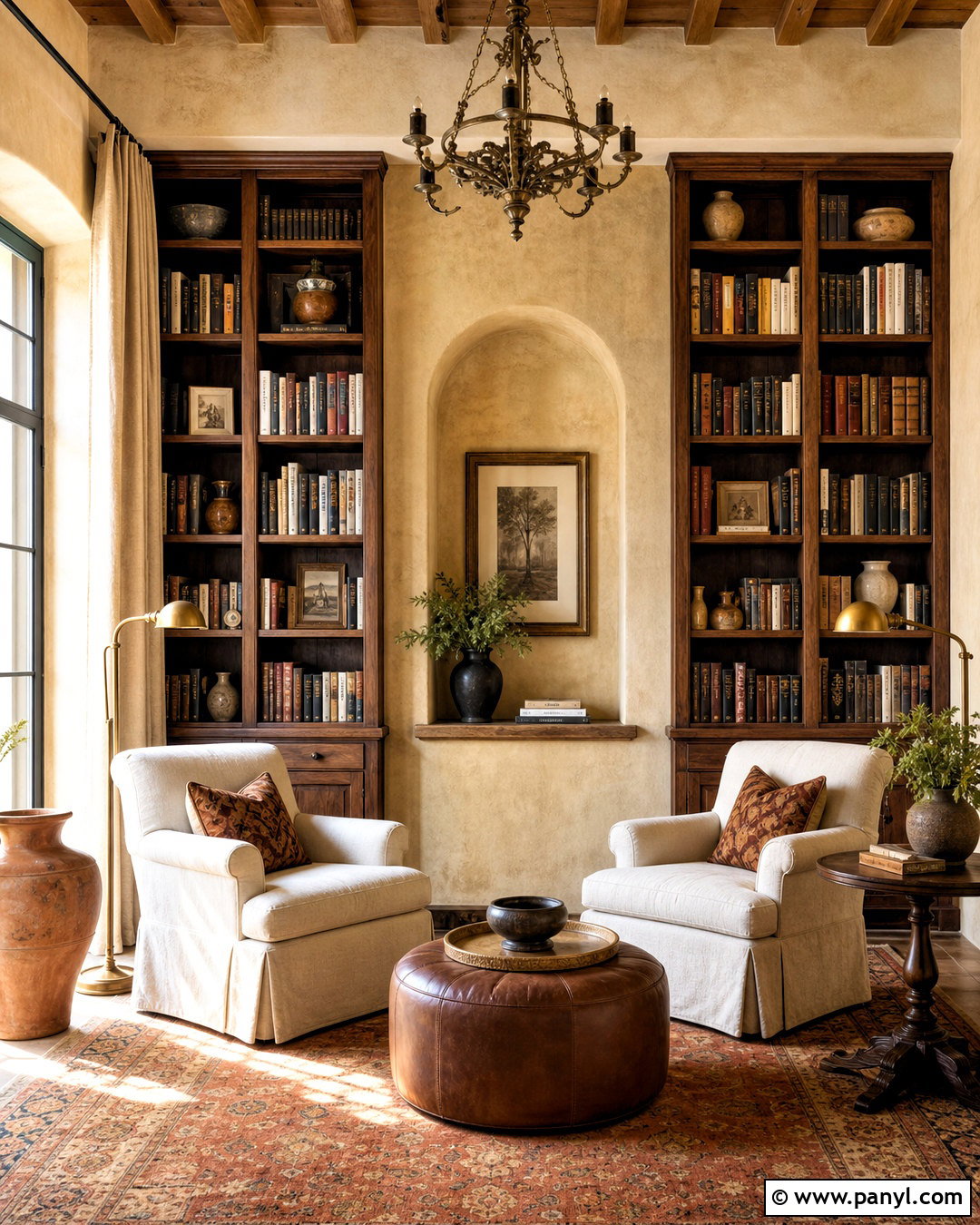
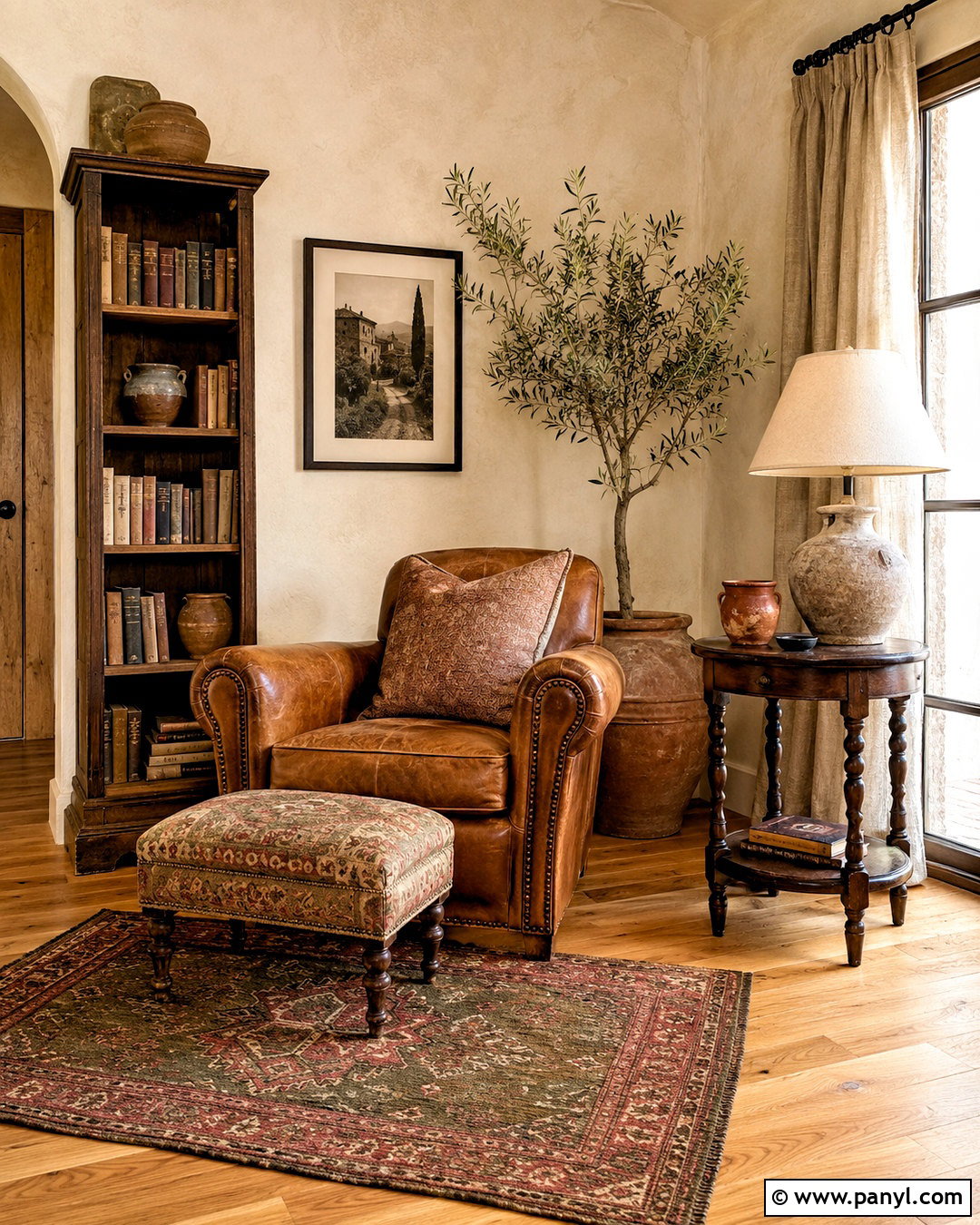
There is something especially comforting about books surrounded by warm wood and softly textured walls. Create a Tuscan reading room with floor-to-ceiling walnut shelves, leaving room for a centered arched niche or framed painting. Place two generously cushioned linen chairs near the window with a small round table between them. A cognac leather ottoman and faded Persian-style rug add deeper color without making the room feel formal. Paint or limewash the walls in warm sand and use linen curtains to diffuse direct sunlight. Layer an iron ceiling fixture with adjustable brass reading lamps for practical illumination. Arrange books both vertically and horizontally, then add only a few ceramic vessels and small framed pieces. This complete space encourages quiet use while balancing traditional craftsmanship with comfortable, straightforward furniture.
17. Tuscan Laundry Room
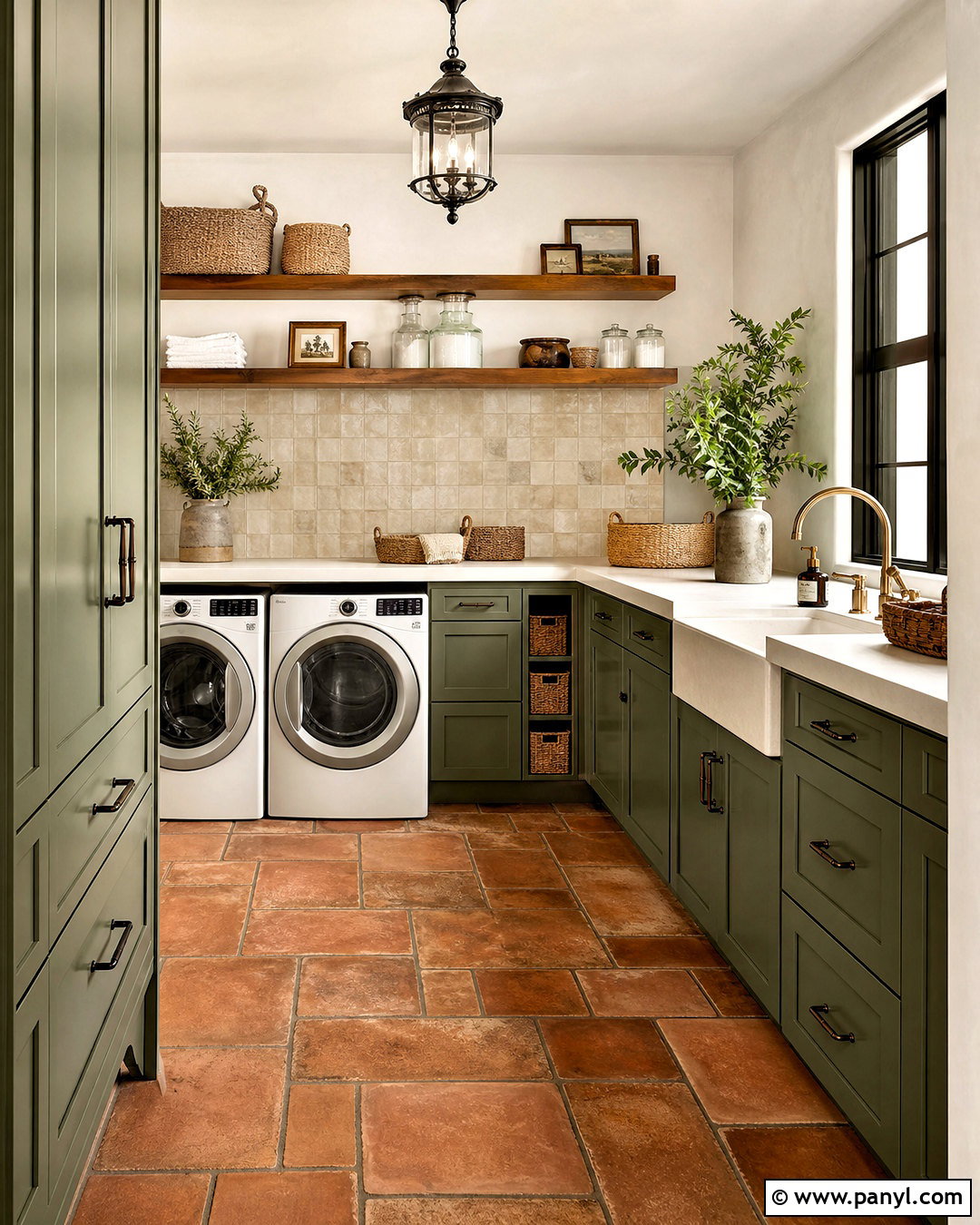
Even a hardworking laundry room can carry the warmth of Tuscan design. Install muted sage green cabinets with shaker-style doors and pair them with a durable cream quartz counter above the front-loading machines. Use warm terracotta-look porcelain tile on the floor because it offers rustic color with easier maintenance. A small handmade-look beige backsplash protects the wall behind a deep utility sink. Open oak shelves can hold woven baskets, glass containers, and neatly folded linens. Add an aged brass faucet, simple bronze cabinet pulls, and a flush-mounted iron light fixture. Creamy plaster-look paint keeps the compact room bright. Include a hanging rail, concealed hamper storage, and a narrow drying rack. The finished layout combines practical organization with the natural colors and tactile finishes associated with Tuscan interiors.
18. Tuscan Hallway
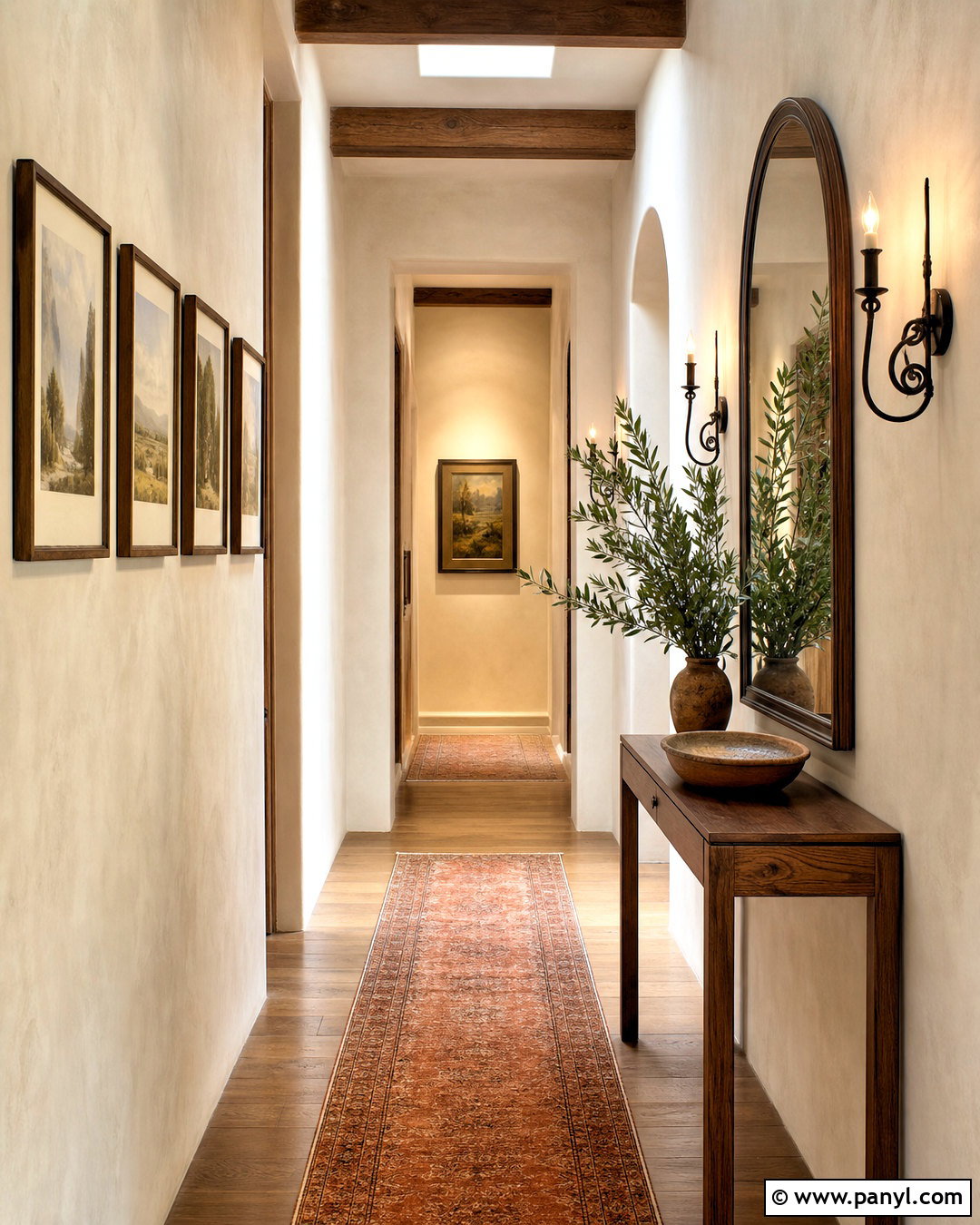
Long hallways often feel empty, but too much decoration can make them difficult to navigate. Give the space a Tuscan foundation with softly mottled ivory walls, warm oak flooring, and a narrow rust-colored runner. Place a slim walnut console at the widest point and hang a large arched mirror above it to reflect light. A pair of understated iron sconces adds warmth without projecting too far into the walkway. Use a small collection of landscape prints in wood frames along the opposite wall, maintaining consistent spacing for a calm appearance. One ceramic bowl and a leafy branch arrangement are enough for the console. If the hallway connects several rooms, repeat colors and finishes already used nearby. This approach creates continuity while keeping the passage open, functional, and visually balanced.
19. Tuscan Open Concept Interior
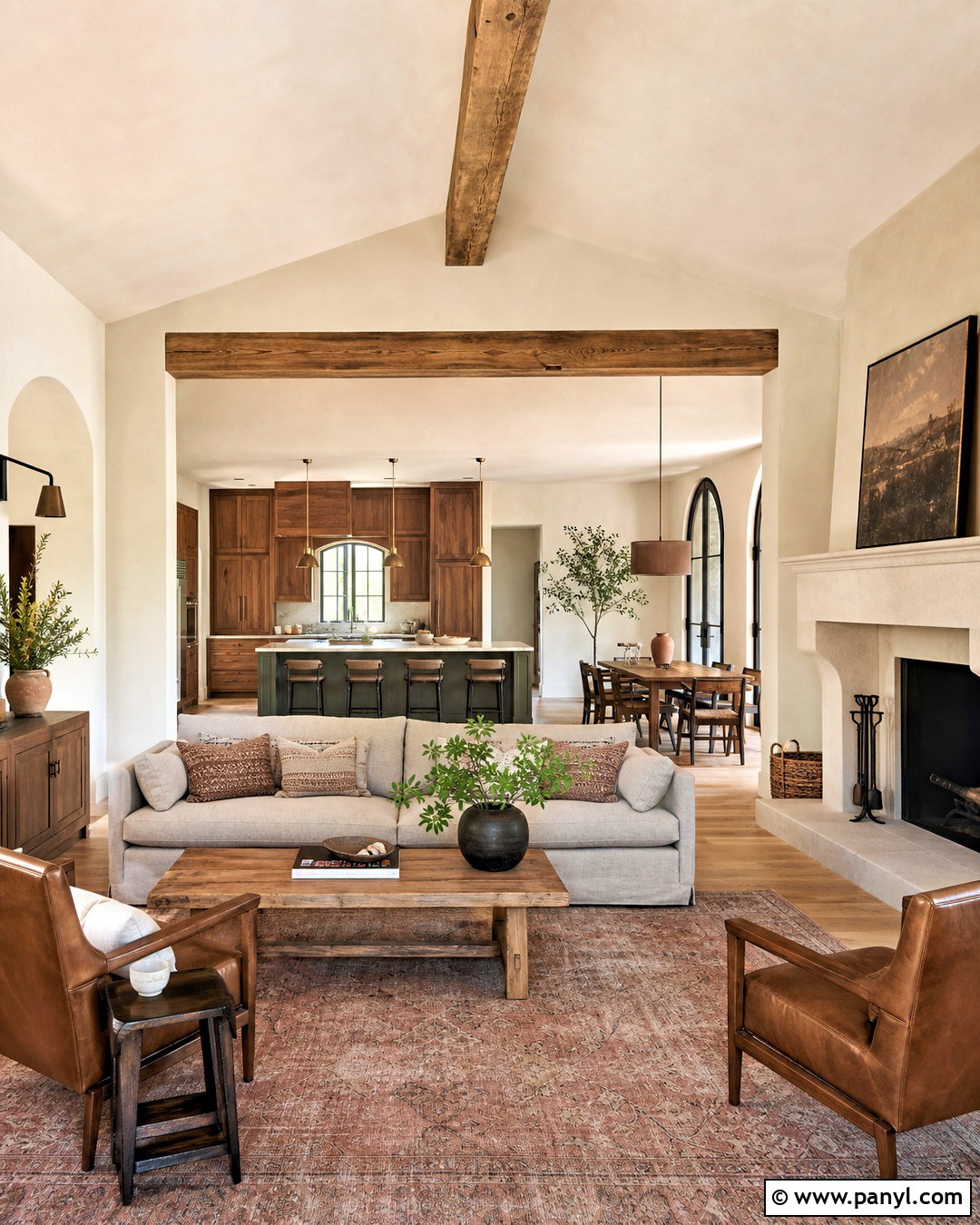
An open floor plan needs repeated materials and colors to feel cohesive. Use continuous medium-tone oak flooring across the kitchen, dining area, and living room. Warm ivory plaster walls provide a consistent envelope, while walnut cabinetry and a matching dining table connect the separate zones. In the kitchen, choose creamy stone counters and a muted olive island. Position a simple oak dining table between the kitchen and living room, then anchor the seating area with a large faded terracotta rug. An oatmeal sofa, leather chairs, and a limestone fireplace complete the living zone. Repeat aged brass lighting and restrained black iron accents throughout all three areas. The arrangement should provide clear circulation paths and distinct functions while preserving the welcoming, unified character expected from Tuscan interior design.
20. Small Tuscan Apartment
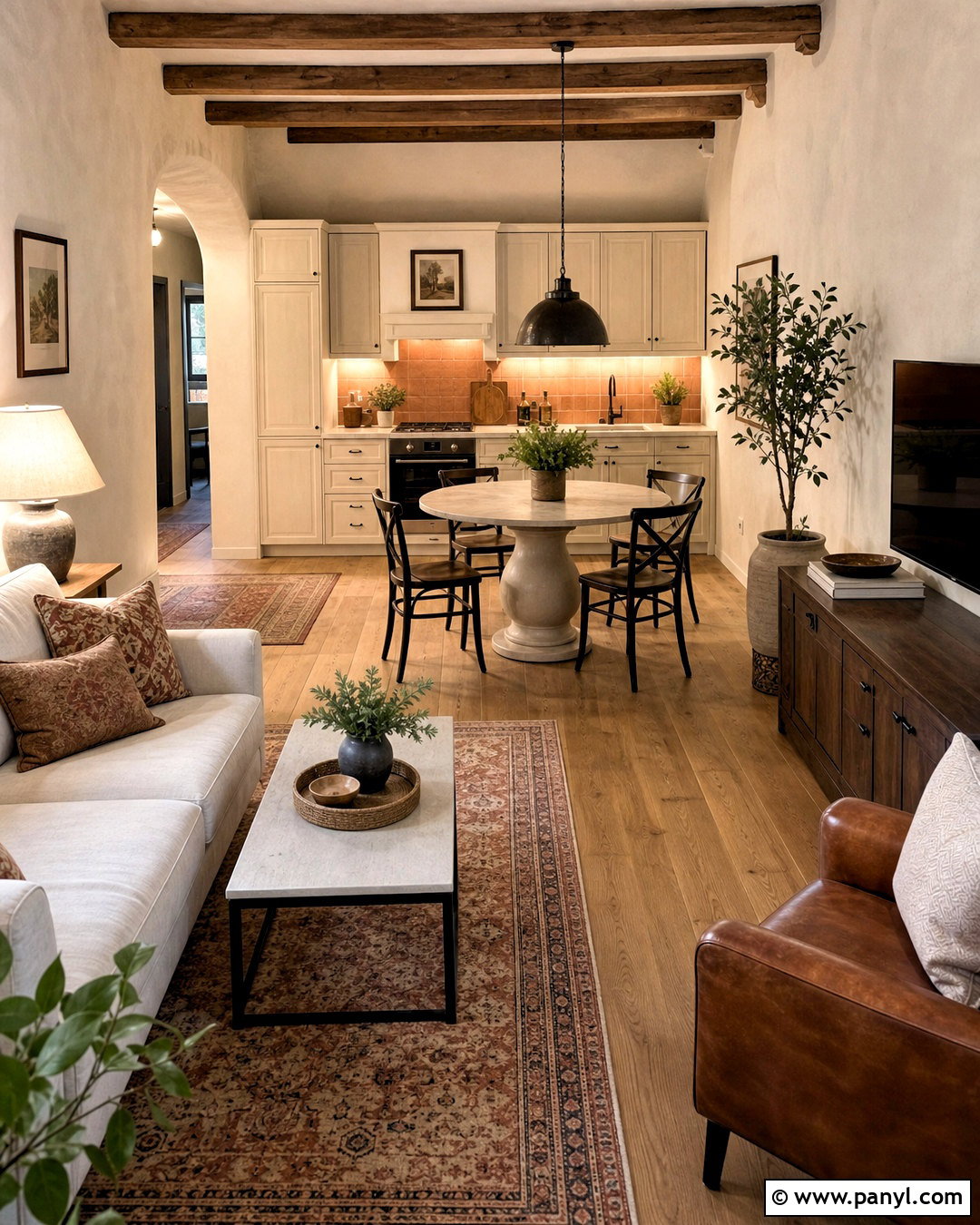
Limited square footage does not require abandoning Tuscan warmth. Start with off-white plaster-look walls and light oak flooring to make the apartment feel open. Choose a compact cream sofa, one cognac leather chair, and a round pedestal dining table that can serve as a workspace. A low walnut media unit provides closed storage without visually crowding the living area. In the kitchen, use warm white cabinets, beige stone counters, and a narrow section of handmade terracotta backsplash tile. Keep window treatments light with ivory linen panels. One faded rust rug can unify the main seating zone, while ceramic lamps and a simple iron pendant add character. Select a few larger accessories instead of many small objects. The result feels warm, functional, and distinctly Tuscan despite the apartment’s modest dimensions.
Conclusion:
These **20 tuscany interior design ideas** show how earthy color, natural texture, comfortable furniture, and practical layouts can work together throughout an entire home. For a current look, emphasize creamy plaster, honest wood grain, warm stone, terracotta, linen, and restrained metalwork. Avoid filling every room with dark furniture, ornate scrolls, or matching themed accessories. Instead, let a few aged pieces provide character alongside simpler furnishings and brighter backgrounds. You can begin with one manageable update, such as a textured wall finish, faded rug, wooden table, or ceramic lamp. As those materials repeat naturally from room to room, your home will develop the relaxed warmth and enduring beauty associated with the Tuscan countryside.

Related Ideas and Inspiration:
Leave a Reply