
Maximalism celebrates personality through saturated color, expressive pattern, collected objects, and layers that make a home feel deeply personal. The best maximalist rooms are not random or overcrowded. They use repetition, scale, and a clear focal point to organize visually rich details. Current approaches also favor statement lighting, color-drenched surfaces, vintage pieces, expressive stone, and displays that can evolve over time. () Start with one anchor, such as wallpaper, a colorful sofa, or a dramatic rug. Then repeat several of its colors throughout the furniture, artwork, and accessories. Leave a few quieter surfaces so every special piece has room to shine. The following 20 maximalism interior design ideas offer complete, practical looks for rooms of every size.
1. Maximalist Living Room
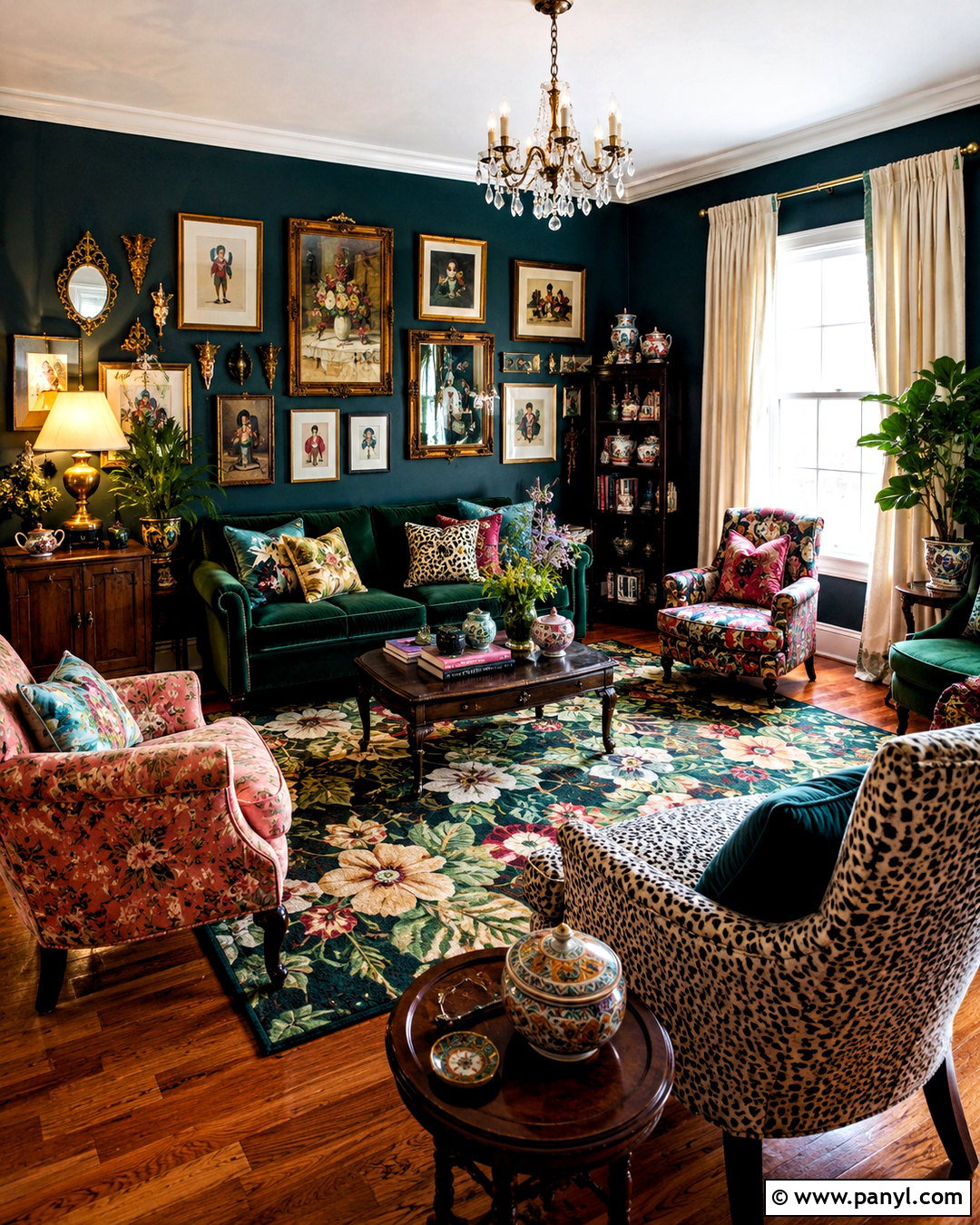
Build a maximalist living room around one confident anchor, such as an emerald velvet sofa or a large botanical rug. Paint the walls deep teal, then soften the saturated color with warm oak flooring and ivory curtains edged in patterned trim. Add two mismatched armchairs that share colors with the rug, ensuring the arrangement still feels connected. A salon-style gallery wall can combine paintings, photographs, mirrors, and small sculptural pieces in brass and dark wood frames. Layer patterned pillows carefully, moving from large florals to medium geometrics and narrow stripes. Finish with a substantial coffee table, stacked books, colorful ceramics, and several lamps. Keeping clear walking paths and one open tabletop area prevents the full room from becoming visually tiring.
2. Maximalist Bedroom
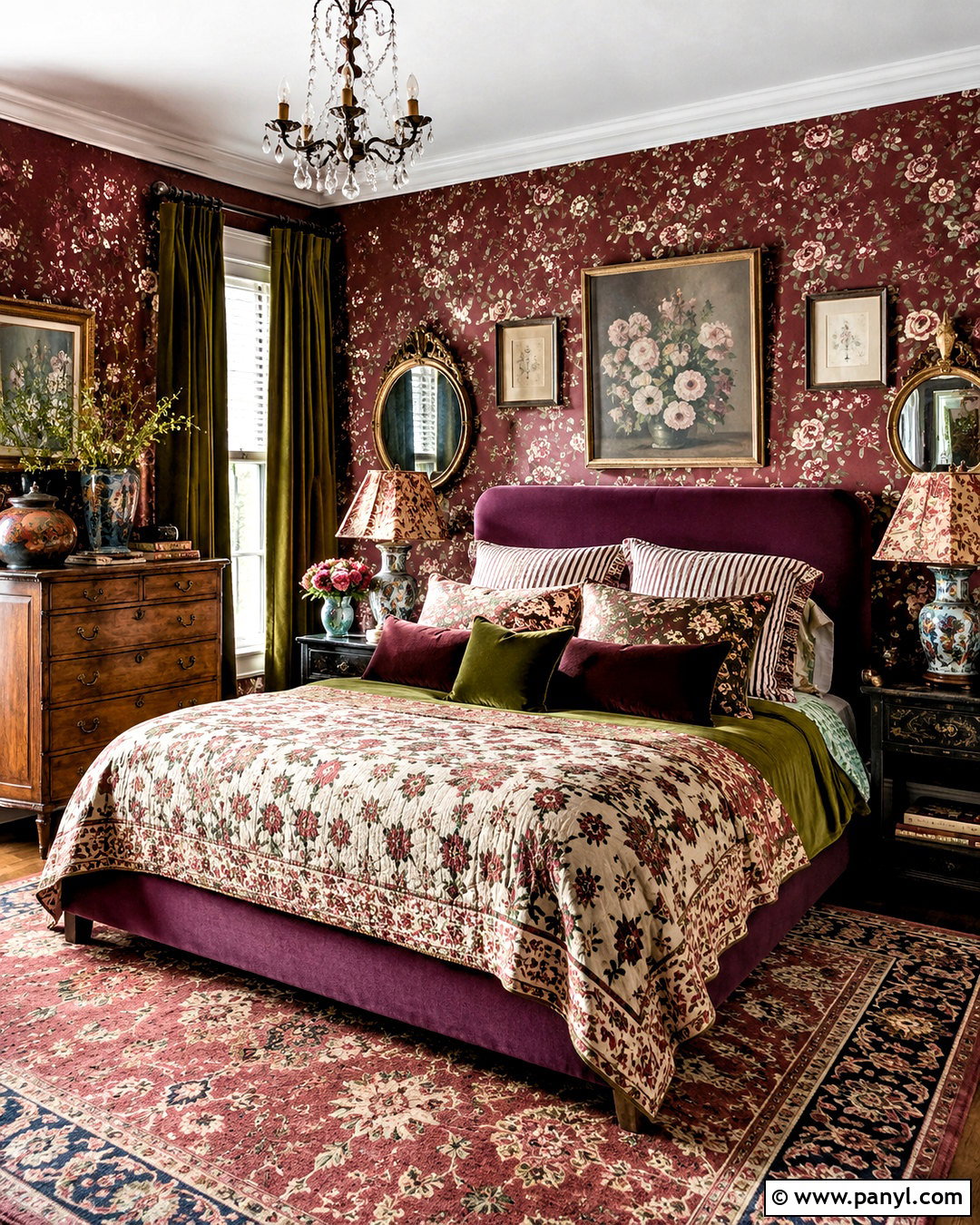
Imagine waking up inside a room wrapped in color, softness, and meaningful details. Begin with floral wallpaper featuring burgundy, blush pink, olive green, and muted blue. Choose an upholstered bed in solid plum velvet so it stands apart from the pattern without competing with it. Dress the bed with crisp sheets, a block-printed quilt, striped pillows, and one textured lumbar cushion. Matching nightstands are not required, but similar heights will create balance. Add painted lamps, framed art, and a patterned wool rug that extends beyond the bed. Floor-length curtains in solid olive provide a necessary visual pause. Complete the bedroom with an antique dresser, a decorative mirror, and closed storage that keeps everyday clutter separate from intentional maximalist decoration.
3. Maximalist Kitchen
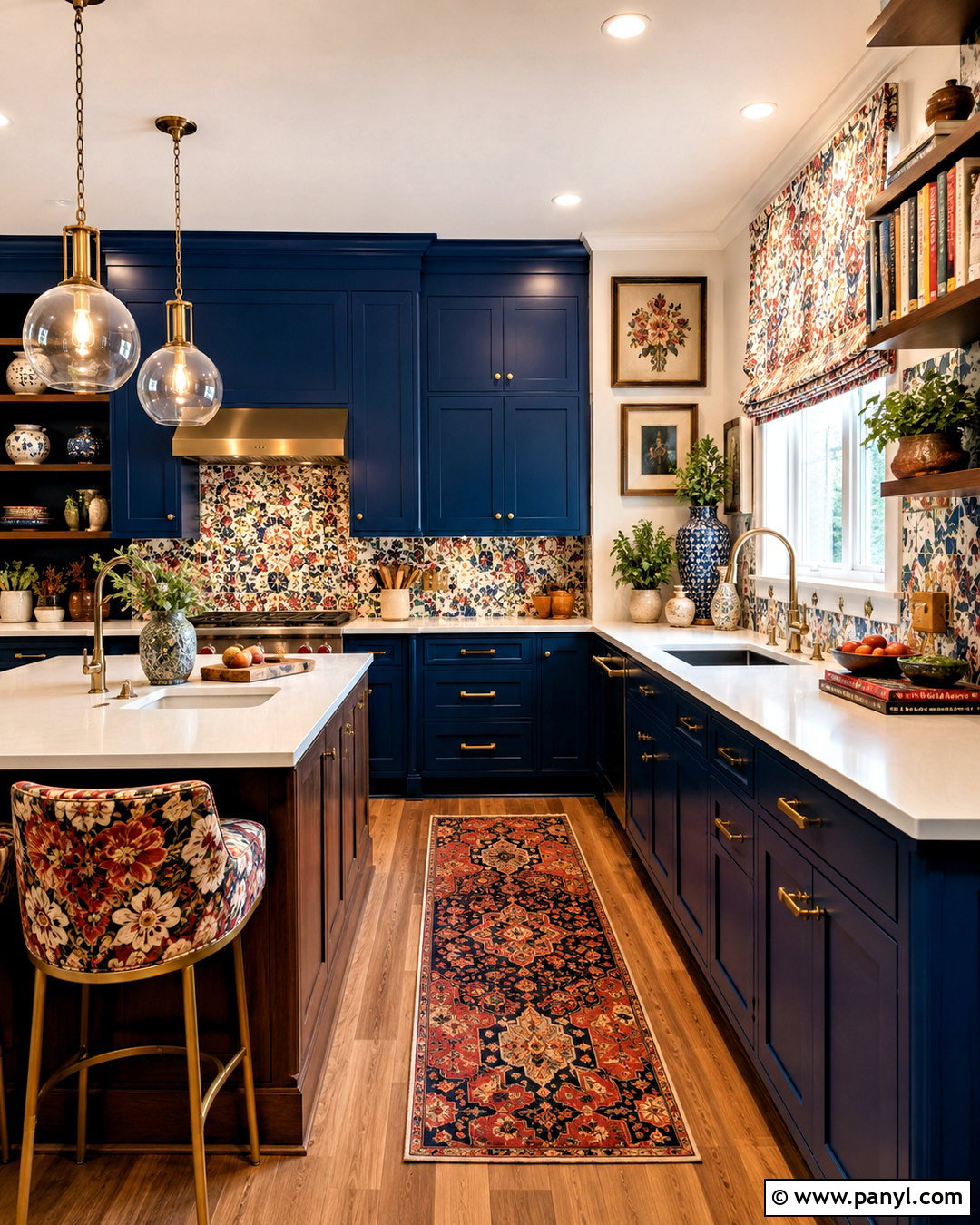
A hardworking kitchen can feel joyful without sacrificing organization. Use deep cobalt blue cabinets as the foundation, paired with a lively backsplash of floral or geometric tiles in blue, yellow, white, and terracotta. Warm white quartz counters will balance the pattern and provide an easy-to-maintain work surface. Hang three sculptural glass pendants above a walnut island with upholstered counter stools. Display coordinated pottery, cookbooks, and serving pieces on one section of open shelving rather than covering every wall. A patterned runner can introduce softness and connect the cabinetry to the accent colors. Finish with aged brass hardware, framed artwork, and a Roman shade in a small-scale print. Keep appliances, utensils, and pantry supplies behind closed doors so the decorative layers remain deliberate and functional.
4. Maximalist Dining Room
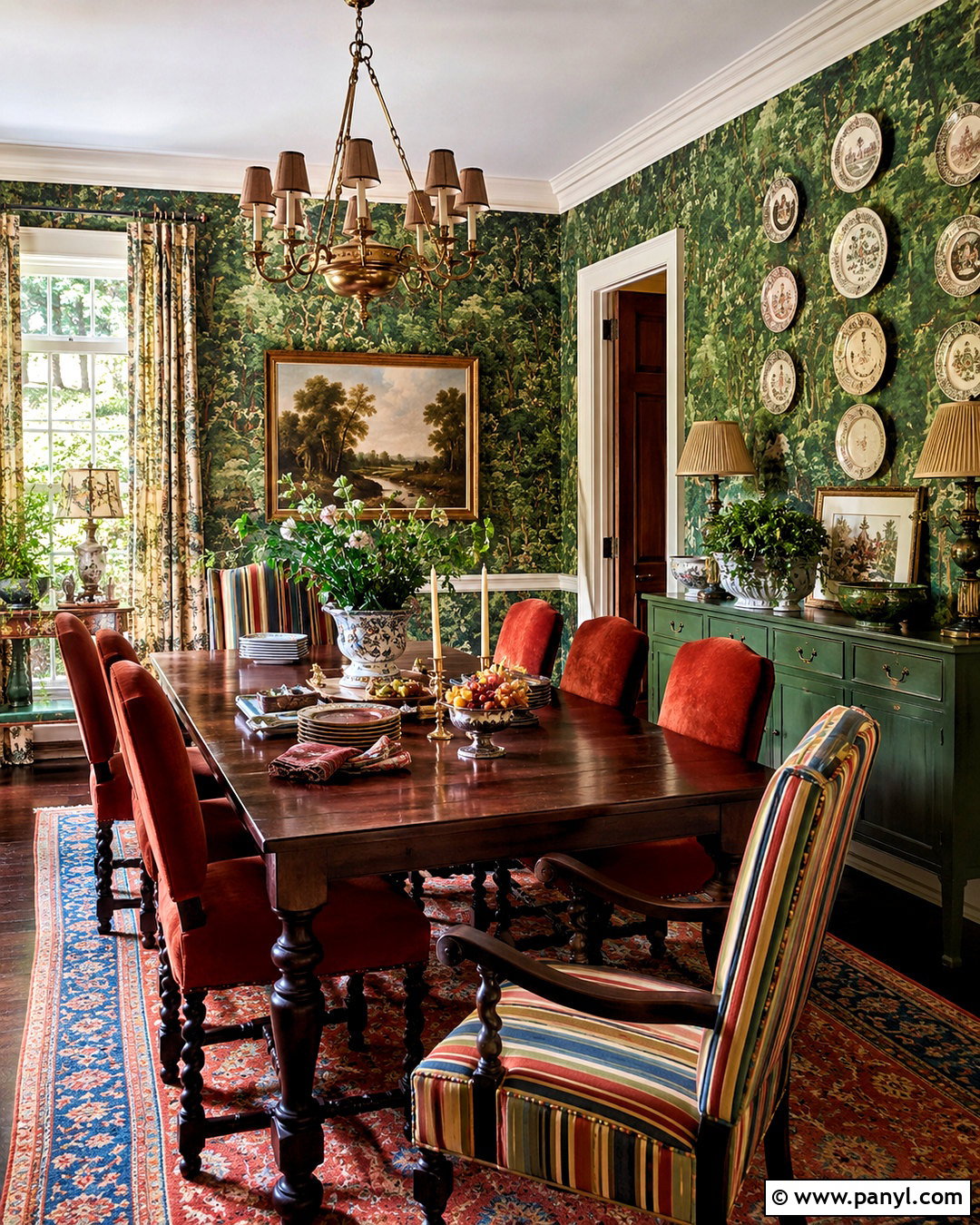
For memorable dinners, create a dining room that feels collected rather than formally matched. Cover the walls in a scenic wallpaper with forest green, faded gold, dusty rose, and soft cream. Center the space with a dark wood table large enough to ground the detailed background. Surround it with upholstered chairs in two coordinating fabrics, such as striped end chairs and solid rust side chairs. A vintage-inspired chandelier can introduce sculptural shape above the table without blocking sightlines. Place a large patterned rug underneath, leaving enough room for chairs to slide back comfortably. Add a painted sideboard, decorative lamps, and an asymmetrical arrangement of framed art and ceramic plates. Repeat green and rust in the table linens to make every layer feel intentional.
5. Maximalist Bathroom
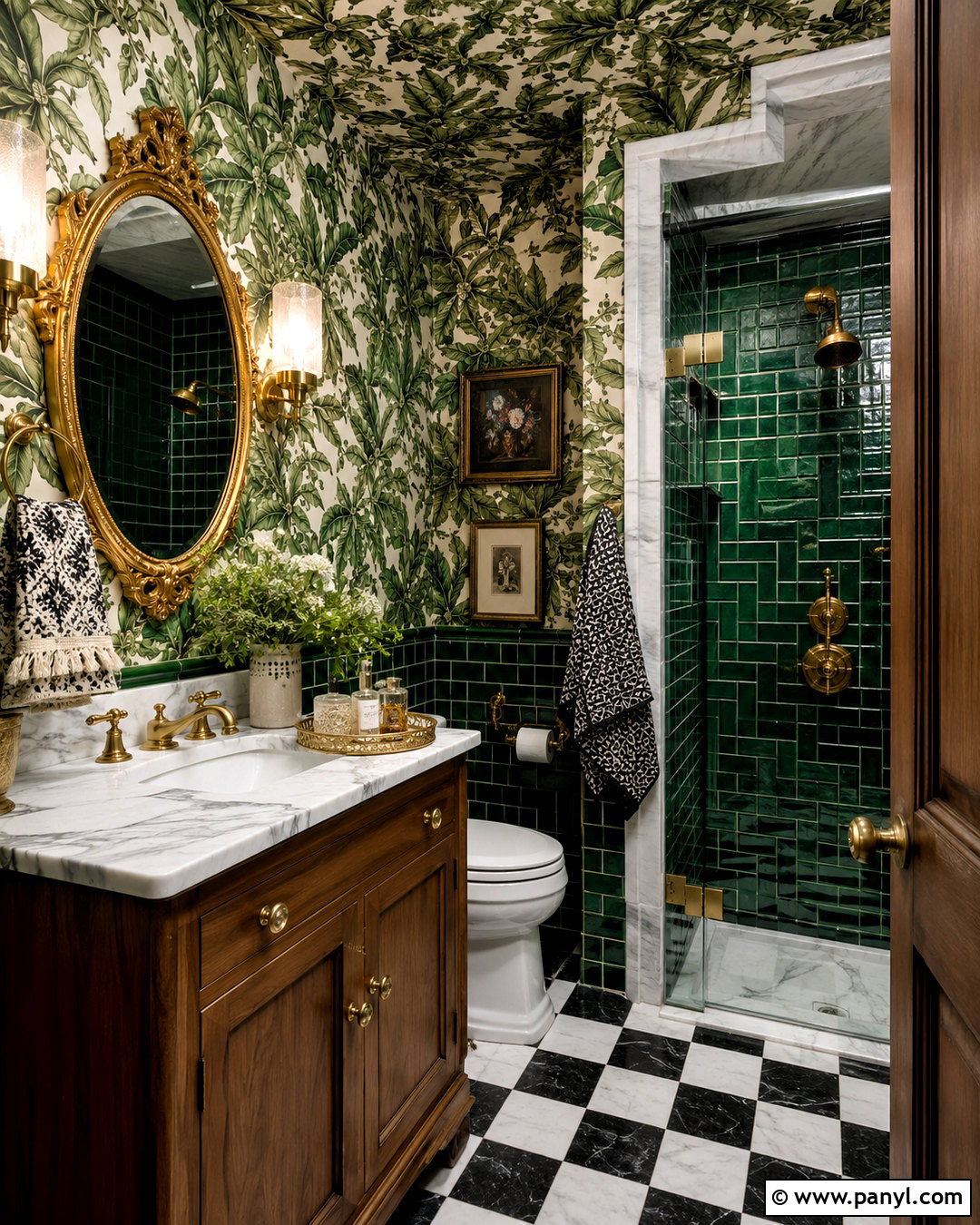
Could a small bathroom become the most expressive room in the house? Cover the walls and ceiling with a bold botanical wallpaper, then install glossy forest green tile around the lower portion of the room for durability. A compact walnut vanity with a veined marble top introduces natural pattern without overwhelming the limited space. Choose an ornate brass mirror and matching wall sconces to create a polished focal point above the sink. Black-and-white checkerboard flooring adds another graphic layer while remaining visually familiar. Include framed artwork, patterned hand towels, and one decorative tray for daily essentials. Closed drawers are important because they keep toiletries from competing with the design. Proper ventilation and wallpaper rated for humid conditions will help this maximalist bathroom stay attractive and practical.
6. Maximalist Home Office
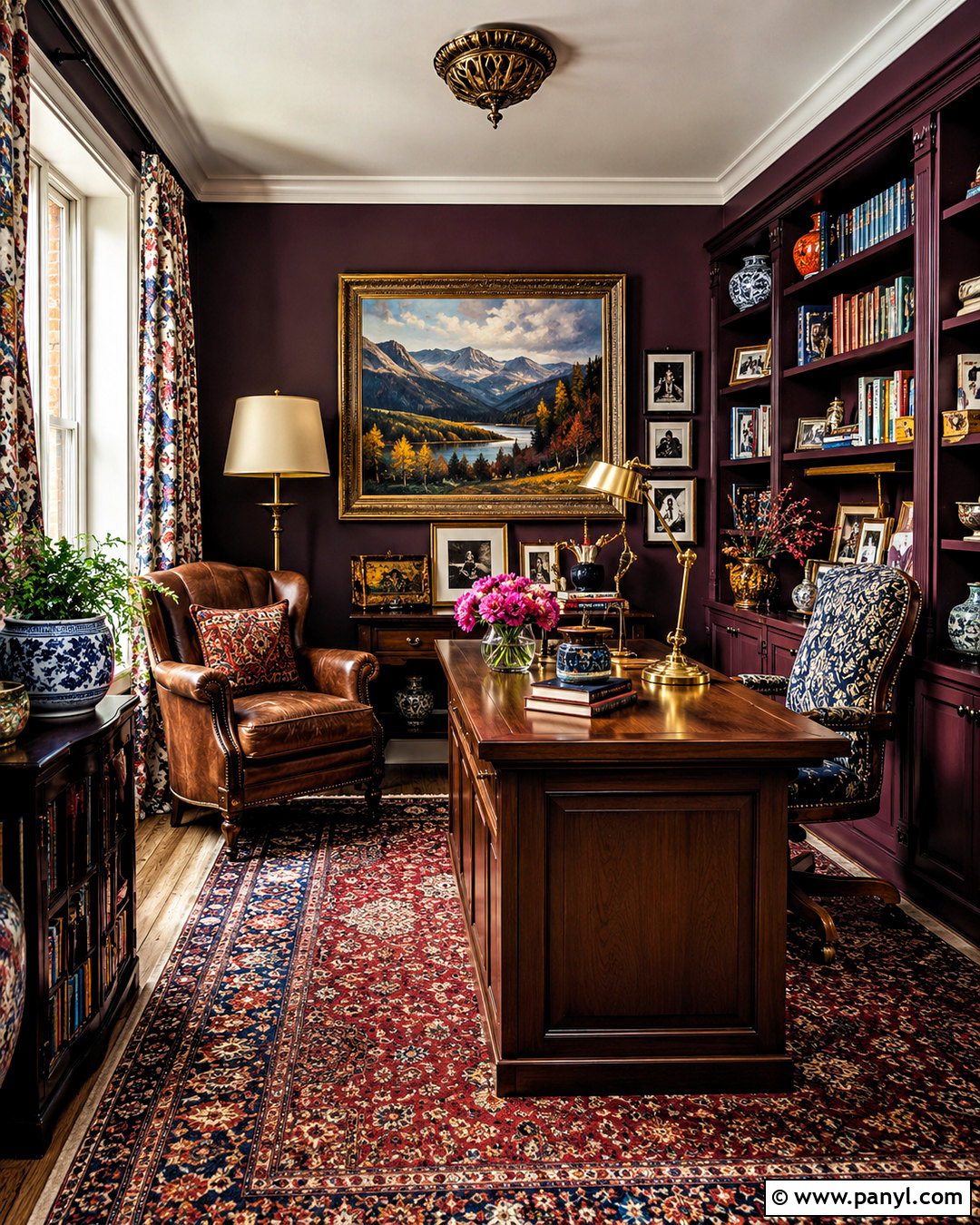
Turn a practical workspace into an inspiring room by starting with walls painted rich aubergine or dark raspberry. Place a substantial walnut desk near a window, then add a patterned upholstered chair that supports comfortable daily use. Built-in shelving can hold books, framed photographs, ceramics, and storage boxes arranged in loose color groups. Hang a large landscape painting behind the desk to establish a clear focal point. A Persian-style rug in red, navy, and cream will warm the floor while connecting the room’s many colors. Layer a brass desk lamp with an overhead pendant and a shaded floor lamp for flexible lighting. Finish with patterned curtains and a small reading chair. Leave open space around the computer and work surface so the office remains productive, not merely decorative.
7. Maximalist Entryway
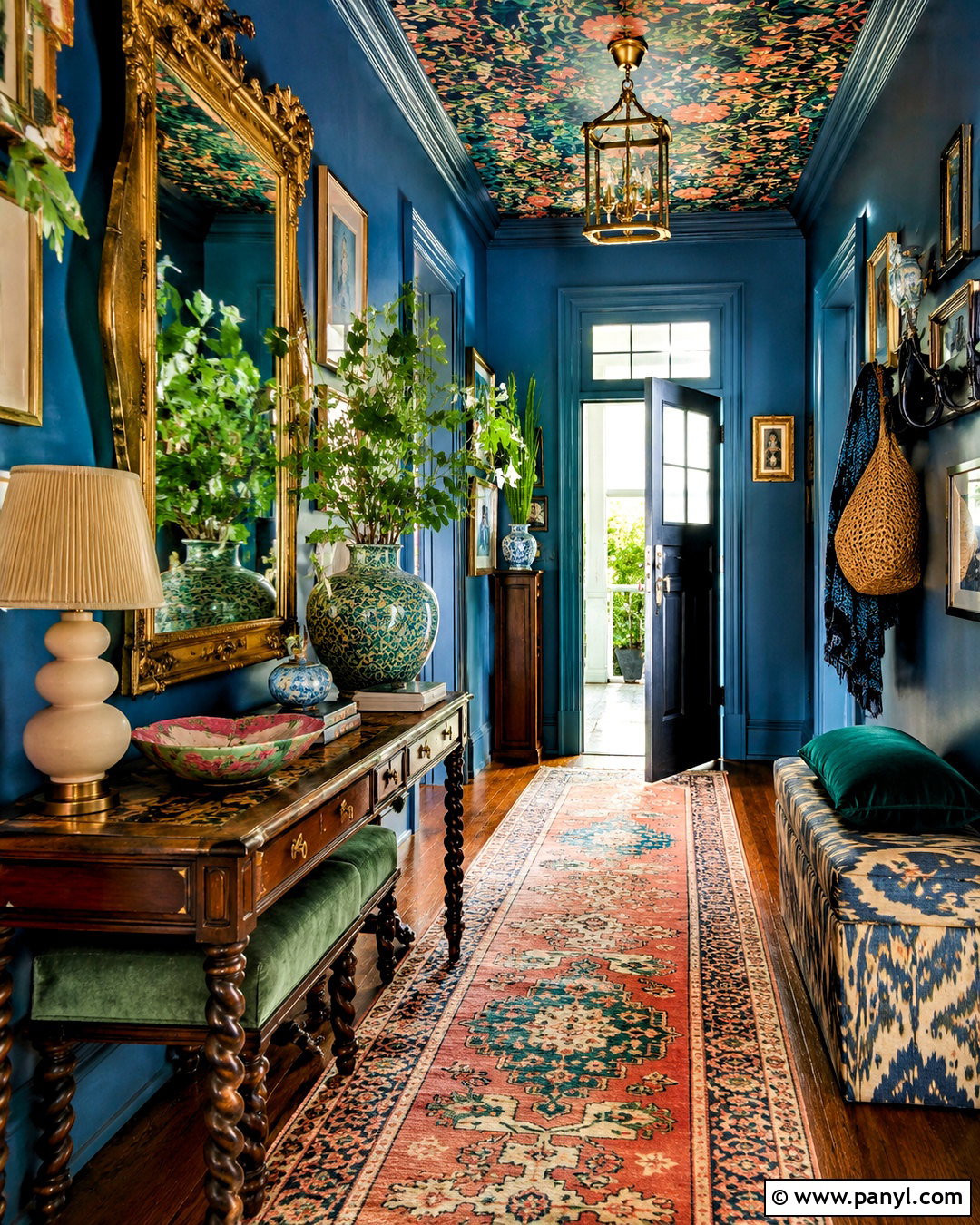
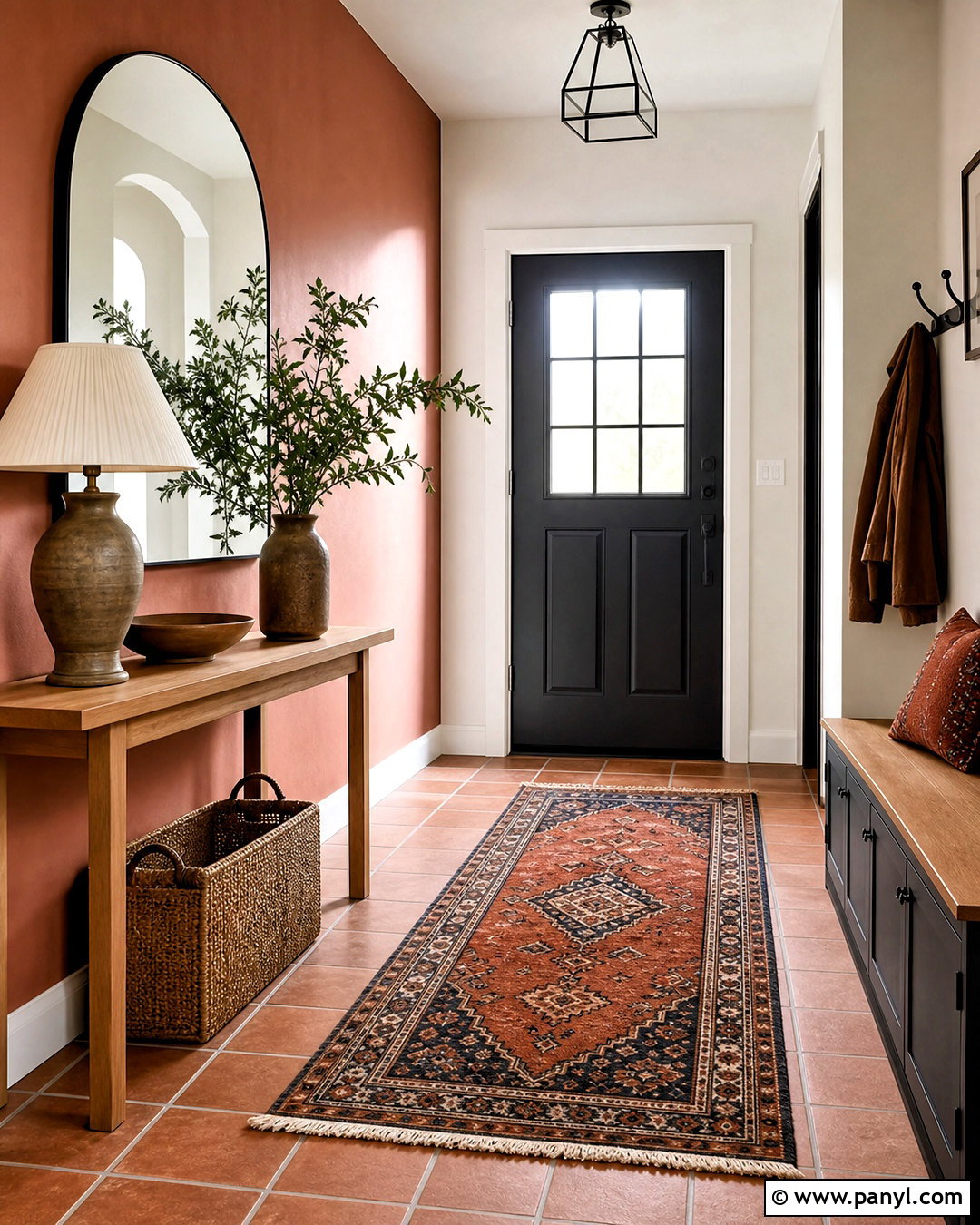
The entryway should introduce the home’s personality while handling shoes, bags, and daily traffic. Paint the walls a saturated peacock blue and add a patterned stair runner or washable rug containing coral, cream, and green. Position a narrow vintage console against the main wall, topped with a bold lamp, decorative bowl, and fresh foliage. Above it, hang an oversized gilded mirror surrounded by several smaller artworks. A patterned upholstered bench provides seating and hidden storage, while brass hooks keep frequently used items organized. If space permits, wallpaper the ceiling with a small repeating motif for an unexpected layer. Repeat the brass finish in the light fixture and hardware. Keeping the floor mostly open will make the colorful, collected entrance feel welcoming rather than cramped.
8. Maximalist Small Apartment
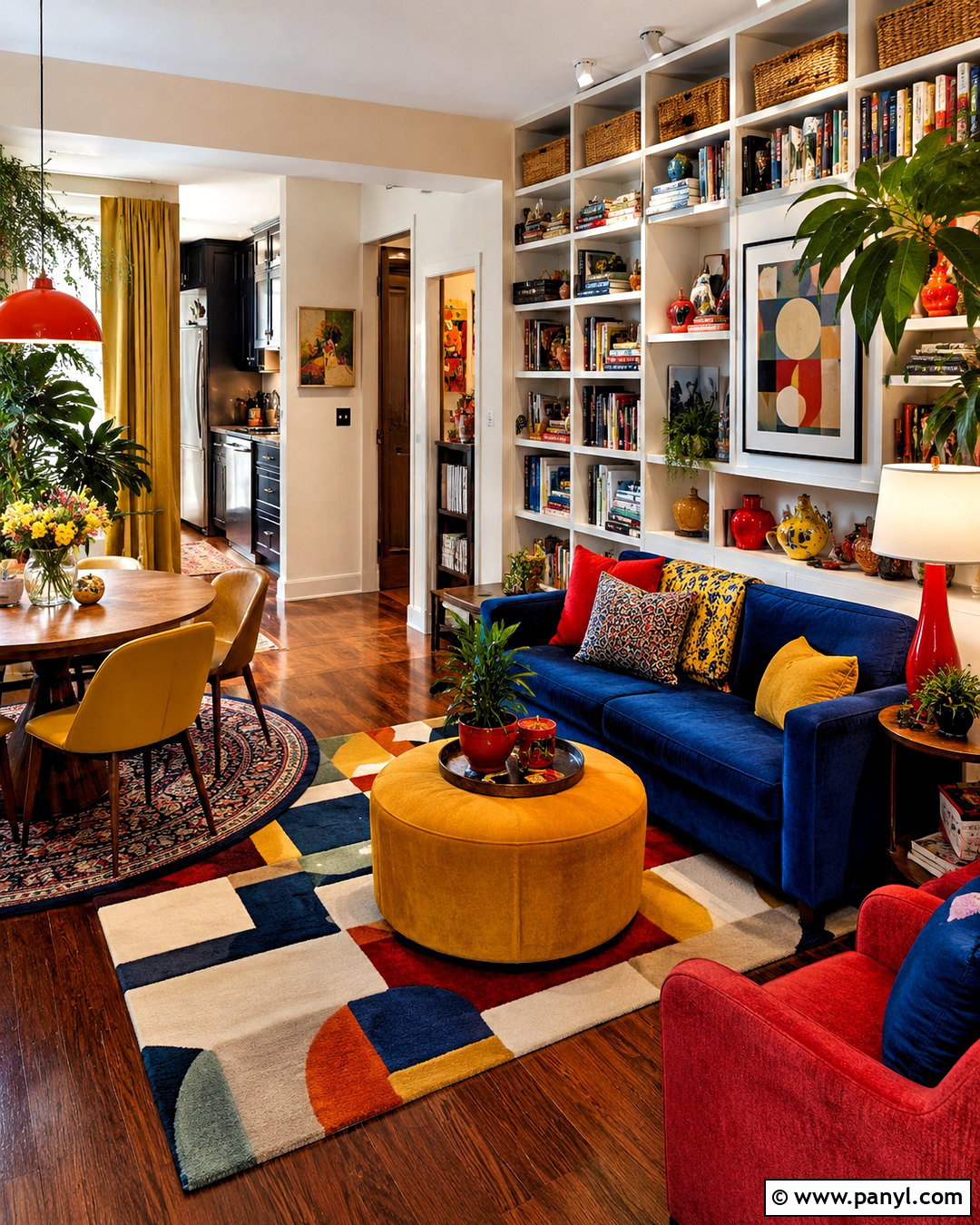
Limited square footage does not require limited personality. Give a small apartment a cohesive maximalist look by repeating three main colors, such as cobalt blue, tomato red, and golden yellow, throughout connected spaces. Anchor the living area with a compact blue sofa, a graphic rug, and a storage ottoman instead of a bulky coffee table. Use one wall for floor-to-ceiling shelving that combines books, artwork, plants, and concealed baskets. Hang curtains close to the ceiling to increase the sense of height. A round dining table and lightweight chairs will preserve movement between zones. Continue the same palette into the kitchen and sleeping area through smaller patterns and accessories. Multifunctional furniture, vertical storage, and visible floor space allow expressive decoration to feel energetic without reducing everyday comfort.
9. Maximalist Gallery Wall
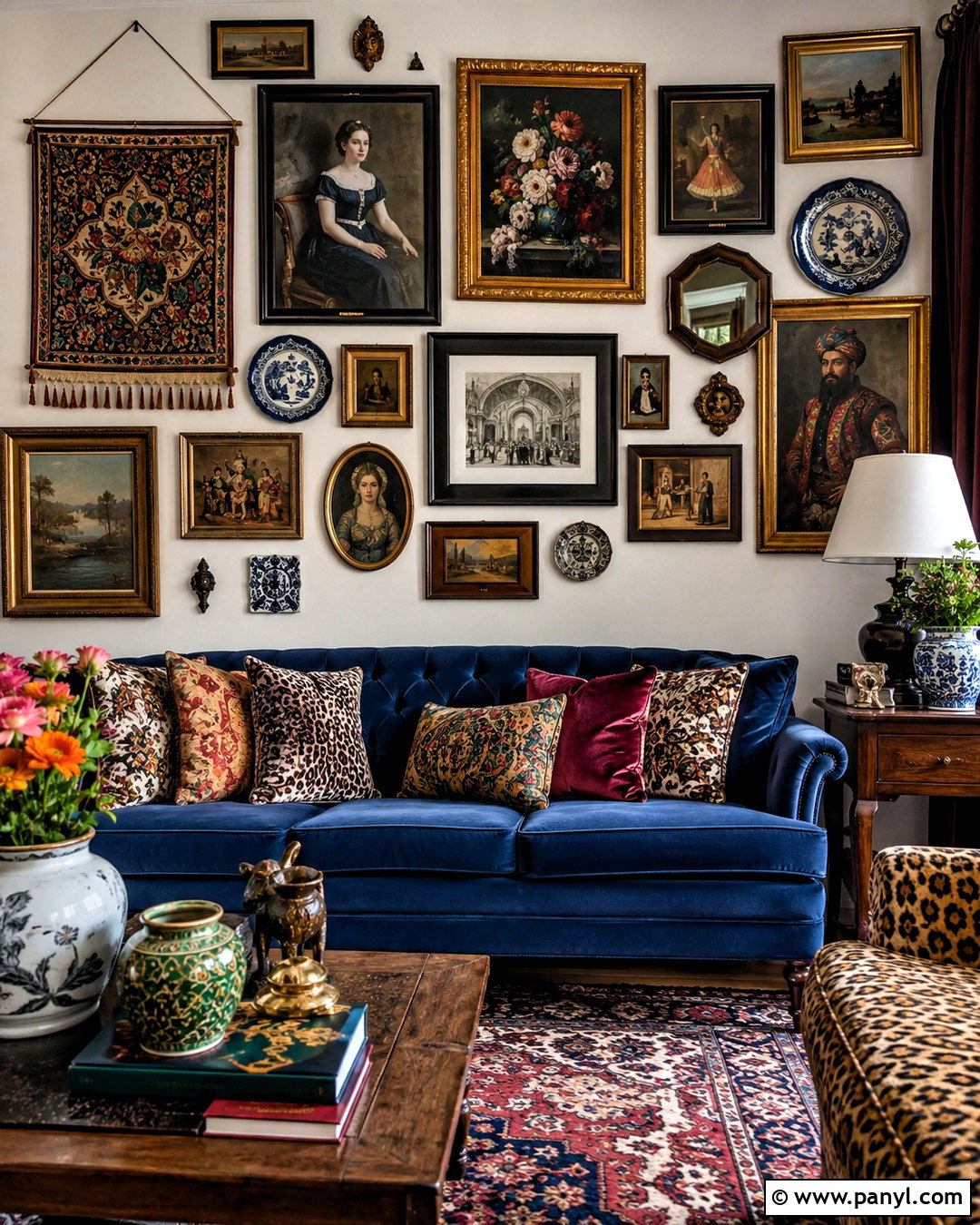
A gallery wall can organize a large collection while giving an entire room a strong visual center. Begin above a solid-colored sofa so the artwork rests against a quieter foundation. Combine paintings, photographs, textiles, small mirrors, and decorative plates, but repeat a few frame finishes such as black, walnut, and antique gold. Place the largest piece slightly off-center, then build outward with varied shapes and controlled spacing. Let the arrangement extend toward the ceiling and around nearby architectural details for a layered salon effect. Pull colors from the artwork into the rug, pillows, curtains, and side tables. Keep the opposite wall simpler to provide balance. Paper templates can help test the composition before installation, while room for future additions keeps the display personal and evolving.
10. Maximalist Color Drenching
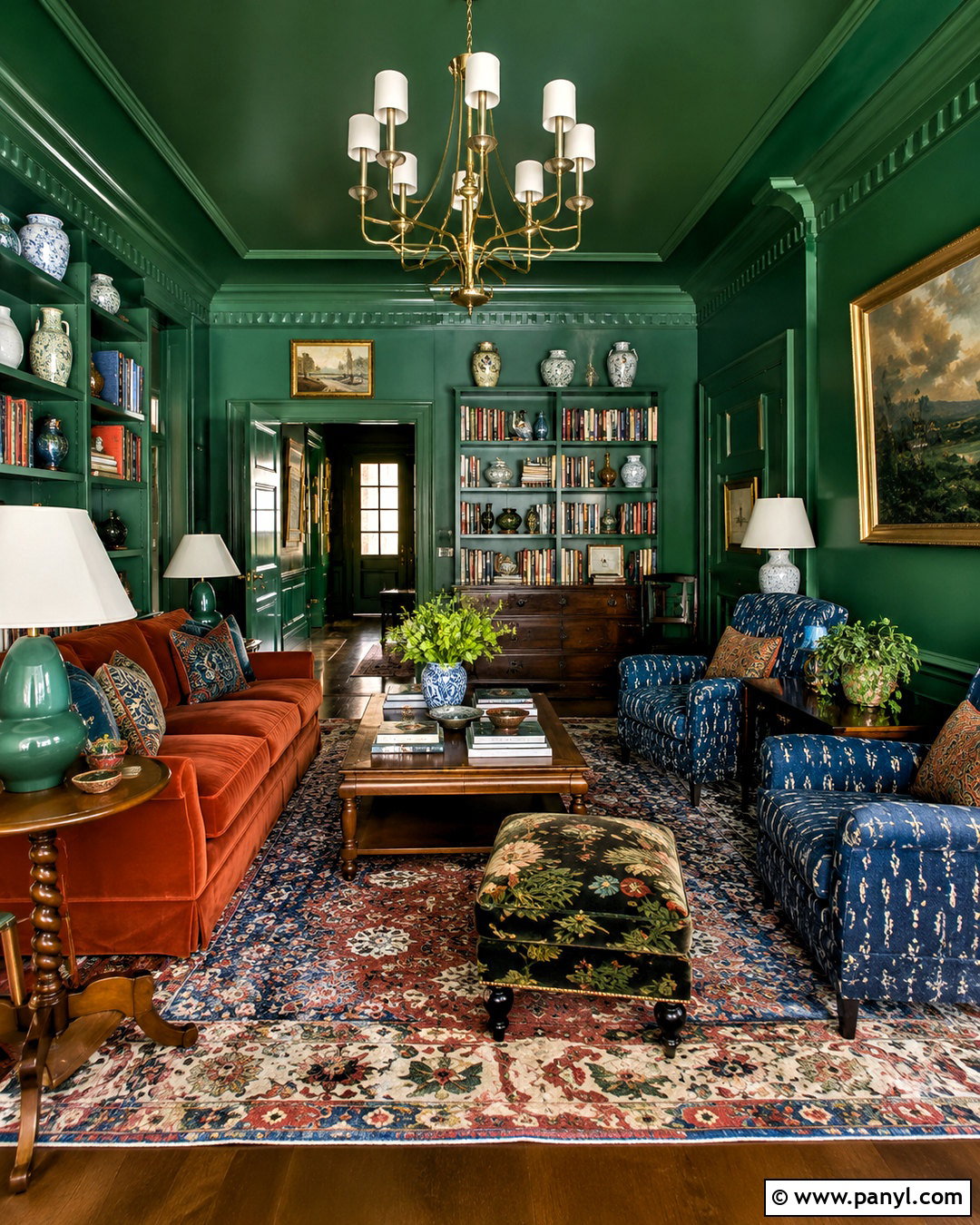
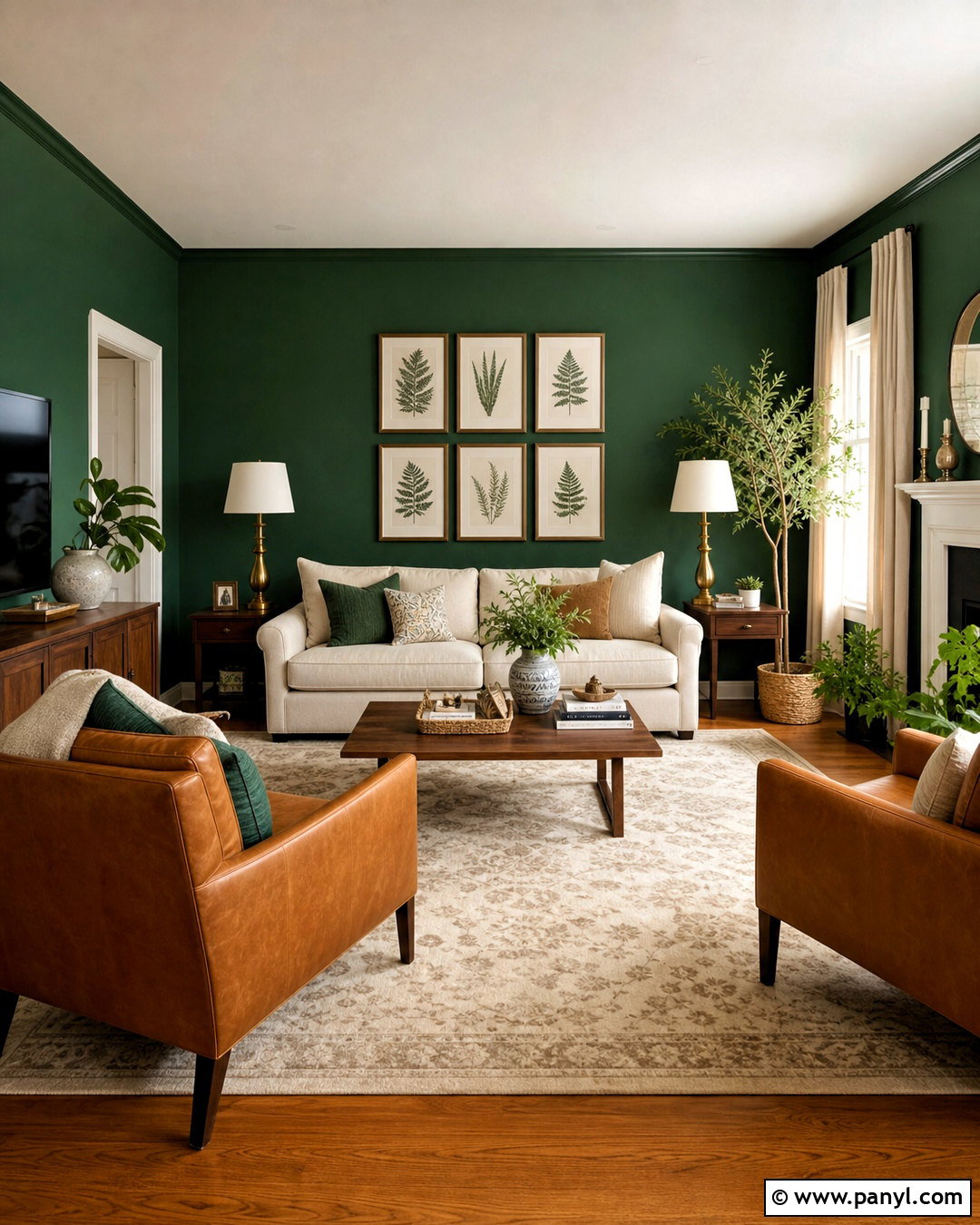
Color drenching creates an immersive foundation that can unify many patterns and objects. Choose one expressive hue, such as raspberry, emerald green, or deep blue, and apply it to the walls, trim, doors, shelving, and ceiling. Vary the sheen instead of the color: use matte paint on walls, satin on trim, and gloss on a cabinet or architectural feature. In an emerald room, add a rust velvet sofa, blue patterned chairs, and a multicolored rug containing the same green. Brass lighting and warm wood furniture will keep the space from feeling cold. Layer artwork in lighter tones so it remains visible against the saturated background. Cream lampshades and a few pale ceramics provide breathing room without weakening the enveloping effect of the complete maximalist scheme.
11. Maximalist Pattern Mixing
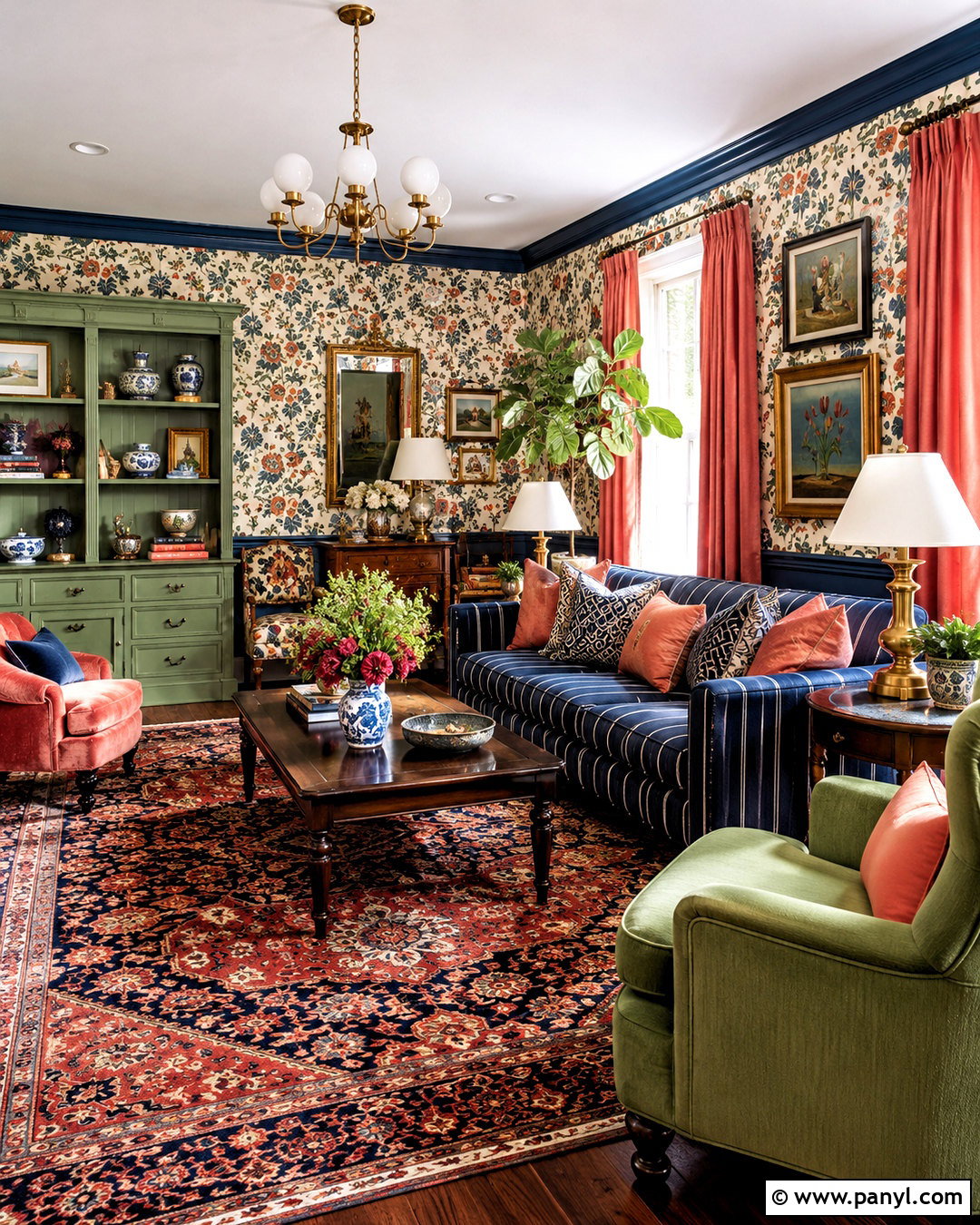
Successful pattern mixing depends on shared colors and noticeably different scales. Start a living room with a large floral wallpaper containing navy, coral, sage, and cream. Add a medium-scale striped sofa in navy and cream, then bring in small geometric prints through pillows and lampshades. A Persian-style rug can introduce a fourth pattern because its colors echo the room’s established palette. Keep major furniture shapes relatively simple so the fabrics remain the focus. Solid coral curtains and a sage-painted cabinet give the eye places to rest. Repeat one motif only once or twice instead of covering every object with the same print. Complete the look with dark wood tables, brass lighting, and framed artwork. The result feels layered and confident because color, proportion, and placement connect every pattern.
12. Maximalist Boho Interior
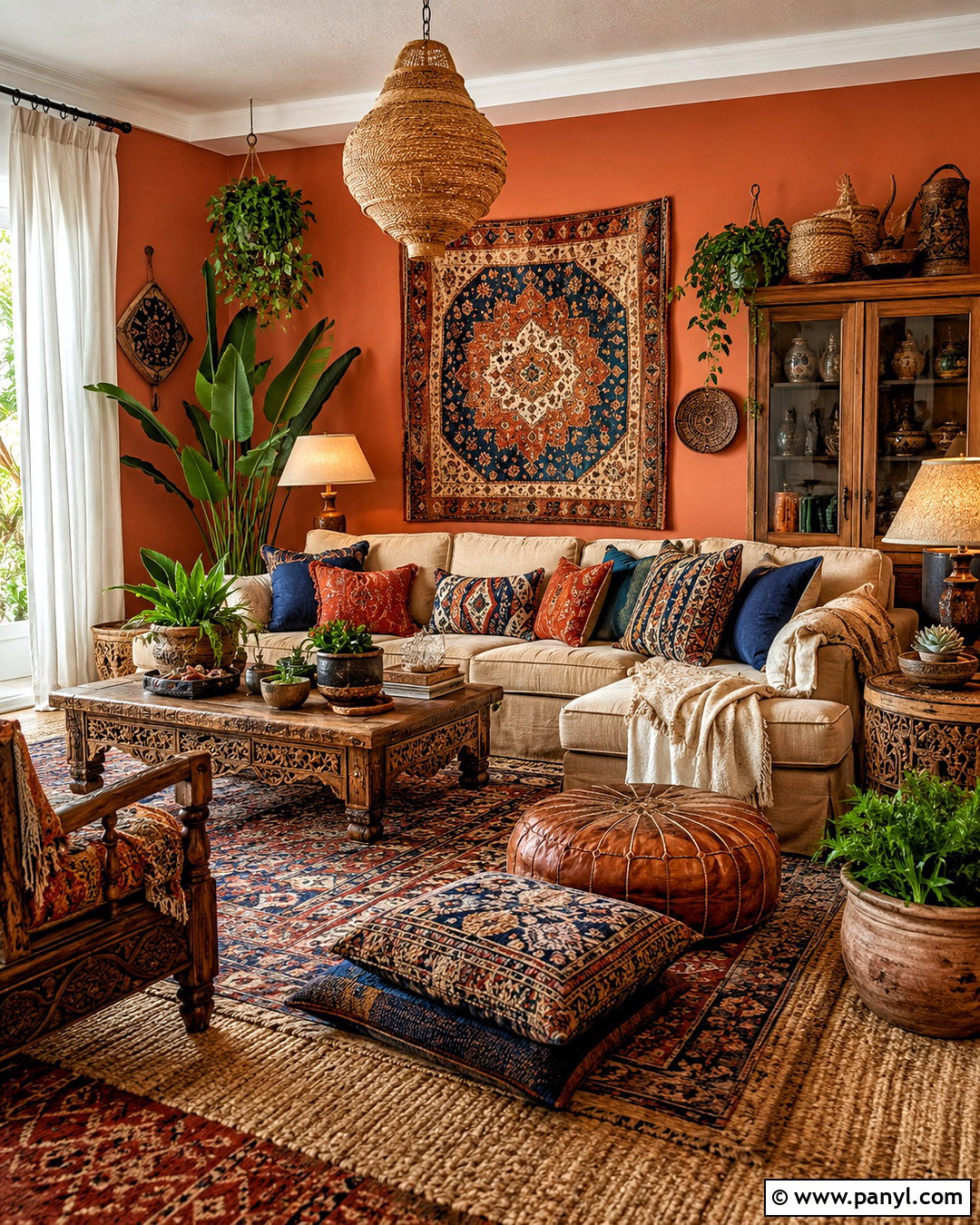
A maximalist boho room should feel relaxed, textural, and collected across time. Begin with warm terracotta walls and a low, comfortable oatmeal sofa covered with embroidered pillows in rust, indigo, ochre, and magenta. Layer a flat-weave rug over a larger natural jute rug to define the seating area. Add carved wood tables, woven baskets, patterned floor cushions, and a vintage storage cabinet. Hanging plants and large potted greenery can soften corners without replacing functional furniture. Create a gallery arrangement from travel photographs, textile art, baskets, and small prints. Use linen curtains to filter daylight and balance the stronger colors. Pendant lights, shaded table lamps, and candles without flames can add depth safely. Leave enough open floor space to preserve the casual, welcoming mood.
13. Maximalist Vintage Interior
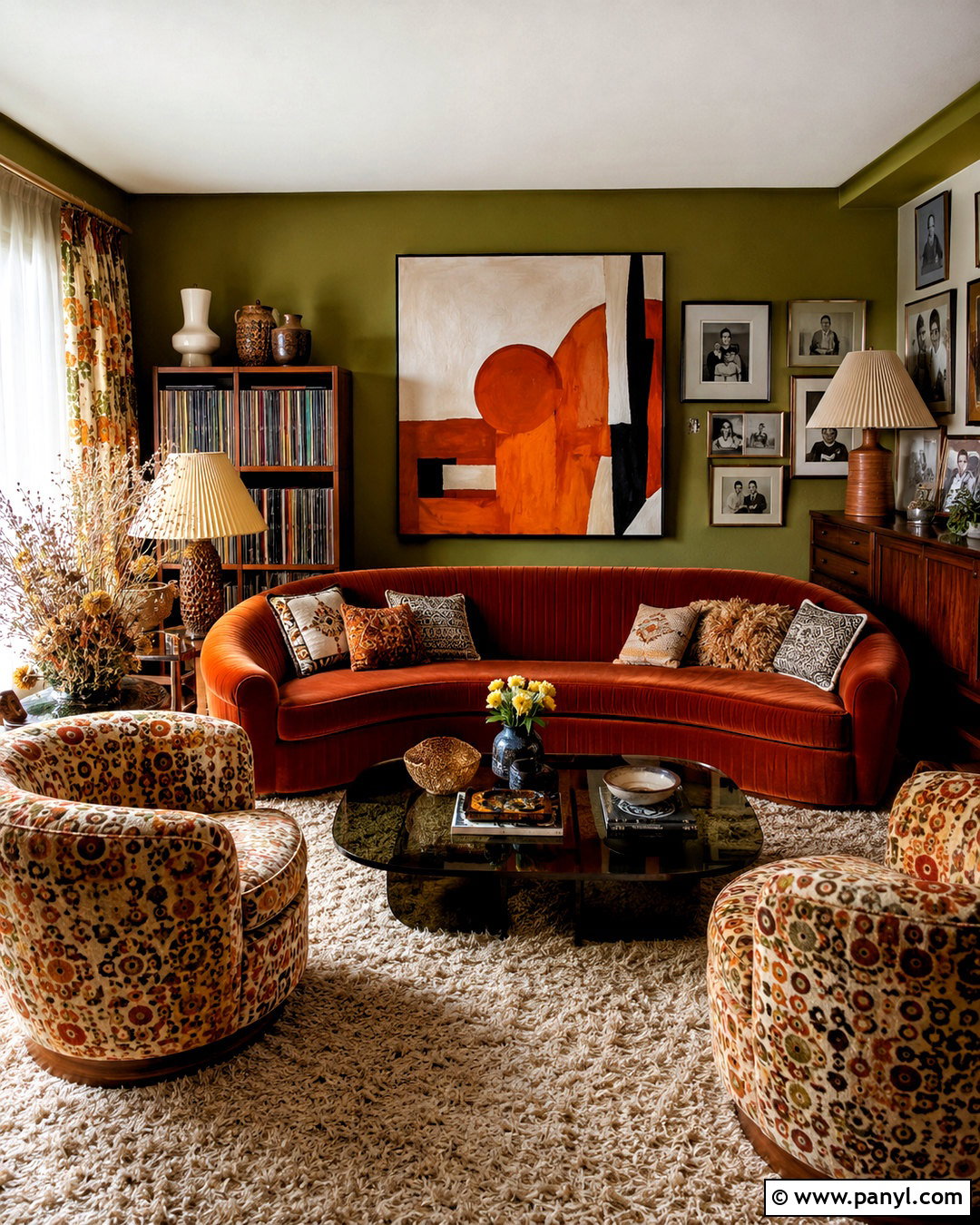
Give a vintage maximalist interior structure by choosing one historical direction and layering compatible finds around it. For a 1970s-inspired sitting room, use olive green walls, a curved rust velvet sofa, walnut furniture, and a cream shag rug. Add two patterned armchairs with rounded silhouettes and a smoked-glass coffee table. Fill a low bookcase with records, books, pottery, and framed family photographs instead of purely decorative objects. Large abstract artwork in orange, brown, mustard, and green will reinforce the palette. Finish the room with pleated lampshades, brass floor lighting, and patterned curtains. Mixing genuine vintage pieces with new upholstery keeps the design usable and comfortable. Restore damaged furniture when possible, but allow natural patina to provide warmth, character, and a sense of history.
14. Maximalist Art Deco Interior
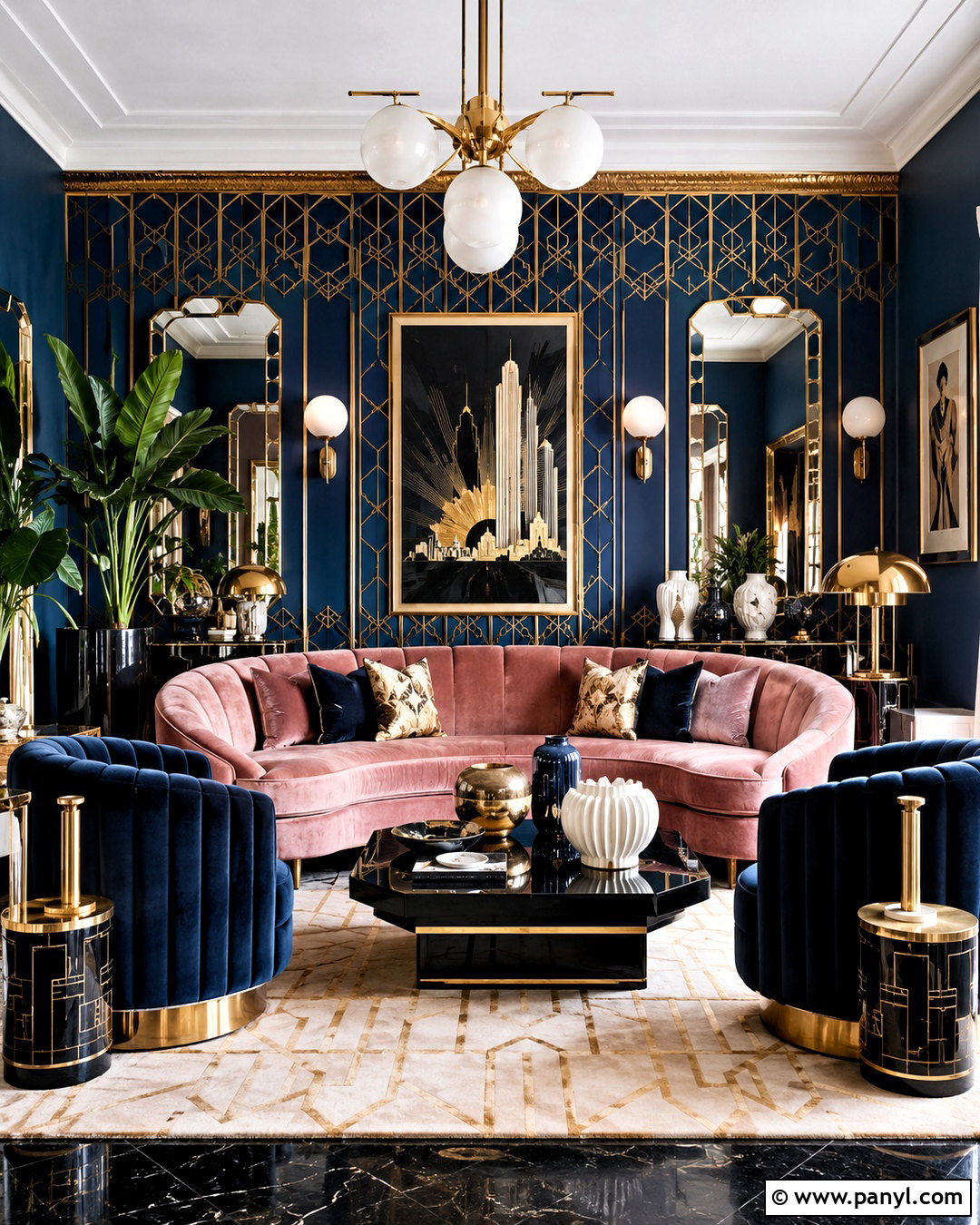
Glossy surfaces, geometric forms, and dramatic contrast give Art Deco maximalism its glamorous character. Paint a living room deep navy and create a focal wall with gold-lined geometric wallpaper. Add a curved sofa in dusty pink velvet, channel-tufted armchairs, and a black lacquer coffee table with rounded corners. A large rug featuring cream, navy, and gold shapes should connect the seating arrangement. Choose statement lighting with frosted glass globes and brushed brass details. Symmetrical pairs of lamps or chairs will organize the richer finishes and patterns. Add mirrored accents, sculptural ceramics, and large framed prints rather than many tiny accessories. Cream curtains can brighten the edges of the room. The finished space feels bold and polished because repeated curves and metals create visual discipline.
15. Maximalist Cottage Interior
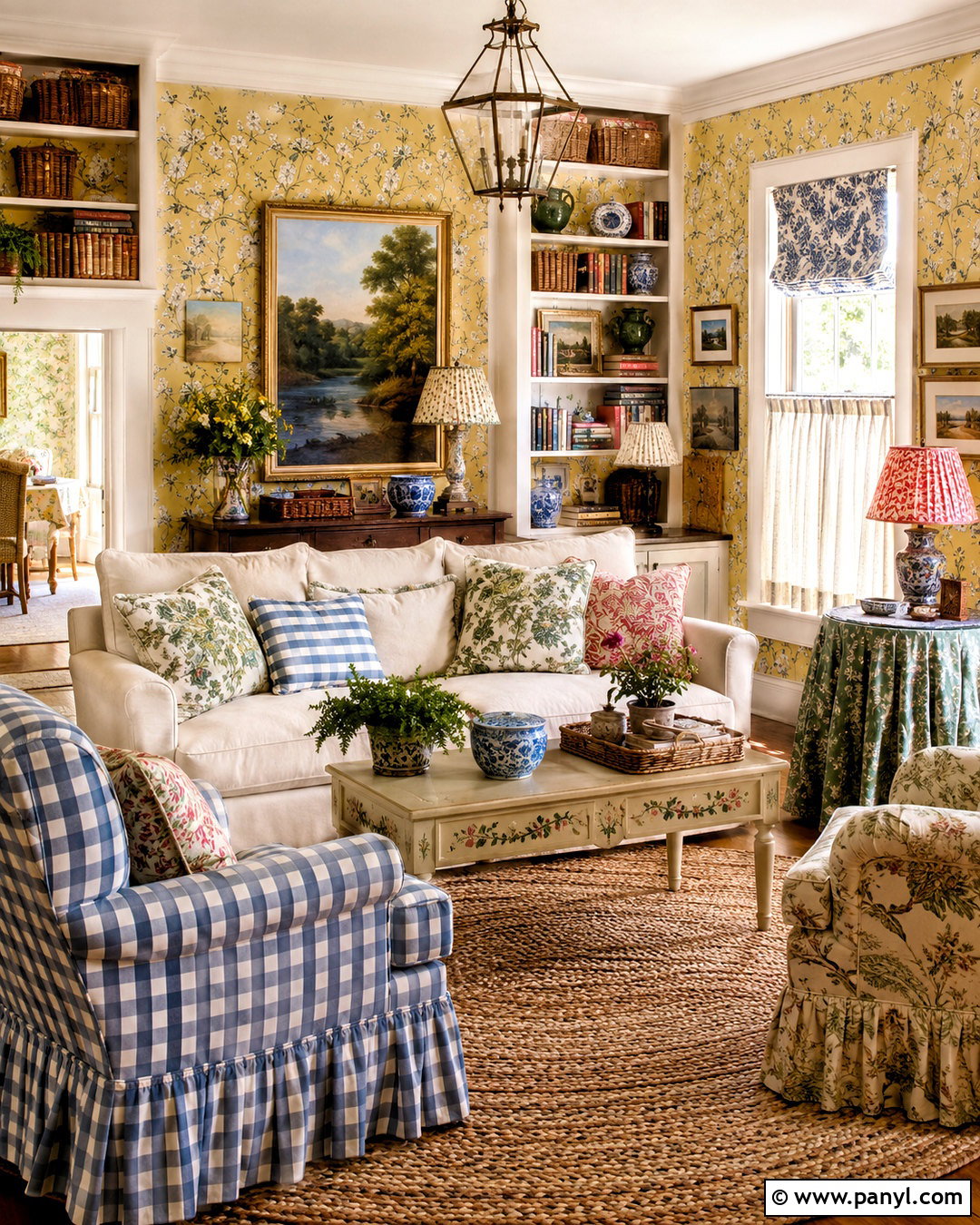
For a softer approach, combine cottage comfort with dense pattern and charming collections. Wrap a living room in small-scale floral wallpaper using butter yellow, faded red, sage, and blue. Place a slipcovered sofa beneath the window, then add mismatched armchairs upholstered in checks and botanicals. A painted coffee table, braided rug, and skirted side table will reinforce the informal character. Display books, ceramics, framed landscapes, and inherited objects on built-in shelves without filling every inch. Use café curtains or relaxed Roman shades to preserve natural light. A traditional pendant and several patterned lampshades provide warm visual layers. Finish with baskets for practical storage and fresh garden greenery. Repeating the wallpaper colors throughout the furniture keeps the cozy maximalist cottage room connected rather than overly busy.
16. Maximalist Tropical Interior
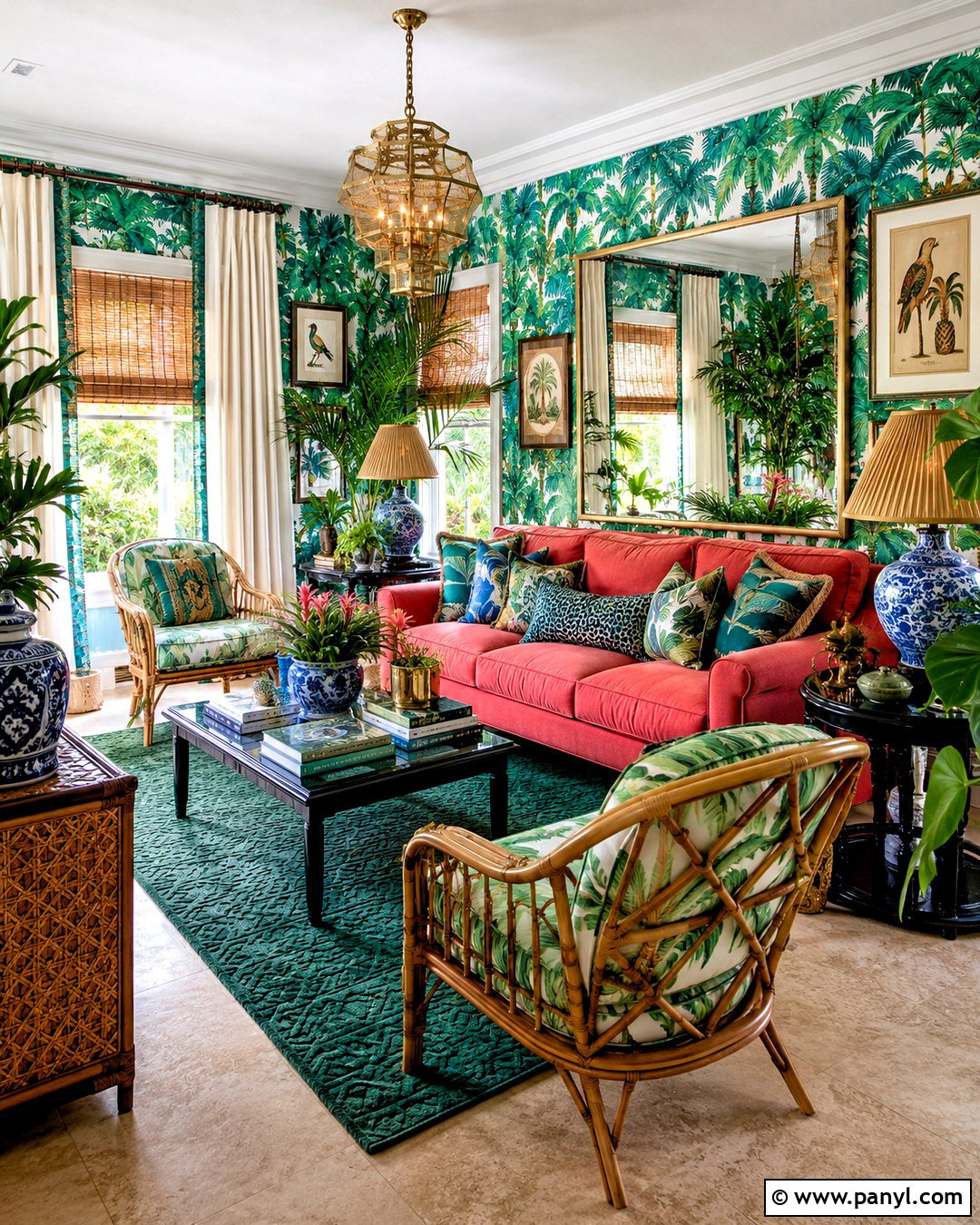
Bring tropical maximalism indoors with leafy pattern, natural materials, and energetic color. Use palm-print wallpaper in rich green and turquoise as the room’s main statement. Place a coral or sunny yellow sofa against it, balanced by woven rattan chairs with patterned cushions. A dark green rug will ground the brighter upholstery, while bamboo shades and cream curtains soften the windows. Introduce glossy lacquered side tables, brass lighting, and ceramic accessories in blue and white. Several large plants can continue the botanical theme, but vary their heights and leaf shapes. Add framed nature prints and one oversized mirror to bounce light around the space. Warm wood flooring and natural baskets prevent the theme from feeling artificial. Keep the furniture arrangement open and comfortable for a fresh, livable result.
17. Maximalist Bookshelf Decor
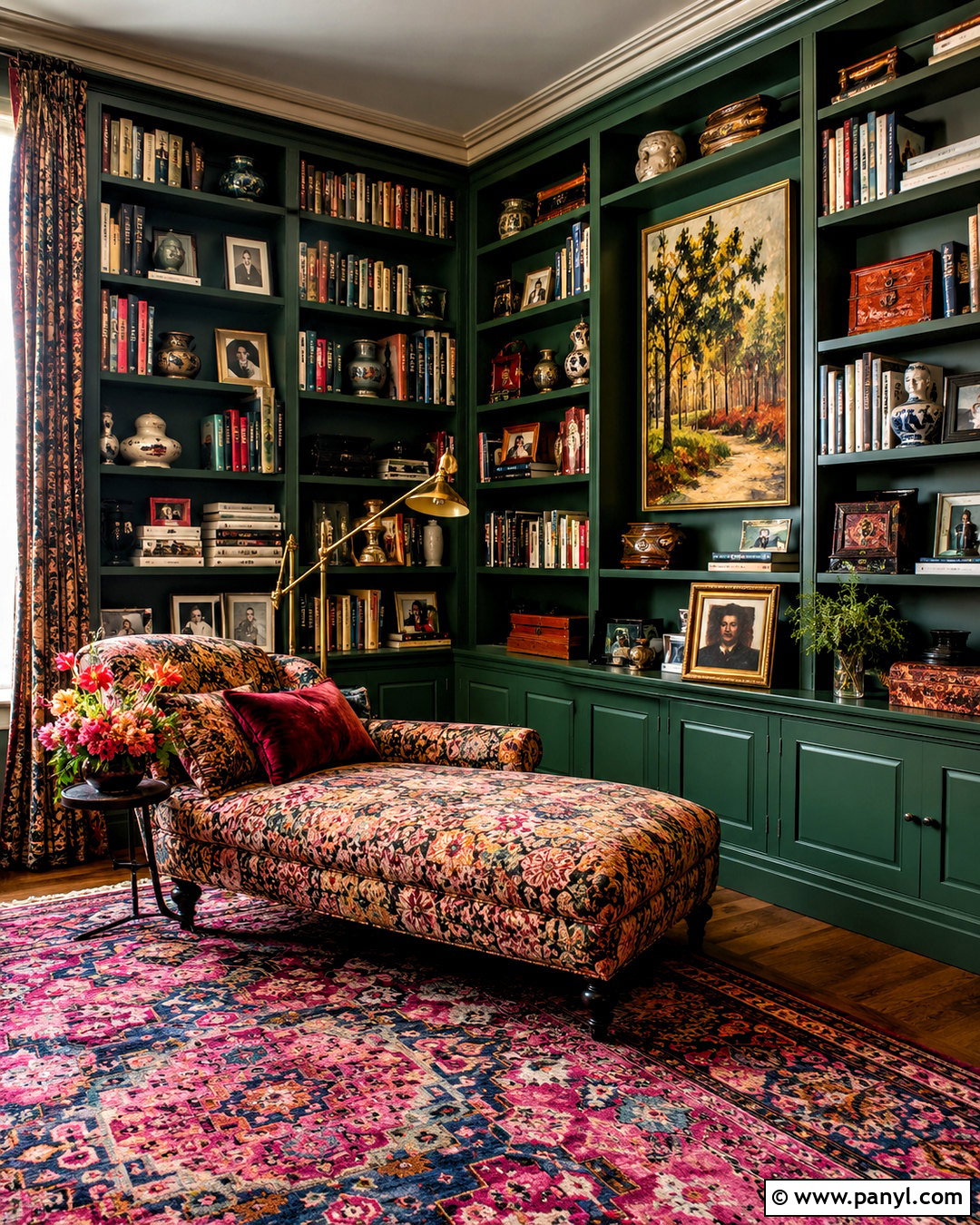
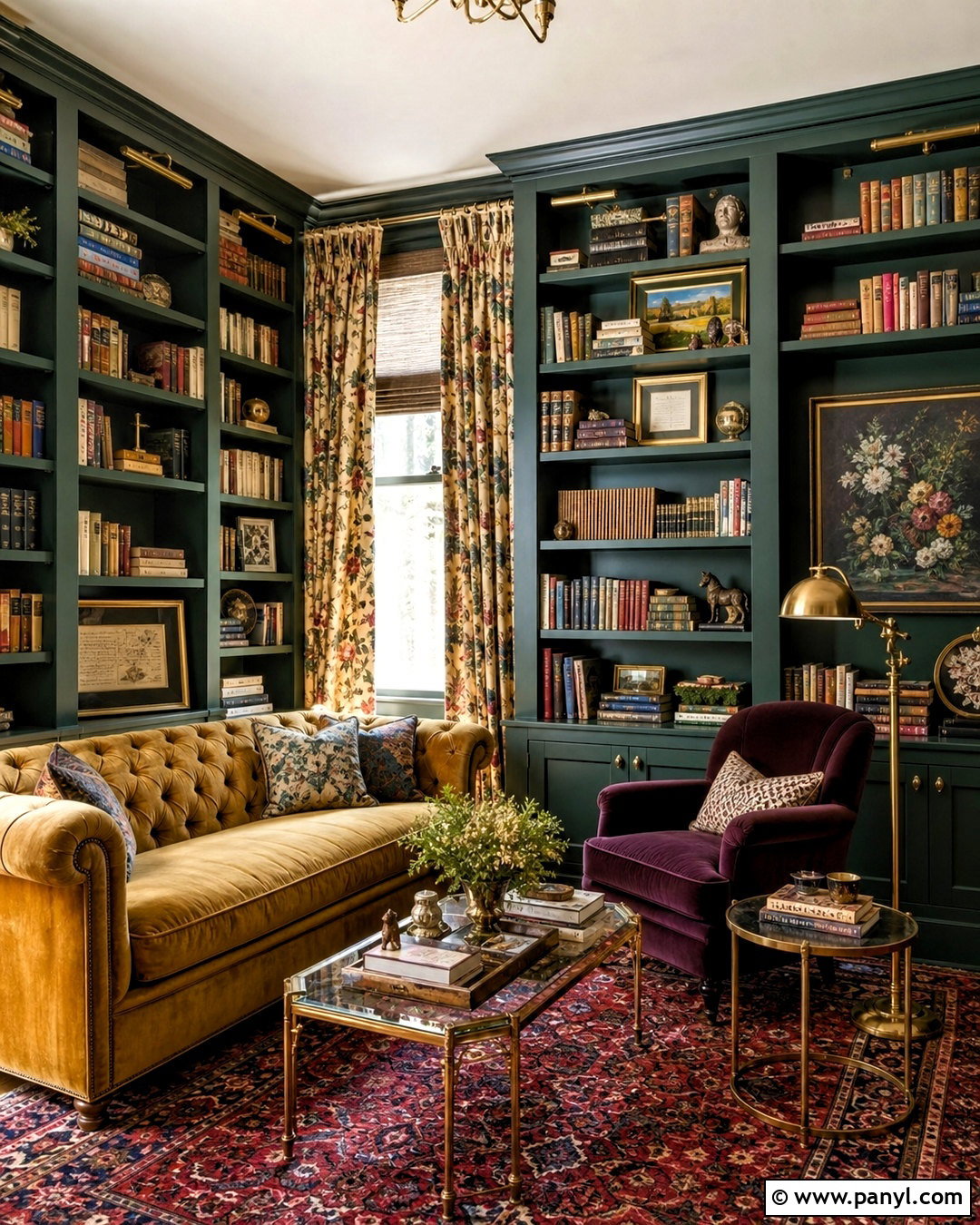
Floor-to-ceiling bookshelves can become the architectural heart of a maximalist reading room. Paint the shelves and surrounding walls deep plum, forest green, or navy to create a continuous backdrop. Arrange books both vertically and horizontally, leaving selected spaces for framed photographs, ceramics, small sculptures, and decorative boxes. Avoid sorting everything too perfectly; natural variation creates a more personal effect. Place a patterned chaise or comfortable armchair nearby with a small table and an adjustable reading lamp. A richly colored rug and lined curtains will soften sound and make the room feel cozy. Hang artwork directly on the front of selected shelving sections for added depth. Maintain accessible lower shelves and use attractive closed cabinets for supplies, ensuring the room remains functional as well as visually abundant.
18. Maximalist Layered Lighting
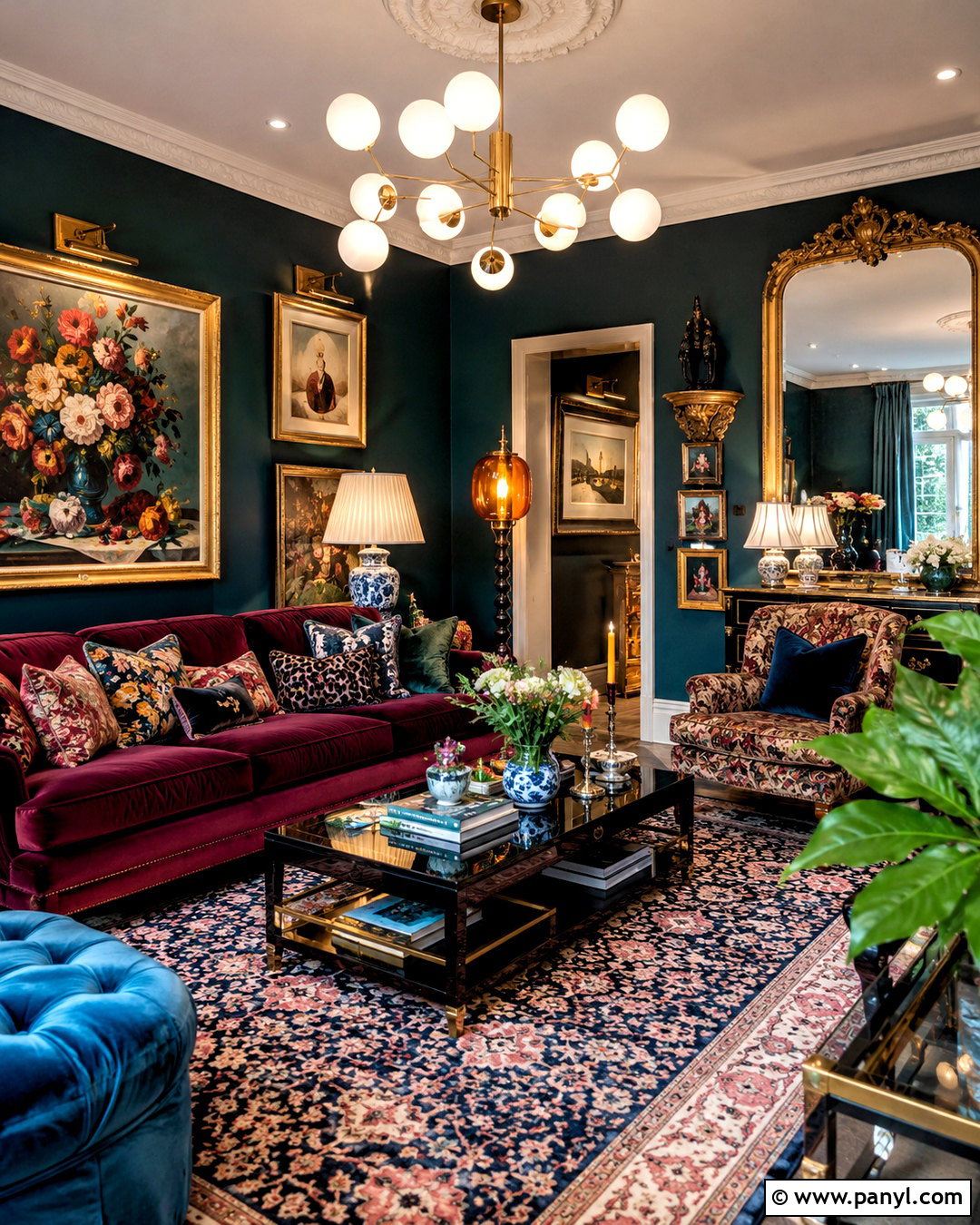
Lighting can transform a richly decorated room from visually flat to dimensional and welcoming. Begin with a sculptural ceiling fixture that matches the scale of the space, such as a multiglobe brass chandelier. Add shaded table lamps beside the sofa, a tall floor lamp near a reading chair, and picture lights above important artwork. Use patterned or pleated shades to contribute color even when the lamps are off. In a jewel-toned living room, combine amber glass, ceramic bases, aged brass, and painted metal while repeating finishes elsewhere. Put each light source on a separate control so the atmosphere can change throughout the day. Mirrors and glossy surfaces will reflect illumination across deeper wall colors. Keep bulbs consistent in appearance to prevent the layered arrangement from looking disconnected or harsh.
19. Maximalist Neutral Interior
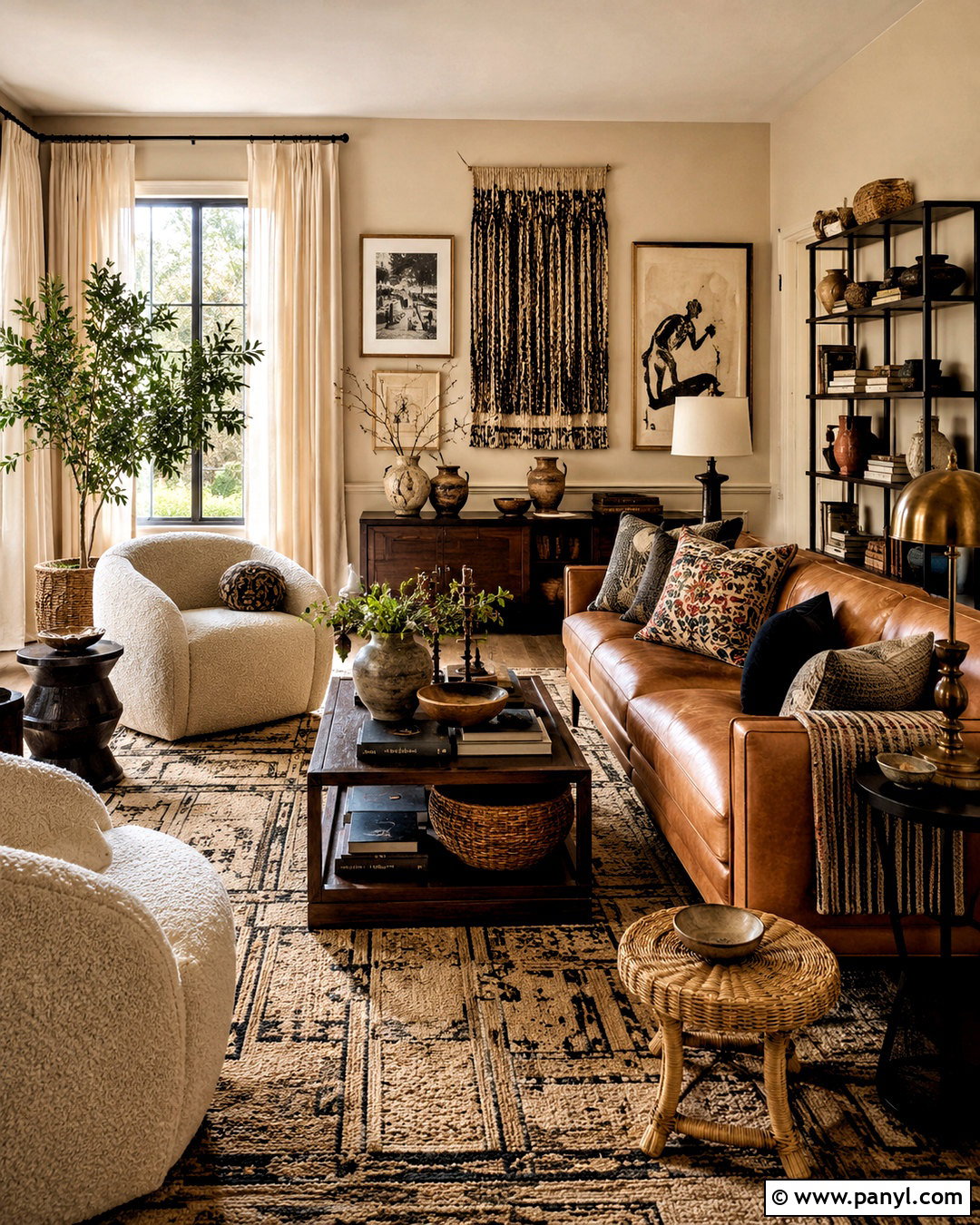
Maximalism does not always require vivid color. A neutral maximalist room creates abundance through texture, pattern, shape, and collected materials. Start with warm beige walls and a large patterned rug in cream, taupe, brown, and black. Combine a caramel leather sofa with boucle armchairs, patterned linen curtains, and embroidered pillows. Add dark wood tables, woven baskets, aged brass lighting, and sculptural ceramic pieces in varied neutral tones. Cover one wall with black-and-white photography, charcoal drawings, and textured fiber art in mixed frames. Books and handmade objects will deepen the collected effect. Contrast is essential, so include black accents and rich brown finishes rather than using only pale beige. The finished room feels expressive and layered while maintaining a calm, earthy palette suitable for shared spaces.
20. Maximalist Rental Interior
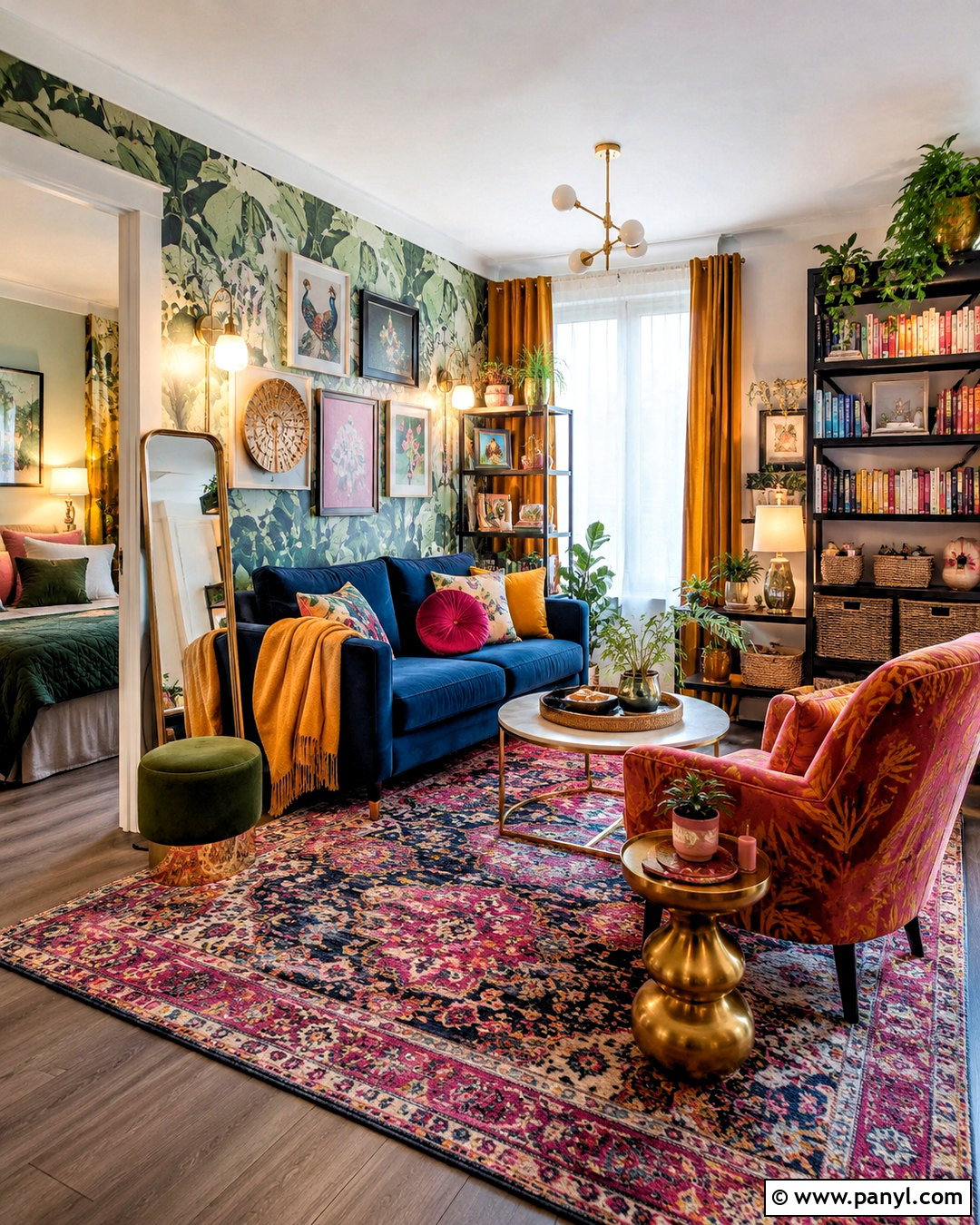
Rental restrictions can encourage creative maximalism without permanent changes. Establish a living room palette with a colorful area rug, then repeat its blue, coral, mustard, and green tones through removable wallpaper, curtains, cushions, and artwork. Choose a compact velvet sofa and one patterned accent chair instead of replacing every piece of furniture. Lean a large mirror against the wall and use removable hanging systems for a growing gallery display. Freestanding bookcases can hold books, plants, lamps, and decorative collections while adding valuable storage. Swap basic lampshades and cabinet hardware only when the original pieces can be stored safely. Use plug-in wall sconces to improve lighting without electrical work. A few coordinated solid surfaces will balance the many portable layers, making the rental feel personal and complete.
Conclusion:
These 20 maximalism interior design ideas show that “more” works best when every layer has a purpose. Begin with a strong anchor, establish a manageable color palette, and repeat key hues across patterns, furniture, artwork, and accessories. Vary the scale of prints and provide a few solid surfaces where the eye can rest. Practical storage, clear pathways, and suitable lighting are equally important because a maximalist home should remain comfortable and easy to use. Whether you prefer vintage, tropical, cottage, Art Deco, or neutral rooms, focus on objects and colors that genuinely reflect your life. Build the look gradually, edit when necessary, and allow your home’s story to keep developing naturally over time.

Related Ideas and Inspiration:
Leave a Reply