
Orange can make a home feel energetic, inviting, and full of personality without overwhelming the space. The best 20 orange interior design ideas use thoughtful color pairings, layered textures, and balanced layouts to turn this vivid hue into something highly livable. Burnt orange and terracotta feel earthy beside wood and stone, while tangerine creates playful contrast with blue, green, or crisp white. Softer peach tones can bring gentle warmth to bedrooms, kitchens, and quiet corners. Whether you want orange walls, statement furniture, or carefully placed accents, every element should contribute to a complete room. The following spaces explore practical, polished, and distinctive ways to recreate 20 orange interior design ideas throughout your home.

1. Orange And Cream Living Room
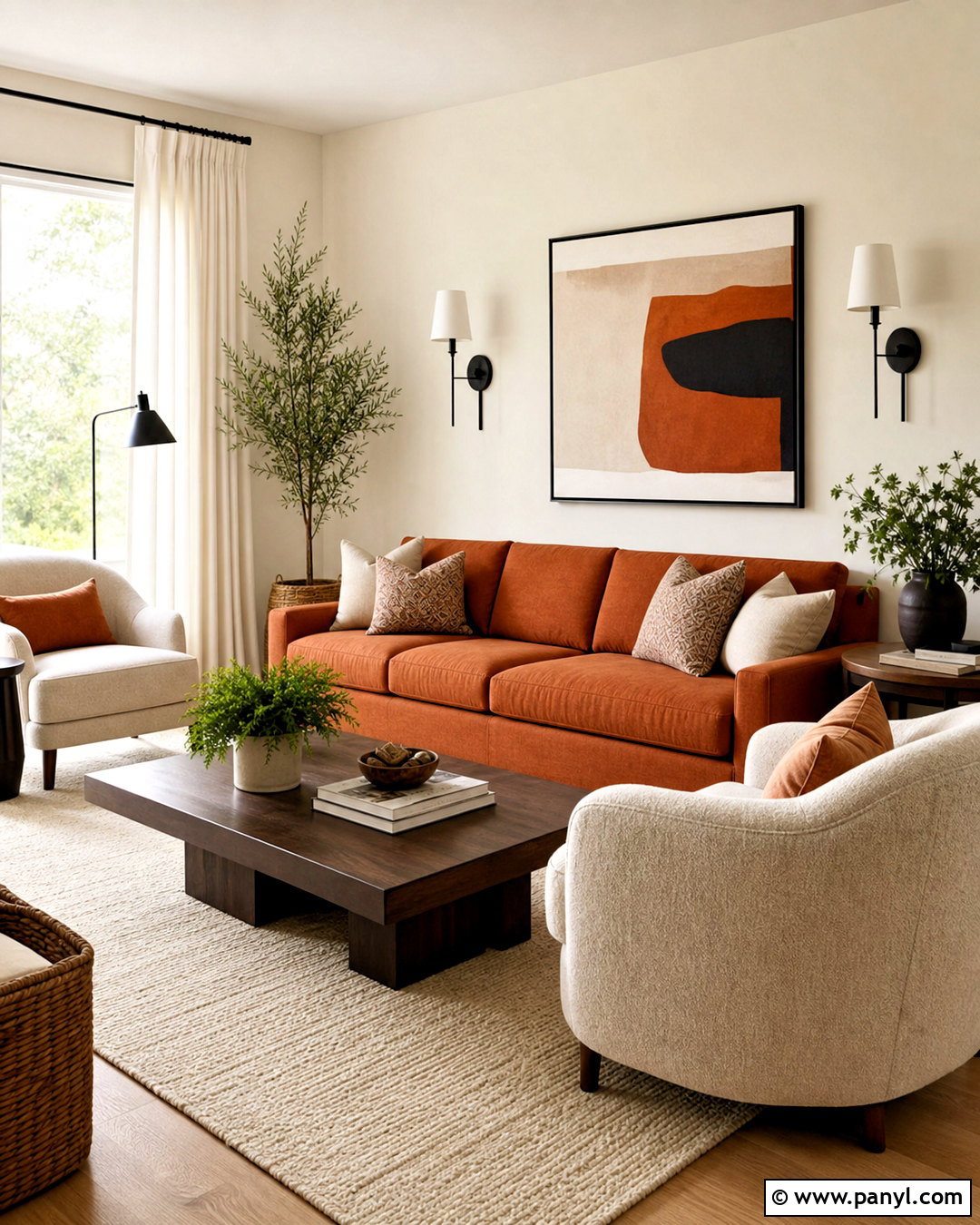
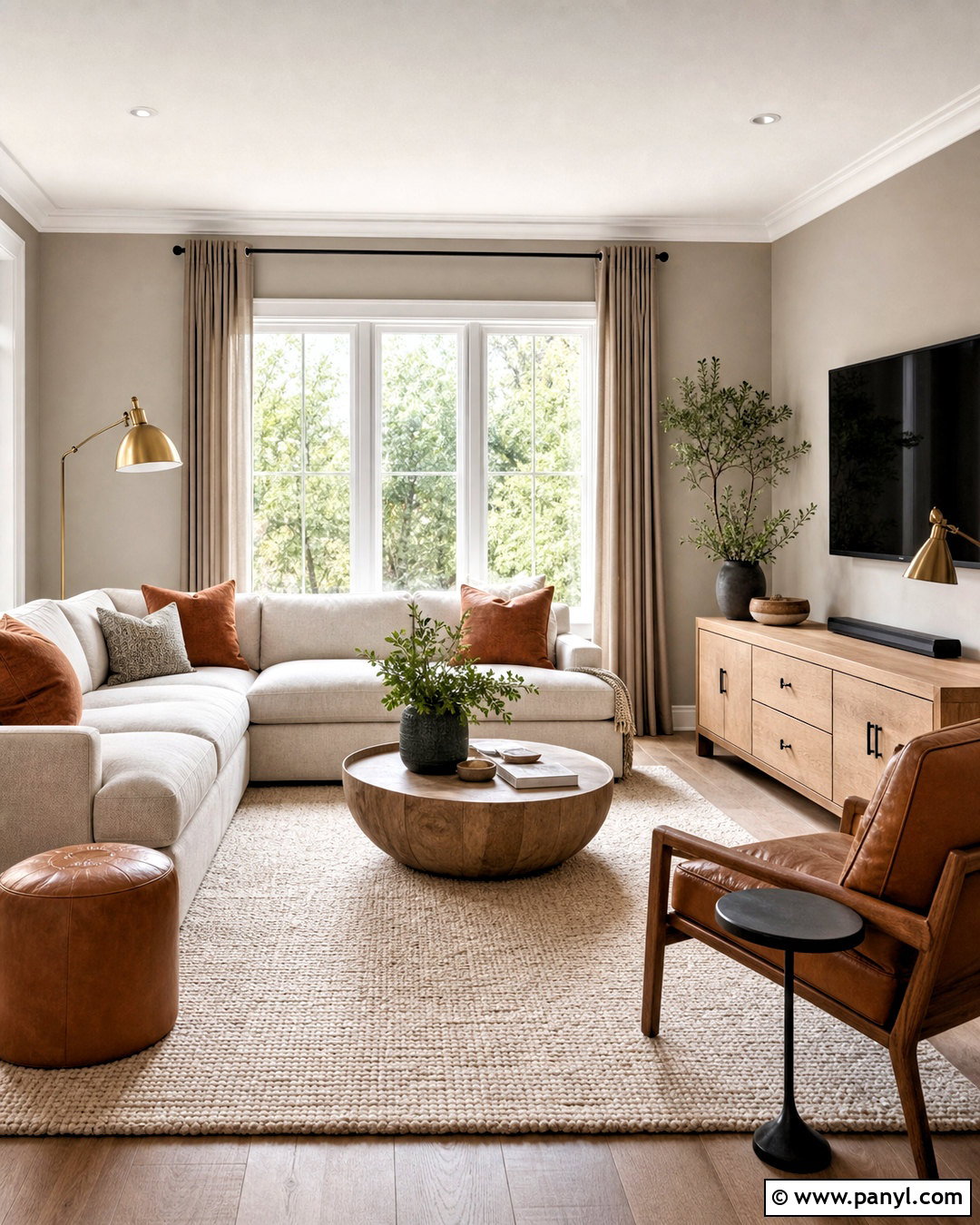
A cream living room provides the perfect calm backdrop for a confident orange focal point. Begin with warm ivory walls, light oak flooring, and a softly textured cream area rug. Center the layout around a burnt orange linen sofa, then add two oatmeal armchairs facing it across a rounded walnut coffee table. Rust, beige, and subtle striped pillows connect the seating without making everything match. Choose off-white curtains that reach the floor and allow plenty of natural light inside. A large abstract artwork can repeat orange in smaller doses, while black picture frames and a slim black floor lamp add definition. Finish the room with ceramic vessels, woven baskets, and one leafy plant for a relaxed, balanced look.
2. Burnt Orange And Navy Living Room
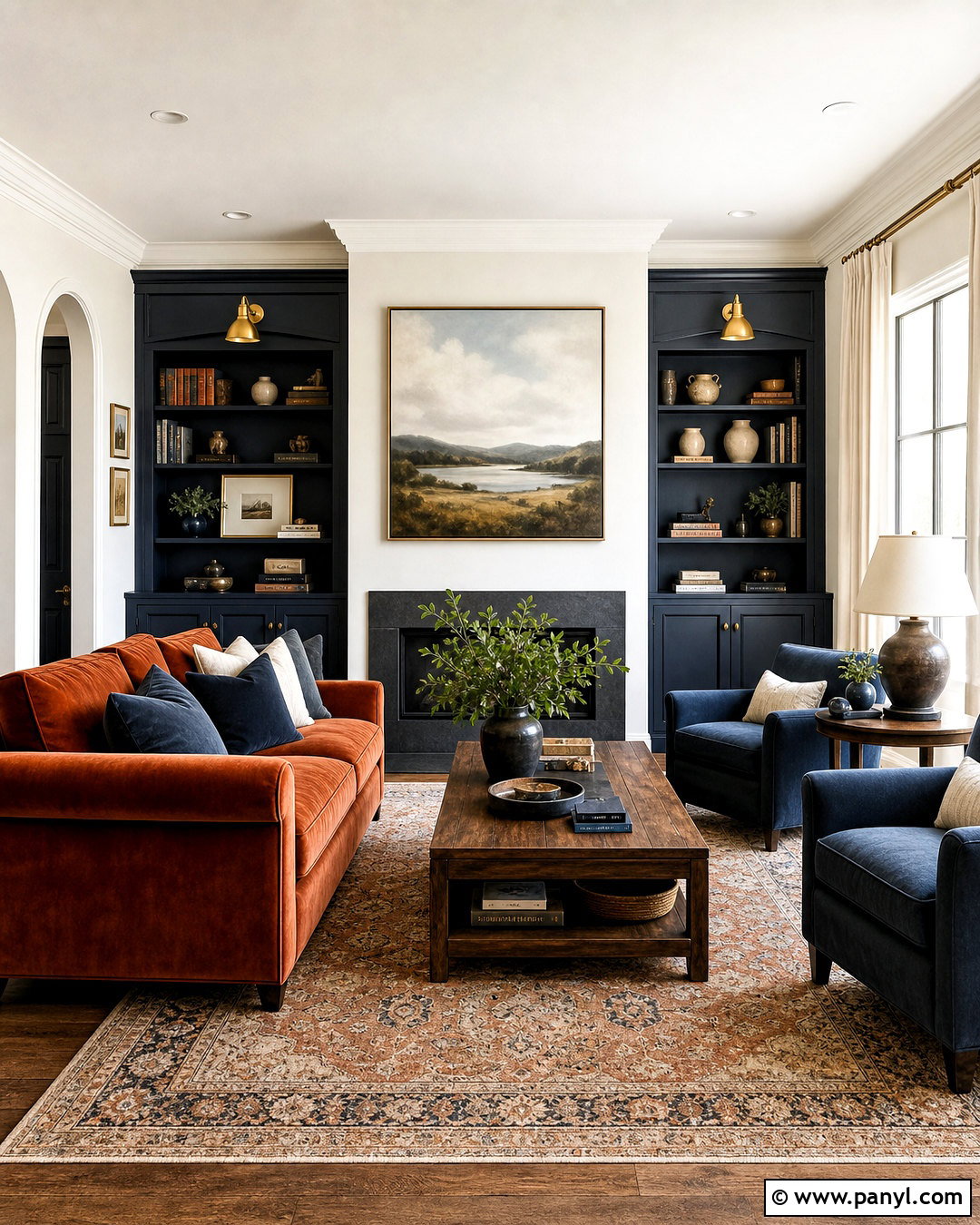
Deep navy gives burnt orange a sophisticated setting while keeping the room grounded. Paint the main walls a soft warm white and use navy blue on the fireplace wall or built-in cabinetry. A low-profile burnt orange velvet sofa becomes the visual center, supported by navy armchairs and a large vintage-inspired rug containing cream, rust, and faded blue. Add a medium-tone walnut coffee table to strengthen the warm palette. Brushed brass sconces and table lamps bring brightness to the darker blue surfaces. Keep window treatments neutral with natural linen panels rather than introducing another strong color. A few patterned cushions, sculptural pottery pieces, and large-scale landscape artwork complete this layered living room without allowing either orange or navy to dominate.
3. Terracotta Orange Dining Room
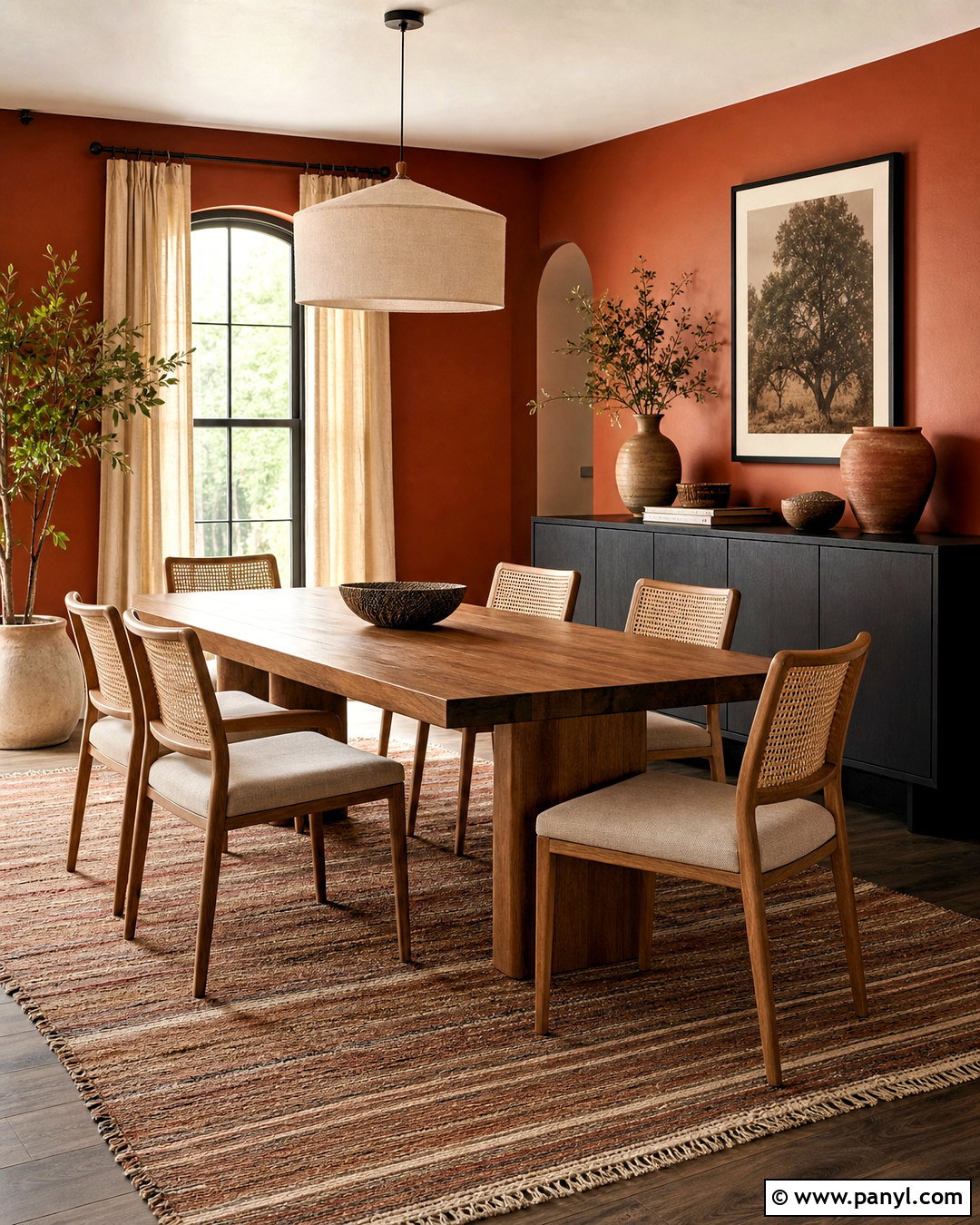
Imagine sharing meals in a room wrapped in the warm character of sunbaked clay. Muted terracotta orange walls create an enveloping background that feels more natural than a brighter citrus shade. Place a substantial oak dining table in the center and surround it with woven cane chairs or upholstered cream seating. An oversized linen pendant light adds softness above the table, while a flat-weave rug in beige and faded rust visually anchors the arrangement. Use off-white curtains, simple ceramic tableware, and natural wood serving pieces to continue the earthy mood. Black-framed artwork and a narrow black sideboard provide needed contrast. Complete the room with olive branches, handmade pottery, and understated brass candleholders for an inviting, collected dining space.
4. Peach Orange Bedroom
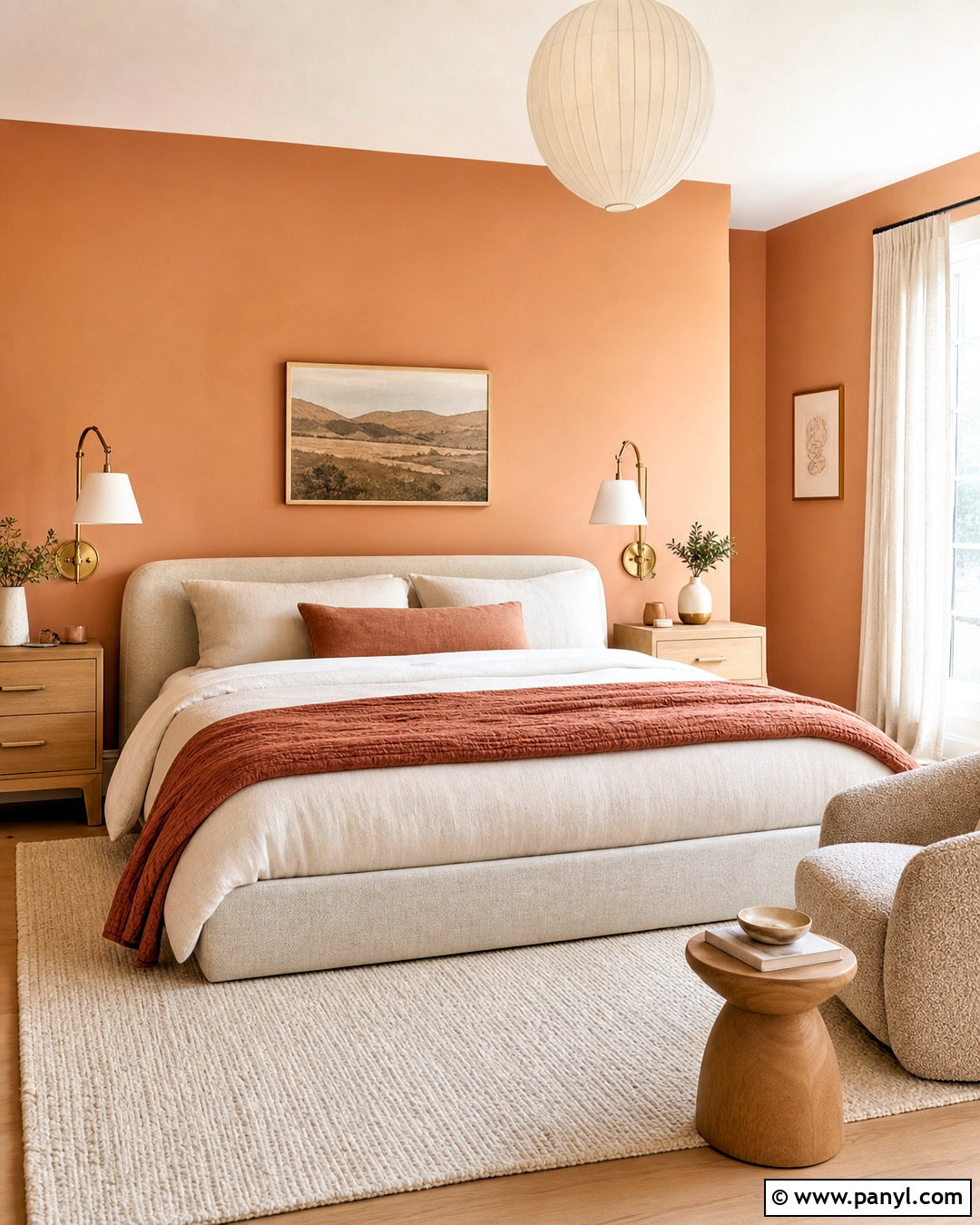
Could your bedroom use warmth without the intensity of a bold feature wall? Soft peach orange creates a gentle alternative that works beautifully across all four walls. Pair the color with an upholstered oatmeal bed, crisp ivory bedding, and a lightweight terracotta quilt folded across the bottom. Pale oak nightstands keep the room fresh, while small brushed brass sconces provide warm metallic detail. Underfoot, choose a cream wool rug with a subtle peach or tan pattern. Full-length natural linen curtains soften the windows and reinforce the restful palette. Add one rounded accent chair in light beige, a simple landscape print, and a few handmade ceramic accessories. The finished bedroom feels sunny, comfortable, and colorful without becoming visually busy or overly sweet.
5. Orange And Sage Green Kitchen
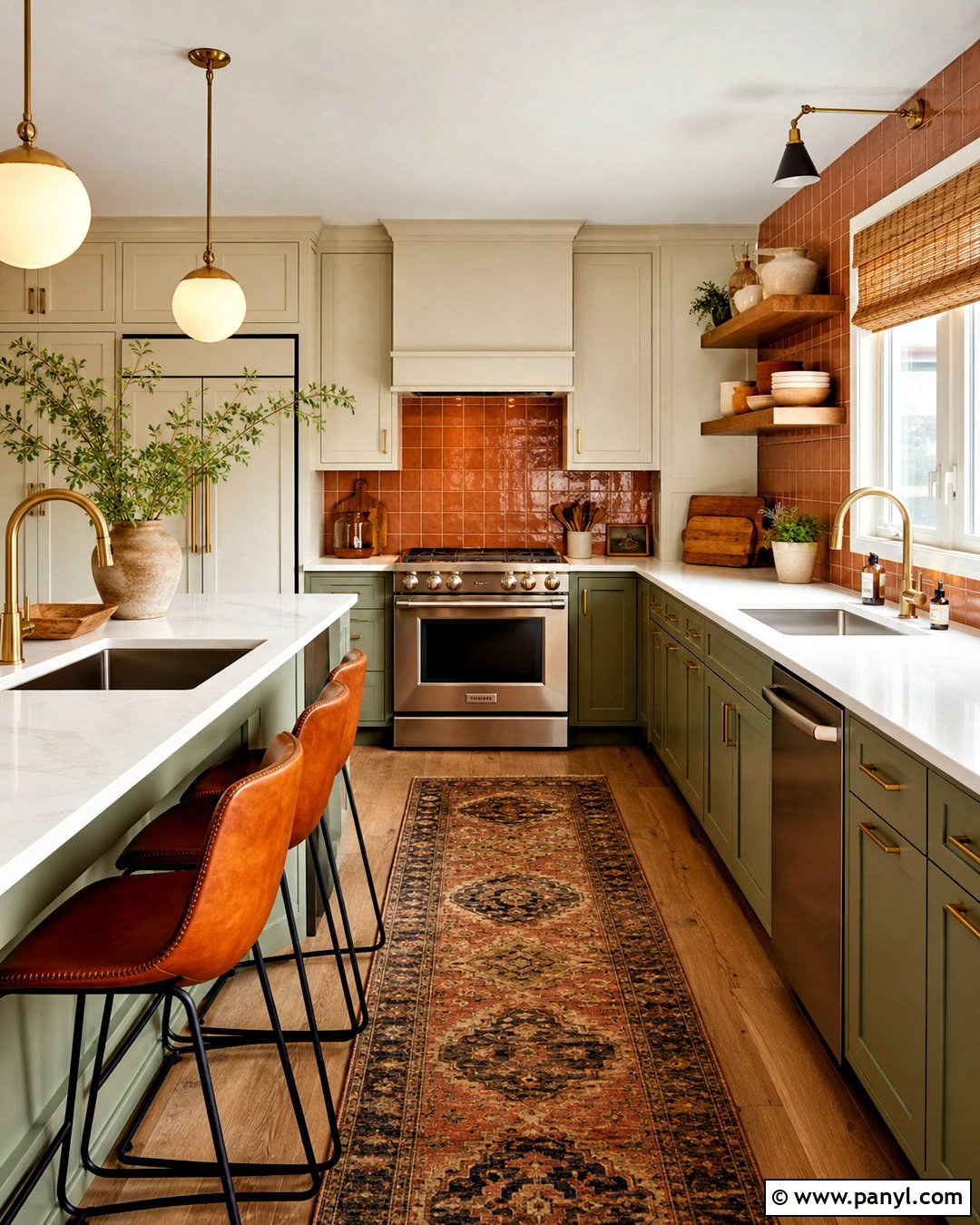
Warm orange and muted sage green can transform a functional kitchen into a cheerful, earthy gathering place. Use sage green for the lower cabinets and creamy white for the upper cabinetry so the room remains open and bright. Introduce orange through a glazed terracotta tile backsplash with slight color variation and visible handcrafted texture. White quartz counters prevent the palette from feeling heavy, while warm oak shelving connects the natural colors. Choose aged brass cabinet hardware and simple globe pendants for a polished finish. Rust orange counter stools can repeat the backsplash color around an island or breakfast bar. Complete the kitchen with woven window shades, stoneware dishes, wood cutting boards, and a small patterned runner featuring cream, sage, and warm orange tones.
6. Orange And White Bathroom
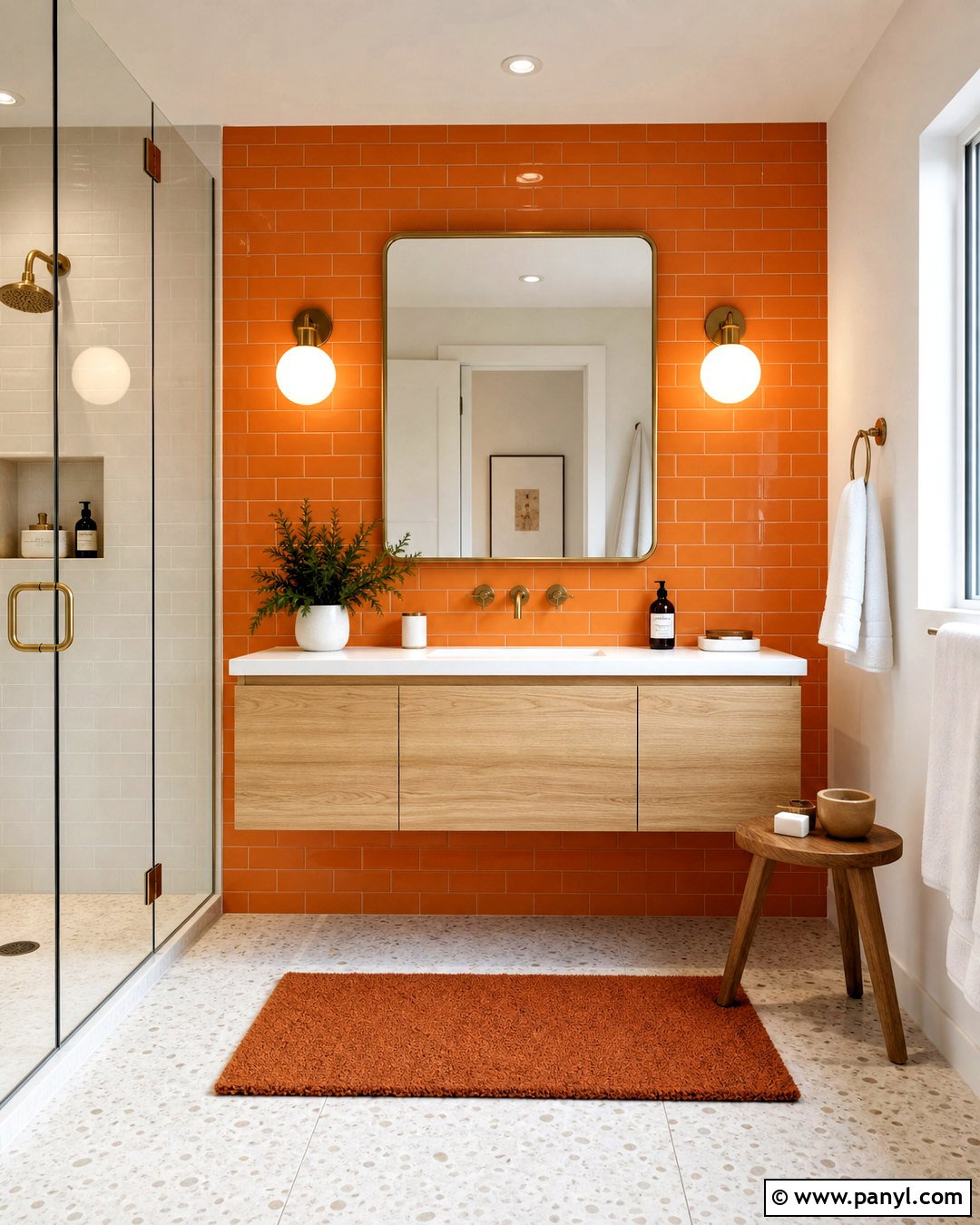
A clean white bathroom becomes much more memorable when orange is used with purpose. Cover the vanity wall with glossy tangerine subway tile, extending it from the countertop to the ceiling for a strong focal point. Balance that surface with white walls, a pale terrazzo floor, and a floating white oak vanity. A simple white countertop and rectangular mirror keep the composition streamlined. Choose brushed brass faucets, sconces, and cabinet pulls to complement the warmth of the orange tile. White towels and a neutral shower curtain prevent competing colors from entering the room. Add one small rust bath mat, a wooden stool, and a leafy plant in a cream ceramic pot. The result feels vivid and modern while remaining practical, bright, and easy to maintain.
7. Orange Entryway
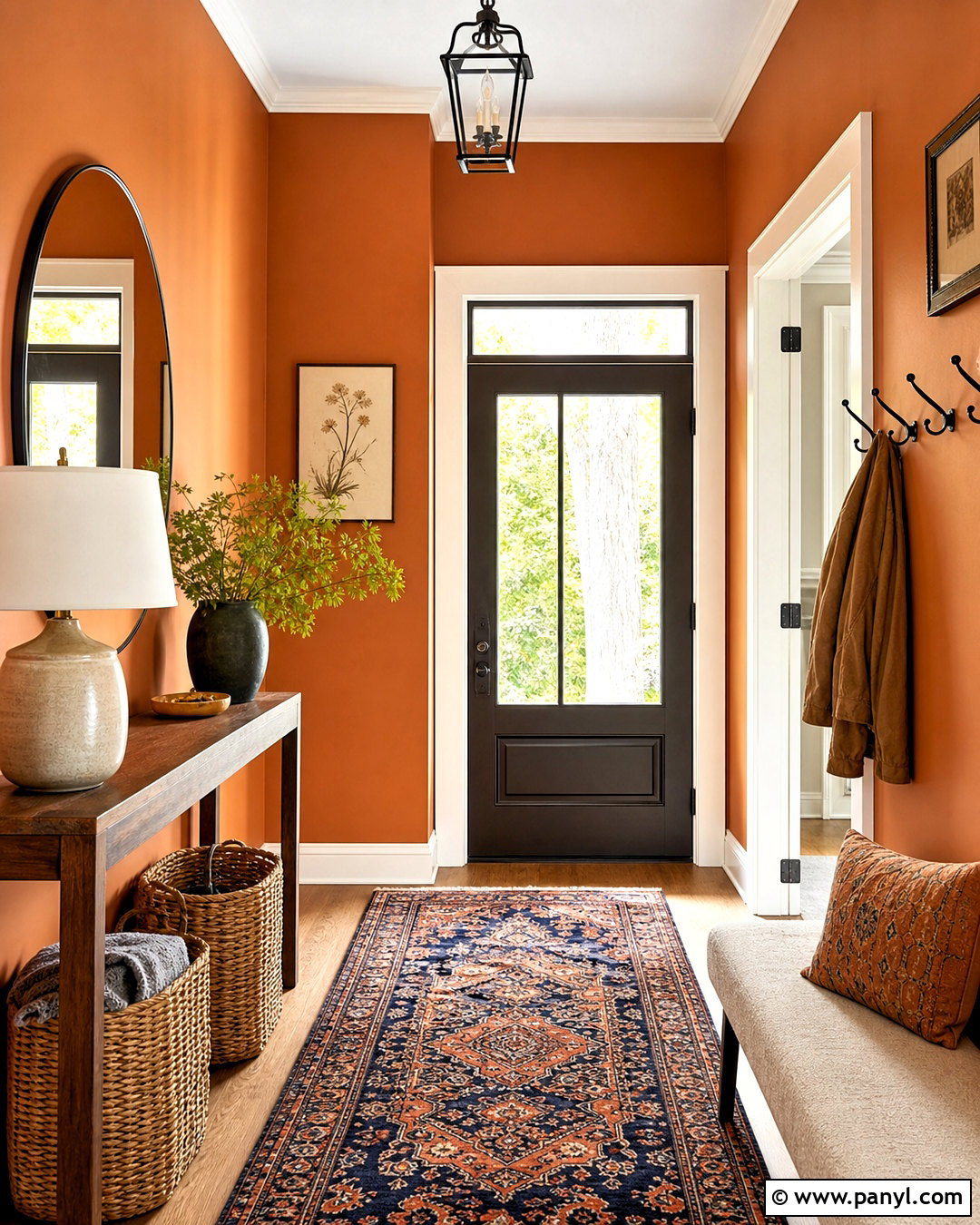
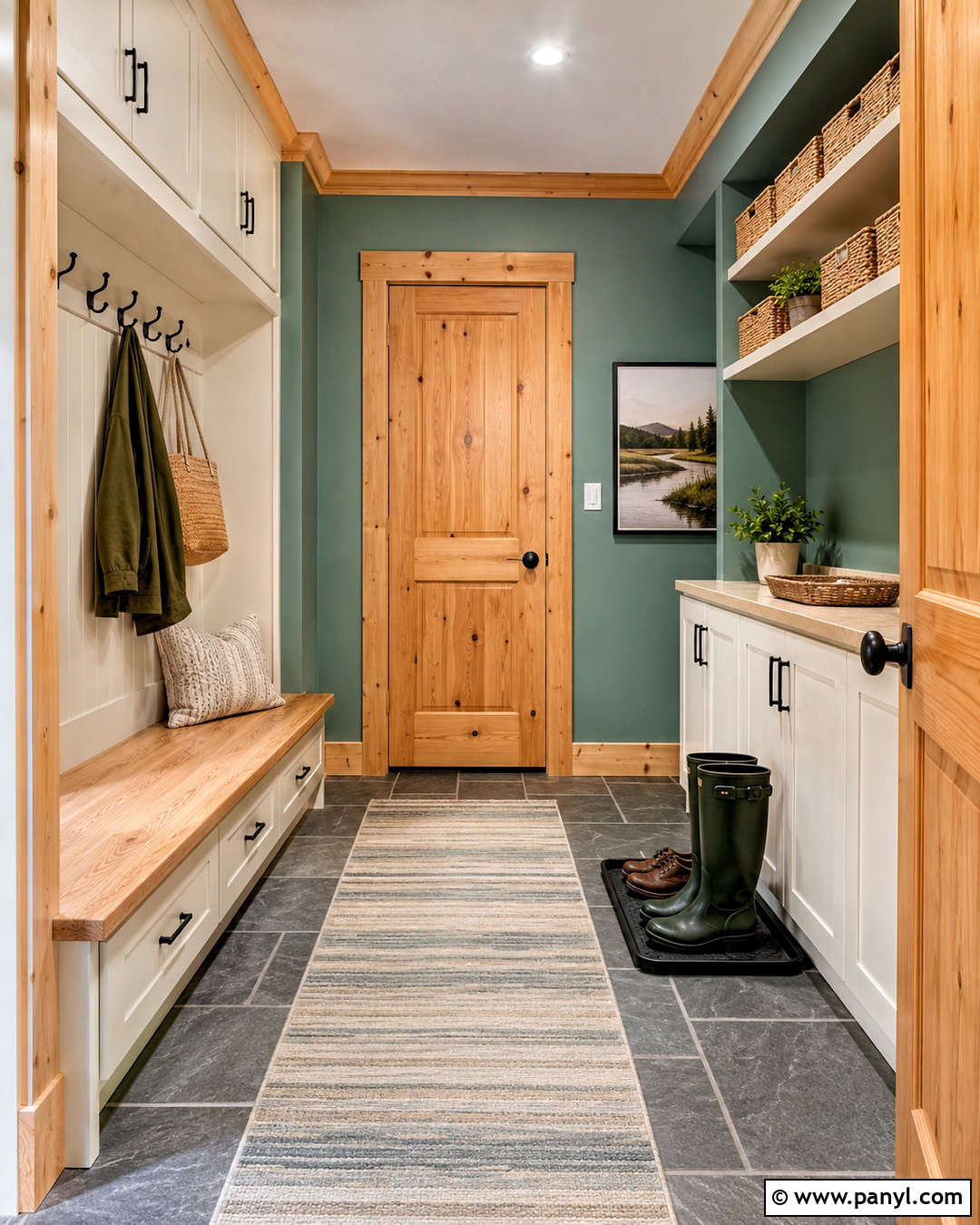
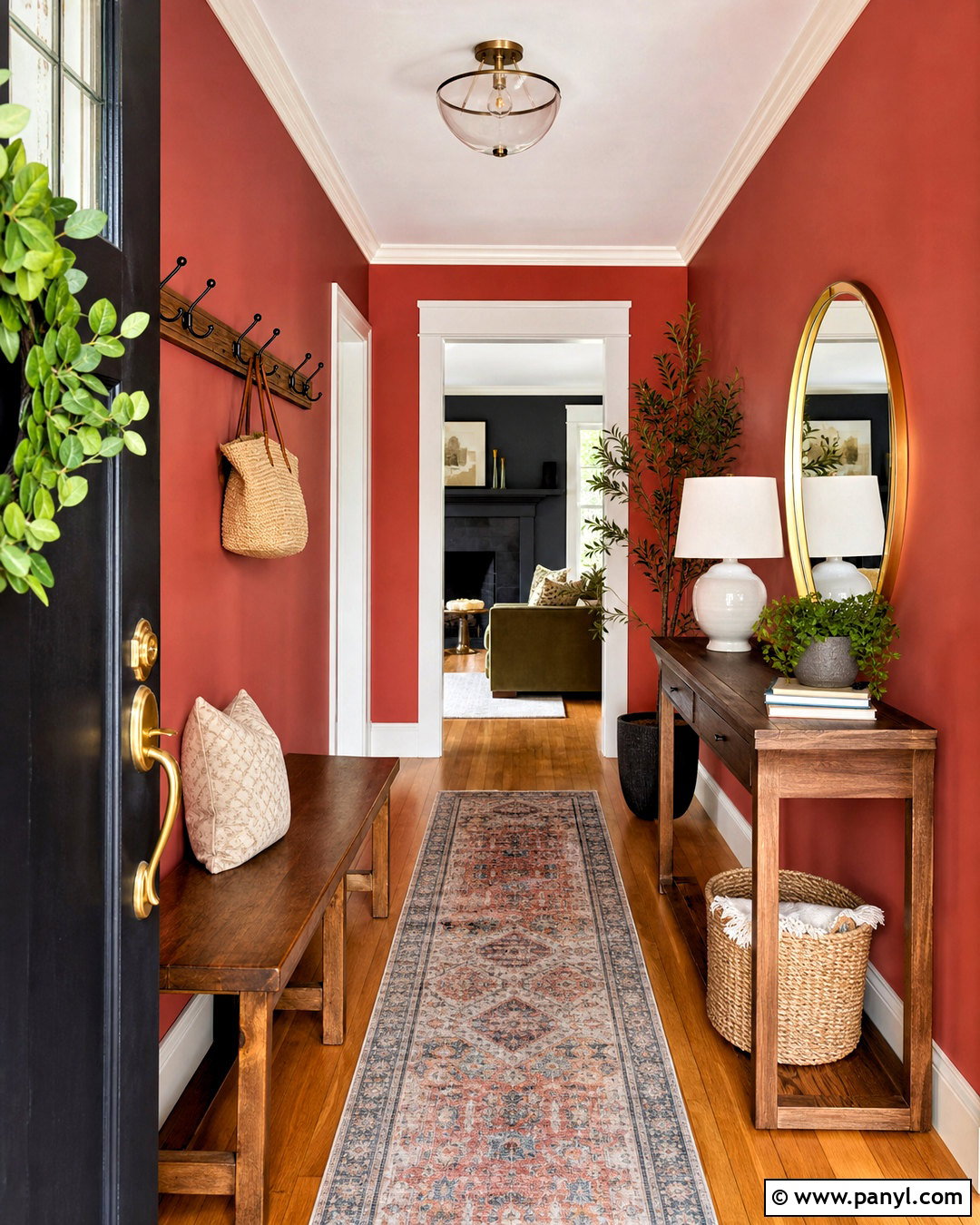
The entryway offers a natural place to experiment with orange before committing to a larger room. Paint the walls a muted pumpkin orange and keep the trim, ceiling, and interior doors creamy white for crisp definition. Position a narrow walnut console against the longest wall and hang a large rounded mirror above it to reflect light. A vintage-style runner containing rust, navy, and beige gives the hallway pattern and protects the floor. Include a slim upholstered bench if space allows, preferably in oatmeal fabric with a wooden frame. A black lantern pendant and matching wall hooks add practical contrast. Finish the complete arrangement with a ceramic table lamp, woven storage baskets, a small tray for keys, and restrained botanical artwork in dark wood frames.
8. Rust Orange Home Office
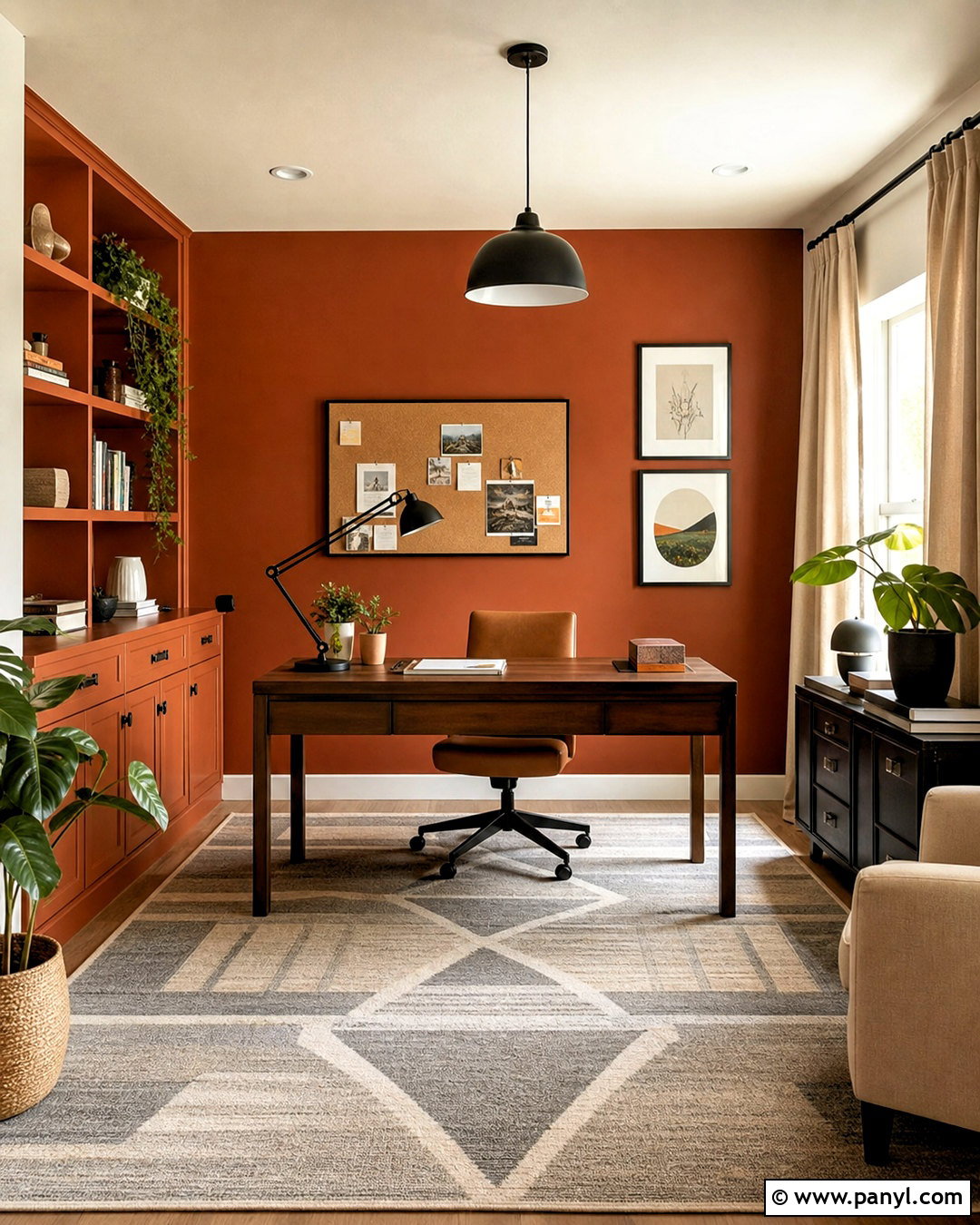
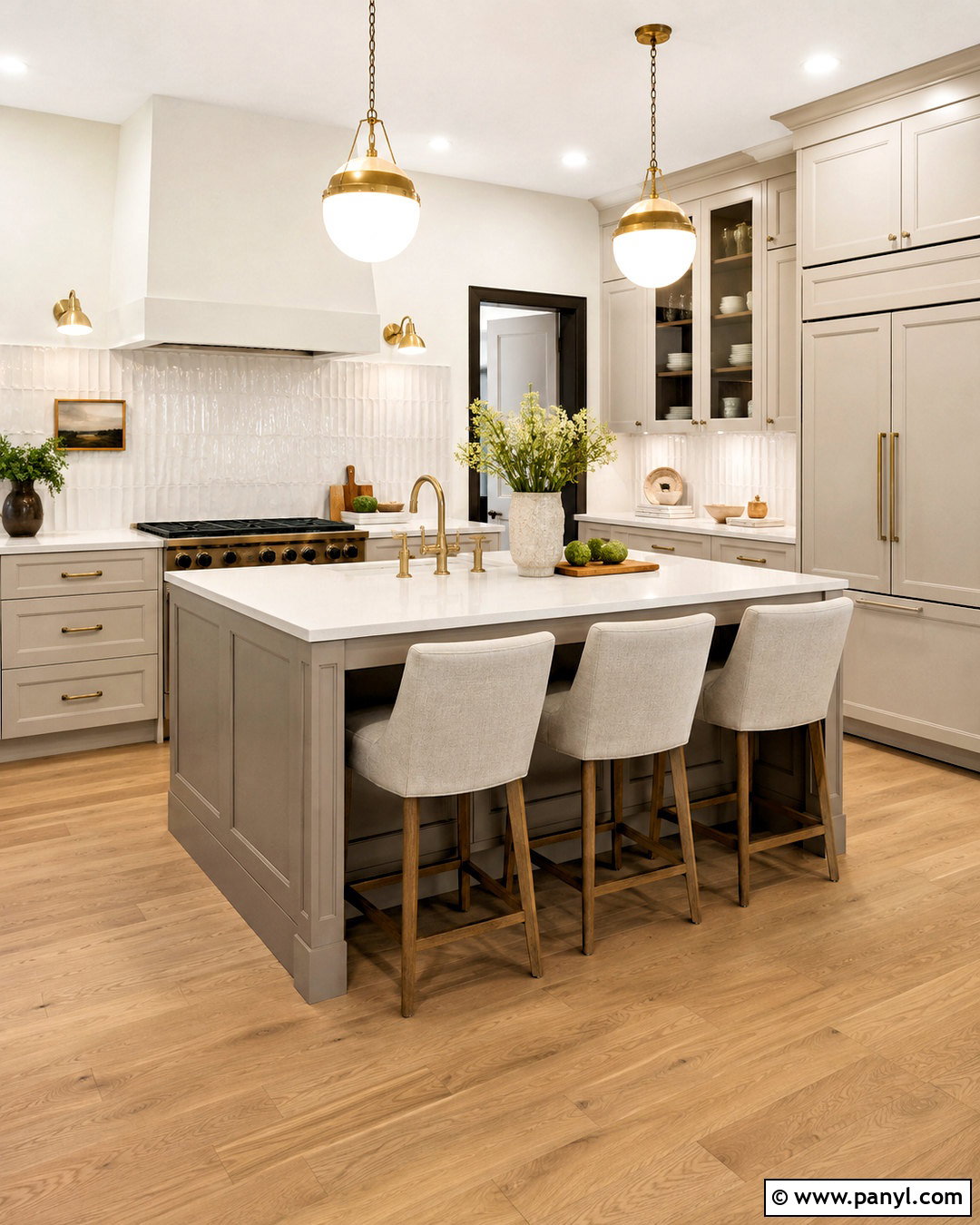
Rust orange can help a home office look focused, comfortable, and separate from the rest of the house. Paint the wall behind the desk in a deep earthy orange, then use warm off-white on the remaining walls to preserve visual space. Select a clean-lined walnut desk with closed storage and pair it with a supportive chair upholstered in camel or cream fabric. A low bookcase painted the same rust tone creates a built-in effect without requiring custom work. Ground the room with a geometric rug in charcoal, beige, and rust. Matte black lighting, frames, and desk accessories sharpen the warm palette. Add linen curtains, organized document boxes, a corkboard, and one large plant to create an efficient workspace that still feels thoughtfully decorated.
9. Orange Color-Drenched Den
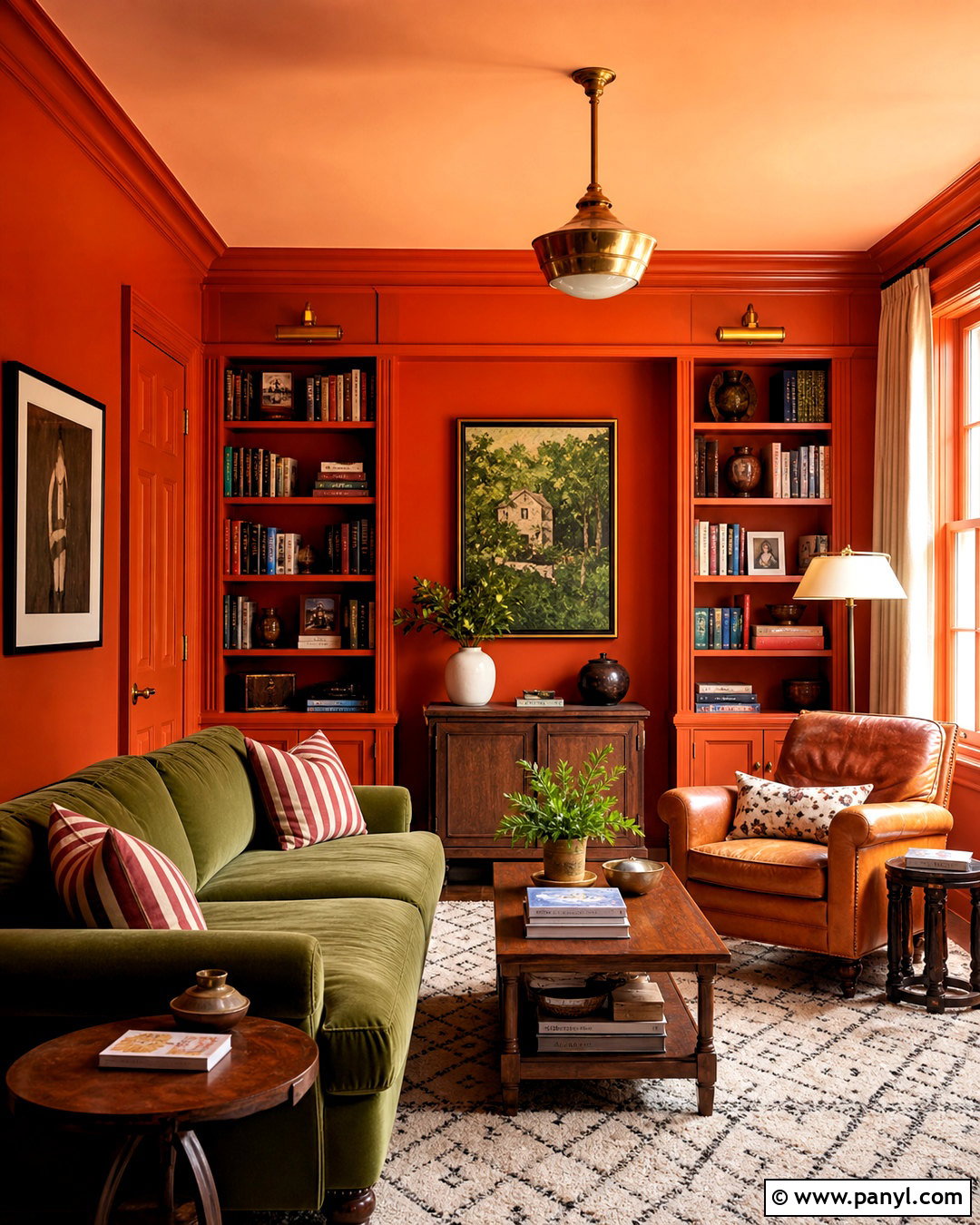
For an immersive approach, cover the walls, trim, built-in shelves, and interior door in the same rich orange paint. Choose a muted burnt orange rather than a bright shade so the den remains comfortable for everyday relaxation. A deep olive green sofa offers strong contrast, while a caramel leather chair adds another warm material without disappearing into the walls. Place a patterned wool rug in cream, brown, and dark green under the entire seating group. Walnut side tables, aged brass picture lights, and shelves filled with books give the room a collected appearance. Keep the ceiling a soft peach orange to lighten the upper portion slightly. Finish with framed artwork, striped pillows, and linen curtains for a cozy space with deliberate depth.
10. Orange And Pink Bedroom
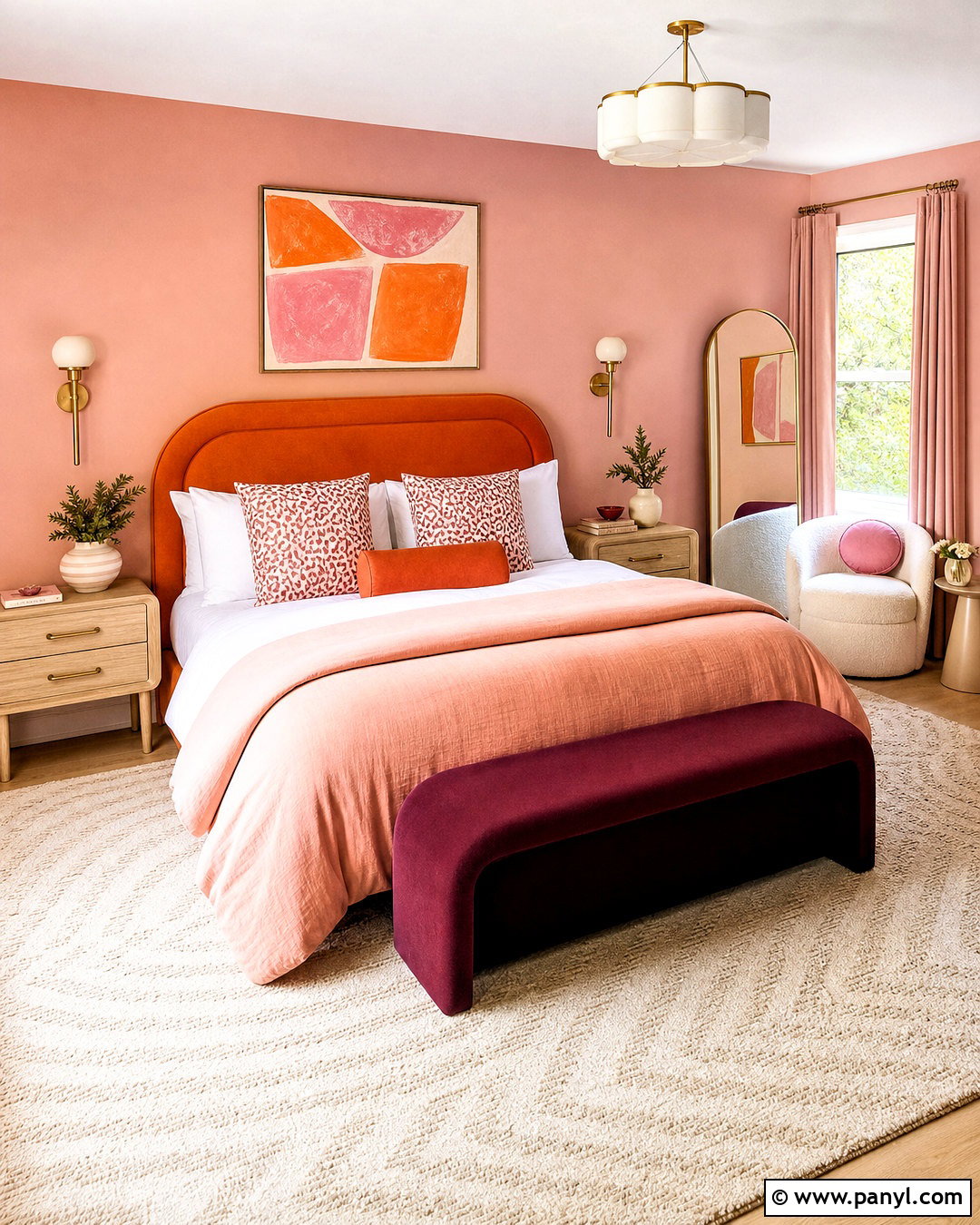
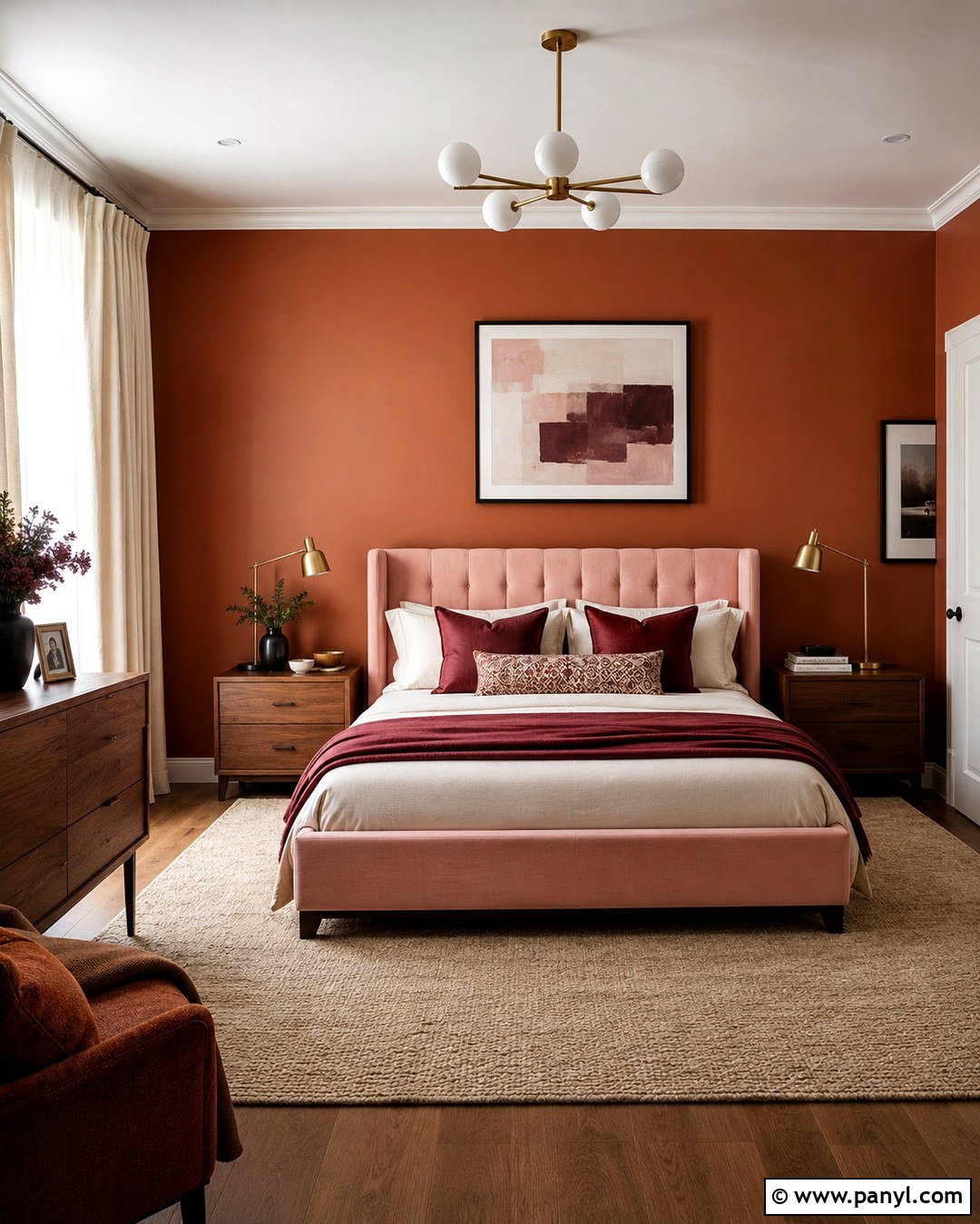
Orange and pink create a lively bedroom when their intensity is carefully controlled. Start with dusty blush walls and position a clay orange upholstered headboard against the main wall. Dress the bed with white sheets, a peach duvet, and patterned pillows that combine coral, rust, and muted rose. Pale wood nightstands and a cream area rug soften the saturated colors. For contrast, add a small burgundy bench or accent chair rather than introducing black throughout the room. Brass sconces and curved furniture edges support the warm, playful character. Keep window treatments simple with blush or off-white linen panels. A large abstract print above the bed can unite the palette, while ceramic lamps, a woven basket, and minimal greenery keep the finished design polished rather than overly youthful.
11. Orange And Teal Sunroom
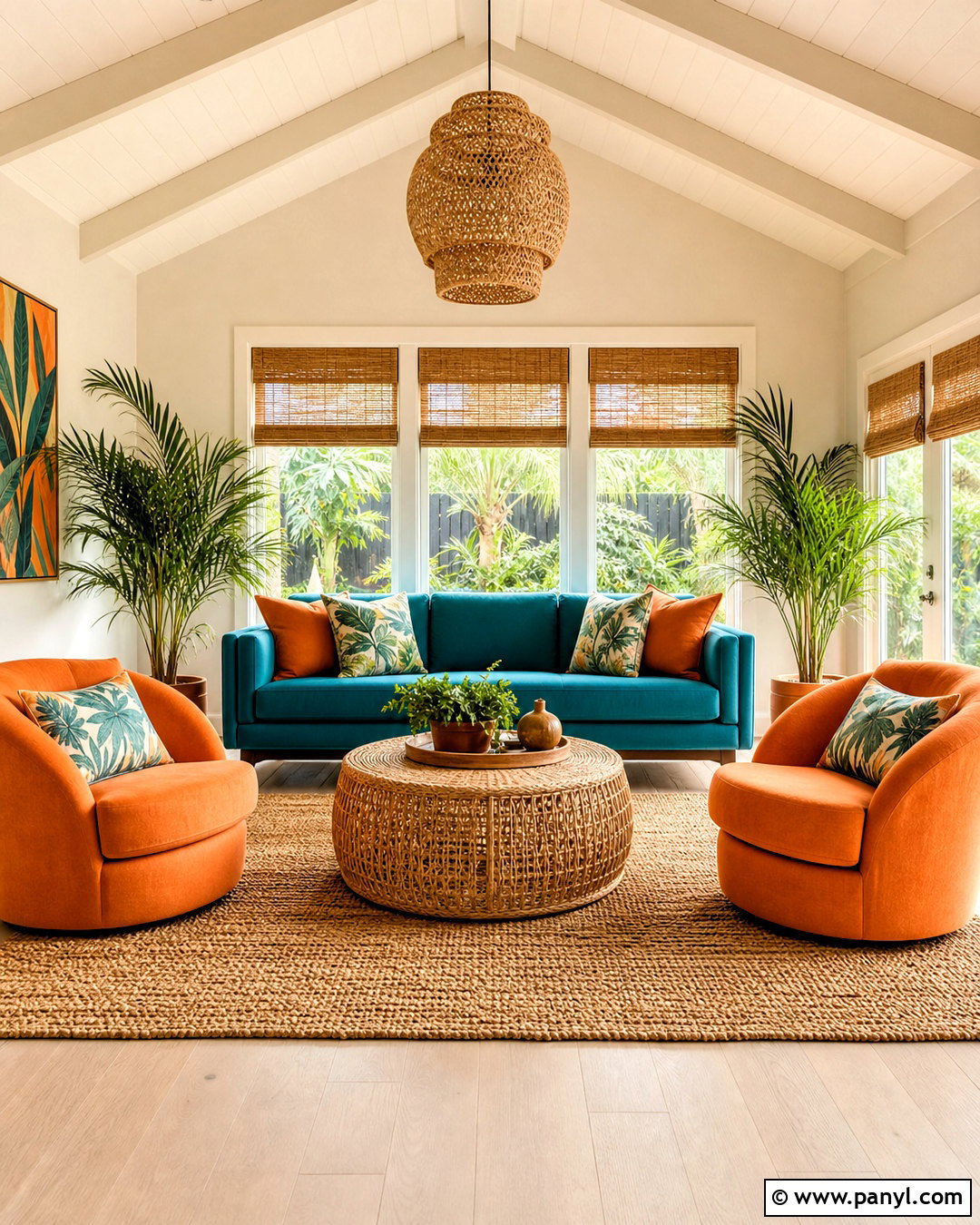
Natural light allows orange and teal to look especially clear and energetic in a sunroom. Use warm white walls and pale stone or light oak flooring as a neutral foundation. Arrange a teal blue-green sofa along the longest wall, then place two curved tangerine armchairs opposite it. A large natural fiber rug helps settle the contrasting colors, while a round rattan coffee table adds relaxed texture. Dress the windows with woven shades that filter glare without darkening the room. Repeat both colors in a few botanical cushions and a patterned floor pouf. Terracotta planters filled with substantial green plants connect the interior to the outdoor view. Finish with white ceramic accessories and a sculptural pendant for a fresh, comfortable gathering area.
12. Orange Midcentury Living Room
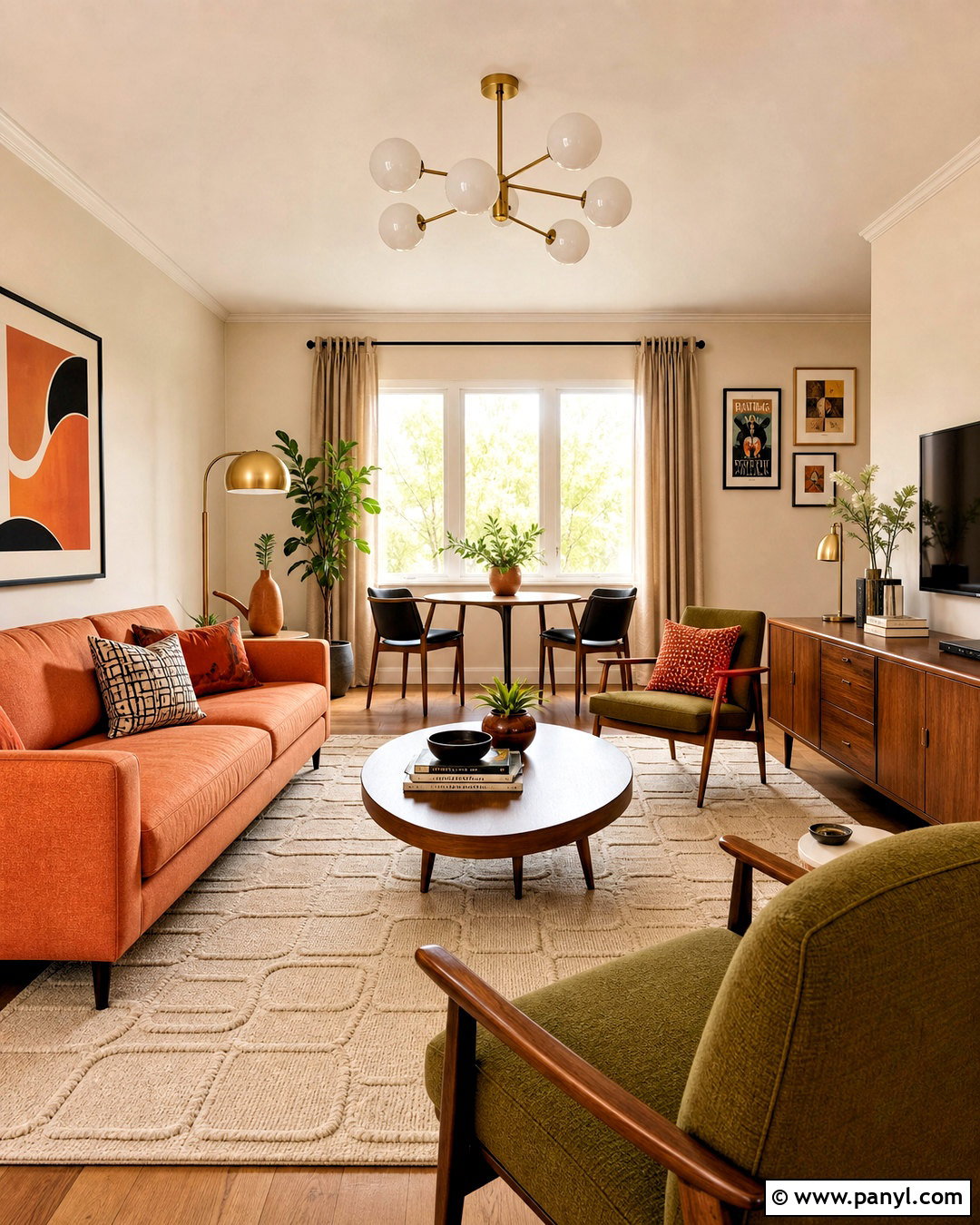
A midcentury-inspired room gives orange a natural setting without turning the space into a dated theme. Begin with warm white walls, walnut furniture, and a streamlined sofa upholstered in muted persimmon orange. Place a pair of olive green lounge chairs nearby and center the arrangement around a low oval coffee table. A cream geometric rug softens the wood flooring while introducing period-appropriate pattern. Choose a walnut media console with simple sliding doors and keep electronics visually contained. Globe lighting, slim brass accents, and graphic artwork support the look in moderation. Add floor-to-ceiling curtains in oatmeal fabric and use rust, mustard, and brown cushions sparingly. The complete room feels nostalgic, functional, and updated for a comfortable modern household.
13. Orange Boho Bedroom
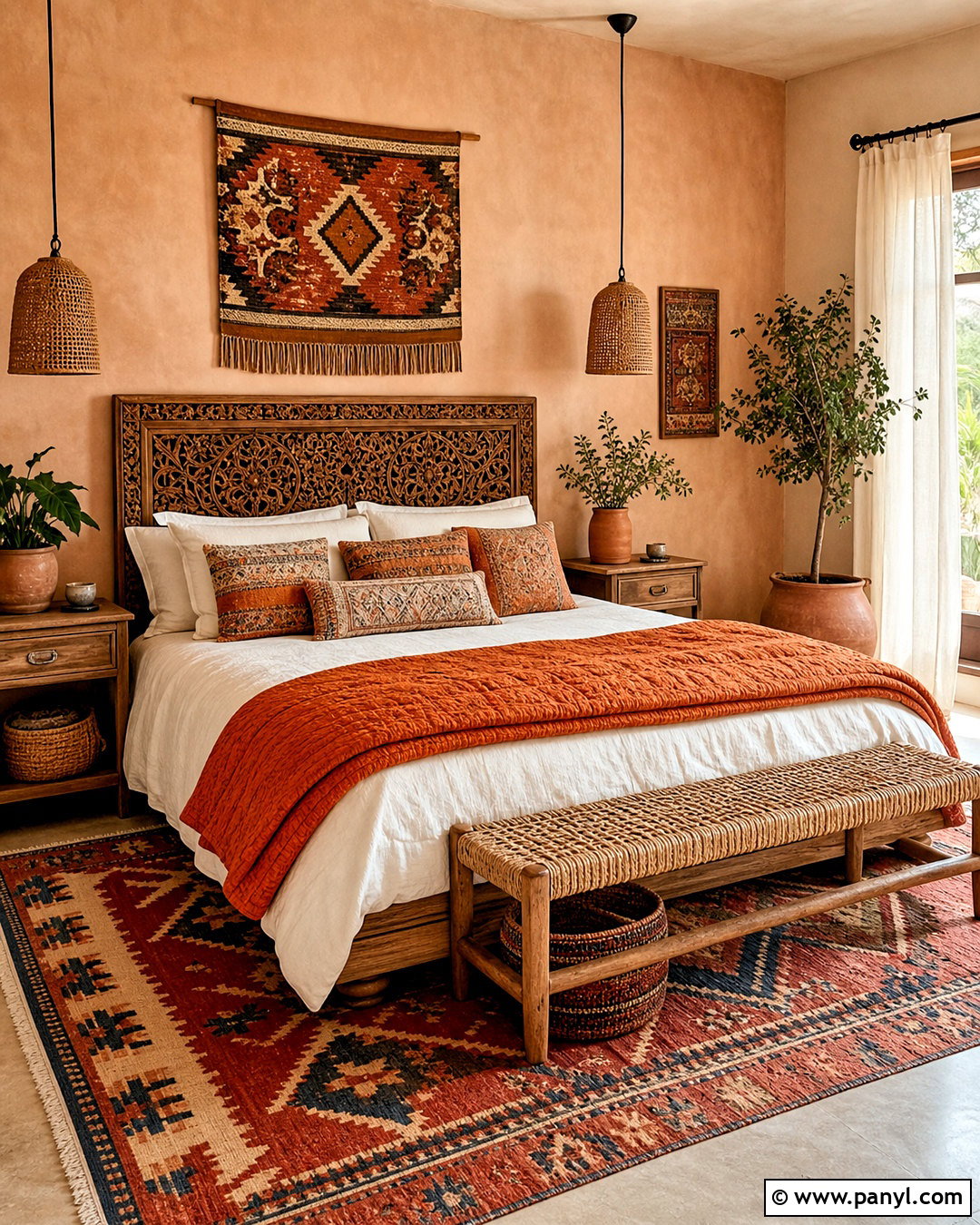
Layered fabrics and natural materials can make orange feel cozy rather than intense. Paint the bedroom walls a pale clay tone, then create a focal point with a carved wood bed dressed in white linen bedding. Add a burnt orange coverlet, patterned lumbar pillows, and a faded kilim rug featuring rust, cream, and deep brown. Woven pendant lights free the nightstands for books and pottery, while mismatched wooden tables contribute to the relaxed character. Hang full-length cream curtains to soften the daylight and use a rattan bench at the foot of the bed. A large textile wall hanging can introduce subtle pattern above the headboard. Finish with baskets, terracotta planters, and one substantial plant, leaving enough open space to prevent the layers from feeling cluttered.
14. Orange Minimalist Kitchen
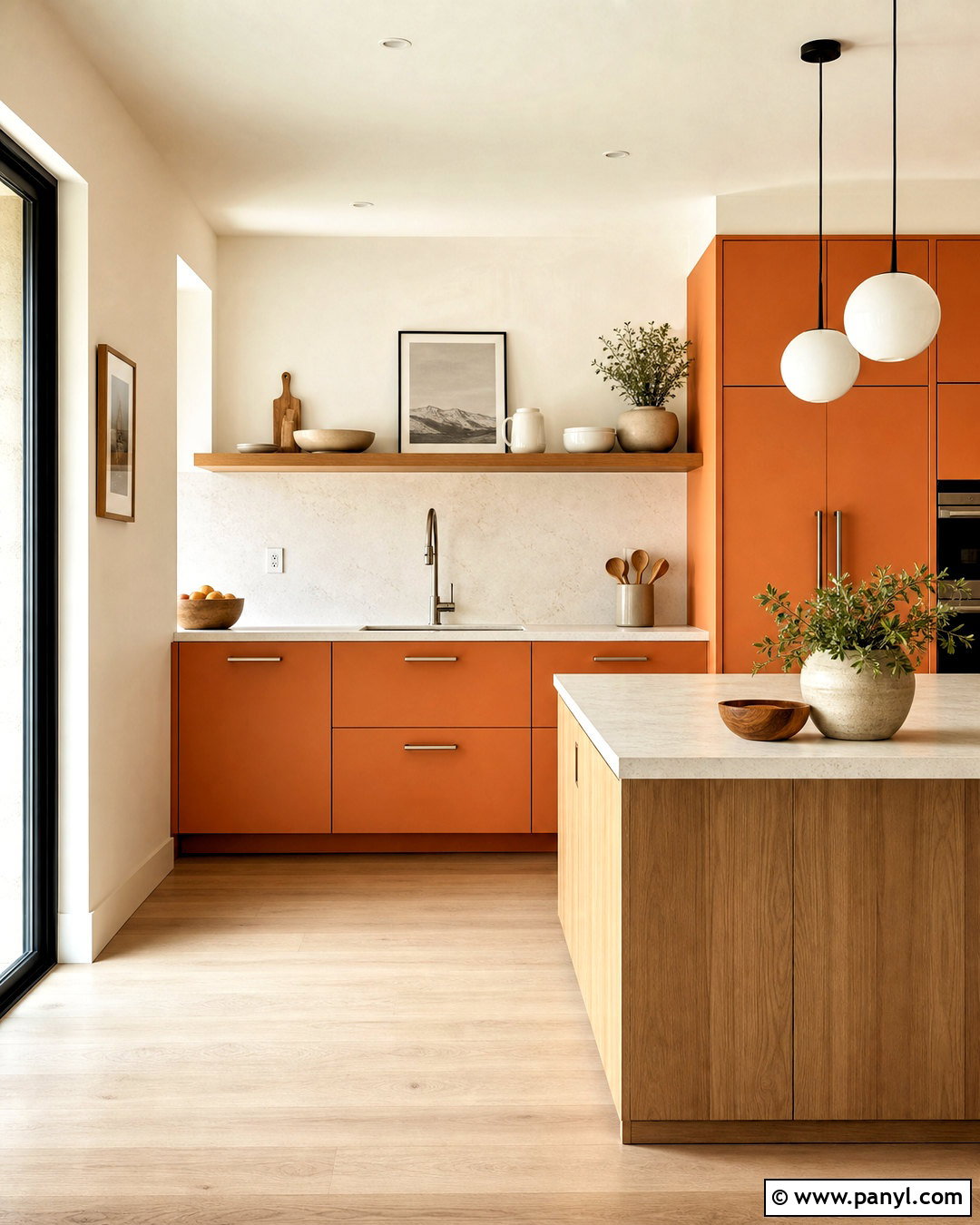
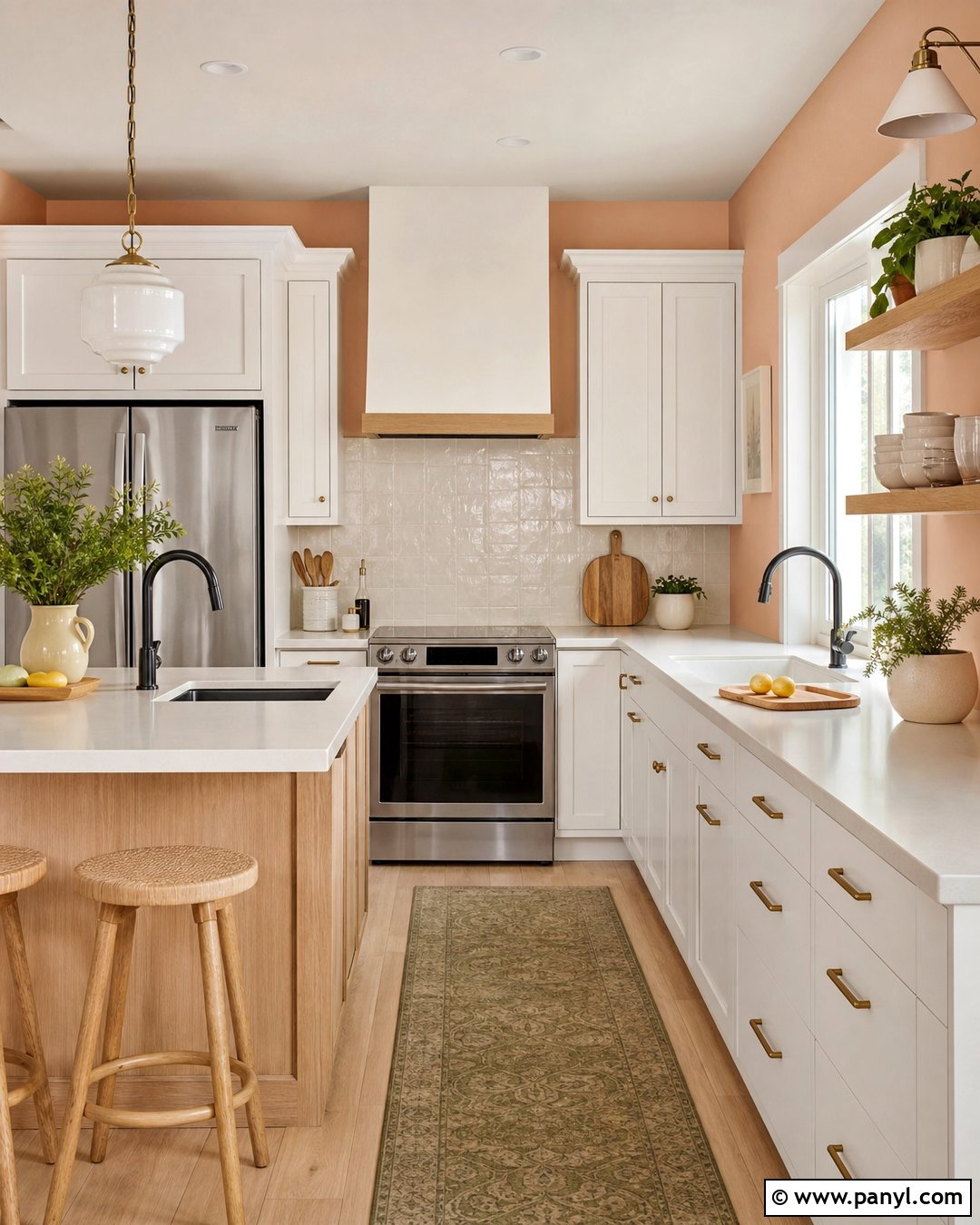
A minimalist kitchen can accommodate bold orange when the cabinetry and layout remain simple. Use matte apricot orange on flat-panel lower cabinets and a tall pantry wall, then balance them with warm white upper walls. Select a pale quartz backsplash and matching countertops for a seamless surface with minimal visual interruption. Light oak flooring and a compact oak island bring natural warmth without competing with the cabinets. Keep hardware understated with narrow brushed stainless steel pulls or discreet integrated handles. Two white globe pendants add clean geometry over the island. Avoid displaying too many appliances and accessories; instead, use a wooden bowl, a few cream stoneware pieces, and one small plant. The finished kitchen feels organized, bright, and distinctly colorful.
15. Orange And Natural Wood Nursery
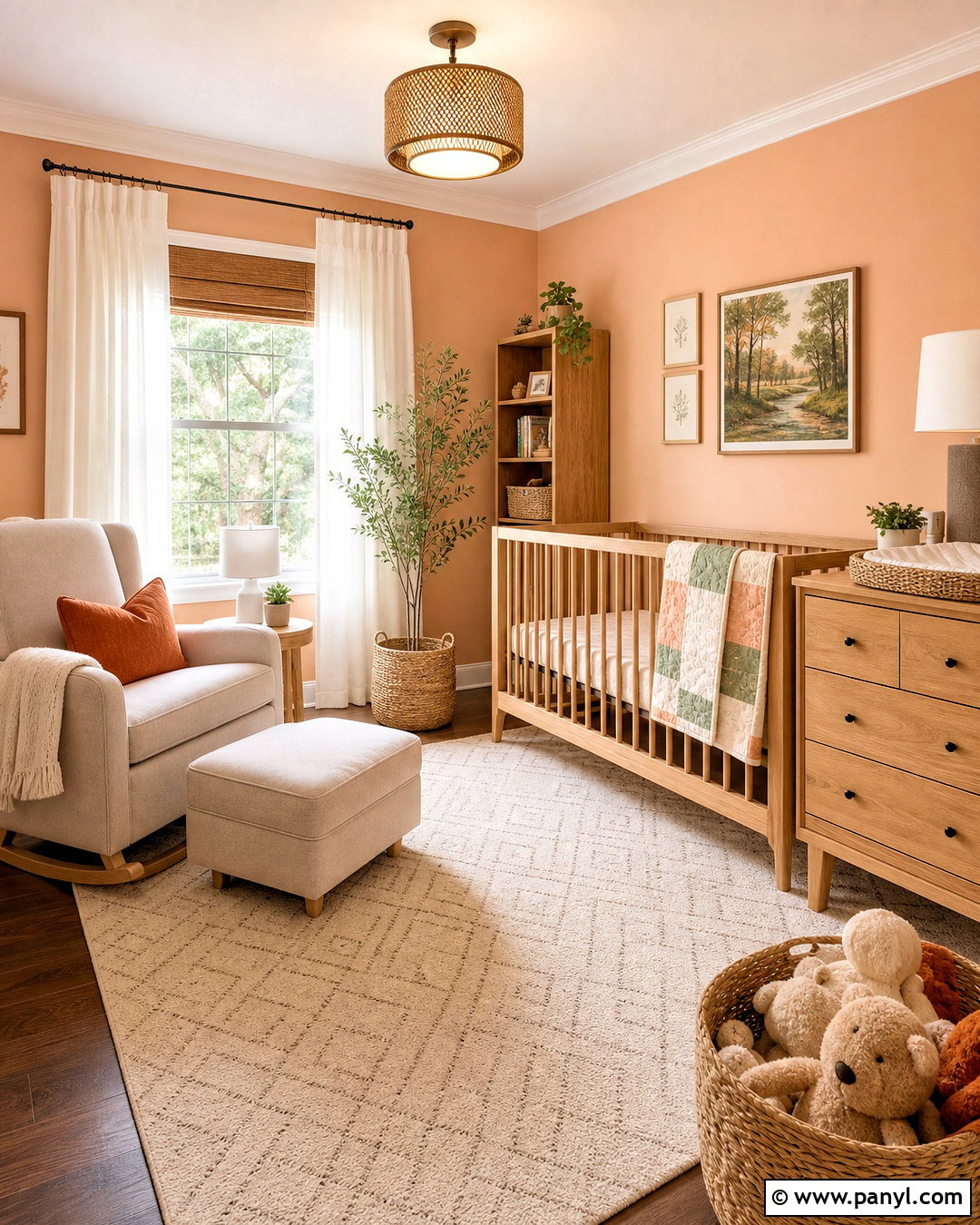
A nursery can use orange in a calm, adaptable way that works beyond the earliest years. Paint the walls a soft apricot orange and keep the ceiling and trim creamy white. Choose a simple natural oak crib, matching dresser, and rounded bookshelf for a coordinated foundation. An ivory upholstered glider creates a comfortable corner beside a wooden floor lamp and small side table. Ground the room with a washable cream rug featuring a subtle rust geometric pattern. Use cotton curtains in warm white and add blackout shades behind them for practical light control. Storage baskets, rust-colored cushions, and a quilt with sage, peach, and beige details complete the palette. Keep wall art simple and nature-inspired so the space feels peaceful, cheerful, and easy to update.
16. Orange Powder Room
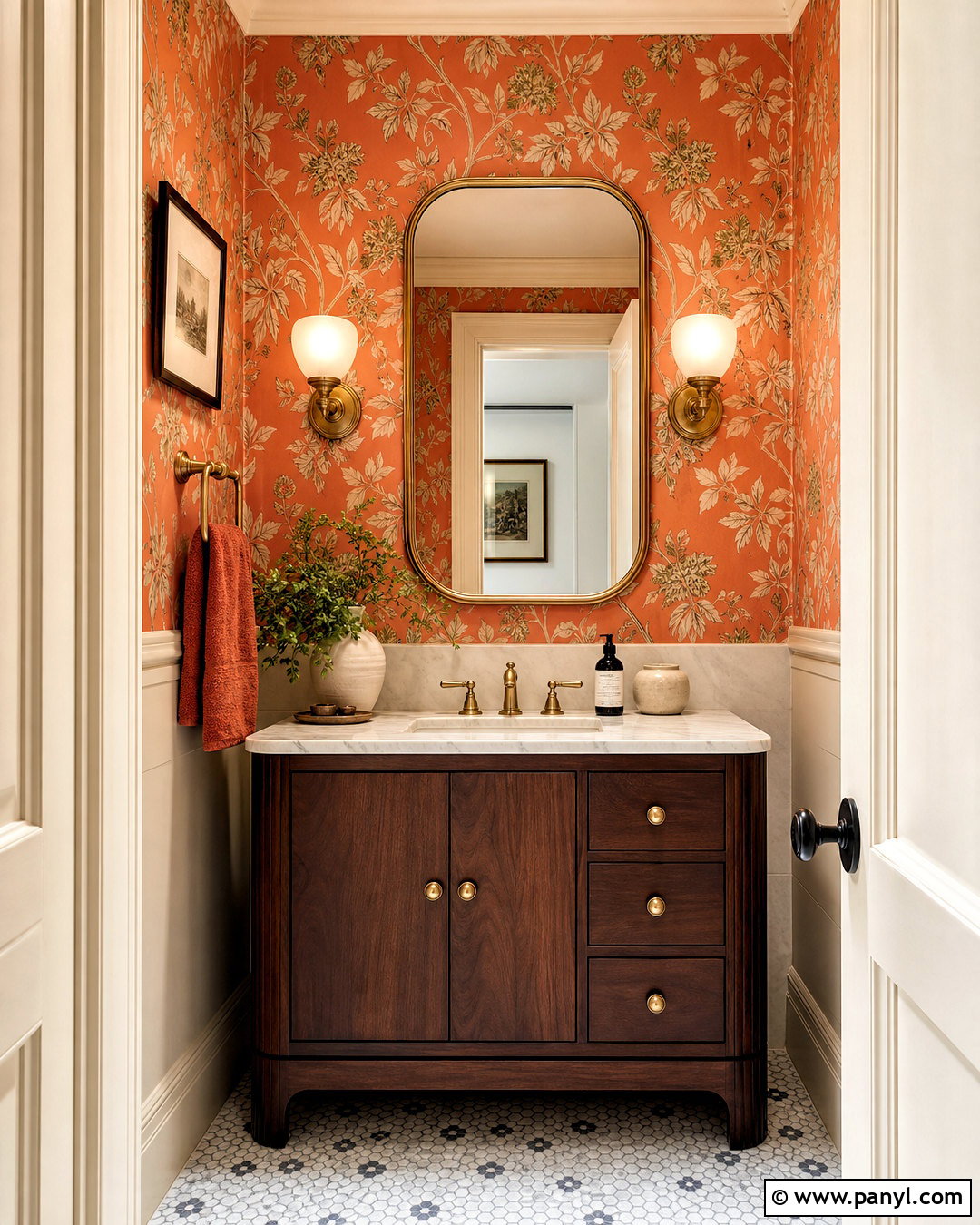
Small powder rooms can support an adventurous orange scheme because they are experienced for shorter periods. Cover the walls in orange botanical wallpaper with cream leaves and small green details. A compact dark walnut vanity provides depth beneath a white marble countertop, while an aged brass faucet adds warmth. Install a rounded brass mirror and two simple opal glass sconces to create flattering, even light. Paint the ceiling and trim a soft cream pulled directly from the wallpaper. Use small-scale mosaic tile in white and warm gray on the floor to balance the pattern. A rust hand towel, framed miniature artwork, and a ceramic soap dish are enough decoration. This complete powder room feels expressive and carefully coordinated without sacrificing function in a limited footprint.
17. Orange Reading Nook
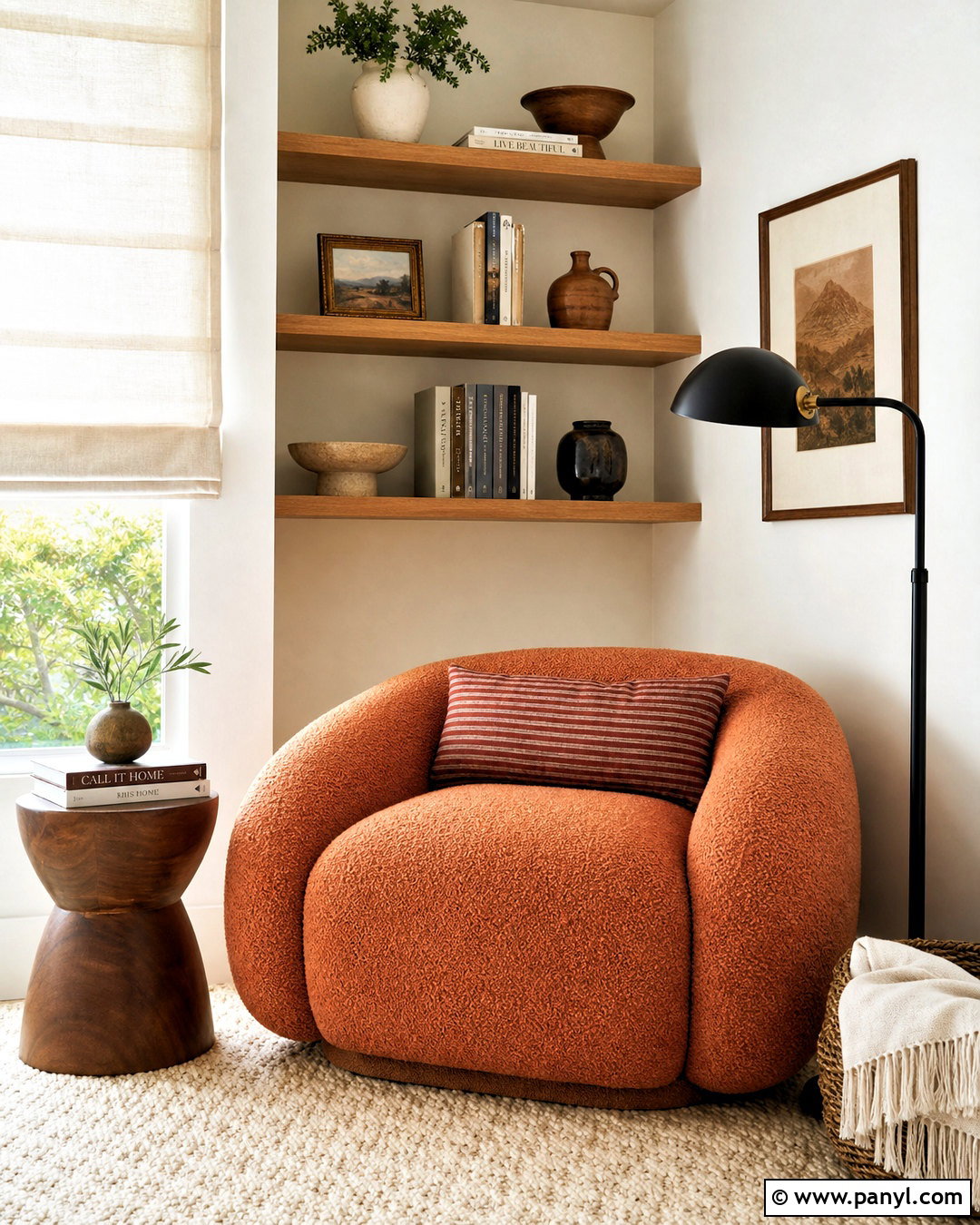
An overlooked corner can become a welcoming reading nook with a clear orange focal point. Place a wide burnt orange boucle chair near a window and pair it with a small walnut side table. A tall black floor lamp provides focused lighting while creating definition against warm white walls. Use a compact cream rug to visually separate the corner from the larger room. Install two or three floating oak shelves nearby for books, framed art, and a few ceramic objects. A rust-and-beige striped pillow supports the chair’s color without adding unnecessary pattern. Finish the window with a natural linen Roman shade and position a woven basket beside the chair for blankets. The arrangement feels complete, useful, and intentional even within a modest amount of floor space.
18. Orange Gallery Hallway
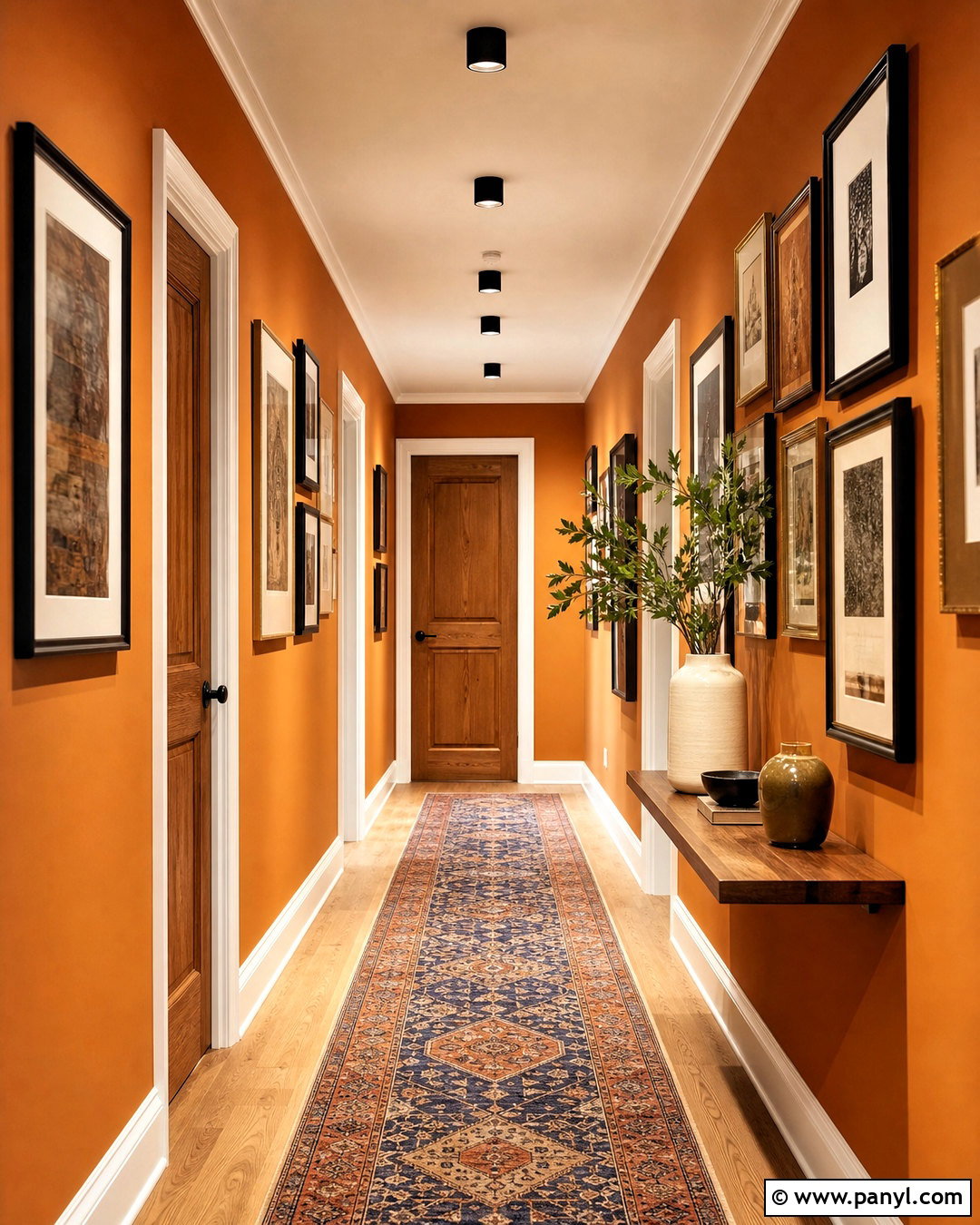
A hallway painted orange can become a memorable transition instead of an undecorated passage. Choose a warm, muted marigold orange for the walls and use crisp ivory on the trim and ceiling. Create a structured gallery with black, oak, and brass frames, keeping the artwork varied but united by cream mats. A long vintage-inspired runner in navy, rust, and beige balances the warm walls and directs the eye through the space. Add a narrow wall-mounted shelf or shallow console where circulation allows. Matte black ceiling lights give the hallway a modern edge and provide consistent illumination. Keep doors in natural wood or ivory to break up the color. The finished design feels personal, bright, and organized without making a narrow area appear crowded.
19. Orange And Charcoal Basement
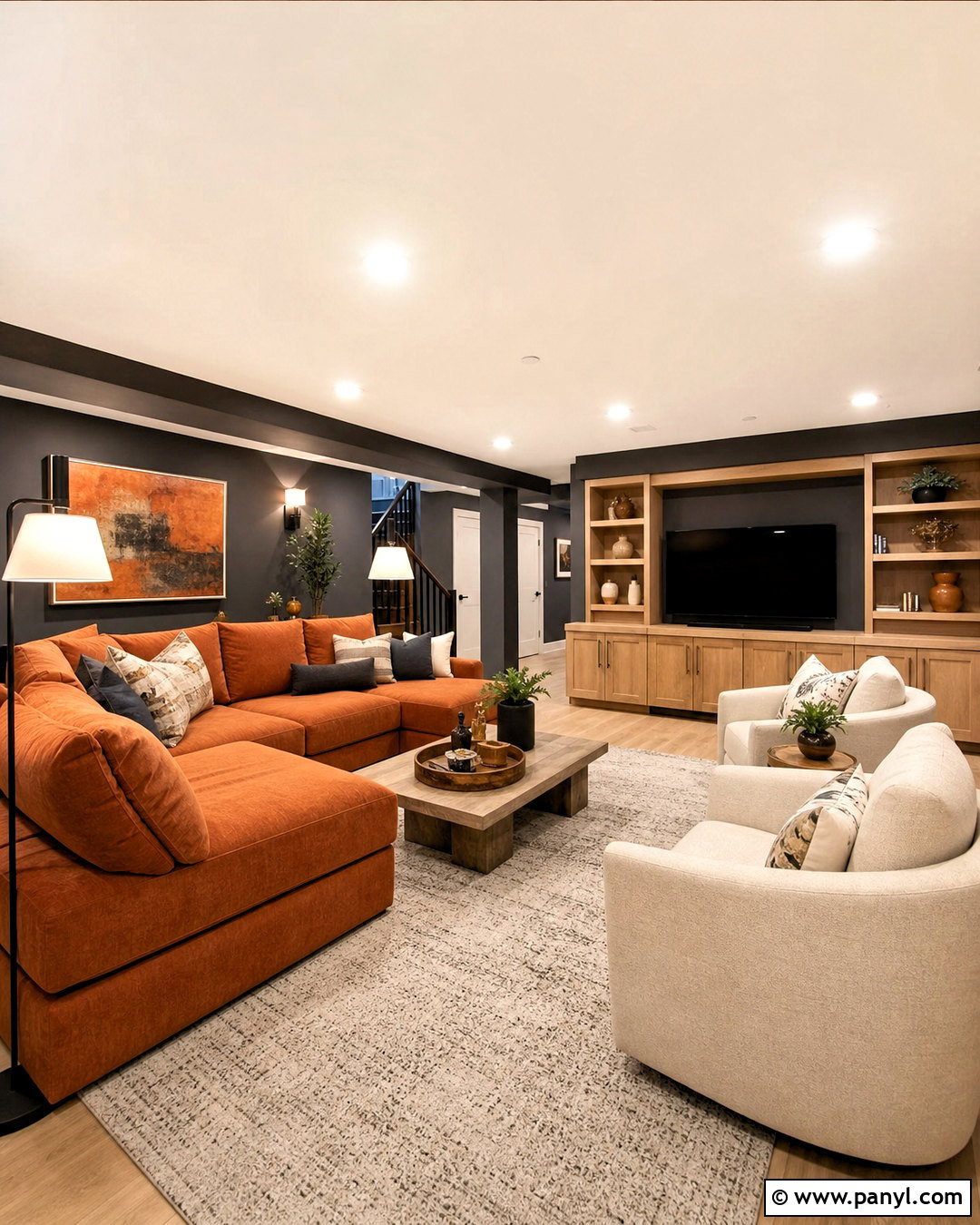
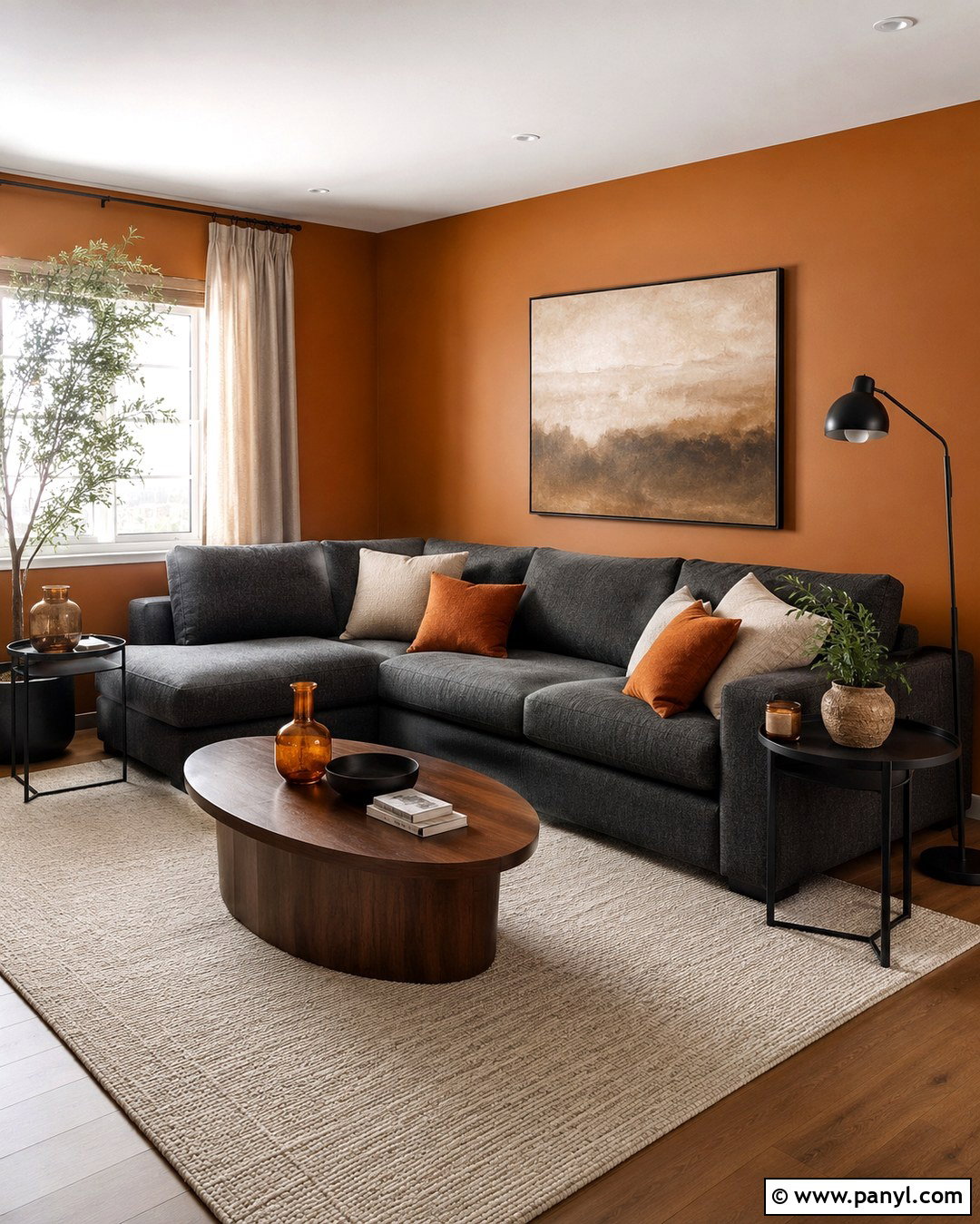
Charcoal gray and orange can make a basement feel polished, warm, and ready for casual gatherings. Use soft charcoal on the main walls, but keep the ceiling warm white to maintain brightness. Anchor the seating zone with a large rust orange sectional and an oversized cream-and-gray rug. Add a light oak media unit, matching side tables, and closed cabinets to organize games, electronics, and household supplies. Black metal floor lamps disappear neatly against the gray walls, while white shades spread light around the room. Introduce extra seating with two cream swivel chairs rather than more dark furniture. Orange artwork, textured pillows, and a few wood accessories connect the palette. The layout remains comfortable and practical while avoiding the usual dark basement appearance.
20. Orange Studio Apartment
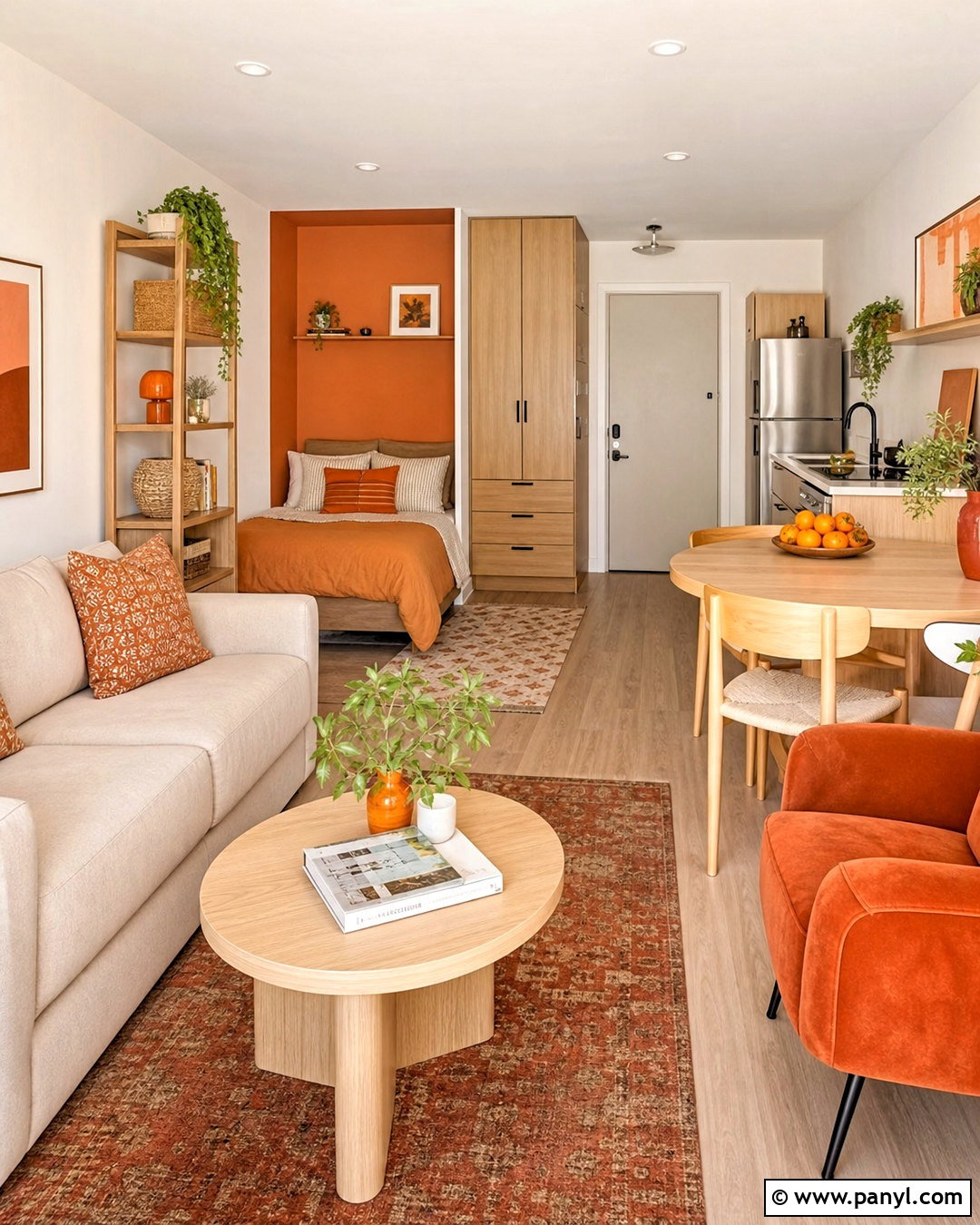
In a studio apartment, orange can connect different zones and give the entire interior a clear identity. Keep the main walls warm white, then paint the sleeping alcove or bed wall a muted clay orange. Use a compact oatmeal sofa to define the living area and add one tangerine lounge chair for a stronger accent. A pale oak dining table can double as a workspace between the kitchen and seating zone. Repeat orange through a patterned rug, two cushions, and a ceramic table lamp rather than adding more large furniture. Choose light wood storage, cream curtains, and woven baskets to keep the small home visually open. Consistent materials and repeated colors make each functional zone feel connected, organized, and intentionally designed.
Conclusion:
These 20 orange interior design ideas show how one color can support many different moods, from calm and earthy to playful and modern. The key is choosing an orange shade that suits the room’s natural light, size, and purpose. Balance vivid tangerine with white or cool blue, pair terracotta with wood and cream, or soften peach with warm neutral textiles. Repeat the chosen shade in several measured places so the finished space feels connected rather than random. Most importantly, design the entire room around the palette instead of treating orange as an isolated accent. With thoughtful furniture, lighting, texture, and contrast, orange can feel comfortable, sophisticated, and surprisingly easy to live with.

Related Ideas and Inspiration:
Leave a Reply