
Orange furniture brings instant warmth, personality, and energy to a room, but the wall color determines whether it feels polished or overpowering. These 20 Neutral Wall Color With Orange Furniture Ideas show how warm whites, soft grays, earthy beiges, taupes, and deeper neutrals can balance everything from tangerine dining chairs to burnt orange sofas. Current design guidance favors grounding orange with calm neutral backgrounds, natural wood, textured fabrics, and carefully repeated accents. () Before painting, compare the furniture’s undertone with large wall samples in morning and evening light. Then complete the space with flooring, rugs, lighting, and decor that support the palette. Use the full-room combinations below as your guide to 20 Neutral Wall Color With Orange Furniture Ideas.

1. Warm White Walls With Burnt Orange Sofa
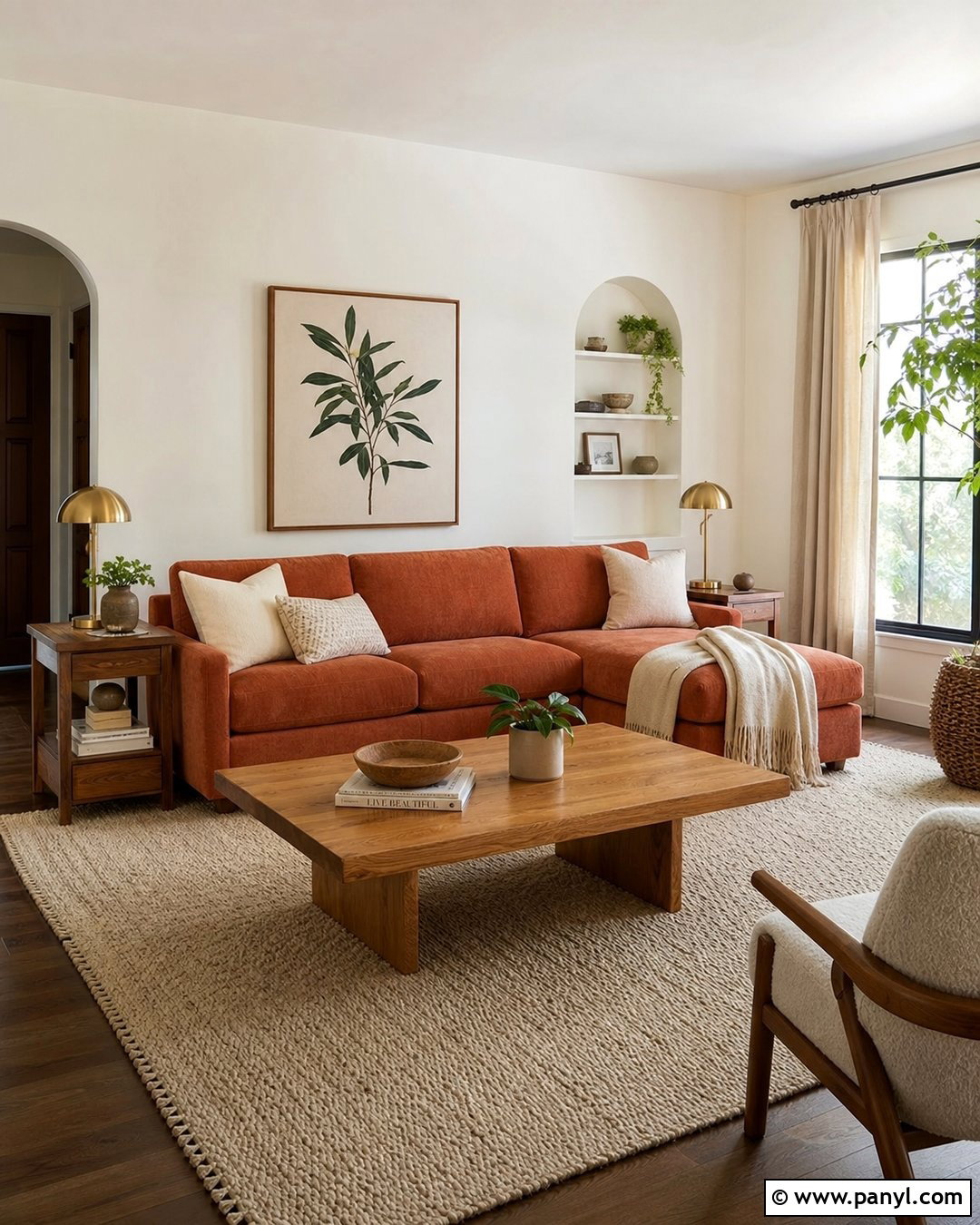
Warm white walls create a clean, welcoming background for a burnt orange sofa without making the contrast feel sharp. Choose white paint with subtle cream or beige undertones rather than a cool blue-white. Ground the seating area with a large oatmeal wool rug and a medium-tone oak coffee table. Cream pillows, a soft beige throw, and linen curtains keep the room relaxed while allowing the sofa to remain the focal point. Add a few walnut or antique brass accents for extra depth. Simple botanical artwork can repeat small touches of rust, tan, and olive. This complete living room works especially well in spaces with limited natural light because the warm white walls reflect brightness while supporting the sofa’s earthy color.
2. Crisp White Walls With Tangerine Chairs
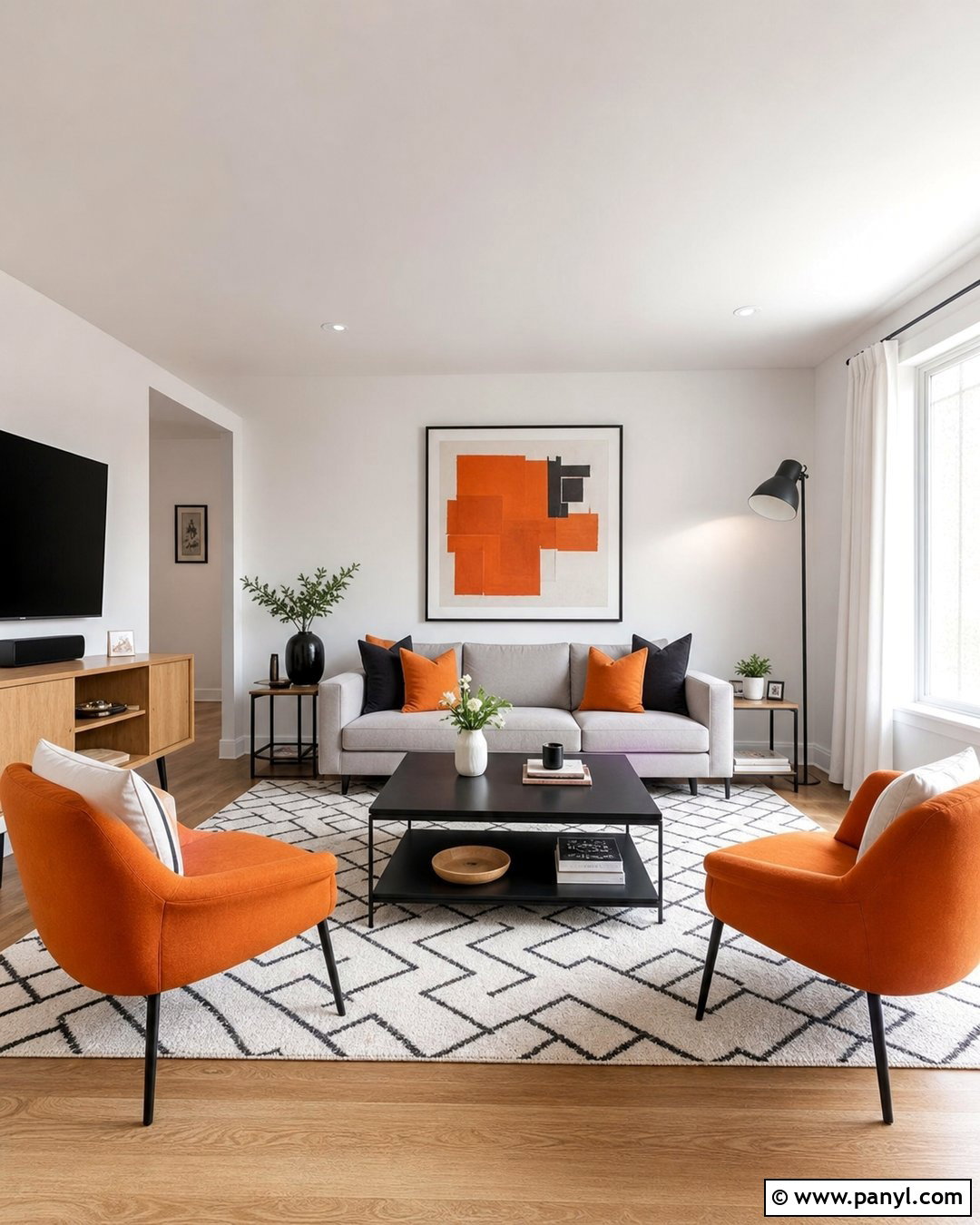
Can bold tangerine chairs look refined rather than playful? Crisp white walls provide the clarity needed to make their bright color feel intentional. Arrange two orange accent chairs across from a white or pale gray sofa, then connect the seating with a geometric rug featuring white, charcoal, and small orange details. A matte black coffee table and slim black floor lamp give the room structure. Use pale oak flooring or a light wood console to prevent the contrast from becoming too stark. Keep window treatments simple with white cotton panels or woven shades. One oversized abstract artwork can combine orange, black, and soft gray. The finished room feels fresh and contemporary, with enough neutral space around each vibrant furniture piece.
3. Ivory Walls With Terracotta Sectional
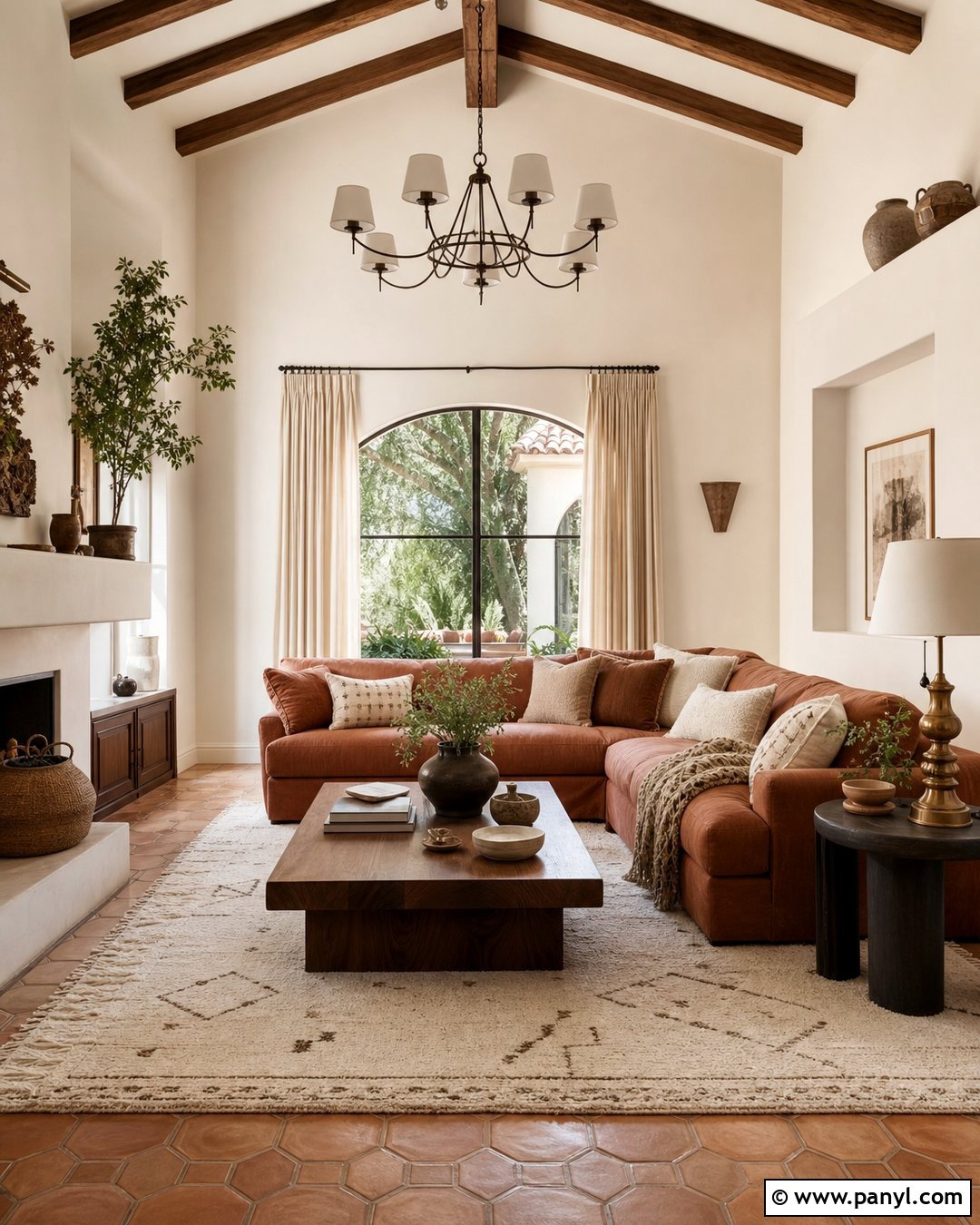
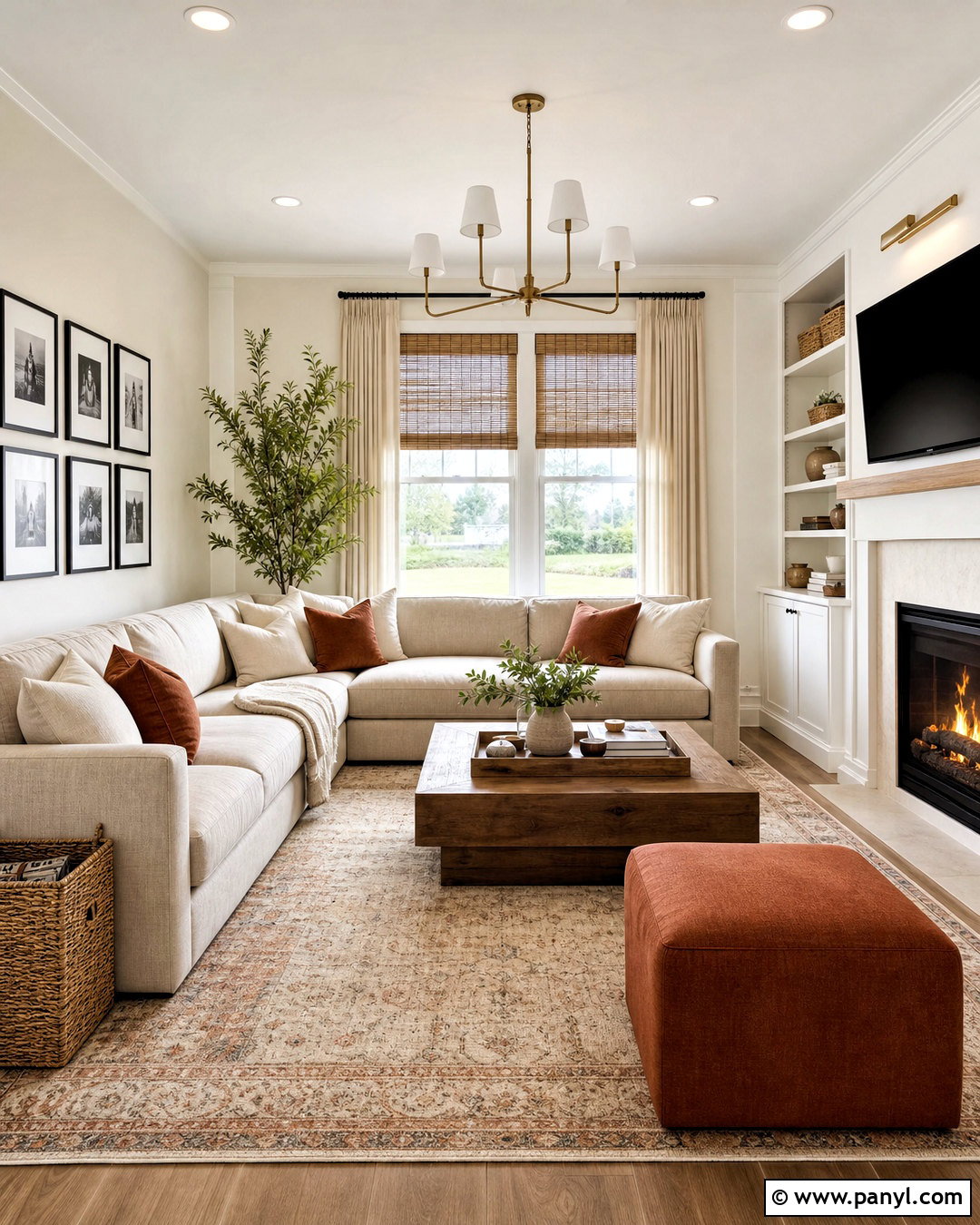
Ivory walls soften the earthy red undertones of a terracotta sectional, producing a warm room that feels comfortable throughout the year. Build the seating arrangement around a low walnut coffee table and an ivory rug with a subtle brown pattern. Layer the sectional with cream boucle pillows, woven camel cushions, and one muted olive throw. Full-length natural linen curtains add softness without introducing another dominant color. For lighting, select aged brass fixtures with off-white fabric shades. A ceramic table lamp, handmade pottery, and landscape art can extend the organic palette. Dark brown side tables provide necessary contrast. This combination suits transitional, Mediterranean, and relaxed modern interiors because every element shares a warm undertone while the ivory walls prevent the design from becoming heavy.
4. Cream Walls With Rust Orange Bed
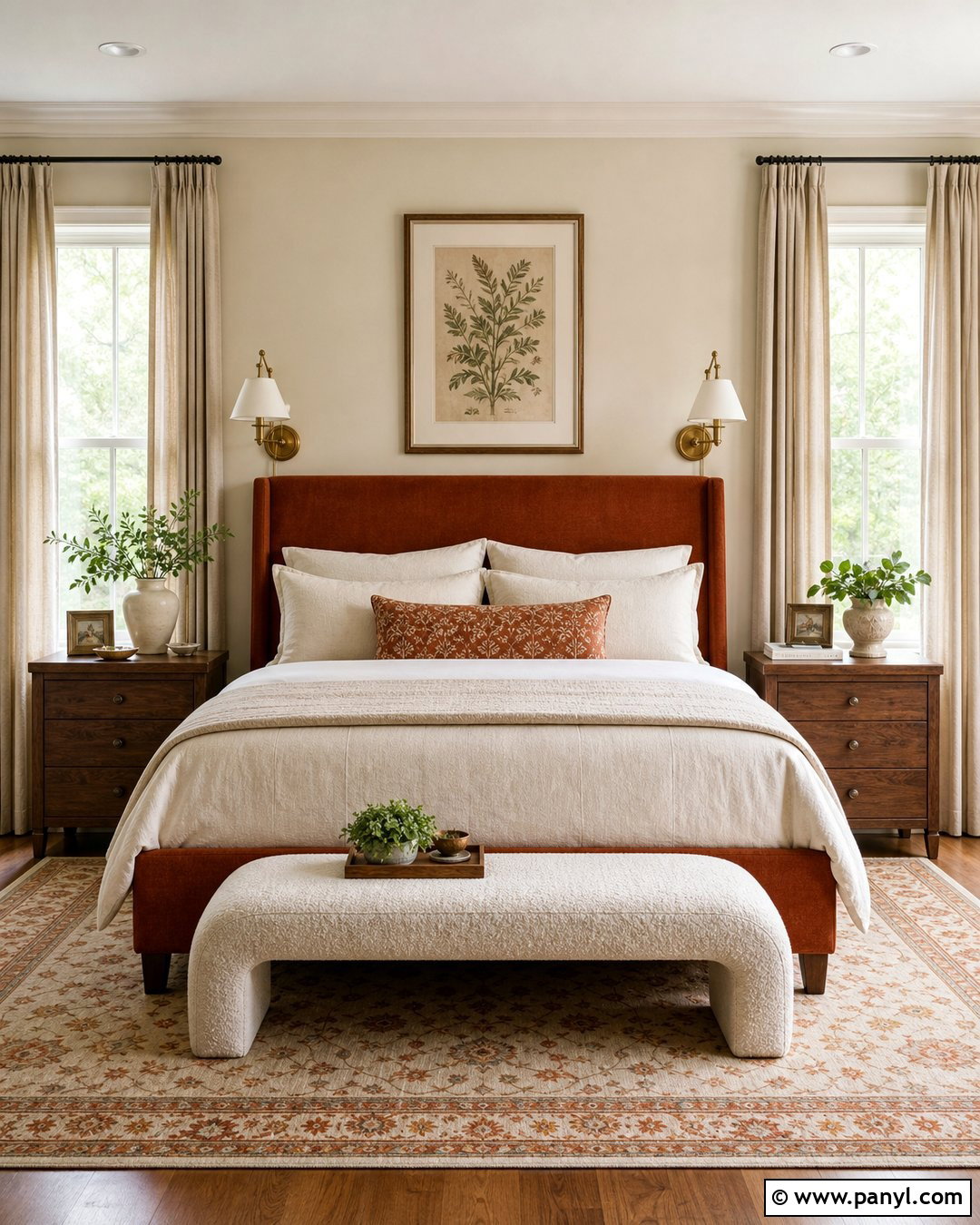
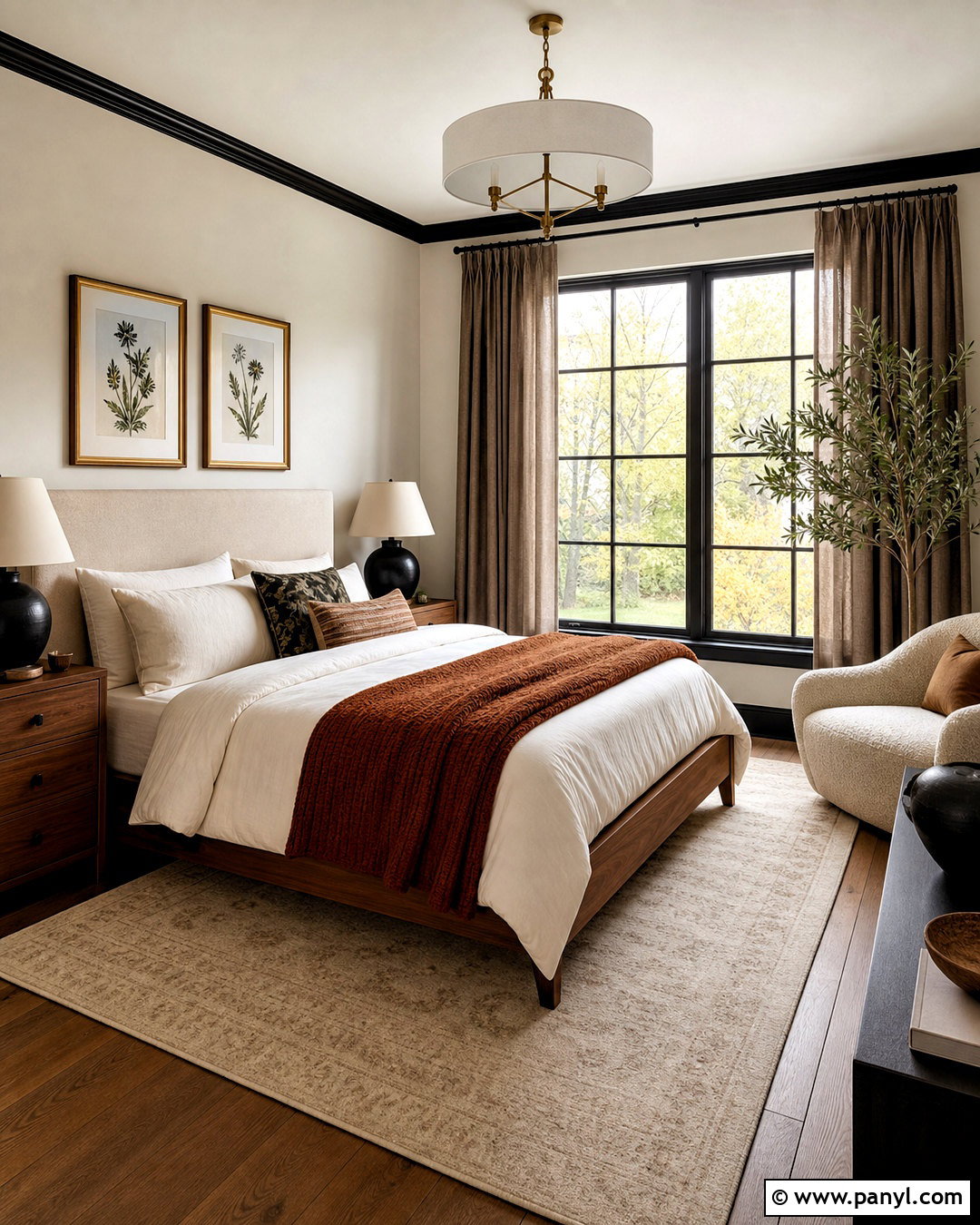
A rust orange upholstered bed becomes inviting and sophisticated when surrounded by creamy neutral walls. Choose a soft cream with a warm yellow-beige base, then add ivory bedding and a quilted oatmeal coverlet. Walnut nightstands deepen the palette, while brushed brass sconces bring gentle polish to the sleeping area. Place a beige and rust patterned rug beneath the bed so the furniture color appears integrated rather than isolated. Linen curtains in natural flax can filter daylight and reinforce the restful atmosphere. Keep artwork minimal, using botanical prints or textured neutral canvases above the headboard. A small boucle bench at the foot of the bed completes the layout. The result is a cozy bedroom with balanced color, comfortable layers, and clear visual focus.
5. Light Greige Walls With Orange Velvet Sofa
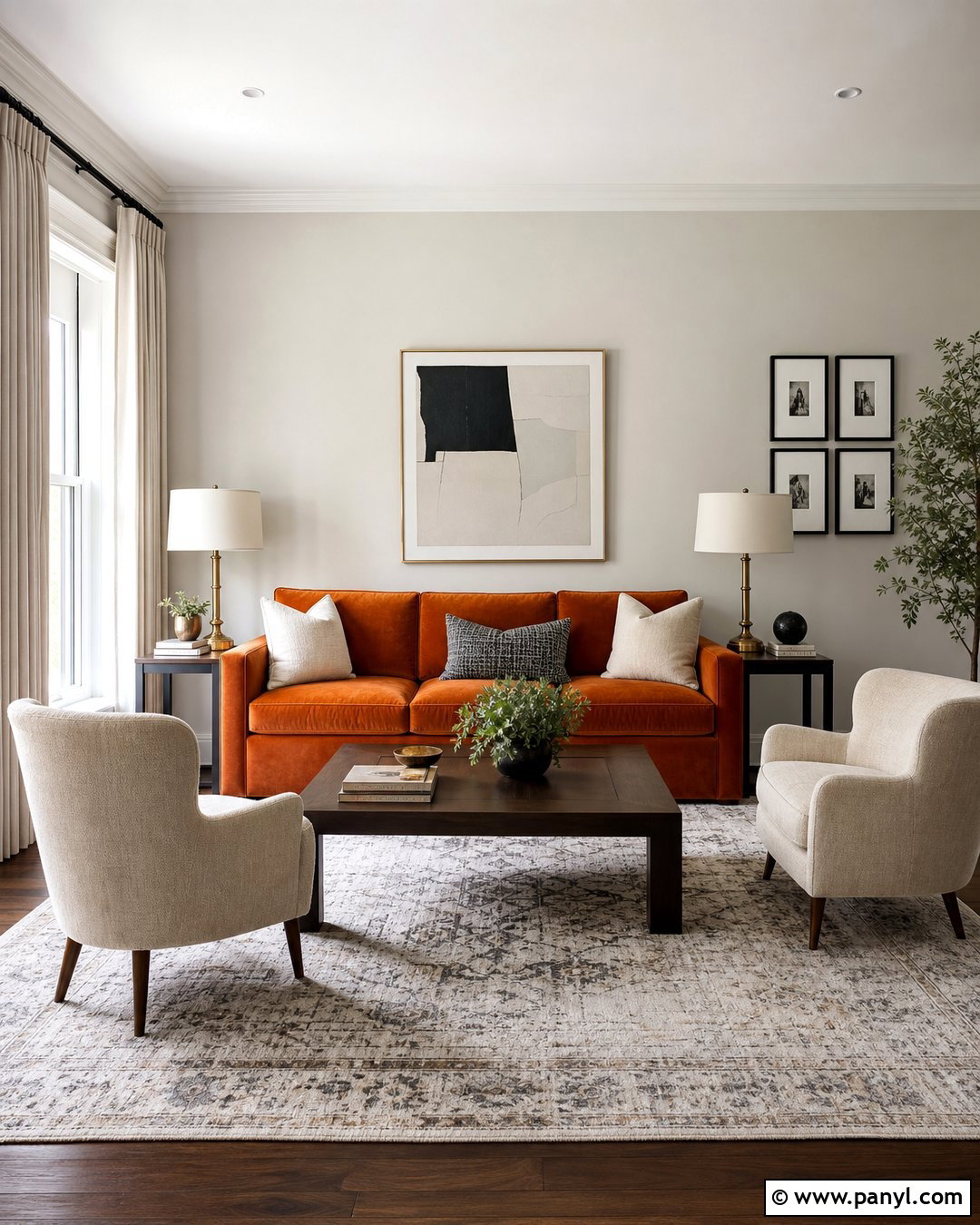
Light greige walls offer the versatility of gray with enough beige warmth to complement an orange velvet sofa. This pairing works beautifully in a transitional living room where classic shapes meet cleaner modern finishes. Center the sofa on a cream and gray rug, then add two light beige armchairs to create a conversational layout. A dark walnut coffee table can anchor the lighter materials. Repeat orange sparingly through patterned pillows or a small detail in the artwork rather than matching every accessory. Hang natural linen curtains and use warm brass lamps to highlight the velvet’s texture. Black picture frames add definition without dominating the palette. The completed room feels tailored and comfortable, with the greige walls quietly connecting warm furniture, neutral upholstery, and darker wood.
6. Warm Greige Walls With Orange Dining Chairs
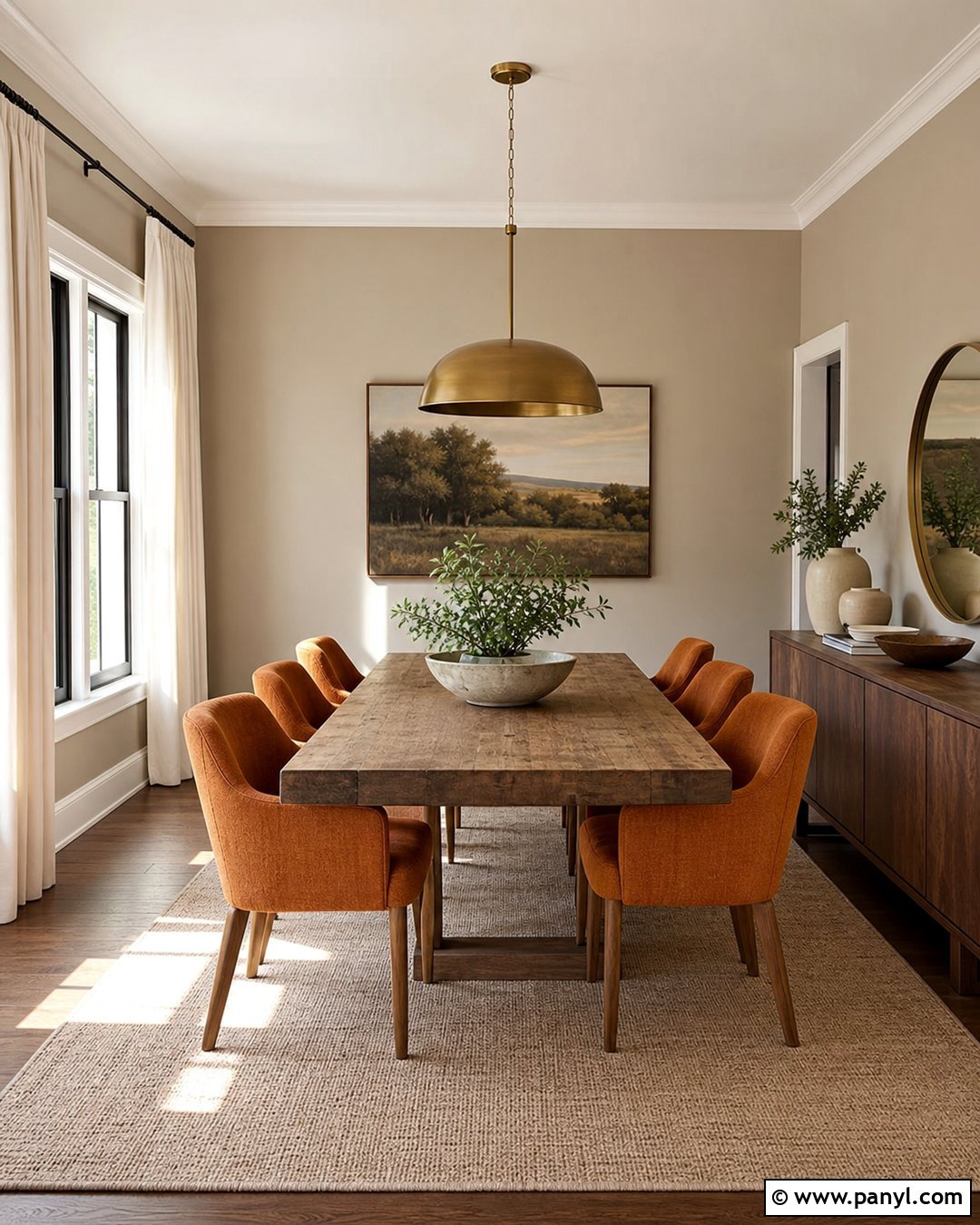
Orange dining chairs can energize an everyday eating area, while warm greige walls ensure the room remains grounded. Place the chairs around a solid oak dining table with a simple rectangular or softly rounded shape. A flat-weave beige rug underneath defines the dining zone and protects the floor without competing with the upholstery. Choose an aged brass or matte black pendant with a wide shade to center the arrangement. A walnut sideboard against one wall adds storage and another rich natural tone. Style it with off-white ceramics, a stone bowl, and a restrained landscape print. Cream curtains soften the windows. Keeping the remaining finishes quiet allows the orange chairs to provide color while the full room still feels practical, balanced, and suitable for daily use.
7. Light Gray Walls With Bright Orange Sofa
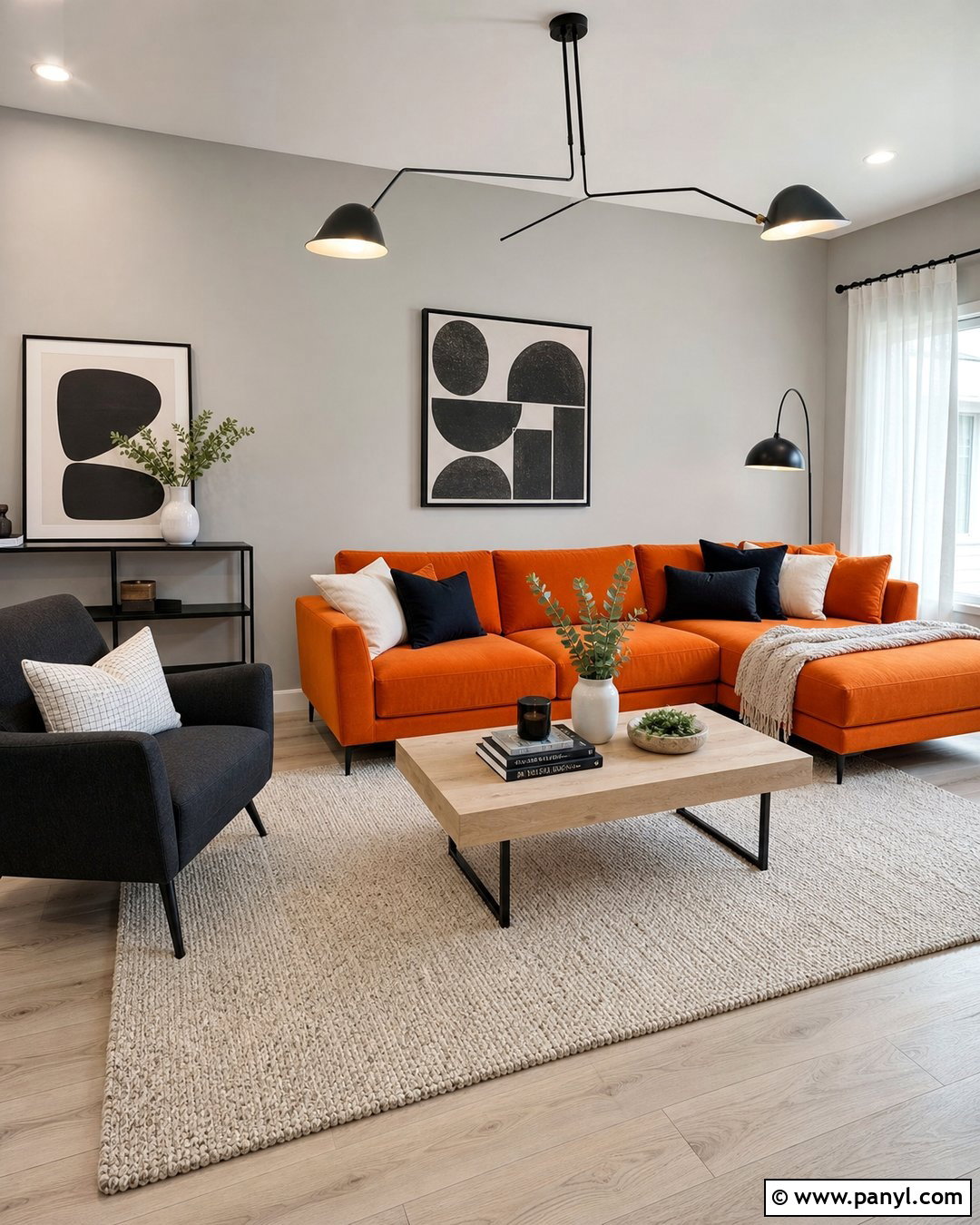
Cooler light gray walls can calm a vivid orange sofa and give the room a crisp, modern character. Choose a gray that looks soft rather than icy, especially if the space has northern exposure. Balance the sofa with a charcoal accent chair, a white oak coffee table, and a large ivory rug. Black metal lighting and picture frames introduce clean lines, while chrome or brushed nickel details can reinforce the cooler palette. Add pillows in white, gray, and a small amount of navy for controlled contrast. Sheer white curtains keep the room bright and open. Avoid filling the space with additional saturated colors. The finished layout lets the orange sofa act as one strong statement against an orderly background of pale walls, simple furniture, and structured neutral accessories.
8. Warm Gray Walls With Burnt Orange Sectional
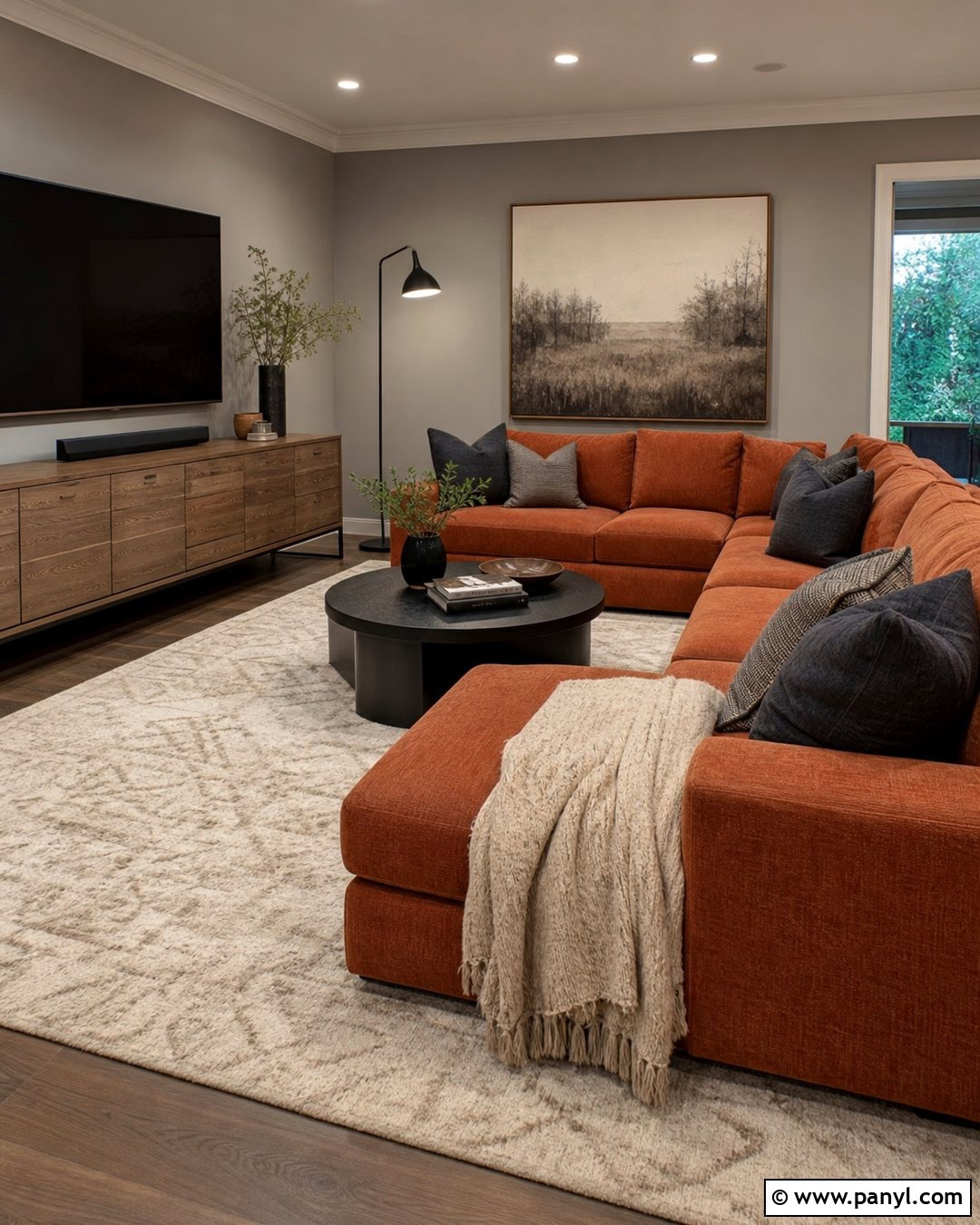
Warm gray walls bring a comfortable, contemporary feeling to a family room centered on a large burnt orange sectional. Select a gray with brown or taupe undertones so it relates naturally to the sectional’s earthy shade. Use a spacious cream rug to brighten the floor and position a round black or dark wood coffee table in the center. Add charcoal pillows, beige throws, and subtle striped textiles for dimension. A long oak media console can balance the visual weight of the sectional. Choose black wall sconces or a simple floor lamp to create definition. Large neutral artwork prevents the wall from looking empty without adding visual noise. This practical design feels cohesive and durable, with enough contrast to highlight the sectional while maintaining a relaxed atmosphere.
9. Dove Gray Walls With Orange Office Chairs
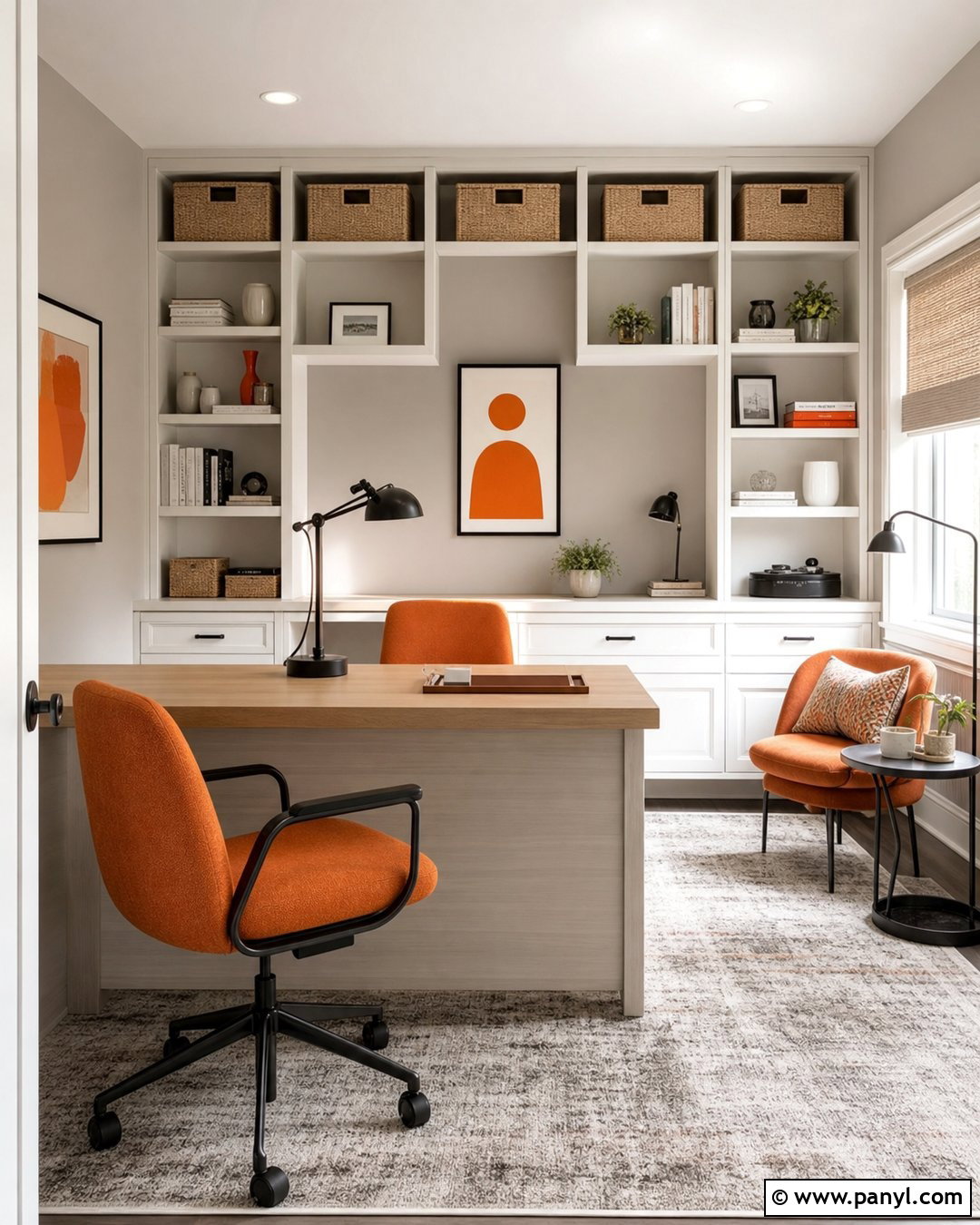
Dove gray walls can turn orange office chairs into polished accents in a stylish home workspace. Start with a pale wood desk or long wall-mounted work surface, then place one or two muted orange chairs where their color can define the work zone. Use white shelving to keep the room visually light and organize books in neutral covers, woven boxes, and simple ceramic containers. A gray and ivory rug adds softness underfoot without distracting from the chairs. Matte black desk lamps and cabinet pulls provide clear contrast. Hang minimal graphic art containing small orange and charcoal details to connect the palette. The resulting office feels energetic without becoming overstimulating. Dove gray offers a quiet background that supports concentration while orange furniture keeps the space friendly and creative.
10. Soft Beige Walls With Pumpkin Orange Sofa
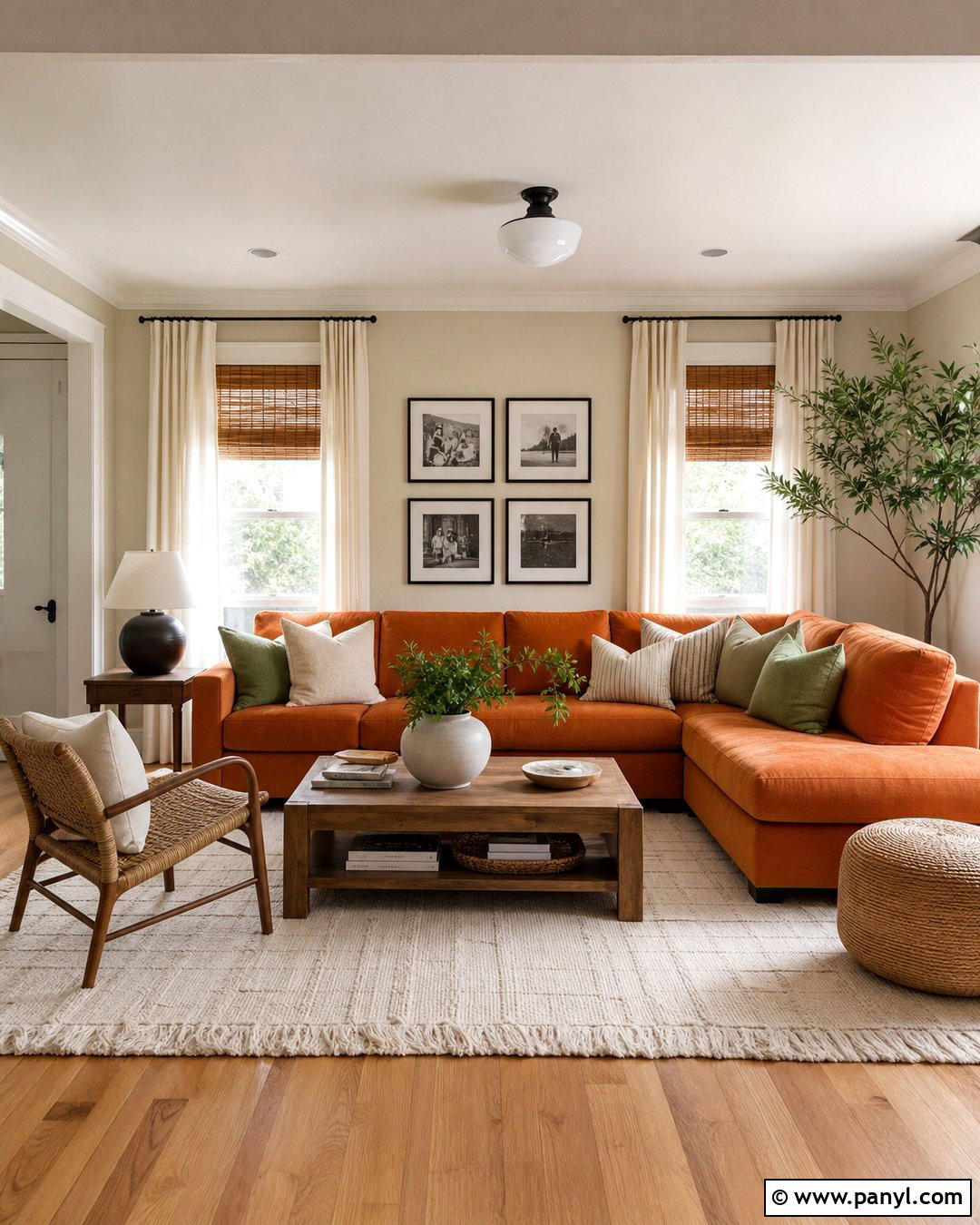
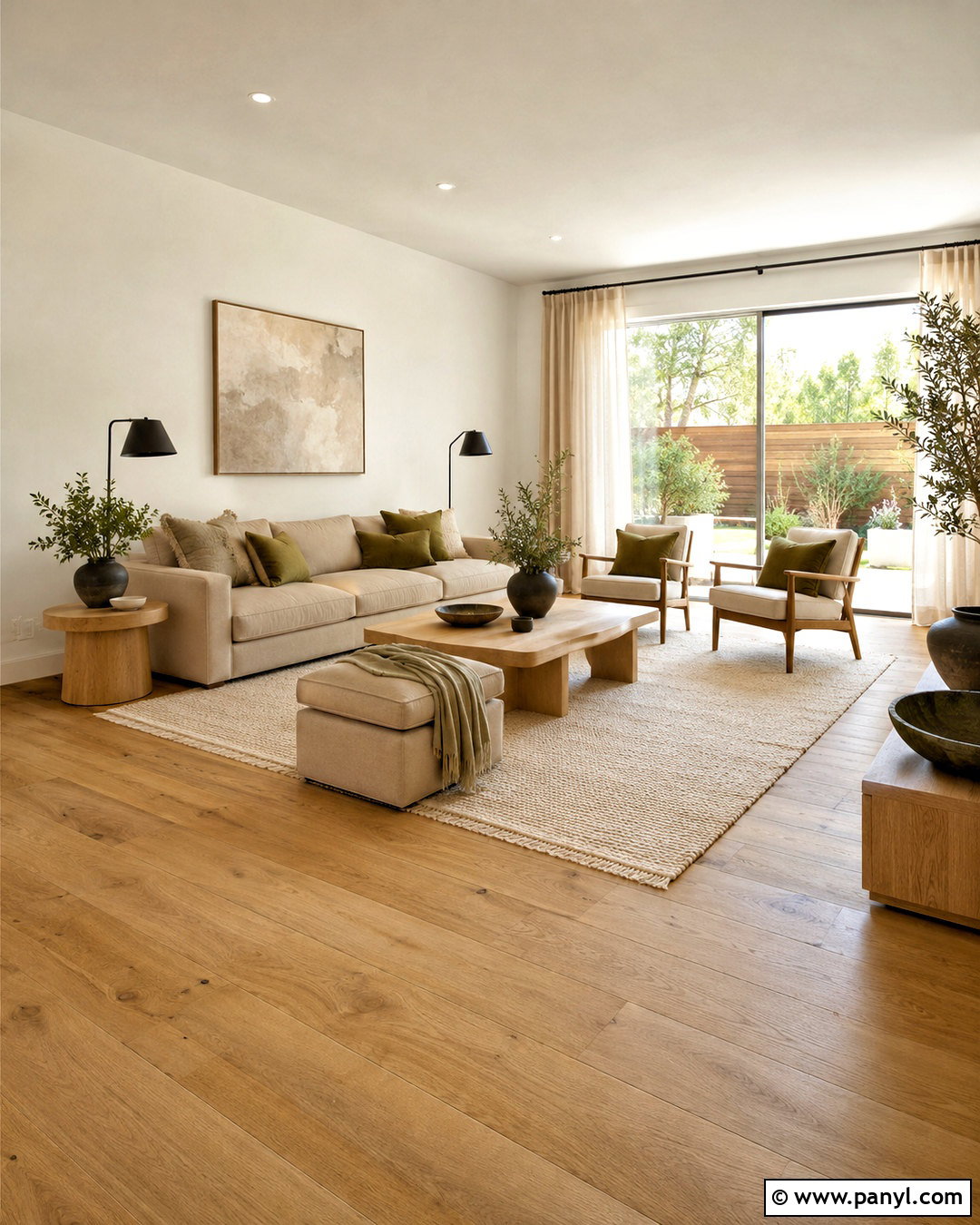
Soft beige walls and a pumpkin orange sofa create a naturally warm living room that feels sunny rather than overly colorful. Select a beige with a light sandy undertone and pair it with warm oak flooring. A cream sofa rug, medium-tone wood coffee table, and woven side chair establish a relaxed foundation. Use pillows in ivory, muted brown, and faded sage to break up the orange upholstery. Woven shades and lightweight cream curtains add layered privacy at the windows. Bring in black only through narrow details, such as lamp bases or picture frames. A tall green plant introduces freshness and helps balance the warm palette. This complete arrangement works particularly well in casual family homes, where comfortable textures and durable natural materials are more important than formal decoration.
11. Oatmeal Walls With Orange Loveseat
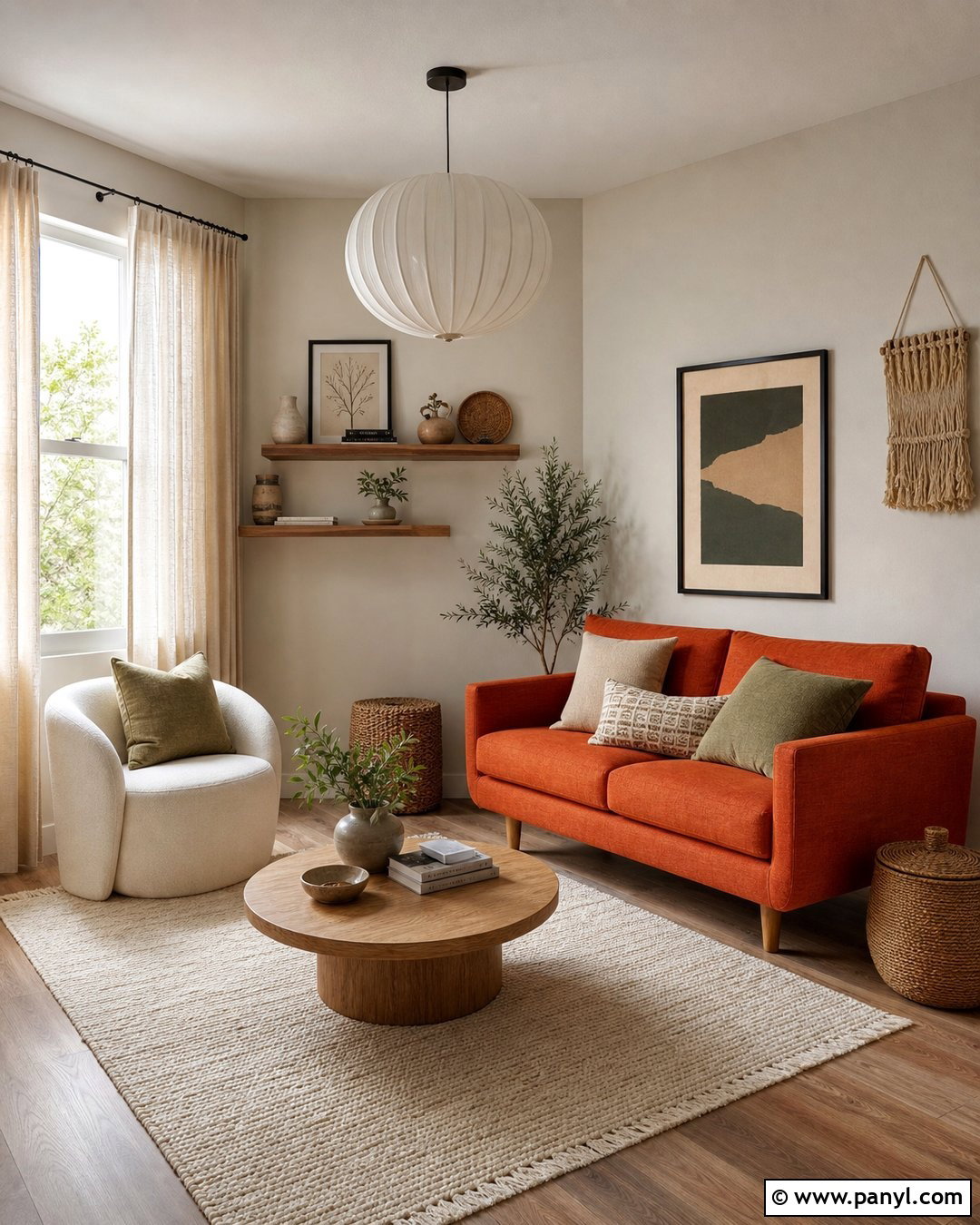
Oatmeal-colored walls provide more depth than white while remaining light enough for a smaller room with an orange loveseat. Position the loveseat against the longest wall, then add a compact cream armchair and a round oak coffee table to preserve an open walkway. A textured ivory rug can make the seating group feel larger and more connected. Choose woven baskets, linen curtains, and handmade pottery to create an easy bohemian influence without excessive accessories. Pillows in beige, brown, and soft olive will tone down the orange while keeping the palette earthy. Add a rattan pendant or sculptural paper lantern overhead. The complete space feels warm, personal, and uncluttered. Oatmeal walls gently blend with natural fibers, allowing the loveseat to stand out without dominating a compact layout.
12. Sand Walls With Orange Dining Chairs
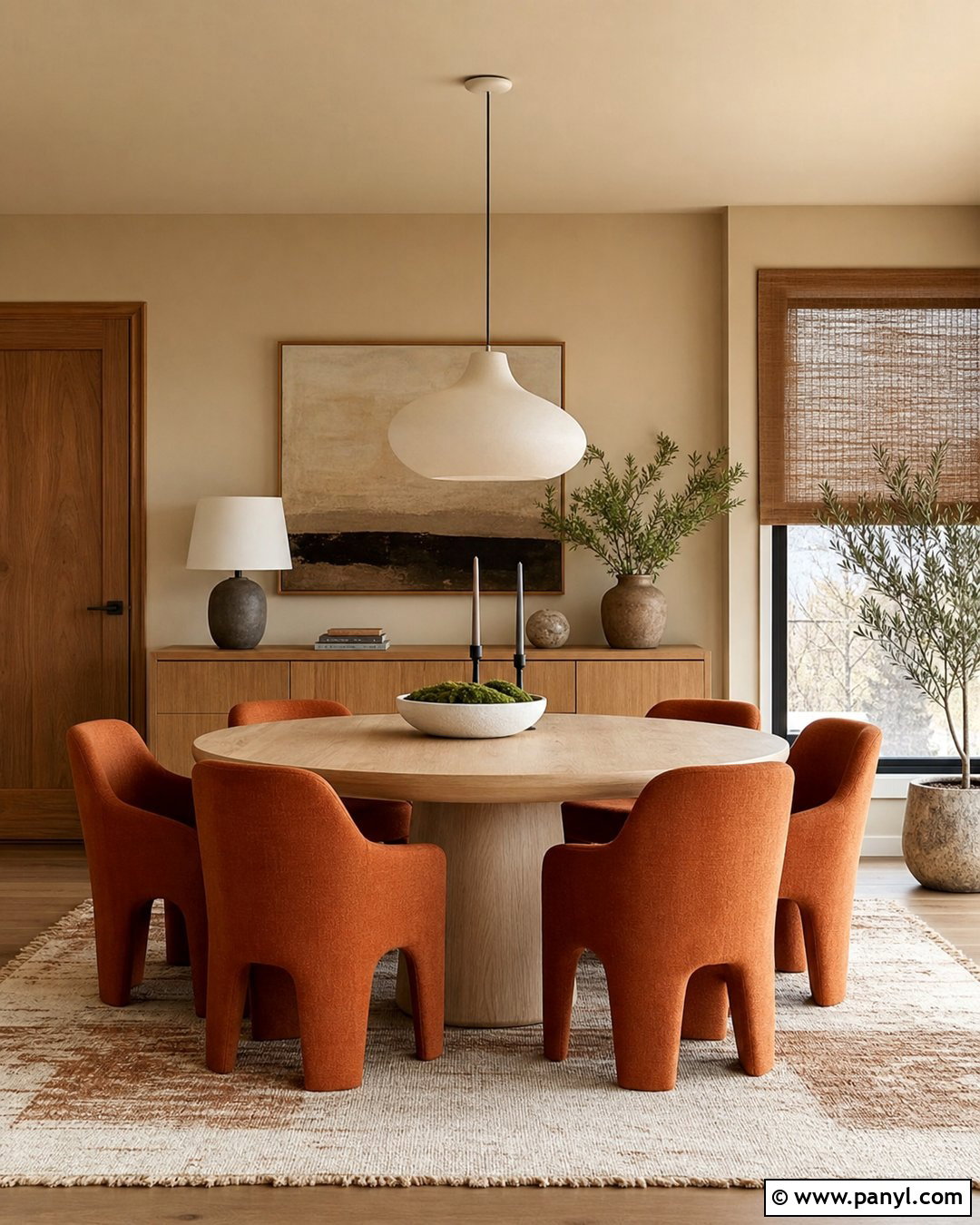
Sand-colored walls establish an organic modern dining room where orange chairs feel grounded and approachable. Combine the upholstered chairs with a pale oak pedestal table or a streamlined rectangular table, depending on the room’s shape. Underfoot, use a large flat-weave rug in cream and light brown to frame the complete dining set. A sculptural off-white pendant creates a strong focal point without introducing another bold color. Place a low oak cabinet nearby and style it with stoneware, a textured lamp, and a few dark brown objects. Natural woven shades bring another sandy layer to the windows. Add one large abstract print with muted orange and black details. The room will feel coordinated because the wall, wood, textiles, and furniture share warm, nature-inspired undertones.
13. Light Taupe Walls With Burnt Orange Sofa
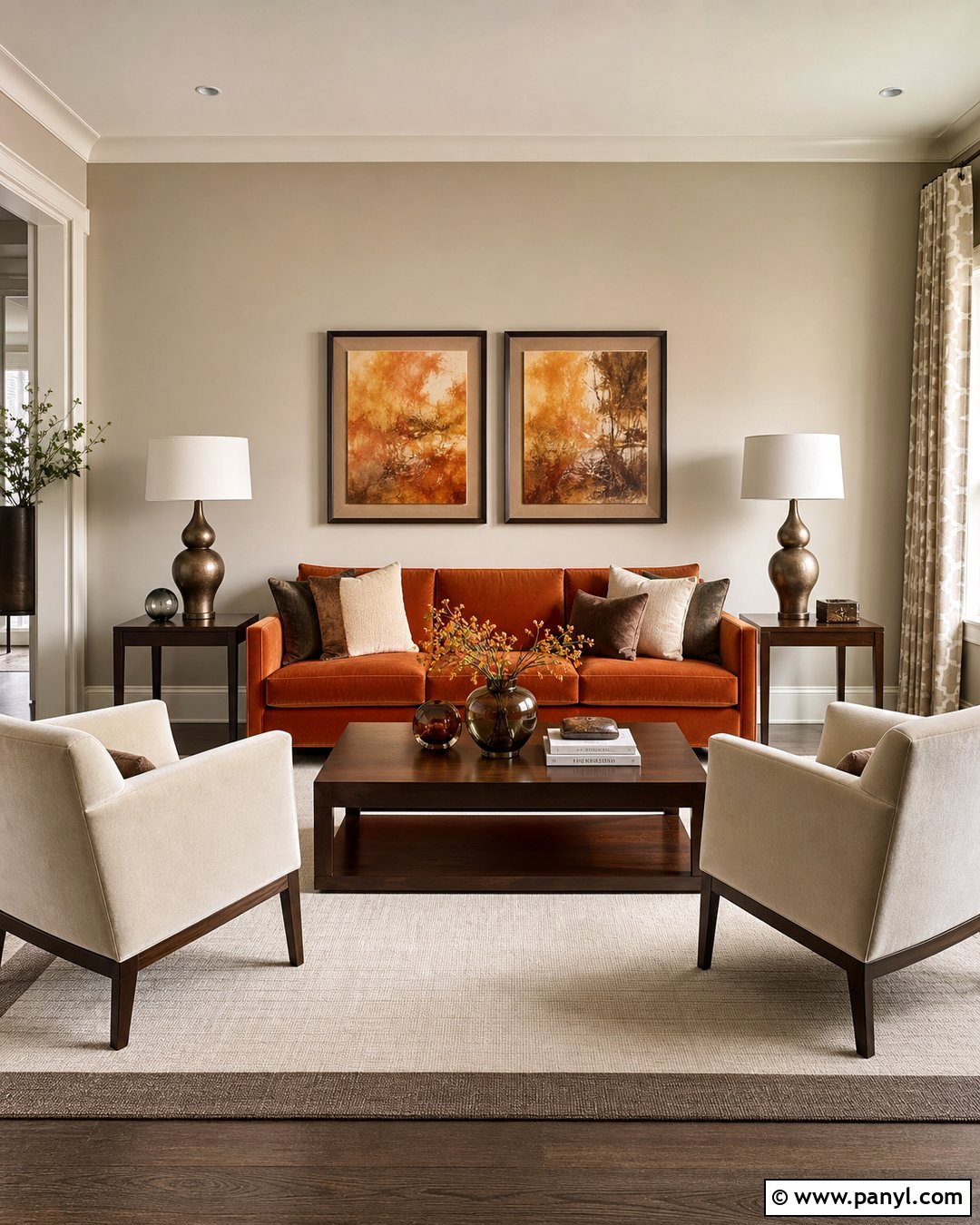
Light taupe walls lend sophistication to a burnt orange sofa by adding subtle brown-gray depth around it. This combination suits a formal living room, apartment, or den where a pure white background might feel too plain. Pair the sofa with two cream upholstered chairs and arrange them around a dark walnut coffee table. Use an ivory rug with a faded taupe border to unite the seating. Bronze lighting, dark brown frames, and a few smoked glass accessories can add richness without clutter. Keep curtains close to the wall color for a seamless effect. Artwork with warm gray, rust, and cream helps repeat the main palette. The completed space looks collected and mature, while the sofa still supplies enough color to keep the neutral scheme from feeling predictable.
14. Mushroom Walls With Terracotta Furniture
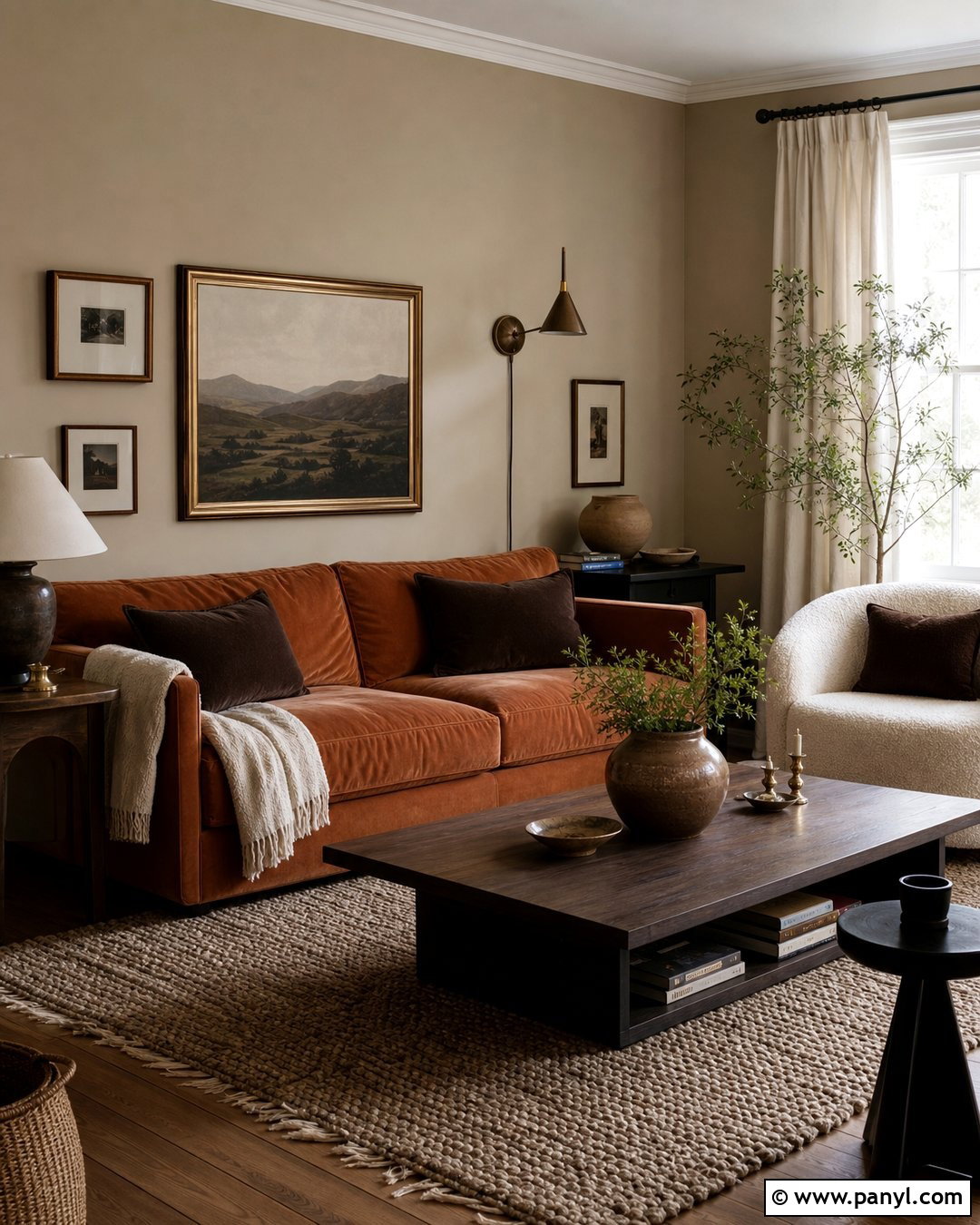
Mushroom walls contain gray, beige, and brown undertones, making them a natural partner for terracotta-colored furniture. Create a cozy sitting room with a terracotta sofa, a cream boucle chair, and a dark oak coffee table arranged around a thick wool rug. Use bronze or aged brass lighting to reinforce the warm, slightly vintage mood. Off-white curtains keep the windows brighter than the walls, while chocolate brown pillows add definition to the sofa. Consider a wood-framed landscape, earthy ceramic vessels, and one leafy plant for decoration. Avoid overly bright accent colors, which can interrupt the room’s tonal quality. This finished look feels enveloping but not dark. The mushroom walls provide enough pigment to create atmosphere while allowing terracotta upholstery and natural wood grain to remain clearly visible.
15. Stone Walls With Orange Accent Chairs
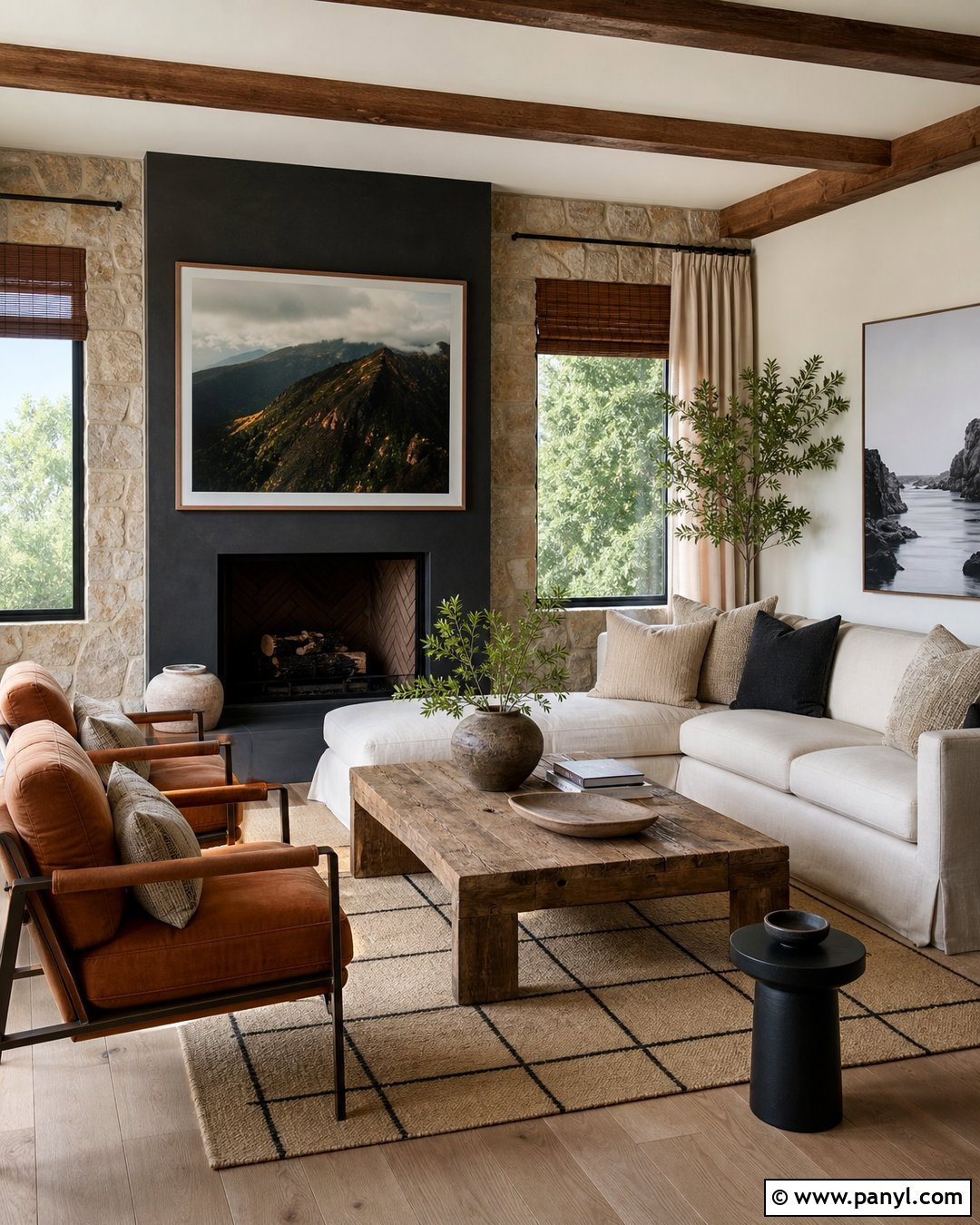
Stone-colored walls create a quiet architectural background for orange accent chairs in a modern rustic living room. Choose a warm stone neutral that sits between beige and gray, then pair two orange chairs with a large cream sofa. Arrange the furniture around a reclaimed wood or textured oak coffee table. A natural wool rug with a subtle grid pattern can define the seating area without making it busy. Introduce matte black through a fireplace surround, curtain rods, or simple lamps. Linen drapes and woven shades soften the harder materials. Add large-scale landscape photography and a few stoneware pieces for a grounded finish. The orange chairs become welcoming points of color, while the stone walls, pale upholstery, rugged wood, and restrained decor maintain an approachable rustic character.
16. Putty Walls With Rust Orange Bed
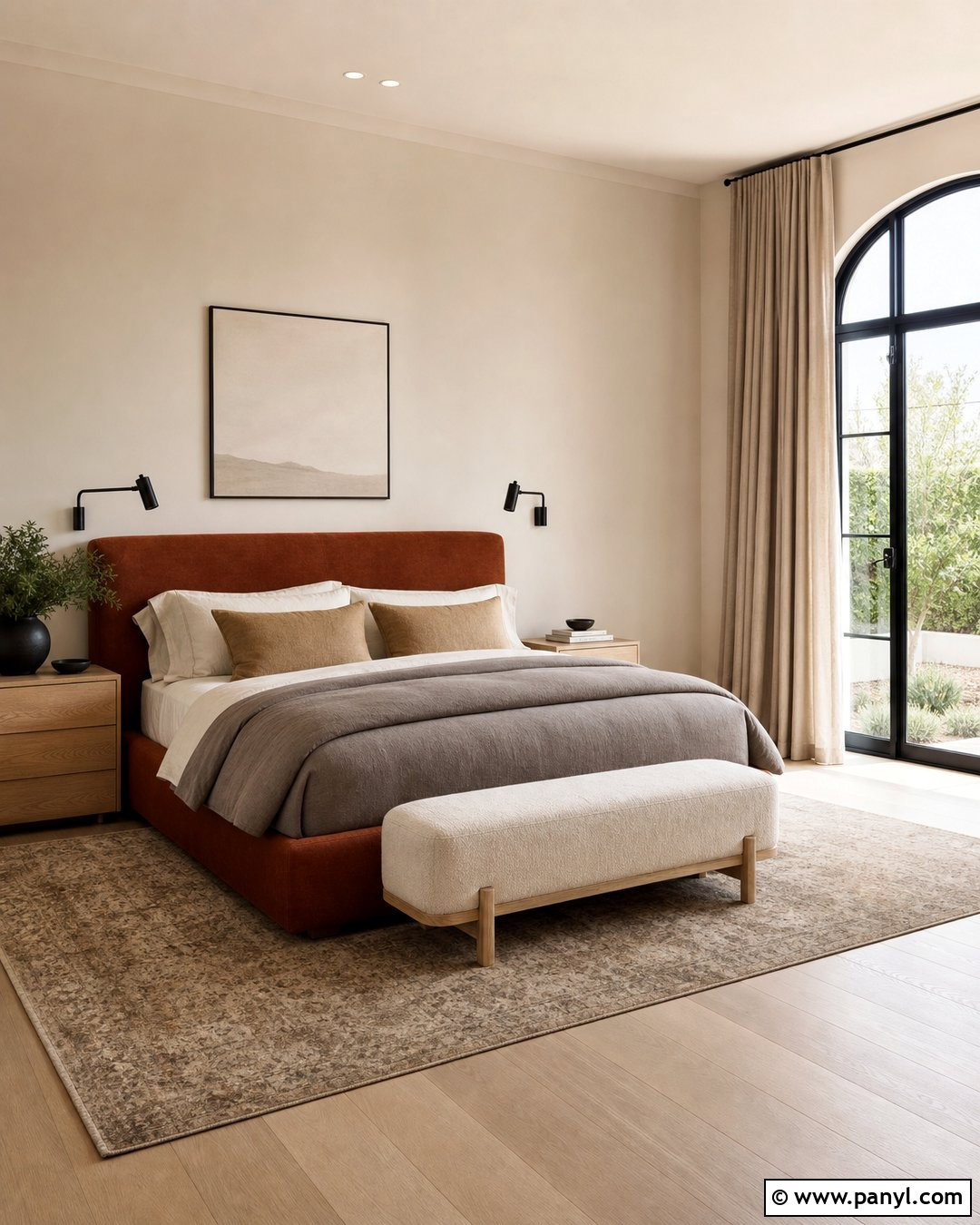
Putty-colored walls bring soft gray-beige depth to a bedroom featuring a rust orange upholstered bed. Dress the bed with crisp ivory sheets, a warm gray duvet, and layered camel and cream pillows. Light oak nightstands will prevent the scheme from looking too dark, while black reading sconces introduce a modern edge. Place a faded beige rug beneath the bed and choose flax-colored linen curtains for the windows. A low cream bench can balance the orange headboard at the opposite end of the bed. Keep artwork tonal, using simple abstract shapes in putty, rust, and charcoal. This full bedroom arrangement feels calm because the wall color mutes the furniture’s intensity. At the same time, the orange bed provides enough warmth to keep the neutral room from appearing flat.
17. Soft Tan Walls With Orange Leather Sofa
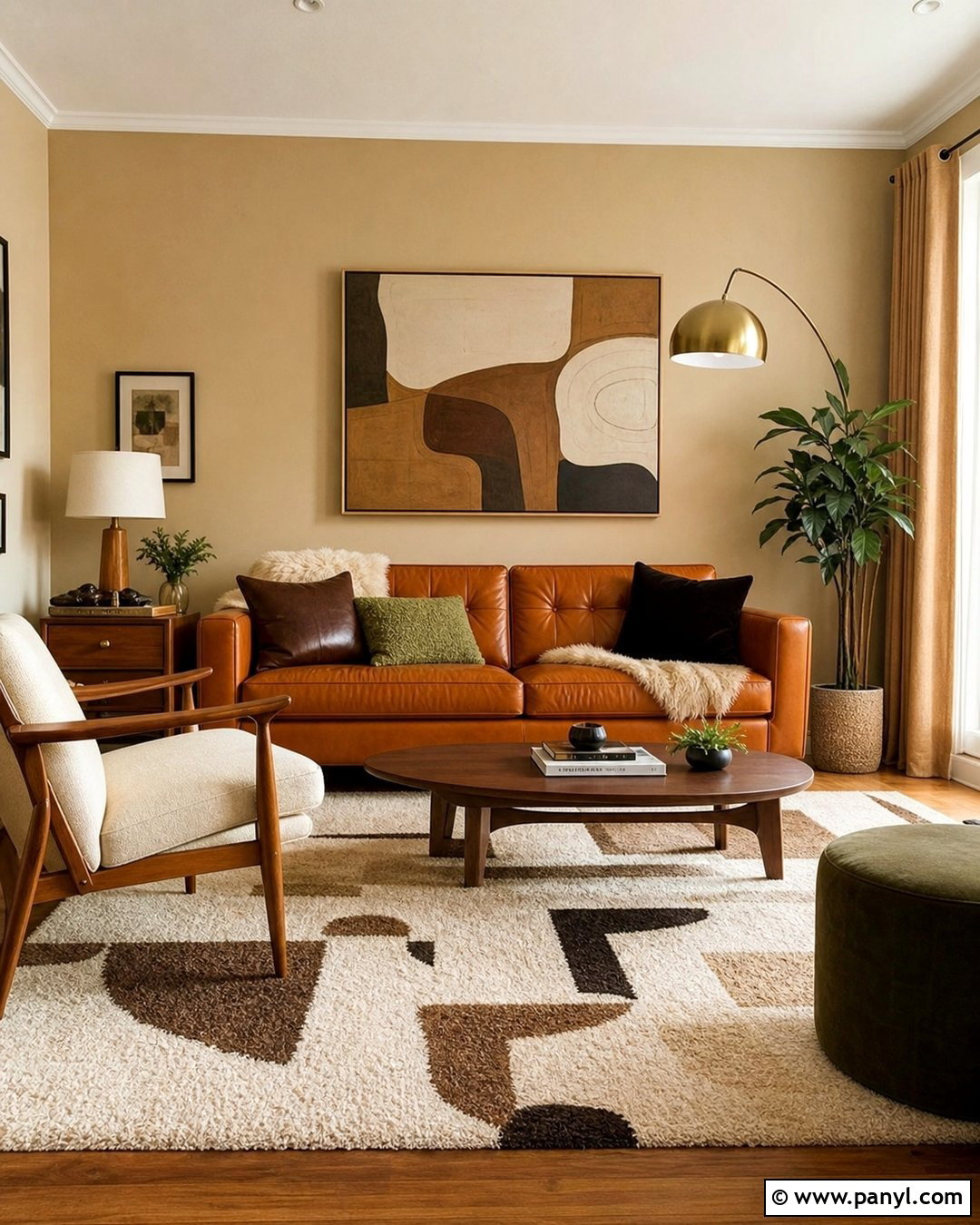
Soft tan walls complement an orange leather sofa by repeating its warmth at a quieter intensity. Lean into a midcentury-inspired look with a walnut coffee table, tapered-leg side tables, and a cream lounge chair. A geometric rug in ivory, tan, and dark brown can connect the furniture while adding controlled pattern. Hang globe-shaped lighting or a simple brass floor lamp near the sofa. Use curtains in a slightly lighter tan than the walls to create a layered, seamless background. Pillows in cream, olive, and chocolate will soften the leather without hiding it. Finish the room with abstract art and a tall plant in a ceramic planter. The tan walls and walnut furniture make the orange leather look rich and intentional rather than loud or overly retro.
18. Pale Clay Walls With Burnt Orange Furniture
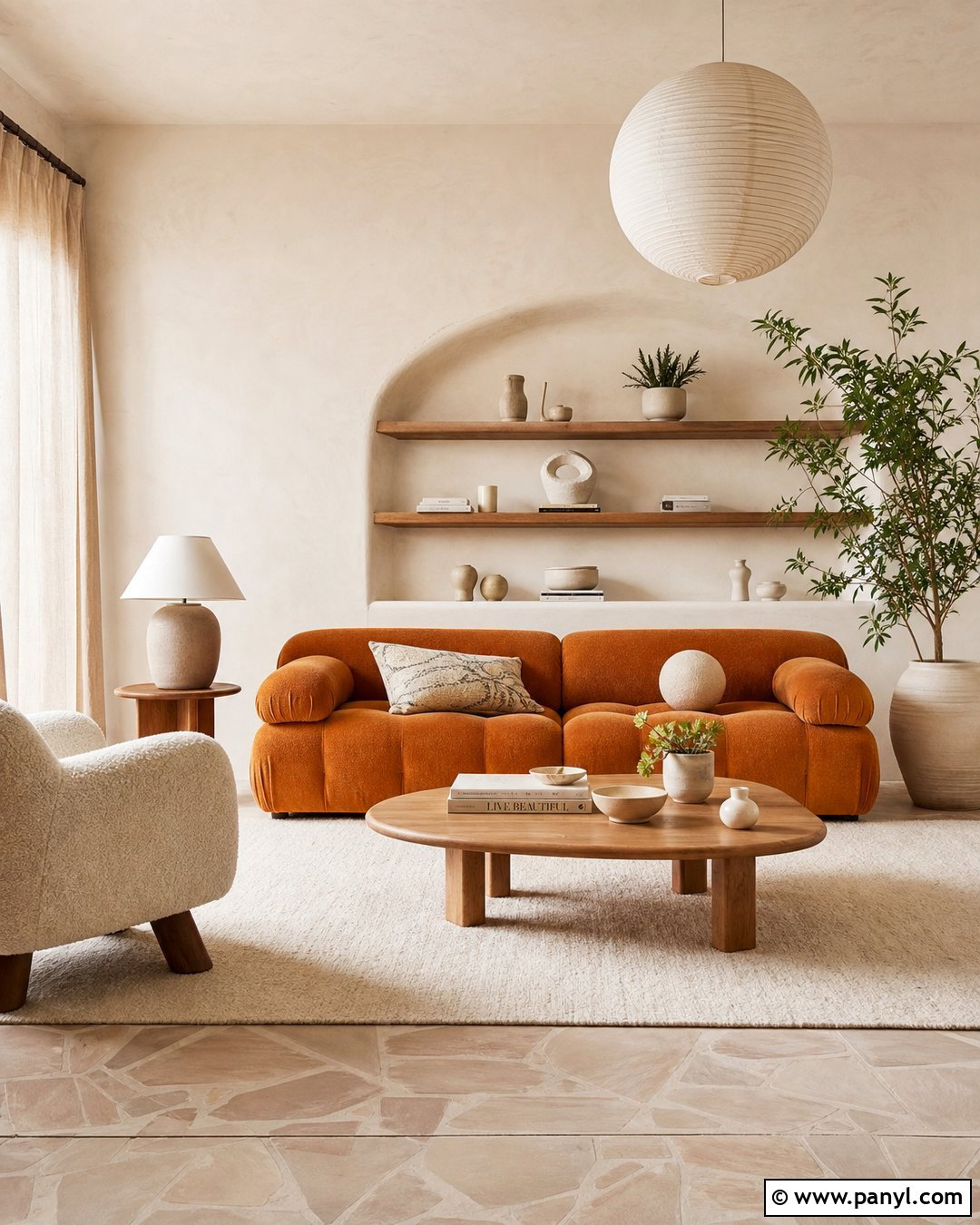
Pale clay functions as a warm neutral when its pink and brown undertones are subtle. It creates a tonal background for burnt orange furniture without blending everything into one color. Use a low orange sofa with a cream lounge chair and a pale oak coffee table for a relaxed organic modern layout. Choose a large off-white rug to separate the furniture from the similarly warm walls. Woven linen curtains, plaster lamps, and light ceramic decor reinforce the soft, earthy character. Add dark walnut or matte black details in small amounts to provide visual boundaries. A muted green plant can offer gentle contrast. This room feels warm and cohesive because the colors are closely related, yet variations in texture and value keep the finished design clear and dimensional.
19. Pale Khaki Walls With Orange Furniture
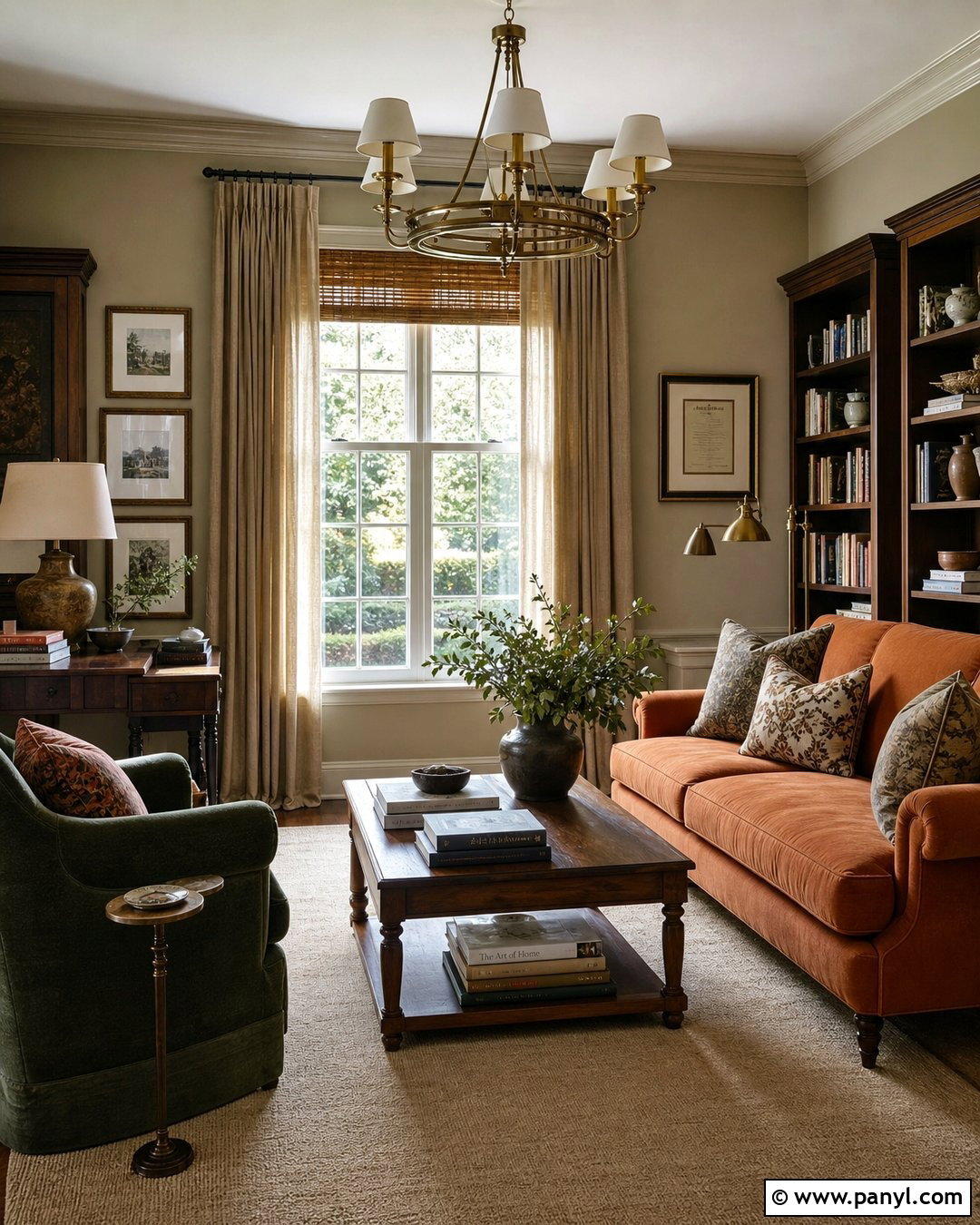
Pale khaki walls bring a restrained green-beige undertone that balances the red and yellow notes found in orange furniture. Build a welcoming reading room with an orange loveseat, a dark olive armchair, and a medium oak coffee table. A cream rug lightens the center of the room, while natural linen curtains maintain the muted palette. Choose antique brass lighting and dark wood bookcases to add a classic, collected quality. Pillows can combine khaki, ivory, and rust in small-scale patterns. Leave some shelf space open so books and objects do not overwhelm the compact layout. The khaki walls act almost like a neutral version of green, connecting the furniture to plants, wood, and woven materials. The finished space feels grounded, comfortable, and quietly colorful.
20. Charcoal Walls With Orange Sofa
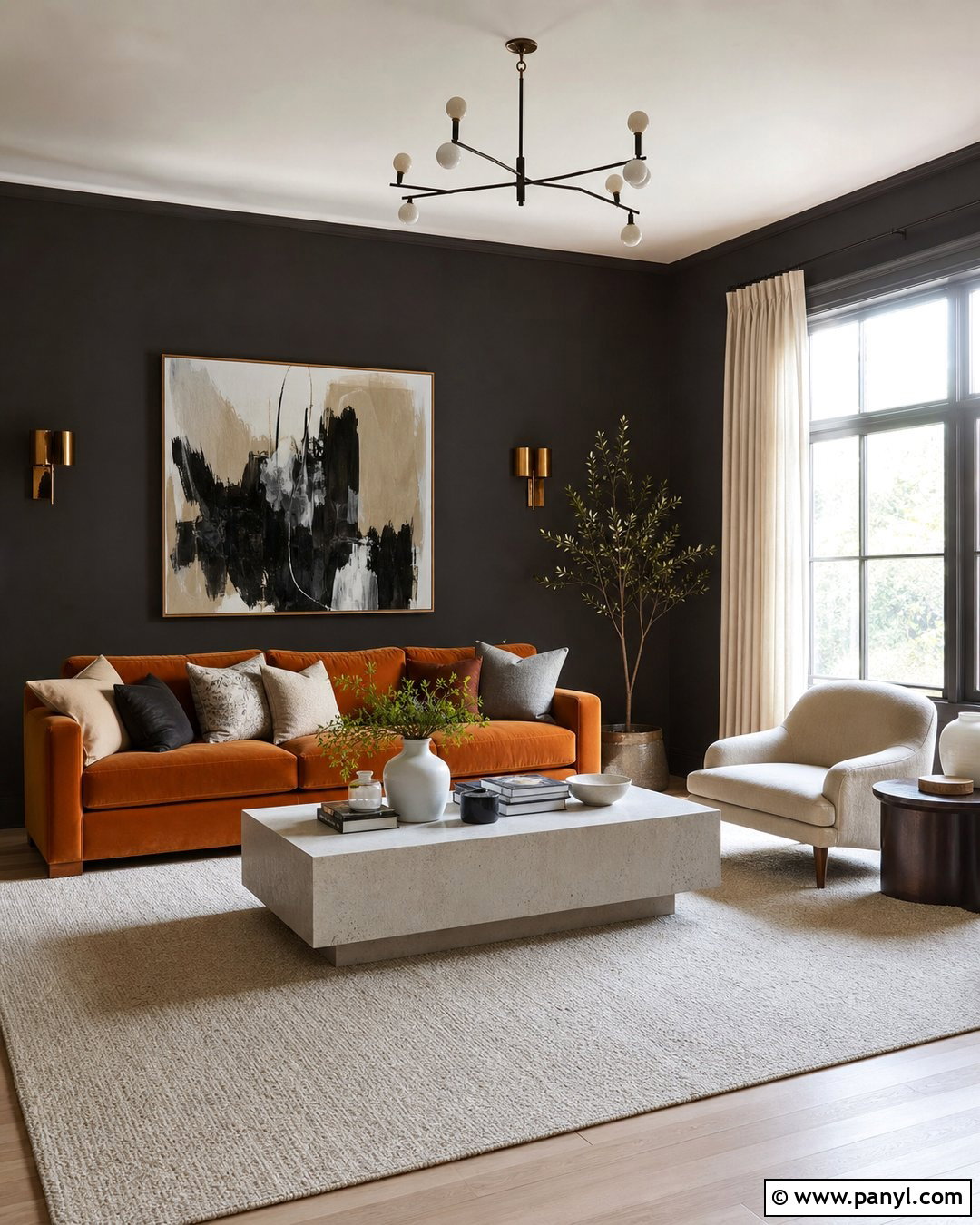
For a dramatic room, charcoal walls can make an orange sofa look sophisticated and luminous. Choose a charcoal with warm undertones and use it in a space that receives generous daylight. Balance the dark walls with an oversized ivory rug, pale oak flooring, and cream curtains. Select a streamlined burnt orange sofa, then add a light beige chair and a glass or pale stone coffee table. Warm brass sconces will stand out against the charcoal while connecting visually to the orange upholstery. Keep decorative objects mostly white, tan, and wood-toned to avoid an overly themed black-and-orange effect. Large abstract artwork with plenty of negative space can brighten the main wall. The completed living room feels bold and modern, but its lighter surfaces preserve openness and everyday comfort.
Conclusion:
The most successful 20 Neutral Wall Color With Orange Furniture Ideas balance the warmth of orange with a calmer background and a complete supporting palette. Warm white, cream, beige, taupe, and mushroom create soft, earthy rooms. Light gray and greige offer cleaner contrast, while charcoal produces a more dramatic finish. Consider the orange furniture’s undertone, the room’s natural light, and existing flooring before choosing paint. Large samples are more reliable than small color chips, especially when viewed at different times of day. Once the wall color is selected, connect the room with rugs, curtains, wood finishes, lighting, and a few repeated accents. This thoughtful approach makes orange furniture feel intentional, comfortable, and easy to live with.

Related Ideas and Inspiration:
Leave a Reply