
If you searched for **20 What Color Goes With Brick Wall Ideas**, the best place to start is the brick itself. Brick is rarely one flat color. It may contain rust, orange, burgundy, brown, tan, gray, or even violet undertones. The mortar, flooring, natural light, and nearby wood finishes also shape how a companion color appears. A successful palette should either repeat one of those undertones or create a controlled contrast. It should also connect the brick with the furniture, textiles, lighting, and decor throughout the room. Always test large paint samples beside the masonry during daylight and after dark. The complete room looks below make choosing and using color easier with **20 What Color Goes With Brick Wall Ideas**. ()

1. Creamy White With A Red Brick Wall
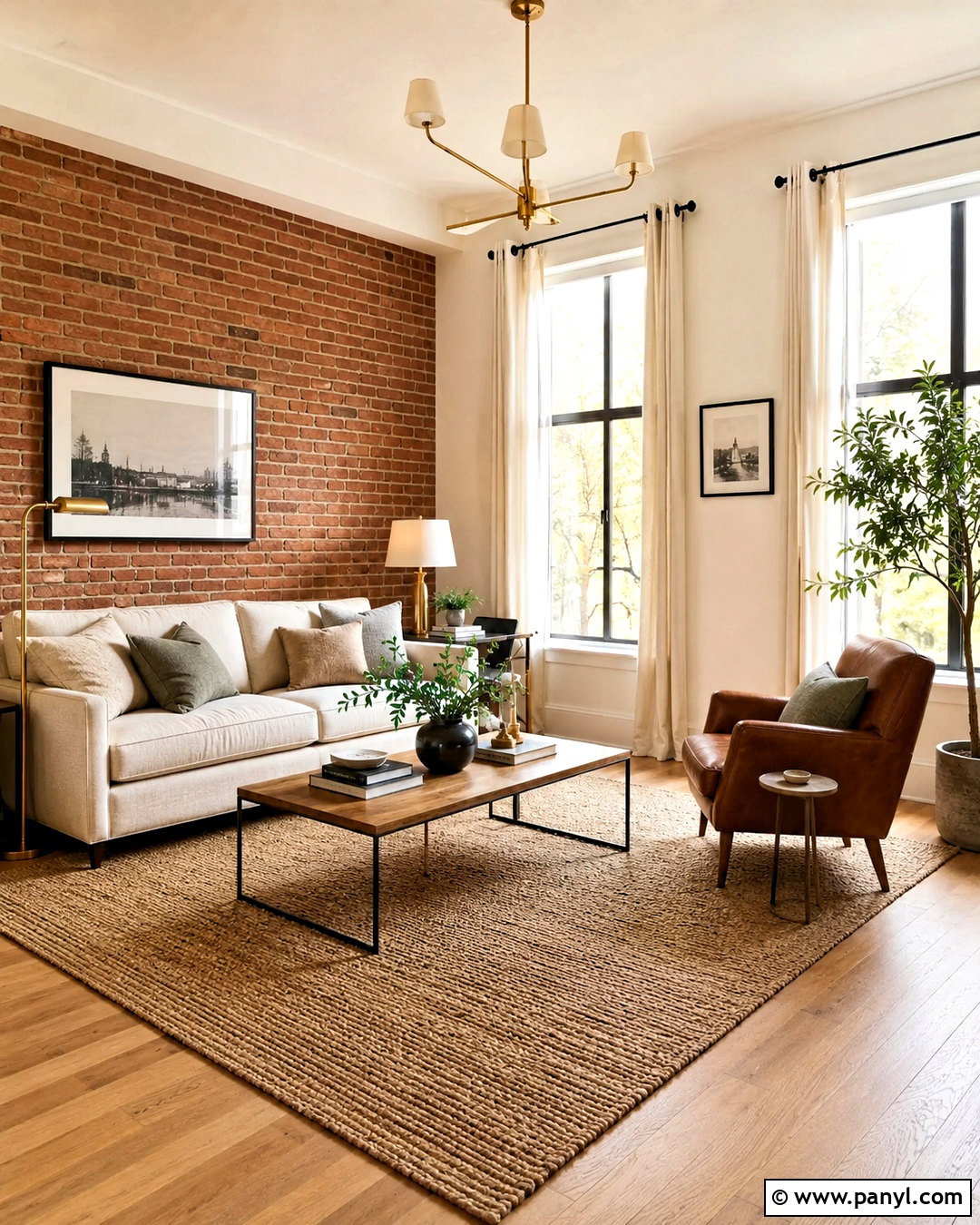
Creamy white gives a red brick wall a clean, comfortable backdrop without creating the harsh contrast of a blue-based white. Use the brick as the main feature behind a linen sofa, then paint the surrounding walls a warm ivory or soft vanilla. Choose light oak flooring, oatmeal curtains, and a natural jute rug to continue the warmth. A cognac leather chair can pick up the deeper brown notes in the masonry. Add aged brass lighting, black picture frames, and simple cream pillows for definition. This complete living room works especially well in traditional homes, lofts, and relaxed modern spaces. Keep the ceiling slightly lighter than the walls so the room still feels bright and open.
2. Warm Greige With A Brick Wall
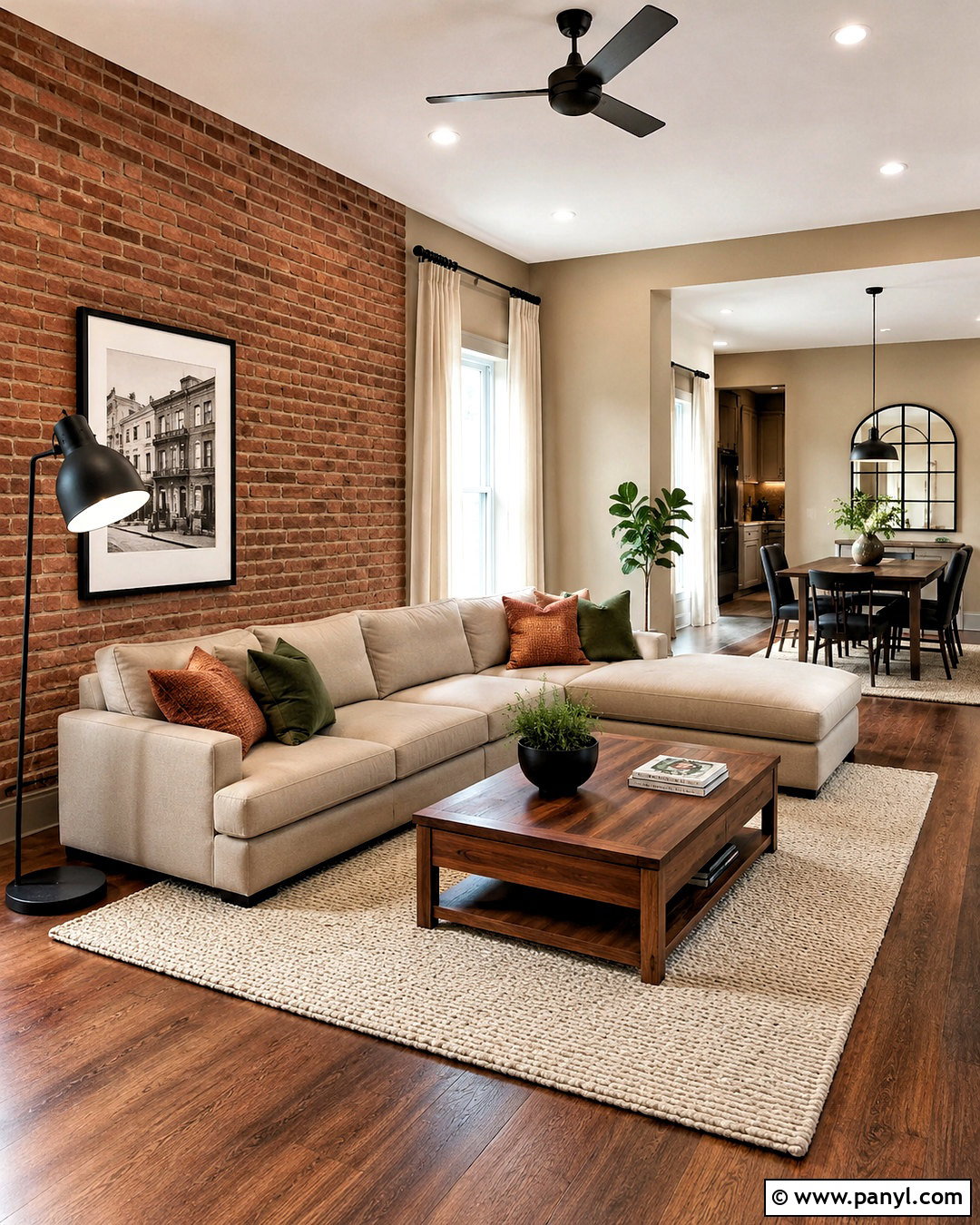
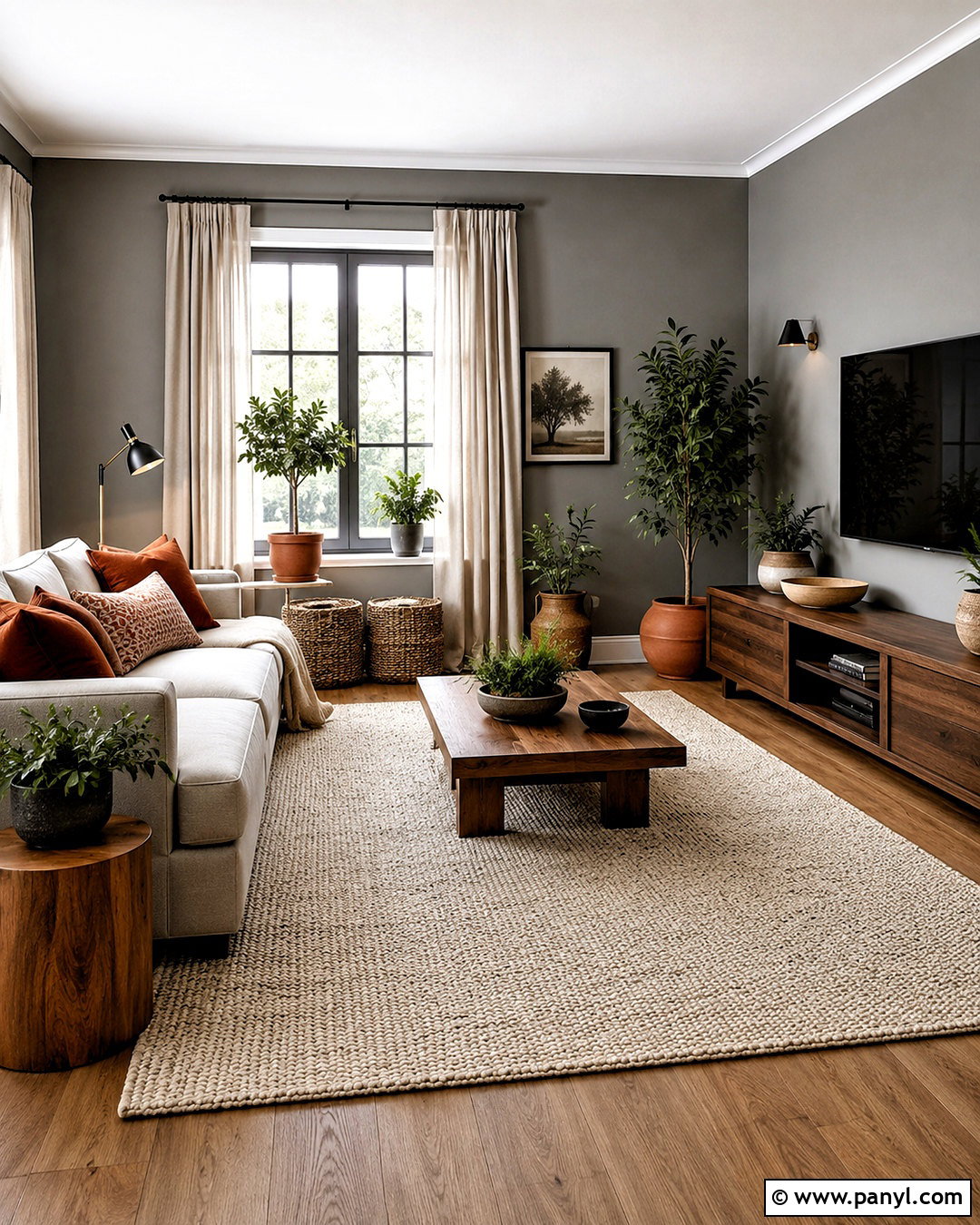
Warm greige creates a smooth bridge between rustic brick and contemporary furnishings. Look for a shade that combines soft gray with noticeable beige or taupe undertones. Paint the non-brick walls greige, then bring in a streamlined oatmeal sectional, walnut coffee table, and textured ivory rug. Matte black lamps and window frames give the space structure without overpowering the masonry. Use rust, camel, and muted olive in small amounts through pillows and artwork. The palette feels calm because every color shares a warm, softened quality. It is a useful choice when brick appears in an open-plan room, since greige can continue into the dining area or kitchen. Finish the look with warm white curtains and simple ceramic decor.
3. Sage Green With A Red Brick Wall
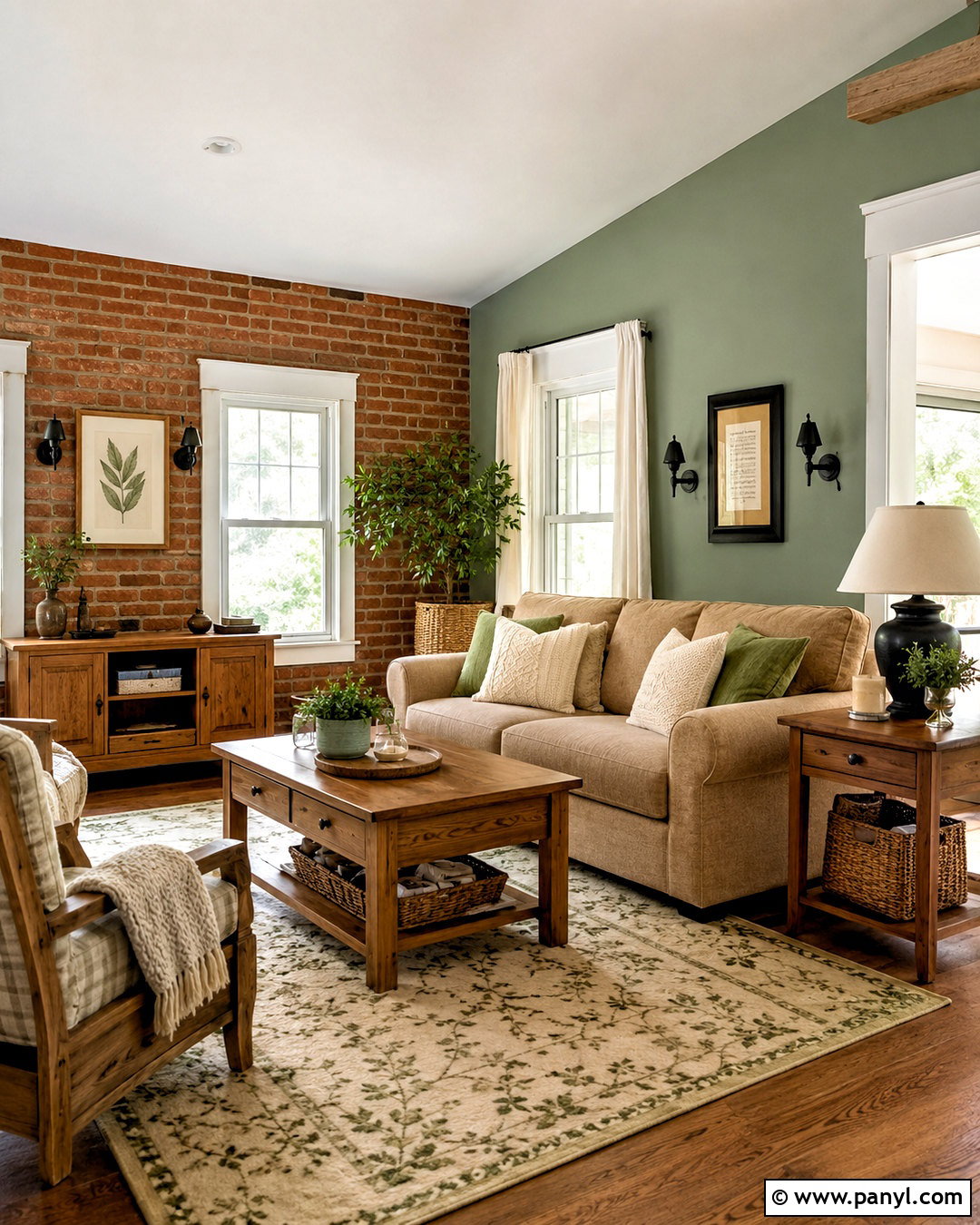
Sage green offers a gentle contrast to red brick while keeping the room connected to nature. Choose a muted sage with gray undertones rather than a bright, minty green. Paint the surrounding walls sage and position a warm beige sofa in front of the brick feature. Medium oak furniture, woven baskets, and linen curtains reinforce the earthy mood. Add black metal sconces to sharpen the palette, along with cream cushions and a faded botanical rug. A few leafy houseplants can deepen the green connection without making the room feel themed. This complete look suits farmhouse, cottage, transitional, and organic modern interiors. If the brick is strongly orange, select a slightly warmer sage so the two surfaces blend more comfortably.
4. Navy Blue With A Brick Wall
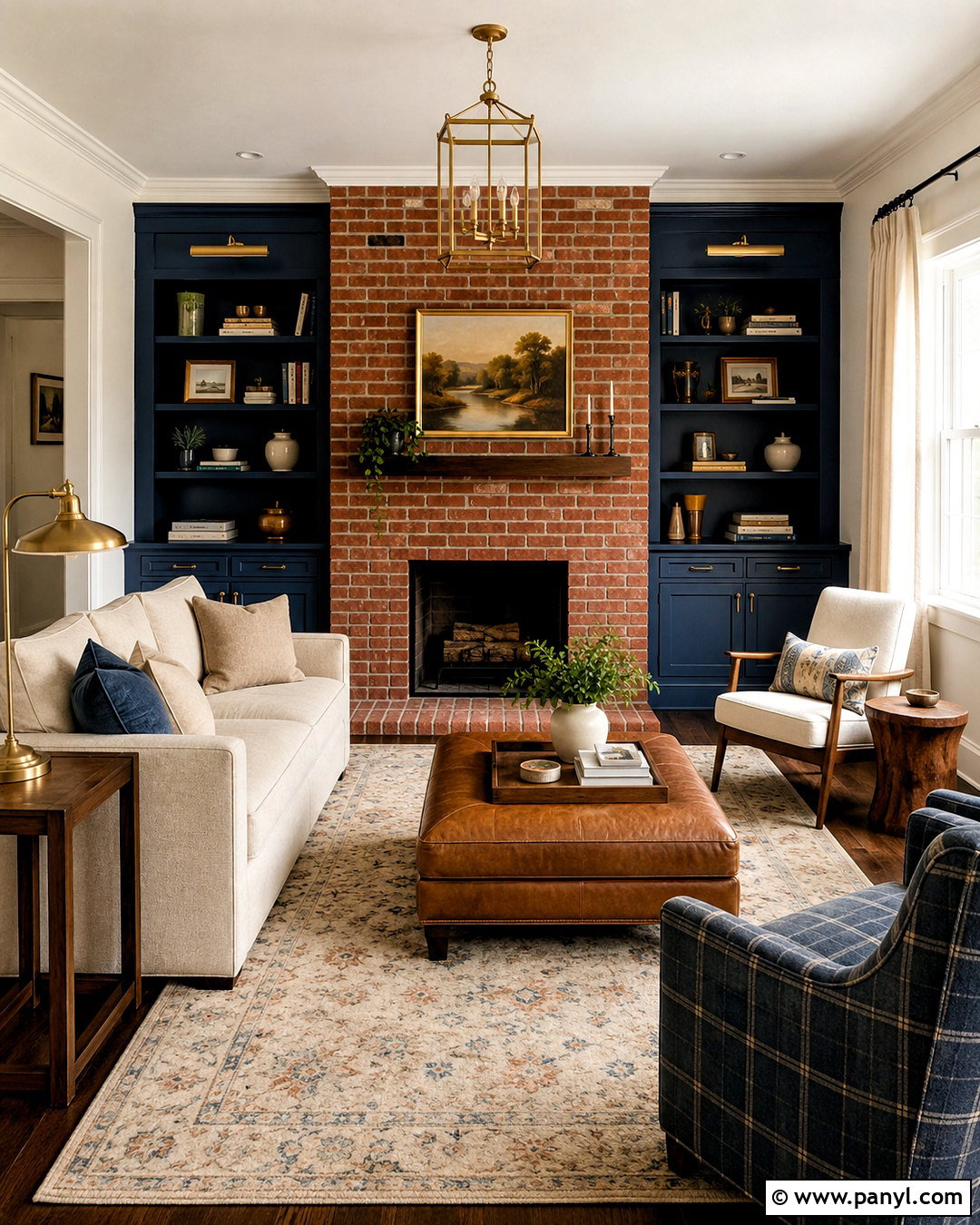
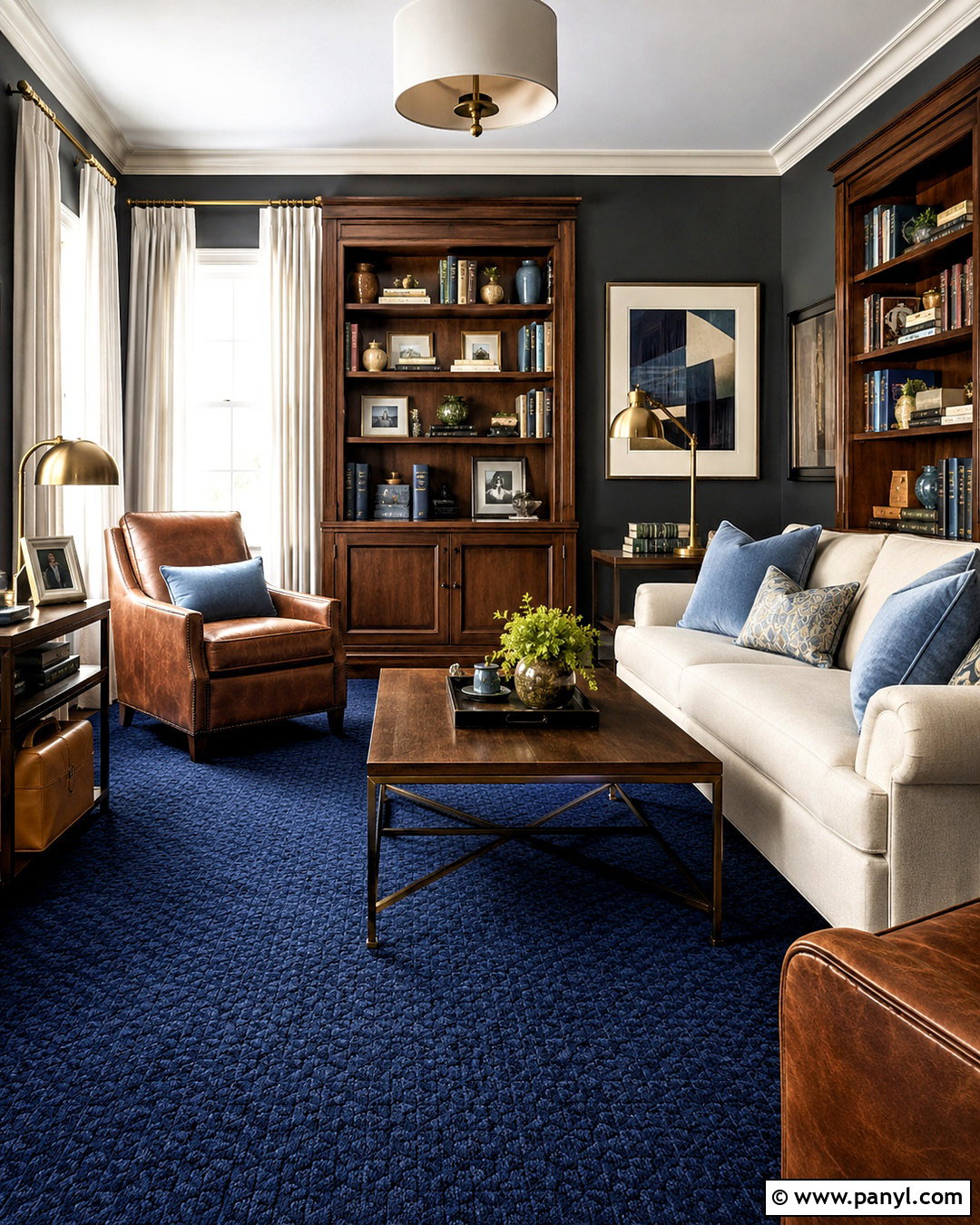
Deep navy blue gives brick a tailored, dramatic character that feels richer than basic gray. Use navy on built-in cabinets or the walls adjoining a red or brown brick fireplace. Balance that depth with a light oatmeal sofa, ivory curtains, and a pale patterned rug. Walnut end tables repeat the brick’s brown undertones, while brushed brass lighting adds a polished glow. Include a few camel leather details, such as an ottoman or accent chair, to connect the navy and masonry. Keep the ceiling and trim warm white so the room does not feel closed in. This color combination works beautifully in libraries, living rooms, and home offices where the brick can serve as a warm counterpoint to the cooler blue.
5. Charcoal Gray With A Brick Wall
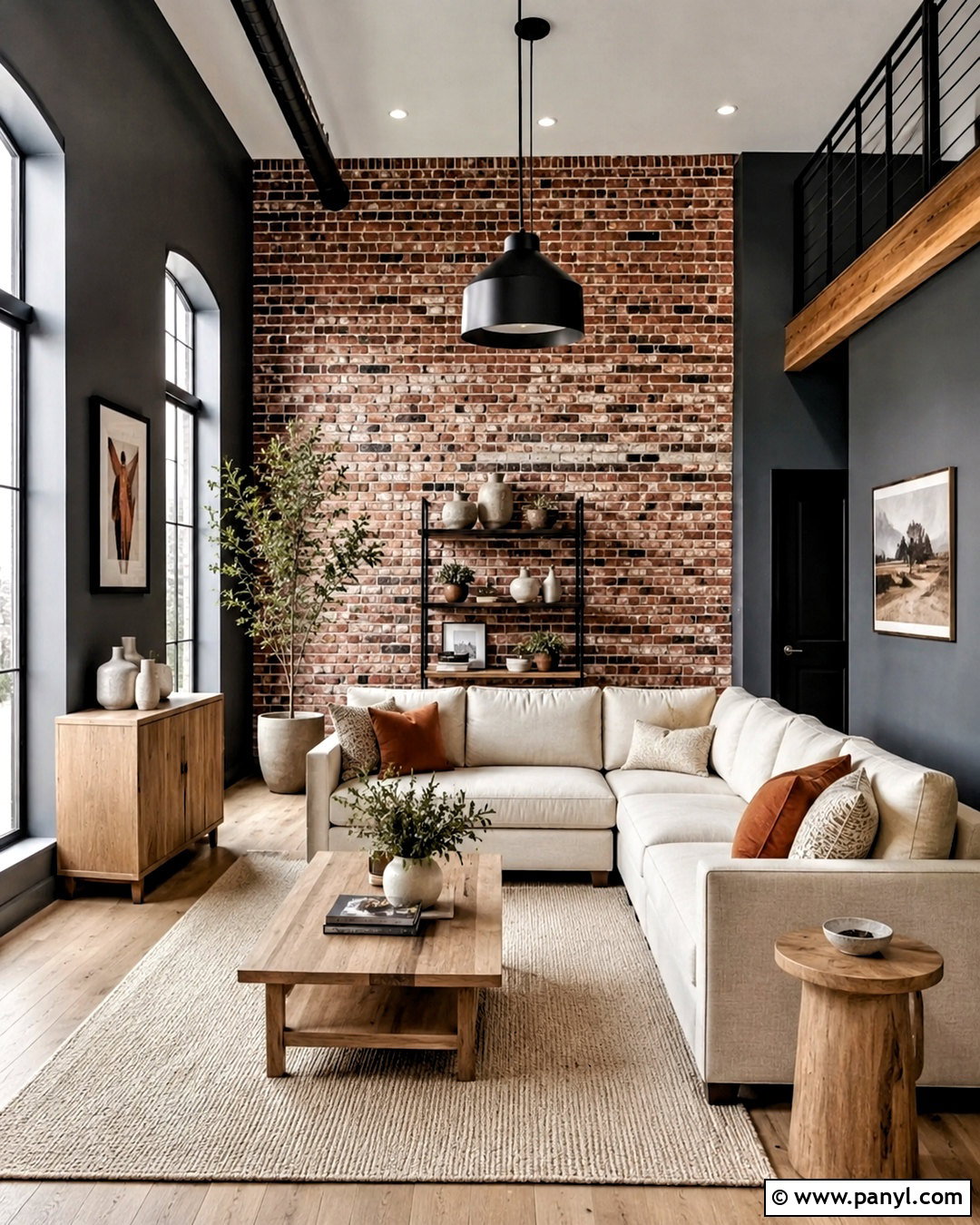
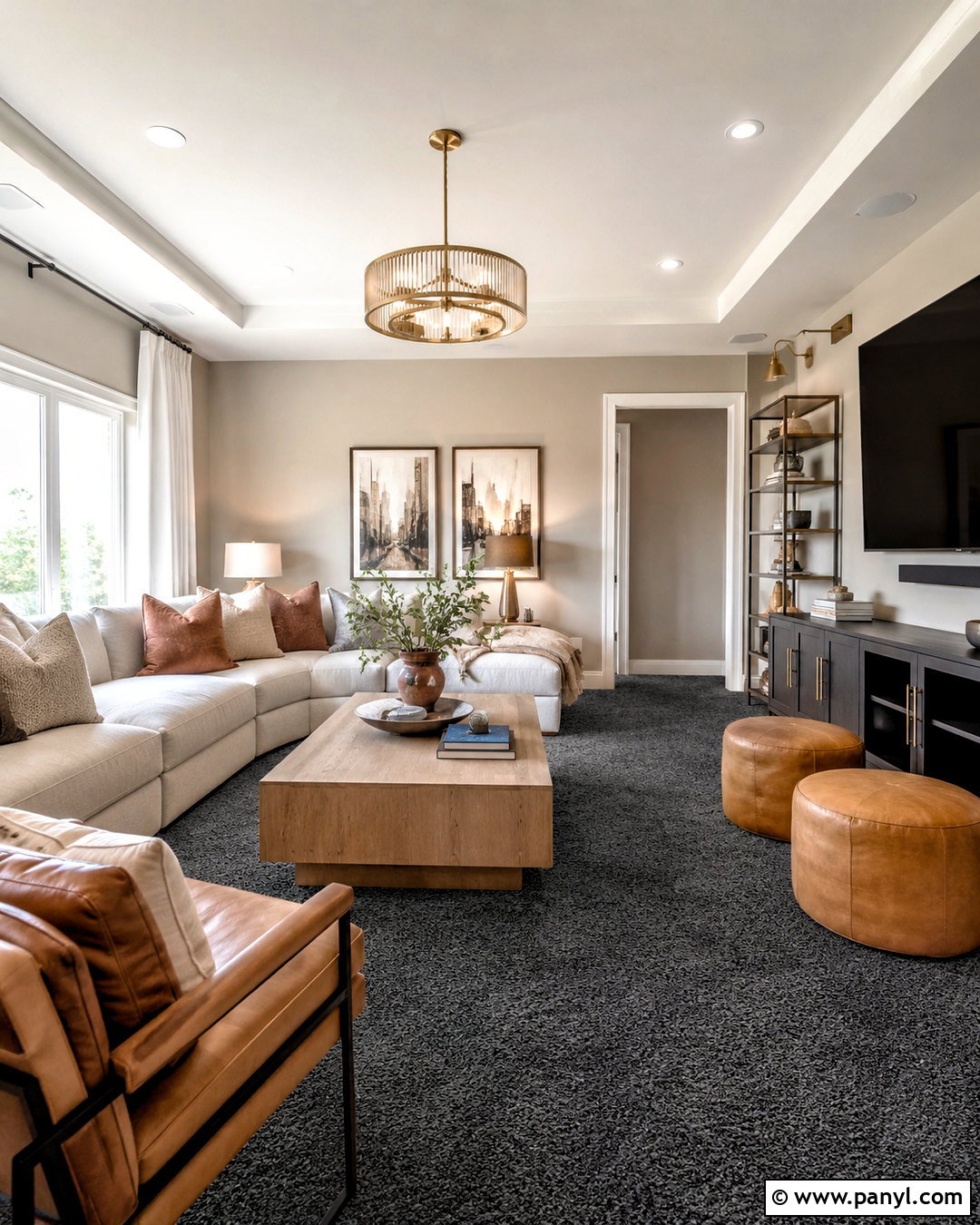
Charcoal gray can make an old brick wall feel modern without hiding its natural texture. Select a soft charcoal with brown or warm gray undertones instead of a cold blue-gray. Paint nearby walls or built-in shelving charcoal, then lighten the room with a flax-colored sofa and cream area rug. Add pale oak furniture for contrast and repeat the dark shade through window frames, lamps, and slim metal tables. Rust-colored cushions connect directly to red brick, while off-white pottery keeps the styling simple. This balanced living room has depth but still feels welcoming. It is especially effective in spaces with large windows, high ceilings, or strong artificial lighting. Use charcoal more sparingly when the room receives limited daylight.
6. Soft Black With A Brick Wall
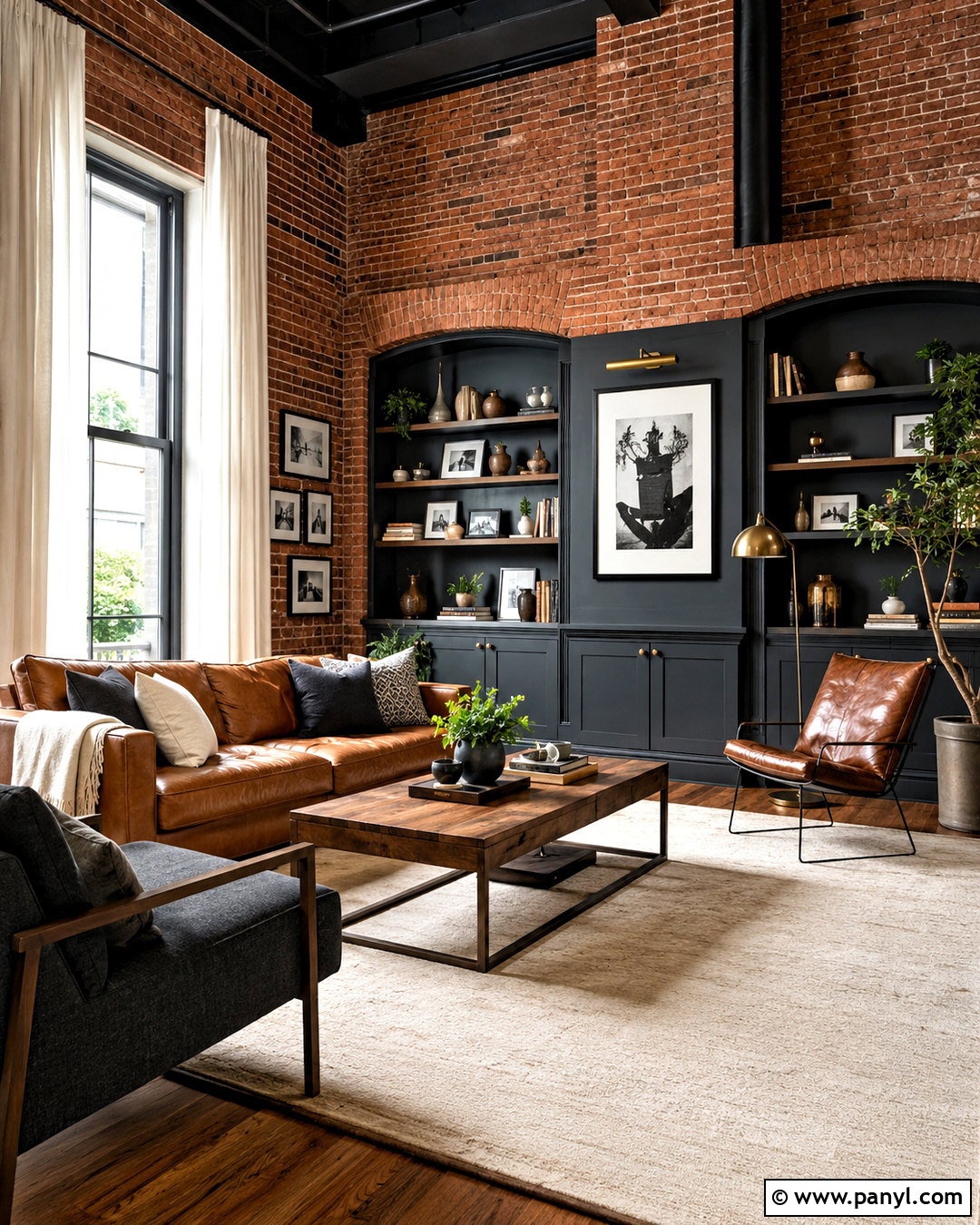
Soft black creates bold contrast while allowing the changing colors within brick to remain visible. Instead of using a pure jet black, choose a softened shade with charcoal or brown undertones. Apply it to an adjoining wall, fireplace surround, or full set of built-ins. Furnish the room with a camel leather sofa, warm wood coffee table, and large cream rug. White linen curtains and a light ceiling prevent the dark palette from becoming heavy. Repeat black through thin picture frames and metal lighting, but leave plenty of open wall space. This complete industrial-modern look feels intentional rather than stark. Green plants and aged brass accents can add freshness and warmth, especially beside dark red or weathered reclaimed brick.
7. Dusty Blue With A Brick Wall
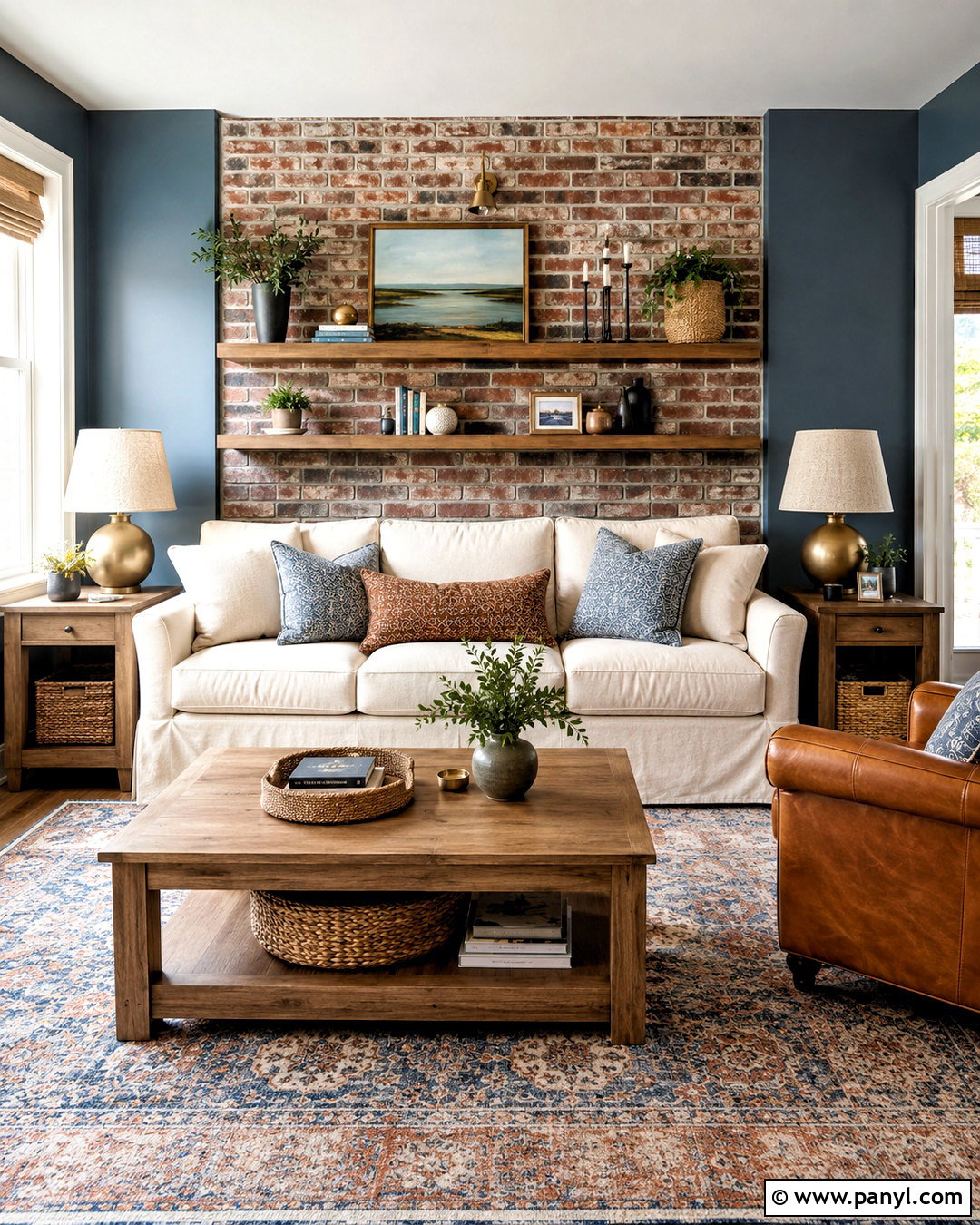
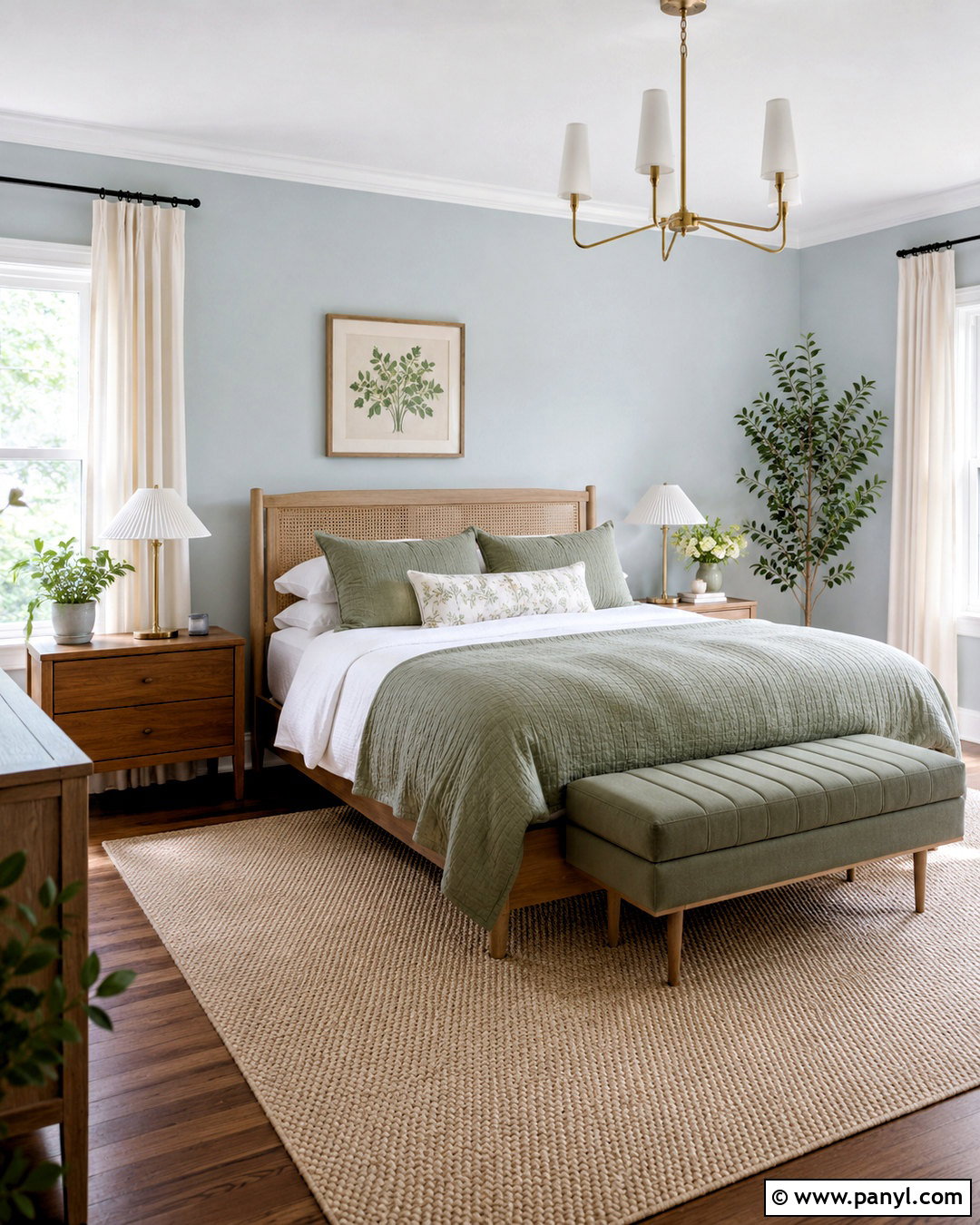
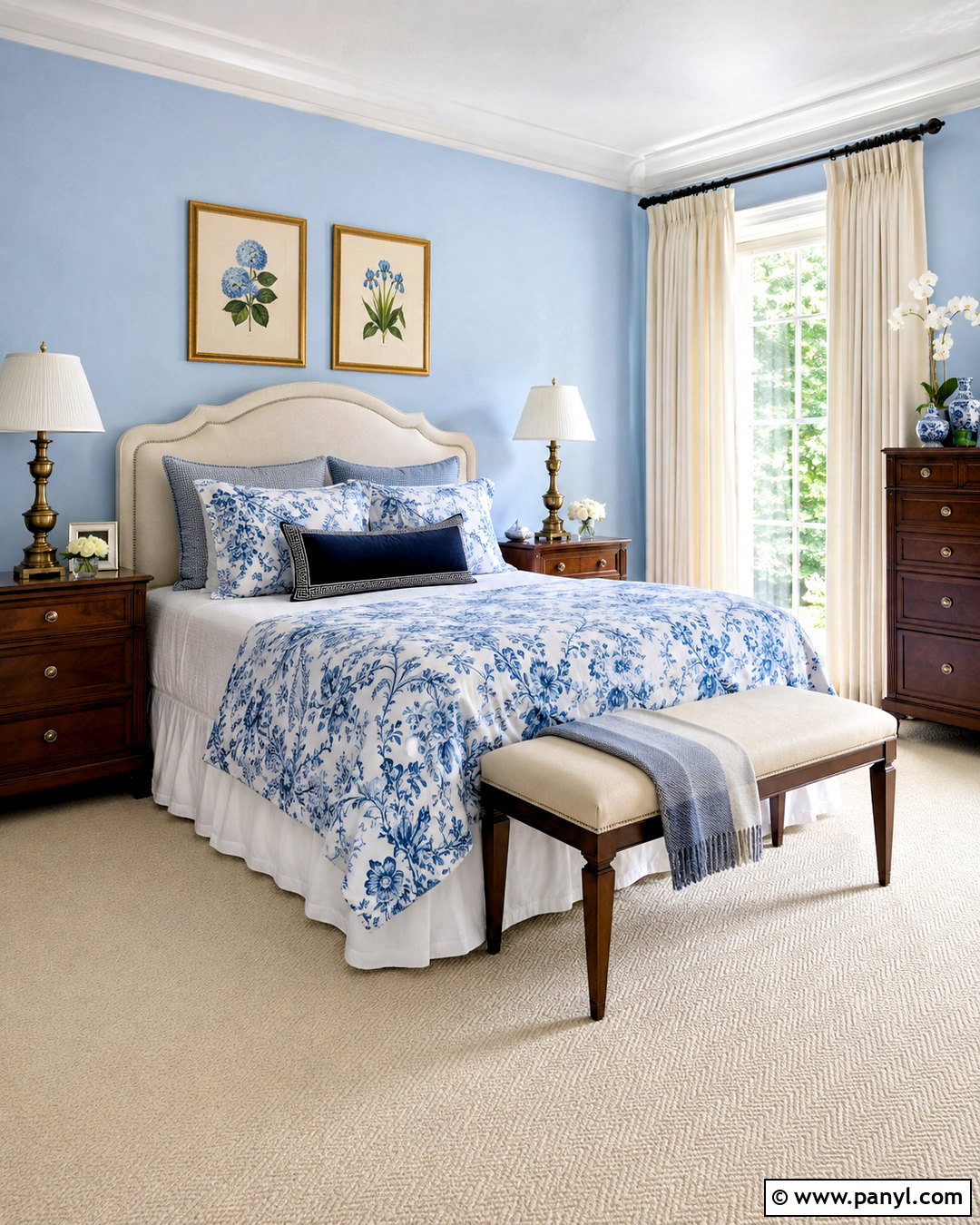
Dusty blue softens the strong visual weight of brick and creates a relaxed, livable room. Choose a gray-based blue that feels muted rather than bright or coastal. Use it on the surrounding walls, then layer in an ivory slipcovered sofa, light wood tables, and a faded blue-and-rust rug. The rust pattern connects the flooring and furnishings back to the brick. Warm brass lamps, natural linen shades, and woven baskets stop the blue from feeling cold. This palette suits bedrooms, family rooms, and casual dining spaces with exposed masonry. For a cohesive finish, use warm white trim rather than crisp white. A few navy details can provide depth, while soft tan upholstery supports the brick’s earthy undertones.
8. Olive Green With A Brick Wall
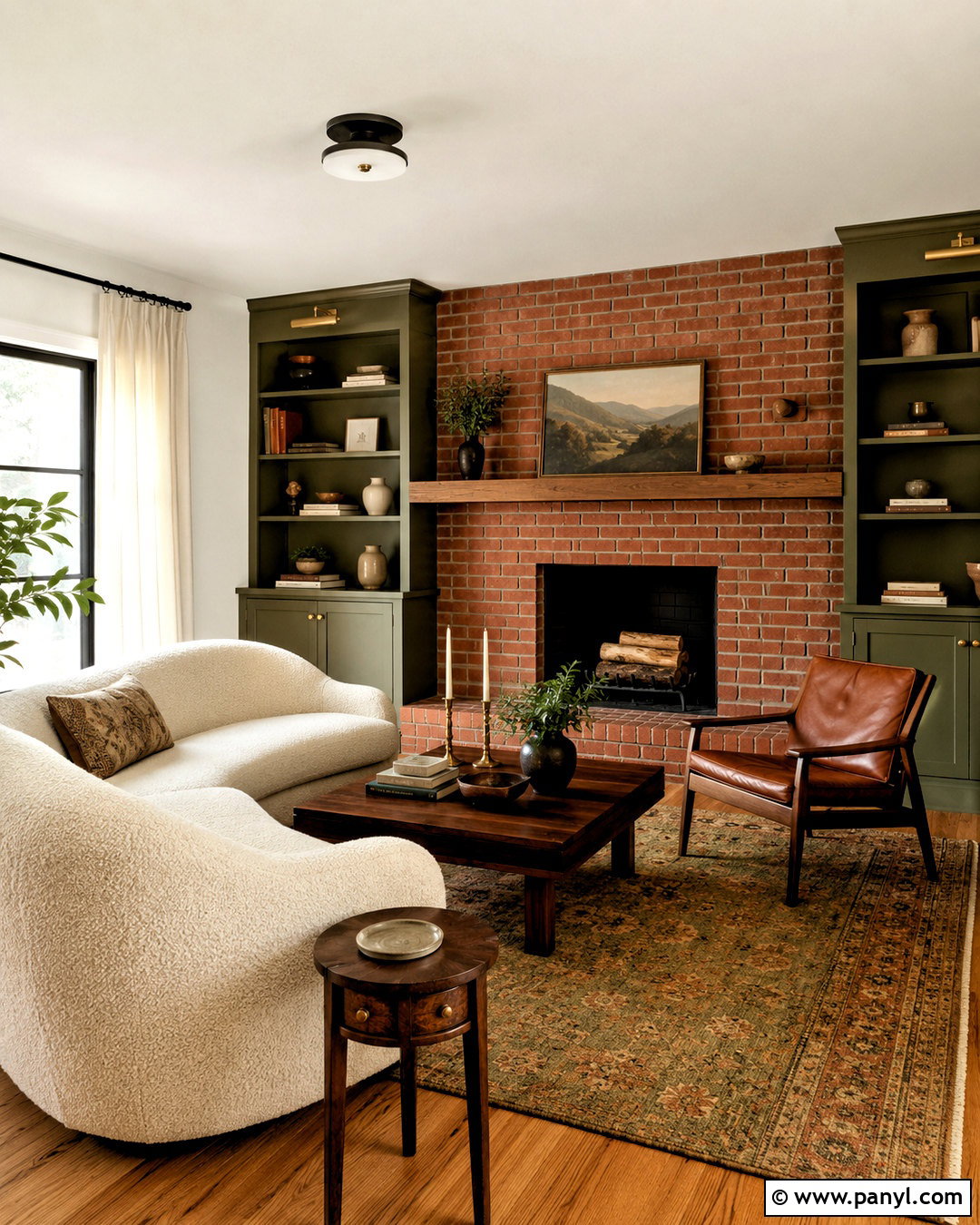
Olive green gives brick a grounded, sophisticated look with stronger contrast than pale sage. Paint the adjacent walls a medium olive or use the color across cabinetry surrounding a brick fireplace. Add a cream boucle sofa, walnut tables, and a vintage-inspired rug containing olive, rust, and beige. A tobacco leather chair can deepen the warm palette while echoing darker marks in the brick. Use aged brass hardware and lamps for a softer finish than bright chrome. Warm white curtains keep the room from becoming overly earthy. This complete look is ideal for traditional, midcentury, or eclectic interiors. If the brick is dark brown, choose a lighter olive; brighter red brick can handle a deeper, moodier green.
9. Forest Green With A Brick Wall
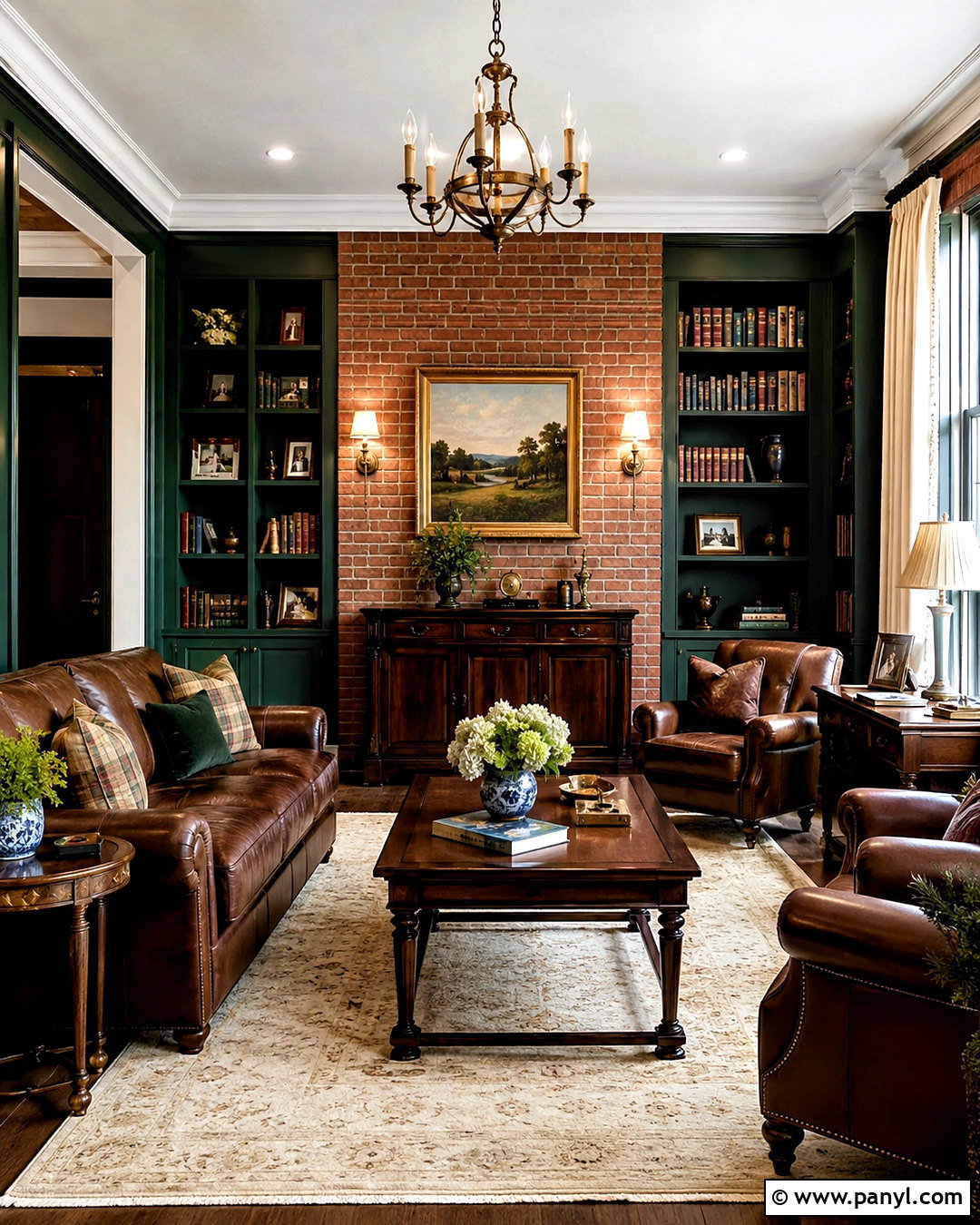
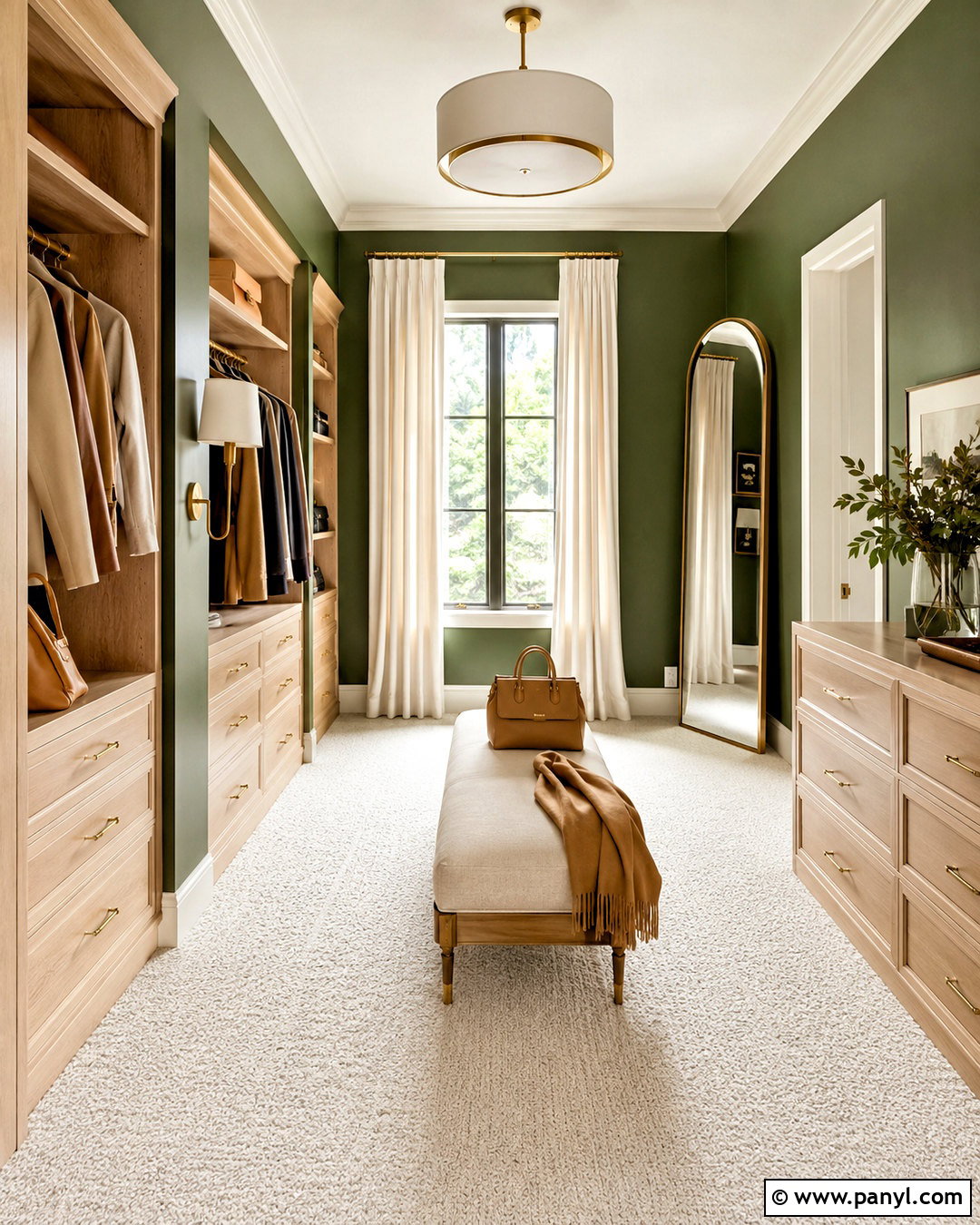
Forest green produces a classic, high-contrast scheme that works particularly well with rich red brick. Use the green on a feature wall, bookcases, or lower cabinetry, allowing the brick to remain the room’s textural centerpiece. Furnish the space with a tan leather sofa, dark walnut furniture, and a generously sized cream rug. Add warm white curtains to soften the darker surfaces and keep the windows visually open. Antique brass sconces and framed landscape art support the traditional character. A restrained mix of plaid and solid pillows can add pattern without making the room busy. This full library or living room look feels established and comfortable. Maintain strong lighting so the green and brick retain their individual color.
10. Teal With A Brick Wall
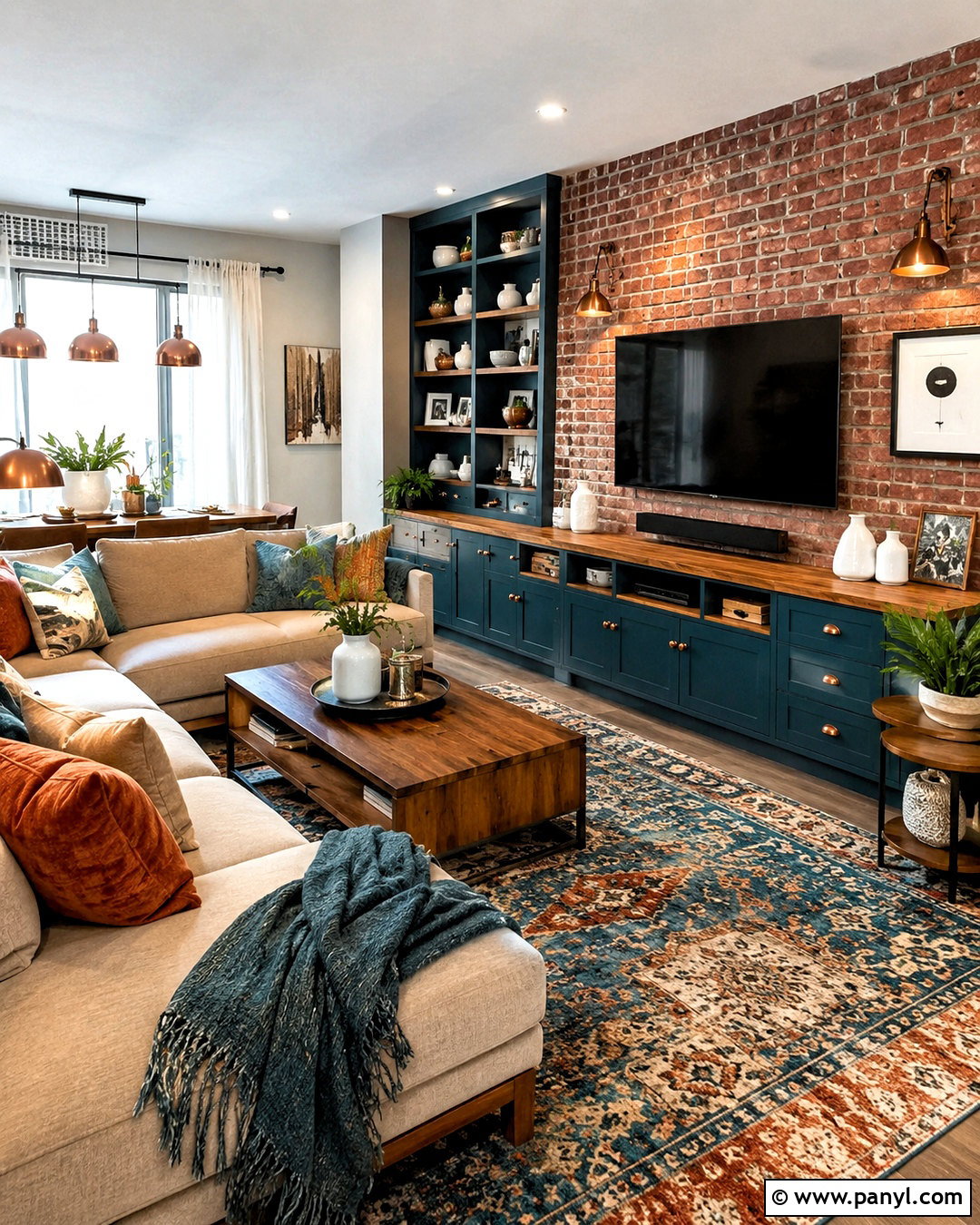
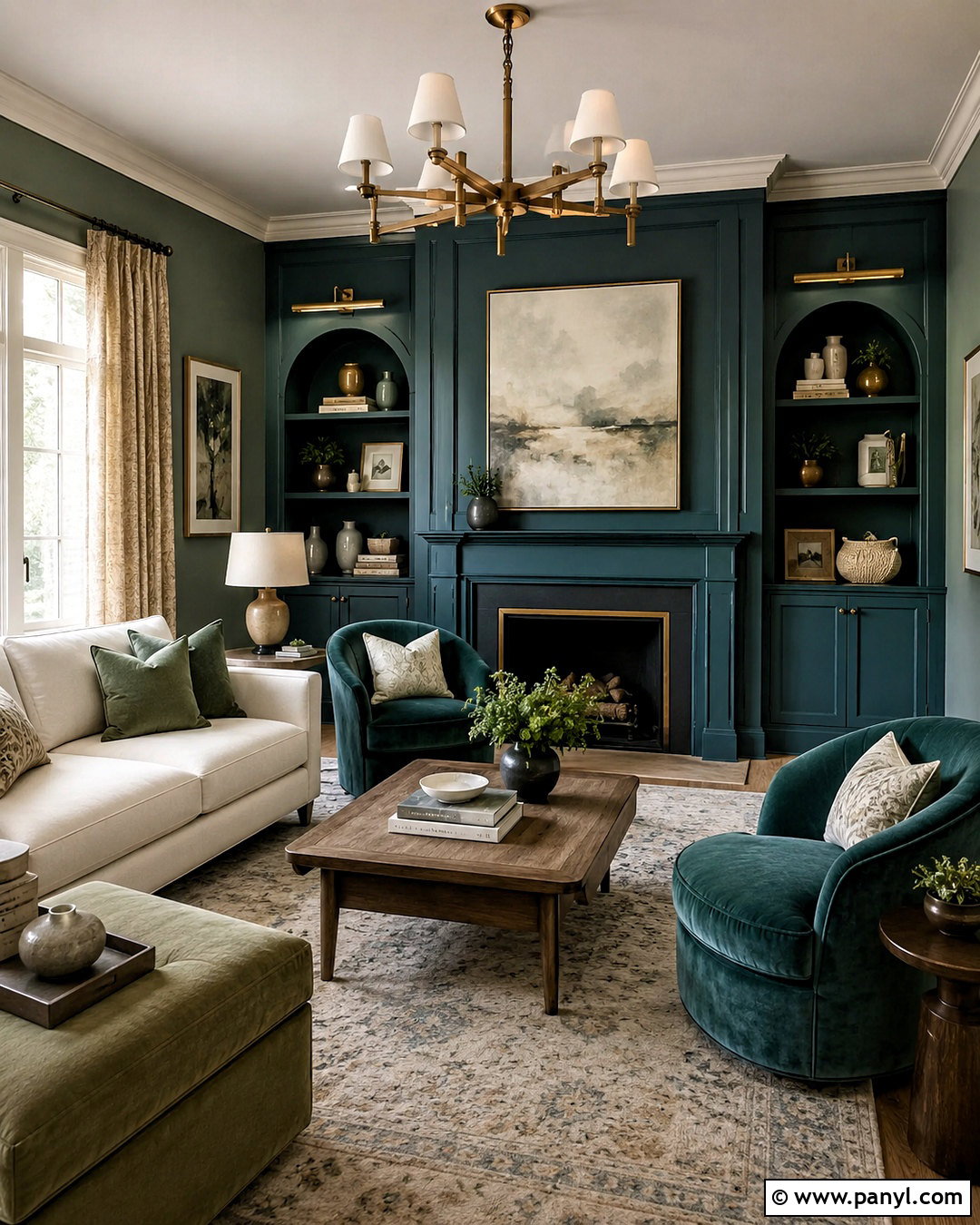
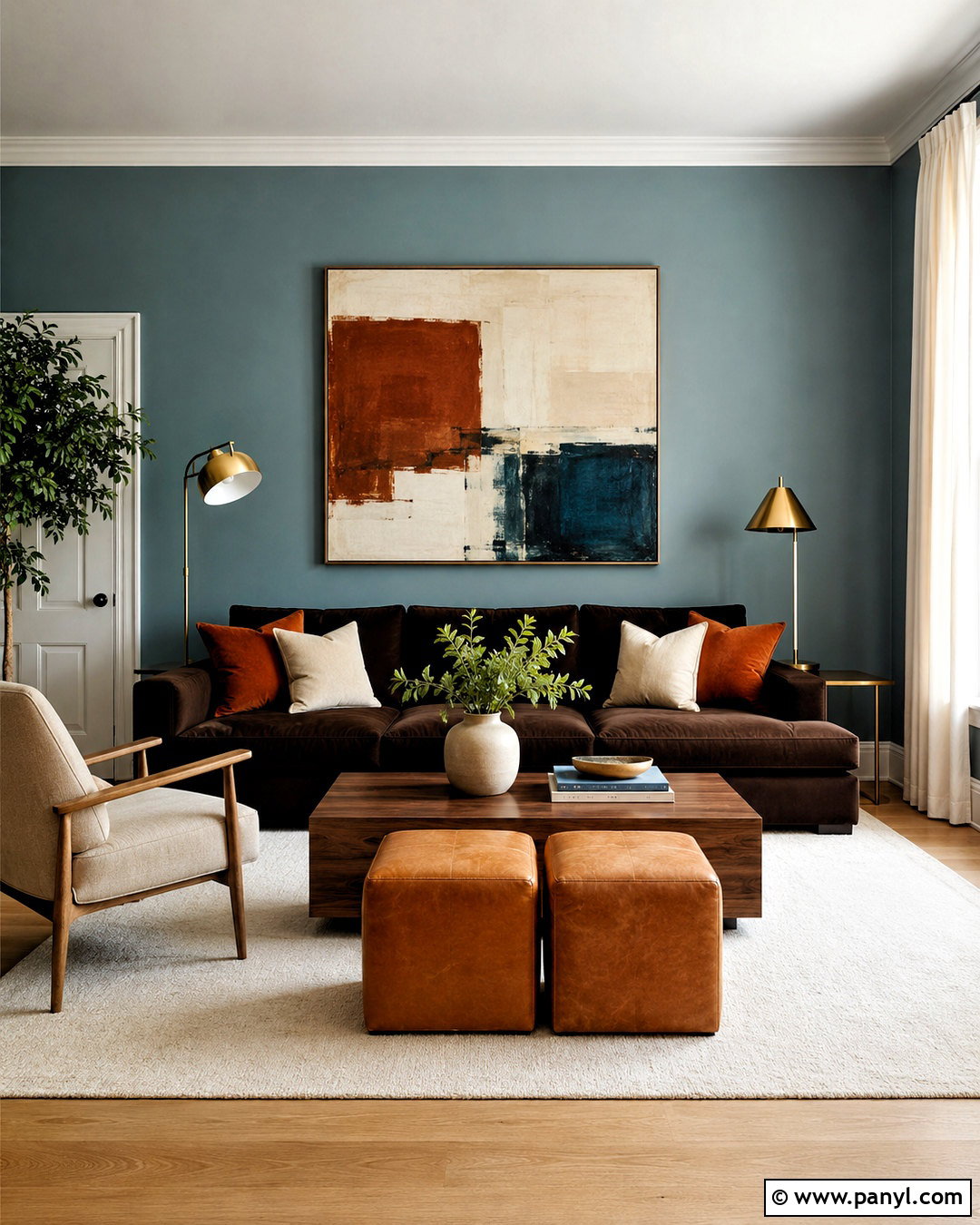
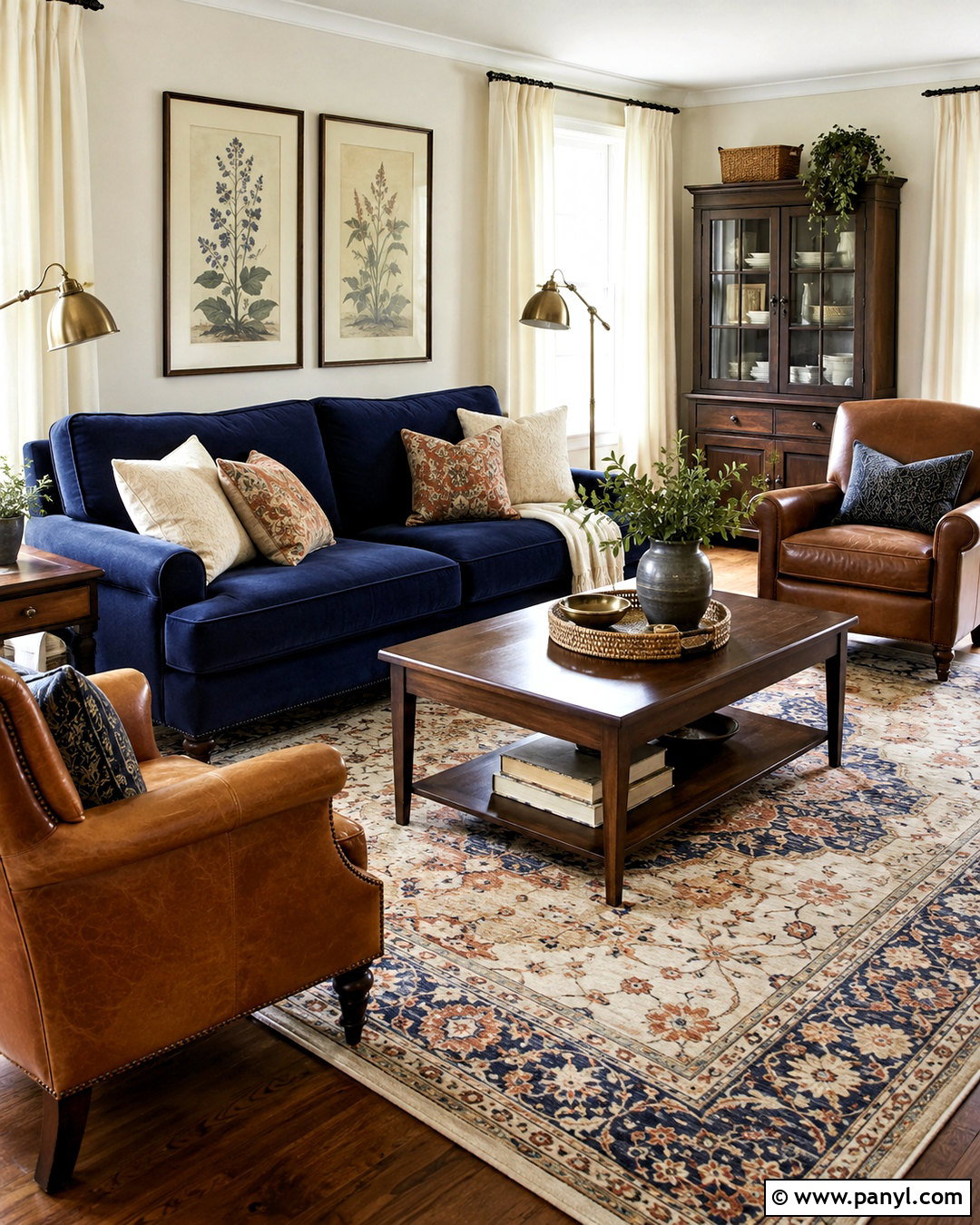
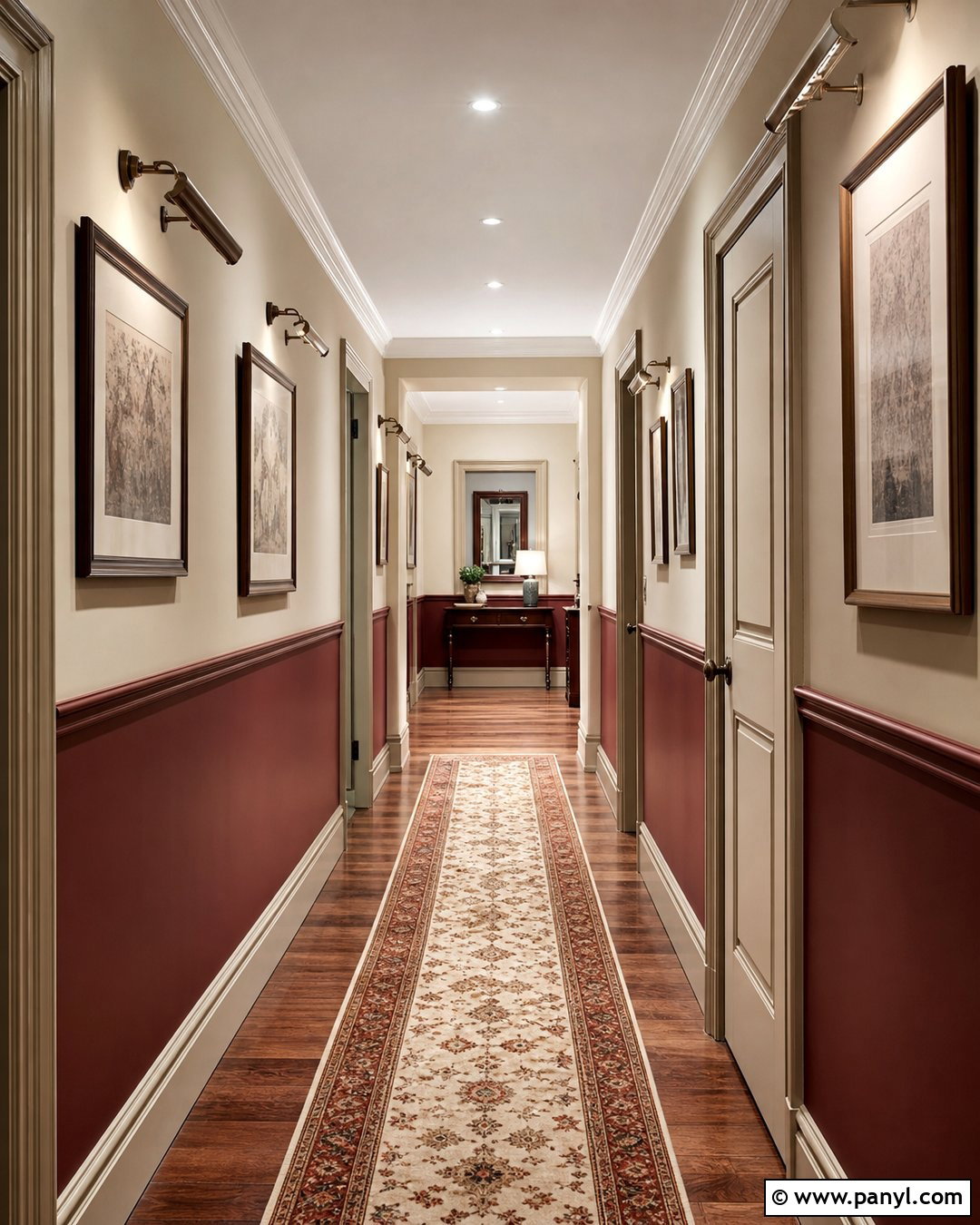
Muted teal introduces lively color beside brick while remaining more sophisticated than a bright turquoise. Choose a deep blue-green with gray undertones and apply it to the non-brick walls or a large media cabinet. Pair it with a warm beige sectional, medium-tone oak furniture, and a patterned rug featuring teal, rust, and cream. Copper or aged brass lighting connects with the orange tones in the masonry. Use ivory curtains and simple white ceramics to create breathing room around the stronger colors. This complete living area feels artistic, fresh, and slightly eclectic. Keep additional accent shades limited so teal and brick remain the main relationship. Dark brown or black details can provide a clean outline around the room.
11. Taupe With A Brick Wall
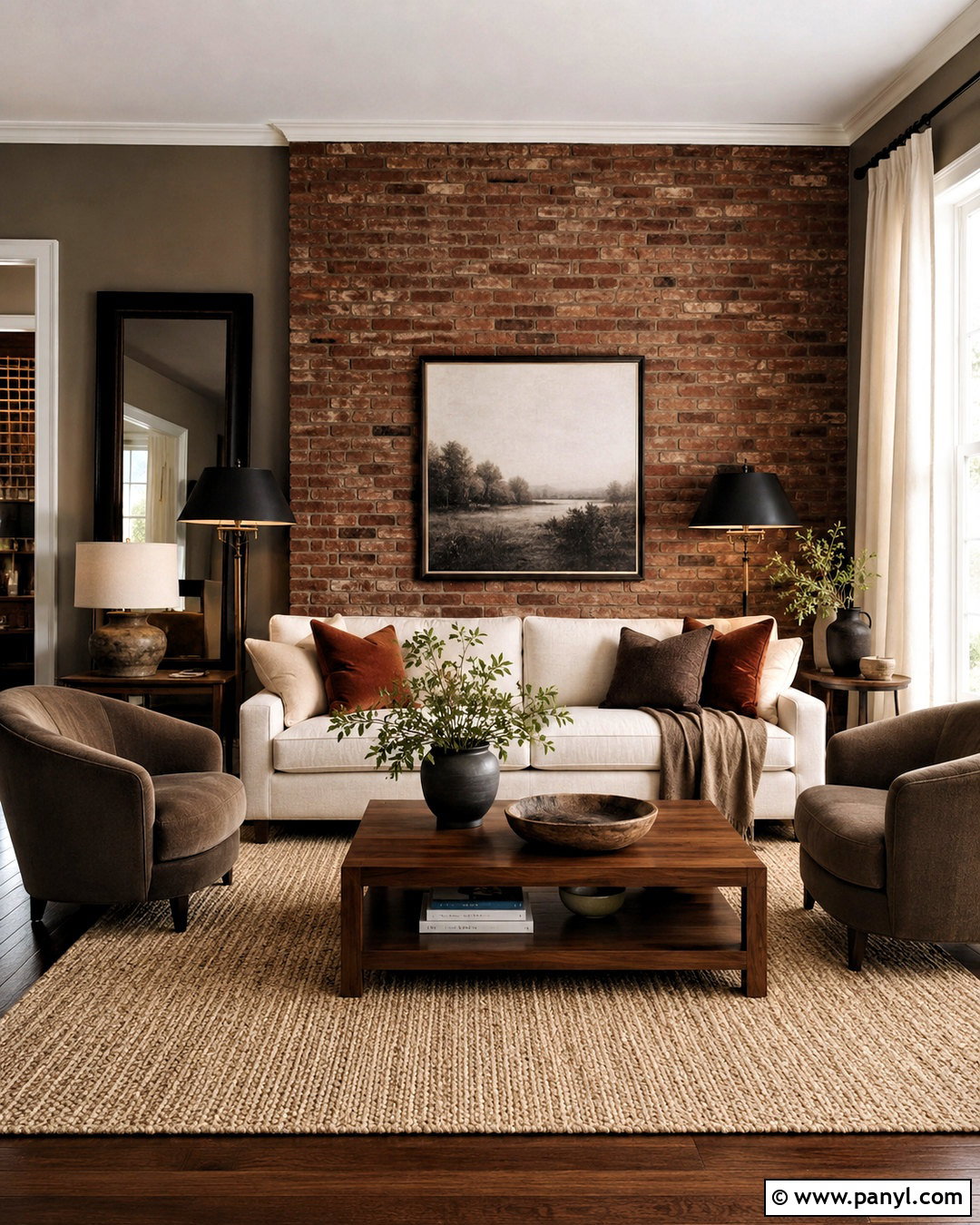
Taupe is a dependable companion for brick because it can repeat both brown masonry tones and gray mortar lines. Choose a balanced medium taupe for the surrounding walls, then build a layered neutral living room around it. Place a cream sofa near the exposed brick and add mushroom-colored chairs, a walnut coffee table, and a textured beige rug. Black metal lighting provides definition, while rust and chocolate pillows connect the neutral upholstery to the wall. Use warm white on the ceiling, trim, and curtains to preserve brightness. This coordinated palette works well when homeowners want the brick to feel integrated rather than strongly contrasted. Vary the textures through wool, linen, leather, wood, and ceramics to keep the neutral room interesting.
12. Beige With A Brick Wall
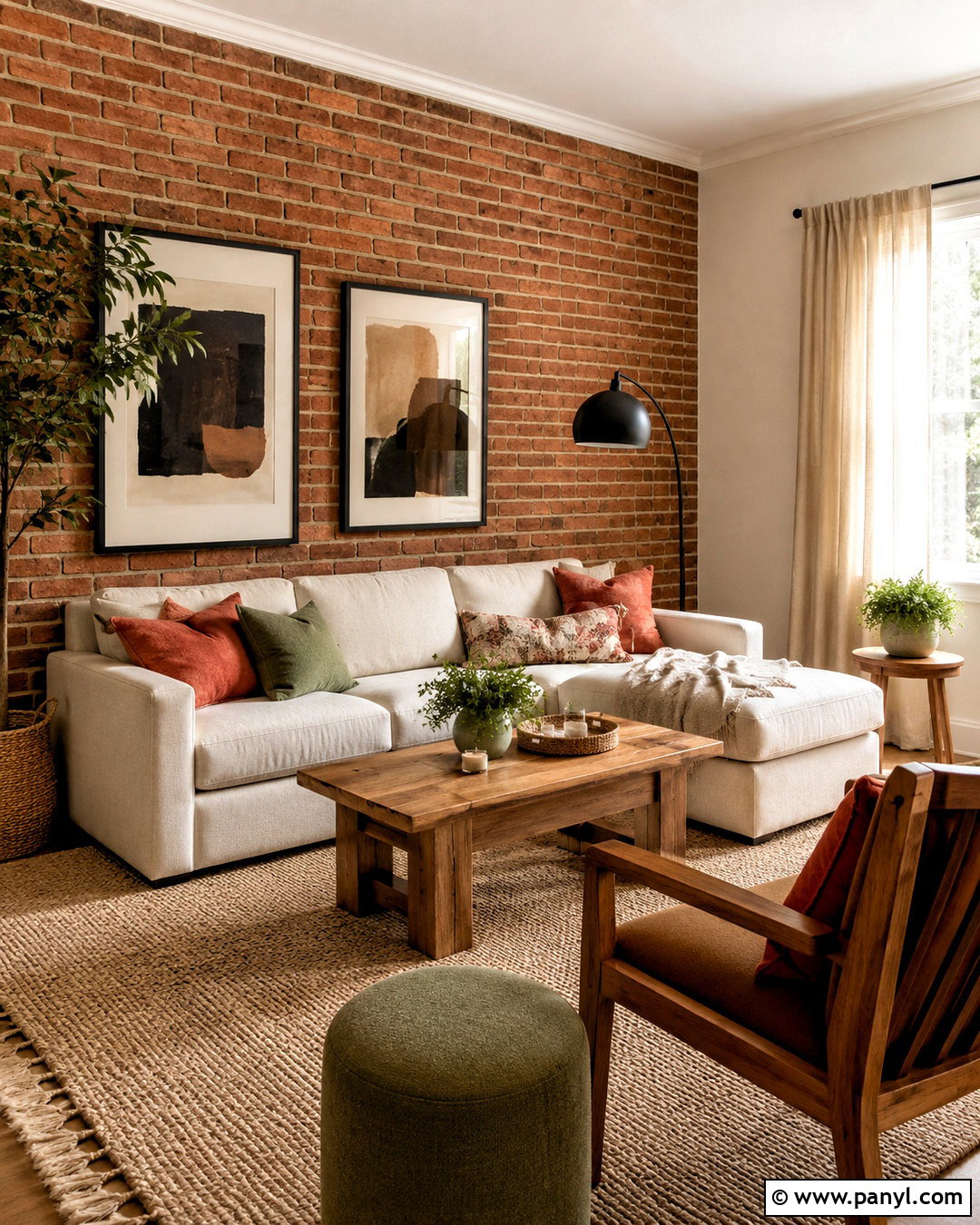
Soft beige creates an easy, sun-warmed setting for red, tan, or brown brick. The key is selecting a beige that shares the masonry’s warm undertones without matching it too closely. Paint the nearby walls a sandy beige and choose a lighter cream sofa to create gentle contrast. Add honey oak tables, a woven wool rug, and long natural linen curtains. Terracotta cushions can repeat the brick, while muted green accents prevent the entire room from leaning orange. A black floor lamp and dark-framed artwork provide a few crisp lines. This complete family room feels relaxed and timeless. Layering several light neutrals also helps brighten spaces where a large brick wall absorbs some of the available natural light.
13. Mustard Yellow With A Brick Wall
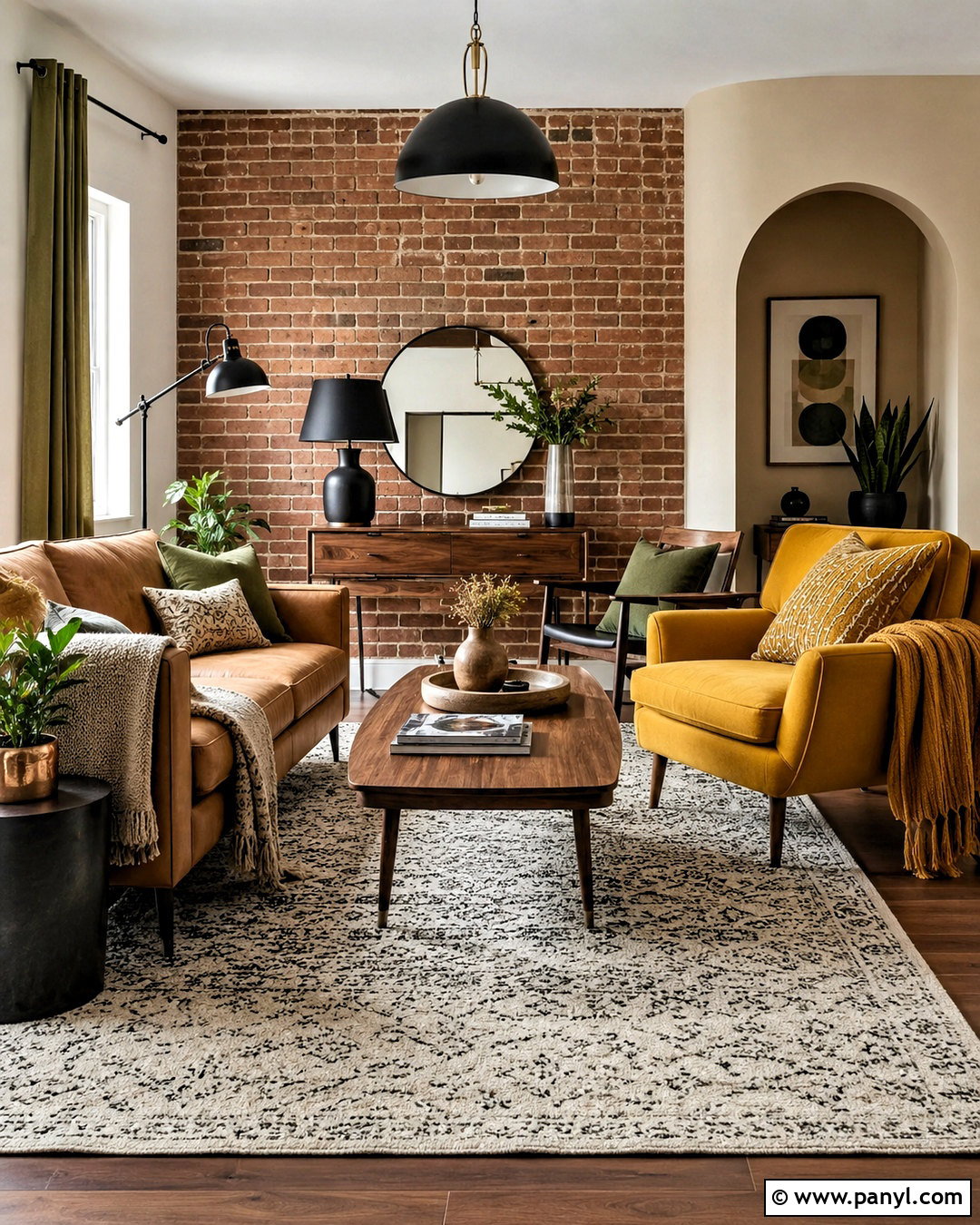
Mustard yellow highlights the golden and orange notes commonly found in old brick. Because it is a strong color, use it with intention on an accent chair, built-in cabinet, or painted wall rather than every surface. Surround the brick with warm off-white walls and furnish the room with a camel sofa, walnut tables, and a cream-and-charcoal rug. Add mustard through one substantial element and repeat it in two or three smaller textiles. Matte black lighting gives the cheerful palette a modern edge. Olive green pillows or plants can introduce an earthy counterbalance. This complete eclectic living room feels energetic but controlled. Avoid clear lemon yellow, which may appear disconnected from the brick’s deeper, weathered coloring.
14. Burnt Orange With A Brick Wall
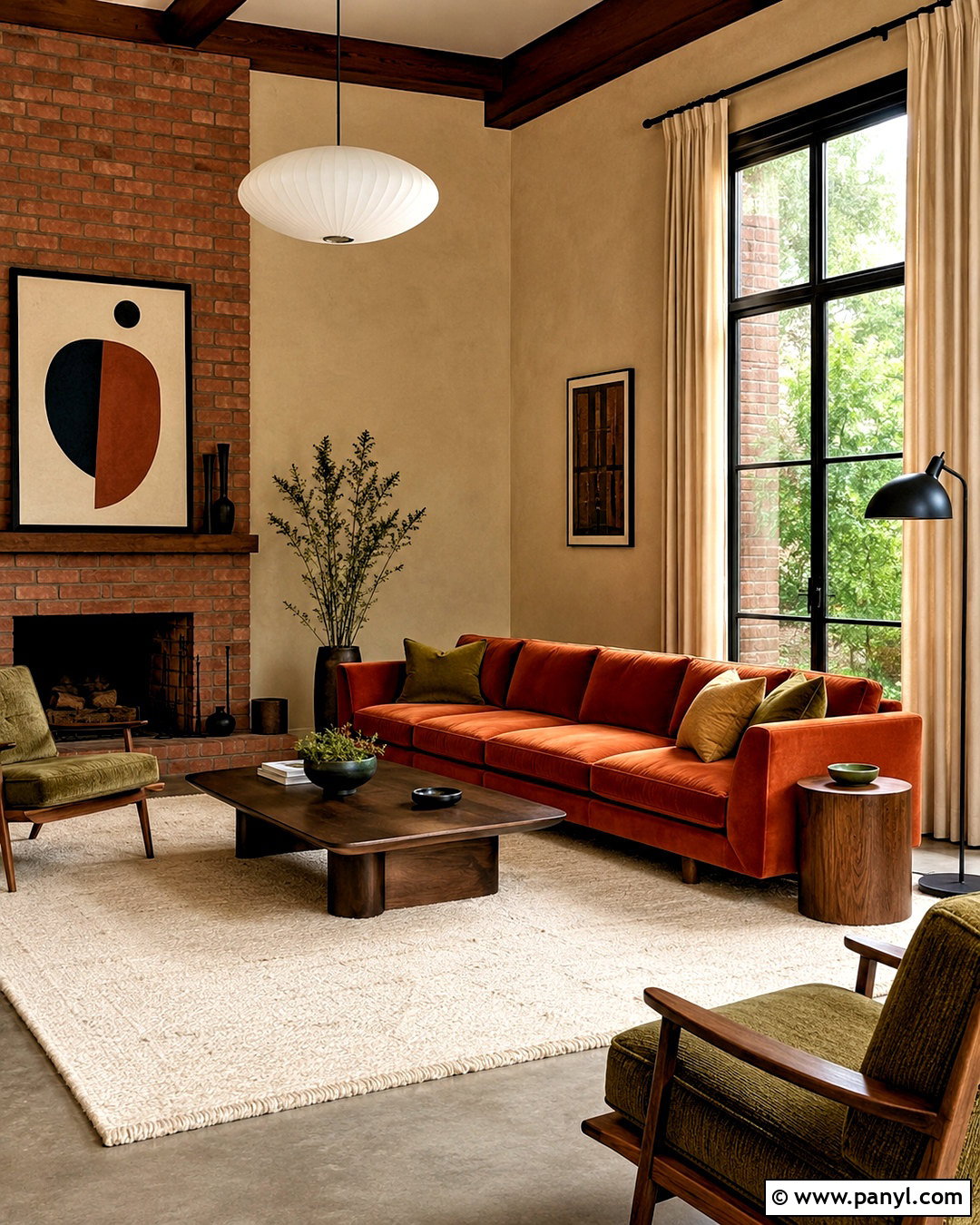
Burnt orange creates a warm tonal scheme by drawing out the terracotta shades already present in brick. To prevent the room from feeling overly red, surround the masonry with creamy white or pale sand walls. Choose a burnt orange velvet sofa as the main statement, then ground it with a large ivory rug and dark walnut coffee table. Charcoal lamps, black window frames, and graphic artwork provide necessary contrast. Add beige curtains and olive green cushions to break up the warm palette. This complete look feels especially suited to midcentury and retro-inspired interiors. Use several lighter neutral surfaces so the sofa and brick do not visually merge. Natural daylight will reveal the subtle differences between both orange-based finishes.
15. Blush Pink With A Brick Wall
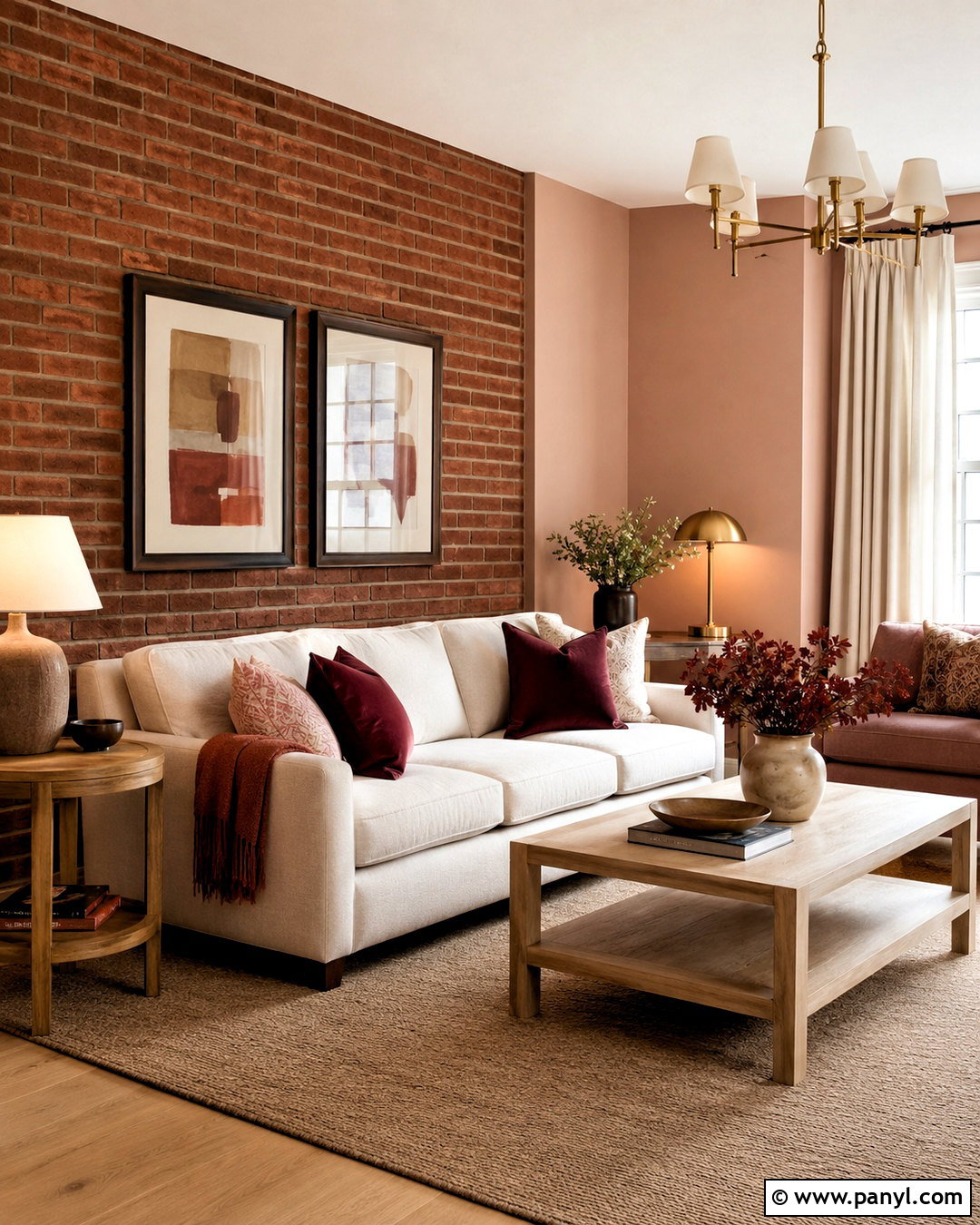
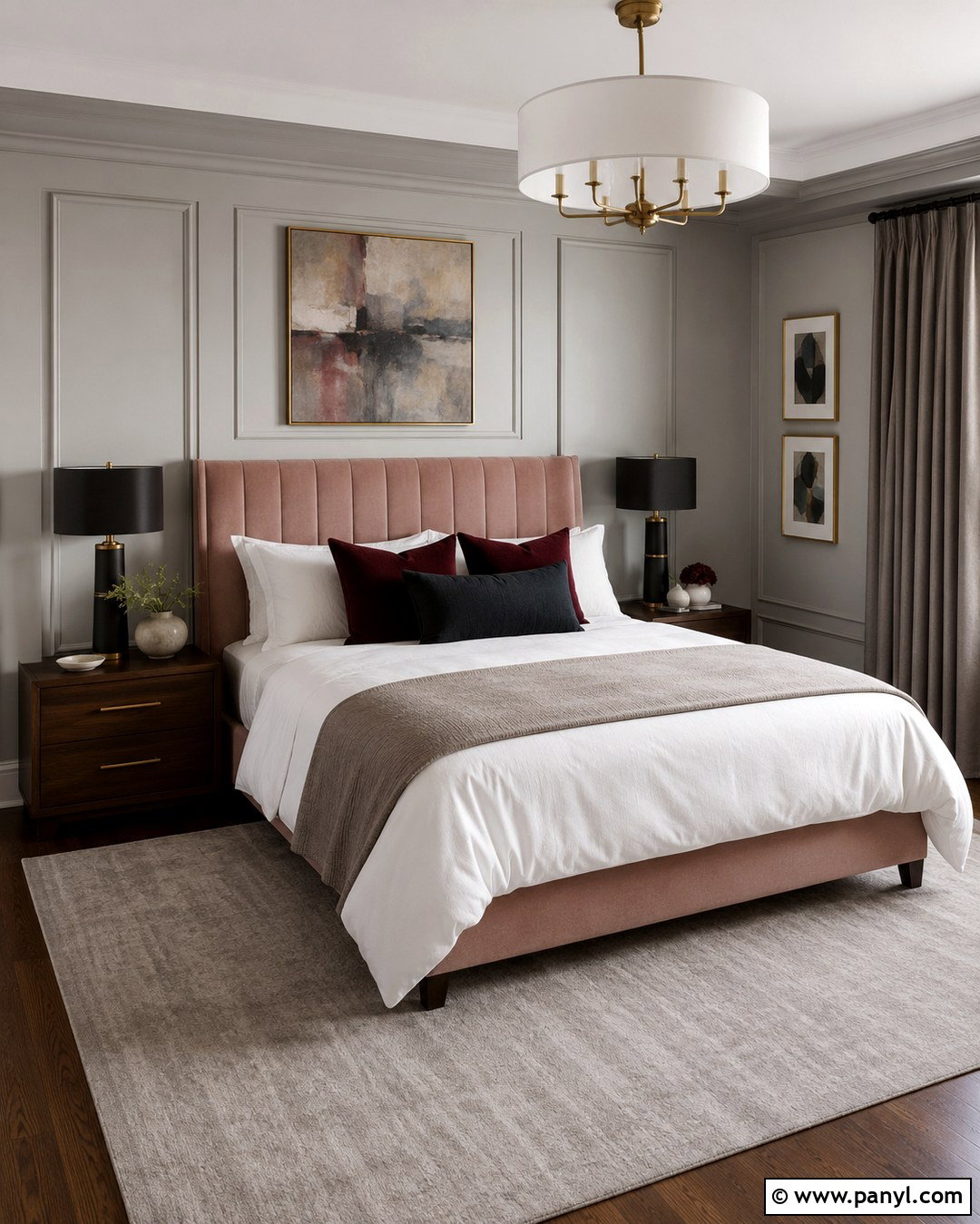
Dusty blush pink can soften rugged brick and create a room that feels warm without becoming overly rustic. Choose a muted, clay-based pink rather than a sugary pastel. Paint the adjoining walls blush and place an ivory sofa against the brick feature. Add pale oak tables, a taupe rug, and cream linen curtains to keep the foundation understated. Burgundy, rust, and chocolate accents can deepen the palette through artwork and pillows. Brushed brass lighting complements the warm pink while adding a refined finish. This complete bedroom or sitting room balances softness with texture. If the brick has purple-red undertones, blush will appear especially cohesive. Limit additional pink items so the masonry still gives the room visual strength and character.
16. Burgundy With A Brick Wall
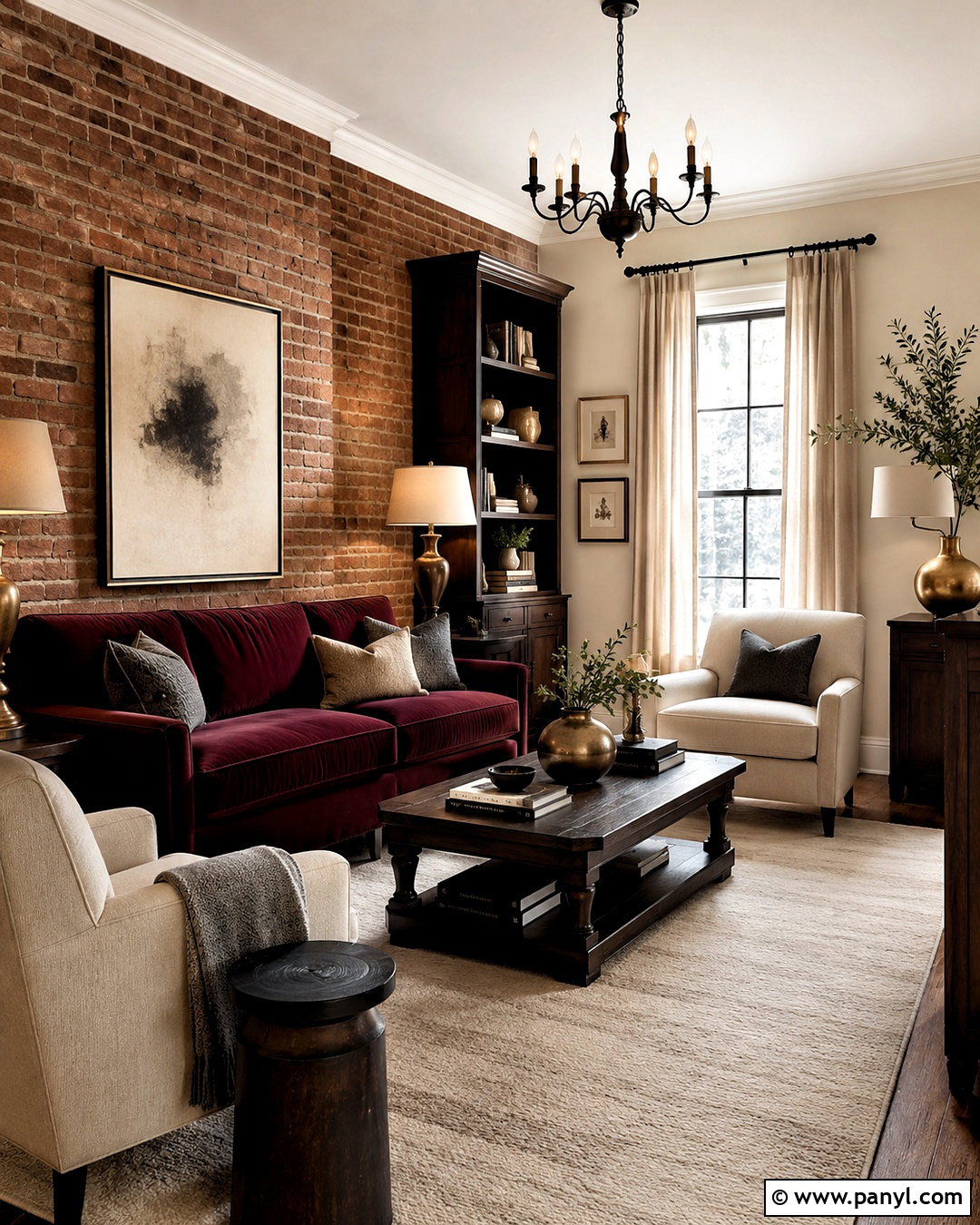
Burgundy builds a rich, monochromatic palette around the darkest red notes in brick. Use this color on a sofa, drapery, or cabinetry instead of painting every surrounding wall. Keep the main walls warm cream and add a large beige rug to create visual space between the burgundy and masonry. Dark walnut furniture, aged brass lighting, and a few charcoal accents support the room’s depth. Choose solid textiles with subtle textures rather than several busy patterns. A pair of oatmeal chairs can lighten the seating arrangement and make the burgundy piece stand out. This complete traditional or contemporary living room feels substantial and inviting. Strong natural or layered artificial lighting is important because both brick and burgundy absorb considerable light.
17. Light Gray With A Brick Wall
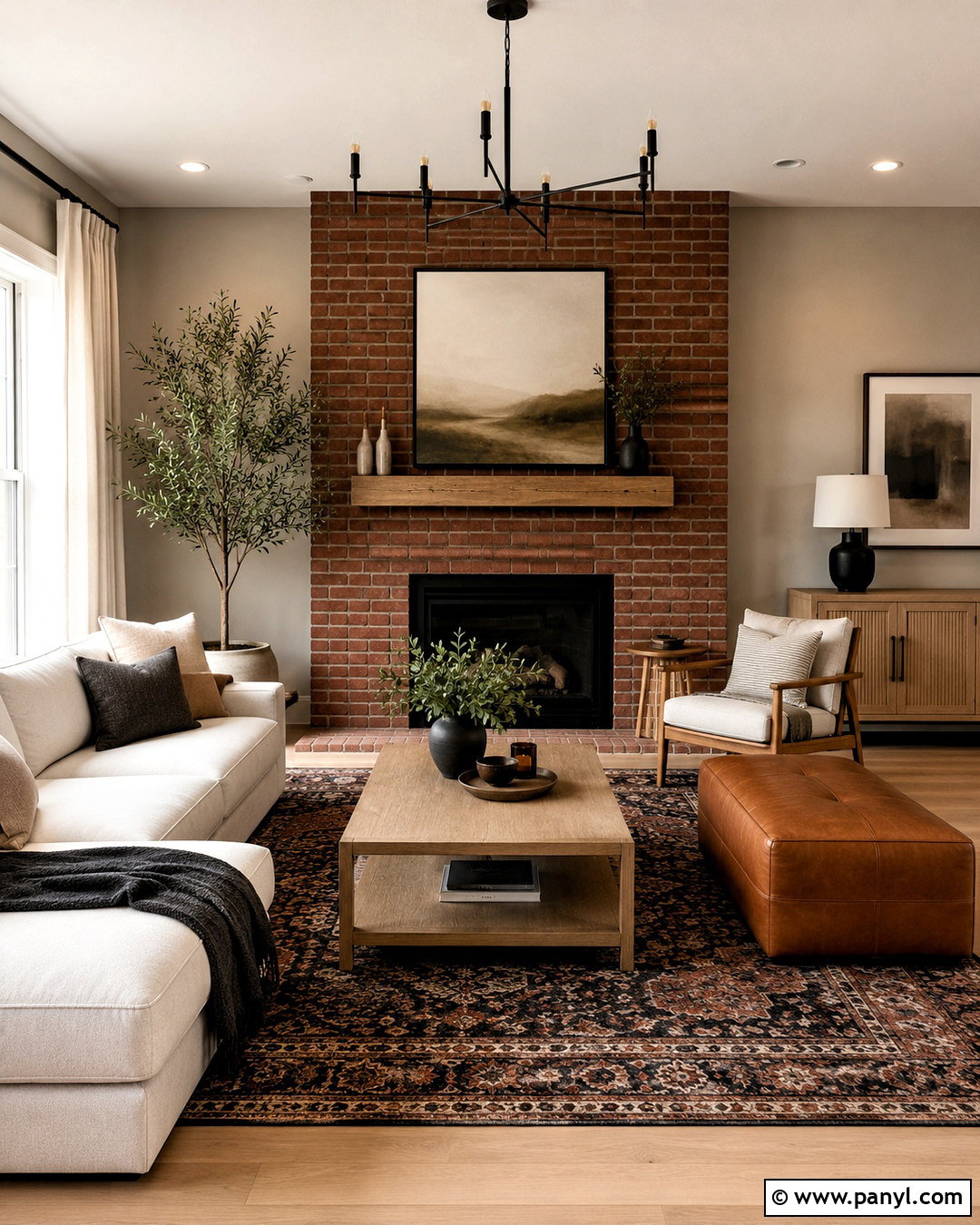
Light gray can work with brick when its undertone relates to the mortar or cooler colors within the masonry. Choose a soft, warm gray rather than a sharp silver shade. Paint the surrounding walls gray and bring in a cream sectional, pale oak furniture, and a charcoal-and-rust area rug. The rug should include at least one warm color to connect the cool walls with the brick. Add cognac leather accents and brushed black lighting for structure. Warm white curtains help soften the windows and prevent the scheme from looking industrial. This complete modern room feels clean without ignoring the masonry’s history. Test the gray directly beside the brick, since certain blue-based versions can exaggerate orange tones in an unflattering way.
18. Chocolate Brown With A Brick Wall
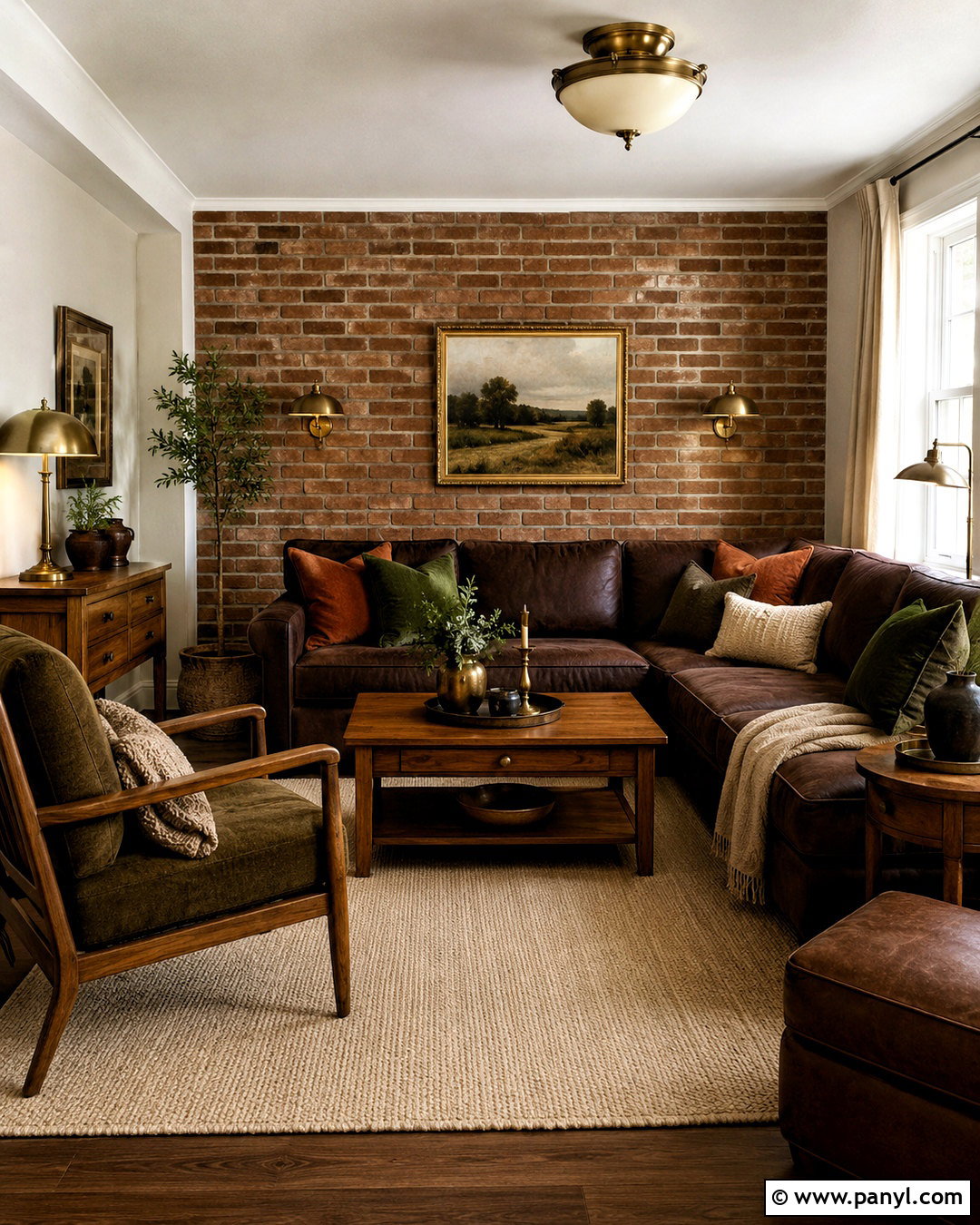
Chocolate brown gives brick a deep, enveloping setting that celebrates its natural earthiness. Use the brown on lower cabinets, a large sectional, or a paneled wall adjoining the masonry. Balance these darker elements with creamy white walls, an oatmeal rug, and light linen curtains. Medium oak furniture can provide a gradual transition between pale textiles and rich brown upholstery. Add rust, muted gold, and forest green pillows for a layered autumnal palette that works year-round. Antique brass lighting offers warmth without disappearing against the dark finishes. This complete den or family room feels cozy and grounded. Leave the ceiling light and include several lamps so the brick texture remains visible, particularly during evenings or in rooms with smaller windows.
19. Crisp White With A Brick Wall
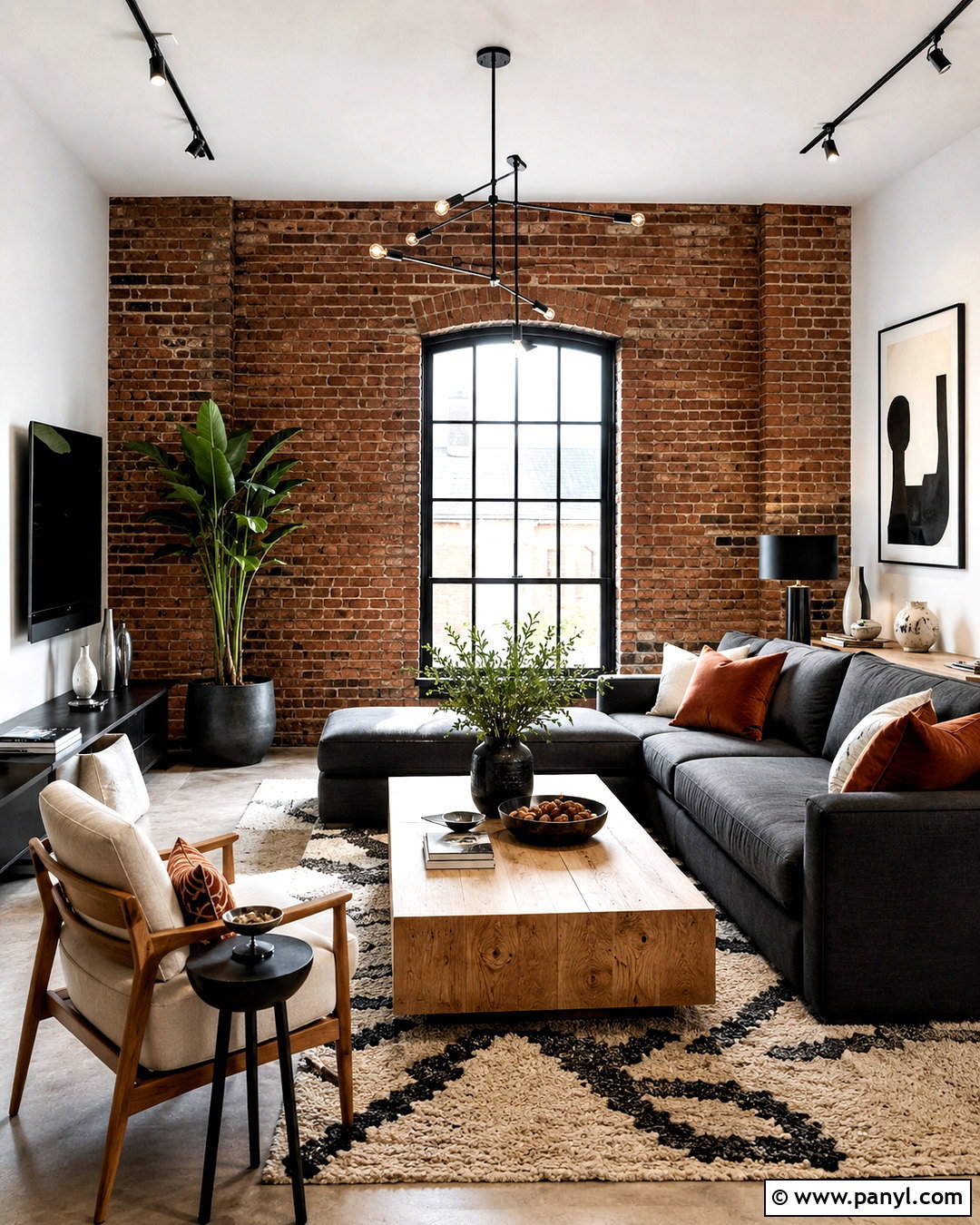
Crisp white creates the clearest contrast with brick and can make a small room feel larger and more architectural. It works best when the brick has cooler red, burgundy, or gray undertones. Paint the surrounding walls, ceiling, and trim the same clean white for a gallery-like backdrop. Add a charcoal sofa, pale wood coffee table, and large black-and-cream rug to create a modern foundation. Use rust-colored cushions to connect the furniture back to the masonry. Black metal lighting and simple abstract art reinforce the graphic quality of the scheme. This complete loft-inspired room should remain warm through wood, wool, and woven textures. If the brick looks strongly orange, a slightly softened white may create a more comfortable transition.
20. Natural Wood Tones With A Brick Wall
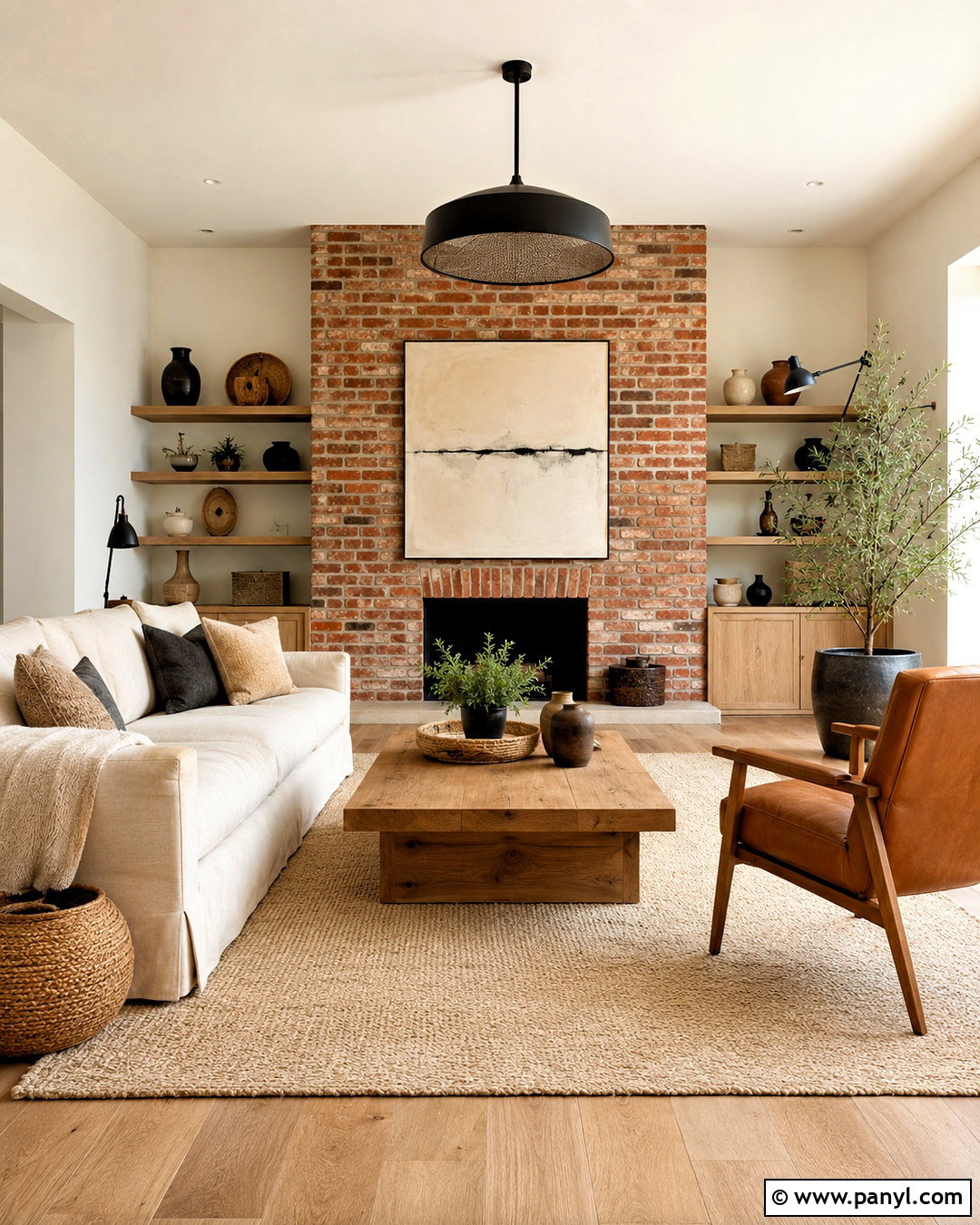
Natural wood tones provide color, pattern, and warmth without competing with the visual movement of brick. Start with soft off-white walls and use medium oak across flooring, shelving, and a substantial coffee table. Add a cream linen sofa, caramel leather chair, and a textured wool rug in beige and brown. The combination allows red or reclaimed brick to feel like part of a broader natural-material palette. Introduce matte black lighting for contrast and muted green through cushions or plants. Keep wood finishes within a related warm range rather than mixing yellow oak, gray wood, and red mahogany. This complete organic modern room feels calm, tactile, and lasting. Simple pottery and woven accessories can finish the look without creating clutter.
Conclusion:
Choosing what works beside brick becomes easier when you treat the masonry as the room’s permanent color foundation. Identify its undertones, consider the mortar, and compare possible colors in the actual light before making a final decision. Cream, greige, taupe, and beige offer a quiet transition, while navy, forest green, teal, and charcoal create stronger contrast. Warmer shades such as mustard, blush, burgundy, and burnt orange can highlight specific colors already visible in the brick. Furniture, flooring, textiles, and lighting should then repeat or balance the palette. Use these **20 What Color Goes With Brick Wall Ideas** to create a complete room where every surface and furnishing feels intentionally connected.

Related Ideas and Inspiration:
Leave a Reply