
Light blue walls create a fresh, calming backdrop, but the surrounding colors and materials determine whether the room feels coastal, traditional, modern, or cozy. When deciding **What Goes With Light Blue Walls**, consider the wall’s undertone first. Icy blue works beautifully with crisp white, charcoal, and silver, while warmer sky blue feels balanced beside cream, tan, wood, and earthy accents. Popular pairings range from quiet neutrals to richer shades such as navy, coral, mustard, olive, and burgundy. Natural textures and metallic finishes can also keep the color scheme from looking flat or overly cool. () Each complete room below coordinates furniture, curtains, flooring, textiles, lighting, and decorative details to demonstrate exactly **What Goes With Light Blue Walls**.
1. White Furniture With Light Blue Walls
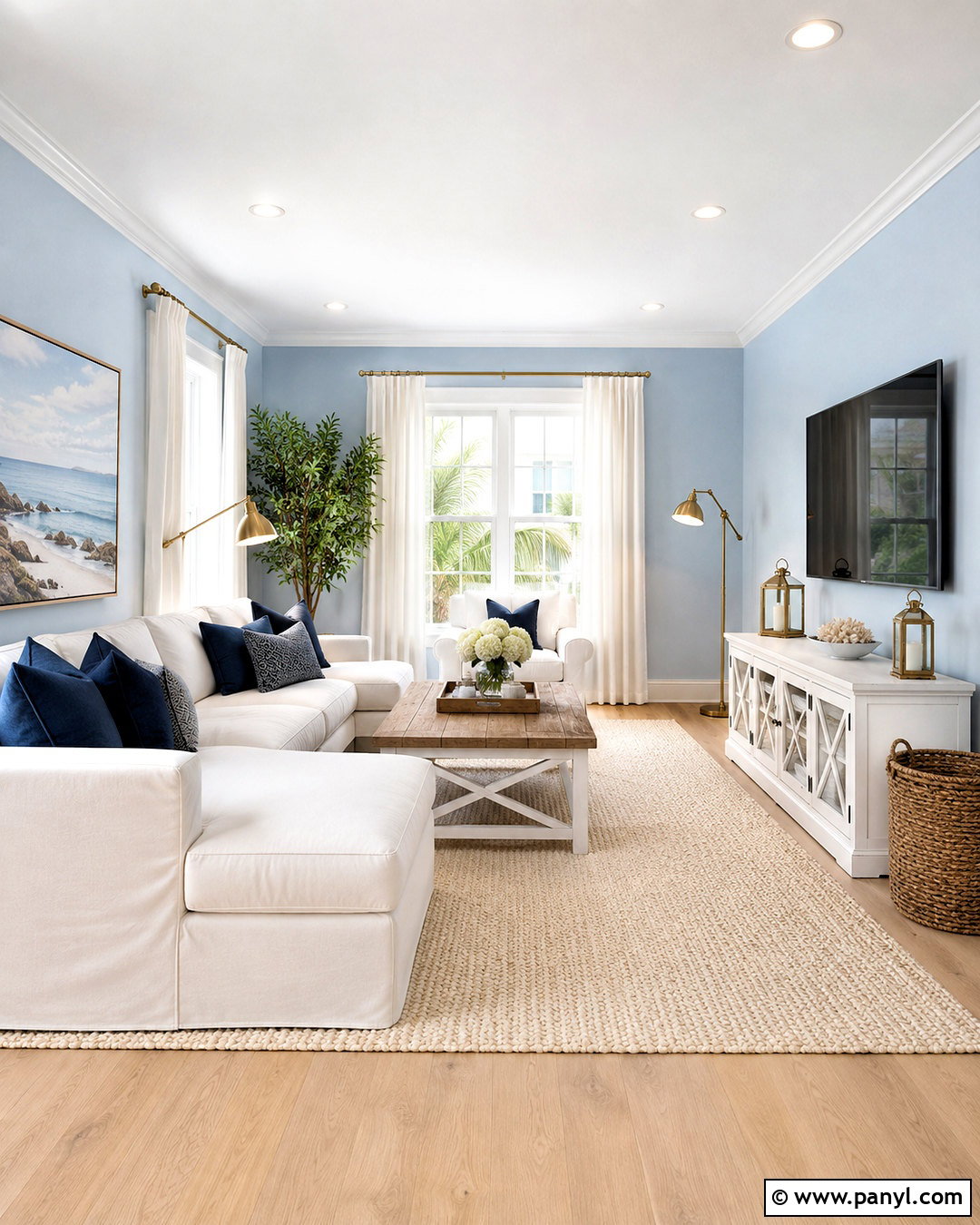
White furniture gives light blue walls a clean, bright appearance without creating distracting color competition. Build an airy living room around a comfortable ivory-white sofa, two painted white side tables, and a simple white media console. Add warmth underfoot with pale oak flooring and a textured cream rug rather than using more solid white. Floor-length white linen curtains keep the windows soft and open. A few navy and powder-blue pillows connect the furniture to the walls, while brushed brass lamps prevent the scheme from feeling too cool. Finish the room with framed coastal photography, clear glass accessories, and one leafy plant. This balanced combination works especially well in small rooms that need a visually uncluttered design.
2. Cream Furniture With Light Blue Walls
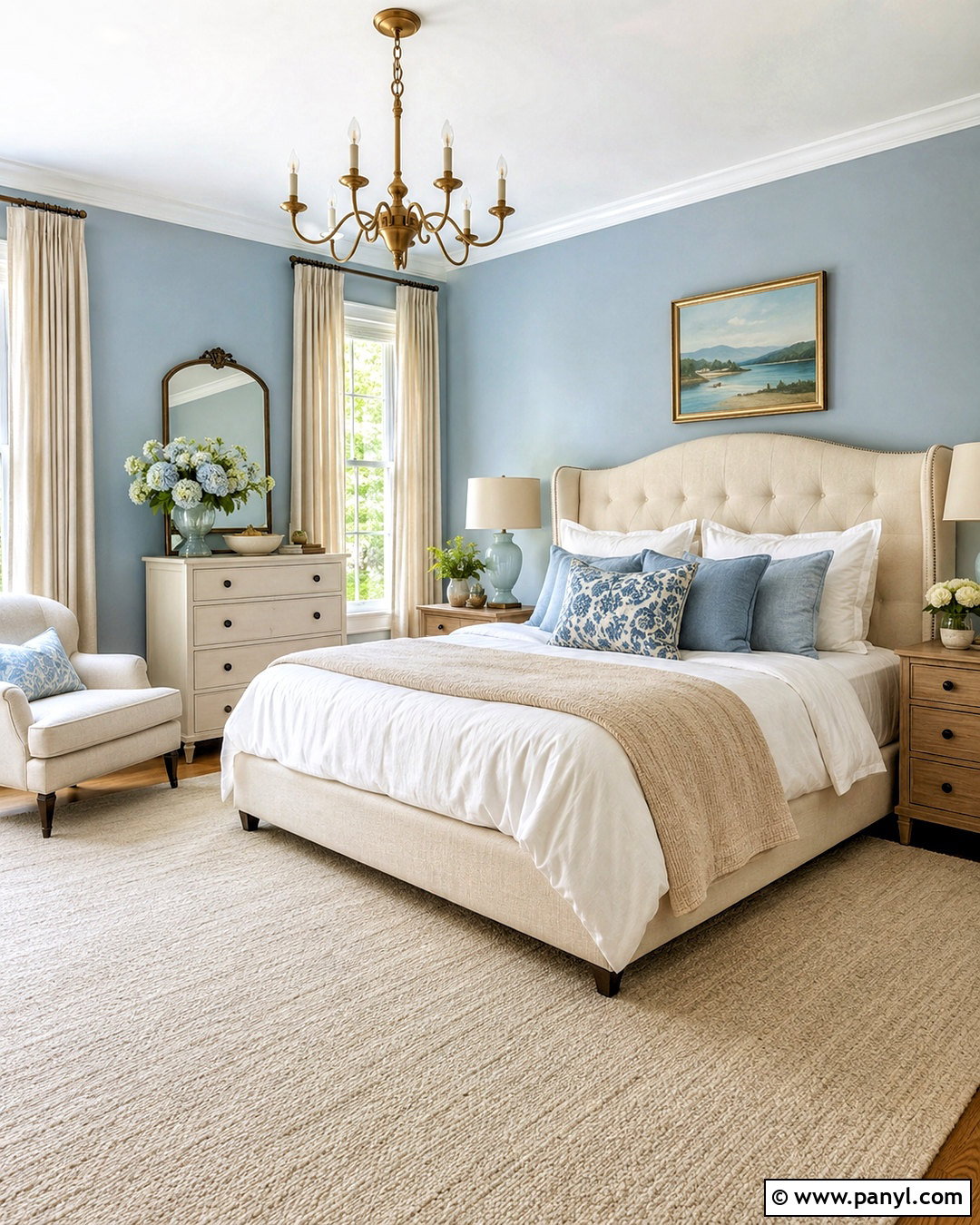
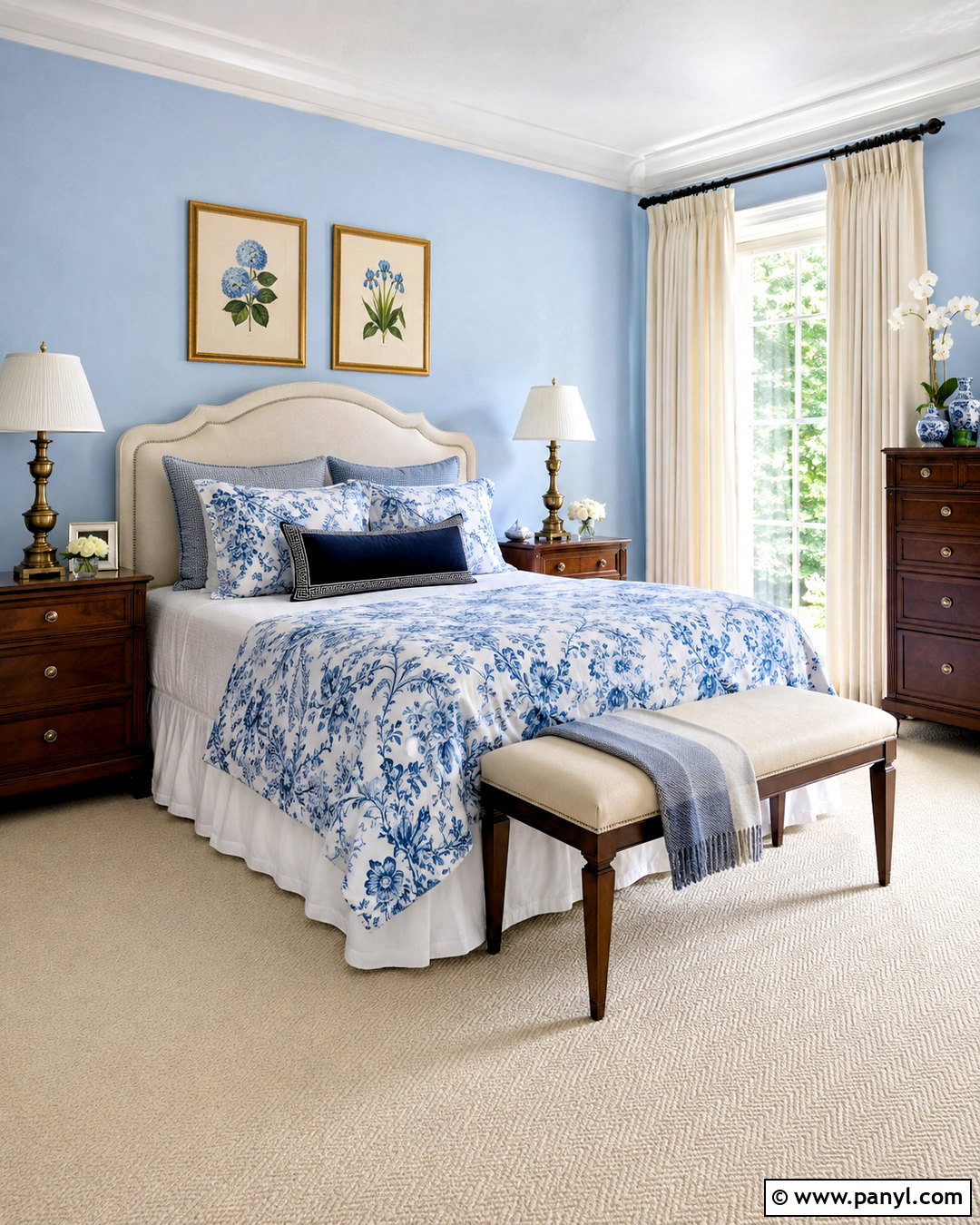
Cream furniture softens the cool character of light blue walls and creates a comfortable, welcoming room. Start with a deep cream sofa or an upholstered bed in warm ivory fabric. Bring in oatmeal curtains, a beige wool rug, and natural linen pillows to establish several subtle neutral layers. Medium-toned oak furniture adds definition without introducing the heaviness of very dark wood. For accents, choose muted blue patterns, antique brass lighting, and warm white ceramic pieces. Keep the ceiling and trim creamy white so they blend naturally with the furnishings. This palette suits a traditional living room, relaxed bedroom, or peaceful guest room. The final design feels warmer than a blue-and-bright-white scheme while remaining light, polished, and easy to update.
3. Beige Decor With Light Blue Walls
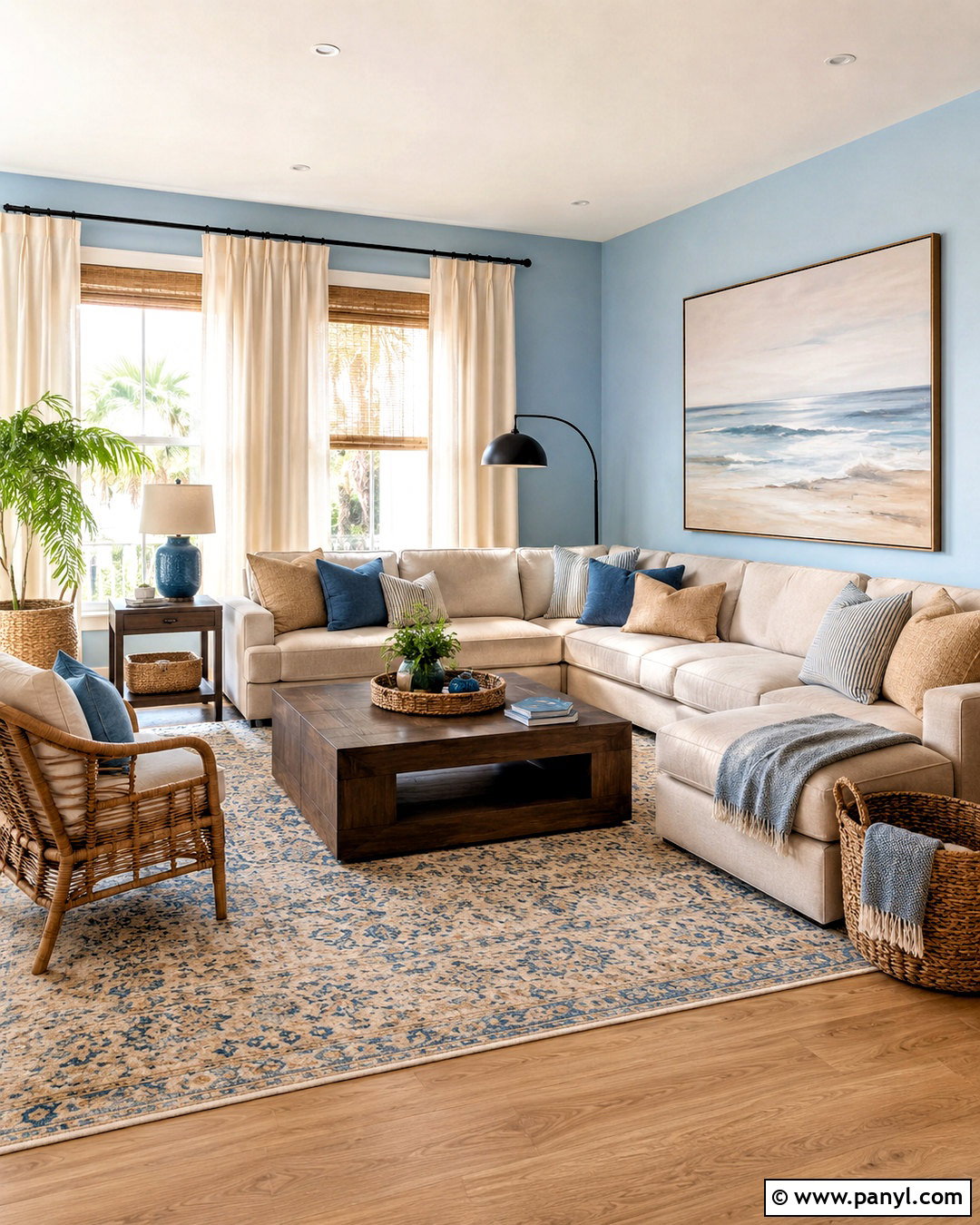
Imagine light blue walls surrounded by sandy beige fabrics, warm wood, and softly woven surfaces. This combination produces a relaxed room with an understated coastal influence. Use a beige sectional as the largest furnishing, then anchor it with a tan-and-blue patterned rug. Choose flax linen curtains that reach the floor and filter natural light. A walnut coffee table, woven baskets, and a natural rattan chair add warmth and prevent the pale palette from appearing washed out. Repeat the wall color through only a few cushions or ceramic accessories. Matte black curtain rods provide a thin line of contrast. Complete the space with oversized neutral artwork and a sculptural floor lamp for a comfortable design that feels casual but thoughtfully coordinated.
4. Natural Wood With Light Blue Walls
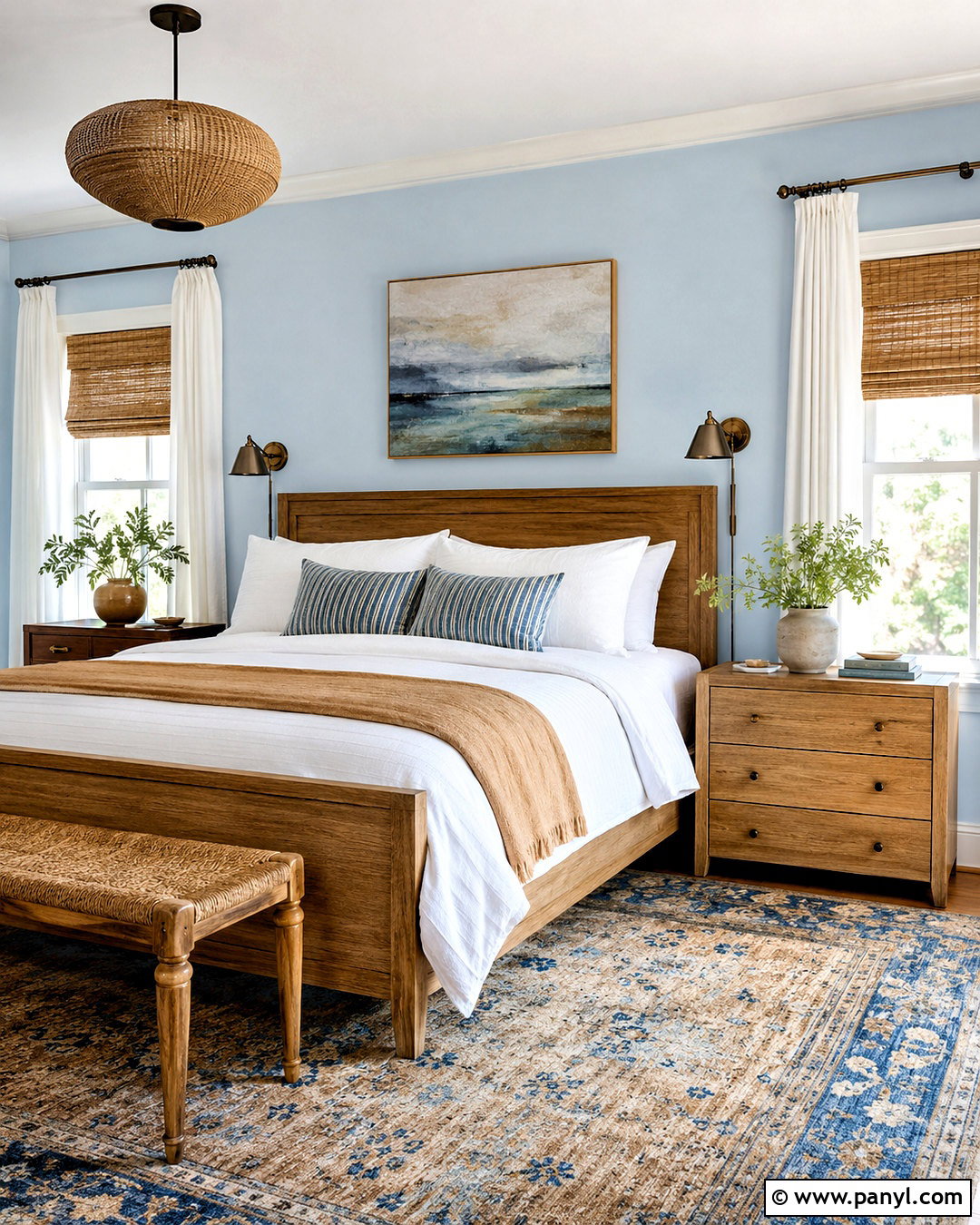
Natural wood brings instant warmth and character to a room with light blue walls. In a bedroom, pair the walls with a solid oak bed, matching nightstands, and a slim wooden bench. Crisp white bedding keeps the arrangement fresh, while a camel-colored throw and blue-striped pillows connect the warm and cool tones. Install woven bamboo shades beneath lightweight white curtains for layered privacy and texture. A faded blue-and-tan rug can unite the furniture, walls, and warm wood floor. Choose simple black or aged-brass lighting to create definition around the bed. The wood should have a visible grain and a natural matte finish. Avoid matching every piece exactly; a combination of oak, cane, and lighter walnut gives the finished room greater depth.
5. Navy Furniture With Light Blue Walls
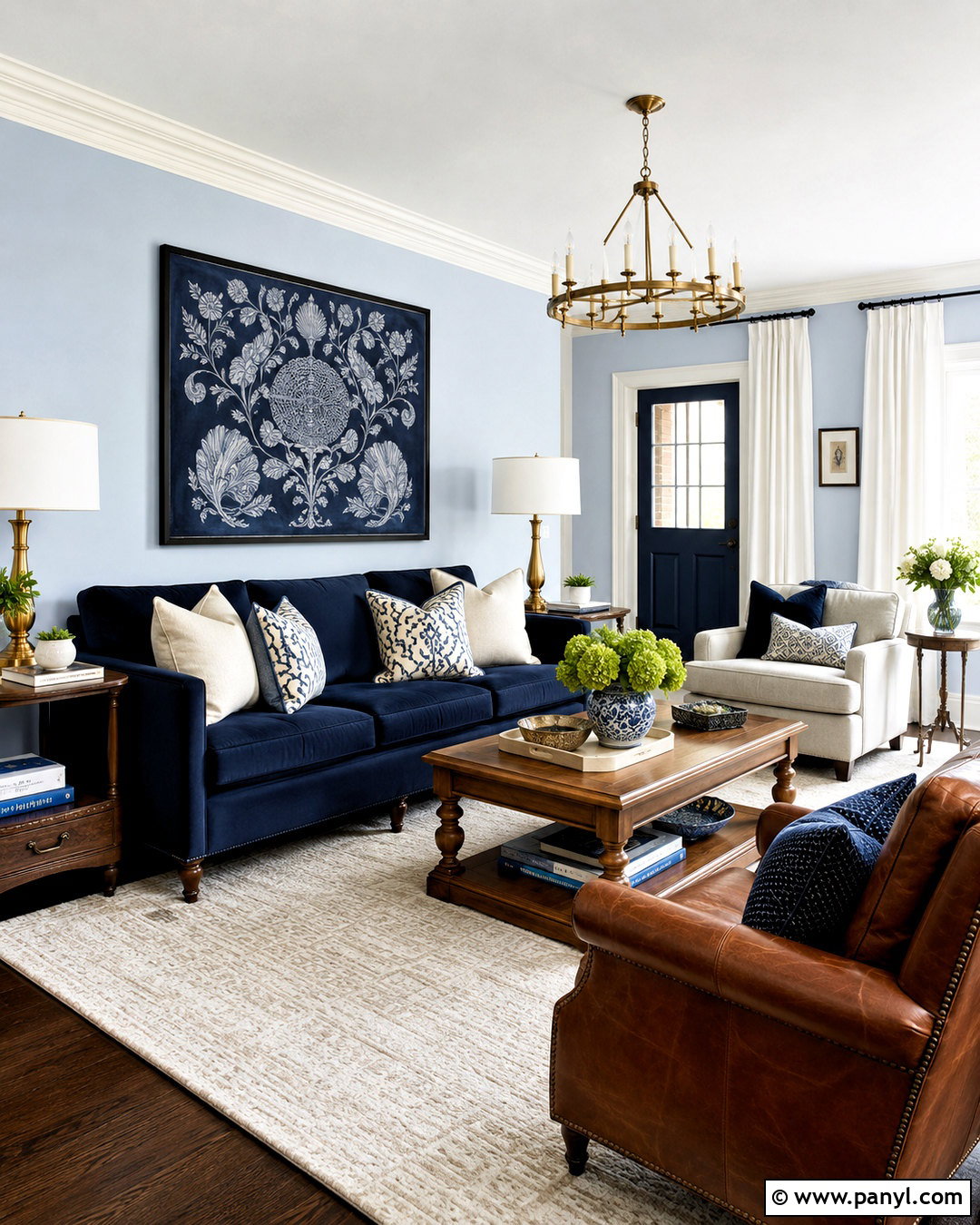
Navy furniture creates strong contrast against light blue walls while maintaining a cohesive blue palette. Center a living room around a tailored navy sofa, then brighten it with white and cream pillows. A pale neutral rug will keep the dark upholstery from visually weighing down the room. Add medium wood tables, white curtains, and one cognac leather chair for warmth. Navy-and-white patterned artwork can repeat the deeper blue without making every surface match. Use brushed brass lamps and hardware to introduce a subtle glow. This scheme works best when navy is concentrated in one or two substantial pieces rather than scattered everywhere. The result feels polished and layered, with enough tonal variation to make the light blue walls look intentional rather than overly pastel.
6. Gray Furniture With Light Blue Walls
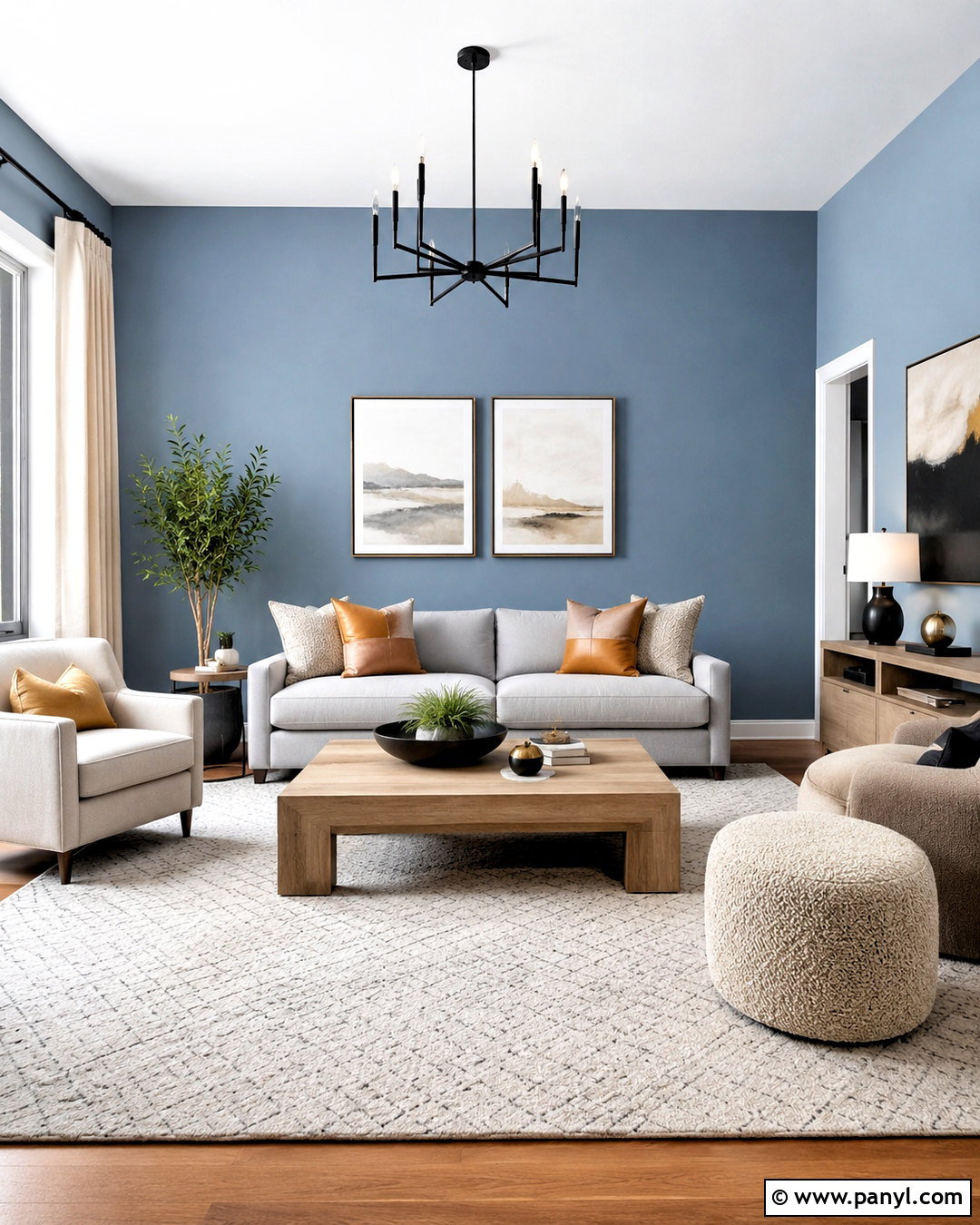
Gray furniture offers a quiet, contemporary partner for light blue walls, but the correct undertone is important. Select a warm light-gray sofa rather than a noticeably blue-gray version, which could make the room feel chilly. Ground the seating area with a cream rug featuring soft gray lines. Add white oak tables, off-white curtains, and charcoal accents through a floor lamp or narrow picture frames. Rust, camel, or muted gold pillows provide small amounts of needed warmth. For a bedroom, use a gray upholstered headboard with crisp white bedding and a beige throw. Layering boucle, linen, wool, and wood gives this restrained palette dimension. The completed room feels calm and modern without becoming sterile, flat, or excessively coordinated.
7. Black Accents With Light Blue Walls
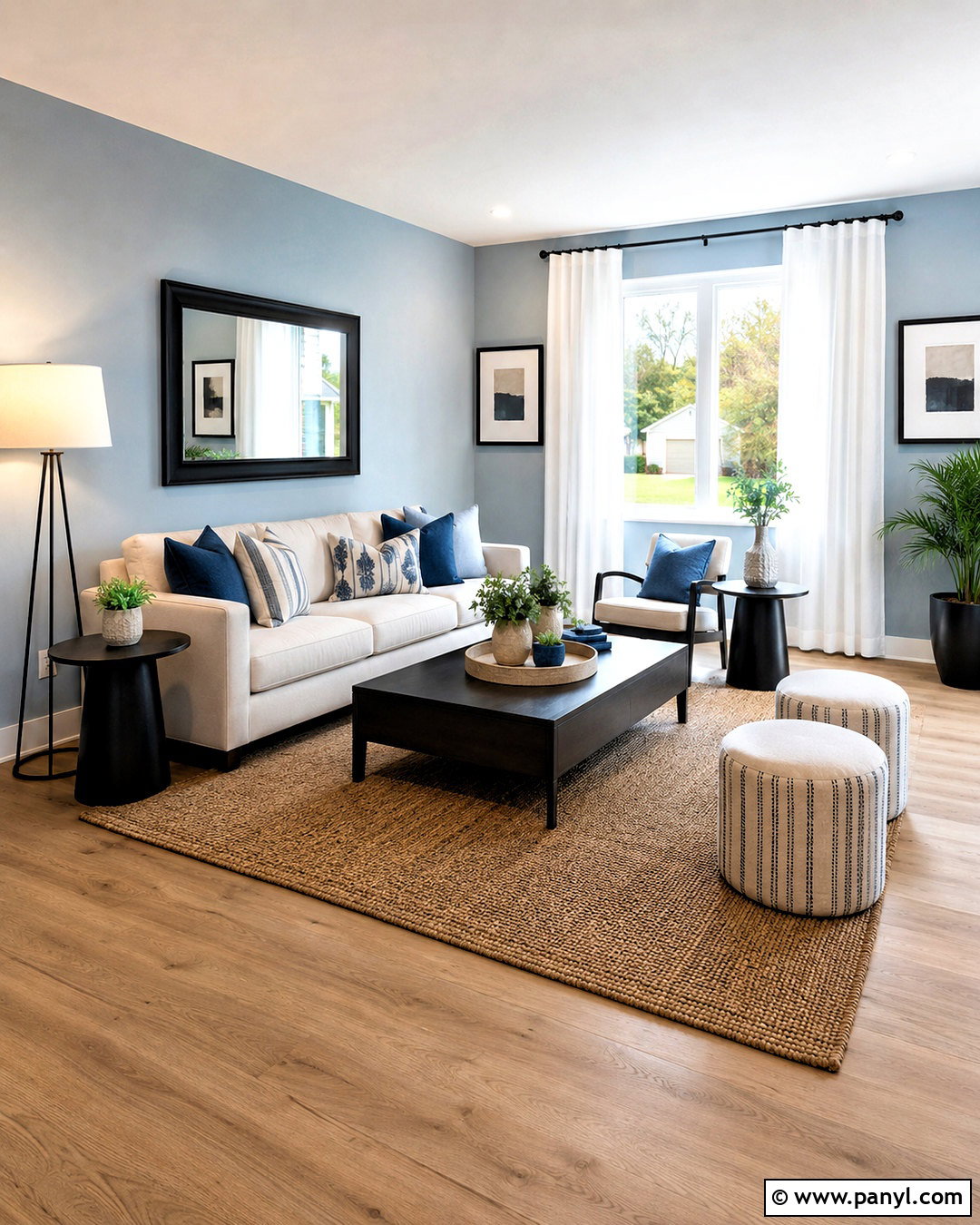
Black accents sharpen light blue walls and can make a soft room feel more structured. Begin with pale furnishings, such as a cream sofa or white upholstered bed, so the black remains an accent rather than the dominant color. Add a matte black curtain rod, slender metal side tables, simple picture frames, and a black floor lamp. Warm oak flooring and a natural woven rug balance those graphic details. Select white curtains and blue-and-cream textiles to preserve the room’s brightness. A black-framed mirror can become the main focal point without covering too much of the blue wall. Keep decorative objects minimal and repeat black in several small areas. This approach creates a crisp modern room that still feels relaxed, approachable, and comfortable.
8. Blush Pink With Light Blue Walls
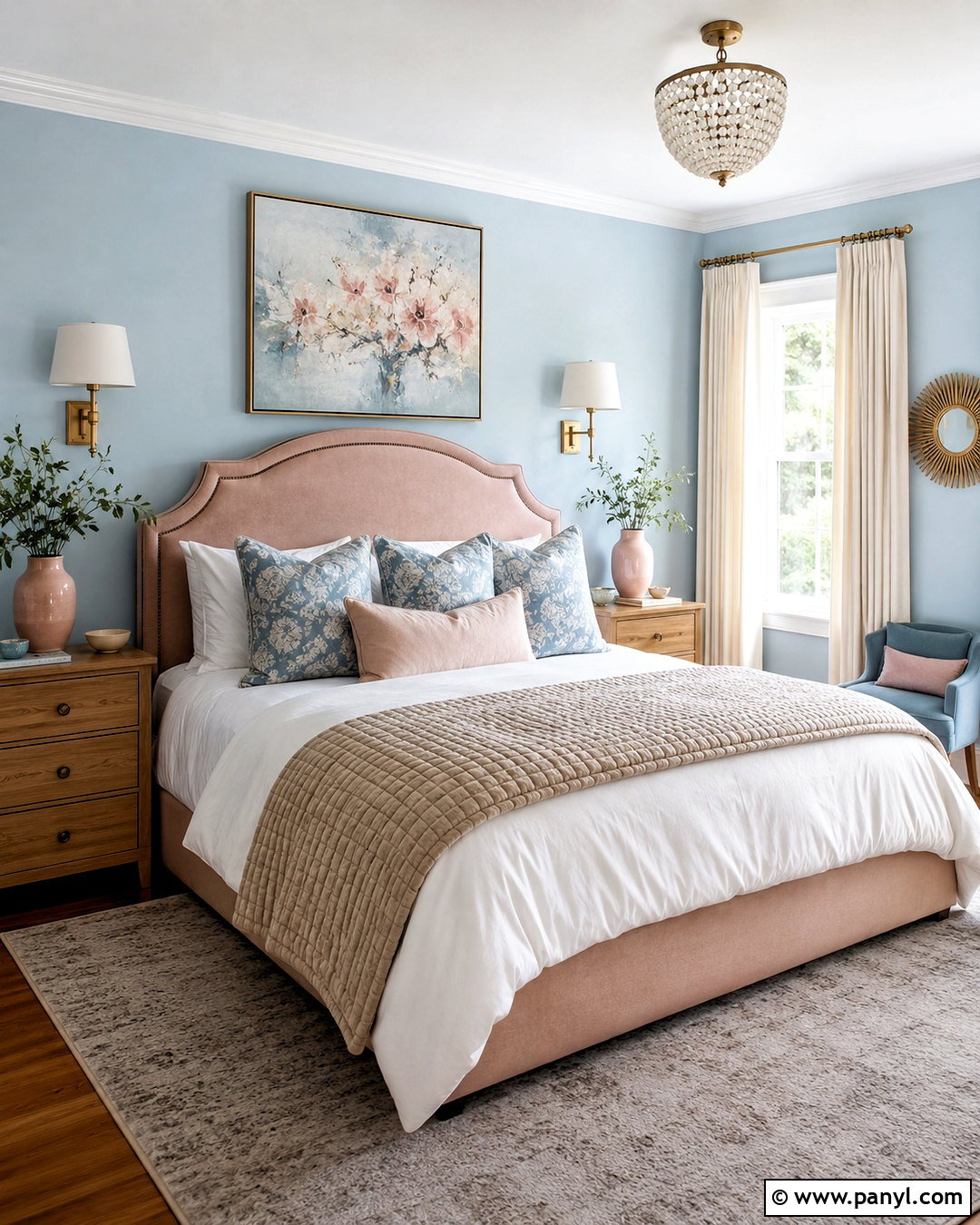
Blush pink gives light blue walls a gentle, sophisticated quality when the colors are supported by warm neutrals. In a bedroom, place a dusty blush upholstered headboard against the blue wall and dress the bed with white linen, a beige quilt, and patterned blue pillows. Hang ivory curtains to keep the windows quiet and elegant. A warm gray rug can ground the pastel palette, while light oak nightstands add natural contrast. Choose aged-brass sconces and a few rose-colored ceramic accessories for subtle repetition. Avoid filling the room with sugary pink decorations. Blush should appear in one main feature and two or three smaller details. The complete scheme feels soft and restful but remains polished enough for an adult bedroom or refined guest suite.
9. Coral Decor With Light Blue Walls
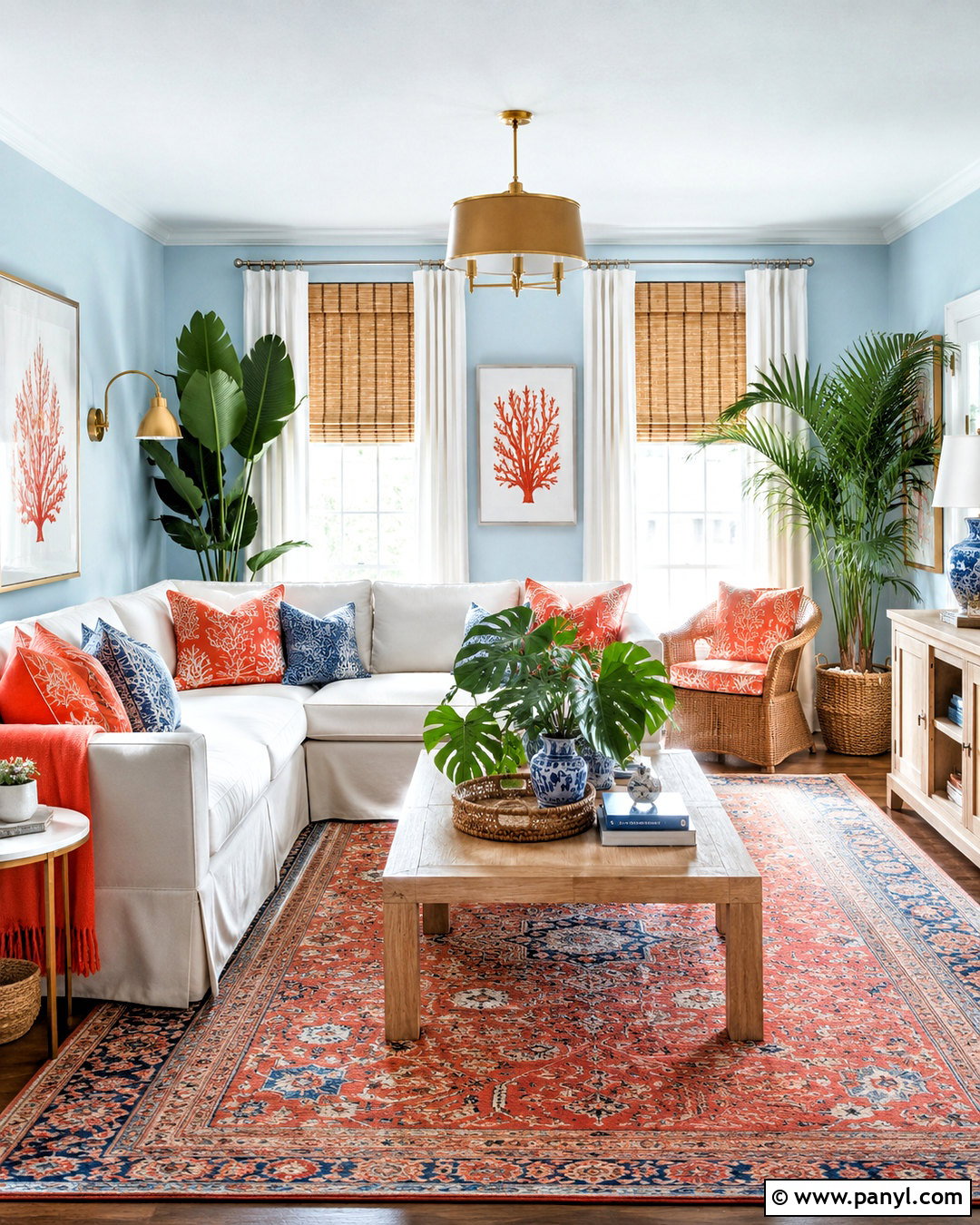
Coral accents energize light blue walls and make a room feel sunny without requiring a complete redesign. Use a warm white sofa as the neutral foundation, then add coral pillows, a folded throw, and artwork containing coral, blue, and cream. A patterned rug can repeat these shades in softer, more faded tones. Choose pale wood tables and woven window shades to reinforce the warmth of the coral. White curtain panels will prevent the stronger accent color from overwhelming the windows. Add greenery and small brass fixtures for a fresh finish. Coral works best as a controlled accent rather than a second dominant wall color. This cheerful combination is particularly effective in family rooms, sunrooms, and casual bedrooms where a playful but balanced atmosphere feels appropriate.
10. Mustard Yellow With Light Blue Walls
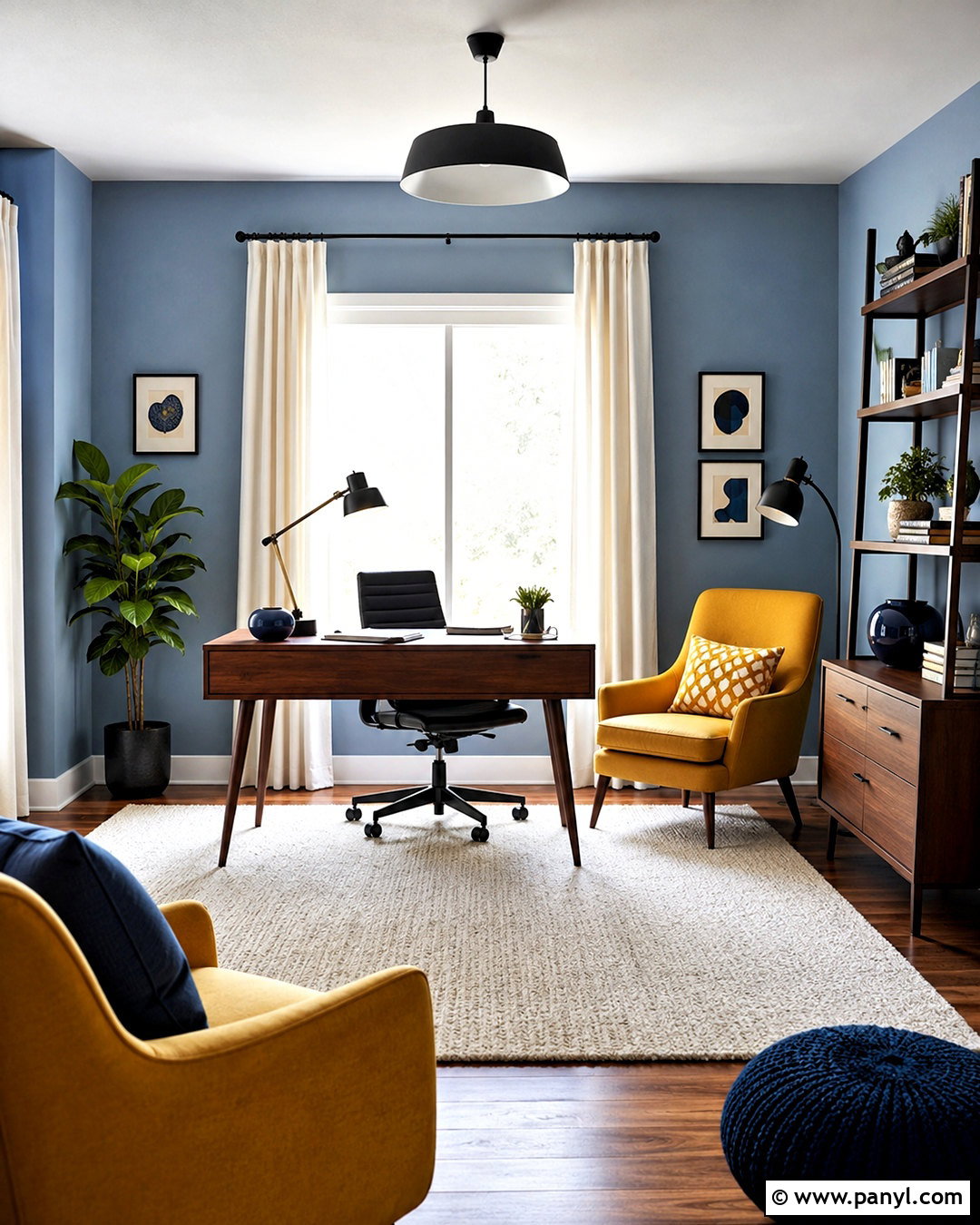
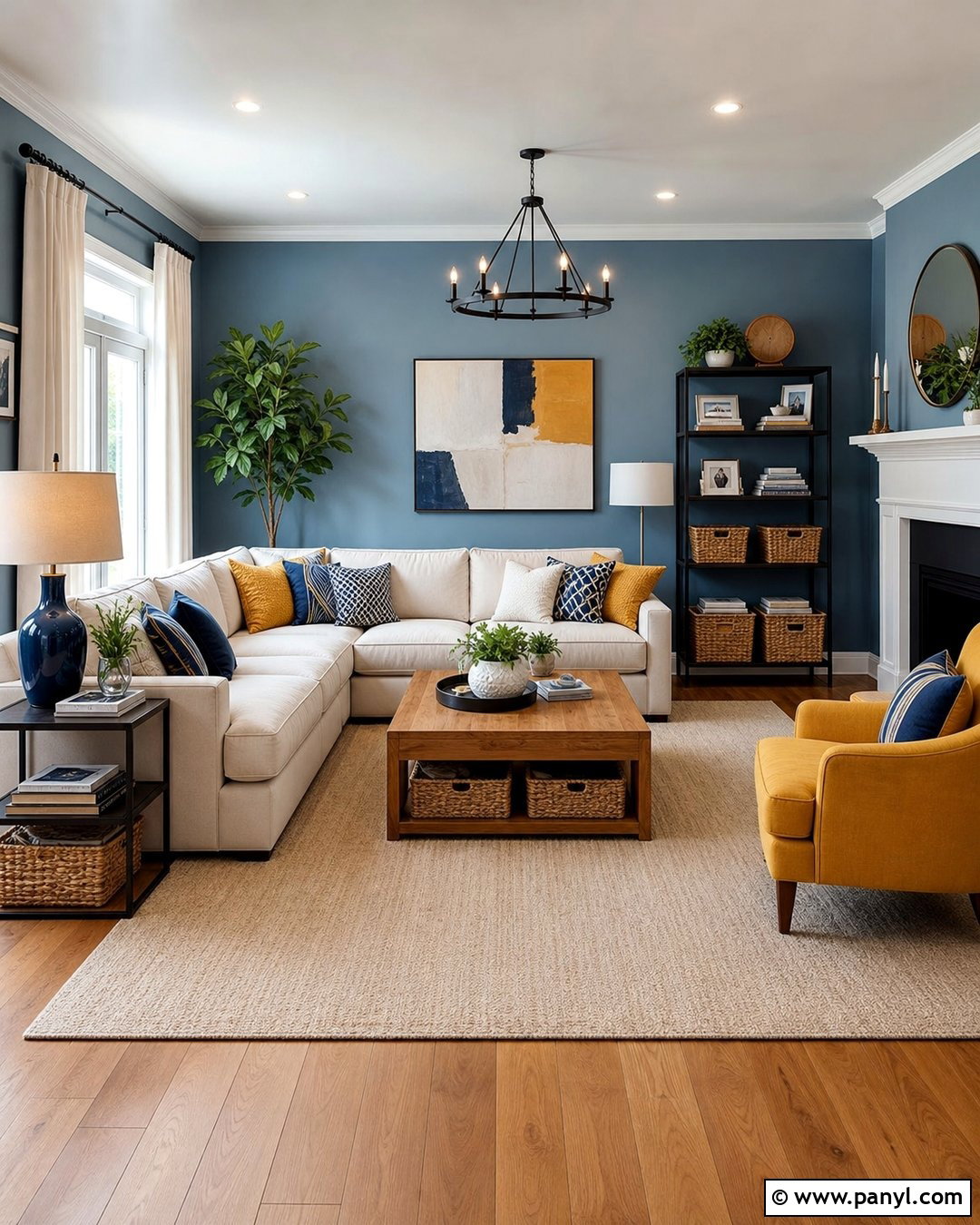
Do light blue walls need more energy? Mustard yellow provides a confident contrast that still feels warm and livable. Place a mustard upholstered chair beside a neutral sofa, or use a mustard bench at the foot of a bed. Repeat the yellow through one pillow and a small detail in the rug instead of matching every accessory. Walnut furniture, ivory curtains, and a cream-colored floor covering will calm the stronger contrast. Add navy details to deepen the palette and prevent it from appearing childish. Matte black lighting gives the room a modern outline, while natural greenery introduces an organic note. This complete arrangement feels upbeat and collected, making it suitable for a living room, reading space, home office, or personality-filled guest bedroom.
11. Terracotta Decor With Light Blue Walls
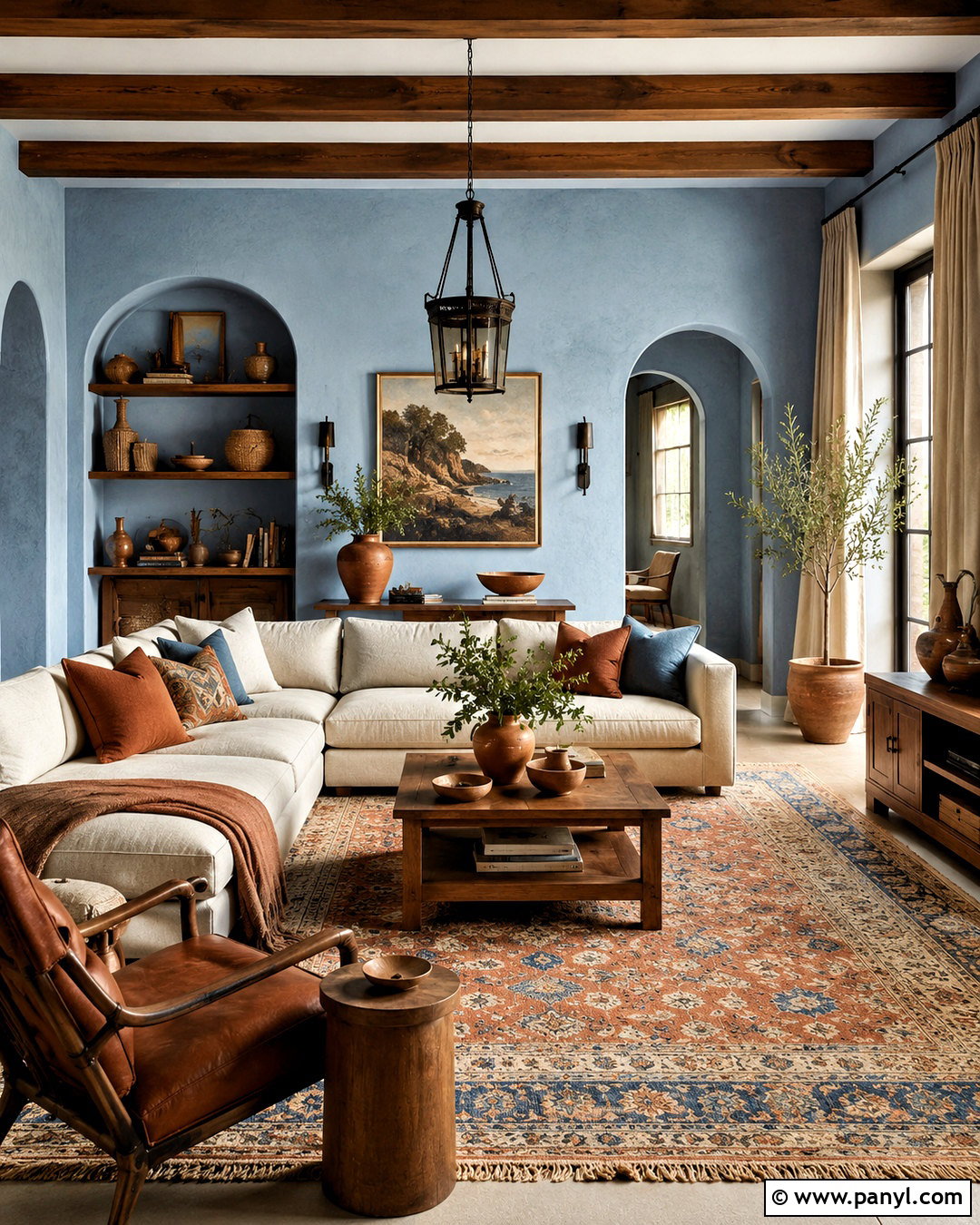
Terracotta introduces an earthy warmth that beautifully balances cool light blue walls. Create a grounded living room with an oatmeal sofa, rust-colored pillows, and a faded rug combining terracotta, beige, and dusty blue. Choose medium walnut furniture and full-length natural linen curtains. Handmade clay vessels, warm brown leather details, and woven baskets reinforce the organic palette. Keep larger upholstered pieces neutral so the reddish-orange accents do not dominate the room. A cream ceiling and warm white trim will soften the transition between colors. For lighting, consider aged brass or dark bronze rather than polished chrome. The finished design has depth, texture, and an inviting collected quality. It works particularly well in casual Mediterranean, Southwestern, bohemian, or transitional interiors.
12. Sage Green With Light Blue Walls
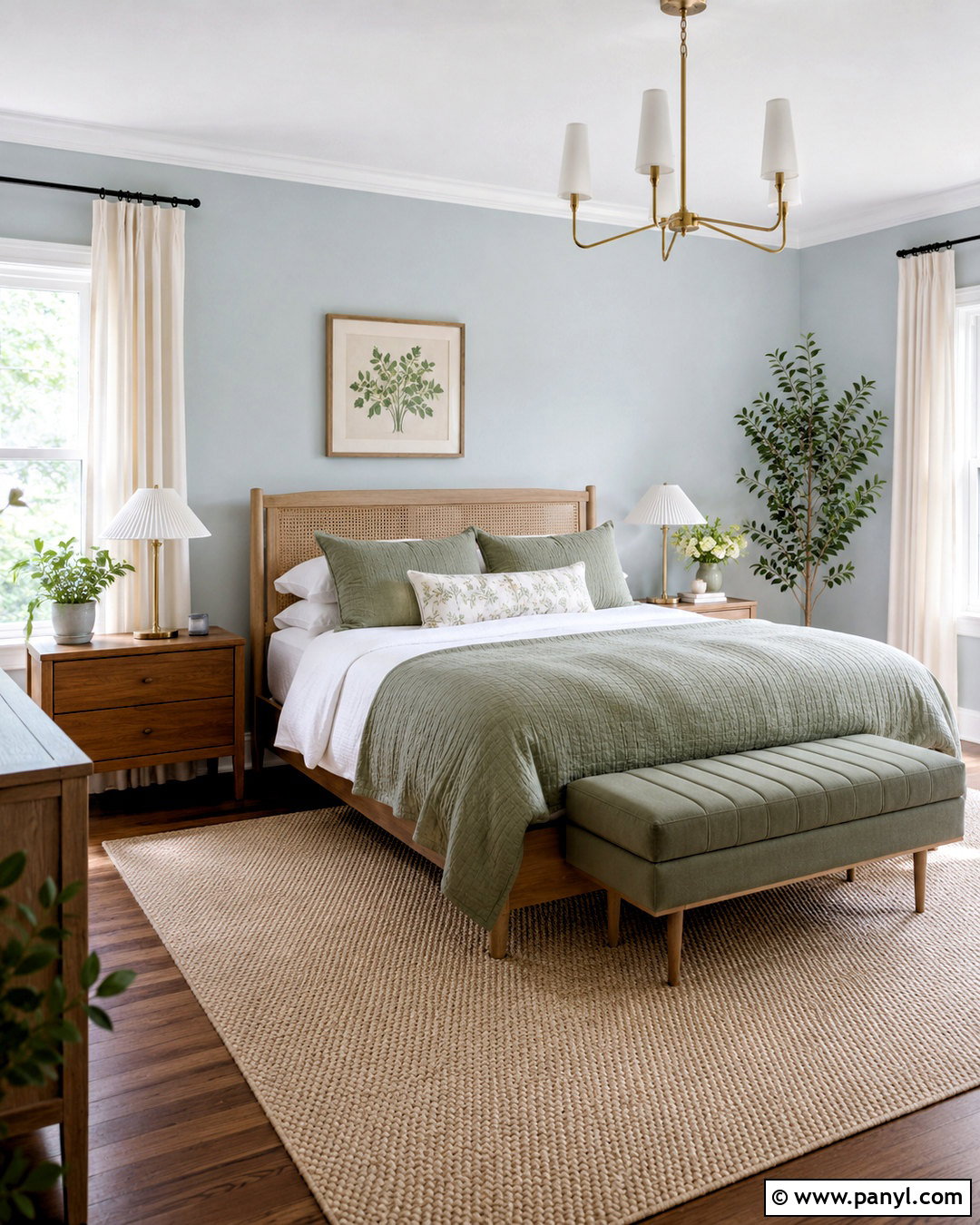
Sage green and light blue create a nature-inspired palette that feels quiet and restorative. In a bedroom, use a muted sage quilt over white sheets and add a light wood bed with cane panels. Choose cream curtains, a beige wool rug, and oak nightstands to provide warmth between the two cool colors. Botanical artwork can repeat both blue and green while introducing off-white and tan. A sage bench or small reading chair adds another substantial layer of green without competing with the walls. Keep metals warm and understated, such as brushed brass or antique bronze. Finish with a few real or realistic leafy plants. The resulting room feels fresh and coordinated, but the natural materials stop the blue-and-green pairing from looking overly themed.
13. Olive Green With Light Blue Walls
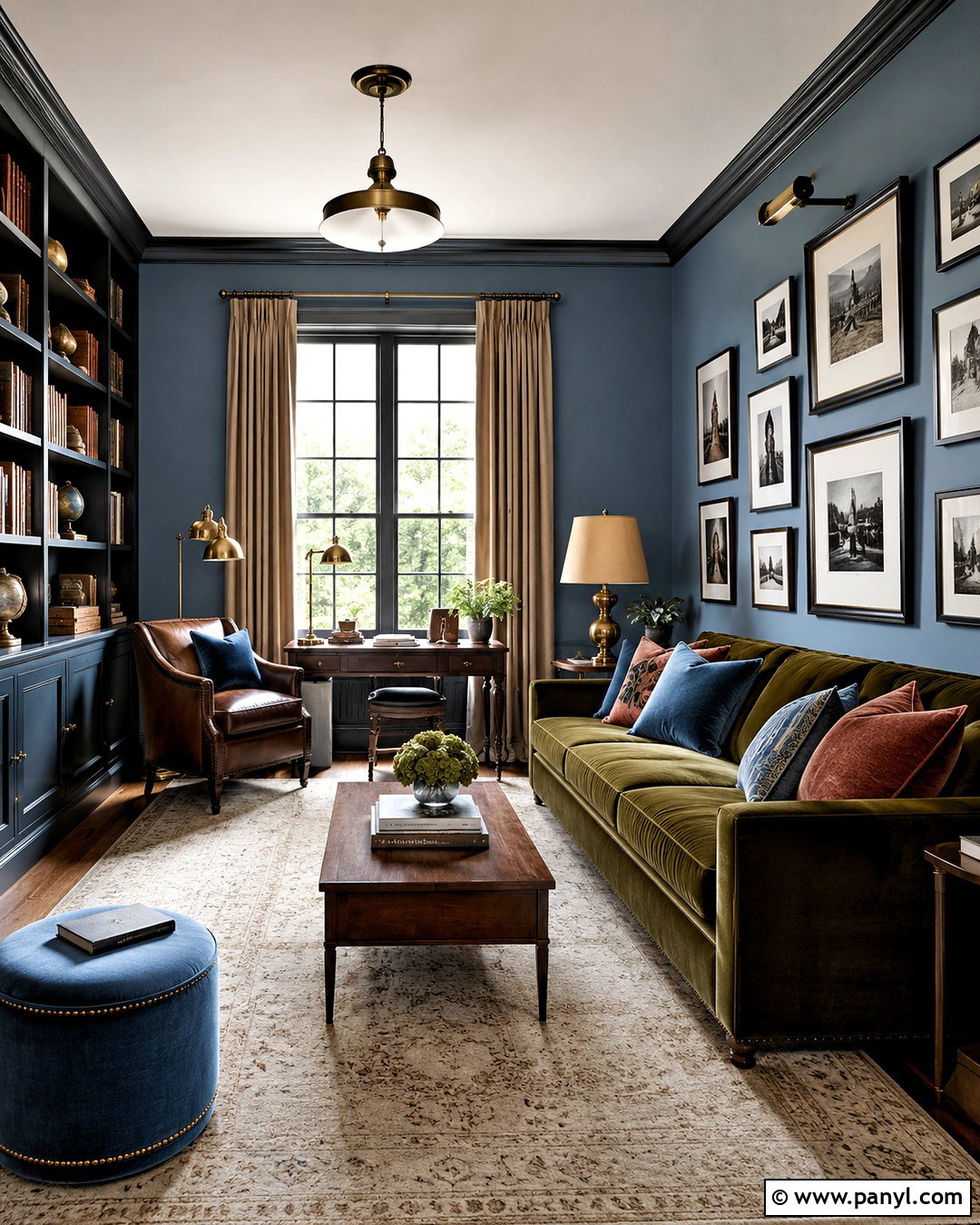
For a richer, more grounded look, combine light blue walls with olive green furniture and dark natural wood. An olive velvet armchair or compact sofa creates a strong focal point while allowing the walls to remain light. Add a cream rug, walnut coffee table, and beige linen curtains to bridge the contrast. Pillows in blue, olive, and muted rust can tie the full palette together. Use antique brass lamps for warmth and black frames for subtle structure. Keep the ceiling bright white and avoid adding several unrelated jewel tones. This color combination works especially well in a library corner, traditional living room, or home office. The completed space feels mature and layered, with enough light fabric to balance the darker green and wood surfaces.
14. Lavender Decor With Light Blue Walls
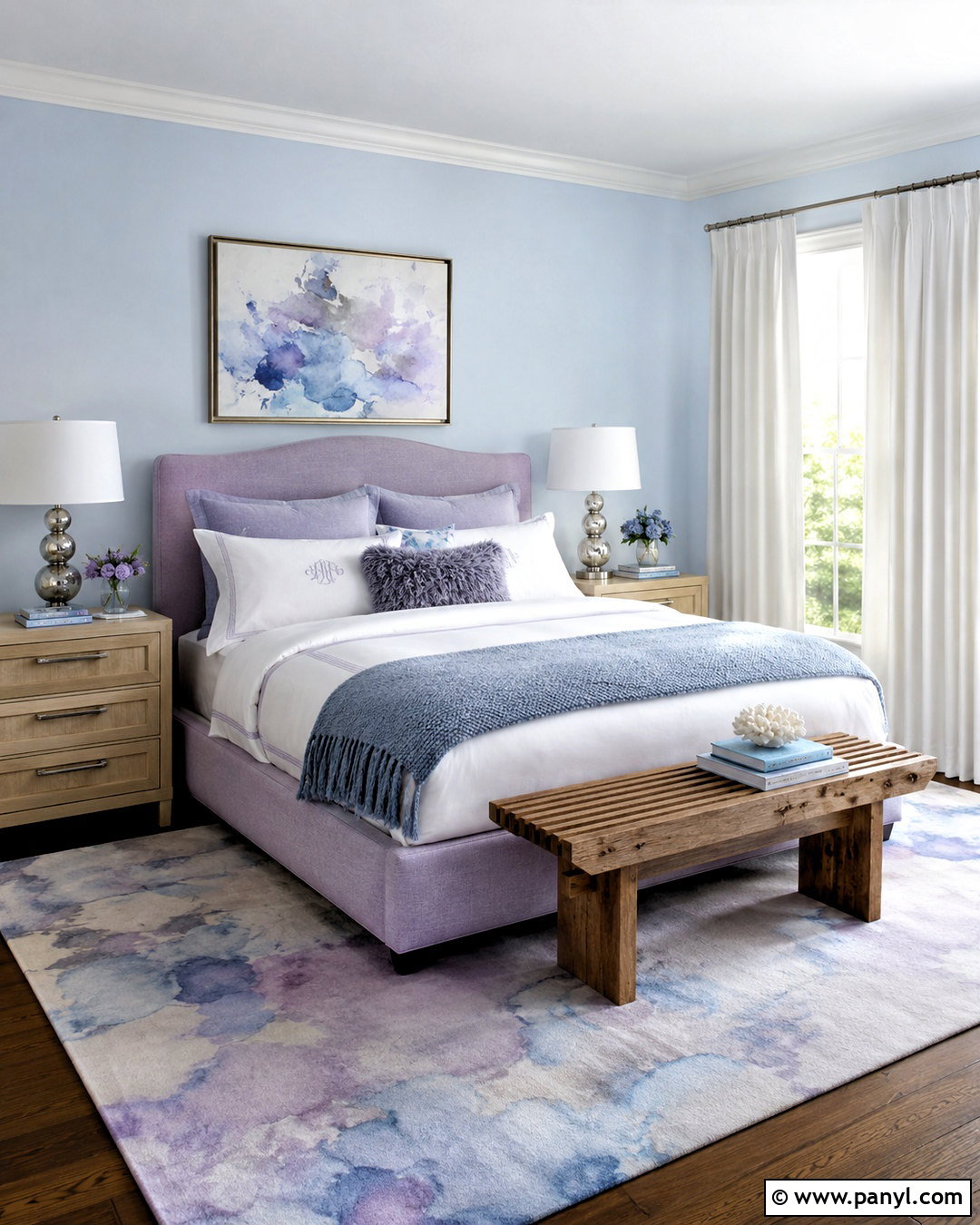
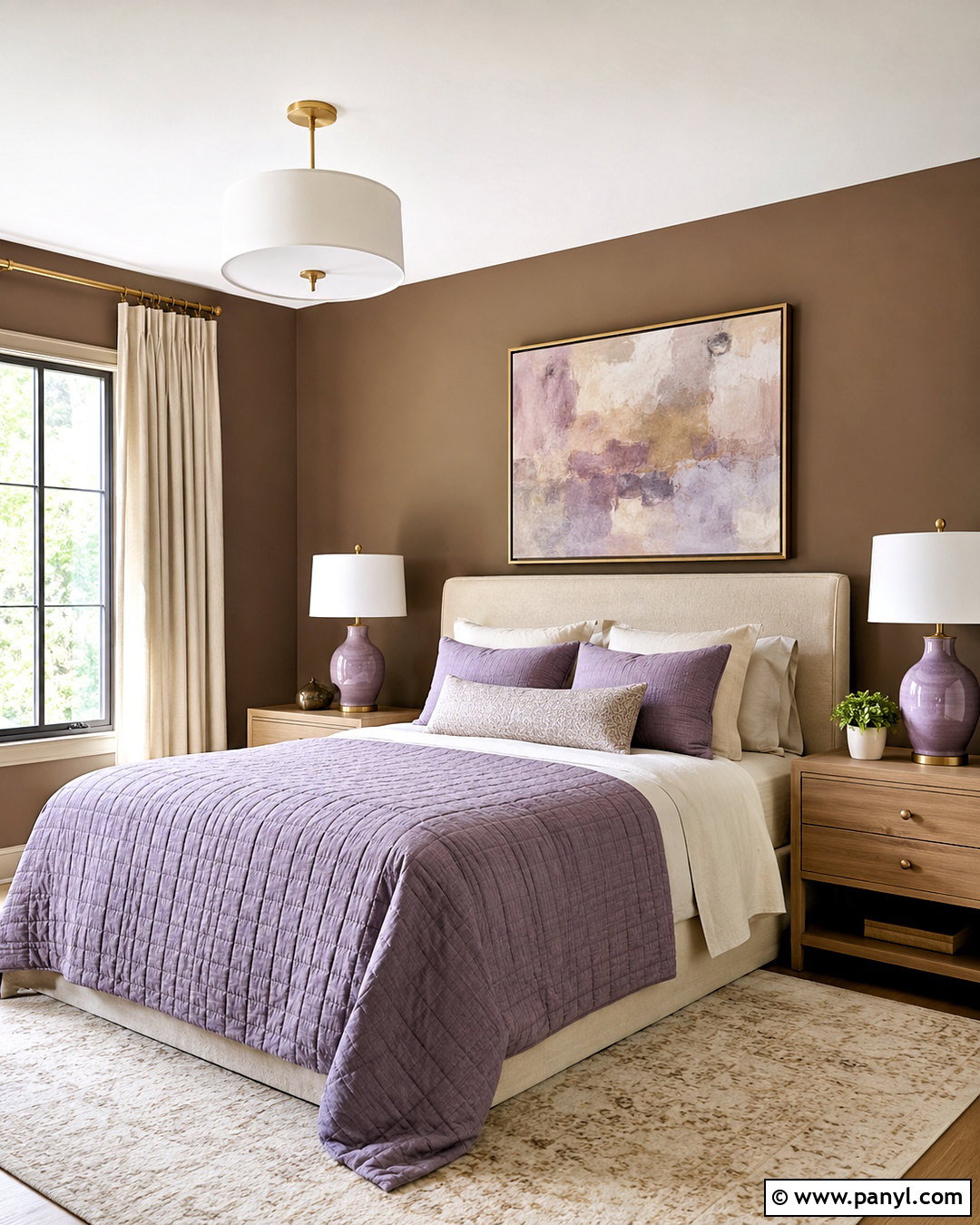
Lavender adds a graceful layer of color to light blue walls without creating harsh contrast. Design a restful bedroom with a pale lavender upholstered bed, white bedding, and a blue-gray throw. Introduce a rug featuring muted lavender, light blue, cream, and warm taupe so both colors feel connected. Choose white oak nightstands and ivory curtains to keep the palette light. Polished nickel or soft silver lamps complement the cool hues, while one natural wood bench supplies necessary warmth. Artwork should be simple and contain both colors in restrained watercolor-like forms. Avoid vivid purple, which can overpower the lighter walls. The finished bedroom has a subtle, dreamy quality but still feels grown-up, clean, and suitable for everyday living.
15. Chocolate Brown With Light Blue Walls
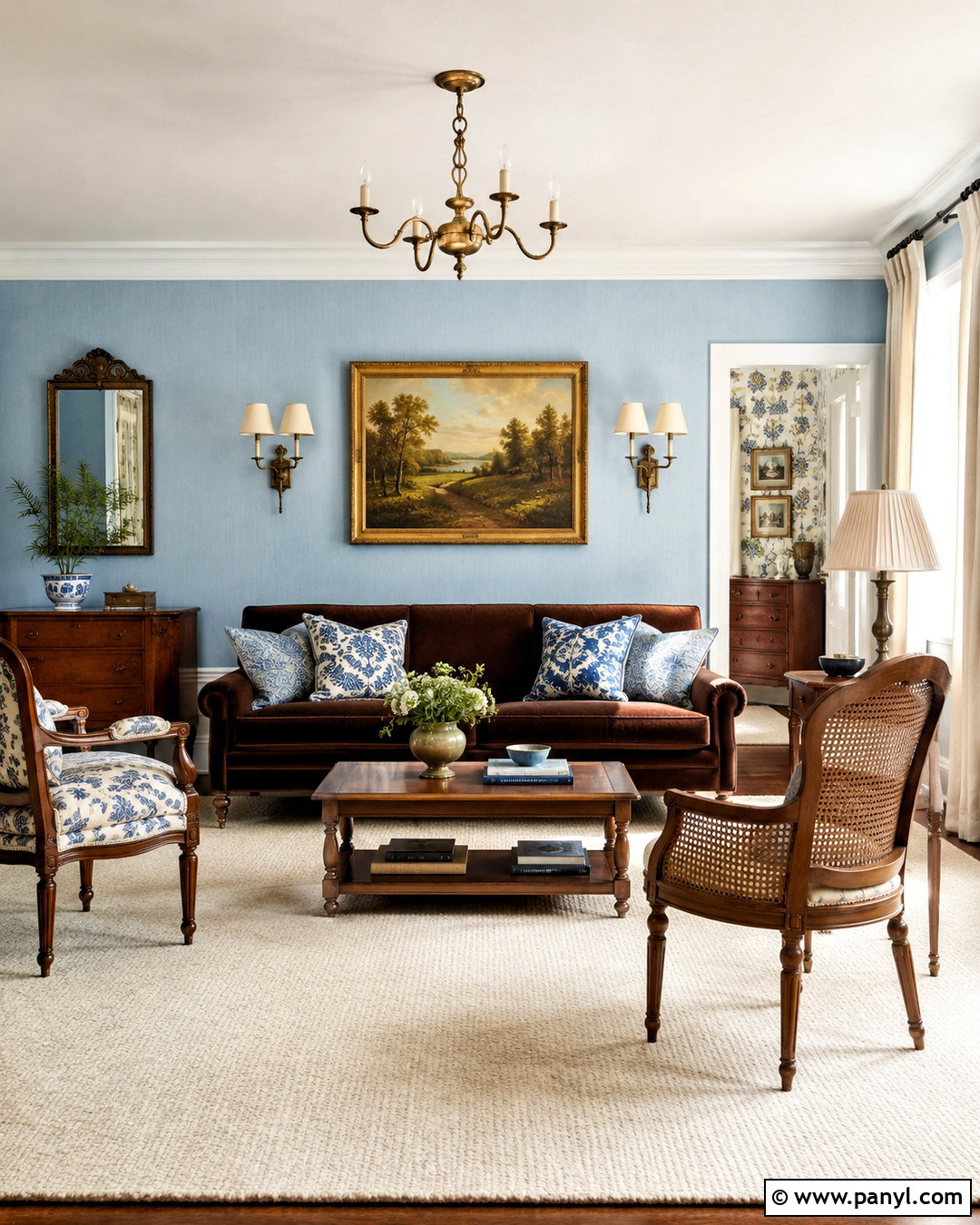
Chocolate brown gives light blue walls depth and a classic sense of contrast. Start with one substantial brown feature, such as a velvet sofa, wooden dining table, or upholstered headboard. Balance it with an ivory rug, cream curtains, and pale neutral textiles so the darker color does not make the room feel heavy. Walnut or espresso furniture can support the brown palette, but mix in lighter oak or woven cane for variation. Add blue-and-white patterned pillows to connect the wall color to the furniture. Antique brass lighting and warm landscape artwork complete the traditional look. This pairing is especially effective in rooms with generous natural light. The final scheme feels grounded, comfortable, and timeless rather than cold or overly sweet.
16. Cognac Leather With Light Blue Walls
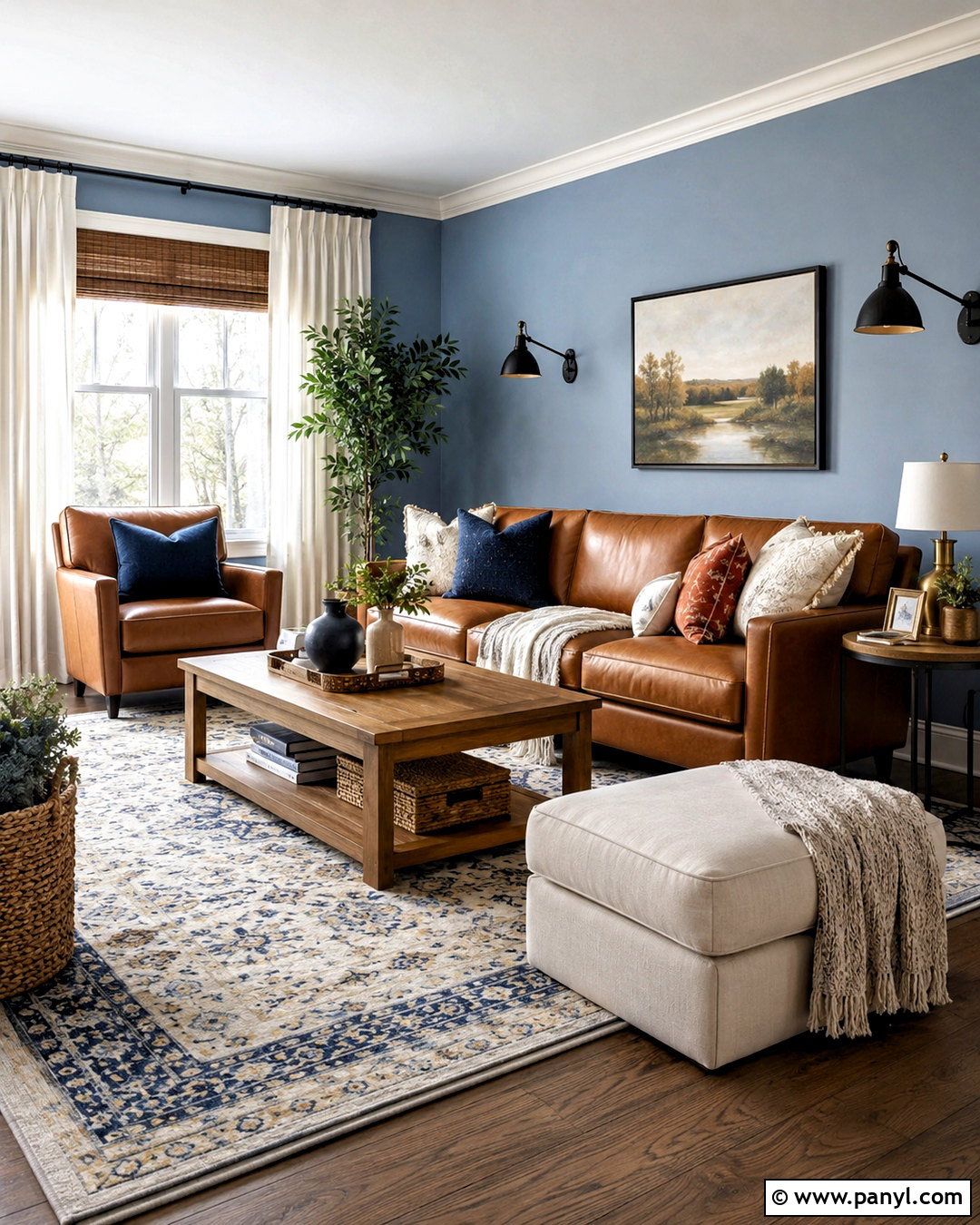
The warm orange undertone of cognac leather creates an appealing contrast against light blue walls. Arrange a cognac leather sofa or pair of armchairs over a large cream-and-blue rug. Use an oak coffee table, ivory curtains, and a soft beige ottoman to keep the room relaxed. Add navy, rust, and oatmeal pillows in varied textures for a cohesive layered effect. Black metal lighting can sharpen the design, while brass accessories introduce a softer finish. Include a few woven baskets and green plants to make the room feel lived in. Because leather already provides visual richness, keep the remaining furniture simple and lightly finished. The complete room feels warm, durable, and stylish, making this combination particularly practical for a busy family living area.
17. Brass Accents With Light Blue Walls
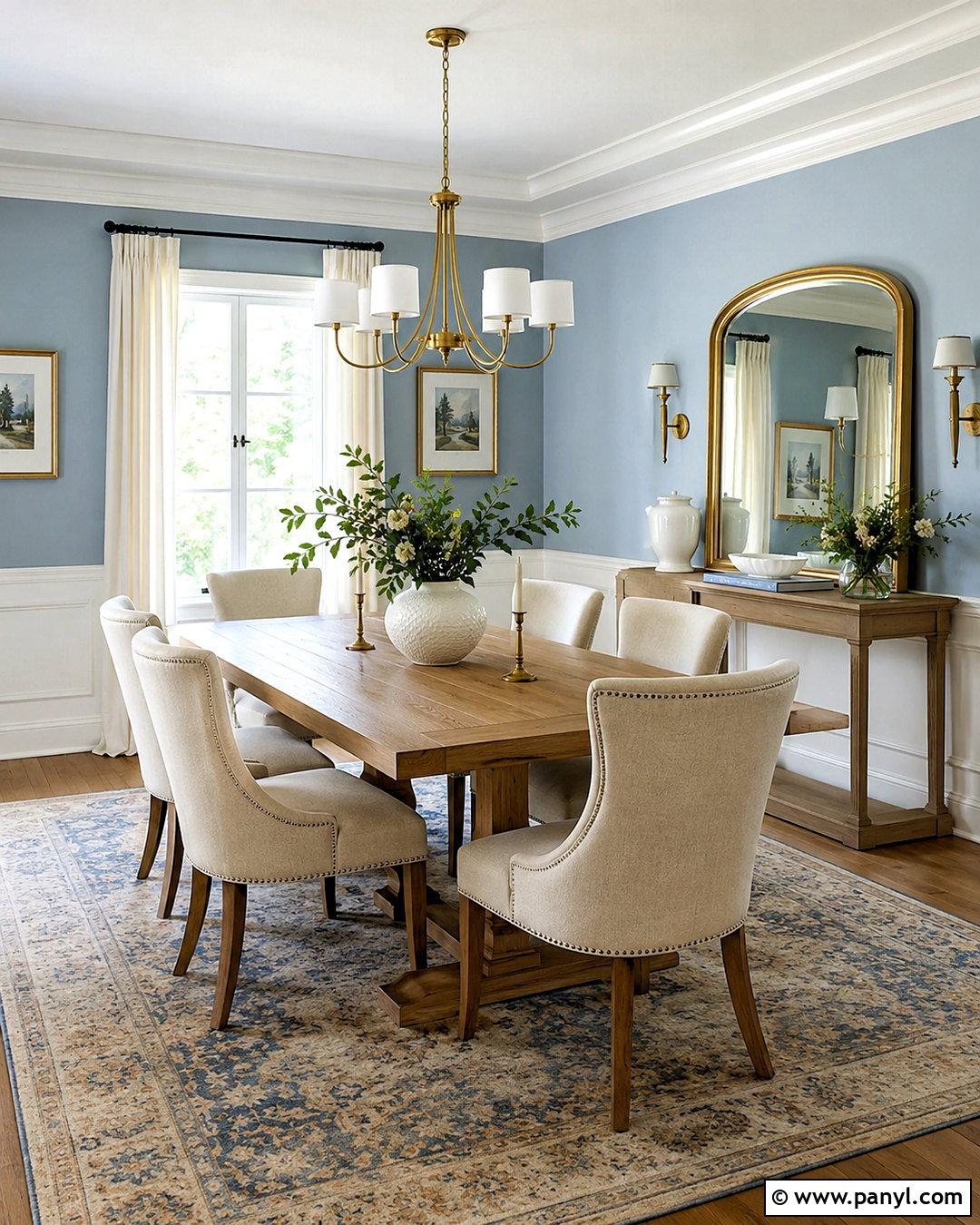
Brass accents warm up light blue walls and add a refined finish without requiring another major color. In a dining room, combine the walls with a natural oak table, cream upholstered chairs, and a brass chandelier. Use full-length ivory curtains and a faded blue-and-beige rug to soften the hard surfaces. A brass-framed mirror can reflect light and create a clear focal point above a slim wood console. Repeat the metal sparingly through cabinet pulls, lamp bases, or picture frames. Avoid mixing many shiny finishes; aged or brushed brass looks more relaxed beside pale blue. Add white ceramics and understated greenery to complete the scheme. The finished space appears brighter, warmer, and thoughtfully detailed rather than formal or excessively glamorous.
18. Silver Accents With Light Blue Walls
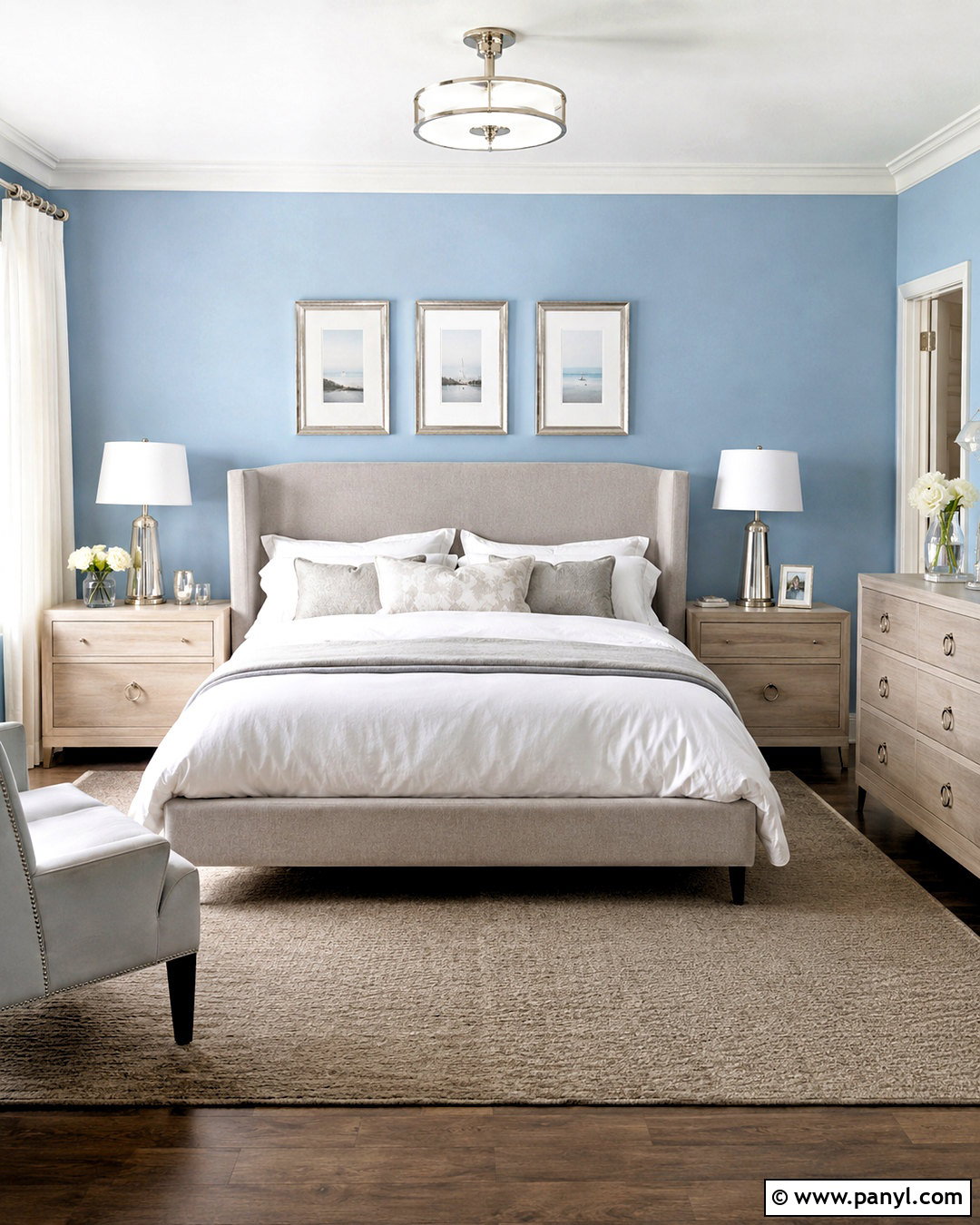
Silver and polished nickel emphasize the fresh, cool quality of light blue walls. This combination works well in a streamlined bathroom or contemporary bedroom with plenty of warm texture. Pair the walls with a light-gray upholstered bed, white bedding, and a soft taupe rug. Use polished nickel lamps, silver-framed artwork, and clear glass accessories for subtle reflective detail. Warm white curtains and pale wood nightstands prevent the cool finishes from making the space feel clinical. Introduce charcoal piping or slim black frames for sharper definition. Keep the metallic elements clean and simple rather than ornate. When balanced with wood, linen, and wool, silver creates a crisp completed room that feels light, orderly, and quietly sophisticated instead of icy or impersonal.
19. Burgundy Decor With Light Blue Walls
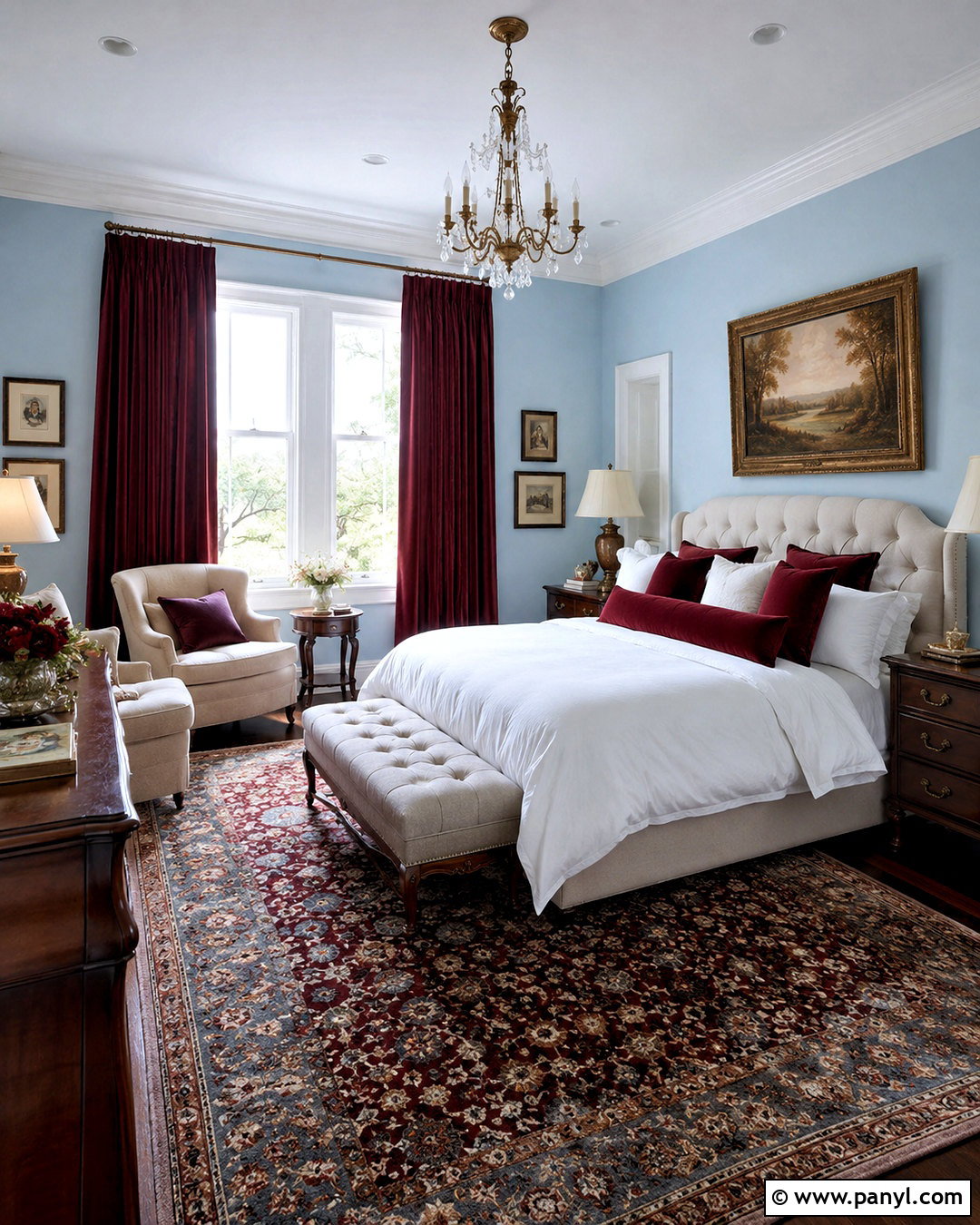
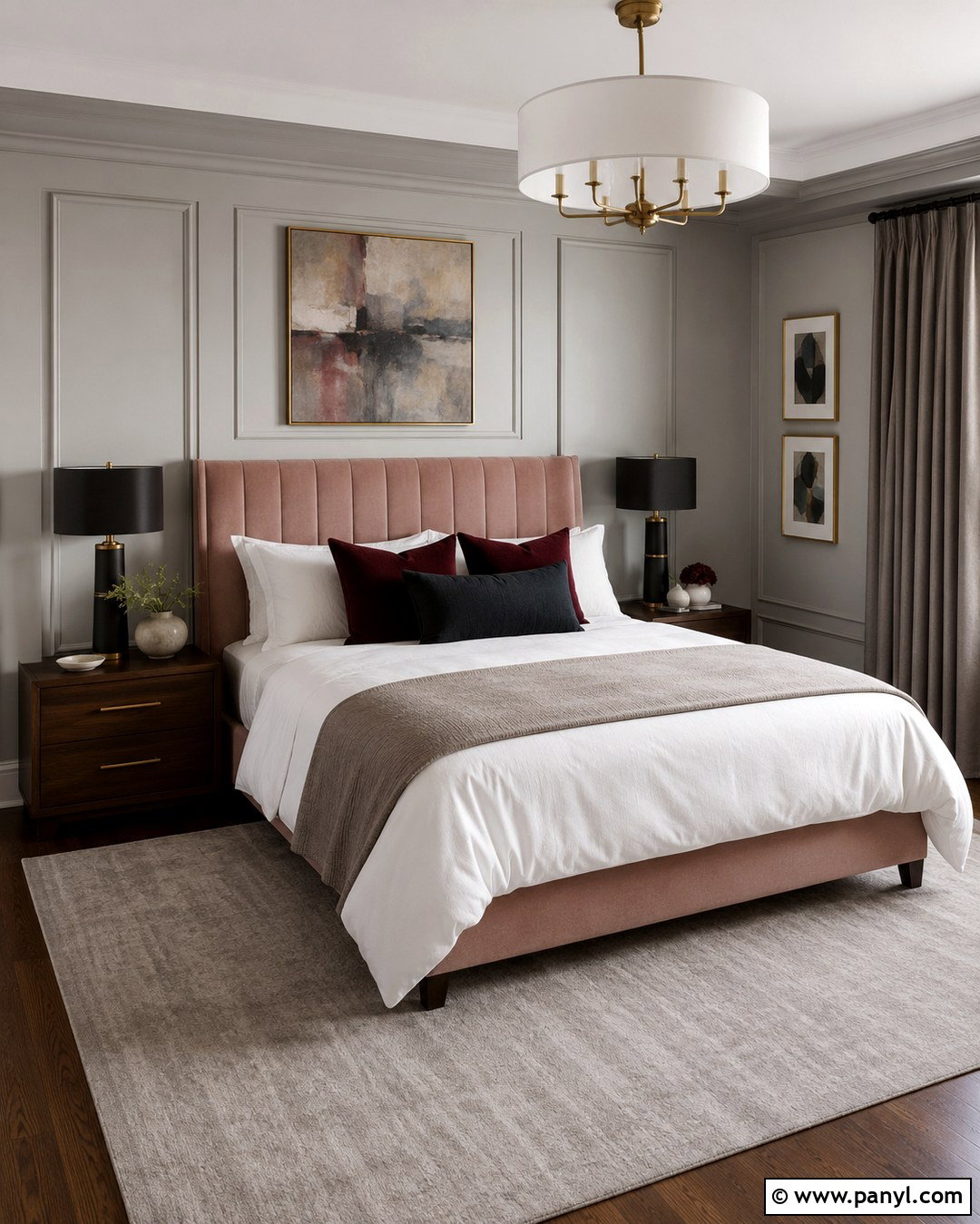
Burgundy brings dramatic warmth to light blue walls and works best in carefully measured amounts. In a bedroom, use burgundy velvet curtains as the main statement, then balance them with an ivory upholstered bed and crisp white bedding. A traditional rug containing burgundy, faded blue, cream, and brown will unite the contrasting colors. Choose dark walnut nightstands and antique brass lamps to support the richer accent. Repeat burgundy with one lumbar pillow or a folded throw, but avoid covering the entire room in the shade. Soft beige upholstery can provide a visual pause between the walls and darker textiles. The completed scheme feels elegant and established, making it a strong choice for a formal guest room, dining room, or character-filled primary bedroom.
20. Rattan Decor With Light Blue Walls
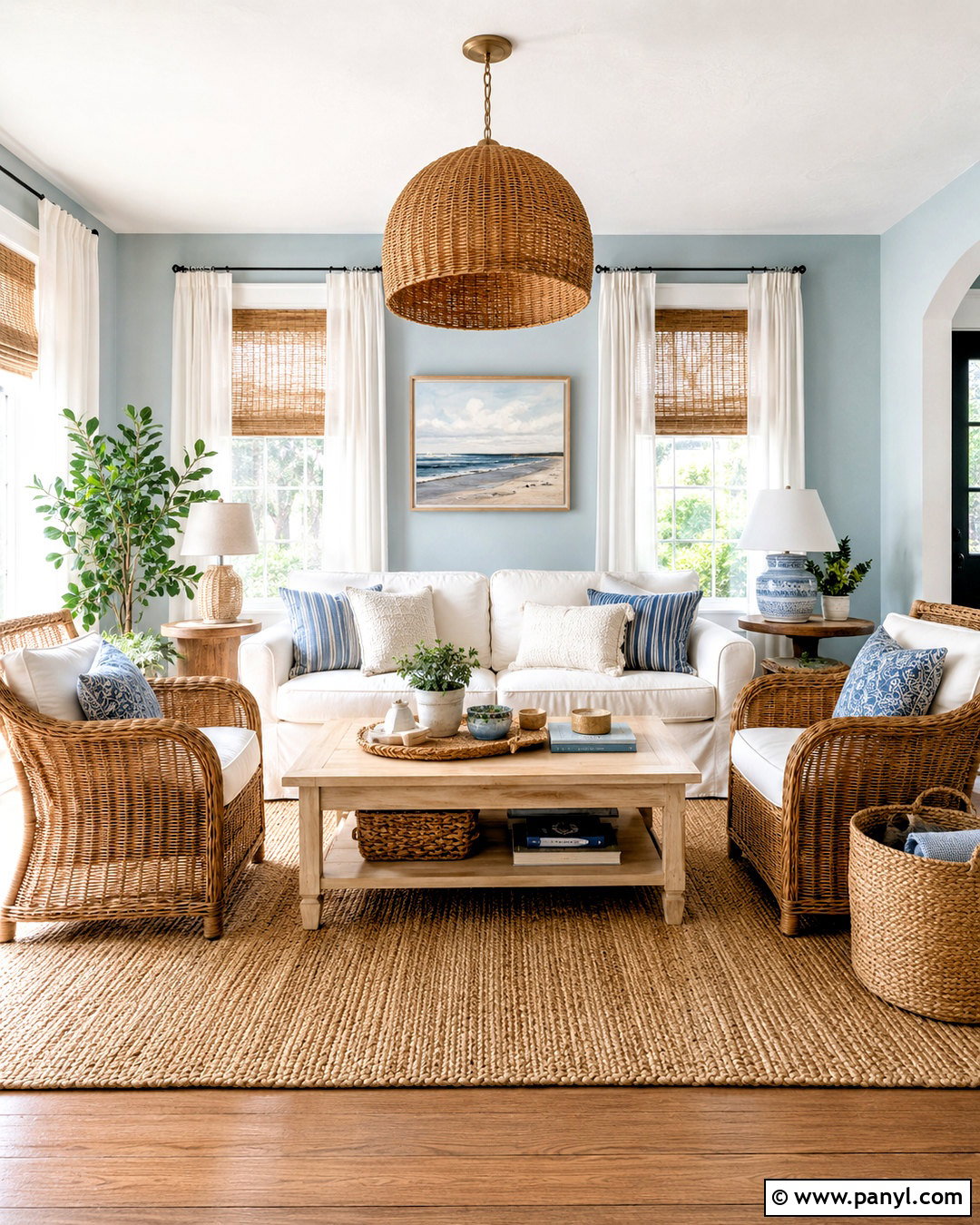
Rattan, jute, and woven textiles turn light blue walls into the foundation for an easy coastal or organic room. Start with a white slipcovered sofa and add two rattan armchairs with cream seat cushions. Ground the arrangement with a large natural jute rug and a pale wood coffee table. Layer white linen curtains over bamboo shades to add privacy and texture around the windows. Use pillows in faded blue stripes, sandy beige, and muted navy. Woven pendant lighting, seagrass baskets, and simple ceramic vessels complete the look without creating clutter. Keep obvious beach-themed objects to a minimum. The combination should suggest natural comfort through materials and color rather than signs or novelty decor, resulting in a bright room that remains warm and practical.
Conclusion:
Understanding **What Goes With Light Blue Walls** becomes easier when you treat the entire room as one connected design. White, cream, beige, and gray create quiet foundations, while natural wood, rattan, leather, and warm metals prevent pale blue from feeling cold. Navy and black add structure. Coral, mustard, terracotta, sage, lavender, and burgundy introduce more personality. Whichever combination you choose, repeat important colors in two or three locations and balance cool walls with warmer textures. Consider the room’s natural light, flooring, and existing furniture before purchasing new pieces. A coordinated mix of color, material, pattern, and finish will make light blue walls look intentional while giving the space a comfortable, complete, and personal character.

Related Ideas and Inspiration:
Leave a Reply