
Green walls can feel fresh, grounded, dramatic, or softly traditional depending on the colors placed around them. The best pairing starts with the green’s undertone. Sage and olive greens usually welcome warm neutrals and earthy accents, while emerald, forest, and blue-green shades handle stronger contrast. Lighting matters too. A color that looks balanced beside green in a sunny room may feel cooler in a north-facing space. Before decorating, test fabric, paint, flooring, and metal samples against the wall throughout the day. Then repeat your chosen companion color across several furnishings to make the room feel connected. From timeless neutrals to expressive accent shades, these complete room schemes answer the popular question: **What Colour Goes With Green Walls**?

1. Warm White With Green Walls
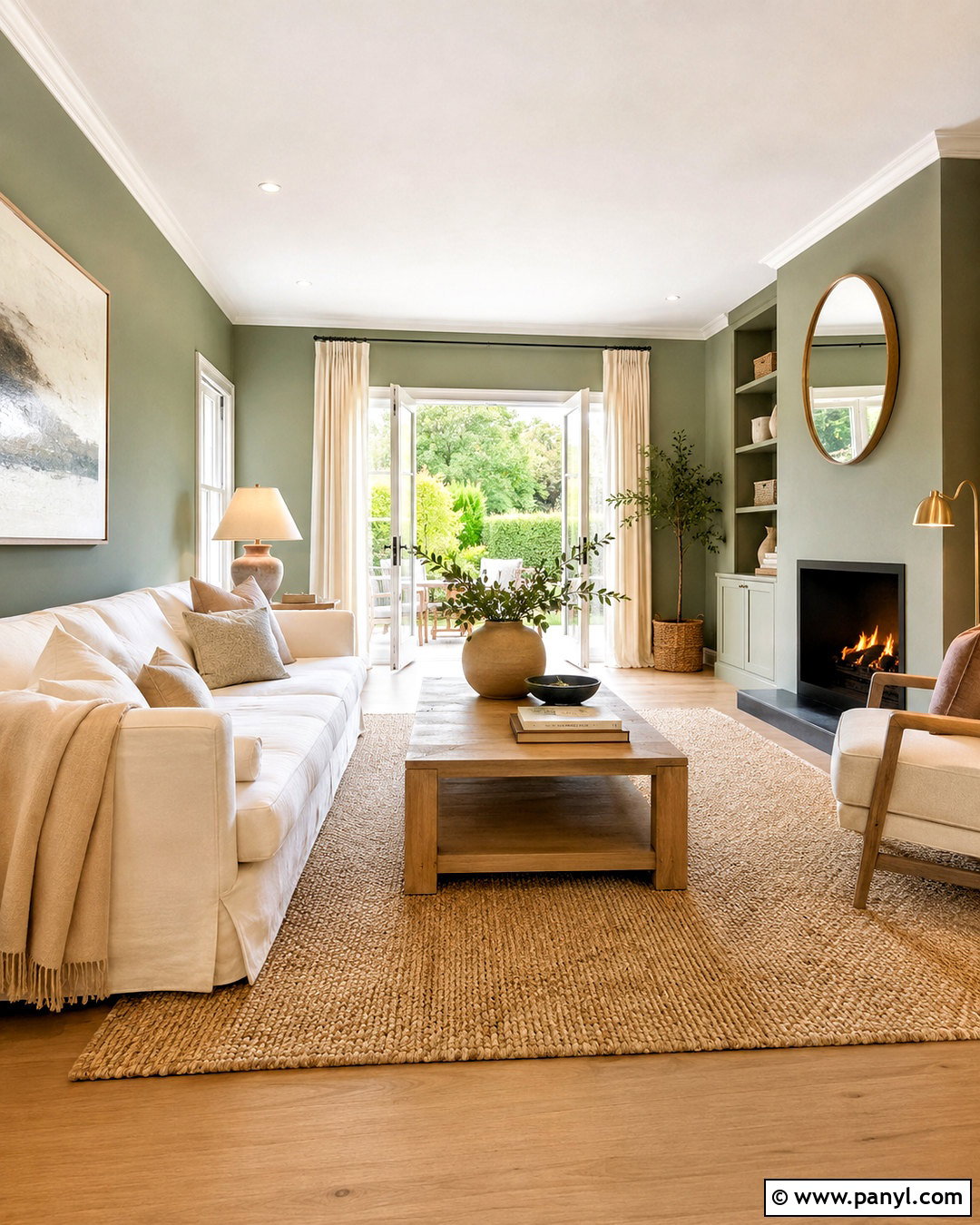
Warm white creates a clean, relaxed setting without making green walls appear cold. Build a bright living room around muted sage walls, an ivory slipcovered sofa, and warm white curtains hung close to the ceiling. Choose a pale oak coffee table and woven natural-fiber rug to strengthen the organic look. Soft white trim can outline the room without producing the sharp contrast of brilliant white. Add oatmeal pillows, ceramic table lamps, and a few matte brass details for gentle warmth. This combination works especially well in rooms with limited daylight because the lighter furnishings reflect available light. Keep most large pieces creamy white, then repeat sage in a patterned chair or throw so the walls remain connected to the furniture.
2. Cream With Green Walls
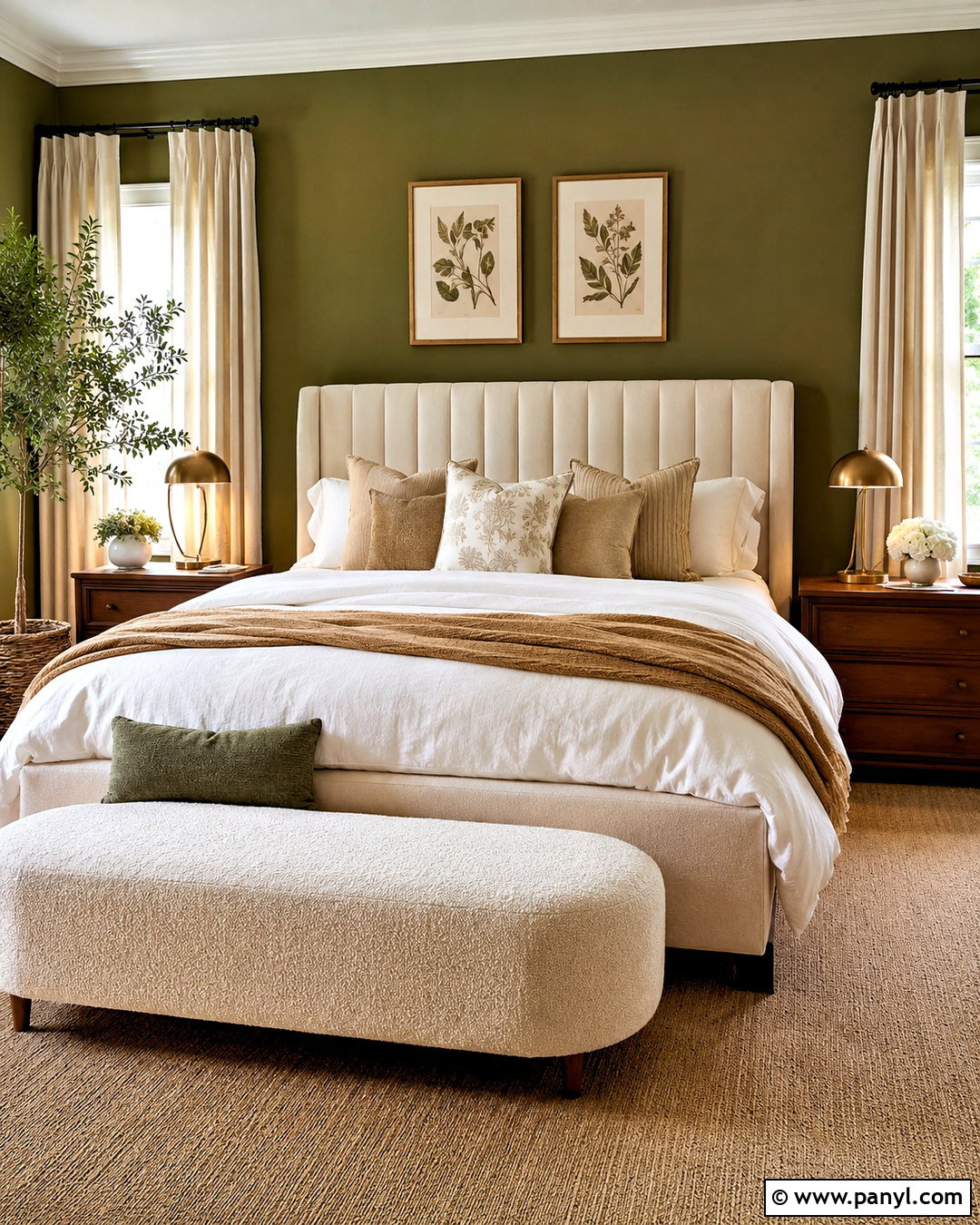
Cream brings out the warm, comfortable character of olive and moss green walls. For a cozy bedroom, place a tall cream upholstered bed against the green backdrop and dress it with ivory sheets, a camel throw, and olive-patterned pillows. Use medium walnut nightstands to add depth, then introduce antique brass lamps and a warm beige carpet. Full-length cream curtains will soften the wall color while keeping the room airy. Avoid creams with strong yellow undertones if the green is already very yellow. A balanced off-white is easier to coordinate. Complete the design with botanical artwork in dark wood frames and a textured bench at the foot of the bed. The finished room feels layered and inviting rather than overly earthy.
3. Beige With Green Walls
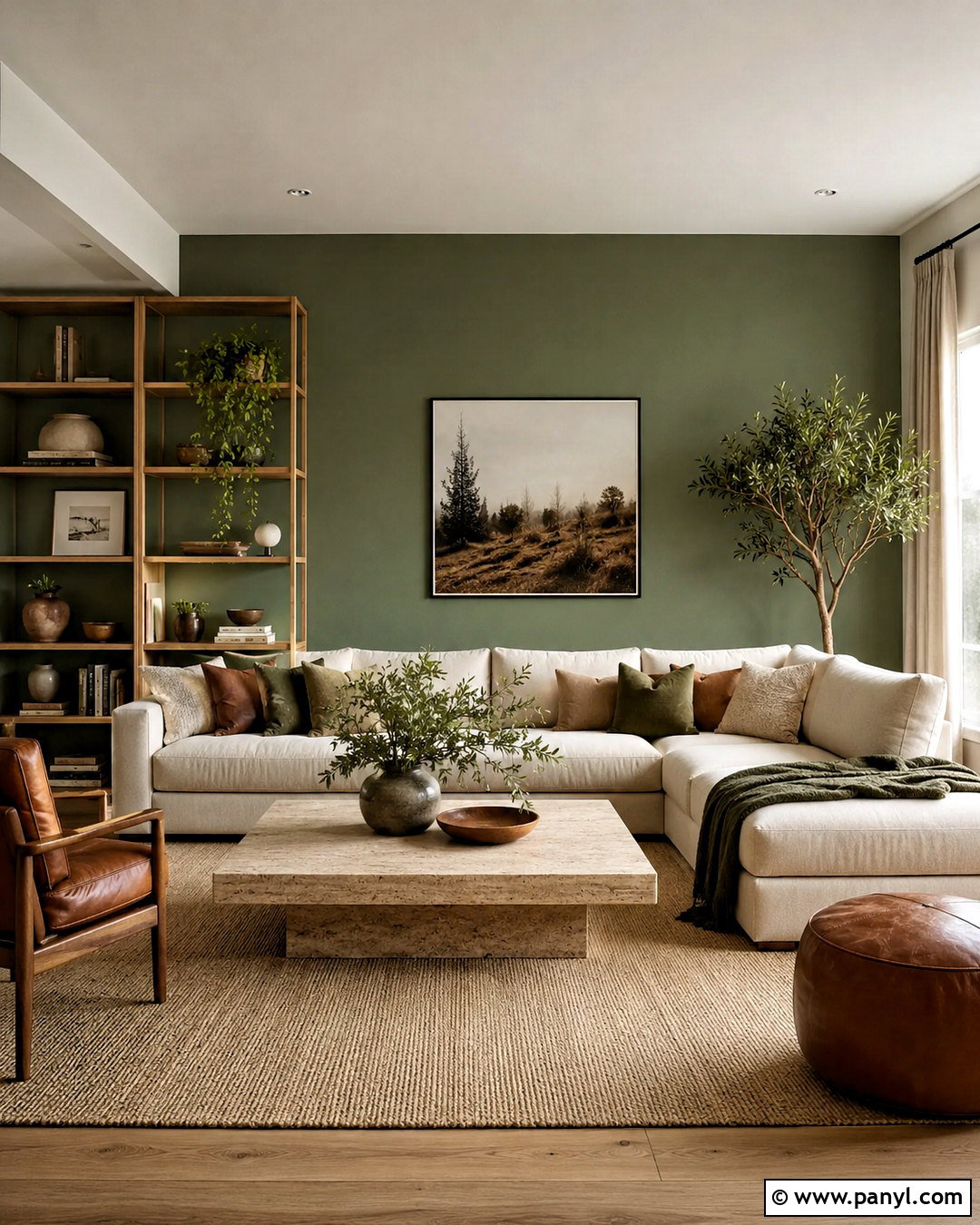
Beige and green create an easy nature-inspired palette that suits casual family spaces. Start with soft fern green walls in a comfortable living room, then add a sand-colored sectional with simple, structured lines. Ground the seating area with a beige wool rug featuring a subtle tonal pattern. Light oak shelving, a limestone coffee table, and linen window panels can add varied natural texture without introducing competing colors. Include darker olive cushions and medium brown leather accents to create contrast. Matte black picture frames give the room a crisp outline. Because beige can look flat when used in one finish, mix boucle, linen, woven baskets, and smooth stone. The room will feel warm and coordinated while allowing the green walls to remain the main feature.
4. Greige With Green Walls
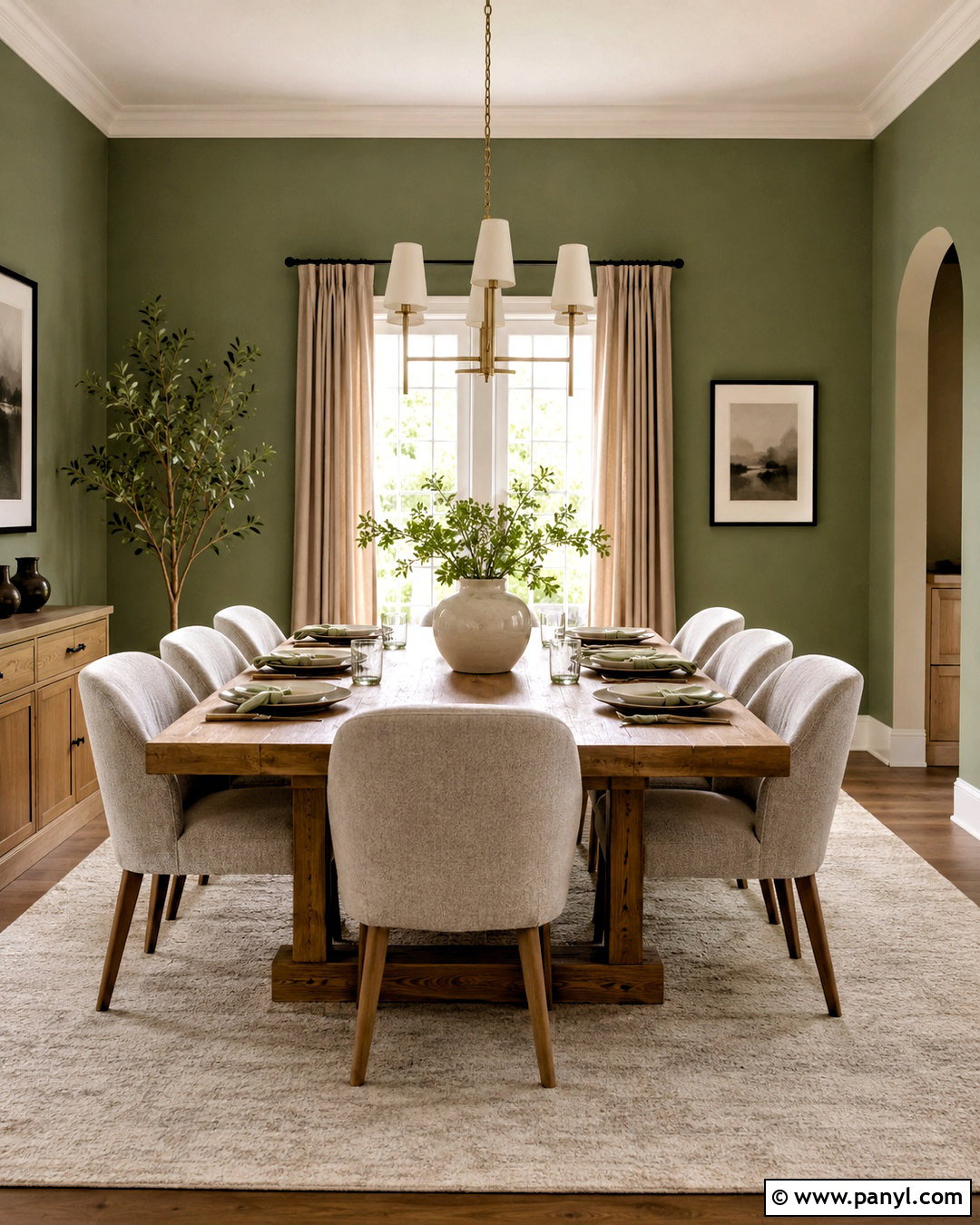
Greige balances the warmth of beige with the calm appearance of gray, making it a flexible partner for sage green walls. Create a polished dining room with warm sage walls, greige upholstered chairs, and a substantial oak dining table. A light greige rug can define the table area while preserving an open feeling. Paint the trim a soft off-white and use long mushroom-colored curtains for added depth. Brushed brass lighting brings warmth, while black-framed artwork prevents the gentle palette from becoming washed out. Select a greige with warm undertones rather than a noticeably blue gray. Finish the room with cream ceramics, olive napkins, and a low arrangement of leafy branches. Every color feels connected, calm, and suitable for everyday dining.
5. Taupe With Green Walls
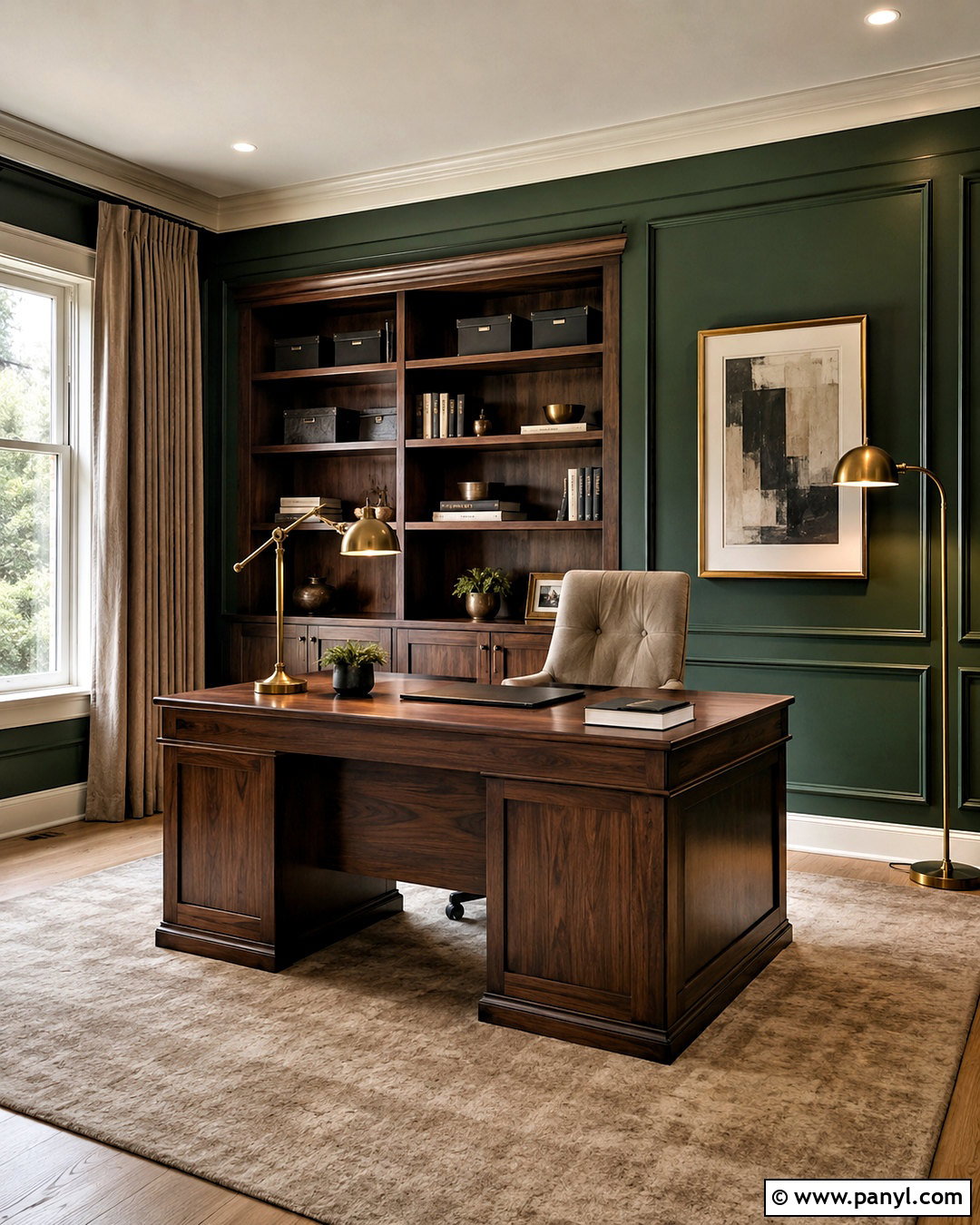
Taupe gives dark green walls a sophisticated softness that feels warmer than standard gray. In a home office, combine forest green walls with a streamlined taupe desk chair, a large mushroom-colored rug, and floor-length taupe drapes. Choose a walnut desk and matching bookcase to bridge the brown undertones in both colors. A cream ceiling and trim will keep the office from feeling enclosed. Add aged brass lighting, black storage boxes, and restrained abstract artwork in beige, green, and charcoal. Task lighting is especially important with deep wall colors, so include a focused desk lamp and a bright overhead fixture. This complete palette creates a professional workspace that feels rich and comfortable without becoming too formal or visually heavy.
6. Soft Gray With Green Walls
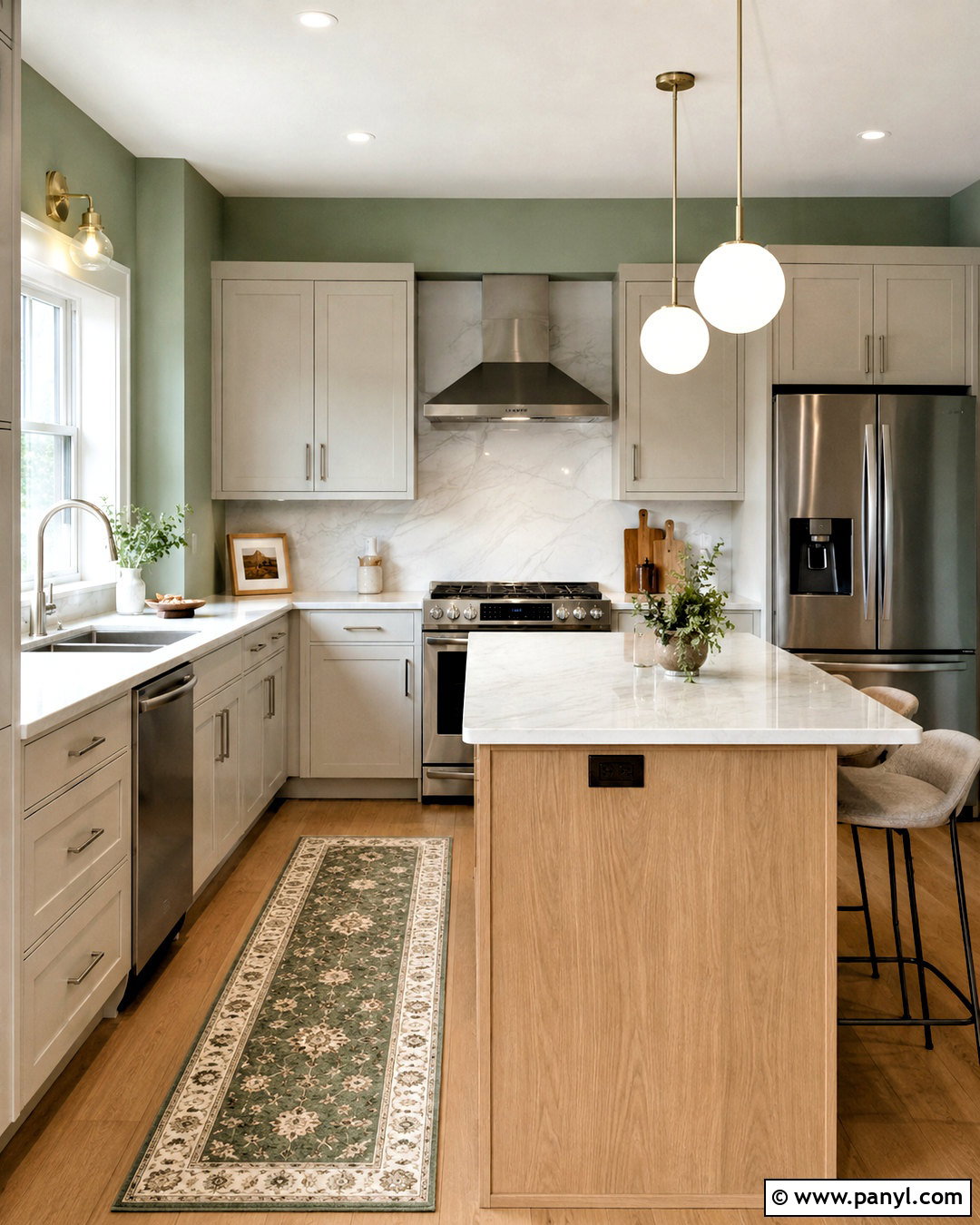
Soft gray can quiet brighter green walls and give the room a crisp, contemporary structure. For a modern kitchen, pair muted eucalyptus green walls with pale gray flat-panel cabinets and white quartz counters. Add a light oak island or open shelves to prevent the gray from feeling sterile. Stainless steel appliances, brushed nickel hardware, and simple globe pendants reinforce the clean look. Use a backsplash with subtle gray veining rather than a busy multicolor pattern. A washable runner containing green, gray, and cream can connect the main surfaces. Select a warm or neutral gray when working with olive green, while cooler gray works more naturally beside blue-green walls. The finished kitchen feels practical, balanced, and pleasantly fresh.
7. Charcoal With Green Walls
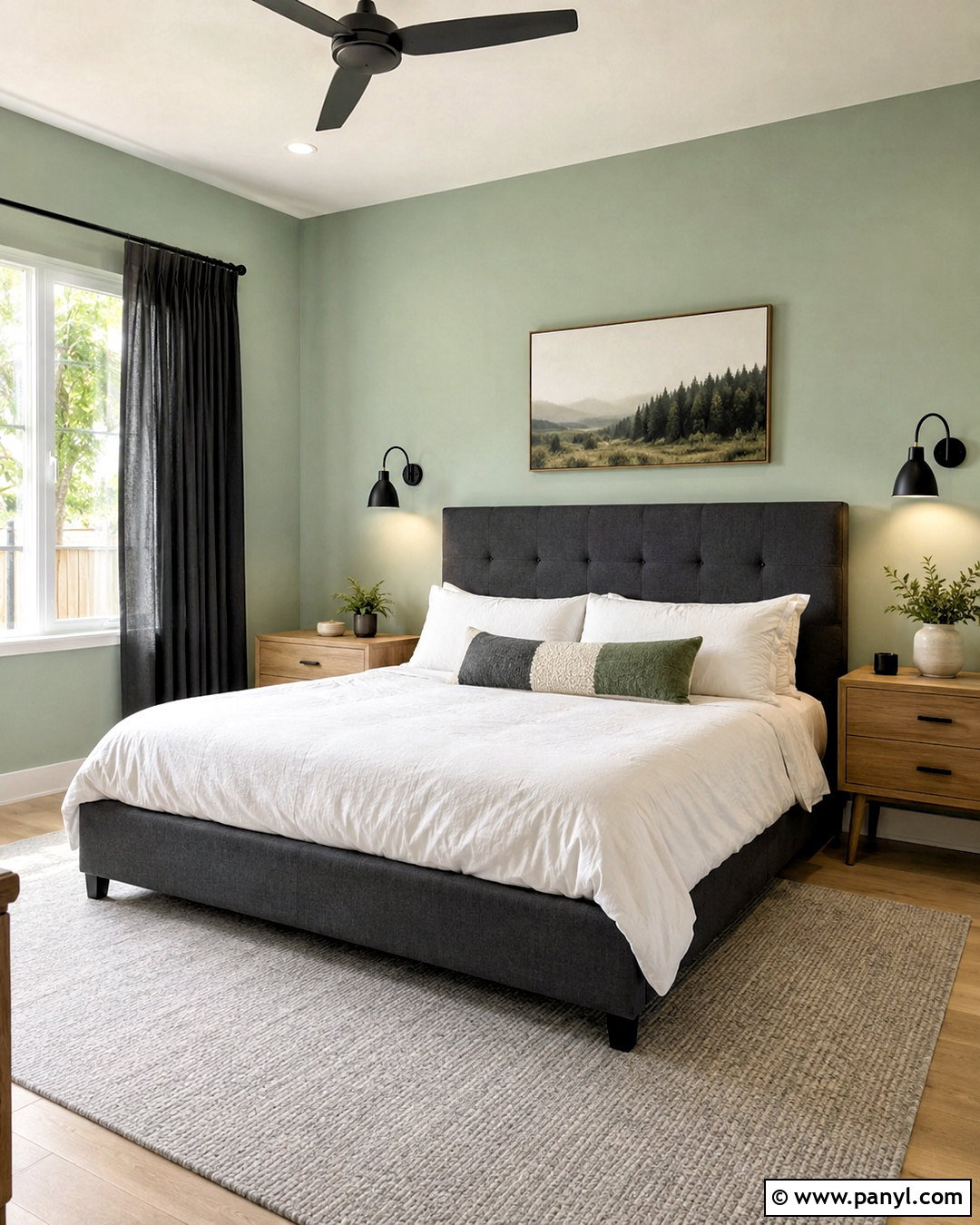
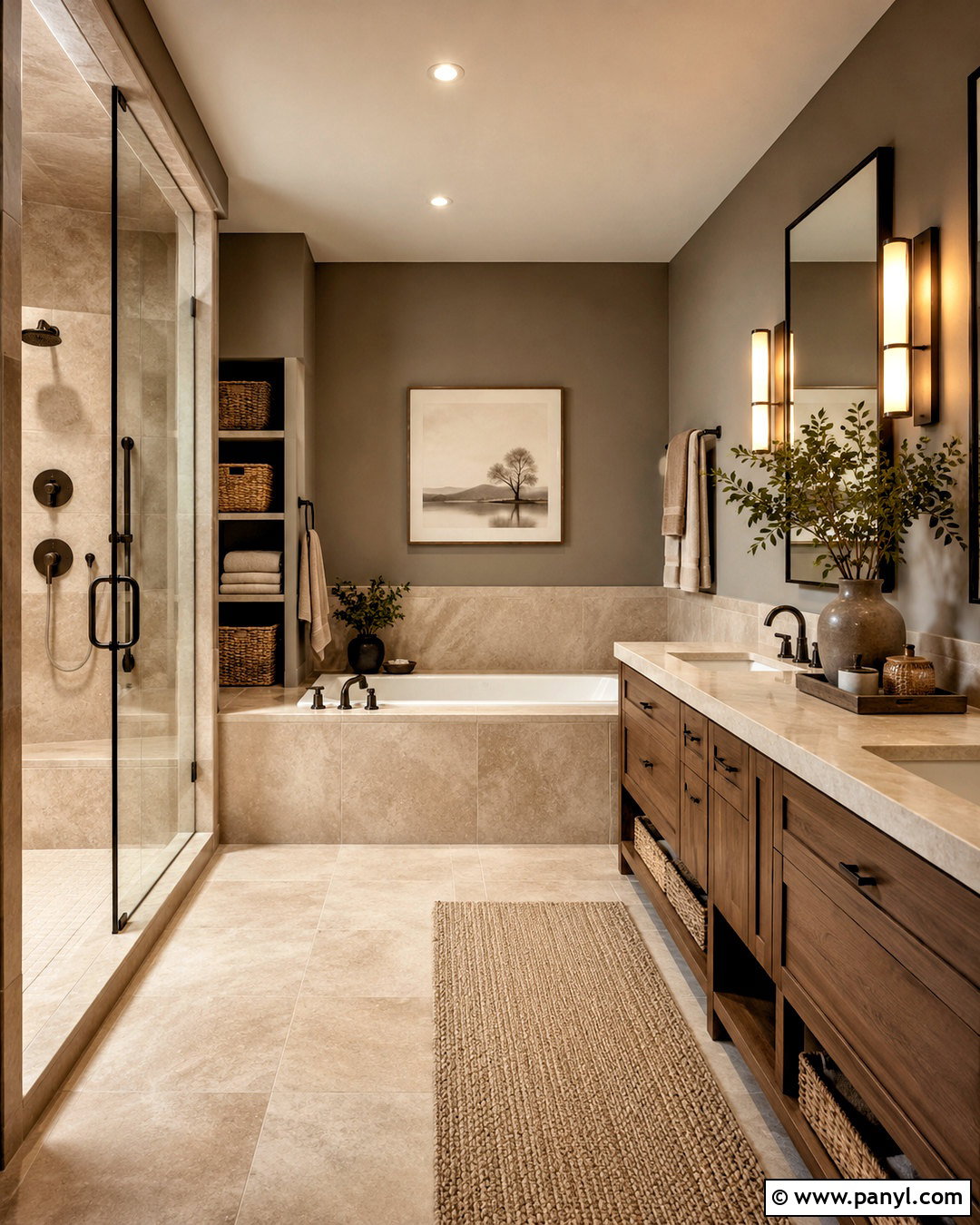
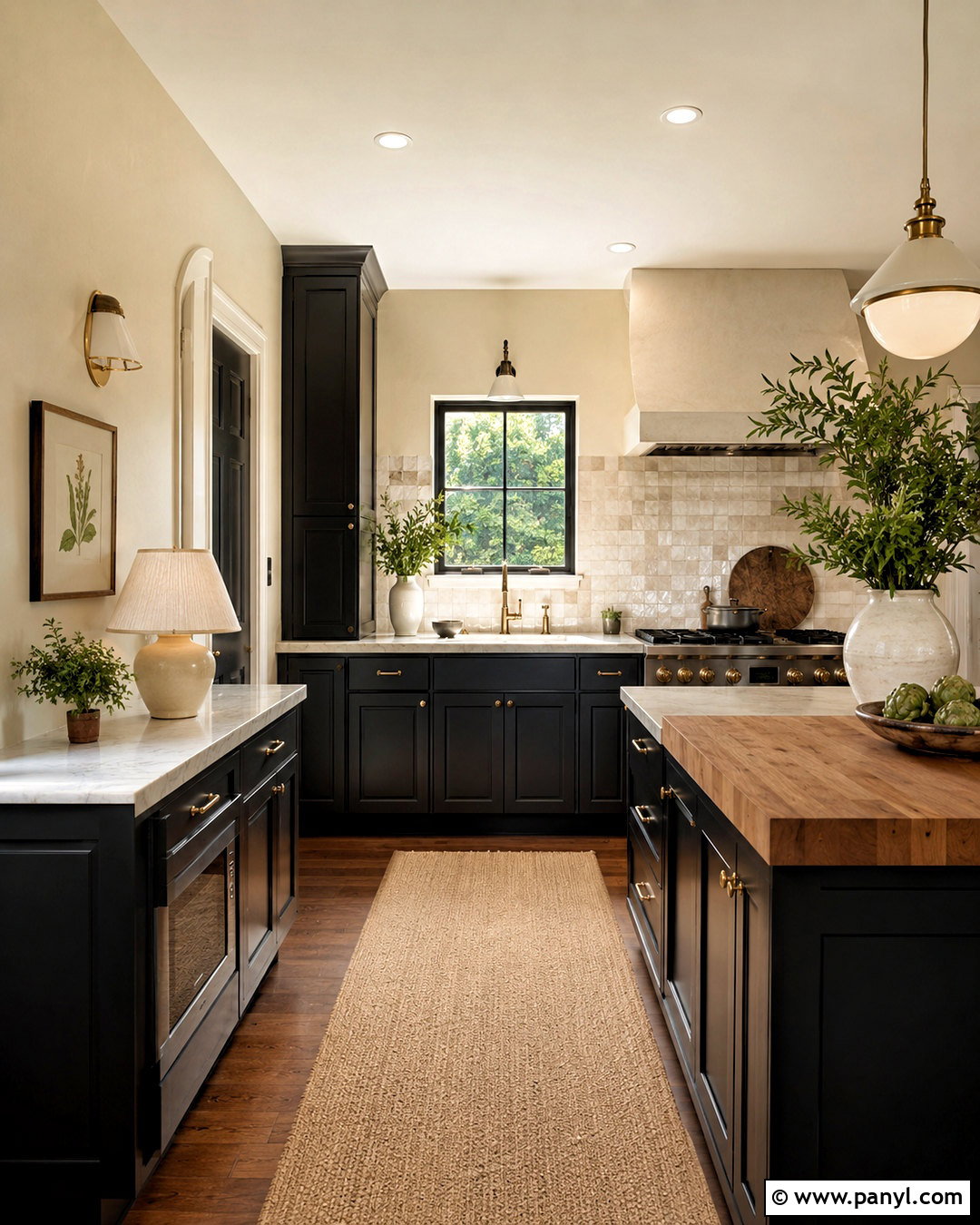
Charcoal creates strong contrast against pale green walls and adds definition to an otherwise delicate scheme. Design a streamlined bedroom with soft mint-sage walls, a charcoal upholstered bed, and matching charcoal blackout curtains. Lighten the center of the room with white bedding, a pale gray rug, and blond oak nightstands. Introduce matte black sconces and a simple black-framed mirror to repeat the darker tone. One patterned lumbar pillow combining green, charcoal, and cream will visually connect the bed to the walls. Keep the ceiling and trim warm white so the room stays open. This palette works best when charcoal is concentrated in a few substantial pieces rather than scattered everywhere. The result feels modern, grounded, and restful instead of overly sweet.
8. Black With Green Walls
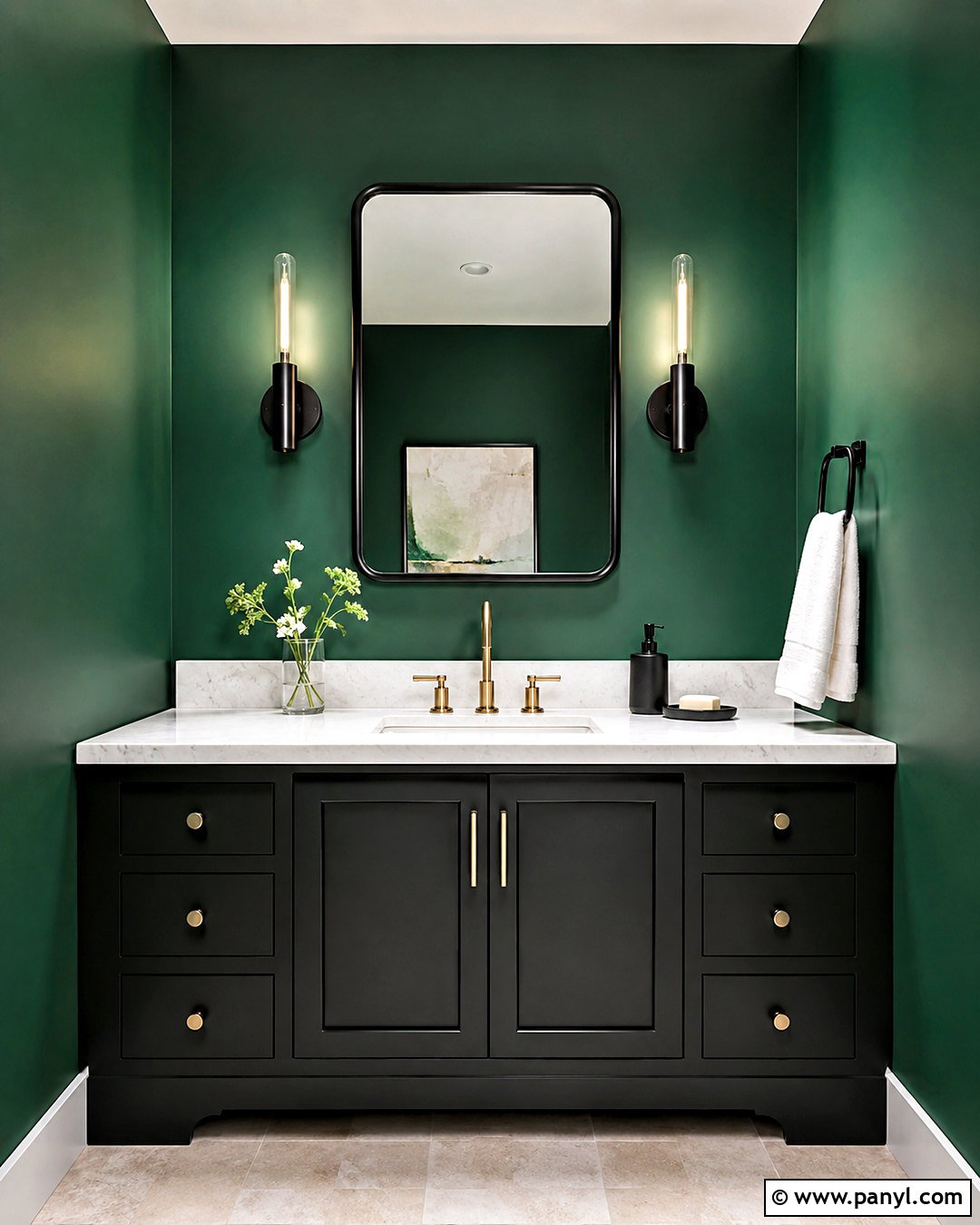
Black accents sharpen green walls and create a confident, graphic interior. In a small powder room, use rich emerald green walls with a matte black vanity, black-framed mirror, and compact black wall sconces. A white marble countertop and pale stone floor will provide enough brightness to balance the darker surfaces. Choose unlacquered brass faucet hardware for a small touch of warmth. White towels and a simple cream ceiling can keep the room from looking closed in. Repeat emerald in a subtle patterned window shade if the room has a window. Because black has significant visual weight, allow clear space around each dark feature. This complete scheme makes an ordinary powder room memorable while still feeling polished, functional, and appropriate for daily use.
9. Chocolate Brown With Green Walls
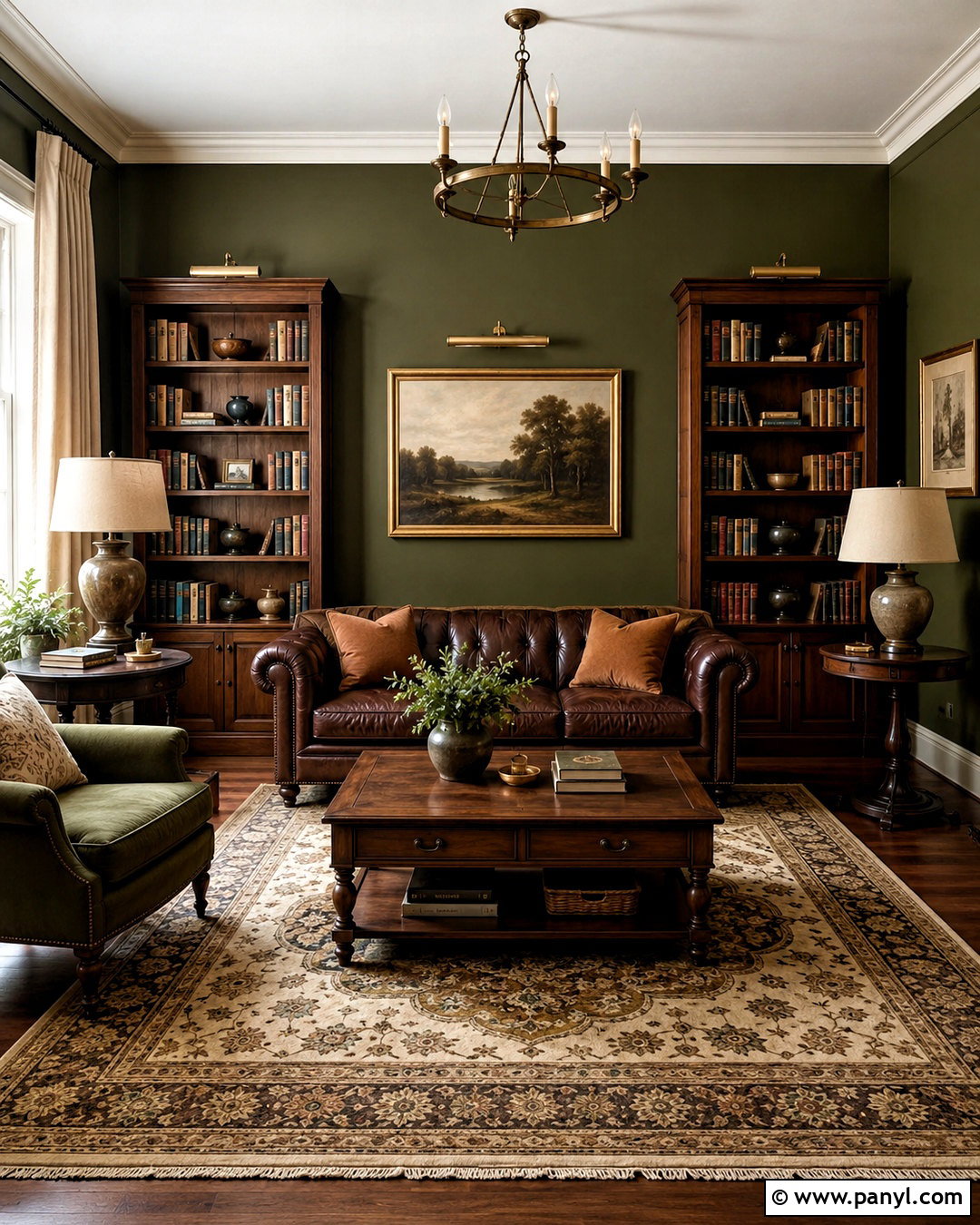
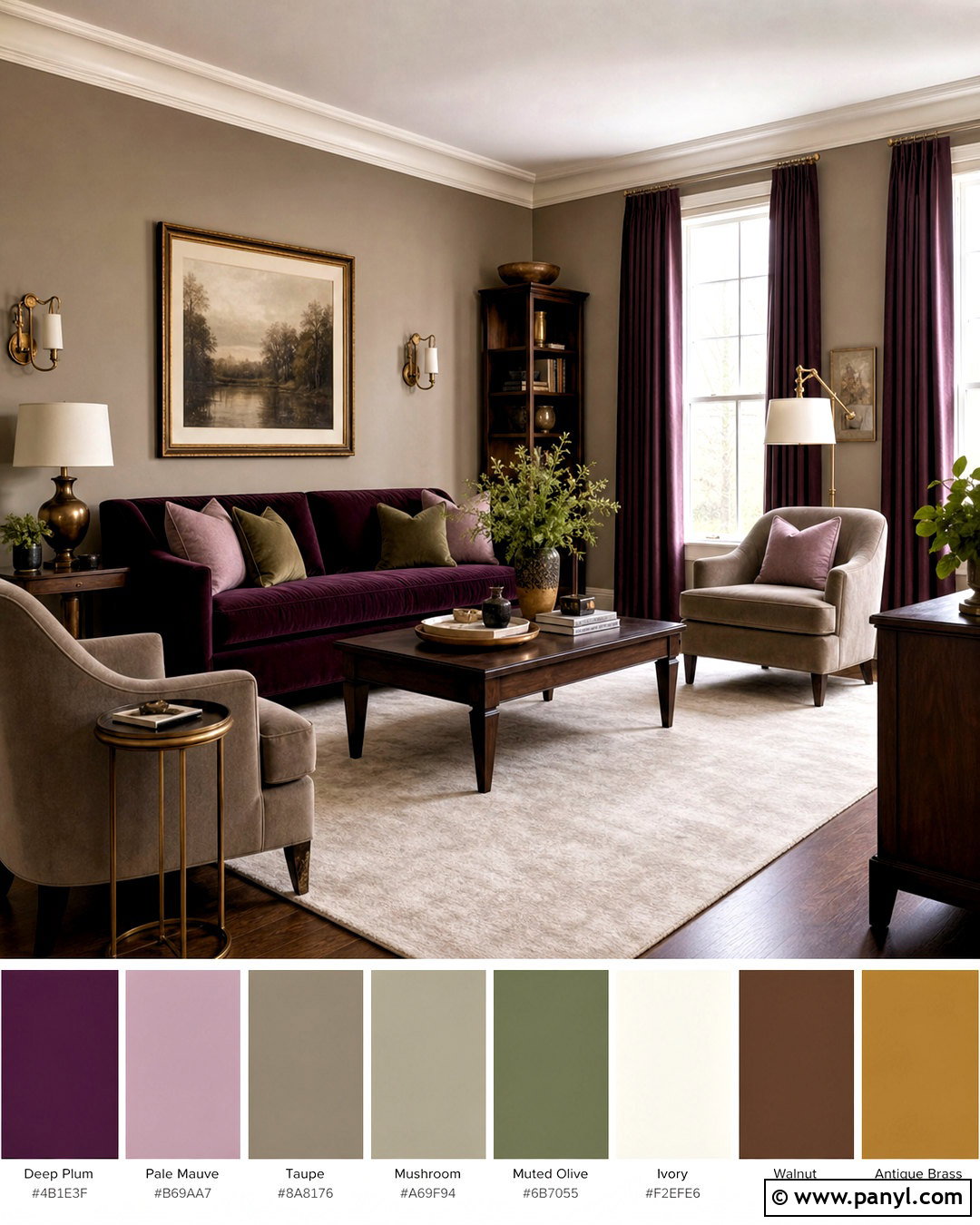
Chocolate brown emphasizes the natural richness of green and works beautifully in a traditional reading room. Cover the walls in deep olive green, then furnish the space with a chocolate leather sofa, walnut bookcases, and a substantial wood coffee table. Place a cream and brown patterned rug beneath the seating to lighten the floor. Add camel-colored pillows, linen lampshades, and aged brass picture lights for warm layers. Natural wood should vary slightly across the room rather than matching perfectly, which gives the design more character. Use ivory curtains and a warm white ceiling to prevent the dark palette from becoming gloomy. The completed room feels collected, comfortable, and grounded, with enough light-colored fabric to balance the strong brown and green combination.
10. Navy Blue With Green Walls
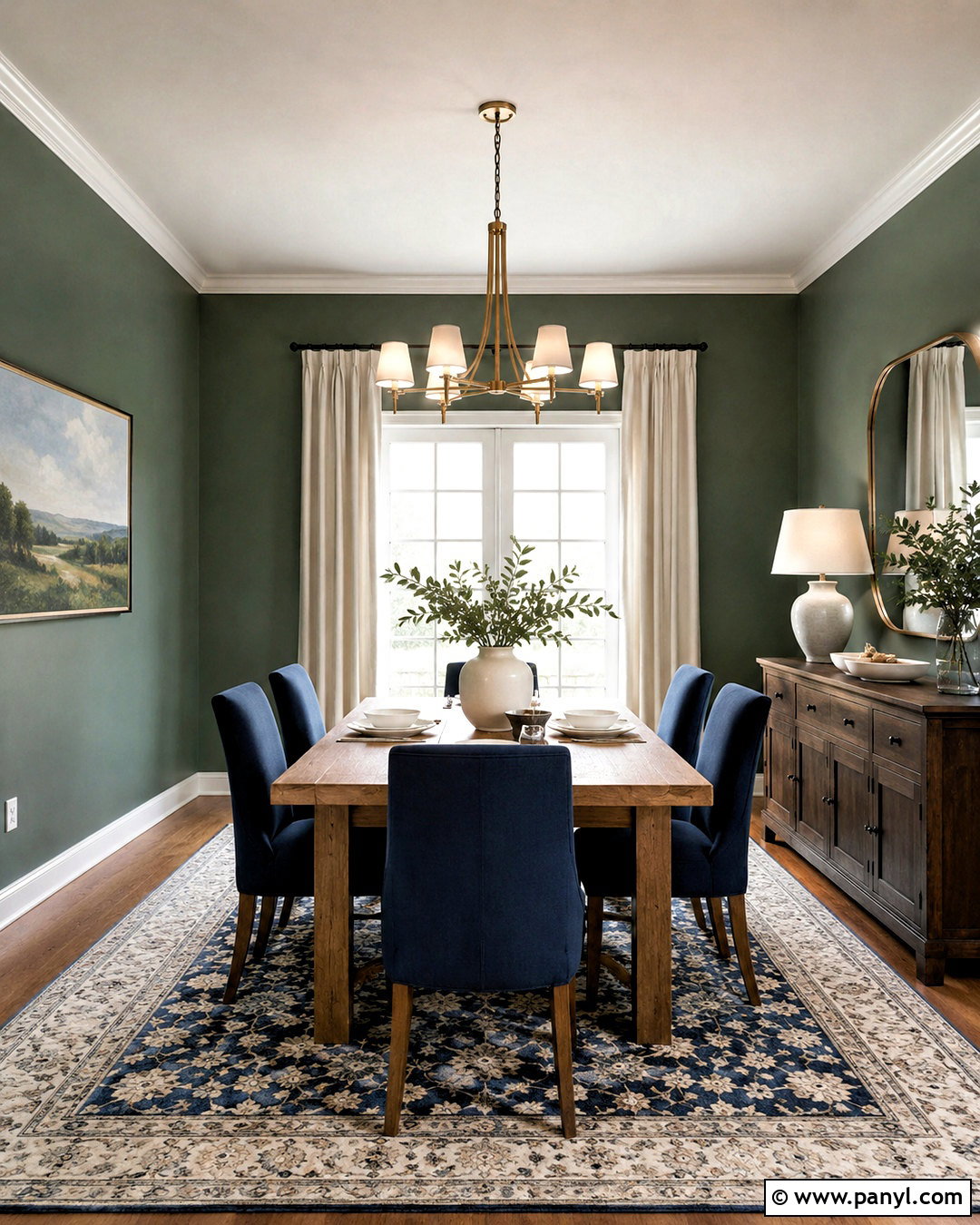
Navy and green form a bold, classic partnership when each color has a clear role. Create a tailored dining room with muted green walls, navy upholstered chairs, and a medium oak table. A patterned rug containing navy, cream, and small green details can unify the contrasting colors. Hang warm white curtains and use a cream-painted ceiling to keep the upper half bright. Add a brass chandelier and a dark wood sideboard for depth. If the walls are forest green, choose a navy that is visibly bluer so the two dark shades do not blur together. Limit extra accent colors to soft ivory and warm brown. The finished space feels layered and intentional, offering plenty of color without appearing busy or overly formal.
11. Powder Blue With Green Walls
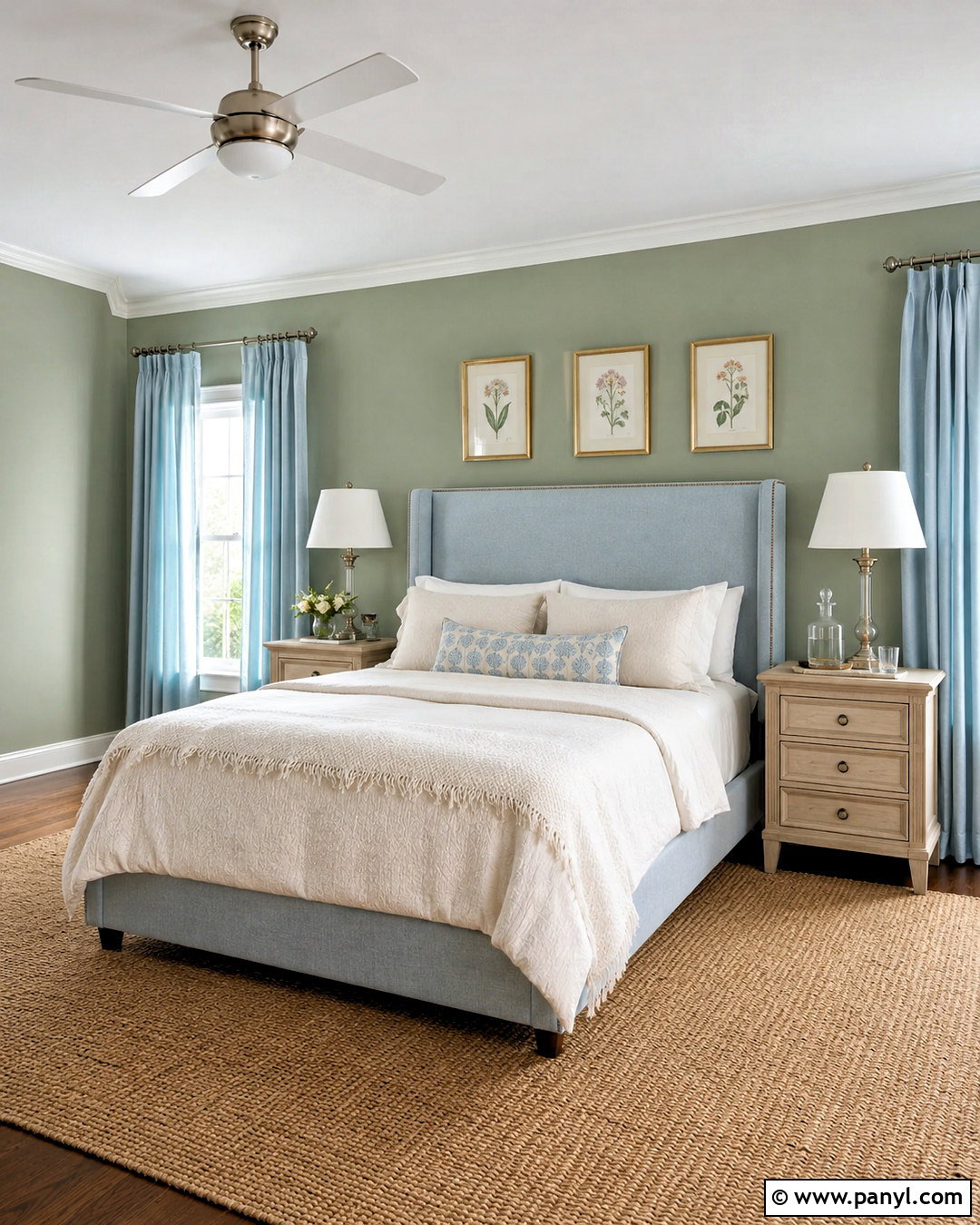
Powder blue softens green walls and produces an airy palette inspired by gardens and open skies. In a guest bedroom, combine light olive or sage walls with a powder blue upholstered headboard, pale blue curtains, and crisp cream bedding. Use white oak nightstands and a natural jute rug to keep the room grounded. A quilt or lumbar pillow containing both blue and green can link the main colors without making the design look overly matched. Add brushed nickel or soft brass lighting, depending on whether the green leans cool or warm. Keep accessories simple, with clear glass lamps and small botanical prints. This complete arrangement feels peaceful and welcoming, making it especially suitable for bedrooms that receive soft morning light.
12. Teal With Green Walls
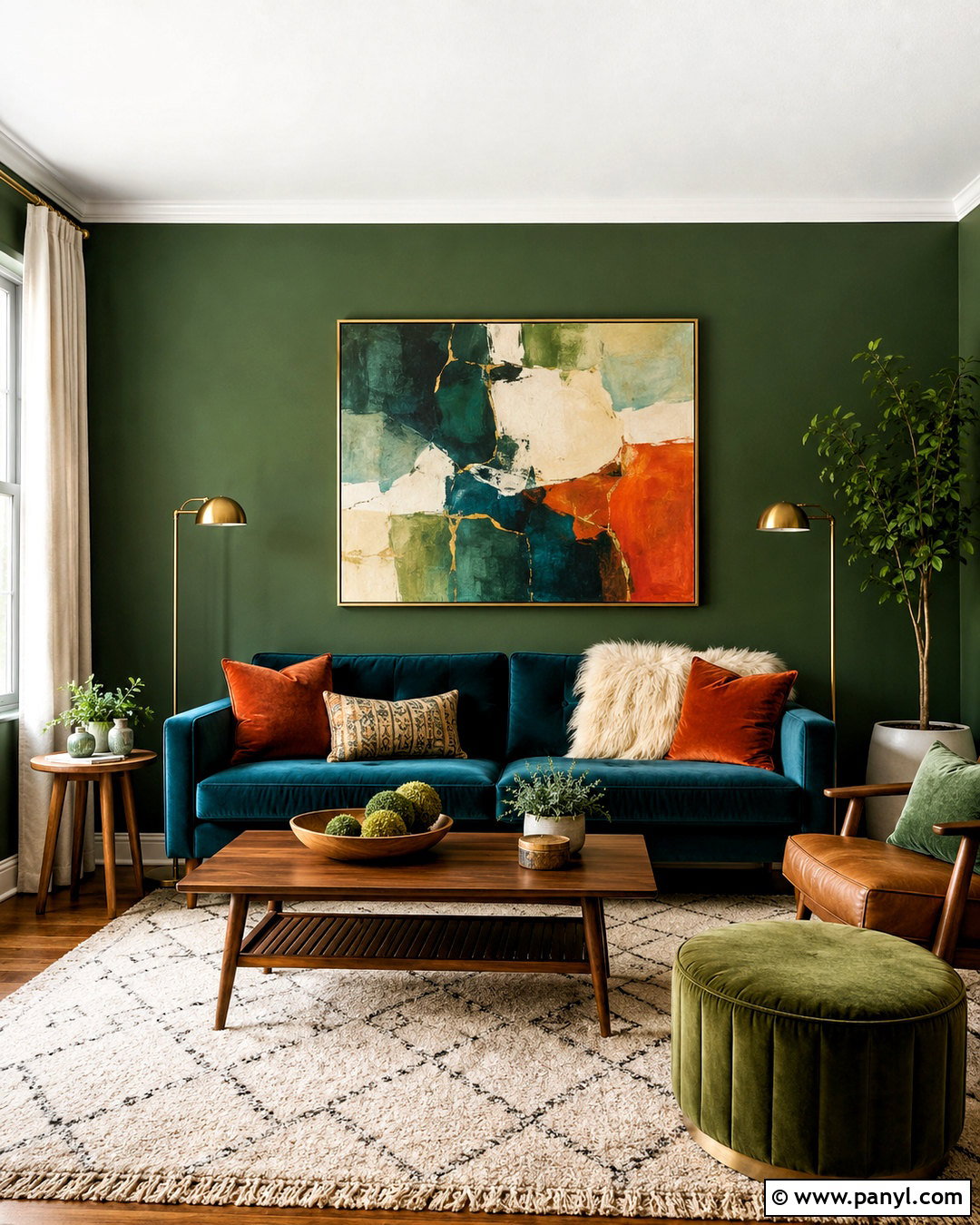
Teal gives green walls a rich tonal contrast because it introduces more blue while remaining closely related to green. Build an expressive living room around moss green walls, a deep teal velvet sofa, and a cream geometric rug. Add medium walnut tables, rust-colored cushions, and aged brass floor lamps to warm the cool jewel tones. Choose light neutral curtains so the room does not become too dark. Artwork that includes teal, moss, cream, and a small amount of orange can connect the whole scheme. For balance, keep the largest pieces solid and use pattern only on the rug and pillows. The final room feels colorful and sophisticated, with enough neutral space to let both teal and green remain distinct rather than competing.
13. Blush Pink With Green Walls
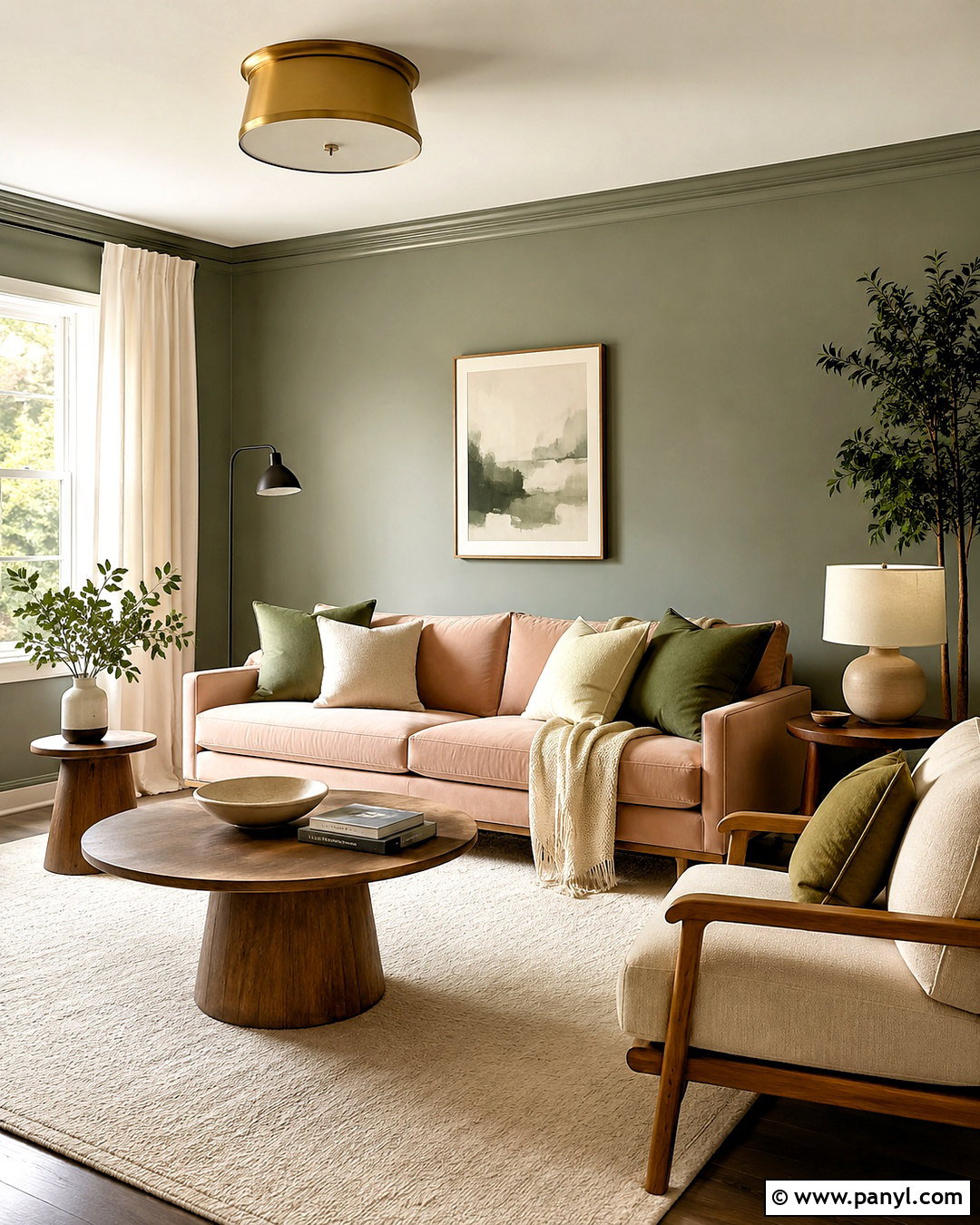
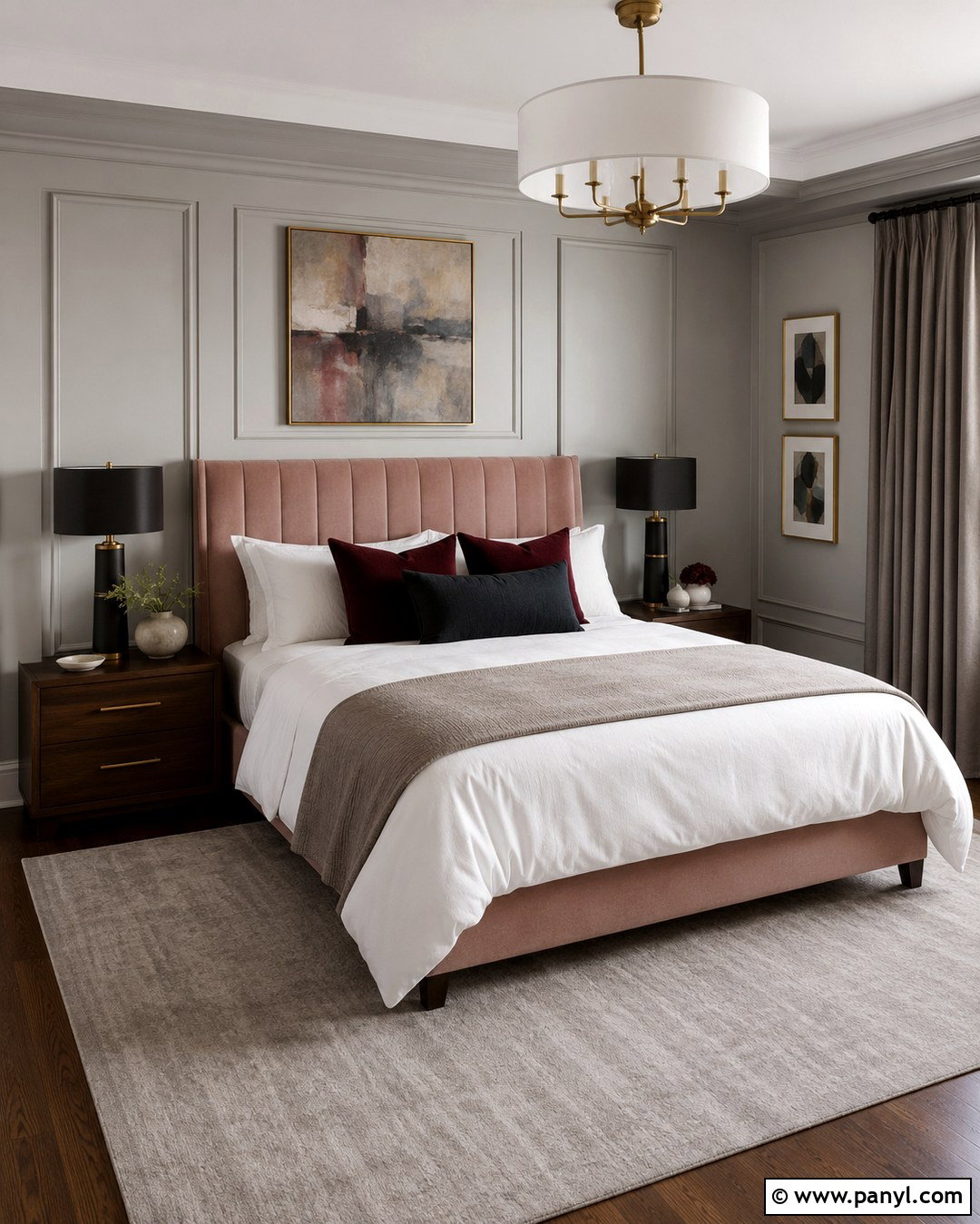
Blush pink brings a gentle warmth to green walls and creates a balanced look that can feel modern rather than overly delicate. Design a relaxed sitting room with gray-green walls, a blush sofa, and warm white curtains. Anchor the seating with a cream rug, then add walnut side tables and a slim black floor lamp. Pillows in olive, ivory, and muted rose will connect the sofa to the wall color. Use brushed brass sparingly through a ceiling fixture or small decorative bowl. Avoid filling the room with numerous pink accessories; the sofa should be the main pink statement. Finish with abstract artwork and a soft beige throw. This complete palette feels calm, fresh, and visually interesting while remaining comfortable enough for everyday living.
14. Dusty Rose With Green Walls
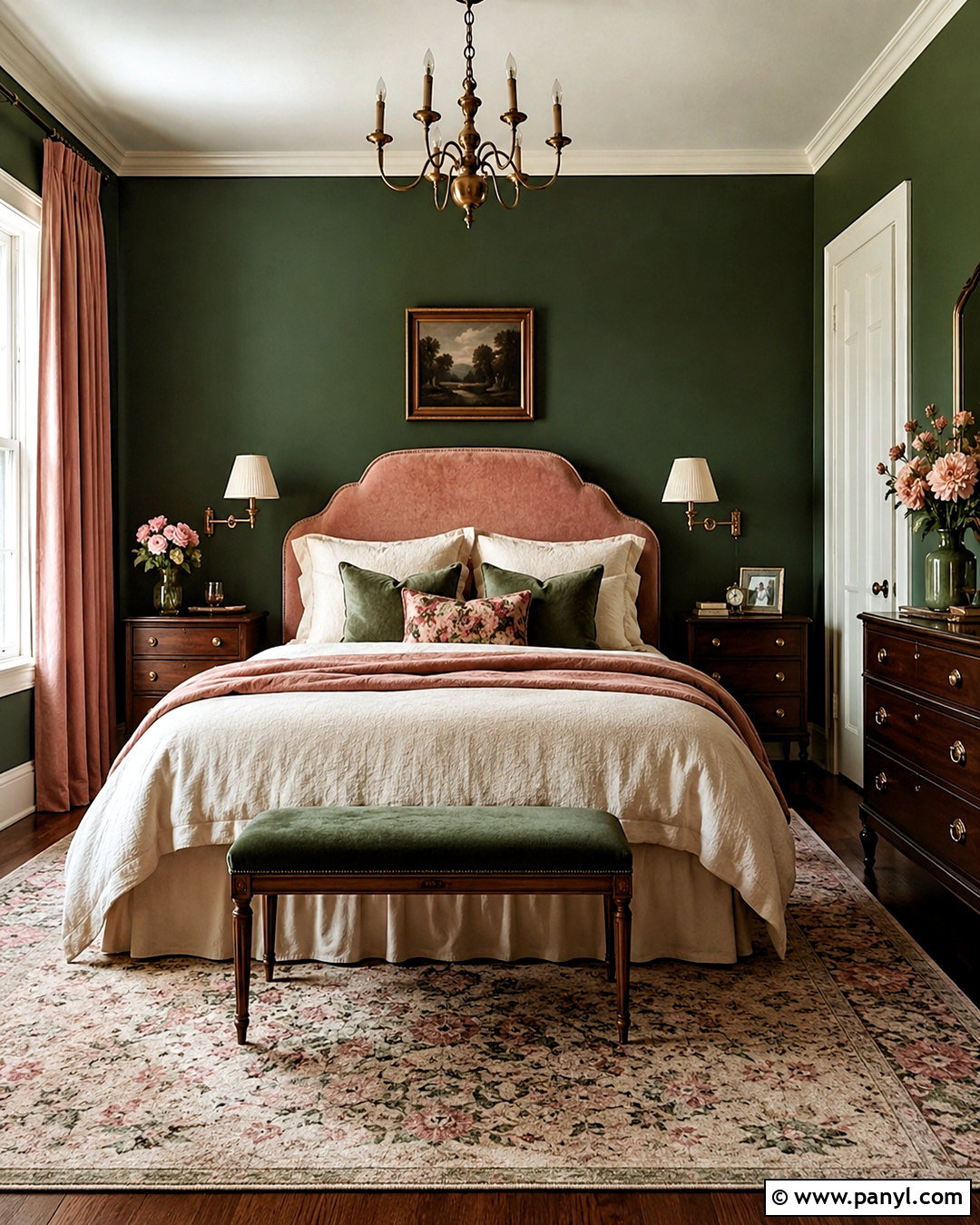
Dusty rose has a muted, slightly earthy quality that pairs naturally with olive and forest green. In a vintage-inspired bedroom, use deep green walls with dusty rose linen curtains, a rose upholstered headboard, and warm ivory bedding. Dark walnut nightstands and an antique-style brass ceiling light can give the room depth. Choose a faded floral rug containing cream, rose, green, and brown to unite the colors underfoot. Keep the trim warm white rather than bright white for a softer transition. Add one or two dark green pillows so the bed relates directly to the walls. The completed bedroom feels romantic but grounded, with aged finishes and restrained color preventing the pink-and-green pairing from looking overly bright or themed.
15. Terracotta With Green Walls
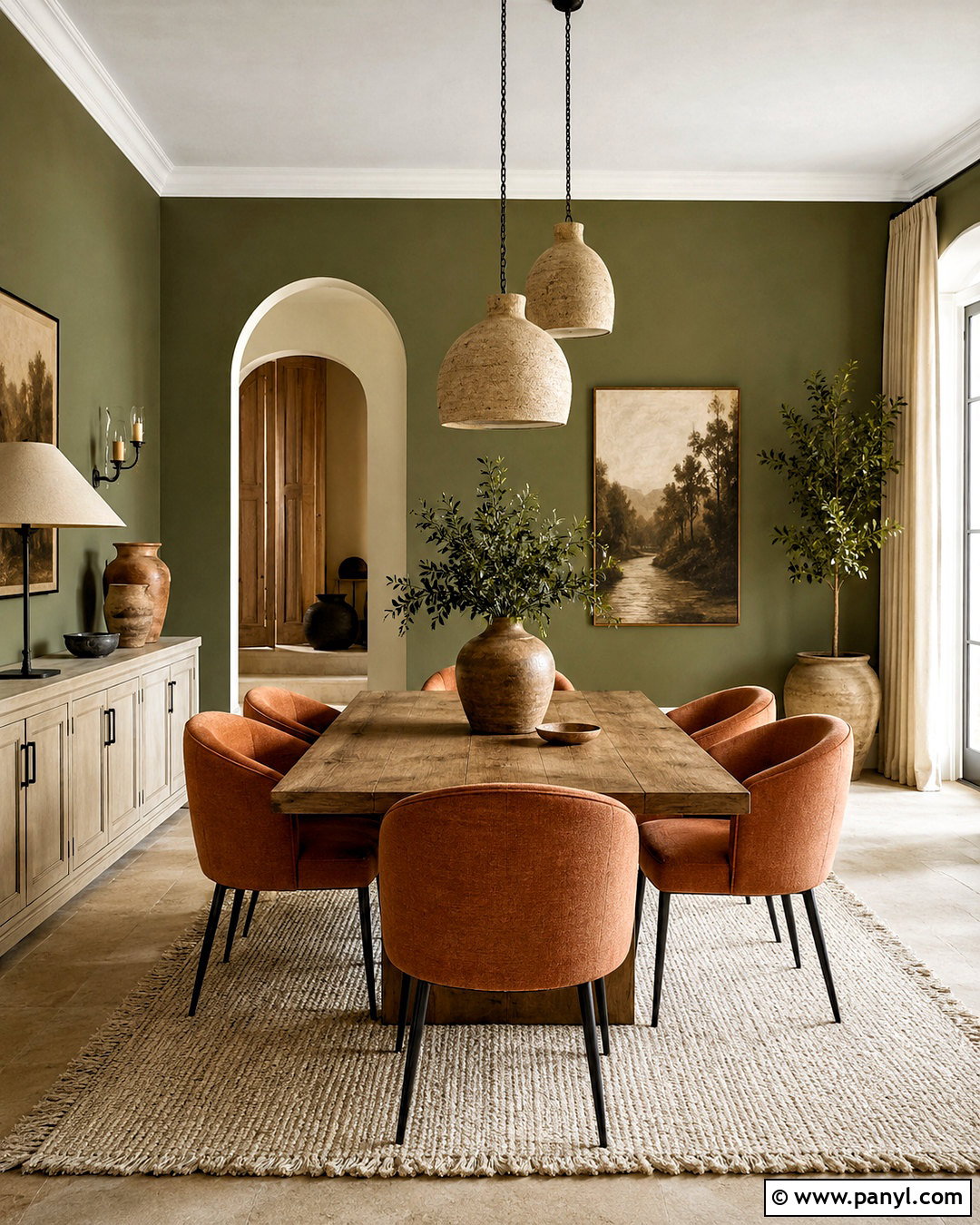
Terracotta provides an earthy contrast that makes sage, olive, and moss green walls feel especially warm. Create a welcoming dining space with muted olive walls, terracotta upholstered chairs, and a rustic oak table. Place a woven cream rug beneath the table and hang linen curtains in a warm natural shade. Handmade ceramic pendants, clay vessels, and a few black metal details can strengthen the Mediterranean character without overwhelming the room. Use terracotta in several textures, but keep the tones relatively consistent. A large cream sideboard will give the eyes a visual break. Finish the design with simple greenery and neutral tableware. This full scheme feels sun-warmed and relaxed, yet the clean furniture shapes keep it appropriate for a modern home.
16. Burnt Orange With Green Walls
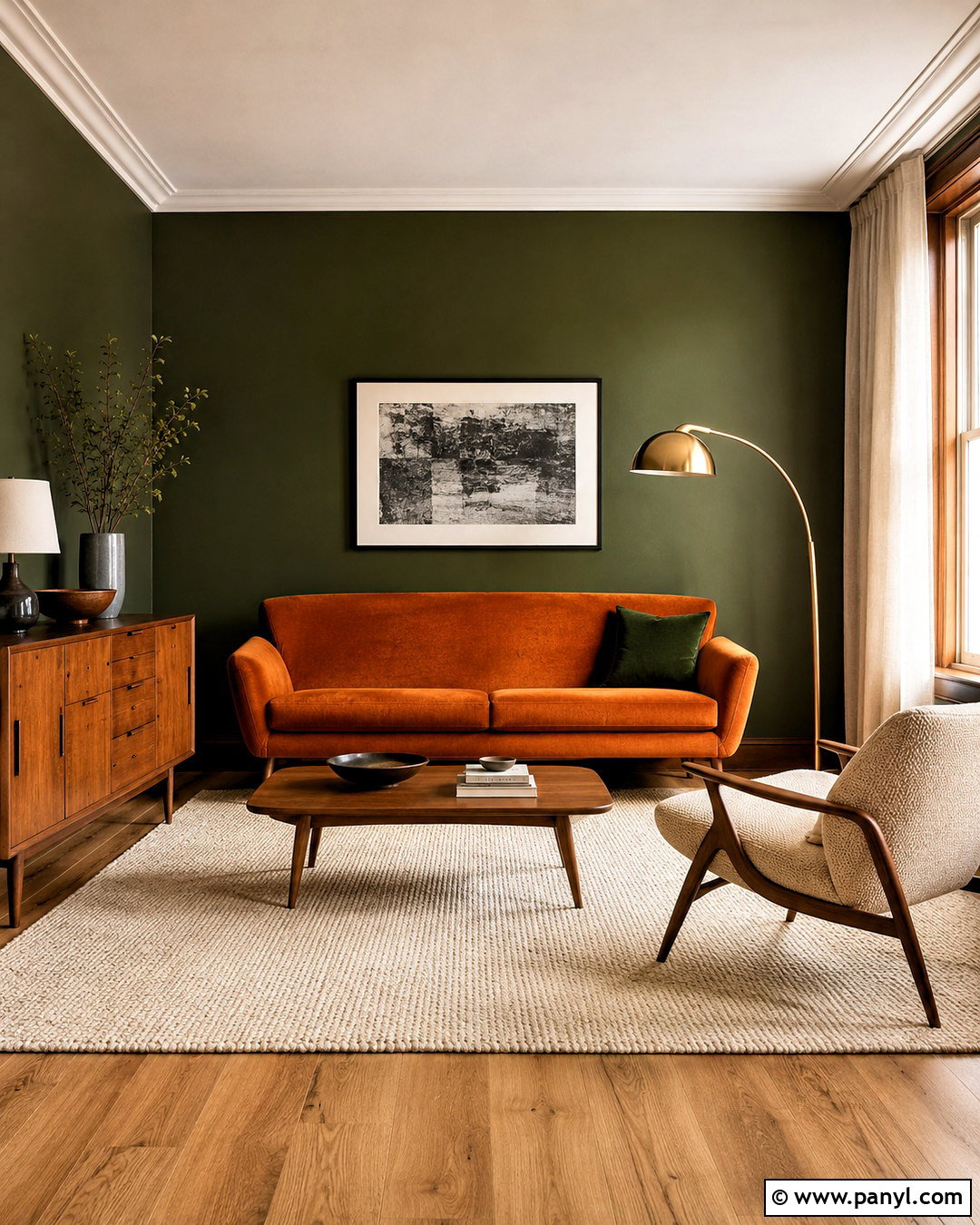
Burnt orange energizes green walls while remaining warmer and more livable than a vivid orange. For a midcentury-inspired living room, pair dark olive walls with a burnt orange sofa, walnut storage, and a cream textured rug. Add an oatmeal lounge chair to balance the stronger sofa color. Brass lighting and amber-toned wood can continue the warmth, while black-framed artwork introduces structure. Choose curtains in natural linen rather than orange so the windows remain light. Repeat the sofa color only in small doses, such as one patterned pillow or a stripe in the rug. The completed space feels bold but controlled. Dark green provides a grounded background, and the orange seating becomes a clear focal point without dominating every surface.
17. Mustard Yellow With Green Walls
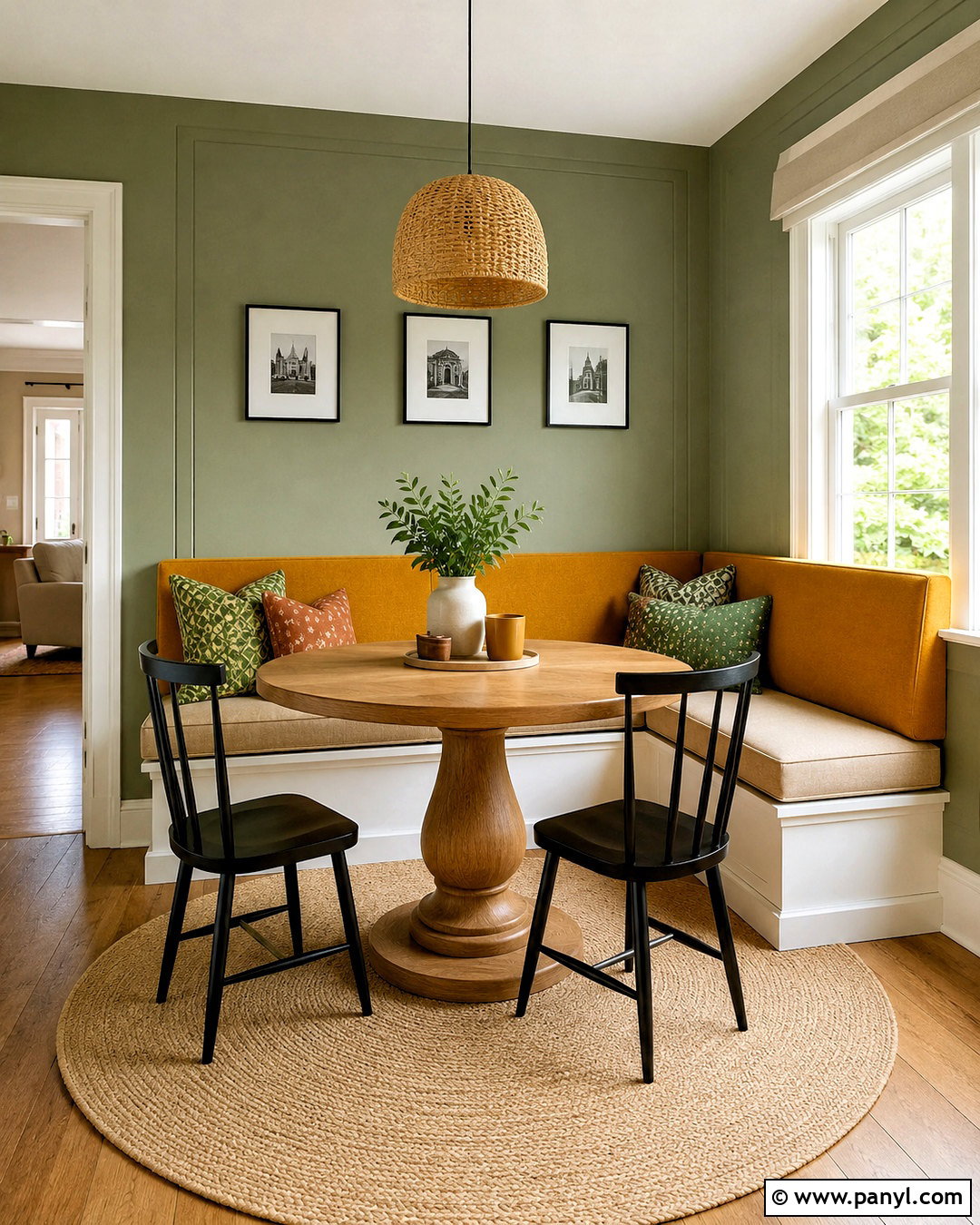
Mustard yellow adds cheerful warmth to green walls without creating the sharpness of a bright primary yellow. Build a comfortable breakfast nook with soft sage walls, a mustard upholstered banquette, and a round oak pedestal table. Add cream seat cushions or patterned pillows containing green, mustard, and rust. A natural woven pendant will reinforce the casual character, while warm white trim keeps the corner bright. Use a light beige rug or durable neutral flooring so the strong accent color remains focused on the seating. Small black frames and hardware can provide clean contrast. This coordinated nook feels sunny even on cloudy mornings. The muted tones also make the pairing easier to live with than a more saturated yellow-and-green combination.
18. Burgundy With Green Walls
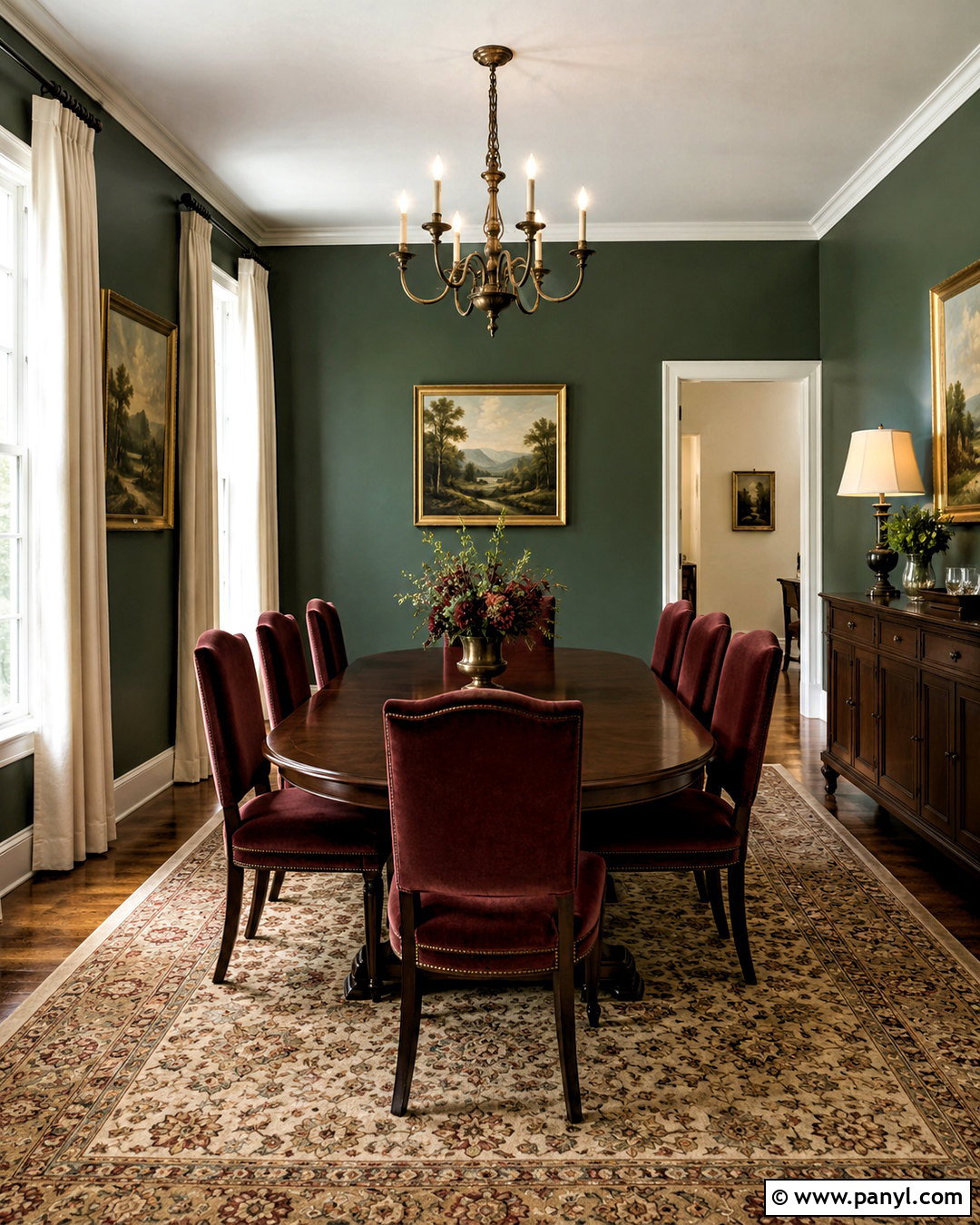
Burgundy brings depth and formality to green walls, particularly in dining rooms and studies. Pair subdued forest green walls with burgundy dining chairs, a dark oak table, and a traditional cream rug with small red and green details. Hang ivory curtains to brighten the windows and select an aged brass chandelier for warm reflection. A walnut sideboard and framed landscape art can support the classic atmosphere. Keep burgundy concentrated in upholstery and a few tabletop accents rather than painting another large surface. Rich colors need lighter breathing space, so use cream on the ceiling, trim, and lampshades. The finished room feels elegant and established, with green acting as a strong background and burgundy adding warmth, contrast, and a sense of occasion.
19. Lavender With Green Walls
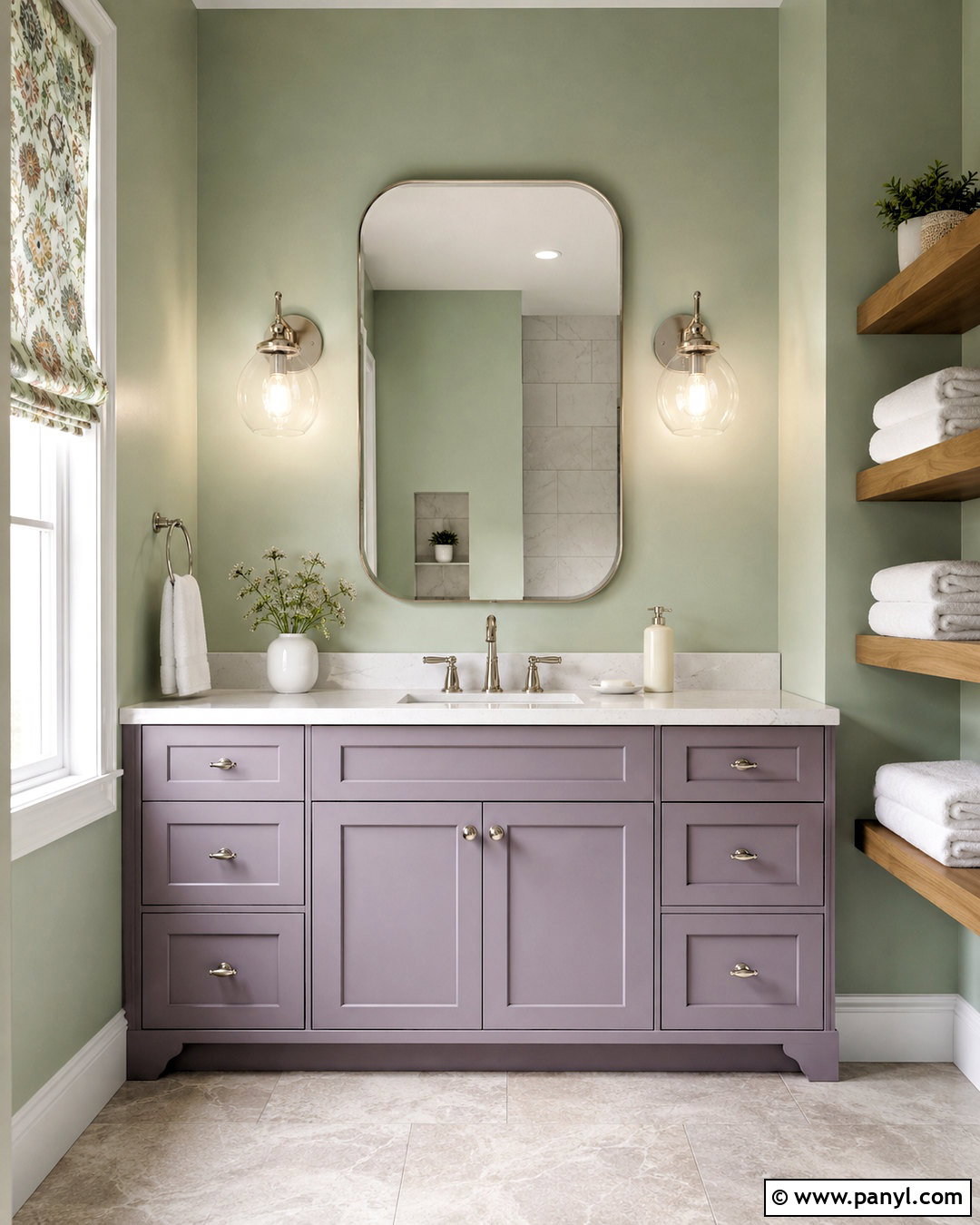
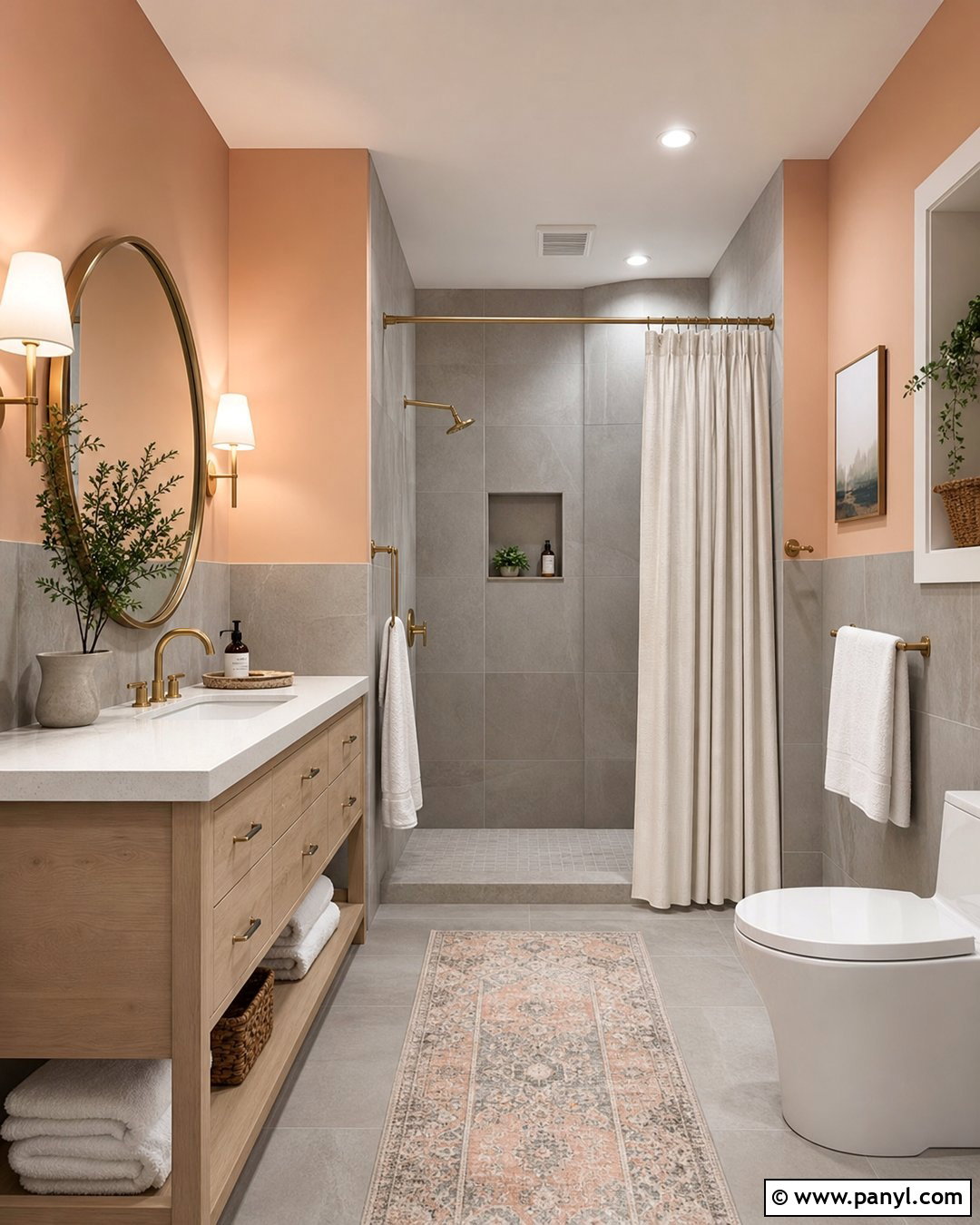
Lavender offers a softer, less expected contrast to green walls and works particularly well with silvery sage. Create a calm bathroom using pale sage walls, a lavender-painted vanity, and white quartz countertops. Add polished nickel hardware, white towels, and a light gray stone floor to keep the palette clean. A simple shower curtain or Roman shade can feature a small botanical pattern containing lavender and green. Warm wood shelves will prevent the cooler colors from feeling clinical. Choose a grayed lavender rather than a sugary purple, especially in a compact room. Complete the design with a rounded mirror and bright glass sconces. The entire bathroom feels refreshing and distinctive while remaining gentle enough for a practical, everyday space.
20. Tonal Green With Green Walls
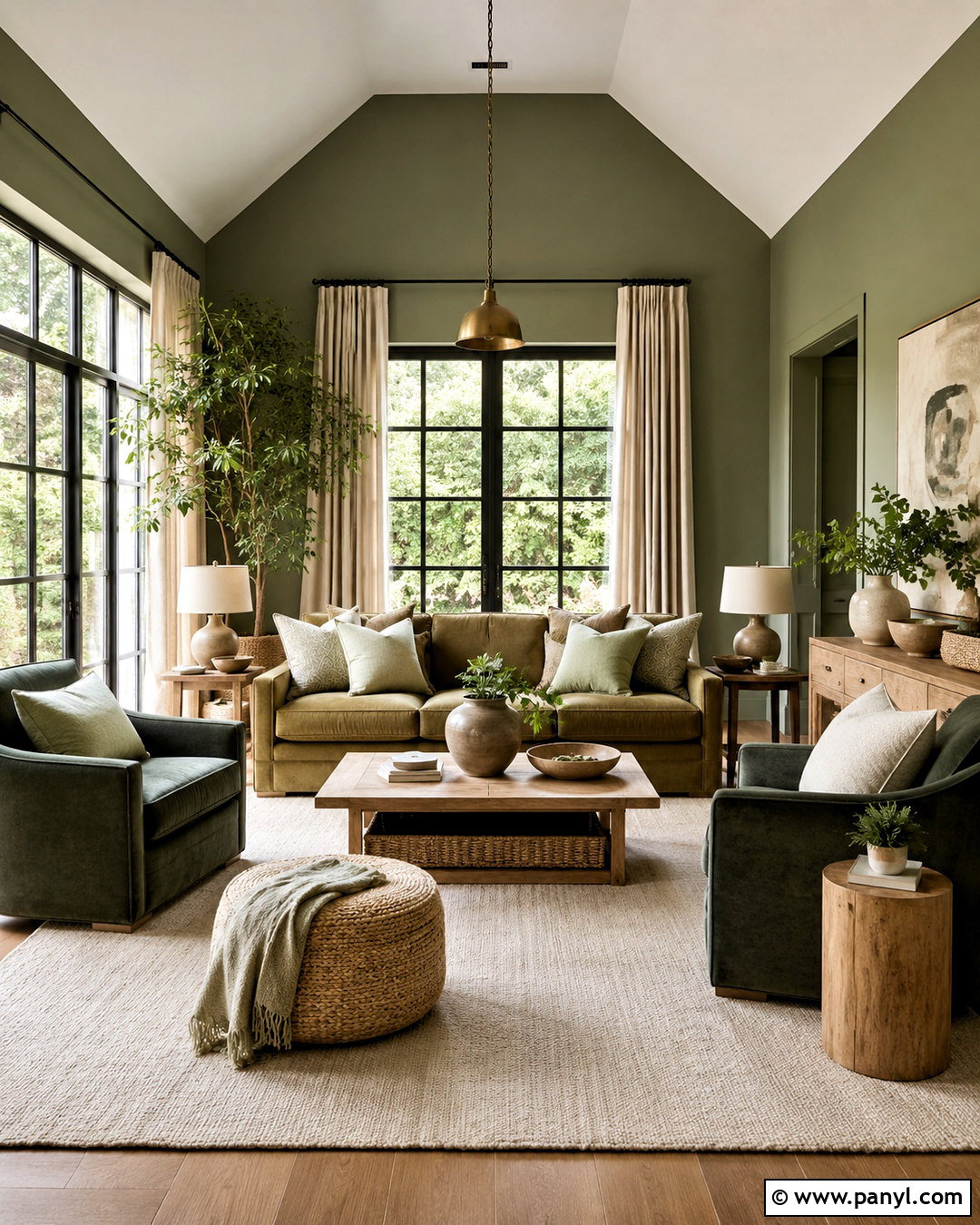
Using several green tones creates a layered room that feels cohesive without relying on a contrasting color. Start with medium sage walls in a sunroom, then introduce an olive sofa, dark forest green armchairs, and pale celadon cushions. Separate the greens with a warm cream rug, natural linen curtains, and light oak tables. Different materials are essential in a tonal palette, so combine velvet, linen, glazed ceramic, woven fibers, and painted wood. Add black frames and aged brass lighting for definition. Each green should be noticeably lighter, darker, warmer, or cooler than the next. The completed room will feel lush and collected rather than flat. Neutral flooring and trim provide visual pauses while allowing the varied green shades to remain the central theme.
Conclusion:
The answer to **What Colour Goes With Green Walls** depends on the green shade, the room’s natural light, and the atmosphere you want to create. Warm white, cream, beige, and greige provide an easy neutral foundation. Navy, charcoal, and black create sharper definition, while blush, terracotta, mustard, and burgundy introduce expressive warmth. Softer blue, lavender, and tonal green combinations offer a calmer alternative. Whichever palette you choose, repeat the companion color across furniture, textiles, and accessories instead of using it only once. Balance darker combinations with pale flooring, curtains, or ceilings. Most importantly, compare real samples against the wall in morning, afternoon, and evening light before purchasing major pieces.

Related Ideas and Inspiration:
Leave a Reply