
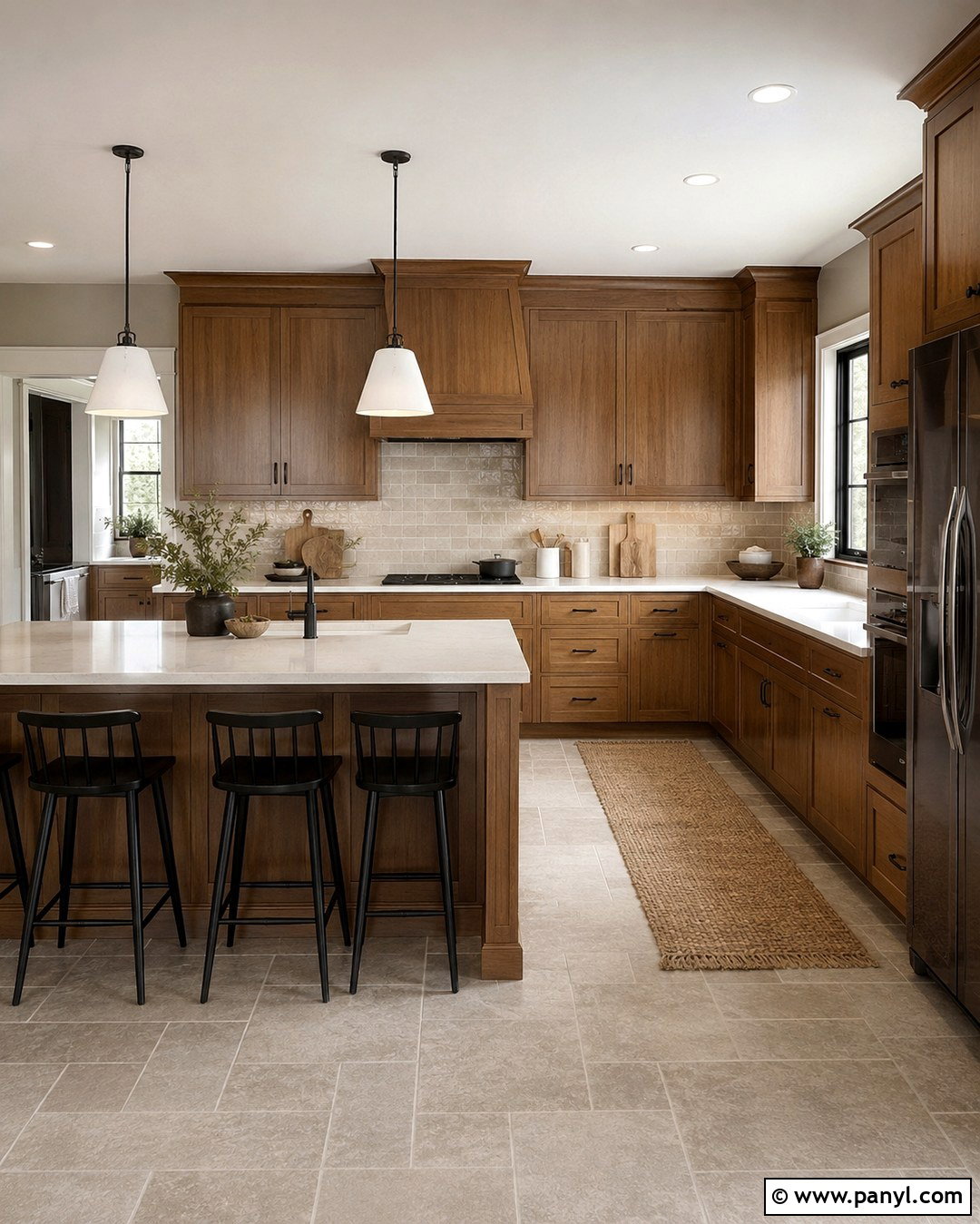
If you searched “20 What Color Goes With Beige Walls,” you likely want combinations that make beige feel intentional rather than plain. The good news is that beige works with far more than basic neutrals. Its warm, flexible character can support crisp white, earthy green, deep navy, soft blue, rich brown, or vibrant terracotta. The best choice depends on the beige undertone, natural light, flooring, and mood you want to create. Before committing, compare fabric and paint samples beside the walls throughout the day. Then repeat your chosen accent color in several places so the room feels balanced. The complete room looks below coordinate furniture, rugs, window treatments, lighting, and decor to answer 20 What Color Goes With Beige Walls.

1. White With Beige Walls
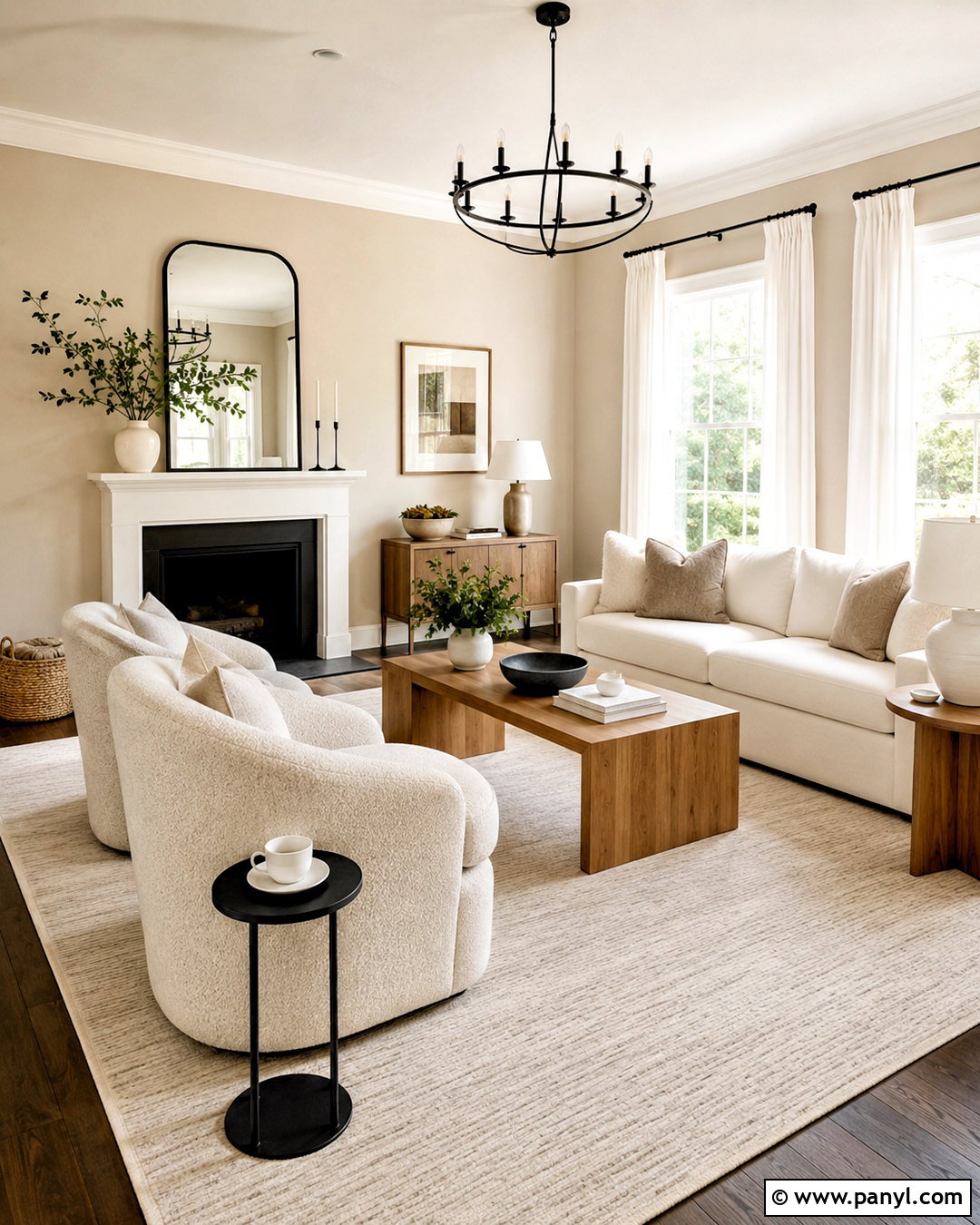
White creates a clean, bright contrast that keeps beige walls from looking muddy or dated. Build an airy living room with an ivory sofa, white linen curtains, and a warm white ceiling and trim. Choose pale oak furniture to bridge the difference between the fresh white accents and the warmer walls. A cream-and-beige textured rug will soften the transition underfoot. Add white ceramic lamps, simple framed artwork, and boucle accent chairs for depth without introducing another strong color. Matte black curtain rods or small bronze details can provide definition. This combination works especially well in rooms with limited natural light because the white surfaces reflect brightness while the beige walls maintain a welcoming, comfortable atmosphere.
2. Black With Beige Walls
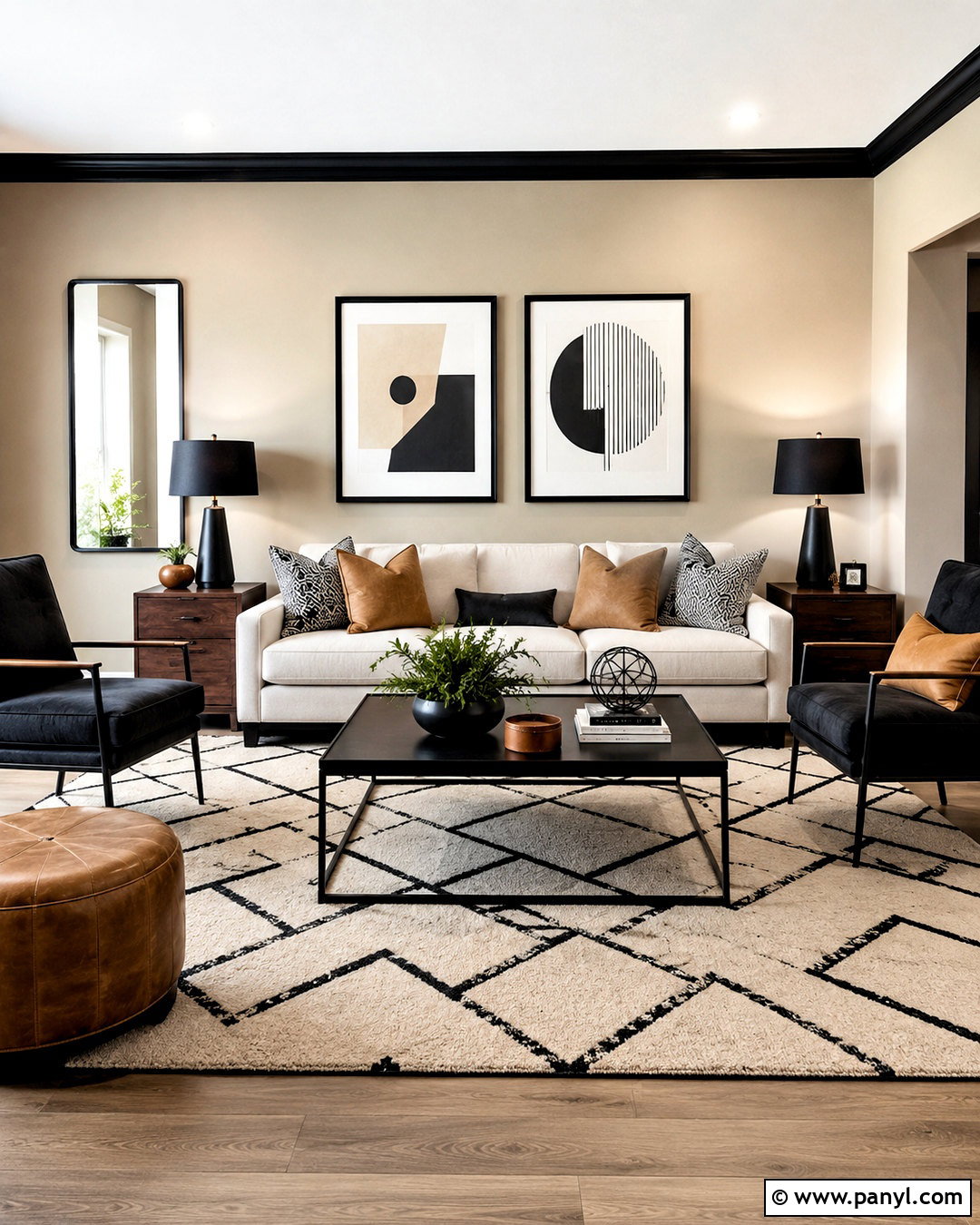
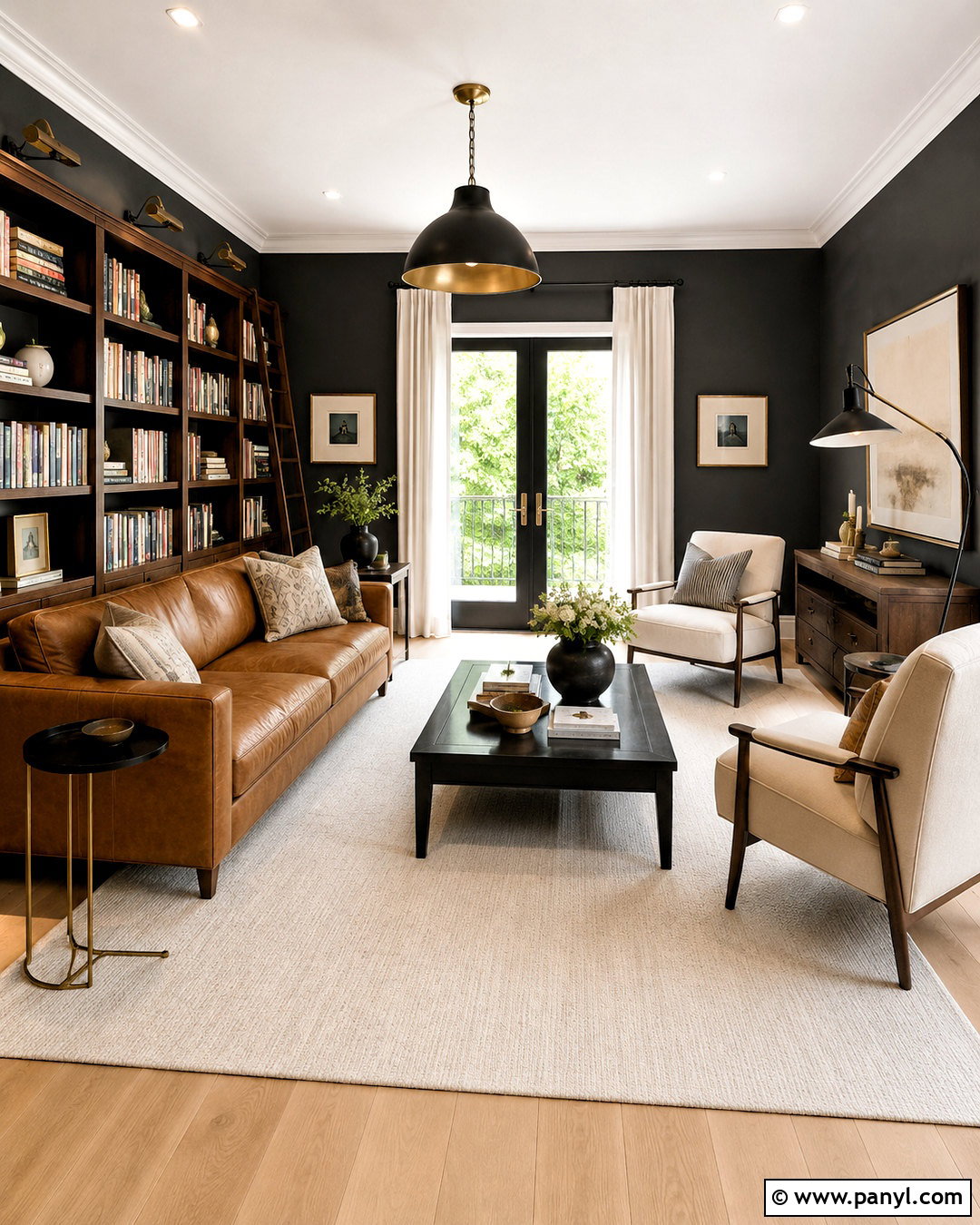
Do you want beige walls to feel sharper and more modern? Black supplies the strong contrast needed to give the room structure. Start with a beige living room featuring a black metal coffee table, slim black floor lamp, and charcoal-black window frames or curtain rods. Anchor the seating area with a cream sofa and two black upholstered chairs rather than using black on every large surface. A geometric rug containing beige, ivory, and black will connect the palette. Warm walnut side tables and cognac leather accessories prevent the contrast from feeling cold. Finish the room with large black-framed artwork, off-white curtains, and soft brass lighting. The result feels graphic and sophisticated while remaining comfortable enough for everyday living.
3. Navy Blue With Beige Walls
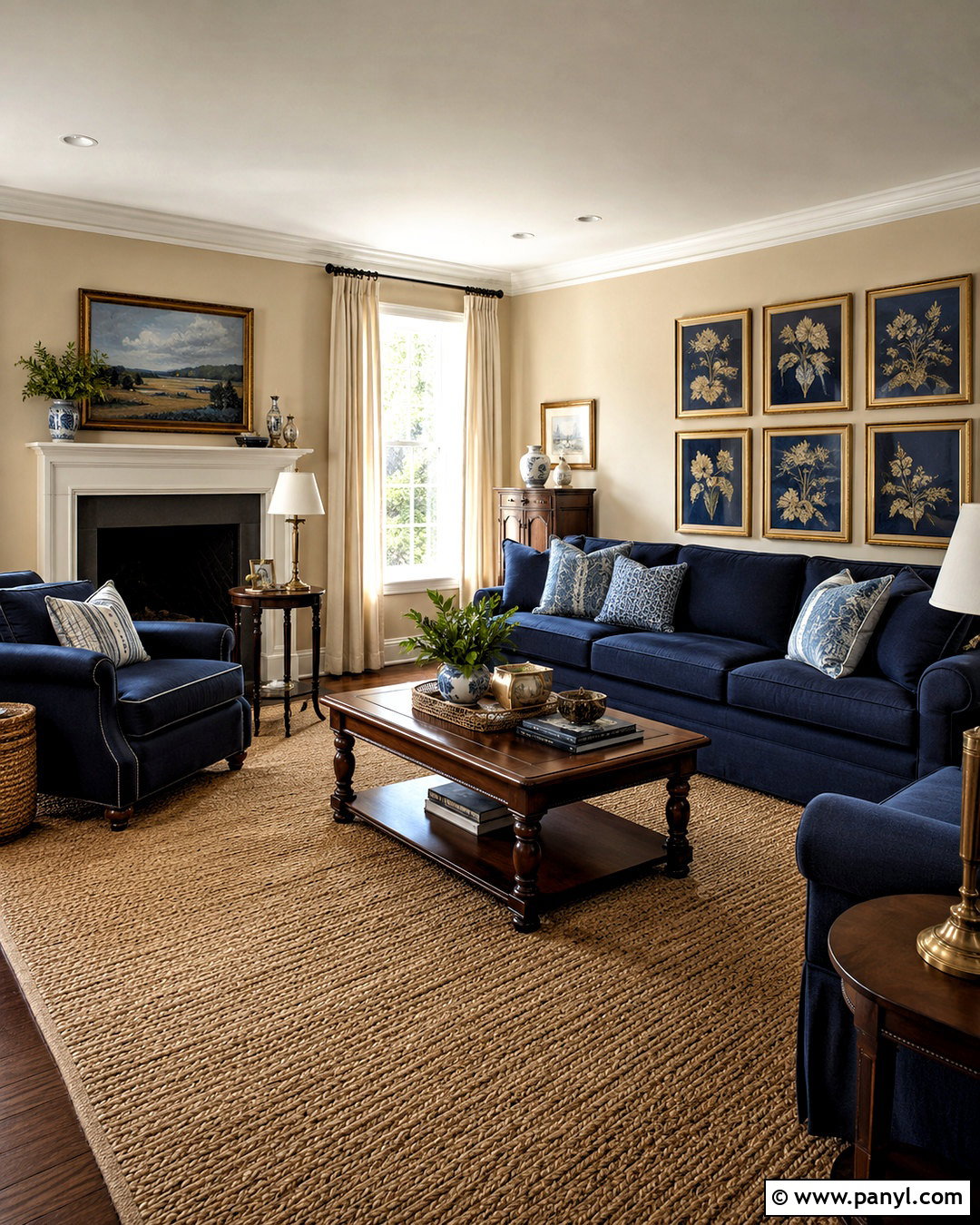
Navy blue adds depth to beige walls while preserving a classic, relaxed mood. Create a balanced family room with a substantial navy sofa, beige walls, and warm white trim. Place a natural jute rug beneath the seating to reinforce the walls’ earthy undertone. Medium-toned walnut tables, antique brass lamps, and cream curtains keep the dark upholstery from dominating the room. Bring navy to the opposite side through patterned pillows, ceramic vases, and artwork containing blue and tan. If the room is small, use navy on two armchairs instead of the sofa. Include a few lighter denim-blue accents for variation. This complete palette suits coastal, traditional, transitional, and modern homes without making the space feel overly themed.
4. Sage Green With Beige Walls
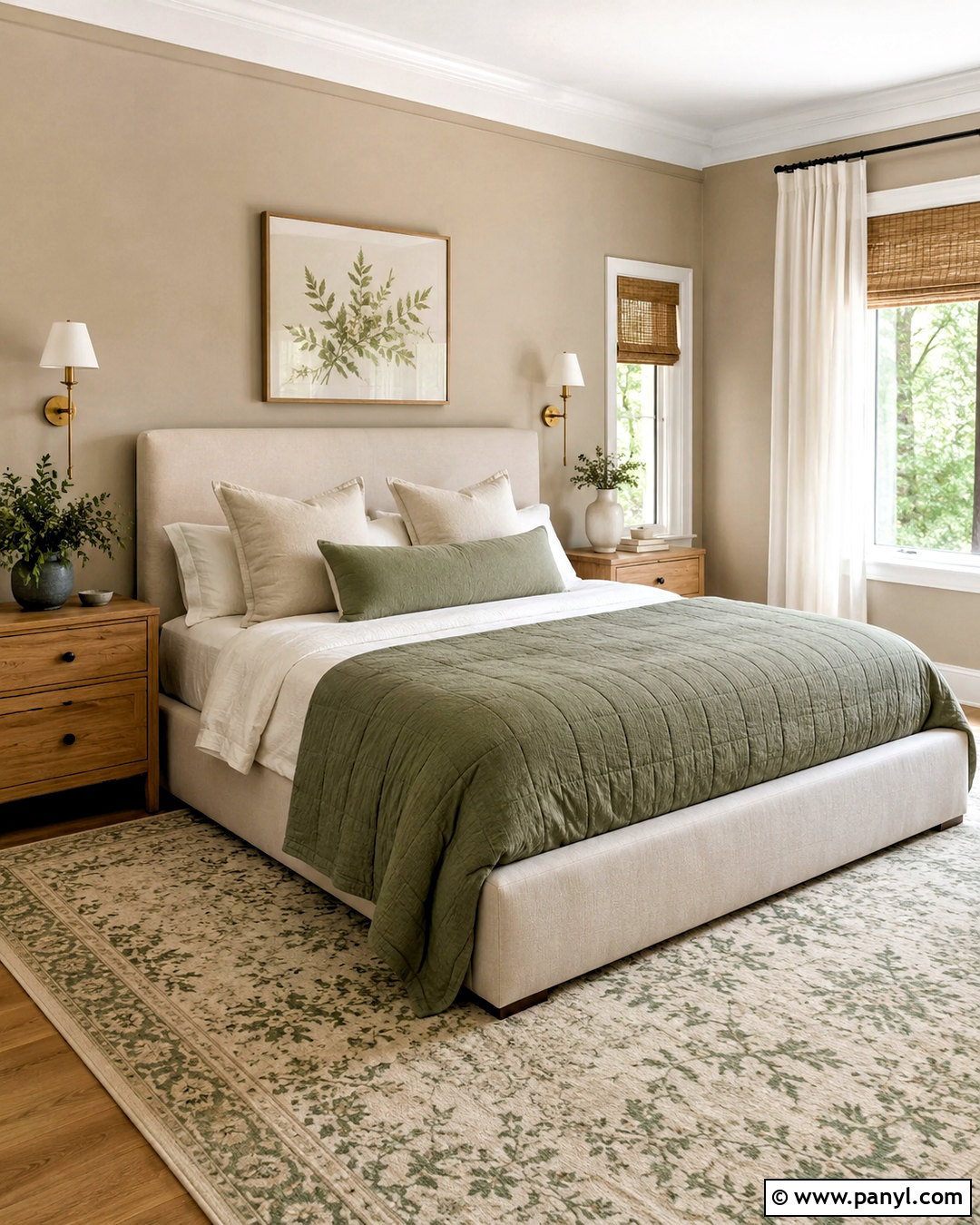
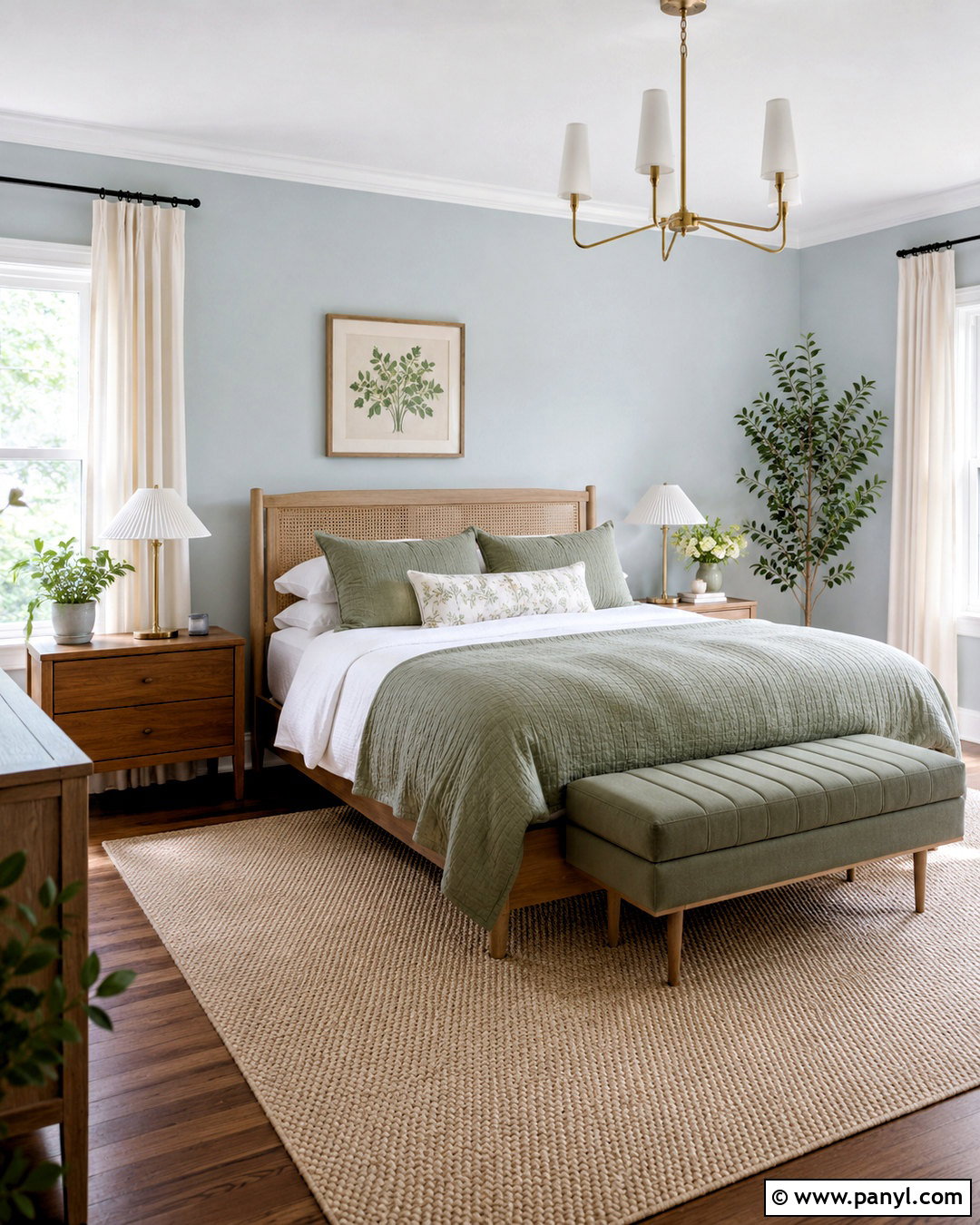
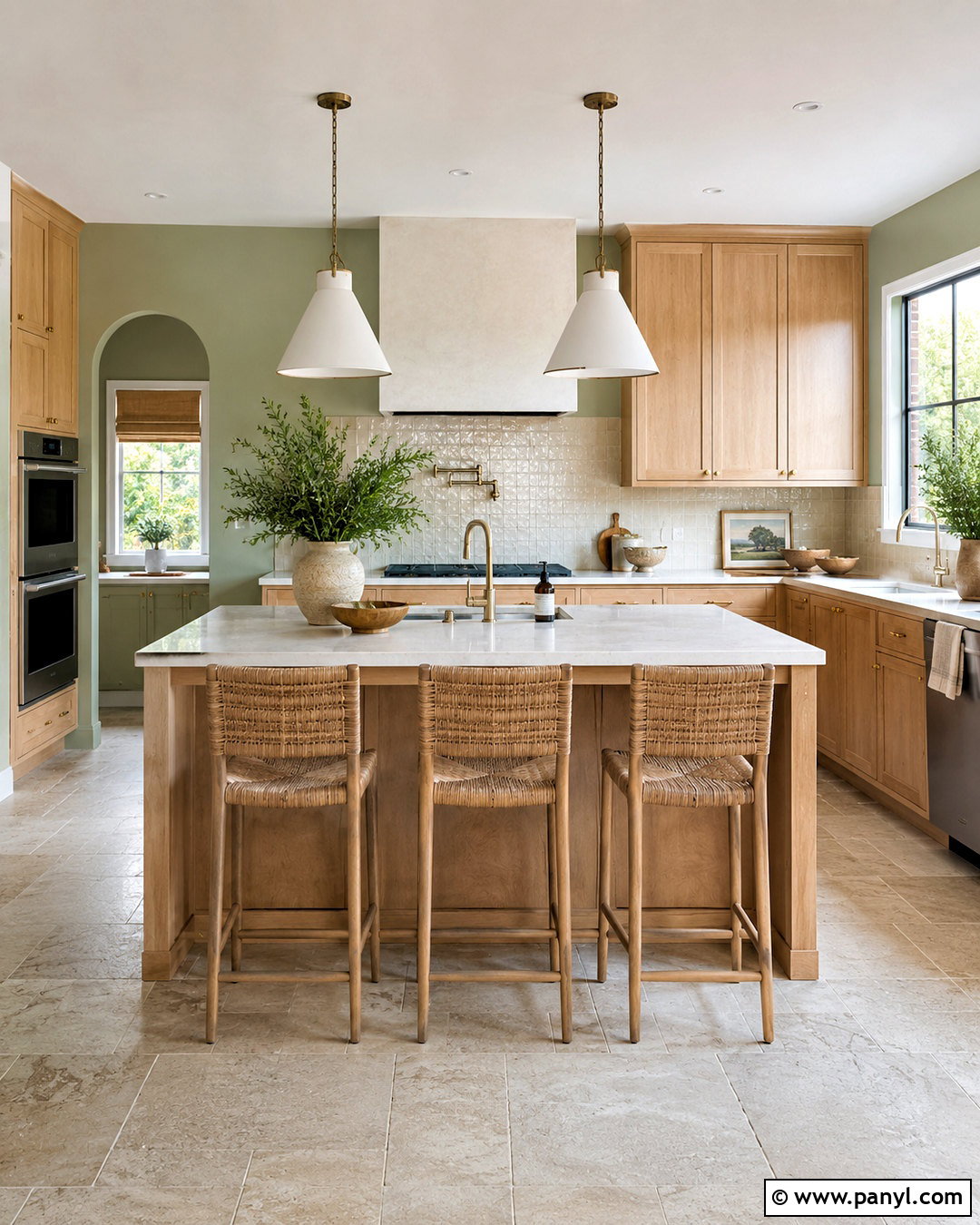
Soft sage green and beige walls create a peaceful, nature-inspired room that feels gentle rather than colorless. In a bedroom, combine an upholstered oatmeal bed with a muted sage quilt, cream sheets, and green-and-beige patterned pillows. Choose medium oak nightstands and woven shades to strengthen the organic character. White curtains can frame the windows while allowing the wall color to remain visible. Repeat sage through a painted dresser, ceramic lamp bases, or botanical artwork, but vary the tones slightly for a layered effect. A wool rug in cream, beige, and faded green will unify the floor and furnishings. Add aged brass lighting and a few leafy plants. This palette is especially effective for creating a restful, approachable retreat.
5. Olive Green With Beige Walls
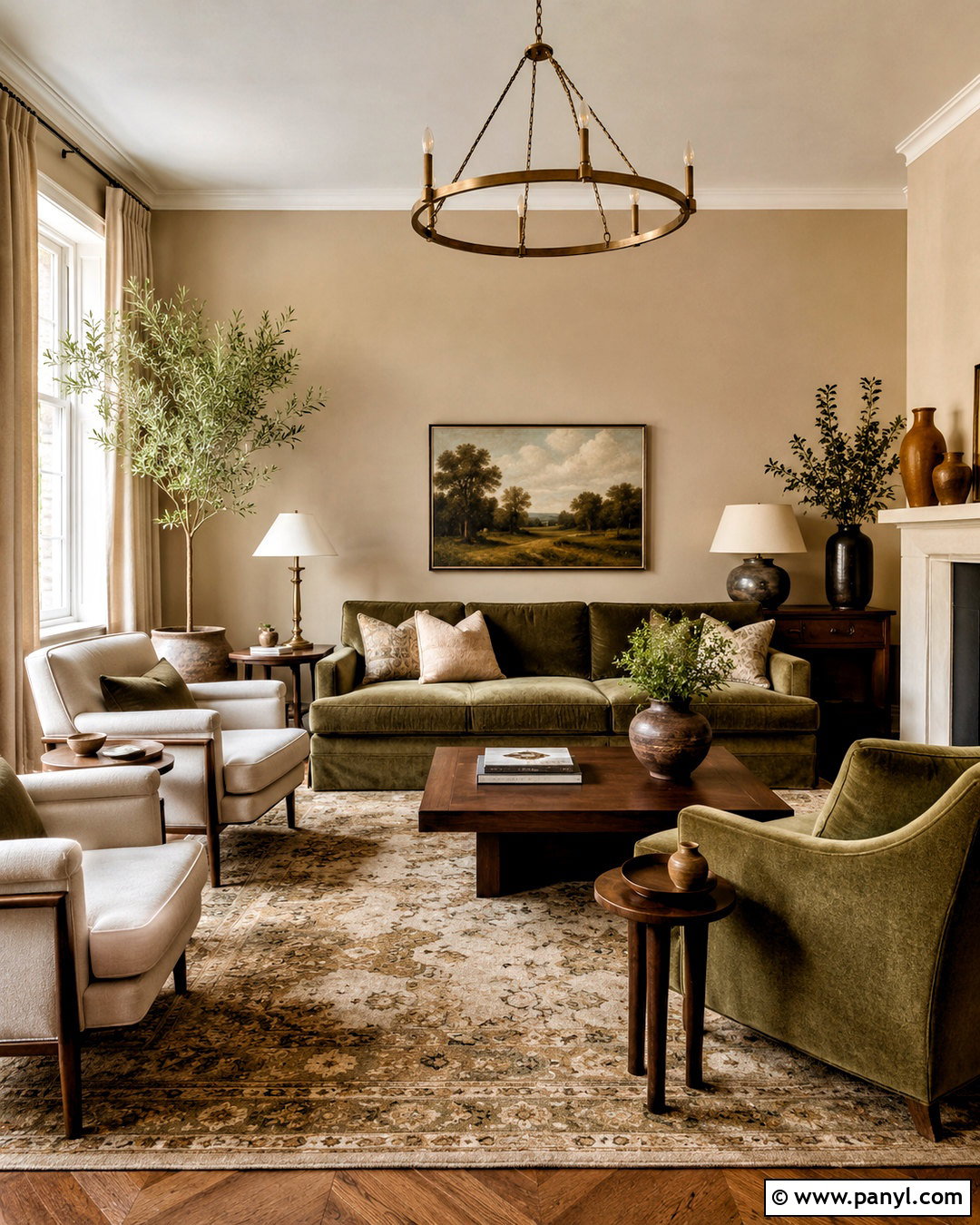
Olive green produces a richer, earthier contrast than sage and works beautifully with warm beige walls. Design a cozy living room around an olive velvet sofa or pair of generously sized armchairs. Introduce a vintage-style rug combining tan, moss, cream, and muted rust. Dark walnut tables and aged brass lighting complement the deep green while adding warmth. Keep curtains light with natural linen panels that blend softly into the beige background. Black-framed landscape art can add definition without disrupting the organic palette. For a finished look, repeat olive in cushions, pottery, and a throw placed across a cream sofa. The combination feels grounded and collected, making it ideal for traditional, organic modern, rustic, or midcentury-inspired interiors.
6. Forest Green With Beige Walls
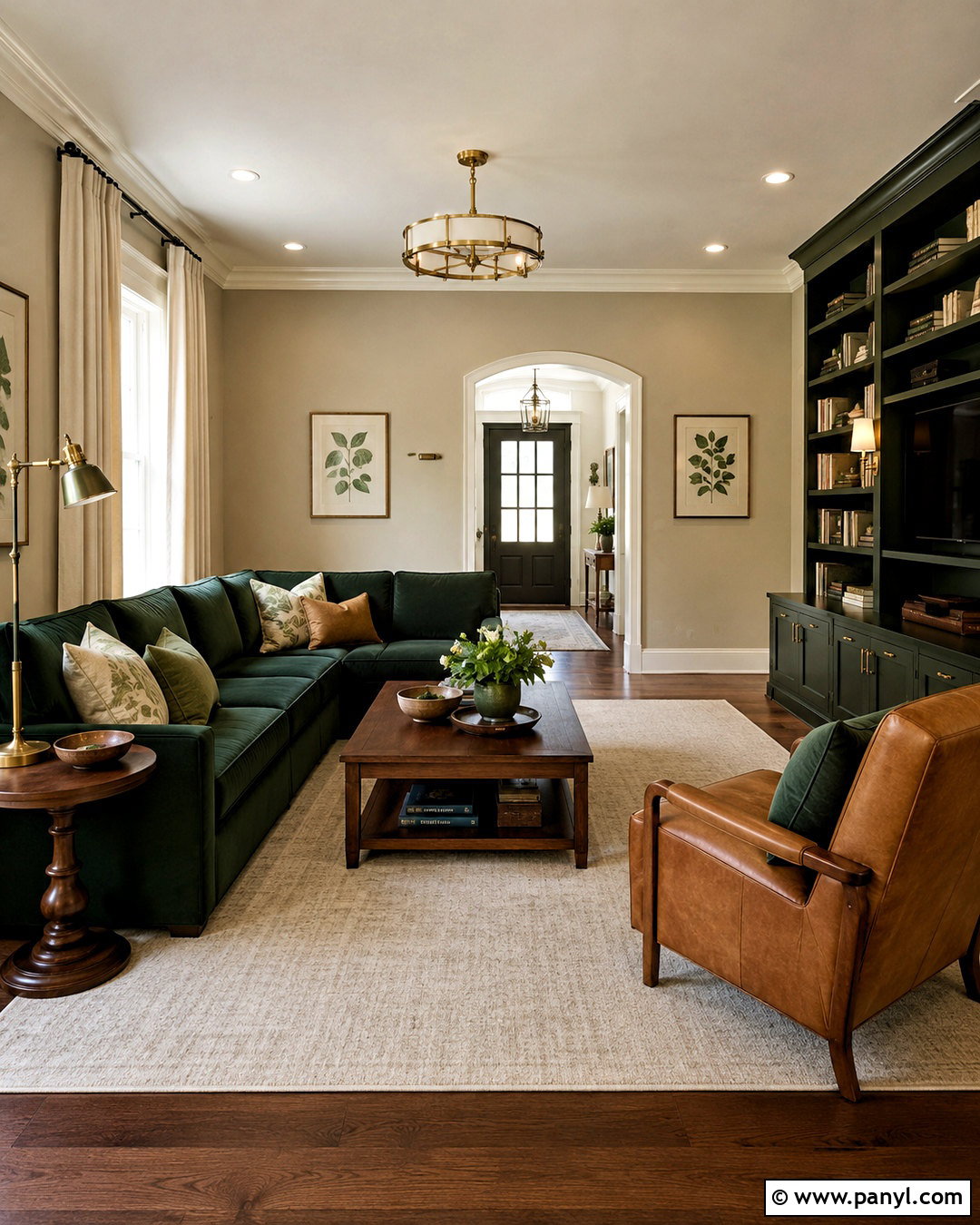
Forest green turns neutral beige walls into an elegant background for a dramatic room. Use the color confidently on a deep green sectional, built-in bookcase, or substantial media cabinet. Keep the remaining furniture lighter with camel leather chairs, an ivory rug, and pale beige curtains. Walnut wood, dark bronze hardware, and warm brass lamps support the richness of the green without competing with it. Add patterned cushions that combine forest green, cream, and restrained touches of gold. Large botanical prints or traditional landscapes can fill blank wall space and reinforce the palette. Because forest green is visually heavy, distribute it around the room instead of concentrating it in one corner. Bright upholstery piping or cream accessories will provide essential separation.
7. Dusty Blue With Beige Walls
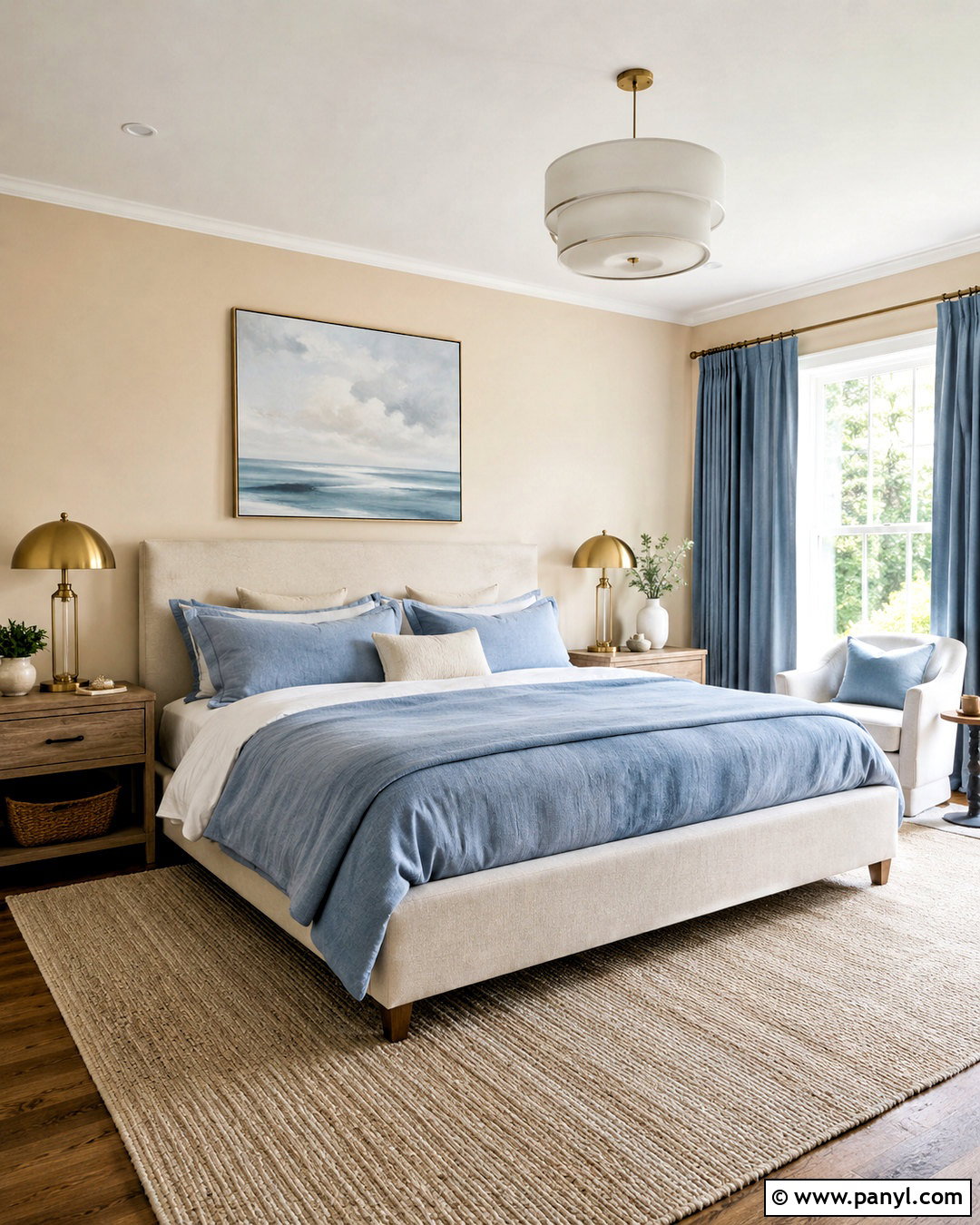
Dusty blue softens the warmth of beige walls and creates a calm, balanced room. This pairing is particularly attractive in bedrooms, reading rooms, and casual living spaces. Start with a light beige upholstered bed or sofa, then introduce dusty blue through curtains, a washable rug, and relaxed cotton textiles. Weathered oak furniture complements the muted color story without making everything appear gray. Add warm white lampshades, brushed nickel or antique brass hardware, and artwork featuring hazy blue skies or abstract shapes. A few darker slate-blue accents can prevent the design from looking washed out. Keep larger surfaces simple and layer linen, wool, and woven materials. The completed space feels fresh, comfortable, and quietly colorful throughout every season.
8. Teal With Beige Walls
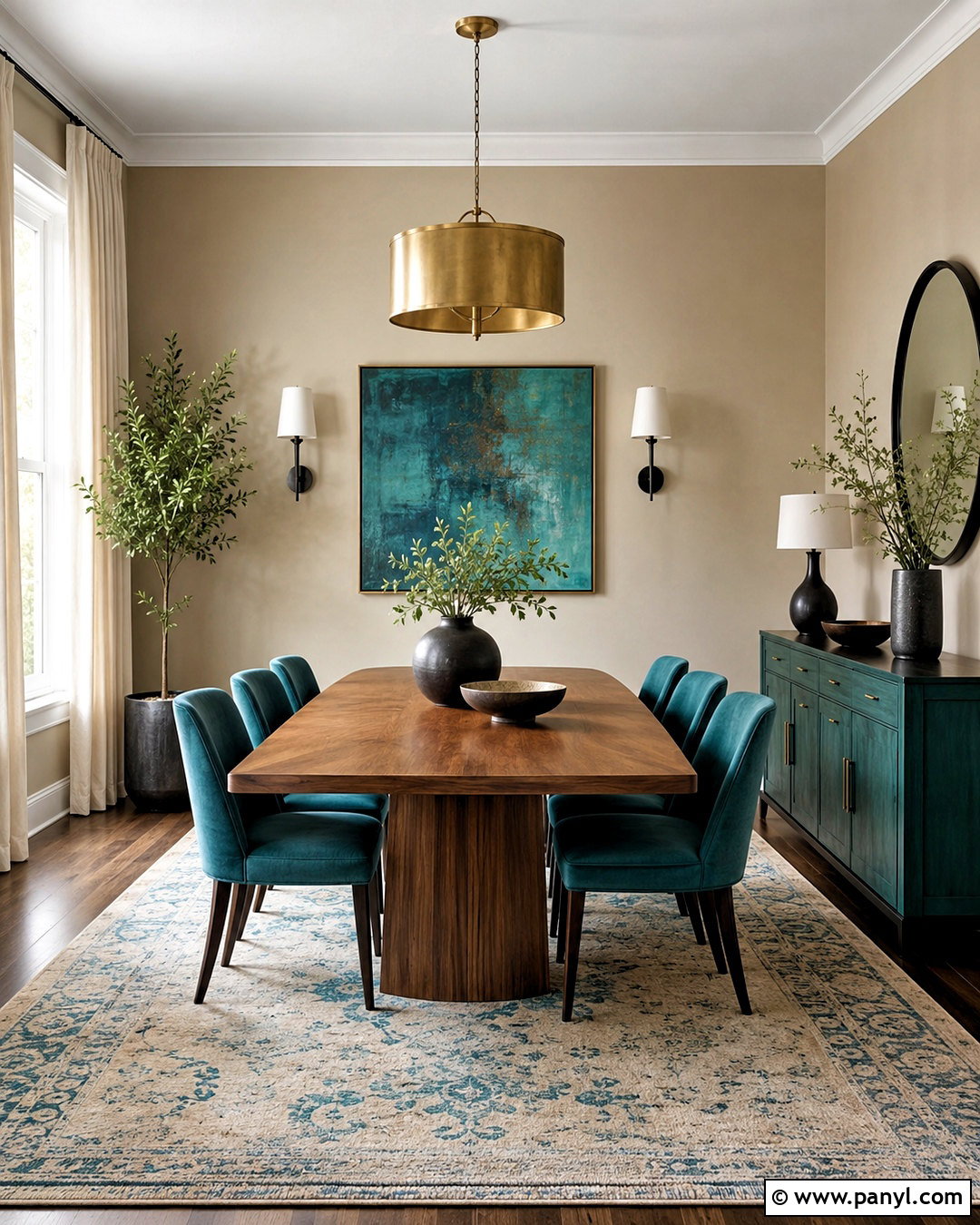
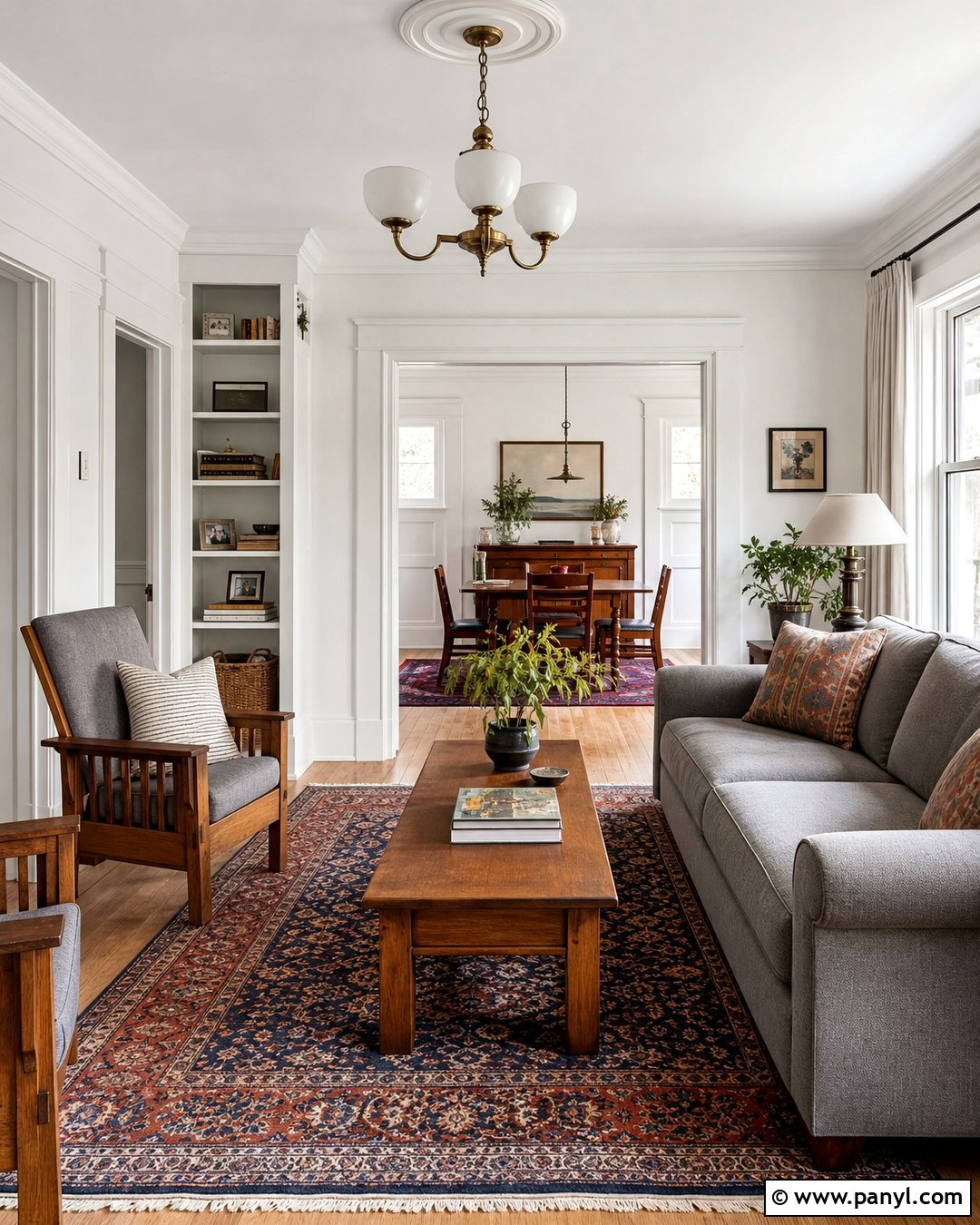
Teal brings lively blue-green color to beige walls while the neutral background prevents it from becoming overwhelming. Create a welcoming dining room with teal upholstered chairs, a medium walnut table, and a beige-and-teal patterned rug. Hang warm white curtains and install a brushed brass pendant to introduce a softer glow. A large piece of artwork containing turquoise, cream, and earthy brown can connect the furnishings to the walls. Use teal again on a sideboard, lamp, or decorative bowl, but leave enough beige visible to provide visual rest. Small black details will sharpen the arrangement. This palette works best when teal is concentrated in a few meaningful pieces instead of scattered through numerous tiny accessories, which can make the room feel busy.
9. Light Gray With Beige Walls
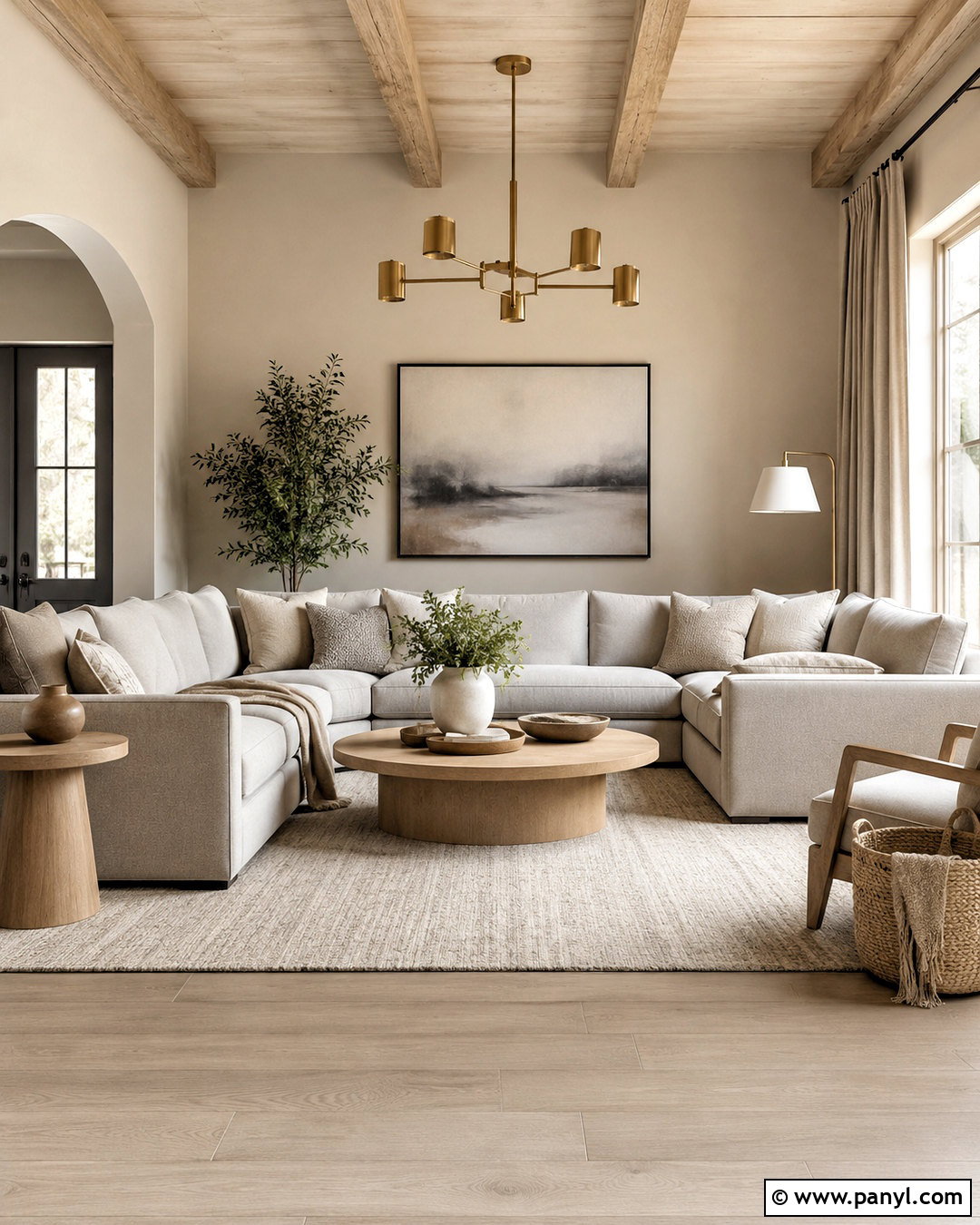
Light gray can work with beige walls when both colors share a soft, muted quality. Avoid icy blue-gray furnishings beside strongly golden beige. Instead, select warm dove gray upholstery, a greige rug, and stone-colored curtains. In a living room, place a light gray sectional against the beige walls, then add cream pillows and taupe throws to create a smooth transition. Pale oak furniture and brushed brass lighting will keep the room from feeling chilly. Add charcoal in small doses through framed art or table legs for definition. Textured fabrics are important because a neutral palette can otherwise appear flat. Boucle, linen, wool, and woven baskets give the complete room enough variation while maintaining a quiet, uncluttered appearance.
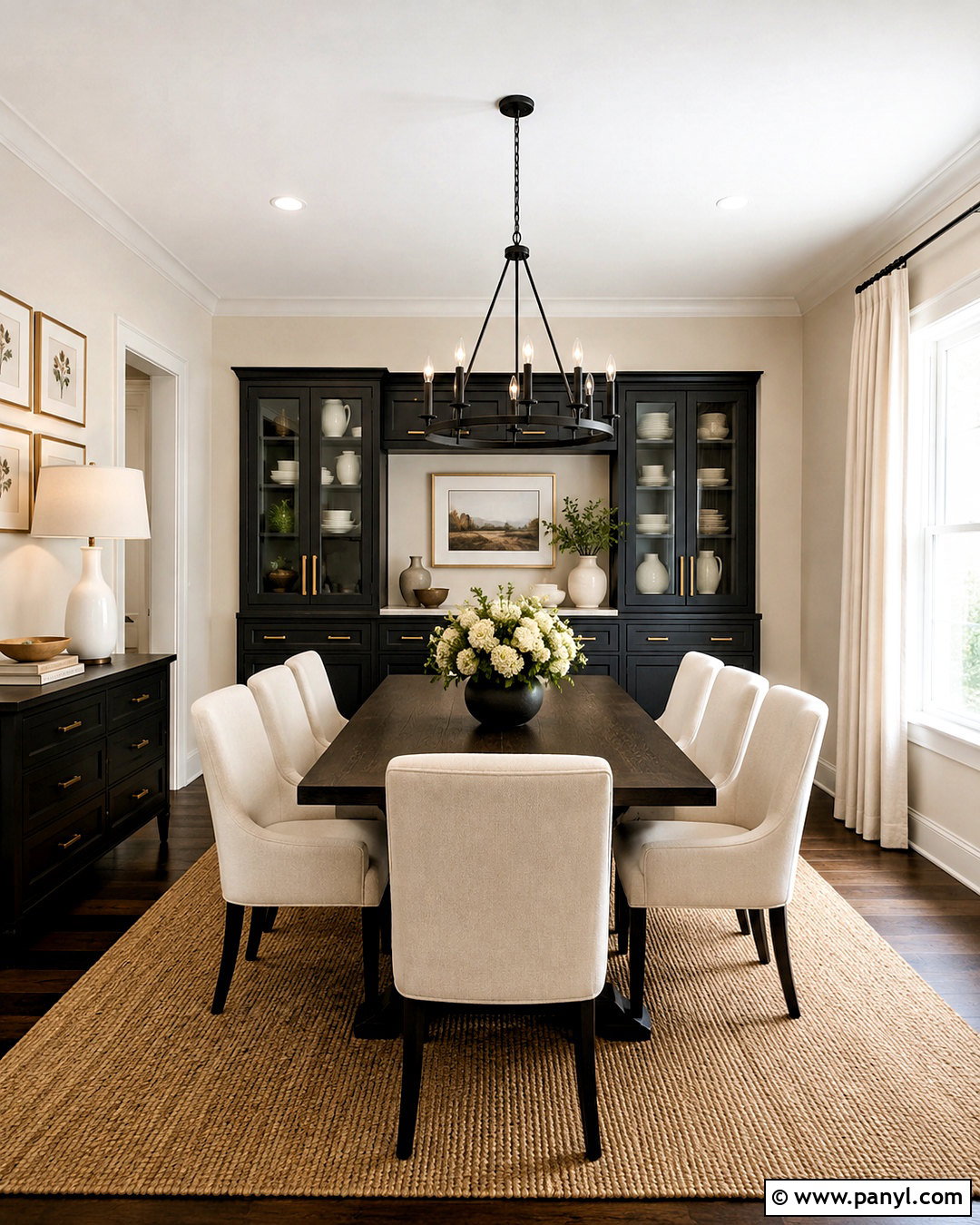
10. Charcoal Gray With Beige Walls
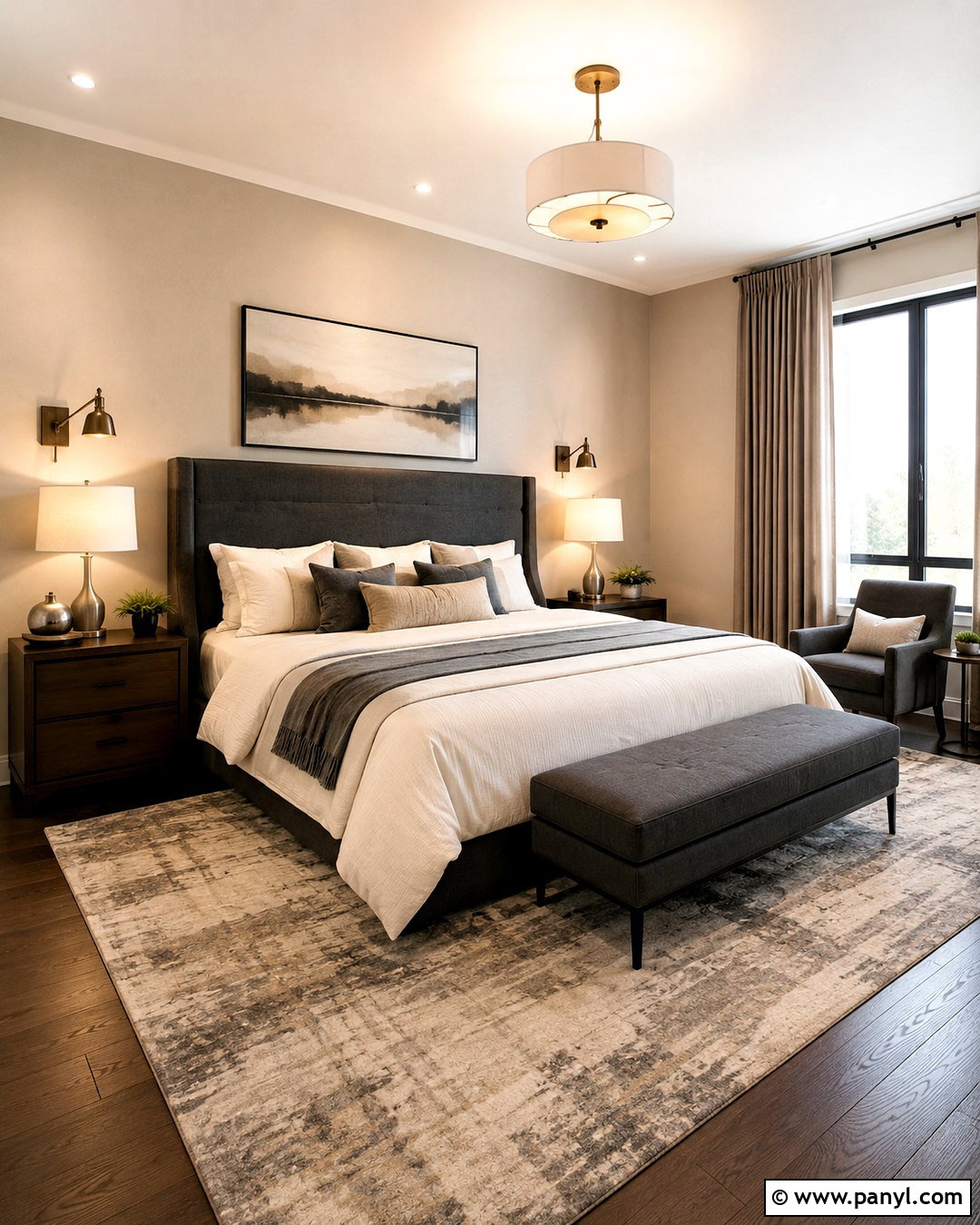
Charcoal gray gives beige walls a confident contemporary edge without creating the starkness of pure black. Build a modern bedroom around a charcoal upholstered headboard, warm beige walls, and crisp ivory bedding. Layer a gray-and-tan rug underneath, then add walnut nightstands and bronze sconces to connect the cool and warm tones. Charcoal curtains can work in a bright room, while lighter taupe curtains are better where daylight is limited. Repeat the dark gray through a bench, picture frames, or a compact dresser so the headboard does not feel isolated. Keep the ceiling, trim, and lampshades warm white. The completed design feels grounded and refined, with enough contrast to emphasize the architecture and enough beige to remain inviting.
11. Chocolate Brown With Beige Walls
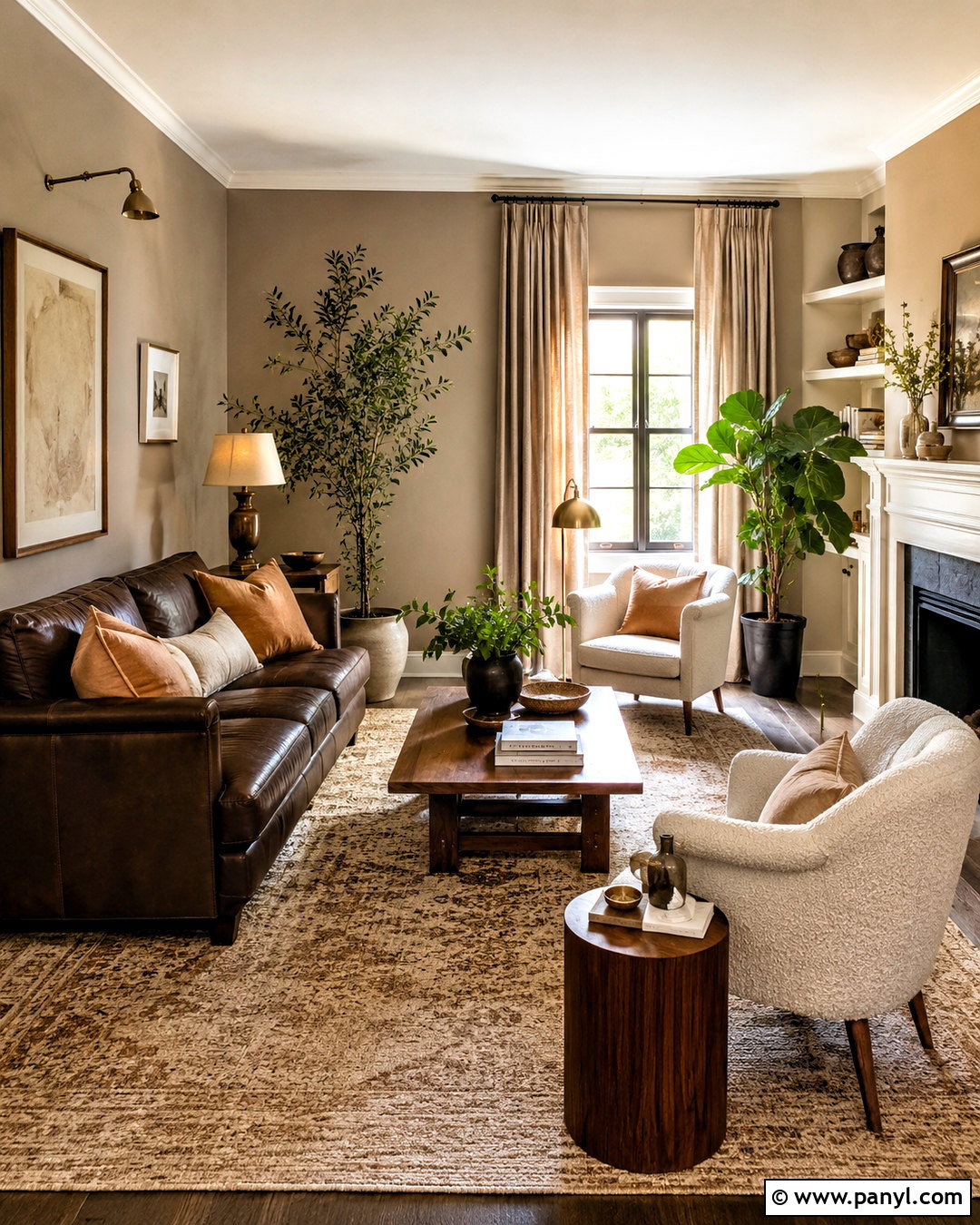
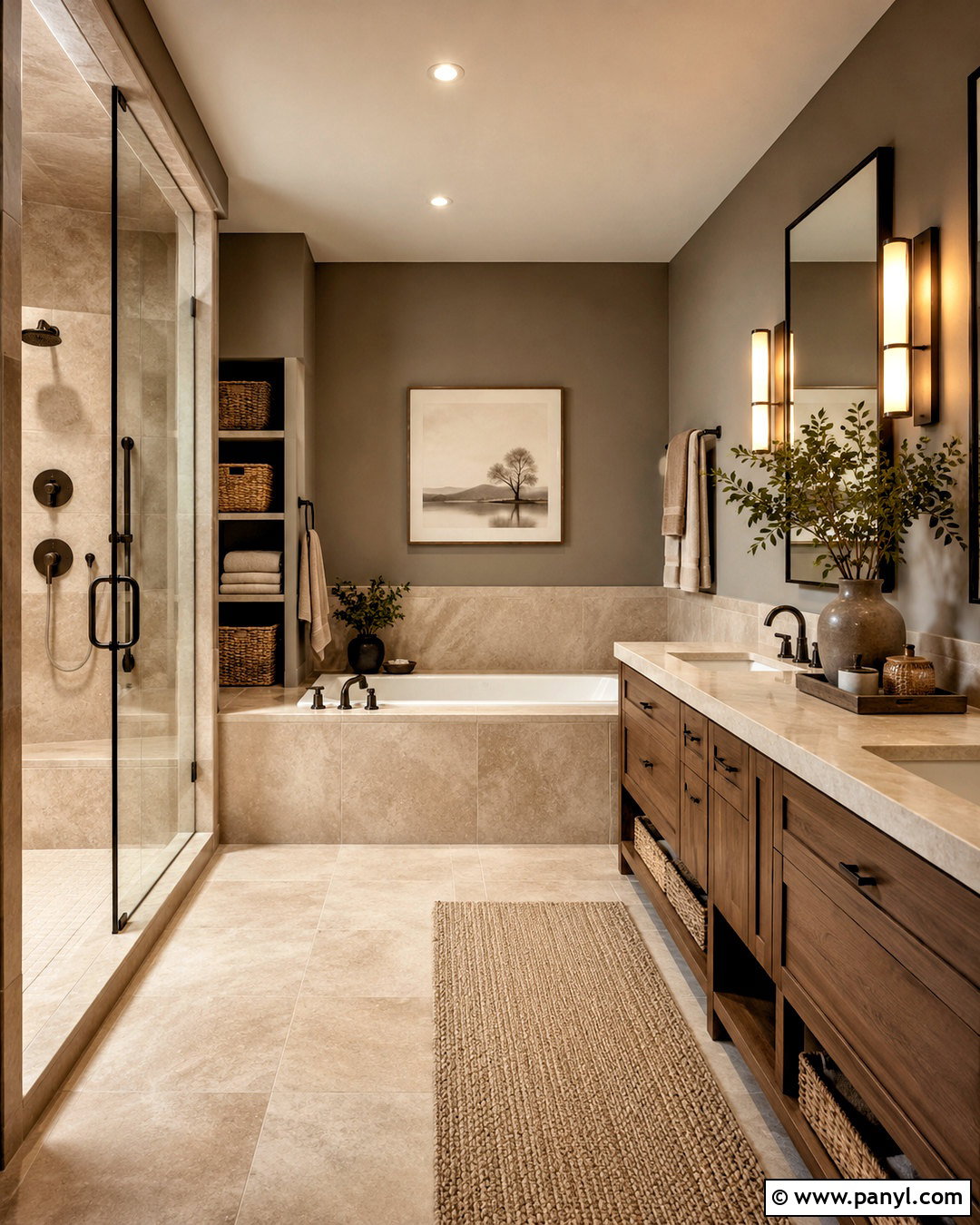
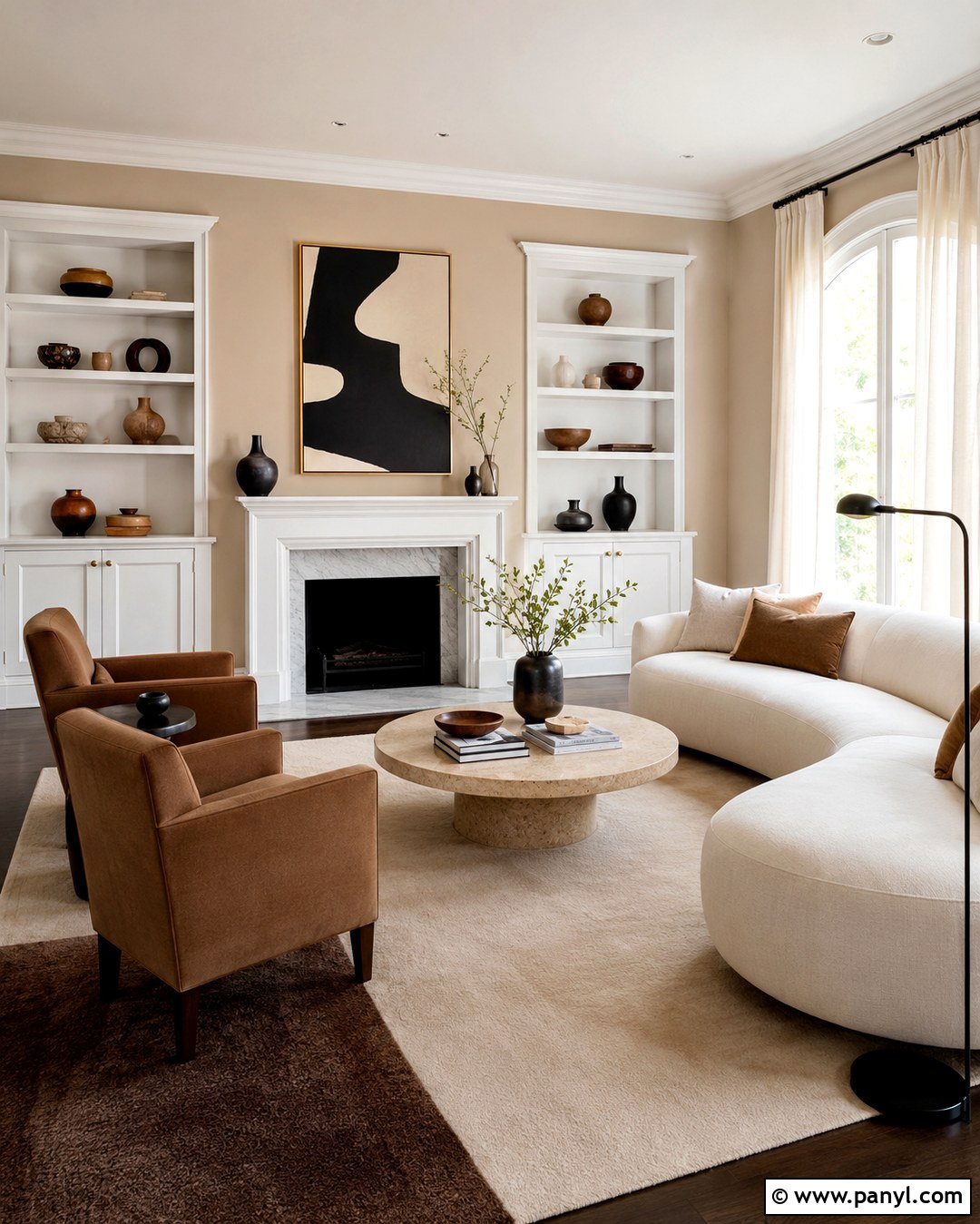
Chocolate brown deepens beige walls through a tonal combination that feels warm, layered, and comfortable. For a living room, use a dark brown leather sofa, cream boucle chairs, and a large rug woven with tan and ivory. Walnut or espresso tables will strengthen the darker foundation, while natural linen curtains stop the room from becoming too heavy. Introduce caramel, camel, and sand through pillows and throws rather than matching every brown exactly. Add antique brass lamps and large-scale artwork with cream backgrounds to brighten the walls. A few green plants provide freshness without changing the core palette. The finished design should contain several levels of brown, from pale beige to deep chocolate, creating visible contrast within one cohesive color family.
12. Terracotta With Beige Walls
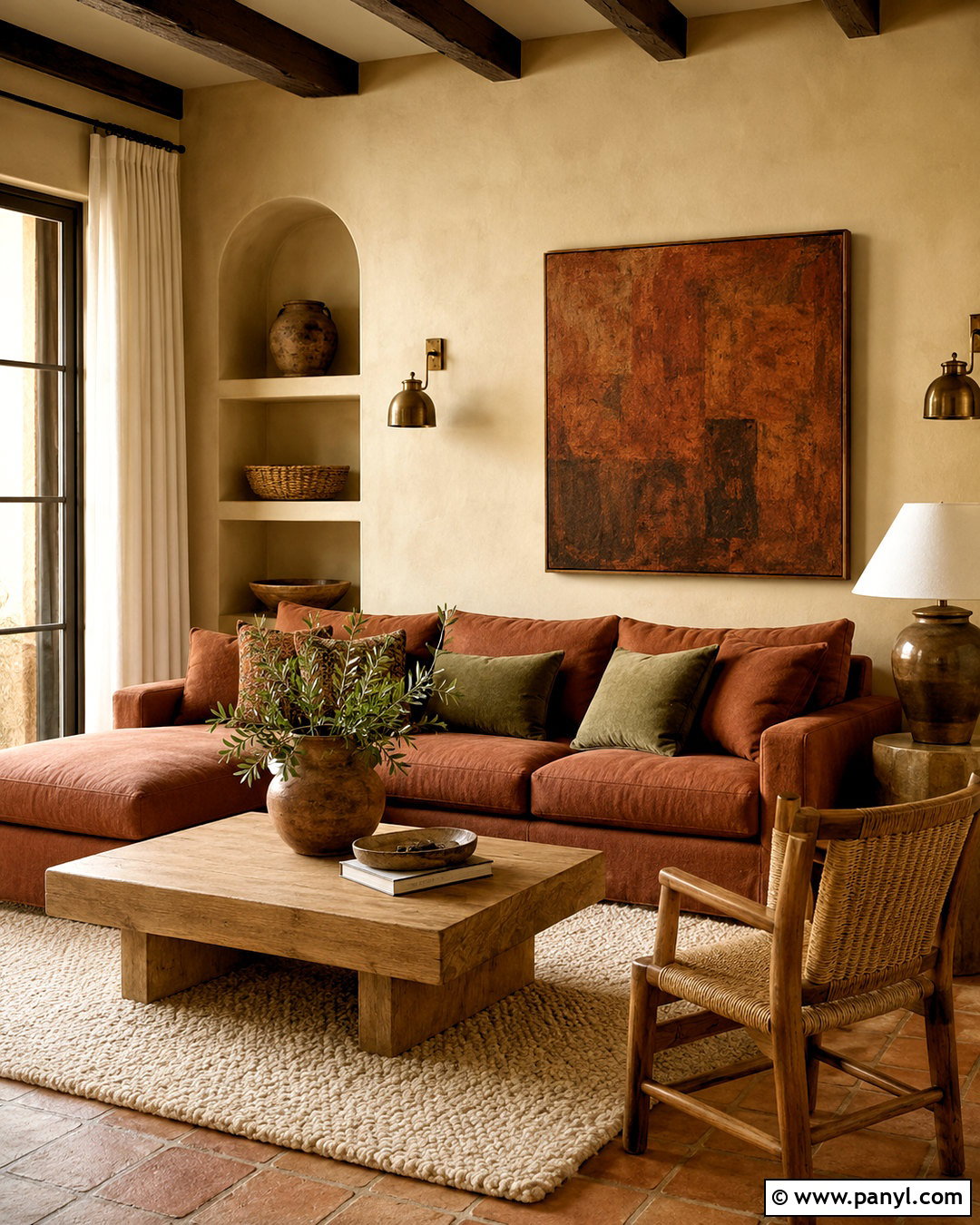
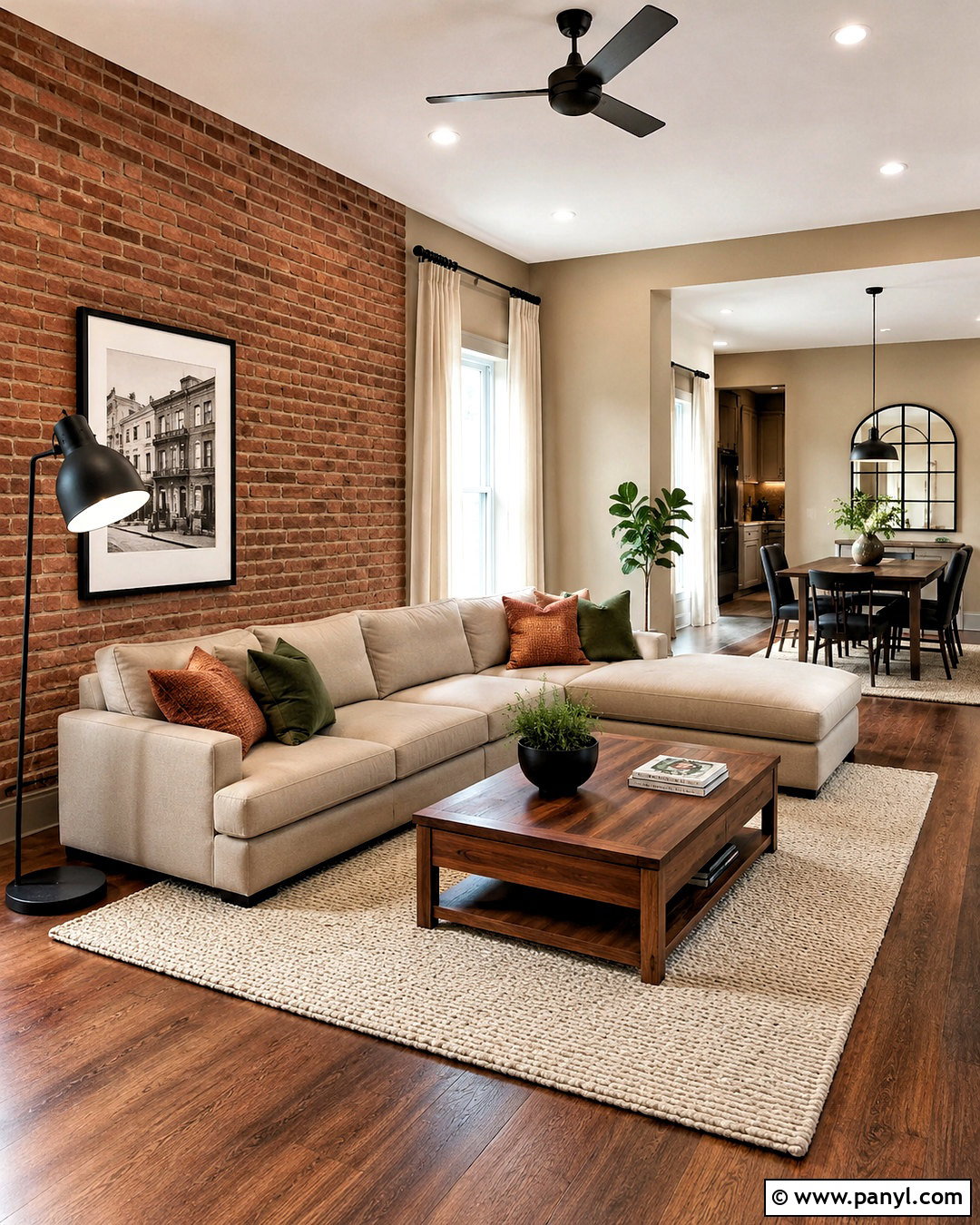
Warm terracotta adds energy and an earthy Mediterranean character to beige walls. Build the palette around a clay-colored sofa, upholstered bench, or pair of accent chairs. Balance these warm pieces with a cream rug, light oak furniture, and off-white curtains. Handmade-looking pottery, woven baskets, and rust-toned artwork will make the color feel connected to the overall room rather than added as an afterthought. Include a few olive green or dark brown accents for natural contrast. In a dining space, terracotta chairs around a substantial wood table can create the same complete effect. Keep metallic finishes warm, such as aged brass or bronze. The result feels sun-washed and welcoming, yet still polished enough for a modern home.
13. Burnt Orange With Beige Walls
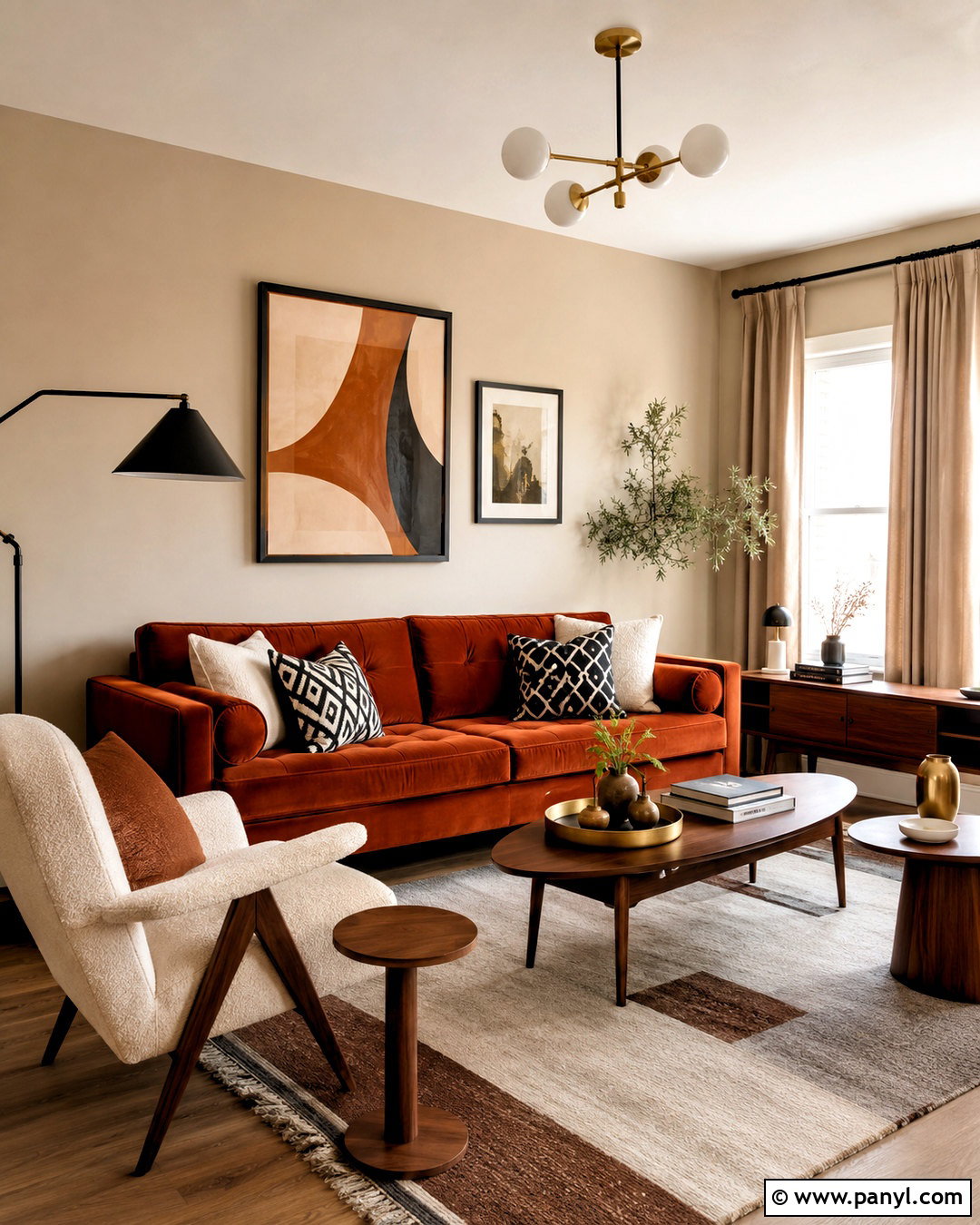
Burnt orange delivers stronger contrast than terracotta and can make beige walls feel lively and intentional. Use it on one major piece, such as a velvet sofa or two upholstered lounge chairs, then repeat it sparingly through patterned cushions and artwork. Ground the room with a cream-and-brown rug and dark walnut tables. Beige linen curtains allow the bolder furniture to remain the focus. Add warm white upholstery elsewhere so the room does not become overly orange. Matte black lighting and frames can provide clean definition, while brass details emphasize the warm palette. This full look suits midcentury, eclectic, and contemporary rooms. Choose a muted pumpkin or rust-orange tone rather than a bright citrus shade for a more comfortable result.
14. Mustard Yellow With Beige Walls
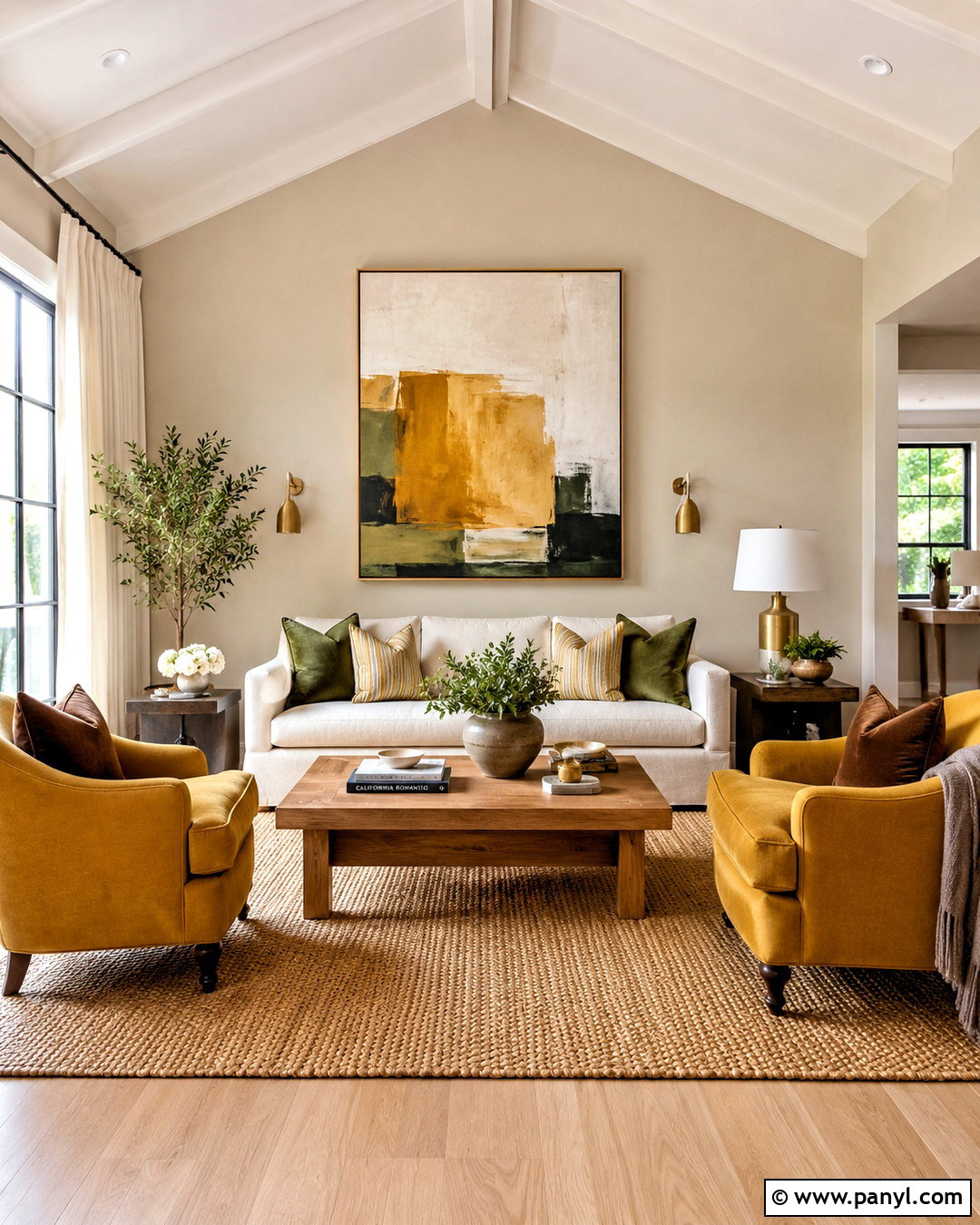
Mustard yellow gives beige walls a cheerful lift while maintaining a warm, slightly earthy character. In a living room, introduce mustard through two accent chairs, patterned pillows, and a large abstract artwork rather than covering every surface. Pair these elements with a cream sofa, medium oak coffee table, and natural woven rug. Add olive green or chocolate brown in smaller amounts to deepen the palette. Warm white curtains and brass lighting will help the room feel bright and cohesive. If the beige has a strong yellow undertone, choose a deeper ochre mustard that provides clear contrast. Avoid pale yellow furnishings that nearly match the walls. A varied combination of beige, cream, mustard, wood, and dark accents looks far more deliberate.
15. Blush Pink With Beige Walls
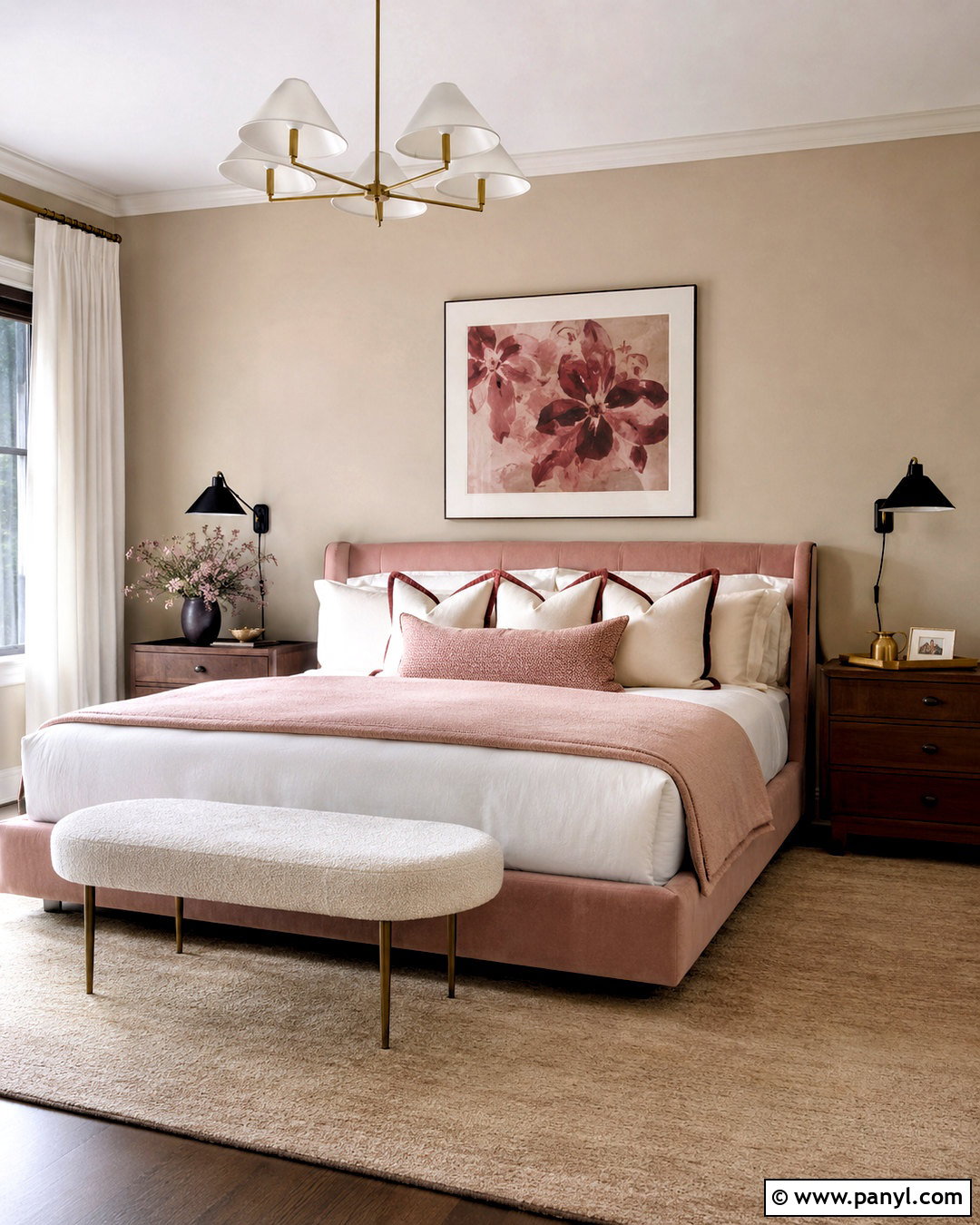
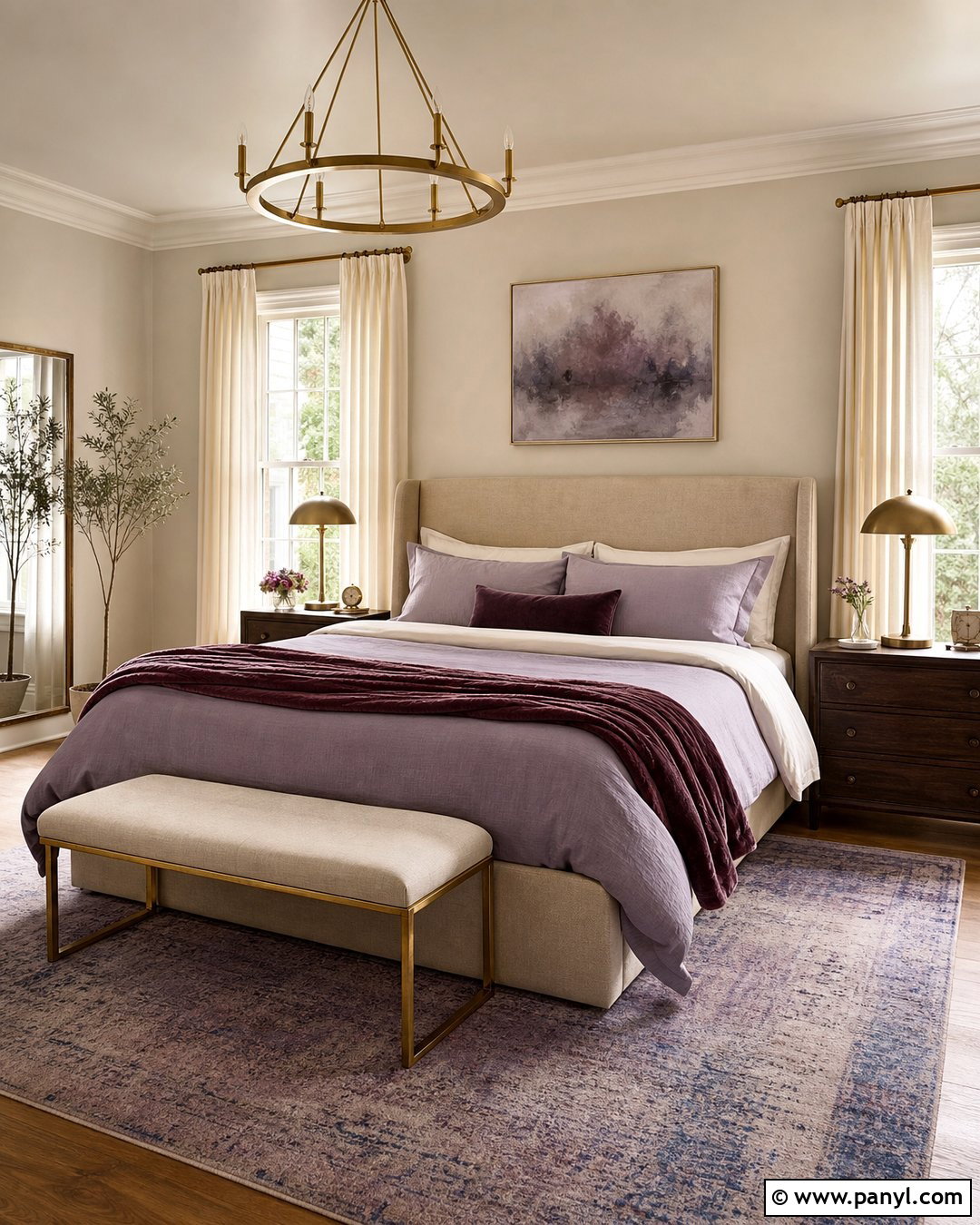
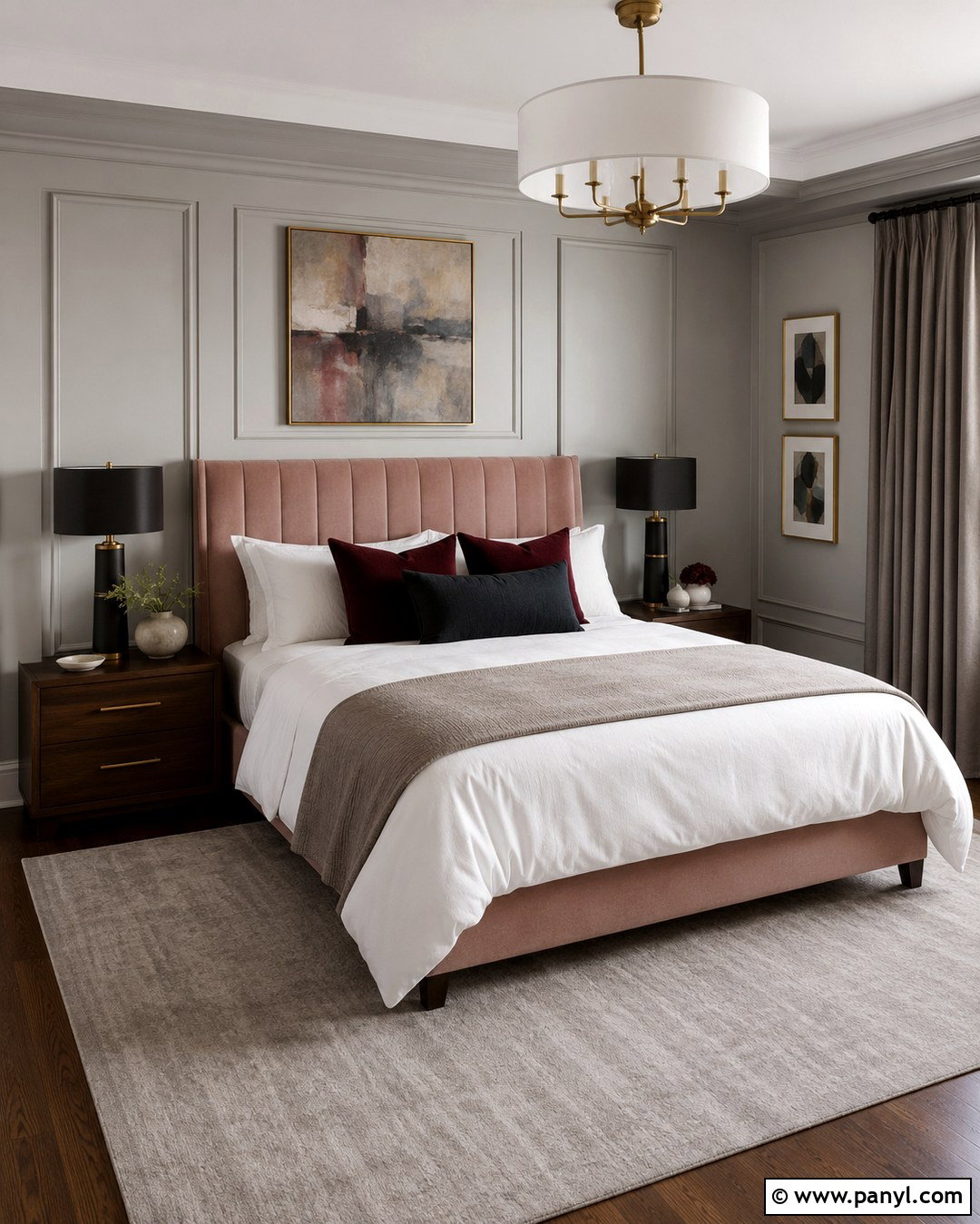
Blush pink and beige walls form a soft, warm palette that can feel sophisticated when balanced with clean shapes and natural materials. Create a bedroom with a dusty blush upholstered bed, ivory bedding, and a beige wool rug. Introduce walnut nightstands and matte black sconces to prevent the delicate colors from looking overly sweet. Linen curtains in warm white will keep the room bright, while burgundy or deep brown piping can add definition to pillows and a bench. Choose abstract art that combines muted rose, tan, and cream instead of relying on themed decorations. A small amount of brushed brass adds gentle warmth. The finished bedroom feels calm, grown-up, and welcoming, with enough contrast to reveal every layer clearly.
16. Burgundy With Beige Walls
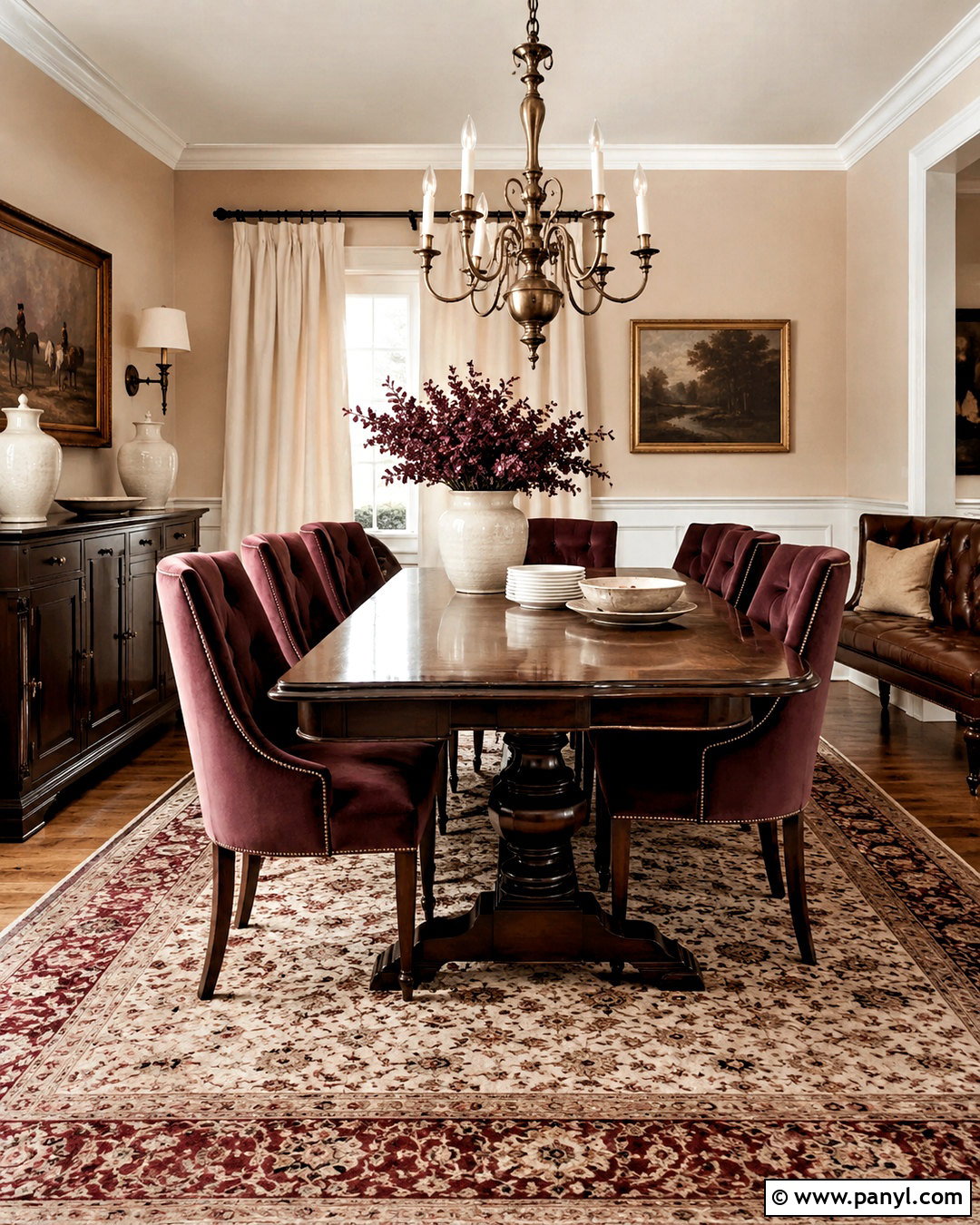
Burgundy adds a luxurious, grounded quality to beige walls and works especially well in dining rooms, libraries, and formal living areas. Consider burgundy dining chairs around a dark wood table, accompanied by a traditional rug containing beige, red, and muted blue. Hang cream curtains to lighten the walls and select antique brass lighting for a warm finish. A burgundy sideboard can also create a strong focal point when balanced by neutral seating. Repeat the color in artwork or cushions, but avoid filling every corner with dark red. Add walnut, camel leather, and warm white accents to soften the contrast. The complete design feels rich and established without being gloomy, provided the room includes layered lighting and several pale surfaces.
17. Plum With Beige Walls
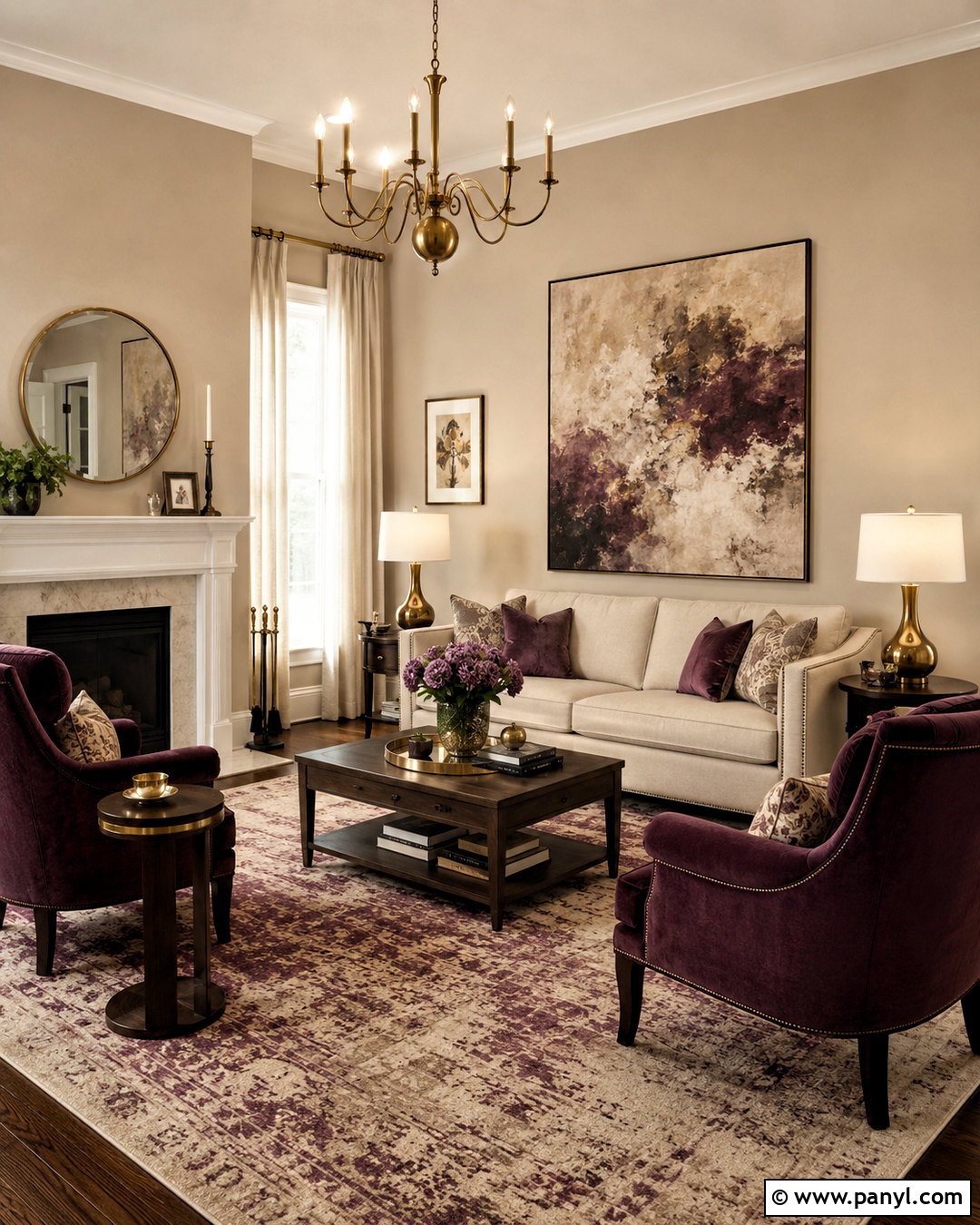
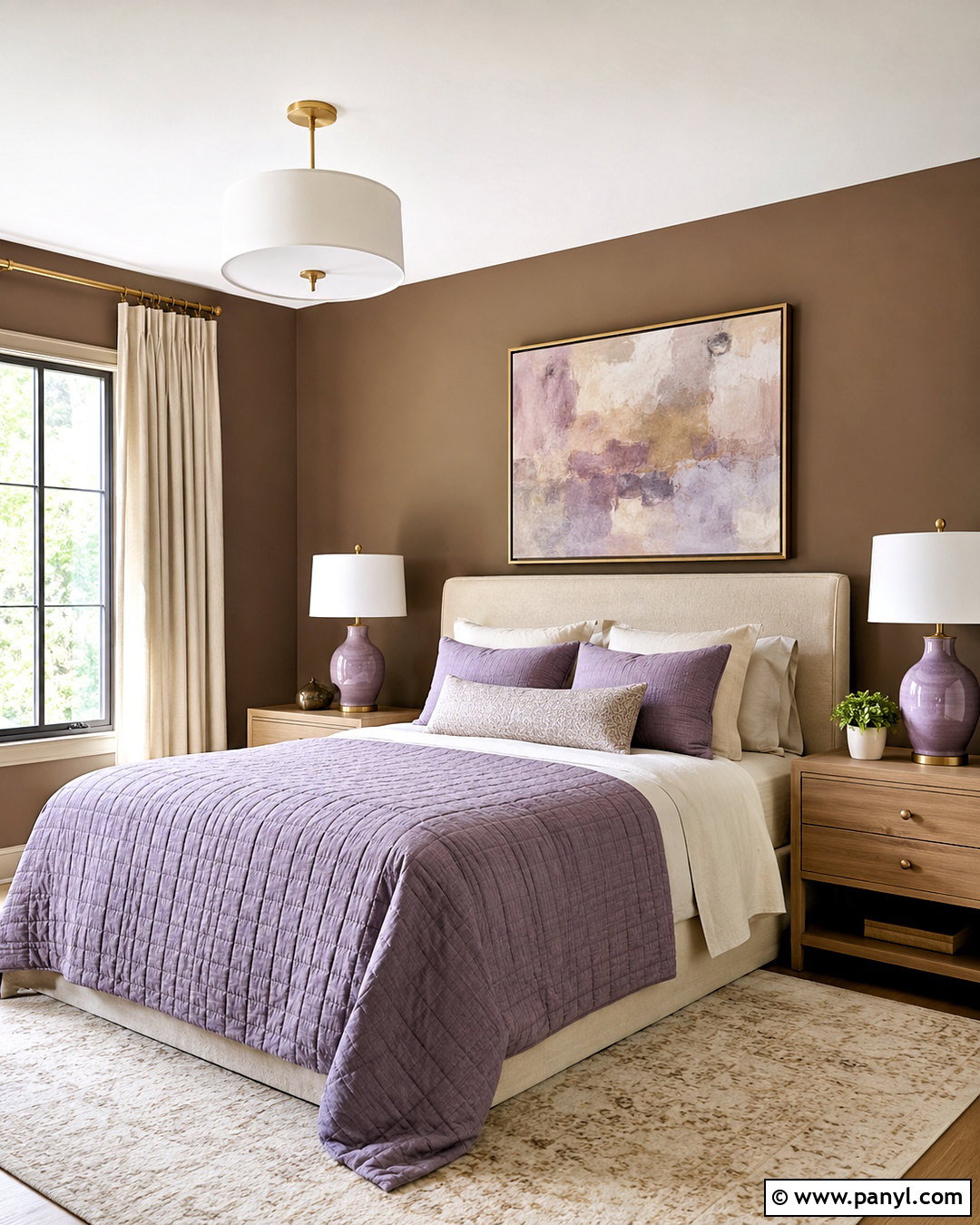
Plum brings an unexpected sense of depth to beige walls while remaining warmer and softer than vivid purple. Design a refined sitting room with plum velvet chairs, a cream sofa, and a muted patterned rug featuring beige, mauve, and brown. Dark walnut tables and aged brass lamps enhance the sophisticated palette. Keep window treatments light with ivory linen panels, then repeat plum through one or two cushions and a large abstract print. Dusty mauve accessories can bridge the gap between the dark upholstery and pale walls. Use simple furniture silhouettes so the color combination stays current and uncluttered. The finished space feels distinctive yet comfortable, offering a strong option for homeowners who want color without choosing conventional blue or green.
18. Coral With Beige Walls
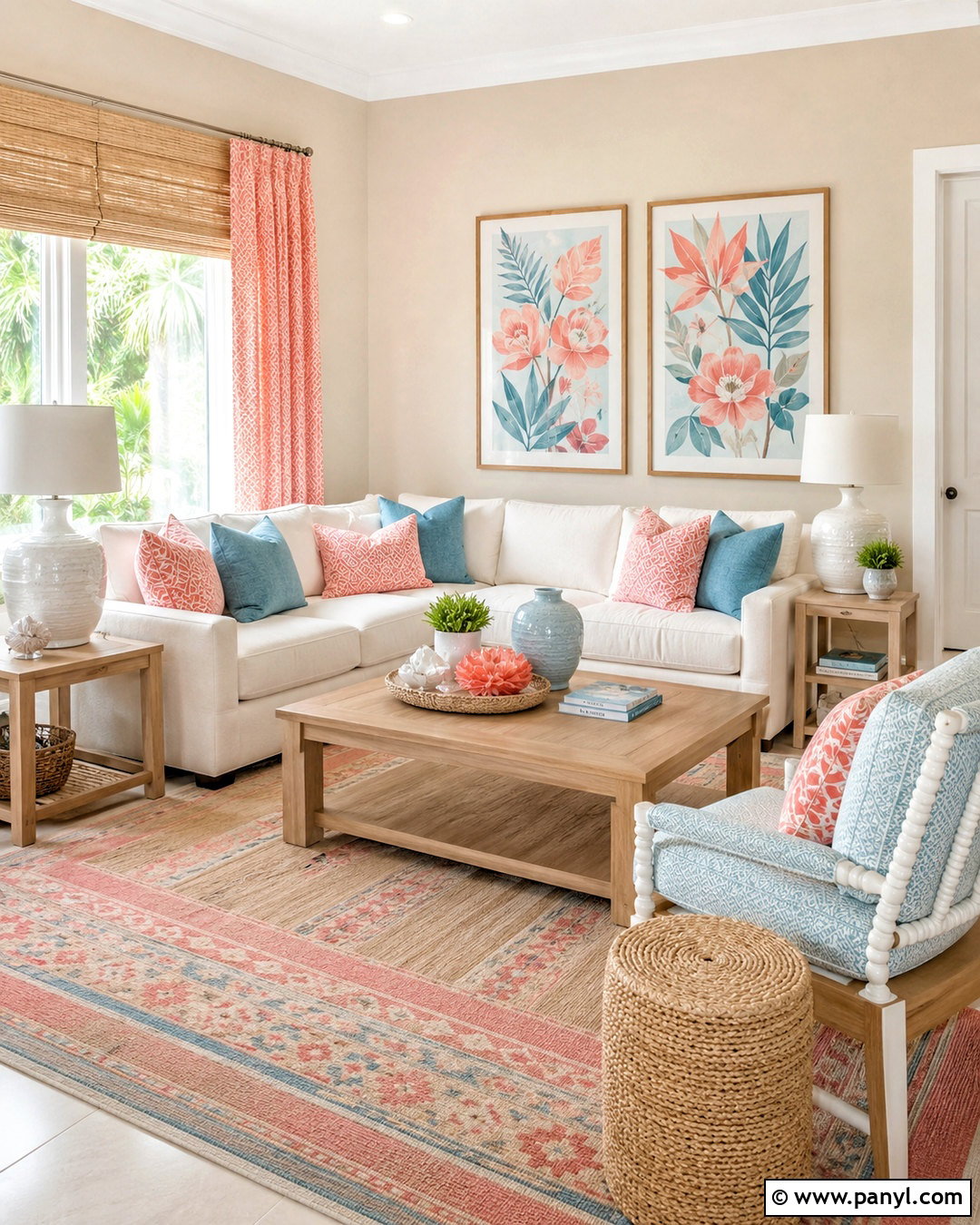
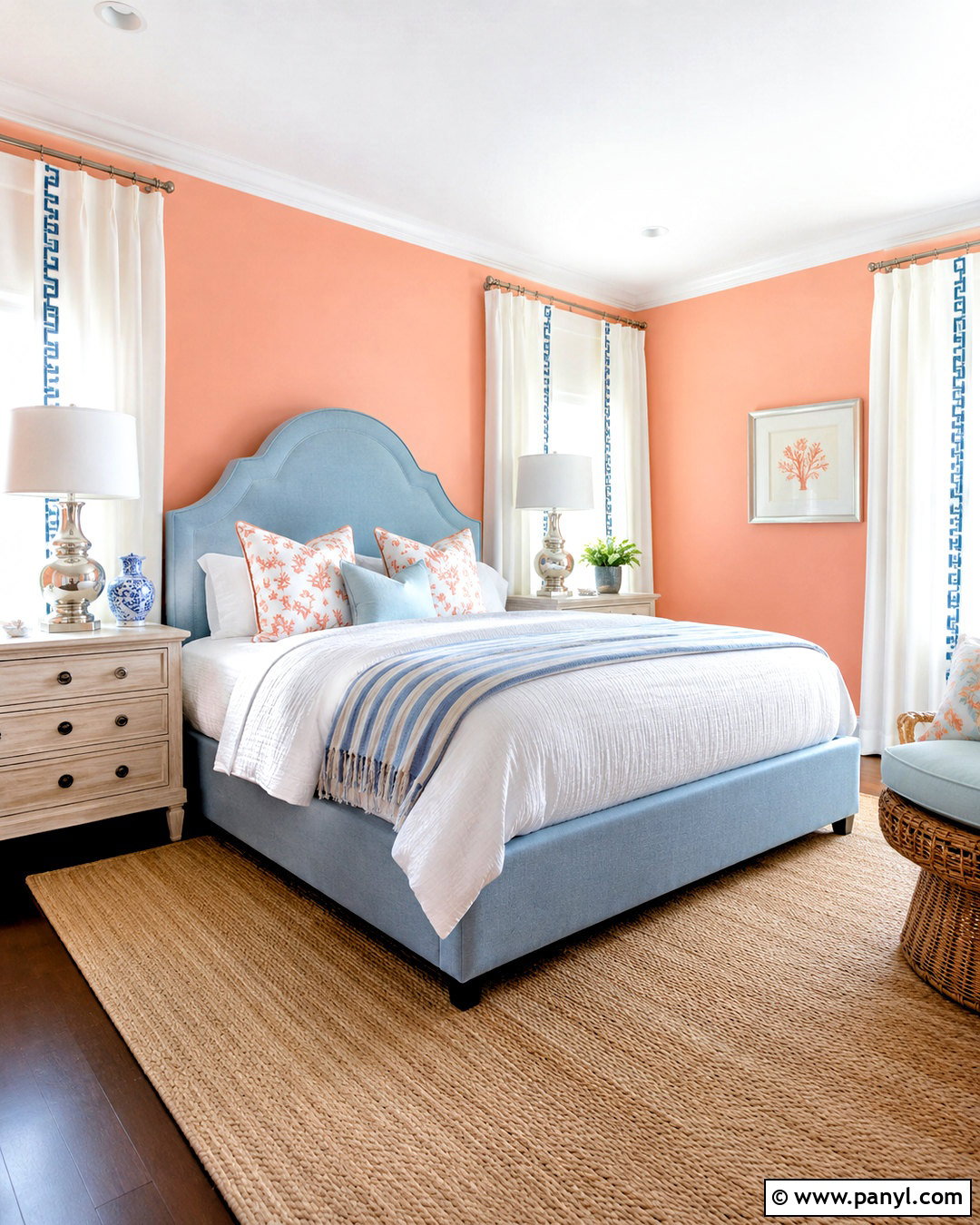
Coral gives beige walls a fresh, sunny personality that works well in casual living rooms, bedrooms, and breakfast areas. Choose a softened coral rather than a fluorescent tone. Build the room with coral-patterned curtains, an ivory sofa, and light oak furniture. A rug containing beige, cream, coral, and muted blue will distribute the color naturally across the floor. Add woven shades, white ceramic lamps, and simple coastal or botanical art, but avoid obvious themed accessories. Small touches of denim blue or teal can cool the warmth and make the coral appear more refined. Leave plenty of neutral space around the strongest accents. This balanced design feels upbeat and approachable without allowing the warm walls and furnishings to blend into one color block.
19. Red With Beige Walls
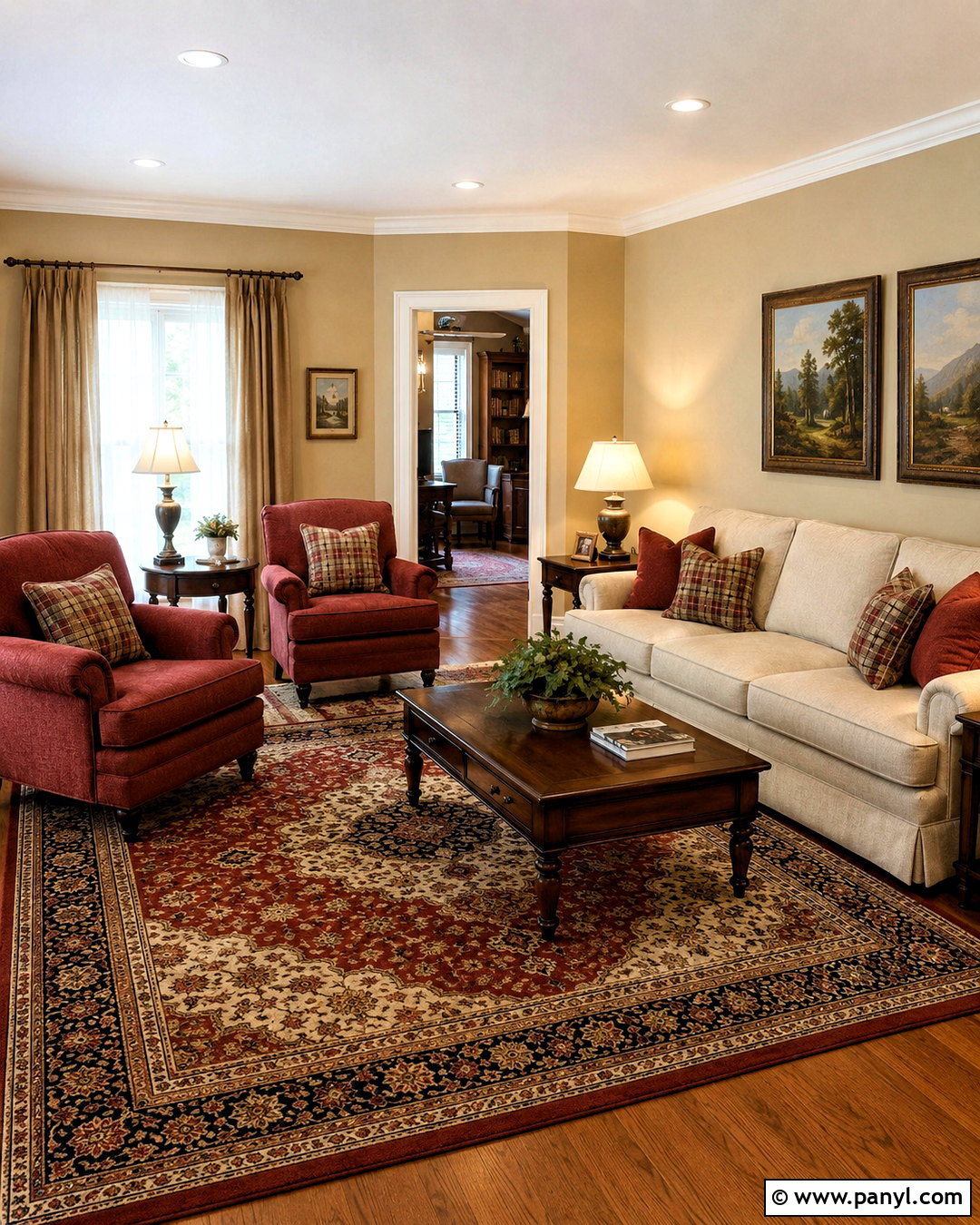
Red can look striking with beige walls when you select a mature, muted shade and use it in a controlled way. Create a traditional living room with brick-red armchairs, a cream sofa, and a vintage rug combining beige, red, navy, and brown. Dark wood tables and bronze lighting support the classic color story. Use warm white curtains to keep the perimeter light and place red accents on opposite sides of the room for balance. Framed landscapes, plaid textiles, or subtle striped pillows can add pattern without making the design feel overly formal. Avoid combining bright primary red with yellow-toned beige. Deeper barn red, oxblood, or faded crimson creates a complete look that feels warm, established, and comfortable.
20. Cream With Beige Walls
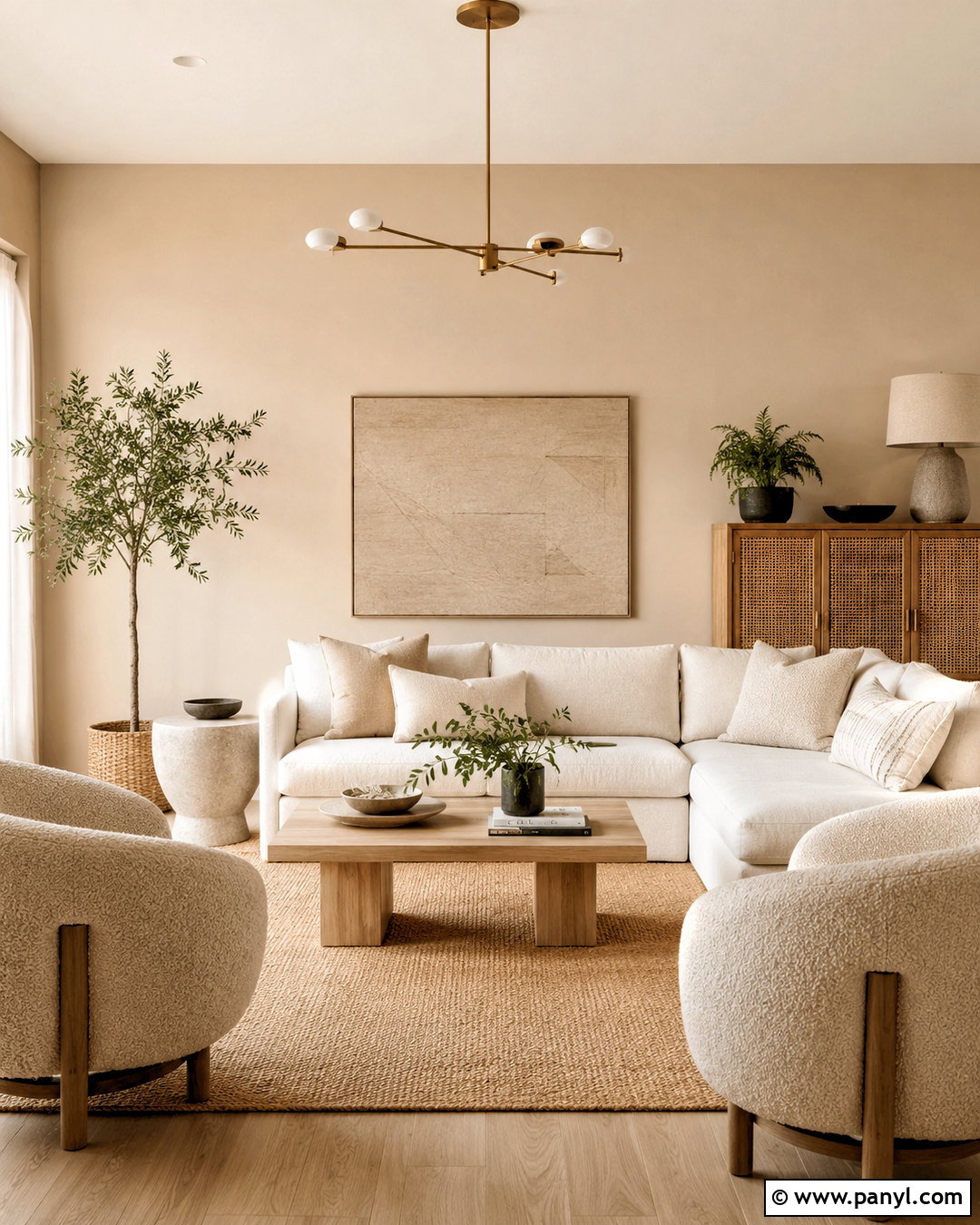
Cream creates a soothing tonal design with beige walls, but the room needs texture and contrast to avoid looking flat. Begin with a creamy white sofa or bed, then add an oatmeal rug, natural linen curtains, and pale oak furniture. Layer boucle, woven wool, cotton, cane, and ceramic surfaces so each neutral reads differently. Use medium brown or bronze accents on lighting, frames, and table legs to outline the lighter elements. A few darker beige cushions can connect the furniture directly to the walls. Green plants or restrained black details will provide visual punctuation. This complete monochromatic approach is ideal for small rooms because it maintains an open feeling while still delivering warmth, softness, and an intentionally layered finish.
Conclusion:
Finding the right answer to 20 What Color Goes With Beige Walls starts with understanding whether your beige appears golden, pink, gray, or neutral. Warm beige works naturally with terracotta, chocolate brown, mustard, olive, and burgundy. More balanced beige can also support navy, teal, dusty blue, charcoal, blush, or black. Whatever color you choose, design the entire room around it rather than adding disconnected accessories. Repeat the accent in upholstery, textiles, artwork, and smaller decor while preserving enough neutral space for balance. Finally, view samples beside the walls in morning and evening light. A thoughtful mix of color, texture, wood, and metal will make beige walls feel current, comfortable, and beautifully intentional.

Related Ideas and Inspiration:
Leave a Reply