
Choosing wall paint around hardwood can feel tricky because the floor already brings color, grain, and movement into the room. The best 20 Wall Colors That Go With Wood Floors include flexible neutrals, nature-inspired greens, calming blues, and a few warmer shades that create character. Start by identifying whether the floor has yellow, orange, red, gray, or neutral brown undertones. Then consider the room’s natural light and the amount of contrast you want. Coordinating undertones usually creates harmony, while deliberate light-and-dark contrast gives the space stronger definition. Rugs, furniture, trim, and textiles should connect the two surfaces rather than compete with them. () Use the complete room combinations below to explore 20 Wall Colors That Go With Wood Floors.

1. Warm White Walls With Dark Wood Floors
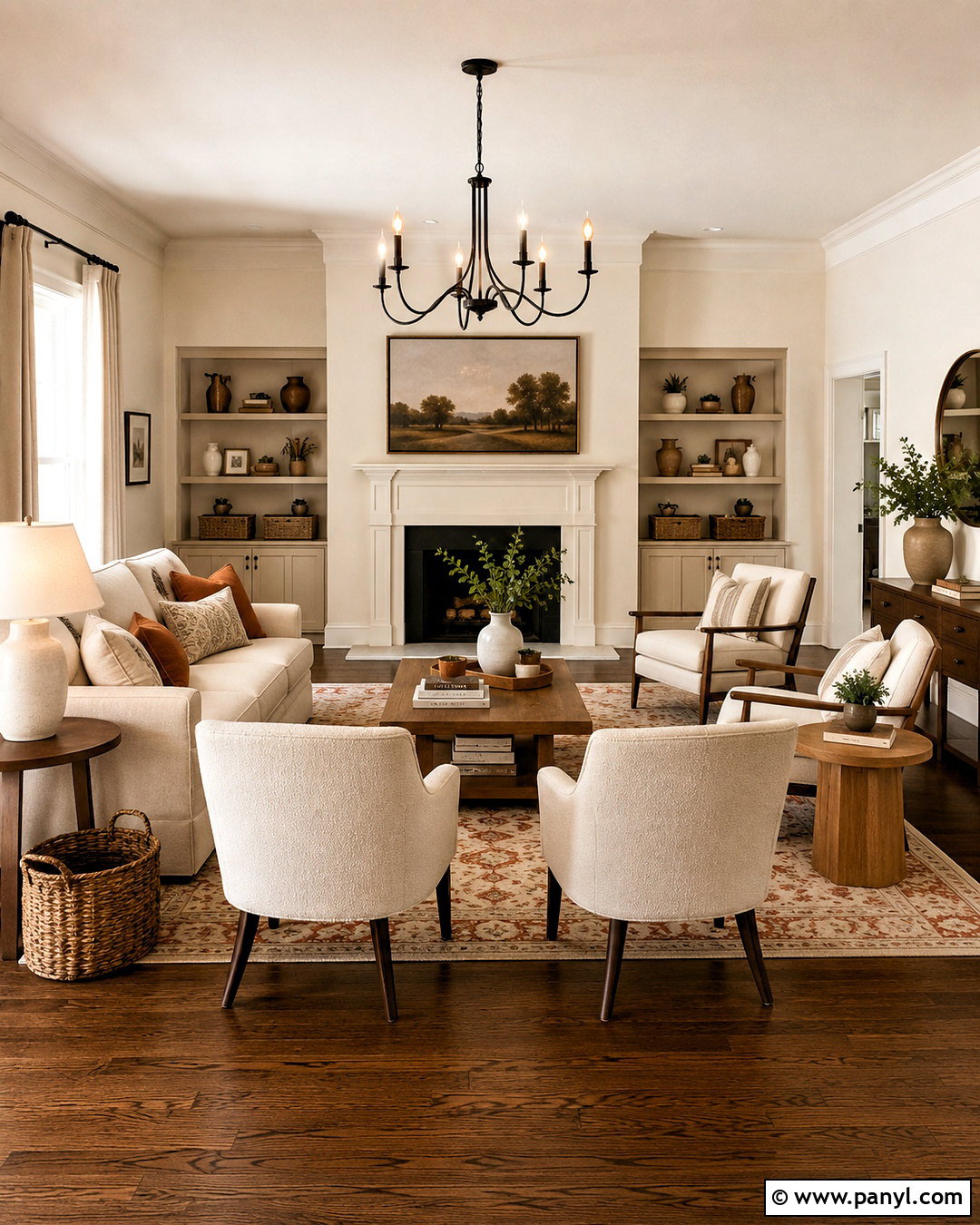
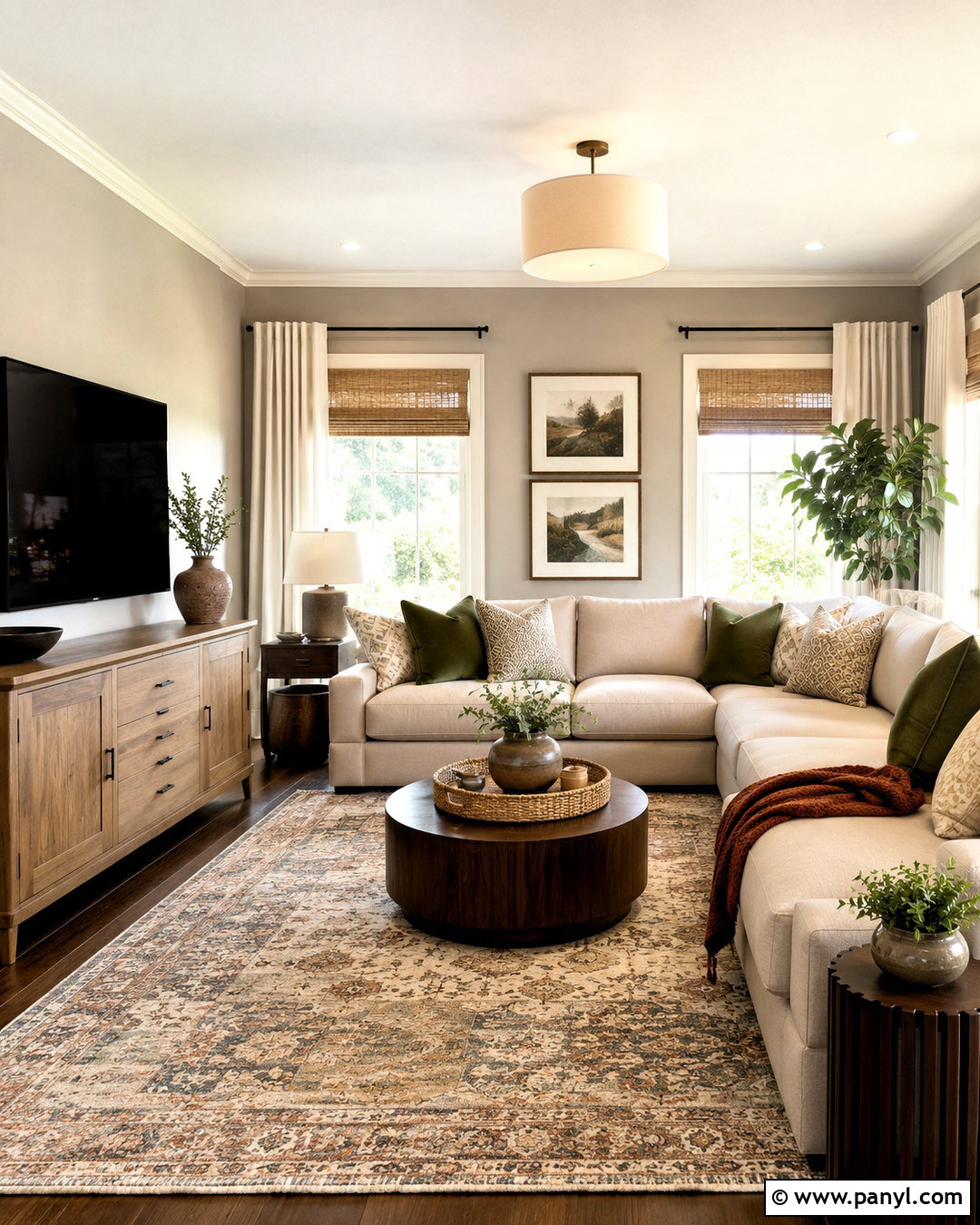
Warm white walls brighten dark wood floors without creating the cold, sharp contrast that can happen with a blue-based white. Choose a creamy white with subtle beige or yellow undertones, then repeat that warmth through linen curtains, an oatmeal sofa, and soft ivory upholstery. A large patterned rug containing brown, cream, and muted rust will connect the walls to espresso or dark walnut flooring. Add medium-tone oak furniture to keep the room from feeling bottom-heavy. Black metal lighting provides a crisp modern accent, while ceramic lamps and woven baskets soften the arrangement. Finish with warm white trim in a slightly glossier sheen, allowing the architecture to remain simple while the rich flooring becomes the visual foundation.
2. Cream Walls With Honey Oak Floors
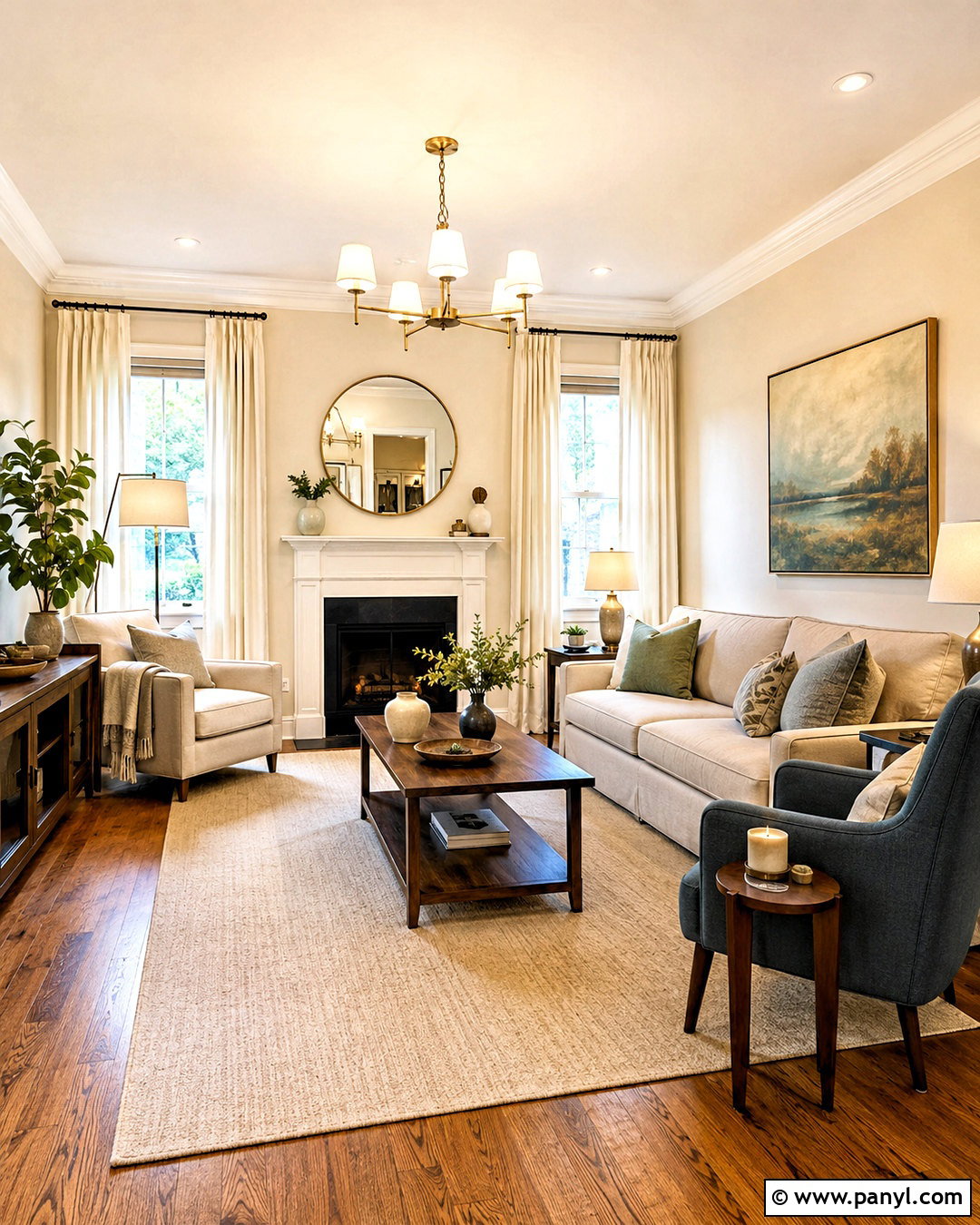
Cream walls bring out the welcoming golden character of honey oak without making the entire room look overly yellow. Select a light cream with a quiet neutral base, and balance it with a natural linen sofa, ivory curtains, and a beige wool rug. Introduce muted blue through pillows, artwork, or an upholstered chair to cool the warmth and create gentle contrast. Furniture in medium walnut or painted off-white prevents the oak floor from blending into every surface. Brushed brass lighting complements the golden grain, but use it sparingly. Fresh greenery and matte ceramic accessories add a natural finish. Cream-painted trim creates a soft transition between the walls and flooring, making this combination especially comfortable in a traditional living room.
3. Soft Beige Walls With Medium Wood Floors
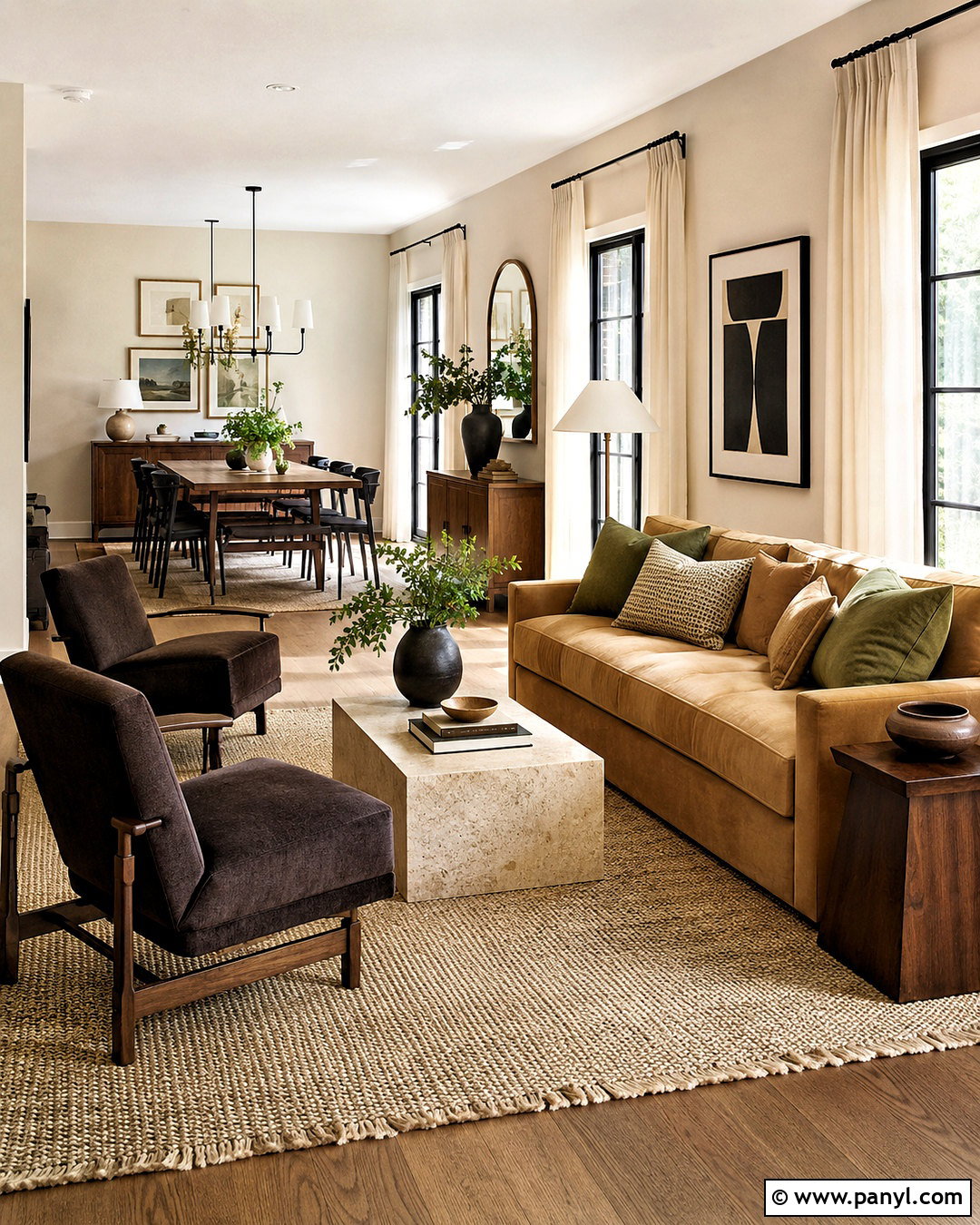
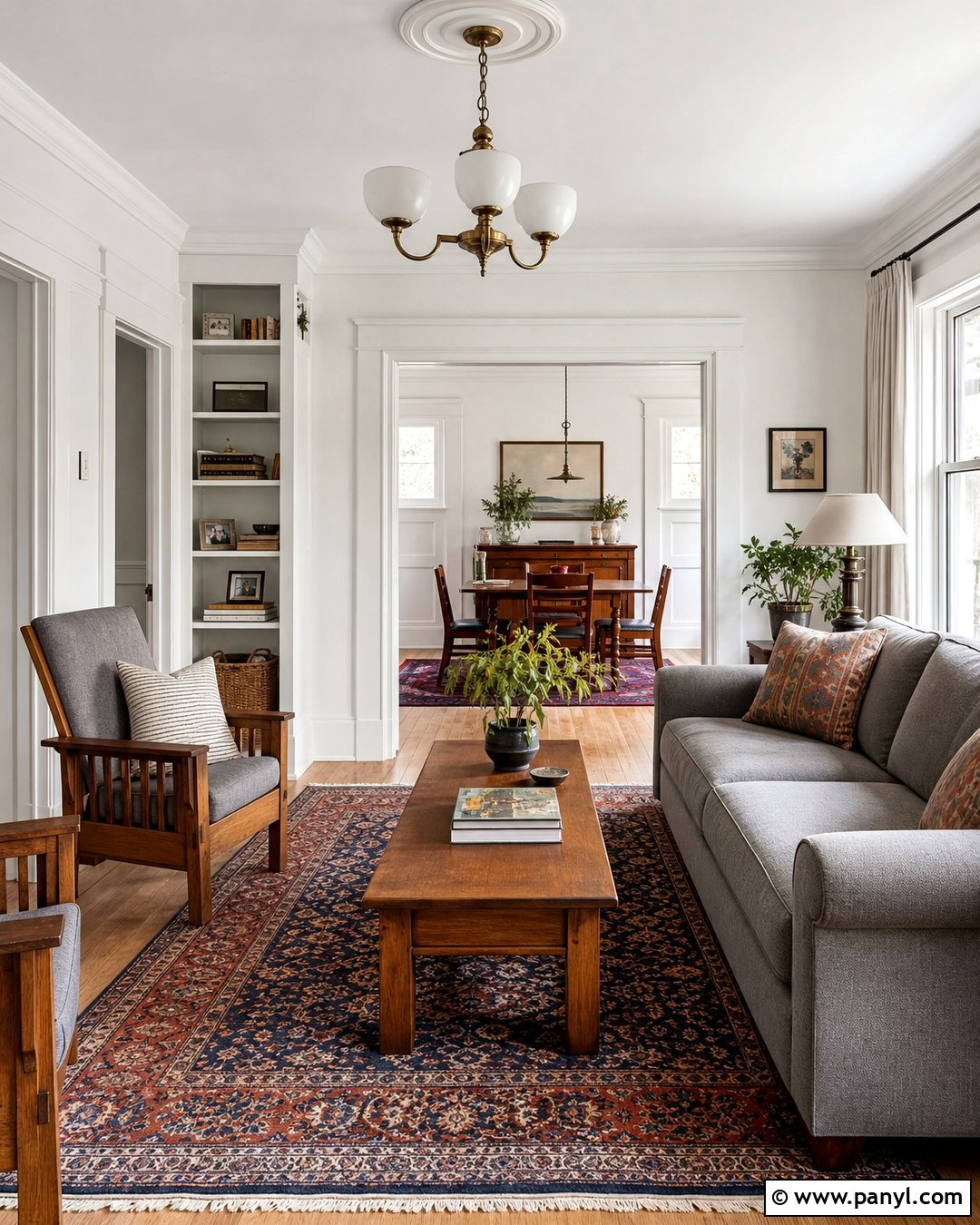
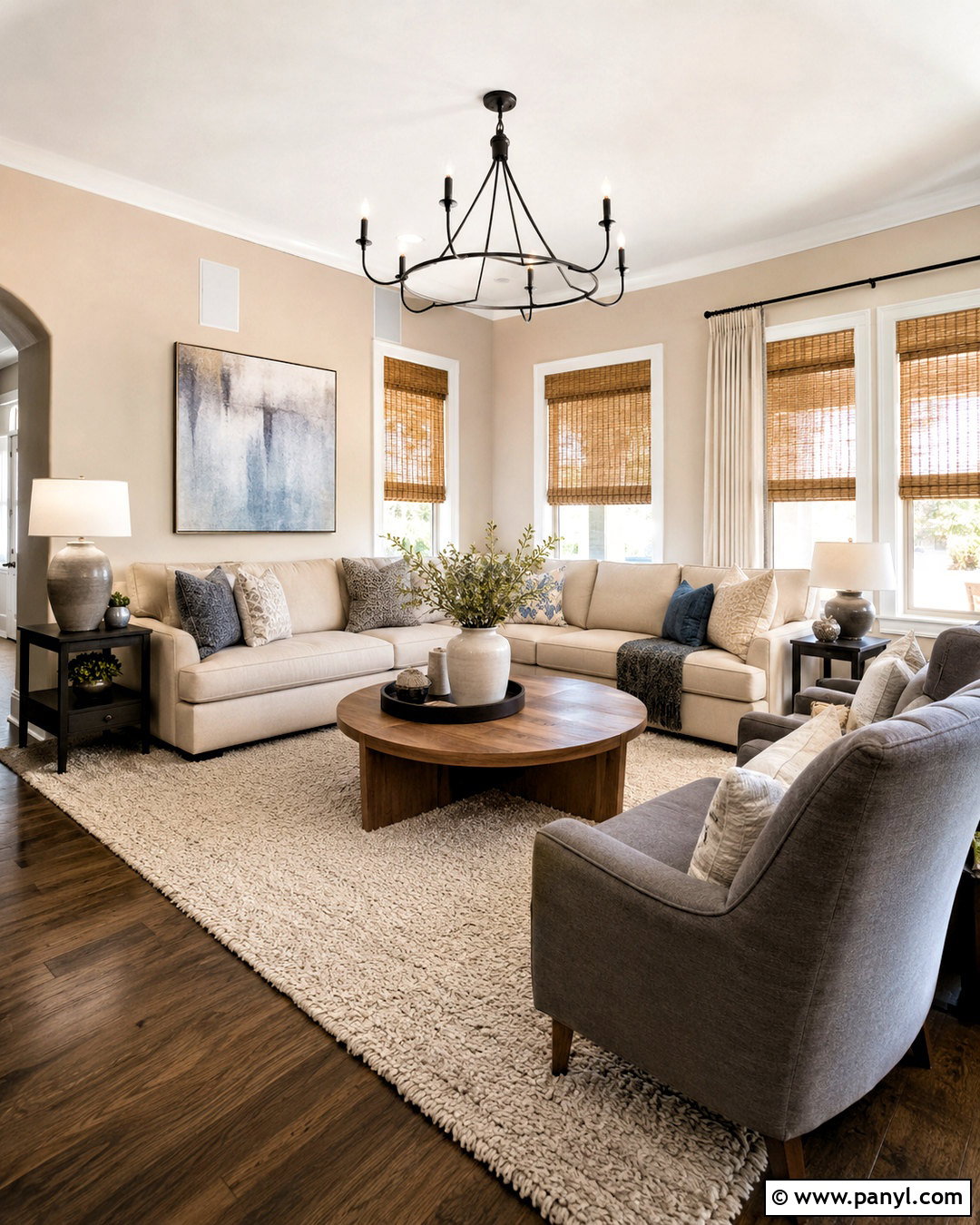
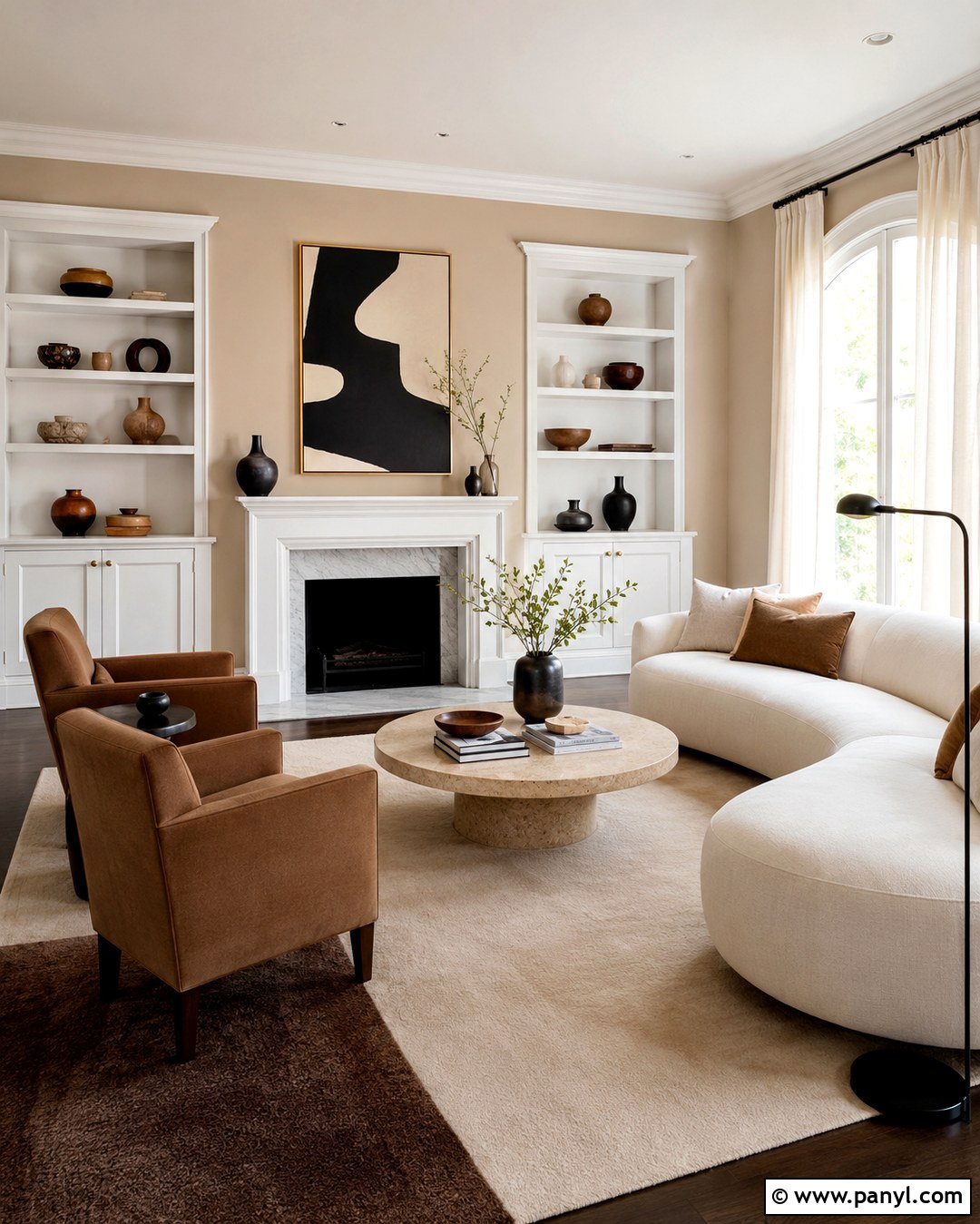
Soft beige walls and medium brown wood floors create an easy, balanced foundation that works well in open living and dining spaces. Avoid beige that looks noticeably yellow. Instead, choose a light sandy shade with neutral or slightly rosy undertones. Define the seating area with a textured cream rug, then add a camel sofa, dark brown accent chairs, and a pale stone coffee table. Black-framed artwork and matte black curtain rods give the gentle palette clearer structure. Use ivory drapery to maintain brightness and include muted olive or rust accents for controlled color. Medium wood furniture can work, but vary its tone from the floor. Lighter oak and darker walnut pieces will produce a collected room rather than a matching furniture set.
4. Greige Walls With Red Oak Floors
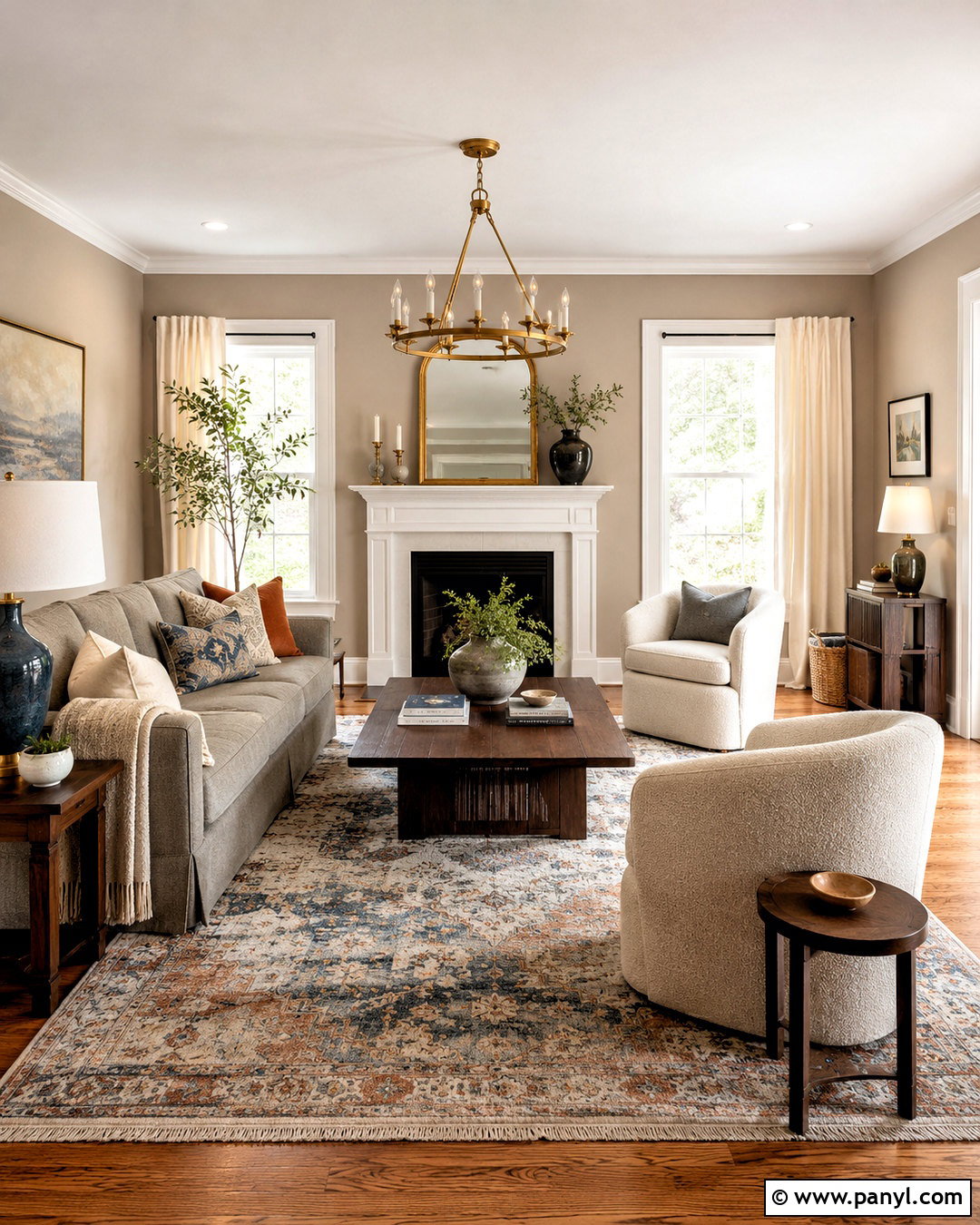
Red oak flooring often shows pink, amber, or orange undertones, and a carefully chosen greige can soften that warmth. Look for a balanced greige that leans beige rather than icy gray. Furnish the room with a warm gray sofa, cream boucle chairs, and a vintage-style rug combining faded blue, tan, and rust. These colors acknowledge the floor without exaggerating its red tones. Dark walnut tables create depth, while aged brass lighting adds a warm metallic layer. Keep the curtains off-white and uncomplicated so the scheme remains bright. A few blue-gray pillows or ceramic pieces introduce a cooler counterpoint. Paint the baseboards a warm white to separate the similar midtone surfaces and give the red oak floor a cleaner, more intentional edge.
5. Light Taupe Walls With Walnut Floors
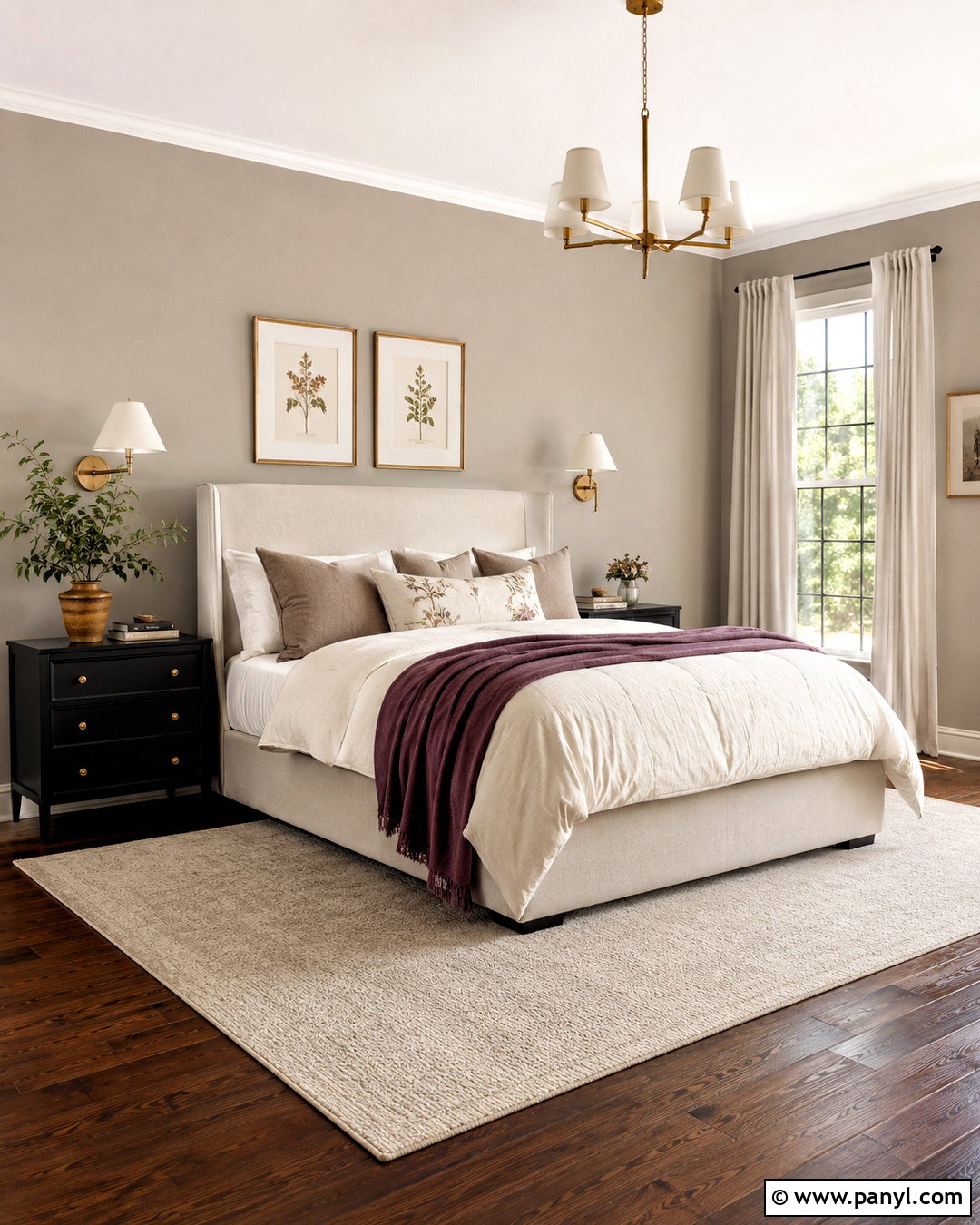
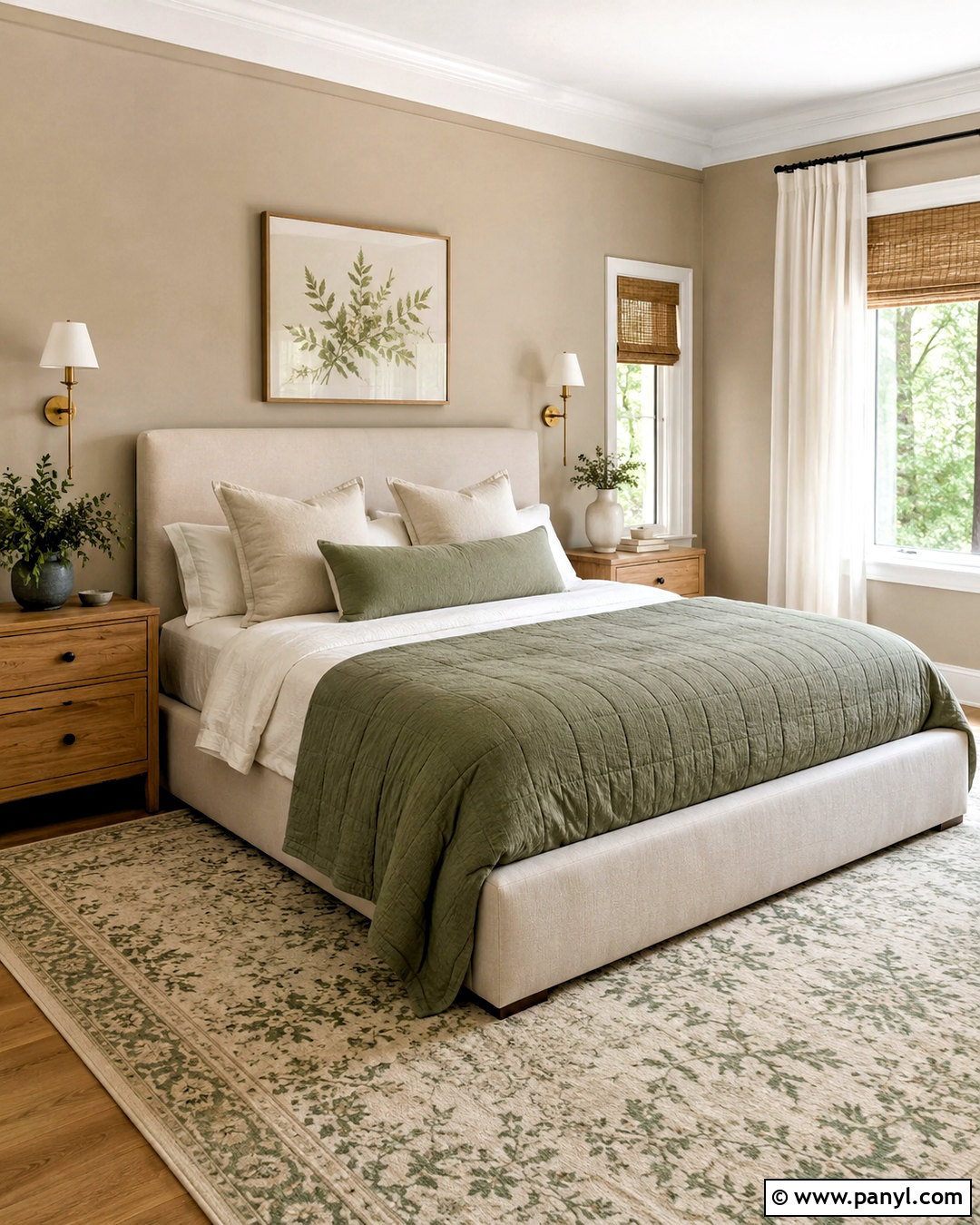
Light taupe walls complement walnut flooring by echoing its brown foundation while remaining noticeably lighter. This pairing creates a sophisticated bedroom that still feels restful and approachable. Choose taupe with a soft violet or gray undertone rather than a muddy yellow base. Place an upholstered oatmeal bed against the wall, then layer it with ivory bedding, mushroom-colored pillows, and a muted plum throw. A large cream rug will expose enough walnut around the edges to frame the room beautifully. Use black bedside tables or deep espresso furniture for definition. Antique brass sconces add gentle warmth without overpowering the wood. Finish the design with linen curtains, simple botanical artwork, and a small amount of greenery for fresh, natural contrast.
6. Pale Gray Walls With Cool Wood Floors
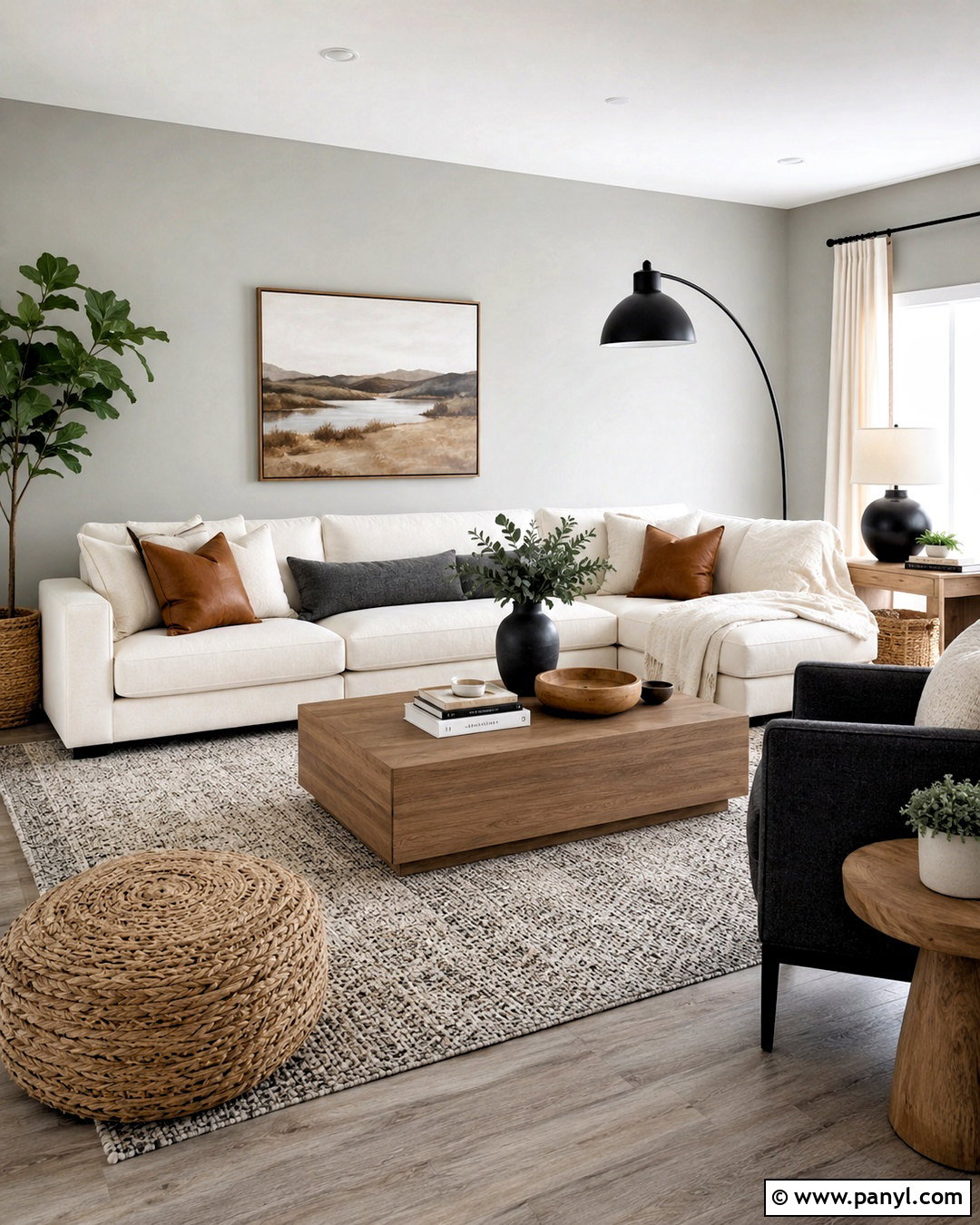
Pale gray walls work naturally with cool-toned wood floors that contain gray, brown, or lightly weathered notes. Prevent the room from feeling flat by selecting a soft gray with a slight green or beige undertone. Create a relaxed contemporary look with an ivory sectional, a charcoal accent chair, and a thick woven rug in cream and gray. Add warmth through cognac leather pillows, light oak tables, and natural fiber baskets. Matte black lighting and window hardware provide definition against the quiet background. Curtains should be warm white rather than bright optical white. Blue-gray artwork can repeat the cool palette, while leafy plants keep the room from appearing sterile. The final space feels calm, layered, and polished instead of monochromatic.
7. Charcoal Walls With Light Oak Floors
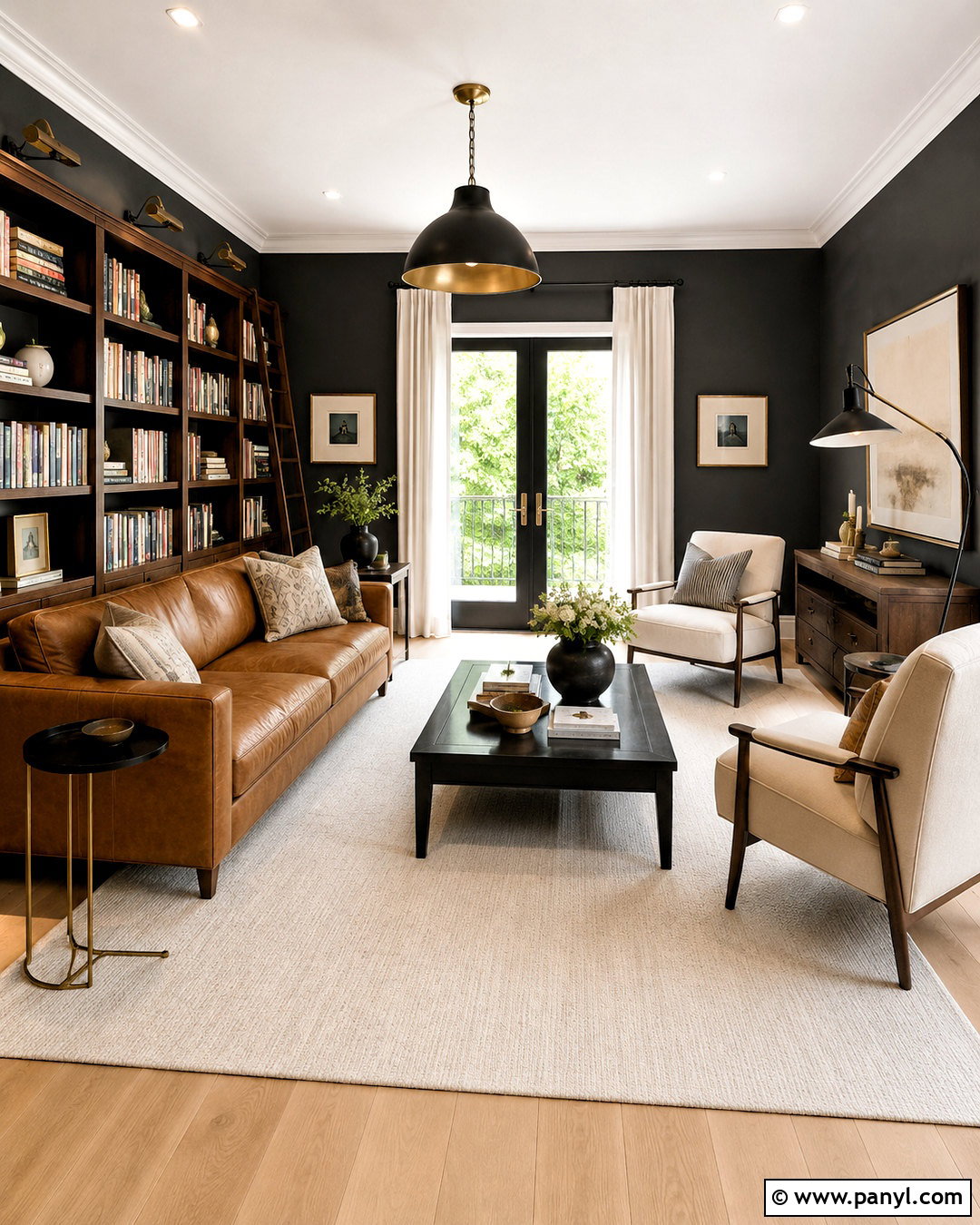
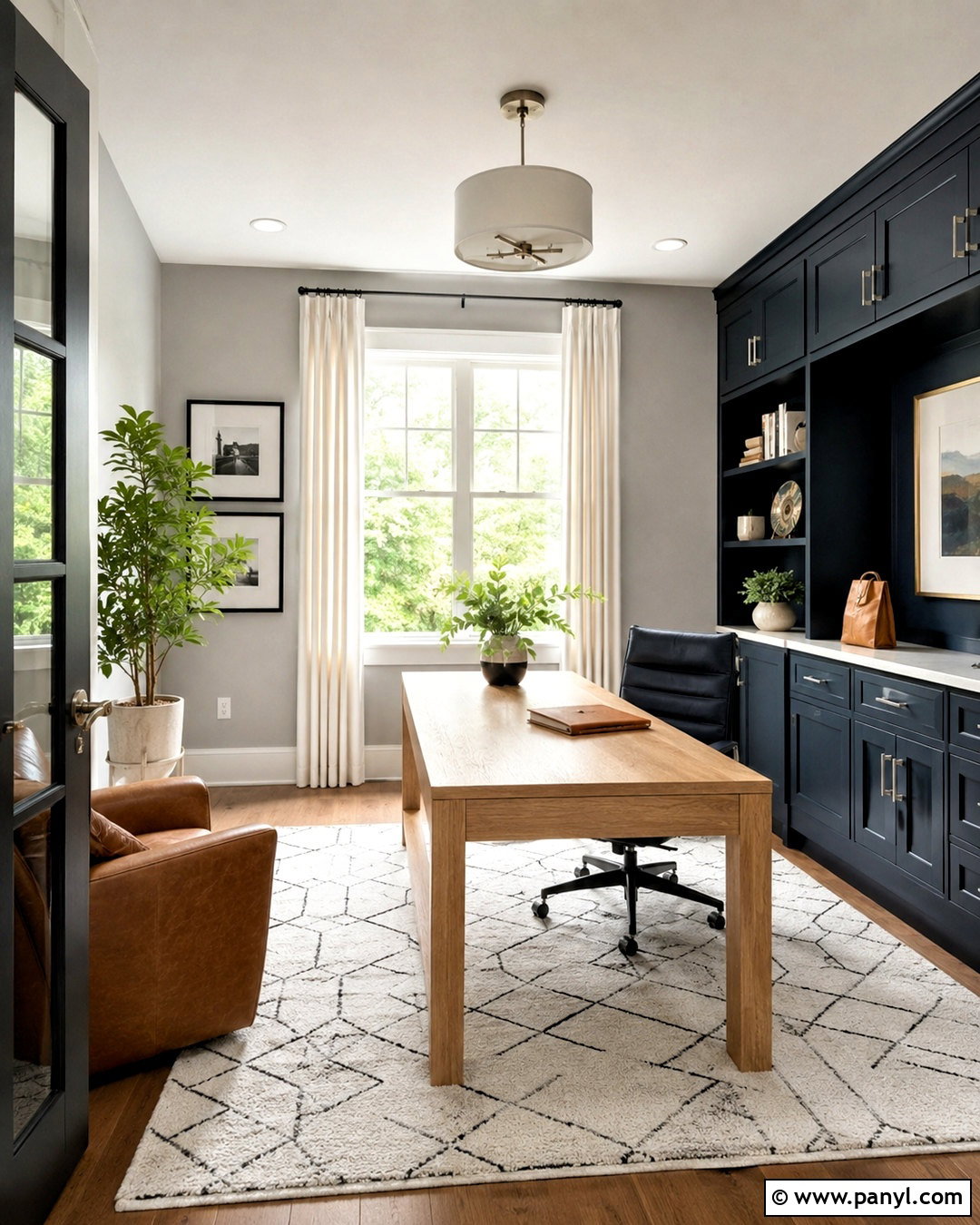
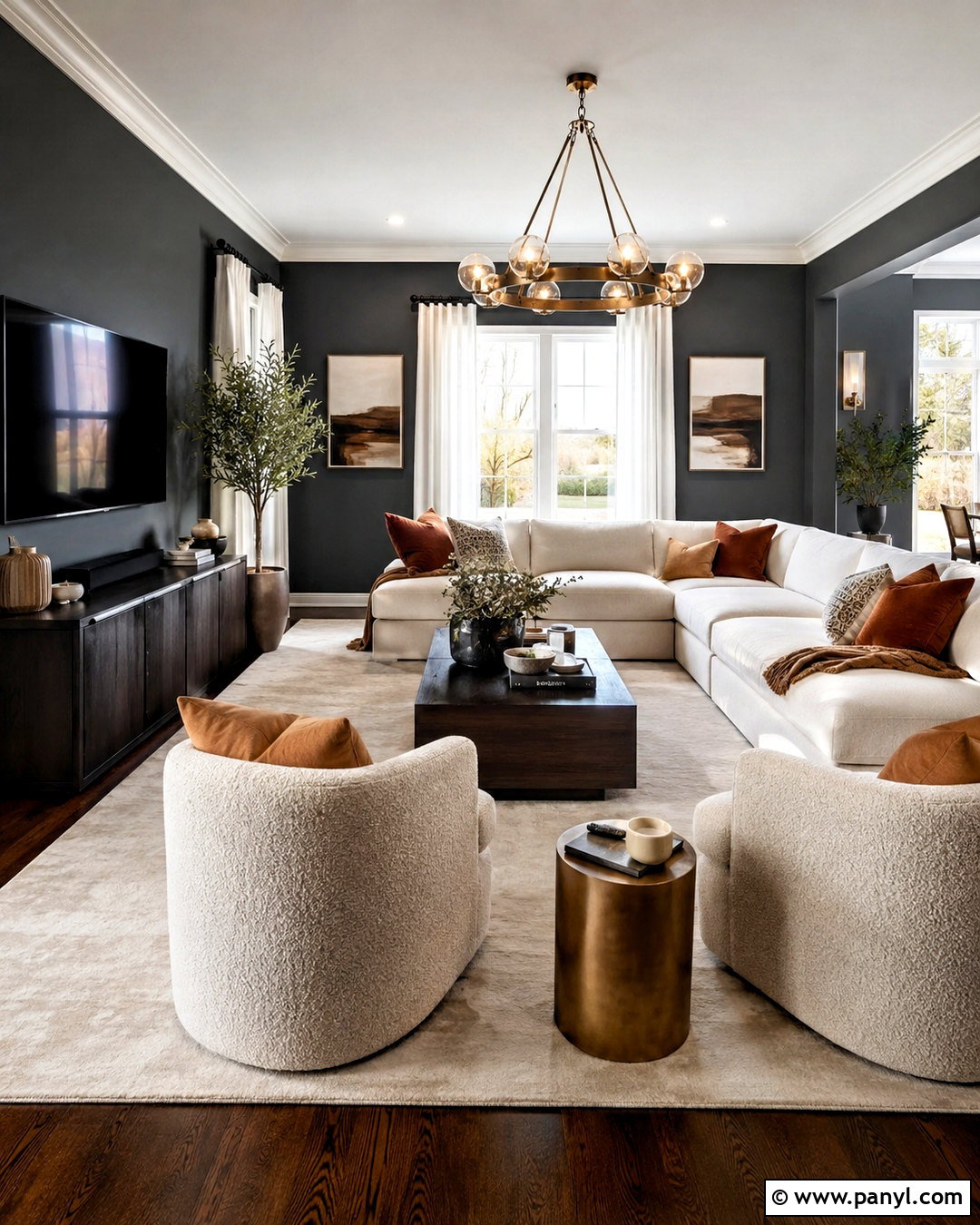
Charcoal walls make pale oak flooring look brighter and more distinctive, especially in a home office, library, or cozy living room. Choose a softened charcoal with warm gray undertones so the color feels rich rather than stark. Light oak floors will reflect daylight upward, helping balance the darker walls. Furnish the space with a camel leather sofa, cream upholstered chairs, and a large ivory rug that leaves a visible border of wood. Add walnut shelving, black metal lamps, and aged brass details for layered depth. White or pale linen curtains should remain simple and full length. Hang artwork with cream mats to create breathing room against the charcoal. The result is dramatic, comfortable, and grounded without requiring an oversized or formal space.
8. Sage Green Walls With Honey Wood Floors
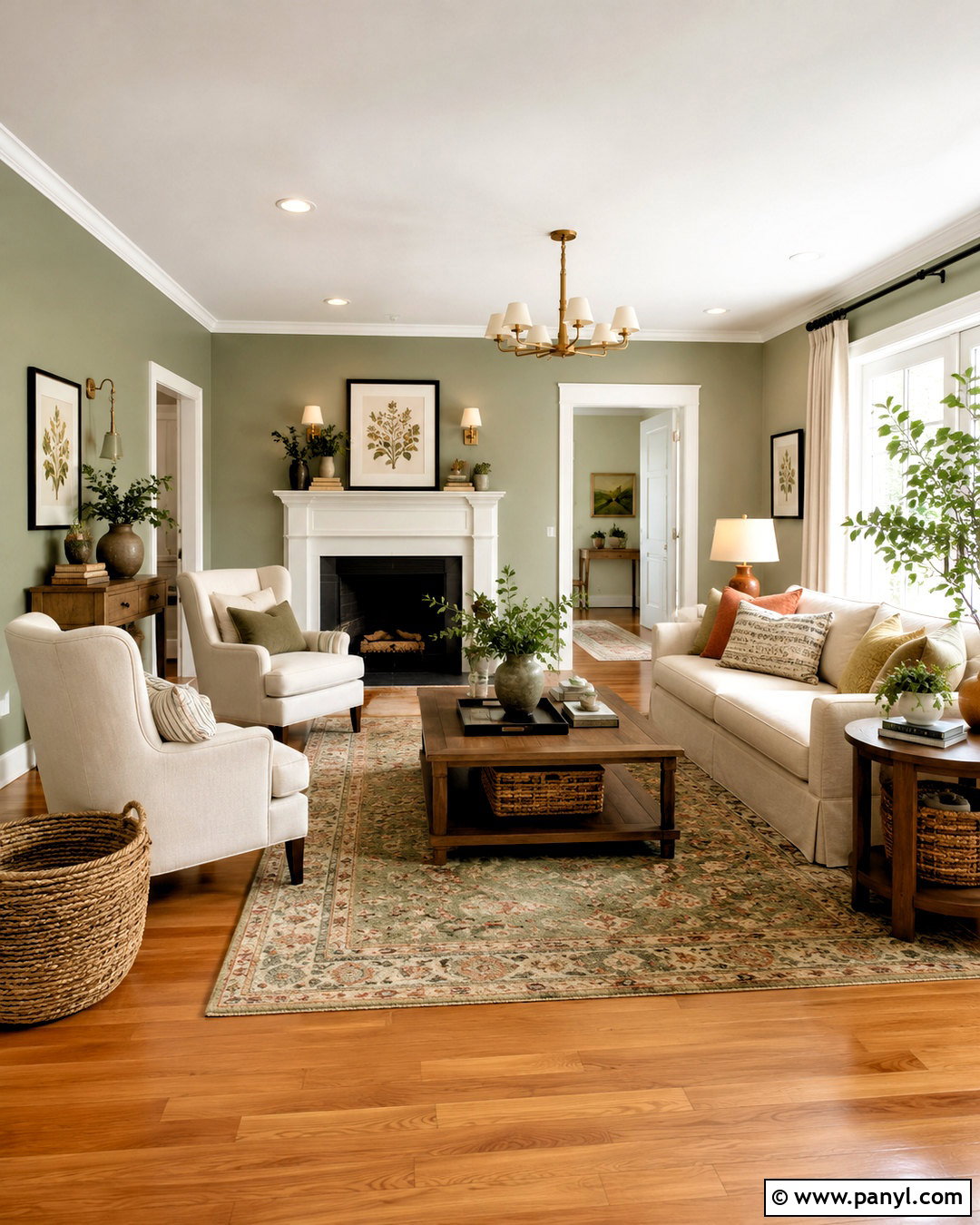
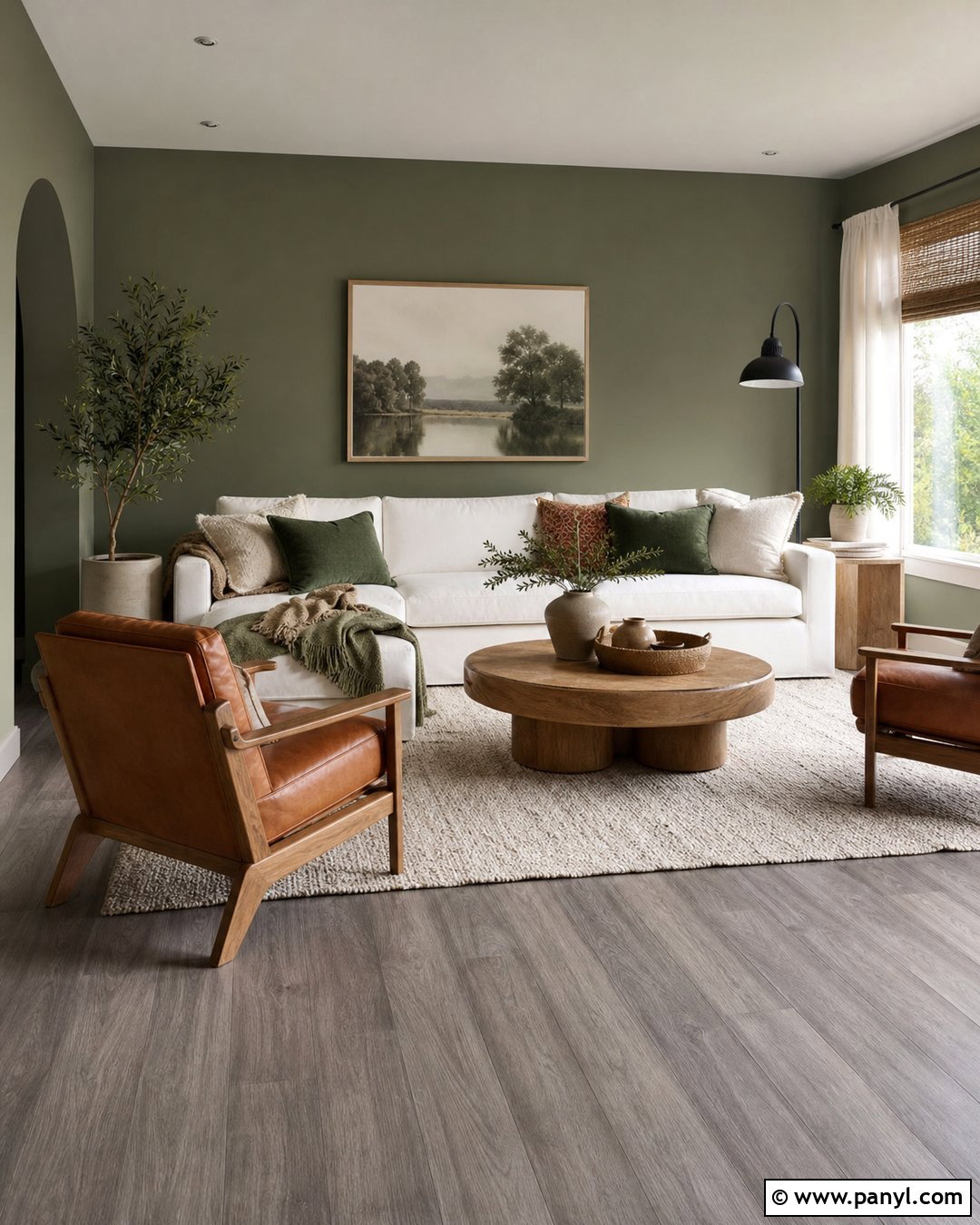
Sage green walls calm the orange and golden notes found in honey-toned wood floors while preserving the room’s natural warmth. Choose a muted sage with gray undertones rather than a bright, minty green. Build a comfortable living room with an oatmeal sofa, cream armchairs, and a faded rug containing sage, tan, and soft rust. Medium walnut tables add separation from the lighter flooring, while linen curtains maintain an airy atmosphere. Use aged brass lighting to connect with the floor’s warmth and matte black frames for subtle contrast. Woven baskets, botanical prints, and handmade ceramics complete the organic look. Warm white trim keeps the palette fresh and creates a clear boundary between the sage walls and richly grained wood floor.
9. Olive Green Walls With Dark Wood Floors
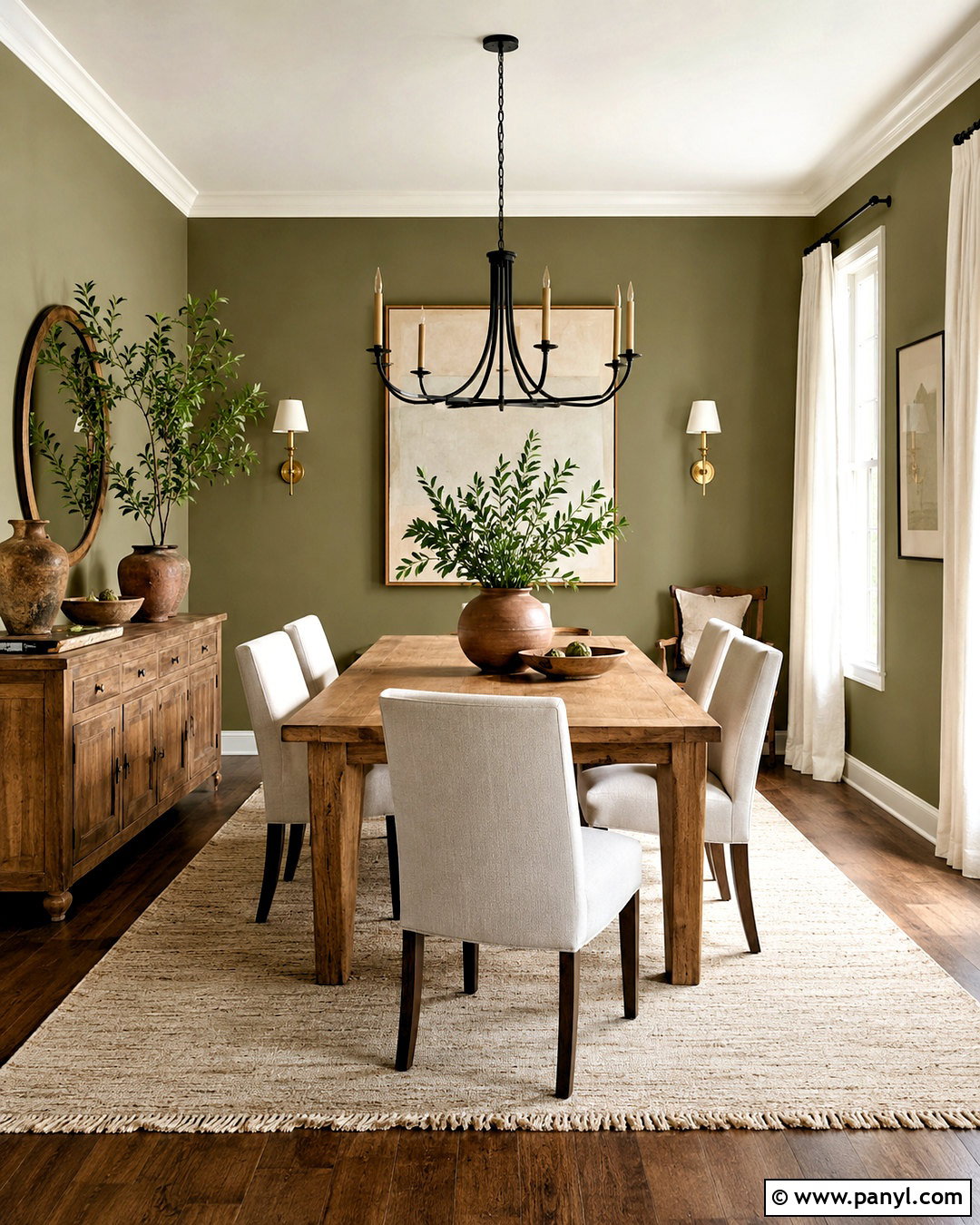
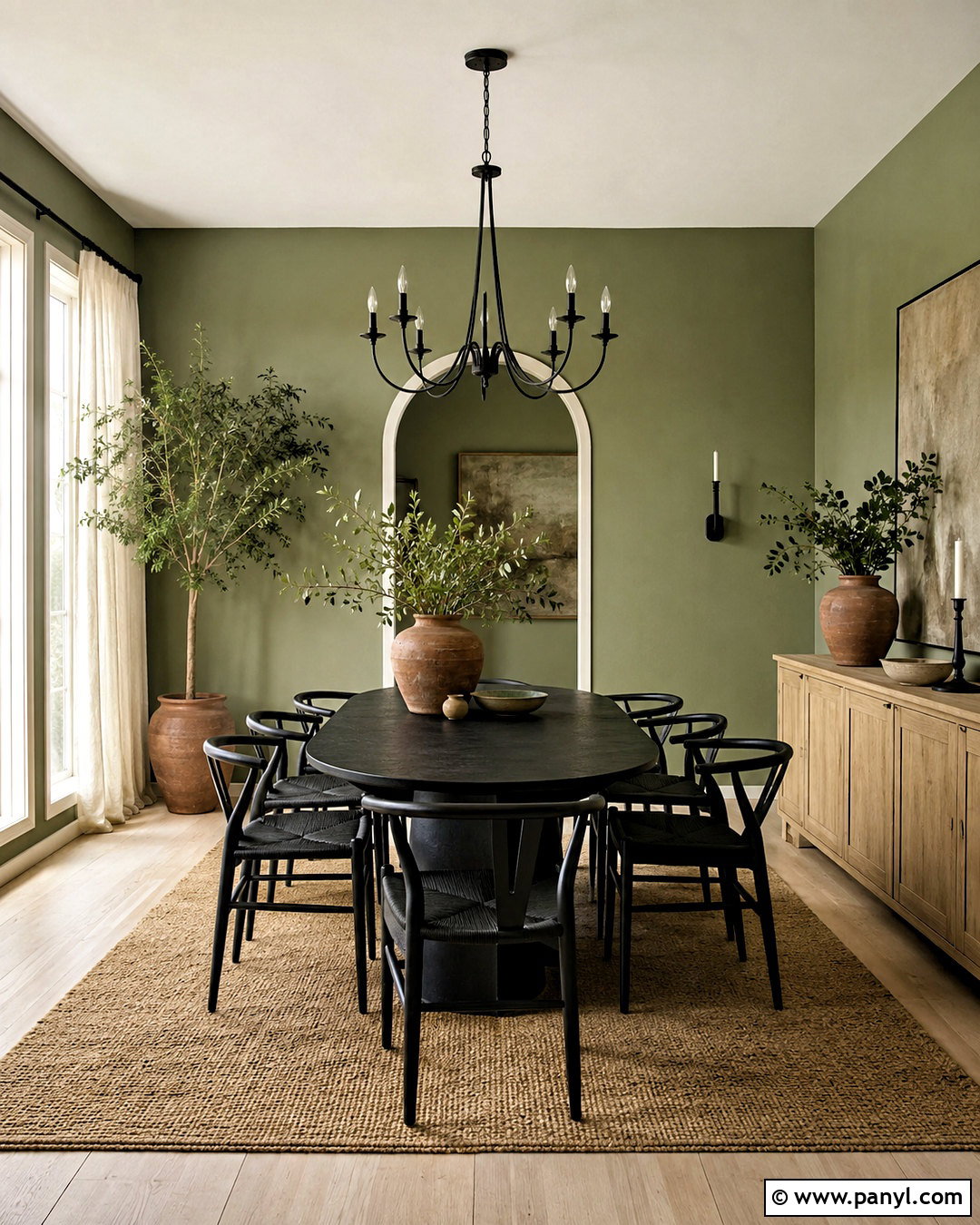
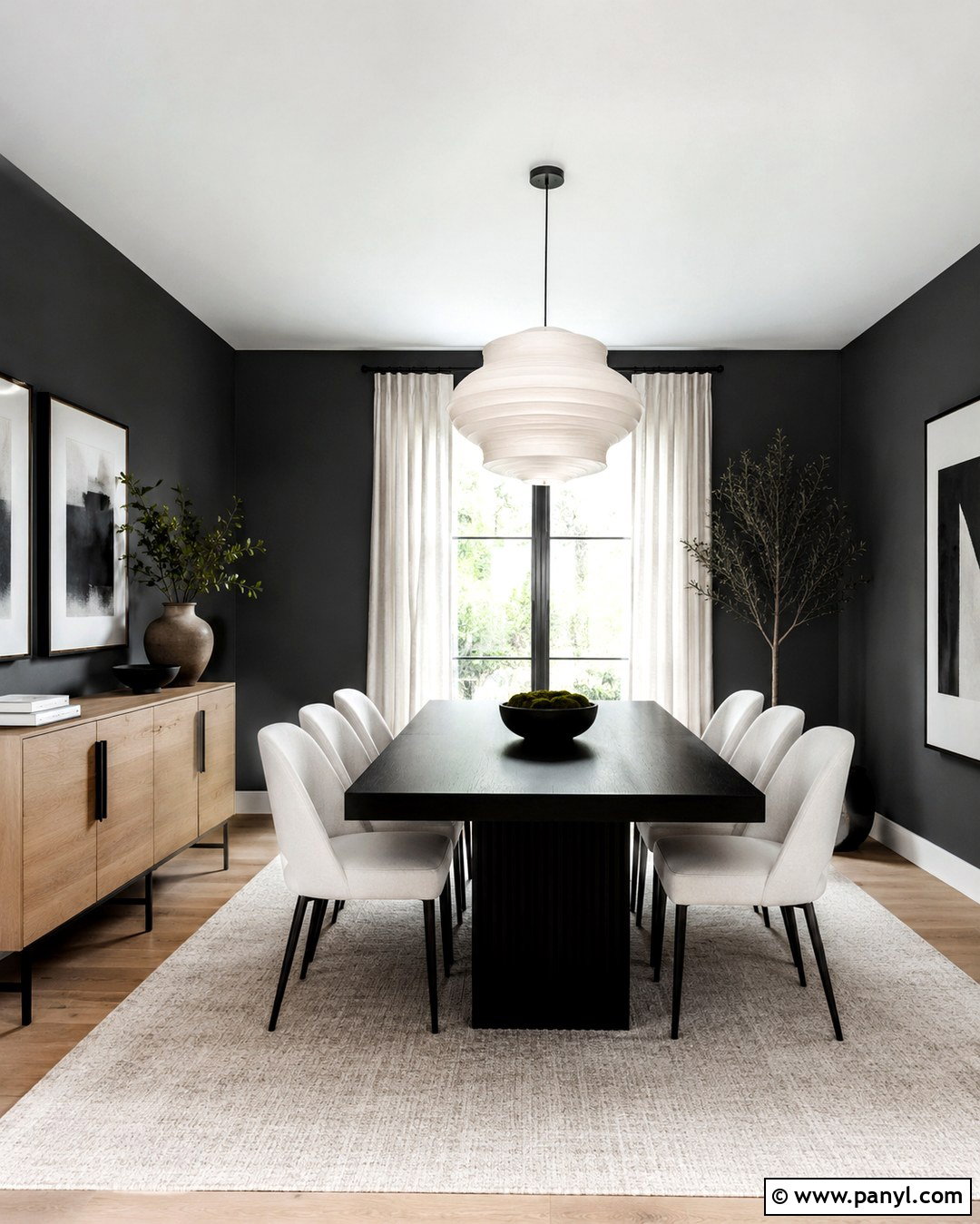
Olive green walls and dark brown floors form a grounded, enveloping combination suited to dining rooms and quiet sitting spaces. Select a muted olive with brown or gray undertones to avoid an overly bright, yellow-green result. Lighten the room with a natural oak dining table, cream upholstered chairs, and an ivory flat-weave rug. Off-white curtains will reflect daylight and prevent the walls and floor from closing in visually. Add black metal lighting for structure, then introduce aged brass candleholders or cabinet hardware for warmth. Artwork with tan mats and pale backgrounds will stand out beautifully against olive paint. A few terracotta vessels and leafy plants reinforce the earthy palette while creating enough variation to make the complete room feel layered and intentional.
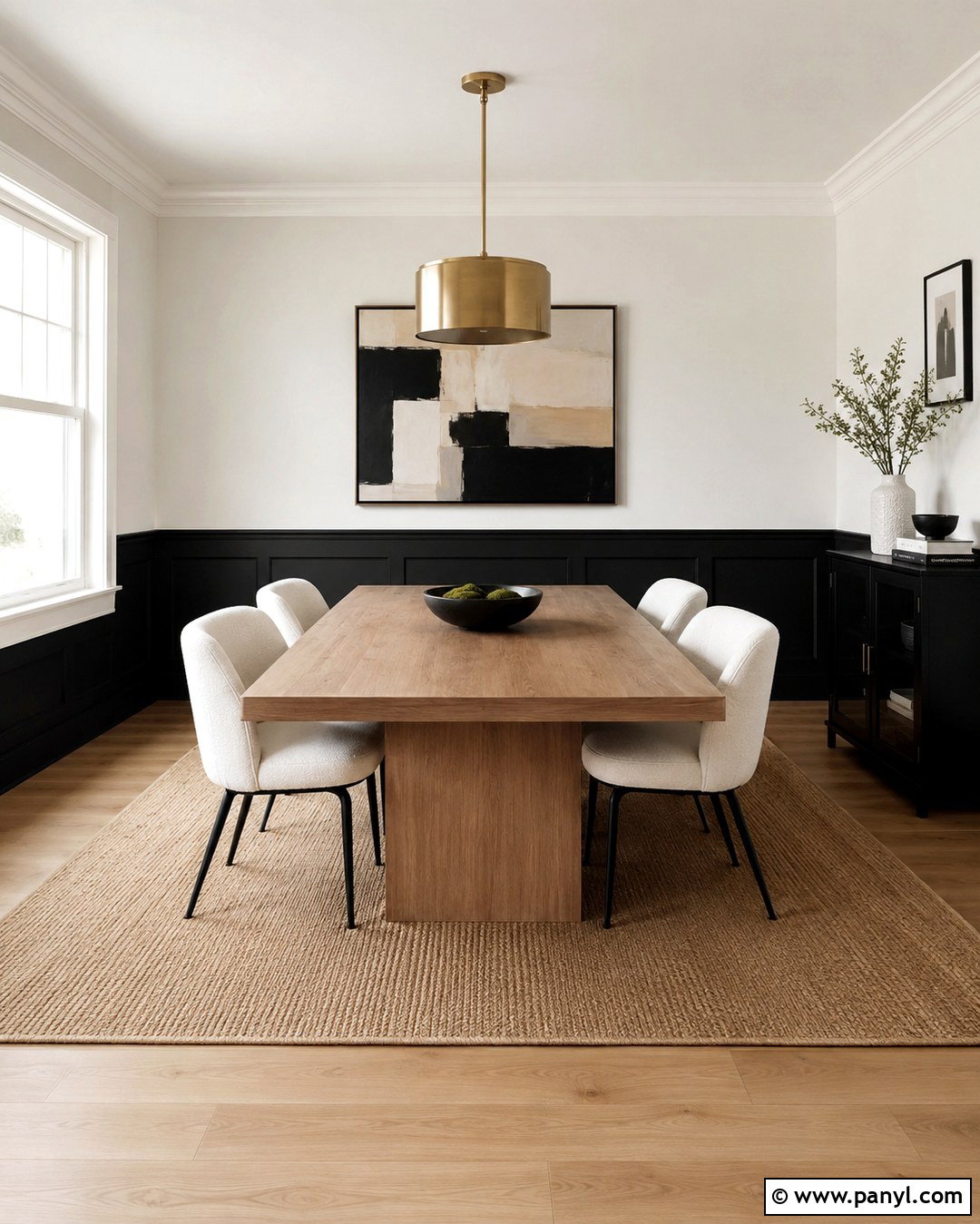
10. Forest Green Walls With Light Wood Floors
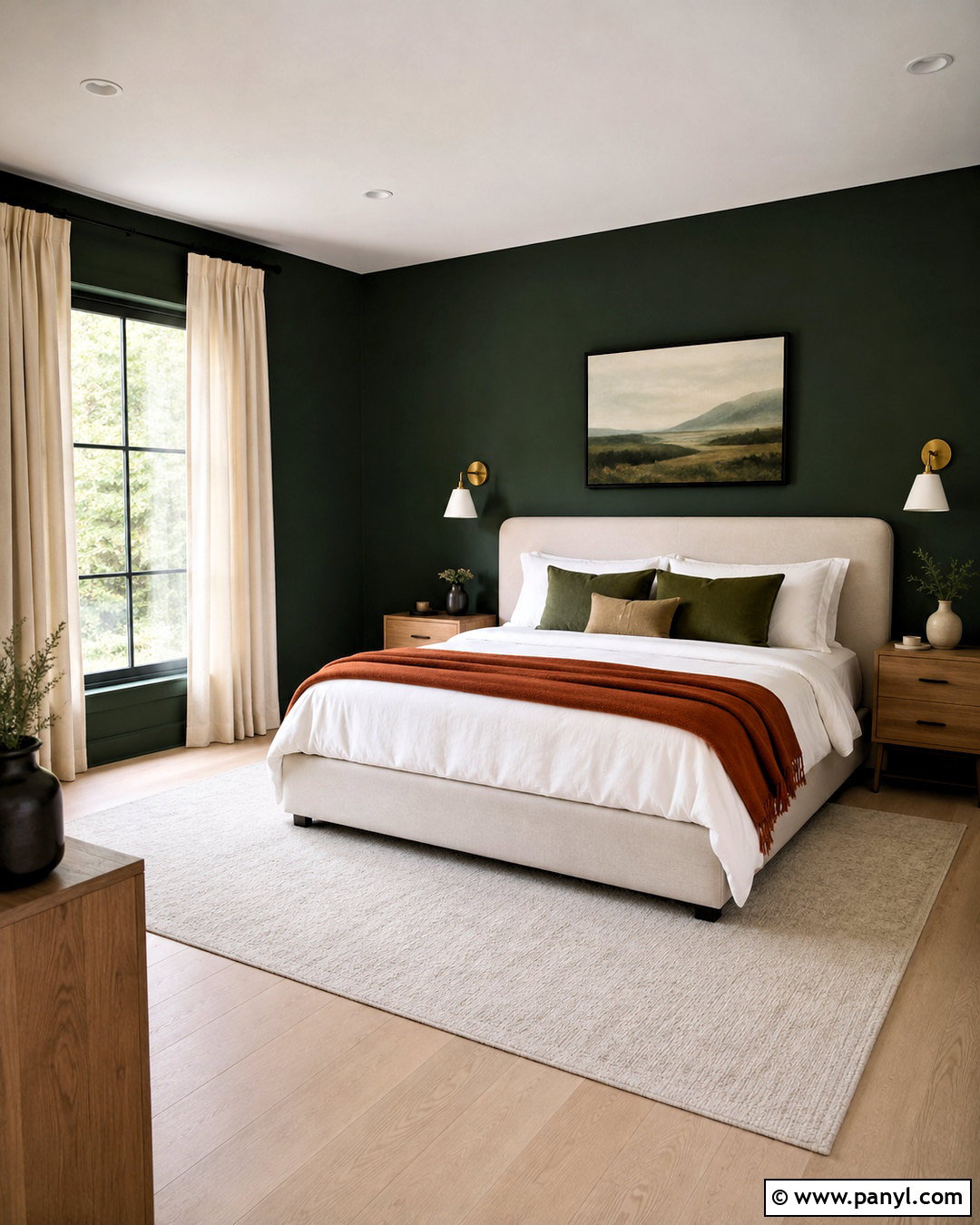
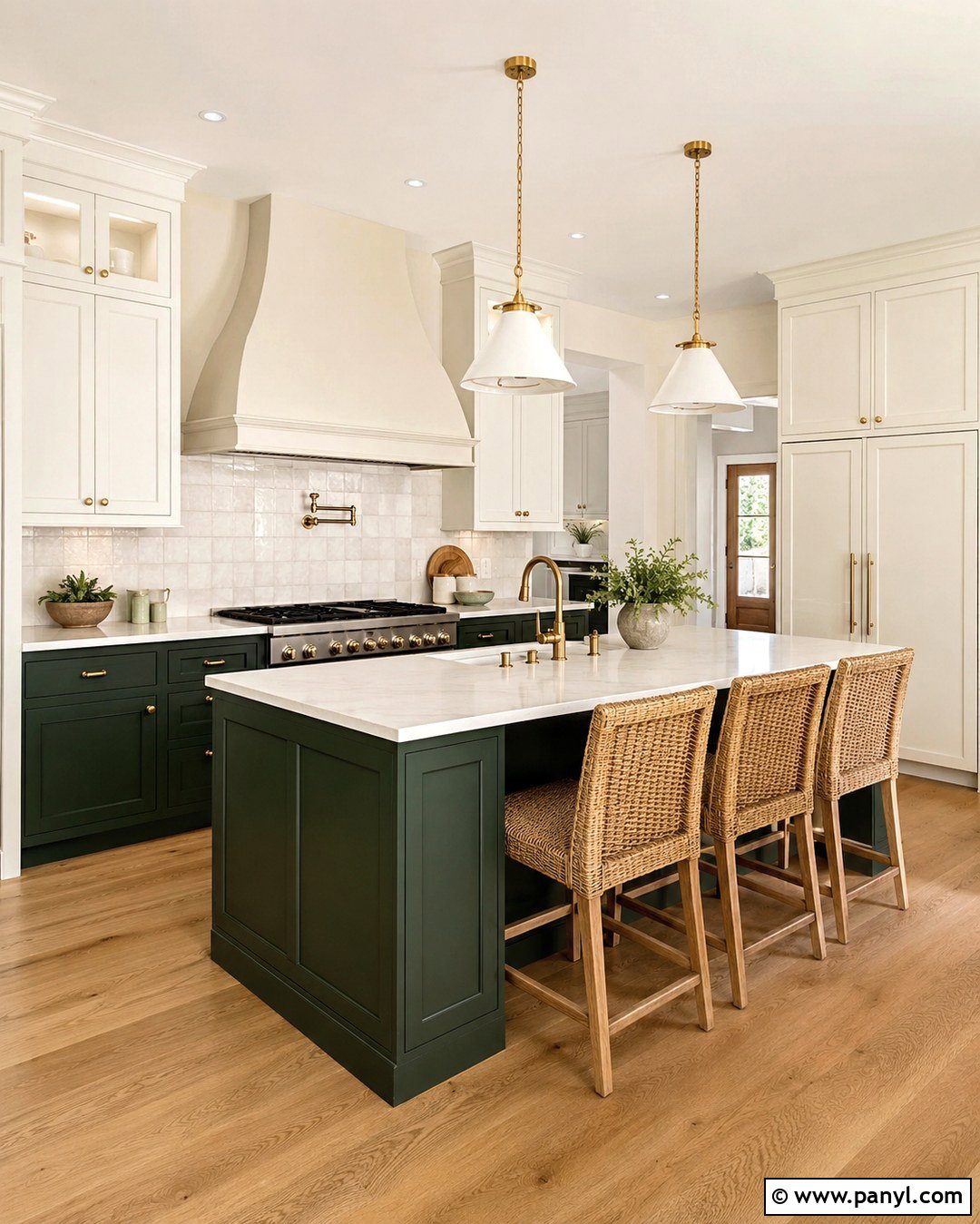
Deep forest green walls create a bold background for white oak, maple, or pale ash flooring. This look is especially effective in a bedroom where a cocooning color can be balanced by light surfaces. Place a cream upholstered bed against the green wall and layer it with white bedding, olive pillows, and a rust-colored throw. A pale wool rug adds softness without hiding the attractive wood. Choose natural oak nightstands that relate to the floor but differ slightly in tone. Brushed brass sconces bring warmth, while black frames and hardware provide a clean contemporary edge. Use full-length ivory curtains to brighten the room during the day. Minimal artwork and simple ceramics allow the strong wall color and natural floor grain to remain the main features.
11. Dusty Blue Walls With Orange Wood Floors
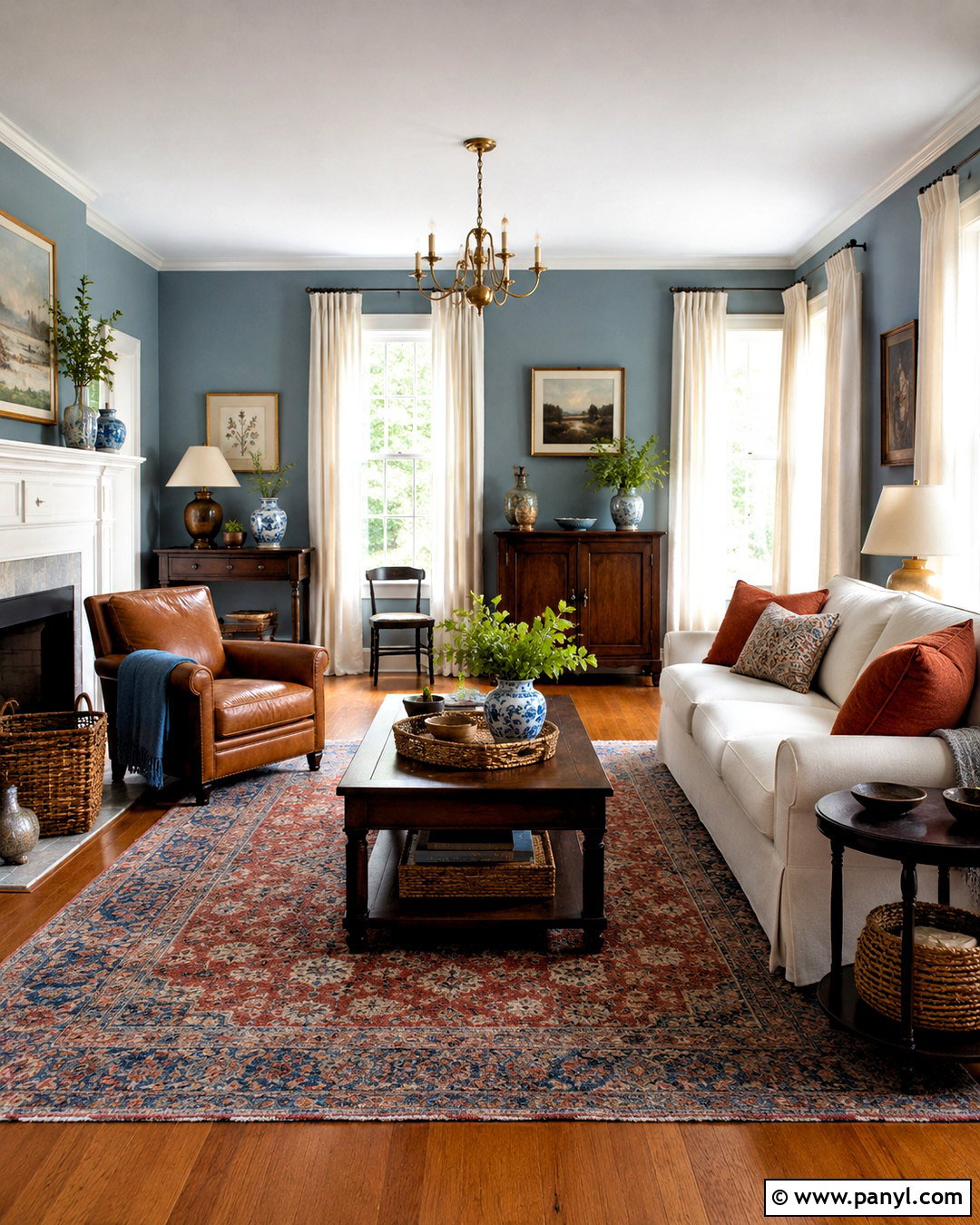
Dusty blue walls provide a cooling counterbalance to wood floors with noticeable orange or copper coloring. The blue should be softened with gray so it feels livable and does not create an overly strong complementary contrast. Design the room with an ivory sofa, warm tan leather chair, and a patterned rug containing faded blue, cream, and muted brick red. Walnut or espresso tables will distinguish the furniture from the brighter floor. Add warm white curtains, antique brass lighting, and woven accessories to keep the space inviting. Blue ceramic pieces can repeat the wall color in small amounts, while rust pillows connect back to the floor. The finished palette makes older orange-toned hardwood feel purposeful, balanced, and far easier to decorate around.
12. Slate Blue Walls With Oak Floors
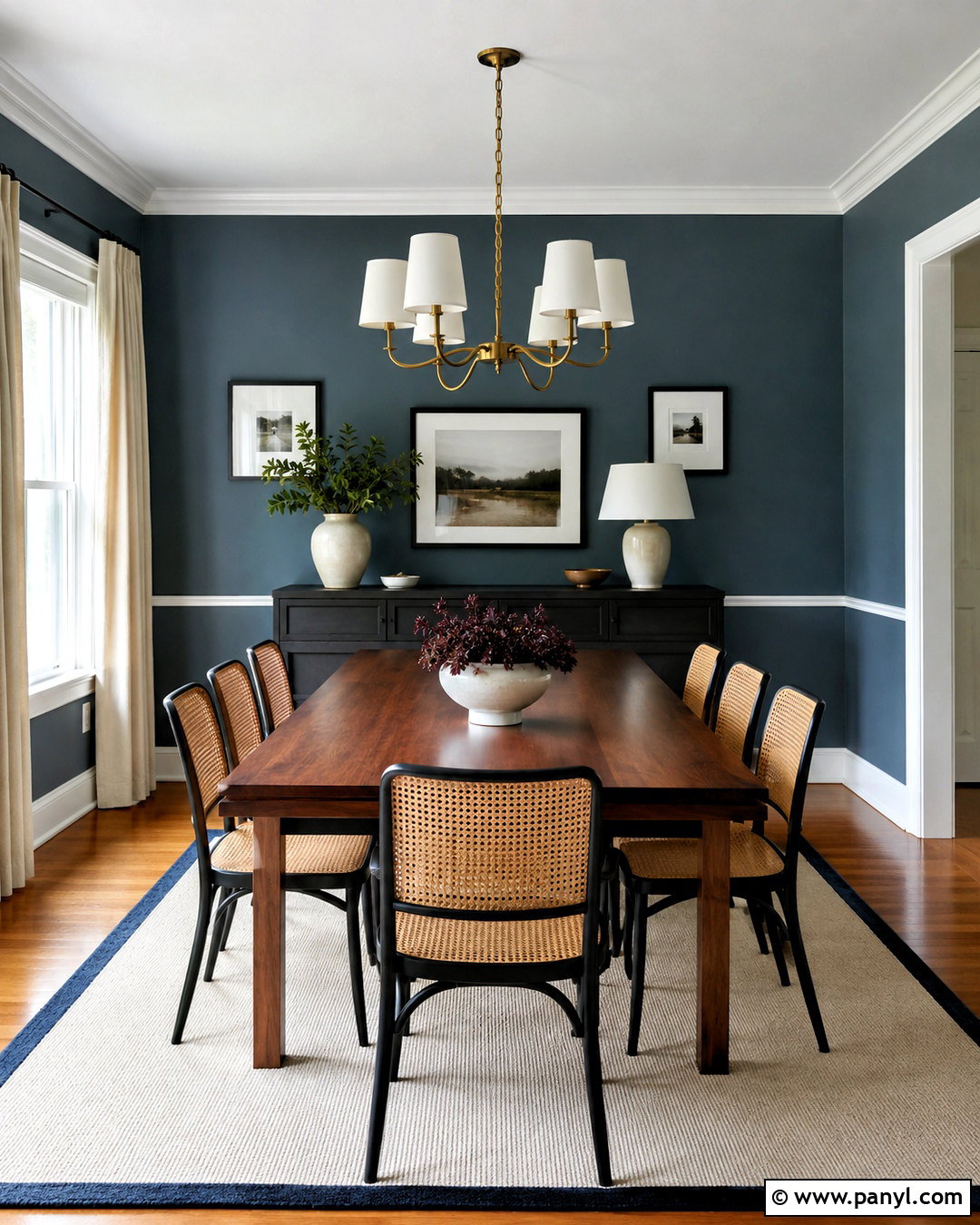
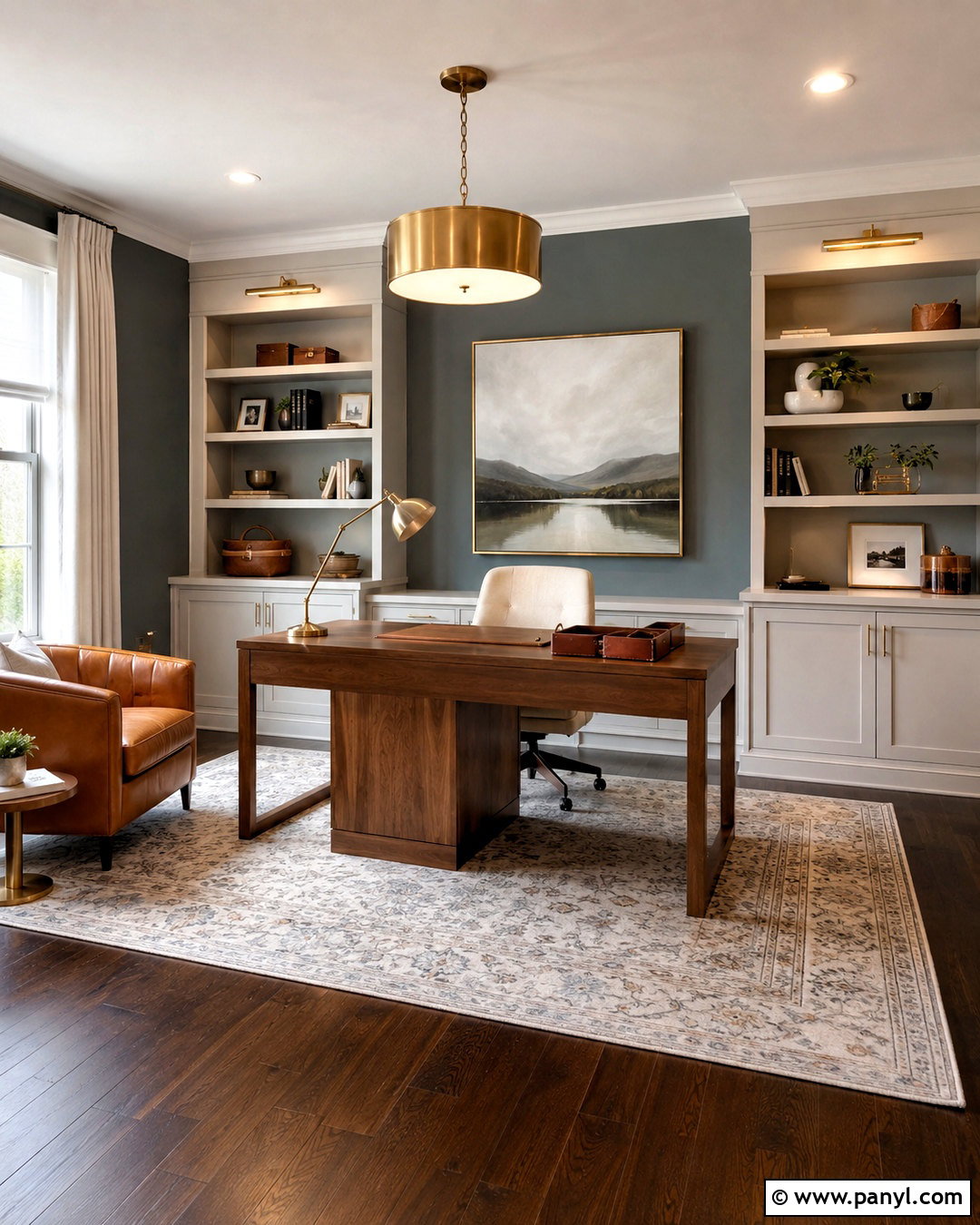
Slate blue walls give medium oak floors a tailored, classic quality without making the room feel formal. Choose a blue with enough gray to remain subdued and enough warmth to coordinate with the oak grain. In a dining room, pair the walls with a medium walnut table, natural cane chairs, and an ivory rug edged in navy. Warm white trim and linen curtains will keep the deeper color from becoming heavy. Use aged brass lighting above the table and black picture frames for crisp definition. A sideboard painted soft black can anchor one wall while pale ceramics add contrast. Include small accents of cognac, rust, or muted gold to bridge the cool blue paint and warm flooring, producing a cohesive room with lasting appeal.
13. Navy Blue Walls With Light Wood Floors
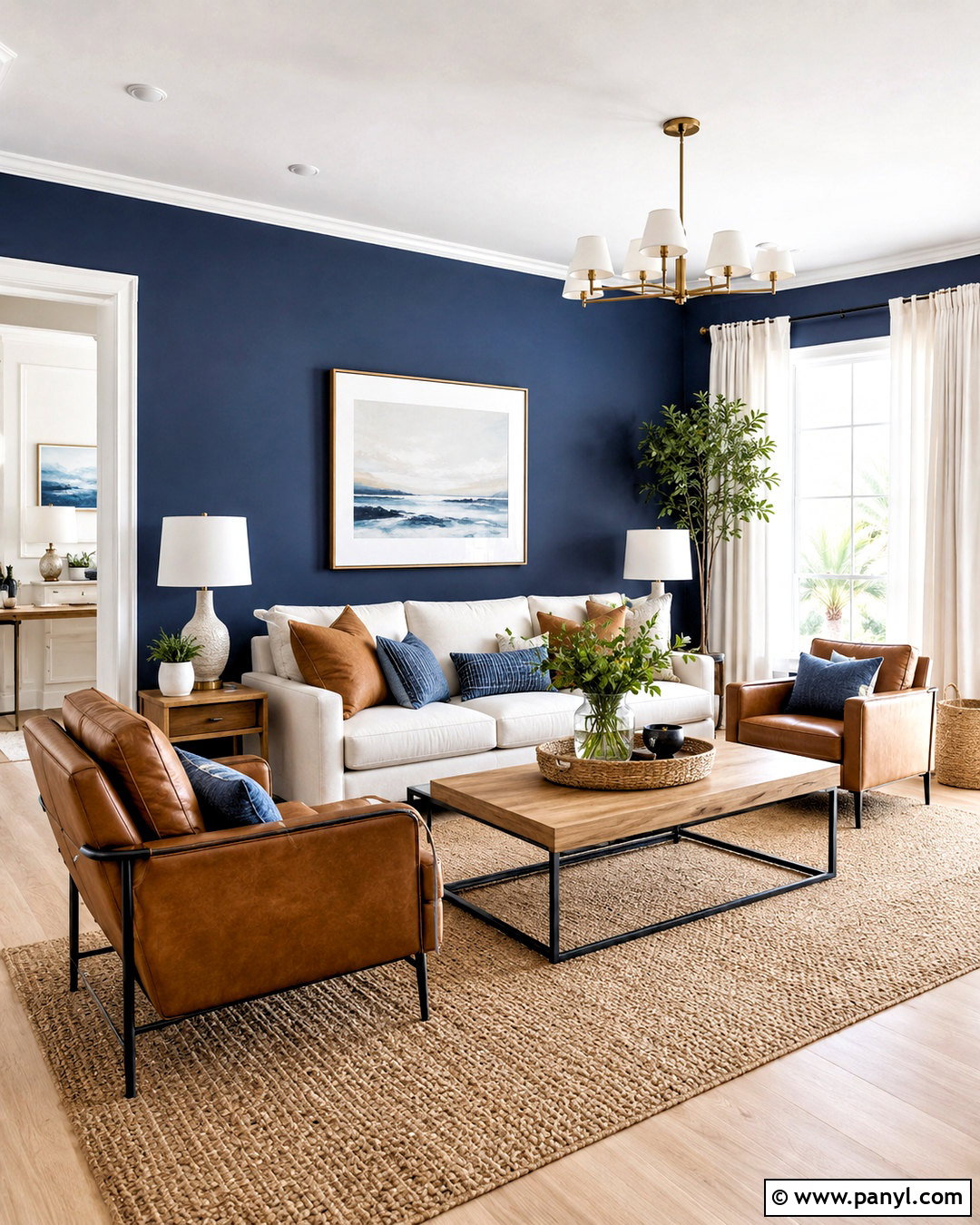
Navy walls look clean and dramatic beside pale oak or maple flooring because the strong value contrast clearly defines both surfaces. Choose a softened navy rather than a nearly black shade, particularly in a small room. Create a polished living area with a cream sofa, cognac leather chairs, and a broad natural fiber rug. Light oak tables repeat the flooring, while black metal legs prevent the wood elements from blending together. Add white linen curtains, brushed brass lighting, and artwork with generous cream borders. Pillows in denim blue, camel, and ivory will distribute the color throughout the seating arrangement. Keep the ceiling and trim warm white for brightness. This complete palette feels coastal, transitional, or contemporary depending on the furniture shapes and decorative accessories selected.
14. Pale Blue Walls With Dark Wood Floors
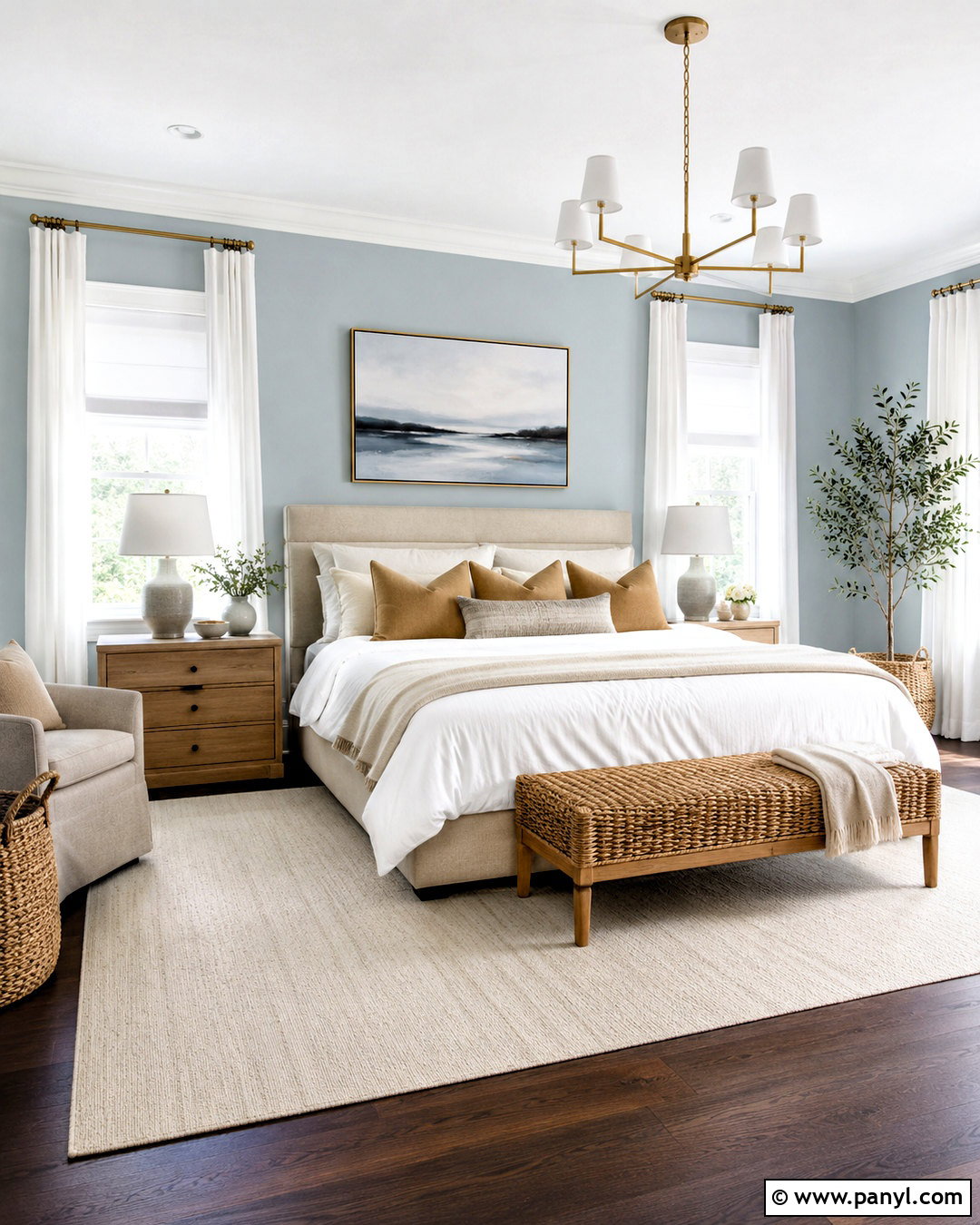
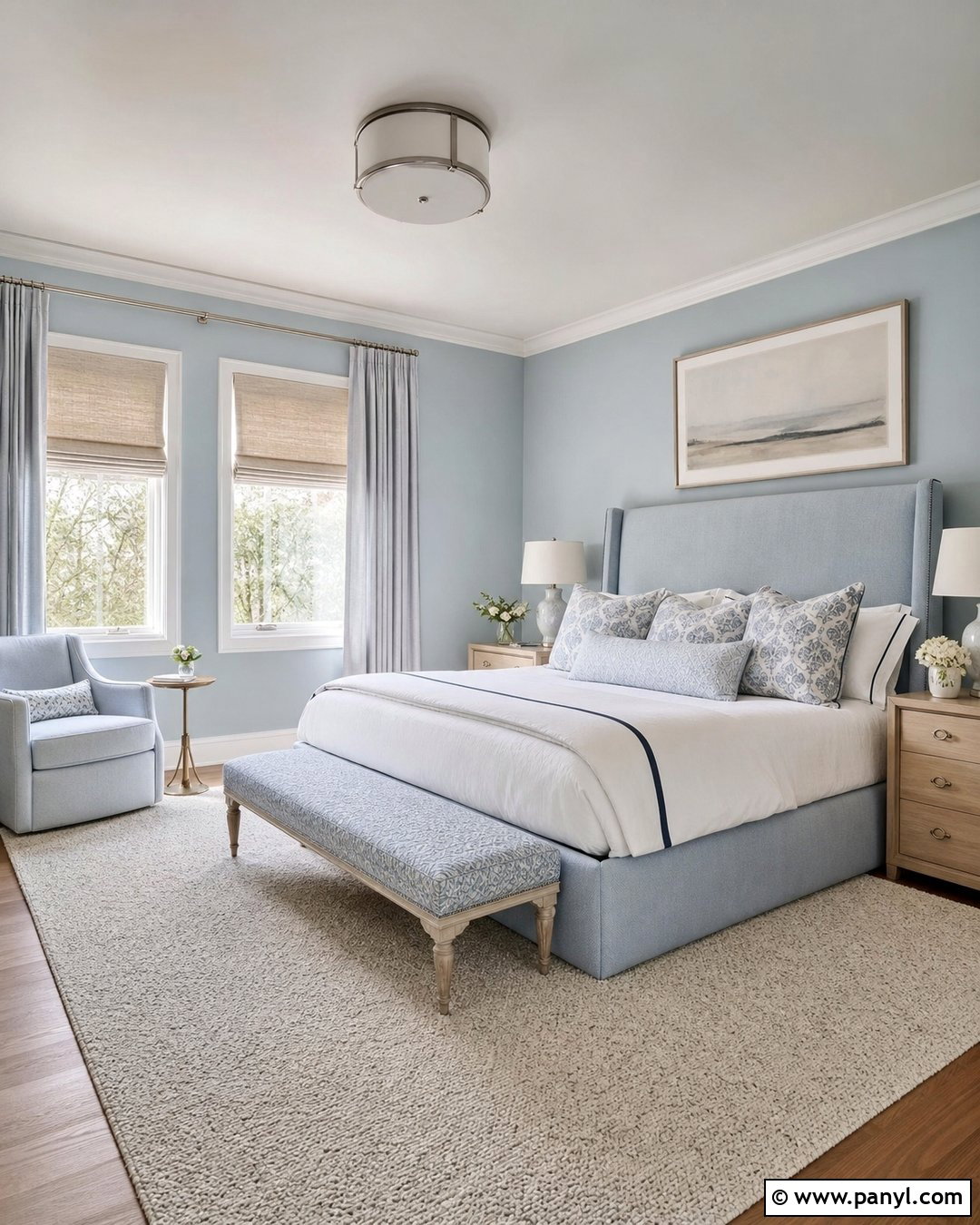
Pale blue walls make espresso and dark walnut flooring feel lighter, calmer, and less visually heavy. Select a misty blue with a subtle gray base rather than a sugary pastel. In a bedroom, combine it with an oatmeal upholstered bed, crisp white bedding, and a large cream rug that reveals a wide border of dark wood. Add light oak nightstands to introduce a middle value between the walls and floor. Brushed nickel or polished chrome lighting can emphasize the fresh color, while a few warm brass accents will stop the scheme from feeling cold. Use white linen curtains and simple blue-gray artwork to reinforce the airy effect. Soft tan pillows and natural baskets provide the final layer of warmth and texture.
15. Terracotta Walls With Natural Oak Floors
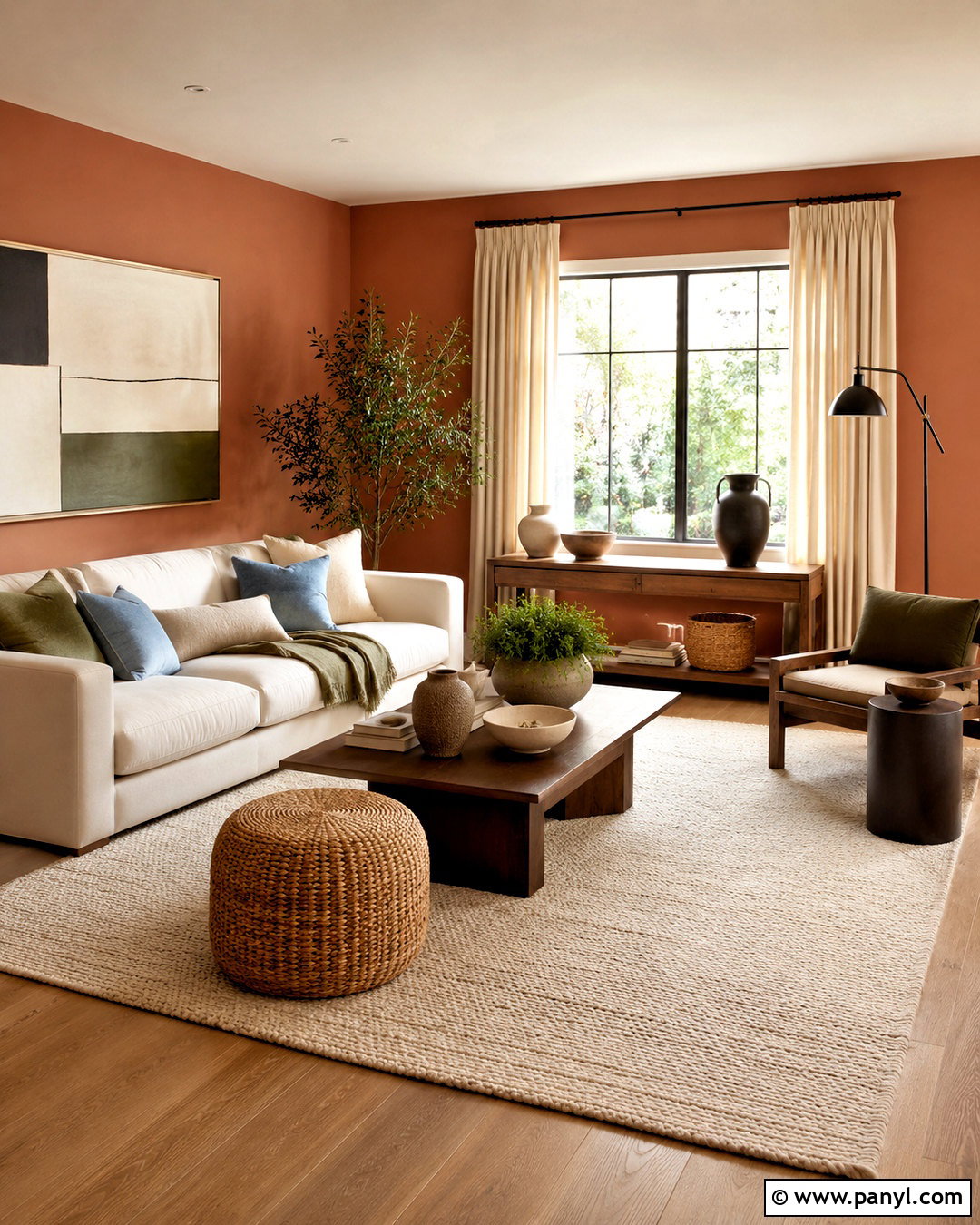
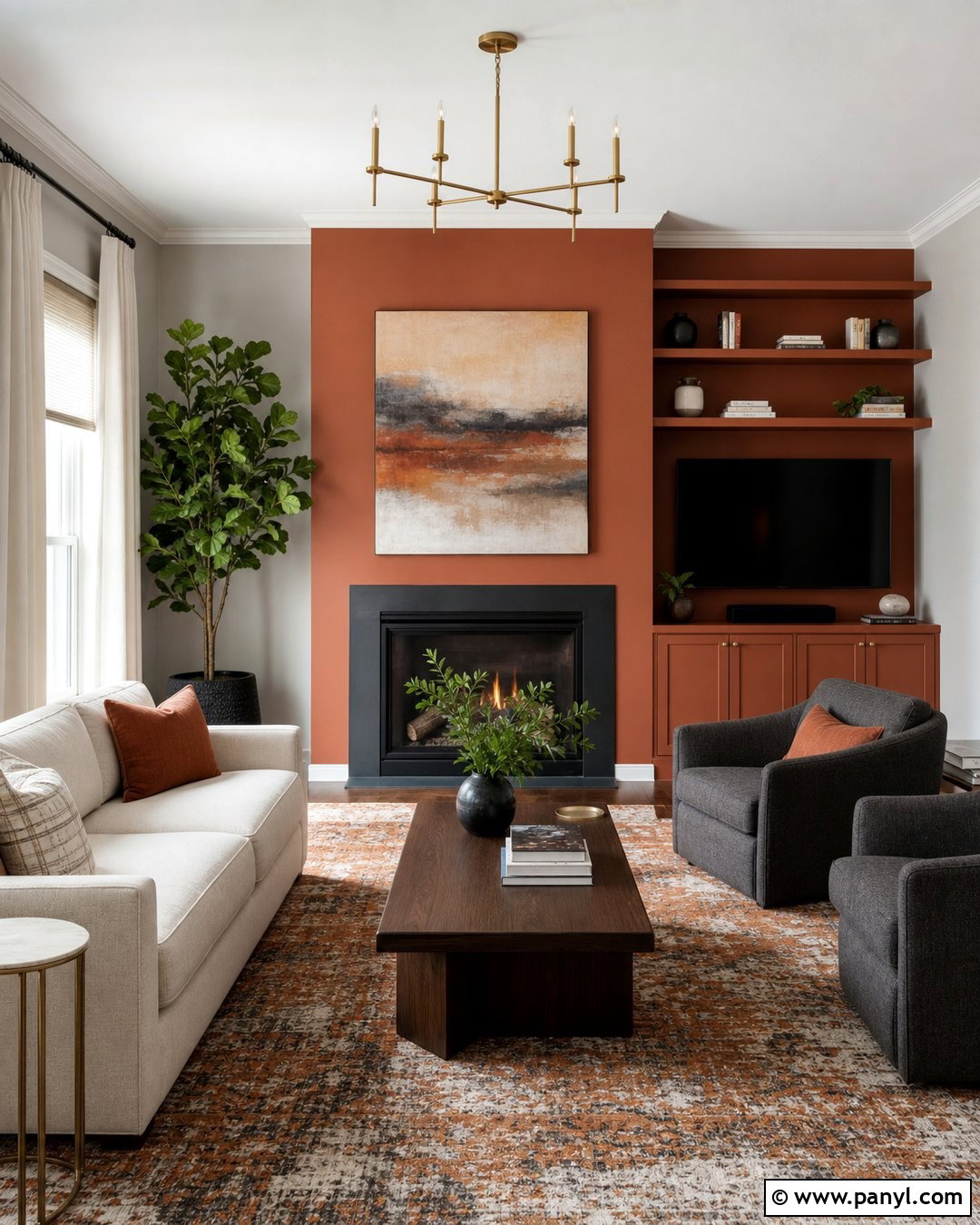
Terracotta walls amplify the warmth of natural oak and create an inviting room with an earthy, sunbaked character. Pick a muted clay shade with brown and pink undertones instead of a vivid orange. Balance the walls with a cream sofa, off-white curtains, and a generously sized ivory rug. Add dark walnut tables and black metal lighting to provide contrast against the warm surfaces. Upholstery or pillows in dusty blue can cool the palette, while olive green accents strengthen its natural quality. Keep decorative objects simple, using pale stone, handmade ceramics, and woven fibers. Warm white trim gives the terracotta a neat edge and prevents the room from feeling overly saturated. This combination works particularly well in bright living rooms with abundant natural light.
16. Soft Blush Walls With Walnut Floors
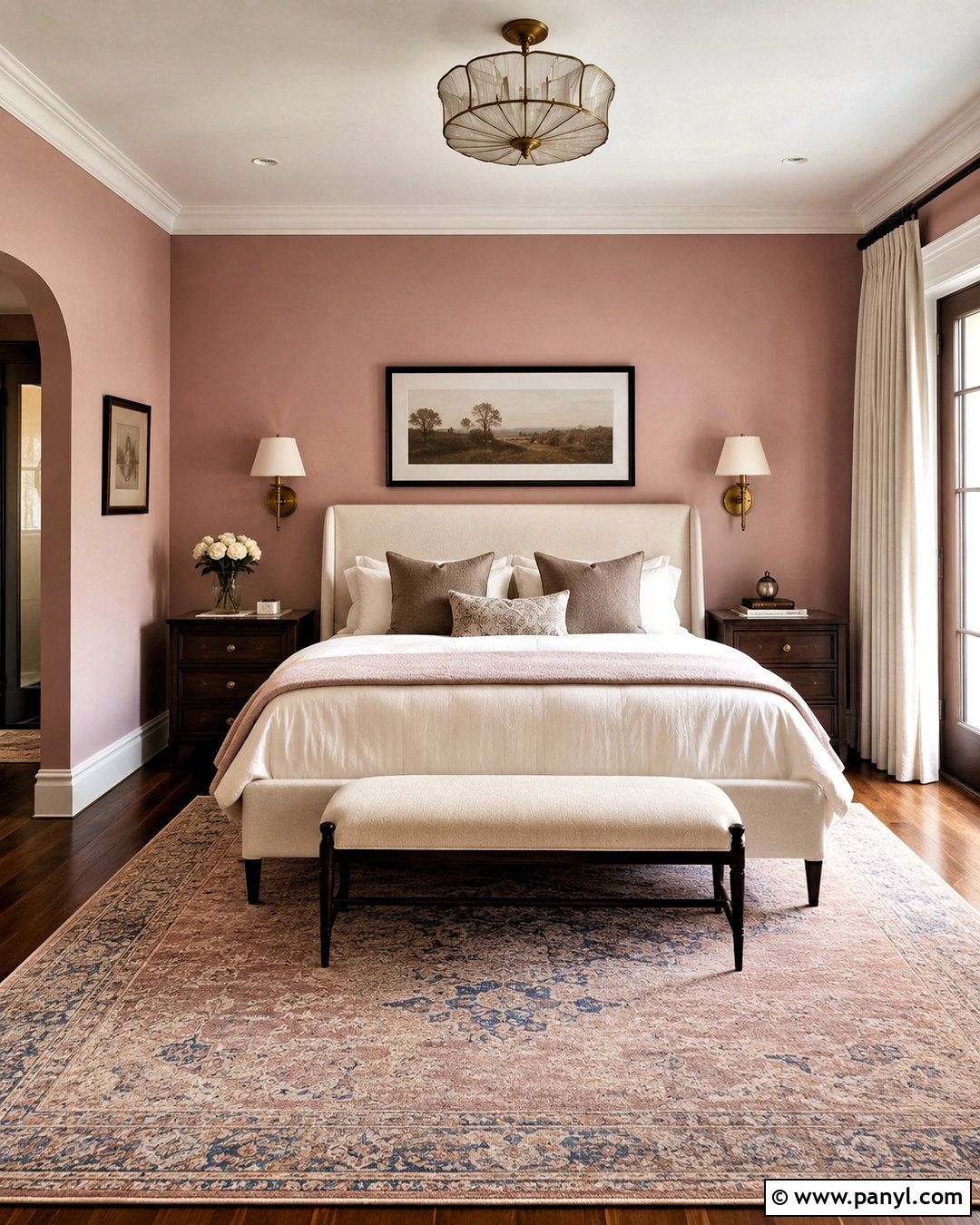
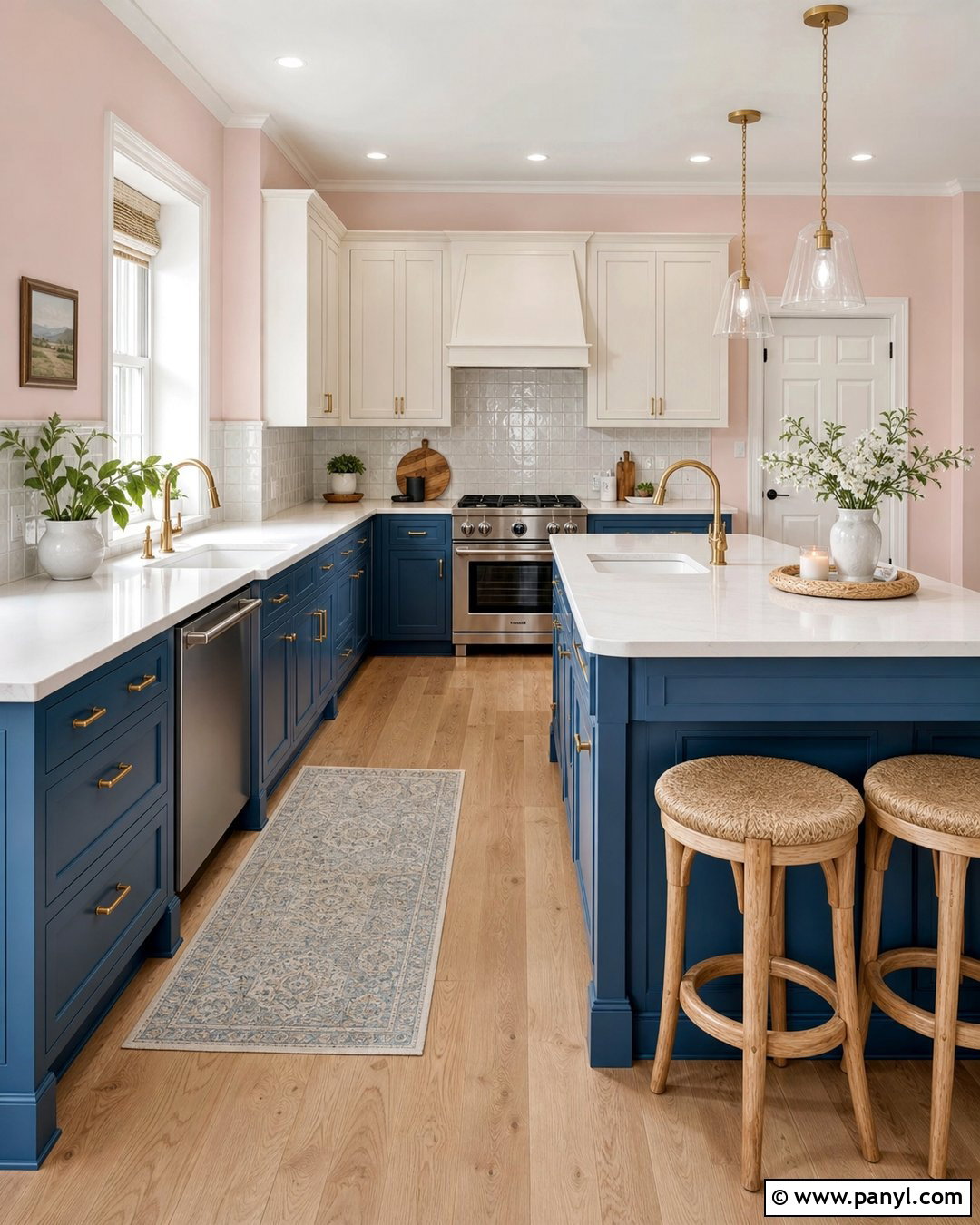
Soft blush walls bring subtle warmth to walnut flooring and create a refined alternative to beige. Look for a dusty pink with taupe or gray undertones, avoiding anything bright or candy-colored. Build an elegant bedroom with a cream upholstered bed, ivory bedding, and mushroom-colored pillows. A faded vintage rug containing blush, brown, and muted blue will connect every major surface. Use dark walnut nightstands that complement the floor, but add light marble tops or pale lamps to prevent the furniture from disappearing. Antique brass sconces enhance the warmth, while charcoal frames provide definition. Full-length oatmeal curtains soften the windows and balance the pink. The overall room feels warm and sophisticated, with enough neutral texture to keep the blush walls versatile.
17. Muted Peach Walls With Dark Brown Floors
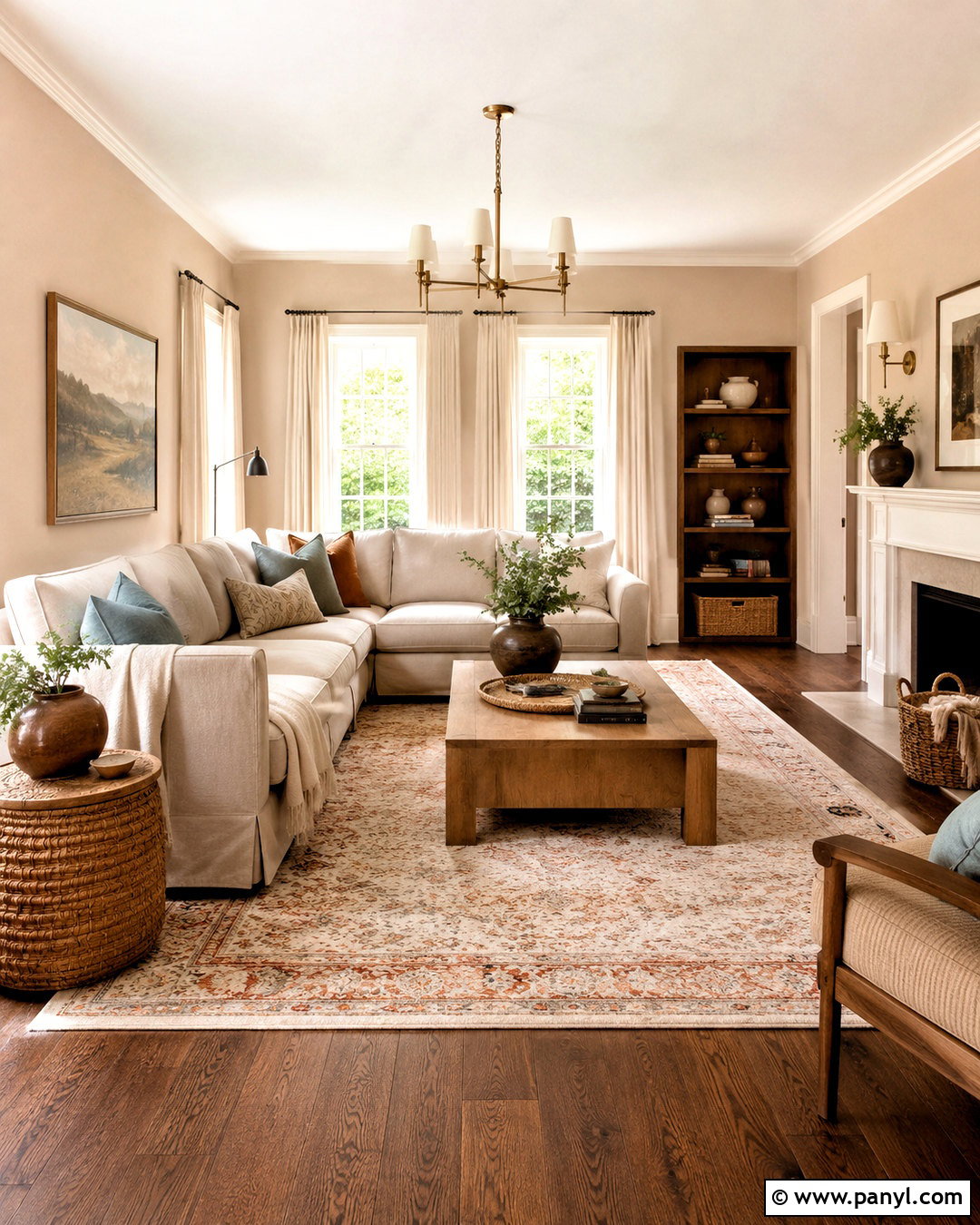
Muted peach walls can lift a room with dark brown floors while preserving a warm and relaxed atmosphere. Choose a subdued peach mixed with beige, not a bright coral or orange. Furnish the space with a cream sectional, a light oak coffee table, and an ivory rug featuring thin brown or rust details. Pale blue pillows and artwork will introduce cool contrast and stop the palette from becoming too warm. Use linen curtains in soft white and lighting in aged brass or matte black. Woven baskets and unglazed pottery add texture that feels natural beside the hardwood. Paint the trim a creamy off-white instead of stark white. This balanced combination is cheerful enough for a family room but understated enough to remain comfortable throughout the year.
18. Butter Yellow Walls With Medium Wood Floors
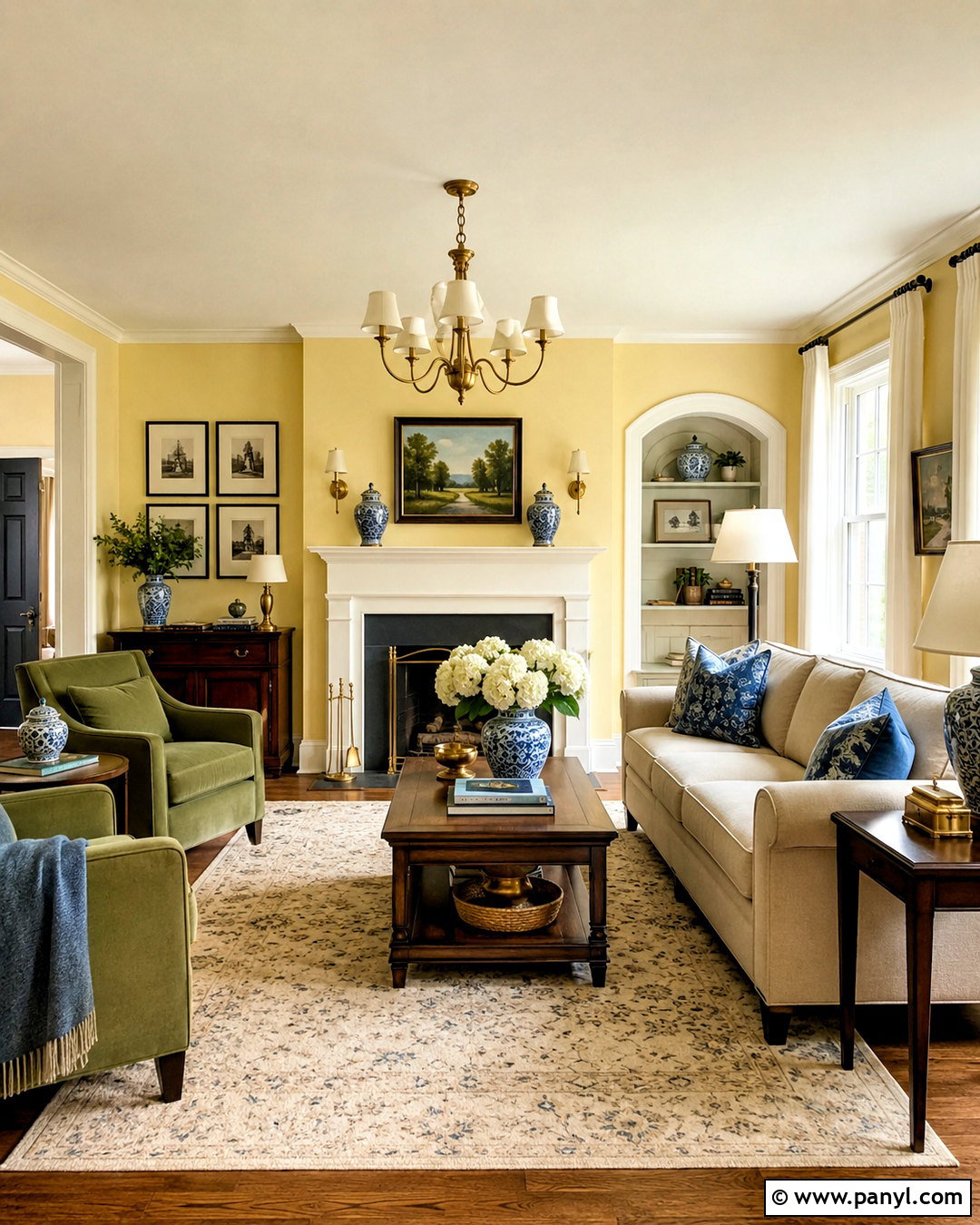
Butter yellow walls create a sunny, traditional look when paired with medium brown wood floors that have balanced rather than strongly orange undertones. Select a pale, creamy yellow that appears soft in both daylight and lamplight. Ground the color with an oatmeal sofa, olive green chairs, and a cream rug containing small brown details. Dark walnut tables will give the room visual structure, while white linen curtains keep it light. Use antique brass lighting to continue the warmth and black frames to sharpen the gentle palette. Blue-and-white ceramics or muted blue pillows offer a useful cooling note. Keep the trim warm white and limit other yellow accessories. The walls should provide the glow, while the furniture and floor create depth and stability.
19. Mushroom Walls With White Oak Floors
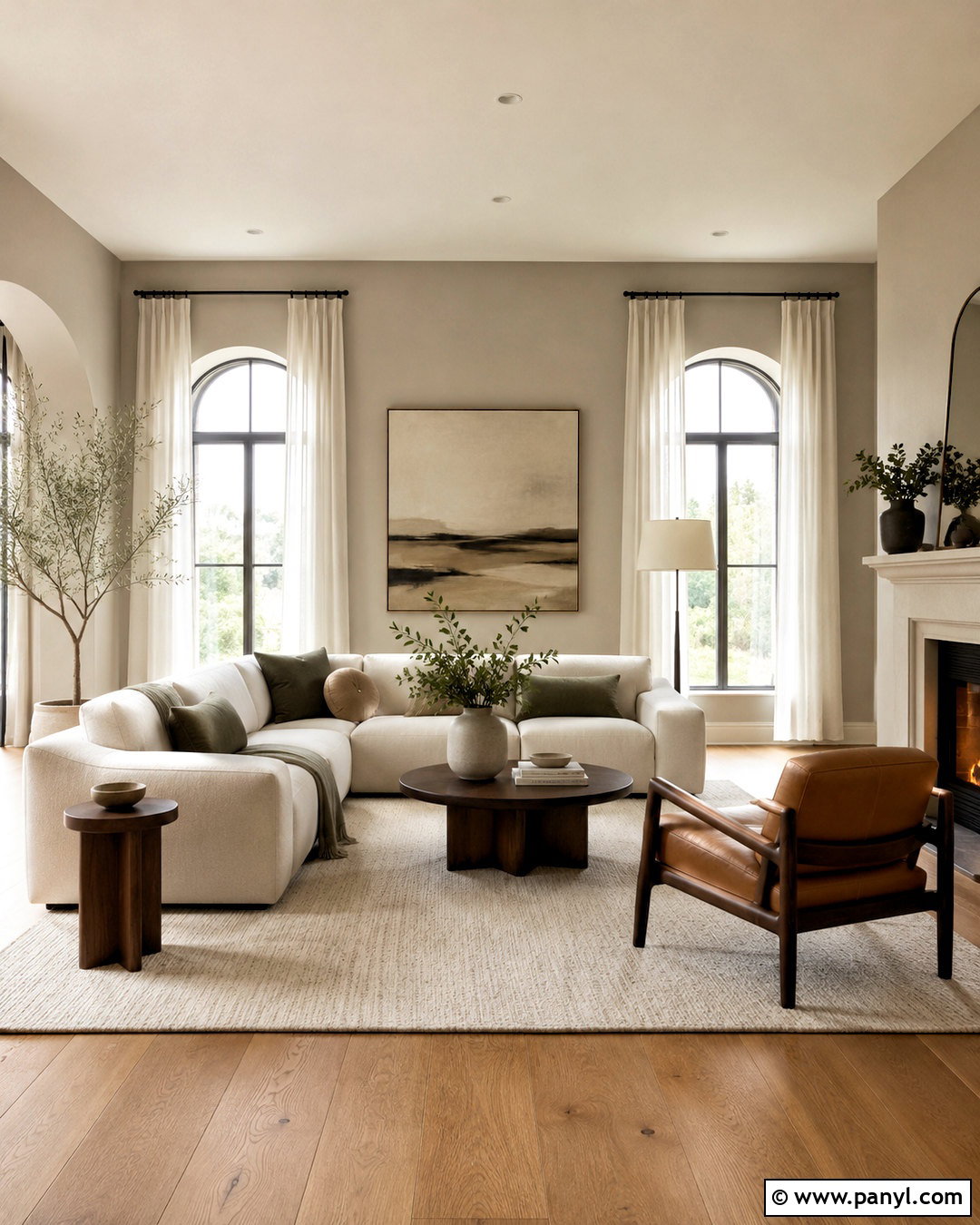
Mushroom-colored walls pair beautifully with white oak because both have quiet, natural undertones without looking identical. Choose a light mushroom shade that sits between taupe, beige, and gray. Create a soft modern living room with a cream boucle sofa, tan leather chair, and textured ivory rug. Use walnut tables to bring in a darker wood tone and create contrast against the pale floor. Black metal lighting, slim curtain rods, and simple picture frames will give the neutral scheme stronger definition. Add muted green pillows, stone accessories, and warm white linen curtains for an organic finish. The subtle wall color allows the white oak grain to remain visible while making the room feel warmer and more layered than it would with plain white walls.
20. Deep Brown Walls With Pale Wood Floors
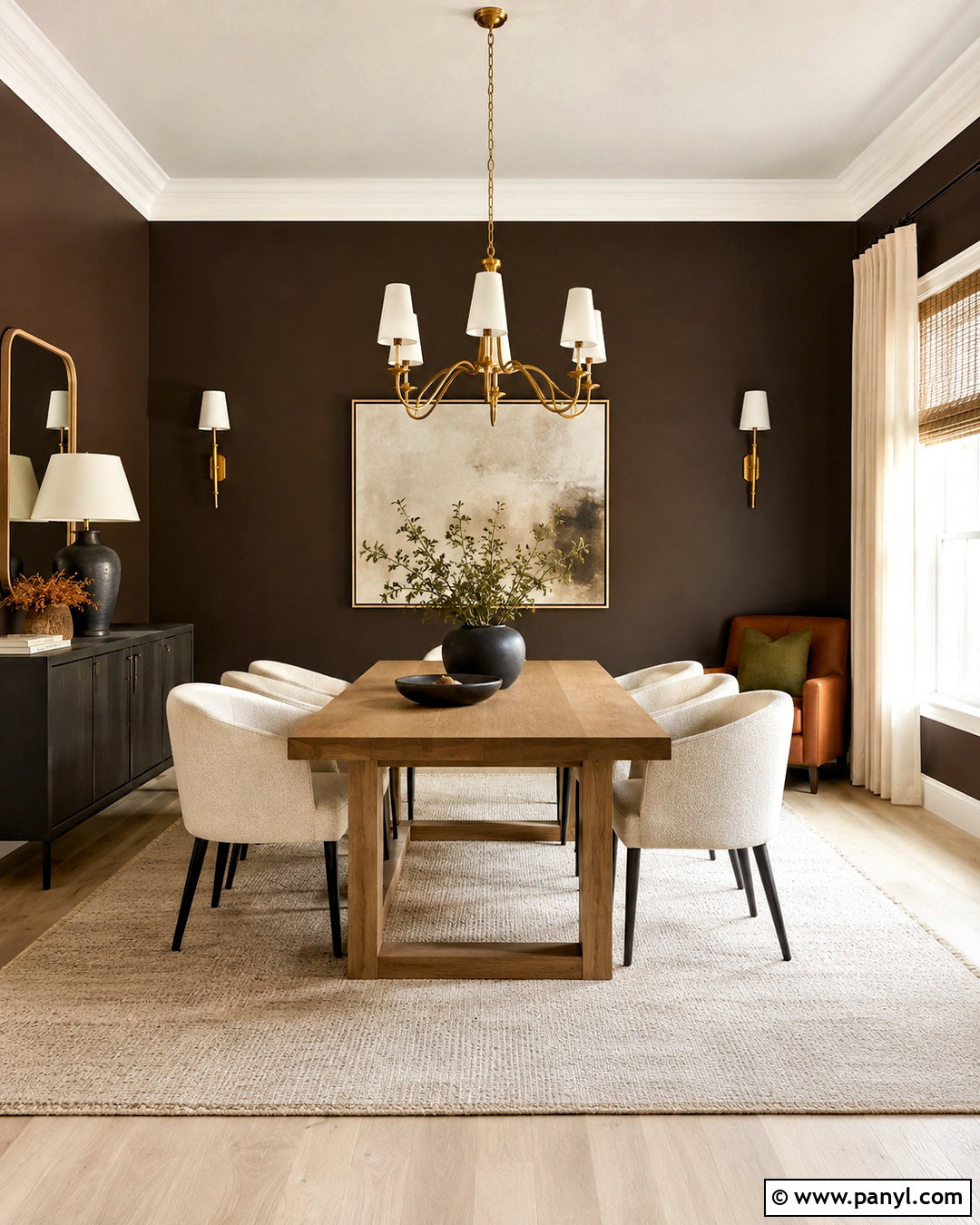
Deep brown walls create a rich, tonal interior when balanced by pale oak, maple, or ash flooring. Select a chocolate brown with neutral or slightly warm undertones, and use it in a dining room, office, or snug where a cozy atmosphere makes sense. Keep the furnishings lighter with a natural oak table, cream upholstered seating, and a large ivory rug. Warm white curtains and trim will frame the darker walls and reflect available light. Add aged brass fixtures, black accents, and artwork with pale backgrounds for depth and clarity. Rust, camel, and muted green accessories can complete the earthy palette. The light floor is essential because it prevents the brown walls from feeling oppressive while maintaining the room’s warm, grounded character.
Conclusion:
The most successful 20 Wall Colors That Go With Wood Floors begin with the undertones already present in the hardwood. Warm whites, creams, beiges, and mushroom tones offer flexibility, while greens and blues provide controlled contrast. Terracotta, blush, peach, yellow, charcoal, and brown can create more distinctive rooms when balanced with lighter furnishings and textiles. Before committing, paint large samples near the baseboards and observe them during the morning, afternoon, and evening. Include the rug, curtains, and major furniture when evaluating the combination. Wood floors rarely contain just one color, so choose a wall shade that relates to the overall grain instead of trying to match one isolated board exactly.

Related Ideas and Inspiration:
Leave a Reply