
Choosing wall paint around espresso floors, walnut furniture, mahogany trim, or dark-stained cabinets can completely change how a room feels. The best 20 Wall Colors That Go Well With Dark Wood Ideas balance the visual weight of rich wood while preserving its warmth and natural character. Light neutrals create fresh contrast, muted greens and blues add relaxed color, and deeper shades produce a cozy, enveloping effect. Current design guidance also emphasizes matching paint undertones to the wood and testing large samples under changing natural and artificial light. () Each combination below presents a complete room look, including furniture, textiles, metals, flooring, and lighting. Use these practical 20 Wall Colors That Go Well With Dark Wood Ideas to create a balanced palette that feels intentional.

1. Creamy White Walls With Dark Wood
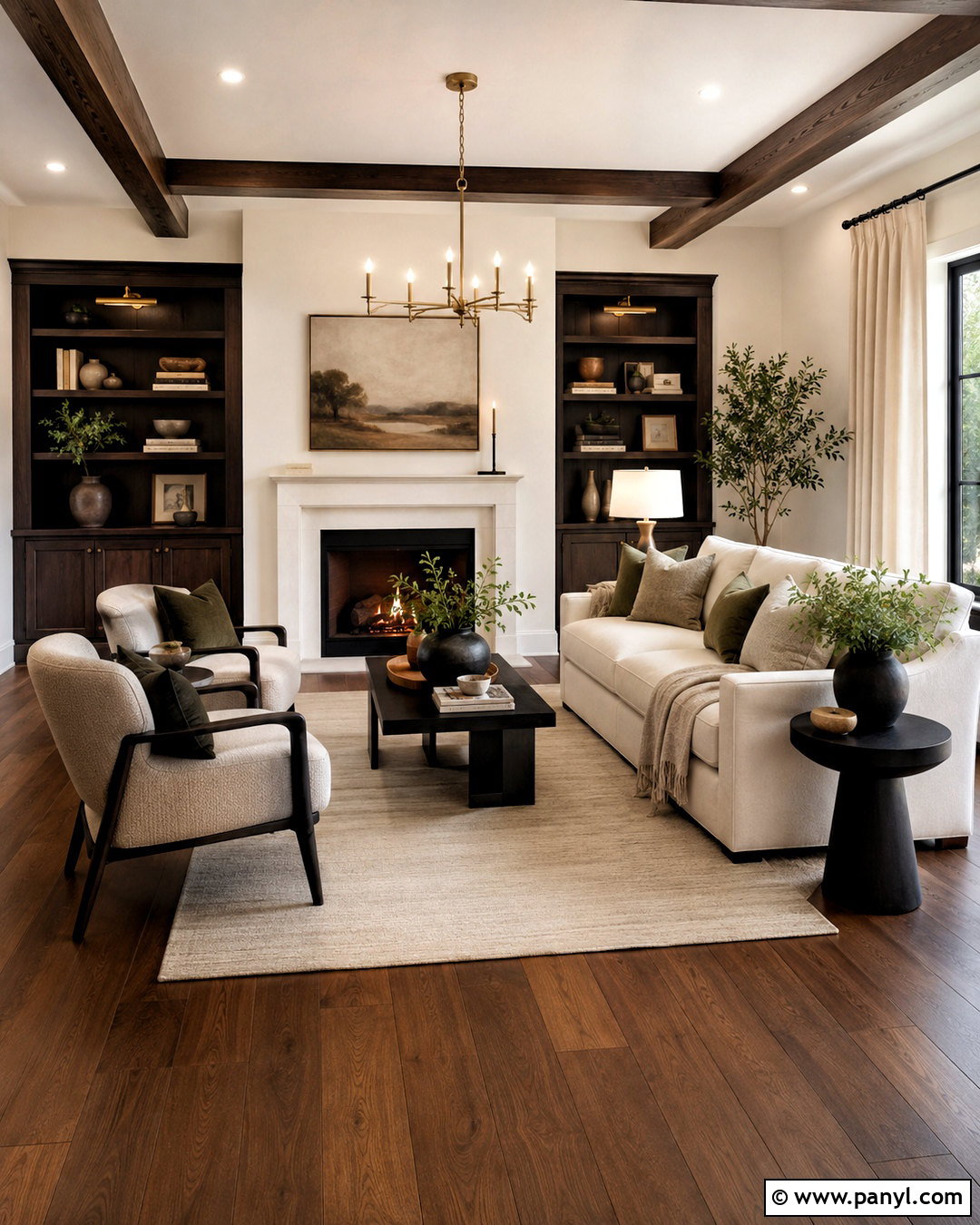
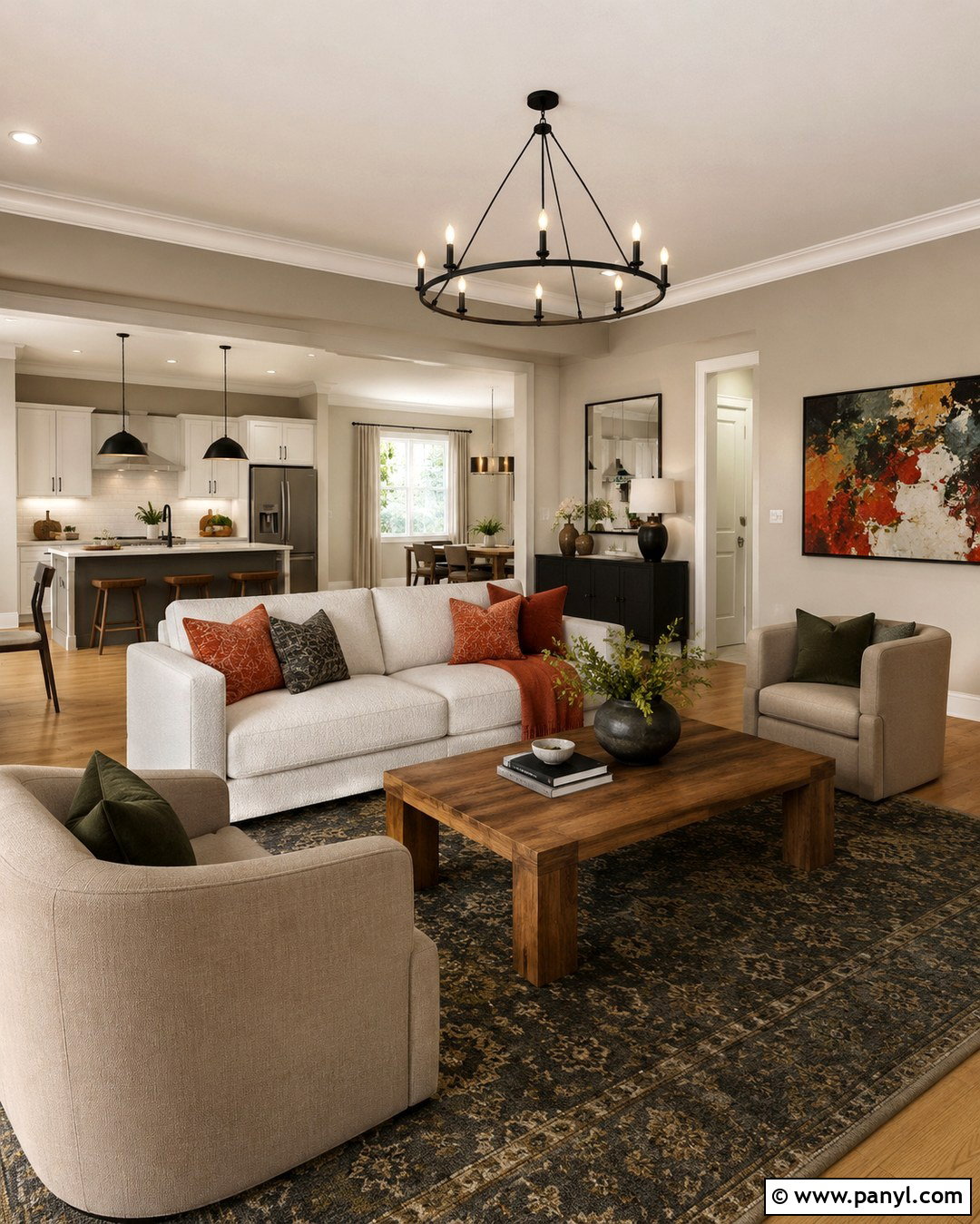
Creamy white walls create clear contrast without making dark wood look harsh or overly orange. Use this combination in a living room with walnut flooring, espresso bookcases, or deep brown ceiling beams. Choose a white with subtle beige or yellow undertones rather than a cold, blue-white finish. Add an oatmeal sofa, a large ivory rug, and linen curtains to keep the room bright. Black accents provide definition, while aged brass lighting echoes the warmth of the wood. A few olive green pillows and leafy plants introduce natural color. Keep the ceiling slightly lighter than the walls, especially when the room has limited daylight. The finished space will feel open, comfortable, and collected instead of stark or overly traditional.
2. Warm Ivory Walls With Dark Wood
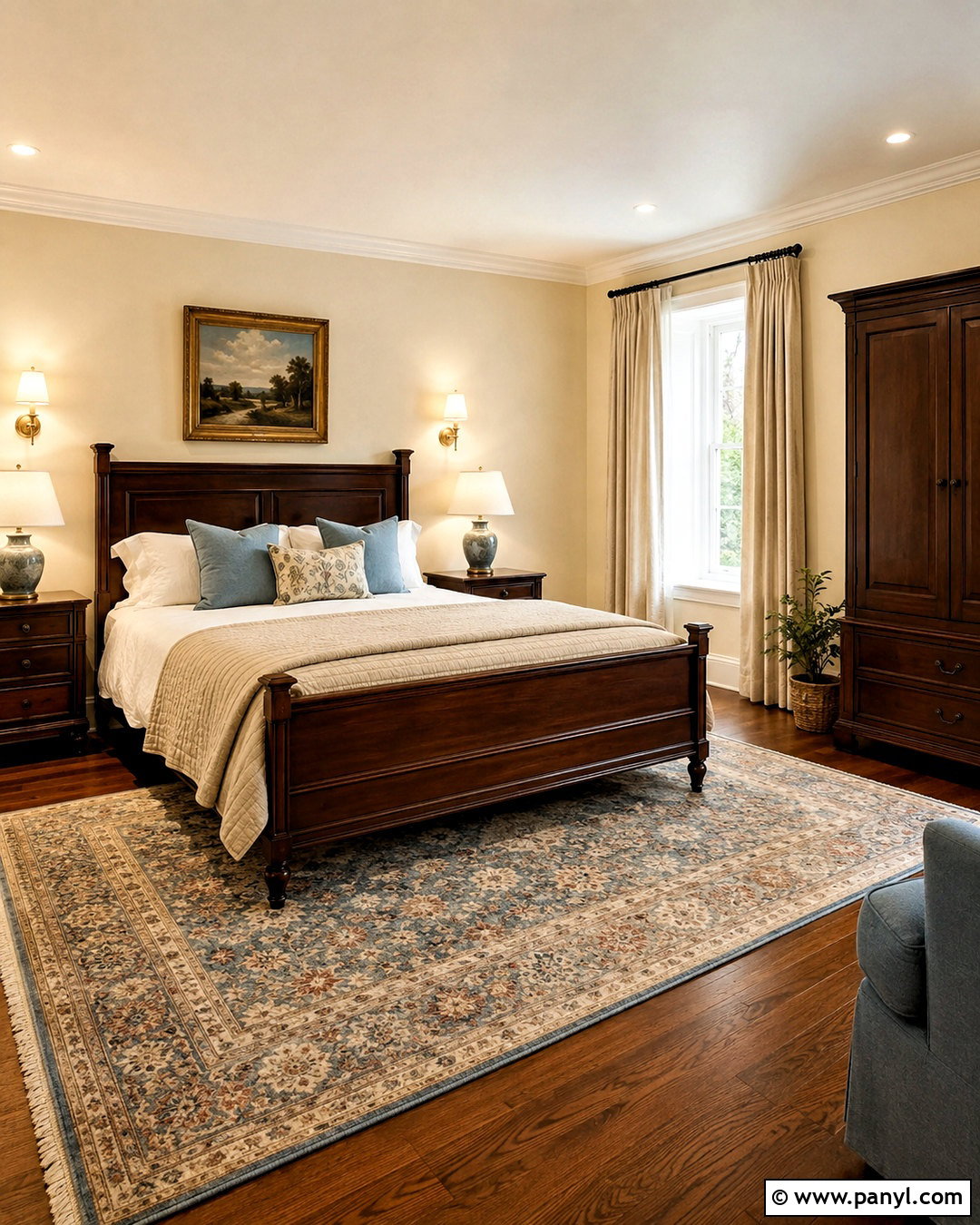
Warm ivory gives dark wood furniture a soft, polished backdrop that works especially well in traditional bedrooms. Pair ivory walls with a dark mahogany bed, matching nightstands, and medium-brown hardwood flooring. Dress the bed with white sheets, a sand-colored quilt, and muted blue pillows for gentle contrast. Antique brass sconces and cream ceramic lamps reinforce the warm palette without making everything appear brown. Use full-length natural linen curtains to soften the edges of heavy furniture. A faded Persian-style rug can connect ivory, rust, blue, and walnut tones across the room. Keep artwork light and generously sized so the walls do not feel empty. This complete scheme highlights detailed wood grain while maintaining a calm, restful appearance.
3. Soft Greige Walls With Dark Wood
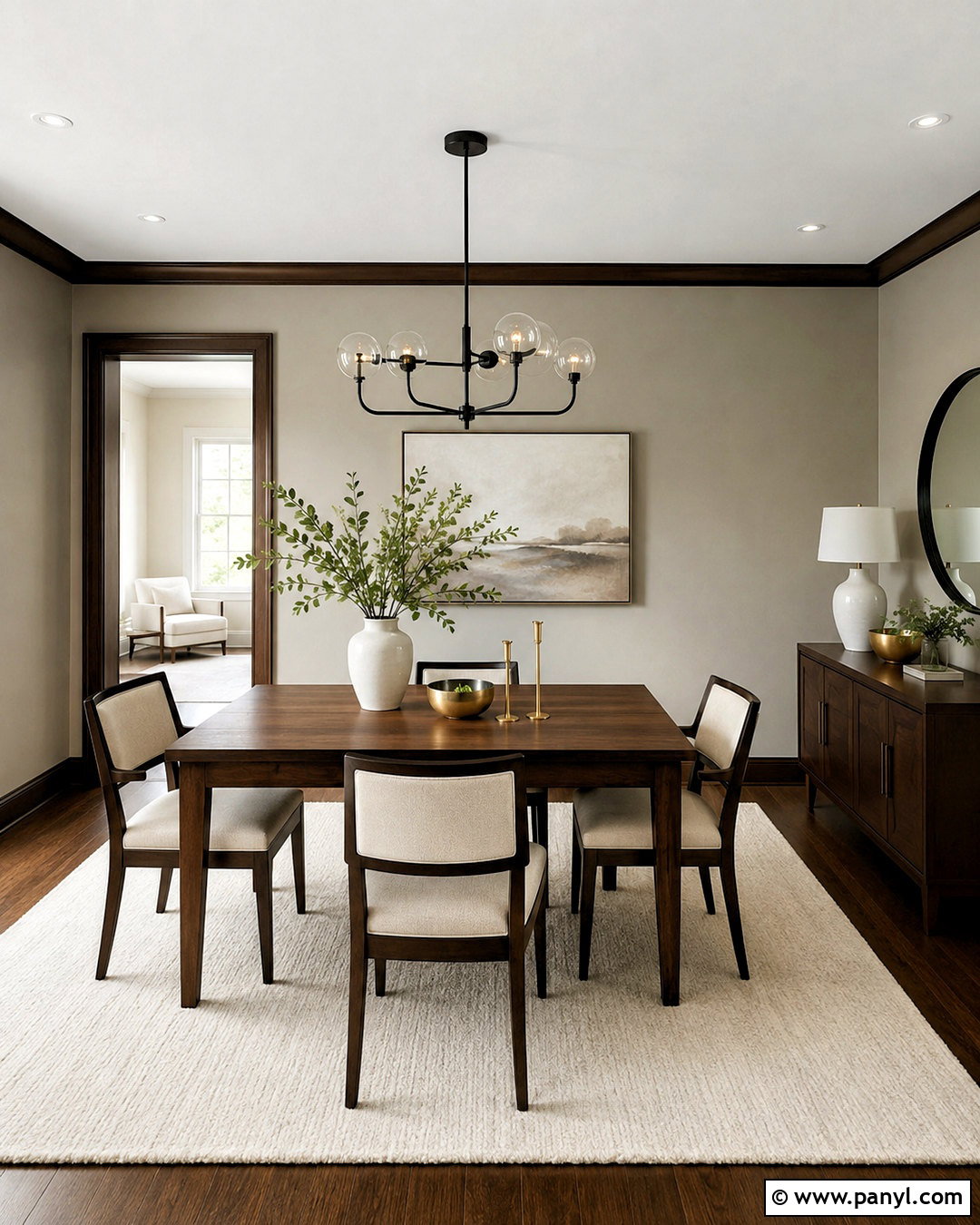
Soft greige is useful when you want a neutral room that feels warmer than gray but cleaner than beige. In a dining space, combine greige walls with a dark walnut table, espresso chairs, and stained wood trim. Choose a greige with a balanced taupe undertone so it connects naturally with both brown and black accents. Upholster the chairs in light flax fabric, then place a cream wool rug beneath the table. Matte black lighting gives the arrangement a modern edge, while brushed brass accessories add controlled warmth. Simple white pottery and green branches prevent the room from becoming too formal. Repeat the wall color on built-ins for a seamless background. The result feels contemporary, grounded, and flexible enough for changing seasonal decor.
4. Mushroom Taupe Walls With Dark Wood
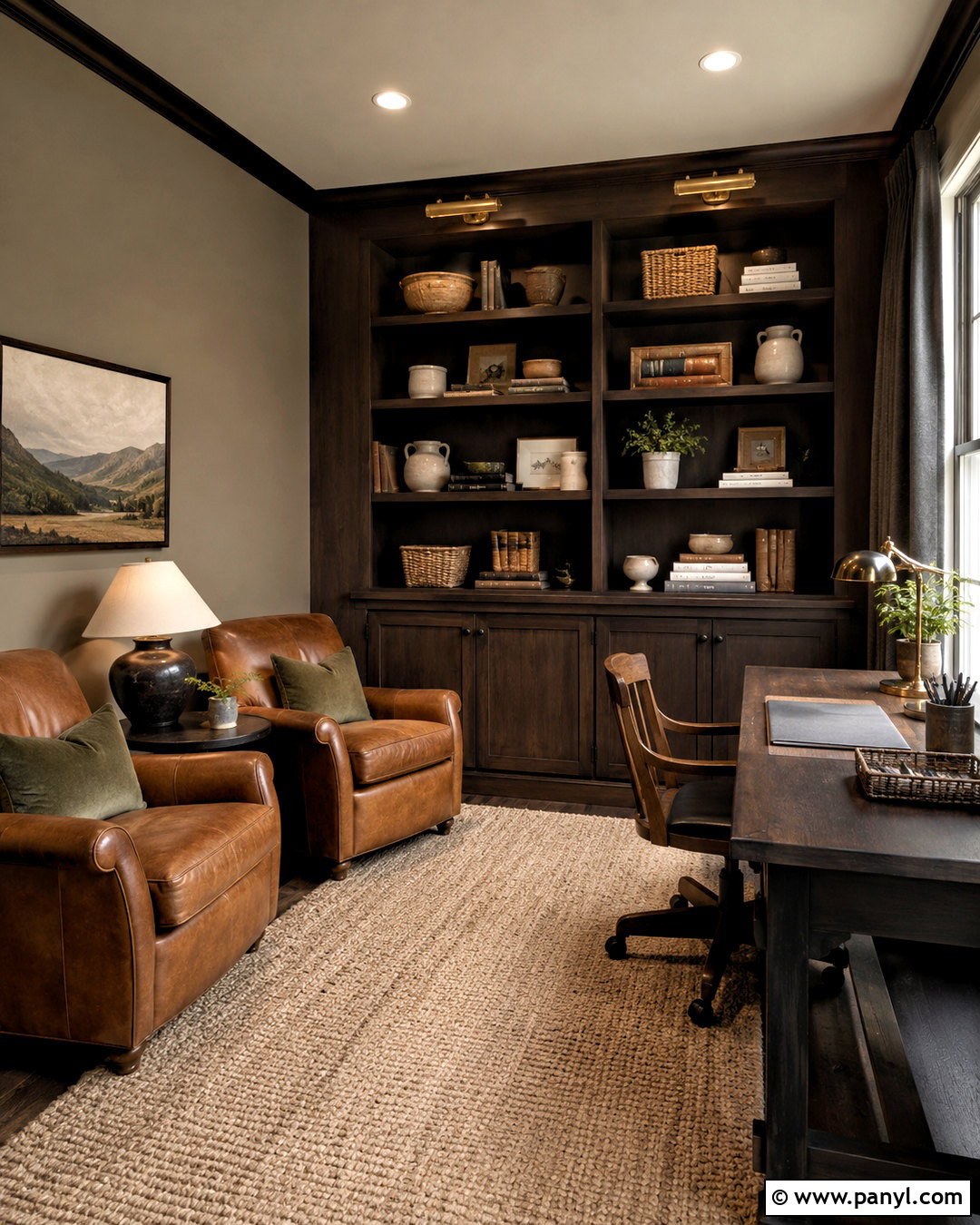
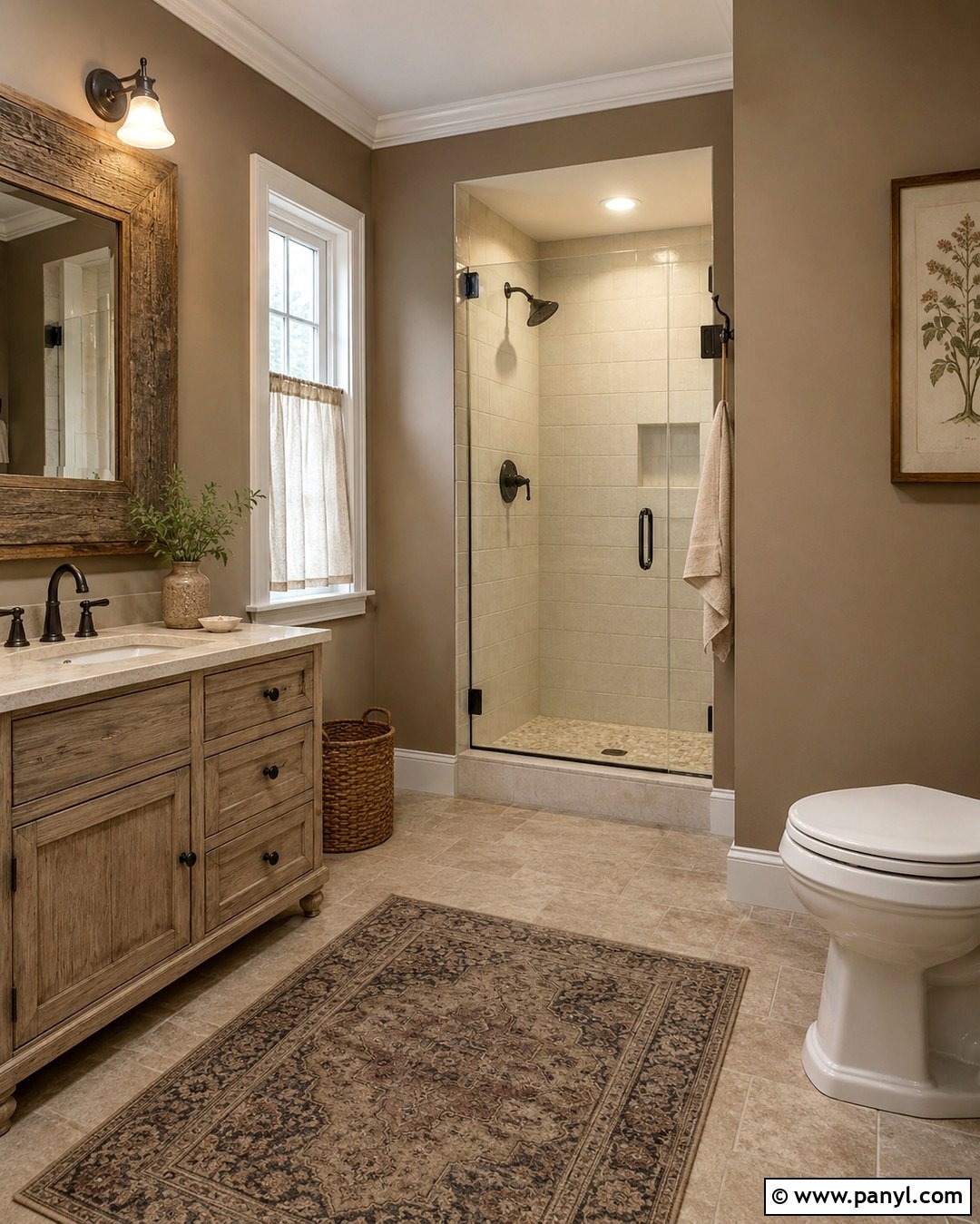
Mushroom taupe brings out the earthy character of dark wood without creating excessive contrast. It is particularly effective in a cozy den with black walnut paneling, a dark wood desk, or substantial built-in shelves. Choose a muted taupe that contains both gray and brown, then layer the room with camel leather seating and a textured cream rug. Add charcoal curtains for depth, but keep the ceiling and window treatments lighter when natural light is limited. Bronze picture lights, woven baskets, and pottery in stone colors complete the grounded palette. Introduce a small amount of moss green through cushions or artwork. This look feels warm and sophisticated, yet it remains relaxed enough for reading, working, or spending quiet evenings at home.
5. Warm Beige Walls With Dark Wood
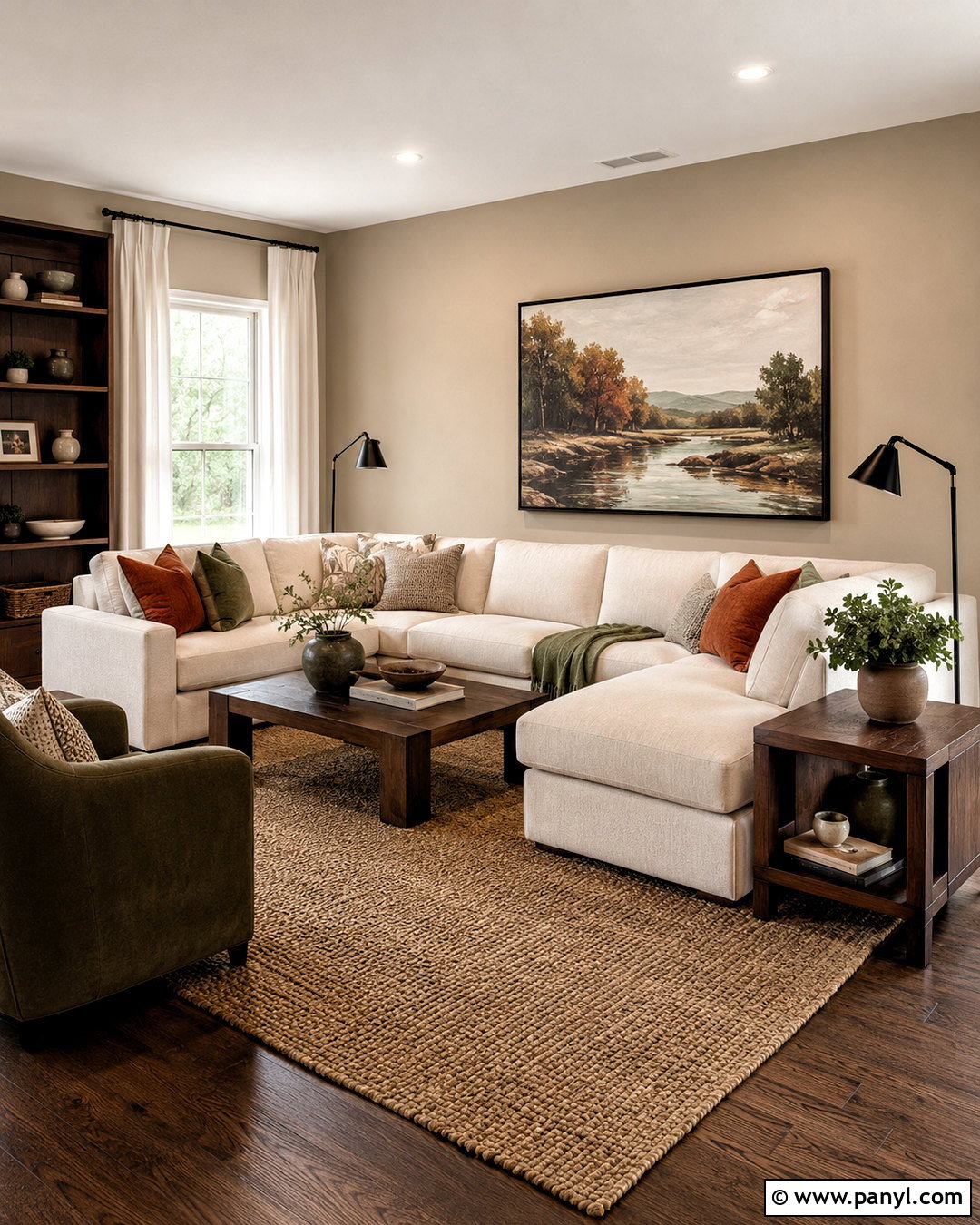
Warm beige walls can make a room with dark flooring feel inviting without covering the wood’s rich color. Build a family room around espresso oak floors, beige walls, and a generously sized sectional in soft cream performance fabric. Add a light natural-fiber rug to separate the seating area from the floor and increase visual brightness. Walnut side tables will connect with the existing wood, while black metal lamps keep the scheme from feeling dated. Use pillows in rust, oatmeal, and muted green for an earthy progression of color. White curtains hung close to the ceiling make the windows look larger. Finish with oversized landscape art and simple ceramics. The entire room will feel comfortable, practical, and easy to maintain.
6. Pale Gray Walls With Dark Wood
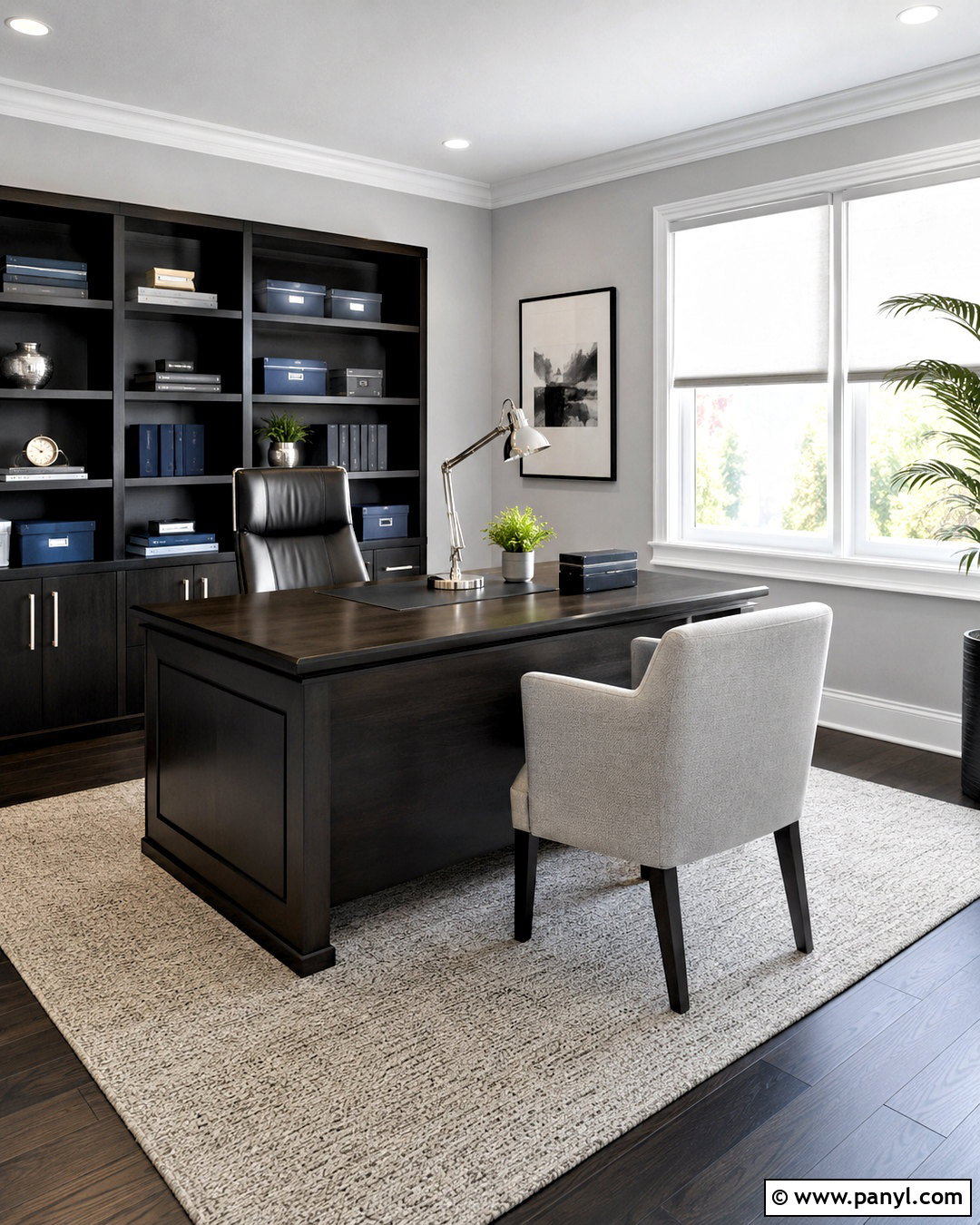
Pale gray offers a clean backdrop for very dark wood, especially when the wood has neutral or slightly cool undertones. Use it in a home office with ebony-stained floors, a dark desk, and black-brown shelving. Select a soft gray that does not appear icy under artificial lighting. Balance the deeper furniture with a light gray upholstered chair, a cream flat-weave rug, and white window shades. Brushed nickel hardware can support the cooler palette, while one warm leather desk chair keeps the room from feeling sterile. Display books and storage boxes in restrained shades of white, blue, and charcoal. Good task lighting is essential for this scheme. The completed office will look organized, focused, and modern, with the dark wood serving as a strong anchor.
7. Sage Green Walls With Dark Wood
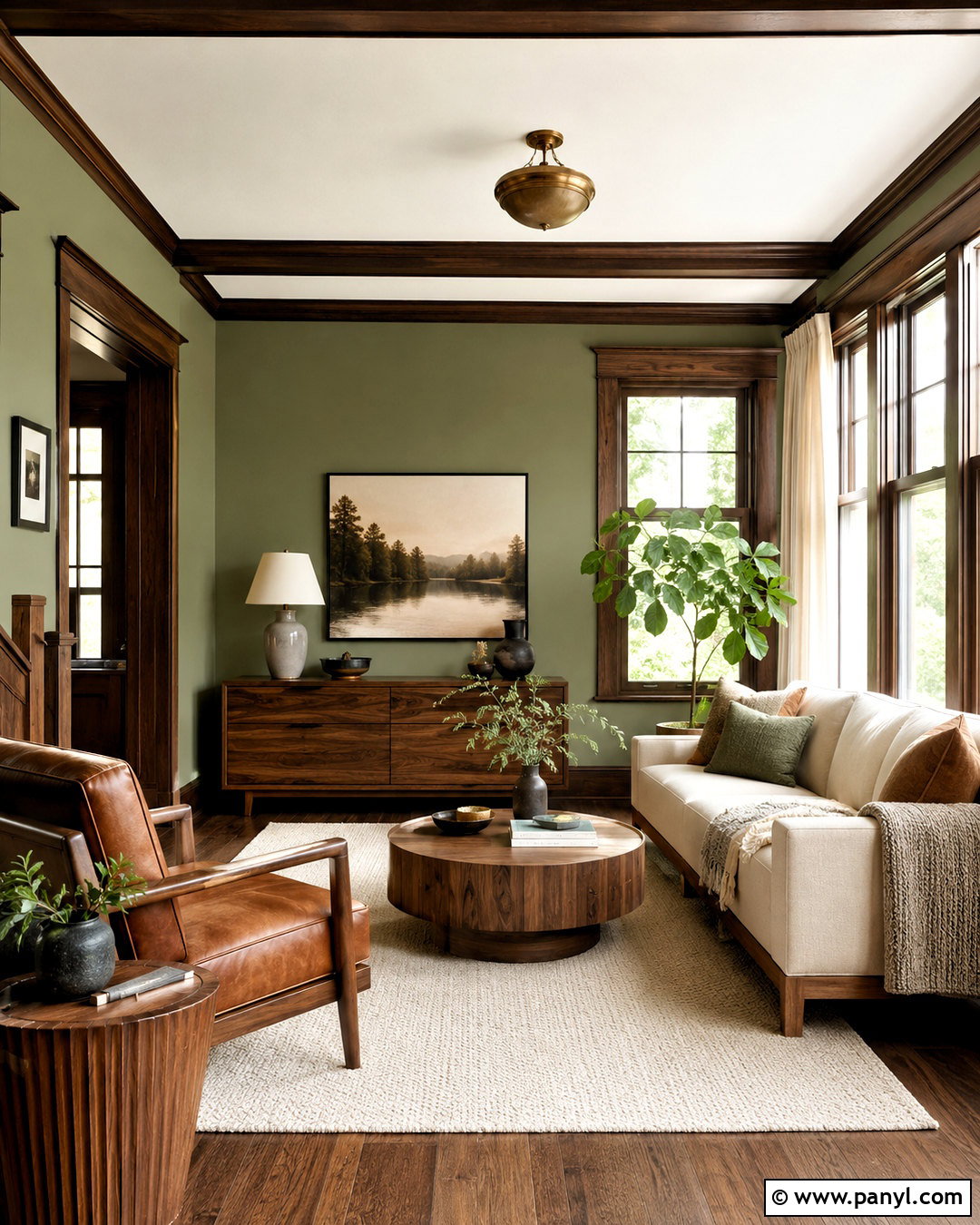
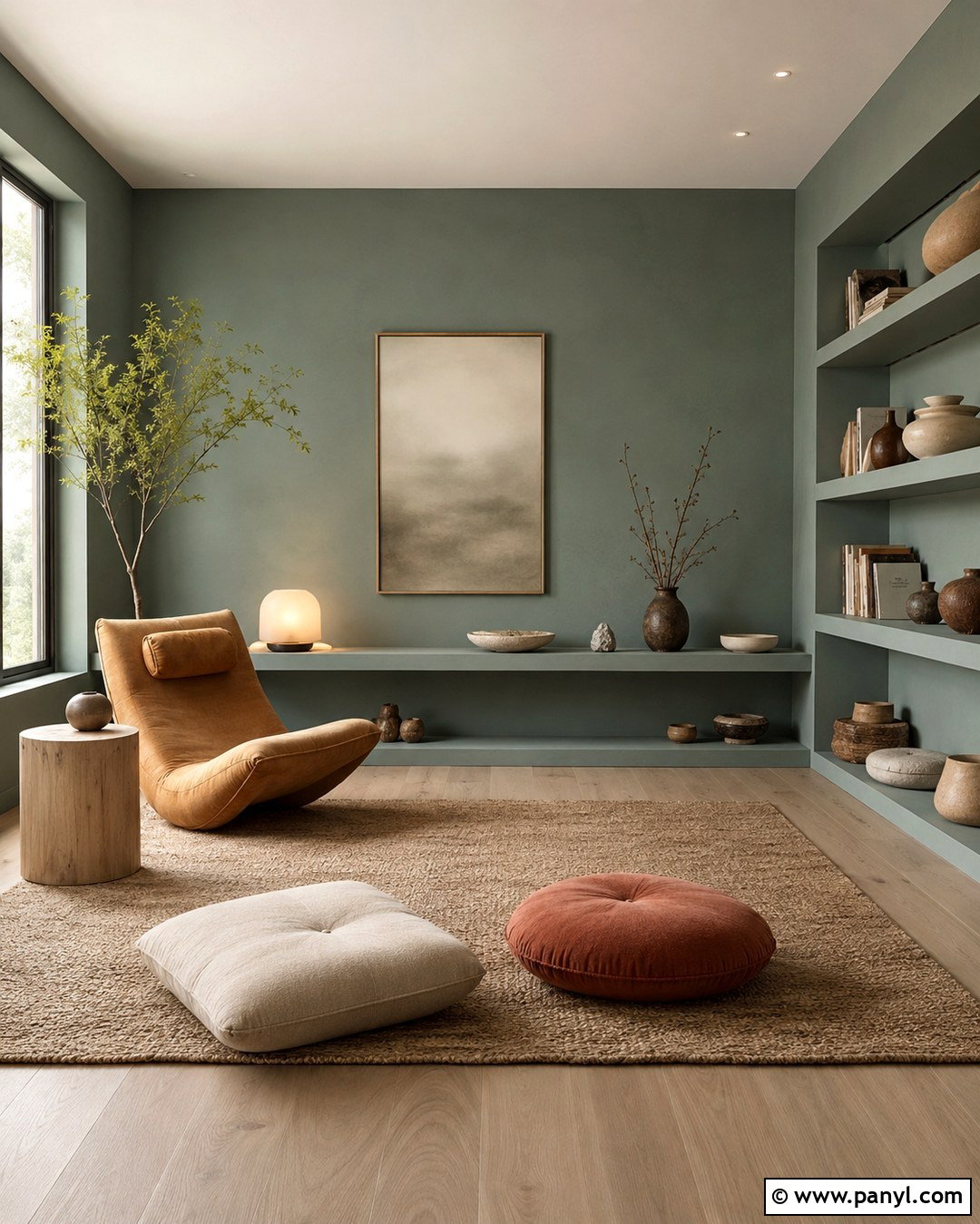
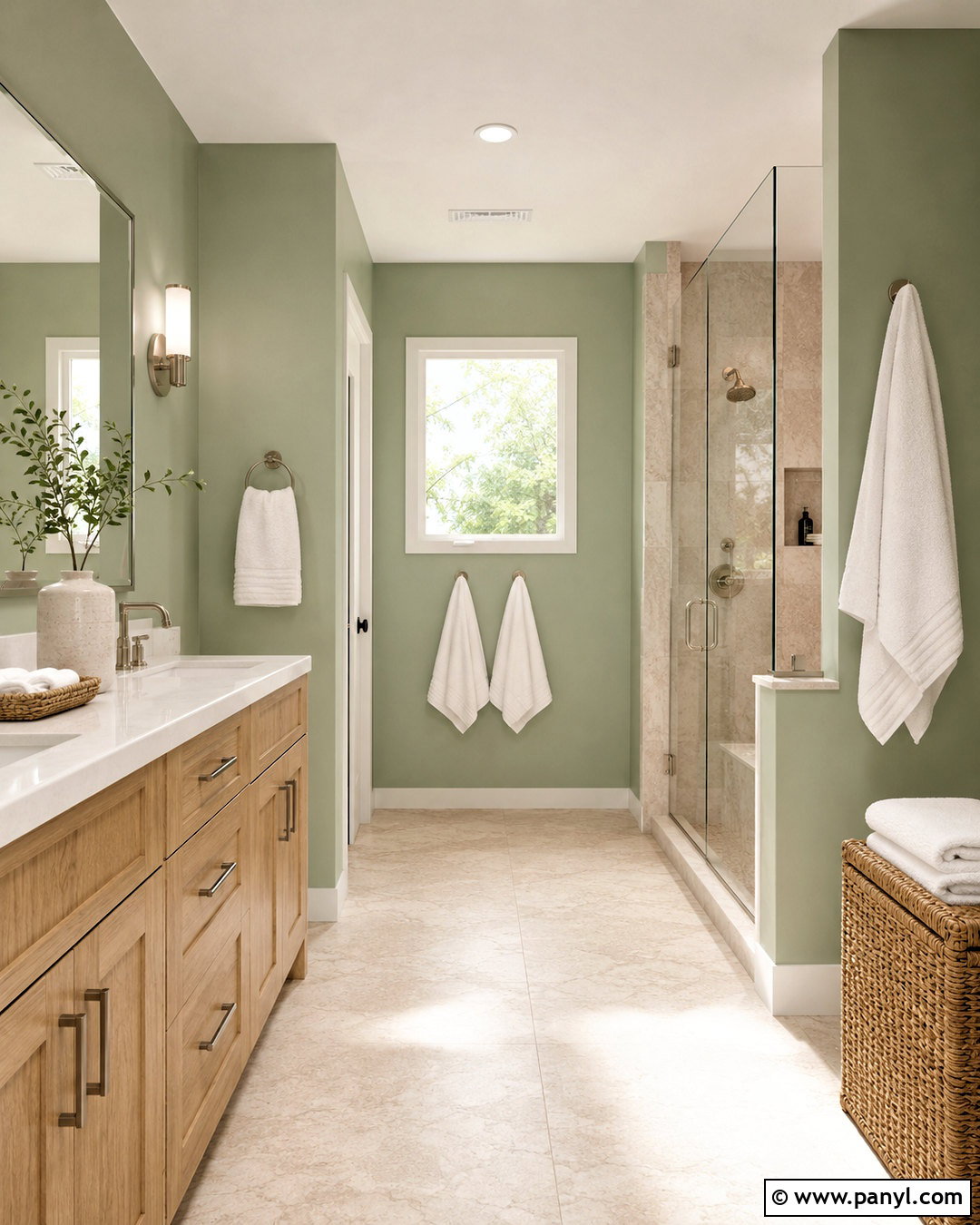
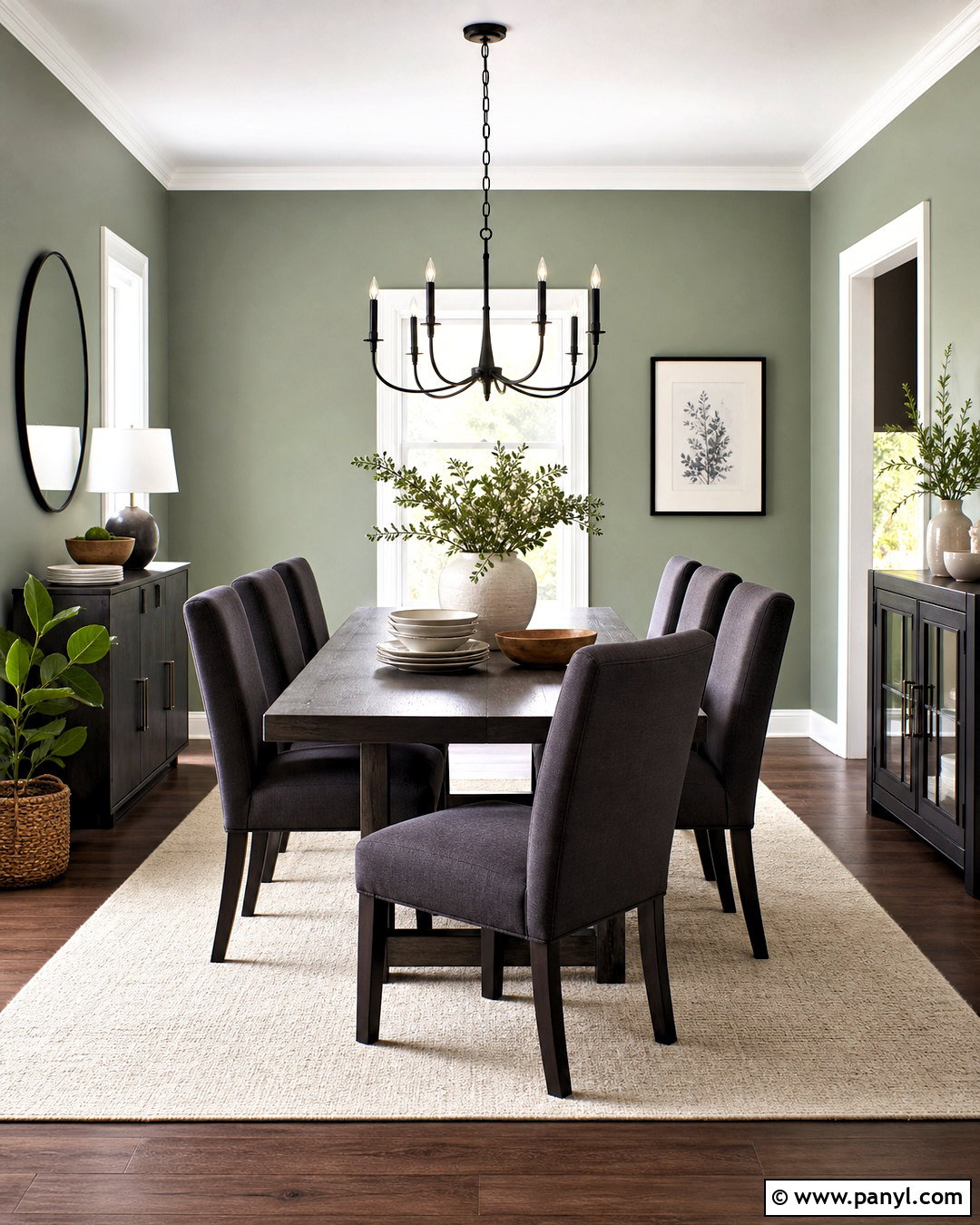
Sage green walls create a natural bridge between deep brown wood and lighter neutral furnishings. This combination suits a relaxed living room with dark oak floors, walnut sideboards, or stained Craftsman trim. Choose a muted sage with gray undertones rather than a bright botanical green. Pair it with a cream sofa, oatmeal curtains, and a beige wool rug to preserve an airy feeling. A cognac leather chair introduces another warm natural material without competing with the wood. Use aged brass lighting, black frames, and handmade pottery for depth. Plants should be used selectively because the wall already supplies plenty of green. The finished design feels calm, grounded, and timeless, making it especially effective in rooms that overlook a garden or wooded yard.
8. Olive Green Walls With Dark Wood
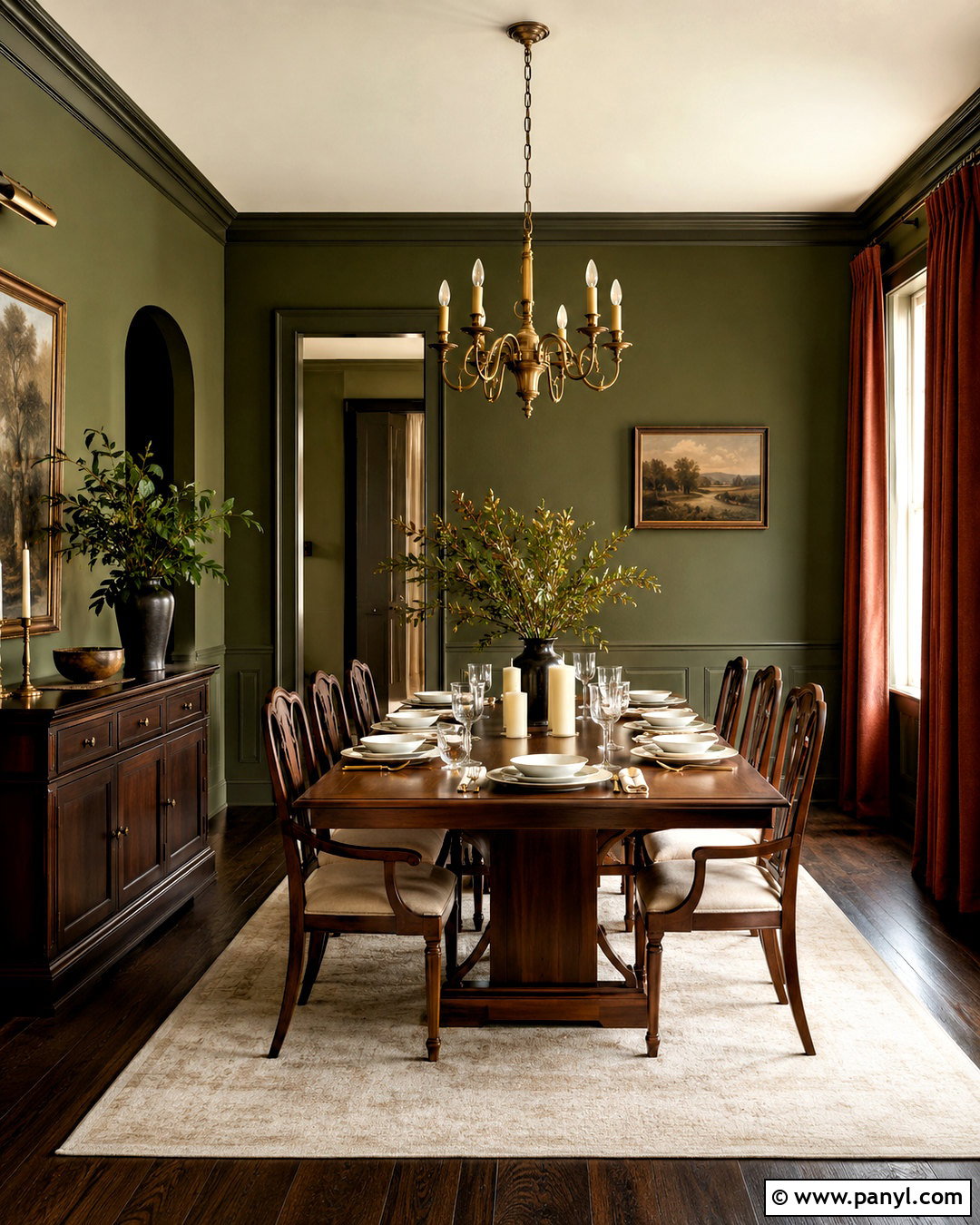
Olive green creates a richer, more enveloping room when paired with walnut, mahogany, or espresso finishes. Try this wall color in a dining room with a dark rectangular table and substantial wood chairs. Use olive across all four walls, then keep the ceiling warm white to provide visual relief. Upholstered chair seats in natural linen will brighten the furniture, while an ivory rug defines the dining area. Add an aged brass chandelier, cream candles, and simple off-white dinnerware for a balanced presentation. Rust-colored curtains or artwork can bring out reddish notes in the wood. Limit additional patterns so the room remains restful. This complete palette feels intimate and mature, making everyday meals and gatherings feel more considered without becoming overly formal.
9. Eucalyptus Green Walls With Dark Wood
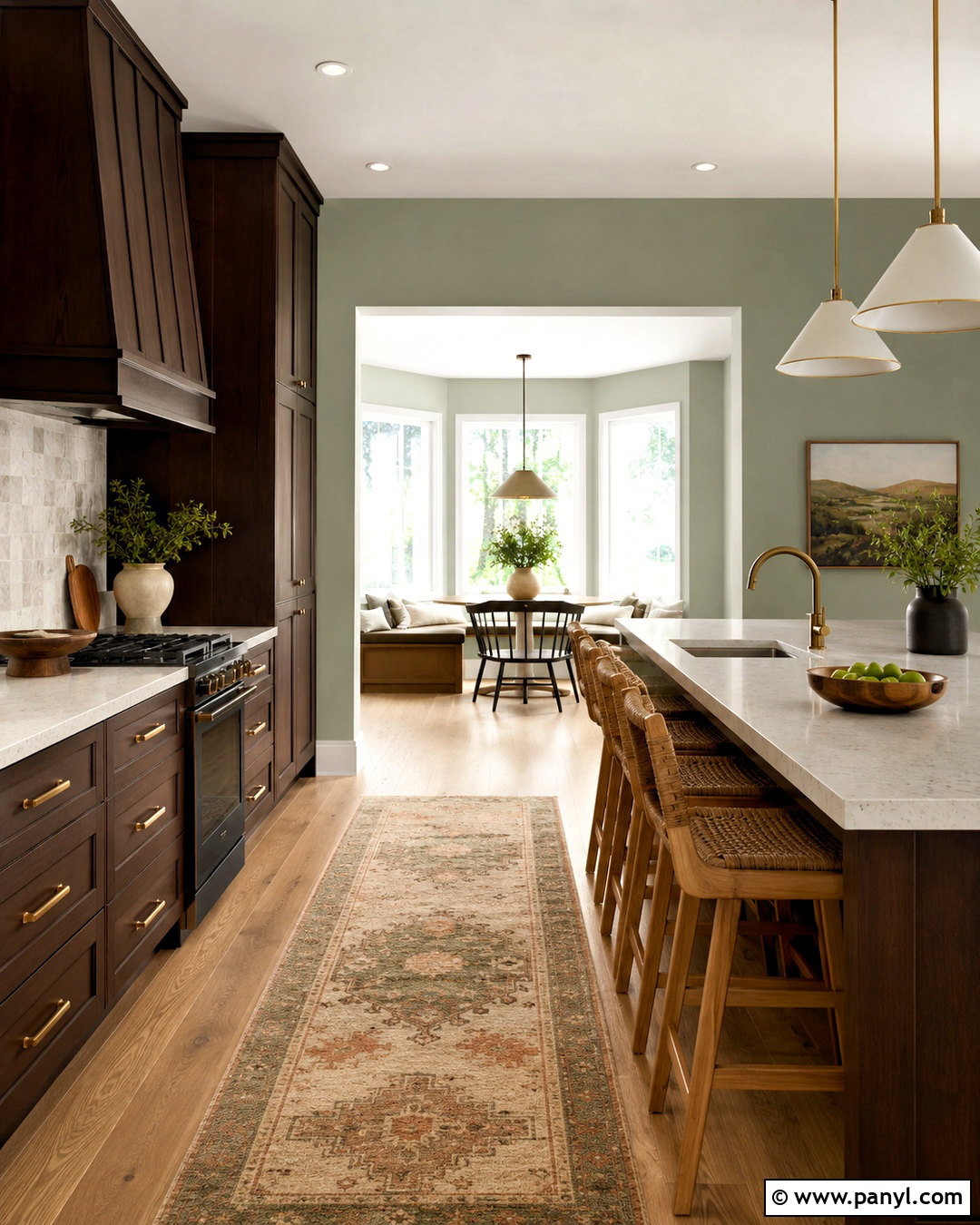
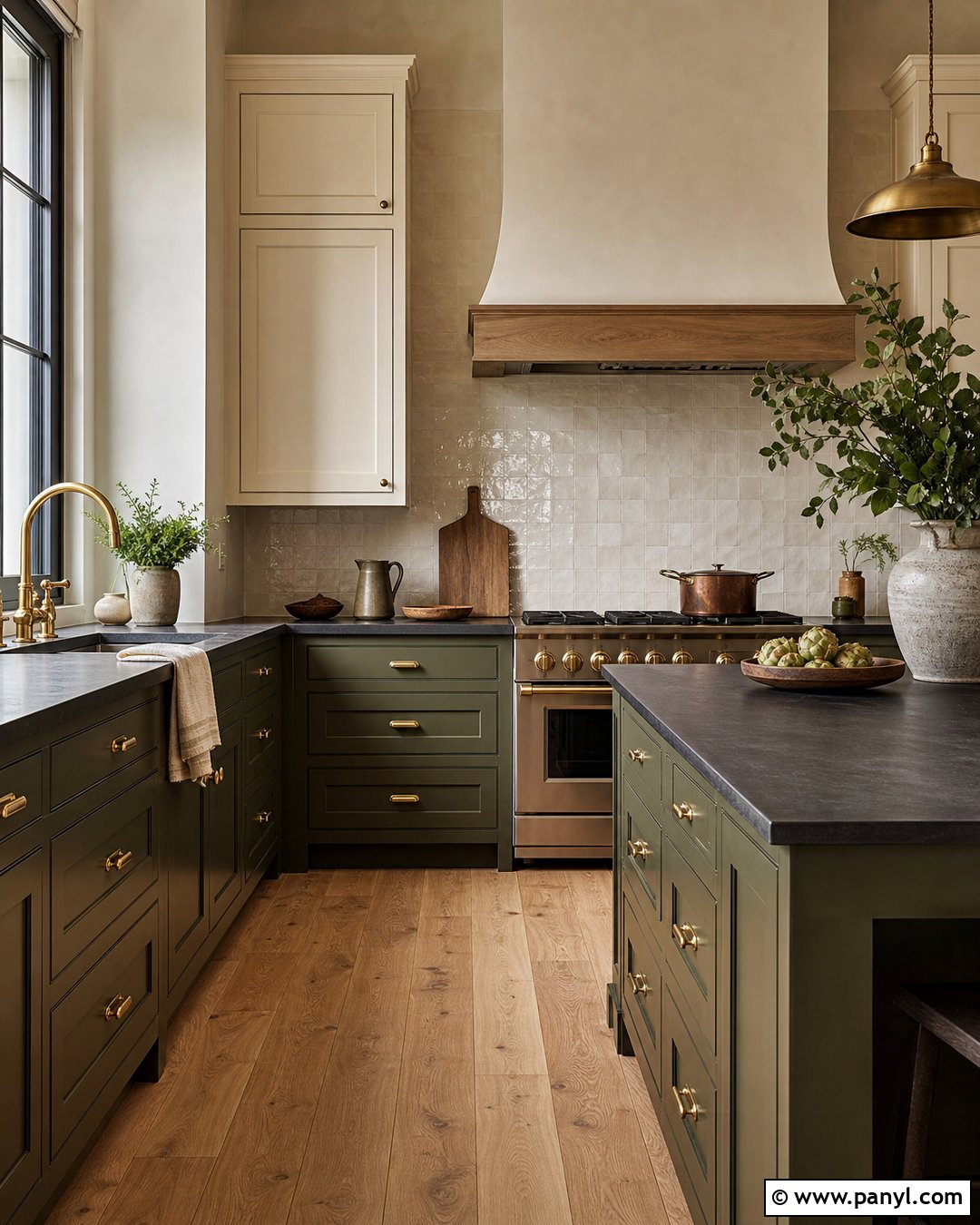
Eucalyptus green has a softer, dustier appearance than traditional sage, making it a refreshing choice for dark wood kitchens. Pair eucalyptus walls with espresso cabinets, warm white countertops, and a medium-toned stone backsplash. If the cabinetry occupies most of the room, use the green on visible wall sections and repeat it around a breakfast nook. Light oak stools can provide gentle contrast without introducing another strong color. Choose brushed brass hardware and creamy pendant lights to warm the overall look. A washable runner with beige, green, and muted terracotta details will connect the main surfaces. Keep countertop accessories simple and pale. The completed kitchen will feel natural and current, while the dark cabinetry remains elegant rather than visually heavy.
10. Pale Blue Walls With Dark Wood
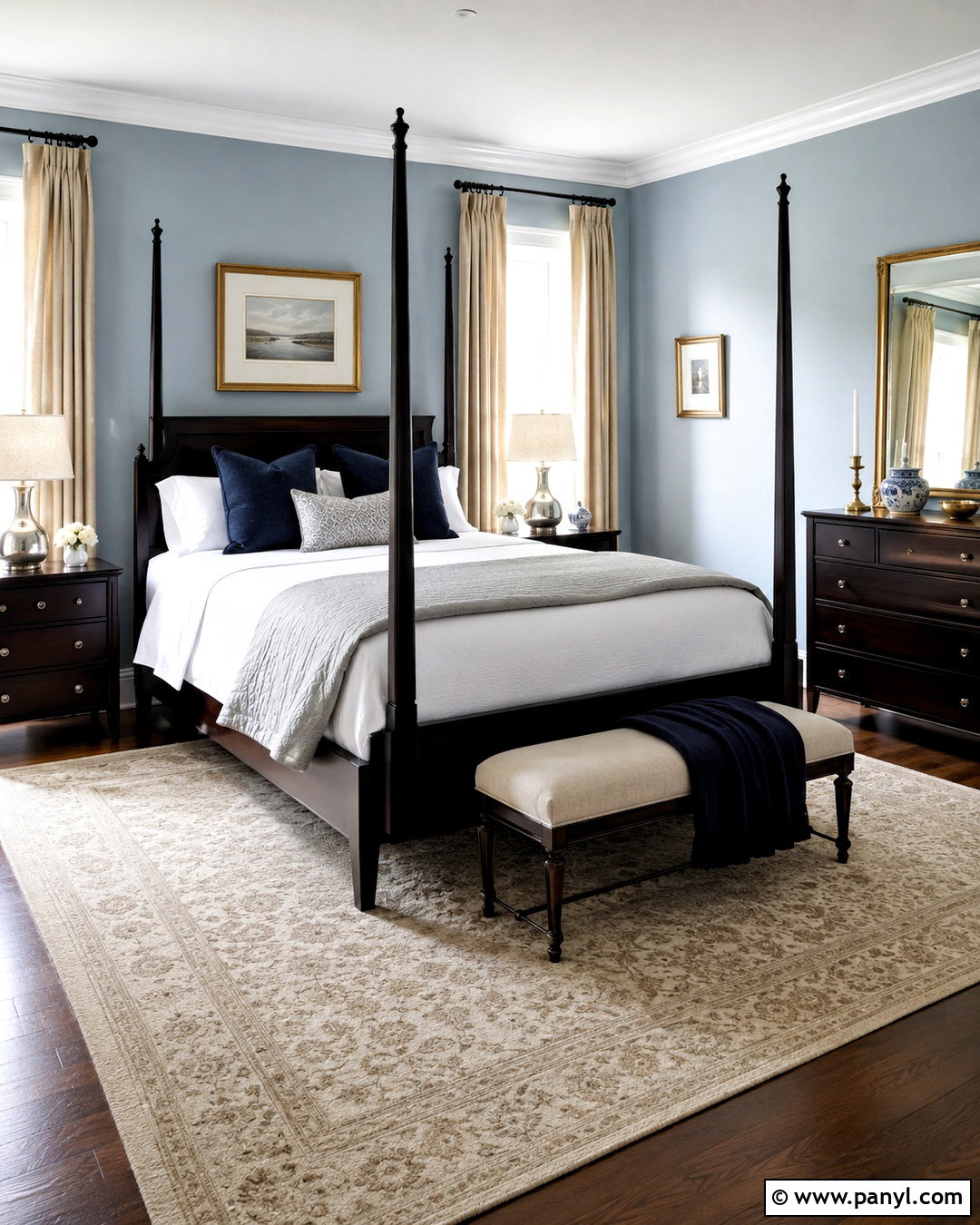
Pale blue can freshen dark wood while preserving a quiet, traditional atmosphere. Use this pairing in a bedroom with walnut floors, a dark wood dresser, and an espresso four-poster bed. Look for a blue with subtle gray or green undertones so it does not feel overly sweet. Layer the bed with crisp white sheets, a pale gray quilt, and navy accent pillows. Natural linen curtains will soften the contrast between the cool walls and warm furniture. Add a cream rug with a restrained blue pattern to brighten the floor. Polished nickel lamps work well here, although a few brass details can prevent the palette from appearing cold. The finished bedroom feels peaceful, tailored, and gently colorful without distracting from the dark wood craftsmanship.
11. Dusty Blue Walls With Dark Wood
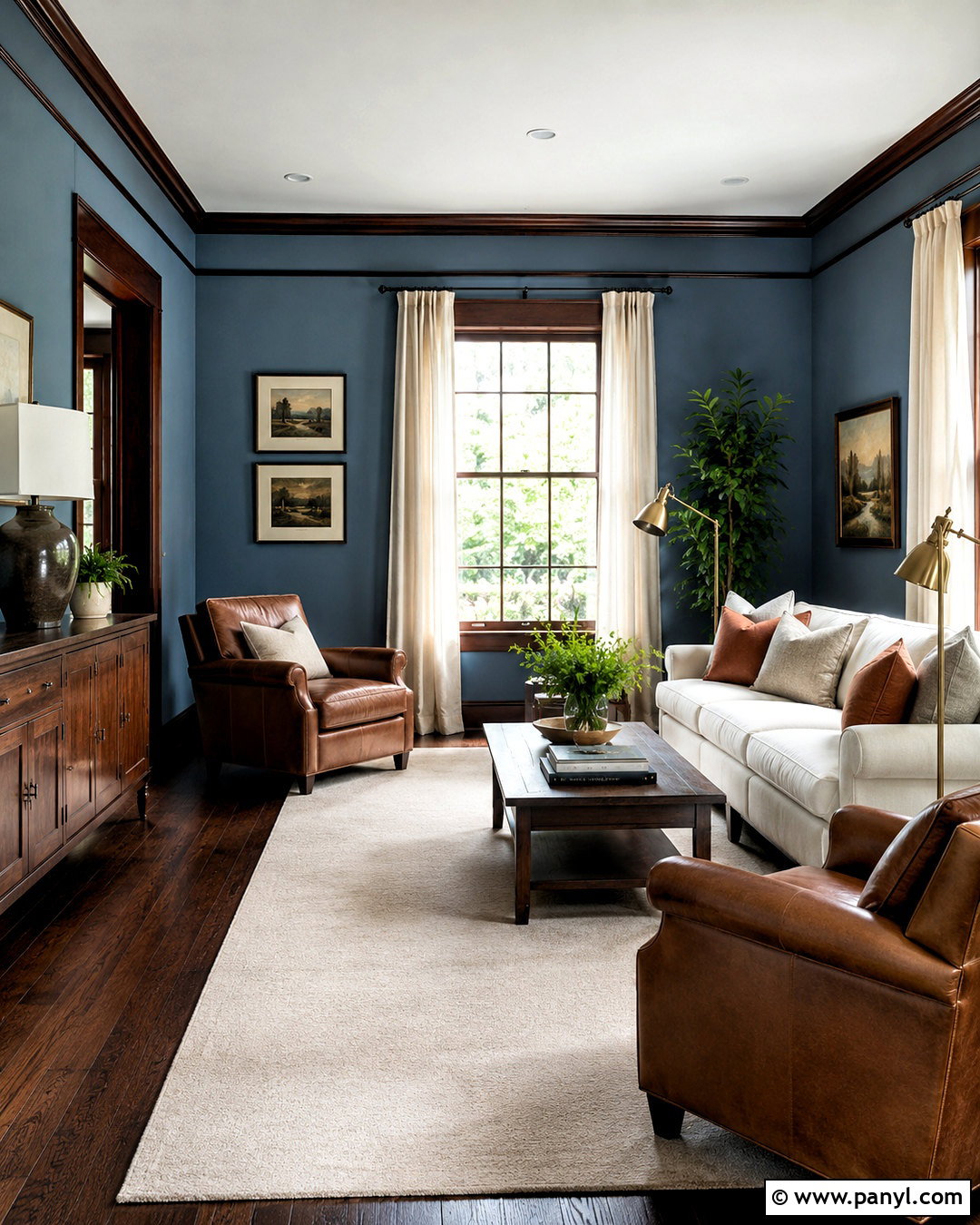
Dusty blue walls offer more depth than pale blue and look especially attractive beside warm walnut or reddish mahogany. Create a balanced sitting room with dusty blue paint, a dark wood console, and a pair of caramel leather armchairs. Place a large ivory rug over the dark flooring to keep the center of the room light. Linen curtains in warm white will frame the windows without introducing another strong color. Add pillows in cream, faded rust, and deeper blue to create a connected palette. Brass floor lamps and framed landscape prints reinforce the classic character of the room. Keep the furniture arrangement open rather than crowding every wall. This scheme feels calm and established, with enough color to make the wood stand out naturally.
12. Slate Blue Walls With Dark Wood
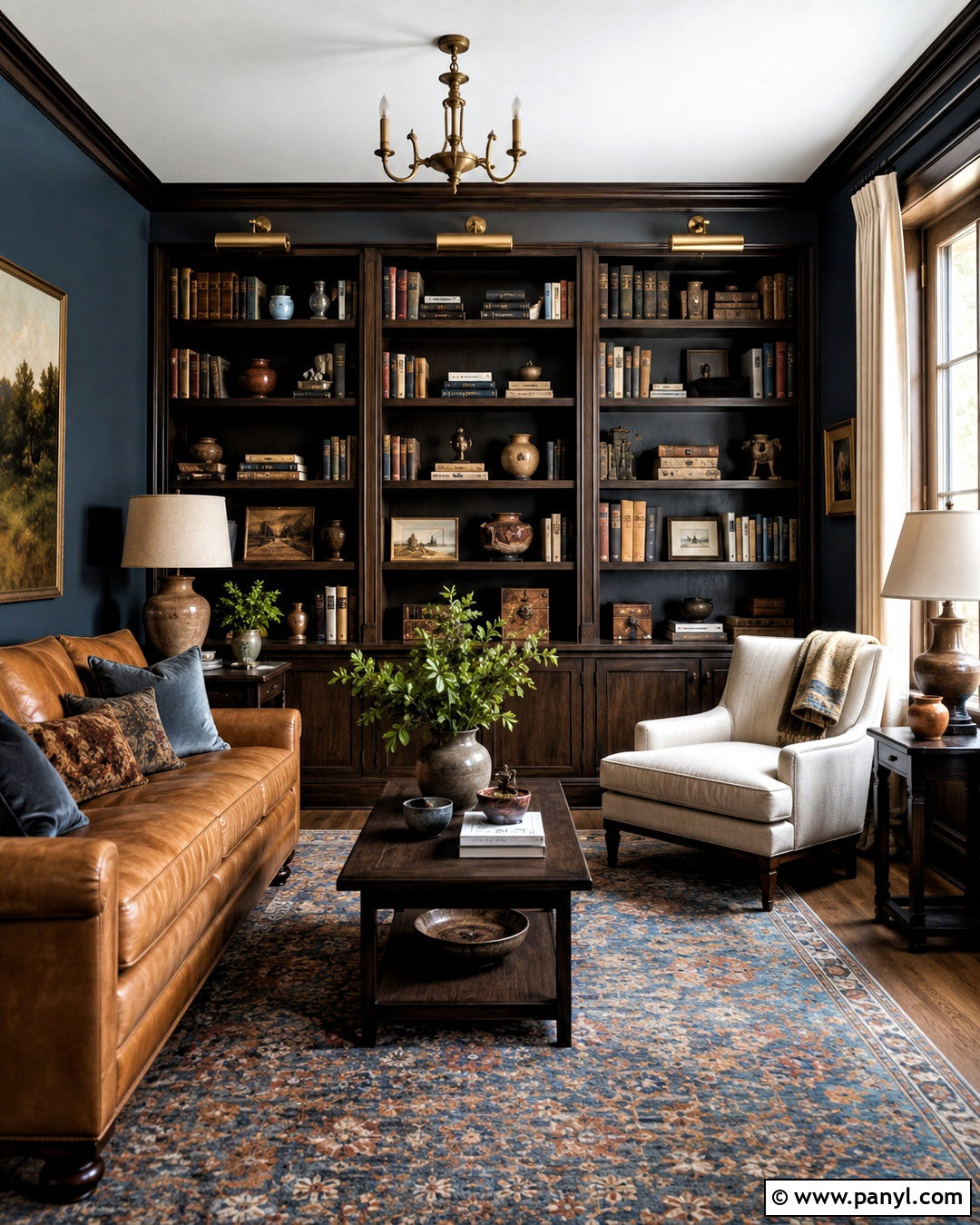
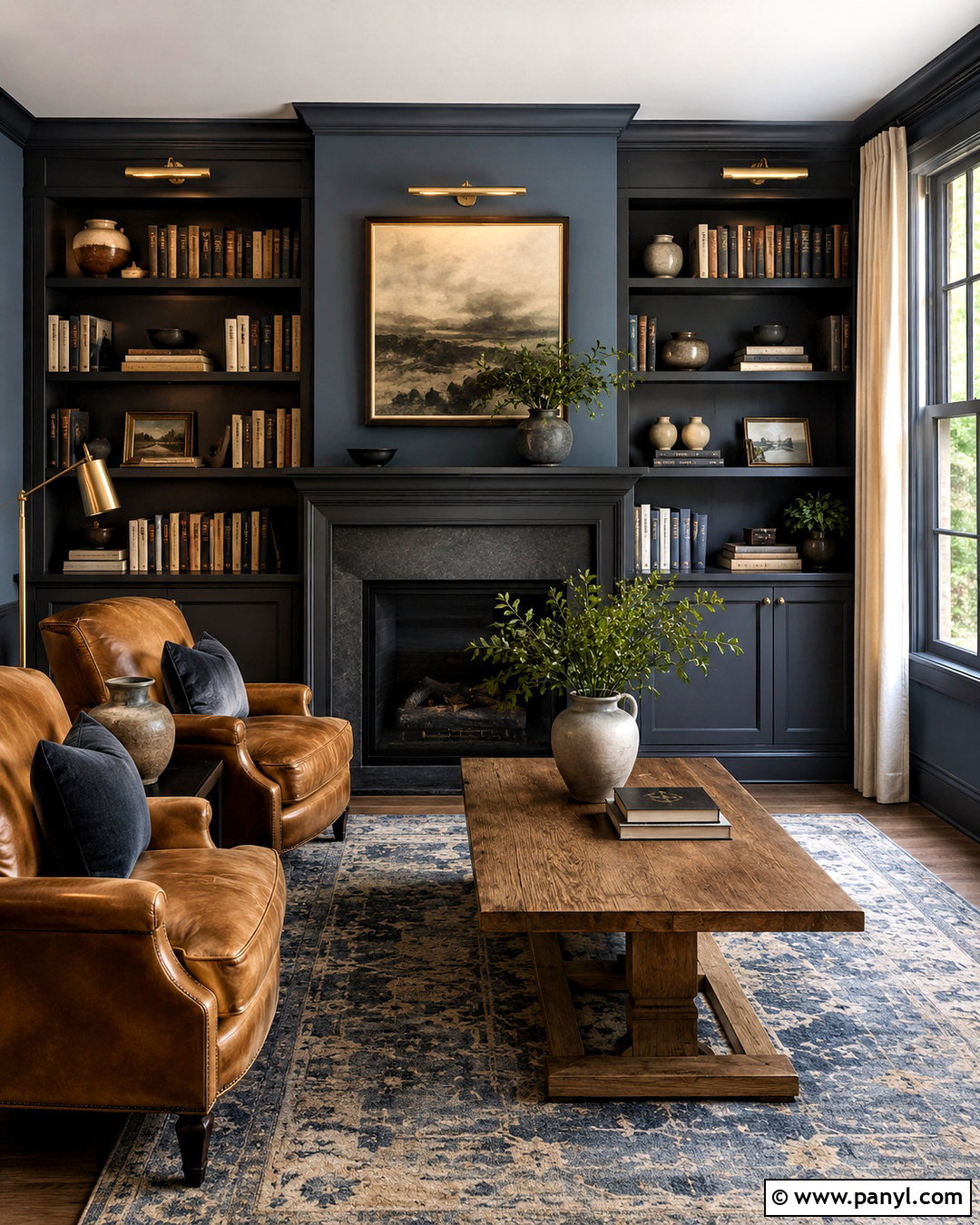
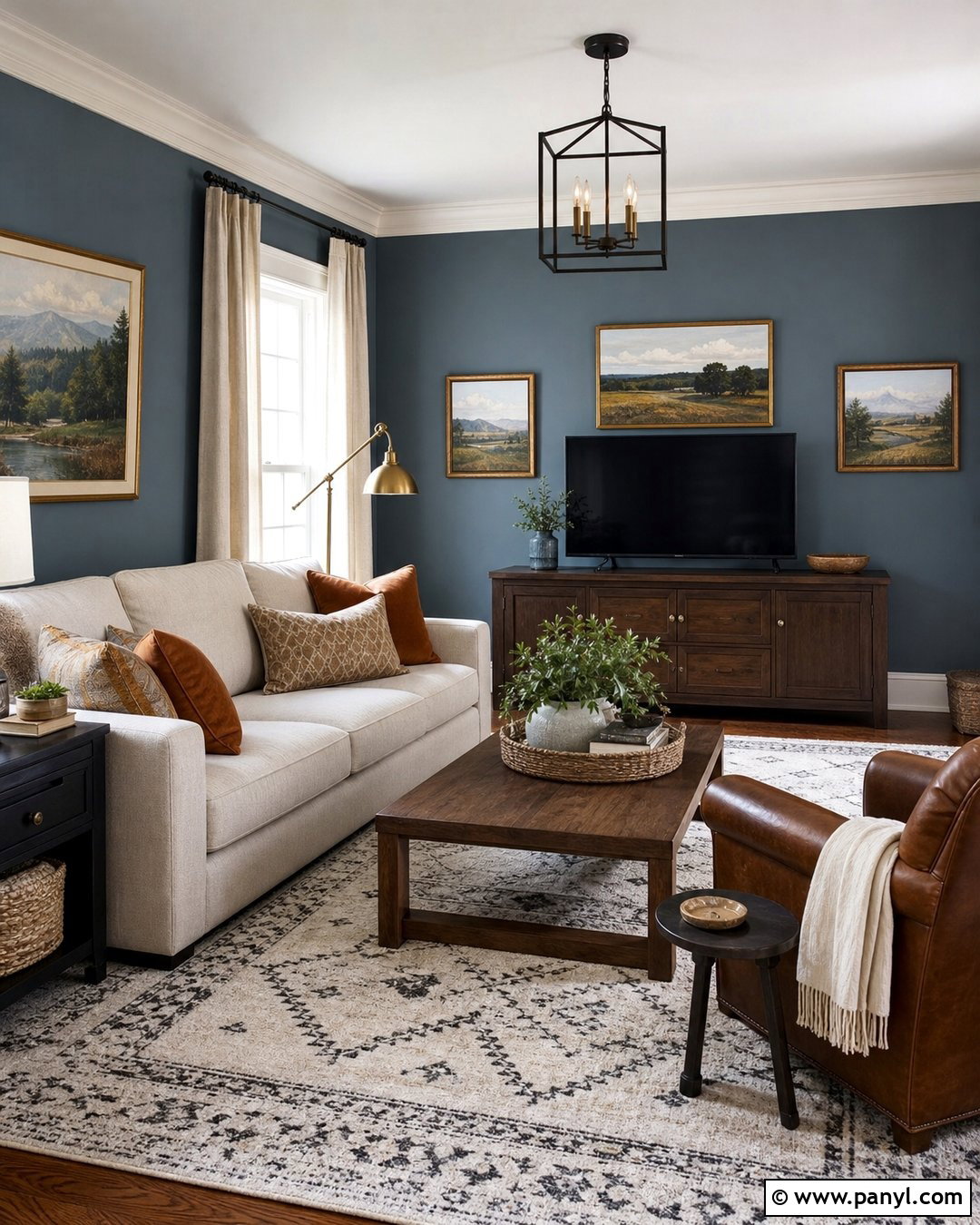
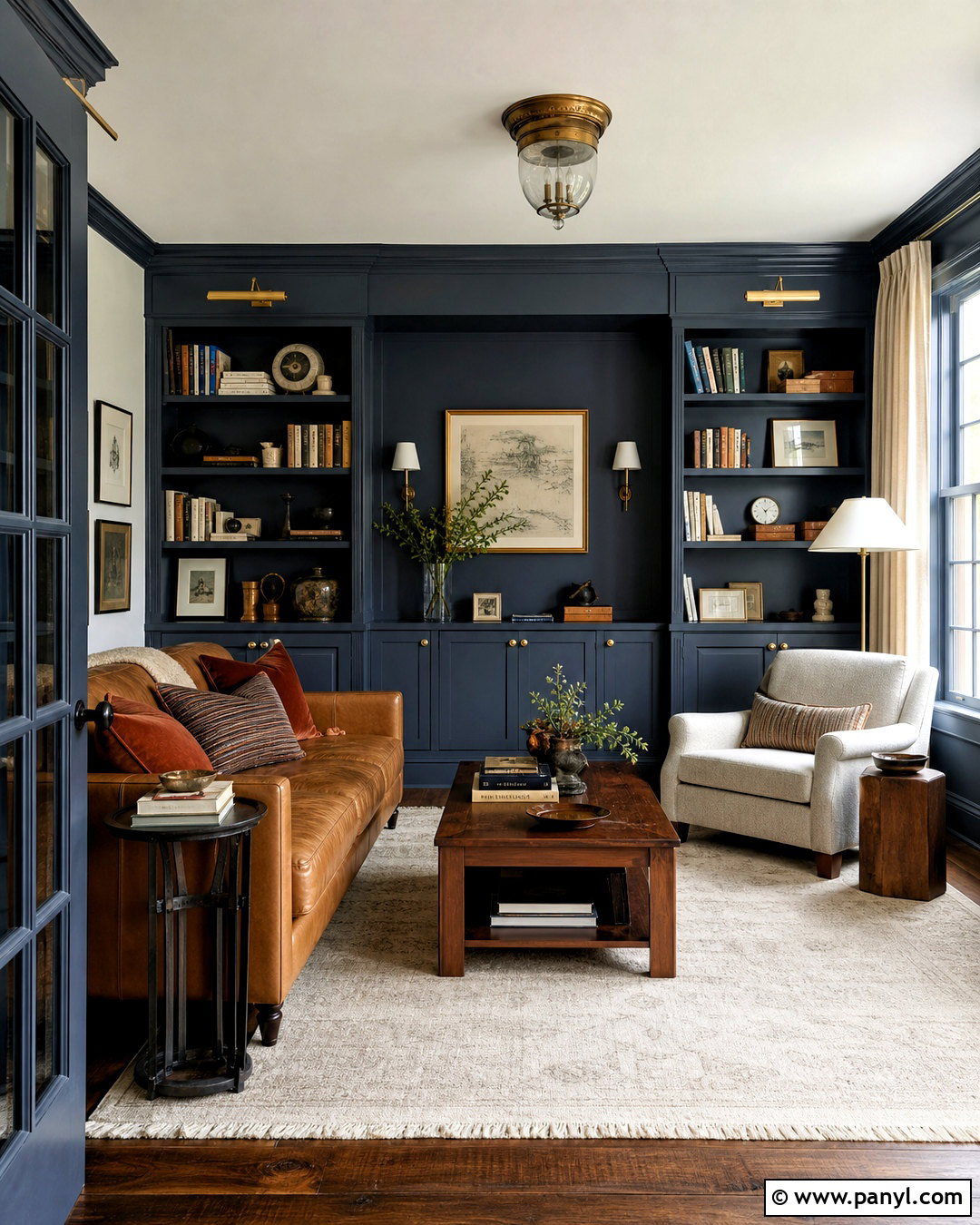
Slate blue brings a tailored, slightly dramatic quality to rooms containing espresso or black walnut details. It works beautifully in a home library where dark shelving already covers part of the walls. Paint the remaining surfaces slate blue and keep the ceiling a softer warm white. Add a camel leather sofa, a cream reading chair, and a faded blue-and-rust rug to prevent the room from becoming too dark. Antique brass picture lights will illuminate books and artwork while warming the blue. Use ivory curtains and pale lampshades to reflect available daylight. A few terracotta accessories can connect the cool wall color with the brown wood. The overall room feels focused and sophisticated, but still comfortable enough for long reading sessions.
13. Navy Blue Walls With Dark Wood
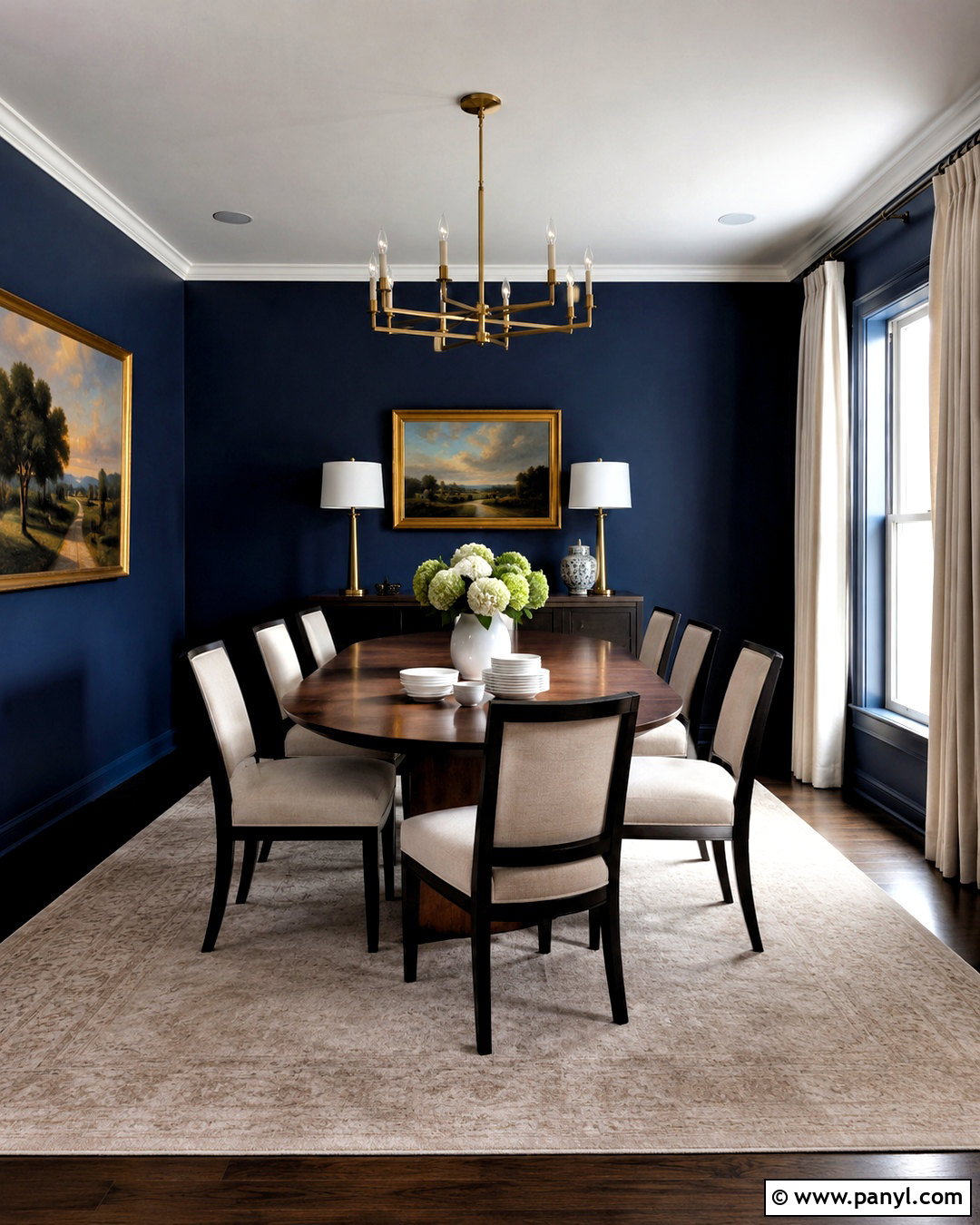
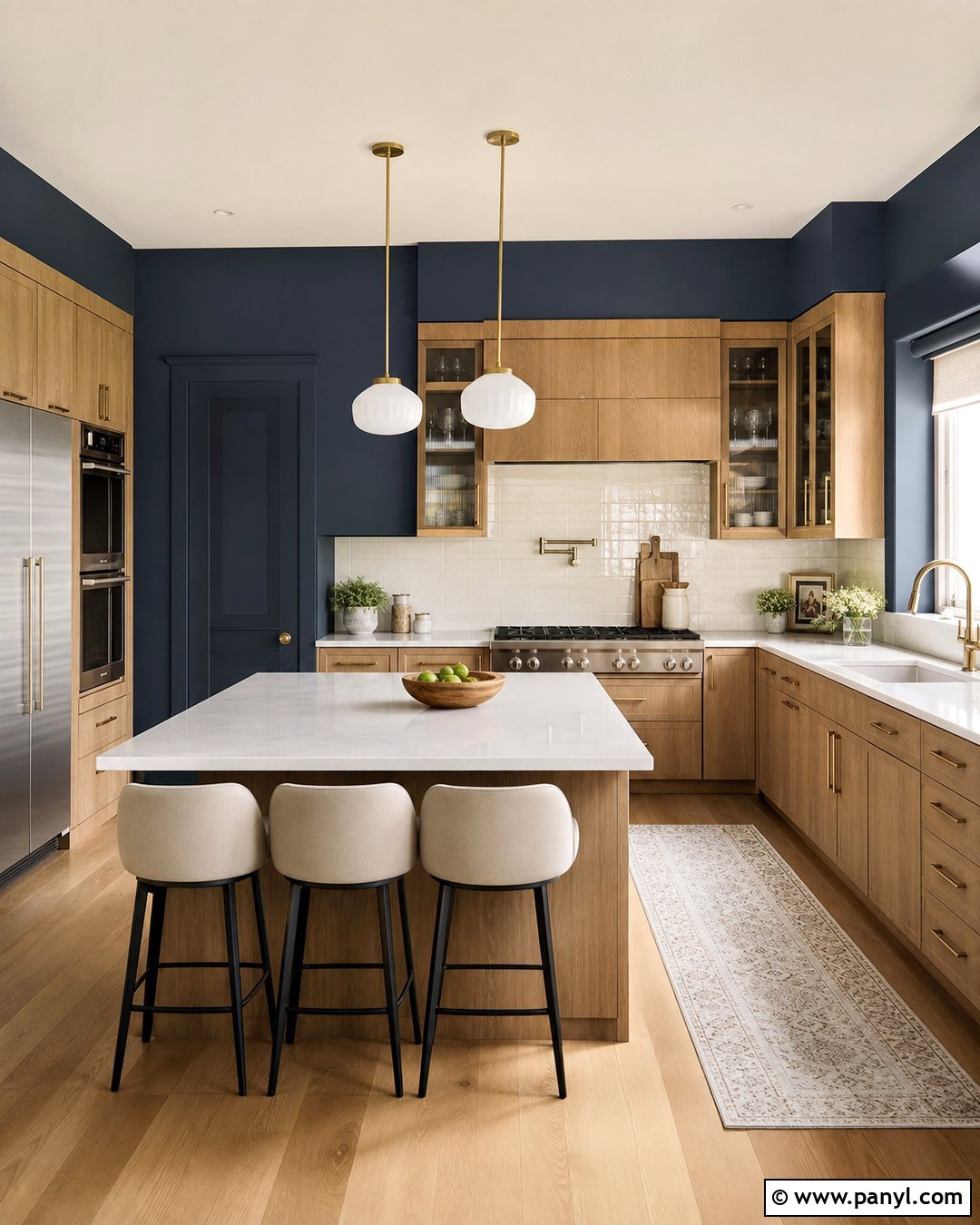
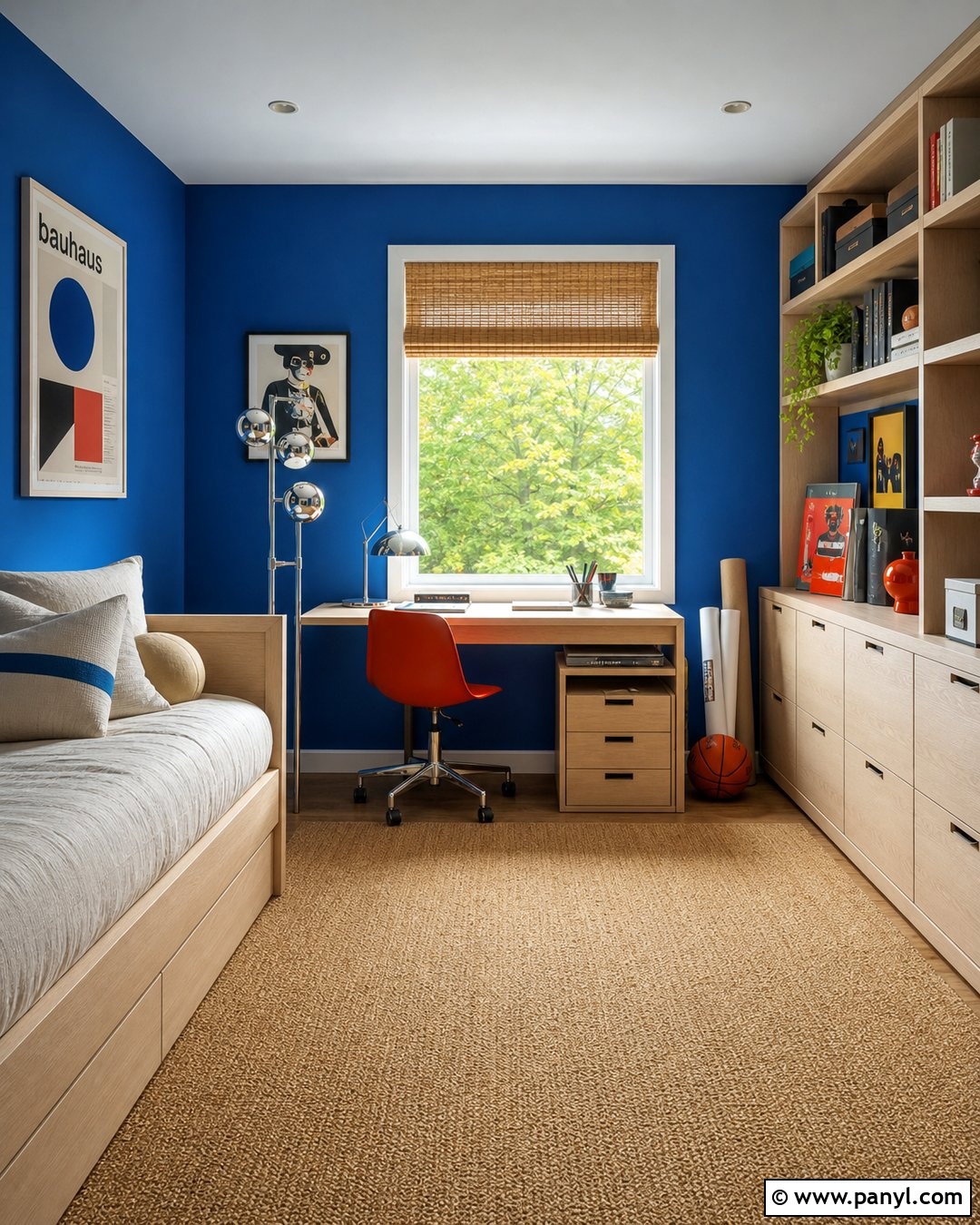
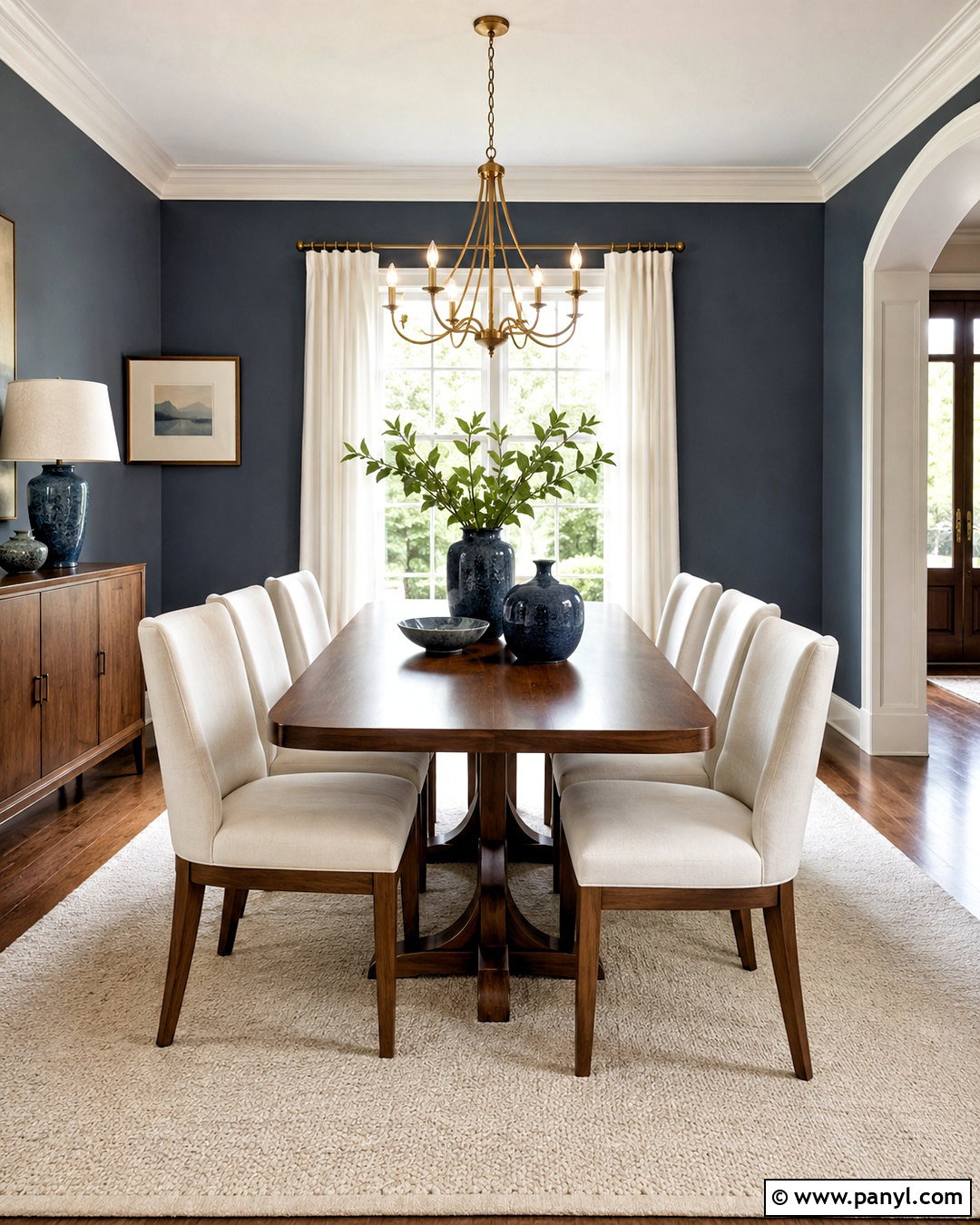
Navy blue walls and dark wood create a bold, cohesive effect when balanced with lighter textiles and strong lighting. Use this palette in a dining room with a walnut table, dark stained floors, and a wide window. Paint every wall navy, but retain a warm white ceiling and pale linen curtains. Choose dining chairs with cream upholstery to separate their dark wood frames from the background. A large light rug will define the table and reduce the amount of exposed dark flooring. Add a brass chandelier, gold-framed artwork, and white ceramic serving pieces for contrast. Keep the navy slightly softened rather than nearly black. This complete look feels dramatic and welcoming, with the warm wood adding natural variation to the deep blue surroundings.
14. Soft Teal Walls With Dark Wood
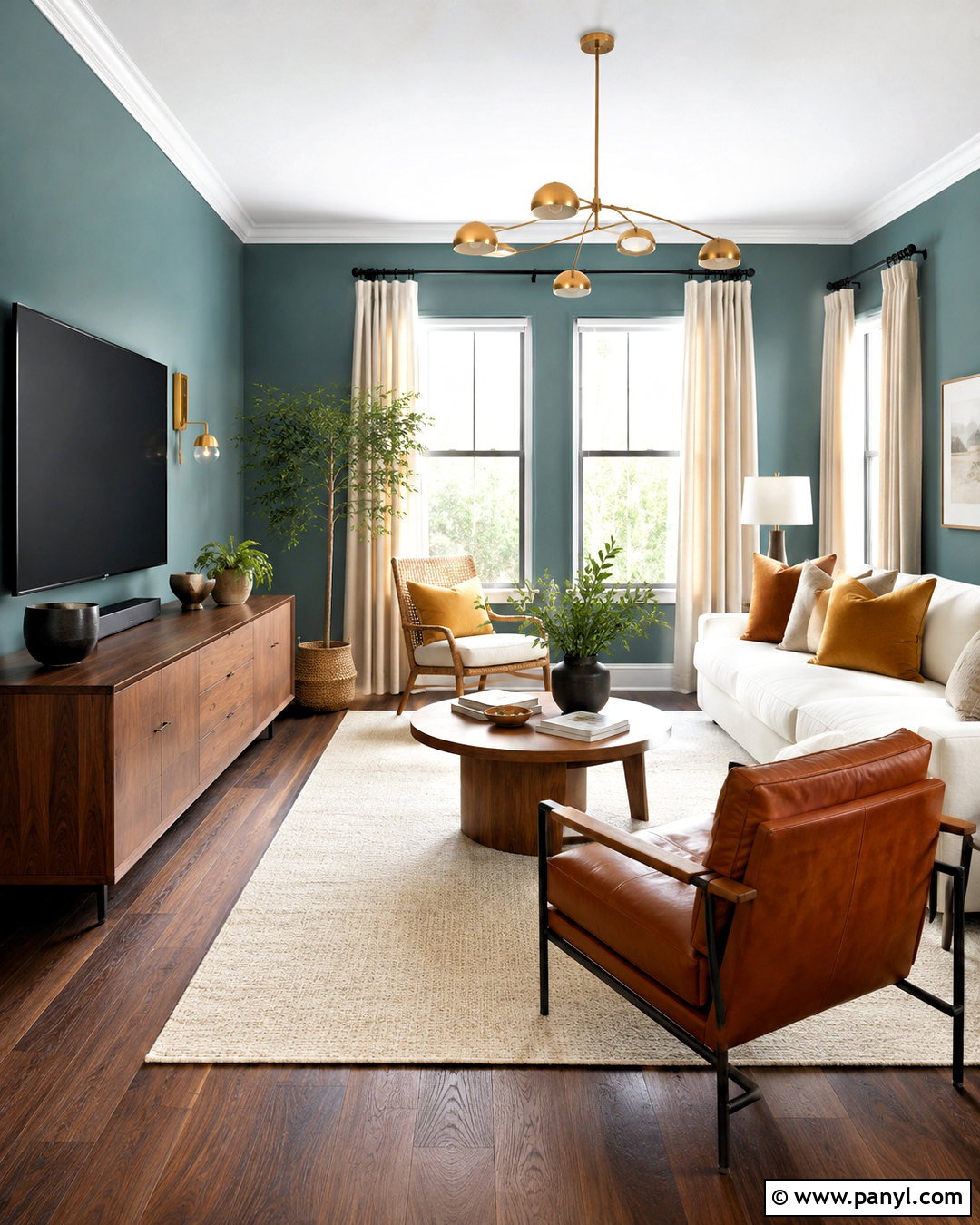
Soft teal introduces noticeable color while remaining composed beside dark walnut or espresso furniture. In a living room, use a grayed teal on the walls with dark wood flooring and a simple walnut media console. Balance the colorful backdrop with an off-white sofa, natural linen curtains, and a cream rug. Add armchairs in light caramel leather or woven rattan for warmth and texture. Pillows in ivory, ochre, and muted blue will connect the room without creating a busy palette. Choose matte black curtain rods and warm brass lighting to mix modern and traditional finishes. Avoid bright turquoise accessories, which can make the teal appear louder. The finished space feels fresh, relaxed, and distinctive while allowing the dark wood to remain visually important.
15. Terracotta Walls With Dark Wood
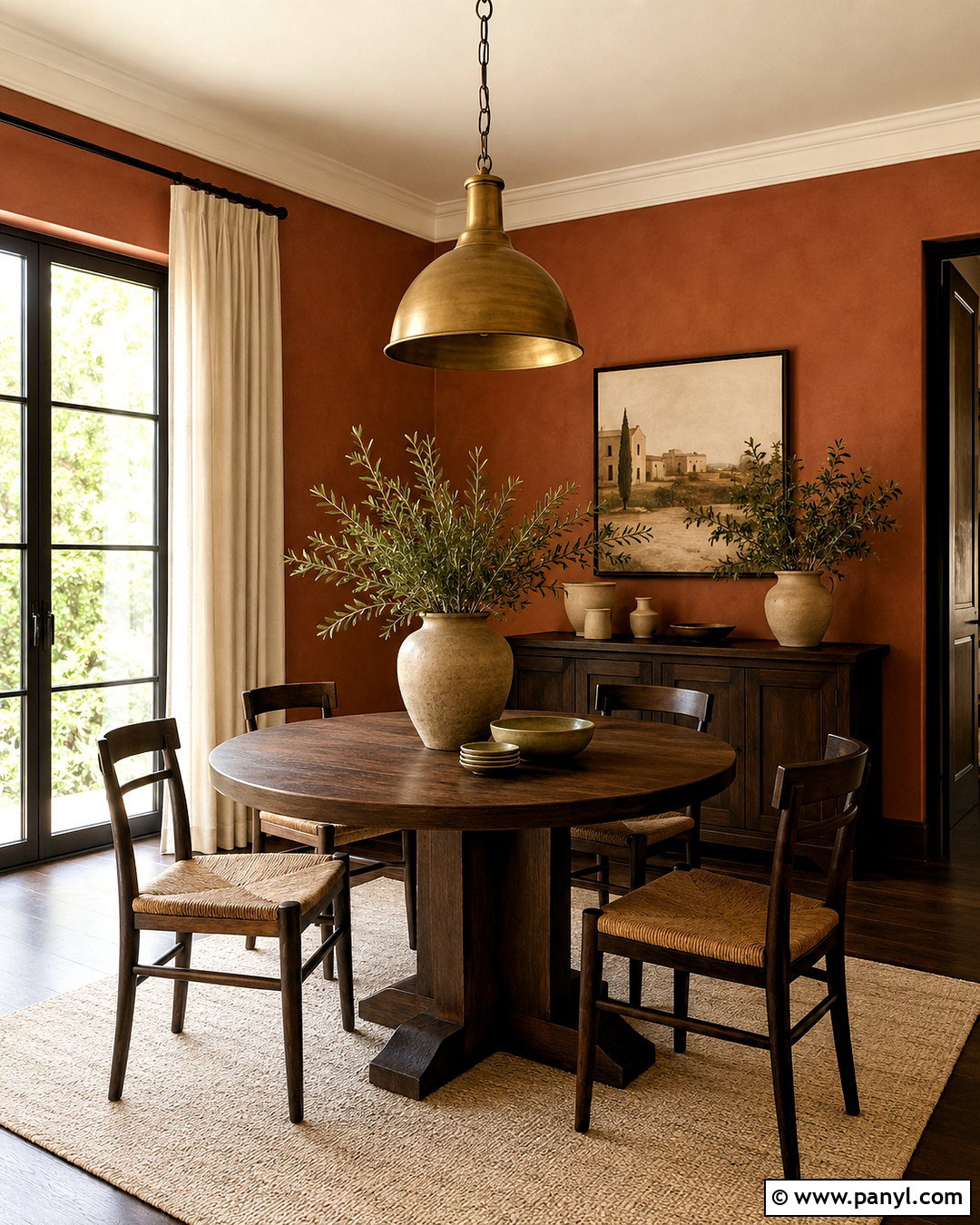
Terracotta walls can create an earthy, sun-warmed room around dark wood furniture. This color works particularly well in a breakfast room or informal dining area with walnut chairs and espresso-stained floors. Choose a softened clay terracotta rather than a vivid orange tone. Pair it with a round dark wood table, woven seat cushions, and an ivory rug for contrast. Cream curtains and a warm white ceiling will keep the enclosed space from feeling heavy. Add aged brass lighting, handmade beige pottery, and olive green accents for a natural Mediterranean influence. Keep decorative objects simple because the wall color and wood already provide substantial richness. The completed room feels welcoming and expressive, with every element supporting the warm, grounded color story.
16. Muted Clay Pink Walls With Dark Wood
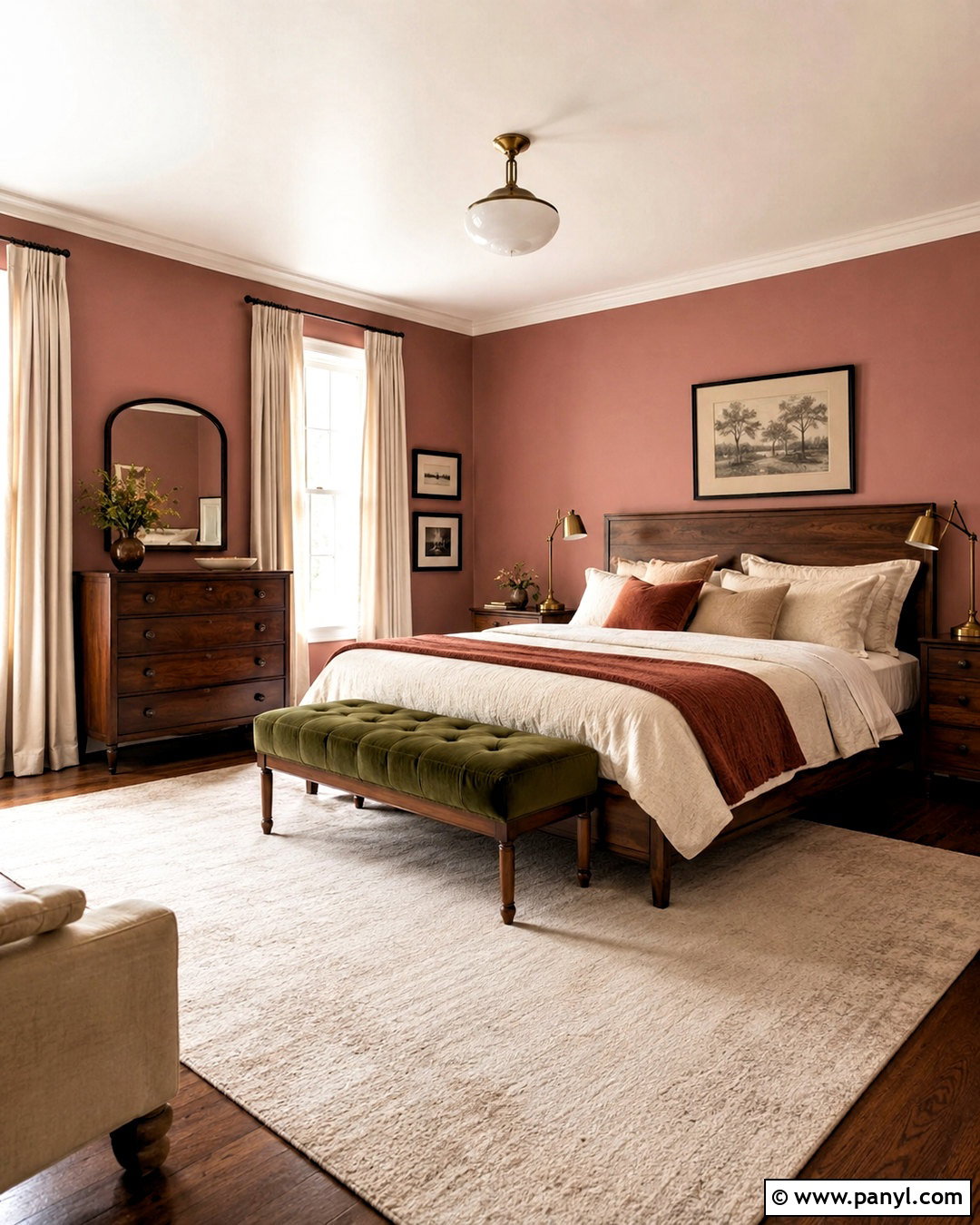
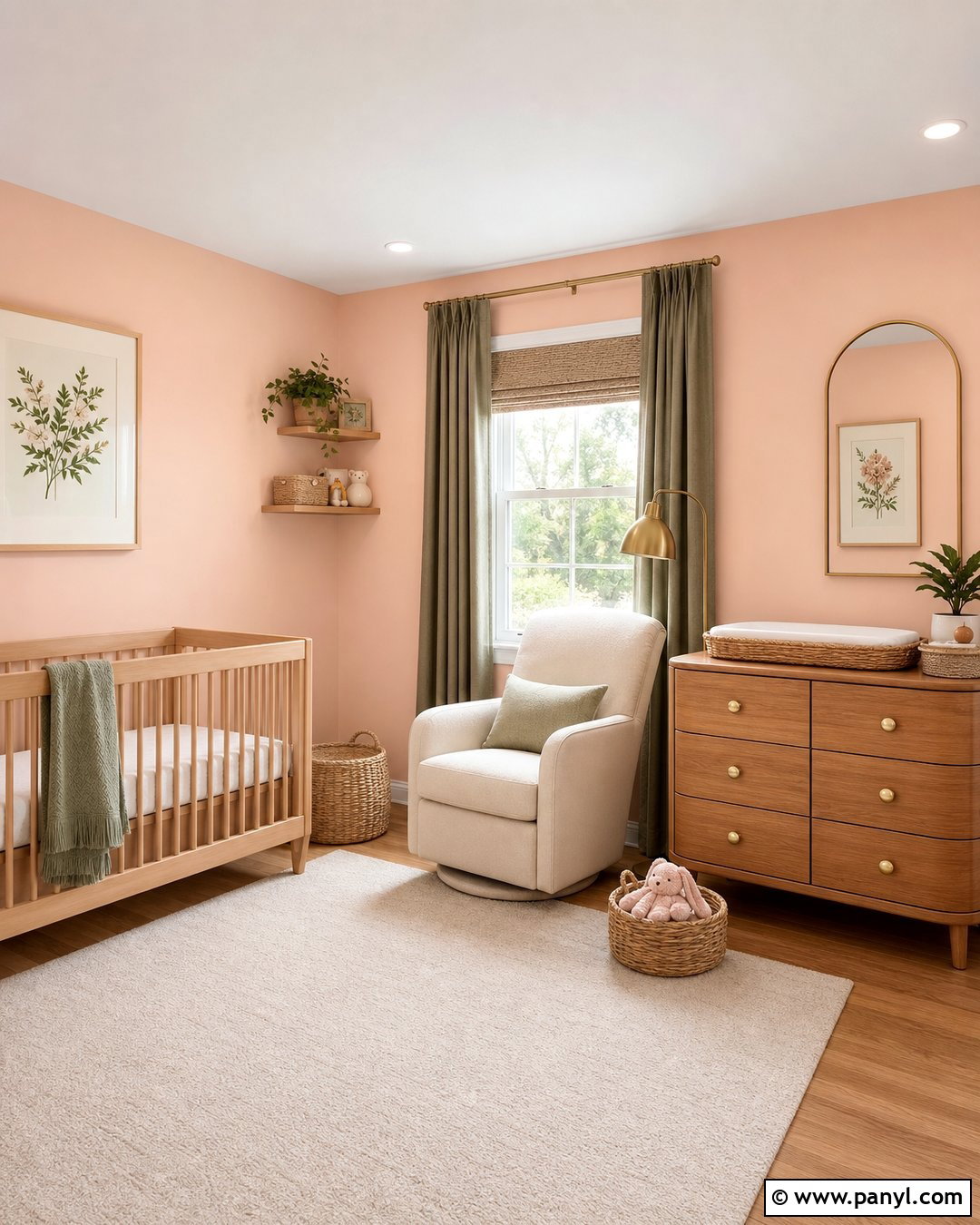
Muted clay pink gives dark wood a softer, more unexpected backdrop without making the room feel overly delicate. Use it in a bedroom with a mahogany dresser, walnut bed frame, and dark brown flooring. Select a dusty pink containing beige or brown undertones, avoiding brighter candy-like shades. Dress the bed in cream, oatmeal, and muted rust textiles to build a warm layered palette. A large ivory rug will brighten the dark floor, while linen curtains add gentle movement. Use antique brass lamps and black picture frames for controlled contrast. One olive green bench or chair can keep the scheme from feeling too monochromatic. This finished bedroom feels warm, restful, and sophisticated, with the dark furniture providing structure against the softly colored walls.
17. Butter Yellow Walls With Dark Wood
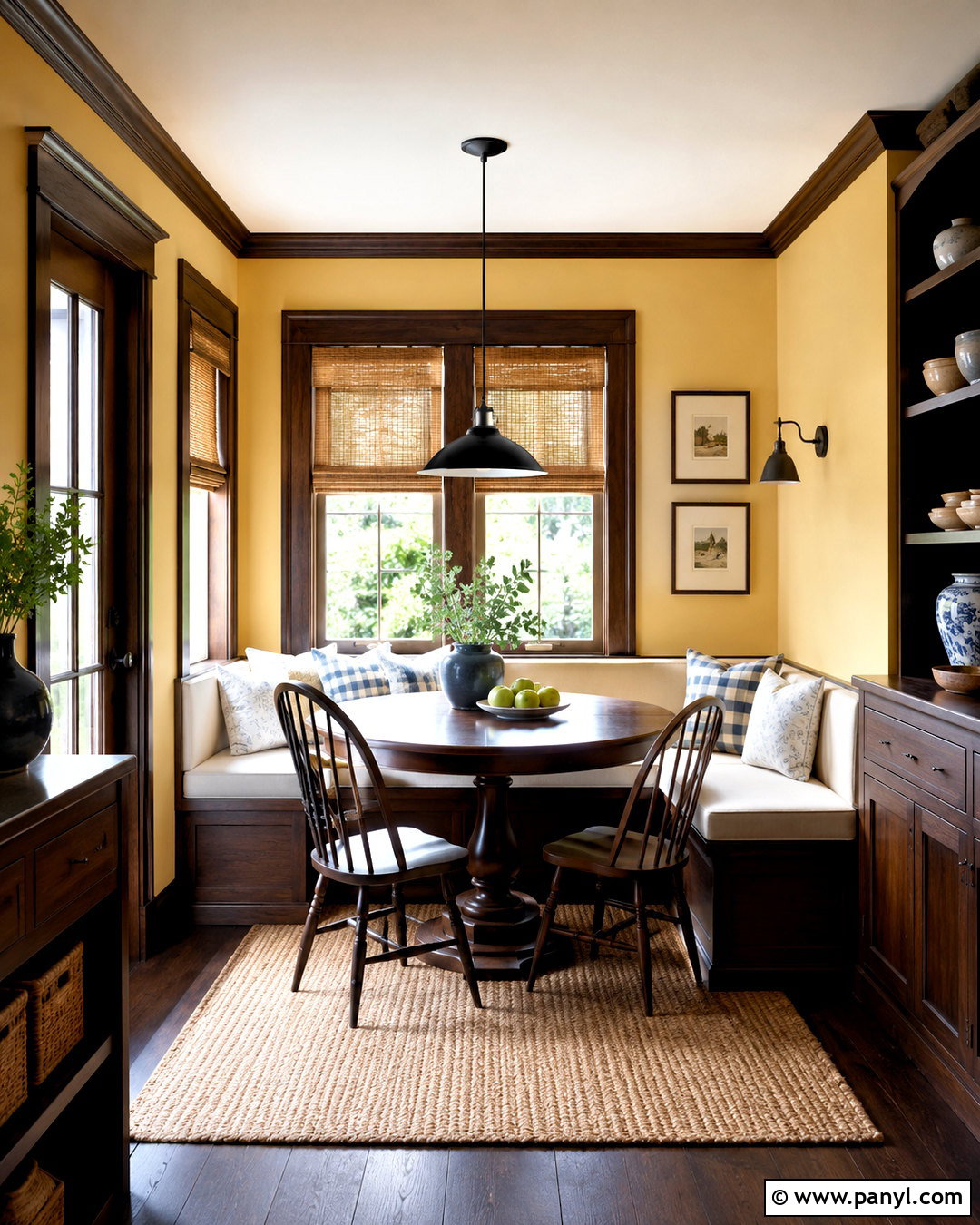
Butter yellow walls bring cheerful warmth to dark wood without the intensity of a bright primary yellow. This combination is well suited to a breakfast nook with dark oak trim, a walnut table, and espresso flooring. Choose a pale, creamy yellow that looks soft in both daylight and evening light. Add white or ivory upholstered seating, woven shades, and a natural jute rug to create an easygoing atmosphere. Blue-gray pottery and checked linen cushions provide restrained contrast. Use warm white on the ceiling and window frames so the room remains light. A simple black pendant can add a modern outline above the table. The complete design feels sunny and welcoming, while the dark wood prevents the pale yellow palette from appearing overly sweet.
18. Charcoal Gray Walls With Dark Wood
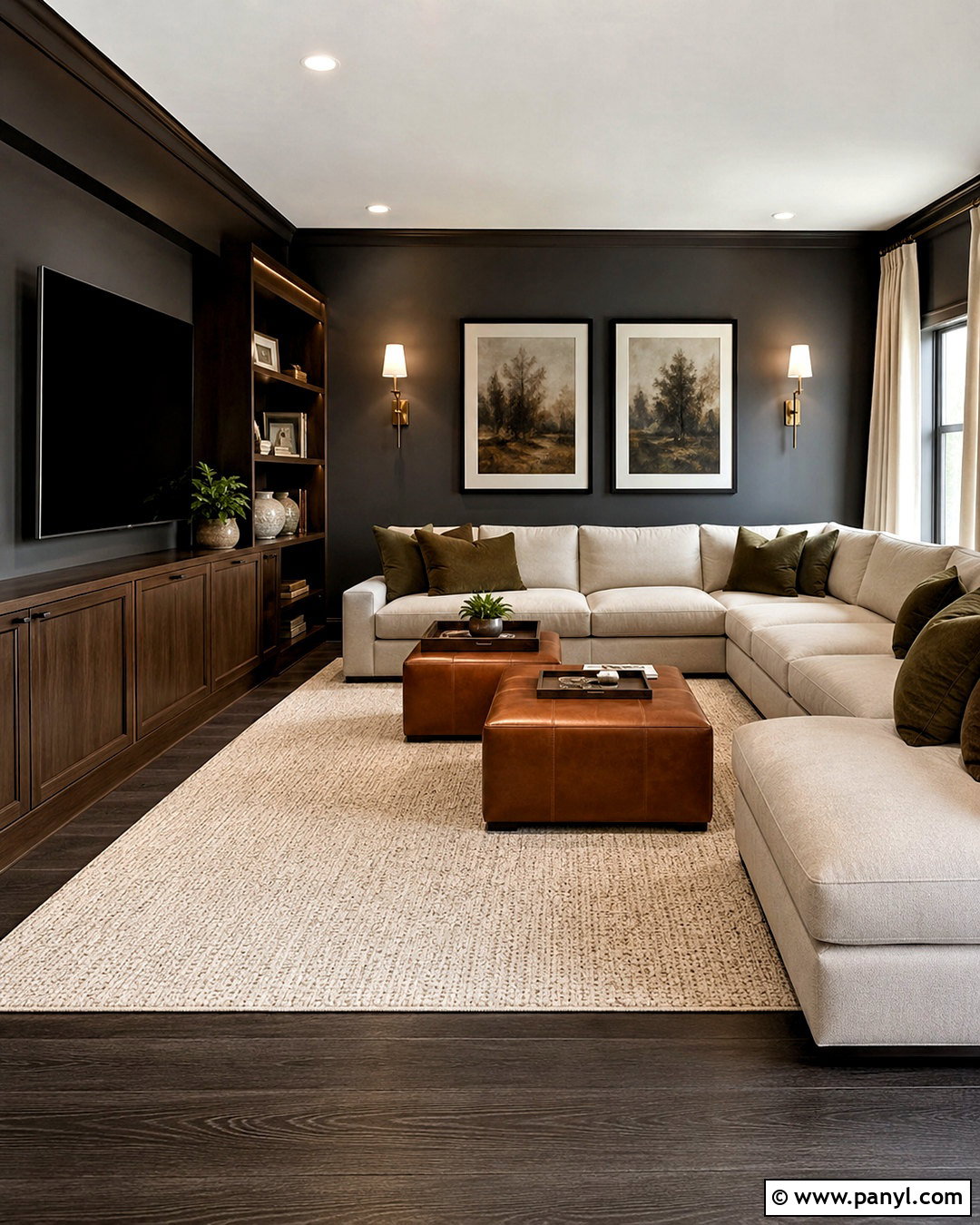
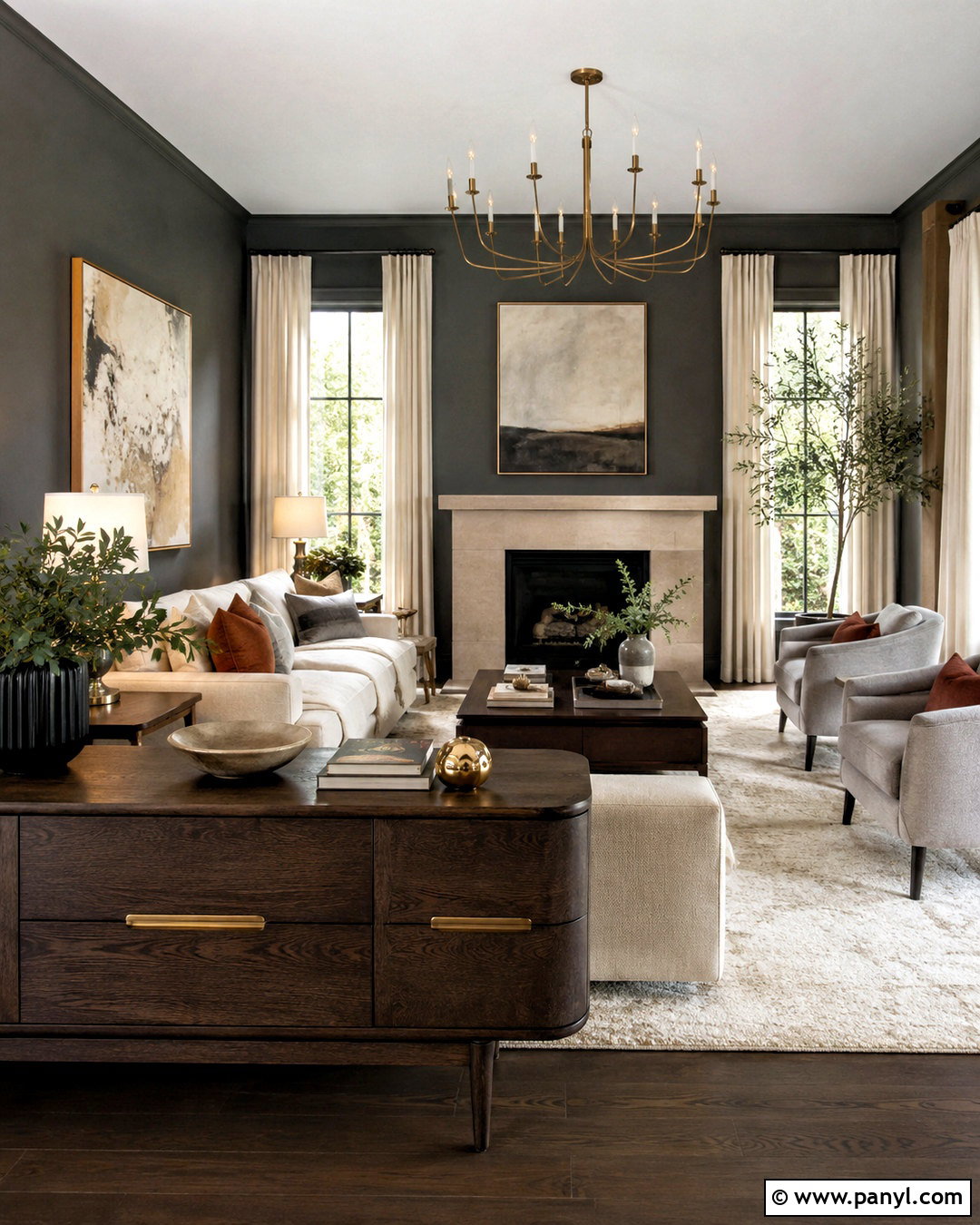
Charcoal gray can work with dark wood when the room has sufficient lighting and enough pale surfaces for balance. Create a dramatic media room using charcoal walls, dark walnut built-ins, and espresso flooring. Install warm white ceiling paint and light-colored window treatments to prevent the upper half from feeling closed in. Choose a generous oatmeal sectional and a large cream rug to form a bright center. Add cognac leather ottomans, brushed brass sconces, and a few muted olive pillows for warmth. Artwork with broad white mats will stand out clearly against the charcoal. Keep electronics organized within the cabinetry so the design remains streamlined. This finished space feels cozy and contemporary, with dark wood adding texture rather than disappearing into the walls.
19. Forest Green Walls With Dark Wood
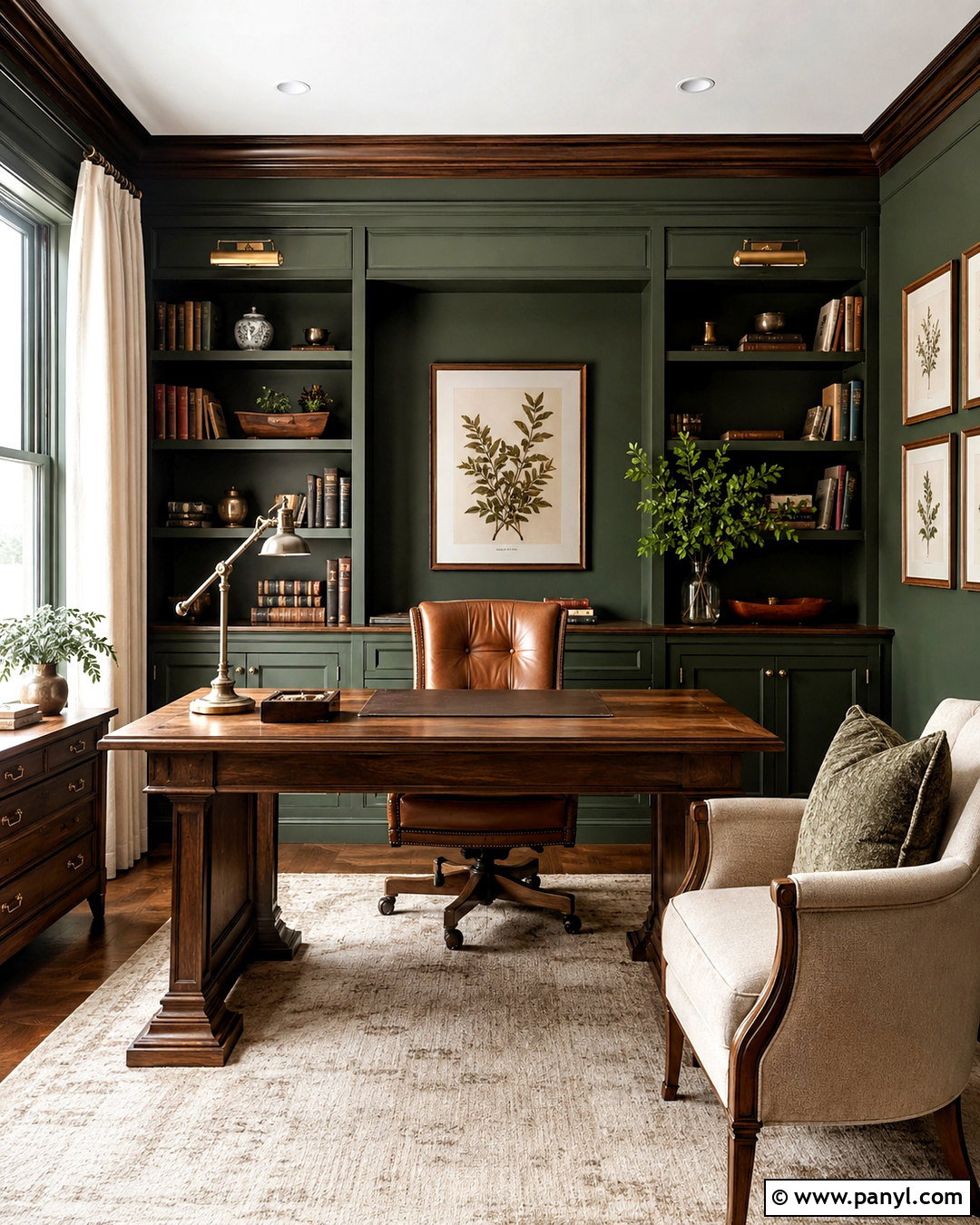
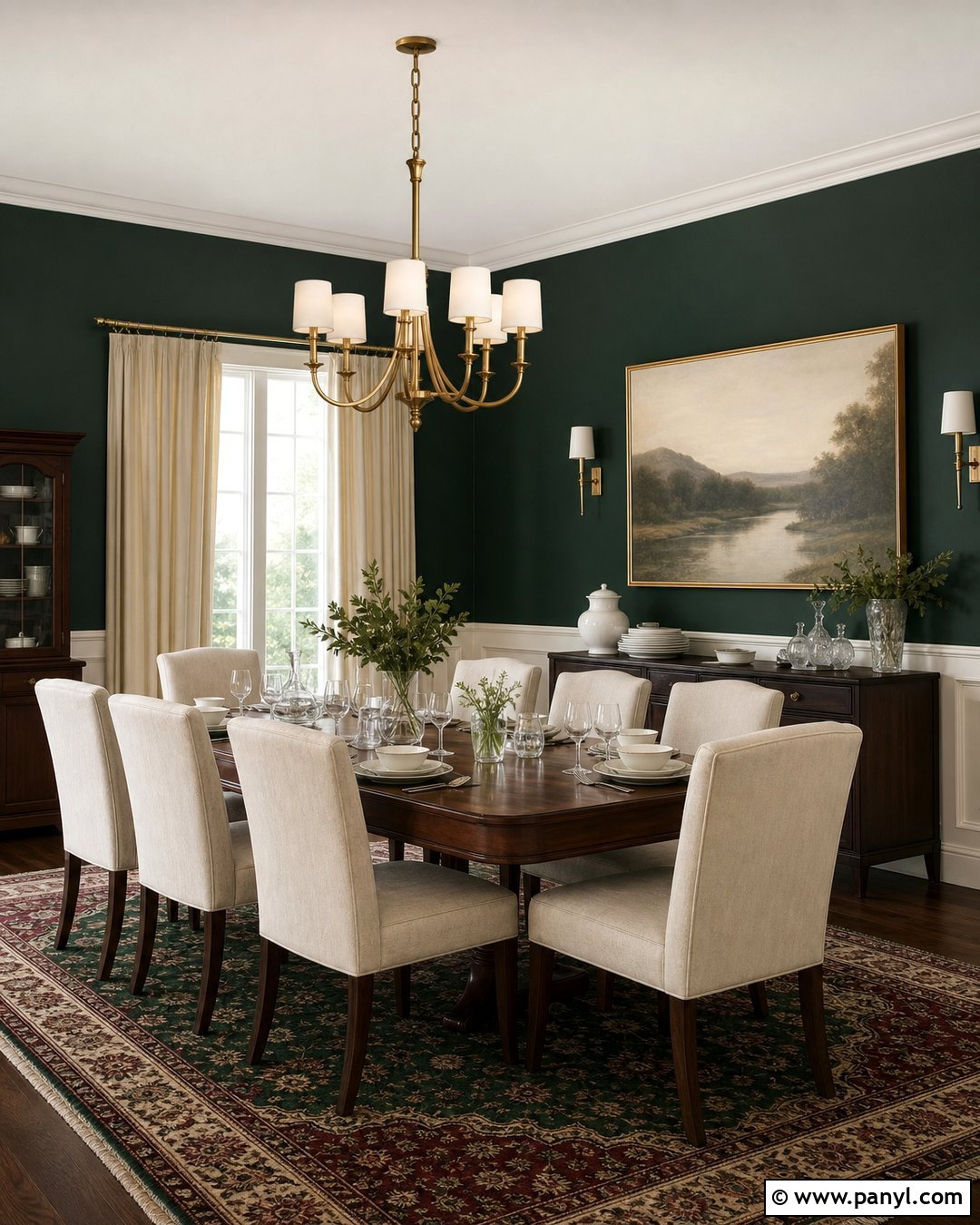
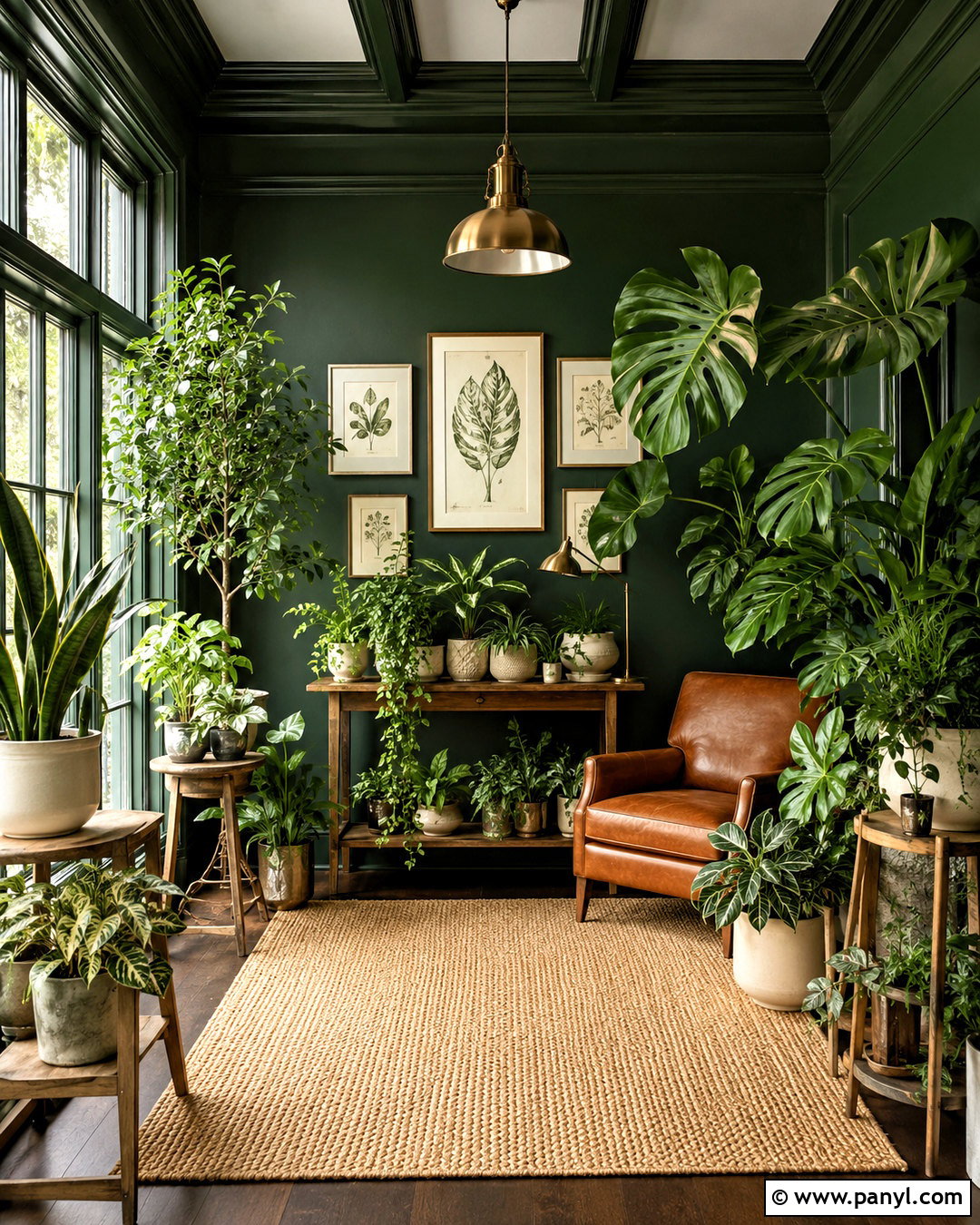
Forest green creates a traditional, cocooning atmosphere around mahogany, walnut, and espresso finishes. Use it in a study with dark wood shelves, a substantial desk, and warm brown flooring. Paint the walls and built-ins the same forest green if you want a seamless look, but leave visible desk surfaces and trim in their natural dark wood finish. Add a camel leather chair, an ivory rug, and cream curtains to break up the saturated color. Brass library lights and framed botanical art will reinforce the classic character. Include a pale upholstered guest chair to provide another visual resting point. With layered table, floor, and ceiling lighting, this complete room will feel rich and comfortable rather than dim, making it ideal for focused work.
20. Warm Black Walls With Dark Wood
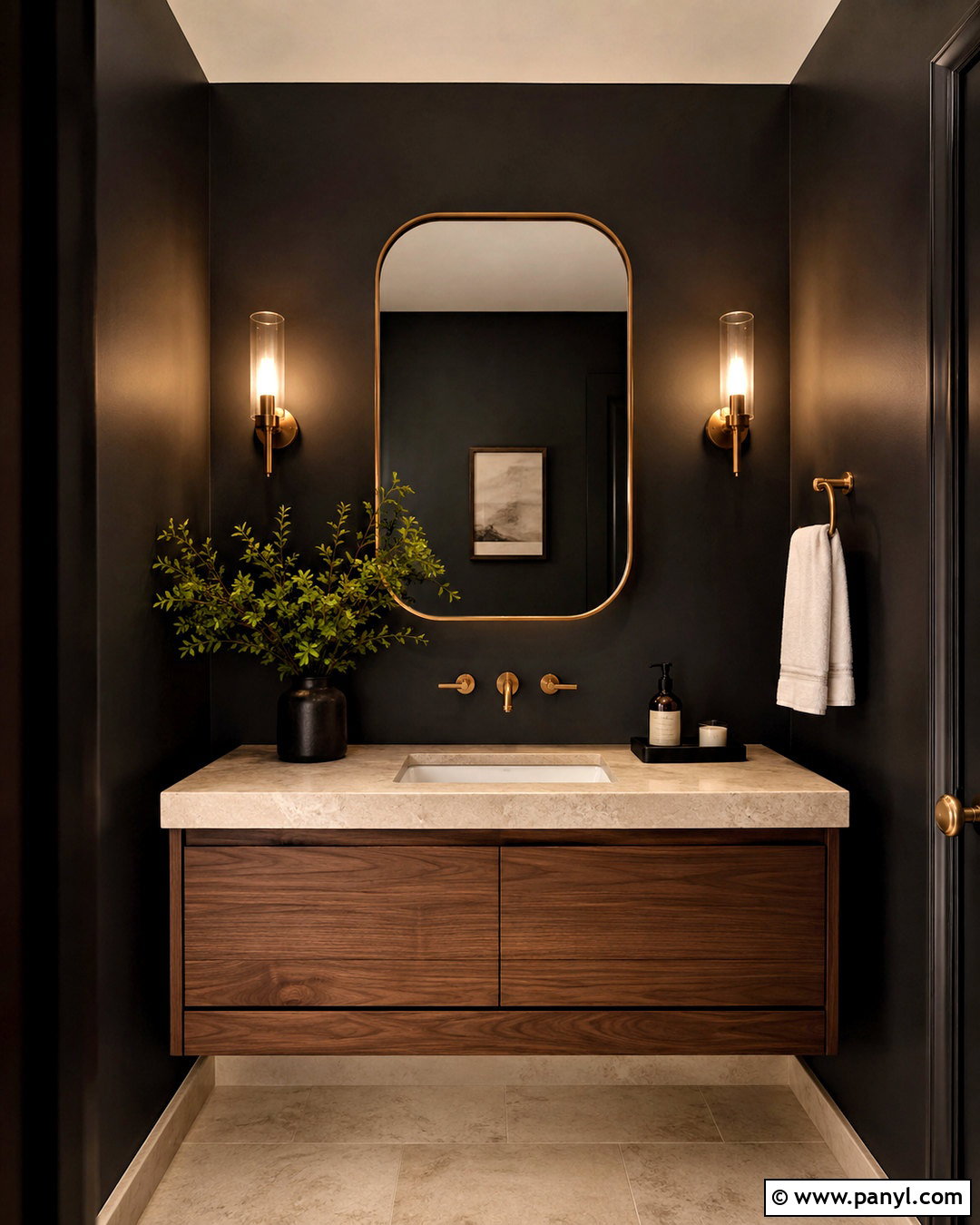
Warm black walls offer the most dramatic pairing with dark wood, making them best for a small powder room or naturally bright space. Choose a softened black with brown undertones, then pair it with a floating walnut vanity and a light cream stone countertop. Keep the sink, towels, and ceiling warm white to produce crisp visual breaks. A large rounded mirror will reflect light, while aged brass sconces and faucets introduce a warm metallic glow. Use pale limestone flooring instead of additional dark wood underfoot so the room remains balanced. Minimal artwork and one small green branch are enough decoration. This complete scheme feels intentional and polished, proving that dark wood can work with very deep walls when lighter surfaces and reflective details are carefully placed.
Conclusion:
The most successful wall color depends on the wood’s undertone, the room’s daylight, and the atmosphere you want to create. Cream, ivory, greige, and beige make dark furniture and floors feel lighter. Sage, dusty blue, teal, and clay provide soft color without overwhelming natural wood grain. Navy, charcoal, forest green, and warm black produce a more intimate result when balanced with pale rugs, curtains, ceilings, and upholstery. Before painting, place large samples beside the wood and examine them throughout the day. Also consider permanent surfaces such as flooring, stone, and tile. With thoughtful testing and balanced accessories, these 20 Wall Colors That Go Well With Dark Wood Ideas can support rooms ranging from bright and relaxed to bold and dramatic.

Related Ideas and Inspiration:
Leave a Reply