
Choosing cabinet color becomes easier when you treat the countertop as the foundation of the whole kitchen. These 20 Kitchen Cabinet Paint Colors With Dark Countertops balance deep stone surfaces with thoughtful color, practical finishes, and coordinated materials. Warm whites create crisp contrast, while greens, blues, and earthy neutrals bring more character. Even dramatic cabinet colors can work when the backsplash, flooring, hardware, and lighting keep the room balanced. Always check whether your countertop leans warm, cool, green, brown, or blue before selecting paint, because shared undertones usually create a more cohesive result. () Test large samples beside the counter in morning and evening light. Then explore these complete kitchen looks from 20 Kitchen Cabinet Paint Colors With Dark Countertops.

1. Warm White Kitchen Cabinets With Dark Countertops
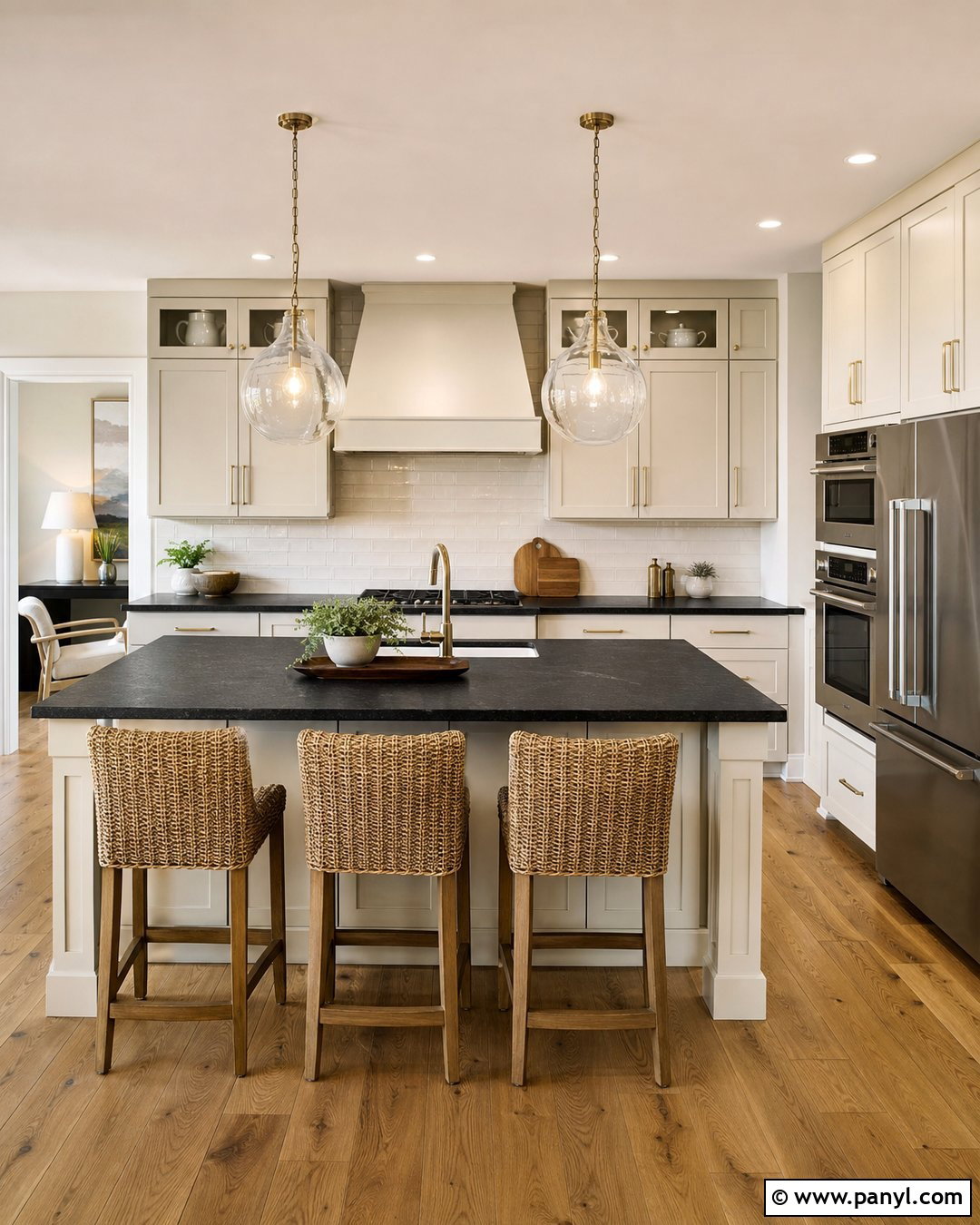
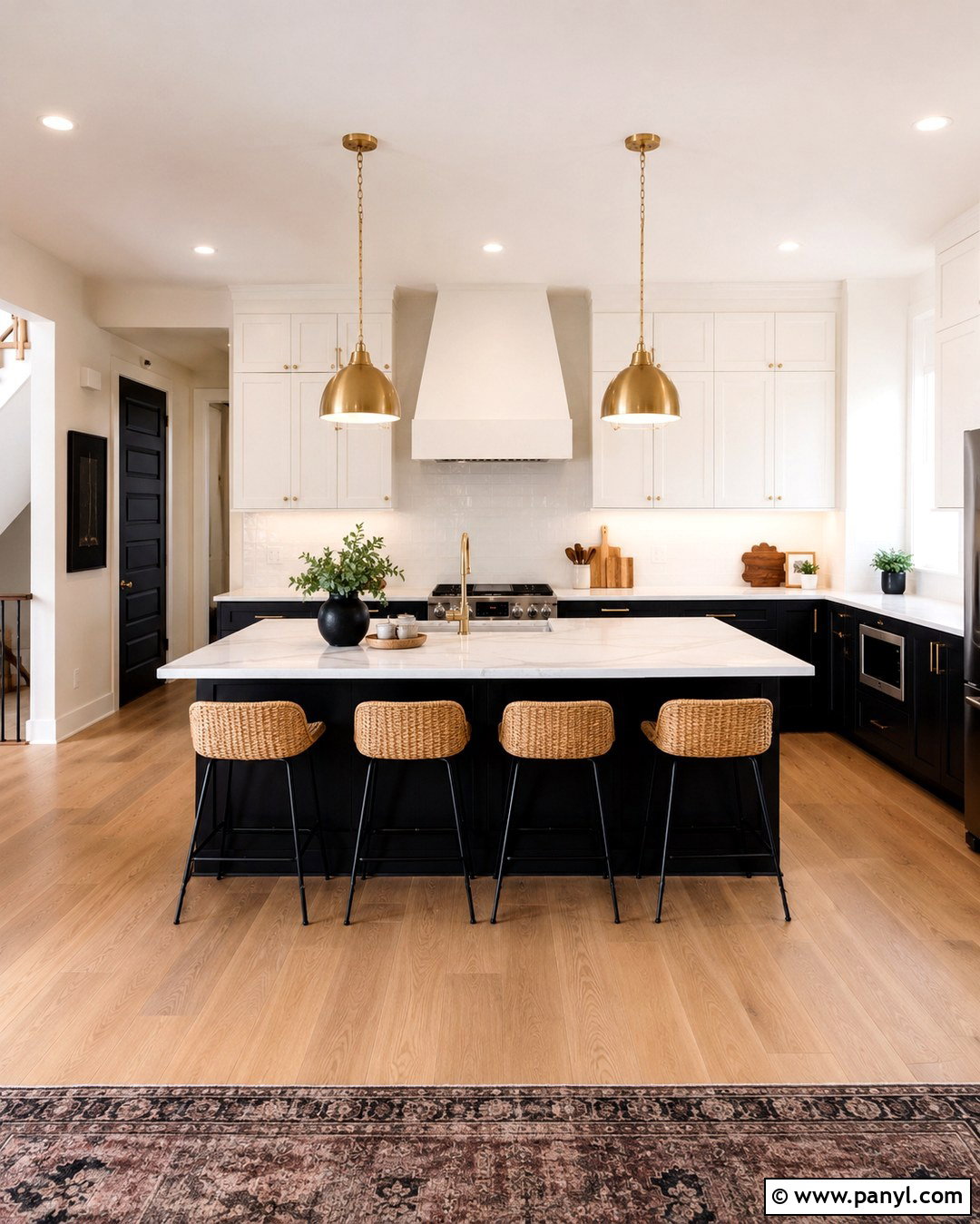
Warm white cabinets create clean contrast without making a kitchen feel cold or overly sharp. Choose a soft white with subtle cream or greige undertones, especially when the dark countertop contains brown, gold, or taupe veining. Pair the cabinets with honed black granite or dark quartz, then continue the warm palette through an ivory subway tile backsplash. Brushed brass pulls and a matching faucet add gentle warmth. Medium-tone oak flooring keeps the black-and-white combination from appearing too formal. For the walls, use a pale neutral that sits slightly deeper than the cabinetry. Clear glass pendants and woven counter stools complete a bright transitional kitchen that feels welcoming, polished, and easy to update over time.
2. Cream Kitchen Cabinets With Dark Countertops
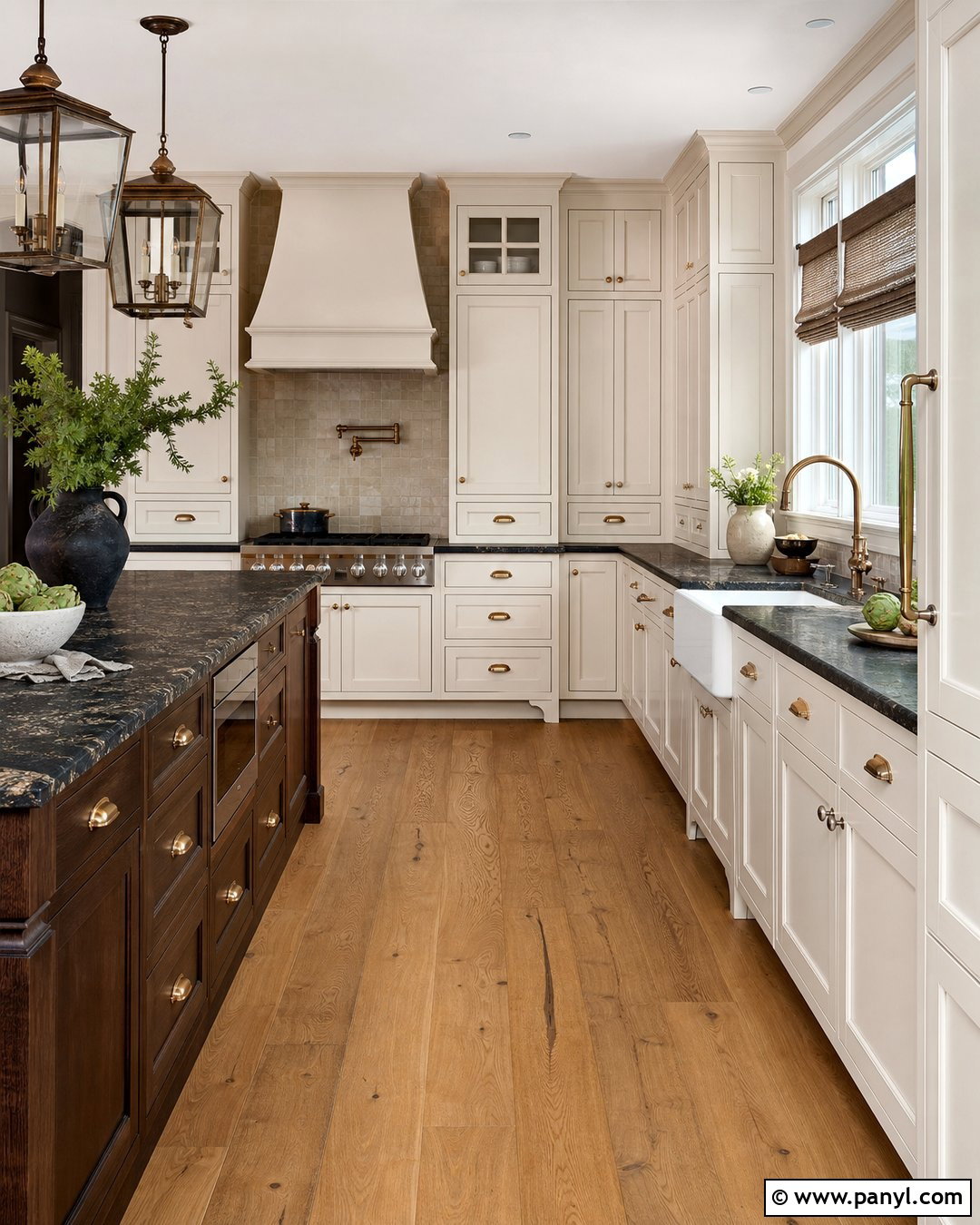
Cream cabinets soften dark countertops and work especially well with black granite containing bronze, amber, or beige flecks. Instead of using a yellow-heavy cream, select a balanced shade with warm beige undertones. Cover the backsplash with handmade ivory tile, using warm gray grout to define its texture. Antique brass knobs, a bridge faucet, and simple lantern pendants support the traditional character without making the room feel dated. Choose natural oak flooring or warm stone-look porcelain tile underfoot. A walnut island can provide another rich layer if the kitchen is large enough. Finish the room with oatmeal walls, linen window shades, and a few simple ceramic accessories for a comfortable kitchen that feels softly illuminated.
3. Soft Greige Kitchen Cabinets With Dark Countertops
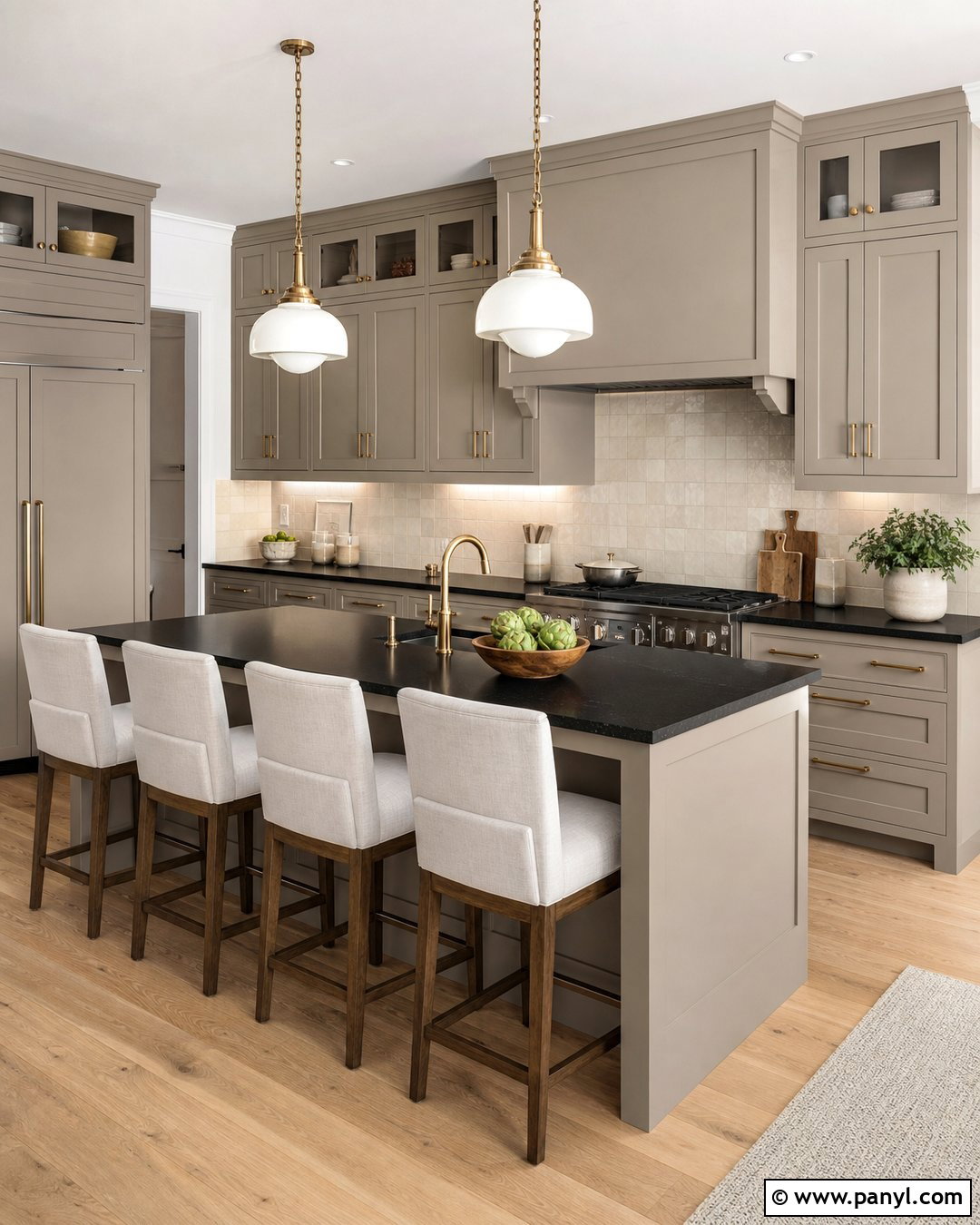
Soft greige cabinets offer more depth than white while remaining light enough to balance black or charcoal countertops. Look for a shade combining warm gray and beige rather than one with obvious blue undertones. Use it across simple Shaker cabinets, then add slim aged-brass handles for definition. A creamy zellige backsplash introduces movement without competing with patterned granite. Wide-plank white oak flooring brings warmth below, while off-white walls prevent the palette from looking muddy. Over the island, install streamlined milk-glass pendants with brass fittings. Upholstered counter stools in natural linen make the space comfortable. This complete scheme suits transitional and modern kitchens because it feels neutral, layered, and more forgiving than a high-contrast pure-white finish.
4. Mushroom Kitchen Cabinets With Dark Countertops
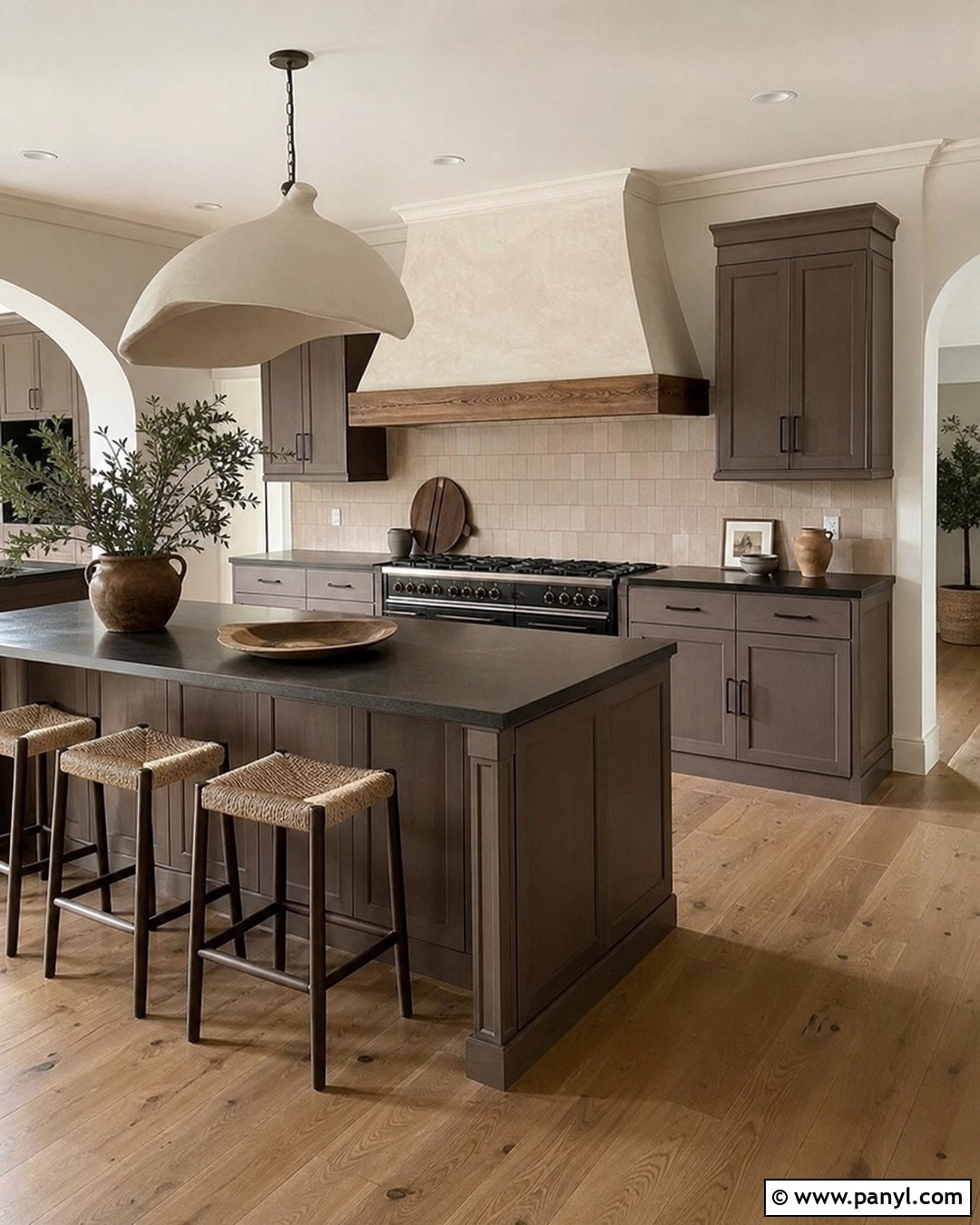
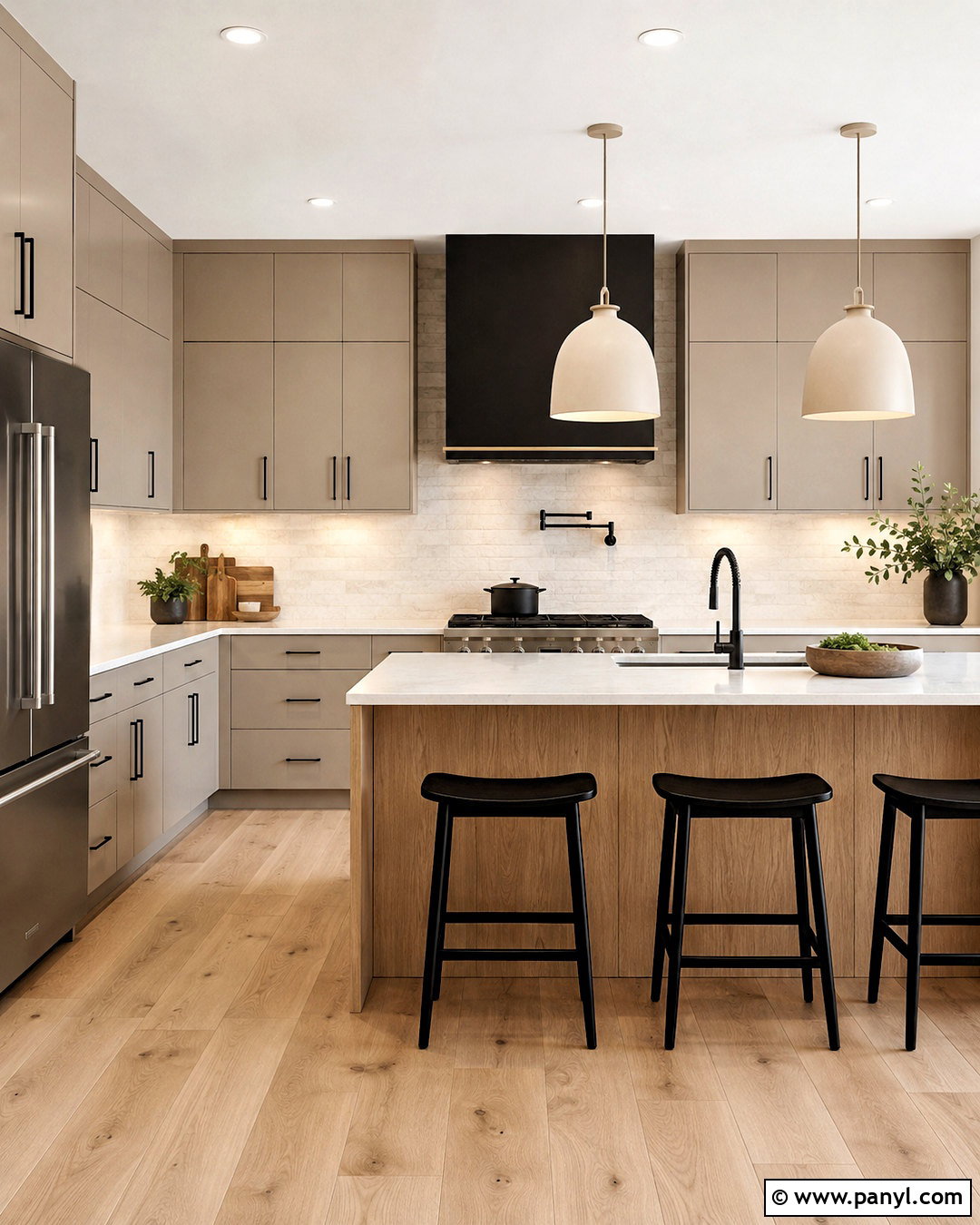
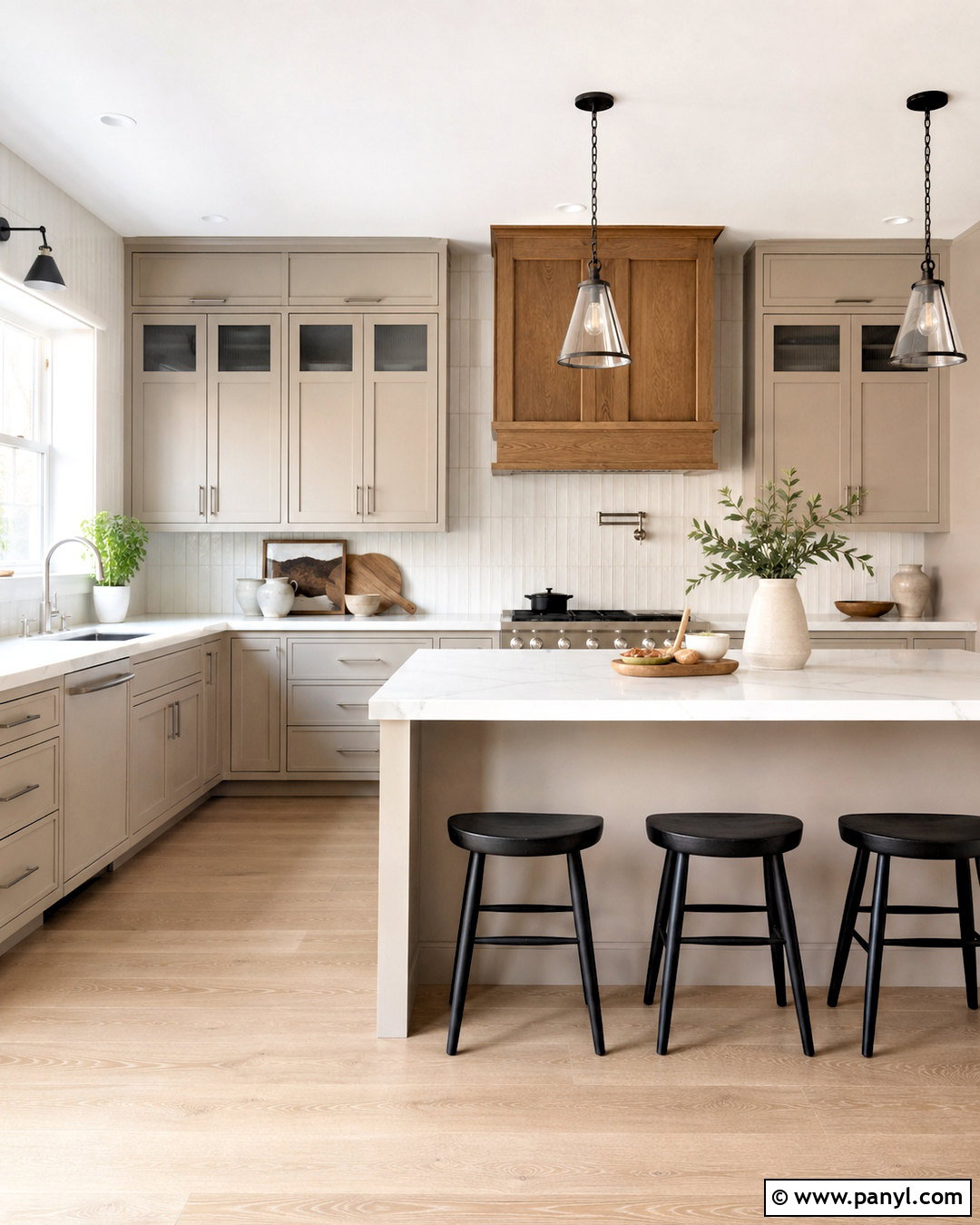
Mushroom paint gives cabinetry an earthy brown-gray appearance that feels grounded beside dark soapstone or leathered black granite. This color works particularly well when the countertop has subtle warm veining instead of icy white markings. Carry the natural look onto the backsplash with matte taupe tile or lightly textured limestone. Oil-rubbed bronze hardware blends quietly with the stone, allowing the cabinet color to remain noticeable. Choose warm white walls and medium oak flooring to keep the kitchen from becoming too dark. A plaster pendant above the island adds sculptural softness. Finish with woven stools, stoneware containers, and understated wood accessories. The result is a calm organic kitchen with enough contrast to define every major surface.
5. Putty Beige Kitchen Cabinets With Dark Countertops
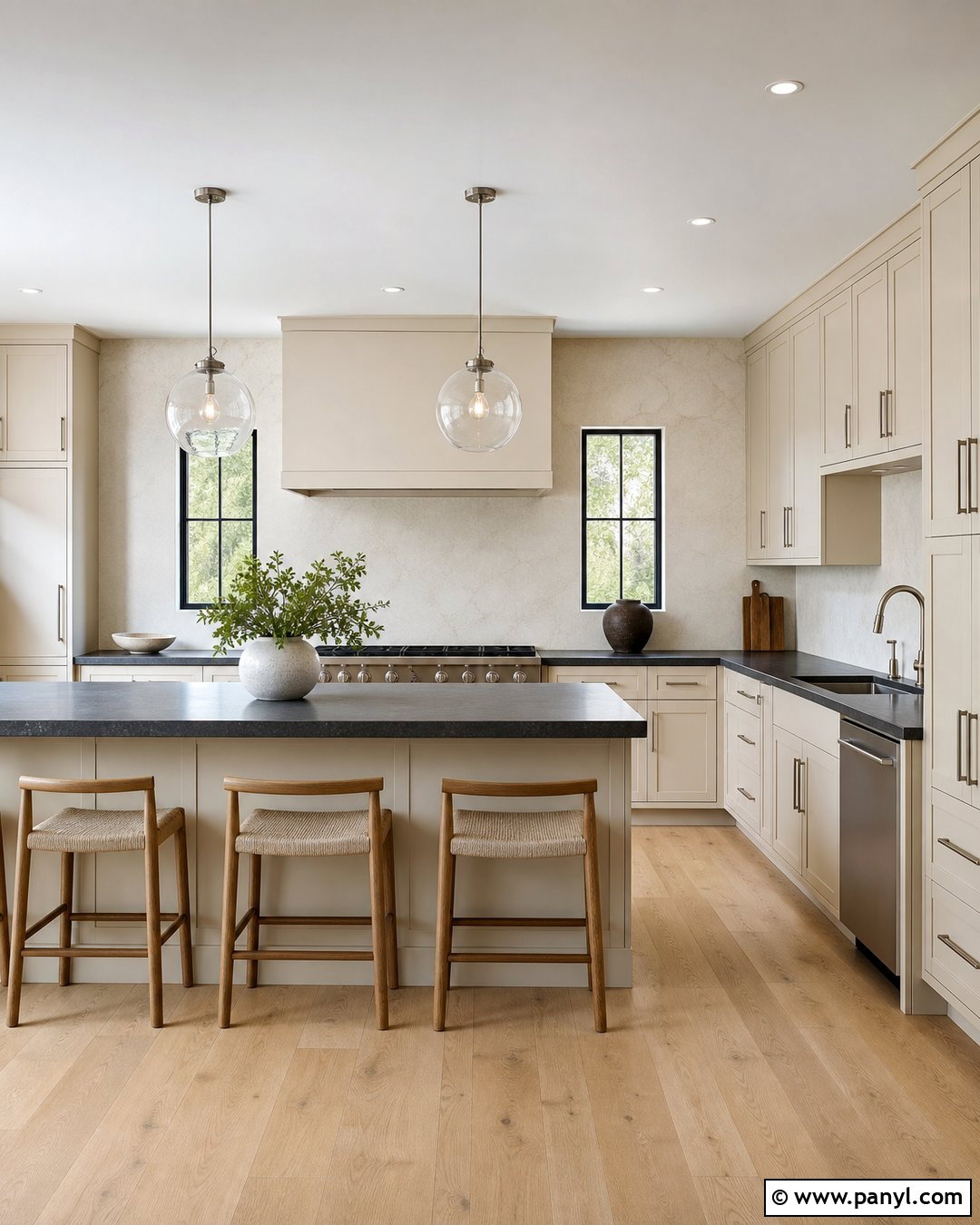
Putty beige has a muted, mineral quality that complements dark countertops without producing harsh contrast. Choose a shade with balanced gray and brown undertones for cabinets surrounding a charcoal quartz or honed black granite worktop. A full-height backsplash in creamy quartz-look porcelain keeps the cooking area bright and easy to maintain. Pair the cabinets with brushed nickel hardware for a clean appearance, or use aged brass when the countertop includes warm markings. Pale oak flooring and soft ivory walls open the room visually. Add globe pendants in clear glass and counter stools with light wood frames. This palette creates a relaxed, updated kitchen that works particularly well in open layouts connected to neutral living and dining spaces.
6. Light Gray Kitchen Cabinets With Dark Countertops
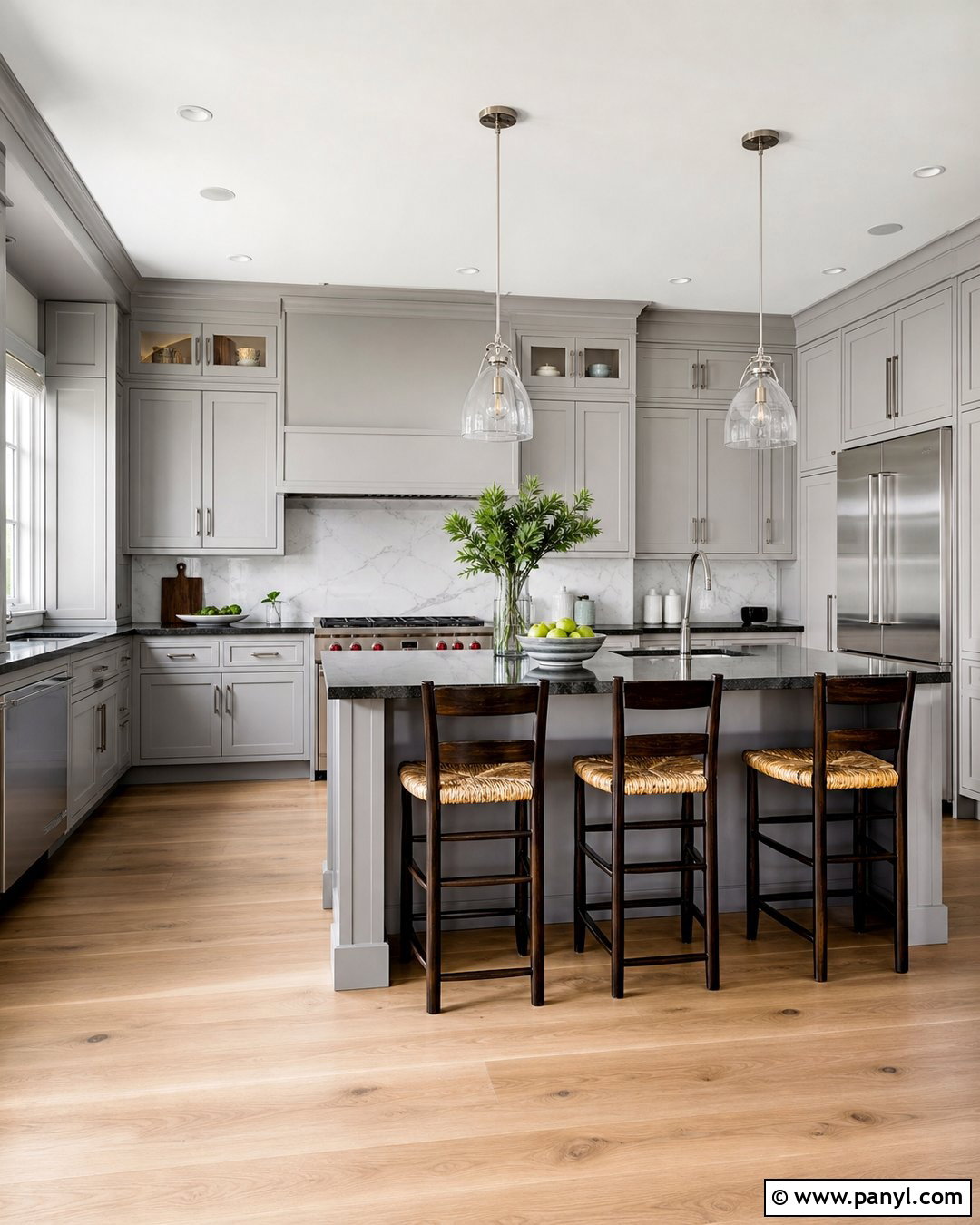
Light gray cabinets can look crisp beside dark countertops when the gray shares their undertone. Use a slightly warm gray with brown-black granite, or select a blue-gray shade when the surface is a cooler charcoal quartz. Keep the backsplash light with white marble-look tile featuring restrained gray veining. Polished nickel pulls, stainless steel appliances, and clear pendants create a streamlined finish. To prevent the room from feeling too cool, introduce natural white oak flooring and counter stools with woven seats. Paint the walls a soft white rather than another gray. This complete kitchen feels fresh and orderly, with enough natural texture to offset the smooth painted cabinetry, dark counters, and reflective metal finishes.
7. Blue Gray Kitchen Cabinets With Dark Countertops
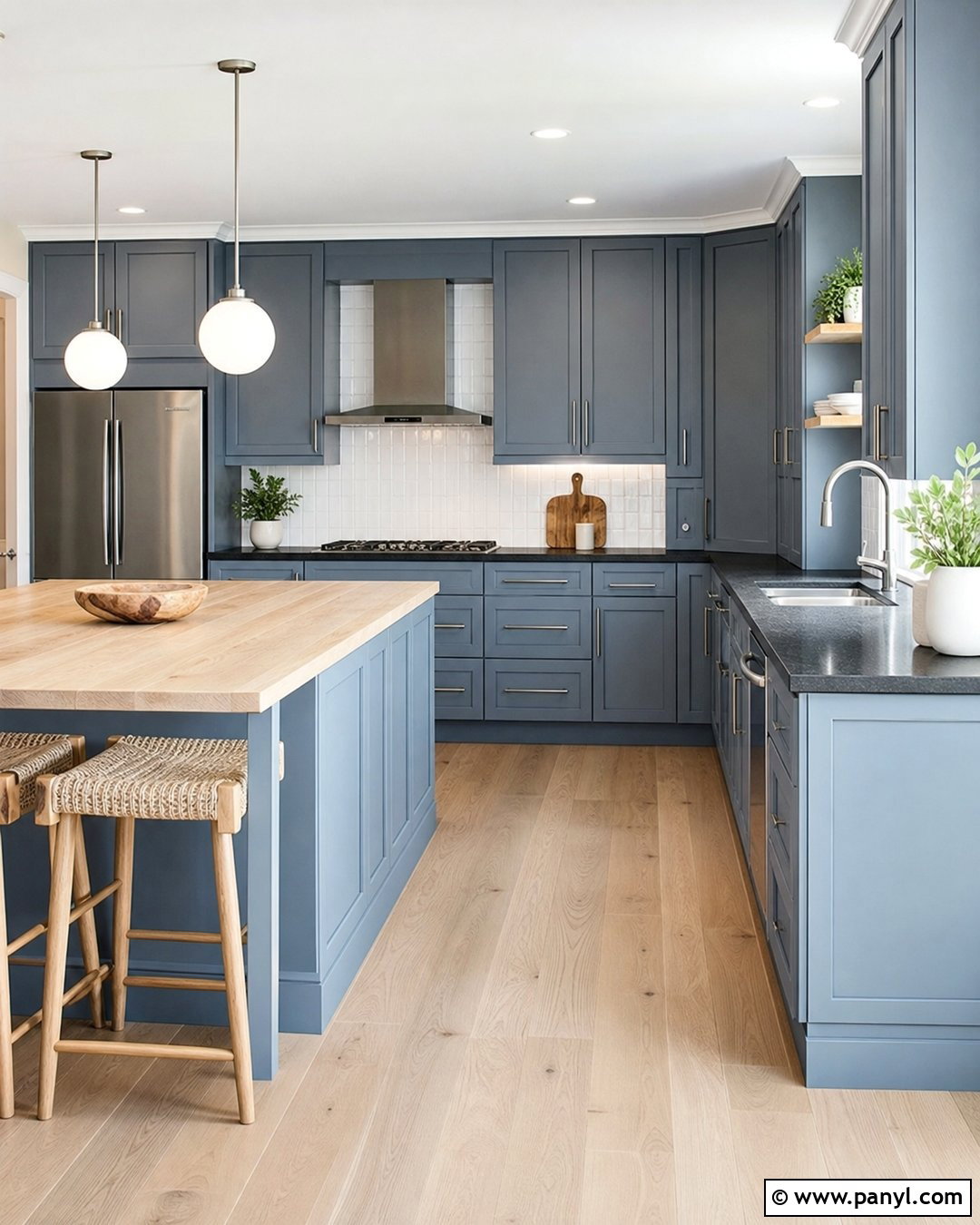
Blue-gray cabinetry creates gentle color while maintaining the versatility of a neutral. Choose a dusty mid-light shade that stands apart from a black quartz or charcoal granite countertop without dominating the room. A glossy white square-tile backsplash reflects light and makes the cooler cabinet color appear brighter. Add brushed nickel hardware, stainless steel appliances, and simple opal-glass pendants for a cohesive finish. Pale oak floors provide the warmth needed to balance the blue undertones. Use warm white walls and natural linen window treatments rather than cool gray paint. A light wood island top can soften the center of the room. Altogether, the palette produces an airy coastal-inspired kitchen without relying on obvious nautical decorations.
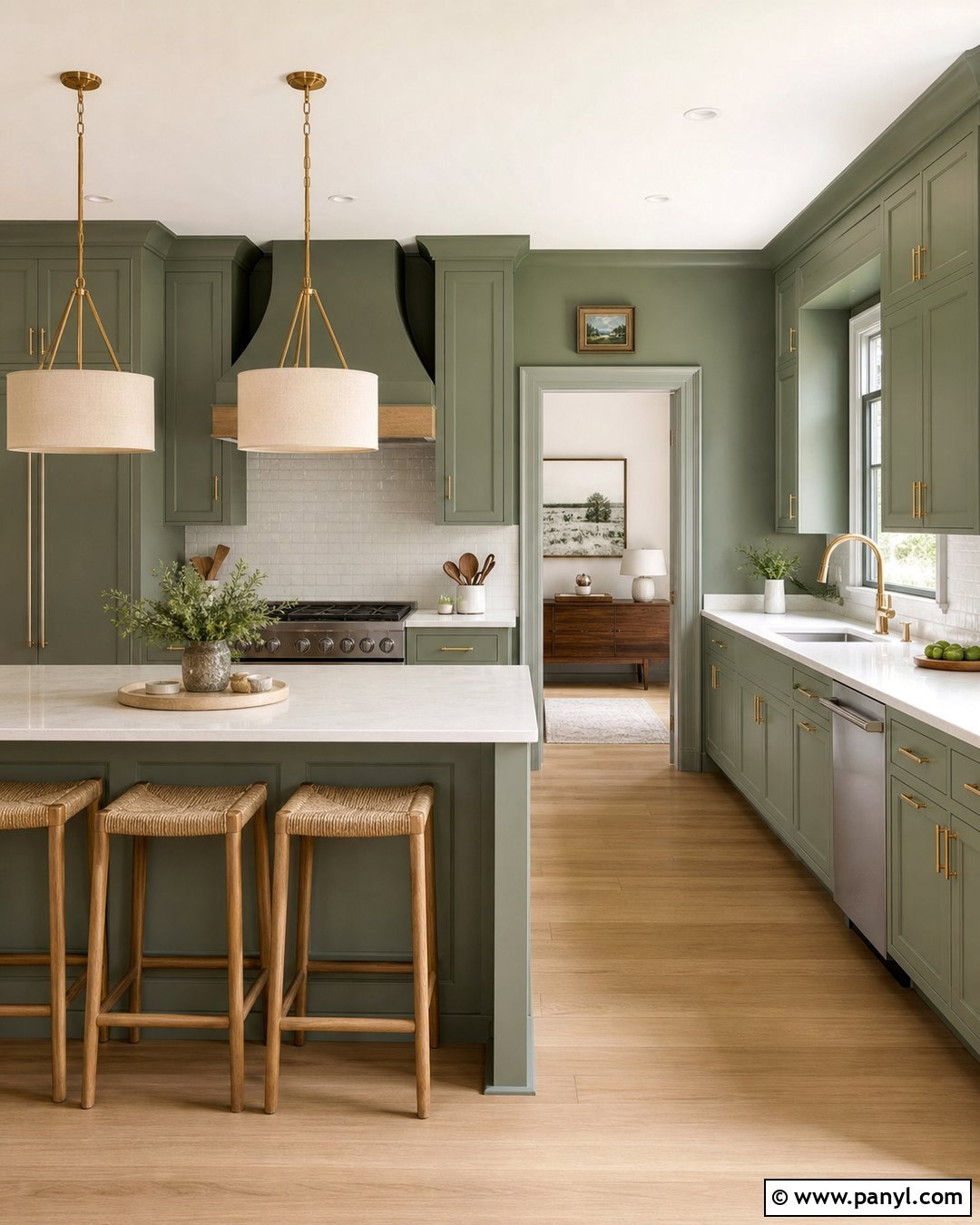
8. Sage Green Kitchen Cabinets With Dark Countertops
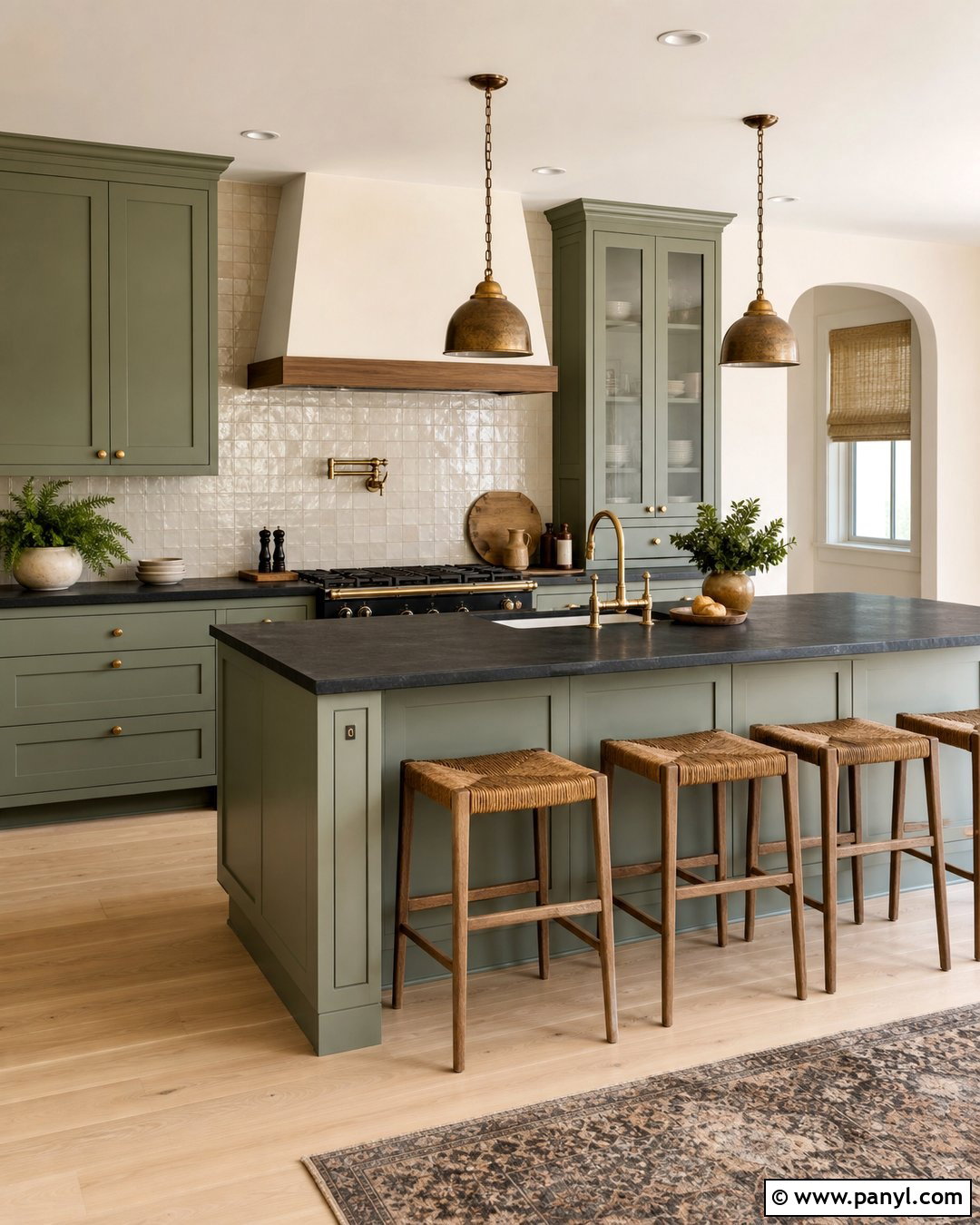
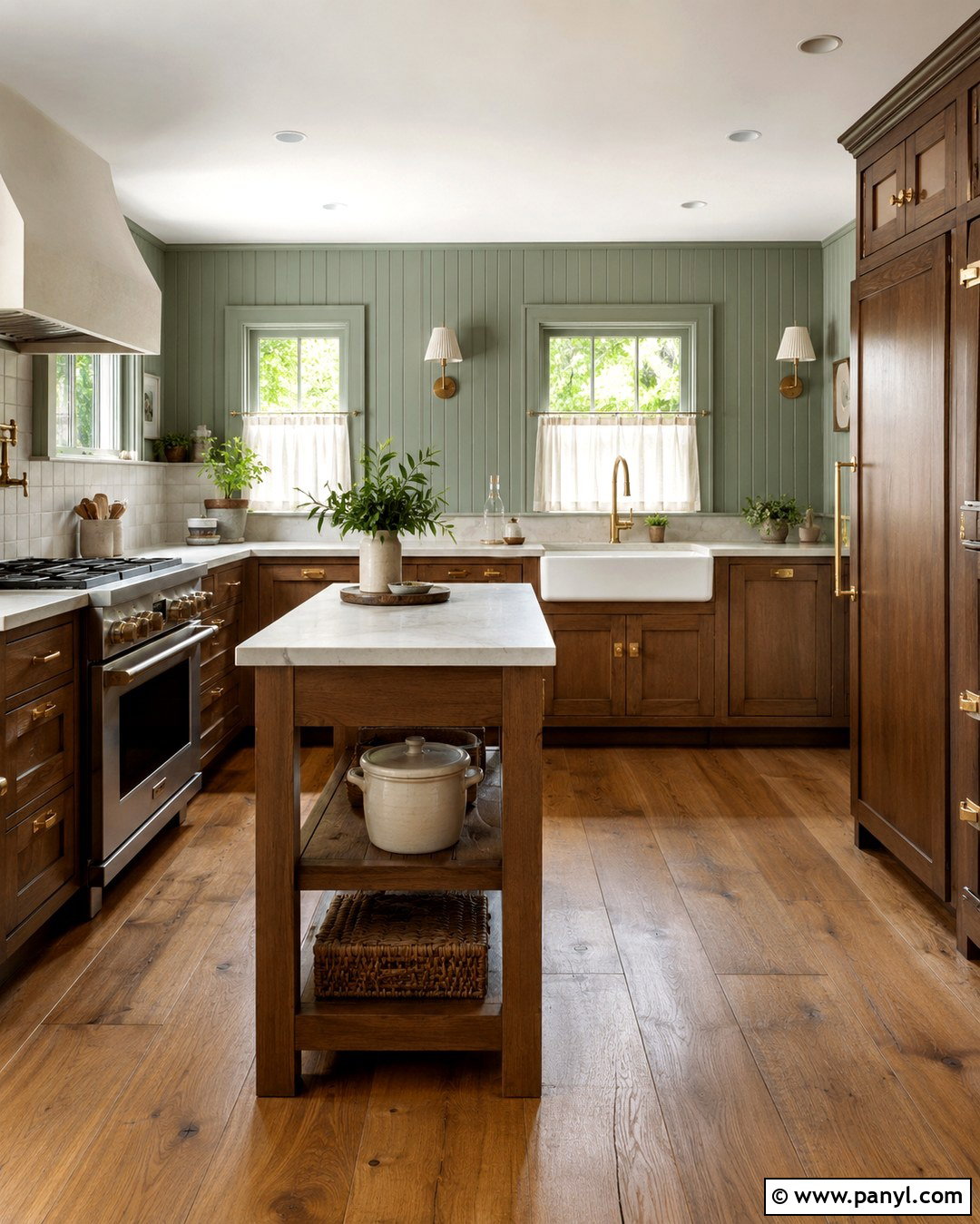
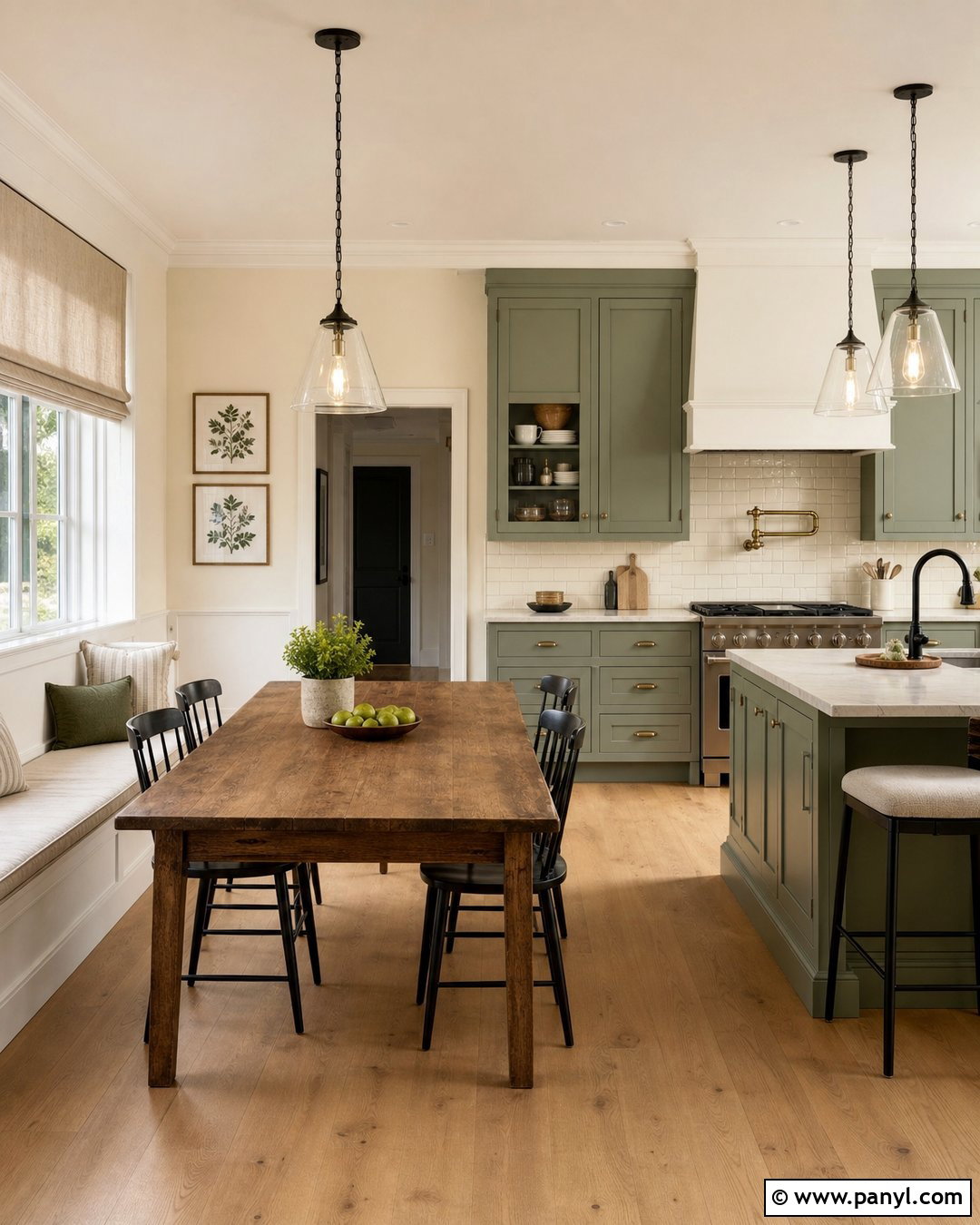
Sage green cabinets bring a natural softness to dark countertops, particularly black granite or soapstone with quiet veining. Select a muted sage with gray undertones so it reads as sophisticated rather than overly bright. Complete the walls behind the cabinets with creamy handmade tile, and use unlacquered brass hardware for warmth. White oak flooring, a matching range hood accent, and woven counter stools reinforce the organic palette. Keep the surrounding walls warm white to preserve an open feeling. Above the island, aged-brass pendants with white shades provide focused lighting. Add only a few terracotta pots and wood cutting boards. The finished kitchen feels comfortable, earthy, and coordinated, with the deep worktops grounding the softer green cabinetry.
9. Olive Green Kitchen Cabinets With Dark Countertops
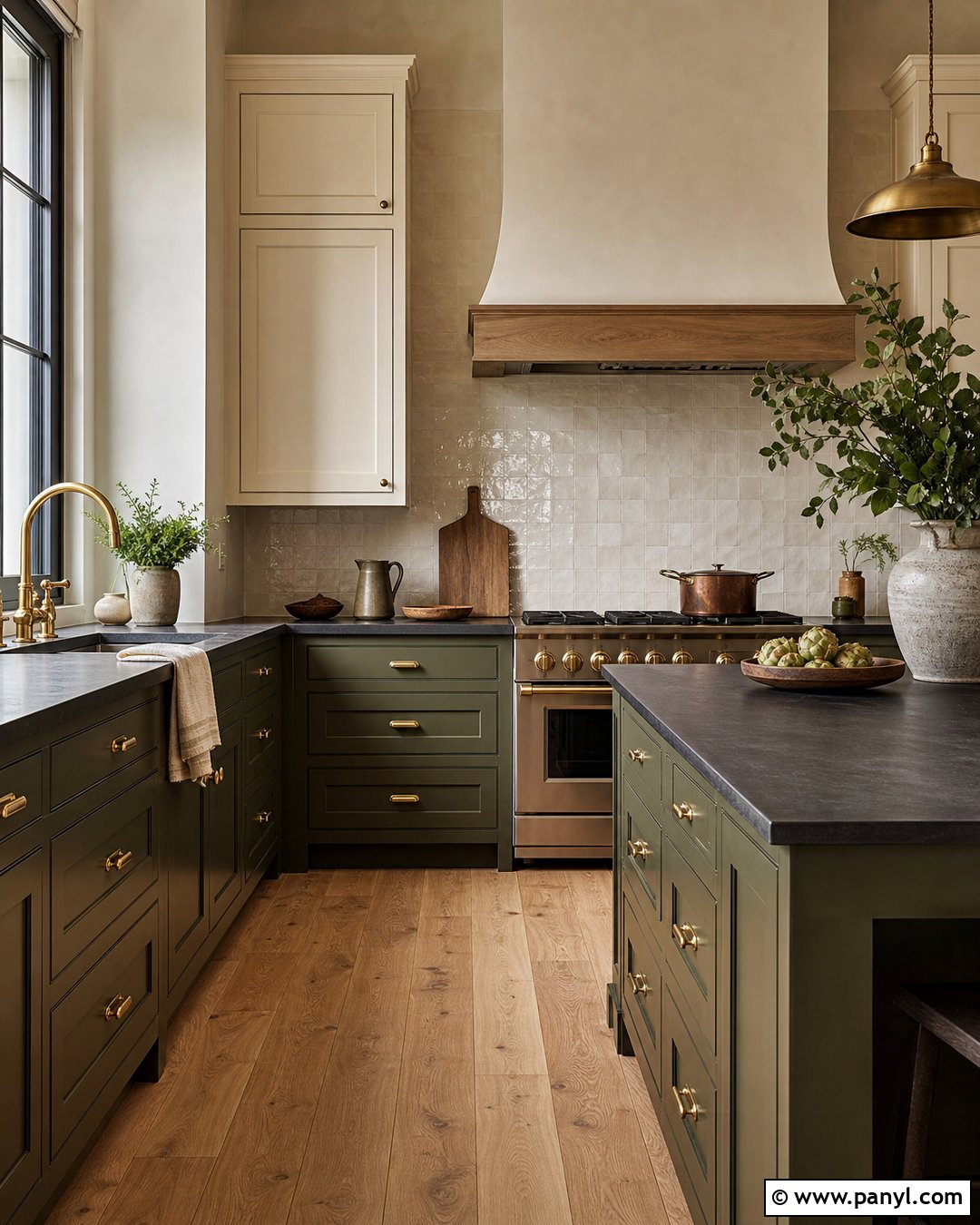
Olive green creates a richer, warmer kitchen than pale sage and looks especially effective with honed black countertops. Select a medium olive containing brown undertones, then balance its visual weight with warm white walls and a light backsplash. Cream zellige tile adds an imperfect reflective surface that prevents the room from feeling flat. Use aged brass handles and a brass faucet to highlight the warmth in the cabinet paint. Natural oak flooring and a wood-framed range hood continue the earthy character. If the kitchen receives limited daylight, reserve olive for the lower cabinets and island while painting the uppers cream. Dark olive is gaining attention as a grounded alternative to lighter green cabinetry. ()
10. Eucalyptus Green Kitchen Cabinets With Dark Countertops
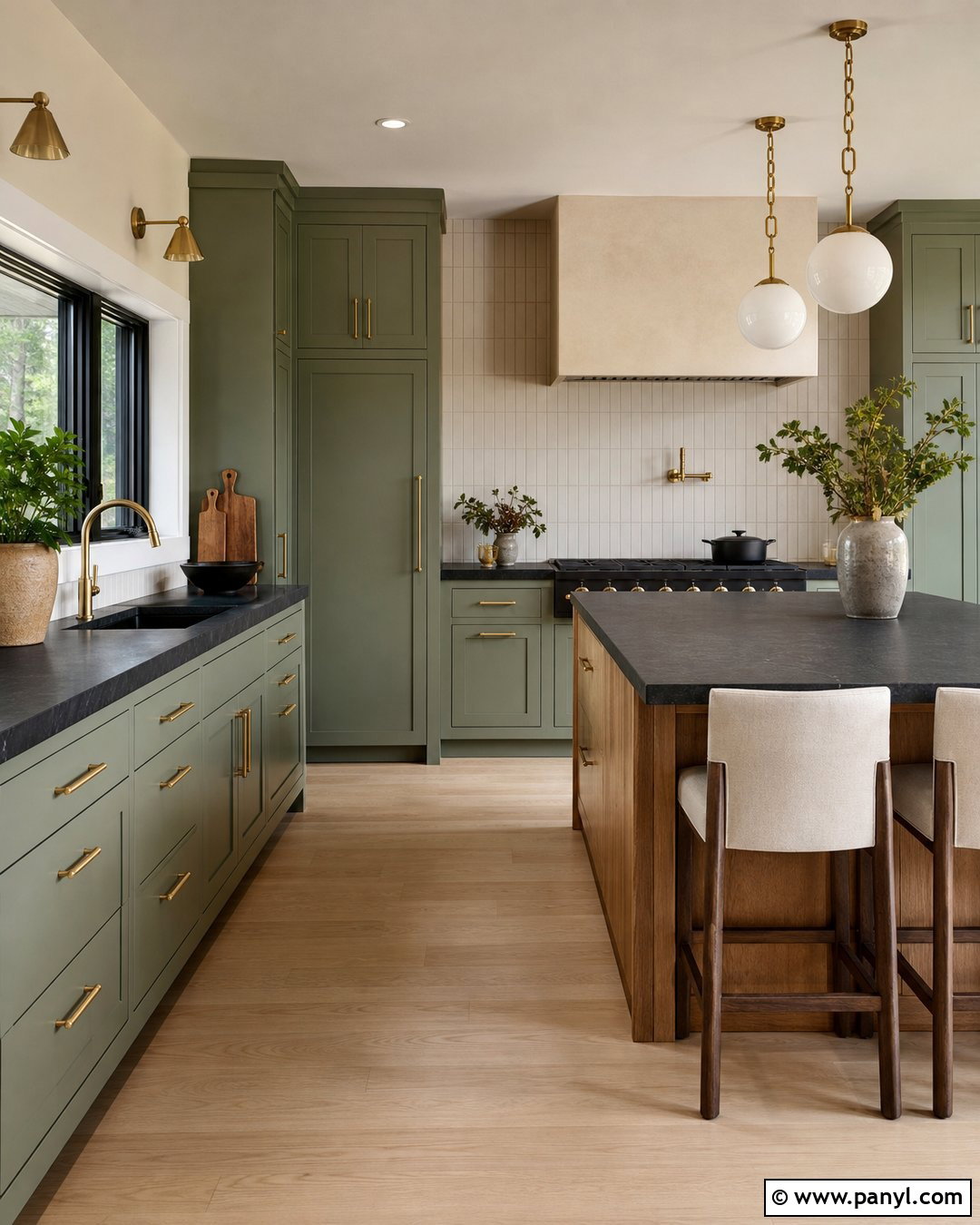
Eucalyptus green sits between sage and blue-green, making it a refreshing partner for dark charcoal quartz. Choose a softened shade with plenty of gray so the cabinets remain easy to coordinate. Pair them with an off-white vertical tile backsplash that visually raises the room and reflects light onto the countertops. Brushed brass pulls warm the green, while pale maple or white oak flooring keeps the overall palette fresh. Use creamy white paint on the walls and ceiling. A streamlined wood island, globe pendants, and light linen counter stools complete the modern organic look. Keep countertop accessories minimal and favor pale ceramics, wood, and clear glass. The result feels colorful and contemporary without becoming overly bold or theme-driven.
11. Dusty Blue Kitchen Cabinets With Dark Countertops
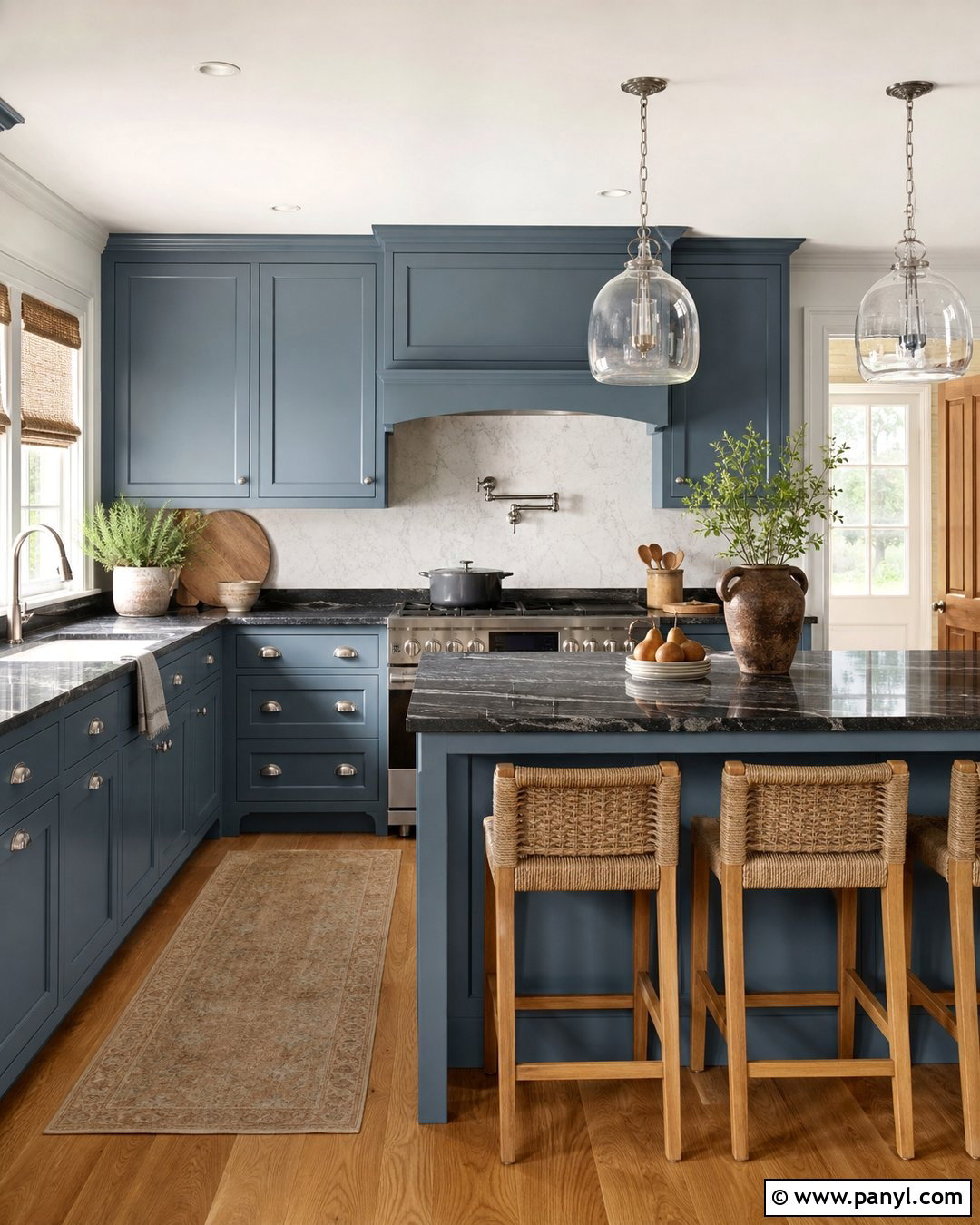
Dusty blue cabinetry introduces a calm, familiar color that works beautifully beside dark granite with gray, white, or blue mineral patterns. Select a desaturated mid-tone blue rather than a bright coastal shade. Use it on classic inset cabinets, then add polished nickel cup pulls and simple round knobs. A white marble-look backsplash lightens the work zone and echoes any pale movement in the countertop. Warm oak flooring prevents the blue from feeling chilly, while soft white walls keep the room balanced. Hang clear glass pendants over a compact island with matching blue cabinetry. Natural linen shades and woven counter stools add texture. This complete look suits cottage, transitional, and relaxed traditional kitchens without appearing heavily themed.
12. Navy Blue Kitchen Cabinets With Dark Countertops
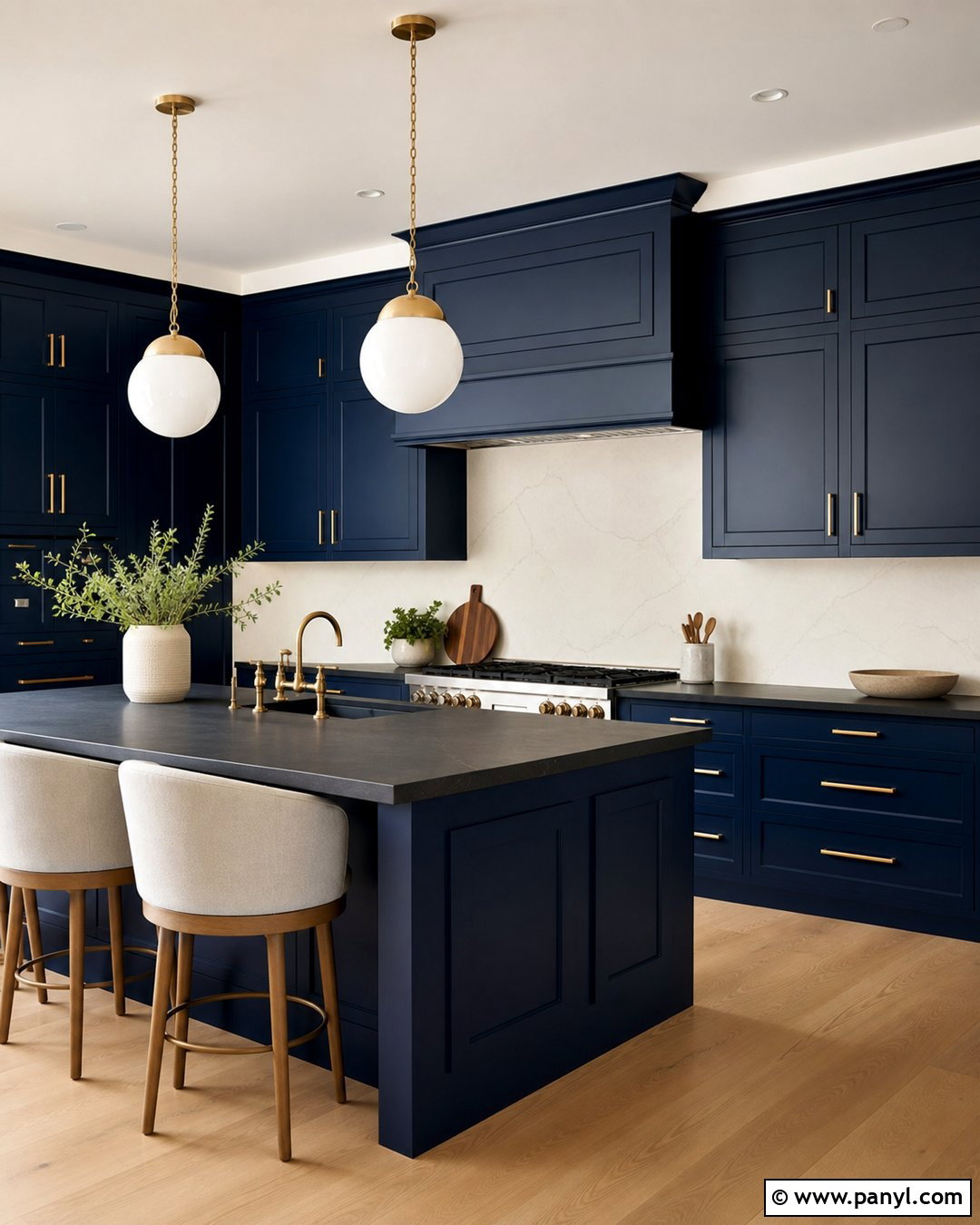
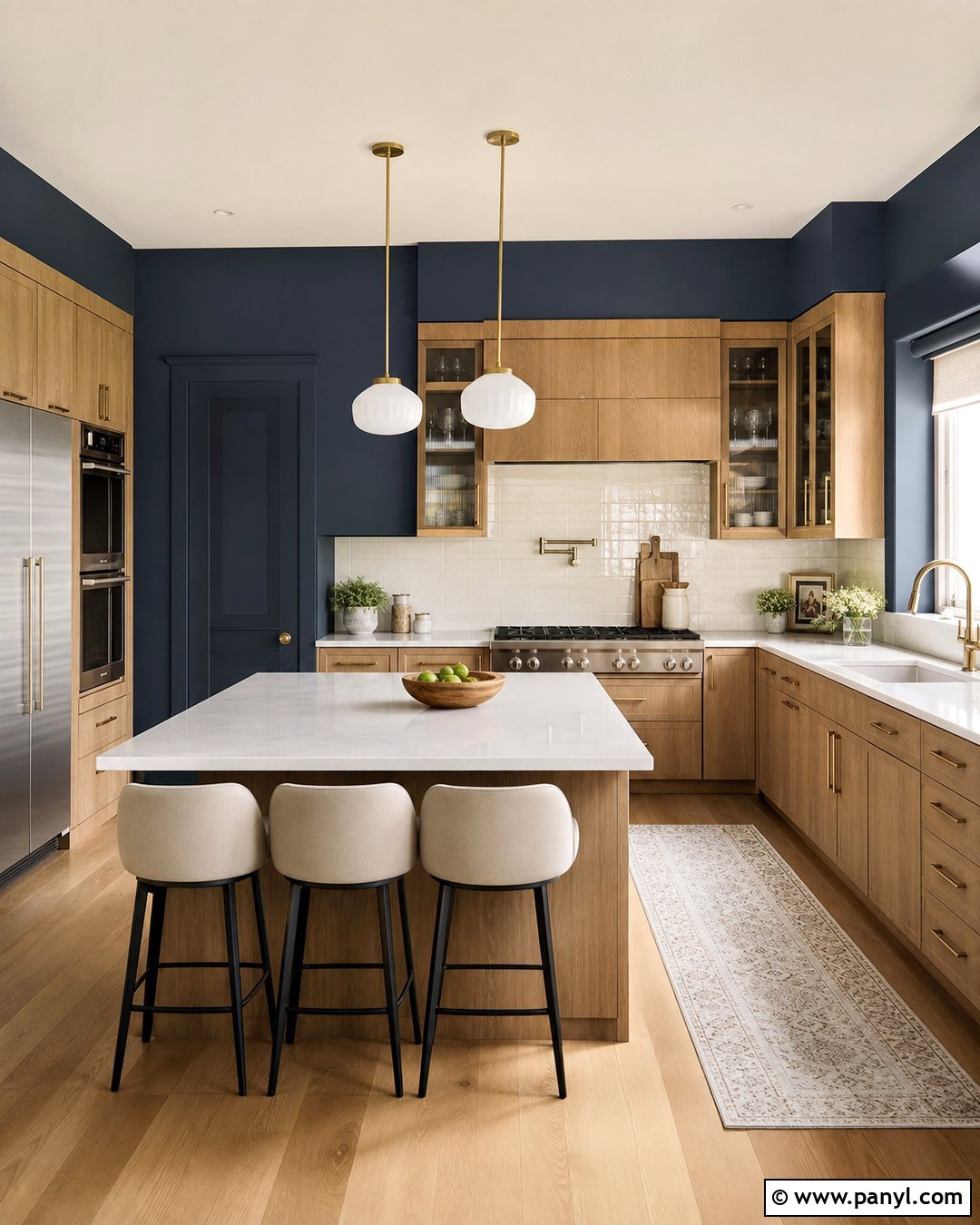
Navy cabinets and dark countertops create a bold combination, so lighter supporting surfaces are essential. Choose a navy with enough blue to remain distinct from black quartz or soapstone. Apply it to lower and upper cabinets in a kitchen with strong daylight, or limit it to the island and lowers in a smaller room. Install a full-height creamy white backsplash to form a bright visual break. Satin brass handles, a warm brass faucet, and milk-glass pendants bring definition to the deep colors. Select pale oak flooring and white walls with subtle warmth. Light upholstered stools soften the island. This layered kitchen feels dramatic and refined, yet it avoids heaviness through controlled contrast and generous reflective surfaces.
13. Muted Teal Kitchen Cabinets With Dark Countertops
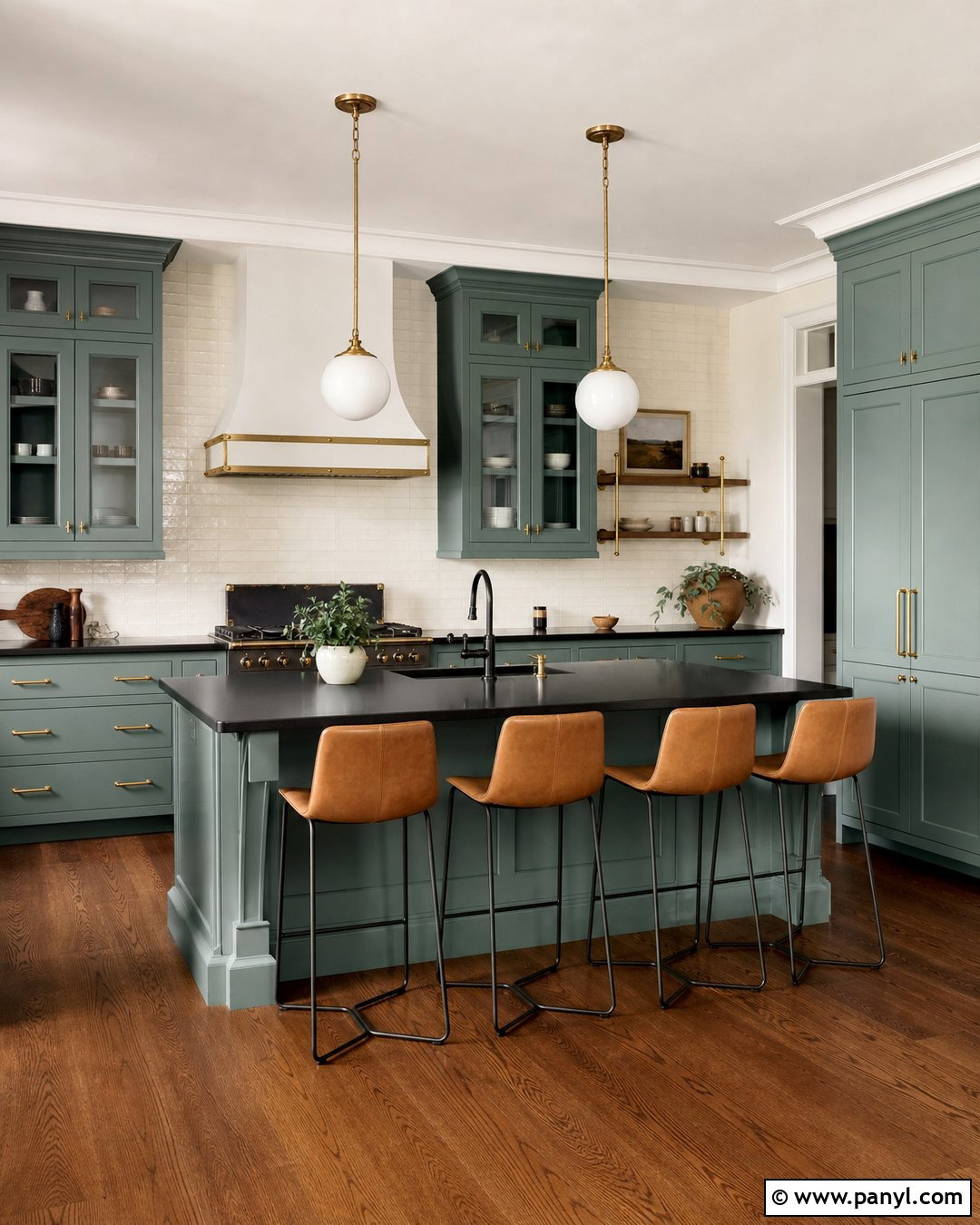
Muted teal cabinets make a confident statement beside dark countertops while remaining more livable than a vivid turquoise. Choose a deep blue-green with softened gray undertones and pair it with matte black quartz. A backsplash of warm white rectangular tile provides contrast without distracting from the cabinetry. Use brushed brass hardware to emphasize the green notes and add warmth to the otherwise cool palette. Medium-tone walnut flooring or wood-look tile grounds the room. Paint the walls a gentle ivory and install simple white globe pendants over the island. Leather-look counter stools in warm camel add another balanced accent. This complete scheme feels colorful, polished, and slightly vintage while still fitting a practical modern kitchen.
14. Terracotta Kitchen Cabinets With Dark Countertops
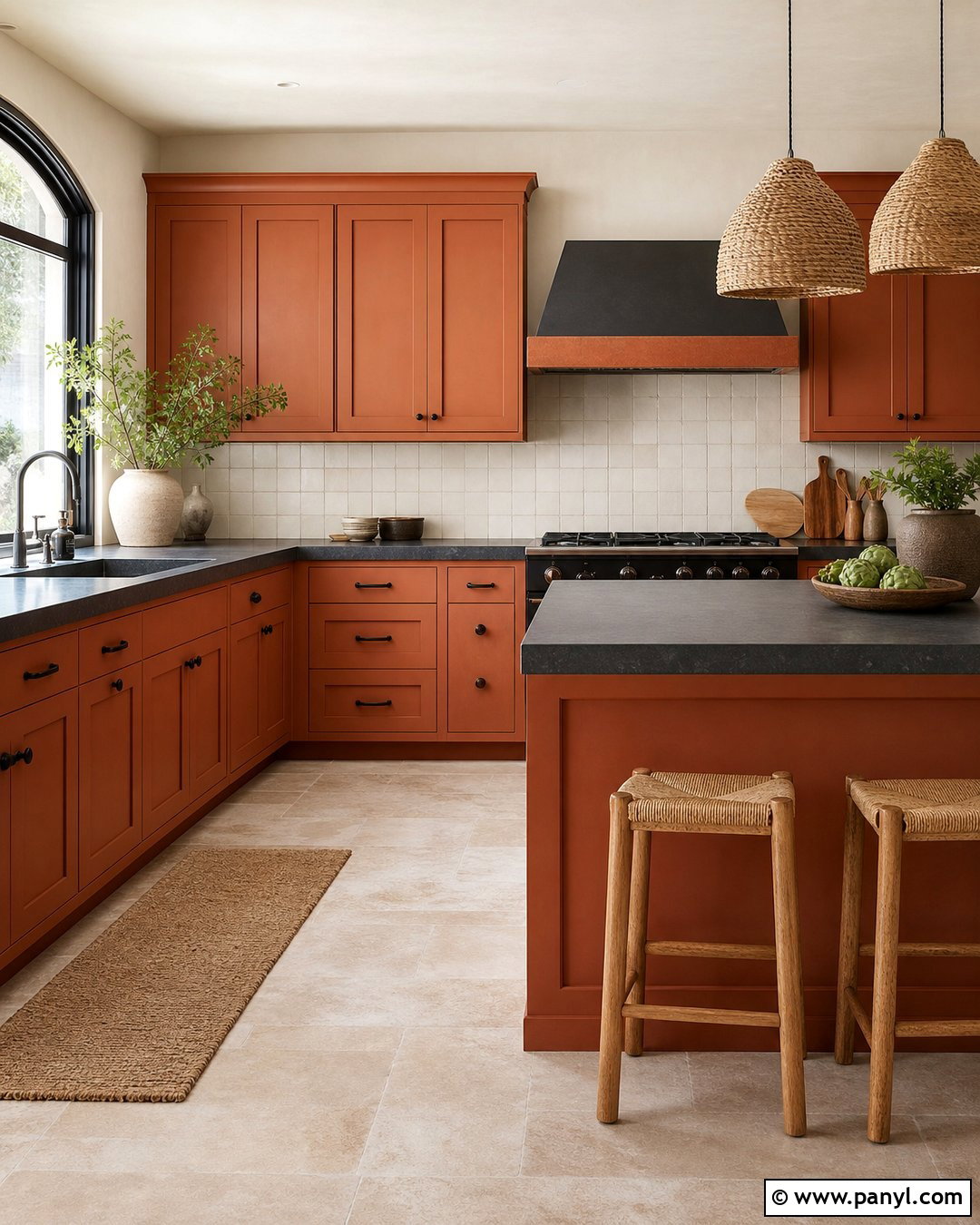
Terracotta cabinets bring sunbaked warmth to black granite, dark soapstone, or charcoal quartz. Select a muted clay-orange shade with brown undertones instead of a bright pumpkin color. Ground the cabinetry with matte black knobs and a matching faucet, then lighten the walls with creamy off-white paint. A simple ivory square-tile backsplash keeps the palette clean and lets the warm cabinet color lead. Choose pale limestone-look flooring or natural light oak for softness underfoot. Woven pendants and wood counter stools create additional texture without adding another strong color. A small amount of greenery offers a fresh contrast. This finished kitchen feels warm and expressive, with dark countertops providing the visual structure needed to control the earthy cabinet color.
15. Dusty Rose Kitchen Cabinets With Dark Countertops
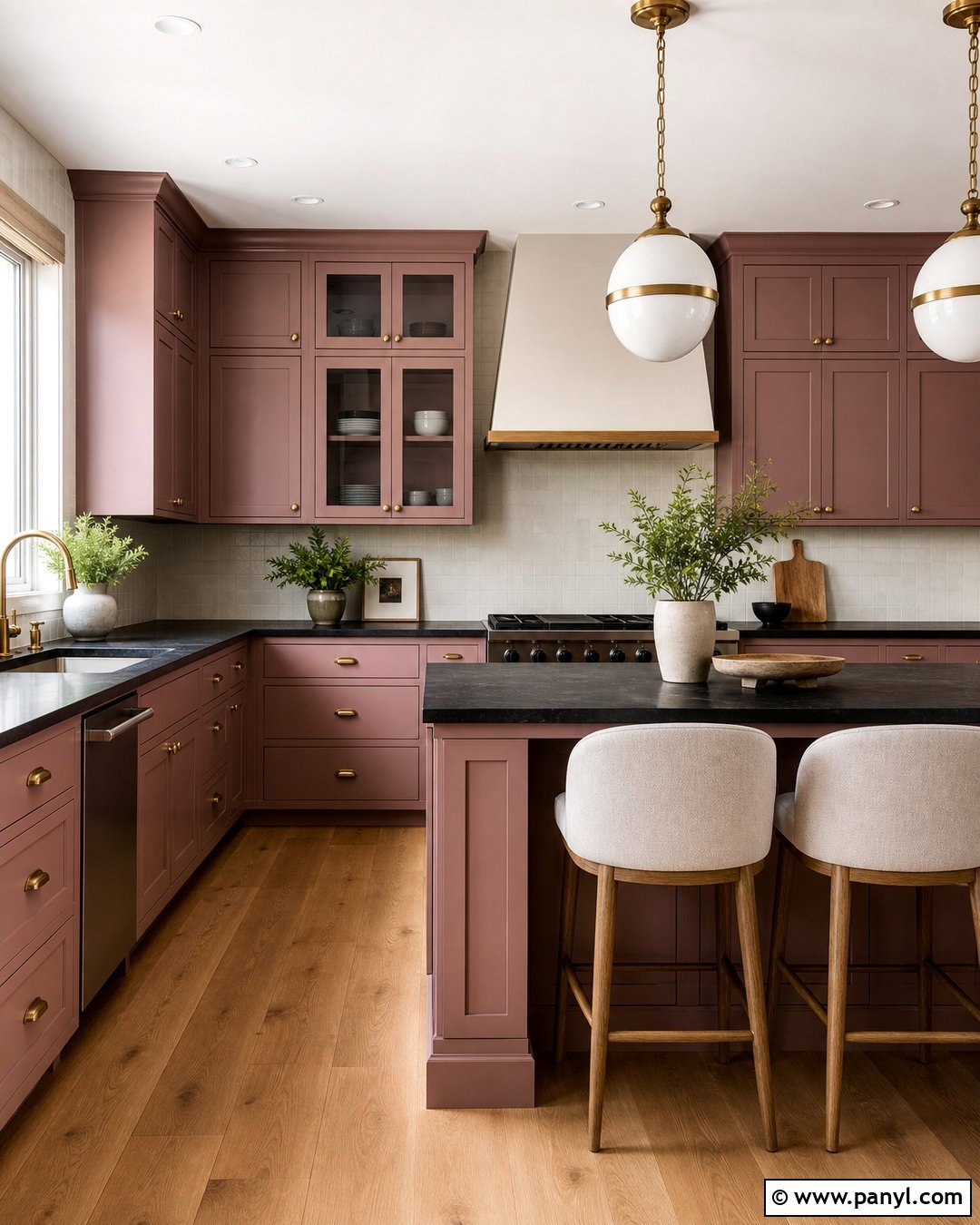
Dusty rose can create an elegant kitchen when the paint contains muted brown, gray, or clay undertones. Pair it with honed black granite or charcoal soapstone for a sophisticated contrast that feels softer than pink and white. Choose flat-panel or narrow Shaker doors to keep the color contemporary. Antique brass pulls and a matching faucet add warmth, while a pale cream backsplash prevents the design from looking overly dark. Use natural oak flooring and warm white walls for balance. Above the island, install simple opal-glass pendants rather than ornate fixtures. Finish with oatmeal counter stools and a few neutral ceramics. The full palette feels distinctive, grounded, and surprisingly adaptable in both compact and open kitchens.
16. Butter Yellow Kitchen Cabinets With Dark Countertops
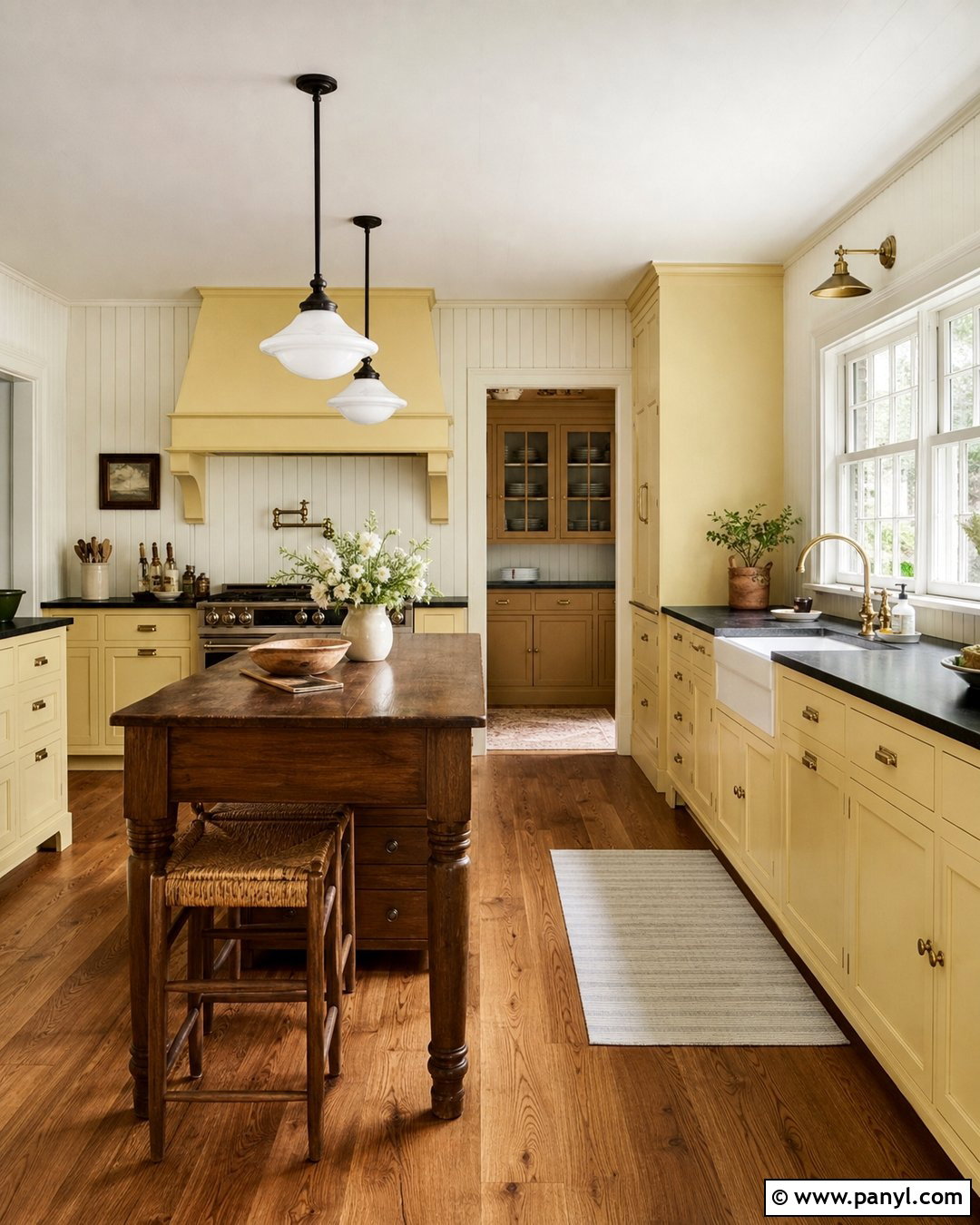
Soft butter yellow cabinets can brighten dark countertops without creating the sharpness of pure white. Choose a creamy, low-saturation yellow that appears warm in daylight but does not turn neon under artificial lighting. Black soapstone provides a classic anchor, while ivory beadboard or handmade subway tile creates a relaxed backsplash. Use antique brass latches and knobs to reinforce the warm traditional character. Medium oak flooring and a stained wood island add depth. Paint the walls a quiet cream that is lighter than the cabinets. Schoolhouse pendants with white glass shades complete the room. This cheerful kitchen feels collected and comfortable, combining gentle color, natural wood, and dark stone in a balanced cottage-inspired scheme.
17. Burgundy Kitchen Cabinets With Dark Countertops
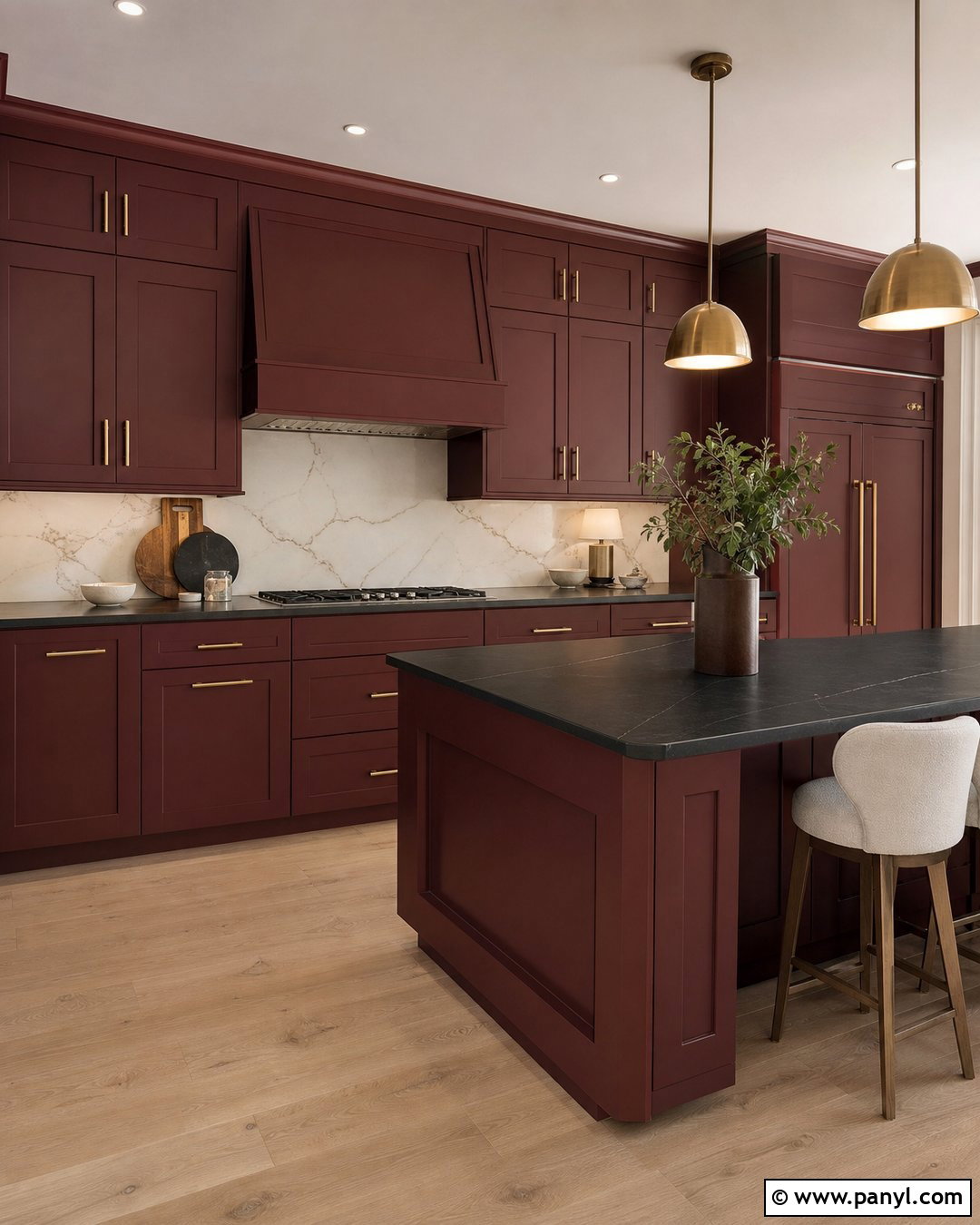
Deep burgundy cabinets can work with dark countertops when the surrounding materials provide softness and light. Select a muted wine-red shade with brown undertones, avoiding anything too bright or purple. Pair it with honed black quartz and a full-height backsplash in creamy marble-look porcelain. Aged brass handles, a brass pot filler, and warm metal pendants highlight the richness of the cabinet color. Pale oak flooring creates necessary contrast below. Keep the walls soft ivory and limit decorative colors to cream, wood, and muted green. In a smaller kitchen, apply burgundy to the island and lower cabinets while keeping the uppers warm white. The completed design feels intimate, tailored, and dramatic without losing practical everyday appeal.
18. Cocoa Brown Kitchen Cabinets With Dark Countertops
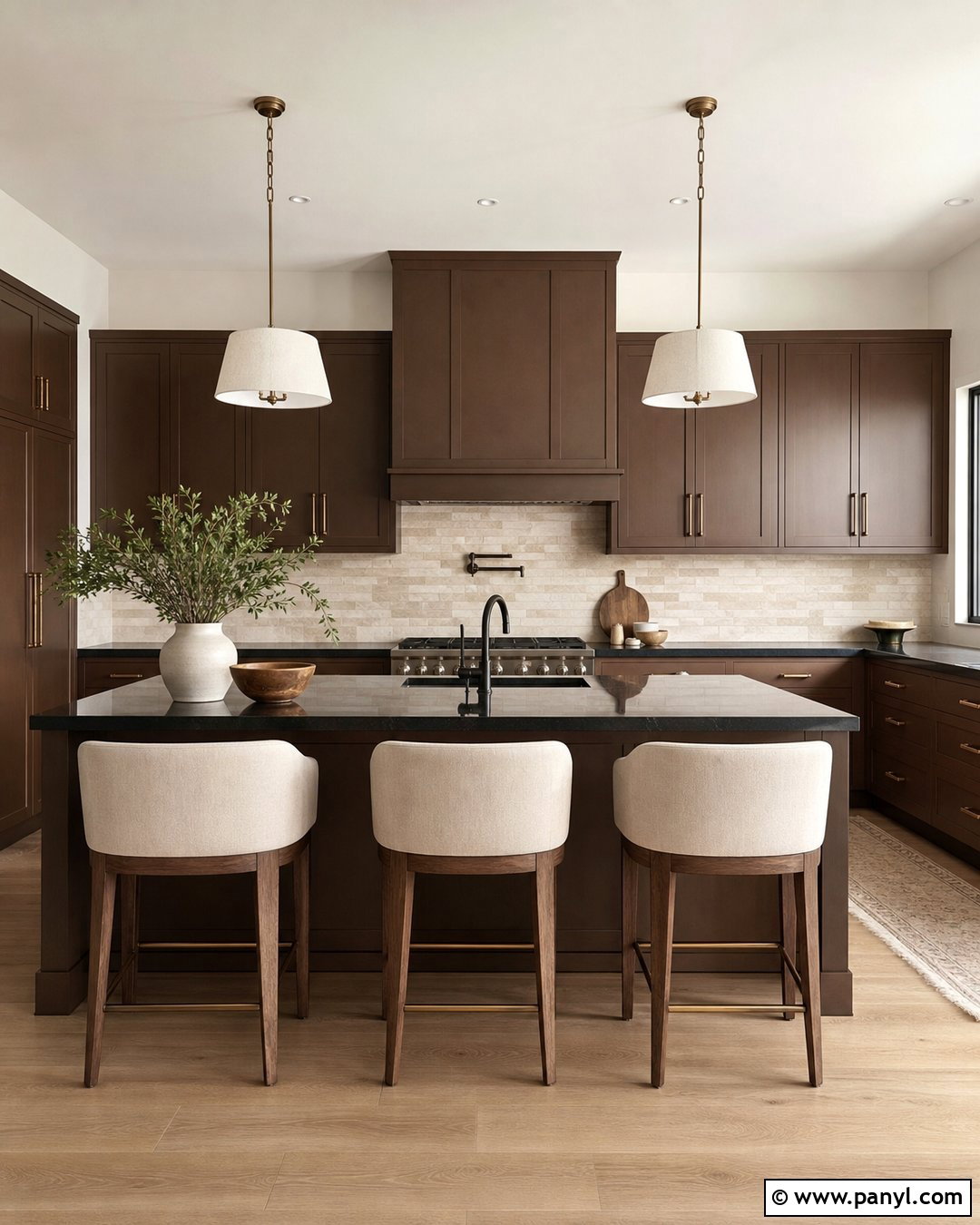
Cocoa brown paint gives cabinets the warmth of stained wood while providing a more consistent, contemporary finish. Choose a medium brown with subtle red or gray undertones so it remains visible against black granite or dark quartz. Pair the cabinets with a creamy travertine-look backsplash and warm white walls. Aged bronze pulls blend into the cabinetry, creating a quiet, furniture-like appearance. Pale oak flooring prevents the brown surfaces from overwhelming the room. Over the island, use large linen-shade pendants that spread clear, even light. Upholstered stools in oatmeal fabric and a few cream ceramics finish the palette. This layered brown kitchen feels grounded and welcoming, particularly in open homes with warm neutral furnishings nearby.
19. Charcoal Kitchen Cabinets With Dark Countertops
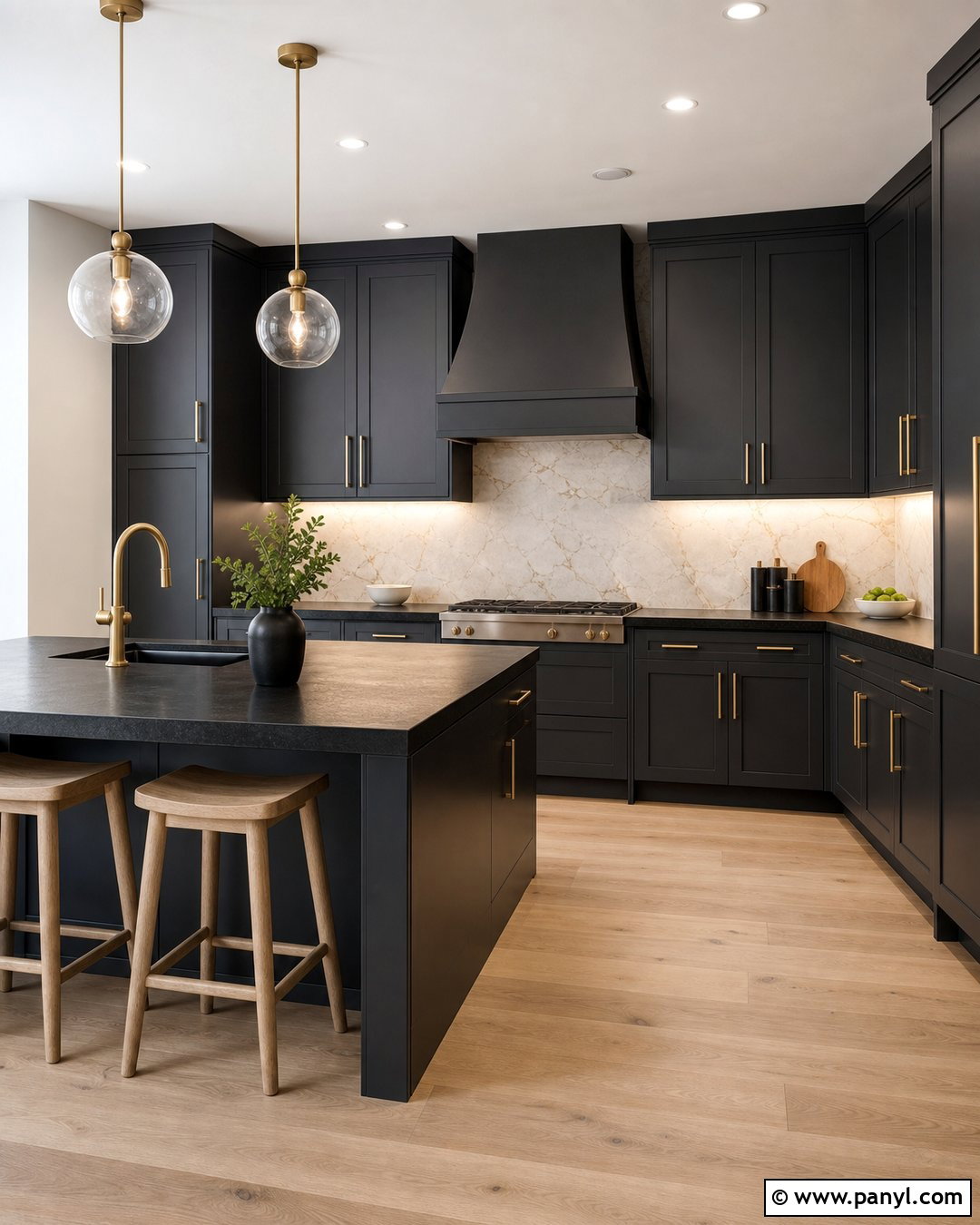
Charcoal cabinets paired with dark countertops create a tonal kitchen rather than a high-contrast one. For clear separation, choose cabinetry that is slightly lighter or warmer than the countertop. A charcoal paint with brown undertones works well against solid black quartz. Run a creamy veined backsplash from the counters to the upper cabinets to introduce brightness and movement. Use brushed brass handles, a matching faucet, and pale oak flooring to warm the dark surfaces. Soft white walls and strong undercabinet lighting are important for visual balance. Keep the island stools light and simple. The final kitchen feels modern and architectural, with the light backsplash, flooring, and metallic details preventing the charcoal palette from appearing flat or enclosed.
20. Soft Black Kitchen Cabinets With Dark Countertops
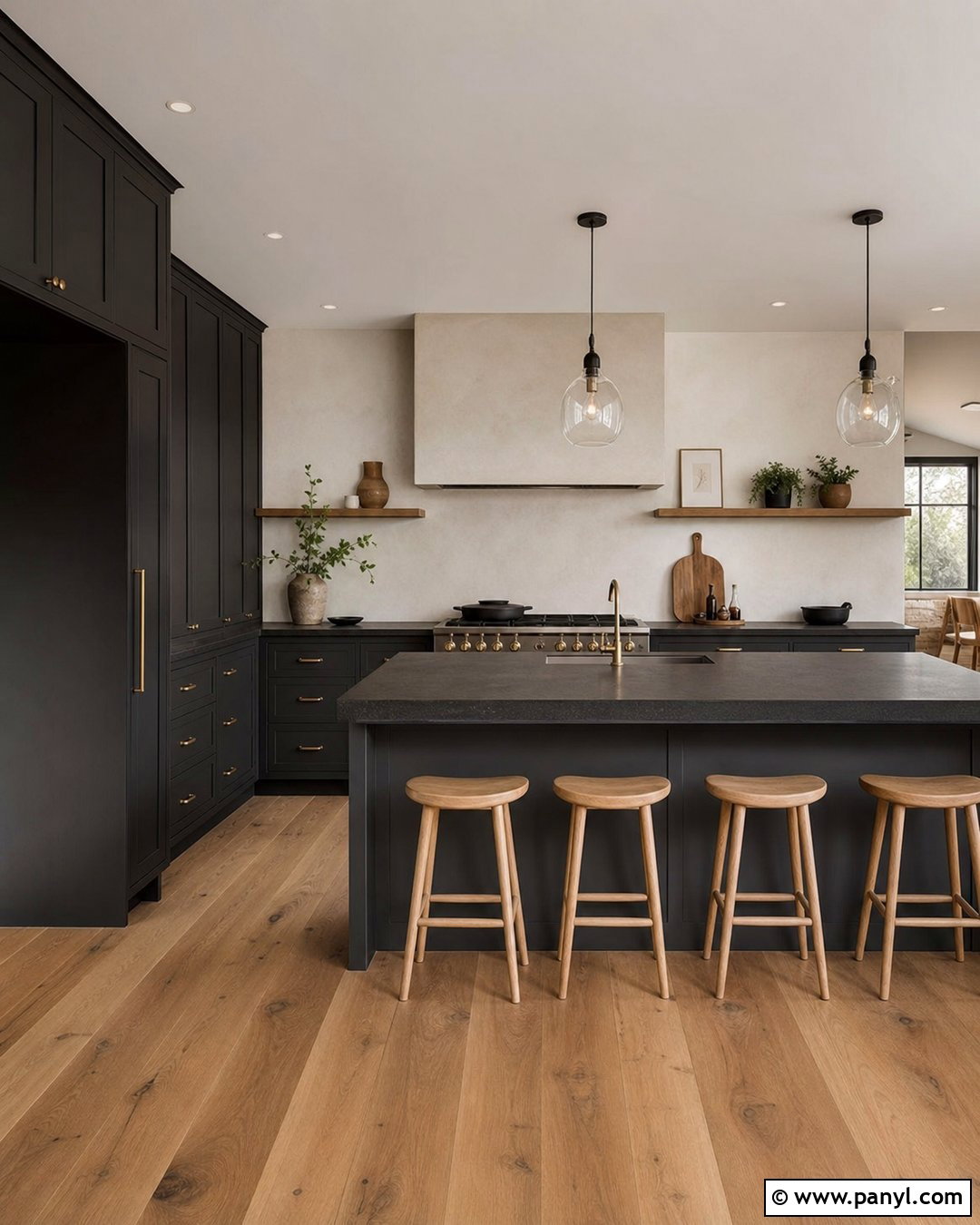
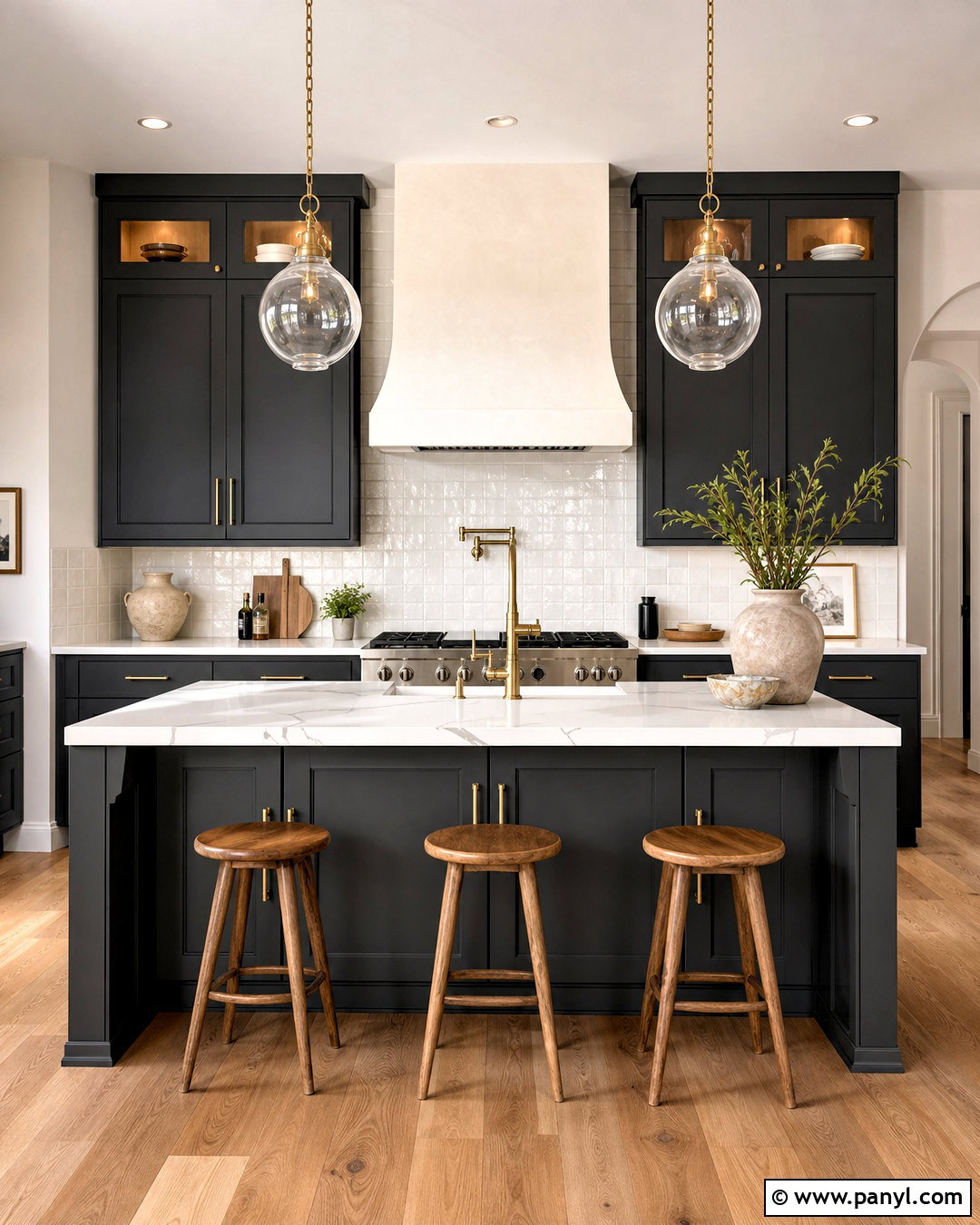
Soft black cabinets can create a striking monochromatic kitchen when texture separates the surfaces. Choose a near-black paint with subtle warm or green undertones and pair it with honed black soapstone or leathered granite. Use a light plaster-look backsplash to break up the darker finishes without introducing a busy pattern. Unlacquered brass hardware creates warm highlights across the cabinet fronts. Install wide-plank natural oak flooring and paint the walls a creamy off-white. Large windows, clear pendants, and undercabinet lighting keep the room functional and bright. Finish with pale wood stools and restrained ceramic accessories. The completed kitchen feels confident and sophisticated, proving that dark cabinets and dark countertops can work together when lighting and material contrast are carefully planned.
Conclusion:
The best cabinet color should connect naturally with the undertones, pattern, and finish of your existing work surface. These 20 Kitchen Cabinet Paint Colors With Dark Countertops show that your options extend far beyond basic white. Cream, greige, sage, dusty blue, terracotta, and even soft black can create a balanced kitchen when the other finishes are chosen carefully. Coordinate the backsplash, flooring, hardware, walls, and lighting as one complete palette rather than making each decision separately. Test every paint color directly beside the countertop and view it throughout the day. For a durable result, use a cabinet-appropriate coating in a satin or semi-gloss finish and follow the manufacturer’s preparation instructions. ()

Related Ideas and Inspiration:
Leave a Reply