
If you are comparing **20 benjamin moore kitchen cabinet colors**, look beyond the cabinet doors and picture the entire kitchen. Countertops, backsplash tile, flooring, hardware, lighting, and natural light all affect how a color appears. Crisp whites can create a clean backdrop, while greige, sage, navy, brown, and black bring more depth. The most successful palette also connects with permanent finishes you do not plan to replace. Benjamin Moore recommends considering existing surfaces and their undertones before selecting a cabinet color. Satin and semi-gloss finishes are practical choices that also highlight millwork. Always sample the paint on a movable door or large board before committing. Use the complete kitchen schemes below to compare **20 benjamin moore kitchen cabinet colors**. ()
1. Benjamin Moore Chantilly Lace Kitchen Cabinets
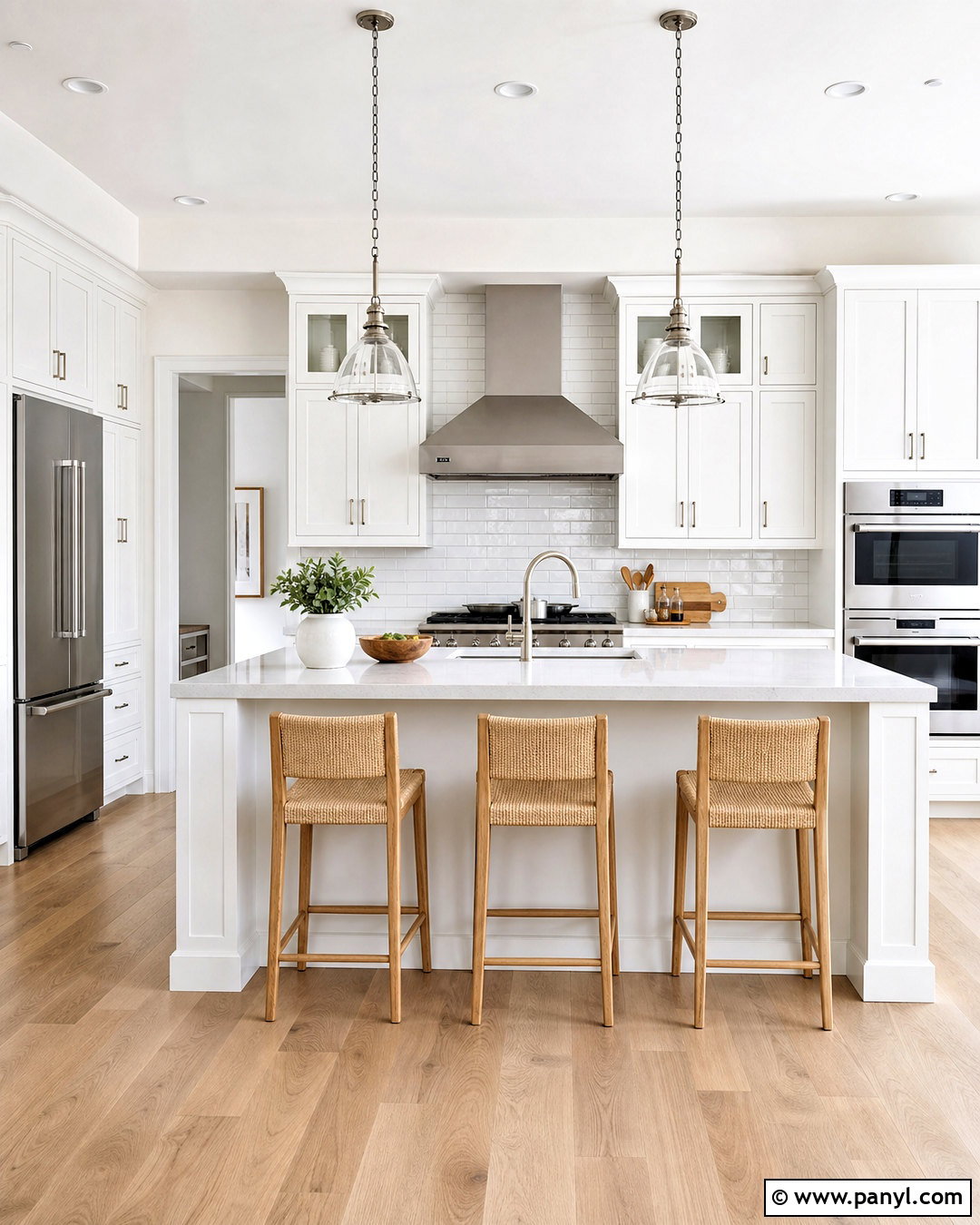
Chantilly Lace OC-65 creates clean white cabinets with a crisp, fresh character. Use it in a streamlined kitchen with simple Shaker doors, pale oak flooring, and white quartz countertops containing minimal veining. A glossy white subway tile backsplash keeps the room bright without competing with the cabinetry. Add brushed nickel pulls, stainless steel appliances, and clear glass pendants for a balanced modern finish. Because this white is especially clean, it works best beside cool or neutral fixed surfaces rather than heavily cream materials. Warm the complete look with woven counter stools, oak cutting boards, and a few green plants. Paint the walls a gentle pale gray so the cabinets remain visible instead of disappearing into an all-white background. ()
2. Benjamin Moore White Dove Kitchen Cabinets
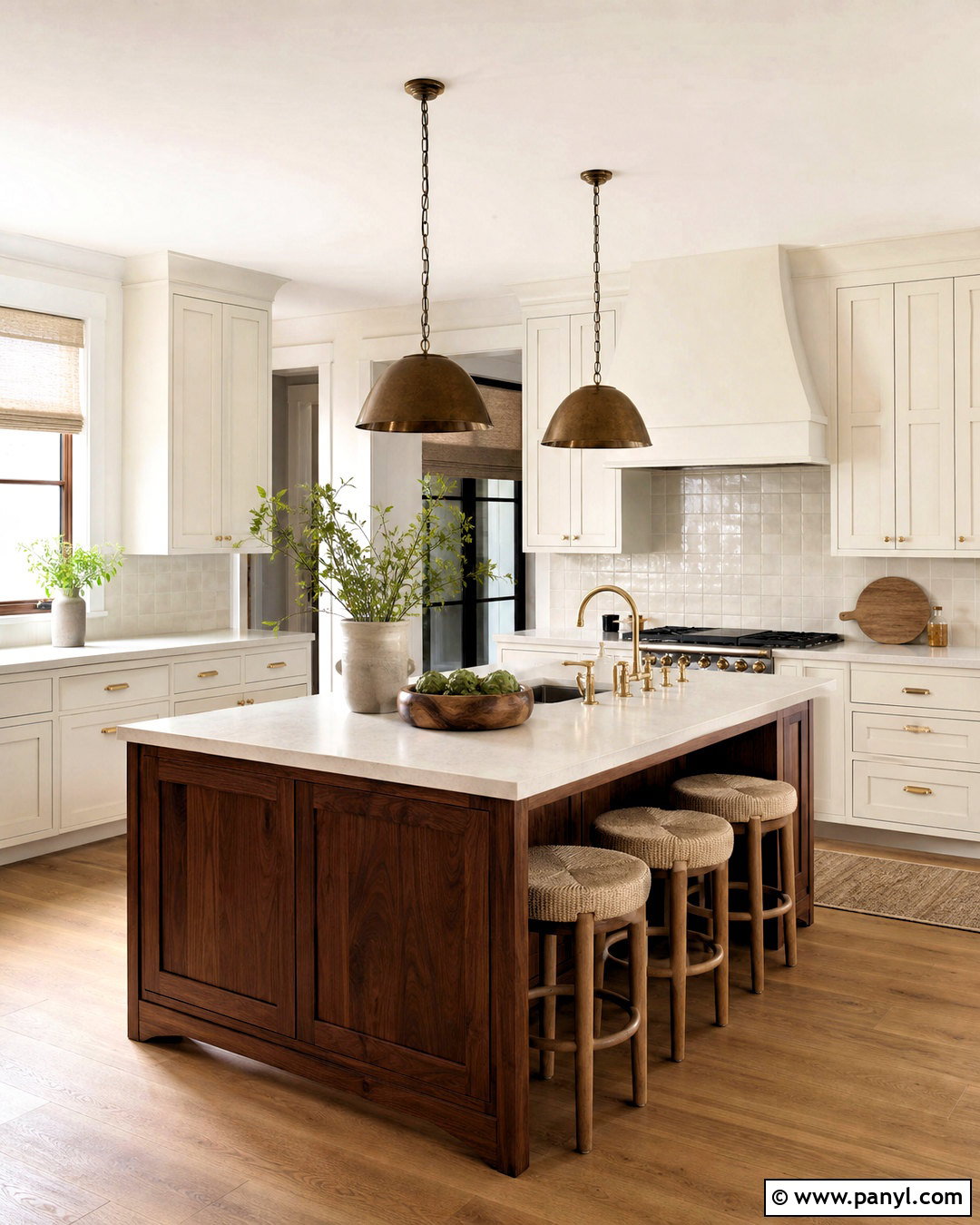
White Dove OC-17 gives cabinetry a soft white finish that feels warmer than a stark architectural white. Build a welcoming transitional kitchen around it with creamy quartz counters, handmade ivory backsplash tile, and medium-tone white oak flooring. Unlacquered brass knobs and bridge faucets enhance the warmth, while aged bronze pendants add definition above the island. Choose Shaker cabinet fronts with modest crown molding to suit the color’s classic personality. Walls painted in a light warm greige will create subtle separation without making the cabinets look yellow. For contrast, add a walnut island or dark wood stools rather than introducing another painted color. This complete palette feels comfortable, layered, and practical in kitchens receiving either soft northern light or brighter afternoon sunshine. ()
3. Benjamin Moore Simply White Kitchen Cabinets
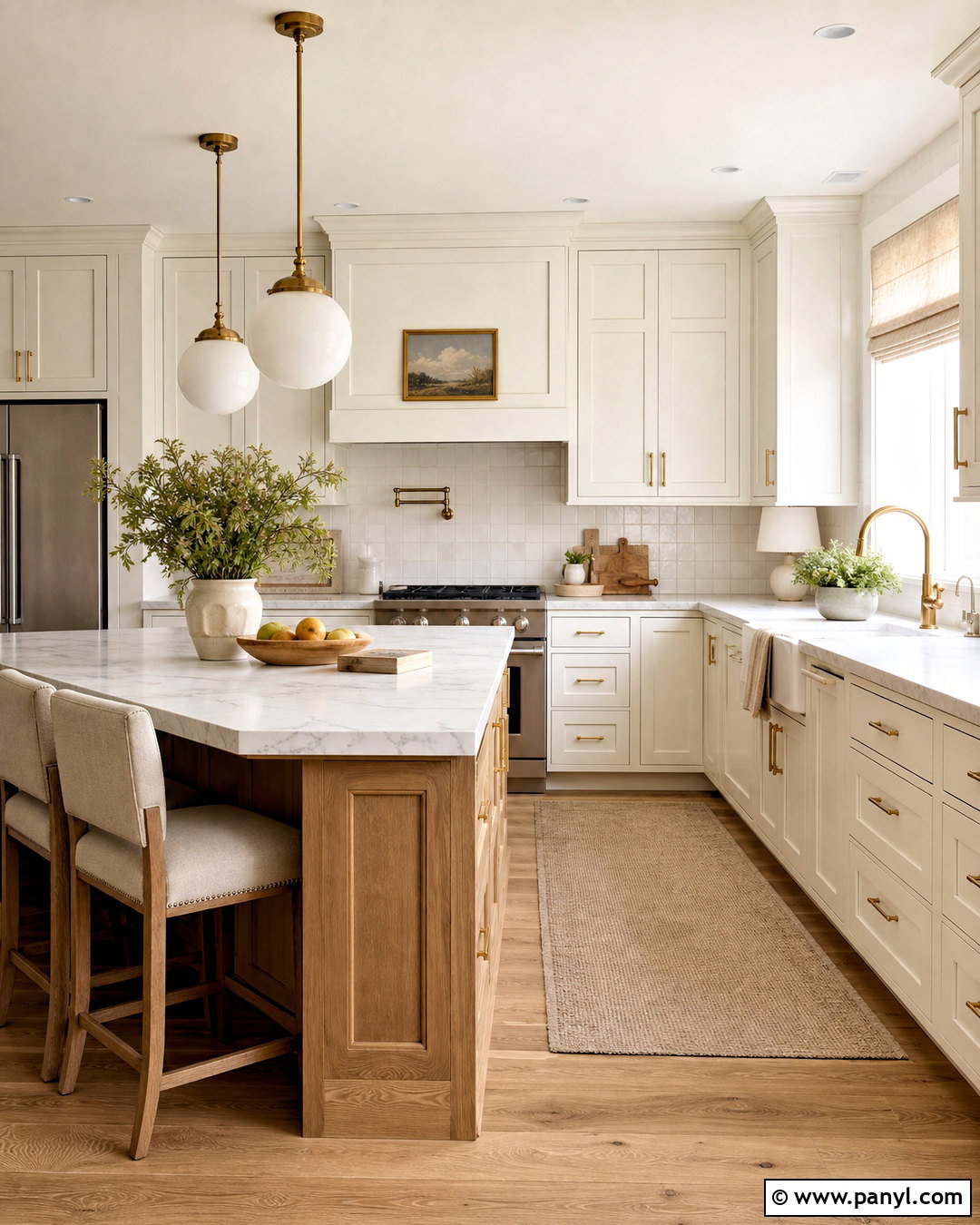
Simply White OC-117 is a gently warm white that suits cheerful kitchens with natural materials. Pair the cabinets with light oak floors, lightly veined marble-look quartz, and a backsplash made from creamy square tiles. Satin brass pulls, globe pendants, and a warm wood dining table keep the room from feeling overly plain. This color works particularly well on inset or Shaker cabinetry because the soft warmth highlights traditional details without appearing heavy. Continue Simply White on the trim, but use a pale beige or muted tan on the walls for quiet contrast. A small island in natural oak can become the room’s center while maintaining the airy palette. Finish with linen shades, ceramic accessories, and simple greenery for a relaxed, lived-in kitchen. ()
4. Benjamin Moore Cloud White Kitchen Cabinets
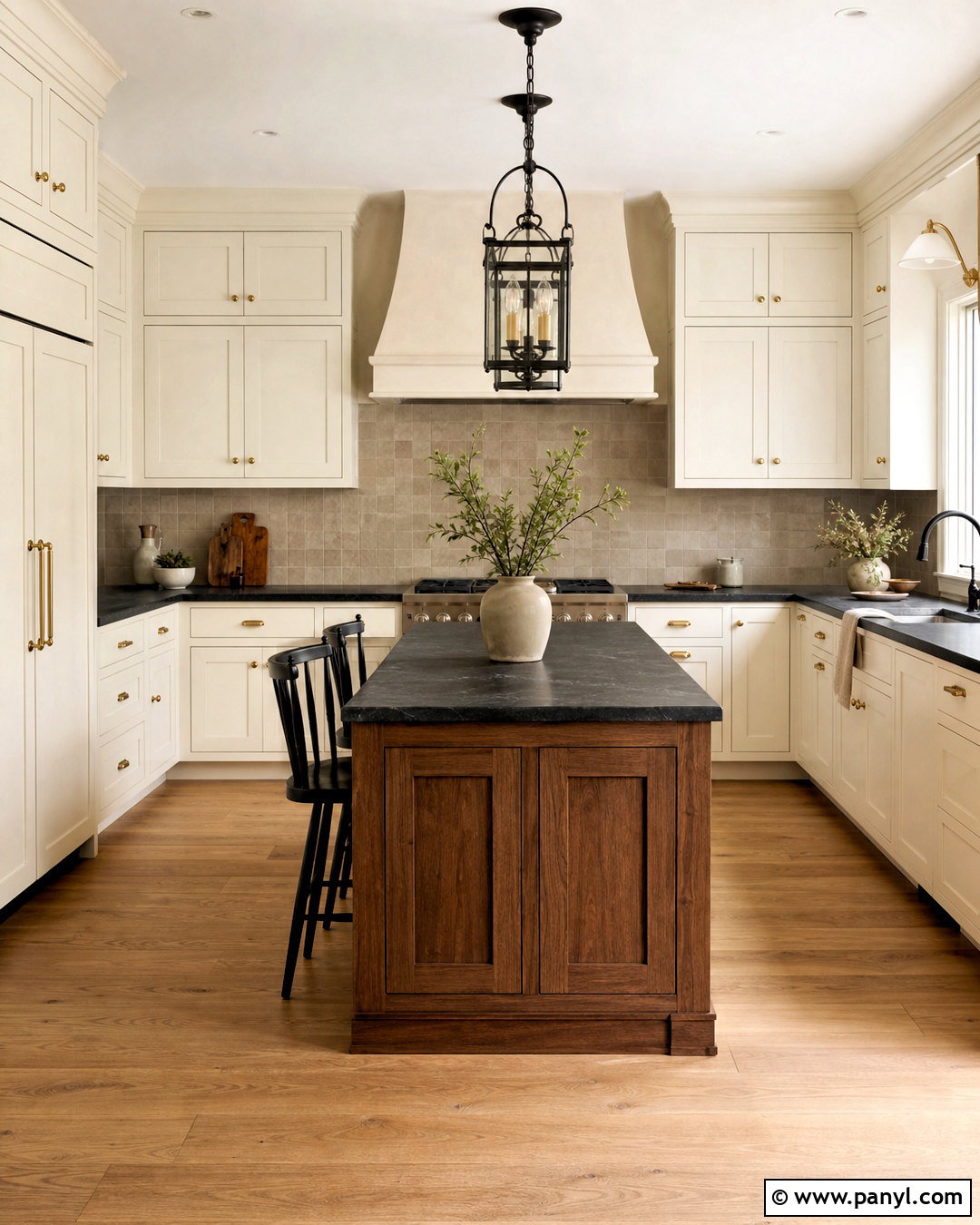
Cloud White CC-40 produces a creamy cabinet look that feels polished yet approachable. Design the complete kitchen with soapstone-look countertops, warm taupe backsplash tile, and honey-toned oak flooring. Traditional cabinet doors, small brass knobs, and a substantial plaster range hood complement the color’s softer quality. Use a dark bronze faucet and matching lantern pendants to introduce definition against the light cabinetry. Cloud White can pair beautifully with warm stone, beige veining, and wood finishes that might clash with a colder white. Paint the walls a restrained mushroom neutral to maintain a layered, tonal effect. A medium walnut island gives the pale cabinets a strong anchor, while woven stools and off-white linen shades add texture without disrupting the calm, timeless color scheme. ()
5. Benjamin Moore Seapearl Kitchen Cabinets
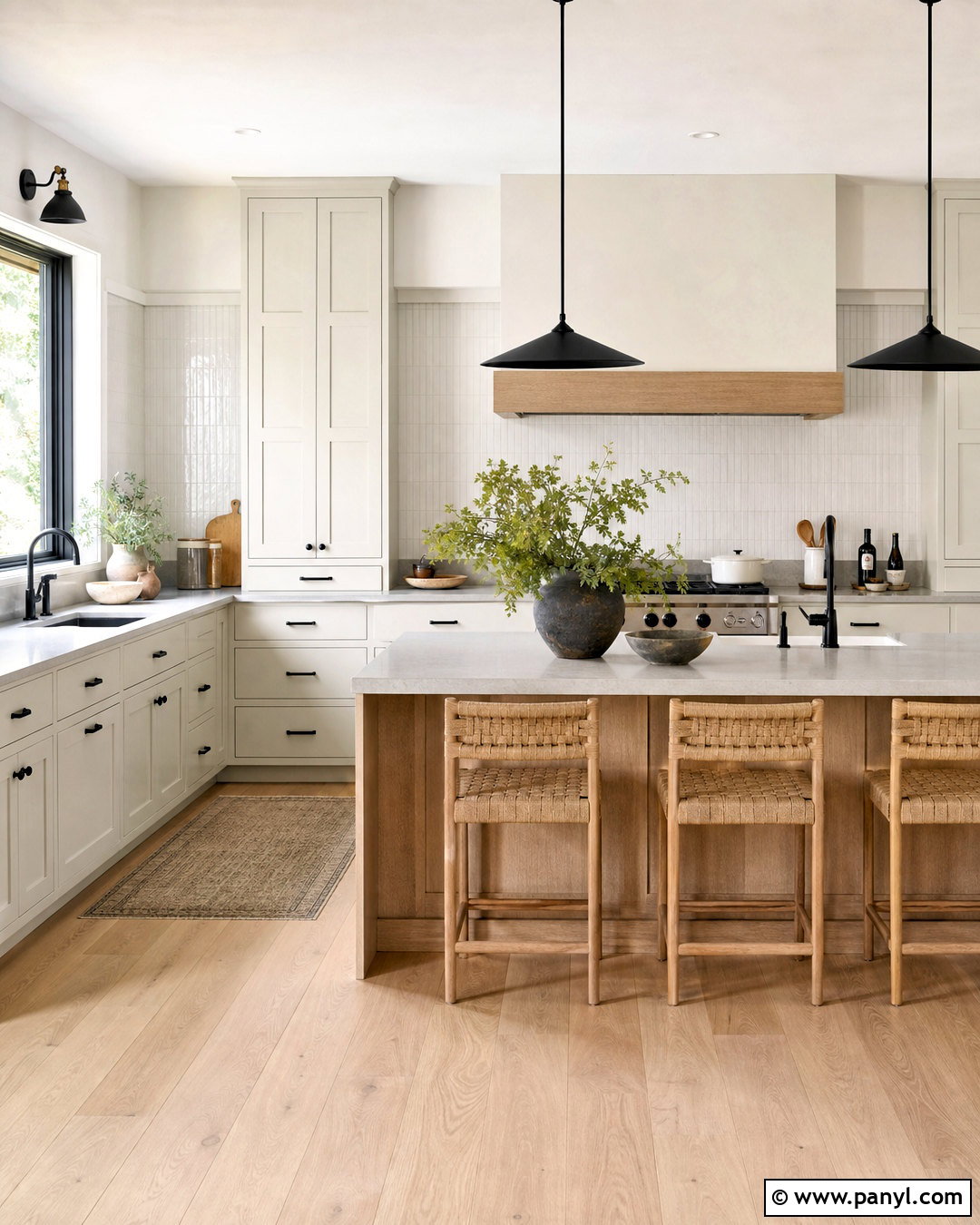
Seapearl OC-19 offers an off-white cabinet color with a gentle gray cast, making it useful in kitchens that need softness without obvious creaminess. Pair it with honed light-gray quartz counters, elongated white backsplash tile, and wide-plank white oak floors. Matte black hardware creates a clear outline on Shaker doors, while black-framed pendants repeat that contrast over the island. Keep walls slightly lighter and warmer so Seapearl reads as an intentional cabinet color instead of a mismatched white. A pale oak island, woven seating, and understated pottery complete the natural palette. This scheme works especially well in Scandinavian, coastal, and relaxed transitional kitchens where bright white might feel too sharp. Use simple styling so the subtle cabinet color remains easy to appreciate. ()
6. Benjamin Moore Baby Fawn Kitchen Cabinets
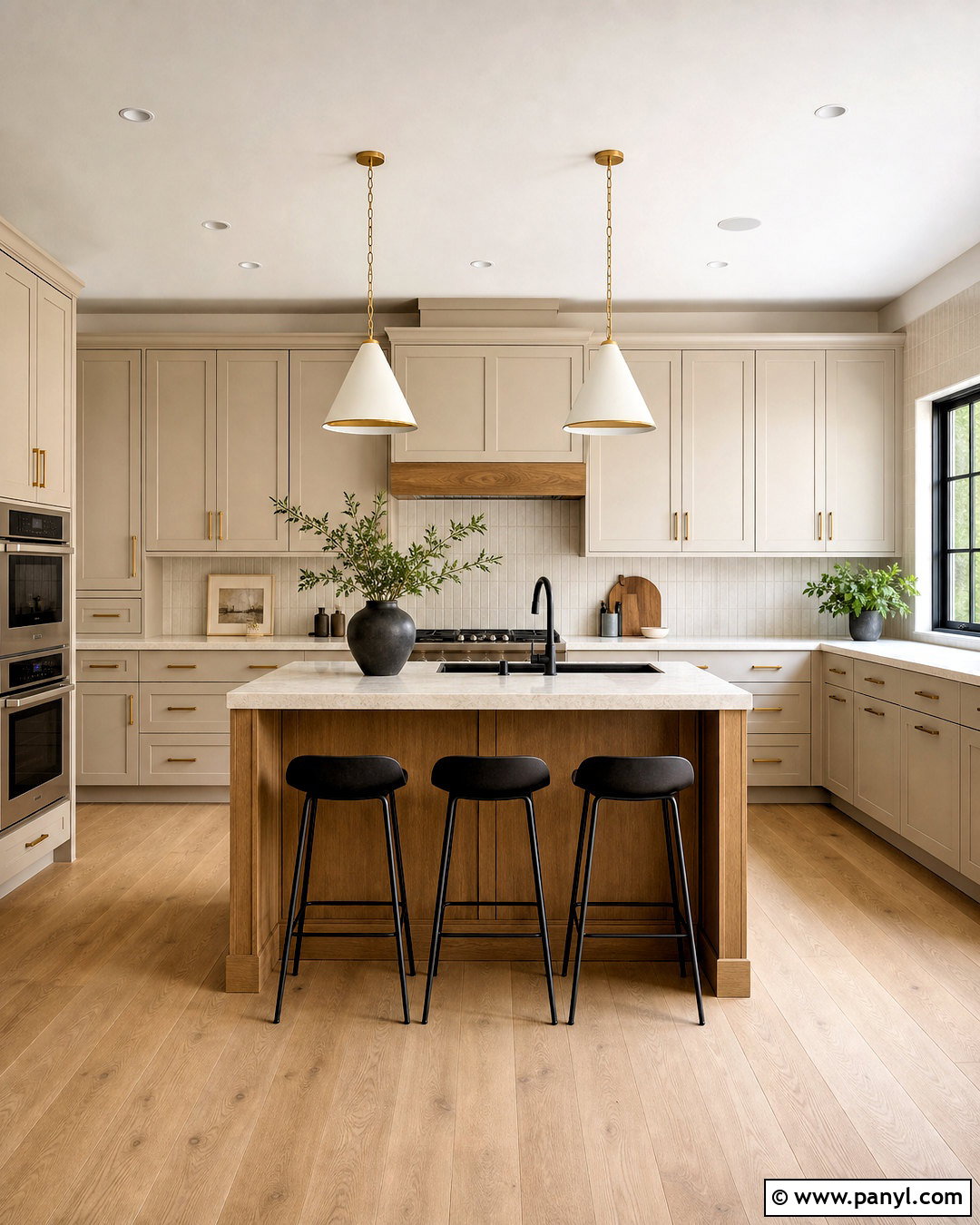
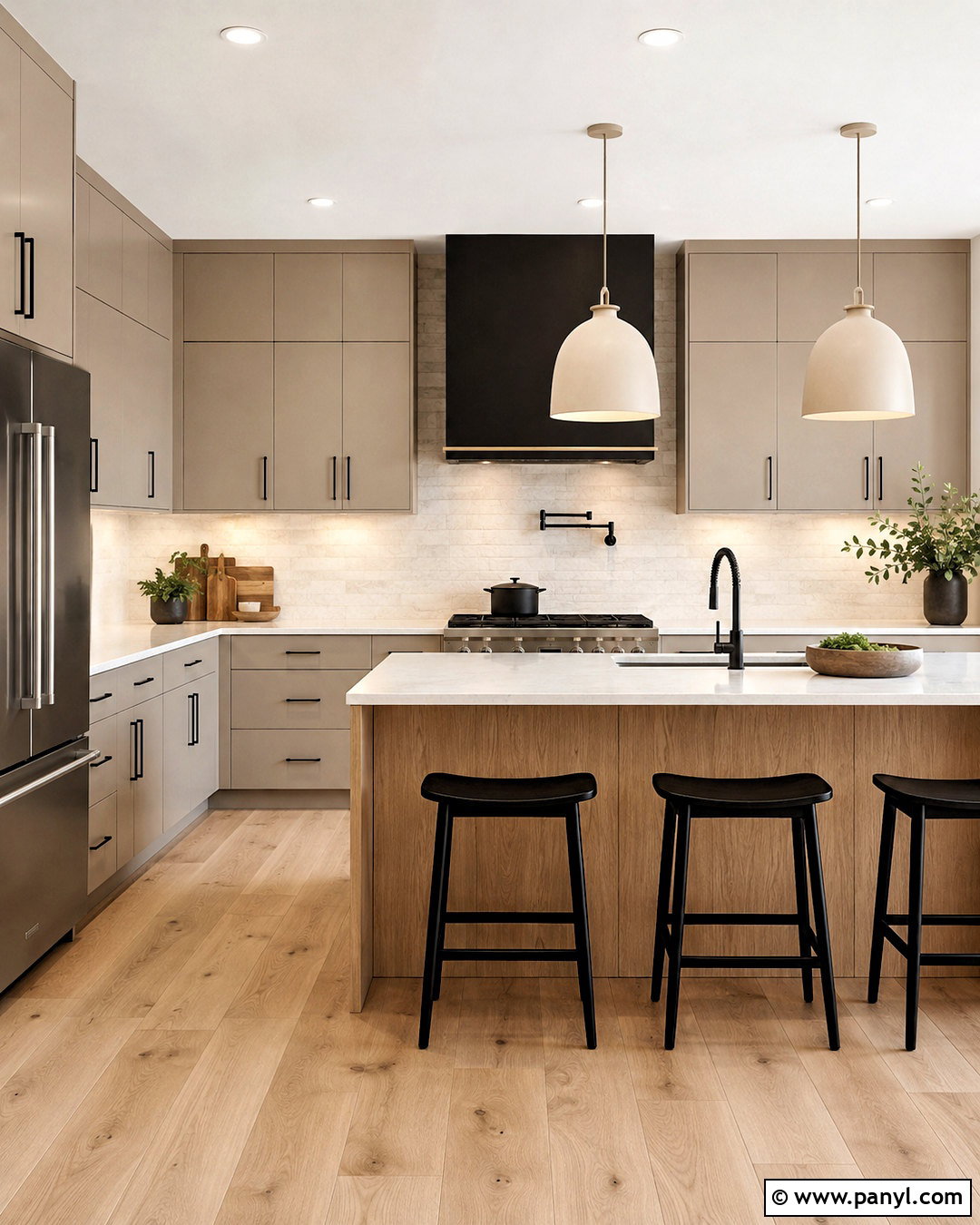
Baby Fawn OC-15 brings a soft greige finish to cabinets, combining the flexibility of beige with the calm appearance of gray. Create a warm modern kitchen with flat-panel or slim Shaker doors, creamy limestone-look counters, and pale oak floors. A backsplash of vertical ivory tiles adds quiet texture while keeping the palette light. Choose brushed brass pulls and simple cone pendants to emphasize the color’s welcoming undertones. Off-white walls provide enough contrast to reveal the cabinetry without breaking the room into strong color blocks. For the island, repeat Baby Fawn for a seamless look or use medium oak to add organic variation. Black counter stools and a dark faucet can ground the lighter surfaces, producing a balanced kitchen that feels current but not overly trend-driven. ()
7. Benjamin Moore Revere Pewter Kitchen Cabinets
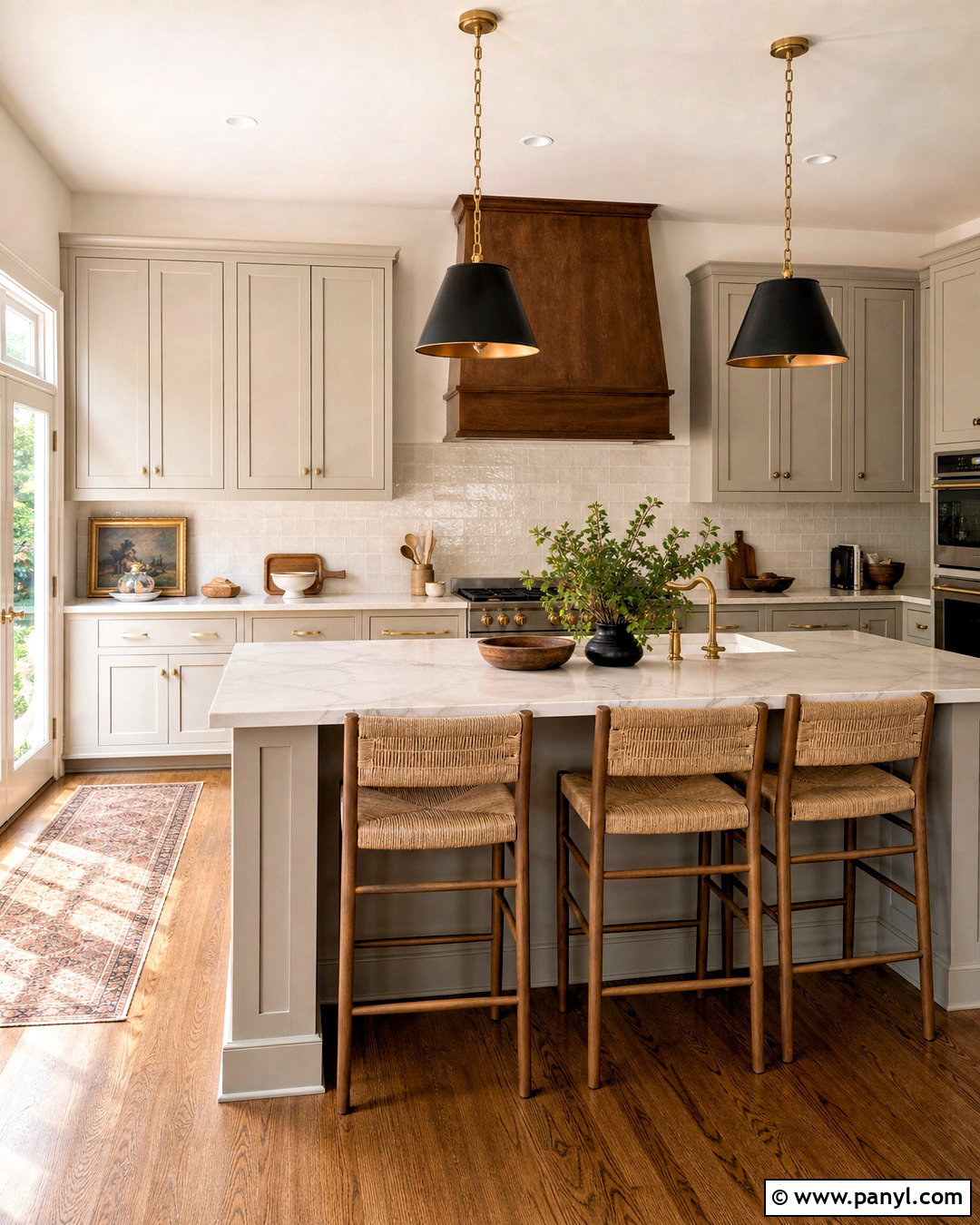
Revere Pewter HC-172 creates warm gray cabinets that can bridge cool stone, warm wood, and mixed-metal finishes. Pair it with white quartz containing soft taupe veining, warm white walls, and medium brown oak flooring. Shaker doors keep the palette familiar, while antique brass pulls bring out the color’s warmer side. Use an ivory zellige backsplash to introduce movement and a handcrafted texture. Over the island, black and brass pendants add definition without making the kitchen feel too formal. A stained walnut range hood or island top can deepen the scheme and prevent the gray cabinetry from appearing flat. This complete design is especially helpful for updating a traditional kitchen where existing beige tile, brown flooring, or warm granite needs to remain in place. ()
8. Benjamin Moore Stonington Gray Kitchen Cabinets
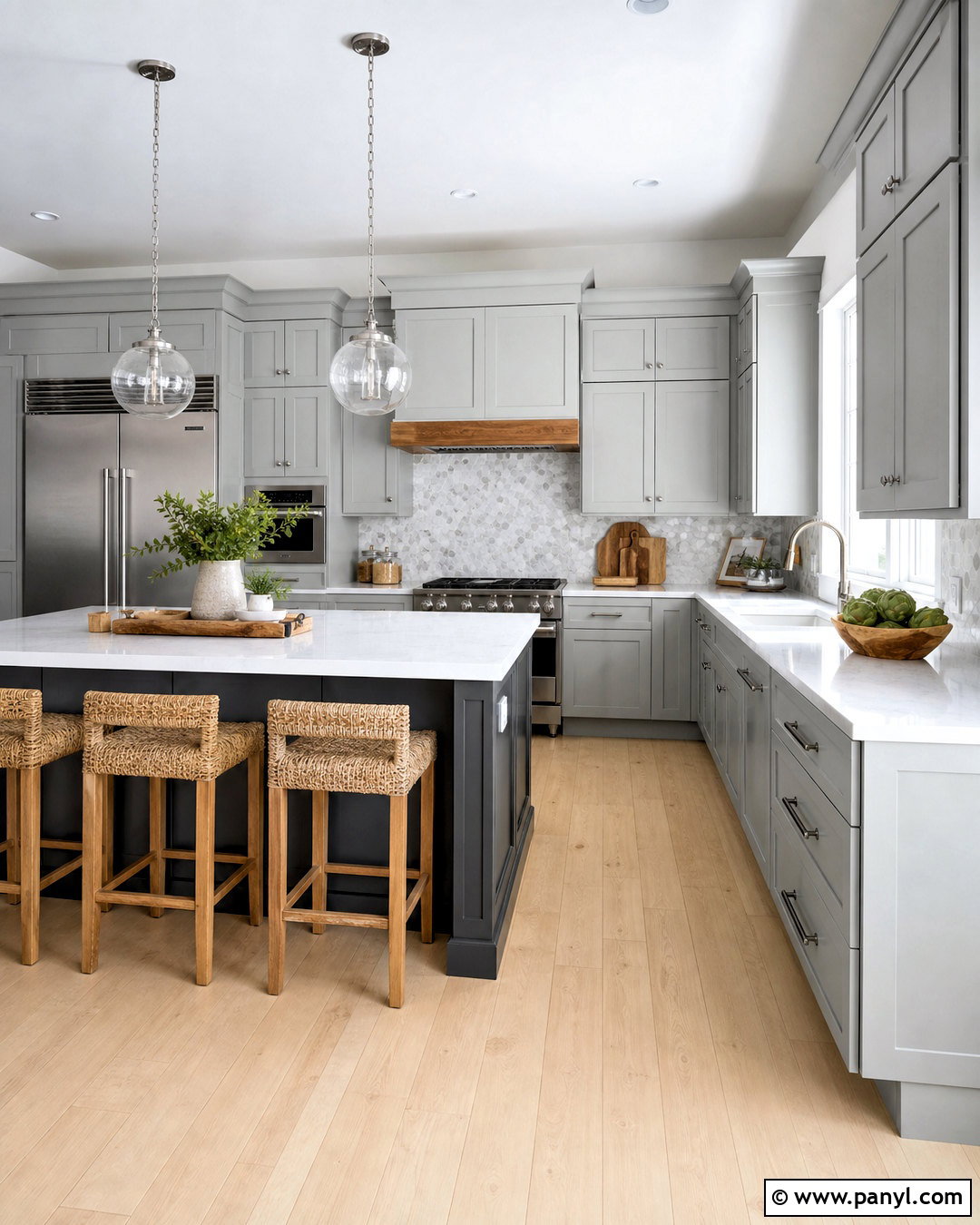
Stonington Gray HC-170 gives cabinets a cooler, cleaner gray appearance that works naturally with white, silver, blue, and charcoal. Use it in a bright transitional kitchen featuring polished white quartz counters, a marble mosaic backsplash, and pale natural maple flooring. Brushed nickel hardware and stainless steel appliances reinforce the cool palette, while white walls keep the overall room open. Select simple Shaker fronts and minimal crown molding for a neat architectural finish. To keep the space from feeling chilly, introduce woven stools, light wood accessories, and soft beige window fabric. A white island can lighten a compact kitchen, while a charcoal island creates stronger contrast in a larger room. Test the color near the backsplash because nearby blue-gray materials may strengthen its cooler character. ()
9. Benjamin Moore Chelsea Gray Kitchen Cabinets
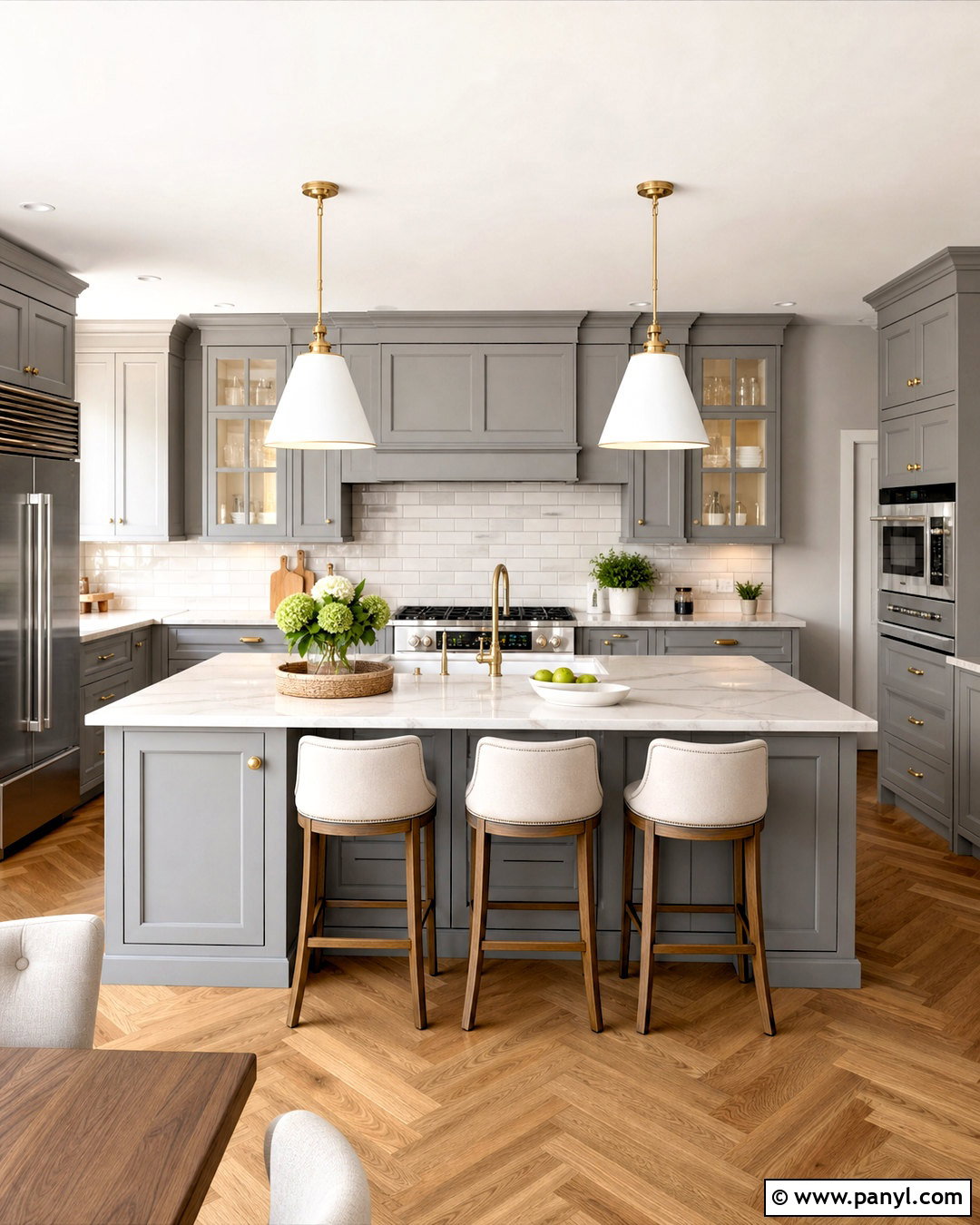
Chelsea Gray HC-168 creates substantial medium-gray cabinetry with enough depth to frame lighter countertops and walls. Build a sophisticated kitchen around it using white marble-look quartz, warm white walls, and herringbone oak flooring. A backsplash of creamy rectangular tile softens the gray, while antique brass pulls and faucets add warmth. Use glass-front upper cabinets in one section to break up the deeper color and display pale ceramics. Large white pendants over a Chelsea Gray island will brighten the center of the room without introducing another strong hue. The finished scheme suits transitional and updated traditional kitchens, especially those with generous windows. If the room is smaller, reserve Chelsea Gray for lower cabinets and the island, then use warm white uppers to maintain an open, balanced appearance. ()
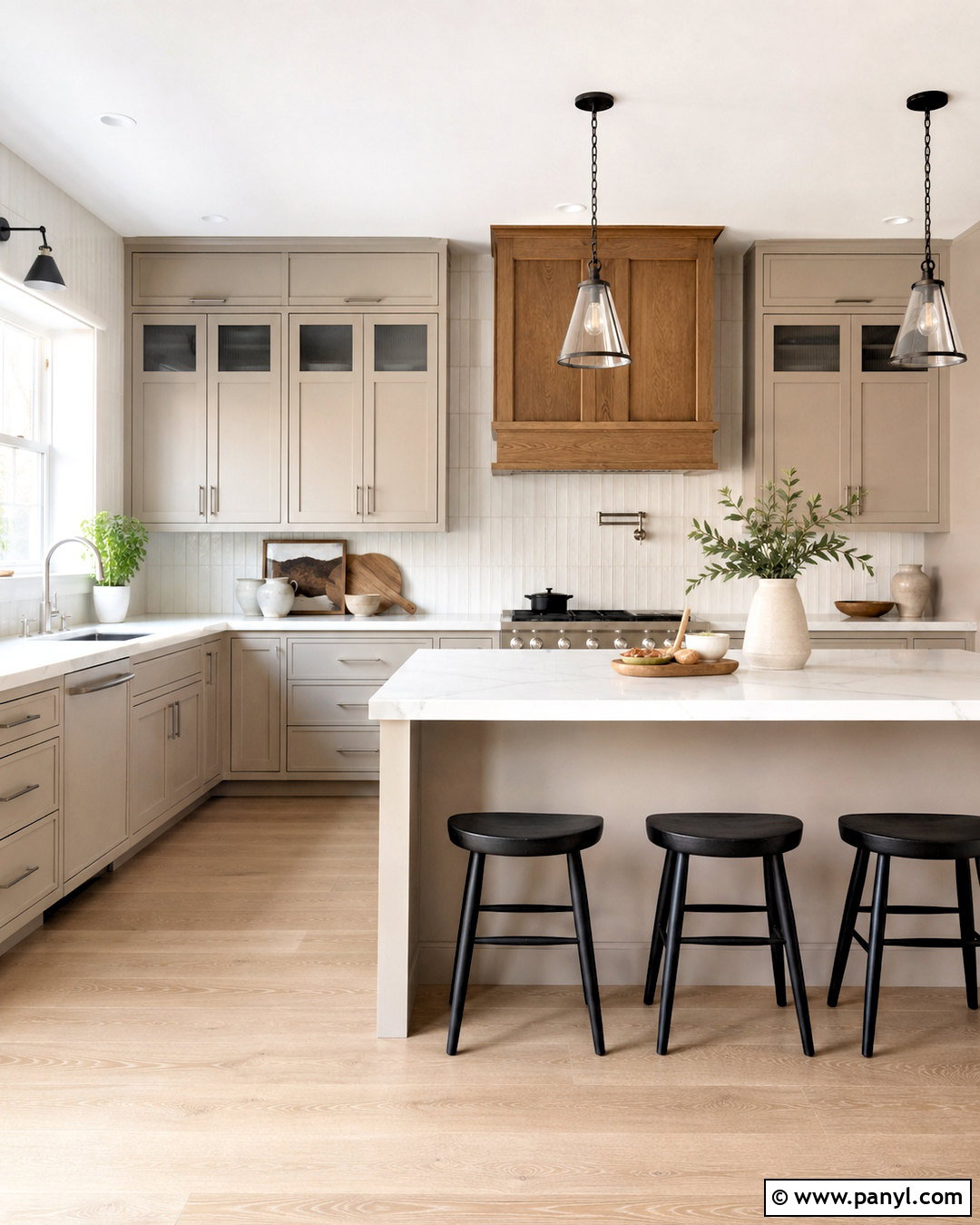
10. Benjamin Moore Kendall Charcoal Kitchen Cabinets
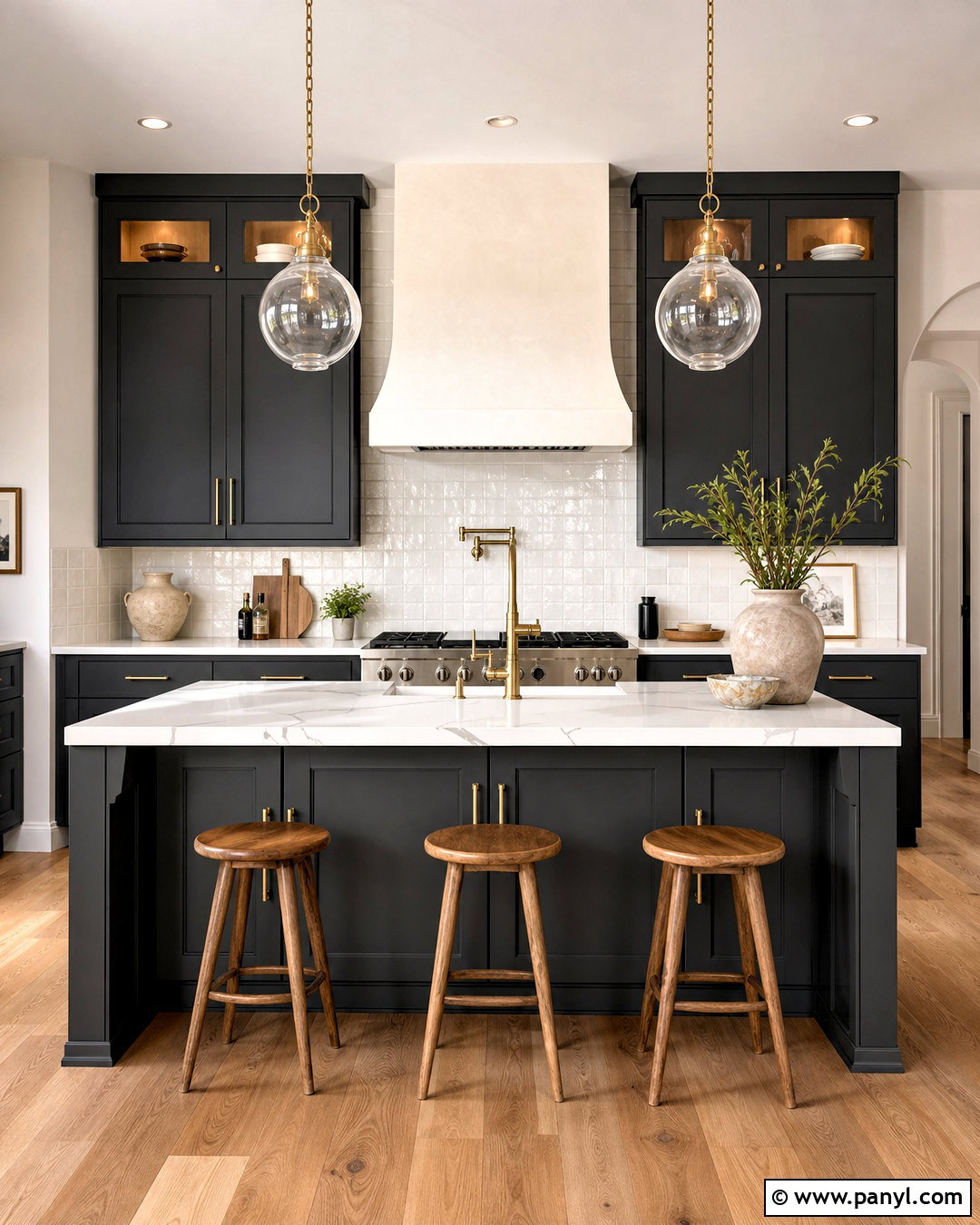
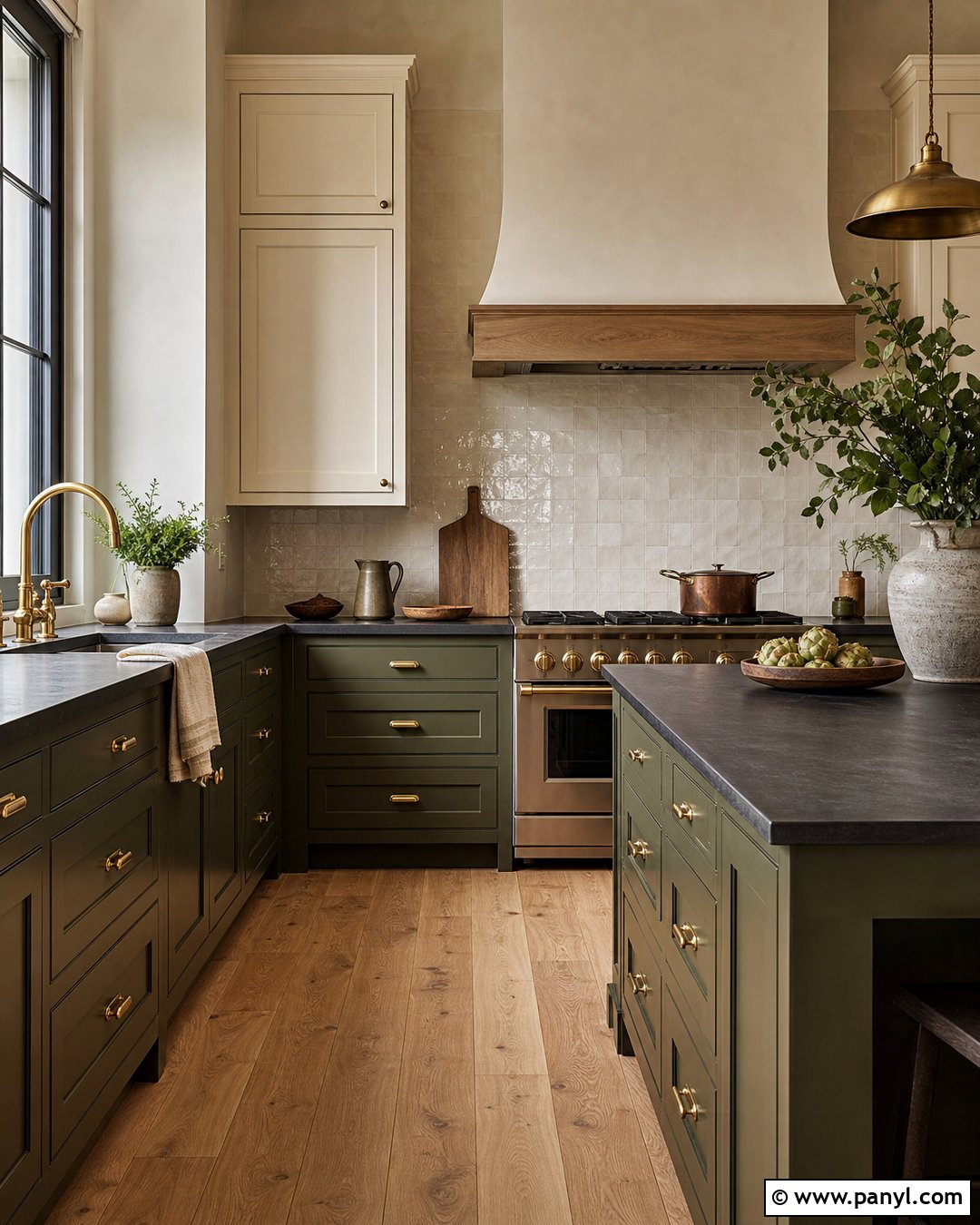
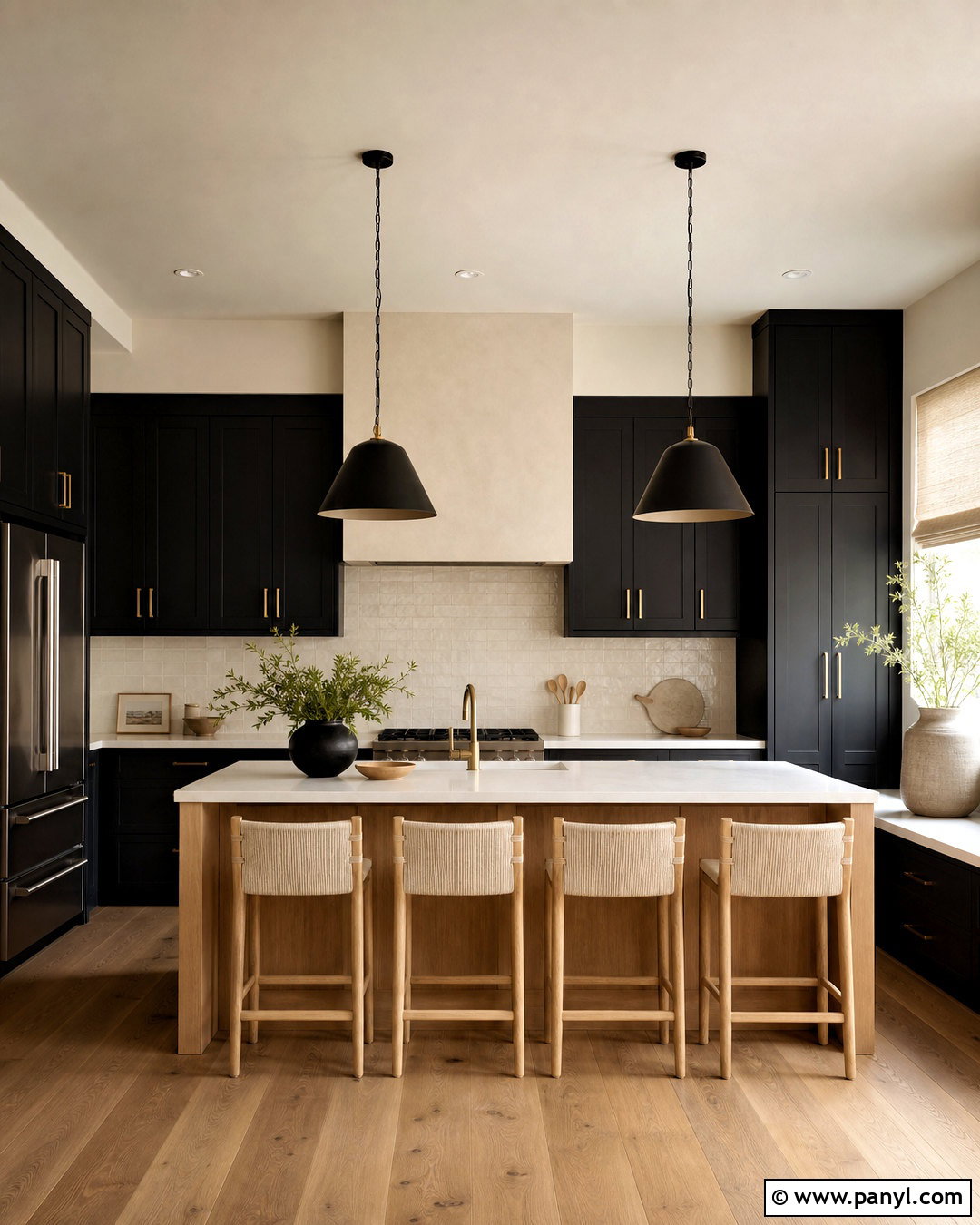
Kendall Charcoal HC-166 gives kitchen cabinetry a deep charcoal finish that feels softer and more versatile than pure black. Pair it with dramatically veined white quartz, warm oak flooring, and a glossy off-white backsplash that reflects light. Brushed brass pulls stand out beautifully against the dark doors, while a matching brass faucet ties the working areas together. Use streamlined Shaker fronts and a simple plaster hood to balance traditional and modern details. Warm white walls and a light ceiling prevent the kitchen from becoming visually heavy. In a compact room, apply Kendall Charcoal to base cabinets and the island while keeping upper storage pale. Finish the complete look with natural wood stools, clear glass pendants, and minimal counter decor to preserve its strong architectural character. ()
11. Benjamin Moore Hale Navy Kitchen Cabinets
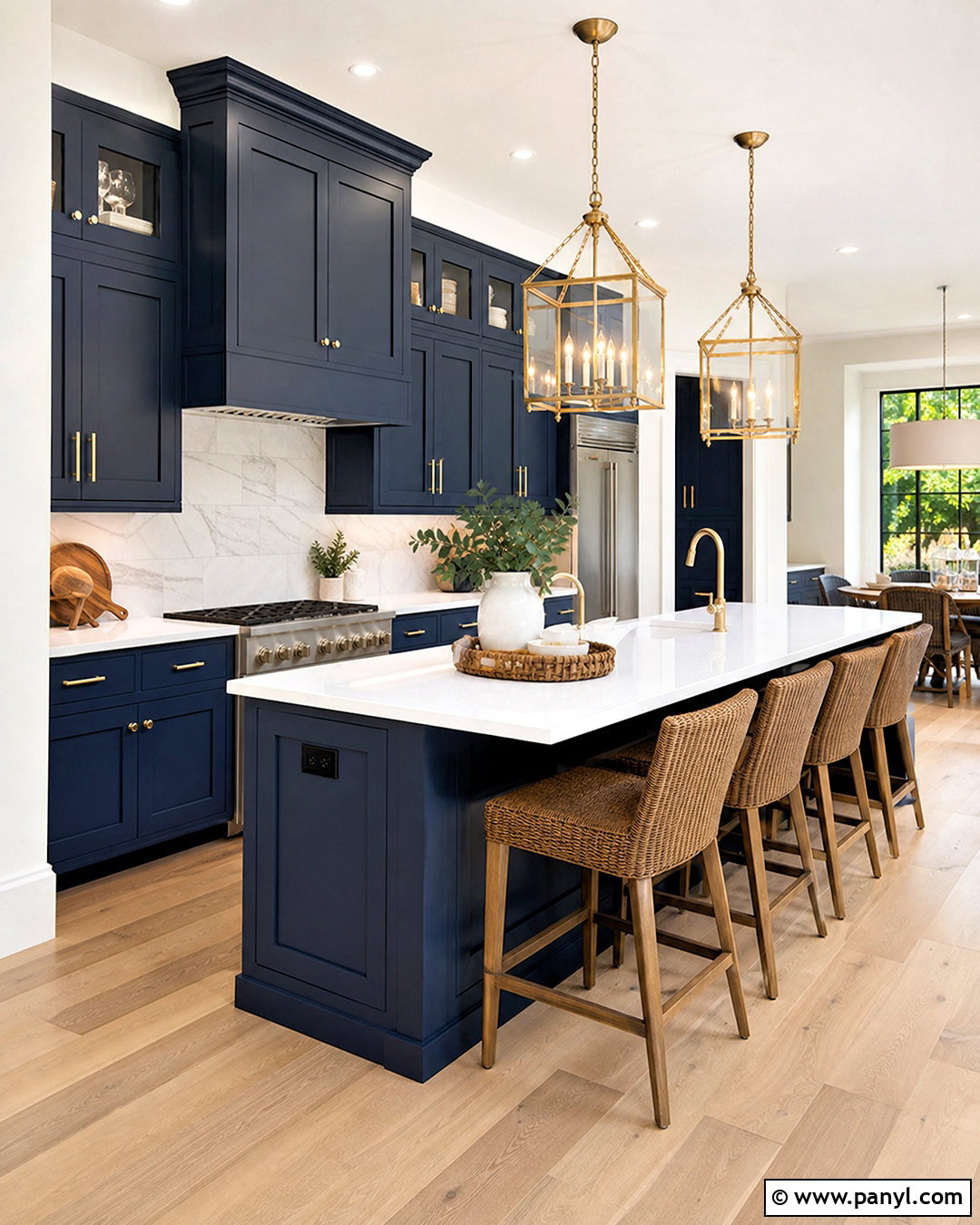
Hale Navy HC-154 creates classic dark blue cabinets that can feel coastal, traditional, or modern depending on the surrounding finishes. For a polished transitional kitchen, combine it with bright white quartz, warm white walls, and lightly stained oak floors. Use satin brass hardware and lantern pendants to bring warmth and visibility to the navy doors. A white marble backsplash with soft gray veining provides movement without overwhelming the color. If full navy cabinetry feels too intense, paint the island and lower cabinets Hale Navy while using white upper cabinets. Add counter stools with woven seats and dark wood frames to connect the blue cabinetry with the flooring. The result is bold but manageable, with enough light surfaces to keep the complete kitchen fresh and functional. ()
12. Benjamin Moore Oxford Gray Kitchen Cabinets
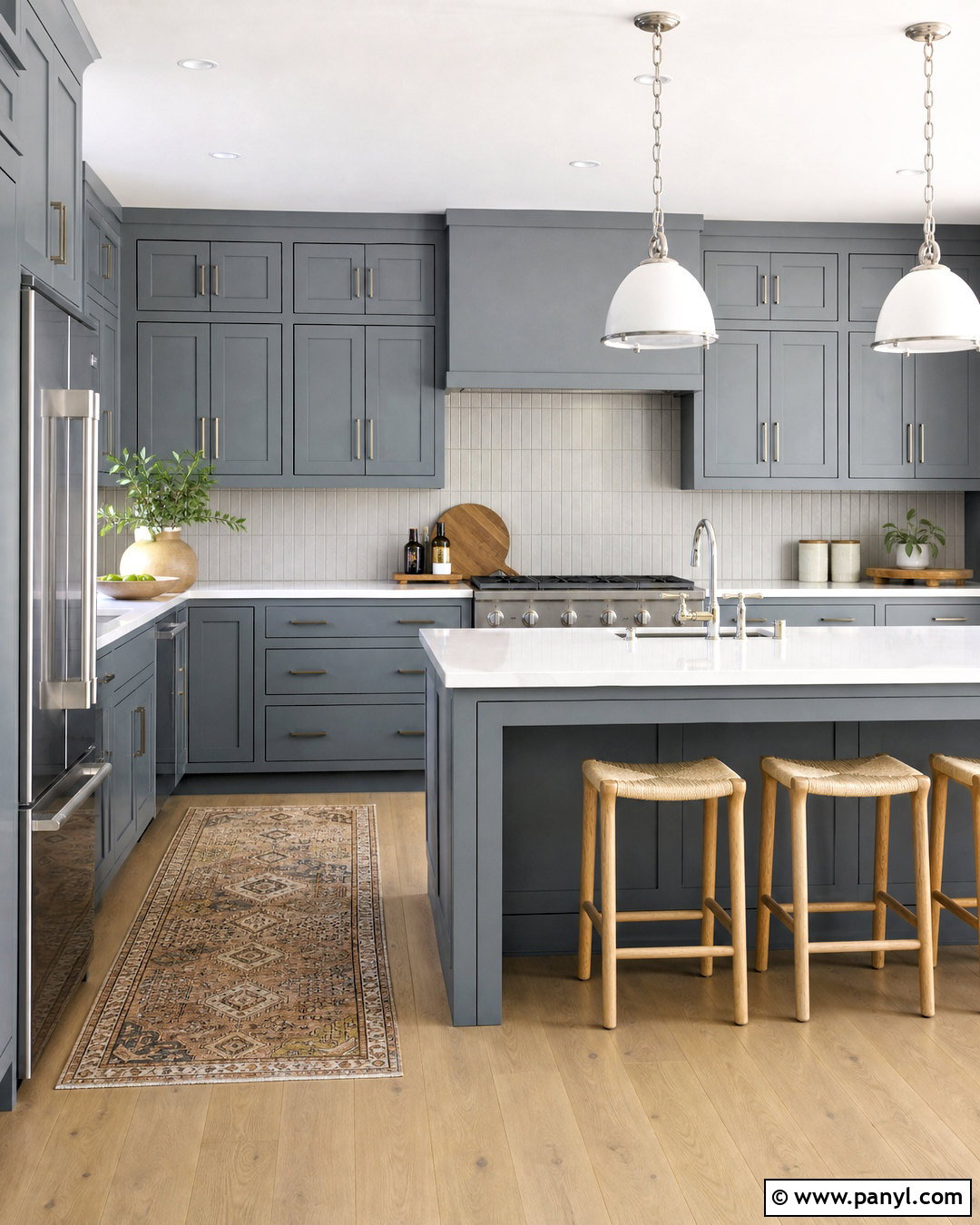
Oxford Gray 2128-40 brings a muted blue-gray tone to cabinetry, offering more color than a neutral gray without becoming bright blue. Create a refined kitchen with Oxford Gray lower and upper cabinets, white quartz counters, and a vertically stacked pale-gray backsplash. Light white oak flooring introduces warmth, while polished nickel pulls and a chrome faucet reinforce the cool, tailored finish. Paint the walls a clean off-white and use white oak shelves near the range to provide visual breathing room. A matching island maintains a cohesive color-blocked effect, although a pale wood island can make the room feel more casual. Complete the design with white dome pendants, natural linen shades, and understated ceramic accessories. This palette works especially well in bright rooms with clean contemporary lines. ()
13. Benjamin Moore Aegean Teal Kitchen Cabinets
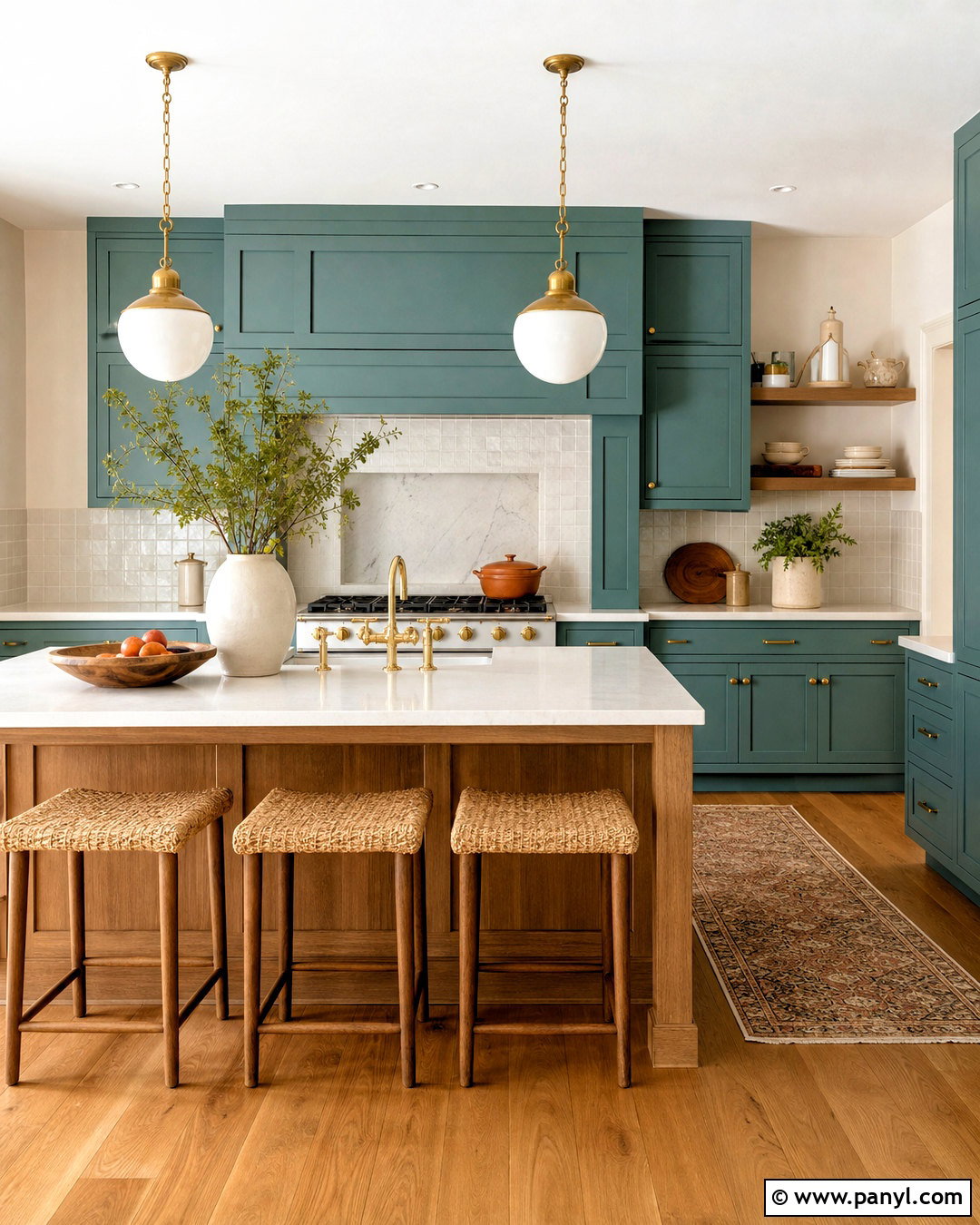
Aegean Teal 2136-40 gives cabinets a muted blue-green finish with enough gray to feel comfortable across a large kitchen. Pair it with creamy quartz countertops, a warm white backsplash, and medium-tone oak flooring. Brushed brass pulls and globe pendants bring out the color’s warmer dimension, while off-white walls preserve a light background. Use Shaker cabinetry and a simple wood range hood for a transitional look that balances color with familiar materials. A natural oak island can reduce the amount of teal and create an inviting gathering point. For a stronger statement, continue Aegean Teal across the island and tall pantry cabinets. Add woven stools, ivory pottery, and small terracotta accents to complete a layered kitchen that feels colorful, grounded, and practical rather than overly themed. ()
14. Benjamin Moore Newburg Green Kitchen Cabinets
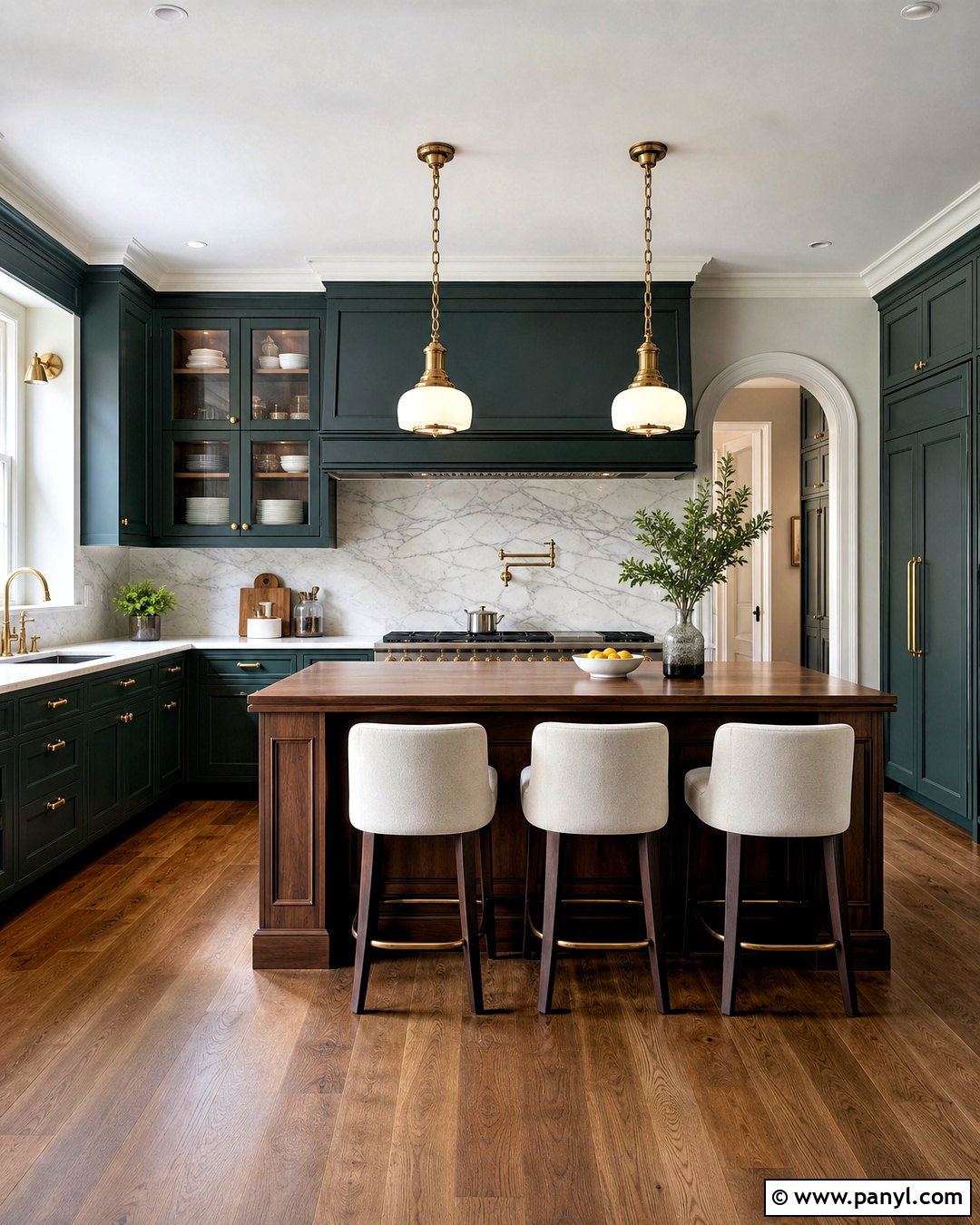
Newburg Green HC-158 creates deep blue-green cabinetry with a rich, tailored quality. Use it in a dramatic kitchen with white marble countertops, a full-height marble backsplash, and medium walnut flooring. Aged brass knobs, cup pulls, and library-style lights bring warmth to the saturated cabinets. Choose inset doors and glass-front uppers for a traditional look, or slim Shaker fronts for a cleaner interpretation. Warm white walls and ceilings help the darker paint remain distinct without making the room feel enclosed. A walnut island or butcher-block worktable can introduce a strong natural centerpiece. Complete the palette with cream counter stools and clear glass lighting. In kitchens with limited daylight, use Newburg Green mainly on base cabinets, pantry units, or the island to maintain visual balance. ()
15. Benjamin Moore Gloucester Sage Kitchen Cabinets
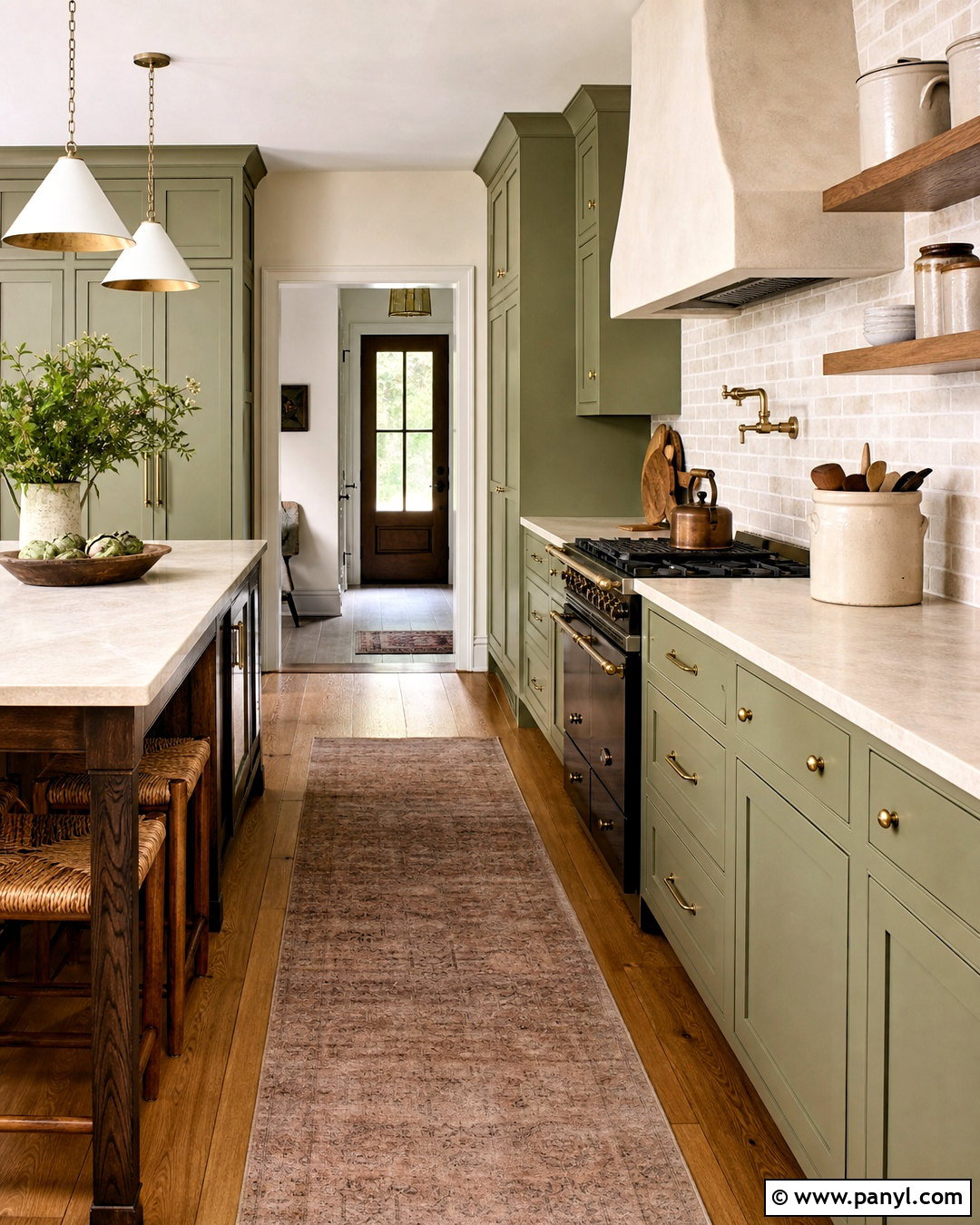
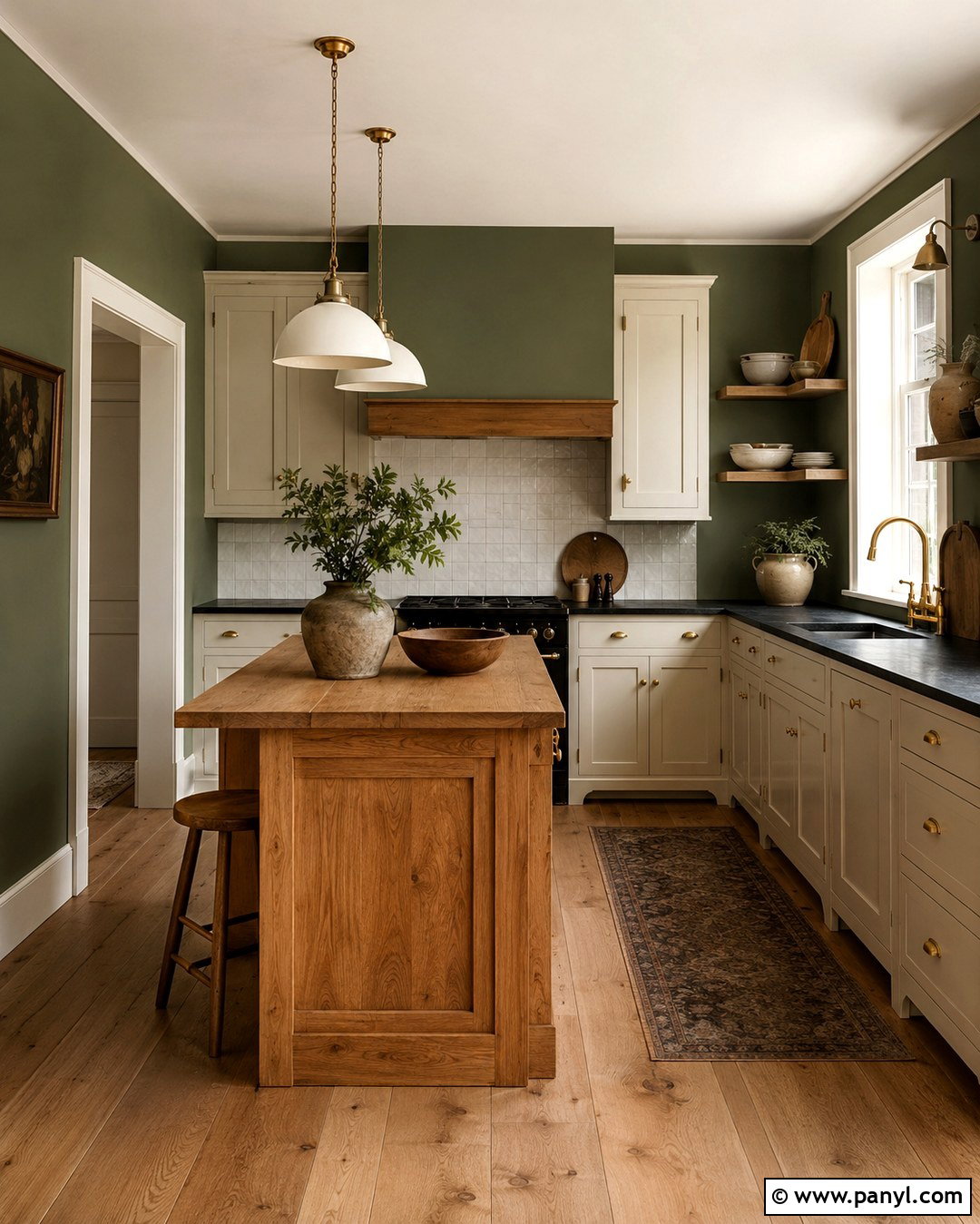
Gloucester Sage HC-100 creates earthy green cabinets that feel connected to stone, wood, and garden views. Design the complete room with creamy limestone counters, an ivory brick-pattern backsplash, and rustic medium-oak floors. Antique brass hardware reinforces the warm, traditional character, while a dark bronze faucet adds practical contrast. Use Shaker cabinet doors, open oak shelving, and a plaster range hood for an English country-inspired look that still suits an average home. Paint the walls a muted warm white so the sage remains the main color. A dark-stained wood island can anchor the soft green perimeter cabinets and provide visual depth. Finish with woven counter stools, ceramic crocks, and linen shades for a comfortable kitchen that feels collected without becoming cluttered or overly rustic. ()
16. Benjamin Moore October Mist Kitchen Cabinets
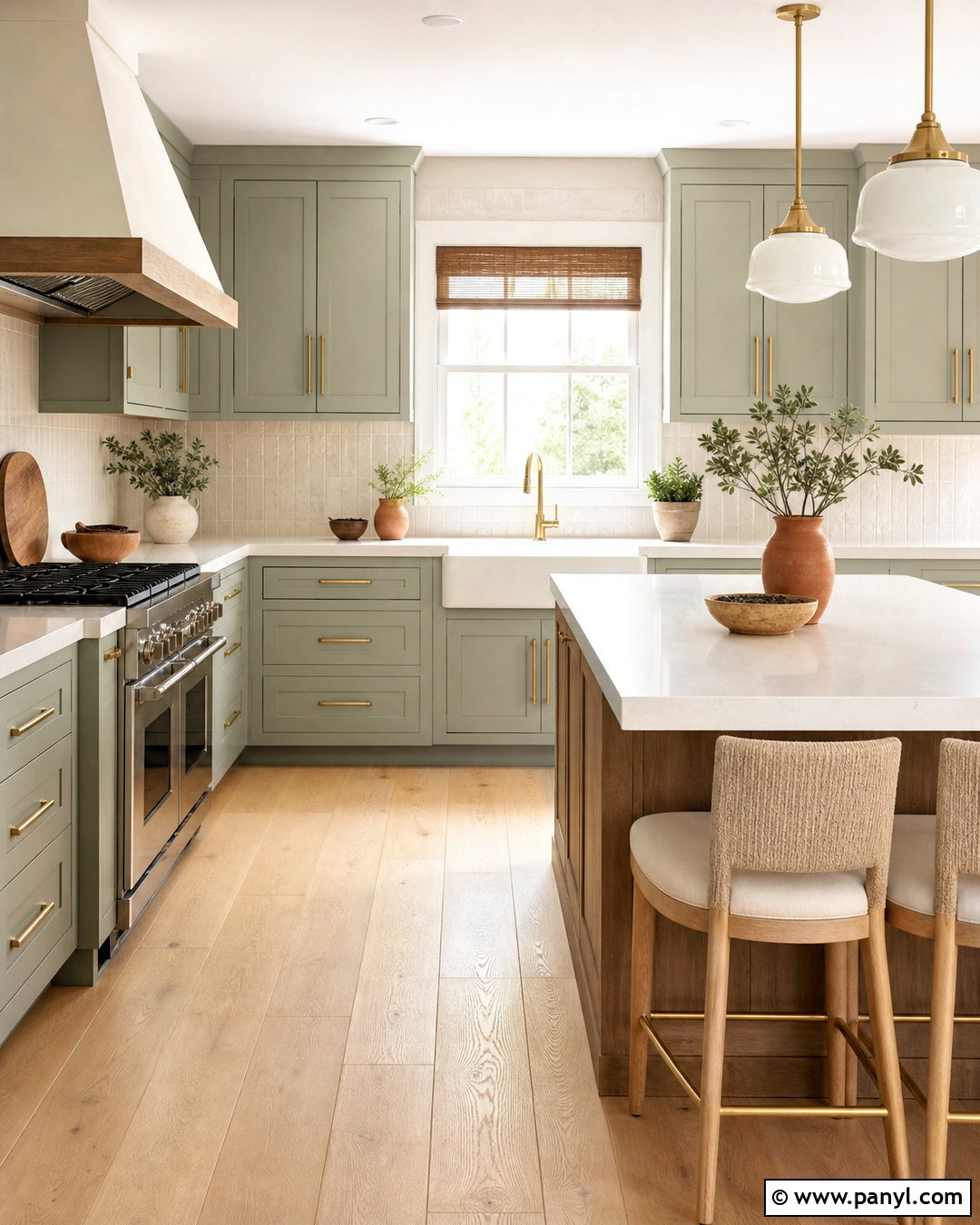
October Mist 1495 brings a light, botanical sage color to cabinets, making it suitable for kitchens where darker green would feel too heavy. Pair it with creamy white quartz, handmade off-white backsplash tile, and pale white oak flooring. Slim brass pulls and simple milk-glass pendants create a fresh transitional finish. Keep the walls warm white, allowing the green cabinetry to provide gentle contrast throughout the room. A natural oak island adds texture while limiting the amount of painted color. For a smaller kitchen, use October Mist on all cabinets and select light counters so the overall palette remains open. Complete the scheme with woven shades, ivory stools, and a few terracotta accessories. The finished room feels calm and organic without relying on strongly rustic details or dense decoration.
17. Benjamin Moore Vintage Vogue Kitchen Cabinets
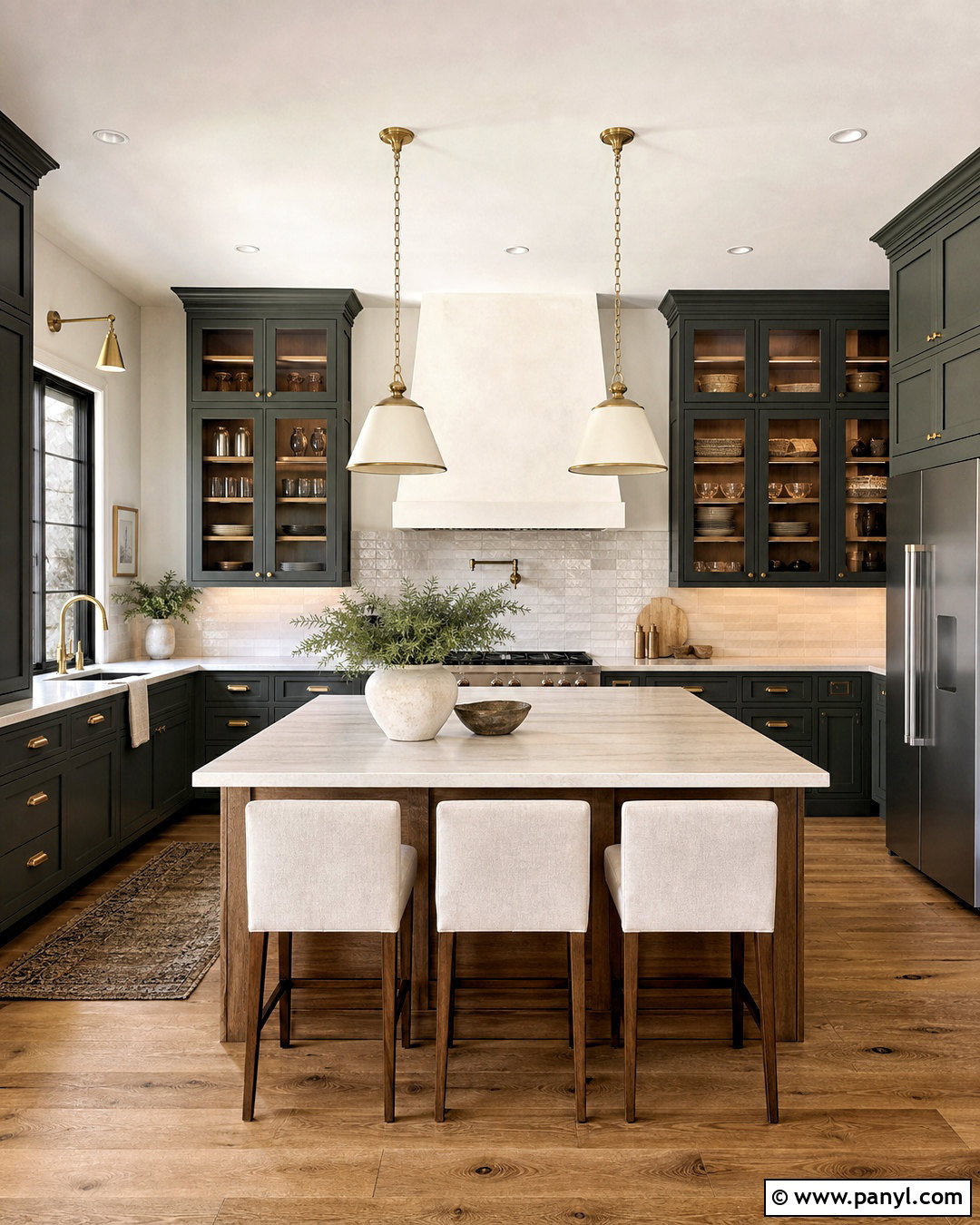
Vintage Vogue 462 creates dark, smoky green cabinets with an enveloping and established appearance. Pair it with creamy marble-look countertops, a warm white backsplash, and wide-plank oak flooring to prevent the color from feeling severe. Aged brass knobs and shaded brass pendants add richness, while a white plaster range hood creates an important visual break. Use Shaker doors and tall glass cabinets to support the color’s traditional personality. Paint surrounding walls in a soft cream rather than a cool white, which can appear disconnected from the earthy green. A medium oak island offers a lighter gathering area and introduces natural variation. Complete the look with linen stools, stoneware, and warm wood accessories for a kitchen that feels dramatic, comfortable, and thoughtfully layered. ()
18. Benjamin Moore First Light Kitchen Cabinets
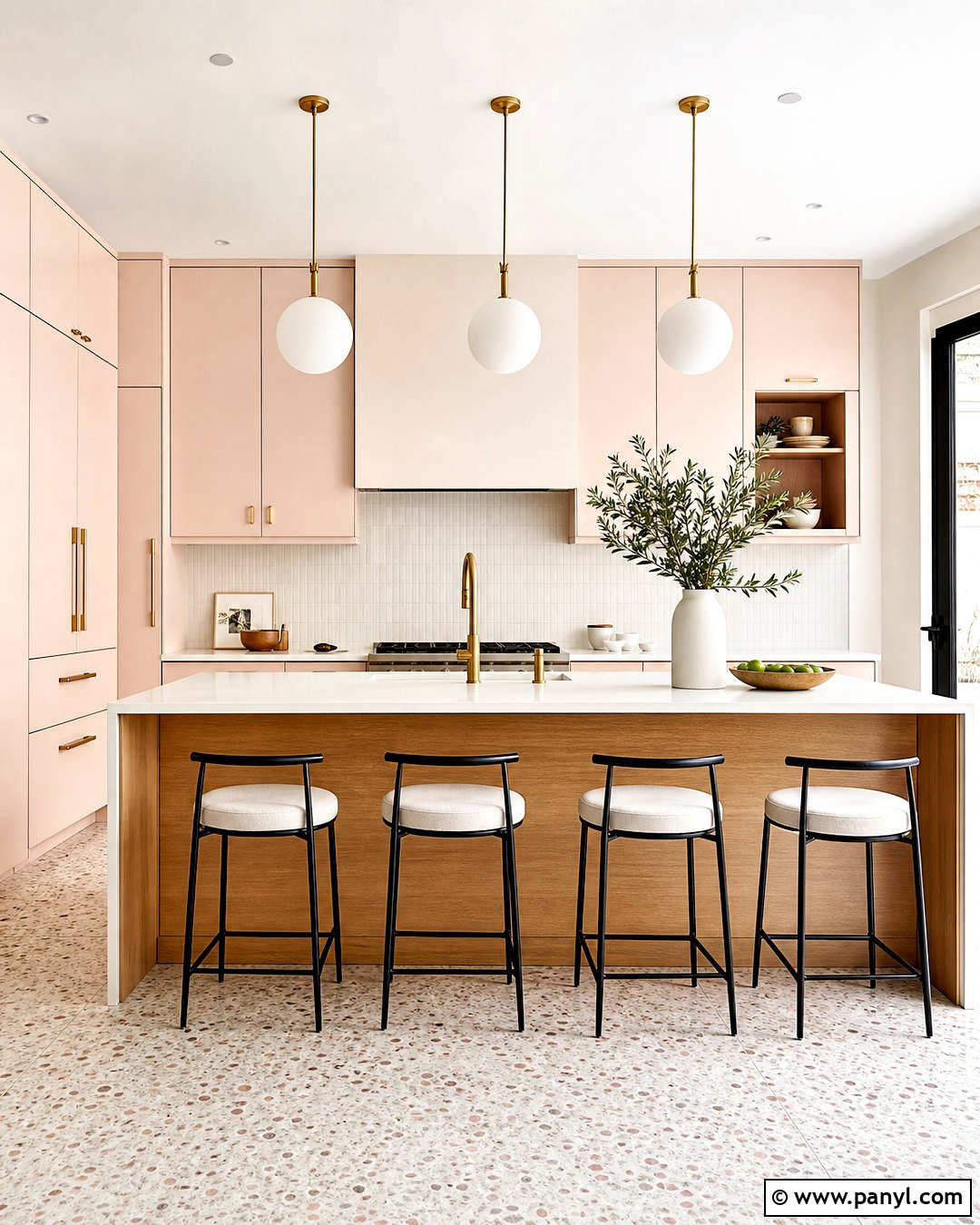
First Light 2102-70 gives cabinets a subtle blush pink finish that reads as soft and sophisticated when balanced with restrained materials. Pair it with warm white quartz, pale terrazzo flooring, and a simple ivory backsplash. Brushed brass pulls, a matching faucet, and white globe pendants enhance the gentle warmth without making the room overly decorative. Choose streamlined Shaker or flat-panel cabinets so the unusual color feels modern. Warm white walls keep the palette calm, while a light oak island adds an organic neutral at the center. Introduce small black accents through stool frames or window trim to create definition. The complete scheme works particularly well in compact kitchens, breakfast rooms, or creative homes seeking color that remains light, practical, and easy to coordinate. ()
19. Benjamin Moore Char Brown Kitchen Cabinets
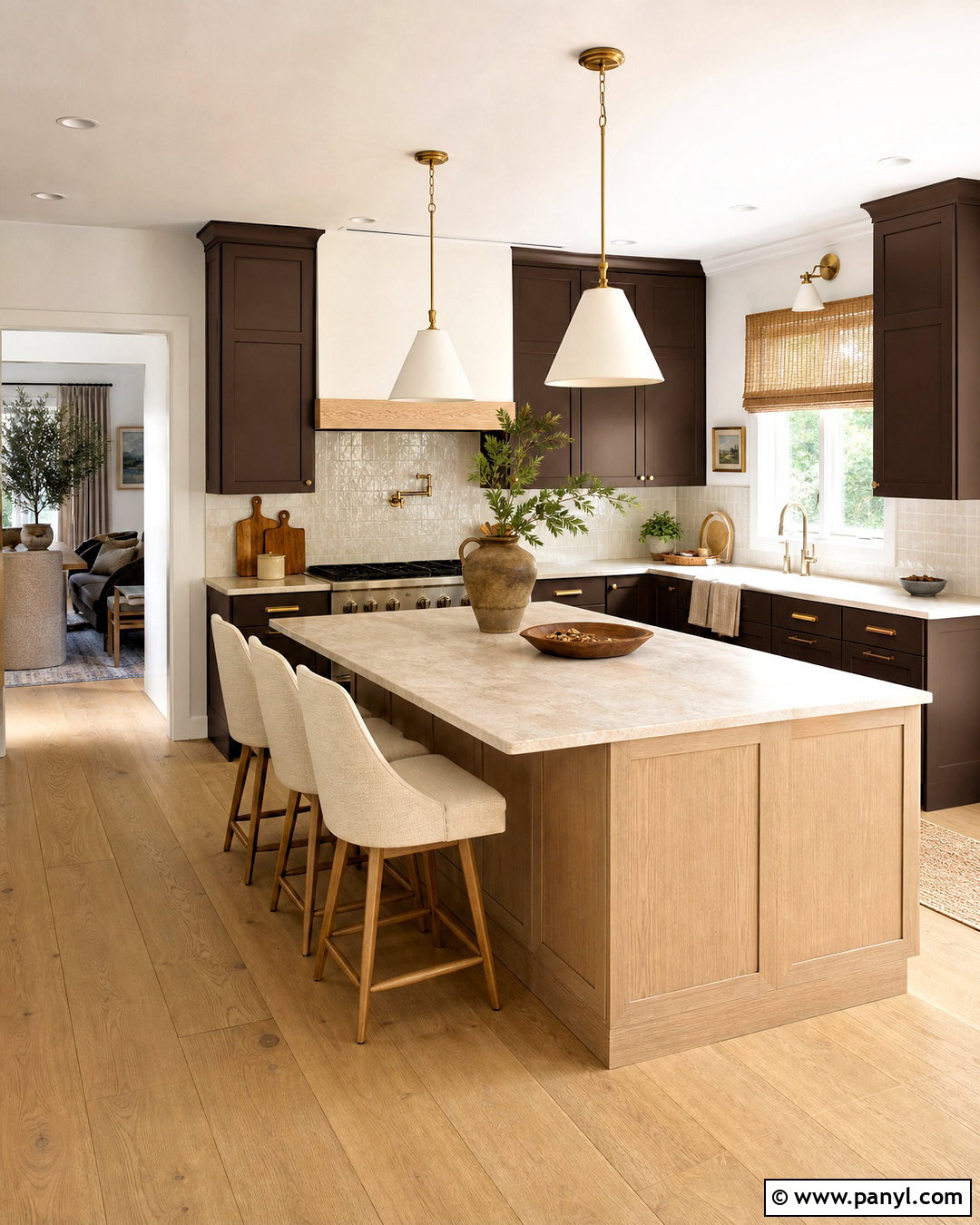
Char Brown 2137-20 creates deep brown cabinetry with an earthy richness that complements the renewed interest in warm, natural kitchens. Combine it with creamy quartzite-look countertops, textured ivory backsplash tile, and light oak flooring for clear contrast. Use aged brass hardware and warm white pendant lights to emphasize the brown rather than allowing it to appear black. Simple slab or narrow Shaker doors give the color a modern, furniture-like quality. Paint the walls a soft putty white and add a pale oak island to brighten the middle of the room. Cream upholstered stools, natural stone accessories, and woven shades complete the tonal scheme. This cabinet color is particularly effective in open kitchens where brown cabinetry can connect visually with wood furniture in the adjoining dining or living area. ()
20. Benjamin Moore Jet Black Kitchen Cabinets
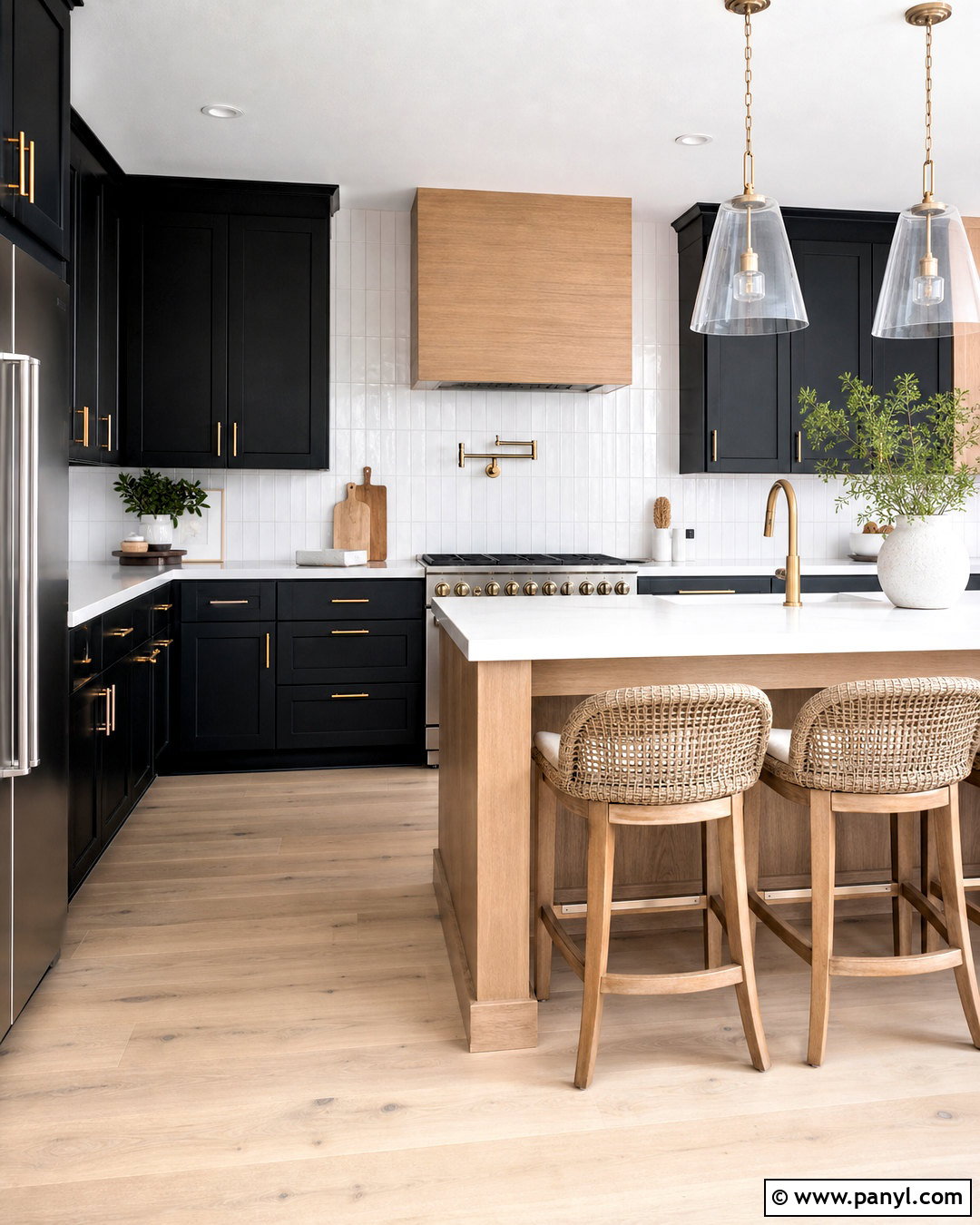
Jet Black 2120-10 creates sharp, confident cabinetry that works best when balanced with bright surfaces and visible natural texture. Pair black lower and upper cabinets with white quartz counters, a full-height white tile backsplash, and pale oak flooring. Use simple slab fronts or slim Shaker doors to maintain a clean silhouette. Brushed brass hardware provides warm contrast, while clear glass pendants keep sightlines open above the island. Paint the walls bright white and introduce a white oak range hood or island to divide the black cabinetry into manageable sections. In a small kitchen, limit Jet Black to base cabinets and use white uppers. Finish with woven stools, minimal ceramics, and stainless steel appliances for a complete modern design that remains practical, bright, and approachable. ()
Conclusion:
Choosing among **20 benjamin moore kitchen cabinet colors** becomes easier when each shade is treated as part of a complete room. Start with the permanent surfaces, including flooring, counters, backsplash tile, and appliances. Then select a cabinet color that repeats or complements their undertones. Whites and pale greiges can maximize brightness, while sage, navy, charcoal, brown, and black provide stronger architectural definition. Hardware, lighting, and natural wood can warm or sharpen the final effect. Before painting every door, test large samples vertically in the kitchen and view them throughout the day. A carefully coordinated palette will make the cabinets feel intentional and help the entire kitchen remain attractive, functional, and comfortable. ()

Related Ideas and Inspiration:
Leave a Reply