
Neutral cabinetry gives a kitchen lasting flexibility while still allowing the room to feel warm, layered, and personal. These 20 neutral kitchen cabinet colors move beyond basic builder white to include cream, greige, mushroom, taupe, soft gray, muted green, and deep earthy shades. Each palette creates a complete kitchen look, with countertops, backsplashes, flooring, hardware, and lighting selected to support the cabinet color. Before deciding, compare large painted samples beside your permanent finishes throughout the day. Undertones can appear different under morning sunlight, warm bulbs, and cool overhead lighting. Whether you prefer an airy farmhouse room, a relaxed organic space, or a clean contemporary layout, you will find a practical combination among these 20 neutral kitchen cabinet colors.
1. Warm White Kitchen Cabinets
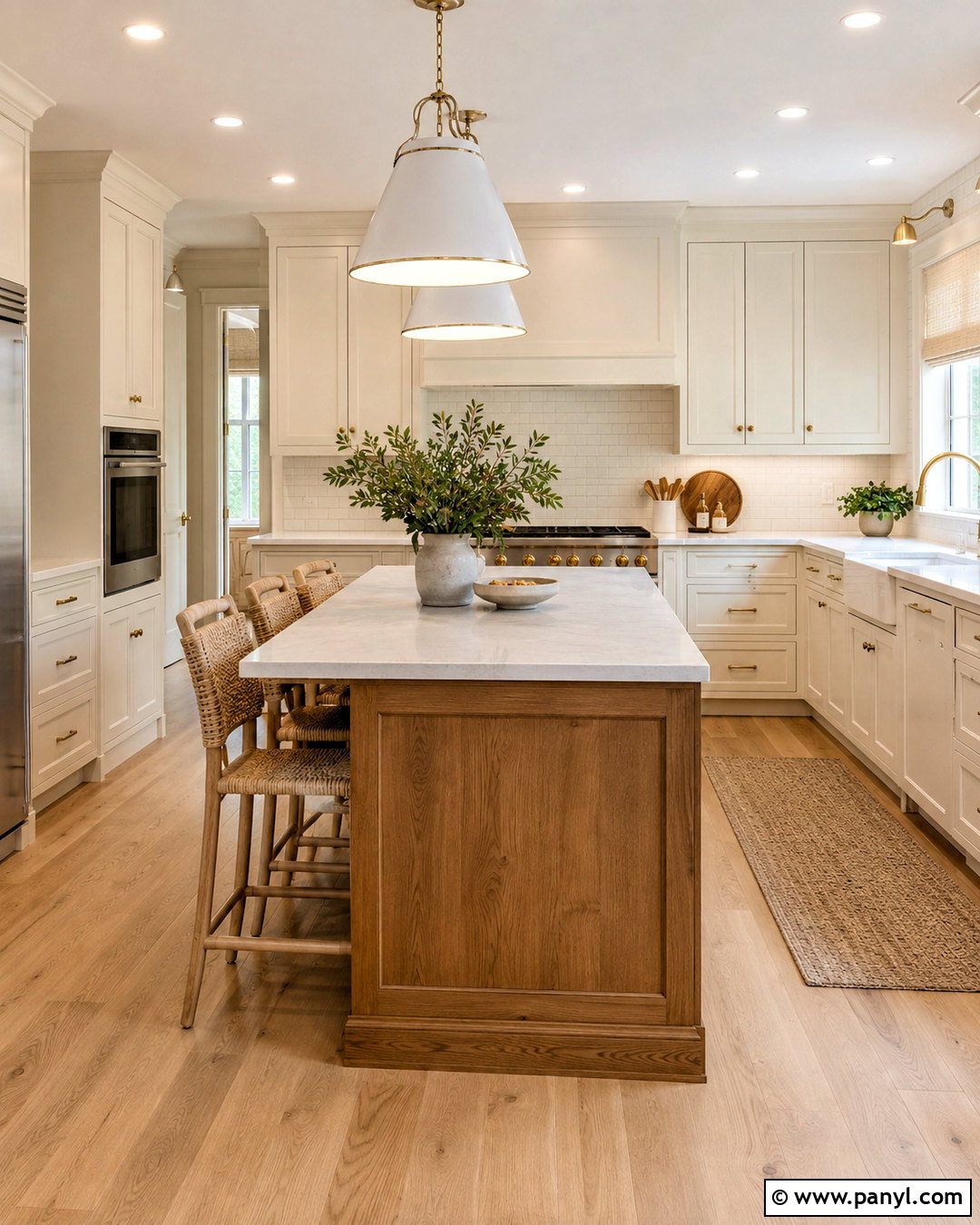
Warm white cabinets create a bright kitchen without the sharp appearance of pure white. Choose simple Shaker doors in a creamy white with subtle beige undertones. Pair them with lightly veined quartz countertops and a handmade ivory subway tile backsplash. Medium-tone white oak flooring adds natural contrast, while brushed brass pulls bring gentle warmth to the cabinetry. A stained oak island can prevent the room from feeling overly uniform and provide a useful visual anchor. Finish the layout with woven counter stools, off-white linen shades, and simple ceramic accessories. This complete scheme works especially well in kitchens receiving cool northern light because the warm cabinet undertone keeps the room comfortable, balanced, and inviting throughout the day.
2. Cream Kitchen Cabinets
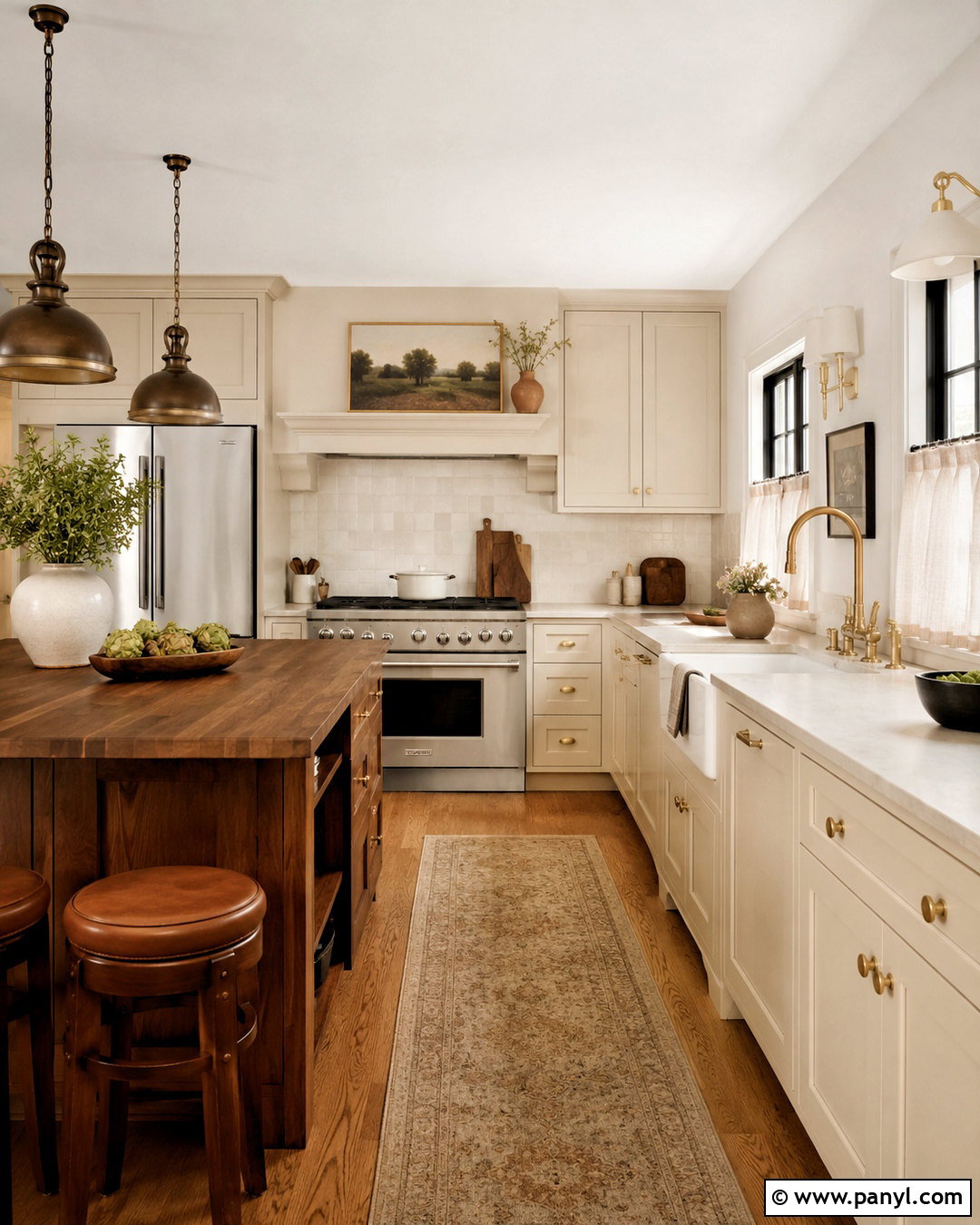
Cream kitchen cabinets offer a softer alternative to white and look especially welcoming in traditional or farmhouse spaces. Use recessed-panel doors with understated molding rather than highly decorative details. Warm cream cabinetry pairs naturally with honed beige limestone counters, an ivory square-tile backsplash, and honey-toned oak flooring. Add aged brass knobs, a bridge-style faucet, and warm bronze pendant lights for a collected finish. A walnut butcher-block island introduces richer color while remaining within the neutral palette. Keep the walls a pale warm white so the cabinets remain visible instead of blending into the background. Linen café curtains, stoneware canisters, and a vintage-style runner complete a practical kitchen that feels relaxed, established, and pleasantly bright.
3. Soft Ivory Kitchen Cabinets
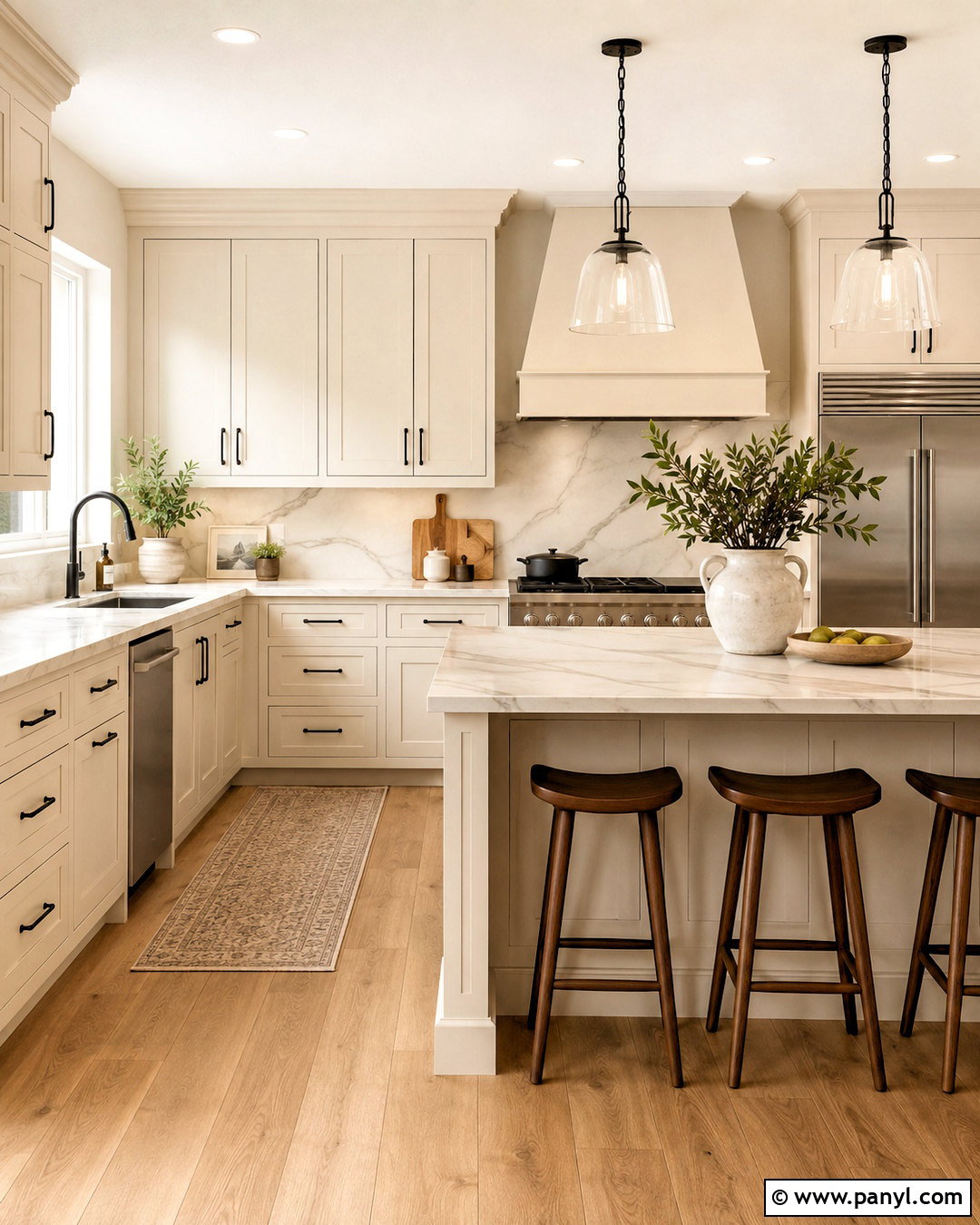
Soft ivory cabinetry creates an elegant neutral kitchen with more depth than standard white. The slight yellow-beige undertone looks polished beside creamy marble-look quartz and a full-height backsplash in the same material. Choose slim Shaker doors for a transitional look that balances classic and modern features. Dark bronze hardware adds definition without producing the harsh contrast of black. Use natural oak flooring, warm white walls, and clear glass pendant lights to maintain an airy atmosphere. On a central island, repeat the ivory cabinets and introduce walnut counter stools for warmth. Small accents in pale stone, muted green, and brushed metal complete the room. The finished kitchen feels refined, coordinated, and comfortable rather than formal or overly pristine.
4. Linen Kitchen Cabinets
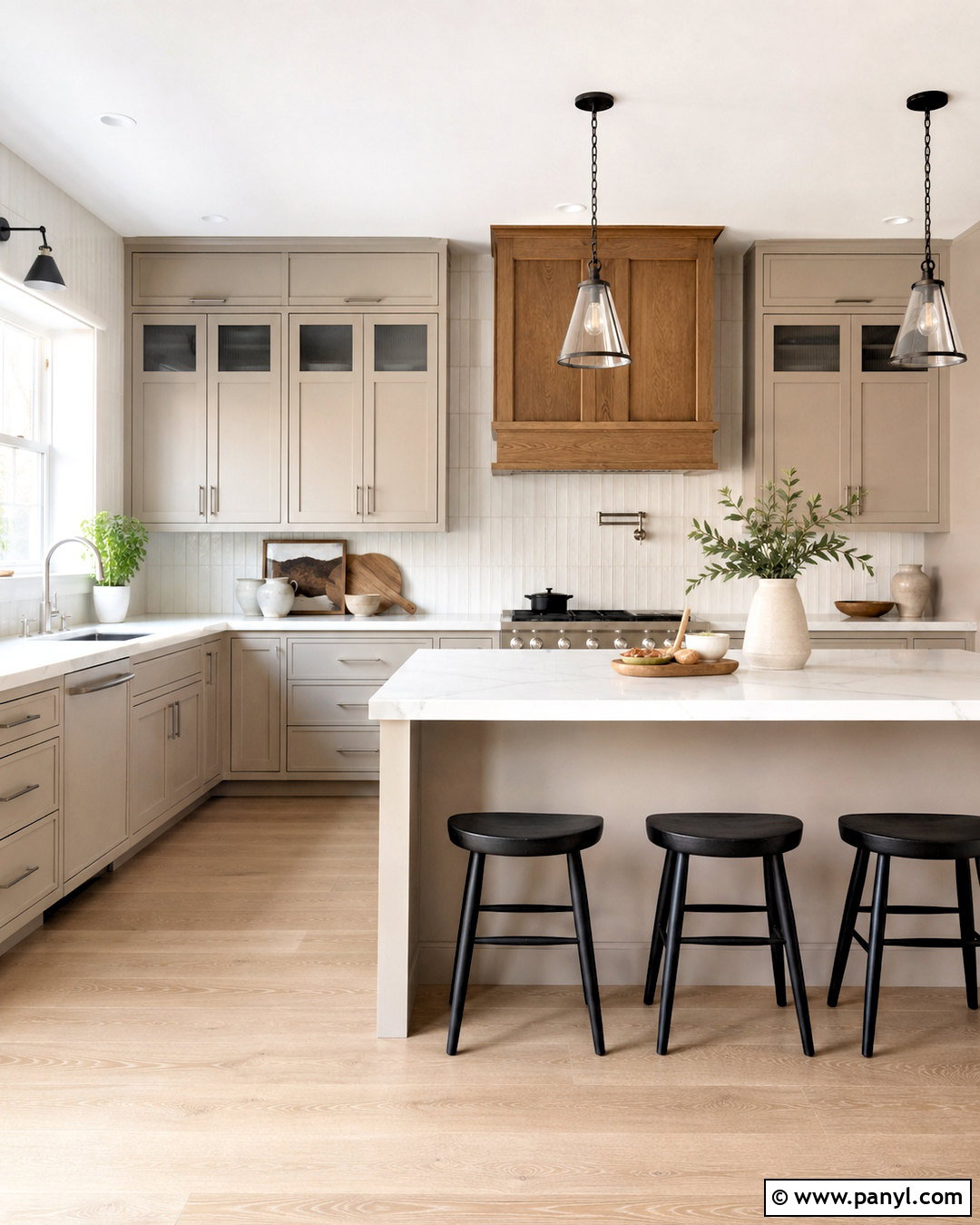
Imagine the understated color of natural linen translated onto clean kitchen cabinetry. This light beige shade has enough warmth to soften a modern layout while remaining pale and versatile. Use flat-panel or narrow-frame cabinets with brushed nickel pulls for a quiet, streamlined finish. White quartz counters and a vertical ivory tile backsplash keep the room fresh. Add pale white oak flooring and a matching oak vent hood for subtle material variation. A compact island in the same linen color creates continuity, while charcoal counter stools provide measured contrast. Keep decorative pieces simple with cream ceramics, wooden cutting boards, and a small potted herb. This balanced design suits open-plan homes because the cabinetry blends comfortably with nearby neutral living areas.
5. Oatmeal Kitchen Cabinets
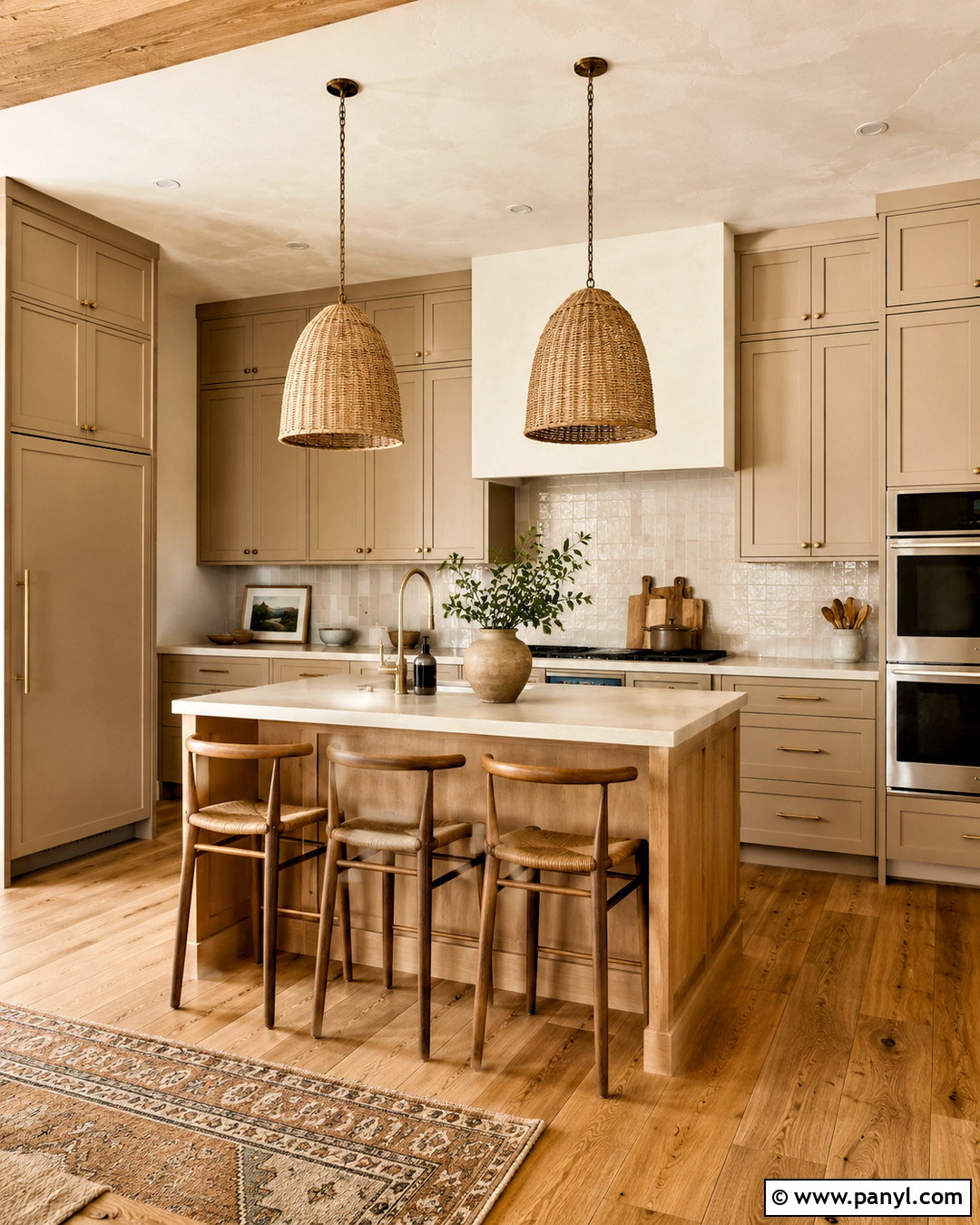
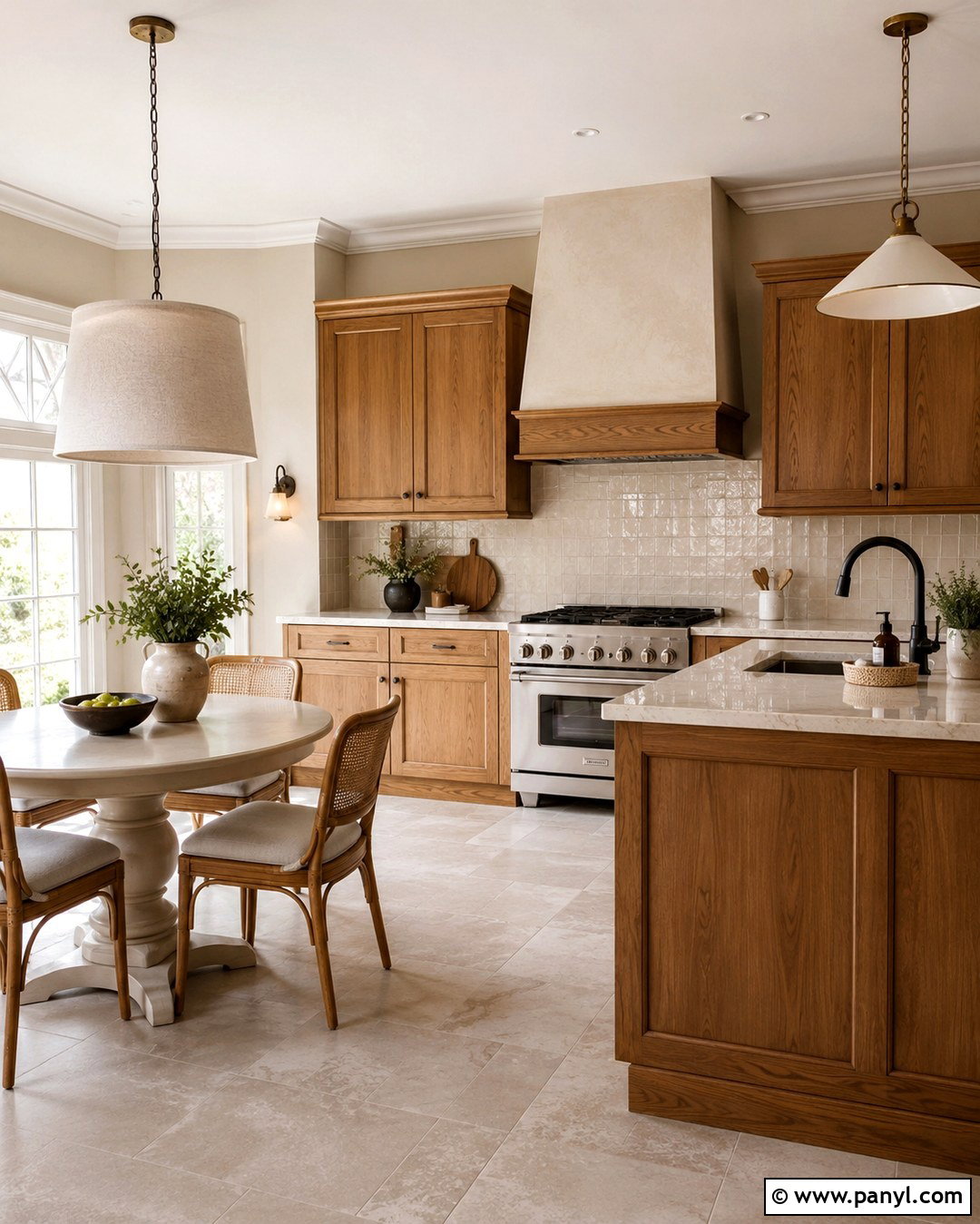
Oatmeal is a light, earthy beige that makes kitchens feel cozy without appearing yellow. Cover the perimeter cabinets in this warm neutral, using Shaker doors and satin brass hardware. A white oak island with a creamy quartz top gives the design a natural focal point. Choose a softly textured zellige backsplash in warm white, then continue medium oak flooring throughout the space. Plaster-look walls, woven pendant lights, and curved wooden stools support the relaxed organic character. Black accents should be limited to small details, such as window frames or a slender faucet, so they do not overpower the subtle palette. The completed kitchen feels bright yet grounded, making oatmeal cabinetry a useful choice for both contemporary farmhouse and organic modern interiors.
6. Light Beige Kitchen Cabinets
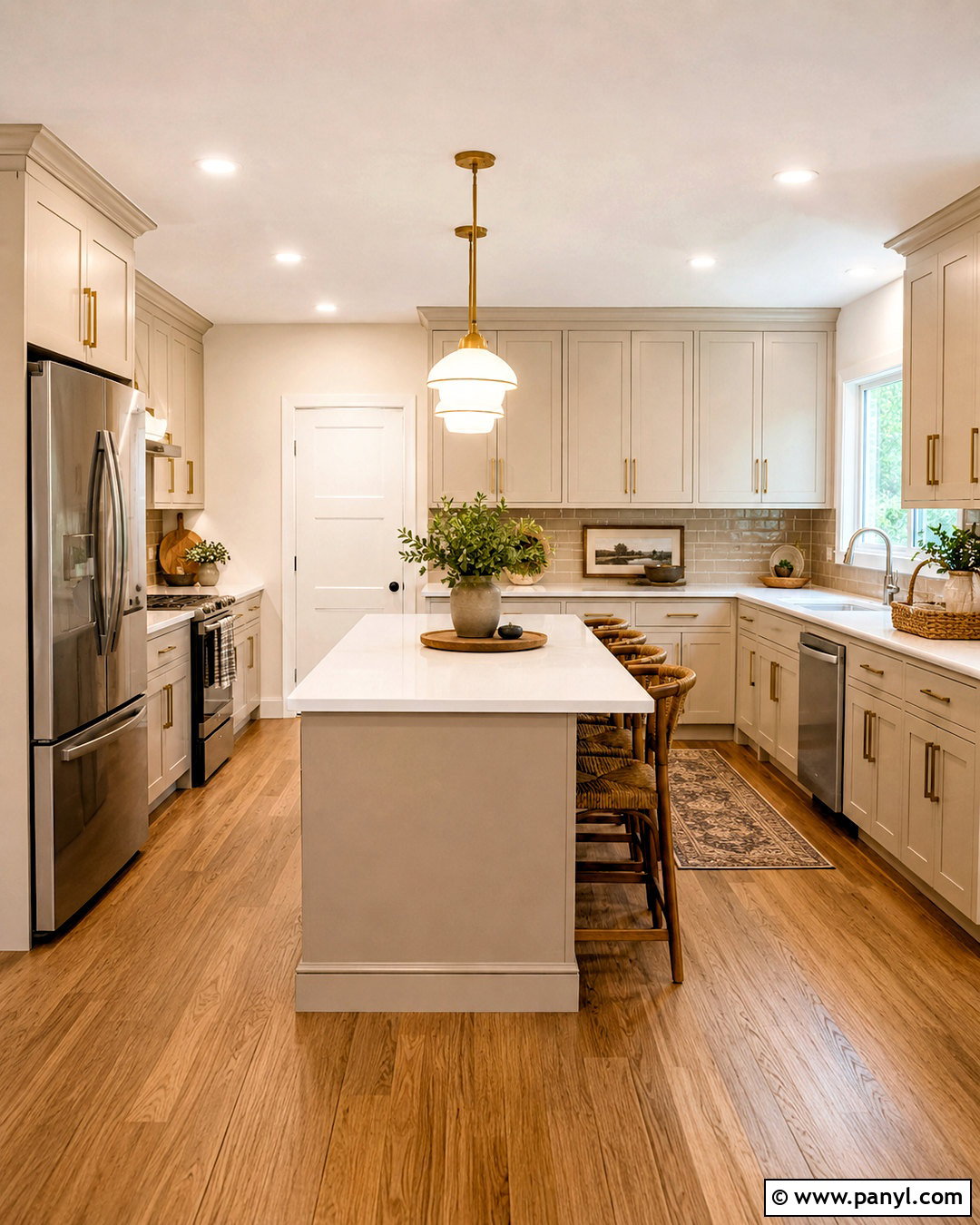
Light beige cabinets can make a busy family kitchen feel calm and coordinated. Select a balanced beige that does not lean strongly pink or yellow, then use it across full-height storage, upper cabinets, and base cabinets. Durable off-white quartz countertops keep the work surfaces light, while a taupe porcelain backsplash adds gentle tonal variation. Pair the cabinetry with medium oak flooring and champagne bronze hardware. A generous island can include matching beige panels, deep drawers, and comfortable woven stools. Add soft white walls and large opal glass pendants to brighten the arrangement. Because each finish stays within a warm natural range, appliances and everyday countertop items blend into the design rather than creating distracting visual contrast.
7. Sand Kitchen Cabinets
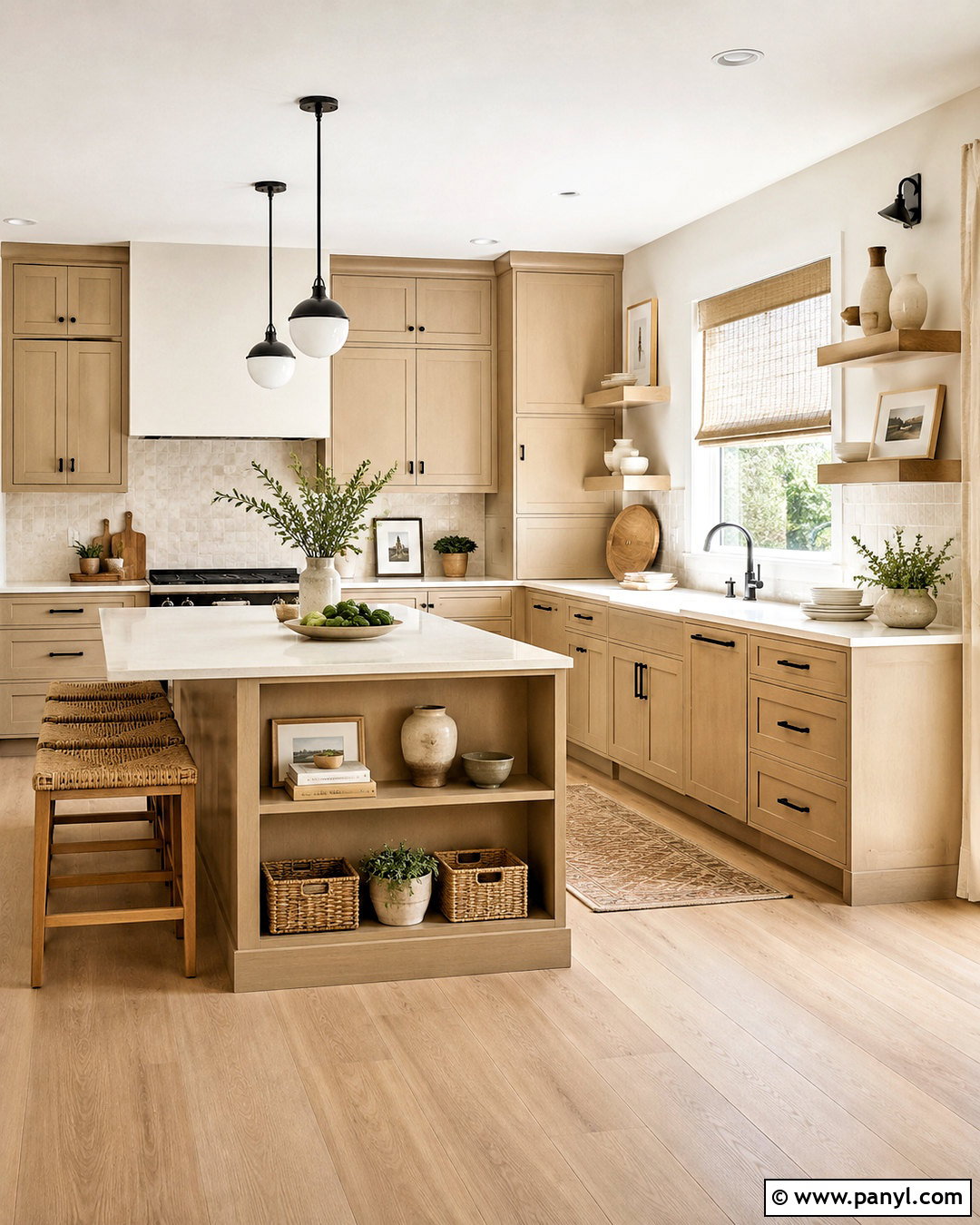
Sand-colored cabinets bring the quiet warmth of a natural shoreline into a practical kitchen. This neutral sits between beige and pale tan, making it substantial enough to define cabinetry without darkening the room. Pair sand Shaker cabinets with creamy white quartz, a textured off-white backsplash, and pale oak floors. Use matte black hardware sparingly to sharpen the cabinet lines, then repeat black on simple pendant fixtures and the faucet. An island with open oak shelving introduces another natural surface and provides space for baskets or everyday dishes. Finish the kitchen with beige linen Roman shades, woven stools, and handmade pottery. The complete look is casual, light, and easy to coordinate with adjacent dining or family spaces.
8. Putty Kitchen Cabinets
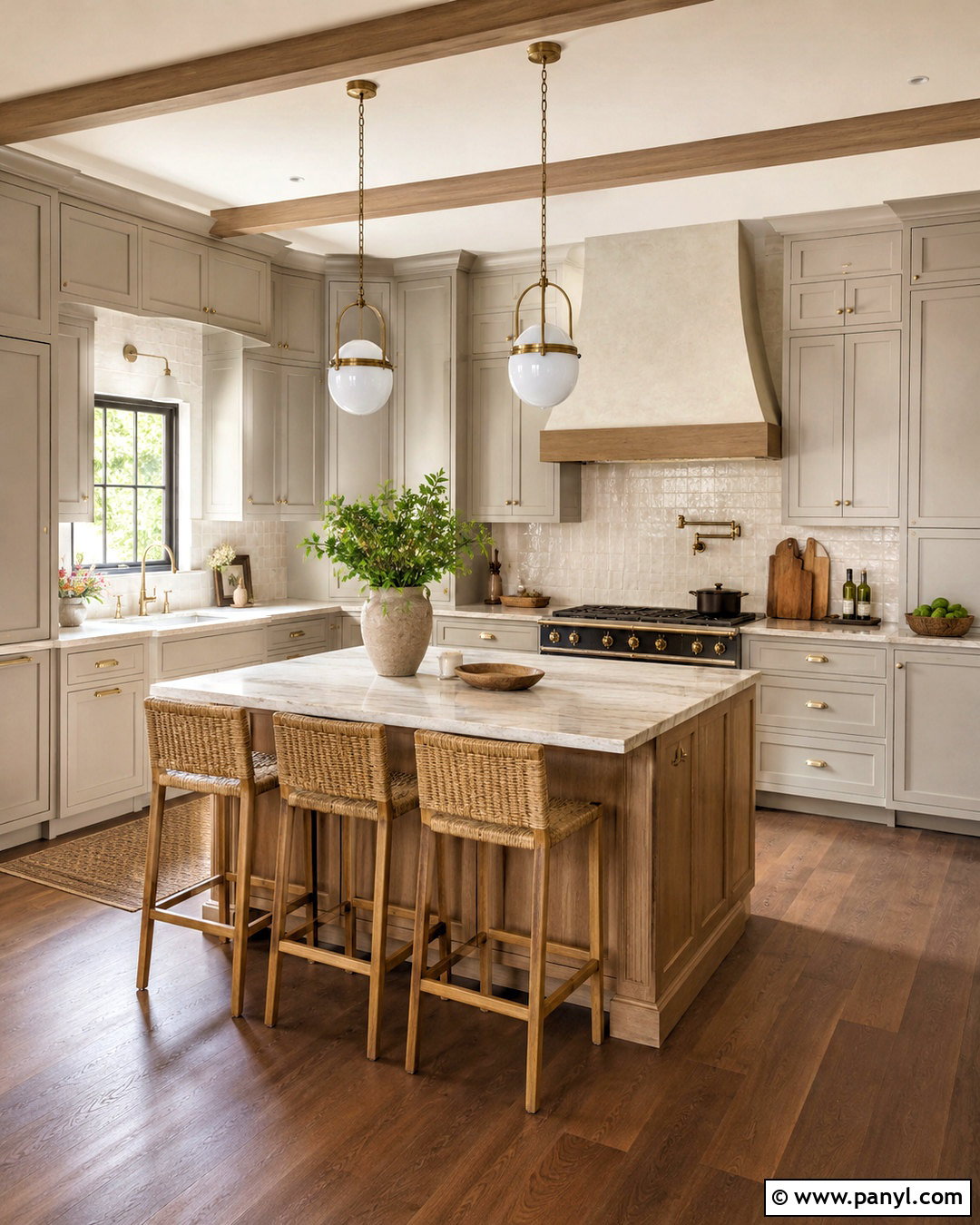
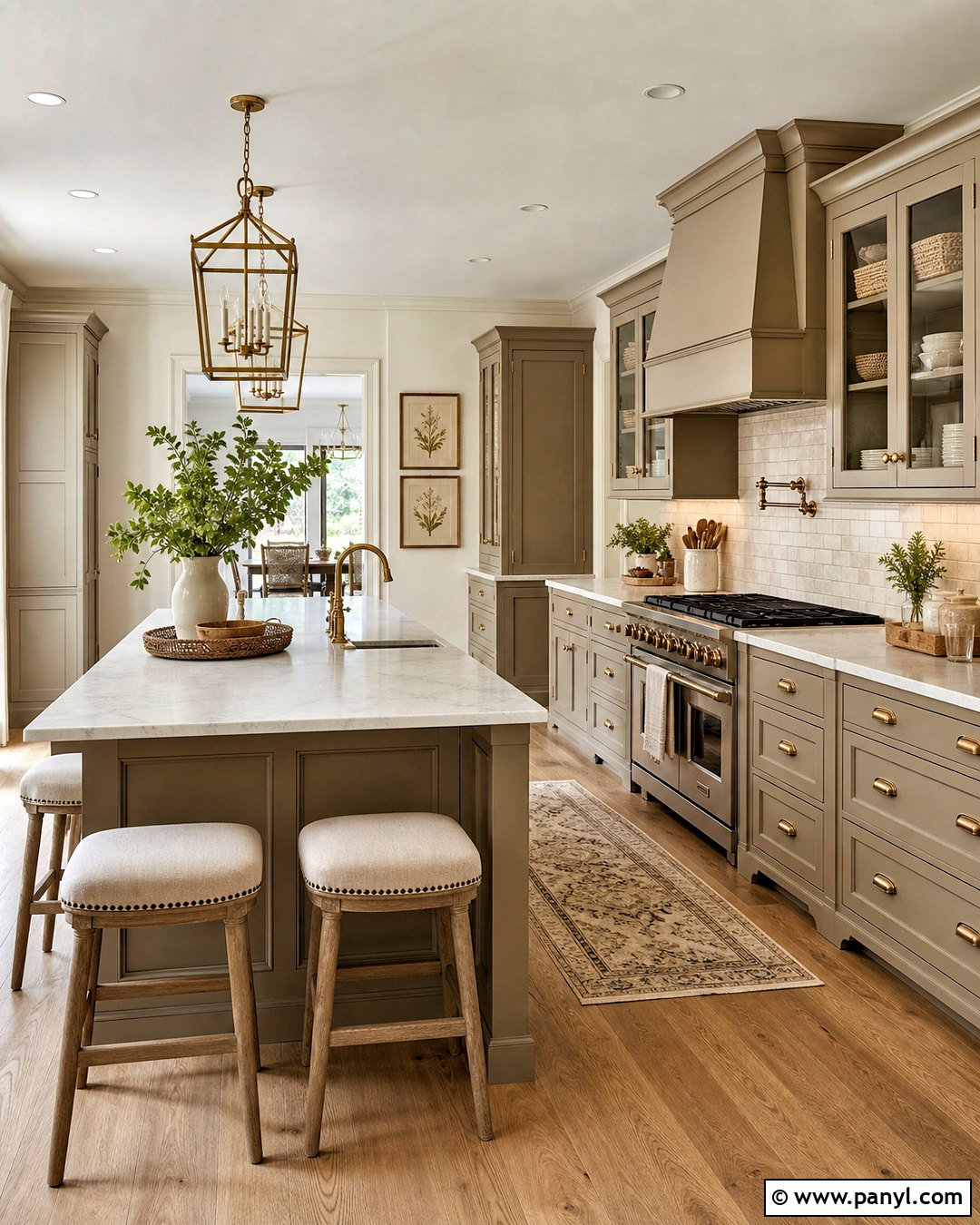
Putty cabinets combine beige, gray, and a hint of brown for a grounded transitional kitchen. The color looks particularly effective on inset cabinetry with simple framed doors. Pair it with warm white quartzite-style counters and a softly irregular cream tile backsplash. Medium walnut flooring and an oak island add depth, while antique brass hardware creates a classic finishing layer. Paint the walls warm off-white to provide clear but gentle separation from the cabinet color. Over the island, hang simple milk-glass pendants that spread even light across the work surface. A plaster range hood, woven counter stools, and restrained ceramic decor complete the scheme. Putty delivers noticeable color while staying quiet enough to support changing accessories and seasonal decor.
9. Mushroom Kitchen Cabinets
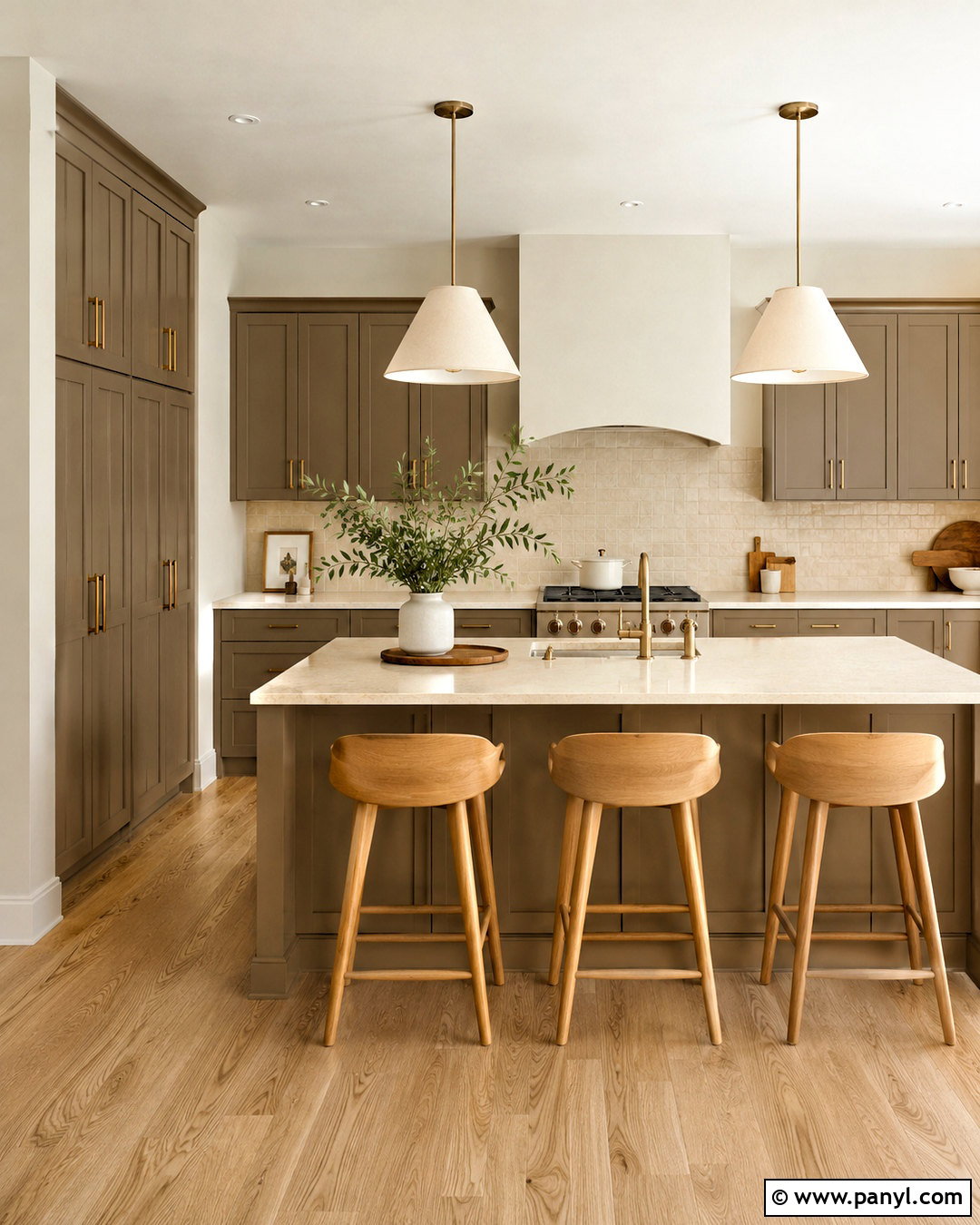
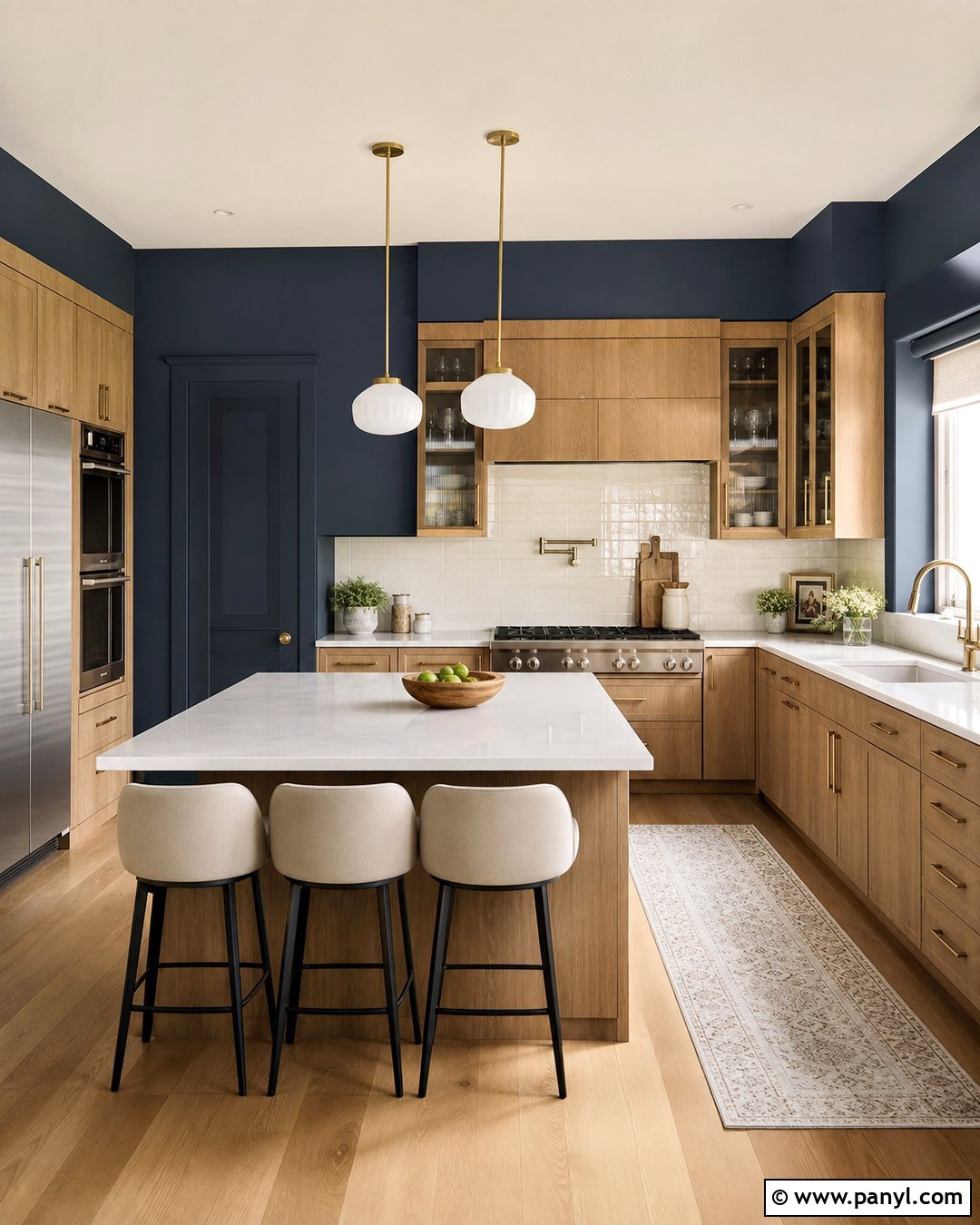
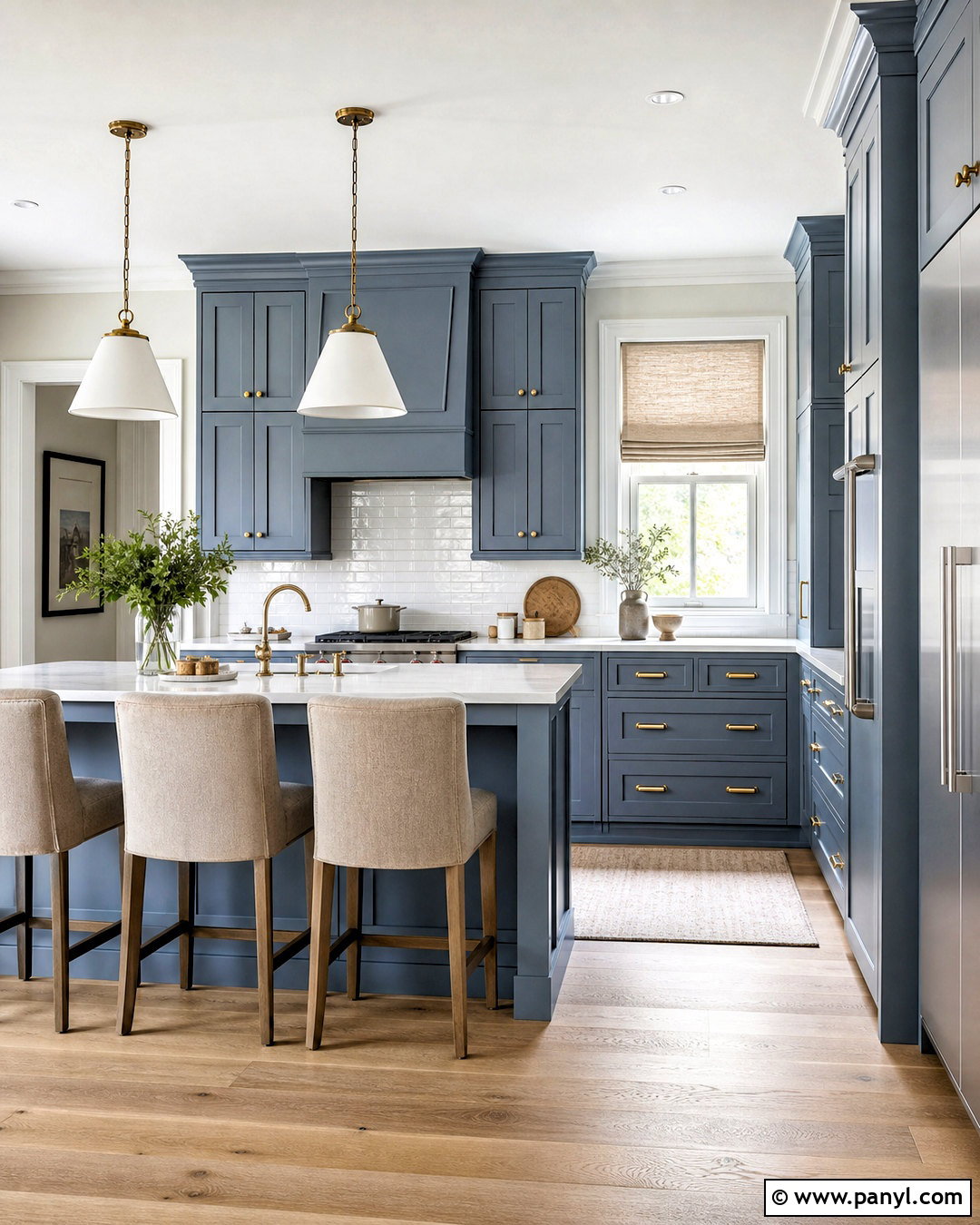
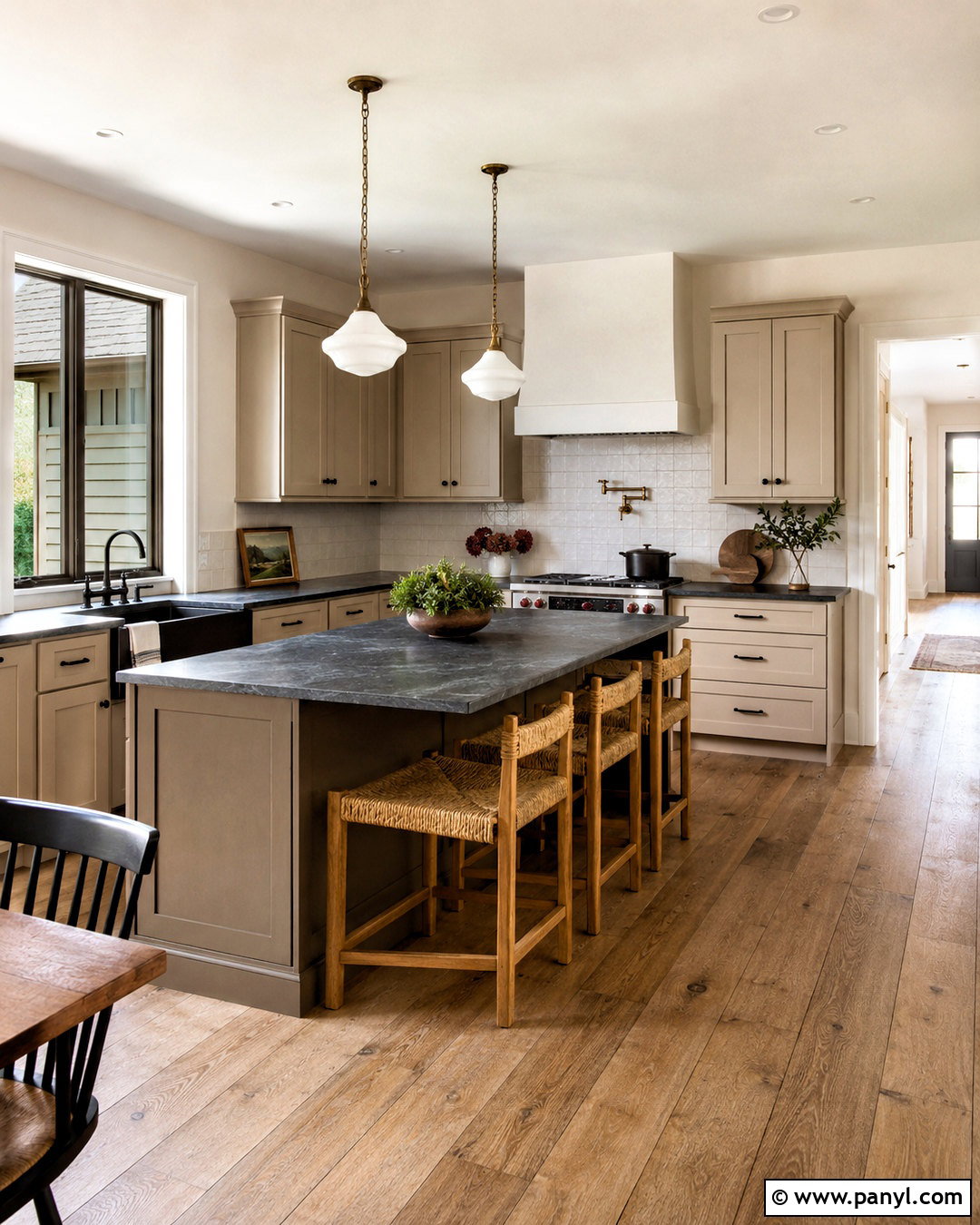
Mushroom kitchen cabinets create a rich, earthy neutral look that changes subtly with the surrounding light. Choose a medium mushroom shade combining taupe, gray, and brown undertones. Apply it to streamlined Shaker cabinetry, including a tall pantry wall and large central island. Cream quartz countertops and a pale stone backsplash prevent the deeper cabinets from feeling heavy. Add white oak floors, unlacquered brass pulls, and linen pendant shades for warmth and texture. Walls in a soft creamy white keep the cabinet color clearly defined. On the island, use curved oak stools and a simple ceramic bowl rather than excessive accessories. This complete palette feels sophisticated but approachable, working equally well in traditional, transitional, and organic modern kitchens.
10. Light Taupe Kitchen Cabinets
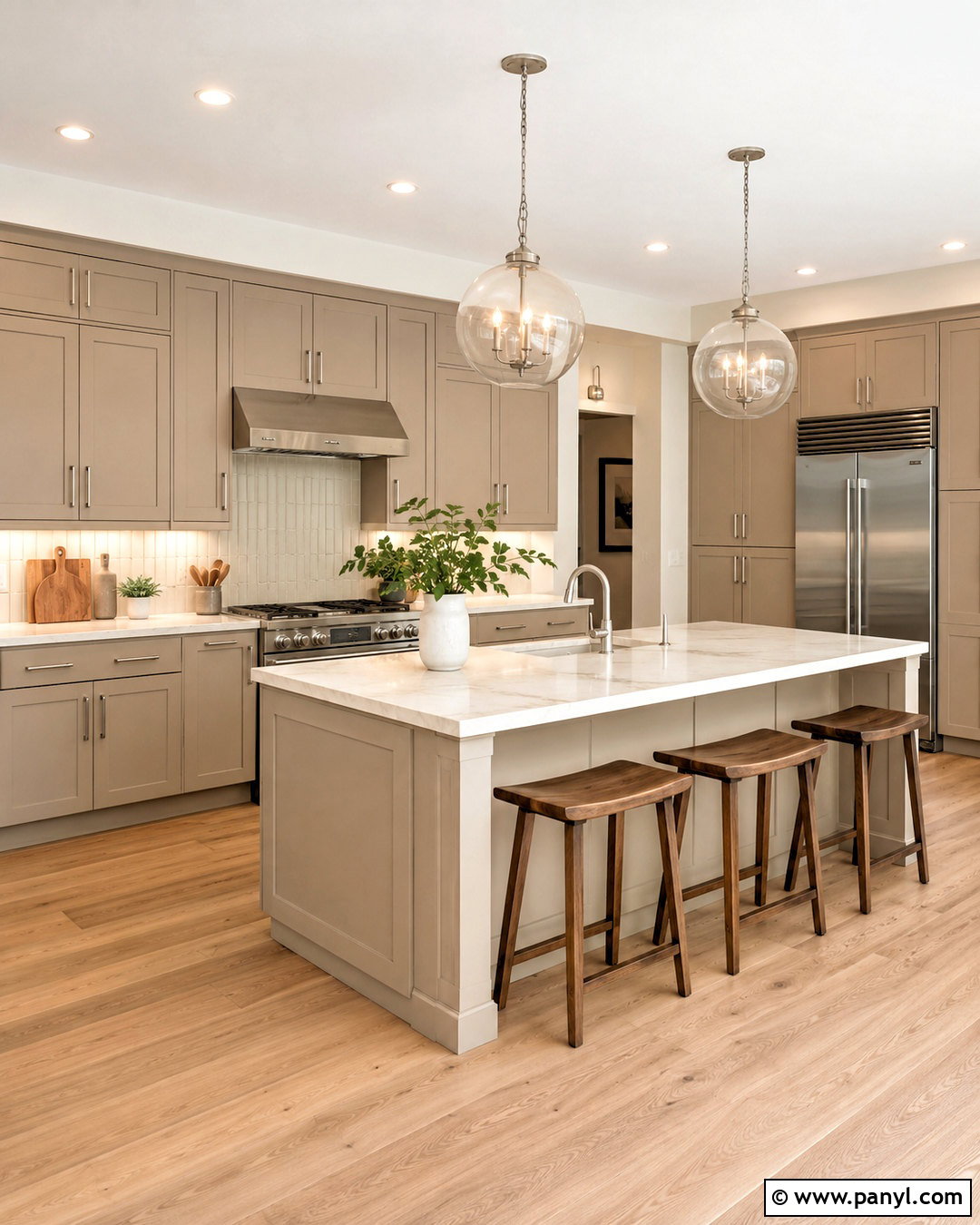
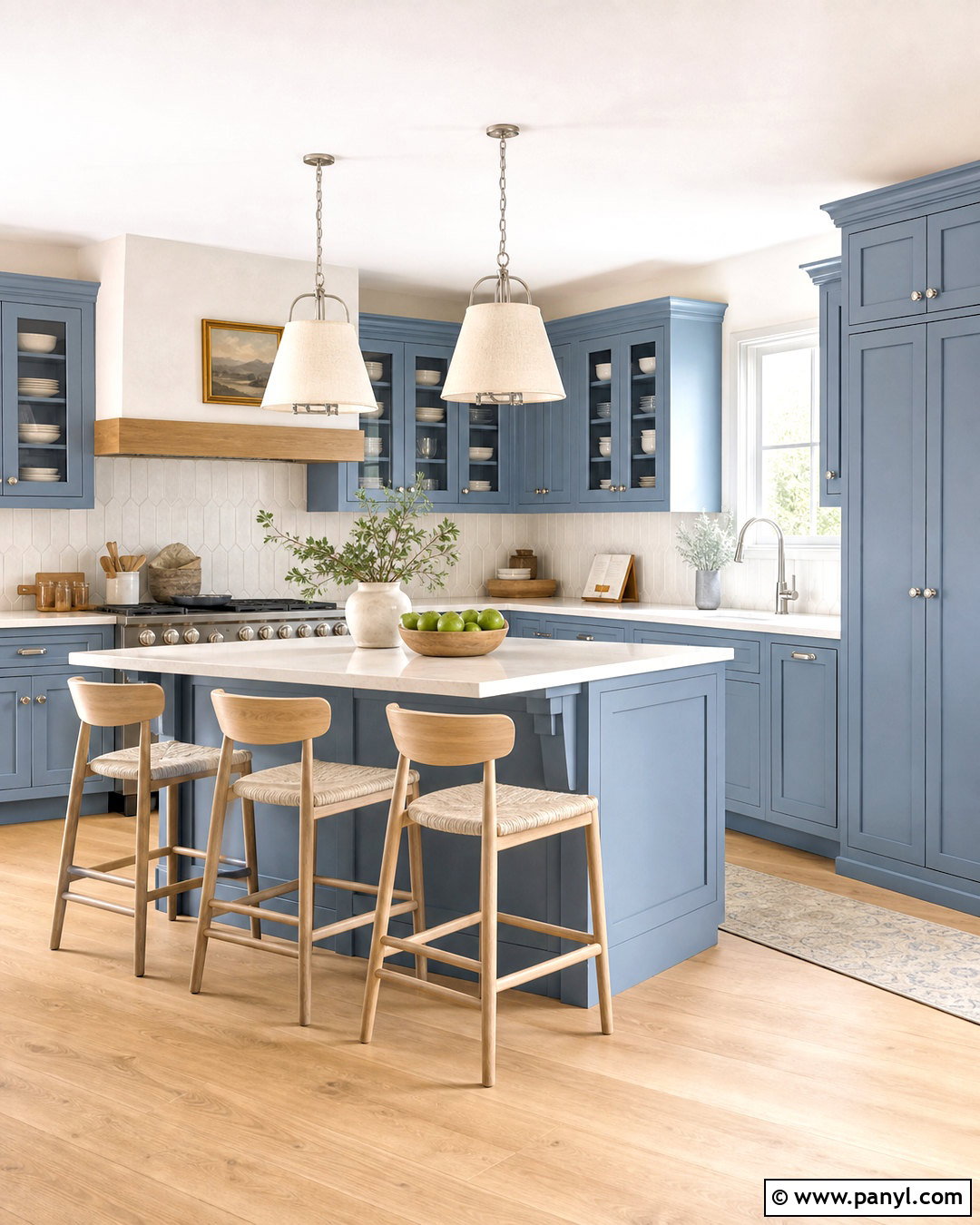
Light taupe cabinetry provides a graceful middle ground between beige and gray. It works beautifully in a bright transitional kitchen with slim Shaker doors and polished nickel hardware. Use white marble-look quartz on the perimeter and island, then install a warm white elongated tile backsplash in a straight stacked pattern. Pale oak flooring keeps the room light, while walnut counter stools introduce a deeper wood tone. Paint the walls a soft off-white with a similar undertone to avoid making the cabinets appear muddy. Clear globe pendants preserve open sightlines above the island. With limited decor, neatly integrated appliances, and a balanced mix of warm and cool finishes, light taupe cabinets create a clean kitchen that still feels welcoming.
11. Deep Taupe Kitchen Cabinets
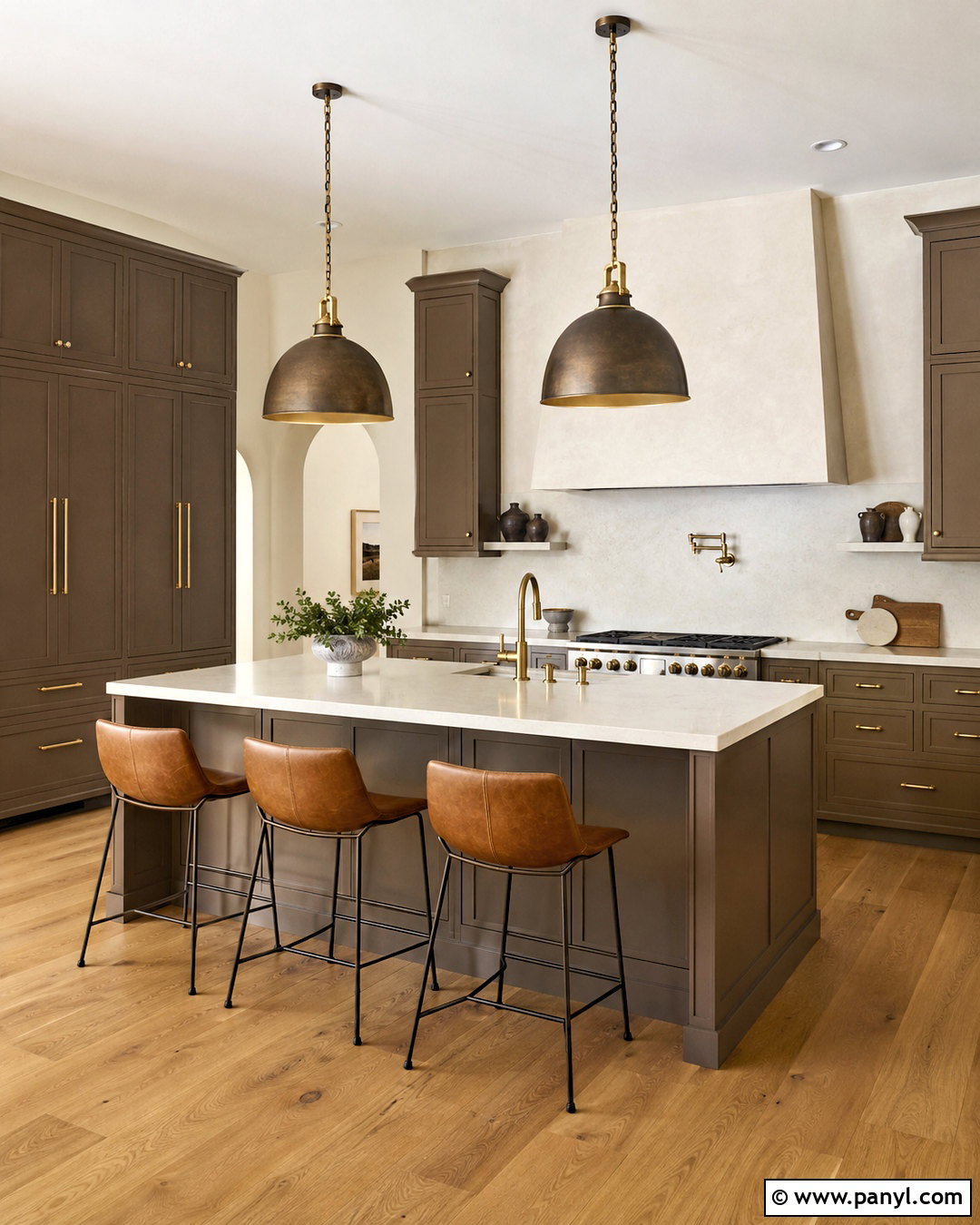
For a more dramatic neutral kitchen, deep taupe offers richness without becoming as severe as black. Use this brown-gray color on full-height cabinets, lower drawers, and a substantial island. Keep upper cabinetry limited around the main prep area so a creamy plaster hood and light backsplash can visually open the room. Pale quartz countertops provide practical contrast, while warm oak flooring balances the cabinet depth. Add brushed brass pulls, aged bronze pendants, and cognac leather stools for a layered finish. Soft ivory walls help the taupe read as warm rather than cool. The completed design feels tailored and grounded, making it especially effective in larger kitchens with generous windows, high ceilings, or an open connection to the dining room.
12. Soft Greige Kitchen Cabinets
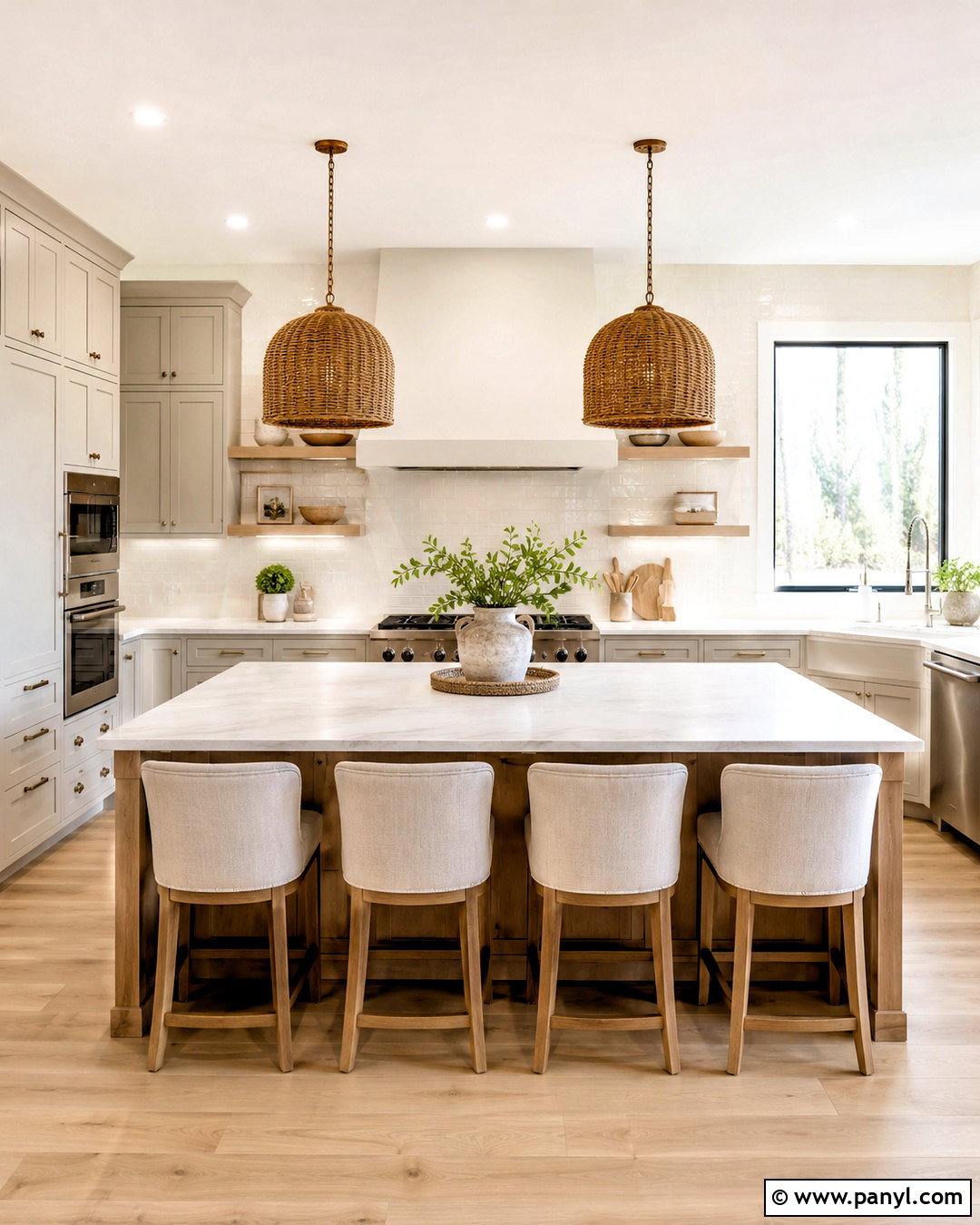
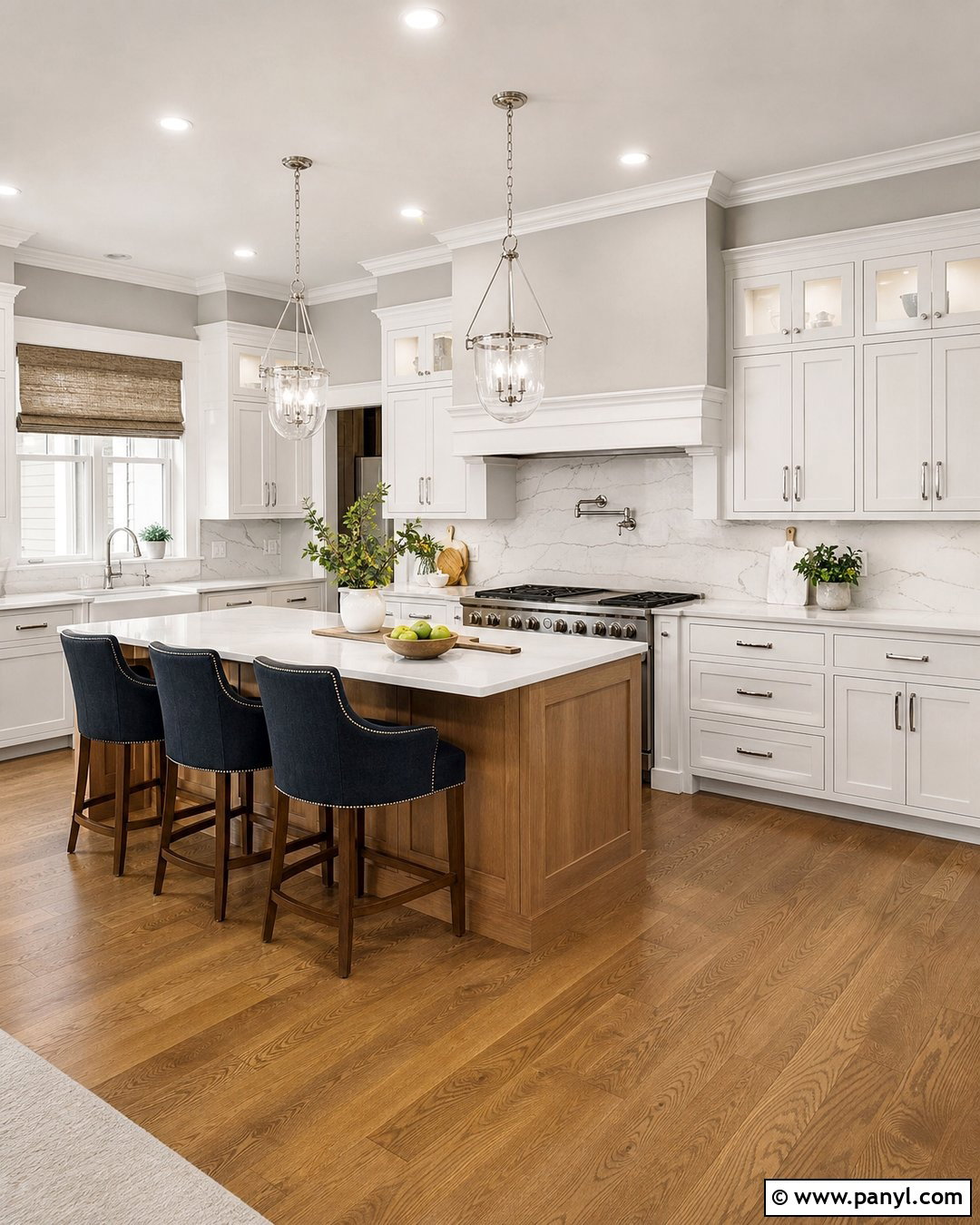
Soft greige cabinets combine the calm appearance of gray with the comfort of beige. Select a light greige for all perimeter cabinets and use natural white oak on the island to break up the painted surfaces. White quartz countertops with delicate warm veining connect both cabinet finishes. A glossy cream subway backsplash reflects light, while pale oak flooring creates an easy transition into nearby rooms. Choose brushed nickel hardware for a subtle contemporary touch, then add woven pendants and upholstered counter stools to prevent the room from feeling cold. Warm white walls should be noticeably lighter than the cabinets. This complete arrangement gives a small or medium kitchen depth and definition while preserving an open, uncluttered appearance.
13. Stone Kitchen Cabinets
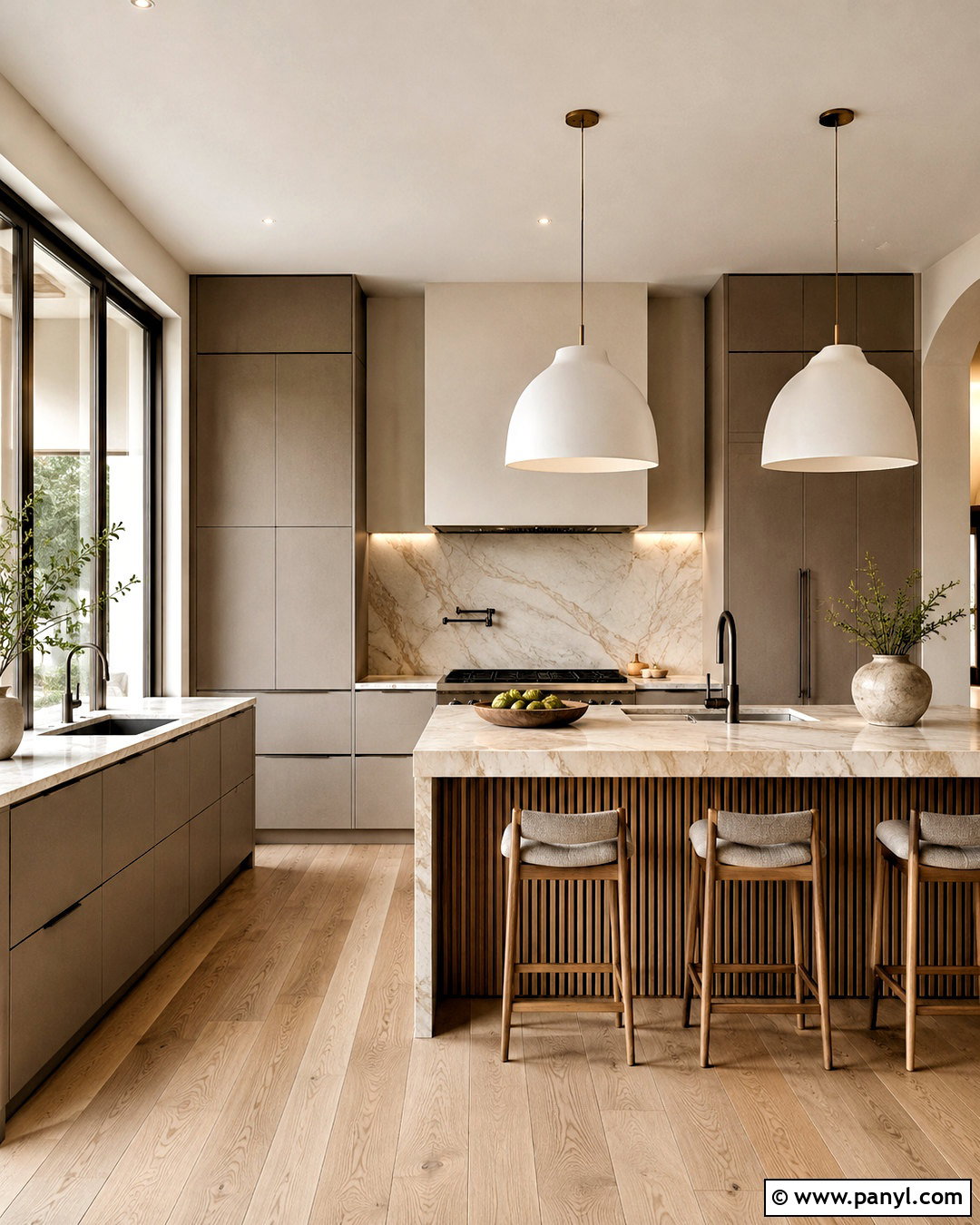
Stone-colored cabinets have a mineral quality that feels solid, neutral, and quietly contemporary. This shade usually falls between warm gray and pale taupe, making it easy to coordinate with natural materials. Use flat-panel stone cabinets with discreet bronze finger pulls for a streamlined look. Pair them with creamy quartzite counters and a full-height backsplash showing soft beige veining. Wide-plank oak flooring and a slatted oak island end panel introduce texture. Add sculptural white pendants, light wood stools, and warm white walls to brighten the design. A few dark accents, such as a bronze faucet and narrow window frames, provide definition. The finished kitchen feels architectural and clean but remains comfortable enough for everyday family use.
14. Dove Gray Kitchen Cabinets
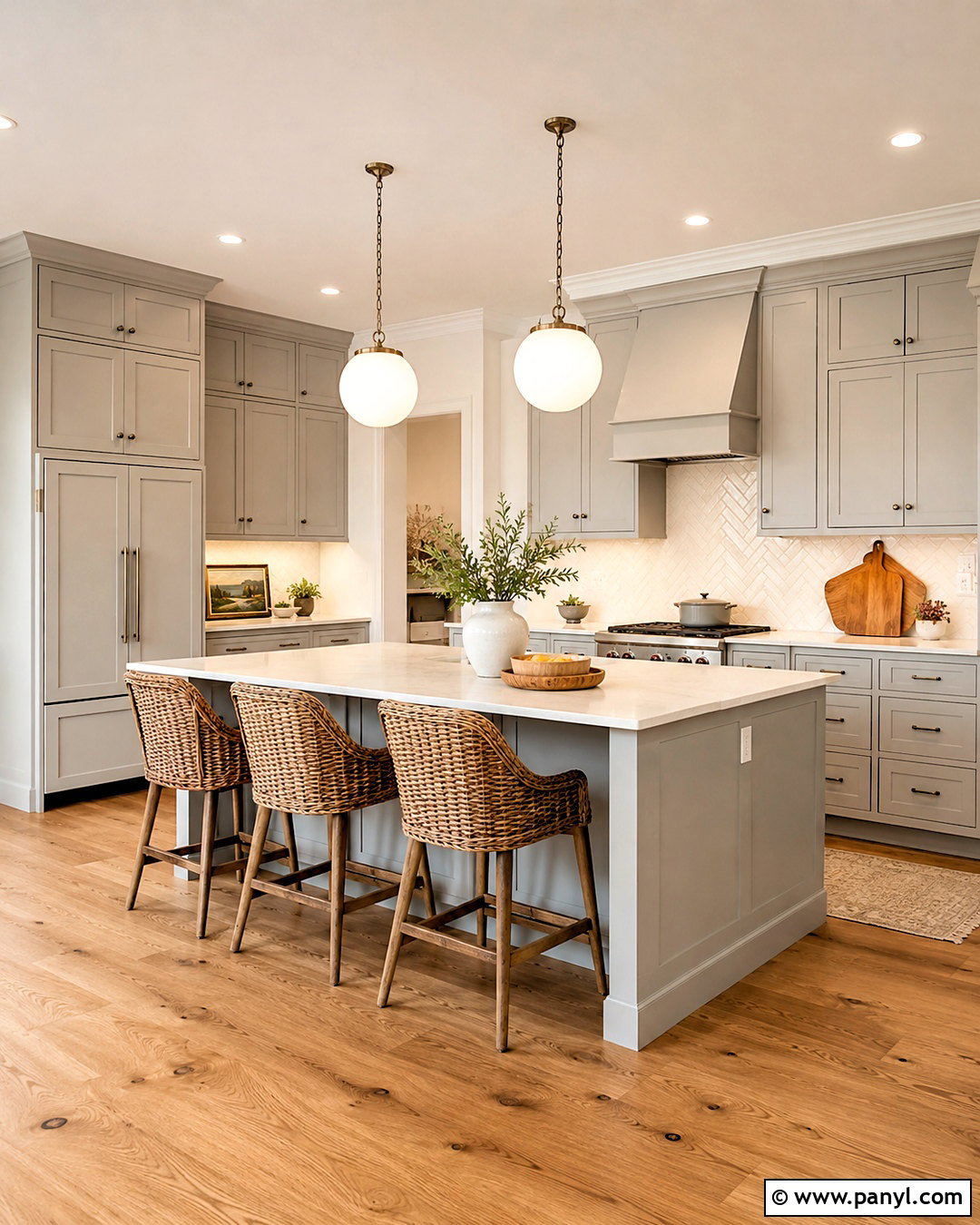
Dove gray cabinets can look fresh and light when supported by warm finishes. Choose a pale gray with soft beige undertones instead of an icy blue-gray. Install it on classic Shaker cabinetry with satin nickel knobs and cup pulls. Creamy white quartz countertops, an ivory herringbone backsplash, and honey oak flooring warm the cooler cabinet color. A compact island in matching dove gray keeps the room cohesive, while woven counter stools add texture. Use warm white paint on the walls and soft globe lighting rather than cool blue bulbs. Natural wooden boards, neutral ceramics, and a simple runner finish the space. This thoughtful combination produces an airy gray kitchen that feels current, relaxed, and easy to live with.
15. Warm Gray Kitchen Cabinets
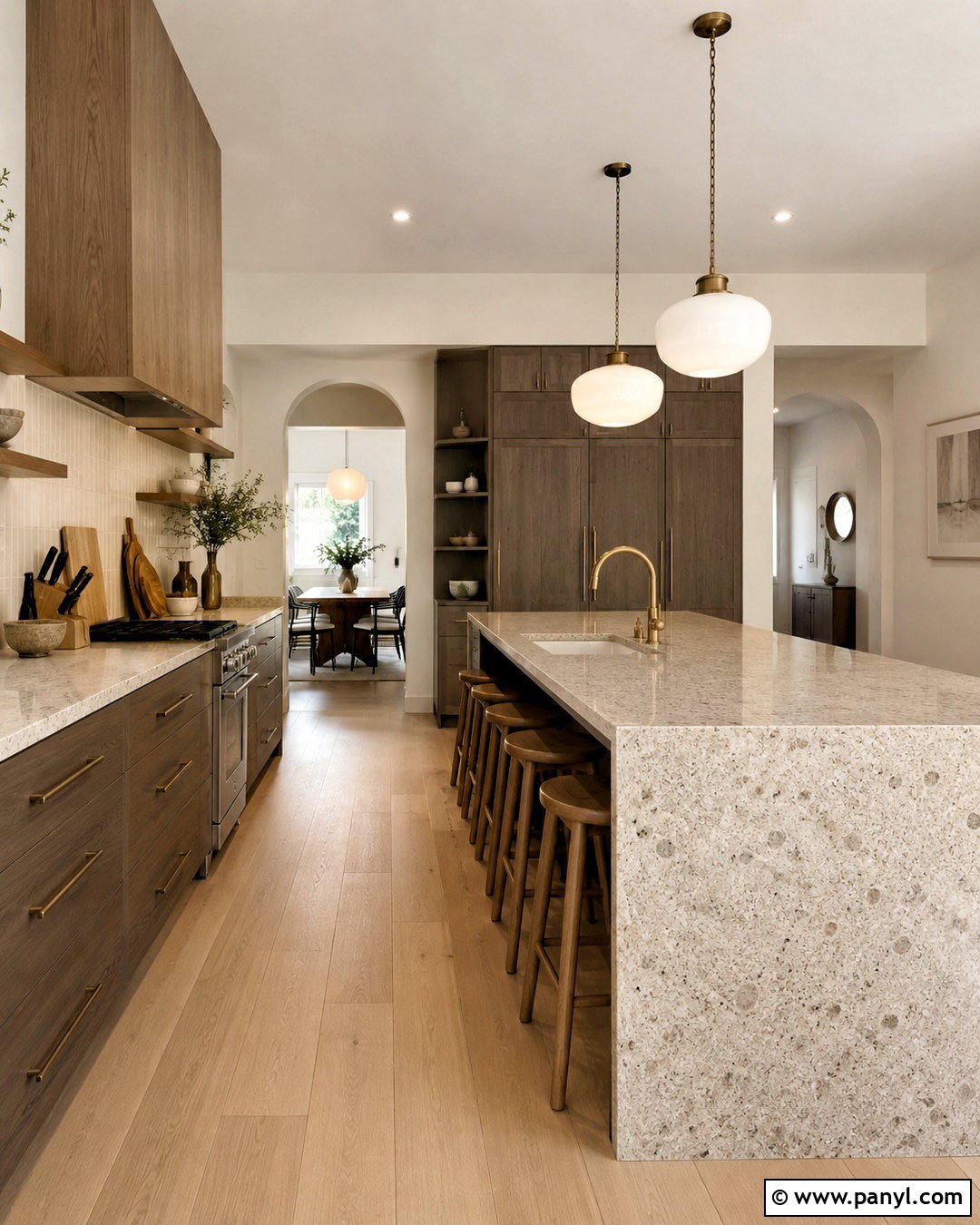
Warm gray cabinetry brings structure to a kitchen without the visual weight of charcoal. Select a medium gray containing noticeable brown or beige undertones. Pair simple slab-front cabinets with creamy terrazzo counters and a vertical warm white backsplash. White oak flooring, matching open shelves, and a wood-clad range hood introduce enough organic material to soften the sleek cabinet profile. Choose aged brass hardware and oversized opal pendants for gentle contrast. A long island in the same warm gray creates a unified, furniture-like center for cooking and casual meals. Keep the walls light and slightly warmer than the cabinetry. The resulting kitchen feels modern and organized while avoiding the sterile appearance sometimes associated with cooler gray surfaces.
16. Clay Beige Kitchen Cabinets
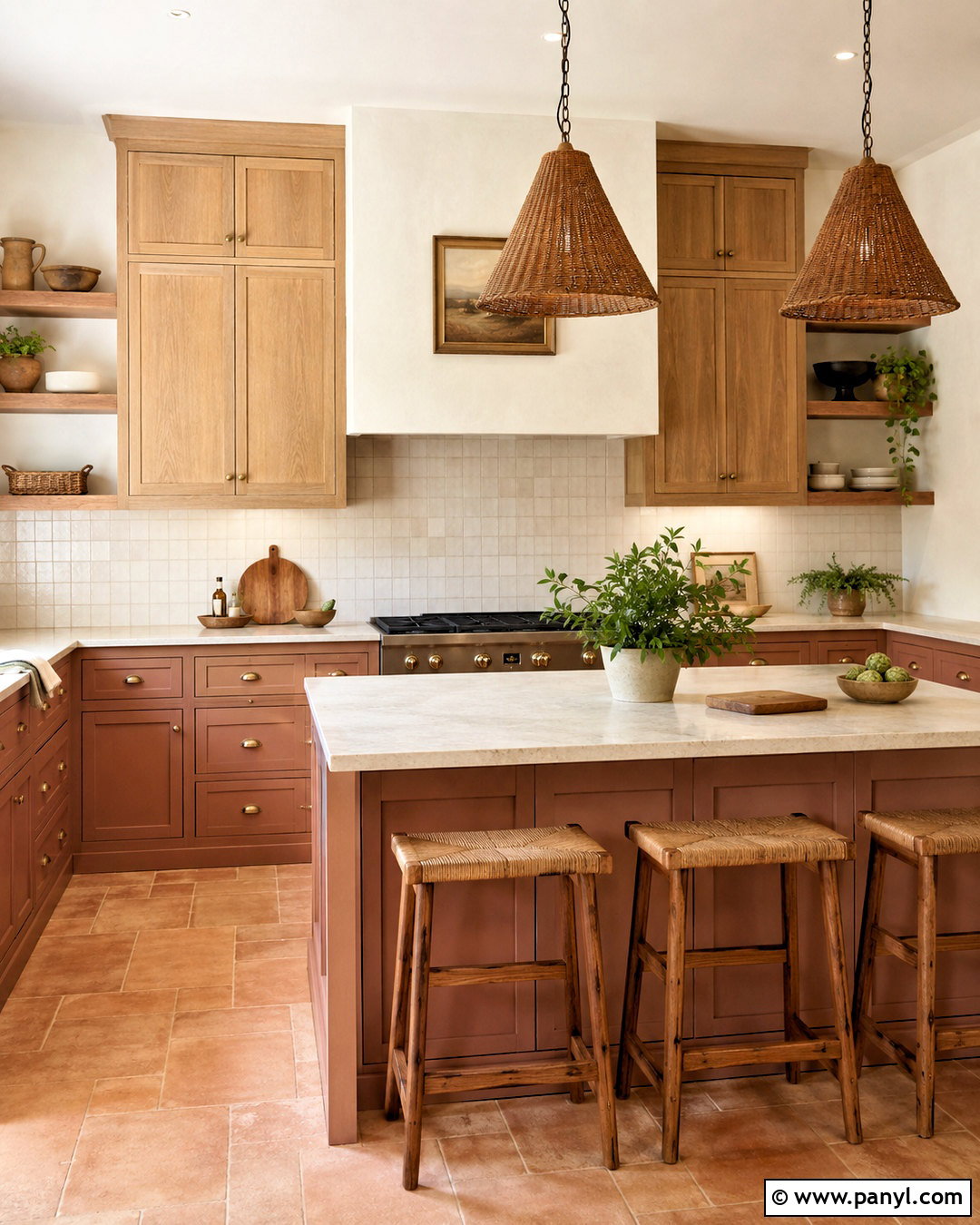
Clay beige cabinets add muted earthy color while staying firmly within a neutral palette. The shade blends beige with a restrained reddish-brown undertone, creating warmth that works well with stone and wood. Use clay beige on Shaker base cabinets, tall pantry units, and an island, then keep selected upper cabinets in natural oak. Cream limestone counters and an ivory square-tile backsplash reinforce the handcrafted character. Add aged brass pulls, terracotta-look porcelain flooring, and woven pendant lights. Walls in a chalky warm white keep the kitchen from becoming too saturated. Open oak shelves can display cream dishes and practical glass containers. This complete design feels relaxed, tactile, and suitable for Mediterranean, Southwestern, or organic modern homes.
17. Cashmere Kitchen Cabinets
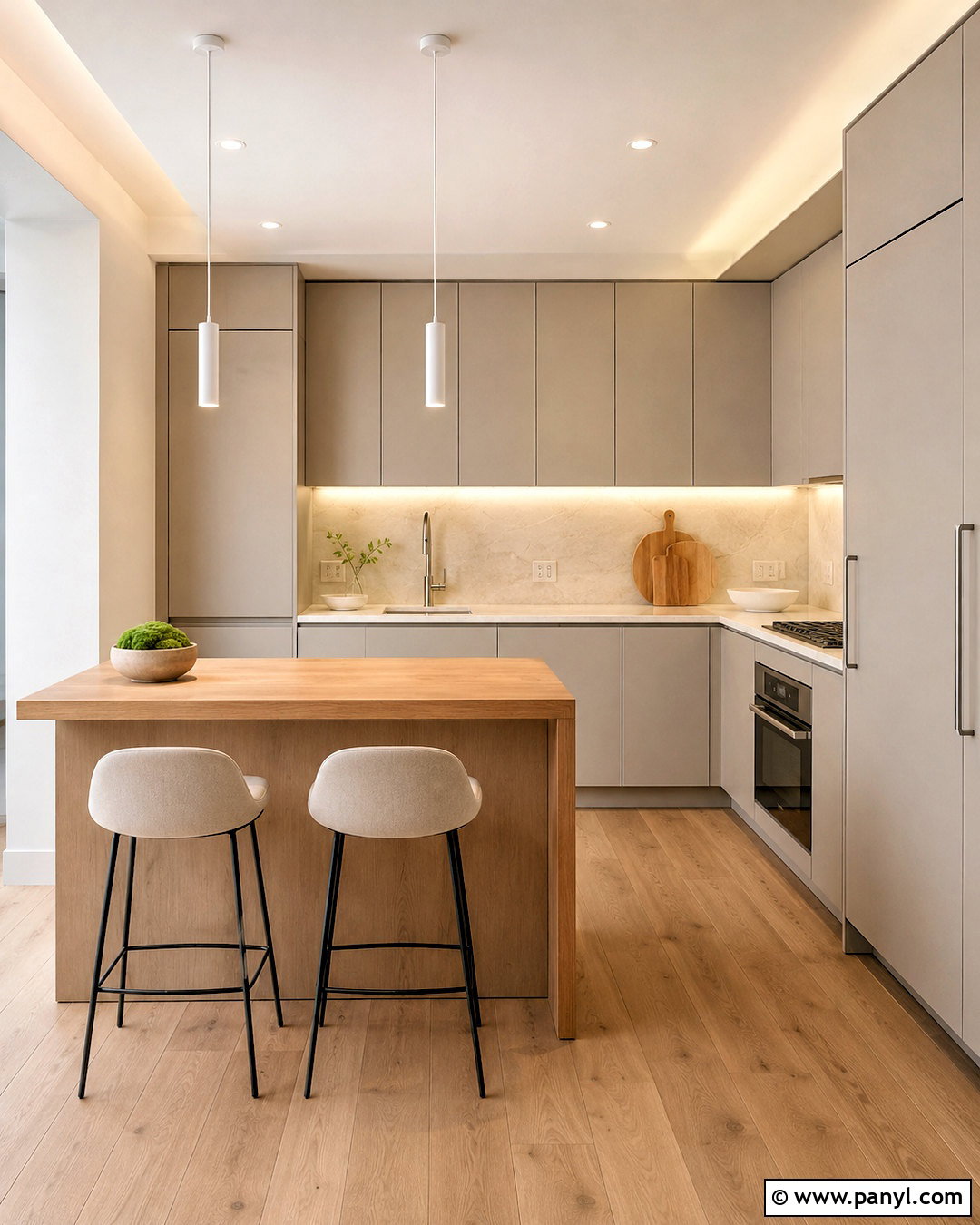
Cashmere cabinetry has a soft beige-gray appearance that suits clean, contemporary kitchens. Use handleless flat-panel doors in a low-sheen finish for an uninterrupted wall of storage. Pair the cabinets with thin white quartz countertops and a full-height backsplash in pale warm stone. Light oak flooring prevents the minimalist surfaces from feeling clinical, while a matching oak breakfast bar adds warmth to the island. Choose brushed stainless steel fixtures and slim white pendant lights for a restrained finish. Keep the walls a gentle off-white and hide small appliances behind cabinet doors whenever practical. The complete kitchen feels streamlined but not stark. Cashmere is especially effective in compact spaces where a quiet, continuous palette can reduce visual clutter.
18. Pale Sage Kitchen Cabinets
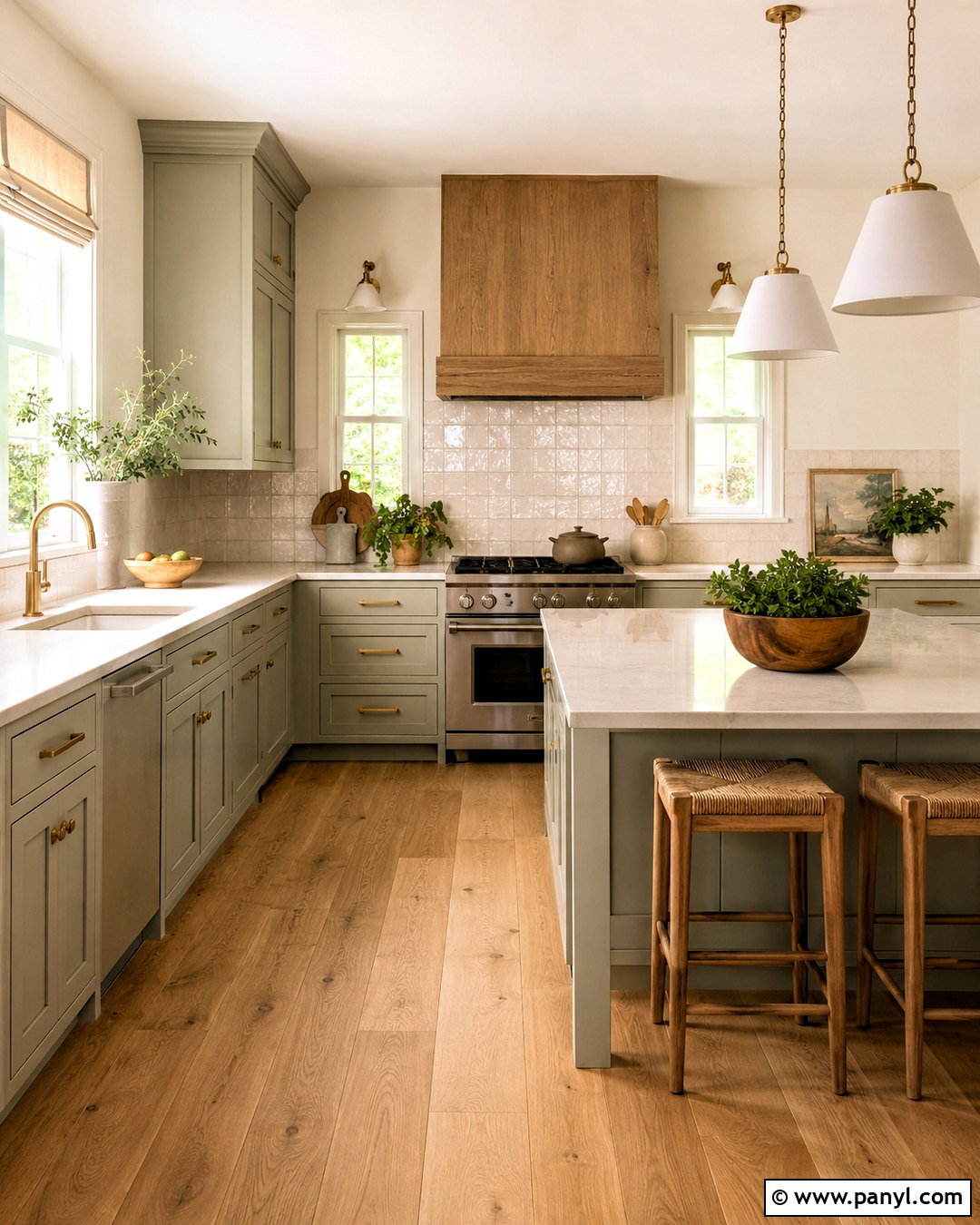
Pale sage can function as a nature-inspired neutral when its green tone is softened with gray. Cover the cabinets in a muted sage finish and pair them with creamy quartz countertops. A handmade warm white backsplash adds light texture, while natural oak flooring and an oak range hood strengthen the organic palette. Choose brushed brass pulls and a matching faucet for understated warmth. On the island, repeat the sage cabinetry and add woven rush stools with light wood frames. Paint the walls ivory rather than bright white so the green remains gentle and balanced. Linen shades, off-white pottery, and a few leafy herbs complete the room. This design brings subtle color into the kitchen without sacrificing calmness or decorating flexibility.
19. Muted Olive Kitchen Cabinets
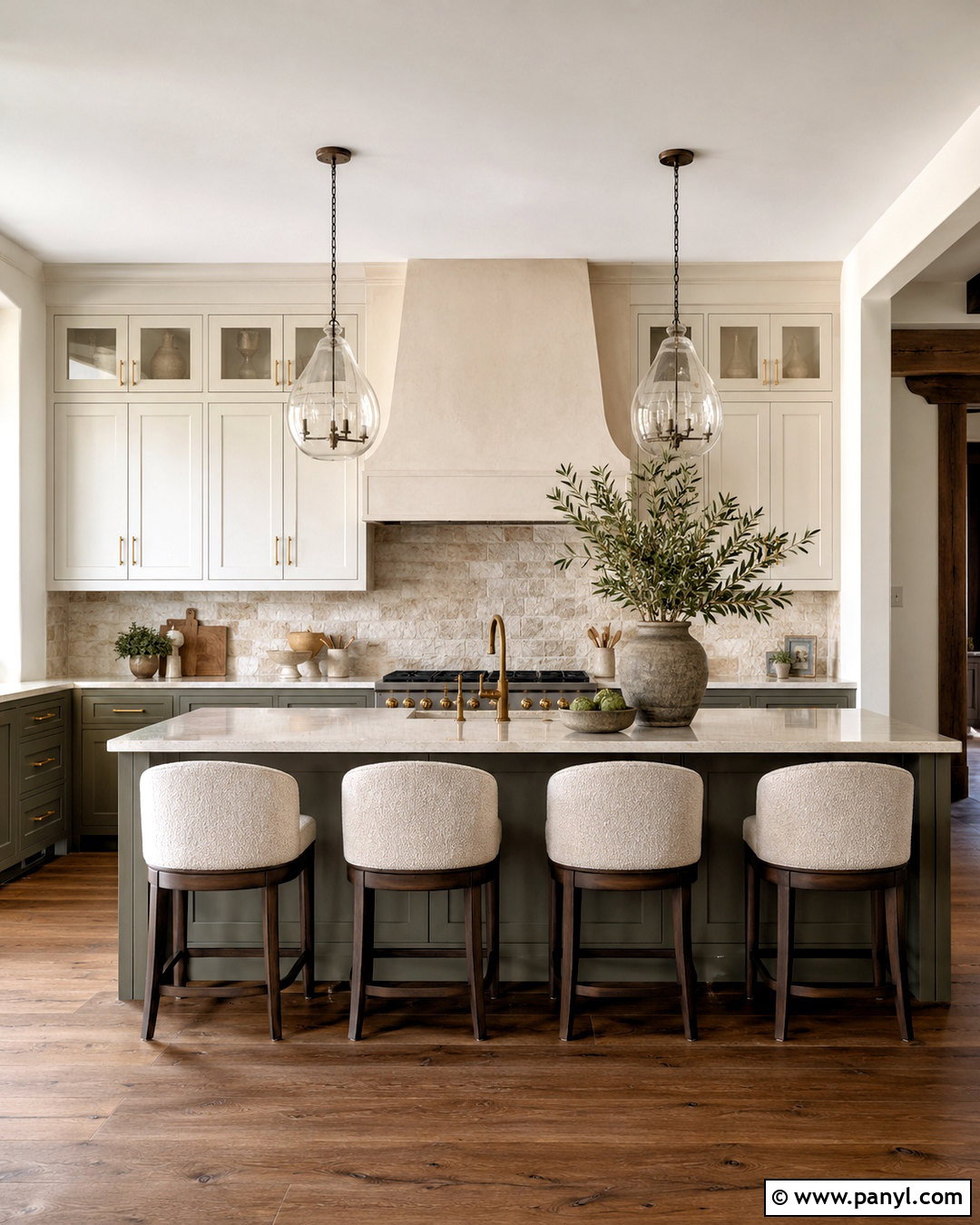
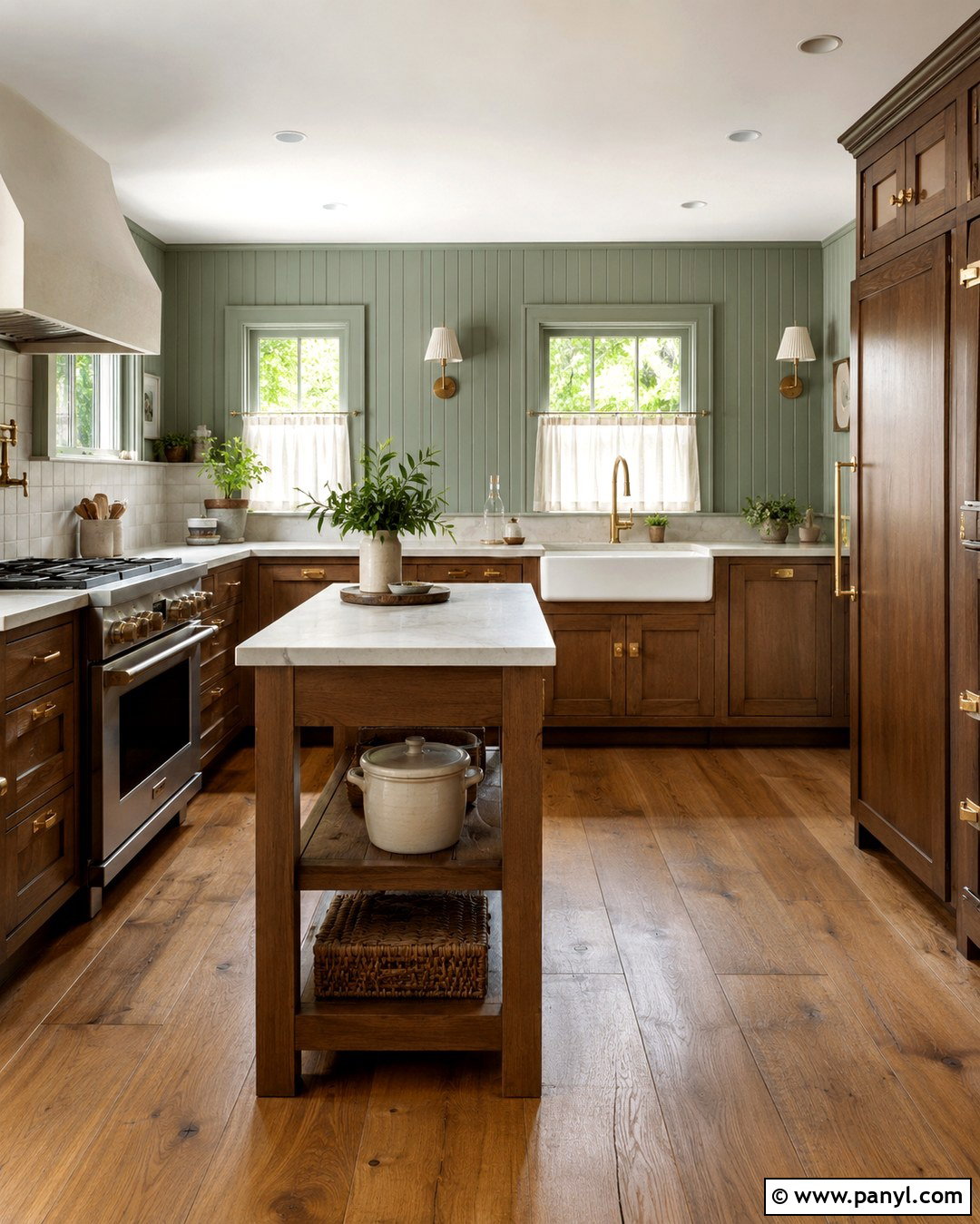
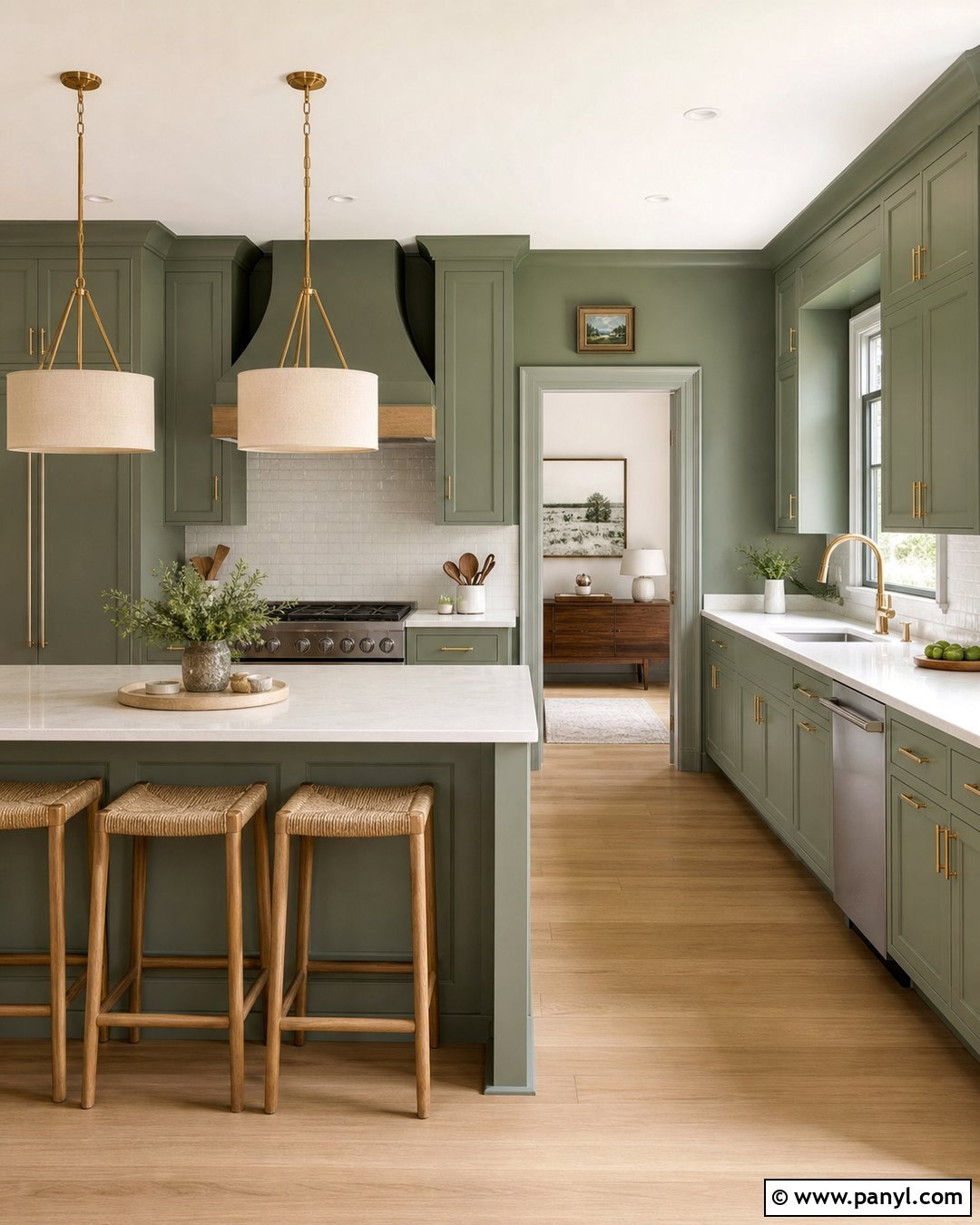
Muted olive cabinets create a deeper neutral kitchen inspired by natural leaves and weathered landscapes. Select an olive shade with gray and brown undertones rather than a bright botanical green. Use it on lower cabinets, full-height pantry storage, and a large island. Keep some upper cabinetry in warm white to preserve brightness. Cream quartzite counters, an ivory plaster hood, and a softly textured stone backsplash balance the darker color. Walnut flooring and aged brass hardware bring additional warmth, while cream upholstered stools soften the island. Warm white walls and clear glass pendants help distribute light throughout the room. The finished kitchen feels grounded and distinctive, yet the subdued palette remains easy to coordinate with wood, stone, and metal finishes.
20. Soft Charcoal Kitchen Cabinets
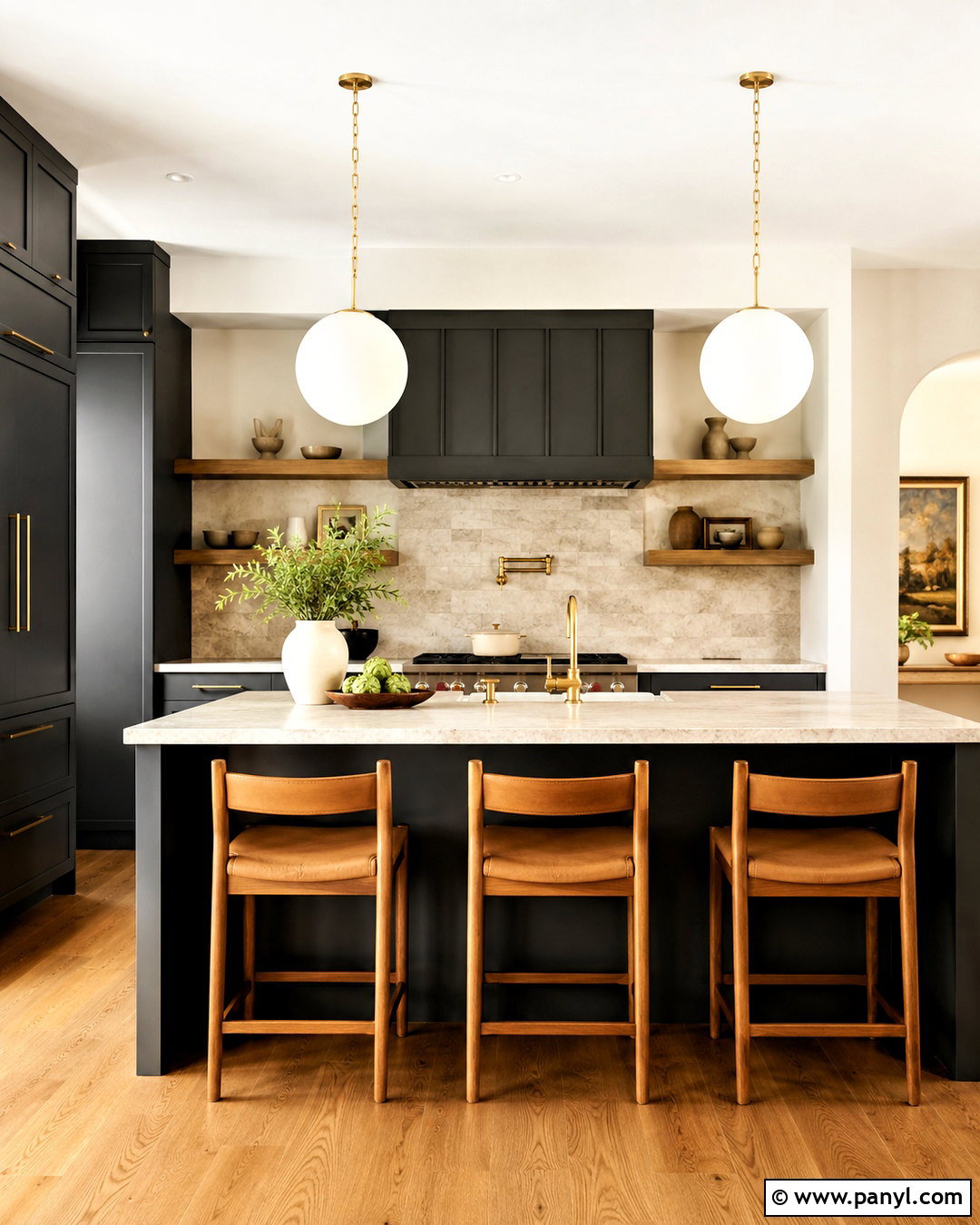
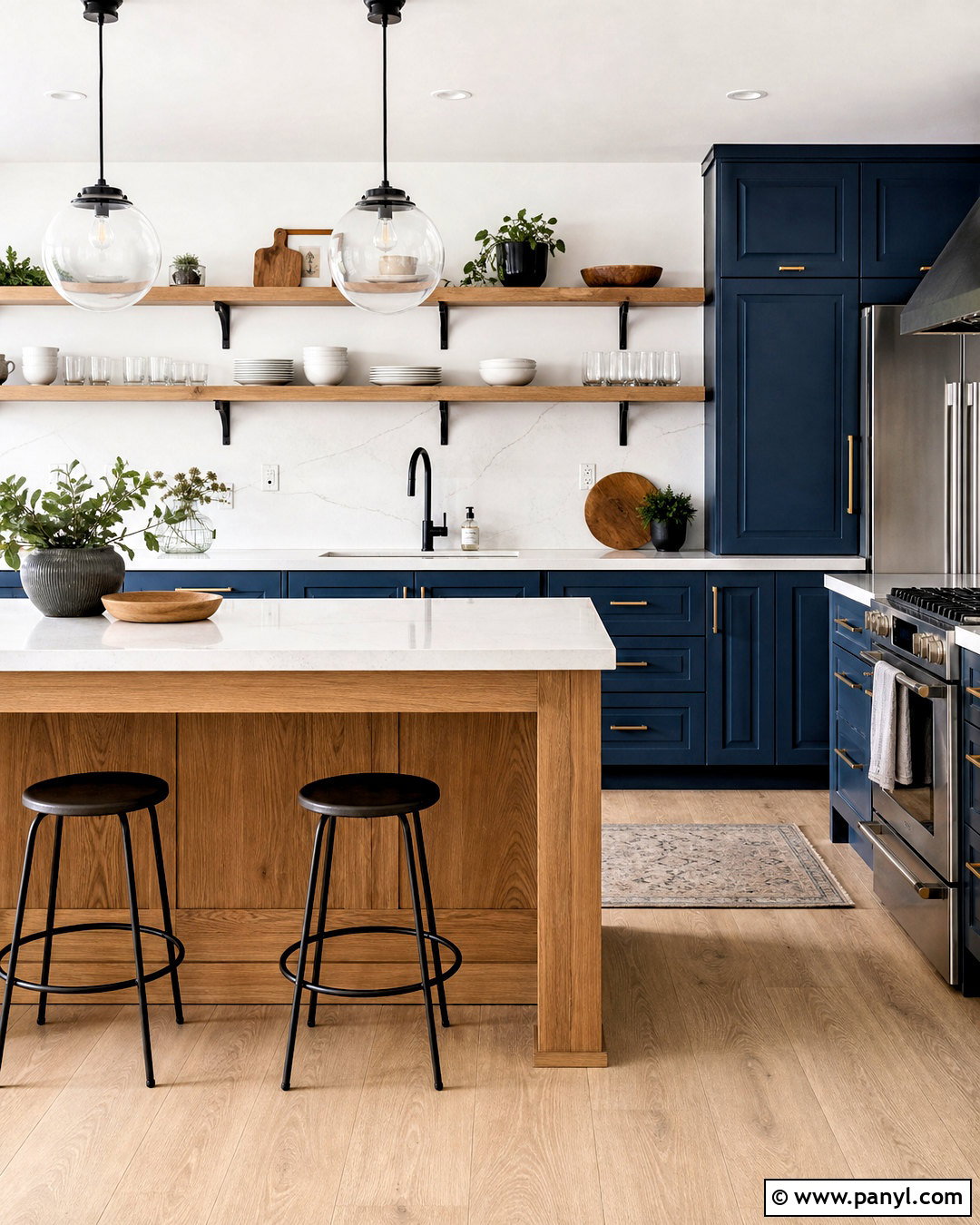
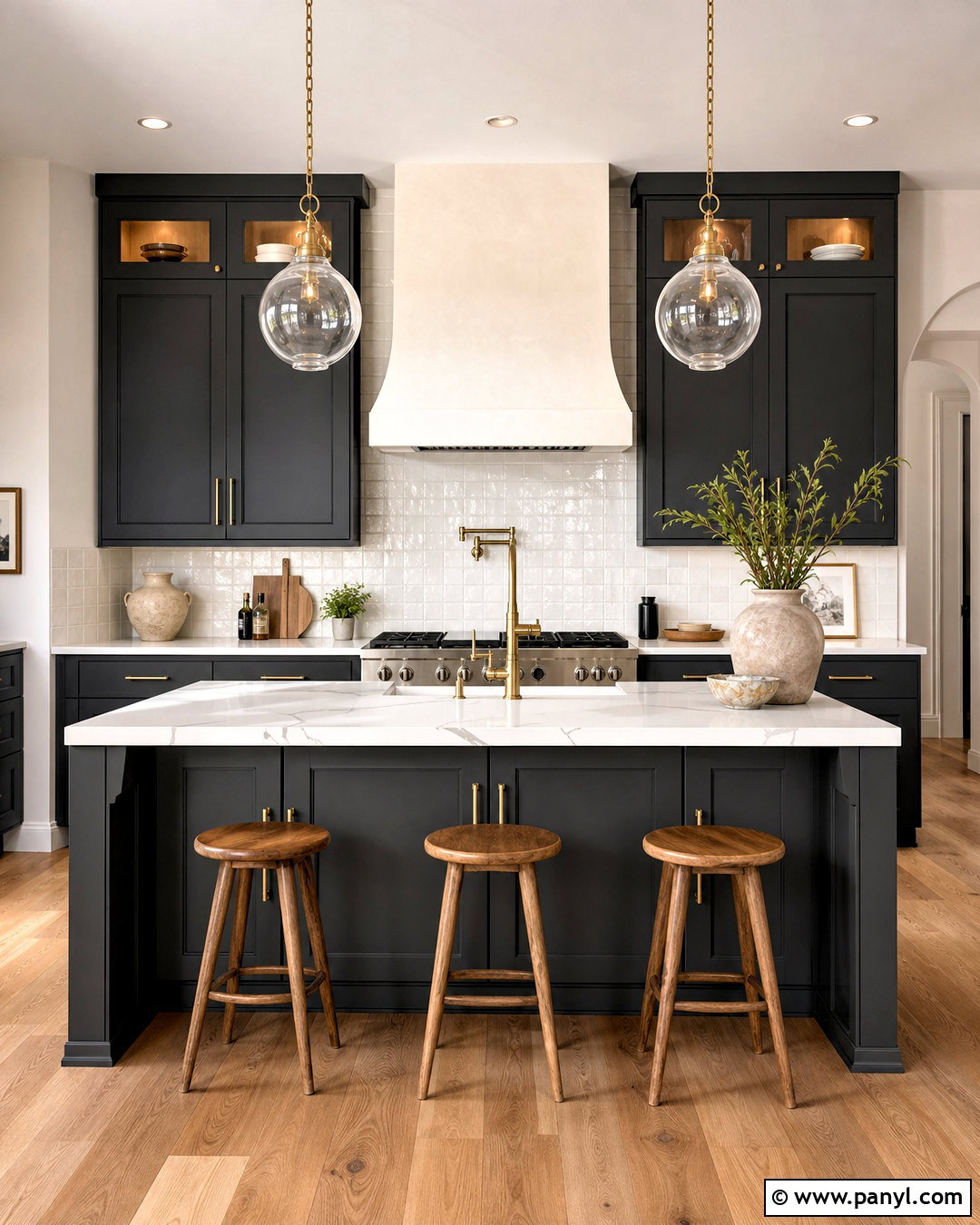
Soft charcoal is a strong neutral for homeowners who want depth without using solid black. Choose a charcoal with warm brown undertones and apply it to flat-panel base cabinets, tall storage, and the island. Limit upper cabinets near windows, replacing some with white oak shelves to keep the kitchen visually open. Use pale quartz countertops and a full-height creamy stone backsplash for strong but balanced contrast. Medium oak flooring, brushed brass hardware, and warm wood stools prevent the dark cabinetry from feeling severe. Large white globe pendants provide a clean focal point above the island. With soft off-white walls and uncluttered surfaces, this complete scheme feels dramatic, modern, and comfortable rather than dark or overly formal.
Conclusion:
The best cabinet color should complement your kitchen’s light, flooring, counters, backsplash, and overall connection to nearby rooms. Warm white, cream, and linen keep compact spaces open, while mushroom, taupe, and warm gray add greater depth. Pale sage, muted olive, clay beige, and soft charcoal offer personality while remaining easy to coordinate. Always test samples directly on cabinet doors and view them at several times of day before committing. Compare each option against permanent materials rather than examining it alone. With thoughtful undertones and supporting finishes, these 20 neutral kitchen cabinet colors can create a complete kitchen that feels balanced, practical, personal, and visually comfortable for years.

Related Ideas and Inspiration:
Leave a Reply