
Tuscan interiors feel warm, grounded, and welcoming because their colors echo sunbaked plaster, natural stone, clay tile, olive groves, and aged wood. Today’s version is lighter and simpler than the heavy Tuscan rooms popular in past decades. Warm whites, sandy neutrals, softened greens, and muted earth tones now create the foundation, while rustic wood, iron, linen, leather, and stone provide character. Traditional ochre, terracotta, olive, cream, and subdued blue remain central to the palette. () The key is combining each paint color with finishes that make the entire room feel intentional rather than themed. Use the complete room plans below to compare all 35 tuscan wall colors.
1. Warm Ivory Tuscan Walls
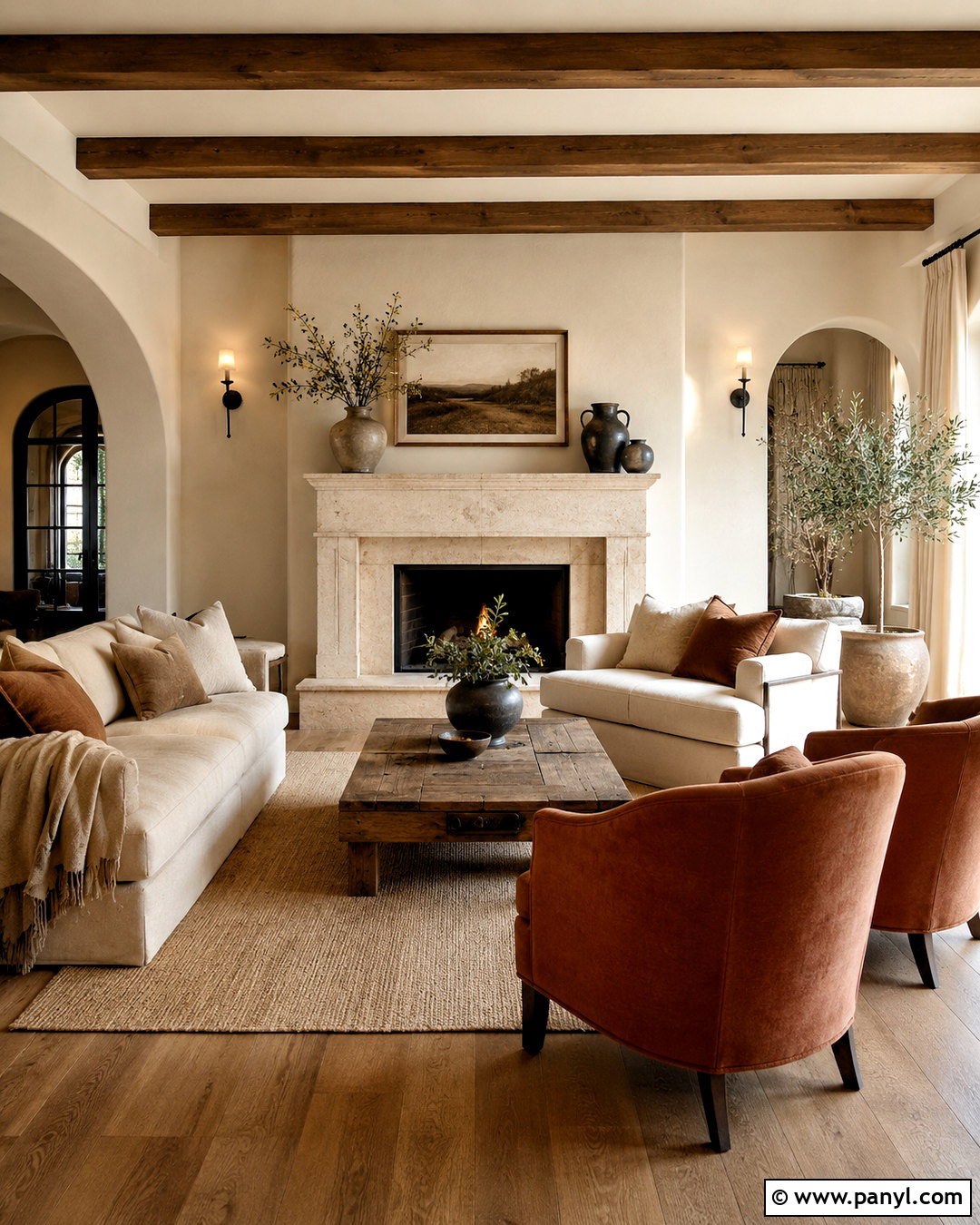
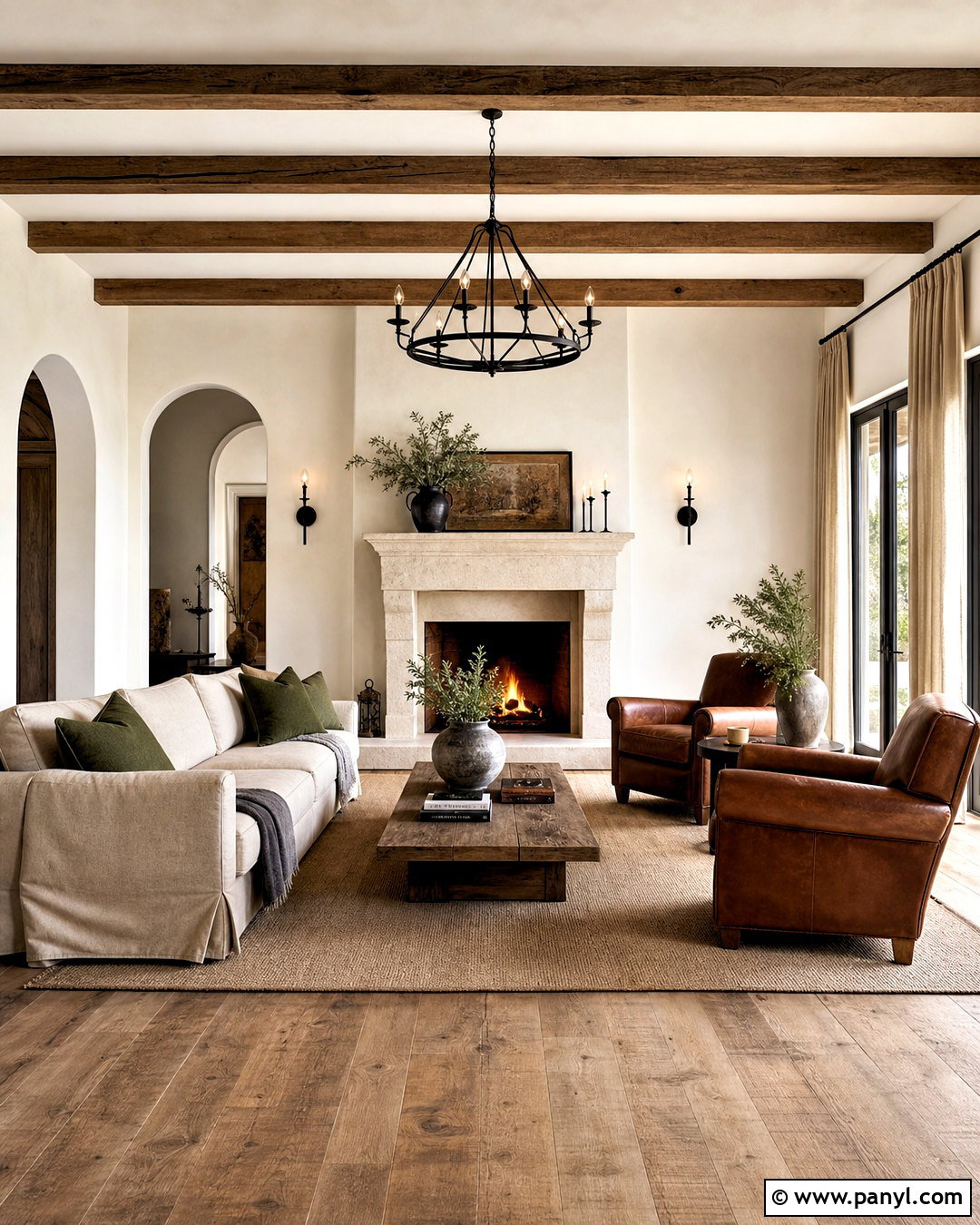
Warm ivory creates a bright Tuscan room without the stark appearance of pure white. Use it across the walls and ceiling of a living room with medium-toned oak flooring, a limestone fireplace, and relaxed oatmeal-colored seating. Add a reclaimed wood coffee table and two rust-colored accent chairs for gentle contrast. Linen curtains should closely match the walls so the windows feel taller and the space remains airy. Black iron sconces, handmade pottery, and an olive tree bring in recognizable Tuscan materials without making the room look overly traditional. Choose an ivory with subtle cream or golden undertones. These warmer notes connect naturally with terracotta, leather, stone, and wood while keeping an average-size room open and comfortable.
2. Creamy White Tuscan Walls
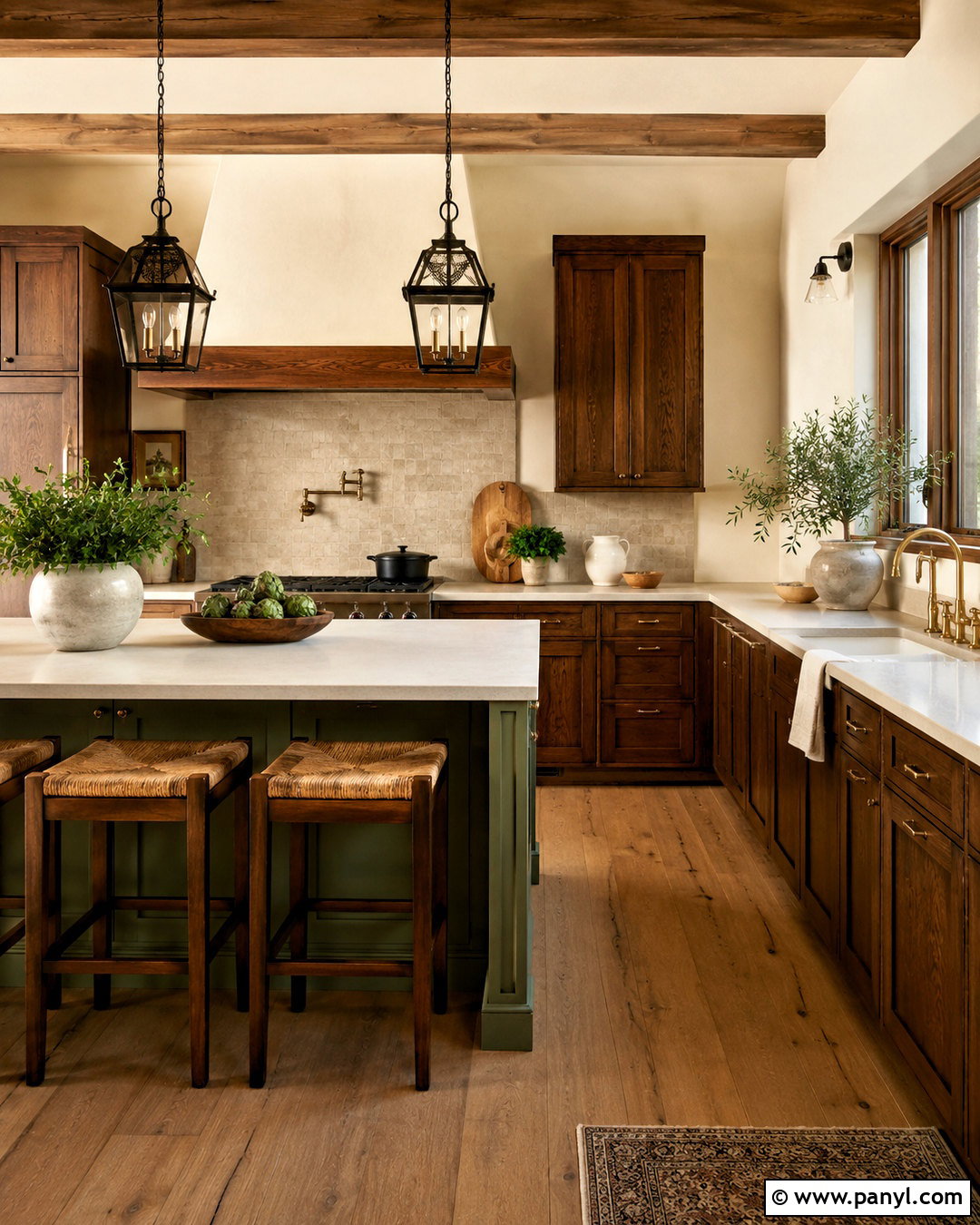
Creamy white is an easy choice for a modern Tuscan kitchen where cabinetry, stone, and wood already provide plenty of color. Paint the walls and ceiling a soft white with a mild buttery undertone, then install natural walnut cabinets and a honed cream limestone backsplash. A large island in muted olive green gives the light palette a grounded focal point. Complete the space with pale quartz counters, simple iron pendants, woven counter stools, and warm oak flooring. Skip ornate accessories and display only a few ceramic bowls, cutting boards, and leafy herbs. The combination feels fresh but still connected to traditional Italian farmhouse interiors. Creamy white also reflects daylight well, making it especially useful in kitchens with smaller windows or dark cabinetry.
3. Parchment Tuscan Walls
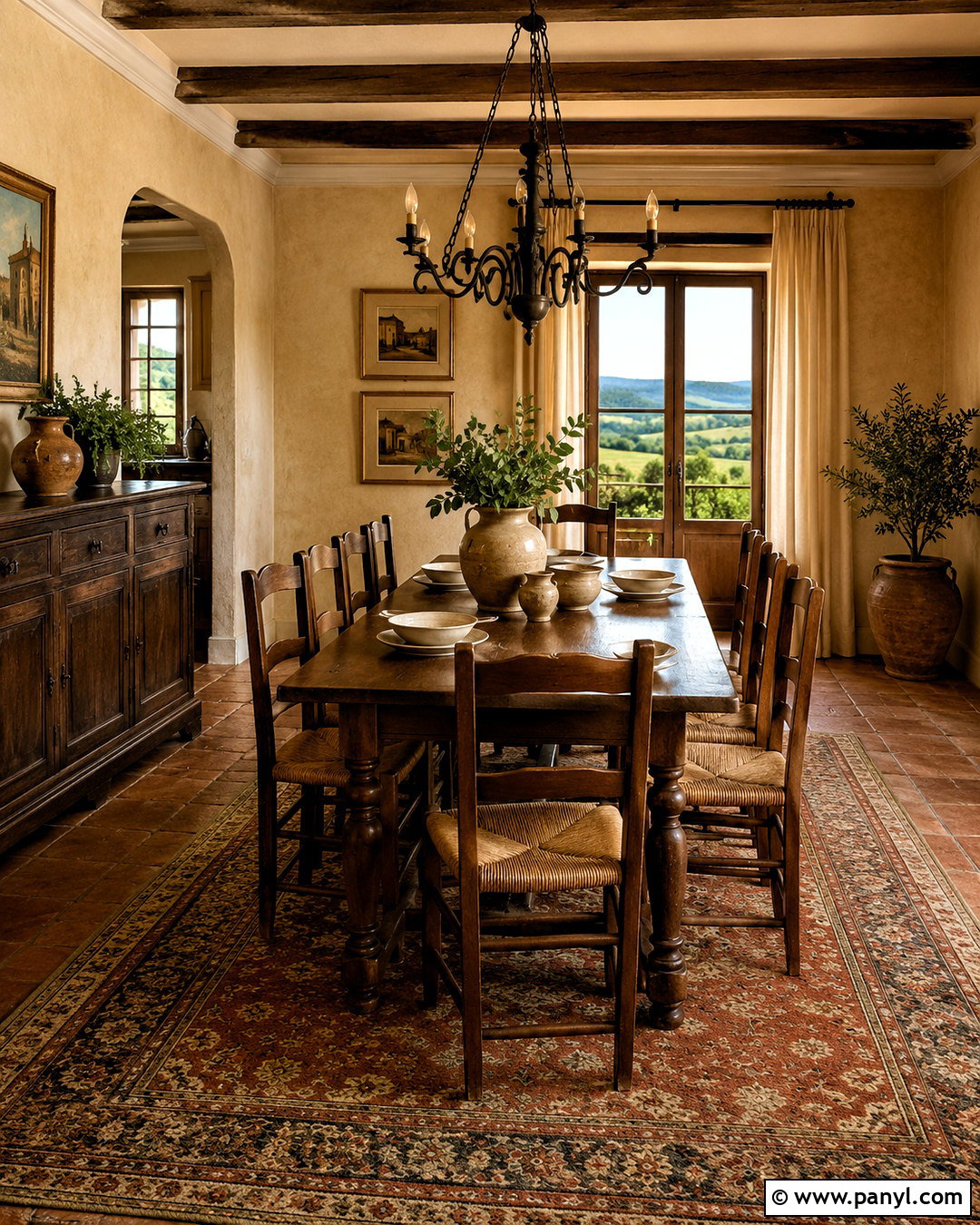
Parchment walls bring the softened look of aged plaster into a dining room without requiring an elaborate decorative finish. This pale beige has a slightly yellowed undertone that works beautifully with a long walnut table, rush-seat chairs, and an antique-style iron chandelier. Use warm white on the ceiling and substantial trim to keep the room crisp. A muted red and olive area rug can define the dining zone while adding restrained pattern. Finish the design with linen drapery, a dark wood sideboard, ceramic serving pieces, and one large countryside landscape. Parchment is particularly effective in open dining rooms because it provides more depth than white while remaining neutral enough to connect with an adjoining cream kitchen or sandy beige living area.
4. Sandy Beige Tuscan Walls
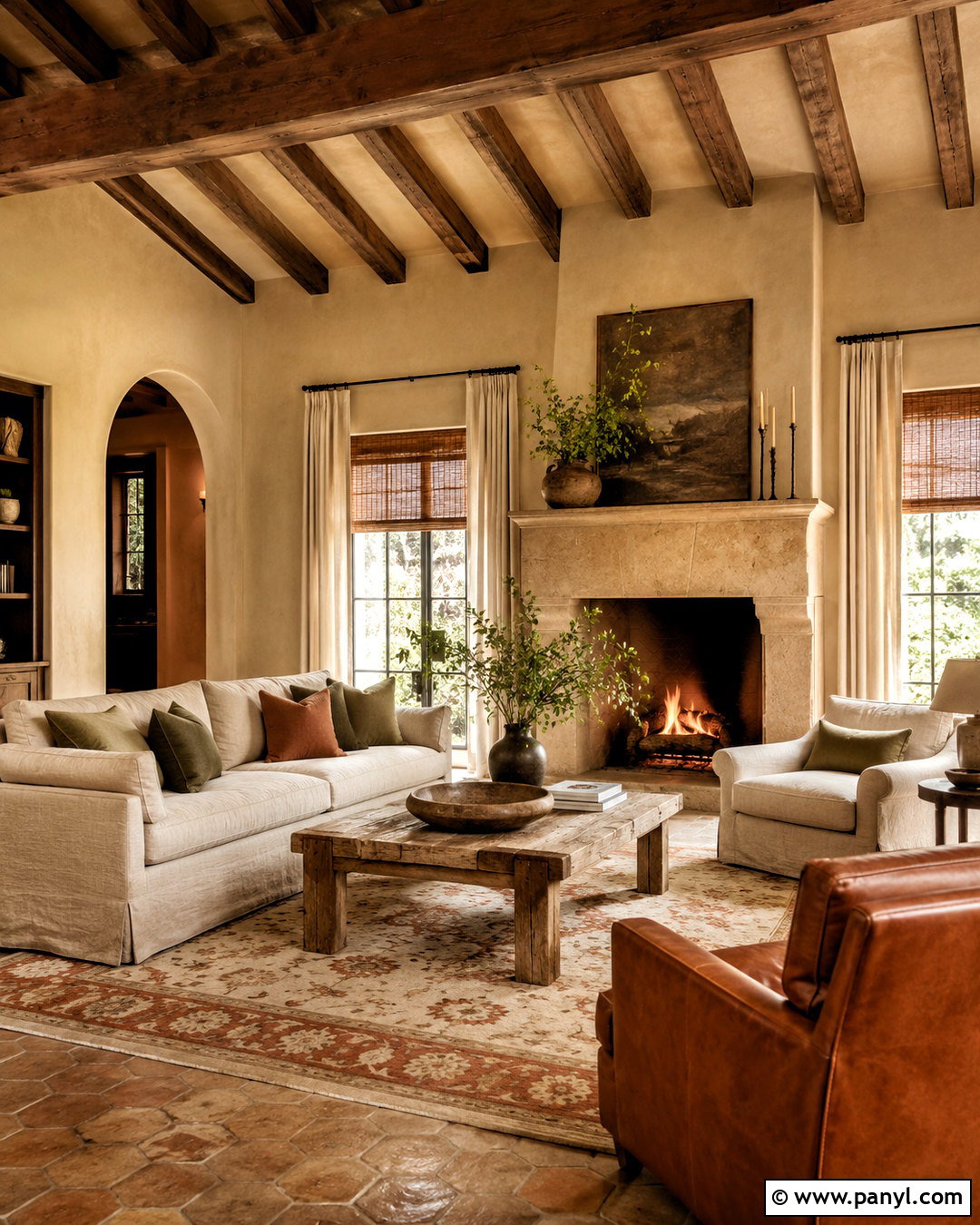
Imagine a sunlit family room built around sandy beige walls, a travertine fireplace, and comfortable flax-colored upholstery. This earthy neutral has enough warmth to complement Tuscan materials, yet it feels lighter than the deep golds once associated with the look. Bring in a caramel leather chair, a chunky oak console, and a low coffee table with a lightly distressed finish. Muted olive and clay-colored pillows add natural variation without overwhelming the beige foundation. Use woven shades beneath simple linen curtain panels to soften the windows. A handwoven rug in cream, tan, and faded rust will tie the seating area together. Sandy beige works best when several natural textures are layered throughout the room, preventing the neutral walls from appearing plain.
5. Limestone Tuscan Walls
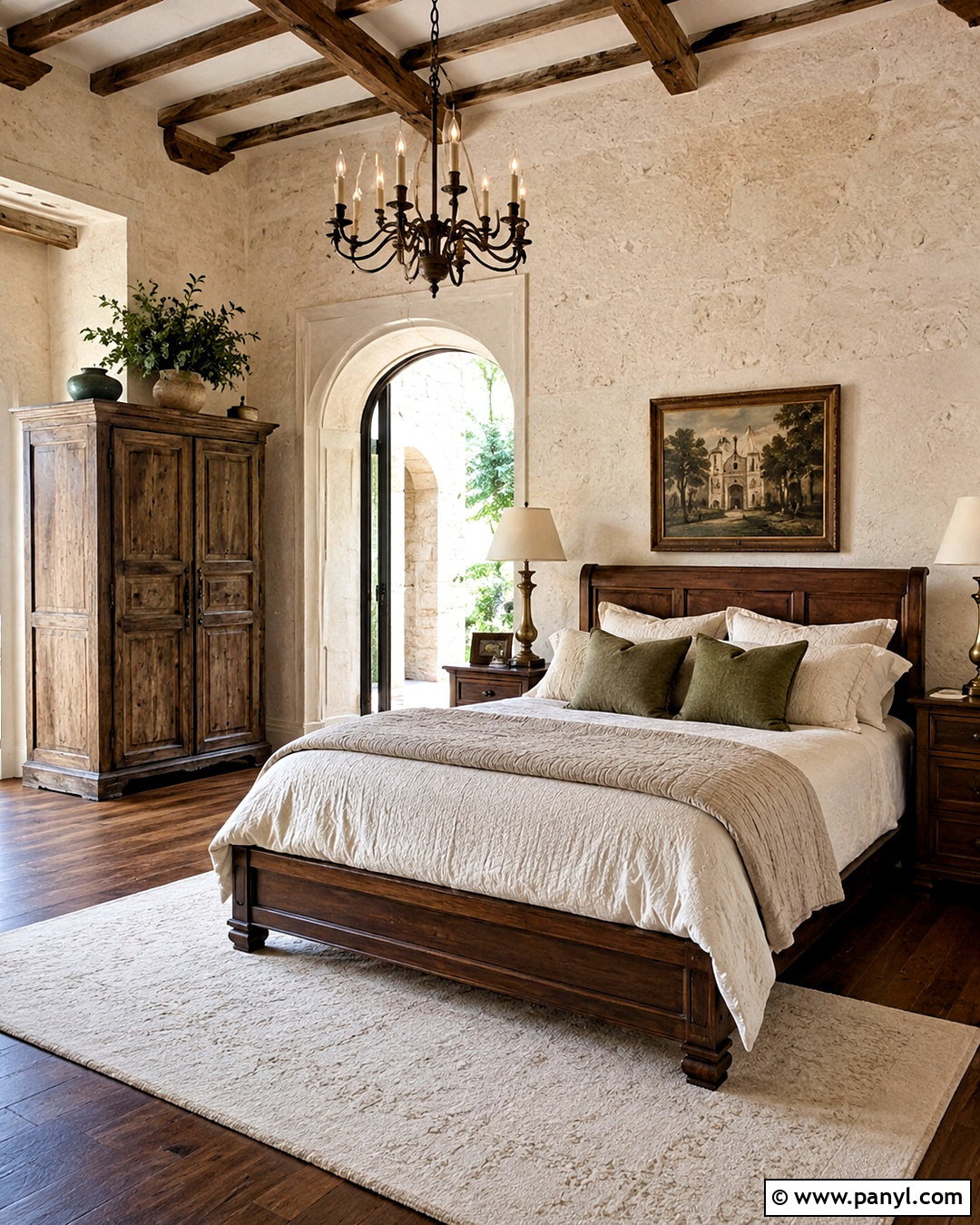
Soft limestone-colored walls give a Tuscan bedroom a quiet, architectural quality. Choose a pale stone beige with balanced warm undertones and carry it across the walls, ceiling, and simple crown molding for a seamless envelope. Center a dark oak bed against the main wall and layer it with ivory linen, a taupe coverlet, and muted olive pillows. Matching wood nightstands and aged brass lamps provide symmetry without looking too formal. Underfoot, use wide-plank oak flooring softened by a cream wool rug. An upholstered bench, a weathered armoire, and minimal botanical artwork complete the room. This restrained palette feels especially relaxing because the walls, textiles, and stone-inspired accents remain close in value while wood supplies the necessary contrast.
6. Warm Greige Tuscan Walls
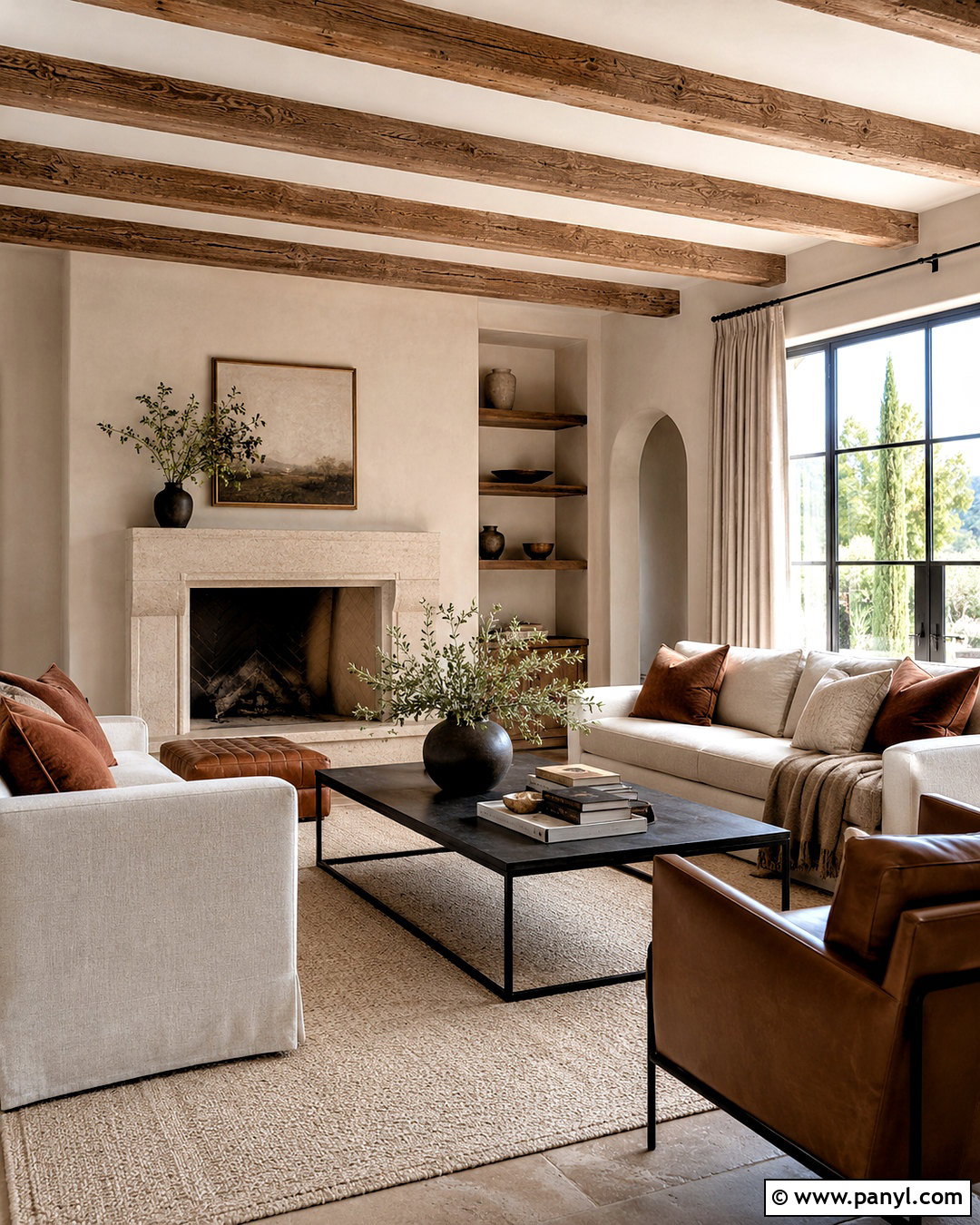
Warm greige offers a practical bridge between rustic Tuscan architecture and cleaner contemporary furniture. Use it in a living room with exposed ceiling beams, a pale limestone fireplace, and streamlined cream sofas. Select a greige that leans beige rather than cool gray, since blue undertones can clash with terracotta flooring and golden wood. Add cognac leather chairs, a black iron coffee table, and a large textured rug in oatmeal and mushroom. Muted rust pillows and olive branches introduce earthy color in controlled amounts. Keep window treatments light and uncomplicated, using full-length natural linen panels. This complete design preserves the depth and warmth associated with Tuscan interiors while removing heavy patterns, dark wall treatments, and overly ornate furniture that can make the room feel dated.
7. Mushroom Taupe Tuscan Walls
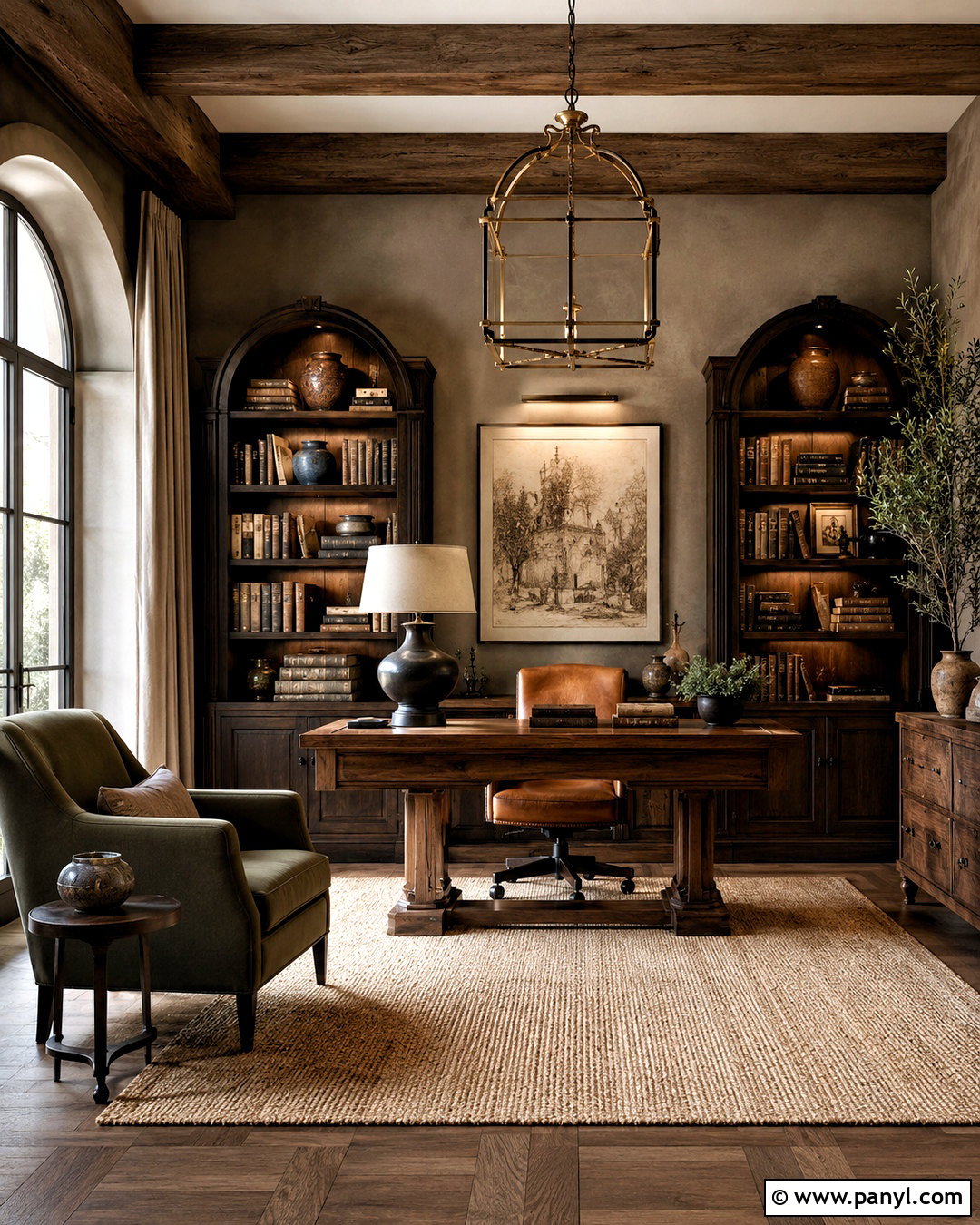
Mushroom taupe creates a sophisticated backdrop for a Tuscan home office or library. Paint all four walls in a medium taupe with brown and gray undertones, then balance the depth with a creamy white ceiling and a large natural-fiber rug. A substantial walnut desk should face into the room, while built-in shelves in dark stained wood anchor the longest wall. Add a camel leather desk chair, linen-shaded lamps, and a reading chair upholstered in muted olive. Antique brass accents provide warmth without the visual weight of elaborate ironwork. Display books, ceramics, and framed architectural drawings with plenty of open shelf space. The resulting room feels collected and restful, combining Old World character with the organization and restraint needed for a functional workspace.
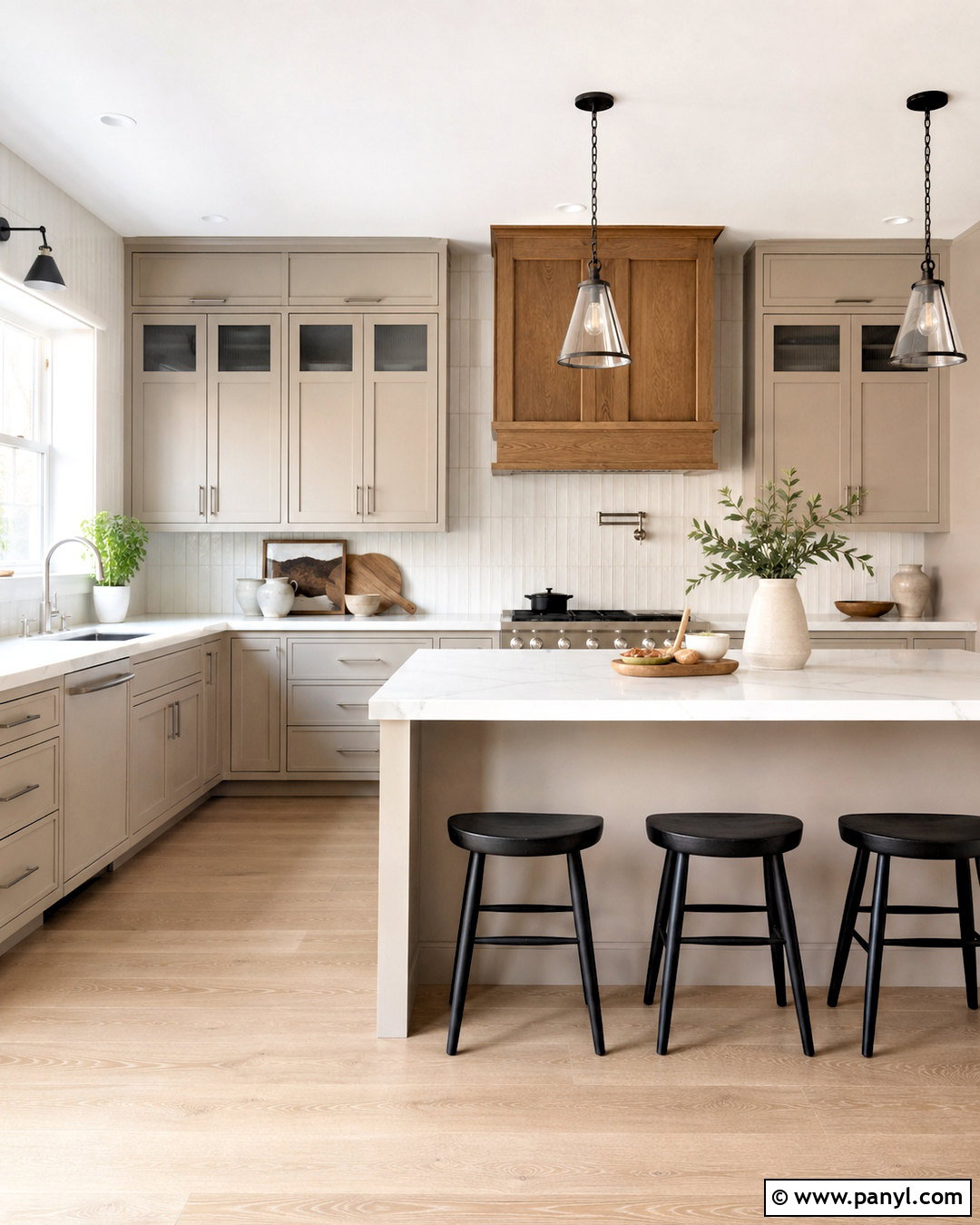
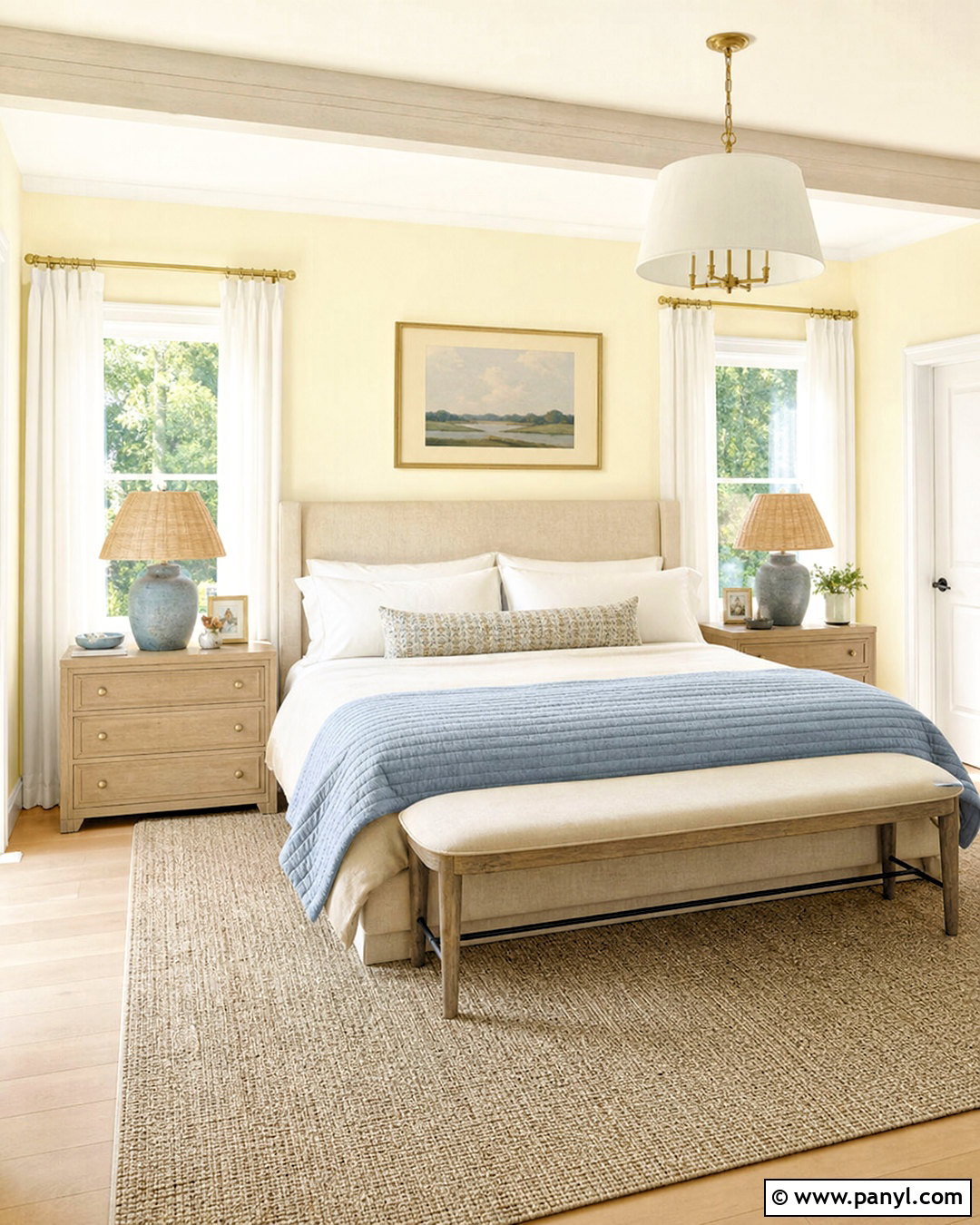
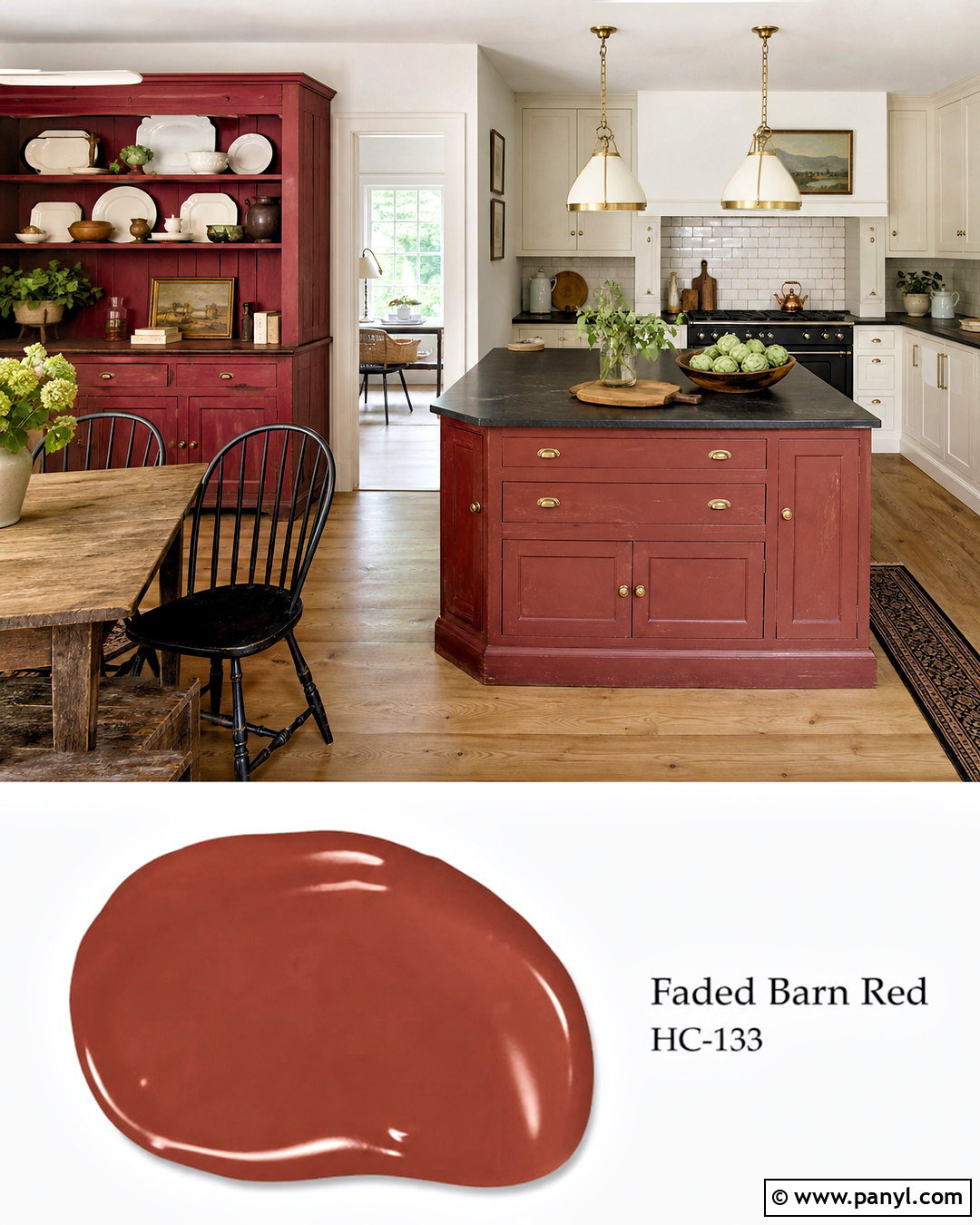
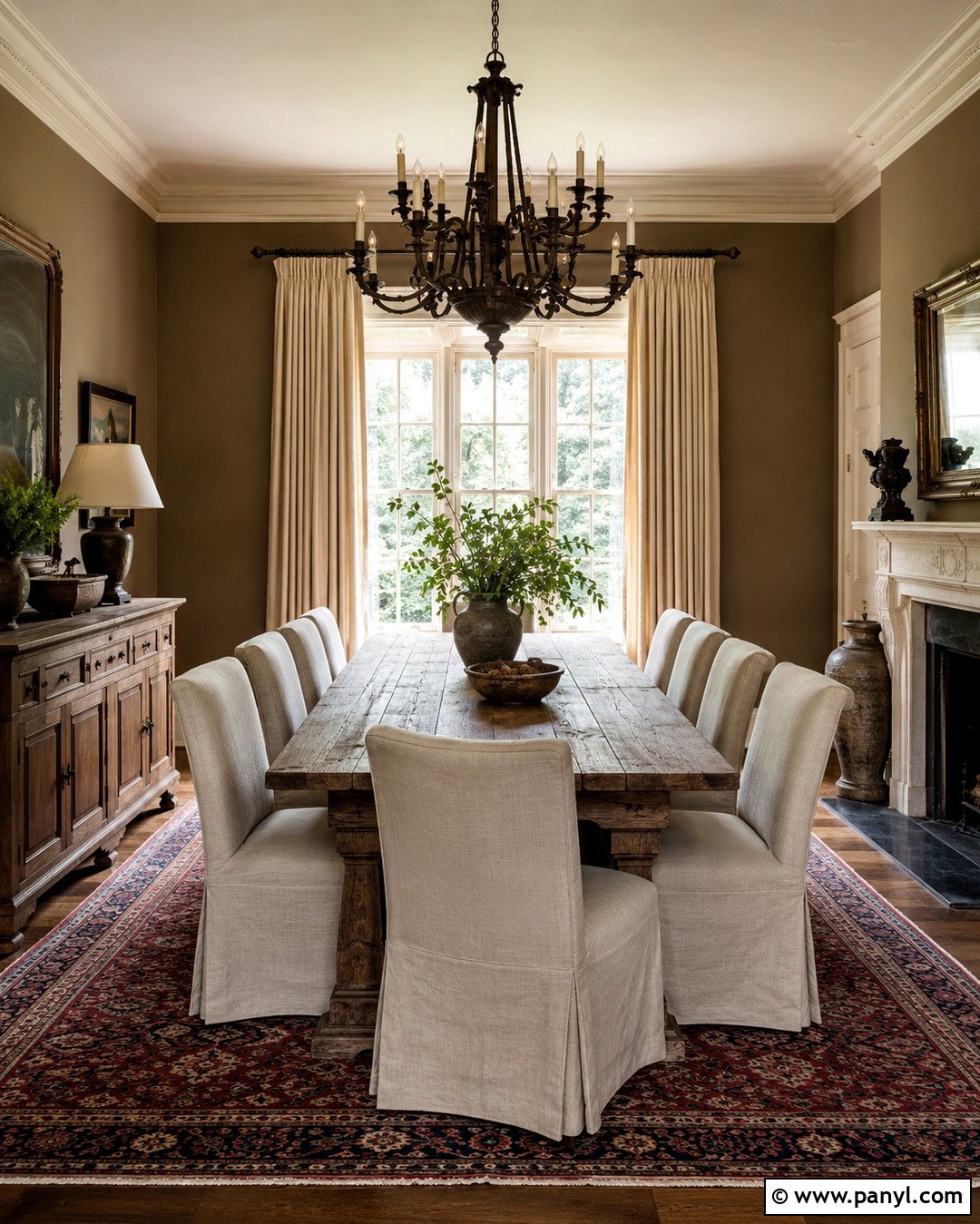
8. Camel Beige Tuscan Walls
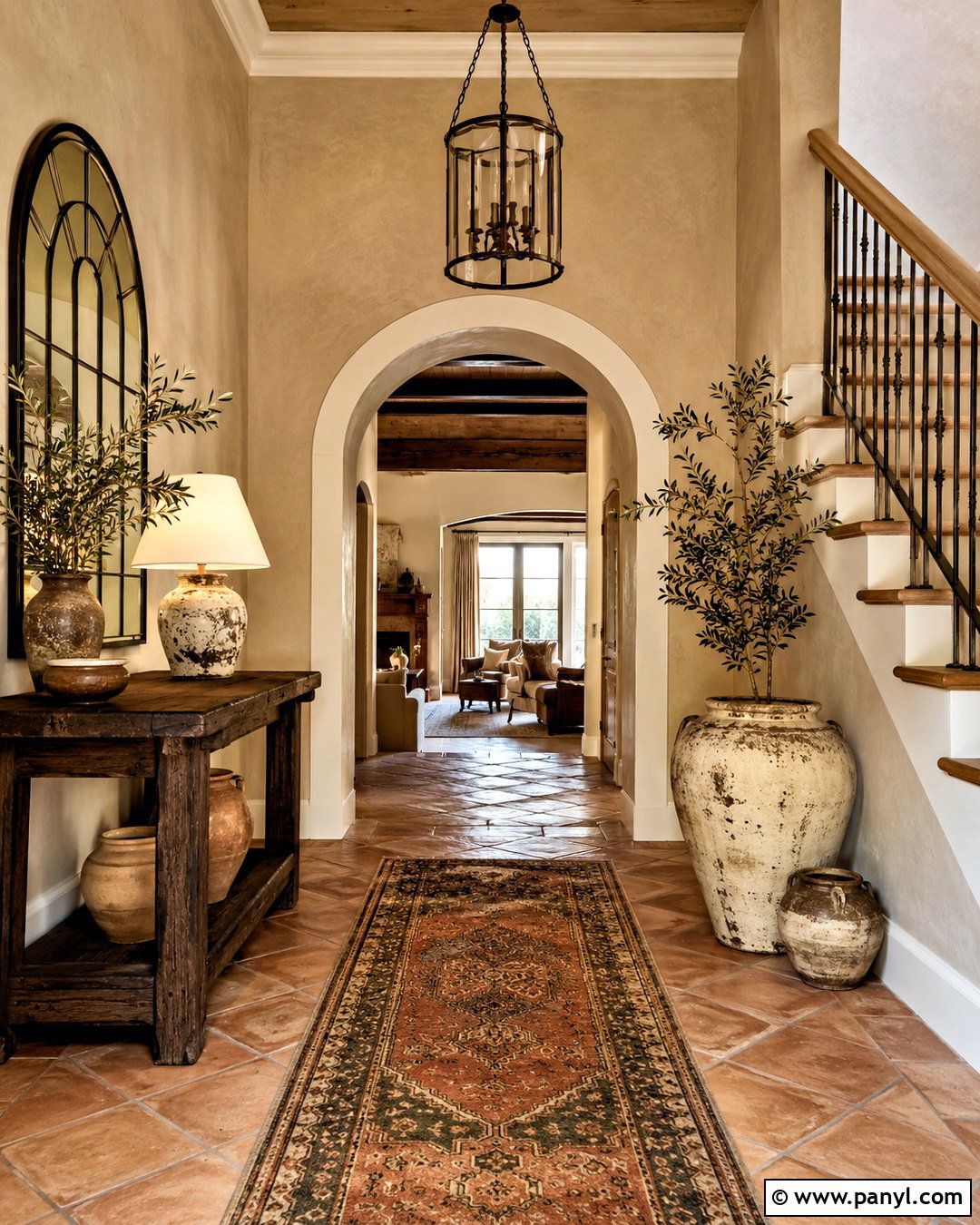
Camel beige gives an entryway immediate warmth and works especially well beside terracotta or tumbled stone flooring. Pair the walls with creamy white trim, a dark walnut console, and a large arched mirror framed in slim black iron. A faded runner featuring rust, moss, and tan can guide the eye through the space while protecting the floor. Add a ceramic lamp, a shallow bowl for keys, and one leafy branch rather than filling the console with small accessories. If the entry includes a staircase, use a natural oak handrail and simple iron balusters to reinforce the palette. Camel beige is deeper than standard beige, so it creates a welcoming transition into lighter adjoining rooms while highlighting carved wood, aged metal, and natural stone details.
9. Honey Beige Tuscan Walls
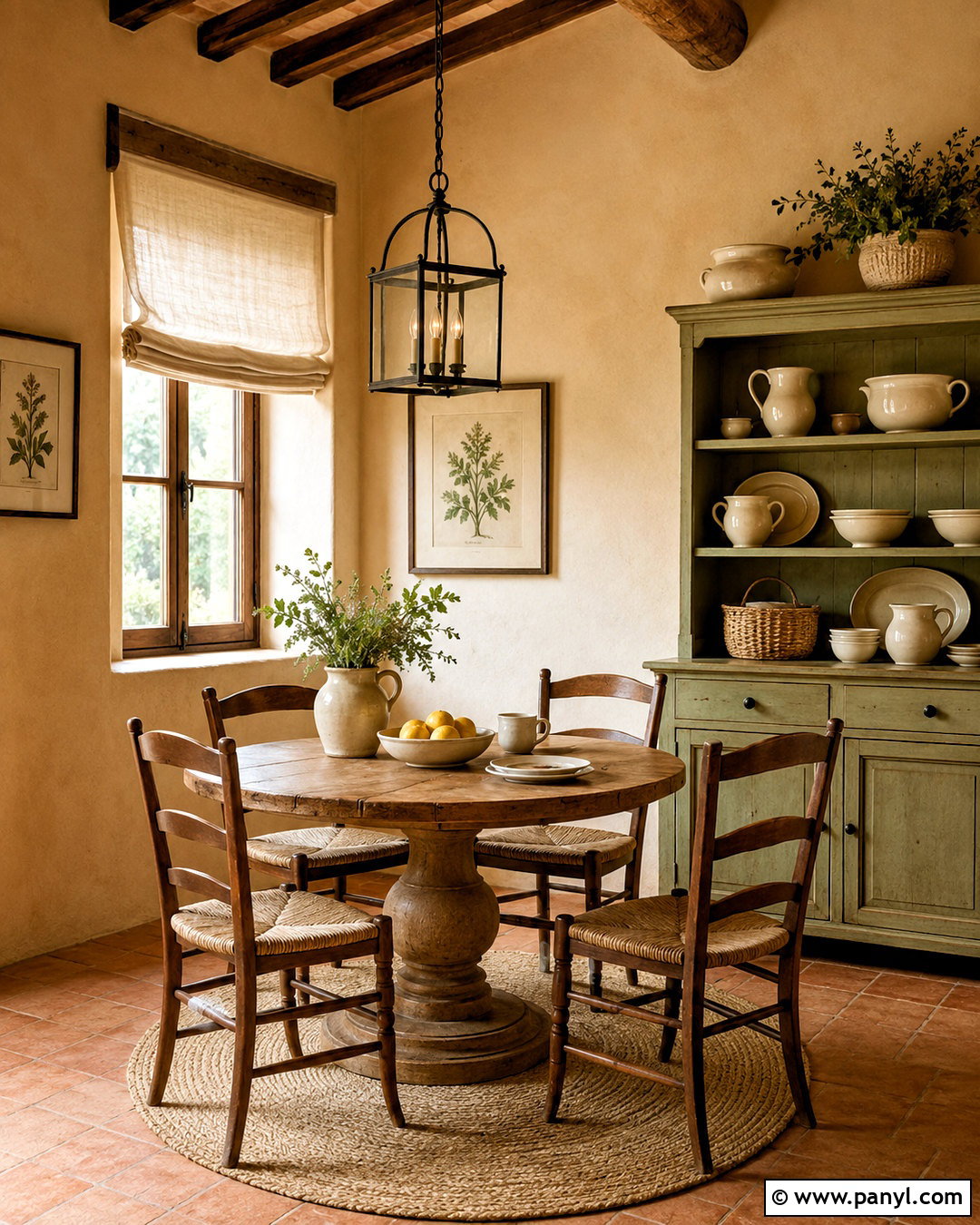
Honey beige can make a breakfast room feel sunny even when natural light is limited. Choose a muted beige with soft golden undertones, avoiding highly saturated yellow. Place a round oak pedestal table in the center and surround it with woven-seat chairs in a warm walnut finish. An iron lantern pendant supplies a strong shape above the table, while ivory linen shades keep the windows soft. Use a small hutch painted muted sage to introduce contrast and provide storage for cream ceramics. Terracotta floor tile or warm brick-look porcelain adds a rustic foundation that suits daily use. With simple botanical prints, a bowl of lemons, and a flat-woven rug, the room feels cheerful, casual, and unmistakably Tuscan without becoming overly decorative.
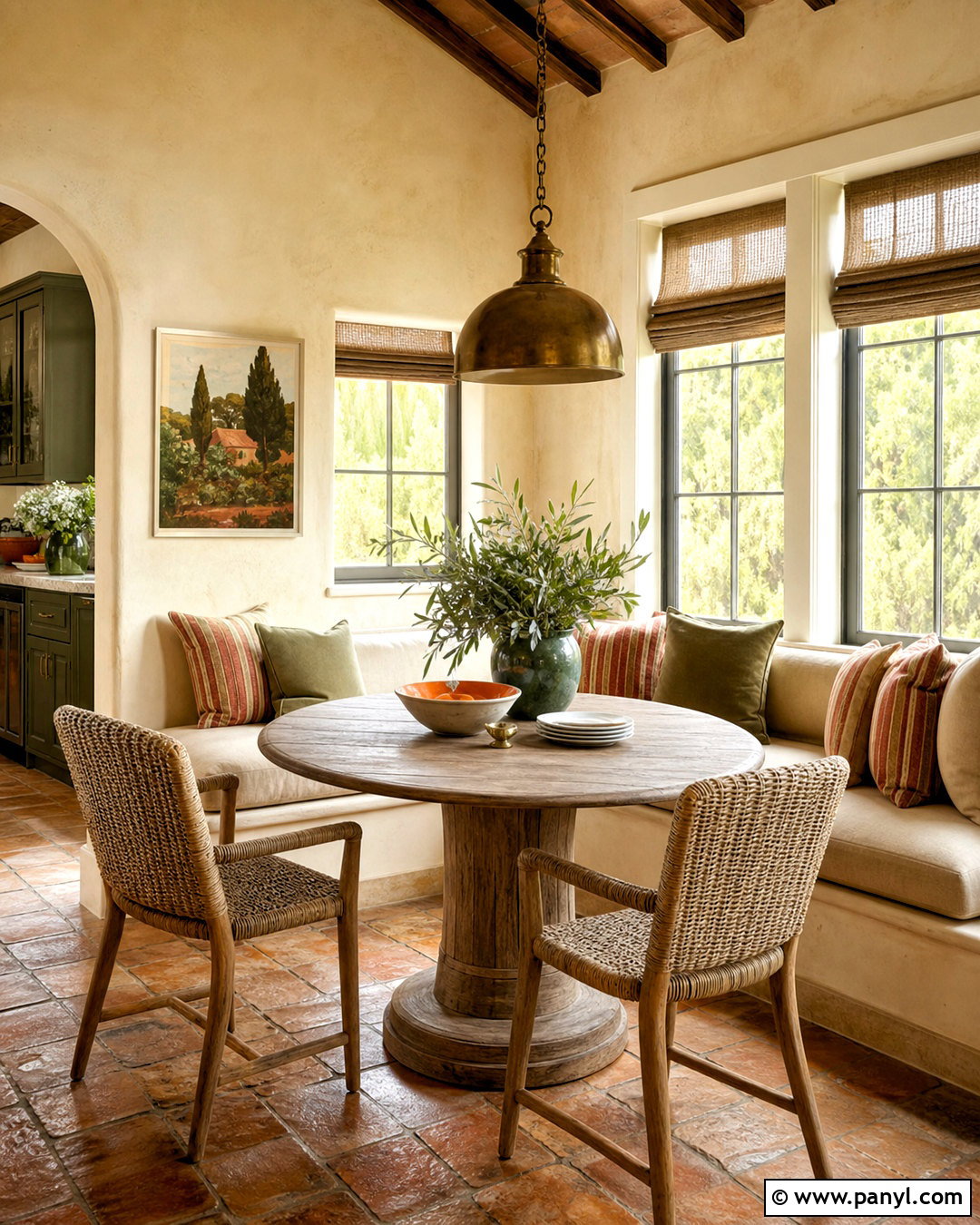
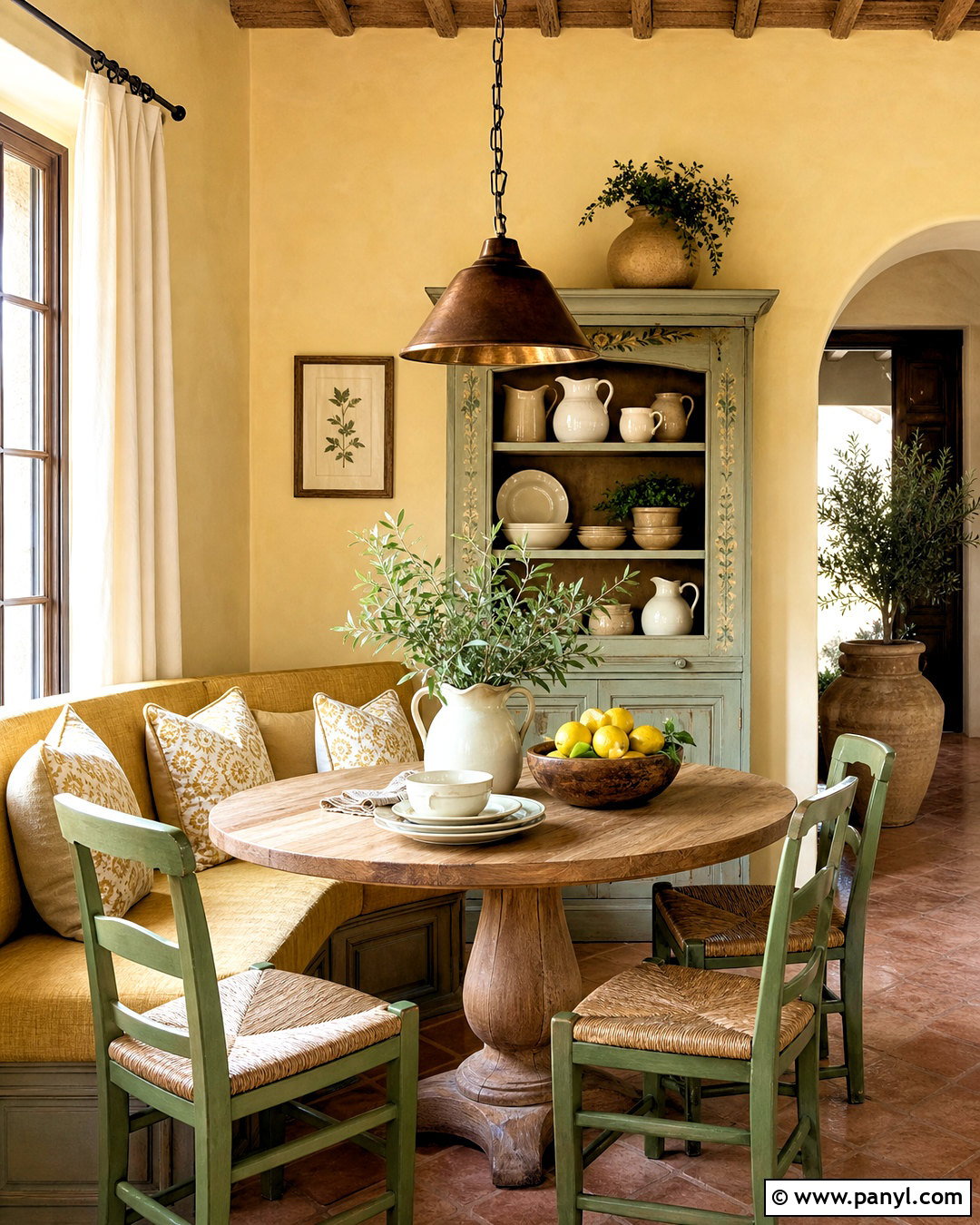
10. Golden Ochre Tuscan Walls
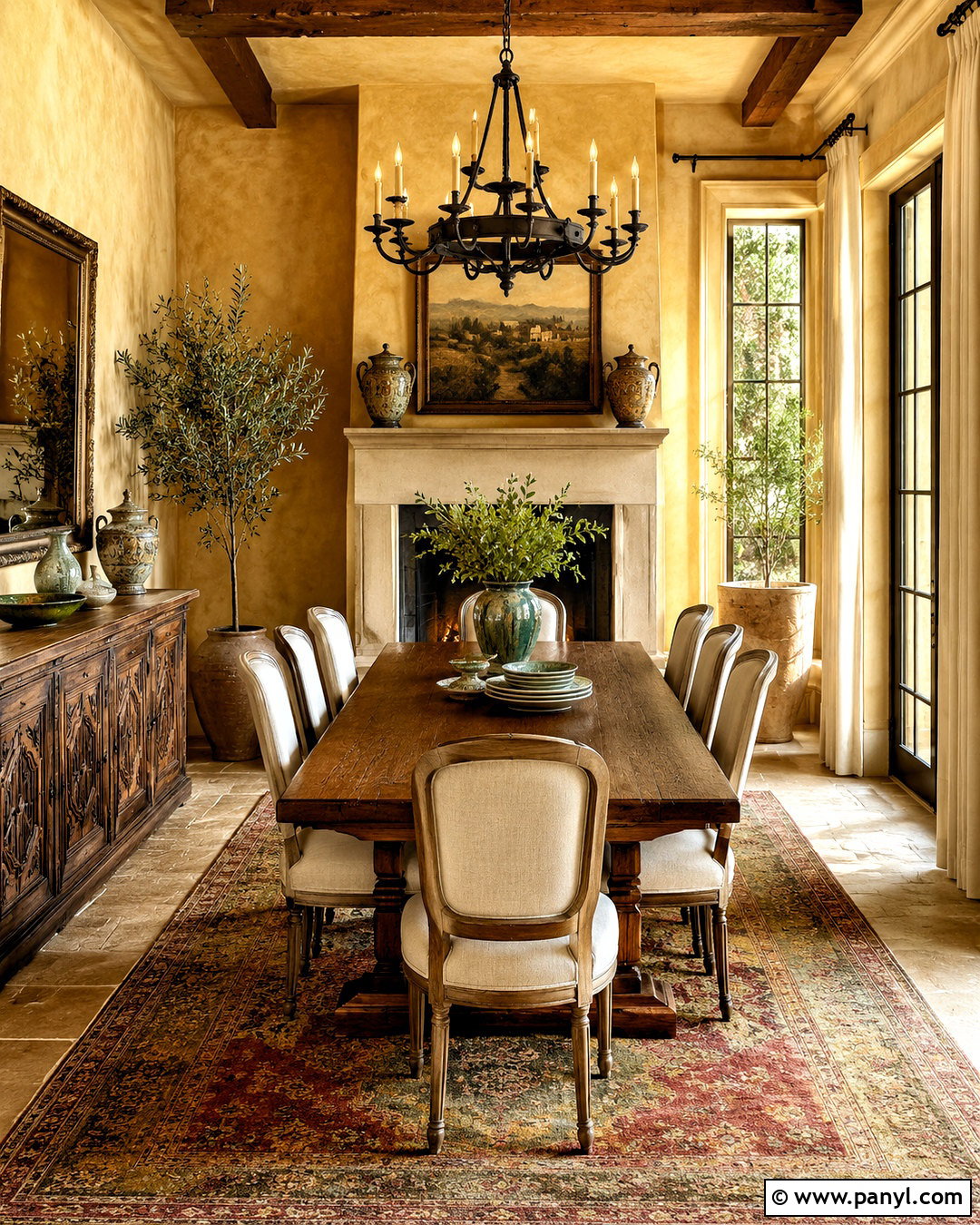
Golden ochre walls can transform a formal dining room into a rich, intimate gathering space. Select a softened ochre rather than a bright yellow, and balance it with creamy trim, a medium walnut dining table, and linen-upholstered chairs. A dark iron chandelier should hang low enough to define the table without blocking views across the room. Ground the golden walls with a faded rug containing brick red, olive, tan, and muted blue. A carved wood sideboard can hold pottery and a pair of simple lamps with natural linen shades. Because ochre already has strong visual warmth, keep curtains light and accessories limited. The complete palette feels layered and historic, especially when the paint has a matte or lightly textured plaster-like finish.
11. Muted Mustard Tuscan Walls
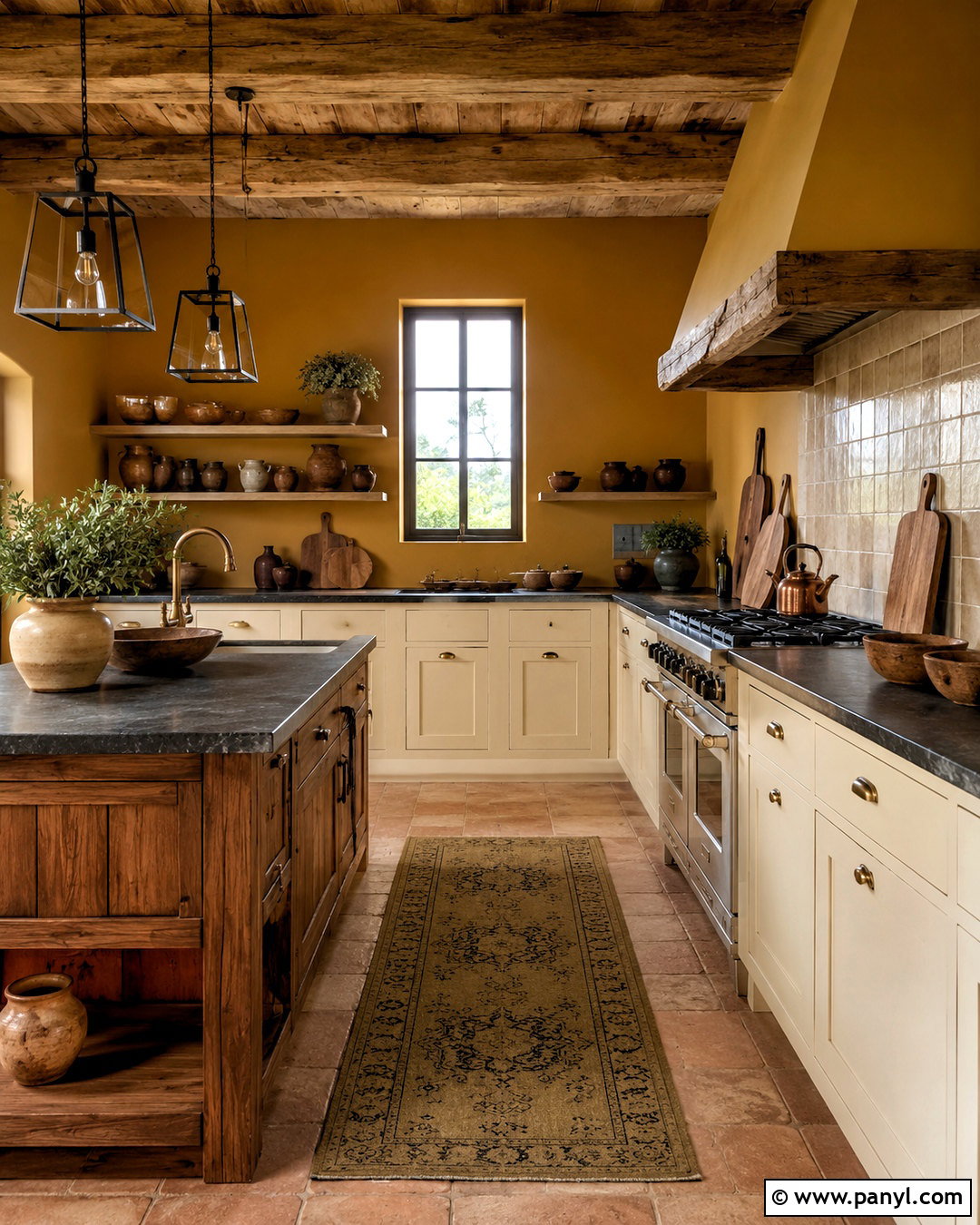
Muted mustard brings character to a Tuscan kitchen while feeling earthier and more subdued than conventional yellow. Use the color on walls surrounding cream-painted cabinets, soapstone or dark granite counters, and a backsplash made from handmade beige tile. A walnut island with a honed limestone top adds furniture-like warmth at the center. Choose aged brass hardware and simple iron pendants rather than highly polished finishes. Terracotta flooring strengthens the rustic palette, while a washable runner in olive and faded red softens the work aisle. Open shelving can display cream dishes, wooden boards, and a few clay vessels. The mustard walls should appear slightly brown and weathered, allowing them to coordinate naturally with stone and wood instead of becoming the room’s only noticeable feature.
12. Tuscan Gold Walls
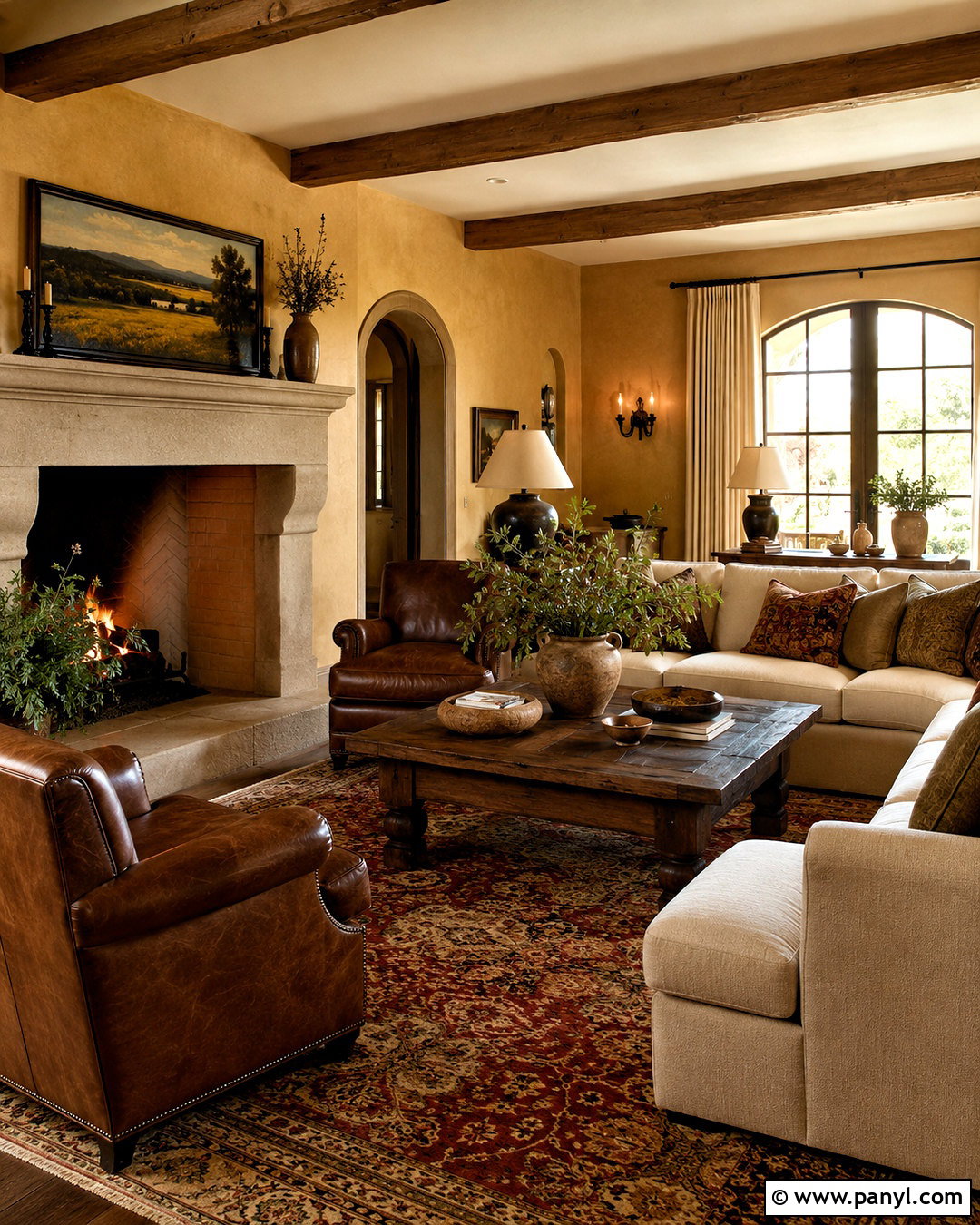
Tuscan gold works beautifully in a large living room where its depth can be balanced by pale upholstery and generous daylight. Paint the walls a warm, muted gold and leave the ceiling creamy white. Build the seating area around a broad limestone fireplace with a reclaimed oak mantel. Use an ivory sectional, two tobacco leather chairs, and a substantial wood coffee table to create an inviting conversation zone. A patterned rug in faded red, beige, and olive will connect the golden walls to the darker furniture. Hang restrained landscape artwork instead of covering every surface. Dark iron curtain rods and floor lamps provide definition, while full-length linen drapes soften the edges. The finished room feels glowing and comfortable rather than dark or excessively ornate.
13. Pale Apricot Tuscan Walls
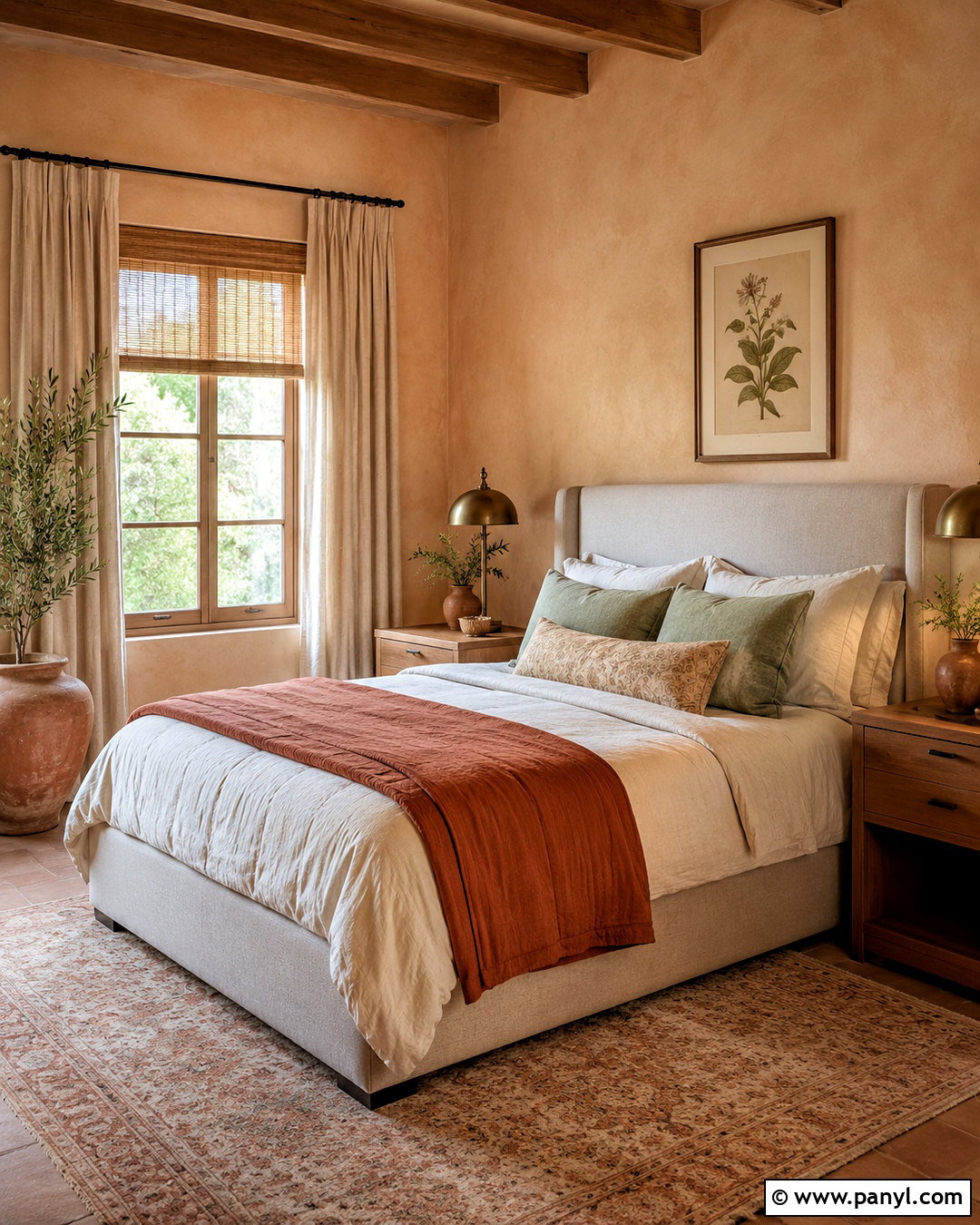
Pale apricot walls offer a gentle way to bring Tuscan warmth into a bedroom or guest room. Look for an apricot softened with beige so the result resembles sun-washed plaster rather than bright fruit. Pair it with an upholstered bed in oatmeal linen, medium oak nightstands, and crisp ivory bedding. Add a rust-colored coverlet and muted sage pillows to repeat the landscape-inspired palette. Natural woven shades layered beneath light curtains make the room feel relaxed and private. Use aged brass lamps, simple botanical artwork, and a small terracotta vessel as finishing touches. Pale apricot is particularly flattering in rooms with warm afternoon light, but testing it beside the flooring and fabrics will help prevent the walls from becoming too orange.
14. Peach Plaster Tuscan Walls
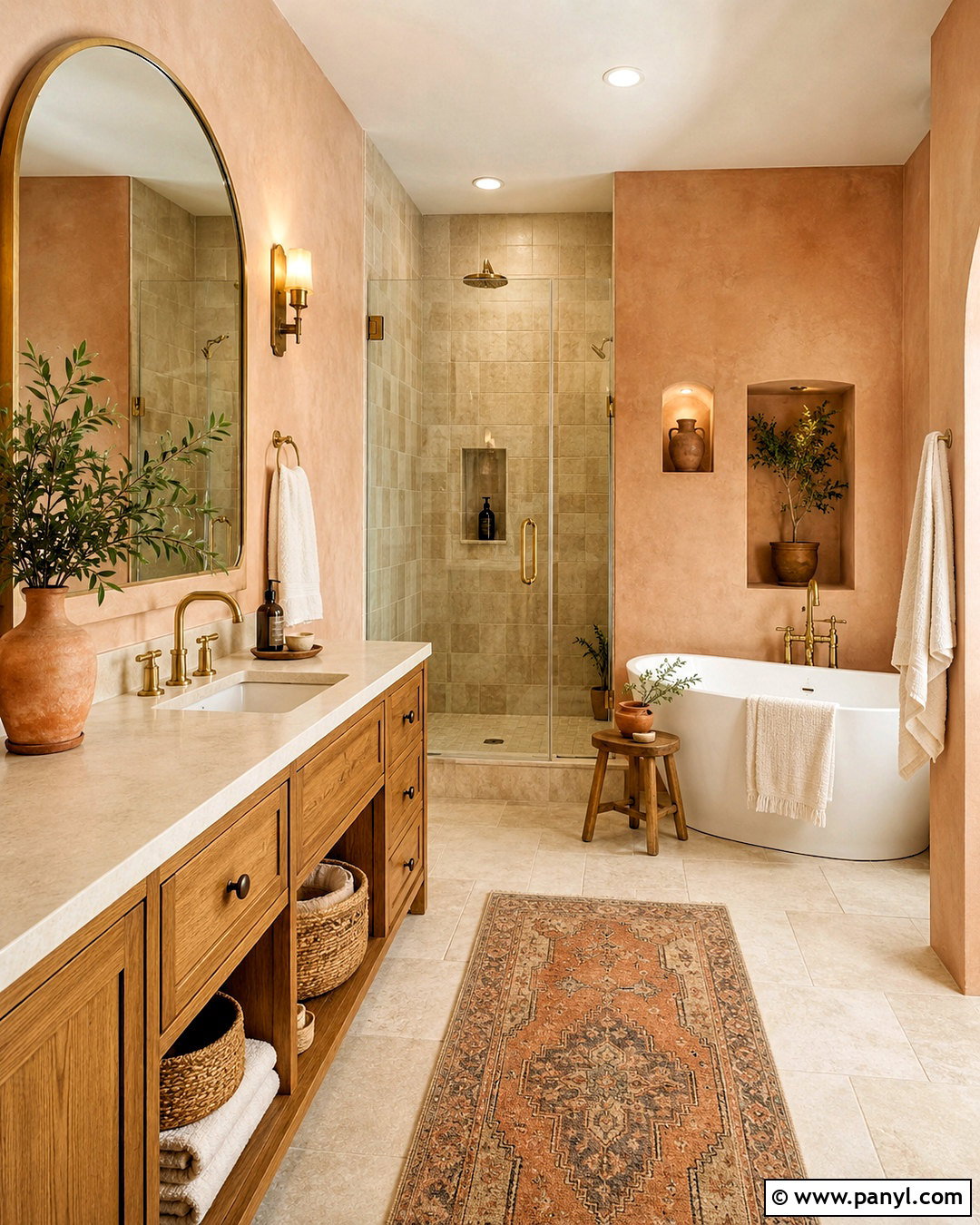
Peach plaster creates an airy Tuscan bathroom when combined with pale stone and warm metal finishes. Choose a dusty peach-beige for the walls, preferably in a moisture-resistant matte or low-sheen finish. Install a cream limestone-look floor, an oak vanity, and a broad countertop in honed ivory quartz. An arched mirror and aged brass sconces can add traditional shape without excessive ornament. Use a frameless glass shower with handmade beige tile and a small terracotta niche detail. Ivory towels, a woven laundry basket, and one olive branch provide a simple finishing layer. The peach walls should be quiet enough to behave like a neutral. In this balanced scheme, they warm the harder bathroom surfaces while maintaining the light, clean quality expected in a modern space.
15. Burnt Sienna Tuscan Walls
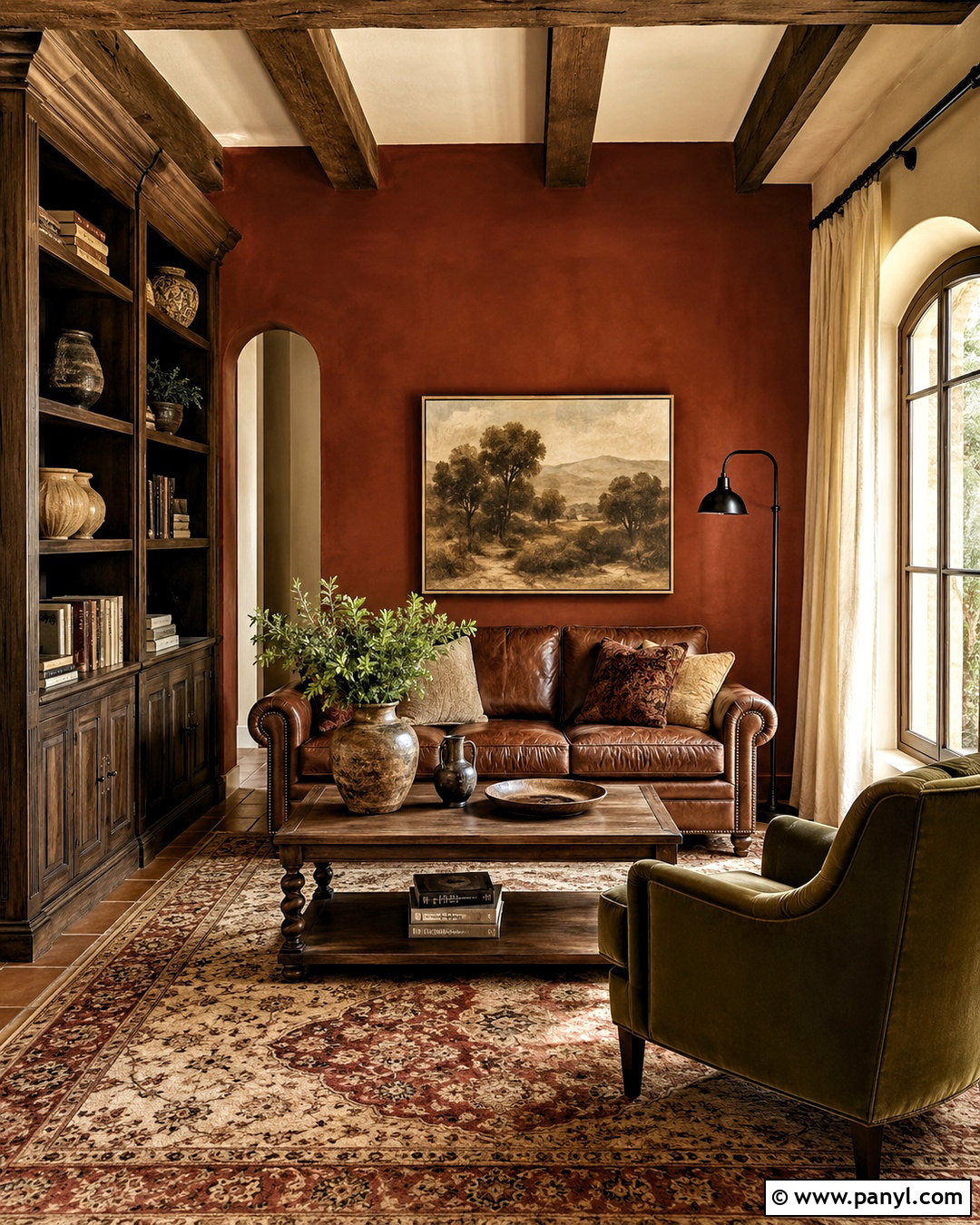
Burnt sienna makes a dramatic but comfortable choice for a Tuscan reading room. Use it on every wall in a compact space, then lighten the ceiling and trim with warm cream. Position a deep brown leather sofa beneath a large landscape painting and place an olive velvet reading chair beside a black iron floor lamp. Dark oak shelving can line one wall, while a faded beige and brick-red rug softens the wood flooring. Include a substantial coffee table, linen curtains, and a few large ceramic pieces rather than many small decorations. Burnt sienna has enough brown in it to feel grounded, so it works particularly well with leather and wood. Balanced by light fabric and controlled styling, the room becomes cozy rather than visually enclosed.
16. Terracotta Tuscan Walls
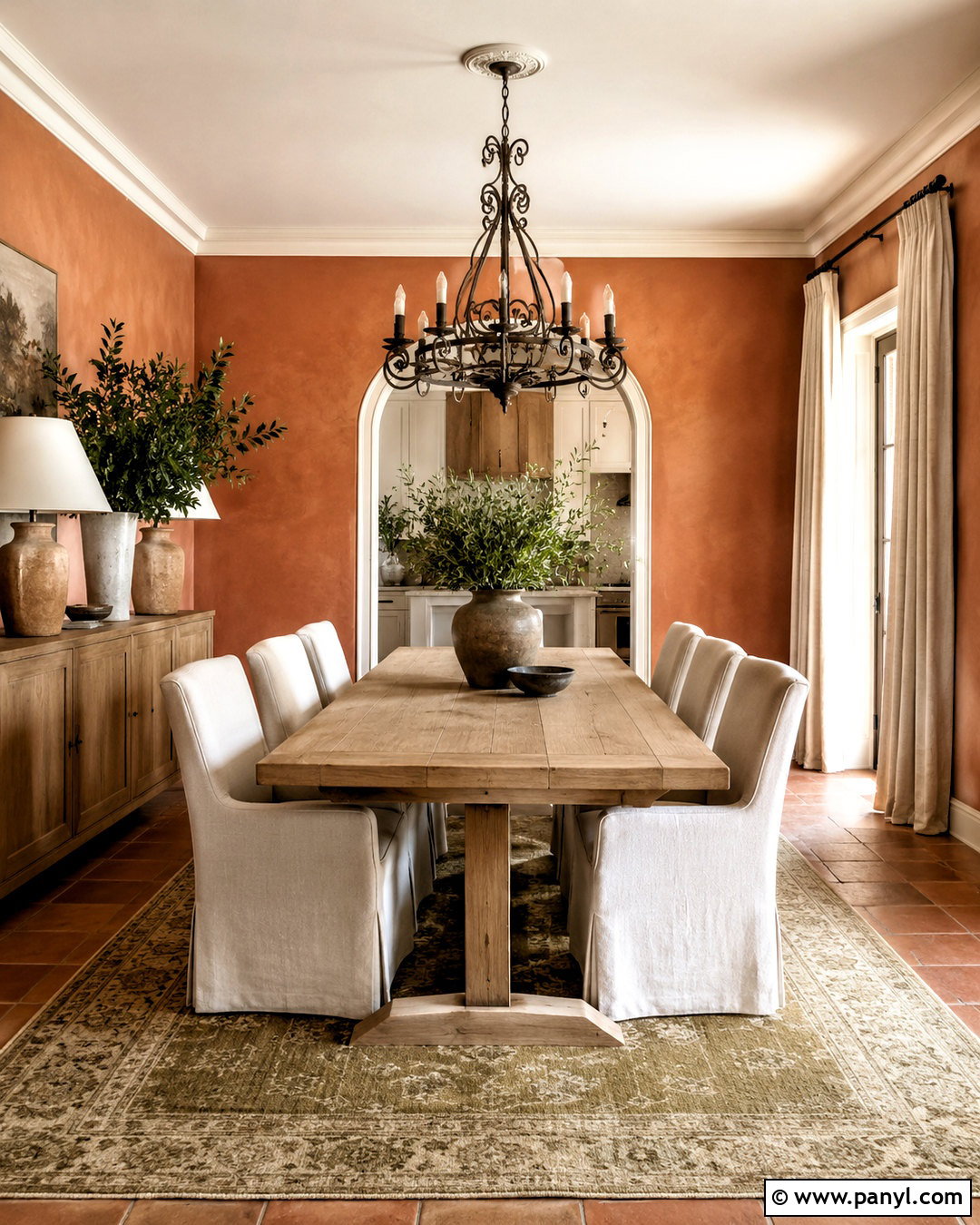
Terracotta is one of the most recognizable Tuscan wall colors, but it feels freshest when used with pale, uncomplicated furnishings. Paint a dining room in muted clay-orange and pair it with a bleached oak table, cream slipcovered chairs, and a sculptural iron chandelier. Keep the ceiling, trim, and linen curtains warm white to frame the stronger wall color. Under the table, place a natural jute or faded patterned rug that includes beige, olive, and rust. A long wood sideboard can support two ceramic lamps and a single oversized bowl. Avoid repeating terracotta on every accessory. Instead, allow the walls to provide the dominant earthy note while stoneware, greenery, woven fiber, and understated artwork complete the relaxed Italian farmhouse atmosphere.
17. Dusty Clay Tuscan Walls
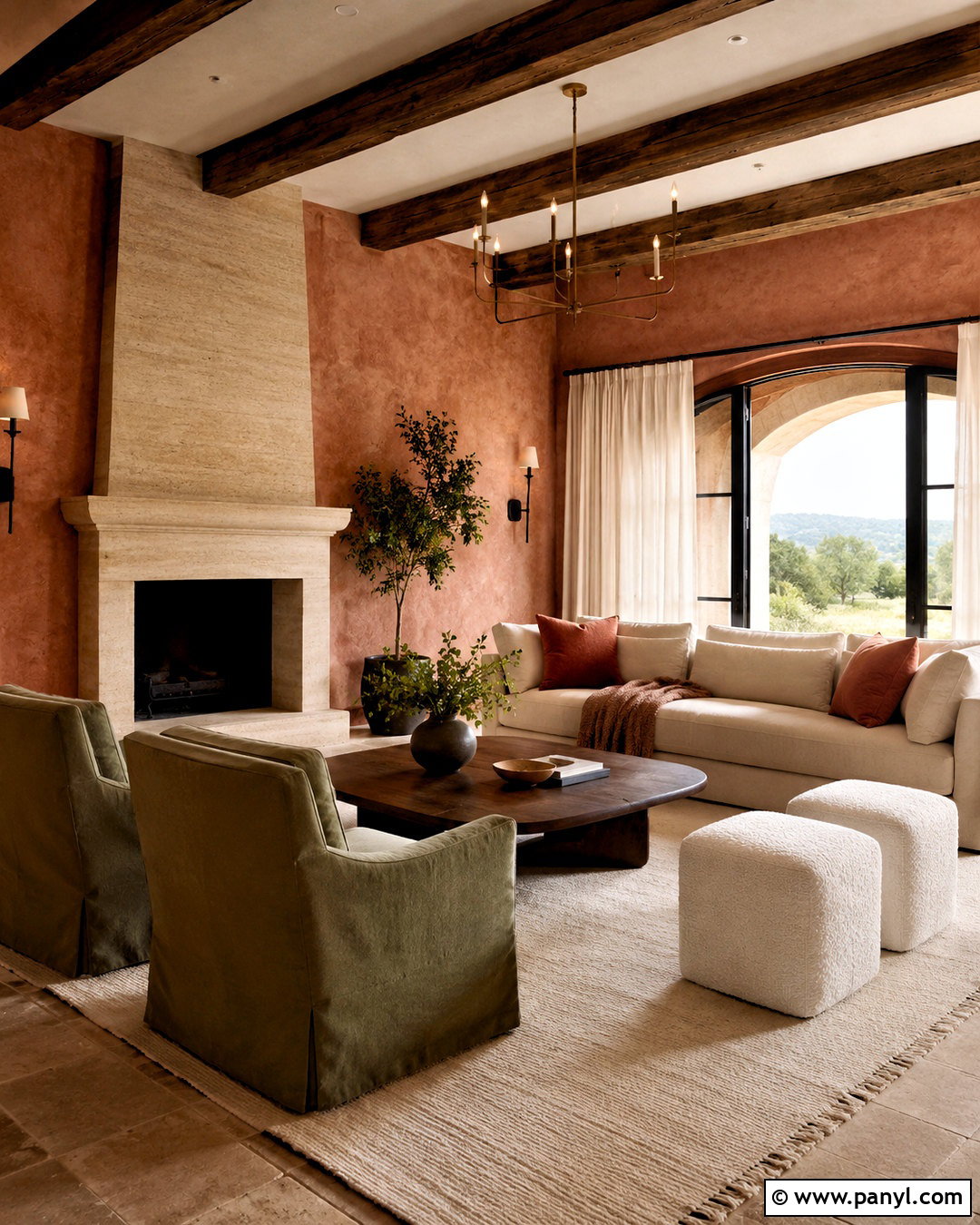
Dusty clay walls sit between terracotta, beige, and muted rose, making them surprisingly versatile in a Tuscan living room. Pair this softened earth color with an oatmeal sofa, a curved walnut coffee table, and two olive linen chairs. A light travertine fireplace will keep the room architectural and prevent the clay walls from feeling overly sweet. Choose ivory curtains, a cream wool rug, and cushions in rust, tan, and faded green. Black iron sconces and an aged brass floor lamp add darker details in small amounts. For artwork, select one large landscape or abstract piece containing warm mineral tones. The overall room should feel sun-faded and natural, with clean furniture lines balancing the historical character of the walls and rustic materials.
18. Tuscan Brick Red Walls
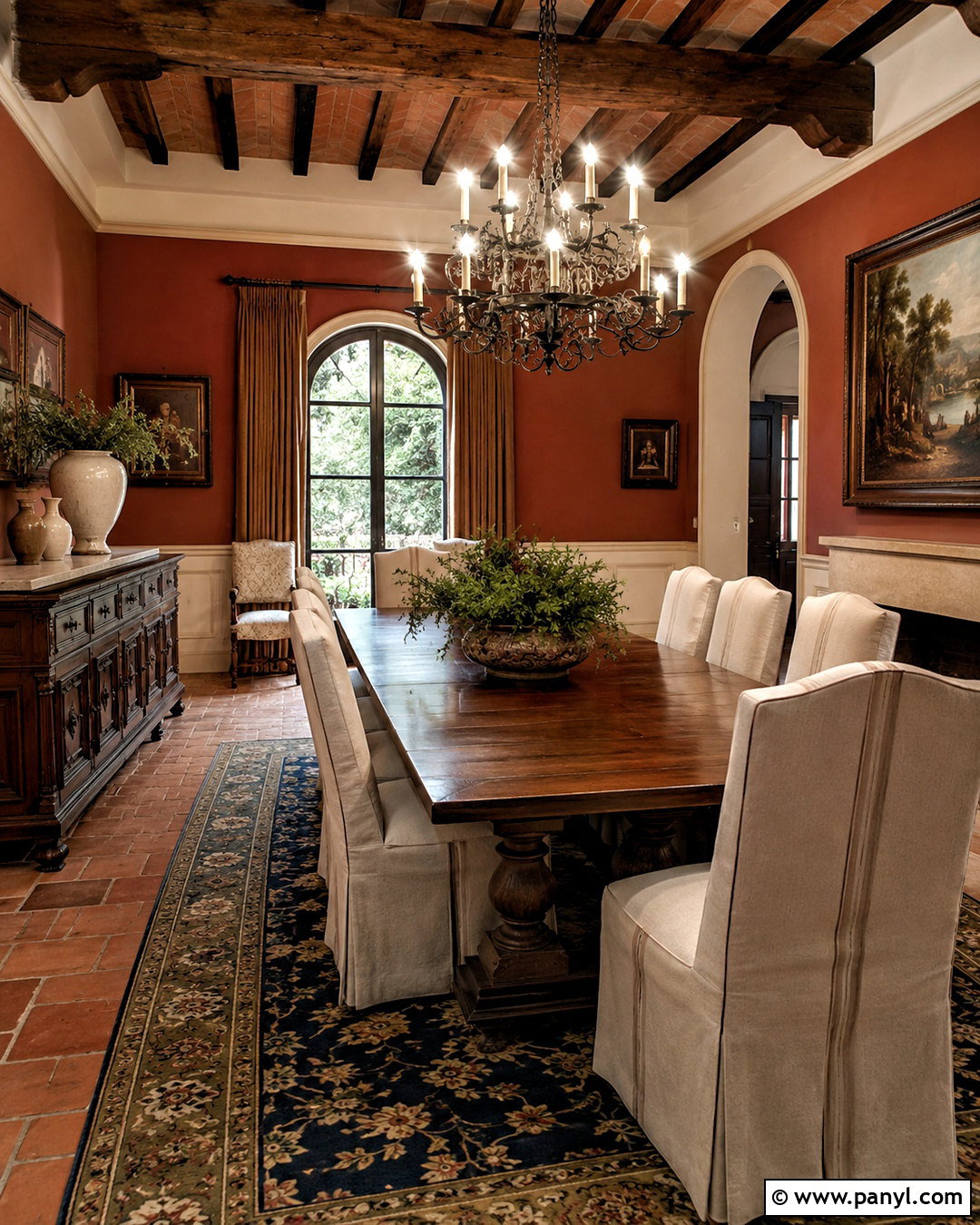
Brick red creates a stately Tuscan dining room when its intensity is controlled through neutral furniture and lighting. Select a red with substantial brown undertones, then use it above low cream paneling or across one clearly defined dining zone. A long walnut table, linen chairs, and a large iron chandelier establish the room’s central arrangement. Introduce a faded rug with olive, tan, and muted navy to broaden the palette. A stone-topped sideboard can display simple cream pottery and two lamps rather than ornate collections. Hang antique-inspired architectural prints in dark wood frames with generous spacing between them. Brick red performs best in rooms with adequate daylight and warm artificial lighting, where it reads as earthy and welcoming instead of sharp or overwhelmingly dark.
19. Rust Tuscan Walls
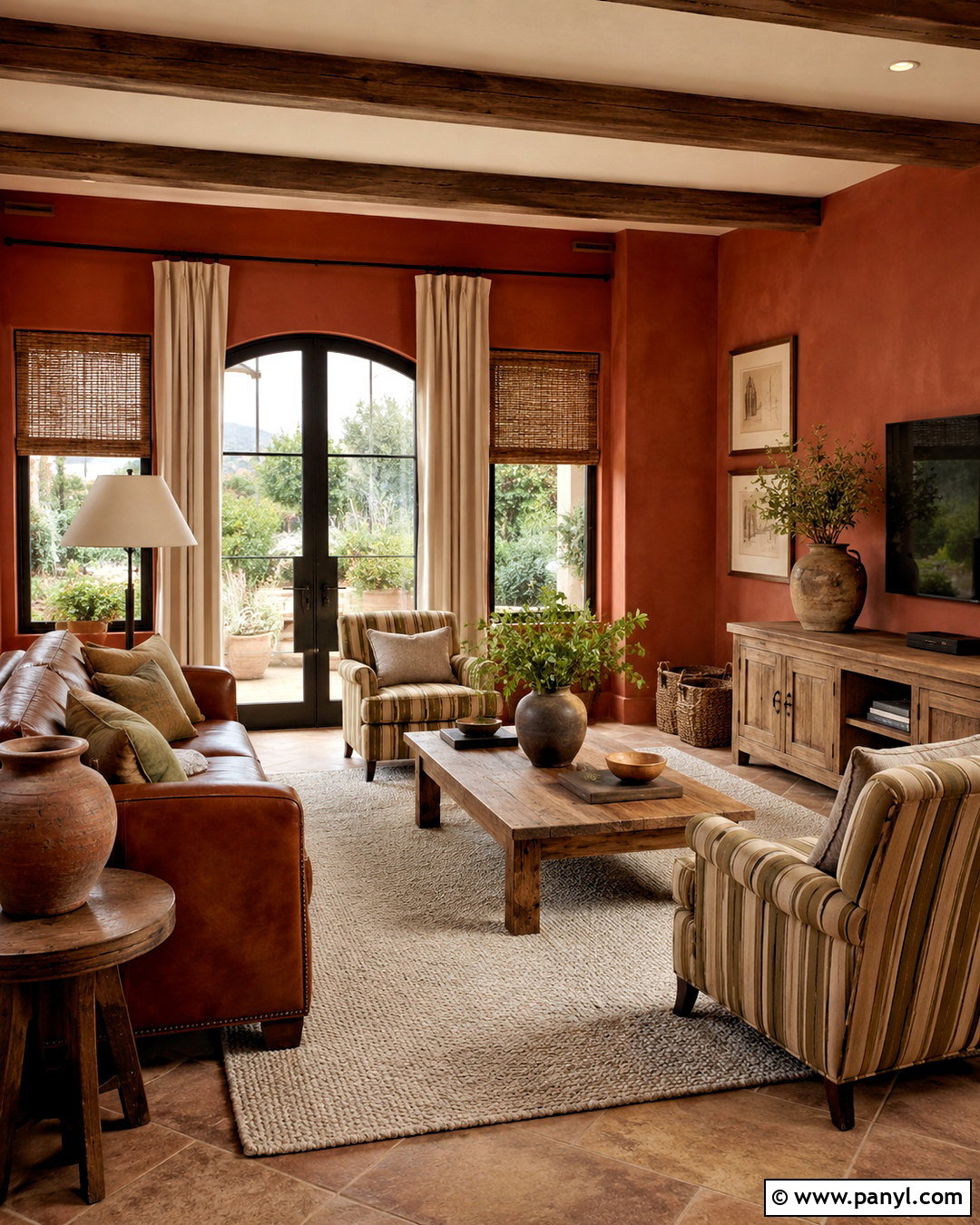
Rust-colored walls give a small den a cocooning quality while maintaining the natural warmth central to Tuscan decorating. Build the room around a caramel leather sofa, a low oak media cabinet, and an ivory textured rug. Add two striped linen chairs featuring beige, brown, and muted olive for pattern that does not compete with the walls. The ceiling and trim should remain creamy white, while woven shades and relaxed linen curtains soften the windows. Black iron table lamps, terracotta pottery, and a few framed sketches provide character. Because rust is already visually active, choose clean furniture silhouettes and leave some surfaces empty. The result is a comfortable everyday retreat that feels richly colored but still organized, approachable, and suitable for a typical home.
20. Cinnamon Tuscan Walls
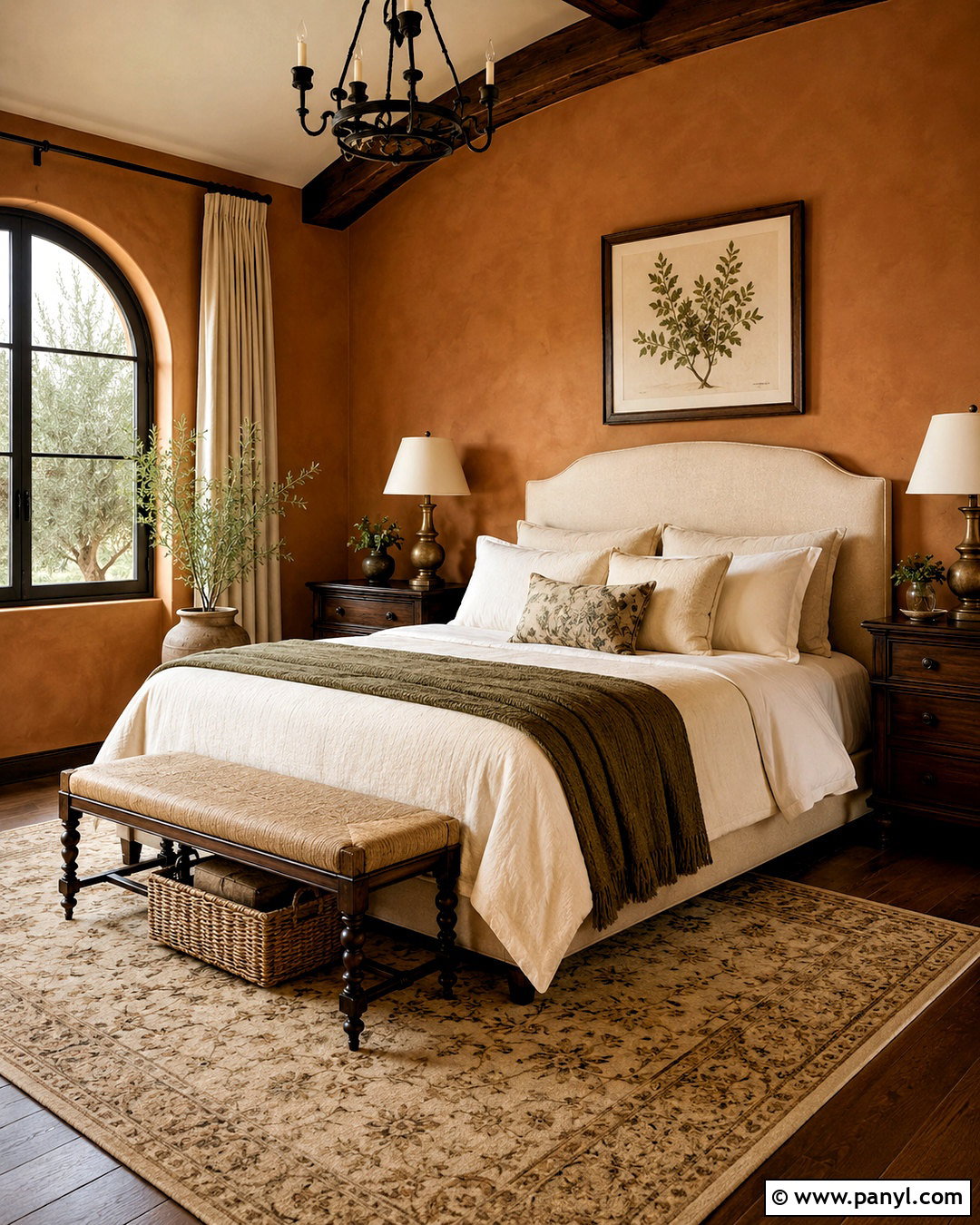
Cinnamon walls can create a welcoming Tuscan bedroom with a deeper, spiced warmth than standard beige. Paint the walls a medium brown-orange and contrast them with ivory bedding, a cream upholstered headboard, and light linen curtains. Use dark walnut nightstands and a matching bench to give the lighter textiles a firm visual anchor. A muted olive throw and patterned rug can introduce natural green without disrupting the restful palette. Add aged brass lamps, framed botanical drawings, and a large woven basket for practical storage. Keep the ceiling warm white to preserve height and brightness. This color works especially well in bedrooms with ample natural light, where its warm undertones become softened during the day and pleasantly enveloping in the evening.
21. Paprika Tuscan Walls
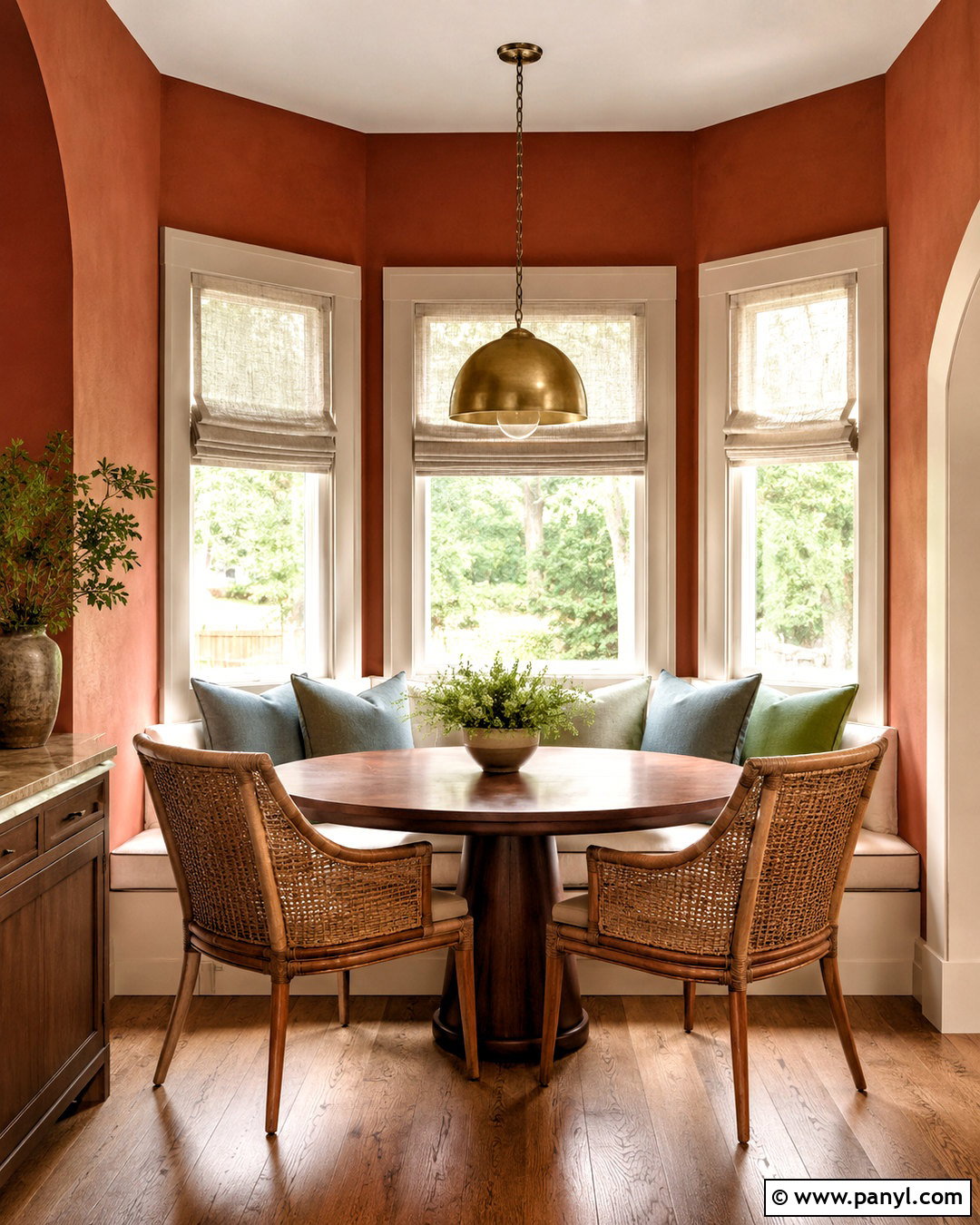
Paprika brings lively Tuscan color into a breakfast nook or casual dining corner. Use the earthy red-orange shade on the walls surrounding a built-in banquette upholstered in durable oatmeal fabric. Place a round walnut table and two woven chairs in front of the seating, then hang a simple aged brass pendant above it. Cream window trim and natural linen shades will provide visual relief from the stronger wall color. Accent the banquette with pillows in muted blue, olive, and beige, using small-scale patterns to keep the nook relaxed. Terracotta tile or warm oak flooring can extend into the adjoining kitchen. By combining paprika with light fabric, rounded furniture, and natural textures, the finished space feels energetic and welcoming without looking excessively bold.
22. Copper Brown Tuscan Walls
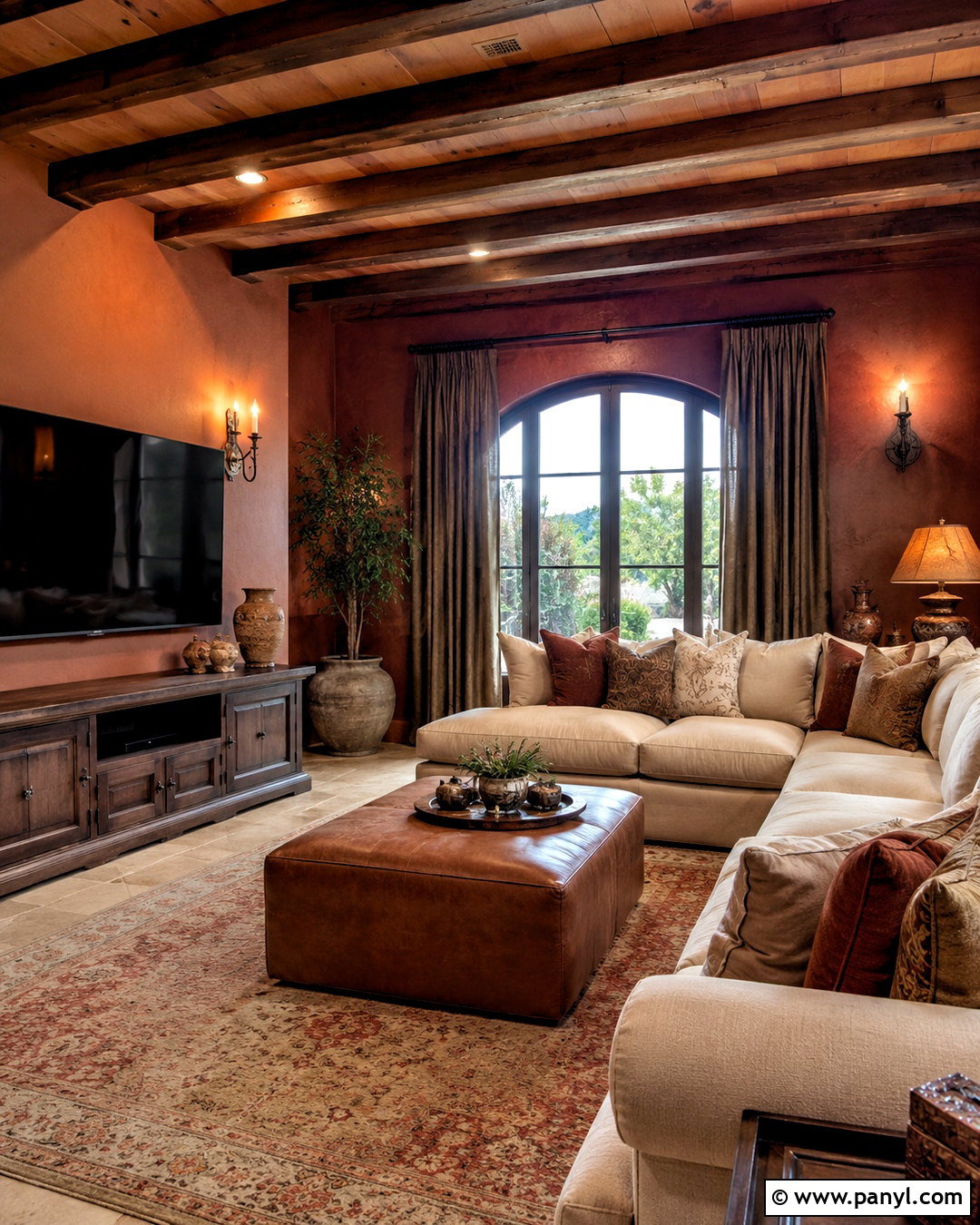
Copper brown walls create depth in a Tuscan media room, library, or other space meant for comfortable evening use. Choose a medium brown with noticeable rust undertones and pair it with a large cream sectional to prevent the design from becoming heavy. Add a dark oak media console, caramel leather ottoman, and muted olive curtains. A generously sized rug in beige, charcoal, and faded red should cover much of the wood floor and improve softness. Use black iron sconces and warm brass table lamps to layer the lighting. Minimal artwork, a few textured cushions, and large ceramic vessels will complete the room. Copper brown is strongest when surrounded by contrasting light surfaces and simple furniture, allowing its rich warmth to feel deliberate rather than dated.
23. Chestnut Tuscan Walls
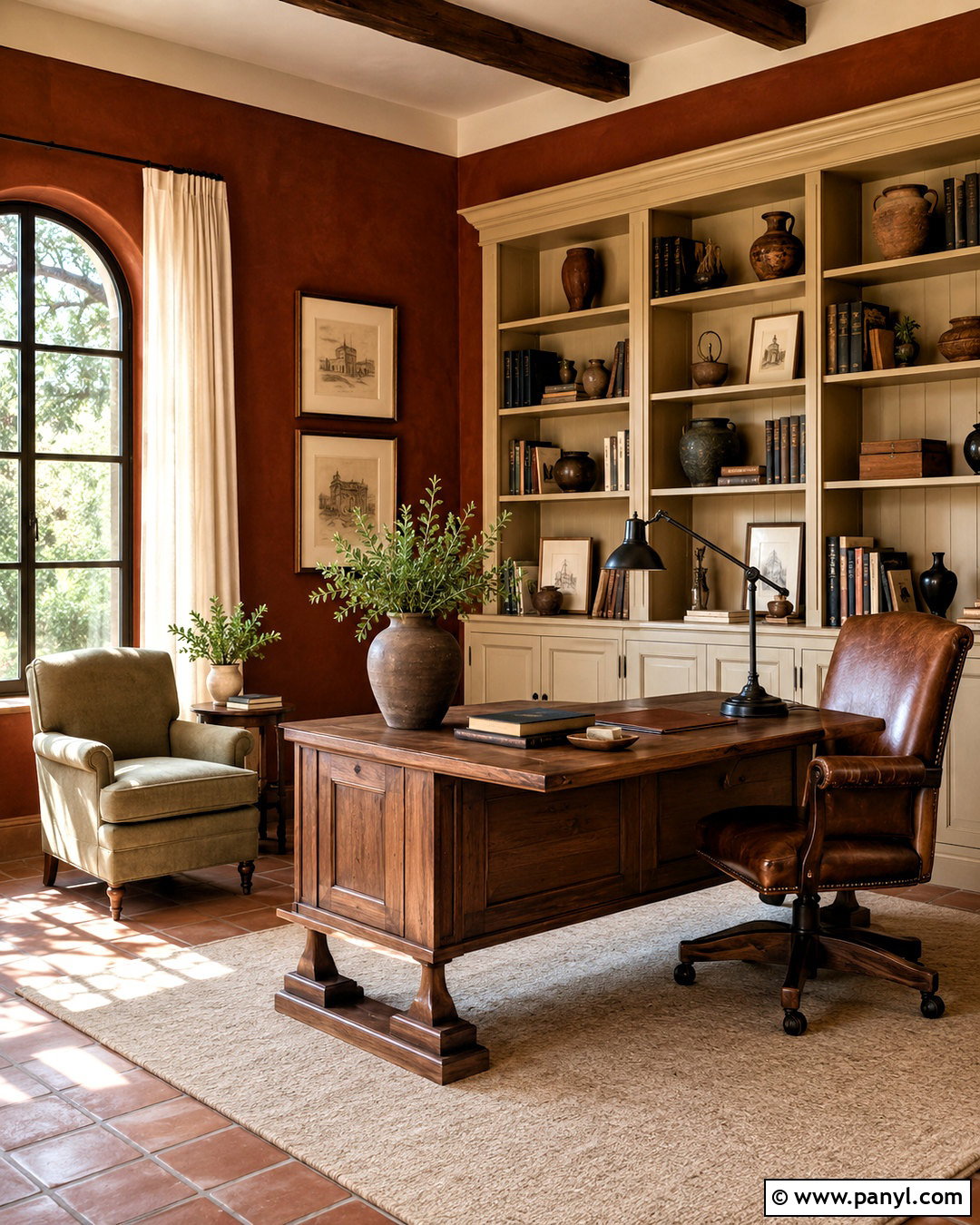
Chestnut walls can turn a home office into a grounded, focused retreat. Use the warm reddish brown behind built-in cream bookcases or across all walls in a well-lit room. A substantial oak desk should sit on a large beige wool rug, accompanied by a cognac leather chair and black metal task lamp. Add linen curtains in warm ivory to balance the dark wall color and soften incoming daylight. Keep shelves carefully edited with books, pottery, storage boxes, and framed sketches. A muted sage armchair in one corner creates a useful reading spot while introducing natural contrast. Chestnut works well with existing wood when the finishes are not identical. Mixing light oak, darker walnut, and leather gives the finished Tuscan workspace more dimension and authenticity.
24. Espresso Brown Tuscan Walls
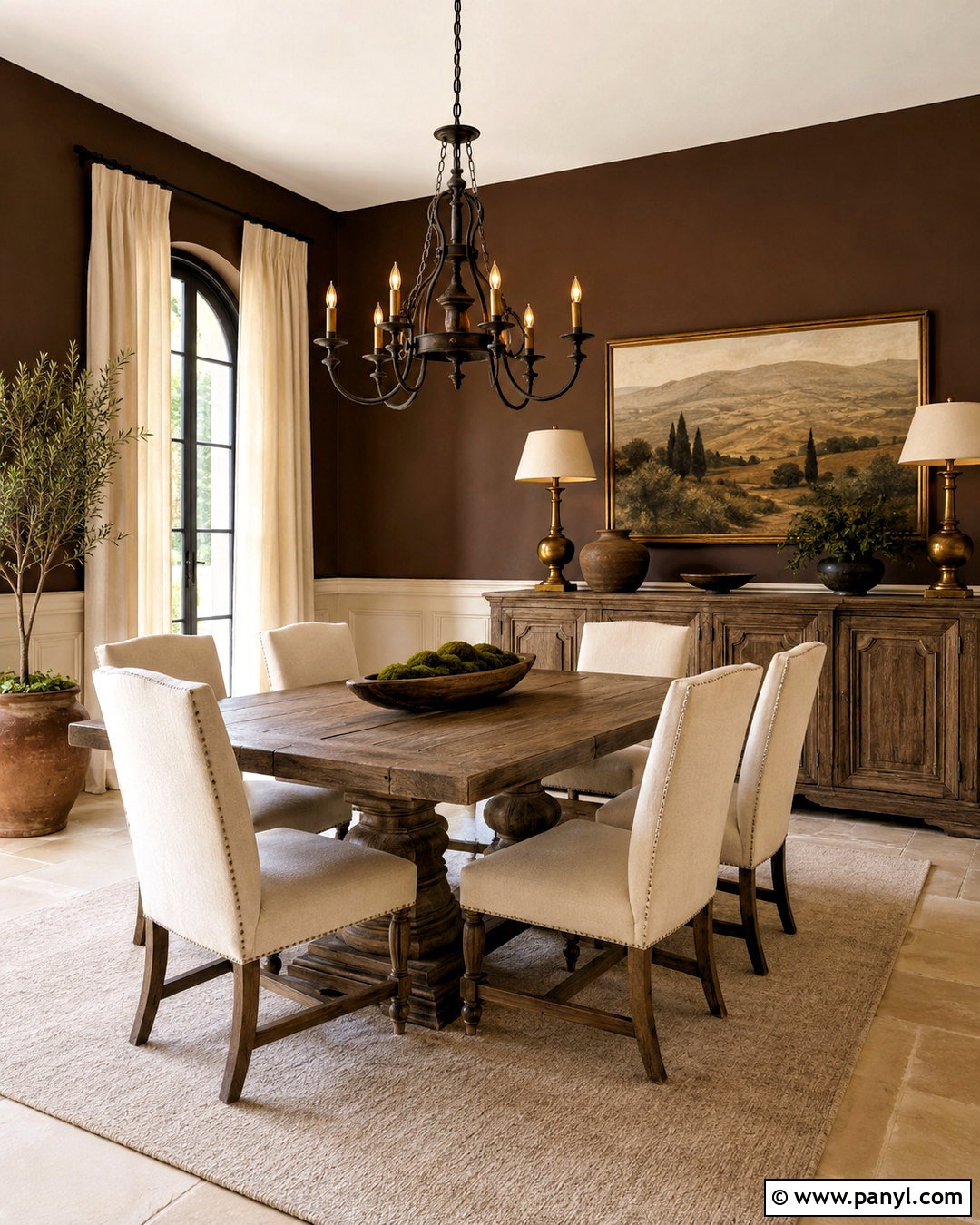
Deep espresso walls make a dramatic backdrop for a Tuscan dining room with strong natural light. Use the color above creamy wainscoting or on the room’s primary wall so it adds depth without enclosing the entire space. Choose a broad reclaimed oak table, ivory linen chairs, and a large iron chandelier with simple curved arms. Pale limestone flooring or a generous cream rug will brighten the lower half of the room. Add an aged wood sideboard, brass lamps, and one large olive-toned landscape. Window treatments should remain light and full length. Espresso walls work because they echo the darkest lines found in wood grain and ironwork. Keeping the remaining palette pale allows those dark walls to appear sophisticated, architectural, and intentionally balanced.
25. Olive Green Tuscan Walls
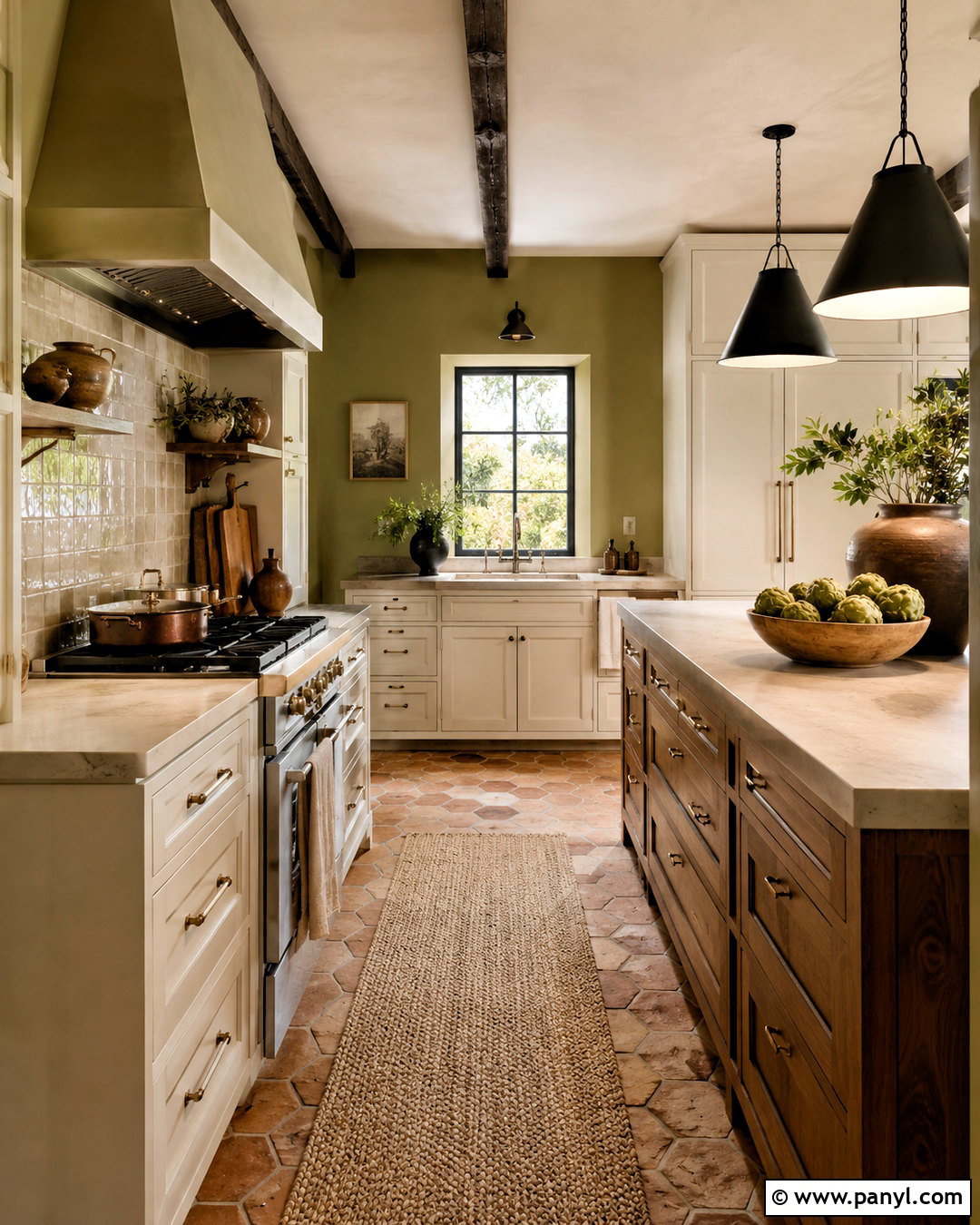
Olive green walls naturally suit a Tuscan kitchen because they coordinate with wood cabinets, cream stone, and aged metal. Paint the walls a medium, yellow-based olive and pair them with warm white cabinetry and a walnut island. Use honed limestone counters, handmade cream backsplash tile, and aged brass hardware for a softly varied material palette. Terracotta flooring adds earthy contrast beneath the green, while iron pendants define the island. Keep accessories useful and restrained, such as wooden cutting boards, ceramic bowls, and potted herbs. An oatmeal runner can soften the main work aisle. The green should look muted rather than bright. This creates a grounded kitchen that references olive groves while remaining practical, light enough for daily use, and compatible with modern appliances.
26. Soft Sage Tuscan Walls
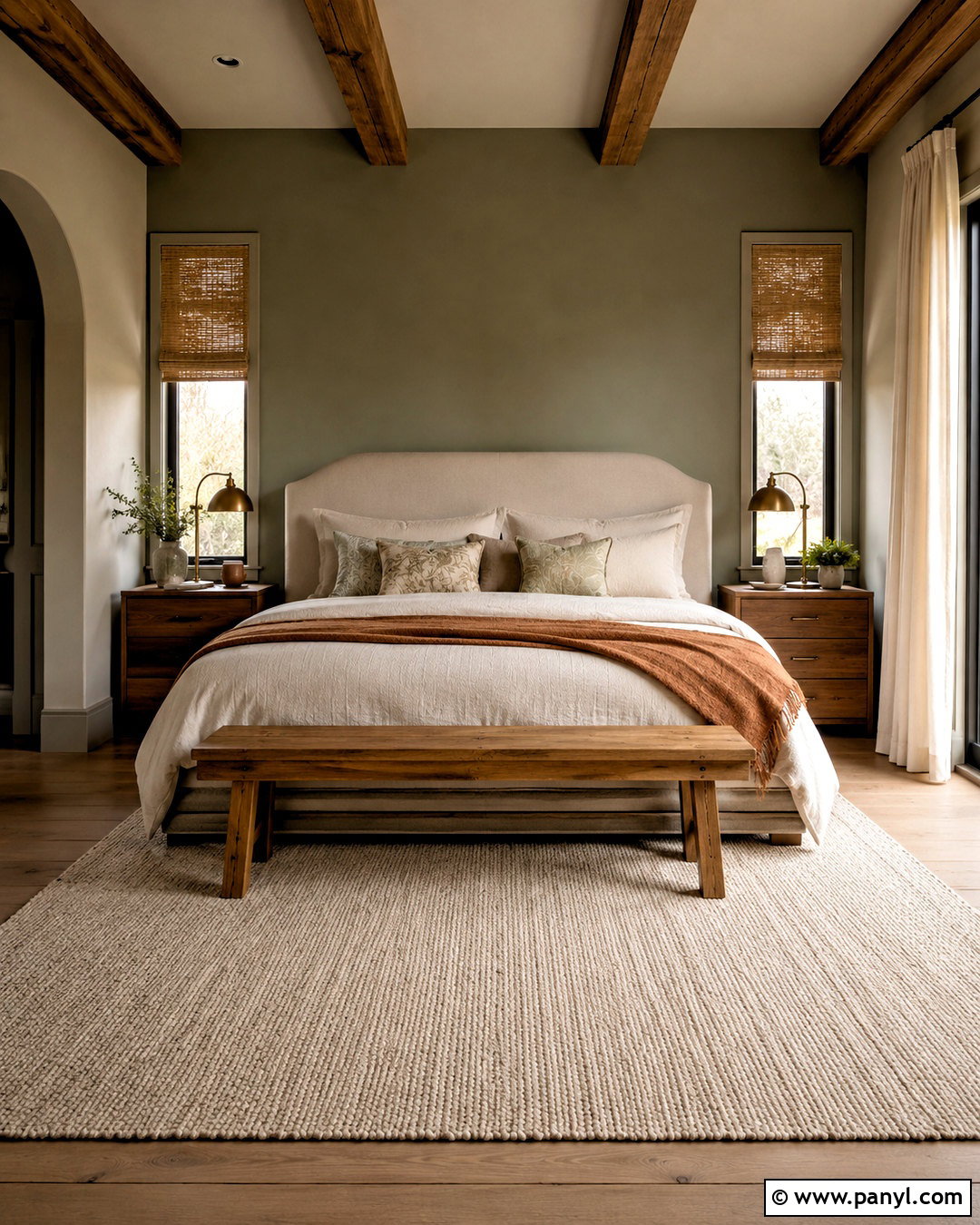
Soft sage creates a calm Tuscan bedroom that feels connected to nature without becoming strongly themed. Choose a warm, gray-softened sage for every wall, then add a cream linen headboard, ivory bedding, and a natural oak bench. Walnut nightstands provide a deeper wood tone, while aged brass lamps supply understated warmth. Layer the bed with a clay-colored throw and pillows in beige, olive, and subtle botanical patterns. Use woven shades and long linen curtains to filter daylight. A pale wool rug will brighten terracotta or dark wood flooring and make the room more comfortable. Finish with a simple landscape, handmade pottery, and one leafy plant. The restrained combination feels lighter and more current than traditional dark green Tuscan rooms.
27. Moss Green Tuscan Walls
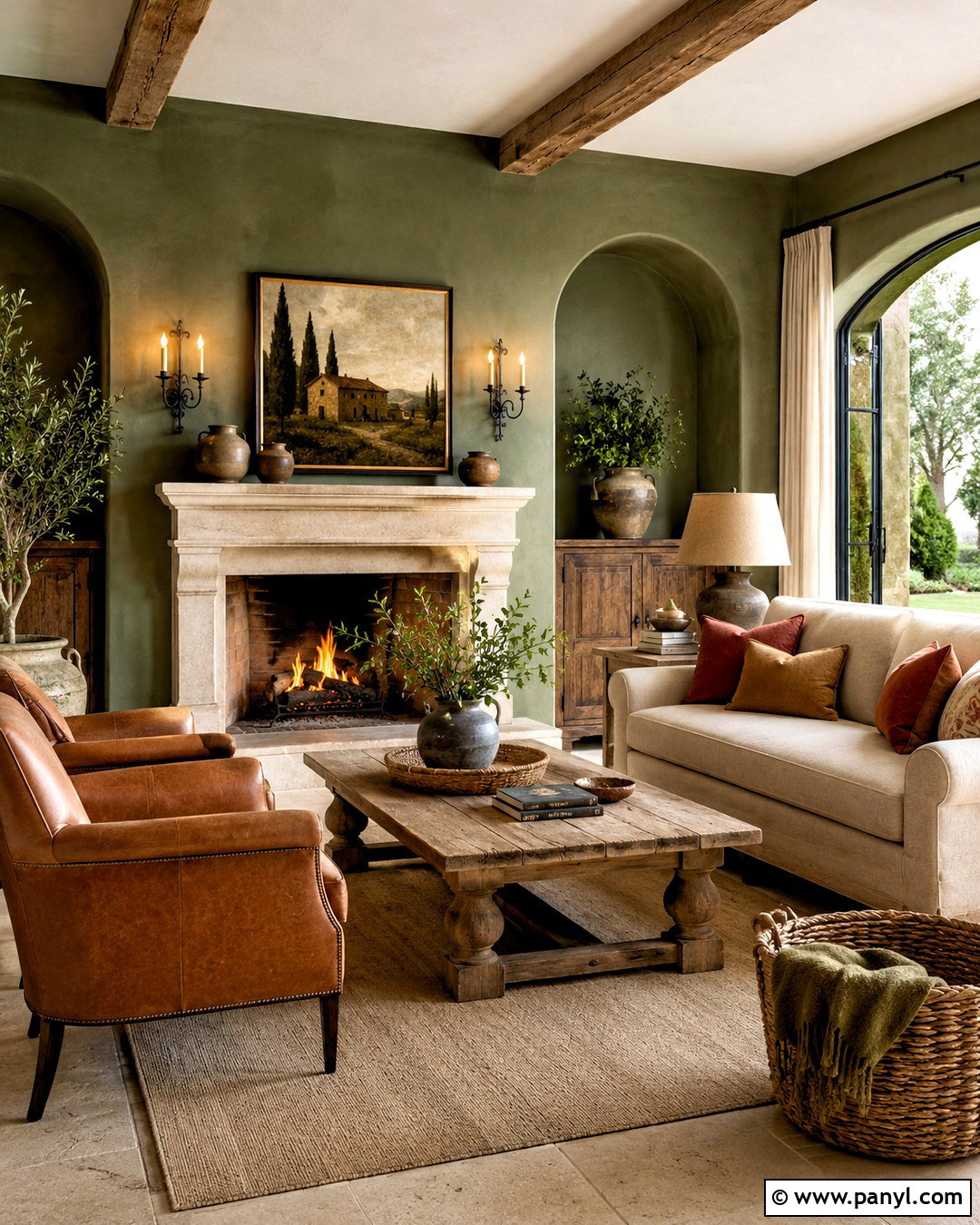
Moss green walls can anchor a rustic Tuscan living room filled with pale stone and natural linen. Center the design on a cream limestone fireplace and place an oatmeal sofa opposite two cognac leather chairs. Use a reclaimed oak coffee table, woven baskets, and a large beige rug to soften the deeper green background. Rust and mustard pillows can introduce small touches of warmth, while black iron sconces connect with the fireplace tools and curtain hardware. Keep the ceiling and trim creamy white to preserve brightness. Moss green feels especially convincing beside visible wood grain and uneven stone textures. The complete room should feature generous seating and uncluttered surfaces, giving the rich wall color enough visual space to remain elegant rather than overwhelming.
28. Cypress Green Tuscan Walls
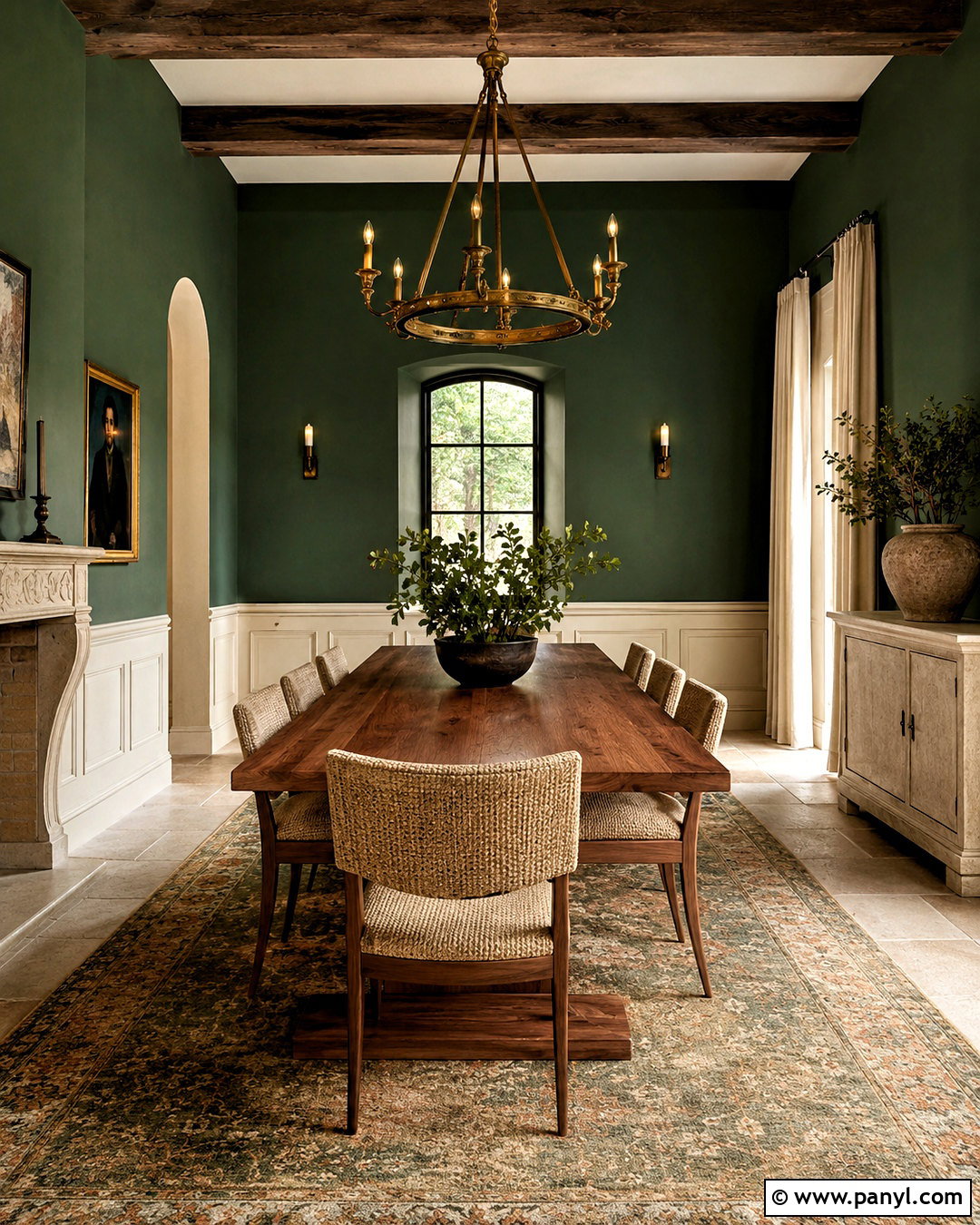
Cypress green gives a dining room a formal Tuscan character while still working with contemporary furniture lines. Choose a deep, muted green and apply it to the walls above cream-painted paneling. Place a streamlined walnut dining table at the center with woven or linen-covered chairs in a warm neutral. An aged brass chandelier can soften the strong wall color and create an inviting focal point. Use a faded rug containing olive, terracotta, and beige, then add a pale stone sideboard with a large ceramic vessel. Full-length ivory curtains will frame the windows and reflect daylight into the room. Cypress green should be balanced by open wall space and light finishes, producing a rich but orderly setting suited to both casual meals and special gatherings.
29. Eucalyptus Tuscan Walls
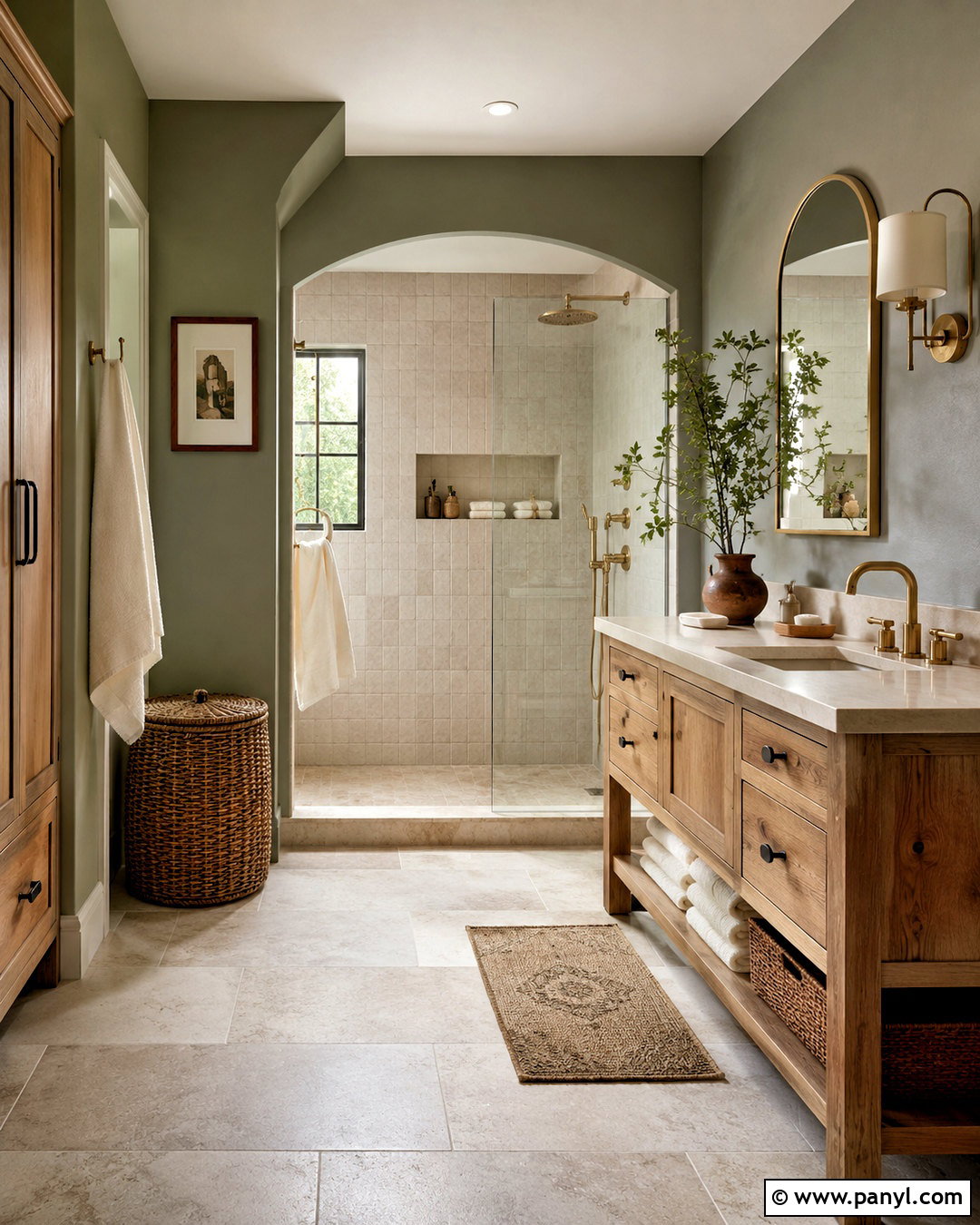
Eucalyptus walls introduce a lighter, slightly fresher green to a modern Tuscan bathroom. Paint the walls a muted green with warm gray undertones and combine it with an oak vanity, cream quartz counter, and brushed brass fixtures. A walk-in shower lined with ivory zellige-style tile provides subtle variation without busy pattern. Use a limestone-look porcelain floor for practicality and visual warmth. An arched mirror, woven hamper, ivory towels, and terracotta accessories will complete the palette. Keep cabinetry simple and storage mostly concealed so the natural colors remain the focus. Eucalyptus works particularly well in smaller bathrooms because it adds identity without absorbing as much light as deep olive. The final room feels clean, organic, and gently connected to Tuscan materials.
30. Muted Teal Tuscan Walls
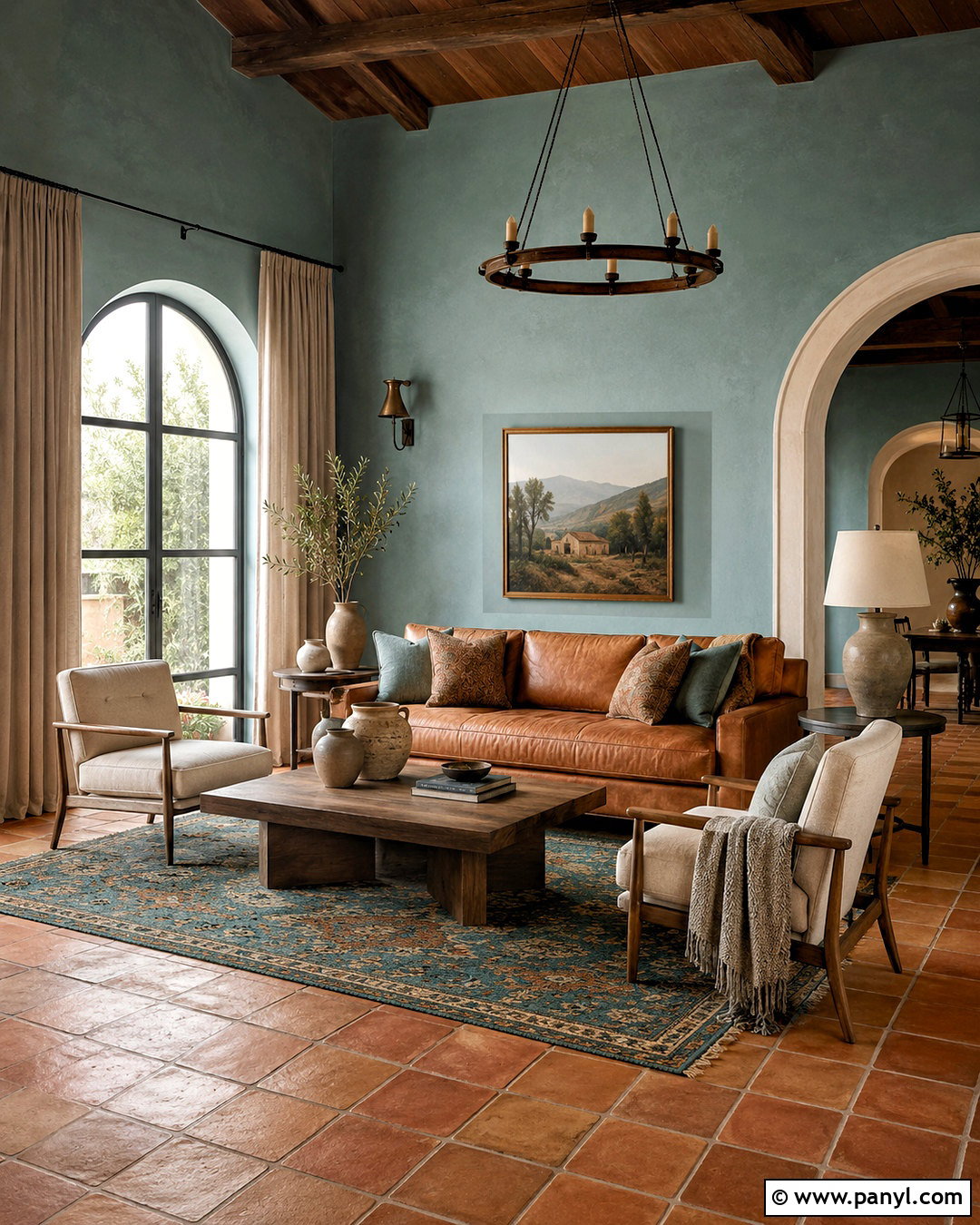
Muted teal provides a refreshing counterpoint to the many warm materials found in a Tuscan room. Use this softened blue-green in a sitting room with terracotta flooring, a camel leather sofa, and cream linen chairs. Add a substantial walnut coffee table and a faded rug that combines teal, rust, beige, and olive. Warm white trim will sharpen the architecture, while aged brass lamps and black iron curtain rods introduce refined contrast. Keep window panels light to prevent the teal walls from making the space feel closed. Handmade pottery and one large landscape are enough decoration. The balance of cool wall color and warm flooring creates a layered Mediterranean effect, making muted teal a useful choice for homeowners who want Tuscan character without an entirely brown or gold palette.
31. Mediterranean Blue Tuscan Walls
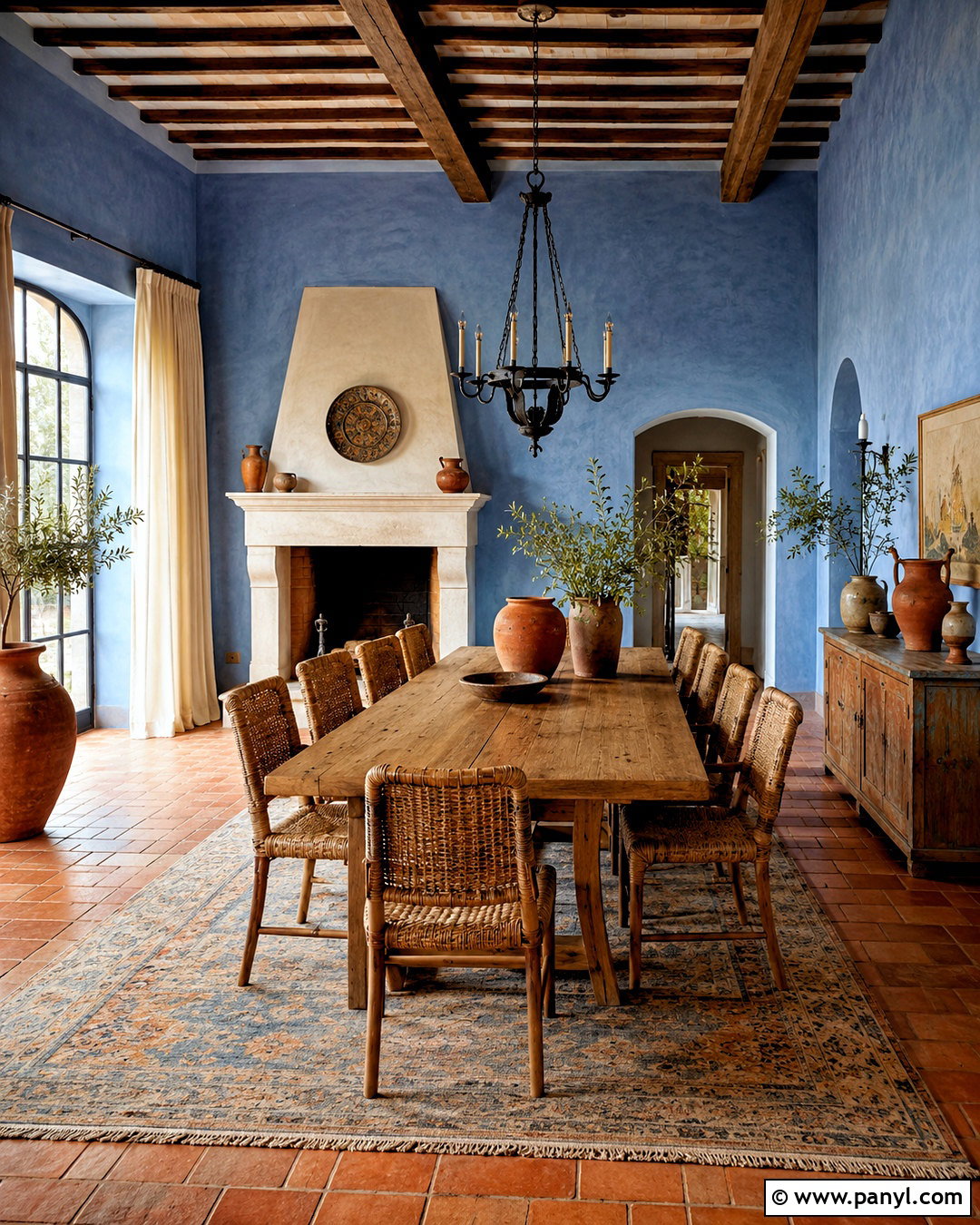
Mediterranean blue can create a memorable Tuscan dining room when it is muted and paired with sun-warmed materials. Choose a medium blue with subtle gray or green undertones instead of a bright coastal shade. Combine it with a long oak table, woven dining chairs, and terracotta tile flooring. A cream plaster fireplace or arched niche can provide a pale architectural focal point. Use an iron chandelier overhead and linen curtains in warm ivory at the windows. Rust-colored pottery, olive branches, and a patterned rug can connect the cool walls to the warm floor. Keep cabinetry and trim creamy rather than stark white. This complete palette feels vibrant yet grounded, drawing on Mediterranean color without shifting the room into a nautical direction.
32. Dusty Blue Tuscan Walls
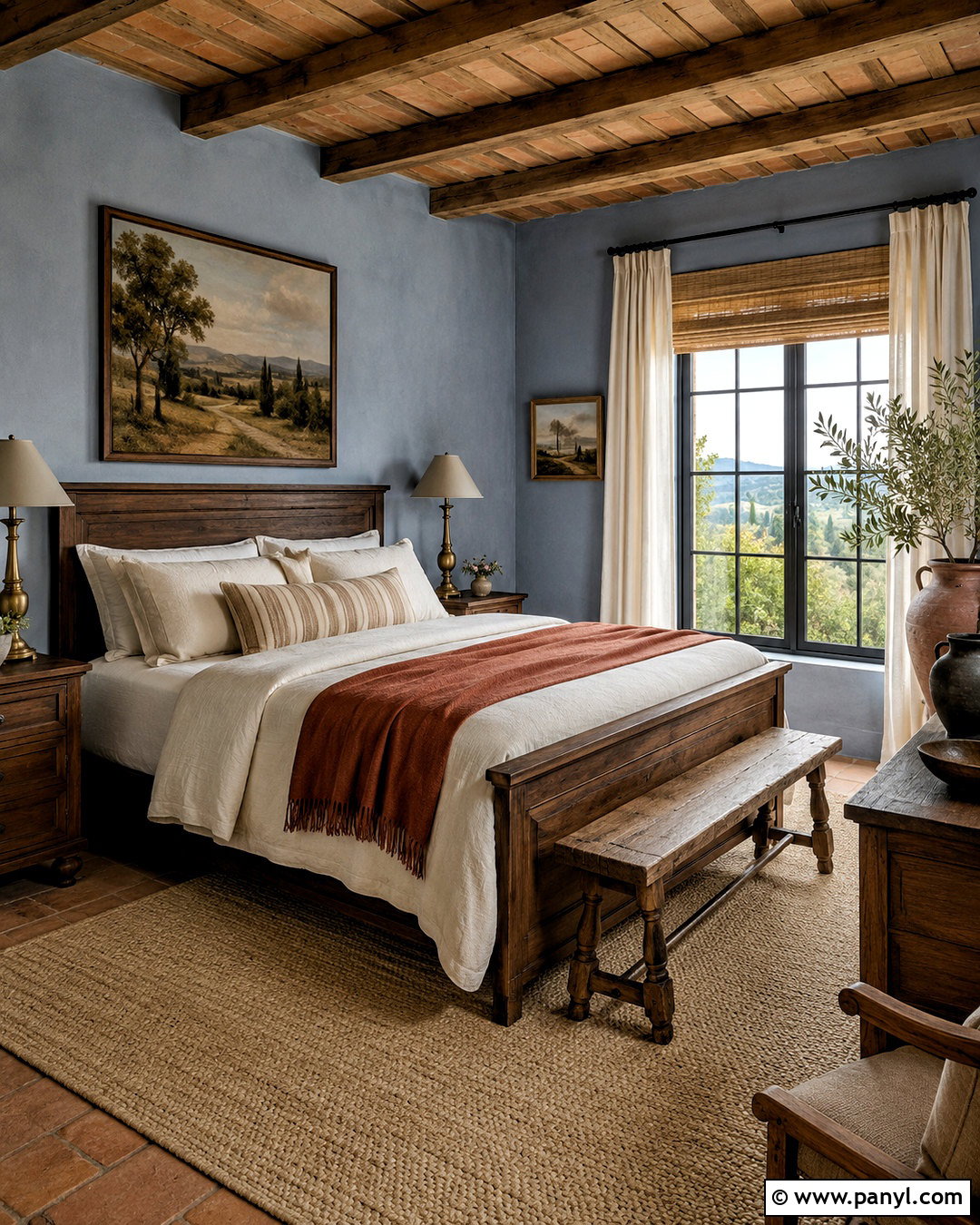
Dusty blue walls bring softness to a Tuscan guest bedroom and balance warm wood furniture beautifully. Select a blue muted with gray and a slight green undertone, then pair it with a walnut bed, ivory linen bedding, and a sand-colored wool rug. Add a terracotta throw and striped beige pillows to warm the cooler backdrop. Natural woven shades, cream curtains, and aged brass lamps provide additional balance. A small oak bench and ceramic bedside vessels can continue the relaxed, handcrafted look. Keep artwork simple, perhaps using one landscape with faded blue, olive, and ochre. Dusty blue works best when the room contains enough brown, cream, and clay to preserve Tuscan warmth while offering a more restful alternative to traditional gold or beige walls.
33. Muted Aubergine Tuscan Walls
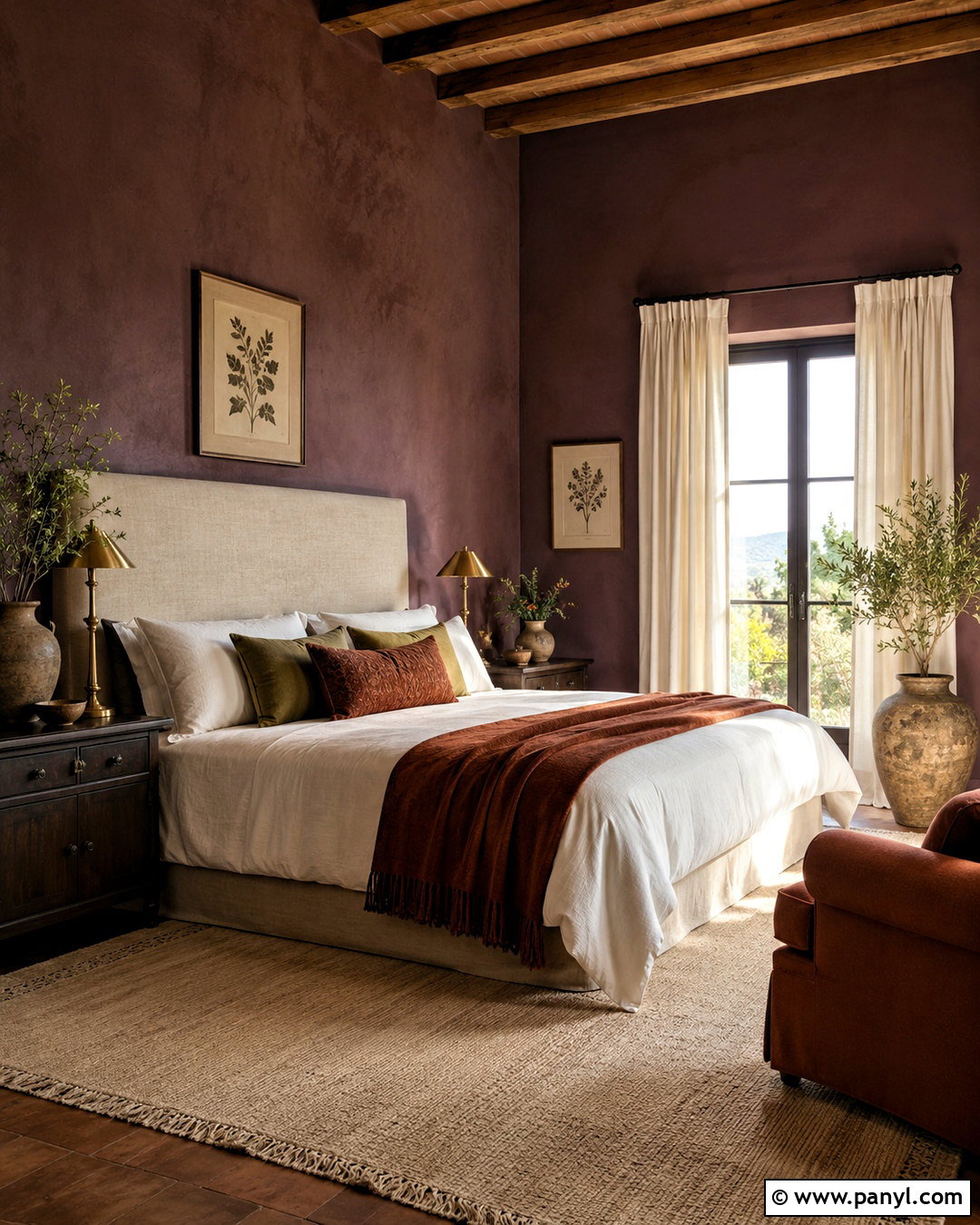
Muted aubergine walls can give a Tuscan bedroom or library unexpected richness. Choose a brown-based purple that appears earthy rather than jewel-toned, and pair it with a tall oatmeal linen headboard or cream upholstered seating. Dark walnut furniture reinforces the room’s depth, while a pale wool rug and ivory curtains keep the composition balanced. Add aged brass lighting, rust-colored textiles, and muted olive accents to connect the aubergine walls with familiar Tuscan earth tones. Artwork should be limited to a few botanical or landscape pieces in dark wood frames. This color is best suited to a room with good daylight and substantial pale surfaces. Used thoughtfully, aubergine feels historical, intimate, and more distinctive than common brown while remaining compatible with natural materials.
34. Stone Gray Tuscan Walls
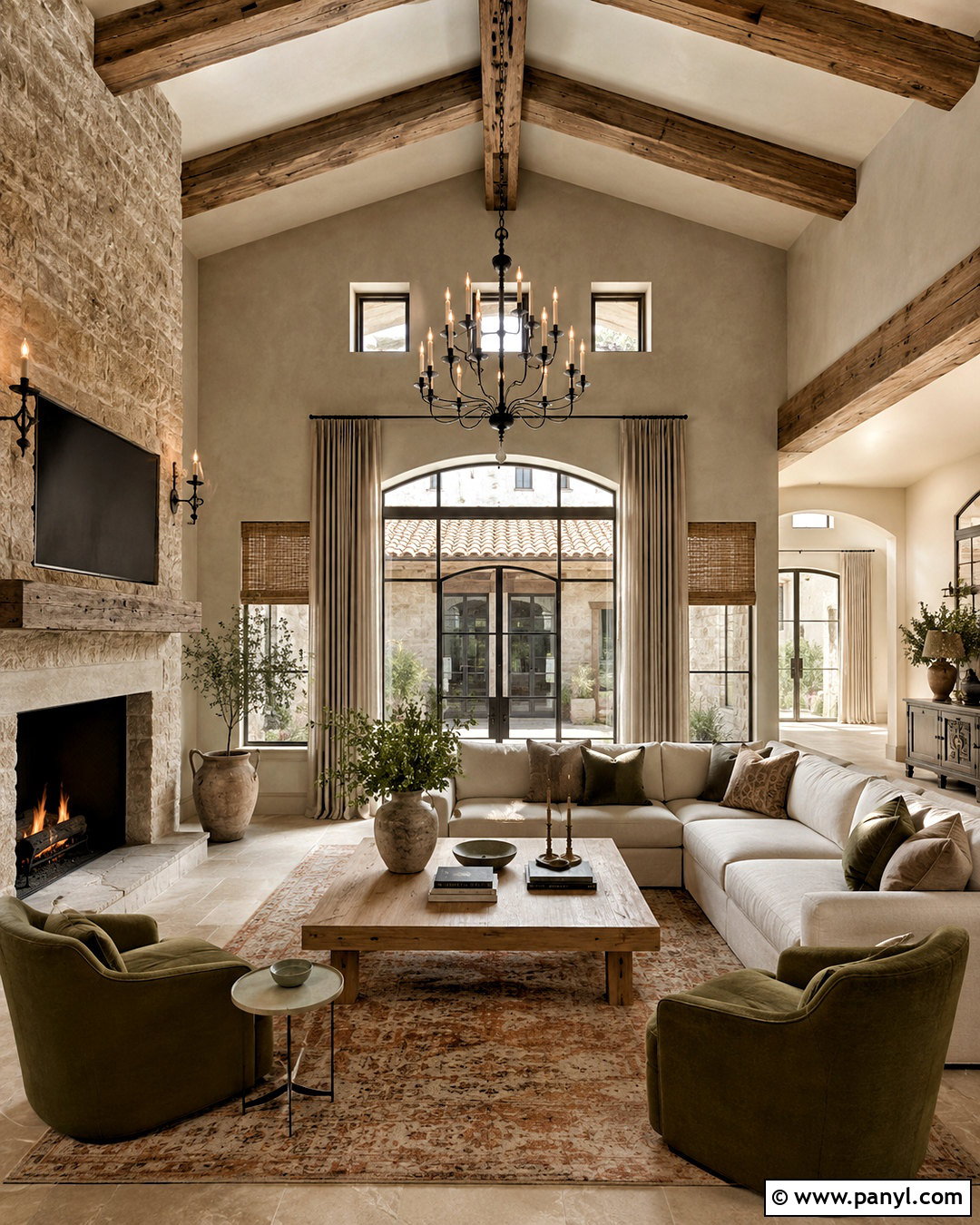
Warm stone gray is ideal for updating a Tuscan great room without removing its existing terracotta, wood, or limestone features. Choose a gray with clear beige undertones and use it on the walls beneath exposed wood beams. Arrange a large cream sectional and two olive chairs around a light oak coffee table. A limestone fireplace should remain the room’s architectural centerpiece, complemented by iron sconces and a reclaimed mantel. Use a faded rug in taupe, rust, and charcoal to connect the walls with the warmer flooring. Linen curtains and woven shades will soften the windows. Avoid icy gray textiles or polished chrome. When every supporting finish stays warm and tactile, stone gray provides a cleaner background while preserving the grounded character of a Tuscan interior.
35. Warm Charcoal Tuscan Walls
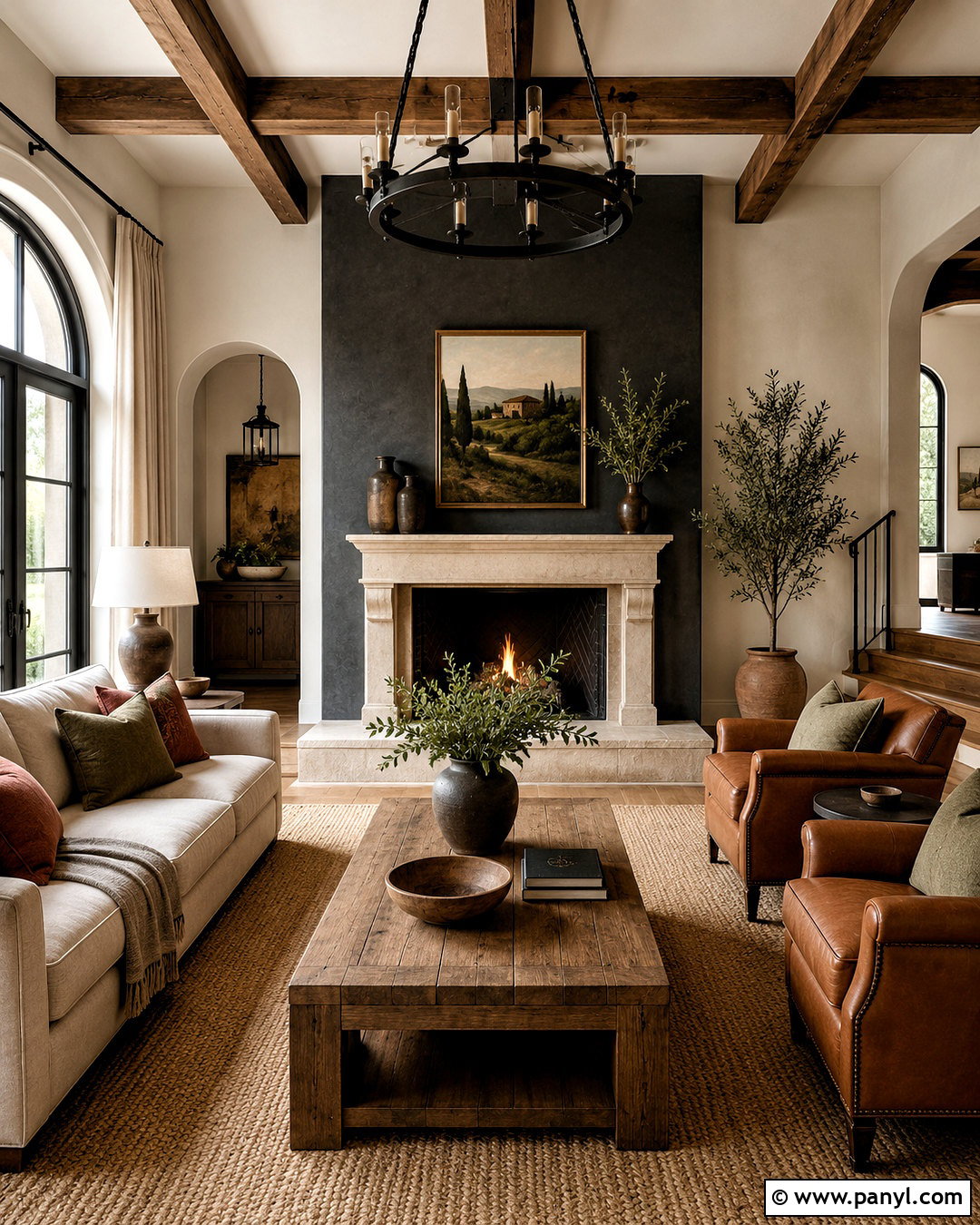
Warm charcoal creates a striking Tuscan accent when combined with cream plaster, aged wood, and natural stone. Use it on the fireplace wall of a spacious living room, carrying the color around built-in niches for a unified architectural feature. Paint the remaining walls warm ivory and furnish the room with a large oatmeal sofa, cognac leather chairs, and a reclaimed oak coffee table. A pale limestone hearth will stand out clearly against the charcoal background. Add a beige wool rug, rust and olive pillows, linen curtains, and restrained iron lighting. Choose charcoal with brown undertones instead of a cool blue cast. This allows the darker feature to coordinate with terracotta flooring and walnut furniture while giving the traditional Tuscan palette a sharper, more contemporary edge.
Conclusion:
The best 35 tuscan wall colors range from luminous ivory and sandy beige to earthy terracotta, olive green, Mediterranean blue, and warm charcoal. Choosing the right shade is only the beginning. Build the complete room around that color with coordinated wood, stone, metal, upholstery, flooring, lighting, and window treatments. Lighter walls suit smaller or darker rooms, while ochre, rust, cypress, and aubergine perform best where pale furnishings and good daylight can balance their depth. Always test large painted samples beside permanent surfaces at different times of day. Whether your home leans rustic or modern, a softened, nature-inspired palette will create Tuscan warmth without making the interior feel heavy or outdated.

Related Ideas and Inspiration:
Leave a Reply