
Warm plaster walls, weathered wood, natural stone, and earthy colors give Tuscan interiors their unmistakable sense of comfort. However, the best rooms feel collected rather than overly themed. These 20 tuscan style homes interior ideas combine Old World character with layouts, finishes, and furniture that work for everyday living. Some looks embrace traditional details such as carved wood, wrought iron, and terracotta tile. Others lighten the palette with warm white walls, linen upholstery, and cleaner silhouettes. The goal is to create a complete home where every material feels connected and every room remains welcoming. Whether you are decorating a large villa-inspired house or updating a modest suburban space, use these 20 tuscan style homes interior ideas to find a practical direction.
1. Modern Tuscan Living Room
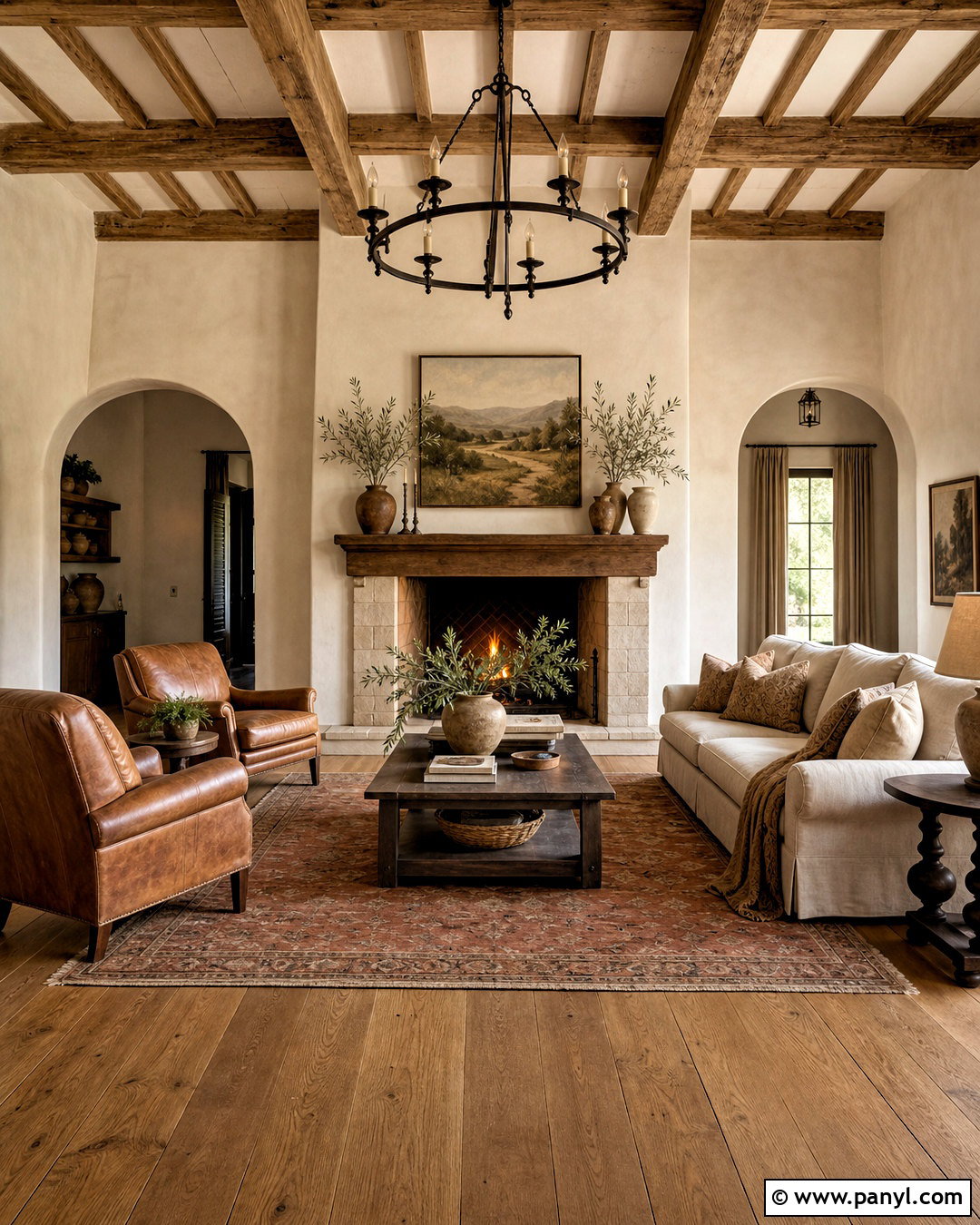
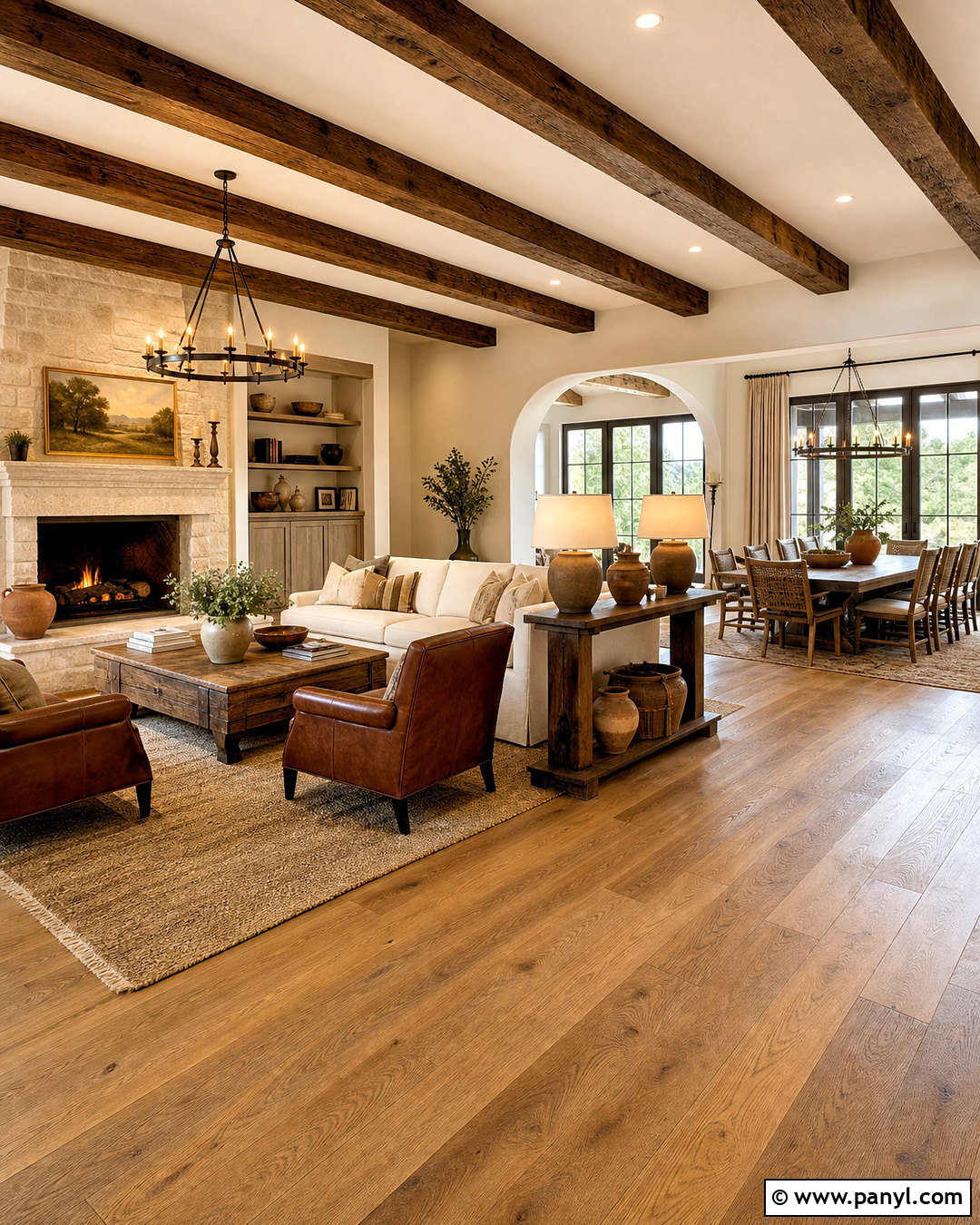
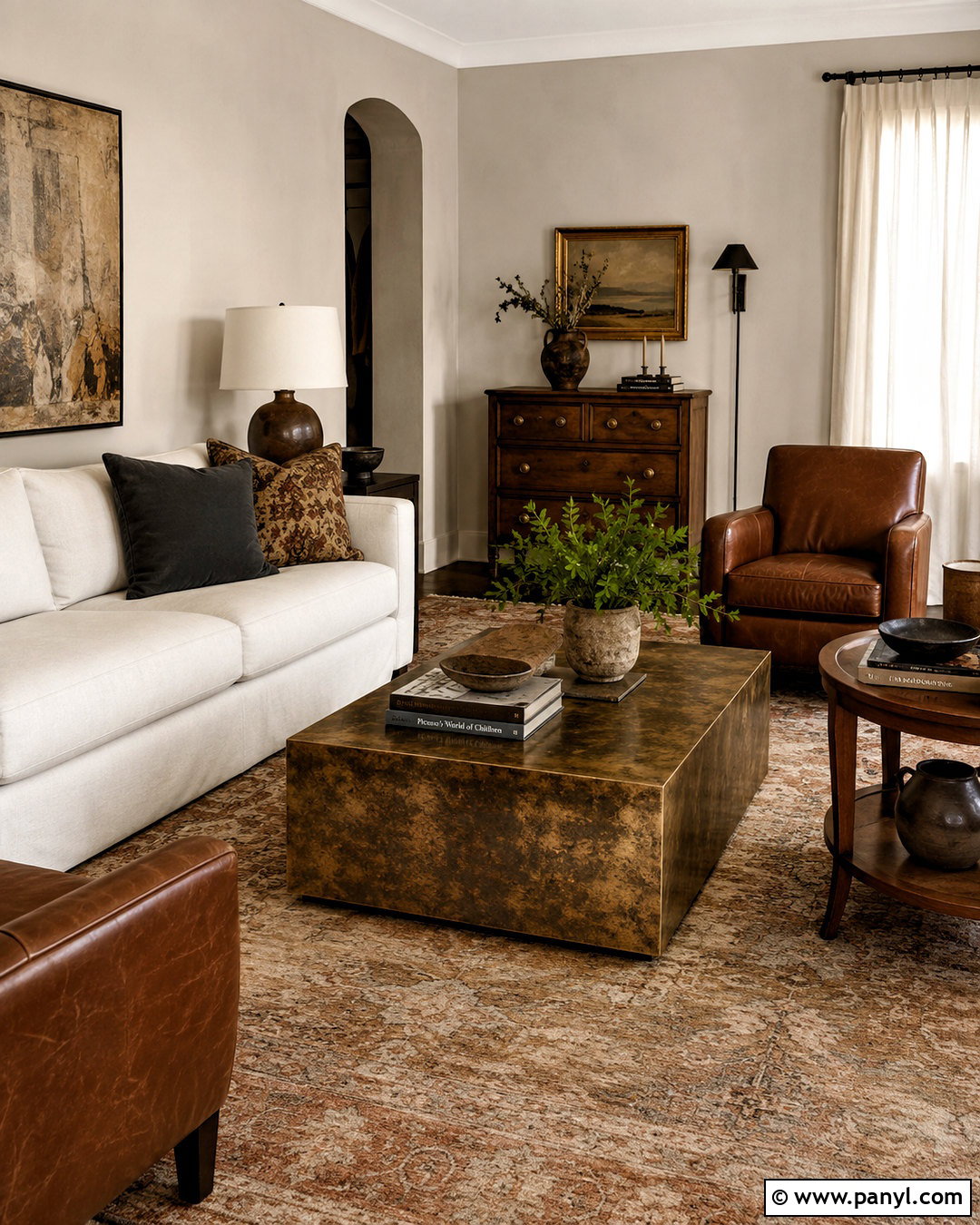
A modern Tuscan living room balances rustic architecture with lighter, simpler furniture. Begin with warm ivory plaster walls, medium-toned oak flooring, and one ceiling beam or reclaimed wood mantel as a strong natural anchor. Choose a deep linen sofa in oatmeal, then arrange two camel leather chairs around a substantial wood coffee table. A faded terracotta and cream rug softens the floor without introducing a busy pattern. Keep window treatments relaxed with full-length flax linen panels. For lighting, combine an aged iron chandelier with ceramic table lamps in warm white. Finish the room with olive branches, handmade pottery, and a restrained landscape painting. The result feels rooted in Tuscany but remains bright, comfortable, and suitable for a contemporary home.
2. Rustic Tuscan Living Room
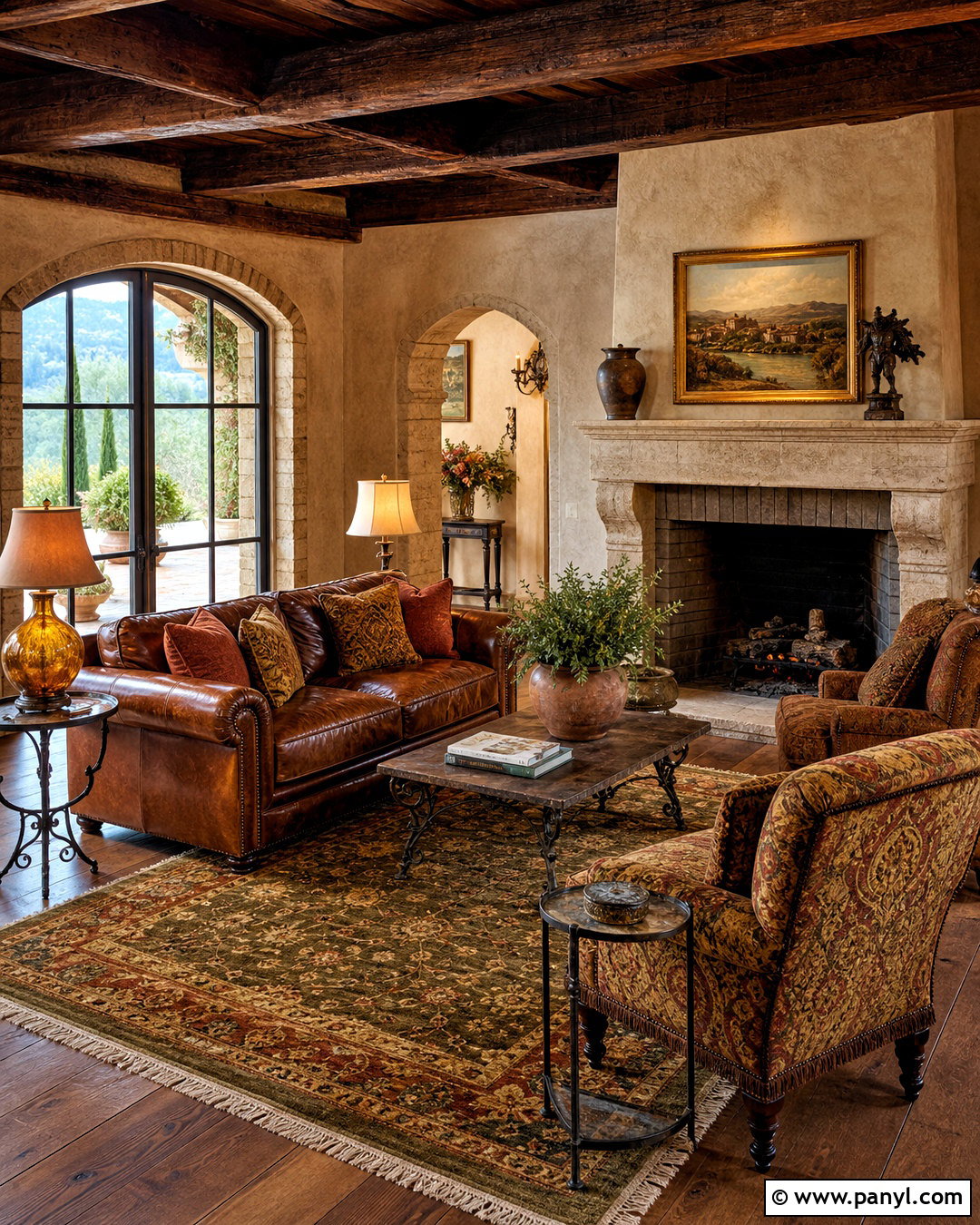
For a more traditional atmosphere, build the living room around rugged materials and generous seating. Textured beige walls, exposed dark wood beams, and wide-plank walnut flooring create a warm architectural envelope. Place a large brown leather sofa opposite a stone fireplace, then add two tapestry-covered armchairs for pattern and softness. A thick wool rug in rust, olive, cream, and muted gold unites the seating arrangement. Use a heavy rectangular coffee table with a distressed finish and smaller iron-legged side tables. Amber glass lamps, carved wood candlesticks, and terracotta vessels add depth without overwhelming the room. Keep the layout open enough for conversation and movement. This complete look celebrates the rich, comfortable character associated with classic Tuscan country homes.
3. Tuscan Kitchen With Terracotta Floors
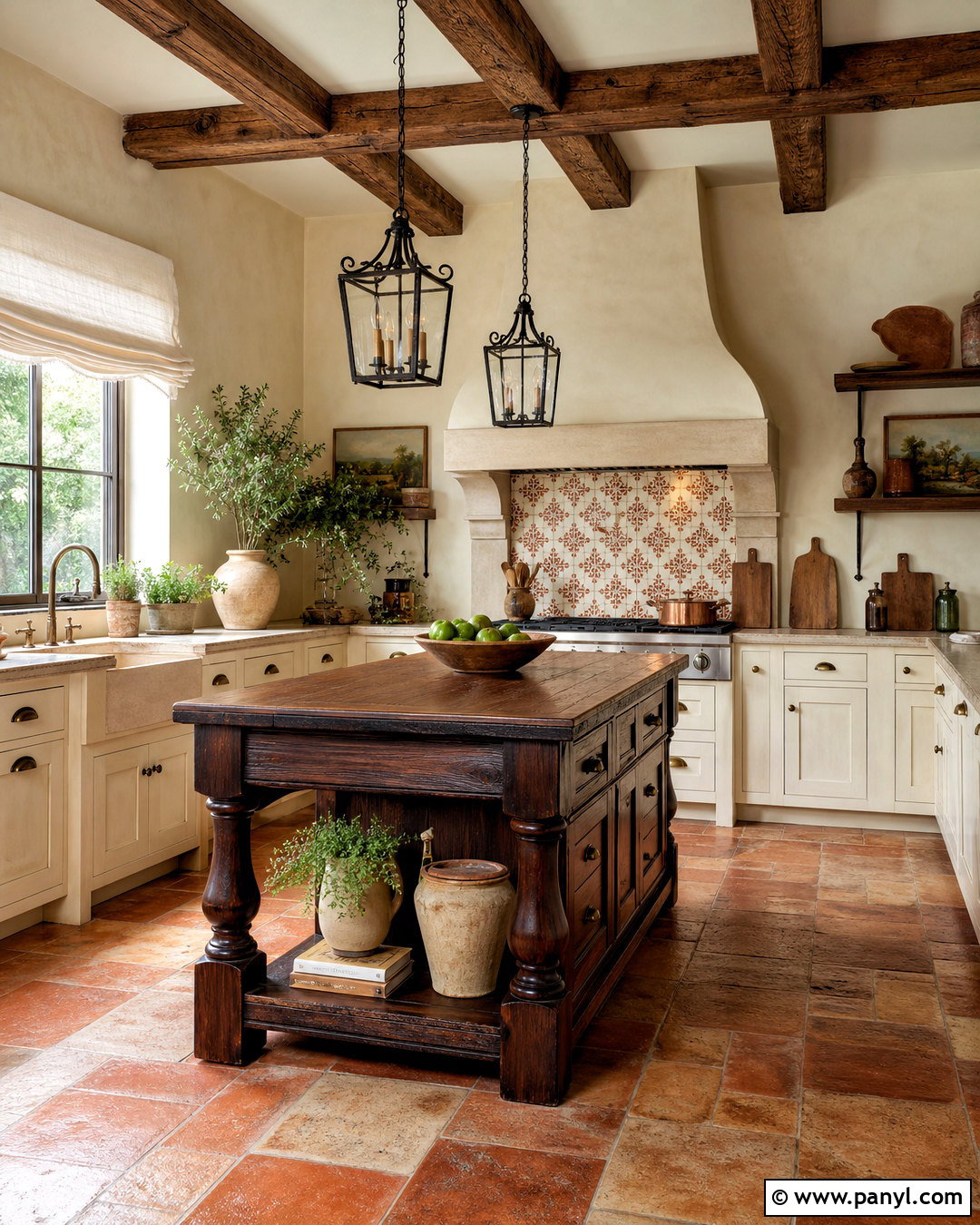
Sun-baked terracotta flooring provides a beautiful foundation for a welcoming Tuscan kitchen. Pair the tile with creamy inset cabinets, aged brass hardware, and warm beige stone countertops. A walnut island with turned legs introduces contrast while offering practical preparation space and casual seating. Above it, hang two simple wrought iron pendants rather than an overly ornate fixture. Use handmade cream and rust tiles for the backsplash, keeping the pattern limited to the range wall. Open shelves can display everyday pottery, wood boards, and neutral serving pieces. Complete the kitchen with linen Roman shades, a plaster range hood, and a small herb planter near the window. The coordinated materials create an authentic look that feels relaxed, sunny, and easy to maintain.
4. Modern Tuscan Kitchen
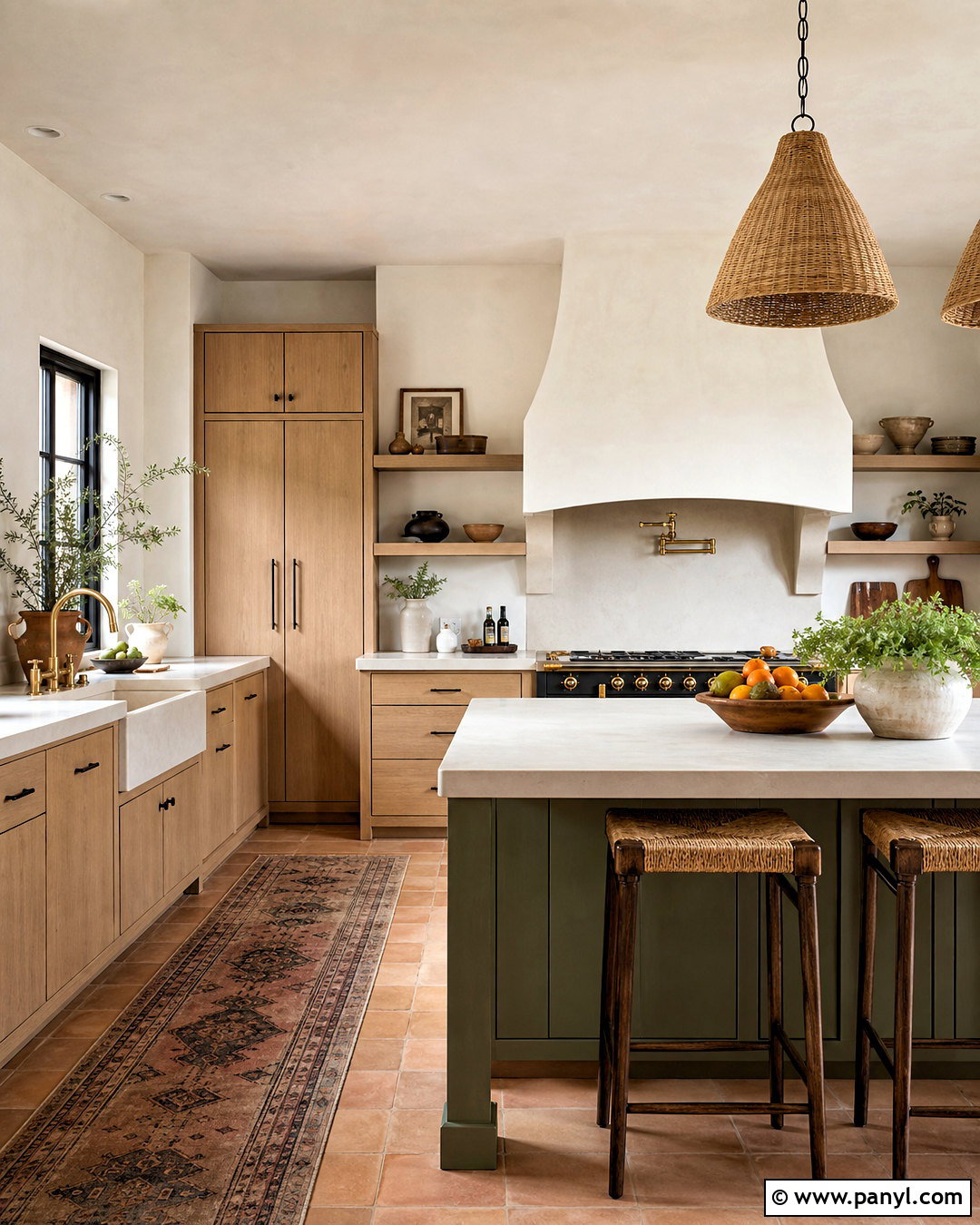
What if a Tuscan kitchen could feel warm without appearing heavy? Start with flat-panel white oak cabinetry, warm white plaster walls, and honed limestone countertops. Add a large island in muted olive green to introduce countryside color while keeping the shape clean and functional. A softly curved plaster range hood provides Mediterranean character, while unlacquered brass faucets and simple bronze pulls add an aged note. Use pale terracotta tile in a straight layout for the floor, then soften it with a narrow vintage runner. Three woven pendants bring texture above the island. Avoid crowded countertops and display only a ceramic fruit bowl, cutting boards, and potted herbs. This lighter approach preserves Tuscan warmth while fitting comfortably into a modern open-plan home.
5. Tuscan Dining Room
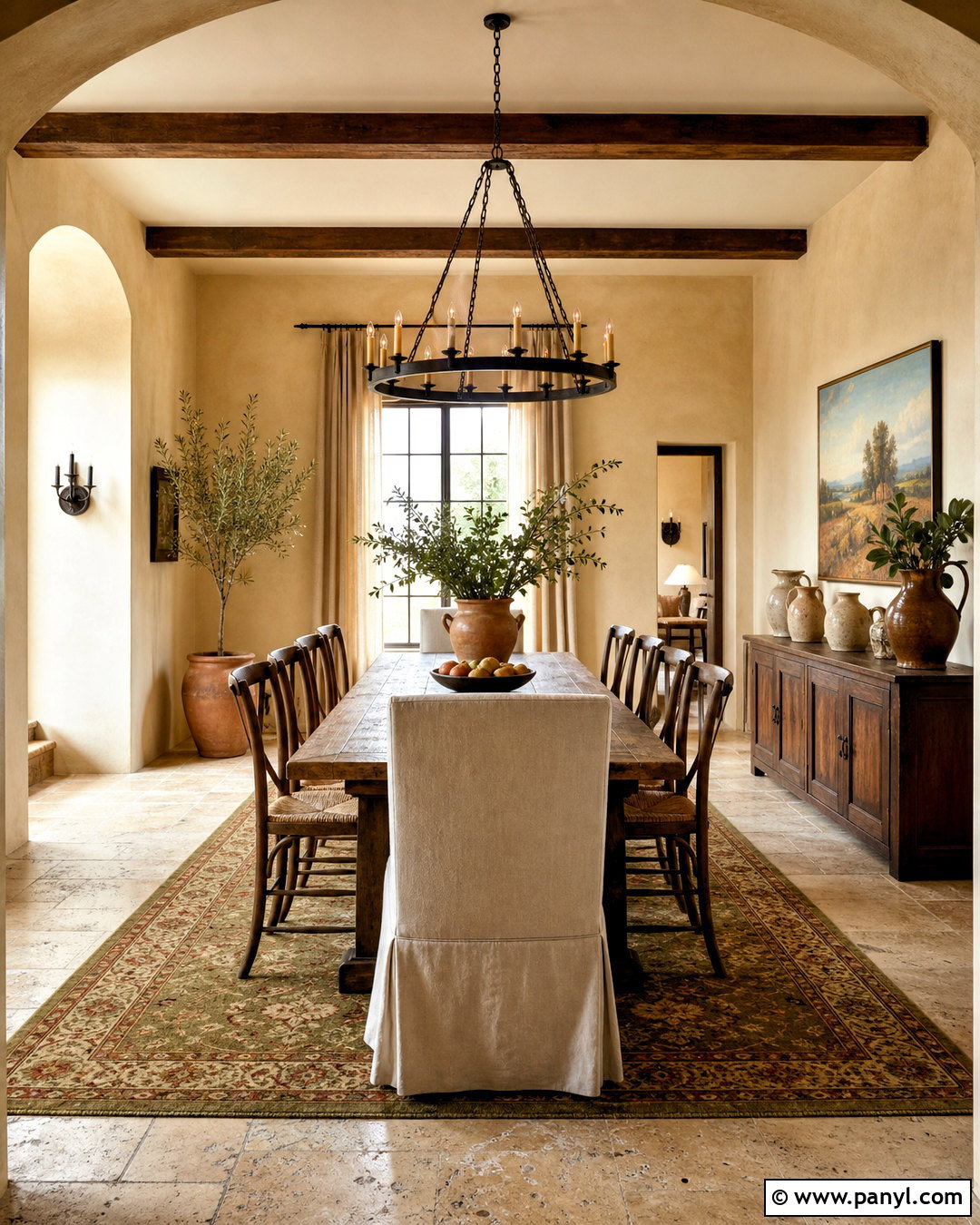
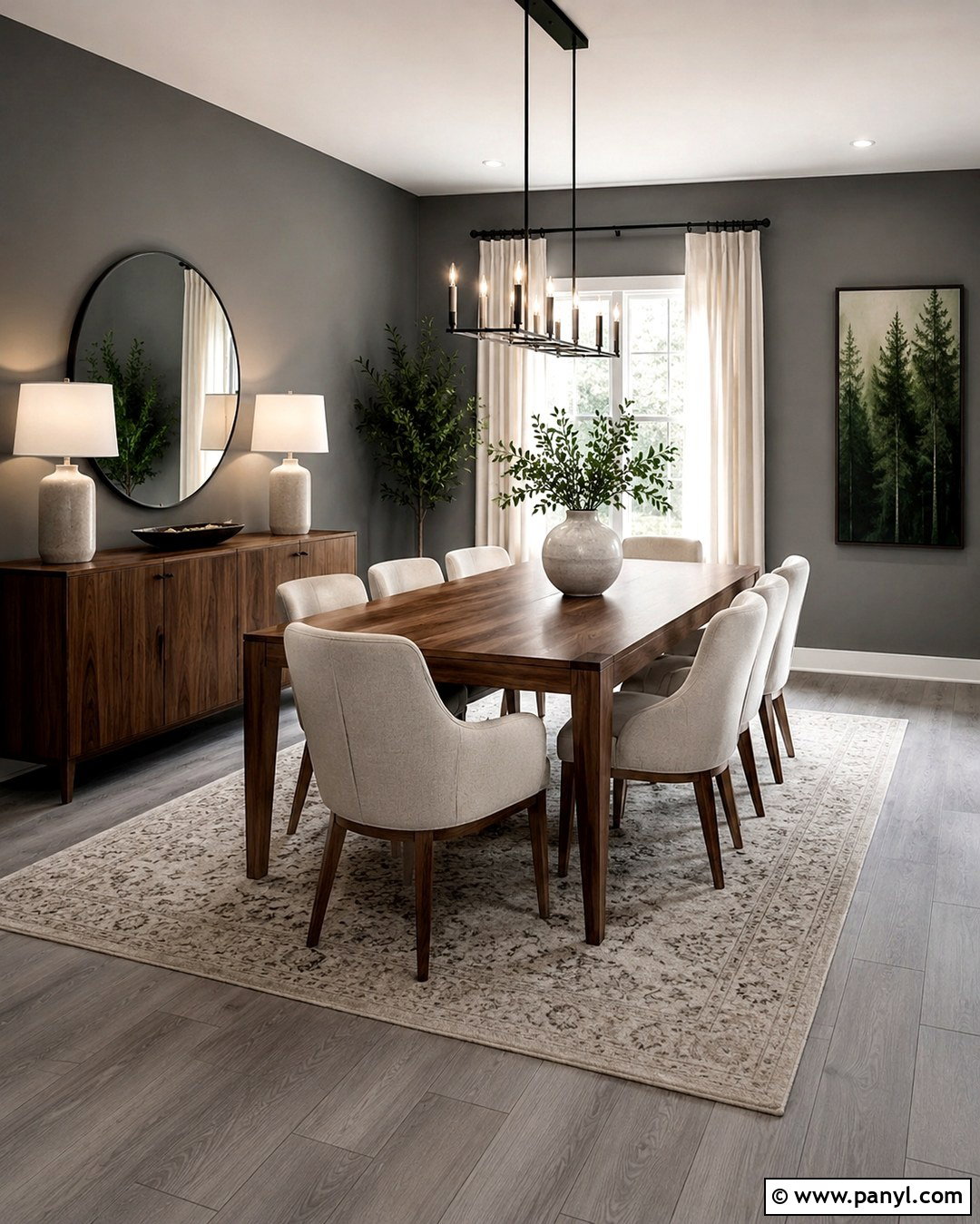
A long wood table immediately gives a Tuscan dining room a welcoming, communal feeling. Choose reclaimed oak with a matte finish and surround it with rush-seat chairs or upholstered end chairs in natural linen. Warm cream walls allow the darker furniture to stand out without making the room gloomy. Underfoot, use aged limestone tile or a muted patterned rug in olive, rust, and beige. An iron ring chandelier should hang low enough to define the table while leaving clear sightlines across the room. Add a substantial wood sideboard displaying simple ceramic pitchers and shallow bowls. Linen curtains, an antique-style landscape painting, and fresh branches provide softness. The finished space feels ready for everyday meals as well as comfortable gatherings with family and friends.
6. Tuscan Bedroom
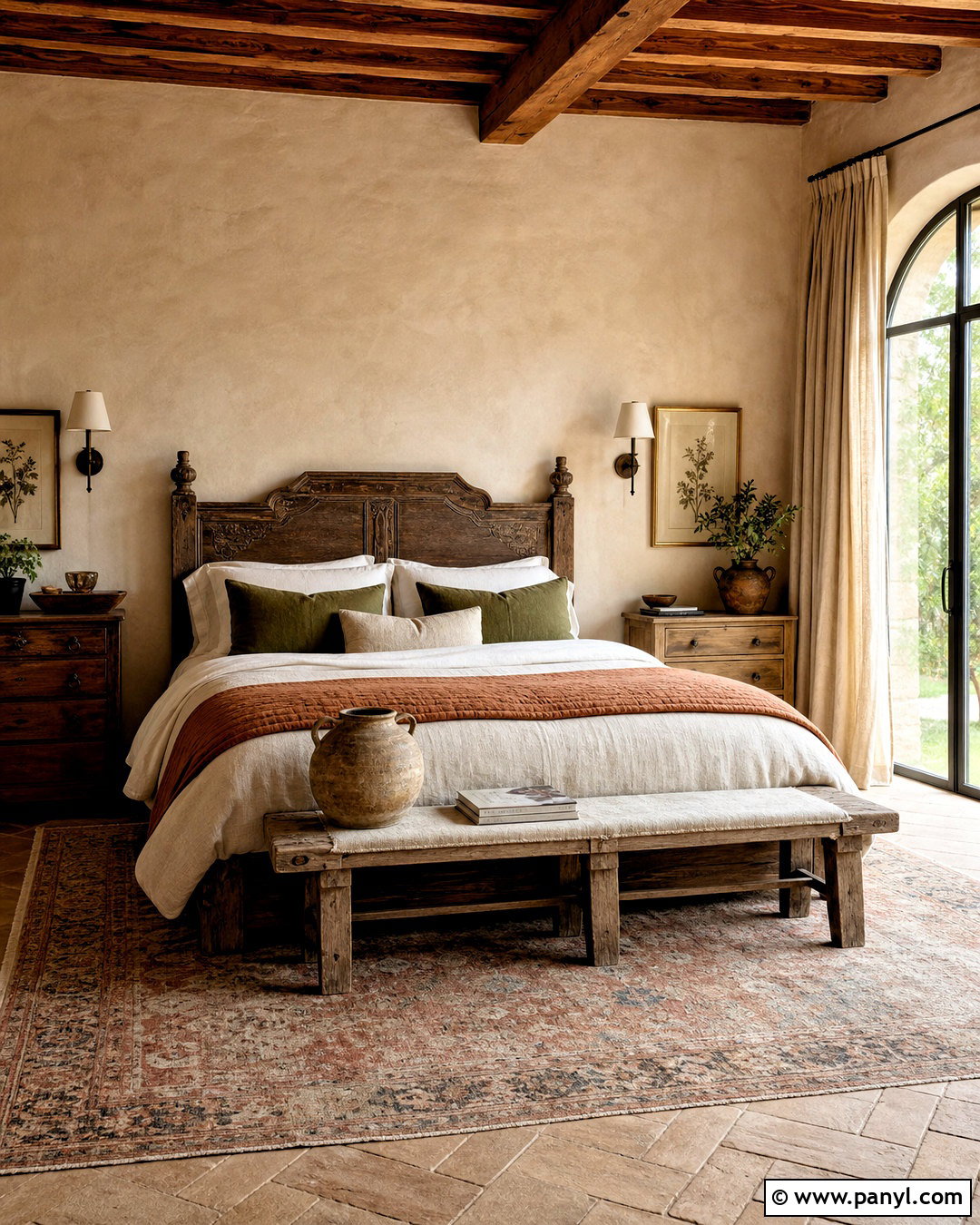
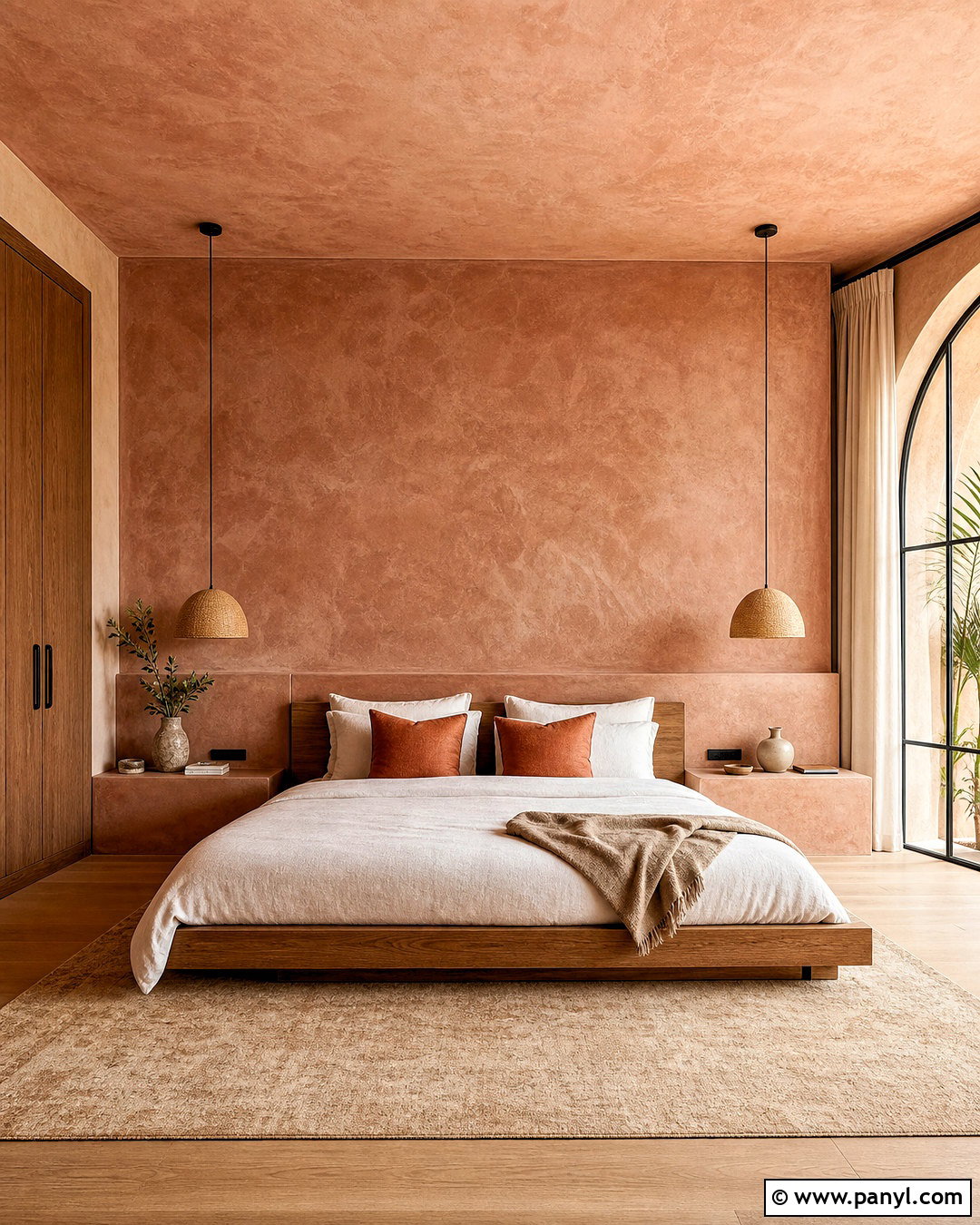
A peaceful Tuscan bedroom relies on tactile materials rather than excessive decoration. Paint the walls a soft sand or warm limestone color, then choose a substantial wood bed with a gently carved headboard. Dress it in ivory linen, a quilted clay-colored coverlet, and a few olive green pillows. Matching nightstands are not essential; a small chest and a round wood table can make the room feel naturally collected. Add bronze wall sconces to preserve bedside space and place a faded wool rug beneath the bed. Full-length linen curtains should filter daylight while complementing the neutral walls. Complete the room with a low bench, one rustic ceramic vessel, and understated botanical artwork. Every element supports a calm, warm, and comfortably aged appearance.
7. Tuscan Bathroom
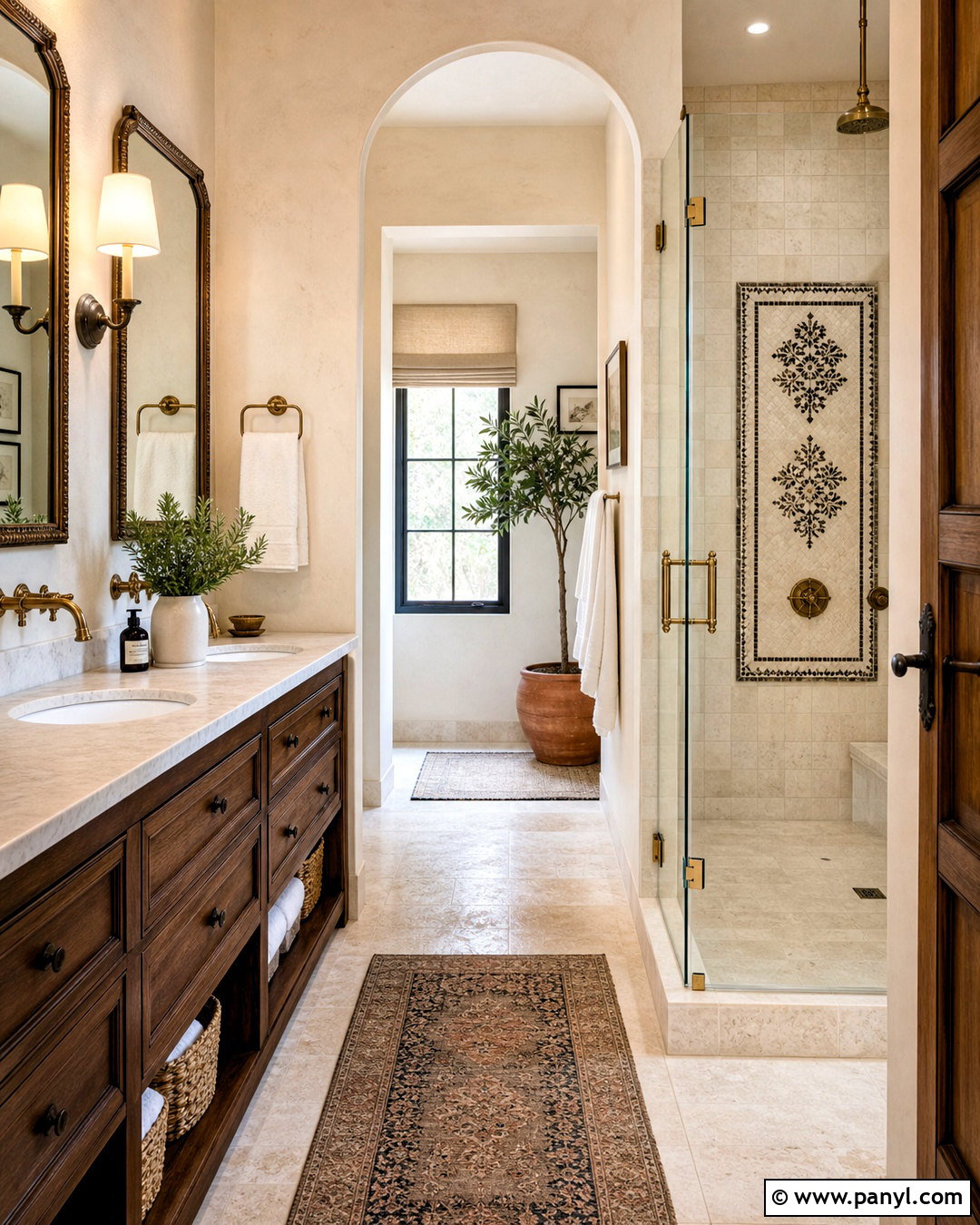
Natural stone and warm metals can turn a practical bathroom into a relaxed Tuscan retreat. Cover the floor with tumbled limestone tile and use a lighter stone or warm ivory plaster on the walls. A freestanding walnut vanity with an off-white marble top adds furniture-like character. Install aged brass faucets, bronze-framed mirrors, and softly shaped wall sconces to continue the warm palette. For the shower, choose clear glass around large beige stone tiles, adding a small handmade mosaic inside the niche. Fold cream towels on open shelves and place woven baskets below for organized storage. A terracotta planter with a leafy green plant brings life to the harder surfaces. The complete room feels rustic and refined without relying on elaborate ornament or dark finishes.
8. Tuscan Entryway
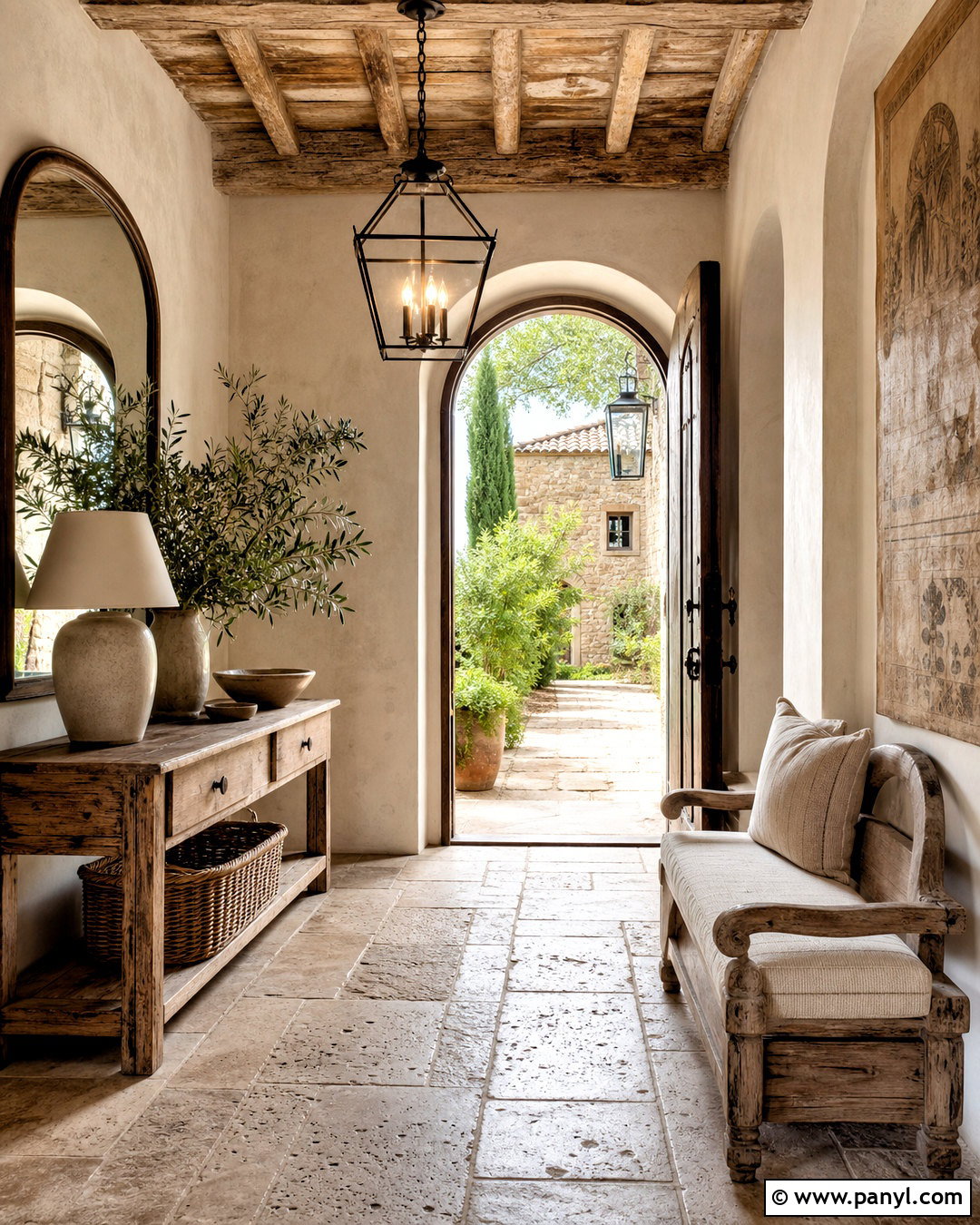
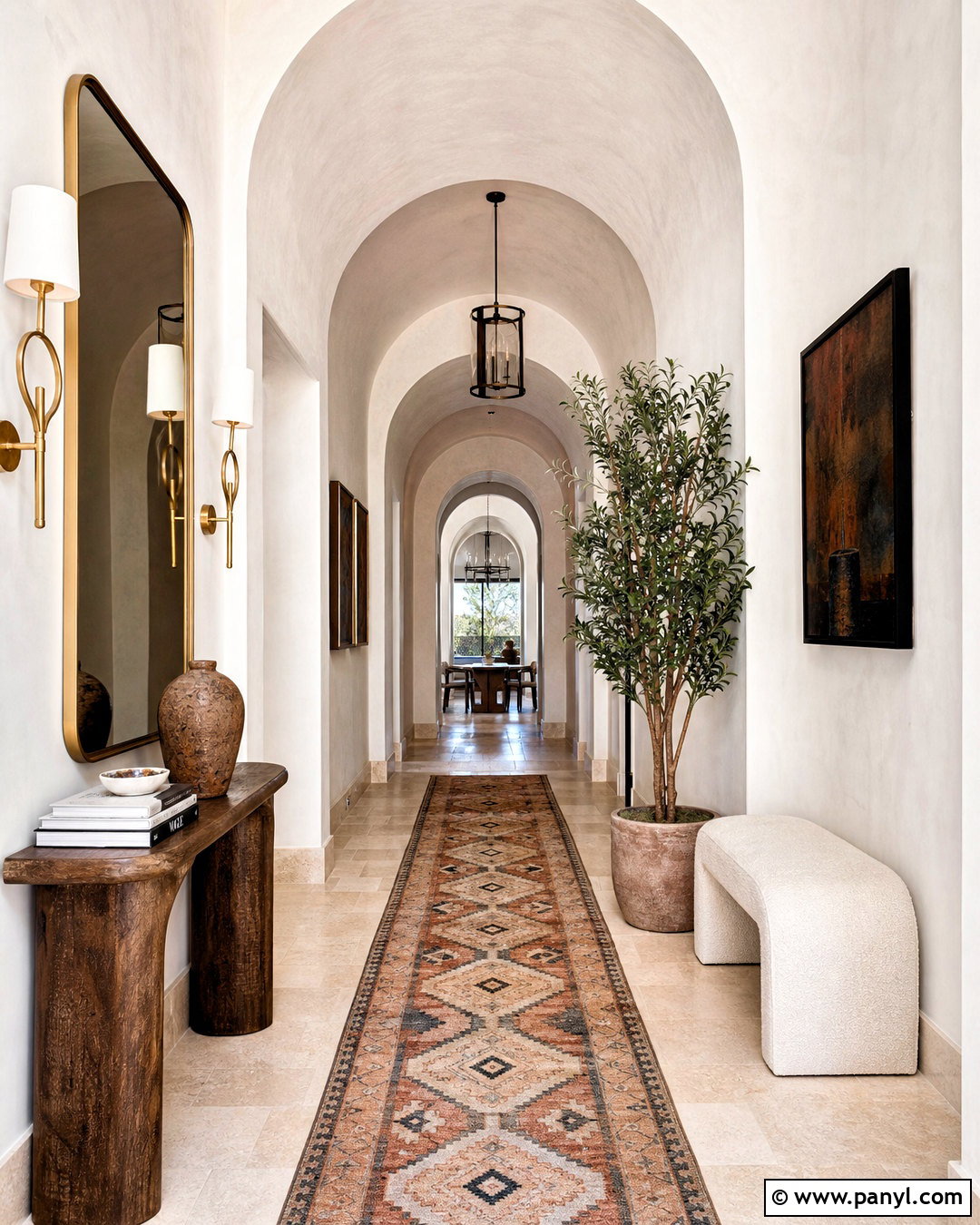
The entryway should introduce the home’s warmth without becoming crowded. Use a pale limewashed wall finish, terracotta or aged limestone flooring, and a narrow reclaimed wood console as the main furniture piece. Above it, hang a generously sized arched mirror with a thin bronze frame to reflect light through the space. A weathered bench with a neutral cushion offers a useful place to remove shoes, while a woven basket keeps everyday items contained. Choose an iron lantern with clear glass for overhead lighting. One ceramic lamp, a shallow catchall bowl, and a vase filled with olive branches are enough decoration. If space permits, define the doorway with a simple plaster arch. This coordinated entrance establishes Tuscan character from the moment someone steps inside.
9. Tuscan Family Room
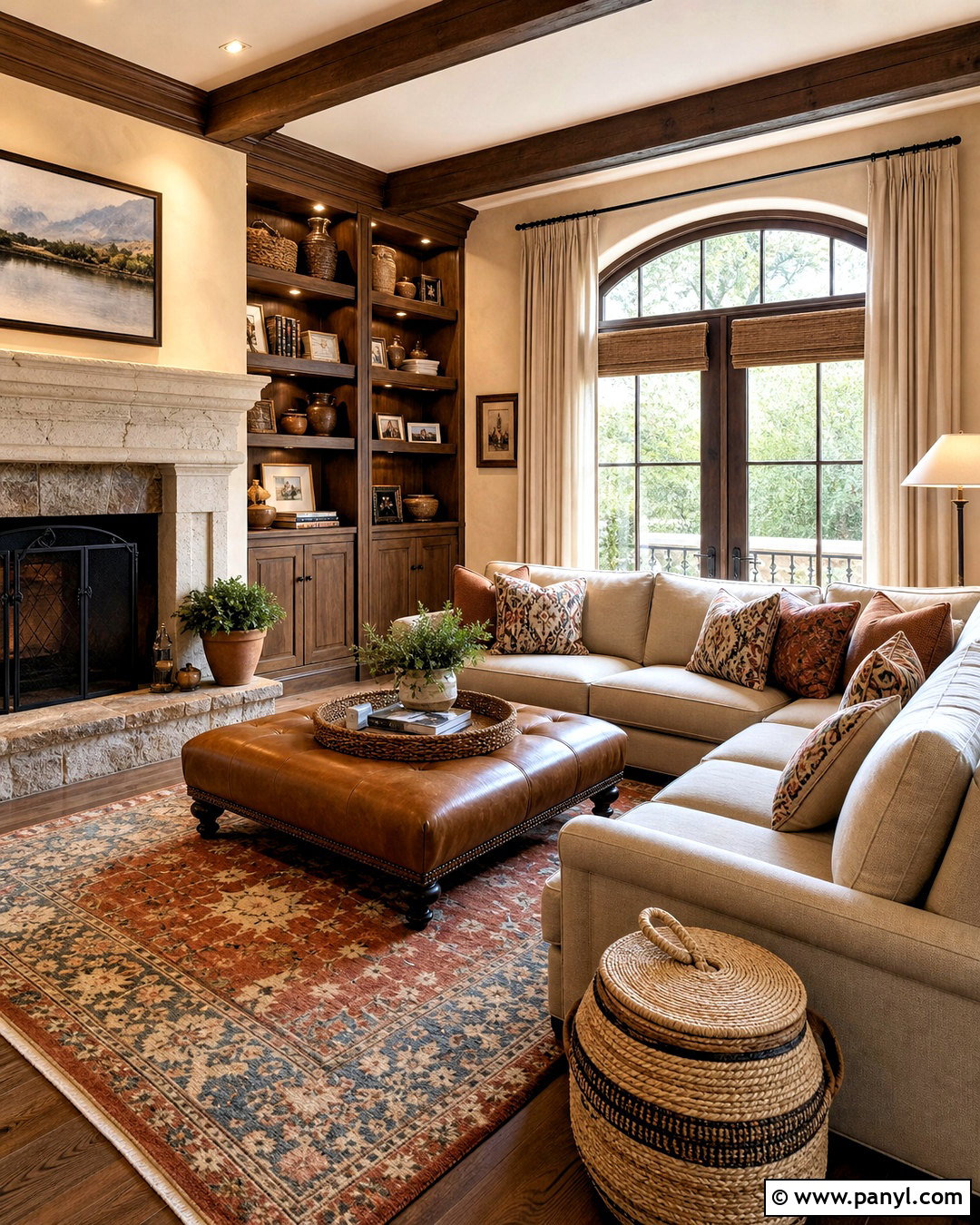
A busy family room needs durability, storage, and enough softness for daily relaxation. Center the layout around a comfortable performance-linen sectional in warm taupe, facing a low stone fireplace and built-in media cabinet. Use medium oak cabinetry instead of very dark wood so the room feels current. A large wool rug in faded rust, blue, and cream will hide wear while adding traditional color. Include a leather ottoman that works as a coffee table, extra seat, or footrest. Woven shades and linen curtains control light without looking formal. Store games and blankets in lidded baskets beneath a console. Finish with pottery, family photographs in wood frames, and a few patterned pillows. The result feels distinctly Tuscan but remains practical for everyday routines.

10. Tuscan Home Office
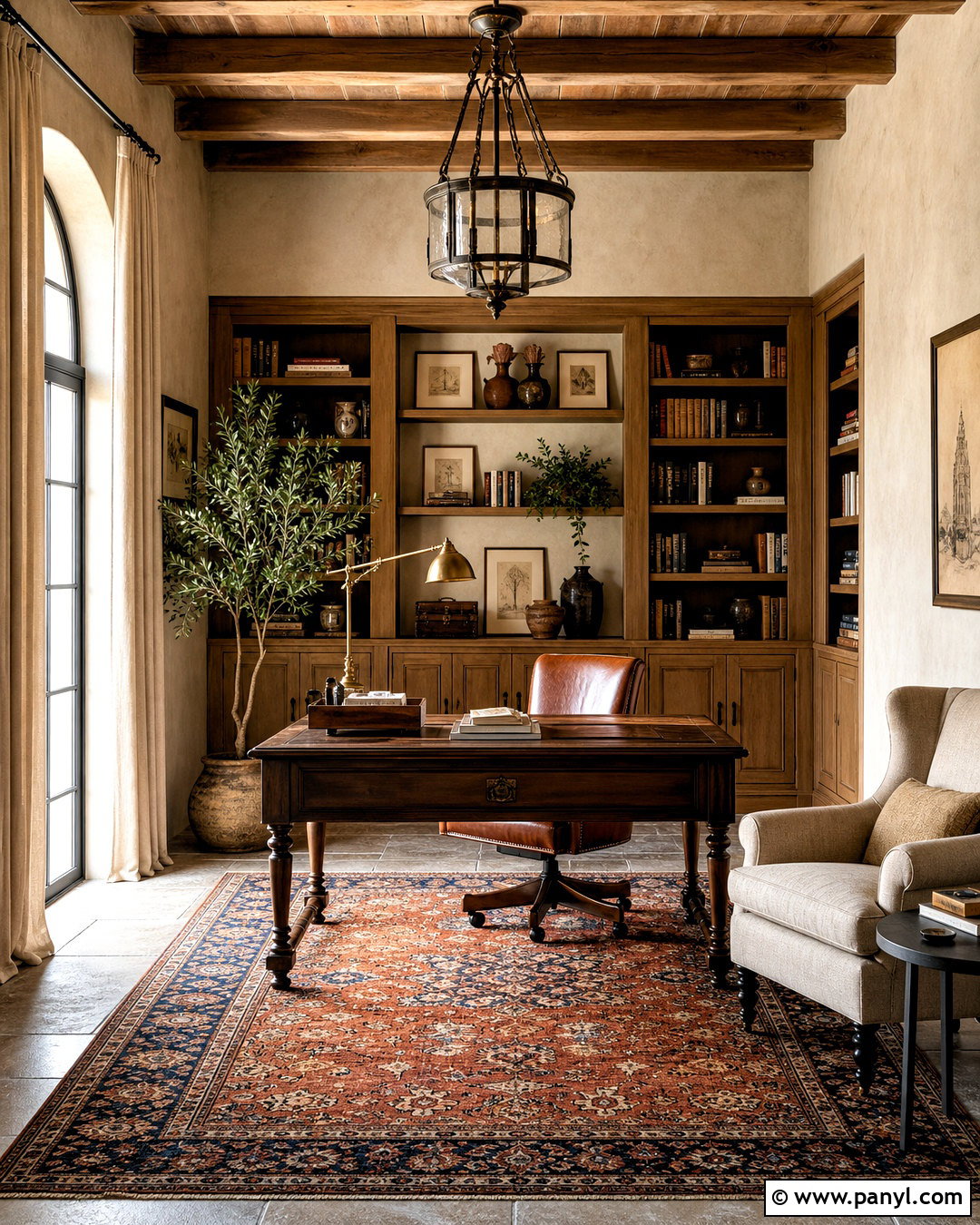
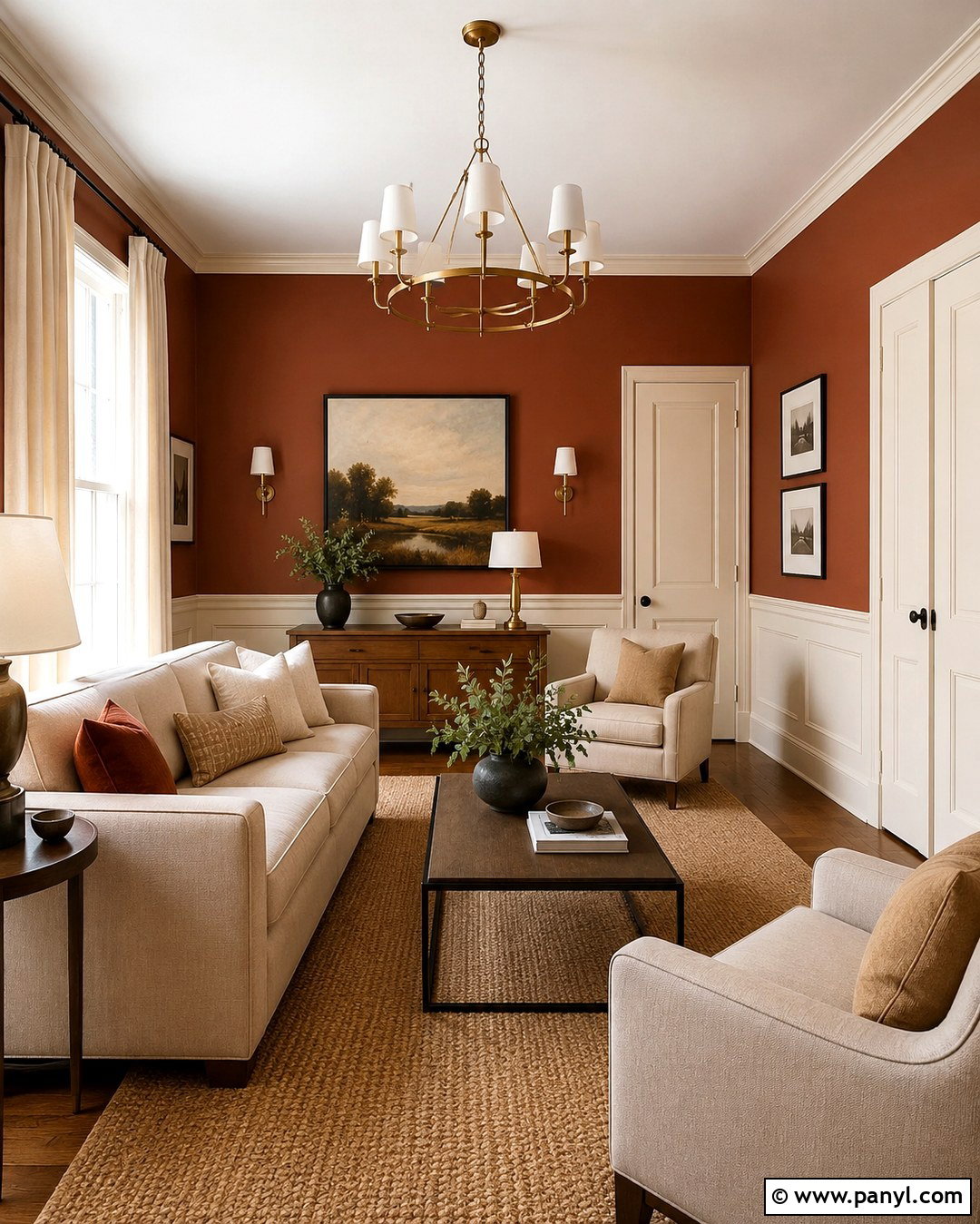
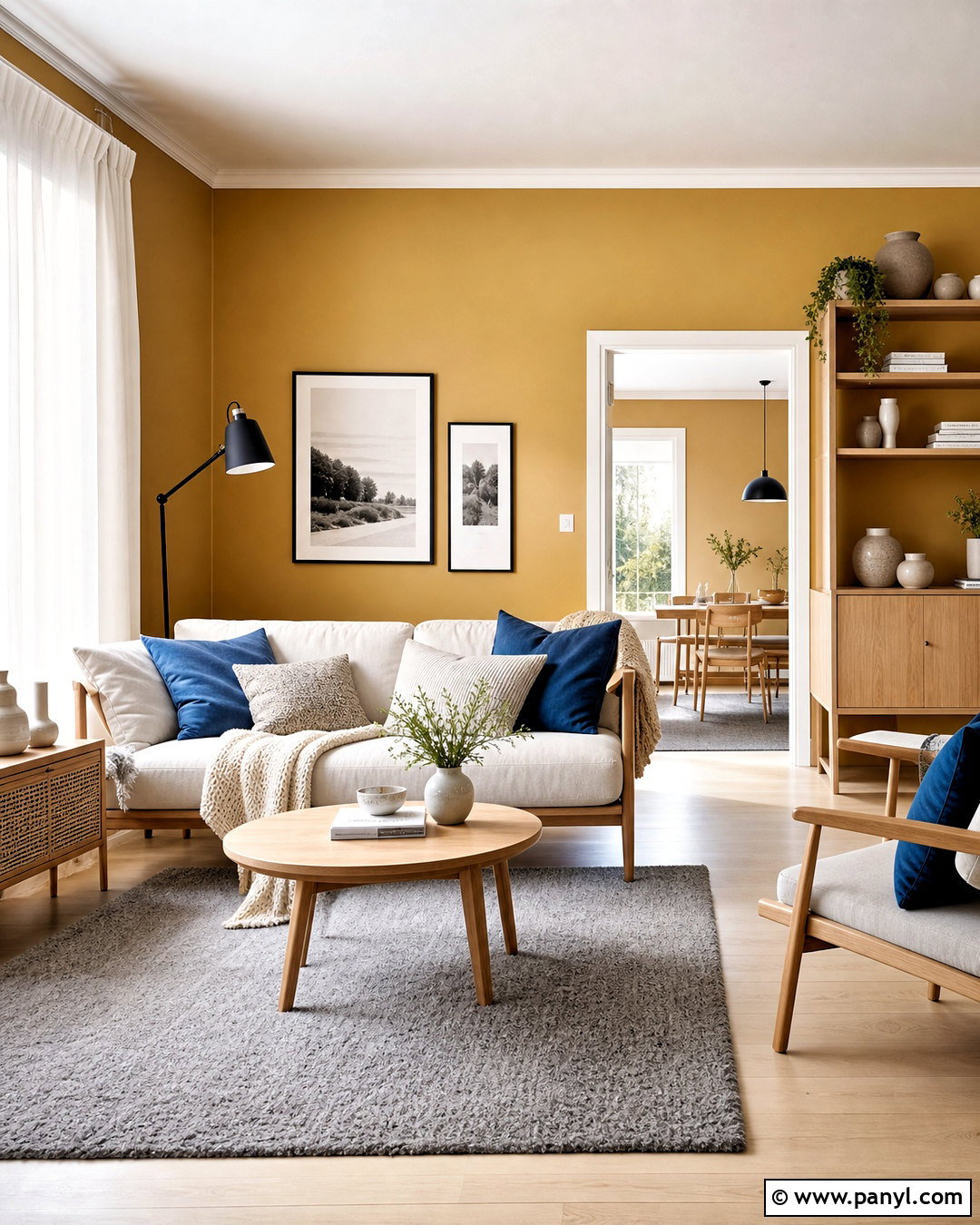
Rich wood and quiet earth tones create a Tuscan home office that feels focused rather than formal. Position a walnut writing desk near a window and pair it with a comfortable leather chair in warm cognac. Cover the walls in muted putty-colored paint or lightly textured plaster. Behind the desk, install floor-to-ceiling oak bookcases with closed cabinets along the bottom to hide supplies. A vintage-style rug in rust, olive, and faded navy defines the work zone. Add an iron pendant overhead and a bronze task lamp for focused lighting. A linen-covered reading chair can occupy an unused corner beside a small round table. Keep accessories intentional with pottery, framed sketches, books, and one indoor tree. The room feels established, personal, and highly functional.
11. Tuscan Breakfast Nook
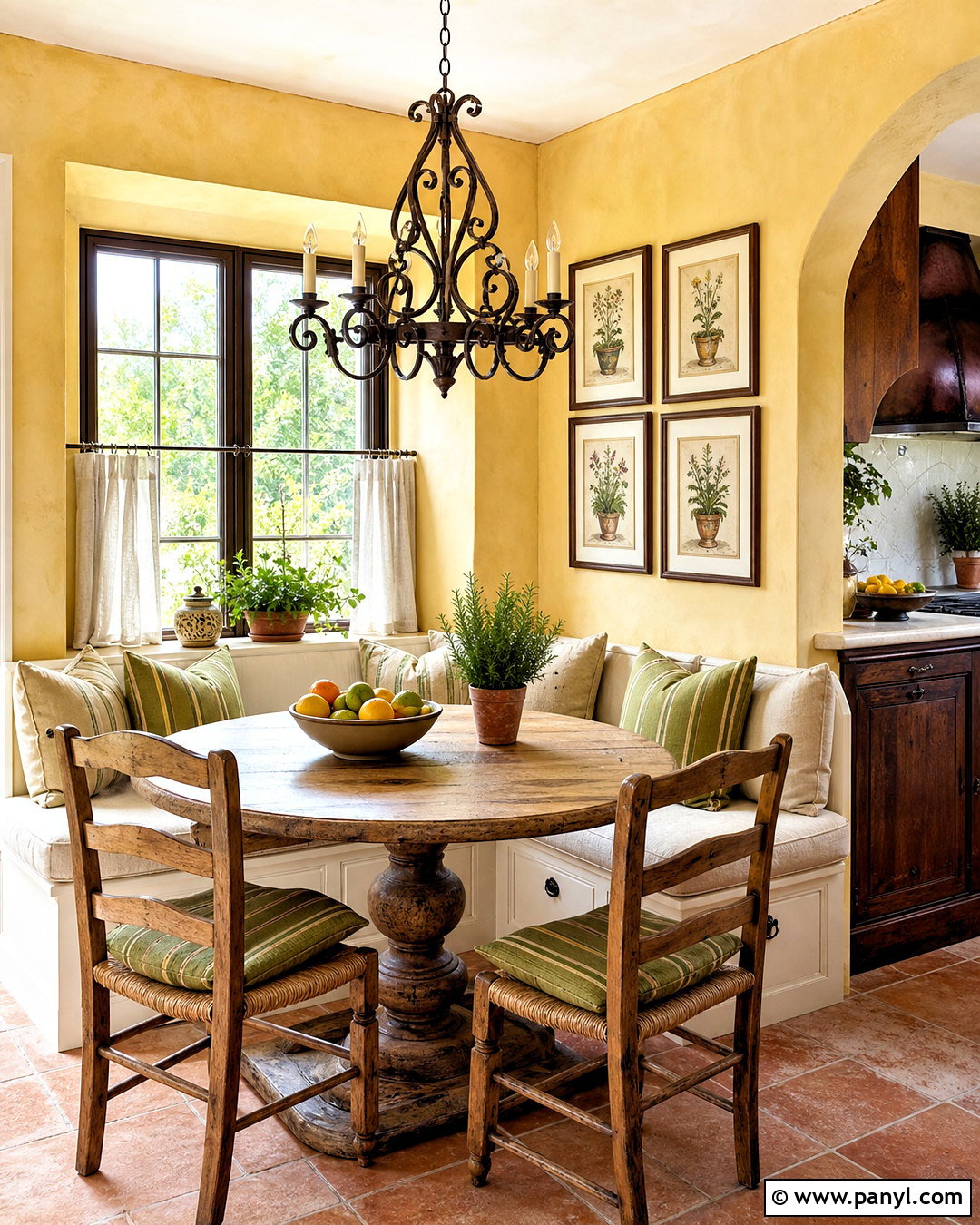
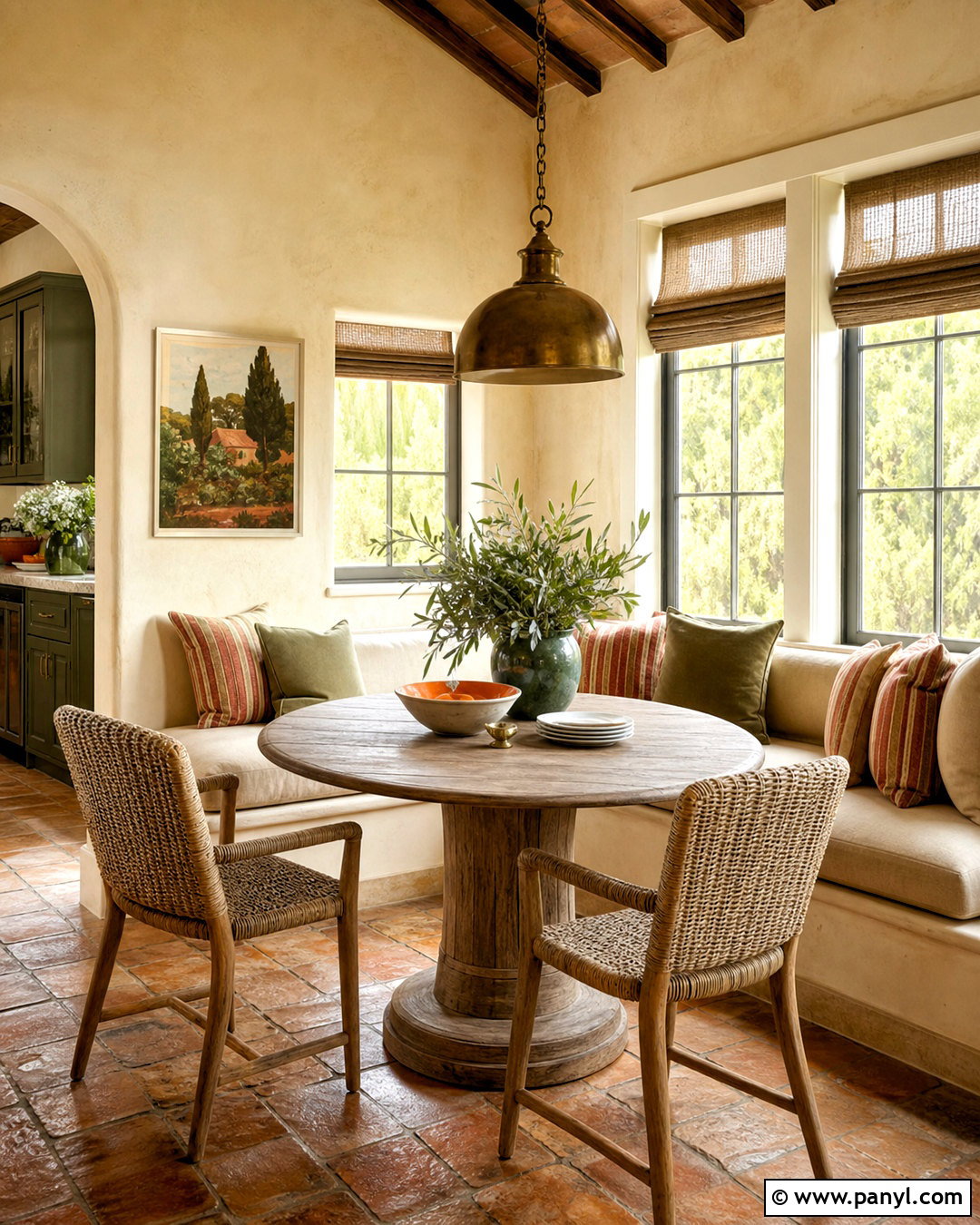
Morning light suits a cheerful Tuscan breakfast nook filled with warm, natural finishes. Place a round pedestal table in aged oak beside a built-in corner bench upholstered in durable cream fabric. Add two woven rush chairs so the arrangement feels flexible and informal. Soft butter-yellow or warm white walls reflect sunlight, while terracotta floor tiles provide earthy contrast. Hang a compact iron chandelier or woven pendant directly over the table. Linen café curtains preserve privacy without hiding the windows. A striped bench cushion in olive, clay, and beige introduces gentle pattern. Complete the space with a ceramic bowl of fruit, framed botanical prints, and herbs arranged along the sill. This compact design creates a welcoming destination for breakfast, coffee, homework, or casual conversation.
12. Tuscan Hallway
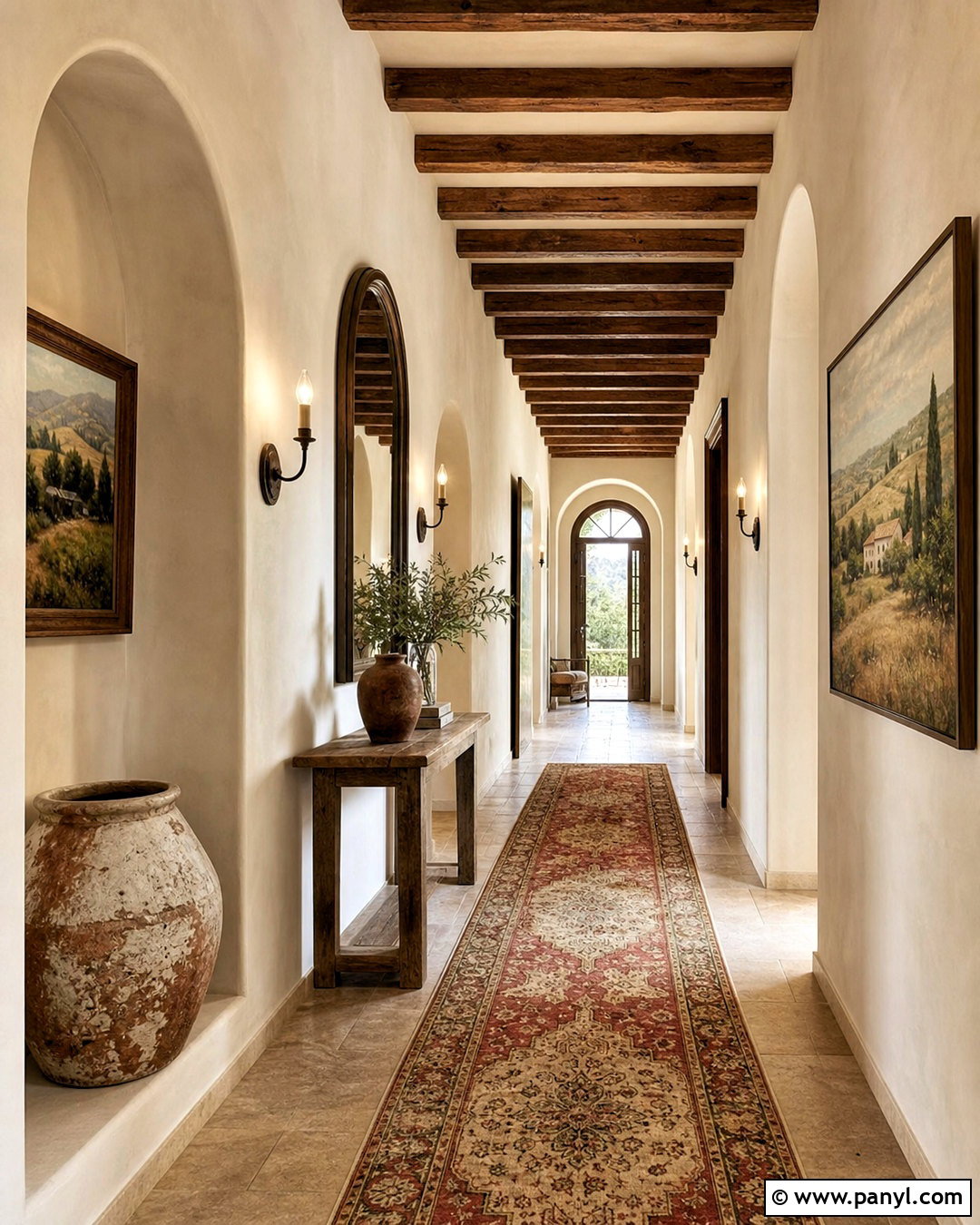
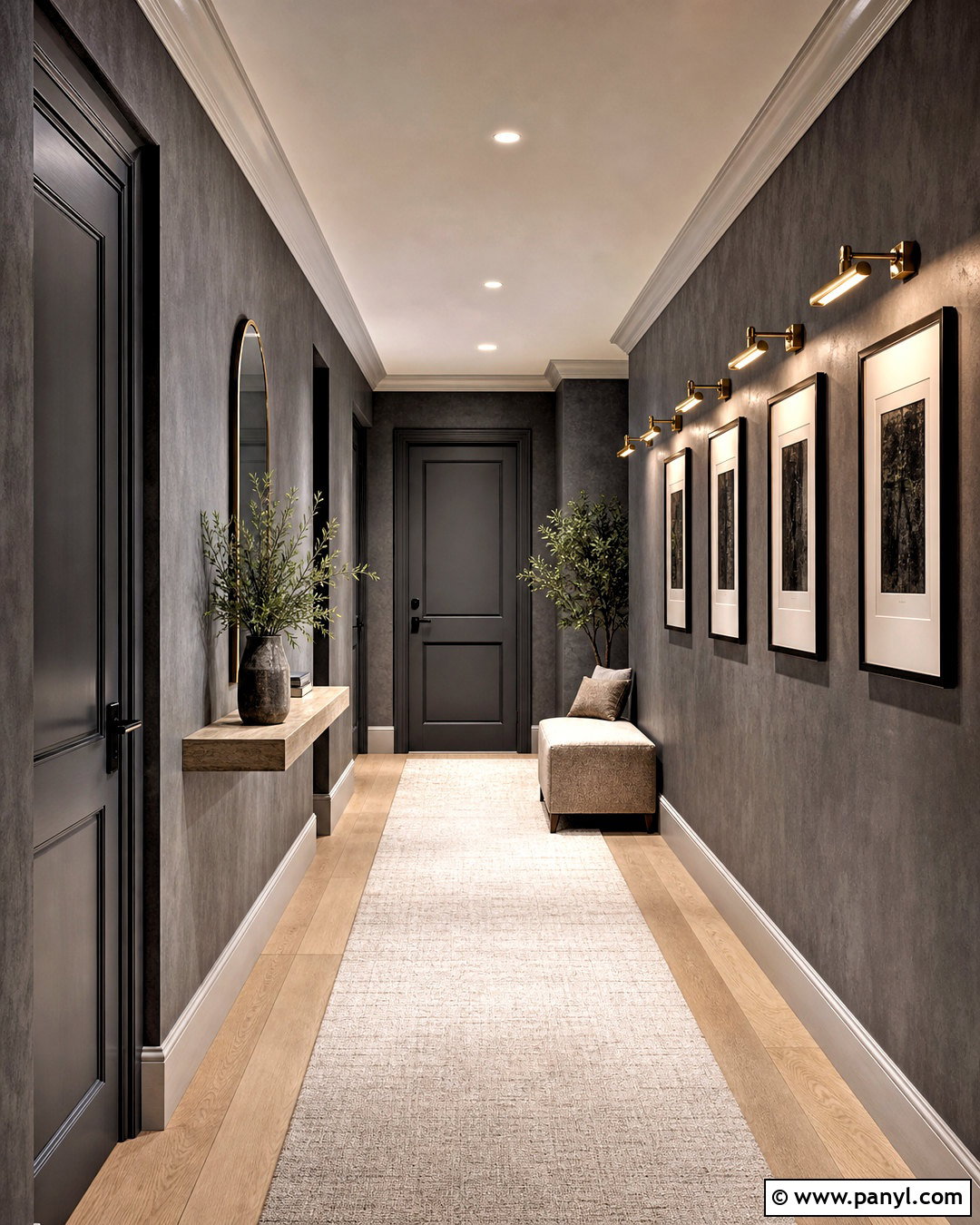
Even a narrow hallway can become part of a cohesive Tuscan interior. Apply warm ivory plaster to the walls and continue wood, terracotta, or limestone flooring from the adjoining rooms. A long vintage-style runner in muted red, olive, and cream adds softness while directing the eye forward. Install shallow arched niches where possible, using them to display one ceramic vessel or framed artwork rather than many small accessories. A sequence of bronze wall sconces provides practical illumination and creates an even rhythm. At the end of the corridor, place a slim wood console beneath a landscape painting or arched mirror. Keep the passage open and uncluttered. The combination of warm texture, repeated lighting, and restrained decoration turns a transitional area into a purposeful design feature.
13. Tuscan Staircase
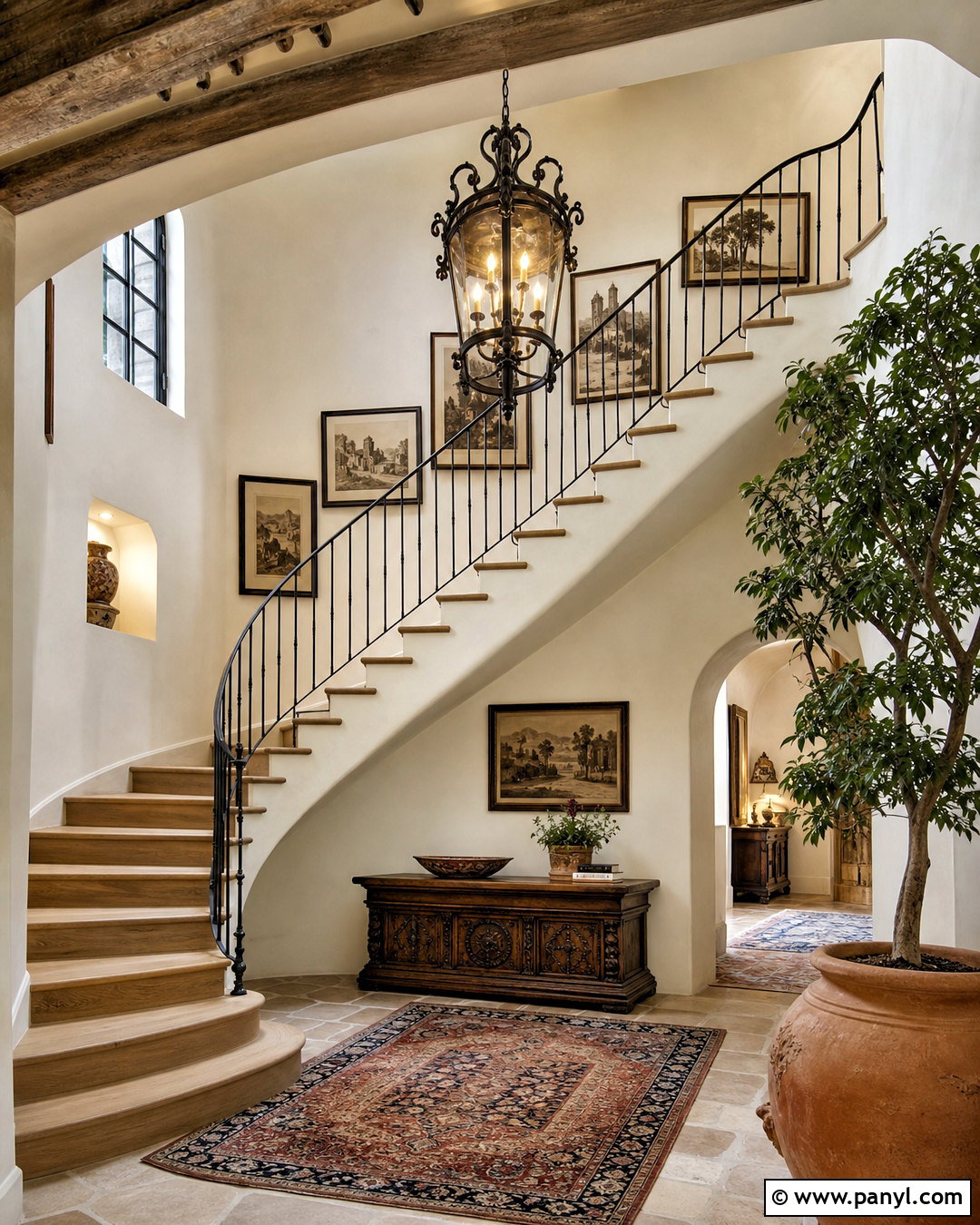
A Tuscan staircase can serve as an architectural centerpiece without excessive scrollwork. Use natural oak treads, warm white plaster walls, and a simple hand-forged iron railing with clean vertical balusters. If the staircase is curved, allow its shape to provide the drama rather than adding ornate patterns. An oversized iron lantern suspended over the stairwell creates an attractive focal point and spreads light across both levels. Cover the landing with a narrow antique-style rug and position a carved wood chest against an open wall. A restrained gallery of sepia landscapes or charcoal sketches follows the rise of the stairs. Add a large terracotta pot with an indoor tree at the base. Together, these details create movement, character, and a natural connection between floors.
14. Tuscan Fireplace Room
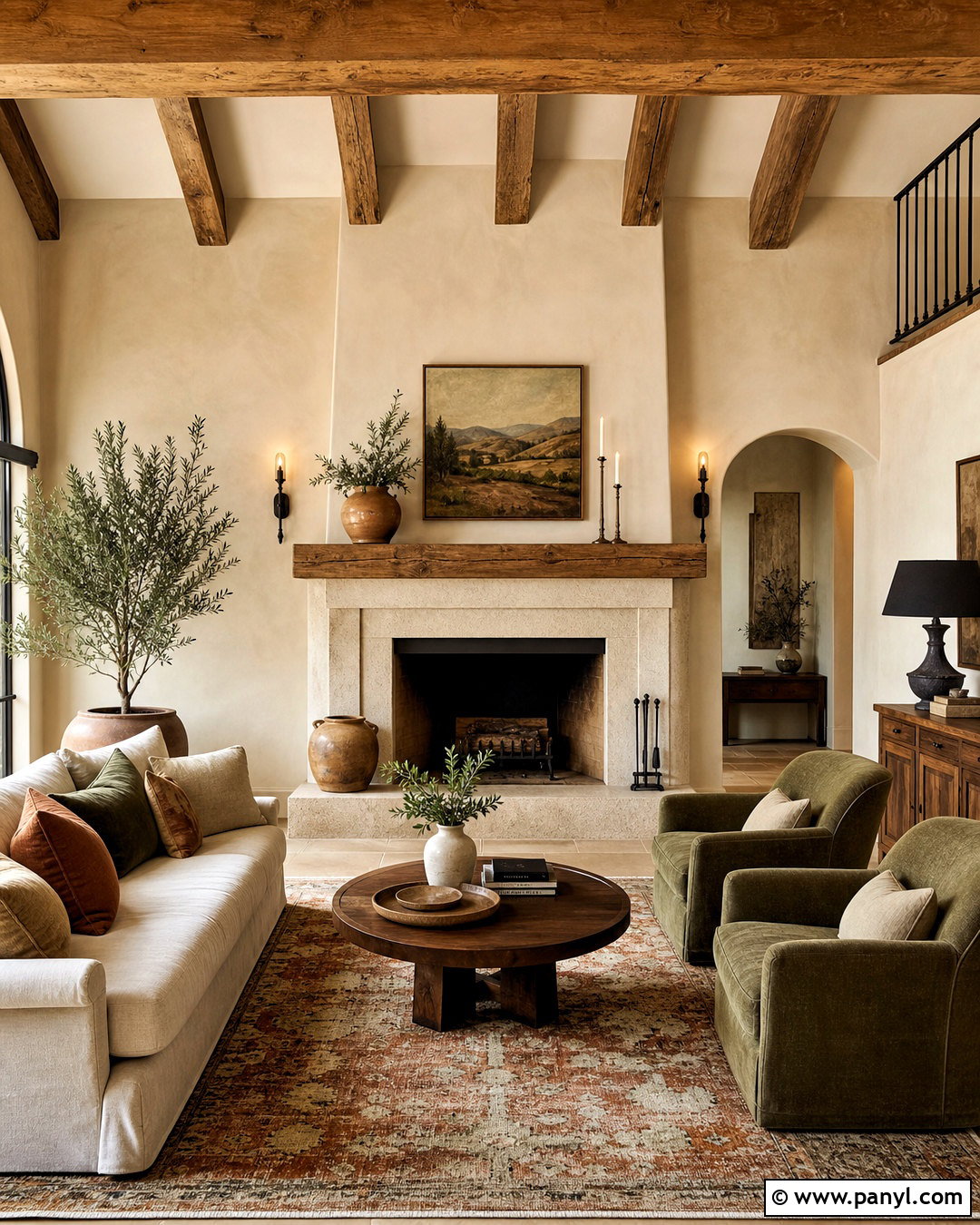
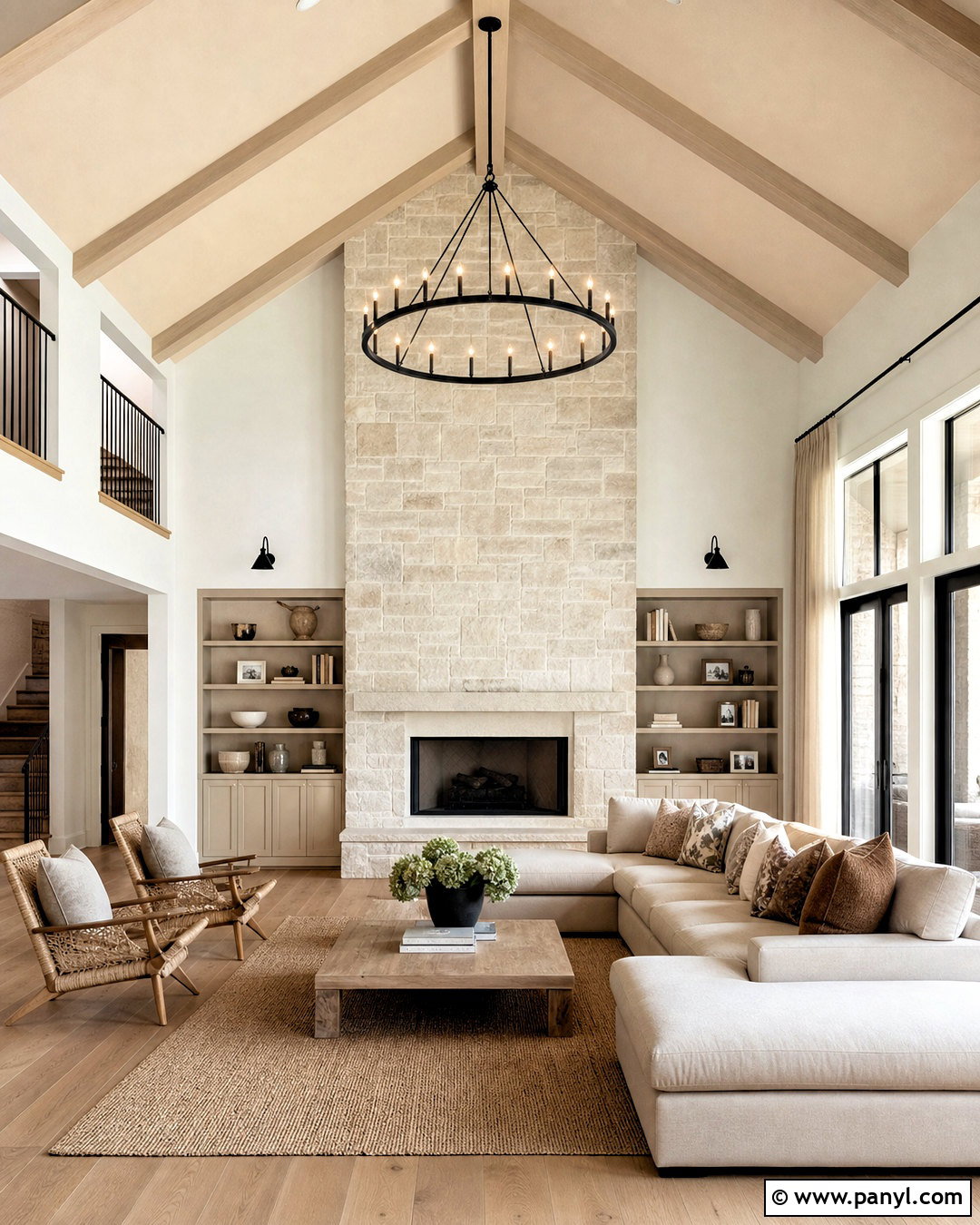
The fireplace should feel like part of the architecture, not a decorative piece placed against the wall. Build the surround with creamy limestone or irregular warm-gray fieldstone, then add a thick reclaimed oak mantel. Extend pale plaster above it to keep the elevation balanced and bright. Arrange an oatmeal sofa and two olive linen chairs in a U-shaped conversation layout around the hearth. A round wood coffee table improves movement and softens the fireplace’s strong lines. Use a textured wool rug in beige and muted rust beneath the seating. Bronze sconces, iron fireplace tools, and a ceramic vessel add traditional accents. Limit mantel decor to a large landscape painting and a pair of simple candlesticks. This creates a comfortable, cohesive room centered on natural warmth.
15. Tuscan Sunroom
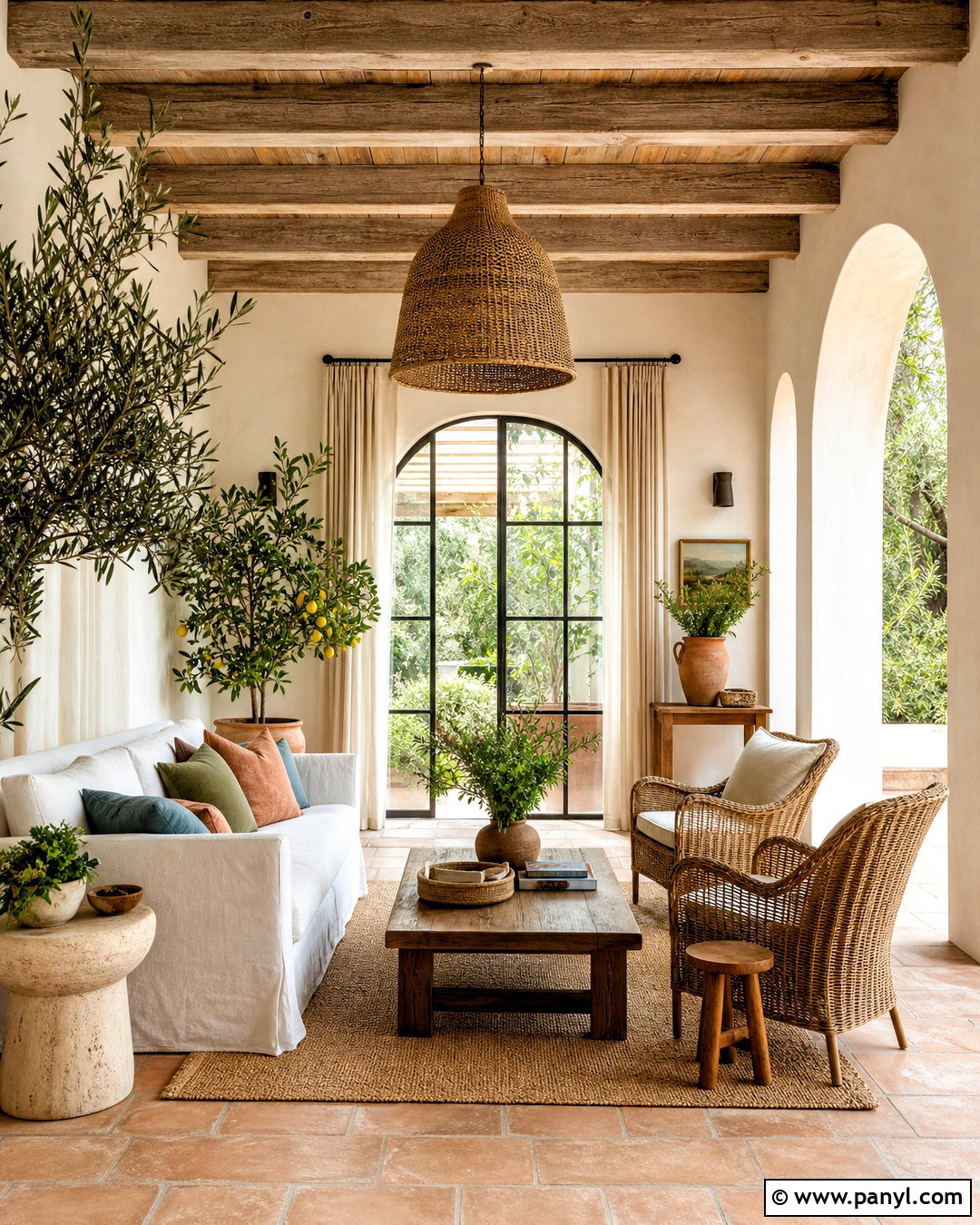
A sunroom offers an ideal place to explore the lighter side of Tuscan design. Use warm white walls, pale terracotta flooring, and a softly weathered wood ceiling to establish the setting. Arrange a slipcovered linen sofa with two woven lounge chairs around a low oak table. Cushions in faded olive, dusty blue, and clay red echo a Mediterranean landscape without making the room feel themed. Hang breezy flax curtains that can move easily beside open windows or French doors. Large terracotta planters filled with citrus trees and leafy greenery connect the room to the outdoors. A woven rug and basket pendant add texture under bright daylight. The finished sunroom feels airy, casual, and useful for reading, conversation, or relaxed afternoon meals.
16. Tuscan Open Concept Great Room
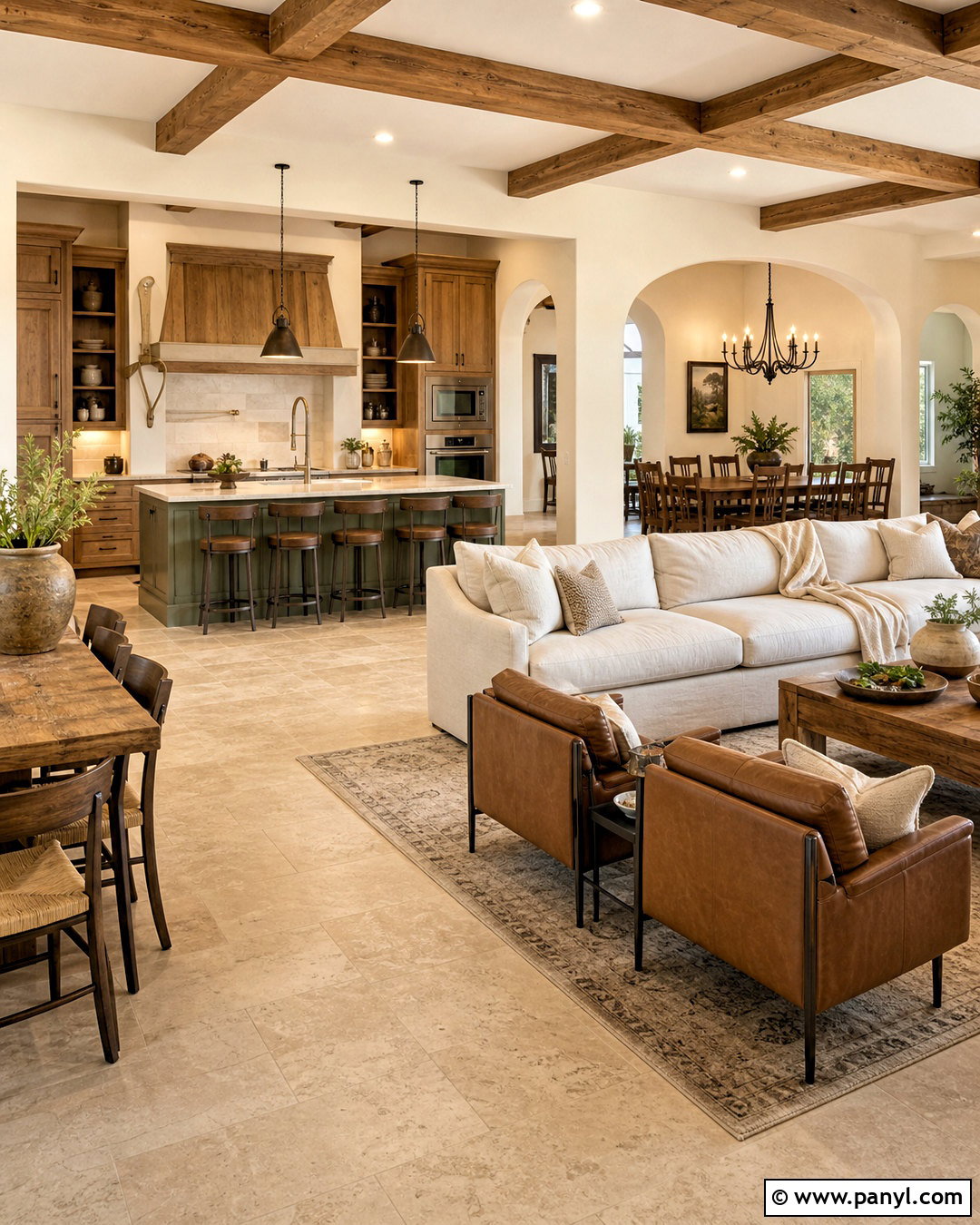
An open-plan interior feels coherent when materials and colors repeat across each functional zone. Begin with warm limestone flooring and creamy plaster walls throughout the kitchen, dining area, and living room. Use medium oak cabinetry in the kitchen, then repeat the same wood on the dining table and living room console. A muted olive island introduces color that can reappear on pillows and artwork. Define the sitting area with a large neutral rug, an oatmeal sectional, and leather accent chairs. Hang a wrought iron chandelier above the dining table and simpler bronze pendants over the island. Exposed ceiling beams can visually connect the entire room. Keep pathways wide and accessories limited. The result is a complete Tuscan interior that feels spacious, organized, and thoughtfully unified.
17. Small Tuscan Apartment
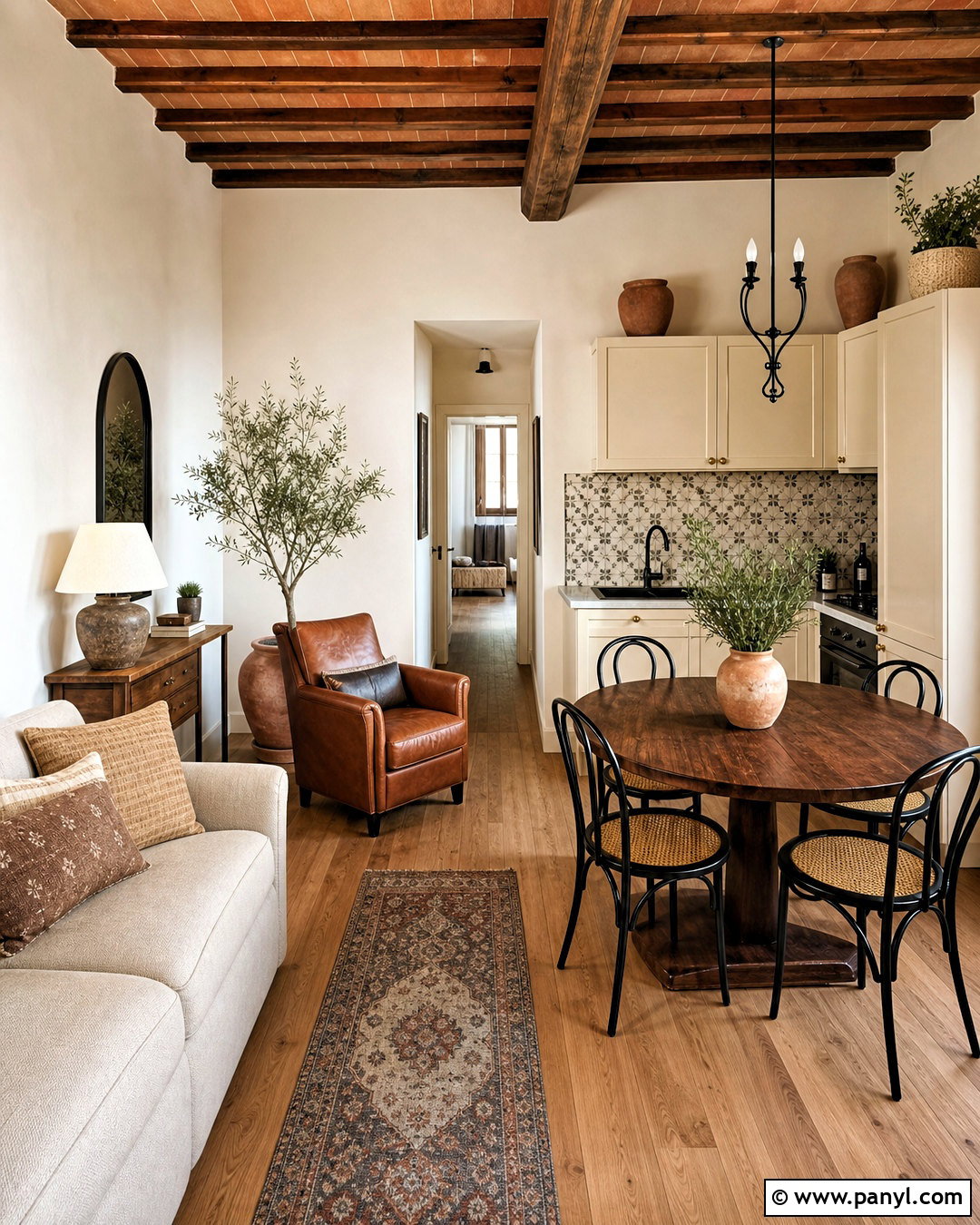
Tuscan character can work in a small apartment when scale and color are carefully controlled. Choose warm white walls and medium oak flooring to create a light, consistent base. In the living area, place a compact beige sofa opposite a slim wood media console, then add one cognac leather chair for depth. A round pedestal dining table saves space and connects naturally to a kitchen with cream cabinets and a handmade tile backsplash. Use terracotta through planters, pillows, and one table lamp instead of covering the entire floor. An arched mirror can suggest traditional architecture while making the room feel larger. Finish with linen curtains, a faded runner, and simple iron lighting. The apartment remains open and functional while expressing recognizable Tuscan warmth.
18. Neutral Tuscan Interior
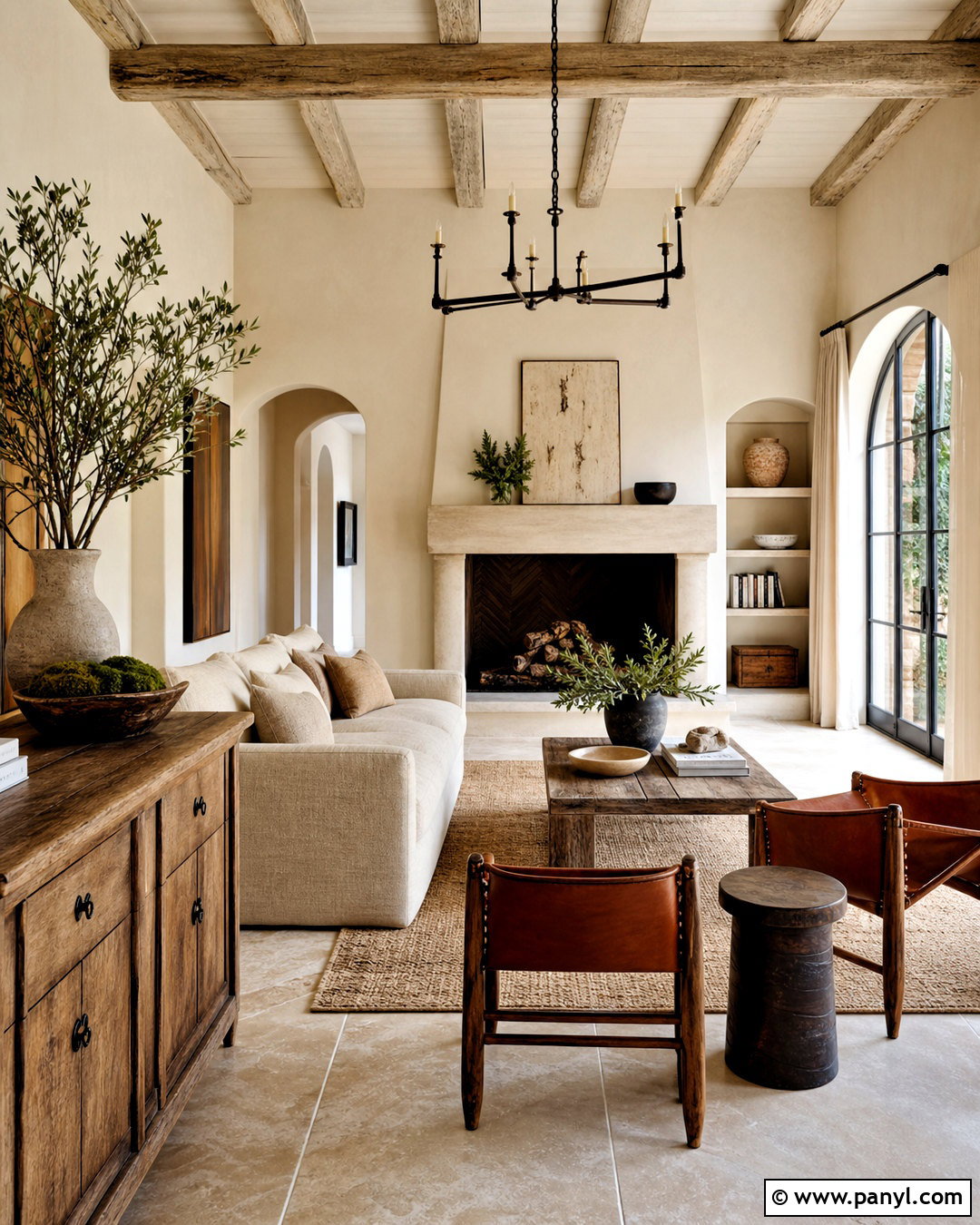
A restrained neutral palette highlights texture, craftsmanship, and architectural shape. Coat the walls in warm off-white limewash and use pale limestone or light oak flooring throughout the main rooms. Select furniture in flax linen, saddle leather, weathered oak, and woven natural fiber. Rather than adding strong red or orange accents, introduce subtle shades of sand, mushroom, putty, and muted olive. Curved doorways and a softly rounded plaster fireplace provide Mediterranean influence without busy decoration. A large cream wool rug grounds the living room, while bronze lighting supplies gentle contrast. Style tables with a few stone bowls, handmade ceramics, and leafy branches. This quieter interpretation is ideal for homeowners who appreciate Tuscan materials but want a bright, calm, and contemporary overall appearance.
19. Colorful Tuscan Interior
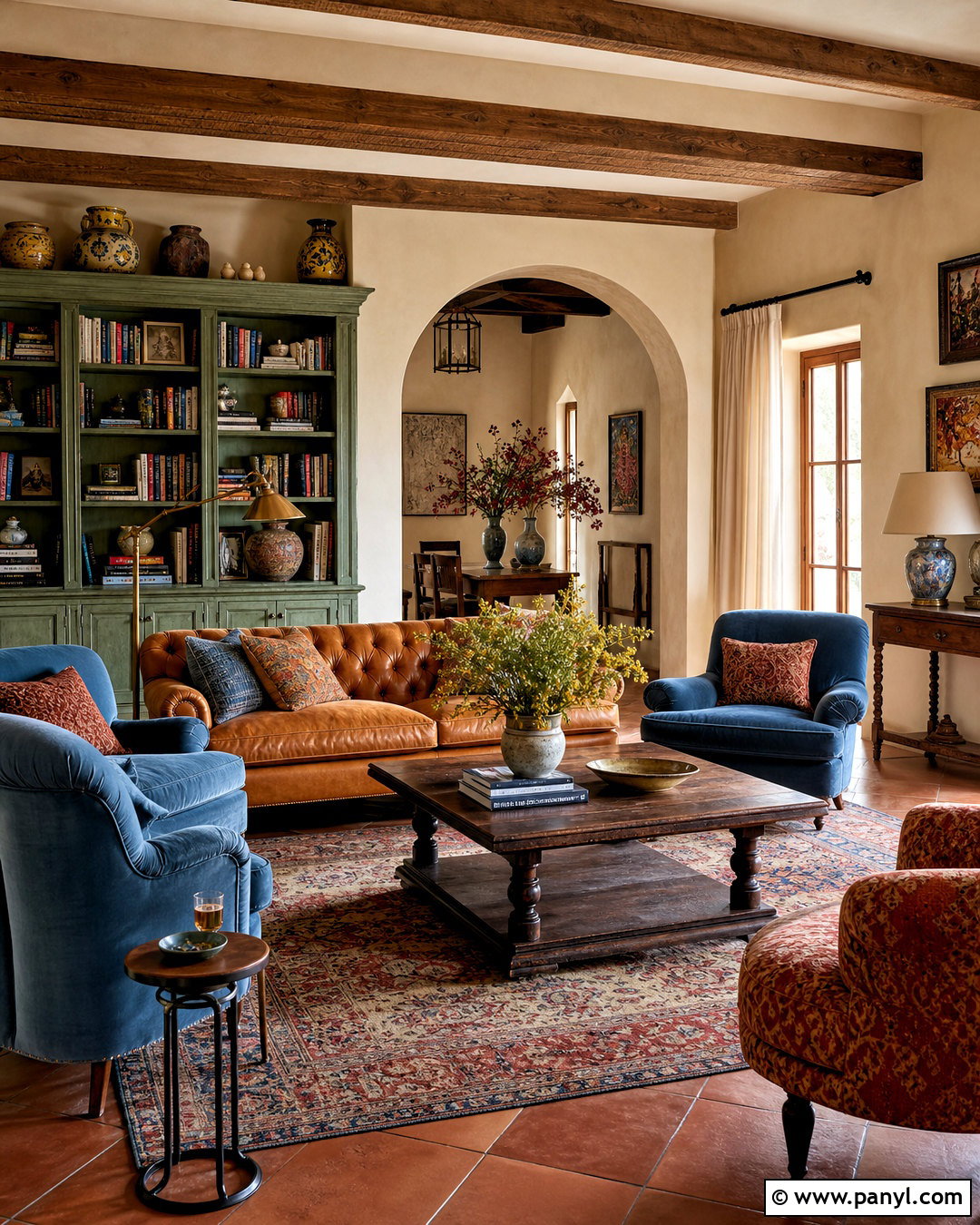
Earthy color can make a Tuscan interior lively while keeping it sophisticated. Use warm cream walls as the background, then introduce olive green cabinetry, rust-colored upholstery, and muted blue patterned textiles. Terracotta flooring ties the stronger colors together and reinforces the natural palette. In the living room, pair a camel leather sofa with two dusty blue chairs around a dark oak coffee table. Continue olive green on a nearby built-in bookcase or kitchen island for visual continuity. Choose an antique-style rug that contains all three accent colors rather than adding unrelated patterns. Aged brass lamps and hand-painted ceramic pieces bring a gentle decorative layer. Balanced with cream curtains and natural wood, this full-color approach feels inviting, expressive, and unmistakably Tuscan.
20. Tuscan Indoor Outdoor Room
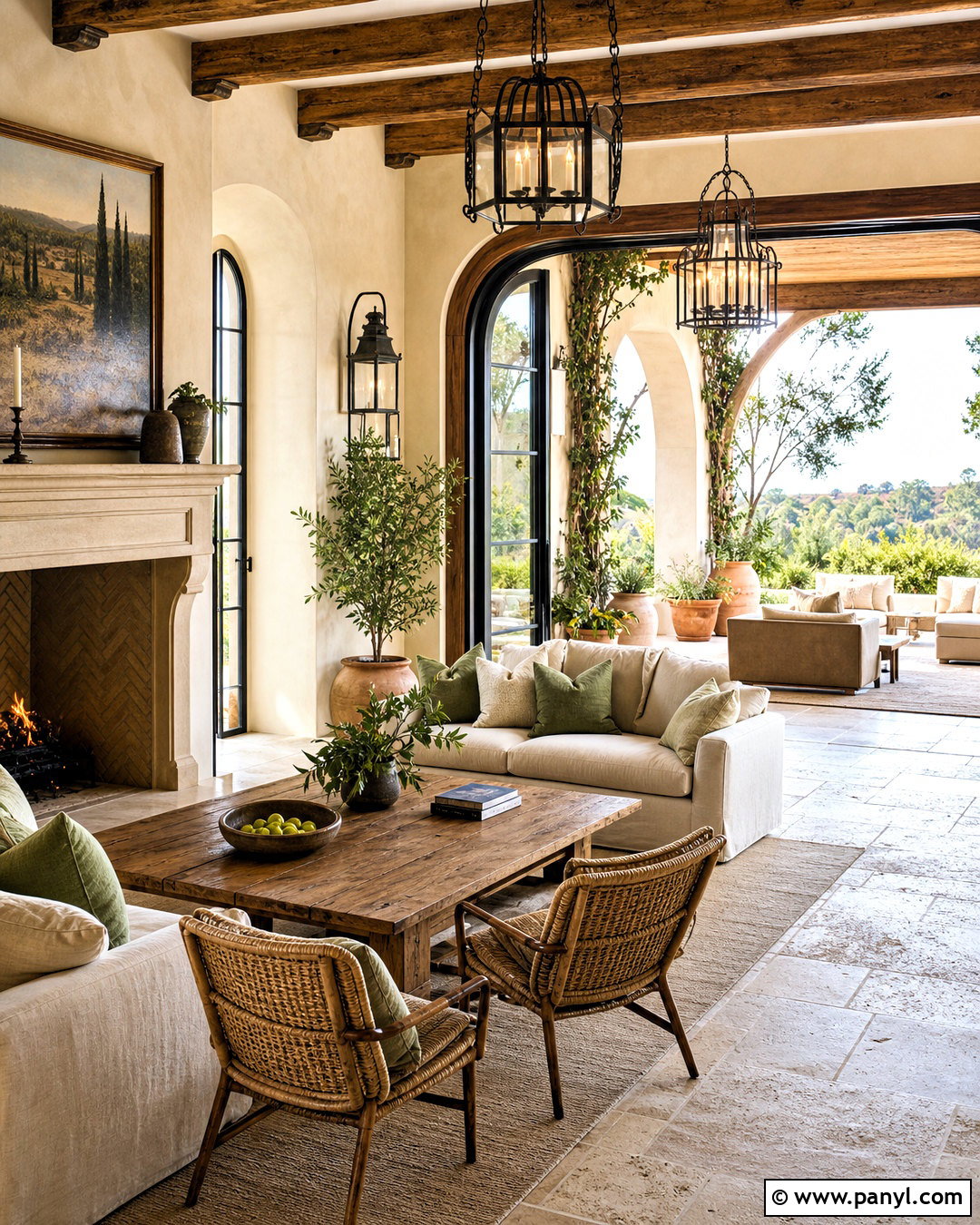
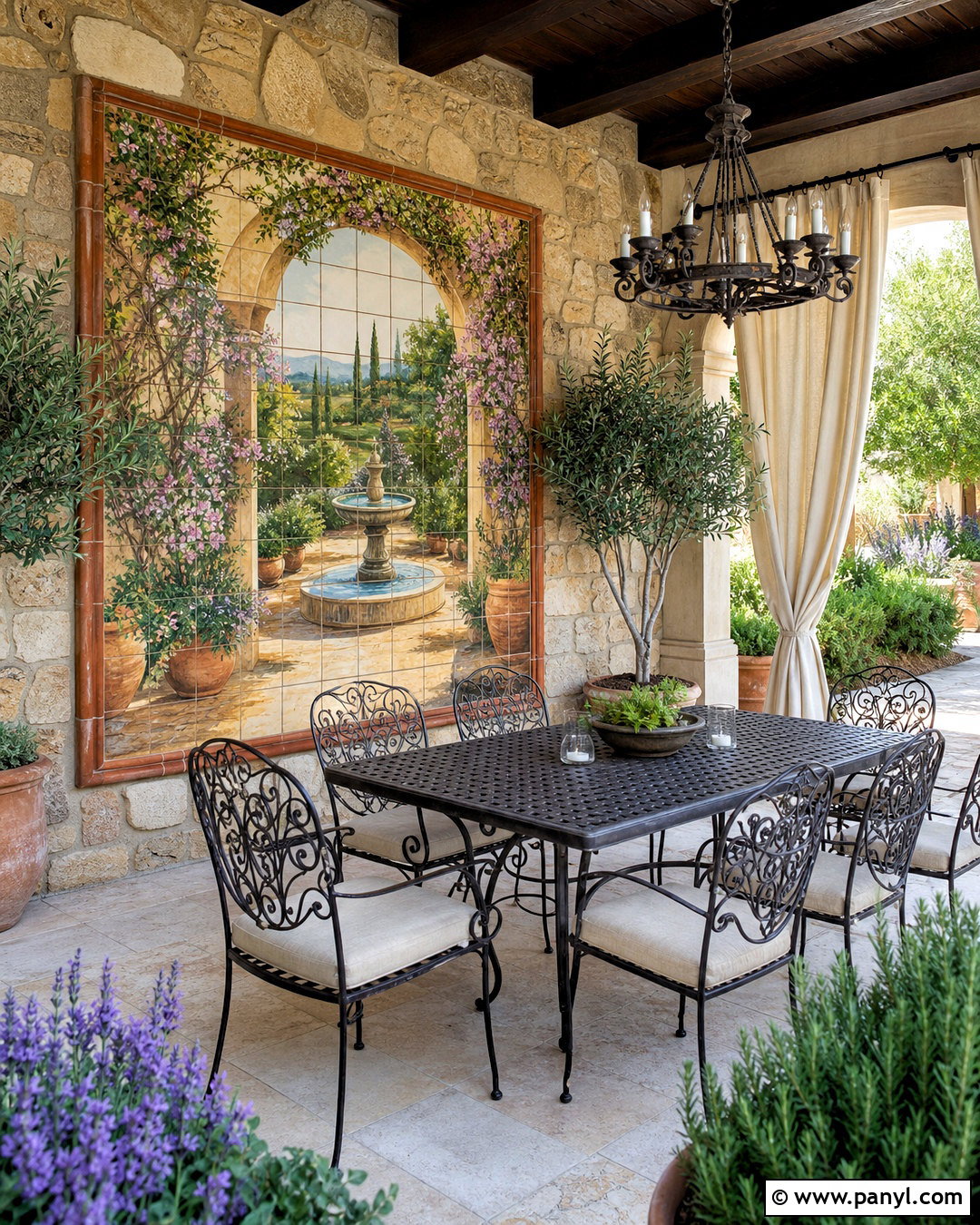
Open doors, repeated materials, and comfortable seating can make the interior feel connected to a Tuscan courtyard. Install wide arched doors between the living room and a covered patio, then continue limestone or terracotta flooring across both areas. Inside, arrange a linen sofa, woven chairs, and a reclaimed wood coffee table facing the garden. Outside, repeat the furniture colors with weather-resistant beige cushions and olive pillows. A plaster fireplace or stone accent wall creates a strong architectural focal point on the patio. Add iron lanterns, climbing greenery, citrus trees, and large terracotta planters around the seating area. Sheer curtains soften the doorway without closing it off. The complete layout encourages relaxed movement between home and garden while maintaining one warm, consistent Tuscan identity.
Conclusion:
The most inviting Tuscan interiors combine rustic materials, practical layouts, and a warm color palette without making every surface feel heavily decorated. Start with a consistent foundation such as plaster walls, natural wood, terracotta, or limestone. Then add comfortable furniture, soft linen, aged metal, pottery, and earthy accent colors in measured amounts. Traditional rooms can embrace carved details and darker finishes, while modern spaces benefit from pale walls and cleaner furniture lines. Most importantly, design each room as part of the same home rather than as a separate theme. These 20 tuscan style homes interior ideas offer adaptable ways to create welcoming spaces that feel established, functional, and full of relaxed Mediterranean character.

Related Ideas and Inspiration:
Leave a Reply