
Tuscan living rooms combine rustic warmth, natural materials, and relaxed European character. The look often features creamy walls, weathered wood, aged metals, substantial furniture, and colors inspired by sunbaked landscapes. However, the room does not need to feel dark, ornate, or dated. A lighter palette, cleaner furniture, and carefully edited accessories can bring Tuscan character into a modern home. Start by choosing one strong architectural feature or material, then repeat its tones through upholstery, rugs, lighting, and decorative accents. The result should feel collected and comfortable rather than overly themed. Whether you have a large great room, a small apartment, or a limited decorating budget, these complete 20 Tuscan living room ideas offer practical ways to create the look.
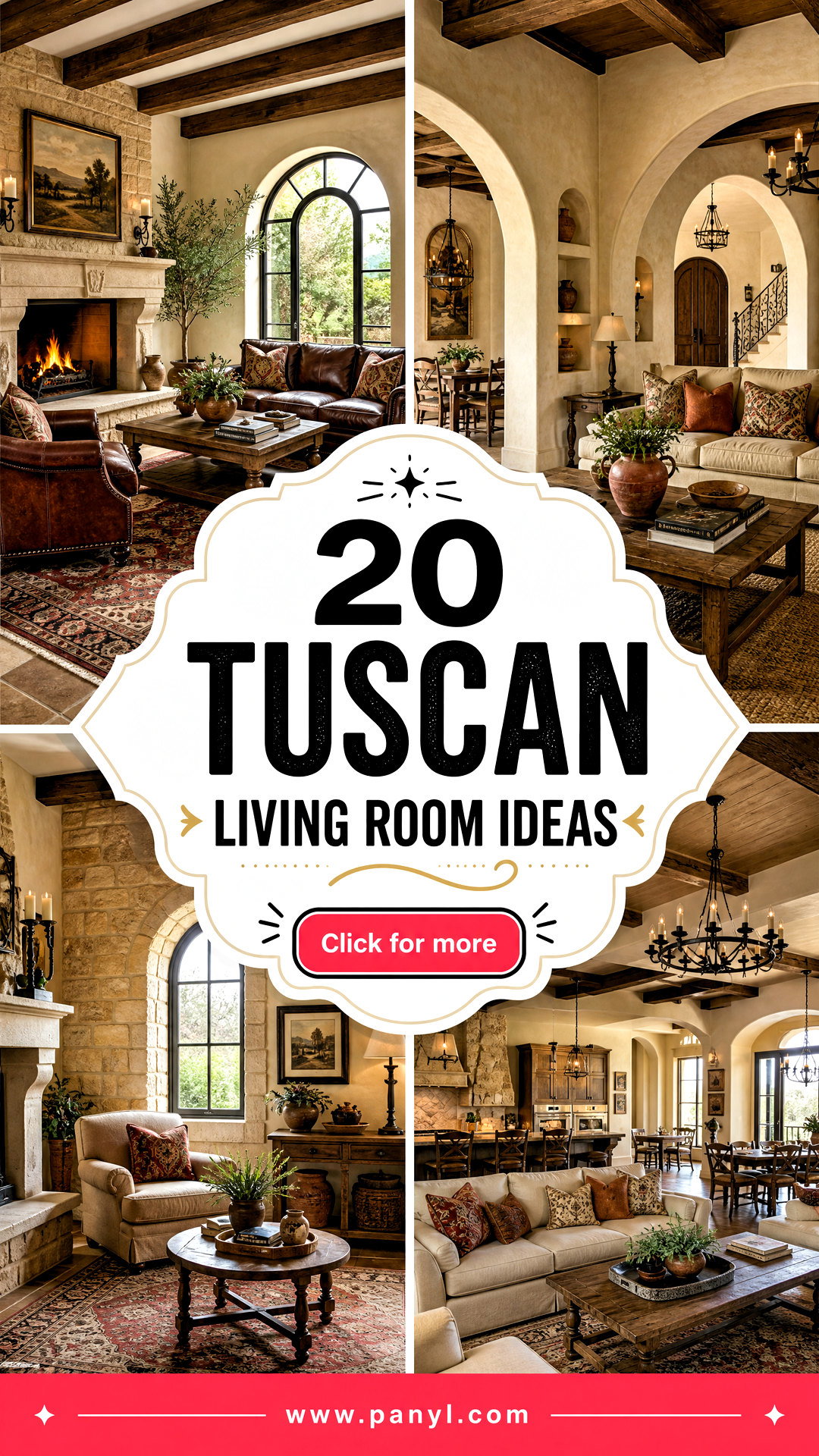
1. Warm Earth Tone Tuscan Living Room
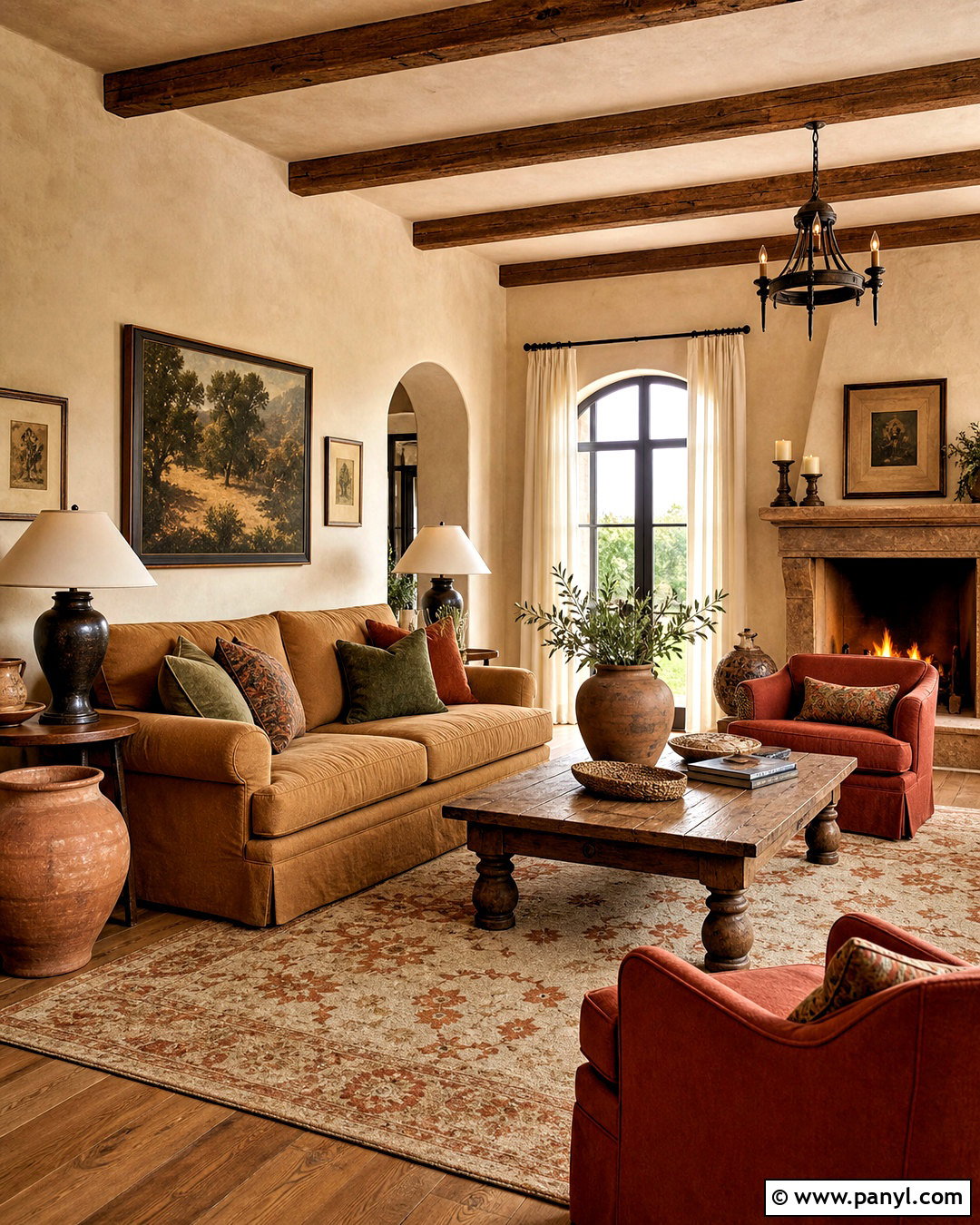
Build the room around a sun-washed palette of creamy beige, terracotta, muted ochre, and warm brown. Use soft ivory on the walls so the richer colors feel inviting rather than heavy. A camel-colored sofa, two rust linen chairs, and a large tan patterned rug create a comfortable conversation area. Choose a thick reclaimed-wood coffee table with a simple shape and add dark bronze lamps for contrast. Terracotta pottery, woven baskets, and olive-green pillows provide natural color without making the room look overly decorated. Finish the space with medium-toned wood flooring and lightweight cream curtains. Keep the furniture arrangement open, placing the seating around the coffee table while preserving clear pathways to windows and adjoining rooms.
2. Modern Tuscan Living Room
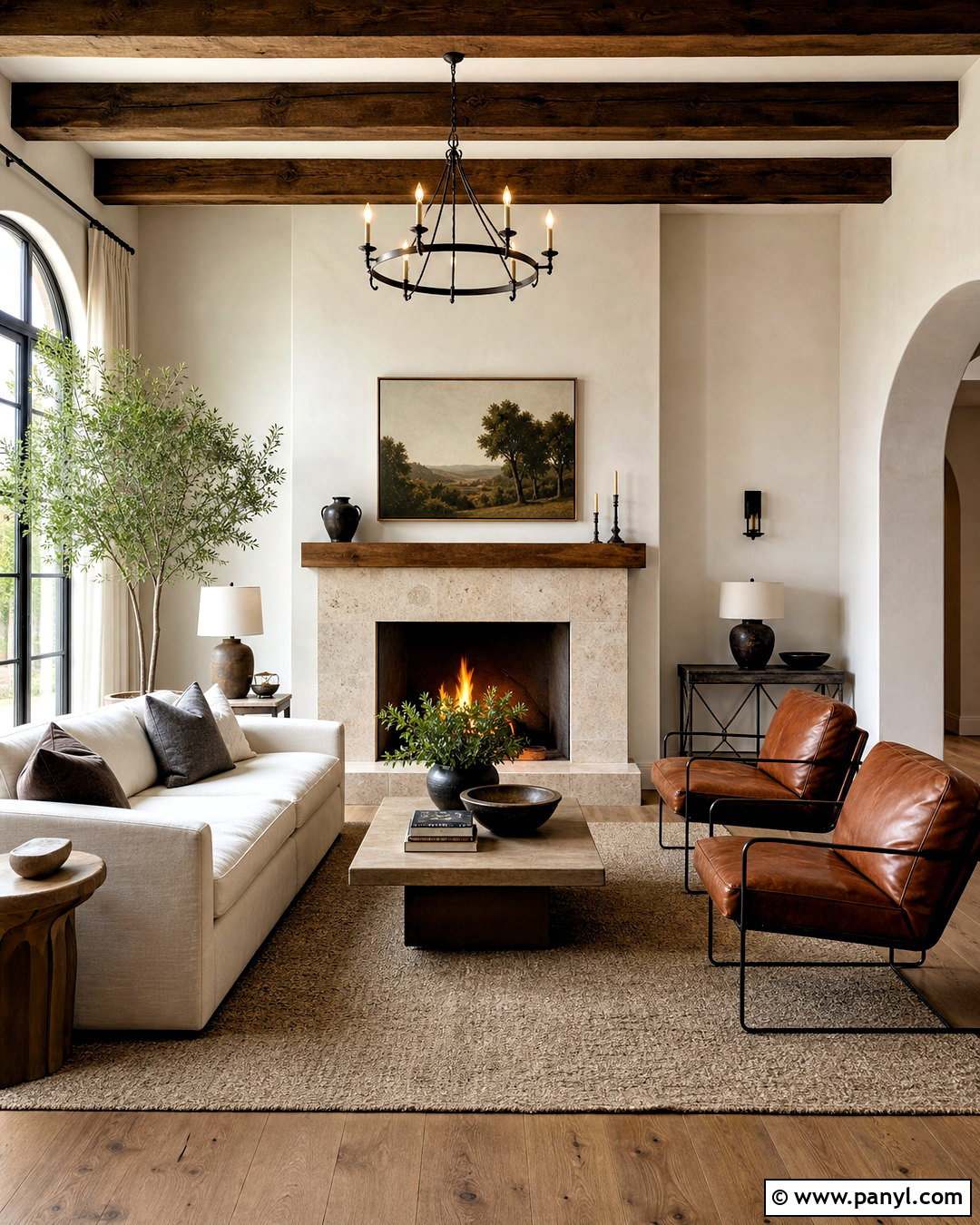
Can Tuscan design feel clean and current? Start with warm white walls, wide-plank oak flooring, and streamlined furniture in linen, leather, and wood. A low cream sofa can face a contemporary limestone fireplace with a thick reclaimed-oak mantel. Add two cognac leather chairs with slim black metal frames, then ground everything with a large greige wool rug. Avoid filling every surface with accessories. Instead, display one oversized landscape painting, a sculptural clay vessel, and a few aged brass objects. Simple linen curtains soften the windows without blocking daylight. This balanced arrangement keeps the natural textures and Mediterranean warmth associated with Tuscan interiors while replacing bulky furnishings and elaborate ornamentation with cleaner silhouettes, brighter finishes, and practical everyday comfort.
3. Rustic Tuscan Living Room
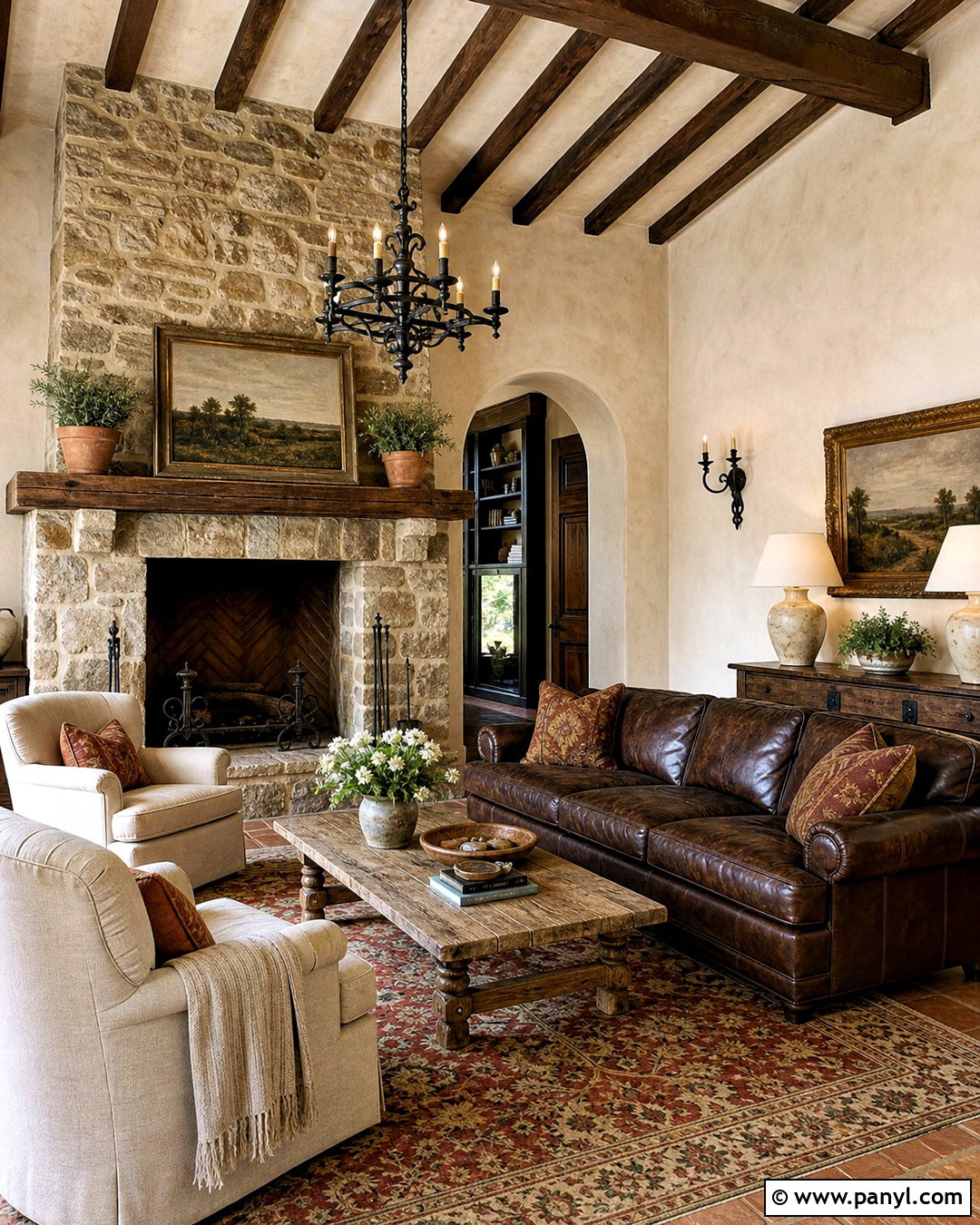
A rustic Tuscan living room should feel sturdy, welcoming, and naturally weathered. Begin with textured plaster-look walls in warm cream and a substantial stone fireplace as the main focal point. Arrange a deep brown leather sofa and two oatmeal slipcovered chairs around a distressed rectangular coffee table. A faded red, tan, and olive rug adds pattern while connecting the upholstery to the earthy architecture. Introduce reclaimed ceiling beams when the room’s structure and budget allow, or use a single decorative beam across the fireplace wall. Add wrought-iron sconces, chunky ceramic lamps, and simple landscape artwork in aged wood frames. Keep accessories limited to useful, tactile pieces such as woven throws, wooden bowls, books, and large terracotta planters filled with olive branches.
4. Light Neutral Tuscan Living Room
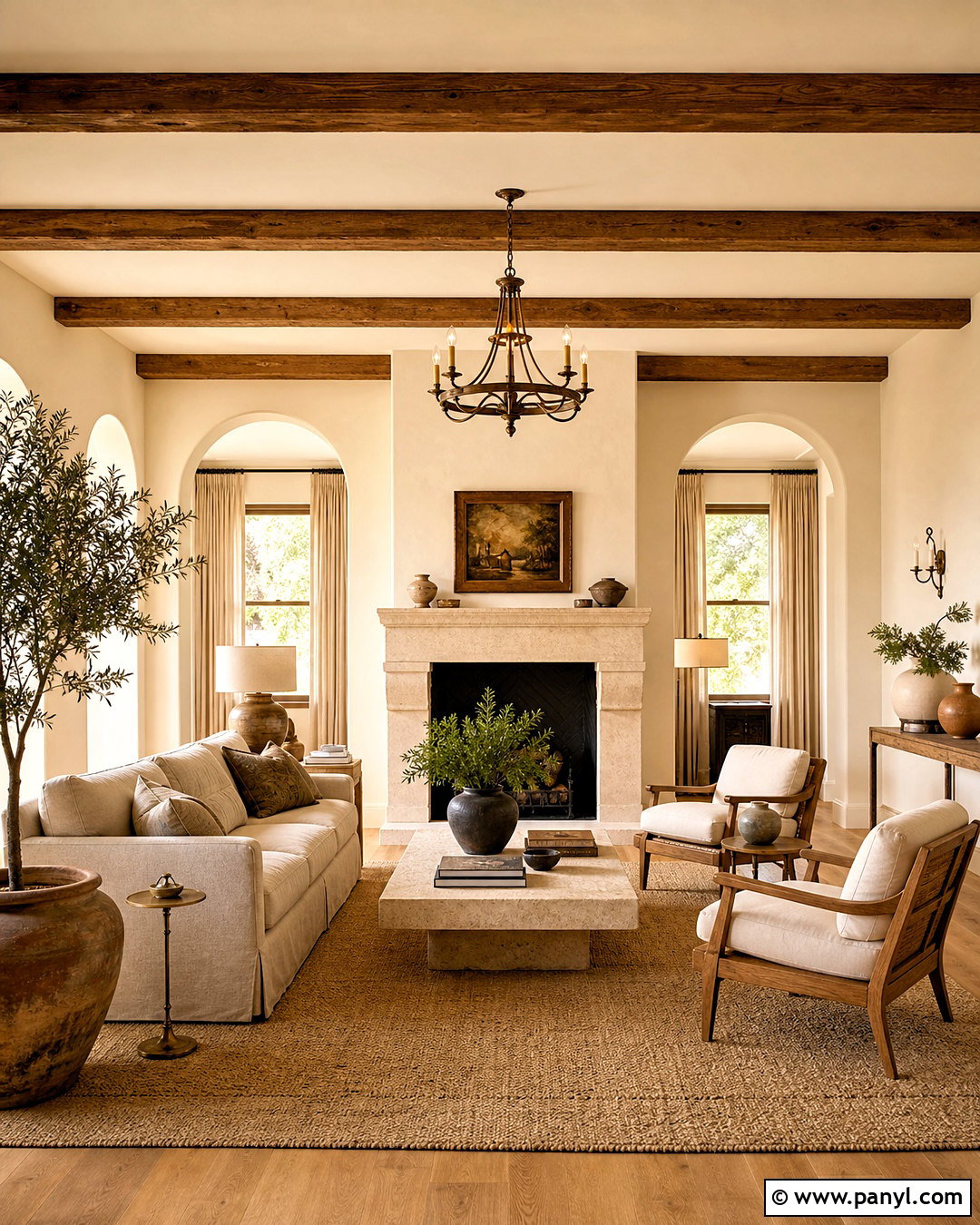
For a softer interpretation, replace dark gold and burgundy with ivory, sand, pale taupe, and light honey wood. Cover the walls in warm off-white and select a relaxed oatmeal sofa with gently rolled arms. Pair it with pale wood accent chairs upholstered in textured cream fabric. A limestone coffee table and subtle beige rug give the seating area visual weight without darkening it. Bring Tuscan character through a softly arched fireplace opening, handmade clay pottery, light linen curtains, and a few antique brass details. Greenery in aged terracotta containers adds freshness. This complete palette works especially well in rooms with limited natural light because every major surface reflects brightness. Slight color variations and tactile materials prevent the neutral arrangement from appearing flat or unfinished.
5. Tuscan Living Room With Stone Fireplace
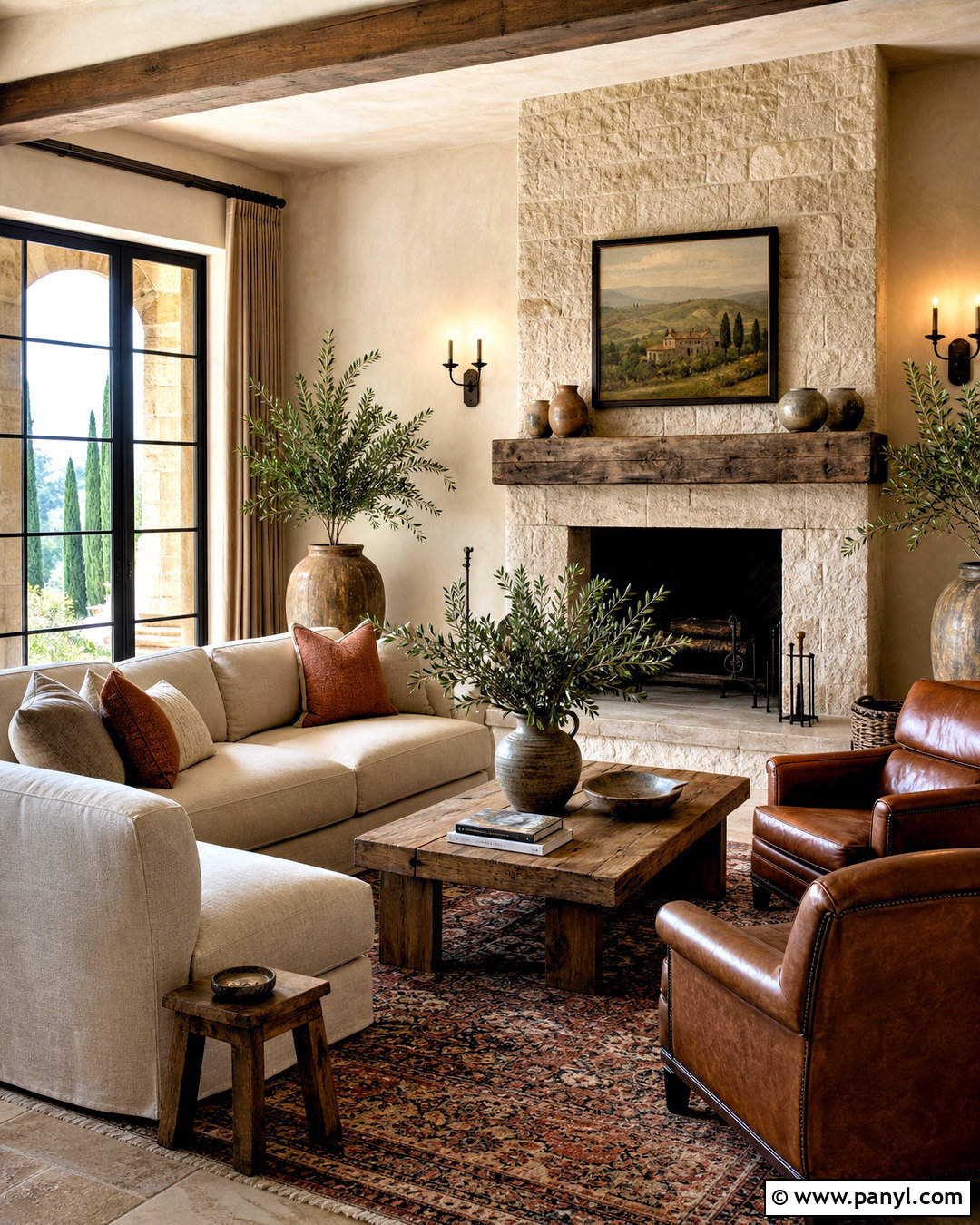
Let a stone fireplace establish the room’s architecture, color palette, and furniture layout. Choose warm limestone, fieldstone, or a convincing stone veneer containing beige, taupe, and muted gray tones. Add a thick wood mantel that relates to the flooring and nearby tables. Position a generous linen sofa opposite the fireplace, with two leather armchairs angled inward to encourage conversation. A patterned wool rug should be large enough to sit beneath the front legs of every seat. Install simple bronze sconces beside the fireplace and display one large ceramic vessel or framed landscape above the mantel. Keep the surrounding walls light and uncluttered. The mixture of stone, wood, woven fabric, and aged metal creates a complete Tuscan living room without relying on excessive decorative themes.
6. Tuscan Living Room With Wood Beams
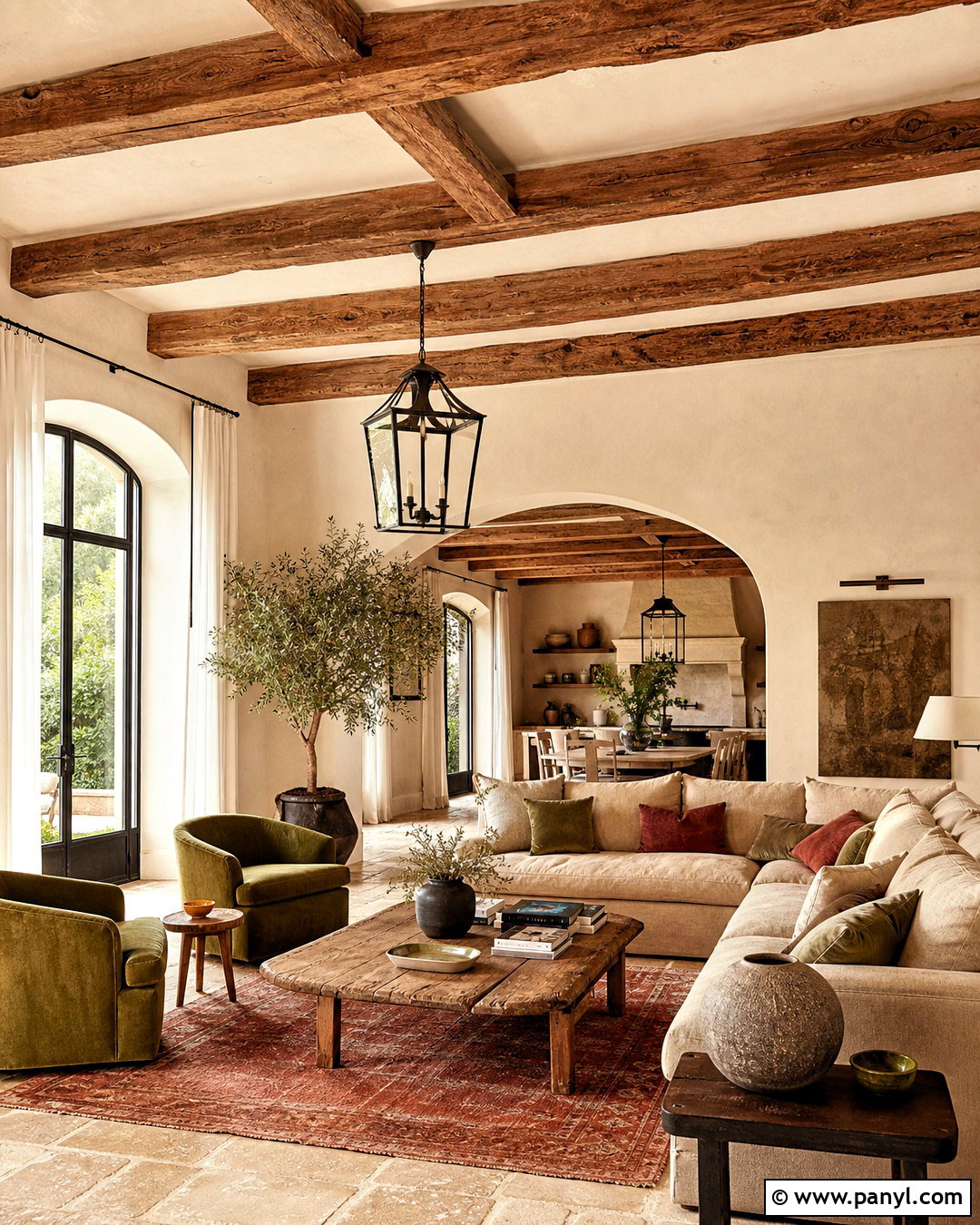
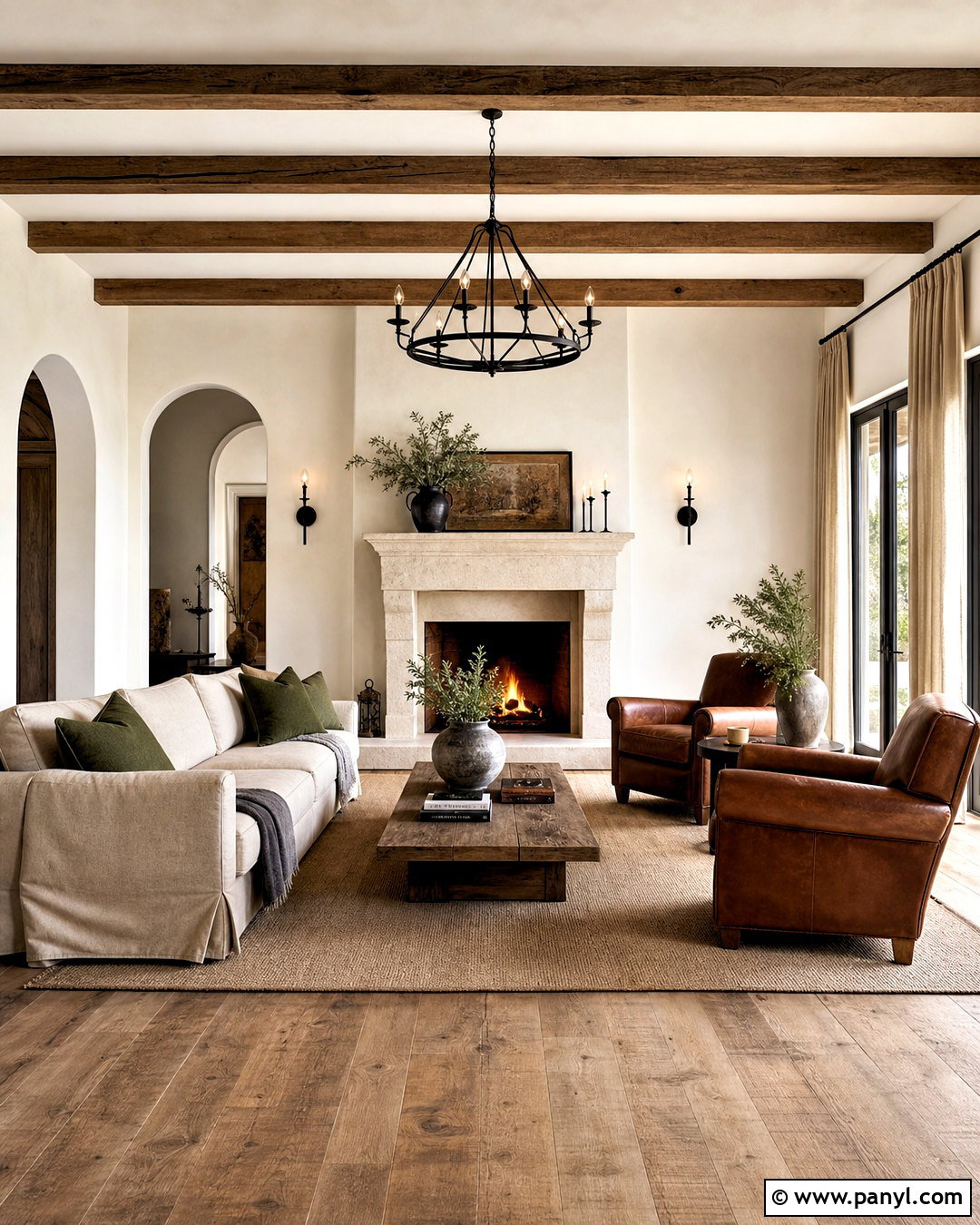
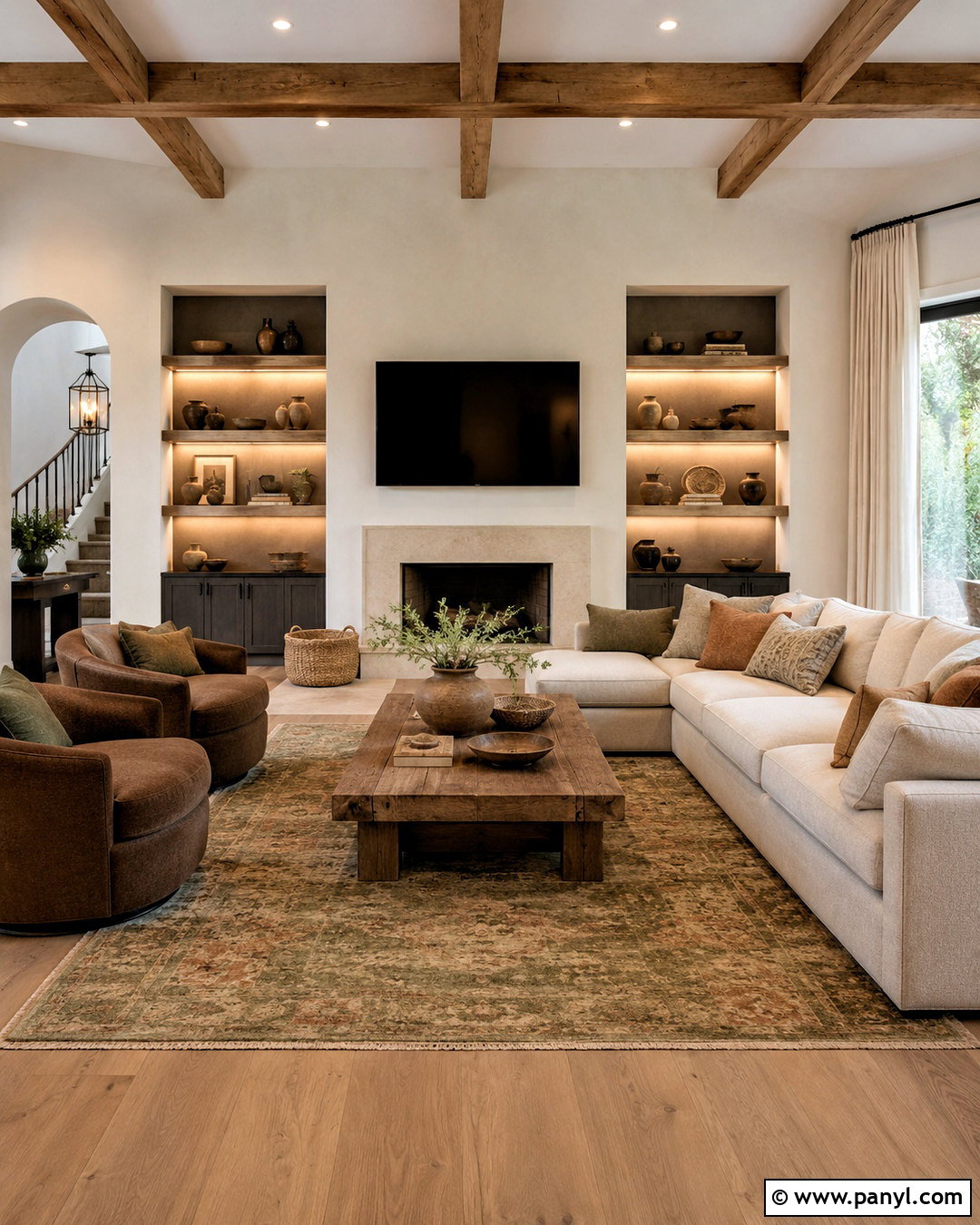
Exposed beams can make an ordinary living room feel more architectural, but the entire space should support their visual weight. Use medium walnut or weathered oak beams against a creamy plaster ceiling. Continue that wood tone through a substantial coffee table, narrow console, or fireplace mantel rather than matching every furniture piece. Below, arrange a warm beige sectional with two olive upholstered chairs on a faded terracotta rug. Pale limestone flooring or light oak boards prevent the ceiling from making the room feel top-heavy. Add linen drapes, bronze lantern lighting, and restrained ceramic accessories. If authentic structural beams are not available, carefully proportioned decorative beams can create a similar effect. Keep them evenly spaced and appropriately scaled for the ceiling height and room dimensions.
7. Tuscan Living Room With Terracotta Floor
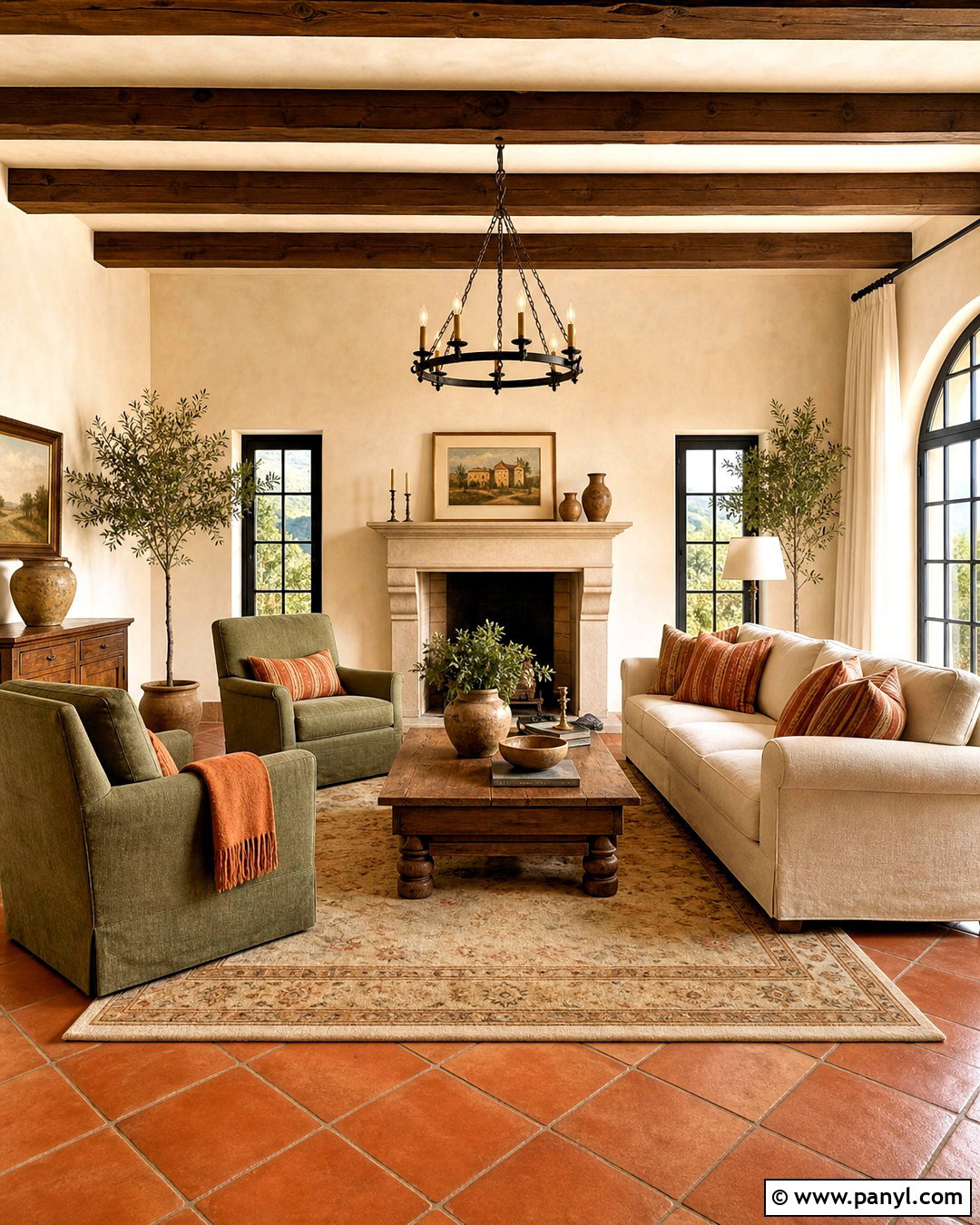
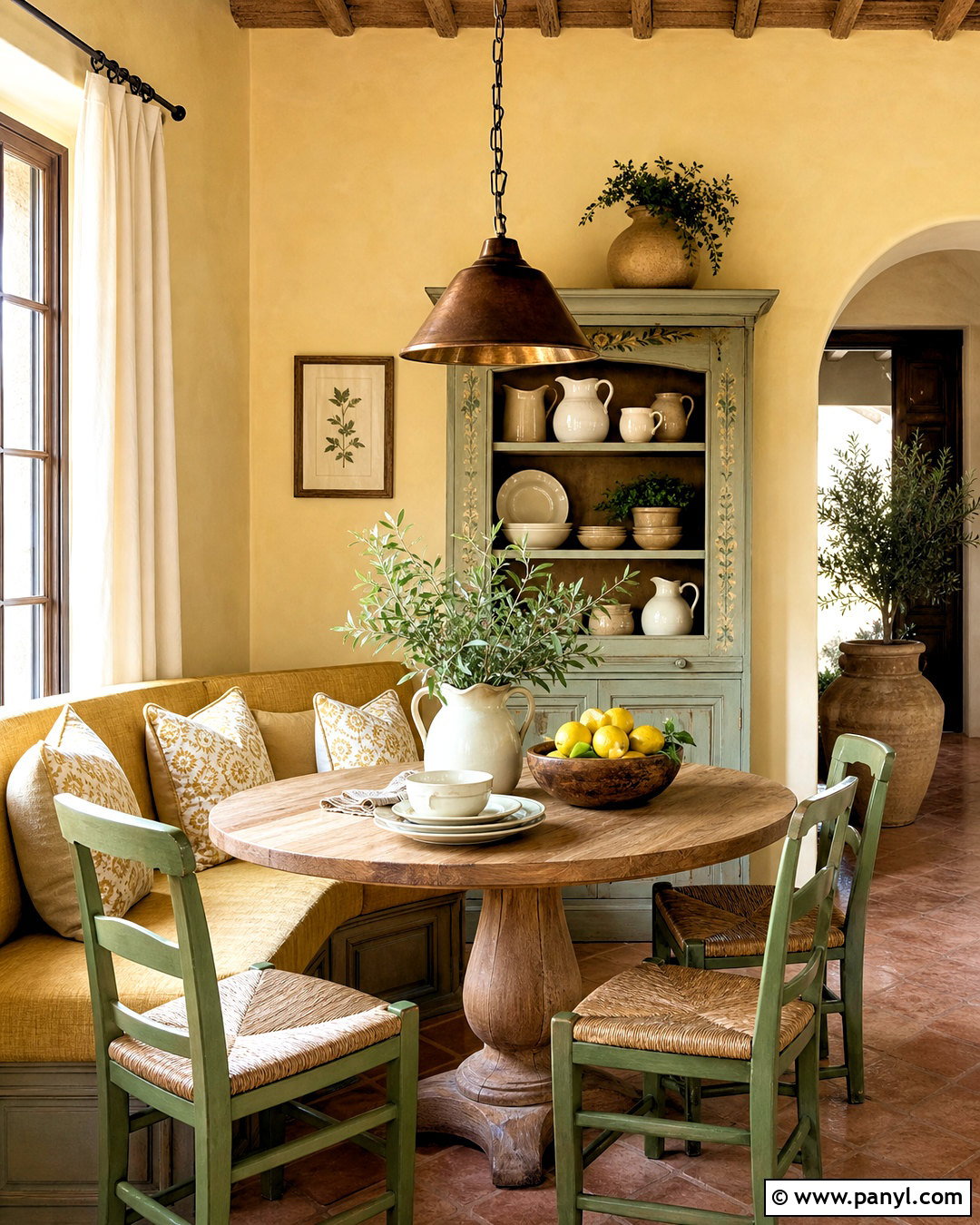
Terracotta flooring brings instant warmth, so balance it with lighter furniture and walls. Select matte clay tile in softly varied red-orange and brown tones, then use a generous cream-and-tan rug to define the seating area. A natural linen sofa, carved oak coffee table, and pair of muted sage chairs create a comfortable arrangement that complements the floor without competing with it. Paint the walls warm ivory and keep window treatments airy. Blackened-iron curtain rods and a simple forged chandelier provide crisp definition. Repeat the floor color sparingly through striped pillows, pottery, or artwork. Because terracotta already has visible movement, choose mostly solid upholstery and uncomplicated furniture shapes. This approach allows the beautiful flooring to remain the focal point while the complete room stays bright and relaxed.
8. Tuscan Living Room With Olive Green
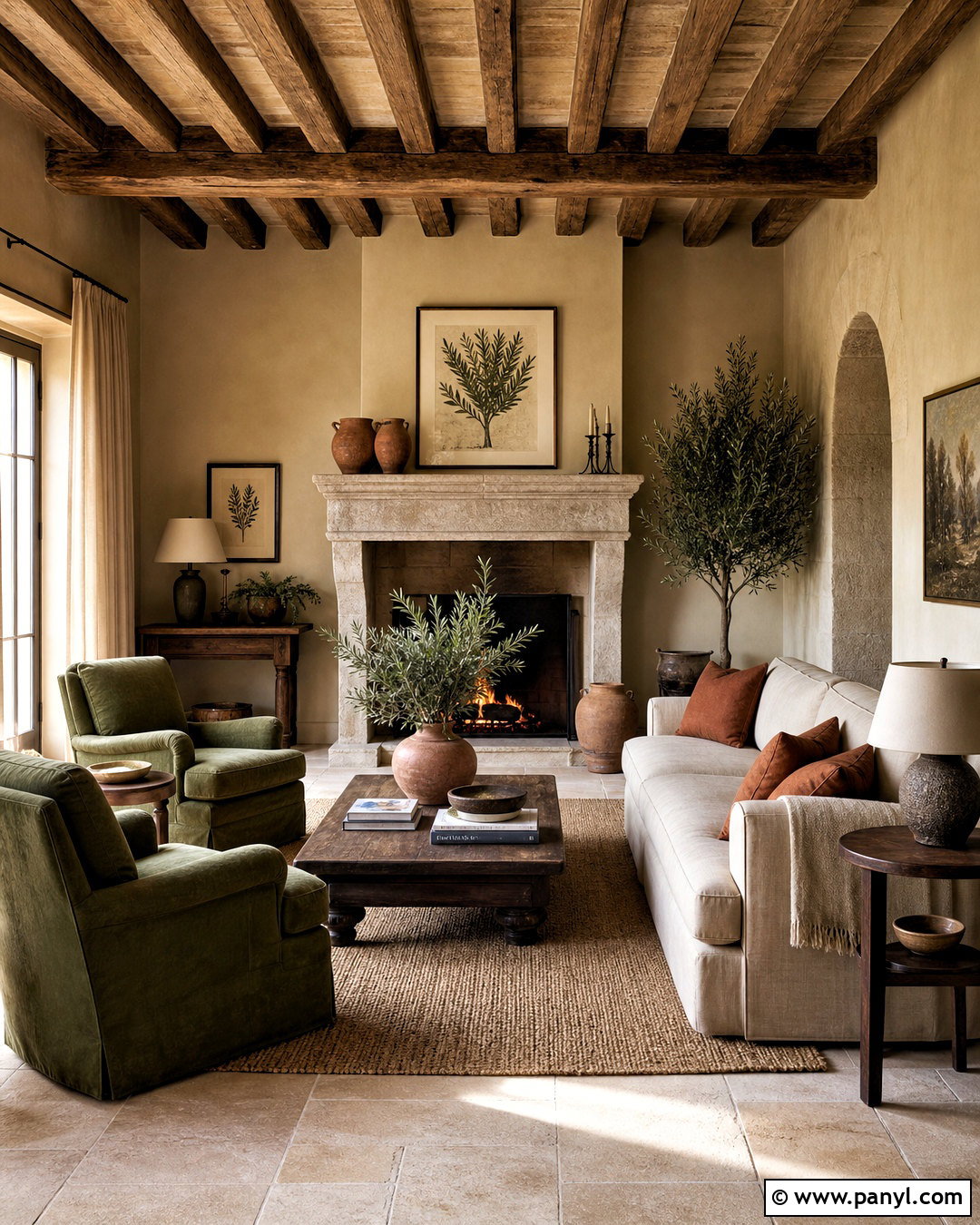
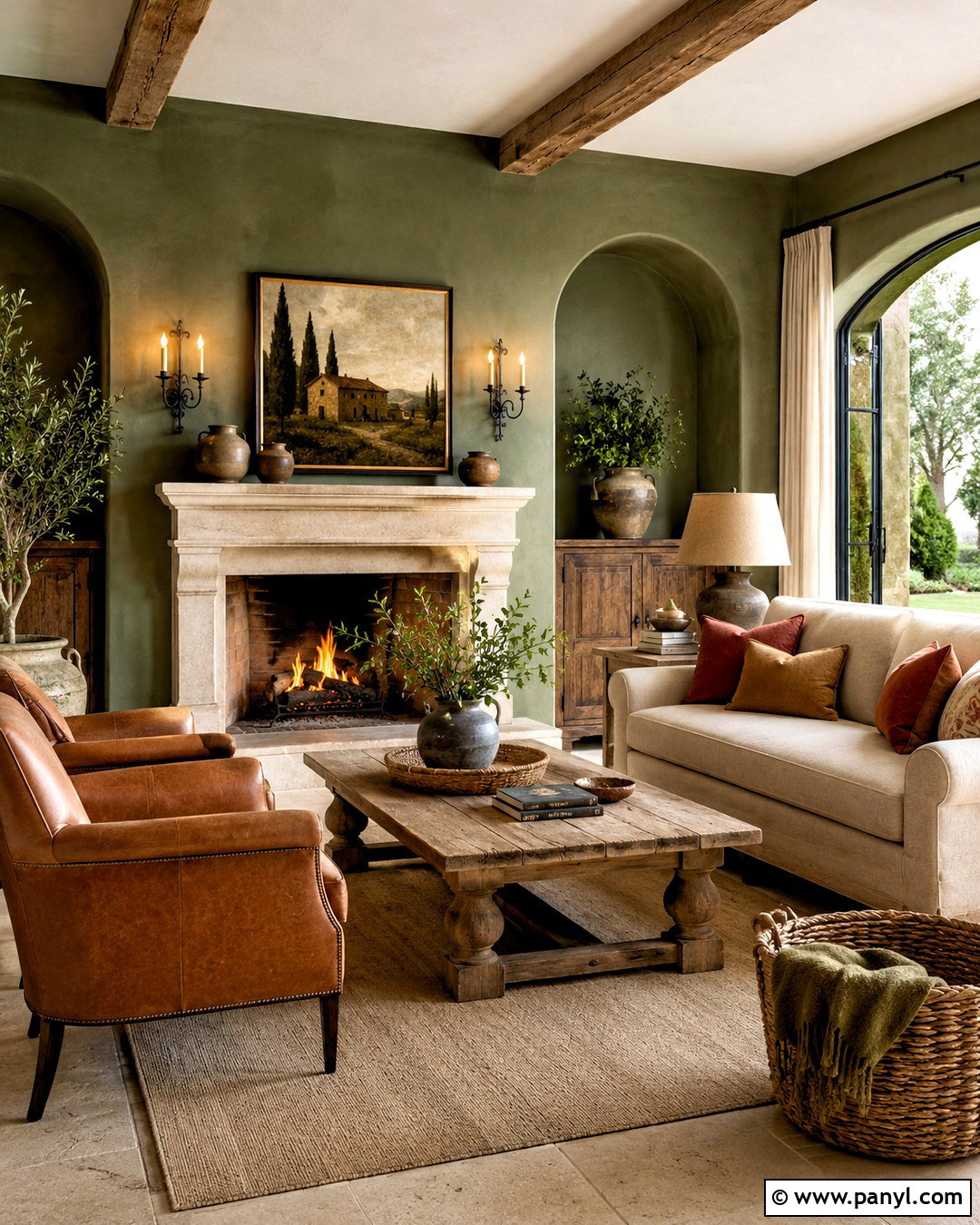
Olive green creates a calm connection between Tuscan architecture and the surrounding landscape. Use it on a pair of comfortable armchairs or a single plaster-look accent wall rather than every surface. Combine the green with a creamy sofa, dark oak coffee table, and natural jute-wool rug. Warm beige walls keep the palette soft, while rust-colored pillows add a controlled touch of contrast. Include an aged stone fireplace or limestone console to reinforce the organic theme. Matte bronze lighting, clay pottery, and framed botanical prints finish the room without making it look overly formal. Place a tall olive tree near the brightest window and use linen curtains that reach the floor. The finished arrangement feels earthy and sophisticated while remaining suitable for casual conversation and everyday family use.
9. Tuscan Living Room With Leather Furniture
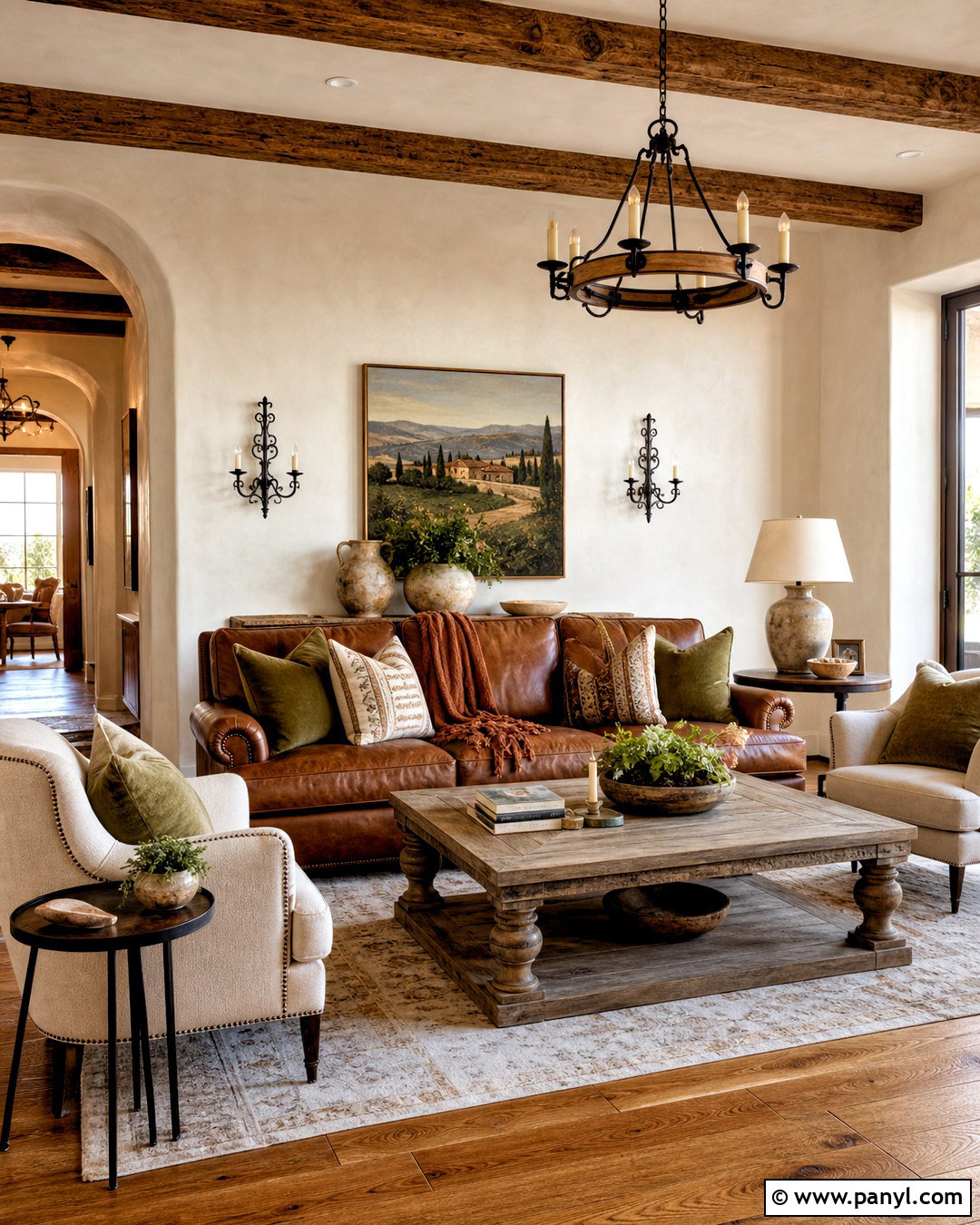
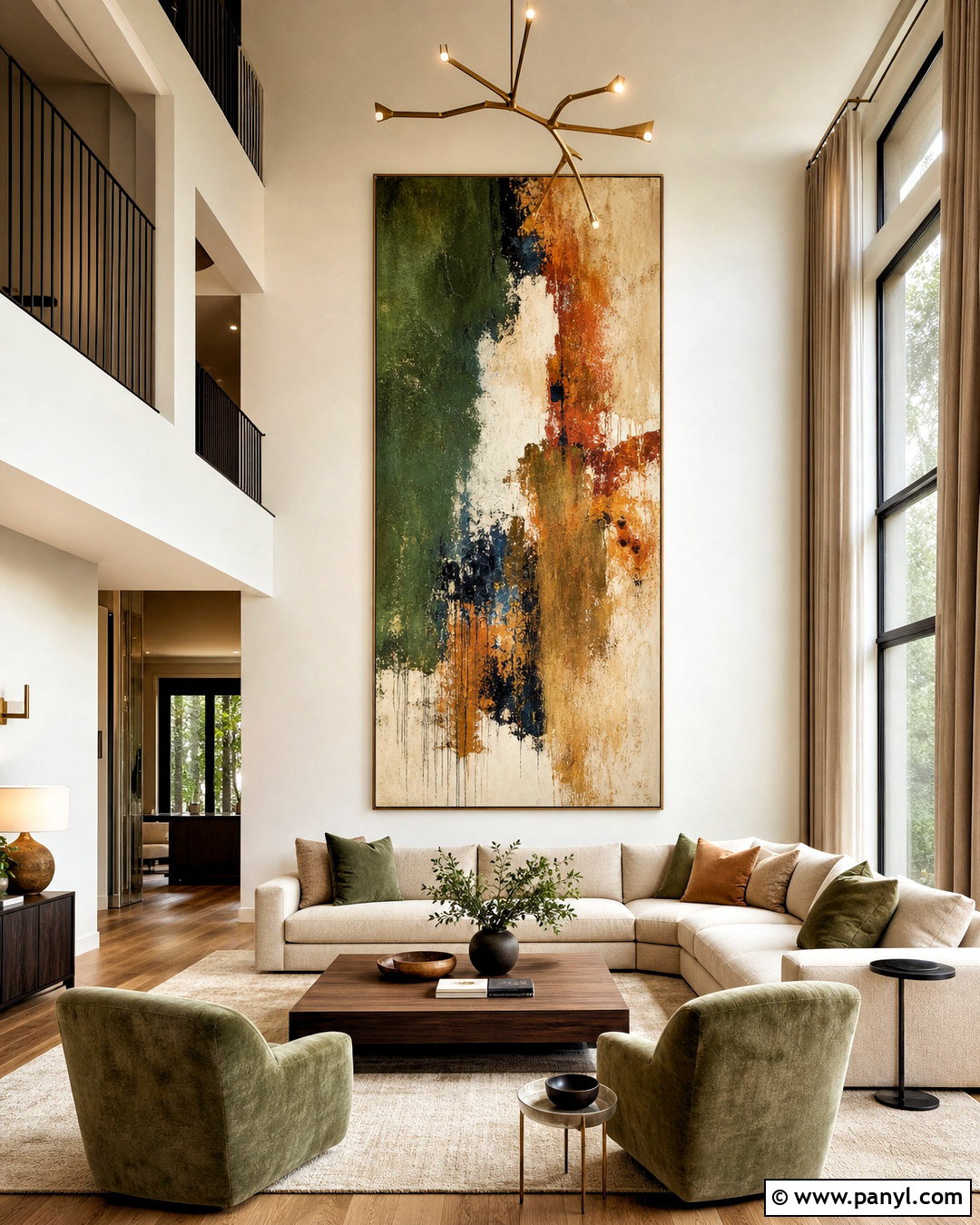
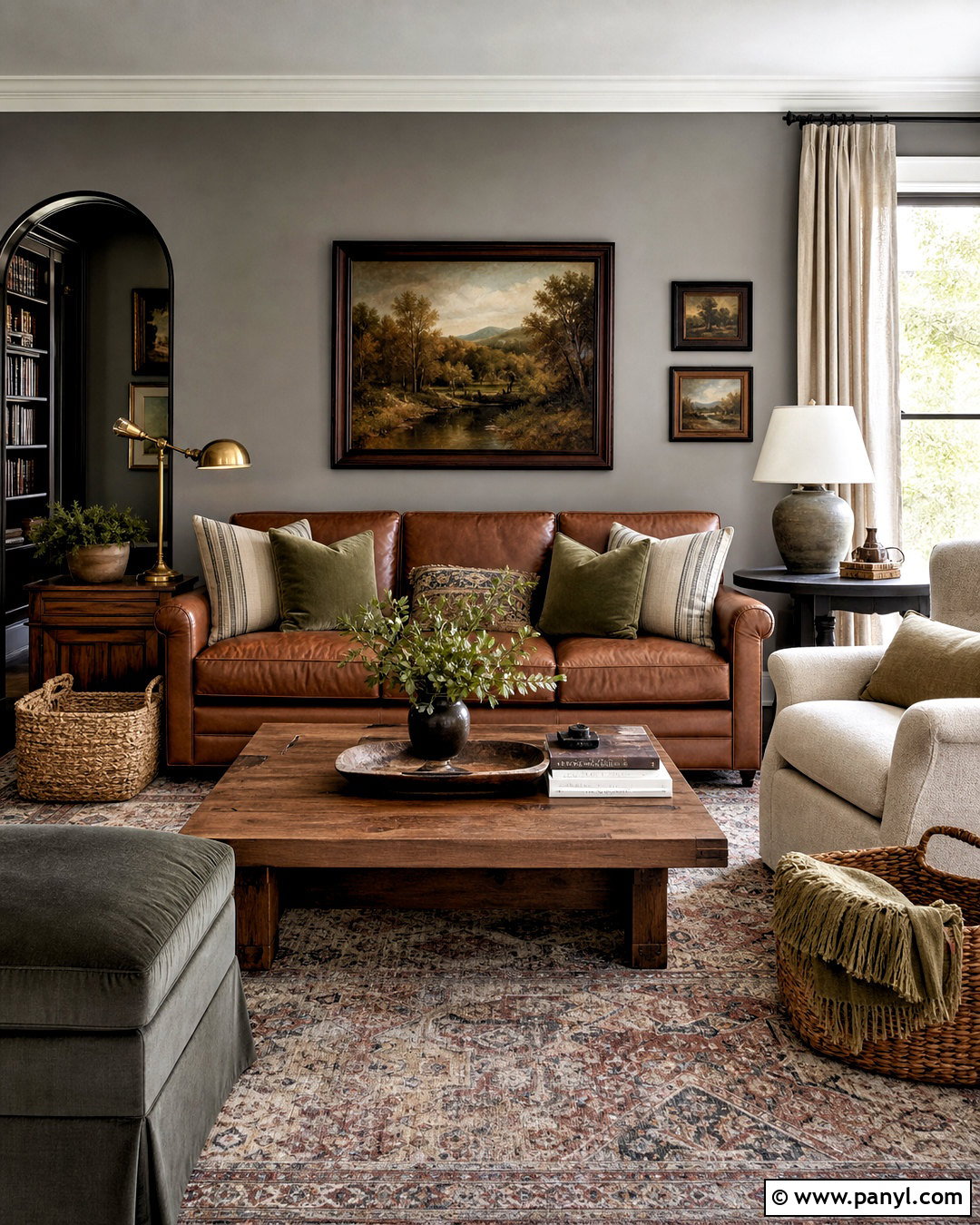
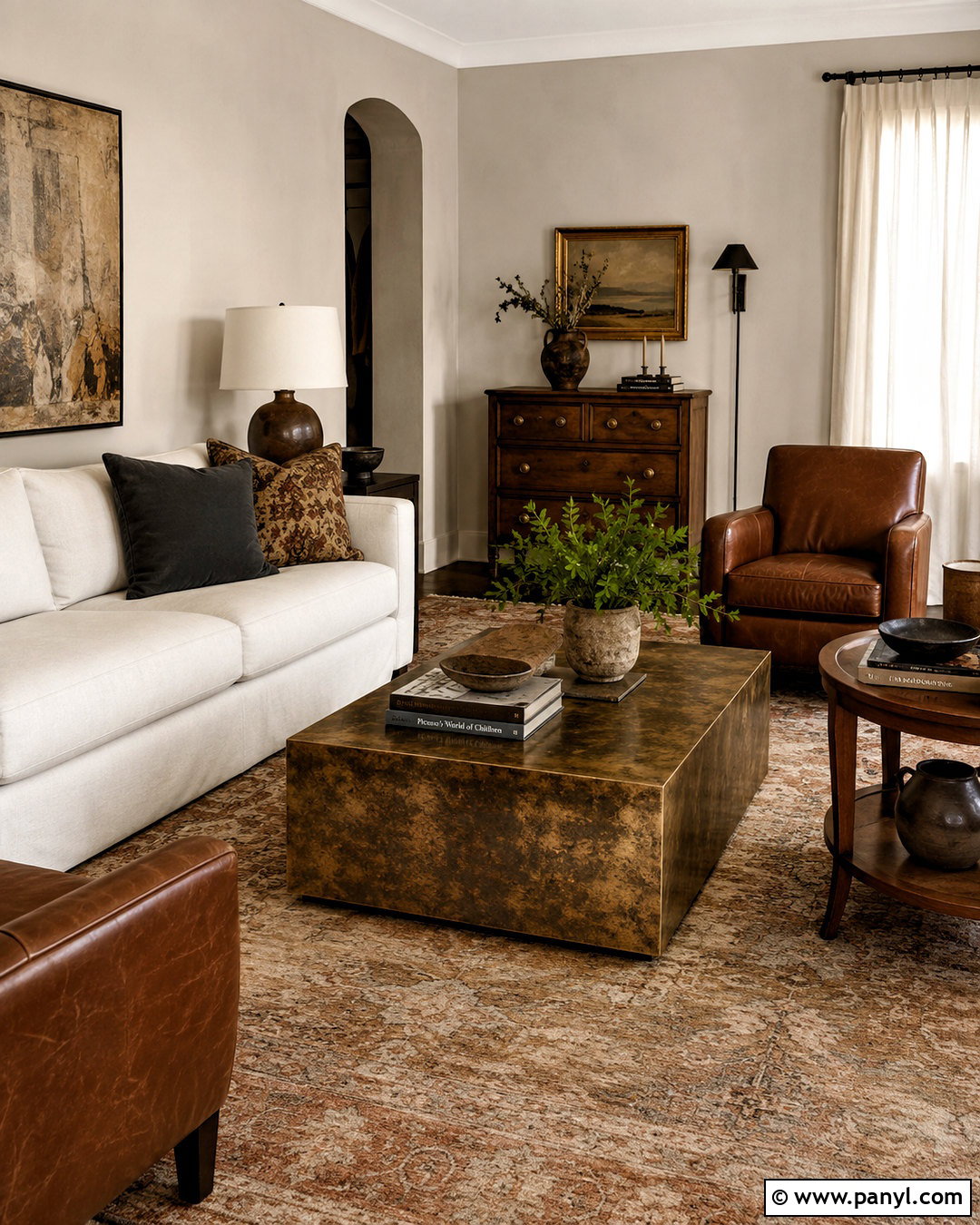
Leather suits Tuscan design when it is balanced with breathable fabrics and lighter finishes. Choose one cognac or chestnut leather sofa as the anchor instead of filling the room with matching dark pieces. Add two cream linen chairs, a large faded beige rug, and a weathered oak coffee table to soften the leather’s visual weight. Warm white plaster walls and medium oak flooring create a bright background. Bring in color through muted olive pillows, a rust throw, and traditional artwork with restrained red and gold tones. An iron-and-wood chandelier can center the arrangement, while ceramic lamps provide comfortable task lighting. Leave open space around the furniture and avoid oversized sets. The combination of leather, linen, wood, and stone produces a Tuscan room that feels substantial but approachable.
10. Tuscan Living Room With Blue Accents
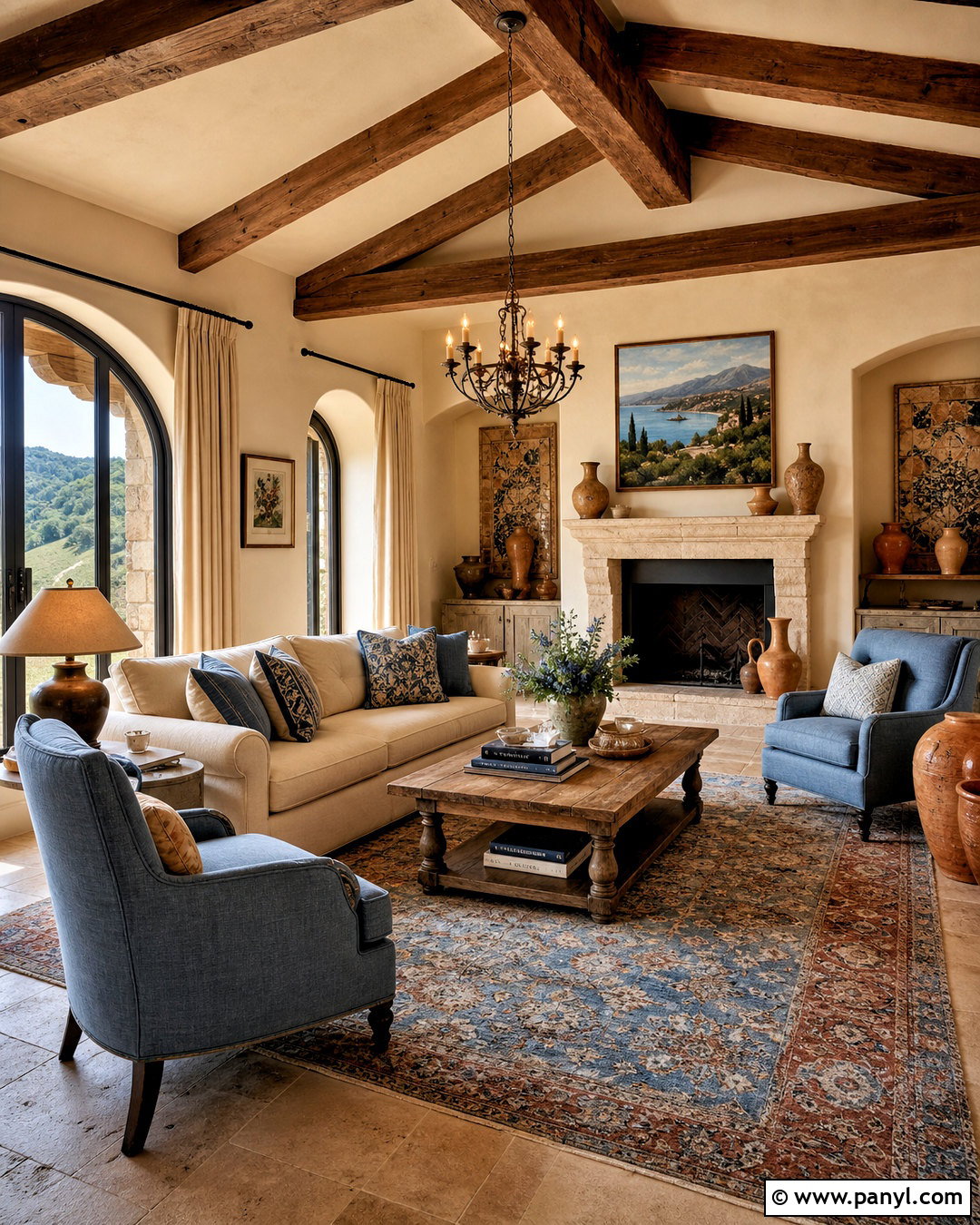
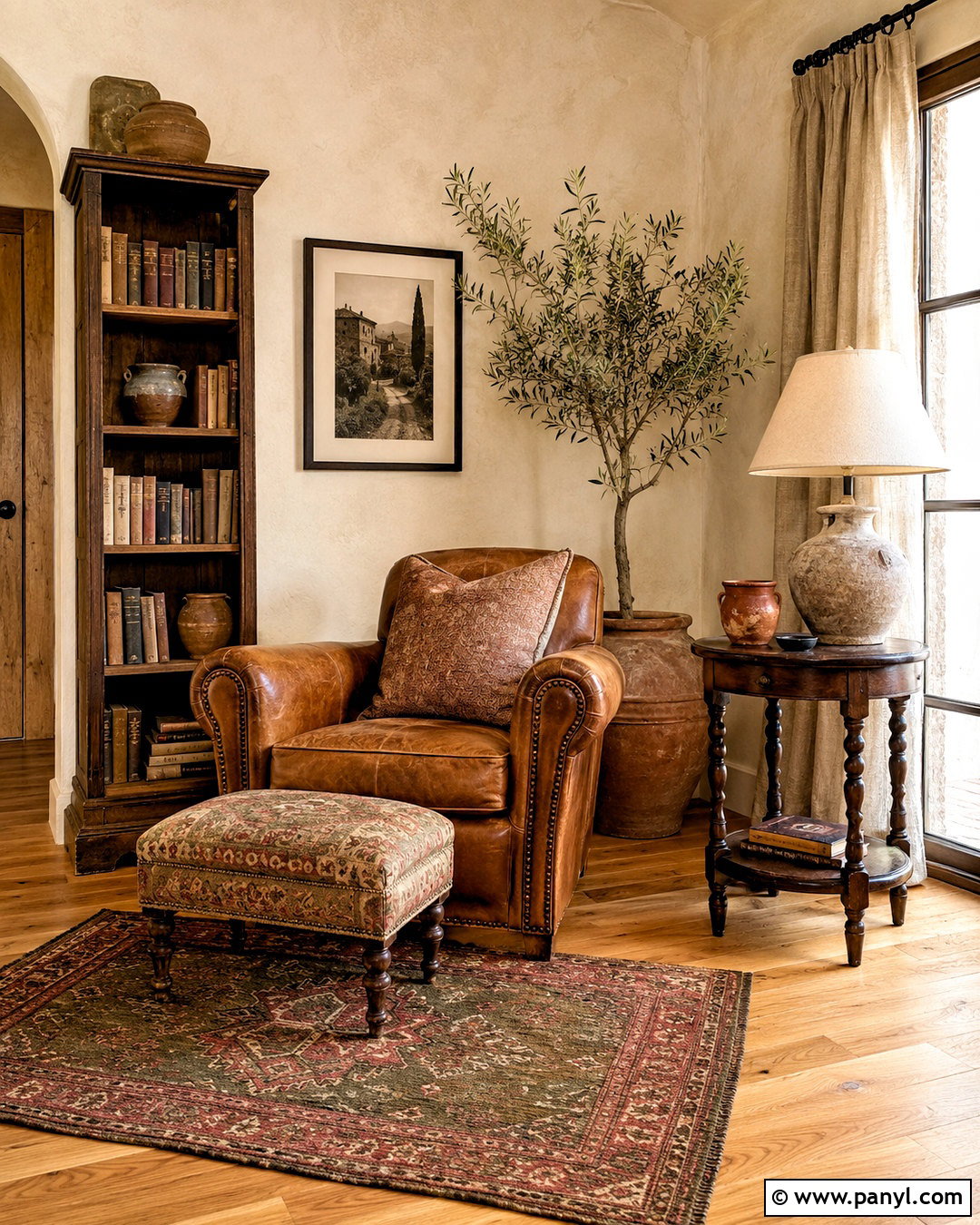
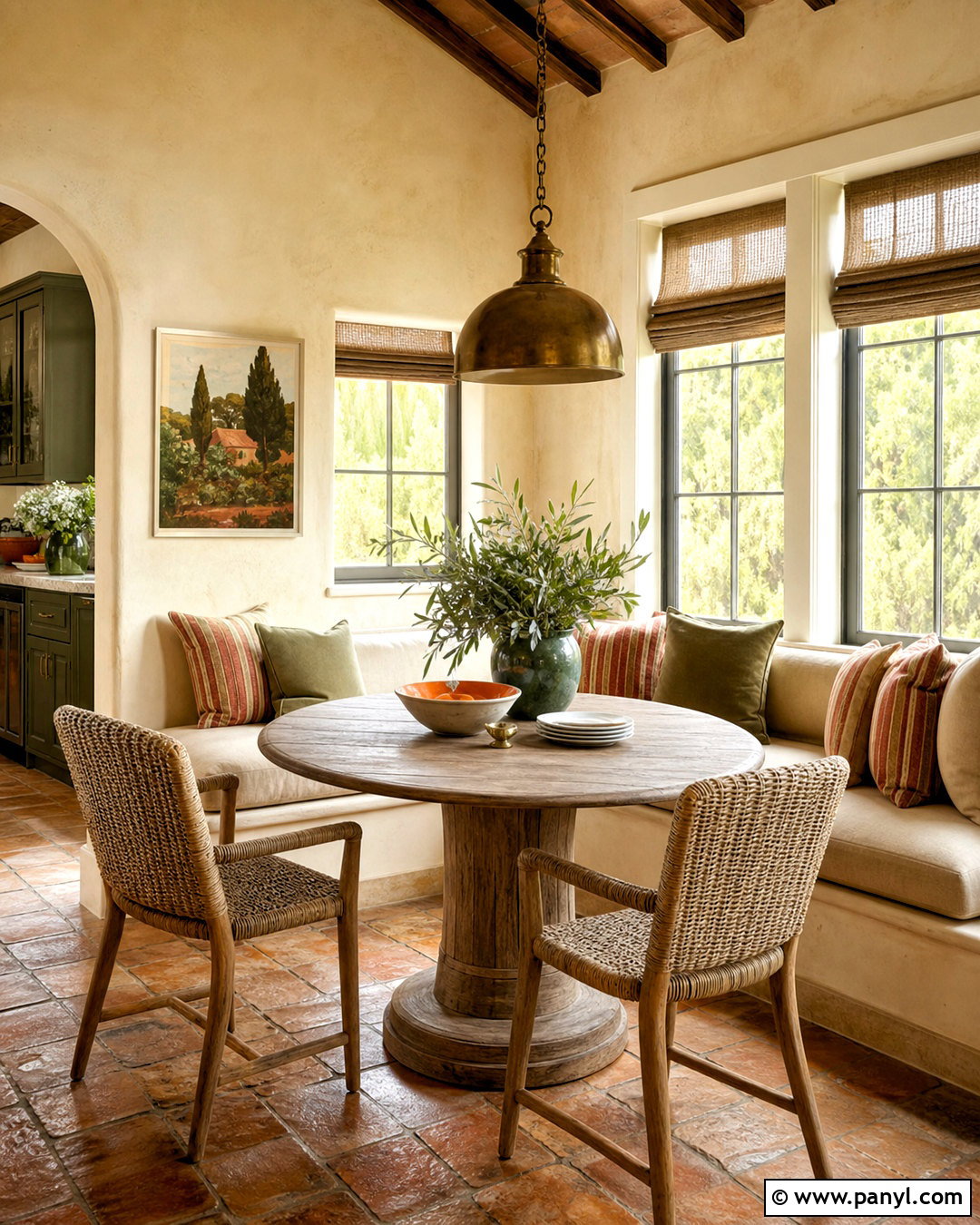
Dusty blue offers a refreshing alternative to heavily red or brown Tuscan palettes. Begin with creamy beige walls, warm oak flooring, and an ivory upholstered sofa. Add two muted denim-blue chairs with classic rounded shapes, then place a faded blue, rust, and tan rug beneath the full seating group. A stone fireplace and weathered wood coffee table maintain the room’s rustic foundation. Use blue again in ceramic vessels, patterned pillows, and one landscape painting, but vary the shades slightly for a collected appearance. Bronze lighting and small terracotta accents restore warmth. Hang natural linen curtains high and wide around the windows. This complete scheme feels influenced by both the Tuscan countryside and the broader Mediterranean region while remaining light enough for a contemporary American home.
11. Tuscan Living Room With Arched Details
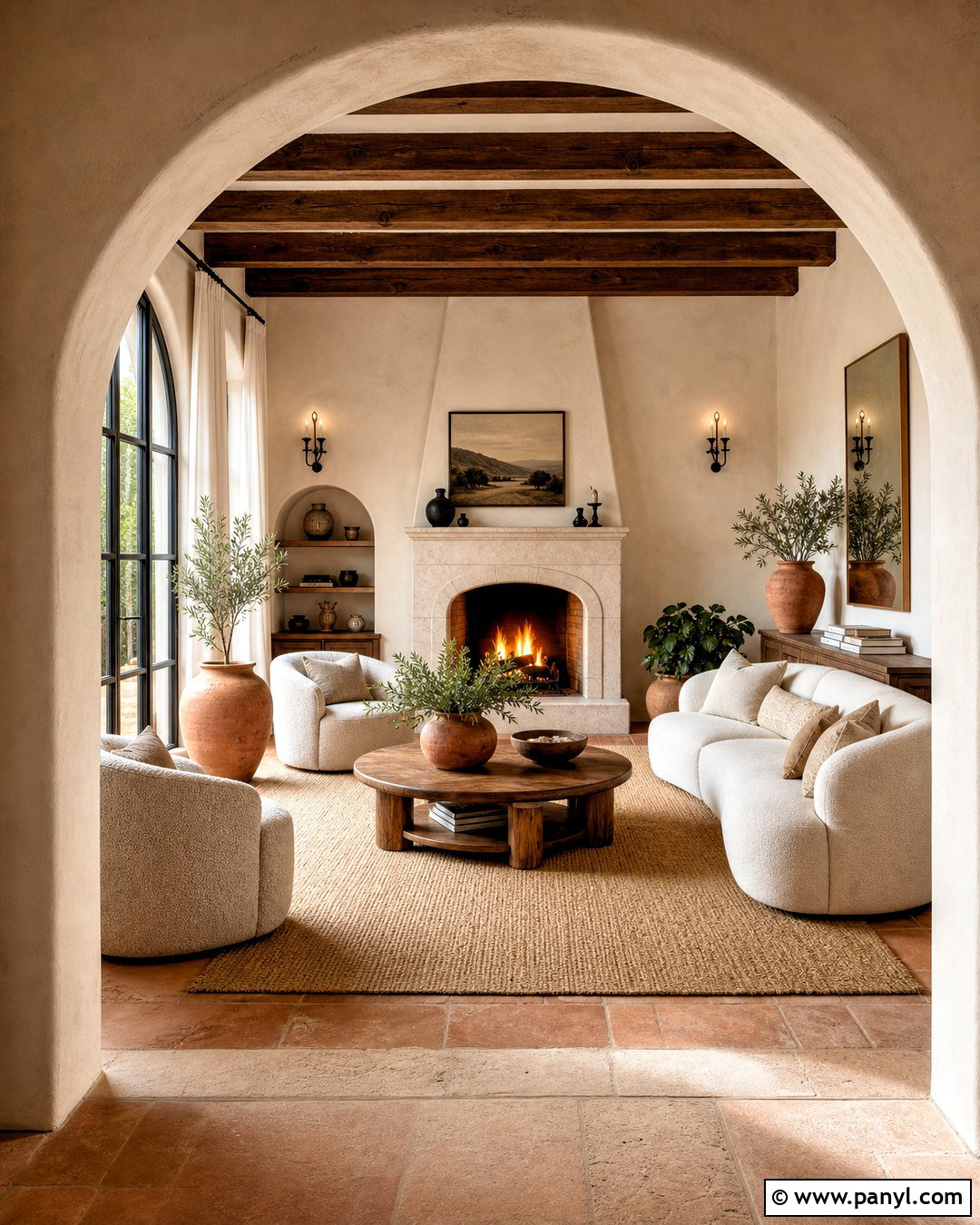
Graceful arches can shape the entire room even when they appear in only one or two places. Emphasize an existing arched doorway, window, or fireplace by surrounding it with warm ivory walls and simple stone trim. Echo the curve through a rounded wood coffee table, softly curved sofa, and barrel-back accent chairs. Keep the furniture centered on a large sand-colored rug to create an orderly conversation zone. Use aged bronze sconces, tall linen curtains, and restrained terracotta pottery to reinforce the Mediterranean character. Avoid repeating arches in every accessory, which can make the concept feel forced. Instead, combine the curves with straight-lined wood tables and a clean console. The contrast gives the Tuscan living room an architectural identity while keeping the overall arrangement balanced and livable.
12. Small Tuscan Living Room
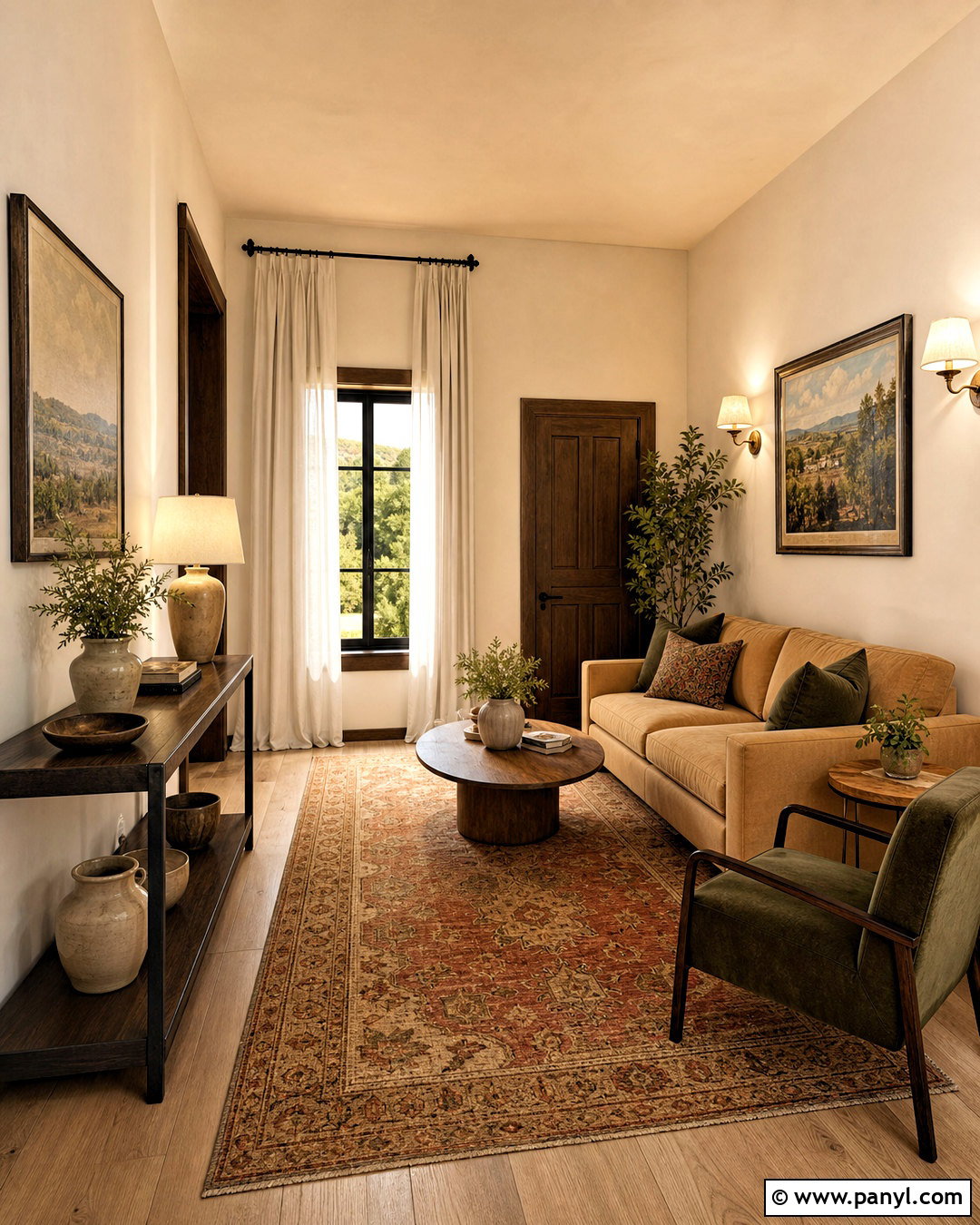
A small room can capture Tuscan warmth without bulky furniture or dark finishes. Choose warm cream walls and light oak flooring to establish an open background. Place a compact tan sofa against the longest wall, then add one olive accent chair that can be turned toward either the sofa or television. A round wood coffee table improves circulation and avoids sharp corners in narrow walkways. Use a softly patterned terracotta-and-beige rug to define the seating area. Wall-mounted bronze sconces save table space, while full-length linen curtains make the windows appear taller. Complete the room with one large landscape print, a narrow console, and two or three ceramic accessories. Every item contributes color, texture, or function, preventing the limited space from becoming crowded with unnecessary Tuscan-themed decorations.
13. Large Tuscan Great Room
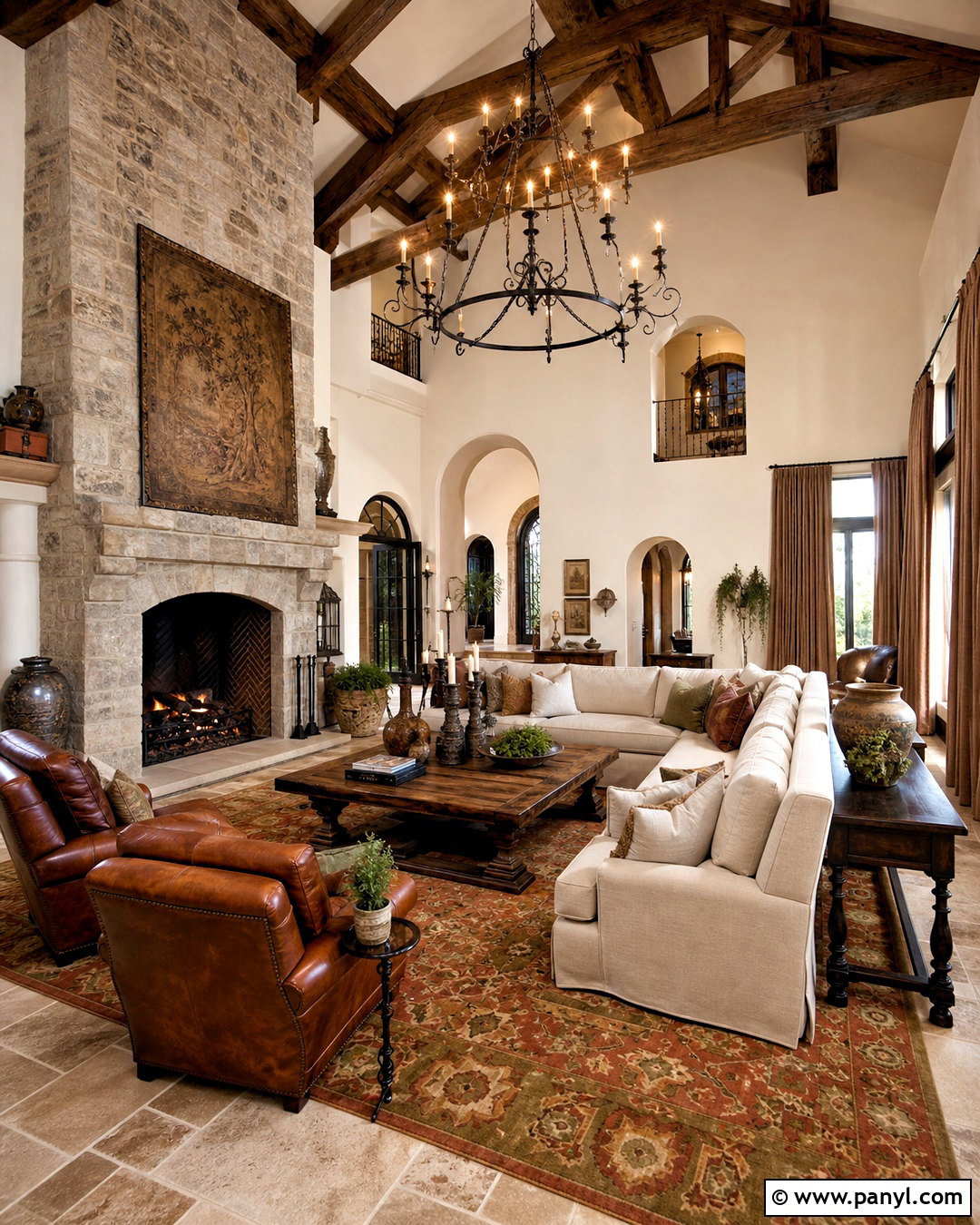
In a large great room, use furniture placement to create intimacy rather than pushing every piece against the walls. Center a substantial cream sectional and two leather chairs around a large reclaimed-wood coffee table. Place the complete arrangement on an oversized rust, olive, and tan rug so the seating reads as one unified zone. A floor-to-ceiling stone fireplace can serve as the main focal point, supported by exposed ceiling beams and a large iron chandelier. Add a console behind the sectional to visually separate the living area from nearby dining or kitchen spaces. Tall linen curtains soften expansive windows, while large pottery and landscape artwork suit the room’s scale. Repeat materials and colors across the open plan to create flow without making every connected area look identical.
14. Formal Tuscan Living Room
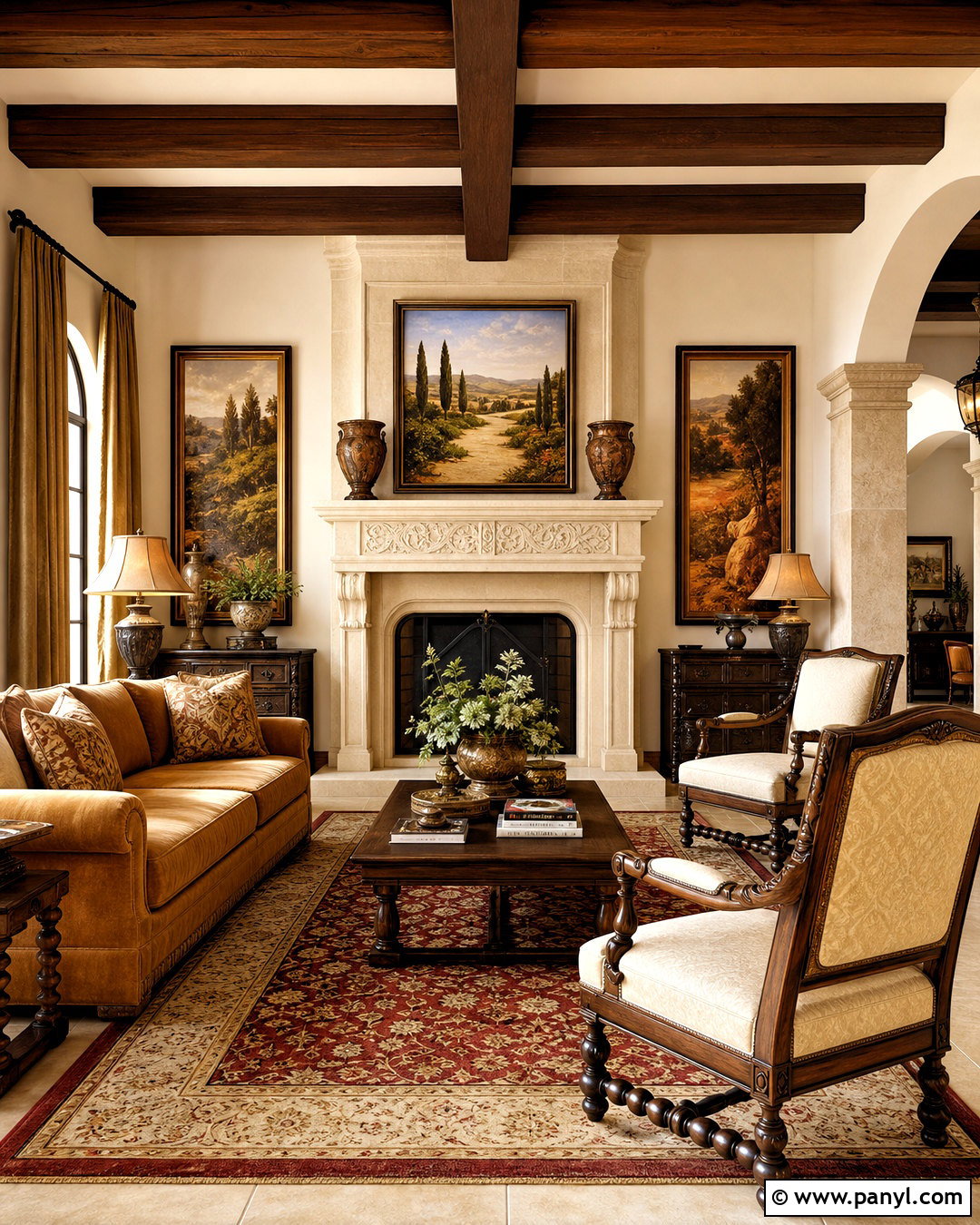
For a more refined room, combine traditional symmetry with carefully edited rustic materials. Position a tailored camel velvet sofa opposite two carved wood chairs upholstered in cream fabric. Center the seating on a muted red, gold, and beige rug, with a dark walnut coffee table between them. A carved limestone fireplace provides an elegant focal point without requiring excessive ornament. Place matching bronze lamps on substantial side tables, then hang a classical landscape painting above the mantel. Silk-linen drapery in soft gold can frame the windows while still allowing filtered daylight. Keep decorative objects symmetrical but limited, using aged books, ceramic urns, and small greenery arrangements. The finished Tuscan living room feels polished enough for entertaining while warm colors and comfortable seating keep it from becoming stiff.
15. Casual Tuscan Family Living Room
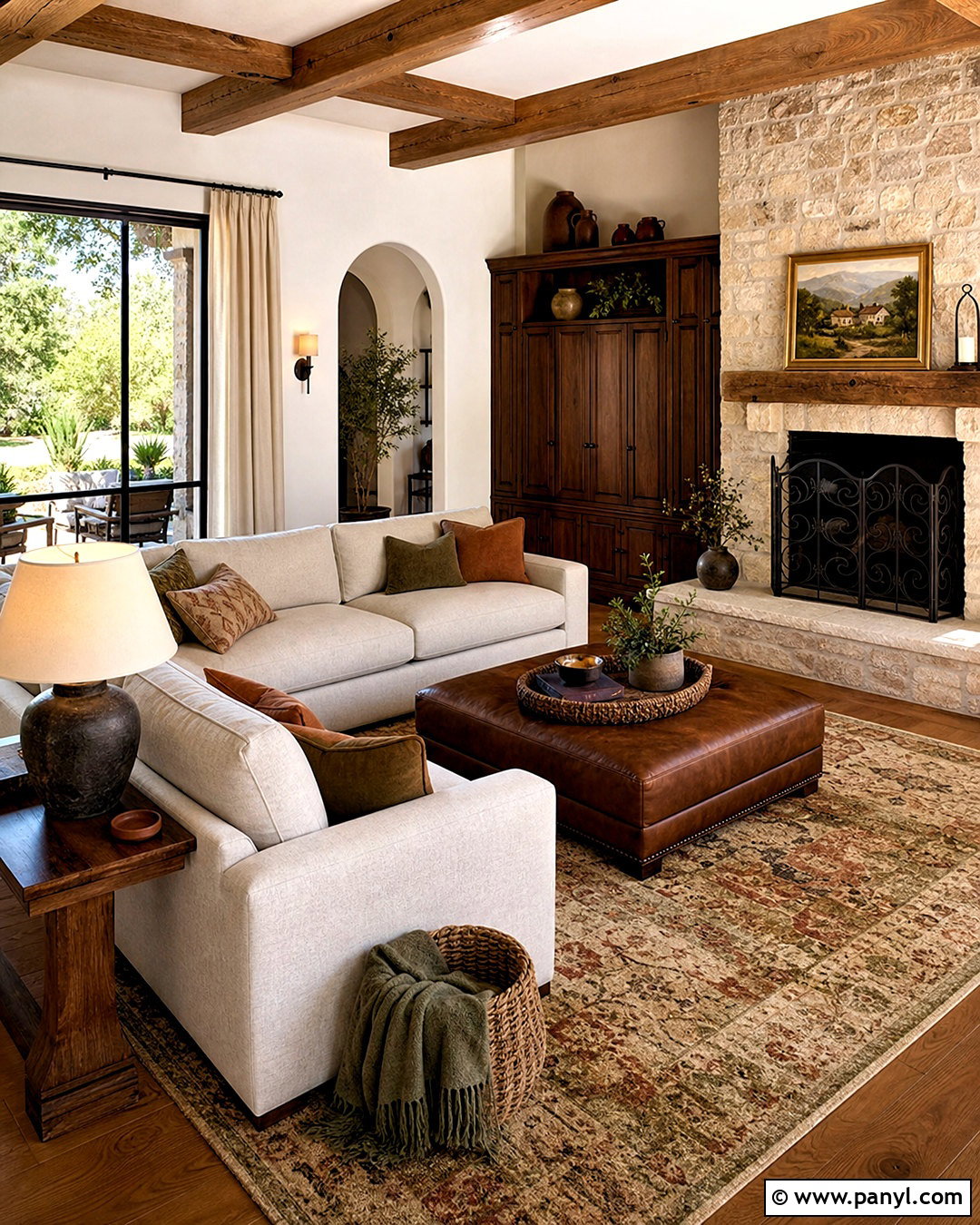
Family-friendly Tuscan design should prioritize durable surfaces and flexible seating. Start with a generously sized performance-fabric sectional in warm oatmeal. Add a cognac leather ottoman that can function as a coffee table, extra seat, or comfortable footrest. Place everything on a low-pile patterned rug combining tan, rust, and olive, which can disguise everyday wear. Use medium oak flooring, creamy walls, and a simple stone fireplace to create a welcoming foundation. Closed wood cabinets beside the fireplace provide storage for electronics, toys, and games. Choose washable pillow covers, sturdy ceramic lamps, and lined linen-look curtains. A large basket can hold extra throws without adding clutter. This complete room maintains Tuscan warmth while supporting movie nights, informal gatherings, children, pets, and regular daily activity.
16. Open Concept Tuscan Living Room
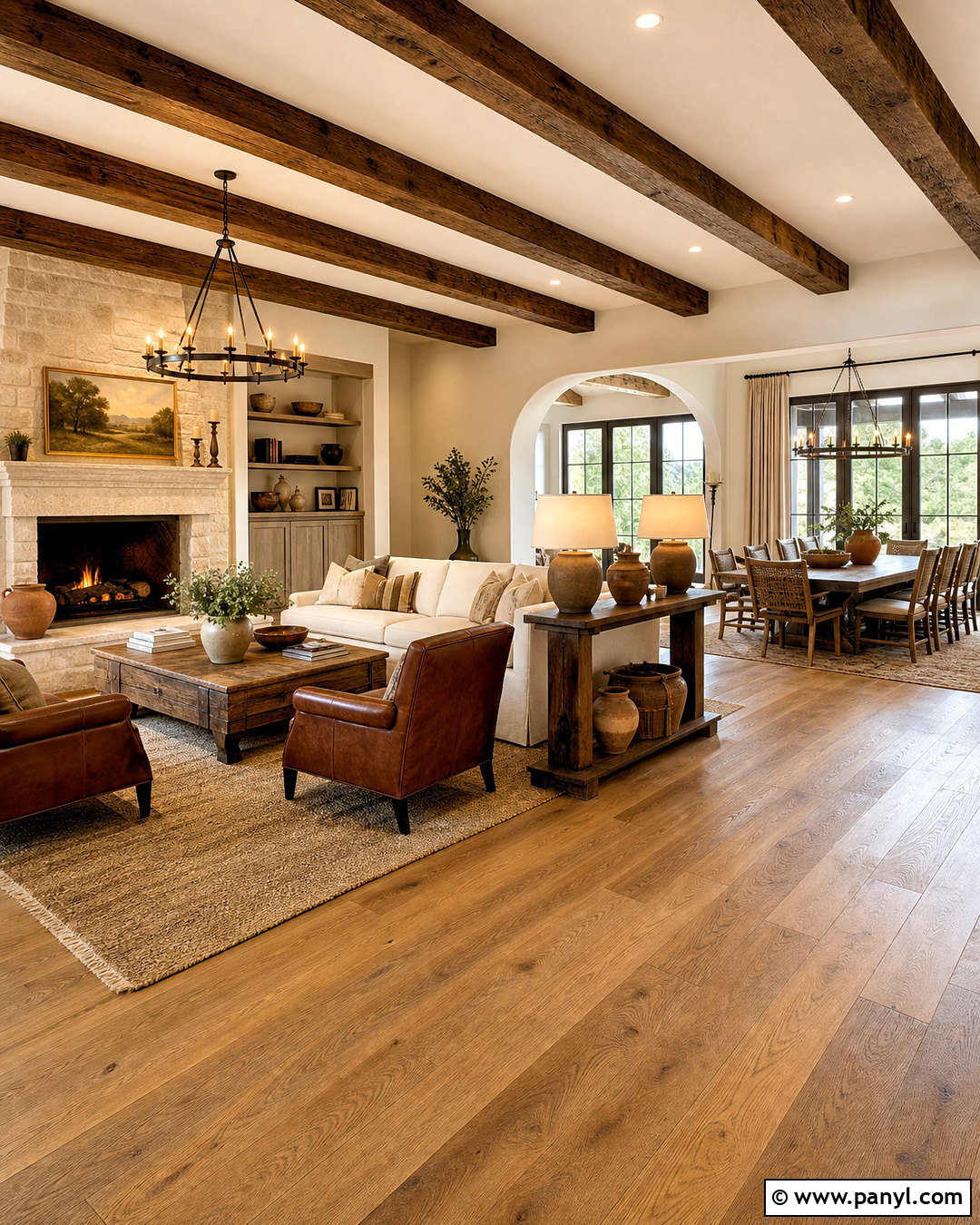
An open floor plan needs consistent finishes and clearly defined zones. Anchor the living room with a large neutral rug and arrange a cream sofa, two saddle-brown chairs, and a reclaimed-wood coffee table around it. Face the seating toward a limestone fireplace or simple media wall so the area has an obvious focal point. Repeat the living room’s warm oak, aged bronze, and terracotta tones in the adjoining kitchen or dining space. However, avoid using identical furniture across every zone. A console behind the sofa creates a subtle boundary without blocking sightlines. Hang one iron chandelier above the living area and a related, simpler fixture over the dining table. Warm white walls and continuous flooring allow the entire open space to feel cohesive, bright, and comfortably Tuscan.
17. Dark Wood Tuscan Living Room
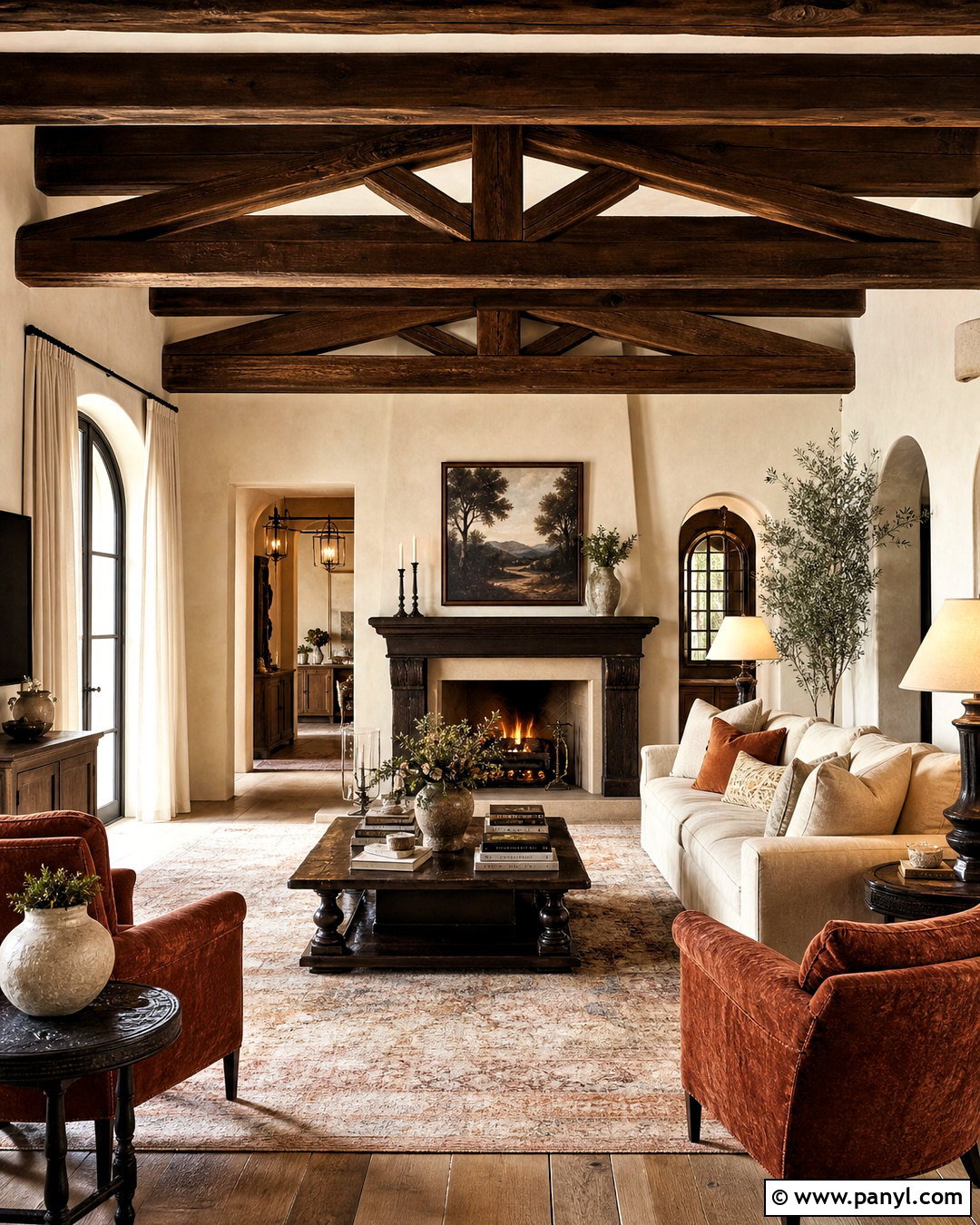
Dark wood can create richness when it is surrounded by enough light and softness. Use walnut or espresso wood for selected features, such as ceiling beams, a fireplace mantel, and one substantial coffee table. Balance those pieces with pale cream walls, a light beige sofa, and ivory linen curtains. Two rust or olive chairs bring color into the seating group, while a large faded rug visually separates the dark furniture from medium-toned flooring. Choose lamps with cream shades and bronze bases to distribute warm, even light throughout the room. Avoid matching dark bookcases, tables, and seating frames in every corner. Instead, leave some surfaces light or stone-colored. The completed room retains the dramatic depth of traditional Tuscan interiors without becoming gloomy, crowded, or visually dated.
18. Tuscan Apartment Living Room
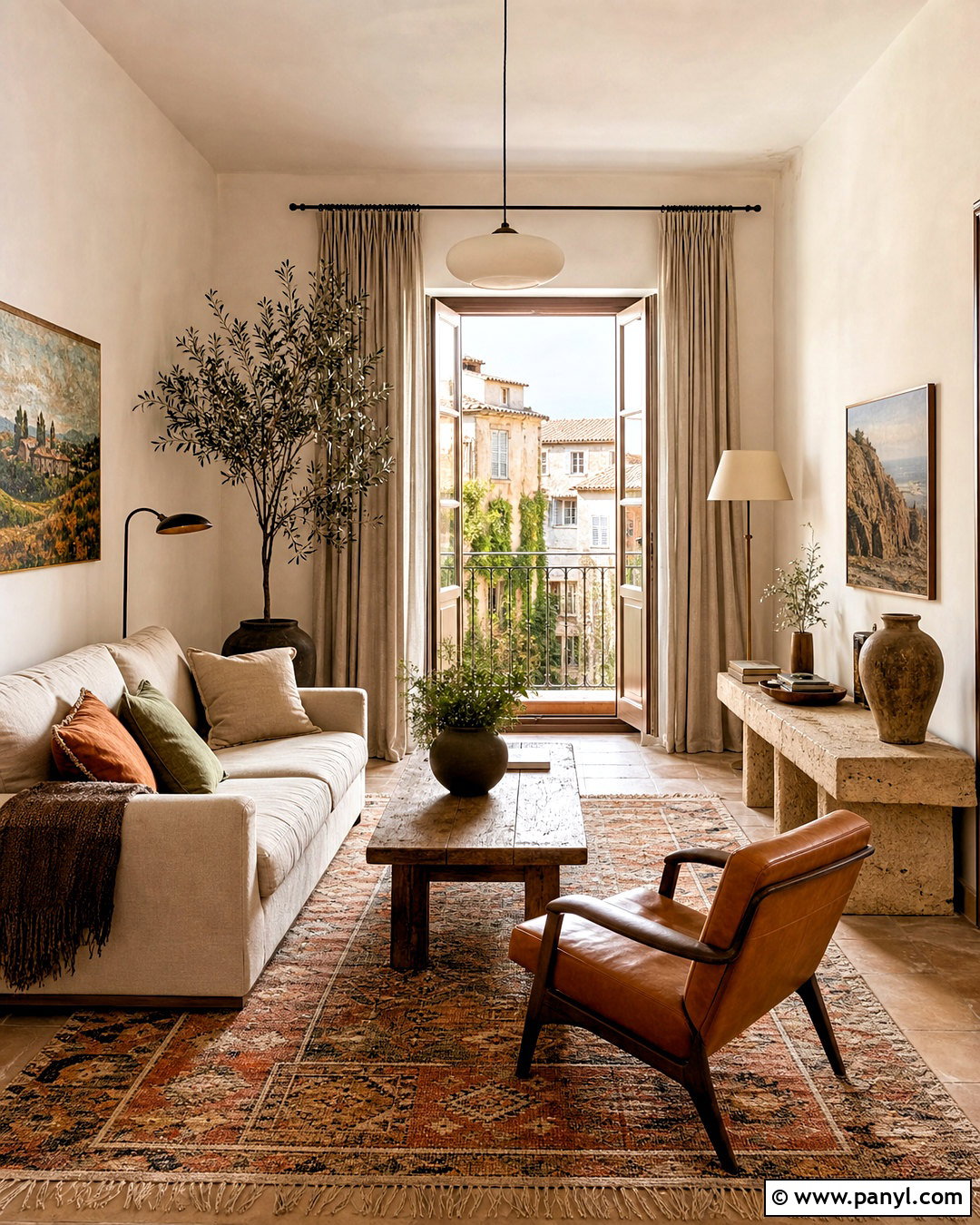
Renters can create a Tuscan atmosphere through furnishings, textiles, and removable details. Keep the existing walls light, then introduce a compact oatmeal sofa, a vintage-look wood coffee table, and one camel leather chair. Use a large terracotta, olive, and cream rug to establish the palette and conceal less appealing flooring. Hang full-length linen curtains on removable hardware where possible, and add warm light through bronze floor and table lamps. A tall faux olive tree supplies greenery without requiring permanent changes. Instead of installing stone, place a slim limestone-look console against the focal wall and display pottery, books, and framed Mediterranean landscapes above it. The arrangement feels complete and intentional, yet every important element can move easily to a future home without sacrificing a security deposit.
19. Budget Tuscan Living Room
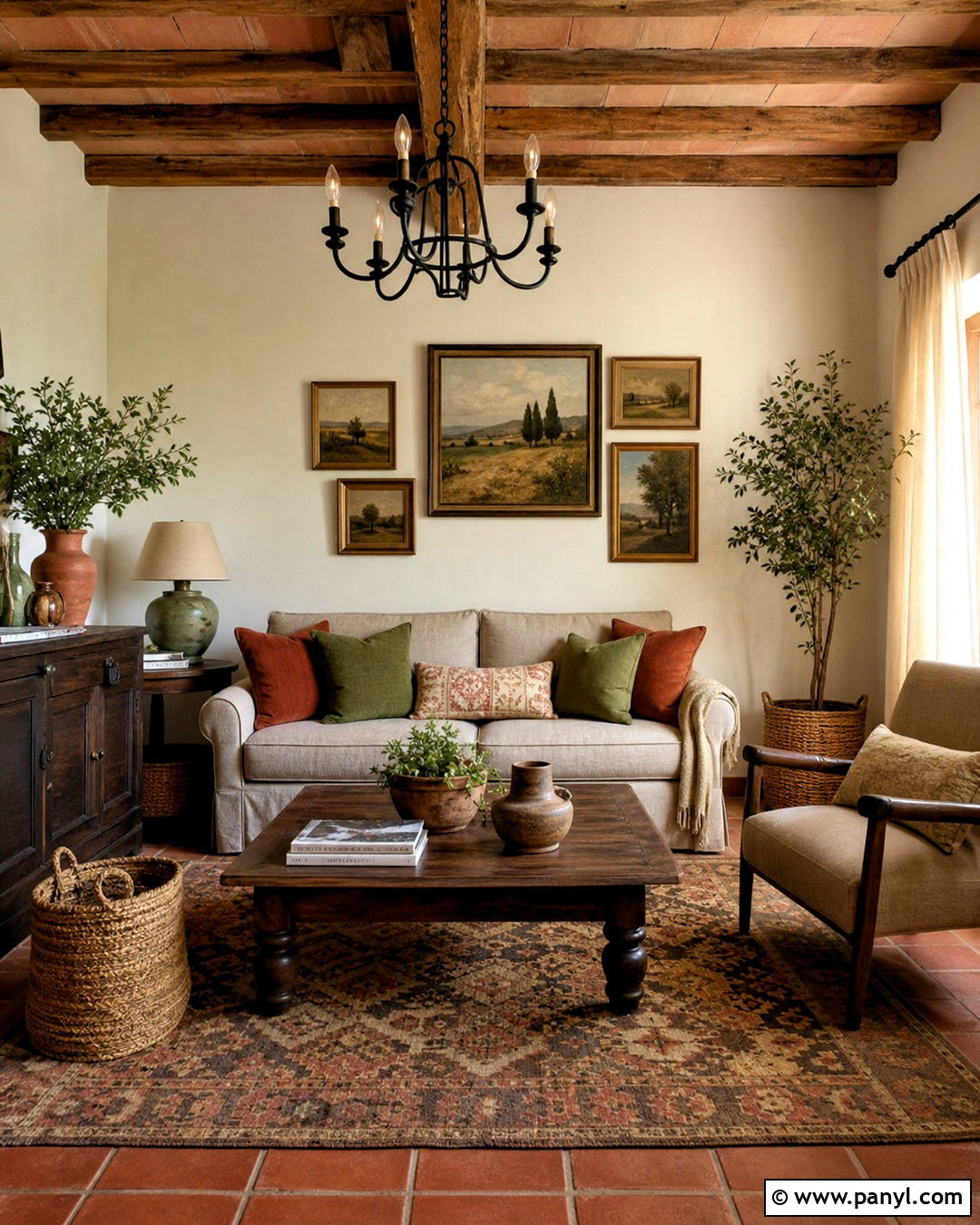
A convincing Tuscan room does not require expensive architectural renovation. Begin with warm ivory paint, which can immediately soften a cool or overly stark space. Keep a comfortable existing sofa and update it with rust, olive, and cream pillow covers. Search secondhand sources for a solid wood coffee table, then embrace minor wear or refinish it in a medium walnut tone. Use an affordable patterned rug to connect the furniture and define the seating area. Large thrifted pottery, woven baskets, and landscape art in aged frames provide character at a manageable cost. Replace one prominent light fixture with a simple blackened-bronze chandelier if the budget allows. By repeating a limited palette and choosing fewer, larger accessories, the finished living room looks coordinated rather than pieced together.
20. Transitional Tuscan Living Room
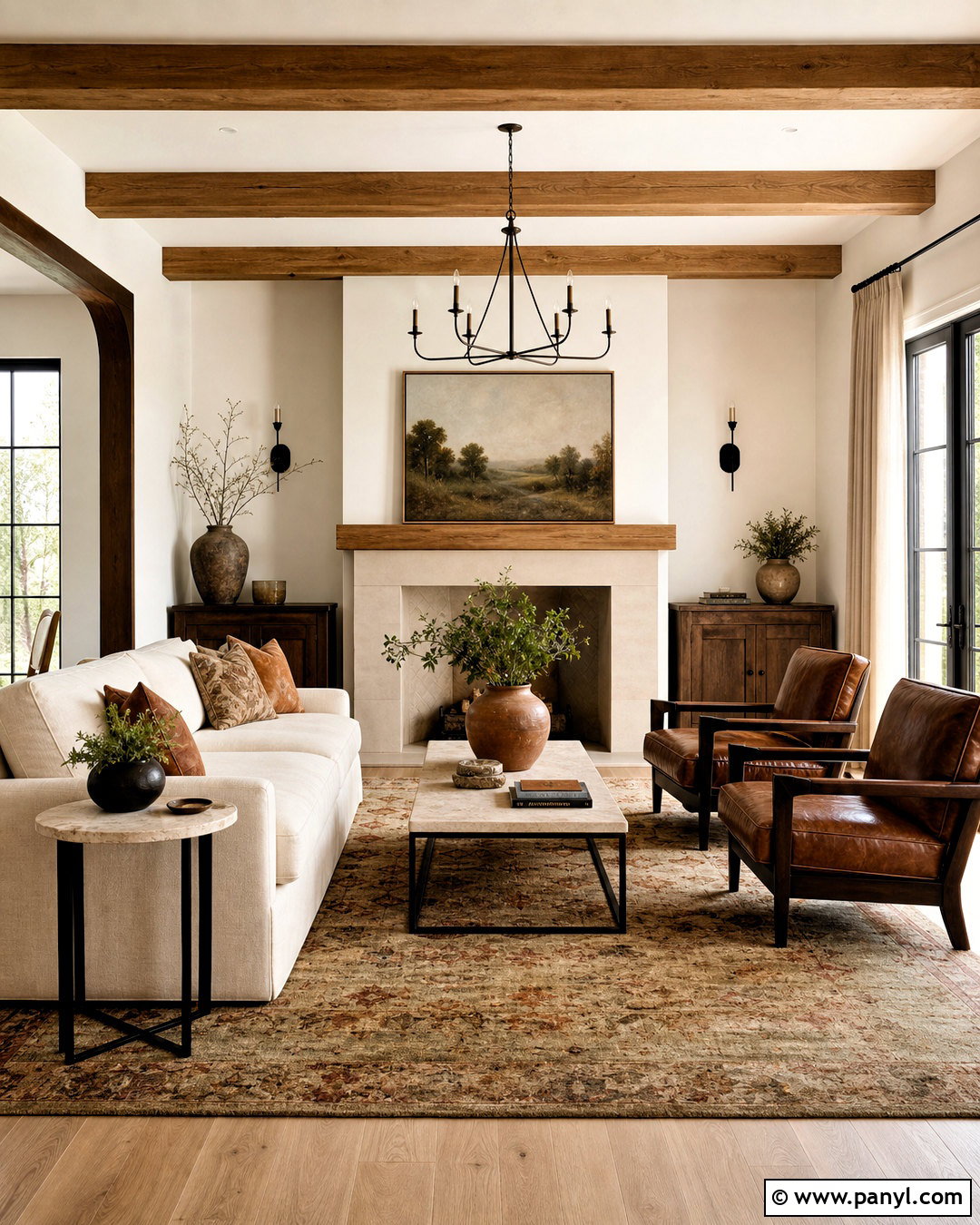
Transitional Tuscan design combines old-world materials with furniture that has simpler, more familiar shapes. Start with warm white walls, natural oak flooring, and a streamlined beige sofa. Pair it with two classic leather chairs, a stone-topped coffee table, and a softly patterned rug containing taupe, muted rust, and olive. Create a focal point with a smooth limestone fireplace and a thick but uncarved oak mantel. Choose an understated bronze chandelier instead of a heavily scrolled fixture. Modern landscape artwork, linen curtains, and large ceramic vessels complete the space. Keep architectural details warm and substantial, but limit distressed finishes and decorative ironwork. This balanced approach preserves the comfort, craftsmanship, and earthy palette of Tuscan decorating while making the entire living room feel current, uncluttered, and easy to maintain.
Conclusion:
The best 20 Tuscan living room ideas create warmth through a coordinated combination of color, materials, furniture, lighting, and layout. You can embrace traditional stone, leather, dark wood, and terracotta, or choose a lighter interpretation with cream upholstery, pale oak, and simpler shapes. In either direction, thoughtful restraint makes the room feel authentic instead of themed. Establish one clear focal point, arrange comfortable seating around it, and repeat a small palette across rugs, textiles, artwork, and accessories. Natural variation is part of the appeal, so wood, stone, pottery, and aged metal do not need to match perfectly. A complete Tuscan room should ultimately feel relaxed, welcoming, personal, and designed for everyday living.

Related Ideas and Inspiration:
Leave a Reply