
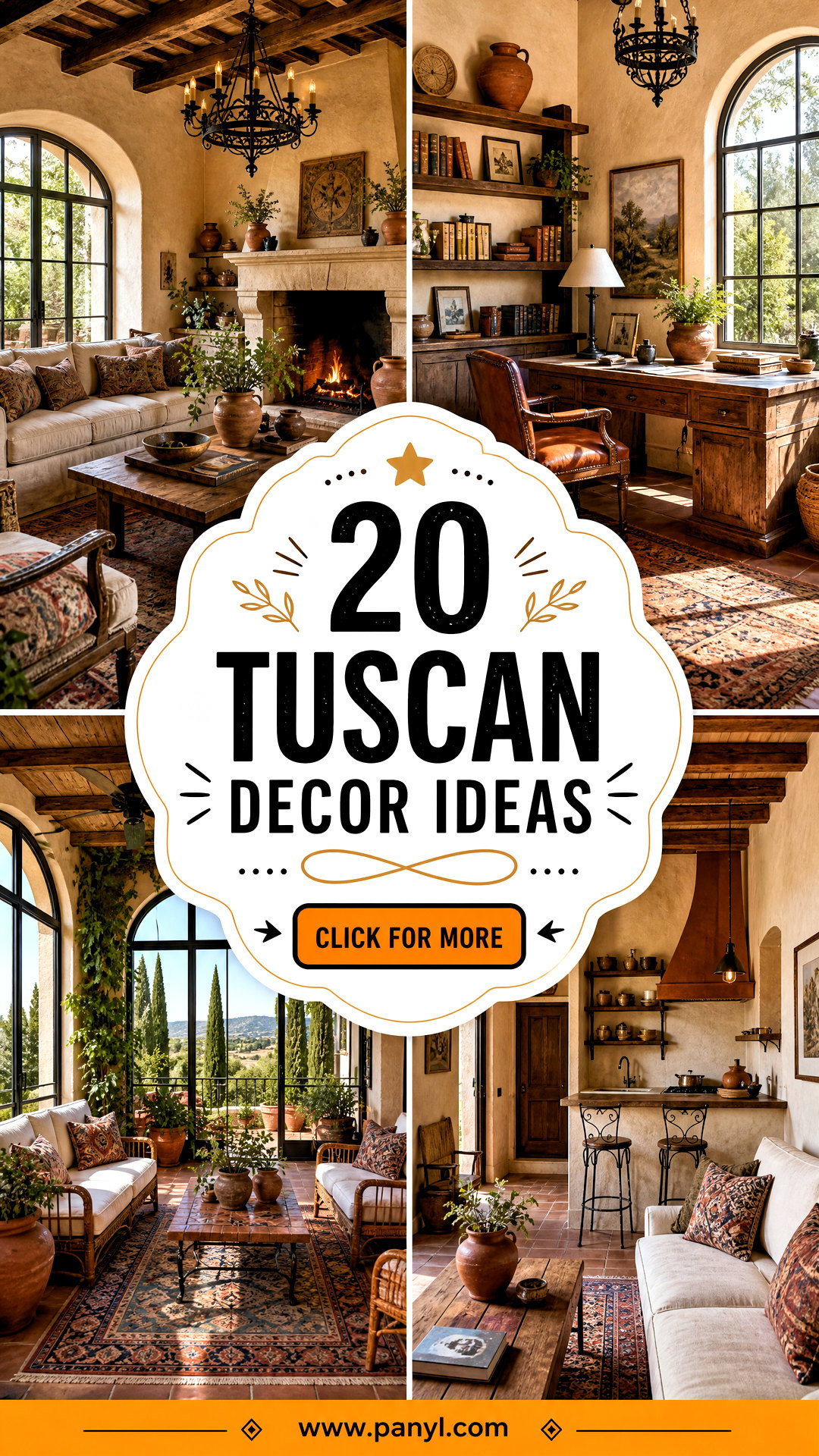
These **20 Tuscan decor ideas** bring the warmth of the Italian countryside into everyday homes without making rooms feel dark, crowded, or dated. Traditional Tuscan interiors rely on earthy colors, aged wood, textured plaster, terracotta, natural stone, and handcrafted ironwork. Today’s most appealing version keeps those recognizable materials while using lighter walls, cleaner furniture lines, and fewer decorative accessories. The result feels rustic, welcoming, and timeless rather than overly themed. Whether you are refreshing one room or creating a consistent look throughout your home, focus on honest materials, comfortable layouts, and sun-washed colors. ()
Use these complete room schemes to recreate **20 Tuscan decor ideas** with character, balance, and practical modern comfort.
1. Modern Tuscan Living Room
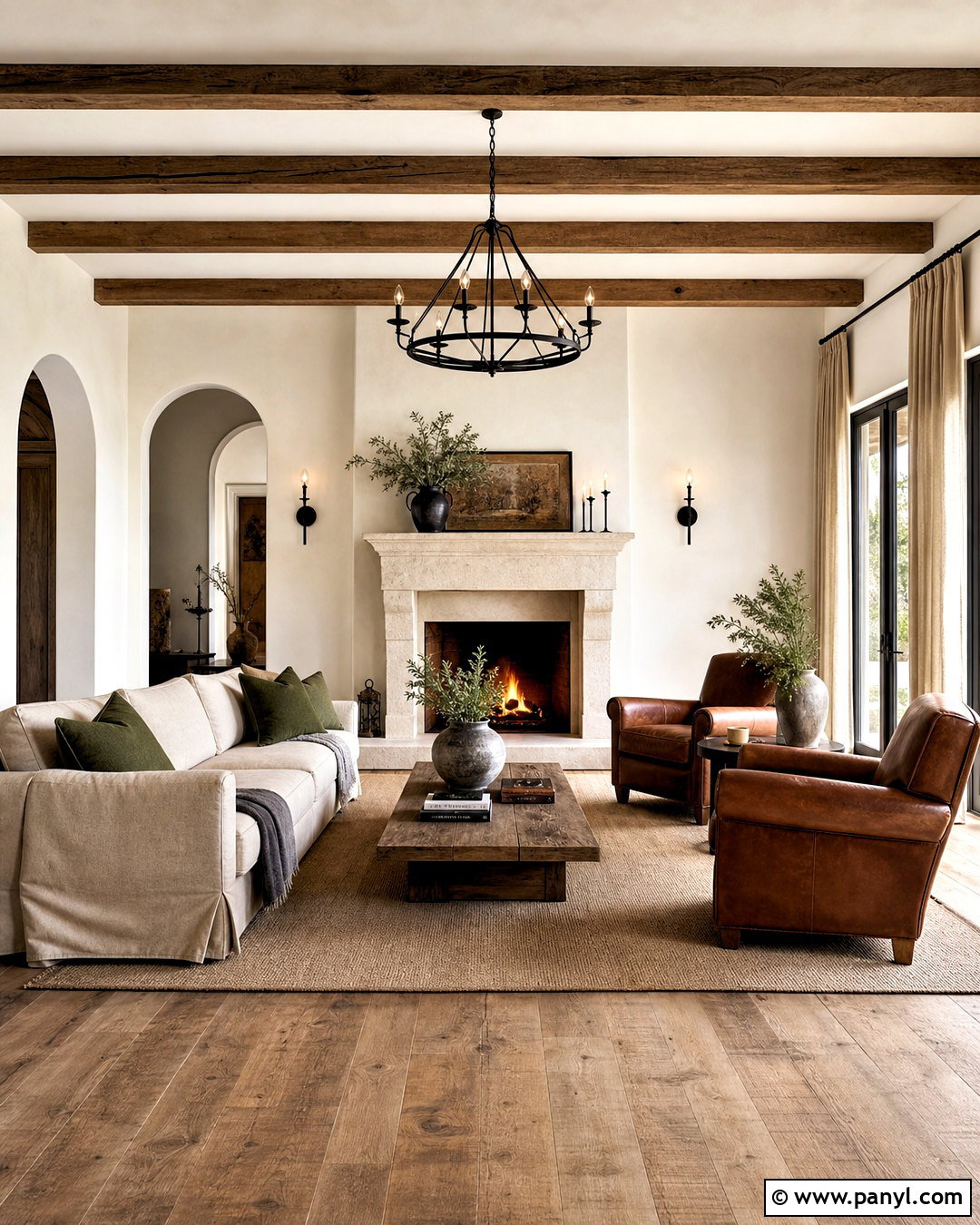
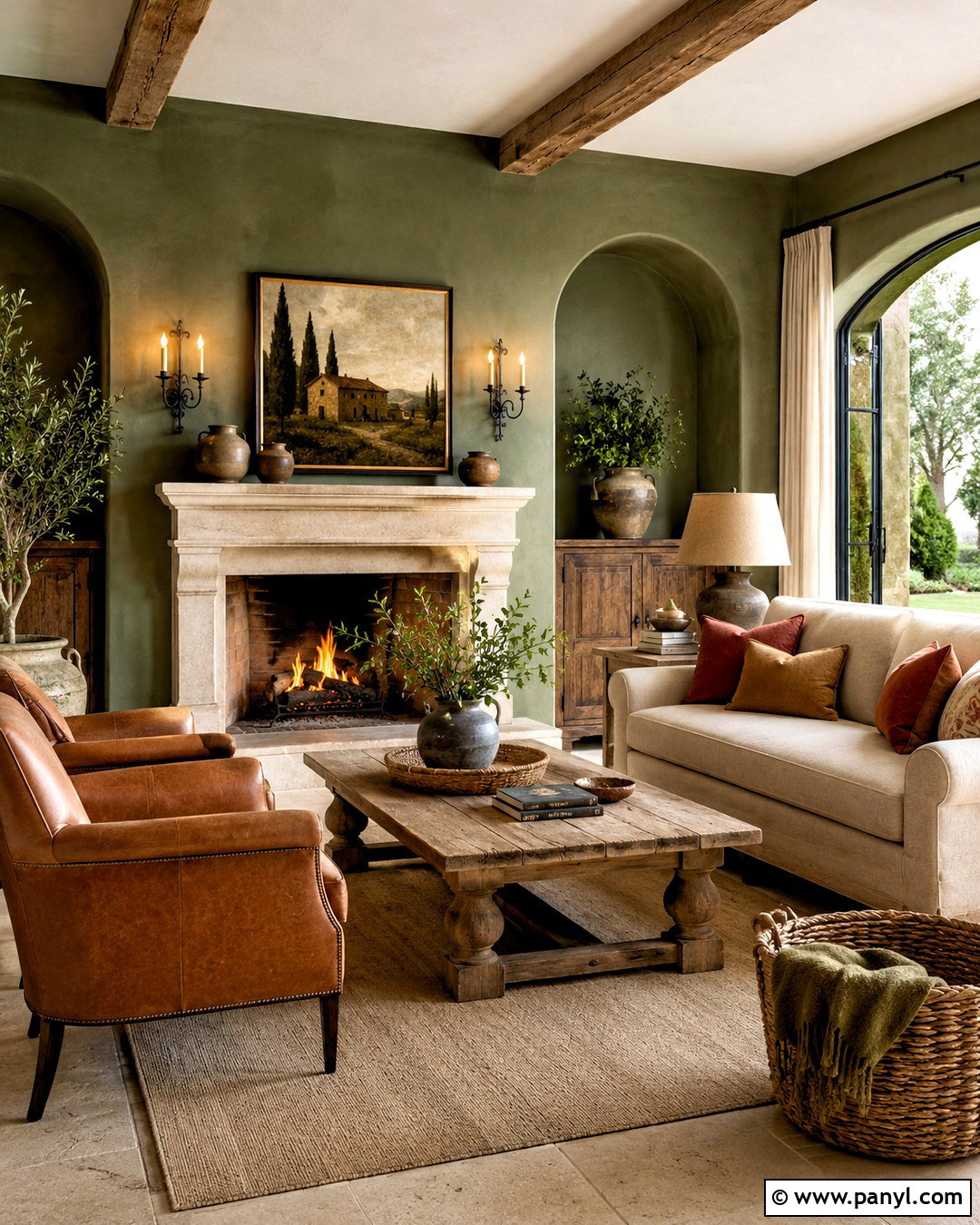
A modern Tuscan living room should feel warm and grounded without relying on heavy furniture or excessive ornament. Begin with creamy plaster-look walls and medium-toned oak flooring. Arrange a linen sofa and two cognac leather chairs around a low reclaimed-wood coffee table. A faded rust and beige rug will soften the floor while connecting the earthy colors. Make a simple limestone fireplace the room’s focal point, then add an oversized landscape painting instead of several small decorations. Black iron sconces provide classic Tuscan character with a cleaner profile. Finish the room with olive green pillows, light flax curtains, handmade pottery, and one mature indoor tree. Leaving open space around the furniture keeps the natural textures noticeable and the overall look fresh.
2. Rustic Tuscan Living Room
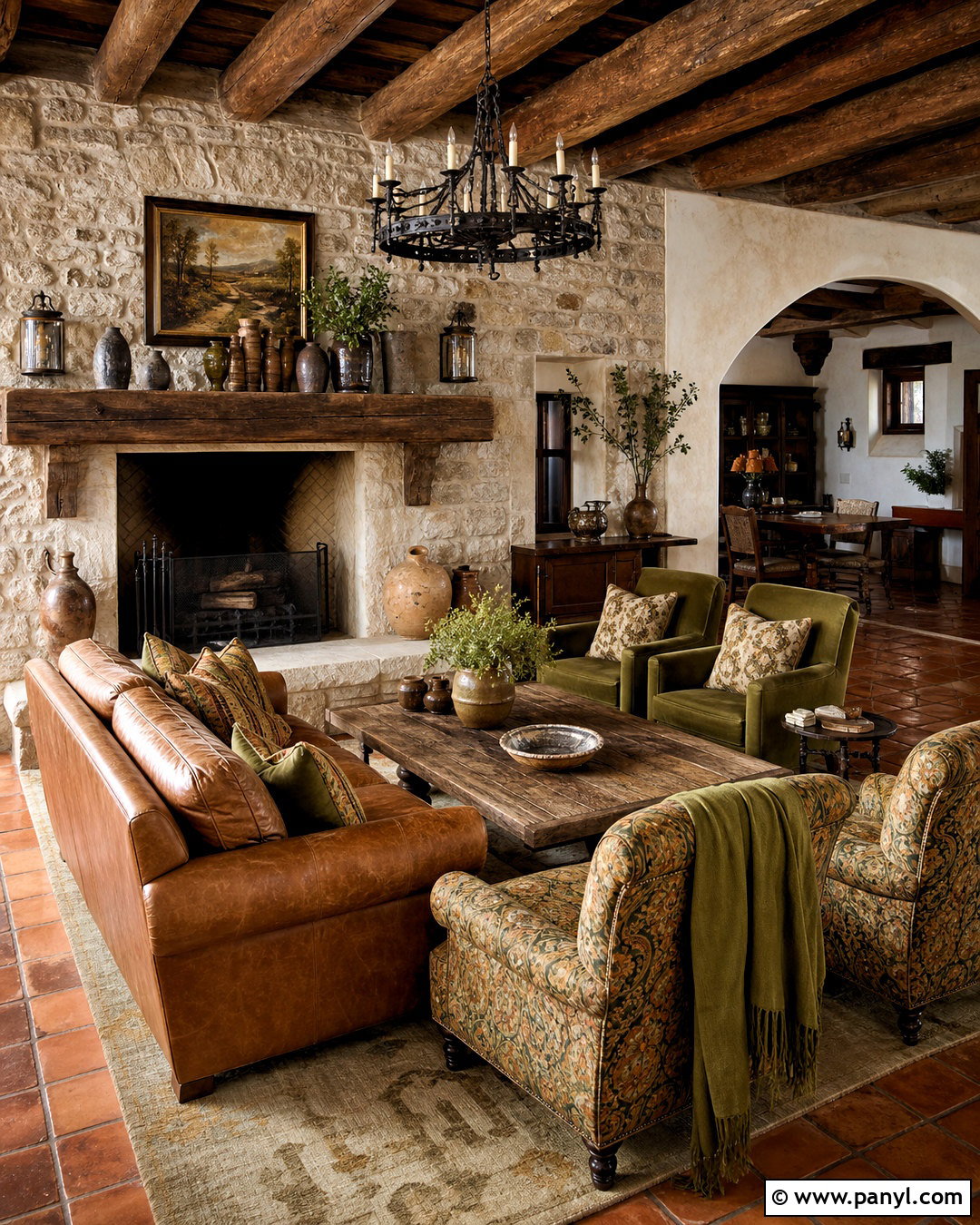
Rough stone, weathered wood, and deep earth tones create a more traditional Tuscan living room. Center the layout around a substantial fieldstone fireplace with a reclaimed timber mantel. Choose a comfortable camel leather sofa, patterned armchairs, and a chunky wood coffee table with an aged finish. Terracotta tile flooring establishes the rustic foundation, while a large woven rug makes the seating area feel softer. Use warm cream walls so the darker materials do not overwhelm the space. Exposed ceiling beams, wrought iron lighting, and linen curtains reinforce the old-world architecture. Complete the room with large ceramic vessels, a wooden console, and muted red or olive textiles. Keep accessories limited and generously scaled, allowing each handcrafted element to contribute meaningful texture rather than visual clutter.
3. Tuscan Kitchen With Light Cabinets
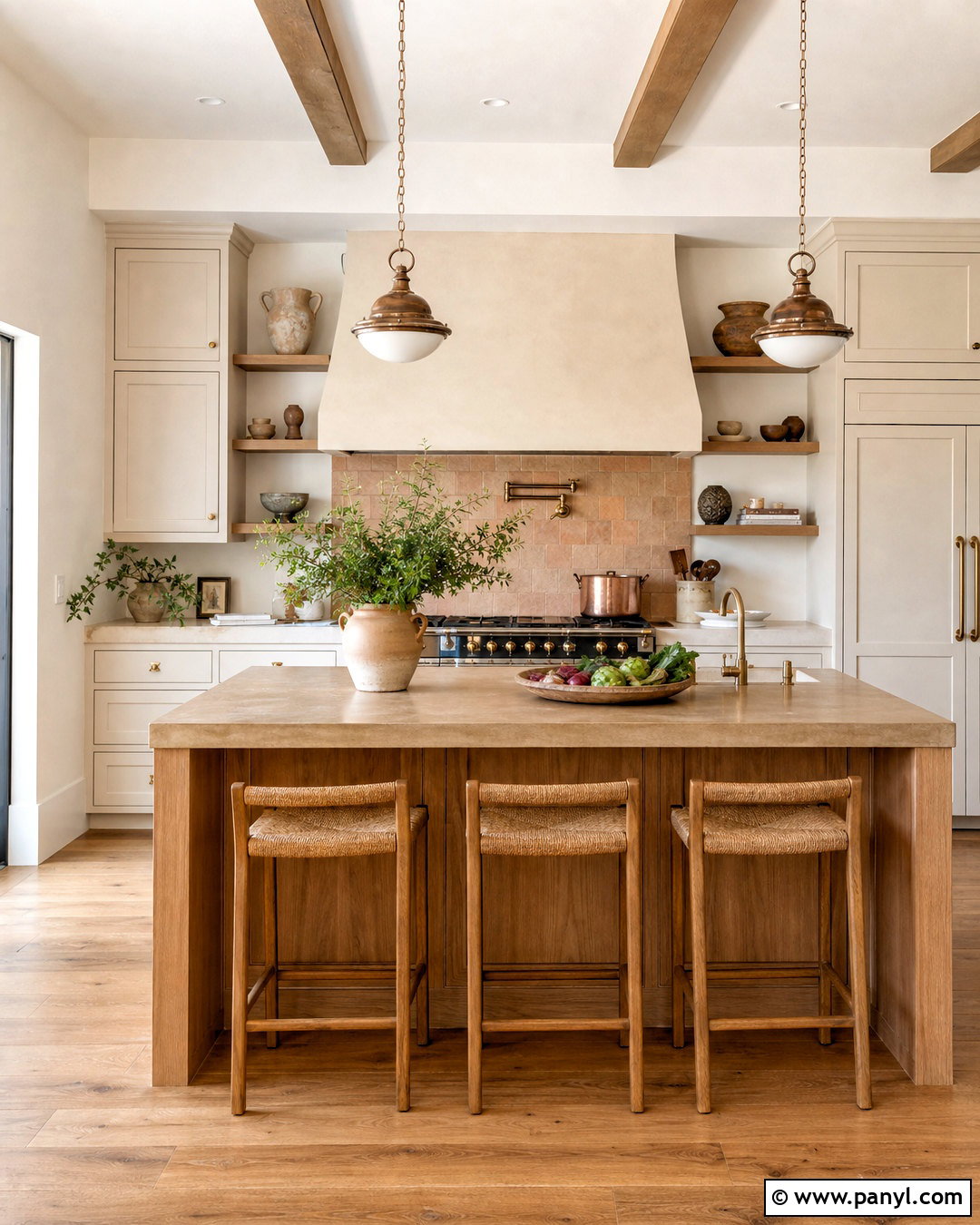
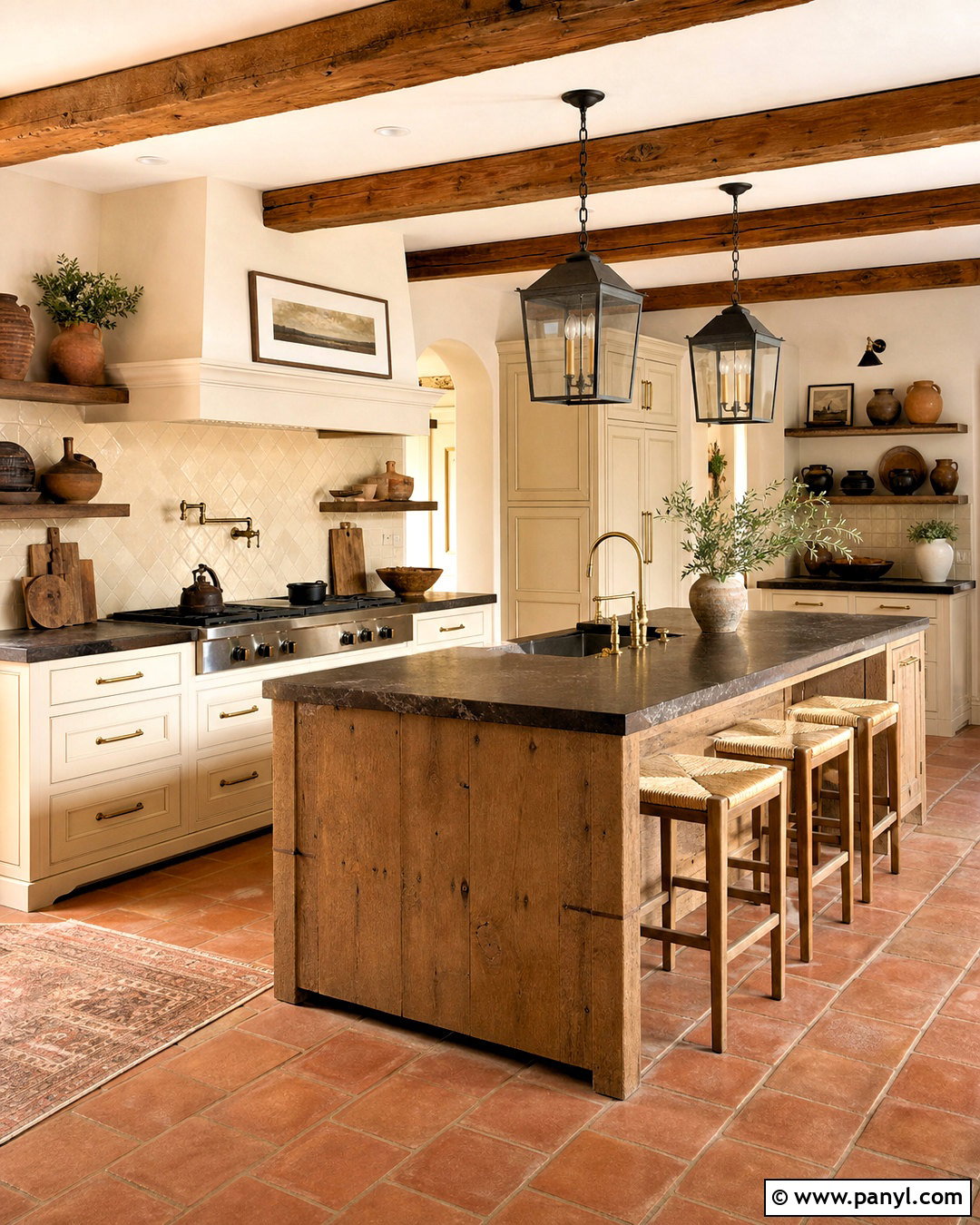
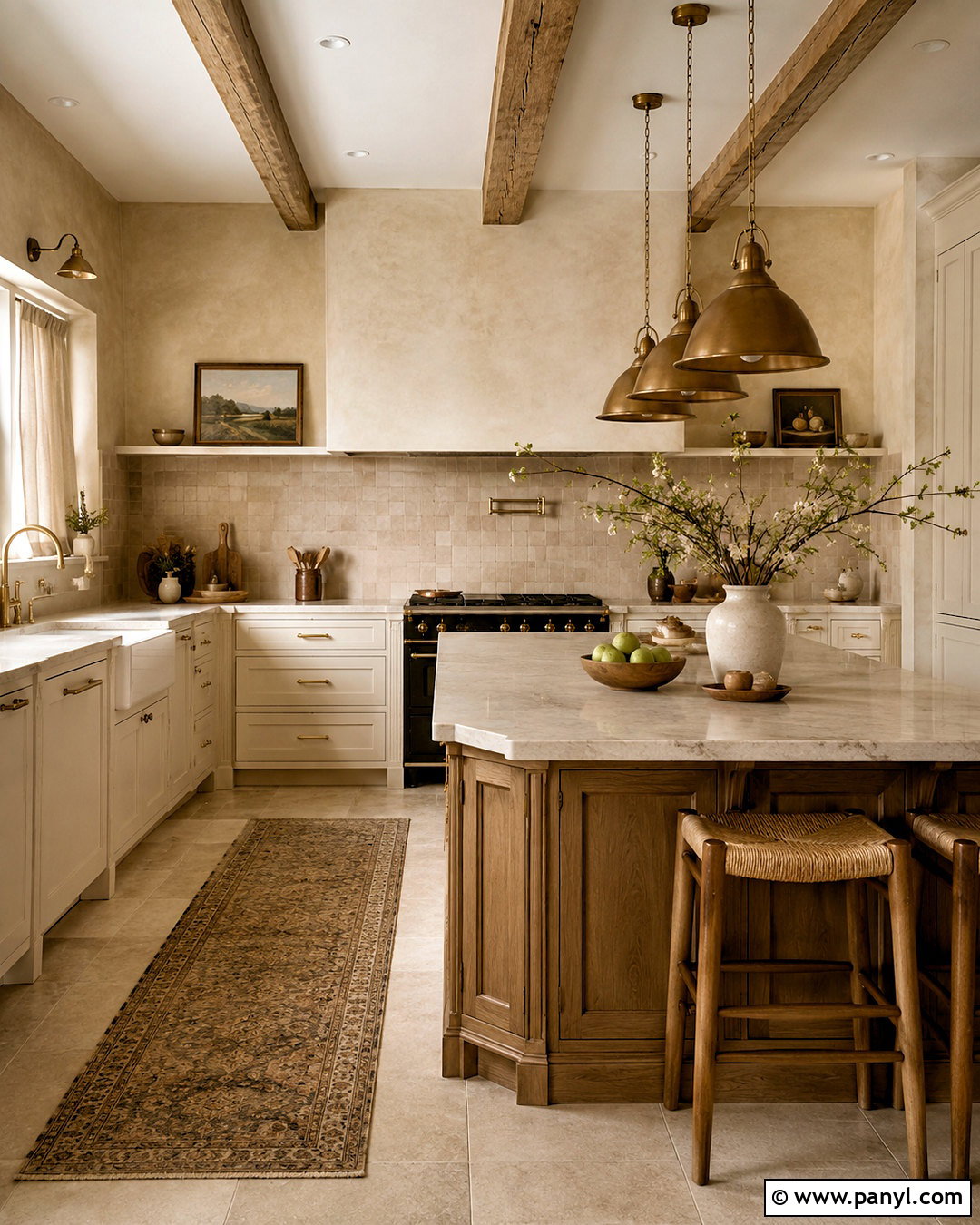
Can a Tuscan kitchen feel bright and airy? Warm ivory cabinets make that possible while preserving the style’s inviting character. Pair simple recessed-panel cabinetry with honed beige limestone counters and an understated terracotta backsplash. A medium oak island adds contrast and provides a relaxed gathering point with woven rush stools. Use aged brass hardware rather than highly ornate dark metal, and select cream pendant lights with softly curved silhouettes. Natural oak flooring keeps the room lighter than traditional red tile. Display a few ceramic bowls, wood cutting boards, and copper cookware on one open shelf, but leave most counters clear. Complete the layout with a plaster range hood and a small vase of leafy branches. The finished kitchen feels distinctly Tuscan yet practical for a contemporary household.
4. Tuscan Kitchen With Dark Wood
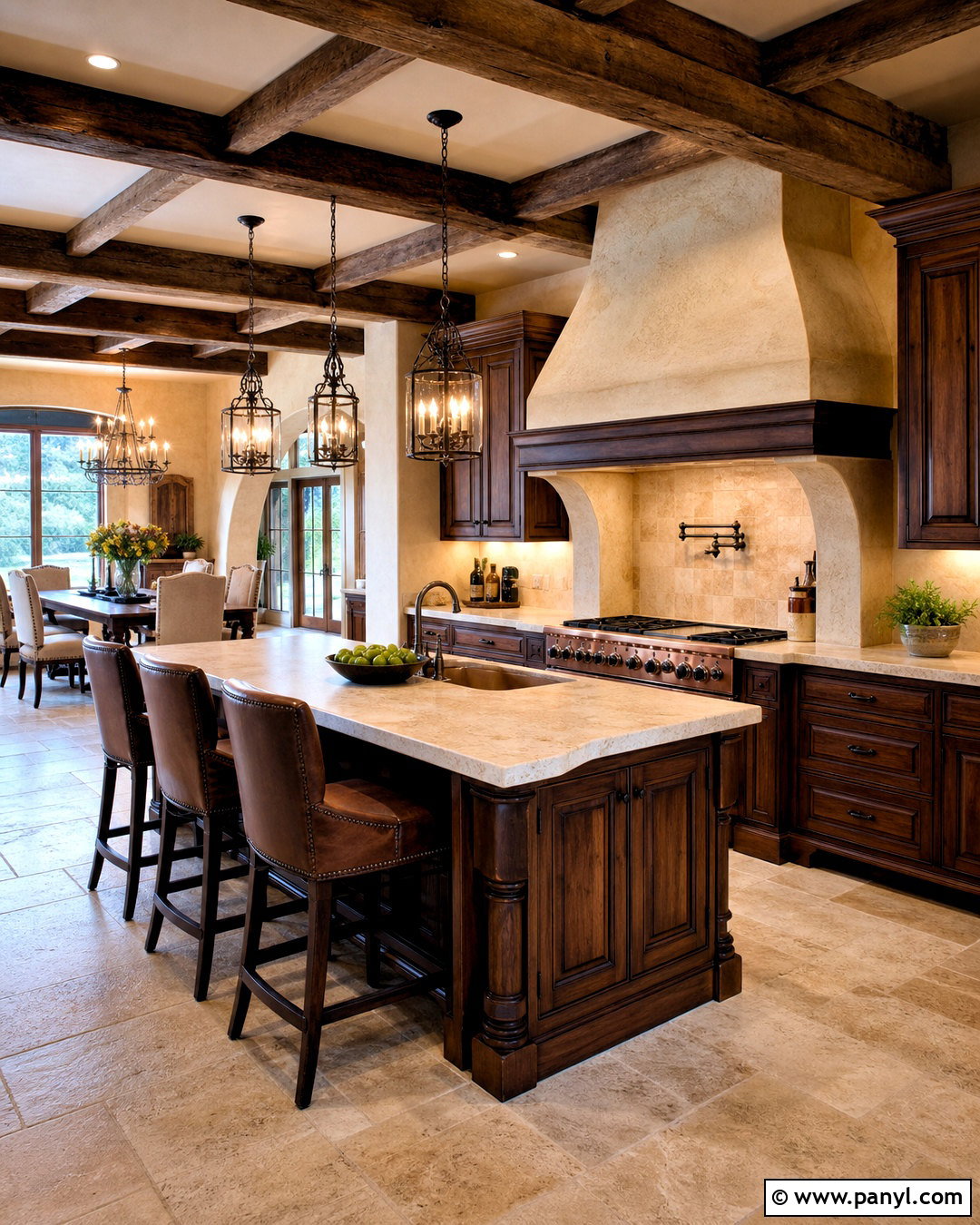
Rich walnut cabinetry can create a dramatic Tuscan kitchen when balanced with pale surrounding surfaces. Install dark stained cabinets with simple raised panels, then brighten them with creamy travertine counters and a warm beige plaster backsplash. A large central island should combine matching wood with a durable stone worktop and comfortable leather stools. Use light limestone flooring to reflect daylight throughout the room. An arched plaster range hood, copper sink, and substantial iron pendants add traditional craftsmanship without requiring themed accessories. Keep the walls soft ivory and introduce muted olive through Roman shades or upholstered seating. A rustic farm table can form a casual dining zone beside the kitchen. Clear pathways, concealed appliances, and uncluttered counters prevent the dark wood from making this complete cooking space feel crowded.
5. Tuscan Dining Room
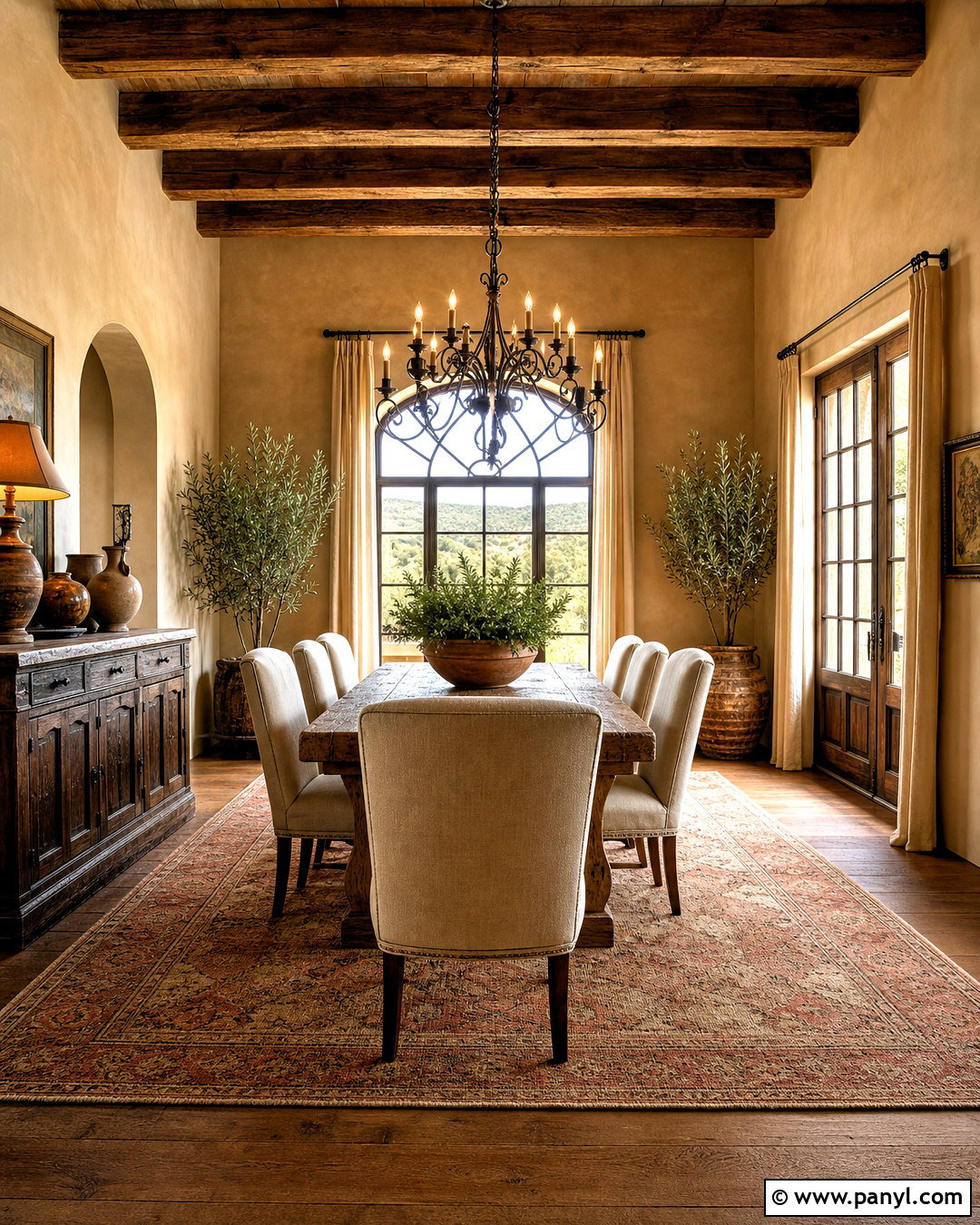
Picture long, relaxed dinners in a dining room built around natural materials and comfortable proportions. Place a rectangular reclaimed-oak table at the center, surrounded by upholstered linen chairs with gently curved backs. A large wrought iron chandelier should hang low enough to define the table without blocking views across it. Use sandy beige walls, warm oak flooring, and a faded terracotta rug to create a sun-baked palette. Against one wall, add a dark wood sideboard displaying a few handmade ceramic pieces and a broad stone bowl. Linen draperies soften the windows and filter strong daylight. An antique-inspired landscape painting provides color without turning the room into an Italian theme. Finish with simple candlesticks and fresh greenery, keeping the table mostly open for comfortable everyday meals and gatherings.
6. Tuscan Bedroom
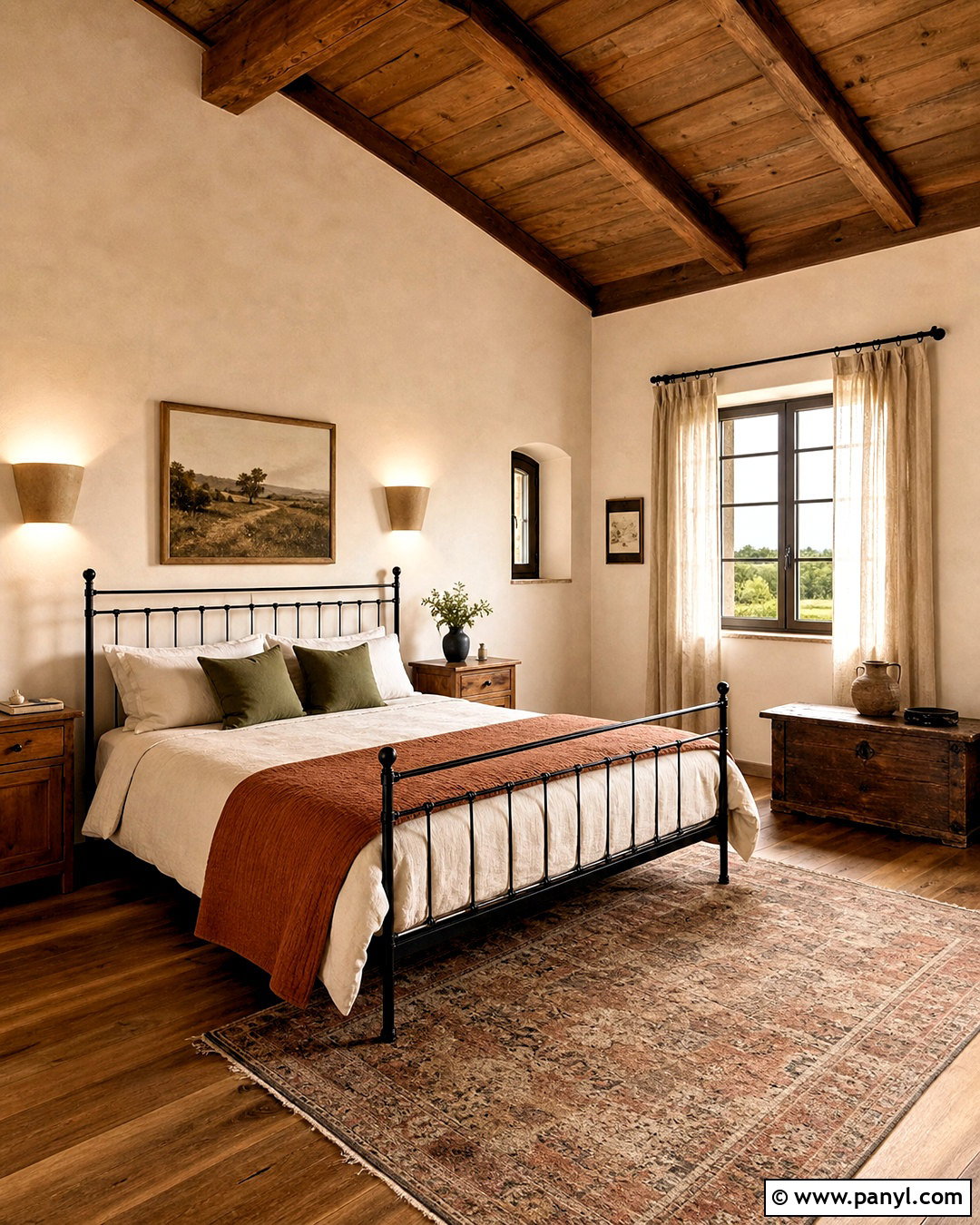
Softness matters in a Tuscan bedroom, especially when the room includes substantial wood and iron details. Start with warm ivory walls and medium oak floors covered by a faded beige and rust rug. Choose a simple wrought iron bed or an aged oak bed with a low, solid headboard. Layer it with cream linen bedding, a textured clay-colored coverlet, and muted olive pillows. Matching wooden nightstands and plaster wall sconces create balance on either side. Instead of heavy window treatments, use full-length natural linen curtains that allow filtered daylight inside. A carved wood chest at the foot of the bed adds storage and rustic character. Complete the restful arrangement with one landscape print, a ceramic lamp, and a comfortable reading chair, avoiding unnecessary decorations that could make the bedroom feel busy.
7. Tuscan Bathroom
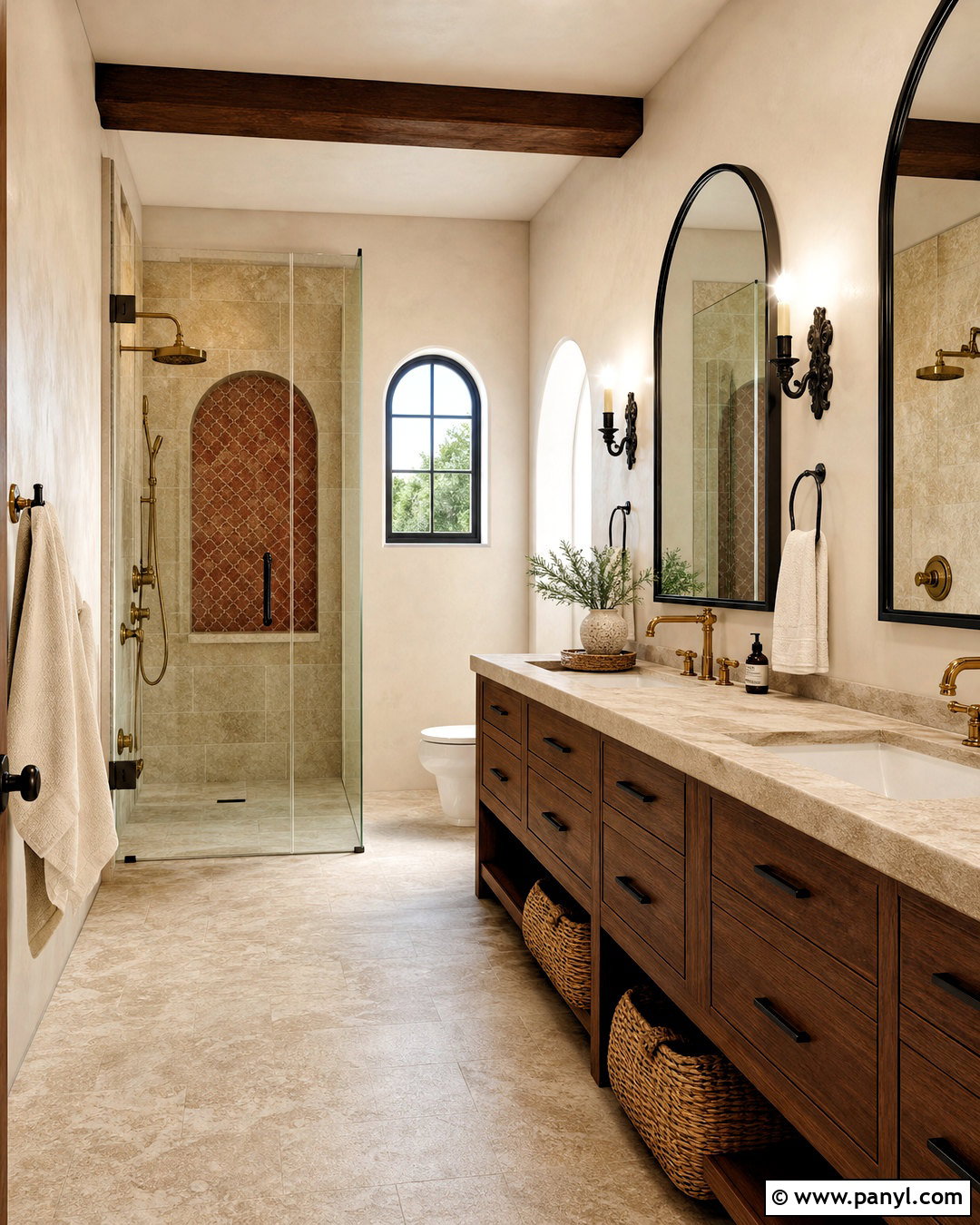
A Tuscan bathroom can feel like a peaceful countryside retreat when stone surfaces are paired with practical modern fixtures. Cover the floor with matte limestone tile and use creamy plaster-look walls for warmth. A walnut vanity with a honed travertine counter provides natural contrast, while an arched mirror softens its sturdy shape. Choose aged brass faucets, simple iron sconces, and a frameless glass shower to balance rustic details with clean function. Inside the shower, combine large beige stone tiles with a restrained terracotta mosaic niche. Add a freestanding white tub if space permits, positioned near a linen-shaded window. Woven baskets, folded cream towels, and one olive branch in a ceramic vessel provide enough decoration. The finished room should appear handcrafted, uncluttered, durable, and comfortably bright.
8. Tuscan Entryway
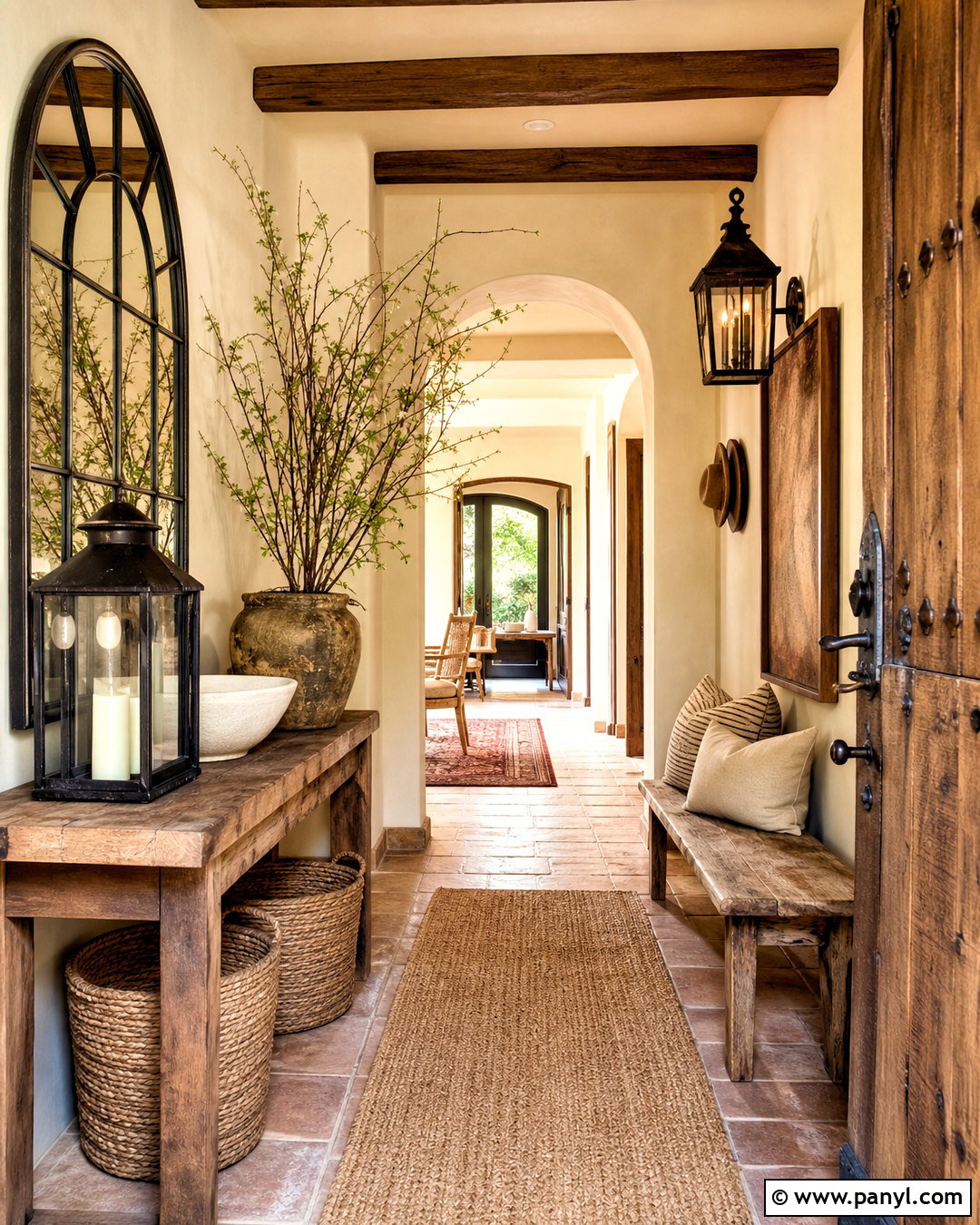
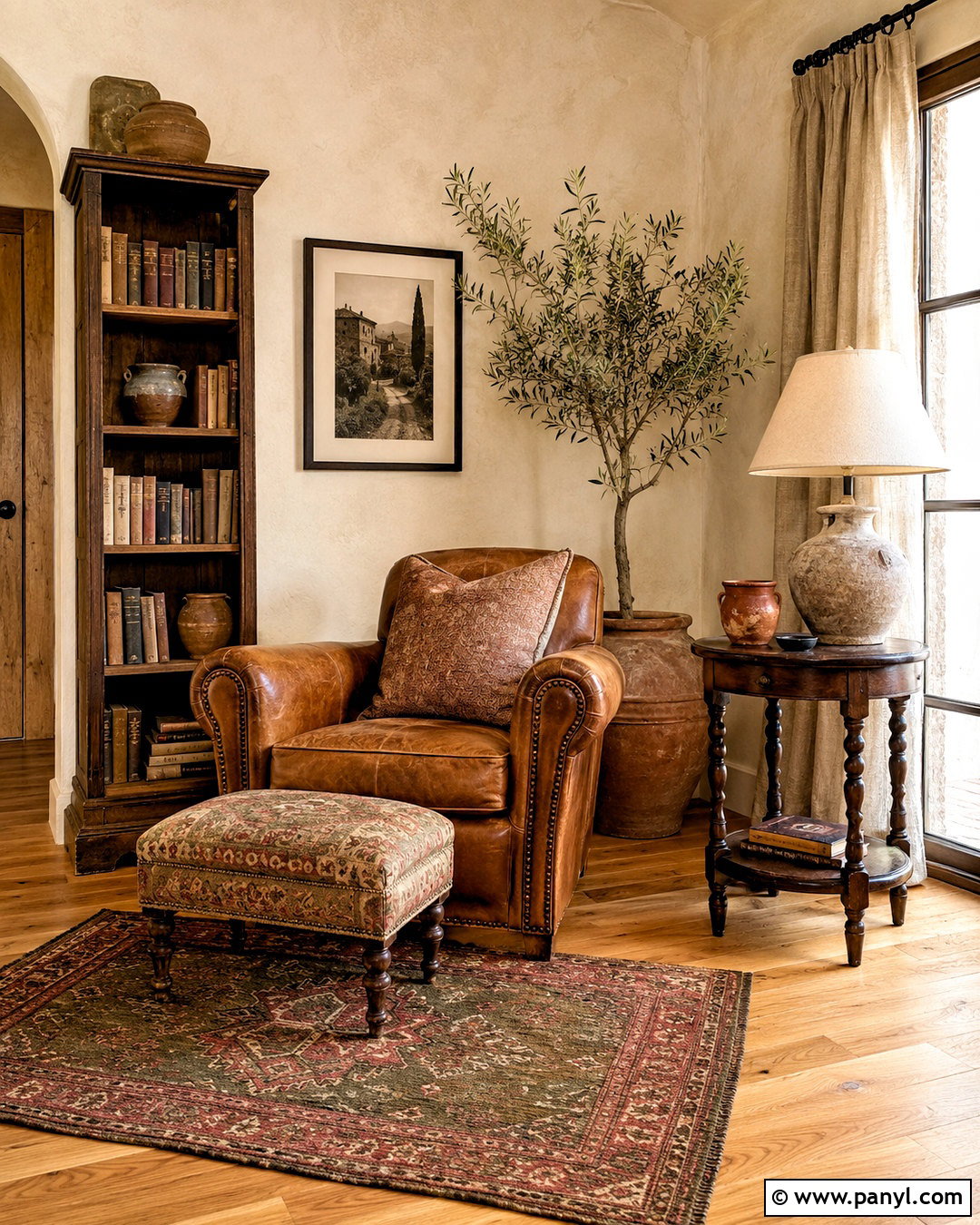
The entryway sets the mood before guests reach the main living areas. Create a welcoming Tuscan entrance with warm plaster walls, terracotta flooring, and a slim reclaimed-wood console. Hang a large arched iron mirror above the table to reflect light and make a narrow hall feel more generous. A woven runner introduces comfort while leaving enough tile visible to establish the Mediterranean character. Add a rustic bench near the door for removing shoes, with two neutral linen cushions for softness. Black iron lantern lighting works especially well beneath a high or vaulted ceiling. Keep the tabletop simple with a broad ceramic bowl, a small lamp, and fresh branches. If storage is needed, place woven baskets beneath the console. This restrained arrangement feels collected and functional rather than staged or overly decorative.
9. Tuscan Home Office
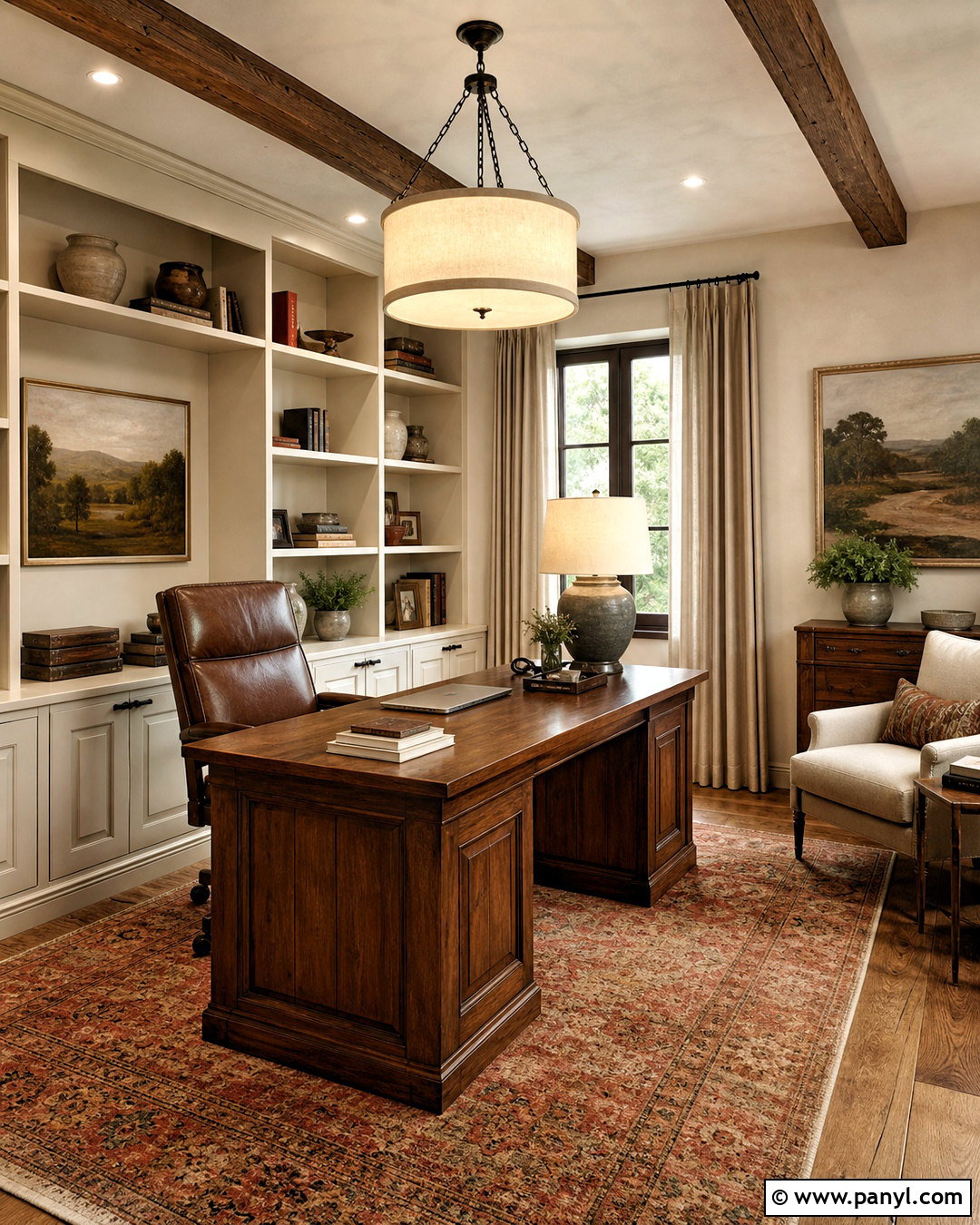
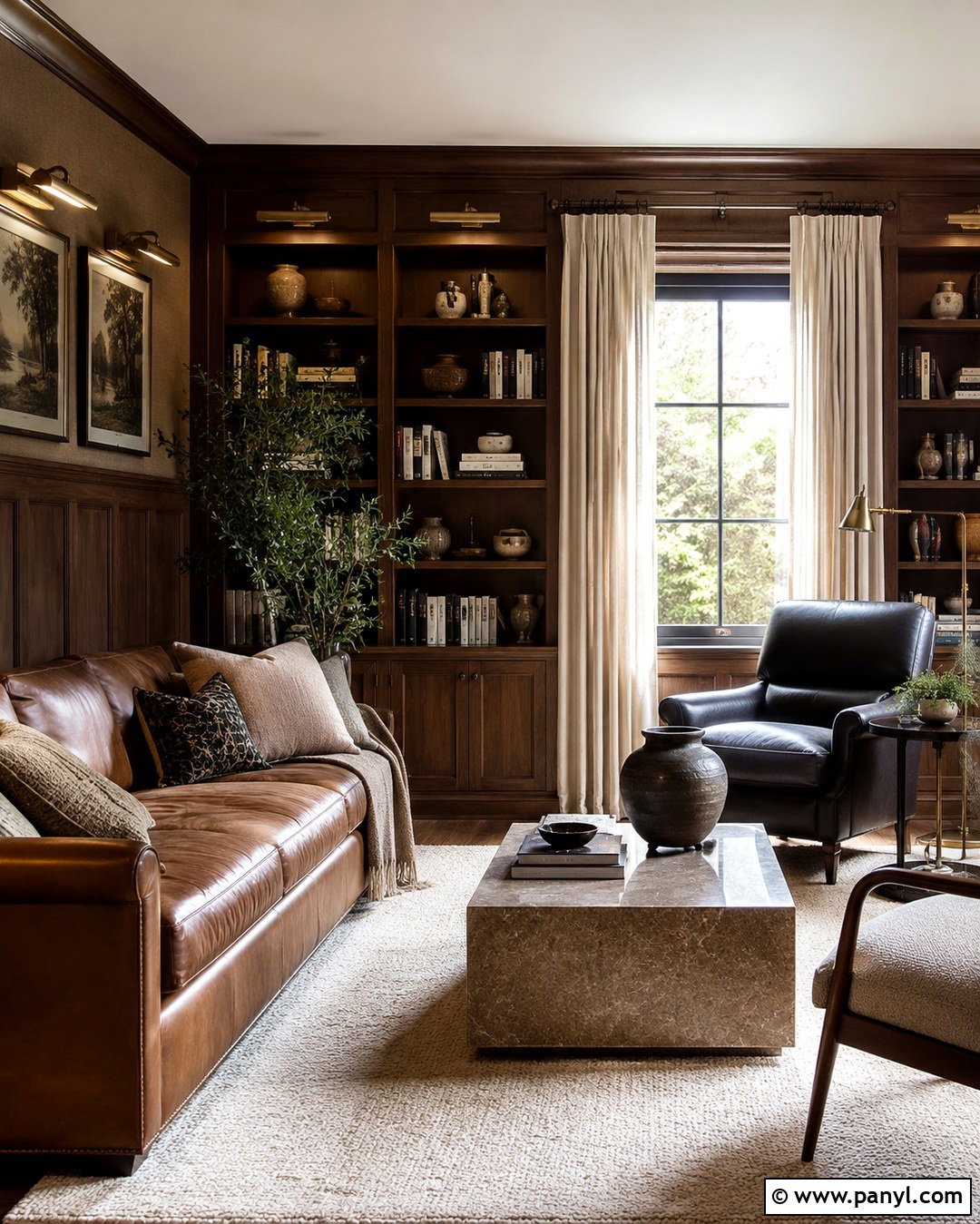
Working from home becomes more inviting in an office shaped by warm wood, natural light, and practical organization. Position a sturdy walnut desk near the center or facing a window, paired with a supportive brown leather chair. Install built-in bookcases painted soft cream so books and collected objects add color without darkening the room. A faded rust rug defines the workspace over medium oak flooring. Use an iron and linen pendant overhead, supported by a ceramic desk lamp for focused lighting. A low wood cabinet can conceal printers, supplies, and cables. Add one comfortable linen chair for reading or conversations. Textured plaster walls, framed landscape art, and a terracotta planter bring in Tuscan character. Keep accessories edited so the completed office remains calm, organized, and suitable for daily work.
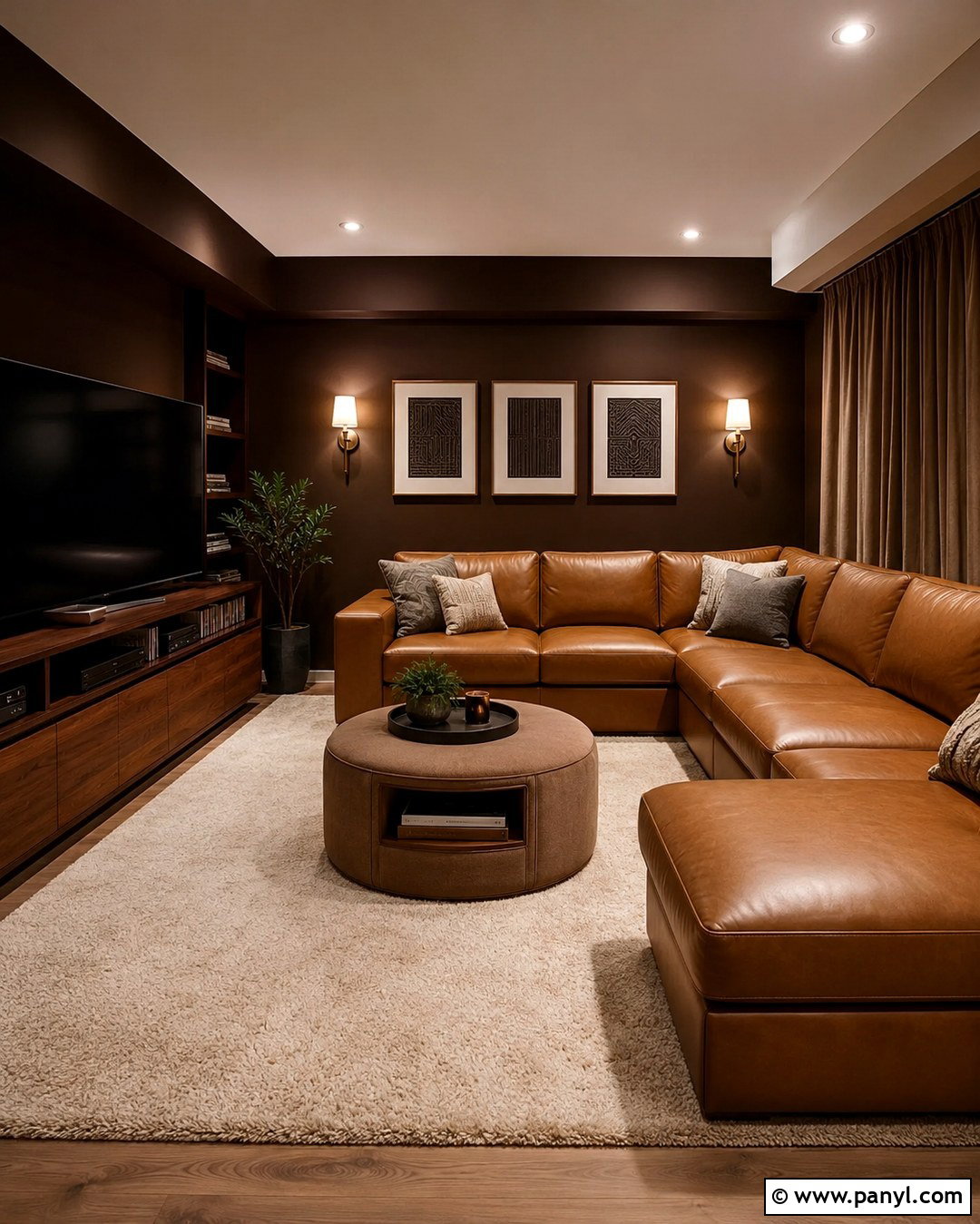
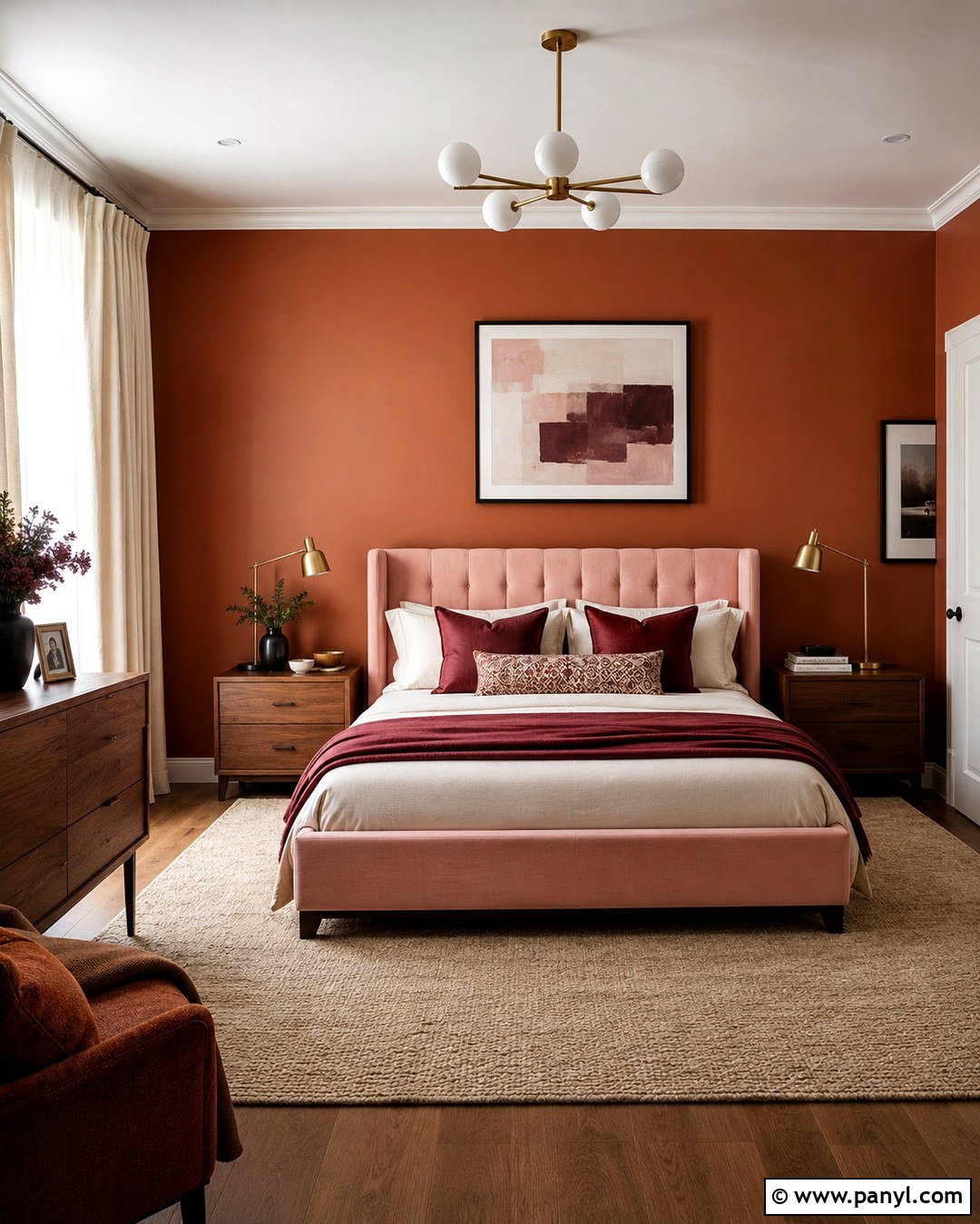
10. Tuscan Family Room
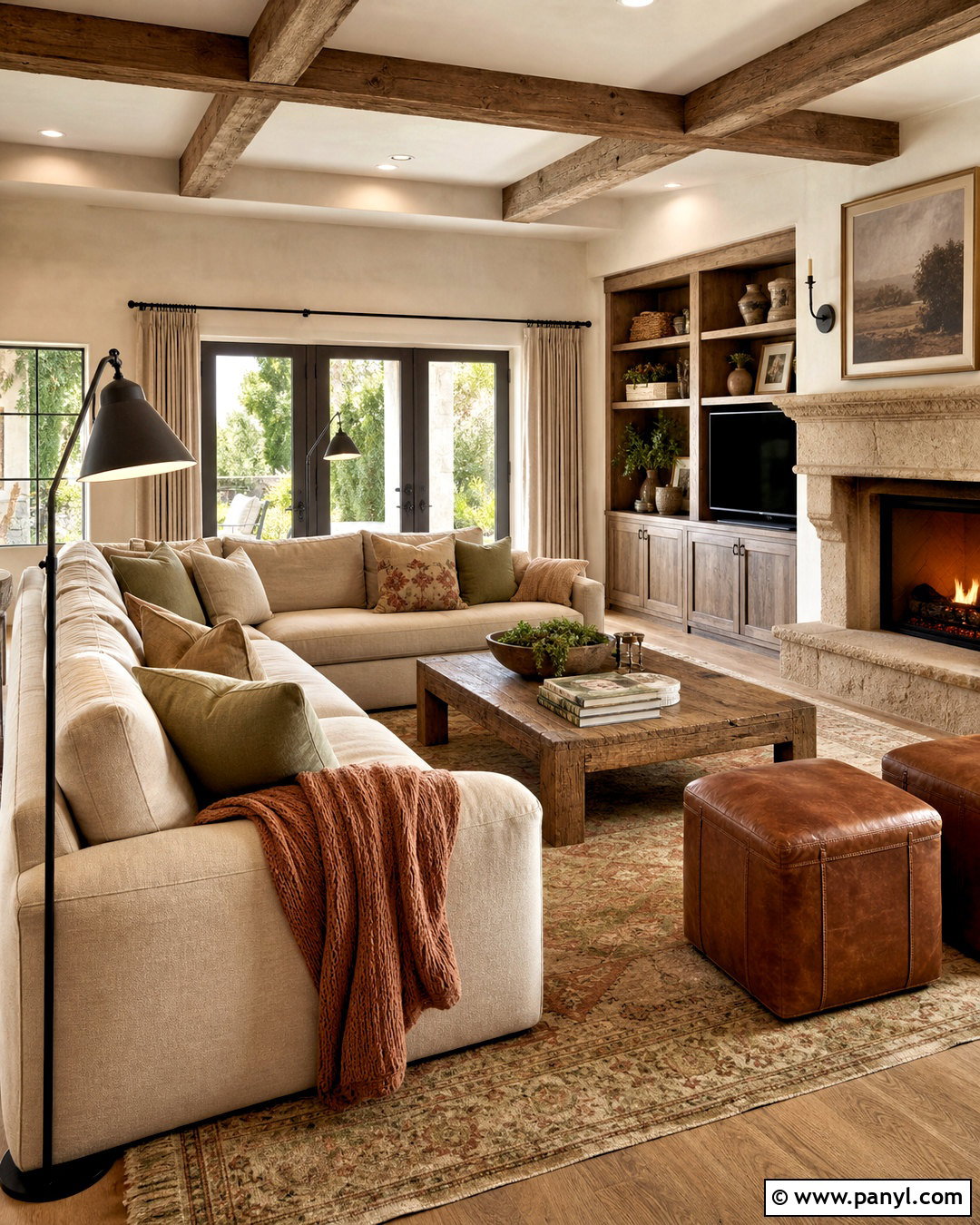
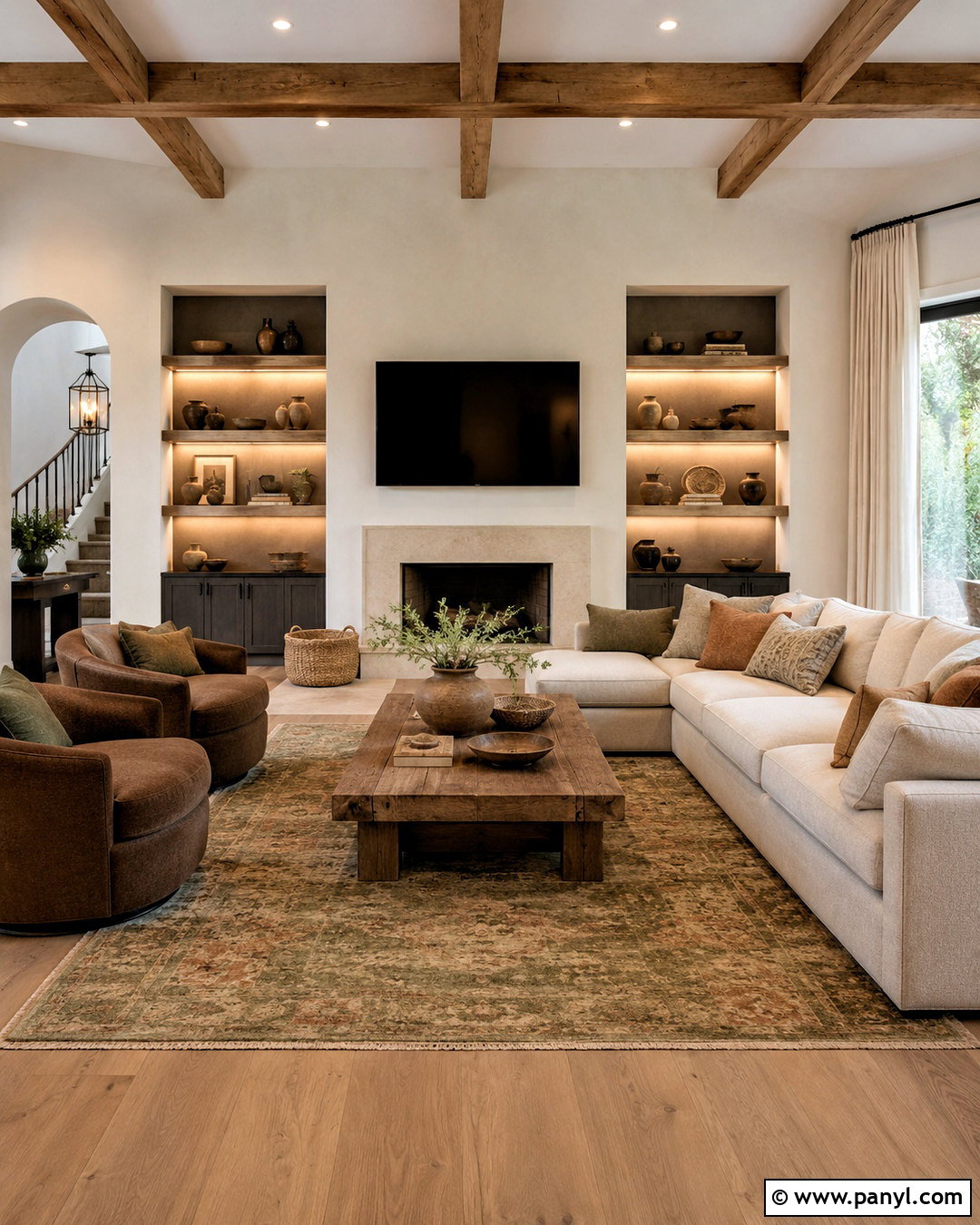
A hardworking family room needs comfort first, followed by durable Tuscan texture and color. Arrange a deep oatmeal sectional across from a simple stone fireplace and built-in media cabinet. Choose a distressed oak coffee table with rounded corners, then add leather ottomans that can serve as seating or footrests. A patterned wool rug in beige, rust, and olive will disguise everyday wear while warming the floor. Paint the walls creamy off-white and use exposed wood beams to add architectural depth overhead. Woven baskets beside the cabinetry provide accessible storage for games and blankets. Complete the room with washable linen-look curtains, iron floor lamps, and several large pillows in earthy colors. Limit fragile pottery to higher shelves, creating a relaxed Tuscan space that remains safe, tidy, and comfortable for everyone.
11. Tuscan Sunroom
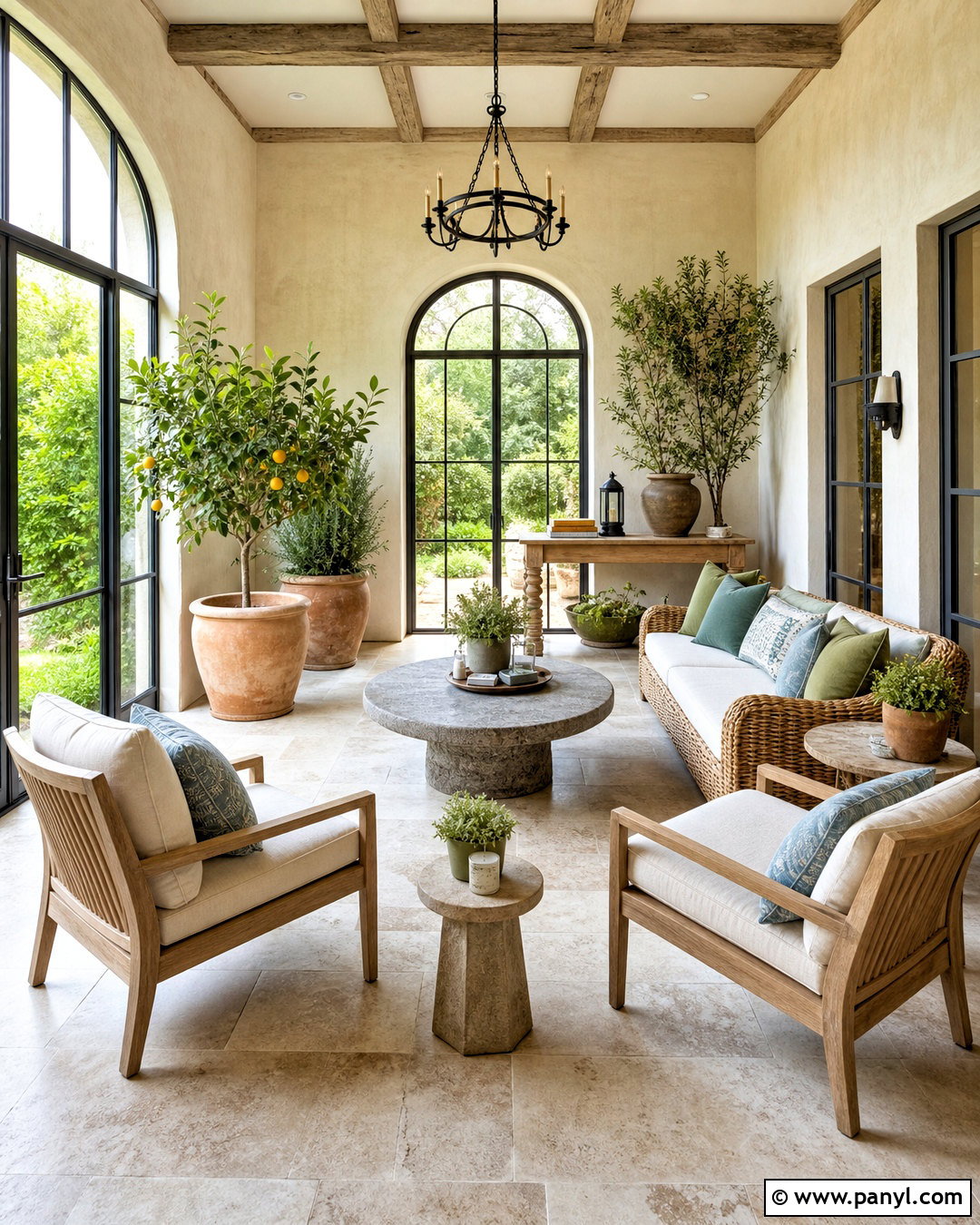
Sunlight brings Tuscan materials to life, making a sunroom an ideal place for this relaxed Mediterranean look. Use pale limestone or terracotta flooring and keep the walls a soft chalky cream. Arrange a woven sofa and two light oak chairs around a round stone-topped coffee table. Cushions in natural linen, muted olive, and dusty blue introduce gentle color inspired by the countryside. Hang breezy curtains only where privacy is needed so windows remain open and bright. Several terracotta planters filled with citrus, rosemary, and leafy greenery connect the room to the outdoors. A compact iron chandelier adds definition without feeling heavy. Complete the design with a narrow rustic console and woven rug. The room should feel breathable, informal, and ready for reading, conversation, or morning coffee.
12. Tuscan Breakfast Nook
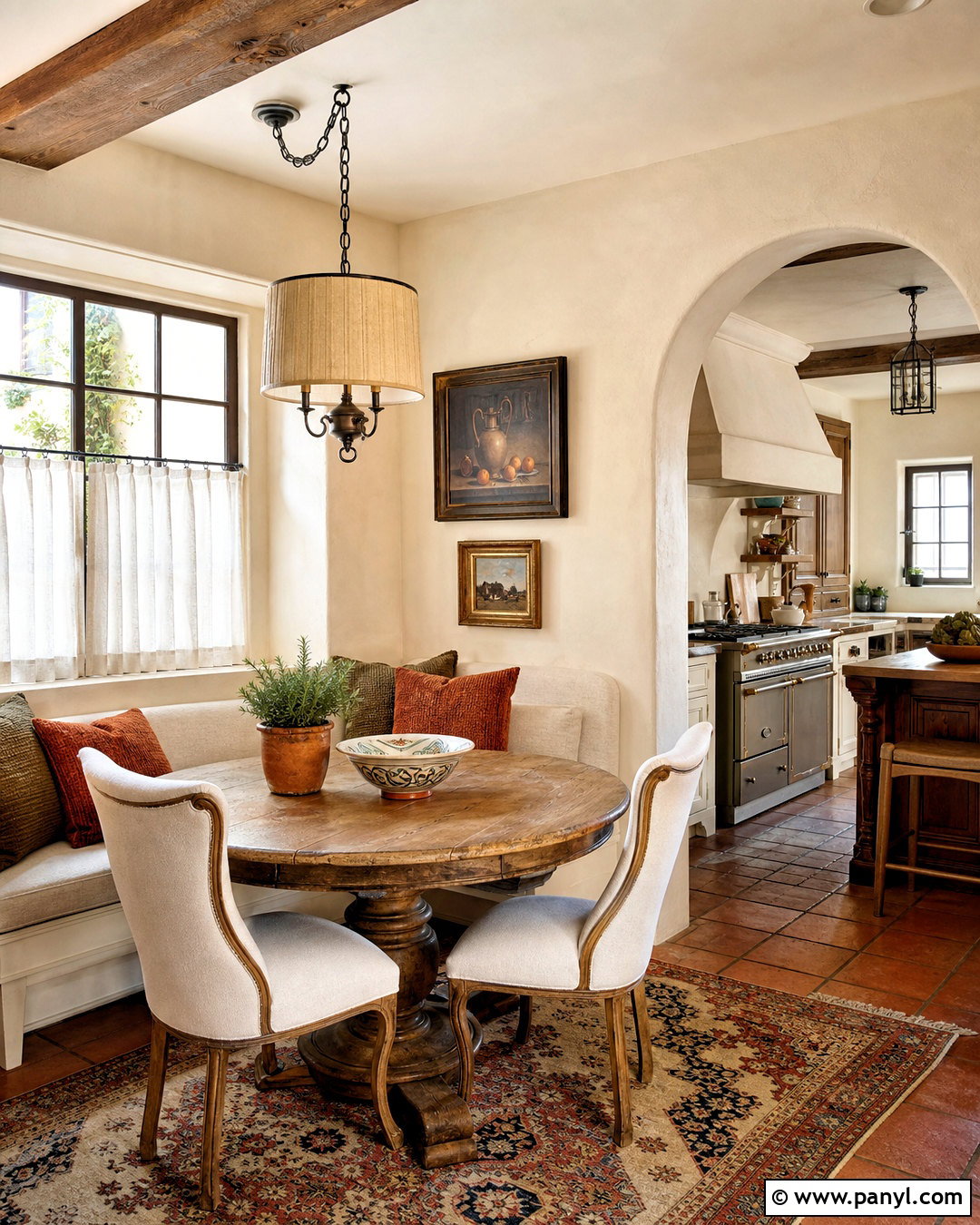
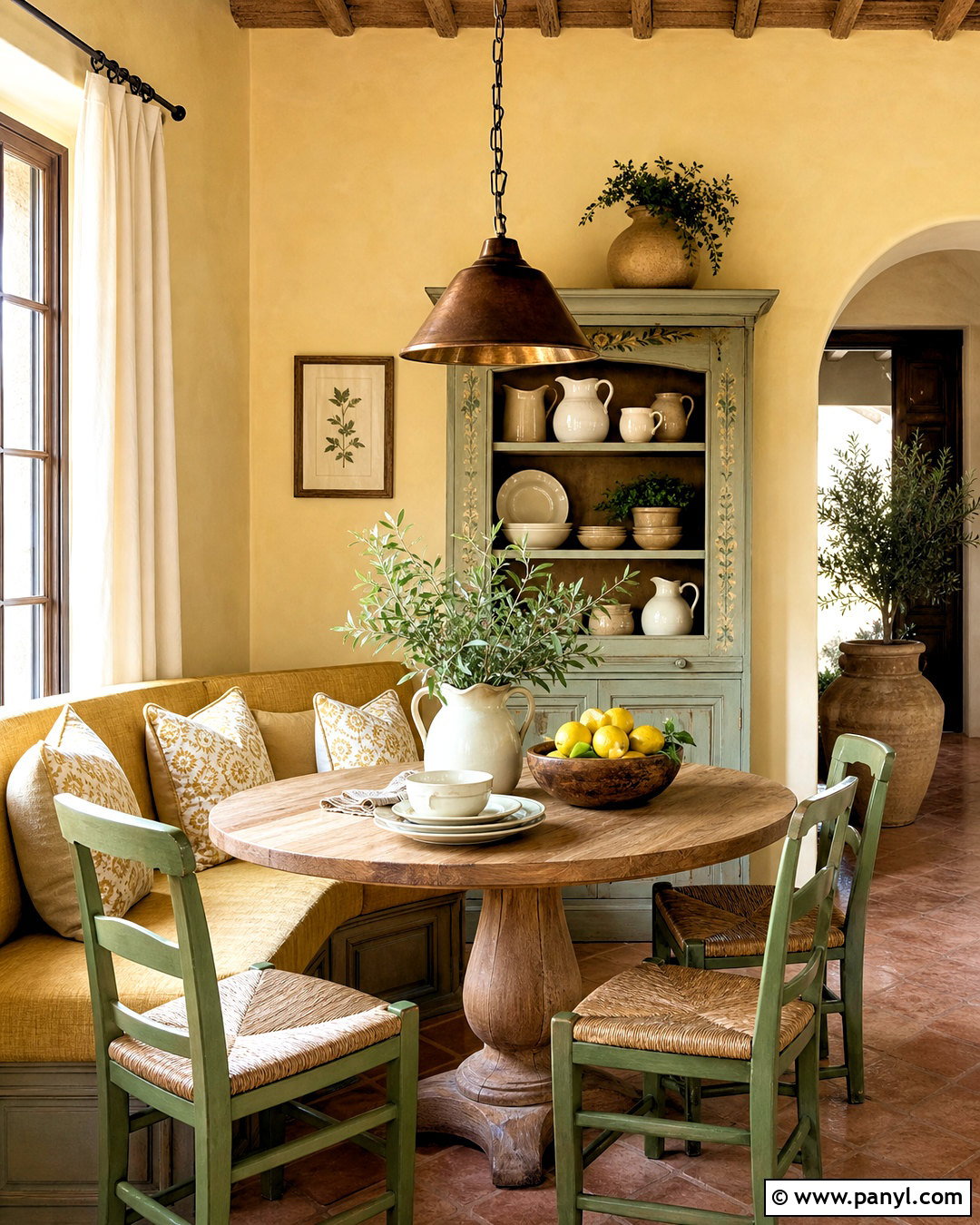
A sunny breakfast nook offers an easy way to add Tuscan warmth without renovating an entire kitchen. Build the space around a round pedestal table in aged oak, which improves movement through a compact corner. Combine two upholstered chairs with an L-shaped bench covered in durable oatmeal fabric. Add rust, golden beige, and olive pillows for comfortable color. Terracotta flooring or a small patterned rug visually separates the nook from the cooking zone. Install an iron pendant with a simple linen shade above the table. Soft cream walls and café curtains keep the area bright throughout the morning. Finish with a shallow ceramic bowl, a framed countryside sketch, and one herb planter on the windowsill. The complete nook feels intimate and rustic while remaining useful for meals, homework, and casual conversations.
13. Tuscan Living Room With Stone Fireplace
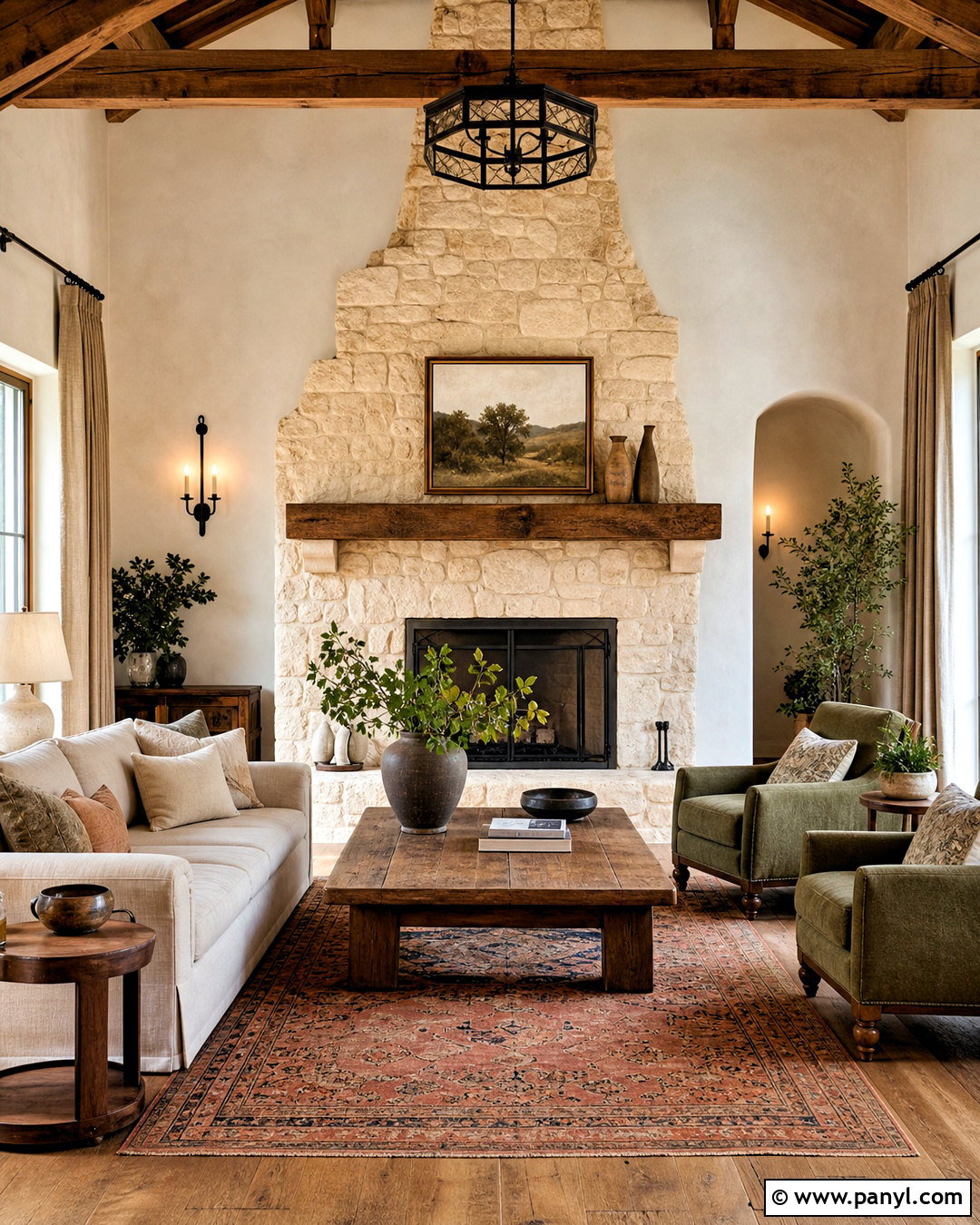
The fireplace becomes a natural gathering point when it is designed as part of the entire living room. Build the surround from irregular cream and beige stone, extending it upward for visual height. Add a thick reclaimed-oak mantel, but decorate it sparingly with a ceramic vessel and simple framed artwork. Face an oatmeal sofa toward the hearth and position two olive linen chairs at right angles to encourage conversation. A substantial wood coffee table and faded terracotta rug anchor the grouping. Use warm white walls, medium oak flooring, and iron sconces to support the stone without competing with it. Full-length flax curtains provide softness around nearby windows. This balanced layout allows the fireplace to command attention while still creating a comfortable, practical room for conversation and everyday relaxation.
14. Tuscan Small Apartment
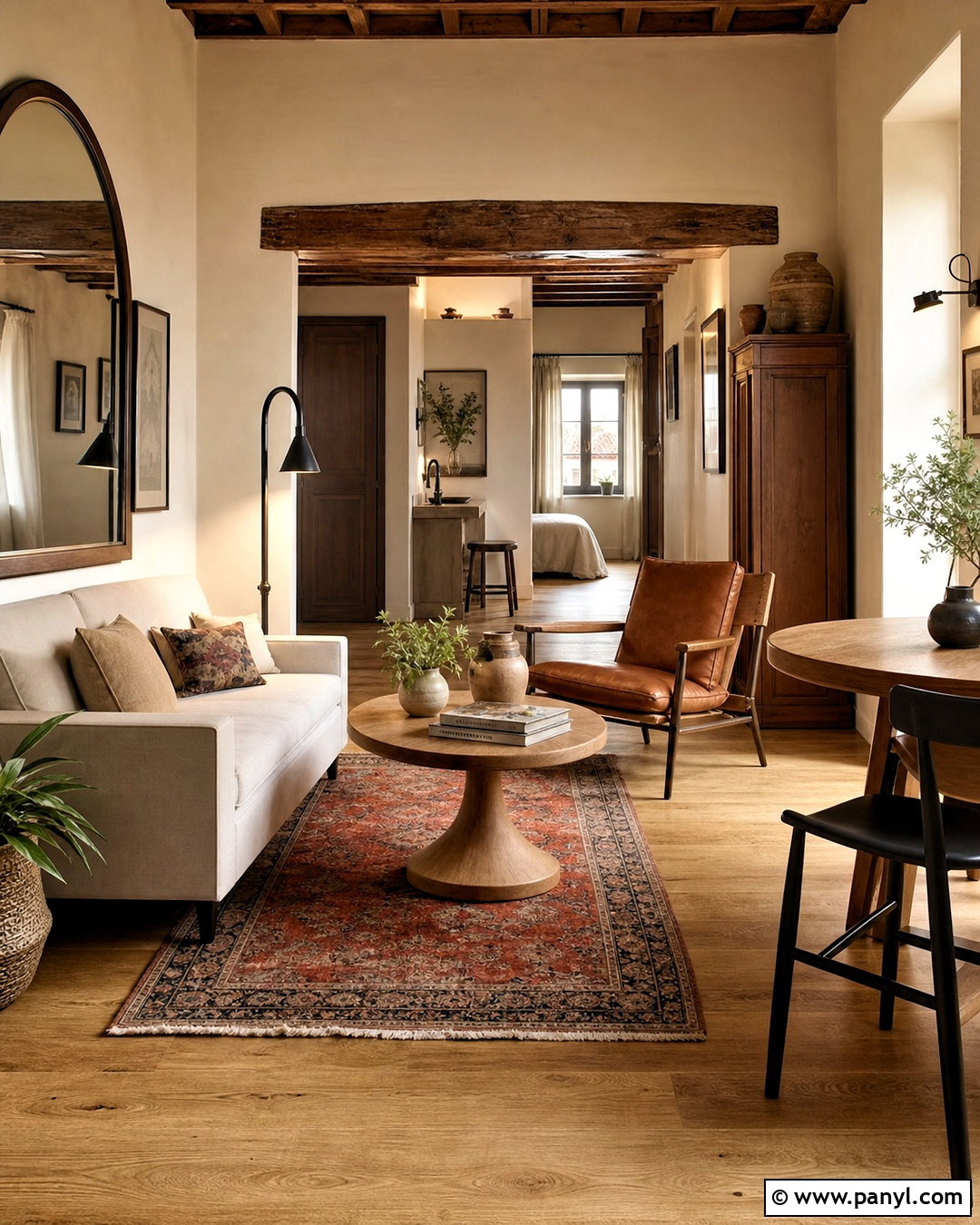
Limited square footage does not require giving up the warmth of Tuscan decor. Begin with creamy walls and continuous light oak flooring to visually expand the apartment. Choose a compact flax-colored sofa with exposed wood legs, then pair it with one cognac leather chair and a round pedestal table. A slim iron floor lamp supplies character without using valuable surface space. Use a faded terracotta rug to define the living area while maintaining an open path toward the kitchen or bedroom. Select one tall wood cabinet for concealed storage instead of several small pieces. Handmade pottery, an olive green pillow, and a single landscape print provide restrained Tuscan detail. Light linen curtains and a large arched mirror reflect daylight, helping the complete apartment feel warm, organized, and pleasantly spacious.
15. Neutral Tuscan Color Palette
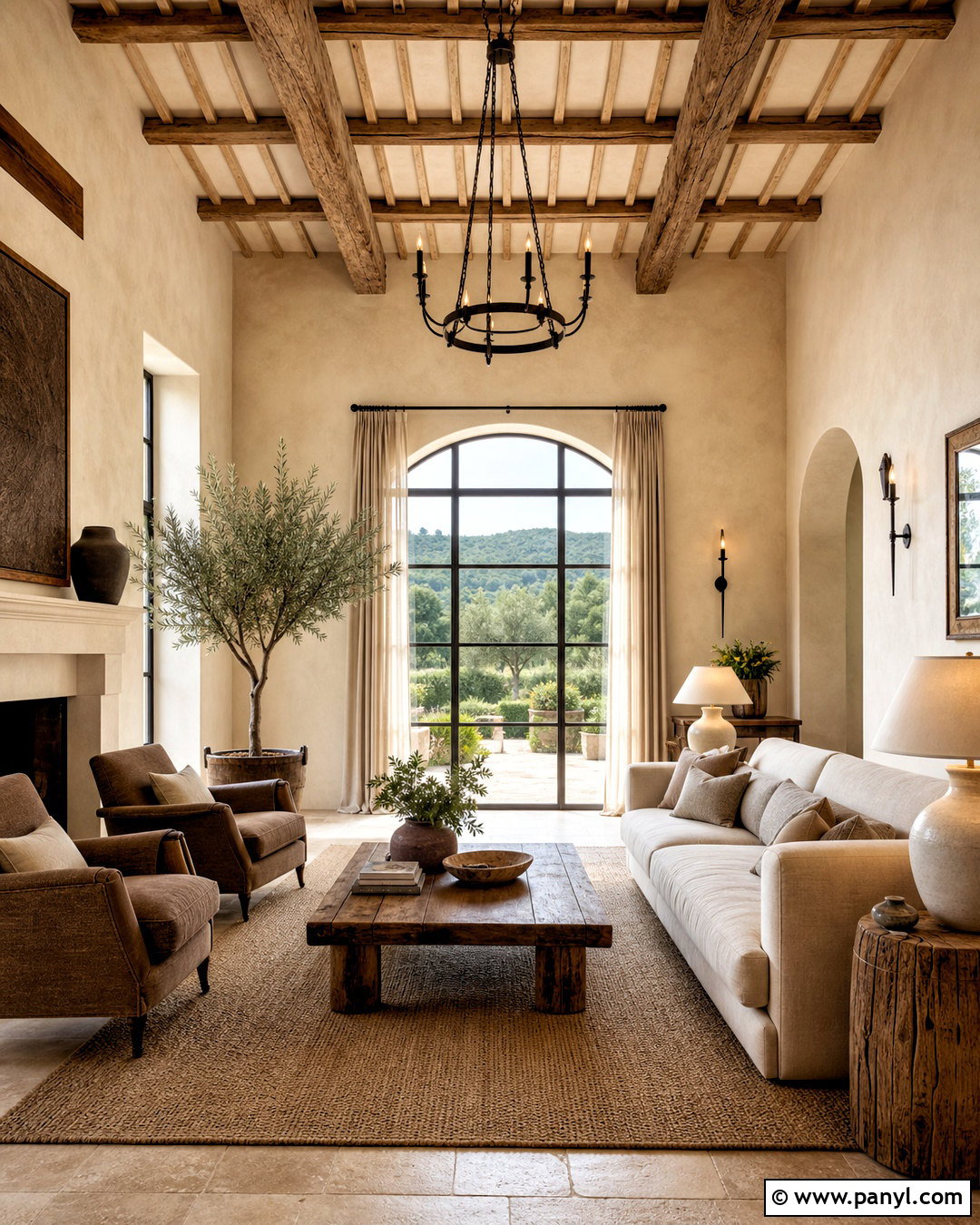
For a quieter interpretation, design an entire Tuscan room around cream, sand, mushroom, and weathered brown. Cover the walls in soft ivory plaster and choose pale limestone or natural oak flooring. An oatmeal linen sofa can anchor the living area, supported by mushroom-colored chairs and a reclaimed wood coffee table. Add contrast through dark iron curtain rods, sconces, and table legs rather than bold colors. A tonal wool rug introduces pattern without disrupting the calm palette. Use textured cushions, woven baskets, ceramic lamps, and unbleached curtains to keep the neutrals from looking flat. One olive tree adds a controlled touch of green. This complete scheme works especially well in smaller or darker homes because it preserves recognizable Tuscan materials while maintaining a light, open, and flexible atmosphere.
16. Terracotta Tuscan Color Palette
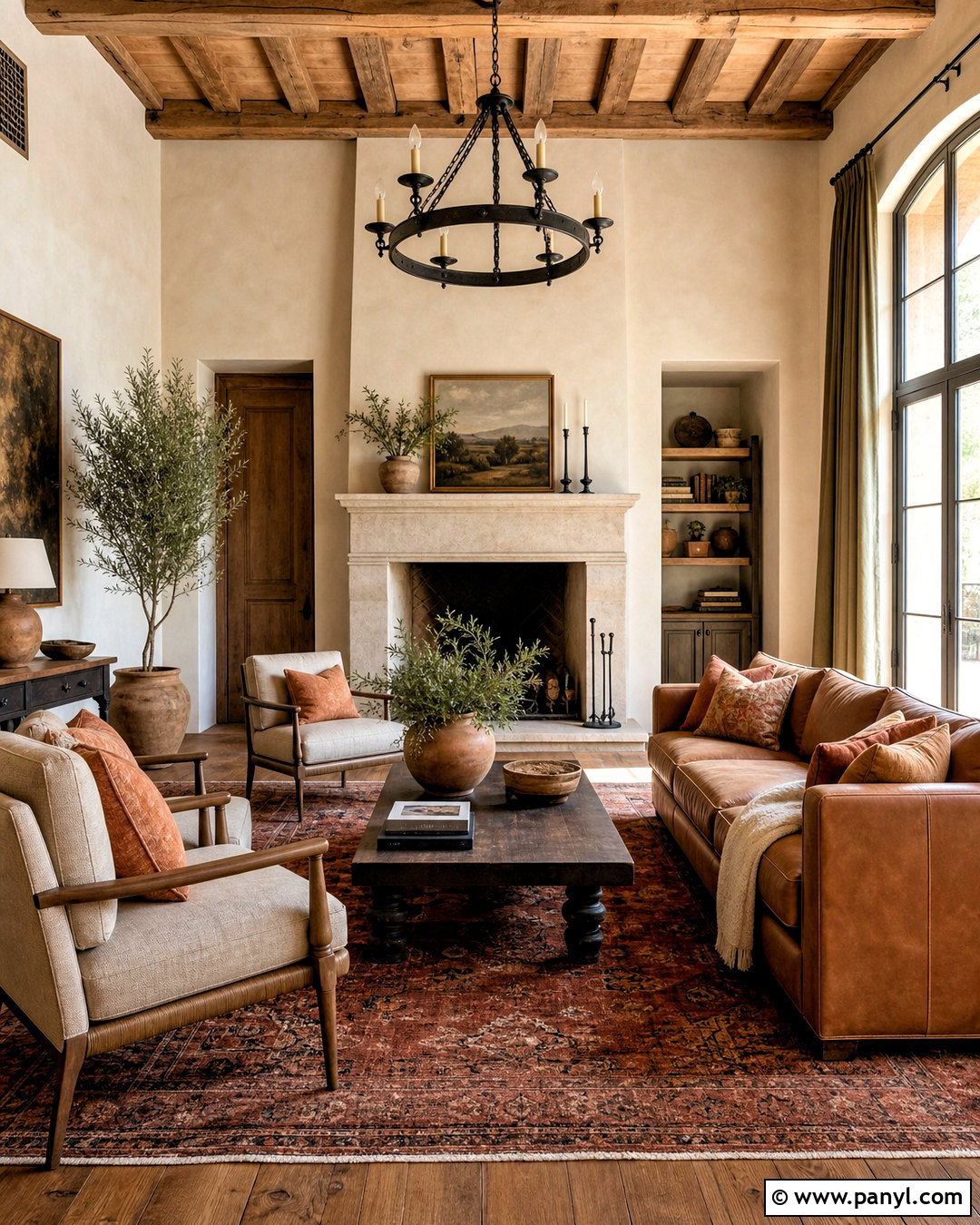
Warm clay colors can energize Tuscan decor when they are layered with restraint. Paint the walls a soft sun-washed cream, then introduce terracotta through a large area rug, patterned pillows, and matte ceramic lamps. Ground the room with a camel leather sofa and two beige linen chairs arranged around a dark oak coffee table. Medium wood flooring provides continuity without adding another strong color. Use muted olive curtains or greenery to balance the rusty orange tones. A limestone fireplace and black iron chandelier contribute cooler texture and definition. Rather than covering every surface with red or orange, repeat the clay color in three or four well-spaced locations. The completed space feels warm and connected, while the neutral furniture prevents the traditional Tuscan palette from becoming overpowering or dated.
17. Tuscan Courtyard Patio
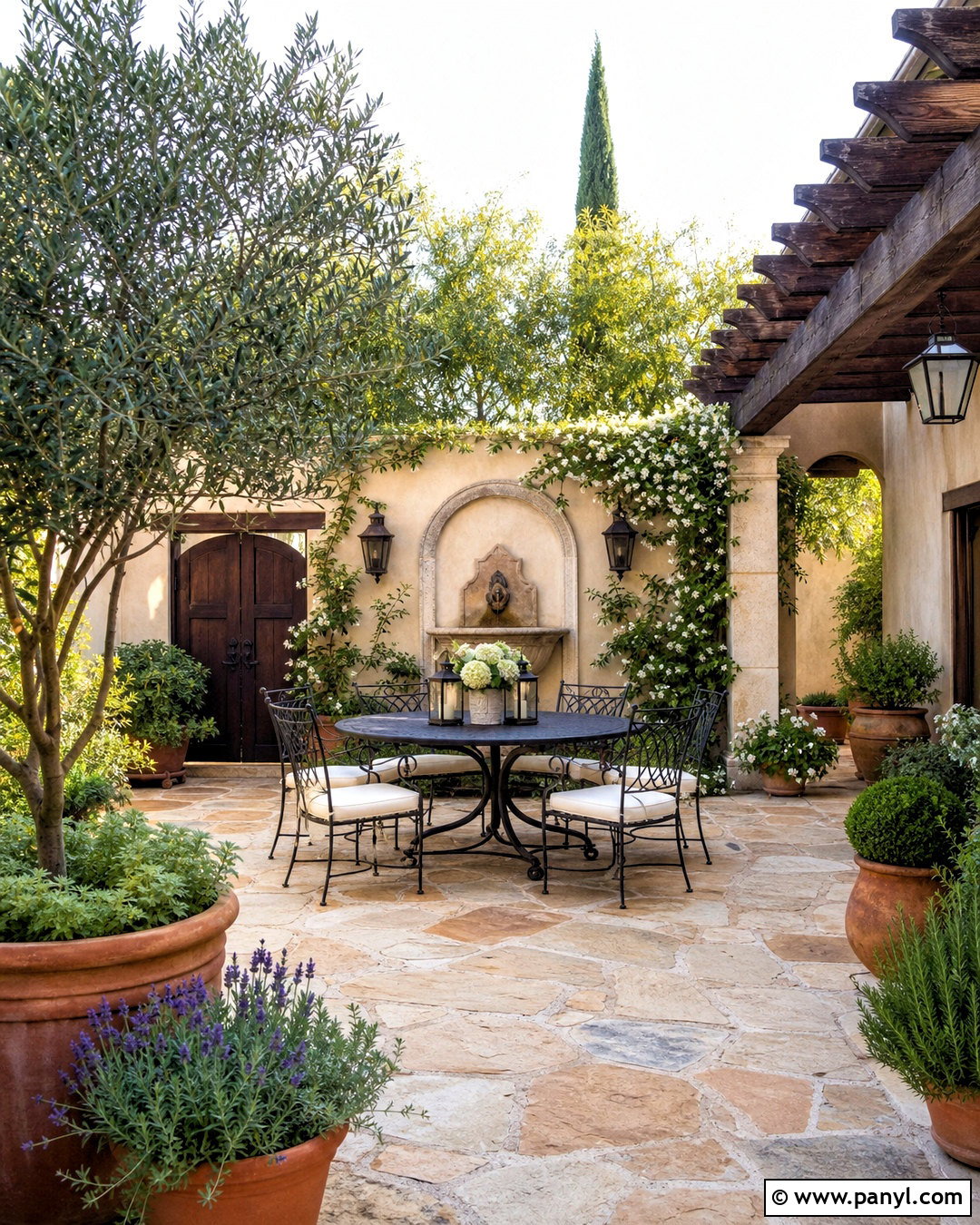
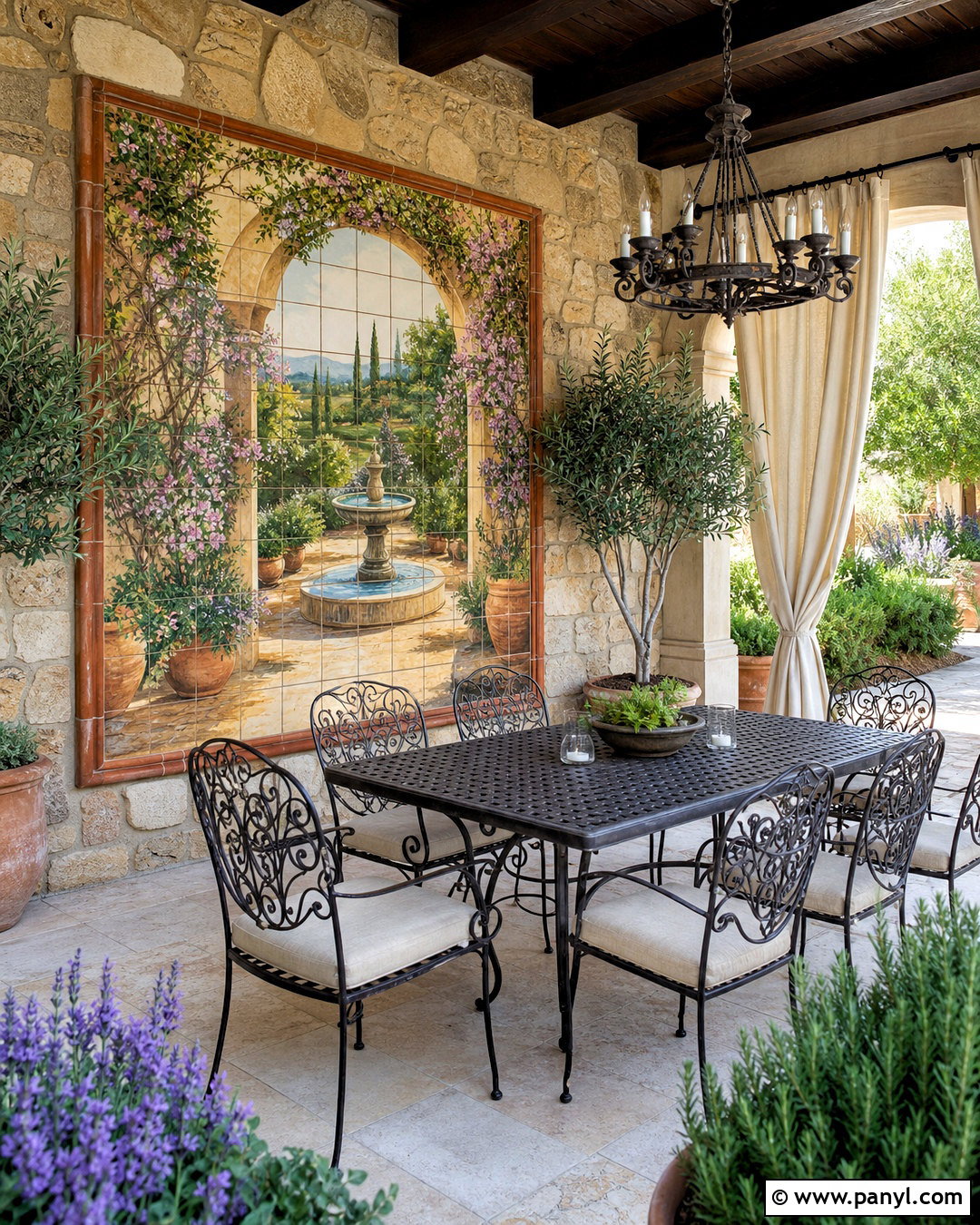
Imagine stepping into a private courtyard framed by warm stucco, greenery, and aged stone. Cover the ground with irregular limestone pavers and place a round iron dining table near the center. Comfortable cream cushions soften the black metal chairs without hiding their handcrafted shape. Surround the seating area with large terracotta pots containing olive trees, rosemary, lavender, and climbing jasmine. A small wall fountain adds movement and creates a strong architectural focal point. Use pale sand-colored stucco on surrounding walls, complemented by dark wood doors and simple iron lanterns. Train vines over a timber pergola for filtered shade during warmer months. Keep pathways open and planting slightly informal. This complete outdoor arrangement feels secluded and established while remaining manageable enough for an average residential patio or enclosed backyard.
18. Tuscan Front Porch
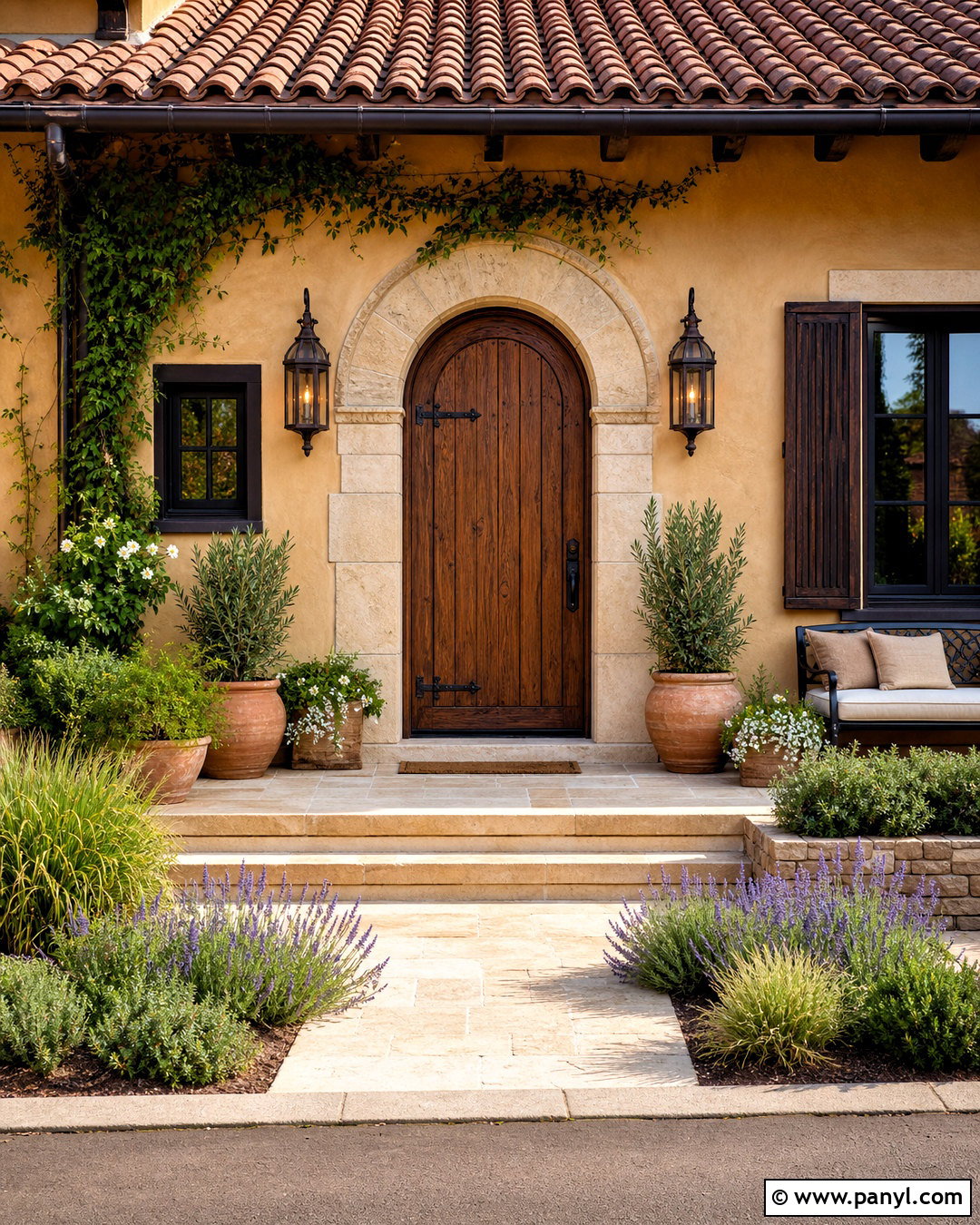
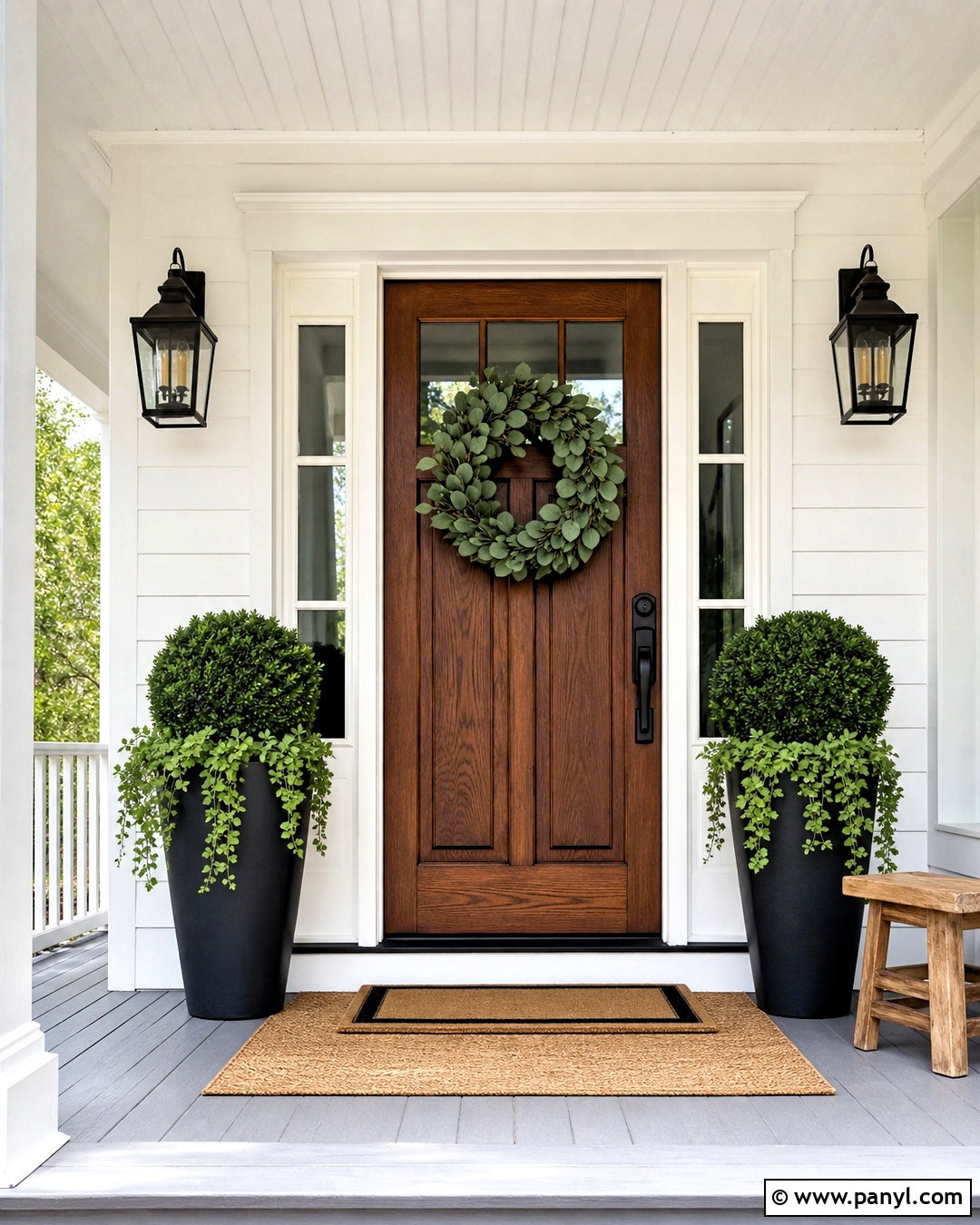
A Tuscan front porch should connect the home’s architecture, landscaping, and entrance in one cohesive view. Use warm beige stucco walls with creamy stone around the doorway and dark bronze metal accents. Choose a substantial arched wood door in a medium walnut finish, paired with iron hardware and clear glass sidelights if space allows. Place two large terracotta planters beside the entrance, filled with upright greenery and trailing herbs. A simple bench with neutral cushions creates a welcoming place to sit. Install iron lanterns at an appropriate scale on both sides of the door. Limestone porch flooring and a natural woven doormat complete the foundation. Keep surrounding landscaping drought-conscious and softly structured with lavender, ornamental grasses, and low shrubs, creating warm curb appeal without excessive ornament or maintenance.
19. Tuscan Outdoor Dining Area
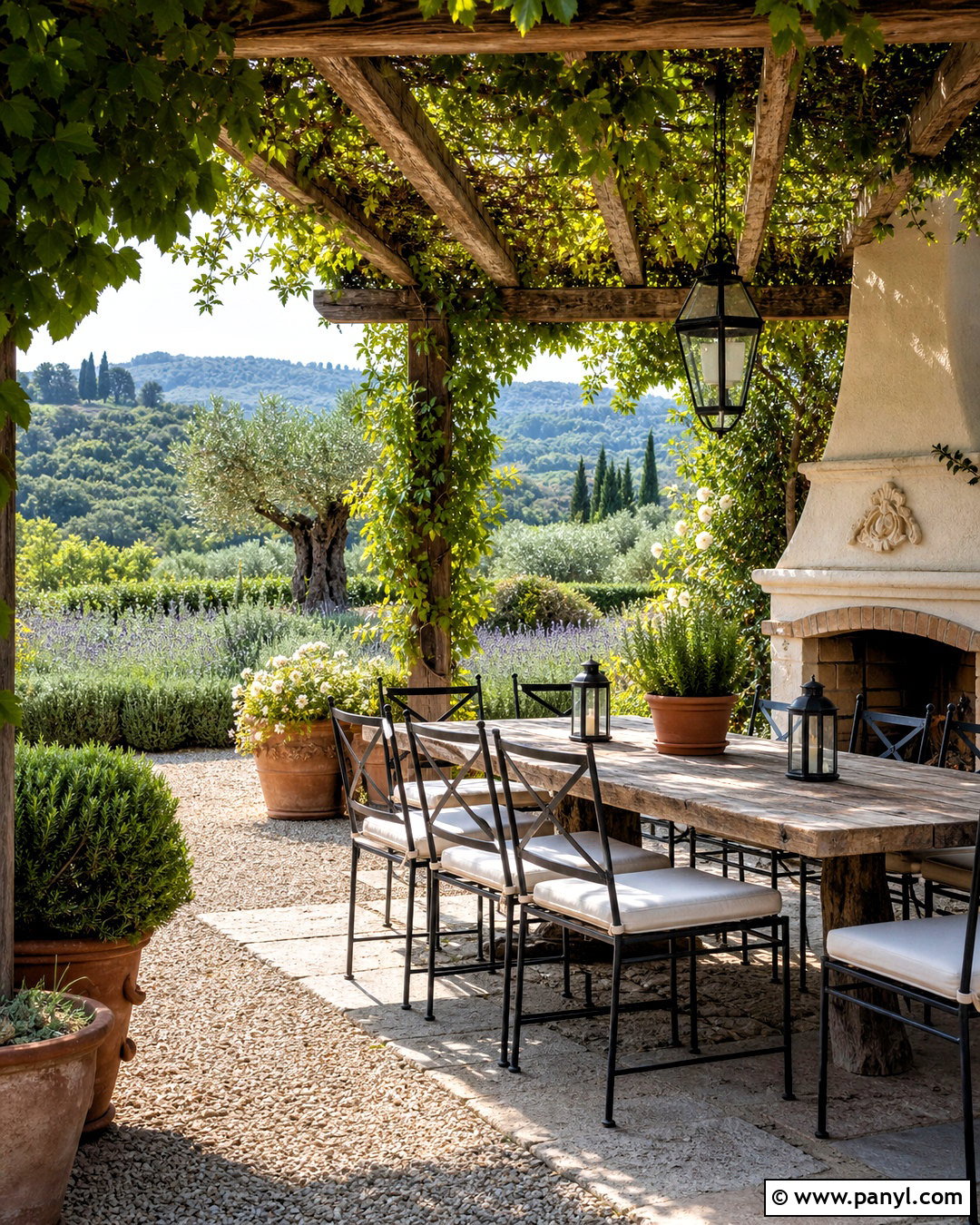
Outdoor meals feel more memorable beneath a rustic pergola surrounded by Mediterranean-inspired planting. Install a gravel or limestone patio large enough for a rectangular reclaimed-wood table and eight comfortable iron chairs. Use cream seat cushions to soften the metal and keep the setting visually light. Overhead, a cedar pergola can support climbing vines while creating partial shade. Hang one simple iron pendant above the table if weather-safe electrical service is available. Border the patio with terracotta pots, rosemary hedges, lavender, and compact olive trees. A nearby stucco wall or outdoor fireplace provides shelter and a strong focal point. Finish the table with plain ceramic serving pieces and linen napkins. The result is a complete Tuscan entertaining area that feels rustic, functional, and connected to the surrounding landscape.
20. Tuscan Decor On A Budget
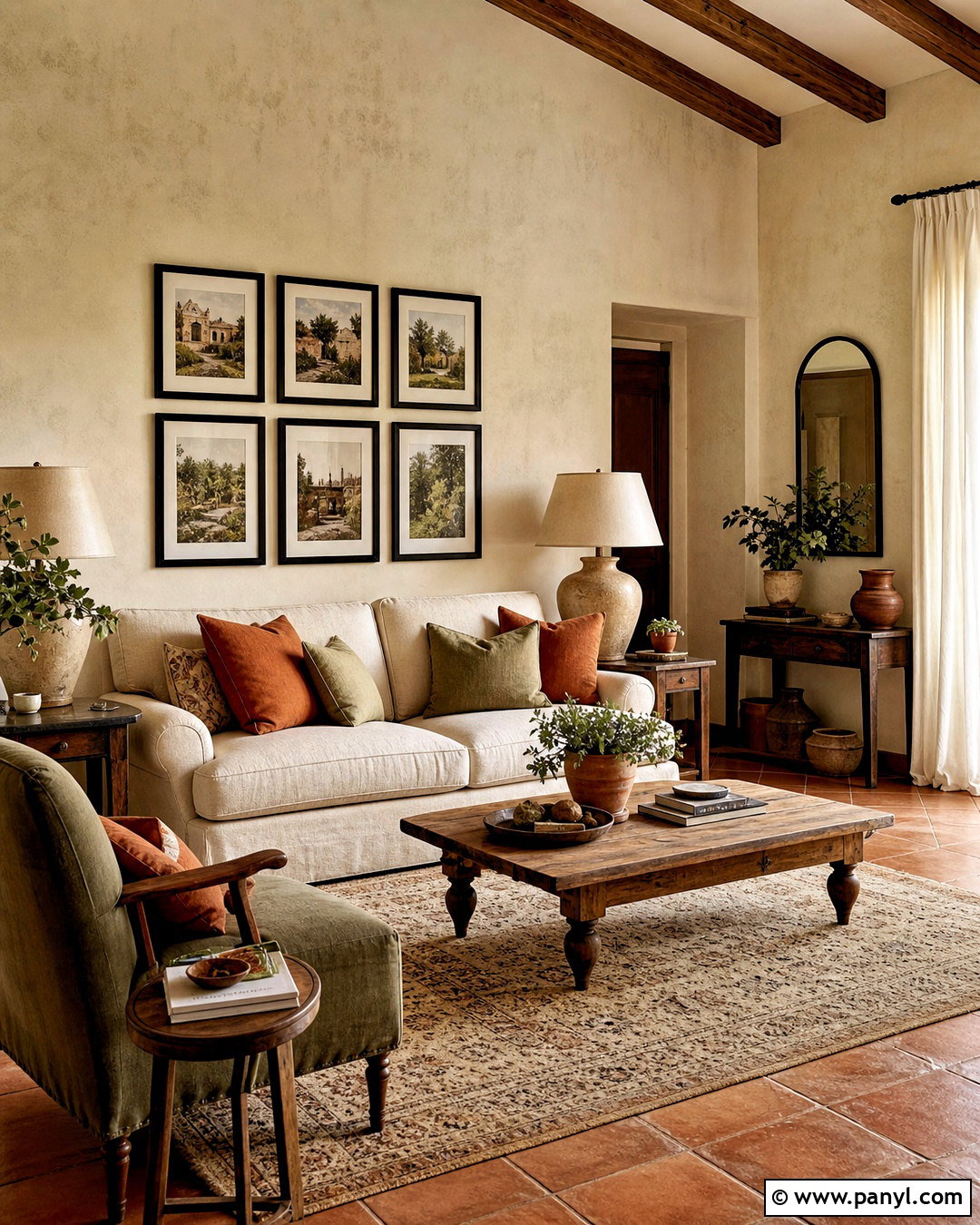
Budget-friendly Tuscan decor works best when one affordable plan connects the entire room. Paint the walls warm cream, then arrange an existing neutral sofa with thrifted wood side tables in similar medium-brown finishes. Add terracotta, olive, and beige through washable pillow covers and a vintage-look rug. Update lamps with linen shades and use matte black spray paint on compatible frames or hardware for subtle iron character. Instead of costly stonework, create texture with a limewash-inspired paint finish on one focal wall. Group inexpensive terracotta pots, cookbooks, and wooden bowls on a secondhand console rather than scattering small decorations everywhere. Natural cotton curtains complete the windows. By repeating a limited palette and choosing substantial used pieces, the finished room appears thoughtful, cohesive, and more expensive than it was.
Conclusion:
The most successful **20 Tuscan decor ideas** balance old-world warmth with the way modern households actually live. Natural stone, aged wood, terracotta, linen, leather, and iron provide character, but they need open layouts and thoughtful editing to feel current. Begin with one complete room rather than collecting unrelated Tuscan accessories. Establish a light earthy background, choose sturdy furniture, and repeat two or three accent colors across the space. Then introduce handcrafted details that look useful, personal, and naturally aged. Whether you prefer a rustic kitchen, peaceful bedroom, bright living room, or welcoming courtyard, restraint makes every material more noticeable. With comfortable proportions and authentic textures, Tuscan decor can feel relaxed, timeless, and genuinely at home.

Related Ideas and Inspiration:
Leave a Reply