
Cocoa brown brings warmth, depth, and comfort to rooms that feel flat or overly neutral. These 20 Cocoa Wall Color Ideas explore how this earthy shade can shape complete interiors, from bright living rooms to cozy bedrooms and polished home offices. Cocoa can lean reddish, taupe, or nearly espresso depending on the undertone and lighting. It also works with many materials, including pale oak, walnut, linen, velvet, brass, stone, and matte black metal. The key is balancing its visual weight with lighter surfaces, layered textures, and thoughtfully placed color. Test large paint samples throughout the day before choosing your final shade. Whether you prefer relaxed modern decor or traditional details, the complete room looks below make it easier to use these 20 Cocoa Wall Color Ideas.

1. Cocoa Living Room With Cream Sofa
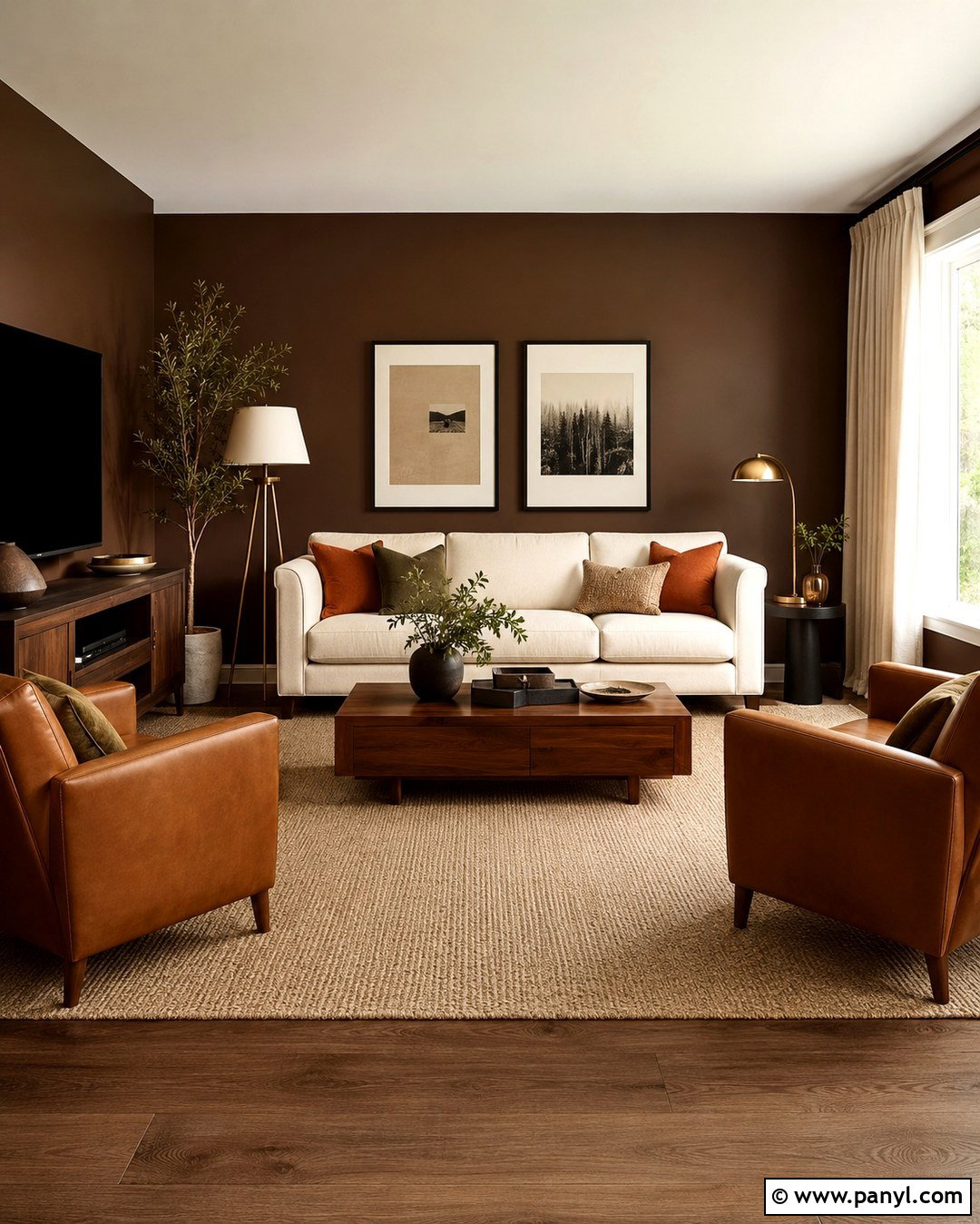
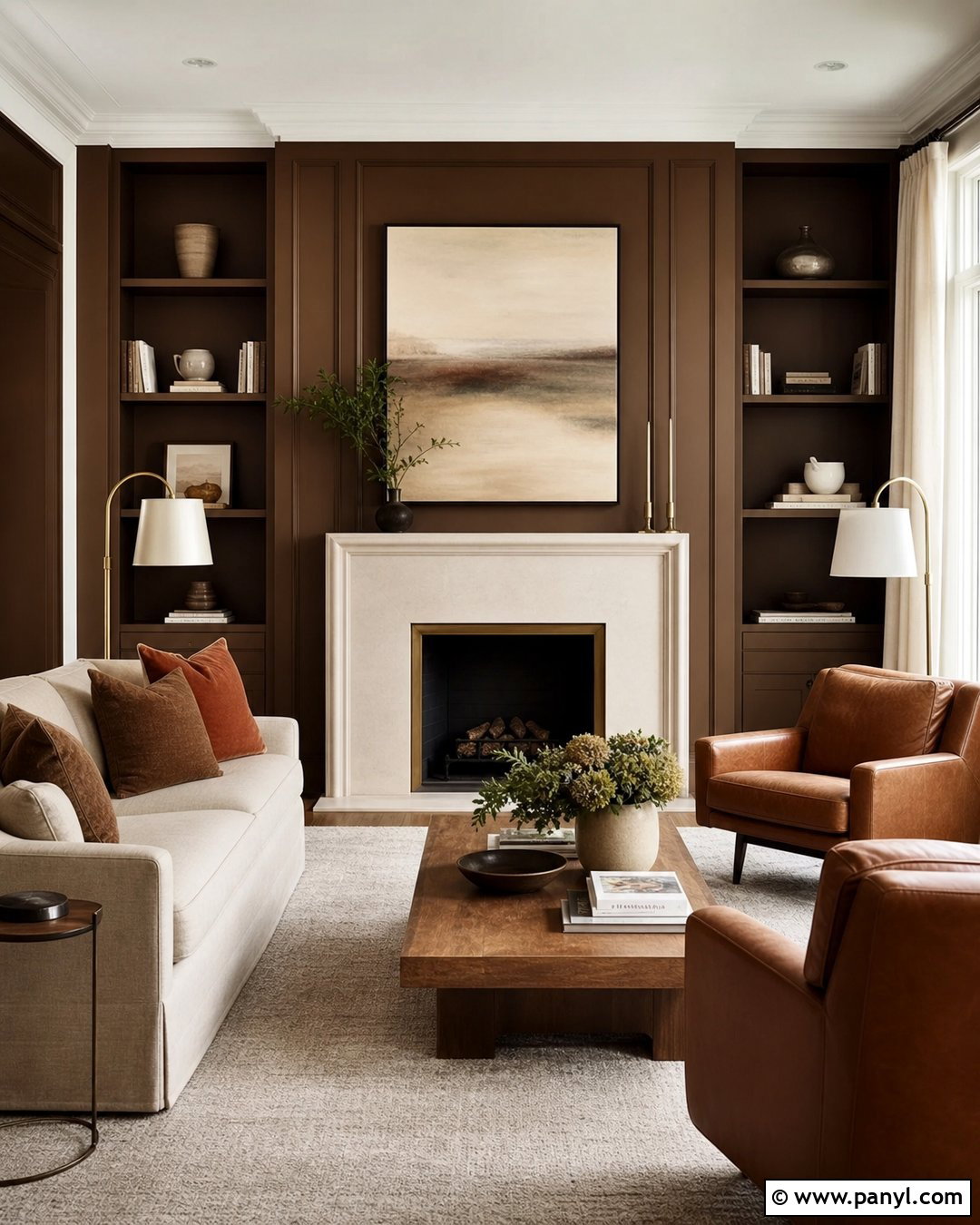
A cream sofa immediately softens the richness of cocoa living room walls. Choose a generously sized sofa in warm ivory performance fabric, then position it opposite a low walnut media console or fireplace. Add two caramel leather chairs to create balanced conversation seating without making the room feel overly brown. An oatmeal wool rug and pale linen curtains introduce lighter layers from floor to ceiling. For contrast, use matte black curtain rods, side tables, and picture frames. Brass lamps can add a gentle polished finish. Complete the room with rust, olive, and cream pillows, plus oversized abstract artwork containing soft beige and terracotta. This full palette keeps cocoa walls grounded, comfortable, and bright enough for everyday family living.
2. Cocoa Bedroom With Linen Bedding
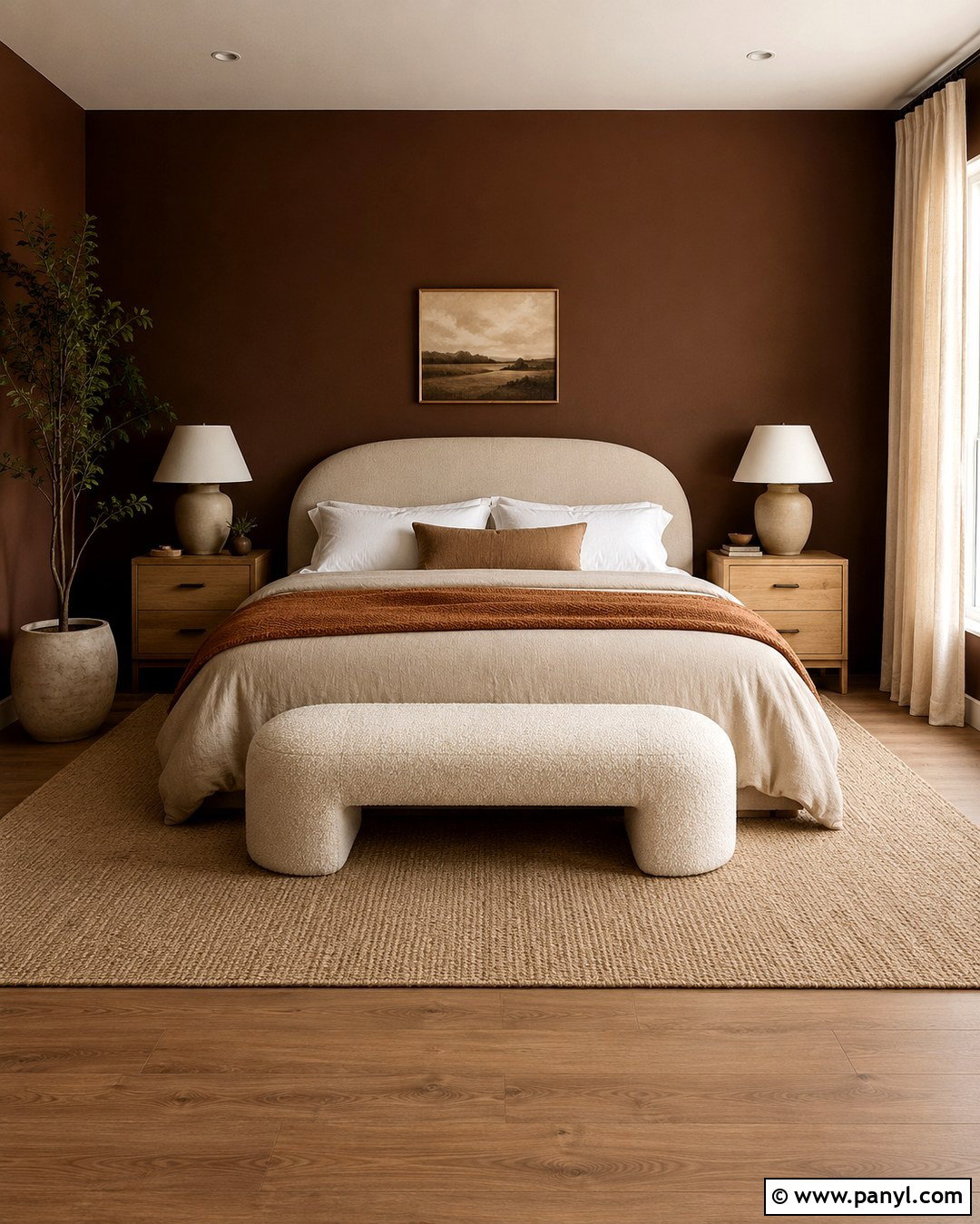
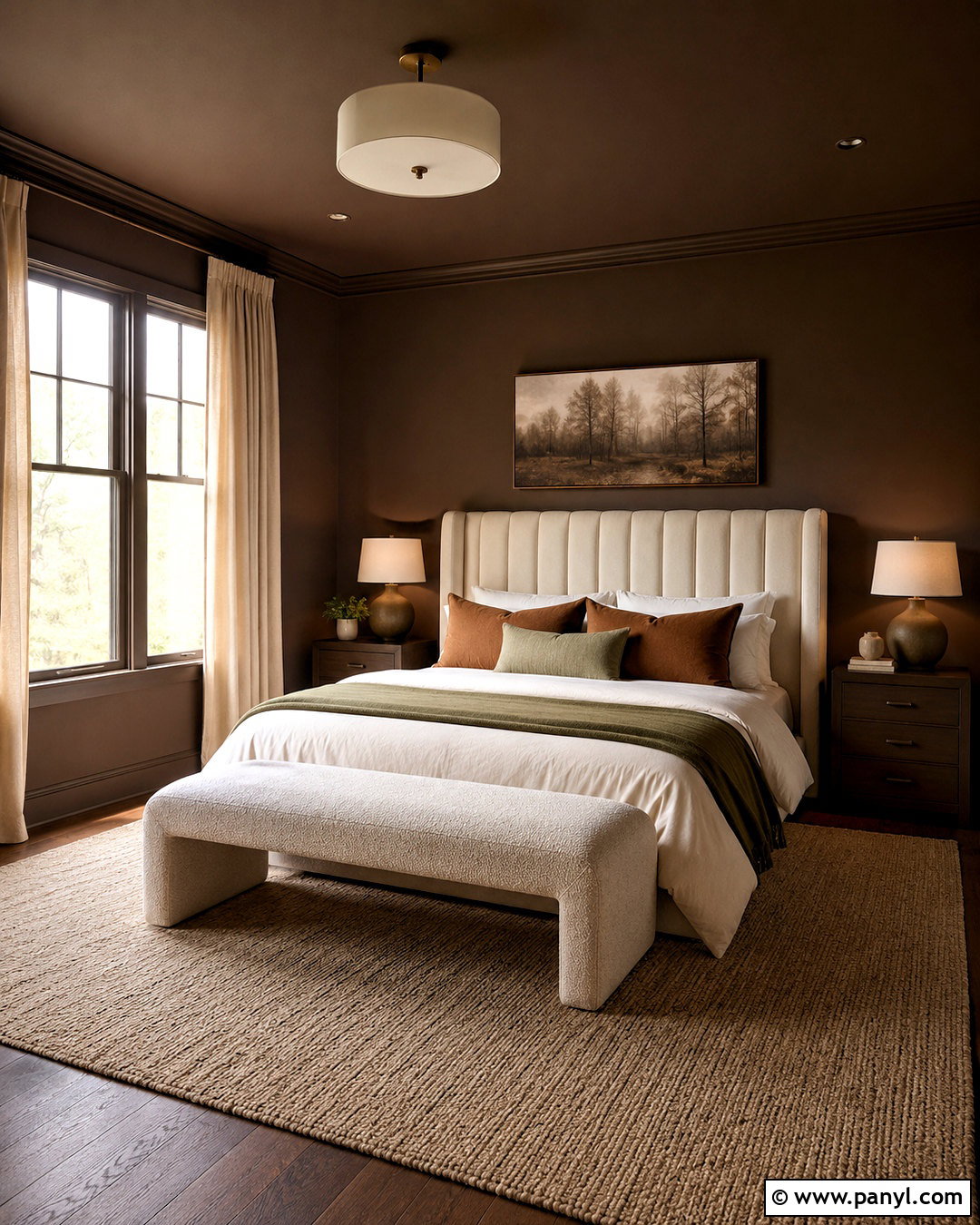
Imagine entering a bedroom where cocoa walls create a quiet, enveloping backdrop around a soft upholstered bed. Choose a curved oatmeal headboard and dress it with white sheets, flax linen bedding, and a cinnamon-colored throw. Light oak nightstands prevent the dark wall color from overwhelming the room, while ceramic lamps provide a simple organic accent. Hang natural linen curtains close to the ceiling to emphasize height and filter daylight gently. A large beige rug should extend beneath the bed to brighten the flooring. Add one bench in warm ivory boucle and minimal artwork in cream mats. Antique brass hardware introduces subtle character. The finished bedroom feels restful and layered, with enough pale fabric and natural wood to balance the cocoa paint.
3. Cocoa Dining Room With Brass Accents
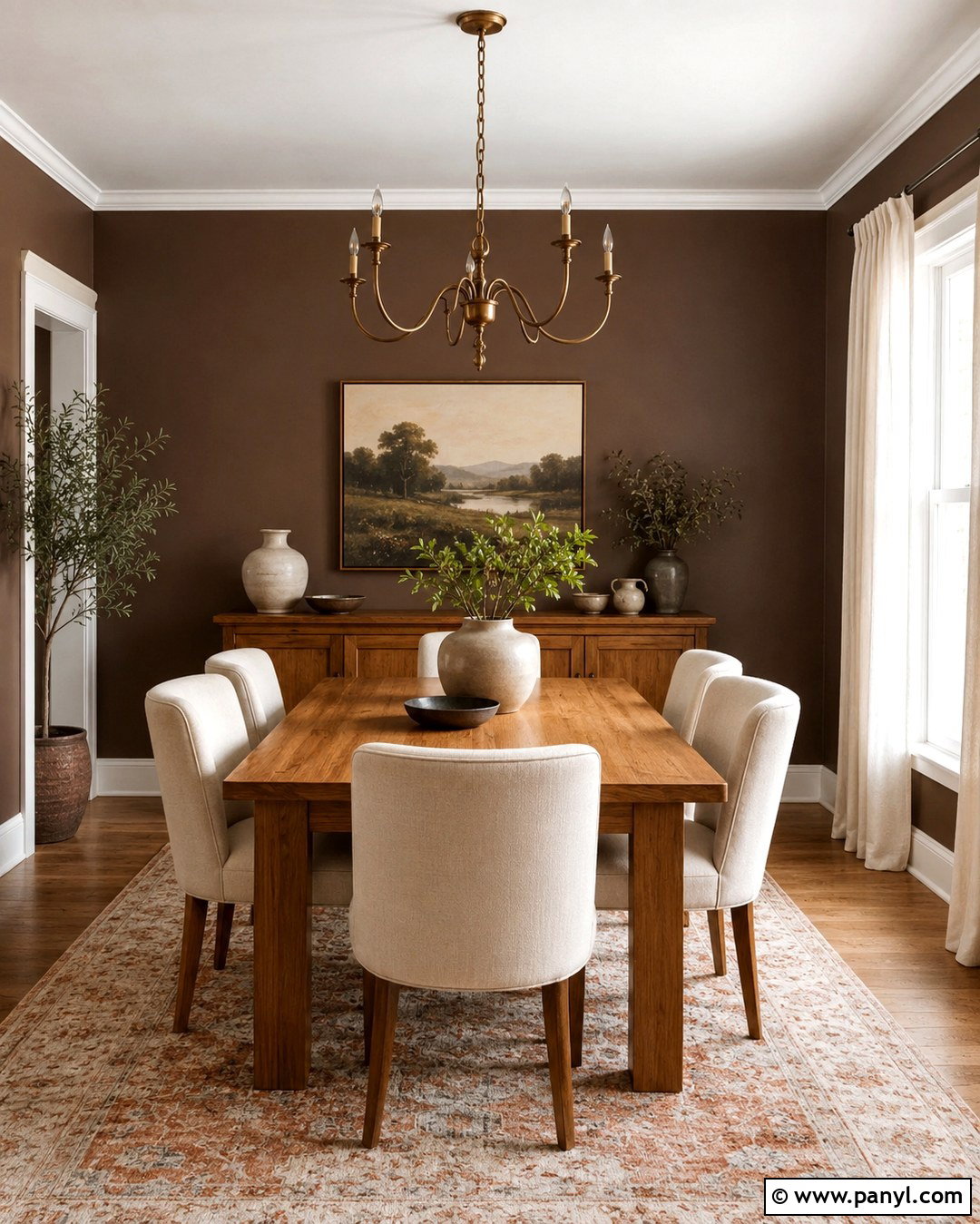
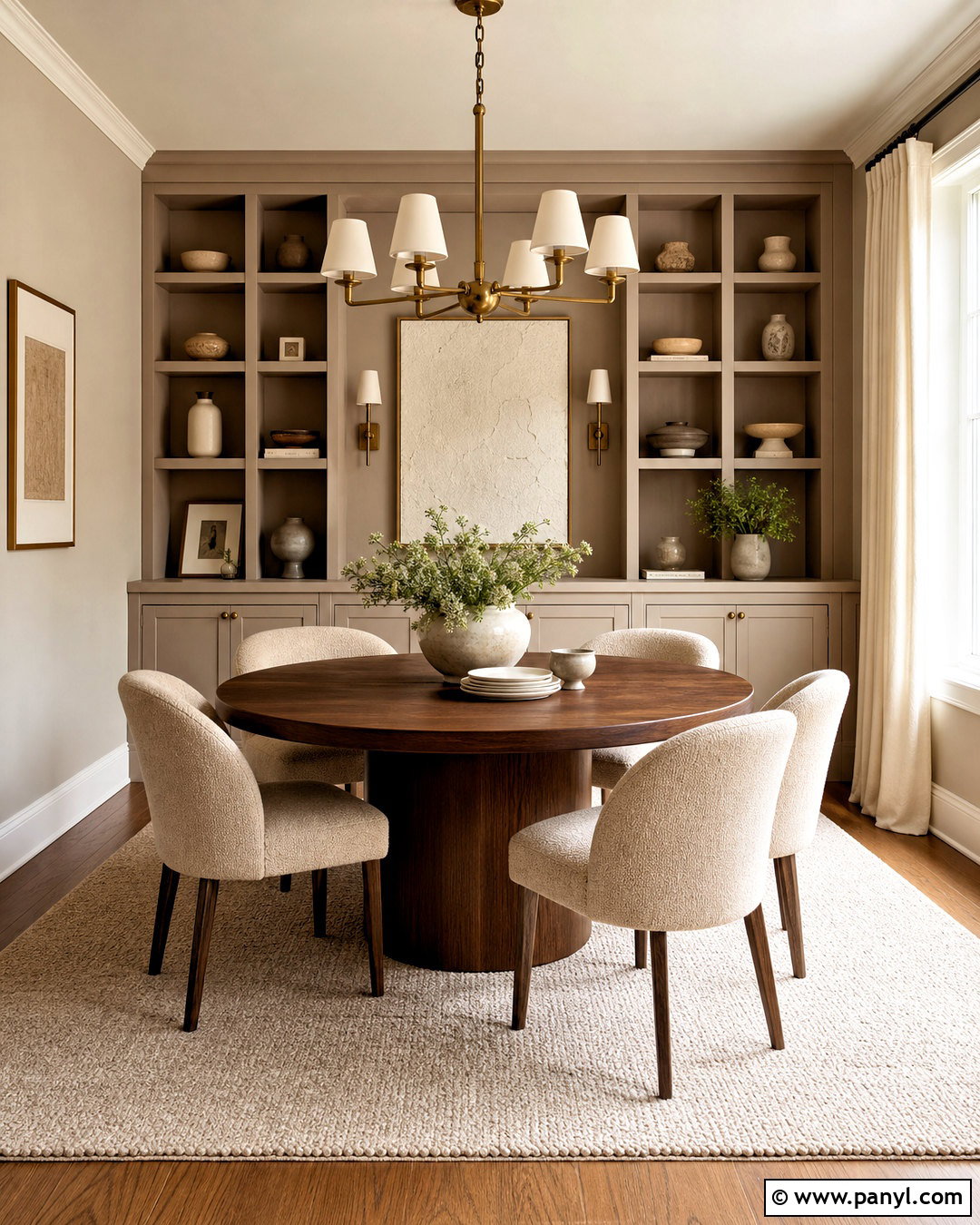
Cocoa walls can turn an ordinary dining area into a welcoming room that feels polished without becoming formal. Center a round or rectangular medium-toned oak table beneath a sculptural aged-brass chandelier. Surround it with cream upholstered chairs or woven cane seating to keep the arrangement visually light. A vintage-inspired rug in muted rust, beige, and dusty blue can define the dining zone and add gentle pattern. Use an oak or walnut sideboard against one wall, topped with ceramic vessels and a large softly colored landscape. Warm white curtains and trim provide a clean frame around the darker paint. Finish with brass candleholders and simple greenery. The combination feels collected and practical, making it suitable for casual meals, celebrations, and everyday entertaining.
4. Cocoa Home Office With Walnut Furniture
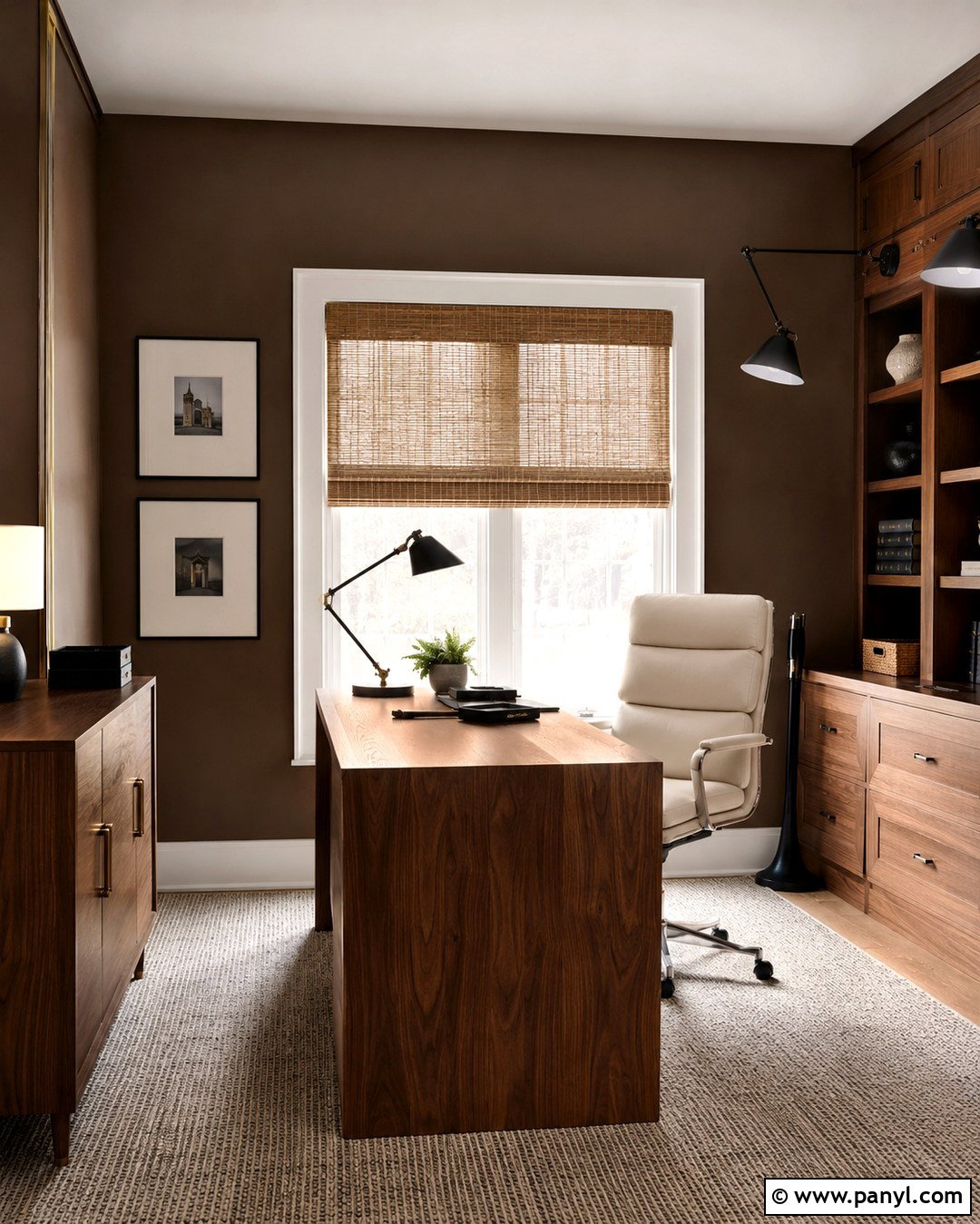
Need a home office that feels focused but not cold? Cocoa walls provide a strong background for streamlined walnut furniture and practical storage. Place a substantial walnut desk near the window, where natural light can illuminate the work surface. Behind it, install matching bookcases or closed cabinets with aged-brass hardware. A cream ergonomic chair, rather than a dark leather option, creates needed contrast. Use a flat-weave rug in beige and charcoal to anchor the layout. Add an adjustable black desk lamp and framed artwork with white mats for crisp definition. Woven shades filter glare while complementing the wood. Keep accessories minimal and organized in matching trays and boxes. The completed office feels warm, professional, and visually calm during long working hours.
5. Cocoa Kitchen With White Cabinets
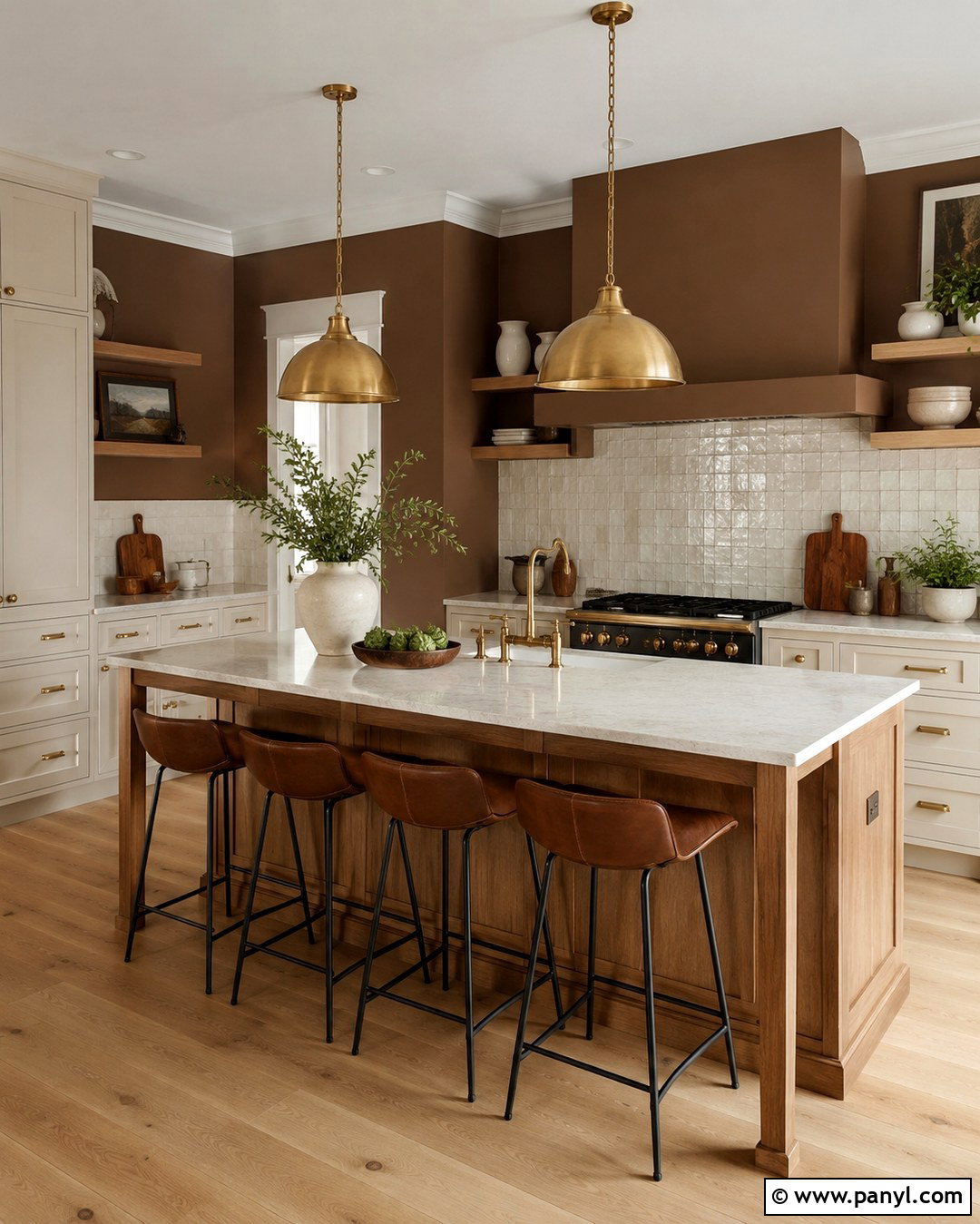
Cocoa kitchen walls offer an approachable alternative to gray or beige, especially when paired with warm white cabinetry. Keep the main cabinets creamy white, then use medium oak for the island to connect with the earthy wall color. Choose lightly veined quartz countertops and a handmade ivory tile backsplash that reflects natural and artificial light. Brushed brass pulls and pendant lights add warmth without competing with the cocoa backdrop. Saddle-colored counter stools provide comfortable seating and another natural brown layer. For flooring, consider pale oak or large warm beige tiles. Open shelves can display white dishes, wooden boards, and simple pottery. This complete scheme feels bright and grounded, with cocoa paint adding depth around the cleaner white and stone surfaces.
6. Cocoa Bathroom With Travertine Tile
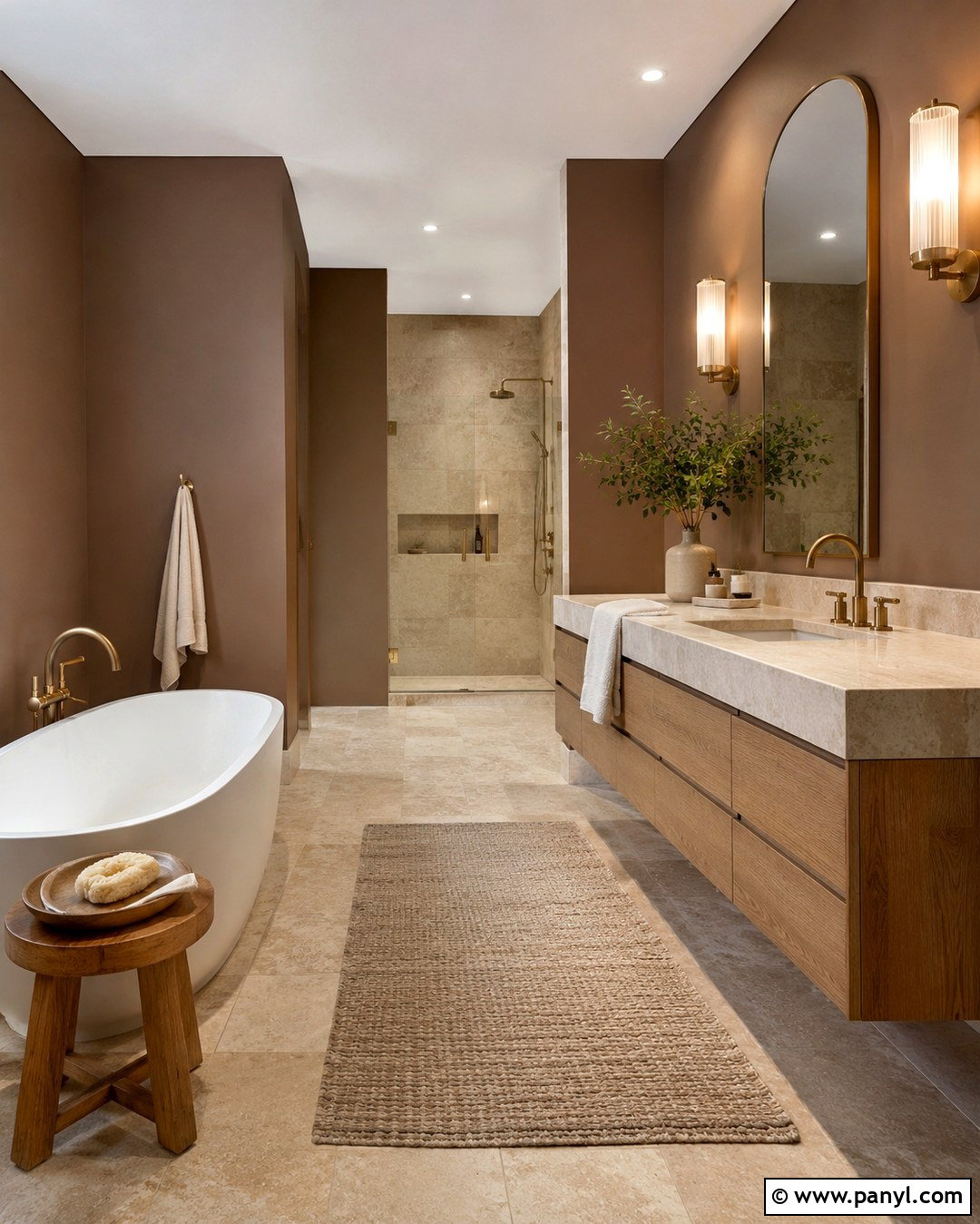
Soft cocoa paint and honed travertine create a bathroom palette that feels natural, warm, and quietly refined. Use the cocoa wall color above a travertine tile wainscot or on the walls surrounding a freestanding ivory tub. A floating white oak vanity keeps the floor visible and prevents the darker color from feeling heavy. Select a cream stone countertop, an undermount sink, and brushed-brass fixtures for a cohesive finish. An arched mirror introduces a gentle shape above the vanity. Add ribbed glass sconces that produce clear, flattering light. Ivory towels, a beige bath mat, and one wooden stool complete the room without clutter. Because stone varies naturally in tone, choose travertine containing beige and light brown markings that connect smoothly with the cocoa walls.
7. Cocoa Entryway With Black Accents
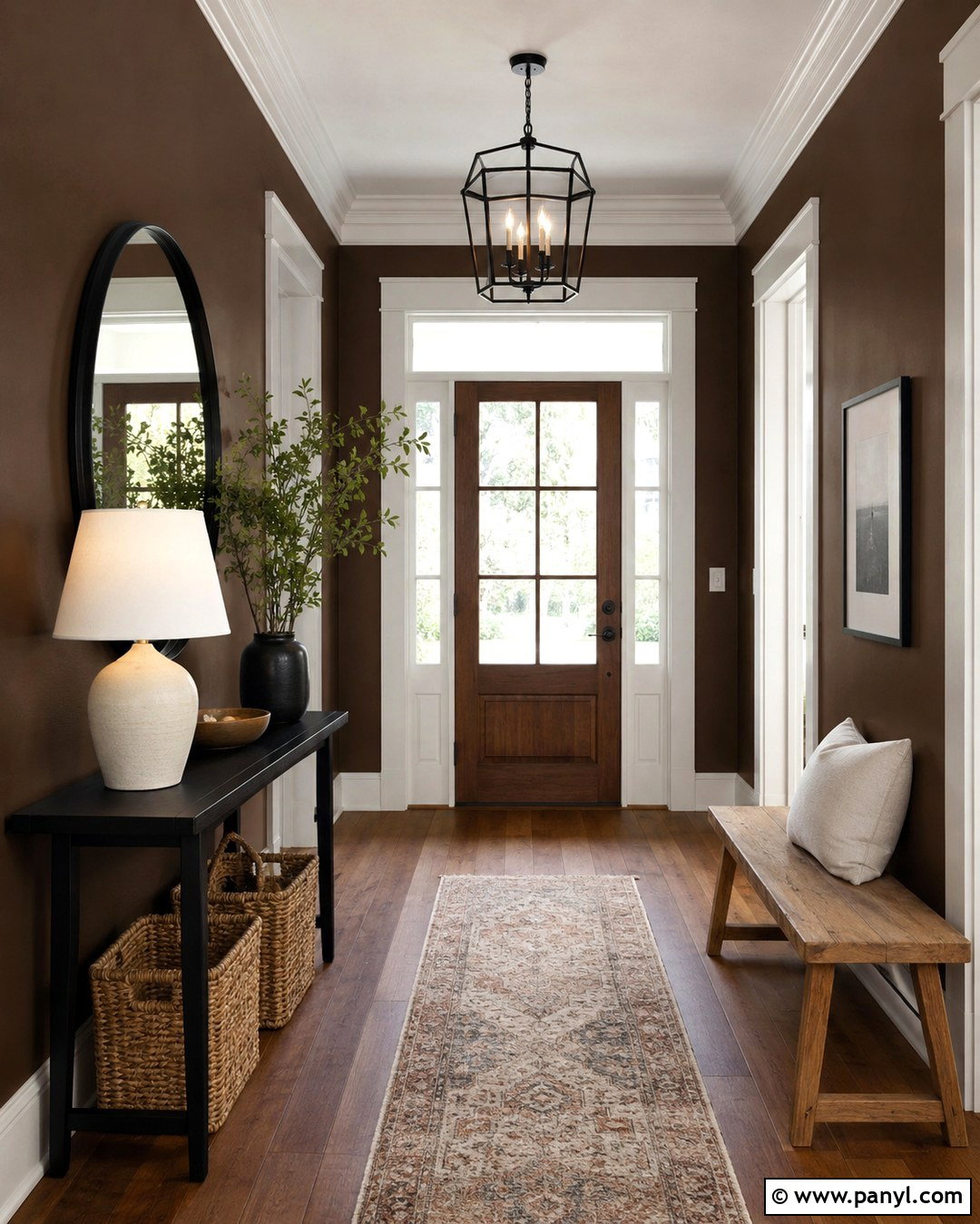
The entryway offers an ideal place to try cocoa paint because the rich color creates an immediate sense of definition. Pair the walls with a narrow black console table, a large round black-framed mirror, and a simple lantern-style ceiling fixture. A vintage runner containing cream, rust, and charcoal can lead visitors into the adjoining rooms. Use warm white on the ceiling and trim to maintain clean boundaries and reflect available light. Under the console, place two woven baskets for shoes, bags, or seasonal accessories. A ceramic lamp and a small leafy branch provide softness. If space allows, include a slim oak bench with an ivory cushion. This complete arrangement gives a basic entrance structure, storage, and character while allowing the cocoa wall color to remain the focal point.
8. Cocoa Accent Wall With Sage Green
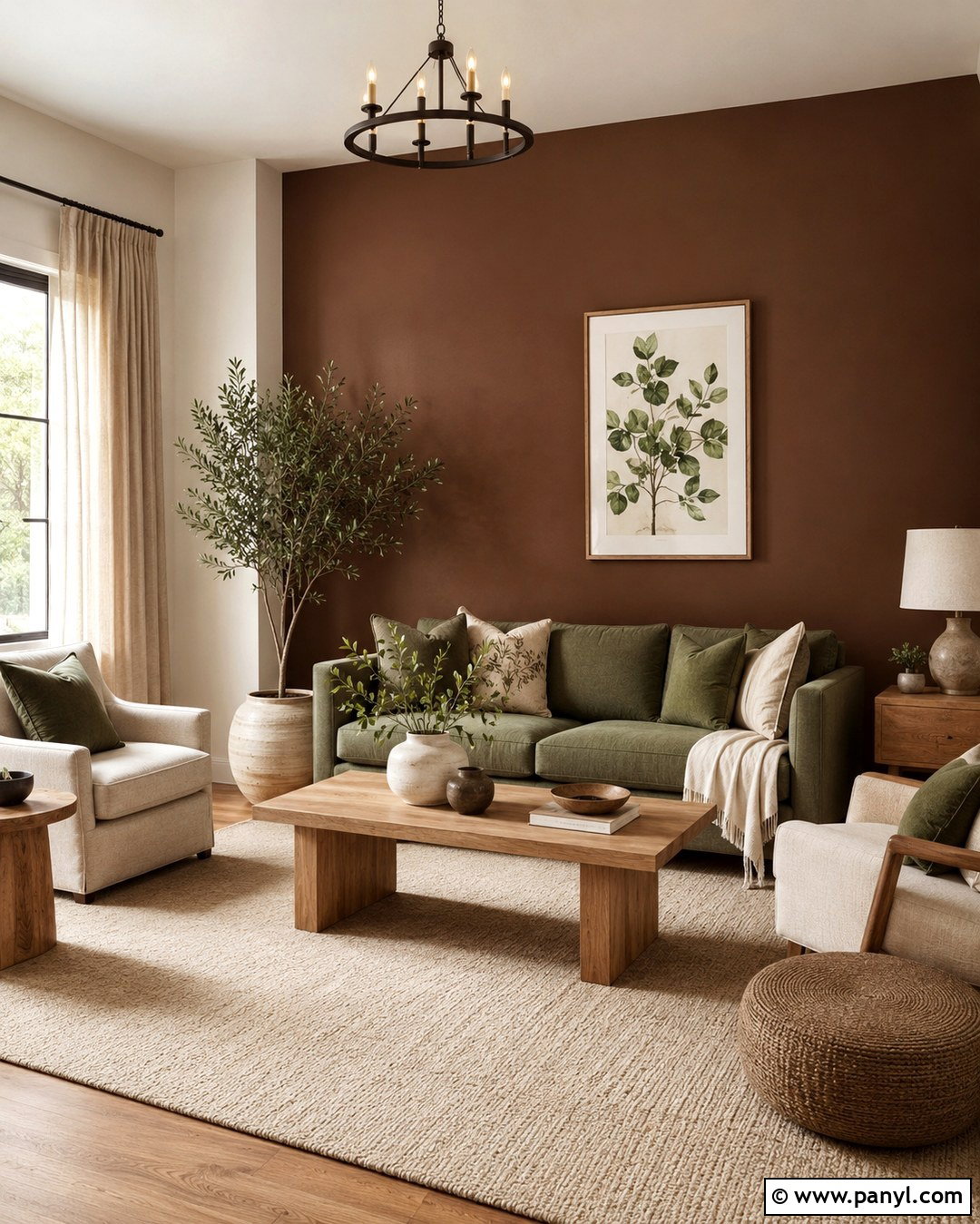
Cocoa and sage green form an earthy combination that works especially well in a relaxed living room or bedroom. Paint the main focal wall cocoa, then use a warm off-white across the remaining walls to preserve brightness. Place a muted sage sofa or upholstered bed against the brown surface so both colors remain clearly visible. Add light oak furniture, natural linen curtains, and an ivory textured rug. Small accents in dark bronze can outline the softer palette through lamps, frames, and hardware. Bring in deeper olive through pillows or a throw, but avoid using too many similar greens. Cream pottery and simple botanical artwork complete the look. The finished room feels connected to nature while remaining modern, balanced, and easy to personalize.
9. Cocoa Walls With Blush Pink
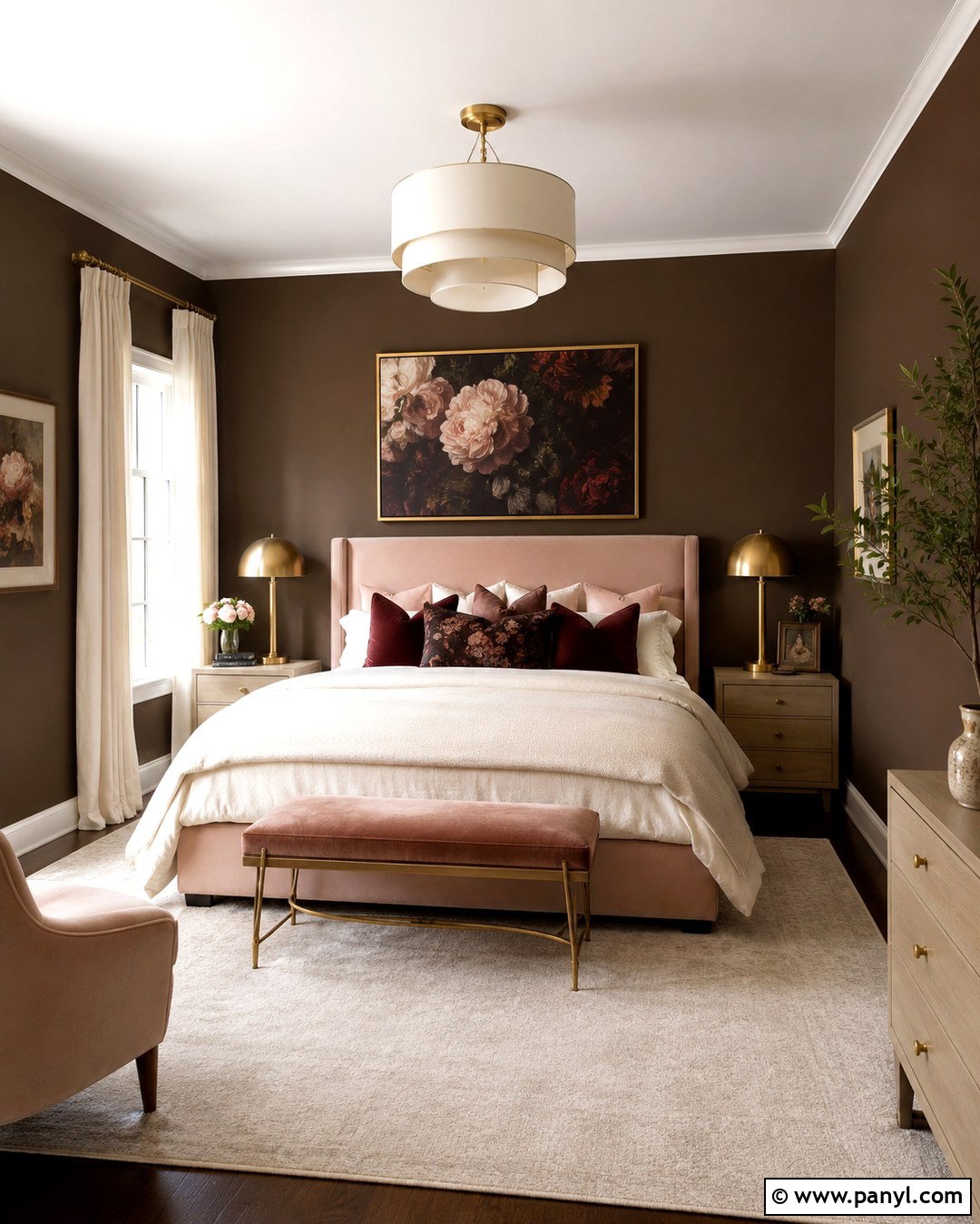
Blush pink gives cocoa walls a softer, more inviting character without making the room feel overly sweet. Start with a cocoa-painted bedroom or sitting room, then add a dusty blush upholstered chair, bench, or bed frame. Use ivory as the primary balancing neutral through curtains, bedding, and a large area rug. Pale oak furniture keeps the arrangement fresh, while antique brass lighting reinforces the warm undertones. Choose artwork featuring muted rose, beige, burgundy, and cream rather than bright pink. A few velvet pillows can introduce deeper color and richer texture. Keep the ceiling and trim warm white for contrast. This full scheme works best when blush appears in several controlled places, allowing the cocoa walls to remain strong while the lighter pink details provide softness.
10. Cocoa Walls With Navy Blue
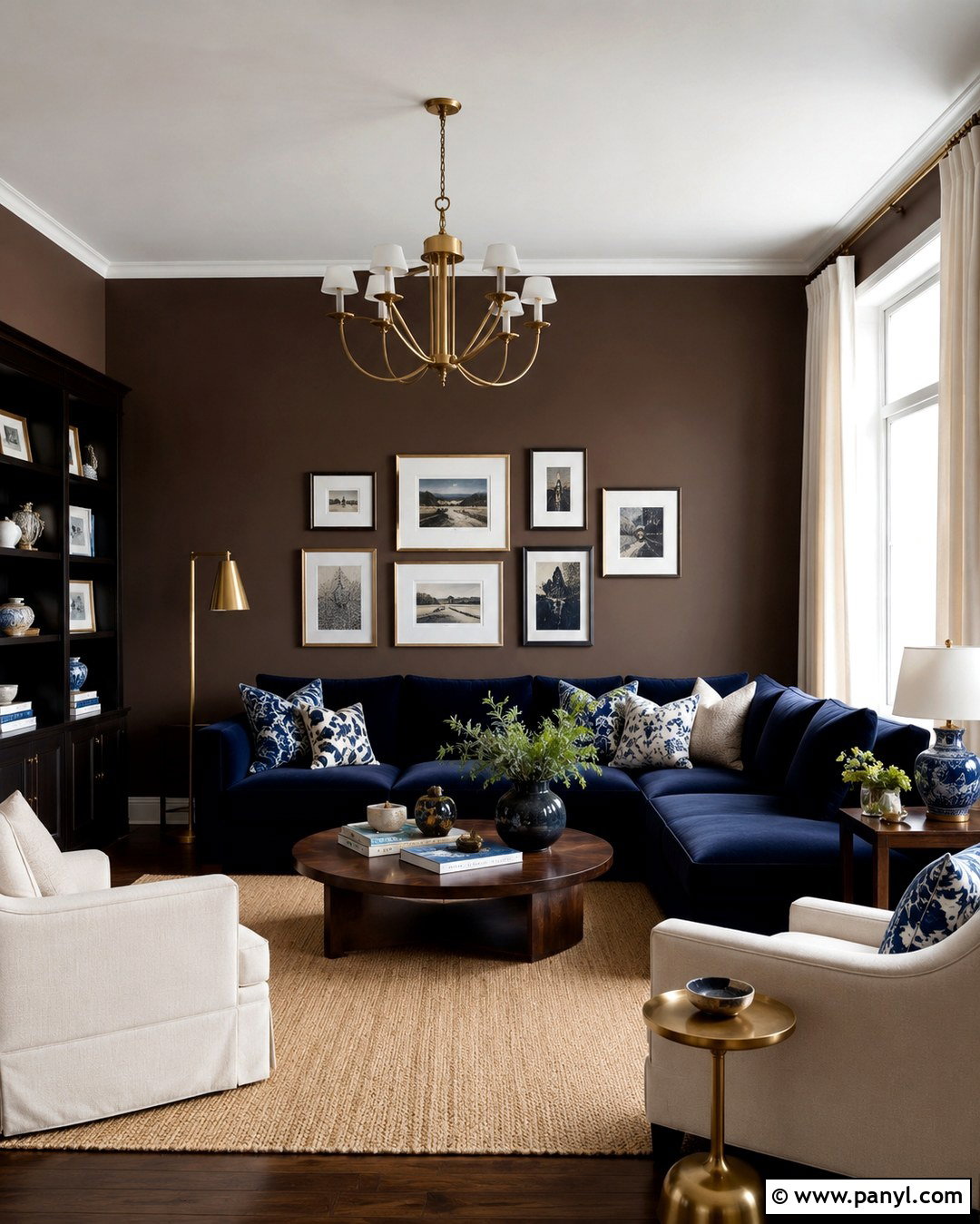
For a dramatic room that still feels balanced, combine cocoa walls with deep navy blue upholstery. A navy velvet sectional or upholstered bed creates rich contrast while sharing the same visual weight as the wall color. Introduce cream through a large rug, window treatments, and decorative pillows so the room does not become too dark. Walnut furniture supports the traditional depth of the palette, while polished brass lighting brings brightness. Add one or two medium blue accents through artwork or patterned textiles to connect the darkest navy with the surrounding colors. Warm white trim gives the edges a crisp finish. The completed look feels tailored and confident, making this combination particularly effective in living rooms, libraries, bedrooms, or sophisticated home offices.
11. Cocoa Walls With Terracotta
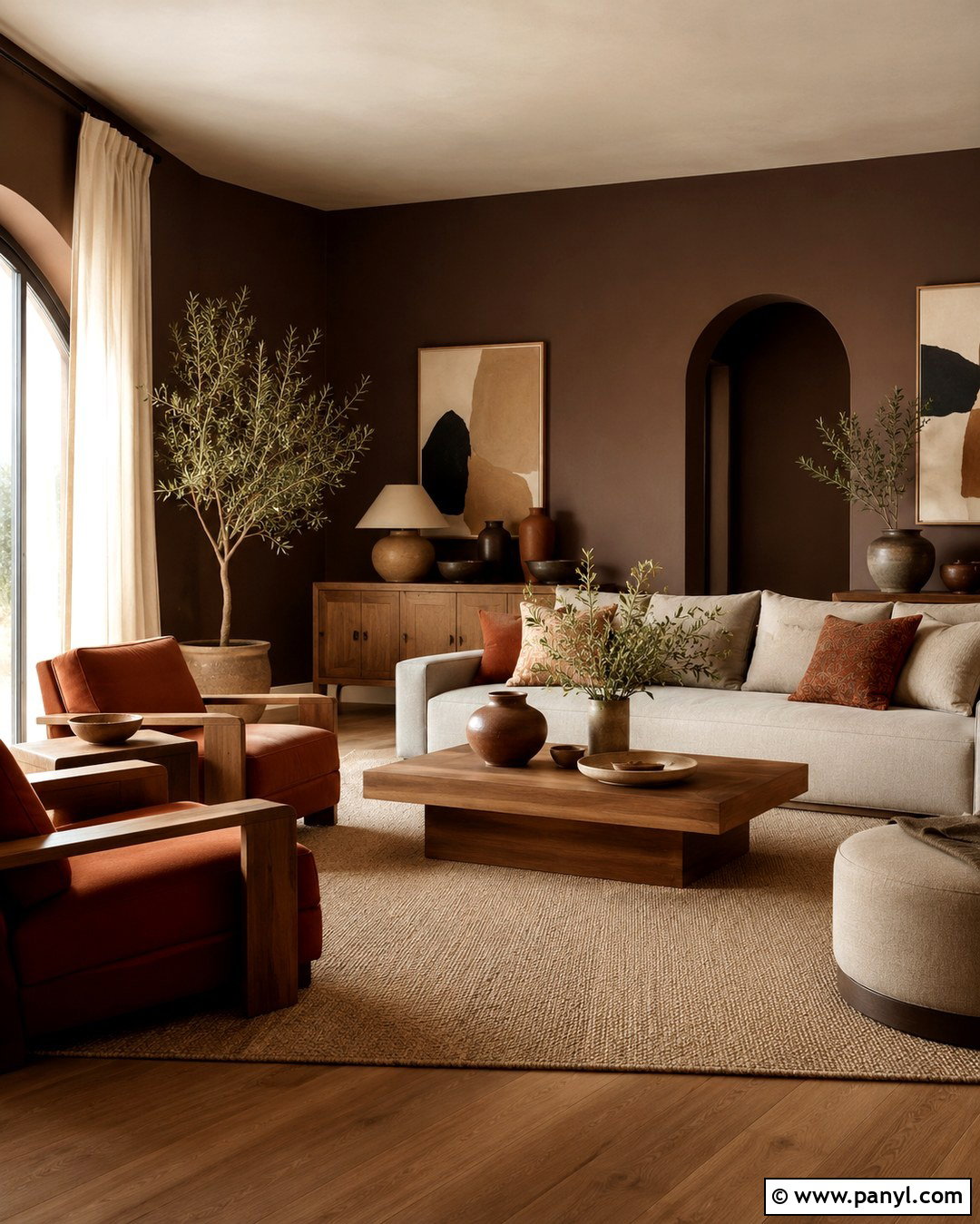
Earthy terracotta accents bring out the warmer red notes often found in cocoa paint. Build the room around cocoa walls, a flax-colored sofa, and a large natural fiber or oatmeal wool rug. Add terracotta through a pair of lounge chairs, patterned pillows, ceramic lamps, or linen curtains. Medium oak furniture provides another warm layer without duplicating the depth of the walls. Use cream upholstery and warm white trim to create breathing room between the richer shades. A few olive green plants can add a cool natural contrast. Choose simple artwork with clay, sand, brown, and muted black shapes. This coordinated living room feels sun-warmed and relaxed, with enough variation in tone and texture to keep the brown-and-orange palette from appearing flat.
12. Cocoa Walls With Mustard Yellow
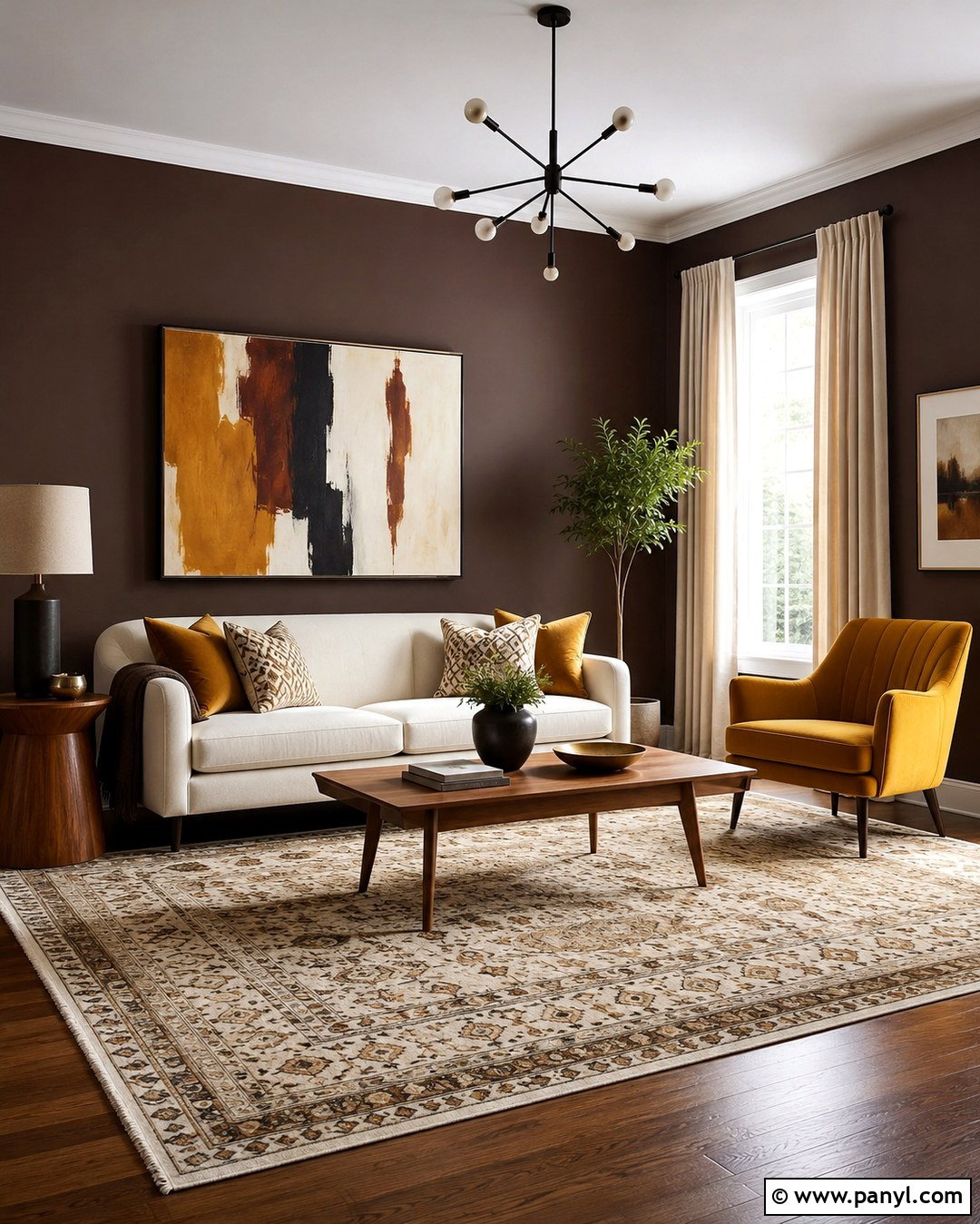
A controlled touch of mustard yellow can energize cocoa walls and make a darker room feel more expressive. Begin with a cocoa-painted living room, then add one mustard velvet chair or a compact upholstered bench as the main accent. Keep larger furniture neutral with an ivory sofa and a walnut coffee table. A patterned rug containing beige, brown, and small golden details can connect the colors without overwhelming the floor. Use black metal lighting and curtain hardware to sharpen the warm palette. Linen drapes in creamy white will reflect daylight and frame the windows cleanly. Repeat mustard only through two or three smaller objects, such as pillows or artwork. The result feels cheerful and collected rather than heavily themed or excessively colorful.
13. Cocoa Walls With Teal Accents
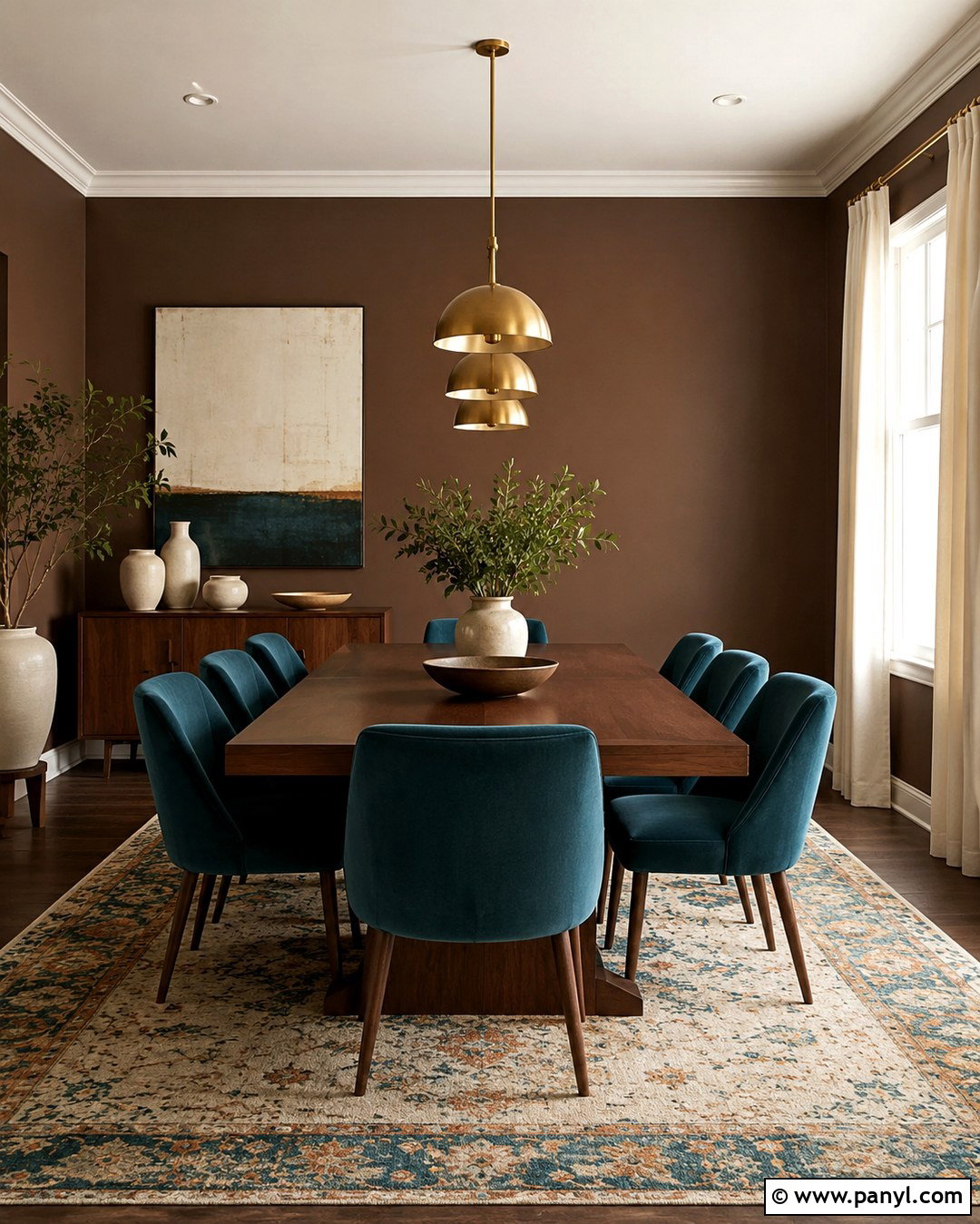
Deep teal introduces a cool jewel tone that stands out beautifully against warm cocoa walls. Use this pairing in a dining room with cocoa paint, a walnut table, and teal upholstered chairs. Alternatively, anchor a living room with a teal velvet sofa and cream accent seating. Brass light fixtures provide a warm transition between the brown and blue-green surfaces. Choose a beige rug with restrained teal and rust details to connect the full palette. Warm white curtains help maintain brightness, while dark wood furniture supports the room’s richer character. Limit additional colors to cream, black, and small touches of muted orange. With a clear balance of dark and light elements, the completed space feels distinctive and sophisticated without losing the comfortable quality associated with cocoa brown.
14. Cocoa Walls With Warm White Trim
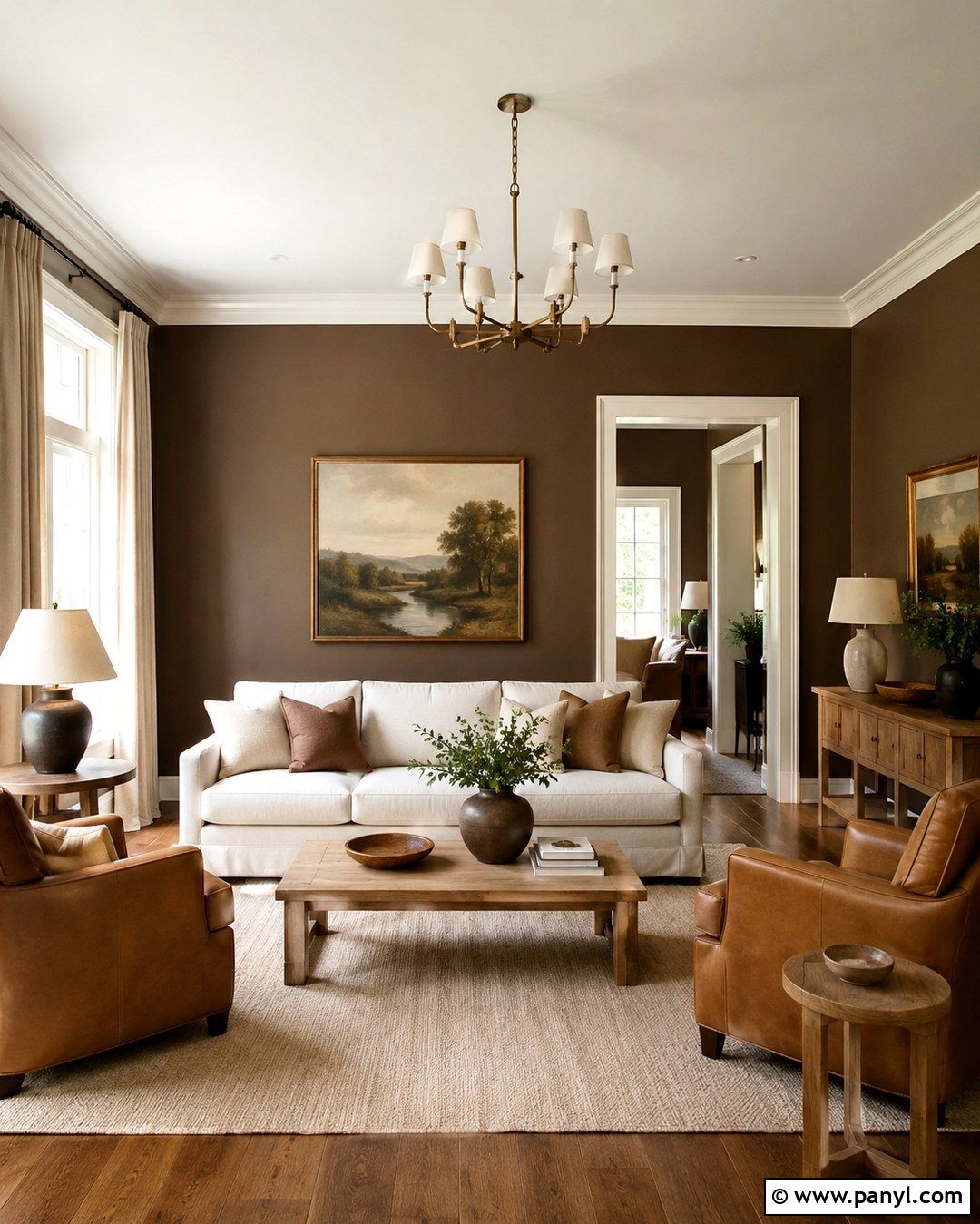
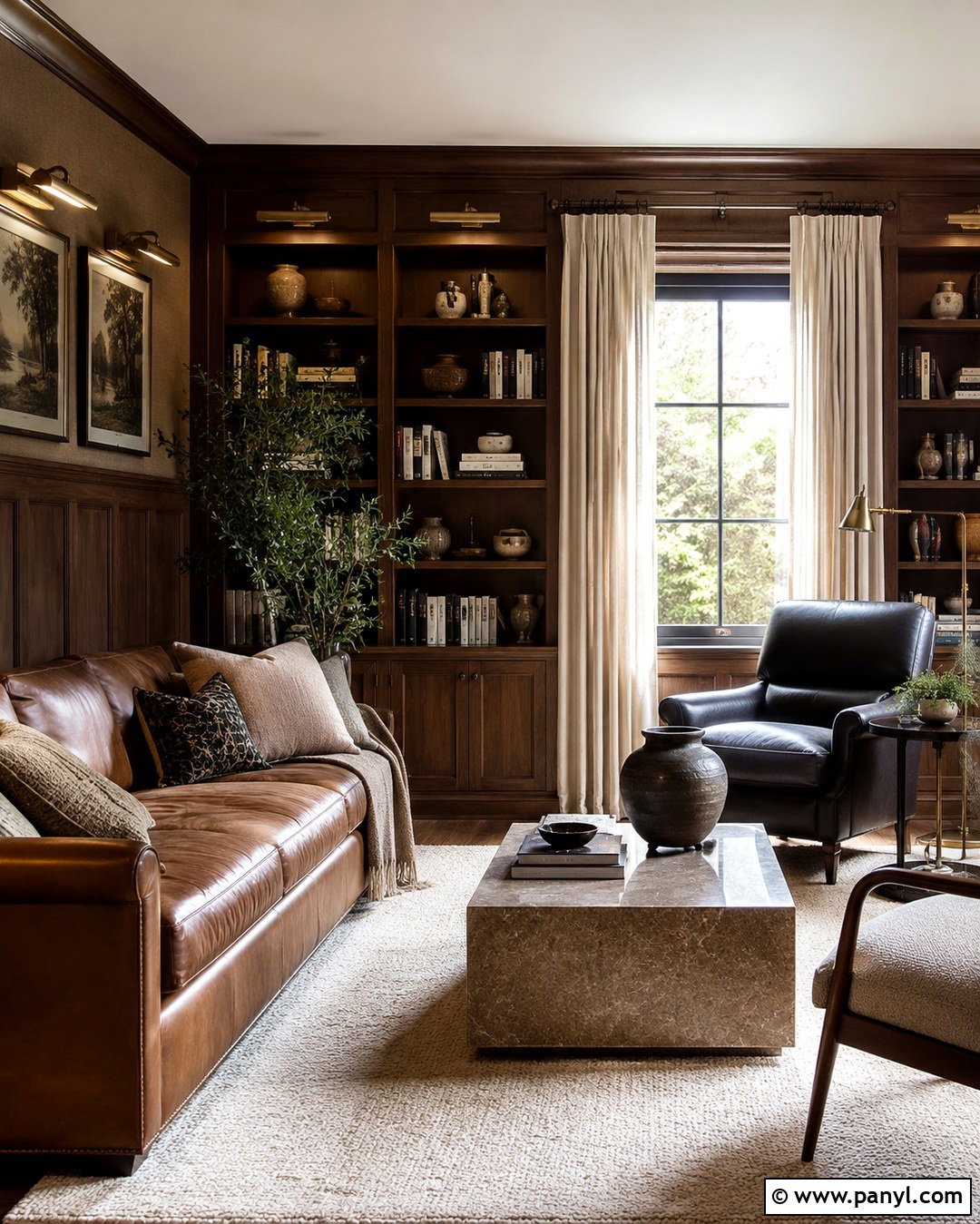
Crisp architectural details become more noticeable when warm white trim surrounds cocoa walls. This approach is especially effective in rooms with substantial baseboards, window casings, crown molding, or built-in shelves. Paint the walls a medium cocoa brown, then choose creamy white rather than stark blue-white for the woodwork. Furnish the space with an ivory sofa, light oak tables, and a beige wool rug to repeat the trim’s brightness. Add caramel leather and dark bronze accents for definition. Full-length flax curtains should hang inside or beside the white window casing without hiding it completely. Traditional landscape artwork or modern neutral prints can finish the walls. The complete design feels structured, bright, and timeless while allowing the cocoa paint to emphasize every architectural line.
15. Cocoa Color Drenched Room
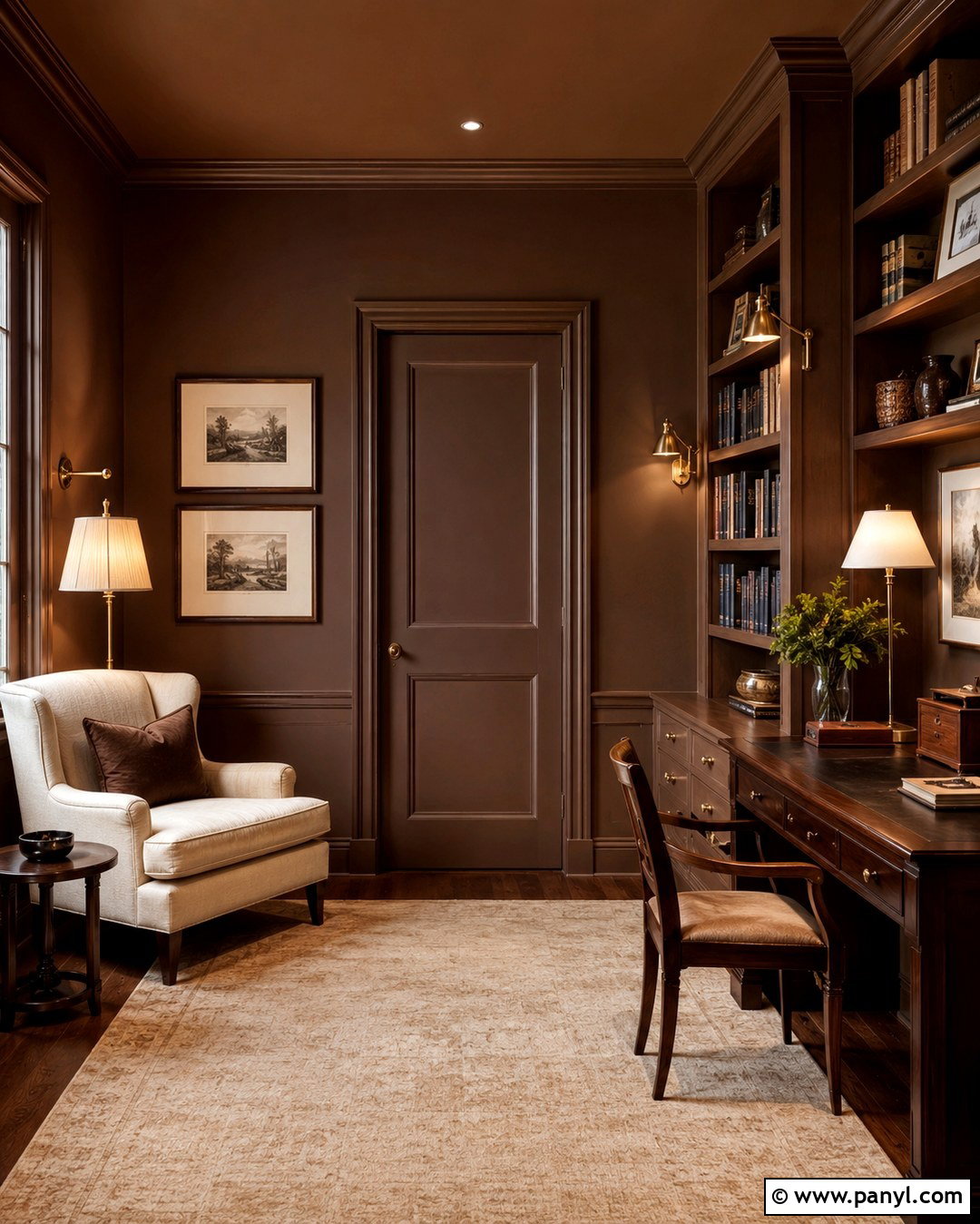
Color drenching creates a cocooning effect by carrying cocoa paint across the walls, trim, doors, and ceiling. Use this approach in a small library, powder room, media room, or home office where an intimate atmosphere feels appropriate. Vary the paint sheen to prevent the surfaces from looking flat. Choose matte or eggshell for walls and satin for trim and doors. Furnish the room with a cream sofa or upholstered chair, a warm beige rug, and medium walnut storage. Brass sconces and table lamps will reflect light against the deep background. Add artwork with broad ivory mats to introduce visual breaks. Since every painted surface shares one color, prioritize lighter textiles and clear lighting. The resulting room feels immersive, intentional, and far more finished than a standard accent wall.
16. Cocoa Walls With Picture Frame Molding
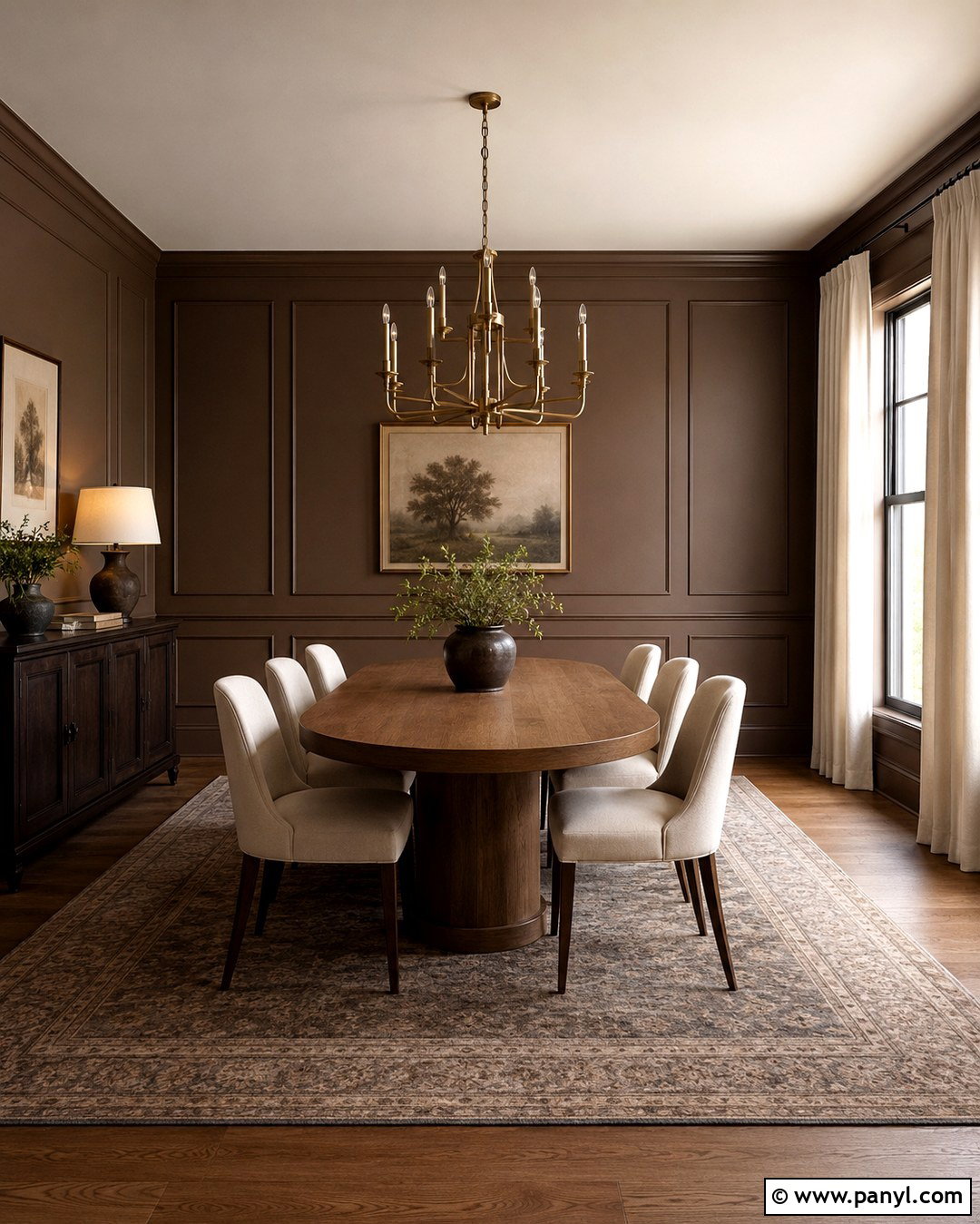
Picture frame molding gives cocoa walls depth and architectural character, even in a newer home with plain drywall. Install rectangular molding panels across the walls, then paint the wall and molding in the same cocoa shade for a seamless finish. In a dining room, pair this treatment with an oval oak table, cream upholstered chairs, and a softly patterned vintage rug. A large brass chandelier should hang at a comfortable height above the table. Use ivory curtains and warm white on the ceiling to prevent the detailed walls from feeling too formal or dark. Minimal framed artwork can sit inside selected panels without covering every section. The completed room feels customized and dimensional while keeping the furniture, lighting, and decorative details approachable enough for everyday use.
17. Cocoa Walls With Natural Wood
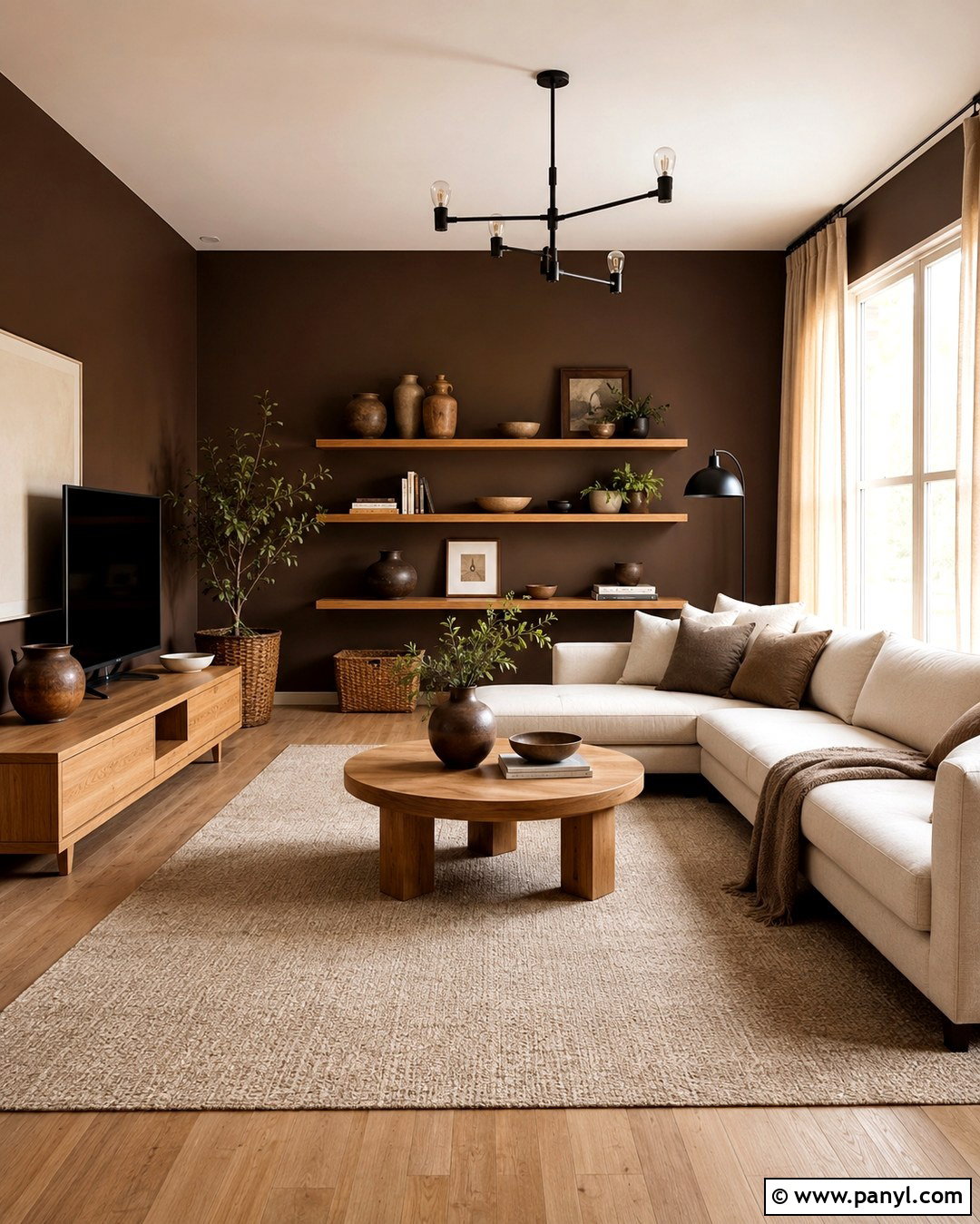
Natural wood brings texture and tonal variation to cocoa walls without introducing a competing color. Select light or medium oak for larger furniture pieces so they remain visible against the deeper background. In a living room, use an oak media cabinet, open shelving, and a round coffee table alongside a warm ivory sofa. Choose woven linen curtains and an oatmeal rug to lighten the full composition. Add walnut only in smaller doses, such as picture frames or side tables, to avoid an overly dark result. Black metal lighting can provide clean definition between the similar brown tones. Complete the room with pottery, baskets, and restrained greenery. The combination feels grounded and organic because each material has a distinct grain, finish, or texture that prevents the palette from becoming monotonous.
18. Cocoa Walls With Boucle Furniture
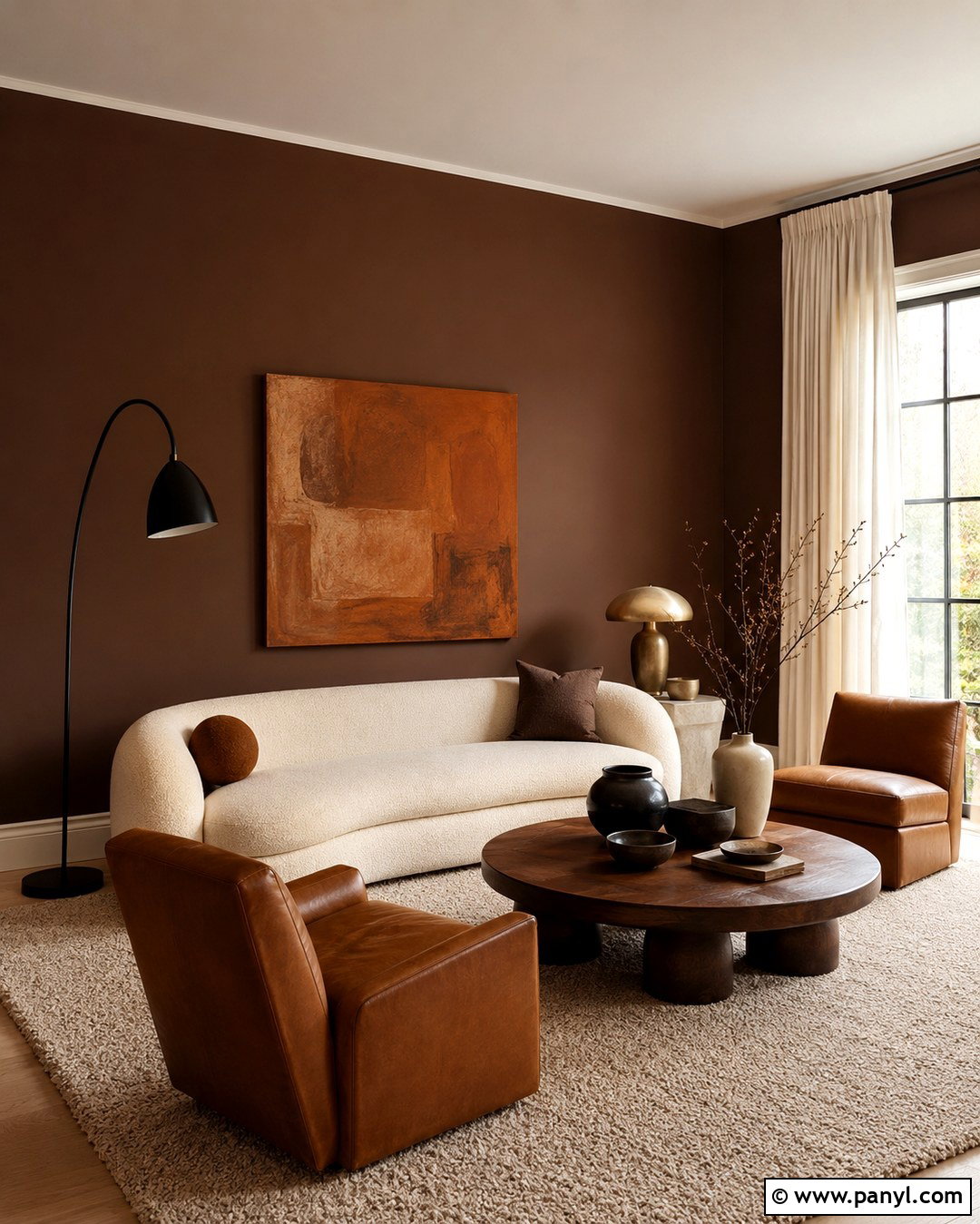
Textured boucle furniture creates an appealing soft contrast against smooth cocoa-painted walls. Build a modern living room around a curved ivory boucle sofa and two compact caramel leather chairs. Use a low walnut coffee table to establish a strong center without blocking the furniture’s sculptural lines. A thick beige rug provides comfort underfoot and separates the seating from medium-toned wood flooring. Hang full-length cream curtains and choose a large abstract artwork with rust, taupe, and muted black details. A black floor lamp can add height and sharper contrast, while a brass table lamp contributes warmth. Keep accessories limited to a few ceramic vessels and books. This complete room feels current but comfortable, with rounded furniture and tactile fabric balancing the weight of the cocoa walls.
19. Cocoa Nursery With Soft Beige
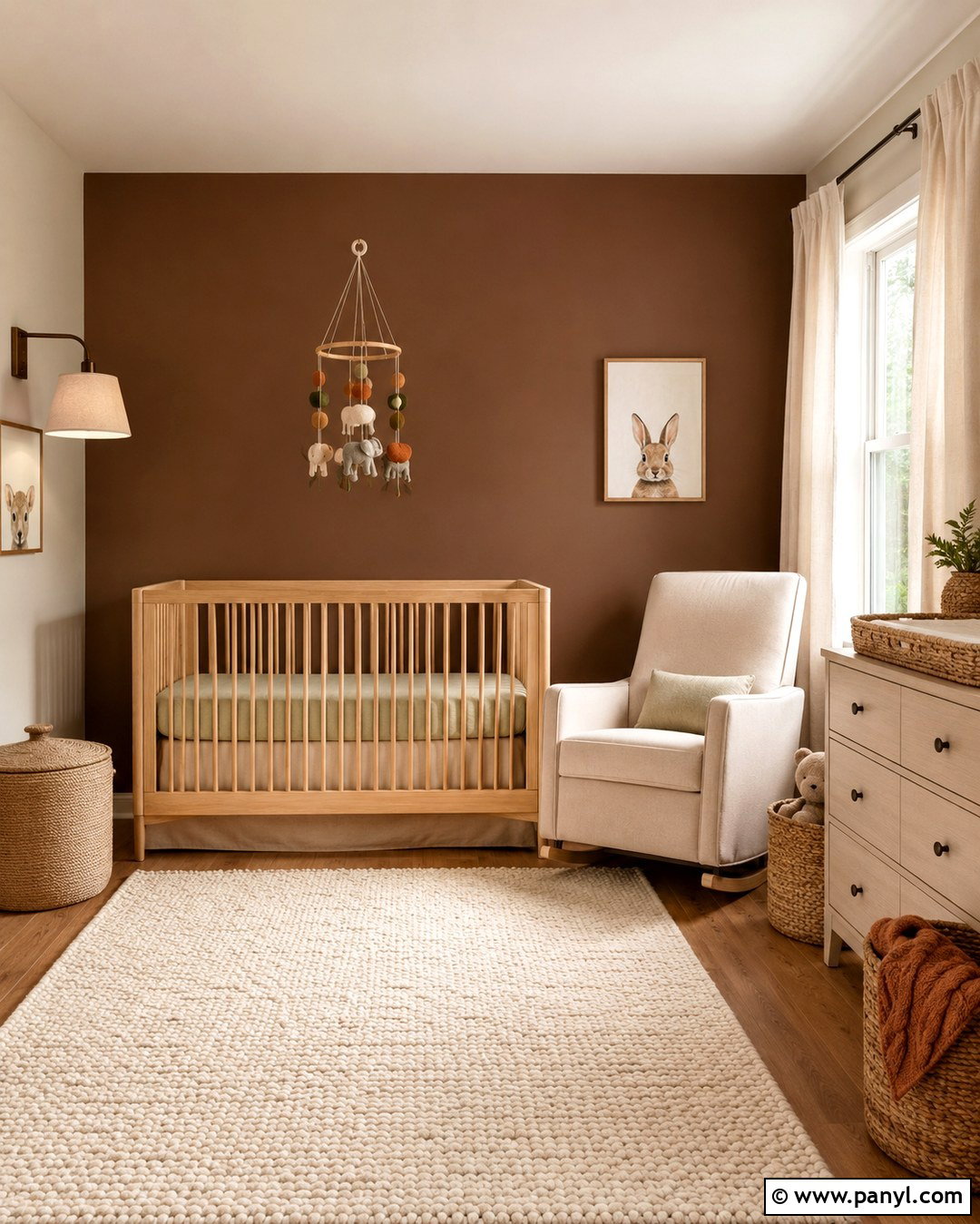
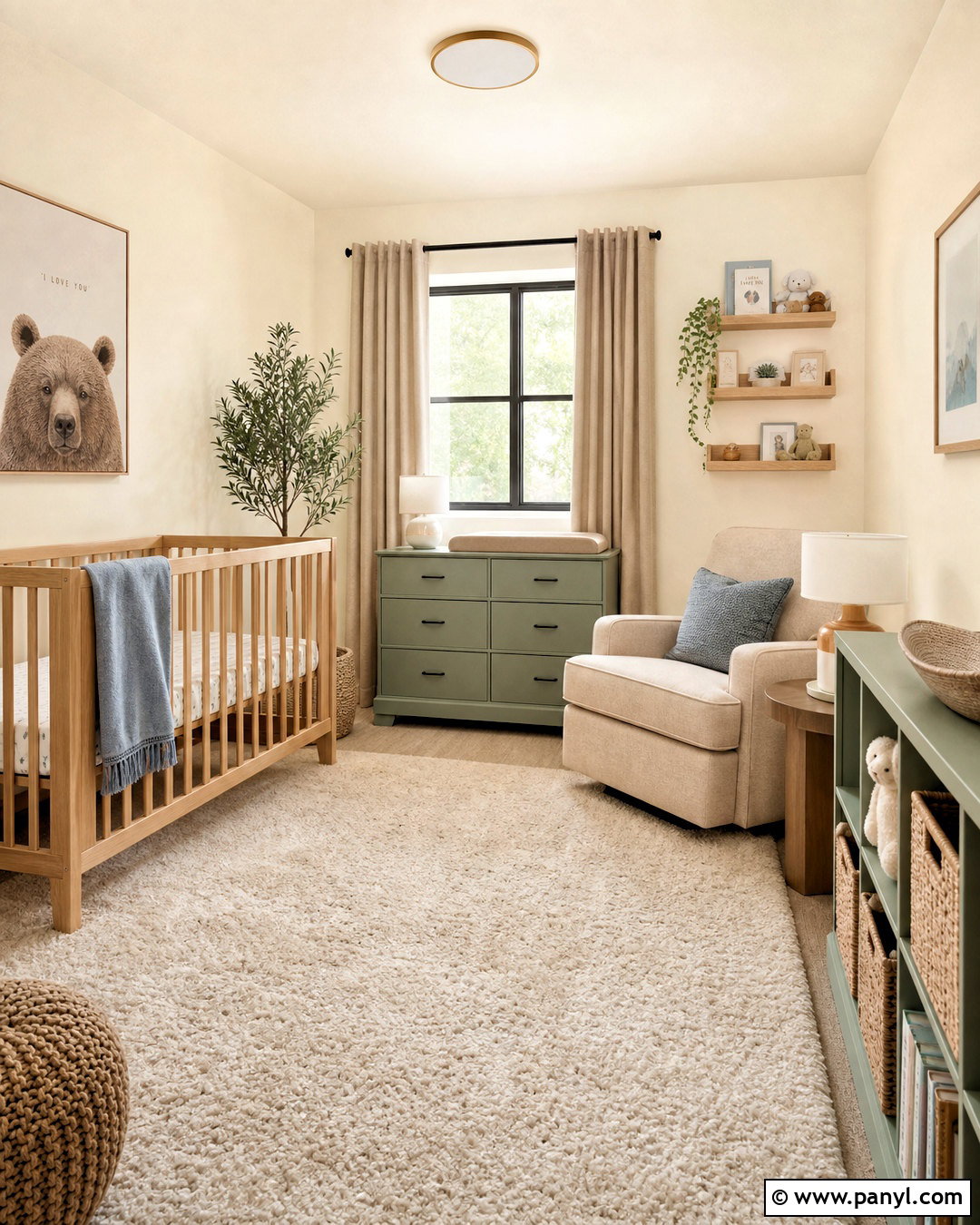
Cocoa paint can create a calm, grounded nursery when it is balanced with soft beige and pale natural materials. Paint one focal wall cocoa behind a light oak crib, leaving the other walls a creamy off-white. Add a beige upholstered glider, an ivory washable rug, and linen curtains that filter daylight. A light wood dresser can serve as the changing station and provide concealed storage. Introduce gentle pattern through a rust, cream, and sage mobile or framed animal artwork. Use woven baskets for toys and extra blankets, keeping the floor clear and organized. A dimmable ceiling fixture and shaded wall lamp support different lighting needs. The completed nursery feels warm and adaptable, allowing the furniture and neutral textiles to transition easily as the child grows.
20. Cocoa Media Room With Caramel Leather
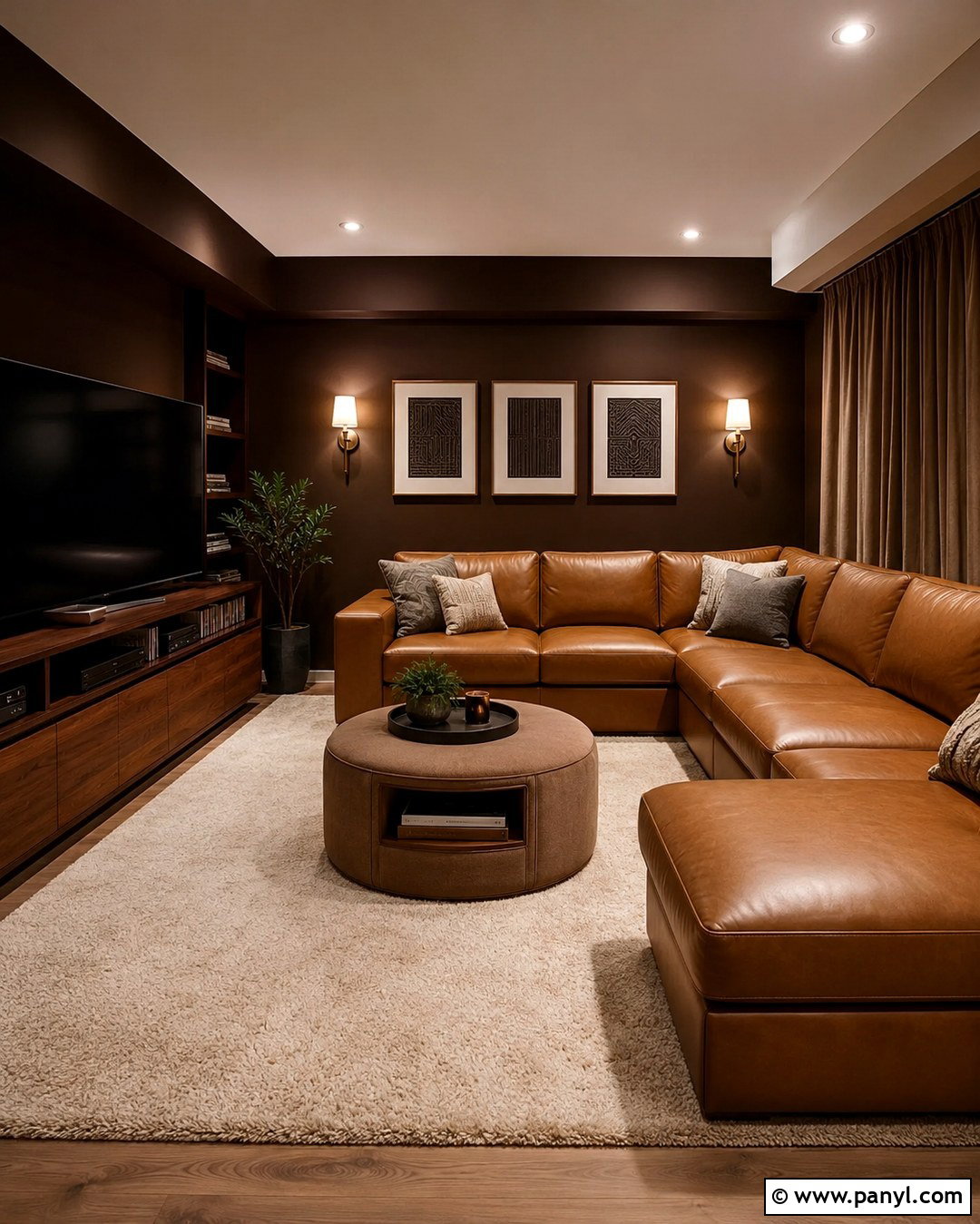
A media room benefits from cocoa walls because the deep color reduces visual distraction and creates a comfortable setting for movies and games. Pair the paint with a broad caramel leather sectional positioned toward a low walnut media cabinet. Add blackout curtains in dark beige or taupe, plus a large plush rug in warm ivory to soften sound and brighten the floor. Wall-mounted bronze sconces can provide gentle background light without producing screen glare. Include one round ottoman for flexible seating and hidden storage for blankets, controllers, and accessories. Use framed graphic prints with cream mats to break up the cocoa surfaces. The complete room feels relaxed and functional, combining durable materials, organized storage, and a rich palette suitable for frequent family use.
Conclusion:
These 20 Cocoa Wall Color Ideas show how adaptable brown paint can be when every part of the room is planned together. Cream upholstery, warm white trim, pale wood, linen, and beige rugs can lighten cocoa walls, while navy, sage, teal, blush, and terracotta introduce controlled color. Materials such as walnut, travertine, boucle, leather, and aged brass add texture and keep the palette interesting. Before painting, sample several cocoa shades on different walls and observe them in morning, afternoon, and evening light. Consider the floor color, fixed finishes, and amount of natural light as well. With thoughtful contrast and layered materials, cocoa walls can make almost any room feel comfortable, distinctive, and beautifully complete.

Related Ideas and Inspiration:


Leave a Reply