
Warm colors can make the hardest-working room in your home feel comfortable, welcoming, and full of character. These warm toned kitchen ideas combine earthy cabinet colors, natural wood, tactile tile, soft stone, and aged metal finishes to create complete spaces rather than scattered accents. Some looks lean light and neutral, while others explore terracotta, olive, burgundy, chocolate brown, and muted ochre. The key is balancing richer shades with practical lighting, durable surfaces, and enough visual breathing room. Whether you are planning a major remodel or refreshing an existing white kitchen, there is an approach for every layout and budget. Explore the following complete color palettes, material combinations, and decorating plans to find your favorite 20 warm toned kitchen ideas.

1. Cream And Walnut Kitchen
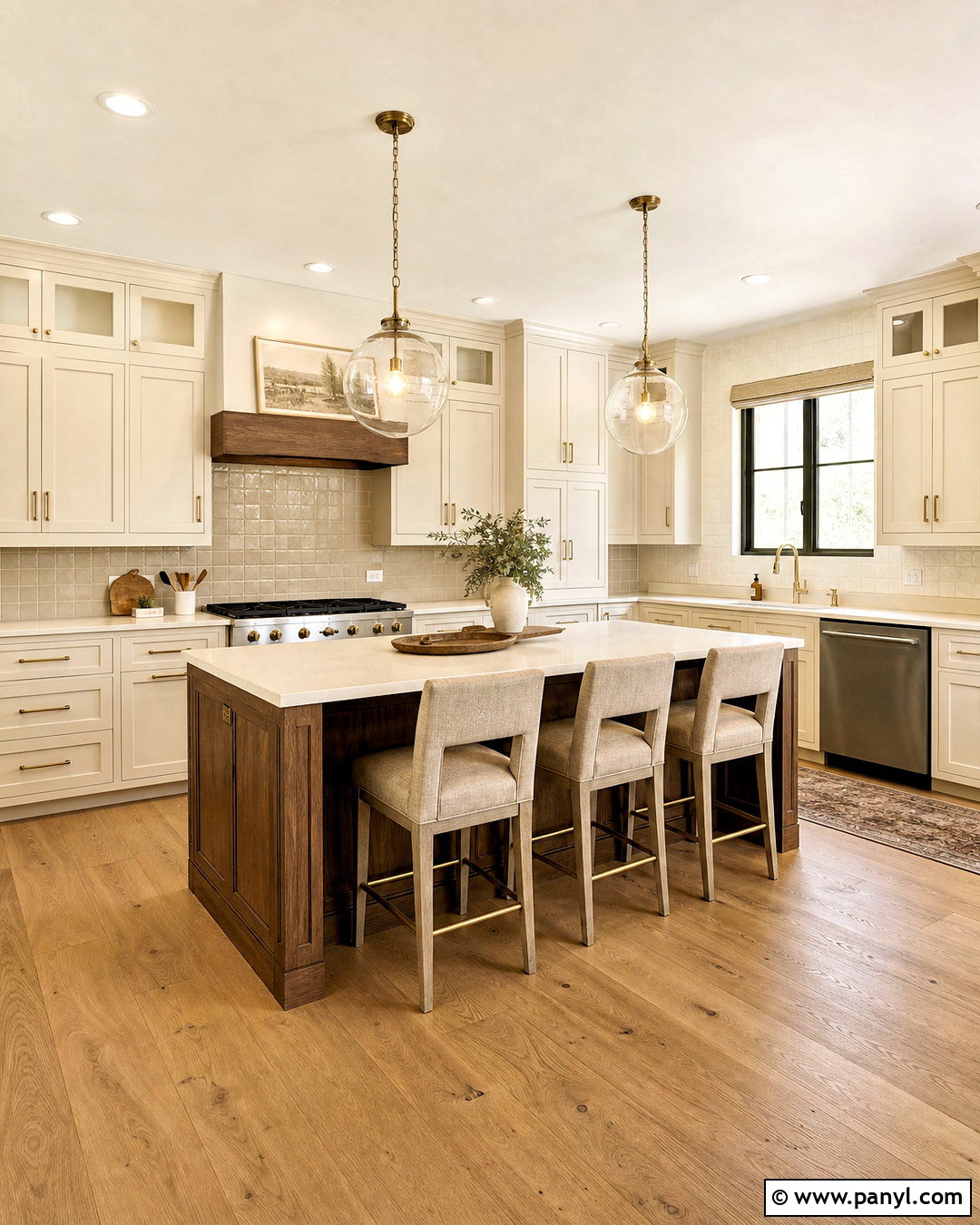
Soft cream cabinetry creates a brighter backdrop for the rich grain of walnut. Use cream Shaker cabinets around the perimeter, then introduce walnut on a large island, pantry wall, or open shelves. A lightly veined ivory quartz countertop keeps the palette cohesive without competing with the wood. Add brushed brass hardware, an aged brass faucet, and rounded glass pendants for gentle shine. Medium oak flooring can work, but choose a noticeably lighter tone than the walnut so the woods do not look mismatched. Complete the kitchen with oatmeal linen stools, simple ceramic canisters, and a warm beige backsplash. This balanced design feels polished and inviting while still offering enough contrast to define each working zone.
2. Terracotta And Cream Kitchen
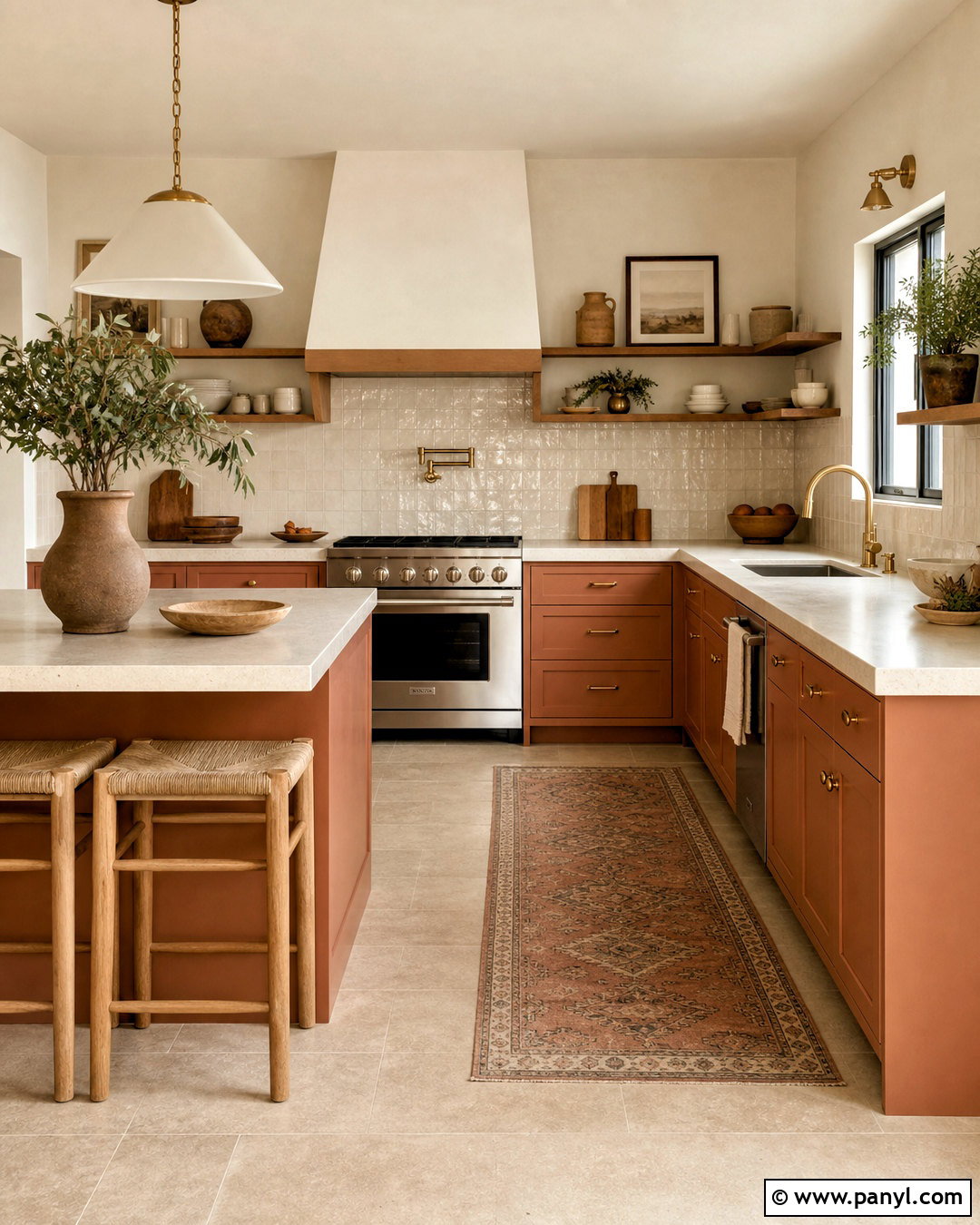
Imagine entering a kitchen wrapped in soft clay colors and creamy neutrals. Paint the lower cabinets muted terracotta and keep the upper cabinetry warm cream to prevent the room from feeling visually heavy. A handmade cream zellige backsplash adds texture and reflects light across the deeper cabinet color. Choose pale quartz or honed limestone countertops with minimal pattern. Natural oak shelves, woven counter stools, and brushed brass pulls build on the earthy character. For flooring, consider light limestone-look porcelain or aged terracotta tile in a larger format. Finish the space with cream linen shades and a few practical pottery pieces. The completed kitchen feels warm and grounded, with a subtle Mediterranean influence that remains relaxed rather than overly themed.
3. Warm White And Oak Kitchen
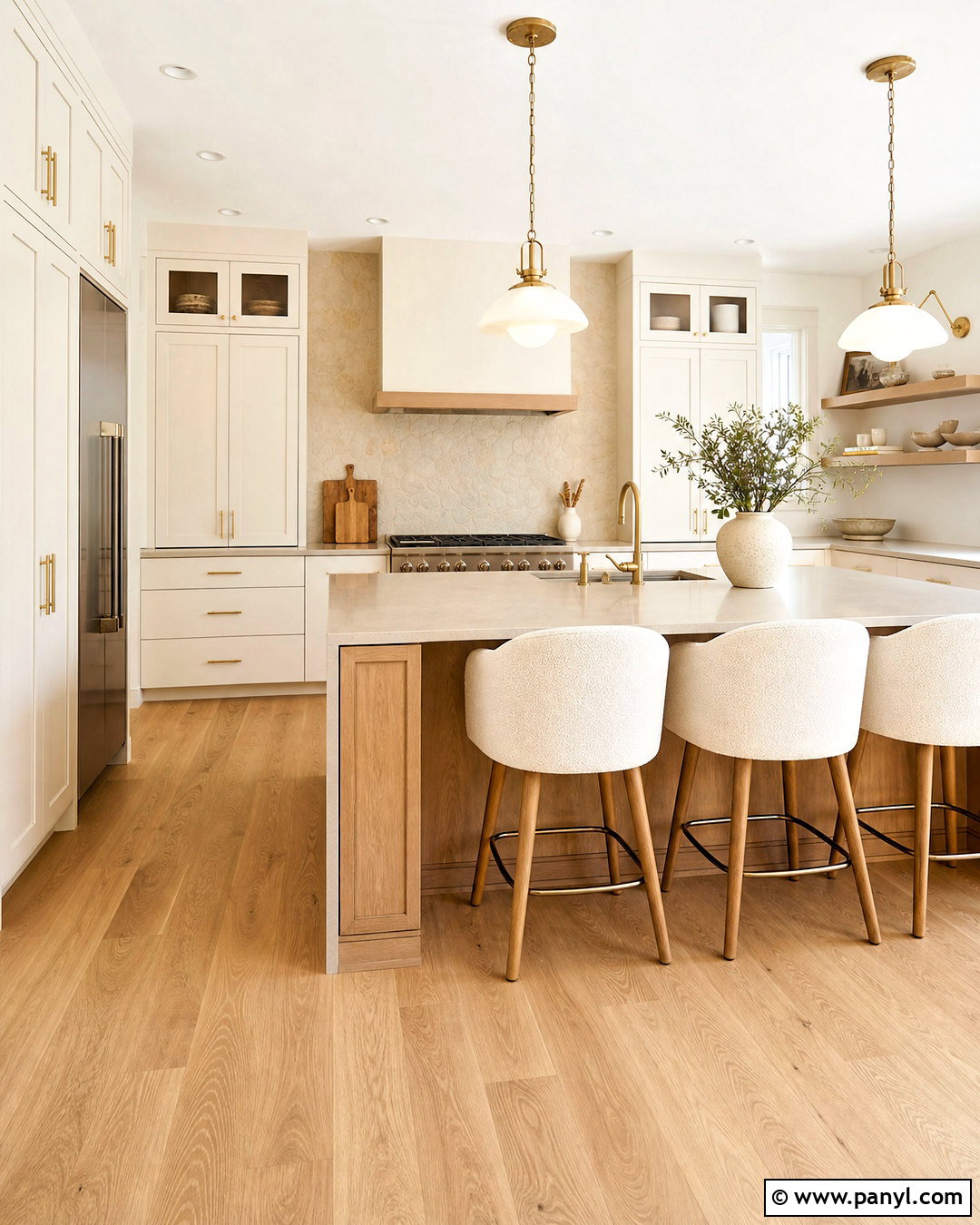
A white kitchen can still feel cozy when every finish has a creamy or golden undertone. Select warm white cabinets instead of crisp blue-white, pairing them with flat-panel white oak cabinetry on the island and refrigerator wall. Continue the natural look with light oak flooring and a creamy stone backsplash. Soft greige quartz provides an easy-care work surface while introducing gentle depth. Brushed brass handles, milk-glass pendants, and ivory upholstered stools prevent the clean layout from looking cold. Keep accessories restrained but tactile, such as a wooden fruit bowl, linen towels, and stoneware containers. This complete warm white and oak kitchen works especially well in smaller or open-plan homes because it feels bright, cohesive, and naturally connected to nearby living areas.
4. Olive Green And Wood Kitchen
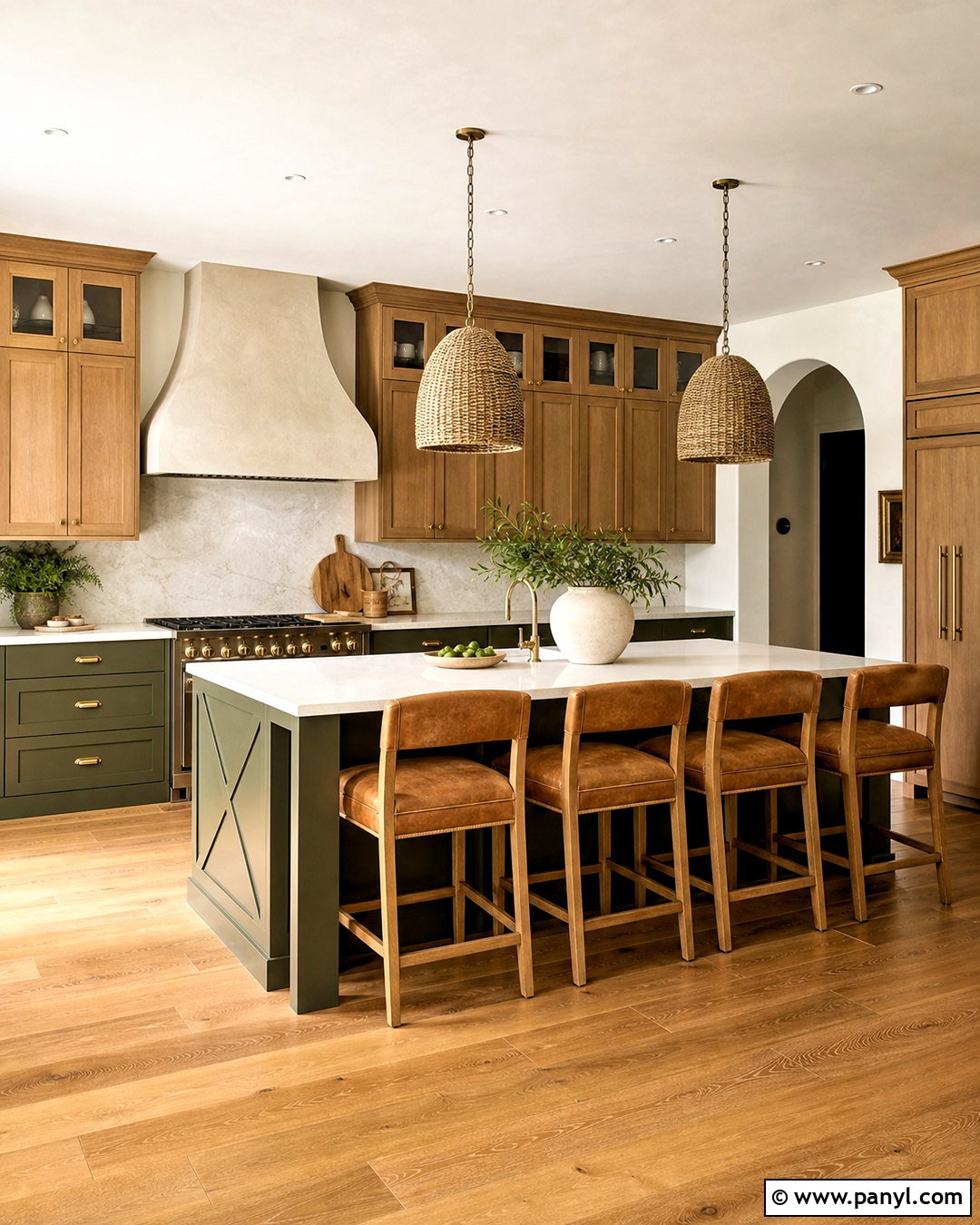
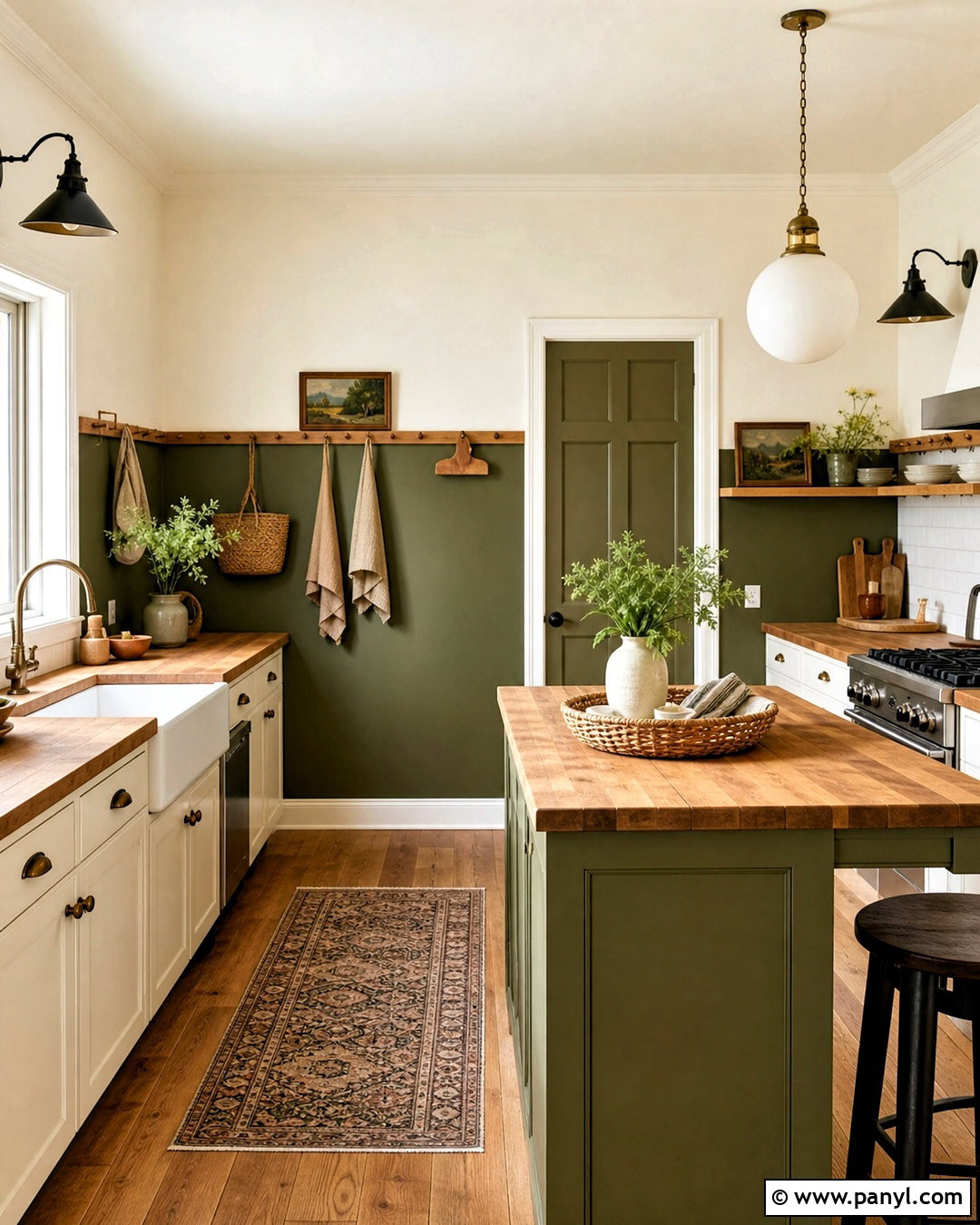
Could an earthy green make your kitchen feel more connected to nature? Deep olive lower cabinets provide a rich foundation, while natural oak upper cabinets and floating shelves keep the upper half lighter. Use a warm white countertop with subtle beige veining and carry the same material onto a short backsplash. Aged brass hardware complements olive without looking overly shiny. Medium-toned oak floors, woven pendant lights, and saddle-brown counter stools reinforce the organic palette. Paint the walls a soft putty color rather than stark white. Add a plaster range hood in the same warm neutral for a seamless focal point. The resulting kitchen feels grounded and sophisticated, with clean lines balancing the traditional warmth of green, wood, and brass.
5. Beige Kitchen With Brass Hardware
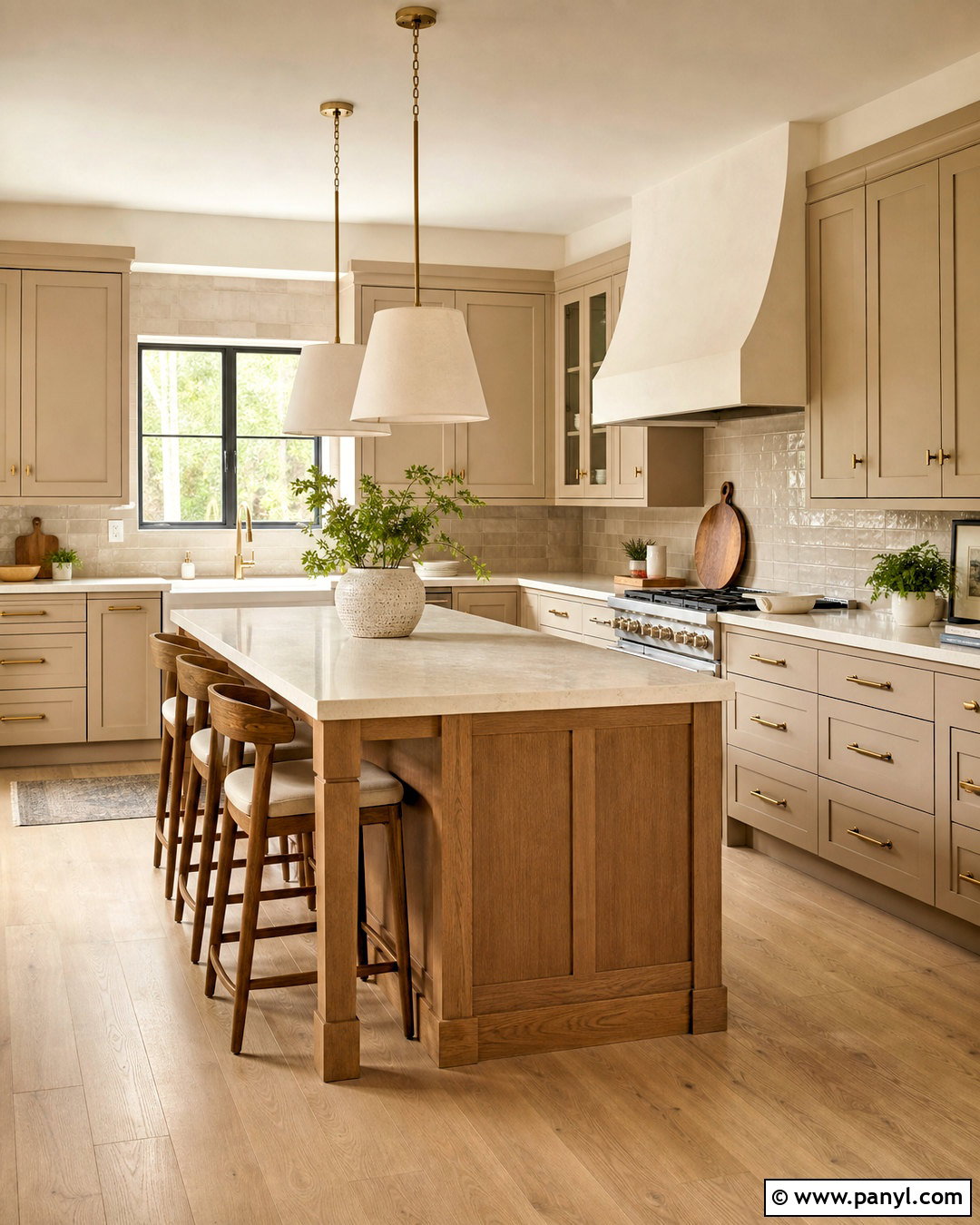
For a calm kitchen that does not feel plain, layer several closely related beige shades. Start with mushroom-beige cabinets, warm ivory walls, and a creamy quartz countertop. Install a glossy sand-colored tile backsplash to introduce movement and help bounce light around the room. Brushed brass knobs, cup pulls, and plumbing fixtures give the subdued palette a clear accent. A medium oak island or dining table keeps the room from becoming too monochromatic. Choose light wood flooring with a matte finish and simple linen pendants above the island. Black appliances may create harsh contrast, so panel-ready or warm stainless finishes fit this scheme more naturally. The completed beige kitchen looks soft, spacious, and comfortable while remaining practical for everyday family use.
6. Rust Red Kitchen Cabinets
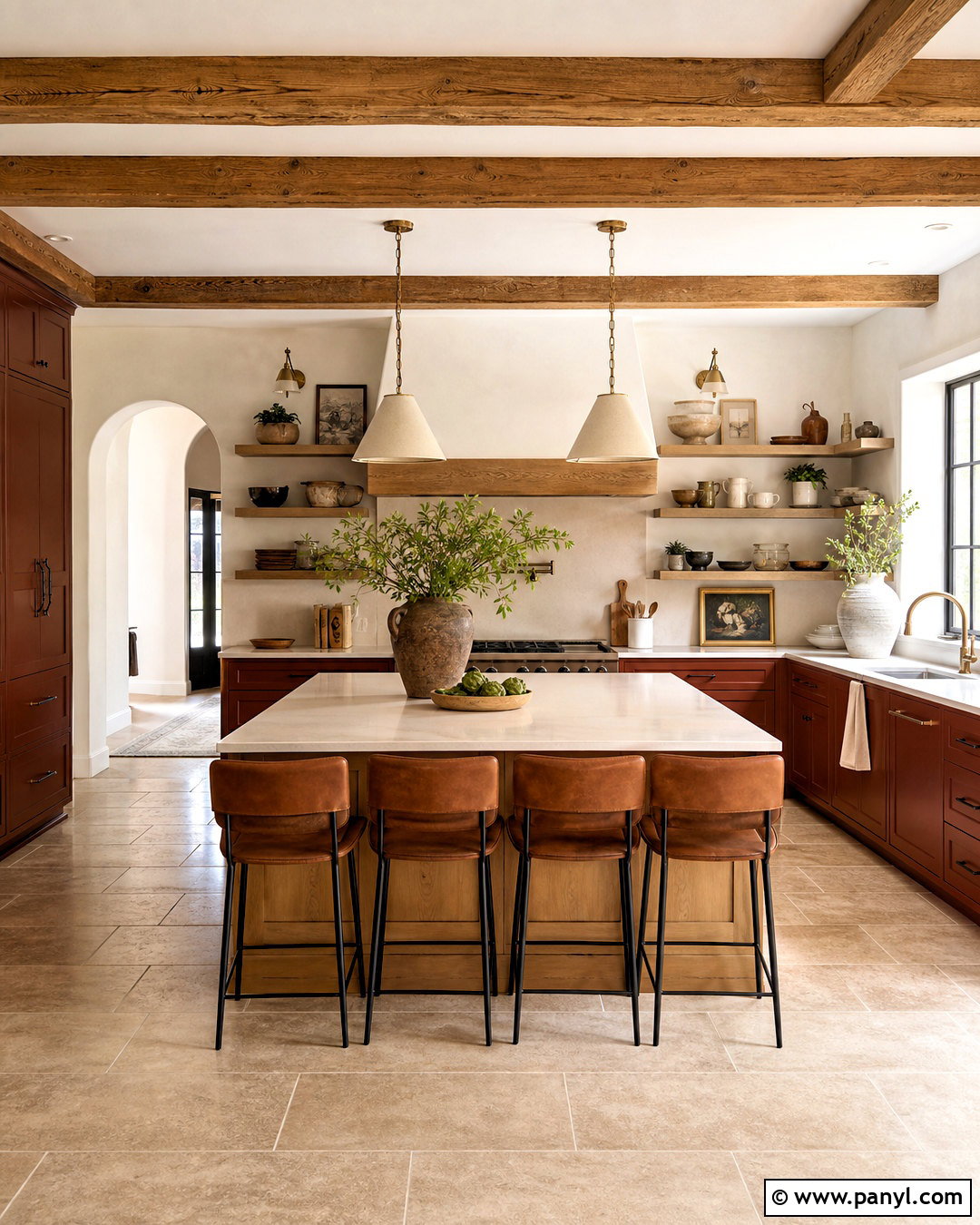
Rust red cabinets bring energy to a kitchen without the sharpness of a brighter primary red. Use the color on base cabinets and a tall pantry wall, then balance it with warm white walls and natural oak shelving. Choose a pale cream countertop and backsplash with quiet movement rather than dramatic veining. Dark bronze hardware adds definition while maintaining the earthy color story. A white oak island can provide a visual pause in a larger room. Ground the design with warm gray limestone-look flooring, cognac leather stools, and simple off-white pendant lights. Keep countertop decor minimal so the cabinetry remains the focus. This kitchen works best when rust is treated as part of a thoughtful natural palette rather than as an isolated statement color.
7. Honey Oak Kitchen
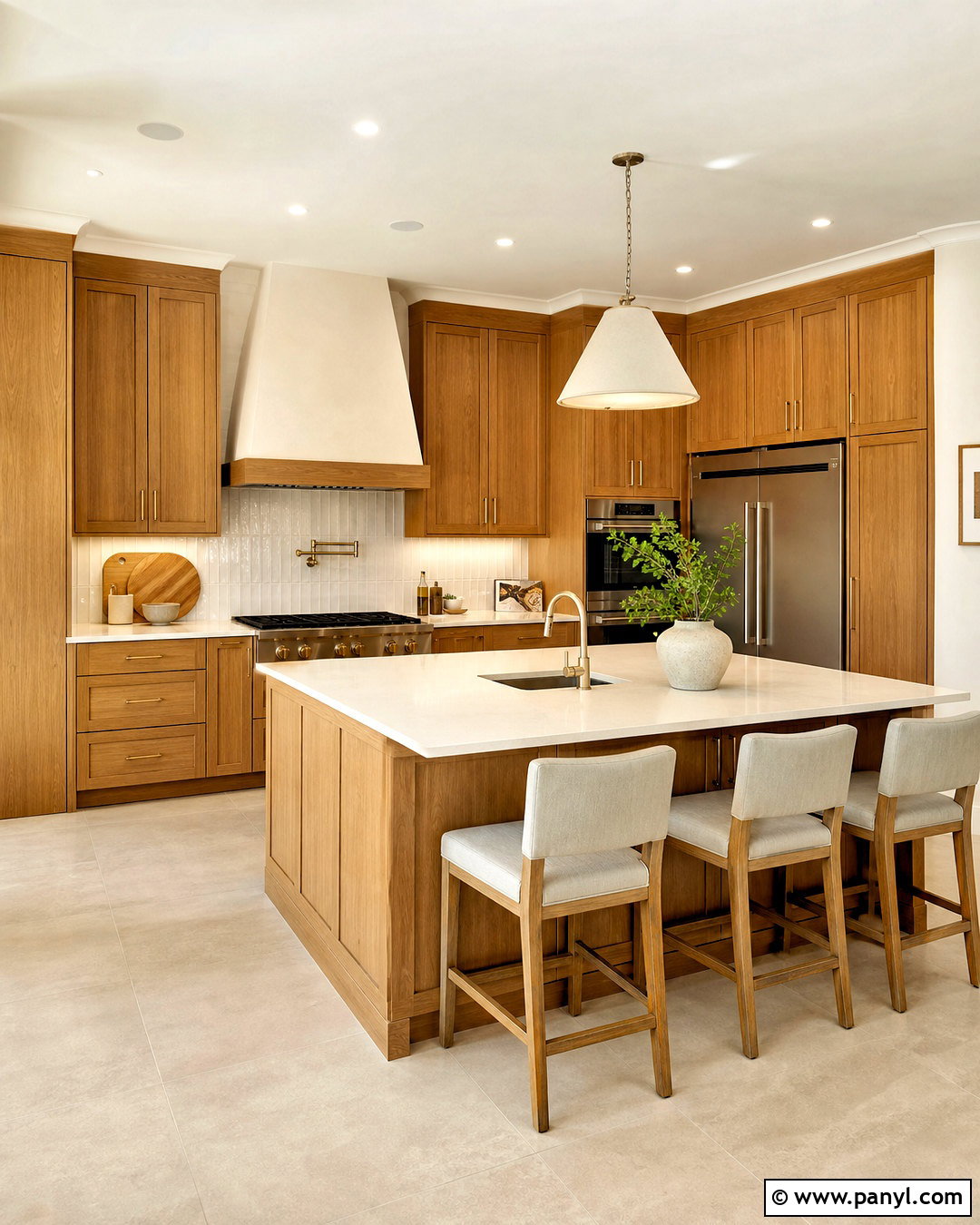
Golden honey oak can create a cheerful, welcoming kitchen when paired with simple contemporary details. Choose streamlined oak cabinets that display natural grain, using slab fronts or narrow Shaker frames to keep the look current. Cream quartz countertops and an ivory vertical tile backsplash soften the strong wood tone. Add champagne bronze hardware for low-contrast warmth and install warm stainless appliances where possible. Pale beige porcelain flooring prevents the room from becoming overly golden. A plaster pendant or linen-shaded fixture introduces a softer texture above the island. Break up extensive cabinetry with a few cream-painted sections or an off-white range hood. This complete approach celebrates honey oak while giving it the light surfaces, clean shapes, and restrained accents needed for a balanced kitchen.
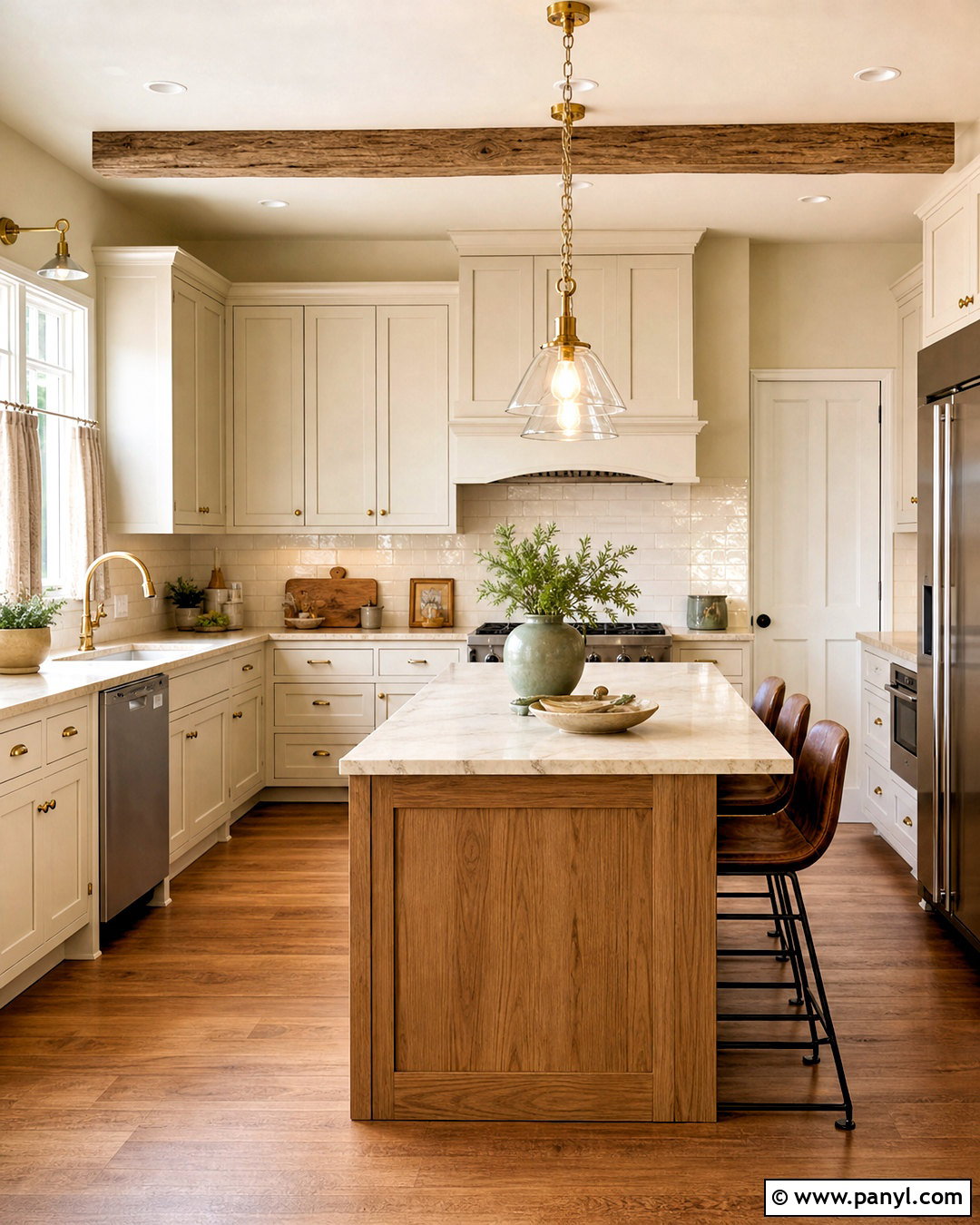
8. Chocolate Brown Kitchen
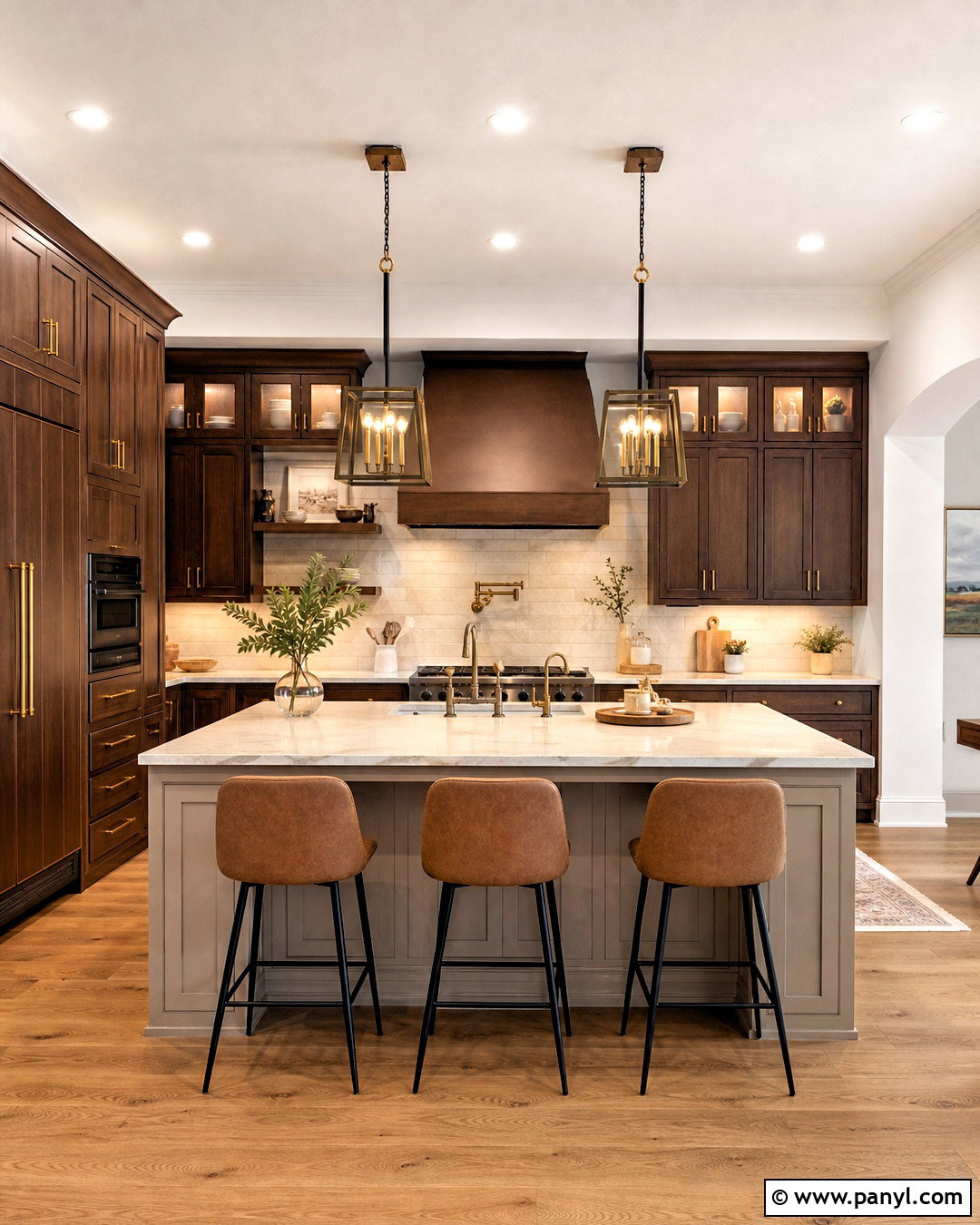
Rich brown cabinetry can make a spacious kitchen feel intimate and luxurious. Select chocolate-stained wood for the perimeter cabinets and use a softer taupe finish on the island to create separation. Cream marble-look quartz countertops brighten the dark cabinetry, while a full-height warm white stone backsplash adds continuity. Antique brass pulls and bronze-framed pendant lights suit the depth of the wood. Choose medium oak flooring instead of another dark surface, allowing the cabinets to stand out clearly. Upholstered camel counter stools bring in a lighter brown note. If natural light is limited, use chocolate only on lower cabinets and keep upper storage cream. The finished kitchen feels dramatic yet approachable because every dark feature is balanced by warm, reflective surfaces.
9. Peach Kitchen Cabinets
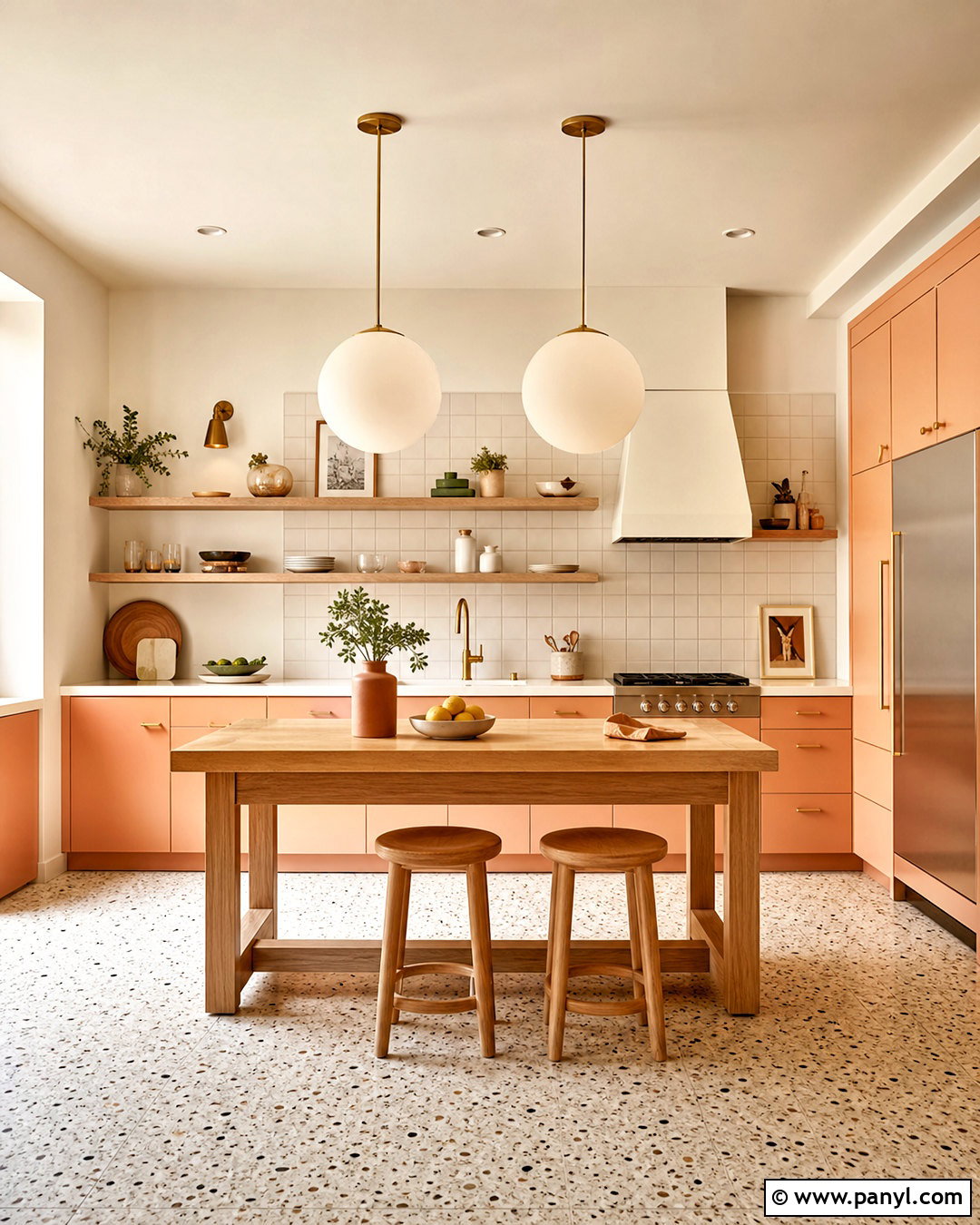
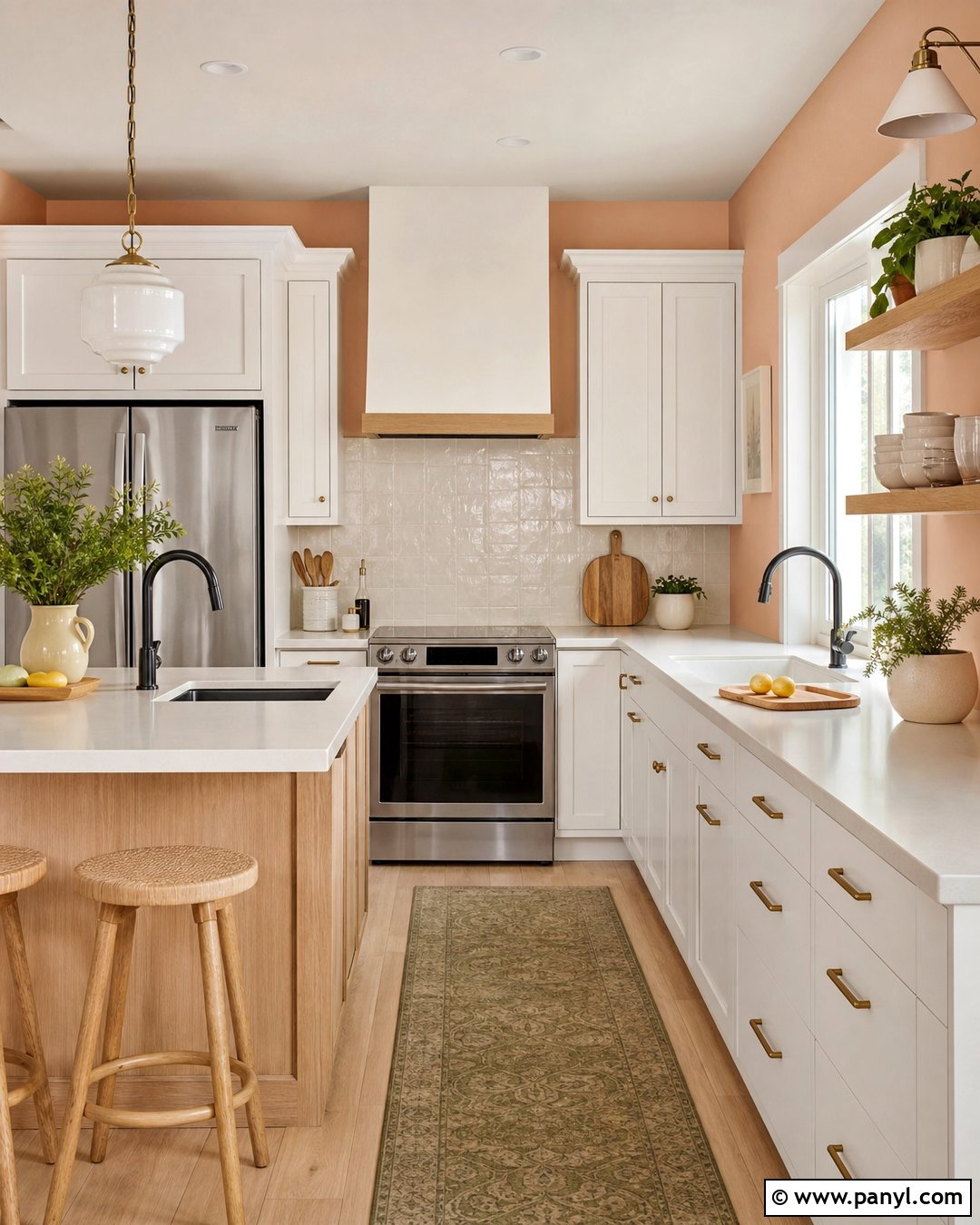
A muted peach kitchen feels sunny, playful, and surprisingly easy to live with. Choose a dusty peach cabinet color with beige undertones rather than a bright pastel shade. Pair it with creamy white quartz, pale oak shelving, and a warm white square-tile backsplash. Brushed brass handles and a matching faucet emphasize the golden side of the palette. Light terrazzo flooring containing beige, cream, and subtle rust flecks can add pattern without overwhelming the cabinetry. Use a small oak island or butcher-block worktable if the layout permits. Off-white globe pendants and natural linen window treatments complete the scheme. The final room feels fresh and uplifting, while restrained finishes ensure the peach cabinetry looks sophisticated rather than overly sweet or themed.
10. Ochre And Cream Kitchen
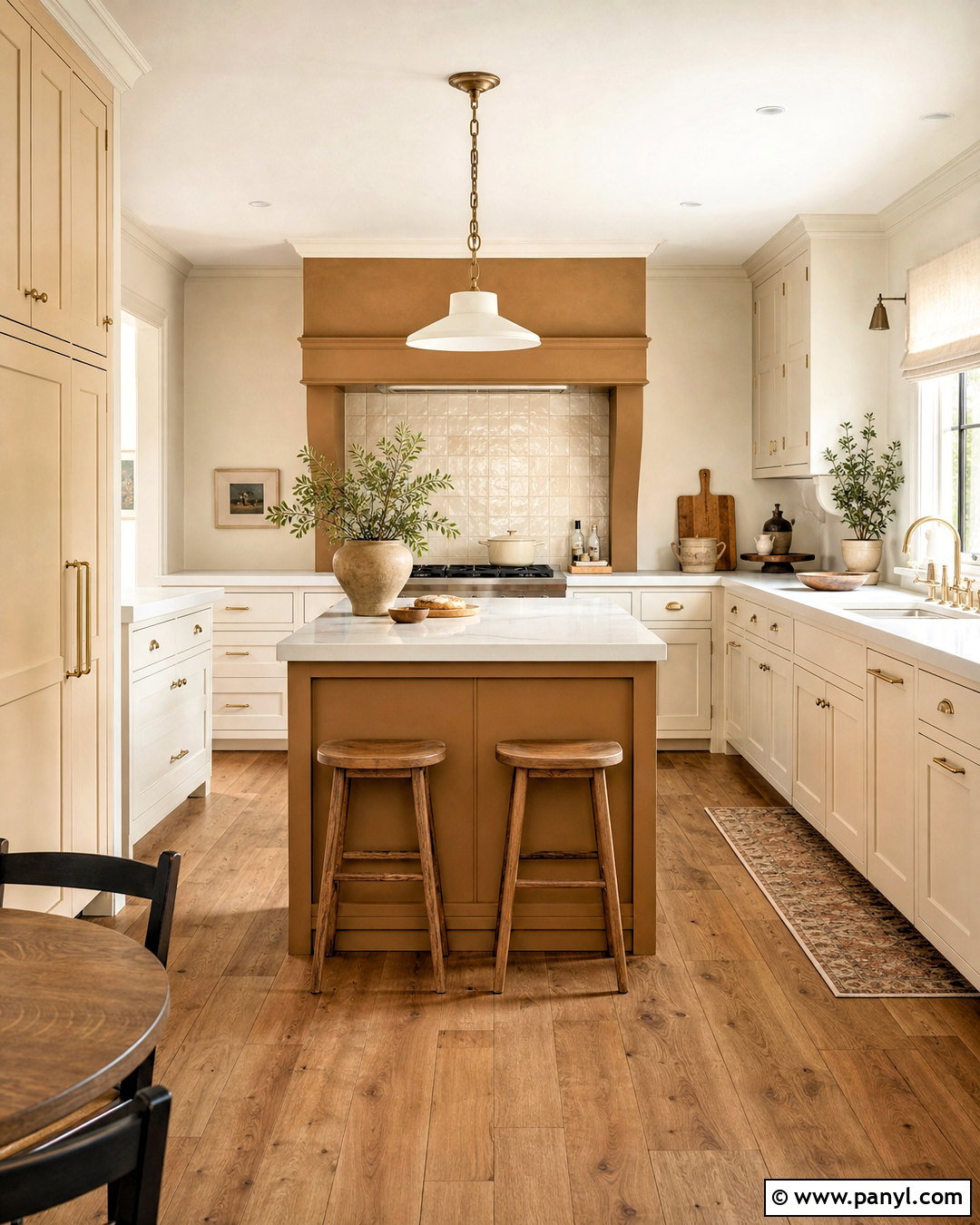
Warm ochre adds depth and personality while still behaving much like an earthy neutral. Use muted ochre on a central island and range wall, surrounding it with cream cabinetry to keep the kitchen open and bright. A lightly textured ivory tile backsplash provides a quiet backdrop for the stronger color. Install medium-toned oak flooring and repeat that wood on floating shelves or counter stools. Aged brass fixtures blend naturally with ochre, while dark bronze accents can outline lighting and windows. Choose warm white quartz counters with limited veining to avoid visual competition. Add linen Roman shades and handmade neutral pottery for softness. This complete kitchen palette feels cheerful throughout the year and works especially well in rooms receiving plenty of natural daylight.
11. Taupe And Natural Wood Kitchen
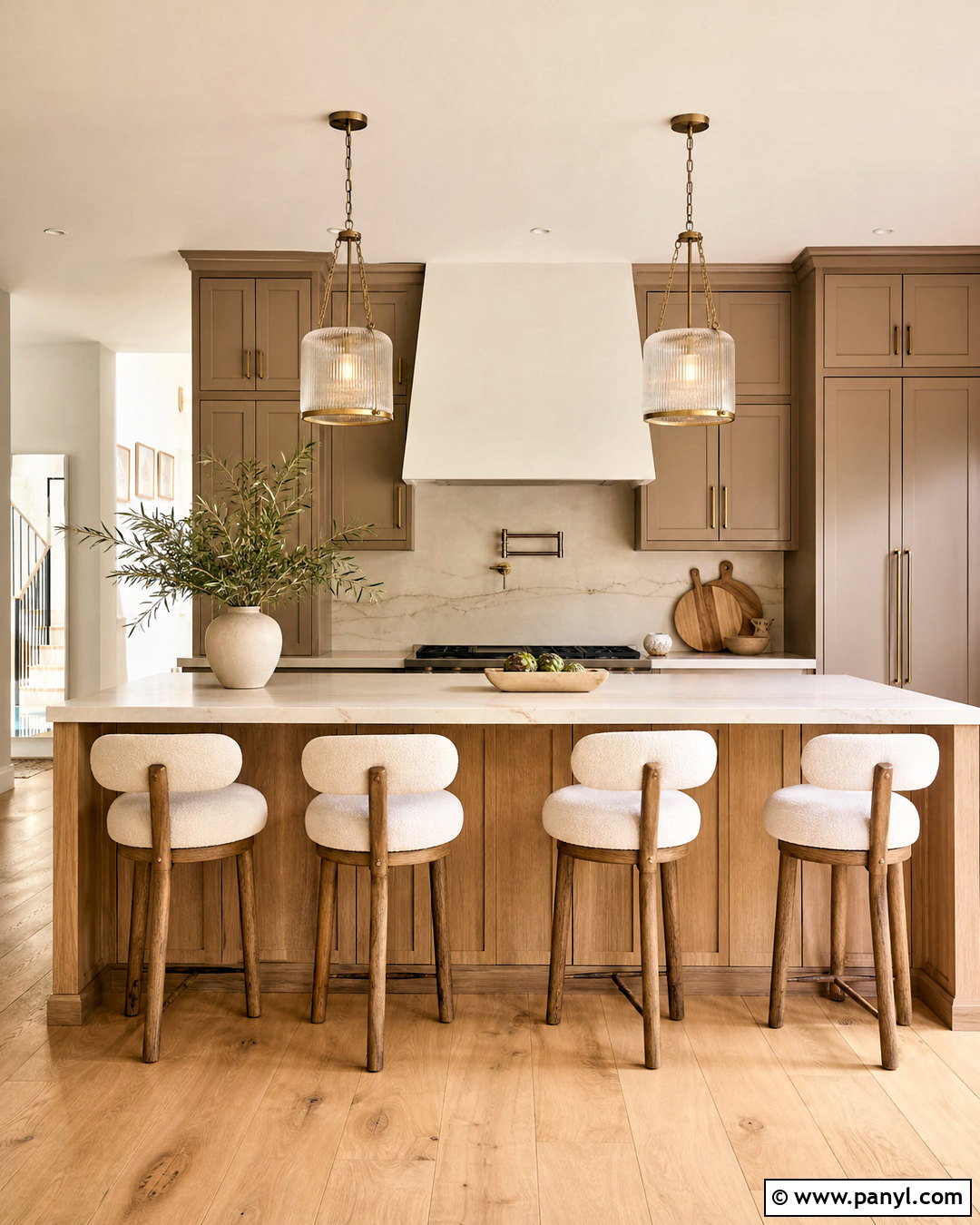
When you want something warmer than gray but quieter than brown, taupe is a practical middle ground. Paint full-height cabinets a soft brown-based taupe and introduce white oak on the island, vent hood trim, and open shelving. Select creamy porcelain countertops with faint tan veining, then continue them up the wall for a clean backsplash. Brushed bronze hardware offers subtle contrast without disrupting the restful palette. Wide-plank light oak flooring helps connect all the natural tones. Add mushroom-colored stools, ribbed glass pendants, and an ivory runner for layered softness. Maintain simple cabinet lines and hide small appliances behind doors. The resulting taupe kitchen feels calm and uncluttered, but the variation in wood, stone, glass, and metal keeps it visually interesting.
12. Burgundy And Walnut Kitchen
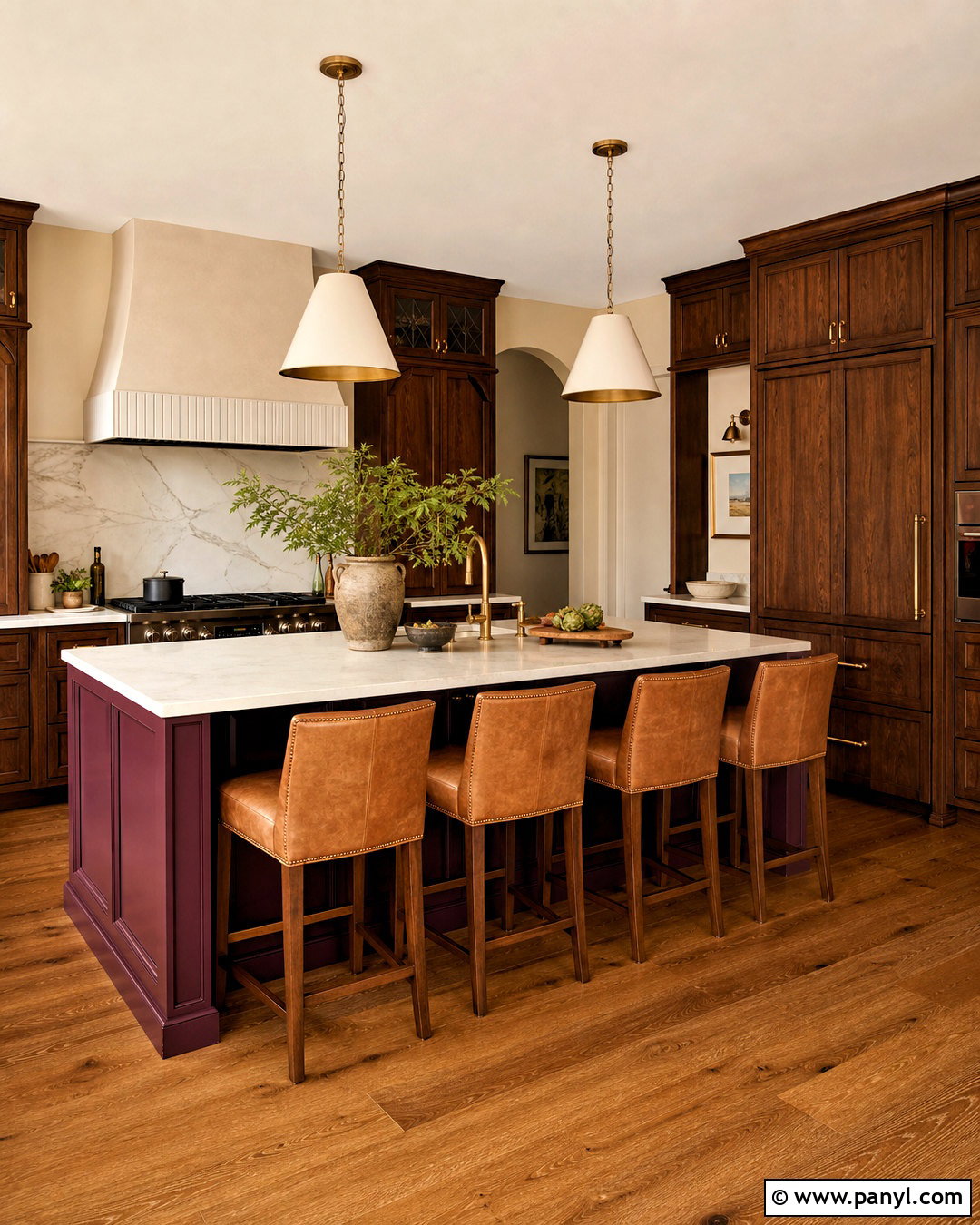
Burgundy cabinetry can produce a sophisticated kitchen when paired with deep wood and generous light surfaces. Apply muted burgundy to lower cabinets and a focal pantry wall, leaving the remaining tall cabinetry in dark walnut. Use creamy marble-look quartz across the counters and backsplash to brighten both colors. Aged brass pulls and shaded pendant lights add warmth without introducing another strong hue. Medium oak flooring creates a lighter foundation, while tan leather stools bridge the red and brown finishes. Paint the walls a pale warm beige to soften transitions between materials. In a compact room, limit burgundy to the island and keep the perimeter cream. This complete scheme feels distinctive and grown-up, with enough neutral space to prevent the richer finishes from becoming overpowering.
13. Warm Gray Kitchen With Copper
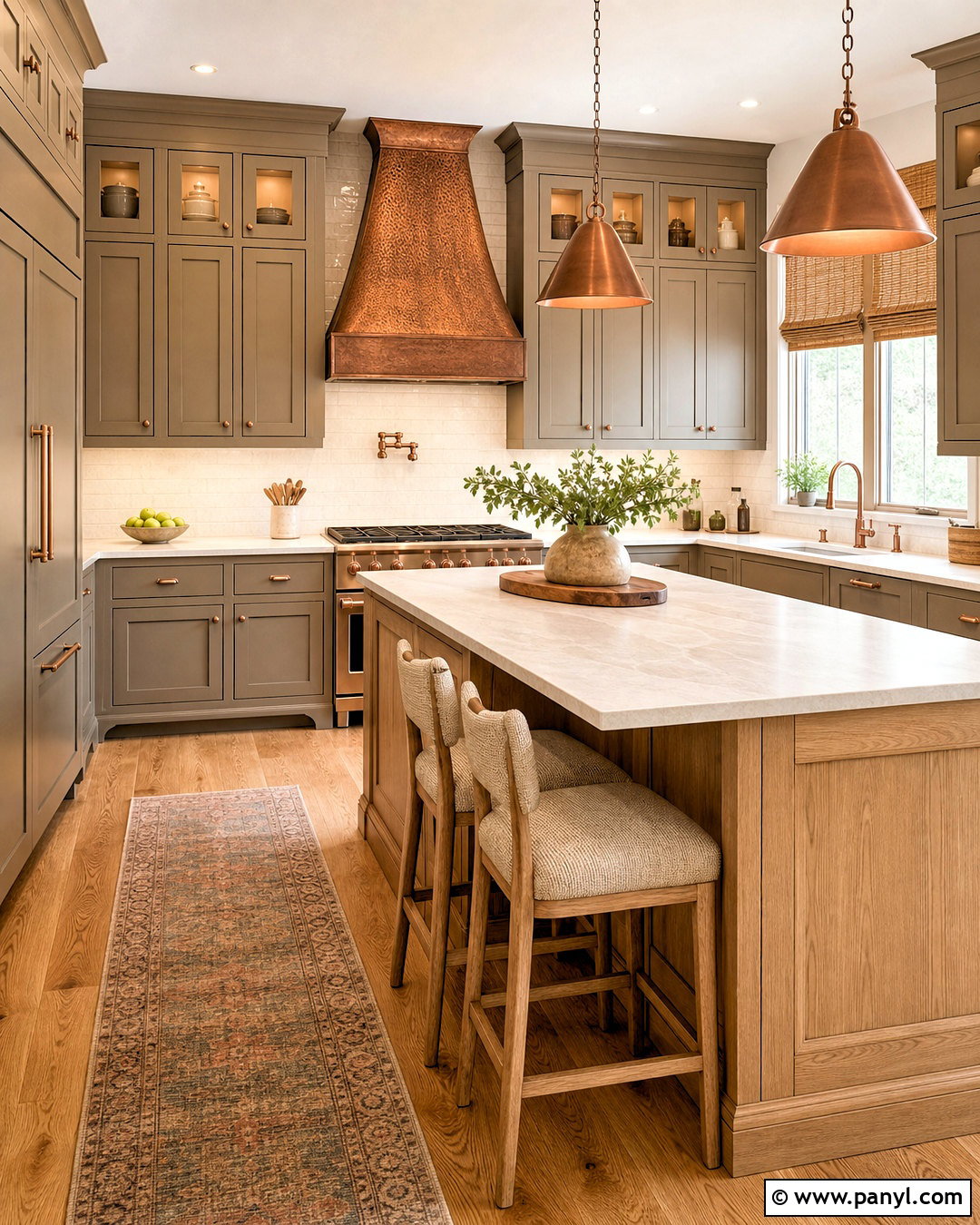
Not every warm kitchen needs to revolve around beige or brown. Choose warm gray cabinets with noticeable taupe undertones, then add copper through a focal range hood, pendant lights, and modest hardware details. Cream quartz countertops and an off-white backsplash keep the palette from appearing industrial. Introduce white oak on the island base and floating shelves to provide natural texture. Wide-plank oak flooring, oatmeal stools, and woven shades further soften the gray. Avoid mixing copper with several other metallic finishes; dark bronze can be used sparingly where a quieter element is needed. With clean cabinetry and thoughtfully repeated materials, the room feels modern but welcoming. The copper provides a warm glow while the gray maintains a calm, functional foundation.
14. Caramel Wood Kitchen
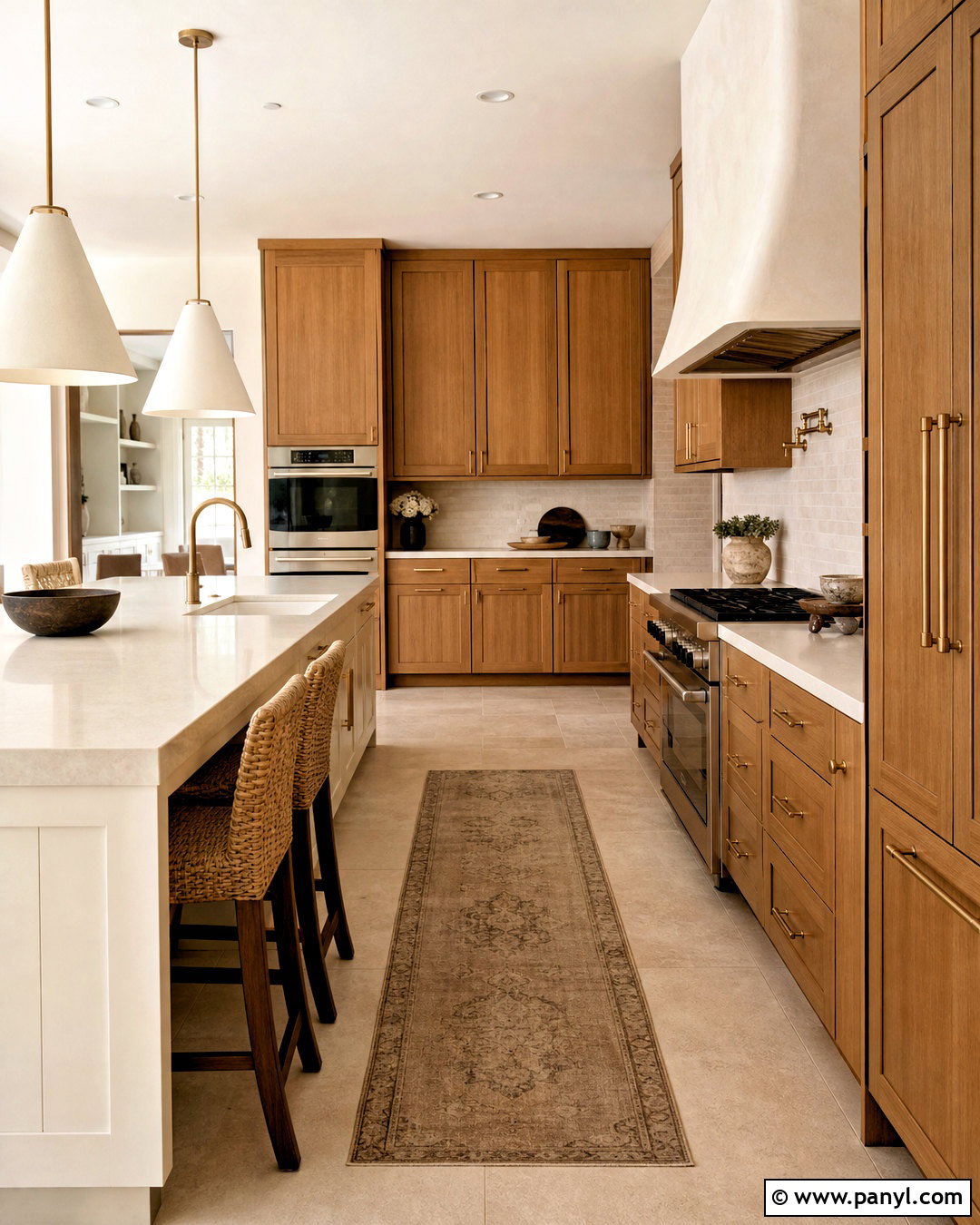
Caramel-stained wood gives a kitchen noticeable warmth while remaining lighter than walnut or chocolate finishes. Use it across streamlined cabinetry, then interrupt the wood with a large cream-painted island and matching plaster range hood. Select warm ivory quartzite-look counters and a full-height backsplash with subtle sandy veining. Champagne bronze hardware blends gently into the cabinetry, allowing the grain to remain the main feature. Light limestone-look flooring offers a quiet foundation and helps control the amount of brown in the room. Add woven counter stools, cream ceramic pendants, and a neutral vintage-style runner. The finished space feels comfortable and collected, yet the simple lines and uncluttered work surfaces keep the overall design clean enough for a contemporary home.
15. Clay Pink Kitchen
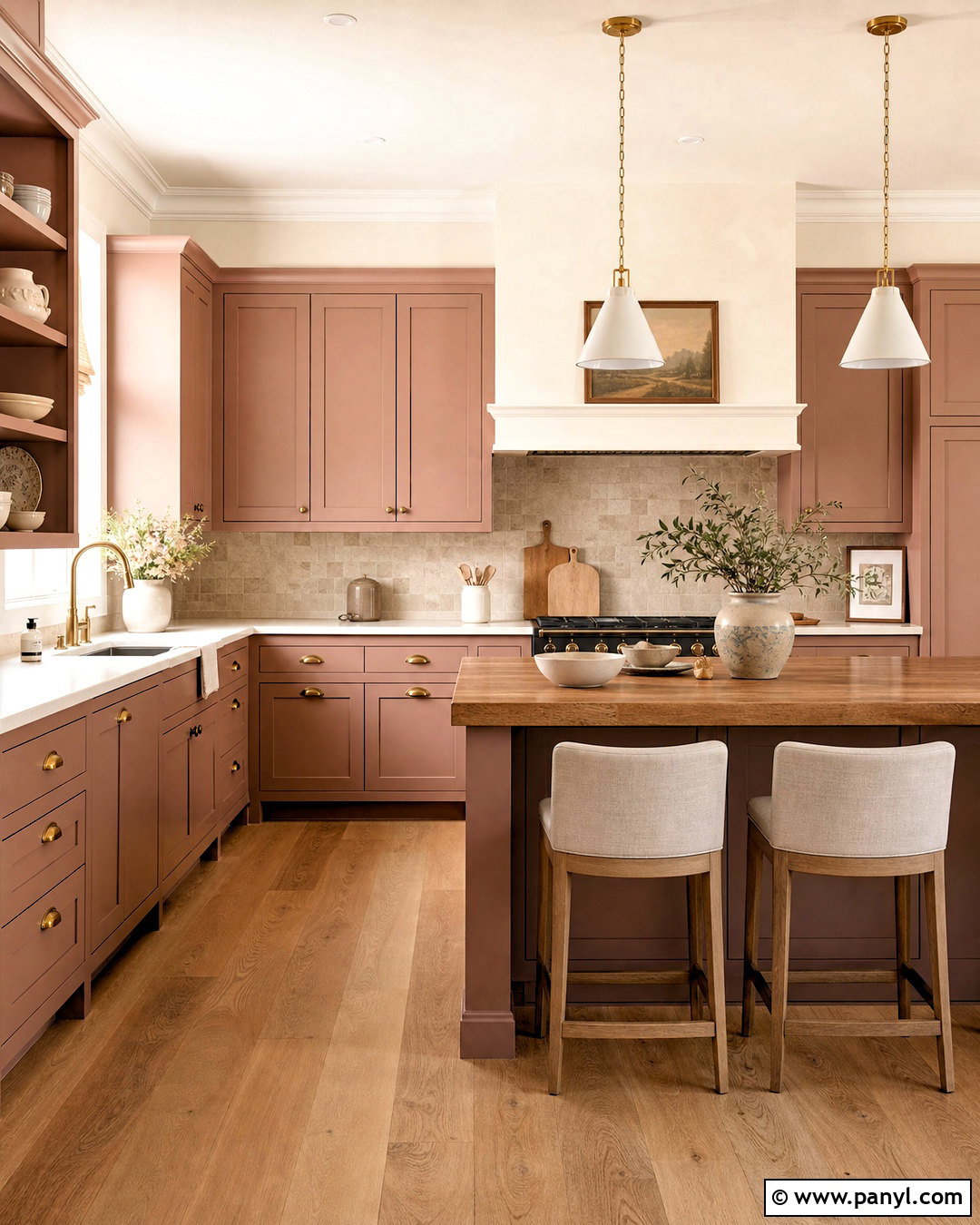
Soft clay pink offers warmth without making the kitchen feel overly colorful. Look for a muted pink with brown or beige undertones and use it on Shaker cabinets around the room. Pair the cabinetry with a pale travertine backsplash and creamy quartz countertops for a tonal, mineral-inspired palette. Natural oak flooring and a matching wood island top add warmth in a familiar material. Choose aged brass cup pulls, an unlacquered brass faucet, and ivory ceramic pendants. A warm white ceiling and walls will keep the pink from looking too saturated. Finish with oatmeal linen stools and simple stoneware decor. This complete kitchen feels gentle and welcoming, combining traditional cabinet shapes with an earthy color that reads almost like a warm neutral.
16. Sage And Terracotta Kitchen
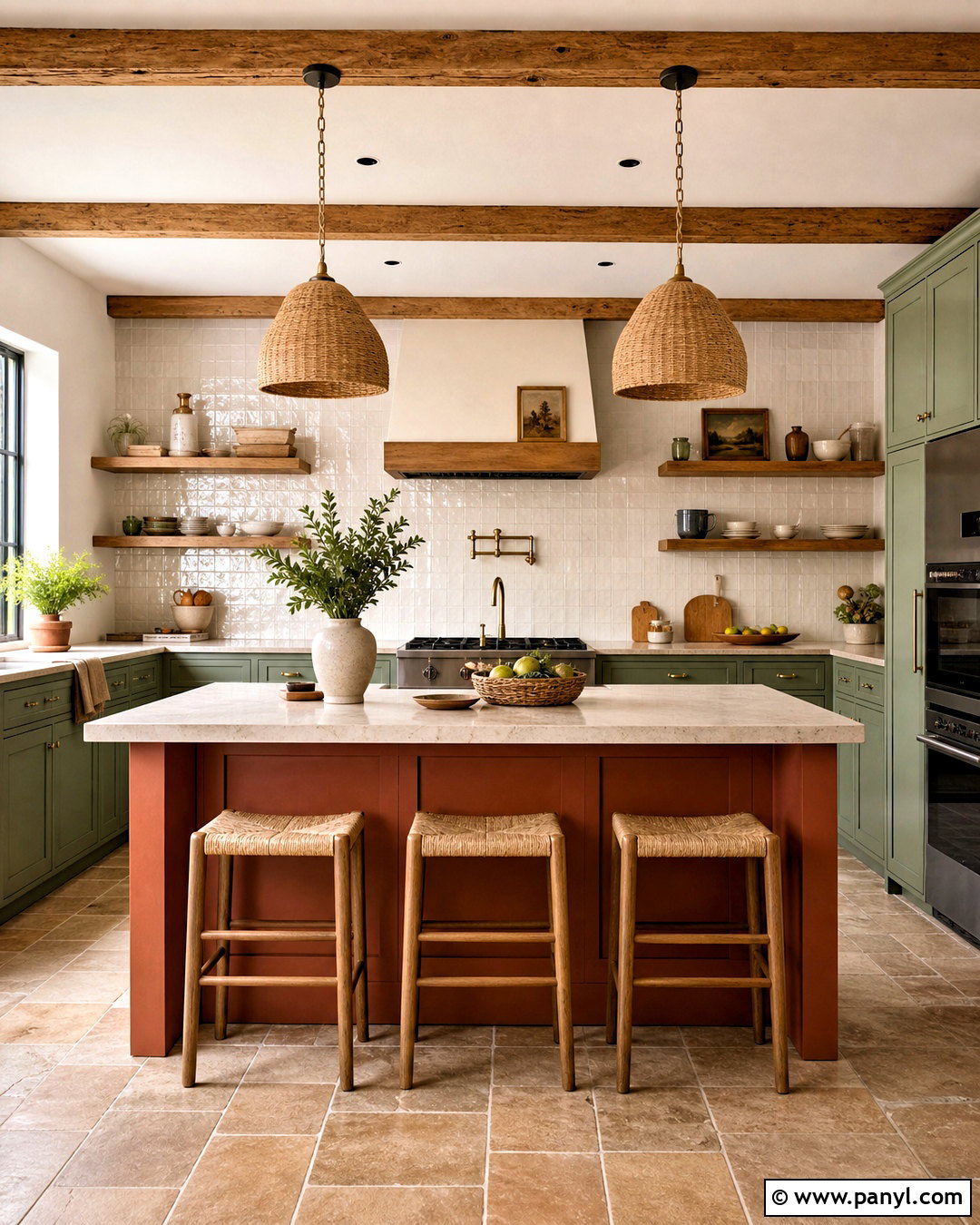
Sage green and terracotta create an inviting palette inspired by gardens and sun-warmed clay. Use muted sage on the main cabinets, then introduce terracotta through the island base and handmade floor tile. Keep countertops creamy and lightly patterned so the two colors remain the focus. A warm white zellige backsplash reflects light and adds imperfect texture. Natural oak shelves, brushed brass hardware, and woven pendant lights support the organic look. Choose cream or flax-colored stools to give the bolder finishes room to breathe. If a full terracotta floor feels too strong, select a pale clay-colored porcelain tile instead. The completed kitchen has clear character, but its natural materials and softened colors make it comfortable for daily living rather than visually busy.
17. Warm Minimalist Kitchen
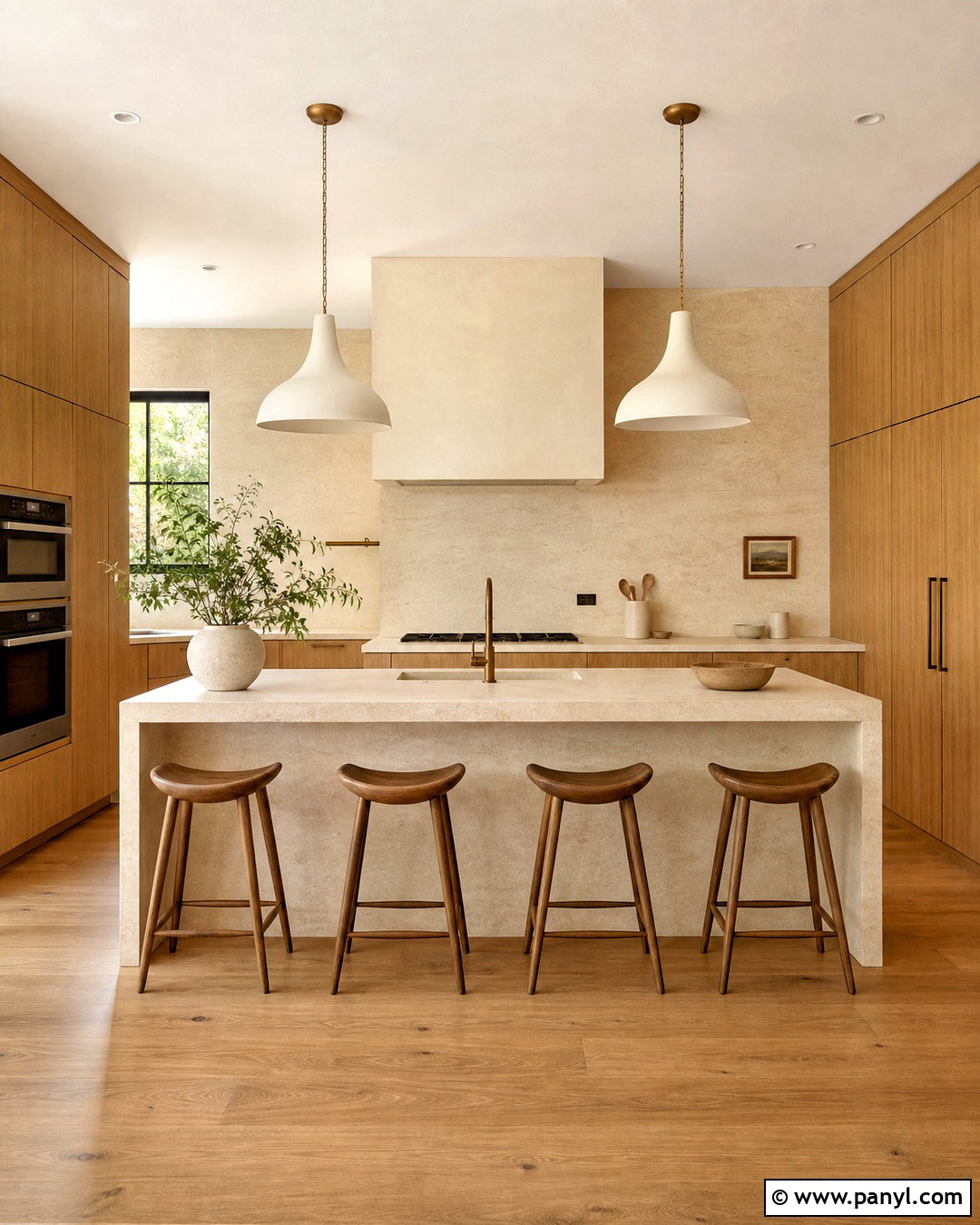
A minimalist kitchen can feel inviting when texture replaces excessive decoration. Choose flat-panel pale oak cabinets, a warm beige stone island, and creamy microcement walls for a seamless, low-contrast setting. Conceal appliances and create dedicated storage for countertop equipment to preserve clear working surfaces. Honed travertine or a durable travertine-look material can cover the backsplash and counters. Add brushed bronze faucets and slim hardware for understated detail. Wide-plank light oak flooring maintains continuity, while two sculptural ivory pendants soften the island area. Include curved wood stools and one large ceramic bowl instead of many small accessories. This complete design offers the order of minimalism without cold white surfaces, hard contrast, or a sterile showroom appearance.
18. Rustic Warm Kitchen
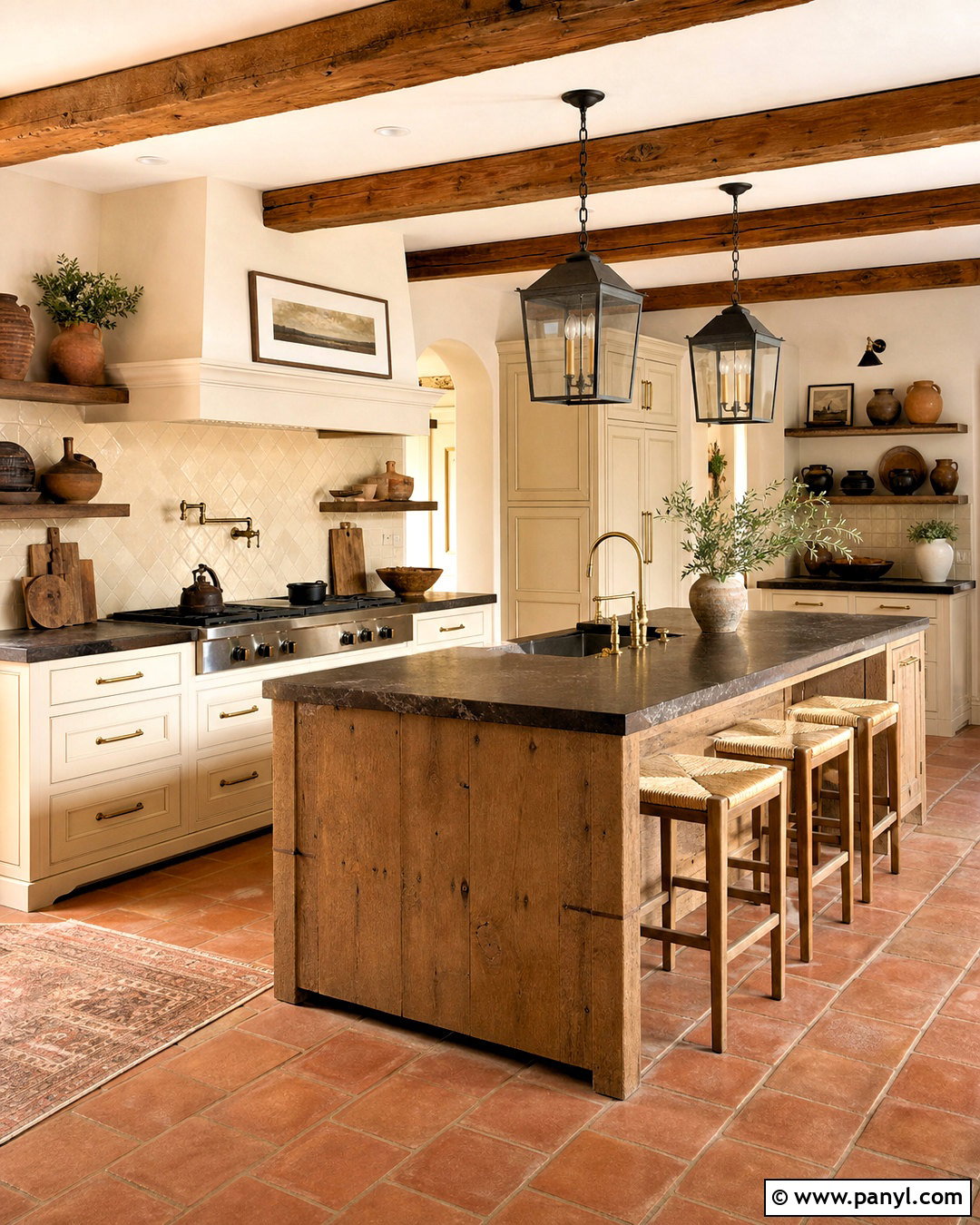
Picture a practical kitchen where every surface becomes more appealing with age. Start with warm cream inset cabinets, a reclaimed oak island, and lightly distressed brass hardware. Use honed soapstone or dark brown quartz on the perimeter, then select butcher block for a smaller prep area. A handmade ivory tile backsplash brightens the darker counters. Terracotta floor tiles establish a durable, earthy base, while exposed wood beams reinforce the room’s rustic character. Choose simple iron pendant lights with cream interiors and place woven stools around the island. Open shelves can display everyday pottery, but keep them limited to avoid clutter. The finished kitchen feels authentic and relaxed because its warm colors are supported by practical, tactile materials rather than decorative themes.
19. Midcentury Warm Wood Kitchen
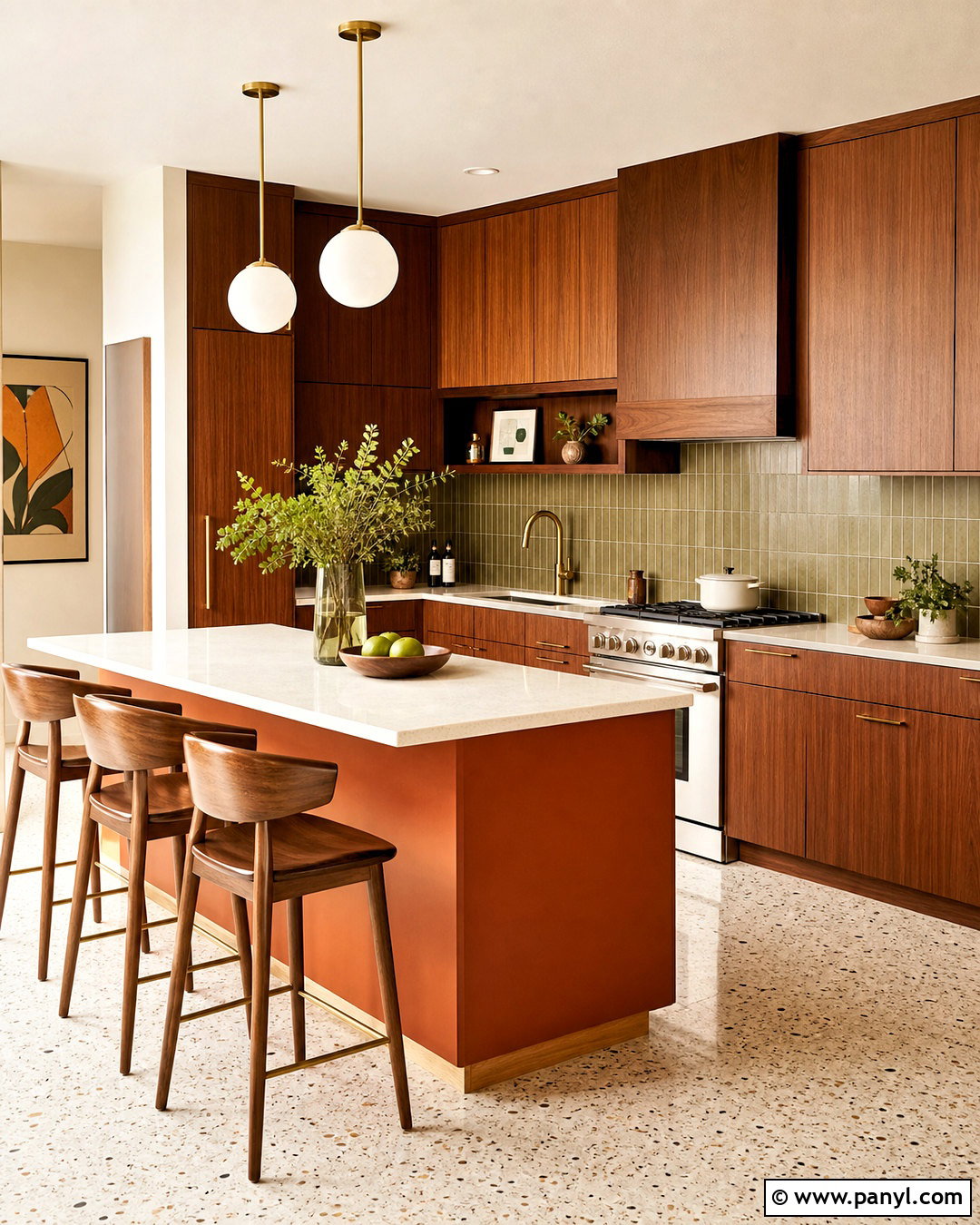
Midcentury design naturally suits a warm kitchen through wood cabinetry, earthy color, and simple geometric forms. Use medium walnut slab-front cabinets with integrated pulls, pairing them with a cream quartz countertop and olive green tile backsplash. A compact rust-colored island can provide both prep space and a subtle focal point. Choose light terrazzo flooring with tan and brown flecks to balance the darker wood. Globe pendant lights, tapered counter stools, and small brass accents reinforce the period influence without turning the room into a replica. Keep the layout open and functional, with long cabinet runs and minimal countertop decor. This coordinated design feels nostalgic yet current because the retro references are balanced with durable contemporary surfaces and efficient storage.
20. Mediterranean Warm Kitchen
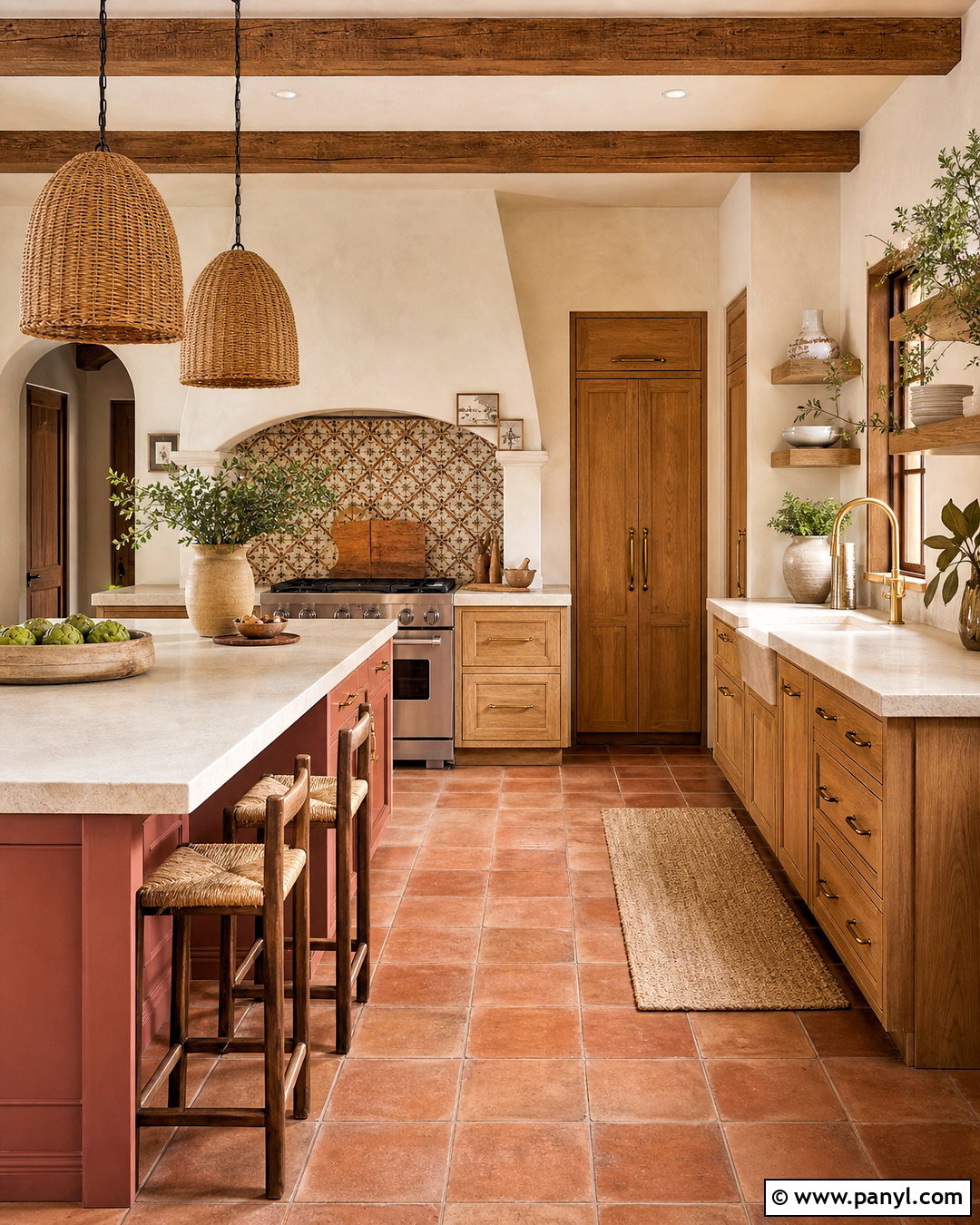
Sun-baked colors and handcrafted surfaces give a Mediterranean kitchen its welcoming character. Begin with creamy plaster walls, natural oak cabinets, and a muted terracotta island. Use warm beige limestone counters and a patterned tile backsplash in soft clay, ochre, cream, and olive. Terracotta flooring can unify the room, especially when laid in a simple square or brick pattern. Add aged brass hardware, woven pendant lights, and curved wood stools with rush seats. An arched plaster range hood provides a strong architectural focal point without requiring elaborate decoration. Keep accessories useful and restrained, such as pottery bowls, wooden boards, and linen towels. The finished kitchen feels bright, relaxed, and richly layered while remaining realistic for an everyday family home.
Conclusion:
The best warm toned kitchen ideas create comfort through a coordinated mix of color, texture, lighting, and natural materials. Cream, beige, terracotta, olive, ochre, rust, and brown can all work beautifully when balanced with lighter surfaces and thoughtful contrast. Wood cabinetry adds instant warmth, while brass, bronze, or copper introduces a softer shine than cool chrome. Before committing, compare samples in the kitchen during morning, afternoon, and evening light. Also consider how cabinet colors connect with nearby floors and open living spaces. Whether you prefer warm minimalism, rustic character, or bold earthy cabinetry, build the design around a limited palette and repeat each finish intentionally for a kitchen that feels cohesive and welcoming.

Related Ideas and Inspiration:
Leave a Reply