
Farmhouse kitchens feel most inviting when the wall color supports every practical and decorative detail. The right shade should complement cabinetry, counters, flooring, natural wood, and changing daylight without making the room feel flat. Today’s farmhouse palettes extend beyond predictable white, blending warm neutrals with earthy greens, weathered blues, gentle yellows, and deeper heritage colors. () Soft undertones are especially important because a seemingly simple gray or cream can shift dramatically beside stone, tile, or stained wood. Always sample paint on several walls and view it during the morning and evening. Whether your kitchen feels traditional, modern, rustic, or cottage-inspired, the complete room combinations below offer practical ways to use 30 Farmhouse Kitchen Wall Colors.

1. Warm White Farmhouse Kitchen Walls
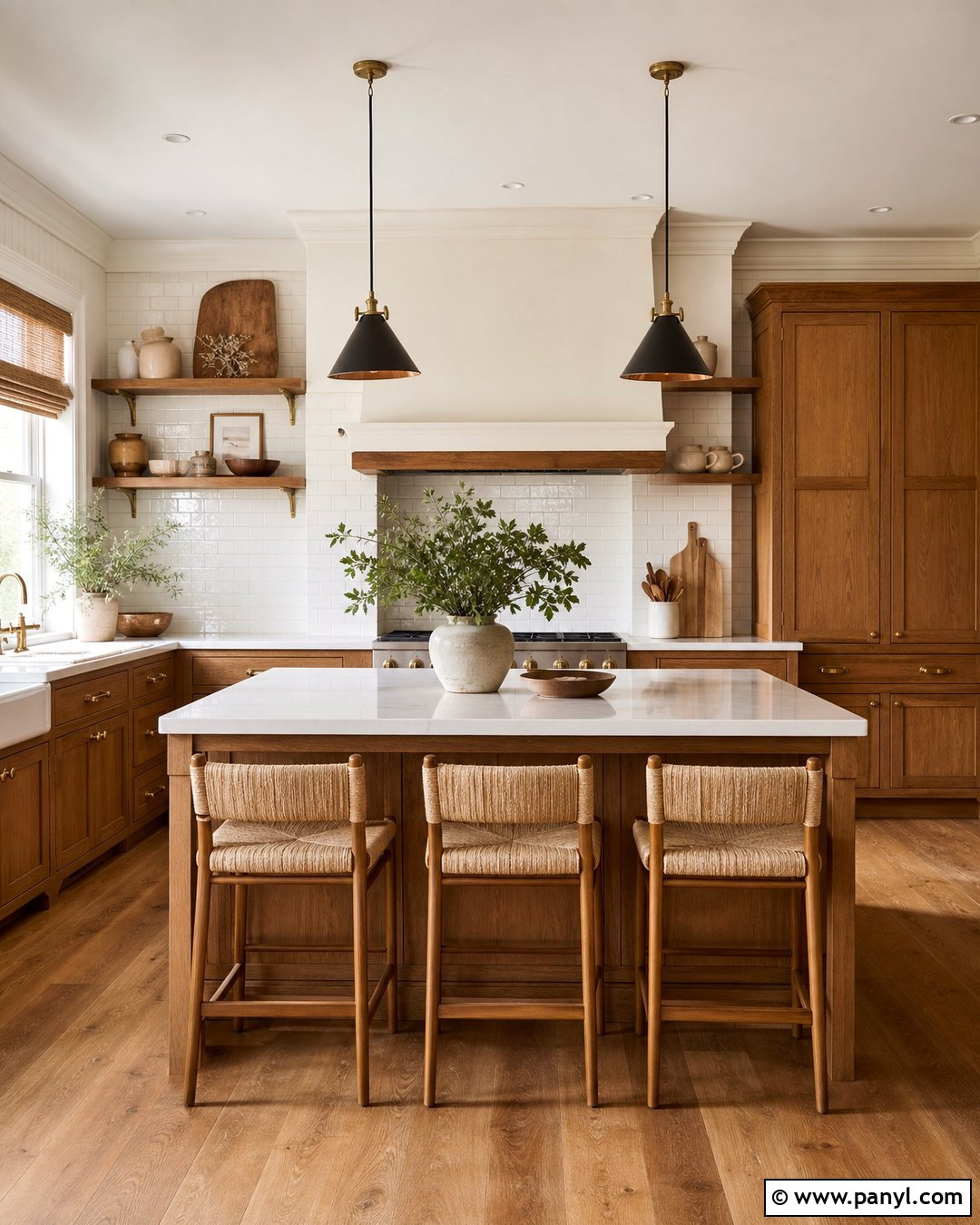
Warm white walls create a clean farmhouse kitchen without the cold feeling sometimes associated with pure white. Choose a shade with subtle cream or beige undertones, then pair it with medium-tone oak cabinets or a stained wood island. White quartz counters and a handmade subway tile backsplash keep the room bright, while aged brass hardware adds warmth. Continue the natural look with wide-plank oak flooring, woven counter stools, and simple linen window shades. Black pendant lights can provide definition, but use them sparingly so the design stays relaxed. This complete palette works especially well in kitchens with northern exposure because the warm undertone helps balance cooler daylight. Finish with stoneware, cutting boards, and leafy herbs rather than overly themed farmhouse decorations.
2. Cream Farmhouse Kitchen Walls
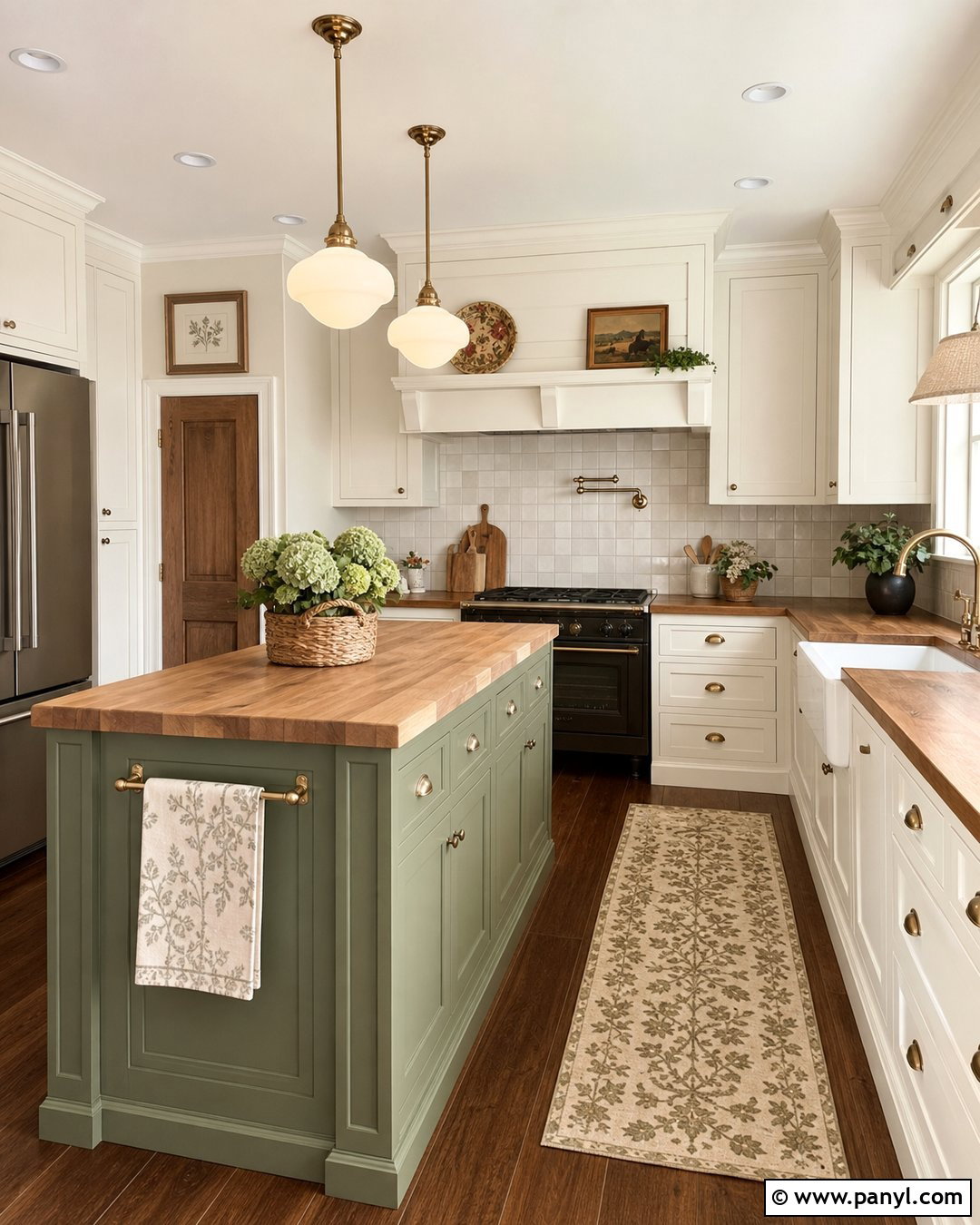
Cream walls bring softness to a farmhouse kitchen and work beautifully with traditional cabinetry. Build the room around off-white Shaker cabinets, butcher-block counters, and a deep apron-front sink. A muted green island introduces gentle contrast without making the space feel busy. For the backsplash, consider lightly textured ivory tile with warm grout rather than crisp white tile. Medium walnut flooring, antique brass knobs, and milk-glass pendants reinforce the collected character. Keep fabrics simple with oatmeal linen shades and a faded botanical runner. Cream can appear more yellow near warm artificial lighting, so select neutral white bulbs and test the paint beside your counters. The finished kitchen should feel layered and comfortable, with enough tonal variation to keep the pale palette from looking washed out.
3. Ivory Farmhouse Kitchen Walls
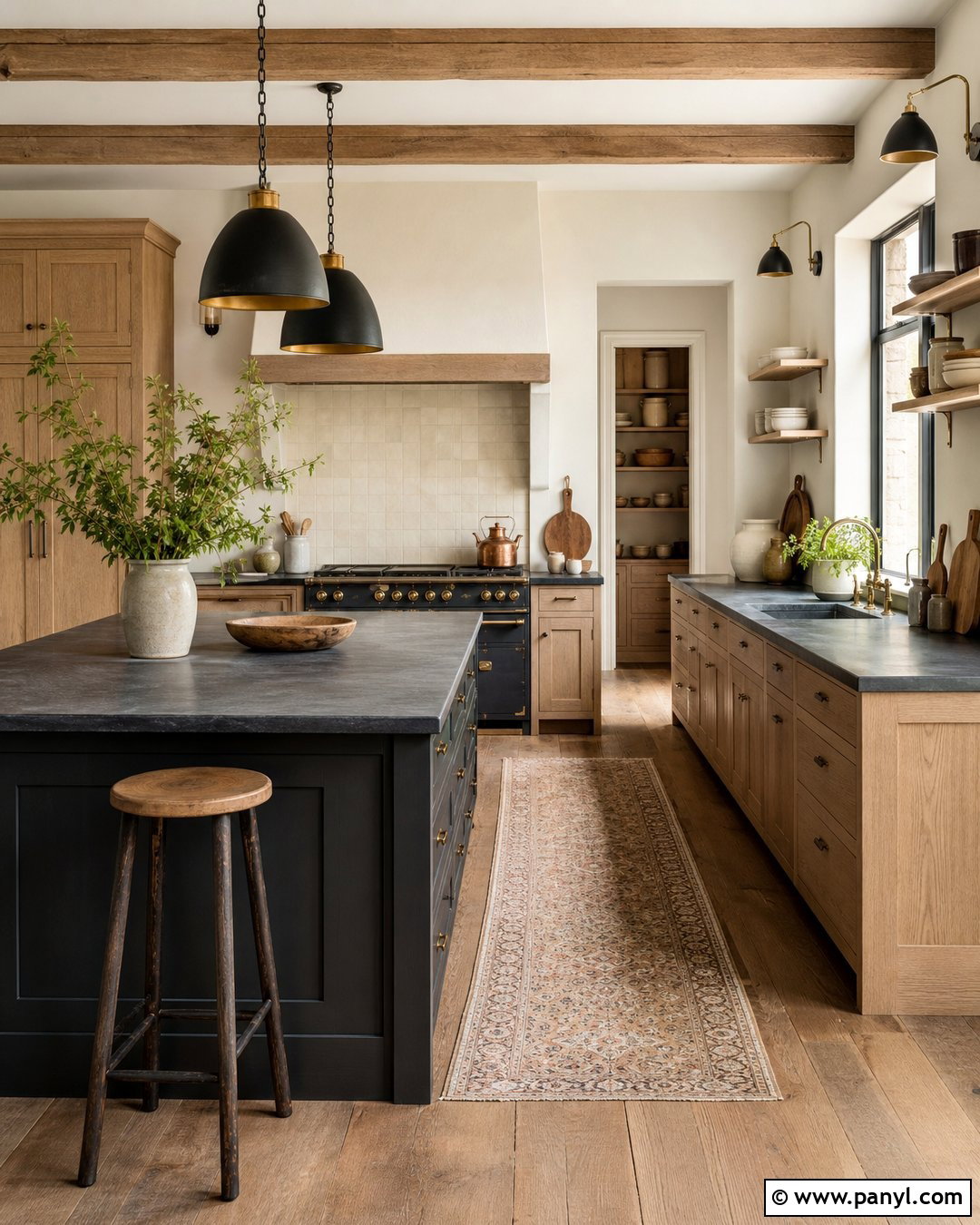
Ivory offers a slightly richer alternative to standard white while maintaining the light, open character associated with farmhouse kitchens. Pair ivory walls with natural white oak cabinetry, honed soapstone counters, and creamy handmade backsplash tile. A charcoal-painted island can anchor the room and connect visually with black iron lighting or dark window frames. Keep the flooring warm through reclaimed oak or realistic wood-look planks in a medium brown finish. Unlacquered brass faucets and cabinet pulls develop character alongside simple ceramic crocks and vintage cutting boards. Ivory works best when the ceiling and trim are a cleaner white, creating a subtle boundary around the walls. Avoid combining it with blue-white surfaces, which may emphasize yellow undertones. The complete result feels warm, balanced, and quietly traditional.
4. Soft Greige Farmhouse Kitchen Walls
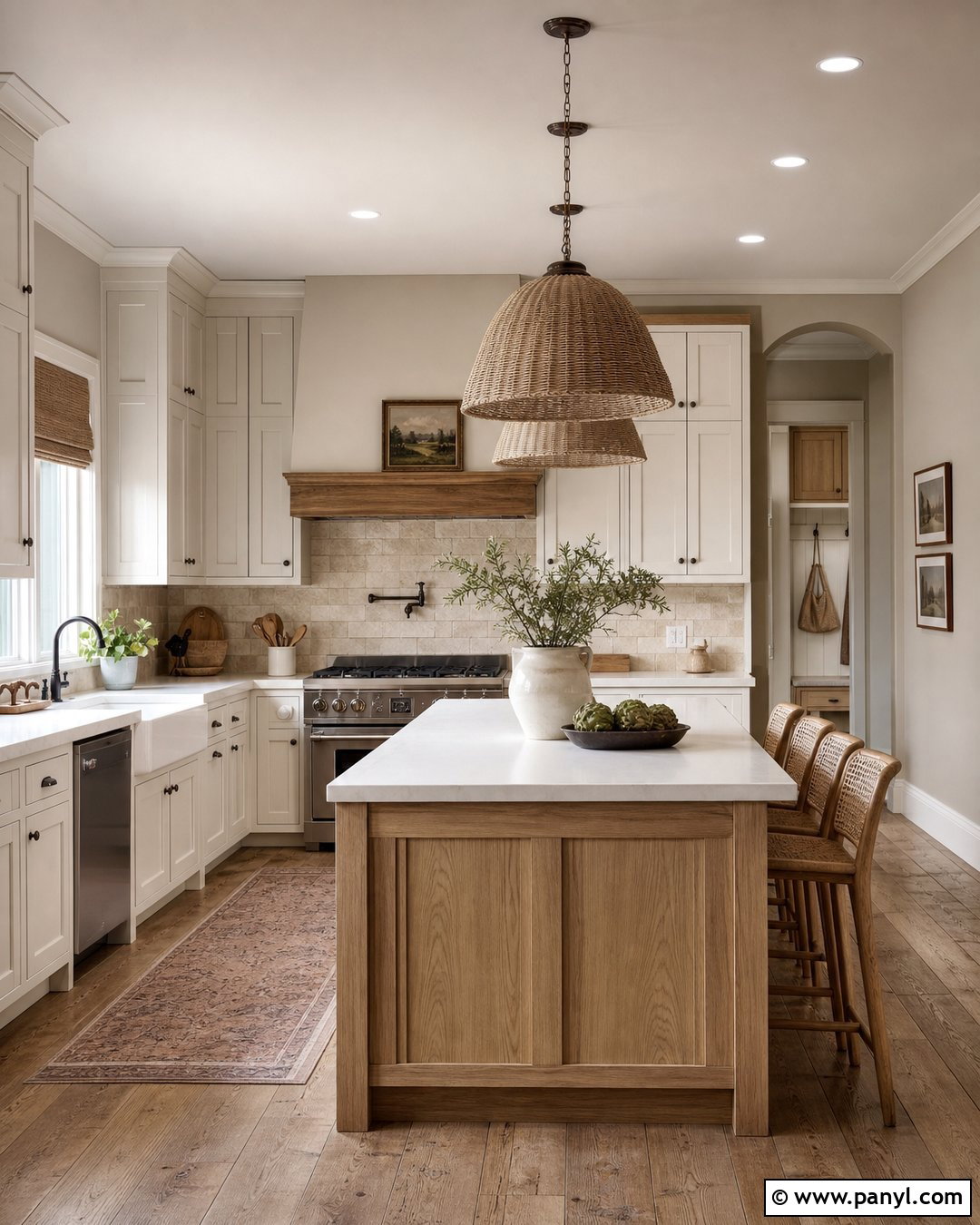
Soft greige walls blend gray and beige, making them useful when a farmhouse kitchen contains both cool and warm finishes. Combine this wall color with creamy white cabinets, pale quartz counters, and a light oak island. A backsplash of tumbled limestone or matte taupe tile adds texture while maintaining the neutral scheme. Choose aged bronze hardware instead of sharp black to support the gentle undertones. Wide-plank flooring in a weathered natural finish creates continuity, while woven pendants and flax-colored Roman shades soften the harder surfaces. Greige can change significantly under different lighting, so compare samples beside cabinetry and flooring before committing. This coordinated look suits an open-concept home because the walls can transition comfortably into beige, gray, cream, or natural wood furnishings in adjoining living areas.
5. Warm Taupe Farmhouse Kitchen Walls
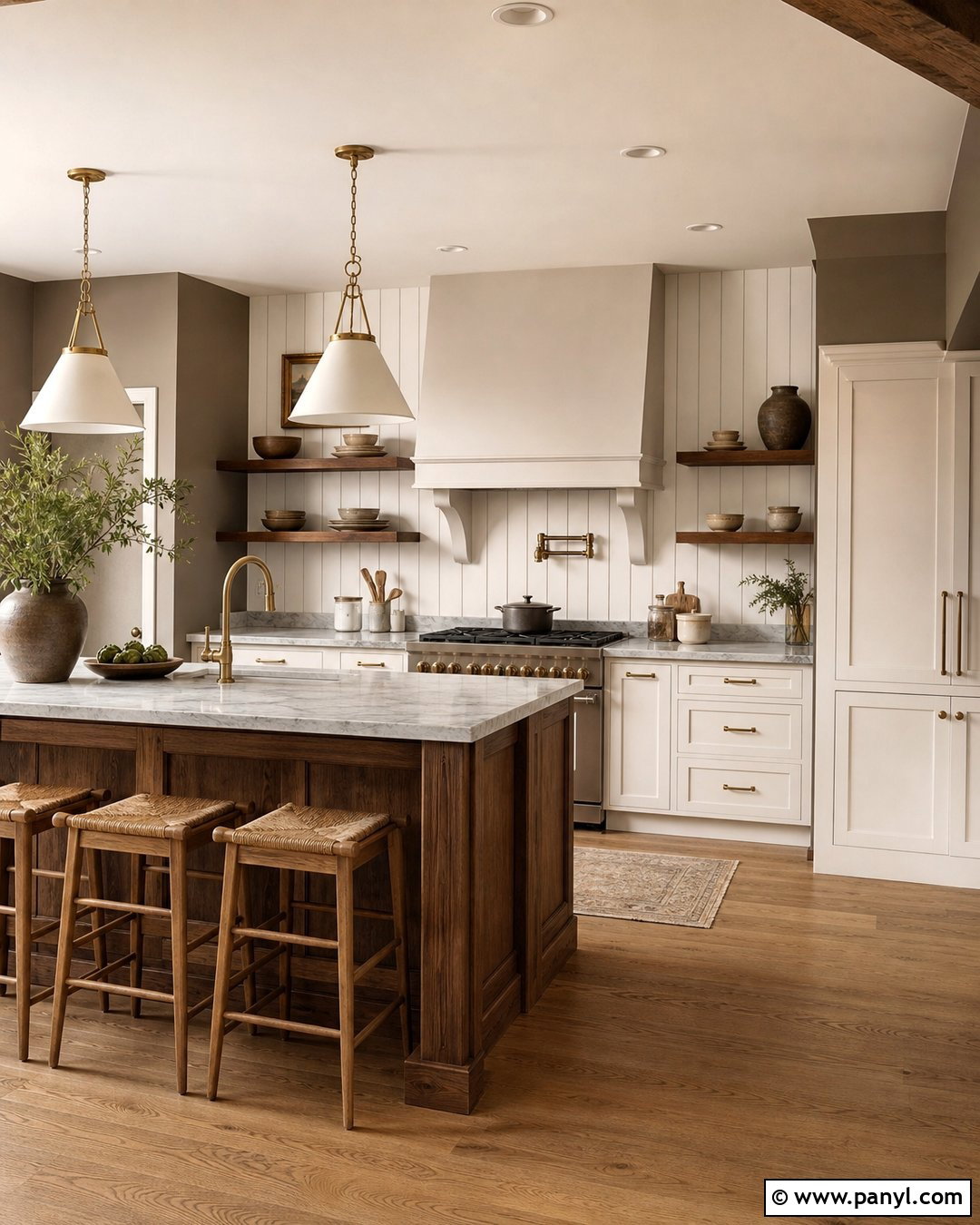
A warm taupe wall color gives a farmhouse kitchen greater depth without making it feel dark. Use it with warm white cabinets, light marble-look counters, and a walnut island for an earthy, tailored combination. Vertical white shiplap behind open shelves can break up the taupe while highlighting pottery and practical serving pieces. Add antique brass fixtures, woven rush stools, and medium oak flooring to reinforce the warmth. Cream pendant shades keep illumination soft and balanced above the island. Taupe is particularly effective in a large kitchen where pale walls might feel empty or unfinished. Select a shade with brown rather than purple undertones, especially when the room includes golden wood. The completed space should feel grounded and welcoming, with quiet contrast between the walls, cabinetry, and natural materials.
6. Light Beige Farmhouse Kitchen Walls
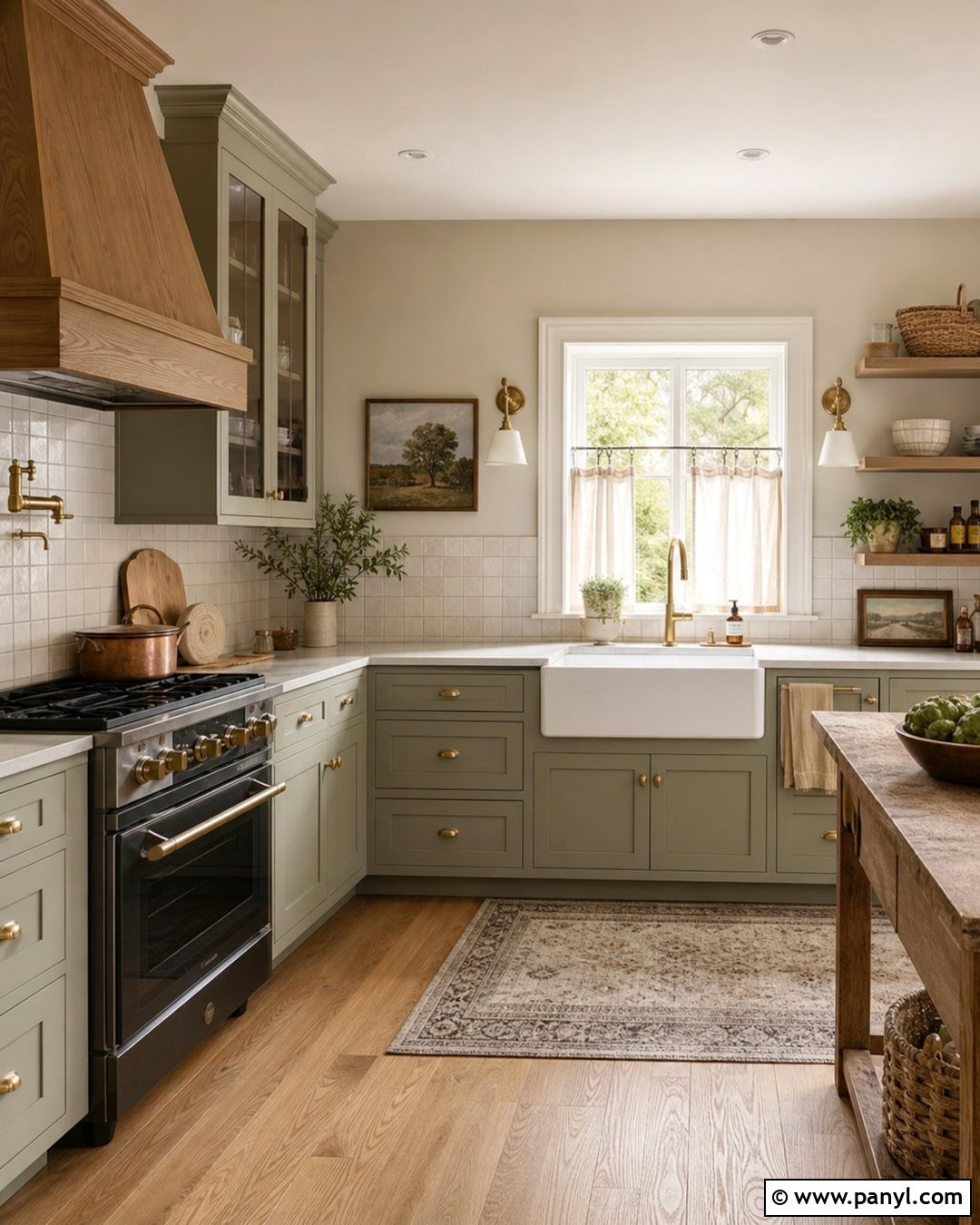
Light beige walls create an easygoing background for a classic farmhouse kitchen filled with natural textures. Pair the color with sage green cabinets, creamy quartz counters, and a white apron-front sink. A simple backsplash of ivory square tile keeps the surfaces practical while supporting the wall color. Use medium-tone oak floors and a matching wood range hood to establish warmth across the room. Brushed brass hardware, linen café curtains, and woven baskets complete the relaxed design. To prevent beige from looking dated, avoid overly yellow shades and choose clean, simple cabinetry instead of heavily distressed finishes. Bright white ceiling paint can lift the palette, while warm white trim provides a softer transition. This complete combination feels comfortable, durable, and suitable for both traditional and updated farmhouse homes.
7. Mushroom Farmhouse Kitchen Walls
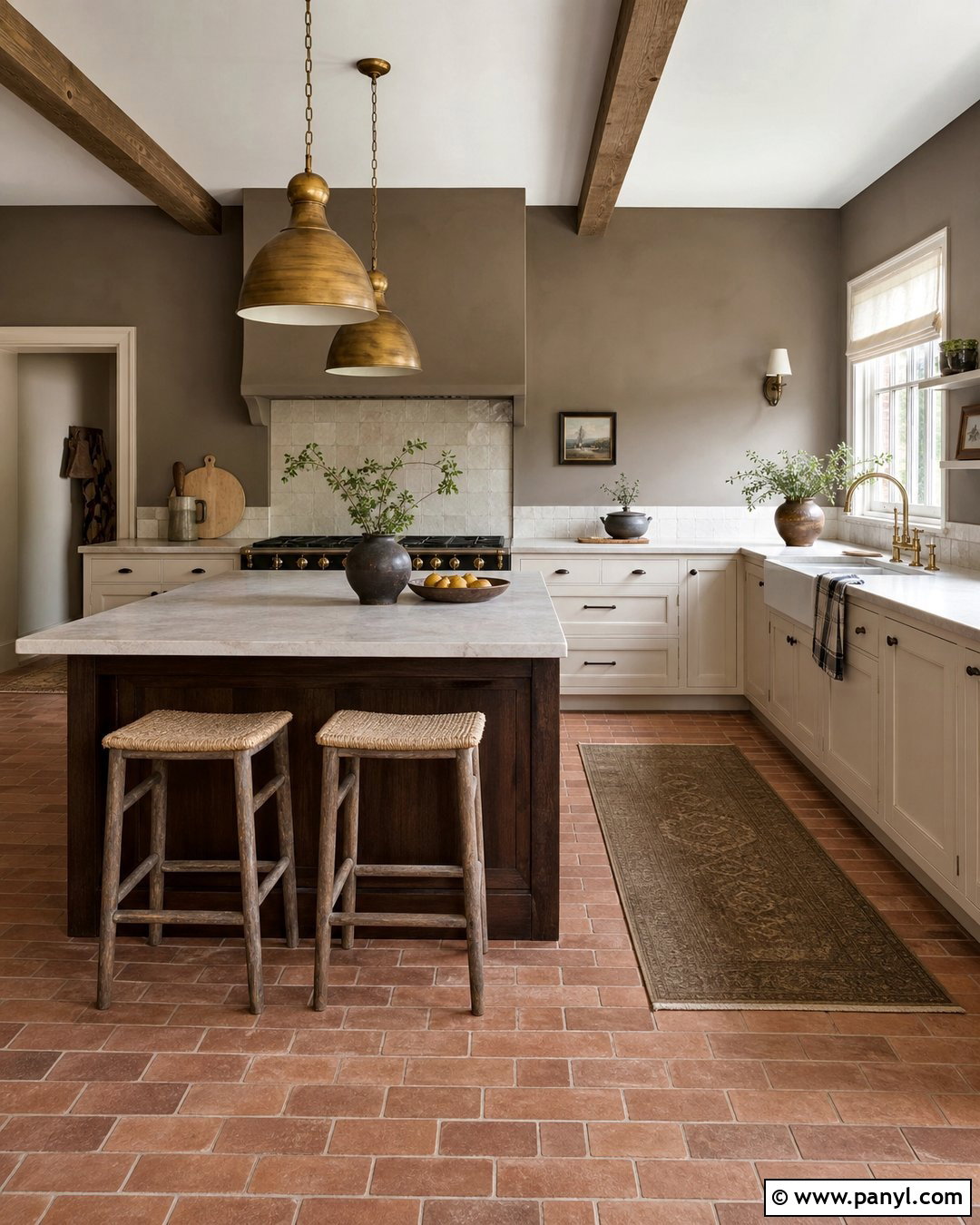
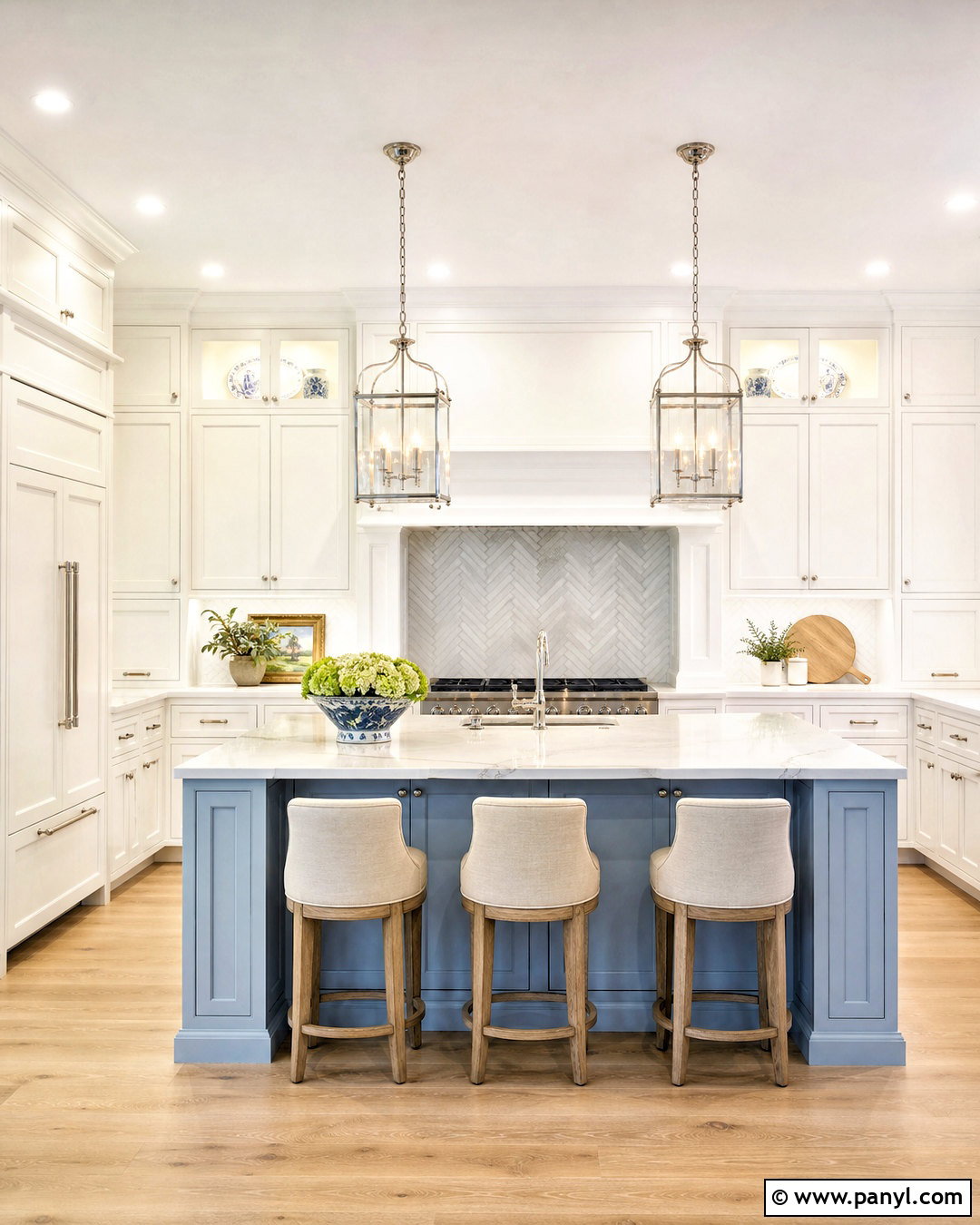
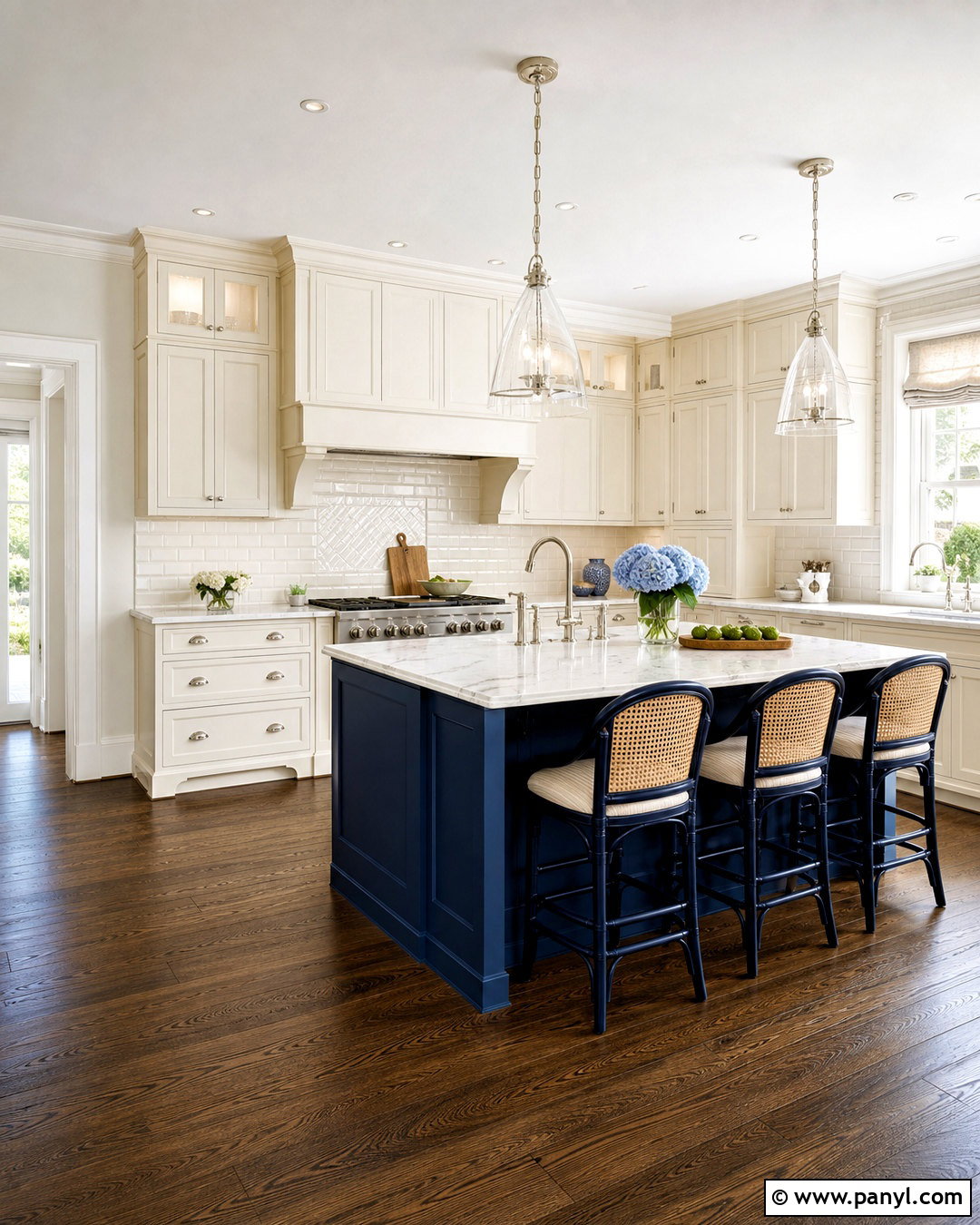
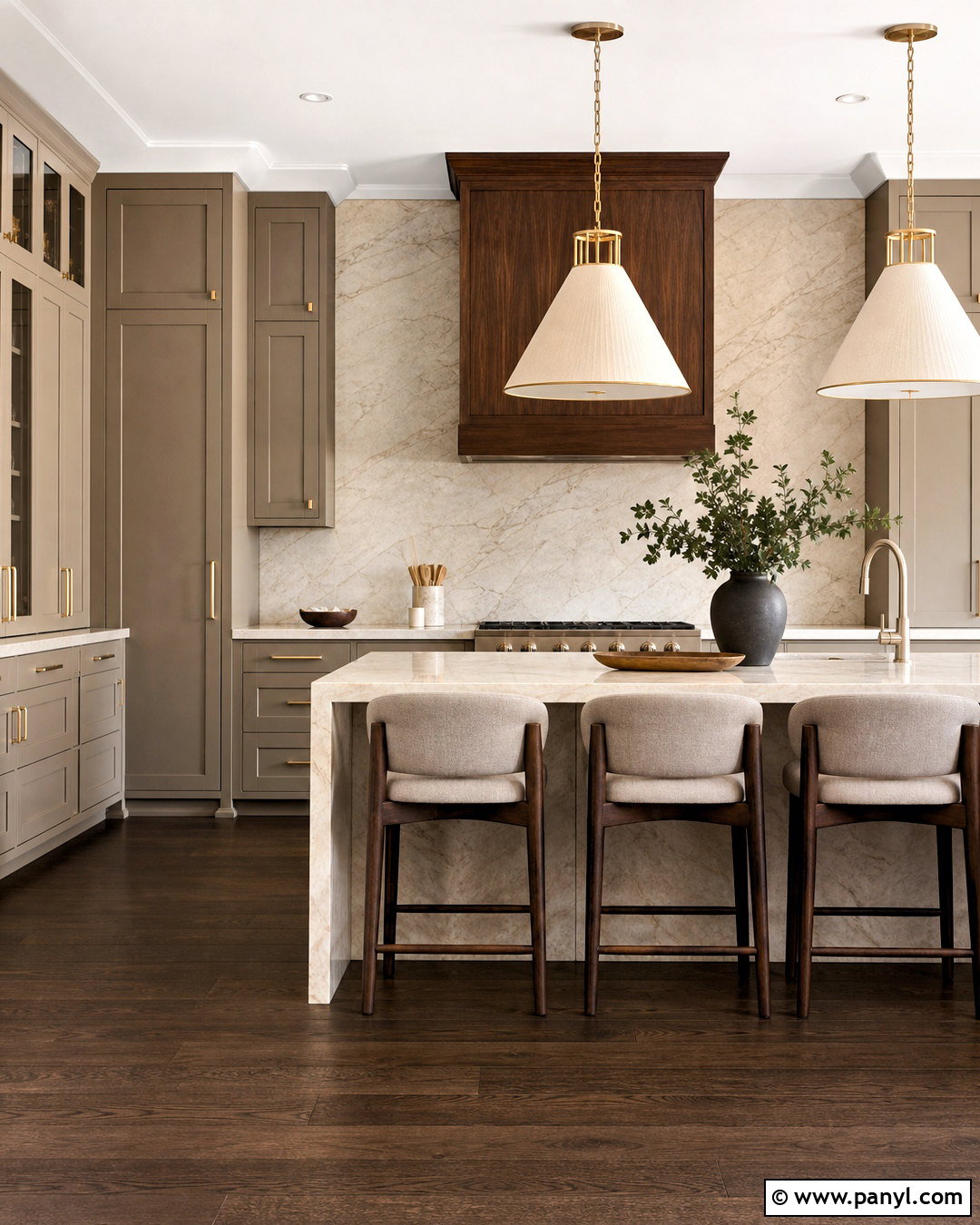
Mushroom paint has an earthy gray-brown character that makes farmhouse kitchens feel warm and substantial. Create a cohesive room with mushroom walls, off-white cabinets, veined quartz counters, and a dark-stained oak island. A backsplash made from irregular cream tile introduces handmade texture without competing with the wall color. Choose bronze hardware, aged brass pendants, and natural linen window treatments for a layered finish. Medium brown brick or reclaimed wood flooring strengthens the rustic influence. Because mushroom can absorb light, use it in a kitchen with good windows or generous ceiling lighting. Paint the trim a creamy white rather than stark white for a smoother transition. Add black accents only in small amounts, such as the range or window frames, so the finished kitchen remains warm instead of overly dramatic.
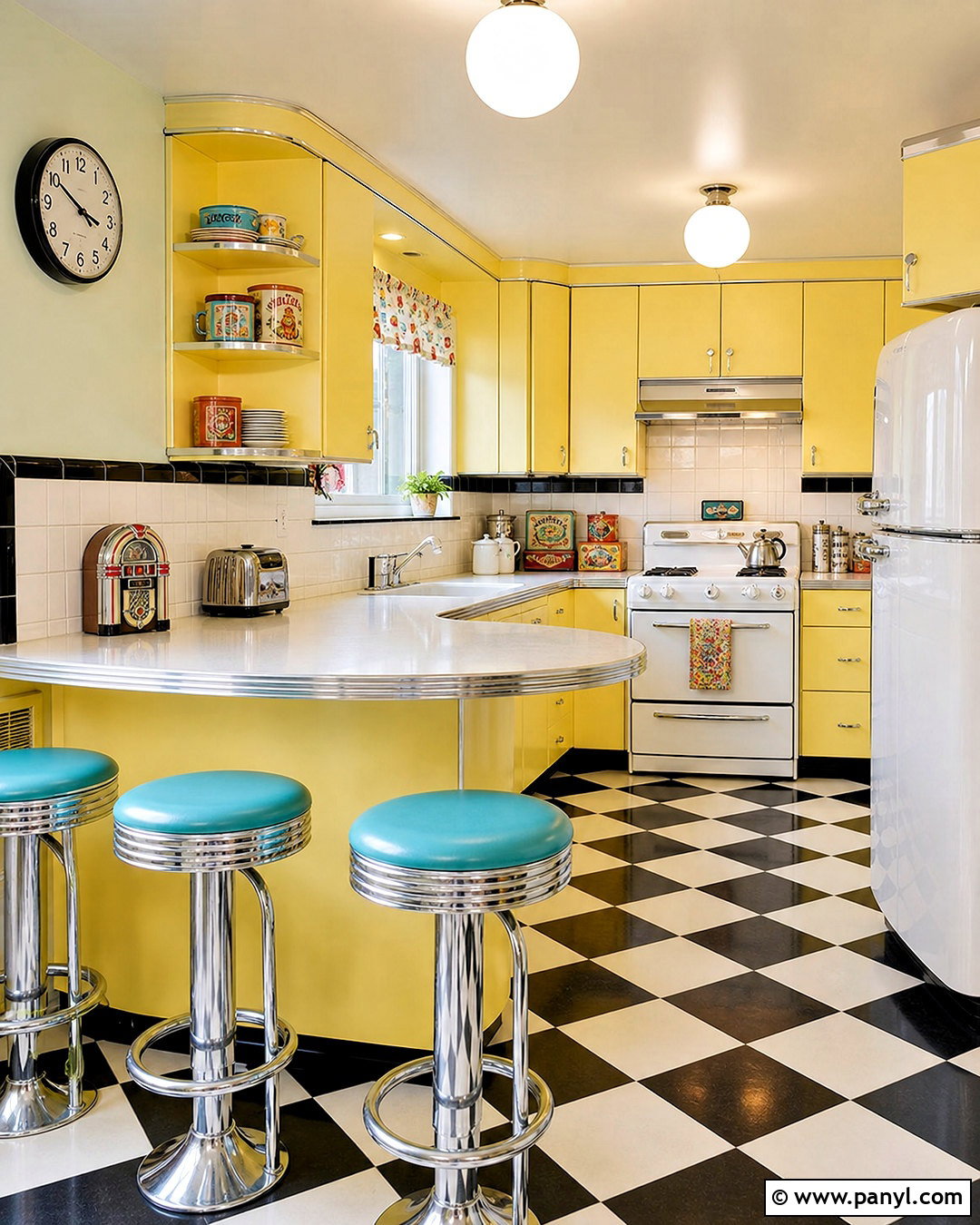
8. Putty Farmhouse Kitchen Walls
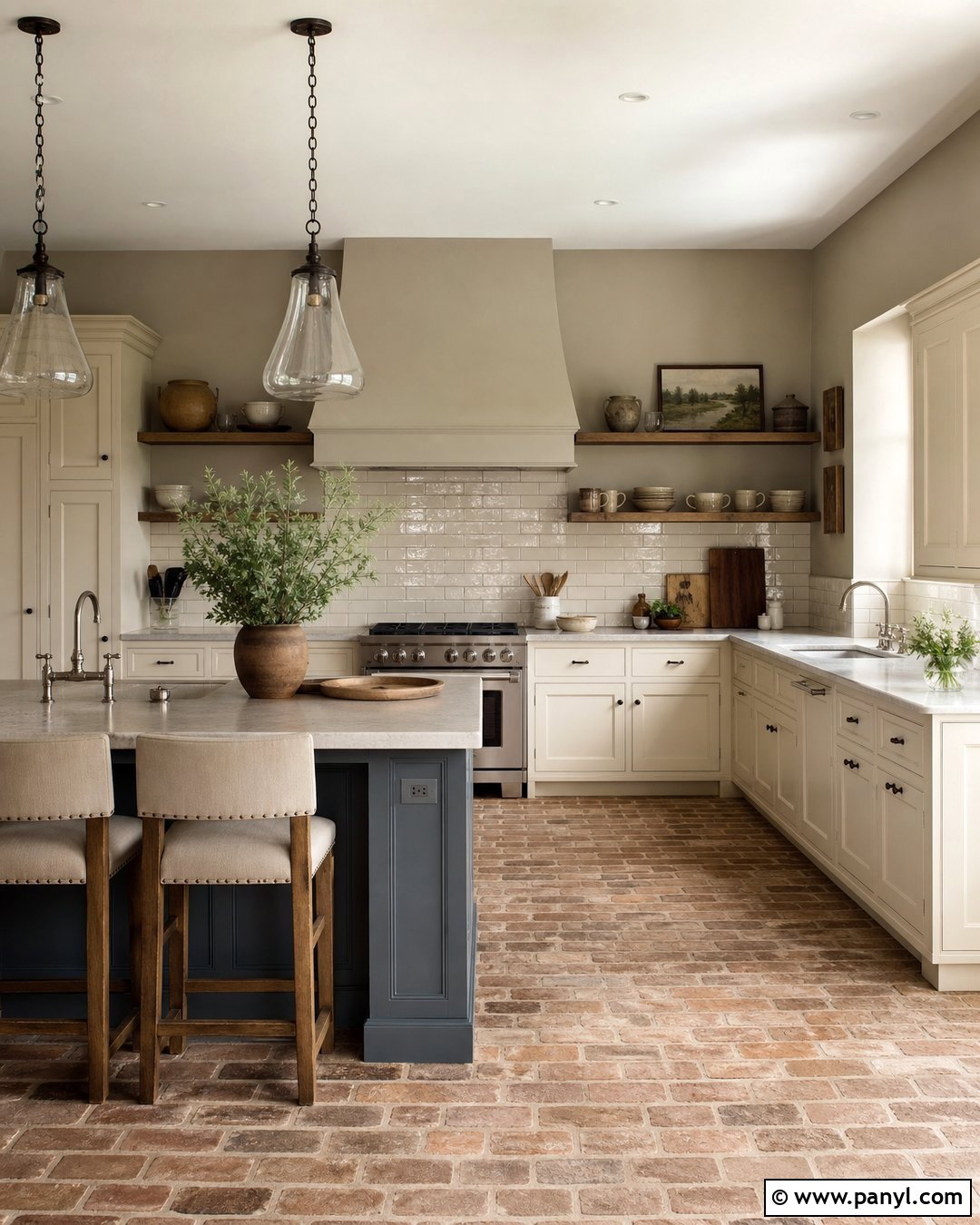
Putty-colored walls provide a calm neutral backdrop with more personality than basic beige. They pair naturally with ivory inset cabinets, pale limestone counters, and lightly stained oak shelves. Bring definition to the room through a muted blue-gray island and dark bronze hardware. A backsplash of glossy cream subway tile reflects light and prevents the earthy palette from feeling heavy. For flooring, choose warm oak planks or soft brown brick laid in a simple pattern. Clear glass pendants, linen-covered stools, and handmade pottery add detail without clutter. Putty works particularly well in older homes because it complements uneven plaster, aged wood, and traditional millwork. Carry the wall color into a nearby breakfast area for continuity, then use cream trim and natural textiles to complete the understated farmhouse look.
9. Pale Gray Farmhouse Kitchen Walls
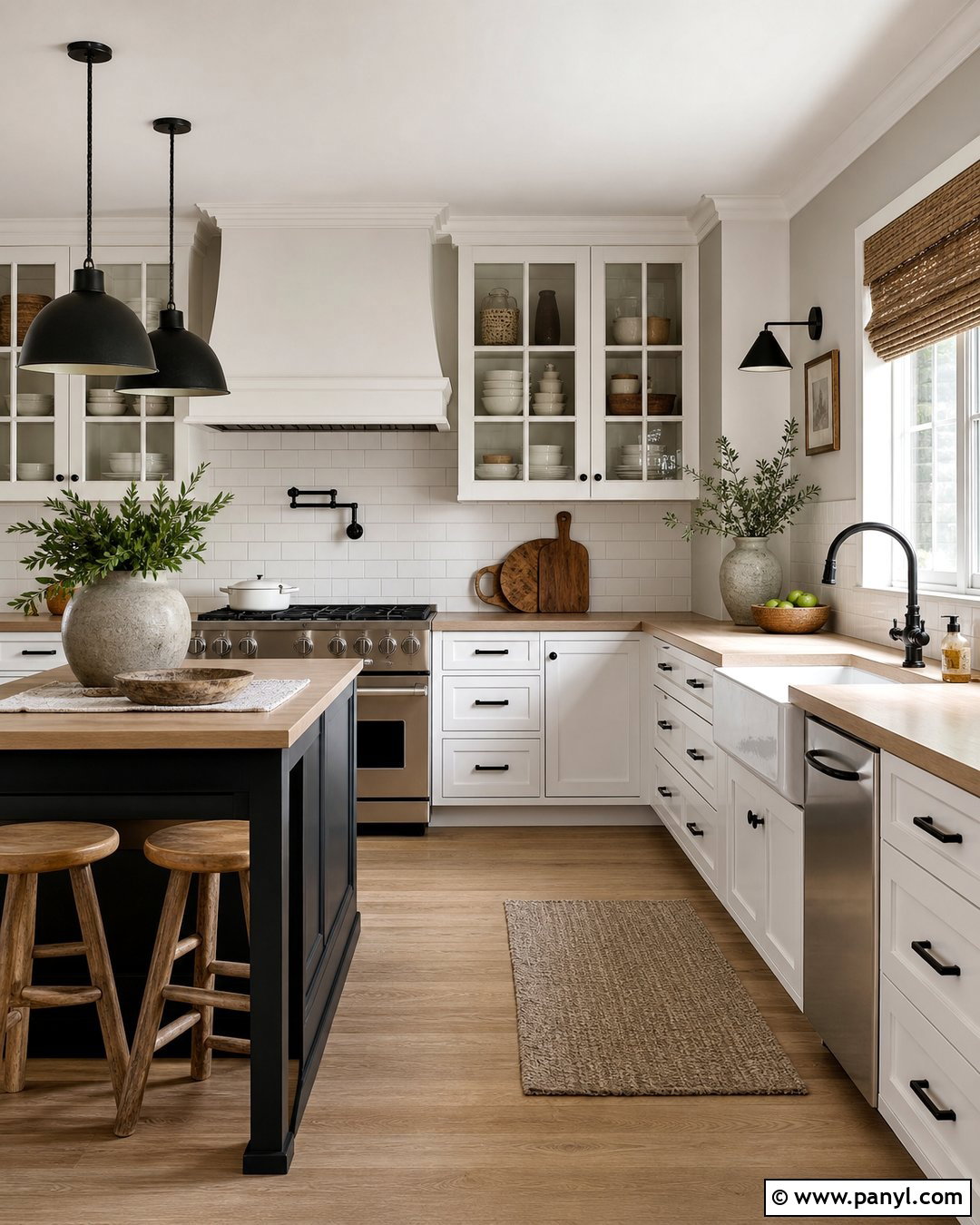
Pale gray walls can give a farmhouse kitchen a cleaner, more modern edge while still allowing rustic materials to stand out. Select a gray with a warm undertone and pair it with white Shaker cabinets, light oak counters, and a charcoal island. A white subway tile backsplash with soft gray grout creates subtle definition. Continue the streamlined look with matte black hardware, simple dome pendants, and wide-plank oak flooring. Wooden stools, woven shades, and a few vintage ceramics prevent the room from appearing sterile. In kitchens with limited sunlight, avoid gray shades that lean heavily blue because they may feel chilly. Warm bulbs and natural wood are essential balancing elements. The finished design should combine crisp architectural lines with comfortable textures, producing a practical modern farmhouse kitchen rather than an industrial space.

10. Blue Gray Farmhouse Kitchen Walls
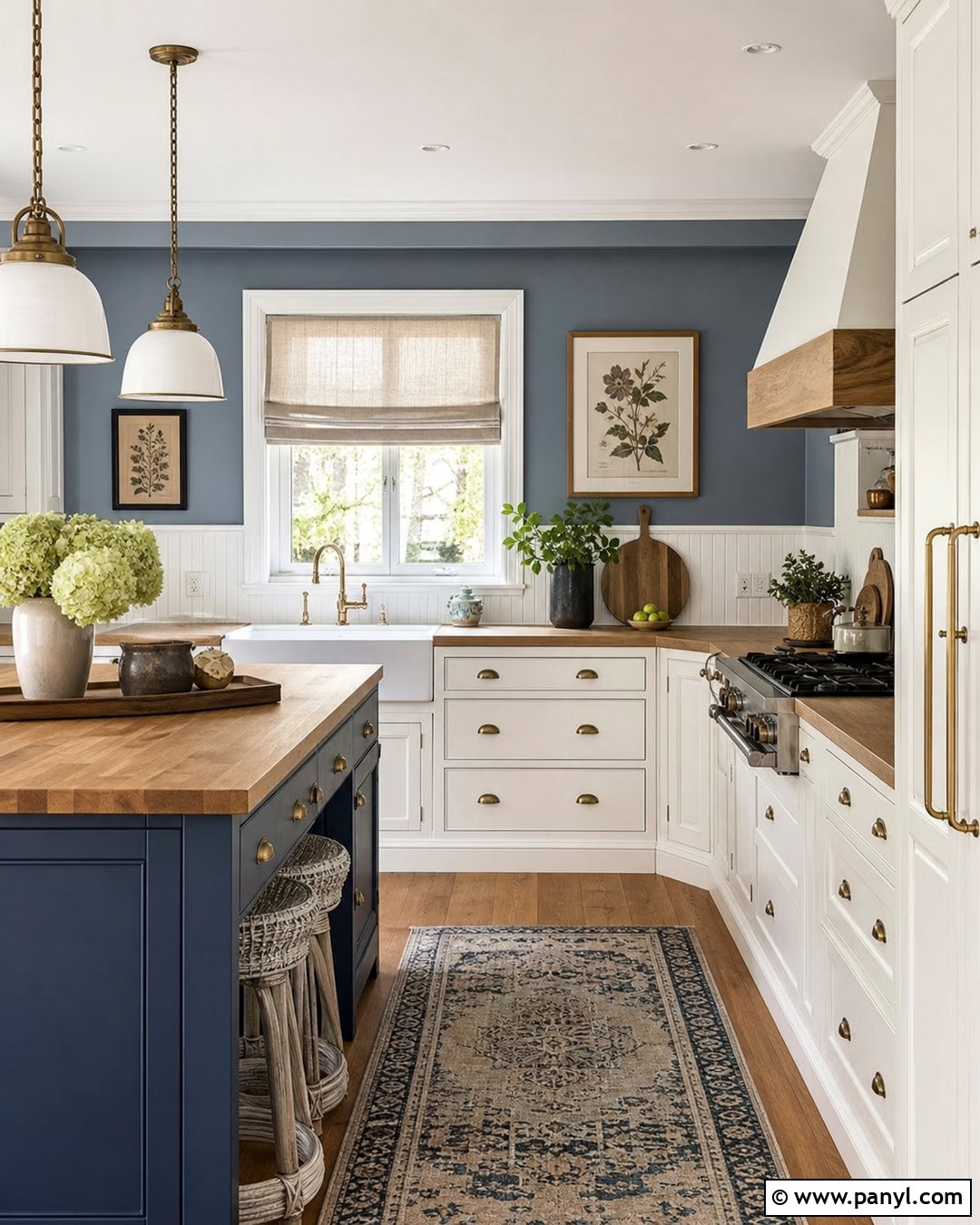
Blue-gray walls bring a weathered, peaceful quality to a farmhouse kitchen. Pair them with creamy white cabinets, butcher-block counters, and a deep navy island for gentle tonal layering. White beadboard or handmade backsplash tile adds traditional texture while keeping the cooking area bright. Warm the cool wall color with honey oak flooring, aged brass cabinet pulls, and woven counter stools. Linen shades in an oatmeal color create another soft connection to the wood. Choose a blue-gray that appears muted rather than icy, and test it near appliances because stainless steel may intensify cool undertones. A white ceiling and cream-painted trim provide clean boundaries. Complete the room with stoneware, wooden serving boards, and simple botanical artwork. The overall kitchen feels fresh and airy while retaining the warmth expected from farmhouse design.
11. Charcoal Gray Farmhouse Kitchen Walls
Charcoal walls can create a dramatic farmhouse kitchen when balanced with lighter cabinetry and generous illumination. Use the dark color on all visible walls in a spacious kitchen, then introduce warm white cabinets, marble-look counters, and a natural oak island. White backsplash tile brightens the work zone, while aged brass hardware and pendants add warmth against the charcoal background. Medium oak flooring keeps the room from feeling too formal. Open shelves should match the island and display a restrained mix of cream pottery, glassware, and wood pieces. Paint the ceiling white to maintain visual height, and use strong undercabinet lighting for practical tasks. This complete scheme works especially well with large windows. It delivers a modern, grounded interpretation of farmhouse style without relying on excessive black accents.
12. Sage Green Farmhouse Kitchen Walls
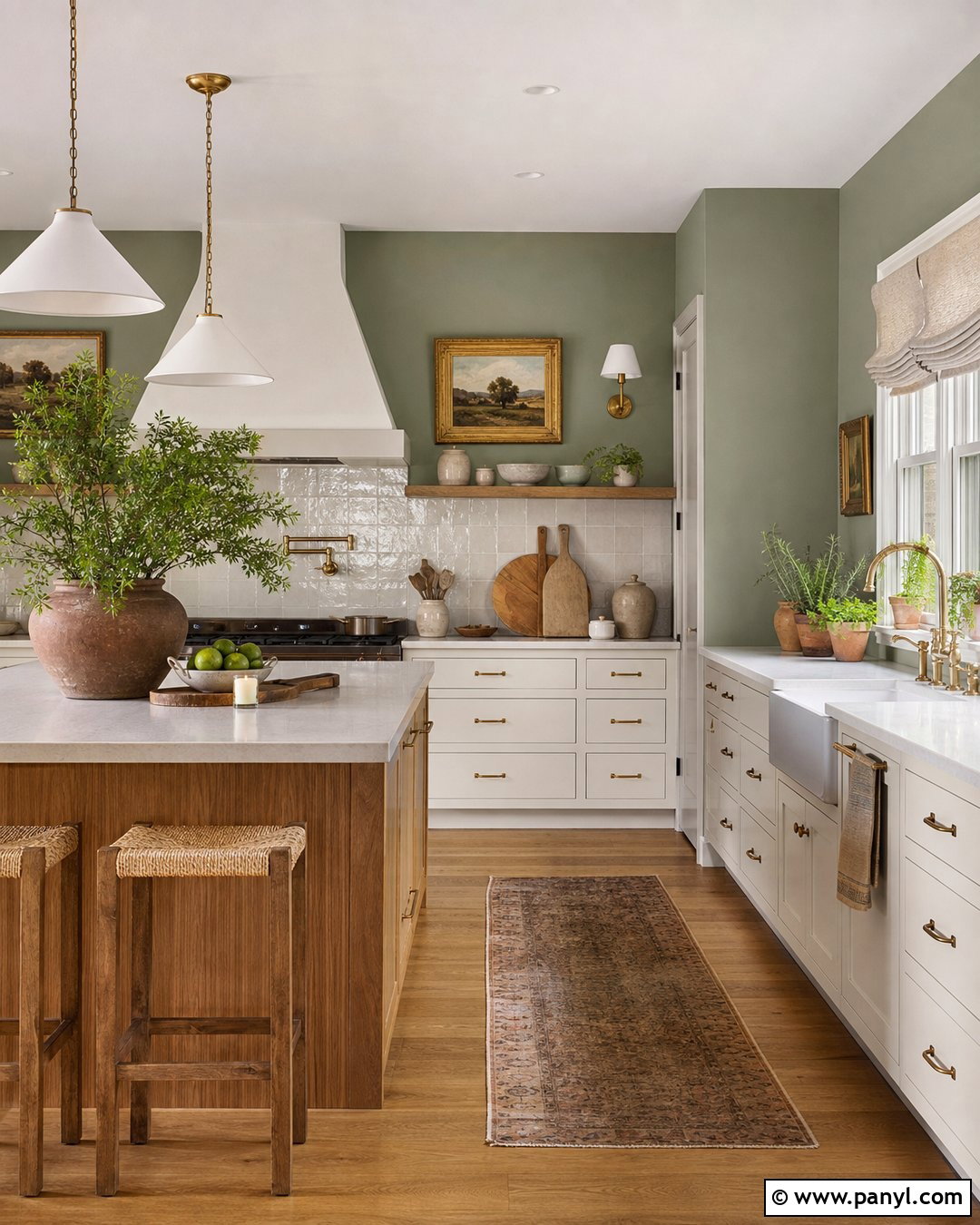
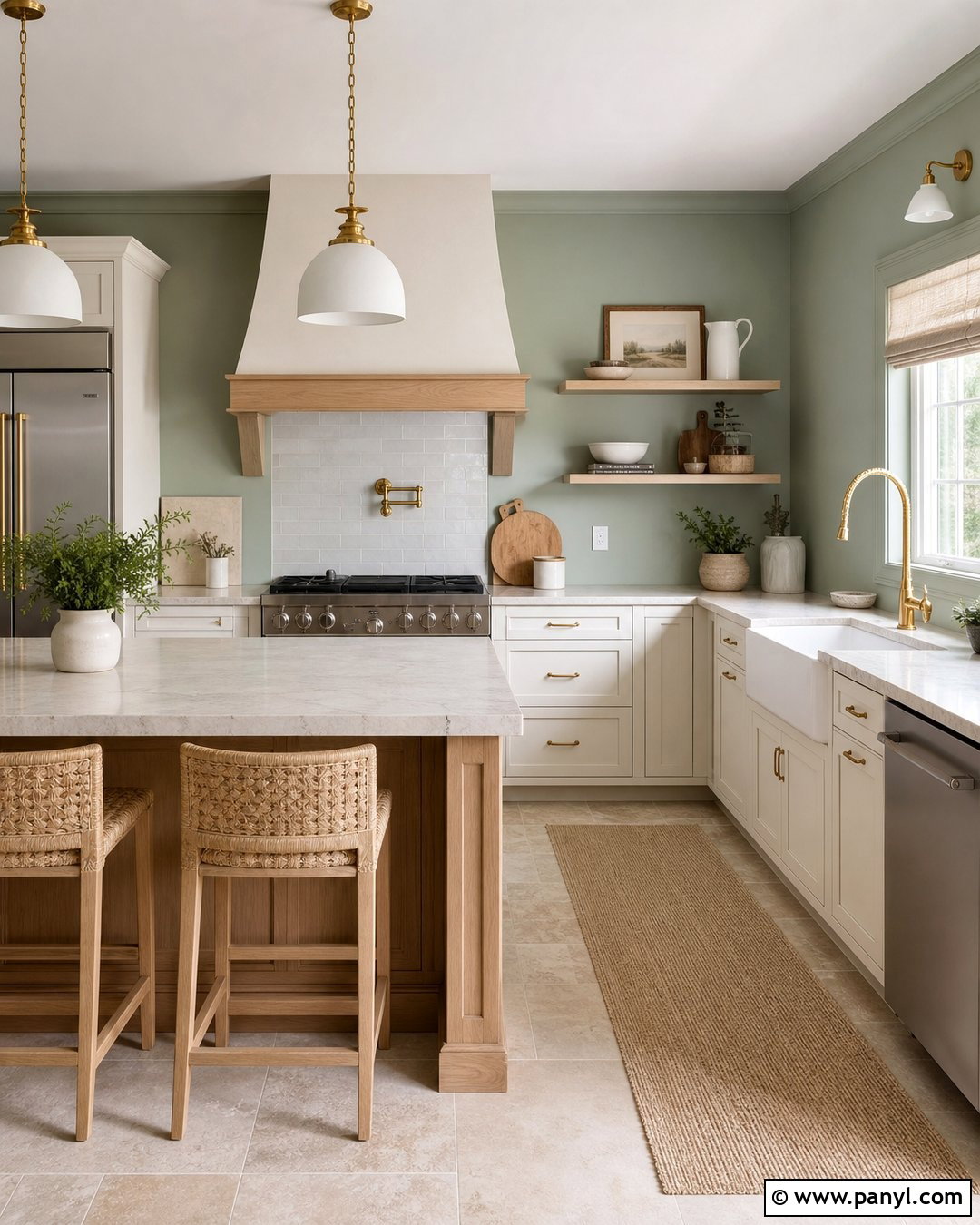
Sage green walls introduce natural color while remaining soft enough for a busy farmhouse kitchen. Pair them with warm white cabinets, lightly veined quartz counters, and a medium oak island. A cream zellige-style backsplash contributes subtle movement, while brass hardware and a bridge faucet add aged warmth. Use oak flooring with visible grain and woven counter stools to reinforce the organic palette. White or cream linen shades keep window areas bright. Sage varies from gray-green to yellow-green, so compare samples with the cabinet finish and surrounding landscape. Choose a muted shade that will not compete with food, dishes, or accessories. A few terracotta pots and dark green herbs can repeat the natural theme. The finished kitchen feels calm, established, and colorful without losing its classic farmhouse simplicity.
13. Olive Green Farmhouse Kitchen Walls
Olive green walls create a richer farmhouse kitchen with a strong connection to wood and aged metal. Balance the color using cream cabinets, pale stone counters, and a walnut island with simple paneling. An ivory backsplash made from handmade rectangular tile keeps the cooking wall from becoming too dark. Add antique brass pulls, warm bronze lighting, and medium-tone oak flooring. Cream linen curtains and rush-seat stools provide lighter notes around the room. Olive works best when its brown undertones relate to nearby flooring and cabinetry, so avoid pairing it with cool gray surfaces. Paint the trim a warm off-white and keep the ceiling brighter. Display neutral stoneware and copper cookware in limited amounts. This coordinated design feels heritage-inspired, comfortable, and more distinctive than a conventional all-white farmhouse kitchen.
14. Eucalyptus Green Farmhouse Kitchen Walls
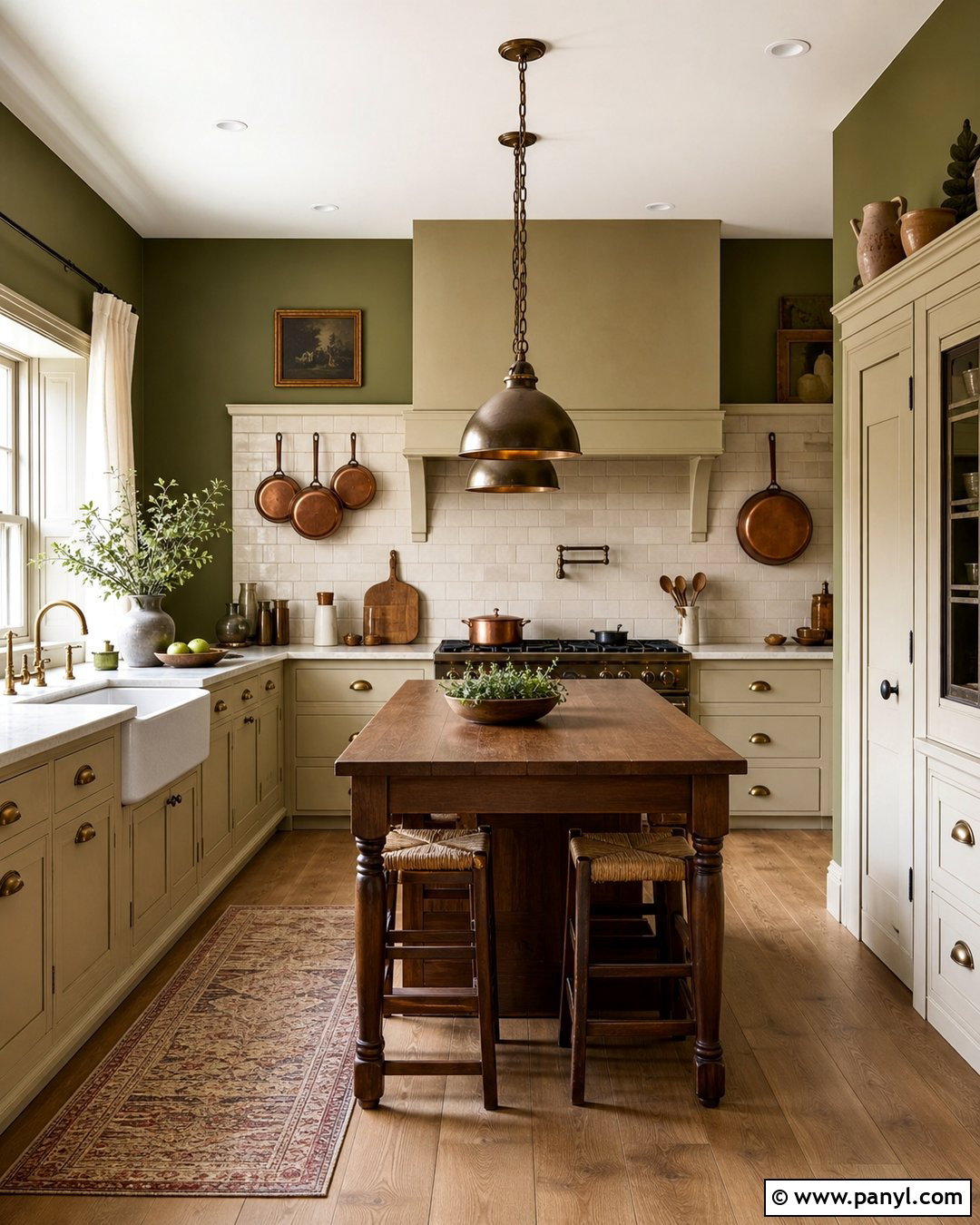
Eucalyptus green offers a soft, dusty alternative to traditional sage. Use it on the walls with light oak cabinets, creamy quartz counters, and a white-painted island. A backsplash of pale green-gray tile creates a layered tonal effect without matching the walls exactly. Brushed brass hardware, light wood flooring, and woven pendant lights keep the kitchen warm and casual. Add natural linen upholstery and a striped neutral runner for subtle pattern. Eucalyptus can become cool in shadow, so choose a version with a gentle gray-beige base and use warm white lighting. White trim and a clean white ceiling maintain freshness around the muted color. Finish the room with small potted herbs, cream ceramics, and wooden bowls. The complete look feels airy, organic, and suited to a relaxed modern farmhouse interior.
15. Moss Green Farmhouse Kitchen Walls
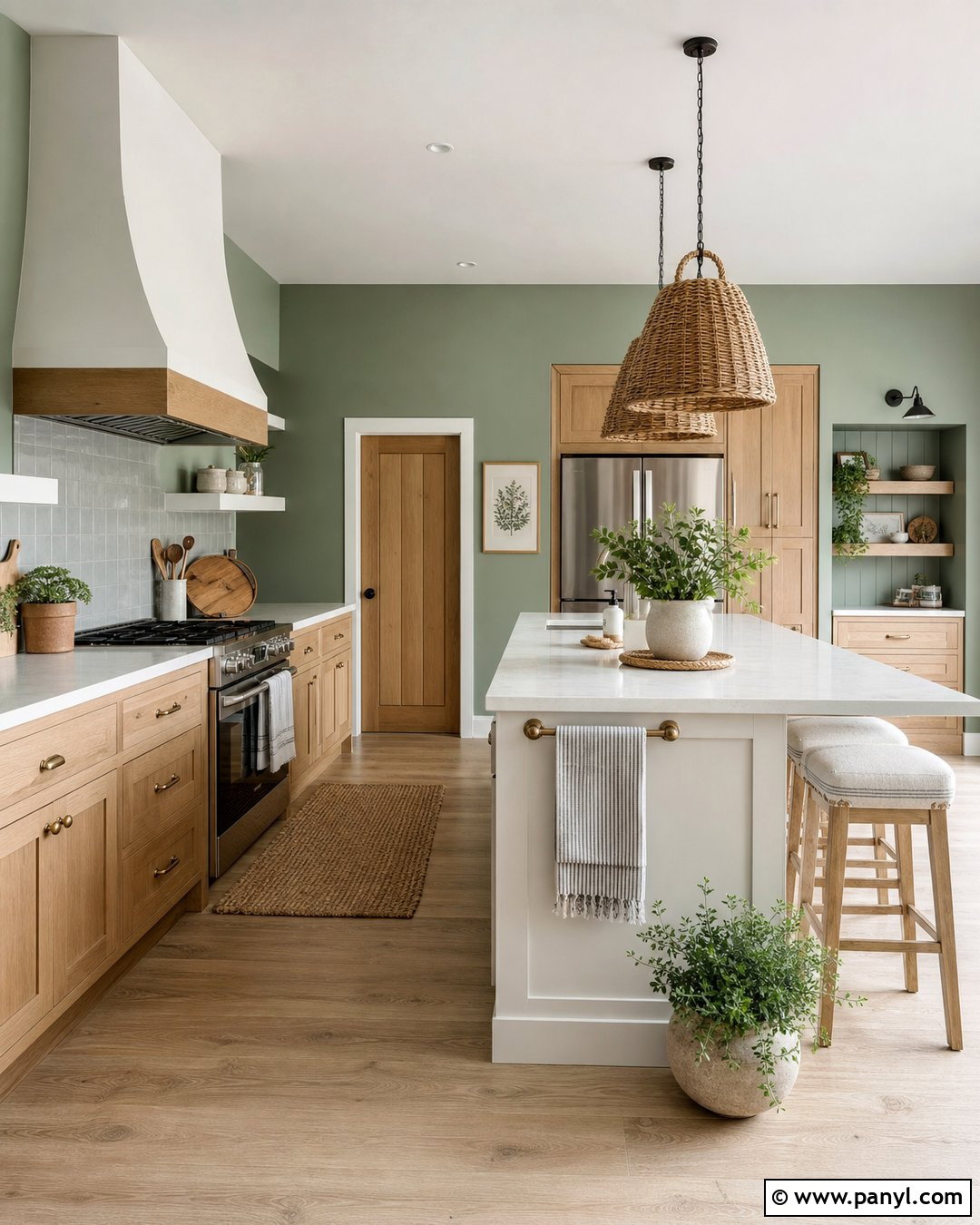
Moss green walls make a farmhouse kitchen feel cozy, earthy, and connected to the outdoors. Pair the deeper green with creamy inset cabinets, honed beige stone counters, and a rustic oak island. Use a simple off-white backsplash around the range to provide a bright visual break. A wood range hood, bronze hardware, and aged brass sconces support the traditional mood. Choose medium brown floors with natural variation rather than gray-washed planks. If the room is small, limit moss green to the upper wall area above a white backsplash or beadboard treatment. Cream trim helps soften the contrast. Add woven baskets, iron cookware, and neutral pottery, but keep countertops open for a practical appearance. The resulting kitchen feels intimate and established without resembling a themed rustic cabin.
16. Dusty Blue Farmhouse Kitchen Walls
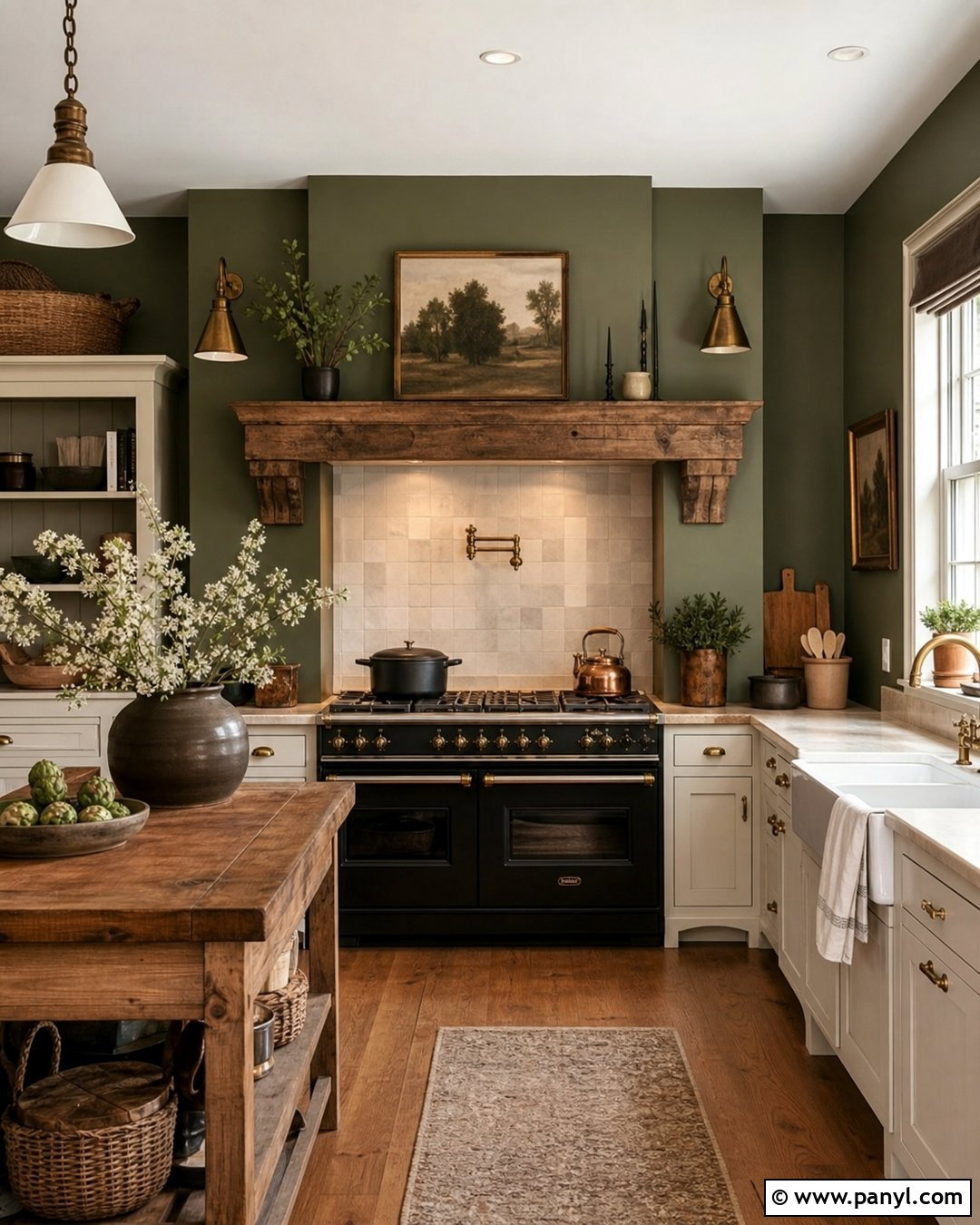
Dusty blue walls bring a relaxed vintage character to farmhouse kitchens without introducing an overly bright color. Combine them with ivory cabinets, butcher-block counters, and a muted charcoal island. A backsplash of white square tile keeps the work surfaces crisp, while brass latches and cup pulls add warmth. Natural oak flooring and woven pendant shades prevent the blue from feeling cold. Consider a patterned runner containing faded blue, rust, and cream to connect the palette. Dusty blue is especially attractive beside white porcelain sinks and traditional bridge faucets. Use warm white trim rather than brilliant white for a softer edge. Complete the kitchen with wood cutting boards, stoneware crocks, and simple café curtains. This balanced scheme feels collected over time while remaining practical, bright, and easy to update.
17. Slate Blue Farmhouse Kitchen Walls
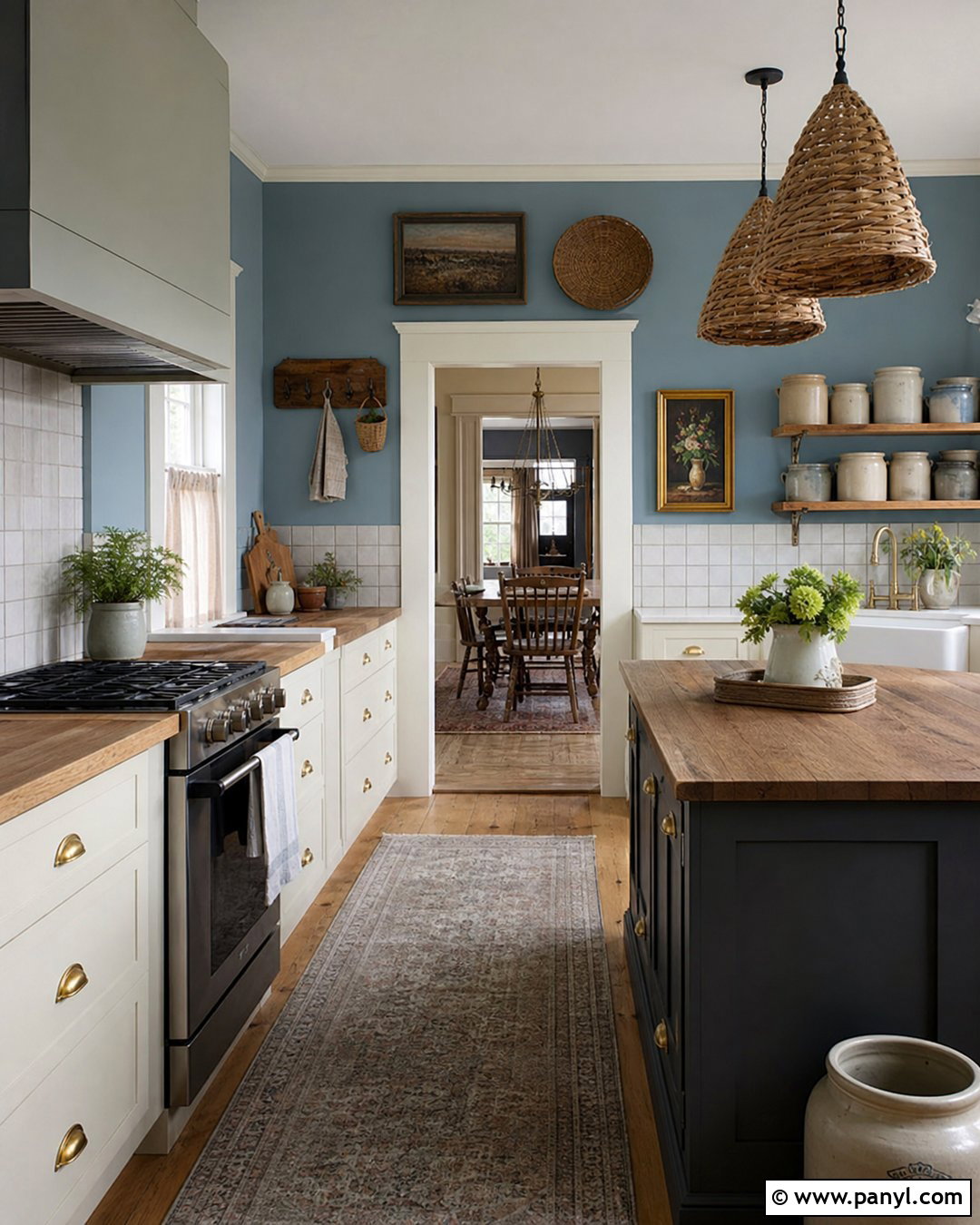
Slate blue walls create a more grounded farmhouse palette with enough gray to keep the color sophisticated. Pair the walls with warm white cabinetry, pale quartz counters, and a stained white oak island. Cream subway tile behind the counters breaks up the blue and reflects light around the room. Choose antique brass hardware, black-framed windows, and clear glass pendants for a balanced mixture of warm and dark accents. Medium oak flooring and linen stools soften the structured cabinetry. Slate blue works particularly well in kitchens that receive strong sunlight because the color retains its depth throughout the day. Keep the ceiling bright white and the trim slightly warmer. A few earthenware dishes and vintage landscape prints complete the space, creating a farmhouse kitchen that feels colorful, calm, and thoughtfully coordinated.
18. Navy Blue Farmhouse Kitchen Walls
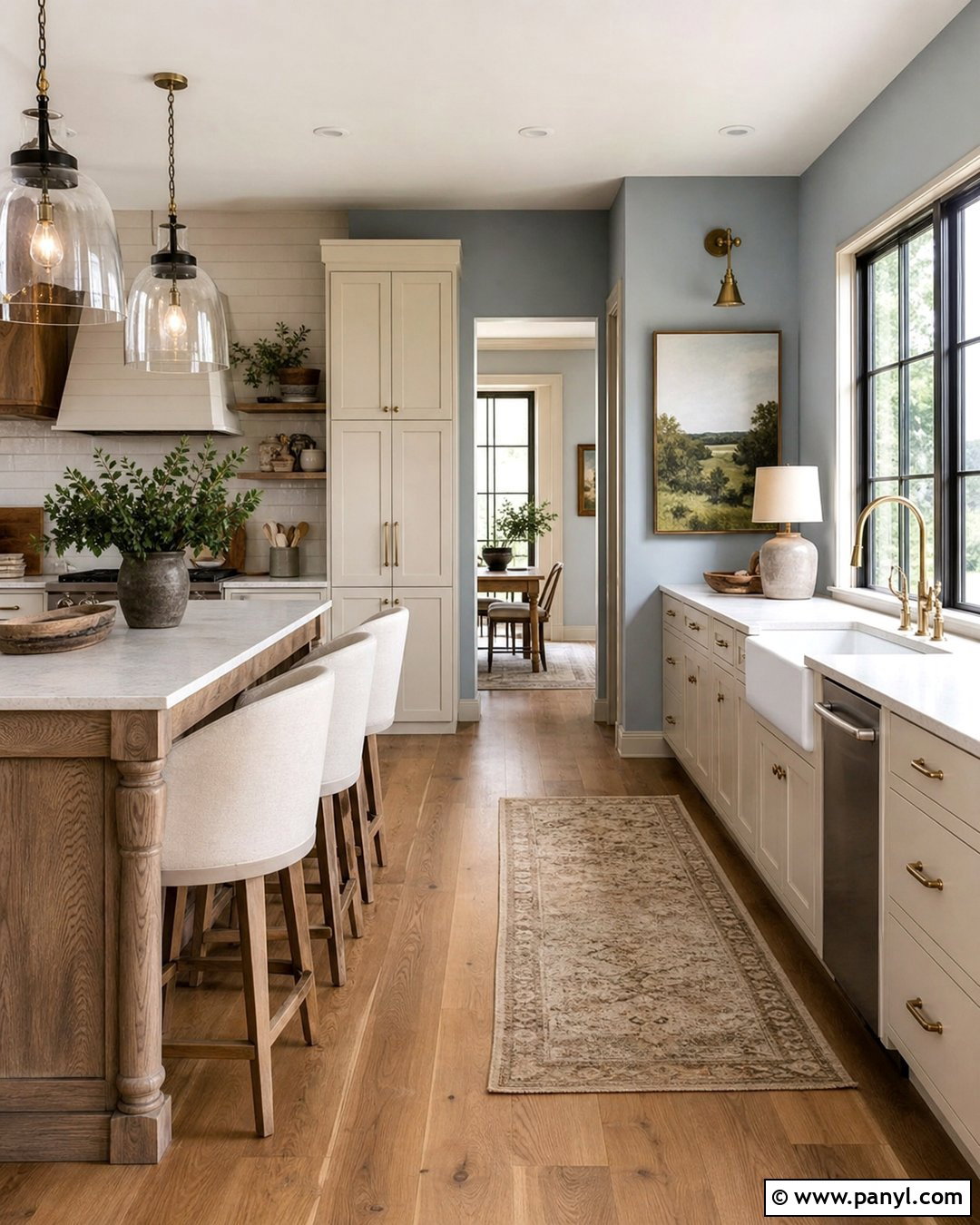
Navy walls make a bold background for a spacious farmhouse kitchen, particularly when the remaining surfaces are light. Use warm white perimeter cabinets, pale marble-look counters, and a natural oak island to balance the depth of the walls. A glossy white backsplash reflects illumination, while aged brass pendants and hardware provide warmth against the blue. Wide-plank light oak flooring prevents the lower half of the room from feeling heavy. Paint doors and trim a creamy white to create clear architectural contrast. Navy can visually close in a small or poorly lit space, so reserve this scheme for kitchens with large windows and layered lighting. Keep accessories restrained with white ceramics, wooden bowls, and natural textiles. The finished kitchen feels confident and tailored while preserving recognizable farmhouse materials and comfort.
19. Powder Blue Farmhouse Kitchen Walls
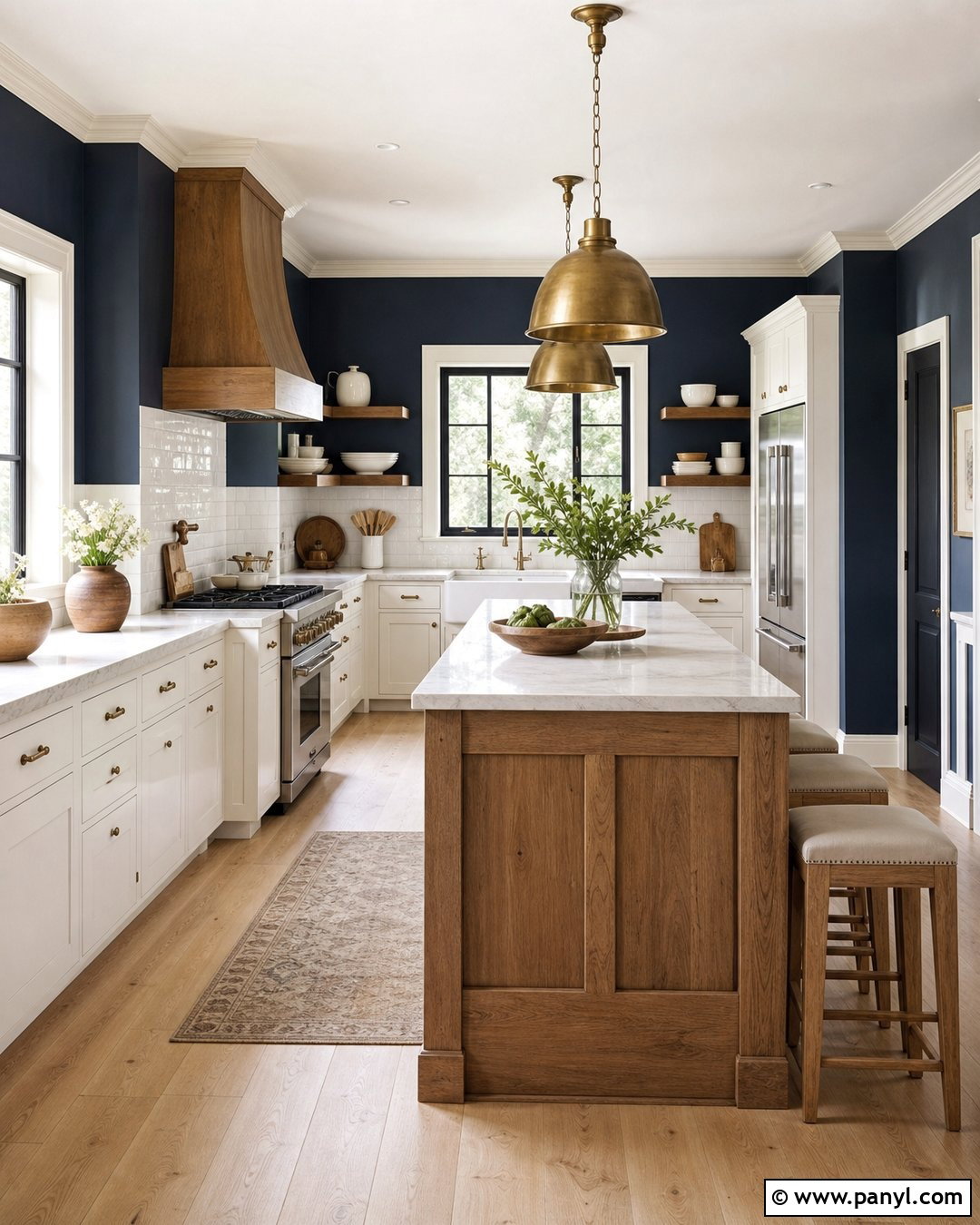
Powder blue walls give a farmhouse kitchen a light cottage character that feels cheerful without becoming childish. Pair the soft color with creamy white cabinets, pale butcher-block counters, and a warm gray island. White beadboard behind open shelving adds architectural texture, while brushed nickel or pewter hardware supports the cooler palette. Bring warmth through honey-toned oak flooring, woven shades, and natural wood stools. A small-scale blue and cream runner can repeat the wall color near the sink. Select a powder blue with a touch of gray so it remains calm under bright daylight. Use white trim and a slightly warmer ceiling white to keep the room balanced. Display everyday white dishes, glass jars, and wooden boards. The complete design feels airy, practical, and appropriate for a casual country home.
20. Robin’s Egg Blue Farmhouse Kitchen Walls
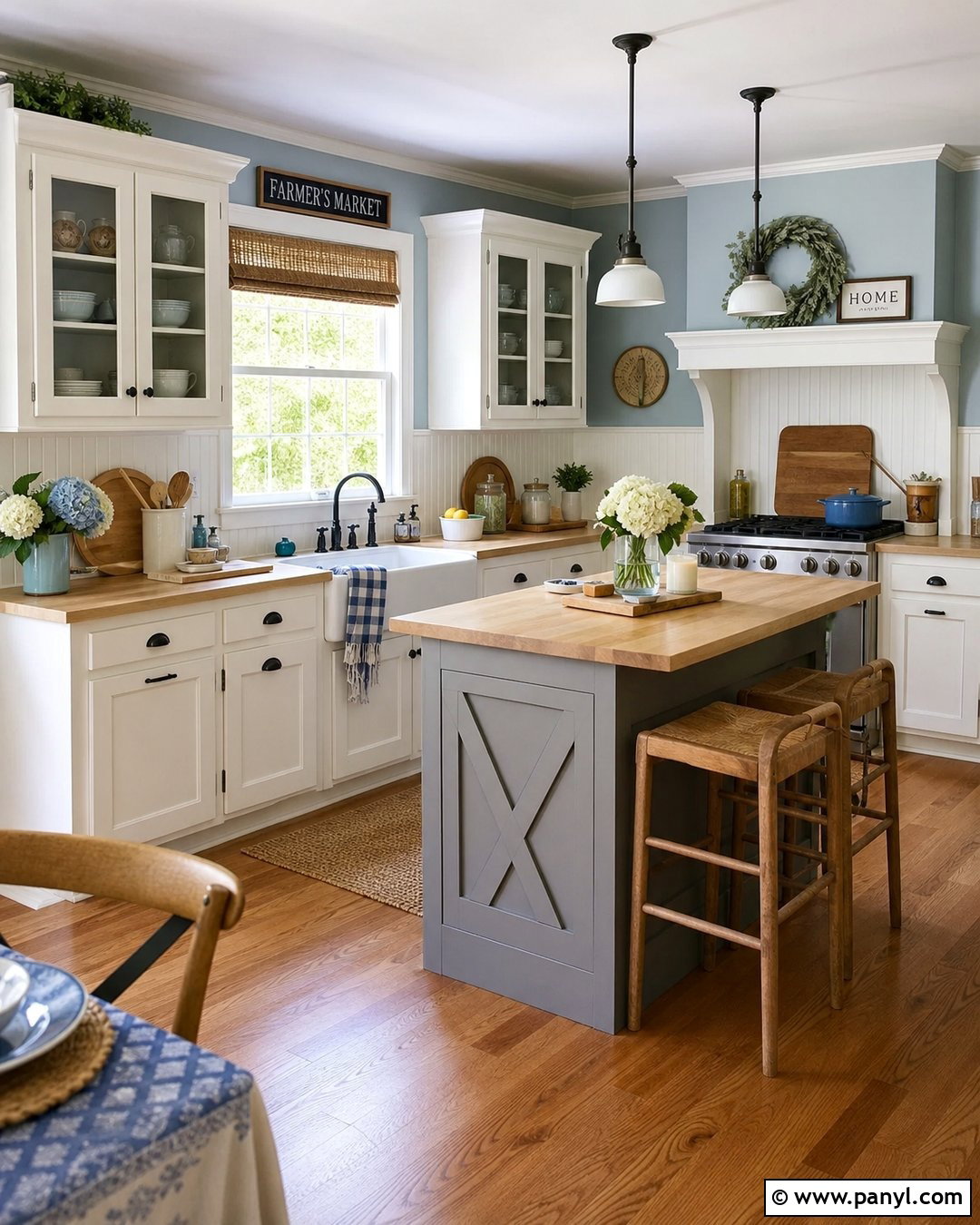
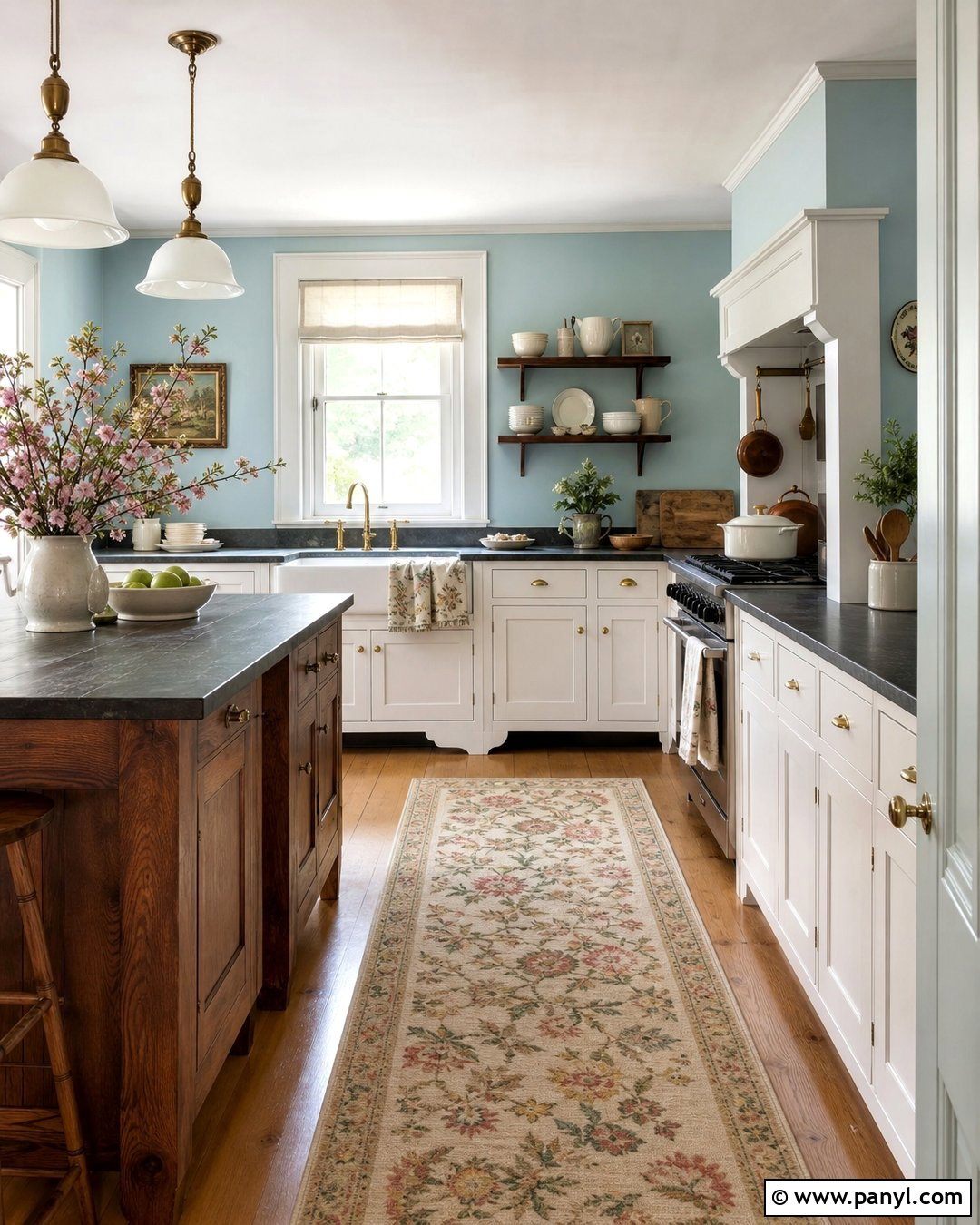
Robin’s egg blue provides a brighter vintage-inspired color for a farmhouse kitchen with plenty of natural charm. Ground the walls with white cabinets, honed soapstone counters, and a medium walnut island. A backsplash of glossy cream tile softens the contrast and works well with an apron-front sink. Choose aged brass fixtures, schoolhouse pendants, and warm oak flooring to keep the blue from feeling overly sweet. Natural linen shades and a faded floral runner add gentle pattern without turning the room into a theme. Use the color across all walls for continuity, but keep trim and ceilings clean white. Simple wood shelves can display cream pottery and clear glassware. This complete palette works especially well in older kitchens where original windows, paneled doors, and modest proportions contribute authentic farmhouse character.
21. Muted Teal Farmhouse Kitchen Walls
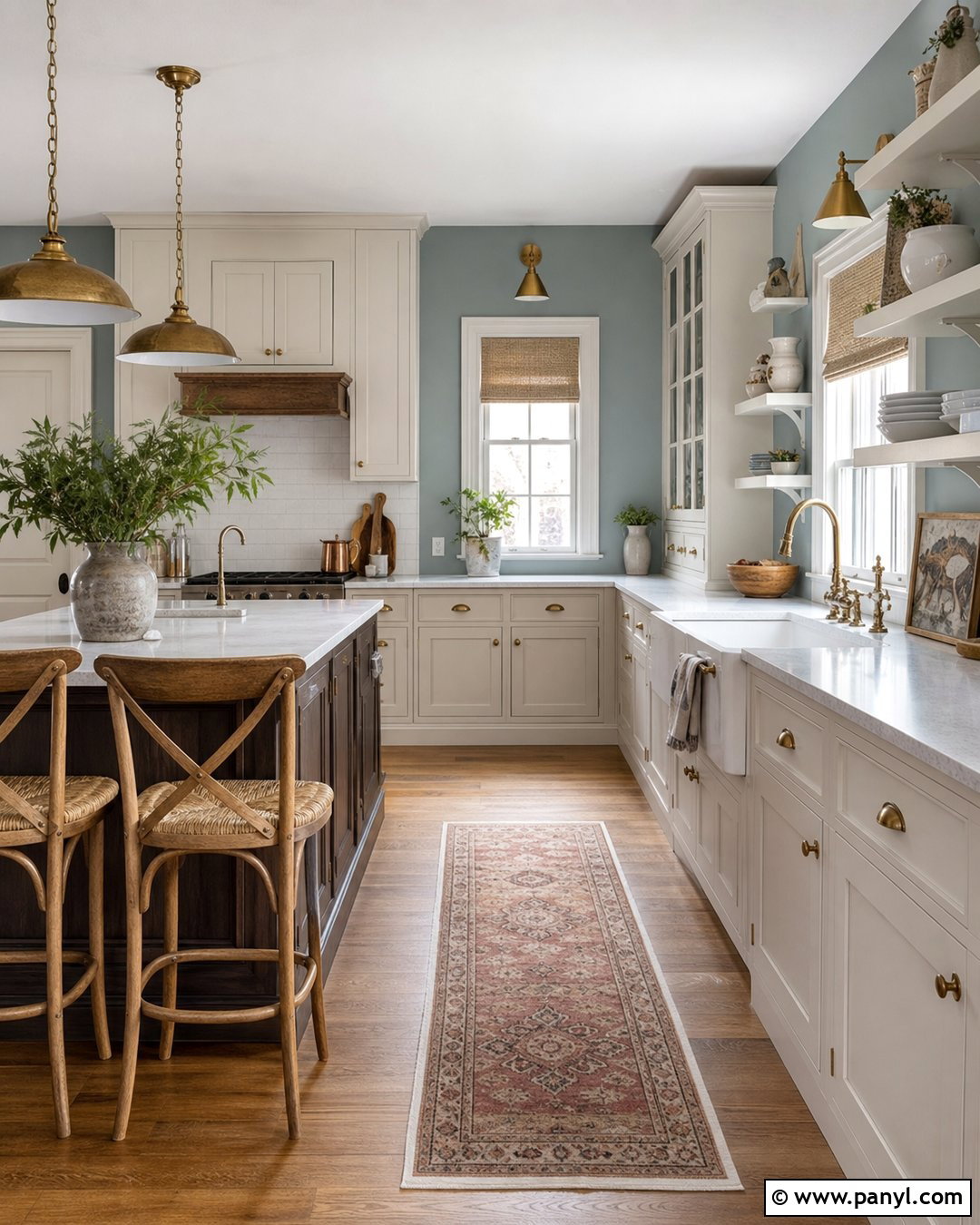
Muted teal walls offer a colorful farmhouse look while maintaining enough gray to feel livable. Pair the walls with cream cabinetry, white quartz counters, and a dark walnut island. Use a simple ivory backsplash to create breathing room around the stronger color. Aged brass hardware and warm bronze pendants highlight teal’s green undertones, while medium oak floors connect the room to traditional farmhouse materials. Keep stools and window treatments neutral with woven rush, linen, or oatmeal-colored fabric. Teal can dominate quickly, so avoid repeating it on large cabinets or flooring. Instead, echo it through one patterned runner or a few ceramic pieces. Bright ceiling paint and generous task lighting preserve an open feeling. The final room looks distinctive and welcoming rather than coastal, glossy, or overly contemporary.
22. Butter Yellow Farmhouse Kitchen Walls
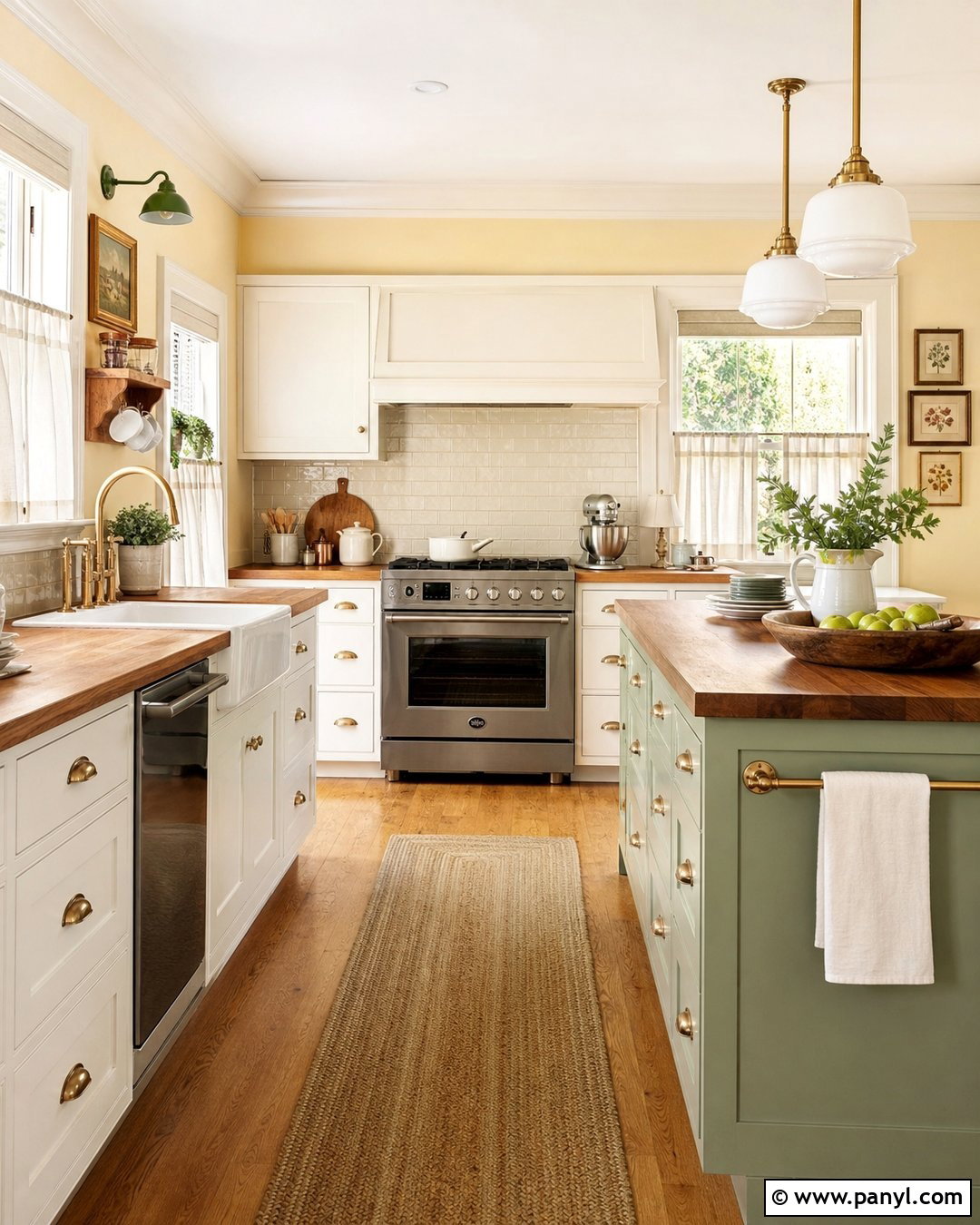
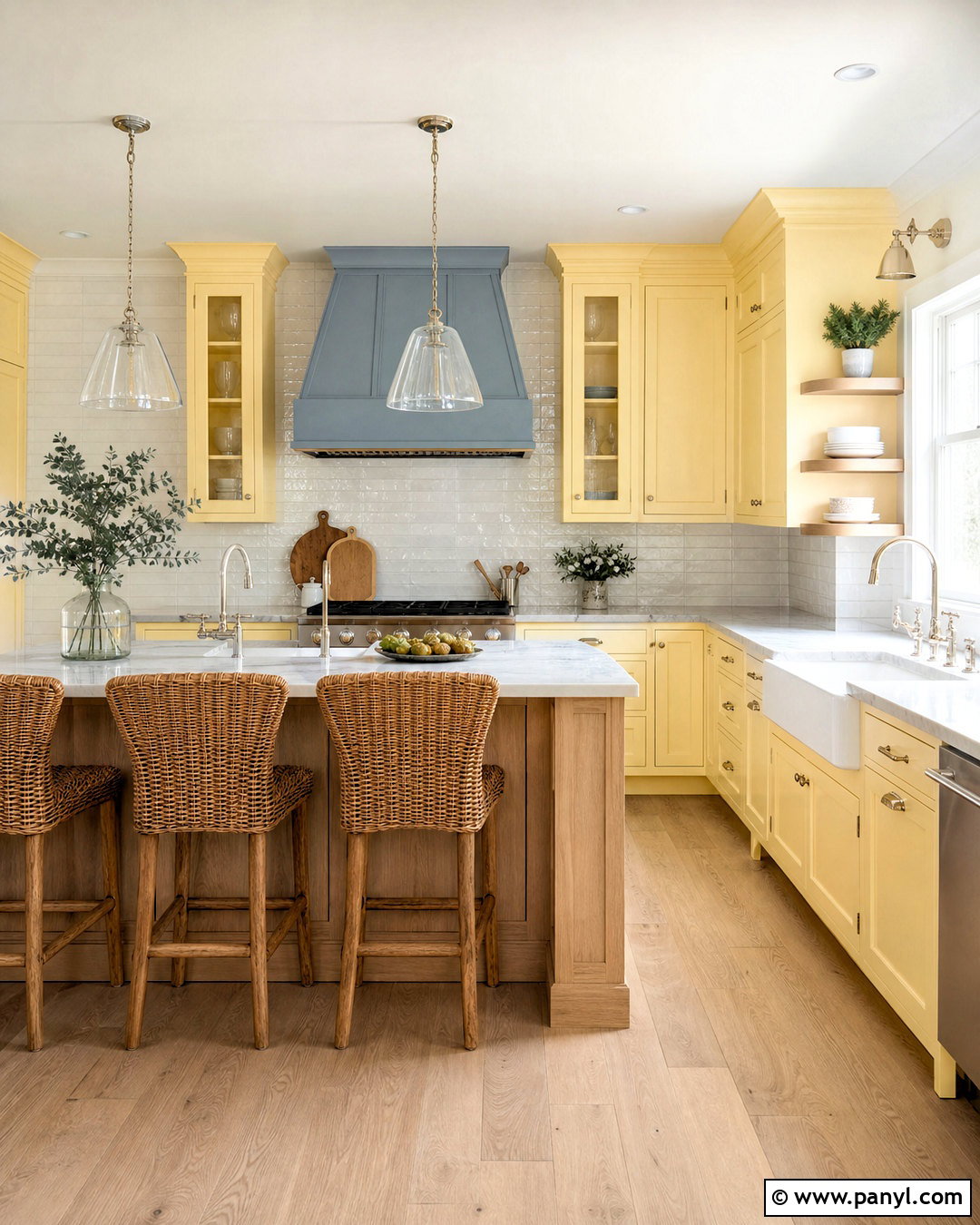
Butter yellow walls can make a farmhouse kitchen feel warm and cheerful throughout the day. Choose a muted, creamy yellow rather than a sharp lemon shade, then combine it with soft white cabinets and butcher-block counters. A sage green island creates earthy contrast, while ivory backsplash tile keeps the overall palette gentle. Add antique brass hardware, warm oak flooring, and simple milk-glass pendants. Linen café curtains and a braided neutral runner reinforce the casual country atmosphere. Yellow reflects strongly onto nearby finishes, so test it beside white cabinets to ensure they do not appear dingy. Keep the ceiling and trim a warm white for a smooth transition. Finish with wooden bowls, white stoneware, and small herb pots. The complete kitchen feels sunny, nostalgic, and practical without becoming overly themed.
23. Ochre Yellow Farmhouse Kitchen Walls
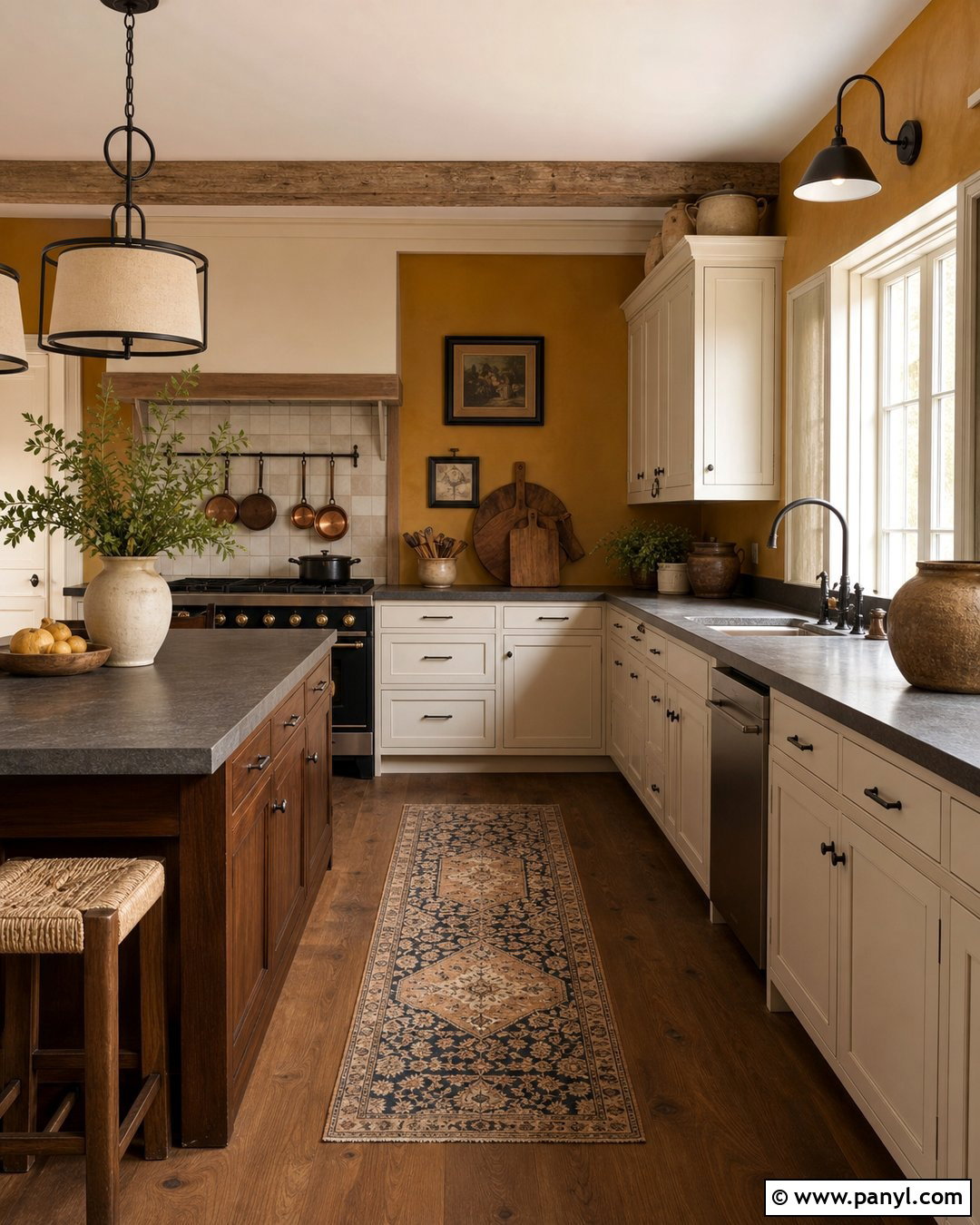
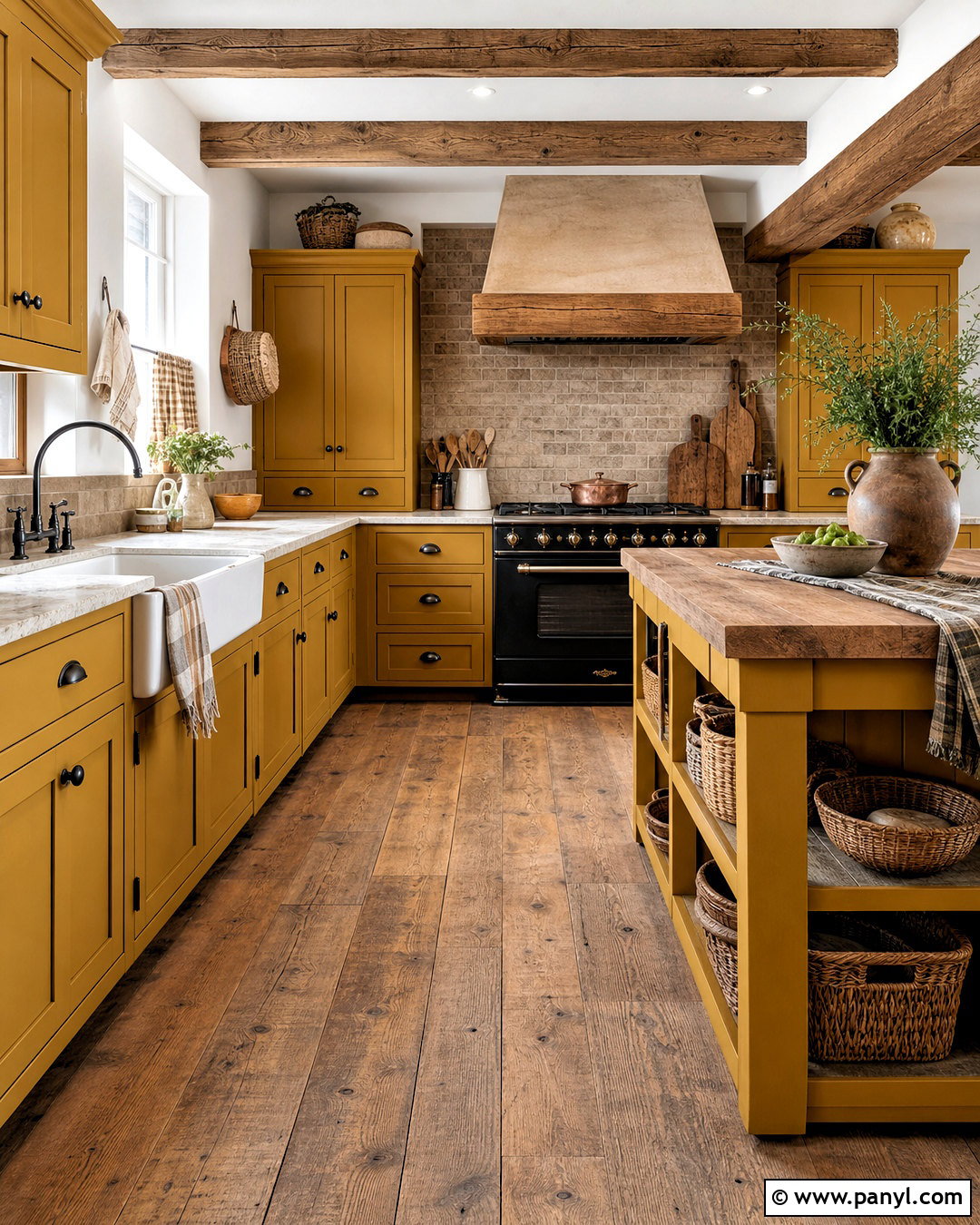
Ochre walls create a deeper, earthier farmhouse kitchen inspired by natural pigments and aged plaster. Balance the golden color with creamy white cabinetry, honed gray stone counters, and a dark-stained oak island. Use handmade ivory tile behind the range and sink to introduce brightness. Bronze hardware, black iron pendants, and medium brown flooring create grounded contrast. Keep window treatments light with natural linen, and use rush-seat stools to repeat the warm fibers. Ochre is strongest in rooms with good daylight, where its brown undertones can remain visible. In a smaller kitchen, paint only the main dining wall ochre and use warm cream elsewhere. Add pottery, wood boards, and a restrained patterned runner. The finished space feels rustic and historic while still looking clean, functional, and intentionally designed.
24. Terracotta Farmhouse Kitchen Walls
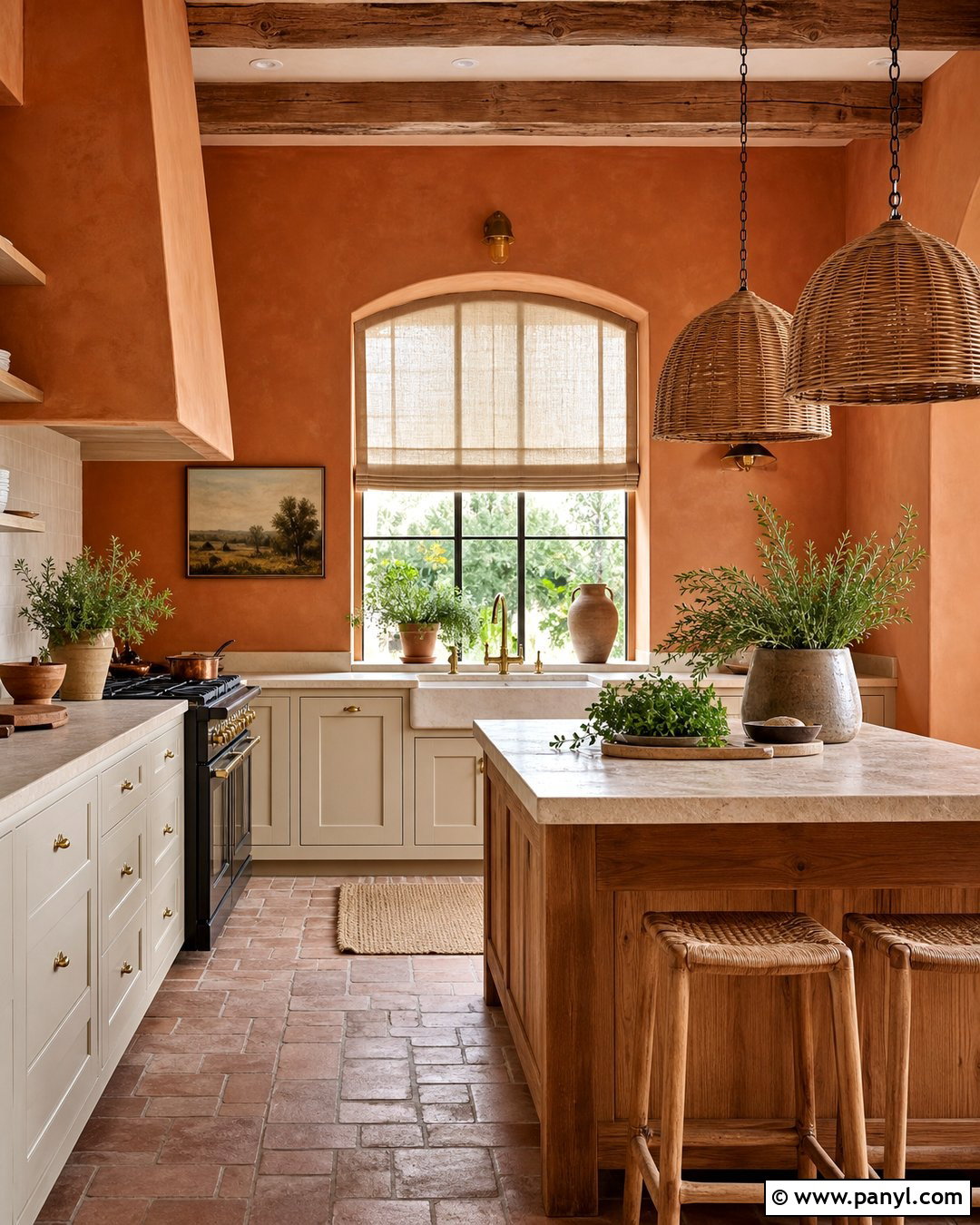
Terracotta walls surround a farmhouse kitchen with warm, clay-inspired color. Pair them with cream cabinets, pale limestone counters, and a substantial natural oak island. A backsplash of off-white rectangular tile provides contrast around the cooking area, while aged brass hardware complements the orange-red undertones. Choose medium oak or reclaimed brick flooring for an earthy foundation. Woven pendants, flax linen shades, and simple wood stools keep the design casual. Terracotta can feel intense when combined with too many warm finishes, so introduce small amounts of charcoal through the range, lighting, or window frames. Use creamy trim instead of bright white to soften transitions. Complete the room with neutral stoneware and green herbs. This cohesive scheme feels sunny, handcrafted, and naturally suited to rustic farmhouse architecture.
25. Clay Pink Farmhouse Kitchen Walls
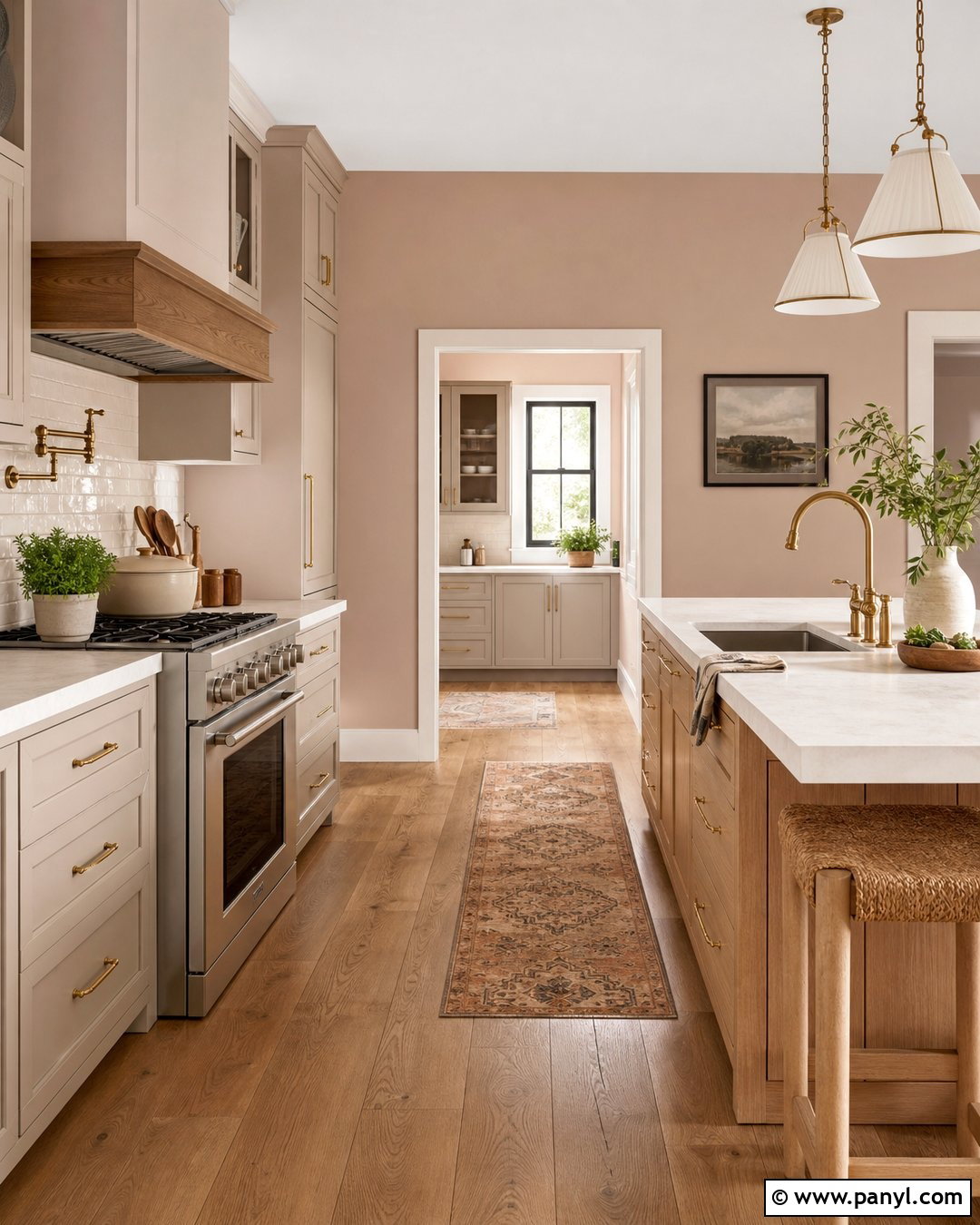
Clay pink walls provide subtle warmth without making a farmhouse kitchen feel overly delicate. Choose a dusty pink with beige or brown undertones and pair it with putty-colored cabinets, creamy quartz counters, and a natural white oak island. An ivory tile backsplash keeps the design light, while aged brass fixtures complement the wall color. Use medium oak flooring, linen shades, and woven stools to reinforce the earthy character. Black accents should be limited to a range or a few slim lighting details. Clay pink works particularly well with soft morning light and may appear more neutral later in the day. Add green herbs, cream stoneware, and one faded patterned runner for balance. The finished kitchen feels warm, original, and grounded in natural materials rather than decorative pink accessories.
26. Dusty Rose Farmhouse Kitchen Walls
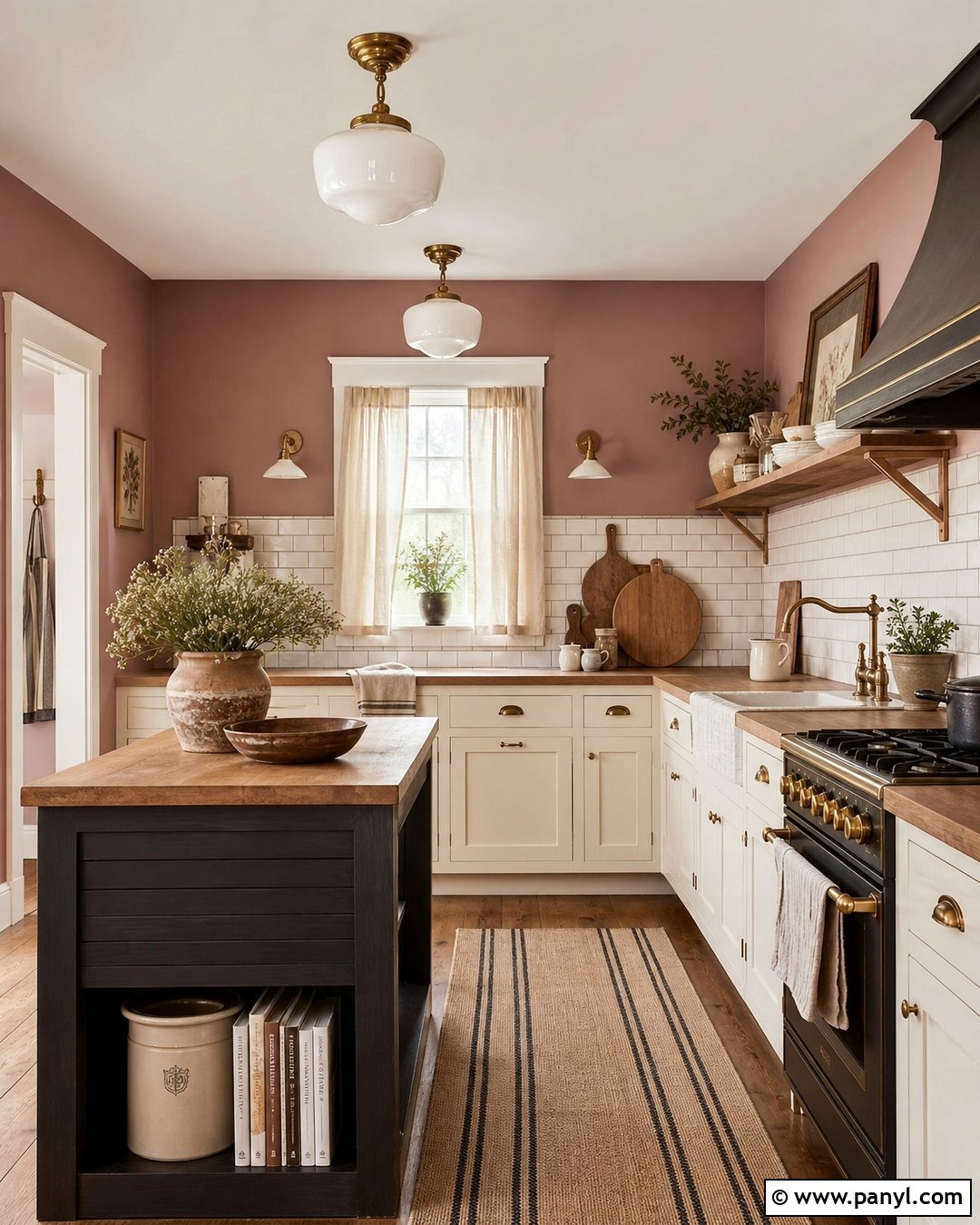
Dusty rose walls can give a farmhouse kitchen a comfortable vintage mood when paired with straightforward, practical finishes. Combine the muted color with warm white cabinets, butcher-block counters, and a charcoal-painted island. Cream subway tile creates a clean backsplash, while antique brass hardware and milk-glass lighting strengthen the traditional look. Choose medium brown oak flooring and oatmeal linen curtains to ground the rose tones. Avoid bright white appliances or cool blue-gray surfaces, which may make the walls appear more pink than intended. Instead, use cream, brown, black, and natural wood throughout the room. A simple striped runner and a few neutral ceramic pieces provide finishing detail. The complete kitchen feels collected and welcoming, with an unexpected color that still supports classic farmhouse architecture and everyday function.
27. Barn Red Farmhouse Kitchen Walls
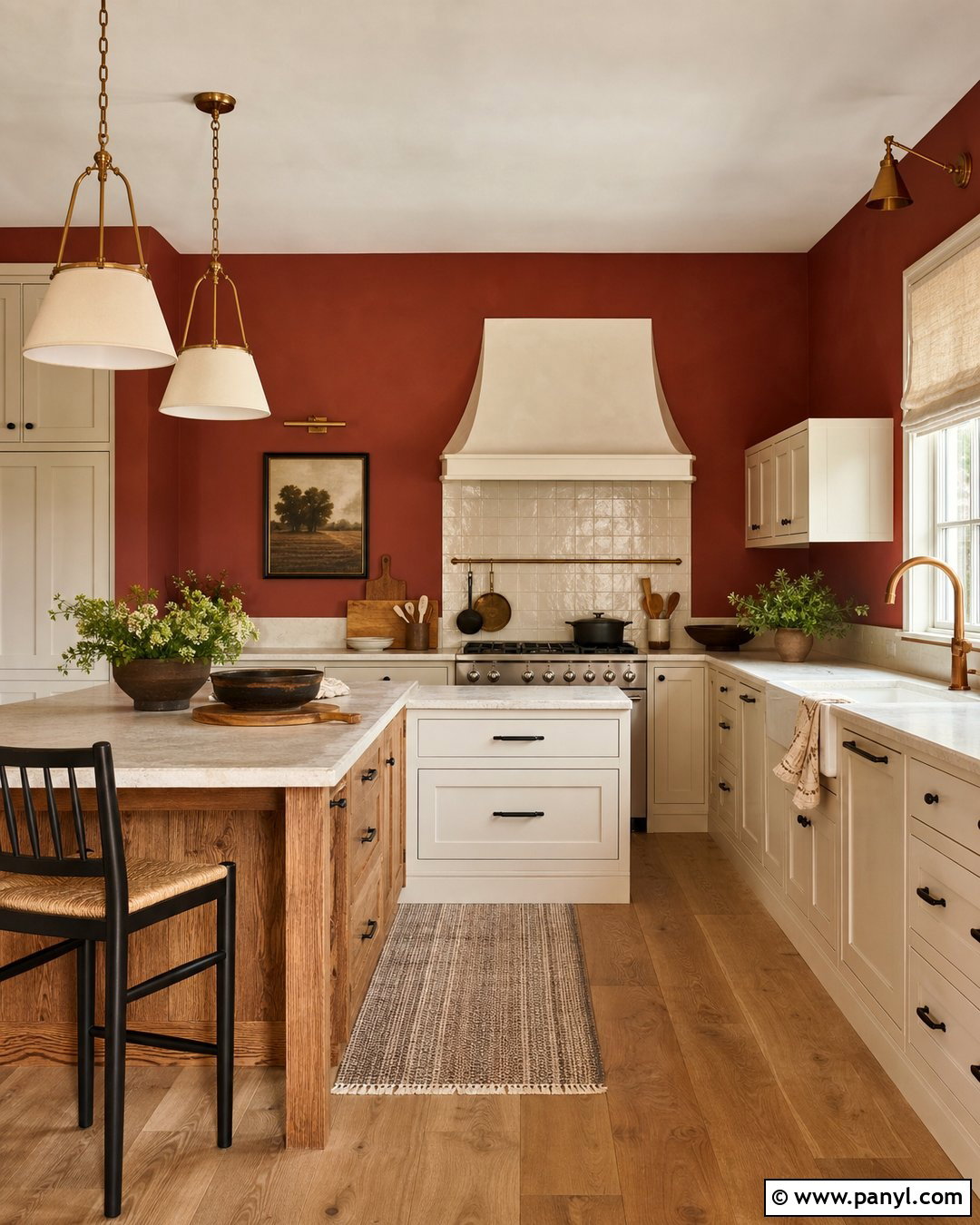
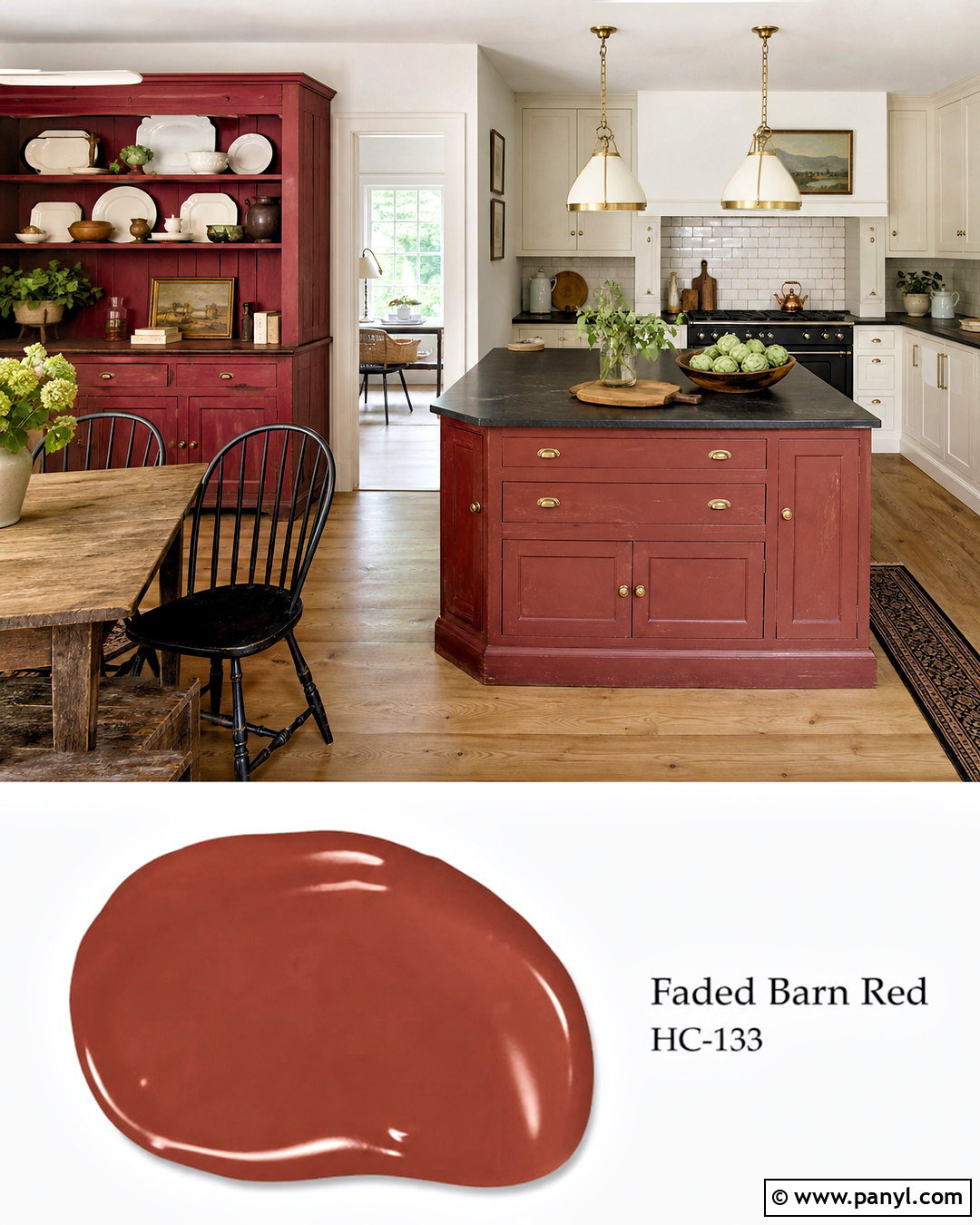
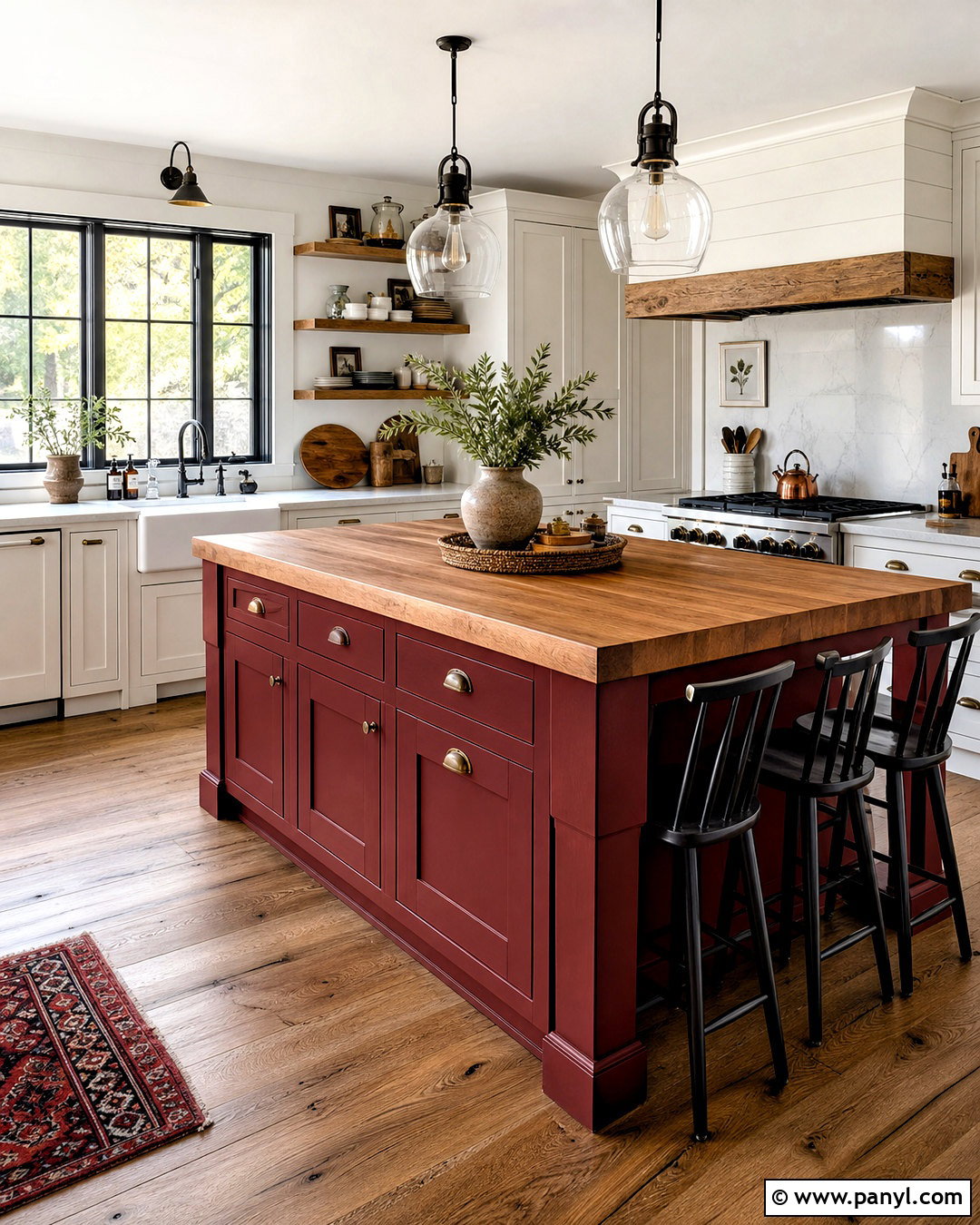
Barn red walls deliver a strong heritage farmhouse look that works best with a carefully controlled palette. Choose a muted red with brown undertones, then balance it using creamy white cabinets, pale stone counters, and a natural oak island. An ivory backsplash creates a bright work area, while black iron hardware and aged brass lighting add traditional contrast. Wide-plank medium oak floors reinforce the rustic foundation. Keep textiles neutral with flax linen shades and a cream runner featuring a small red detail. In a compact kitchen, use barn red on one dining wall and continue warm white across the remaining walls. Avoid distressed signs or excessive themed decorations. Simple pottery, wood serving pieces, and black cookware are enough. The finished space feels historic and confident rather than busy or overly nostalgic.
28. Chocolate Brown Farmhouse Kitchen Walls
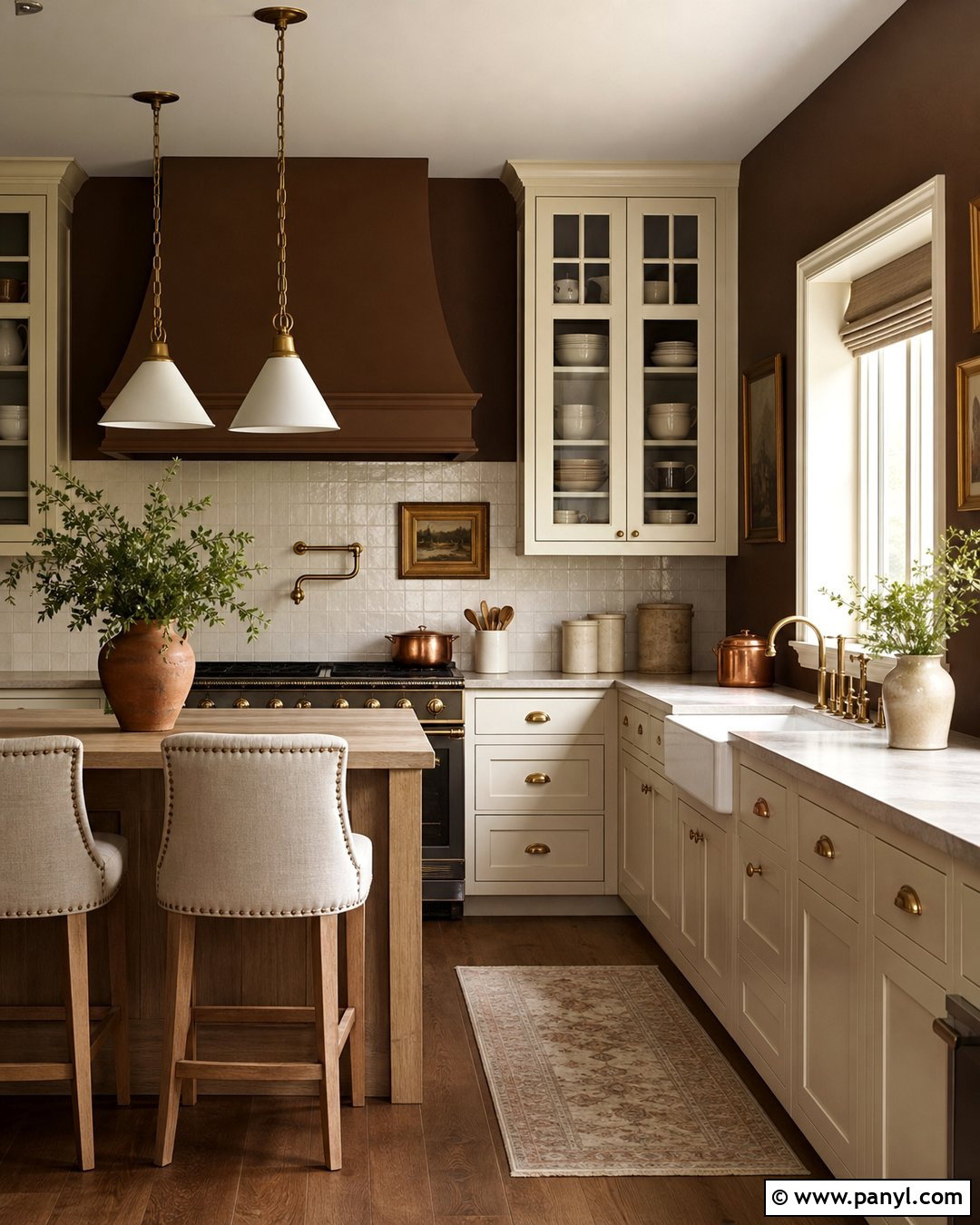
Chocolate brown walls create a deeply cozy farmhouse kitchen when surrounded by warm, lighter finishes. Pair the dark walls with cream cabinetry, veined beige quartz counters, and a white oak island. Use an ivory backsplash with a subtle handmade surface to reflect light around the countertops. Aged brass pulls, glass-front cabinets, and cream pendant shades bring brightness to eye level. Choose medium oak flooring that is lighter than the walls, preventing the room from becoming visually heavy. This color works best in a large kitchen with generous windows and strong layered lighting. Paint the ceiling and trim a warm white for contrast. Complete the design with linen stools, cream stoneware, and a few copper pieces. The result feels grounded, rich, and rustic without resembling a dark lodge interior.
29. Soft Black Farmhouse Kitchen Walls
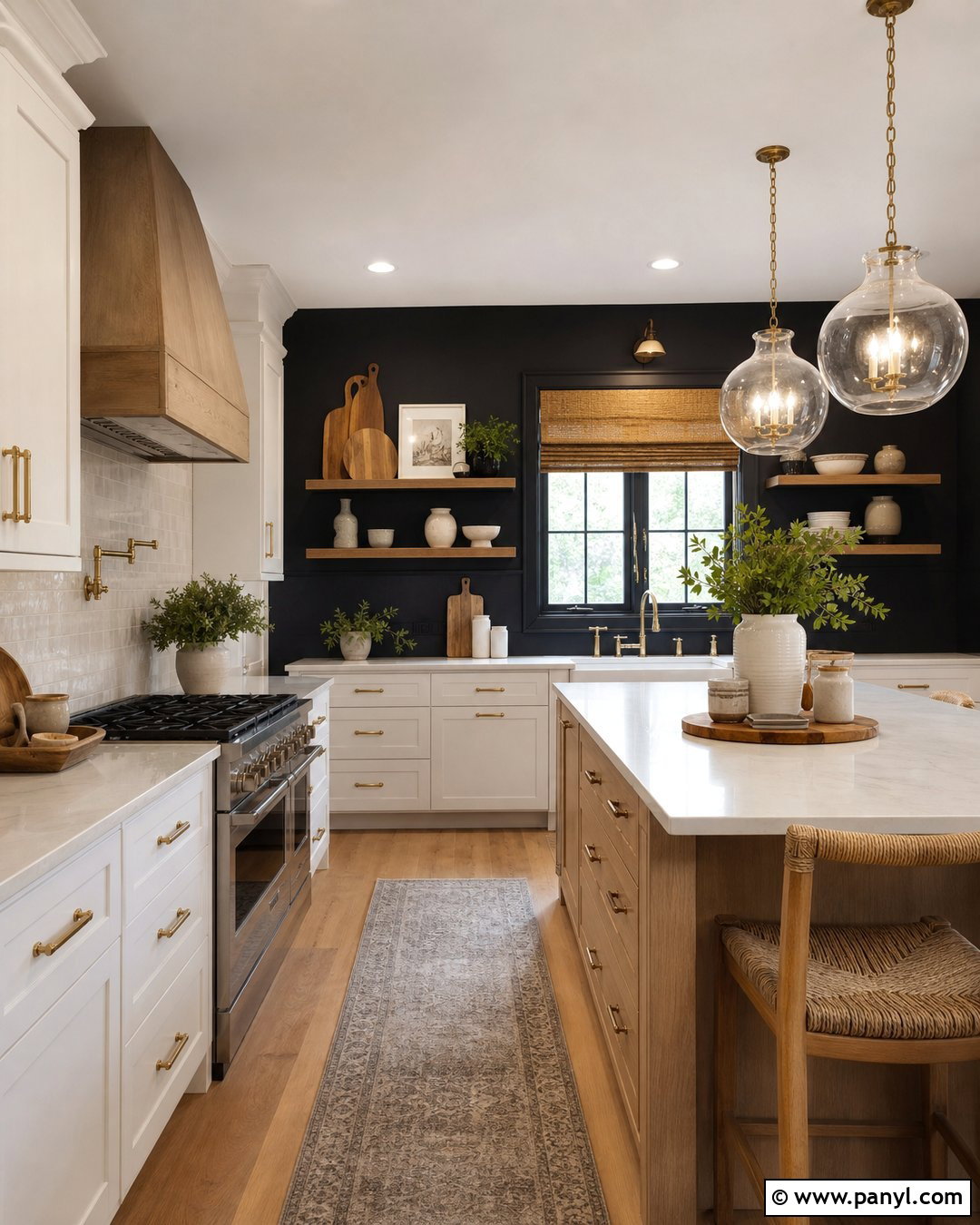
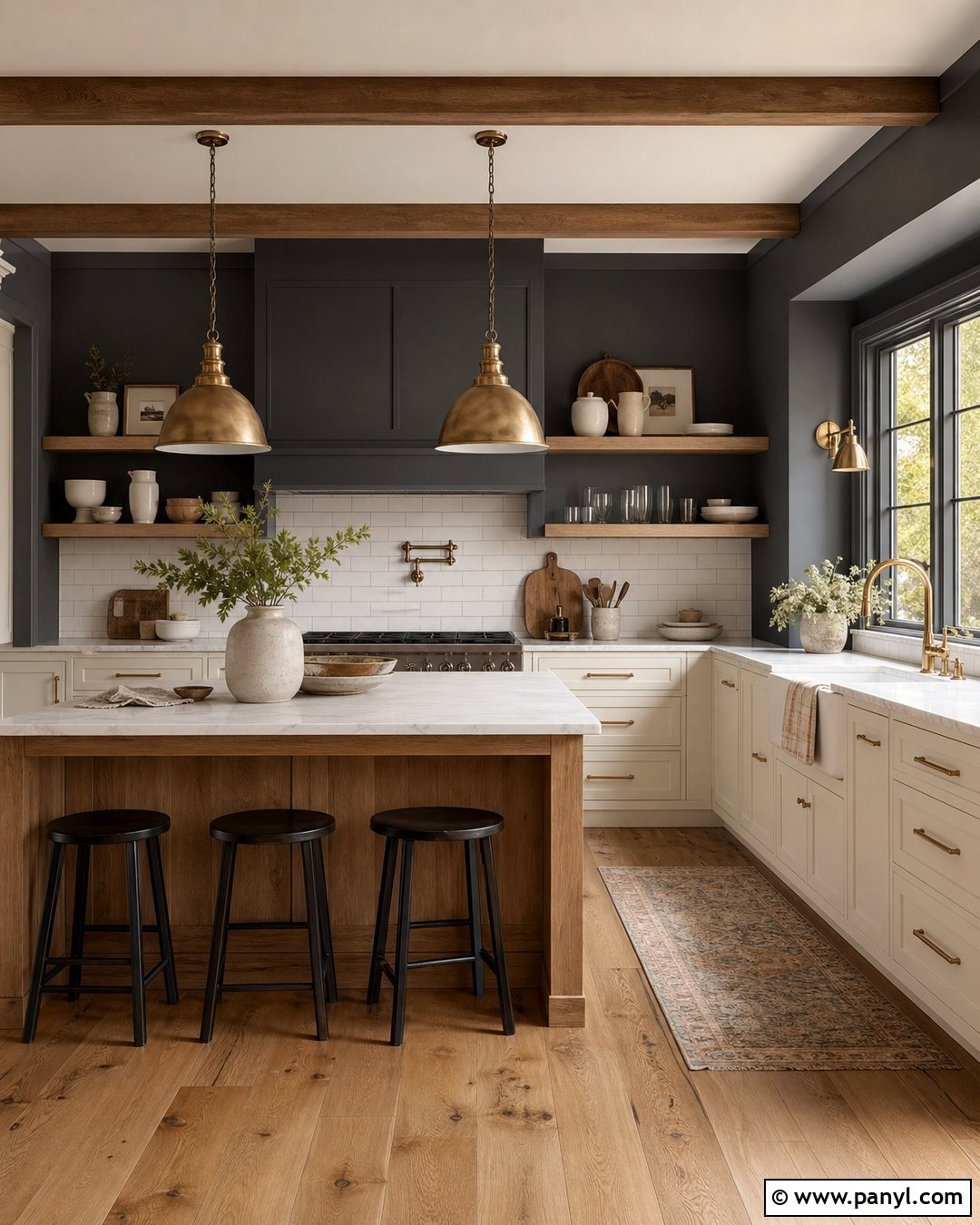
Soft black walls give farmhouse kitchens a dramatic modern edge while appearing gentler than true jet black. Pair the walls with warm white cabinets, pale quartz counters, and a white oak island to create strong but balanced contrast. A glossy cream backsplash reflects both daylight and undercabinet lighting. Use aged brass hardware and large glass pendants to add warmth without crowding the room. Light oak flooring, woven stools, and natural linen shades soften the black surfaces. Select a shade with charcoal or brown undertones so it relates to wood and metal finishes. Keep ceilings bright white and ensure every work zone has practical lighting. Cream pottery, wooden boards, and green herbs provide simple accents. This finished kitchen looks bold and current while retaining the honest materials of farmhouse design.
30. Natural Linen Farmhouse Kitchen Walls
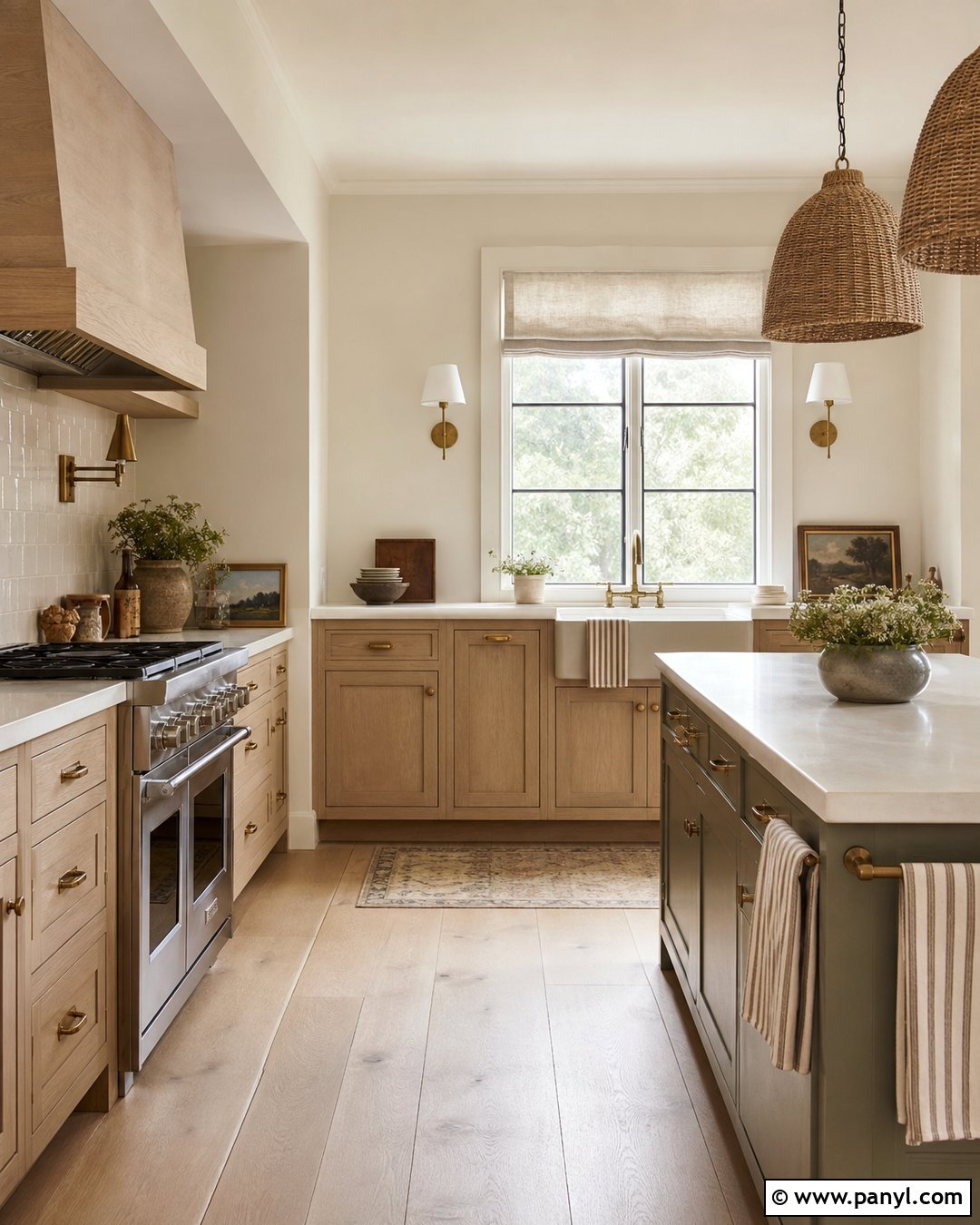
Natural linen walls combine cream, beige, and a hint of gray, creating a flexible background for many farmhouse kitchen finishes. Pair this soft neutral with white oak cabinets, creamy stone counters, and a muted olive island. A backsplash of warm white handmade tile adds brightness while preserving the tonal palette. Use antique brass hardware, light oak flooring, and woven pendants for an organic, layered effect. Off-white linen shades and a subtly striped runner complete the room without introducing unnecessary contrast. Natural linen is especially useful in open layouts because it connects easily with warm neutral living and dining spaces. Use cream trim for a quiet transition and clean white ceiling paint overhead. The completed kitchen feels restful, textural, and timeless, with enough warmth to make pale cabinetry and stone feel welcoming.
Conclusion:
The best farmhouse kitchen wall color should connect the room’s permanent surfaces instead of competing with them. Warm whites, creams, greiges, and linen neutrals provide flexible foundations, while sage, dusty blue, ochre, and clay tones introduce approachable character. Deeper shades such as navy, olive, chocolate, and soft black can also work when balanced with pale cabinetry, natural wood, and strong lighting. Before painting, compare large samples beside the backsplash, flooring, counters, and cabinets at several times of day. Pay close attention to undertones rather than choosing from a small chip. With thoughtful testing and a coordinated room plan, these 30 Farmhouse Kitchen Wall Colors can create a kitchen that feels comfortable, useful, and genuinely personal.

Related Ideas and Inspiration:

Leave a Reply