
Vintage yellow kitchens bring warmth, personality, and an inviting sense of history into the heart of the home. From creamy butter yellow cabinets to bold mustard walls, this cheerful color works across 1920s cottage, 1950s diner, and 1970s-inspired interiors. Butter yellow has seen a renewed design revival, yet its long connection to traditional and midcentury kitchens keeps it from feeling like a short-lived trend. () The key is creating a complete palette with period-appropriate flooring, counters, hardware, appliances, and decorative details. You can embrace an authentic time-capsule look or blend nostalgic character with modern convenience. The following vintage yellow kitchen ideas offer practical ways to create a cheerful, cohesive space that feels collected rather than dated.
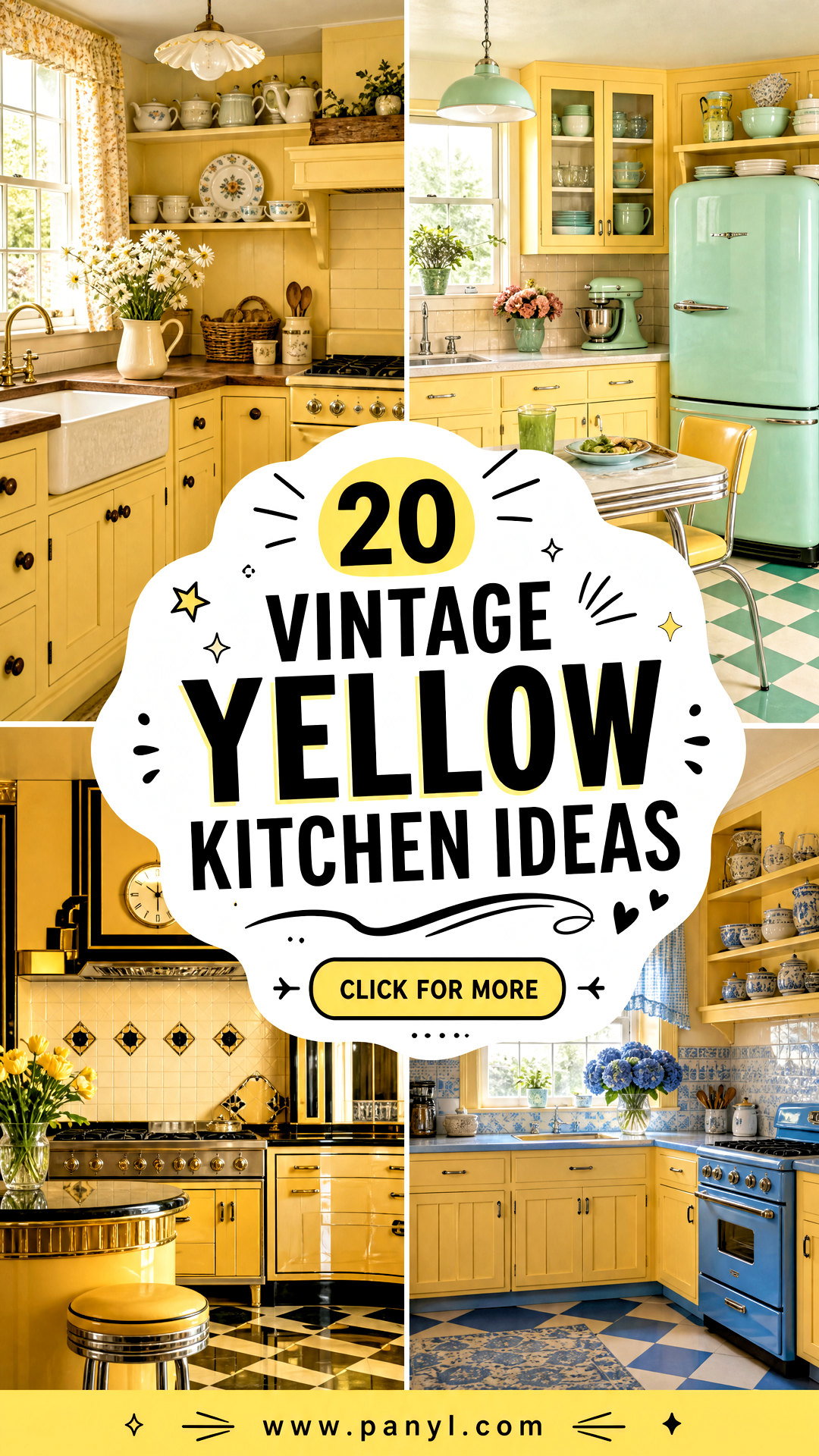
1. Butter Yellow Kitchen Cabinets
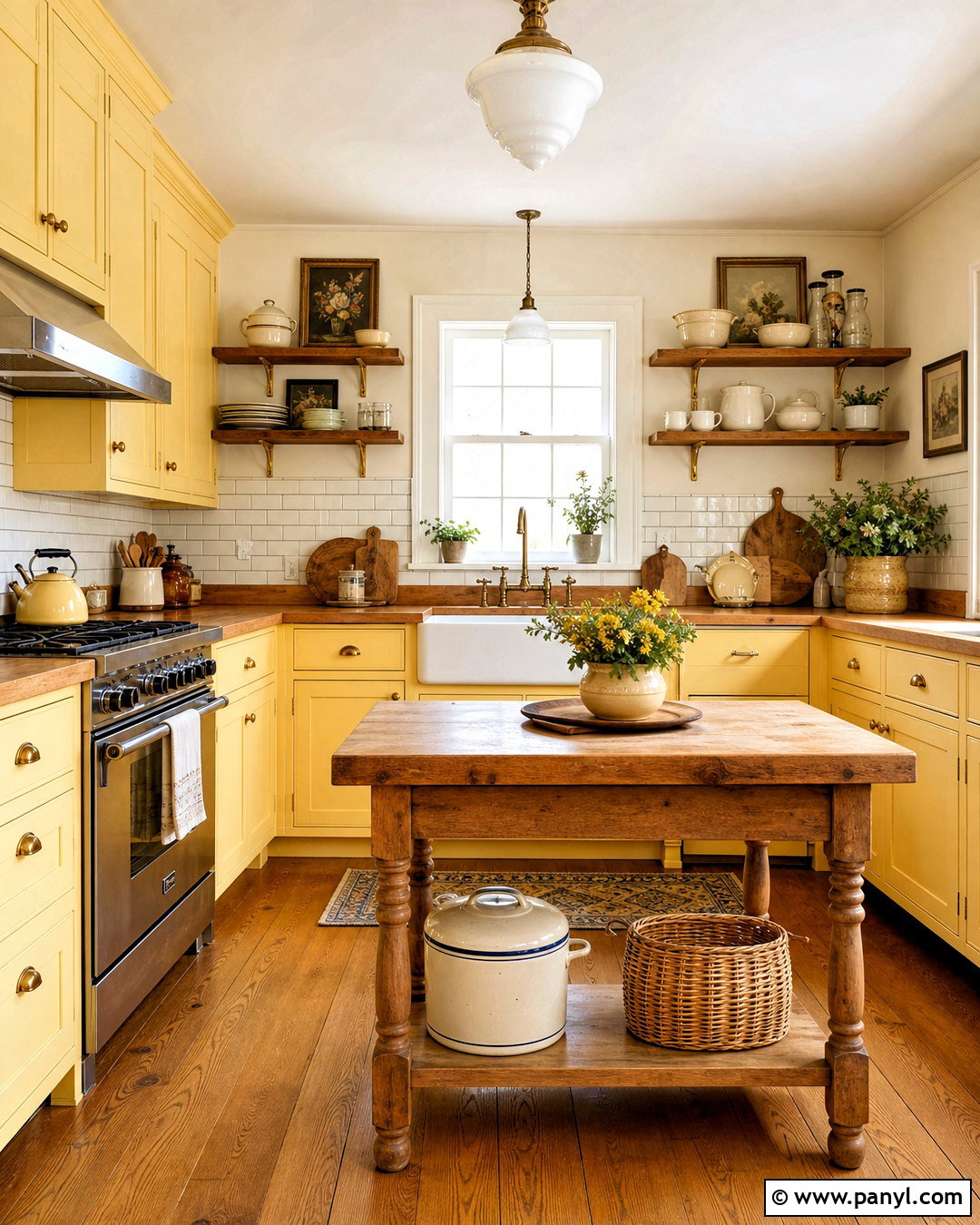
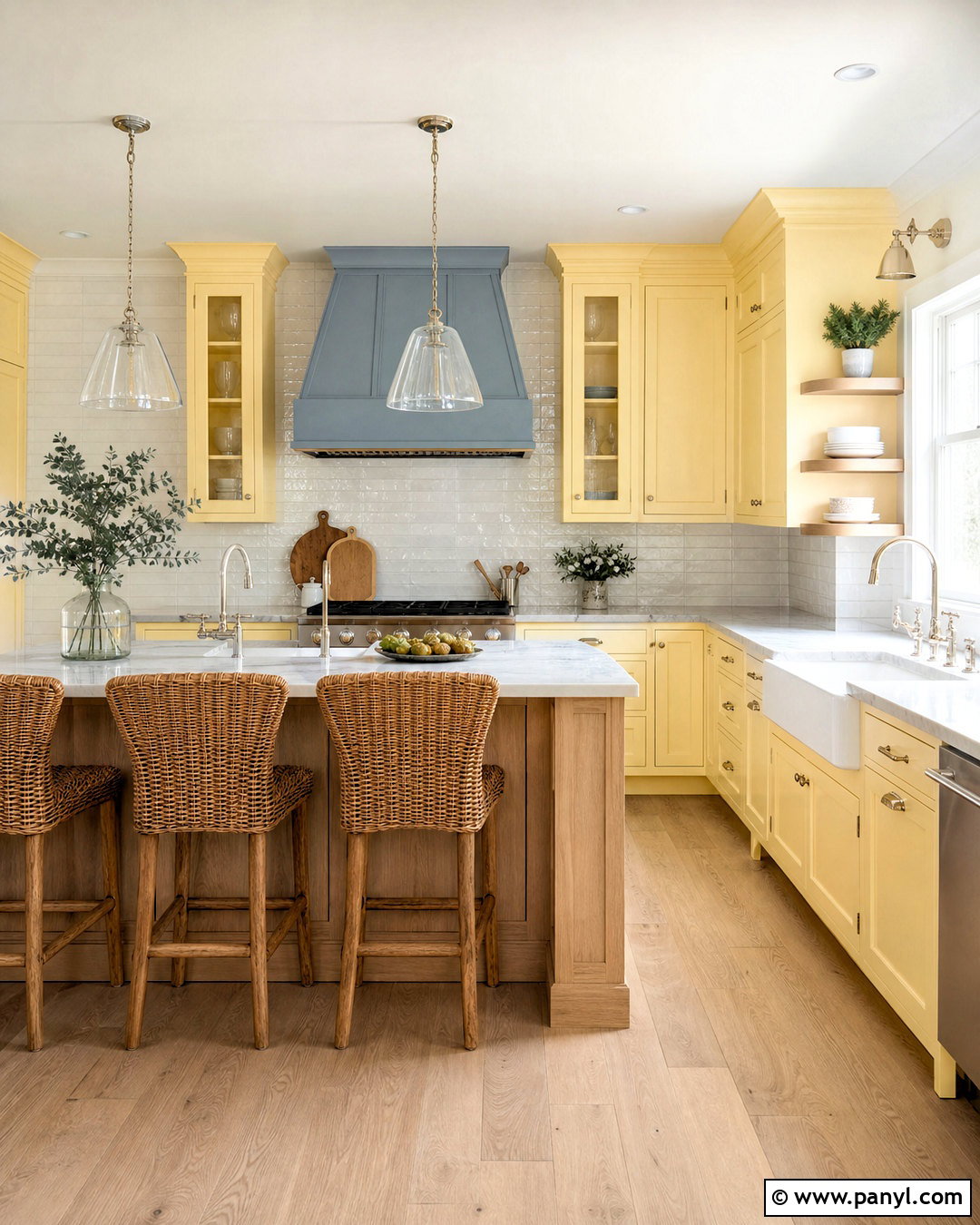
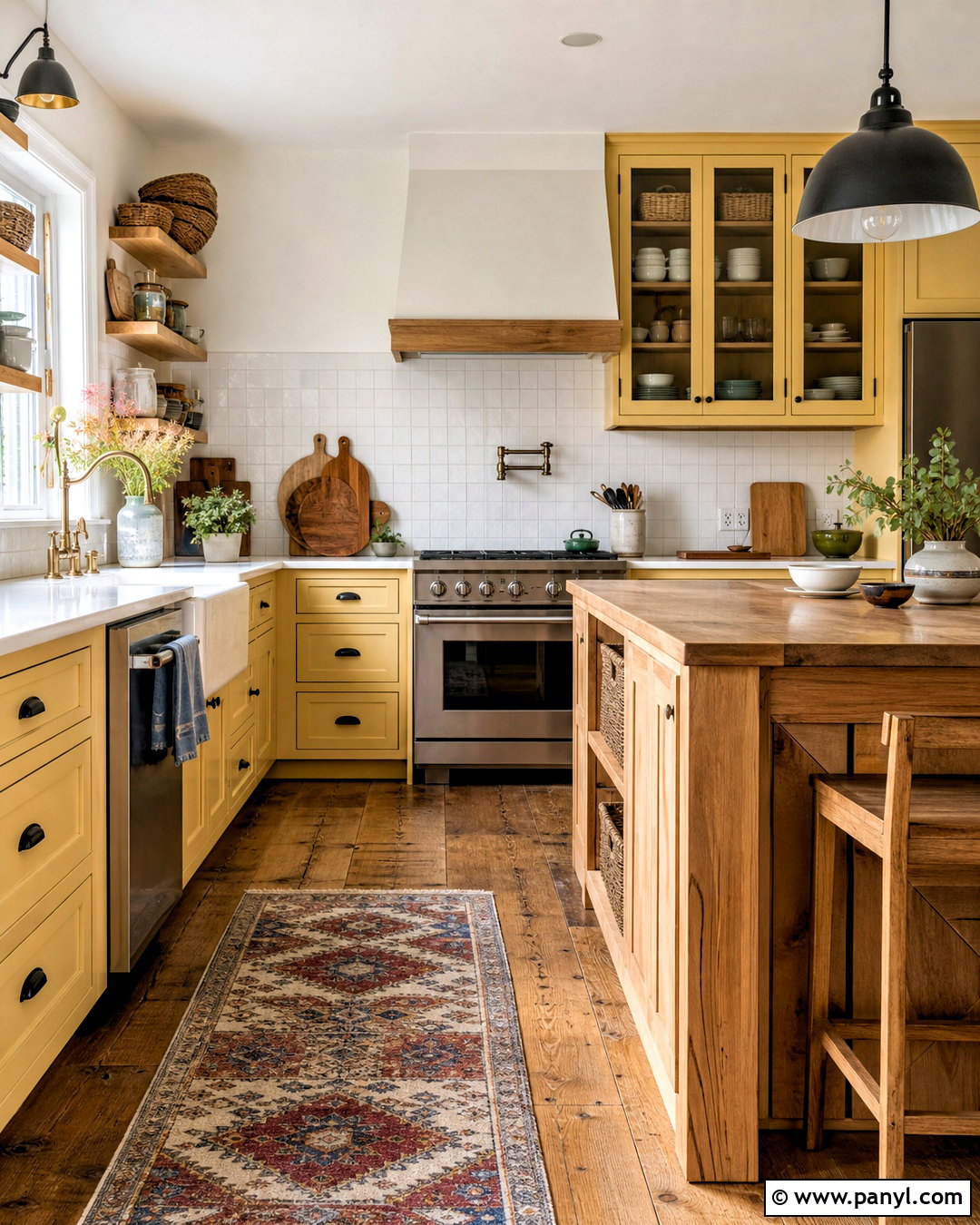
Soft butter yellow cabinets create a welcoming foundation without overpowering the room. Choose simple inset or Shaker doors with small aged-brass knobs for a traditional vintage look. Creamy white walls keep the palette bright, while warm oak countertops add natural depth. Install a white apron-front sink beneath a window dressed with a café curtain. A backsplash of glossy ivory subway tile brings subtle texture and reflects light around the workspace. Finish the room with medium-toned wood flooring, a freestanding butcher-block table, and open shelves displaying stoneware bowls. A small pendant with a pleated milk-glass shade strengthens the nostalgic mood. This balanced design suits older cottages but can also give a newer kitchen an established, comfortable character.
2. Yellow And White Checkered Kitchen
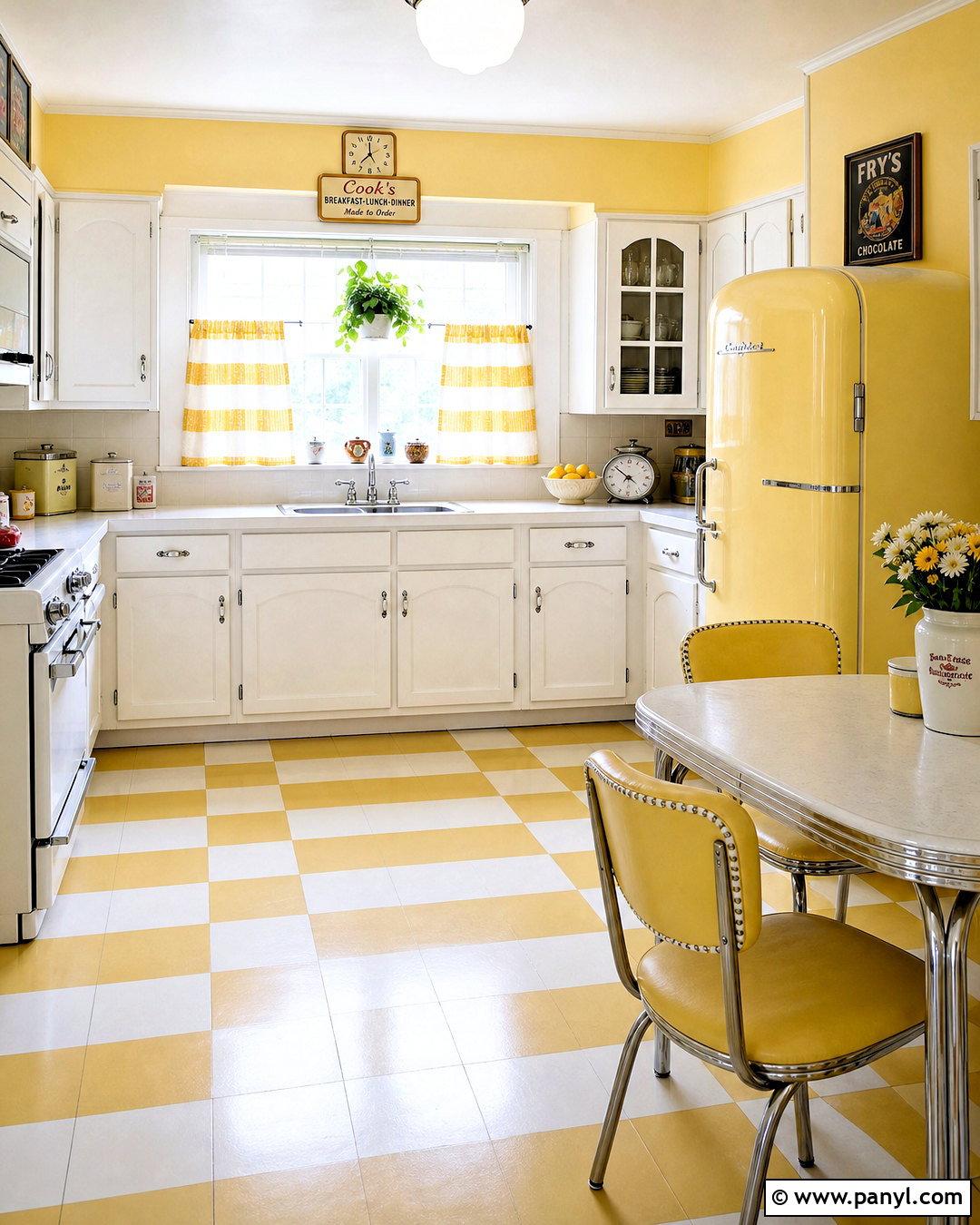
A yellow and white checkered floor immediately introduces playful midcentury character. Keep the rest of the kitchen balanced with white cabinets, pale yellow walls, and streamlined chrome hardware. Durable checkerboard vinyl or linoleum provides the right period feeling while remaining practical for everyday cooking. Add a yellow retro refrigerator with softly rounded corners and place a white enamel range along the opposite wall. Black counter edging can outline the work surfaces and give the gentle palette more definition. Complete the room with a chrome-legged breakfast table, yellow vinyl chairs, and a simple schoolhouse ceiling light. White café curtains with narrow yellow stripes soften the windows. The result feels cheerful and distinctly vintage without resembling a themed diner or becoming visually crowded.
3. Mustard Yellow Kitchen Cabinets
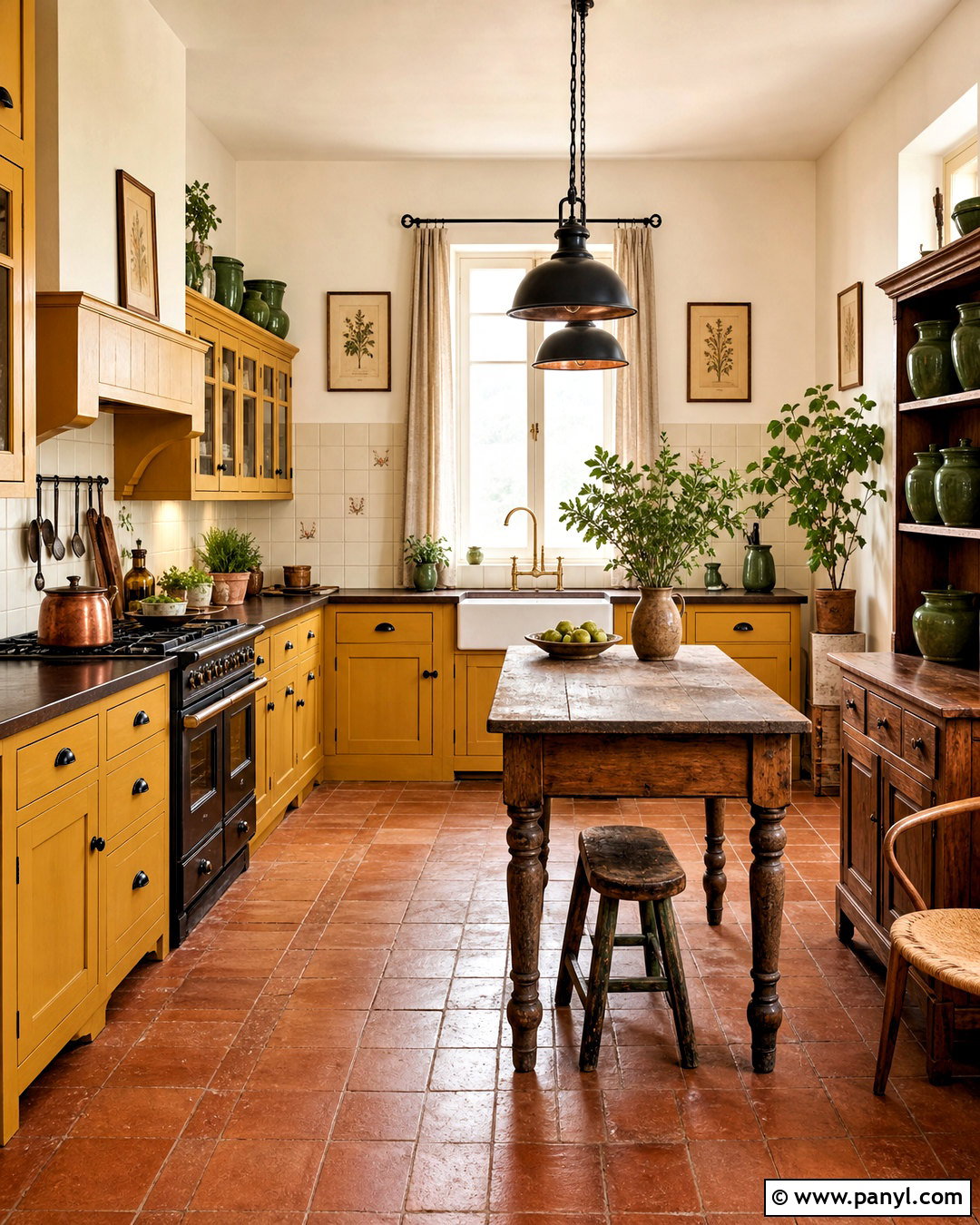
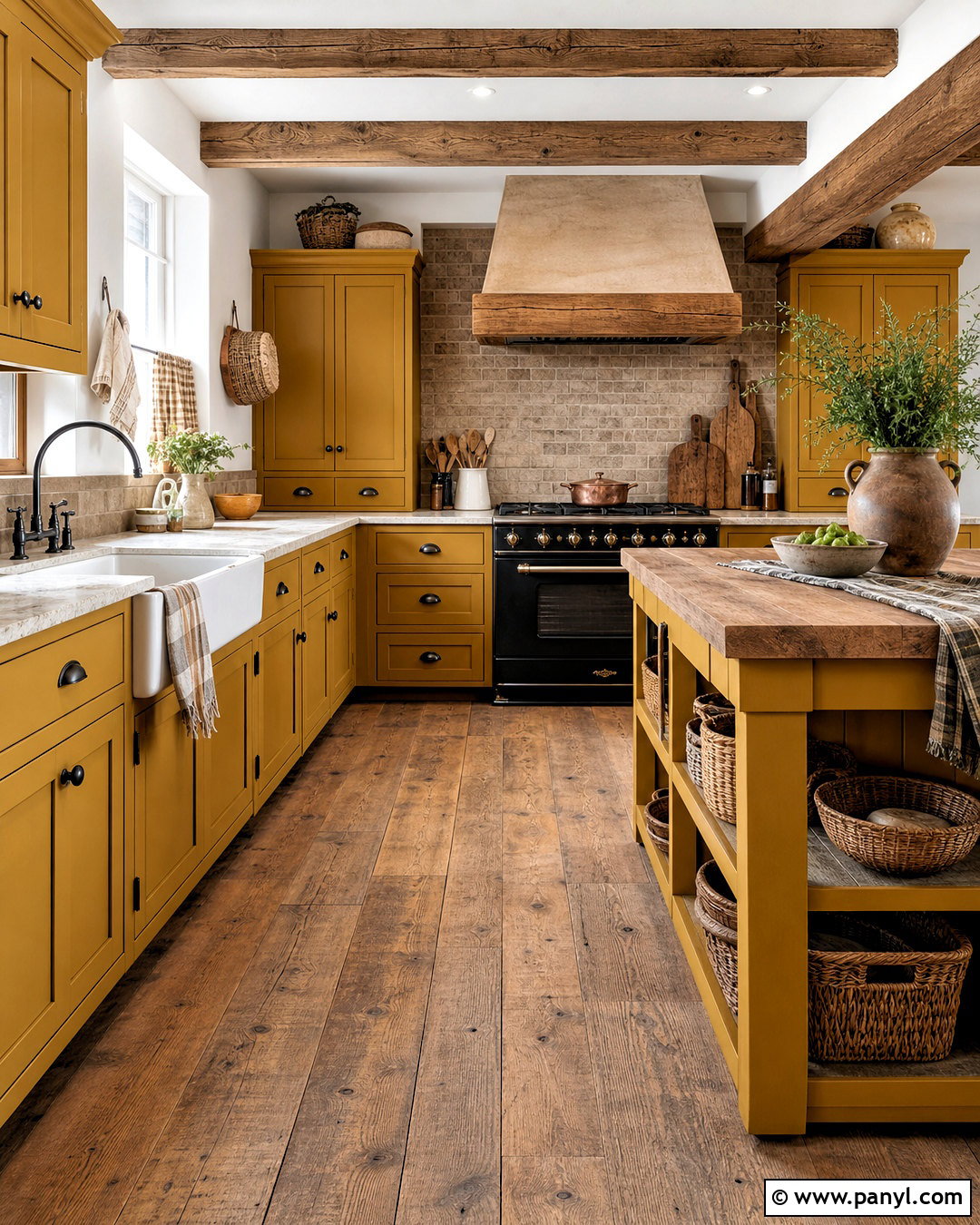
Deep mustard cabinets create a richer vintage kitchen with an earthy, lived-in atmosphere. Pair the color with cream plaster walls and dark walnut counters to prevent the yellow from appearing too sharp. Flat-panel or modest framed doors work especially well, particularly when finished with antique bronze latches. A backsplash of handmade cream tile adds movement while keeping the cooking area light. Bring in an old wood worktable as the central island, topped with cutting boards and a simple ceramic bowl. Terracotta flooring reinforces the warm palette and develops more character over time. Black metal pendant lights and a traditional bridge faucet add useful contrast. Finish with framed botanical prints, linen curtains, and a few green-glazed dishes for a complete heritage-inspired room.
4. Yellow And Teal Retro Kitchen
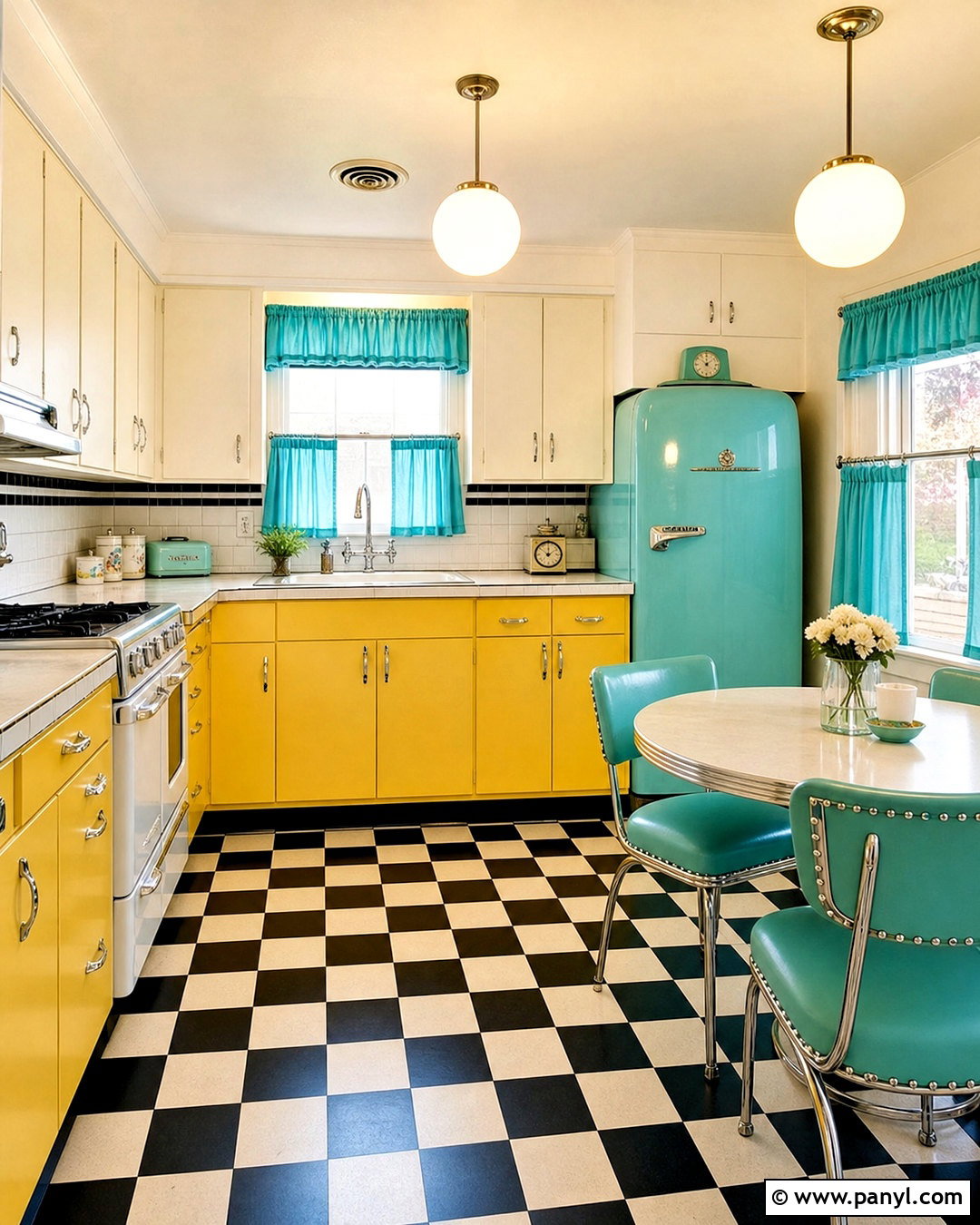
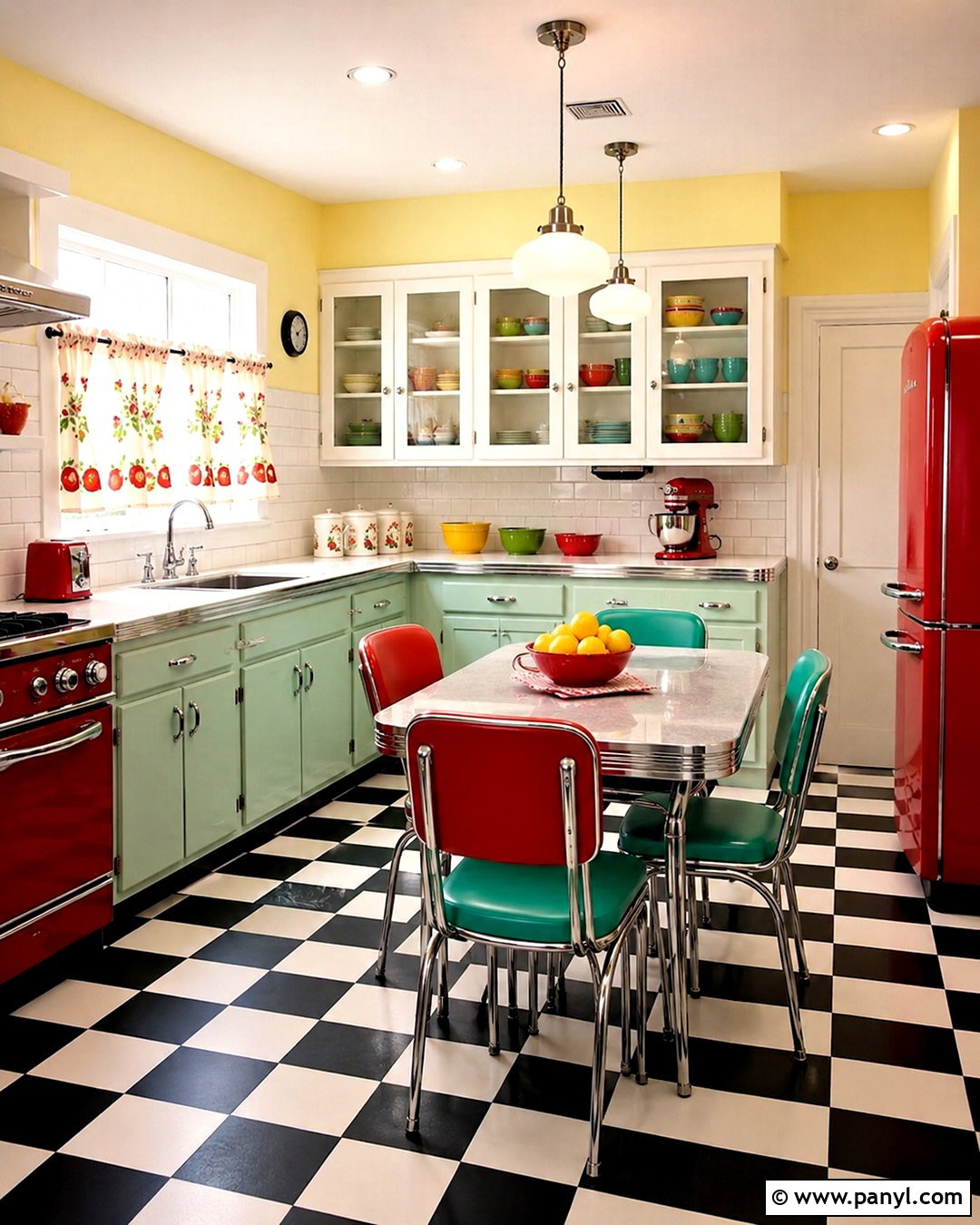
Yellow and teal form a lively color combination that suits a 1940s or 1950s kitchen. Use sunny yellow lower cabinets and warm white upper cabinets so the palette remains open and balanced. Introduce teal through a rounded refrigerator, café curtains, and a slim tile border around the backsplash. White laminate counters with chrome edging enhance the period look while providing an easy-care work surface. A black and white checkerboard floor grounds the bright colors and connects the different cabinetry finishes. Choose chrome cabinet pulls, a white enamel sink, and globe-shaped ceiling lights for extra vintage detail. A compact breakfast nook with a white pedestal table and teal vinyl bench completes the arrangement. Keep accessories limited so the two signature colors remain clear and intentional.
5. Yellow Farmhouse Kitchen
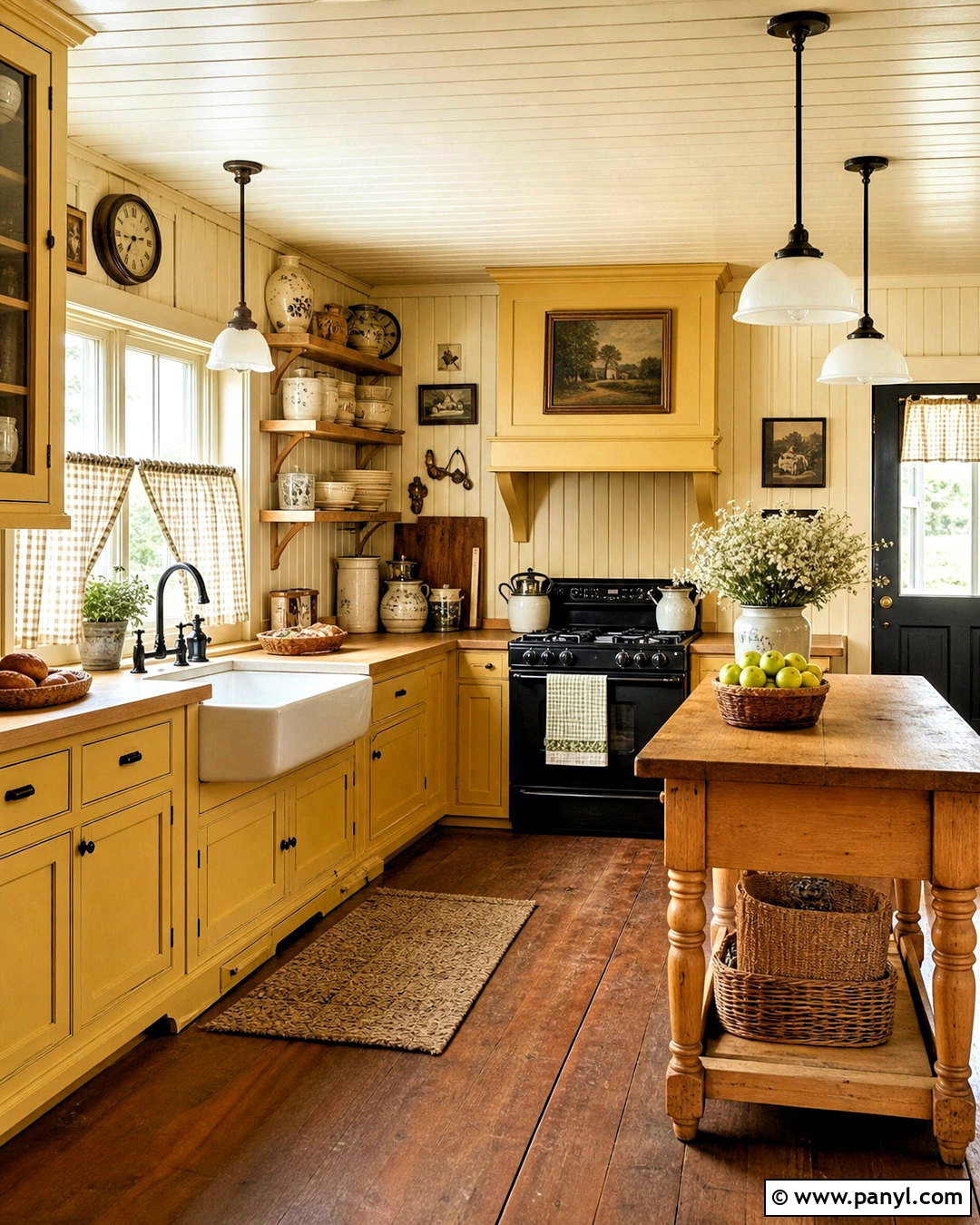
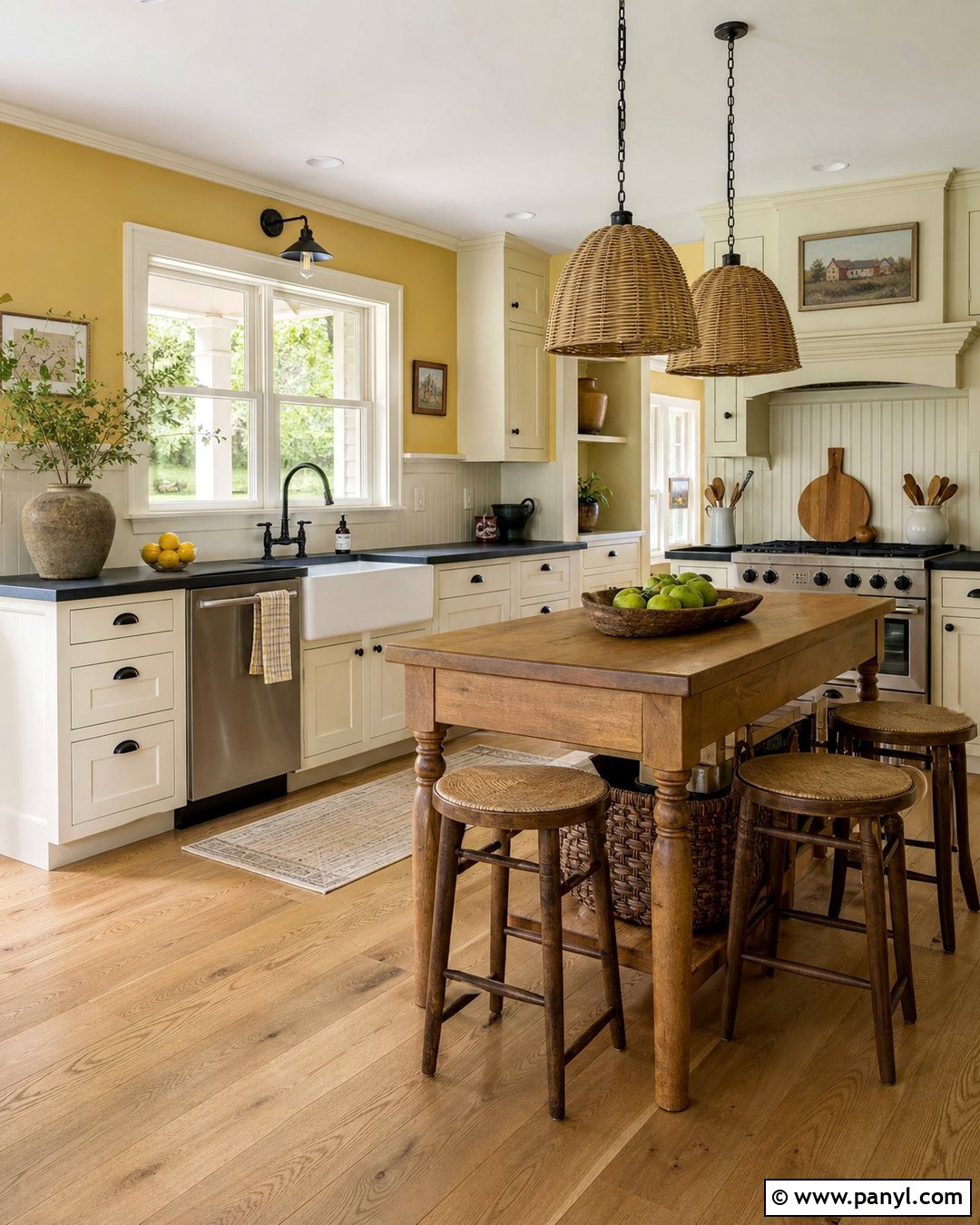
Could a farmhouse kitchen feel cheerful without losing its rustic character? Start with muted golden-yellow cabinets, creamy beadboard walls, and thick maple countertops. A large white fireclay sink creates a practical focal point beneath a wide window. Install open oak shelves for ironstone pitchers, mixing bowls, and everyday glassware. Wide-plank floors in a weathered brown finish balance the yellow and make the room feel settled. A central worktable with turned legs offers preparation space while looking more authentic than a built-in island. Add unlacquered brass hardware, a traditional range, and simple enamel pendant lights. Finish with gingham café curtains, woven baskets, and a vintage-style runner. Every element contributes to a relaxed kitchen that feels useful, sunny, and naturally collected.
6. Yellow Kitchen With Floral Wallpaper
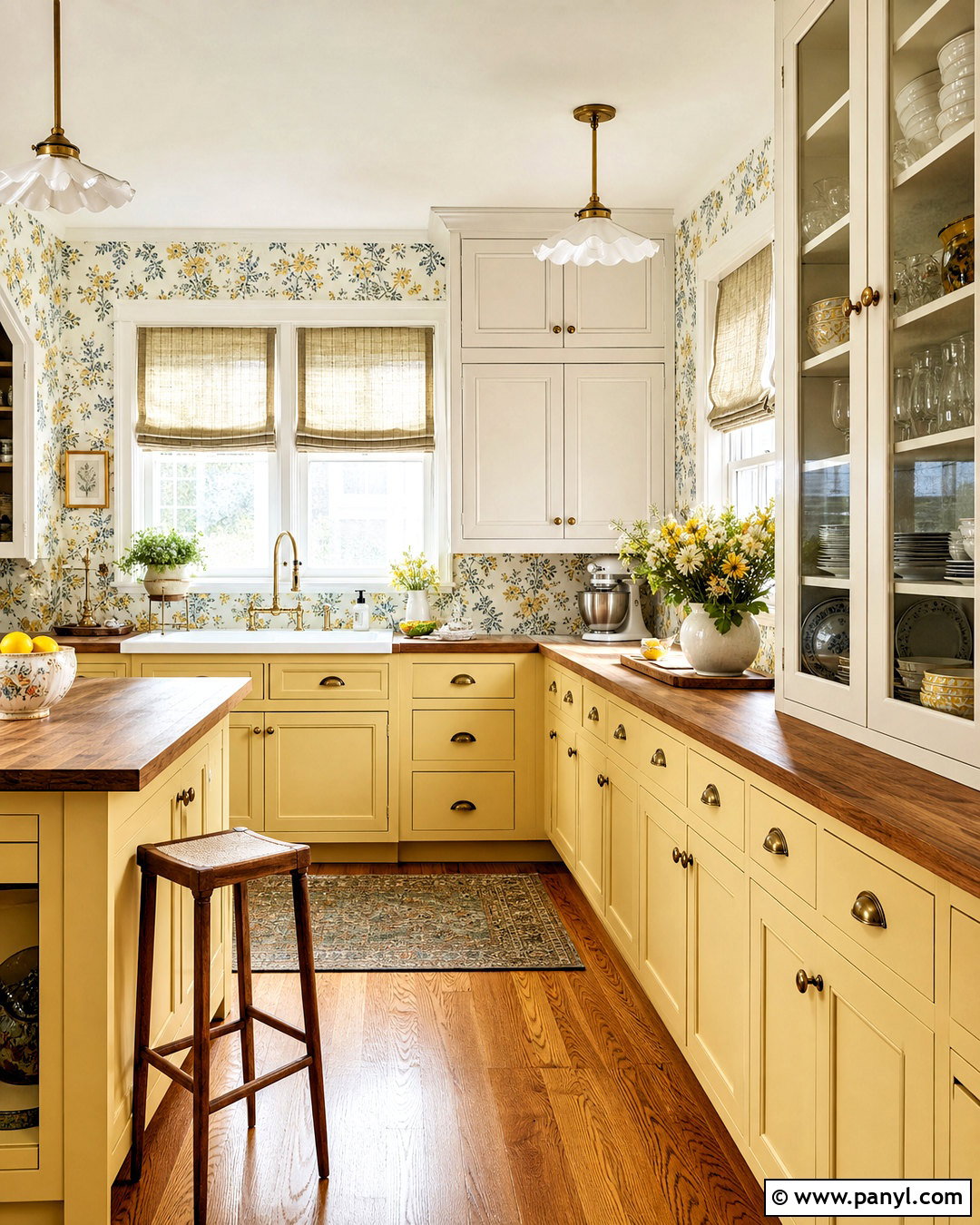
Floral wallpaper can turn a yellow kitchen into a charming cottage retreat. Choose a small-scale print containing faded yellow, leafy green, dusty blue, and cream rather than an oversized modern pattern. Paint the lower cabinets butter yellow and keep the upper cabinets warm white to give the walls enough breathing room. Wood countertops and an ivory tile backsplash create a quiet transition between the patterned walls and colored cabinetry. Add a farmhouse sink, aged-brass faucet, and glass-front cabinet for displaying vintage plates. Honey-toned floorboards bring warmth underfoot, while a painted wood table creates a casual dining area. Finish with a scalloped pendant shade, botanical artwork, and linen Roman blinds. The coordinated palette makes the wallpaper feel integrated instead of merely decorative.
7. Yellow 1950s Diner Kitchen
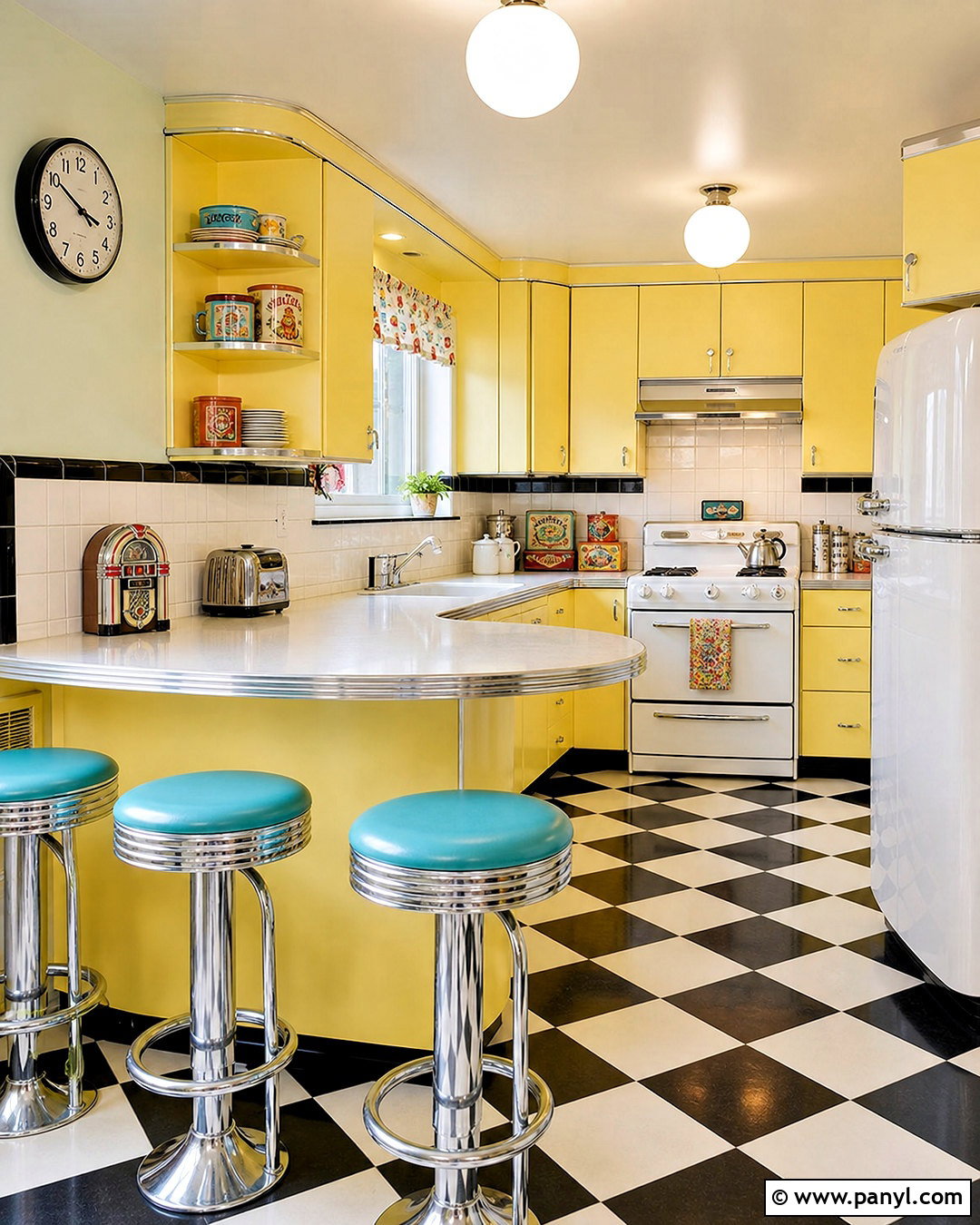
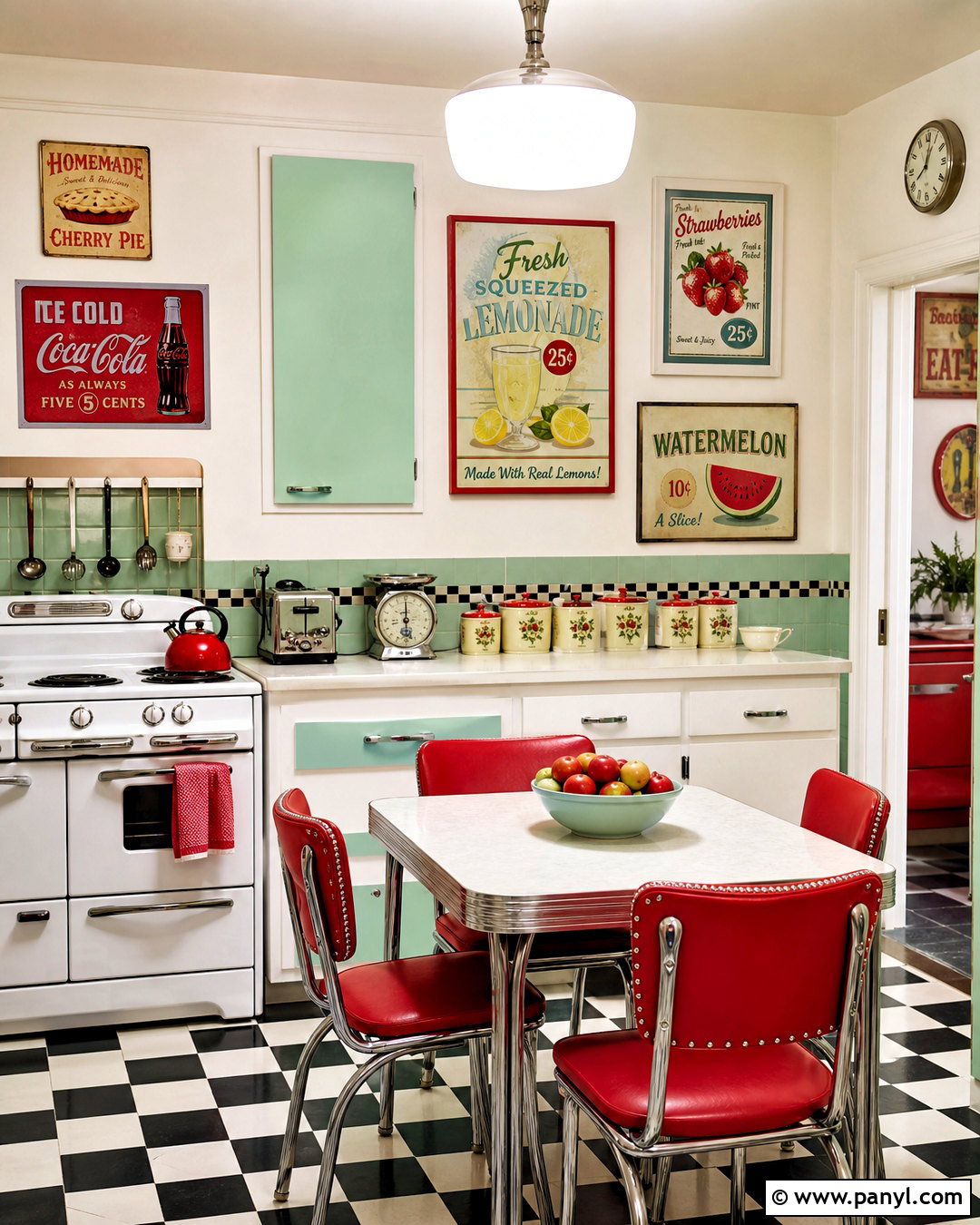
For an energetic 1950s look, combine lemon-yellow cabinets with white laminate countertops and polished chrome edging. Rounded vintage-inspired appliances can provide modern performance while reinforcing the period character associated with retro kitchens. () Use a black and white checkerboard floor to anchor the bright palette. A curved breakfast bar with chrome trim creates a natural gathering place, especially when paired with red or turquoise vinyl stools. Keep the backsplash simple with glossy white square tiles and thin black grout lines. Chrome pulls, a wall clock, and glass globe lights supply additional diner details without filling every surface. White walls prevent the strong colors from closing in. The finished room feels playful and nostalgic, but its clear layout and practical work zones keep it functional.
8. Yellow English Cottage Kitchen
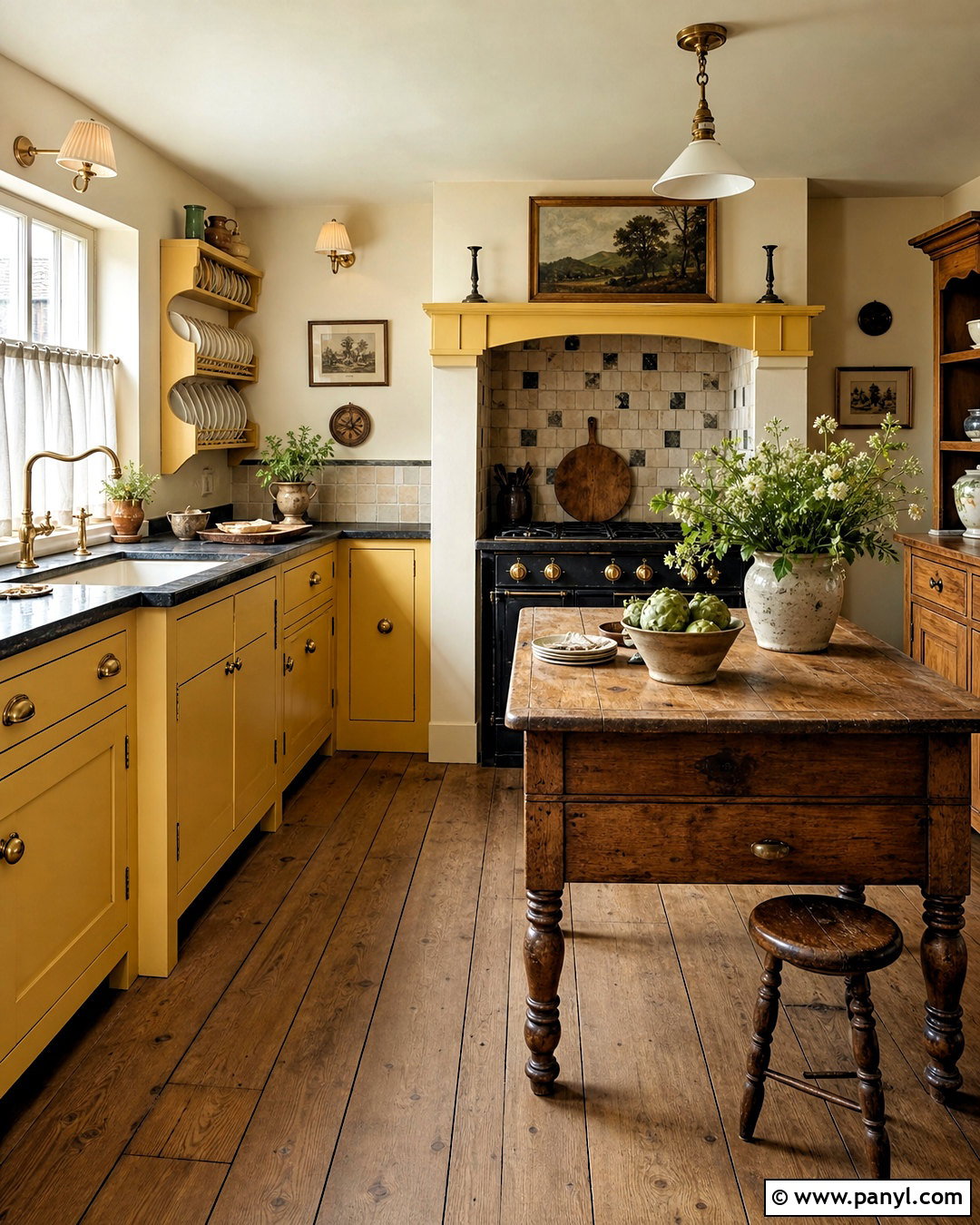
A mellow yellow palette feels especially natural in an English cottage kitchen. Paint traditional inset cabinets a creamy ochre-yellow, then pair them with dark soapstone counters and an aged oak floor. An alcove surrounding the range creates an old-fashioned hearth effect, particularly when lined with irregular ivory tiles. Instead of matching wall cabinets everywhere, include a freestanding pine hutch and a plate rack above the sink. A narrow antique table can serve as the island, leaving the room open and informal. Choose brass cup pulls, a bridge faucet, and softly pleated wall lights. Finish the windows with relaxed linen café curtains and place herb pots along the sill. This kitchen should look thoughtfully maintained rather than perfectly new, with gentle variations that support its historic personality.
9. Yellow Kitchen With Red Accents
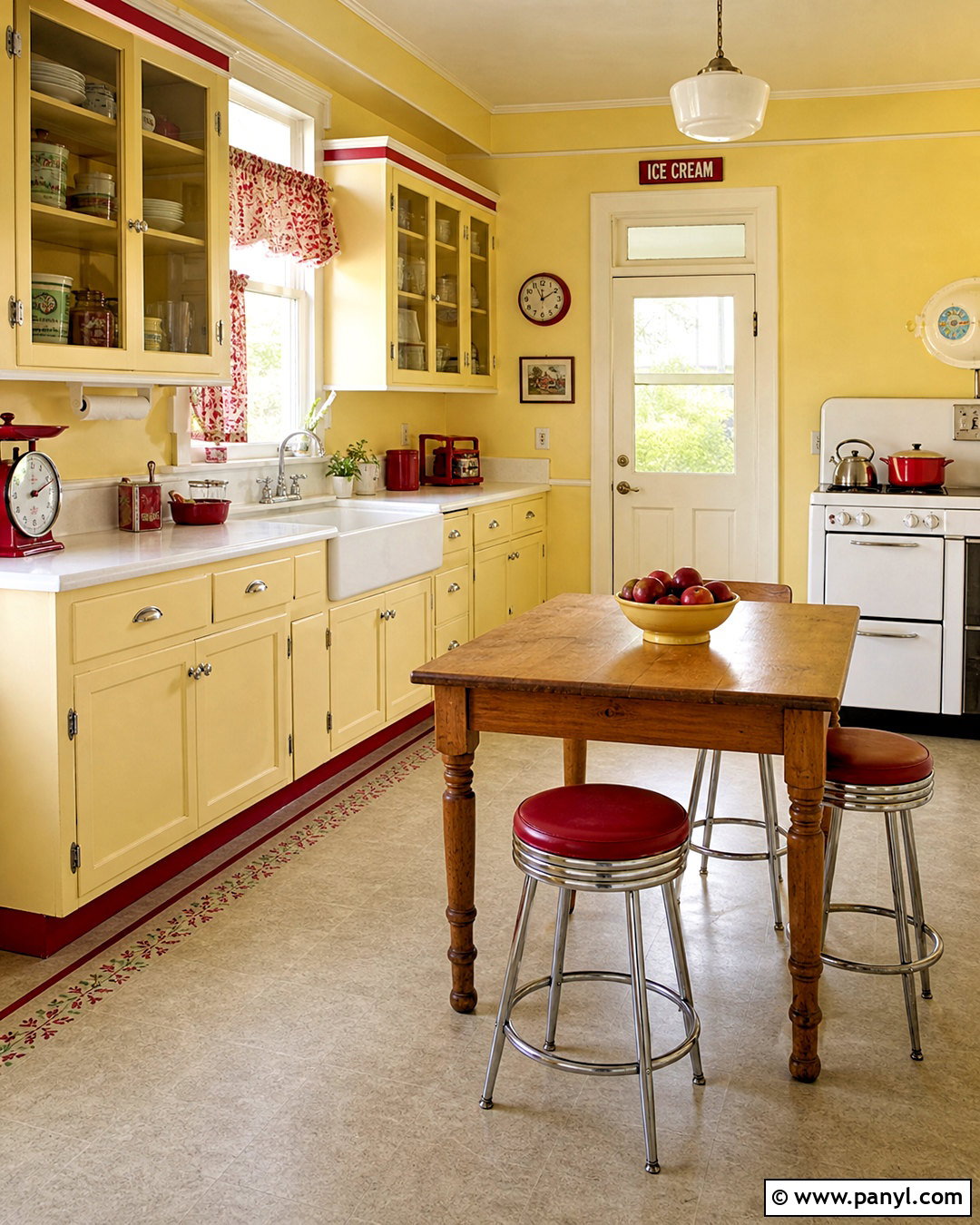
Small red accents can give a yellow kitchen an authentic early-20th-century energy. Begin with pale lemon walls, cream cabinets, and yellow cabinet interiors that become visible through glass doors. Add restrained red details through cabinet trim, stool seats, a patterned floor border, and a few enamel accessories. A warm gray linoleum floor keeps the palette grounded and allows the brighter colors to stand out. Choose white porcelain counters or pale quartz with a simple edge for a clean, practical surface. Nickel hardware, a farmhouse sink, and a vintage-style range reinforce the period influence. Keep larger furniture neutral, including a natural wood table and cream chairs. The limited use of red creates rhythm around the room without competing with the sunny yellow backdrop.
10. Yellow Kitchen With Green Cabinets
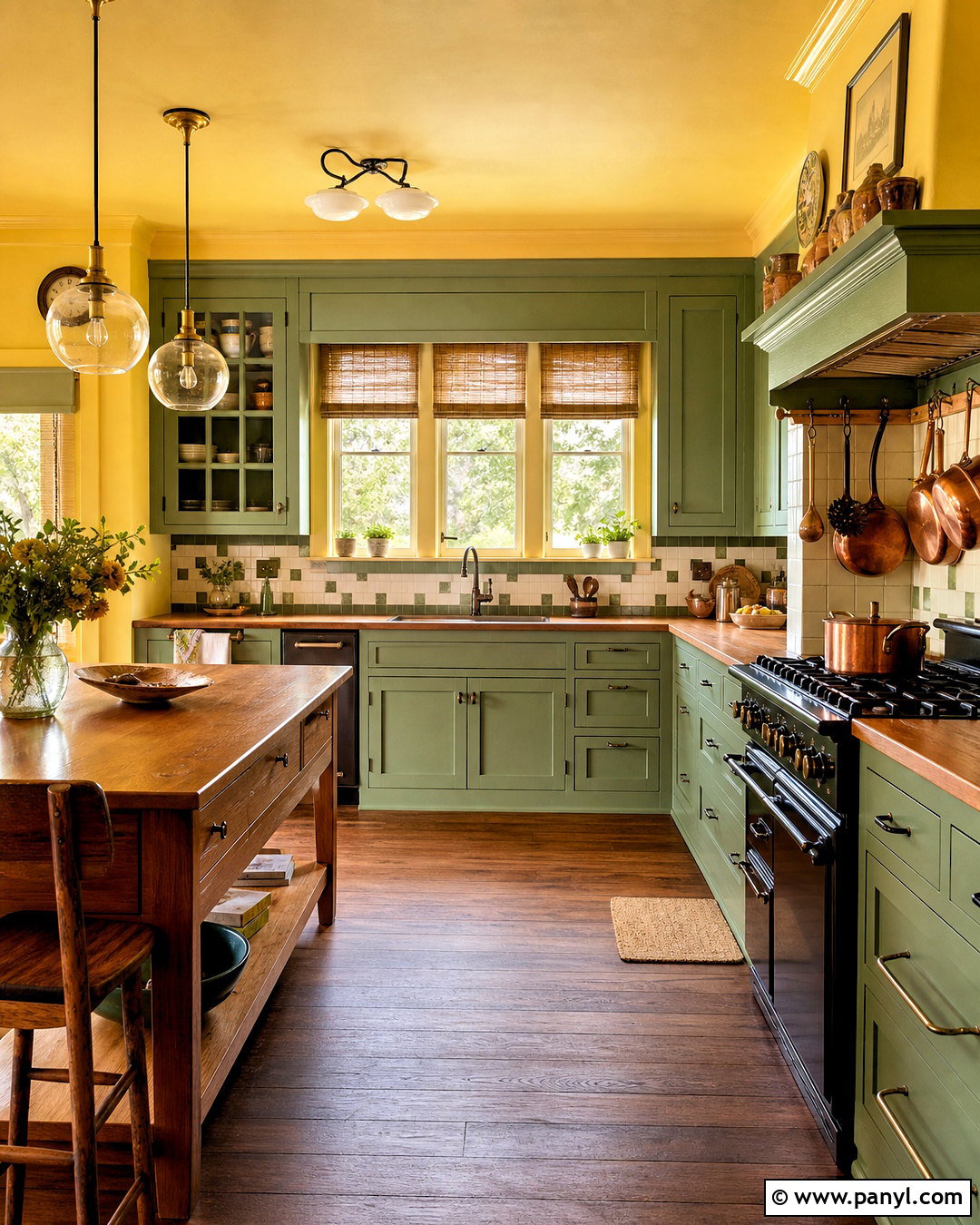
Warm yellow walls provide a beautiful background for sage green cabinets. This gentle pairing works well in Craftsman homes, bungalows, and country kitchens where natural colors feel appropriate. Choose muted green cabinetry with inset doors and dark bronze hardware. Use creamy yellow on the walls and ceiling to wrap the room in warmth without making it too intense. Quarter-sawn oak counters, exposed shelving, and medium-brown wood flooring reinforce the handcrafted character. Install an ivory apron sink and a backsplash of moss green and cream square tiles. A modest wood island with open storage offers a practical centerpiece. Complete the room with copper cookware, linen shades, and amber glass pendant lights used with bright bulbs. The finished palette feels historic, organic, and comfortable throughout the day.
11. Yellow Kitchen With Black Trim
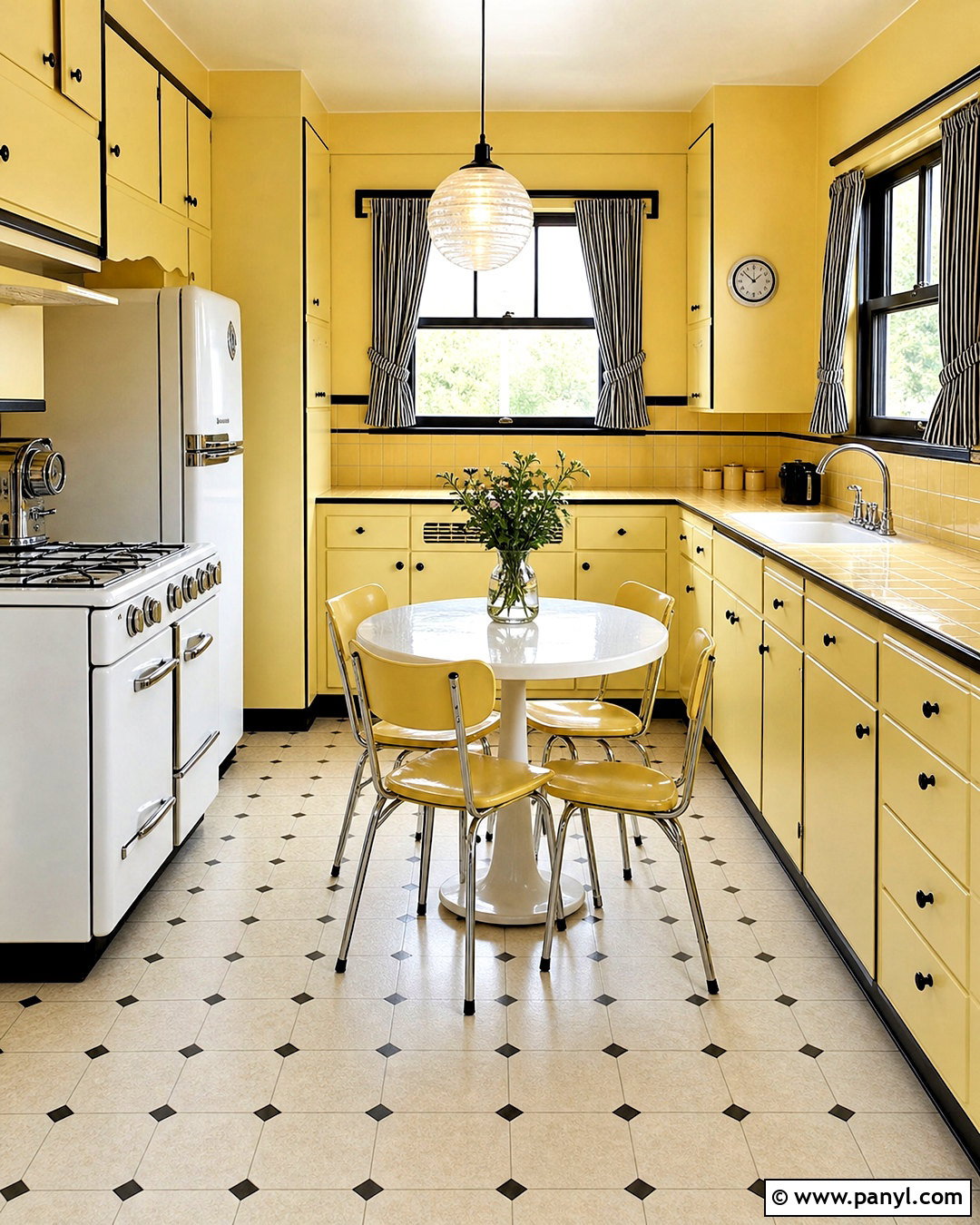
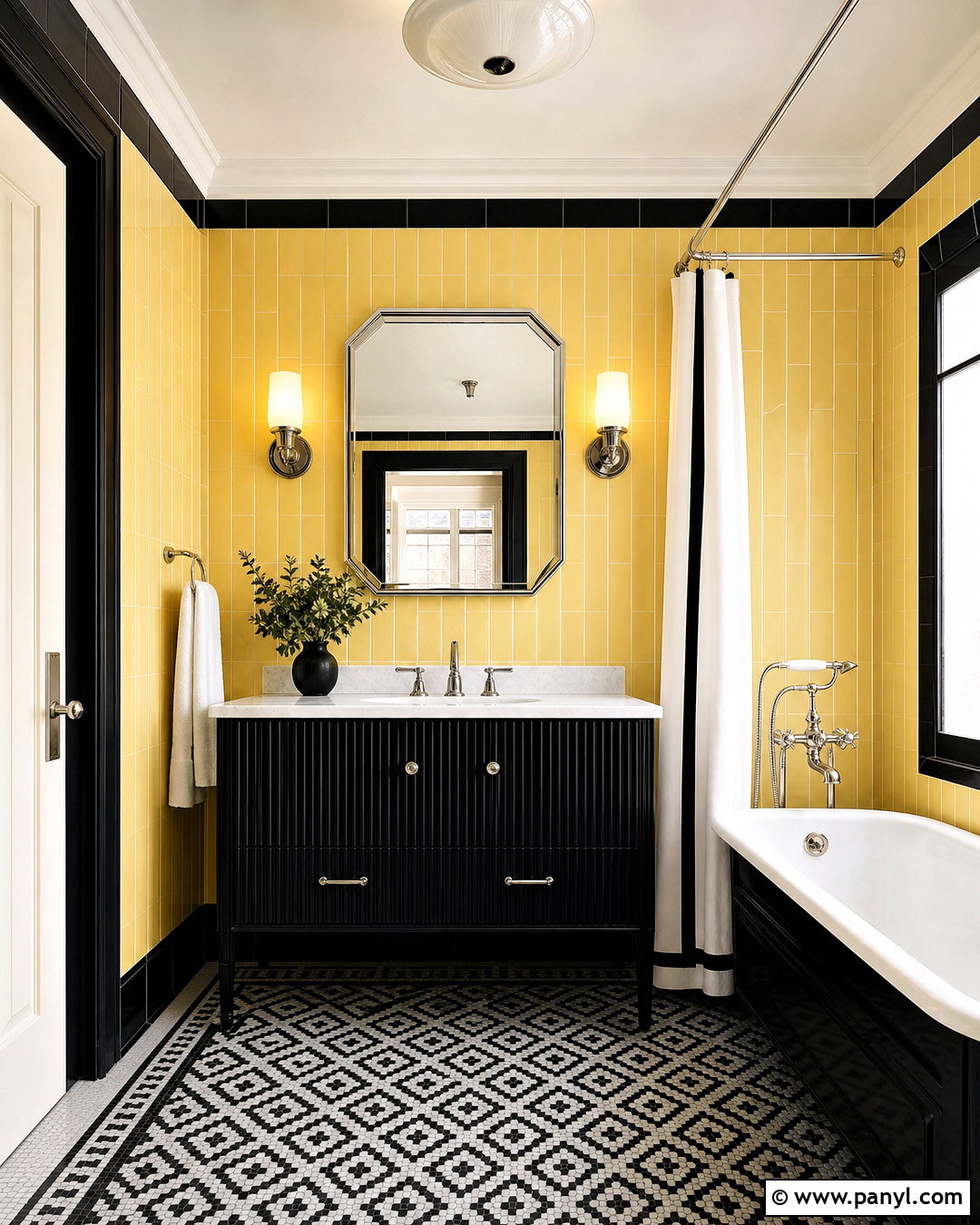
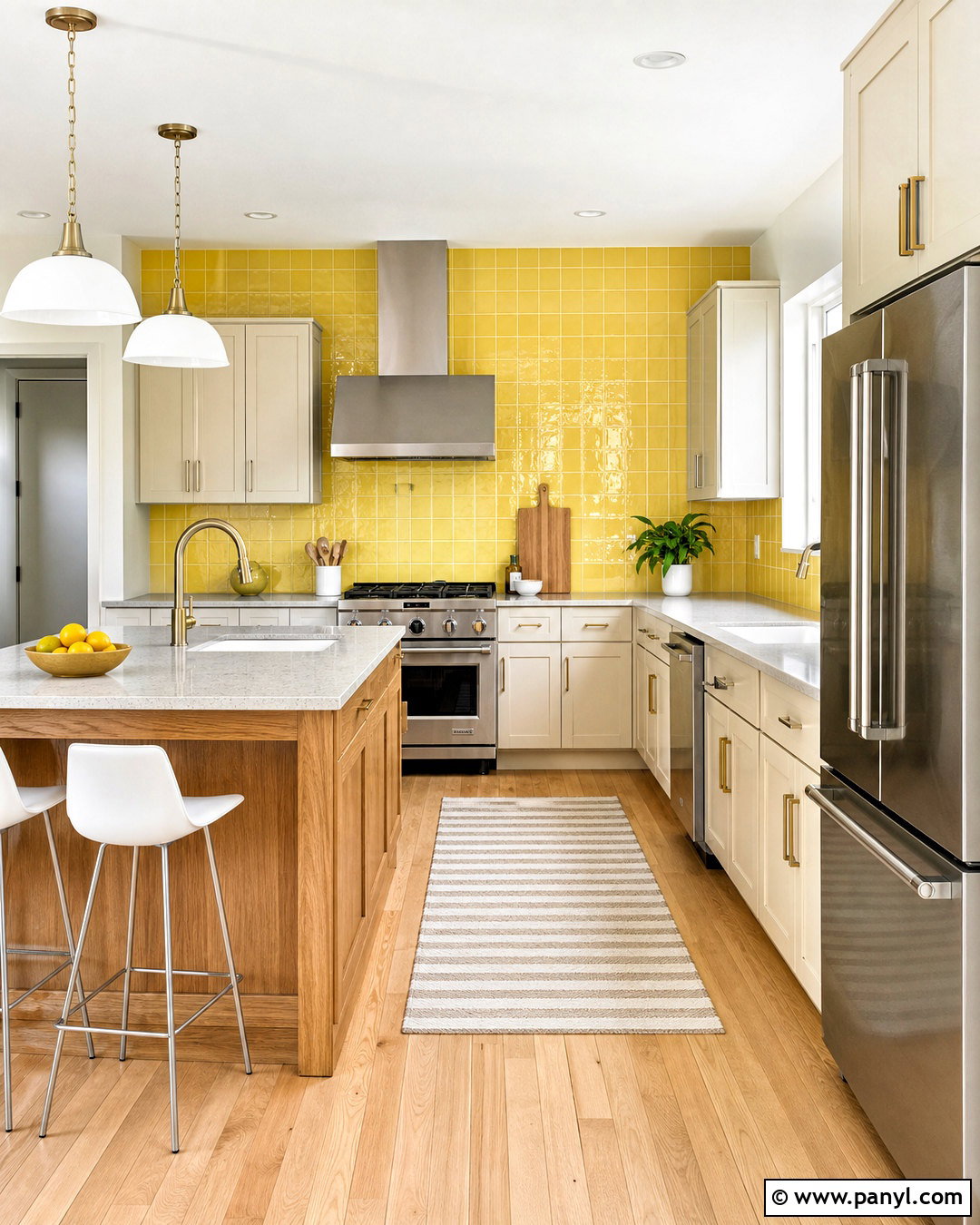
Black trim gives a vintage yellow kitchen sharper definition and a slightly sophisticated edge. Use buttery yellow cabinets with slim black counter edging, black window frames, and small black porcelain knobs. Keep the walls warm white so these outlines remain crisp rather than heavy. A yellow tile countertop and matching backsplash can deliver a convincing retro look, especially when paired with contrasting dark borders. () Choose a white enamel stove and sink to break up the yellow surfaces. Underfoot, install cream linoleum with scattered black details instead of a full checkerboard pattern. A black pedestal table and yellow chairs complete a compact breakfast area. Add one glass pendant and a simple striped curtain, allowing the strong architectural color combination to remain the main attraction.
12. Yellow Kitchen With Wood Cabinets
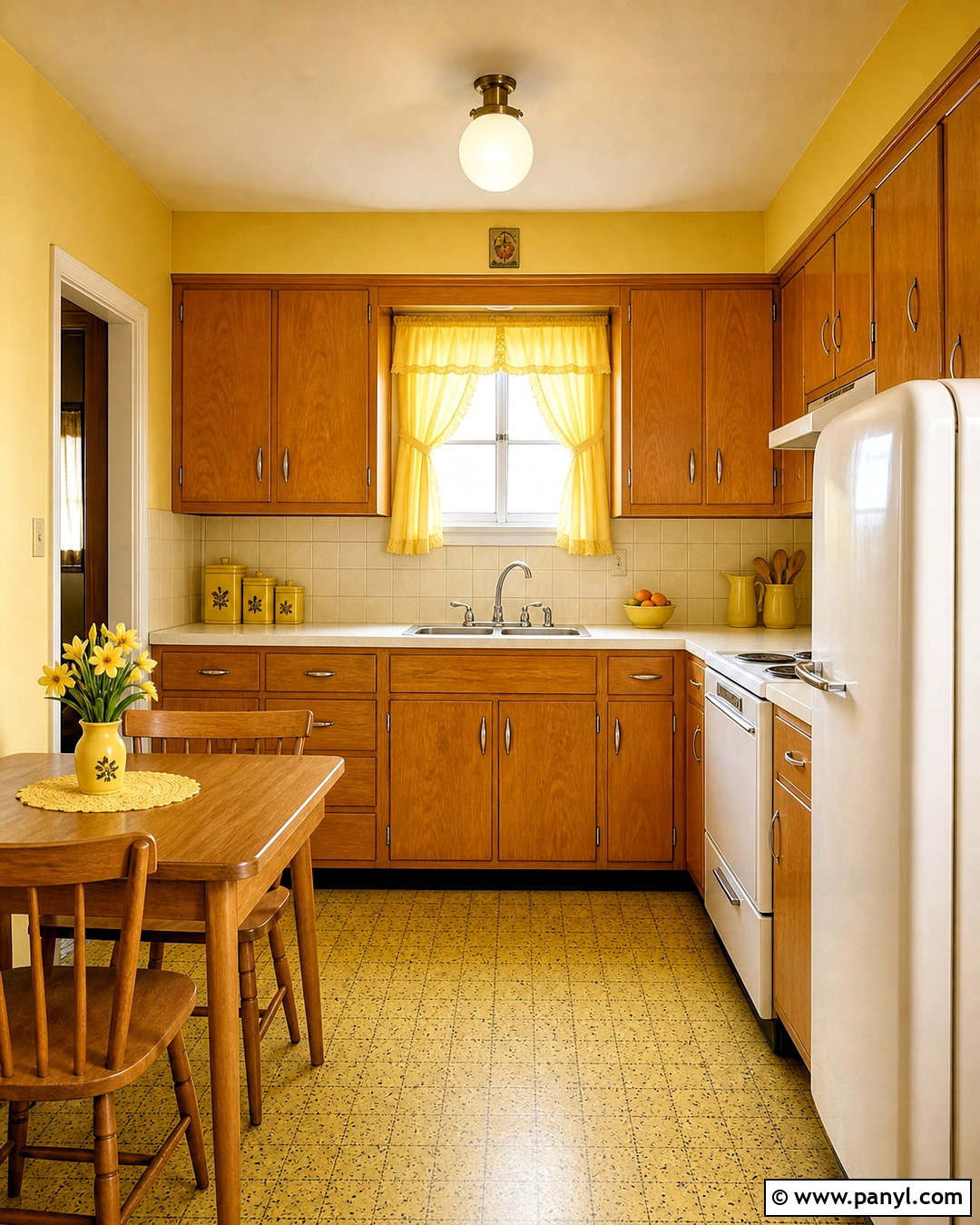
Original wood cabinets can work beautifully with yellow instead of being painted over. Refresh oak, maple, or walnut cabinetry with a low-sheen finish, then surround it with soft butter yellow walls. Use cream counters and an ivory square-tile backsplash to keep the room from becoming too brown. Yellow and cream speckled flooring adds a convincing midcentury touch while connecting the walls to the cabinetry. Replace generic hardware with polished chrome pulls or simple dark bronze latches, depending on the home’s age. A white refrigerator and range provide visual breaks between the wood surfaces. Finish with a yellow café curtain, globe ceiling light, and compact wood breakfast table. This approach protects valuable vintage materials while making the room feel lighter, warmer, and more intentionally coordinated.
13. Yellow Kitchen With Mint Green Accents
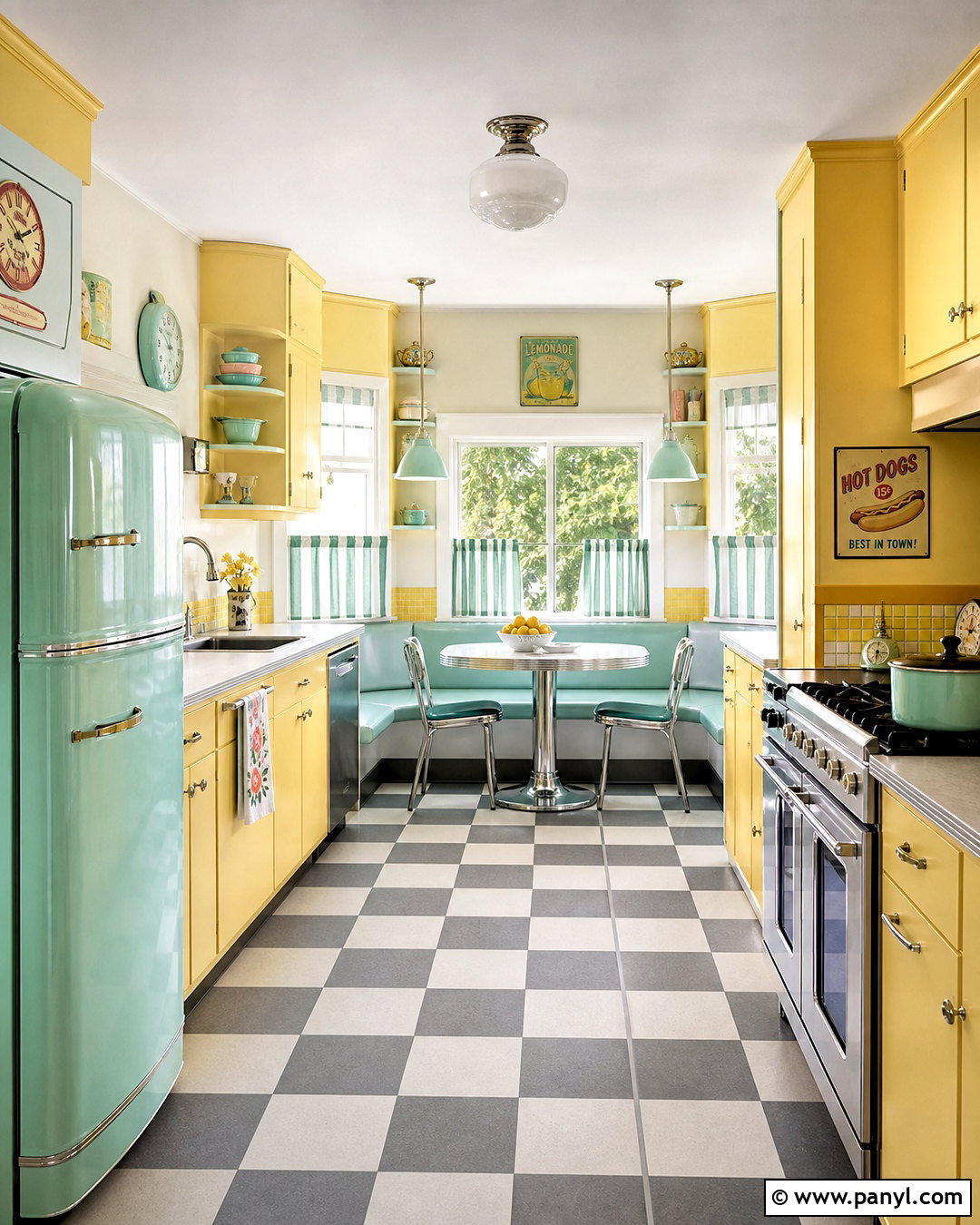
Pale yellow and mint green create a fresh retro kitchen that feels softer than brighter diner palettes. Paint the cabinets a creamy yellow and introduce mint through the refrigerator, backsplash border, pendant shades, and breakfast chairs. Warm white walls and counters provide breathing room between the pastel colors. Select a light gray and white checkerboard floor for a calmer alternative to black and white. Chrome pulls, counter edging, and table legs add the polished details associated with midcentury kitchens. A small built-in breakfast nook can feature mint vinyl upholstery and yellow piping for a coordinated finish. Include white enamel appliances where additional color would feel excessive. Simple glass jars, striped curtains, and a round wall clock complete the room without turning it into a novelty set.
14. Yellow Art Deco Kitchen
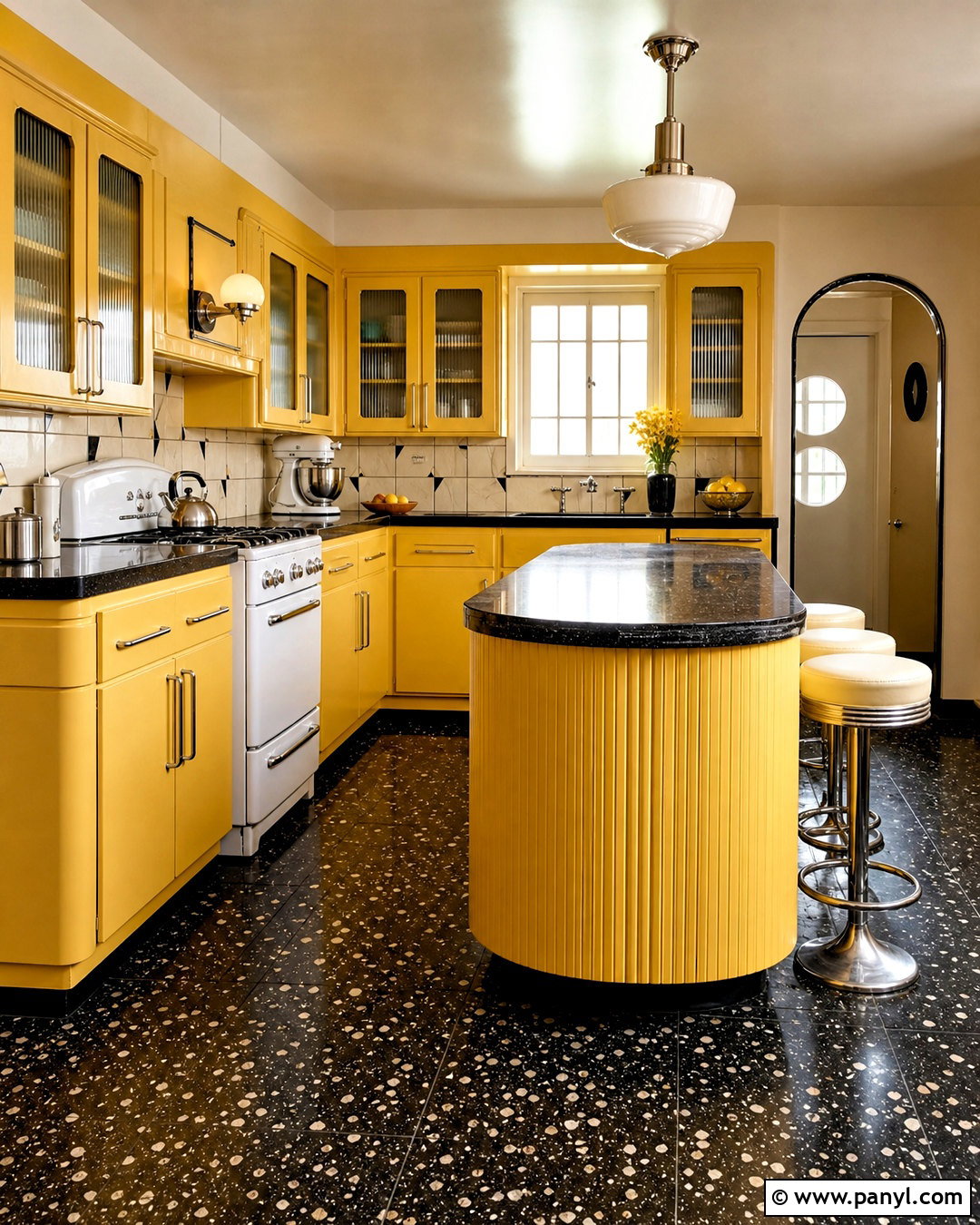
An Art Deco kitchen combines yellow with streamlined shapes and elegant dark accents. Choose golden-yellow flat-panel cabinets with rounded outer corners and long polished nickel handles. Black stone countertops establish contrast, while a backsplash of cream tile with narrow black geometric bands adds period detail. Use black and cream terrazzo or patterned linoleum on the floor to continue the graphic palette. A curved island with open shelving can become the room’s central feature without requiring a large footprint. Select a white range, nickel bridge faucet, and opal glass ceiling fixtures with stepped metal frames. Keep the window treatment simple with a cream roller shade. A mirrored panel, ribbed glass cabinet fronts, and two sculptural stools complete this glamorous yet practical vintage yellow kitchen.
15. Yellow Kitchen With Blue Accents
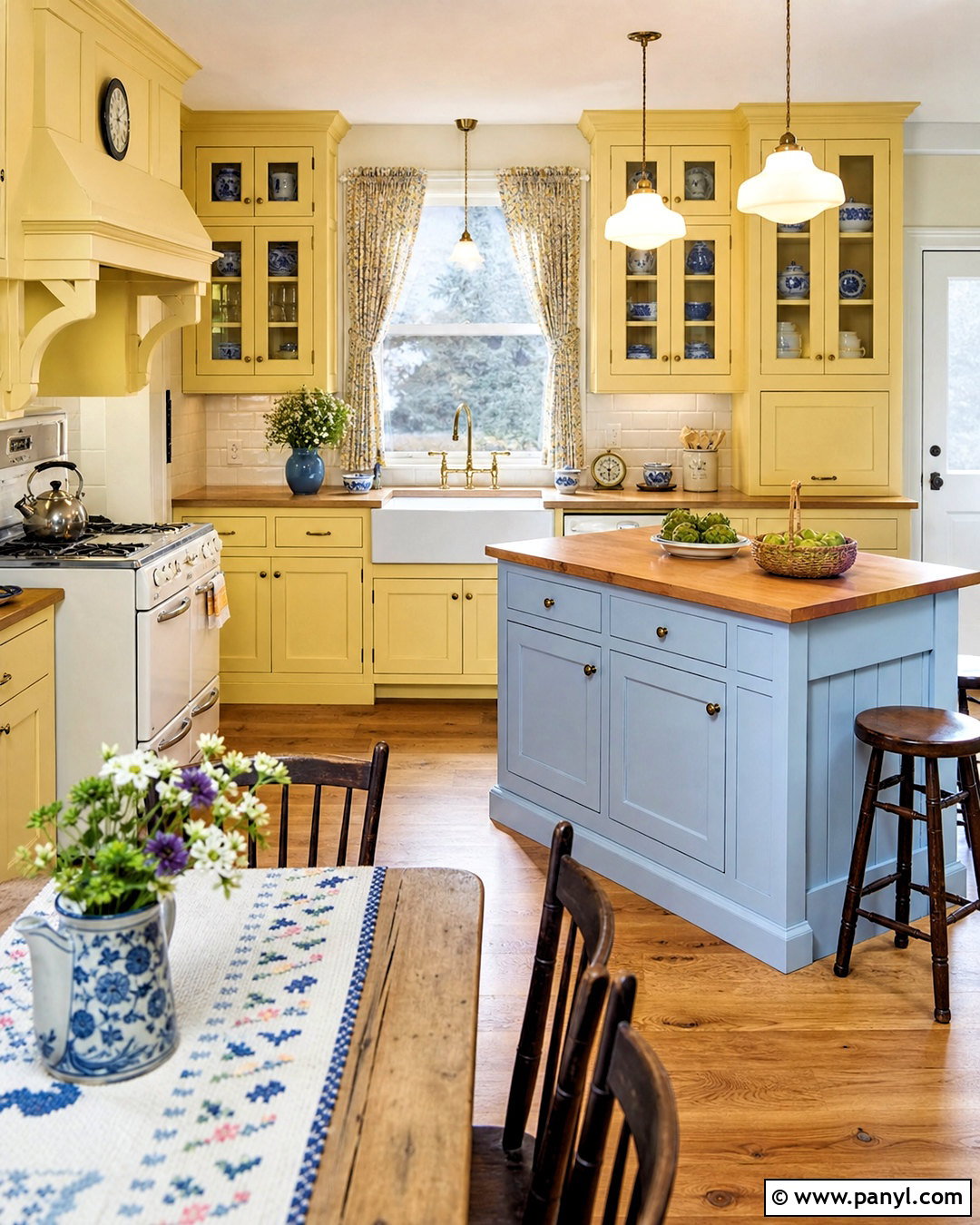
Blue accents cool the warmth of yellow and create a relaxed vintage kitchen with plenty of personality. Use butter yellow cabinetry as the main feature, then introduce powder blue on the island, pantry door, or freestanding hutch. Cream walls and white ceramic tile prevent the two colors from becoming overly sweet. Choose natural oak countertops and a medium wood floor to add visual maturity. A white apron sink, brass faucet, and simple cup pulls bridge traditional and cottage influences. Patterned curtains containing yellow and blue can tie the palette together at the window. Finish with blue stoneware, an old wood dining table, and milk-glass pendant lights. Keeping each color in clearly defined areas gives the room structure while preserving its cheerful, collected appearance.
16. Yellow Kitchen With Vintage Appliances
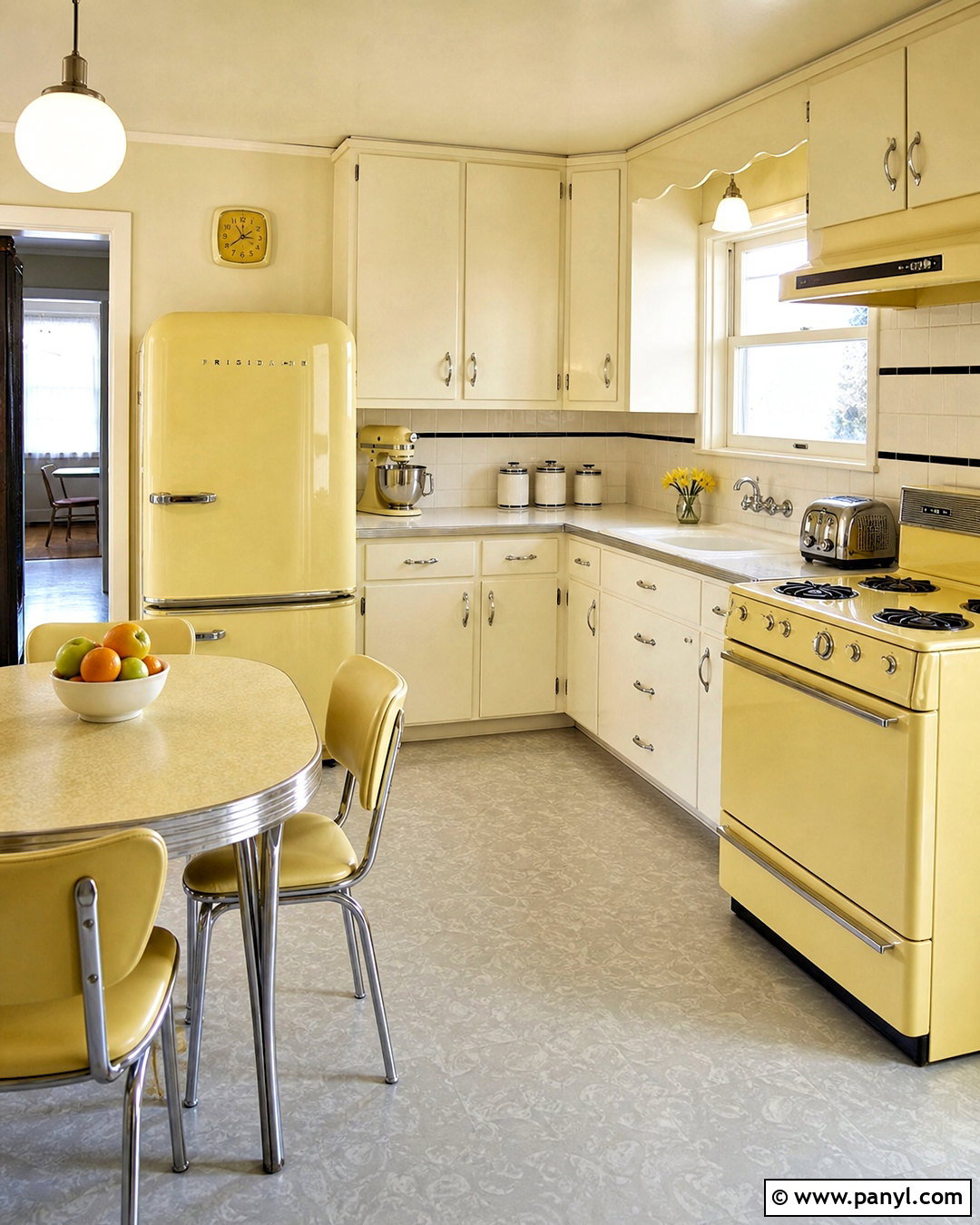
Make vintage-inspired appliances the focal point by surrounding them with a quieter yellow palette. Choose a butter yellow refrigerator and matching range with curved corners, sturdy handles, and classic dial controls. Place them against cream-painted cabinets so their shapes and colors remain clearly visible. White laminate counters with metal edging and a pale gray linoleum floor maintain the streamlined midcentury mood. Add a glossy white backsplash with small yellow accent tiles rather than another large block of color. Chrome cabinet pulls, a porcelain sink, and a wall-mounted faucet continue the period details. Complete the room with a compact breakfast table, bent-metal chairs, and a simple globe pendant. This arrangement offers nostalgic visual character while still supporting the storage and cooking needs of a modern household.
17. Yellow Kitchen With Open Shelving
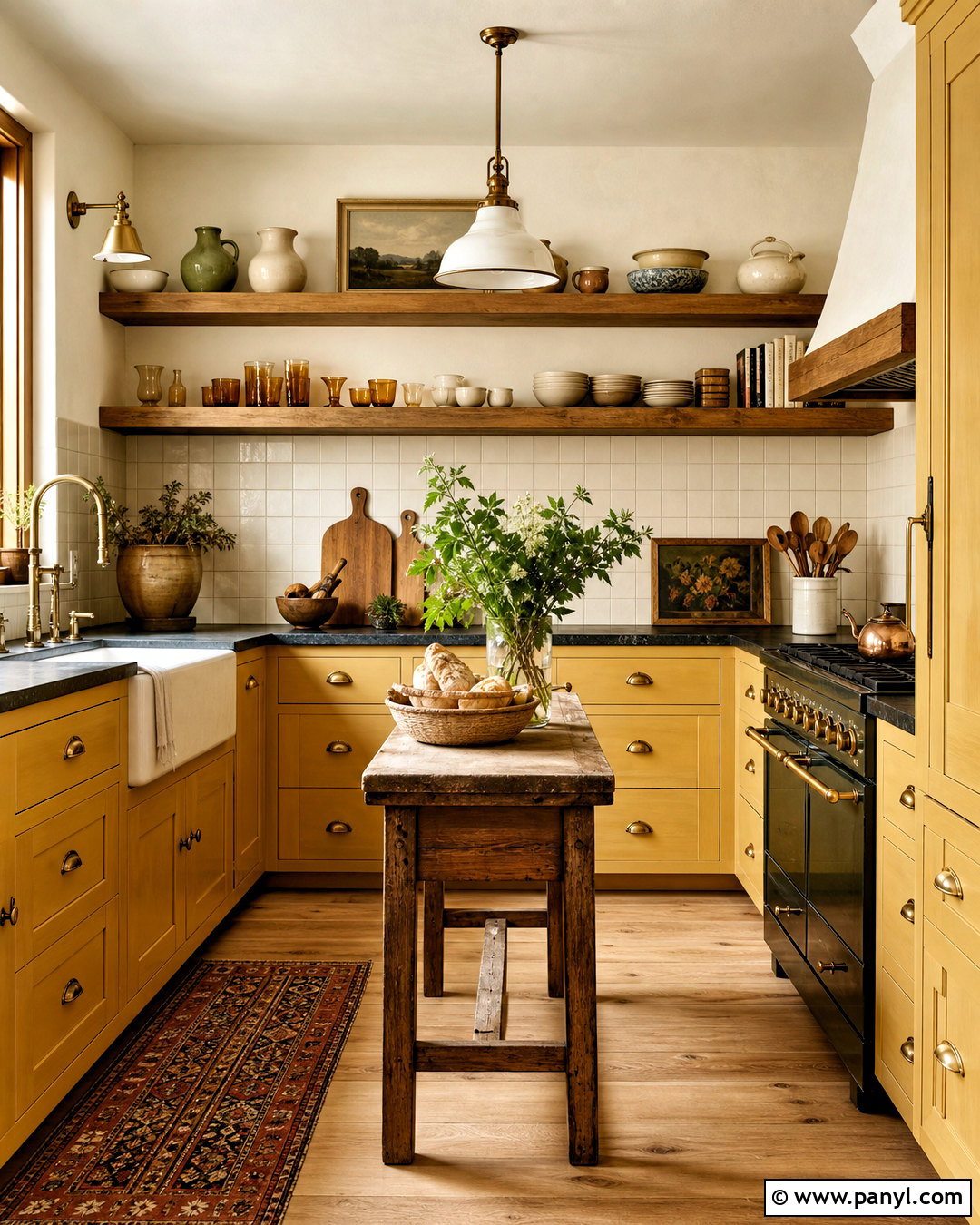
Open shelving gives a small yellow kitchen a lighter, more relaxed appearance. Paint the lower cabinets warm mustard and use pale cream on the walls to balance the stronger color. Install thick oak shelves instead of bulky upper cabinets, arranging everyday white dishes, amber glassware, and a few green ceramic pieces across them. A backsplash of handmade ivory tile protects the wall while complementing the irregular wood texture. Select dark soapstone counters and aged-brass hardware for depth. A narrow freestanding table provides workspace without visually filling the center of the room. Use warm wood flooring, a farmhouse sink, and a pendant with a white enamel shade. Keeping shelf displays practical and spacious makes the complete kitchen feel authentic, functional, and pleasantly lived in.
18. Yellow Kitchen Breakfast Nook
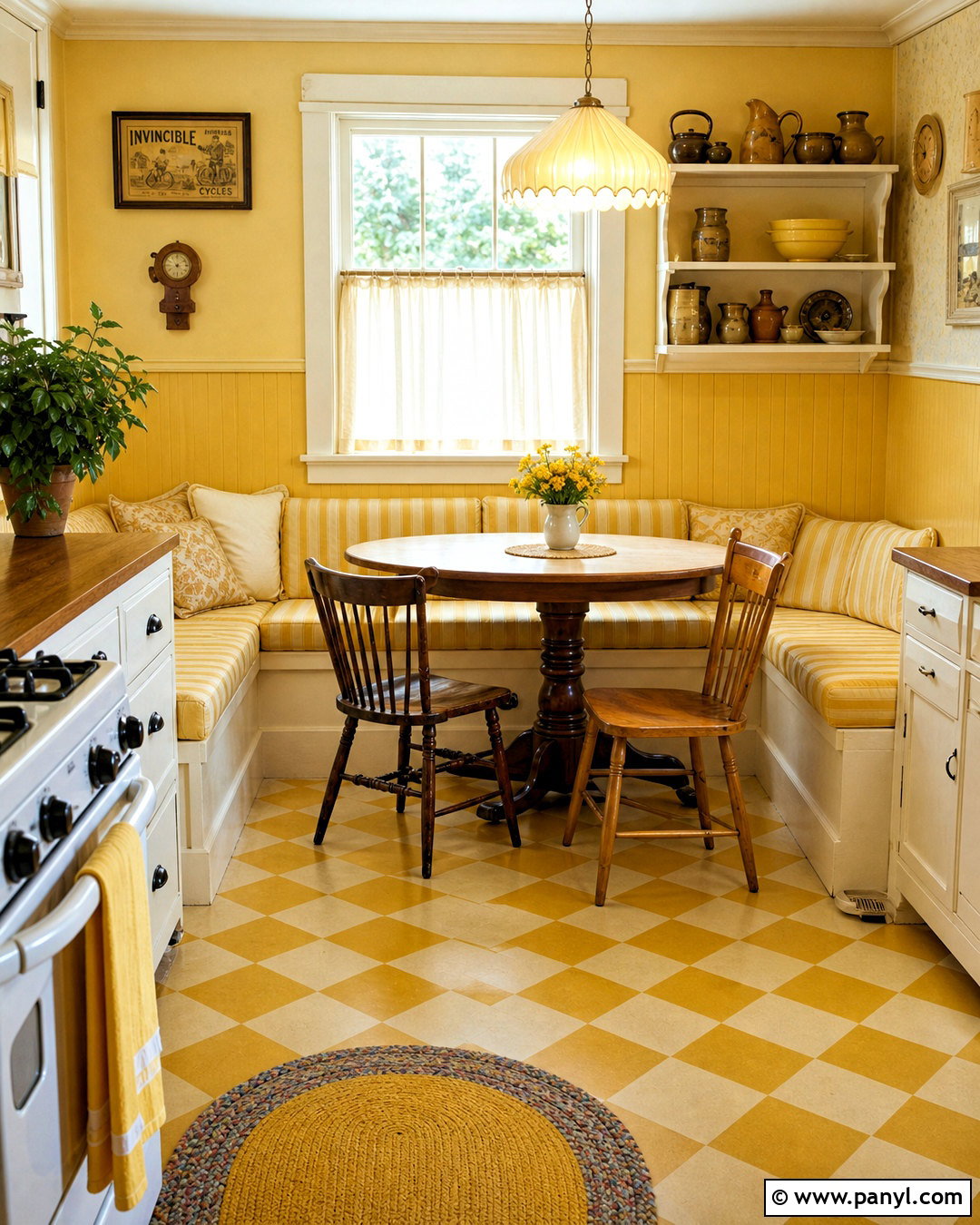
A dedicated breakfast nook can carry the yellow theme even when the main cabinets remain neutral. Paint the kitchen cabinets creamy white, then use golden-yellow beadboard around an L-shaped built-in bench. Add striped upholstery in yellow, cream, and muted brown for a durable vintage look. A round pedestal table improves movement through the corner and works well with one or two mismatched wood chairs. Continue the palette through pale yellow walls, oak counters, and a warm checkerboard linoleum floor. A scalloped pendant positioned above the table makes the nook feel distinct from the cooking area. Include a slim display shelf for pottery and a café curtain at the nearby window. The overall design creates an inviting everyday dining space without overwhelming the room with colored cabinetry.
19. Yellow Kitchen With Terracotta Floors
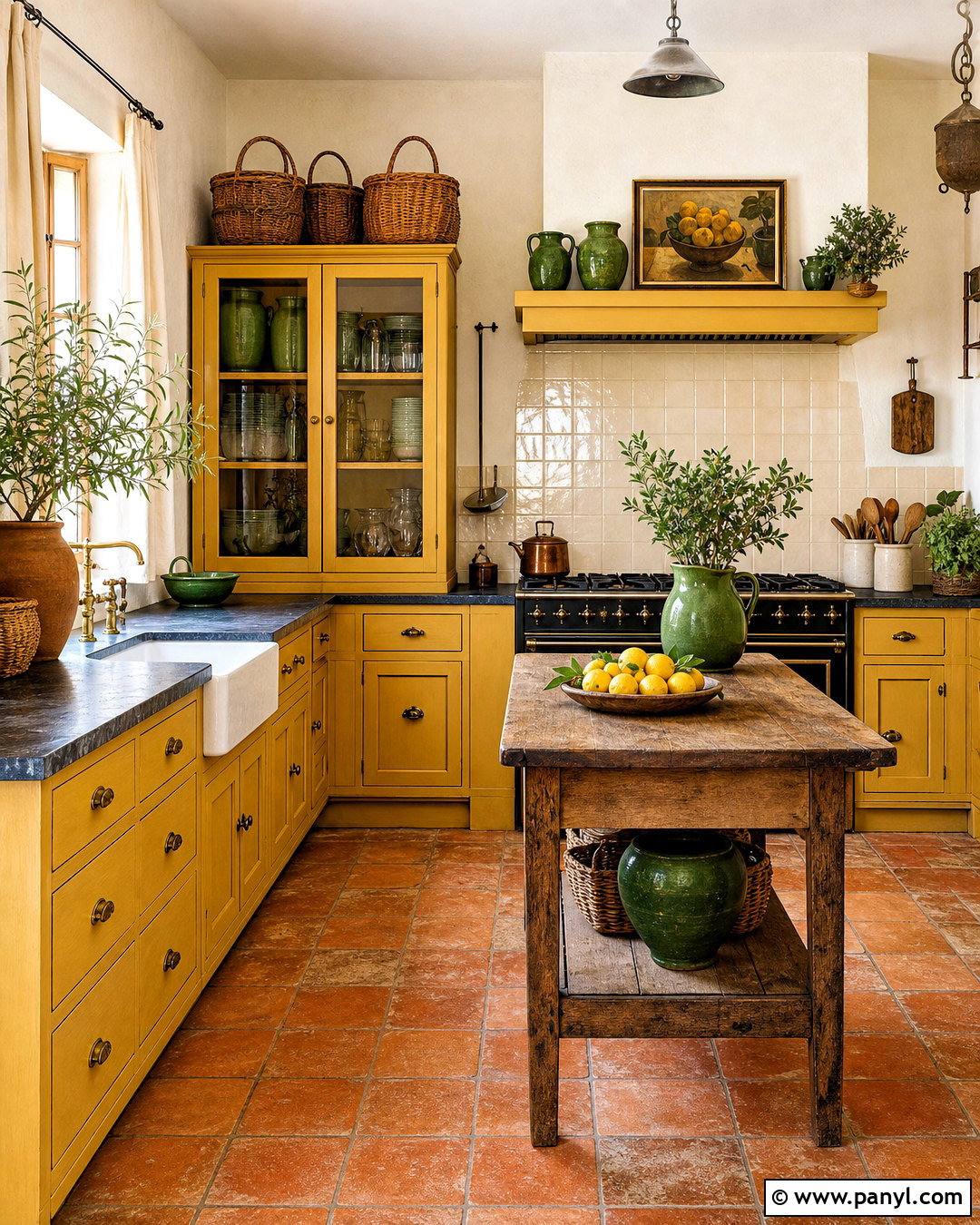
Terracotta flooring brings an earthy foundation to a golden-yellow kitchen. Select cabinets in a muted saffron shade and pair them with creamy plaster walls to create a warm, sun-washed atmosphere. Honed stone or dark wood countertops prevent the palette from appearing overly orange. Use simple inset cabinet doors with aged-brass latches and include a tall glass-front cupboard for visual variety. An ivory tiled backsplash and white farmhouse sink brighten the primary work area. In the center, place a worn wood table with open space underneath instead of a solid built-in island. Linen curtains, woven baskets, and green pottery introduce natural contrast. This complete scheme suits Spanish Revival, Mediterranean, and rustic cottage interiors while maintaining the familiar comfort of a vintage yellow kitchen.
20. Small Vintage Yellow Kitchen
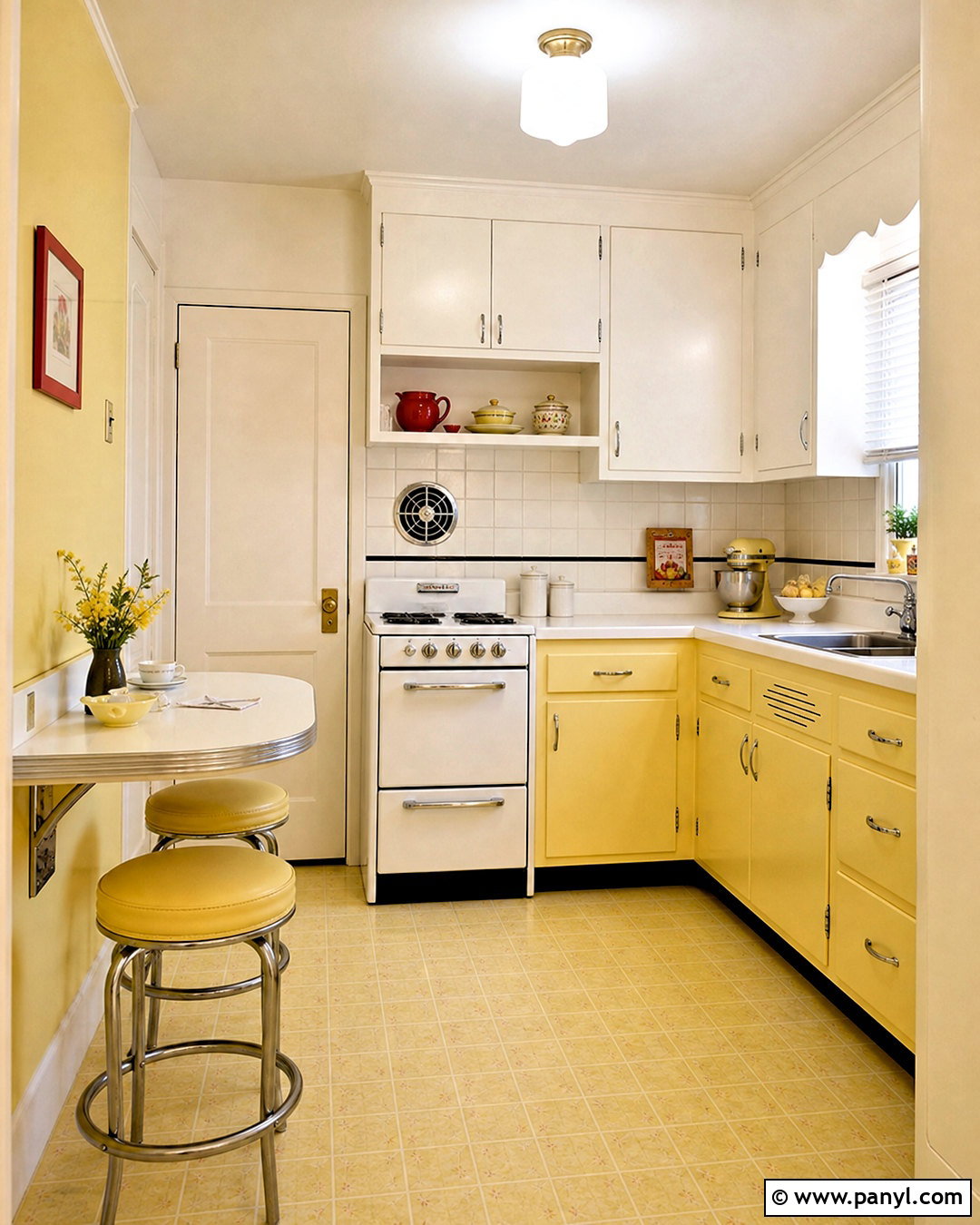
A small kitchen can handle yellow when the color is arranged with care. Paint the lower cabinets soft butter yellow and keep upper cabinets, walls, and ceilings warm white. This placement brings color into the room without making the upper half feel enclosed. Choose slim chrome hardware, white counters, and a glossy square-tile backsplash to reflect bright light. A pale yellow and cream linoleum floor creates subtle pattern without overwhelming the narrow layout. Use a compact white range and an under-counter refrigerator to preserve workspace. One open shelf can replace a crowded cabinet near the window. Complete the design with a folding wall table, two vintage stools, and a milk-glass ceiling fixture. The finished room feels efficient, cheerful, and convincingly nostalgic rather than cramped.
Conclusion:
The best vintage yellow kitchen ideas combine cheerful color with practical layouts and materials that feel connected to the home. Butter, lemon, mustard, ochre, and saffron each create a different mood, so test your chosen shade beside flooring, counters, and natural light before committing. For an authentic result, repeat yellow thoughtfully and support it with wood, cream, white, teal, green, blue, red, or black. Period-inspired lighting, hardware, appliances, flooring, and window treatments will make the design feel complete. You do not need to sacrifice modern storage or performance to achieve nostalgic character. Whether you update one surface or remodel the entire room, a coordinated plan will produce a warm, memorable kitchen.

Related Ideas and Inspiration:
Leave a Reply