
Retro design can make a room feel warm, playful, and personal without turning it into a time capsule. The best retro accent wall ideas borrow memorable colors, patterns, and materials from the 1950s through the 1980s, then balance them with cleaner contemporary furnishings. Think walnut paneling beside cream upholstery, groovy wallpaper behind a simple bed, or a painted arch framing a streamlined console. Choose one era as your starting point and repeat two or three wall colors elsewhere through rugs, pillows, lighting, or artwork. This creates a coordinated room rather than a wall that feels disconnected. Whether you prefer earthy 1970s tones, energetic mod patterns, or pastel Memphis influences, these complete room looks offer practical inspiration. Explore the following 20 retro accent wall ideas.

1. 1970s Geometric Wallpaper Accent Wall
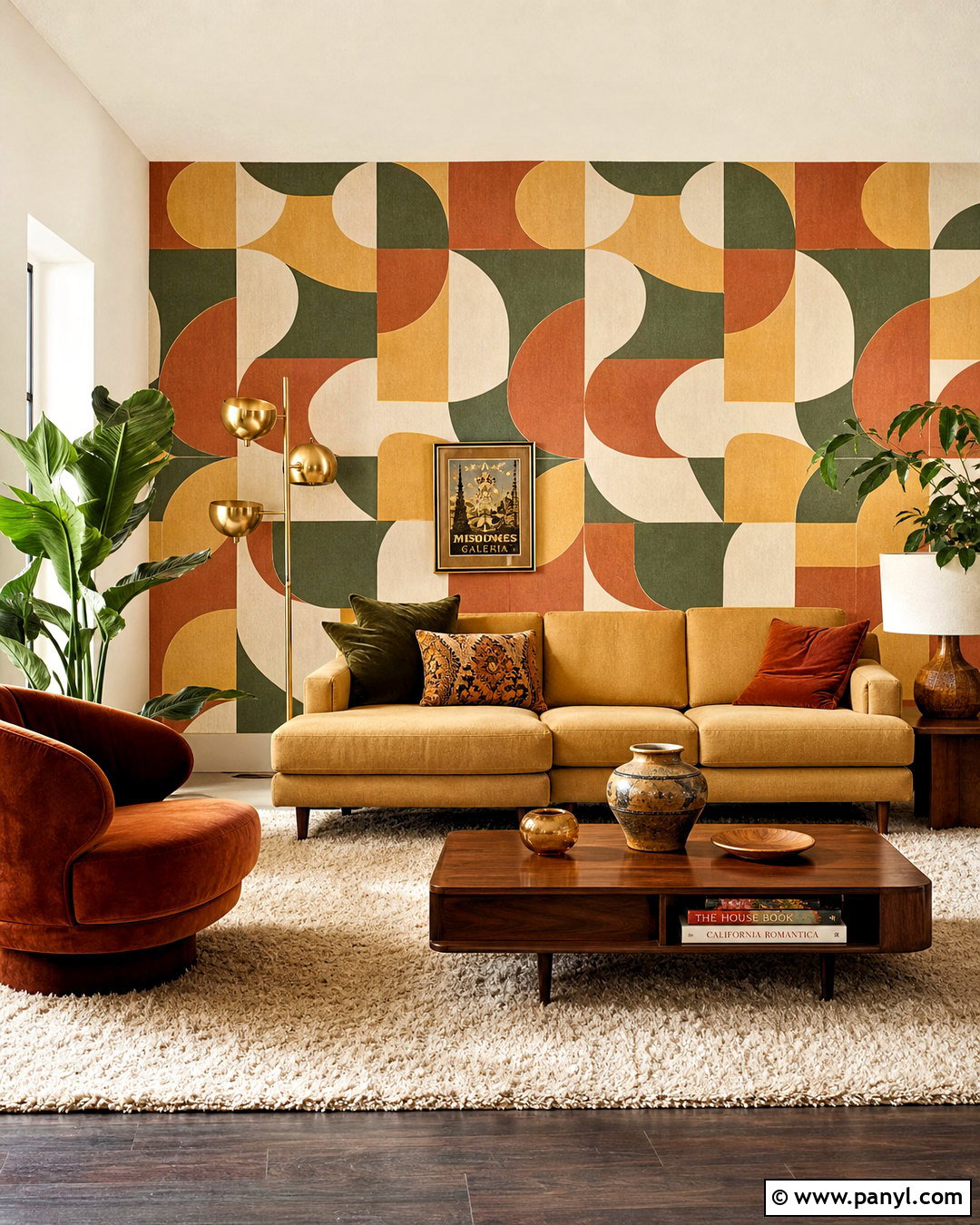
Large geometric wallpaper can give a living room an unmistakable 1970s character while still feeling polished. Cover the wall behind a low-profile sofa with an interlocking pattern in burnt orange, mustard yellow, olive green, and warm cream. Keep the remaining walls soft ivory so the room stays bright. Add a camel-colored sofa, a walnut coffee table, and one rust velvet chair with rounded edges. A neutral shag rug softens the bold print without competing with it. Choose brass or smoked-glass lighting for another period-appropriate detail. Limit smaller accessories to pottery, books, and a few leafy plants. Repeating the wallpaper’s orange and green in small doses throughout the room connects every element into one confident, comfortable design.
2. Walnut Wood Panel Accent Wall
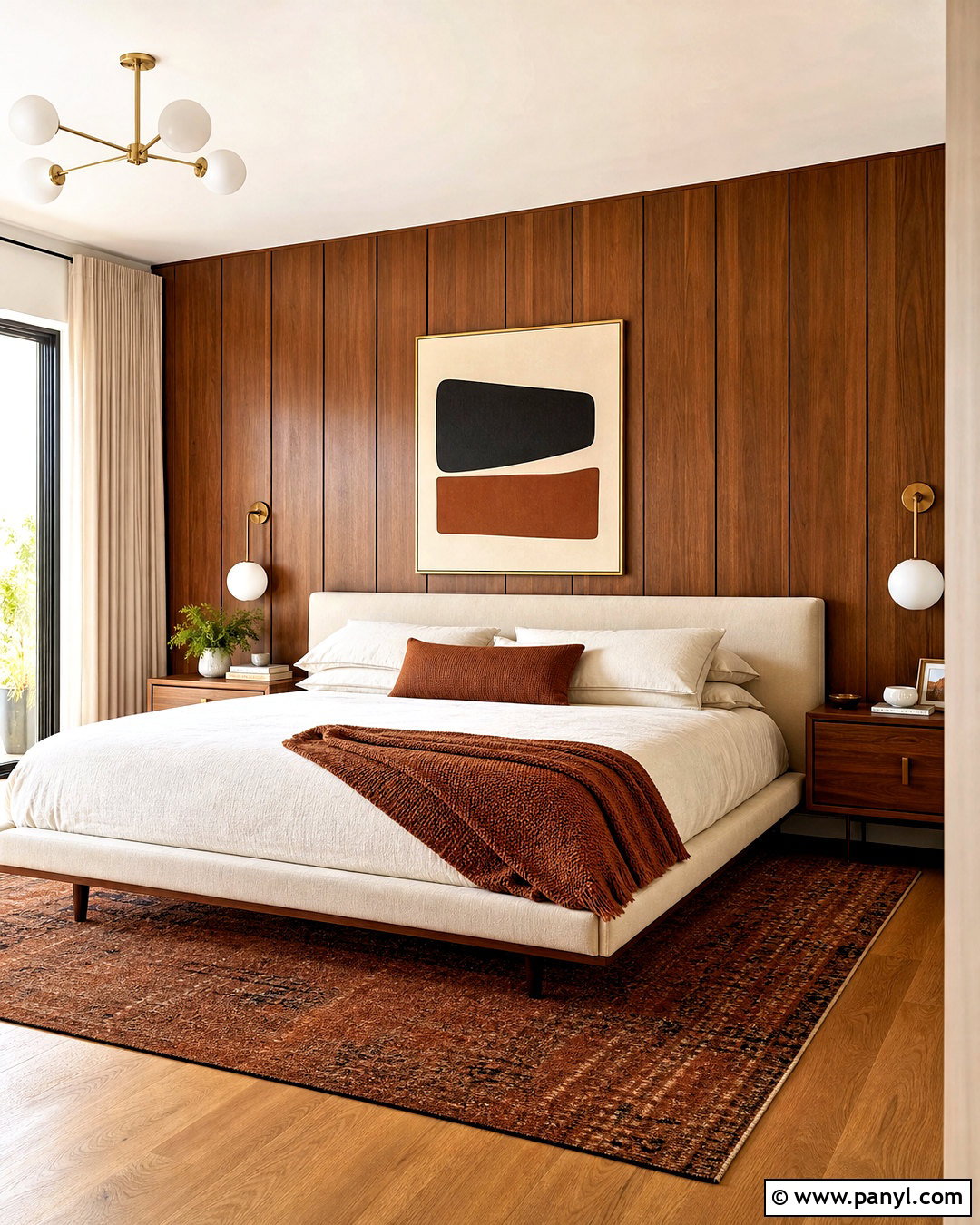
The rich grain of walnut brings instant warmth to a mid-century living room or bedroom. Install flat walnut veneer panels vertically across one focal wall, using narrow seams to create a clean architectural rhythm. Place a cream boucle sofa or an upholstered platform bed against the wood, depending on the room. Surround the wall with warm white paint and medium oak flooring to prevent the darker finish from feeling heavy. A rust-colored rug, olive textiles, and brushed brass lighting complement the walnut’s natural brown tones. Keep artwork minimal so the grain remains visible. One oversized abstract print or a round starburst mirror is enough. Finish the look with tapered furniture legs and simple linen curtains for a retro room that feels authentic but refreshed.
3. Mustard Yellow Color Block Accent Wall
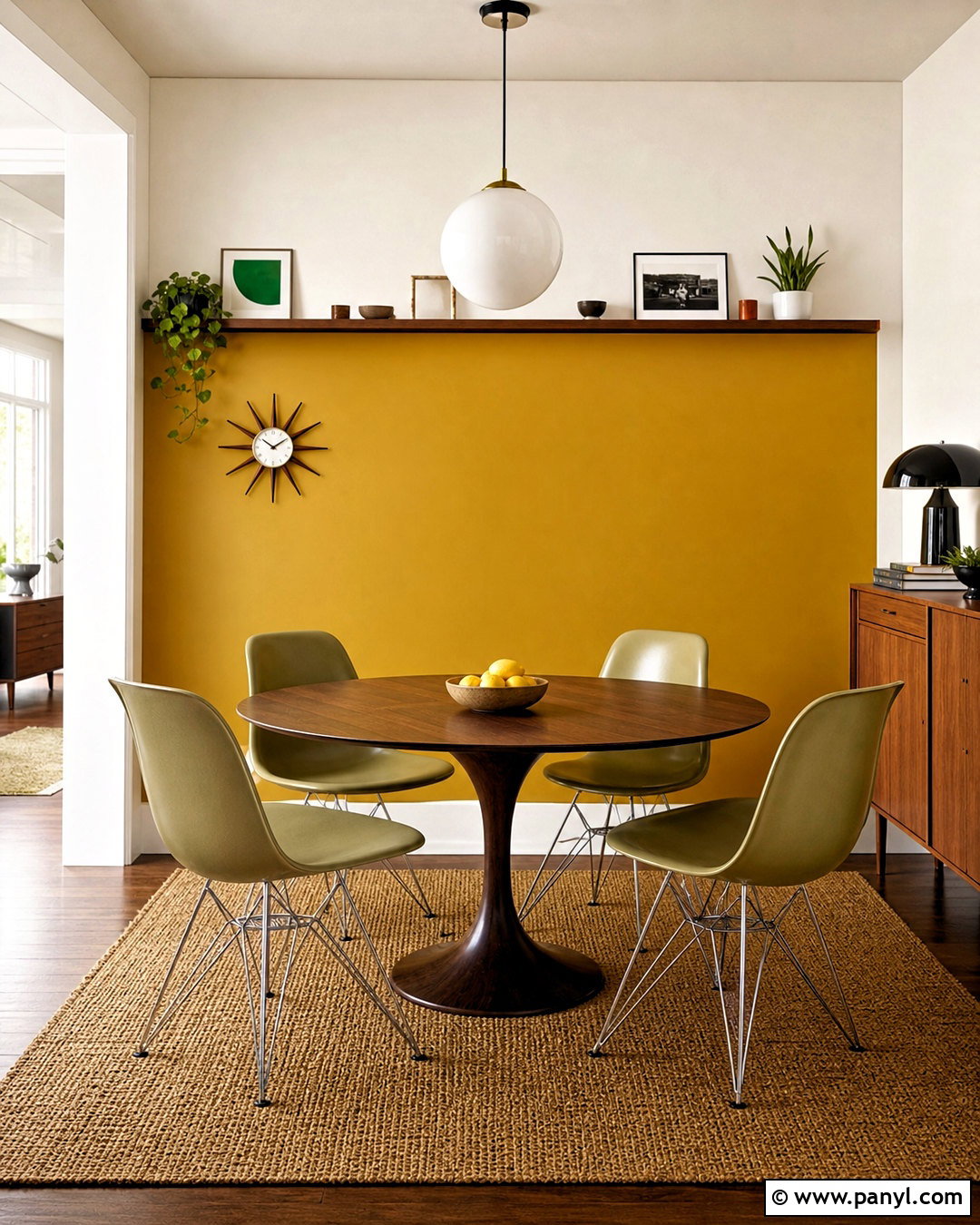
Mustard yellow creates a cheerful retro focal point when used in a thoughtful color-blocked design. Paint the lower two-thirds of a dining room wall mustard, leaving the upper section warm white. Separate the colors with a narrow walnut picture ledge that can hold small framed prints and ceramic pieces. Center a round dark-wood dining table against the wall and surround it with molded chairs in cream or muted olive. A globe pendant with an opal glass shade reinforces the mid-century mood. Bring in a flat-weave rug featuring tan, brown, and yellow details. Because mustard is visually strong, keep the other walls and window treatments light. The finished dining space feels sunny, grounded, and distinctly retro without relying on a complicated mural or expensive wallpaper.
4. Avocado Green Accent Wall
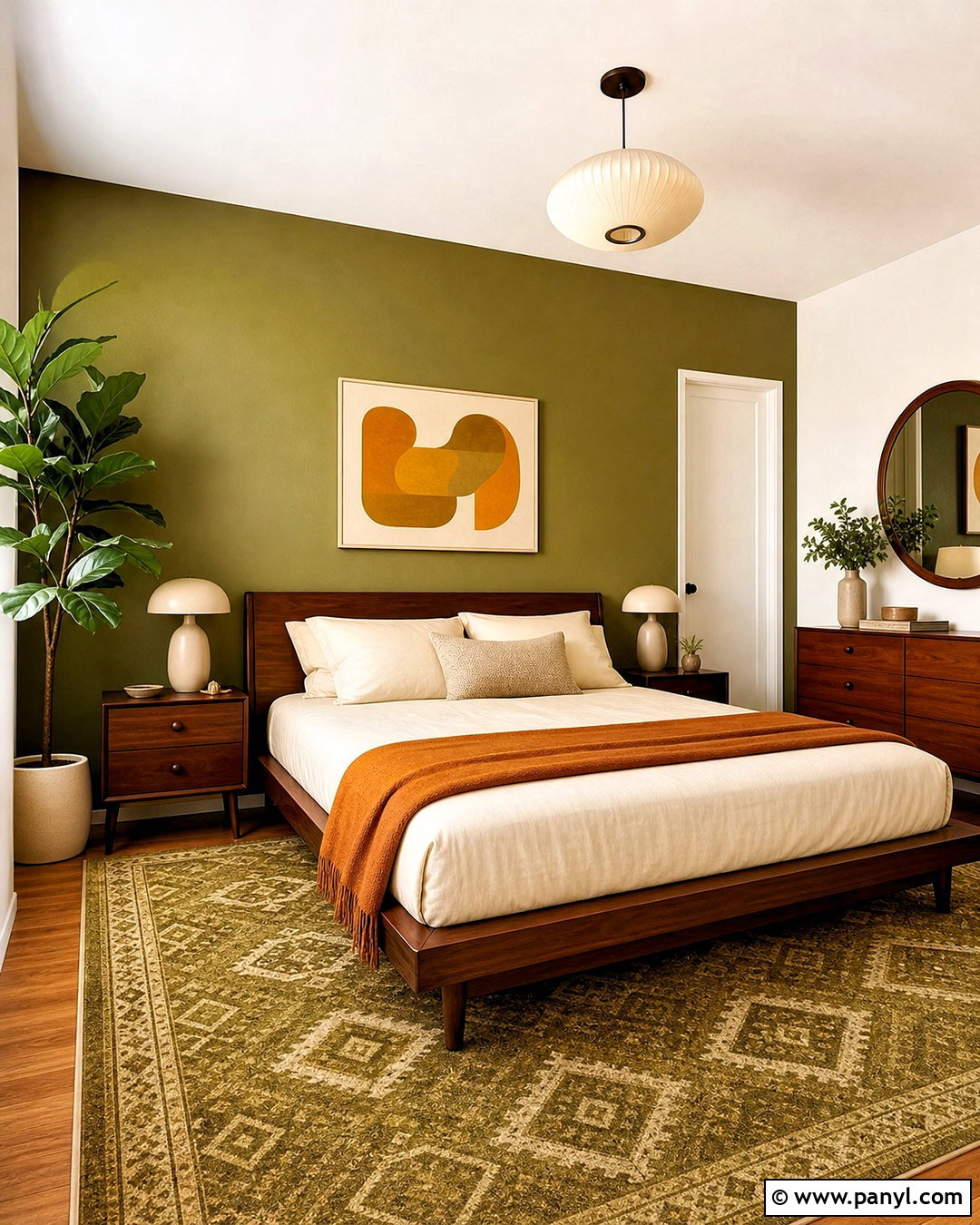
Avocado green feels more sophisticated when paired with natural wood, creamy neutrals, and restrained vintage details. Use the color on the wall behind a bedroom headboard, choosing a warm, slightly muted shade rather than a bright lime green. Add a walnut platform bed with simple lines, crisp ivory bedding, and a textured caramel throw. Matching wooden nightstands and mushroom-shaped lamps create symmetry without making the room rigid. Hang one wide abstract artwork featuring cream, ochre, and chocolate brown above the bed. A patterned rug with small olive and rust accents ties the palette together. Keep the ceiling, trim, and remaining walls soft white. The combination captures the earthiness of 1970s interiors while maintaining the calm atmosphere expected in a modern bedroom.
5. Burnt Orange Arch Accent Wall
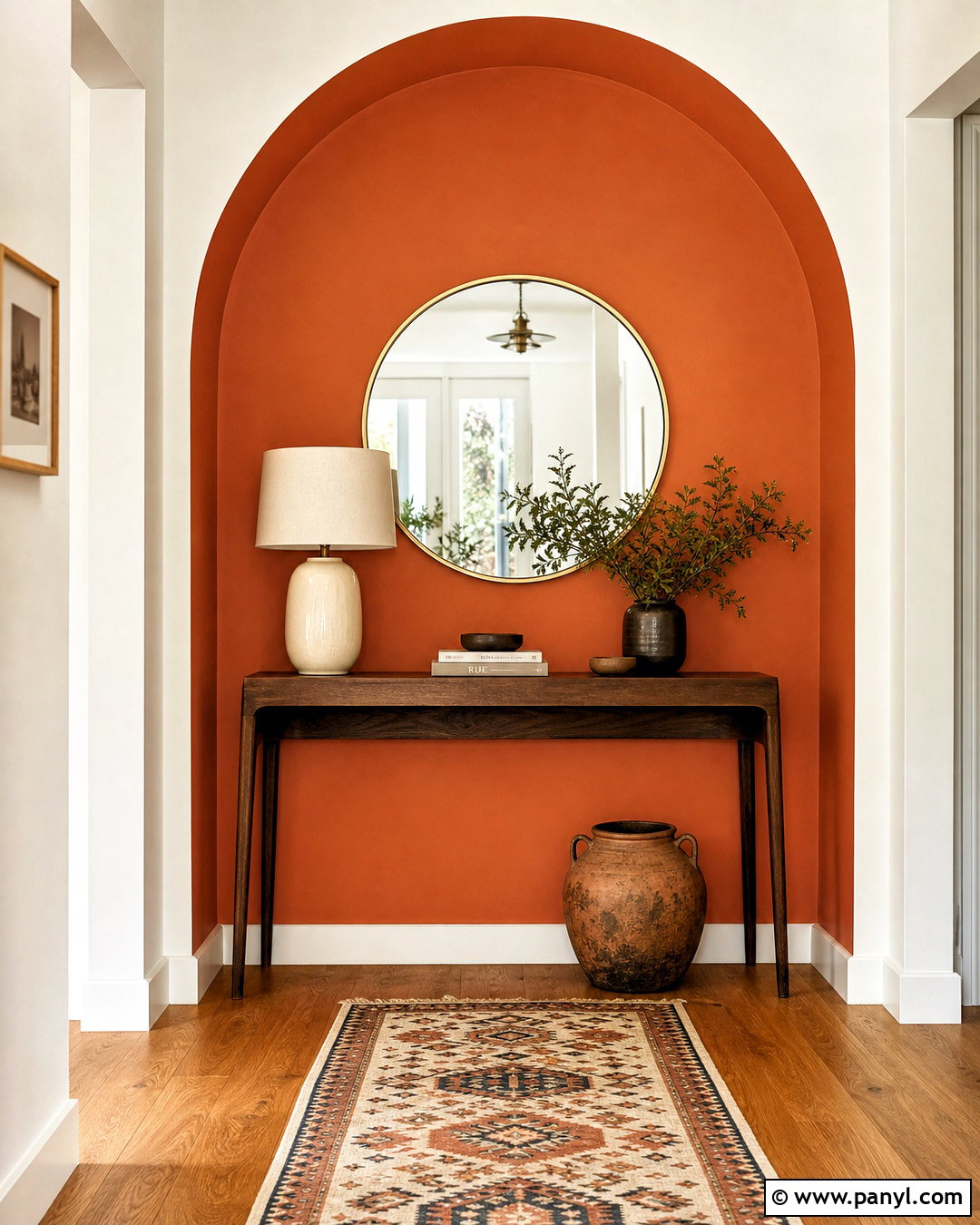
A painted arch is an easy way to introduce retro color while visually framing furniture. Create a wide burnt orange arch behind an entryway console, reading chair, or bedroom headboard. Make the arch tall enough to surround the full arrangement rather than appearing like a small decorative patch. Pair it with warm white walls and honey-toned wood flooring. A slim walnut console, round brass mirror, and ceramic table lamp complete an entryway version. For a reading corner, use a tan leather chair, an arc floor lamp, and a small round side table. Repeat orange through one cushion or patterned runner. Clean edges are essential, so measure carefully and use painter’s tape for the vertical lines before drawing and painting the curved upper section.
6. Retro Rainbow Stripe Accent Wall
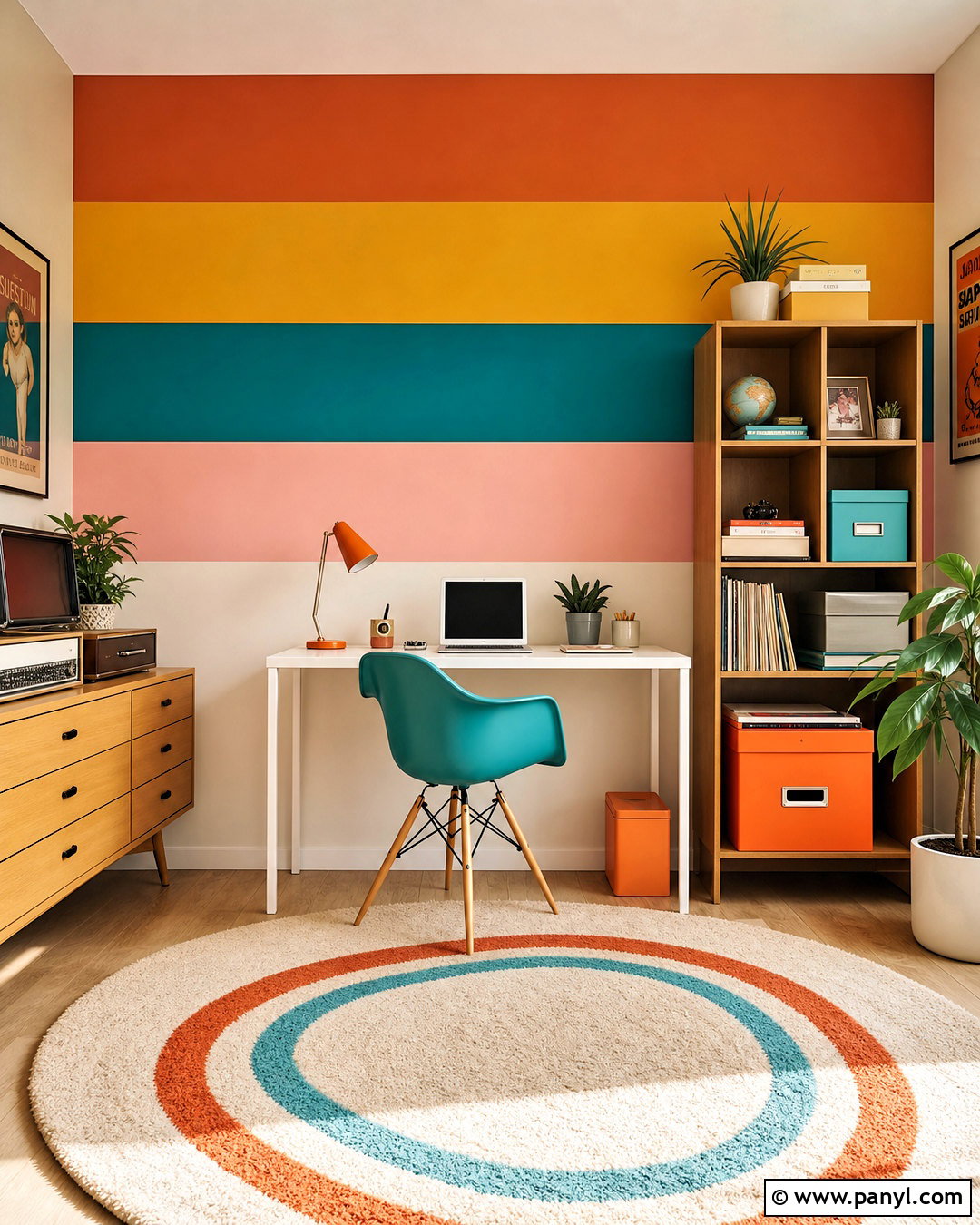
Horizontal stripes can turn a plain playroom, office, or bedroom into a lively retro space. Paint broad bands of rust, mustard, teal, blush pink, and cream across one wall, keeping each stripe equal in width for a tidy finish. Choose slightly softened colors rather than highly saturated primary tones. Place a simple white desk or low oak storage unit against the striped wall so the pattern remains the focal point. Add a molded desk chair, a round wool rug, and storage boxes that repeat two of the stripe colors. The other walls should remain creamy white, while light curtains prevent the room from looking busy. This complete scheme delivers nostalgic rainbow energy but still feels organized, practical, and suitable for an everyday family home.
7. Mid-Century Wood Slat Accent Wall
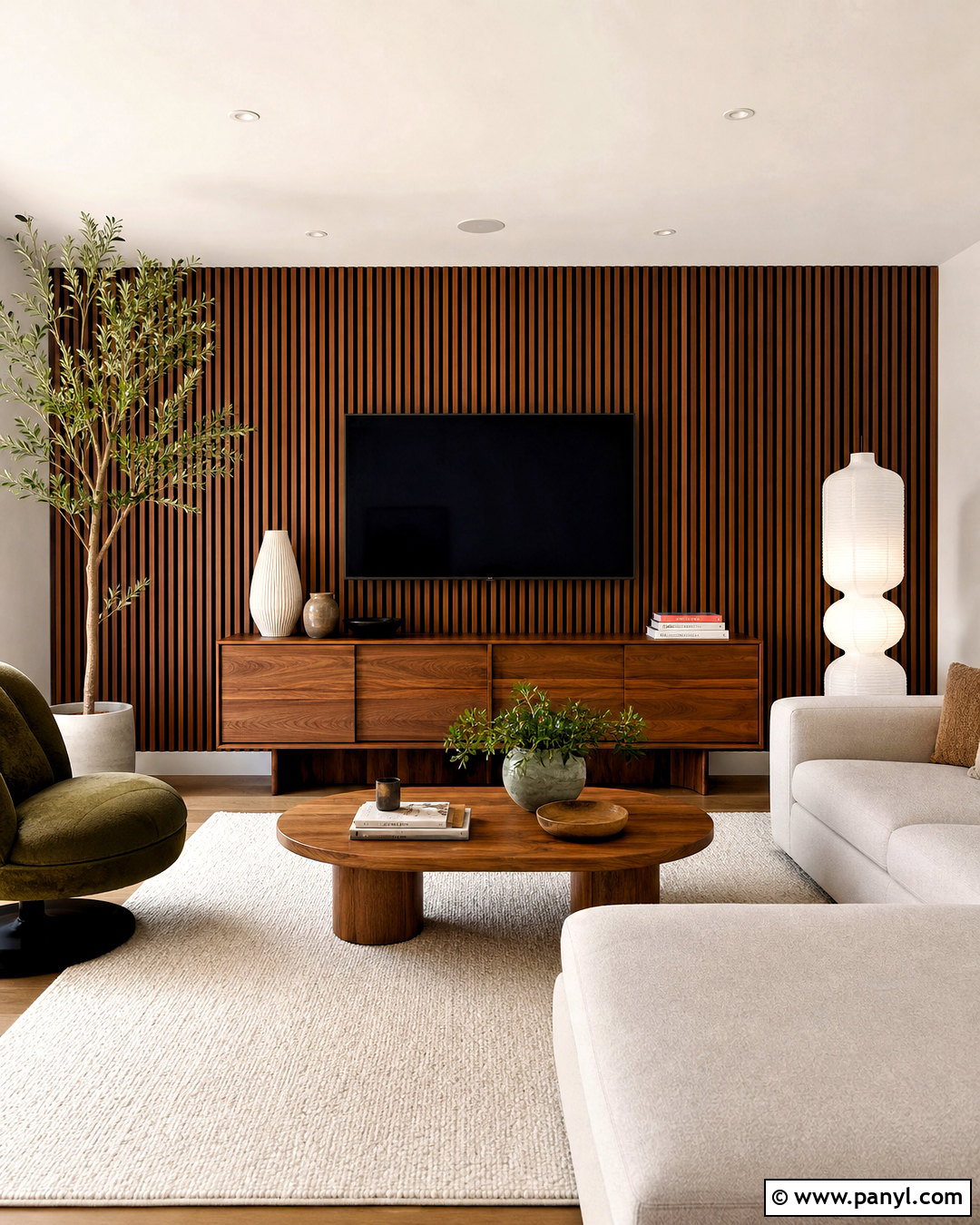
Vertical wood slats provide retro texture without covering the room in solid dark paneling. Install evenly spaced walnut or teak slats over a matte black or deep brown backing on the wall behind a television or living room sofa. The dark gaps emphasize the linear pattern and help conceal cords when the wall is used for media. Balance the wood with a light oatmeal sectional, a cream rug, and a low oval coffee table. Add one olive lounge chair and a sculptural white floor lamp for contrast. Keep nearby decor uncluttered, using a few ceramic objects and a tall indoor plant. The repeated vertical lines visually heighten the room, while the restrained palette gives classic mid-century materials a sharper, more contemporary appearance.
8. Terrazzo Wallpaper Accent Wall
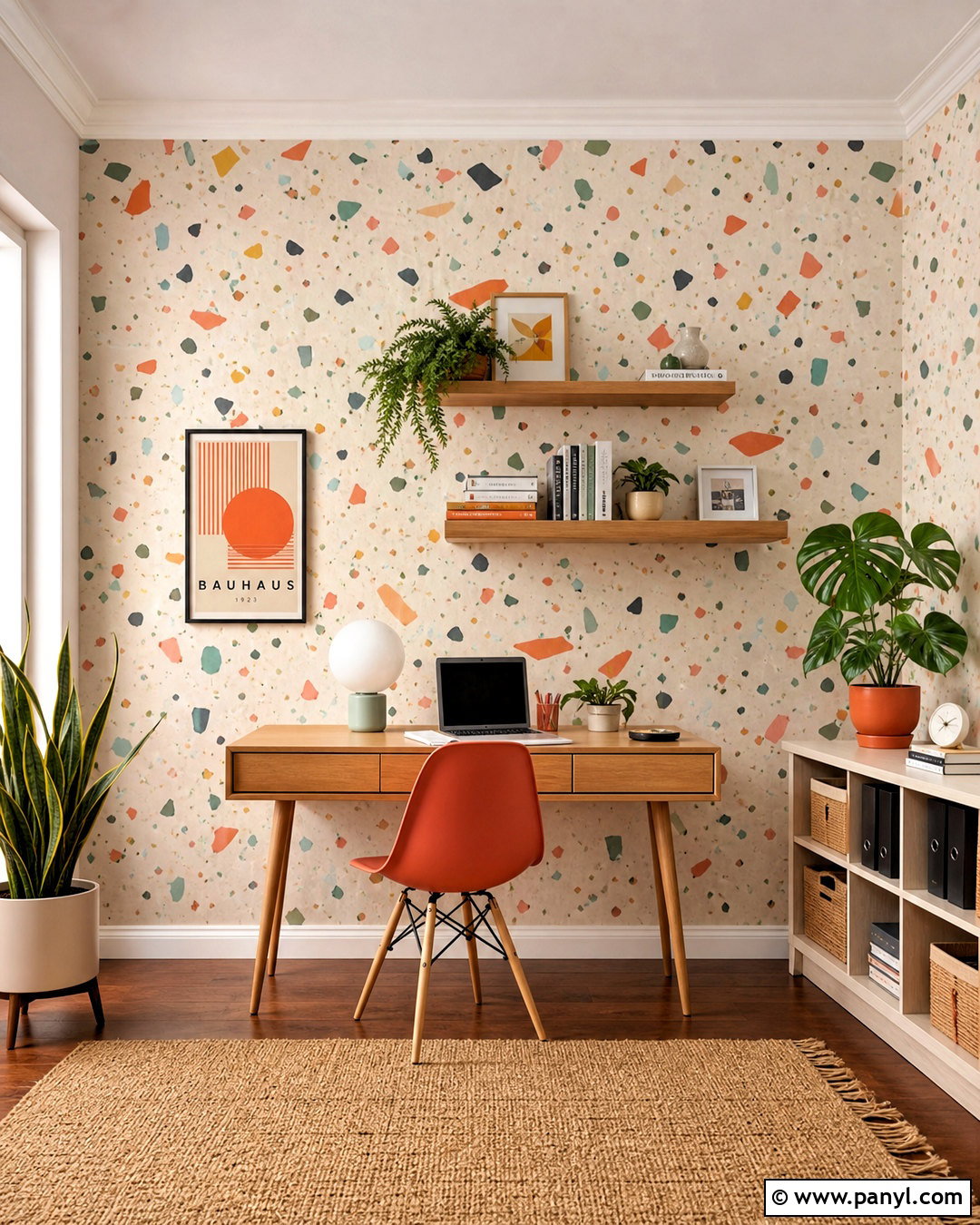
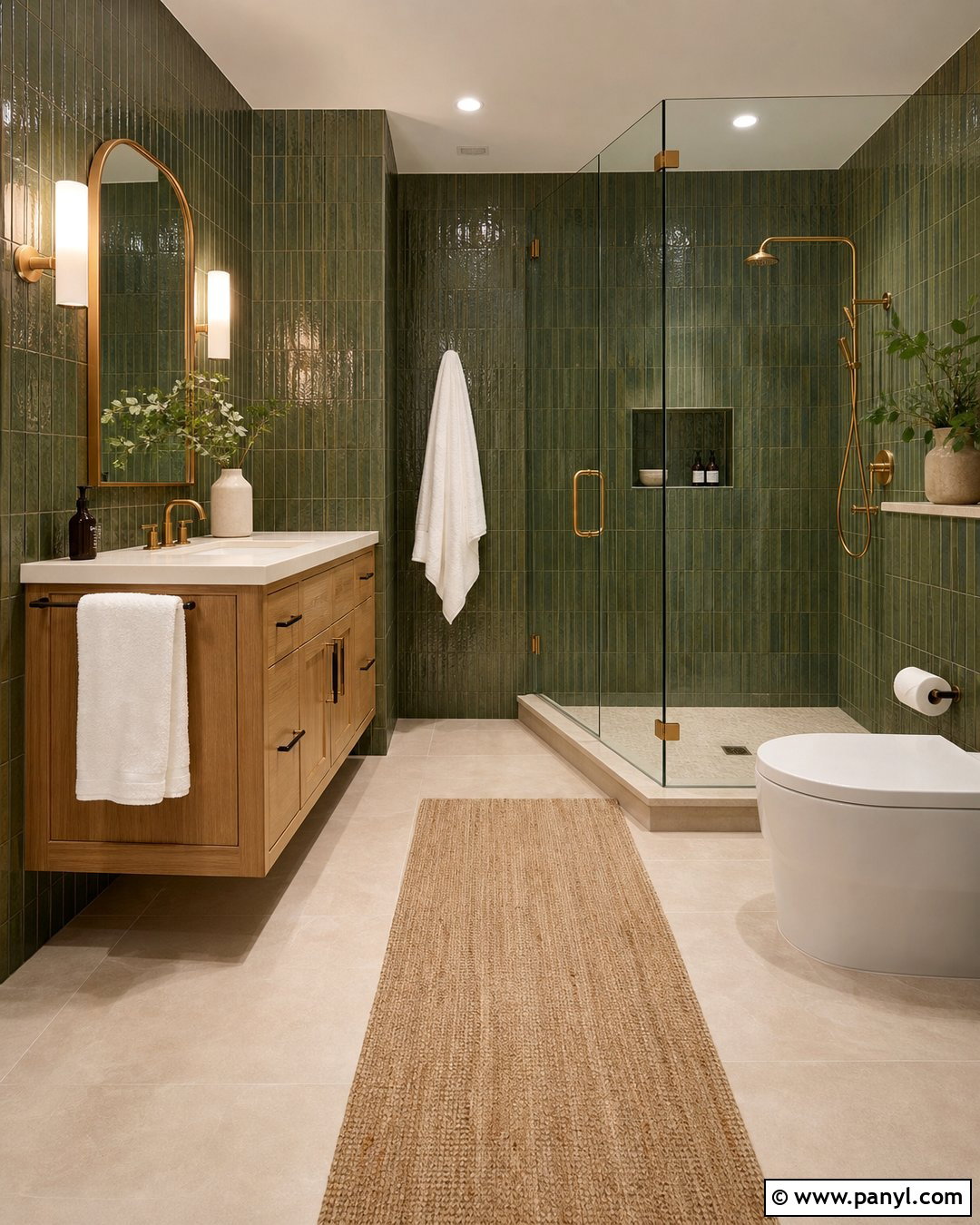
Terrazzo wallpaper offers a playful alternative to traditional geometric prints. Select a warm cream background scattered with oversized fragments in coral, mustard, sage green, pale blue, and charcoal. Apply it behind a home office desk or bathroom vanity, where the smaller wall area keeps the energetic pattern manageable. In an office, pair it with a pale oak desk, coral chair, and white globe lamp. In a bathroom, use a walnut vanity, rounded mirror, and brushed brass fixtures. Keep the floor and surrounding walls simple, preferably in warm white or light beige. Avoid adding several competing patterns. Solid towels, storage containers, and window coverings let the terrazzo effect stand out. The completed space feels retro, creative, and fresh rather than overly themed.
9. Black And White Checkerboard Accent Wall
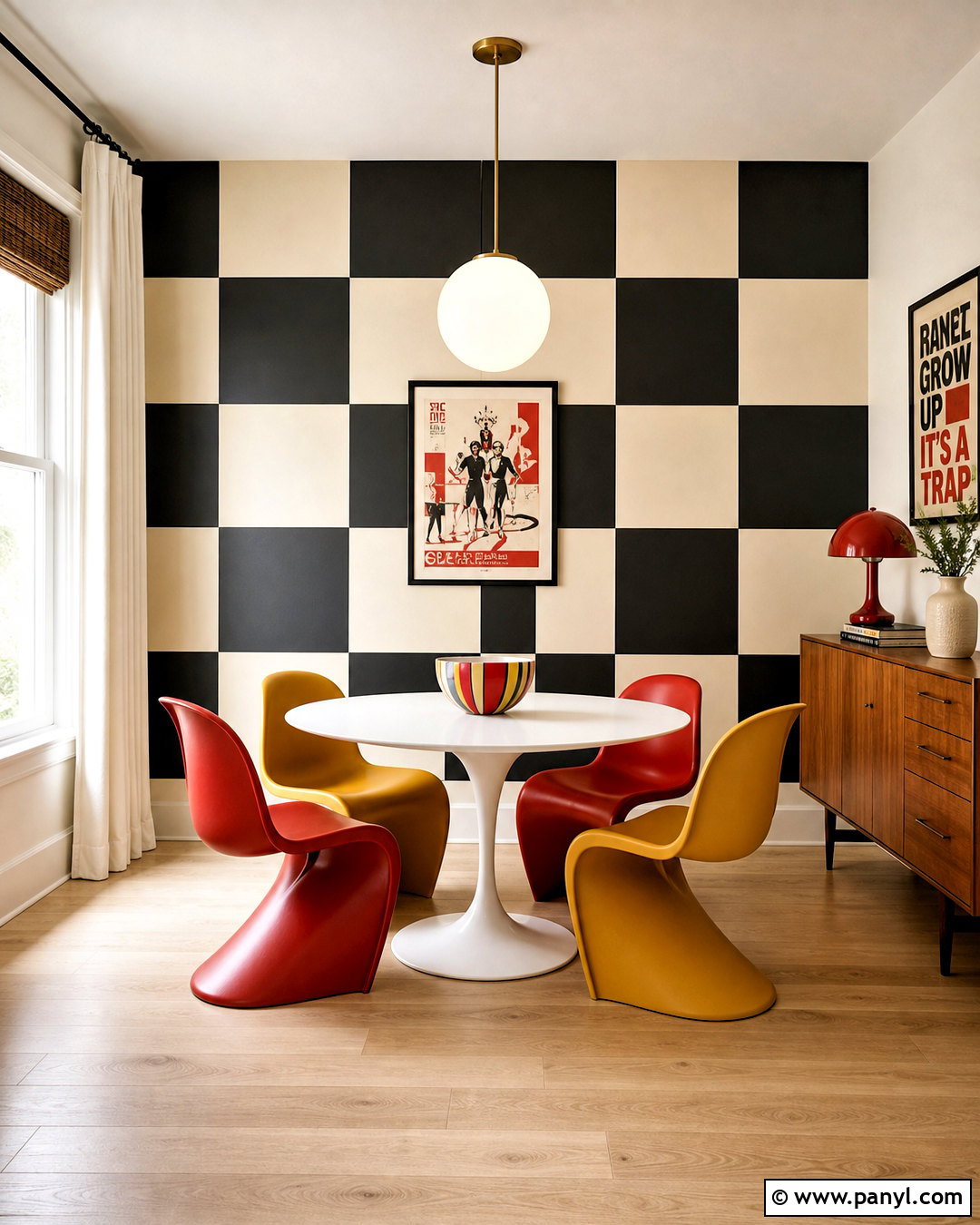
A checkerboard wall creates graphic retro impact and works especially well in a breakfast nook or creative studio. Use large matte black and warm white squares rather than tiny tiles, which can make the wall appear overly busy. Position a round tulip table against the pattern and add curved dining chairs in red, yellow, or cobalt blue. A simple globe pendant keeps the space crisp while reinforcing the vintage influence. Choose pale wood or neutral flooring to soften the high-contrast wall. If a full checkerboard feels overwhelming, cover only the area above a low black sideboard and paint the lower wall white. Limit accessories to a colorful fruit bowl, one ceramic vase, and plain curtains. The finished nook feels bold, upbeat, and carefully controlled.
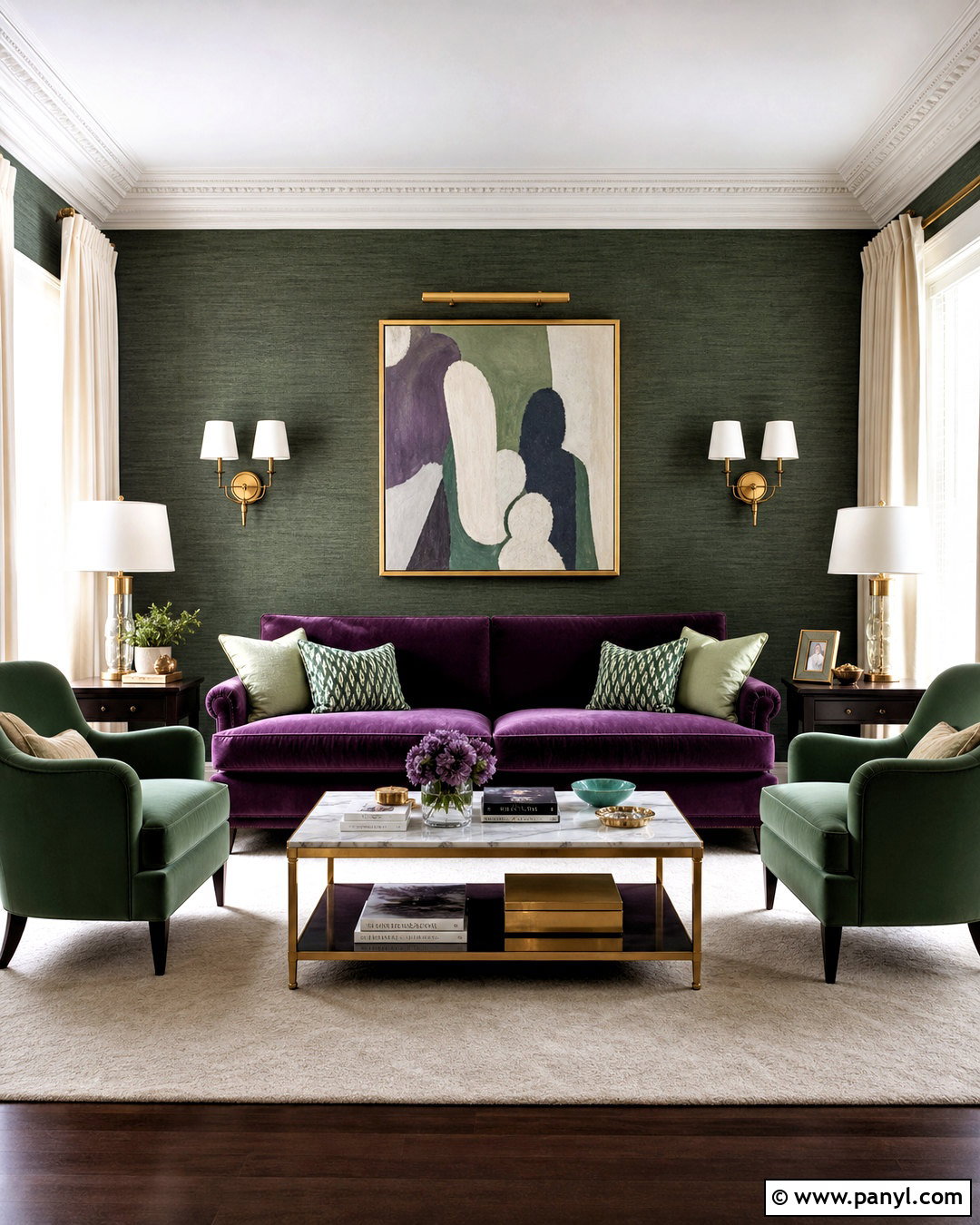
10. Atomic Starburst Accent Wall
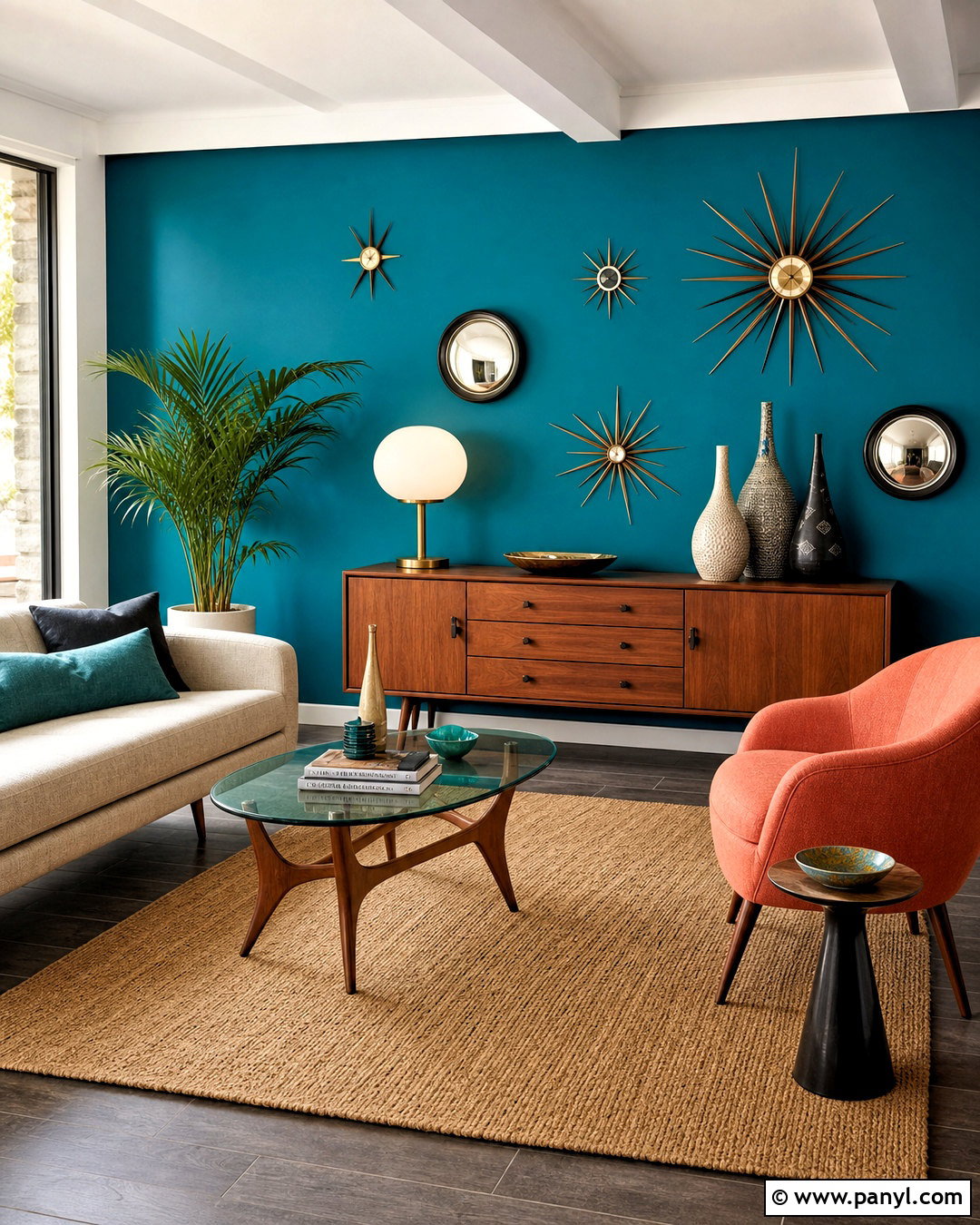
Atomic motifs capture the optimistic energy associated with 1950s design. Start with a deep turquoise accent wall in a dining room or living room, then arrange metallic starbursts and small circular mirrors across it in a loose, balanced composition. Mix brass, black, and warm wood finishes, but leave generous open space between pieces. Place a streamlined walnut credenza beneath the display and style it with two ceramic vases and an opal glass lamp. Cream walls, a tan rug, and charcoal seating provide a calm foundation for the dramatic focal wall. One coral or mustard chair can supply a brighter period color. By combining dimensional wall decor with practical mid-century furniture, the room feels nostalgic and energetic without looking like a themed commercial display.
11. 1960s Mod Circle Wallpaper Accent Wall
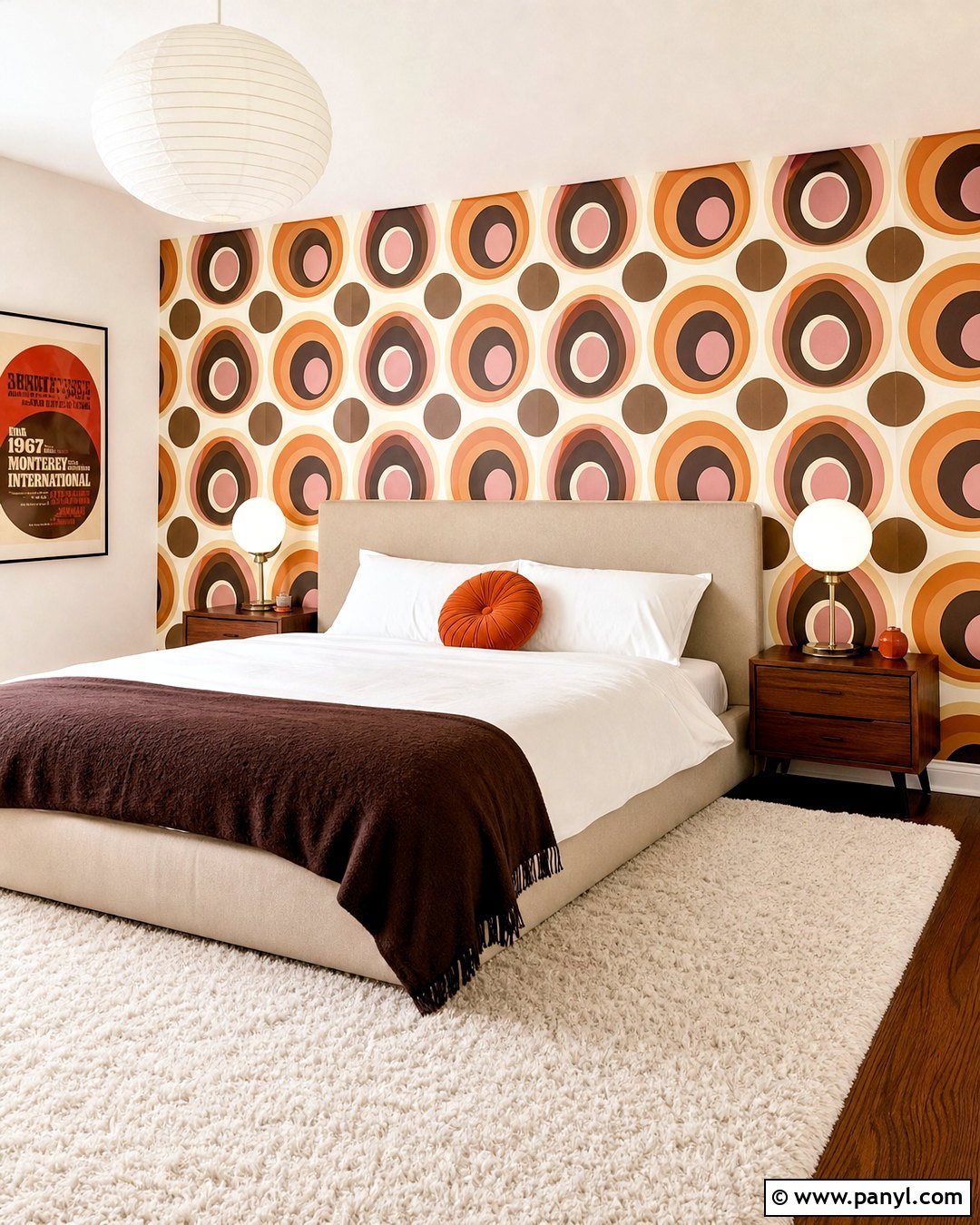
Bring 1960s mod style into a bedroom with repeating circular wallpaper in orange, chocolate brown, cream, and muted pink. Use the pattern behind the bed and paint every other wall a soft warm white. Choose a low upholstered headboard in solid beige so it does not disappear against the busy print. Walnut nightstands, globe lamps, and simple white bedding maintain a balanced composition. Add a chocolate brown throw and one round orange cushion to echo the wallpaper. A cream rug with a subtle curved pattern can continue the theme without creating visual competition. Avoid filling the focal wall with numerous pictures. One small brass sunburst above each nightstand is sufficient. The result feels playful and recognizably mod while remaining restful enough for a comfortable bedroom.
12. Retro Floral Wallpaper Accent Wall
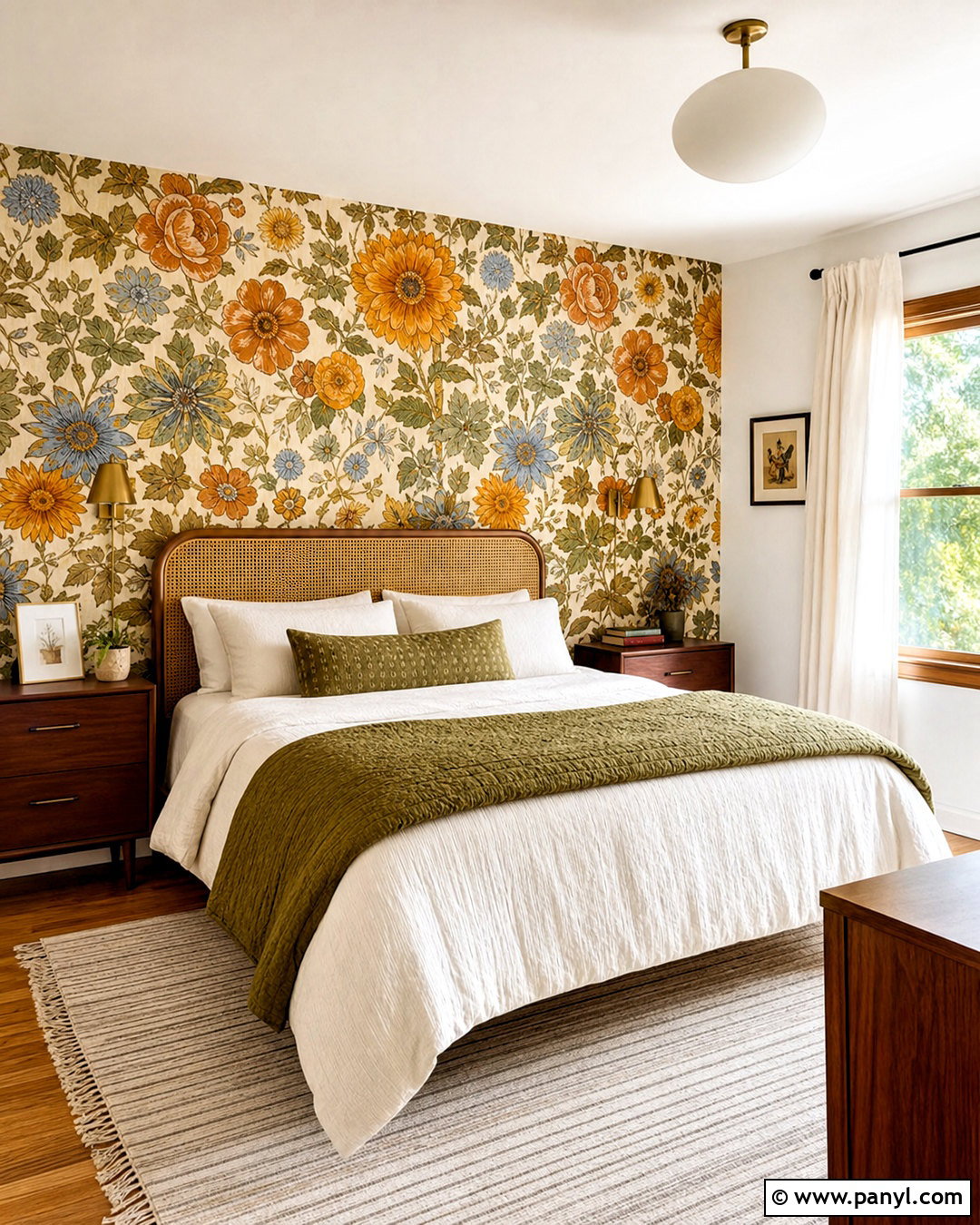
Oversized floral wallpaper can give a guest bedroom or powder room a welcoming vintage personality. Look for a warm cream background with stylized flowers in golden yellow, rust, olive green, and dusty blue. In a bedroom, position the wallpaper behind a cane or walnut headboard and use solid ivory bedding with an olive quilt. Add small brass sconces and natural linen curtains to keep the look relaxed. In a powder room, combine the wallpaper with a compact walnut vanity, cream countertop, and rounded brass mirror. Paint the other walls in a color pulled from the wallpaper’s lightest tone. Restrict additional patterns to one subtle striped rug or hand towel. This controlled approach allows the floral wall to feel expressive without overwhelming the entire space.
13. Cork Tile Accent Wall
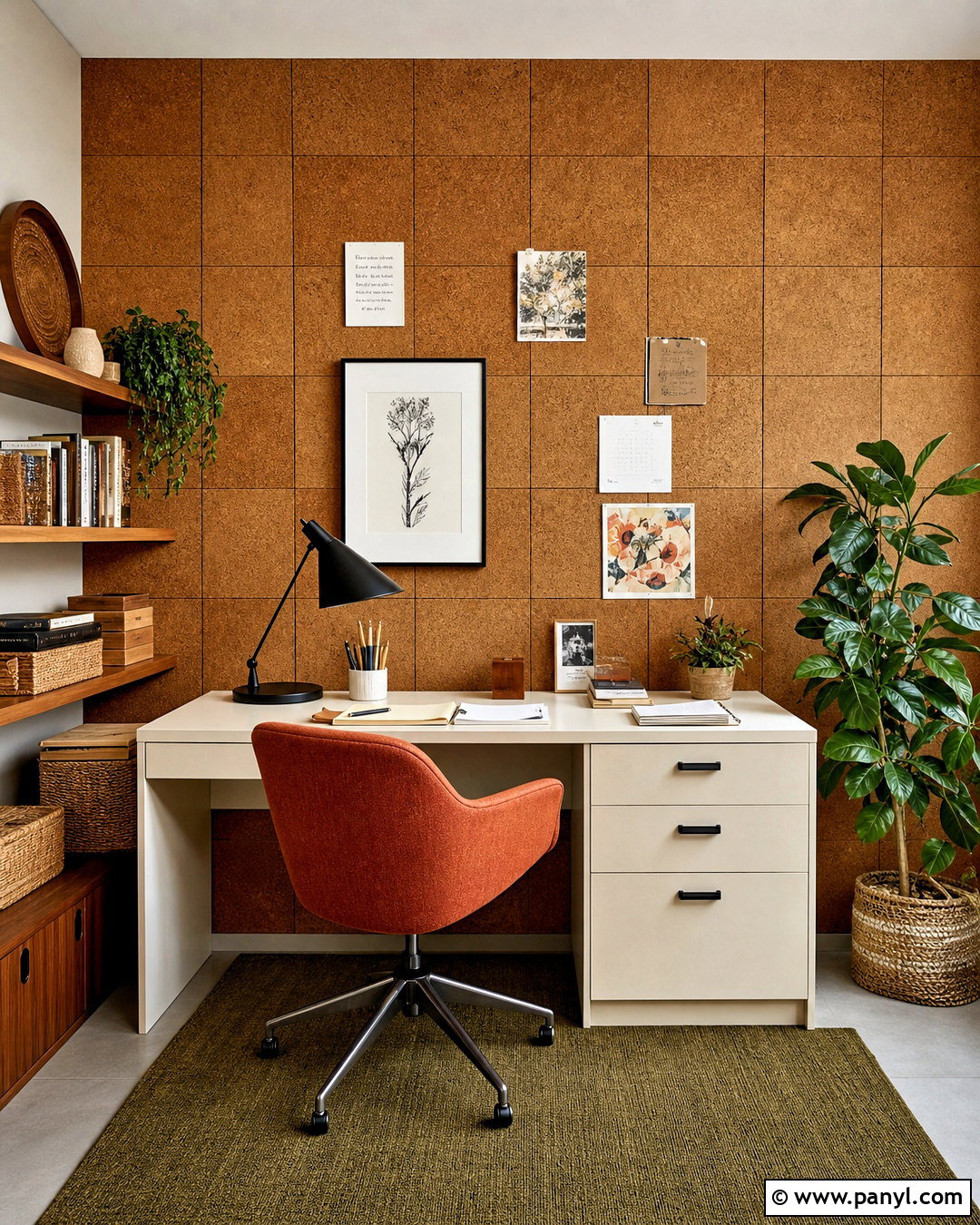
Cork tiles create a tactile accent wall with an earthy 1970s quality and practical everyday appeal. Cover the wall behind a home office desk with square cork tiles arranged in a clean grid. Choose natural medium-brown cork with visible variation rather than a heavily stained finish. Add a simple cream desk, a rust upholstered chair, and wall-mounted walnut shelves. The cork can hold a small, curated collection of artwork, notes, and photographs, but leave most of the surface exposed. Ground the room with an olive flat-weave rug and warm white walls. A cone-shaped black desk lamp introduces sharper contrast. Natural baskets and a leafy plant complete the workspace. The result is functional, warm, and retro, with enough simplicity to support concentration and organization.
14. Painted Geometric Mural Accent Wall
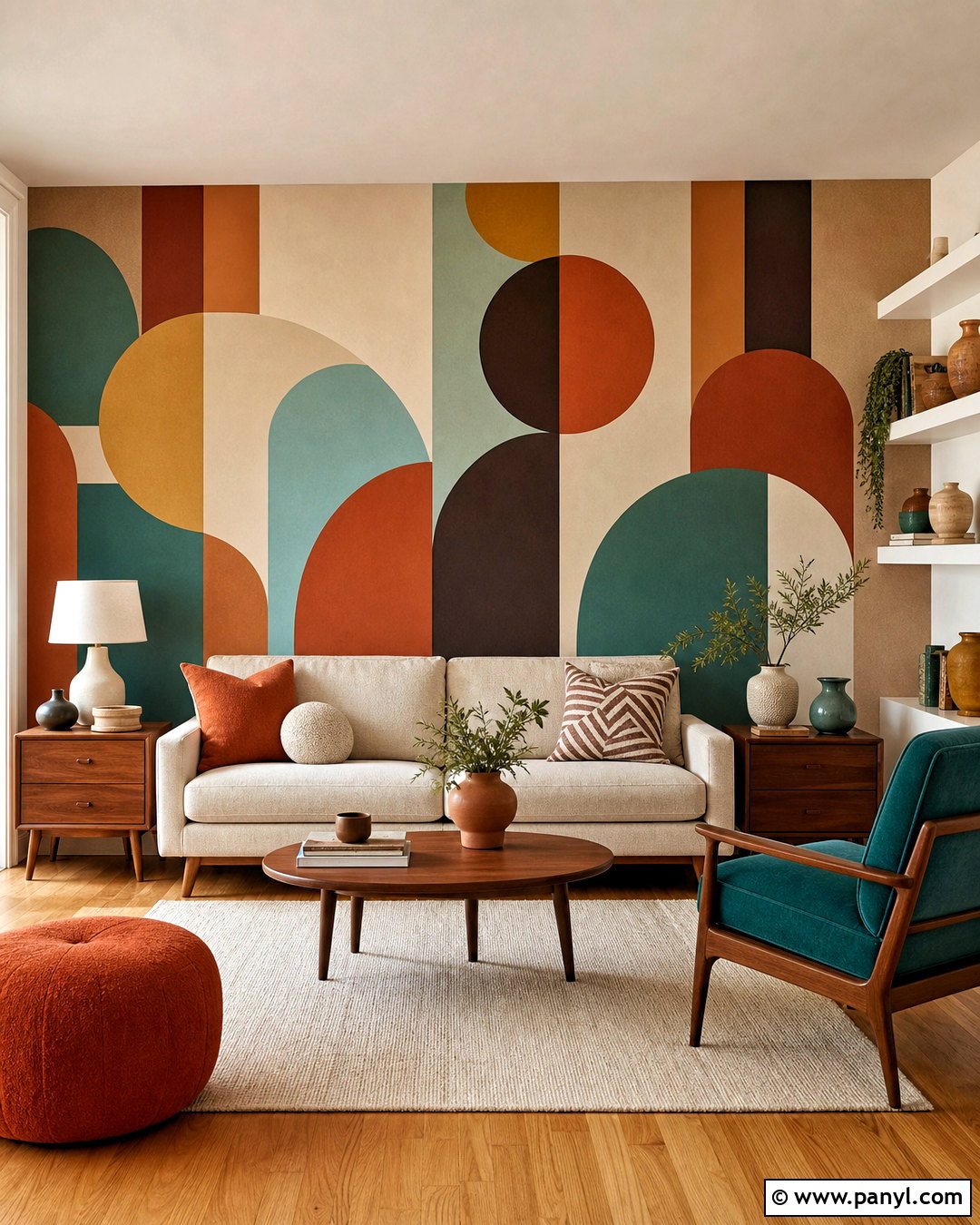
A painted geometric mural allows you to customize a retro palette to suit the room. Design overlapping circles, arches, and rectangles in terracotta, ochre, dusty teal, cream, and dark brown. Place the largest shapes behind the sofa so they frame the furniture and remain visible above it. Choose a neutral oatmeal sofa, walnut side tables, and a cream rug to keep the mural in control. Add one teal chair or rust ottoman to repeat its colors. Use a level, string, and painter’s tape for straight edges, while a pencil tied to string can help form clean circles and arches. Keep shelves and artwork away from the mural. Its painted shapes already function as the room’s primary art, creating a complete focal point without additional wall decoration.
15. Brick Red Accent Wall
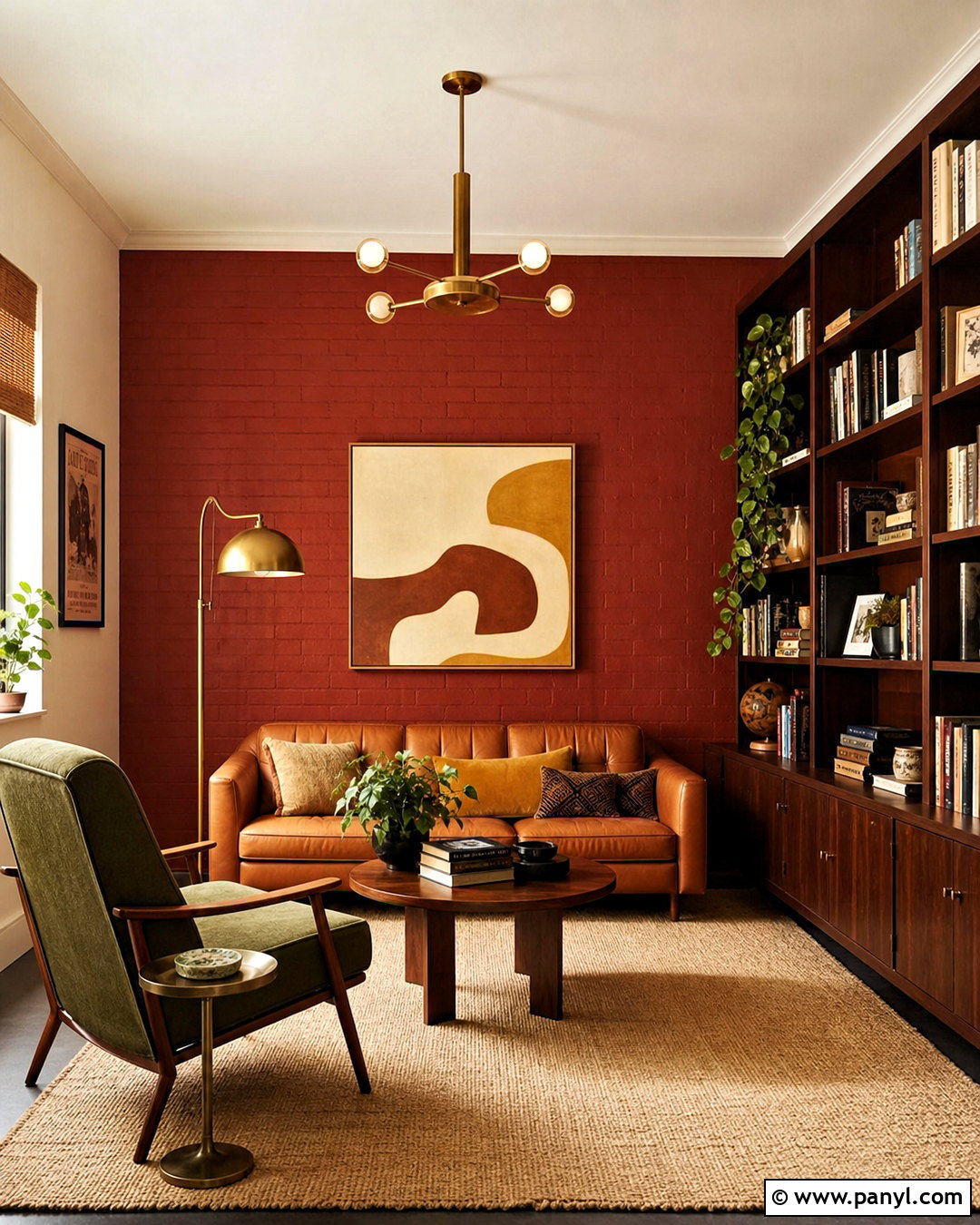
Brick red offers retro warmth with a quieter appearance than bright orange. Paint the focal wall in a living room or study with a rich, earthy red that has brown undertones. Pair it with a camel leather sofa, a dark walnut bookcase, and an oatmeal wool rug. Olive green curtains or an upholstered chair add contrast while staying within a grounded 1970s palette. Hang one large abstract canvas featuring cream, black, and ochre above the sofa. Lighting should include warm brass or aged bronze finishes, but avoid filling the room with dark furnishings. Cream-colored side walls and a pale ceiling will reflect light back into the space. This complete combination feels cozy and established, making it particularly effective in rooms used for reading, conversation, or relaxing.
16. Teal And Walnut Accent Wall
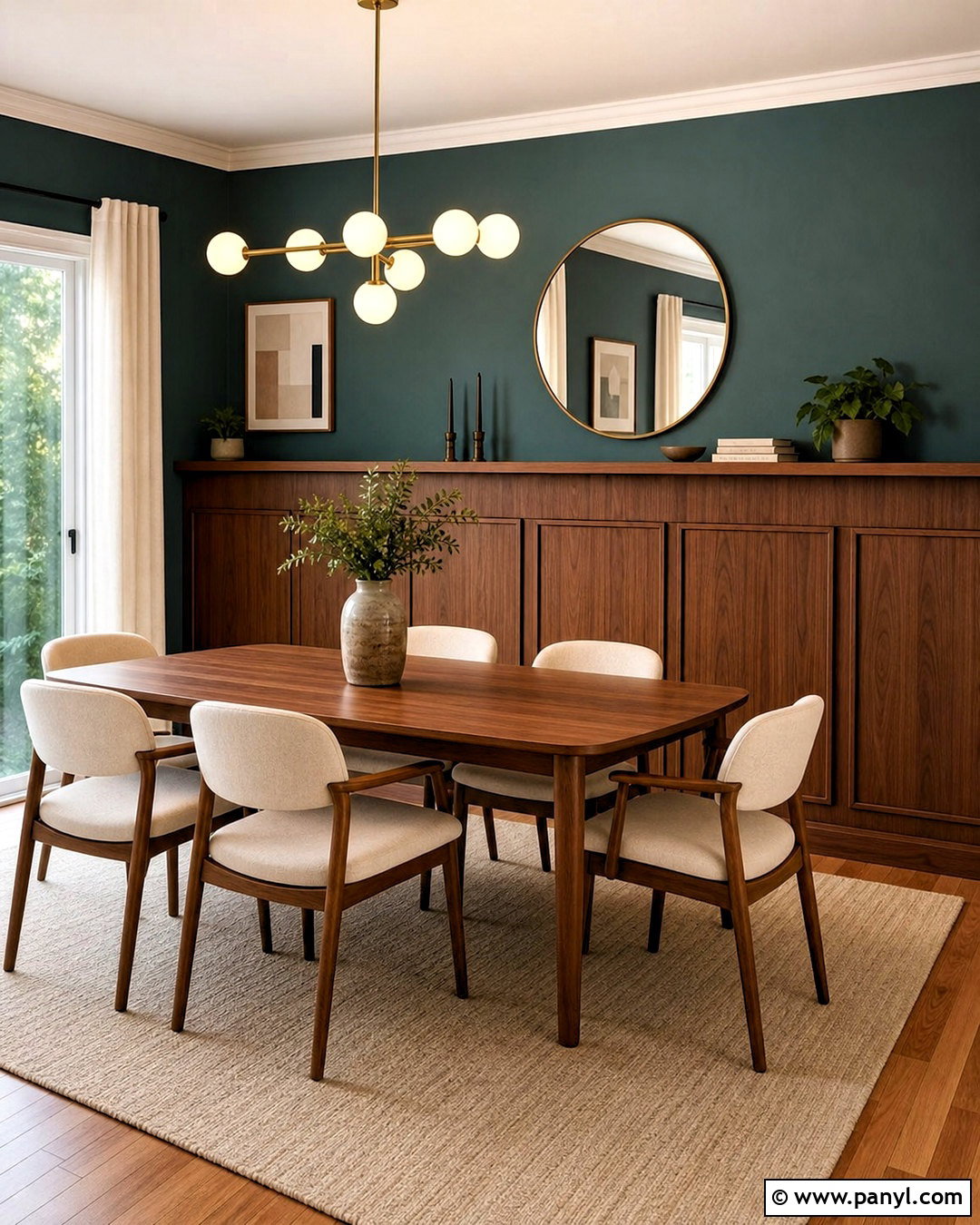
Teal paint and walnut paneling can share one wall to create a layered mid-century focal point. Cover the lower half of a dining room wall with flat walnut panels, then paint the upper half a deep, slightly muted teal. Finish the transition with a narrow walnut ledge. Add a rectangular dining table in matching wood and surround it with cream upholstered chairs. A brass multi-globe pendant introduces another vintage shape without competing with the two-tone wall. Use a warm beige rug and simple ivory curtains to soften the saturated teal. Display only a few ceramics or framed prints on the ledge. Repeating teal in one centerpiece or seat cushion will connect the room. The combination feels rich and retro while the horizontal division keeps the proportions structured and balanced.
17. Wavy Psychedelic Accent Wall
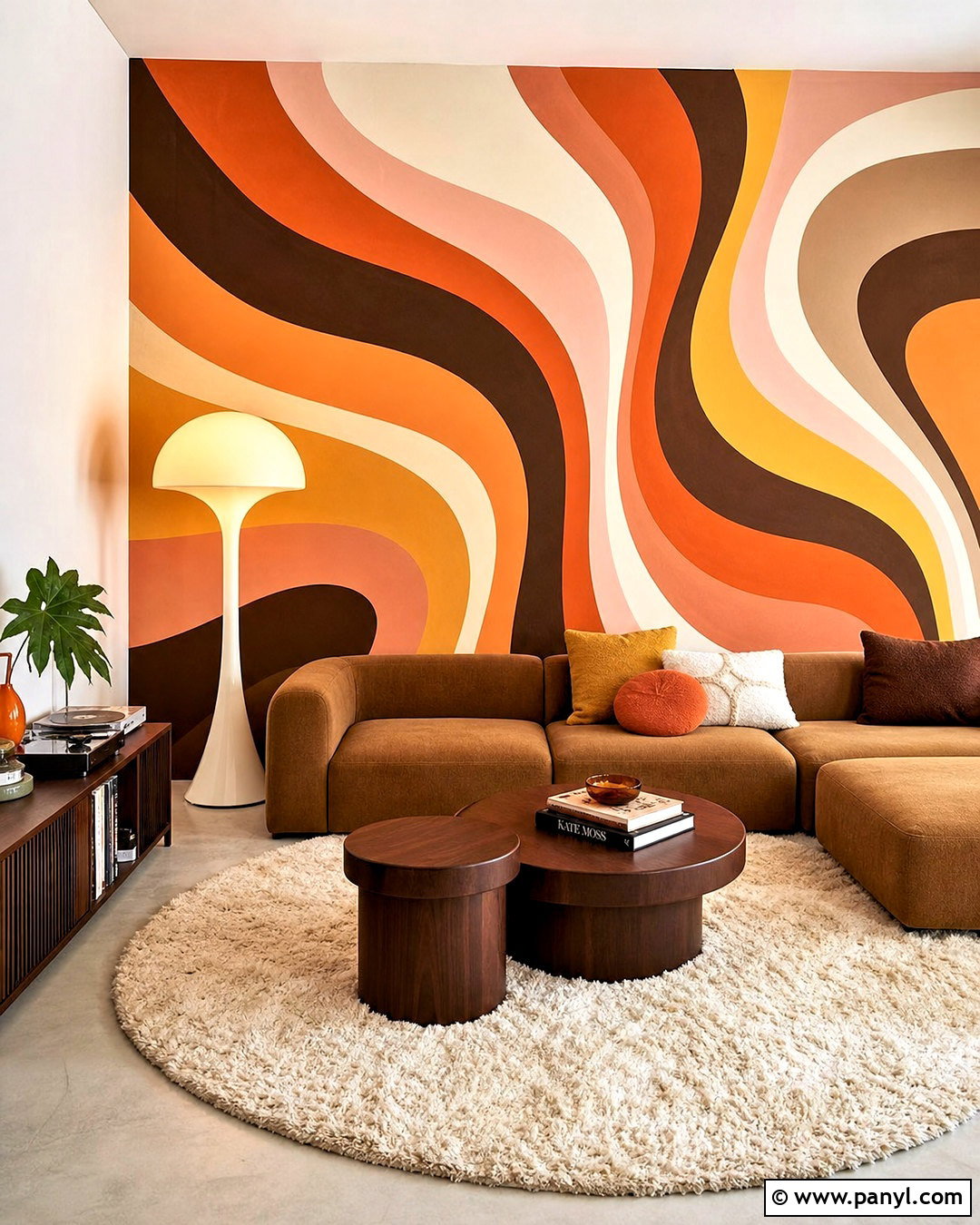
Flowing waves can bring groovy 1970s movement to a music room, bedroom, or relaxed lounge. Paint wide vertical curves in burnt orange, blush, mustard, cream, and chocolate brown, allowing the bands to travel smoothly from floor to ceiling. Keep the shapes broad and uncomplicated so the wall feels artistic rather than chaotic. Furnish the space with a low tan sofa or platform bed, a round shag rug, and one mushroom-style lamp. Dark walnut furniture anchors the lighter curves. Solid textiles work best, although one small striped cushion can repeat the wall’s flowing rhythm. Paint adjacent surfaces warm white and choose understated window treatments. The final room has plenty of nostalgic personality, yet its limited palette and simple furniture prevent the psychedelic pattern from becoming visually exhausting.
18. Vintage Gallery Accent Wall
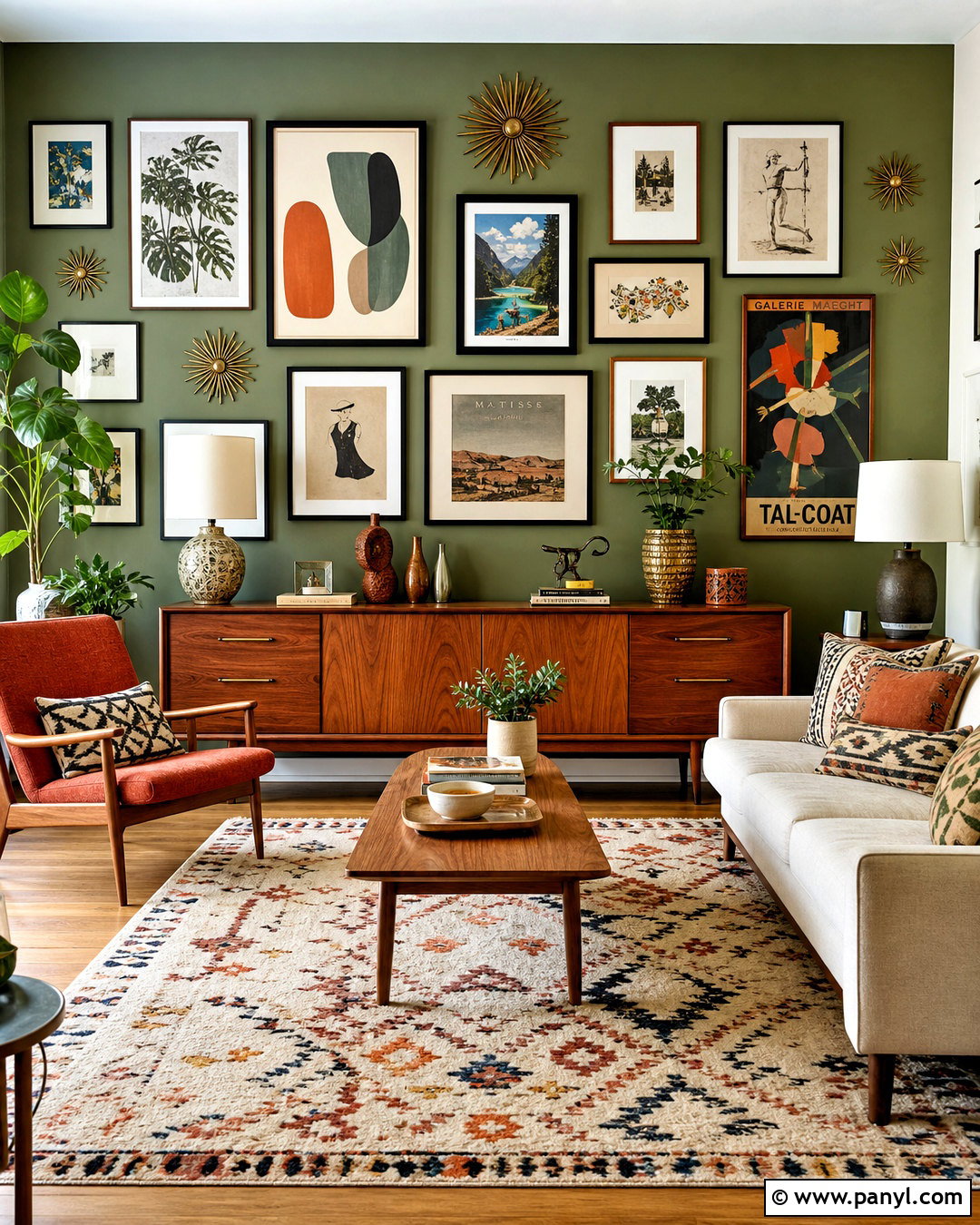
A gallery wall can become a retro focal point when the frames, artwork, furniture, and wall color tell the same visual story. Begin with a warm olive or muted ochre painted wall. Arrange abstract prints, vintage travel imagery, botanical artwork, and starburst shapes in frames made from walnut, brass, black metal, and cream-painted wood. Maintain even spacing to keep the varied collection organized. Place a long teak credenza beneath the arrangement and add a ceramic lamp, a small stack of books, and a sculptural vase. A cream sofa, rust chair, and patterned wool rug complete the living room. Choose artwork with repeated tones of orange, teal, brown, and yellow. The resulting display feels collected over time instead of resembling a random assortment of decorations.
19. Retro Kitchen Tile Accent Wall
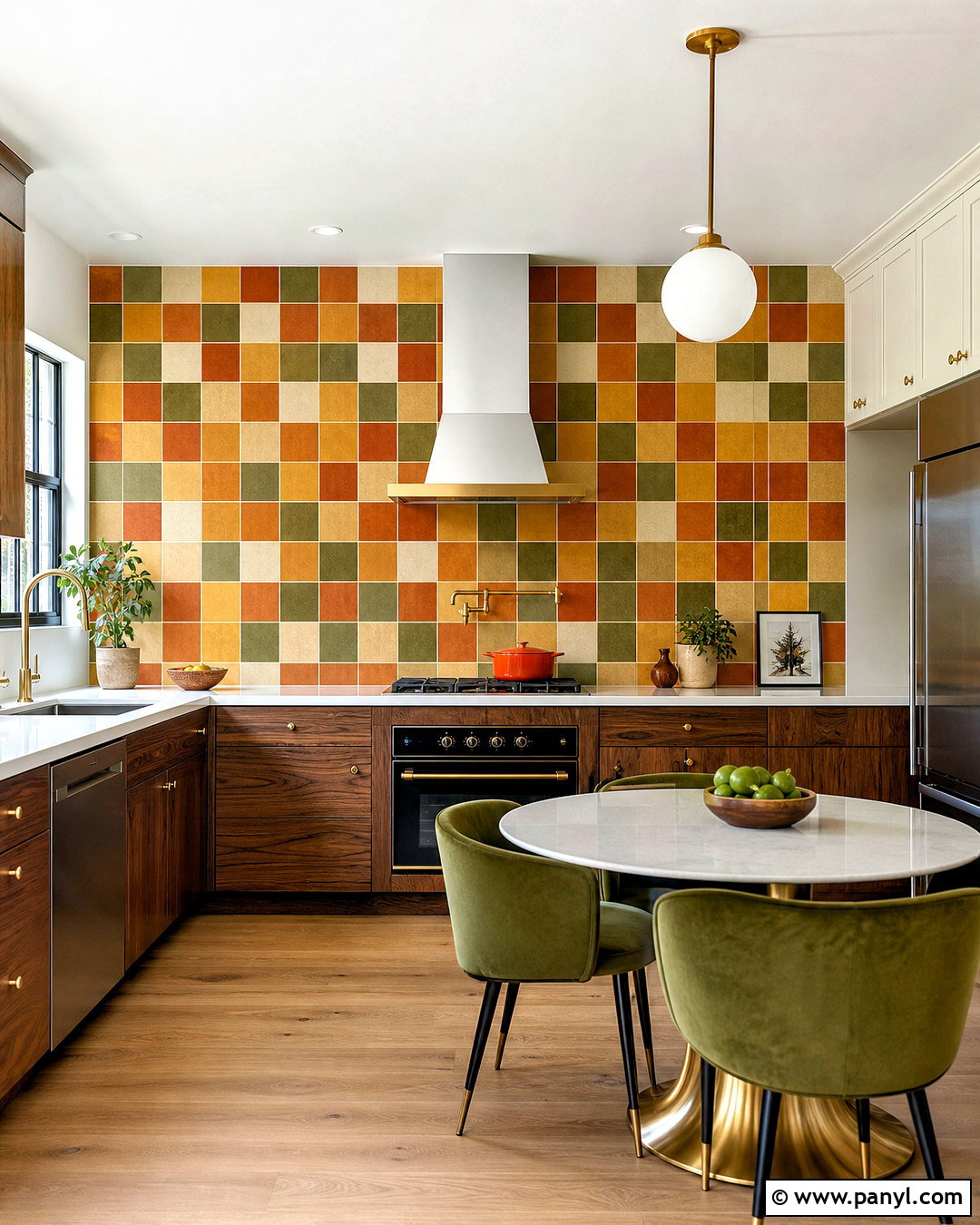
A tiled focal wall can transform a small kitchen or breakfast area while providing a durable surface. Use square ceramic tiles in alternating mustard, burnt orange, olive, and warm cream behind open shelves or a compact dining banquette. Keep the arrangement structured, such as a simple grid or repeating stripe, rather than mixing the colors randomly. Pair the tile with walnut lower cabinets, cream upper cabinets, and brushed brass hardware. A white quartz countertop keeps food preparation areas bright. Add an opal globe pendant above a round breakfast table and choose tan vinyl or olive upholstered seating. Continue the tile only across one visible wall so it remains special. The full kitchen scheme combines practical finishes with a warm retro palette that feels cheerful and easy to maintain.
20. Pastel Memphis Accent Wall
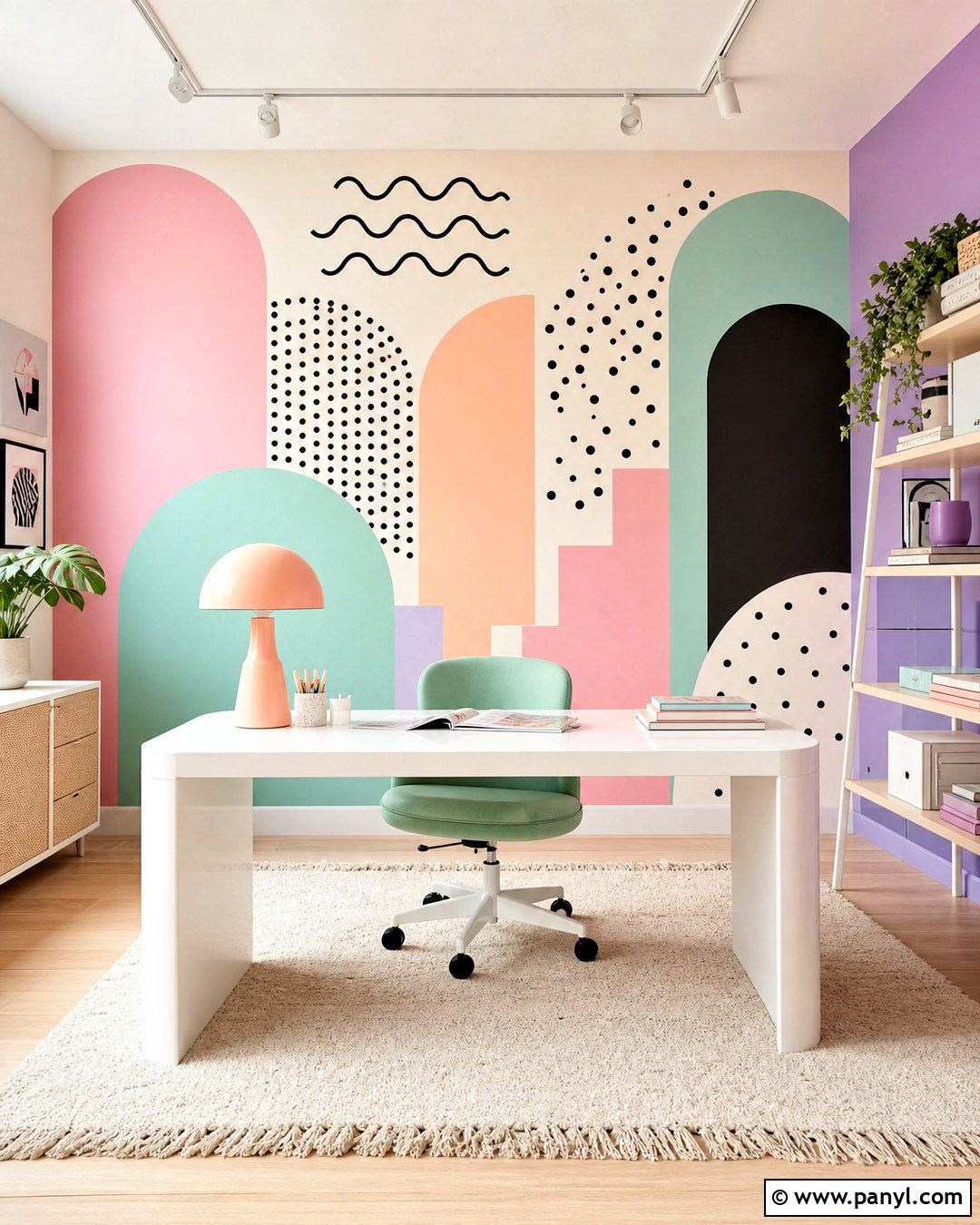
For a lighter interpretation of 1980s retro design, create a Memphis-inspired wall using blush pink, pale peach, mint green, lavender, and small black accents. Start with a soft cream background, then paint scattered arches, dots, squiggles, and angular blocks across the wall. Keep plenty of empty space around the shapes to avoid a crowded finish. Place a white lacquered desk or low console against it, paired with a mint chair and a peach table lamp. Pale wood flooring and a simple cream rug make the colors feel approachable. Use black only in thin outlines, hardware, or one small side table. The complete room feels energetic and youthful, but the softened palette makes it suitable for a modern office, bedroom, or creative studio.
Conclusion:
A successful retro wall should feel connected to the room rather than added as an afterthought. Select one focal surface, build a limited color palette, and repeat its materials or hues through furniture, rugs, lighting, and smaller accessories. Walnut, cork, graphic wallpaper, painted arches, ceramic tile, and geometric murals can all create nostalgic character at different budgets. For a balanced result, combine the statement wall with simpler surrounding surfaces and streamlined furnishings. You can also test removable wallpaper or painted samples before making a permanent change. Most importantly, choose an era and palette that genuinely suit your home. These 20 retro accent wall ideas make it easier to create a distinctive space that feels nostalgic, livable, and personal.

Related Ideas and Inspiration:
Leave a Reply