
Blue walls and timeworn finishes can create rooms that feel cinematic, layered, and full of history. The key is to suggest graceful decay without living with unsafe damage. Peeling-paint effects, cracked plaster finishes, faded textiles, salvaged wood, aged metal, and antique furniture can deliver the look while keeping the space clean and functional. Blue is especially effective because it can appear stormy, coastal, industrial, romantic, or mysterious depending on the shade and surrounding materials. Deep navy adds drama, while dusty turquoise and faded sky blue create a softer abandoned-house character. The complete room should balance distressed surfaces with comfortable furniture and practical lighting. The following **20 Blue Wall Decayed Room Ideas** explore distinct, realistic looks you can recreate safely.

1. Peeling Navy Blue Bedroom
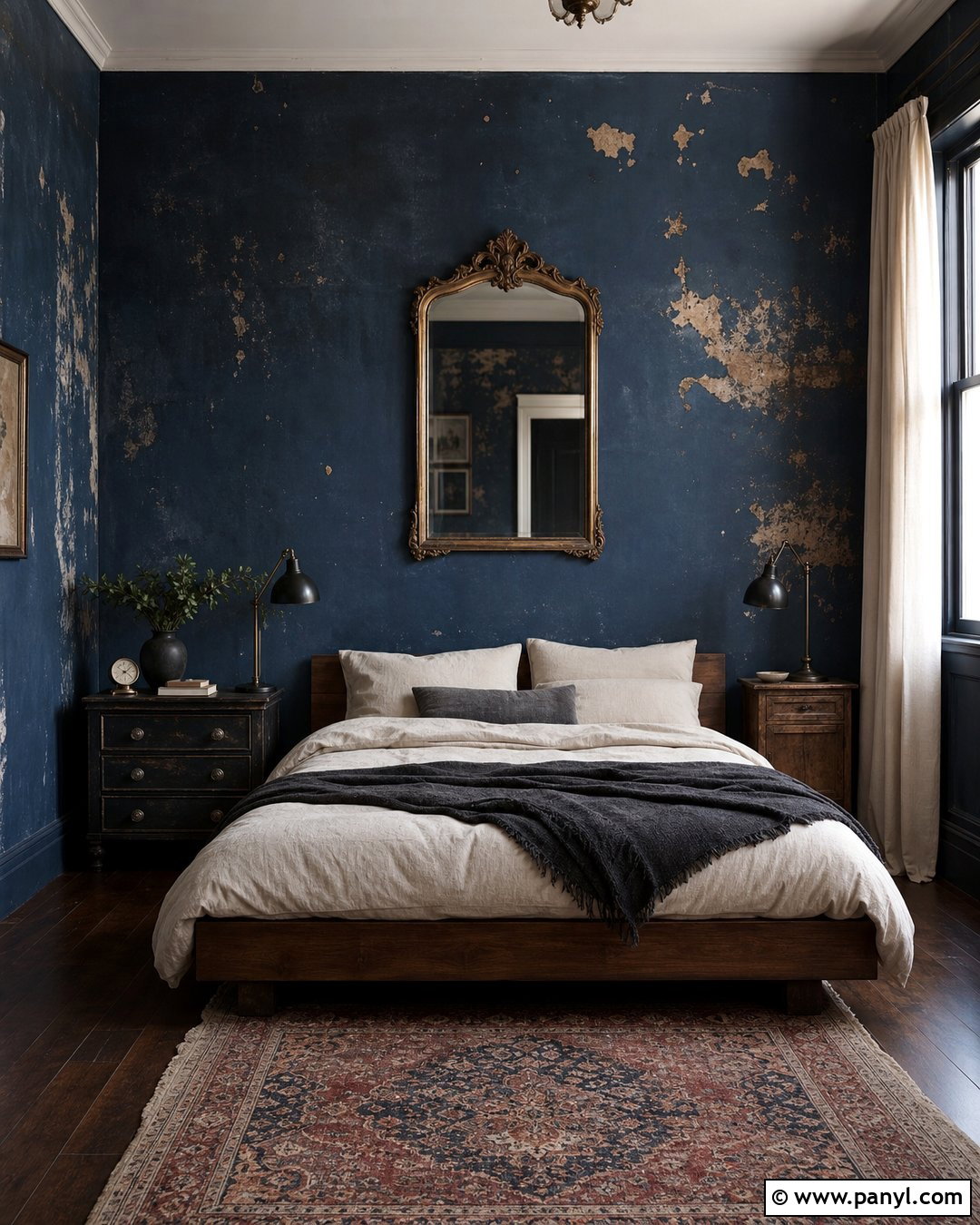
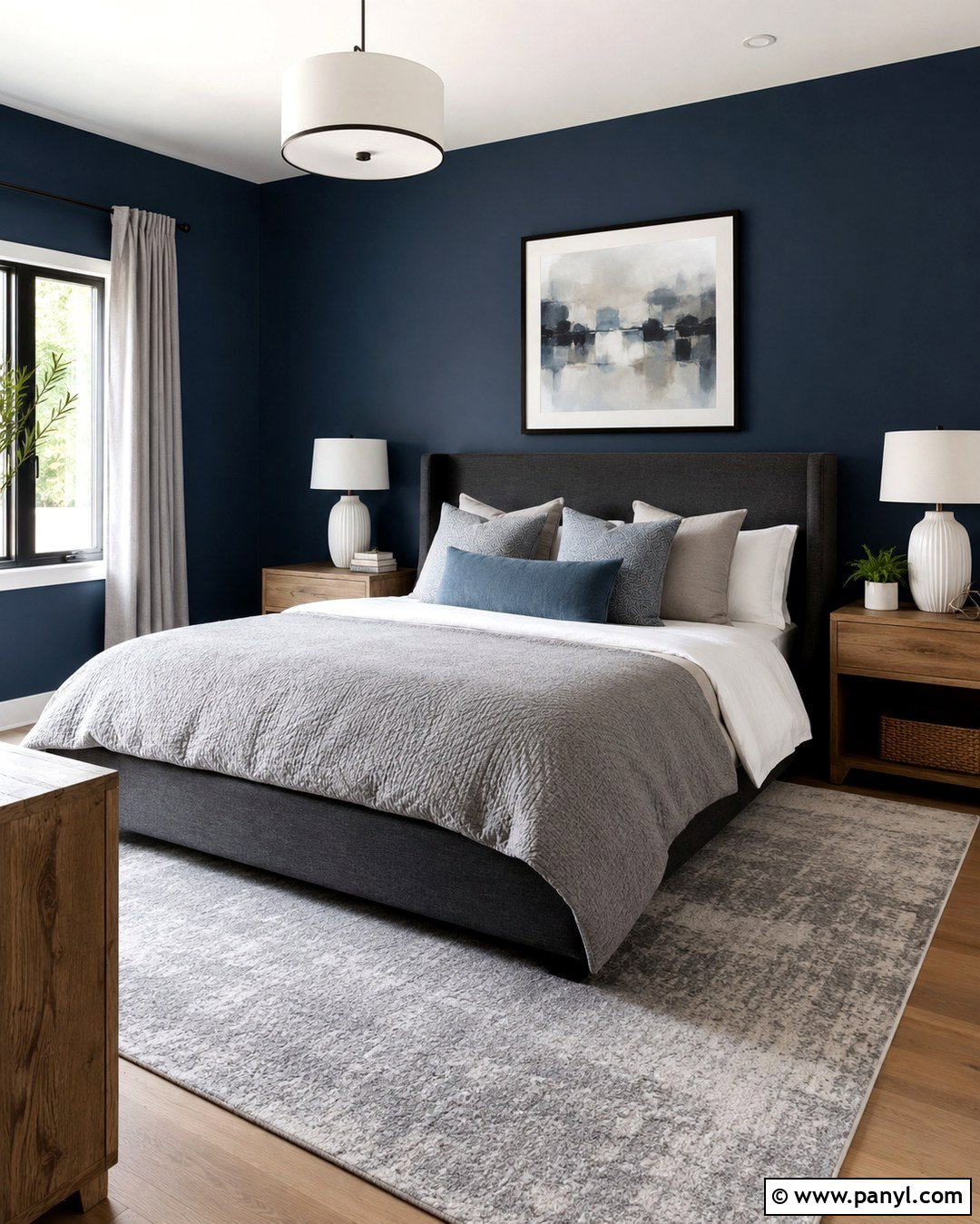
Create a dramatic bedroom with navy blue walls featuring a controlled peeling-paint effect over warm gray plaster. Keep the distressed finish concentrated behind the bed and around architectural edges so the room looks intentional rather than neglected. Choose a low walnut bed with rumpled stone-colored linen bedding, faded blue pillows, and a charcoal wool throw. A worn Persian-style rug can soften dark wood flooring while reinforcing the aged atmosphere. Add mismatched wooden nightstands, black metal lamps, and an antique brass mirror with a cloudy finish. Simple cotton curtains will filter daylight and prevent the navy walls from overpowering the room. Finish with one weathered bench and a few old-looking framed sketches for a quiet, collected appearance.
2. Faded Turquoise Living Room
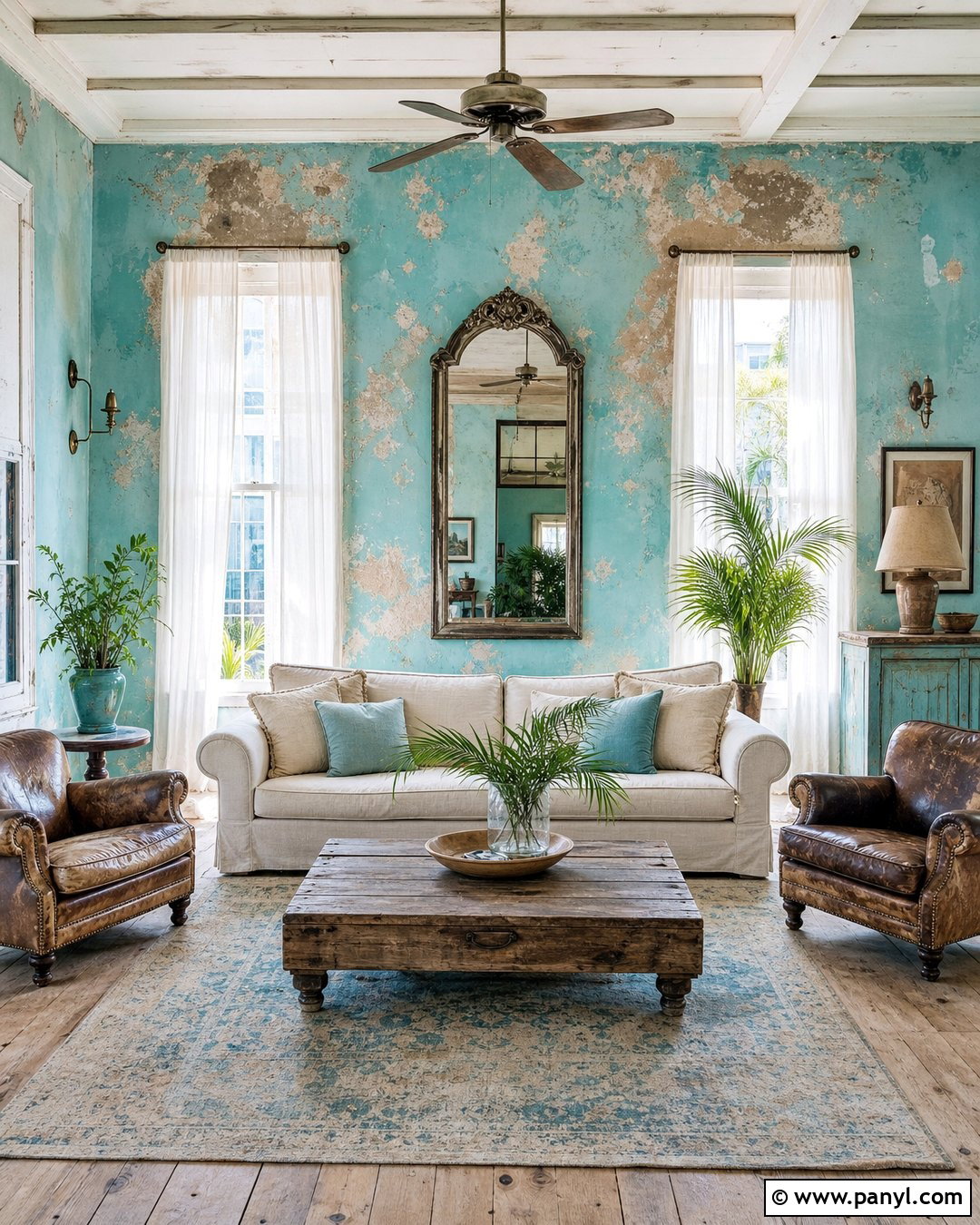
Sun-washed turquoise walls give a living room the character of an old coastal home. Use layers of chalky turquoise, pale aqua, and exposed beige plaster to create depth without making the walls appear genuinely damaged. Arrange a relaxed cream linen sofa opposite two distressed brown leather chairs, leaving enough open space around a reclaimed wood coffee table. Worn oak floorboards, a washed-out geometric rug, and gauzy off-white curtains keep the room light. Bring in aged brass sconces and an oversized antiqued mirror to reflect natural brightness. A faded wooden cabinet can hold books, ceramics, and woven baskets. Complete the design with dusty blue cushions, olive branches, and a sculptural pendant light made from lightly rusted metal.
3. Cracked Blue Plaster Dining Room
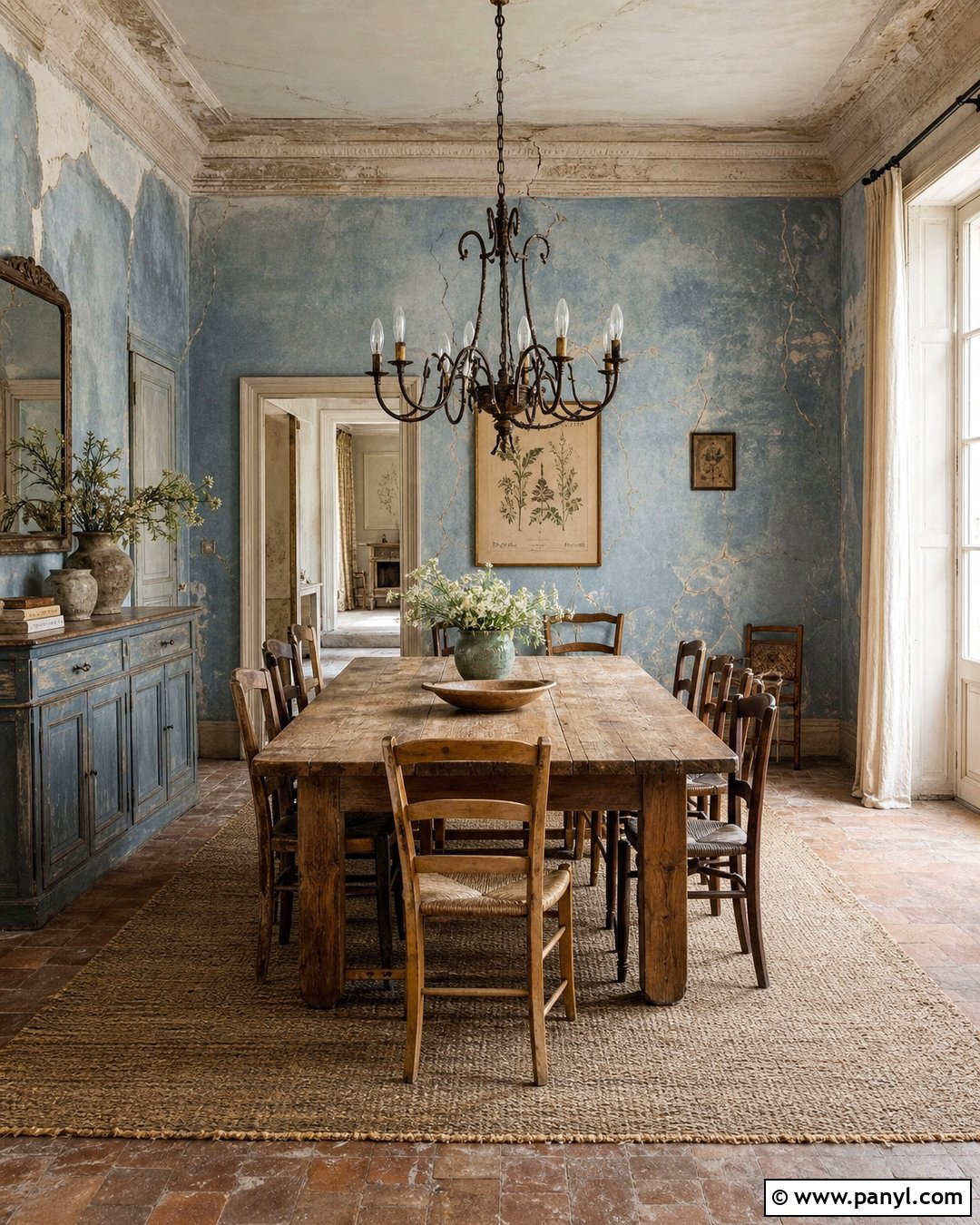
What if a formal dining room looked as though it had evolved over generations? Cover the walls in muted French blue limewash with fine decorative crack lines and irregular patches of warm ivory plaster. Center a long reclaimed oak table beneath a weathered iron chandelier, then mix ladder-back chairs with two upholstered end chairs in faded oatmeal linen. A distressed blue-gray sideboard can display ceramic pitchers, old books, and tarnished silver-toned accessories. Use natural jute under the table to balance the more elaborate wall finish. Tall linen curtains, aged brass candleholders, and botanical prints in chipped wood frames complete the historical feeling. Keep the ceiling and trim soft cream so the textured blue walls remain the room’s clear focal point.
4. Distressed Blue Industrial Loft
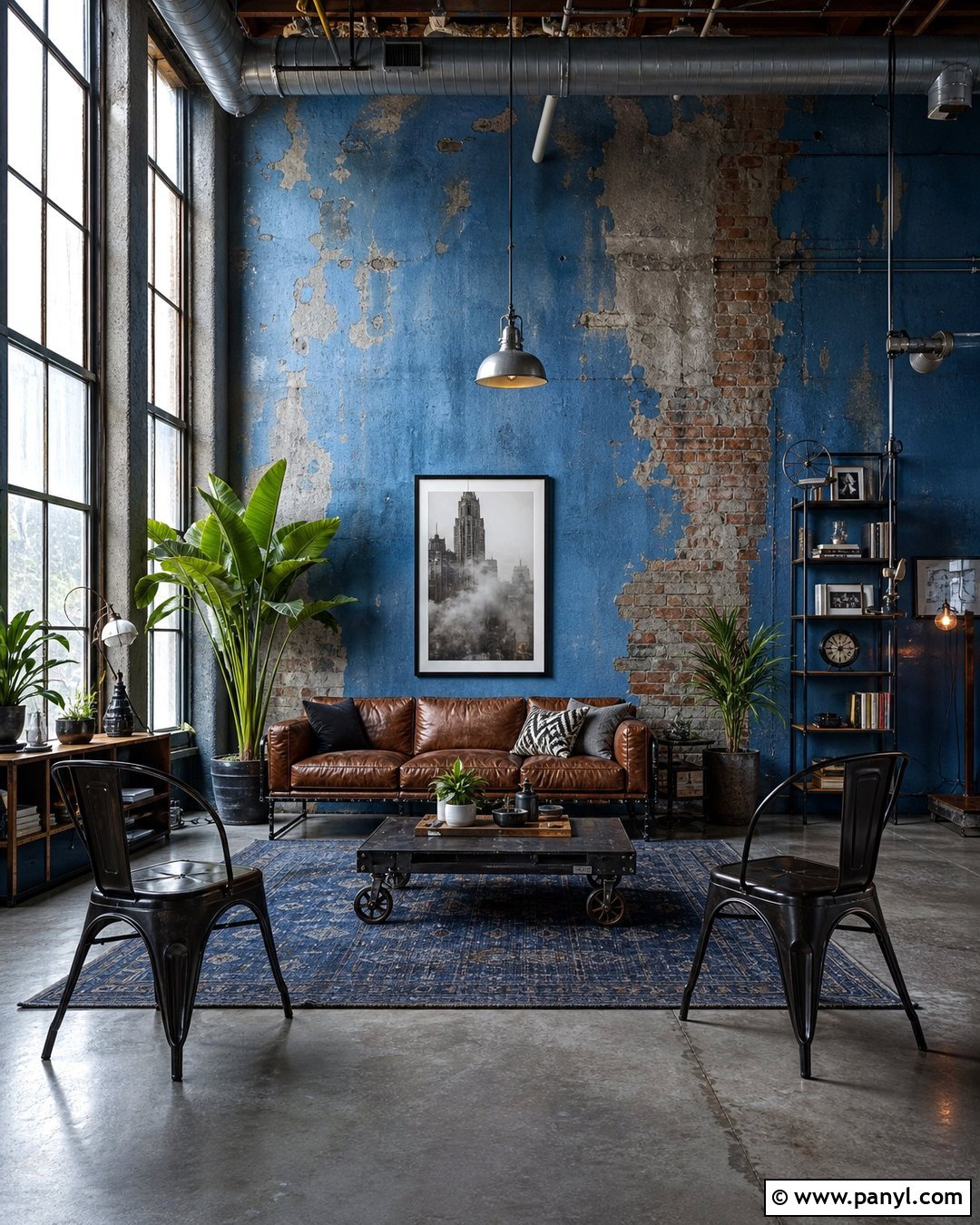
A raw industrial room becomes more inviting when its concrete surfaces are balanced with smoky blue. Apply a distressed steel-blue finish to one broad wall, allowing sections of gray plaster and imitation brick to appear beneath it. Place a deep brown leather sofa along the wall and pair it with black metal lounge chairs, a low factory-cart coffee table, and open steel shelving. Use polished concrete flooring softened by a large faded indigo rug. Exposed conduit, matte black pendant lights, and rust-colored accents strengthen the warehouse character without adding clutter. Include tall windows with simple charcoal curtains and several large green plants in aged metal containers. The finished room should feel rugged and atmospheric, yet clean enough for everyday living.
5. Dusty Blue Victorian Parlor
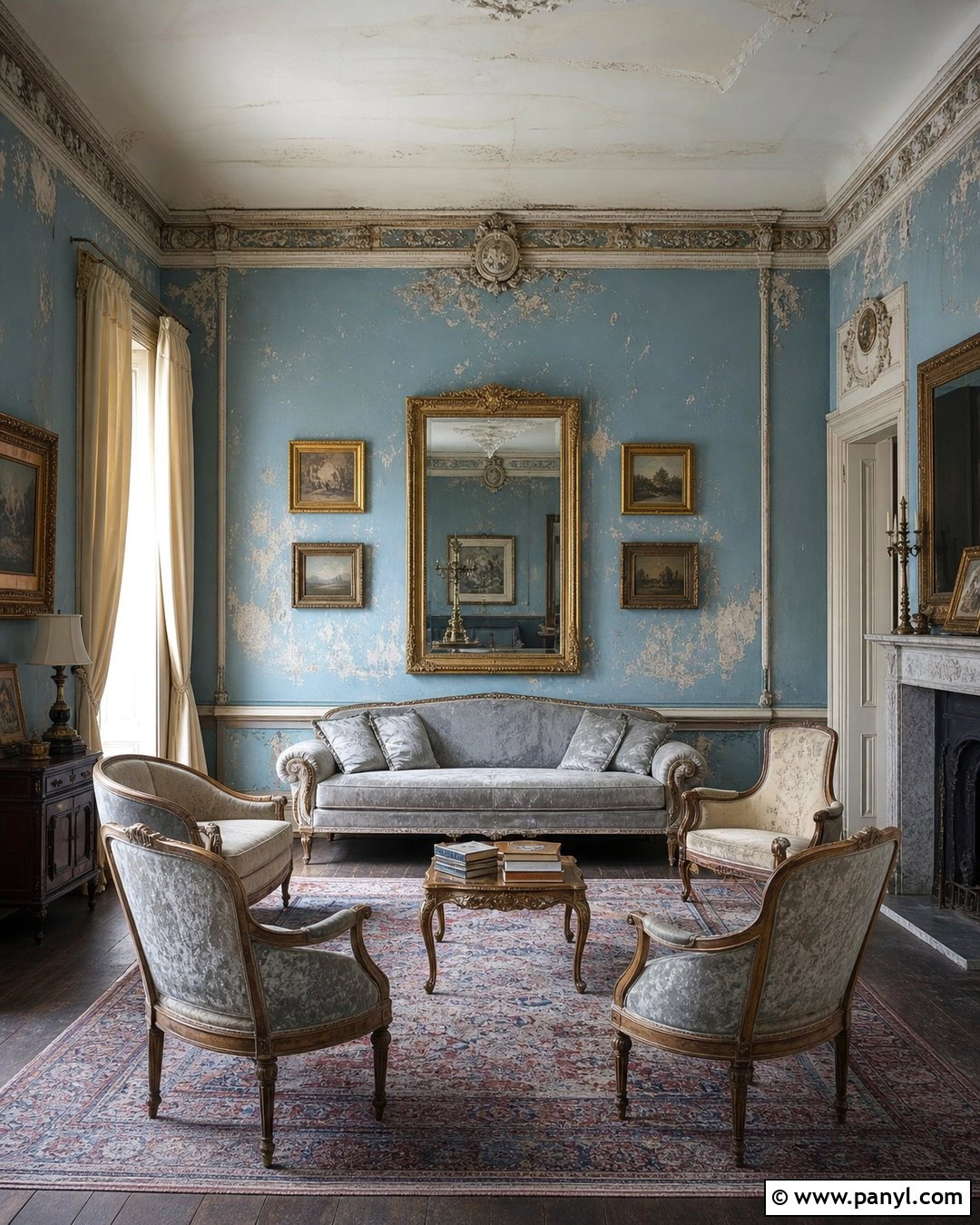
For a romantic decayed-room look, start with dusty blue walls finished with faded ornamental molding and selective areas of exposed cream plaster. Arrange a curving antique-style sofa in pale gray velvet beneath a large tarnished gold mirror. Two carved wooden chairs with worn floral upholstery can face a round marble-topped table, creating an intimate conversation area. Cover dark wood flooring with an oversized traditional rug in muted blue, rose, and sand tones. Add a small chandelier, tall ivory curtains, and framed landscapes in mismatched antique frames. Decorative plaster medallions and a weathered fireplace surround will reinforce the Victorian architecture. Keep the accessories restrained, using a few stacked books, ceramic vases, and dried branches rather than filling every available surface.
6. Weathered Blue Farmhouse Bedroom
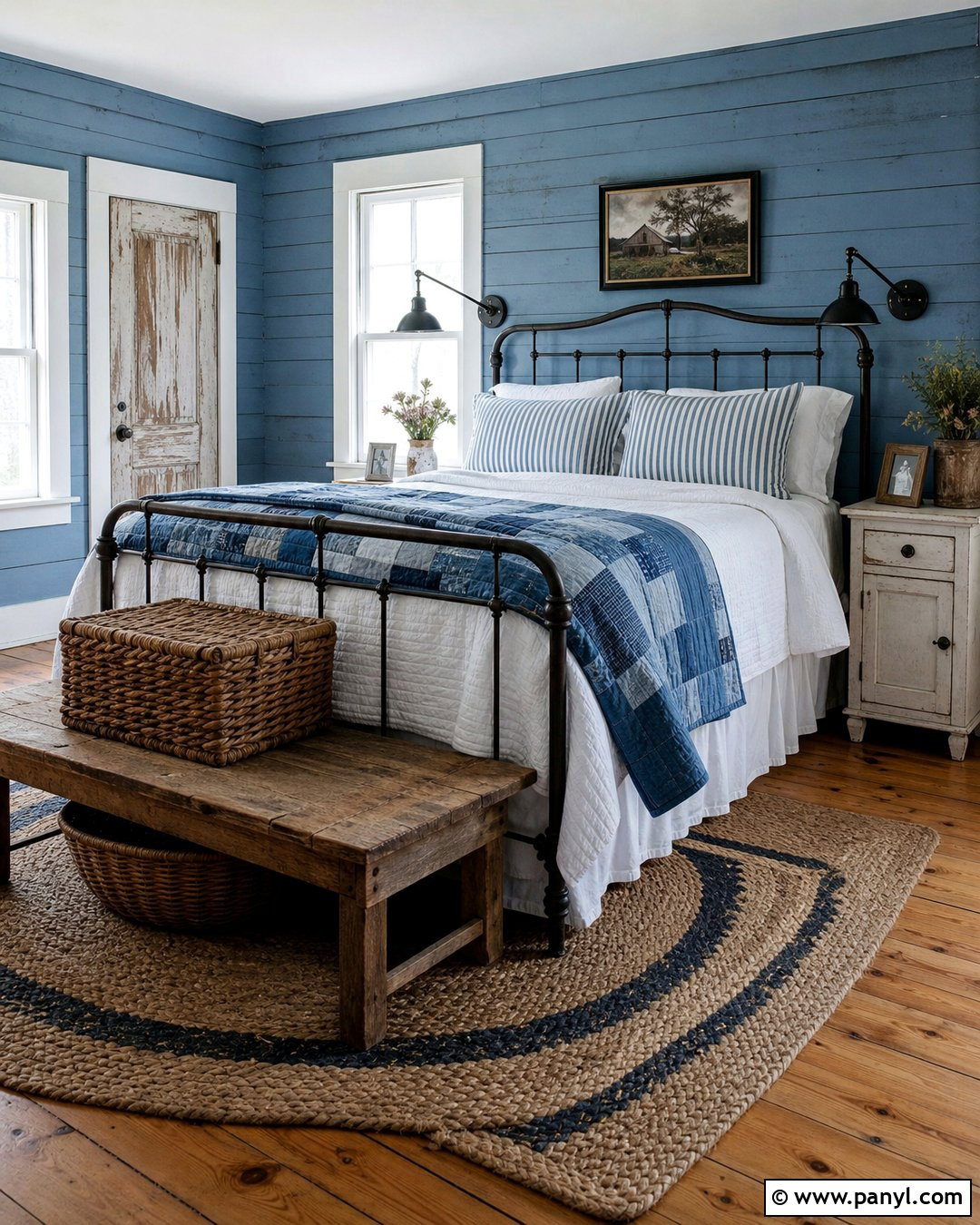
Soft blue shiplap walls with rubbed edges create an approachable farmhouse version of the decayed aesthetic. Choose a faded cornflower blue rather than a dark shade, then reveal small hints of natural wood beneath the painted boards. Anchor the room with an iron bed dressed in white cotton, blue-striped pillows, and a patchwork quilt in faded denim and cream. Distressed white nightstands, woven baskets, and a reclaimed pine bench provide useful storage. Leave the plank flooring natural and add a braided neutral rug beside the bed. Black farmhouse sconces offer contrast while simple cafe curtains maintain brightness. A vintage dresser, stoneware pottery, and a few pressed botanical prints bring the entire room together without making it feel overly themed.
7. Chipped Cobalt Blue Art Studio
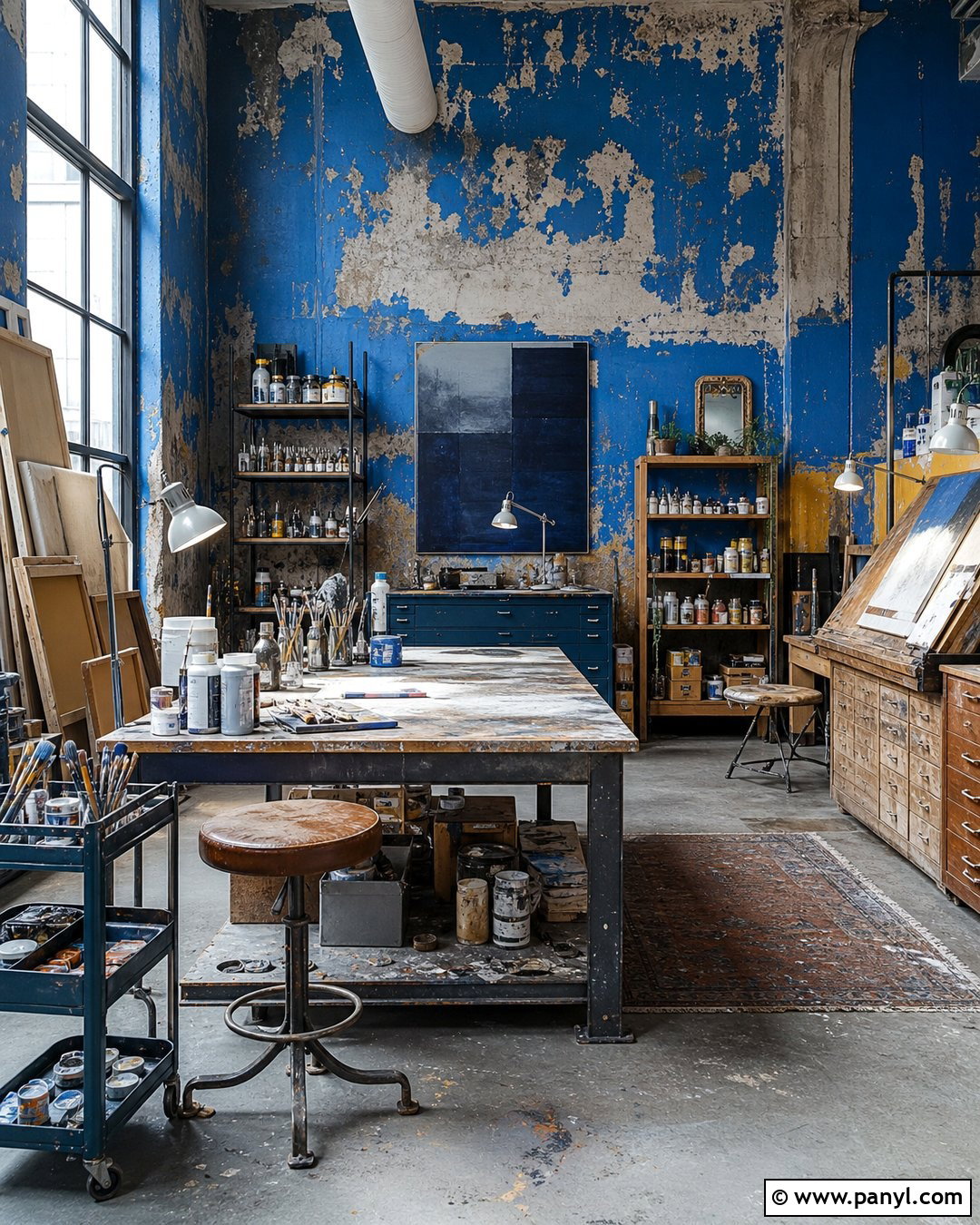
An art studio can handle bold color and rough texture better than almost any other room. Use intense cobalt blue on the main wall, adding chipped-looking edges that expose layers of pale gray and chalky white underneath. Set a large paint-splattered worktable in the center and organize supplies on tall industrial shelves made from wood and black steel. A worn leather stool, rolling utility cart, and vintage drafting cabinet will support daily work while fitting the distressed setting. Keep the concrete floor mostly bare except for a small faded rug near a reading chair. Large windows, white task lamps, and a simple pendant provide strong illumination. Lean unfinished canvases against the walls to create an active, evolving space rather than a staged display.
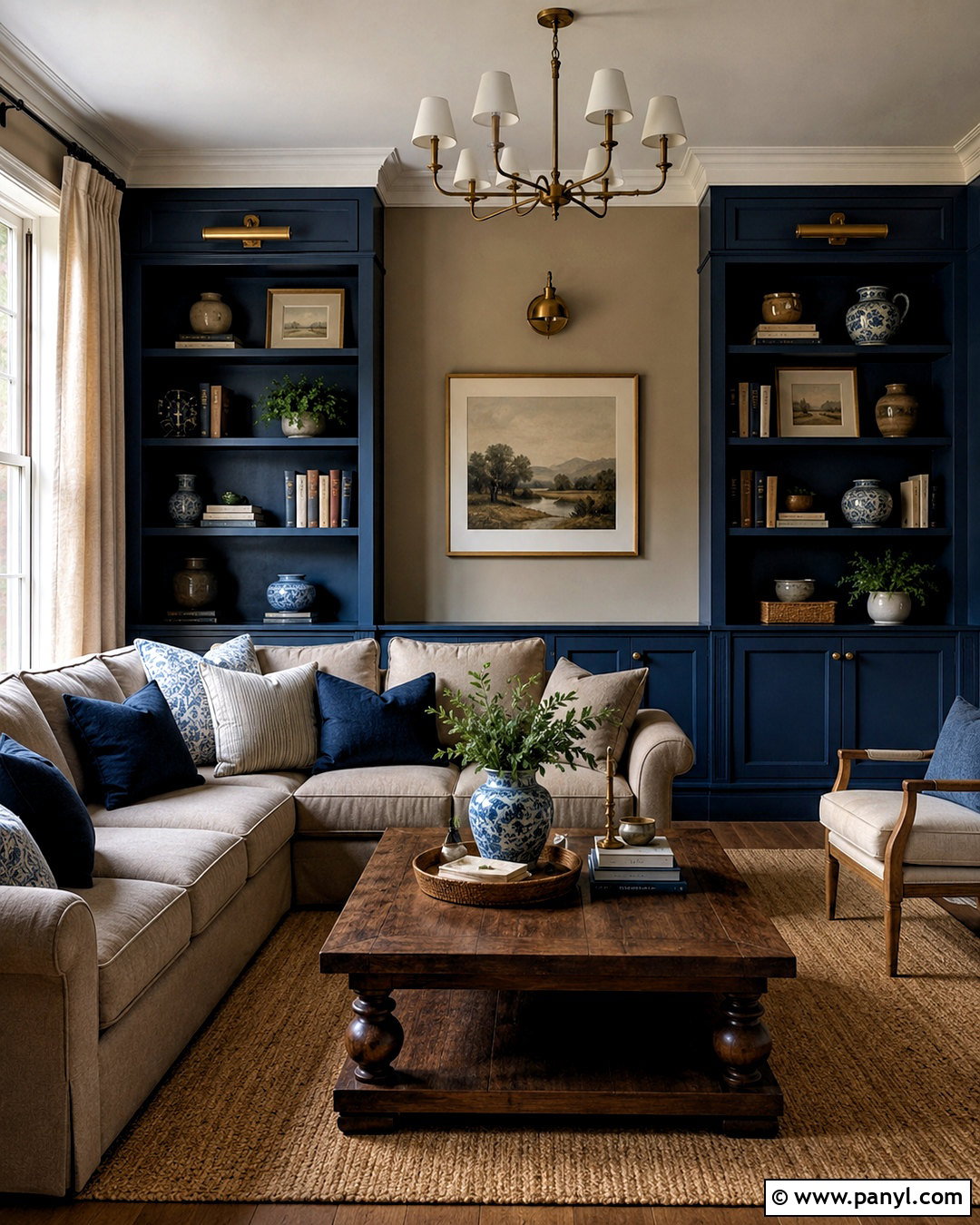
8. Decayed Blue Reading Room
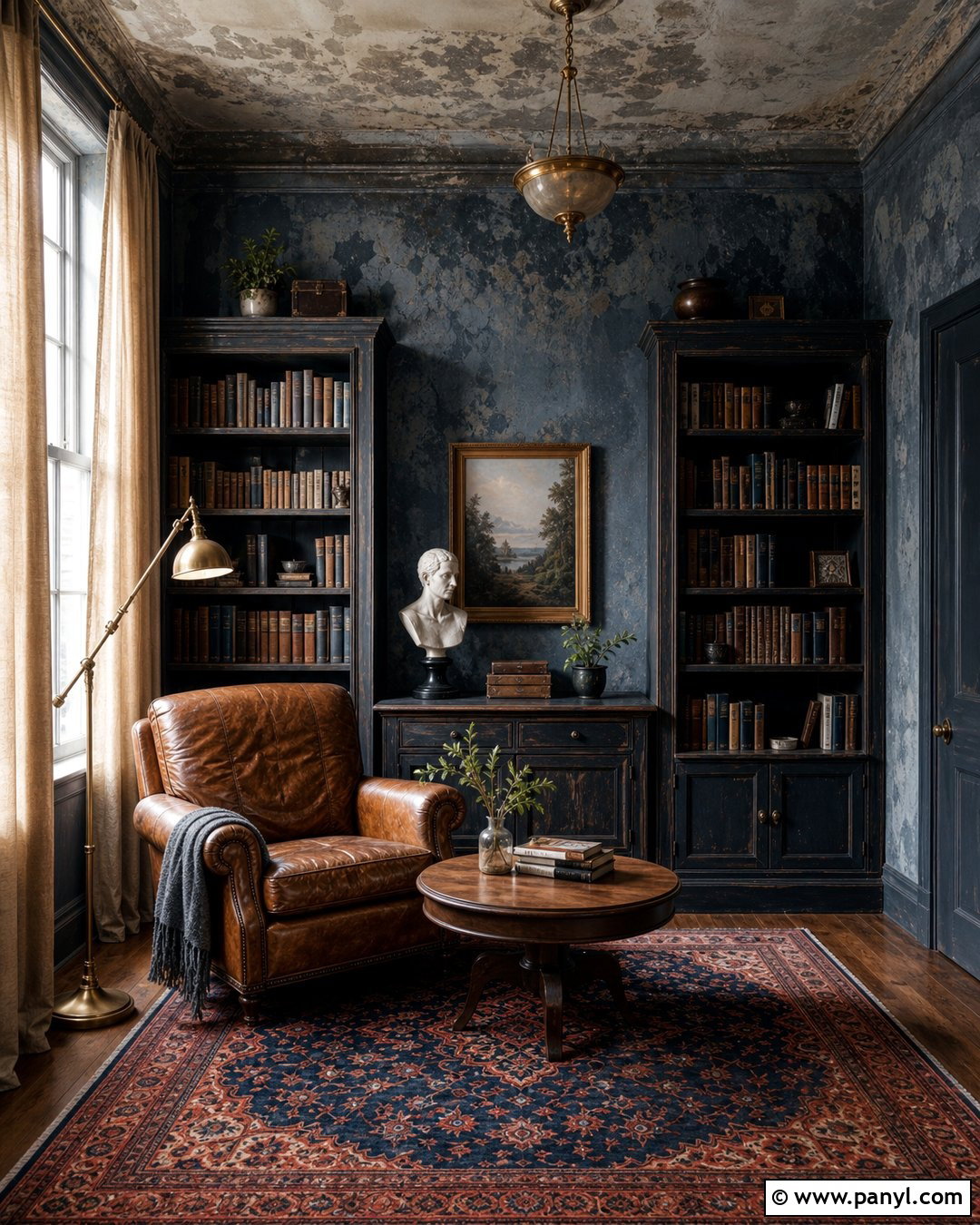
A quiet reading room feels especially atmospheric when wrapped in smoky blue walls and aged wood. Create a subtle water-stained appearance with blended blue-gray mineral paint, but avoid patterns that resemble active moisture. Line one wall with dark, slightly distressed bookcases and place a worn cognac leather chair near the window. Add a matching footstool, an antique brass floor lamp, and a small round table for books and tea. A threadbare-style rug in navy and rust can cover medium brown floorboards. Use heavy flax-colored curtains to soften the blue and improve the room’s sense of warmth. Finish with a faded landscape painting, a plaster bust, and a low wooden cabinet. The result should appear old, private, and comfortably usable.
9. Pale Blue Abandoned Cottage Room
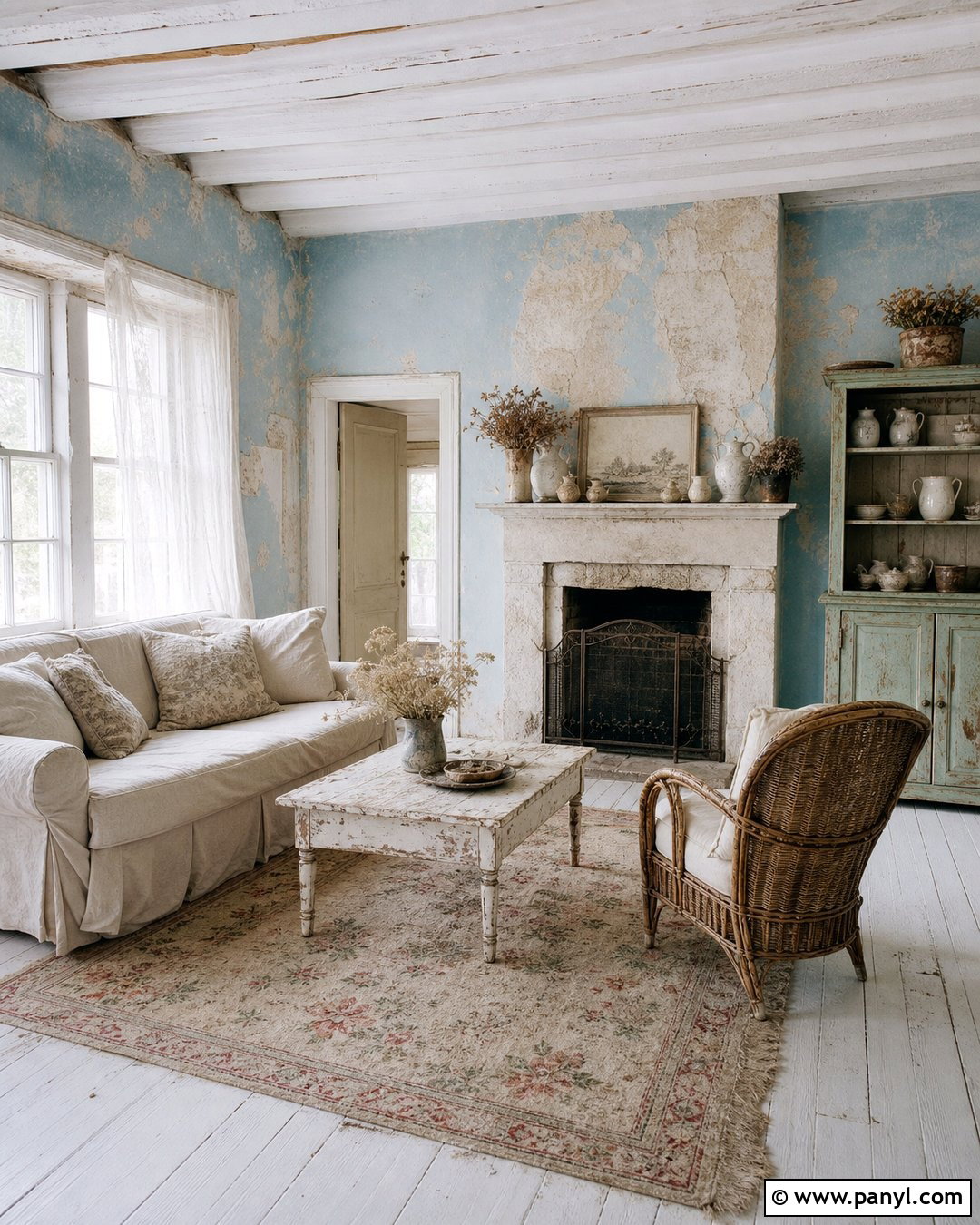
Pale blue walls can suggest a forgotten cottage without making the room feel gloomy. Layer powder blue over an ivory base, then add lightly rubbed corners and irregular plaster patches near the fireplace and window trim. Furnish the room with a compact oatmeal slipcovered sofa, one wicker armchair, and a chipped white coffee table. Whitewashed plank flooring and a faded floral rug will keep the palette gentle. Dress the windows with sheer cotton panels that move easily in natural light. A small stone fireplace, dried meadow flowers, vintage pottery, and several simple wood-framed prints provide countryside character. Include a narrow cabinet painted in faded sage green for quiet contrast. Keep the layout open and uncluttered so every distressed surface appears deliberate and decorative.
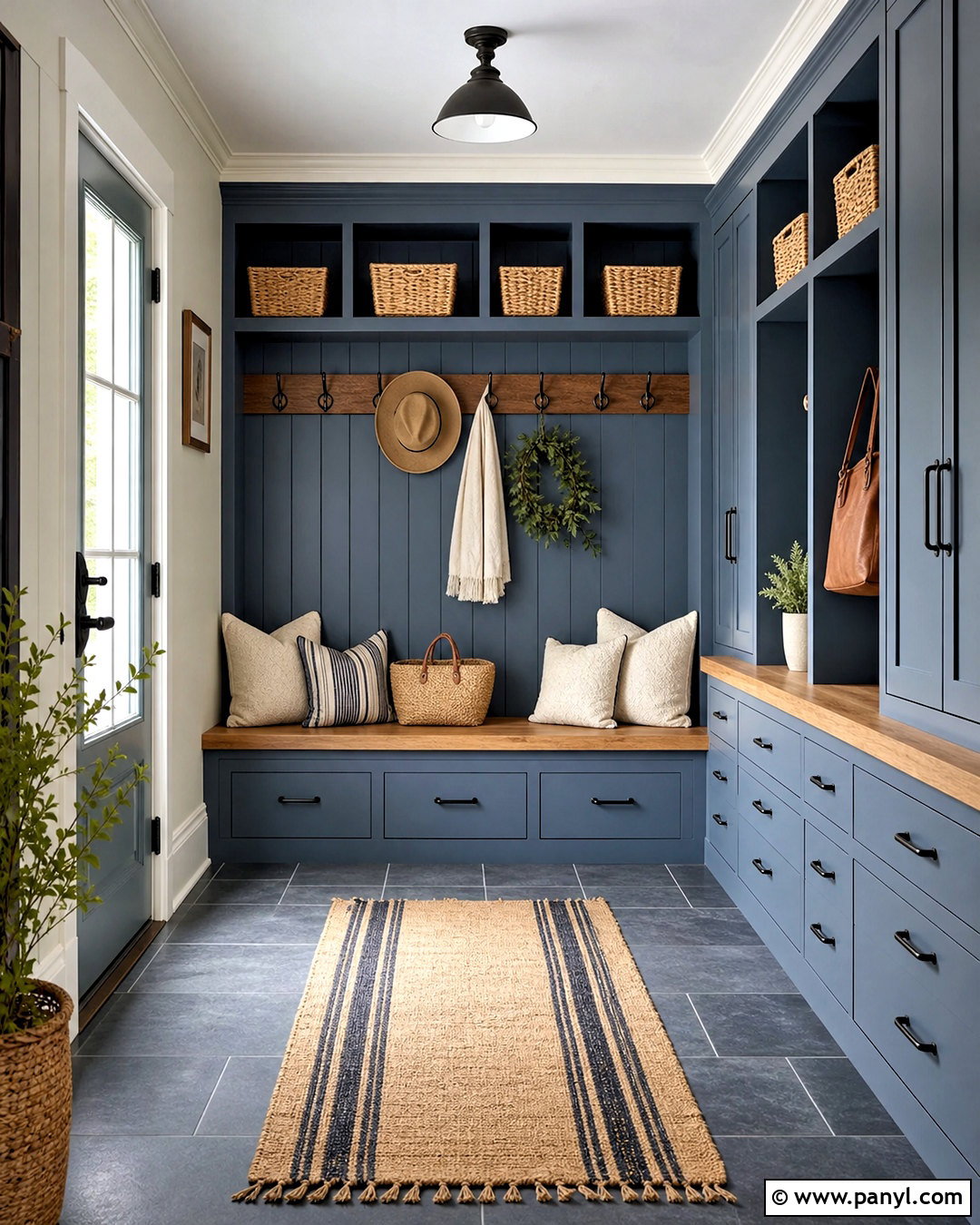
10. Blue Grunge Music Room
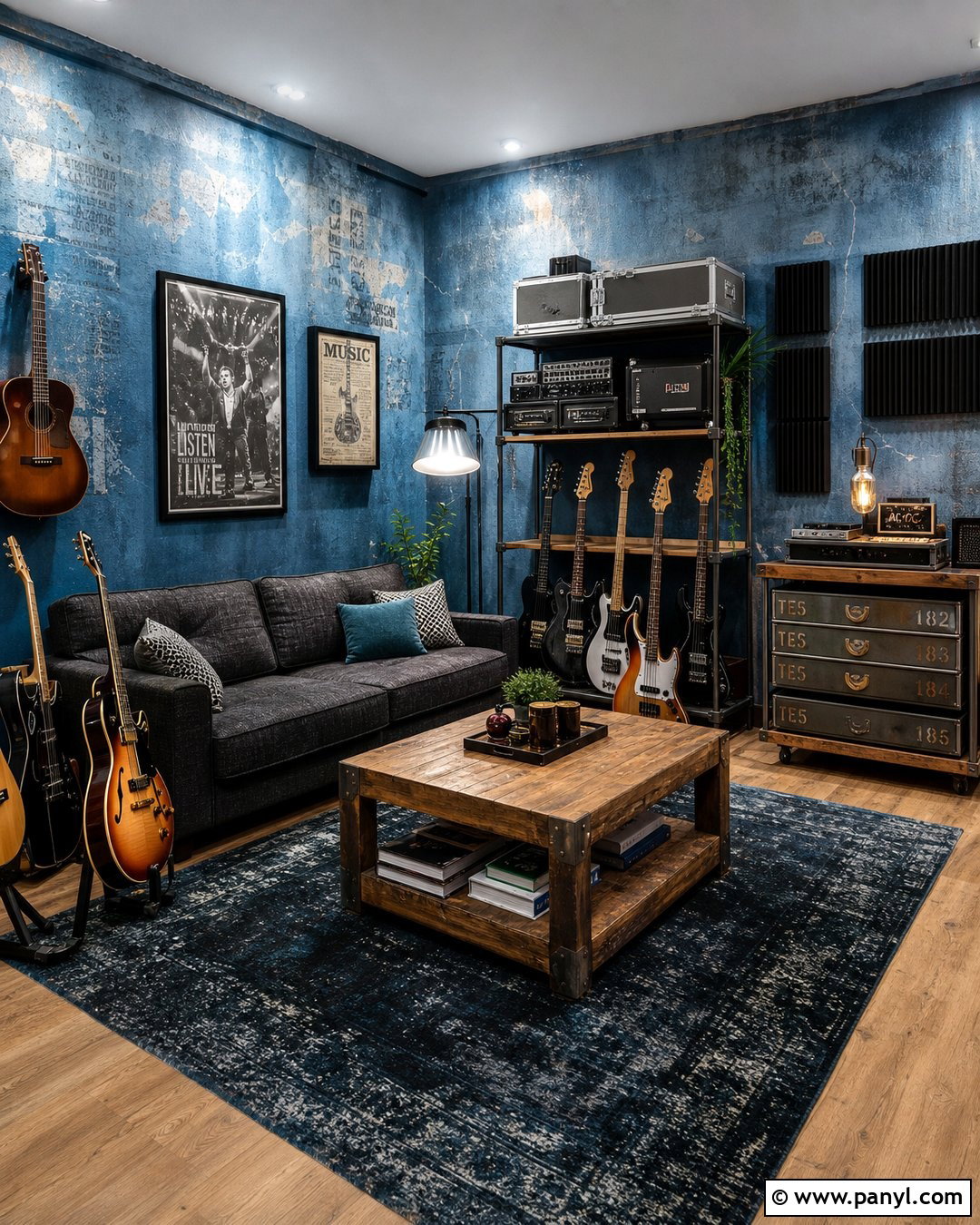
A grunge-inspired music room needs expressive surfaces, practical furniture, and controlled visual disorder. Paint the walls a desaturated denim blue, then add faux cracks, worn areas, and fragments of vintage-looking paper graphics. Place a charcoal sofa against the longest wall and organize instruments on secure black stands nearby. A low reclaimed wood table, metal record cabinet, and open clothing-style rack can provide flexible storage. Layer a faded black-and-blue rug over dark laminate or sealed concrete flooring. Use adjustable track lighting and a bright industrial floor lamp instead of relying on dim decorative bulbs. Framed concert-inspired artwork, plain acoustic panels, and a few battered storage cases will complete the setting. Leave clear walking paths so the room remains comfortable and functional.
11. Teal Blue Decayed Bathroom
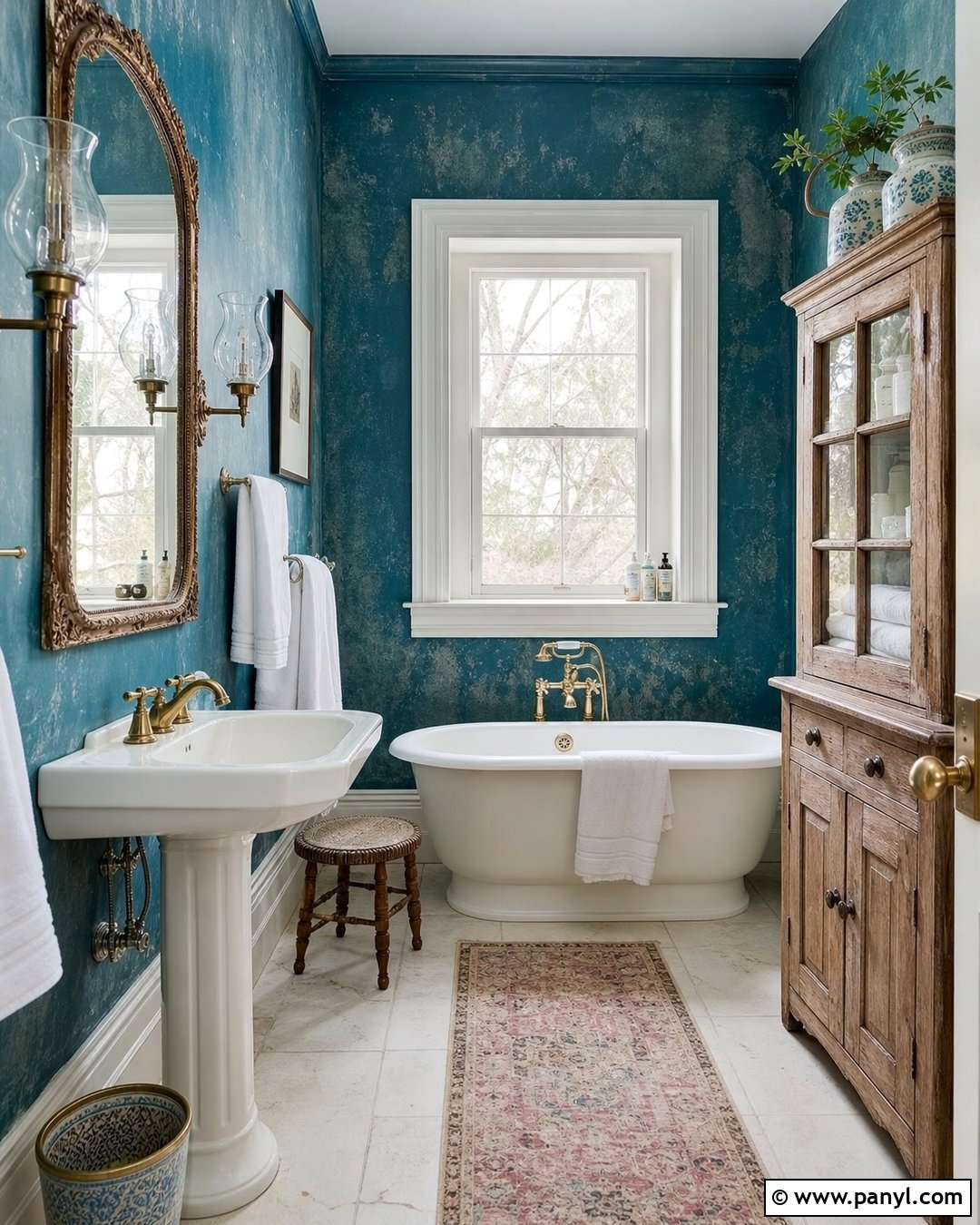
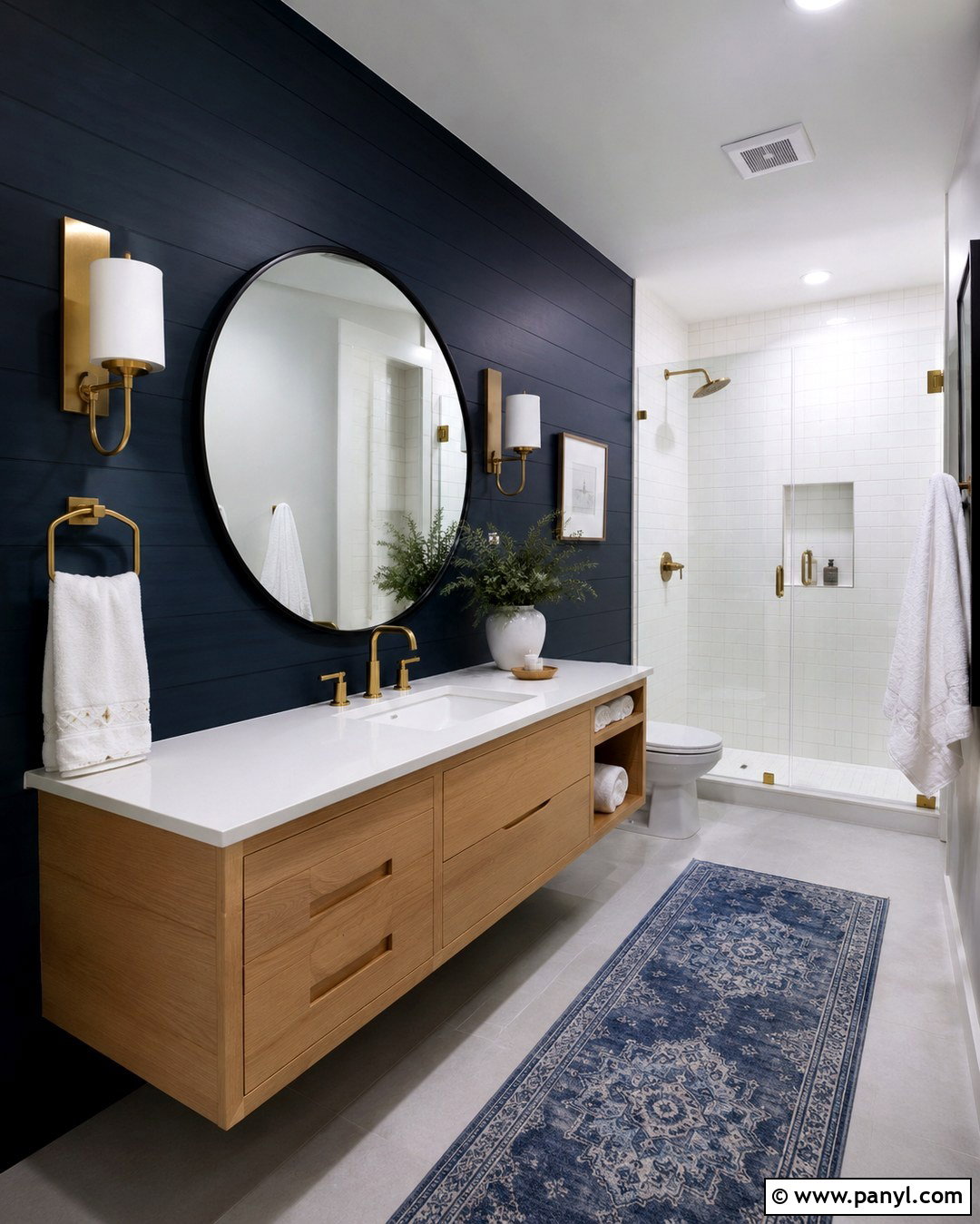
Turn a small bathroom into an aged European retreat with deep teal blue plaster walls, creamy tile, and warm metal accents. Use a waterproof decorative finish in splash-prone areas rather than genuinely cracked or peeling material. Install an ivory pedestal sink, a classic white tub, and small off-white floor tiles with dark grout. A weathered oak vanity cabinet can introduce storage and natural warmth. Hang a distressed brass mirror above the sink and add matching wall sconces with clear glass shades. Soft white towels, an antique-style bath stool, and a faded runner will prevent the teal from feeling too heavy. Complete the room with simple framed botanical artwork and a few ceramic containers. Ventilation and washable finishes keep this timeworn look practical.
12. Stormy Blue Gothic Bedroom
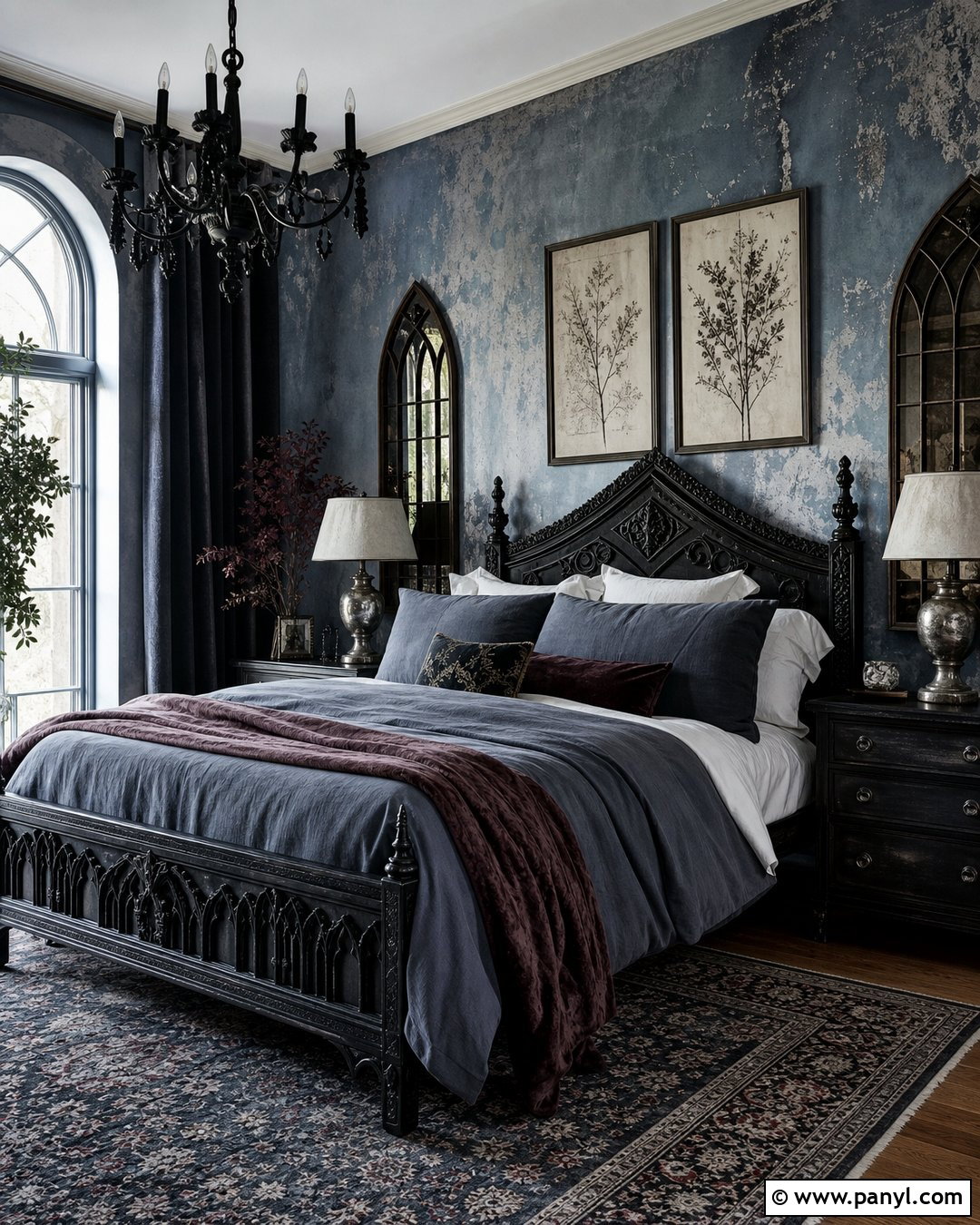
Stormy blue walls provide a dramatic base for a Gothic bedroom that feels elegant rather than theatrical. Use deep blue-gray limewash with uneven tonal movement and controlled cracked-plaster detailing around the molding. Center a black carved wood bed against the main wall and dress it with slate linen, ivory sheets, and a muted burgundy throw. Add two dark wooden nightstands, aged silver lamps, and a long upholstered bench at the foot of the bed. A faded traditional rug can warm the dark floor while tall off-white curtains frame the windows. Finish the room with pointed-arch mirrors, vintage botanical artwork, and a simple black chandelier. Keep the bedding comfortable and the surfaces organized, allowing the walls and architectural shapes to create the mood.
13. Blue Ruined Mediterranean Room
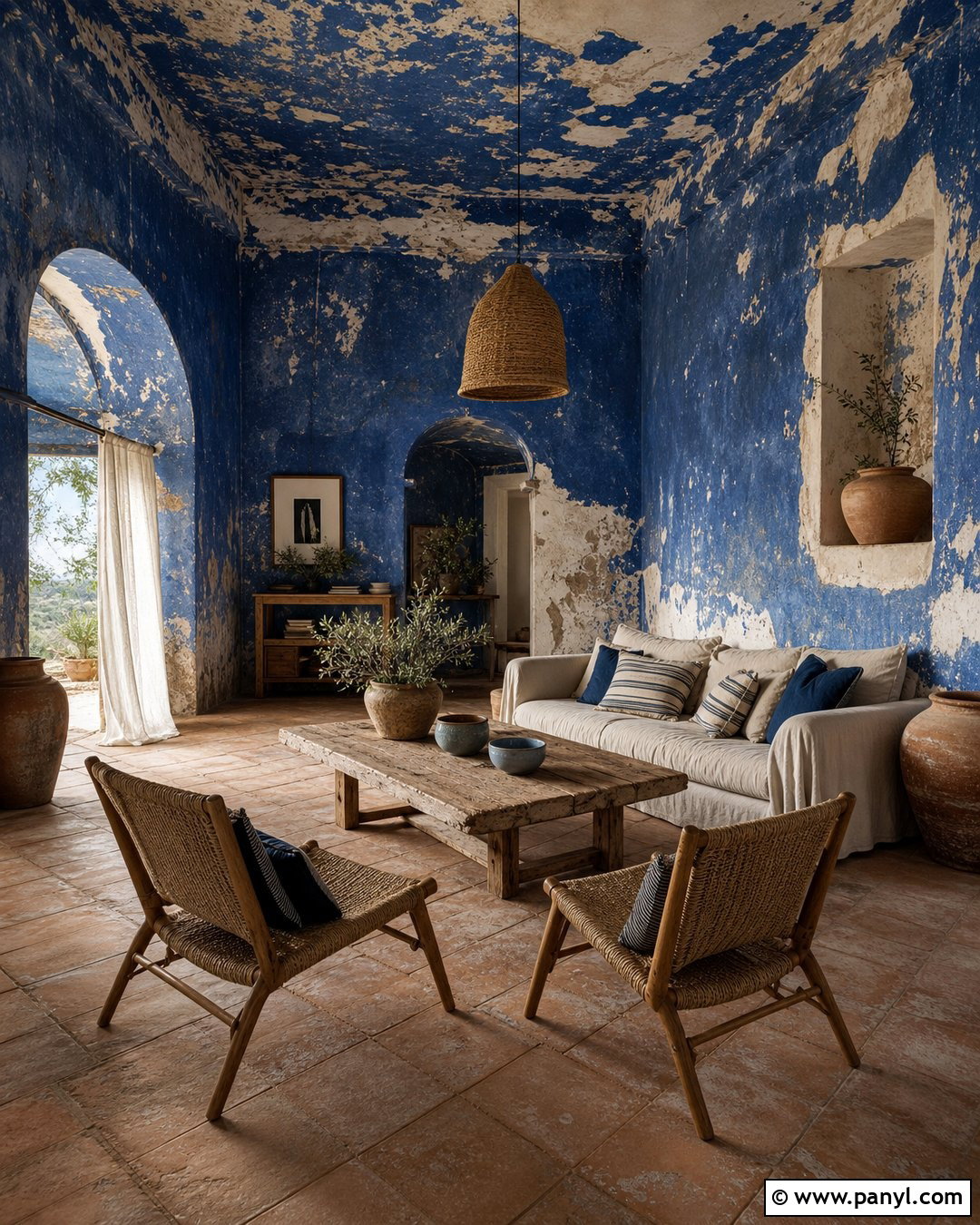
Capture the faded beauty of an old Mediterranean home with ultramarine blue walls, rough ivory plaster, and sun-warmed terracotta flooring. Apply the blue unevenly so pale plaster appears around doorways, niches, and lower wall sections. Arrange a low cream linen sofa with striped blue cushions beside two woven rush chairs. A chunky reclaimed wood table and a built-in plaster shelf can hold earthenware, books, and simple glass vessels. Add arched openings, natural linen curtains, and a large woven pendant to establish the architectural character. Olive branches and terracotta pots introduce organic color without competing with the walls. Keep the furniture low and the arrangement airy. Bright daylight should emphasize every chalky texture and make the room feel aged but welcoming.
14. Blue Concrete Basement Lounge
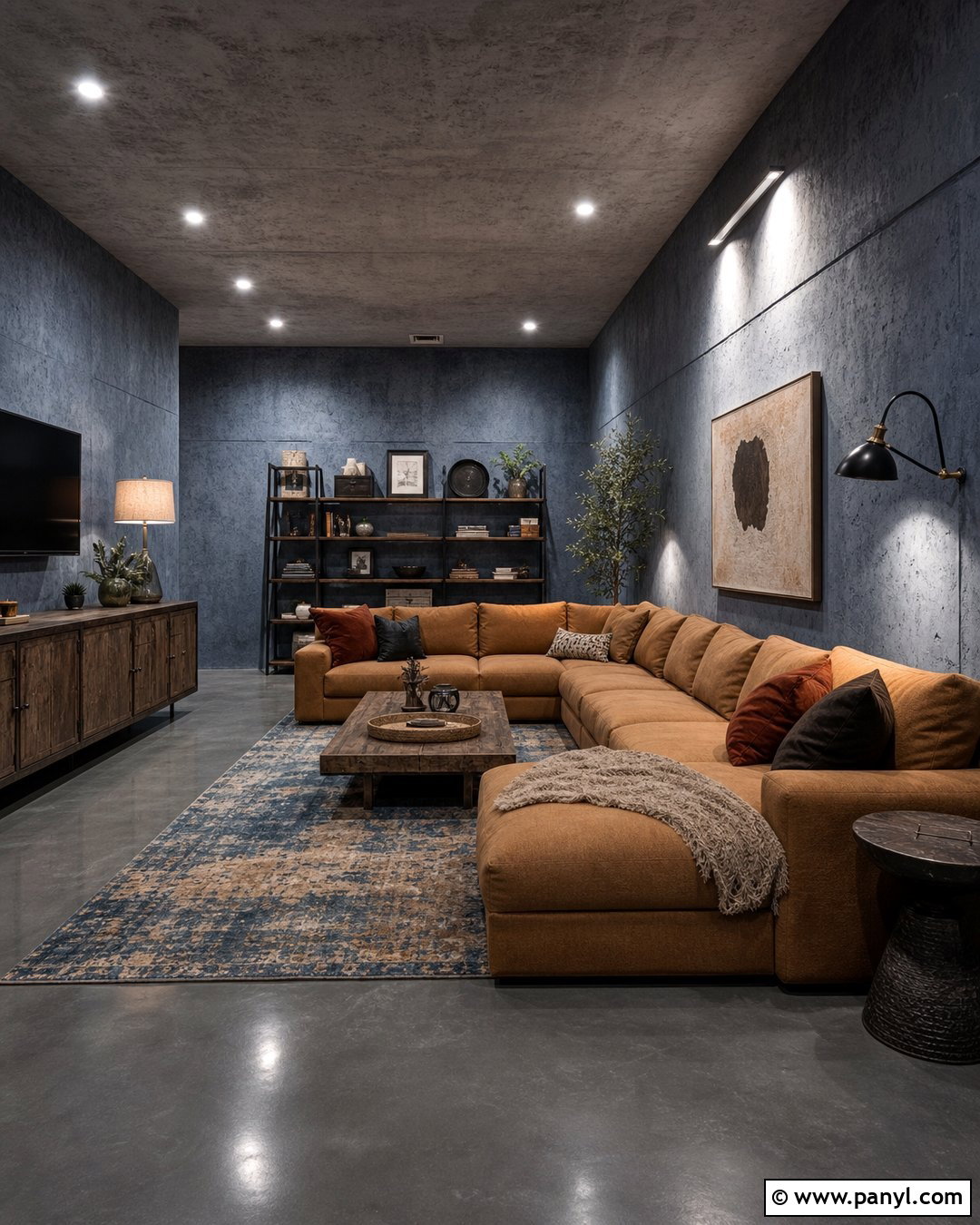
A basement lounge can embrace its rugged structure while still offering a comfortable place to gather. Coat the concrete walls in washed midnight blue, allowing gray patches and rough aggregate to remain visible through the decorative finish. Place a modular camel-colored sofa in the center and add a substantial reclaimed timber coffee table. Black steel shelving can store books, board games, and media equipment without blocking the walls. Warm the sealed concrete floor with a large faded blue-and-tan rug. Use several bright wall washers, a white ceiling fixture, and adjustable reading lamps to eliminate dark corners. Add rust-colored cushions, heavy canvas curtains, and one distressed wood cabinet. The balanced layout transforms an imperfect basement into an intentional industrial retreat.
15. Powder Blue Vintage Nursery
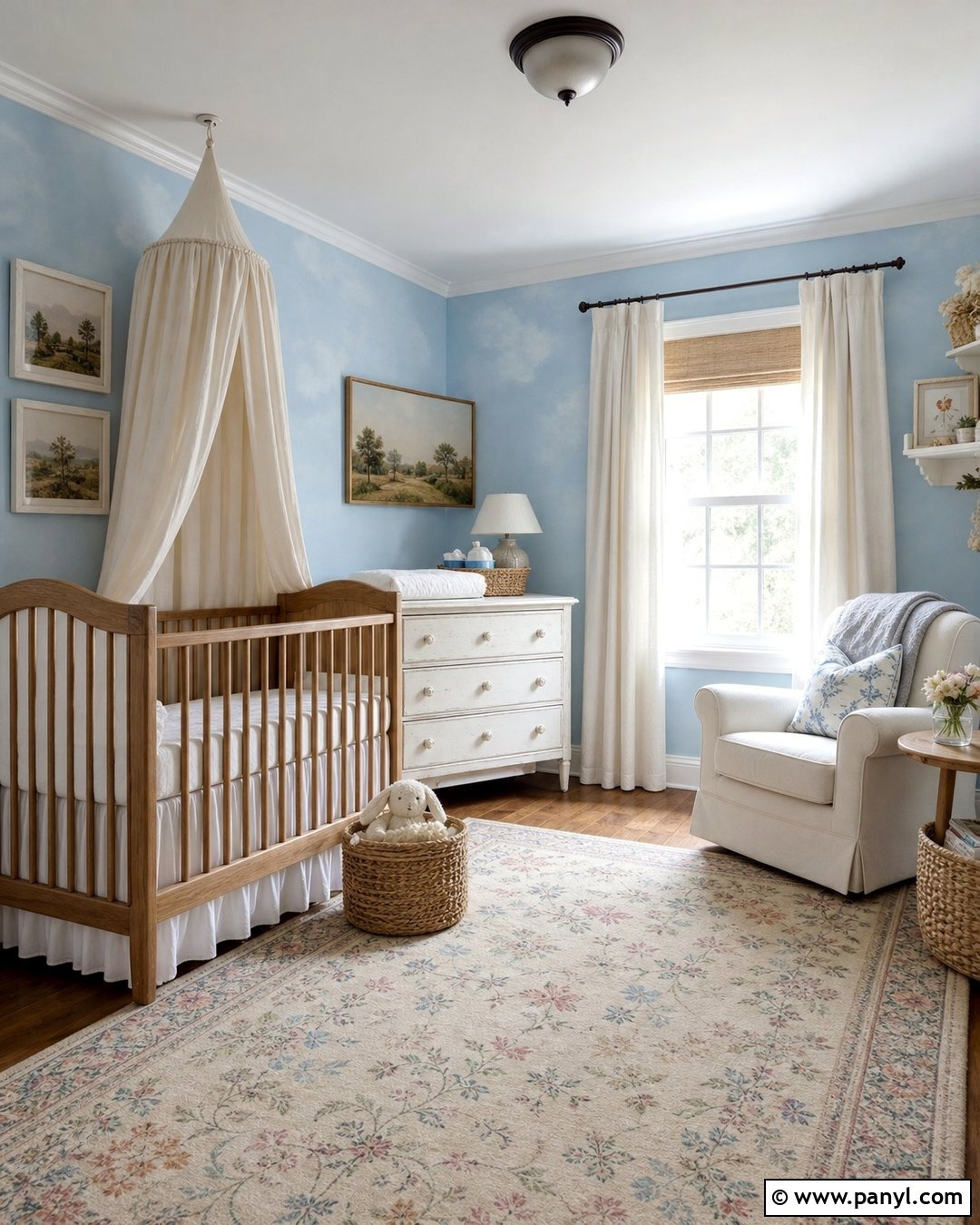
A vintage nursery can use gently distressed surfaces while remaining bright, peaceful, and easy to clean. Choose powder blue walls with a subtle cloudy limewash effect instead of loose or peeling paint. Place a natural oak crib against the smoothest wall and add an ivory upholstered chair beside a small wooden table. A faded floral rug in cream, blue, and muted rose will cushion the floor and define the central area. Include a distressed white dresser secured firmly to the wall, woven storage baskets, and simple cotton curtains. Soft landscape prints and a small fabric canopy can introduce nostalgic charm. Keep decorations minimal and safely positioned away from the crib. The finished room should suggest age through color and texture, not actual deterioration.
16. Blue Decayed Home Office
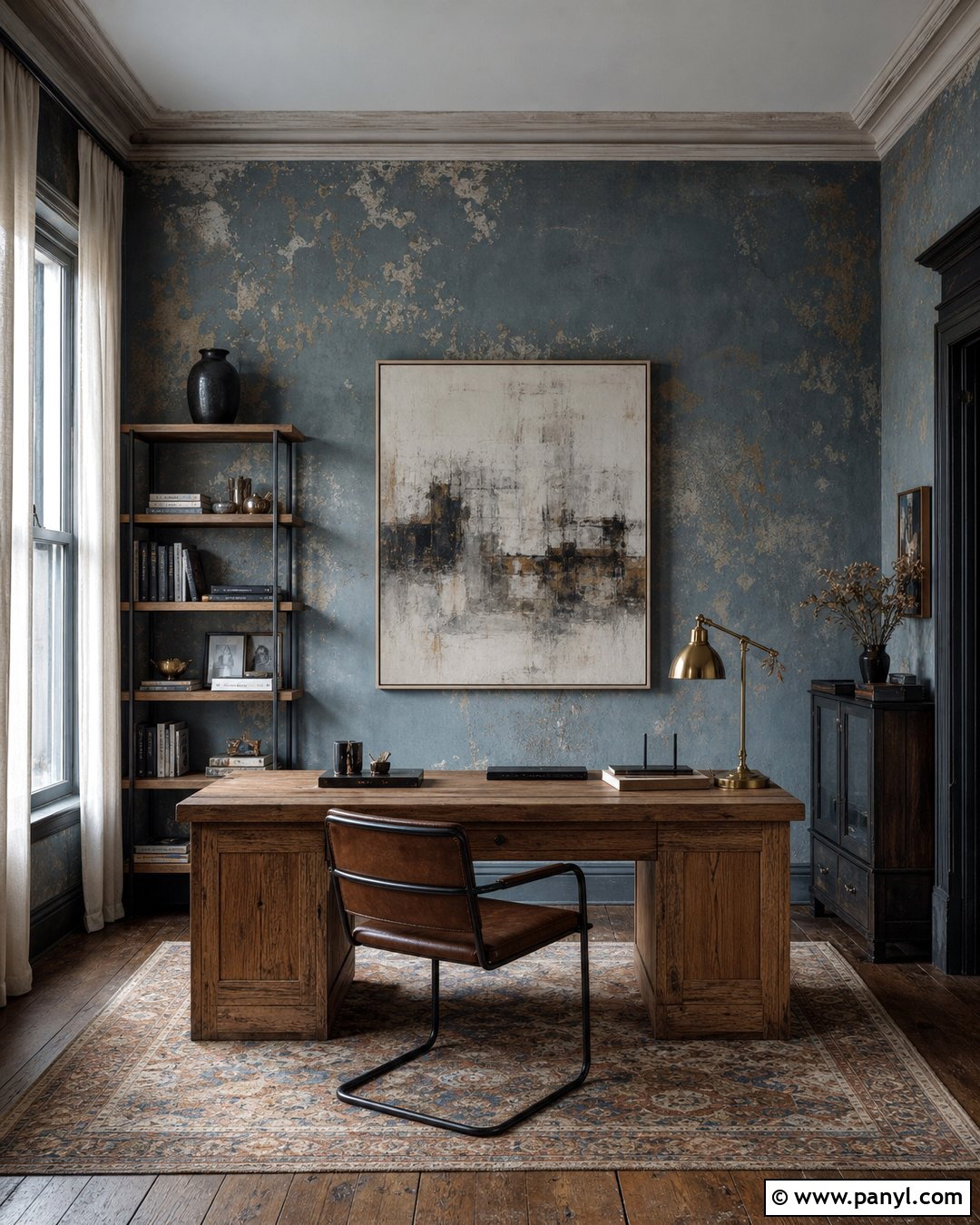
Working from home feels more inspiring in a room that combines historic texture with modern organization. Apply a weathered slate-blue finish to the walls, exposing narrow areas of warm gray plaster near corners and trim. Position a substantial oak desk in front of the main wall and use a black metal chair with supportive brown leather upholstery. Install open shelves for labeled boxes, books, and pottery, leaving enough blue surface visible between them. A faded patterned rug can soften plank flooring and reduce the room’s industrial edge. Add a large window with flax linen curtains, an adjustable brass desk lamp, and a simple ceiling light. An antique cabinet and one oversized abstract artwork complete the space while keeping the work zone practical and uncluttered.
17. Faded Blue Coastal Dining Room
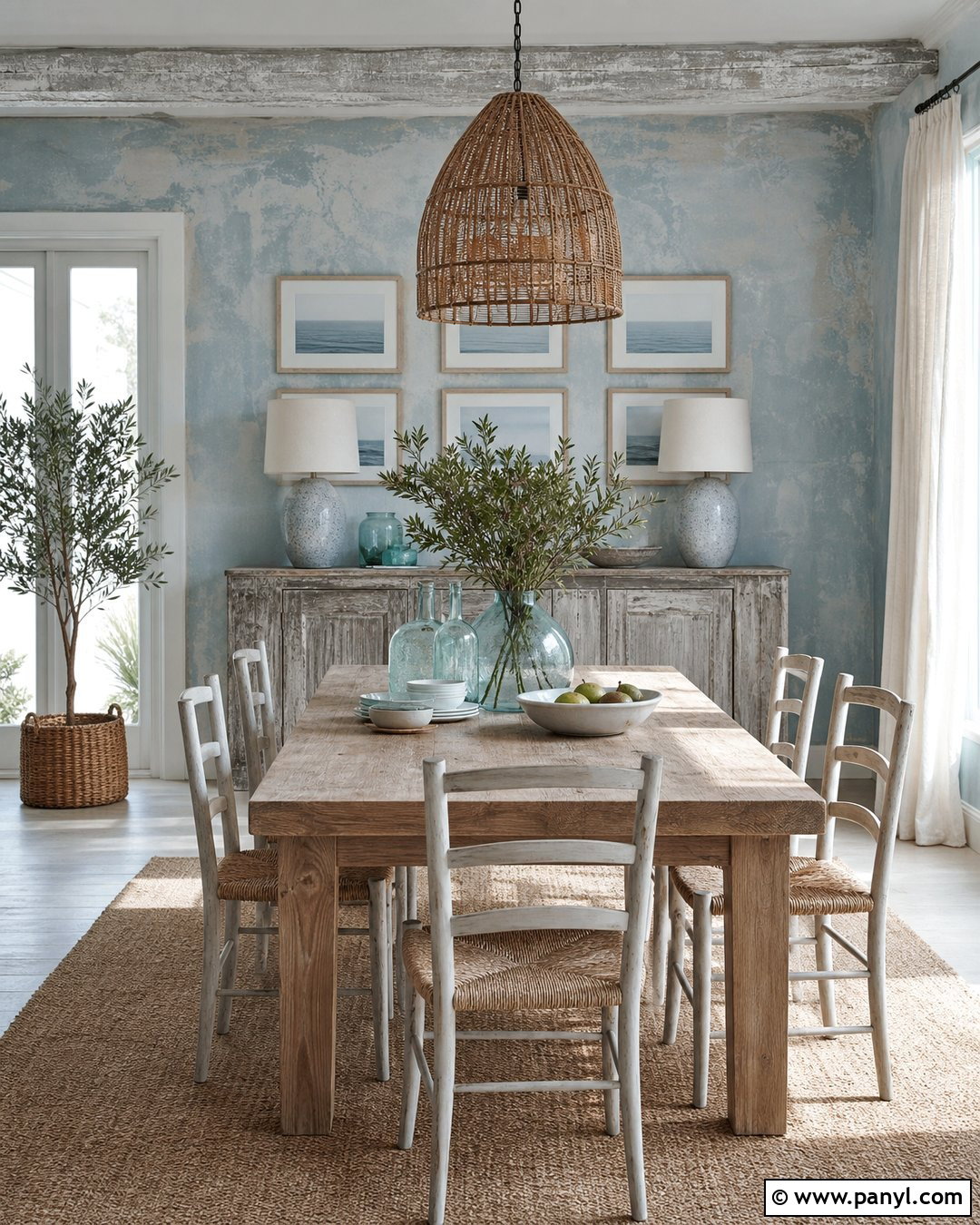
Faded blue walls, bleached wood, and woven textures can create a coastal dining room without obvious nautical decorations. Use a washed sea-blue finish that reveals soft white beneath the surface, especially around the window and door frames. Center a weathered oak table on a flat-woven sand-colored rug and surround it with rush-seat chairs painted muted white. A long distressed cabinet can hold dishes and serving pieces while supporting ceramic lamps and clear glass vessels. Add linen curtains, an oversized rattan pendant, and simple framed seascapes in pale wood frames. Keep shells and themed accessories to a minimum. Instead, rely on sun-faded color, natural fibers, and lightly aged finishes. The complete room will feel relaxed, breezy, and shaped by time.
18. Blue Bohemian Decayed Room
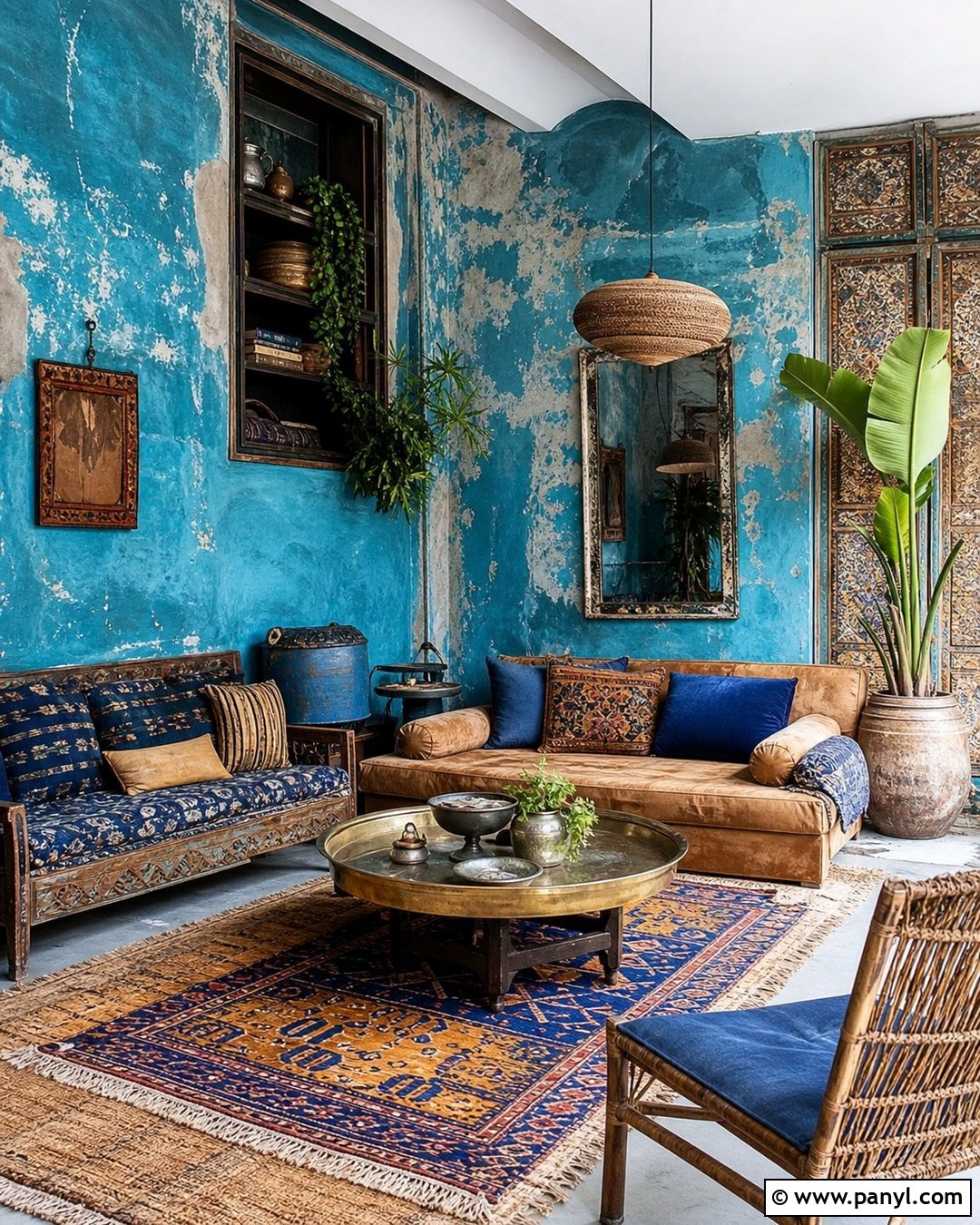
Rich blue walls provide an expressive background for a layered bohemian room filled with useful vintage pieces. Start with peacock blue plaster and add areas of muted turquoise, chalky gray, and exposed cream. Place a low tan sofa along one wall, then arrange a carved wood daybed and woven chair around a round brass coffee table. Layer faded kilim rugs over natural wood flooring and combine indigo cushions with rust, ocher, and ivory textiles. Use a large distressed mirror, open wooden shelves, and hanging plants to soften the wall texture. A woven pendant and white floor lamps will keep the room bright. Choose fewer, larger objects instead of many tiny accessories, ensuring the collected atmosphere remains comfortable rather than cluttered.
19. Blue Decayed Entryway
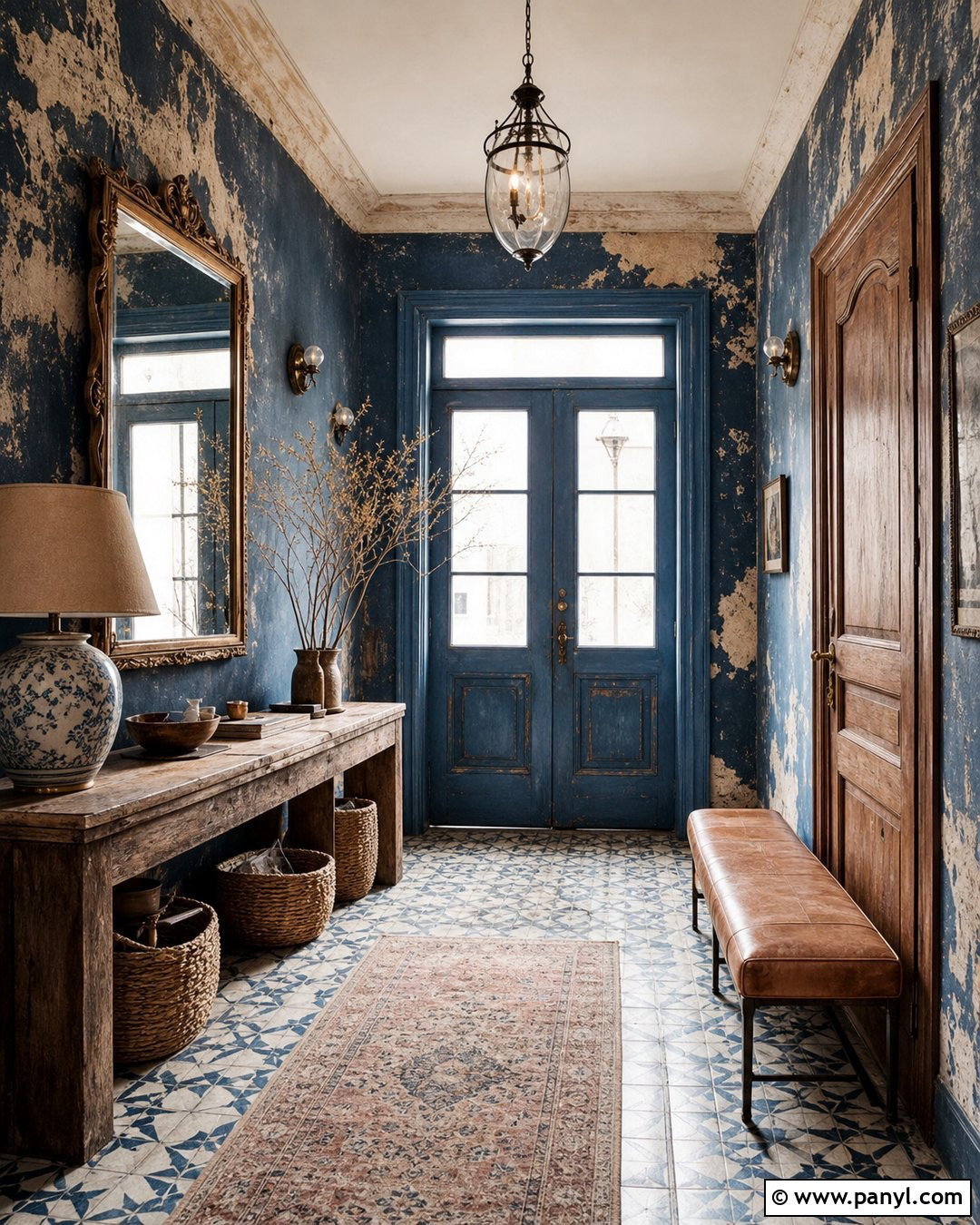
An entryway offers enough space to experiment with decay-inspired finishes without transforming an entire living area. Cover the walls in faded Prussian blue, allowing controlled areas of beige plaster to show near the baseboards and arched doorway. Place a narrow reclaimed wood console against the main wall and hang an antiqued brass mirror above it. A worn leather bench can provide seating, while woven baskets underneath keep shoes and everyday items contained. Use patterned cement-look floor tile in blue, cream, and charcoal to continue the aged character. Add a bright glass pendant and two small wall lights so the entrance never feels gloomy. A ceramic lamp, simple tray, dried branches, and faded runner complete the practical, welcoming arrangement.
20. Blue Decayed Sunroom
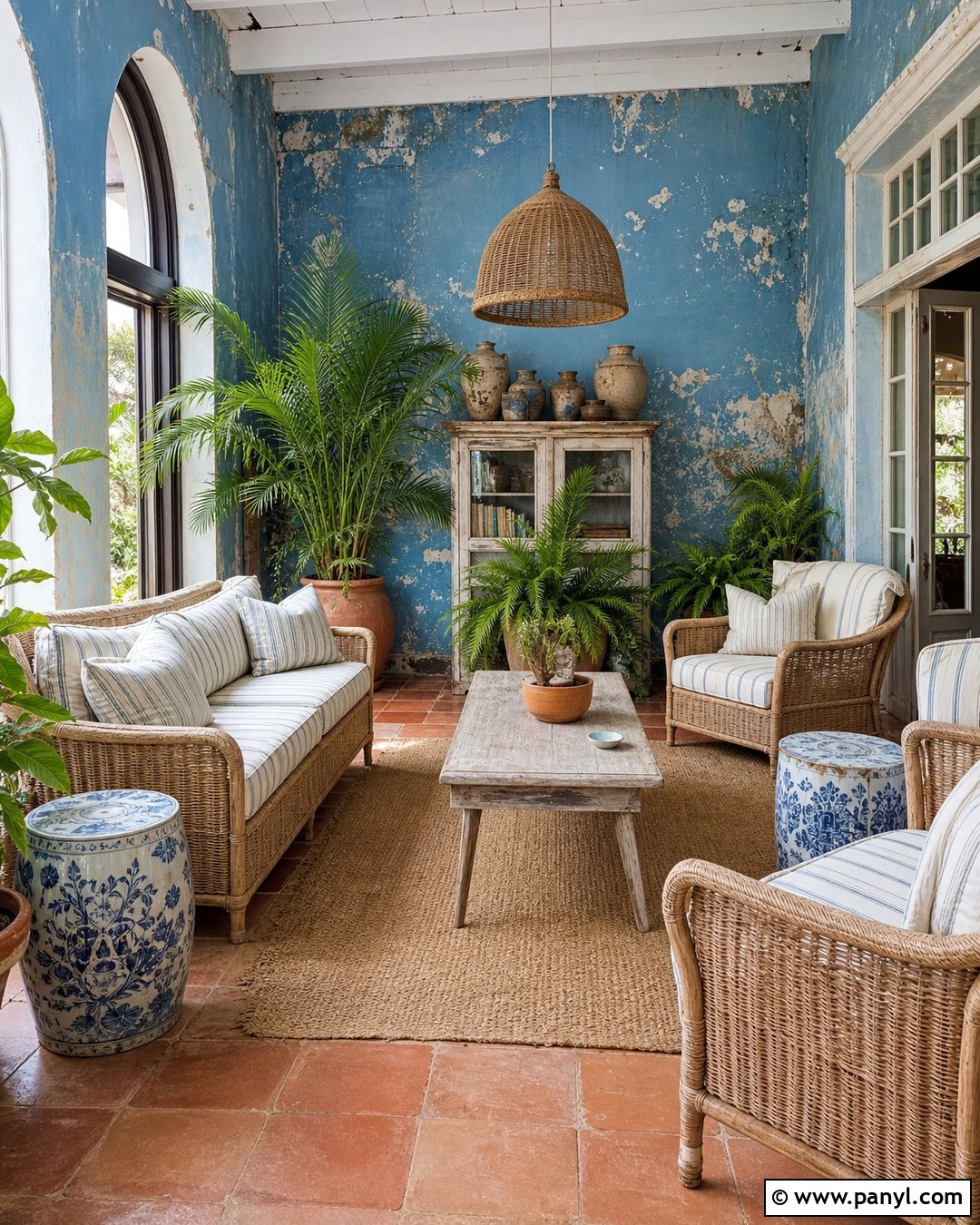
A sunroom naturally balances rough blue walls with generous daylight and abundant greenery. Paint the walls a faded azure blue, adding softly worn white patches and fine imitation cracks around the windows. Arrange a light rattan sofa and two matching chairs around a weathered wood table, using washable cushions in cream and blue stripes. Cover terracotta tile flooring with a flat-woven natural rug. Tall potted plants can occupy the corners, while smaller pots sit on a distressed metal stand. Keep window treatments sheer so bright light reveals the wall texture. Add white ceiling beams, ceramic garden stools, and a simple woven pendant. The final room should feel like an old conservatory that has been carefully cleaned, restored, and made comfortable again.
Conclusion:
The most successful decayed interior looks intentional, safe, and comfortable. Instead of preserving active moisture, unstable plaster, or peeling old paint, recreate age with limewash, layered color, decorative crackle finishes, removable panels, and weathered furniture. Blue walls provide a flexible foundation for everything from coastal cottages and Victorian parlors to industrial lofts and Gothic bedrooms. Balance their cool color with warm wood, aged brass, natural fibers, leather, and softly faded rugs. Good lighting and an organized layout will prevent the distressed details from making the space feel dark or untidy. Use these **20 Blue Wall Decayed Room Ideas** to build a complete room that feels historic, expressive, and genuinely livable.

Related Ideas and Inspiration:
Leave a Reply