
A Vintage Bathroom With Dark Walls blends rich color, period details, and practical comfort in a space that feels collected rather than dated. Deep green, navy, charcoal, burgundy, and black can highlight traditional fixtures while making pale tile and polished metal stand out. Victorian bathrooms often favor curved fixtures and decorative details, while Art Deco rooms introduce stronger geometry, colorful tile, and streamlined forms. () The key is balancing those dramatic walls with reflective mirrors, layered lighting, lighter flooring, and enough visual breathing room. From romantic clawfoot tub settings to compact powder rooms with geometric tile, each design below creates a complete look you can realistically recreate. Explore these distinctive approaches to designing a Vintage Bathroom With Dark Walls.
1. Black Victorian Bathroom
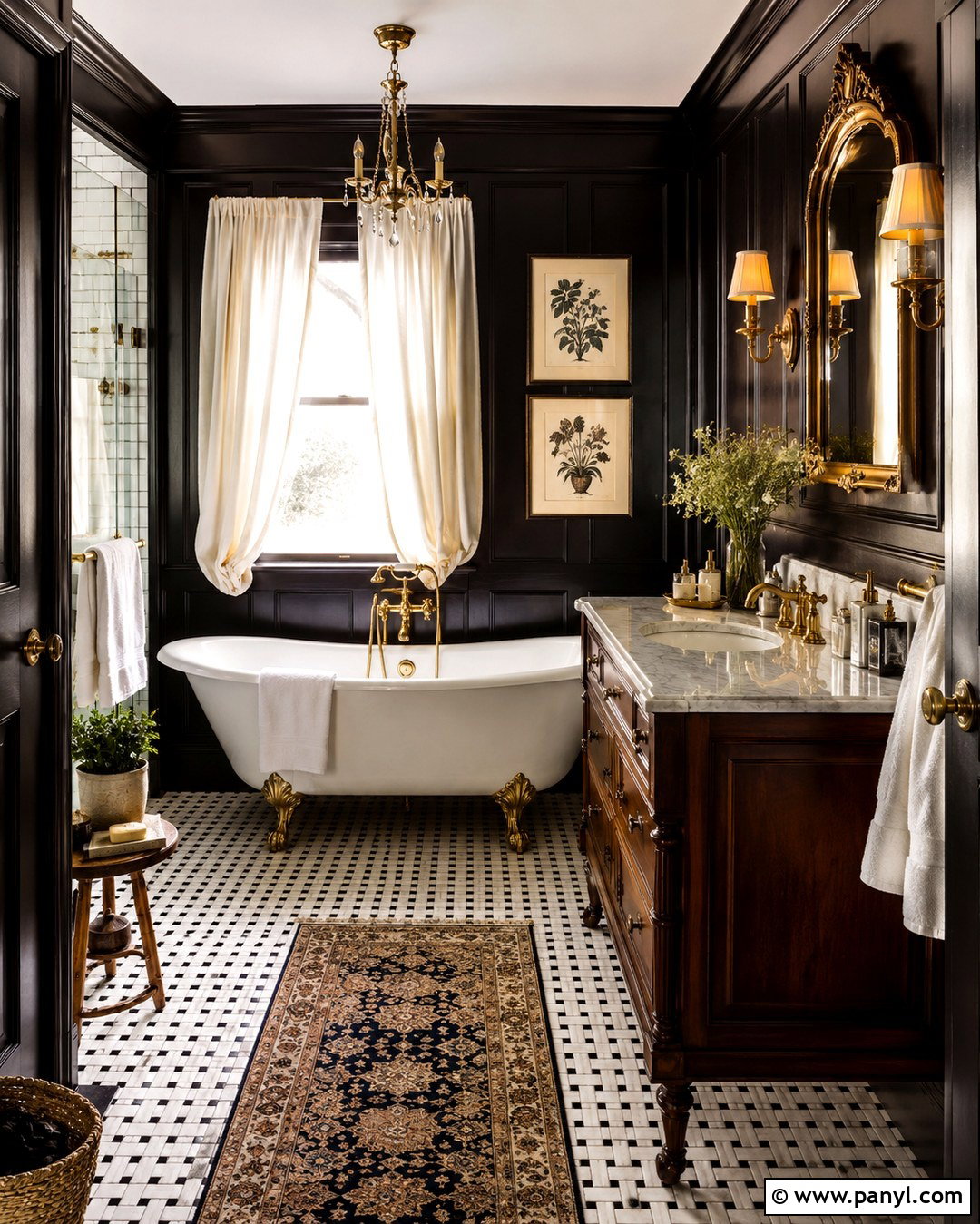
Glossy black paneled walls give a Victorian bathroom depth without hiding its architectural character. Install slim raised molding across the walls, then use a warm white ceiling to keep the room visually open. A white porcelain clawfoot tub with polished brass feet creates a striking centerpiece beneath an arched window. Add a marble-topped walnut washstand, traditional cross-handle faucets, and an ornate gold mirror. Black-and-white basketweave floor tile introduces pattern while connecting the dark walls to the pale fixtures. Place shaded brass sconces on both sides of the mirror for balanced task lighting. Finish the room with white linen curtains, framed botanical prints, folded cream towels, and a narrow antique stool beside the tub.
2. Dark Green Vintage Bathroom
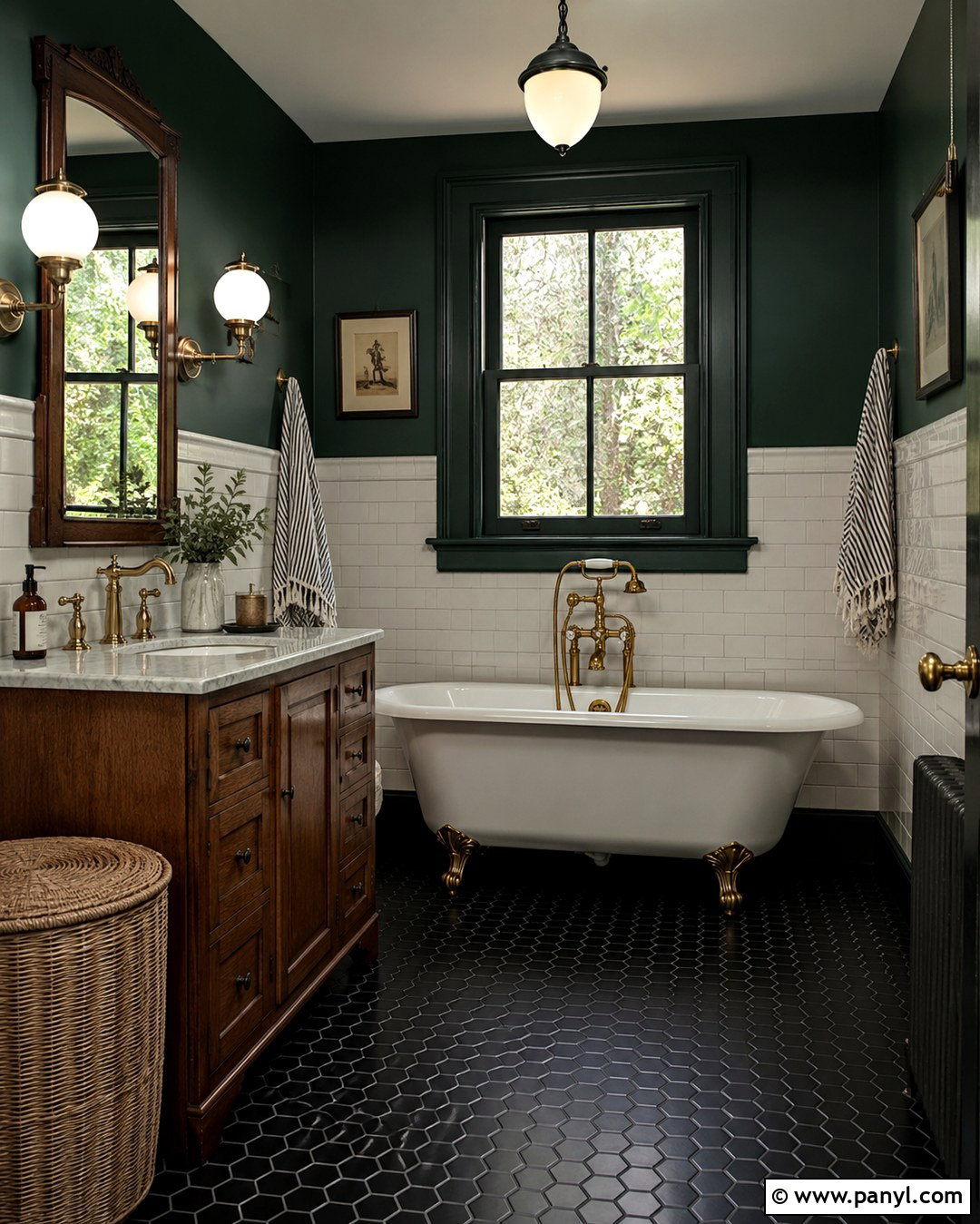
Forest green walls create a calm, established backdrop for warm wood and aged metal. Use moisture-resistant paint above creamy white subway tile wainscoting, with a thin black tile border defining the transition. A medium-oak vanity with inset cabinet doors provides useful storage without looking too modern. Complete it with a white marble counter, antique brass bridge faucet, and carved wood mirror. Black hexagonal floor tile keeps the palette grounded, while a white pedestal tub adds brightness along the far wall. Two opal-glass sconces and a small milk-glass ceiling fixture provide clear illumination. Add striped cotton towels, a woven hamper, vintage landscape artwork, and a simple fern to soften the formal materials and make the bathroom feel welcoming.
3. Navy Art Deco Bathroom
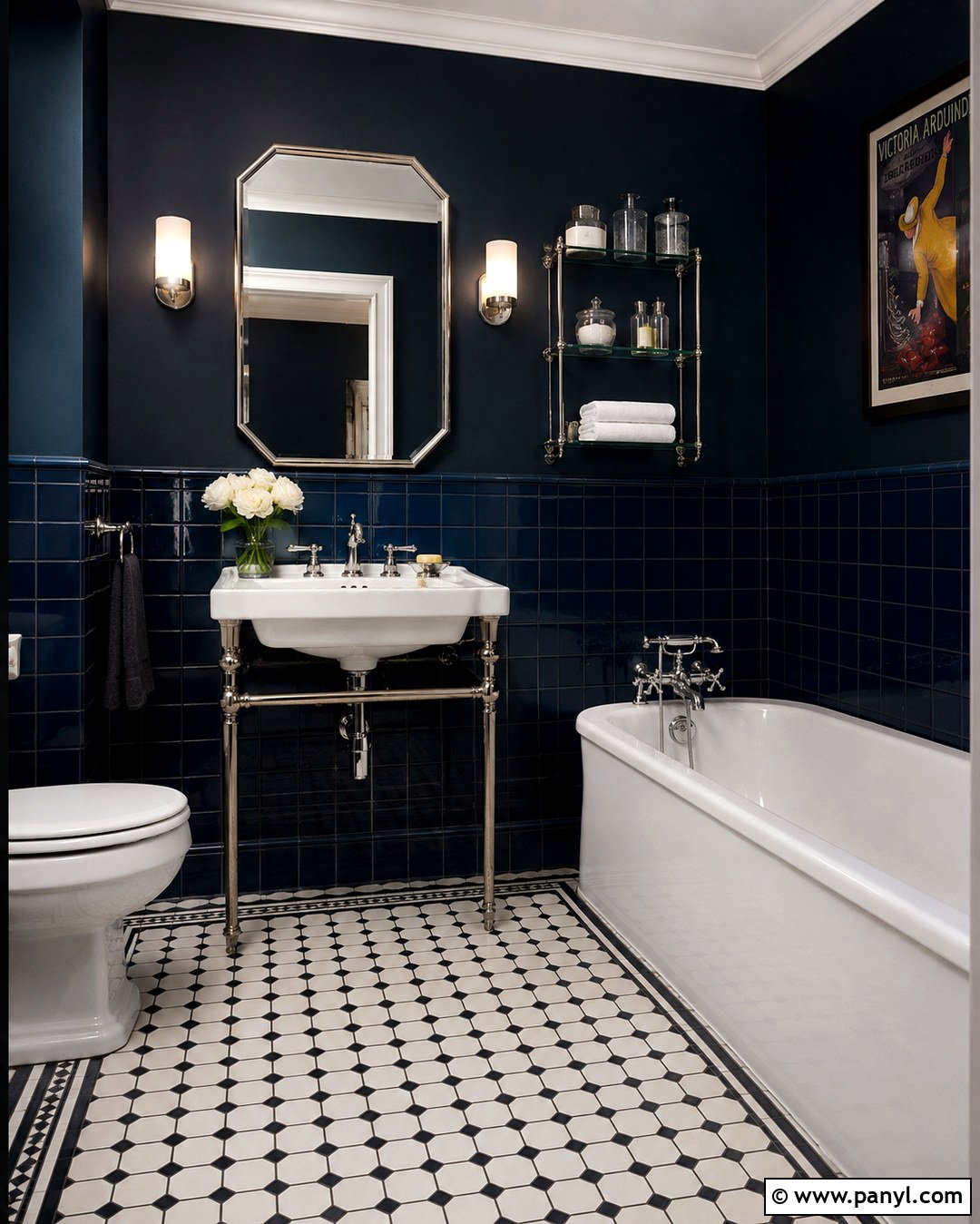
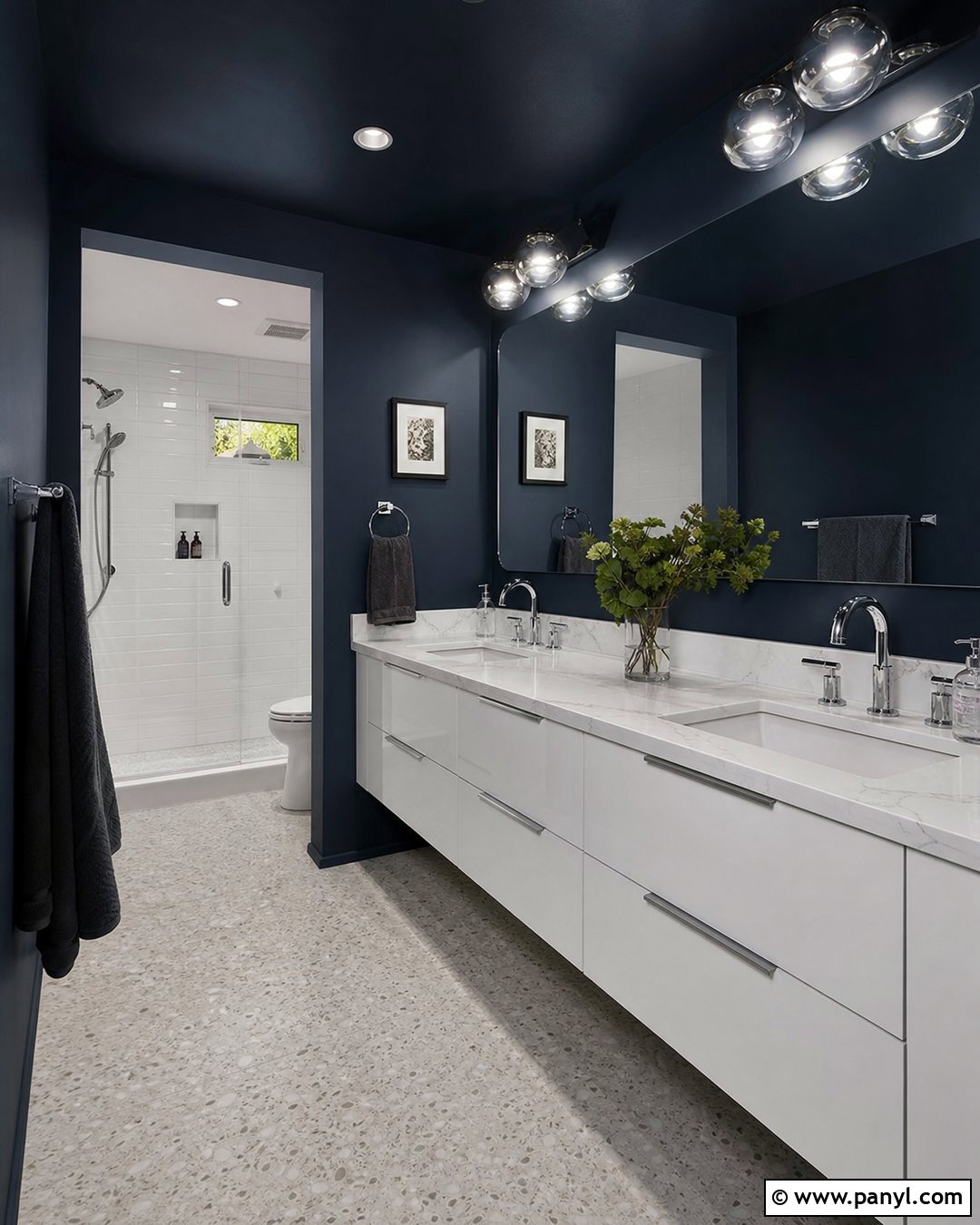
Deep navy tile turns an ordinary bathroom into a crisp Art Deco retreat. Cover the vanity wall with square navy ceramic tile arranged in straight, symmetrical lines, then paint the remaining walls in a matching satin finish. Choose a streamlined white console sink with polished chrome legs and a wall-mounted cross-handle faucet. An octagonal chrome mirror and tall frosted-glass sconces reinforce the geometric look. For contrast, install a white octagon-and-black-dot mosaic floor with a narrow navy border. A built-in tub can feel period appropriate when finished with white tile and black edging. Keep storage simple with a recessed medicine cabinet and glass shelves. White towels, one framed architectural print, and a fluted glass container complete the clean, glamorous scheme.
4. Burgundy Victorian Bathroom
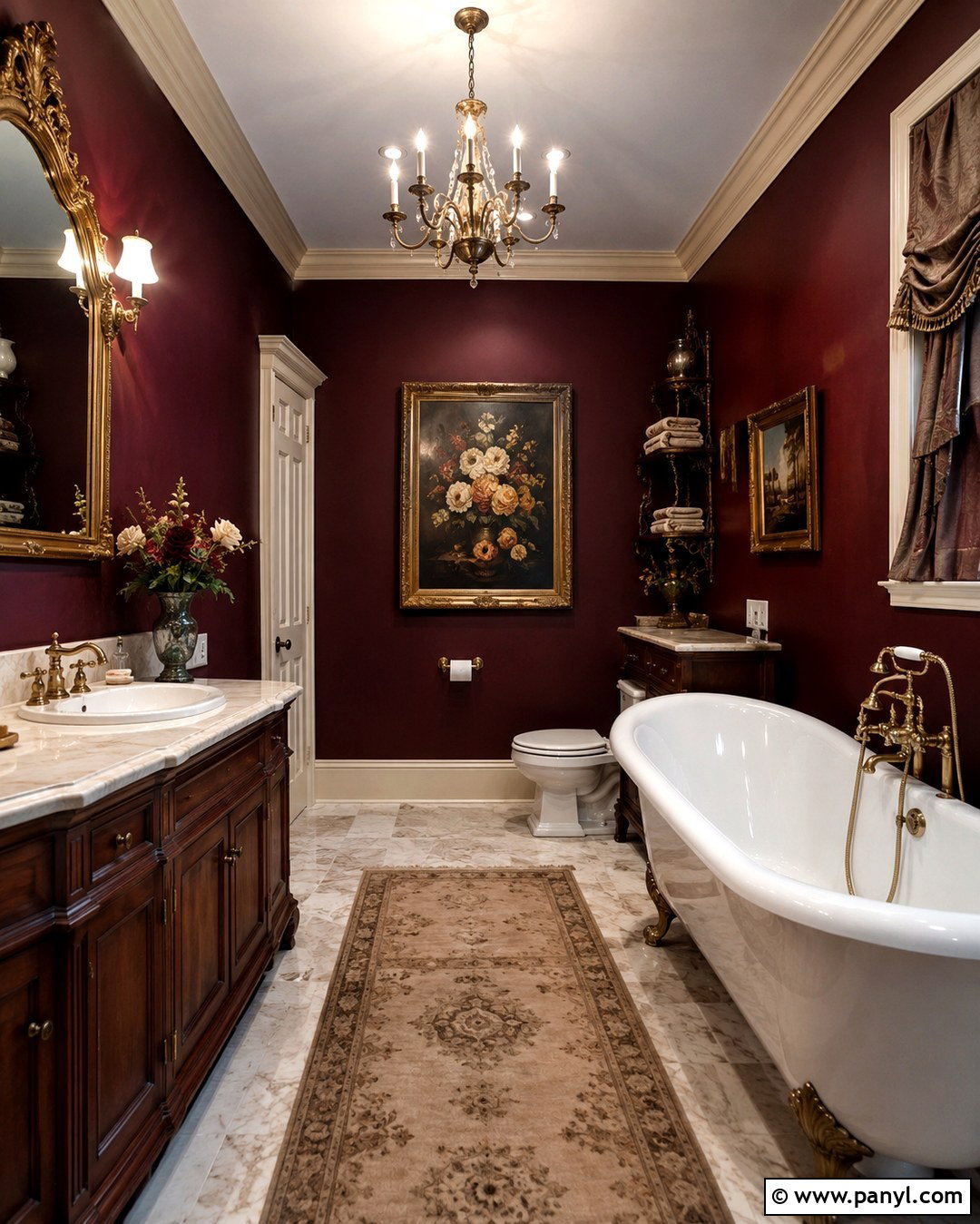
Rich burgundy walls bring warmth and drama to a larger Victorian bathroom. Balance the saturated color with ivory-painted trim, a pale ceiling, and softly veined marble flooring. Position a white roll-top tub against the main wall and use an exposed brass tub filler for an authentic focal point. A dark mahogany vanity with turned legs adds furniture-like character, while its cream marble top prevents the piece from feeling heavy. Hang a substantial gilded mirror over the sink and place traditional brass sconces on either side. An antique runner introduces muted blue and rose accents between the vanity and tub. Finish with ivory linen curtains, framed floral artwork, porcelain accessories, and neatly arranged towels in burgundy, cream, and dusty pink.
5. Charcoal Farmhouse Bathroom
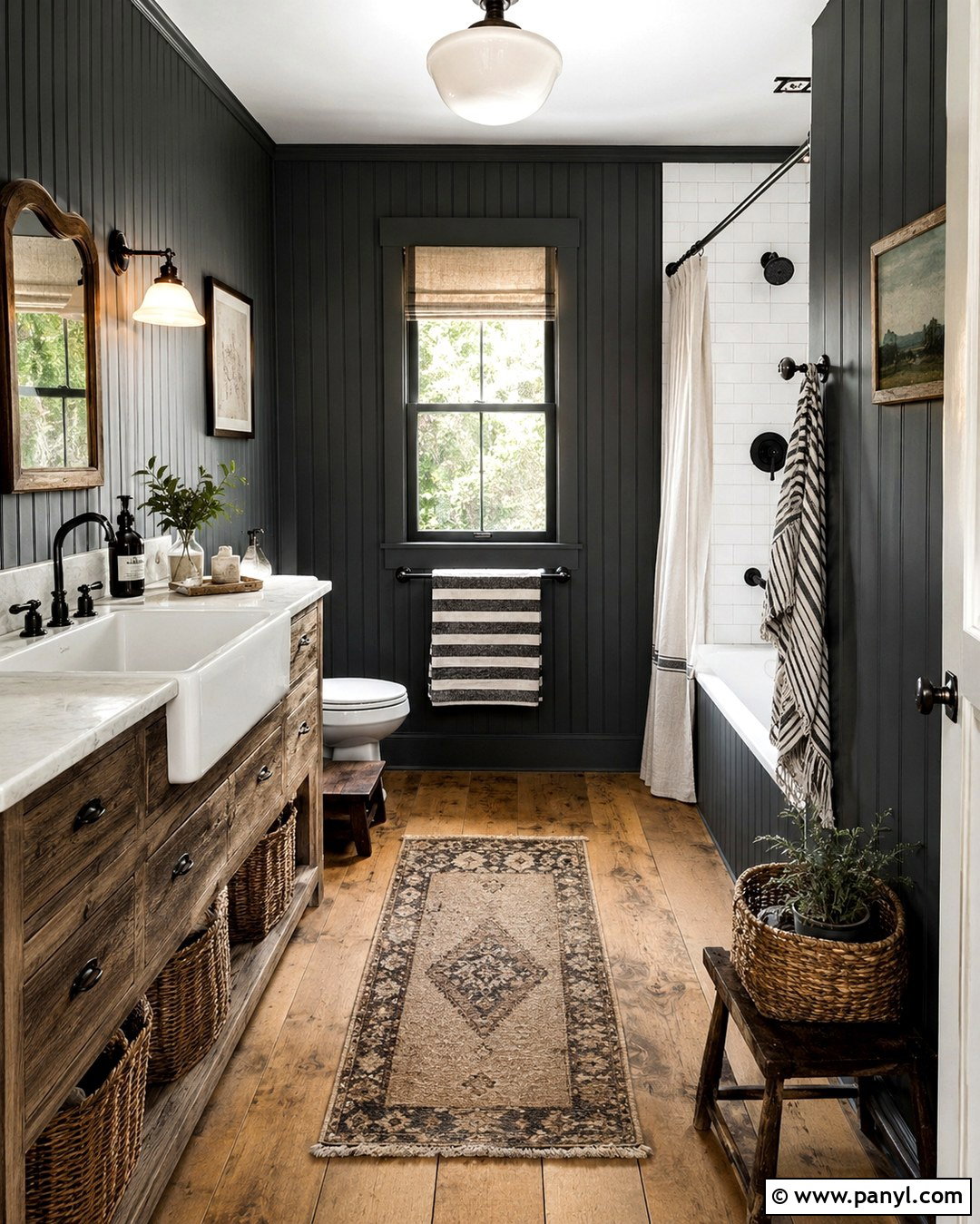
Charcoal beadboard gives a vintage farmhouse bathroom a moodier, more refined direction. Run the paneling from floor to ceiling on the vanity wall, while using warm white square tile around the shower and tub. A reclaimed pine vanity introduces natural texture and includes deep drawers for practical storage. Top it with honed white stone and a rectangular apron-front sink. Choose matte black bridge faucets, simple iron towel bars, and a black-framed medicine cabinet for continuity. Wide-plank oak-look flooring brings warmth without competing with the walls. A schoolhouse ceiling light and two clear-glass sconces keep the room bright. Add ticking-stripe towels, a wooden bath tray, an old framed landscape, and a lidded wicker basket for a relaxed finish.
6. Plum Vintage Powder Room
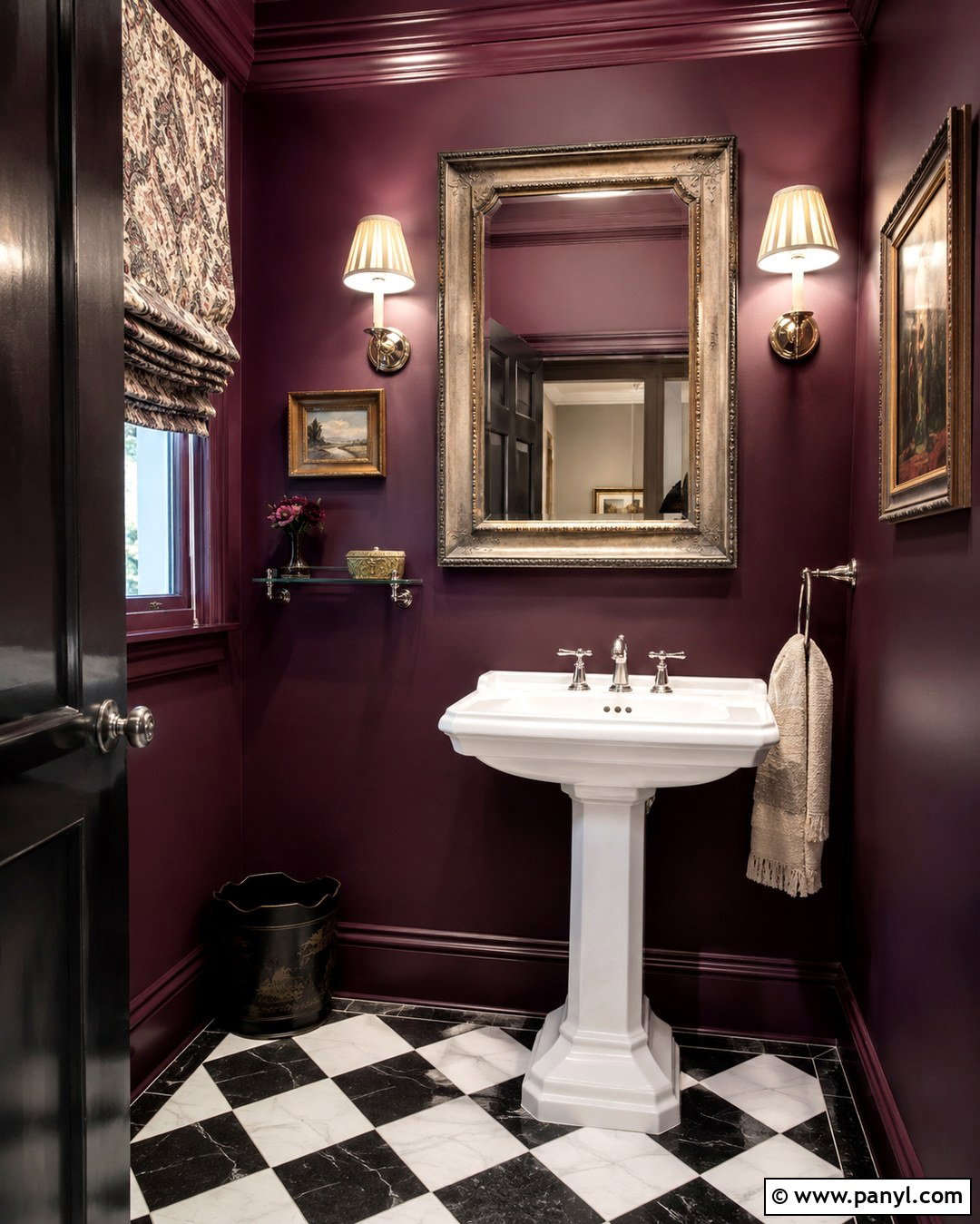
A small powder room is an ideal place to use deep plum from baseboard to ceiling. Color-drenching the walls, molding, and ceiling creates a seamless envelope, while glossy white fixtures provide sharp contrast. Select a compact pedestal sink with polished nickel taps so the limited floor area stays open. Above it, hang a tall antique silver mirror that reflects both light and architectural detail. A black-and-white marble checkerboard floor supplies classic pattern at an intimate scale. Install two petite pleated-shade sconces beside the mirror and a small flush-mount fixture overhead. A narrow glass shelf can hold soap and hand towels without adding bulky cabinetry. Complete the room with one miniature oil painting, a patterned Roman shade, and a polished nickel towel ring.
7. Dark Floral Wallpaper Bathroom
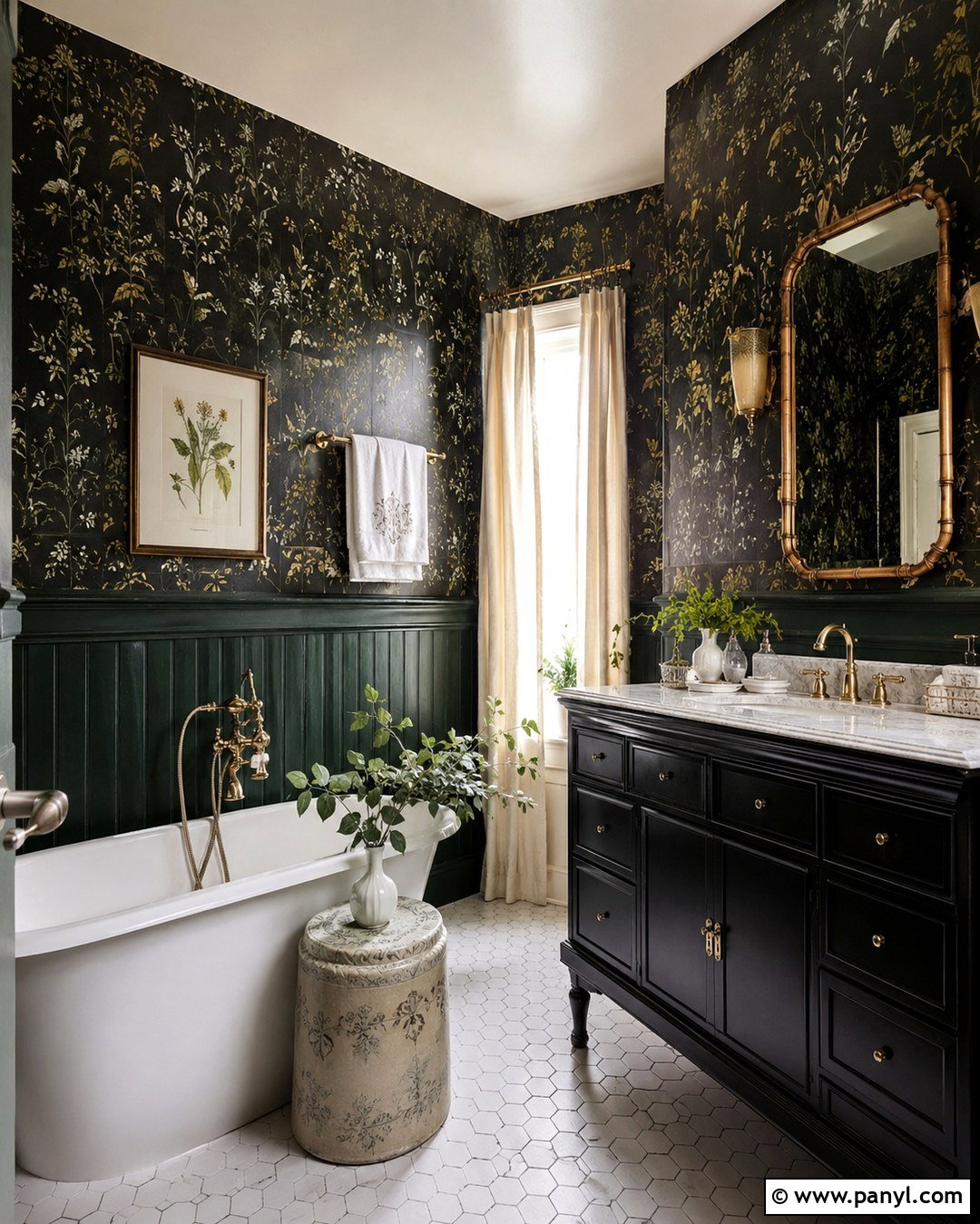
Dark botanical wallpaper can make a vintage bathroom feel layered and personal. Choose a moisture-suitable paper with muted roses, leaves, and small blossoms on a charcoal background. Use it above deep green paneled wainscoting, leaving the ceiling soft ivory for relief. A freestanding white tub should sit beneath the window, framed by washable linen curtains in natural cream. Add a vintage dresser vanity painted black, then top it with pale marble and an oval undermount sink. Antique brass faucets, a bamboo-framed mirror, and shaded wall lights bring warmth to the dark surfaces. Keep the floor restrained with small white hexagonal tile and dark grout. Complete the setting with solid-color towels, a ceramic garden stool, glass jars, and a few simple botanical sketches.
8. Black And White Vintage Bathroom
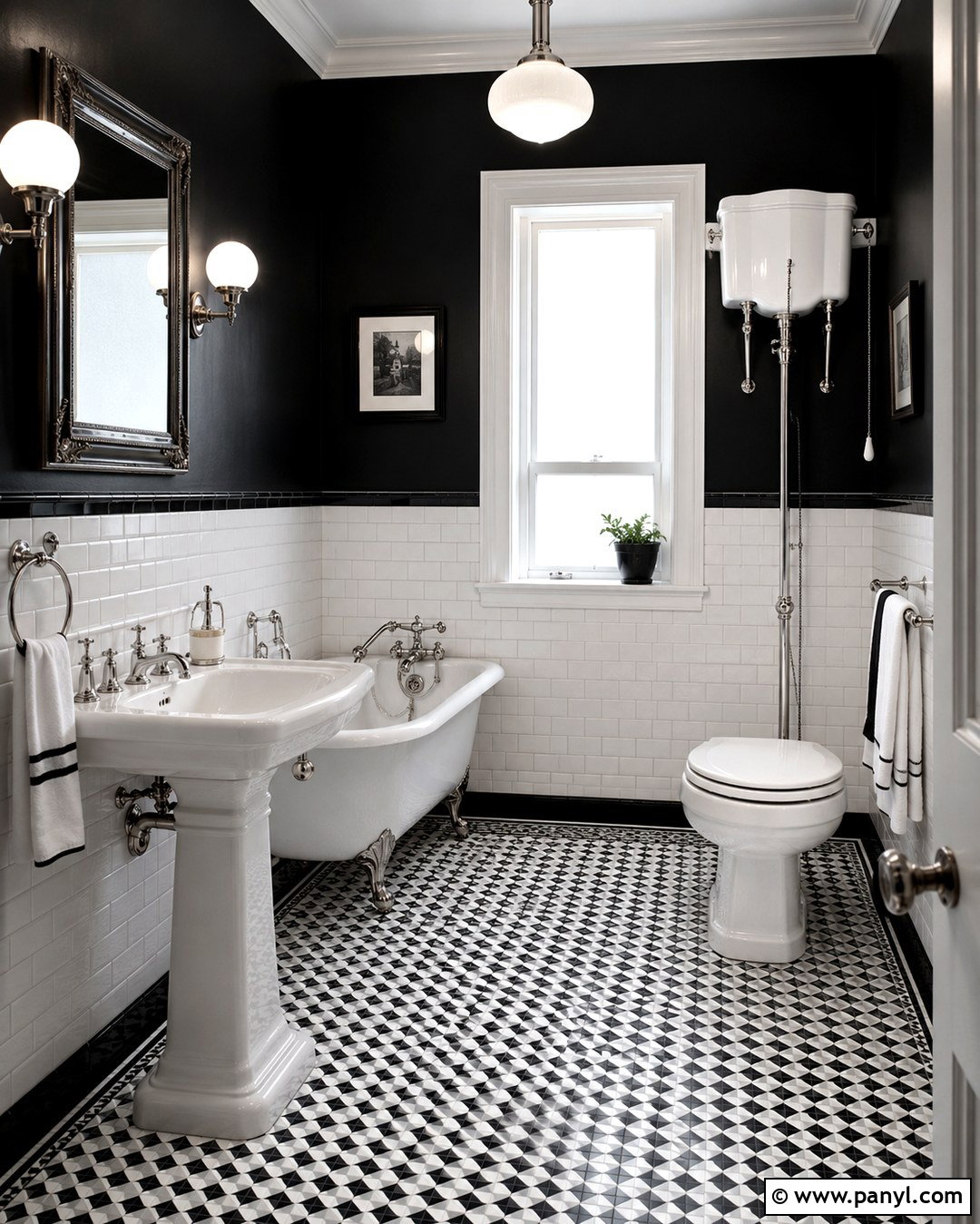
For a graphic vintage look, pair matte black upper walls with glossy white tile wainscoting. Cap the subway tile with a black pencil border to create a clean connection between both surfaces. A white pedestal sink, high-tank toilet, and compact clawfoot tub establish the period character without overcrowding the room. Continue the contrast underfoot with black-and-white pinwheel mosaic tile. Polished nickel faucets and exposed plumbing offer a softer shine than stark chrome. Use a black-framed medicine cabinet above the sink and mount white opal sconces at eye level. Keep textiles simple with white shower curtains and black-edged towels. A framed vintage sketch, small wooden stool, and clear glass containers add character while preserving the controlled monochrome palette.
9. Dark Teal 1920s Bathroom
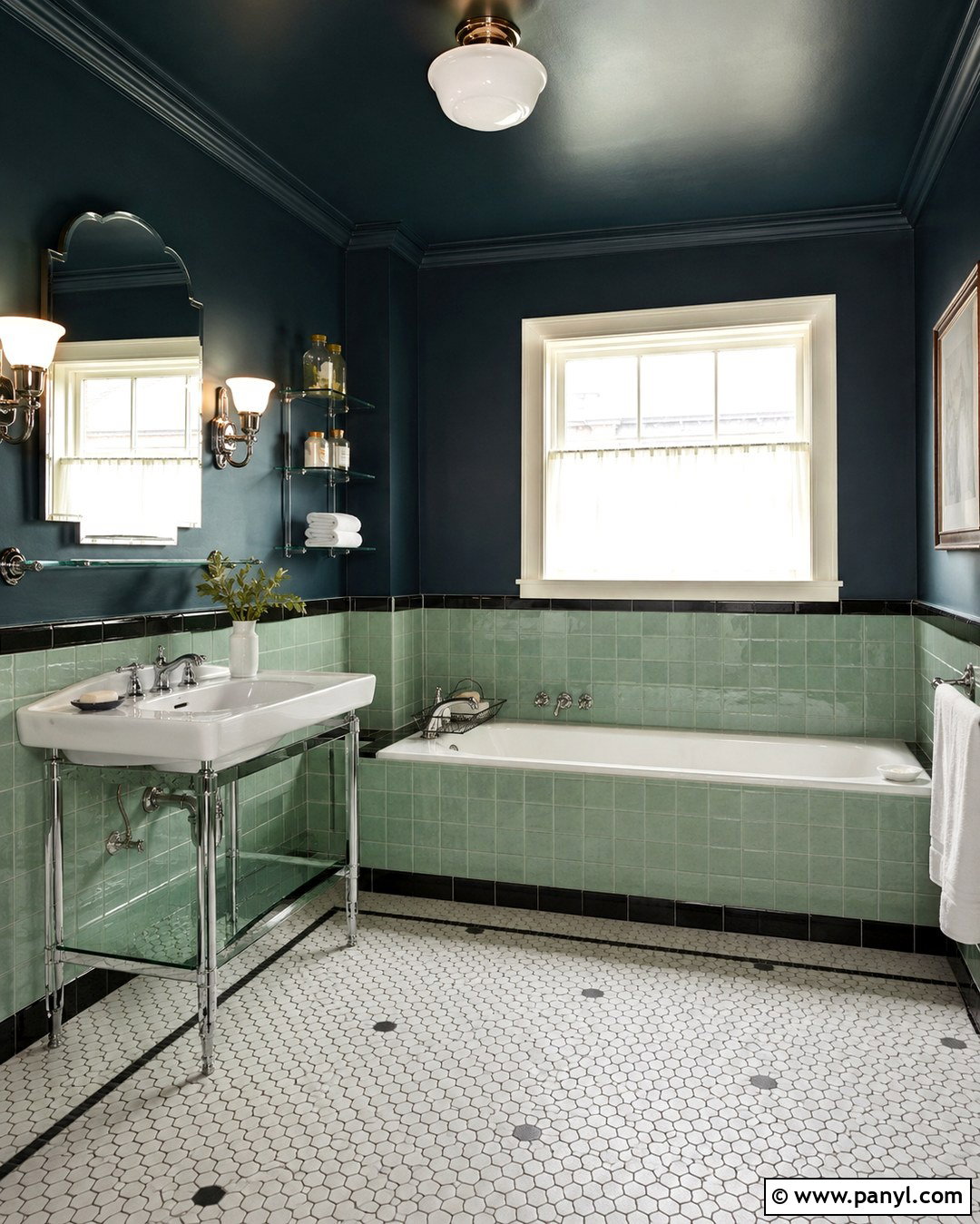
Dark teal walls pair beautifully with the colorful tile associated with 1920s bathrooms. Paint the upper walls and ceiling in the same blue-green shade, then install jade green square tile across the lower half. A narrow black liner tile gives the two colors a crisp boundary. Choose a wall-mounted white sink with chrome legs to maintain an airy floor plan. A recessed tub surrounded by white tile can include teal and black border details that repeat the room’s palette. Use white octagonal floor tile with scattered black inserts for a historically inspired foundation. A stepped chrome mirror, milk-glass sconces, and a glass shelf bring period shine. Finish with white towels, a jade ceramic soap dish, and one simple black-framed print above the towel rail.
10. Chocolate Brown Edwardian Bathroom
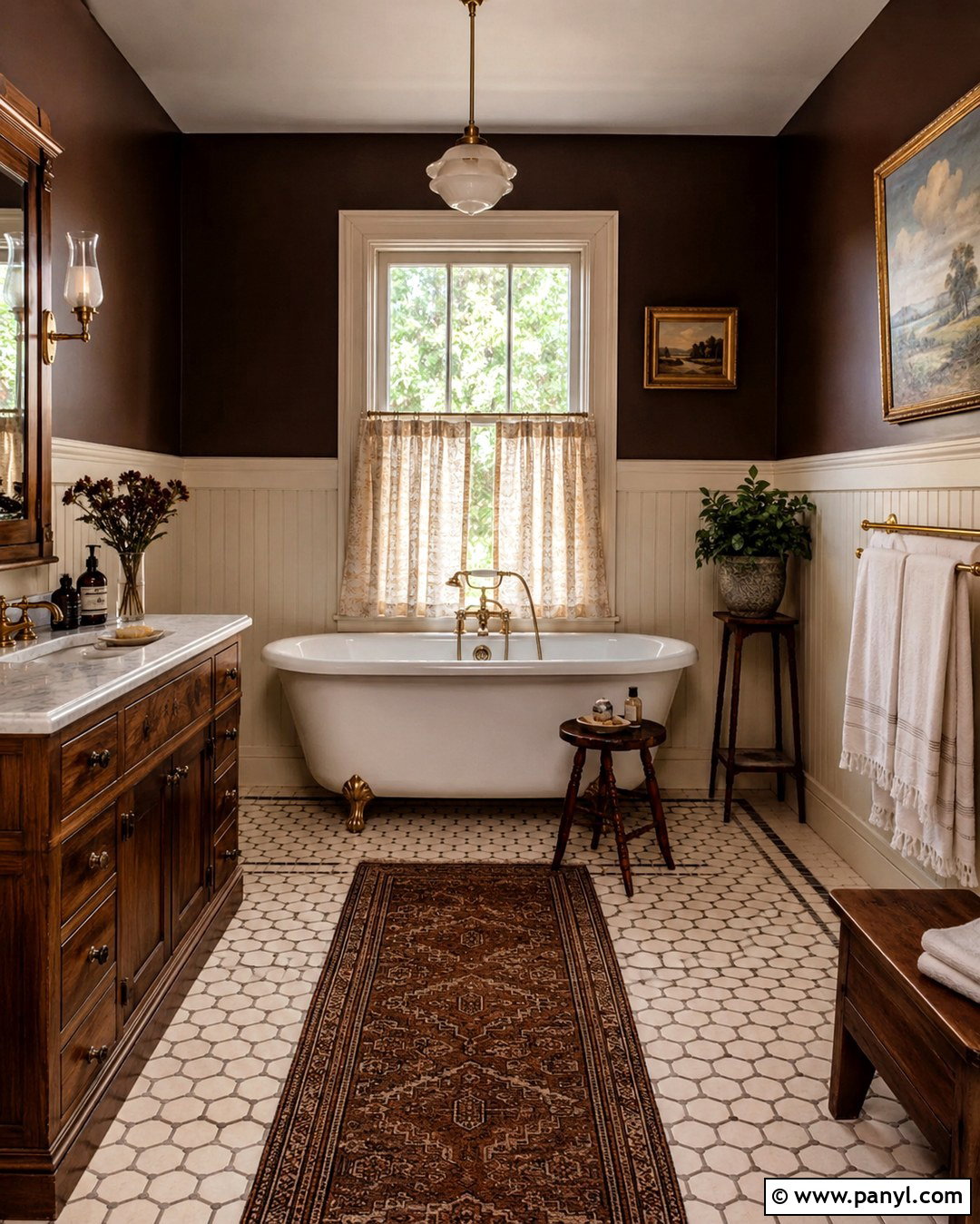
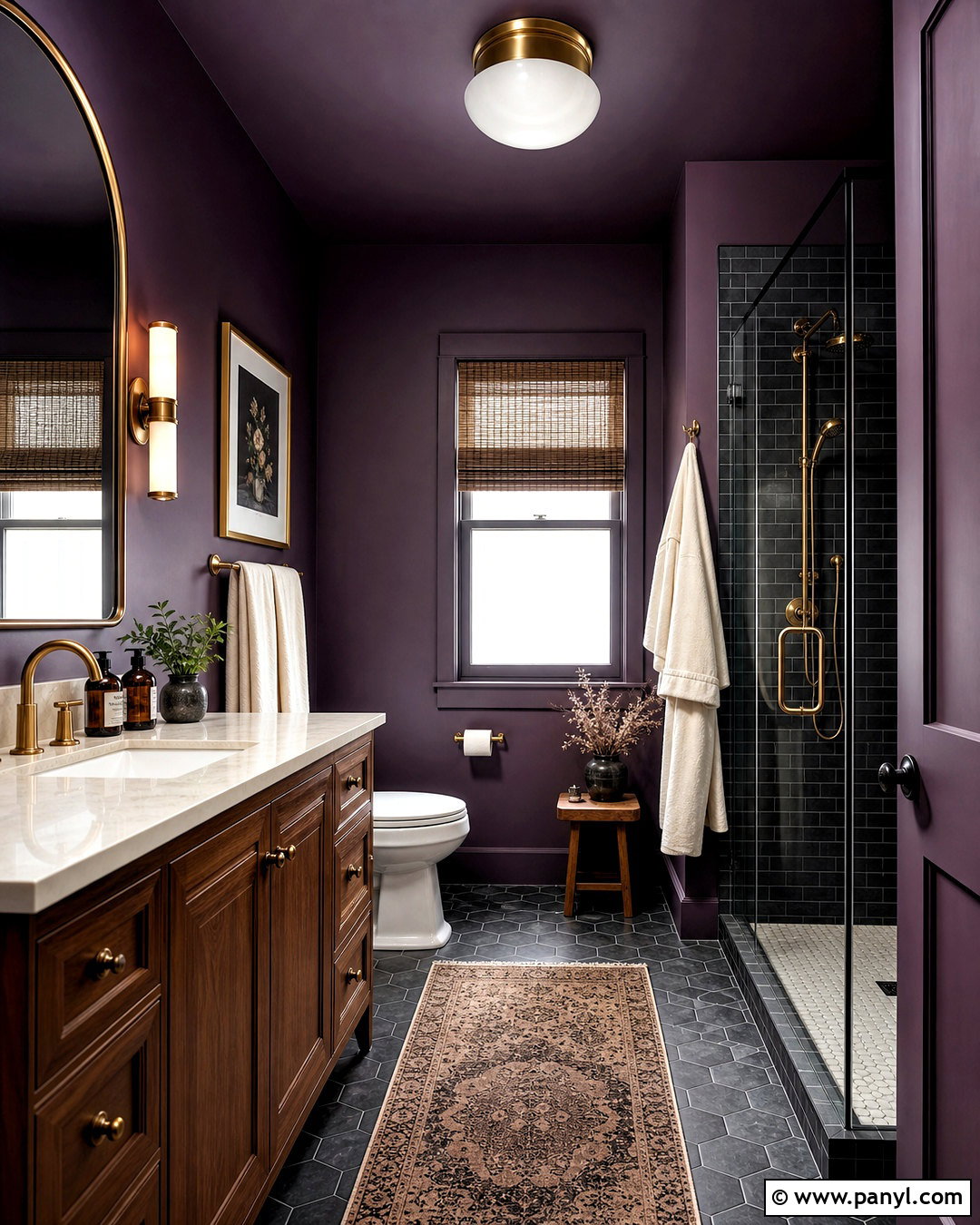
Chocolate brown walls give an Edwardian bathroom an understated sense of history. Apply the color above creamy paneled wainscoting so the room remains warm rather than overly dark. A traditional oak washstand with curved legs should anchor the vanity area, topped with ivory marble and a white oval basin. Choose unlacquered brass faucets, wall lights, and towel rails that can develop a naturally aged appearance. Small cream-and-brown mosaic floor tiles add subtle pattern while keeping the palette cohesive. Place a white freestanding tub near a window dressed with a café curtain for privacy. An oval wood-framed mirror, framed landscape painting, Persian-style runner, and linen towels in cream and faded rust complete the room with comfortable, collected character.
11. Dark Blue Beadboard Bathroom
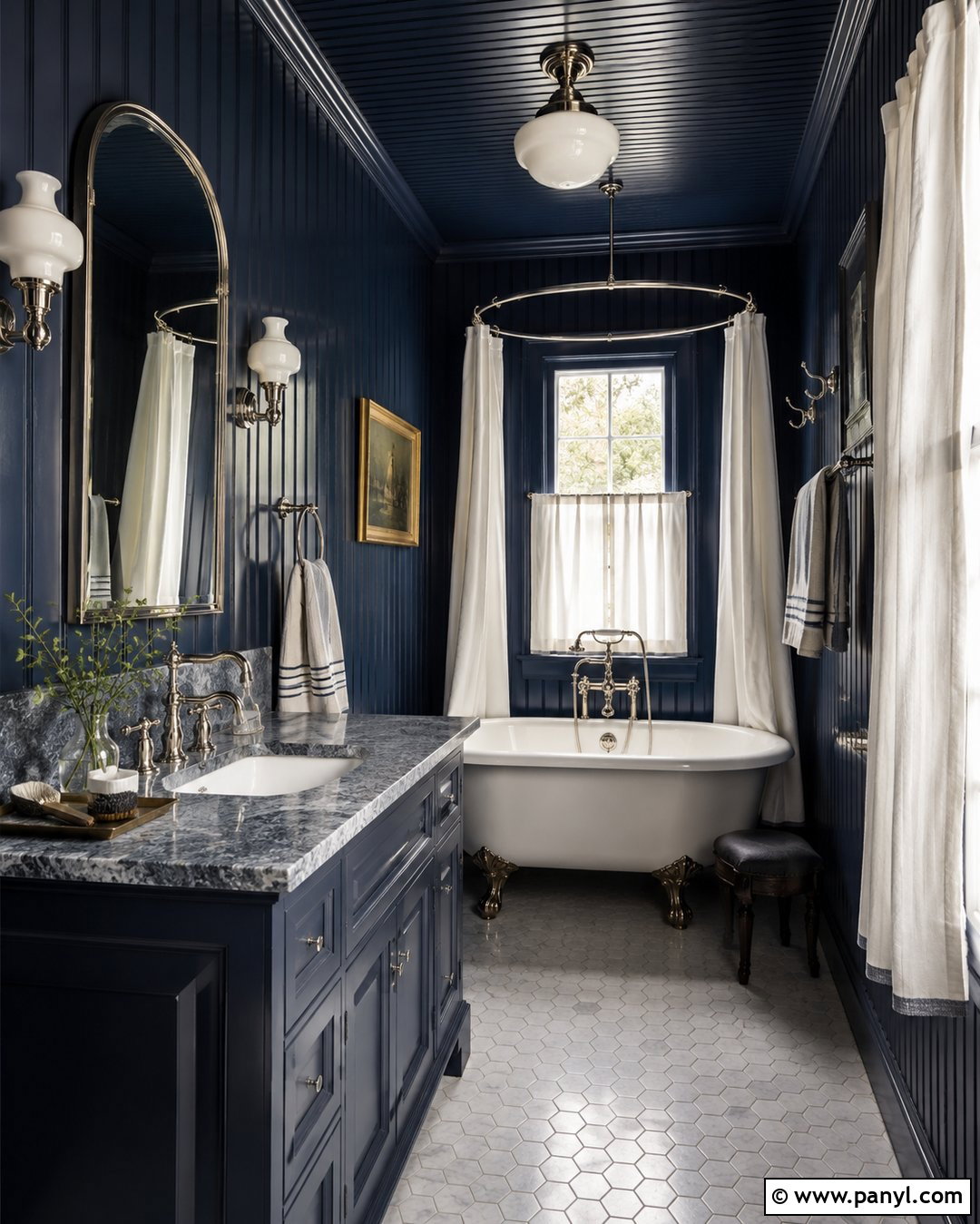
Floor-to-ceiling dark blue beadboard creates strong texture in a narrow vintage bathroom. Paint the ceiling and window trim warm white to frame the saturated walls and bounce light around the space. A compact white clawfoot tub can fit along the short end of the room, paired with a ceiling-mounted oval shower curtain ring. Opposite the tub, install a slim marble-topped vanity painted the same blue as the paneling. A polished nickel faucet and arched mirror add gentle shine. Use light gray hexagonal floor tile with a dark blue border to widen the visual footprint. Finish with white linen shower curtains, striped towels, a schoolhouse pendant, two globe sconces, and a shallow wall cabinet for toiletries and extra folded linens.
12. Forest Green Clawfoot Tub Bathroom
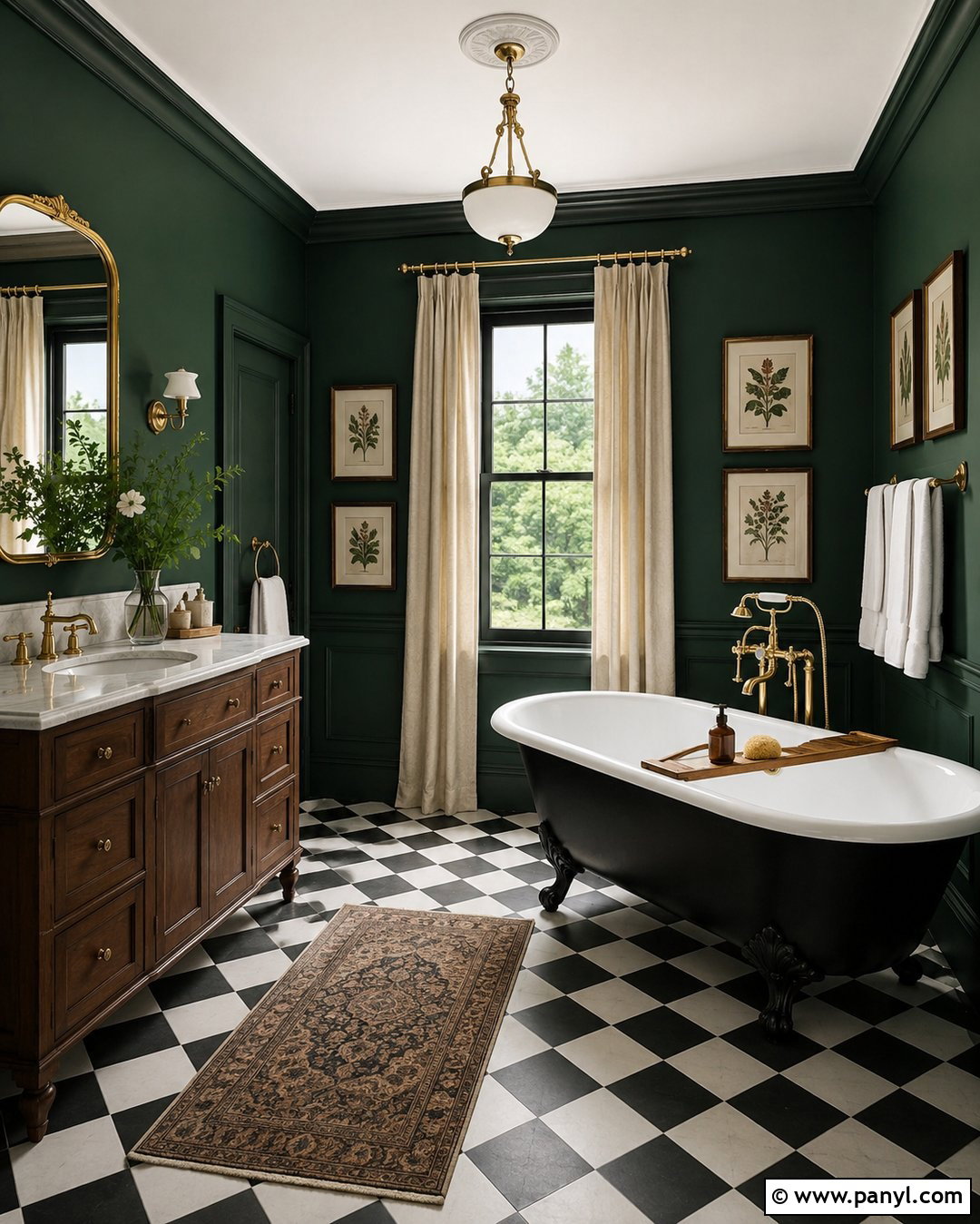
Make the clawfoot tub the clear centerpiece of a forest green vintage bathroom. Position a black-painted tub with a white interior against the longest wall, then frame it with symmetrical antique brass sconces and a small gallery of botanical prints. Forest green walls and matching woodwork create an immersive background, while a white ceiling keeps the room from feeling enclosed. Add a marble-topped walnut vanity with paneled doors and a large brass-framed mirror. Black-and-white checkerboard flooring connects the dark tub to the brighter fixtures. A freestanding brass tub filler adds a sculptural element without blocking the view. Finish the complete room with cream curtains, a wooden bath tray, white towels, and one woven basket for practical storage.
13. Black Subway Tile Vintage Bathroom
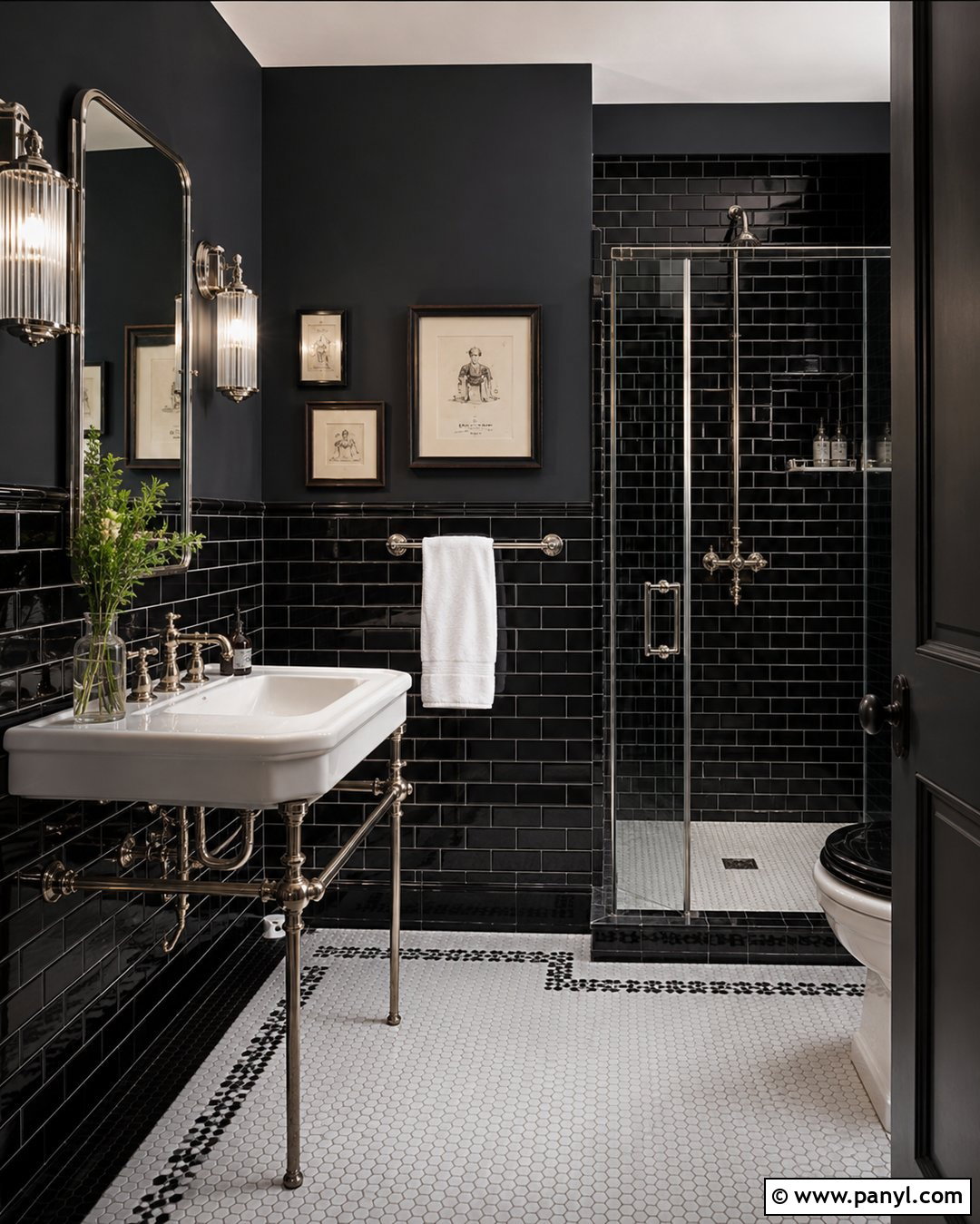
Black subway tile can feel distinctly vintage when paired with traditional fixtures and thoughtful borders. Cover the shower walls and lower half of the room with glossy black tile and light gray grout. Paint the upper walls in charcoal so the transition feels soft rather than abrupt. A white console sink with polished nickel legs introduces brightness and leaves the floor visible. Install a frameless glass shower panel to showcase the tile while maintaining an open layout. Underfoot, use white hexagonal mosaics with a black perimeter border. An arched nickel mirror, ribbed-glass sconces, and exposed shower plumbing strengthen the period appearance. Add white towels, a slim wood stool, framed line drawings, and a recessed cabinet to keep everyday products organized and out of sight.
14. Aubergine Cottage Bathroom
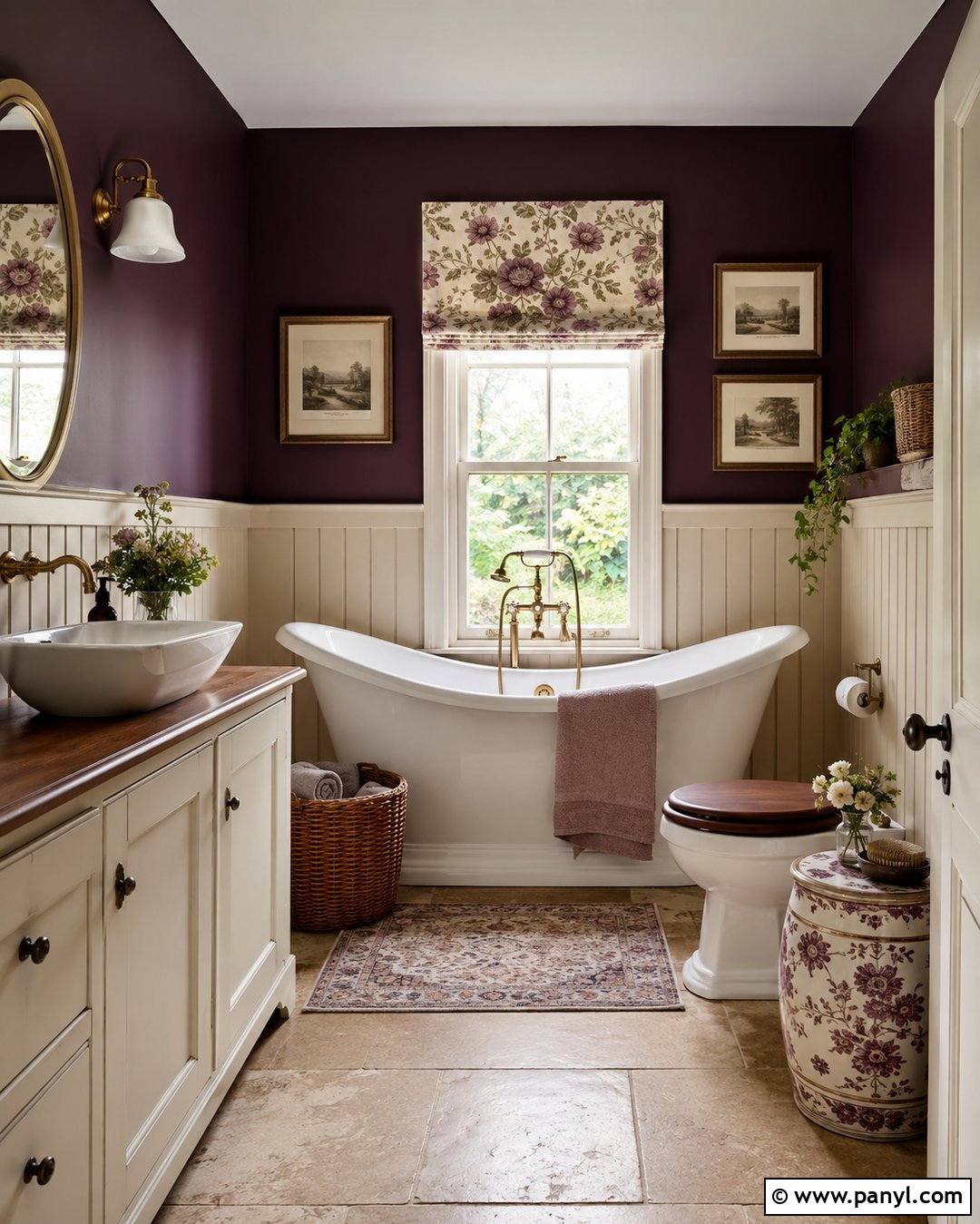
Aubergine walls make a cottage bathroom feel cozy, distinctive, and pleasantly unexpected. Pair the purple-brown paint with creamy beadboard around the tub and sink areas. A white slipper tub fits naturally beneath a small window, especially when accompanied by a floral Roman shade in faded rose and sage. Choose a painted cream vanity with simple inset doors, a wood countertop, and a white vessel-style basin shaped like an old washbowl. Aged brass taps and a scalloped mirror enhance the collected cottage character. Use warm limestone-look floor tile for a quiet, practical base. Complete the design with woven baskets, floral towels, a small antique wall cabinet, framed countryside prints, and a ceramic stool that doubles as a bath-side table.
15. Dark Gray Marble Art Deco Bathroom
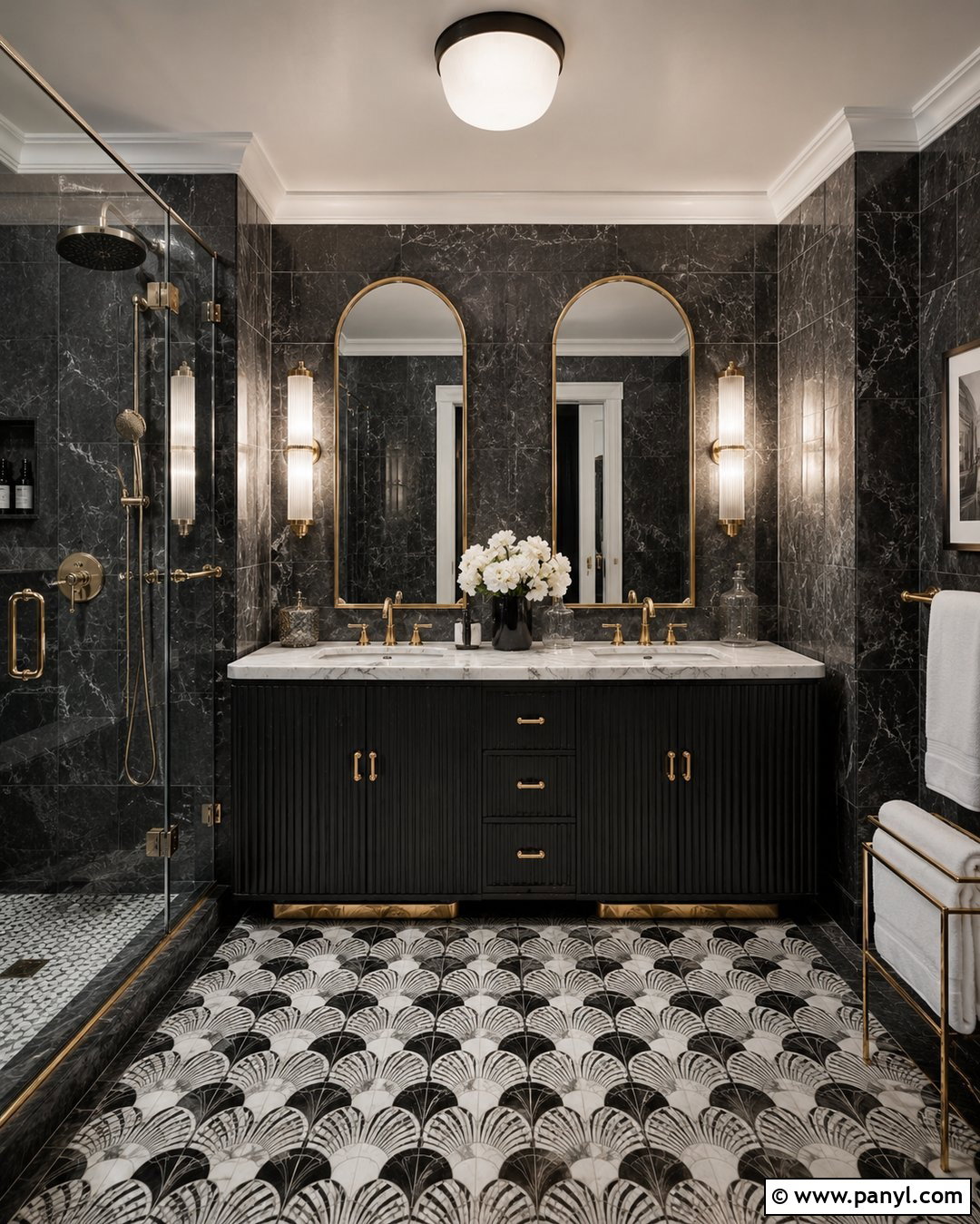
Dark gray marble walls create an elegant Art Deco bathroom when the layout remains symmetrical. Use large marble slabs or convincing porcelain panels around the shower and behind a double vanity. Choose a black lacquer vanity with fluted doors, a white stone countertop, and two rectangular undermount sinks. Above each basin, install a rounded brass mirror with a vertical opal-glass sconce between them. Continue the geometric theme with black-and-white fan mosaic flooring. A frameless shower enclosure preserves clean lines, while brass shower fittings provide warm contrast against the charcoal veining. Keep the ceiling bright white and include recessed lighting for clarity. Add folded white towels, black ceramic containers, and one sculptural glass vase to finish the polished vintage composition.
16. Deep Red Vintage Bathroom
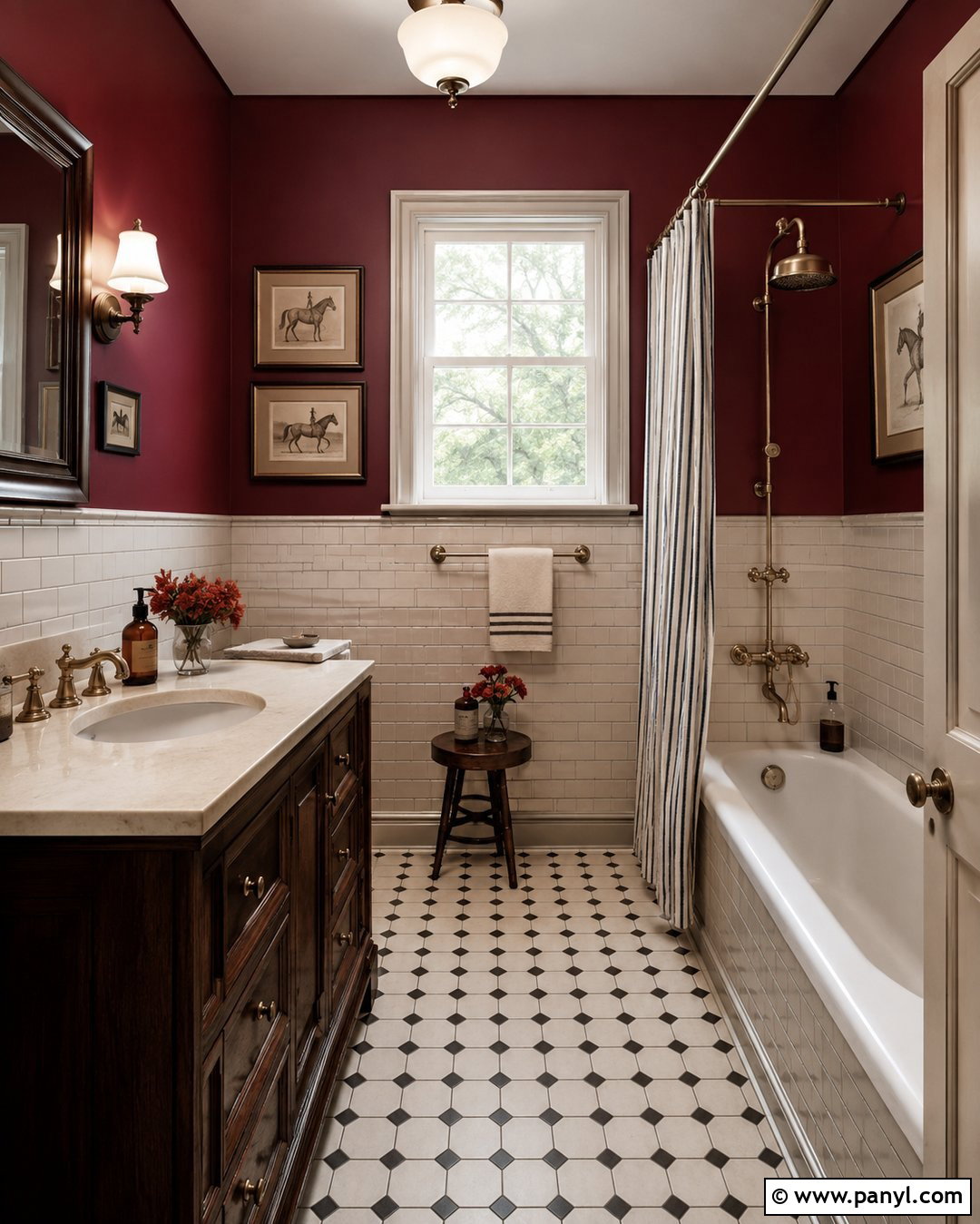
Deep red walls can give a vintage bathroom energy while still feeling traditional. Select a muted brick or oxblood shade rather than a bright primary red. Pair it with cream subway tile around a white built-in tub and continue the tile as wainscoting behind the sink. A dark walnut vanity topped with honed cream stone adds warmth and useful drawer storage. Use antique brass fixtures, an ornate wood-framed mirror, and shaded wall lights to soften the contrast. Black-and-cream geometric floor tile grounds the richer colors without adding another competing hue. A striped shower curtain in cream and faded red keeps the tub area coordinated. Finish with framed equestrian sketches, amber glass containers, cream towels, and a narrow vintage rug.
17. Dark Olive Craftsman Bathroom
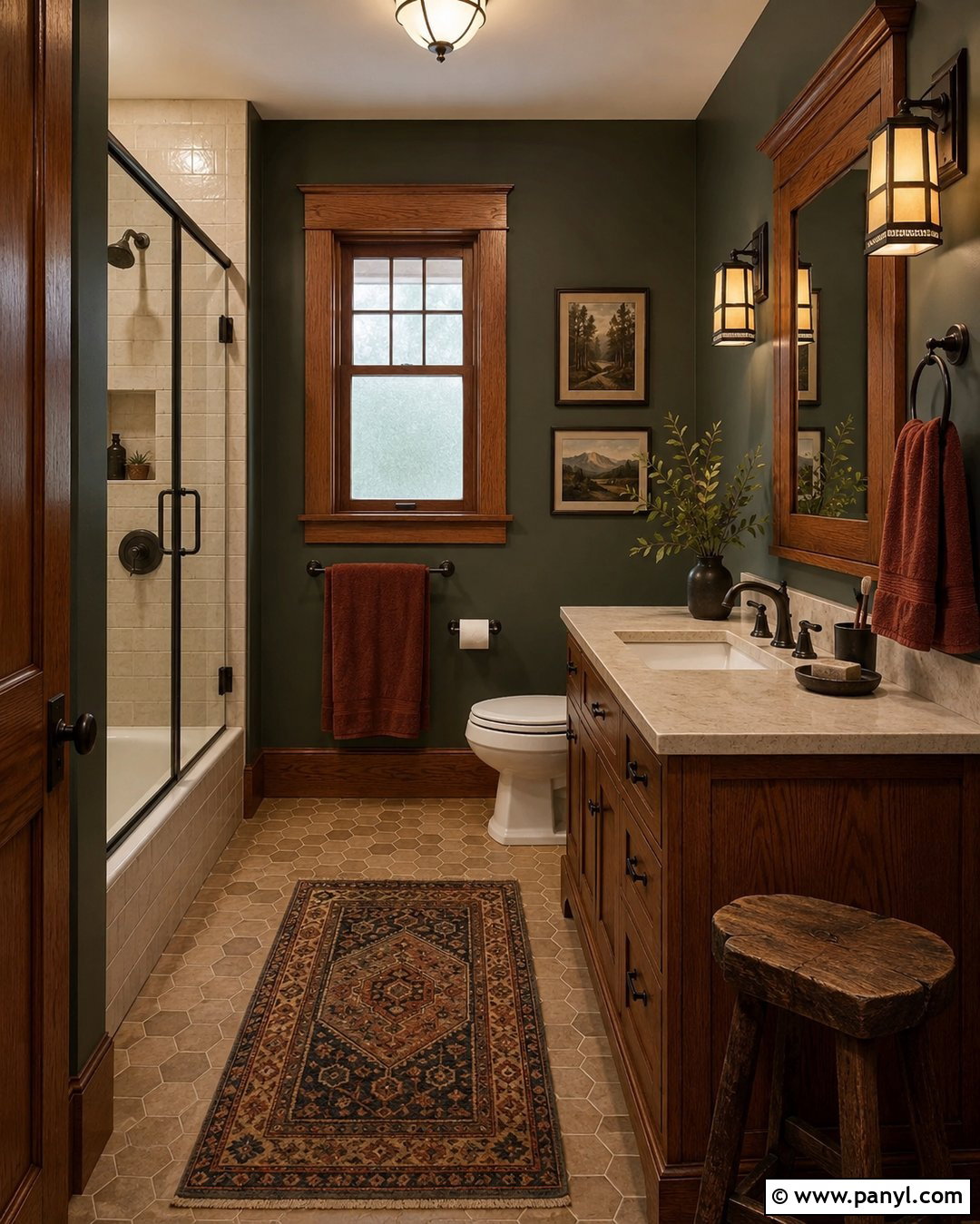
Dark olive walls complement the honest woodwork and handcrafted details of a Craftsman bathroom. Install quarter-sawn oak trim, a matching vanity, and a framed medicine cabinet to create a unified built-in appearance. The vanity should have simple recessed doors, dark bronze hardware, and a cream stone top with a rectangular undermount sink. Use matte cream square tile around the shower, accented with a narrow olive and brown mosaic band. Small tan hexagonal floor tiles provide warmth while hiding everyday wear. Mission-style wall sconces with pale glass shades offer clear light beside the mirror. Add a linen shower curtain, rust-colored towels, a handcrafted wooden stool, and framed nature prints. The finished room feels substantial, functional, and connected to early twentieth-century architecture.
18. Midnight Blue Small Bathroom
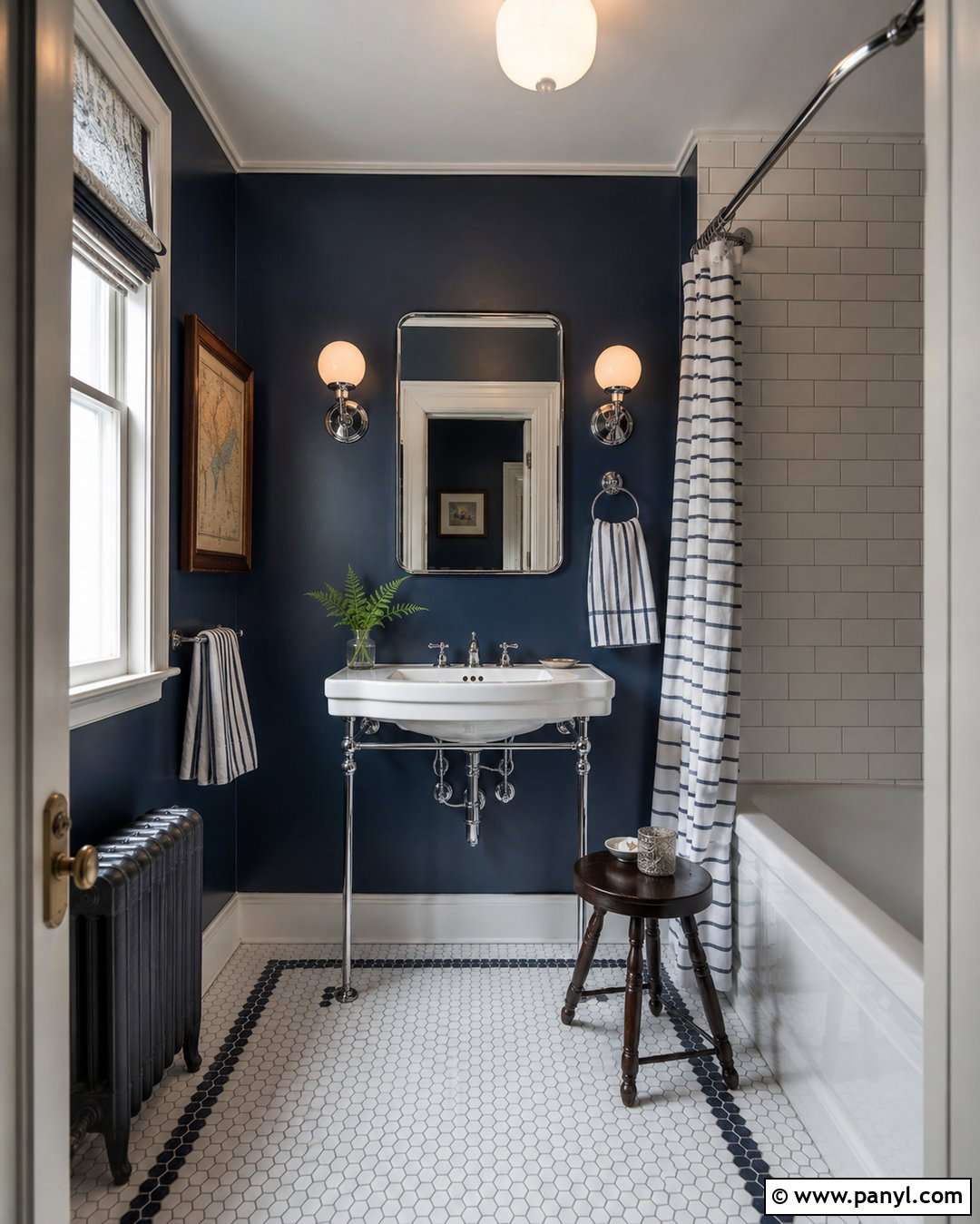
Midnight blue can make a small vintage bathroom feel intentional instead of cramped. Paint every wall the same deep color, but preserve a white ceiling and white window casing to create definition. Choose a narrow white console sink with chrome legs and an integrated towel bar. A mirrored medicine cabinet provides hidden storage while reflecting light across the room. Install white penny tile flooring with a navy border to make the footprint appear wider. A compact tub-shower combination can use glossy white subway tile and a ceiling-height white curtain. Add two bright globe sconces, a polished chrome ceiling fixture, and a small glass shelf. Finish with striped navy-and-white towels, a framed coastal map, and one dark wood stool tucked beside the tub.
19. Black Vintage Bathroom With Brass
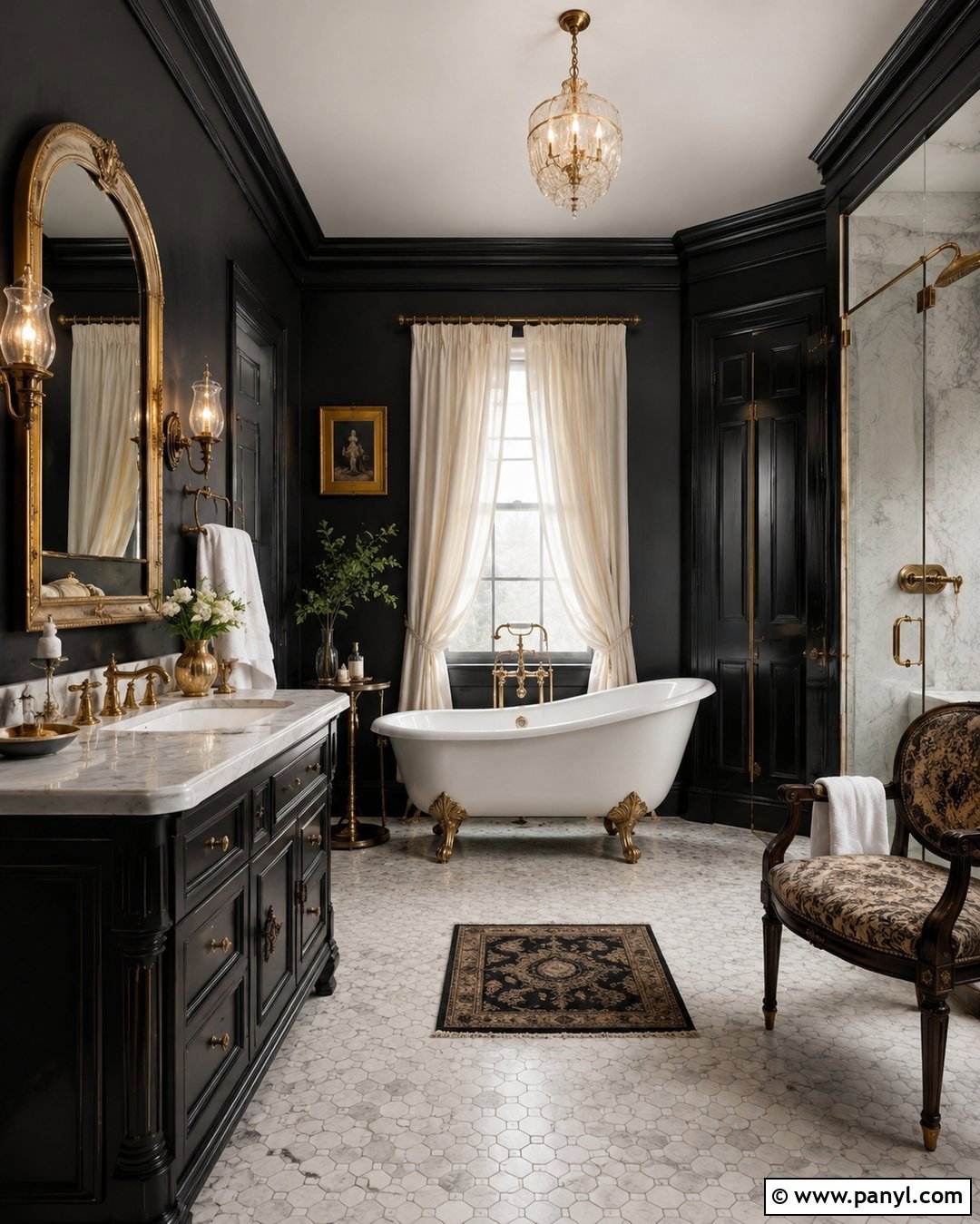
Black walls and aged brass create a luxurious vintage bathroom without requiring an oversized floor plan. Use satin black paint above black paneled wainscoting, then introduce white through the fixtures and flooring. A marble-topped black vanity should feature furniture-style legs, brass knobs, and a white undermount sink. Hang a wide brass mirror above it, flanked by clear-glass sconces with warm white bulbs. A white clawfoot tub with brass feet keeps the room dramatic but balanced. Choose white marble hexagonal floor tile with occasional black accents. Add a brass shower ring, wall-mounted tub filler, and matching towel rails. Cream linen curtains, white towels, an antique wooden chair, and restrained framed artwork keep the finished design elegant rather than overly ornate.
20. Dark Green Vintage Bathroom With Pink Tile
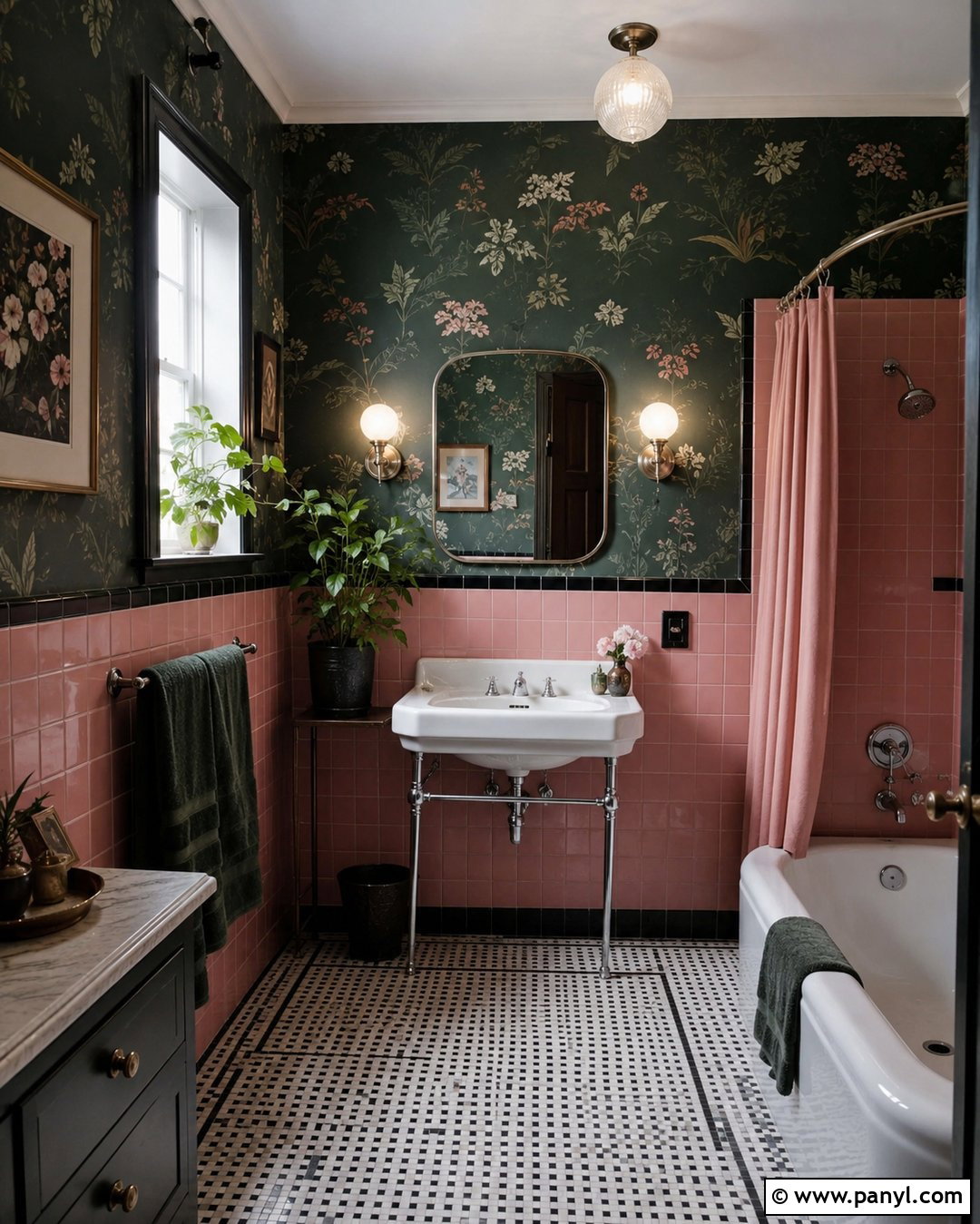
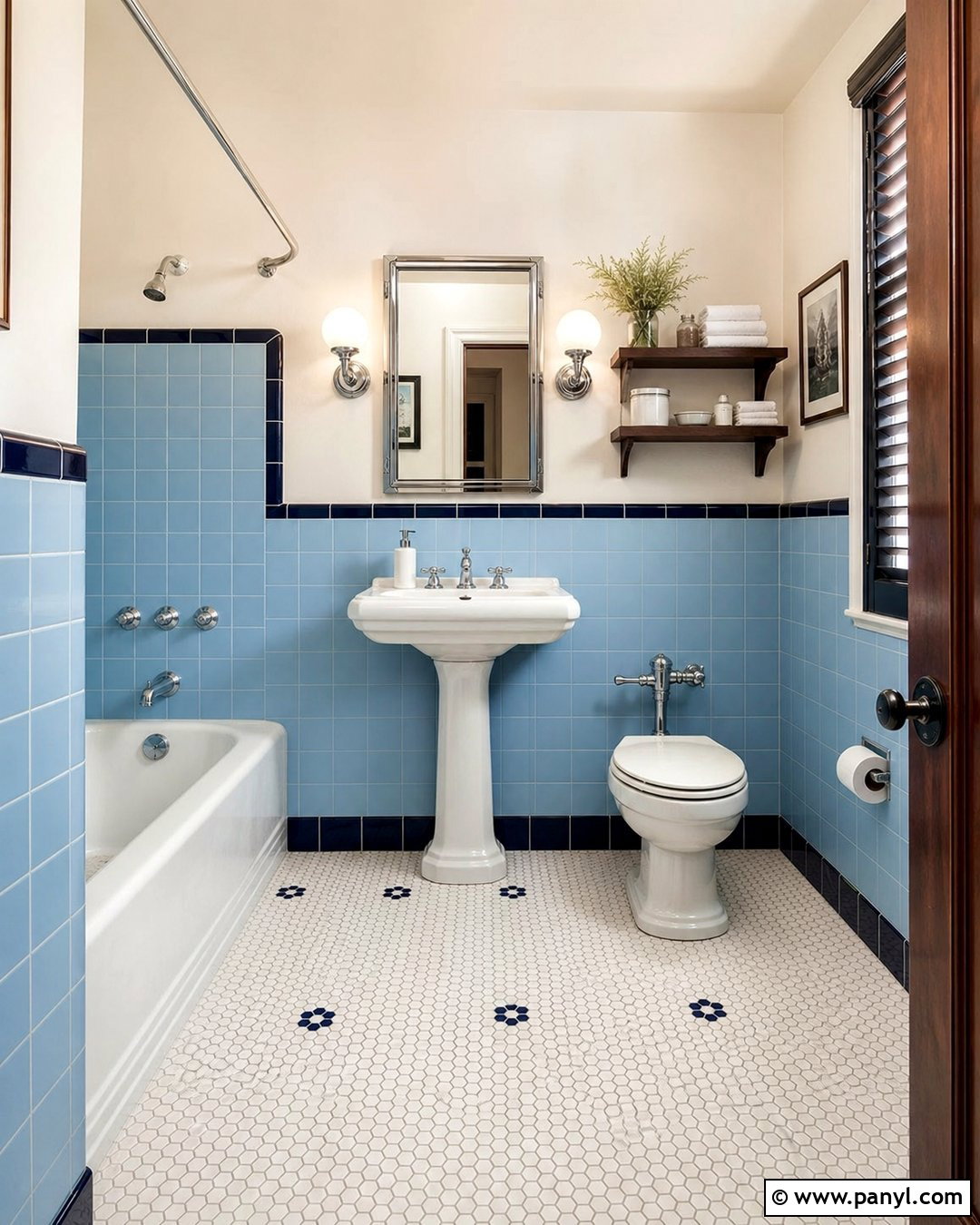
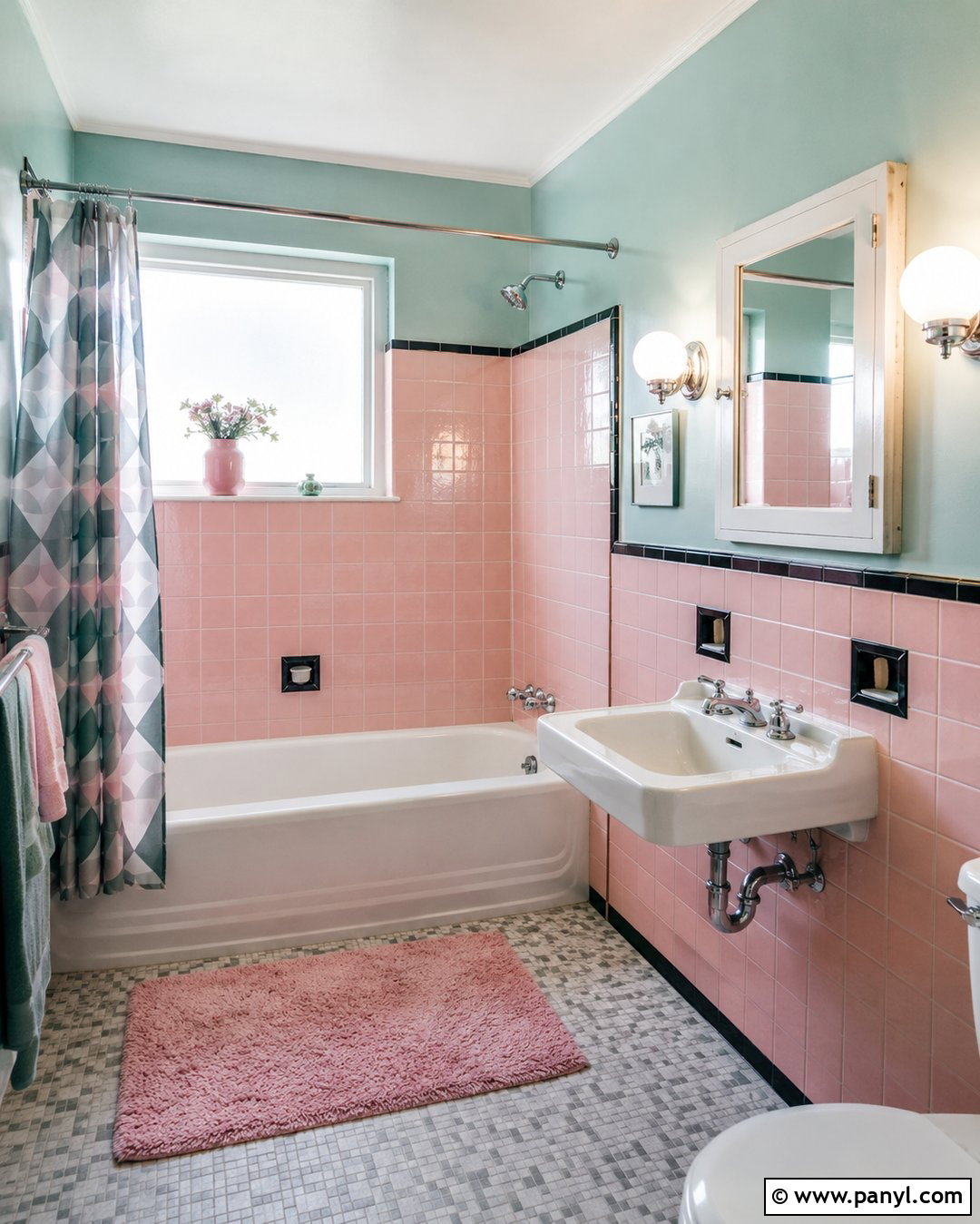
Existing pink tile can look intentional when surrounded by deep green walls. Keep blush or dusty rose tile wainscoting in place, repair the grout, and outline the top edge with a thin black border. Paint the upper walls a dark botanical green that balances the sweetness of the tile. A white wall-mounted sink with chrome legs preserves the midcentury floor plan, while a rounded medicine cabinet echoes the softer tile color. Use black-and-white mosaic flooring to introduce contrast and connect the vintage elements. A white tub with a blush shower curtain keeps the bathing area light. Finish with globe sconces, chrome towel bars, dark green towels, a small floral print, and black ceramic accessories for a playful but carefully coordinated bathroom.
Conclusion:
Creating a Vintage Bathroom With Dark Walls is less about copying one historical period and more about building a balanced, believable room. Begin with a deep wall color, then select fixtures, flooring, metal finishes, lighting, and storage that support the same design direction. White porcelain and pale stone can prevent saturated colors from overwhelming the space. Brass adds warmth, while chrome and nickel create a cleaner Art Deco effect. Patterned floors, paneled walls, antique mirrors, and traditional lighting provide character without sacrificing everyday function. Whether you prefer Victorian drama, cottage comfort, or streamlined 1920s geometry, a cohesive palette will make the finished bathroom feel charming, practical, and thoughtfully collected.

Related Ideas and Inspiration:
Leave a Reply